A publication for alumni and friends of the University of Texas at San Antonio In this issue: Who we are • Faculty write about September 11 “Good morning, Sen. Wentworth” • Honor Roll of Donors
Winter 2001, Volume 7, Number 4
Editor: Lynn Gosnell
Art director: Karen Thurman
Designers: Karen Thurman, Juan Fitzmaurice
Associate editor: Rebecca Luther
Copy editor: Sarah Nawrocki
Contributors: Tim Brownlee, Randy Degner, Wendy Frost, Holly Hansen-Thomas ’00, Jennifer C. Judkins, Jasmin Khair ’99, ’00, Judith Lipsett, Roxanne Llewellyn, William Petitt, Kris Rodriguez, Kendra Trachta
Photographers: Mark McClendon, John Poindexter
Student intern: Dina Inman ’01
Production manager: Frank Segura
Director of publications: Elton Smith
Office of University Advancement
Interim Vice President for University
Advancement: Gerard H. Barloco
Director of Alumni Programs: Jane Findling
Assistant Vice President for University
Communications: David Gabler
Sombrilla is published quarterly by the Office of University Publications, 6900 North Loop 1604 West, San Antonio, Texas 78249-0619. It is mailed without charge to alumni and friends of the University of Texas at San Antonio. We welcome your letters pertaining to Sombrilla’s content.
Editorial office: MS 2.01.10
Phone: (210) 458-4525
E-mail: sombrilla@utsa.edu
Send address corrections to sombrilla@utsa.edu
PREVIEW
THE SYLLABUS HAS CHANGED
In Judith Sobre’s art history class, students were expecting a lecture on the Renaissance; instead they listened to the radio. In Physics 1603, a lesson on two-dimensional motion and vectors was delayed so the class could talk about the news. Students observed a moment of silence in accounting principles class, then left early. In IDS 3003, no one could stay focused on the topic, which was how to teach kids about energy.
The adulthood and aging psychology class was dismissed after a brief meeting. Mark Bernstein’s lecture on ancient philosophy was cancelled; ditto, a lecture on animal ethics. The students who showed up for BIO 4073 adjourned to watch TV in the lobby of the Frio Street Building. Becky Peterson began each of her criminal justice courses by leading students in a performance of “God Bless America.” In a history seminar on the Holocaust, teacher Kolleen Guy decided to go forward with class.
“Did we discuss the readings that day? The specifics of the text, no; the deeper moral questions engaged by the text, yes.”
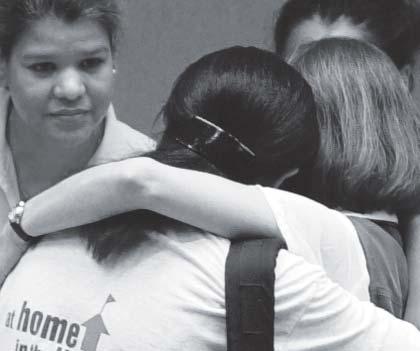
That day, of course, was Sept. 11, just two weeks into the beginning of UTSA’s new academic year. Though the university remained open, as did all state government offices and UT System campuses, the day was hardly normal. As news spread about the events on the East Coast, all the efficient comings and goings around campus stumbled to a halt. Unaccustomed to terror so close to home, students and staff reached out in gestures as awkward and unfamiliar as they were tender.
Sept.11 was a significant day in the life of this campus, which responded to both the emotional and intellectual needs of the campus. This compassionate stance and scholarly outreach continues.
We asked six faculty members to tell us what they’re thinking about in light of the attacks and their aftermath. Some of them had participated in the wonderful series of teach-ins that took place in the weeks after the attacks. Others had expertise or experience that placed them very close to the crisis. We also reported on the special concerns of UTSA’s international students and on students who are in ROTC.
As always, we welcome your response to these articles. Peace.
— Lynn Gosnell
FEATURES
12SEPTEMBER 11
Faculty write about their perspectives on the attacks against the United States and what the future holds. Also, UTSA reservists are prepared to serve, and the university’s international students are especially touched by the tragedy.
16WHO WE ARE
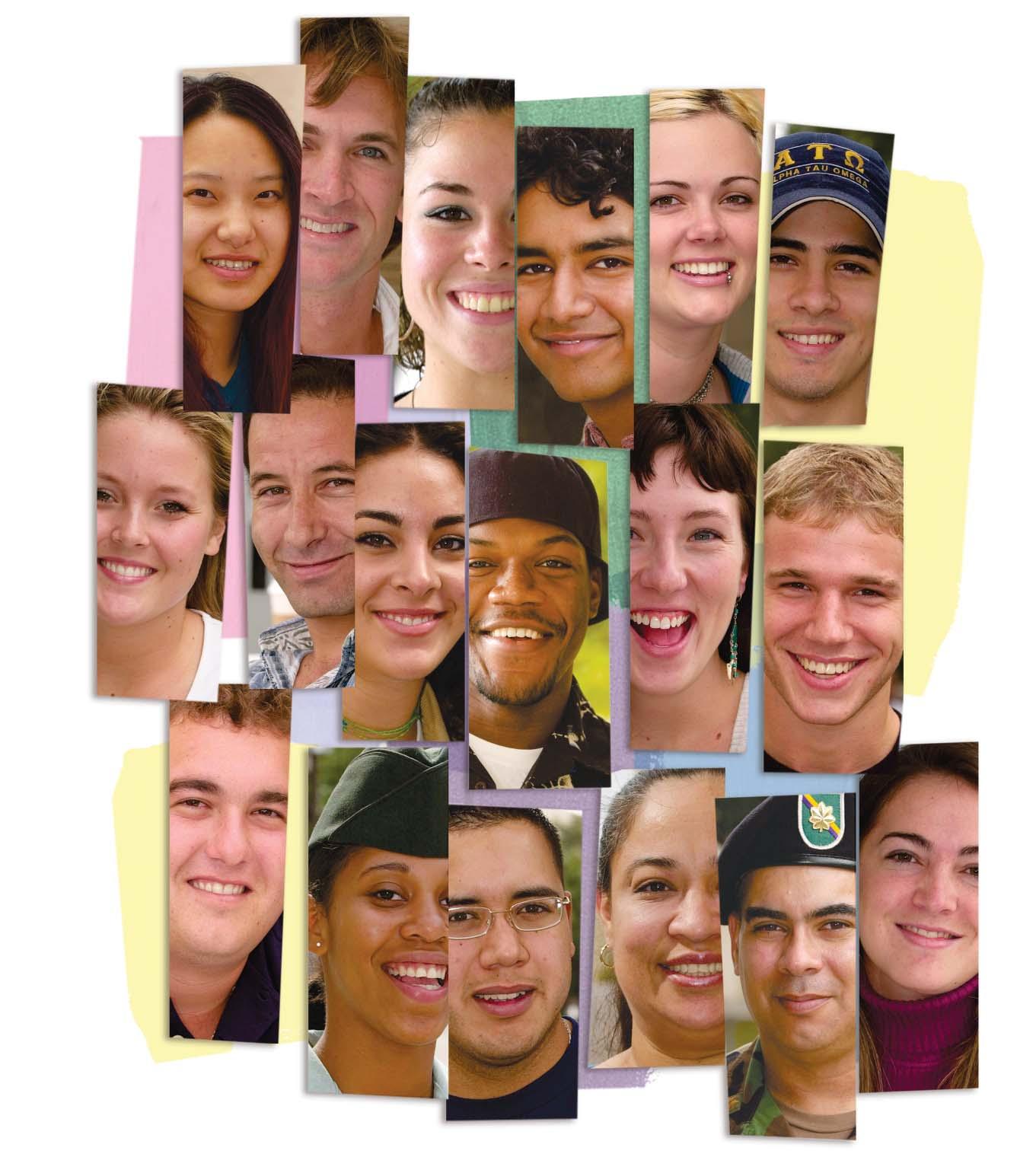
UTSA boasted a record enrollment of 19,883 students for the fall semester. But who are the people behind the census date statistics? Staff writers talked to seven students and learned there is no such thing as a typical student.
DEPARTMENTS
4 In the Loop
An update on the Biotechnology Initiative; British thespians teach students a thing or two about Shakespeare; a student reports on her year abroad as a Fulbright scholar; Roadrunner fans get orange, blue and wacky; plus more campus news.
10 Campus Scene
“Good morning, Sen. Wentworth.” A Texas state senator spends a semester in the classroom—teaching politics— and gets an education of his own. By Judith Lipsett
The show cannot go on without them, but accompanists don’t always get the credit they deserve. We applaud them.
By Jasmin Khair
20 Class Notes
Profiles of Manny Flores, Diane Gonzales Bertrand and Cynthia Hernandez. Also, getting ready for Diploma Dash and a calendar of campus events.
32 Looking Back
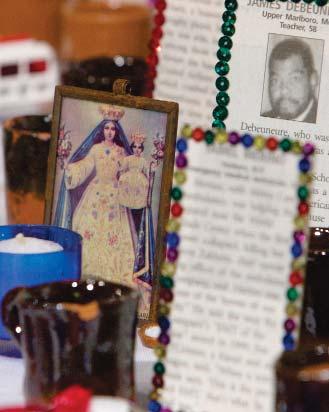
An ofrenda at the Institute of Texan Cultures honors those who died Sept. 11.
SPECIAL INSERT
23 Honor Roll of Donors
A thank you to everyone who contributed to the university last year.
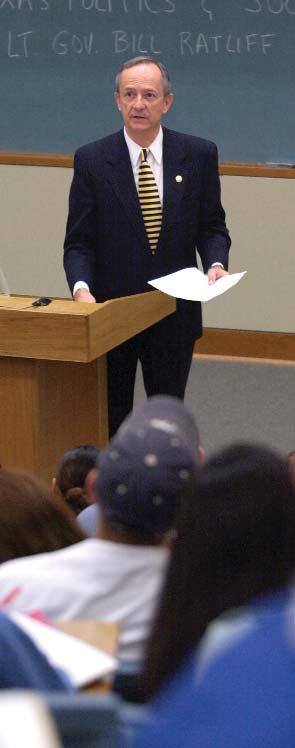
Lt. Gov. Bill Ratliff— who revealed that legislators sometimes refer to him as ObiWan Kenobi—guest lectures in a political science course taught by State Sen. Jeff Wentworth. See story, page 10. Also on campus, this fall’s Best Fest was renamed Blair Fest to accommodate a Halloween theme. Students raised funds for various clubs and programs.
Above,
IntheLoop ¡BRAVO!
Richard W.Adams, professor of anthropology,invited to speak about his archaeological research at the 11th International Meeting of Investigators of Mayan Culture at the Universidad Autonoma de Campeche,Mexico; Steve Brown, assistant professor in the Department of Earth and Environmental Sciences,elected president of GIS in Texas Education,an affiliation of Texas colleges and universities that promotes the use of geographic information systems in all academic fields; the College of Business, nominated by the National Society of Hispanic MBAs for a Brillante Award in the educational institution category,given to leaders whose work reflects the society’s mission to foster Hispanic leadership through graduate management education and professional development;College of Education and Human Development students Tom Castanos,John Kliewer,Erica Koehler,Sativa Rasmussen and Nikki Stohr, winners of the Martinello Prize for Inquiry,started by Professor Emerita Marian Martinello to recognize the best student projects in the Modes of Inquiry across Fields of Discipline course; Assistant Professor Catherine Kasper, Department of English,Classics and Philosophy,recipient of first place and editor’s choice awards for her short stories “Etymology of Yterrbium” and “J’Abab’s Cosmic Gown”in the Mid-American Review Fineline Competition,and winner in the Writers League of Texas Radio Collective Annual Story contest for her creative nonfiction piece “This Is Your Only Warning”; Steven Levitt, chair of the Department of Communication,recipient of the Best Paper Award at the New Horizons in Industry and Education Conference for his paper,“Improving the Critical Communication and Decision-Making Interface between Engineers and Managers”; President Ricardo Romo, honored by the San Antonio Chapter of the American Civil Liberties Union with the Maury Maverick Sr.Award for his work in education and civil rights; Cheryl B.Schrader, associate dean for graduate studies and research for the College of Engineering,named 2002 president-elect of the Institute of Electrical and Electronics Engineers Control Systems Society; Deborah Schwartz-Kates, assistant professor of music,appointedto the National Committee on Cultural Diversity of the American Musicological Society,which is charged with expanding the presence of underrepresented groups in the field of musicology; Associate Professor Richard Wadsworth, management science,recipient of the UT System Telecampus Teaching Excellence Award for his work developing the first UTSA course to be offered through the telecampus. The course,Quantitative Analysis for Business,is jointly offered by eight UT System universities through the online facilities and has been taught for three semesters to students from Germany to the Pacific Coast.
— Compiled from staff reports
Funding for biotechnology building nearly complete
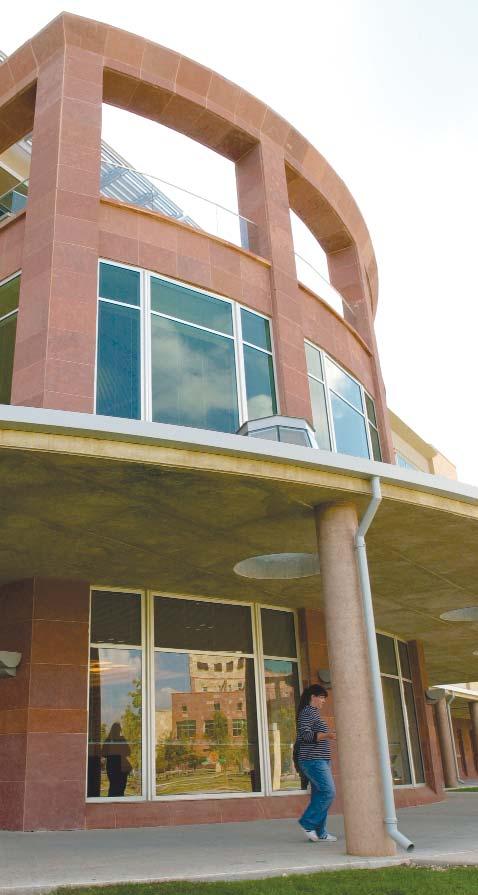
The dream of constructing a Biotechnology, Sciences and Engineering Building is closer to becoming a reality. Fundraising for the $83.7 million facility is 96 percent complete, according to President Ricardo Romo. The university will break ground on the 227,946-square-foot building in late fall 2002; when completed in 2004, it will be among the state’s largest science-related educational buildings.
The majority of the funding for the facility—$54 million—is provided by the UT System Board of Regents Permanent University Fund. Tuition revenue bonds provided an additional $22.95 million, and private contributions of approximately $6.75 million are needed to reach the $83.7 million total. More than half of the required private support has been secured.
Since last year, the Biotechnology Initiative has focused on creating an environment in which engineers, scientists and physicians will pursue biomedical- and biotechnology-related research, and in which students will receive world-class, graduate-level instruction.
The initiative’s aims are
• to advance educational programs by developing new doctoral programs in biomedical engineering, computational biology, electrical engineering, chemistry, environmental science and environmental engineering, chemistry and biology
• to offer students in San Antonio and South Texas educational opportunities equal to the best nationally in emerging scientific fields of academic, medical and commercial significance
• to contribute to a vision of San Antonio as a national center of biomedicine and to spearhead the drive to transform UTSA into a top-tier doctoral/research university.
INSIDE THE NEW BSEB
• 227,946 square feet with approximately 136,767 estimated square feet of assignable space
• 98 faculty offices
• 431 graduate student office spaces
• More than 30 research and instructional labs—71,000 square feet—related to biotechnology,biology, biomedical engineering, electrical engineering,civil engineering and chemistry
To learn more about the Biotechnology Initiative and the Biotechnology, Sciences and Engineering Building, contact Richard Ortega at (210) 458-5160 or e-mail rortega@utsa.edu.
SMART
QUOTE
I went to Mexico in 1994 to escape a failed r omance and a bad job in Seattle. I went to a job that paid almost no money, but it was the best decision I ever made. I was able to witness the emergence of a new society . . . and it was nothing that CNN could film.
— Sam Quinones,author of True Tales from Another Mexico:The Lynch Mob,the Popsicle Kings,Chalino,and the Bronx, speaking on Sept. 24 about living and working as a journalist in Mexico.
All roads lead to Budapest
By Holly Hansen-Thomas
“Make the strangers welcome in this land, let them keep their languages and customs, for weak and fragile is the realm which is based on a single language or on a single set of customs.” — St. Stephen, 1036 C.E.
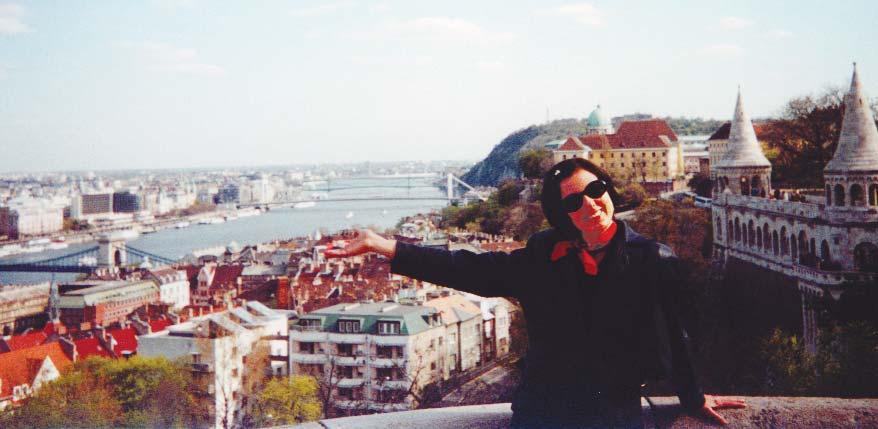
Hungary—Magyarorszagto to its residents—is a country marked by great beauty, a tragic past and a hopeful future. Ringed by seven countries, Hungary shares its 1,100-year history with Austria to the west and Romania to the east. This history is rife with tribal warfare, changing allegiances and foreign occupation, as well as periods of great cultural and intellectual flowering.
I was able to take advantage of the sights, sounds, history, geography and language of this small nation when I was awarded a Fulbright scholarship for the 2000–2001 academic year. I was lucky to be placed in the capital city, Budapest, because it really is the heart and soul of the country. There, one can admire beautiful views of the Danube River, take a dip in natural hot mineral springs, dance the csarda, walk through ancient Roman ruins and eat delicious Hungarian food like pörkölt (a roasted meat stew resembling what Americans think of as goulash), lecso (stewed peppers and tomatoes) or freshly made salami.
My duties as a “Fulbrighter” were varied—I taught English to both students and other teachers of English; conducted a classroom-based research project at Eötvös Loránd Tudomanyegyetem, one
of the country’s largest universities; worked as an academic adviser at the Fulbright Commission for students seeking to study in the United States; and studied Hungarian in my free time. The Hungarian Fulbright Commission took my colleagues and me on many lovely excursions. We went to the prosperous industrial town of Székesfehervar, where IBM has pumped life into the local economy. We spent time in Sopron—the small appendage in the western part of the country where a vote was taken during the dissolution of the Austro-Hungarian empire to determine which country the town would join. We also took a trip to Szeged, located only a few kilometers away from both war-torn Serbia and sunny Croatia, the holiday destination for many Europeans.
As a Fulbright teacher and scholar, I enjoyed the benefits of holding an official visa and was often invited to
activities hosted by the American Embassy. I participated in binational conferences and attended Fulbright gatherings and poetry readings at the ambassador’s residence. I even attended the formal election night party at one of the city’s swankiest hotels.
As a tourist, I traveled Slovakia, Poland, Austria and other neighboring countries.
Although I have lived and worked in other countries (Spain and Germany), this was the first time I was able to enjoy so many professional benefits during my travels. Being a part of the “Fulbright family,” as our Hungarian director often called it, was an exceptional experience.
As a student in the new culture, literacy and language doctoral program in the College of Education and Human Development, I have already been able to draw on these many rich experiences.
Restructuring affects four research and education centers; new women’s center studied
As part of a broad restructuring effort at UTSA to redirect state instructional dollars to teaching, four education and research components were either closed or restructured Sept.1. Provost Guy Bailey announced the changes this summer.
The Center for the Study of Women and Gender (CSWG) was reclassified as a program within the history department in the College of Liberal and Fine Arts, while the Metropolitan Reseach and Policy Institute merged with the Hispanic Research Center in the new College of Public Policy. The Institute for Studies in Business was dissolved, with related activities shifted to the College of Business or the Institute of Economic Development. As a result of the restruc-
turing, the university stands to net $250,000 for instructional support or teaching, Bailey said.
“As do most state-supported universities, UTSA operates with very little discretionary money, and we frequently must make difficult choices in allocating our resources.” Bailey said. “In making these choices, students are always our priority.”
The reclassification of the CSWG from a center to a program drew the attention of the center’s supporters and the local press.
At a meeting in September with representatives from the center’s advisory board, President Ricardo Romo announced that he would appoint a committee to assess the need for programs to address
issues of women and gender. The 12member committee, which is chaired by Vice President for Student Affairs Rosalie Ambrosino, will make recommendations about the scope and focus of a new center.
The committee’s report is due in February. Founded in 1994, the center was created to focus on research and community outreach, said Linda Schott, associate professor of history and the center’s former director. Its programs included Women’s History Week, a grant to develop leadership in the nonprofit sector, and an archives for research on women and gender. These programs, and the minor in women and gender studies, continue to be supported by UTSA.
— Lynn Gosnell
Hansen-Thomas spent last year in Budapest as a Fulbright scholar.
IntheLoop
Snapshot, Texas
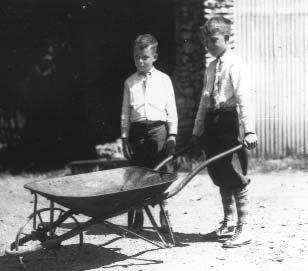
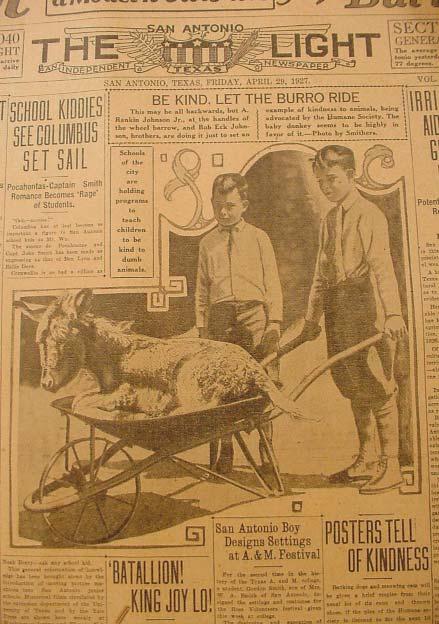
Although manipulating photographs is common in the era of digital imagery,people have been manipulating images since photography was invented.Pictures are altered to enhance the photographer’s vision,to produce an otherwise impossible image and,sometimes,to deceive the viewer.By double-exposing film,changing the speed and orientation of the camera’s shutter or superimposing images in the darkroom, photographers have often convinced us that seeing is believing,even when our brains tell us otherwise.
Bob Eck Johnson and A.Rankin Johnson Jr., pushing wheelbarrow.
The San Antonio Light Collection, The University of Texas Institute of Texan Cultures at San Antonio,L-0821-A.
In the original photograph,the boys are pushing an empty wheelbarrow.When it was published in the San Antonio Lighton April 29,1927,accompanying an article encouraging children to be kind to animals,a donkey had been added.The creation of the published image must have taken a lot of work,but perhaps it was less trouble than getting a donkey to pose.
— Kendra Trachta
Students give the Bard his due
There was a fear of language in the classroom. The alliterative cascades of consonants created a cacophony of confusion. If it wasn’t the S’s, it was the hard C’s that twisted the students’ tongues: “O, CurS-ed be the Hand that made these HoleS! CurS-ed the Heart that Had the Heart to do it!”
But Alexandra Lilley, a member of the Actors from the London Stage was determined to show the students in the public-speaking class that the only thing to fear was an unrepeated vowel or consonant.
In October, the touring ensemble of distinguished British Shakespearean artists marked the 13th anniversary of the annual UTSA Shakespeare program with a week of teaching and performance. Lilley, one of five actors in the troupe, visited the classroom of Dale Davis, a lecturer in the Department of Communication. She cajoled each student in Davis’ class to read a few lines from Portia’s “the quality of mercy is not strain’d” speech in The Merchant of Venice or from Lady Anne’s “whilst I awhile obsequiously lament” speech in Richard III.
The students’ task was to exaggerate the repeated sounds in the passages of verse. “If something is there, Shakespeare put it there for a reason,” Lilley said. “Even after performing a role for months, I still don’t know what all the words mean. But where the sounds are placed gives you clues about how to say the lines and how the character feels.”
At first, the participants read halfheartedly, and everyone laughed. But by the end of class, the students were becoming more comfortable with the
words and critiquing each other’s work. The smile on Lilley’s face reflected her satisfaction with their efforts. The students were starting to get it—no need to fear using the sounds of language to tell a story.
When Lilley and her fellow actors performed A Midsummer Night’s Dream on campus, language and expression were key in differentiating the five characters each played. The set consisted of a ladder and six chairs, and the costumes were simple peasant shirts and dark trousers. Changes of hat, props or bearing aided characterization.
“We don’t have a director, so you would think it would be complicated putting together five people’s ideas,” Lilley said. “But it hasn’t been. It’s more difficult to adapt to the size of the stage or theater as we tour.”
The uncut script produced a play of two and a half hours, but few squirmed as the time passed. Judging by the silence during dramatic moments and the laughter at comedic moments, and by the extended applause and standing ovation, the audience was clearly drawn into the experience.
Two performances were near sellouts and one was standing room only. Bravo for the Bard!
— Tim Brownlee
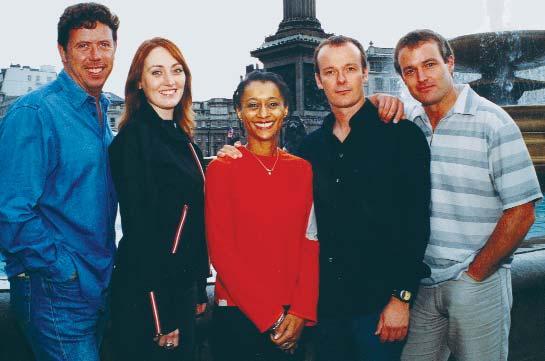
The Actors from the London Stage troupe visited campus this fall. They are, left to right: Sean Gilder, Alexandra Lilley, Suzanne Packer, Paul Panting and Matthew Radford.
FIRSTEDITION
Spoken English is exceedingly variable;pronunciation depends on factors such as the region,class,gender and age of the speaker.Similarly,word choice varies among English speakers.For example,what do you call that carbonated beverage—soda? pop? soft drink? co-cola?
The same kind of linguistic variations exist in American Sign Language,says Professor Robert Bayley,co-author of Sociolinguistic Variation in American Sign Language (Gallaudet Press,2001).Bayley (Division of Bicultural-Bilingual Studies) joined researchers at Gallaudet University in the study.His contribution centered on the quantitative analysis of data.
A Private in the Texas Rangers (Texas A&M University Press,2001) brings to light the daily musings,activities and observations of a Texas Ranger,circa 1887. The ranger,A.T.Miller of Company B,Texas Battalion,is the great-grandfather of Associate Professor John Miller Morris (Department of Geography and Political Science).The ranger’s leather-bound diaries have been lovingly preserved by the family over the past century.Morris carefully edited the fading penciled script and supplied ample historical annotation about the places,people and customs of the era. Is English the language of oppression or the language of liberation? Ideology,Politics and Language (John Benjamins B.V.,2000) discusses this question and other ideas on the dominance of English around the world. Thomas Ricento (Division of Bicultural-Bilingual Studies) edited the book,which includes contributions from scholars who research language policy.
English has displaced or marginalized languages in countries throughout Africa, Asia,Latin America and the Middle East, Ricento says.The book addresses the complex role of English in the world and its function as both an imperial language and a language of liberation.For example, in South Africa,English
was the language used by Nelson Mandela and the ANC in the struggle to overthrow apartheid.Under the new postapartheid constitution,English has become the official language of the South African parliament.
Associate Professor Larry B.Golden (Department of Counseling,Educational Psychology,Adult and Higher Education) has edited the third edition of Case Studies in Child and Adolescent Counseling (Merrill Prentice Hall,2002).The 16 case studies of children ages 4 to 17 illuminate therapeutic approaches in school,agency and
SMART QUOTE
private-practice settings.Each case study lays out the presenting problem,therapeutic goals and strategies,the process and progress of therapy and the outcome.Each chapter concludes with a discussion—using the benefit of hindsight—of things the counselor might have done differently and of the professional growth that resulted from each case.Golden is the coordinator of UTSA’s counseling and guidance program. What does it mean to be a teacher,and what is the purpose of literacy? In A Postmodern Literacy Policy Analysis (Peter Lang,2001), Mary Frances Agnello (Department of Educational Leadership and Policy Studies) analyzes some current discourses about literacy policy with the aim of revealing their contradictions,undemocratic characteristics and tendencies to promote the status quo in social relations.Agnello taughtin public high schools and community colleges before earning her graduate degrees.
“I became concerned about literacy issues when I realized that the training I had in college was not that useful to me in the classroom,”she said.“What really floored me was that some of the students who were termed illiterate were really some of the wisest students I had.”
Inspired by the theories of Brazilian philosopher and educator Paulo Freire, Agnello began to change her views of education and educators and has written a book that “urges teachers to question the k ind of literacy we teach in the classroom.”
— Lynn Gosnell and Dina Inman
Good business ethics means your company will do the right thing by its shareowners, its customers and its employees . . . willingly, and despite the cost. Good ethics doesn’t always come cheap—it can be quite expensive.
“ ”
—Edward E.Whitacre Jr.,chairman of the board and chief executive officer of SBC Communications Inc., speaking about business ethics in the global marketplace during the Business Ethics Symposium VIII on Sept.25.
IntheLoop
Third academic building opens on Downtown Campus
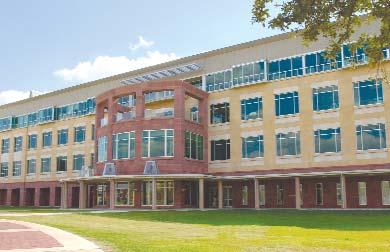
The Durango Building, the newest academic building at the Downtown Campus, was opened to students this fall. The five-level, 127,500-square-foot structure houses the Tomás Rivera Center, the Upward Bound Program, Student Activities, Faculty Resource Center and administrative and faculty offices, as well as specialized labs and classrooms for biology, instructional technology, chemistry, ecology, kinesiology, music/theater, and art and architecture.
Features include a multipurpose student activities and recreational area, an art gallery and a meeting facility that can accommodate up to three separate events at one time.
The Durango Building is part of the Downtown Campus Phase III construction, which also includes a four-level parking facility. These structures were completed at a cost of $36 million. Work will begin in spring 2003 on the final Phase III component, a $7 million addition to the Durango Building that will house the UTSA Institute for Economic Development.
Investigations
The Department of the Navy is funding research by Andrew Tsin (Department of Biology) in the amount of $60,459 on neurodegeneration of the retina.
Steve A.Tomka (Department of Anthropology) received $3,536 from Comal County Trails Inc. for his proposal to survey the Panther Canyon Trail Project in Landa Park.Tomka also received $85,999 from the Texas Adjutant General’s Department to survey the La Reforma National Guard training facility.
Ernest J.Gerlach (Center for Economic Development) received a $33,000 grant from Solar San Antonio to research ways to develop a renewable energy–based economy for San Antonio and South Texas.He also received $258,300 from the Economic Development Administration to help fund UTSA’s Center for Economic Development.
Ar turo Vega (Department of Public Administration) received $5,000 from Hispanas Unidas Inc.for his proposal to provide evaluation and assessment of the Esquelitas Project,
an after-school mentoring and leadership program for Latina girls in fourth,fifth and sixth grade.The program is housed at Brewer Elementary,Ball Elementary and Connell Middle School.
Clyde F.Felix (Department of Biology) received $49,000 from the Air Force Research Laboratory to fund an electron microscopy analysis of albumin leakage across the blood-brain barrier following microwave exposure.
John R.McCarrey (Department of Biology) received $60,400 from the National Institute of Child Health and Human Development for a study of the regulation of gene expression by DNA methylation.
Robert Hard (Department of Anthropology) received $43,997 from the National Science Foundation to support his continuing archaeological investigations of Late Archaic Cerros de Trincheras sites in Chihuahua,Mexico.
The Texas State Library and Archives Commission funded a proposal by Gerrianne Schaad (Special Collections and Archives,UTSA Libraries) to process the political papers of Cyndi Taylor Krier,a former state senator and Bexar County judge,and current UT System regent.The grant is for $2,234.
Joe L.Martinez Jr. (Department of Biology) received $1,295,494 from the National Institute of Neurological Disorders and Stroke to support continuing research by faculty and collaborators on experience-dependent structural plasticity in the central nervous system.
The Administration for Children and Families of the U.S.Department of Health and Human Ser vices has funded a proposal by Harriett Romo (Division of Bicultural-Bilingual Studies) to improve the education levels of Head Start teachers and staff members.UTSA will collaborate with other South Texas agencies during the program.The initial funding for the project is $130,000.
IntheLoop
Extreme
spiritedness comes to UTSA athletics
UTSA is bringing athletic spirit to campus in a wave of blue—the Blue Crew, that is. The brainchild of Brad Parrott, the Department of Athletics’ new director of promotions and community relations, the Blue Crew is a group of students who aim to put the “rowdy” back in Roadrunner sports.
“We want to build an affinity for our athletics program and create some new traditions at the games,” Parrott says. Besides providing spirited fun, the Blue Crew functions as an incentive program. The more games Blue Crew members attend, the more discounts they receive on athletics merchandise and at local restaurants and other venues.
More than 1,400 students have pledged allegiance to the Blue Crew, agreeing to abide by the crew’s “10 Commandments.” Each member receives a blue T-shirt that lists the commandments, all of which urge spirited support for UTSA sports. Parrott’s intention is to have at least a handful of Blue Crewers at every one of UTSA’s 108 home games, matches or meets.
“The Blue Crew is going to be the wildest, wackiest student group in college sports,” Athletic Director Lynn Hickey says.
Some of the group’s antics are rehearsed, and others are spontaneous, Parrott says. Members have sung silly songs, cheered, drummed, swept and even read the Paisano student newspaper (but only when the other team’s members were introduced) during volleyball and basketball games.
Adding to the spirit of the games is the UTSA pep band, which has returned to the court after a five-year absence. The 18-member student band will play at 25 athletic events, says Associate Professor Robert Rustowicz, who directs the group.
“With the lateness [in the semester] of starting the band, we realize that most of the musicians will be music majors, but we hope to open this up to a campuswide group,” he says. “It does take a lot of time to put this group together, but the kids who have expressed an interest are extremely excited about it.”
Part-time trombone instructor Chris Branagan, a former pep band member at Texas Tech University, will coordinate the group.
quick hits
• The UTSA softball team opens the 2002 season against Texas A&M at 1 p.m.,Feb.3 at Roadrunner Field.
• The Southland Conference Postseason Basketball Tournament is March 5–9 on campus sites determined by final season standings.
• The baseball team opens the season Feb. 13 at Baylor.UTSA will split its 26-game home schedule between Roadrunner Field and Wolff Stadium.
• The Southland Conference Indoor Track and Field Championships are Feb. 15–16 in Houston.
• Volleyball Coach Katrinka Jo Crawford stepped down as head coach in early November.Assistant coach Rhonda Rust will serve as interim head coach. Crawford was diagnosed with cancer in 2000 and continues treatments.
• Men’s basketball games are broadcast on KTKR (760 AM) in San Antonio and KGNB (1420 AM) in New Braunfels. Women’s games can be heard on KSJL (810 AM,FM 94.5) in San Antonio. Games can also be heard on webcasts at www.goutsa.com.
— William Petitt
CampusScene
The senator at the chalkboard
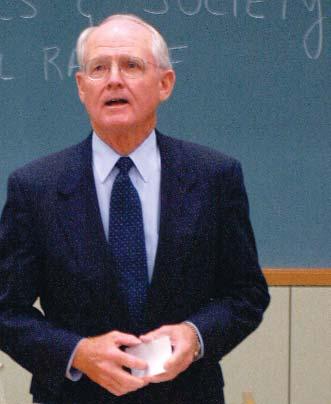
The nearly 300 students arriving for the first day of class had no idea what to expect. They had registered for Texas Politics and Society, a course required for every student as part of the university’s Core Curriculum, but most did not know until they found their seats that morning that their professor would be someone who knew state politics from the inside out—Jeff Wentworth, Republican state senator from District 25. Their teacher did not know what to expect, either. Sen. Wentworth had agreed to take on the daunting project of teaching the class less than a week earlier. Richard Gambitta, chair of the Department of Political Science and Geography, had only a few days before the fall semester classes began to find someone to replace a professor who had been slated to teach the class.
“I wanted an instructor with expertise about both state and local government, plus knowledge about the interactions of the state and local levels with the U.S. government,” Gambitta says. Because Wentworth has served on the Bexar County Commissioner’s Court as well as in the state House of Representatives and Senate, Gambitta thought of him immediately.
The senator came into the class with one goal: “I want the students to become interested enough to become active participants in the political system,” he explains. He began by handing out voter registration cards to those who were not yet registered. But Wentworth also wants students to go beyond merely voting. “Hopefully, they’ll go to their precinct conventions next March and see how easy and meaningful their participation in the political process is,” he says, noting that most college students fall in the age group with the lowest voter turnout.
Wentworth’s own involvement in state politics began in third grade, when his class took a field trip to Austin to observe the state legislature in session. Afterward, when Gov. Beauford Jester spoke with the young visitors on the steps of the Capitol, Wentworth was hooked.
While he can’t recreate that field-trip epiphany for his students at UTSA, Wentworth has sought ways to make state politics come alive for them.
To that end he has brought in speakers with an expertise in the business of state politics and the media. These include Cyndi Taylor Krier, regent for the University of Texas System and former Bexar County judge; San Antonio television anchor Chris Marrou; syndicated political columnist Jan Jarboe Russell; Republican County Chairman Roy Barrerra Jr. and Democratic State Rep. Robert Puente. Lt. Gov. Bill Ratliff showed up to give students a personal account of the ups and downs of his powerful office.
Many students appreciate this injection of the real world of politics into the classroom. At the same time, Wentworth is learning about the students’ world.
As a state senator, serving approximately 850,000 people in 17 counties
by Judith Lipsett
including Bexar, he deals with many issues that affect higher education in Texas, from budgetary decisions to affirmative action. But debating these issues in Austin and serving on the front lines are not the same thing.
The last-minute nature of his hiring and his unfamiliarity with the mechanics of university teaching have led to some bumps in the road for the teacher and for his students. Besides taking awhile to get his syllabus in order, the senator also learned what it was like to have a long-ordered textbook delivery go awry—resulting in the late arrival of textbooks—something most college professors have experienced.
Wentworth is stymied by the level of absenteeism in the course. He’s convinced by this experience that “we need to reduce the number of students in classes—big survey classes make the learning experience for students a challenge.”
Despite the competing demands of his law practice and his Senate responsibilities, Wentworth dutifully holds office hours each week—in an office he shares with two other instructors. These hours, along with those spent preparing lectures and writing exams, have turned the volunteer job into a much greater commitment than he expected. He’s also in demand as a visiting lecturer on campus. Once word got out that he was teaching this fall, other professors started booking him for visits.
“It’s an amazing opportunity for students to have this access to an elected official with such experience in the nuts and bolts of politics,” says Amy Jasperson, assistant professor of political science. “Recently, the Republican and Democrat state party leaders came to his class to debate—two of my former students mentioned how inspired they were by these women.”
It seems the teacher is taking away a lesson or two as well. “I didn’t contemplate fully what it would involve for a person who hasn’t taught before,” the senator says. “I have a better appreciation now for the work involved in teaching a class.”
Jeff Wentworth brings firsthand experience to the classroom
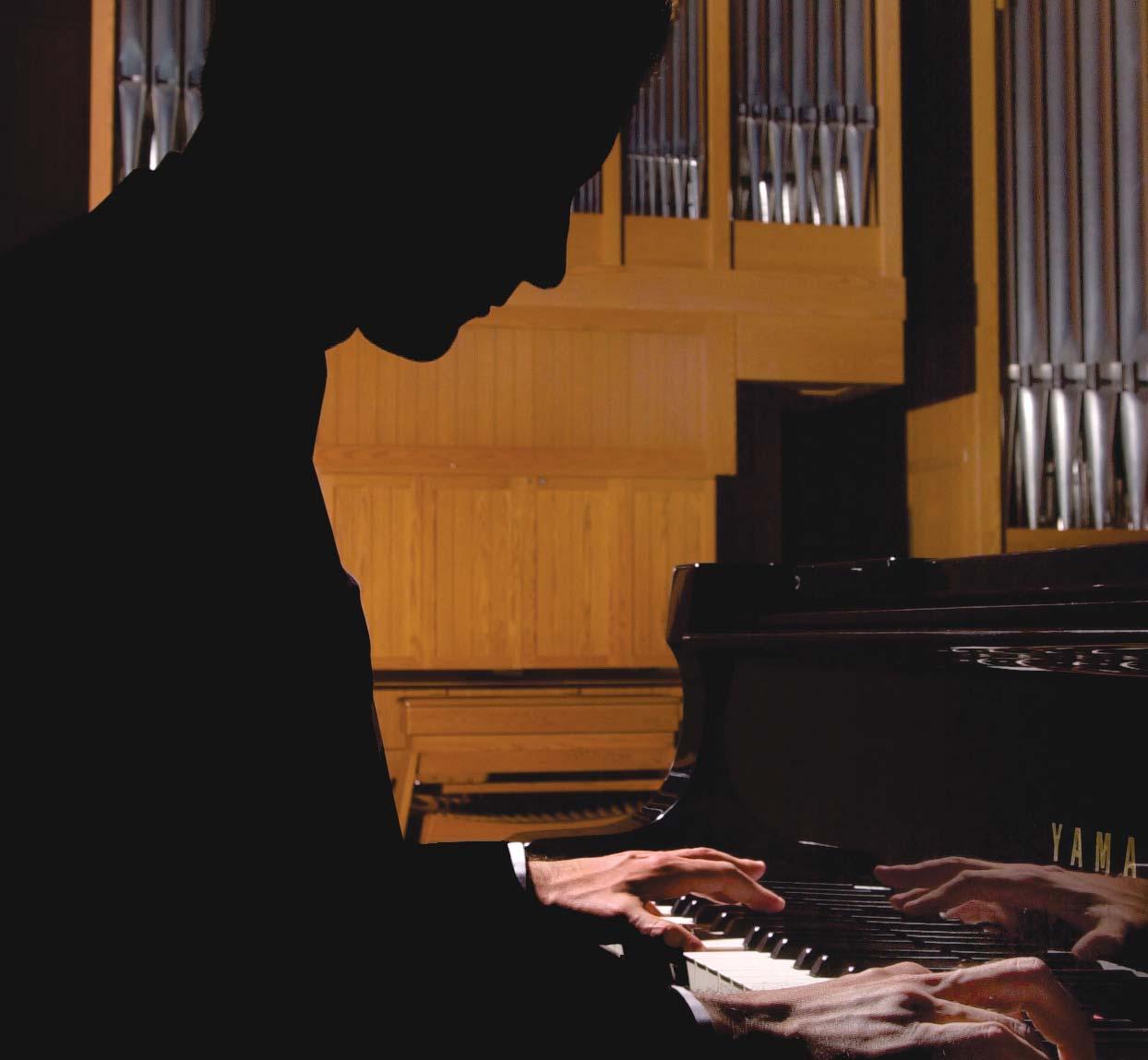
Behind every performer. . .
a great accompanist
By Jasmin Khair
The lights dim.
A tuxedo-clad performer enters stage right to the sound of applause. He stands directly in front of a concert grand.
What happens next is a moment of reality in the musical realm.
Before the marquee vocalist sounds a note, another person who entered the stage behind him—the accompanist— sits at the piano and waits for a cue.
Though the accompanist is not the person the audience came to hear, without him or her there would be no star performance. Quick-thinking, adaptable, intuitive and, above all, passionate about music, accompanists are key to the success of UTSA’s musical performances.
The Department of Music has two full-time accompanists—Christine Debus and Geoffrey Waite. Like all accompanists, they must adapt to a variety of performing levels and conditions. And with more than 175 concerts and recitals at UTSA to their collective credit, Debus and Waite have developed a broad repertoire.
“While a solo-performing pianist may take a year or more to focus on a small number of recital-level pieces to take to the highest level, as an accompanist I have approximately 100 pieces of music in my active pile,” Waite says.
“These range from shorter vocal songs all the way up to instrumental sonatas
of 20 to 40 minutes in length, some of which I will have had two to four months to prepare for the first performance and some only days or weeks.”
Just how difficult is it to be an accompanist? Consider some of the questions an accompanist must ask before collaborating with other musicians: How can I most effectively help them get through the performance and do the best job they can? Which passages of a piece are particularly challenging for an individual to perform?
Where will the performer take a breath?
Debus knows that some people believe the accompanist is an individual who couldn’t make it as a solo performer, someone referred to as the “lesser performer” on the stage. In fact, Debus explains, the accompanist is part of a unique and even intimate collaboration with another musician.
“A good accompanist can push along the tempo for the singer who is getting tired toward the end of his
recital, or slow down for a nervous performer who is choosing too fast a tempo, or even quickly react and go along with the soloist who, performing by memory, has skipped half a page without realizing it.” she added.
“One of my favorite quotes from [British accompanist] Gerald Moore is ‘the accompanist is not always so blindly obedient as many people believe.’ ” Indeed, expecting the unexpected is the hallmark of a good accompanist. It’s a quality that Debus relishes.
She also admits that not every collaboration leads to musical perfection. As with most jobs, some days it’s just a job. And on other days, “musically, it clicks,” she says. “You get to build very intimate and rewarding relationships with many different people. It’s very fulfilling to me, and because the actual concert then involves more than one person, there is always room for what I could call the spontaneity of the moment . . . the thrill and the fun of the performance. I guess it is my way to live dangerously and it suits me!” Debus adds.
Even with the long nights of rehearsals, there are some situations an accompanist can’t anticipate. Waite encountered one such situation in his first UTSA performance.
“The stage crew forgot to lock the wheels on the concert grand piano on the recital hall stage, and it started rolling away from me during the performance,” Waite recalled. “Fortunately the person turning pages for me had the presence of mind to find a handhold on the instrument and stick a foot behind one of the wheels so that the piece could be finished with the piano still on the stage.”
Both Debus and Waite agree that it is the idea of collaborating with other musicians and playing a part in the growth of students is what keeps them in love with their profession.
“It’s necessary to keep the art of ensemble playing at its very best. It’s the reason why I’m passionate about music,” Waite says.
THE END OF NEW HISTORY
MANSOUR EL-KIKHIA,associate professor of political science, immigrated to the United States from Libya in 1979.
The events of Sept. 11, 2001, have had a tumultuous impact on the United States. The rage that resulted from anger and fear after the catastrophe targeted Arabs (and look-alikes as well) and Muslims residing in this country. To avoid becoming a target of persecution, Youssef changed to Joe, Mohammad to Moe, Ibraheem to Abe, and Adnan to Dean. Muslim women were forced into either removing their head covers or staying at home out of sight. For the first time, circumstances placed Muslims in the United States in a position to empathize with persecuted minorities.
Yet, in testy times like these, institutions as well as people come to better understand the caliber of their mettle. UTSA and its population came through the difficult test with flying colors. As a Muslim and a teacher at the institution, I encountered no discrimination of any type; rather I found acceptance, respect and a thirst for more knowledge about my origin, religion and life. This horrific catastrophe has motivated Americans to learn more about themselves and the multiple components of their divergent society.
The president, provost and the vice president for student affairs at UTSA rose to the occasion, first by allaying fear within the university community and then by fulfilling its educational mission.
The university encouraged faculty, particularly from disciplines such as political science, psychology and history, to analyze and explain the dreadful events that claimed the lives of so many innocent souls. Students showed genuine interest in learning about international politics, the Middle East, Islam, terrorism and Afghanistan. Teachers displayed their talents and knowledge at teach-ins and, in their classrooms, emphasized the need for tolerance and understanding. A growing number of students fascinated by the complexity and novelty of the Arabic language asked the Department of Foreign Languages to offer classes.
We as a nation will not be able to bring back the thousands who died on that terrible day, but we can work hard to ensure that it does not happen again. There are two ways of doing that. One way is to abridge the individual rights and civil liberties we have come to enjoy and cherish in this society. Ultimately, that route will fail because it will turn us into what we are not. The second route is one that puts institutions like UTSA in the forefront of the battle for education, reconciliation and the building of bridges between communities and nations.
Teaching the young about the world, as well as exposing them to different languages and cultures, will ultimately bring forth knowledgeable leaders. Developing a competent, active and an informed population takes time, but the rewards are great— leadership that is not based on fear or a source of envy, but one that is based on respect and admiration. The task before us as educators is surely frustrating, but after all we are not referred to as “candles that burn to light the way for others” for nothing.
THE POWER OF WORDS, THE POWER OF LOVE
NORMA CANTÚ,professor of English, joined the UTSA faculty in 2000. This is an excerpt from a work in progress.
In silence we stand every Tuesday in the growing darkness of early evening—a small group gathered at San Fernando Cathedral. We wear black armbands of rough cotton in mourning, in memory of those who have died. We carry handmade signs, red and black markers on white poster board: War is Terrorism, Peace with Justice, Paz. How can death be the answer to death?
I pray in my heart and think of those peacemakers who have come before, who have taught us that there is a way to justice without violence, without killing. Ghandi. Martin Luther King. Cesar Chavez. I seek in my soul the names of women and men who believed in human rights and dignity for all who live and work on earth. Emma Tenayuca. Jovita Idar. Manuela Solis Sager. Jeanette Rankin. Why do we know the names of generals, of soldiers who kill and not the names of the peacemakers? I resolve to research, learn the names of the peacemakers who do not make it into our history textbooks.
How we speak of events reveals how we feel. The tragedy, some say; the attack, say others. Some speak of 9/11 or Sept. 11. The terrorist attacks. The bombings, some say. Many, as I do, stumble, not sure of what to call what happened that day. We are not sure what happened. Yes, it was an attack, but by whom? Not a nation, per se. We have no way of locating an enemy. Who could think of committing such an atrocity? Whose hate looms so large? Why? And whose only solution is annihilation? Perhaps if we understood their hate, believed that we share the same world and cared to work together for the whole world. Perhaps if we acknowledged that, yes, we worship the same God. Perhaps.
With time, we come to a realization that our government is at war, that we are bombing a nation that is our political opposite. We have made that nation our enemy, and I read that the dreaded Taliban are the enemy. But are the children and the old and the many who suffer because of our air strikes our enemy? Have we not become like them, like those who sought to kill innocent civilians? Mejor que haya un loco y no dos—better that there be one crazy person and not two—my mother would admonish us when we fought with each other over some childish squabble. What an opportunity to take the high road, to let there be only one madman.
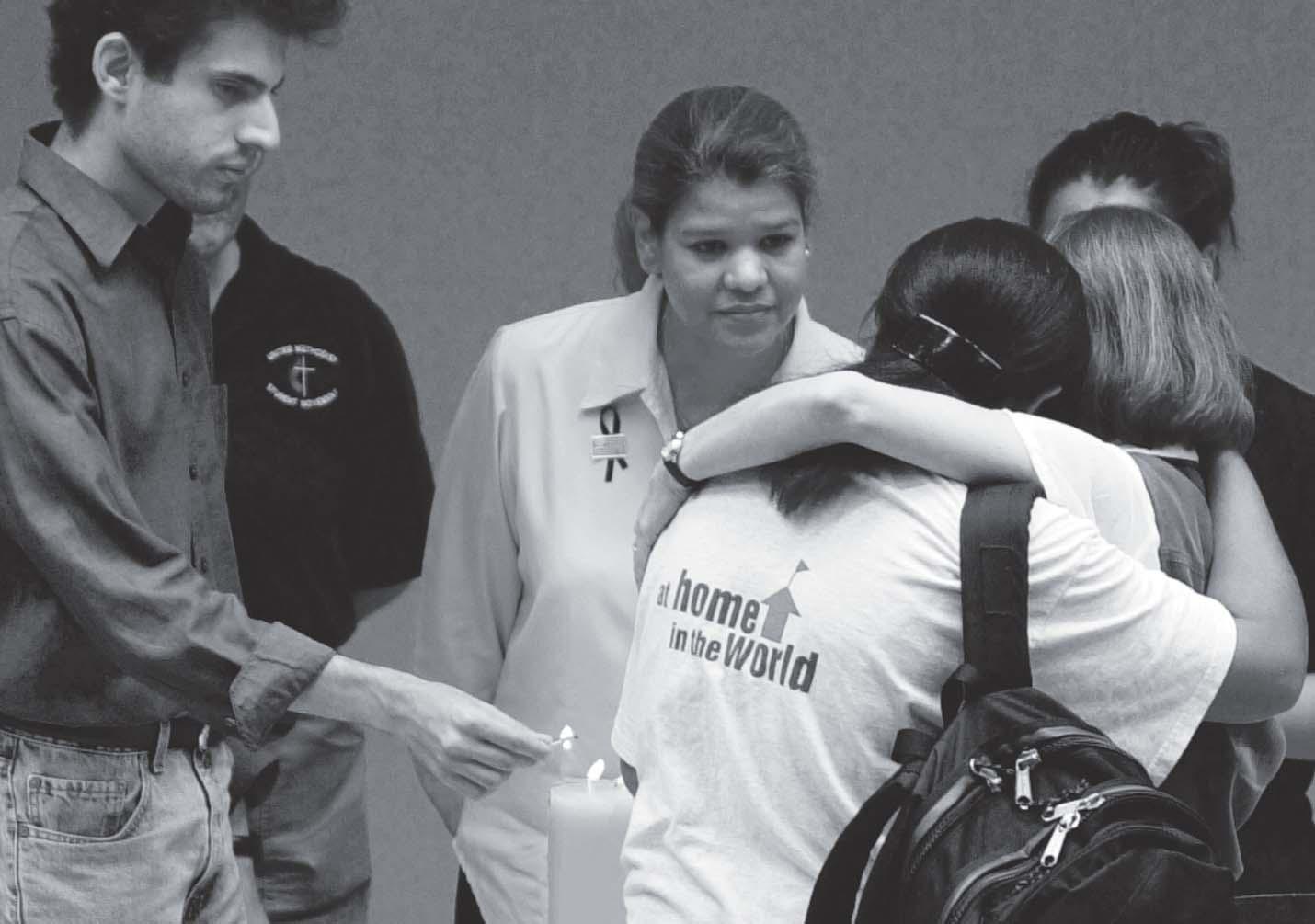
Memorial vigils took place on the 1604 and Downtown Campuses on Sept. 12. In addition, a group of several international student organizations held a memorial service on Oct. 1.
Words, I believe, can heal; they can work miracles. Words are power, and we can invoke their power to effect change, to bring about justice with peace. I cannot accept that the actions of a group will be sufficiently punished by more killings of innocent civilians. I still hold in my heart the hope that the almost 5,000 who died have not died in vain and that we can learn the lesson of their sacrifice. Killing does not solve any problem. Death does not atone for death.
Representatives from the Jewish, Hindu, Muslim and Christian faiths spoke and the Women’s Choir sang.
TIME TO THINK ABOUT THE UNTHINKABLE
JAMES P. CHAMBERSis a professor of biochemistry and director of the Brain Research Laboratory of Biochemistry.
The catapulting of infected cadavers over the walls of European cities and castles under siege during the Middle Ages is probably the first documented example of biowarfare. Currently, a deadly array of bacteria and viruses (anthrax, brucellosis, smallpox, tularemia, viral hemorrhagic fevers, plague and Q fever) and naturally occurring toxins, including botulinum toxin and staphylococcal enterotoxin B, has gained favor among biowarfare enthusiasts due to their respective “mass killing” potential. The efficient presentation (i.e., weaponizing) of these organisms to their target population is a critical issue. Anthrax spores were effectively weaponized by the United States in the 1950s and 1960s, and it is well known that other countries have actively pursued this goal.
It is difficult to refute the very real possibility that we will not be able to prevent nor effectively cope with simple, orchestrated biowarfare scenarios. More frightening is the possibility of bioengineered Trojan horse–type pathogens masquerading as indigenous nonpathogens and giving rise to fulminating, lethal infections. The purposeful insertion of virulent genomic elements of one organism into that of another, thereby creating hybrid, extremely virulent, drug- and antibiotic-resistant, and infectious organisms the likes of which the world has never seen must also be contemplated. Fantasy? No. Challenging? Yes, but a simple examination of the scientific literature and laboratory experiences tells us that what was dauntingly challenging 10 years ago, is a Betty Crocker recipe today.
These agents and their use pose a great threat to this nation’s vital interests. Rapid and reliable detection of these agents, their constitutive genes and expressed toxic products is critical. Our laboratory efforts here at UTSA during the past 15 years have been recognized for playing a significant role in development of sensing elements for rapid identification of a variety of biological agents. This work continues in concert with our significant involvement in the Biological and Chemical Countermeasures Program at the University of Texas Institute for Advanced Technology.
This war will not be fought on the traditional battlefield with the familiar field pieces. There will be no submerged dreadnoughts resting a few feet from the water’s surface, seeping oil to remind us of the ignoble act—the ambush. Considering the ease of hiding, the fidelity of genes, the killing potential and the open nature of a democracy, the events of the last few weeks underscore the sobering reality—war is being waged on American soil. We must now confront and effectively deal with the unthinkable.
STUDENTSOLDIERS CONTEMPLATE THEIR ROLE
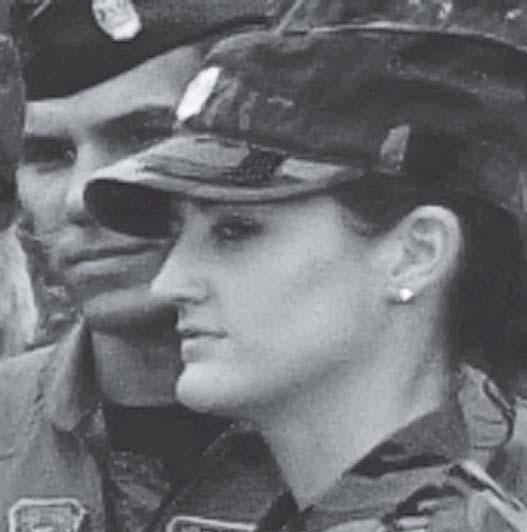
Henry Ruiz, a junior sociology major and second lieutenant in the Army ROTC, served four years in an infantry unit as a colonel in the Army Reserves. He says he has seen a difference in the way nonmilitary students interact with the ROTC cadets since the Sept. 11 attacks.
“I’ve noticed that other students are showing us more respect,” Ruiz said. “I think the events of Sept. 11 have pulled us together as Americans. A lot of my fellow cadets and I have talked about it. I can sense a difference in the ROTC classes, too. We’re all trying to learn more about mission strategies and asking more questions,” he added.
There are 58 students in Army ROTC at the university. Of 10 undergraduate reservists in the program, two have been called for duty. Among the ROTC faculty, none had been called for duty as of Oct. 26. According to UTSA Human Resources, two UTSA staff members had been called into reserve duty by late October also. In the Air Force ROTC, one member had been called into reserve service.
But what do cadets think about the idea of going to war? Ruiz said that there is a calmness and caution about the topic.
“People in the military have a different mind-set about war than the general public,” he said. “Many civilians are too emotional about it and want fast action . . . a ‘nuke ’em fast’ kind of approach.
“But in the military it’s a different attitude. It has to be a reasoned approach. We go into battle rationally and try to avoid casualties. But we value our way of life, and our mission is defined, and we won’t stand for terrorism.”
Ruiz said that military people know that this will be a long-term campaign and that there is no quick solution to terrorism.
“Most military people are more cautious and hesitant about a full-blown mission, because it’s easier said than done,” said Ruiz. “It’s a guerilla warfare situation kind of like it was in Vietnam. And mines are still deployed from when the Soviet Union was there a few years ago, so there would be a lot of danger walking through that area.”
— Tim Brownlee
PRESERVING CIVIL LIBERTIES—IT’S UP TO US
BENJAMIN JOHNSON,assistant professor of history, shares his thoughts on war and democracy.
Like many Americans since Sept. 11, I am concerned that my country may be subjected to further attacks. But my greatest fear is not that the United States, by far the world’s most powerful nation, will be defeated, but rather that in waging this war we may sacrifice our best values and highest principles.
If wars are sometimes necessary, it is also worth remembering that war and democracy are fundamentally at odds. A war requires massive power to be concentrated in the hands of those prosecuting it; democracy requires the broad diffusion of power. Rapid action is the hallmark of a successful army; trial and error characterize democracy. Military personnel must follow orders unthinkingly; citizens must question authority. Militaries keep secrets while democracies must spread knowledge and information. In short, the most democratic societies are not the most secure, and the most secure nations are never the most democratic.
What has happened during our country’s past conflicts suggests the deep danger of our current situation:
•The power that is amassed by the executive branch is unlikely to be relinquished when a crisis passes. The presidency left the Civil War, World War I and World War II more powerful than when it entered them.
•The populations most vulnerable to outright repression are immigrants and racial minorities. The persecution of “hyphenated Americans” during World War I and the shameful internment of Japanese Americans in the second World War may be a harbinger of things to come for Muslims and Arabs living in this country.
•Power given to domestic law enforcement agencies to defend against external threats is often used for other means. The FBI not only used its power to defend against Soviet communism, but also to harass citizens who were exercising their democratic rights.
Developments since Sept. 11 raise the prospect that we may repeat some of the worse mistakes of the past. Attacks and slurs against Arabs and Muslims suggest that many people may indiscriminately blame them for the actions of others. The Bush administration has requested incredibly broad new powers for the FBI and other agencies, including the right to detain immigrants for up to a year without filing charges and the authority to press charges with secret evidence.
Both conservative Republicans and liberal Democrats opposed these extreme measures, eliminating some of the dangerous provisions. And Congress as a whole has refused to abandon the normal deliberative process. Many people have expressed solidarity and support for their Muslim friends and neighbors.
Our country’s enemies can destroy buildings and take thousands of lives. They can make us fear for our safety. But they can’t make us an authoritarian, mean-spirited country unless we let them. It’s up to all of us to make sure that we don’t.
WHERE WERE YOU?
MAJOR MONIKA LUTZ,executive officer of the Army ROTC program and assistant professor of military science, will retire this spring with 20 years of military service.
I work for a company with 480,000 employees—the U.S. Army. Despite its size, the army runs on teamwork. The military teaches a code that develops esprit de corps and loyalty, qualities rarely found in businesses smaller in size and scope. Members work side by side while using their differences of culture, religion, gender, education and experience as a strength to build on rather than an obstacle to overcome. Those strengths went into high gear on Sept. 11.
Our military sustained a tragic blow that day. Along with other Army ROTC staff members at UTSA, I listened in disbelief as radio reporters announced the news that an airplane hit the Pentagon. Then we waited with our military family throughout the world for news of victims and survivors. We learned that we lost former supervisors and co-workers, friends and close associates.
At home that night I longed for a respite from the television, print and radio broadcasts chronicling death and devastation. I needed stories about the mundane, the kind of articles we skim or overlook most of the time. I searched through my pile of newspapers and found the San Antonio ExpressNews edition of Sept. 10. As I thumbed through section after section, I looked for a sign of what was to happen the following day. What I read startled me. Should we have seen Sept. 11 coming?
That day’s edition featured a front-page color photo of a burning bus in Israel. Page after page spun the world’s news into a web of sadness— killings, assaults, growing problems with the economy and terrible acts of inhumanity. I picked through the stack of my military newspapers, too, and selected a copy of the Army Times—it was also dated Sept. 10.
The front page displayed a photo of two young soldiers and the headline, “Power to the People. How one brigade is letting junior leaders take charge.” Inside the paper, HBO had a full-page color ad to highlight the first episode of its new miniseries, Band of Brothers. The ad depicted 11 soldiers, some serious, several grim and all extremely young. They reminded me of the young soldiers I’d seen going to Vietnam, Panama, Somalia and the Persian Gulf.
Where were you on Sept. 10, 2001? Like millions of Americans, you know exactly where you were the moment you heard about the tragic events of Sept. 11. That memory will stay with you for a lifetime. But where were you the day before the tragedy happened?
Our lives changed between 8:30 and 9:30 a.m. on Tuesday, Sept. 11. We could not have prepared for the atrocities in New York City, in the countryside of Pennsylvania, or at the Pentagon’s own west wing. We thought that Sept. 10 was just another day. But there won’t be just another day in America for a long time, and our soldiers won’t have just another day’s work in the defense of our country.
So perhaps the day before is a memory we should hold close to our hearts. It was the last day of an America that is lost forever, for the military and for us all.
THE FUTURE OF GROUND ZERO
GEORGE JELL,an assistant professor in the School of Architecture, watched the twin towers of the World Trade Center being built. Now he wonders what will take their place on the New York City skyline.
CAMPUS RESPONDS TO CONCERNS OF INTERNATIONALSTUDENTS
The World Trade Center disaster on Sept. 11 was of particular significance to me and my family, having lived in a cooperative loft building in Manhattan for 25 years. Despite the fact that the two towers are missing now, and we have not been back since, we still imagine the magnificent view of the towers from our SoHo loft apartment. It is hard to imagine a void where they once stood.
As a student of architecture in the mid-1970s, I watched the towers go up inch by inch, like an oversized creature in the distance that didn’t stop growing. I still remember waking up one night and seeing one of the towers covered halfway by a cloud. My first reaction was “The tower is burning”— but of course that’s why these buildings are called skyscrapers. Then came a light earthquake rumble one night in the mid-eighties, and we actually tried to calculate the distance between the WTC and our apartment. We were relieved to find out that if the towers fell, they would not hit our building.
I also remember many weekends downtown at the newly created waterfront at the financial center, built on a landfill from the sand removed from the WTC site, and looking out to the Statue of Liberty and back to the towers, which gleamed like steel bars in the afternoon sun. The creatures had turned into light sculptures, and the reflections of the steel and glass exterior changed according to the hour of day and served as reference points for one’s position in Manhattan.
This reference will have to shift toward midtown now, to the Empire State Building or to something else to be built to replace the enormous amount of office space lost. The four buildings of 50 stories proposed for the site may have a hard time acting as visual markers for downtown Manhattan, but they would certainly accommodate the anxiety and fear of height that potential tenants may have after the collapse. There is also the chance to create an improved neighborhood with new low-rise buildings and carefully designed street fronts, grouped around a memorial space.
Of course, it would certainly be more spectacular to have a landmark designed by Rem Koolhaas [Dutch architect and founder of the Office of Metropolitan Architecture] and the like. I hope to see an international competition produce the ideal combination of a memorial for the thousands of lives lost, an integrated, lively neighborhood and a spectacular new marker for the downtown Manhattan skyline.
The university’s international students, more than a fourth of whom come from Middle Eastern and South Asian countries, were especially affected by the Sept. 11 tragedy. Though they shared the shock, sadness and anger of the rest of the student body, these students were without the solace of home and family. And within hours of the tragedy, as credible reports surfaced about the identity of the perpetrators, many realized they were vulnerable to bigotry, discrimination and violence.
On the day of the attacks, President Ricardo Romo, Vice President for Student Affairs Rosalie Ambrosino and other administrators met to formulate plans to address the concerns of the UTSA community, including the international students. The message that went out over the Web site and UTSA Update (the faculty/staff e-newsletter) could not have been more clear:
“A hallmark of UTSA’s community is our diversity,” Romo wrote, “and I ask each of you to encourage respect for all students, faculty, staff and visitors to our campus regardless of their ethnic or religious background.”
UT System Chancellor R.D. Burck also issued several statements warning against harassment of Muslims and Middle Eastern students and decrying several reported incidents at universities around the country. [A widely reported attack against a Middle Eastern student at Arizona State University has since been proven to be a hoax.]
“ There was some anxiety, but for the most part our [international] students have done really well. They have a lot of faith in what we do here,” said Sylvia Medel, assistant director for the Office of International Programs.
Ten international students, most of them from Qatar, withdrew from the university. There were no reported incidents of violence against UTSA students, Ambrosino confirmed.
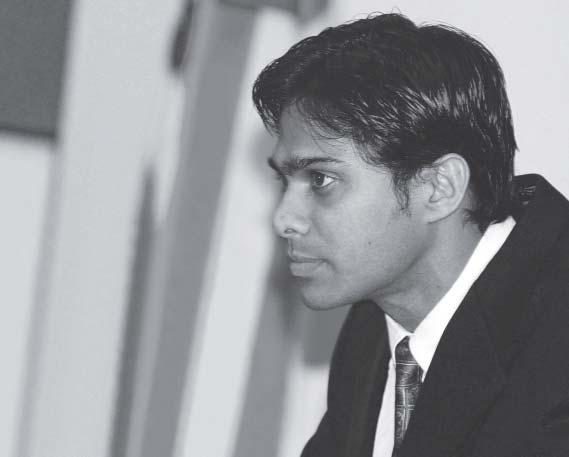
A group of international student associations and the Office of International Programs organized a memorial service that featured speakers from Muslim, Christian, Hindu and Jewish faiths. “I felt that a loss of life is a loss of life anywhere in the world. My friend lost his leg when a bomb, planted by a terrorist, exploded in Delhi,” said Shahin Iqbal, a graduate student who spoke at the service. “I was meters away, so I definitely understand the fear and the trauma caused by such a senseless barbarism.”
— Lynn Gosnell
WHO WE ARE
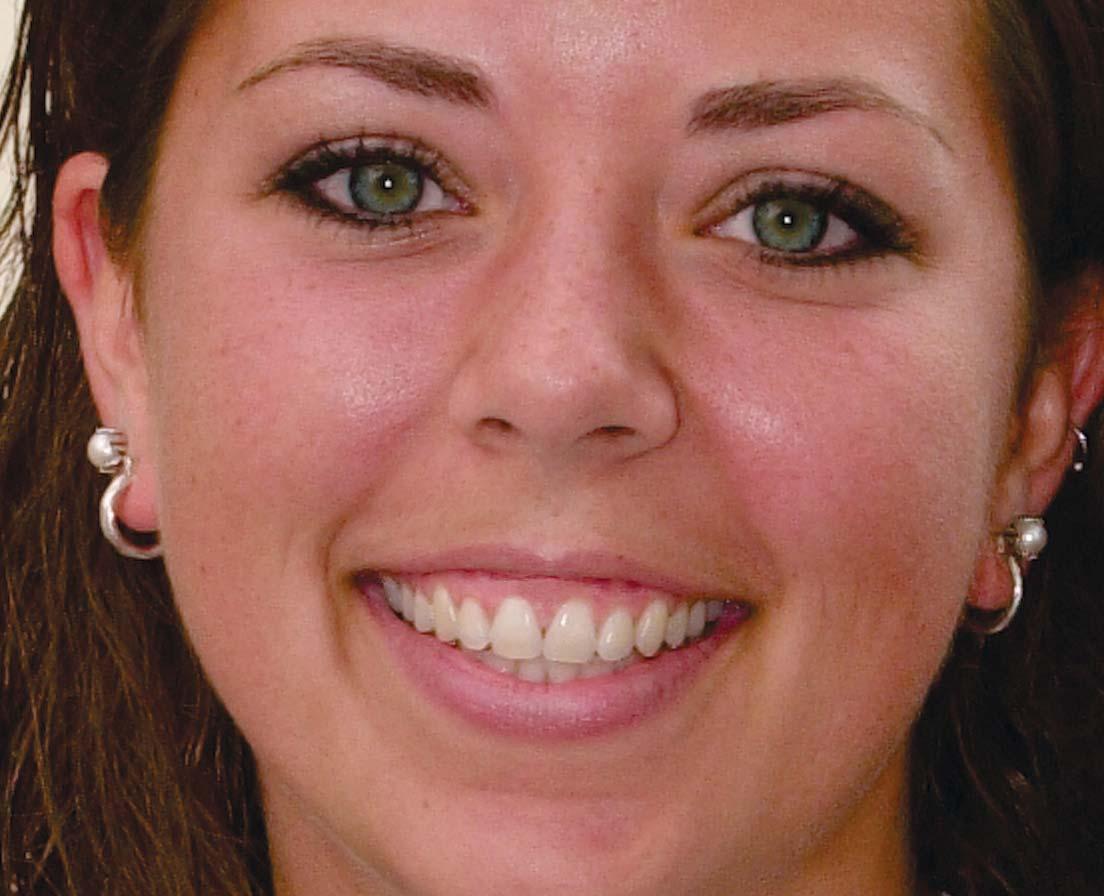
WHO’S THE TYPICAL UTSA STUDENT?
BY LYNN GOSNELL, DINA INMAN AND REBECCA LUTHER
She’s 24 years old and Hispanic. She’s taking classes full time in the College of Business. She’s from Bexar County.
At least, that’s the typical student based on census date statistics for the fall 2001 semester: 55 percent of students are female; the average age for undergraduates is 24.8; Hispanic students account for 45 percent of the student population, with white students a close second at 42 percent; 61 percent of students attend full time (12 or more hours a semester); the College of Business has the largest enrollment of the university’s six colleges; and, finally, almost 63 percent of students come from Bexar County.
Every semester, the university culls its records to create a profile of the current student body. Like the U.S. Census, UTSA’s census report is essentially a head count—of how many students attend the university, how many are enrolled in each degree program, how many are first-time freshmen, how many are transfer students, how many are from Texas, from other states and other countries, etc.
This year, UTSA has a record enrollment of 19,883, an increase of more than 5 percent since last year. And the Downtown Campus saw an almost 13 percent increase in enrollment in that time.
STORIES
The report also shares a few quirky factoids. Though out-of-staters account for less than 2 percent of the student body, UTSA has students from each of the United States except Rhode Island and Vermont. (Students from Alaska and Hawaii? Yes, we’ve got them. But Rhode Island and Vermont—no.)
While it seems that every UTSA student fits one set of statistics or another, none of them is defined by those demographics; indeed, the census data cannot tell us who our students really are, what brought them to the university and where they plan to go from here.
Indeed, the data doesn’t reveal much about their lives off campus—how many students are married or have children, how many work part or full time or how many live at home. Perhaps in the future, there will be a way to sample our student population for this essential information.
In these pages, you’ll meet seven students who have different backgrounds, different GPAs and different ideas about what they want to do with their lives. Curiously enough, there’s not a 24-year-old Latina business major from Bexar County among them.
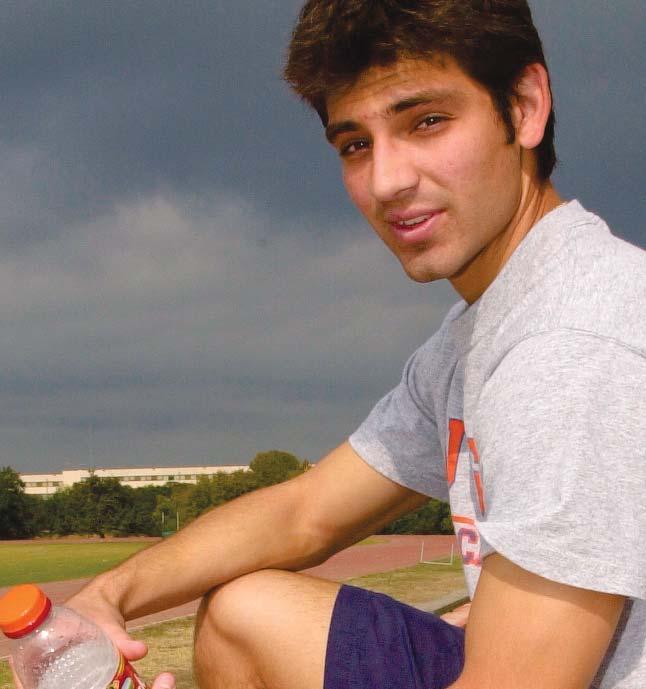
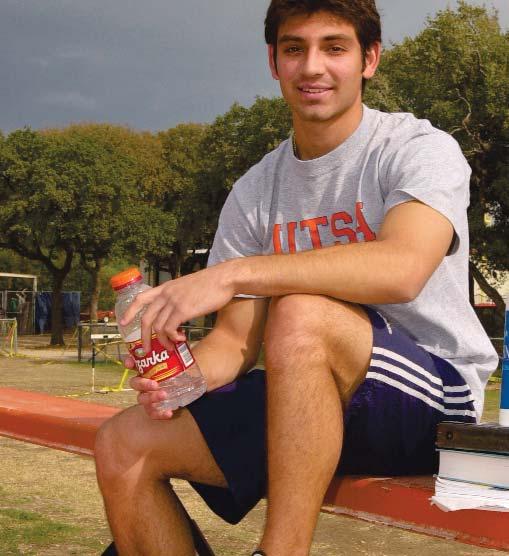
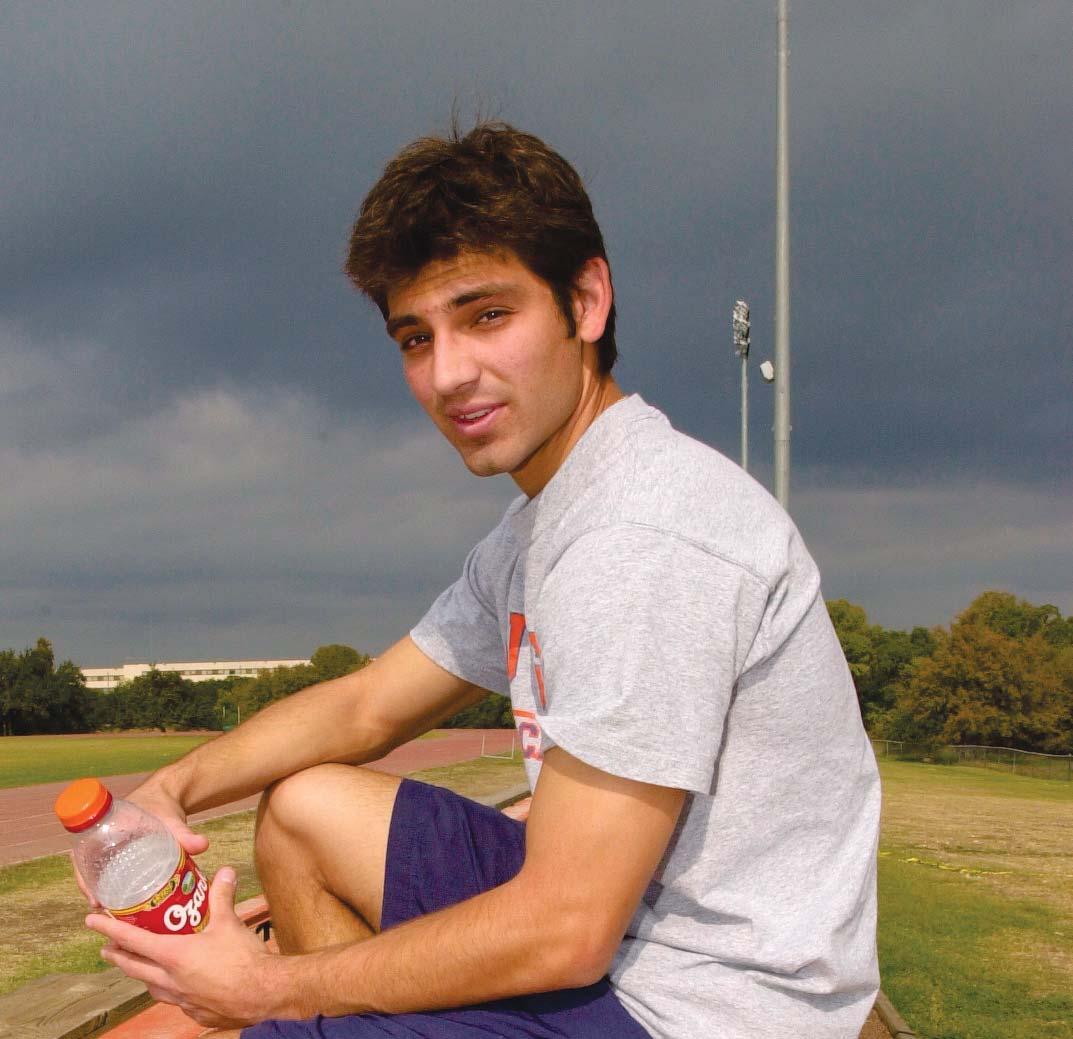
“My coach used to say, ‘How you perform on the track is how you perform in the classroom.’ ”
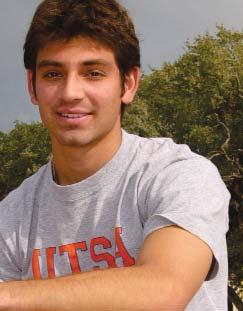
Name: James Cantú
Age: 21
Hometown: Gregory/Portland, Texas
Class: Senior
Major: Biology
James Cantú has no need for a daily planner. For him, running through the course of a day has become second nature. After all, balance and structure are a must when juggling both school and athletics.
“I couldn’t really correlate track and school when I was a freshman,” Cantú says, “but my coach used to say, ‘How you perform on the track is how you perform in the classroom,’ and I never really thought about it like that until now.”
A biology (pre-med) major, Cantú came to UTSA on a track scholarship four years ago. Next spring he plans on taking the MCAT, a first step toward entering medical school. Ultimately, he wants to work in sports medicine.
In the meantime, he understands his role as a student athlete. He views education as his top priority; running track comes in second.
Cantú has been running track since the fourth grade. His events are the 110- and the 400-meter hurdles. Last year he helped the Roadrunners win their first conference track meet
“James is the type of young athlete we like to recruit to UTSA,” comments track coach Que McMaster. “He has grown tremendously as far as an athlete and as a student in the classroom, and those are the areas where we look for growth.”
For the first couple of years at UTSA, Cantú lived with friends. Last year he decided to move in with his older sister. According to Cantú, she has been instrumental in his newfound dedication toward school.
Cantú also credits his parents with helping him realize how important it is to earn an education. “My parents continuously give me advice.” says Cantú, “They tell me to make goals and to go after them.”
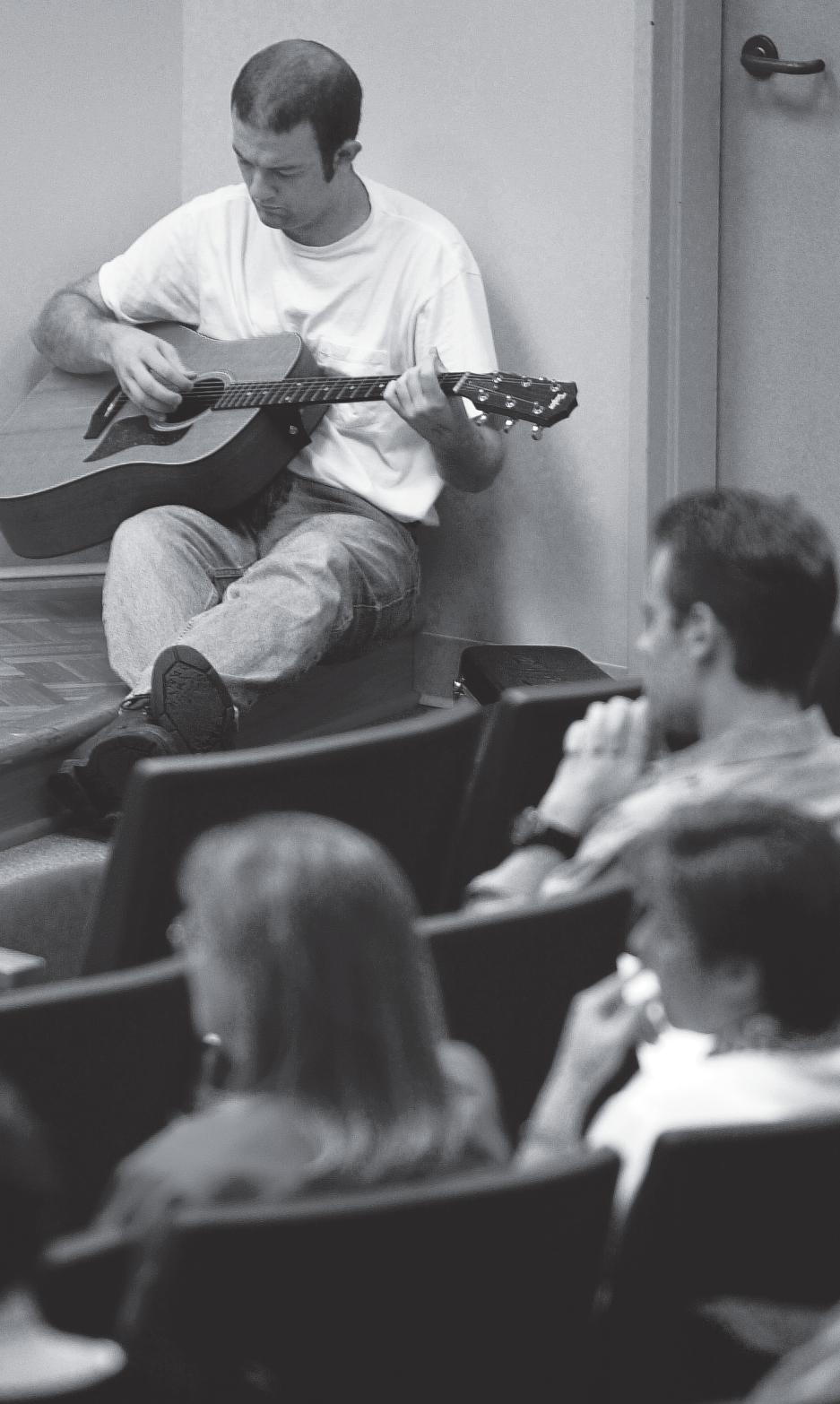
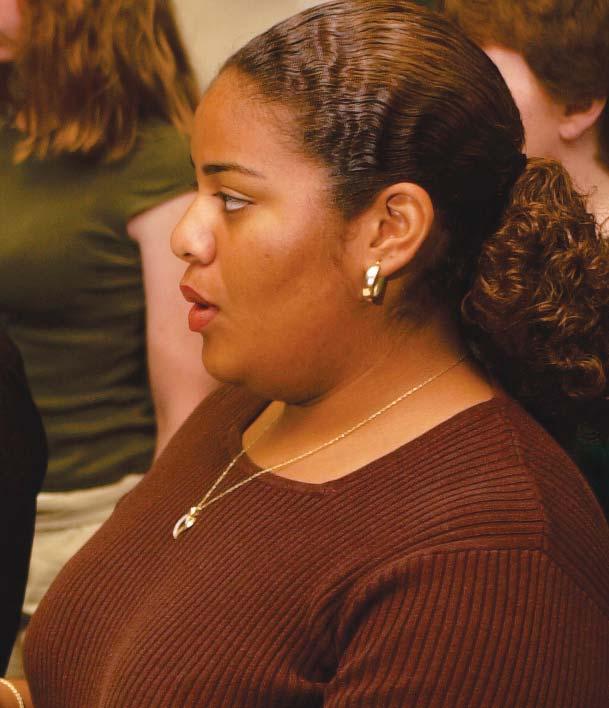
“I came to audition for a scholarship . . . and in the awards ceremony the mixed concert performed, and I just fell in love with it.”
Name: Devi Wiseman
Age: 20
Year: Sophomore
Hometown: San Antonio
Major: Music education
By the time Devi Wiseman enrolled at UTSA to study voice, she was already a veteran perfomer—she’d been singing in church choirs since before she could read. She also sang in the chorale at Southwest High School. Still, her first voice lesson with Gary Mabry was a revelation.
“Immediately I could tell the difference. My mother was like, ‘Wow, you sound so different!’ ” Wiseman recalls.
Wiseman, a soprano, says that not only does her voice sound better, but singing is easier and more comfortable. It also helps that Mabry has steered her toward music that fits her range and style.
“I’ve been singing a lot of the slow, romantic kind of music, and that fits me better than the fast up-tempo music. . . . I’ve done Mozart, Puccini, Fauré, also, and some Strauss. Some Spanish composers, too.”
Wiseman had a music scholarship her freshman year, but she had to drop it this year to accommodate her busy schedule. She takes 13 hours of classes and works at Sendero Christian Academy teaching music to fifth- through eighth-graders. She’s also the praise leader for her church choir, which travels and gives concerts to other churches. She loves gospel music, but not exclusively. When she feels herself getting out of touch with “what’s popular,” she consults her high school–aged cousins.
Although her major is music education, Wiseman dreams of turning her talent and training into a career as an opera singer for a time. She’s also considering extending her studies through graduate school.
“I want to have experiences to share with my students.”
“I have mixed feelings about being called a first-generation college student. What does that mean to others?”
Name: Adriana Salazar
Age: 20
Hometown: San Antonio
Class: Junior
Major: Political science and sociology
To hear Adriana Salazar talk about her first two years at UTSA is to be reminded of what
“I wish I could have known then what I know now. But that’s not going to happen. That’s life. You learn things as you get older, you mature.”
Name: Michael Deleon
Age: 23
Hometown: Mission, Texas
Class: Senior
Major: Accounting
Michael Deleon loved the last school he went to. That’s why he left.
“I was having too much of a good time,” he says. “I joined a fraternity. . . . I made a lot of friends. I probably knew 10 times as many people there as I do here.”
While his social life was thriving, his academic life was not. After two and a half years of going through the motions and making mediocre grades, Deleon decided it was time to focus on his education. He thought he might need a change of scenery to accompany his change in attitude. Some friends from the Valley were attending UTSA, so he transferred here. He also changed his major from biology to accounting, following in the footsteps of his father, a furniture store controller.
it’s like to be a kid in a toy store—she wants a little bit of everything on the shelves, and the thought of limiting her choices to just one seems impossible if not downright narrow-minded.
Still, with a natural curiosity about sociology and the political process, Salazar finds herself gravitating toward courses that would prepare her for law school. “If you know the laws, you can put them to good use,” she says.
Born and raised in San Antonio, Salazar is the oldest of four children and the first in her family to attend college. Last summer, she took advantage of the Office of Career Services internship program and applied for a Hispanic Association of Colleges and Universities–sponsored position with the U.S. Office of Personnel Management in Chicago. Though her parents were reluctant to send their oldest daughter so far away, Salazar was determined. She got the position, and for 10 weeks lived with a group of interns, working, visiting museums and generally enjoying her independence.
“I loved walking in the city, being on my own. I got along just fine,” she says, smiling at the memory. Would she apply for another internship? You bet. You can’t have too much of a good thing.
university because so many students live and work off campus. “When you come to school here, you realize how fortunate you are, because a lot of other students have to work full time,” he says. “So you see that, and in a way it motivates you.”
Deleon graduates in December, and with his degree almost in hand, he says he doesn’t regret his decision to transfer.
FALL 2001 STUDENT PROFILE
UTSA has 19,883 students (17,425 undergraduate;2,458 graduate). This is a more than 5 percent increase over last year,fall 2000,when enrollment was 18,830.
There are 2,411 first time freshmen, a 15 percent increase over last year.
Total minority enrollment is 55 percent.
Hispanic - 46 percent
White - 42 percent
Black - 5 percent
Asian - 3 percent
Nonresident - 2 percent
American Indian - less than 1 percent
The average age of the UTSA undergraduate student is 24.8;graduate student,33.2
UTSA has just over 4,500 students who are age 30 or older;there are only 10 students who are 65 or older.
Almost 63 percent of UTSA students come from Bexar County.
Thirty-two percent come from other counties in Texas.UTSA has more than 400 students each from:Harris County,and U.S.border counties Hidalgo,Cameron and Webb.
There are 574 international students, almost 3 percent of total enrollment, from more than 80 countries.
Top countries for international students: India,91 Mexico,80 Japan,53 China,48 Taiwan,33
COLLEGE BY COLLEGE ENROLLMENT: College of Business (4,736) College of Liberal and Fine Arts (4,551) College of Sciences (3,907) College of Education and Human Development (3,189) Undeclared (1,591) College of Engineering (1,153) College of Public Policy (756)
The College of Liberal and Fine Arts has the largest undergraduate enrollment,with 4,243 students.The College of Education and Human Development has the largest graduate enrollment,997 students.The College of Business ranks second in both of those categories,but claims the highest overall enrollment.
There are 1,939 new transfers students from more than 80 universities and colleges at UTSA. The highest number of transfers comes from San Antonio College,460.
Sixty-eight percent of students apply for financial aid.
Fifteen percent of students receive scholarship or grant money.
Eighteen percent of students take classes at the Downtown Campus. Seven percent of students take classes at the Downtown Campus only.
At UTSA, Deleon has brought up his grades and gained work experience by interning with a local C.P.A. and working part time in stores including Home Depot and Circuit City. The trade-off, he says, is that UTSA doesn’t have the same active campus scene of his previous
“I’ve learned a lot, and the professors here have been really good. I’ve enjoyed some of the classes, even though some of them have been tedious and you had to do a lot of work.
“Nothing worthwhile is easy. If it were, everybody would have a bachelor’s in accounting.”
Average age of undergraduates taking classes downtown only:29
Average age of graduate students taking classes downtown only:35.3
Sources:Office of Institutional Effectiveness,Office of Admissions and Registrar,Scholarship Office
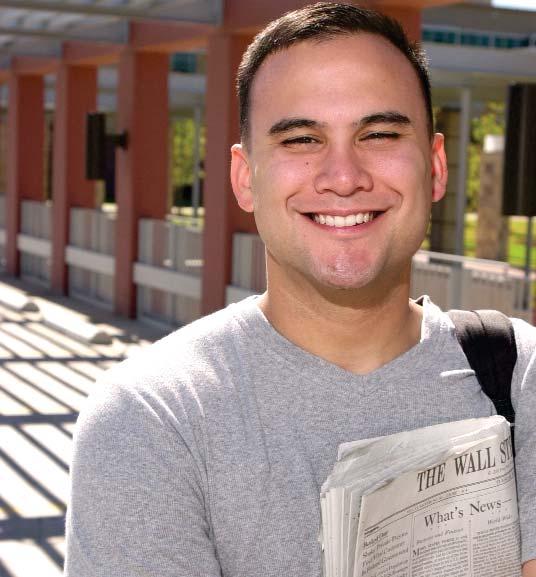
“I started out in information systems, but I’m such a people person, I decided to change my major to business.”
Name: Charles Gordon Age: 26
Hometown: Anaheim, Calif.
Class: Junior Major: Business management
When he graduated from a small high school near Tyler, Texas, Charles Gordon was ready to expand his horizons. So he joined the U.S. Air Force, where he spent four years performing maintenance on liquid fuel systems. But except for several temporary duty assignments overseas and around the country, Gordon spent his entire military service in Abilene.
Though the Air Force didn’t broaden his geographic experience very much, Gordon credits the service with improving his leadership abilities and giving him confidence. It also provided him with access to a tuition-free education through the Hazelwood Act.
After enrolling at St. Philips College, Gordon transferred to UTSA, where he settled on a major in business management. He wants to shore up his studies with both volunteer and paid experience in the business world. He works 20 to 25 hours a week at Randolph Air Force Base.
“A lot of students think they can get out of college without any experience and get a highpaying job,” Gordon says. This veteran is ready to roll up his sleeves.
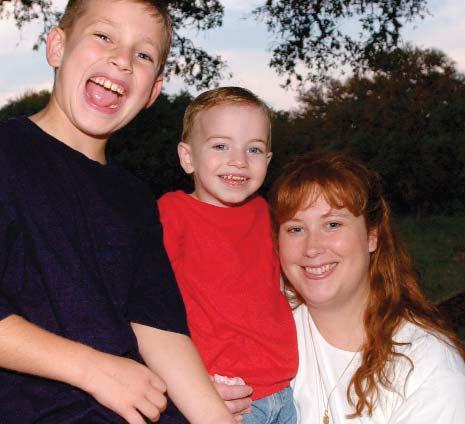
Name: Julianna Bolton Age: 36
Hometown: Bethesda, Md.
Class: Freshman
Major: English with teacher certification When she has a test in one of her classes, Julianna Bolton admits she’d rather have to pick up a blue book than a Scantron at the university bookstore. She cannot express everything she’s learned in a class, she says, simply by filling in circles. Her eagerness is ironic considering her previous academic experience: “In high school, I was real happy to get a C. ‘Woohoo!’ Now I get really angry with myself if I don’t get an A.”
Another difference has been the 17-year span from Bolton’s high school graduation to
her enrollment in college. Between then and now, she got married, had two children (Ben, 8, and Matthew, who turns 3 in December), moved from Maryland to Texas and spots in between, and worked jobs from waiting tables to selling telephone service. Last fall, she became a college student.
“I realized I wasn’t happy,” she says. “I wasn’t doing anything inspirational. I wasn’t doing anything that was benefiting anybody other than big companies.”
For her personal inspiration, Bolton wears the pendant her mother received when she was named to Who’s Who Among Students in American Universities and Colleges for 1955–56. Her mother, a kindergarten teacher, died when Bolton was a child.
Like her mother, Bolton plans on becoming a teacher, but with each new semester she finds something else she’s interested in. “I’ve liked all my classes,” she says. “I took politics with Dr. [Amy] Jasperson, and all of a sudden I thought I wanted to be a politician.”
Bolton wasn’t as confident when she first thought about going back to school. She worried that it had been too long since she’d been a student, that the coursework would be too hard. She proved herself wrong by being tapped for the freshman honor society.
Bolton also worried that, because of her age, she wouldn’t fit in. She has been the oldest student in some of her classes, but no one has made her feel like an outsider. “There are so many nontraditional students here that it really helps,” she says.
“All the people that I meet and that I talk to are open-minded and friendly.”
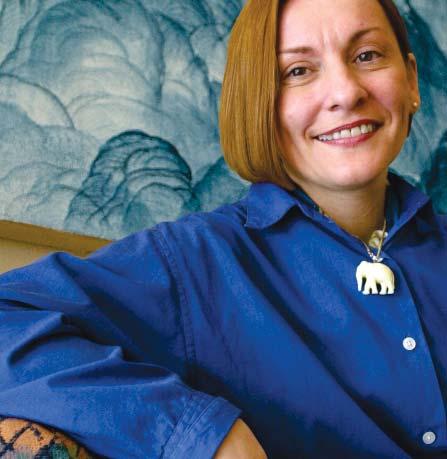
Name: Vlasta Jurkovic
Age: 36
Hometown: Zagreb, Croatia
Class: Graduate student
Major: Counseling
In her native country of Croatia, Vlasta Jurkovic says, there’s no such thing as a nontraditional student. The universities are filled with young adults; people who’ve had careers or families generally do not pursue academic degrees later in life. One of things she likes about coming to UTSA is that learning isn’t limited to the young.
“I really adore when I see people here who’ve had their career—they are maybe even grandparents—and they are so committed,” she says. “It’s so inspiring.”
Jurkovic and her husband, an instructor at Palo Alto College, moved to San Antonio from Croatia in 1998; she began the master’s program in counseling the following spring.
Going to school at UTSA has been quite different than going to college in Croatia. For example, Jurkovic had to write a thesis to earn her undergraduate degree there; for the master’s program here, there are thesis and nonthesis options. Having already done a thesis— and also because “my grammar is not so perfect,” Jurkovic says, smiling—she opted not to write one.
Jurkovic also sees a difference in the classroom, especially in the professors and their attitudes. In Croatia, professors lectured and students listened, but at UTSA Jurkovic has found more dialogue between professors and students, and among students themselves.
This semester, Jurkovic is taking classes and interning at an agency that provides medical care and counseling to uninsured and low-income clients. When she earns her degree and licensed professional counselor certification, Jurkovic thinks she might return to school again.
“I’d like to work in a college environment maybe,” she says. “I really enjoy being with people who have ideas of what to do with their life.”
Come for the run. Stay for the fun.
Diploma Dash is more than a race.The 5K run and fitness walk,sponsored by the UTSA Alumni Association,raises approximately $17,000 annually for student scholarships and serves as the San Antonio City Championship.The event includes free food,live music and prize giveaways.
Diploma Dash will be held Feb.23,beginning at the Convocation Center on the 1604 Campus.Participants and volunteers receive a long-sleeved Diploma Dash T-shirt.Medals and cash awards go to the top finishers in each age category and corporate team division.
On-site registration and check-in begins at 8 a.m.The race starts at 9 a.m. Early registration is $15 a person before Feb.20 or $20 on race day.Registration for corporate teams of five is $250.UTSA students can preregister for $10 at the Alumni Programs Office in UC 2.00.10.All others can pick up registration forms at local San Antonio sports stores or register online at www.active.com.For more information or to volunteer,contact Jane Findling at (210) 458-4133 or jfindling@utsa.edu.
Profile
Good service is only a bus ride away
She doesn’t ride the bus to work,but Cynthia Hernandez does occasionally ride the bus for work.
Every month or so,Hernandez,B.B.A.in accounting ’87, hops on a bus and spends half a day riding around San Antonio.As director of customer services for VIA Metropolitan Transit,she says it’s the best way to understand what kind of experience regular VIA customers have when they ride.
“I spend four hours riding around just to see what’s going on out there.”
Hernandez has been with VIA since 1989,after beginning her career at a firm where she was a government auditor.“I had the opportunity to look at lots of government clients,”she says.“VIA had one of the best-run organizations I’d seen.”
Hernandez started out in VIA’s budget department before being promoted to customer services director three years ago.She still uses her skills as a CPA when preparing budgets for her own department—and having a mind for numbers certainly helps in route planning and scheduling—but her job has allowed her to branch out.“This was an opportunity to enhance my people skills and still use my analytical skills.”
“On one hand you have to be a steward of taxpayer dollars,”she says,“and on the other hand,you have people who have no other means of transportation.”
Hernandez’s job has its rewards,too,she says.One of her favorite success stories is of a woman with a disability who uses VIA Trans for special trips but began to use the fixed-route service to go to work.But she was having trouble at her bus stop.Hernandez and other supervisors went to the stop to see what the problem was.
“It was simply a matter of moving the bus stop back 200 or 300 feet so she had a smooth,level surface where she could alight the bus.”So they had the bus stop moved.“It was a winwin situation,”Hernandez says with a smile.
In September,UTSA and VIA renewed their transportation agreement which allows students,faculty and staff commuting between the Downtown Campus and the 1604 Campus to ride for free.Hernandez says VIA takes members of the UTSA mmunity on 47,000 bus rides a year through its UTSA express routes 93 and 94.This semester VIA also unveiled new placards—identifying the routes as the Roadrunner Express—that are placed in the front windows of each of the buses so UTSA riders can easily spot them.
Hernandez oversees an office of about 70 employees. Her duties include,among others,supervising VIA’s customer information center,which receives more than 700,000 calls a year,and determining eligibility for VIA Trans service,which serves more than 10,000 customers with mobility impairments.The biggest challenge of her job,she says,is balancing the needs of the community with the needs of individual customers.That sometimes means recommending that routes be changed or even eliminated, though those final decisions fall to VIA’s board of directors.
Riding the bus around town has given Hernandez more ideas about how to make the ride more enjoyable.On one of her rides,she had a letter to mail and realized that it was difficult to complete such errands when someone else was driving.Now she has ideas to increase the amenities at VIA’s off-property sites,such as the Park and Ride locations,by adding mailboxes,stamp vending machines,maybe even dry cleaners.
“It is a satisfying job,”Hernandez says.“Very challenging but very satisfying.”
— Rebecca Luther
76 85 82 79 78 7
Mario Enrique Flores, B.A. in Spanish, M.A. in Spanish ’81, is in his fifth year as an assistant principal for Judson Independent School District. He has had 25 years of experience as an educator. Mario’s wife, Belinda, B.A. in early childhood education ’80, M.A. in bicultural-bilingual studies ’87, is a third-year, tenure-track assistant professor in the interdisciplinary studies department at UTSA. She has 21 years of experience as an educator.
77
Isabel Fears, M.A. in education, was selected Teacher of the Year for Region 20 and was a semifinalist for the Texas Education Agency’s Secondary Teacher of the Year Award. Isabel, who is math coordinator at Sunset High School in San Antonio’s Northside Independent School District, has been a teacher for more than 26 years. E-mail her at isafears1234@aol.com.
Patricia Hendrickson Tschirhart, B.A. in early childhood education, and her husband, Gary, are the parents of 3year-old twins, Kyle and Kara.
Sandra Goles Dykes, M.S. in chemistry, M.S. in computer science ’94, Ph.D. in computer science ’00, is a senior research scientist with Southwest Research Institute in San Antonio.
Reeta M. Holmes, B.A. in psychology, has completed her professional human resources certification and is a compensation manager for the City of Austin.
Barbara Alvear Soto, M.A. in education, is teaching English as a second language part-time with ESC Region 20 and freelancing as interim
administrator with Harlandale Independent School District after retiring from being a teacher and administrator for 32 years. Barbara enjoys traveling; this year she took a 21-day tour of Spain.
Delia A. Sanchez Van Kampen, B.A. in accounting, was promoted to corporate controller for Newport Corporation in Irvine, Calif. She also served as senior manager of financial planning and analysis. She is a member of the American Institute of Certified Public Accountants and the Arizona Board of Accountancy. Delia lives in Dana Point, Calif., with her husband, Ken, and son, Evan Thomas.
Denise Pittman LaLoge, B.B.A. in finance, married Leon LaLoge on Oct. 7, 2000. Denise is a North American financial controller with Novar plc/Clarke American in San Antonio.
Ignacio Ramon Alaniz, B.A. in art and architecture, is a construction manager with the United Independent School District in Laredo.
John Haase, B.S. in biology, and his wife, Shari, announce the birth of their daughter, Emily Alice, born June 28.
Isidro Reimundo Alaniz, B.A. in criminal justice, earned his law degree from Texas Southern University in Houston and is a federal public defender in Laredo.
Tracie Marie Jenschke Kiehne, B.B.A. in management, is an account sales manager with Dr. Pepper/Seven Up Inc. Tracie and husband Mark Wade Kiehne, B.B.A. in business ’93, were married Sept. 15. Mark received his law degree from St. Mary’s Law School. Upon completion of his federal clerkship, Mark will join the firm of Loeffler, Jonas and Tuggey in San Antonio.
Jennifer Buffo Alcoser, B.B.A. in accounting, and Gabriel Alcoser, B.B.A. in management ’93, were married Aug. 25. Jennifer is a senior manager with Ernst and Young in San Antonio. Gabriel is a TDS manager with Slumberger in Houston, where they reside.
Jeffrey L. Campbell, M.A. in education, is the head boys’ basketball coach at Goldthwaite High School in Goldthwaite, Texas.
engineer with HMG & Associates in San Antonio.
Parker Faut, B.S. in electrical engineering, married Diane Newman Faut on Sept. 1. They reside in Littleton, Colo.
98 97 96 95 94 93 92 90 89 86
Don Barker, B.S. in mechanical engineering, has earned his professional engineering license. He is a mechanical
Carlos Manuel Alaniz, B.S. in biology, received a law degree from Texas Southern University in Houston and is an assistant district attorney for Webb County, Texas.
Eva Fernandez Ramirez, B.A. in sociology, is pursuing her master’s degree in social work from Our Lady of the Lake University and plans to graduate in May. Eva and her husband, Xavier, were married in December 1999.
Thomas M. Sandoval, B.A. in political science, is a lieutenant in the U.S. Navy. He has returned from a six-month deployment to the Western Pacific Ocean and the Arabian Gulf while assigned to the guided missile destroyer USS Stethem, whose home port is San Diego.
Jennifer Lynn Tiller, B.A. in political science, is a special education teacher for Fox Run Elementary in the North East Independent School District.
Steve Forrest, B.B.A. in management, is a special education teacher with Northside Independent School District.
Juan Jose Alaniz, B.S. in mechanical engineering, is an aerospace engineer with Lockheed Martin in San Antonio.
Paul Rob Killen, B.A. in political science, is an associate at Kaufman & Associates specializing in municipal law and lobbying. Rob graduated with honors from the University of Tulsa College of Law in May.
Roberto Ramirez, B.A. in criminal justice, is a captain in the U.S. Air Force, serving in the Judge Advocate General’s Department at Peterson Air Force Base in Colorado Springs, Colo.
Julie Bradley, B.A. in interdisciplinary studies, is a third-grade teacher at Lawrence Powell Elementary in the Northside Independent School District in San Antonio. Julie is married to Robert Daigle, B.A. in interdisciplinary studies ’99. Robert is a fifth-grade teacher at Ed Cody Elementary in the Northside Independent School District. E-mail Julie at liltexas@att.net.
Carmen H. Fies, B.S. in multidisciplinary science, M.S. in environmental science ’99, is a lecturer in UTSA’s College of Education and Human Development.
ClassNotes
Profile Latin works
“We’re marketers,”Manny Flores,B.B.A. ’80,says of his ethnic marketing firm,LatinWorks. “Some of us are from different,diverse backgrounds and ethnicities,but we’re still marketers, communicators and idea-generators at heart.”
After a 17-year marketing career with Anheuser-Busch that began just months after he graduated from UTSA,Flores founded LatinWorks in fall 1998.He recognized the potential in helping major corporations tap into the now- $452 billion purchasing power of the nation’s 35.3 million Hispanics.
Flores says the venture gave him a more flexible schedule,allowing him to spend more time with his wife and two daughters.He adds that he and his partner,Alejandro Ruelas,were looking for “an opportunity to call our own shots.”
“We thought that it would be an incredible opportunity to venture out and sell corporate America on the potential of this growing and diverse market.”
The idea worked.LatinWorks took on the Miller Genuine Draft brand for Miller Brewing Company as their first account,and have since added RalstonPurina,Beechnut Baby Food,Schieffelin & Somerset,Greyhound Buslines,and most recently,SBC Communications Inc.
How is ethnic marketing different from general marketing? According to Flores, it’s different—and it’s the same.
“What sets us apart is that we speak the language and live the culture,” he says.“We understand the Hispanic consumers,their mind-set,their perspective and attitude.”
Another difference,he adds,is in the delivery of the message.The firm works closely with their clients’general marketing firms to present consistent communication to the consumer,but for the Hispanic market they use slightly different situations and,of course,a different language.
“We believe in creating synergy between general market and Hispanic market campaigns.Our clients get a bigger bang for their buck if they speak to their consumers using a similar tone and voice,”Flores says.“So when you see a Miller Genuine Draft billboard in Dallas on Greenville Avenue,it will have the same look and tone as a Miller Genuine Draft board in East L.A.,a Hispanic section.”
With 26 people in the Austin office and three employees in Los Angeles, LatinWorks combines its marketing communications talent with trend analysis to predict what will be happening in the Hispanic market.Their corporate futurist studies the market to help LatinWorks differentiate itself from other agencies.
“While many agencies focus on ethnic marketing from the past,we focus on where ethnic marketing is going and where we want to take it,”Flores says.“For example,there are more Hispanic women graduating from college at a faster pace today than ever before.This tells us that we must take the new trends into consideration and be mindful of avoiding the typical stereotypes when communicating. These women are entering the workforce into white-collar,well-paid positions and deserve to be talked to as such.”
Corporate America,Flores says,is starting to recognize the growth opportunity that today’s Hispanic market represents.The desire of major corporations to reach the Hispanic segment has allowed LatinWorks to remain healthy even during a relatively unstable economy.
“For our clients,the bottom line is profitability,volume growth and increasing market share for their brands,”Flores says.“We help them view the growing Hispanic market as an opportunity that they can’t afford to ignore.And they’re beginning to understand that fact.”
— Jennifer C.Judkins
Lisa K. Collins, B.B.A. in accounting, is a partner/general manager for Mougel Cap Company LTD in San Antonio.
Daniel B. Lopez, B.M. in music studies, is a music teacher with New Frontiers Charter School in San Antonio.
Jacqueline Kay Roman, B.S. in biology, is a food microbiologist for Food Safety Net Services Inc. in San Antonio.
Chelsea Stephens, B.B.A. in accounting, is an accountant with Brehm, Havel & Co. LLP in San Antonio.
Bronwen Raenita Taylor, B.A. in English, was awarded a scholarship and graduate assistantship to Ohio University. She is a freelancer with Hoover’s Online.
Timothy J. Turner, M.B.A., is
Profile ClassNotes
the chief operating officer for the Texas Public Policy Foundation. Timothy and his wife, Elizabeth, reside in San Antonio.
Esteban Morales, B.A. in political science, is a program coordinator with the Hispanic Association of Colleges and Universities National Internship Program in Washington, D.C. Esteban recruits students from the West Coast for the program. He resides in Silver Springs, Md.
Jon Patrick Mosel, B.B.A. in accounting, is an accountant in the inventory department at UTSA.
Justin Daniel Ayala, B.B.A. in marketing, married Lisa Thienpont, a graduate of the UT Health Science Center in San Antonio, on Aug.11.Justin is a marketing manager, and Lisa is a registered nurse. They reside in San Antonio.
Julie Renee Mahoney
Cummings, B.B.A. in accounting, married Ryan Michael Cummings on June 22. Julie is an employee at USAA. Ryan is working at Silverhorn Golf Club to become a Class-A PGA professional. They reside in San Antonio.
IN MEMORIAM
Marie Matilde Millan, B.A. in early childhood education ’79, M.A. in Spanish ’80, died on Sept. 17. Maria was born in Havana, Cuba. She became a U.S. citizen in September 1969. She was an elementary school teacher for 24 years in the Edgewood and San Antonio Independent School Districts. Maria is survived by her husband, Miguel Millan Jr.; sons, James and Miguel III; father, Dr. Anibal Causa; granddaughters, Alexandria and Francesca Millan; and other relatives.
Anthony (Tony) Leffingwell, B.B.A. in marketing ’98, died Aug. 7 following a two-year battle with leukemia. A graduate of MacArthur
Bertrand enjoys the writing life
As a student at UTSA in the mid-1970s,Diane Gonzales Bertrand,B.A.in English ’78,knew exactly what she wanted to do with her life after college:become a teacher.Her inspiration was her history professor,Félix Almaráz.
“He was outstanding,”she says.“He taught me about what good teaching should be.”Sure enough,after graduating,Bertrand devoted herself to teaching middle and high school,taking additional courses at her alma mater to improve her skills.
But after a brief hiatus to take care of her two young children,Bertrand’s career took a decidedly different direction.It all started when she went back to school to learn to be a better writing teacher.
“My first graduate professor told me that a good writing teacher is a writer herself,”the award-winning author explains.“That’s what put me on the road to writing for publication.”Her first published work—an essay about her father’s job as a welder—won a contest in the San Antonio Express-News. With the prize money,she took a course called How to Write a Romance Novel.
“I knew nothing about the genre,”Bertrand says.“I wanted to write a romance featuring Hispanic characters,but I wanted my stories to be based on love and commitment rather than lust.Unfortunately,there’s not a big market for G-rated romances!”
Bertrand’s first three novels met with rejection,but when she sent her fourth, Sweet Fifteen, to Arte Publico Press,the editors recognized that the characters were good role models for girls.Their instinct to market the book as young adult fiction rather than romance proved sound:“Seventh- and eighth-grade girls sent that book into a second printing,”Bertrand says.
Sweet Fifteen was followed by several more young adult novels and bilingual picture books,including Sip,Slurp,Soup,Soup,Caldo,Caldo,Caldo and Family/Familia.Trino’s Choice, published in 1999,won many awards and was chosen for the influential Lone Star Reading List by Texas librarians.When that happened,Bertrand says,“it was like a piñata burst.”She now receives countless requests for school visits,and she squeezes in as many as possible between the demands of her family,her writing and teaching at St.Mary’s University.
“I believe we can expect our kids to read upwards,”she says.“When I wrote Sweet Fifteen, publishers worried that teens wouldn’t read a fat book.But if there’s a good story,they will.”
High School, Tony was an agent and life insurance specialist for Farmers Insurance. He was an avid golfer and a member of Oak Hills Country Club. He was an active member of Thousand Oaks Baptist Church. Tony is survived by his wife, Kelli Curtis Leffingwell; son, Trenton Anthony, 2; parents, Hal and Barbara Leffingwell of San Antonio; sister, Anjie Leffingwell of Houston; grandparents, Philip and Bernie Blose, and Butzie Leffingwell, all of Indiana; and other relatives.
Carissa Jensen Combs, B.S. in health ’99, died Sept. 15 at age 25. She was the owner of Carissa’s Personal Fitness Studio in San Antonio. Carissa is survived by her husband, Gregory; parents, Steven and Connie Jensen; sister, Carly Lazari; grandparents, Virginia Jensen, and Wayne and Velma Francisco; and other relatives.
All of Bertrand’s books feature Latino characters,in part because as the fourth of seven children in a “big Mexican family,”Bertrand knows this community well.But she also believes that “children need to see themselves reflected in literature—they need that positive identification in what they read.”
Bertrand describes her own life as magical.“I’ve had terrific people all along the line saying,‘Don’t give up’.”But it’s the response from readers that makes the work so rewarding.“When boys who read Trino write and tell me,‘I hate to read but I loved your book,’that’s what inspires me.
“One of the best things that ever happened to me was at a book signing for Caldo. A little girl came up to me with her brother and said excitedly,‘My name is in your book and so is my brother’s!’”Bertrand says.“Her smile was better than a big royalty check.”
— Judith Lipsett
Dear Alumni and Friends,
With deep gratitude,I present the 2000–2001 Honor Roll of Donors.The contributions,pledges and planned gifts received totaled more than $7 million.As a result,academic programs have been strengthened,scholarships were made possible and outreach services were broadened.
As UTSA moves toward top-tier rese arch status,and as it evolves as an institution of first choice striving to meet the growing needs of our students,our responsibilities become many.The support UTSA receives from our alumni and friends is essential if we are to achieve excellence in higher education and fulfill the mission with which we are charged.
The university’s Biotechnology Initiative is one among the myriad of issues that received broad support from our many friends.With their assistance,the Initiative has now secured $5.65 million, with the major portion earmarked for the construction of the new Biotechnology,Sciences and Engineering Building.It also includes needed support for endowed faculty positions and scholarship funding.
We are grateful for the generosity encountered daily from UTSA alumni and friends in the San Antonio community and beyond.
To the members of UTSA’s Honor Roll of Donors—our heartfelt thanks!
Sincerely,
Ricardo Romo President
The 2000-2001 Honor Roll of Donors includes contributions received between Sept. 1, 2000 and Aug. 31, 2001. In compiling this report, care has been taken to ensure accuracy, however errors may occur. Please report any errors to the Development Office at (210) 458-4130 and accept our sincere apologies.
* deceased
UTSA is honored and grateful to have a core of loyal, dedicated individuals who annually support the ongoing needs of the university with unrestricted gifts of $1,000 or more.
UTSA has many devoted friends who share our educational mission at UTSA. Their gifts help to ensure we achieve the margin of excellence we pursue. The university is deeply grateful for its friends’ annual commitment to excellence.
Three generations of Nelsons have helped students pursue their dreams at UTSA—the late Clara Fres hour Nelson,her son,Harold,and his daughter, Elizabeth.Clara instilled in her son a love of the arts and a helping spirit,and Harold generously shares those family values through the Clara Freshour Nelson Charitable Trust,which funds scores of scholarships in the College of Liberal and Fine Arts each year.Harold and Elizabeth are shown here with some of the 2001–2002 Nelson Scholars from the Department of Music.
Louis and Mary Pat Stumberg are involved in many ways at UTSA.Mary Pat is a life member of the College of Liberal and Fine Arts Advisory Council and a development board member for the Institute of Texan Cultures.Louis serves on the UTSA development board.They have been President’s Associates for more than 25 years. Most recently,Louis and Mary Pat made a leadership gift to the Biotechnology Initiative that will help fund the construction of the new Biotechnology,Science and Engineering Building to begin construction in late-2002.
Mackey '96 BA
G. Maguire '95 MA
Martin '83 BBA
M. Martinez '88 BBA Lucille V. Mazuca '93 BA
E. McKinley '85 BS
L. McKinney '95 BBA
W. McLaughlin '85 BS Richard A. Mella '88 BS
Charlene O. Meriwether '78 BA,'84 MA Susan A. Middleton '89 MBA Adam O. Mika '92 BBA
Cara J. Mika '92 BBA
William H. Moreno '94 BS Lynette M. Morrison
Will and Mary Hathaway,shown here with scholarship recipients Tamara Luckemeyer,Katy Risinger and Stacy Schmidt,are longtime UTSA benefactors and No.1 fans of the Roadrunners.Will and Mary’s generous support of UTSA Athletics and the Honors Program has made a tremendous impact on students and programs.As Sombrilla Society members, their latest gift was planned through their estate and will create a permanent scholarship endowment.
MA Robert R. Draper '87 MBA Jennifer L. Drew-Mountjoy '93 BA Bernard V. Duclos '80 BA Sabre L. Duke '76 BA Cyra S. Dumitru '95 MA Raymond G. Dunham '80 MS Christine J. Earnshaw '95 BBA
M. Elledge '86 BBA, '91 MBA
Escoto '84 BBA,'93 MBA
Esparza Jr. '97 BA,'00 MA
D. Esparza '00 MS
Espinosa '98 BBA
Esquivel '99
W. Joyner '87 BBA
Clifton B. Karnei '83 BBA
Dianne Z. Keeton '93 BA
Elgin J. Keller Jr. '77 BBA,'81 MBA
Elizabeth A. Kelly '92 MBA
Raymond H. Kembel '91 BBA
Anthony C. Kent '00 BS
Nancy E. Kent '99 BBA
Su M. Khoh '95 BS
Jeffrey W. Kiel '81 BS
Daniel J. Kiley '00 BA
Patricia A. King '80 MA
Sheila M. Kiselis '77 MA
Sally J. Kittles '79 BBA
Margaret E. Kleinschmidt '80 BBA
L. Kotara '78 BBA
F. Krimmel '95 BBA
Jim (BBA ’78) and Pat Mickey are shown here at the Alumni Gala held Sept.8 at the Institute of Texan Cultures.Jim serves as vice president of the board of directors and is a life member of the Alumni Association.Jim and Pat are loyal donors supporting a variety of programs, including the Annual Fund,Alumni Scholarship Fund,Athletics and the President’s Associates. Jim,an executive with Sprint PCS,utilizes his company’s matching gift program to strengthen their personal contributions.
deceased
Latorya Fowler is a senior economics major and a third-year Alumni Association scholarship recipient (sponsored by H-E-B).She’s also received State Farm Insurance,Rotary Club and Dan W.Hissner Business Scholarships.A native of San Antonio,she has a 3.86 GPA and plans to attend law school.She is a member of Omicron Delta Kappa Leadership Honor Society, and will participate in the College of Business’ Leadership Challenge 2002.Her sister,Jessica,is a junior attending UTSA.
UTSA is grateful for the partnerships formed with private foundations. Foundation gifts help the university to achieve goals of mutual interest. Together we strive to enlarge educational opportunities for students and to benefit the community we both serve.
UTSA recognizes and thanks the strong support of professional and civic organizations whose gifts strengthen all aspects of the university.
Jeff (BS ’86) and Loretta (BS ’87) Clarke are UTSA alumni residing in Austin.Loretta is a new member of the board of directors of the Alumni Association. Jeff has also served on the board,and they are both life members of the Alumni Association.Jeff,a vice president for Dell Computers,and Loretta are President’s Associates members at the Leadership Council level.They also support the Annual Fund and the Alumni Scholarship Fund.
UTSA benefits from the generous matching gift programs at many companies. Matching gift funds can double or triple a gift to the university, increasing its benefits to students, programs and faculty.
UTSA thanks the following companies for their support of the university through an employee matching gift program.
UTSA has many generous friends and alumni who have sought to ensure that their support for the university continues long into the future. The university is deeply grateful to members of the Sombrilla Society who have included UTSA in their estate plans.
UTSA gratefully acknowledges faculty and staff who support the university, not only with their daily efforts, but with gifts that help to enhance and expand our many wonderful programs. UTSA is proud that so many faculty and staff members demonstrate their belief in the university community by directly contributing to its success.
* deceased
Endowed funds are a means to support the university in perpetuity. The funds, carefully invested, generate income to provide a permanent source of financial support year after year. The university is grateful to all who contributed to the following endowments which became fully funded in 2000-2001.
Club Sembradores de Amistad de San Antonio,a nonprofit organization,was founded in 1961 to promote friendship,ethics,understanding and civic progress. Club Sembradores de Amistad,which means "sowers of friendship" in Spanish,are generous friends of UTSA.Pictured here are Alex Bernal,president,and Gaby Ibarra,2001–2002 scholarship recipient.The club established an endowed scholarship in 1991 and continues to add generously to its principal through proceeds raised from their Posada event each December.
Calendar Winter 2002
Jan. 15–Feb. 15
Latin American Women Photographers
Photography exhibit
10 a.m.–4 p.m. Monday through Friday 2–4 p.m. Sunday Art Gallery in the Arts Building
Opening reception: Jan. 17, 6–8 p.m. Call 458-4352 for more information.
Feb. 2–9
Homecoming
Visit www.goutsa.com for events.
Feb. 4–8
Black Heritage Week
Call Student Leadership and Cultural Programs, 458-4770, for details.
Feb. 15
Literary and Cultural Studies Series “Homosexuality’s Closet”
David Halperin
4 p.m.
Downtown Campus
Feb. 19
Great Conversation!
An evening of 50 stimulating table conversations benefiting the UTSA Honors Program
6–8:30 p.m.
Institute of Texan Cultures
Tickets $60; patron tables starting at $800. Call 458-4129.
Feb. 23
Diploma Dash Registration, 8 a.m.; race, 9 a.m. Convocation Center
See story on page 20 for more details.
Feb. 28, March 1
Brackenridge Distinguished Professor Sandra Gilbert, University of California–Davis
7:30 p.m., Feb. 28; 2 p.m., March 1 University Room, Business Building
March 4
Faculty Recital
Linda Poetschke, soprano, with Christine Debus, piano
7:30 p.m.
Recital Hall
Call 458-4354 for more information.
March 4–7
Women’s History Week “Beyond Borders”
Guests include Vicki Ruiz, Yolanda
For the latest information on campus events, visit www.utsa.edu/today.
What’s new, Roadrunner?
Send us updates on promotions, relocations, marriages, additional degrees, accomplishments—anything newsworthy. Let your fellow Roadrunners know what you’vebeen up to by completing this form and sending it to us. Class Notes are printed in each quarterly issue of Sombrilla.
Name (include maiden name) Degree/Class Year
Spouse’s Name (include maiden name) Degree/Class Year (if UTSA grad)
Home Address
City, State and Zip Code
Place of Employment
Home Phone
Title
May we include your title and employer in Class Notes? ___Yes ___No
Work Address
City, State and Zip Code
Work Phone Fax Number
Preferred E-mail Address (home or work)
May we include your e-mail address in Class Notes? ___Yes ___No
Leyva, Sharon Bridgforth, Elora Shehabuddin, Lucia Chiovola Birnbaum, Enriqueta Vasquez, Ines Hernandez-Avila and Marti Kheel. Call 458-4876 for a schedule of events.
March 4–31
5 Women Painters: “Nature/Culture” Art exhibit
10 a.m.–4 p.m. Monday through Friday, 2–4 p.m. Sunday Art Gallery in the Arts Building
Opening reception: March 7, 6–8 p.m. Call 458-4352 for more information.
March 19–21
New Music Festival
7:30 p.m.
Recital Hall
Call 458-4354 for more information.
March 22-24
Spring Opera Workshop
The Consul
7:30 p.m. Friday and Saturday 3 p.m. Sunday Buena Vista Theatre
Call 458-4354 for ticket information.
Send us your news
E-mail: alumni@utsa.edu
Write: Office of Alumni Programs, UTSA 6900 North Loop 1604 West, San Antonio, Texas 78249-0619
Fax: (210) 458-7227 Log on: www.utsa.edu/alumni
LookingBack Comehere.Gofar.
UTSA
The University of Texas at San Antonio Office of University Communications 6900 North Loop 1604 West San Antonio, Texas 78249-0619
Dias de los Muertos ofrendas, or altars, at the Institute of Texan Cultures honored the victims of the Sept. 11 attacks in New York City, Washington, D.C. and Pennsylvania. Flowers, candles, skulls, pan de muerto and toy figures of fire trucks and police cars trimmed the altar, shown at left. The institute has been creating ofrendas to honor deceased loved ones since the 1980s. Dias de los Muertos, the Days of the Dead, Nov. 1 and 2, are celebrated all over Catholic Latin America and in Mexican American communities throughout the United States.