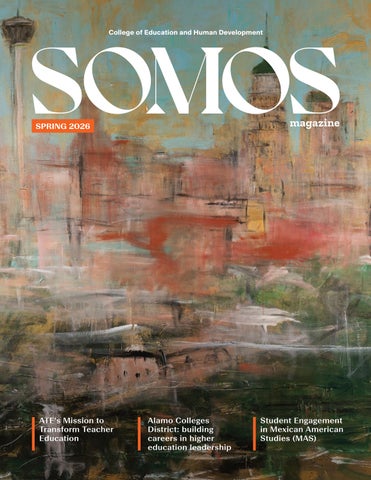
https://lib.utsa.edu/artcollection/ LEADERSHIP TEAM
EMILY BONNER, P h D
Associate Dean for Research and Faculty Affairs
KRISTEN LINDAHL, P h D
Associate Dean for Strategic Partnership, Preparation and Growth
JOHN DAVIS, P h D
Associate Dean for Academic Programs and Student Succes
LESLIE NEELY, P h D
Assistant Dean for Transdisciplinary Research Development
JOEL ALLEN
Assistant Dean, Fiscal Administration
TAMI RICHARDS
Manager Special Projects & Executive Support
DEPARTMENT CHAIRS
PATRICIA SÁNCHEZ, P h D Bicultural-Bilingual Studies
PEGGY CEBALLOS, P h D Counseling
ALONZO M. FLOWERS III, P h D
Educational Leadership and Policy Studies
SHARON NICHOLS, P h D
Educational Psychology
LANGSTON CLARK, P h D Interdisciplinary Learning and Teaching - Interim
C. ALEJANDRA ELENES, P h D Race, Ethnicity, Gender and Sexuality Studies
SOMOS is the annual publication of the College of Education and Human Development at The University of Texas at San Antonio. It is created for students, alumni, faculty, staff and friends of the college. The magazine highlights the achievements, partnerships, and goals of the college.
THE COLLEGE OF EDUCATION AND HUMAN DEVELOPMENT ONE UTSA CIRCLE SAN ANTONIO, TEXAS 78249
EDUCATION@UTSA.EDU
WWW.UTSA.EDU/EDUCATION
el futuro SOMOS WE ARE the future
WE ARE MAKING A DIFFERENCE
I am pleased to welcome you to the second issue of Somos, our college’s annual magazine. As the Dean of the College of Education and Human Development (COEHD), it is an honor to continue sharing stories that reflect the passion and commitment of our academic community to improving the lives of all people.
This issue of Somos centers on our college’s long-standing and deeply held commitment to partnering with and serving our local and statewide communities. Page after page, you’ll be introduced to wonderful illustrations and stories that reveal the essence of who we are, and the meaningful impact our students, faculty, staff, and alumni are having on the world around us. Across partnerships with schools, clinics, non-profits, and other industries, you’ll discover COEHD Roadrunners spearheading lasting impact and transformation through authentic collaboration, mutuality, and shared purpose. These stories embody the vital role that community stakeholders play in shaping our mission and identity as a college.
Colleges like ours are poised to play a pivotal role in a fastpaced knowledge economy. COEHD remains committed to exploring new and innovative ways to leverage our collective intellectual assets to tackle important priorities within and beyond the fields of education and human development, including health care. On April 1, 2025, The University of Texas Health Science Center at San Antonio and UTSA officially joined as one to become UT San Antonio. This unification marks a new chapter for our college—expanding our reach, resources, and ability to serve. The historic
integration of a top-tier research university with the expertise of a world-class academic health center forms the thirdlargest research university in Texas. We are excited about the opportunities this merger brings for greater access to academic programs, new interdisciplinary initiatives, and a strengthened commitment to student success.
Our goal with Somos is not only to inform but also to inspire and inject a massive dosage of faith in higher education. We hope you gain insight into the college’s vibrant academic culture and community—one rooted in creativity, social responsiveness, and dedication to the communities we serve. This issue is a reflection of our mission to prepare transformative educators, clinicians, researchers, and leaders who are ready to meet the challenges of today and tomorrow.
My sincere gratitude to the dedicated team behind this publication and for their continued commitment and passion in bringing Somos to life.
And to our friends and UT San Antonio family, thank you for supporting our journey. Somos represents all of us, and together, we are making a difference.
Sincerely
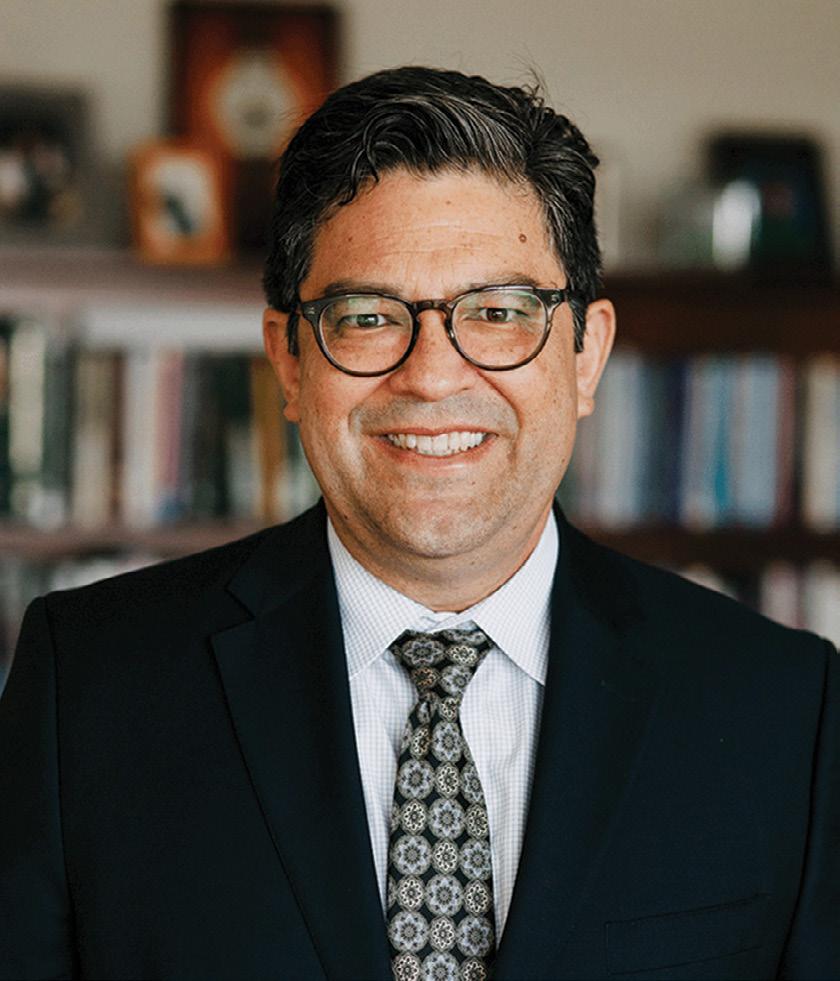
, Mario Torres, PhD President’s Distinguished Professorship Dean, College of Education and Human Development
ATE TRANSFORMS TEACHER EDUCATION
A 22-year mission to prepare teachers
BY KATELYN JUAREZ
Helping to advance the mission of the College of Education and Human Development, a transformation in teacher preparation has been taking shape for more than two decades. The Academy for Teacher Excellence Research Center (ATE) has become a beacon of innovation, transforming how teachers are prepared, supported and empowered to make a lasting impact in their communities.
Central to the ATE’s work is a simple vision: preparing teachers who can reach every student. To achieve this, it taps into the strengths of both the university and the broader community, creating opportunities that connect future educators with real classrooms and students.
The University of Texas at San Antonio is the city’s leading university-level producer of certified teachers, graduating nearly 200 each year. ATE serves not only current students of the college but also practicing teachers in our community, ensuring both groups receive the preparation and ongoing support they need to thrive. Through partnerships with community colleges, local agencies and school districts, ATE weaves together a network of support that strengthens both educators and the communities they serve.
A Vision Takes Root
The story for the Academy for Teacher Excellence began in 2003, when faculty member Belinda Bustos Flores collaborated with San Antonio College and her peers to secure funding for its creation. Flores is widely regarded as one of the most influential leaders in education and biculturalbilingual studies. She is now professor emerita in the college’s Department of Bicultural-Bilingual Studies.
Flores received a Title V grant from the U.S. Department of Education. Her vision went beyond traditional teacher preparation. As ATE’s founder and first director, she sought to build a comprehensive system that nurtured educators and their students.
“We aren’t just preparing teachers,” said Lorena Claeys, ATE’s director. “We are nurturing entire educational ecosystems.”
PHOTO BY KATELYN JUAREZ
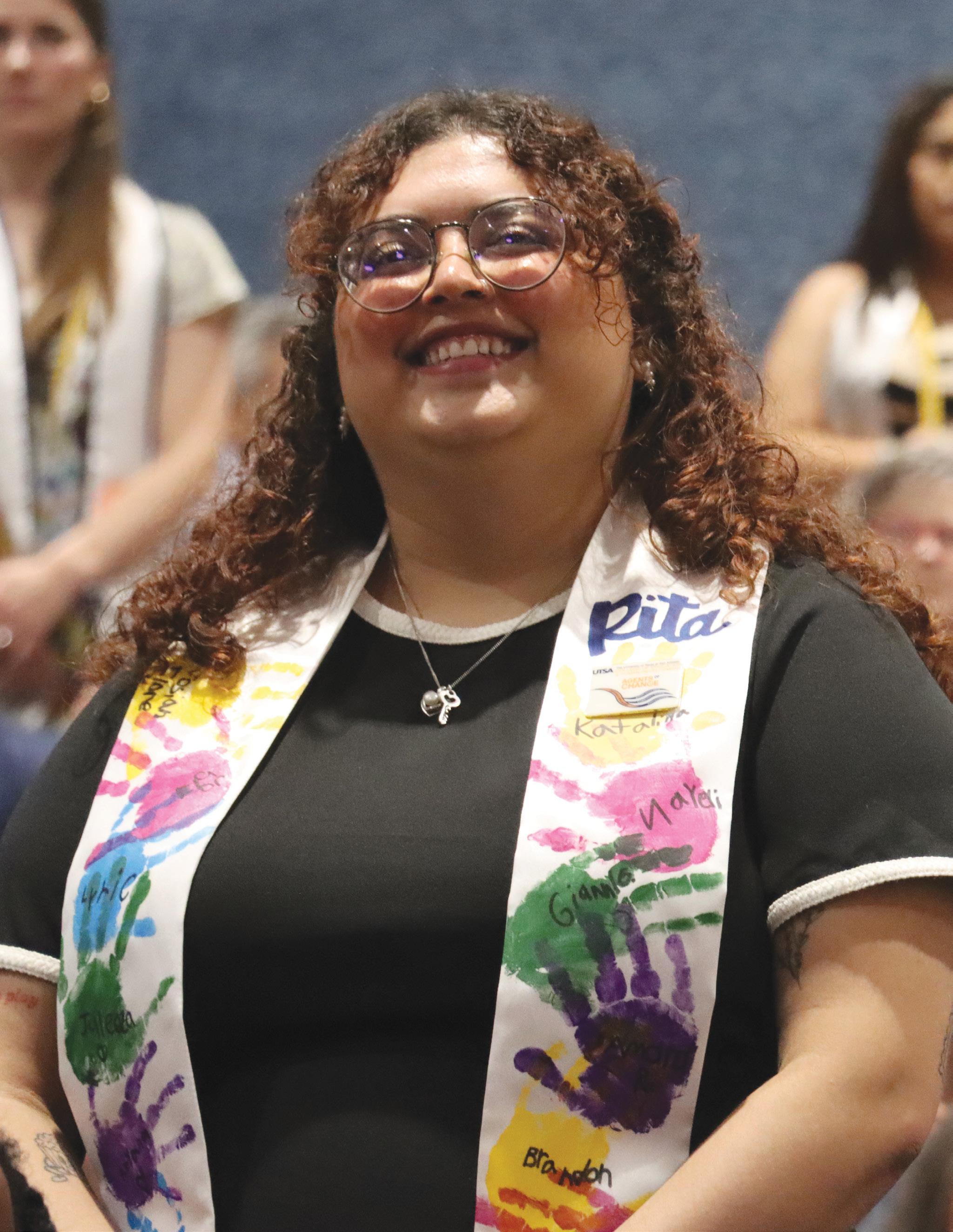
Opposite page: A graduate recites the Teacher Affirmation during the New Teacher Induction Ceremony.
From the beginning, ATE helped position the college as a national leader in preparing teachers to serve various student populations. Since its founding, ATE has been fully supported by grants from federal, state and private agencies, a testament to its ongoing innovation and impact.
Redefining Teacher Preparation
As ATE evolved, Flores was invited by her dean to take on a new challenge to reimagine the clinical teaching experience. “I already have ideas,” she said with enthusiasm. The teacher preparation program had followed the same model, and this opportunity opened the door to fresh approaches that could better prepare future educators.
One of the most significant changes she introduced was extending clinical teaching to a year-long experience. “Research showed that a semester simply was not enough,” Flores explained. “We wanted our teacher candidates to witness the full cycle of a school year, from the first day of class to the last.”
The shift deepened learning and strengthened partnerships with local school districts, ensuring candidates entered the profession fully prepared.
Building Support Systems for Success
ATE’s work goes far beyond the classroom. ATE offers a wide range of student support, including a learning community, a textbook loaning library, teacher certification exam preparation, college and career transition guidance, and mentorship opportunities.
Founded in 2022 by Flores and faculty colleagues, one initiative was created with external grant funding from City Education Partners to increase the number of male teachers of color in Texas. At the time, male teachers made up only 24% of the Texas teacher workforce, according to the Texas Education Agency.
“Through our program, we’re not just supporting teacher candidates, we are building a comprehensive pathway for minority male educators that begins with high school students and extends through early career mentorship,” said Xavier Loredo, the initiative’s program coordinator.
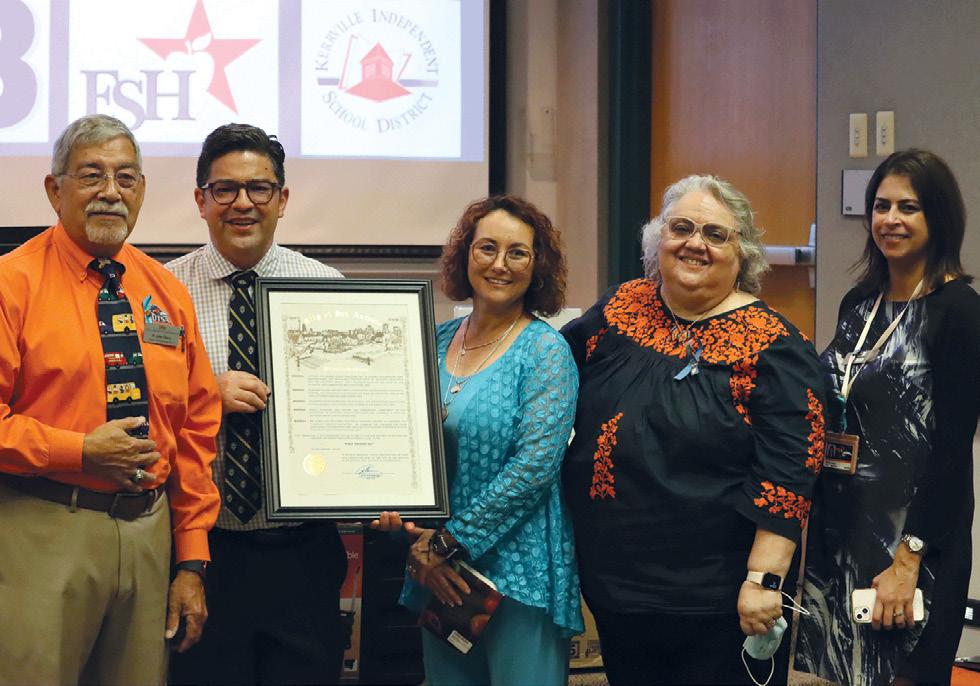
Top: College leadership receives a proclamation from the City of San Antonio recognizing World Teachers Day.
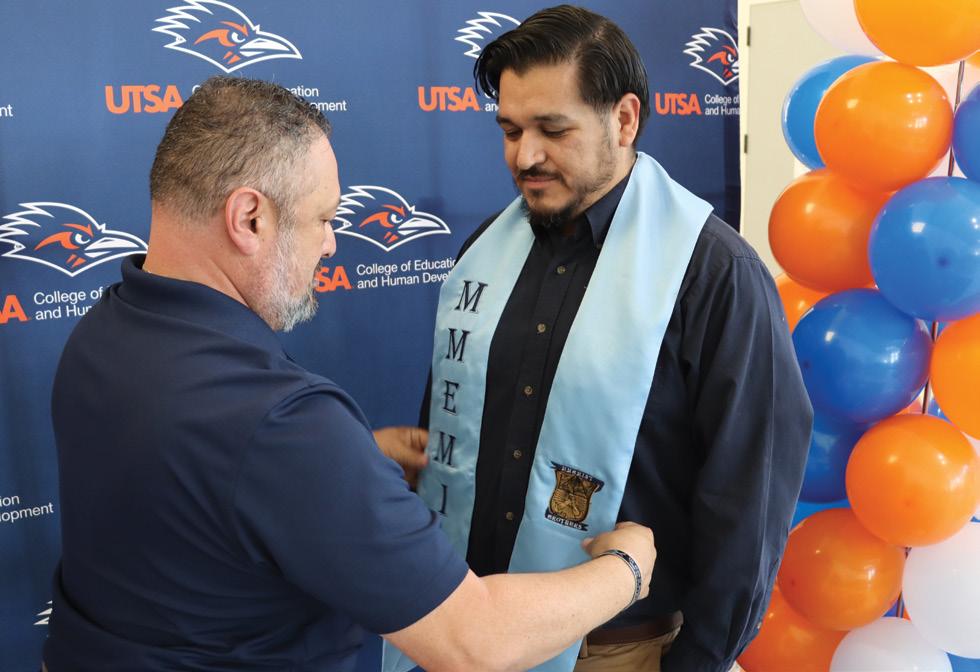
Middle: Xavier Loredo places a stole on a student before the New Teacher Induction Ceremony.
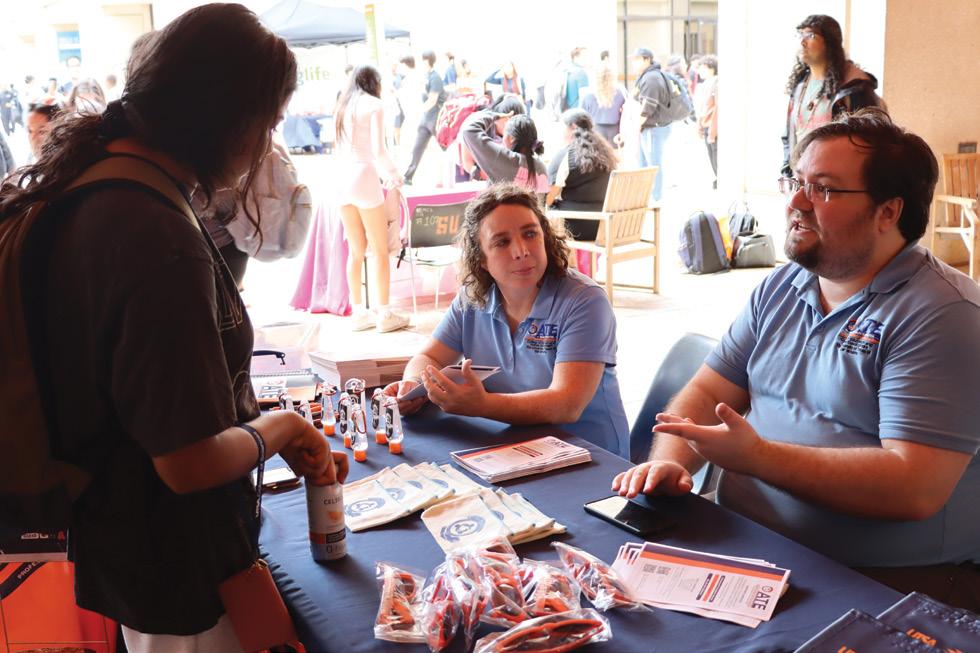
Bottom: ATE staff engage with a student at Teacher Palooza.
To date, the initiative has helped guide more than 75 teacher candidates to become certified educators, providing support, book lending, and fully funded certification exam fees.
“Being part of this program feels like a brotherhood,” said Jared Kellman-Medina ‘25. “The support from other men in education helped me grow, share experiences, and create a safe environment for my future students.”
Looking ahead, the initiative plans to launch a mentorship network that pairs early-career teachers with experienced mentors, offering stipends and professional development to promote long-term success.
A Holistic Approach to Education
ATE’s approach to preparing future educators is holistic, addressing not only academic growth but also their psychological and emotional development.
“Becoming a great teacher is about more than lesson plans and classroom management,” Claeys explained. “It’s about understanding yourself, your students and your community.”
ATE’s early years were marked by strong partnerships, particularly with San Antonio College, to create seamless transfer pathways and student-centered learning communities. Support services helped remove barriers and ensure student success.
Programs like the Summer Bridging Institute further extended ATE’s impact by offering free, intensive professional development to help teacher candidates transition confidently into the classroom and to support current teachers in their ongoing growth.
Community engagement has also been central to ATE’s mission. ATE actively partners with local school districts and community organizations to host workshops on topics ranging from navigating the college application process to using AI in the classroom and technology at home.
We always listened to our students. Their needs guided our innovation. We aren’t just preparing teachers. We are preparing the future.
A Legacy of Innovation
Now retired, Flores leaves behind a remarkable legacy. What began as a small grant-funded project has grown into an institutional model of educational excellence.
Today the Academy for Teacher Excellence continues to embody compassion, innovation and a deep understanding of community needs.
As Claeys put it best, “We aren’t just preparing teachers. We are preparing the future.”
PARTNERS IN LEADERSHIP
BY KATELYN JUAREZ
Master’s program for Alamo Colleges District staff is helping build careers in higher education leadership
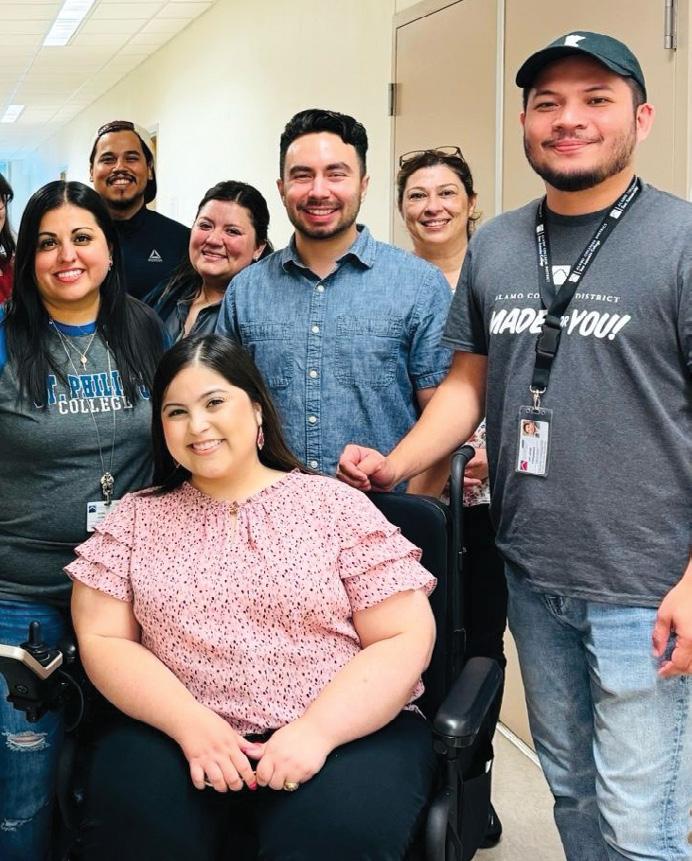
UT San Antonio is providing staff members at the Alamo Colleges with an opportunity to advance in their careers. The university’s Department of Educational Leadership and Policy Studies (ELPS) is offering a tailored MEd in Higher Education Administration program at the Alamo Colleges District to prepare a cohort of 17 graduate students for leadership roles, equipping them with tools to advocate for students and engage in policy discussions. The program is in its fifth year.
This partnership exemplifies the university’s commitment to serving its local community, workforce development and supporting individual social mobility. The program prepares students to lead in the community college system and in South Texas.
“UT San Antonio and Alamo Colleges have seen a lot of benefits related to this partnership,” said Vanessa A. Sansone, associate professor
in ELPS and Alamo Colleges cohort program coordinator.
“Over 40 alumni have earned a master’s degree through this program and now work in higher education administration positions across South Texas. We’re just beginning with the Alamo Colleges cohort, and it’s really exciting to think about what else we can do, and the opportunities that will come for students graduating from our program.”
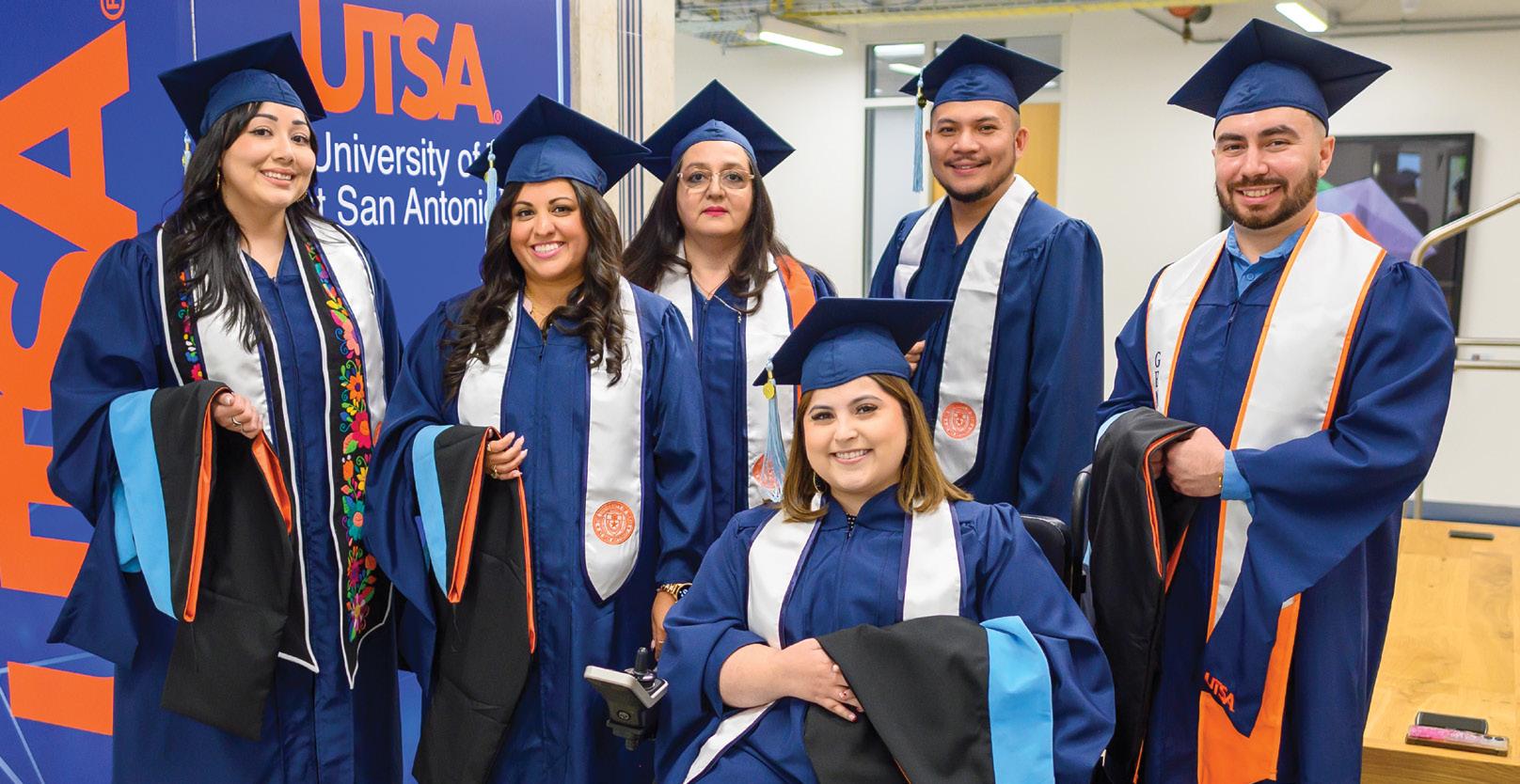
Members of the 2024-2025 Alamo Colleges cohort prepare to walk across the stage at their graduation ceremony. PHOTO BY CHRISTOPHER SAUCEDO
Rosario Espinoza, a member of the Alamo Colleges cohort, says this opportunity has been meaningful to him.
“If I had joined UT San Antonio outside of the cohort, any college, any master’s program, I would absolutely be more isolated in my learning and be less prepared,” said Espinoza. “This partnership between UT San Antonio and Alamo Colleges has built strong higher education professionals. It feels like it’s building us into something to elevate the Alamo Colleges.”
Unlike traditional graduate programs that focus on studying the systems of fouryear universities, this program targets the specific skills and knowledge required to lead in community college systems. The coursework covers higher education administration, theory, policy assessment and research methods, and includes an internship for experiential learning.
“Our program focuses on community colleges and prepares future community college leaders to transform systems that often overlook the unique contributions of these institutions,” Sansone said. “People are going to graduate from our program prepared, not only for the needs of the Alamo Colleges, but also for community college leadership across Texas and the United States.”
The program’s emphasis on in-person networking and relationships sets itself apart. Unlike online programs, the onsite, in-person format creates a relational component that encourages networking with peers and professors.
For Luis Sevilla ’23, the Alamo College cohort program was
When they told me ‘you belong here,’ it was the first time I truly believed in my potential.
transformative, turning self-doubt into professional confidence.
“When they told me ‘you belong here,’ it was the first time I truly believed in my potential,” he said.
As an academic advisor with a goal to teach, Sevilla sees his degree as more than an academic achievement. “I would do this 10 times over,” Sevilla said. “The program isn’t just about earning a degree; it’s about breaking down barriers and creating opportunities for future students.”
Due to the program’s success, UT San Antonio will be launching a hybrid-online master’s degree in Higher Education Administration in Spring 2026. This inaugural cohort will include multiple community college campuses across Texas with the potential to reach thousands of the staff who work there.
Alexandro Luna, a member of the Alamo College cohort, explains how support within the program has been beneficial to him.
“I have gotten so much support, praise, but more importantly, encouragement from everyone involved,” said Luna. “I can reach out to the faculty and look to them for guidance. The program advisor sees the best potential in each of us. And I also have new friends within this cohort who I can support, reach out to and collaborate with. This was the best decision I could have made for myself.”
To reduce financial barriers for working adults, the university and the Alamo Colleges District designed the program to be accessible and affordable, offering on-campus classes to cut commute costs, using open educational resources, and waiving fees for on-campus services like the Student Union, transportation and the Recreation and Wellness Center.
“Being able to attend school at an Alamo College facility is extremely helpful with not having to drive all the way across town or even through downtown,” said Kimberly Abrego, a member of the cohort.
“Also offering the classes in the evenings two nights a week is very helpful. I’m able to pursue a graduate degree knowing that I can still be present for my family.”
The 2024-2025 Alamo Colleges cohort is the largest group to date, with 17 students representing every Alamo College campus, the district office and an extension office. As this cohort nears graduation and the next round of recruitment begins, UT San Antonio and Alamo Colleges have renewed the program for another five years.
Discover How the Story Unfolds: Scan the QR code or visit the link to watch a short video highlighting the impact of the program. bit.ly/nextgenccleaders
GROWTH AND STUDENT ENGAGEMENT IN MAS
BY KATELYN JUAREZ
In November 2024, more than 500 high school students from across San Antonio attended the Mexican American Studies Youth Conference. The event marked a milestone in the 10-year development of Mexican American Studies (MAS) in public schools.
The conference, titled “Cara y Corazón,” was a historic city-wide gathering that brought together secondary school students enrolled in MAS courses, along with peers from nearly every school district and community college in San Antonio. Held at the university’s Downtown Campus, the event included workshops, cultural presentations and opportunities to connect with university resources. For many students, it was their first time visiting a major university campus.
An element behind the scenes of this success lies at the MAS Teachers Academy. Lilliana Patricia Saldaña, associate professor in the Department of Race, Ethnicity, Gender and Sexuality Studies and key organizer of the conference, explains, “The MAS Teachers’ Academy continues to thrive as a grassroots, educator-led community that connects scholars across the state to shape curriculum, pedagogy, and advocacy.”
The conference featured more than 20 workshops led by community members and experts in the field. Topics ranged from folklorico dance and lowrider traditions to archival work and zine-making, giving students exposure to both cultural heritage and academic pathways.
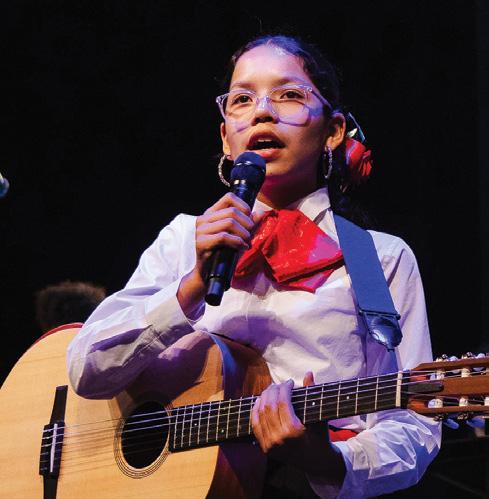
Student performances closed the day, including spoken word poetry, mariachi music by local high schools and other cultural presentations. Organizers emphasized the importance of building community among MAS students and creating pathways toward higher education and careers.
The Texas State Board of Education approved a Mexican American Studies course in 2014. Since then, enrollment in MAS courses in Texas public high schools has expanded from 40 students in 2015 to more than 12,000 across the state today.
The MAS Youth Conference reflected this growth, offering students a space to learn, share experiences and strengthen bonds. Gilbert Flores, a MAS teacher with 10 years’ experience and member of the MAS Youth Conference Site Committee, said the conference created a strong sense of community among his students. “Students were in good spirits, happy, buzzing with laughter and conversing with each other.”
As one student noted, the program is “not just a class, it’s a connection to ourselves.”
Graduates with a Mexican American Studies degree build careers in education, law, counseling, social services, business, the arts, and community leadership, with many also continuing on to advanced graduate study.
It’s a connection to ourselves.
page: A
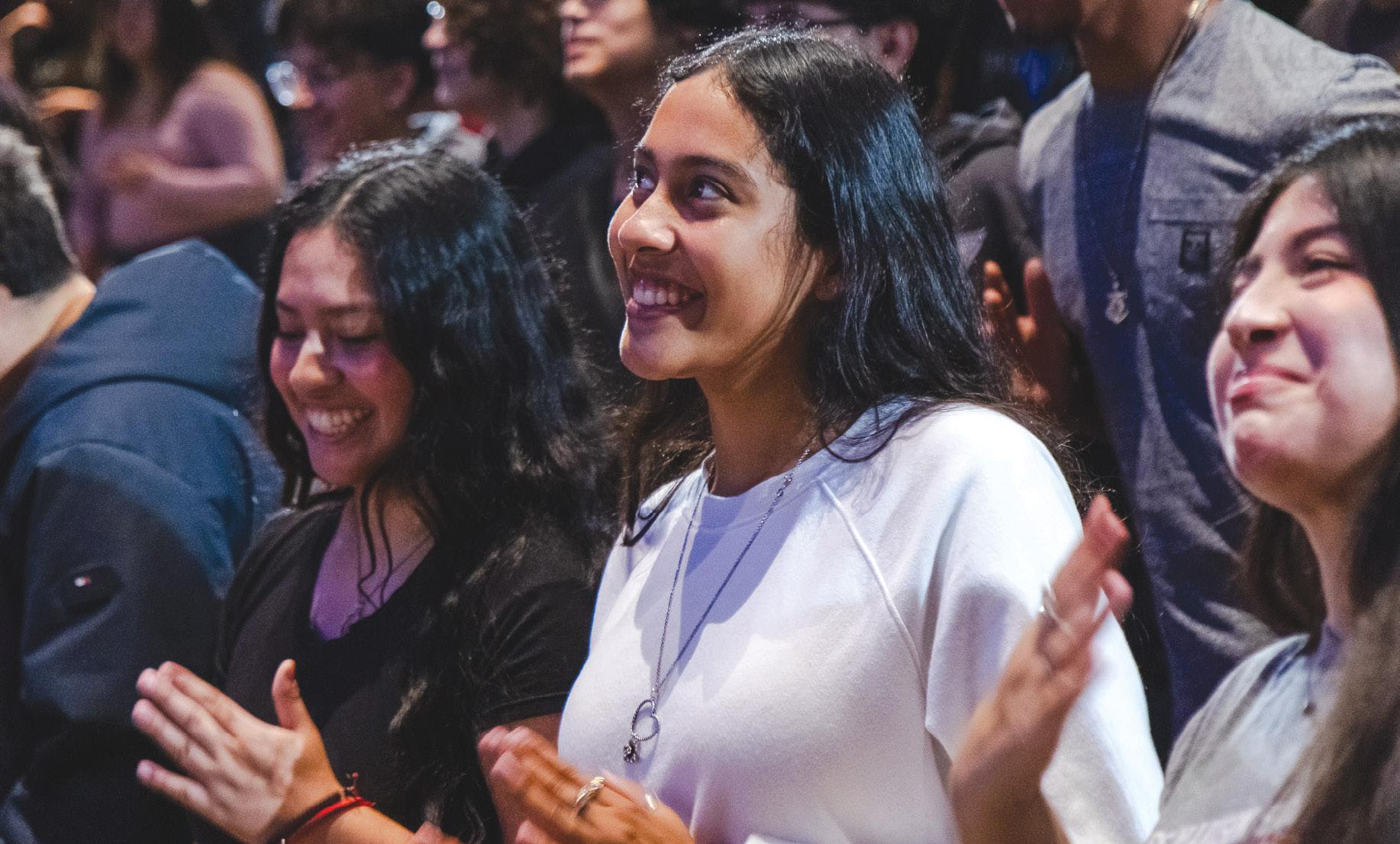
This page top: Students applaud during the opening ceremony of the MAS Youth Conference.
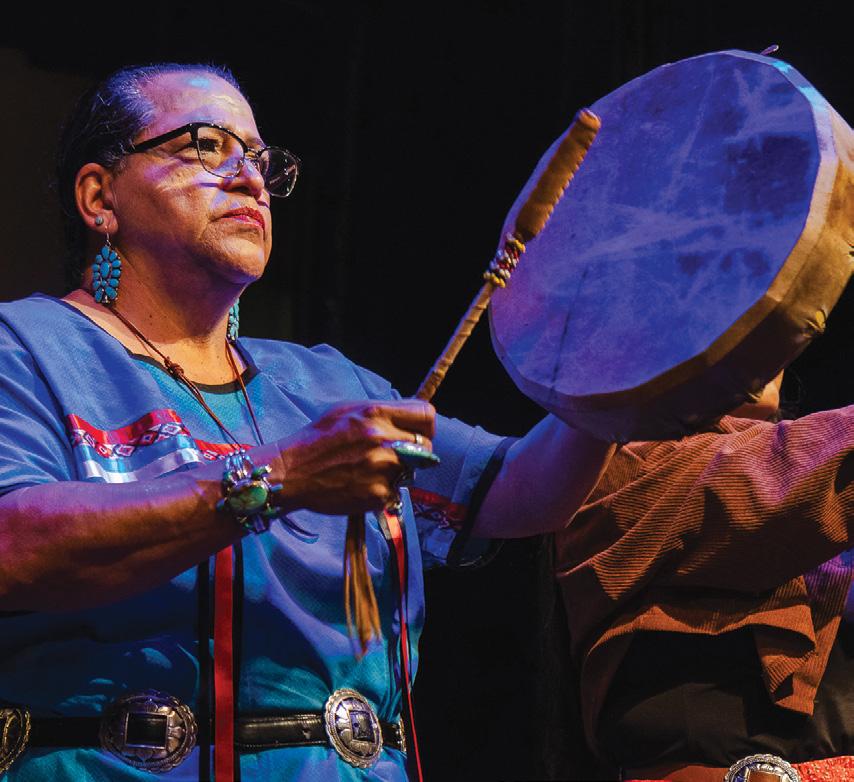
This page bottom: Dora Menchaca, Member of Ah Manam Spiritual Circle, an Indigenous women’s group, plays a drum during the MAS Youth Conference opening ceremony.
BY ENRIQUE IGLESIAS
ALL
Opposite
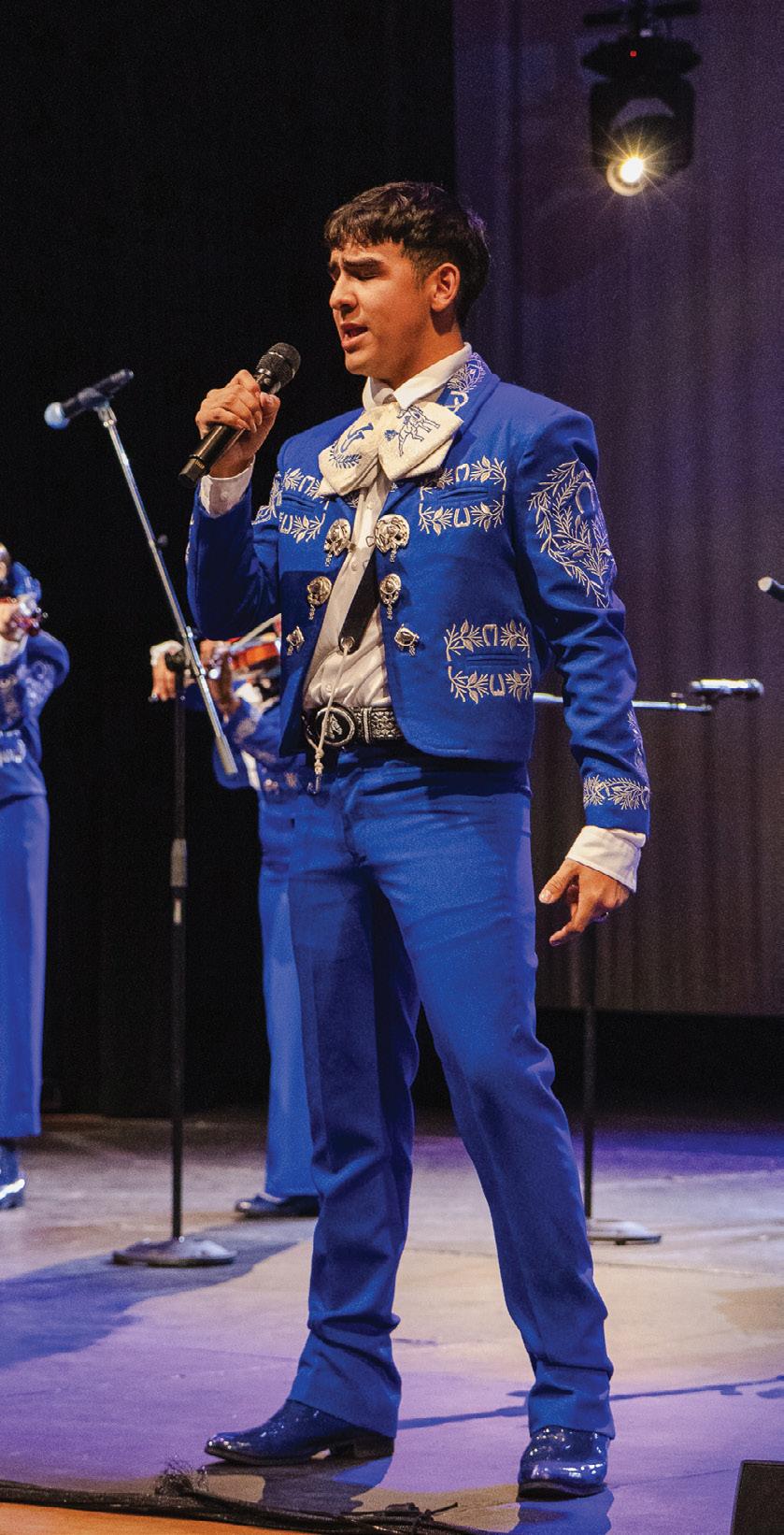
mariachi student from John Jay High School’s Mariachi Jalisco performs at the MAS Youth Conference.
PHOTOS
COEHD BY THE NUMBERS
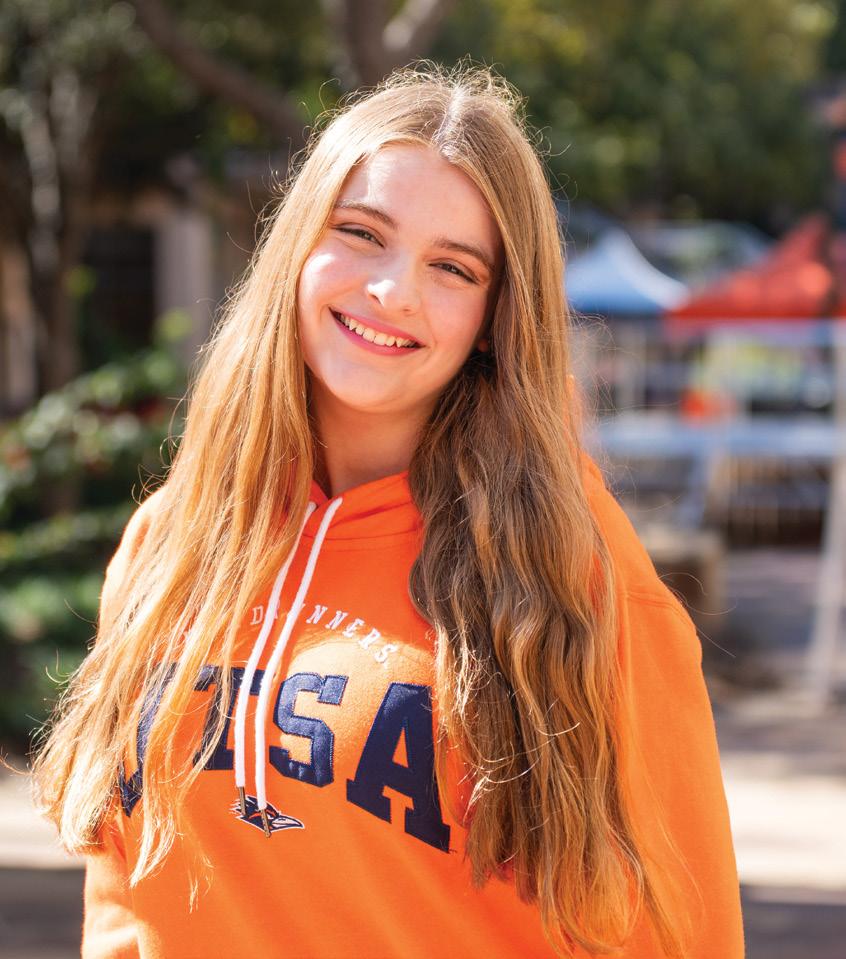
Getting to know students in the program and helping others have been the most rewarding parts of being a COEHD Student Ambassador.
SIERRA DISTEFANO ’25
STUDENT AMBASSADOR BA EQUITY AND EDUCATION (EC-6 ESL)
6 PARTNER DISTRICTS
Powering our clinical teaching residency model
100+ PROFESSIONAL
PRACTICE SITES
Where students apply their learning and gain real-world experience
#1
University-level producer of certified teachers in San Antonio*
#1
University source of new teacher hires in the San Antonio Region*
OVER 80%
Teacher retention rate after the first year in the field*
$11M+ IN RESEARCH FUNDING
For Fiscal Year 2025
7 RESEARCH & SERVICE CENTERS
That provide services to the San Antonio community
74 EVENTS AND 2,000 STUDENTS
The COEHD Student Success Center’s impact as of November 2025
52 STUDENT AMBASSADORS
Currently participating in the program’s second year
*According to data compiled by the San Antonio Region Talent Pipeline Community of Practice, hosted by the City Education Partners and US PREP
OPENING DOORS TO DIGITAL LEARNING
BY KATELYN JUAREZ
A University of Texas at San Antonio initiative is expanding access to digital learning for residents of San Antonio’s West Side. The Adult Digital Literacy through Language Education (ADLLE) Community Lab has been supported by the university’s Westside Community Center as part of its mission to create pathways to economic prosperity in underserved areas and promoting educational excellence.
With additional support from a grant through AT&T, the ADLLE Community Lab has partnered with Pre-K 4 SA and Gardendale Early Learning Program within the Edgewood Independent School District to provide hands-on digital literacy and English as a Second Language (ESL) classes to parents of children enrolled at Gardendale. The program offers digital literacy lessons that align with students’ needs and interests while building their English language skills.
Adding the ADLLE Community Lab instructors to the educator team at Edgewood ISD enhances the depth of community enrichment and its success is due to instructors’ commitment to build genuine relationships with students, said program leaders.
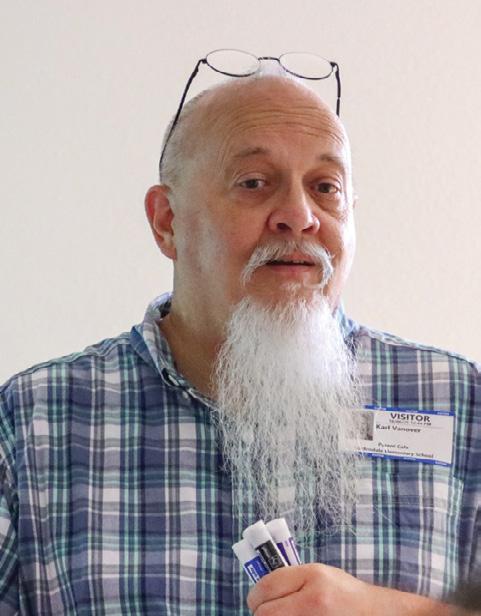
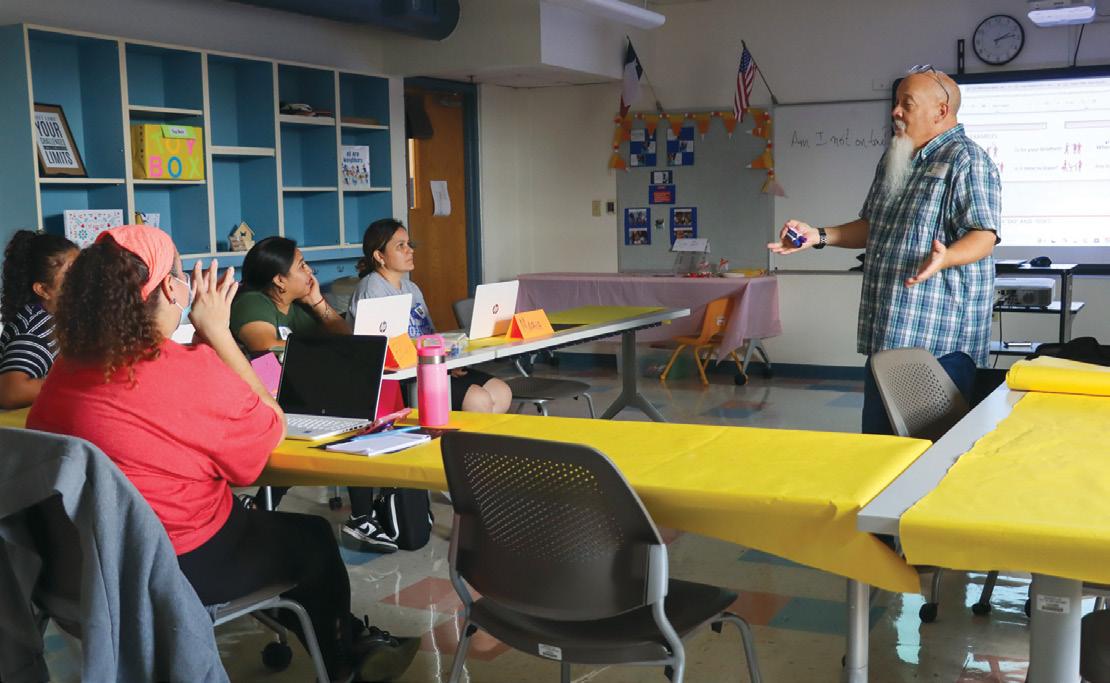
“Taking the time to understand our students — their strengths, needs and perspectives — is essential to creating a space where real learning happens,” lead instructor Karl Van Over said. “We prioritize forming meaningful friendships but, more importantly, we create an environment where language flows more naturally, engagement is real, and learning goals are shared and valued by everyone.”
NEW URGENCY
As part of UT San Antonio’s ongoing commitment to supporting the educational, economic and cultural development of Westside residents, ADLLE offers its targeted instruction through a supervised team of graduate and doctoral students.
The ADLLE Community Lab’s mission has become more critical than ever following the COVID pandemic, said M. Sidury Christiansen, UT San Antonio professor in the Department of Bicultural-Bilingual Studies and director for the ADLLE Community Lab.
“As essential services — from job applications and tele-medicine to school and family communication — have moved online, digital literacy is no longer a luxury, but a necessity,” Christiansen said. “For many in our community, the digital divide is a very real barrier to accessing the resources they need to thrive.”
For Christiansen, the partnership fulfills a promise to the community.
“As a researcher and educator, I believe it is our responsibility to step outside the ‘ivory tower’ and engage directly with the people we aim to serve,” she said. “Our work cannot exist in a vacuum. This is about real-world impact and ensuring that our research and teaching translate into tangible benefits for San Antonio communities.”
But there are challenges to the program, including consistent attendance affected by transportation and time barriers, she said.
“This is why we are super excited about this new partnership,” Christiansen said. “By providing classes on site, we are making it easier for parents to attend, and creating a stable, educational environment that we believe will lead to higher participation and more effective services for the families we serve.”
Partnering with the schools also provides a way for ADLLE to integrate families in the educational journey.
“It’s a powerful statement when children see their parents actively engaged in their own learning and development,” she said. “It reinforces the value of education that many families already pass on, turning an abstract idea into a powerful example.”
Above: Karl Van Over leads a discussion with students.
PHOTO BY KATELYN JUAREZ
A CONVERSATION WITH Ashley Cuevas
Clinical Director of the Sarabia Family Counseling Center, about student training, community impact and coming full circle.
INSIDE SARABIA
BY KATELYN JUAREZ
What is the Sarabia Family Counseling Center (SFCC), and who does it serve?
The counseling center is a training clinic located at The UT San Antonio Downtown Campus where our master’s and doctoral-level counseling students provide counseling services. Our counselors-in-training are closely monitored, trained and provided with onsite supervision from site supervisors composed of faculty, staff, and doctoral-level students. We see community members from San Antonio who are dealing with a variety of issues like anxiety, depression, low self-esteem, day-to-day stressors, and relationship issues. Since we are a training clinic, we monitor clients using a pre-screening process to ensure the counseling services are a good fit for both the client and the student counselor. Each semester, we have about 12 students, with each one seeing around three to four clients. That means we are helping about 36 to 48 clients per semester while providing our students with real clinical experience in a supervised setting.
How did your academic and professional journey lead to your role as Clinical Director at the SFCC?
I graduated with my master’s in 2014 and PhD in 2017 from The University of Texas at San Antonio and it seemed like a natural fit to continue my journey here. I started as an adjunct professor in early 2018, and in early 2022, I was asked to step into the interim director role. By August 2022, I moved into a full-time position as an Assistant Professor of Practice in the Department of Counseling and the clinical director of the SFCC. What’s special is that I was already familiar with the clinic even during my doctoral program, where I was supervising. When the opportunity to become the Clinical Director came up, it felt like everything had come full circle. I was able to continue my work at my alma mater and contribute to training the next generation of counselors. It was something I had wanted to do, and it naturally landed me in this position.
As Clinical Director, what are your primary responsibilities at the SFCC?
In terms of day-to-day operations, I manage student, staff and doctoral supervisor schedules to ensure that students receive both live and direct supervision. This helps create a well-rounded training experience where students are supported academically, clinically and professionally. I oversee any ethical or legal issues that arise, making sure procedures and protocols are followed. I supervise the clinic supervisors and assist them with concerns or questions related to their supervisees. I also assist staff with any operation issues or concerns from printing trouble to student and client questions. When I first stepped into the role, one of the biggest challenges and primary responsibilities was guiding the clinic through the transition back to in-person services after the COVID-19 pandemic. Helping re-establish in-person counseling and rebuilding client engagement was a significant part of my early leadership.
Counseling services at the SFCC are provided by master’s and doctoral-level counseling students under faculty supervision. How does this model help prepare students for their future careers?
What’s really helpful is the live feedback and tapescript feedback, which is a transcript of sessions provided by the students that showcases their used skills and offers opportunities to provide alternate skills that highlight the growth and development of the student’s learning. Related to the live feedback it’s beneficial especially if an intervention is needed. With live feedback, the supervisors can address a risk assessment or session concern in the moment, which gives the students hands on training or assistance with risk or crisis as they unfold. We place a strong focus on helping them build basic counseling skills, especially the ability to connect with clients. All of us — the faculty, staff, doctoral supervisors and peers — have eyes on both the client and the student, creating a well-supported learning environment. The learning comes from experience, starting with basic skills and progressing to more advanced skills such as administering necessary assessment. Many students come in unsure of how to work with clients or what to expect when they’re sitting across from a real person, but over time they begin to feel much more prepared and confident. Sessions are also recorded and monitored, giving students the chance to review their work with supervisors during supervision sessions. The students also get feedback during class time, which is called group supervision. Further feedback comes from a class assignment that requires the student to present a formal case presentation, which offers the instructor and peers more insight into the client’s background, presenting issues, and treatment plan.
Can you tell us about the partnerships the SFCC has with the community, and how both the center and the community benefit from these collaborations?
Some of our current partnerships include the Juvenile Justice Partnership, Juror Counseling Program, and more recently, the San Antonio Police Department. Through our Juvenile Justice Partnership, we provide services to at-risk youth and their parents who are required by Municipial Court to attend psychoeducational group sessions. The curriculum focuses on topics such as communication, setting boundaries, understanding the impact of drugs and alcohol, and improving parent-child relationships. Our most recent population that we service are first responders from the San Antonio Police Department (SAPD). This includes front desk personnel, officers, staff, or any SAPD member who may need assistance with anything related to compassion fatigue, communication, boundary setting, emotional support, or day-today stressors. These partnerships give the students the chance to expand their comfort zones, apply their skills and gain experience with different populations. The benefit to these collaborations is multi-sided. The students get to apply their learned counseling skills and work through challenges amongst successes with the help of a trained supervisor, the supervisors get to witness the growth and development of the trained counselors, and the clients have access to a safe, nonjudgmental clinical space eager to offer help and guidance.