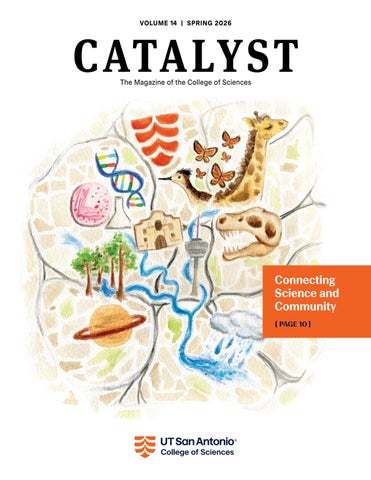
CATALYST
Dean: Stephanie A. Santorico, PhD
Editor: Ryan Schoensee
Contributing Editor: Lauren Crawford
Graphic Designer: Coral Díaz
Copyeditor: Ashley Festa
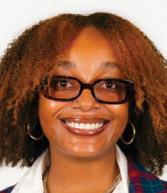
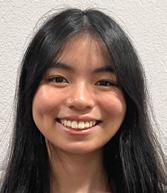
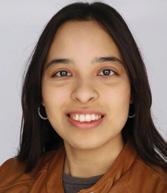
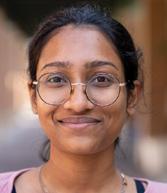
Student Writers: Adine Bahambana, Anastasiia Gordeeva, Kendall Green, Charlene Omictin, Mariel Ortega, Nishat Shama
Contributing Writers: Lauren Garza, Joanna Carver Quintanilla
Student Artist: Alyssa Kornegay
COLLEGE ADMINISTRATION
Associate Dean for Graduate Studies: Nicolas Large, PhD/HDR
Associate Dean for Research: Elizabeth Sooby, PhD
Assistant Dean for Transdisciplinary Research: Leslie Neely, PhD
Associate Dean for Undergraduate Studies: Hector Aguilar, PhD
Associate Dean for Faculty Success: Chris Gamblin, PhD
Assistant Dean for Fiscal Administration: Monica Palomo, MBA
Assistant Dean for Instruction, Assessment and Faculty Development: Terri Matiella, PhD
Assistant Dean for Faculty Support: Mostafa Fazly, PhD
Alyssa Kornegay
Student Writers
Student Artist
Adine Bahambana
Computer Science
Anastasiia Gordeeva
Chemistry
Message from the Dean
Kendall Green
Developmental and Regenerative Sciences
Charlene Omictin
Molecular Microbiology and Immunology
Mariel Ortega Environmental Science
Nishat Shama Biology
Alyssa Kornegay
Biochemistry
Science has long played a defining role in shaping healthier societies, stronger economies and more sustainable futures. Today, I believe science is just as vital as ever in advancing these goals. Our mission at the UT San Antonio College of Sciences reflects this purpose as we advance knowledge that improves lives while preparing the next generation of scientists and leaders for meaningful, life-changing careers.
Our faculty are at the heart of this work. Through their teaching and mentorship, they model what it means to pursue knowledge in service of the public good. Their research addresses realworld challenges while also creating opportunities for students to engage in scientific inquiry and research.
Across the college, our faculty help students at every level become embedded into the university’s discovery enterprise. By engaging in research, students gain hands-on experience that builds confidence, skill and purpose. These experiences help our students see themselves not only as learners but also as drivers of scientific progress.
That sense of purpose carries forward beyond graduation. In this issue of Catalyst, we highlight alumni who have applied their scientific training across the San Antonio region, including at cultural institutions, environmental organizations and public utilities, all of which bring science into the communities where people live, learn and thrive. Partnerships with the Health Professions Office and UTeachSA further expand pathways into health and teaching careers, strengthening the regional workforce and broadening access to opportunity.
We are also proud to celebrate milestones that reflect academic excellence and collaboration. This academic year marked the 20th anniversary of the UT San Antonio-Southwest Research Institute (SwRI) Space Physics and Instrumentation PhD program, a partnership that has produced two decades of discovery, collaboration and global scientific leadership.
We are living in a defining moment. As UT Health San Antonio and UTSA came together to form UT San Antonio last fall, we have the privilege of working toward a shared vision that bolsters education, research and health on a global scale. Amid all these changes, the College of Sciences has continued to thrive, growing enrollment by 9.3% from Fall 2024 to Fall 2025.
Looking ahead, philanthropy continues to play a critical role in expanding access and strengthening research. We are pleased to congratulate Adam Hamilton (page 22) on his recent appointment as chair of the College of Sciences Advancement Council. We look forward to Adam’s leadership in cultivating resources that empower our students and accelerate our most ambitious research initiatives.
Thank you for being part of this shared work. Together with our community, donors and alumni, we are shaping a future that reflects our past — one where science continues to serve our community through health advancement, social mobility and environmental sustainability.
Sincerely,
STEPHANIE A. SANTORICO, PhD Dean, College of Sciences | Professor, Mathematics
Congratulations
Whitney Wendt (Biology, Health and the Environment) and Cassidy Lane (Earth and Planetary Sciences) received the Outstanding Student University Life Award, showcasing their exemplary academic excellence and service to the College of Sciences.
Emily Holder (Neuroscience, Developmental and Regenerative Biology) and Durga Meenakshi (Neuroscience, Developmental and Regenerative Biology) were named Barry Goldwater Scholars, one of the nation’s most prestigious honors for undergraduates pursuing research careers in the natural sciences, mathematics or engineering.
Jenny Hsieh, PhD, (Neuroscience, Developmental and Regenerative Biology) was recognized by the National Institute of Neurological Disorders and Stroke (NINDS) for her dedicated mentoring of the next generation of neuroscience researchers and innovators. The institute, part of the National Institutes of Health (NIH), granted her the NINDS Landis Award for Outstanding Mentorship by an NINDS Investigator. Hsieh was one of only three recipients this year and was nominated for her personalized and holistic approach to mentoring.
Xinting Yu, PhD, (Physics and Astronomy) was one of two recipients of the 2025 Harold C. Urey Prize in Planetary Science. The national award from the American
Astronomical Society’s Division for Planetary Sciences recognizes earlycareer scientists shaping the future of space research. Yu was honored for her research in planetary and exoplanetary science, which focuses on how planetary surfaces and atmospheres interact and evolve.
Chiung-Yu Hung, PhD, (Molecular Microbiology and Immunology) and George Perry, PhD, (Neuroscience, Developmental and Regenerative Biology) were welcomed as new inductees into the highly selective Academy of Distinguished Researchers at UT San Antonio. The academy was established in 2015 and comprises 32 accomplished faculty members from across UT San Antonio who represent diverse disciplines, from the arts and humanities to engineering, business, sciences and social sciences.
Kaushik Mitra, PhD, (Earth and Planetary Sciences) published “Oxychlorine Species on Mars: A Review,” in Reviews of Geophysics, a leading peer-reviewed geoscience journal. Mitra’s paper analyzed a report that brings together more than a decade of research into the discovery of oxychlorine salt compounds on the red planet.
Thayne Currie, PhD, (Physics and Astronomy) worked with an international team of astronomers to discover two substellar companions — astronomical objects orbiting young and previously unexplored stars. Their work provides the first target for NASA’s Nancy Grace Roman Space
Telescope, which is scheduled to launch in May 2027. These discoveries are the first results of a new program known as OASIS (Observing Accelerators with SCExAO Imaging Survey) that finds and characterizes massive gas giant planets like Jupiter.
Kyle Shaney, PhD (Biology, Health and the Environment) is leading an important study of the Sunda gharial (Tomistoma schlegelii), an endangered crocodile in the blackwater peat swamps of Southeast Asia. Shaney is working with a team of U.S.-based experts, Indonesiabased scientists from the National Research and Innovation Agency, and local and Indigenous staff. Funded by the conservation group CrocFest, the team is producing a comprehensive report and publication, which will help identify high-priority areas for protection and guide conservation strategies across the region.
Chiung-Yu Hung, PhD, (Molecular Microbiology and Immunology) is collaborating with institutions nationwide on a $6 million grant from the National Institute of Allergy and Infectious Diseases to combat invasive fungal infections, aiming to identify key antigens that could enable new diagnostics and vaccines.
Matthew Troia, PhD, (Biology, Health and the Environment) earned a National Science Foundation CAREER award to study how urbanization and climate change impact freshwater ecosystems, with research focused on protecting Texas waterways and addressing invasive species.
Good to Know: Monica Palomo
By Adine Bahambana
Meet the College of Sciences leader who is building stronger systems, implementing clearer processes and adding a little more sparkle behind the scenes.
As the new assistant dean for fiscal administration in the College of Sciences (COS), Monica Palomo brings nearly two decades of experience in higher education administration across University of Texas (UT) institutions. She previously helped launch and structure the financial operations of the UT School of Public Health at the UT San Antonio Health Science Center, where she played a key role in building budgets, processes and research support systems from the ground up. At UT San Antonio, Palomo partners closely with the dean, the department chairs and the Business Service Center to strengthen financial planning, support research growth and build financial systems that help the College of Sciences thrive.
Palomo describes her role as ensuring that the college’s financial operations run smoothly, strategically and transparently. “Every day looks a little different,” she said. “I’m balancing short-term needs with long-term goals — reviewing budgets, supporting faculty, collaborating with our Business Service Center team and helping departments get the clarity they need to move forward.” With a focus on thoughtful problem-solving, Palomo sees her work as a partnership rooted in communication and consistency.
Palomo’s career path prepared her well for her current role. After helping establish the School of Public Health’s fiscal and administrative operations, she discovered how much she enjoyed the work that goes into making a successful financial system. “That experience confirmed that I love creating structures that help an academic enterprise grow,” she said. “When the opportunity came to bring that to the College of Sciences, it felt like the perfect next step.”
Palomo was drawn to the College of Sciences’ breadth and impact. “COS touches every part of UT San Antonio,” Palomo shared. “The diversity of disciplines, research and teaching is energizing.” Since joining the college, she has been inspired by the passion and collaboration she sees every day. “People here genuinely want to solve problems together,” she said. “That kind of culture matters — it makes everything stronger.”
Palomo’s Book Recommendations
The Housemaid by Freida McFadden
“A twisty, addictive thriller that kept me turning pages way past my bedtime.”
A Court of Thorns and Roses (series) by Sarah J. Maas
“These books are my escape. They remind me that powerful women, magic and a little chaos make everything more exciting.”
Beautiful Disaster by Jamie McGuire
“It’s messy, dramatic, and completely entertaining. Sometimes a fun story is exactly what you need.”
Learn more about Monica Palomo here!
Outside the office, Palomo embraces creativity and connection. She loves thrifting and reselling vintage décor, a hobby she shares with her daughter. Palomo also enjoys DIY projects, gardening and exploring coffee shops around the city. On the weekends, she spends time visiting estate sales, hosting cookouts or discovering her next great vintage find. “I recharge by creating,” she said, “and by spending time with my daughter, who keeps me grounded and inspired.”
Looking ahead, Palomo hopes to build long-lasting financial systems that support UT San Antonio for years to come. “Budgets should be tools that help people make good decisions,” she said. “If I can help create structures that let faculty and staff focus on what they do best, that’s the impact I want to make.”
At
a Glance COS Enrollment is on the rise
Science student enrollment grew nearly 10% from Fall 2024 to Fall 2025.
4,412 4,822 20 24 20 25 FALL FALL
Blasting Off into the SwRI-UT San Antonio Space Physics Graduate Program
The University of Texas at San Antonio celebrates its 20th anniversary of its joint space physics program with the Southwest Research Institute (SwRI).
By Charlene Omictin
With access to resources offered at both institutions, the joint SwRI-UT San Antonio Graduate Program thoroughly prepares students for exciting careers in space physics, planetary science and astrophysics. Michael Starkey, PhD ’21, explained, “The program emphasizes writing scientific papers to disseminate your results, as well as proposal writing to win funding of your own. These skills are critical to succeed as a space physics researcher.”
In the graduate program, students can obtain a master’s or a PhD in physics, with a specialization of space physics and instrumentation, through the Department of Physics and Astronomy at UT San Antonio. Doctoral students are required to take core courses in classical mechanics, quantum mechanics, electrodynamics and statistical mechanics, as well as advanced electives, and they must also conduct doctoral research. At the end of the program, they must pass qualifying exams and complete a dissertation defense.
Prospective students should have a strong background in mathematics and are encouraged to tour the campus before applying to the program. “Attend the open house where you can meet current students and faculty and tour the lab facilities for a more intimate look into the program and how it may fit for you,” said Aaron Deleon, a doctoral student studying physics.
During the program, students can pursue a wide range of research pathways, which include astrophysics, ionospheric physics, magnetospheric physics, planetary science, solar and heliospheric physics, and space flight instrumentation. They are encouraged to attend and present their research at national and international conferences. Deleon said traveling to these
meetings offers an important learning experience and facilitates forming strong bonds with other students in the field.
The SwRI-UT San Antonio Graduate Program also offers many unique opportunities ranging from extensive hands-on research to working in state-of-the-art lab facilities. From their first semester, students work alongside world-class scientists to gain insight and mentorship in the field, said Sarah Vines, PhD ’16. Through this mentorship, students build career skills in writing proposals, which is necessary for research funding.
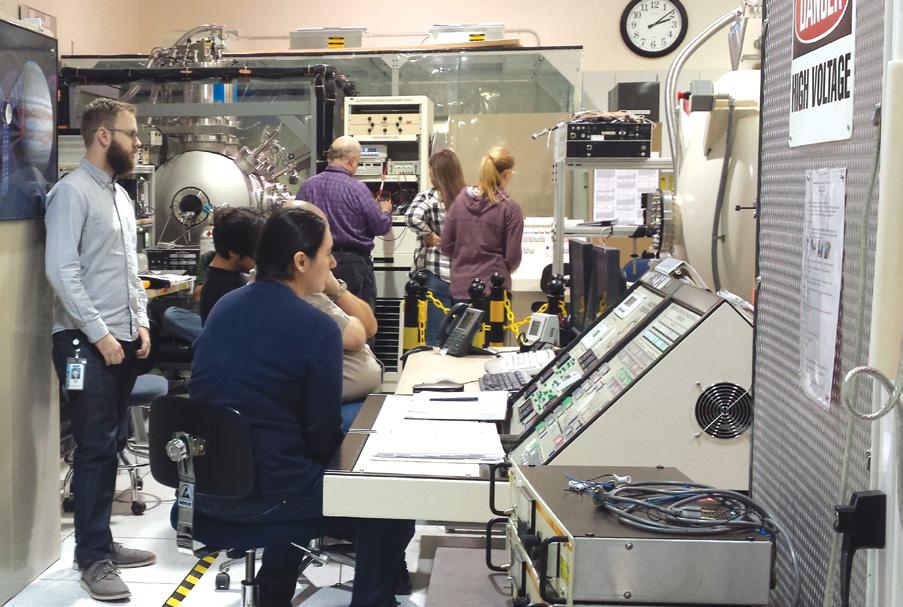
Additionally, the program offers a niche specialization in space instrumentation. Many students are involved with missions funded by NASA and other agencies, working with data from satellite missions and building plasma instrumentation that will launch into space. Vines explained, “I had the chance to directly work on multiple plasma instruments during my time as a student, which included learning laboratory systems and techniques, like the use of high vacuum chambers and radiation sources.” Working on instrument and mission teams gives students immediate exposure to activities that typically happen only as a professional space physicist, said Robert Allen, PhD ’17. This experience makes students stand out as job candidates in this competitive field.
“The closeness to instrumentation is an element that makes the program truly unique,” said Allen. “Not only does this allow students firsthand experience into an aspect of space physics that most are not exposed to until much later in their careers, but it also provides a detailed understanding into both what we study and how we measure.”
Starkey highlights special opportunities to work on various projects in the lab, which promotes versatility. “These can range from flight hardware projects to internal research projects aimed at developing new technology for future space flight,” he said. “The ability to work in the lab and learn how different types of instruments work is highly valuable and provides a strong advantage when interpreting spacecraft data.”
The joint program is integral to the UT San Antonio community because it fosters a strong relationship between the university and SwRI. The program’s graduate adviser, Kathryn Mayer, PhD, said, “The collaboration directly enriches our Physics and Astronomy graduate program in the College of Sciences, and the SwRI students and faculty give back to the UT San Antonio community through student organizations, outreach and more.” Ultimately, the partnership serves to broaden access to resources necessary for graduates to be successful in space physics research.
Since 2005, the College of Sciences has partnered with SwRI to give students the opportunity to explore several areas of captivating space research. Also located in San Antonio, SwRI is a world-class organization that is home to leading experts and researchers in many scientific fields.
In the future, the SwRI-UT San Antonio Graduate Program is envisioned to expand beyond the pathways already offered. Mayer said, “As the program continues to grow, adding new students and adjunct faculty members and benefitting from an expanding alumni network, even more projects and research areas will be added, increasing the range of opportunities for UT San Antonio graduate students.” With the continued evolution of the space physics field, the joint program aims to inspire and cultivate the next generation of space explorers.
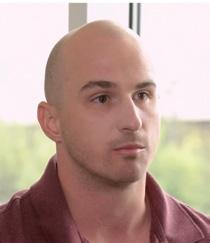
Michael Starkey, PhD ’21
Michael Starkey is a research scientist at SwRI. He researches particle acceleration at collisionless shocks in space and solar energetic particle events during coronal mass ejections.
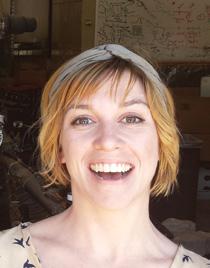
Sarah Vines, PhD ’16
Sarah Vines is a lead scientist at SwRI. She focuses on space plasma physics, specializing in solar wind-magnetosphereionosphere interactions on planetary systems and magnetic-field and low-energy plasma instrumentation. Currently, she is involved in NASA’s Magnetospheric Multiscale (MMS) mission, the National Science Foundation’s AMPERE, and NOAA’s SOLAR.
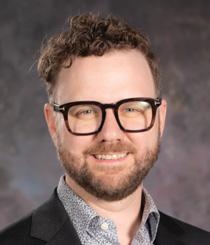
Robert Allen, PhD ’17
Robert Allen is a lead scientist at SwRI. He specializes in charged particle acceleration and transport from processes near the sun, at structures in the solar wind, and within planetary magnetospheres. He is involved in the European Space Agency’s Solar Orbiter mission.
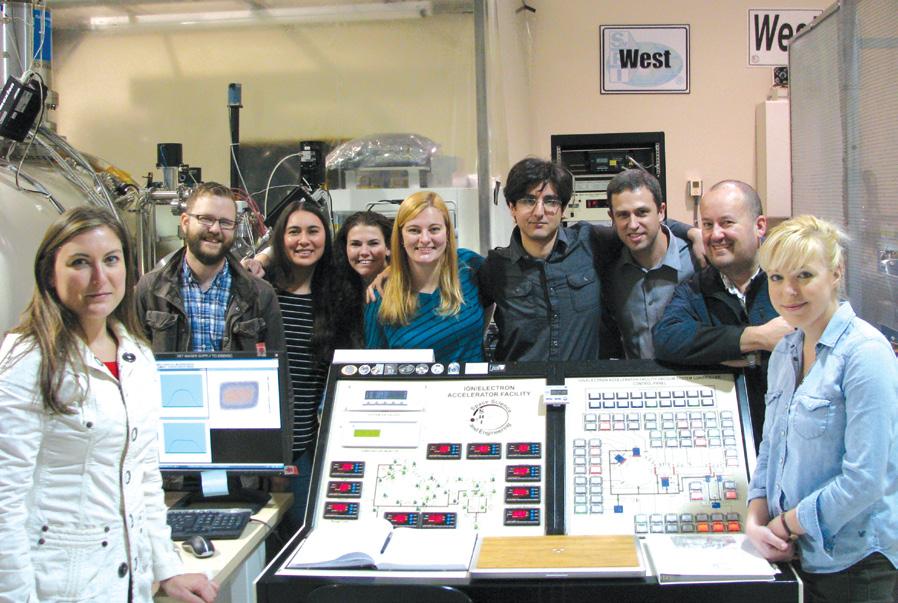
Students in the SwRI-UT San Antonio Graduate Program during the space physics laboratory class, which provides students with the unique opportunity of working hands-on with space instrumentation in a lab setting.
Students operating vacuum chamber equipment in a facility at SwRI as part of the space physics laboratory class. This testing allowed for further characterization of an instrument on NASA’s New Horizons spacecraft sent to measure the plasma environment near Pluto.
Pathways to Success: UTeachSA and the Health Professions Office
By Mariel Ortega
From a lesson imparted by a thirdgrade teacher to the faint scar from the stitches that saved your life, educators and doctors are an integral part of our lives.
UTeachSA and Health Professions Office (HPO) Pathways
are
at the front lines of educating the next generation of math and science teachers and medical professionals.
The UTeachSA and HPO Pathways programs are committed to providing students with the tools and support they need to become capable and passionate teachers and medical professionals. Students receive rigorous scientific training, and they are encouraged to pursue comprehensive selfdevelopment, engage in real-world experience and develop a supportive community of peers.
UTeachSA
Founded over 20 years ago, UTeachSA remains a hub of dedication and passion for teaching. Students and UT San Antonio leadership work together to achieve the program’s mission of placing talented math and science teachers into schools. Thanks to the generous support of donors, UTeachSA students receive tuition reimbursement for the first two recruitment courses. With a current cohort of 92 students and a track record of about 65% of graduates going on to become teachers, this dedication is paying off.
Students of UTeachSA, in addition to pursuing their science, technology, engineering or mathematics (STEM) degrees, study to pass state requirements and become certified
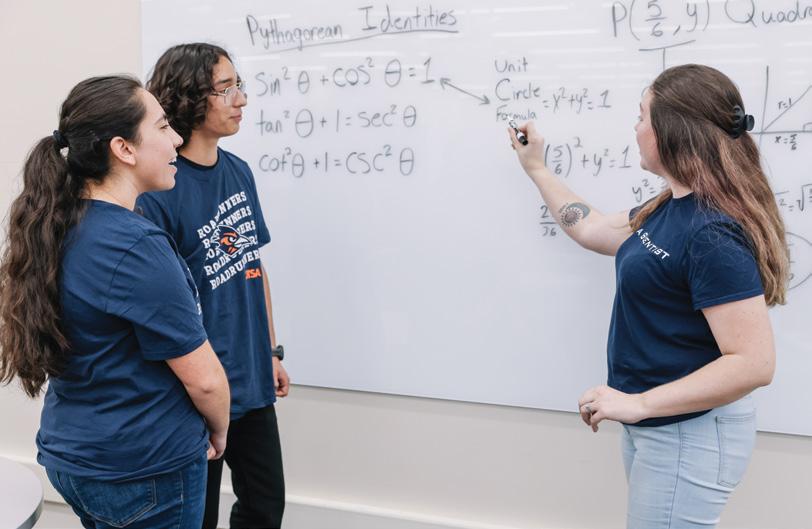
teachers. One of the highlights of the program is its emphasis on fieldwork — going into real classrooms under mentorship of current teachers — starting in the very first course. As Carey Walls, associate director of UTeachSA, points out, it is one thing to be taught by professors who research education and quite another to be taught by those with classroom experience. Fieldwork further gives students the chance to see whether they enjoy being in the classroom and leads to valuable lessons.
“The most surprising thing I have learned through this program is that making differentiated, student-centered lessons as a teacher isn’t hard; it just takes creativity and experience, something given to you during the program, leading you to a wonderful and fulfilling career in education,” said Dante Jones, a current UTeachSA student.
Both Jones and Walls have one message they wish to impart on current STEM students who might be interested in pursuing a career in teaching: Try it out! Since tuition for the first two UTeachSA recruitment courses is reimbursed, there is nothing to lose.

HPO Pathways
For students whose goal is to pursue a career in healthcare, the Health Professions Office (HPO) offers 12 Pathways toward making these dreams a reality. Founded over 25 years ago, HPO Pathways guides students toward building comprehensive professional school applications with clear, concrete steps and one-on-one mentoring.
Many Pathways include early conditional acceptance to partner schools or dual degrees from UT San Antonio and those partner schools. For example, HPO has a strong relationship with the UT San Antonio Health Science Center, offering Pathways with early conditional admission to UT
Health San Antonio dentistry, physical therapy, respiratory care and medical laboratory sciences programs. This relationship is expected to grow because of the recent merger between UTSA and the Health Science Center.
In addition to providing prerequisite guidance and early admission programs, HPO Pathways seeks to help its approximately 1,400 students become strong candidates to their desired post-graduate program. As HPO Pathways program manager Tracy Walton explained, “Earning strong grades is the basic standard, but beyond just your numbers, who are you? What are your values? It’s not just pre-science training, but it is also about humanistic development.”
It’s not just pre-science training, but it is also about humanistic development.
Texas Biomedical Research Institute
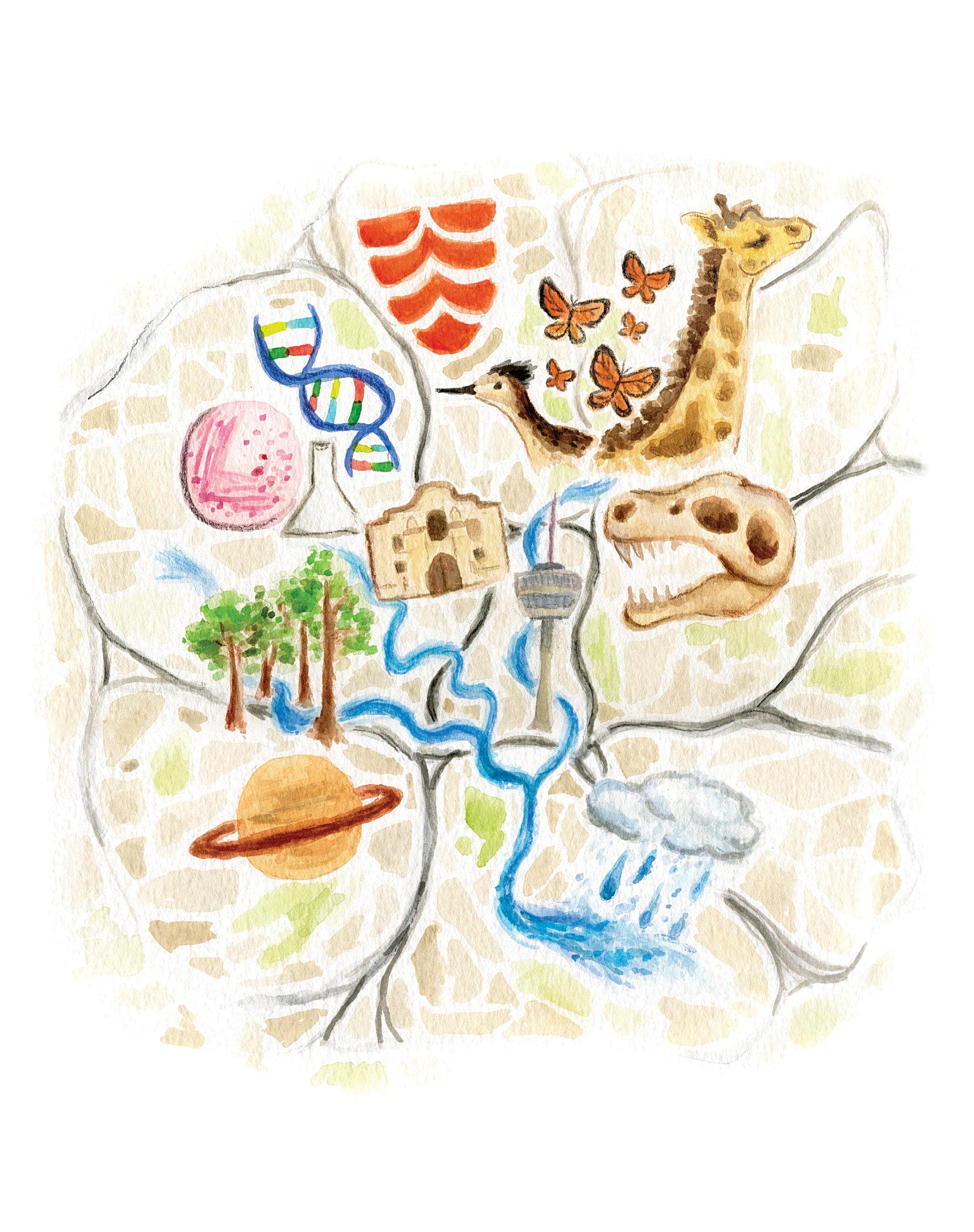
Parks and Recreation Department
San Antonio Zoo
Witte Museum
UT San Antonio
Edwards Aquifer Authority
Pearsall Park
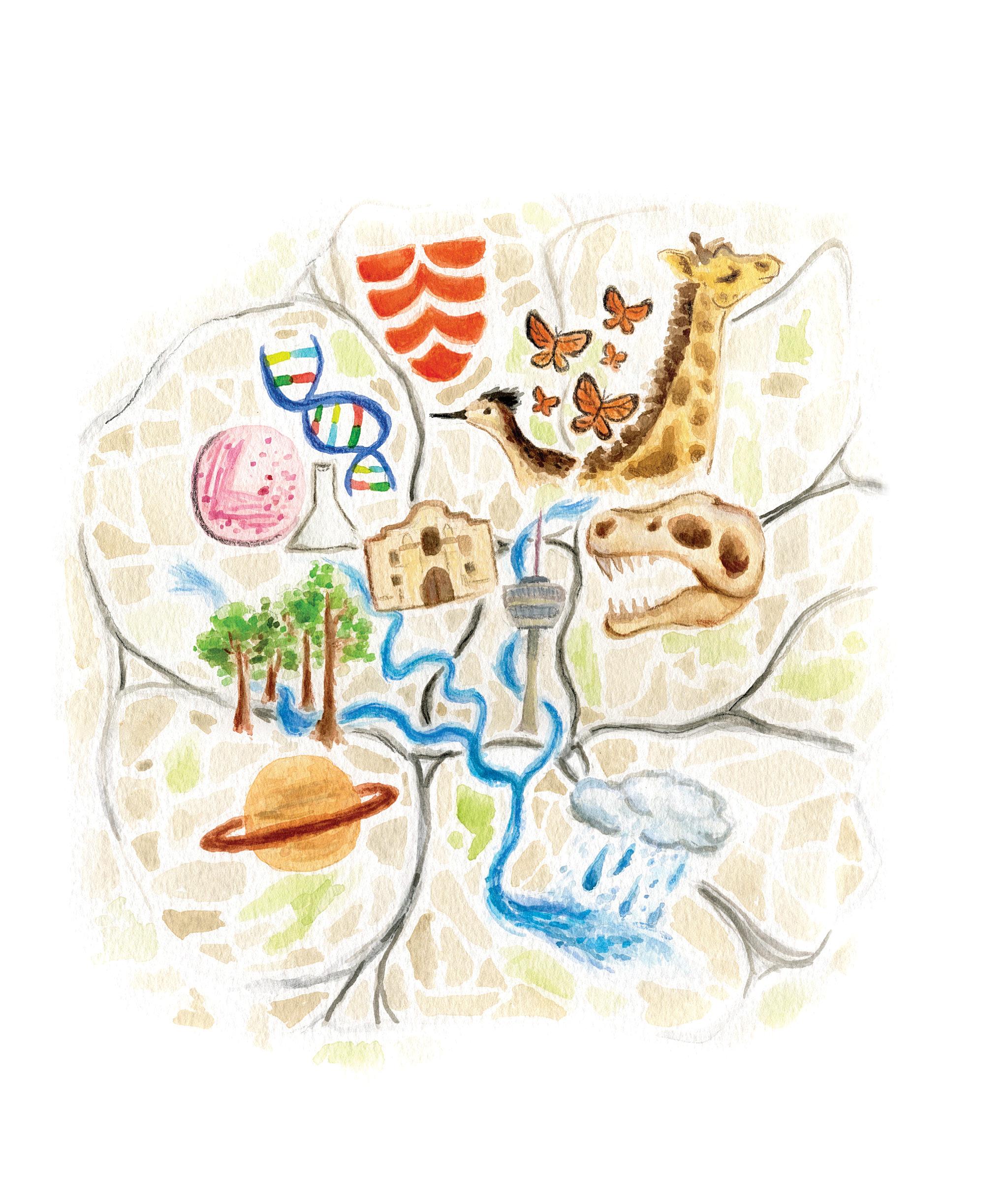
Beyond the Classroom: How the College of Sciences’ Community Partnerships Make Science Accessible
From immune disease research to local river cleanups, College of Sciences community partnerships foster student engagement and prepare students for diverse careers.
By Mariel Ortega
San Antonio Zoo
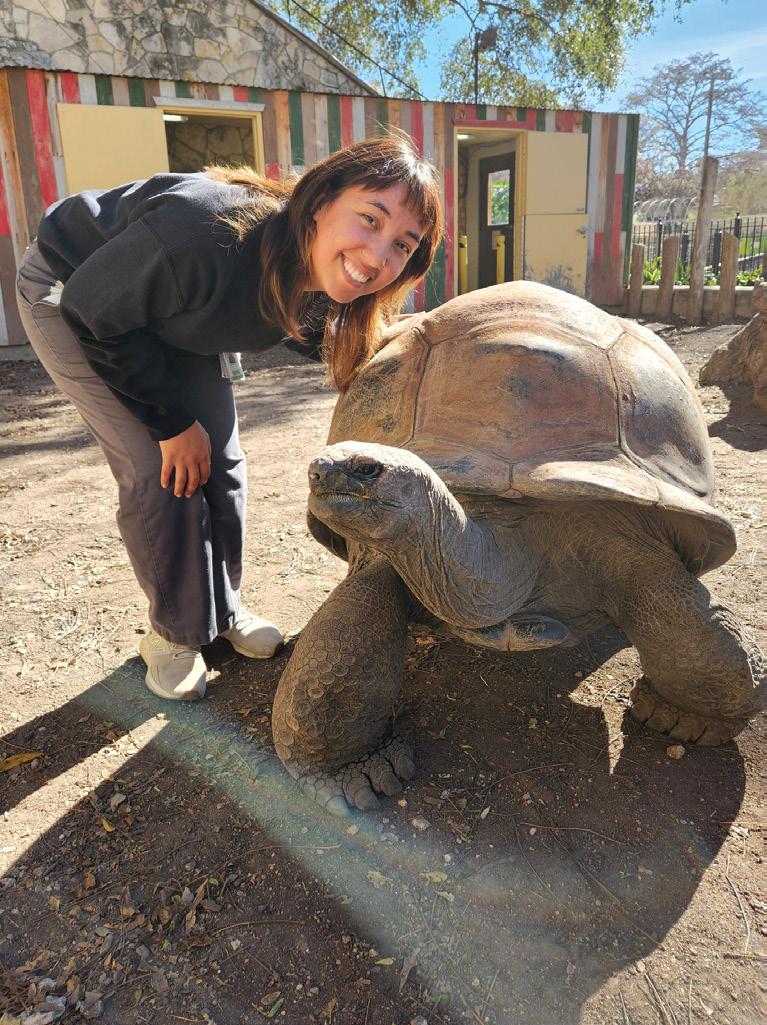
The San Antonio Zoo and UT San Antonio collaborate on conservation efforts, such as the Alamo Area Monarch Collaborative. College of Sciences interns not only learn to care for animals, but they also receive firsthand experience in science communication and real-world conservation.
Studying the human dimensions of wildlife at UT San Antonio really helped me learn how to effectively communicate wildlife conservation messaging to the general public. At the zoo, I get to interact with diverse audiences and share the joy I find in nature with them.
EMILY BRIENO MS ENVIRONMENTAL SCIENCE ’24
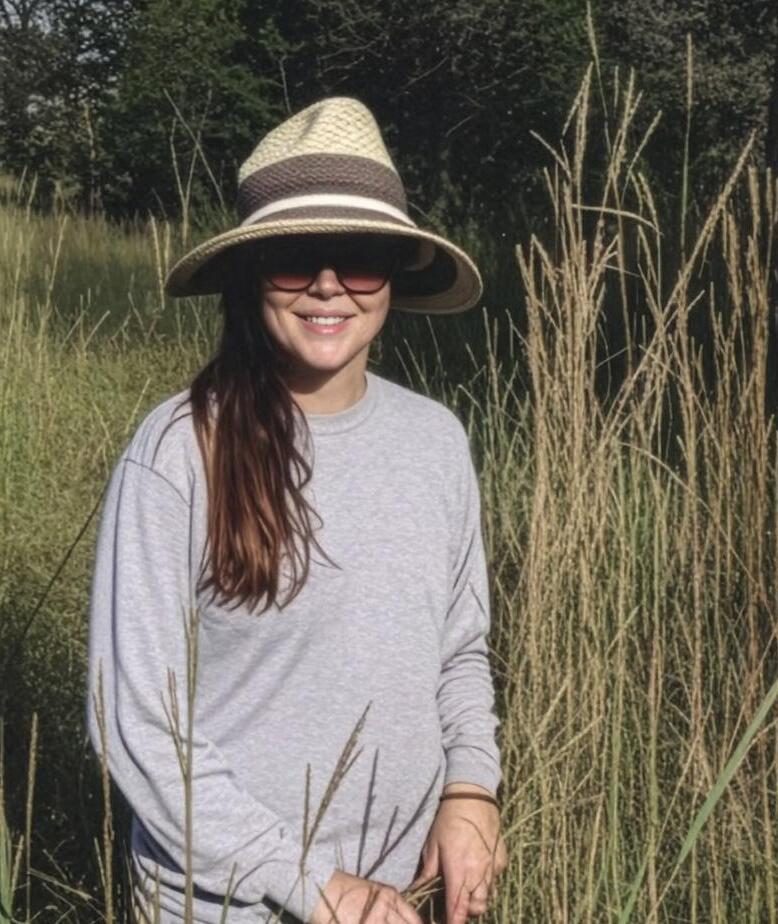
I am currently the assistant manager of the Natural Areas, which is a division of the City of San Antonio’s Parks and Recreation Department. My current position oversees the education programming, outreach, and natural resource management and research. A master’s degree at UTSA prepared me for this position by giving me the foundation I needed in order to scientifically investigate ecological problems facing some of our most rare, threatened and endangered species. This in turn has helped us come up with new and innovative ways to not only document these species but also help conserve them.
WENDY LEONARD MS BIOLOGY ’10
Edwards Aquifer Authority
College of Sciences students join the Edwards Aquifer Authority (EAA) mission to manage, enhance and protect the Edwards Aquifer system through research on land management, microbial communities and connections between the Edwards and Trinity aquifers. Interns at the EAA Education Outreach Center communicate these findings to the public, leading to effective stewardship of San Antonio’s water supply.
Parks and Recreation Department
Not only do College of Sciences students volunteer their time with San Antonio’s Parks and Recreation Department to enhance our city parks, but the department also collaborated with UT San Antonio to enhance the campus. The vegetated bioswale, built in collaboration with the Parks and Recreation Department, channels stormwater back into the Edwards Aquifer.
Cibolo Preserve and Cibolo Nature Center
As hubs for native flora and fauna (including roadrunners), the Cibolo Preserve and Cibolo Nature Center host College of Sciences graduate students and faculty as they engage in research on aquatic habitats, bat activity, hydrology, nesting birds and more.
San Antonio River Authority
For students who like to get their hands dirty and keep their city clean, the college’s partnership with the San Antonio River Authority (SARA) provides the perfect volunteer opportunity. SARA volunteers, known as River Warriors, clean San Antonio creeks and rivers, plant native plants, remove invasive species such as apple snails, and serve as local ambassadors and citizen scientists.
Witte Museum
The Witte Museum and the College of Sciences work together on astronomic and microscopic exhibits. For example, during the 2023 and 2024 solar eclipses, the Witte contributed an educational cube display on campus. In 2021, UT San Antonio graduate students presented a demonstration at the museum’s “Secret World Inside You” exhibit, which showcased the microorganisms in the human body.
Texas Biomedical Research Institute
How do germs make us sick? How does the environment impact our susceptibility to germs? Doctoral students in the Department of Molecular Microbiology and Immunology at UT San Antonio don lab coats and goggles to tackle these questions, working side by side with and receiving top-quality mentorship from Texas Biomed scientists.
Rowdy Datathon
Open laptops, energy drinks and long lines of code: At the yearly Rowdy Datathon, hosted by the Association for Computing Machinery student chapter, student coders gather to answer real-world questions. Juan B. Gutiérrez, PhD, professor of mathematics, said, “We went beyond the technical aspects of data analysis and poised students to ask ethical questions about their endeavors.” Thus, students come away with coding skills, connections and a framework for ethical and responsible data use.
Southwest Research Institute
The Department of Physics and Astronomy at UT San Antonio partners with the Southwest Research Institute (SwRI) to pursue multidisciplinary, problem-solving research in engineering and physical sciences. For more information about this 20-year collaboration, visit page 6.
Pearsall Park
While many people are familiar with fictional galaxies far, far away, understanding the scale of the cosmos can be challenging. To address this, the Department of Physics and Astronomy partnered with San Antonio’s City Hall to create a tangible display locals can visit. Chris Packham, PhD, professor of astrophysics, said, “Our goal was to create something unique to San Antonio while demonstrating the grand size of our solar system.” Distance-scaled, artistic renditions of planets are now available at Pearsall Park for perusing earthside.
San Antonio Water System
In a city prone to drought, College of Sciences faculty and students are helping battle water scarcity. The San Antonio Water System (SAWS) and UT San Antonio’s Institute for Water Research, Sustainability and Policy engage in interdisciplinary research aimed at managing San Antonio’s water supply, controlling floods and protecting water quality.
My job as the engagement coordinator at the San Antonio River Authority is to foster a connection between the community and our waterways. The education and training that I received as a student at UT San Antonio helped provide me with a base knowledge and understanding of environmental principles, which I use to bridge the gap between our experts and the broader community through education and outreach.
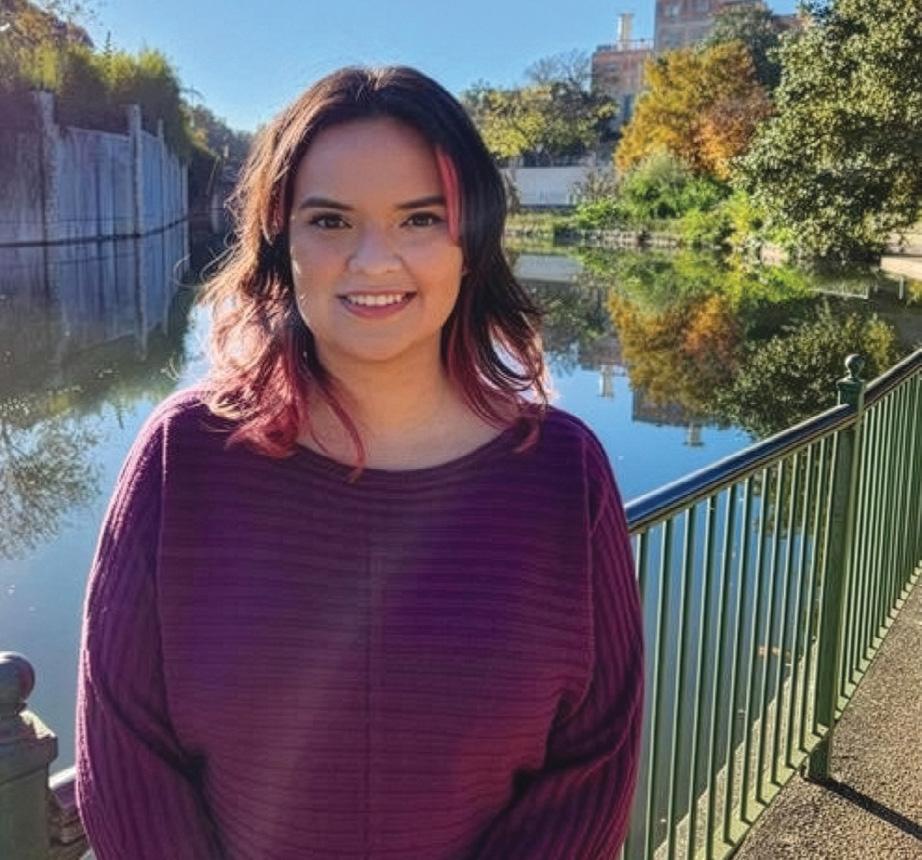
SAMANTHA VILLANUEVA BS ENVIRONMENTAL SCIENCE ’19
Inside UT San Antonio’s Miniature Biotech: How CIDD Is Accelerating the Future of Drug Discovery
By Nishat Shama
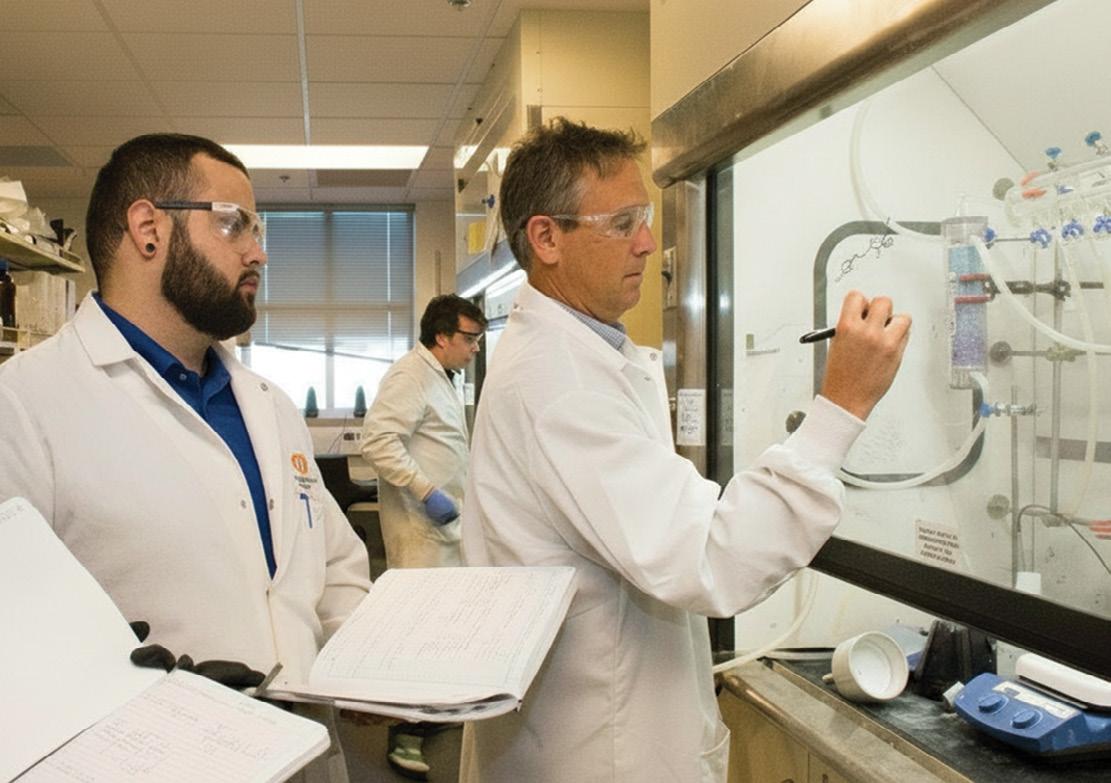
At UT San Antonio, the Center for Innovative Drug Discovery (CIDD) serves as a specialized hub where academic research converges with pharmaceutical-grade capability. Codirected by Stanton McHardy, PhD, and Dahoung Zhou, MD, the center operates as a miniature biotech within an academic institution. Integrating advanced instrumentation, chemical expertise and interdisciplinary collaboration, the CIDD enables investigators across the College of Sciences to translate fundamental discoveries into viable therapeutic candidates, something that is rarely feasible in a traditional academic setting.
CIDD’s scientific engine is organized around five interconnected cores that collectively mirror the structure of a complete preclinical discovery pipeline. The Target Identification Core focuses on characterizing biological targets and producing the proteins and enzymes required for screening. The High-Throughput Screening Core evaluates large chemical libraries to identify molecules of interest. The Medicinal Chemistry Core refines these hits into more potent and selective compounds. The Computer-Aided Drug Discovery (CADD) Core provides high-level computational support to help launch and accelerate drug discovery projects by employing a variety of computational approaches. Finally, the Preclinical Pharmacology Core assesses stability, metabolism, pharmacokinetics and electrophysiological properties. Each core represents a crucial stage of drug development, but the center’s true strength lies in the synergy among them.
“All five cores work together. It’s not a linear process; it’s iterative,” McHardy said. “Data constantly moves back and forth. That synergy is what allows us to advance programs so quickly.”
This integrated structure allows CIDD to interface effectively with departments across the College of Sciences — including biology, chemistry, neuroscience and biophysics — to support research programs that would not be possible without dedicated medicinal chemistry, compound screening and specialized pharmacology platforms. Most academic campuses do not have the medicinal chemistry or compound screening capabilities required to advance early biological discoveries into therapeutic candidates. These limitations make it difficult for researchers to move from an idea to a viable drug development program. The Center for Innovative Drug Discovery fills this gap by providing the specialized expertise and infrastructure needed to transform conceptual hypotheses into preclinical molecules within a collaborative environment.
A clear example of CIDD’s impact is its ongoing work on the aggressive brain cancer glioblastoma, which focuses on a newly identified biological target associated with tumor progression. The project originated with collaborators at the UT Health Science Center at San Antonio who first recognized the target’s therapeutic potential. Building on this discovery, CIDD scientists designed and synthesized brain-penetrant molecules capable of reaching the central nervous system, a critical requirement for any prospective glioblastoma treatment. These compounds have demonstrated promising activity against glioblastoma cells, and their development continues to advance through the iterative exchange of data among the screening, chemistry and pharmacology cores.
Additionally, the center has generated research programs that have achieved both regional visibility and commercial success. One example is the development of a small-
molecule drug designed to block an enzyme involved in cellular metabolism, which is being studied for its potential role in treating metabolic diseases. Another is the establishment of Keraceticals, a company focused on oral cancer therapeutics derived from compounds conceived and refined within CIDD’s medicinal chemistry core. These accomplishments illustrate how the center enables UT San Antonio research programs to evolve into translational ventures, thereby strengthening the university’s growing presence within the Texas biomedical landscape.
CIDD has also established itself as a leader in nonopioid pain management research, an area of increasing national attention. One of its most advanced programs addresses chemotherapyinduced peripheral neuropathy, a debilitating condition that compromises the quality of life of cancer patients. Through coordinated efforts across multiple cores, researchers at the center developed novel molecules that prevent neuropathic pain in preclinical models. These compounds, generated entirely within CIDD, formed the basis of a collaborative research effort with The University of Texas at Austin and the University of California, San Francisco and were featured in a 2025 Journal of Clinical Investigation article. This program exemplifies how CIDD’s infrastructure supports the discovery of alternative pain therapeutics at a time when safer pain relievers are urgently needed.
Collaboration is fundamental to CIDD’s identity. “Drug discovery is absolutely not a one-person science,” McHardy emphasized. To that end, the center maintains close partnerships with UT Health San Antonio, Texas A&M, UT Austin, MD Anderson Cancer Center and Baylor College of Medicine. These relationships enable CIDD to integrate biological insights,
Every new compound represents a possibility.
chemical design, engineering approaches and clinical perspectives, each essential for advancing complex therapeutic programs. Technological expansion has also strengthened CIDD’s role within the research community. The adoption of advanced electrophysiology platforms, automated screening technologies and high-throughput systems has broadened the scope of projects the center can support. These investments allow investigators to explore emerging therapeutic modalities, including next-generation neurological treatments and protein degradation strategies.
In addition to its scientific contributions, CIDD plays a significant role in researcher training.
Undergraduate and graduate students gain hands-on experience in medicinal chemistry, assay development, screening technologies and pharmacokinetic analysis. McHardy emphasizes that the most valuable skill these students acquire is critical thinking — the ability to interpret data, troubleshoot experiments and approach problems with scientific rigor. Many students who perform research with CIDD continue on to graduate programs, medical schools and jobs in the pharmaceutical industry.
Through its five scientific cores, its extensive network of collaborators, and its commitment to translating discovery into impact, CIDD has become a cornerstone of UT San Antonio’s research enterprise and a contributor to the broader San Antonio biomedical community. As McHardy reflected, “Every new compound represents a possibility.” Each new compound carries the potential to benefit patients, and that ongoing possibility continues to drive the center’s work forward.
Faculty Spotlight: Philipp Schmidpeter
By Kendall Green
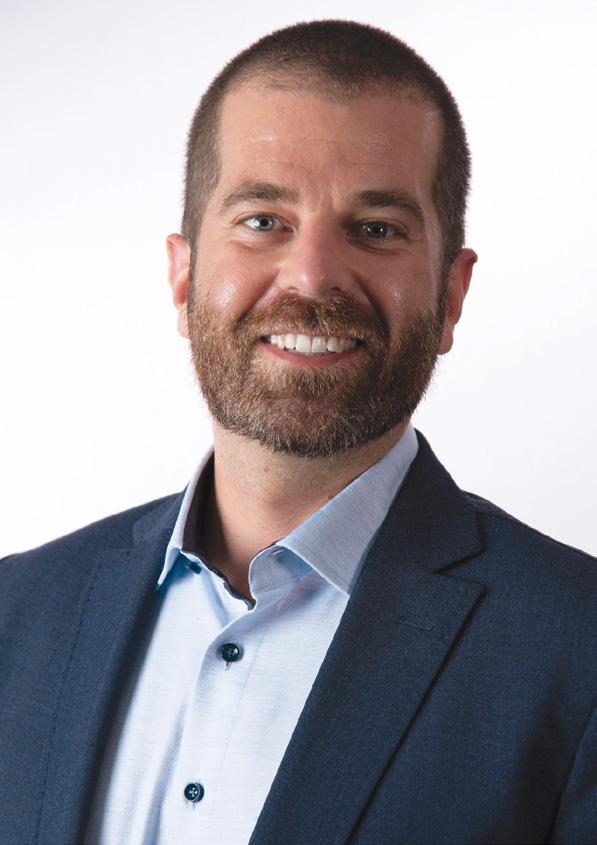
For Philipp Schmidpeter, PhD, curiosity is the engine that drives scientific discovery. “Science constantly evolves,” he said. “Each answer leads to new questions, and this sense of endless possibilities keeps me curious.” As an assistant professor in the chemistry department at UT San Antonio, Schmidpeter has built a research program centered on understanding how proteins function at the molecular level, work that was recently bolstered by major support from the National Institutes of Health (NIH).
Schmidpeter’s scientific journey began at the University of Bayreuth in Germany, where he earned both his undergraduate and graduate degrees. From there, he moved to Weill Cornell Medicine in New York, working first as a postdoctoral fellow and later as a research associate. Those formative years shaped not only his technical expertise but also his scientific philosophy. “I had phenomenal mentors at both places, whom I deeply appreciate,” he said. “Throughout my academic journey, I consistently engaged in detailed biophysical analysis.” His early work on protein folding during his doctoral research and his later studies of ion channels sparked a lasting fascination with how proteins behave at the molecular level.
Ion channels are tiny “gates” in cell membranes that control the flow of charged particles including sodium, potassium, calcium and chloride into and out of cells. The channels open and close at the right times to let these particles move, which helps cells send signals, maintain balance and function properly. Ion channels are essential for muscle contraction and
controlling heartbeat, as well as allowing nerve cells to send electrical signals so we can think, feel and move, in turn supporting brain and body function. That focus now defines the mission of his lab. Schmidpeter’s group integrates biochemical, biophysical and structural biology approaches to study proteins both in isolation and within their native cellular environments.
This dual perspective is central to a recently funded NIH project centered on two key questions: How do lipids from the cell membrane influence ion channel function, and how do molecular chaperones regulate ion channels within cells? The goal is to develop a more comprehensive understanding of proteins by analyzing their behavior both in vitro and within their native environment, which includes their cellular interaction partners. This detailed analysis of ion channel structure, function and regulation is essential for validating specific proteins as potential future biomedical targets.
Equally important to Schmidpeter is the culture he fosters in his lab. Collaboration, openness and curiosity are core values. “Strong science comes from a strong team,” he said. While his group maintains rigorous research standards, it also emphasizes personalized mentorship, enjoyment and shared discovery without competition. “Science should be rigorous but also fun.” Team members are encouraged to ask bold questions, learn from setbacks and contribute openly, creating an environment where professionalism and enthusiasm coexist.
Recommended Viewing
The Blacklist “A real nailbiter.”
Brooklyn Nine-Nine “Easy entertainment to unwind after a tough day at work.”
Homeland
“Still watching it, so I can’t give a final verdict, but it is captivating.”
Outside the lab, Schmidpeter enjoys staying active through hiking, working out and exploring the outdoors around San Antonio. For aspiring scientists, his advice is simple but impactful: “Stay curious and resilient. Science presents many challenges, but persistence and adaptability are key.”
Awesome Alum: Juan-Marcel Campos
By Anastasiia Gordeeva
Meet Juan-Marcel Campos,
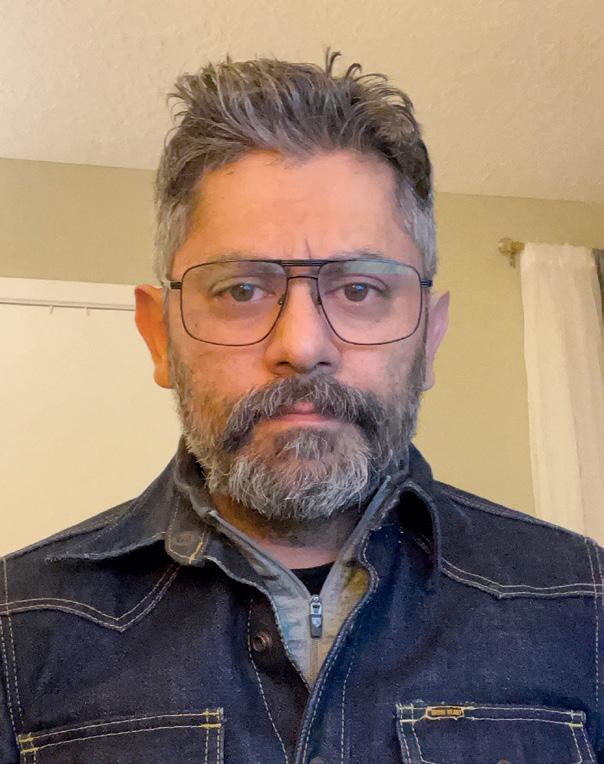
a UT San Antonio geology alum who contributed to the Cooperative National Geologic Map, the first seamless geological map of the United States. In the works since the 1990s when the United States Congress established the National Cooperative Geologic Mapping Program, the map was published in 2025 and is now publicly available through the United States Geological Survey (USGS) website.
Campos didn’t initially intend to be a geologist. After serving in the military and working various jobs, he returned to school with a passion for chemistry but realized lab work might feel too confining. “I decided to transition into geology, where I could do chemistry and also be outdoors.”
In 2020, after finishing his master’s at UT San Antonio, Campos joined the USGS as a geographic information system (GIS) analyst, bringing his IT and communications background as well as graphic design experience to the role. The task was massive: taking data from over 100 different geological maps and merging them into one unified resource. Before this project, states and federal agencies were making their own geological maps for decades without coordinating with
one another. The result was inconsistent boundaries and conflicting information across state lines.
“We never did a good job communicating and transferring information over,” Campos explained. “[This map] brings together federal, state and university data under shared standards. These geological maps are essential for everything from finding mineral deposits to assessing hazards to managing water resources. If you need to know the geological composition of America, this is your resource.”
The project was supposed to take until 2030 to finish, but Campos and his colleagues completed it five years early. Campo’s ability to handle massive data and write custom quality-control scripts dramatically expedited the process. “I’m used to high amounts of data,” he said, joking that, “What slows me down is sometimes the computer.” Campos developed tools for extracting information from old paper maps, checking data quality and setting up systems so researchers can keep improving the map. This methodology, “A Synthesis Engine for Constructing Geologic Maps of the United States,” was built for current and future geologists, researchers and scientists who will utilize the platform, and the framework he created allows future scientists to continually refine the data.
Campos currently works at The Bureau of Economic Geology at The University of Texas at Austin researching minerals and aggregates. As a personal project, he is
Field Notes
If you’re considering a STEM career, Campos has some advice: First, create an online portfolio — such as a website or GitHub, a sharing platform for developers — to document your work and build your professional brand. Once you’re in the lab, trace the research’s lineage to its historical origins to examine foundational work from decades past. Knowing the context of where scientific ideas emerged gives you a more complete understanding of the original meaning that led to later discoveries.
converting Texas geological maps to higher resolutions and developing new methods and updated mapping schemas for Mexico, Canada and beyond. Additionally, Campos is creating geoscience language tools to help standardize and clarify geoscience terminology across multiple languages.
#ThisIs WhatA Scientist Looks Like
Olivia Aubone
By Lauren Garza
Olivia Aubone is an undergraduate transfer student working toward her bachelor’s in mathematics. She was recently named a 2026 Barry Goldwater Scholar and is the first Goldwater Scholar from the UT San Antonio Department of Mathematics. She transferred to UT San Antonio after completing two semesters at San Antonio College (SAC).
“I was worried it might be difficult to transfer from SAC to UT San Antonio, but it turned out to be very easy,” she said.
She was drawn to UT San Antonio not only because it is close to home but also because the university is always changing and improving. Aubone appreciates the welcoming environment and says that finding community is about being open to new experiences and meeting new people.
When Aubone first decided to major in mathematics, it did not carry the same meaning it does now. “I initially chose to major in mathematics because I always did well in my math classes in high school, and I was already working as a math tutor,” she said. “I anticipated that it might give me satisfactory job opportunities after college. My impression of math at the time was very narrow-minded. The world I ended up discovering and would like to spend my life exploring turned out to be far more enticing than I initially expected.”
Currently, Aubone works as an undergraduate teaching assistant for the math department and serves as a student seminar coordinator for quantum mathematics student seminars. “Working on campus with the things I’m interested in is a very valuable experience because not only have I learned a lot from teaching others, but it also gives me a lot of flexibility to work on campus,” she said.
“Olivia is doing great things, going above and beyond as an undergrad,” said Iliana Salazar, administrative services officer for the Department of Mathematics. “She is phenomenal as a pure mathematician, and we are lucky to have her supporting our undergraduates in the department.”
Aubone also assists Jose Iovino, PhD, professor and graduate adviser for the mathematics department. Alongside a team of fellow students, Aubone explores how the logical and mathematical structures used in model theory, a field that
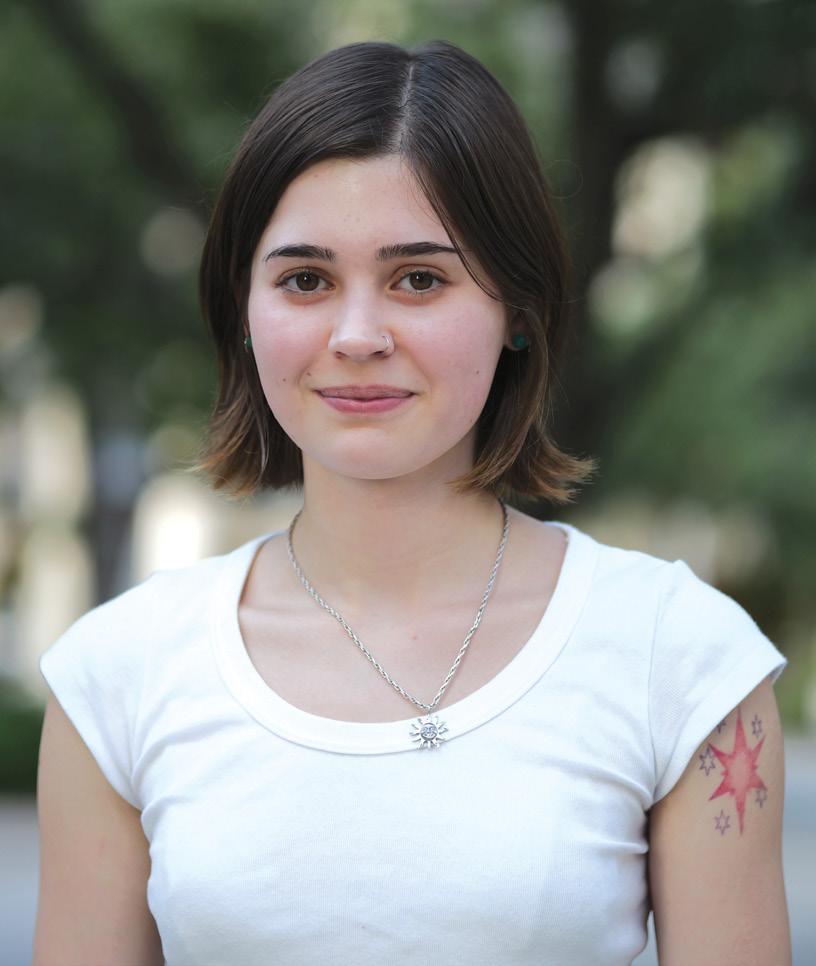
studies how mathematical statements relate to the systems that satisfy them, can deepen our understanding of quantum foundations, which is the mathematics that helps explain how quantum particles behave.
She especially enjoys proof-based classes, and she says directed research with Iovino is a highlight of her academic journey. She’s had the chance to dive deeper into topics like model theory and topology, a branch of mathematics that studies distance and closeness and can be applied to formulas and the structures that satisfy them.
Aubone explains that upper-division math courses often surprise new students because they involve creativity and writing skills not typically associated with math. She credits the program’s passionate faculty for creating an enriching environment that encourages both logical and creative thinking. “What I love about the math program is that we have amazing faculty who are passionate and willing to go above and beyond so that you have an enriching experience and learn many things,” she said.
Her advice to prospective students is simple: “Do it! If you go above and beyond and express interest, there will be faculty willing to do more for you.”
Aubone’s goal is to earn a PhD in mathematics and continue conducting research that expands the boundaries of mathematical understanding.
Ashley Newton
By Lauren Crawford
Ashley Newton, an Oklahoma native, graduated from UT San Antonio in 2022 with a bachelor’s in biochemistry and a minor in psychology. After a post-baccalaureate research position in the biochemistry lab of Aimin Liu, PhD, the Lutcher Brown Distinguished Chair in Biochemistry and a professor of chemistry and biochemistry at UT San Antonio, Newton began her chemistry PhD program in 2023 and joined the lab of Philipp Schmidpeter, assistant professor of chemistry, in 2024.
“I have a unique opportunity to be a more active participant in our young and dynamic chemistry department,” said Newton. She played a founding role in the department’s Chemistry Graduate Student Organization (CGSO), where she serves as vice president and leads a subcommittee dedicated to the wellbeing of graduate teaching assistants (GTAs). After noticing a disconnect between faculty, staff and GTAs around lab roles and responsibilities, Newton implemented a new GTA training program, guidebook and two complementary trainings: one focused on teaching practice and ethics and another on GTAspecific lab safety. She also serves as the College of Sciences’ student representative on the Graduate Faculty Committee.
“I believe that the university’s commitment to student success, coupled with its rapid growth and innovative spirit, provides the ideal environment for me to thrive as a researcher and leader,” she said. “By embracing these unique opportunities, I am confident in my ability to make a lasting contribution to science.”
Newton’s interest in membrane protein research, particularly ion channels and their interaction with lipids, was solidified after first learning about the biophysical study of membrane proteins at Schmidpeter’s recruitment seminar for UT San Antonio. Her career goals aligned with Schmidpeter’s research plan and mentorship style, leading Newton to join his lab as his first graduate student. This unique position allowed her to learn critical techniques firsthand through direct training.
For her PhD research, Newton is studying transient receptor potential canonical (TRPC) channels, nonselective cation channels expressed across various tissues in humans whose dysfunction has been associated with heart and kidney diseases. Studying the regulation of TRPC channels in molecular detail
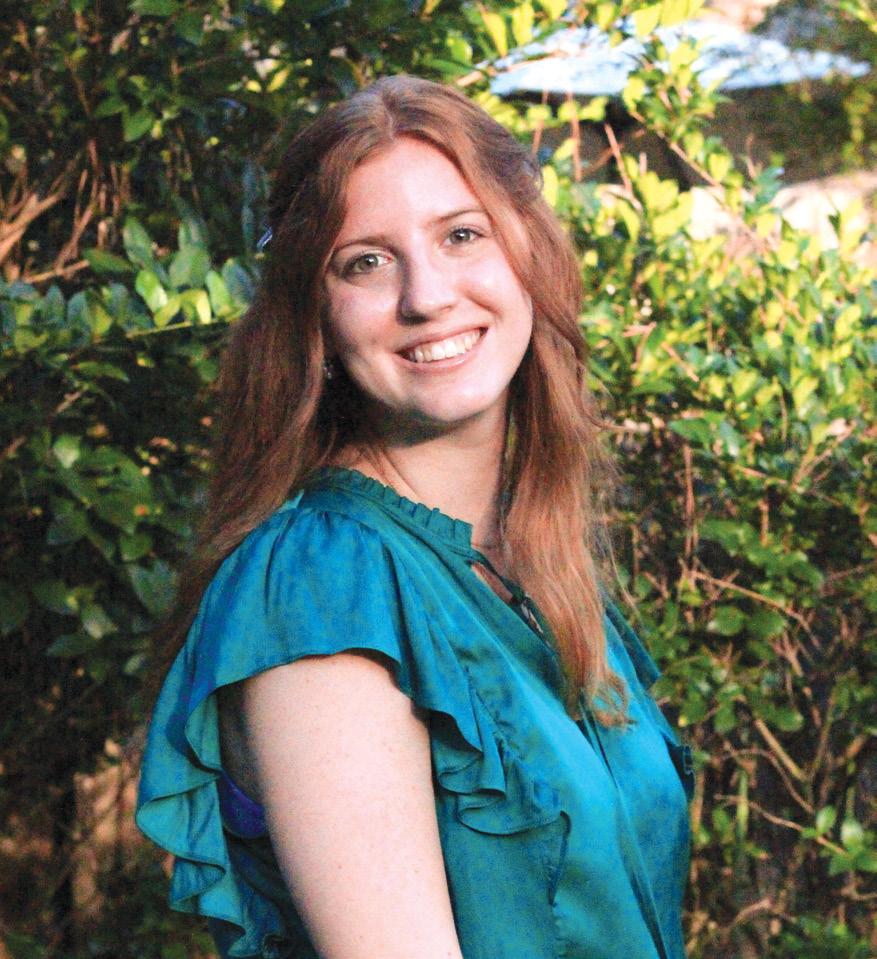
requires expression and purification of these proteins from eukaryotic systems.
While establishing the lab’s cell culture to express TRPC channels for her PhD project, she studied the SthK ion channel. This bacterial homolog is widely used as a biophysical model for human ion channels critical to neurological and cardiac function. The lab’s research investigated how the lipid environment surrounding the protein regulates its function, ultimately establishing that lipids are central modulators of SthK channel activity and participate in longrange communication within the protein. This research provided Newton with valuable expertise in membrane protein purification and advanced kinetic and structural techniques directly applicable to her primary TRPC channel project.
Outside the lab, Newton engages in student outreach through CGSO. The group performs science demonstrations for third- and fourth-grade students at a local elementary school to help instill an interest in science. Newton’s dedication to inspiring young students reflects the same deep-seated commitment to education and mentorship that drives her post-graduation plans.
“I very much enjoy the blend of careful procedure and serendipity that comes with lab work, so I am aiming to pursue a postdoctoral research position after graduate school,” she said. “Ultimately, I am drawn to pursue a career that will enable me to empower and educate the next generation of STEM professionals, with the goal of becoming a valuable asset to students who come with their own unique strengths and challenges.”
Cole Mock
By Lauren Crawford
Senior Environmental Science major Cole Mock is the first in his family to attend college. Growing up in Port Isabel, Texas, he knew he eventually wanted to seek new opportunities outside of the Rio Grande Valley. “Being a part of the LGBTQ+ community, I also wanted to find a bigger and more accepting community,” he said. His college search landed him in San Antonio, where he toured UT San Antonio in 2022. “Looking over the College of Sciences setup outside the Flawn Sciences Building and the overall tour of the campus, I knew UT San Antonio was where I wanted to spend my next four years,” he said. “I also have my tio and tia, who live here as well. I knew if I came here, I would have a home away from home.”
Mock values UT San Antonio’s close-knit community and the university’s small-town feel as what makes it special. During his first year in college, Mock struggled with the intensity of majoring in a STEM field. His Academic Introduction & Strategies (AIS) mentor guided him to not be afraid to talk to the people in his classes. “I’ve gotten the chance to walk down paths of success because of the friends I’ve made in my classes!” One of the opportunities that came from talking to the people in his classes was working at the College of Sciences Student Success Center for a total of five semesters. “Beyond professional growth, this experience profoundly shaped my character, helping me step fully into the capable and steadfast adult I have become.”
Since joining the College of Sciences, Mock has worked for the Open Cloud Institute as a student assistant; supported the College of Sciences Student Success Center as a science mentor, chair, program assistant and committee member; served as president of the College of Sciences Student Council; and is part of the Bold Promise program, which covers 100% of tuition and mandatory fees for qualifying freshmen.
“Although I am an Environmental Science major, I’ve spent the past year exploring career paths outside my field,” Mock said. “Growing up, I always knew I wanted to make a positive impact on the world and help people. With that in mind, I began exploring health-related professions.” Mock attended a respiratory therapist program information session hosted by the UT San Antonio Health Science Center and the College of Sciences Student Success Center, and after hearing about the
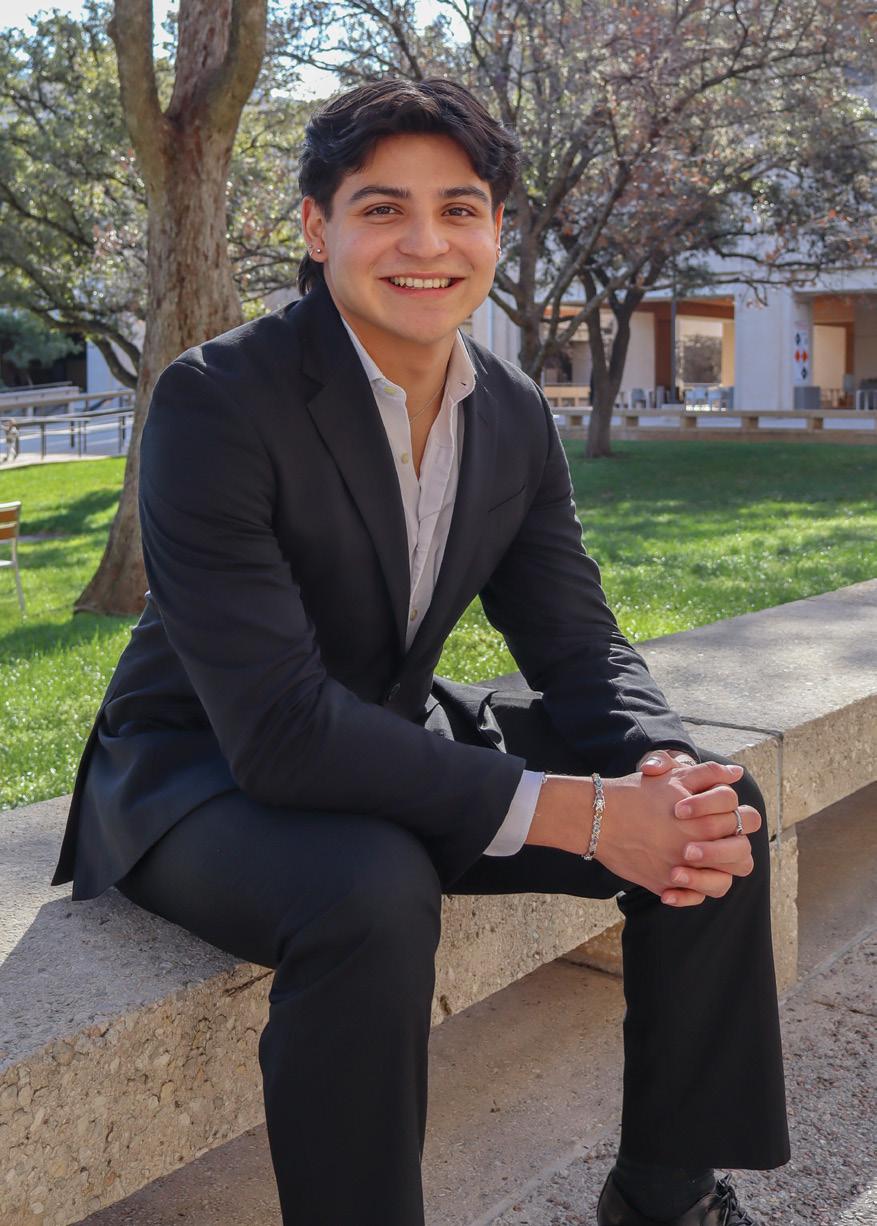
I knew UT San Antonio was where I wanted to spend my next four years. ... I knew if I came here, I would have a home away from home.
program, he knew it aligned perfectly with his goals. When Mock graduates this spring, he plans to return to the Rio Grande Valley to complete prerequisite courses for respiratory therapy at Texas Southmost College before applying to the Respiratory Therapist Master’s Program at the Health Science Center.
GIVING
UT San Antonio Scholarship Honors Father of Southwest Research Institute President and CEO
By Joanna Carver Quintanilla
Robert Hamilton had a good sense of humor. He grew up in Lytle, Texas, a small town on the border of Bexar and Atascosa counties and often joked that he was 13th in his graduating class … of 13. Growing up just 24 miles outside of San Antonio, he and his family raised pigs, and he hunted local game to help put food on the table. After high school, he joined the U.S. Marine Corps, signing up at a recruiting booth just a few steps away from the Alamo.
“He really loved education,” Southwest Research Institute (SwRI) President and CEO Adam Hamilton said of his father. “He took courses offered by the Marine Corps and community colleges while stationed at bases around the country. By the time he retired from the Marine Corps, he let go of the idea of getting a formal diploma and kept taking classes just for the joy of learning.”
While still in high school, Robert Hamilton met a girl, Doris. They were introduced to each other by their mothers, who were church friends. Robert and Doris exchanged letters while he was in boot camp, and they soon fell in love. They married in 1956 and had two sons, Paul and Adam.
“Dad had a lot of practical skills, but he was also very artistic,” Adam Hamilton said. “He taught me carpentry, welding and how to do electrical work. But he also loved pottery, reading, acting and Mexican food. He was also a talented bowler with a mischievous streak: He sometimes enjoyed powering his bowling ball down the lane fast enough to knock pins into the neighboring lanes.”
Robert and Doris Hamilton encouraged their sons to pursue higher education. Paul Hamilton, Adam’s older brother, joined the U.S. Air Force, later earning several academic degrees during his career. Adam Hamilton earned a bachelor’s degree in aerospace engineering and a master’s degree in engineering, both from The University of Texas at Austin.
“I was the first college graduate in my family, which was pretty special,” Adam Hamilton said. “And I did it because my parents both encouraged me. My father’s continued interest in learning was a great influence on me. There was never a discussion about whether I was going to go to college. The questions were always, ‘What are you going to study? What are you going to do with your education? How can I help you?’ He really pushed me, and I’m so thankful to him for that.”
When Robert was a child, his family did not have many books, but he loved the few they had. “His favorite book when he was a kid was Lad: A Dog by Albert Terhune. As a book lover myself, I collected several early editions of this book,” Adam Hamilton said. “I have one really nice copy of it, and I was reading it to him when he passed. I was thankful to be by his side, reading him his favorite book from his childhood, when he died.”
After his father’s death in 2021, Adam Hamilton and his wife, Leslie, began to consider how to honor his memory. “As soon as Leslie graduated from college in 1984, we got married. But I was still in school, and money was tight. One afternoon, just after learning about an unplanned expense, I received word that I had been awarded an endowed scholarship,” Adam Hamilton said. “It was such a wonderful moment, and it had a really significant impact on us. I just hope this scholarship will have a similar impact on others on their educational journeys.”
Adam and Leslie Hamilton founded the Robert E. Hamilton Endowed Scholarship in 2022 at The University of Texas at San Antonio College of Sciences, with preference given to first-generation college students and applicants from Atascosa County.
“We really wanted to focus on reaching out to students in more rural areas, where there’s plenty of potential but not much financial support,” Adam Hamilton said.
Three students have now received the scholarship, and Adam Hamilton has been happy to see the diversity of the awardees, believing his father would be proud.
“I think we all have the responsibility to try to lift others in our community. It’s not about giving money away; it’s about investing in the people around us. It’s tough to see people out there with so much potential but without the means to get an education,” he said. “We have a great culture here at SwRI. We’re really engaged in stewardship. When people see others giving back, it can be contagious. It doesn’t have to be huge — anything you’re doing to give back is impactful.”
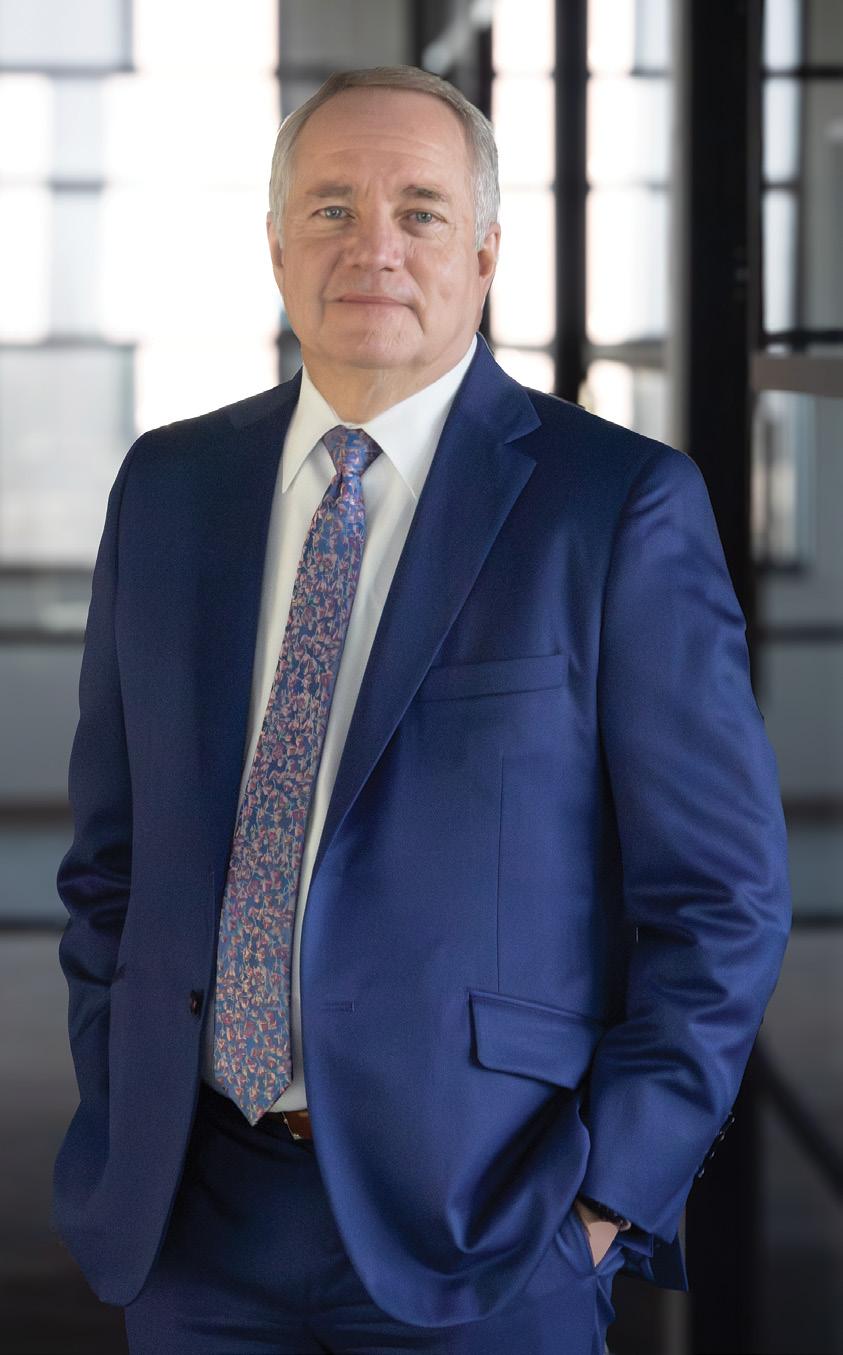
I think we all have the responsibility to try to lift others in our community. It’s not about giving money away; it’s about investing in the people around us.
Peek Inside: The Hsieh Lab
Join Nico Enerlan, a senior studying neuroscience, in the Hsieh Lab. Jenny Hsieh, PhD, the Semmes Foundation Endowed Distinguished Chair in Cell Biology and chair of the department of Neuroscience, Developmental and Regenerative Biology, leads Enerlan and other lab members who are studying the underlying neurodevelopment and adult neurogenesis in epilepsy.
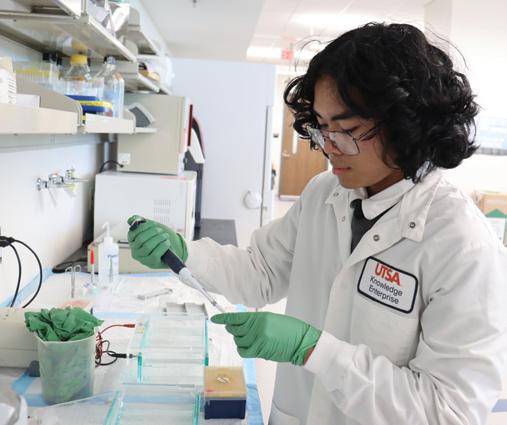
Nico Enerlan prepares a gel electrophoresis experiment using polymerase chain reaction (PCR) products from mouse DNA samples. After loading the gel and passing it through the electrophoresis machine, he images it under ultraviolet light to determine which mice are transgenic for Nestin-TK.
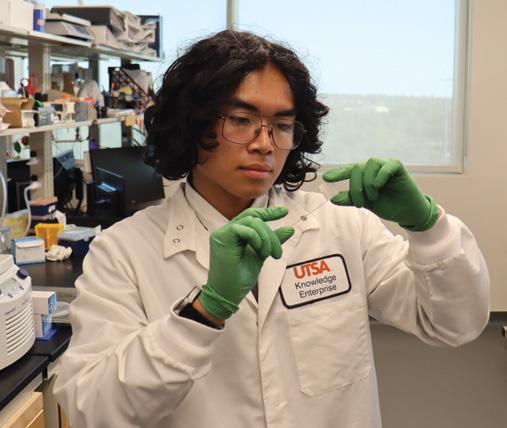
Enerlan examines a glass slide with stained mouse brain tissue sections that contain multiple fluorescent markers from immunohistochemistry experiments. Before imaging on the confocal microscope, he checks the quality of the tissue to ensure it is suitable for analyzing the marker’s expression.
Study Notes
u Gel electrophoresis: A lab method that sorts DNA or protein pieces by size and electrical charge by passing them through a gel.
2 4
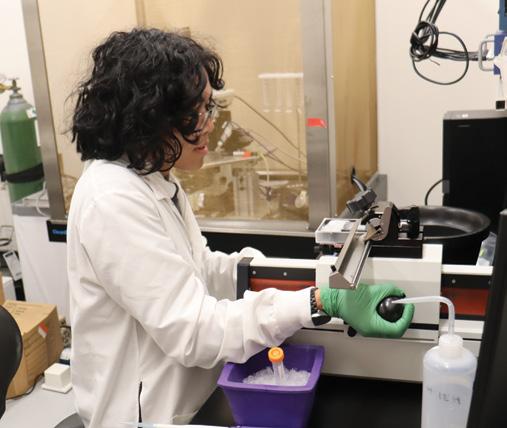
Using a microtome, Enerlan sections coronal brain tissue from a mouse. The brain tissue is mounted on a dry ice–chilled stage to secure it in place before slicing. These tissue sections are later used for immunohistochemistry experiments.
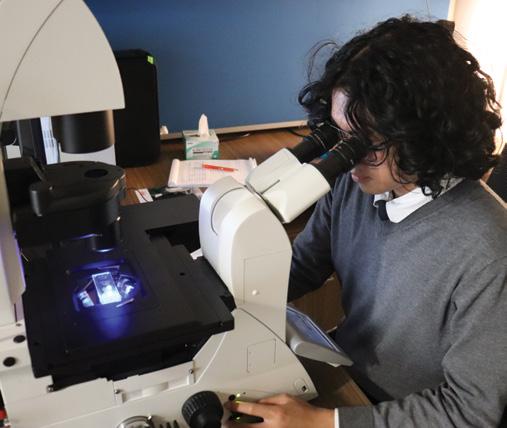
gyrus of the hippocampus, focusing specifically on the granule cell layer.
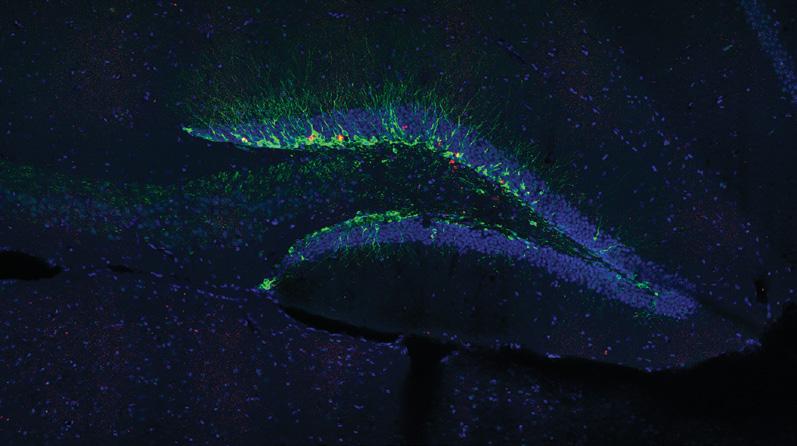
This image, taken with a confocal microscope, shows a coronal section of the dentate gyrus, specifically the granule cell layer, in the mouse hippocampus. There are three markers shown: DAPI (blue), which labels cell nuclei; DCX (green), a marker for immature adultborn granule cells; and BrdU (red), which labels proliferating cells. 1 3
u Polymerase chain reaction (PCR) products: The multiple copies of a specific DNA segment created using the PCR technique.
u Transgenic organism: An organism that carries DNA from a different species inserted into its own genetic material.
u Nestin-TK: Genetic system used in research to specifically target and eliminate certain cells, often neural stem cells.
u Immunohistochemistry: Technique that uses antibodies to visually locate specific proteins within a tissue sample, usually with a color tag.
u Confocal microscope: High-tech microscope that uses lasers to get image slices of a specimen, allowing for 3D reconstruction.
u Cell nuclei: Central control center of a cell that holds the DNA and directs cell functions.
u Coronal: Vertical slice that divides the body or organ into front and back sections.
u Granule cell: Small neuron (nerve cell) found in brain areas like the hippocampus and cerebellum.
Using a confocal microscope, DAPI fluorescence is visualized to identify cell nuclei. Enerlan then examines coronal mouse brain tissue sections to locate the dentate
One UTSA Circle San Antonio, Texas 78249
POP QUIZ
What year did the College of Sciences first partner with the Southwest Research Institute (SwRI)?
Flip to page 7 to check your answer.
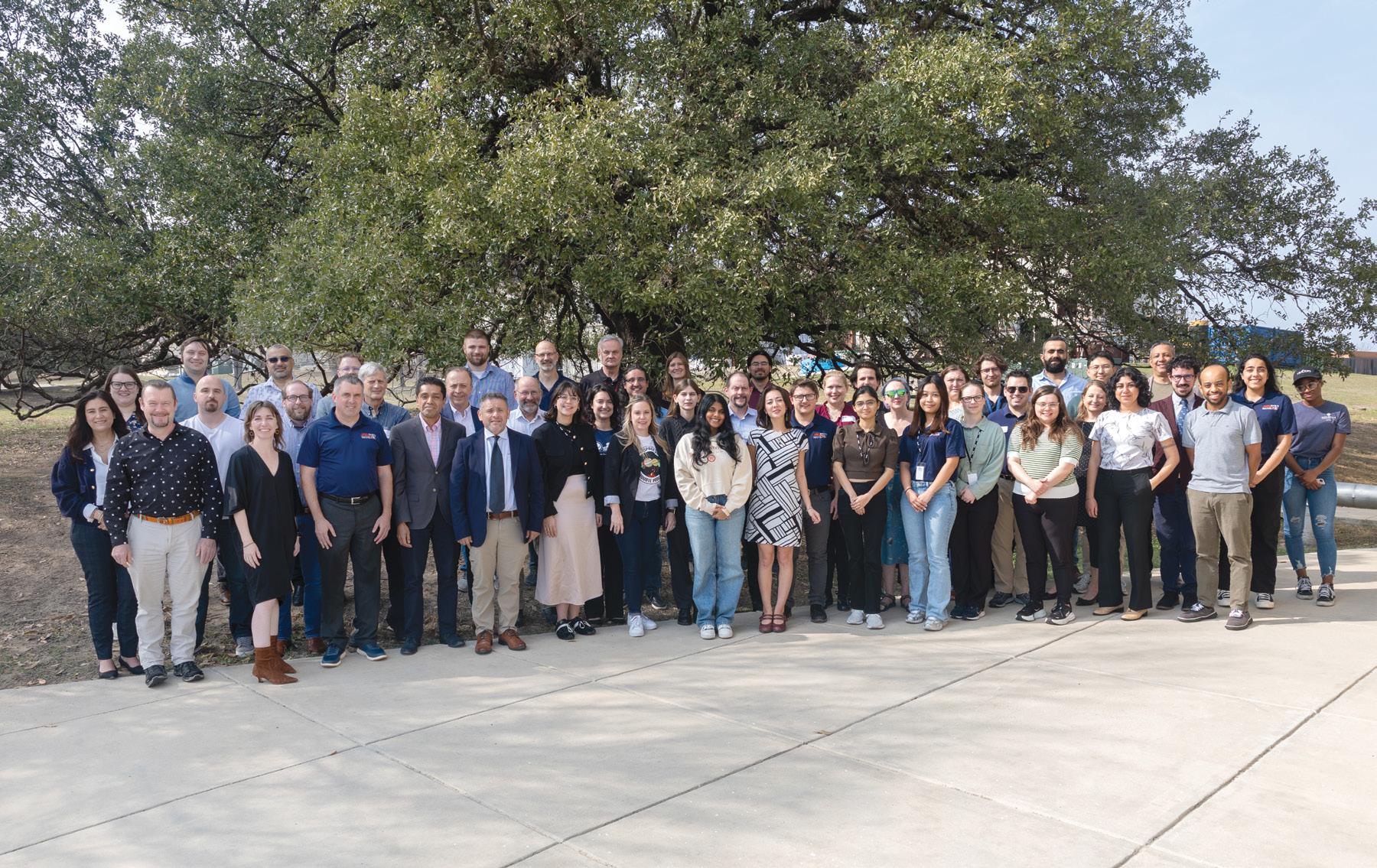
Faculty, students and alumni gathered in late February 2026 to celebrate the 20th anniversary of the joint Space Physics and Instrumentation graduate program between the College of Sciences Department of Physics and Astronomy and SwRI.
Read more about the 20th anniversary celebration here.