`
`
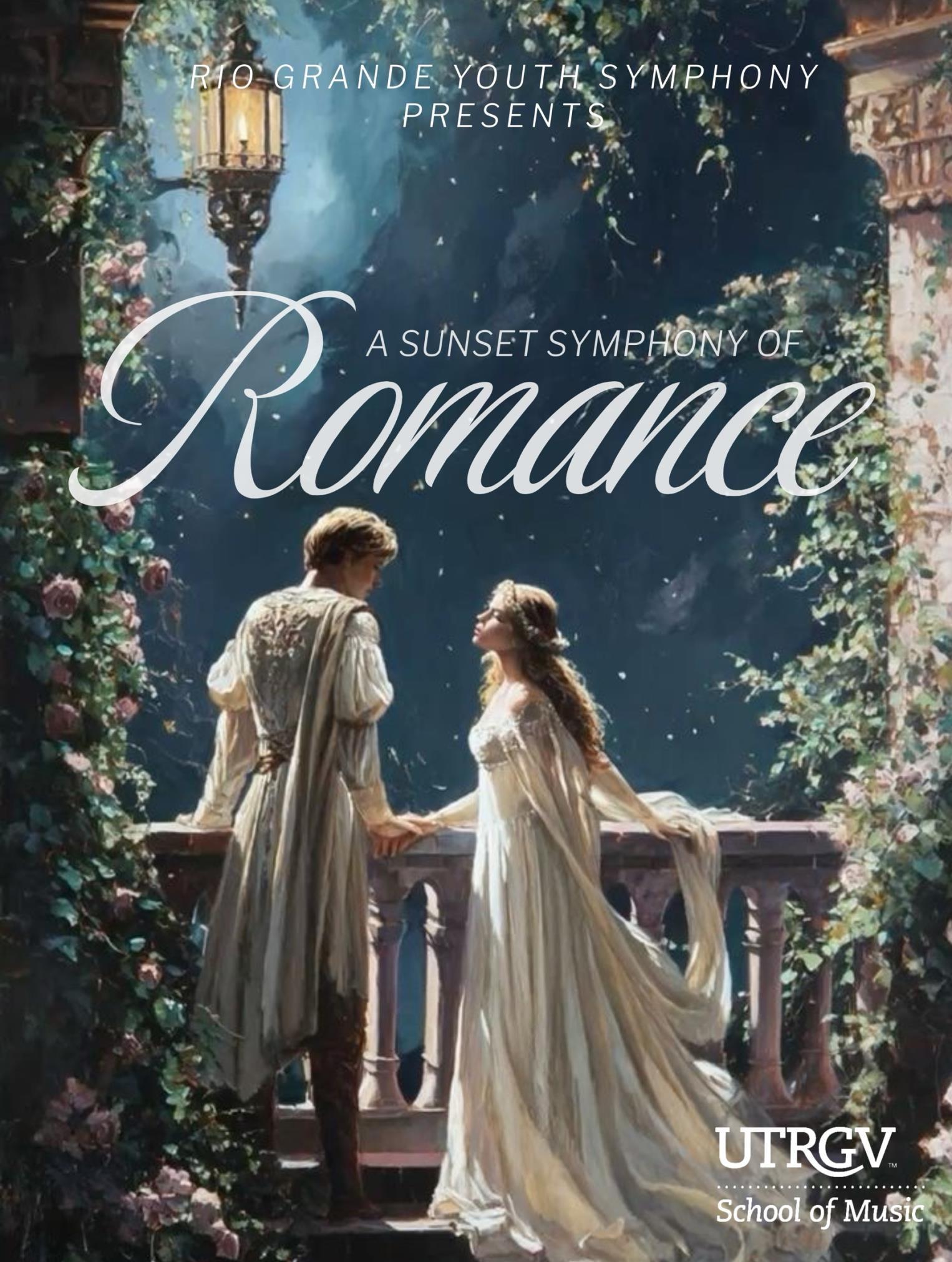
First Program of 2025-2026 Concert Season
UTRGV PerformingArts Complex, Edinburg
Sunday, December 14, 2025, at 5:00 pm
Raymon Correa, Conductor
Ramiro Raya, Flute
Levi Mack, Composer
The Moldau…………………………………………Bedrich Smetana (1824-1884)
arr. Richard Meyer
1st Arabesque Orchestra……………………………...Claude Debussy (1862-1918)
arr. Richard G. Fluading
Concertino for Flute in D Major, Op. 107.…………Cecile Chaminade (1857-1944)
=INTERMISSION
Romeo and Juliet……………………………… Pyotr I. Tchaikovsky (1840-1893)
arr. Youngsuk Kim
Romance in B-flat “ADay in 1920” (premiere)…………..Levi Mack (b. 2010)
Overture to Nabucco………………………………..Giuseppe Verdi (1813- 1901)
arr. Sandra Dackow
Program Notes
Bedřich Smetana composed his famous tone poem The Moldau in 1874 as part of the cycle "Ma Vlast". Its premiere was a great success, but Smetana never heard a note of his music he was completely deaf by the time he started writing this score. The Moldau is an extended tone poem that portrays the beauty of the Czech countryside. When he sent the score to his publishers, Smetana included an outline of what he intended to depict through the music, which contained these words:
“Aforest brook, rushing on, becomes the River Vlarva (Moldau). Coursing through Bohemia’s Valleys, it grows into a mighty stream. It flows through dense woods from which come joyous hunting sounds, and the notes of the hunter’s horn drawing ever nearer and nearer. It flows through emerald meadows and lowlands. Where a wedding least is being celebrated with songs and dancing.”
The excellent arrangement introduces Smetana’s masterpiece to your young orchestra while maintaining the sound and intent of the original.All string parts are playable in the string bass.As with all arrangements in the First Philharmonic Series, a violin III (viola treble clef) and piano accompaniment parts are included.
- Highland/Etling/Alfred
1st Arabesque
Claude Debussy’s First Arabesque, arranged by Richard Flauding, is a typical highlight of its early period (1888) as a blend of Debussy’s developing style with traditional forms, inspired by ornamental Islamic art (arabesque) and nature, featuring flowing lines. However, Flauding’s arrangement elevates it to a full orchestra, adding richness to its delicate original for piano and evoking the beauty of Art Nouveau.
- Ric Fluading
Concertino for Flute, Op. 107
Cécile Chaminade’s flute concertino is a must-have piece for flautists everywhere, and generations of young pianists have played her small piano piece, Scarf Dance. Unfortunately, time often treats artists unfairly, and many talented composers are remembered if at all for only one or two pieces. This is true for Chaminade. Ironically, almost all of her about 400 compositions were published during her lifetime, and her popularity, especially in her native France, was strong enough in this country to lead to the creation of numerous “Chaminade Clubs” around 1900. She received the Légion d’Honneur and other prestigious awards, so she certainly was not obscure. By her mid-thirties, she shifted her focus toward smaller genres, especially lyrical character pieces for solo piano and songs her most famous works today. However, earlier in her career, she composed a series of works for large ensembles, including several orchestral pieces and an opéracomique. The last of these, her timeless Concertino for solo flute, dates from 1902.
It was commissioned by the Paris Conservatoire and its esteemed virtuoso and professor of flute, Paul Taffanel. It reasonably could have also been intended as an examination piece for the Conservatoire’s flute students. Originally written for flute and piano accompaniment, she later arranged it for flute and orchestra. Her orchestration features a relatively full instrumentation to support the light tone of the flute, avoiding trumpets but including three trombones, a tuba, and timpani, by example. As a concertino (“little concerto”), not a full concerto, the form is condensed into a single movement rather than the usual three. Moreover, Chaminade’s work is straightforward and simple in structure: three contrasting sections in succession, followed by a repeat of the first. A piece like this, during that time and for this instrument, would not be complete without a formidable cadenza, and we certainly hear a dazzling one just before the return of the charming and memorable opening theme. Chaminade’s Concertino is a delightful example of her quintessential style, full of elegance, rich melodic inventiveness, and clear textures. All the traditional (perhaps clichéd) hallmarks of Gallic art! She lived until 1944, but by then, the world and its musical tastes had changed dramatically. Knowledge and appreciation of her work are now limited, but the Concertino and many of her short works for solo piano remain highly regarded by those in the know.
– Wm. E. Runyan
Stories of doomed love always resonated deeply with Tchaikovsky; Shakespeare’s tragedy Romeo and Juliet was no exception. In 1869, when Tchaikovsky took up the play as a musical subject at the suggestion of fellow composer Mily Balakirev, he was deeply in love with Eduard Zak, a 15-year-old cousin of one of his students. Zak committed suicide four years later, and when Tchaikovsky reflected on the incident in his diary in 1887, his recollection of Zak reveals how strong his feelings for the boy were: “How amazingly clearly I remember him: the sound of his voice, his movements, but especially the extraordinarily wonderful expression on his face at times. I cannot conceive that he is no more. The death of this boy, the fact that he no longer exists, is beyond my understanding. It seems to me that I have never loved anyone so strongly as him.” Shakespeare’s tragedy and Tchaikovsky’s troubled personal life merged to produce the first true reflection of his genius as a composer, a tightly crafted masterpiece that distills Shakespeare’s narrative into a 20minute musical work that is both powerfully dramatic and hauntingly beautiful. The fantasy overture
begins with a lengthy introduction, then presents its two main thematic groups: oppressive, aggressive music symbolizing the conflict between the Capulets and Montagues, and a passionate love theme for Romeo and Juliet. The second statement of this theme is interrupted by music that depicts the warring families as Romeo and Juliet’s love is overwhelmed by their hatred. After a somber, minor-mode version of the love theme, it is transformed into serene, chorale-like music, ending the piece on a triumphant, almost otherworldly note.
- John Mangum is Vice President of Artistic Planning for the Saint Paul Chamber Orchestra.
“
Romance in B-flat is a piece that romanticizes the early 20th century (1900-1920) in terms of art, sophistication, and culture. This piece uses orchestration and instrumentation methods that mimic the music of the past, including mutes for brass instruments, a suspended cymbal played with a drumstick, and more.
- By Composer (Levi Mack)
Nabucco tells the story of Nebuchadnezzar, the Old Testament emperor of Babylon, and the Babylonian captivity of Jerusalem. When Verdi wrote the opera in 1841 in Milan, northern Italy was under Austrian rule, and the Italian people, eager for their own independent republic, embraced the opera as a reflection of their political situation. Nabucco, Verdi’s third opera, was a huge success and launched the composer’s career. The Overture to Nabucco serves as a dramatic introduction, blending solemn brass fanfares (representing Babylonian power and oppression) with the poignant, woodwind-led theme of “V, Pensiero” (the Hebrews’longing for home). It builds from dark beginnings to a powerful climax, featuring militaristic passages and foreshadowing the opera’s themes of conflict, exile, and redemption, solidifying Verdi’s breakthrough career in 1842.
- Sandra Dockow
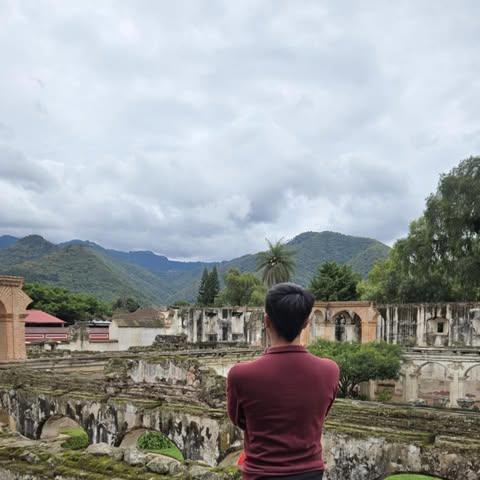
Ramiro Raya began his musical studies at an early age, first exploring classical guitar and piano at age 8, followed by violin at 11. These formative experiences laid the foundation for a broad and thoughtful musicianship. In 9th grade, he discovered the flute, an instrument whose lyricism and expressive range became central to his artistic voice. He studied with distinguished flutists, Marianne Gefigian, Perla Chagoya-Pena, Dr. Krista Jobson, and Dr. NicaulisAlliey. Ramiro’s orchestral performances with the Greater Dallas Youth Orchestra under the baton of Maestro Giangiulio and renowned flutist Julee Kim Walker, as well as the University of Texas Wind Ensemble & Symphony Orchestra,Austin Symphony, SanAntonio Philharmonic, and the Valley Symphony Orchestra. His musical training has been further enriched through participation in InterlochenArtsAcademy, Blue LakeArtsAcademy, &Academy of the West, where he developed a strong appreciation for ensemble collaboration and orchestral tradition. With a deep interest in music as a universal language, Ramiro enjoys studying new languages and is fluent in Korean and Chinese. He also has a particular interest in traditional instruments, which continues to inform his musical perspective and cultural curiosity. Outside of music, Ramiro maintains a longstanding passion for aviation and has spent the past seven years working in the aviation industry- an interest that reflects the discipline, precision, and sense of balance that likewise define his approach to orchestral performance.
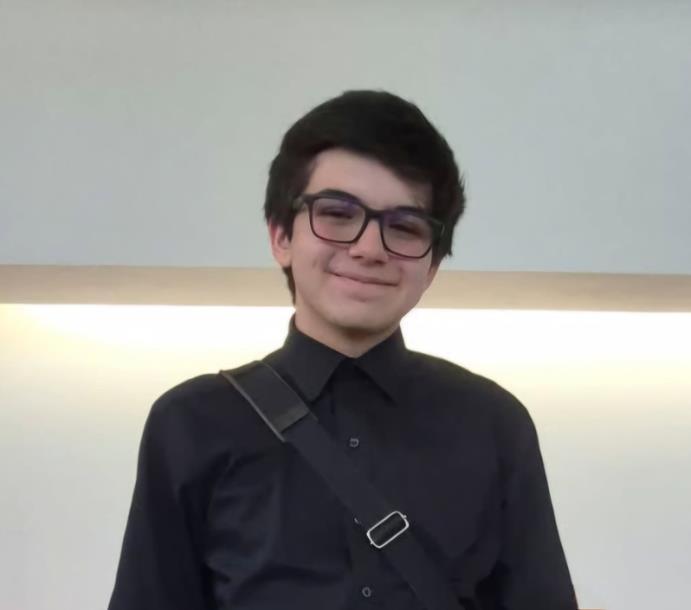
Levi Mack is from McAllen, TX. He has been composing music since the age of 13. He is currently writing for small chamber ensembles, wind bands, piano, and orchestral works across all genres. Levi has taken lessons from exceptional music educators to learn to play the piano, alto saxophone, and percussion instruments. He attended Fossum Middle School in 2023 and was part of the Middle School Varsity Band, making his debut in May 2025. Besides participating in several ensembles, he marched quad toms with the Mighty Warrior Marching Band at James Nikki Rowe High School. Levi has competed in multiple UIL, TMEASolo and Ensemble,All-City, andAll-Region competitions. He placed 22nd chair in region, earning him a spot in Honors Band. He is currently a freshman at James Nikki Rowe High School, continually developing his skills as a percussionist and composer.
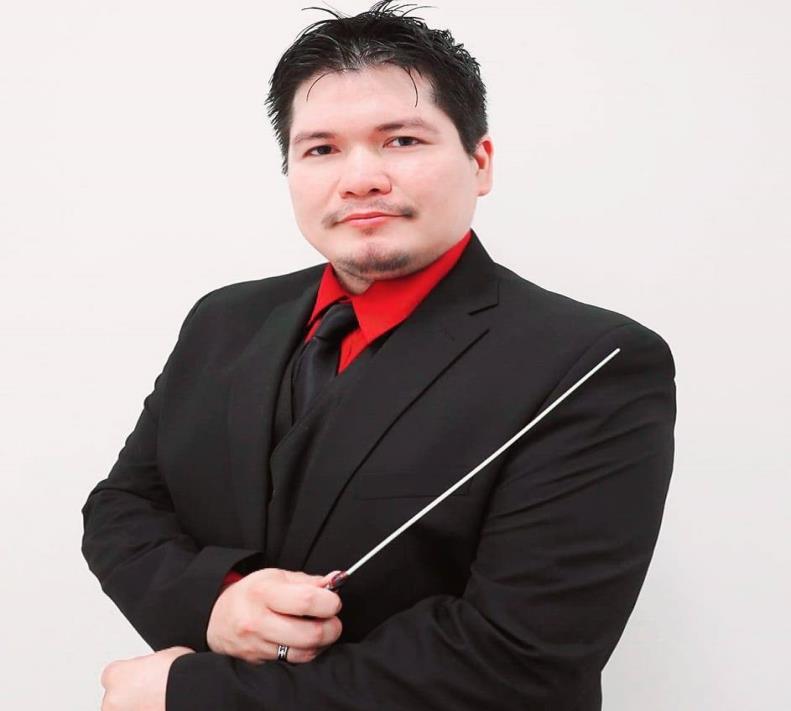
Raymon Correa was born in McAllen, TX. Trained as a French horn player, he graduated from the University of Texas Rio Grande Valley with a degree in music education. In 2013, he became an active member of the Mu Chi chapter of the Kappa Kappa Psi band fraternity. He became a Life Member and served on several committees in theAlumniAssociations of the National and Southwest Districts of Kappa Kappa Psi. In 2014, he began taking conducting lessons from Dr. Saul Torres, former director of bands at UTRGV. Raymon has conducted the UTRGV Symphonic Band, UTRGV Brass Ensemble, UTRGV Horn Choir, Wind Octets, Brass Bands, Small Chamber Orchestras, Youth Symphony Orchestra, El Paso Winds, and Elementary School Choir and Percussion Ensembles. He is the conductor and founder of El Valle Brass Band and also serves as principal conductor of the Rio Grande Youth Orchestra and Symphony Orchestra. He actively participates in several conducting workshops to develop his craft. Raymon Correa obtained his first master’s degree in Wind Conducting and Instrumental Pedagogy under the guidance of Dr. Bradley Genvero and Dr.Andrew Hunter. He is currently pursuing a graduate degree in orchestral conducting at UTRGV under the guidance of Dr. Norman Gamboa.

Violins Violas
Gabriel Ozuna (Concert Master), La Joya HS
Alejandro Martinez, PSJAECHS
Jaqueline Saenz, Roma HS
Kevin Tovar, PSJAHS
Adrian Salinas, Cathey MS
BrizzaAguero, I.E.C.P
Leih-Ann Brazier, STISD ScienceAcademy
Leah Navaroow, Mission Collegiate HS
Naomi Perakathu, Travis PrepratoryAcademy
Josiyah Gonzales, South Texas ISD
Nathalie Saucedo,
Lilly Gonzalez, Cathey MS
Bailey Perman, Los Fresnos United
Nathalia Saucedo, McAllen HS
Jaime Rodriguez Edinburg North HS
Valerie Barron Nikki Rowe HS
Tyler Zamora, Nikki Rowe HS
Mia Mora, UTRGV
Alessandra Salazar, UTRGV
Cello Bass
Emma Escobar, Roma HS Noah Garcia, Morris MS
Nadya Perakathu, ScienceAcademy HS
Gabriella Torres, PSJACollegiate HS
Emily Riojas, Robert Vela HS
Avi Carrizales, Veterans Memorial HS
Mia Salinas, HS
Raquel Rosado, PSJANorth HS
Fidel Segovia, Palmview HS
Sebastian Garcia, McAllen HS
Vianeth Bernardo, UTRGV
Sheejun Kim, South Texas ISD
Carlos Hernandez- UTRGV
Nadia Villanueva-UTRGV
Kristien Cano, Vanguard Beethoven Secondary
Collette Lusk, Sharyland Pioneer HS
Isabella Resendez-Robles, Sharyland HS
Clarinet Bassoon
Judith Mire, Los Fresnos HS
Daniel Torres Lopez, Sharyland HS
Karl Schmidt, UTRGV
Horns
Vanessa Chavez Elizondo, Sharyland HS
Christian Betancurt, Veterans Memorial ECHS
Roel Angel Arellano, La Joya Palmview HS
Joshua Sanchez, Edinburg HS
Aaron De La Garza, Vanguard Beethoven Secondary
James Baize, Vanguard Beethoven Secondary
Samuel Garcia, UTRGV Tuba
Isaac Salinas, UTRGV
Victor Martinez, UTRGV
Trumpets
Marty Gutierrez, UTRGV
Lauren Guzman, Vanguard Academy Beethoven Secondary
Caylee Bocanegra, McAllen HS
Christian Ramirez, UTRGV
Trombone Percussion
Esteban García, McAllen HS
Michel Vasquez, PSJASouthwest HS
Guiliano Page,(Bass Trombone) UTRGV
Orchestra Staff
Nadia Villanueva
Ximena Garcia
Professor ClaudiaArroyave (Coordinator)
Professor Marco Guerra
Hailey Flores, B.L Gray MS
Levi Gonzalez, Nikki Rowe HS
Eros Garibay, Sharyland HS
Mason Pena, Fossum MS