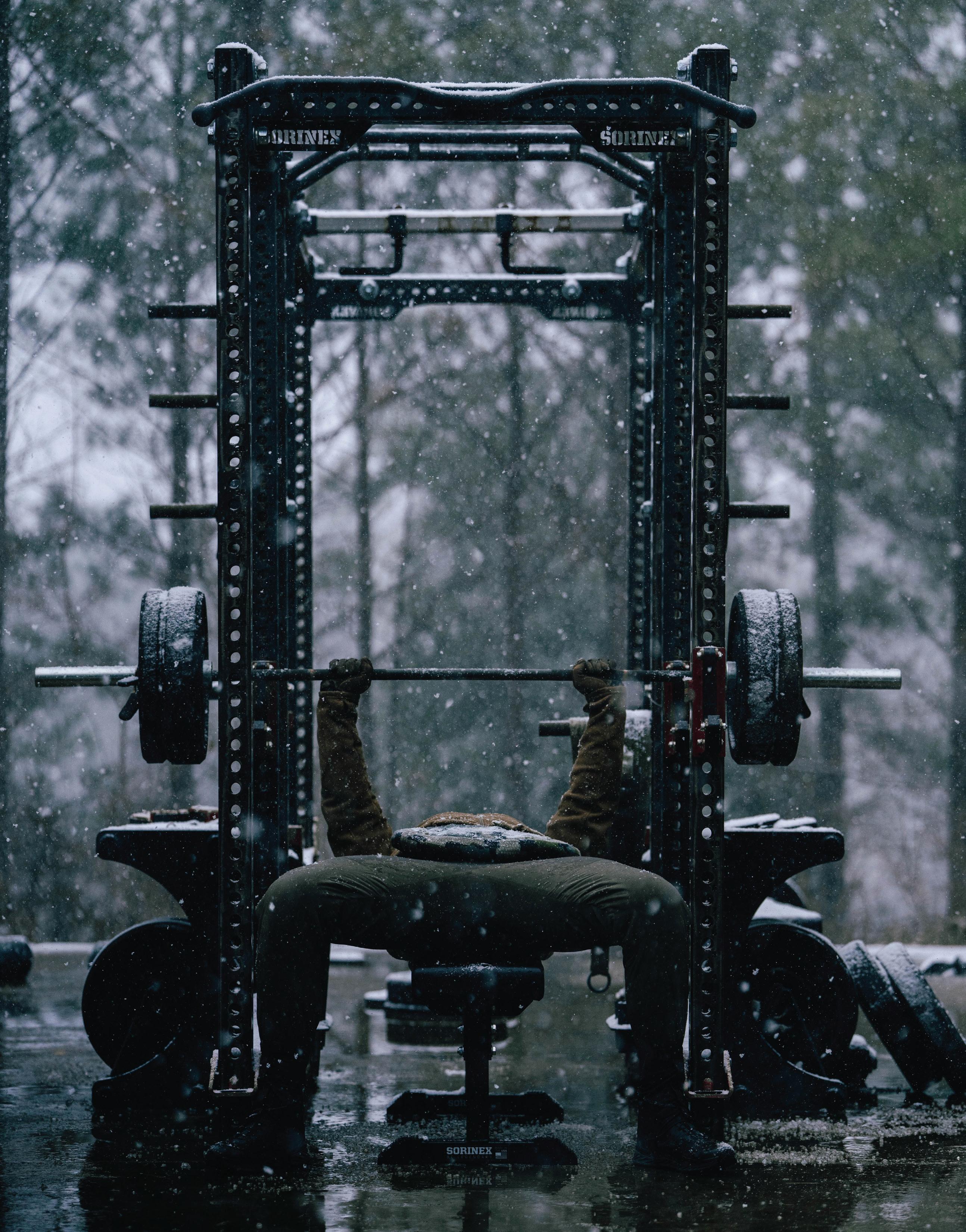












Sorinex proves strength is rooted in resilience, relationships and relentless innovation
Page 6





Your cooperative’s board and employees continue to honor their mission to provide reliable electricity at the lowest possible cost; it is a responsibility guiding every decision we make. With that said, we need your help. As residents and business owners served by your electric cooperative, we have a unique opportunity to change the future of the Pee Dee region by keeping MPD’s rates as low as possible.
MPD Electric Cooperative is one of 19 electric distribution cooperatives in South Carolina that buys electricity from Central Electric Cooperative Inc. to serve retail members. Central Electric does not own or operate any material electric generation. It buys wholesale generation and transmission services from Santee Cooper and Duke Energy. Effectively, Central is a middleman that collects payments each month from each of MPD’s members to cover its own operating costs.
Over the course of MPD’s contract term with Central, MPD’s members will pay Central more than $600 million. Central will collect and retain, for its own benefit and existence, billions of dollars from hardworking cooperative members throughout South Carolina. If these details seem ridiculous, you are right. They are ridiculous. But unfortunately, they are facts.
Before addressing how we can help fix this problem, let’s discuss how we arrived here.
In 2013, all South Carolina distribution cooperatives were induced to extend their respective uniform wholesale electric service agreement with Central to finance the construction and operation of V.C. Summer Units 2 and 3. If any cooperative elected not to extend its Central contract term, Central would have collected its share of the nuclear costs over an accelerated period that would have likely doubled or tripled local retail rates.
The successful construction of V.C. Summer Units 2 and 3 would have proven specifically beneficial to MPD. However, due to significant oversight failures, which included Central’s failure to protect your money, the project failed while the costs remained.
The failure of the V.C. Summer project prompted MPD to act. In 2018, MPD requested a termination of its wholesale electric service agreement with Central. Central rebuffed MPD’s request and eventually countered with an exit fee close to $700 million, which was approximately six times the market valuation.
Since 2018, MPD has continued to battle with Central seeking alternatives to the status quo and a full exit from Central. MPD’s relationship with Central has now reached an untenable point.
Over the past two years, our wholesale power costs from Central have increased by nearly 30%. This increase places significant financial strain on our cooperative’s ability to preserve the rate stability our members expect and deserve. If you look at your power bills from the past few months, you will see the impact Central has had on retail rates.
MPD has worked diligently to maintain the lowest rates in the state. We operate even more efficiently following the merger and remain focused on protecting our members’ interests. Due to Central’s cost increases and the added middleman expenses associated with our power supply structure, we believe greater flexibility and direct control over how we procure power is necessary to protect our members. The current structure results in additional costs that make it harder to keep electricity affordable.
As our cooperative has grown, MPD has built the scale and expertise needed to responsibly manage power purchase decisions. We are confident in taking on that responsibility to serve the long-term interests of our members and communities.
This is about protecting families, seniors on fixed incomes, farmers and small businesses from rising electricity costs they cannot control.
We believe our members deserve a system that promotes greater flexibility to control long-term power costs. Moving toward that goal requires leadership and action at the state level.
This is where you come in.
As members of this cooperative, your collective voice of approximately 100,000 people matters. We encourage you to contact your state legislators, listed on the facing page. Call or contact them through scstatehouse.gov and ask them to take a close look at the current structure that is driving up wholesale power costs. Help us urge them to prioritize affordable power for MPD members. Let them know why affordable, reliable electricity is essential to your family, your business and the economic future of communities across South Carolina.
Your voices can help shape our path forward.
MPD will continue advocating for solutions that strengthen our cooperative and safeguard the people we serve. Together, we can protect local affordability for years to come.
Thank you for your continued trust and for standing with your cooperative. Thank you for holding our elected officials accountable for this much-needed change and for supporting them when they support you.
MPD ELECTRIC COOPERATIVE







mpd.coop
OFFICE LOCATIONS
1301 E. Pocket Road
P.O. Box 100561 Florence, SC 29502
843-665-4070
676 Highway 9 E. P.O. Box 1057
Bennettsville, SC 29512
843-479-3855
REPORT POWER OUTAGES
866-747-0060
OFFICE HOURS
8 a.m. to 5 p.m. Monday through Friday
PRESIDENT/CEO
William L. Fleming Jr.
BOARD OF TRUSTEES
John Alford
Melvin Carabo
Preston Gainey
James Goodson
Eddie Gordon
David Howell
Sam P. “Bo” McInnis Jr., Chairman
Robert Norton
Hamer Parnell
Jeff Quick, Secretary
Ronald “Ronnie” Quick
Janelle Sauls
LaShon Sellers, Vice Chairman
Charles R. “Ricky” Smith
Don R. Teal
Patricia Ann Toney
Lee C. White
CO-OP NEWS EDITORS
Katie W. Wilcox, CCC kwilcox@mpd.coop
Matt Haynie
mhaynie@mpd.coop
MISSION STATEMENT
Our mission is to serve the energy needs of our members today and in the future at the lowest cost consistent with sound economic principles and management.
MPD Electric Cooperative Inc. is an equal opportunity provider and employer.



JD Chaplin

District 29: Chester eld, Darlington, Lee, Marlboro and Sumter counties • 803-212-6148
Je rey Graham
District 35: Kershaw, Lee, Richland and Sumter counties • 803-212-6008
Luke A. Rankin
District 33: Horry County • 803-212-6610
Mike Reichenbach
District 31: Florence County • 803-212-6016
Ronnie A. Sabb
District 32: Berkeley, Charleston, Florence, Georgetown, Horry and Williamsburg counties • 803-212-6056
Everett Stubbs
District 17: Chester eld, Fair eld, Lancaster and York counties • 803-212-6124
Kent M. Williams
District 30: Darlington, Dillon, Florence, Horry and Marion counties • 803-212-6000
Terry Alexander
District 59: Florence and Marion counties • 803-734-3004
Lucas Atkinson
District 57: Horry, Marion and Williamsburg counties • 803-212-6936
Jackie E. “Coach” Hayes
District 55: Dillon, Florence, Horry and Marlboro counties • 803-734-3099
Wallace H. “Jay” Jordan, Jr.
District 63: Florence County • 803-734-3114
Roger K. Kirby
District 101: Berkeley, Florence and Williamsburg counties • 803-212-6947
Phillip D. Lowe
District 60: Florence County • 803-734-2975
Jason Scott Luck
District 54: Chester eld, Darlington, Dillon and Marlboro counties • 803-212-6896
Cody T. Mitchell
District 65: Chester eld, Darlington, Kershaw and Lancaster counties • 803-212-6964
G. Murrell Smith Jr.
District 67: Sumter County • 803-734-3125
Robert Q. Williams
District 62: Darlington and Florence counties • 803-734-3142
Richard L. Yow
District 53: Chester eld, Darlington and Lancaster counties • 803-212-6949
CEO Michael Shepard
SENIOR VP OF CONTENT Leon Espinoza
EDITORIAL DIRECTOR Chasity Anderson, CCC
DEPUTY EDITORIAL DIRECTOR
Noble Sprayberry
SENIOR EDITOR Jennifer Paton, CCC
LEAD CONTENT EDITOR Victoria Hampton, CCC
ASSISTANT EDITORS David Herder, CCC;
Sable Riley, CCC; Nina Todea, CCC
ASSOCIATE EDITOR
Valeri Saldanha Rosa
PUBLICATIONS PRODUCTION SR. MANAGER
Elizabeth Beatty
SENIOR PUBLICATIONS COORDINATOR
Alyssa McDougle
South Carolina Currents (issue 81) is published monthly, except in December, by Pioneer Utility Resources, 5625 NE Elam Young Pkwy. Ste. 100, Hillsboro, OR 97124. Preferred periodical postage permit number 23830 paid at Hillsboro, Oregon 97123 and additional mailing offices.
POSTMASTER: Send address changes to: South Carolina Currents, 5625 NE Elam Young Pkwy. Ste. 100, Hillsboro, OR 97124. Subscription price of $9.89 per year includes postage.
HOW TO CONTACT CURRENTS
Have a problem receiving your edition of South Carolina Currents? Utility members should contact MPD Electric Cooperative.
Reprint permission: Direct all requests to Pioneer Utility Resources.
MANUSCRIPTS AND PHOTOGRAPHS
Please do not send unsolicited materials. If interested in writing for South Carolina Currents, query first. Include a selfaddressed stamped envelope for writers’ guidelines. Address requests and queries to Pioneer Utility Resources.
DISPLAY ADVERTISING INQUIRIES
American MainStreet Publications 611 S. Congress Ave. Ste. 504 Austin, TX 78704 800-626-1181 or 512-441-5200
© 2026 Pioneer Utility Resources. All rights reserved. Reproduction in whole or in part without written permission is prohibited.
Willie Wiredhand is the longtime mascot and spokesplug of electric cooperatives around the United States. He was adopted in 1951 by the National Rural Electric Cooperative Association. Here’s your task: Willie is hidden somewhere in every issue of Currents. See if you can find this friendly face among the news and stories as you read!


























































































































































































With its innovative design, modern comforts, and guest-focused philosophy, American Encore is not just a riverboat, it’s the finest expression of American river cruising ever built. Designed to host just 180 guests, American Encore features more square feet per guest than any other small cruise ship with the largest staterooms globally.




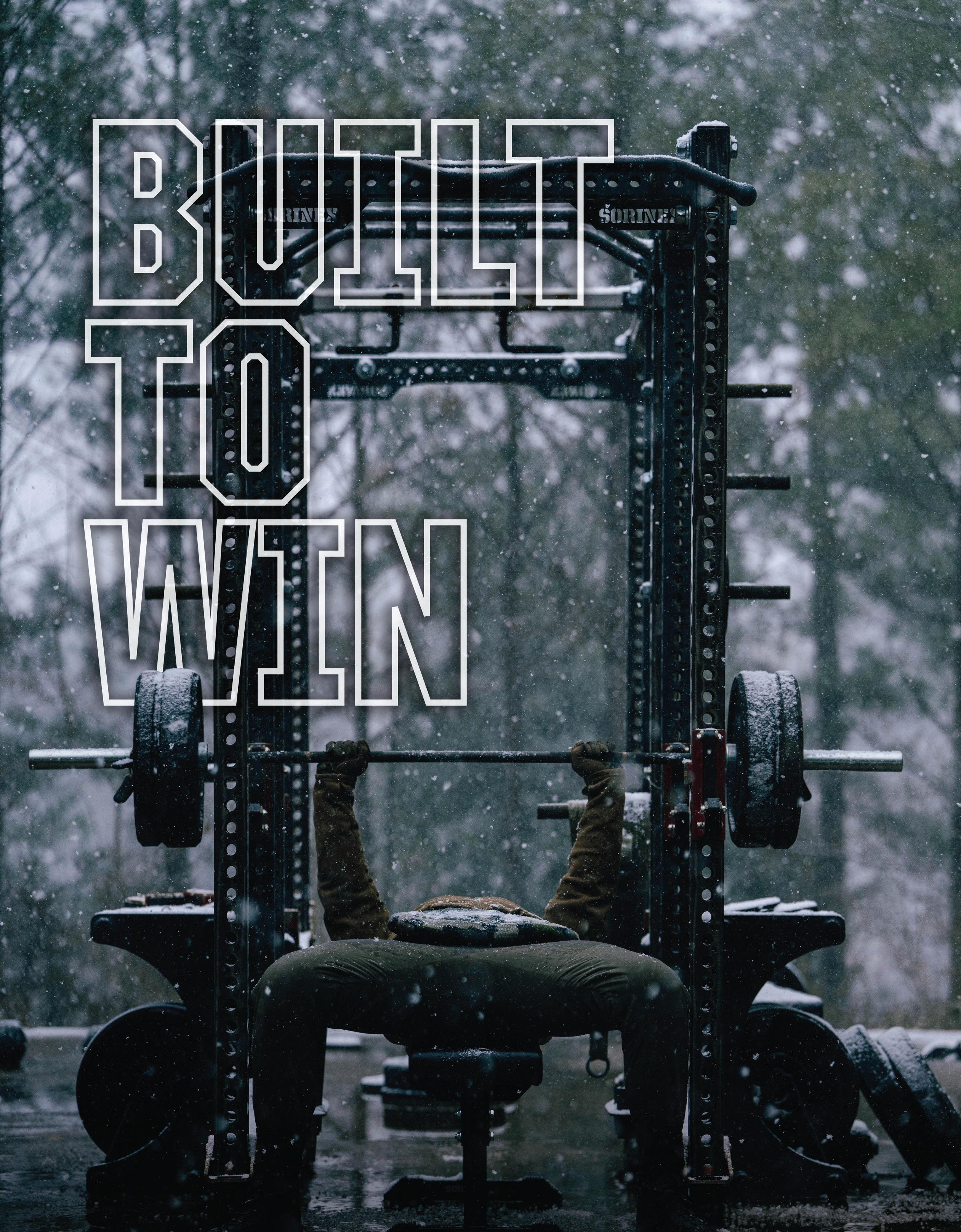
Sorinex proves strength is rooted in resilience, relationships and relentless innovation
By Jodi Helmer
Sports championships are decided on the field, the court and the ice, among other places, but the road to those big wins starts with conditioning and practice. Elite athletes who compete at the highest level often train on Sorinex equipment.
“When I see (an athlete) go out and hit a home run and win the World Series or catch a ball that wins the Super Bowl, the payoff that we get is that little bit of pride knowing that we played a small part in their success,” says Bert Sorin, president and owner of Sorinex.
The family-owned exercise equipment company, based in Lexington, has become a cornerstone of elite performance. Professional sports franchises, top-tier college programs and military organizations partner with Sorinex to design and equip their training rooms. Bert calls it a brand for athletes who “can afford anything but to lose.”

A Strong Foundation Sorinex did not begin with a plan to become an international brand. It began with a teacher.
The late Richard Sorin, a physical education teacher at Dutch Fork Elementary School, started Sorinex in 1980. Bert says his dad had a passion for helping students develop a physical fitness mindset. It started with building playground equipment and evolved to strength-training equipment.
“He wrote the state curriculum for gymnastics and strength conditioning at the scholastic level. So, in many ways, he was very pivotal in that early stage of physical fitness within our state,” Bert says. “(The business) grew from a need, not a mindset, to grow to an international business.”
Sorinex’s early years were defined by service rather than scale. Equipment was built to meet the needs of local high schools, churches and YMCAs without a roadmap for national or global expansion. That philosophy—help first, grow later— became a defining trait of the company.
Bert grew up in the shop, learning how things were built. He worked in the family business as a teenager, cutting steel, working

with the grinder and drill press and painting equipment. He worked alongside his father in the summers while attending the University of South Carolina on an athletic scholarship where he was a four-time Division 1 All-American Track and Field Southeastern Conference Champion in the 35-pound weight throw.

After graduation, Bert took a fulltime role with the family business and continued to pursue his athletic dreams. In 2000, he attempted to make the Olympic team, and training with Sorinex equipment deepened his passion for the product.
“Looking back, I was able to understand the difficulty of the job and the need for precision and the need for process early on,” he says. “For your family to (be) innovators in the training world as you are trying to be one of the best athletes in the world, there was definitely a love of the process and the product.”
The process and the products have evolved since Richard founded Sorinex almost five decades ago. It all started at the University of Kentucky. The school wanted to build the first strength and conditioning “super room” that required equipment with structural specifications and a level of customization not available from a catalog. Sorinex bid on the project and won. It wasn’t long before other universities started calling.

“Their marching orders were basically, ‘We love University of Kentucky, but we want something better,’” Bert recalls.
What followed was the beginning of what Bert jokingly refers to as the college sports “arms race.”
“Our job is to create the best strength weaponized systems for this school to be the best in their sport,” he says.
For Sorinex, each project became an opportunity to outdo the last. Bert takes pride in always improving, always getting stronger. Today, Sorinex equipment is used by championship teams across professional, collegiate and high school sports.
Military organizations also depend on the South Carolina company to keep their operators in peak conditioning.
“There are a lot of organizations we work with that I can’t list because of confidentiality and national security,” Bert says. “But when you watch the news, there’s a 75% chance that we’re tied into their strength and conditioning needs in some way. Those are the pieces of the puzzle that I love because I feel we’re being truly valuable to the industry.”
Sorinex expanded its military footprint dramatically during the COVID-19 pandemic after a sweeping overhaul of the Army Combat Fitness Test affected how soldiers are trained and evaluated, sparking the need for new strength and conditioning equipment.
The University of Tennessee—a notorious rival of the University of Kentucky— commissioned Sorinex to equip its training facilities with a singular goal in mind.

Sorinex expanded its manufacturing capacity to support the largest government purchase of bumper plates—steel or iron weight plates wrapped in a protective



rubber coating—to date. For Bert, the significance goes beyond scale or revenue and reflects the original mission his father built the company upon, using strength training to make people more capable and resilient.
Scaling to meet demand required relentless operational growth, and Sorinex never paused production to restructure or waited until perfect systems were established. New facilities, manufacturing

capacity and internal systems were added in real time, often while the company was already operating at full speed. This approach required constant decisionmaking and rapid problem-solving.
Bert refers to the process as “building the plane while we’re flying it.”
That approach placed an unusual level of pressure on the workforce. Employees weren’t just executing plans, they were helping build them. Bert says the company needed people who could stay composed under stress, think dynamically

president and owner of Sorinex, discusses weight room design and functionality with former Indiana University football strength coach Derek Owings. Josh Awotunde, University of South Carolina graduate and former Olympian, uses the Sorinex Jammer Arms on the Base Camp rack.
and remain committed even when the path forward wasn’t clear. Over time, that reality shaped the hiring process.

“A lot of the folks we hire are former athletes or former (military) operators,” Bert says. “They have been fire tested under pressure. It’s our secret weapon.”

Despite its global reach, Sorinex remains deeply rooted in South Carolina. The majority of its products are manufactured in Lexington, and many of its pioneering designs are now standard across the industry.
Bert points to a piece of equipment known as the Landmine, a universal joint attachment Sorinex developed


in 2000. Today, nearly every fitness company manufactures its own version. Sorinex’s rack design and rig system, modular uprights with multidirectional hole patterns that allow for nearendless customization, is a functional improvement Bert calls one of the company’s most impactful innovations.
Sorinex’s status as a family business might be its biggest competitive advantage.
“Our name is attached to it (and) there is a strength when you are so inextricably tied to the business,” Bert says. “Being a family business has been very difficult at times, but it’s also been a bit of a of a secret cheat code because we know we’re not going to give up.”
The Sorinex family includes the employees, customers and the community. “Our goal is for everyone who touches our company to win, and that doesn’t mean always (on) the scoreboard. That means that they’re better today than they were yesterday,” Bert says.
Events like SummerStrong and WinterStrong, weekend events that draw industry professionals and feature live strength competitions, were designed to celebrate the things Sorinex is most passionate about: strength and conditioning, equipment innovation and community.

Bert describes success as something that requires both momentum and perspective, pushing back on the idea that progress always means accelerating forward.
“I know it’s sexy to say that we’ll just keep driving forward, but I believe there’s also a time to take a tactical pause and enjoy the view from the top and be extremely thankful for those who helped us get there,” he says.
The sense of shared achievement shapes how Bert views leadership and growth. He also acknowledges the more successful Sorinex becomes, the conditions get tougher, but the

competition drops off, leaving a smaller and more competitive market.
To stand out, Bert made the deliberate choice to avoid e-commerce and bargain markets, focusing instead on clients who expect excellence. That market is extending to residential designs. Sorinex has expanded into high-end home facilities that rival collegiate or professional setups for “folks who can afford to have the best in the world.”
Bert admits there isn’t a blueprint driving growth. Instead of setting specific and measurable goals, he is focused on continued excellence. On that path, he knows hard things will be inevitable, and growth requires embracing the challenges, resilience and the ability of his cohesive team to think dynamically and solve problems under pressure.
“There isn’t a necessarily enormous business plan that says, ‘Next we’re going to take over this industry,’” he says. “We just want to do what we’re doing now with the volume turned up.”

Every month, MPD Electric Cooperative features a new, recognizable spot from somewhere in the Pee Dee. Check out next month’s page for the answer.



In the heart of Lake City stands a monument honoring Dr. Ronald E. McNair, a Lake City native whose journey carried him from small-town South Carolina to the edge of space, as one of the nation’s first African American astronauts. Although widely remembered as one of the seven astronauts killed in the Jan. 28, 1986, explosion of the space shuttle Challenger, Ronald was a renowned laser physicist, a fifth-degree black belt karate champion, saxophonist, composer, husband and father. Nearby are a fountain that marks his gravesite and the Dr. Ronald E. McNair Life History Center. The center is the former home of the Lake City Library, which refused 9-year-old Ronald service in 1959 while segregated. It now bears his name, serving as a lasting tribute to his resilience and legacy.





























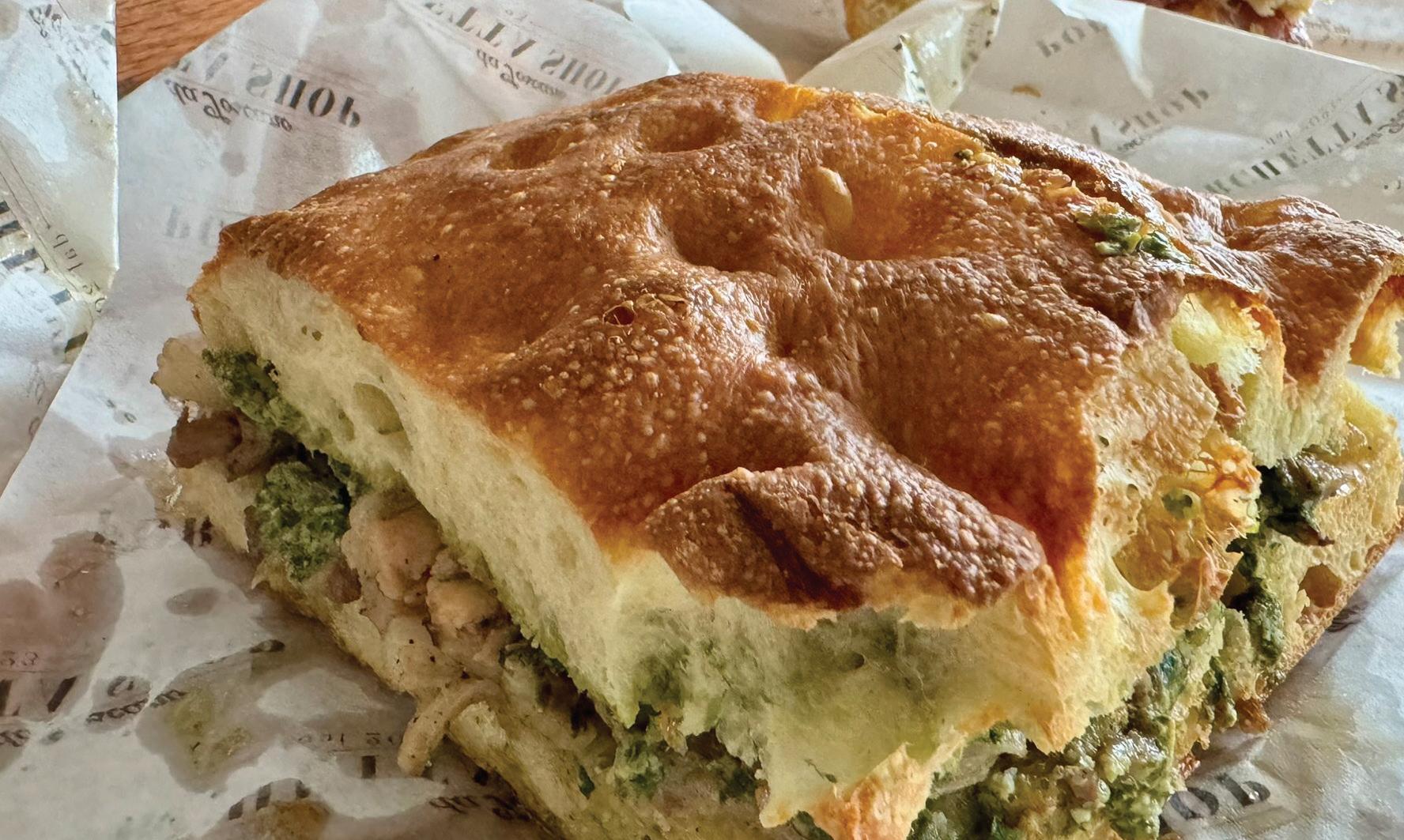
As an entree or in a sandwich, porchetta is a pleaser
Story and photos by Libby Wiersema
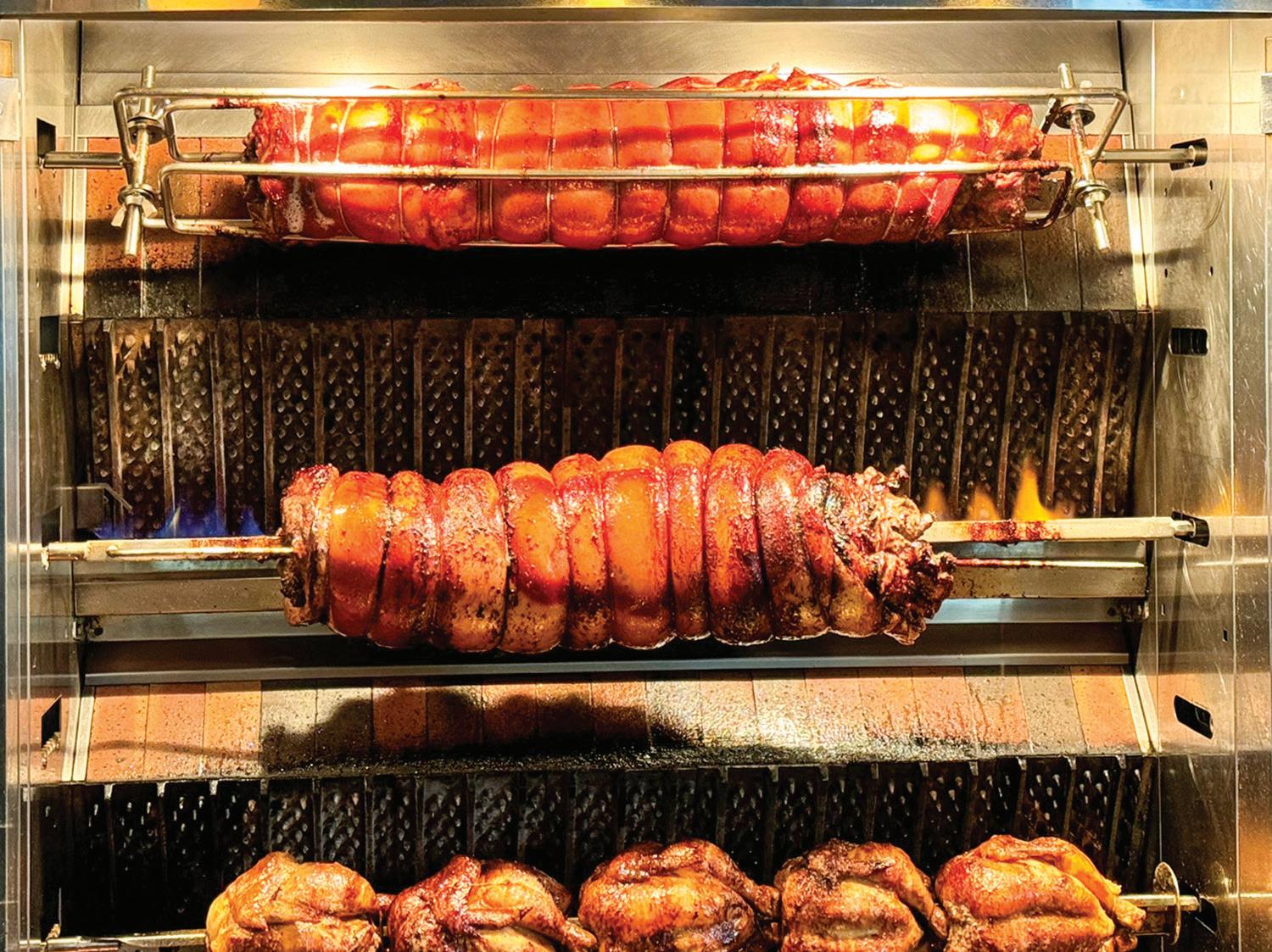
Savory, moist, flavorful and pretty to look at— porchetta is one of my favorite Italian food traditions. Translated, the term means “little pig.” Trust me, though, there is nothing little about the flavor of this delicacy.
Anyone who loves pork will find this roast an irresistible centerpiece of their dining table. Aromatics such as rosemary, garlic, fennel and coarsely ground black pepper are rubbed into the meat. Some cooks use a mixture of breadcrumbs, nuts and other savory ingredients to create a stuffing to lay on the butterflied pork. The roast is tightly rolled and tied with twine before it hits the oven.
It is a little bit involved but quite doable for the average home cook.
You do not need kitchen skills to experience the joys of porchetta—porchetta sandwiches, specifically. In Tuscany, sandwich carts serve hearty, delicious
focaccia sandwiches stuffed with slices of porchetta and topped with sauteed vegetables. If that sounds dreamy, you will be happy to know you can take a short drive and sample this Italian wonder.
Da Toscano Porchetta Shop at 109 President St. in Charleston is a celebration of that Tuscan tradition. Chef Michael Toscano has long been treating the dining public to elevated Italian fare at Le Farfalle. In 2023, he and his wife, Caitlin, began churning out some of the tastiest European eats through a more casual setup.
The Old World-style sandwich shop hums with foot traffic and lures customers with its aromas. Inside, customers can see herbed pork roasts turn on spits, and huge squares of fresh focaccia stacked and ready to be cut into sandwiches.
The space is small, and there is no seating. Order at the register, grab a beverage, then belly up to one of the counters where you eat your treasure elbow to elbow with fellow diners. You can opt, of course,
5- to 6-pound boneless pork shoulder roast (get one with a nice fat layer)
Kosher salt
Freshly ground black pepper
2 tablespoons fennel seeds
4 tablespoons chopped fresh rosemary
2 tablespoons chopped fresh sage leaves
1 teaspoon crushed red pepper flakes
8 cloves garlic
1 cup breadcrumbs
Zest of 1 lemon
¼ cup extra-virgin olive oil, plus more to drizzle
Rosemary sprigs
Bay leaves
Kitchen twine
Heat oven to 450 F.
To butterfly the roast, place it fatside up on a cutting board. About an inch from the top, slice into the meat horizontally, careful not to cut all the way through. Gently open the flap you just made, and slice in the opposite direction, again without cutting all the way through. Gently open the flap. You should have a fairly flat piece of meat on your cutting board, fat-side down. Sprinkle it generously with kosher salt and black pepper.
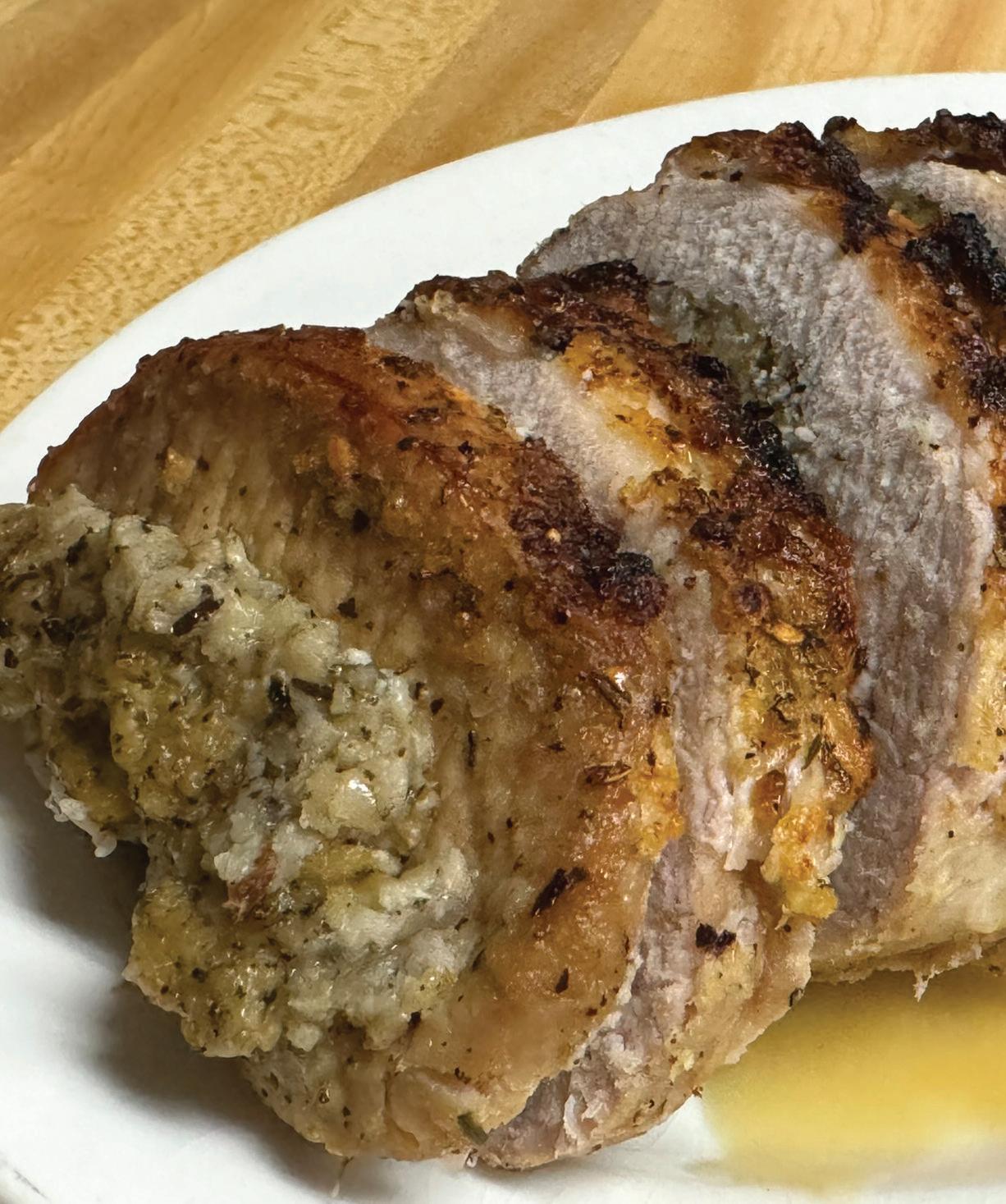
Lay sprigs of rosemary and a few bay leaves in the bottom of a rimmed baking sheet. Place the roast on top, fat-side up. Sprinkle with salt and pepper.
In a food processor, pulse fennel seeds, rosemary, sage, red pepper, garlic, olive oil, lemon zest and breadcrumbs until finely chopped. Reserve 2 tablespoons, then spread the remaining mixture across the surface of the pork.
Tightly roll the meat so the fat side is on top. Secure with kitchen twine at 2-inch intervals. With a sharp knife, score the fat without cutting into the meat. Rub in the reserved herb-garlic mixture.
to get your meal to go and enjoy it in the privacy of your car, hotel room or at a local picnic spot. Bring plenty of napkins.
At this shop, breakfast and lunch are journeys into the delights of roasted porchetta. In the morning, chow down on a focaccia sandwich layered with whole-hog porchetta, crackling, provolone dolce, a sunny-side up egg and salsa verde.
For lunch, you cannot beat the house favorite: rotisserie whole-hog porchetta rubbed with rosemary and fennel, crackling, broccoli rabe, provolone
Place the roast, uncovered, in the oven for 20 minutes, then reduce heat to 325 F. Roast for 2 to 4 hours, depending on the size of the roast, until a meat thermometer inserted in the center registers 180 F and the fat is crisp.
Let the roast rest 15 minutes before cutting into thick slices. You can make gravy with the drippings, or just spoon them over the meat.
If there are leftovers, make sandwiches.
dolce, salsa verde and long hot peppers sandwiched between thick slices of warm focaccia.
Before you hop in the car and head to Charleston, though, try your hand at making a stuffed porchetta roast at home. Pour a glass of wine, put on some music and enjoy the process. n
Libby Wiersema writes about dining, food trends and the state’s culinary history for Discover South Carolina as well as other print and online media. Contact her at libbyscarolinaspoon@gmail.com.

By Dave LaBelle
Every calendar month is dedicated to bringing awareness to its own cause or observance, some lighthearted and others profoundly meaningful. October, for instance, is Breast Cancer Awareness Month, yet it also shares space with National Pizza Month. In the United Kingdom, 30 days across May and June are recognized as National Smile Month. And while we might celebrate whimsical Mustache March, the month is also designated as National Women’s History Month, a time to celebrate women’s contributions to history, culture and society.
Throughout my career, I have photographed many famous women—movie stars, civil rights figures and humanitarians from all walks of life. In 2011, I photographed Eva Schloss, a survivor of Hitler’s death camps and Anne Frank’s stepsister. Eva died Jan. 3 in London at the age of 96.
Approachable and generous with her time, Eva told her story to audiences for two days. Like Anne, Eva and her family went into hiding from the Nazis, and after two years, they were tracked down, arrested and deported to concentration camps. Eva barely survived Auschwitz, and her brother and father died in captivity.
“The horrors that she endured as a young woman are impossible to comprehend and yet she devoted the rest of her life to overcoming hatred and prejudice, promoting kindness, courage, understanding and resilience through her tireless work for the Anne Frank Trust UK and for Holocaust education across the world,”






While I advocate photographing famous people whenever and wherever you can, don’t limit documenting only those society or fate has shined a light on. Ask yourself, “Is there is a person I admire in my world, a giving soul in my community I can honor?” Try to make a portrait that celebrates their character.
Email your best image—just one—with caption information, including an explanation of how it affects you, to gph@pioneer.coop. We may share submissions on our website and social media channels.
King Charles says in a piece written by Thomas Mackintosh and published by the BBC on Jan. 4, 2026.
Beneath Eva’s positive public face, she shared with me after a lecture that waves of pain linger. I watched for images that might reveal that pain and often shot as tight as possible, usually with a telephoto lens to compress the face, hoping to capture subtle expressions that reveal the pain in her heart.
To learn more of Eva’s story, check out bit.ly/4qYVuC4 or pick up one of her books, “Eva’s Story: A Survivor’s Tale by the Stepsister of Anne Frank” and “The Promise: The Moving Story of a Family in the Holocaust.”
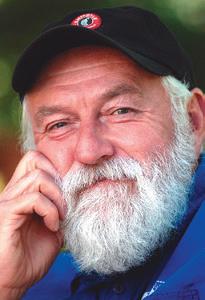
Photographer, author and lecturer Dave LaBelle has captured special moments for more than half a century, sharing photo tips and life perspectives with readers. For more of his writings, visit davidlabelle.com and his blog at bridgesandangels.wordpress.com.
Discover this spectacular 6½-carat green treasure from Mount St. Helens!
For almost a hundred years it lay dormant. Silently building strength. At 10,000 feet high, it was truly a sleeping giant. Until May 18, 1980, when the beast awoke with violent force and revealed its greatest secret. Mount St. Helens erupted, sending up a 80,000-foot column of ash and smoke. From that chaos, something beautiful emerged… our spectacular Helenite Necklace.
Helenite is produced from the heated volcanic rock of Mount St. Helens and the brilliant green creation has captured the eye of jewelry designers worldwide. Today you can wear this massive 6½-carat stunner for only $99!

Make your emeralds jealous. Our Helenite Necklace puts the green stone center stage, with a faceted pearcut set in .925 sterling silver finished in luxurious gold. The explosive origins of the stone are echoed in the flashes of light that radiate as the piece swings gracefully from its 18" luxurious gold-finished sterling silver chain. Today the volcano sits quiet, but this unique piece of American natural history continues to erupt with gorgeous green fire.
Your satisfaction is guaranteed. Bring home the Helenite Necklace and see for yourself. If you are not completely blown away by the rare beauty of this exceptional stone, simply return the necklace within 30 days for a full refund of your purchase price.
JEWELRY SPECS:
- 6 ½ ctw Helenite in gold-finished sterling silver setting - 18" gold-finished sterling silver chain



If your home is like most, you and your family use about 64 gallons of water each day. If your water heater is electric, that probably accounts for about 18% of your power bill.
That makes your water heater the second-largest energy expense in your home. Why not use less electricity to heat it?
Today’s high-efficiency water heaters use much less energy than older models, so you don’t need to give up comfort for energy savings. That’s good news for your power bill.
There is a newer option to consider: an electric heat pump water heater. These units give you the hot water you need by pulling heat from the surrounding air to heat the water—like a refrigerator in reverse. Because they do not directly produce heat, electric heat pump water heaters are two to three times more energy efficient than standard units.
According to the U.S. Department of Energy, a family of four can save about $550 a year on water heating costs, which adds up to $5,610 over the lifetime of the unit.
A heat pump water heater may cost a bit more upfront than other models. However, according to the DOE, most people see a payback in less than three years due to the unit’s lower operating costs and energy savings. Look for the Energy Star label when shopping for a water heater.
Check with your utility to see if a rebate is available to help you make the switch.
Tankless electric water heaters are another option, but carefully weigh the benefits and drawbacks. These smaller units quickly heat water to provide it when called upon, but can use eight times more electricity than a standard water heater.
This high demand increases your utility’s cost of purchased power, which plays an important role in how much you pay for electricity. In some cases, people who use electric tankless water heaters must upgrade their home’s wiring to support the greater demand for electricity.
Other ways to lower your energy costs include setting your water heater’s thermostat to no higher than 120 degrees, fixing leaks, installing low-flow fixtures, and using energy-efficient dishwashers and washing machines.
Helping you save energy and money is another way your utility is always here for you. n

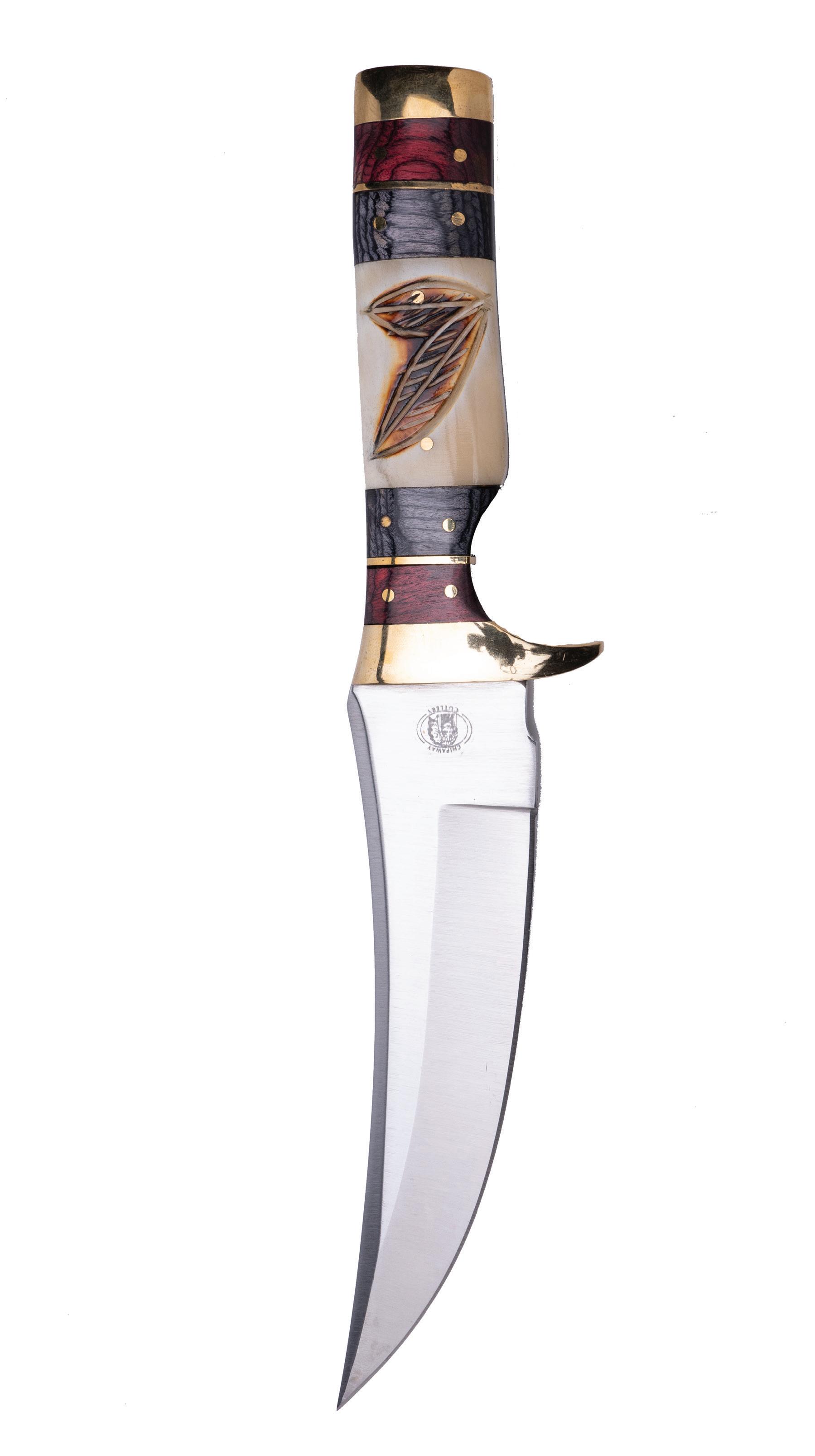
The very best hunting knives possess a perfect balance of form and function. They’re carefully constructed from fine materials, but also have that little something extra to connect the owner with nature. If you’re on the hunt for a knife that combines impeccable craftsmanship with a sense of wonder, the $79 Huntsman Blade is the trophy you’re looking for.
The blade is full tang, meaning it doesn’t stop at the handle but extends to the length of the grip for the ultimate in strength. The blade is made from 420 surgical steel, famed for its sharpness and its resistance to corrosion.


The handle is made from genuine natural bone, and features decorative wood spacers and a hand-carved motif of two overlapping feathers— a reminder for you to respect and connect with the natural world.

But we don’t stop there. While supplies last, we’ll include a pair of $99 Stauer power pocket binoculars and a genuine leather sheath FREE when you purchase the Huntsman Blade
Your satisfaction is 100% guaranteed. Feel the knife in your hands, wear it on your hip, inspect the impeccable craftsmanship. If you don’t feel like we cut you a fair deal, send it back within 30 days for a complete refund of the item price. Limited Reserves. A deal like this won’t last long. We have only 1120 Huntsman Blades for this ad only. Don’t let this beauty slip through your fingers. Call today!
Pocket Binoculars -a $99 valuewith purchase of Huntsman Blade


This fusion of substance and style can garner a high price tag out in the marketplace. In fact, we found full tang, stainless steel blades with bone handles in excess of $2,000. Well, that won’t cut it around here. We have mastered the hunt for the best deal, and in turn pass the spoils on to our customers.




— H., Arvada, CO the

Clients Are Saying About Our Knives
“This knife is beautiful!”
— J., La Crescent, MN
“The feel of this knife is unbelievable...this is an incredibly fine instrument.”
Blade $249* Offer Code Price Only $79 + S&P Save $170
Insider Offer Code: HBK301-03 You must use the insider offer code to get our special price.

is only for customers who use the offer code versus the listed original Stauer.com price.

California residents please call 1-800-333-2045 regarding Proposition 65 regulations before purchasing this product.
7 Projectile hurled at Fozzie Bear (6)
Projectile hurled at Fozzie Bear (6)
8 Nashville music genre (6)
9 One of 10, say, in an express checkout (4)
music (6) of 10, say, in express checkout (4) Direct attention to and blue (7) to work (5) arm and a leg, (5) hilarious (7) "Y" of DIY (8) Desire or impulse topped with a eraser (6) place (6) - ___ bed (6) "cordial," you're
10 Direct attention to (8)
11 Crab and blue (7)
13 Paid to work (5)
15 An arm and a leg, say (5)
17 More hilarious (7)
20 The “Y” of DIY (8)
21 Desire or impulse (4)
22 It’s topped with a pink eraser (6)
23 Ant’s place (6) Down
1 Four- ____ bed (6)
2 With “cordial,” you’re getting close (4)
3 Observed, spotted (7)
4 They’re far from basic (5)
5 Operate as a party (8)
6 Donatello specialty (6)
12 Deduct (8)
14 Superficial (7)
16 De-wrinkled (6)
18 It’s around the perimeter (6)
19 Elite Navy group (5)
21 Unpleasant to view (4)



If you’ve ever watched a war movie or a high-octane action flick, you’ve heard the sharp, clipped exchanges over the radio full of jargon that sound like it was made to be said in a gravelly voice. Phrases like “roger that,” “wilco” and “copy that” have made their way into everyday language, but their origins come from military communication.
“Copy that” sounds so much cooler than just saying “got it” or “understood,” right? However, believe it or not, this dates back to the dawn of radio communication in the military.
In the early 20th century, when radio operators were trying to communicate across long distances with lots of static, they needed a short, clear way to confirm they’d received a message. The term “copy” comes from the old-school practice of writing down messages word for word. So, when someone says, “copy that,” they’re saying, “I got your message and won’t forget it.”
In military radio lingo, “wilco” is short for “will comply.”
Saying “I’ll do what you just told me” is too long-winded in the fast-paced world of military operations. So, they took out the extra words. When you say “wilco,” you’re telling someone, “I understand your order, and I’m going to carry it out.” It’s like a verbal salute.
“Roger that” is one of those iconic phrases that made its way into our daily conversations in the 1960s. During public broadcasts of the Apollo space missions, audiences heard the reply “roger” often enough that it became part of the lexicon.
The term comes from the old U.S. military phonetic alphabet, where “roger” was the code for the letter R, and the R stood for “received.” So, when someone says, “roger that,” they’re simply confirming they’ve received the message—no frills, no
over-explanation, just clarity.
“Mayday” is a high-stakes, panic-button phrase. This internationally recognized distress signal comes from the French “m’aidez,” meaning “help me.” It was adopted by the International Radiotelephony spelling alphabet in the 1920s and is still used to this day as the go-to emergency call in aviation, maritime and military operations.
When someone says “mayday,” they’re not asking nicely for help. It’s an urgent, “I’m in deep trouble, and I need assistance right now.”
One of my favorite military phrases is “soup sandwich,” which describes a completely disorganized, chaotic or downright disastrous situation. Imagine trying to make a sandwich out of soup. It’s messy, impractical and not going to work. So, when you hear someone say “soup sandwich,” they’re describing a situation that has gone horribly awry.



Military radio lingo is efficient, direct and—let’s face it— makes you sound cool. From “roger that” to “soup sandwich,” it’s are more than just jargon, they carry a rich history of communication, precision and sometimes more than a little bit of humor.











Ed Salley is MPD’s IT guy. Ed not only knows a lot about technology, he knows a lot about everything. Send your question to asked@mpd.coop, and it may be featured in














Sweet Potato Black Bean Chili
1 tablespoon avocado or extra-virgin olive oil
½ yellow onion, diced
3 cloves garlic, minced
1 jalapeno, minced
2 15-ounce cans black beans, drained and rinsed
2 15-ounce cans cannellini beans, drained and rinsed
24-ounce cans diced tomatoes

1 medium sweet potato, peeled and diced
1 tablespoon ground cumin
1 tablespoon chili powder
2 teaspoons salt
3 cups spinach, chopped
2 cups cooked brown or white rice, prepared to package instructions
1⁄3 bunch fresh cilantro, chopped
Warm oil in a Dutch oven over medium heat. Once hot, add onions, garlic and jalapeno. Saute for 3-5 minutes or until onions have softened. Add beans and 1 cup of water. Stir until well combined. Stir in diced tomatoes, sweet potato, cumin, chili powder and salt. Cook for 20 minutes or until sweet potatoes are tender. Stir in spinach. Cook for another 5 minutes. Season chili to taste. Serve over rice, and garnish with cilantro.



Chorizo and Sweet Potato Breakfast Bowl
2 large sweet potatoes, peeled and diced into half-inch chunks
3 tablespoons olive oil, divided
Sea salt, plus more for seasoning
Freshly ground black pepper, plus more for seasoning
½ teaspoon garlic powder
½ teaspoon onion powder
Heat oven to 450 F.
½ teaspoon smoked paprika
4 precooked chorizo links, diced into ½-inch pieces
4 cups kale, roughly chopped
10-ounce bag frozen cauliflower rice
4 large eggs
1 avocado thinly sliced
Cilantro, for garnish
Fresh lime juice, to taste
Line a large baking sheet with parchment paper. Place potatoes in a large bowl. Toss with one tablespoon oil, salt, pepper, garlic powder, onion powder and smoked paprika. Roast potatoes for 25 minutes or until browned and crisp on the outside and soft on the inside.
While potatoes cook, prepare remaining components. Heat a skillet over medium-high heat, and add a tablespoon of oil. Add chorizo to skillet. Cook, stirring, until thoroughly browned. Remove to a plate, and cover to keep warm.
Lower heat to medium. Add kale. Saute and season with salt and pepper, then add to plate with chorizo. Saute cauliflower rice until just softened. Set aside. Add remaining oil to skillet. Cook eggs to preference, and season with salt and pepper. To assemble bowls, arrange layers of potatoes, chorizo, kale and rice. Top with avocado, lime juice and eggs. Garnish with cilantro.
Sweet Potato Taco Bowl
2 tablespoons chili powder
1 tablespoon sweet smoked paprika
1 tablespoon ground cumin
2 teaspoons kosher salt
1 tablespoon dried oregano
1 teaspoon garlic powder
1 teaspoon onion powder
¼ teaspoon cayenne powder
1 pound sweet potatoes, peeled and chopped into 1- to 2-inch cubes
Heat oven to 400 F.
1 tablespoon vegetable oil
1 pound extra-lean ground beef
14-ounce can black beans, drained and rinsed
1 cup corn
Optional garnishes: sliced avocado, sour cream, sliced jalapenos, sliced green onion, chopped cilantro, lime slices
Sweet Potato Chowder
3 ounces thinly sliced pancetta
5 tablespoons butter, divided
1 cup chopped onion
½ cup chopped carrot
½ cup chopped celery
2 garlic cloves, minced
2½ pounds medium sweet potato, peeled and chopped into 1-inch cubes
5 cups chicken broth
1 teaspoon salt
1 teaspoon dried sage leaves
½ teaspoon dried thyme
½ teaspoon smoked paprika
¼ teaspoon crushed red pepper flakes
¼ teaspoon black pepper
1 cup half-and-half, warmed
3 cups chopped fresh kale
Roasted pepitas
Minced fresh sage
Heat a Dutch oven to medium heat. Cook pancetta until browned and crisp, 4-5 minutes. Remove to a paper towellined plate.
Add 2 tablespoons butter, onion, carrot and celery to pot. Cook, stirring often, until softened and lightly browned, 9-10 minutes. Add garlic. Cook until fragrant, 30-60 seconds. Transfer mixture to a bowl, and set aside.
Add remaining butter to pot. Stir in potatoes. Cook until slightly soft, 7-8 minutes, stirring occasionally. Stir in broth, salt, sage, thyme, paprika, red pepper, black pepper, cooked vegetable mixture and 2 tablespoons pancetta. Bring to a boil, then reduce to a simmer. Cook until potatoes are tender, 5-7 minutes, stirring occasionally.
Whisk about 1/4 cup of hot broth into half-and-half. Slowly add mixture to soup, stirring constantly. Stir in kale. Simmer until wilted, 4-5 minutes. Remove from heat.
Ladle soup into bowls. Top each with remaining pancetta, pepitas and sage. Serve immediately.
Sweet Potato Parsnip Bisque
2 cups sweet potato cubes
2 medium parsnips, peeled and chopped
3 tablespoons grapeseed or coconut oil, divided 2 cloves garlic, minced
1 teaspoon ginger, minced 14-ounce can cannellini beans
Heat oven to 375 F.
2½ cups coconut milk
2 cups water
1 bouillon cube
1 teaspoon black pepper
½ teaspoon cayenne pepper
Fresh arugula, cilantro or parsley for garnish
In a small bowl, mix chili powder, paprika, cumin, salt, oregano, garlic power, onion powder and cayenne pepper. Toss potatoes with vegetable oil and half the seasoning mixture from the small bowl, about 2 tablespoons. Bake for 15-20 minutes until tender and cooked through.
Meanwhile, cook beef over medium-high heat for 5-7 minutes until cooked through. If necessary, drain any large quantities of fat from skillet, leaving about 1 tablespoon. Add beans, corn, tomatoes and remaining seasoning mixture. Toss to fully coat beans and beef with seasoning. Continue to cook until beans and corn are heated through. To serve, place a layer of potatoes in a bowl. Add beef, bean and corn mixture. Top with desired garnishes.
Line a baking sheet with parchment paper. Toss potatoes and parsnips with 1½ tablespoons oil. Spread evenly on baking sheet. Roast for 30 minutes, until tender.
Once vegetables are cooked, heat remaining oil in a large, heavy-bottomed pot. Add garlic and ginger. Saute until garlic turns slightly golden. Add roasted vegetables and beans, reserving a handful for garnish.
Stir in coconut milk and water. Bring to a boil, then stir in bouillon. Reduce heat to a low simmer. Cook for 10 minutes. Remove pot from heat. Stir in black and cayenne peppers. Use an immersion blender to puree soup until smooth. Alternatively, allow soup to cool before transferring it to a blender and blending smooth.
Serve bisque garnished with herbs and reserved beans.















































By Judy Garrison
Mansions like Biltmore estate in Asheville, North Carolina, and Rosecliff Mansion in Newport, Rhode Island, are pictures of opulence from the 19th century. Dubbed “the gilded age,” it was a time of economic and industrial growth for America where the lower classes, struggling for survival, watched the wealthiest validate their status by hosting grand parties in their massive mansions.
With most of the wealthiest population in Northern or Midwestern cities like New York and Chicago, winters were brutally cold and summers were blistering. For the wealthy, escaping the summer heat and winter’s chill to milder climates meant deviating from their norm
but not from what they valued most.
Wealthy families traveled south where they built substantial cottages for their seasonal migrations. Coastal Florida gifted cooler breezes during the heat of summer. In South Carolina, Aiken became known as the winter colony for families like the Astors, Vanderbilts and Whitneys when the frigid winters descended upon the North.
When family homes filled to capacity during the peak of the season, the Willcox Inn was built to handle the overflow crowds, entertaining politicians and royalty.
This period shaped Aiken’s architecture and culture. Grand estates included lush gardens and stables and showcased seasonal retreats with

cosmopolitan flair. The mild winters, fresh air and sandy soil—ideal for the horses and their tender hooves— sweetened Aiken’s appeal. With the arrival of the railroad, families traveled in one train car and their horses in another, and movement south was effortless.
Homes became social hubs, hosting social gatherings, musical performances and lectures, laying the groundwork for the city as a vibrant art and cultural setting.
Aiken continues to foster the reputation as the equestrian capital of the South, and now the arts are taking center stage once again. This time, the doors are wide open, making no distinction between class or culture.




Today, seasonal mansions and homes are no longer drivers to the area. However, visitors continue to come for equestrian events and to tour the historic homes while uncovering Aiken’s fascinating history.
One remaining home from the grand era is Joye Cottage. Once a meager 60-room bed-and-breakfast in the early 1800s, financier William C. Whitney bought the home and transformed it into a winter cottage in the late 1890s. Listed on the National Register of Historic Places, it is now privately owned by Pulitzer



























Prize-winning author Steven Naifeh.
In an attempt to move the arts legacy of the gilded age forward—erasing the line between the haves and have-nots—Naifeh, along with the late Sandra Field and the late Gregory White Smith, founded Joye in Aiken in 2008, as a celebration honoring the home and its importance to the community. Once, only the privileged sat for world-class performances, but over the last 17 years Joye in Aiken has provided opportunities for a wider and diverse audience. After all, as stated on the website, “Joye is something to share.”

Partnering with The Julliard School in New York City, Joye in Aiken hosts performers at the top of their disciplines and provides free or low-cost events to those who might not have been exposed to this caliber of work. The weeklong performing arts festival takes place each March with a variety of events. The outreach portion of the program extends into schools, teaching and mentoring students in various disciplines.
The city of Aiken is Julliard’s only partner worldwide. Joye in Aiken Executive Director Joyce Jennings understands the uniqueness of Aiken’s role with Julliard.
“It’s very unusual for a small town like ours to have that kind of a relationship with one of the world’s foremost performing arts conservatories,” she says. “Since 2009, we’ve brought over 700 artists, and they have reached over 50,000 school-age kids.”
The year-round schedule begins in December with a “holiday concert, usually with six top-ranked artists from New York, a weeklong festival in March and a jazz camp in the summer,” Joyce says.
As a staff of one, Joyce has been executive director for 12 years and manages the day-to-day operation of the nonprofit.

“It’s a year-round position,” she says. “It takes an entire year to plan the festival and other associated events. Our artistic director is trumpeter Riley Mulherkar, founding member of The Westerlies and a Julliard alumnus.”
Hundreds of community volunteers help with programming each year and assist during the week as drivers for the artists, production assistants or ushers.
She praises Riley, who assists with programming and is the liaison with the artists coming from New York.


“It’s a collaboration between me and Riley,” she says. “He sends us recommendations, a list of artists who he thinks would be a good fit. They are always the cream of the crop, and we have a lot of fantastic choices. We look for those that are right for our audience here in Aiken.”
Once jazz-heavy, the program now includes a mix of diverse genres. The opening event is considered somewhat of an all-day mini jazz festival, amping up excitement for the week ahead.
The idea for the event was born when Joyce and her husband traveled to New York to the Players Club in Gramercy Park, a 19th-century mansion where different gatherings were taking place in
each room. She shared her love for the idea with Riley and suggested bringing it to Aiken and The Willcox Inn.
And so, they did. With the intimate and cordial setting of The Willcox—called Aiken’s living room by locals—this event is now the most popular part of the festival. A brunch session with an ensemble performance starts the day, followed by breakout rooms like the Listening Party or Handful of Keys, where an artist performs and speaks with the group about influences, motivations and the performance itself. “It’s very interactive,” Joyce says. “You get to really know the artist.”


There are multiple opportunities during the week to see a variety of performances. “We do our best to give the community all the information they need to decide which ones they are interested in,” Joyce says. “I think we’ve been able to expand Aiken’s horizons. There are some things that many thought they would not enjoy, but they go and then they really did. It’s kind of a balancing act, between what we know will work and what we think might be a little bit on the edge.”
During summer’s jazz camp, 25 students— rising freshmen through 12th graders whose applications to the program were




CLOCKWISE FROM ABOVE: A funeral parade, featuring a horse-drawn caisson and jazz band, is a fun beginning to festival week. Artists return to the stage year after year and are hosted by local families during their stay. Jazz camp builds musical skills as well as self-confidence in abilities. PHOTOS BY JOYE IN AIKEN/BRENT CLINE PHOTOGRAPHY
accepted—have one-on-one time with instructors at the Etherredge Center on the campus of University of South Carolina Aiken. More information can be found at joyeinaiken.com/jazz-camp-information.
“During festival week and other times throughout the year, artists visit schools and other venues,” Joyce says. “Everywhere they go, they teach. But they do much more than that. To many of the students who hear them, they are a source of inspiration, pride and hope. They are living proof that hard work, talent and discipline can take you to the top of the world. They are mentors and role models. They are rock stars.”
Many artists return year after year because “they love it here” Joyce says. They “stay in host homes, which distinguishes Joye in Aiken from other festivals,” she says. “The artists get to know these host families and get attached to them. They are part of the family and consider Aiken their second home.”

The festival’s far-reaching influence


becomes increasingly obvious when “we see one of our artists on TV, on the movie screen or performing at Lincoln Center or Carnegie Hall,” Joyce says. “Danielle Brooks was a student, and she went on to become one of the stars of ‘Orange is the New Black’ on Netflix. Norm Lewis became the first African American lead in ‘Phantom of the Opera.’ Ryan Carter, who has been on our faculty, won two Tonys and a Grammy in the last couple of years. It’s astonishing to see what they do before and after they are here in our little town.”

Through Joye in Aiken, the world of performing arts is open to those who might not have the opportunity to study at Julliard or attend performances at Carnegie Hall. Inspired by the gilded age yet transformed by a trio’s passion to provide opportunities to everyone, Joye in Aiken opens a world of possibilities.
The program is funded in part by the National Endowment for the Arts and the South Carolina Arts Commission.
For more information, including how to be part of the program, visit joyeinaiken.com.


The 2026 festival and season is dedicated to its co-founder, the late Sandra Field. What began as Julliard in Aiken, morphed into Joye in Aiken, reflecting the legacy of the cottage and the passion for the arts. Sandra believed in the power of the arts to inspire and worked to make this inspiration accessible to everyone.
Schedule
March 6—Kickoff Celebration
March 7—Joye of Jazz at The Willcox
March 10—Collage Dance Collective
March 12—Sanctuary Noon Series presents Peter and Kara Dugan
March 12—Evening performance by Sybarite5
March 13—Paul Jacobs finale performance
Visit joyeinaiken.com for more information.


MARCH 5
Black Creek Arts Darlington County Student Exhibit Reception
The Darlington County Student Exhibit features artwork created by local students in honor of Youth Art Month. The exhibit showcases their imaginations, skills and unique perspectives. During the reception, guests are invited to view the exhibit, meet the artists, and celebrate the role of arts education in our schools and community. The exhibit will be on display through March 27.
5:30-7 p.m.
BLACK CREEK ARTS COUNCIL
116 W. College Ave., Hartsville
MARCH 6-14
“A Few Good Men”
This Broadway hit about the trial of two Marines for complicity in the death of a fellow Marine at Guantanamo Bay sizzles on stage. For tickets, visit www. orencelittletheatre.org.
FLORENCE LITTLE THEATRE
417 S. Dargan St., Florence
MARCH 7
Florence Symphony Orchestra
Family Concert: Stars, Stripes and Symphony
This exciting, interactive concert celebrates the music of American composers in a way that’s fun and engaging for all ages. Children and families will especially enjoy this performance, with a hands-on “Instrument Petting Zoo” starting at 1 p.m. in the lobby. For tickets, call 843-661-4444.
2-3:30 p.m.
FMU PERFORMING ARTS CENTER
201 S. Dargan St., Florence

MARCH 14
Dillon St. Patrick’s Celebration
MARCH 13
Lucky Shamrock Festival
Join the Junior League of Florence for this annual festival. There will be food, drinks, entertainment and more during this family-friendly evening.
5:30-9:30 p.m.
DOWNTOWN FLORENCE
100 S. Dargan St., Florence
MARCH 14
Dillon St. Patrick’s Celebration
This annual event in celebration of the St. Paddy’s holiday o ers a chili cook-o , food trucks, art show, live entertainment and more.
11 a.m. to 3 p.m.
112 S. Railroad Ave., Dillon
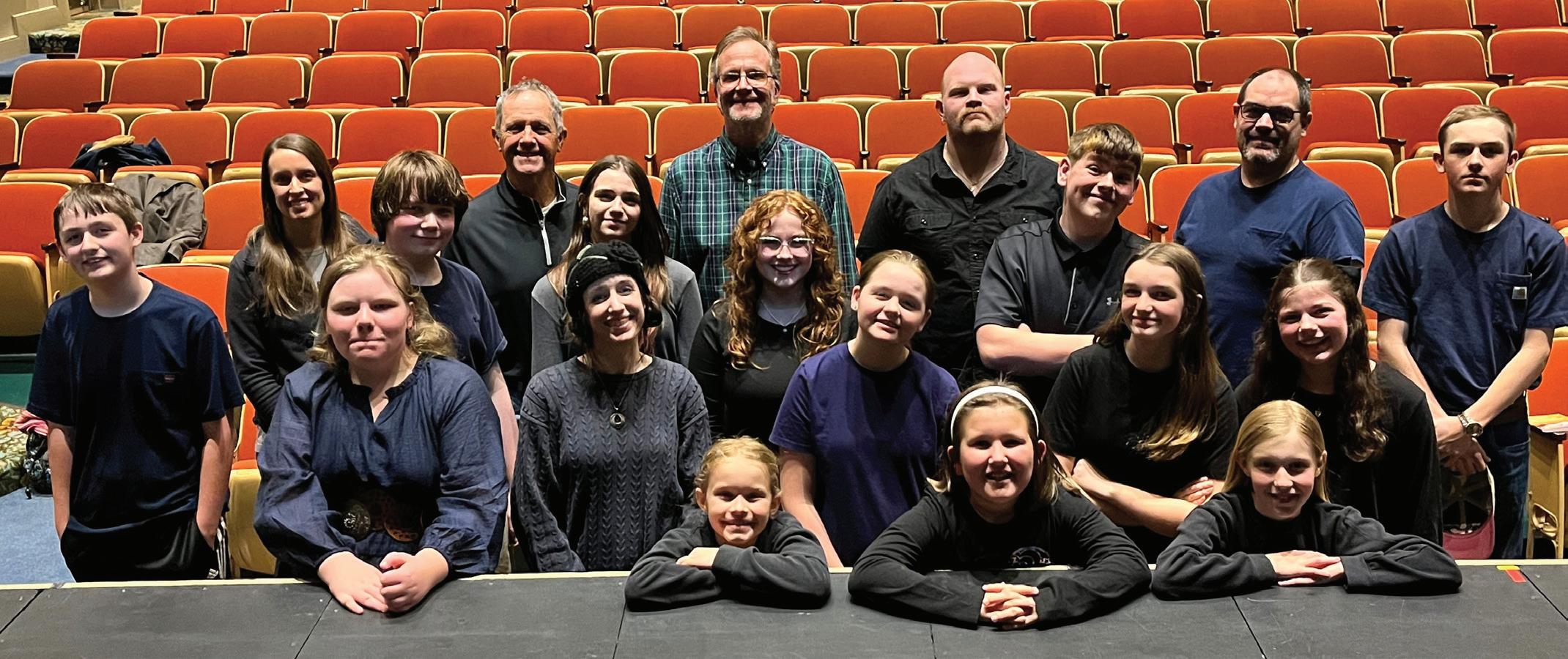
MARCH 16
Spring Masterworks Concert
Join the Coker University Concert Band for its free Spring Masterworks concert. Director Deron Jimmerson leads the band in a variety of musical styles.
7-9 p.m.
WATSON THEATER
300 E. College Ave., Hartsville
MARCH 19-21
Marlboro Players presents “The Lion, the Witch and the Wardrobe”
For tickets, visit Marlboro Civic Center between 10 a.m. and 4 p.m. March 16-20; call 843-454-9496; or send a message on Facebook. Tickets are $15 each and $10 admission for 12 and younger.
Doors open at 6 p.m.; show starts at 7 p.m.
MARLBORO CIVIC CENTER
106 Clyde St., Bennettsville
MARCH 20
NASCAR Craftsman Truck Series
The stars of the NASCAR Craftsman Truck Series battle it out at the Track Too Tough to Tame. For more information and tickets, visit www.darlingtonraceway.com.
7:30-9 p.m.
DARLINGTON RACEWAY
1301 Harry Byrd Highway, Darlington
MARCH 21
Spring Arts and Crafts Show
Hang out, grab a bite and enjoy local art and craft vendors. Admission and parking are free.
9 a.m. to 4 p.m.
PEE DEE STATE FARMERS MARKET
2513 W. Lucas St., Florence
MARCH 26-28
36th Annual South Carolina
BBQ Shag Festival
Kick o spring with barbecue, music, dancing and small-town fun you don’t want to miss. For more information, visit www.scbbqshagfestival.com.
299 S. McAlister St., Hemingway
MARCH 26-28
Florence Wine and Food Festival
World-class chefs, winemakers, live music and good company come together in the heart of the Pee Dee. Every bite, sip and song at the festival helps fuel something bigger: feeding local children through their partnership with Help 4 Kids. For more information, visit orencewineandfood.com.
Florence
MARCH 28
Dillon Easter Egg Hunt
Join in on the egg hunt, golden egg prizes and craft corner. All children 12 and younger are welcome.
10 a.m. to noon
112 S. Railroad Ave., Dillon
MARCH 28
“Treasure Planet” Movie
The events of Robert Louis Stevenson’s classic novel “Treasure Island” are transported to a space-faring future in this PG-rated animated lm. Enjoy snacks and juice while you watch.
10:30 a.m. to noon
TIMMONSVILLE PUBLIC LIBRARY
298 W. Smith St., Timmonsville
MARCH 1921
“The
MARCH 28-29
Town of Cheraw 49th Annual Spring Festival
For nearly ve decades, this beloved festival has celebrated everything that makes Cheraw special: heritage, hospitality and heart. Enjoy a weekend packed with activities for the whole family, delicious food, live entertainment and more. For more information, visit www.cheraw.com.
CENTENNIAL PARK
200 Market St., Cheraw
By Libby Wiersema


The Florence Wine & Food Festival keeps getting bigger and better. Mark your calendars and make plans to attend what is shaping up to be an unforgettable culinary weekend, March 26-28.
Included in the 2026 lineup of talent is chef Sean Brock, who is credited for triggering a revival of Southern cuisine when he debuted his Charleston restaurant, Husk, in 2011. Winner of the 2010 James Beard Foundation Award for Best Chef Southeast, Sean appeared on television programs “Mind of a Chef,” Anthony Bourdain’s “No Reservations” and “Chef’s Table” on Netflix.
A native of rural Virginia, Sean shines a spotlight on Southern foodways through his many critically acclaimed establishments, including McCrady’ss in Charleston, and Audrey and June, both in Nashville. His fast-food “crustburger” concept, Joyland, is a presence in Charleston, Nashville and Birmingham. Most recently, he introduced Sho, an East Nashville pizzeria influenced by his love for Tokyo Napoli pizza, and Darling, a live-fire concept with a vinyl record bar that marks Sean’s first foray into the Los Angeles food scene.
Former NASCAR and IndyCar driver Danica Patrick will also have a presence at this year’s event. Wines from Somnium, her Napa Valley vineyard, will be featured at the Final Pour dinner.
Food festival fans will be glad to see their favorite events return:
• Meat and Meander is 6:30-8:30 p.m. March 26 at Seminar Brewing. Kick off the festival with a casual indoor-outdoor party, featuring smoked, grilled and slowroasted dishes paired with beverages by Micky Finn’s. Enjoy live bluegrass by The Bluestone Ramblers.
• Sean Brock Live begins at 3 p.m.
March 27 at the Florence County Lot. Sean offers a cooking demonstration, interactive experience and book signing in downtown Florence.
• Sip+Savor Wine Stroll is 5:308:30 p.m. March 27. Stroll through downtown Florence’s finest retailers, transformed into wine tasting rooms. Enjoy live music and a food truck rodeo on South Dargan Street. The supplemental Private Reserve Experience ticket allows entry to a special tasting of wines at Victors Restaurant. The wines are paired with food by Victors executive chef Cooper Thomas. A Private Reserve Experience is offered for an additional cost from 7-10 p.m. at Victors Restaurant.
• Signature Dinners are 6:30-9 p.m. March 28. Two exclusive multicourse wine dinners are hosted by Florence’s top restaurants, featuring collaborations between the executive chef, special guests and winemakers. Tickets are limited.
• Ray Isle Wine Class is 11 a.m. March 29 at Victors Restaurant. Spend Saturday morning with Food & Wine Executive Wine Editor Ray Isle, one of the world’s most dynamic wine personalities and author of “The World in a Wineglass.” He leads guests on a global journey to discover the best wines on the planet. Tickets are limited.
• The Grand Tasting for VIP is 11 a.m. to 3 p.m., and general admission is noon to 3 p.m. March 28 at Florence County Lot. Beneath a huge tent, the festival convenes a city block’s worth of delicious bites and sips with winemakers, craft brewers and distillers. Pour and pair alongside the region’s best restaurants, farmers and specialty-food vendors. Tickets include an all-you-can-sample taste of the Pee Dee’s food culture and chef demonstrations, competitions and live music.




Sample fine wines from some of the country’s best purveyors.

The Florence Wine & Food Festival, sponsored by Micky Finn’s, benefits Help 4 Kids—a nonprofit providing meals for children in Florence County.


For more details and ticket information, visit florencewineandfood.com.













Spring is in the air, and for backyard homesteaders that means it’s time to shake off winter and get your flock ready for a new season of fresh eggs and sunny days.
Whether you’re a seasoned poultry enthusiast or a novice chicken owner, a little spring preparation goes a long way. From sprucing up the coop to refreshing diets, getting your birds ready now ensures a healthy flock and a steady supply of eggs.
You can help your backyard flock transition smoothly from winter rest to a more active spring. A little preparation will have your chickens thriving in no time and keep your basket full of eggs.
Winter can sometimes leave your coop feeling a little musty. A little spring cleaning can only help.
Start by removing all bedding, nesting materials and debris. Scrub down surfaces with a mild, poultry-safe disinfectant. Don’t forget to clean out the feeders and waterers which can harbor bacteria and mold. Replace bedding with fresh straw, pine shavings or other absorbent bedding. A clean coop makes for happy chickens and encourages hens to lay regularly.
This winter was particularly harsh, and that extreme weather can take a toll on chicken coops. Check for cracks or weak spots in the fencing, roof or walls. Also, inspect perches, nesting boxes, ramps and latches. Fixing small issues now can help prevent bigger headaches before summer comes.

Take a few moments to check on your birds, looking for signs of any mites or lice. Check combs and wattles for color and texture. Pale or shriveled combs may indicate nutritional deficiency or illness. Trim nails if needed, and check their feet for signs of any issues.
Keeping a check on your flock’s health can help prevent any minor issues from turning into serious problems.
After months of limited foraging, it’s the perfect time to boost your hens’ nutrition. Make sure to supplement your highquality layer feed with cracked corn, grains or kitchen scraps. Adding greens like spinach, kale, or clover can encourage natural foraging behaviors and add essential vitamins. You might want to grab a mineral block or grit to aid in digestion.
Fresh water is important all year, but after winter, waterers may become crusty or have built up residue. Make sure to give them thorough cleaning and consider adding in a splash of apple cider vinegar to promote gut health and egg production.
Clean water helps hens stay active and healthy for the warmer months ahead.
Springtime means more eggs, so make sure your nesting boxes are ready. Keep them clean, comfortable and easy to access. If you notice competition or crowding, consider adding a few extra boxes. Hens that feel safe and cozy in their nests are more likely to lay consistently.
Spring in the Carolinas can be unpredictable, with warm days and cool nights. Keep an eye on ventilation and drainage in your coop to avoid moisture
buildup. Spring rain can create wet, muddy conditions that lead to foot problems or attract pests. You may also want to rotate your flock’s free-range areas to give grass time to recover and prevent muddy patches.
Finally, keep an eye on your flock’s egglaying patterns. Longer daylight hours naturally stimulate hens to lay more, but changes in diet, stress or health can affect production.
Track the number of eggs each day, noting which hens are consistent layers and which may need extra attention. Seasonal molting and broody behavior can also temporarily slow production.
Consider keeping a simple journal or chart for your eggs, as this could help identify potential issues early on.








Brandi Faulk and her family are excited to share their homesteading journey with MPD Electric members. Their home, built in 1895, is a former railway hotel and farmhouse in Chesterfield County. Search “faulkfamilyfarmhouse” to see more photos of their experiences on Instagram.
Getting your birds ready now ensures a healthy flock and a steady supply of eggs.

Butterfields candies are more than just a treat. They are a Southern tradition.
Proudly made in Nashville, North Carolina, this family-owned confectionary has produced its signature “buds” since 1924, using original copper kettles and time-honored methods to create candy with rich, true-to-fruit flavor and nostalgic charm.
Each Butterfields bud starts with just six natural ingredients, and it’s poured, folded, shaped and sugar dusted by hand. The result is an old-fashioned candy that has been savored by Southerners for more than 100 years. Gluten free, dairy free and vegan, they make a thoughtful treat for a wide range of tastes and dietary preferences.
It all began with their original peach buds, to what is now a full lineup of nine tasty flavors including honeybell orange, watermelon, cherry, cinnamon, ginger, lemon, mango and guava. Butterfields Candies even made it onto the favorites list on Rachael Ray’s television show.
Grab a bag for yourself, as a gift or just to keep in a jar on the counter.
butterfieldscandies.com


Spring showers just got a botanical upgrade. Welcome spring into your daily routine with this shower steamer set from Sow the Magic.
Made by hand in the mountains of Fairview, North Carolina, each steamer is infused with organic herbs and flowers grown right on the farm. These shower steamers come in a pack of two and work to release gentle, aromatic botanicals as water activates them to help you awaken the senses, breathe deeper and slow down for the ultimate relaxation. The result is a spa-like experience that feels grounding
and restorative, perfect for a fresh start in the morning or evenings when you need to wash the day away.
You can stop and smell the roses with this Love Bird set in wild rose or choose from other aromatherapy scents available in golden honey, eucalyptus, lemongrass, lavender and more.
Check out the website for additional botanical goodies from bath clay pops, sugar scrubs, and bath teas to cute planting pops and heirloom seed sets.
sowthemagic.com

Sweet Grace Flower Diffuser, $40
The Sweet Grace flower diffuser is a bestseller from Bridgewater Candles that stays in season all year. What truly sets this diffuser apart from others is the experience. The sculpted sola wood flower blooms from white to a soft pink overnight, creating a stunning visual transformation you can enjoy as much as the scent itself.
As the flower absorbs the fragrance oil, it diffuses scent and continues to bloom for up to eight weeks, offering beauty and fragrance that truly lasts. Scented with Bridgewater’s signature scent that is made in house by a team of professional perfumers in
Spartanburg, South Carolina. The sweet grace fragrance features a warm blend of passion fruit, apricot, vanilla, caramel, chocolate and patchouli. The flower comes in a beautiful white glass vase that makes a natural fit for coffee tables, nightstands, counters and entryways. Using no heat or electricity, it is also a safe lowmaintenance option for any space. Bridgewater also offers its premium fragrances in a collection of car fresheners, sprays, bath and body products, detergent and candles.
bridgewatercandles.com


By Cheré Coen
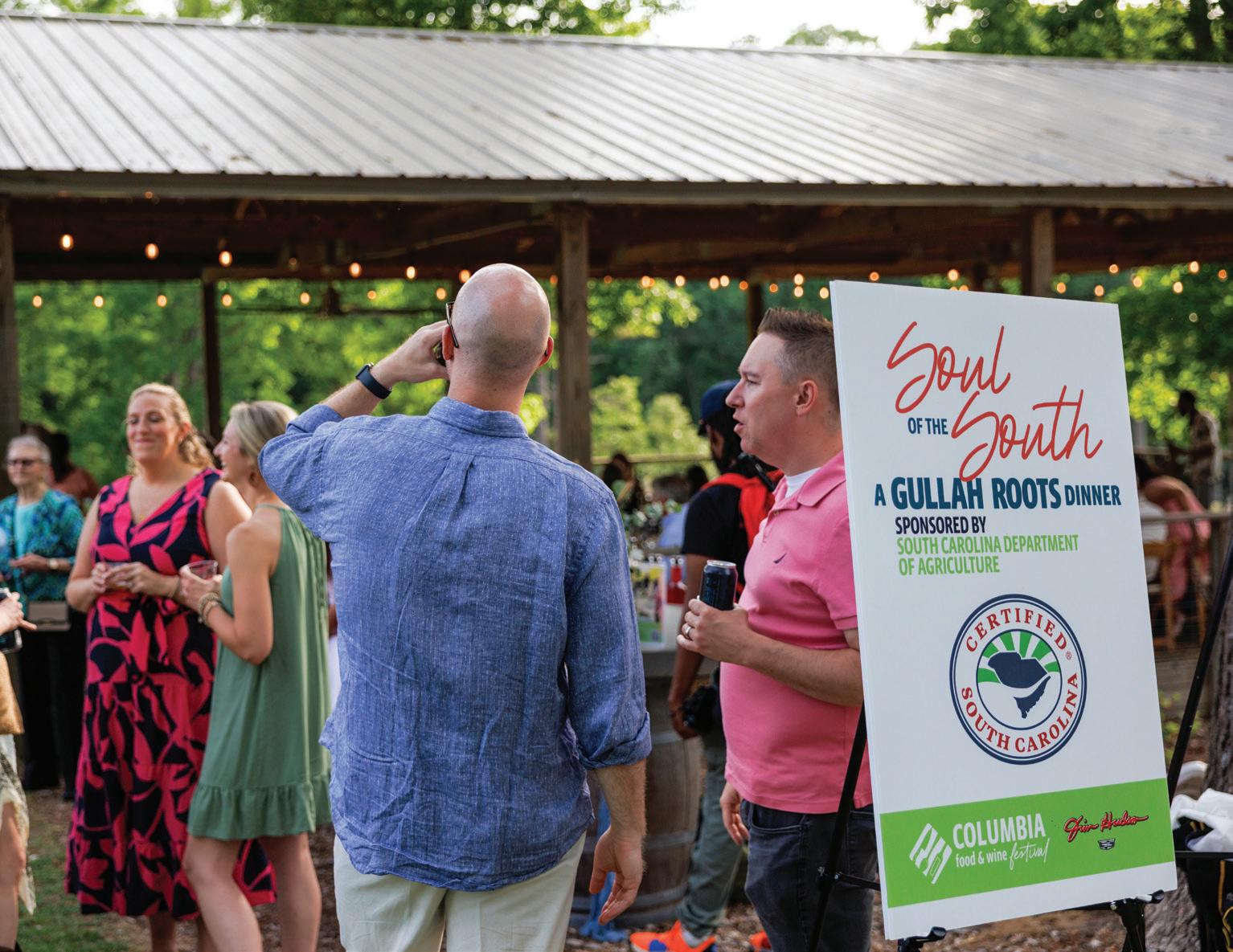
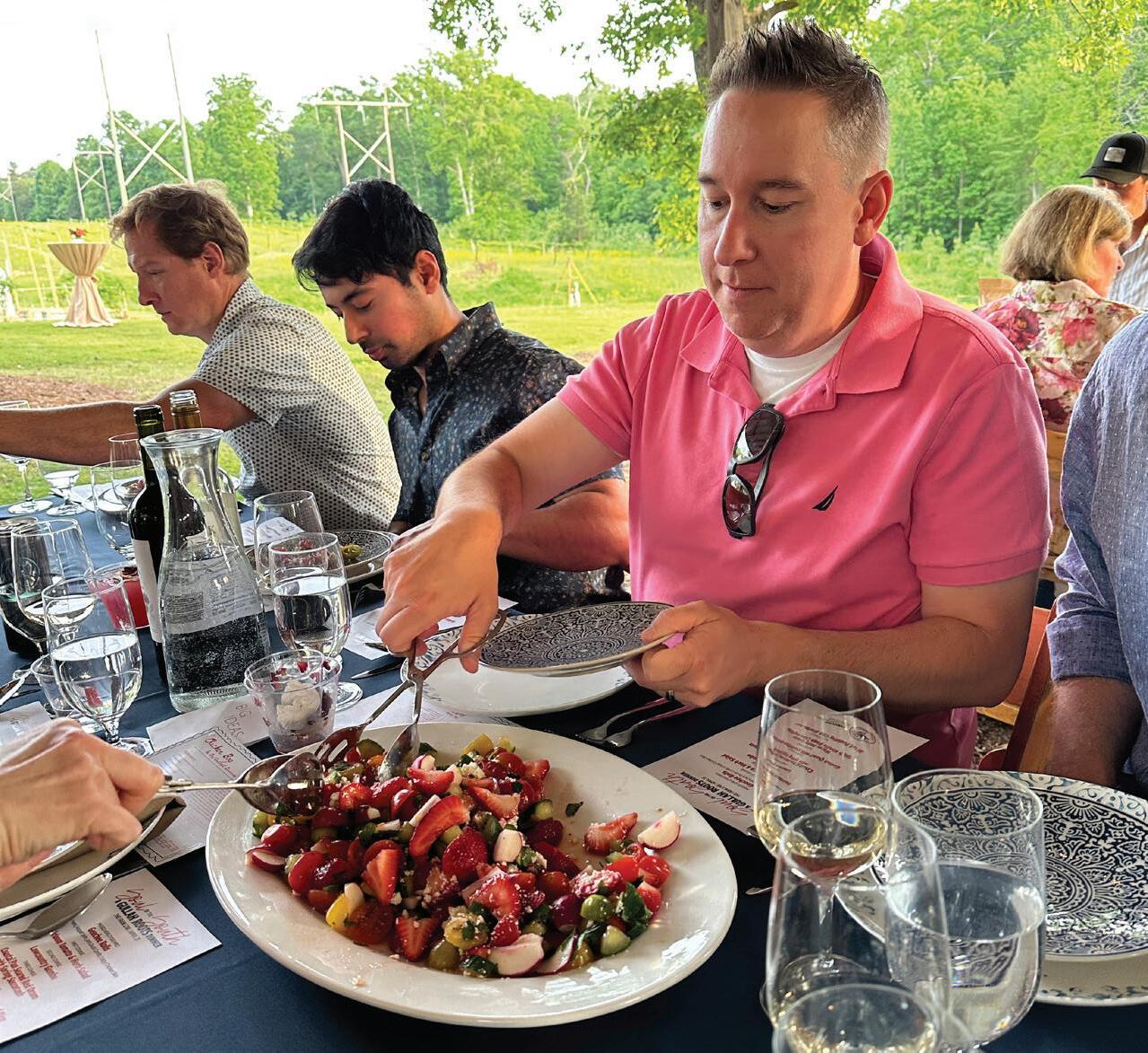
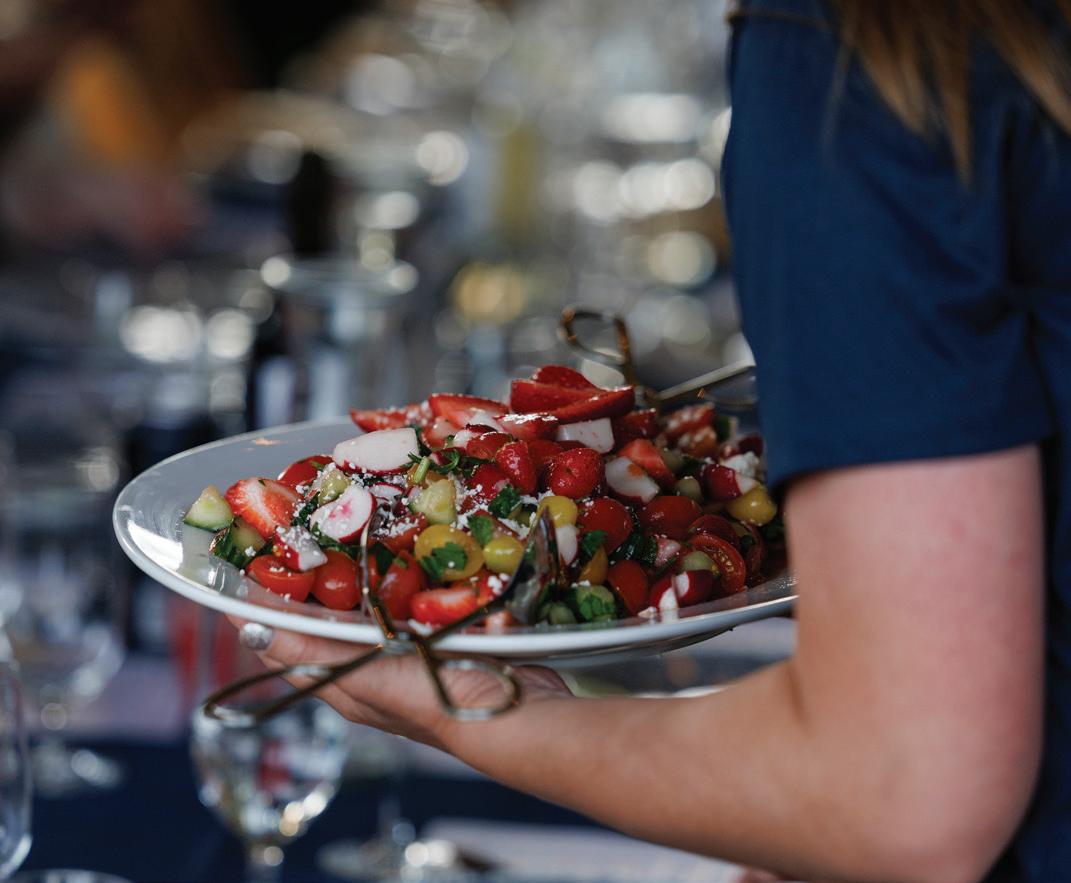
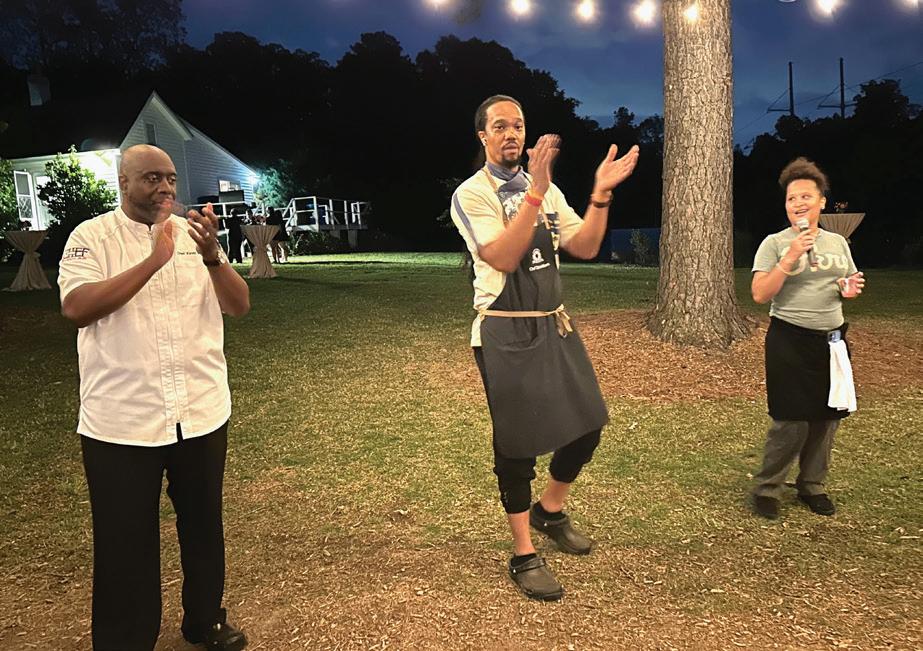
Oohs and aahs of appreciation rang out from the long, family-style tables as rainbow platters of vegetables and fruit were placed before guests. Fresh South Carolina strawberries, tomatoes, cucumbers, radishes and herbs accented by feta cheese from Anderson Farms started off the Soul of the South dinner, one of the signature events of last year’s Columbia Food & Wine Festival.
Midlands chef Chris Williams, foodways expert Amethyst Ganaway and chef Kevin Mitchell, from the Culinary Institute of Charleston, showcased this dish and others as they explained the influence of Gullah Geechee culinary traditions on modern
South Carolina cuisine. Many of the dishes presented—spring succotash with drum, quail and gumbo with Low Country rice— were derived from recipes passed down through generations.
“There is no South Carolina culinary scene without the Gullah, without the Geechee, without the Black and the people of color who contributed to what we now call the American Culinary School,” Chris says. “This dinner is to not only pay homage to the people who are doing it now, carrying on those traditions, but really to show love to our ancestors, the people who came before us. Because they walked, we were able to run.”
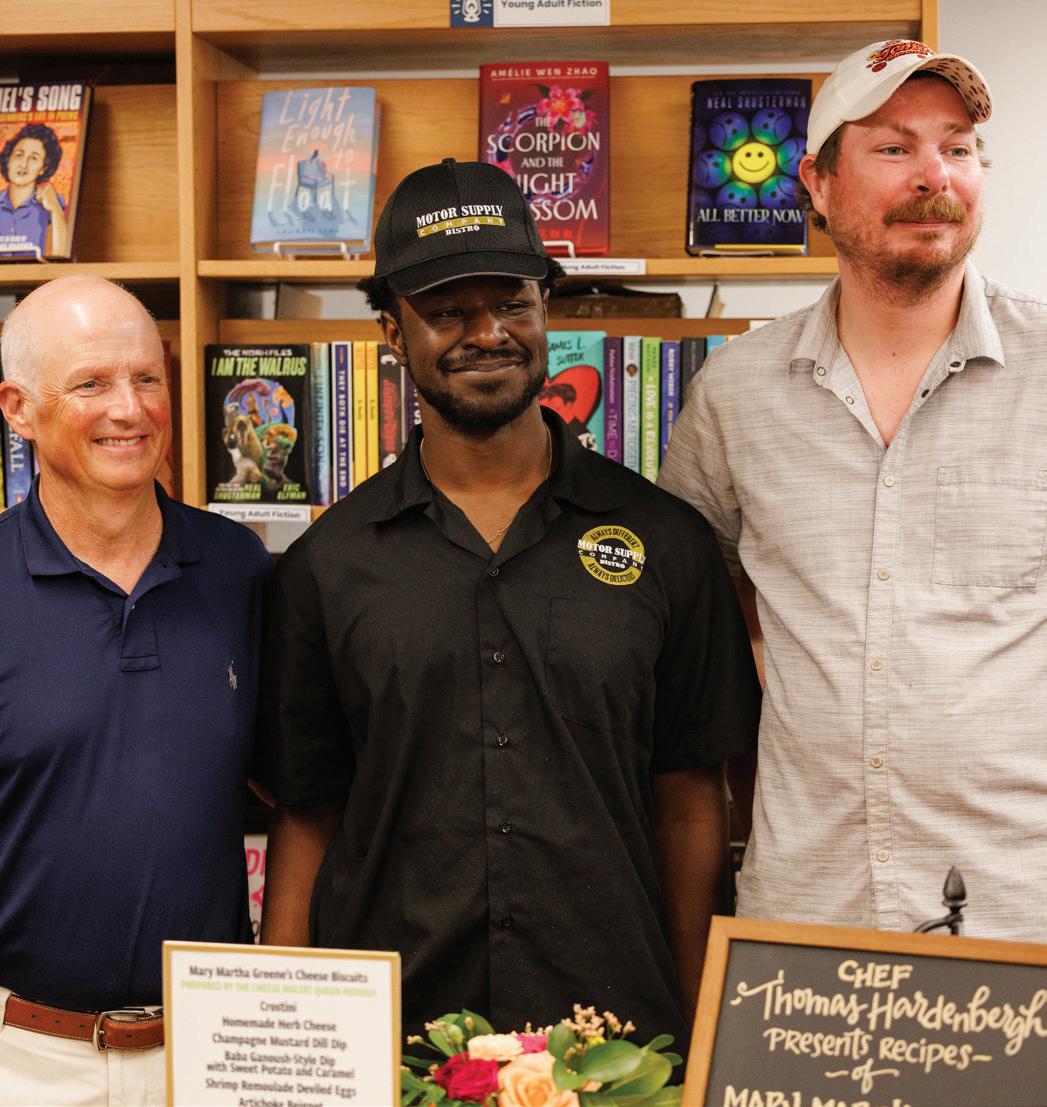
At Columbia’s All Good Books, Beaufort’s Mary Martha Greene, author of “The Cheese Biscuit Queen,” and Kelvin Davis, award-nominated author of “Notoriously Dapper,” discussed stories of growing up in South Carolina while guests enjoyed dishes from cookbooks written by Mary Martha and chef Thomas Hardenbergh, of Columbia’s Motor Supply Co. Bistro. It was part of the festival’s Palates and Pages event that celebrated books along with culinary treats.
Mary Martha and Kelvin come from different backgrounds— Mary Martha writes about food and Kelvin is a model, motivational speaker and former middle school teacher from Columbia whose book promotes self-love, confidence and style for men. But the two found common ground through their stories of growing up in the South, particularly around food.
“A big part of what I do is not only the recipes, the family recipes, but the stories that go along with them,” Mary Martha says. “And I think that’s also a very important part of how you pass along family stories. Family food is through passing the stories along.”
She related the story of her cousin attending Winthrup University who loves to visit Beaufort.
“I was telling Kelvin, part of the bribe is, you know, fishing and golfing and eating, but part of it is he loves to come because it’s his great-great-grandmother’s house,” she says. “He gets to learn about who she was through her food and through her stories. And that’s very much what I tried to do in the books, is to tell those stories, but also to encourage other people to write down their family stories and recipes.”
These were just two of the 10 signature programs at last year’s festival, along with a grand tasting that’s part of the annual culinary celebration that attracts more than 100 chefs and beverage professionals from across the greater Columbia region.
The 2026 Columbia Food & Wine Festival is April 22-26 and includes the launch of Tastemakers, a patron giving circle that offers insider access to festival experiences and helps expand the event’s charitable impact.
The festival began as a one-day event in 2018 to celebrate the Midlands’ growing culinary scene and to champion local chefs and businesses. Today, it’s a five-day experience with special events highlighting chefs, artisans, authors and mixologists with chef collaborations, intimate dinners, unique wine pairings and much more. Since its founding, more than 15,600 guests

have attended 62 events featuring more than 375 culinary partners from across the region.
The festival kicks off with a special dinner and concludes with a grand tasting of dishes from more than 100 restaurants, breweries, mixologists and culinary artisans set to live music and accompanied by chef demonstrations. Some events lean toward entertainment. For example, at last year’s Ping-Pong & Pasta at St. Andrews Park, guests cheered on players in a round-robin pingpong tournament while enjoying dishes from Villa Tronco, one of the oldest restaurants in South Carolina.
Other gatherings, such as the Soul of the South dinner served at The Farm 1780 in Lexington and sponsored by South Carolina Department of Agriculture, showcase the connection between today’s beloved South Carolina dishes and their history.
“Some of these recipes have been passed down for centuries, but we kind of safeguard them a little bit. You know, they mean a lot to us,” Chris says. “When I had the opportunity to present a meal to Columbia Food & Wine, I wanted to do a dinner. I wanted to celebrate my ancestors. I wanted to celebrate my culture. I hear a lot of conversation about the American culinary scene. There’s no such thing as an American culinary scene or an American landscape without South Carolina and this culinary contribution.”
The following are the 2026 Signature Events for participants age 21 and older. Tickets are available at colafoodandwine.com.

The
Kickoff Dinner
Wednesday, April 22 | 6-9 p.m.
with a grand
The festival opens with a seated dinner that flows through four levels of the building and features Hendrix Executive Chef Frank Bradley alongside Alex Strickland, of Dragon Room; Anthea Douglas, of Hendrix; Harold Pendleton, of The War Mouth; Joe Lytle, of Black Dog Pizza; and Pierce Bowers, of Dorsia Pasta Co.
Cocktail Games
Thursday, April 23 | 6-9 p.m.
The cocktail competition returns at Gather COLA, where top mixologists compete for the title of Columbia Food & Wine Festival Mixologist of the Year. Crafted bites are served.
Bites Around the Block
Thursday, April 23 | 6-9 p.m.
Guests sip and stroll along Main Street north of Elmwood Avenue for a tasting from Curiosity Coffee Bar, Something Small Catering, The War Mouth, The Vino Garage and more.
The Collections Served: A Curated Dinner
Thursday, April 23 | 5:30-9:30 p.m.
The evening combines a guided tour of the Columbia Museum of Art with an art-inspired seated dinner at Hampton Street Vineyard led by chef Wes Fulmer in partnership with chef Kevin Minnick, of Quincy Country Club.
High Tea & Tutus
Friday, April 24 | 3-6 p.m.
A ballet-inspired high tea at the Mansion on Blanding pairs elevated bites from B.MAC Bakeshop, COA, Nibl Dessert & Cafe and more, along with theatrical design and a special performance by South Carolina Ballet.

A Reconstruction Dinner
Friday, April 24 | 6-9 p.m.
Hosted at the Museum of the Reconstruction Era at the Woodrow Wilson Family Home, this seated dinner features South Carolina Chef Ambassadors Chris Williams, of Roy’s Grille; Darren Smith, of Rivertown Bistro and Bonfire, A Smokin’ Taqueria; Javier Uriarte, of Woodcreek Club; Jessica Shillato, of Spotted Salamander; and Sarah McClure, of Southside Smokehouse & Grille.
The event explores the intersection of history, place and Southern cuisine through chef-driven storytelling.
Viva Las Bourbon!
Friday, April 24 | 6:30-9:30 p.m.
Where whiskey meets wagyu, and the king takes the mic—this three-course meal at Bourbon’s Courtyard, led by chef/owner Kristian Niemi along with chef de cuisine Cody Cable features Mishima reserve American wagyu alongside tastings and cocktails from Heaven Hill plus live music by the Capital City Playboys.
Cheese Rave: A Curd Collective
Friday, April 24 | 9 p.m.-midnight
A mashup pairing electronic music genres with curated cheese tastings and eccentric sips from 929 Kitchen & Bar, MOA Korean BBQ & Bar, Rosewood Market and more across evolving soundscapes led by The Mixstress Madi Jo.
Taste the Rainbow
Saturday, April 25 | 11 a.m. to 2 p.m.
This drag brunch at The Big Apple features color-inspired dishes from Cafe Strudel, Market on Main, Motor Supply Co. Bistro and more, plus cocktails and performances hosted by Paris Lefaris with music by DJ Lonzo.





CLOCKWISE FROM LEFT: A traditional gumbo with Low Country rice is served at Soul of the South. PHOTO COURTESY OF FORREST CLONTS/COLUMBIA FOOD & WINE FESTIVAL
Chef Chris Williams, chef Kevin Mitchell and foodways expert Amethyst Ganaway explain the influence of Gullah Geechee culinary traditions on modern South Carolina cuisine. PHOTO BY CHERÉ COEN In addition to the dinner, guests enjoy a custom cocktail. PHOTO COURTESY OF FORREST CLONTS/ COLUMBIA FOOD & WINE FESTIVAL
Bunaroo
Saturday, April 25 | 1-4 p.m.
A gourmet take on the humble bun—from craft sliders to bao buns and beyond, this dog-friendly tasting at Finlay Park features live music and local chefs from Dragon Room, Guy’s Hotdogs, Hall’s Columbia and more.
Chef Secrets: An Empanada and Salsa Workshop
Saturday, April 25 | 3-5 p.m.
Chefs Javier Uriarte, of Woodcreek Club, and David Grillo, of Boca Grande, lead an interactive classroom at Savage Craft focused on empanadamaking and salsa fundamentals.
Smoke on the Water
Saturday, April 25 | 4-7 p.m.
Set on Lake Murray at Putnam’s Harbor, this event showcases an all-star barbecue lineup featuring James Beard Award finalist Robbie Robinson, of City Limits; James Beard Award winner Rodney Scott, of Rodney Scott’s BBQ; and five-time World Barbecue Champion Myron Mixon, from Myron Mixon’s BBQ.
Grand Tasting
Sunday, April 26 | noon-4 p.m.
The festival concludes across two historic Columbia properties—the Hampton-Preston Mansion and Robert Mills House—with more than 100 culinary partners, live music and chef demonstrations.
By Robin Howard
Pet owners want the best for their furry friends, especially when they’re not at their best. However, the realities of an unexpected vet bill can make it difficult to follow through on those good intentions.
On Average
• Dogs visit the vet 2.7 times a year, while cats visit 2.2 times a year.
• Surgical vet visits for dogs are $474 a year, while cats cost $245 a year.
• Sick pet visits are $204 for dogs and $244 for cats.
• Emergency visits cost $349 for dogs and $154 for cats.
• Routine wellness visits cost $257 for dogs and $182 for cats.
“Owners will likely incur at least one $2,000-$4,000 bill for emergency care at some point during their pet’s lifetime,” says Dr. Louise Murray, vice president of the American Society for the Prevention of Cruelty to Animals’ Bergh Memorial Animal Hospital in New York.
Pet insurance is one way to help ease the financial burden of your buddy’s medical bills, but is it right for you?
What is pet insurance?
Just like health insurance for humans, pet insurance is coverage that has a copay, deductible, lifetime limits, exclusions for preexisting conditions and comes with a monthly premium. To decide if it makes sense for you and your pet, it helps to take an honest look at the average cost of vet visits for the most common pet ailments.
Average Vet Bills for Dogs
• Ear infections—$149
• Skin infection—$175
• Allergies—$234
• Digestive issues—$380
• Bladder problems—$617
• Arthritis—$255
Average Vet Bills for Cats
• Urinary tract infection—$295
• Digestive issues—$385
• Renal failure—$485
• Allergies—$234

• Diabetes—$276
• Respiratory infection—$219
Trips to the emergency vet can cost even more. A severe illness or injury can cost thousands in bloodwork, X-rays, surgeries and hospitalization fees.
How much does pet insurance cost?
Coverage can be as low as $10 a month or higher than $100. On average, pet owners pay $49 a month for a dog and $29 a month for a cat. Your pet’s age, species, breed, where you live and the type of coverage are all factors. If you have an older pet or a large pet, expect to pay up to 60% more due to increased chance of health issues.
What does it cover?
Depending on the coverage and the carrier you choose, pet insurance covers just about everything, including:
• Wounds, broken bones, swallowed objects and toxic ingestion
• Illness, including cancer, arthritis, hypothyroidism, ear infections, and urinary and digestive problems
• Congenital problems and congenital disabilities
• Behavioral issues
• Prescription medication
• Prescription food
Preexisting conditions and preventive care, such as annual wellness exams, vaccines, flea and tick medication, and heartworm preventive are typically not covered. On average, a standard policy would have a $500 deductible with a 20% copay and a lifetime maximum.

Ideally, even with pet insurance, your furry friend stays healthy and accident-free. However, most pet parents deal with an illness or injury at some point, and pet insurance can be a relief.
For example, one pet owner got insurance because her Labrador, Harry, often ate things he wasn’t supposed to. Sure enough, Harry ate a sock and wound up in surgery. The surgeon found the sock and swollen intestines and a blood infection. Harry was in the hospital for two weeks with a vet bill of $12,600. Because the owner had pet insurance, she only paid $2,482. Insurance covered the rest. Gilligan is a Jack Russell terrier that came down with a cancerous tumor in his muzzle. Specialists were able to treat it with radiation



and chemotherapy, but the bill was $8,479. Because his owners had pet insurance, they only paid $1,456, plus their $1,000 deductible. Shadow developed pneumonia after contracting kennel cough at doggie day care, which led to chronic bronchitis. Her vet bills were nearly $6,000 for diagnostic testing and medication. Her owner paid $2,000 in copay, and the rest was covered by insurance.
The Fine Print Pet insurance doesn’t always pay off for everyone, though. The biggest problem is it doesn’t automatically renew.
One pet owner paid premiums for 10 years for a policy with a $300 deductible, 20% copay and a promise of coverage for life with no limit if the coverage didn’t lapse. Her premiums increased by about 10% per year. After she made a claim when her dog had a disc problem, the carrier increased her premiums by almost 72%. She paid the higher premiums for two years until the carrier told her she’d have to change to a $15,000 lifetime cap, 30% copay and $500 deductible. In all, she’d already paid $12,200 in premiums and was now facing extremely high rates and more out-of-pocket costs should her dog get sick or injured again.


Keep in mind that insurance doesn’t directly pay the vet. Instead, it reimburses you. You may end up carrying a large balance on a credit card until you get your check.
In most cases, paying out of pocket is less expensive than paying for pet insurance. Depending on your situation, building up a dedicated pet emergency fund may be a better alternative to pet insurance. Setting aside $50 a month per pet in a savings account puts you in control of your money and pet’s medical care, and you know you won’t be denied coverage.


If your emergency fund doesn’t cover the entire bill or you’re caught without one, your vet may have a payment plan. Otherwise, many veterinary practices accept CareCredit, a short-term financing plan with no interest if you meet minimum payments and pay the total within the time frame.
Whatever you decide, expecting the unexpected through a pet insurance plan or self-funded pet emergency fund will give you peace of mind that you can give your fuzzy friend the best care when they need it.






After 20 years, we’re still making Jitterbug® phones easy to use and providing great service.
comes with voice typing, video chat and internet access.
Whether you want to learn more about your new Jitterbug, need a ride2 or have a health concern, our 100% U.S.-based team is here to help. Add Urgent Response service for peace of mind with 24/7 help, even in emergencies.†