


Organization matches those in need of a meal with a home-cooked lasagna Page 12















ELECTRIC COOPERATIVE
410 E. Houston St. • P.O. Box 1058
Marshall, TX 75671

903-935-7936 local • 800-972-1093 toll-free Website: phec.us
OFFICE HOURS
Monday through Friday, 8 a.m. to 5 p.m. 24-hour service for outages and emergencies
GENERAL MANAGER
Austin Haynes
BOARD OF DIRECTORS
District 1: Paul Fortune | Treasurer
District 2: Albert Tiller | President
District 3: Jay Goswick | Vice President
District 4: Brad Richardson
District 5: Debbie Burch
District 6: Roger Connell
District 7: Gene Stough
Year organized: 1937
Counties and parishes served: Harrison, Panola, Caddo and DeSoto
Connected meters: 20,648
Members: 13,722
Energized line: 2,465 miles distribution; 72 miles transmission
Panola-Harrison Electric Cooperative is an equal opportunity provider and employer. If you wish to file a civil rights program complaint of discrimination, complete the USDA Program Discrimination complaint form online at ascr.usda. gov/complaint_ filing_cust.html or at any USDA office, or call 866-632-9992 to request the form. You may also write a letter containing all of the information requested in the form. Send your completed complaint form or letter by mail to U.S. Department of Agriculture, Director, Office of Adjudication, 1400 Independence Ave. SW, Washington, D.C., 20250-9410, by fax to 202-690-7442 or by email to program.intake@usda.gov.
Louisiana Country (USPS 473-180) is published bimonthly by the Association of Louisiana Electric Co-ops Inc., 10725 Airline Highway, Baton Rouge, LA 70816, in partnership with Pioneer Utility Resources.
Annual subscriptions: Members $2.79. Nonmembers $5.
Postmaster: Send form 3579 to 10725 Airline Highway, Baton Rouge, LA 70816.
Periodicals postage paid at Baton Rouge, Louisiana 70821, and additional mailing offices.
We all have our favorite season. Some love crisp, cool weather and bundling up under a favorite blanket, while others prefer the warm temperatures summer brings and outdoor activities that go with it. But there’s one thing we can all agree on: High winter bills are never fun. PanolaHarrison Electric Cooperative is here to help you find ways to manage your home energy use and keep winter bills in check. Here are five tips to help increase your home’s energy efficiency this winter:
1. Mind the thermostat. This is one of the easiest ways to manage your home energy use. We recommend setting your thermostat to 68 degrees or lower when you’re home. When you’re sleeping or away for an extended period of time, try setting it between 58 and 62 degrees; there’s no need to heat your home when you’re away or sleeping and less active.
2. Button up your home. The U.S. Department of Energy estimates air leaks account for 24% to 40% of the energy used for heating and cooling a home. Caulking and weather stripping around windows and doors is another simple, cost-effective way to increase comfort and save energy. If you can feel drafts while standing near a window or door, it likely needs to be sealed.
3. Use window coverings wisely. Open blinds, drapes or other window coverings during the day to allow natural sunlight in to warm your home. Close them at night to keep the cold, drafty air out. If you feel cold air around windows, consider hanging curtains or drapes in a thicker material; heavier window coverings can make a significant difference in blocking cold outdoor air.
4. Consider your approach to appliance use. When combined, appliances and electronics account for a significant chunk of our home energy use, so assess how efficiently you’re using them. For example, if you’re running the dishwasher or clothes washer, only wash full loads. Look for electronic devices that consume energy even when they’re not in use, like phone chargers or game consoles. Every little bit helps, so unplug them to save energy.

5. Think outside the box. If you’re still feeling chilly at home, think of other ways to warm up––beyond dialing up the thermostat. Add layers of clothing, wear thick socks and bundle up under blankets. You can even add layers to your home. If you have hard-surface flooring, consider purchasing an area rug to block cold air that leaks in through the floor.
If you’re taking steps to save energy but continue to see major increases in your bills, call 903-935-7936. PHEC’s staff may be able to help identify areas and other factors impacting your home energy use and recommend next steps for savings.
Winter months often bring some of the highest energy bills of the year. By being proactive about saving energy, you can increase the comfort of your home and reduce monthly bills. Visit phec.us for additional energy-saving tips.
For 88 years, Panola-Harrison Electric Cooperative has provided affordable, dependable electricity to members across East Texas and Northwest Louisiana. From day one, the cooperative’s mission has been simple: keep the lights on at the lowest possible cost.
That’s why it’s so significant that in nearly nine decades, PHEC has only adjusted its base rates twice, most recently in 2004. In 2024, for just the third time in its history, the cooperative implemented a rate adjustment for its Texas members. Now, we are following up with an adjustment for Louisiana members in 2025.
Every household and business has felt the pressure of inflation in recent years, and electric utilities are no exception. The costs of essential materials like transformers, poles and wire have skyrocketed. Some items have doubled, or even tripled, in price. In fact, a transformer that cost around $700 just a few years ago now runs closer to $1,600.


See “The Rising Cost of Materials” chart below.
For over 20 years, PHEC absorbed these rising costs without passing them on to members. Careful financial planning allowed the cooperative to maintain steady rates, even when surrounding utilities raised theirs. But the current financial climate makes it clear that an adjustment is necessary to continue providing the reliable power and


standards our members expect and deserve.
Even with this adjustment, PHEC’s rates remain the lowest in Louisiana and lower than surrounding cooperatives in Texas. That’s a point of pride and proof that the board and staff remain committed to keeping costs as low as possible while meeting the growing demands of our members and communities.

“This decision was not made lightly,” General Manager Austin Haynes says. “We know any increase affects our members, and we take that responsibility very seriously. But the adjustment ensures we can maintain reliability, safety and service for years to come.”
Unlike investor-owned utilities, PHEC isn’t here to make a profit. Every dollar we collect goes right back into keeping the lights on, whether that’s maintaining poles and wires, restoring power after storms, supporting the dedicated employees who make it all happen or covering the day-today work that keeps everything running.
We’re always looking for ways to be more efficient and keep costs down. Most of all, members can count on the same reliable and affordable service that has defined PHEC for nearly 90 years and will continue to for years to come.






























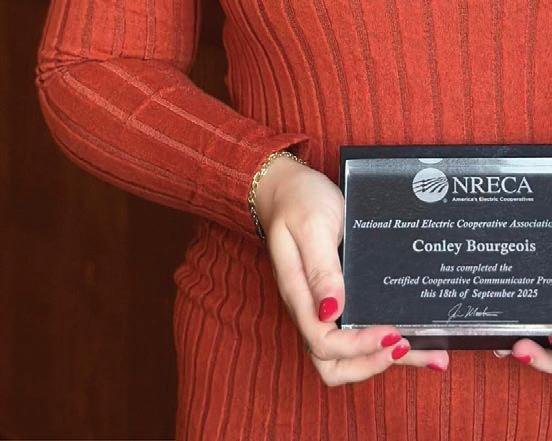



The Association of Louisiana Electric Cooperatives is proud to announce that Communications Coordinator Conley Bourgeois successfully earned the Certified Cooperative Communicator designation, a nationally recognized credential awarded by the National Rural Electric Cooperative Association.




The CCC program is an intensive professional development initiative that combines more than 110 hours of in-person and online coursework designed to strengthen the communications expertise of professionals who share the electric cooperative story. Participants complete coursework focused on strategic messaging, media relations, crisis communication, cooperative history and member engagement.






Certification is considered a hallmark of professional achievement in the electric cooperative network. To maintain their CCC, individuals must complete annual training to stay current on industry changes and best practices.

Conley has served as ALEC’s communications coordinator for three years, supporting Louisiana’s cooperative network through storytelling, media outreach, social media strategy and member engagement. Her work helps keep co-op members informed about programs, legislative issues, community impact and emergency response—areas where clear and credible communication is essential.
of communication








By Miranda Boutelle
Q: How can I save in the kitchen during the most expensive time of the year?
A: The holiday season brings opportunities to enjoy meals with friends and family, leading to more time spent in the kitchen. Whether hosting a few or a crowd, consider making new energyefficiency traditions this year with these tips to manage your energy use.
Let’s start with cooking your meal. Your electric oven is typically the highestwattage appliance in the kitchen. Yet, people usually don’t turn their ovens on for long periods of time. Assuming an average oven wattage of 3,000 and an average cost of $0.16 per kilowatt-hour, according to the United States Energy Information Administration, running your oven costs 48 cents an hour.
Let’s say you use your oven for four hours to make a special meal. That’s less than $2 of electricity. While that may not seem like a big deal now, operating your oven for four hours every day is $700 a year.
Using smaller appliances instead of your oven can help you save. A slow cooker uses between 100 and 450 watts, which is significantly less than an electric oven at 2,000 to 5,000 watts. That means you can use a slow cooker for a longer period and still use less energy.
Opt for your microwave or toaster oven to reheat or cook smaller items. The microwave uses significantly less energy than the oven. A toaster oven uses about half the energy of a conventional oven, according to Energy Star.
Do not turn on your oven and leave the door open to heat your home. This can break your oven and be a safety hazard, especially with gas ovens that can cause carbon monoxide buildup.
When cooking on the stovetop, match
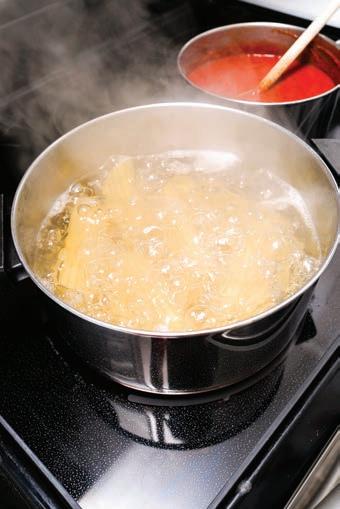
you start cooking
your
the pot or pan size to the burner. Lids help your pots retain heat, which cooks food faster and wastes less heat. Keep your stovetop clean to ensure the appliance heats evenly.
If you’re looking to upgrade your stovetop, consider switching to an induction cooktop. It uses an electromagnetic field below the surface to heat pots and pans directly. This provides more precise heat, faster cook times and higher efficiency. It can also improve the air quality in your home compared to a gas cooktop.
In my experience, people like to gather in the kitchen during parties. To avoid overheating your guests in a room that has a hot oven, turn down your thermostat a few degrees before guests arrive.

Next, let’s look for refrigerator savings. The gaskets on your refrigerator doors should make a tight seal to keep in cold air. Make sure you clean and maintain them or replace them if necessary. Don’t let frost build up in the freezer, which can decrease efficiency and make your freezer work harder to maintain a balanced temperature. Wait until food cools before putting leftovers in the fridge. Putting hot food in the refrigerator results in more energy used to cool it down. Aim for about 30 minutes of cool time. Perishable food should be refrigerated within two hours after it is cooked, according to the United States Department of Agriculture.
Setting your refrigerator colder than needed wastes energy. The U.S. Department of Energy recommends 37 degrees for the refrigerator and 0 degrees for the freezer. Use an appliance thermometer to monitor the temperature. When it comes to cleanup, run full loads of dishes in the dishwasher, being careful not to block any moving parts. Use eco mode if your dishwasher has that setting. If you are in the market for new appliances, select Energy Star models.
Whatever you choose to cook or how you cook it, keep in mind these simple tips to make your kitchen more efficient and save energy this holiday season.

Miranda Boutelle has more than 20 years of experience helping people save energy. She has worked on energyefficiency projects from the Midwest to the West Coast. Today, Miranda is chief operating officer at Efficiency Services Group in Oregon, a cooperatively owned energy-efficiency company.
This content was originally created by Efficiency Services Group LLC under contract with NRECA. NRECA retains ownership of this content. NRECA does not endorse Efficiency Services Group, its views herein expressed, nor any products or services it offers.
Required by 39 USC 3685
Filed with the USPS on 9-24-25
LOUISIANA COUNTRY (publication number 473-180) is published bimonthly by the Association of Louisiana Electric Cooperatives Inc., 10725 Airline Highway, Baton Rouge, LA 70816. Six issues are published annually, with a subscription price of $2.79 paid by utility members in their electric bills.
The name and complete mailing address of the publisher is Association of Louisiana Electric Cooperatives Inc., 10725 Airline Highway, Baton Rouge, LA 70816.
The name and complete mailing address of the editor is Conley Bourgeois, 10725 Airline Highway, Baton Rouge, LA 70816.
The owner is the Association of Louisiana Electric Cooperatives. There are no known bondholders or other security holders.
ALEC is a nonprofit organization mailing under DMM Section 423.12. Its purpose, function and nonprofit status for federal income tax purposes has not changed in the preceding 12 months.
The average number of copies of each issue during the preceding 12 months are:
Purvis, MS - If you experience numbness or tingling in your hands, arms, legs, or feet or if you experience shooting or burning pain, this is important.
Please read this carefully.
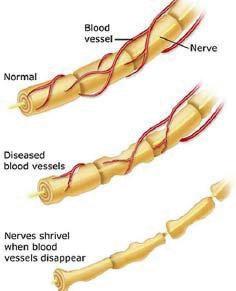
Peripheral Neuropathy is when small blood vessels in the hands, arms, feet or legs become diseased and tiny nerves that keep the cells and muscles working properly shrivel up and die.
Early-warning symptoms include tingling and numbness, mild loss of feeling in your hands, arms, legs or feet, inability to feel your feet, which increases your risk of foot-injury and falling.
More Advanced Symptoms Include...
Loss of coordination & dexterity, which puts you at increased risk of accidents.
Inability to feel clothing like socks and gloves.
High risk of falling, which makes walking dangerous, and makes you more dependent on others.
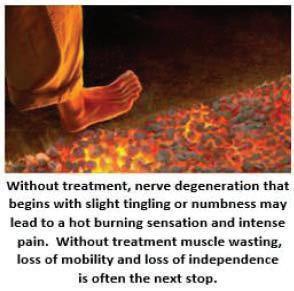
Burning sensations in your arms, legs, hands or feet that may start mild, but as nerves and muscles die, may feel like you're being burned by a blow torch.
Ignore the early warning signals long enough and you risk progressive nerve damage leading to muscle wasting, severe pain, loss of balance and a lot of staying at home wishing you didn't hurt.
When every step is like walking on hot coals, sitting still may be the only thing you feel like doing. But there's little joy in sitting still all day long.
Now here's the scary part....
Nerve damage CAUSES cell damage.
Cell damage SPEEDS UP nerve degeneration
Without treatment this can become a DOWN-WARD SPIRAL that accelerates.
The damage can get worse fast. Mild symptoms intensify. Slight tingling, numbness or lack of feeling can turn into burning pain.
Before you know it, damage can become so bad you hurt all the time.
Unless this downward spiral is stopped and nerves return to proper function - the damage to nerves and cells in the affected area can get so bad your muscles begin to die right along with the nerves and cells. And that sets the stage for weakness, loss of mobility, disability, and dependence on others.
If you have early warning signs of peripheral neuropathy, (tingling &/or numbness, loss of feeling or pain) it's CRITICAL you get proper treatment. It's critical, because with proper treatment the symptoms can often be reversed. Without it, you are playing Russian Roulette with your health.
Once your nerve loss reaches 85%, odds are there's nothing any doctor can do to help.
The most common method your doctor may recommend to treat neuropathy is prescription drugs

Drugs like Gabapentin, Lyrica, Cymbalta, & Neurontin are oftenprescribed to manage the pain. But, damaged nerves and dying cells do not heal on their own.
Pain pills do not restore healthy nerve function. They just mask the pain as the nerves continue to degenerate and cells and muscle continue to die.
Taking endless drugs and suffering terrible side effects that may damage your liver & kidney and create even more problems, is not a reasonable path. You deserve better.
Three things must be determined to effectively treat neuropathy. 1) What is the underlying cause? 2) How much nerve damage has been sustained? 3) How much treatment your condition will require? With proper treatment, shriveled blood vessels grow back & nerves can return to proper function. How much treatment you may need depends on your condition.
At Purvis Chiropractic we do a complete neuropathy sensitivity exam to determine the extent of your nerve damage. The exam includes a detailed sensory evaluation, extensive peripheral vascular testing, & a detailed analysis of the findings.
Dr. Rob Acord, D.C. will be offering this complete neuropathy sensitivity exam for $47. This special offer goes away at the end of this month as we have a limited number of exam appointments available.
Stop Hurting & Start Healing Call Now to Schedule Your Complete Neuropathy Sensitivity Exam with Dr. Rob Acord, D.C. (601) 550-6217 105 Main Street Purvis, MS 39475




Chef Anne Milneck’s business honors her mom’s delicious legacy
By Cheré Coen
Ask Baton Rouge chef Anne Milneck about her mother, and you can hear the pride in her voice. It’s obvious she considers her mom a cool woman for her day.
Back in the last century, Betty Jo Norsworthy Laiche worked as a home demonstration agent for Louisiana Power & Light, offering cooking demonstrations at the utility’s headquarters and in customers’ homes to help sell appliances. She competed in cooking contests and collected dozens of cookbooks.
When Anne decided to launch a culinary career, she wallpapered her cooking class kitchen with her mother’s recipes and those from her mom’s vast cookbook library. And last year, when Anne was asked to speak at Louisiana State University, she visited the same test kitchen where her mother competed.
“I was in the room where my mother won third place for her pizza,” Anne says.



Anne studied journalism at Louisiana State University and briefly owned The Lunch Lady catering business. But, when her day job interfered with raising children in middle school, she knew she needed a change. Her husband asked her what she really wanted to do. Anne’s answer was culinary school.
At 40, Anne attended the Chef John Folse Culinary Institute at Nicholl’s State, graduating in 2010. She then bought Red Stick Spice, a gourmet grocery store at 660 Jefferson St. in Baton Rouge.
Red Stick Spice sells a variety of spices sourced from around the world. Shoppers may buy any amount, from a teaspoon to a full jar, depending on what they need. The store offers a 10% discount if customers bring in their own jars.
“You can buy as little or as much as you want,” Anne says. “Stocking up on spices doesn’t make sense if you’re only going to use it once a year.”
Red Stick sells spice blends, specialty salts, olive oils from
















California and other specialty food products.
When you walk in, you’re met with a variety of smells,” Anne says. “It’s overwhelming in the most wonderful way.”
Anne also sells a variety of loose teas, something she had to learn about along the way.
“The only question I could answer 12 years ago about tea was sweet or unsweet,” she says with a laugh, adding that now she’s a certified tea sommelier.
Anne loves to support local artisans and food purveyors, so customers may buy local products such as Primo’s Peppers hot sauce, Dagostino’s pasta and Hanley’s Sensation salad dressing.
Following in Her Mother’s Footsteps
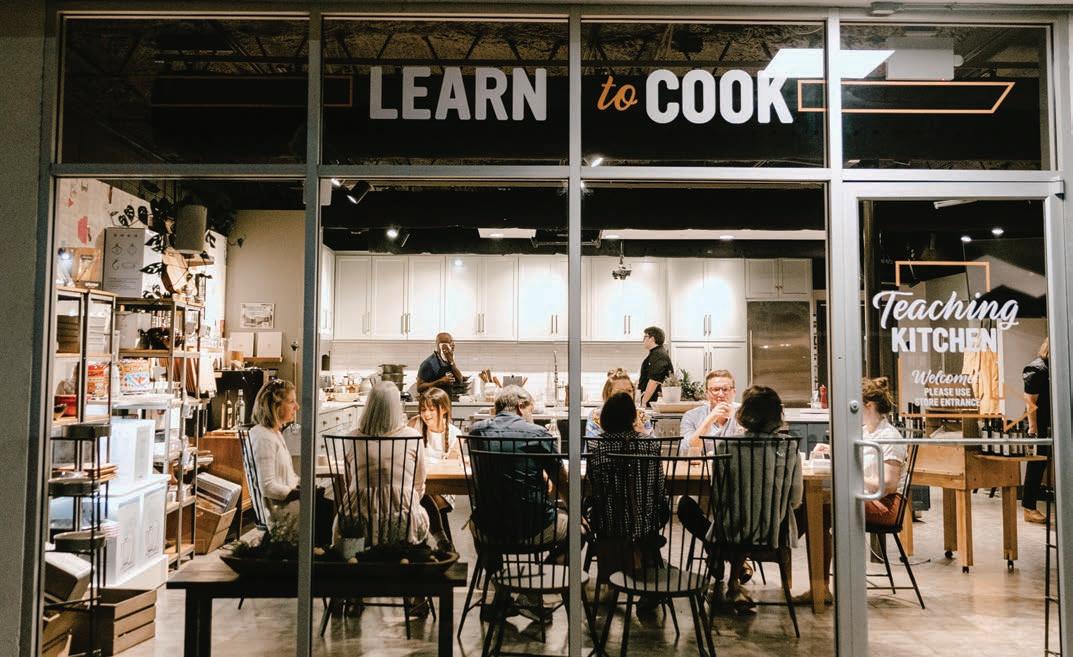
Eight years ago, Anne started teaching cooking classes at the store, offering lessons in specific dishes such as gnocchi, hand-formed pasta, paella, noodles, dumplings and full-meal preparations in cuisines such as Creole and Japanese home cooking. Her kitchen seats about eight to 12 people, and all participants enjoy what they create.
“Everyone takes home a packet of recipes,” she says.
She insists that all dishes taught in her kitchen are easily done at home.
“Our main goal is we want people to cook at home more,” she says, adding that meals savored around her home table are some of the most memorable. “When you cook from home, it’s so much better.”
Like her mother, Anne wants to inspire home chefs, whether they cook on a modern appliance or use air fryers and electric pressure cookers.
1 pie crust
1 stick unsalted butter
3⁄4 cup light corn syrup
1 tablespoon pure vanilla extract
1 teaspoon Chinese five spice blend
1⁄4 teaspoon Szechuan salt
3 large eggs
1 cup chopped roasted pecans
1 cup roasted pecan halves
DIRECTIONS



1 1⁄4 cups packed light brown sugar








Heat oven to 350 F. Place a baking sheet in the oven to heat.



Melt butter in a small, heavy saucepan over medium heat. Add brown sugar, whisking until smooth. Remove from heat, and whisk in corn syrup, vanilla extract, Chinese five spice and Szechuan salt. Beat eggs in a medium bowl. In the same bowl, stir in the chopped pecans. Combine the two mixtures by tempering the beaten eggs into the hot sugar mixture. Place the pecan halves in pie shell, and pour the filling over them. Place pie dish on hot baking sheet. Bake until filling is set, 50 minutes to 1 hour. Cool to room temperature before slicing. Refrigerate any leftovers.



“We want you to be successful in anything you have,” Anne says. “We’re here for home cooks.”


CHEF’S NOTE



The following is one of Anne’s favorite recipes using Louisiana pecans, a dessert perfect for this time of year but with a spicy kick. Many of these ingredients may be found at her store.





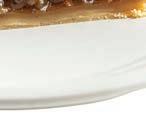

When we tested the pie, we were inclined to add more Chinese five spice and Szechuan salt, as the flavors were too subtle. However, after waiting several hours for the pie to cool, the spices really bloomed and came forward.

By Cheré Coen
It’s a common dilemma, one that unfortunately plagues society daily. The world’s so big and full of pain, what can one person do?
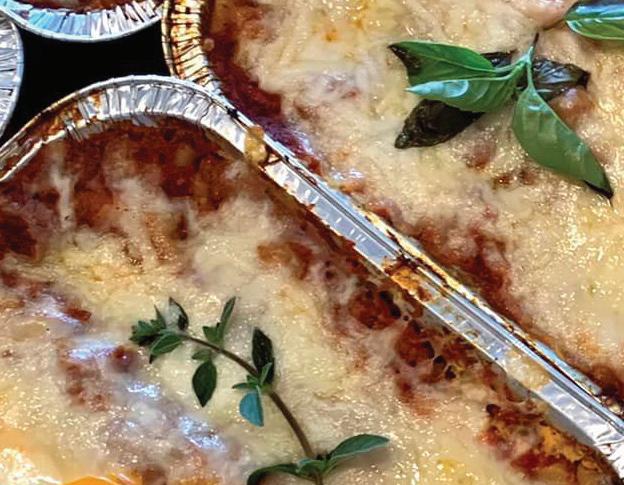
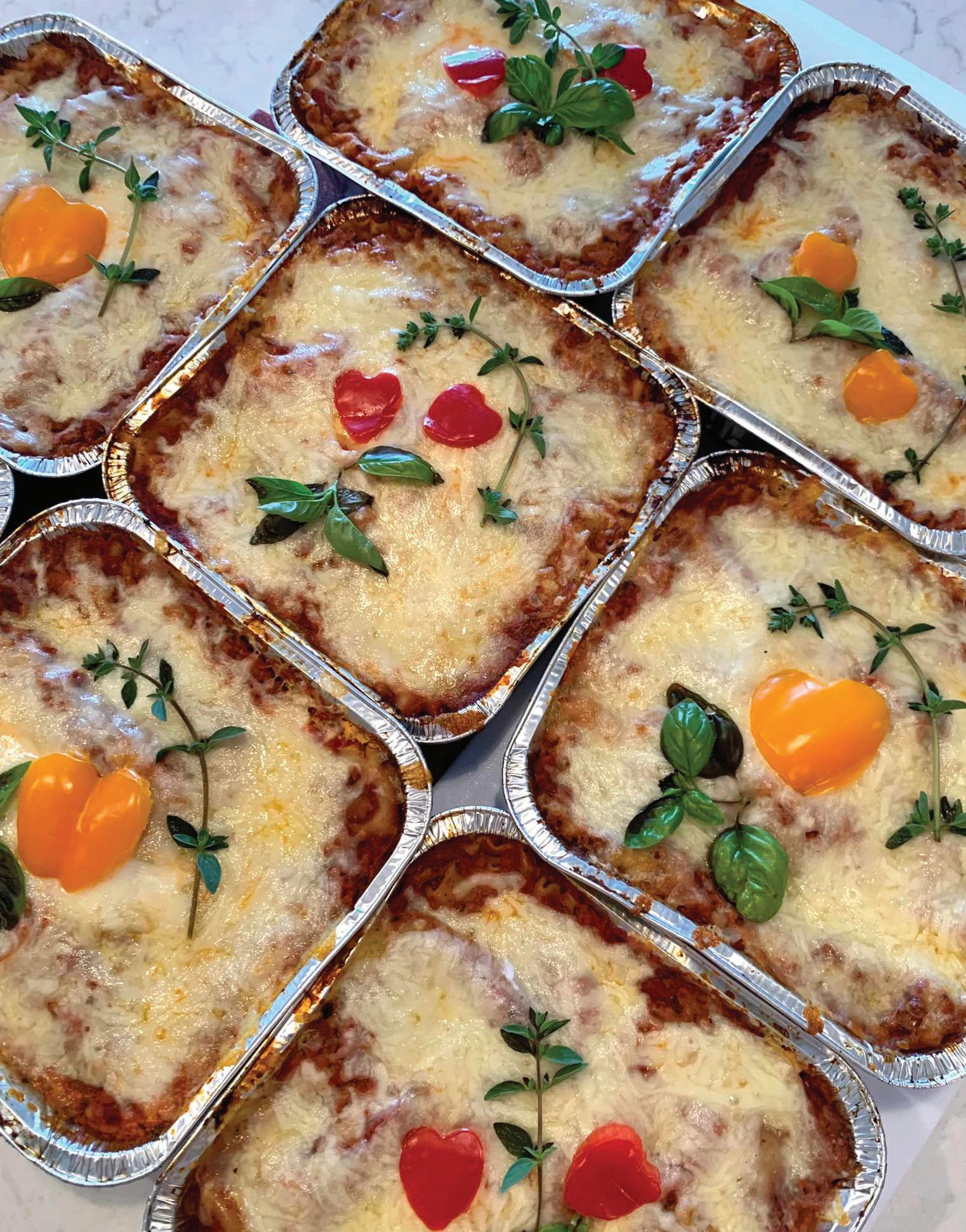
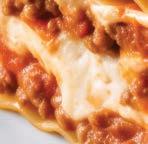
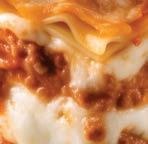
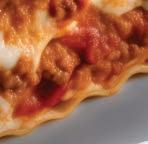
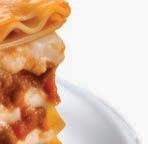
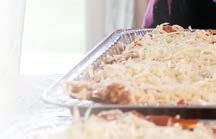
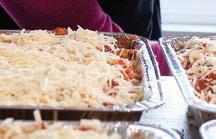
Rhiannon Menn found the answer in a pan of homemade lasagna.
The need in Rhiannon’s community became painfully clear in 2020 as she witnessed medical workers in San Diego stretched thin and families and individuals isolated inside their homes during the COVID-19 pandemic. California was the first state to shut down, and many residents lost their jobs, leaving some destitute. Rhiannon began making meals she left on doorsteps— a pan of lasagna to feed her neighbors and remind them they weren’t alone.
What she didn’t expect from her simple act of comfort-food kindness is how the neighborhood, then the city, then the world, would react.
Born of the pandemic, organization matches those in need of a meal with a home-cooked
As word spread about Rhiannon’s lasagnas, others reached out, asking to join the effort. A network soon came together to match those in need with home chefs wanting to cook. No one asked questions or required information from those seeking help. They just offered support within a home-cooked meal.
“It started to grow like firecrackers,” says Andria R. Larson, executive director of Lasagna Love, the nonprofit that grew out of Rhiannon’s original delivery. “We were able to bring people together through nourishment.”
As word got out in late 2020, Rhiannon and Andria had to develop spreadsheets to keep up with the demand. A volunteer from the Massachusetts Institute of Technology helped develop their website.
“We were just random acts of kindness that came together,” Andria says. “And the ripple effect keeps going. We’re now in four countries and all 50 states.”
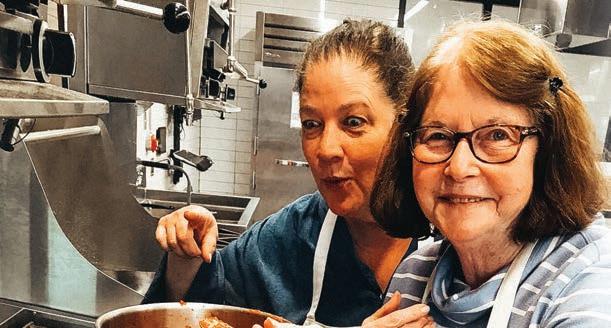
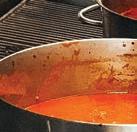




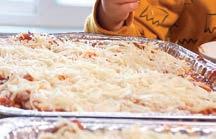
Lasagna Love’s mission is simple: address food insecurity in an oldfashioned way, with a home-cooked dish. Those in need—people who have lost their job or housing, families struggling to make ends meet or even college students away from home longing for a home-cooked meal—can register on Lasagna Love’s website. The main office sends on the information to local leaders throughout the United States, Canada, Australia and the United Kingdom, who match them with home chefs. The lasagna chefs are volunteers—as are 99% of the organization’s members. The chefs buy the ingredients, prepare the lasagnas and deliver the meals to recipients with notes of encouragement.
Not everyone who volunteers with Lasagna Love cooks. Some donate money and ingredients, while others provide administrative help.


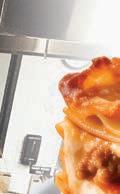















“Some love to cook, some want to donate their skill set,” Andria says. “They are all part of the larger mission.”
To date, more than 23 million people have been affected by Lasagna Love, with more than 80,000 volunteers serving up assistance in one capacity or another.
Lasagna Love ambassadors deliver, on average, 3,500 lasagnas each week.
“Radical kindness and generosity continues to spread,” Andria says. “What better way to do that than a pan of homemade lasagna?”
Ingredients of Love
Andria insists that even those who have difficulty in the kitchen can create a pan of lasagna.
“It’s really not that complicated,” she says. “It’s meat, sauce, noodles, cheese, and repeat.”
main ingredient is always a desire to help.
“Through all of it, kindness continues to be needed and woven back into our community,” Andria says. “No one should be without food, but we find many in need.”
Home chefs may be individuals, families or groups, but the primary contact must be at least 18 years old.
In Tennessee, state director Melanie Johnson finds many groups wanting to
community service goals with earning a Lasagna Love Patch. To receive a patch, Scouts explore how to initiate positive change in their neighborhoods, engage in activities that match the core values of Lasagna Love and explore the challenges individuals face today, such as food insecurity. Participating troops help address local waitlists by preparing and delivering meals “while learning invaluable skills and fostering a spirit of
Radical kindness and generosity continues to spread. What better way to do that than a pan of homemade lasagna?
Some recipe tweaks are necessary if recipients have dietary restrictions. For instance, some noodles might need to be gluten free, and vegetarians may request a meatless dish. Many chefs incorporate family recipes, so recipients receive a meal that’s been beloved for generations. Some chefs may use recipes from the main office, along with a tutorial on how to put the pieces together.
No matter which recipe is used, the






— Andria R. Larson, executive director of Lasagna Love
serve lasagna weekly across the state. She continually works with church groups, parents homeschooling their children and those looking for community service hours. Members of a ladies group in Clarksville deliver their lasagnas once a quarter. She’s even had a yoga class volunteer.
“It’s a great group activity,” Melanie says. “For families, it’s a great opportunity to involve kids at different age levels.”
Lasagna Love recently partnered with the Girl Scouts to marry the Scouts’


altruism,” according to the organization.
Andria agrees that creating and delivering lasagna is “passion work” and fosters the idea of a village mentality when society’s support systems fail or are not in place. She insists volunteers receive just as much emotional support as the recipients.
“It’s an emotional connection that you can’t duplicate,” she says of cooking and delivering the meals. “This is definitely more than lasagna.”
























For recipients, it’s as easy as signing up on the Lasagna Love website. There are no hoops to jump through, no paperwork to determine need. No fee is required, and privacy is paramount. Deliveries are contact-free to the doorstep unless the recipient requests otherwise. Recipients set the time, date and place of the delivery, and the process crosses all language and cultural barriers.
Sometimes, it’s not the lack of finances that brings people to Lasagna Love. It may be someone in need of emotional sustenance.
“Most people have a need, but sometimes it’s a harried parent who’s working and tired of bringing home fast food,” says Brenda Walkenhorst, local leader for the New Orleans metropolitan area. “You don’t have to show reason.”
For some, it’s the first time they have asked for help. The lack of bureaucracy eases their anxiety, Andria says.
“We want to make the experience easy,” she says. “There’s no judgment, no qualifications. Hard times can happen anytime. We don’t want people to face it alone. We’re here.”
Lasagna Love is always in need of volunteers—and not just those who love to cook. The organization accepts donations, and sponsors may be called on to do everything from helping in the organization’s administration to providing ingredients to chefs each month.
“It’s a way for people to get involved without cooking,” Andria says.
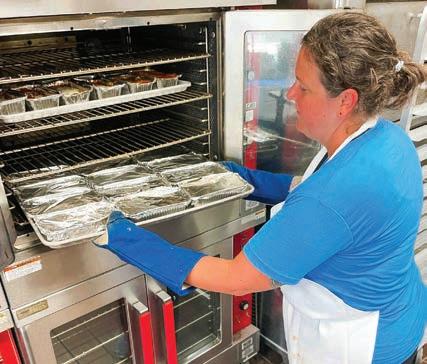
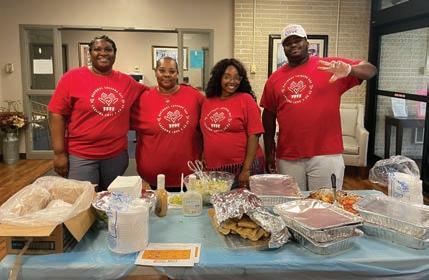
Volunteers may cook as many or as few lasagnas as they’re able, as individual volunteers or as a group activity. Many volunteers use the opportunity to create lasagna with family members, church groups and other organizations. They sometimes add their own styles to the pan.
Those who wish to cook must complete a brief online training course on safe food preparation and share how often they wish to take part. Volunteers may participate as much or as little as they are able.
The ripple effect Rhiannon and Andria started in 2020 remains, Andria says, and the organization continues to grow thanks to the steady stream of volunteers. This year, Lasagna Love began spreading kindness in the United Kingdom.
“One of the things I did not expect from a group of five women to the state we are in now was being able to see how many people generally want to help,” she says. “It really is impressive to see.”
For more information about Lasagna Love, visit lasagnalove.org.

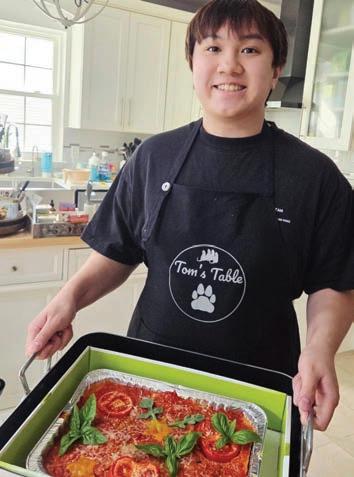
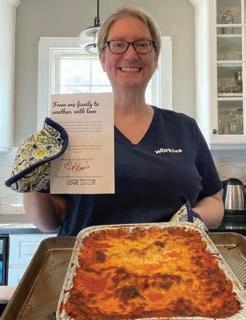
Messages of hope are delivered with each pan of lasagna.






Cooking for others is part of Brenda Walkenhorst’s DNA. As a former education director at the Audubon Zoo, she incorporated regional dishes into her job, making meals that highlighted the animals’ countries of origin. She loved cooking so much that she began teaching Louisiana dishes at a culinary school in the French Quarter.
But then the COVID-19 pandemic hit, and she was out of work. She was also despondent as she witnessed food insecurity throughout New Orleans during the pandemic.
“I thought, ‘What can I do to help?’” Brenda says. “Cooking is my thing.”
An opportunity presented itself when she saw a segment about Lasagna Love on television.
“I thought, ‘This is perfect because cooking to me is therapy,’” Brenda says. “In New Orleans, where everyone always goes out to eat, sharing a meal with people is really important. And lasagna is


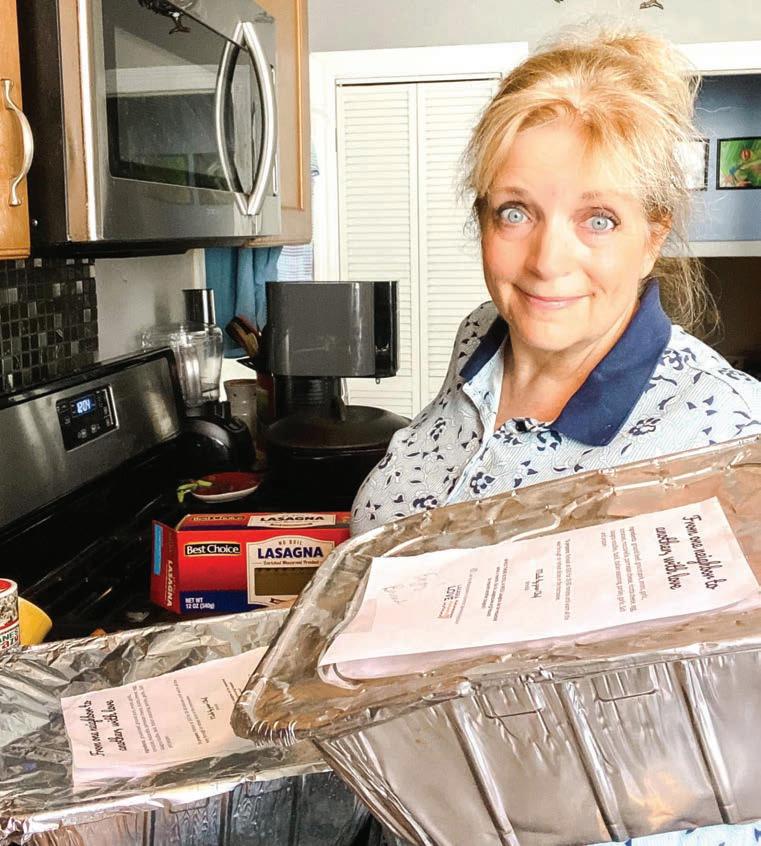

the ultimate comfort food.”














Brenda is now Lasagna Love’s local leader of the New Orleans metropolitan area, which covers the city and reaches down the bayou toward Houma and Thibodaux. Her volunteer job suits her well since Brenda’s home includes an extra kitchen to cook her lasagna. And sourdough.
The Wisconsin native who’s made Louisiana her home for more than two decades also bakes sourdough loaves that she leaves inside her Little Free Bakery in front of her house.
“My kitchen these days is a lot of lasagna and a lot of sourdough,” she says with a laugh.
What Brenda loves most about Lasagna Love is that recipients do not need a reason to ask for help, and a delivery of a homecooked meal comes without requirements, fees or even contact unless the recipient indicates it would be welcomed.








“It depends on each person,” Brenda says about chefs meeting recipients.
Most chefs and recipients, however, wish to remain anonymous, she says.
In New Orleans, like many cities in the Deep South, a significant portion of the population struggles with food insecurity. Brenda’s list of those in need is much longer than her 12 volunteer chefs can handle at any one time. She needs donors and volunteers.
“I could use double or triple the amount of chefs I have,” she says.
The amount of time volunteers devote to Lasagna Love is entirely up to the individual, she says. Chefs can cook on their own time and deliver every week or only once in a while.
“As a chef, we can really make it work for you,” she says.
For those interested in becoming a home chef, or to volunteer money or time in other areas of the organization, visit lasagnalove.org.



















• Rate schedule is based on your current age and is guaranteed for the life of the policy.
• Monthly rates as low as $3.49.
• Coverage is also available for your spouse and other family members.
• Benefits will NEVER be canceled or reduced for the life of the policy if premiums are paid on time.
Policy Form #SRTCV/SRTCV R13 or R17, or #SRTCV90MA in MA

















• Rates are based on your children’s or grandchildren’s present age and never increase for any reason.
• Monthly rates as low as $2.17.
• Benefits will NEVER be reduced or canceled if premiums are paid on time.
• Give your children a financial head start right now. Your policy builds CASH VALUE for your family’s needs.


























































Fall is in full swing, and that means cooler weather, less rain and the holiday season is just around the corner! But fall also brings a higher risk of home fires and electrical safety hazards. Read the safety tips below and use the clues to complete the crossword puzzle.
Check your work in the answer key.
1 Across: An _____ should always be in the kitchen when something is cooking.
2 Across: Keep any items that can burn away from the stove, _____ and other cooking appliances.
3 Down: Candles and _____ should only be used by adults.
4 Down: Make sure all _____ are blown out before leaving a room.
5 Down: Smoke _____ should be tested every month to ensure they are working properly.
















$5 Gold American Eagles at COST! It's that simple. These Government issued coins are the easiest and safest way to protect your money and your family! A 5 minute call can change everything. DON'T WAIT!














This holiday season, we reflect on the dedication of those who keep the lights on—and the members who make it possible


The holidays have a way of slowing us down. For many, this time of year means gathering around the table with loved ones, sharing good food and reflecting on the blessings that surround us.
Here at Panola-Harrison Electric Cooperative, this season is also about recognizing the people who make this cooperative strong—the lineworkers who brave storms to keep power owing, the o ce sta who keep everything running behind the scenes, and members whose trust and support make everything possible.

Working at an electric cooperative isn’t just another job. It’s a commitment to neighbors and the community at large.
When severe weather hits Northwest Louisiana and East Texas, our lineworkers stand ready. No matter the hour, they leave the comfort of home and head out into tough conditions to restore power to homes, farms, schools and businesses. Their work is demanding, dangerous and often takes them away from their own families. Their dedication keeps the lights on for everyone else.
Inside the office, another group works hard, too. Member services representatives are the friendly voices on the other end of the line. They help families understand their bills, set up payment arrangements and find resources when needed. Operations and engineering teams plan and maintain the system that powers our homes, schools and businesses. They make sure lineworkers are dispatched to the right areas at the right times.
Each role matters. And every person on PHEC’s team plays a part in


keeping this cooperative strong and this community connected.
We know this year hasn’t been easy. Rising costs are hitting everyone— from the grocery store to the electric grid. Inflation and supply chain delays have made everything more expensive, including transformers, poles and the power itself.
Those pressures are why PHEC made the difficult decision to raise rates this fall. The choice was not made lightly. As a member-owned cooperative, we don’t answer to investors. We answer to you.
This adjustment will help us continue to maintain and strengthen the system, ensuring the reliability you count on, no matter the season.
Even with those challenges, our commitment to members remains the same. When we bring in more revenue than we need to run the co-op, we return those funds to you through capital credits.
PHEC also invests in programs that strengthen the communities we serve.



From the East Texas Rural Electrical Youth Seminar—which gives local students opportunities to grow as future leaders—to community support efforts that benefit families and local organizations, these initiatives reflect what makes cooperatives different. Every dollar is invested back into the people and places we serve.
As we close out another year, PHEC thanks each of you. Your trust and support are what allow us to keep moving forward—investing in our infrastructure, supporting our crews and powering homes and businesses across Northwest Louisiana and East Texas.

Our offices will be closed for Thanksgiving and Christmas so our employees can spend time with their families. But our crews are ready, as always, in case of an outage.
We’re proud to serve this community—because we’re part of it, too.
From all of us at Panola-Harrison Electric Cooperative, thank you for being part of our co-op family. We wish you and your loved ones a safe, joyful holiday season.

By Christina Sawyer
The holiday season often means travel— whether it’s visiting family, enjoying a winter vacation or escaping the cold altogether. But while you’re away, your home is still working to maintain comfortable temperatures, which leads to wasted energy and a higher utility bill. Managing the heating system in an empty house can be tricky, especially when outside temperatures drop and fluctuate. So, what’s the best approach for saving energy while ensuring your home is safe and protected during your absence?
It might seem counterintuitive, but your heating system can work harder to maintain the temperature in an empty house than it does when it’s full of people. You may think that leaving your home unoccupied would lower your energy use, but that’s not always the case. Some homeowners are surprised to see higher heating bills during periods when their homes were unoccupied.
Each person inside naturally contributes warmth to the environment. This, combined with the heat from household activities like cooking, showering and even using electronics, helps keep the overall temperature up. When you’re away, all of these small but significant heat sources are gone.
Without the added warmth from people and activities, your heating system has to work harder to maintain a set temperature—especially in regions like ours, where winter temperatures vary from day to day.
Winter weather plays a huge role in how often your heating system kicks on while you’re away. In climates like ours, freezing temperatures can quickly cause your house to lose heat, even if it’s wellinsulated. This means your heating system has to work harder and cycle on more frequently to keep the interior at the set temperature.
If you have a programmable or smart thermostat, consider creating an “away” schedule that lowers the temperature a few degrees. Experts recommend setting the thermostat between 50 and 60 degrees to prevent frozen pipes without overworking the heating system. Keeping the thermostat set at a lower temperature allows your home to stay safe while still saving energy.
Some smart thermostats let you monitor and adjust your home’s temperature remotely. If the weather suddenly takes a turn for the worse, you can bump up the heat slightly from wherever you are, helping prevent frozen pipes or other coldweather damage.
While the heating system is one of a home’s biggest energy users, don’t forget about other power drainers that quietly suck up electricity while you’re away. Many electronics—such as TVs, gaming consoles and kitchen appliances—consume energy when plugged in, even if they’re turned off. Known as standby power or phantom load, this can account for up to 10% of your home’s total energy consumption.
Before heading out, make sure to unplug devices you won’t be using. Chargers, electronics and small appliances such as coffee makers are some of the most

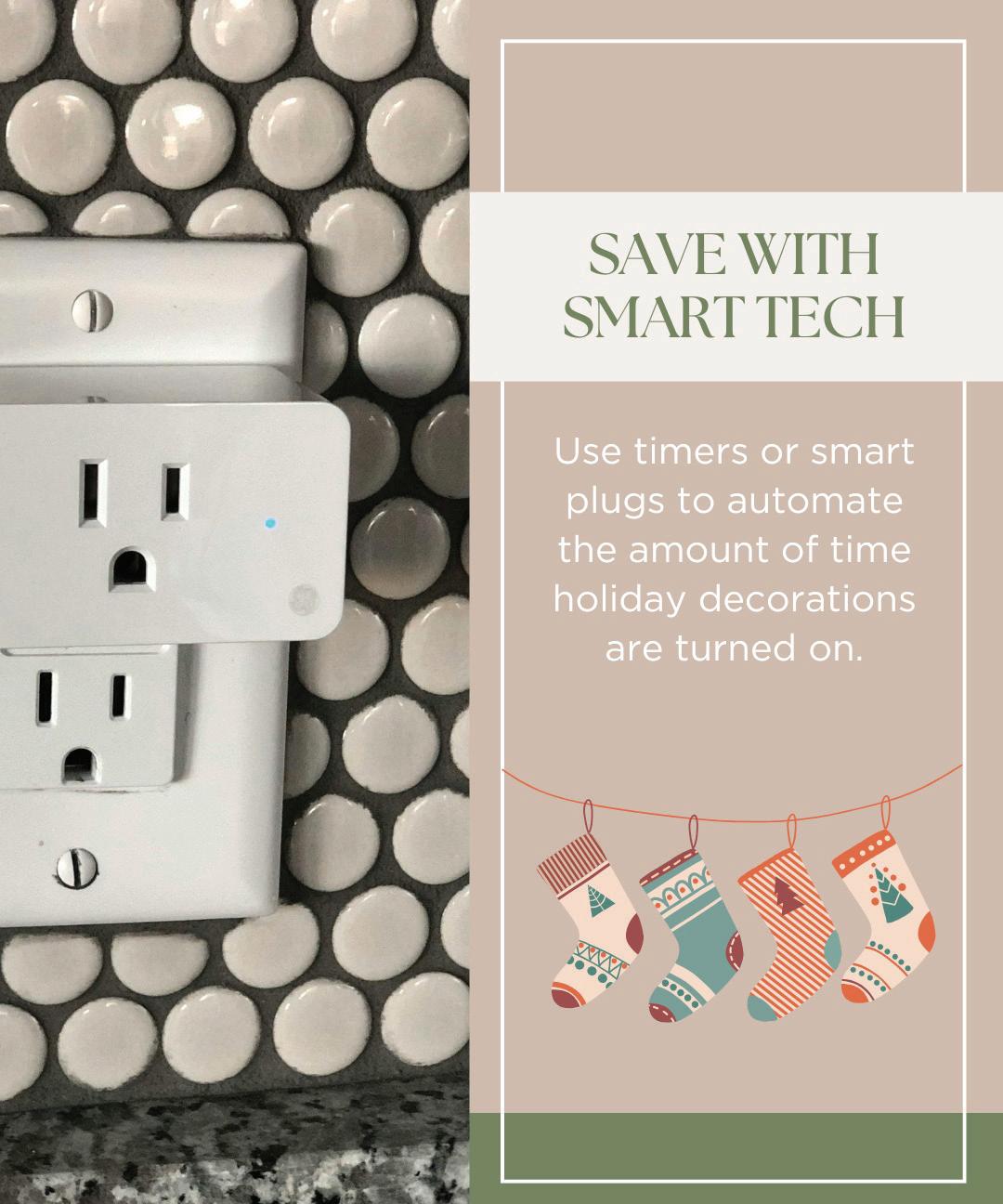
common culprits. If you have holiday lights or other seasonal decorations set up, consider using timers so they aren’t running 24/7 while you’re not there to enjoy them.
Your water heater keeps working while you’re away, potentially wasting energy heating water you won’t use. Newer models often have a “vacation mode” that reduces the water temperature while still protecting the system from freezing.
If your water heater doesn’t have this feature, simply lowering the temperature setting can help cut down on energy costs.

Lower the thermostat: Set your thermostat five to 10 degrees lower than usual, or use an “away” setting if you have a smart thermostat.
Unplug unused devices: Electronics, chargers and kitchen appliances can consume energy even when off. Unplug them before you leave.
Set holiday lights on timers: Use timers for holiday decorations to limit energy use while still enjoying the festive glow when needed.

If you have a programmable thermostat, it’s easy to remotely adjust your home’s temperature before returning. If you don’t, there are still ways to manage the process efficiently when you walk through the door.
When you return home from your holiday adventures, it’s tempting to blast the heat right away to get comfortable.
Instead, slowly increasing your home’s temperature can help your heater work

efficiently, rather than maxing out while speeding to a high heat.
Taking small steps to conserve energy—before you leave and after you return—can help protect your home and your wallet during the cold months. No matter where your holiday travels take you, knowing that your home is well prepared will give you peace of mind. And when you return to a warm, cozy home, you’ll be grateful you took the time to manage your energy use.


Use vacation mode on appliances: Newer water heaters and some other appliances have a vacation mode—activate it to save energy.

Insulate your home: Double-check windows and doors are properly sealed to prevent cold air from seeping in and overworking your heating system.