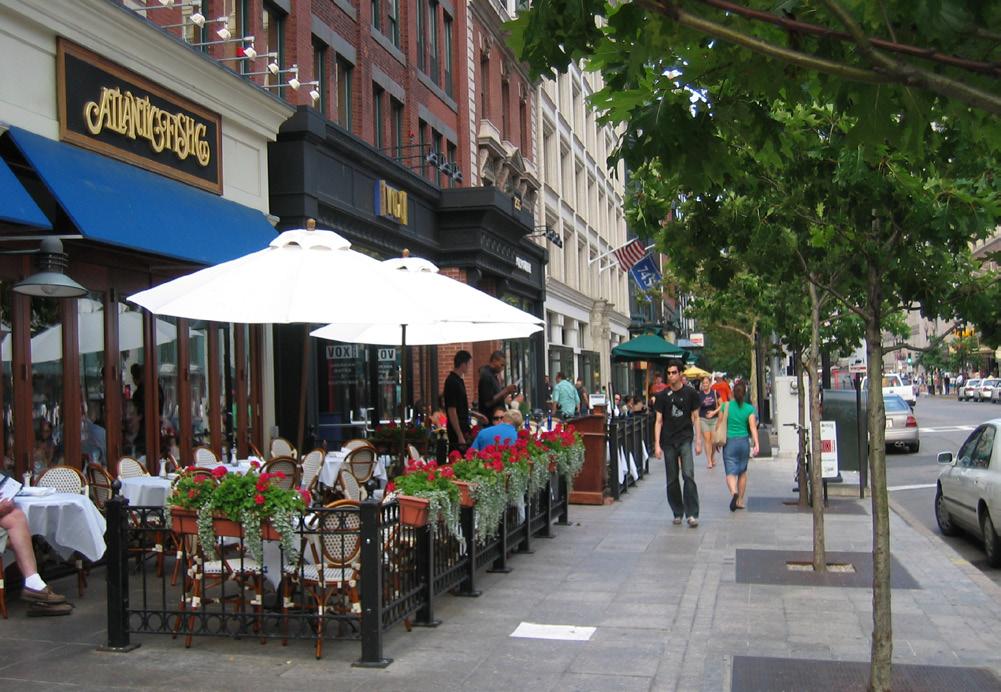
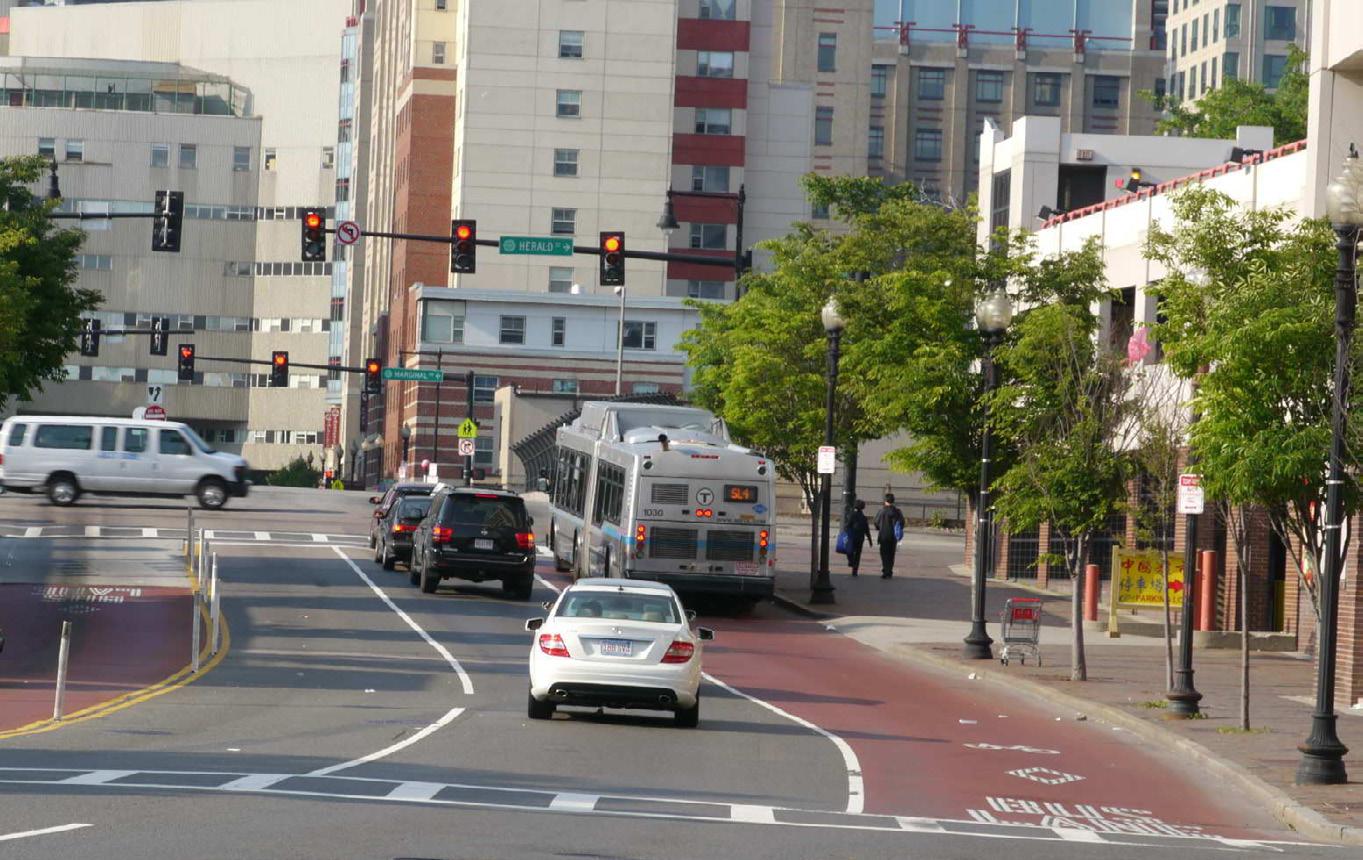
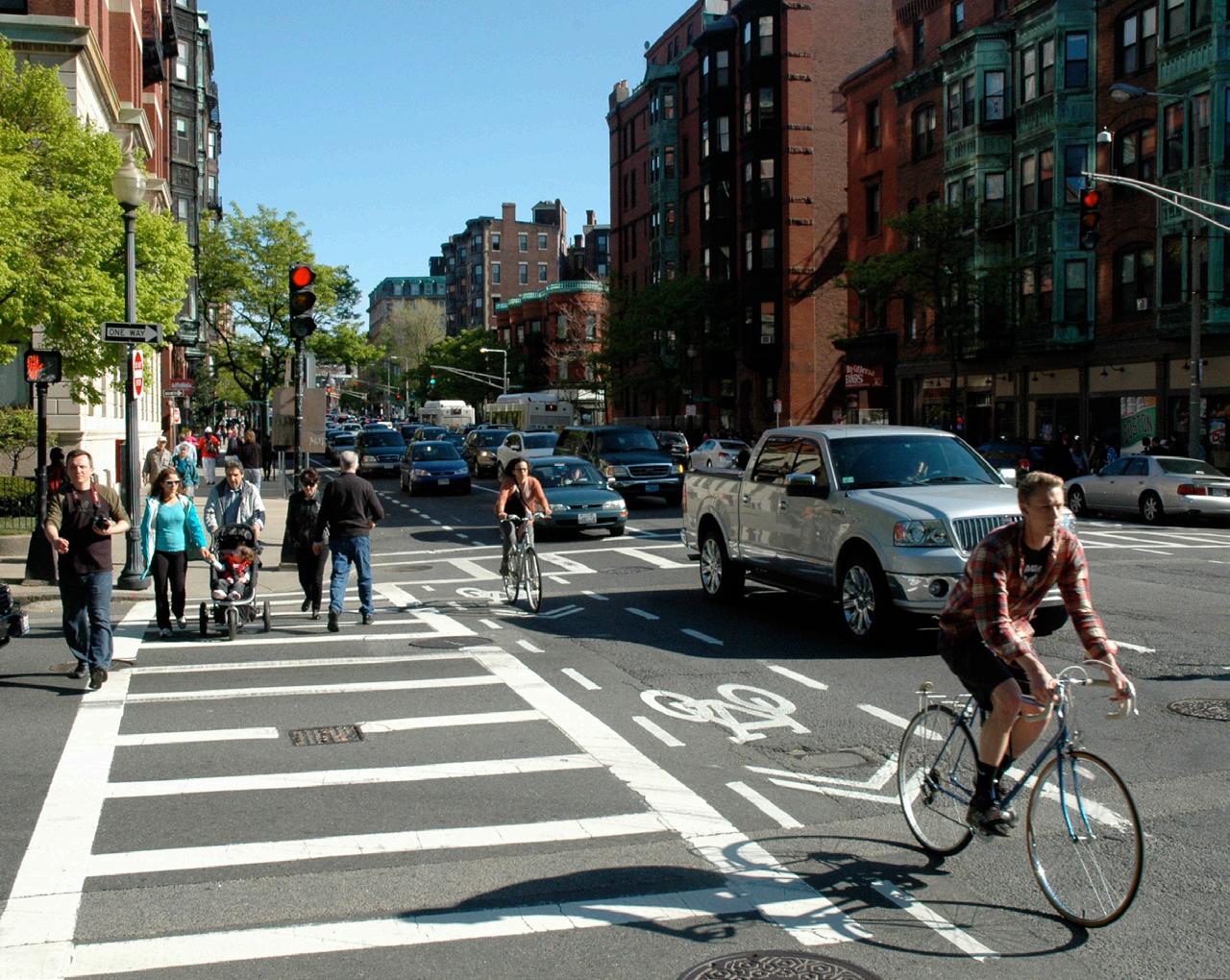
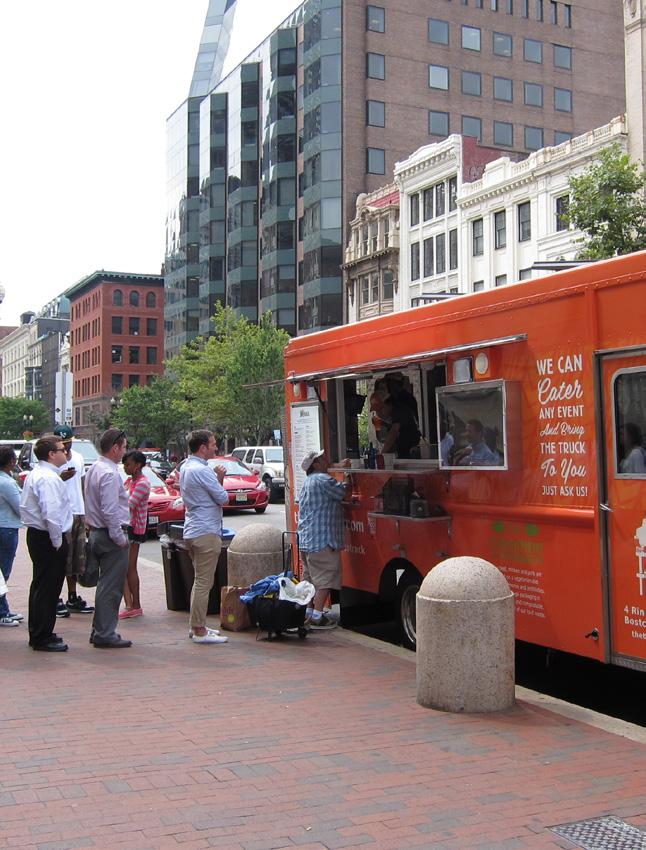
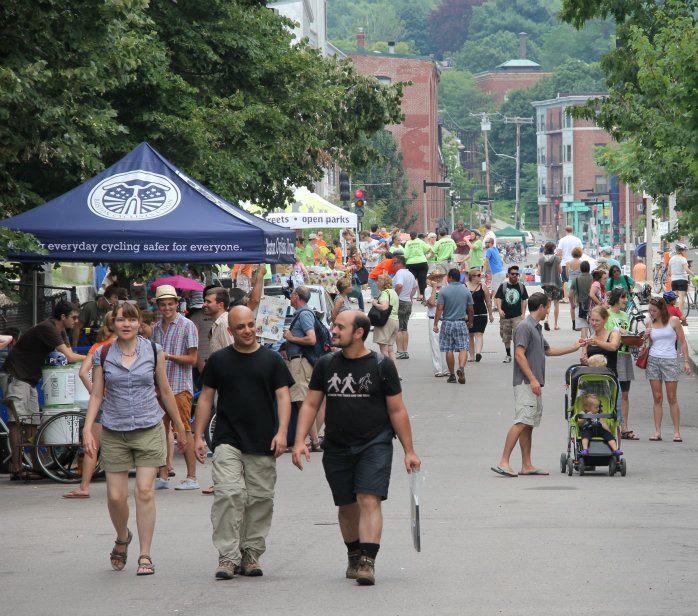
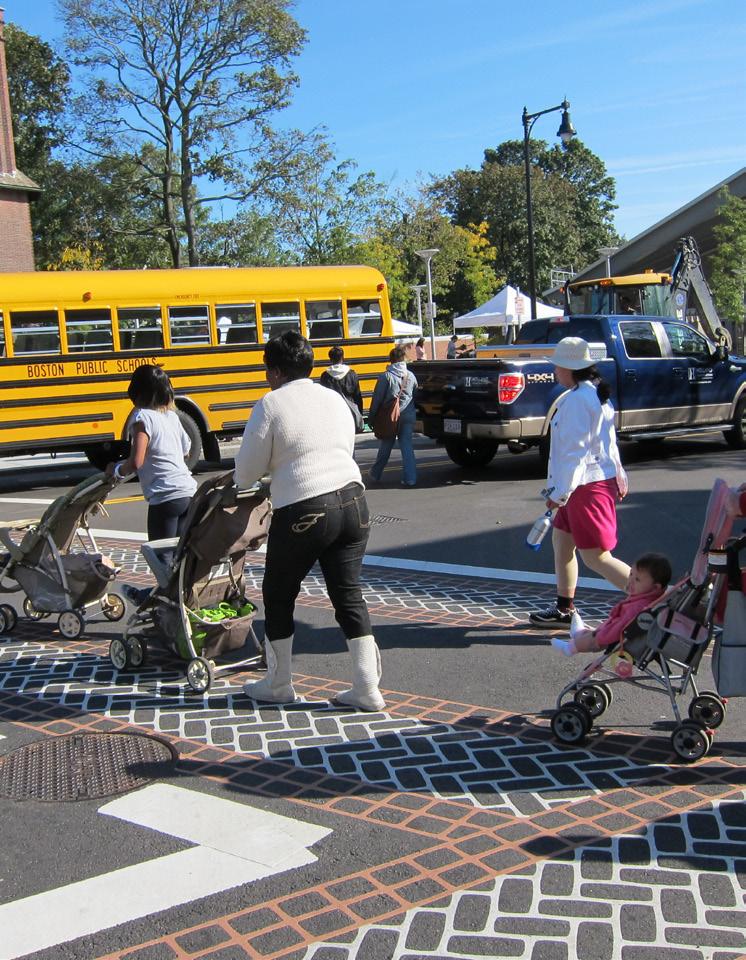
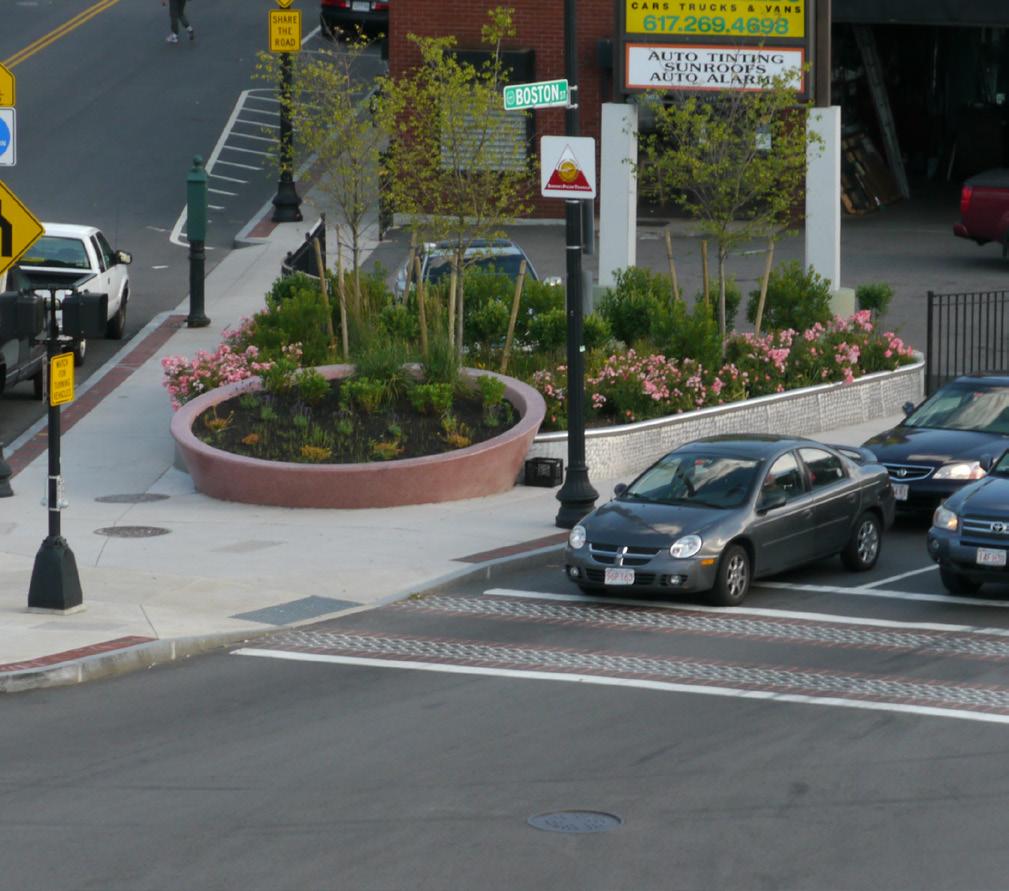
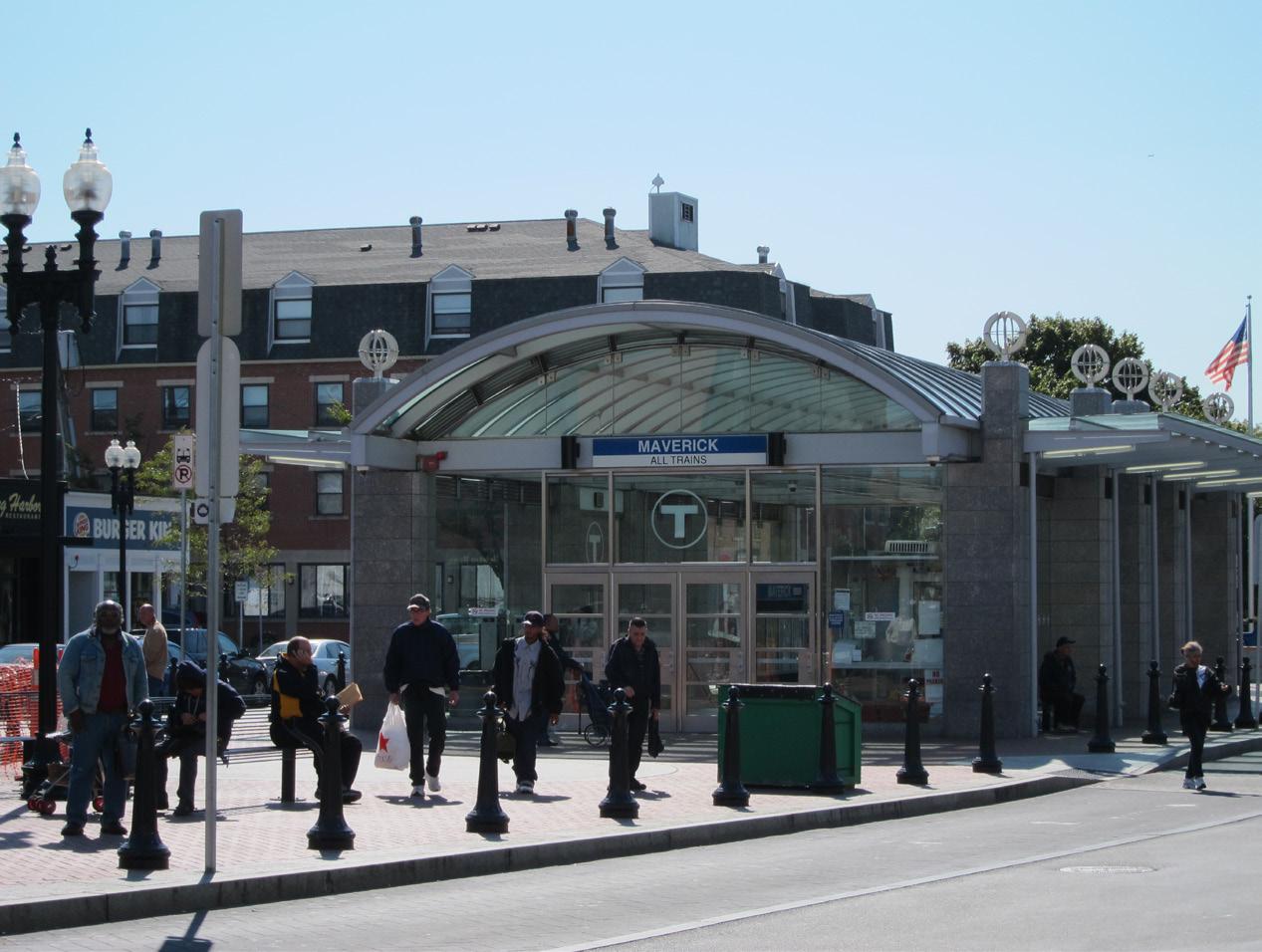
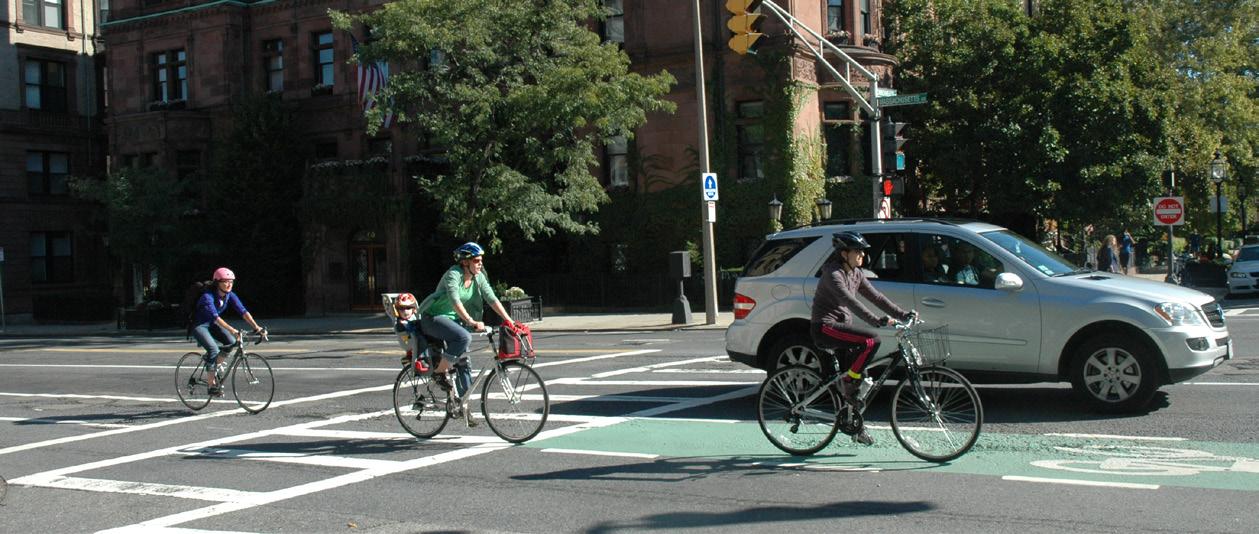
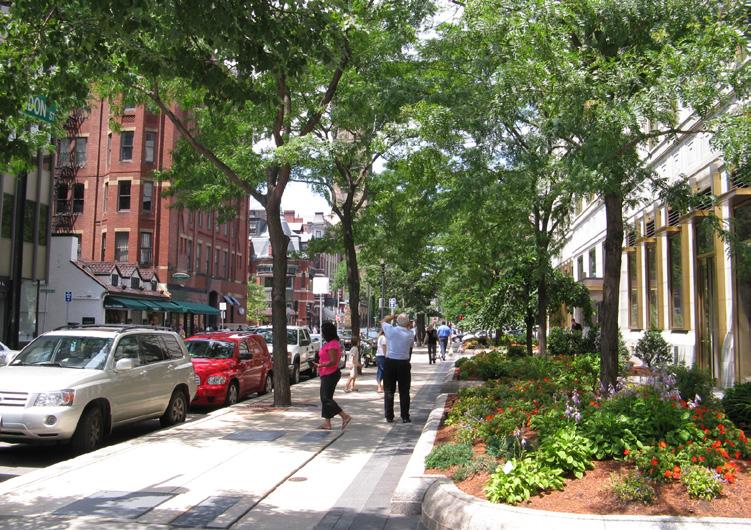
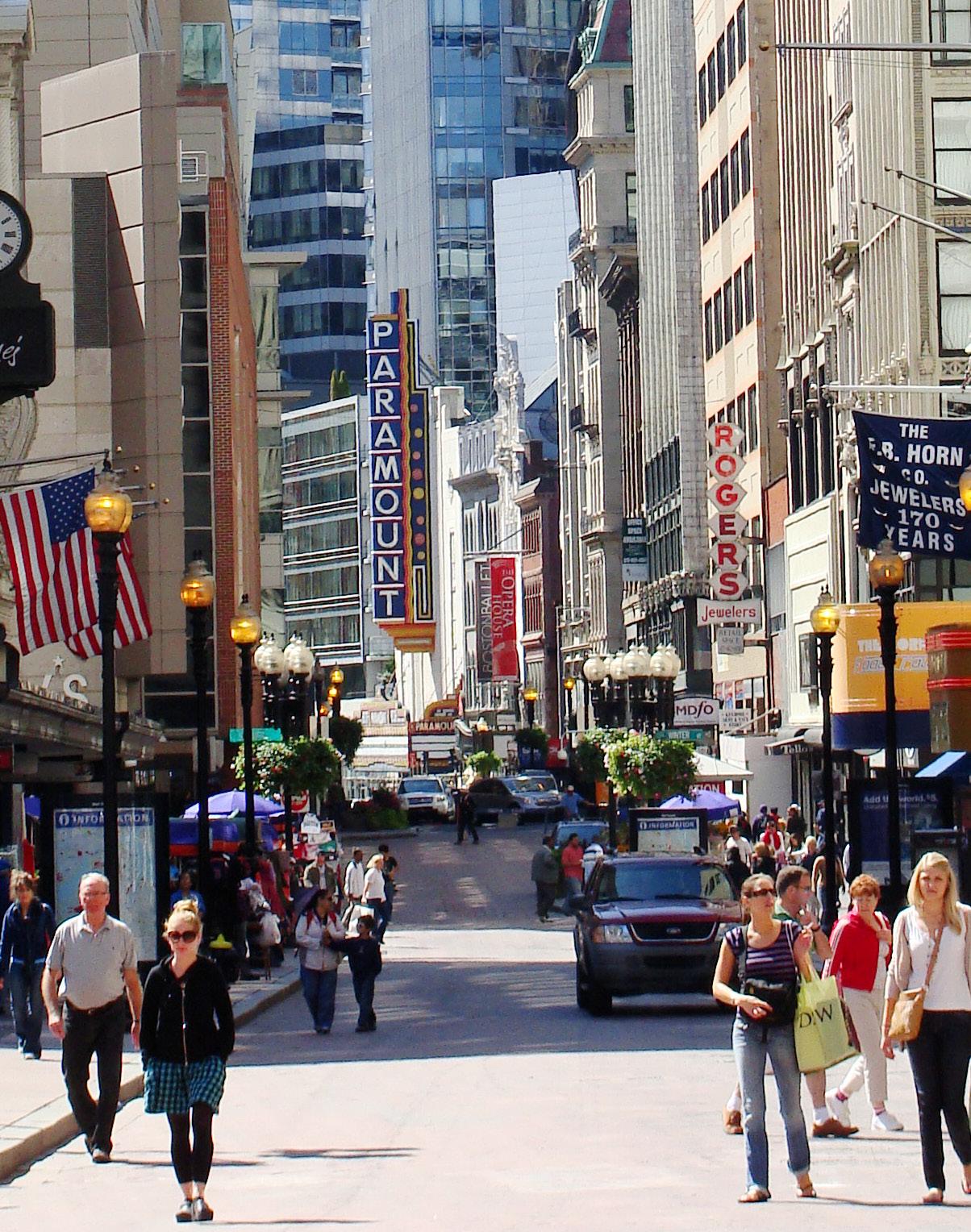
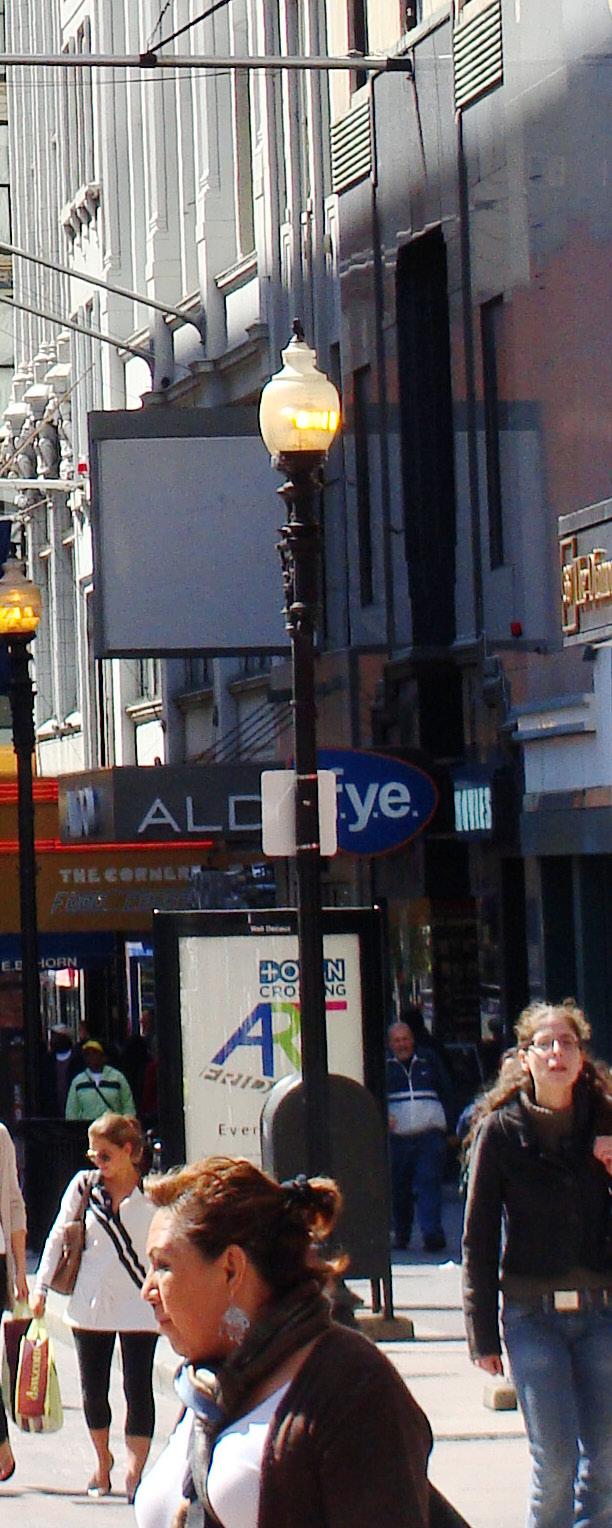
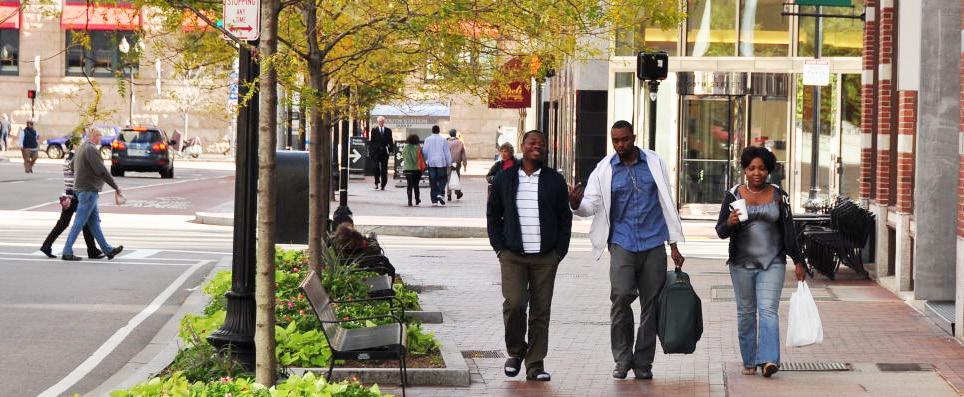
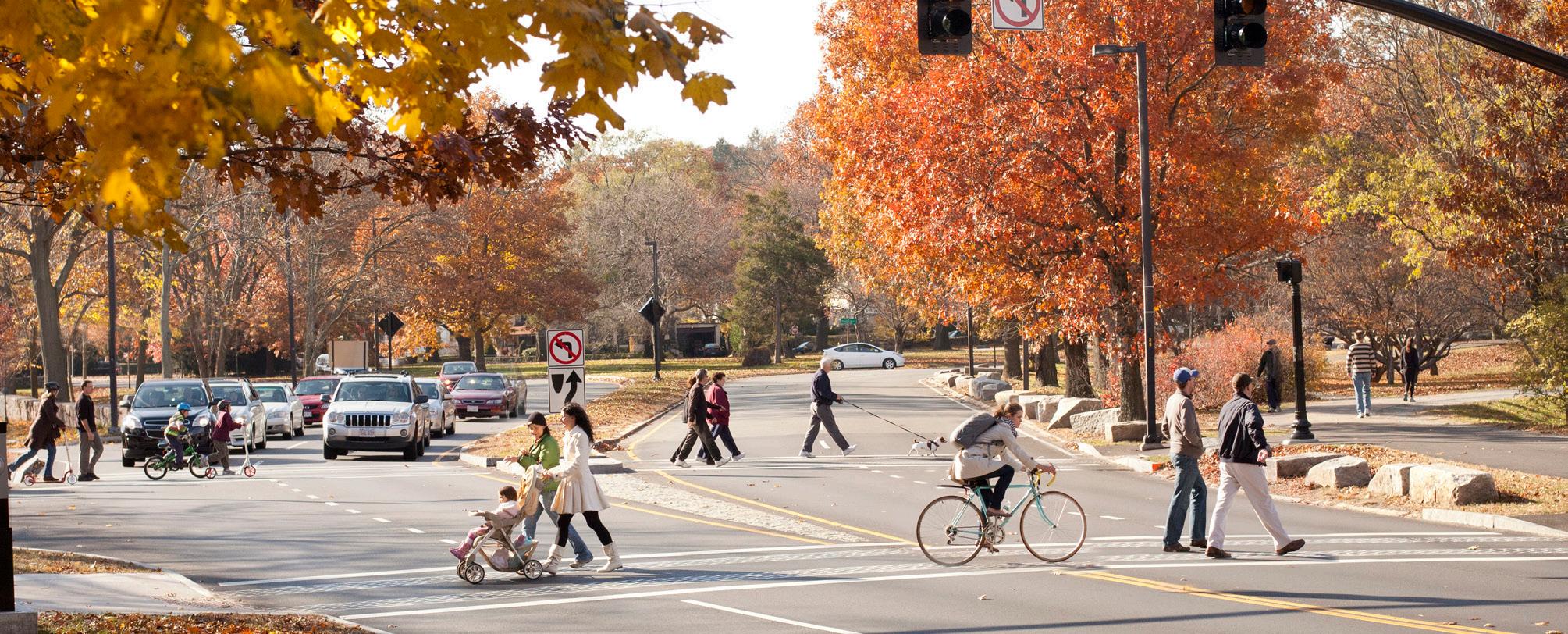
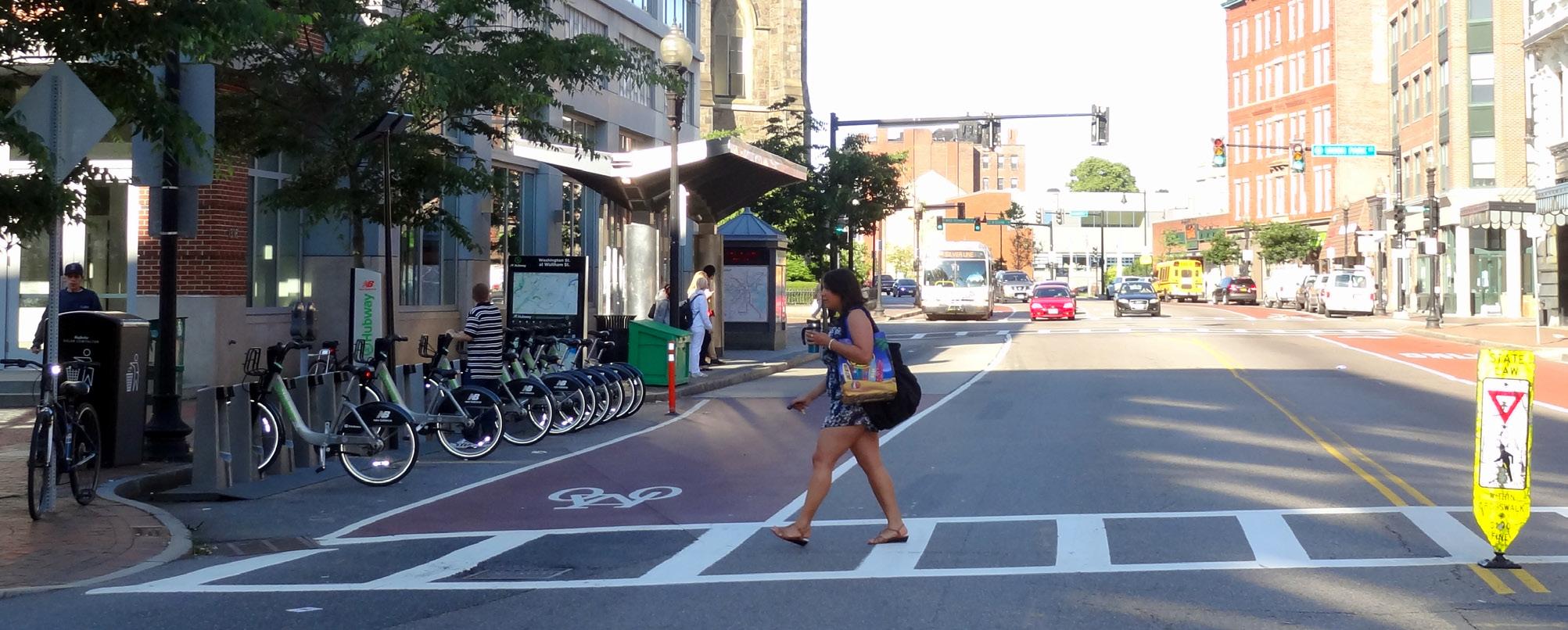
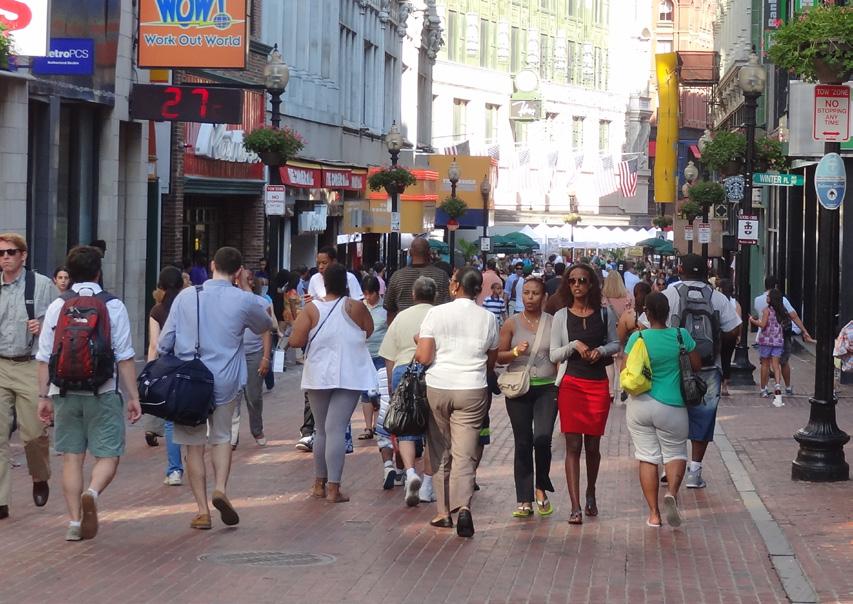
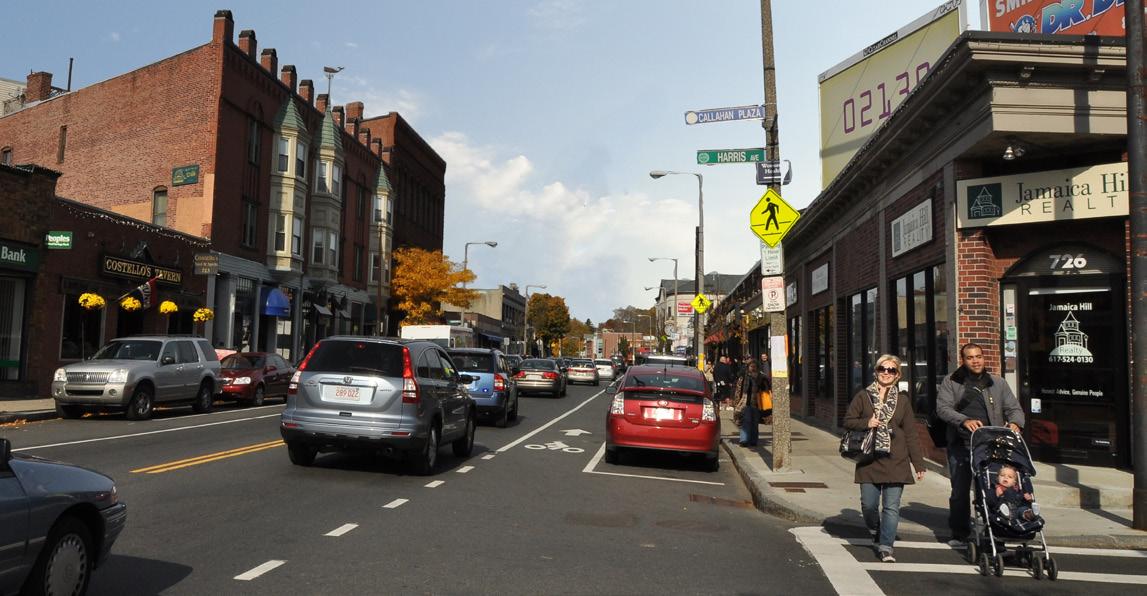
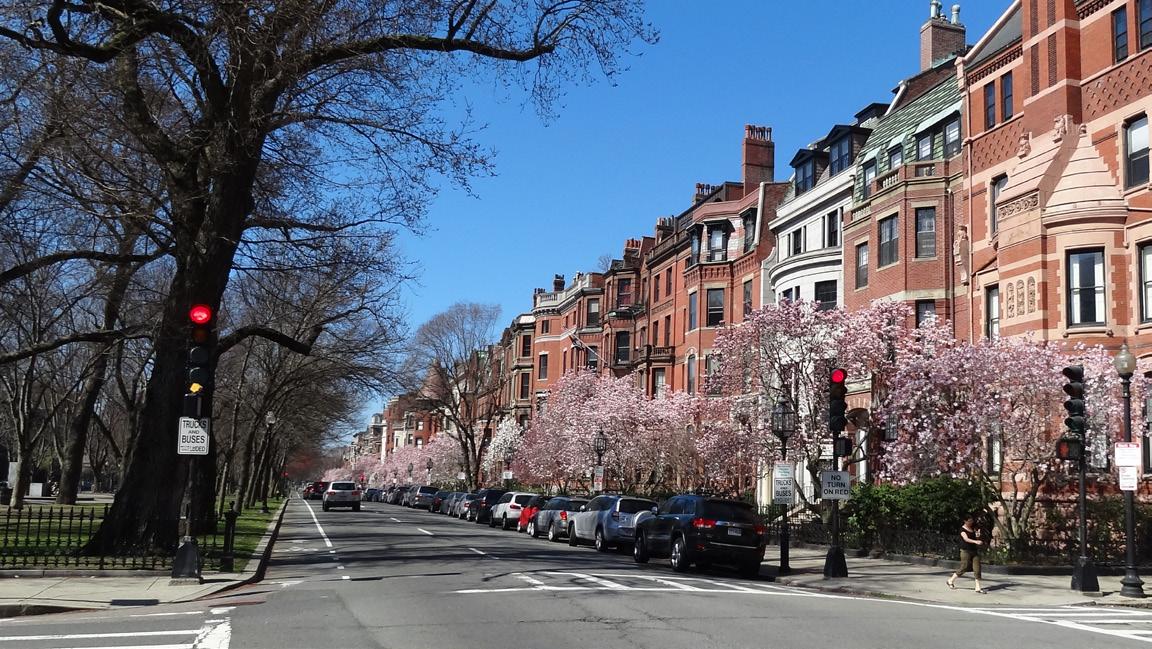
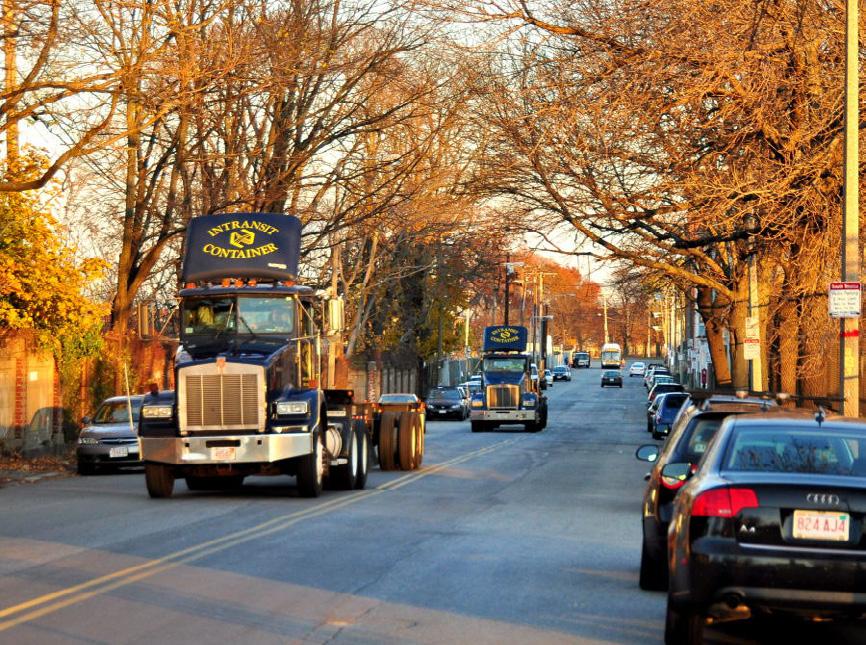
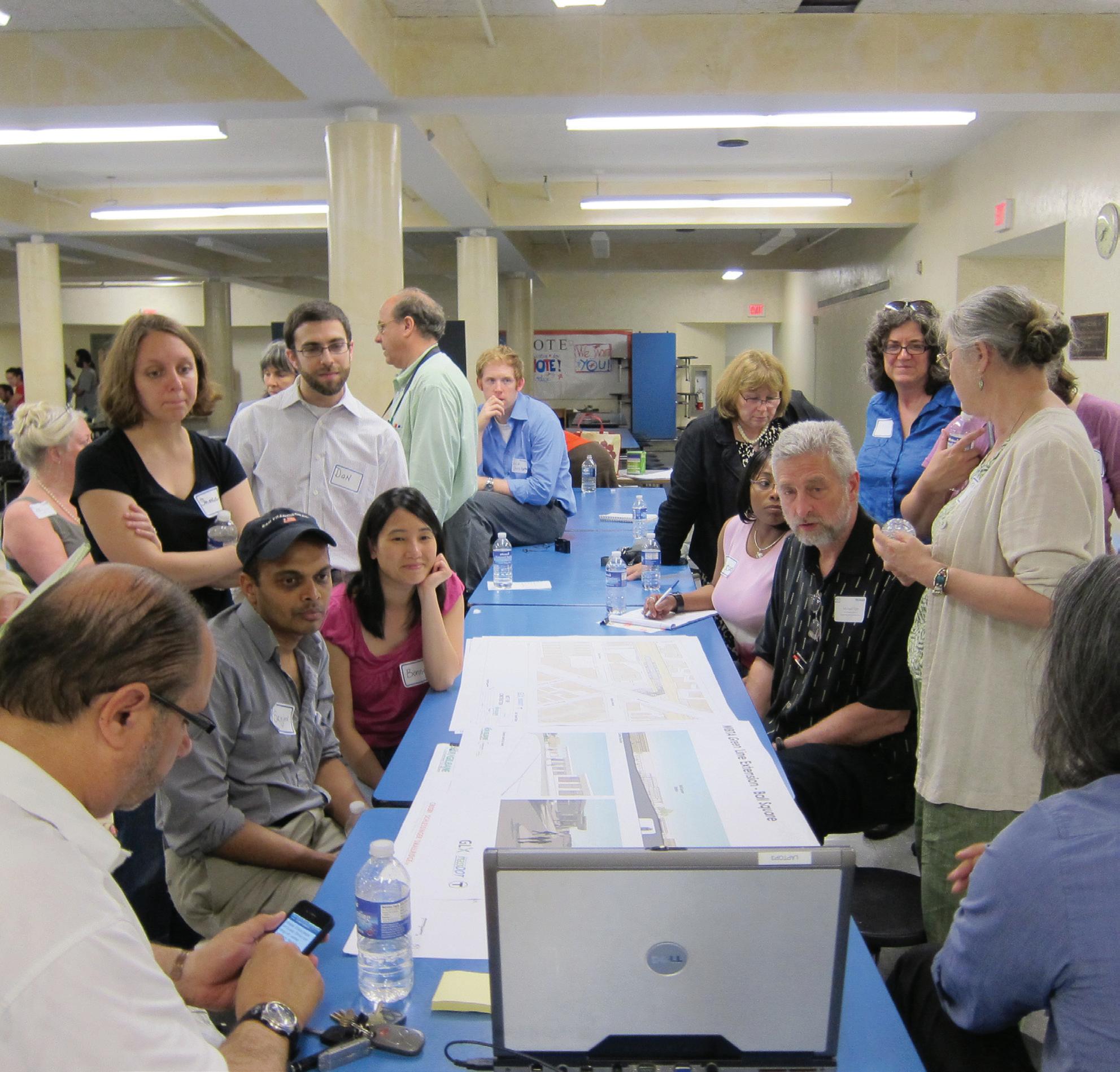
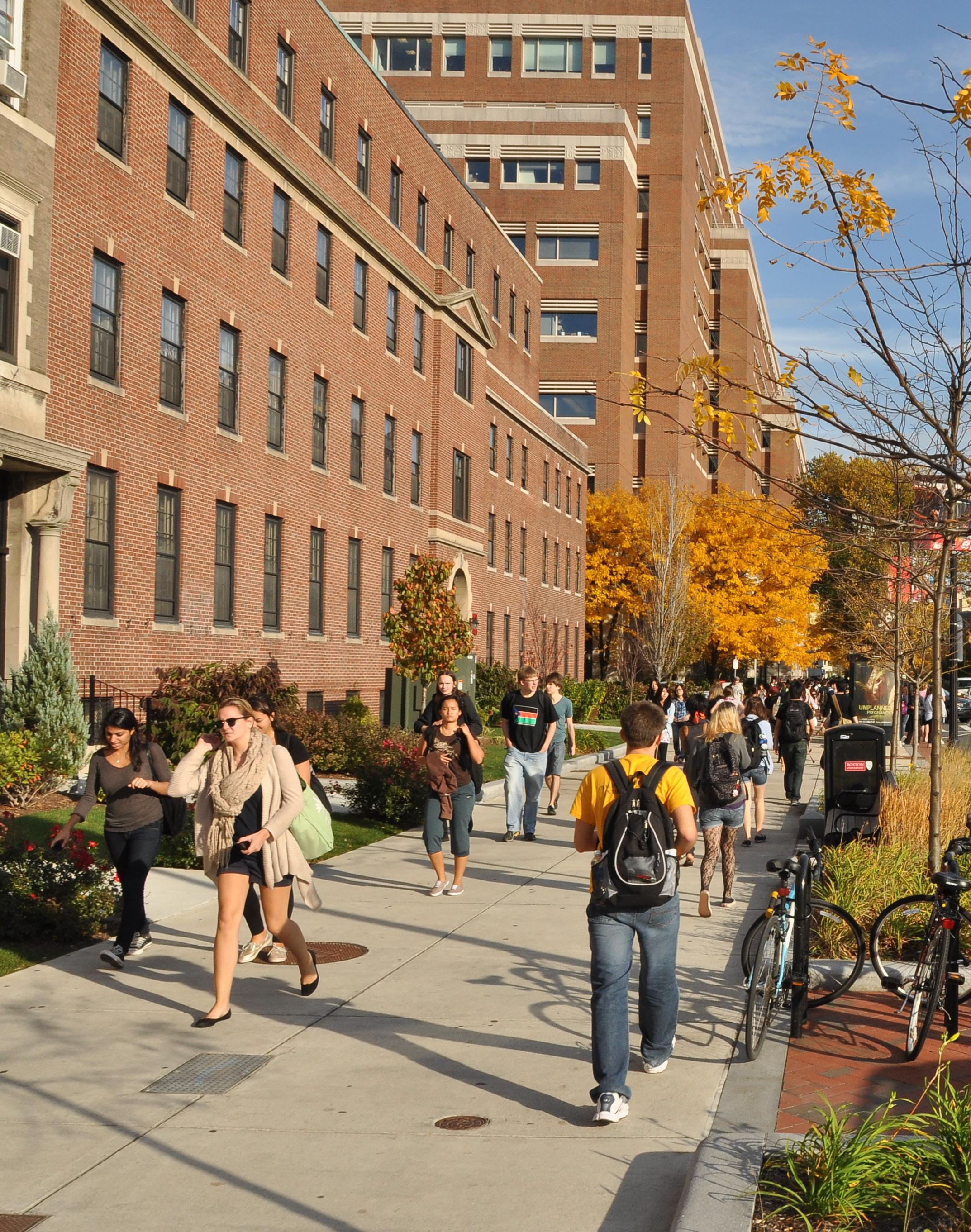
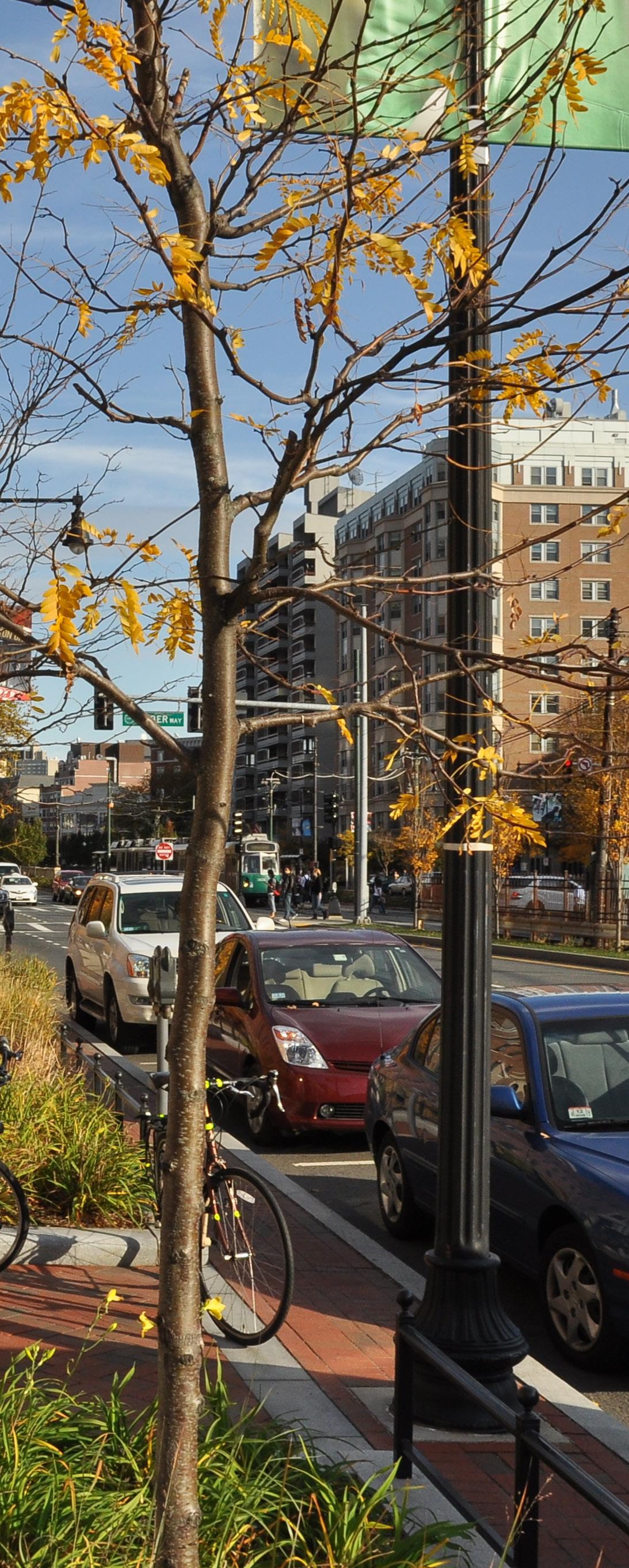
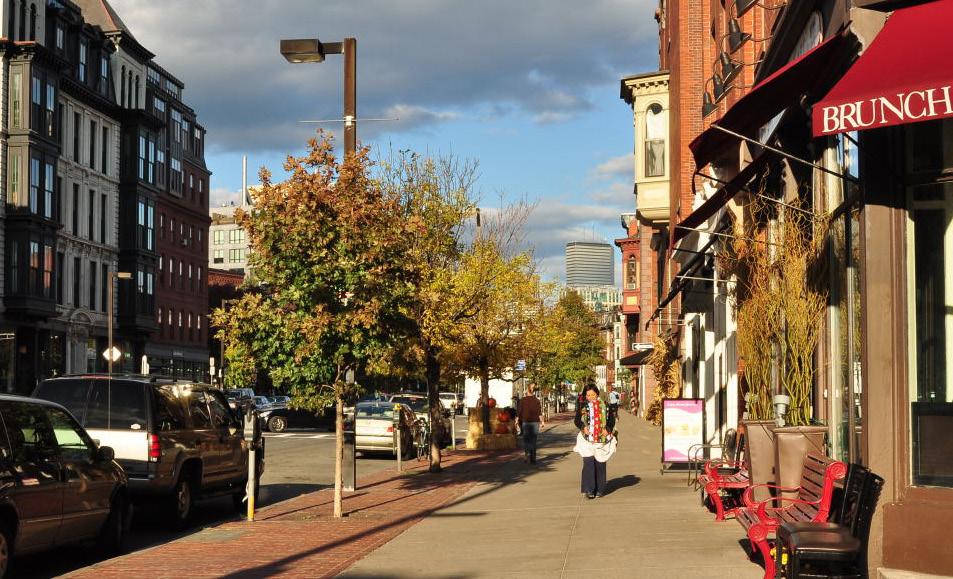
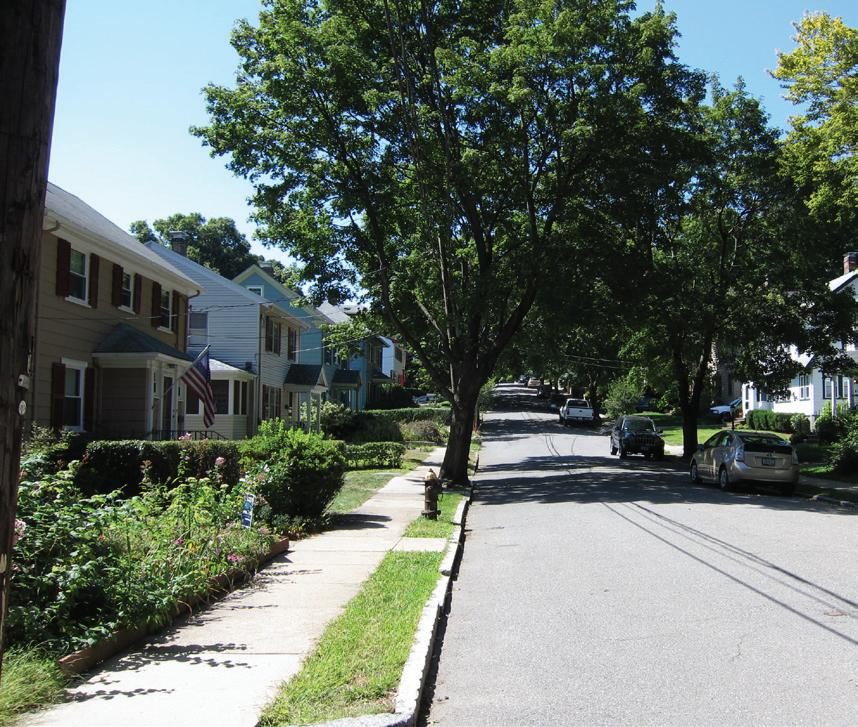
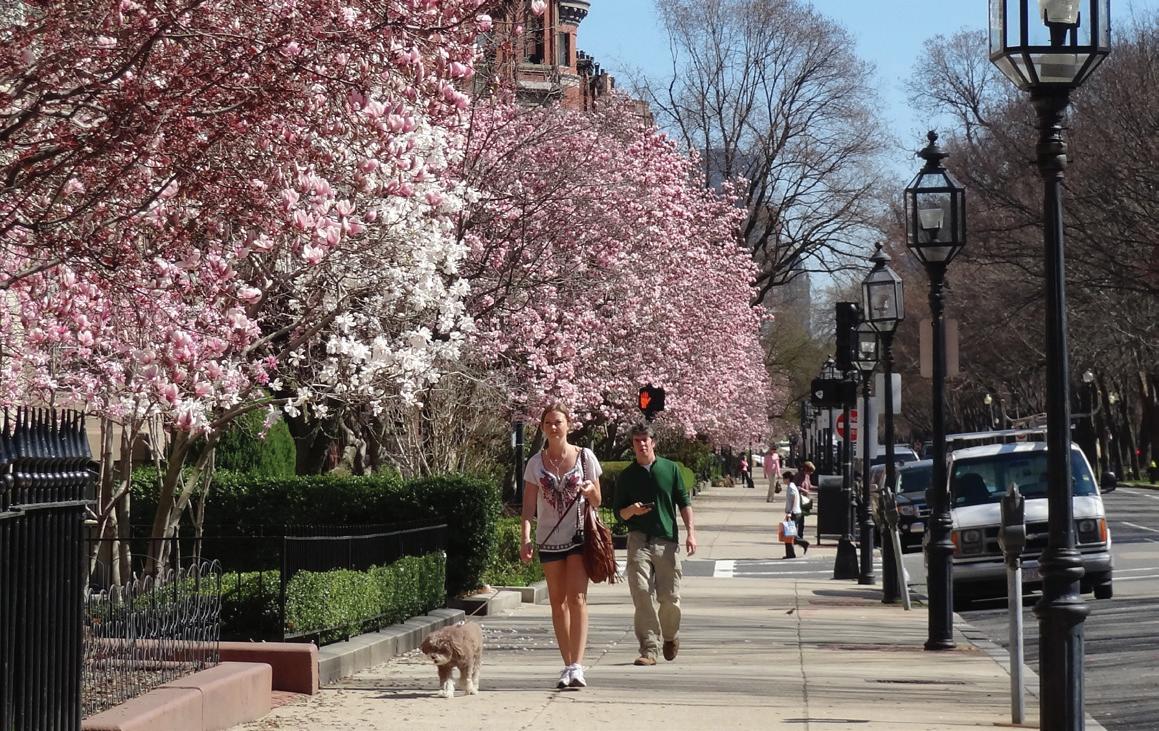
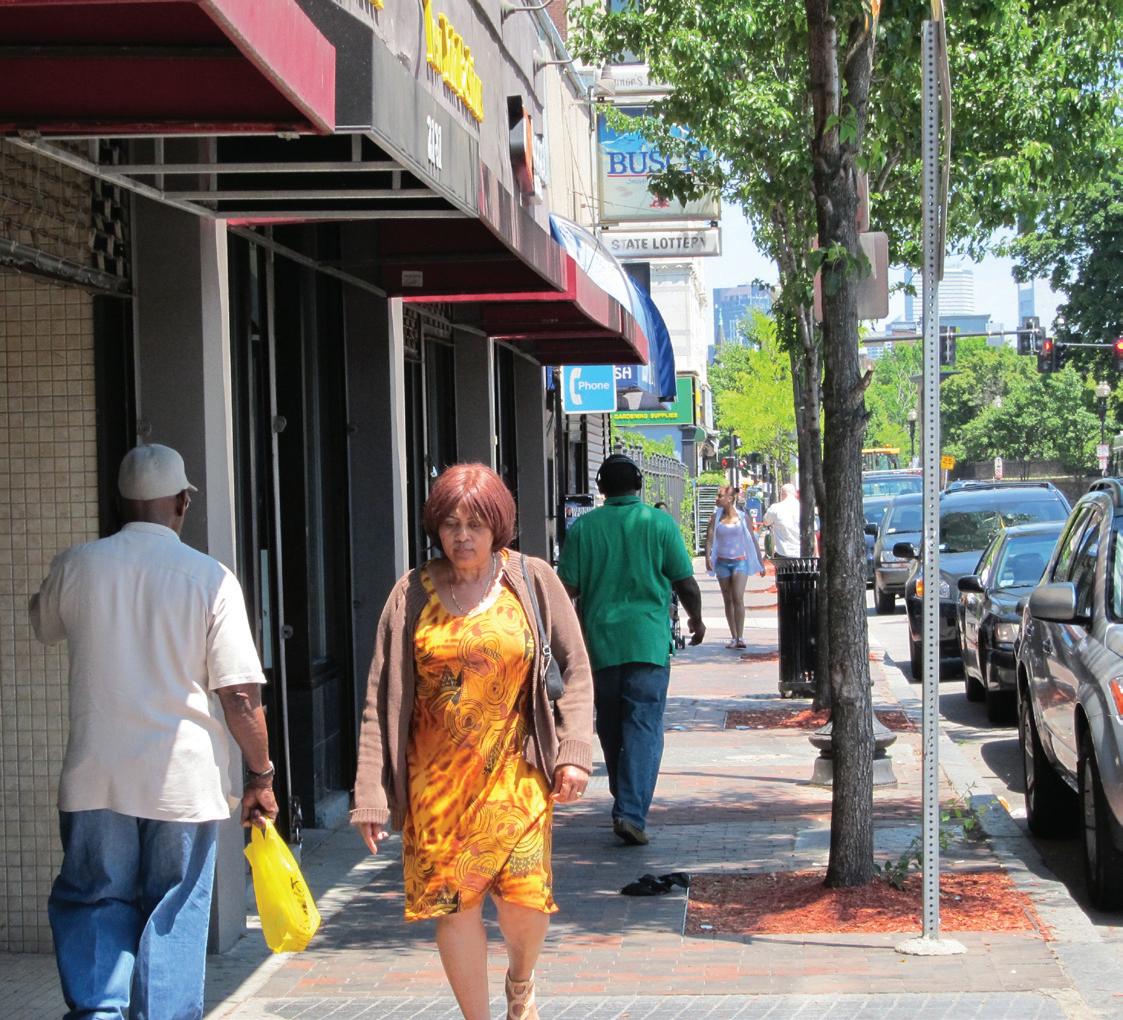
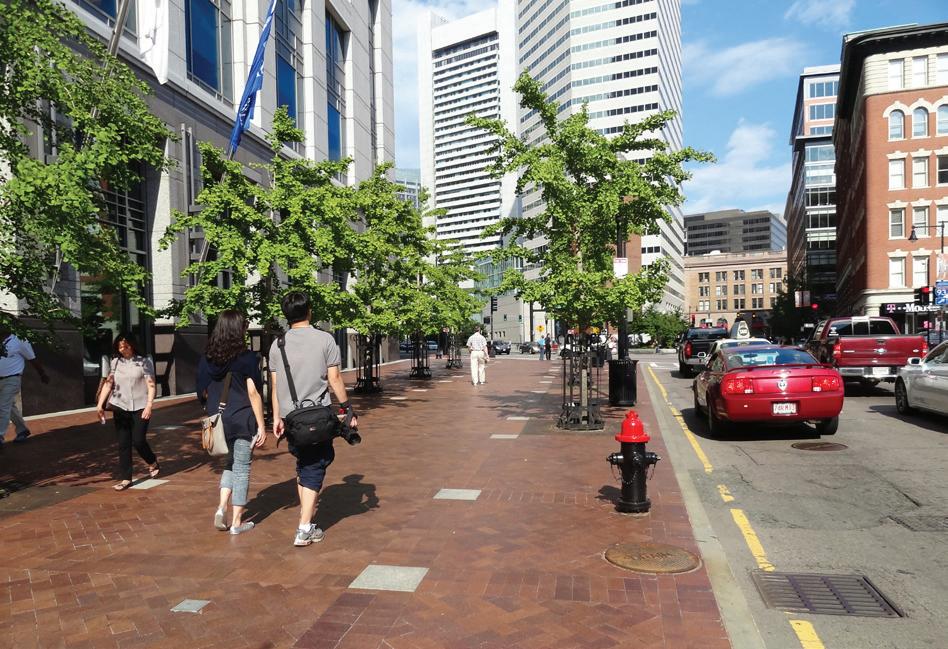
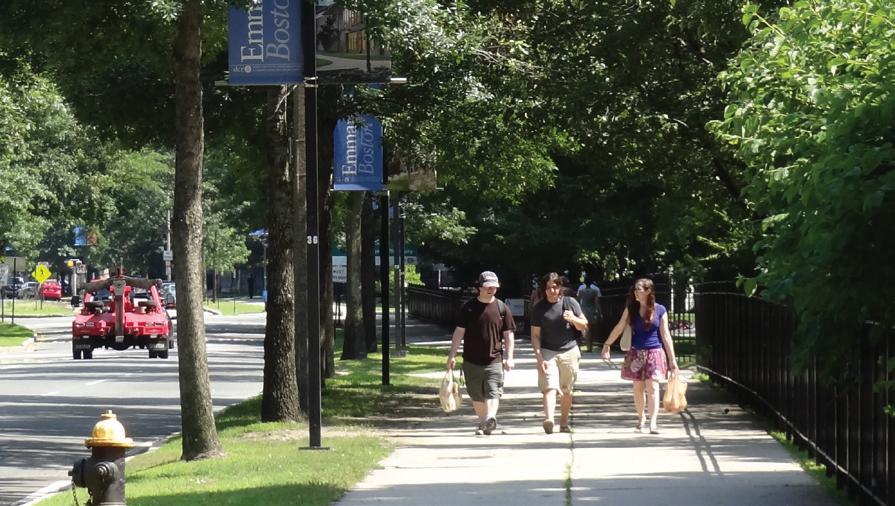
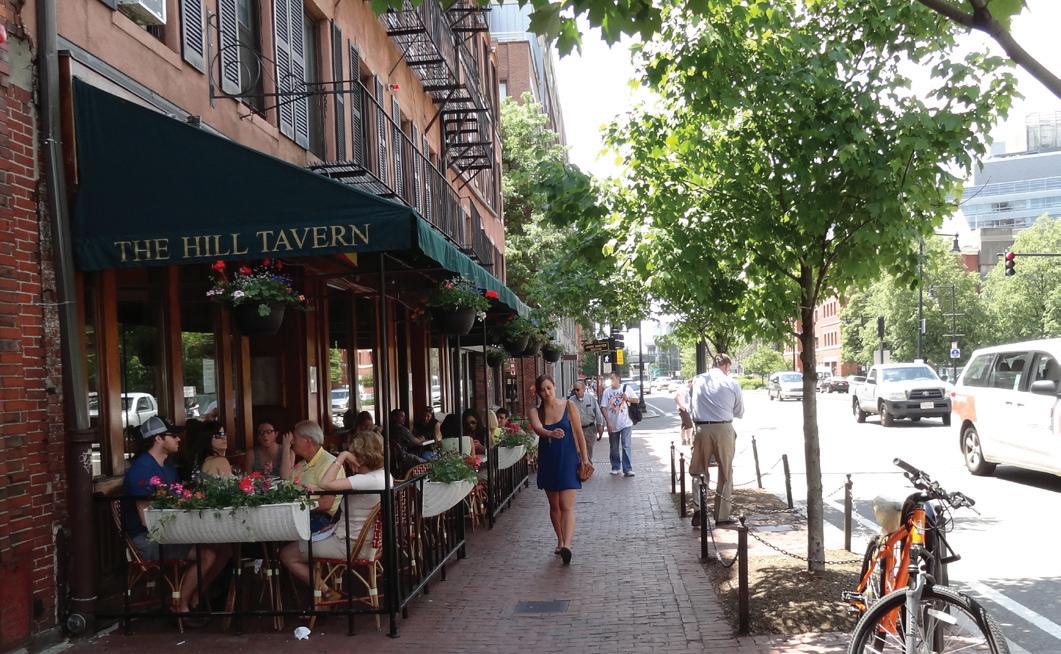
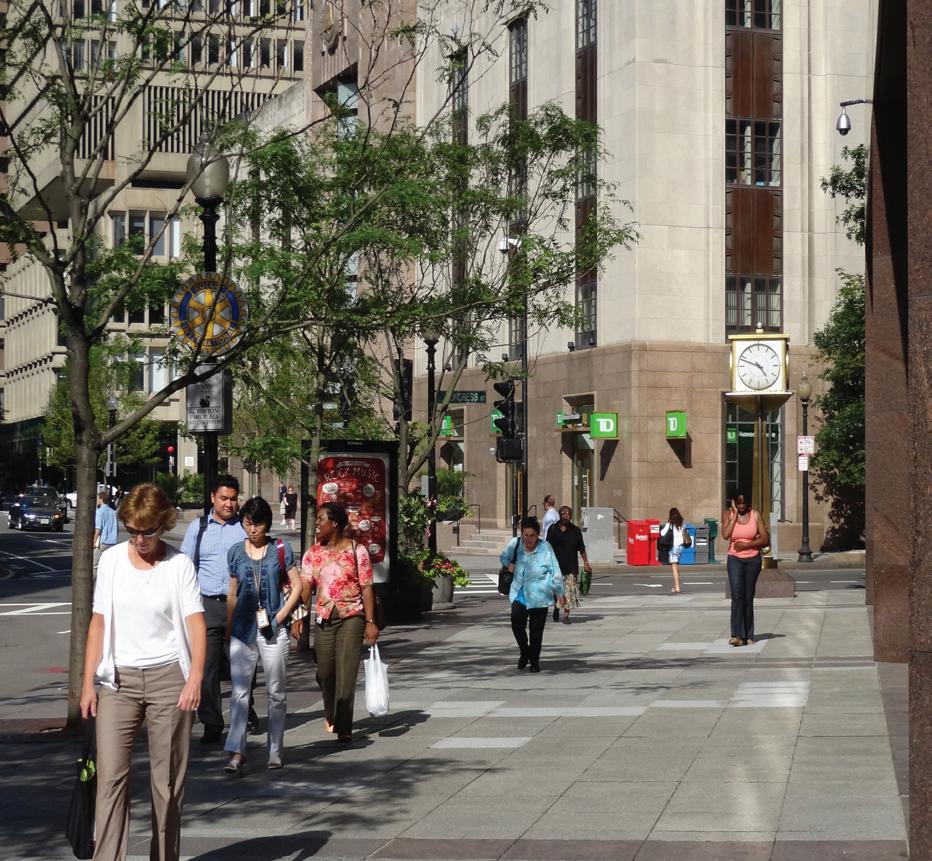
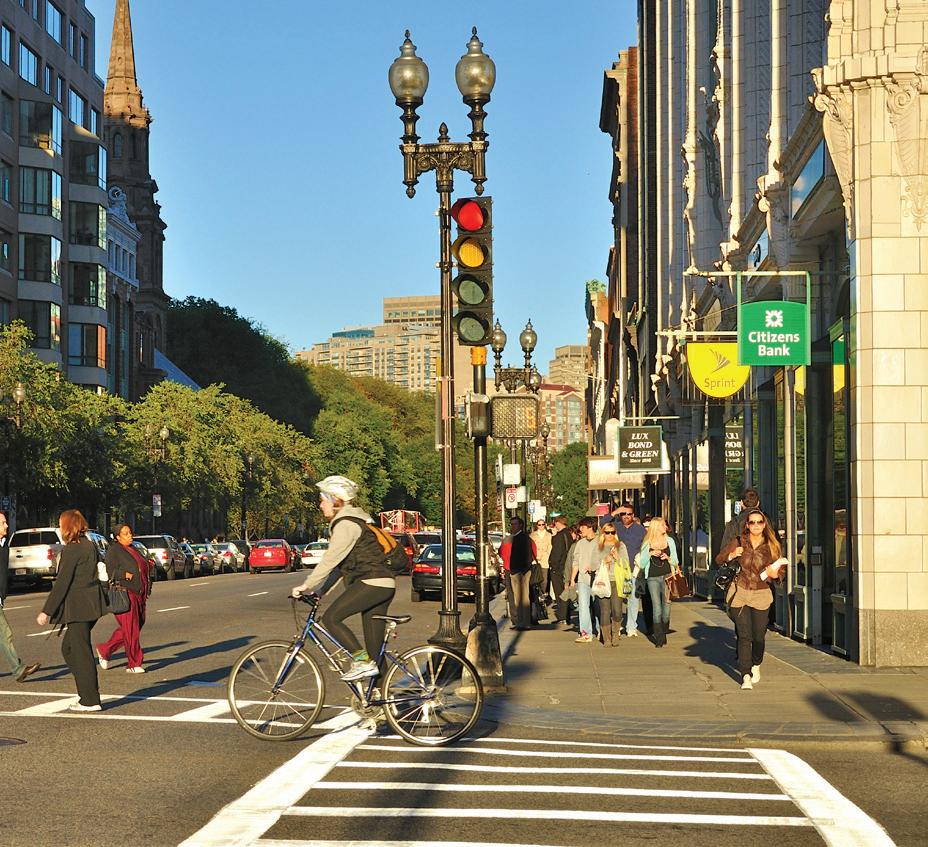
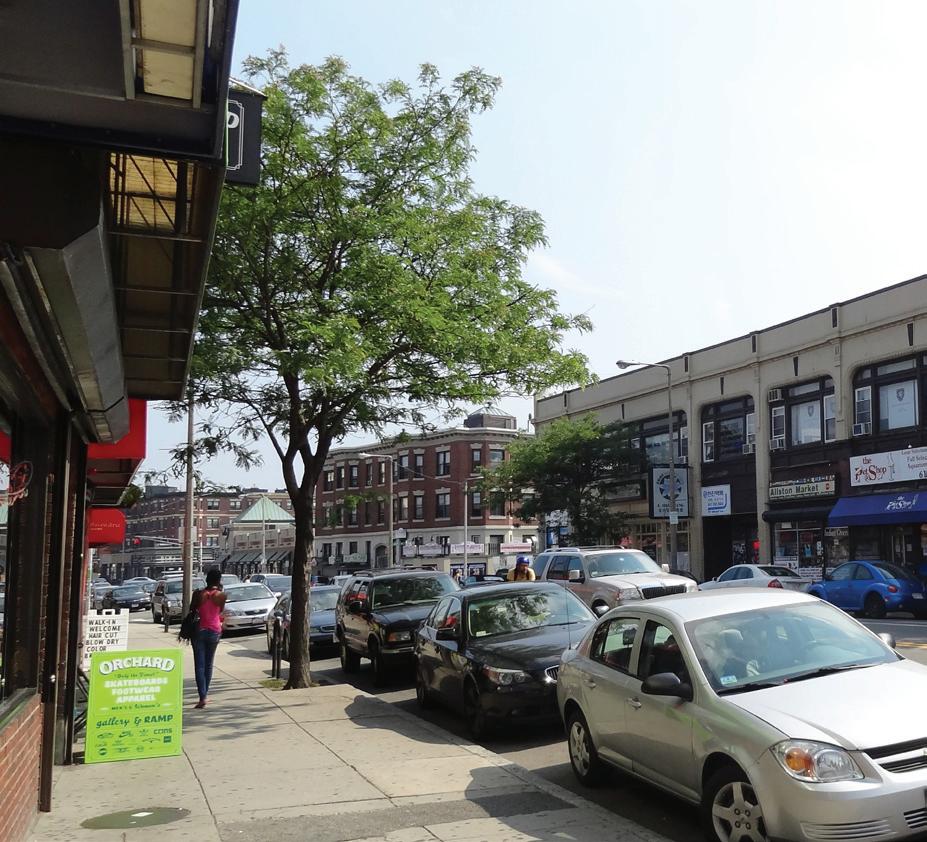
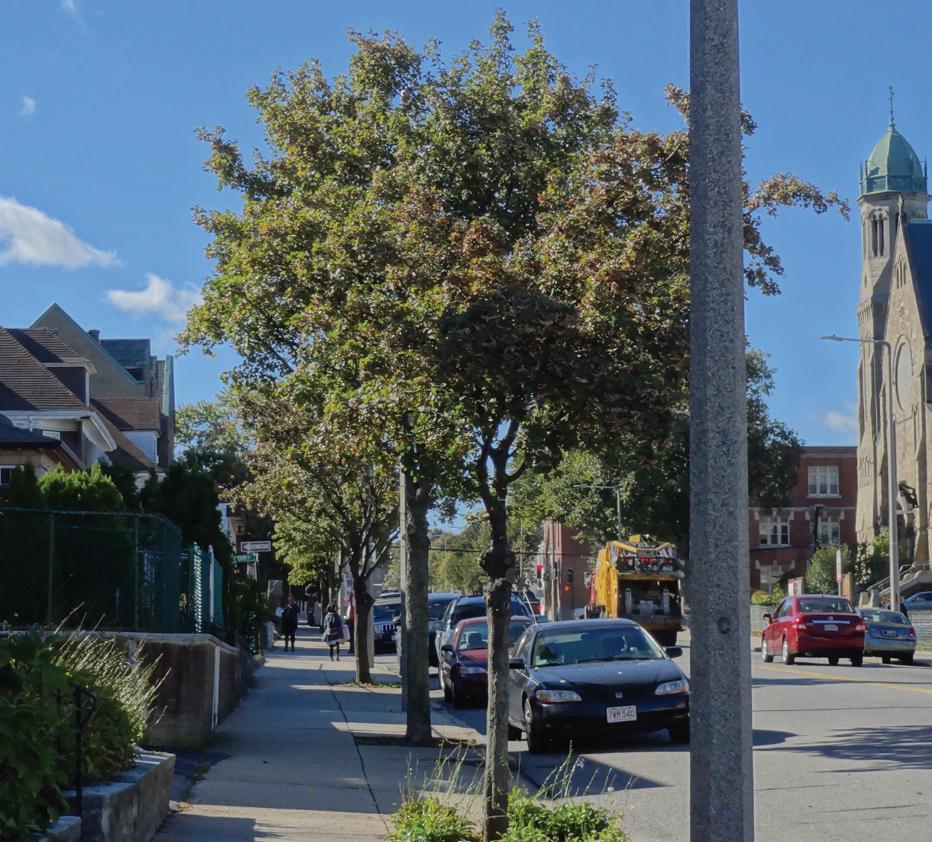
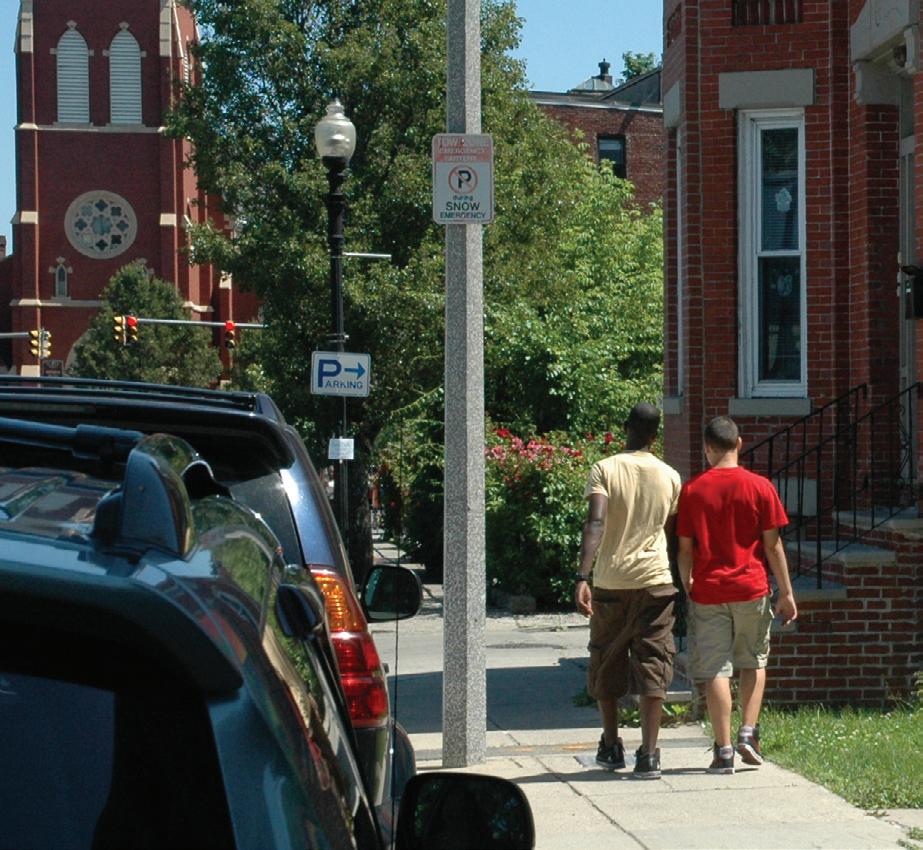
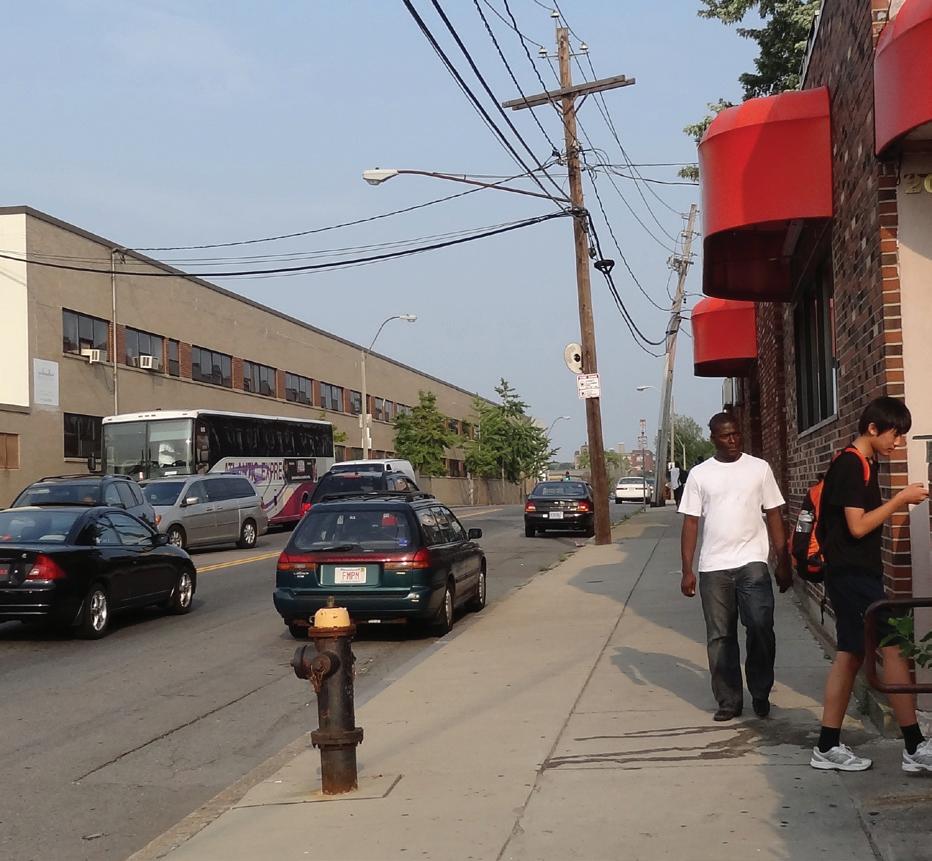
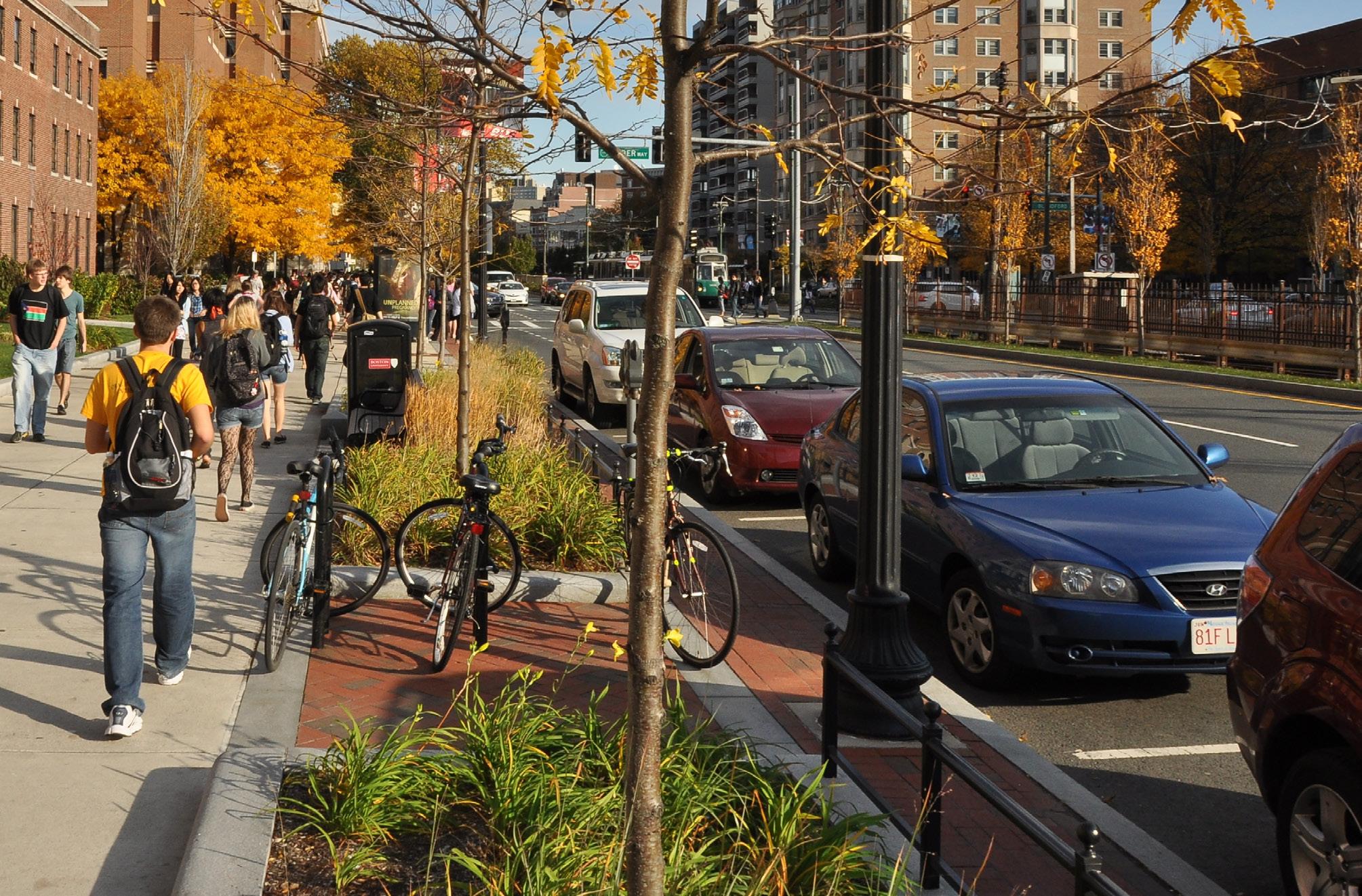
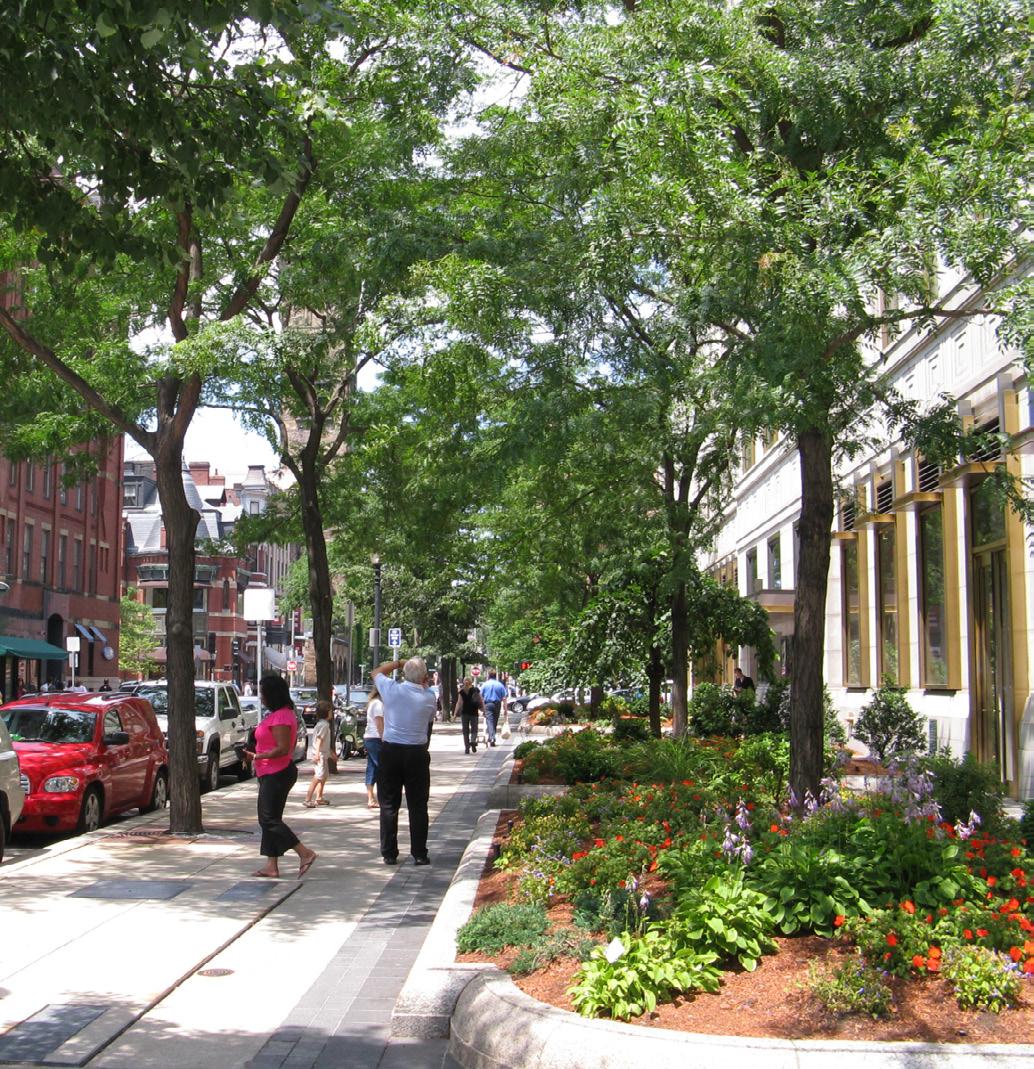
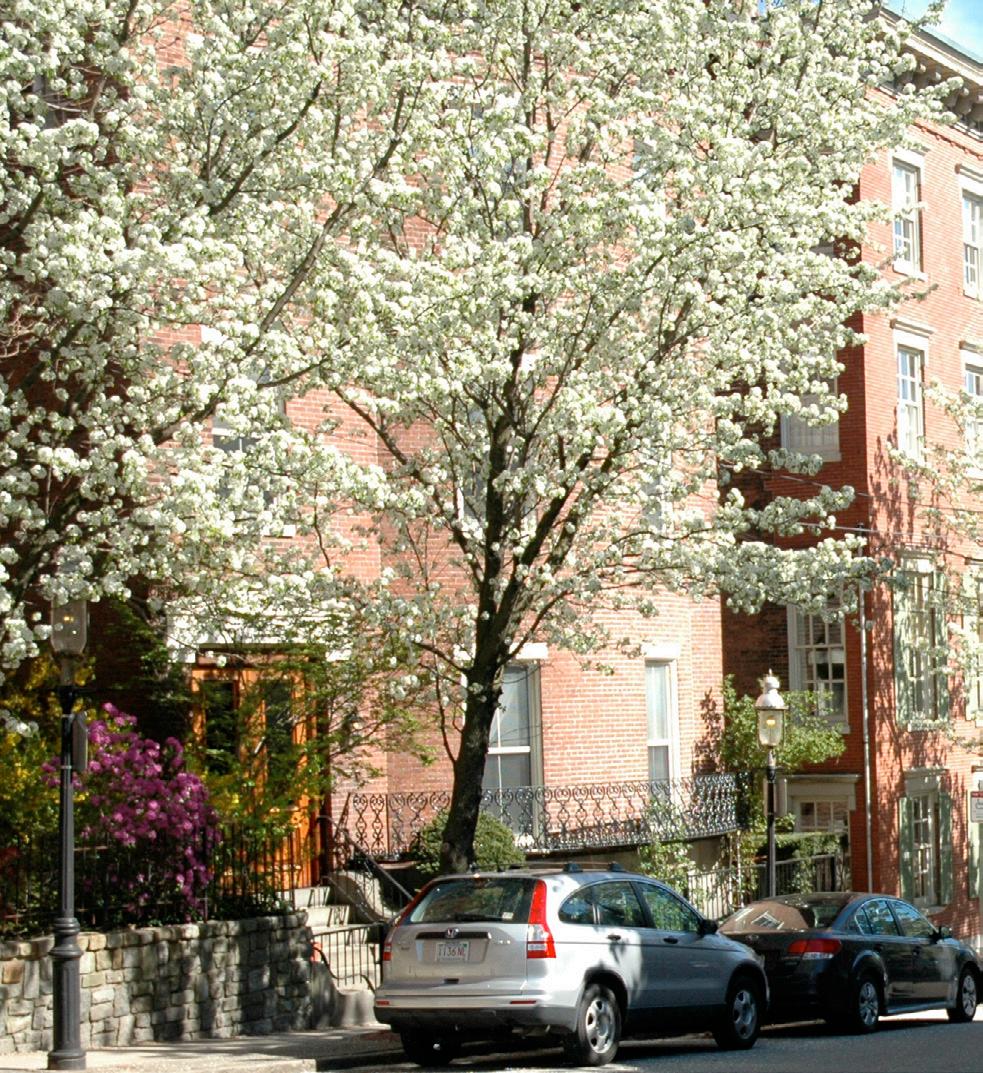
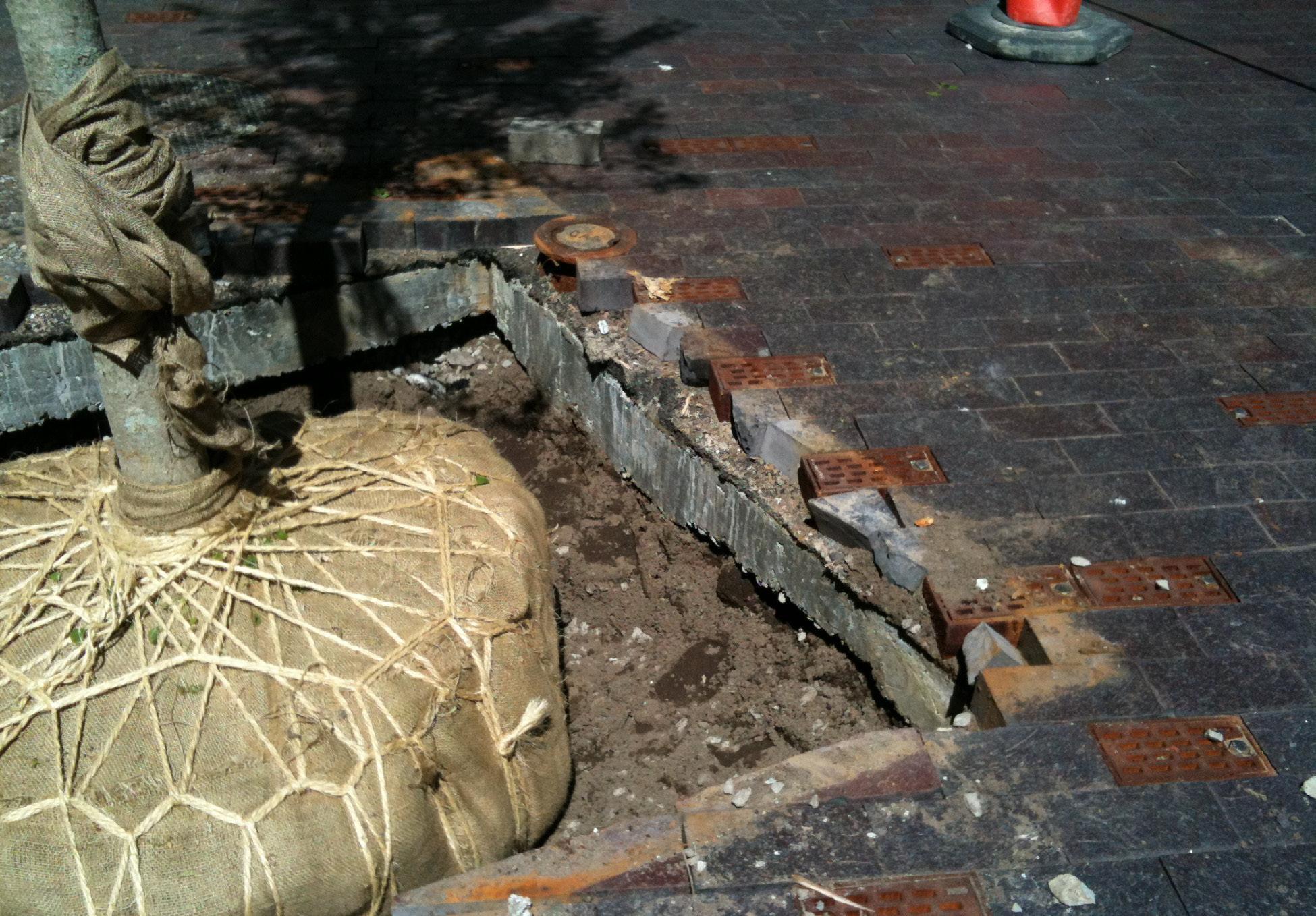
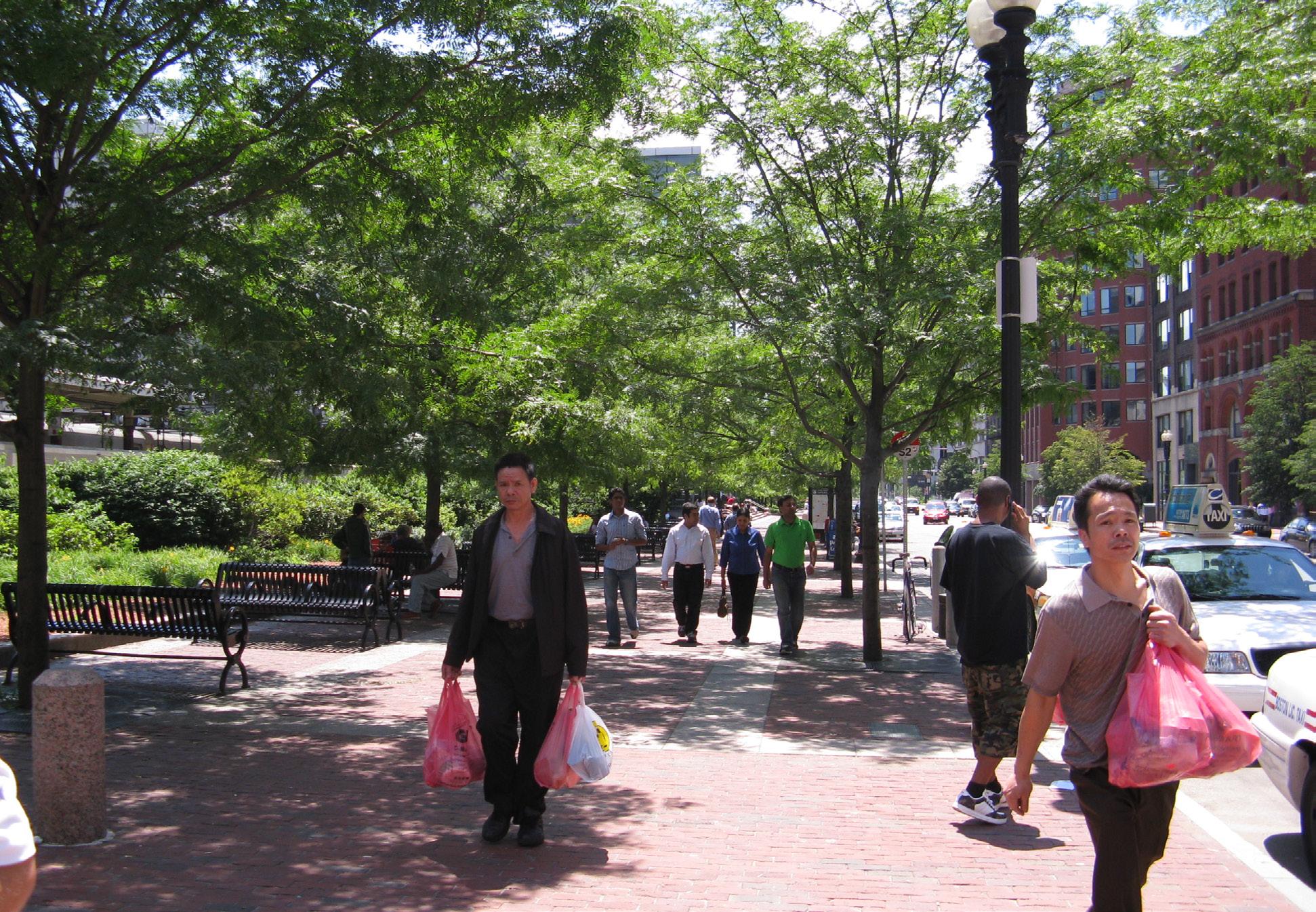
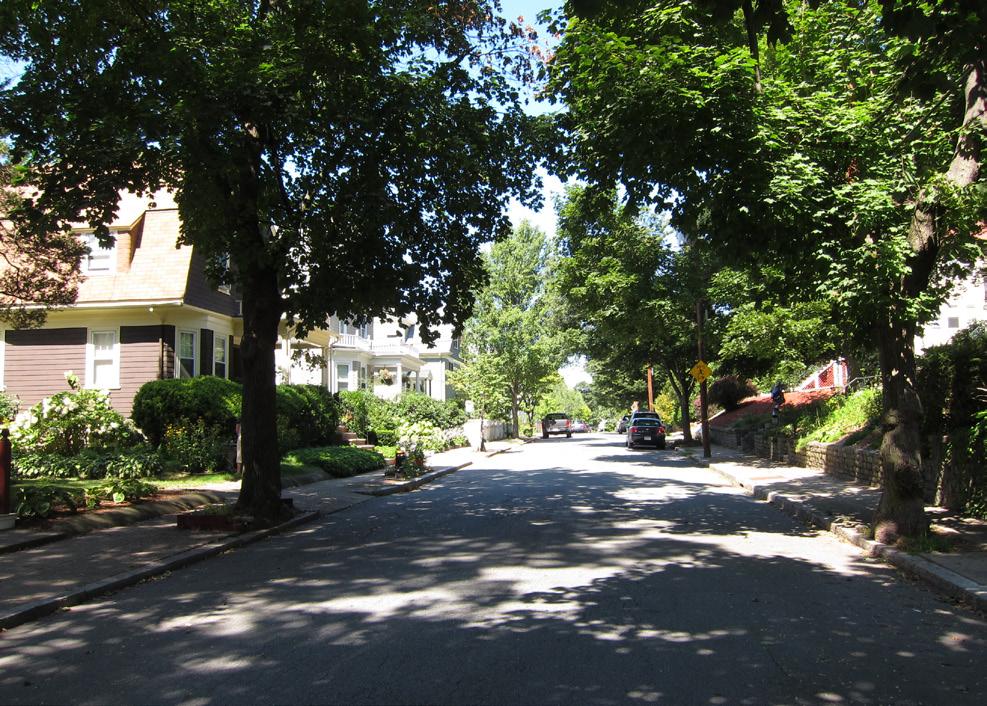
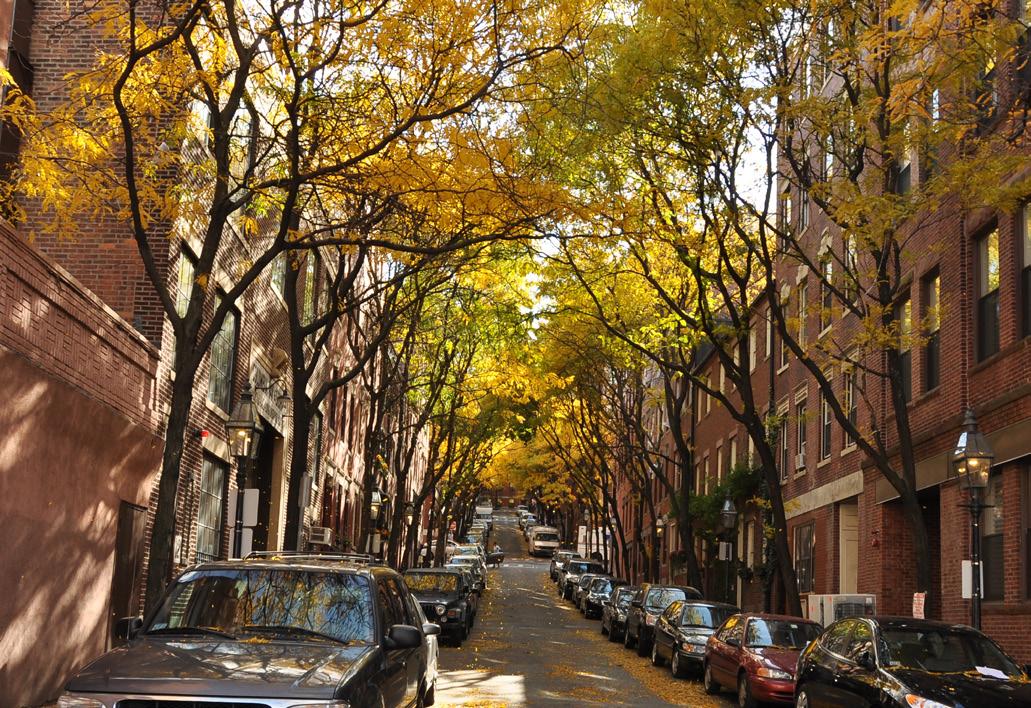
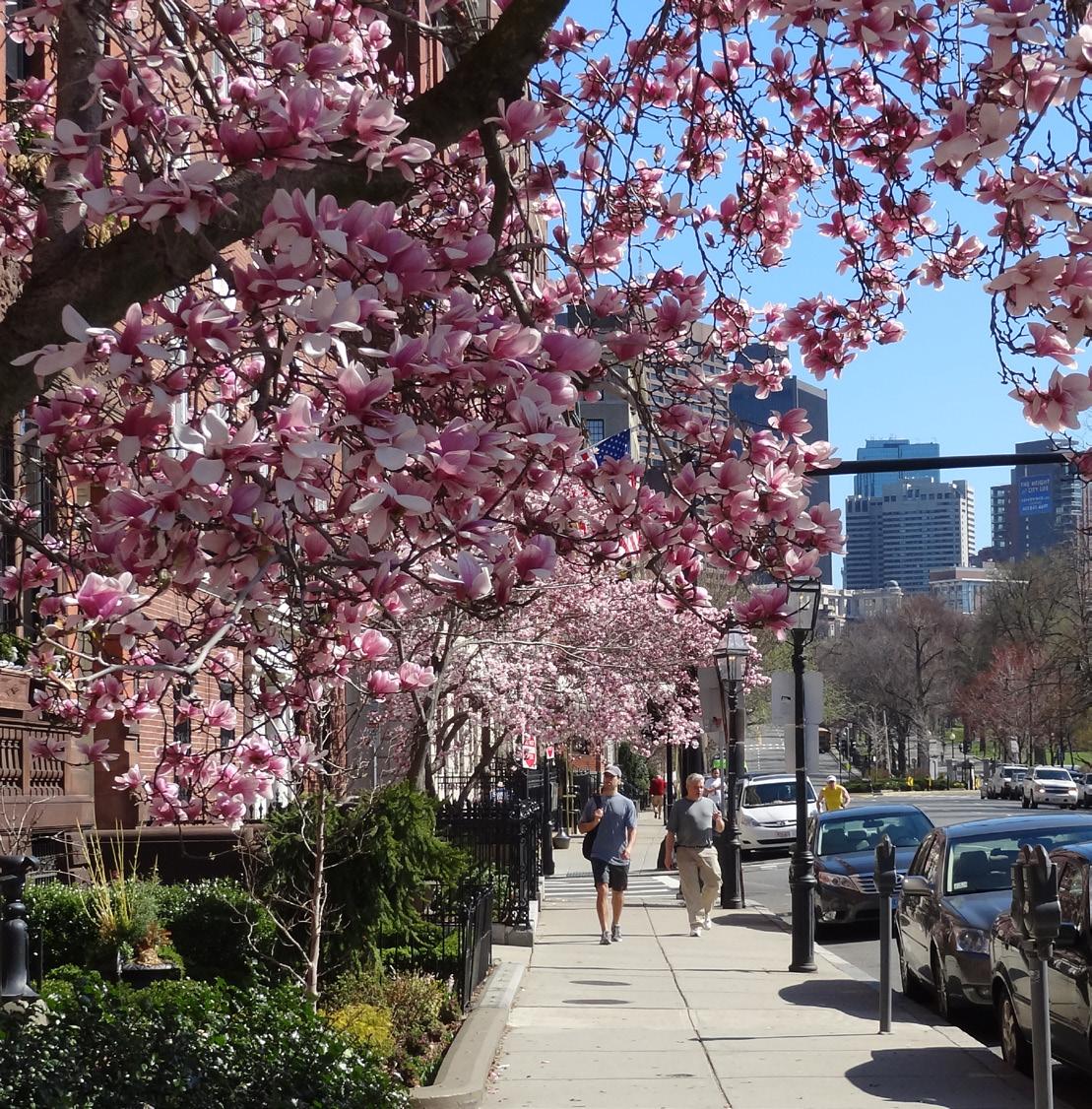
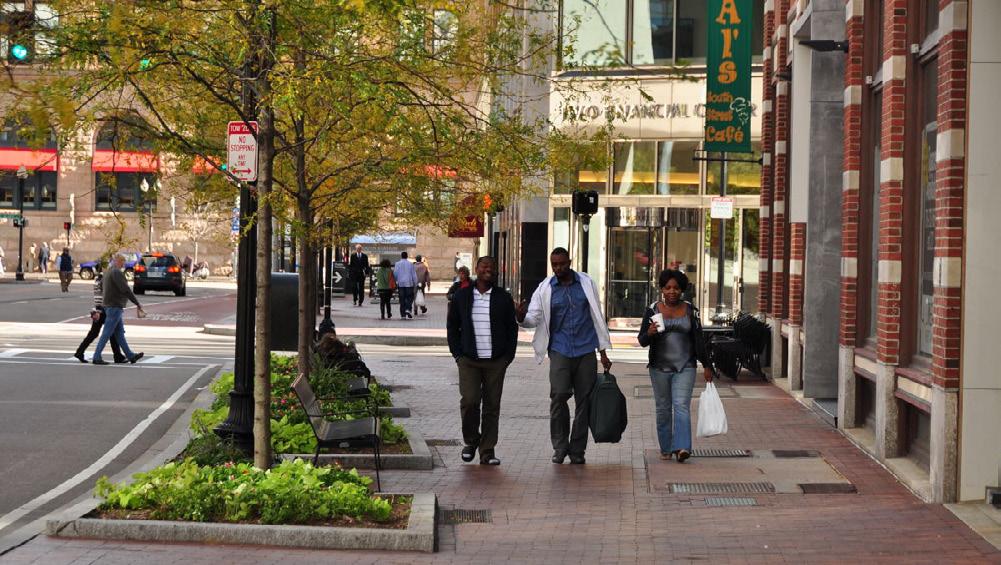
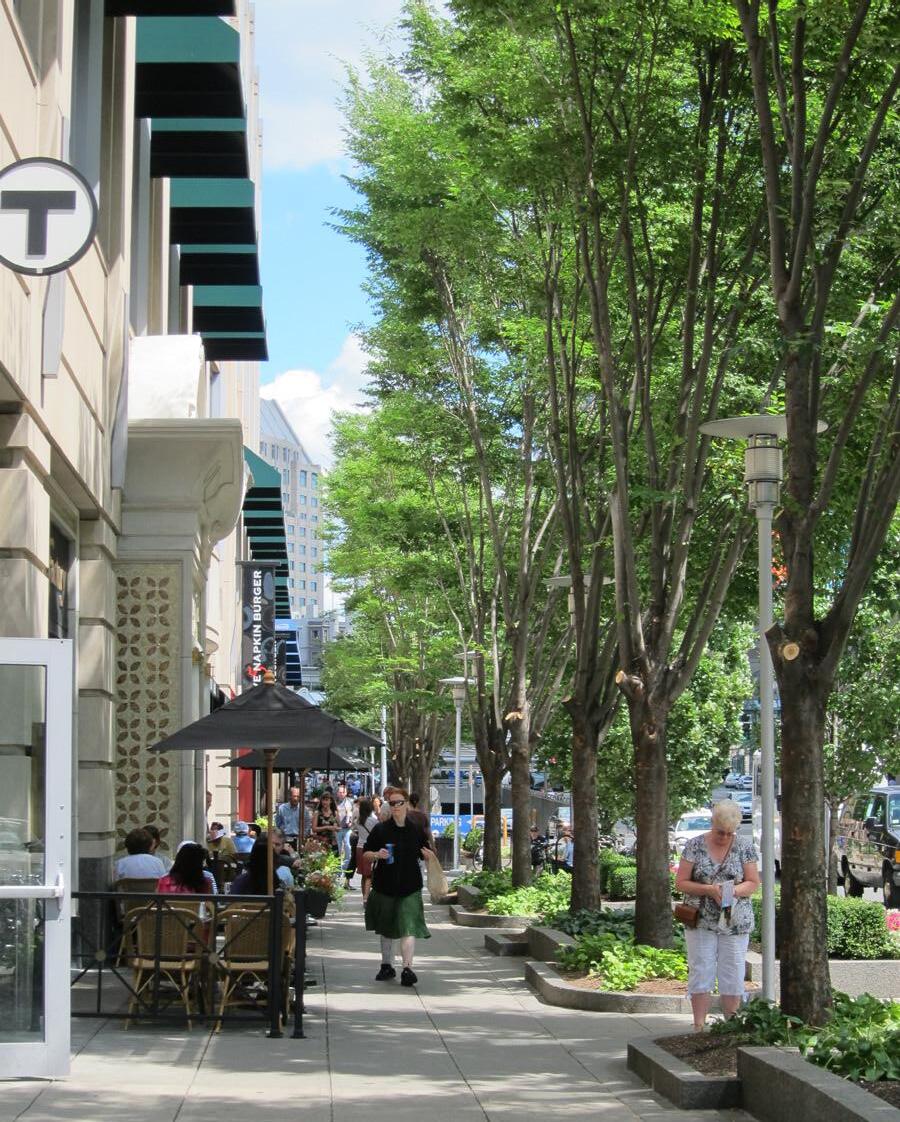
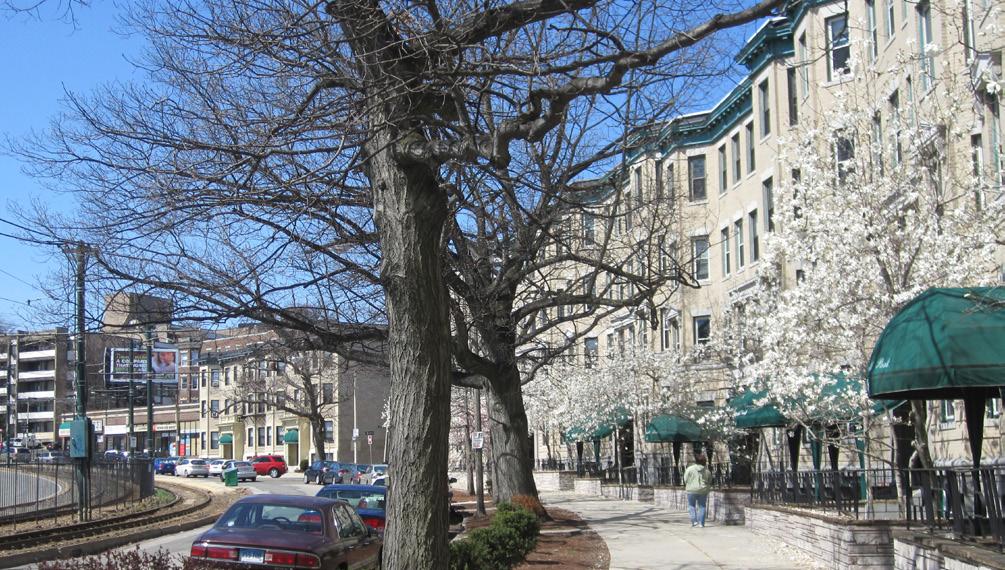
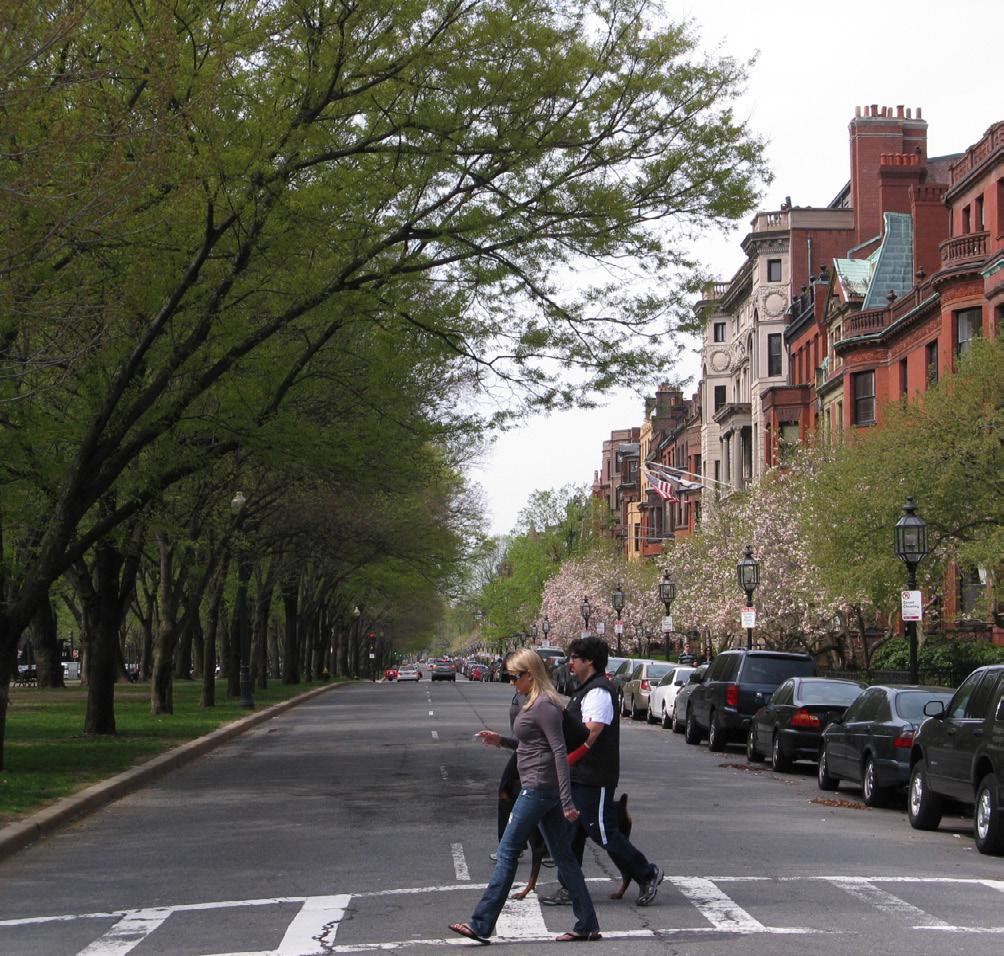
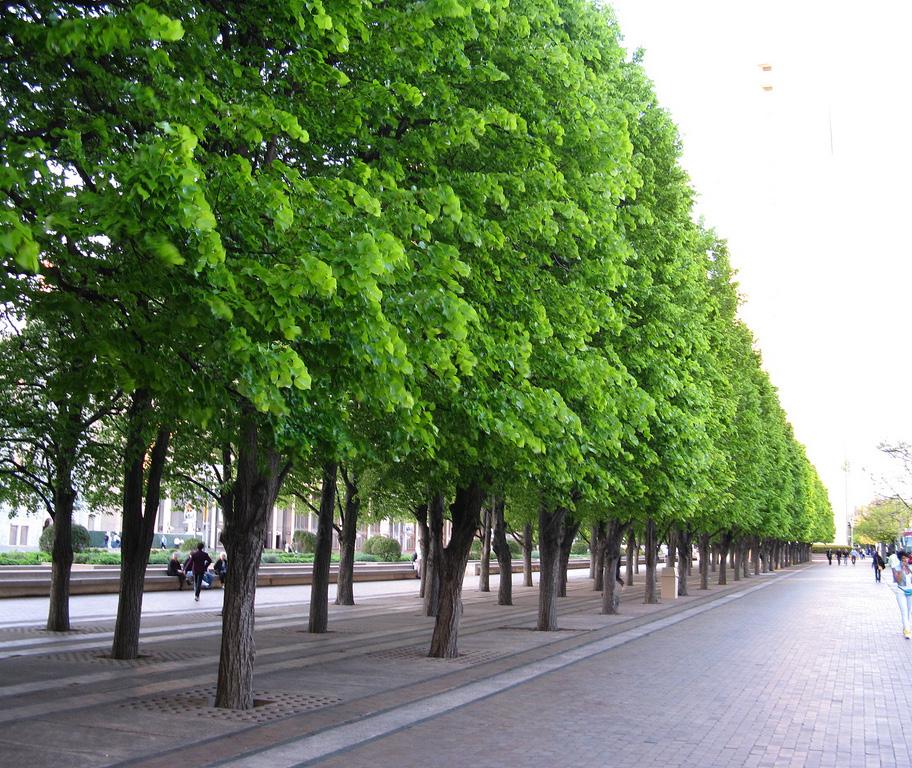
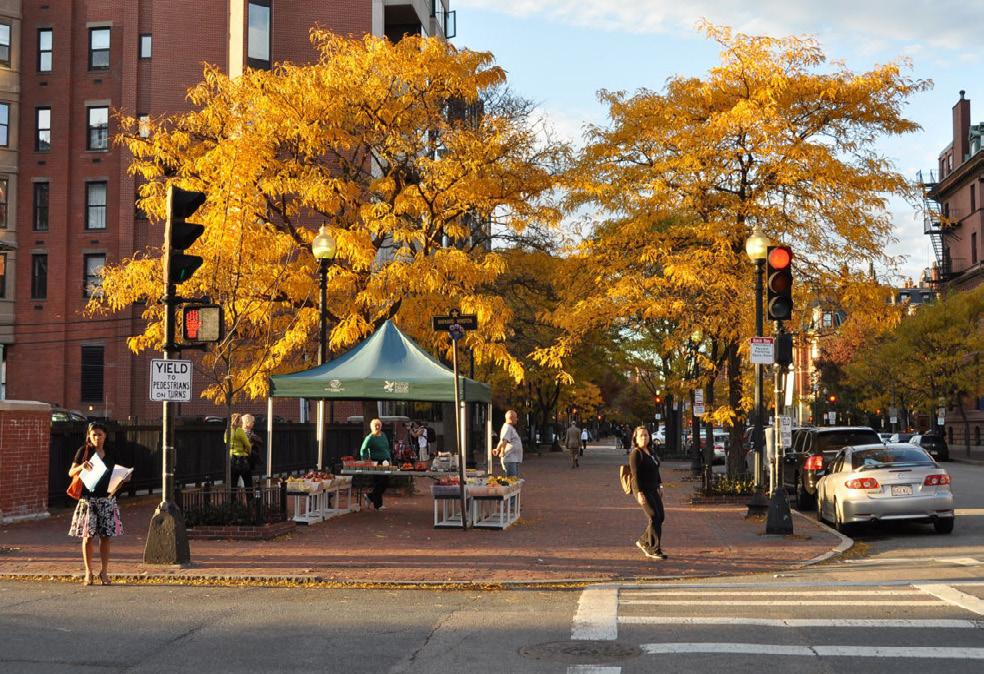
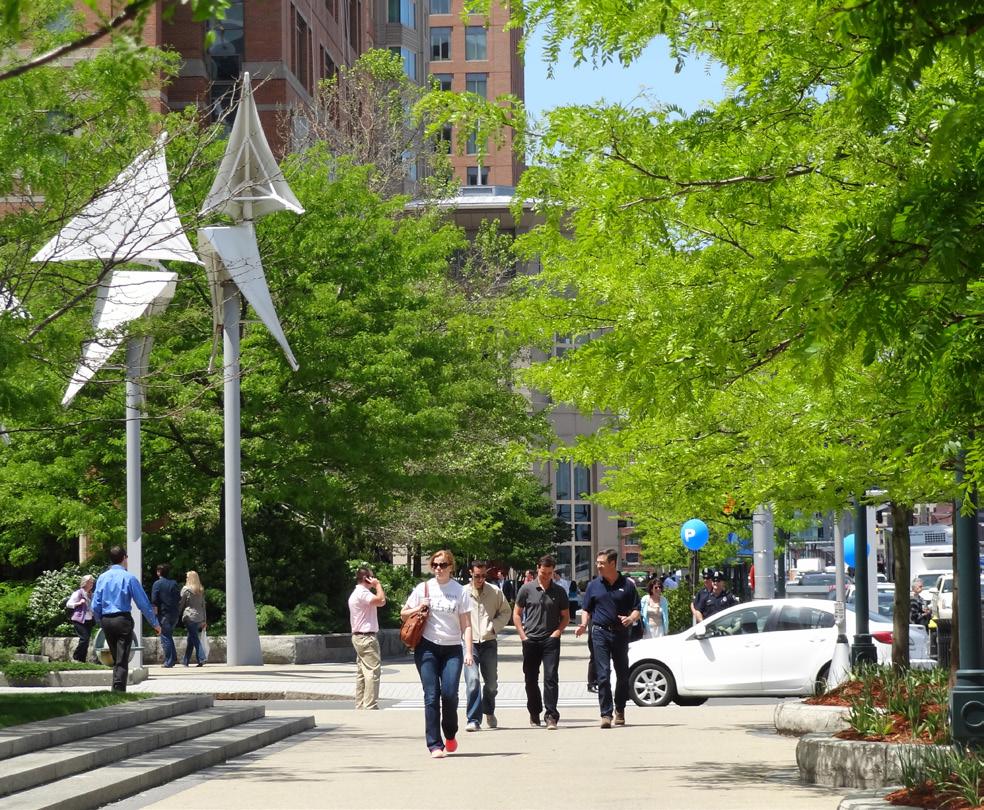
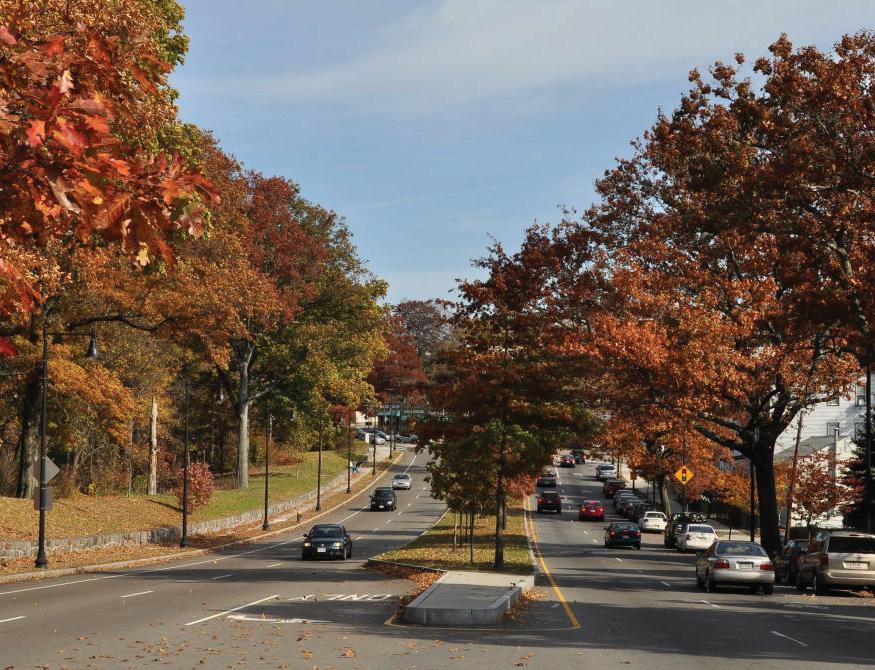
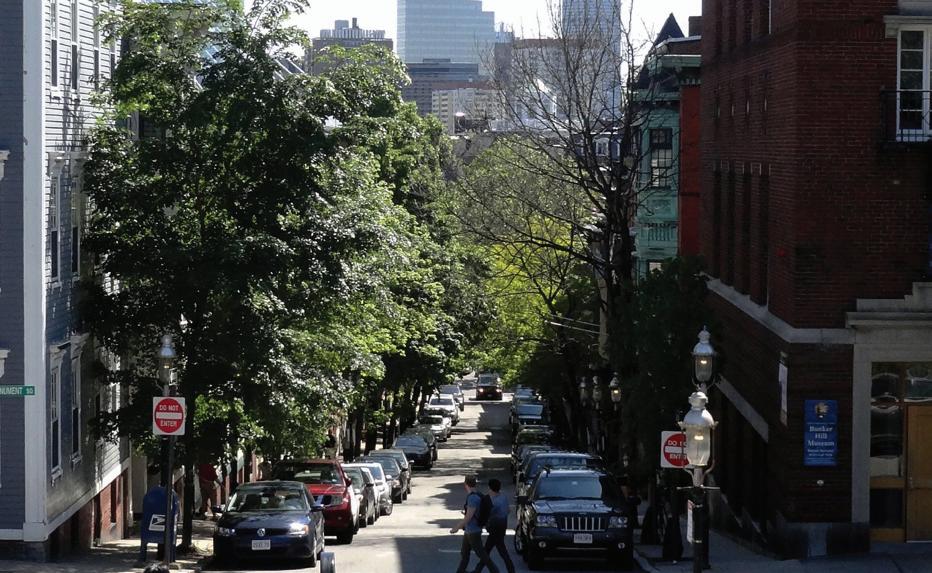
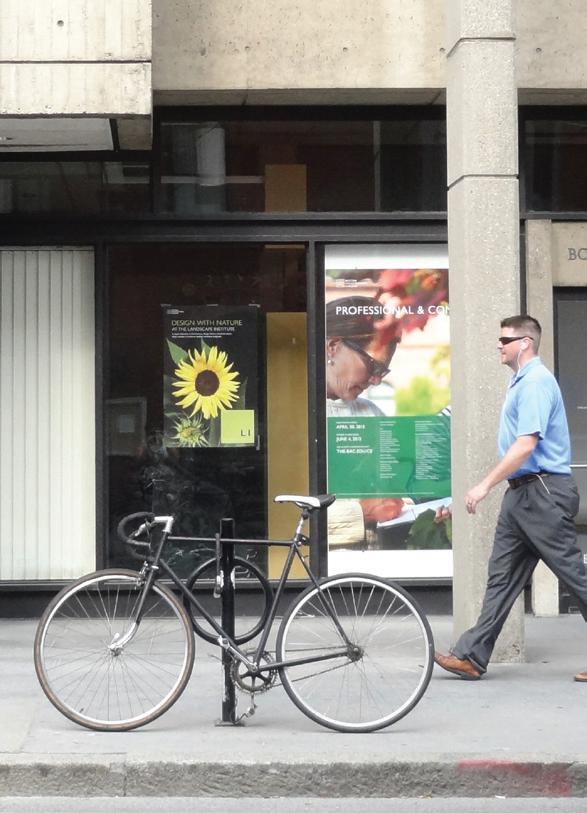
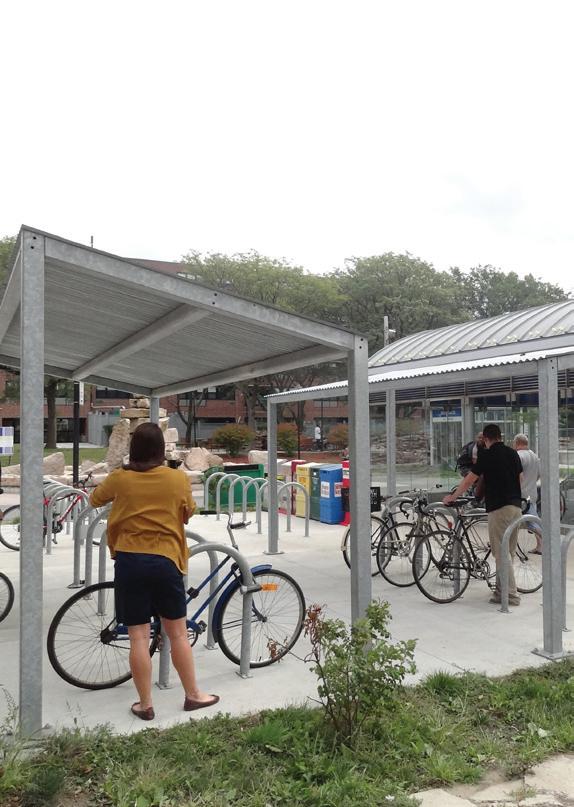
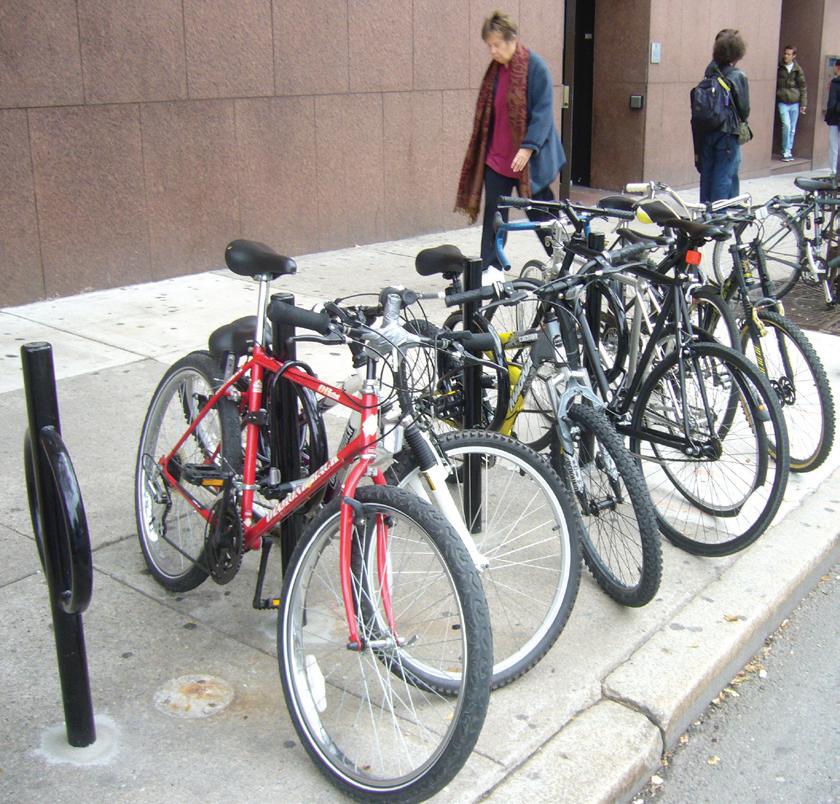
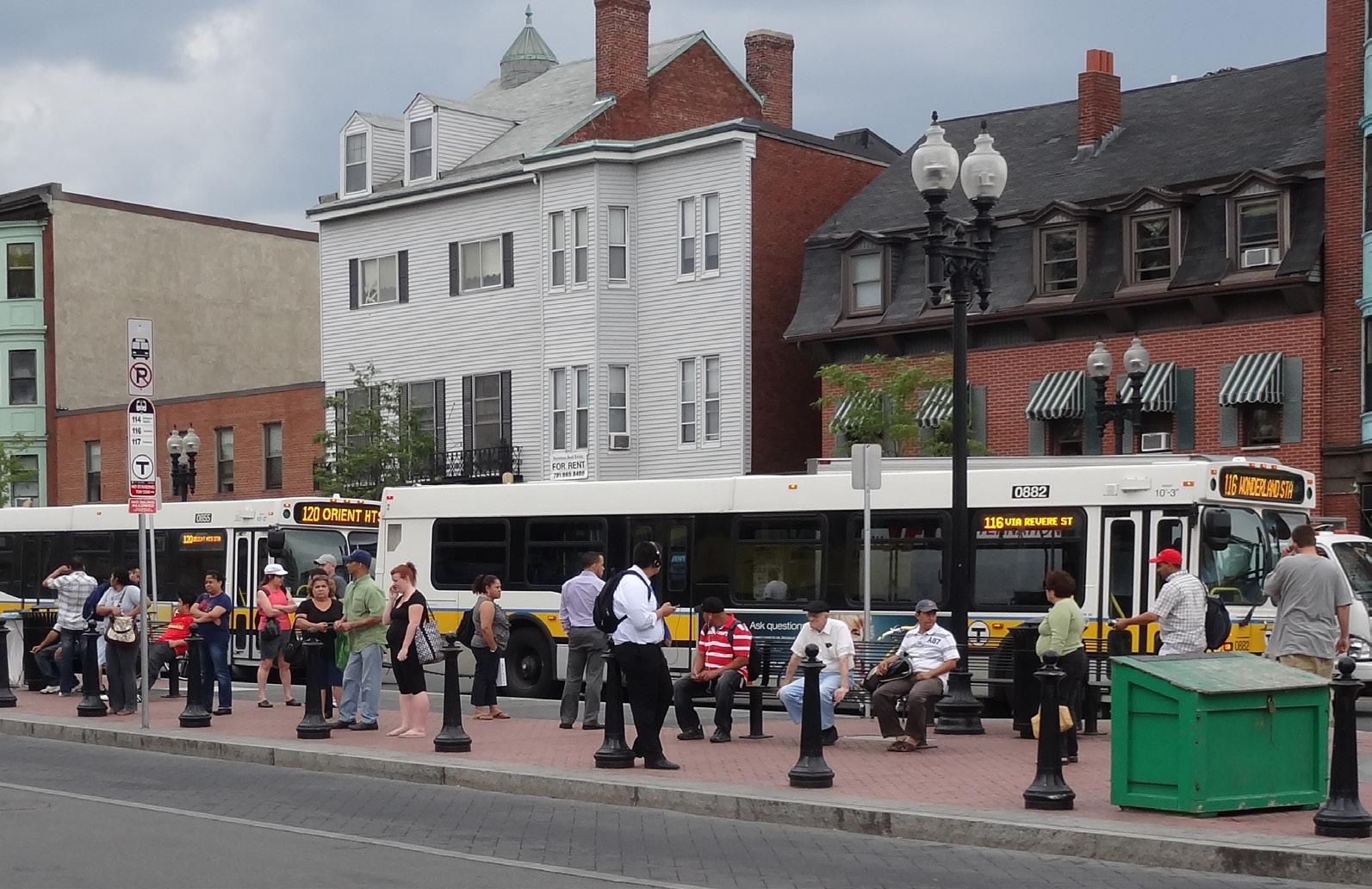
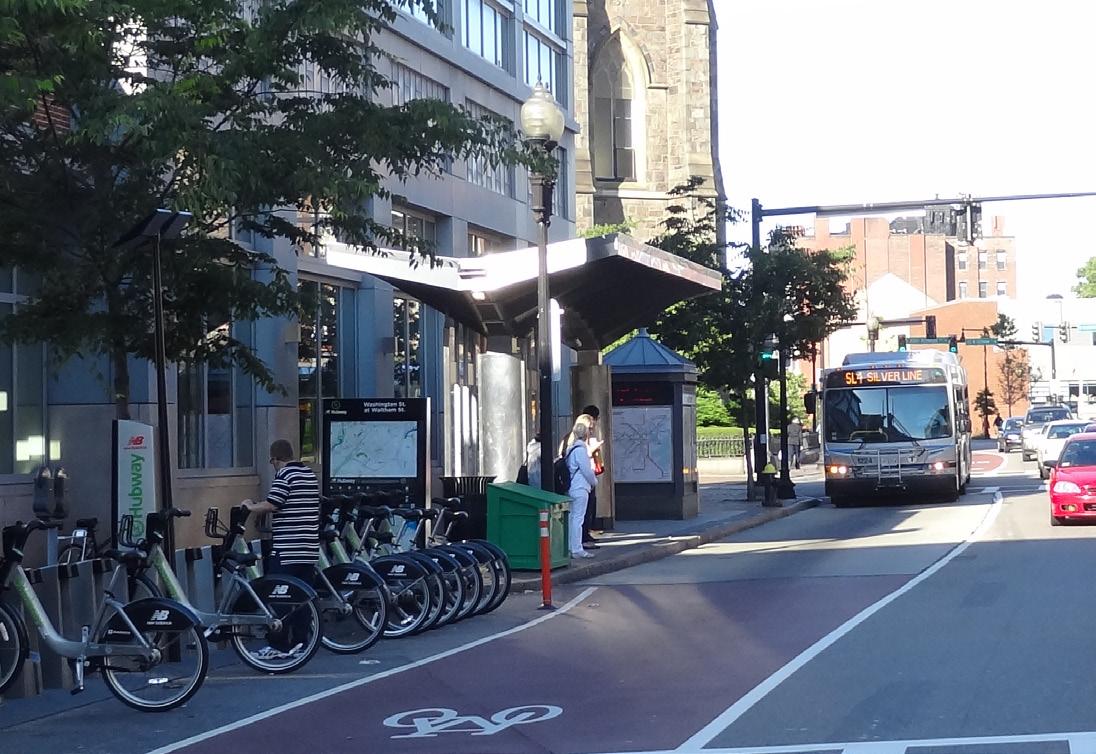
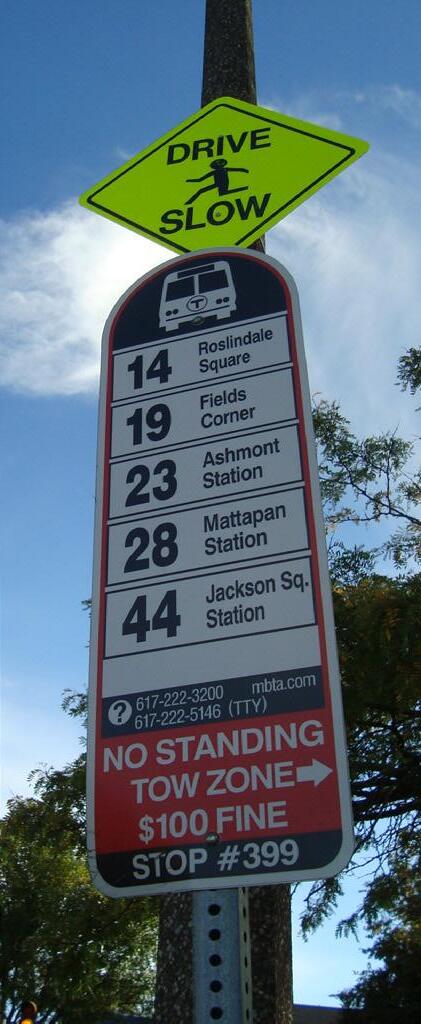
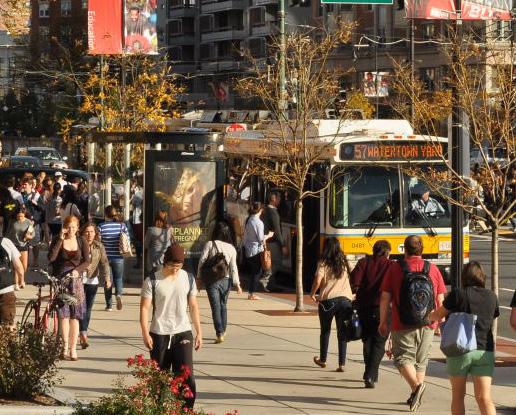
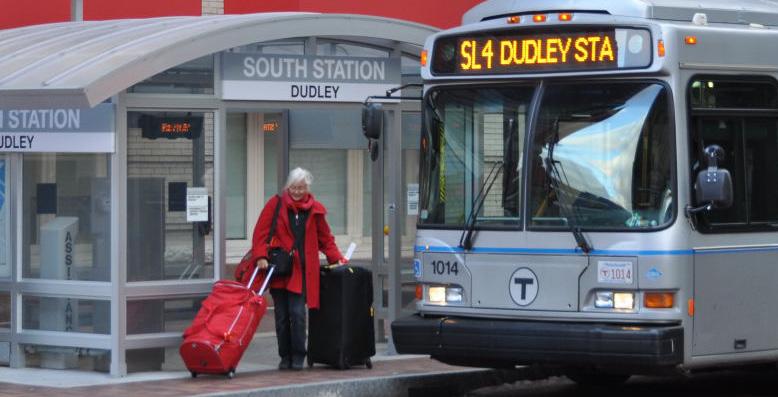
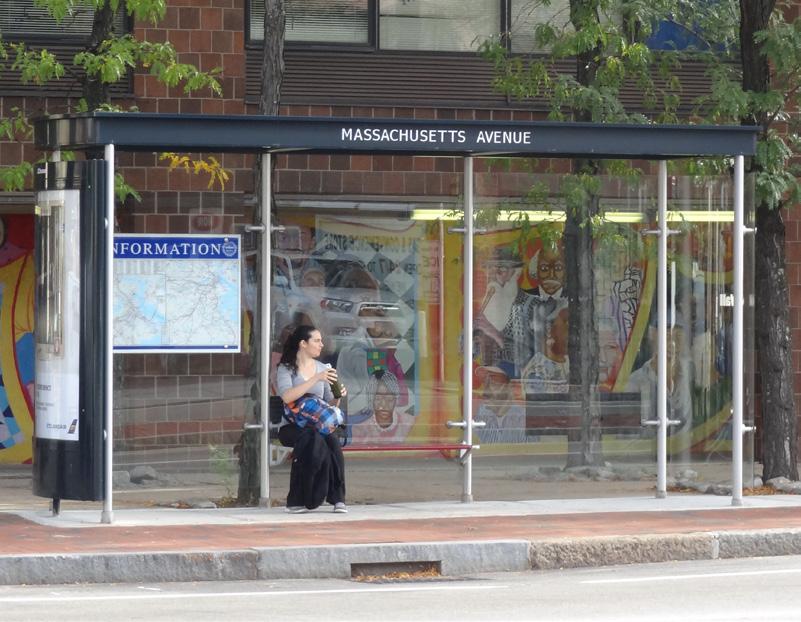
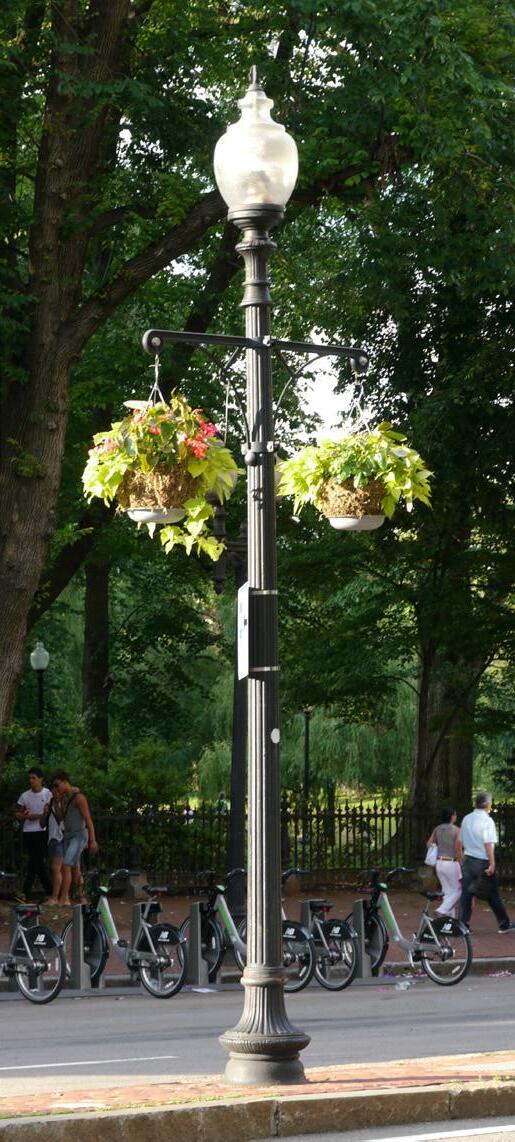
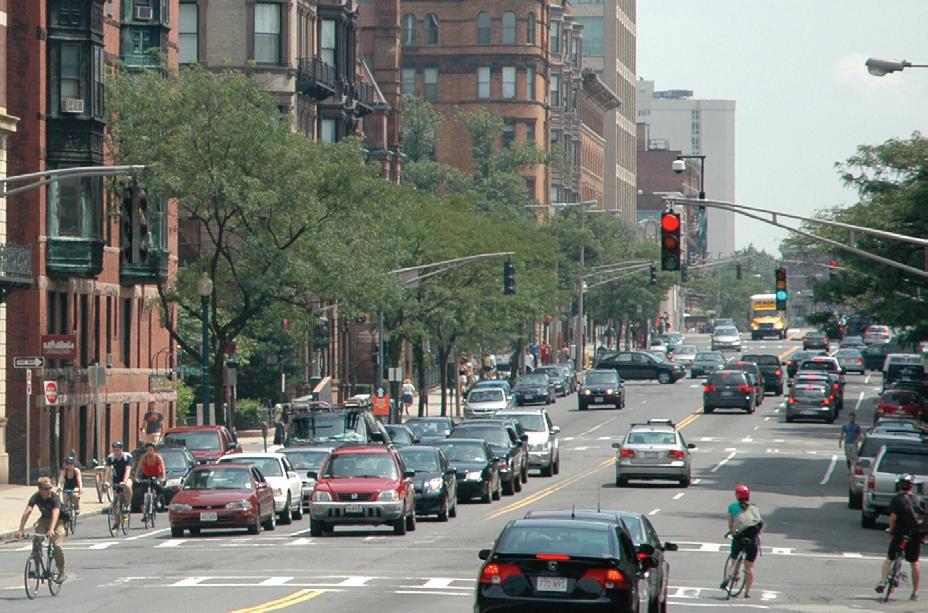
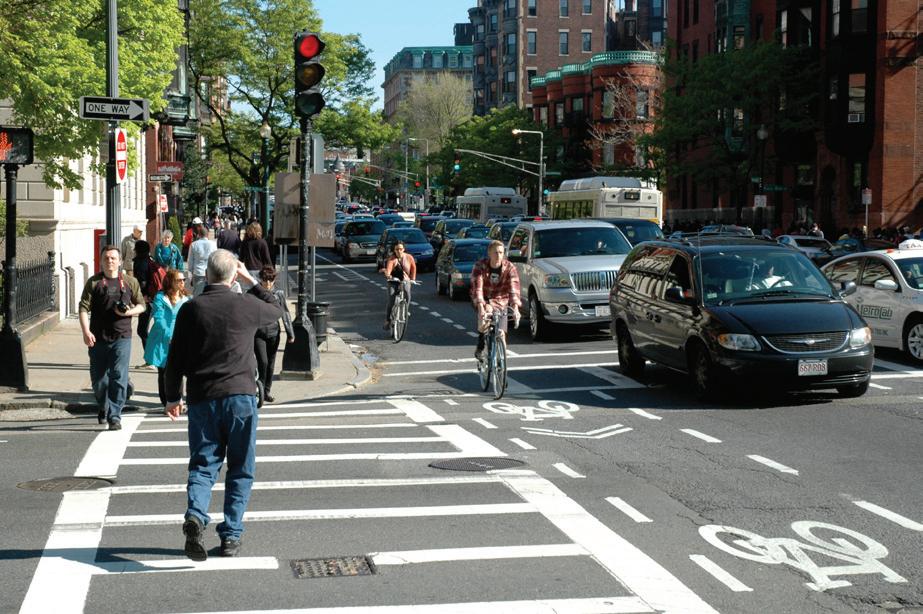
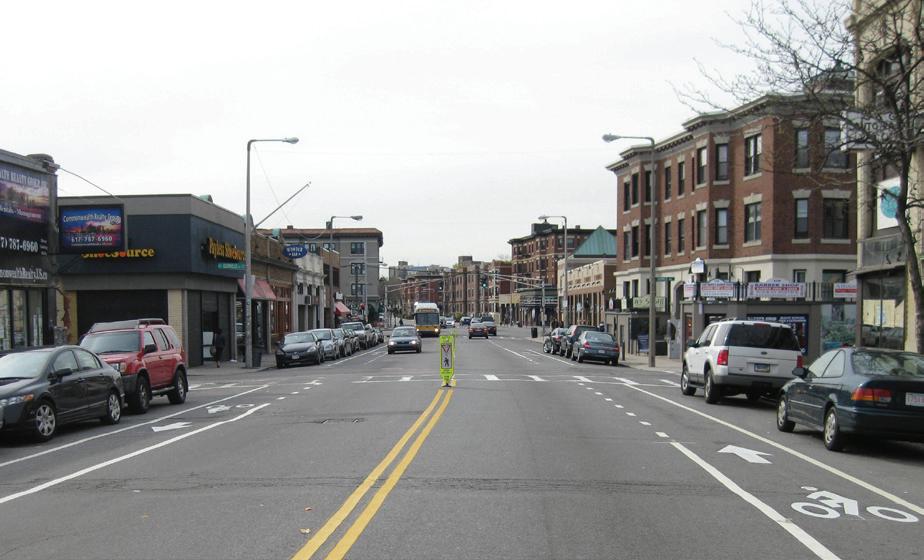
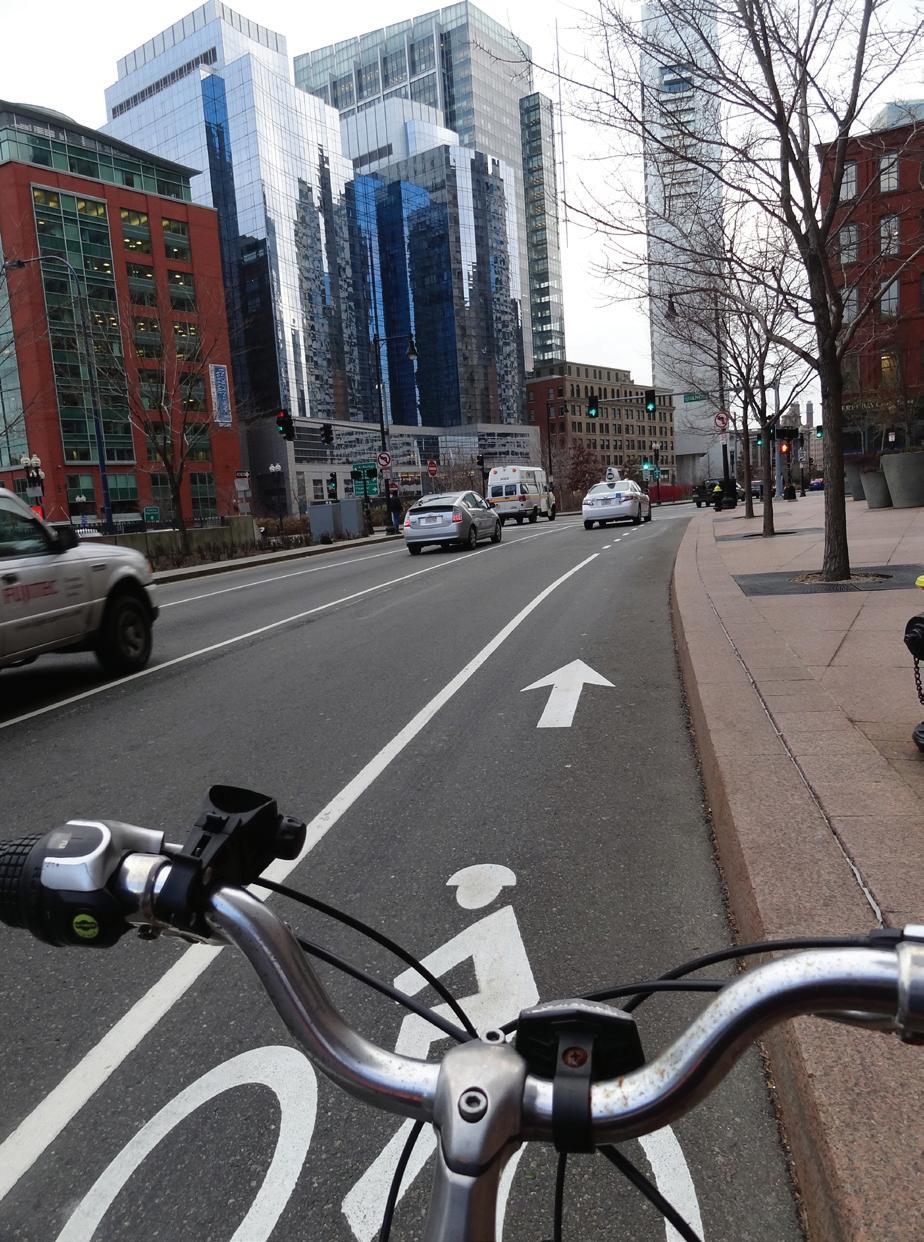
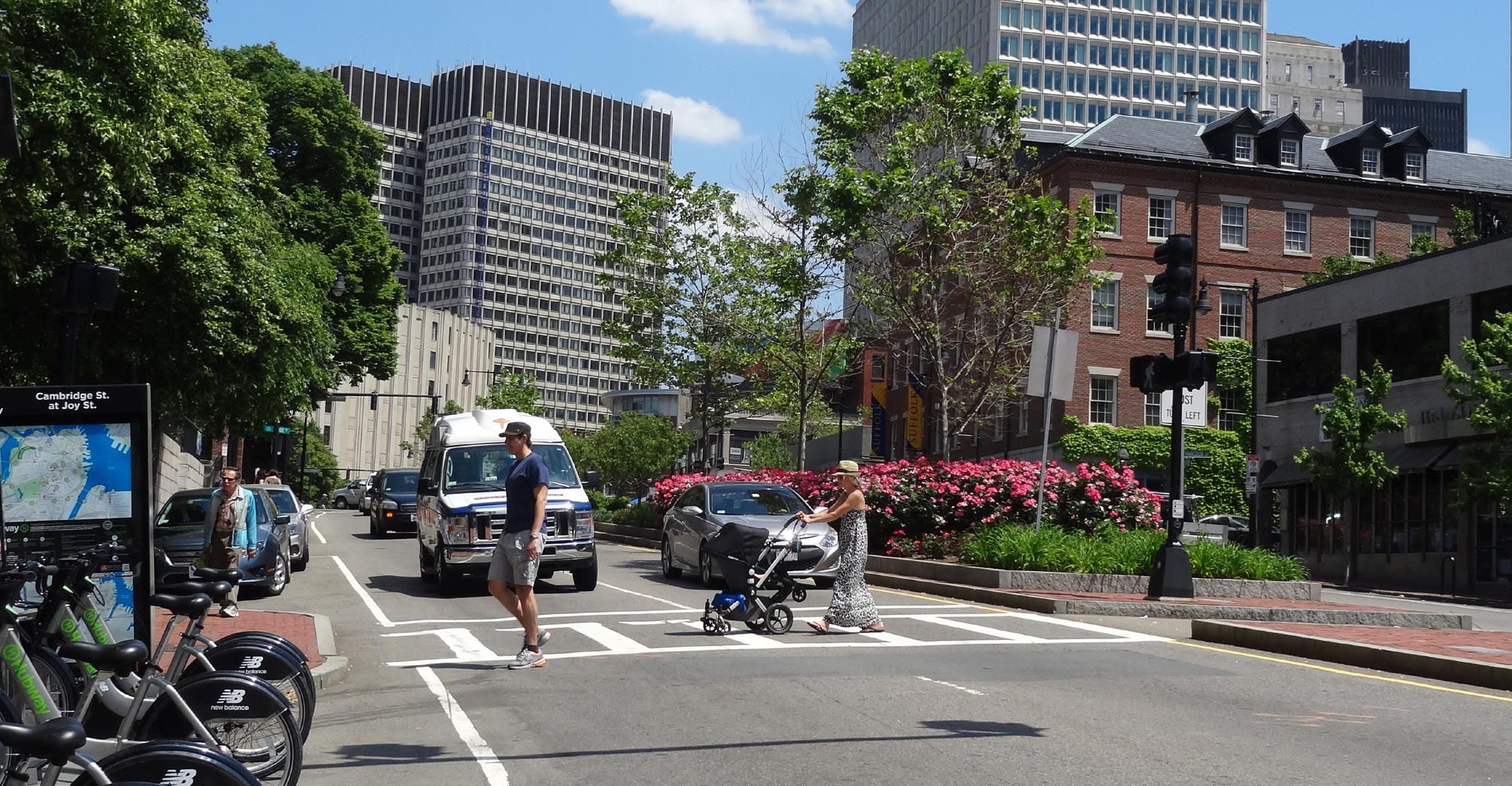
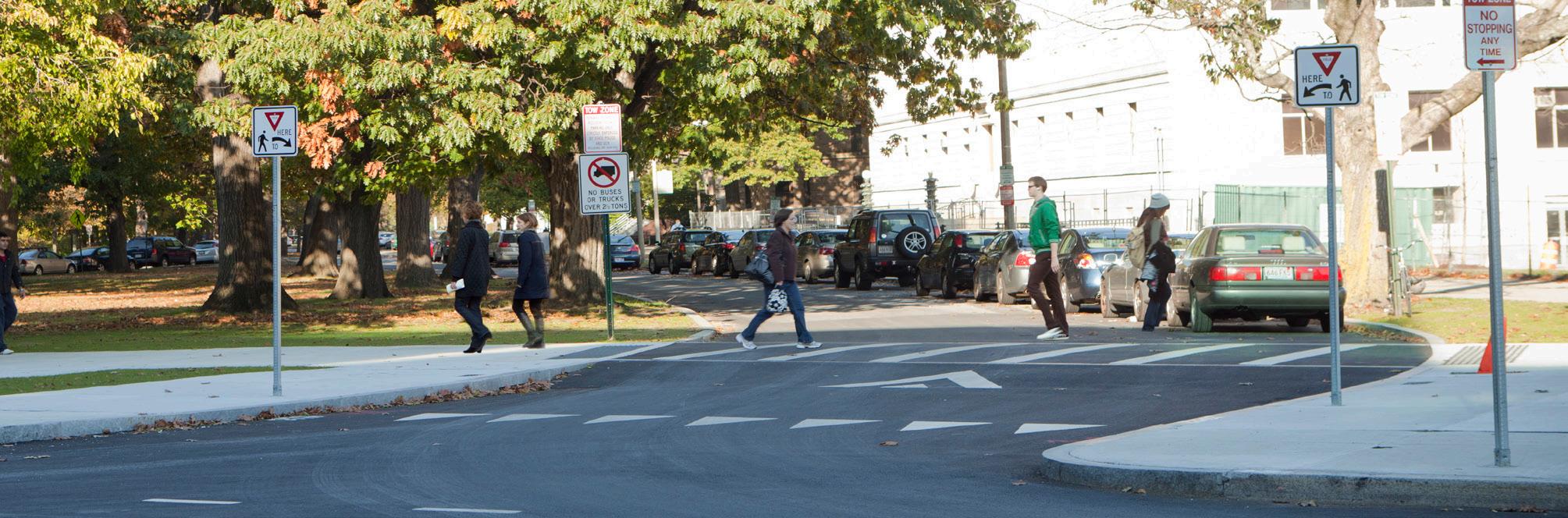
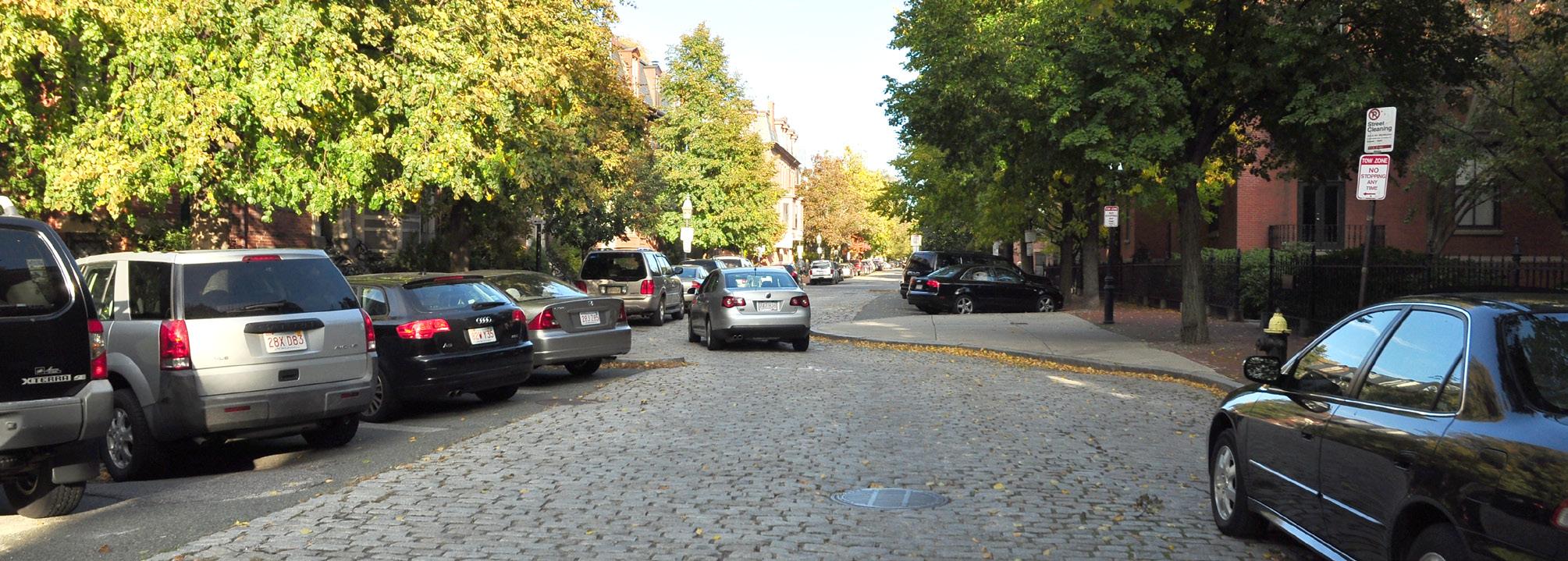
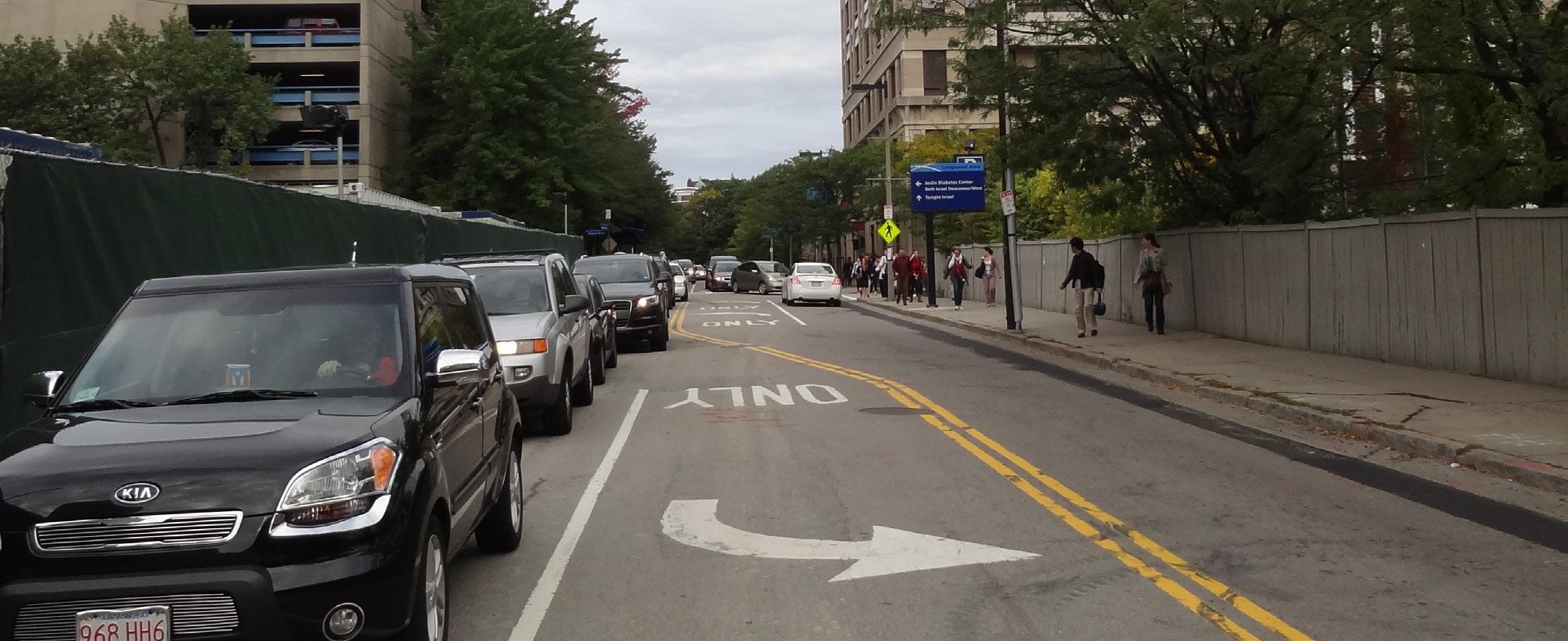
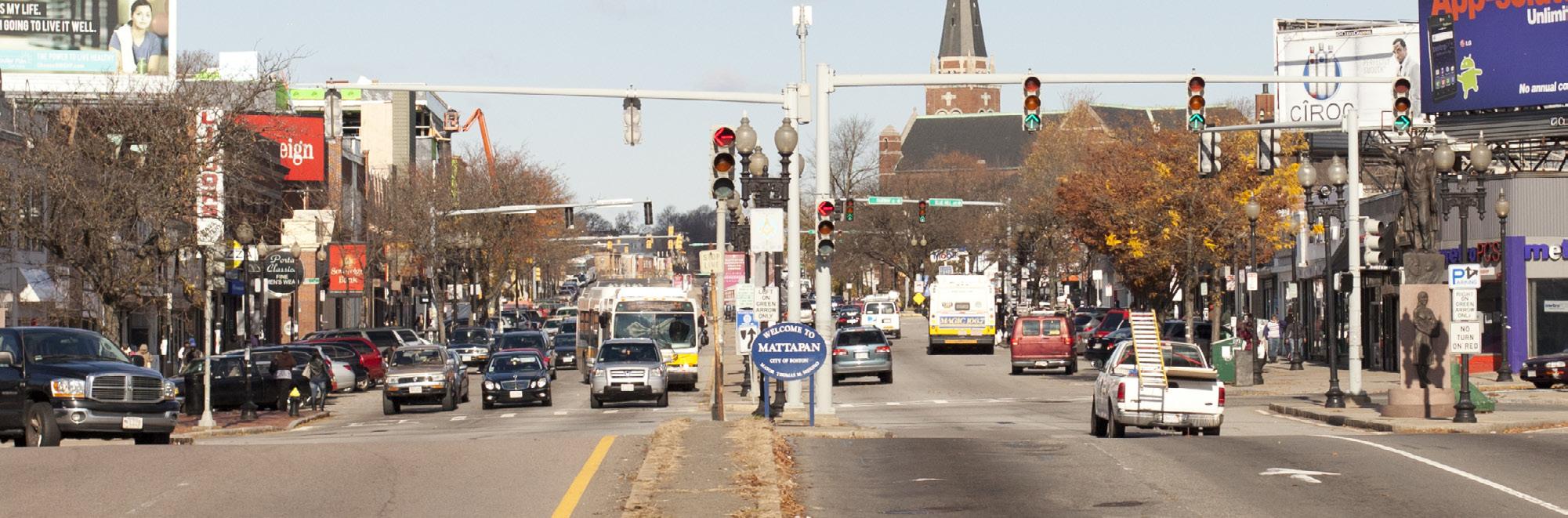
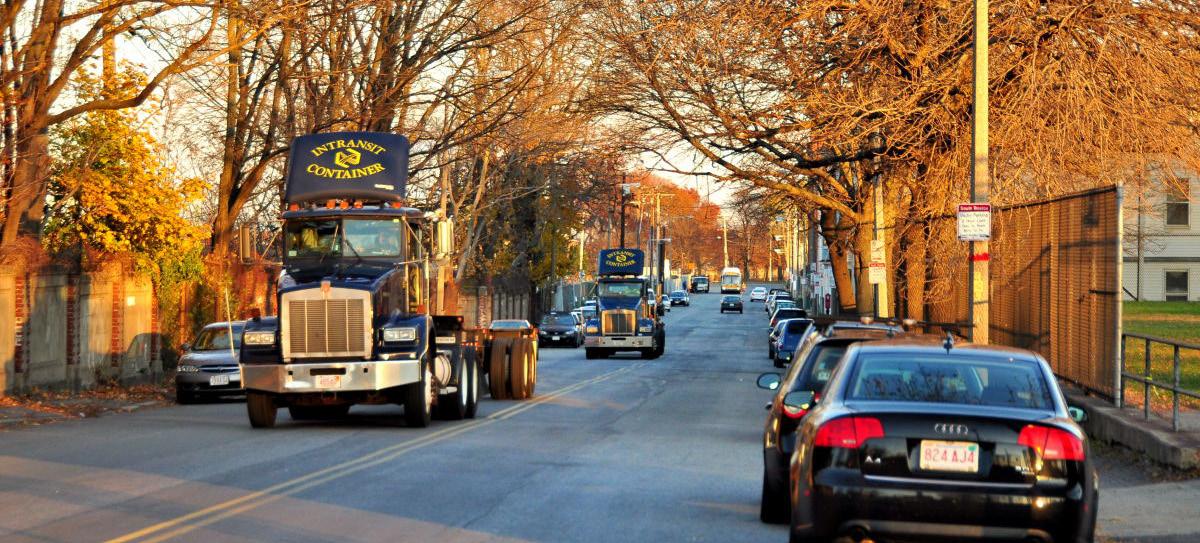
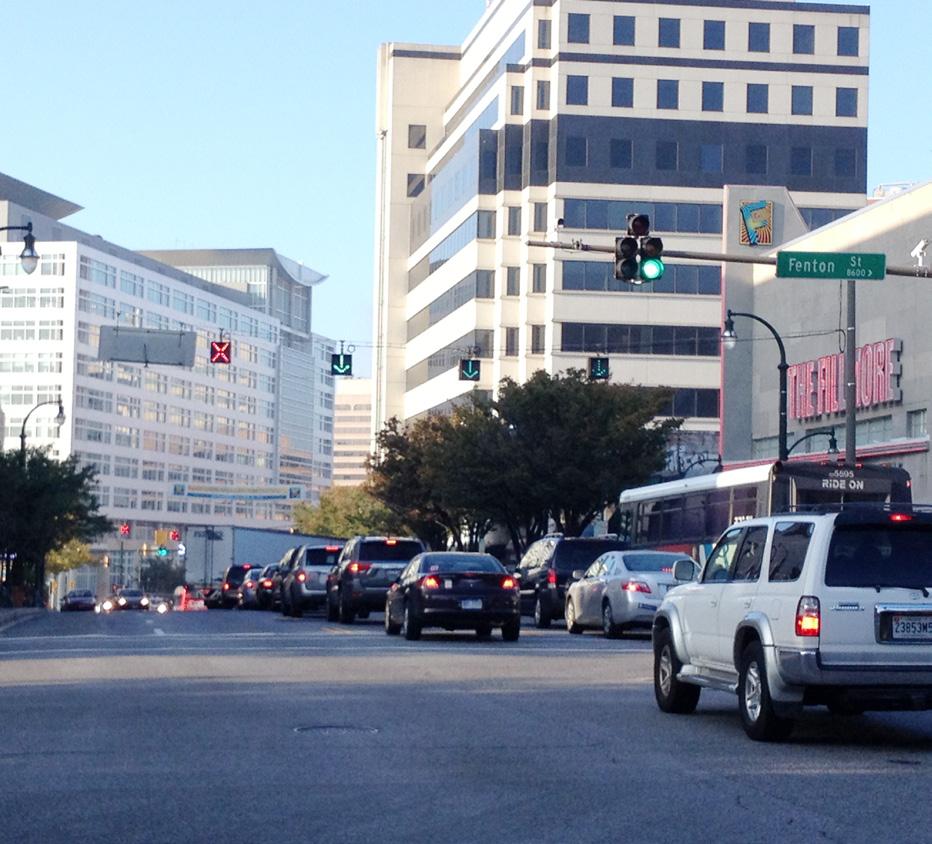
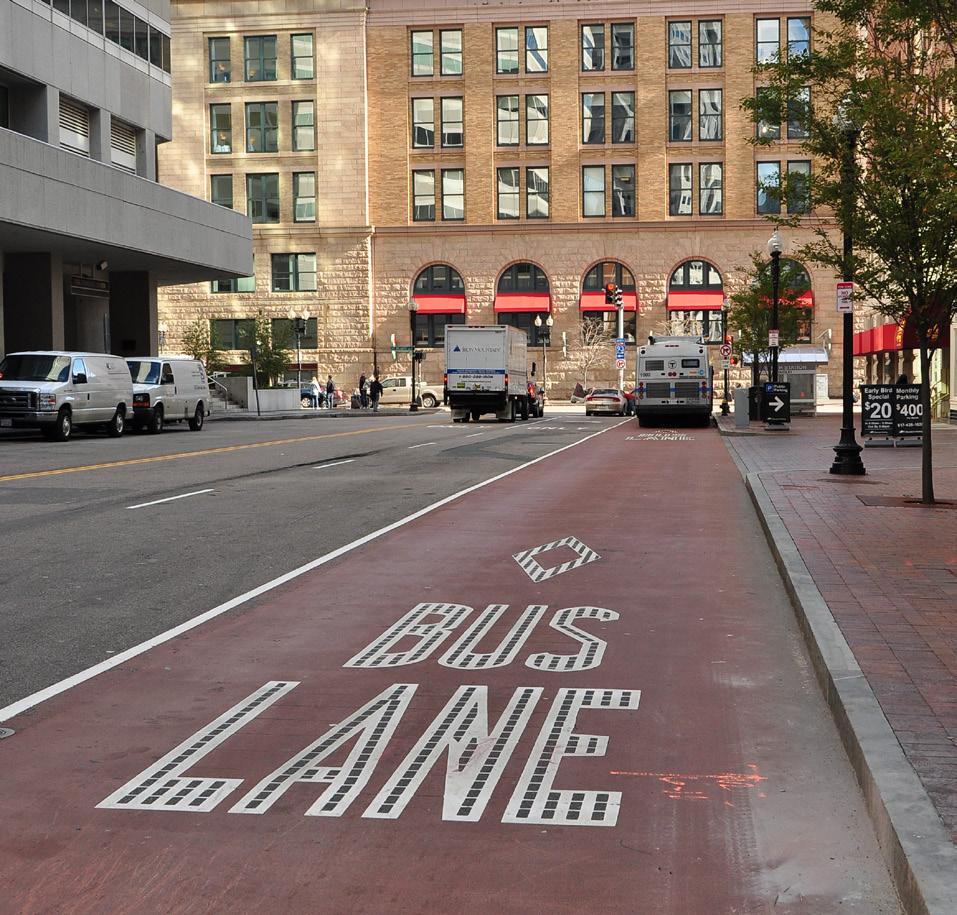
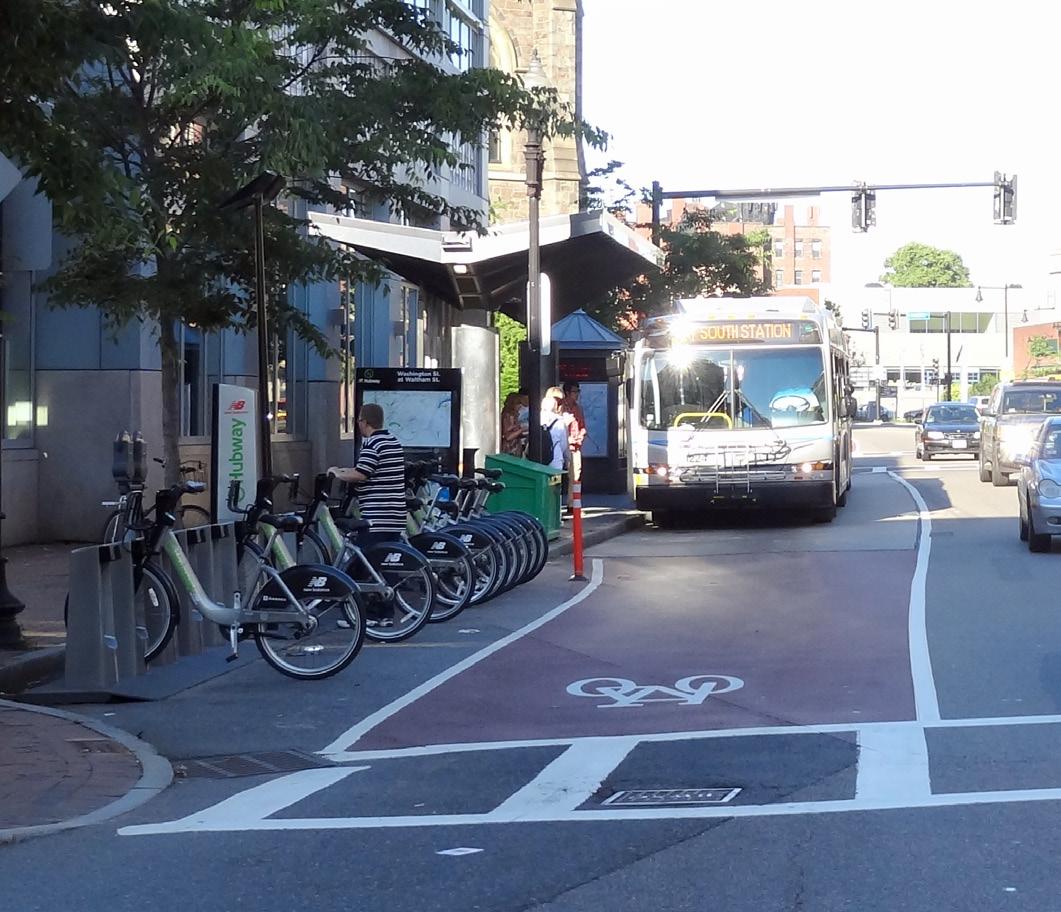
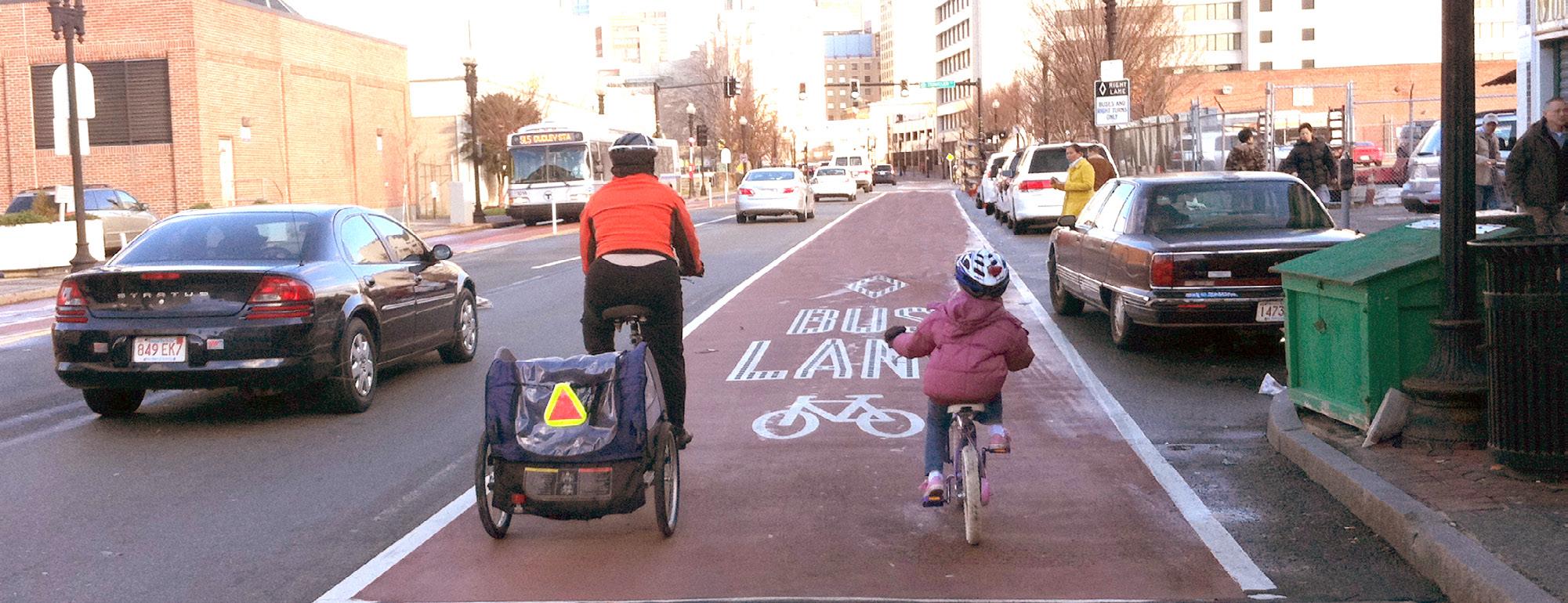
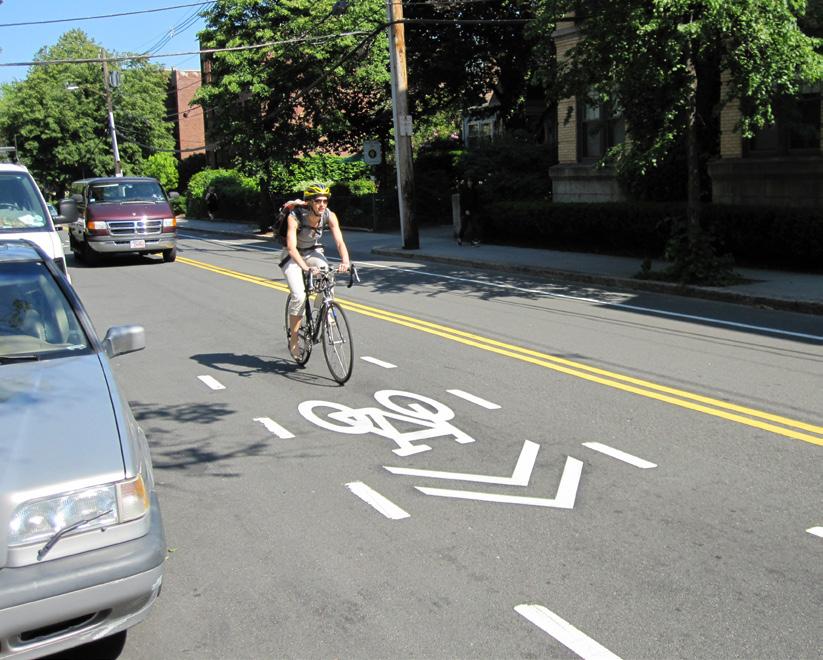
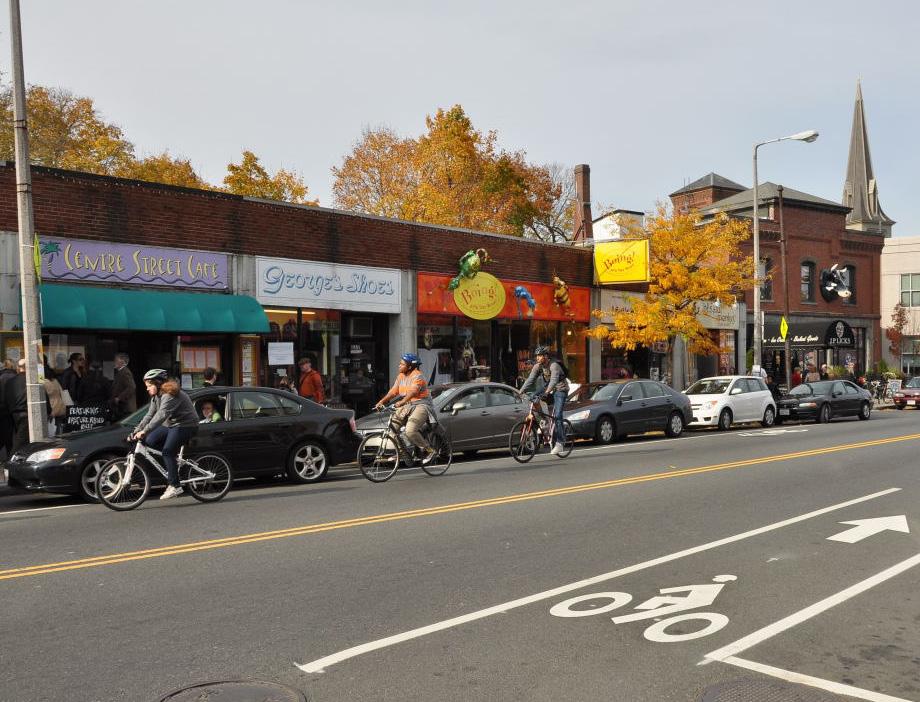
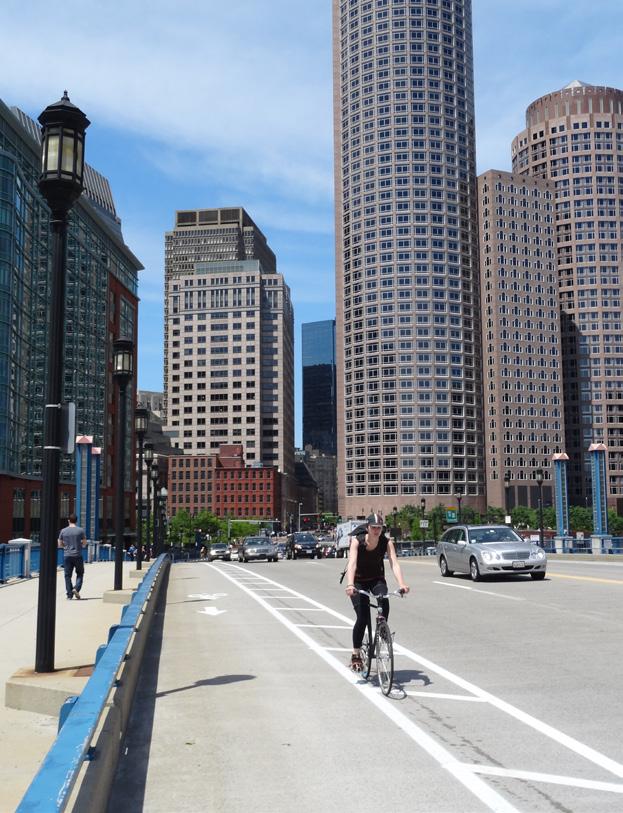
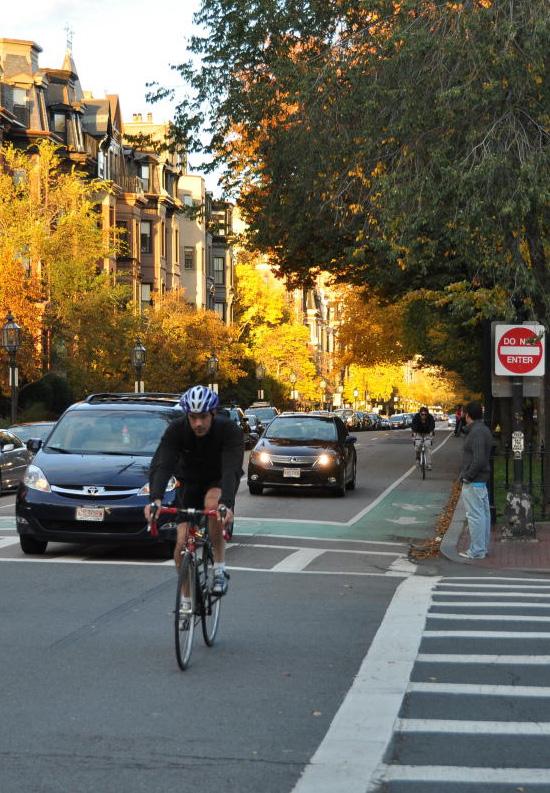
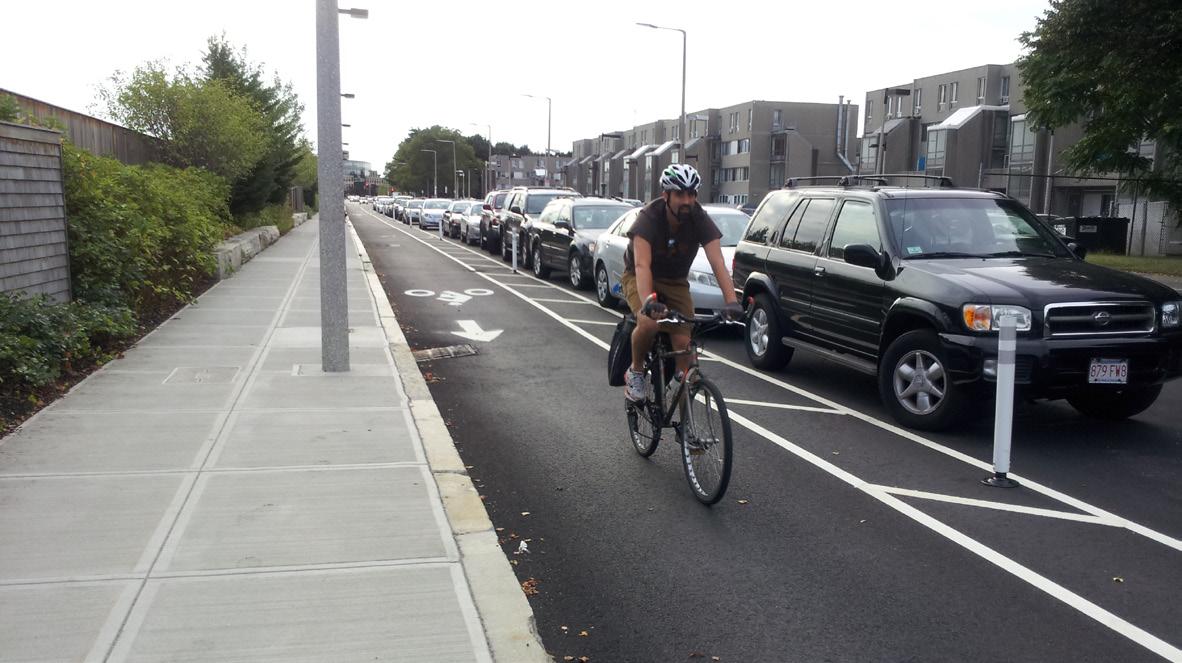
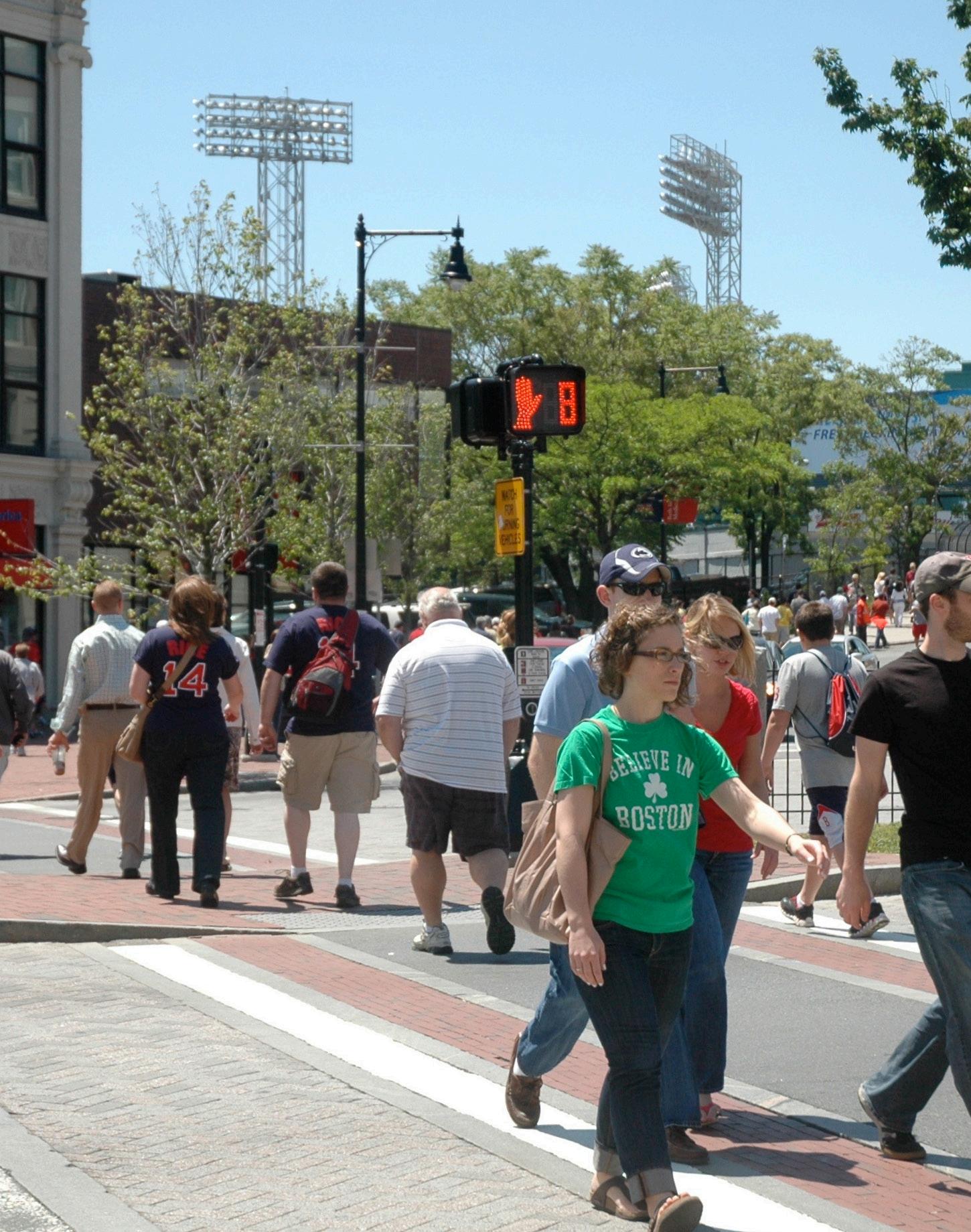
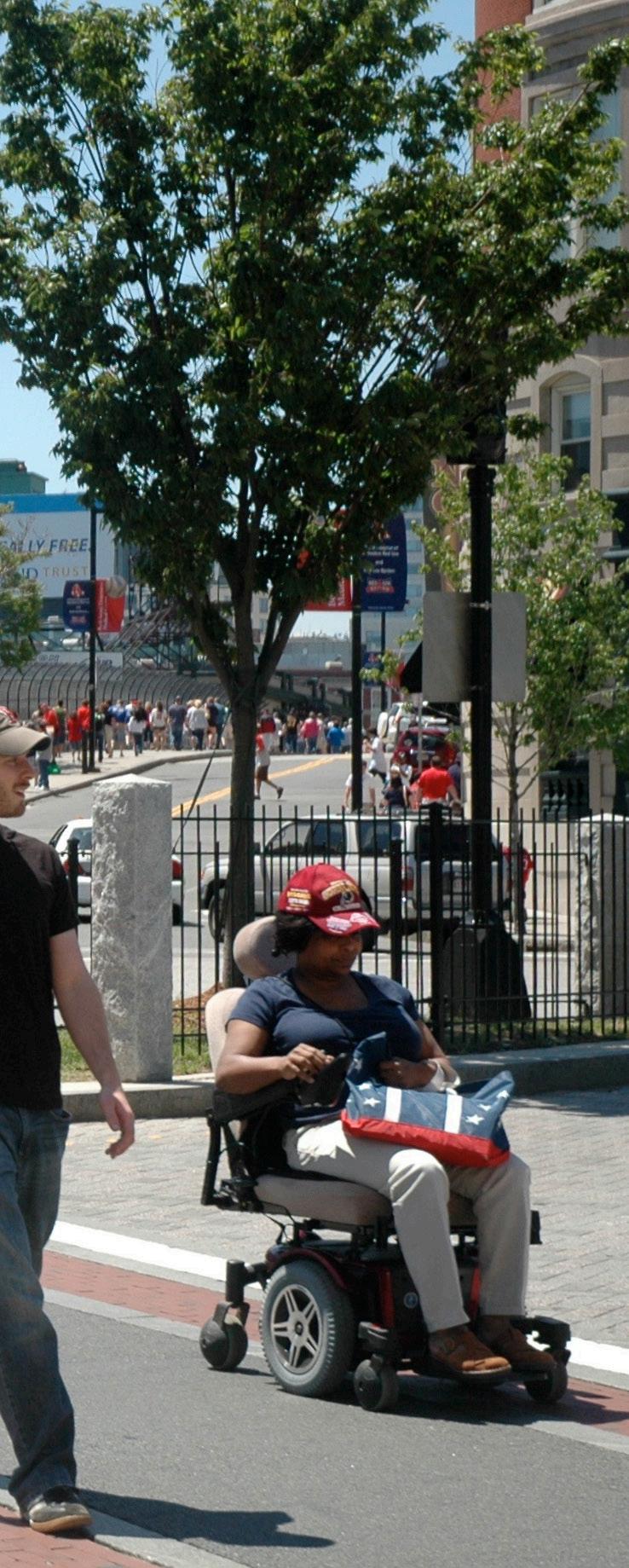
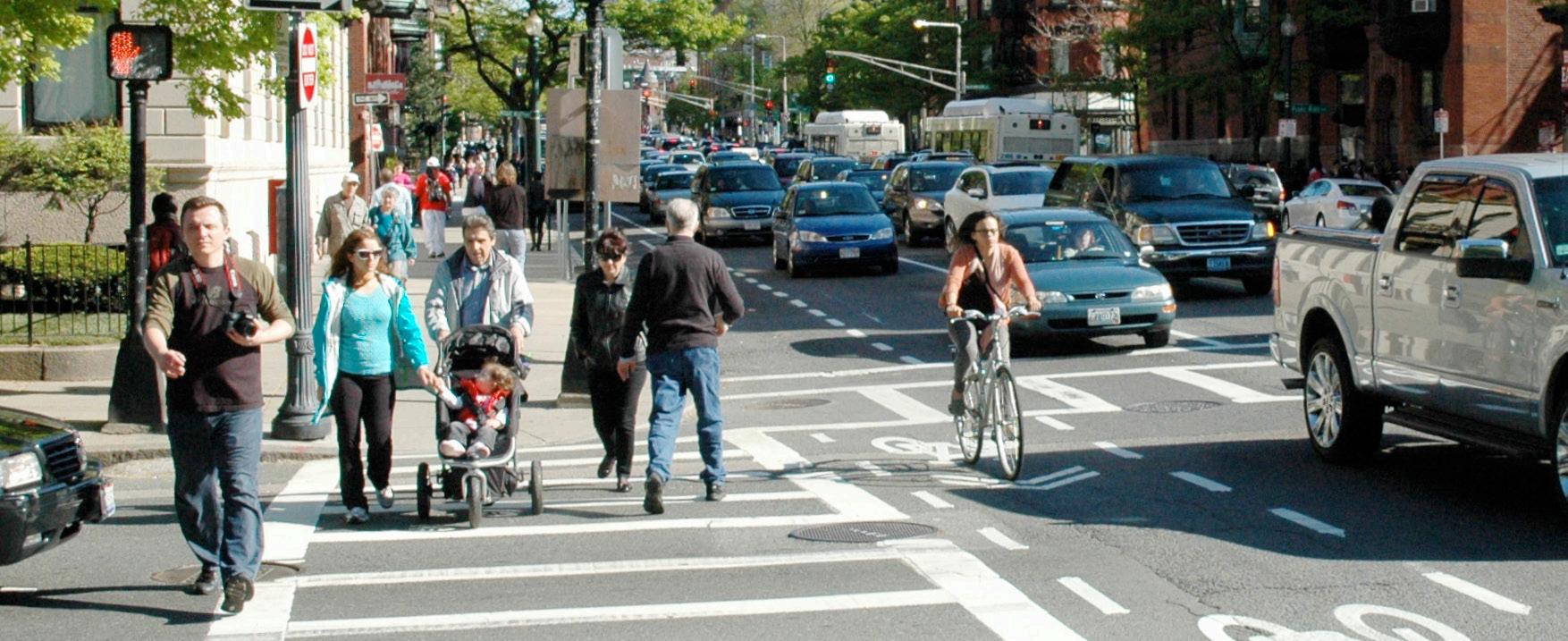
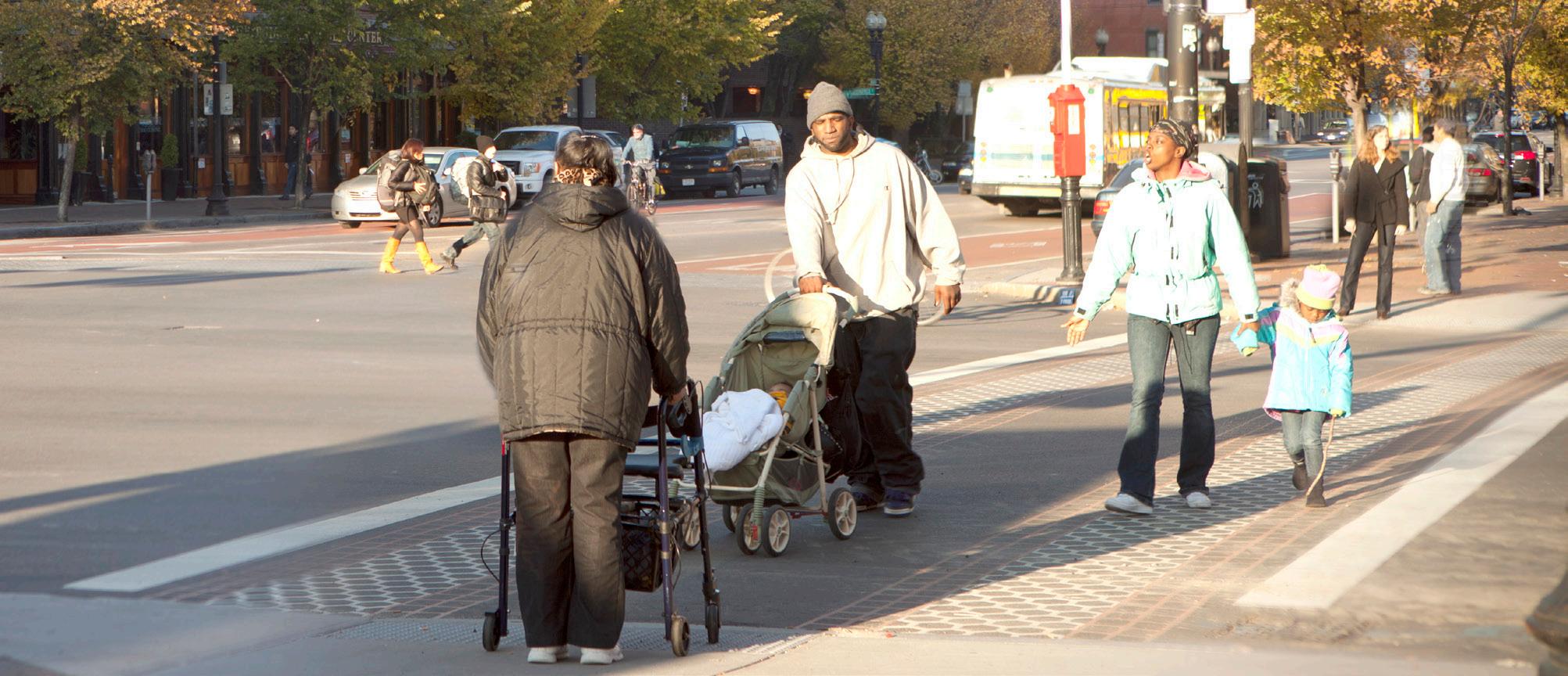
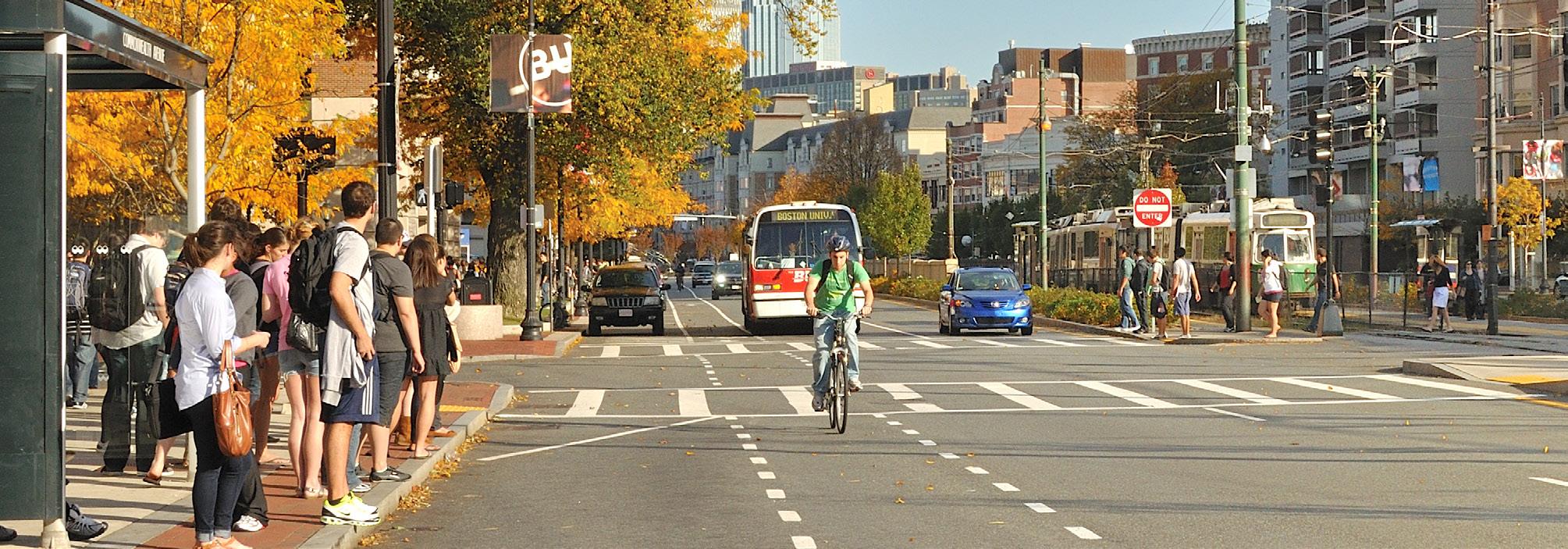
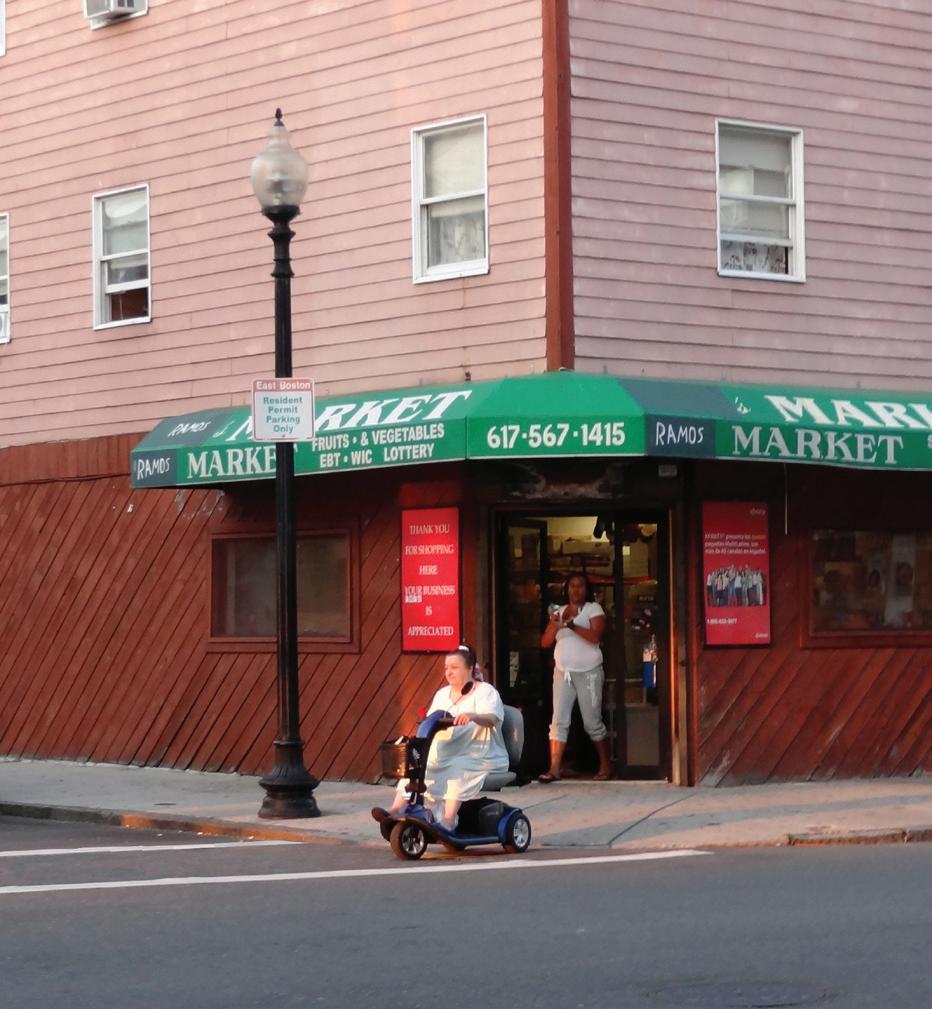
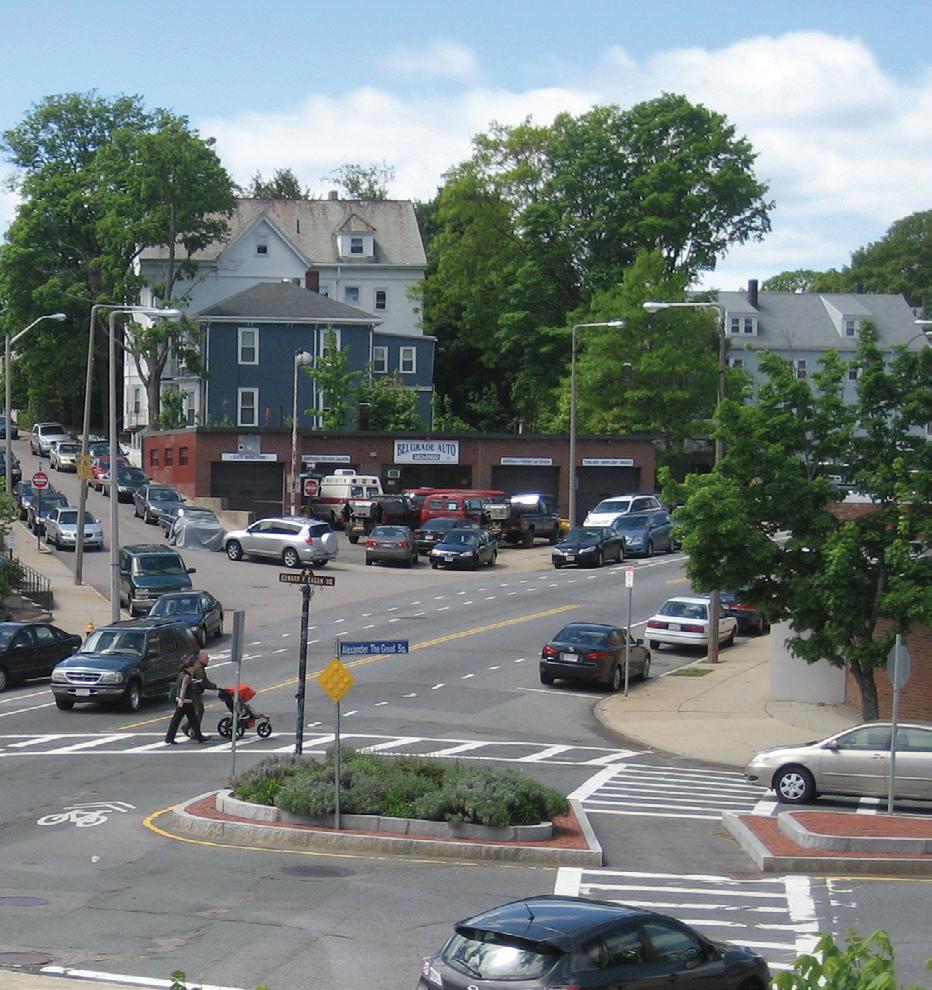
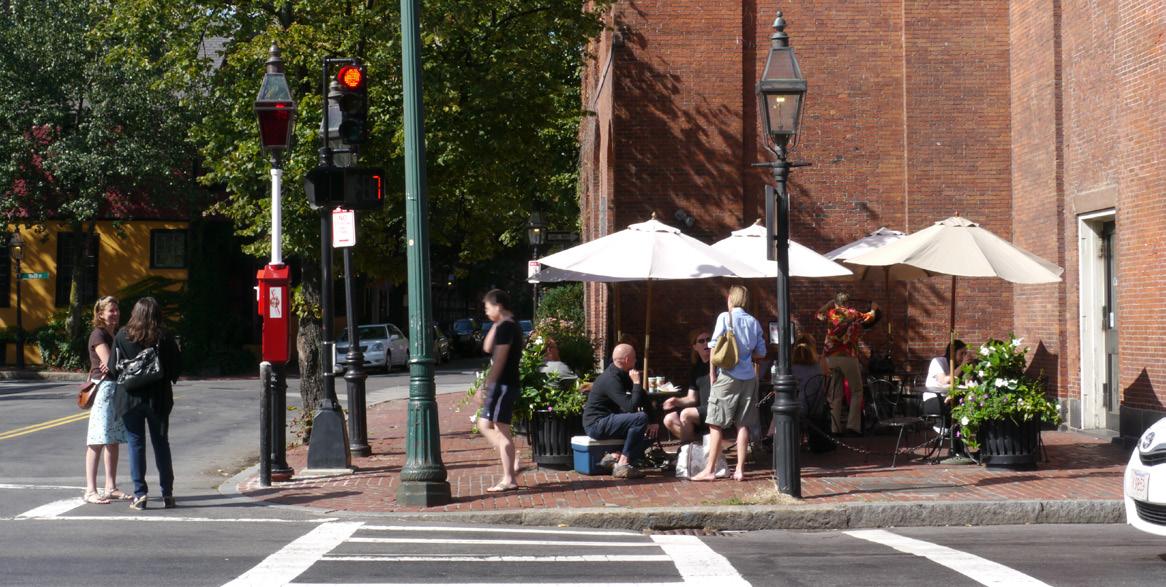
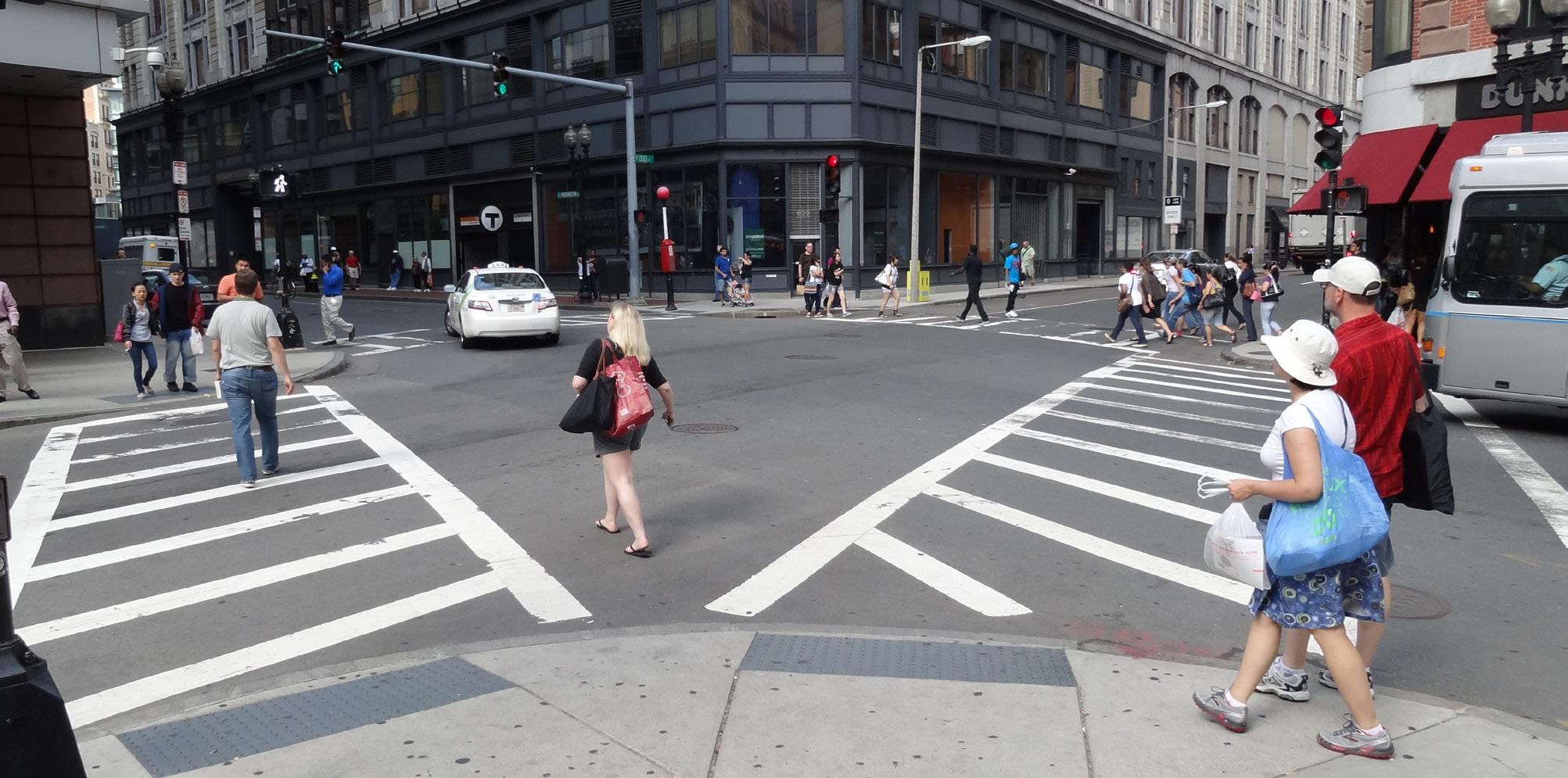
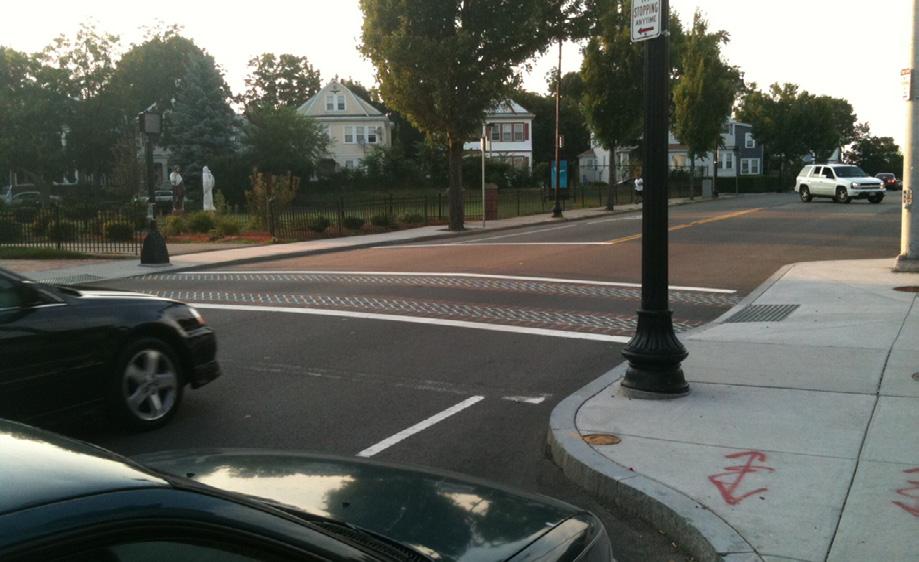
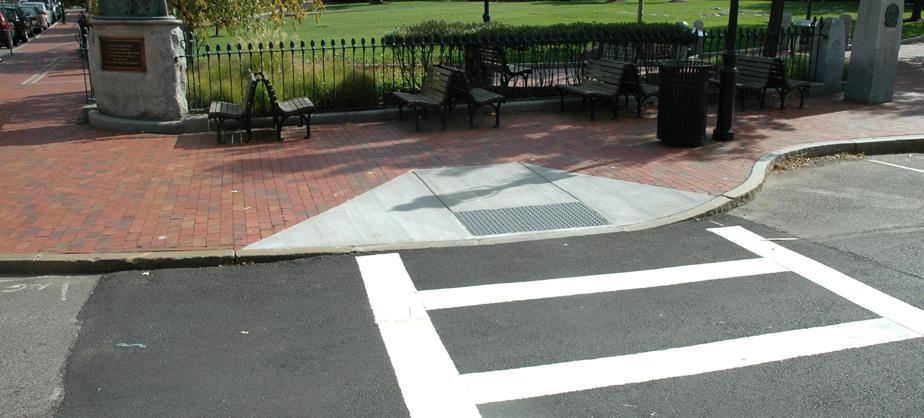
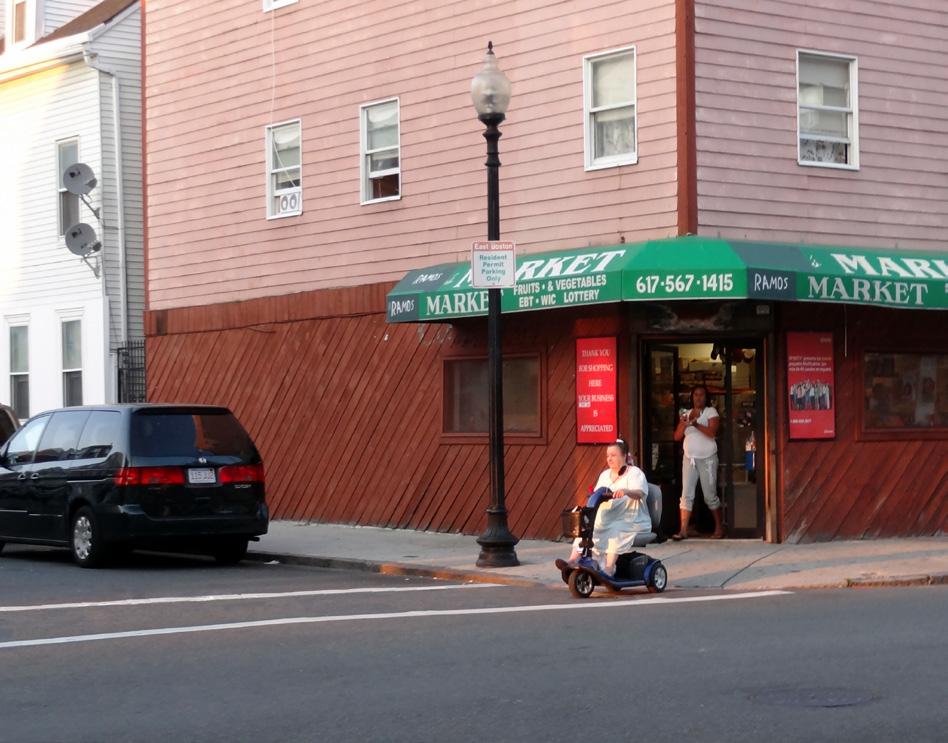
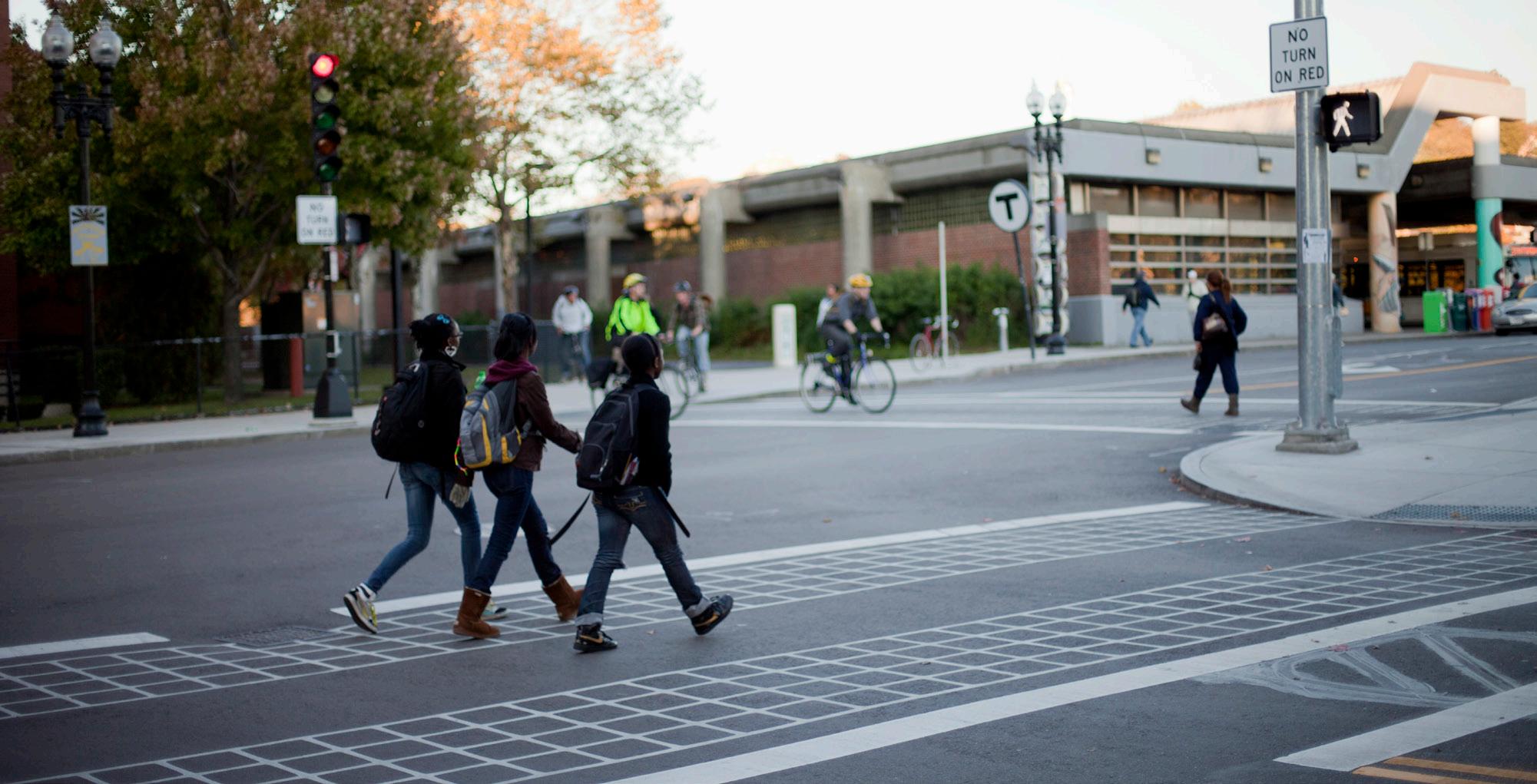
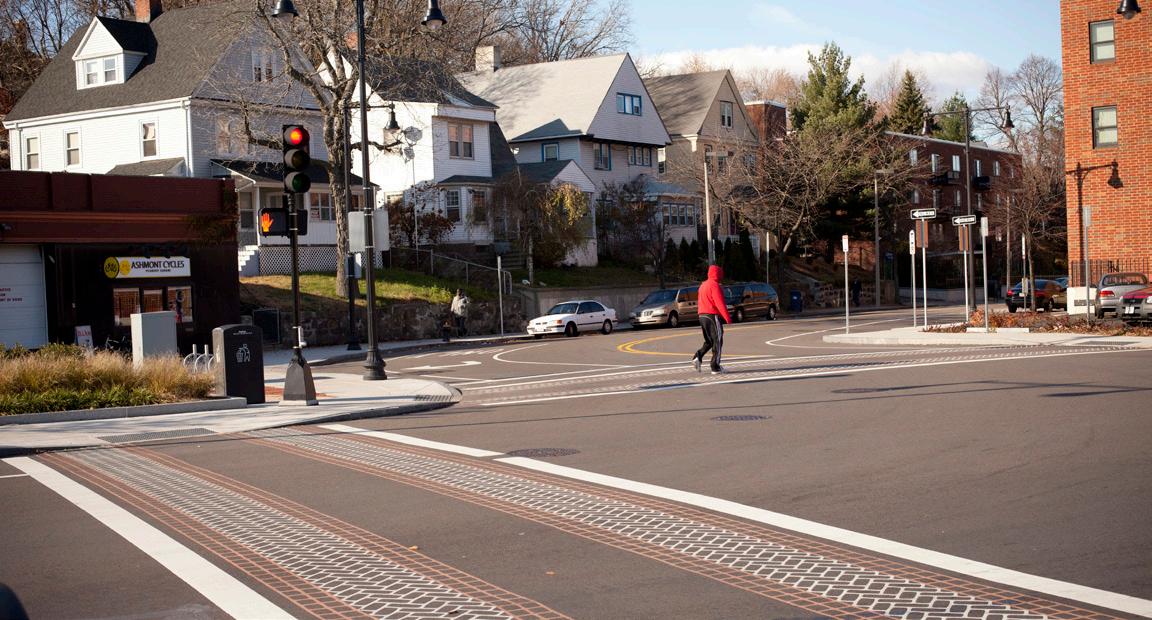
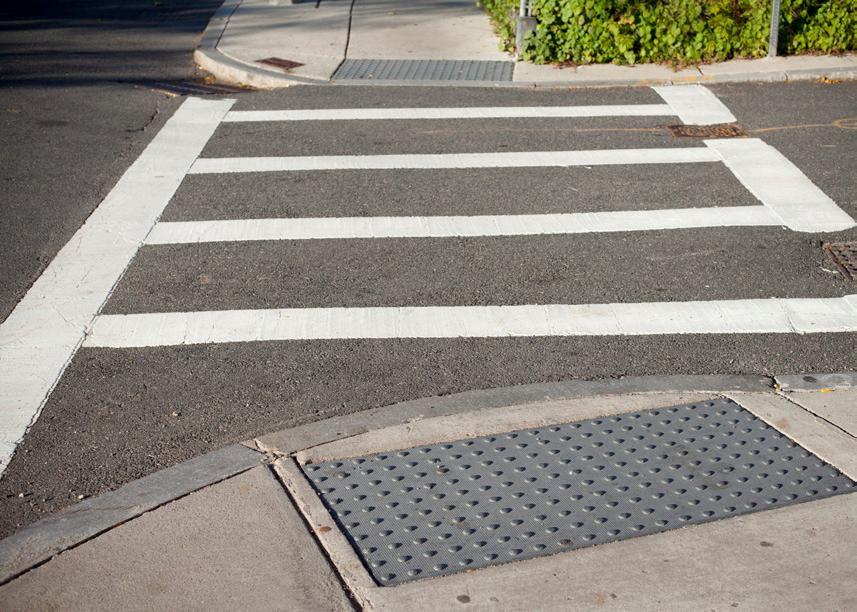
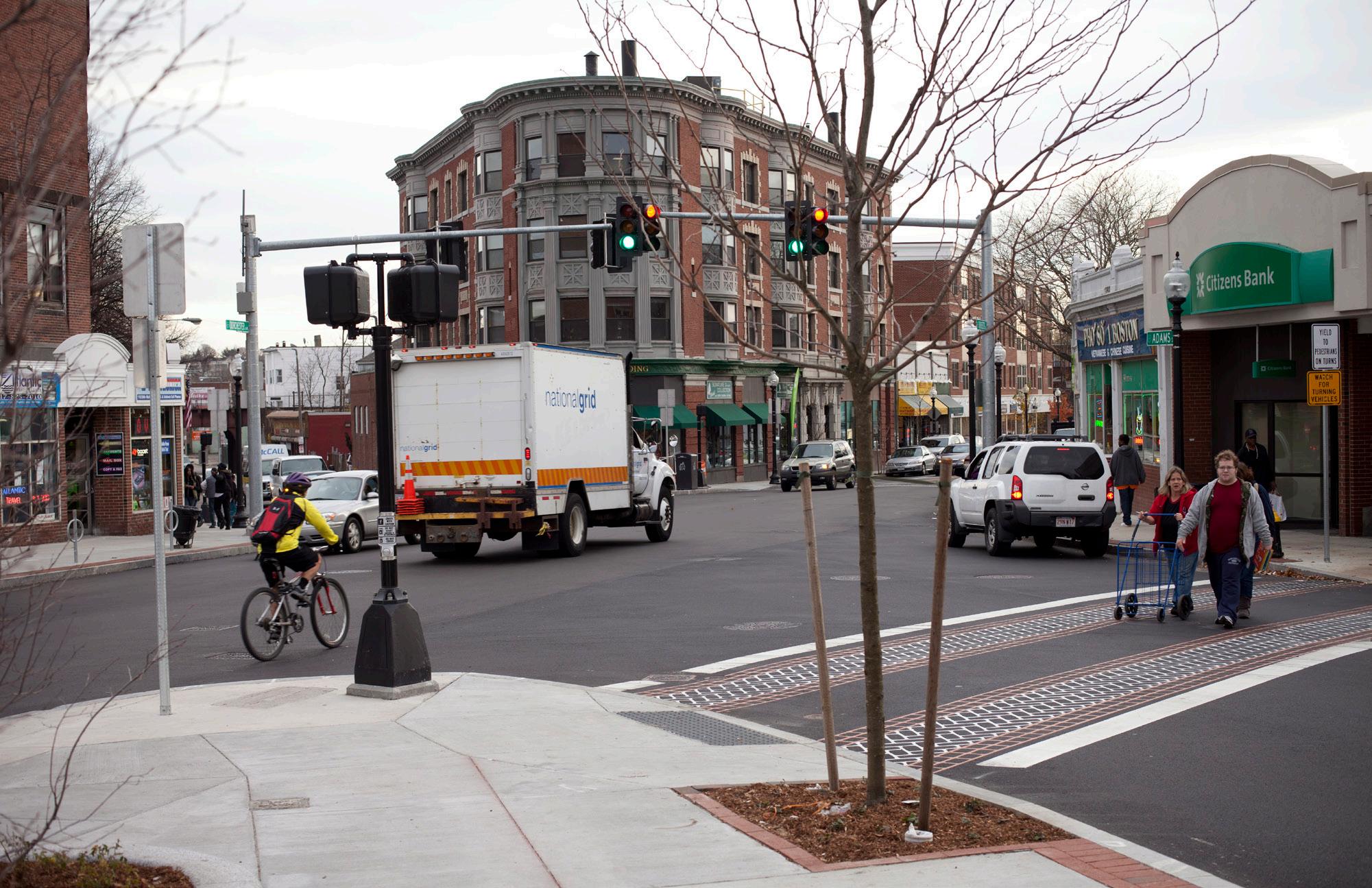
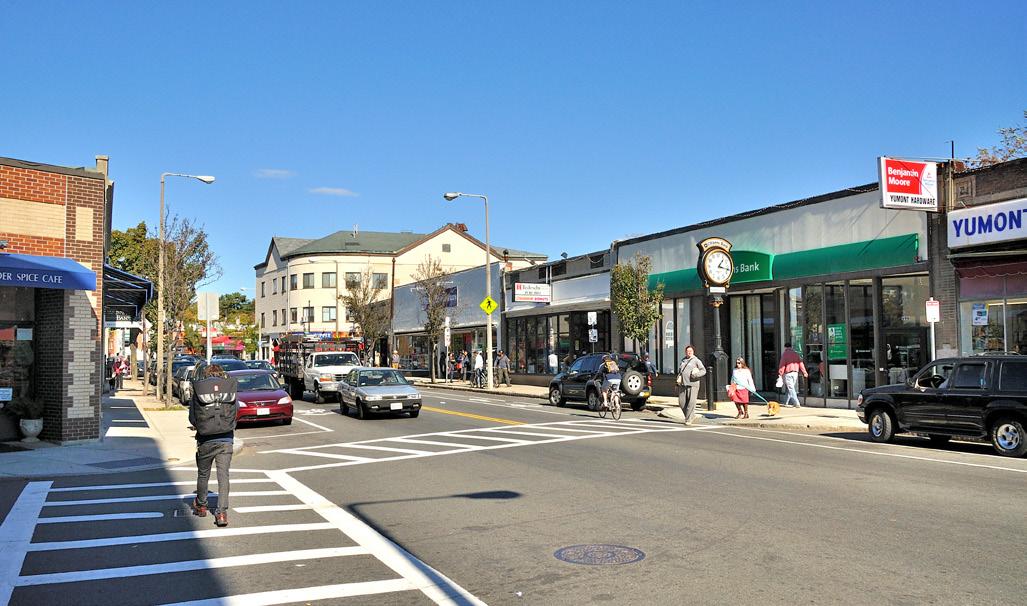
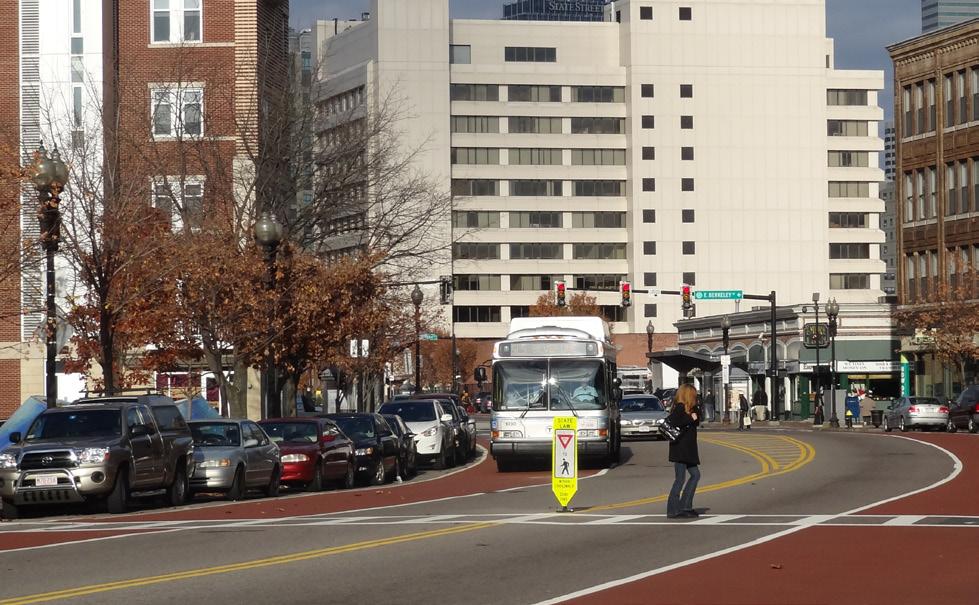
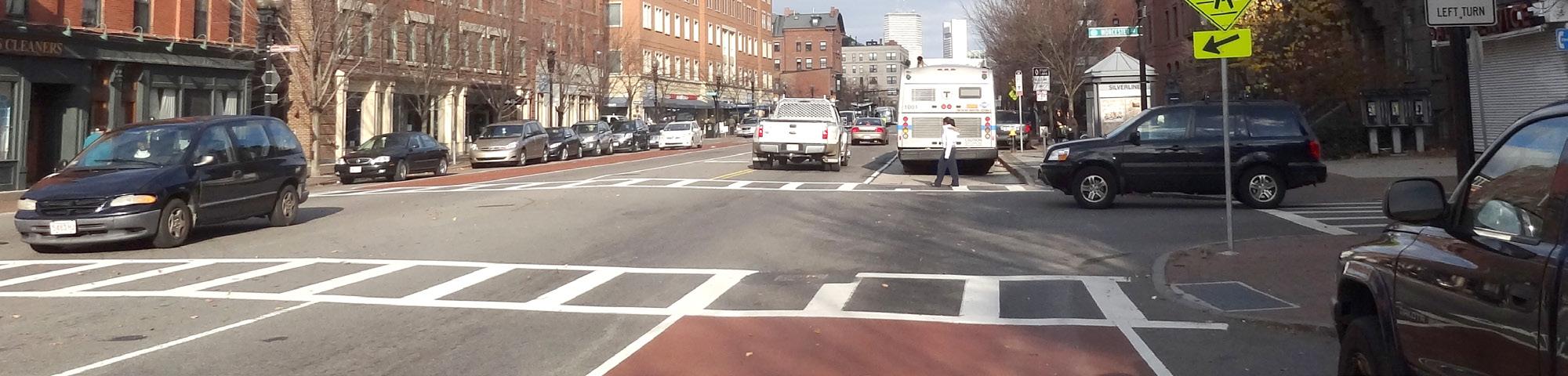
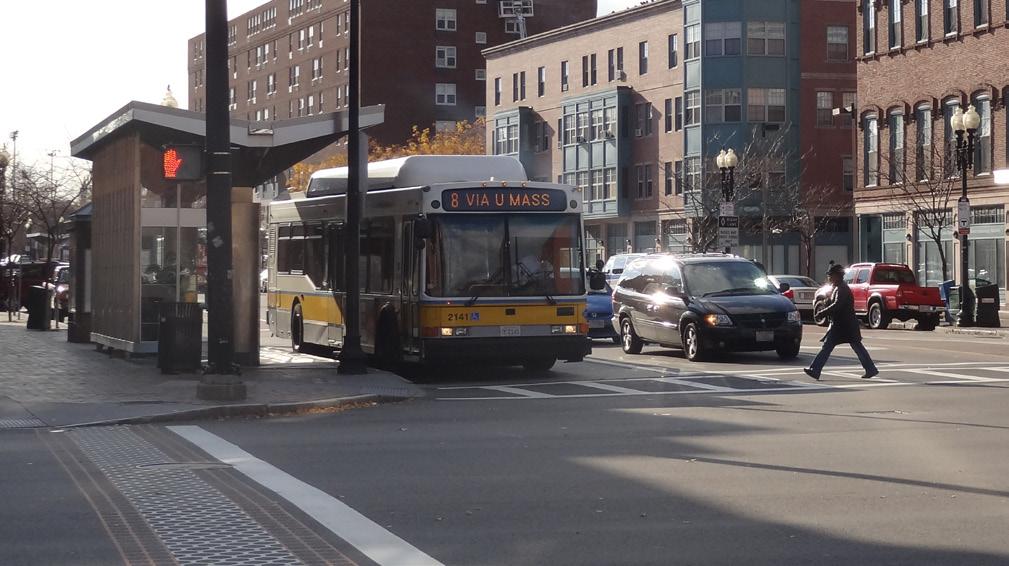
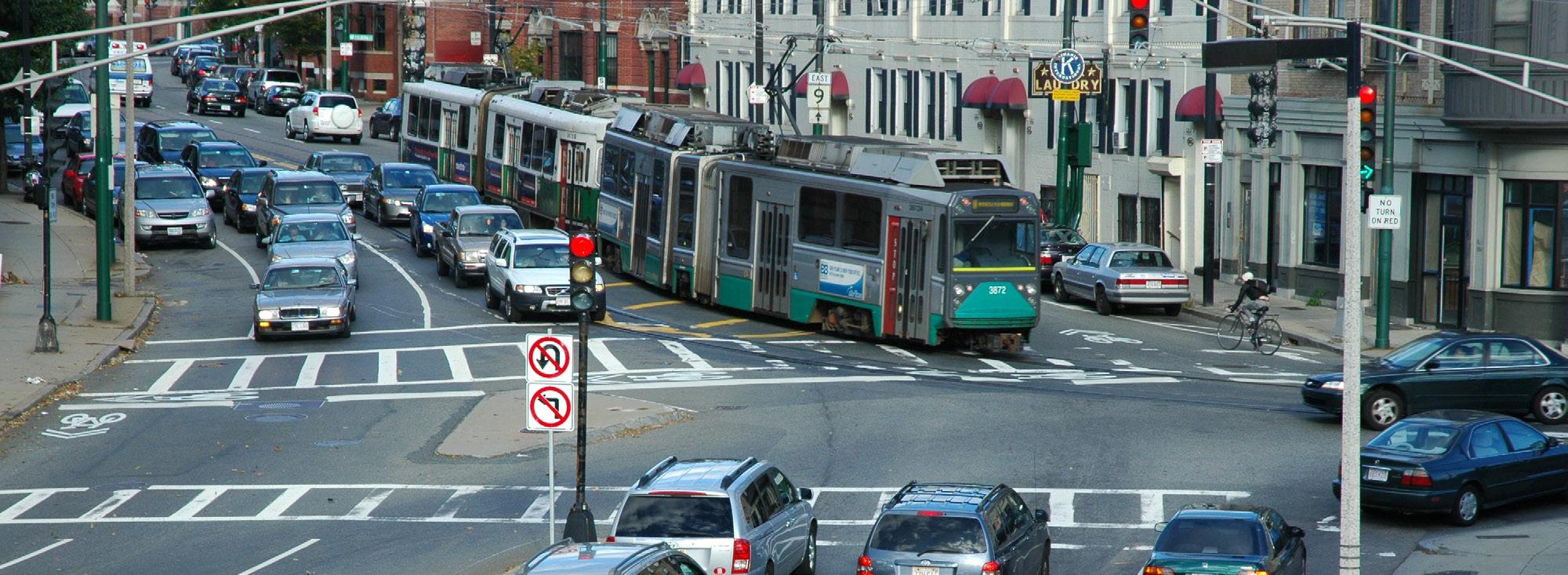
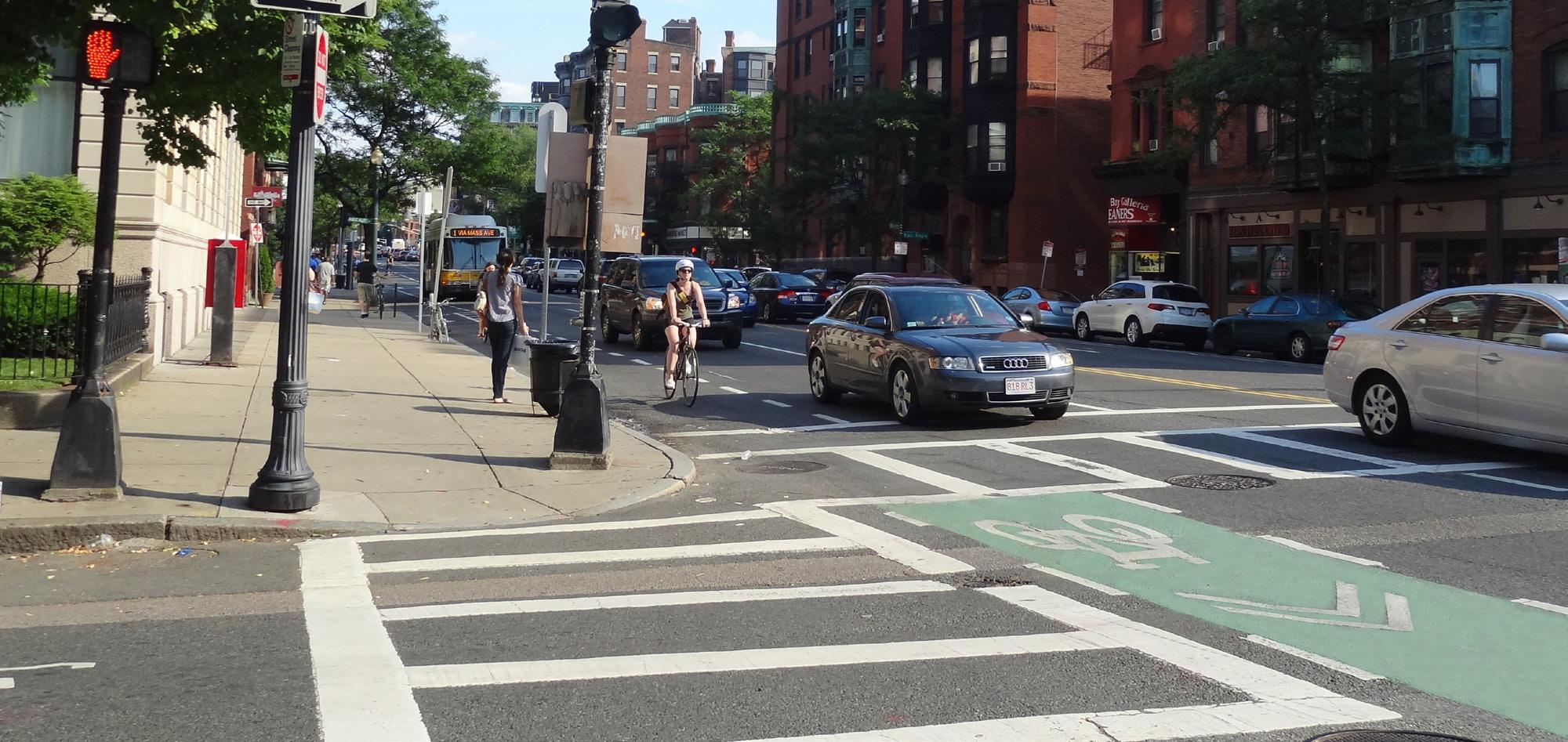
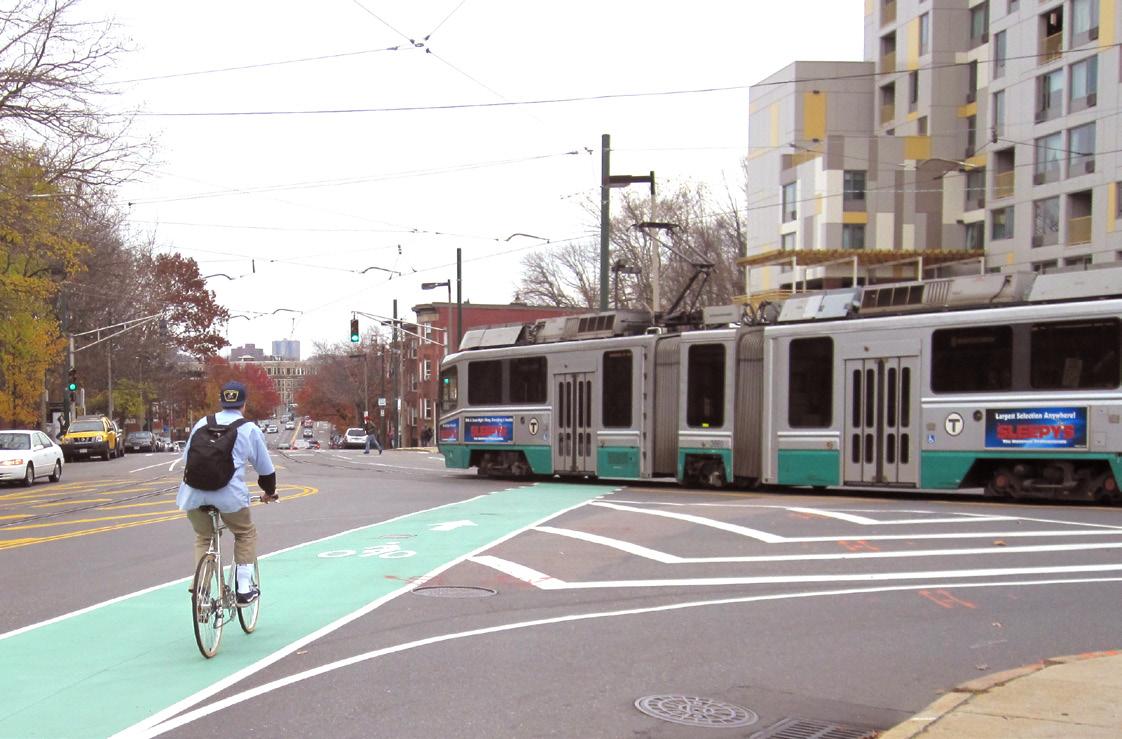
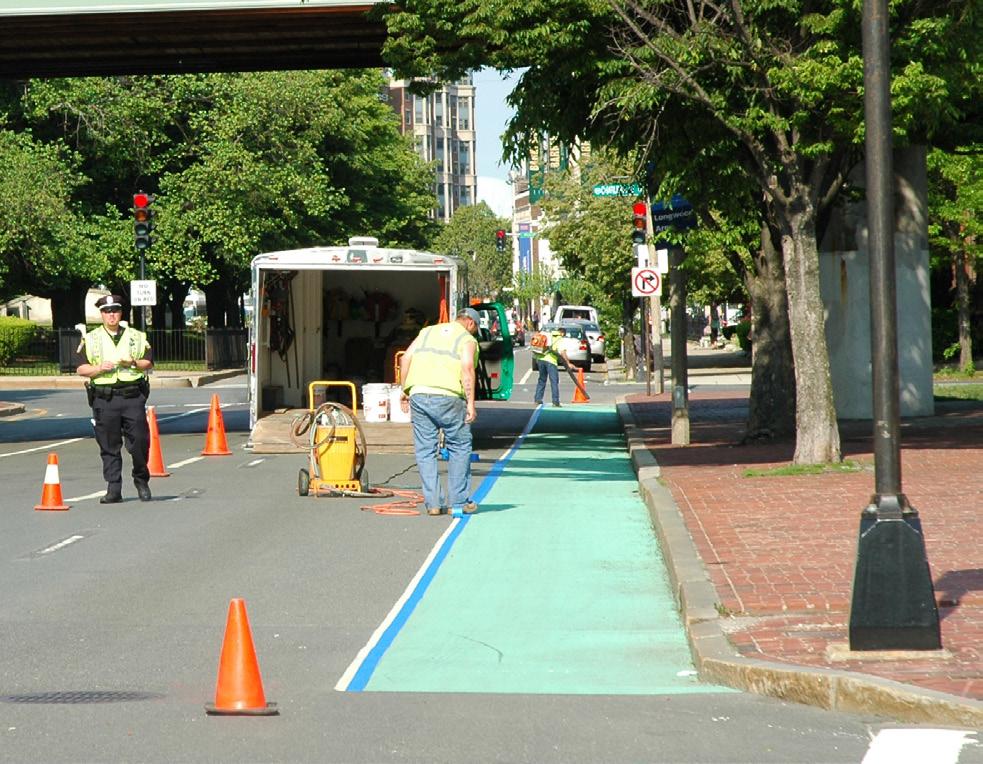
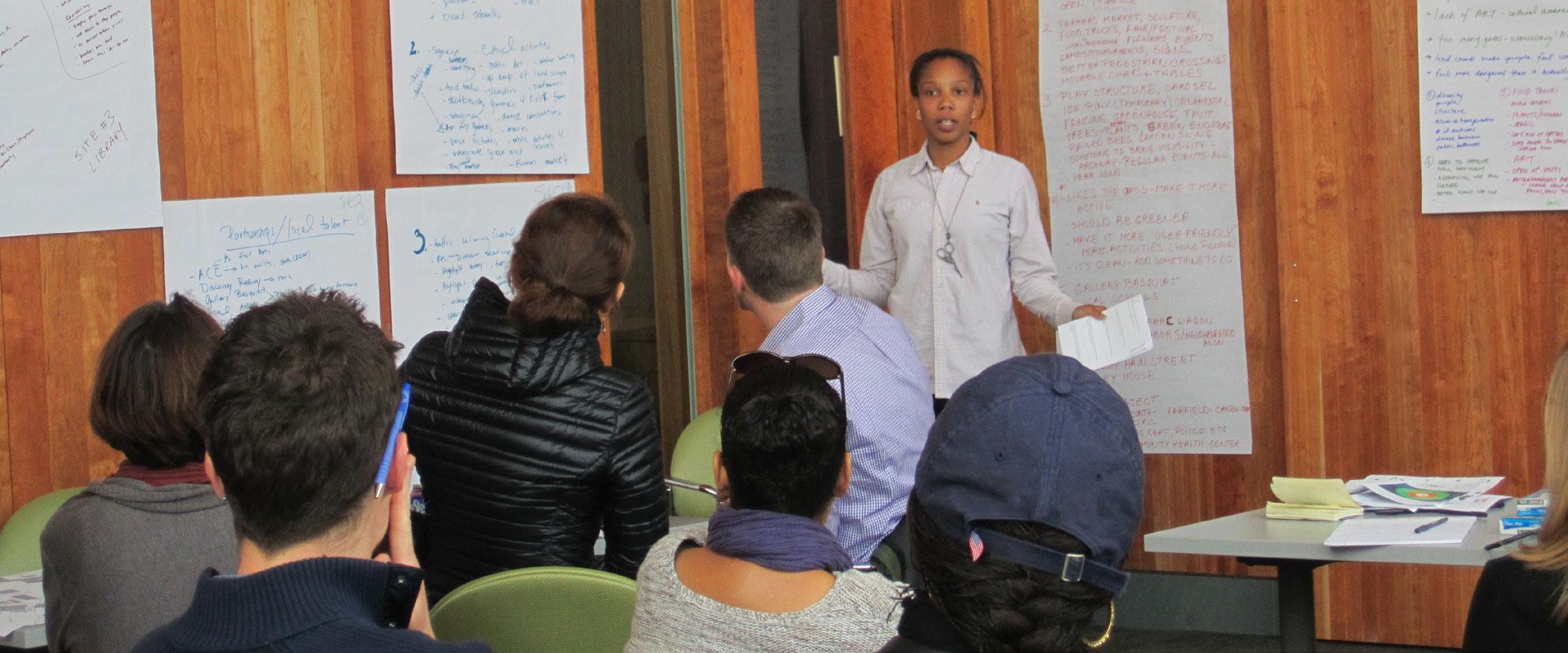
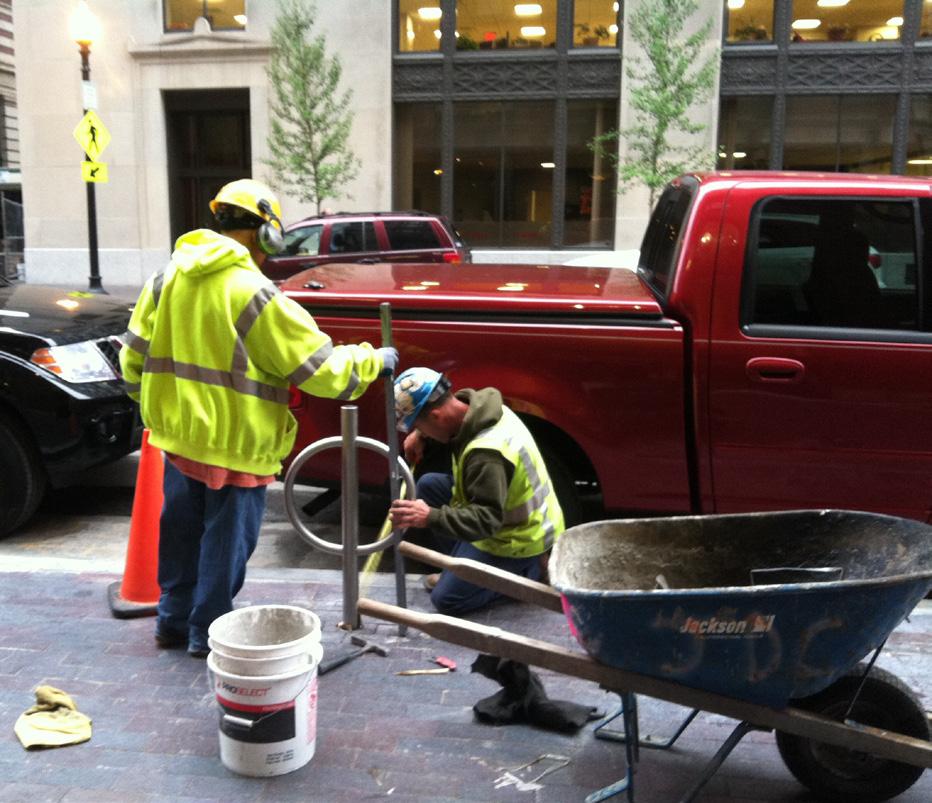
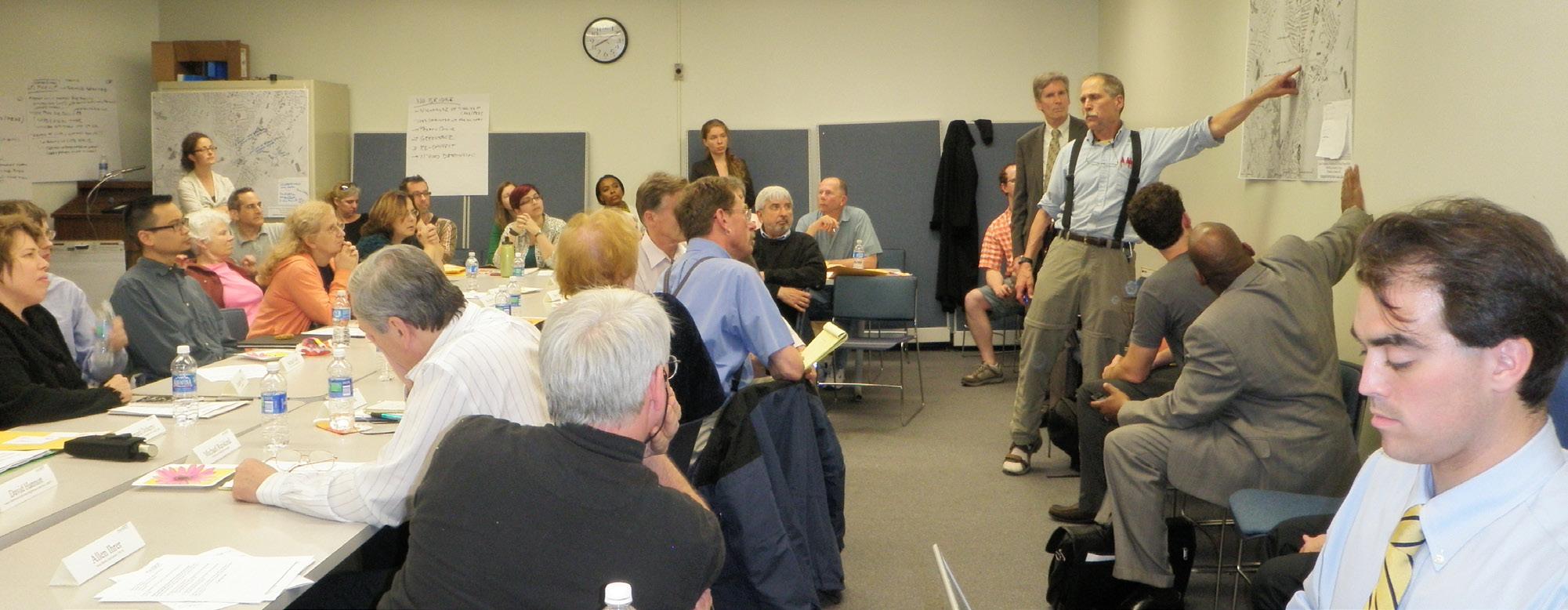
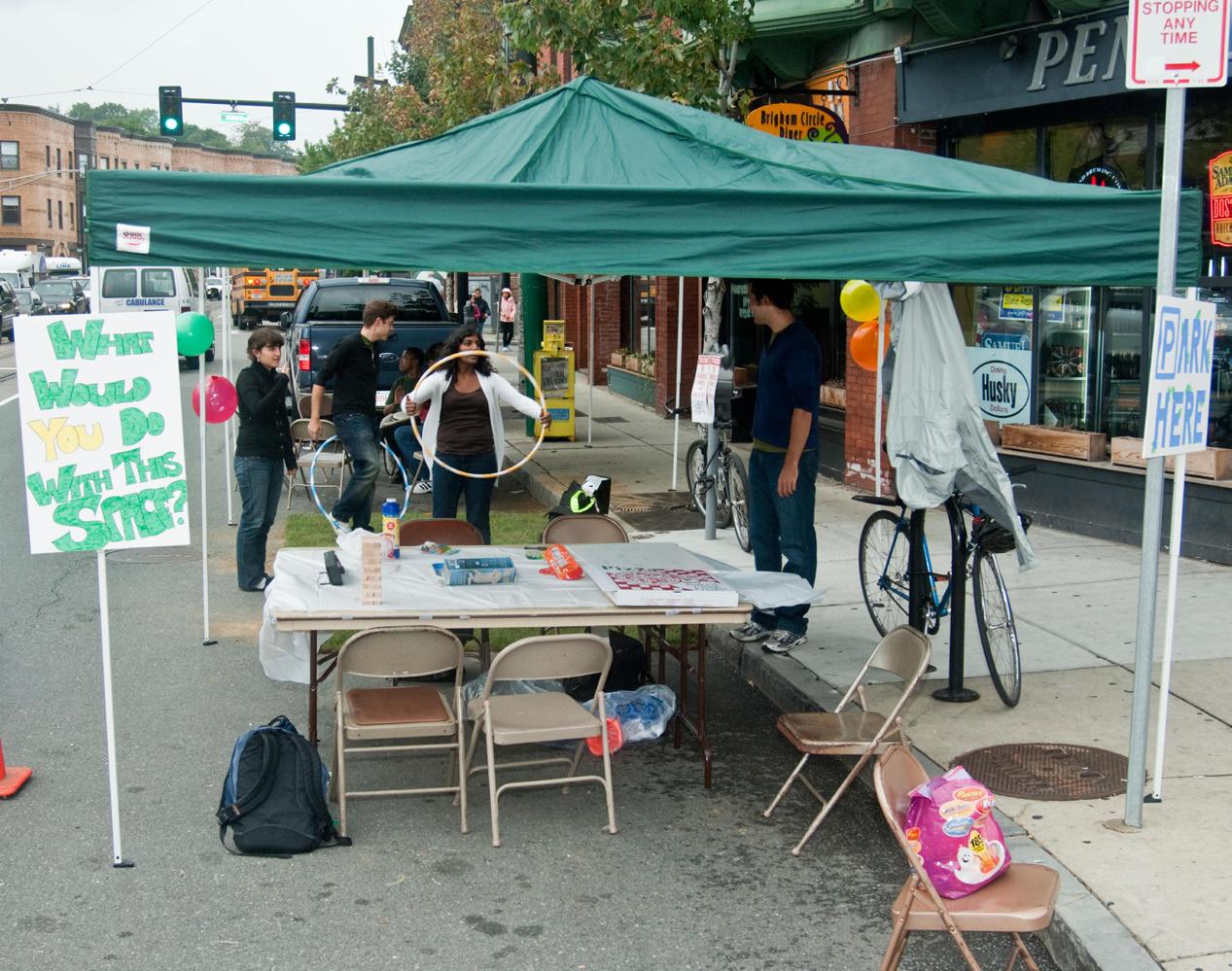
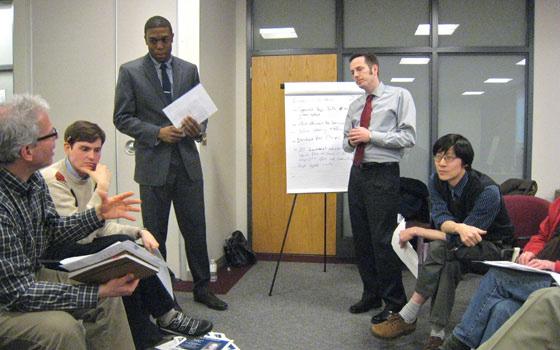
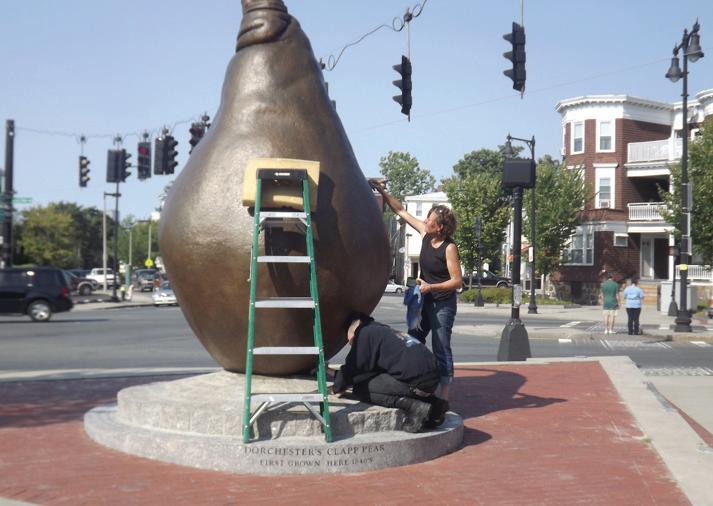
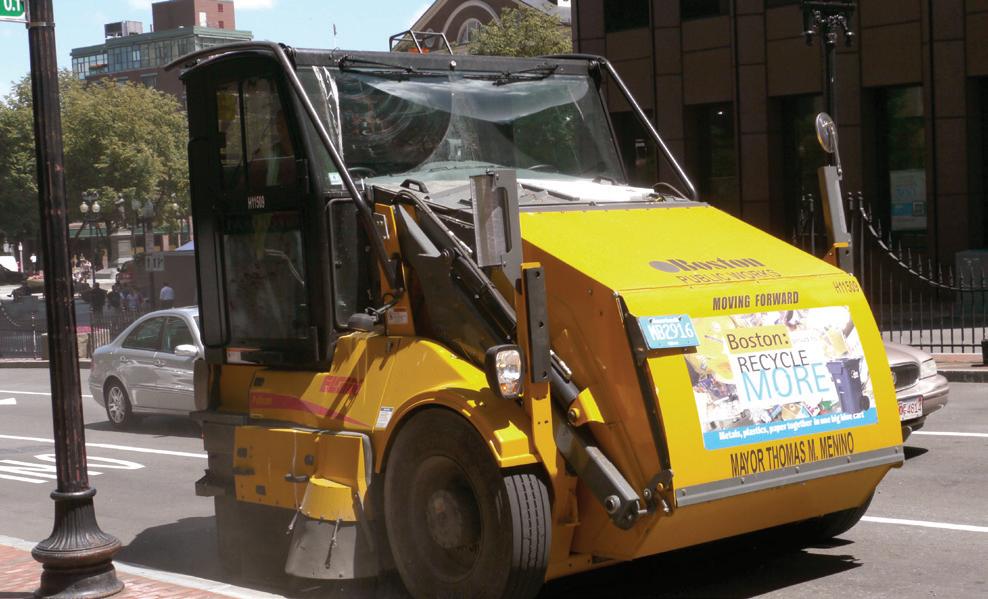
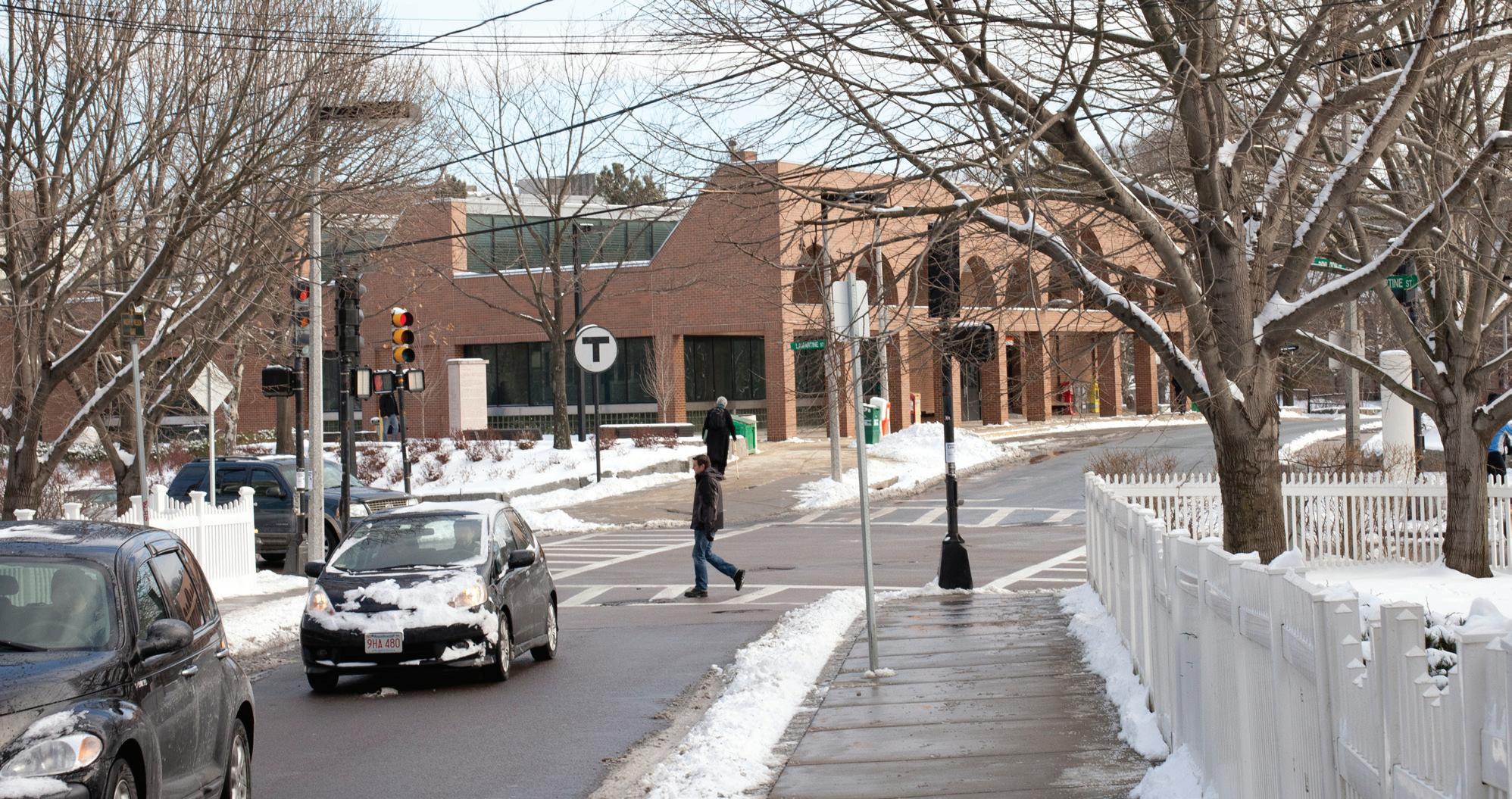
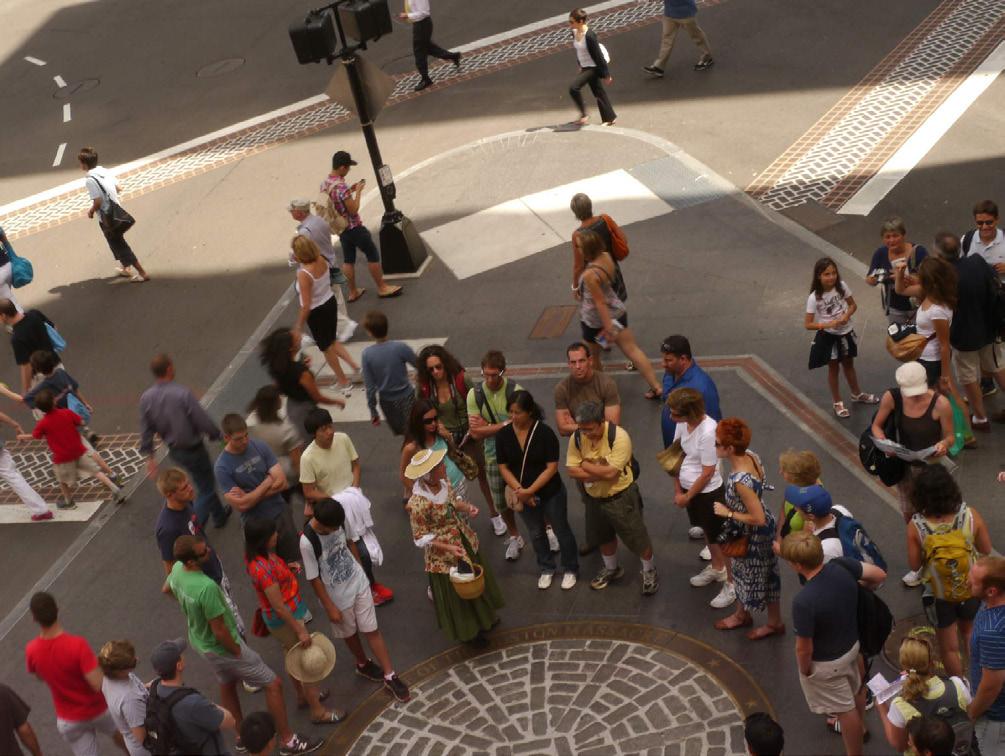
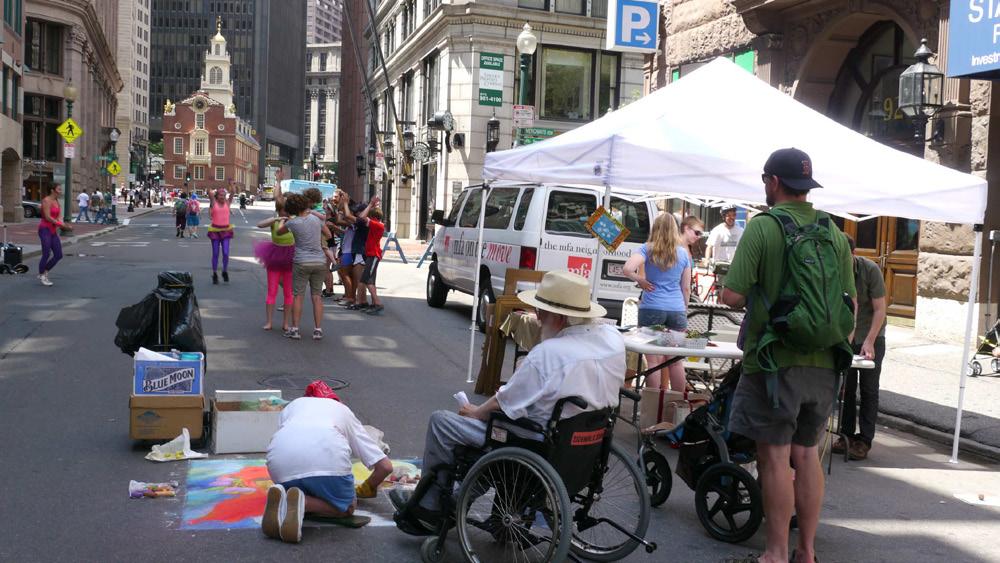
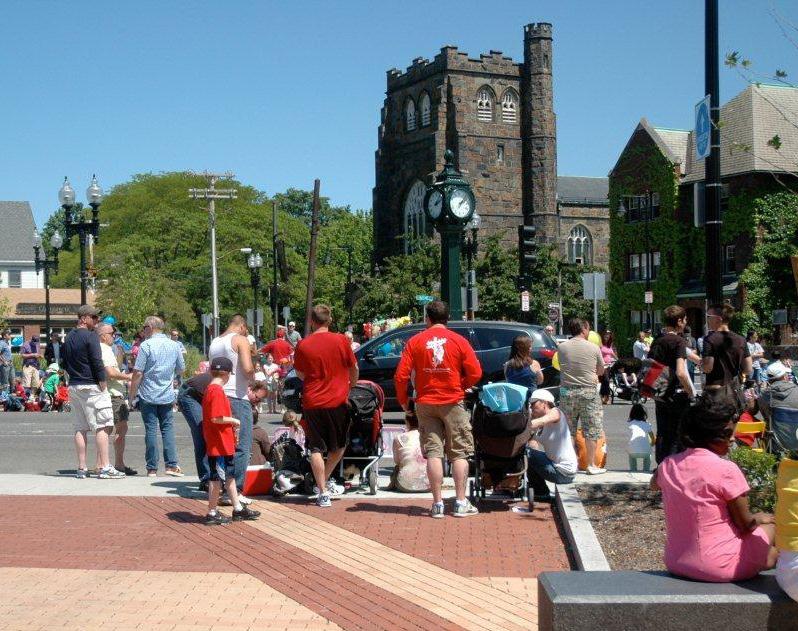
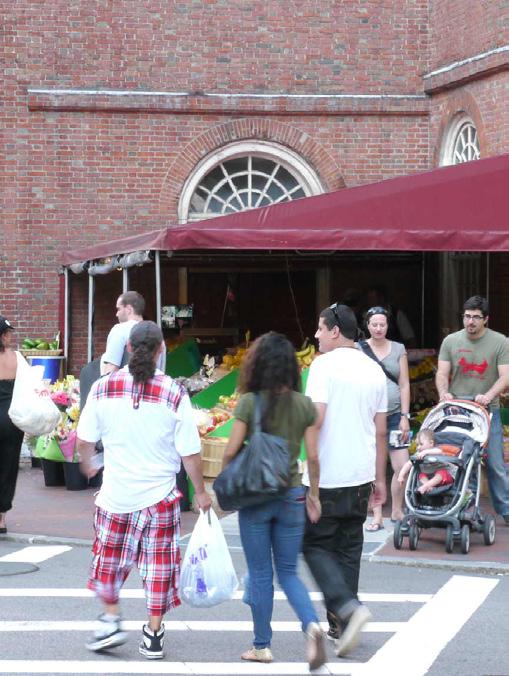
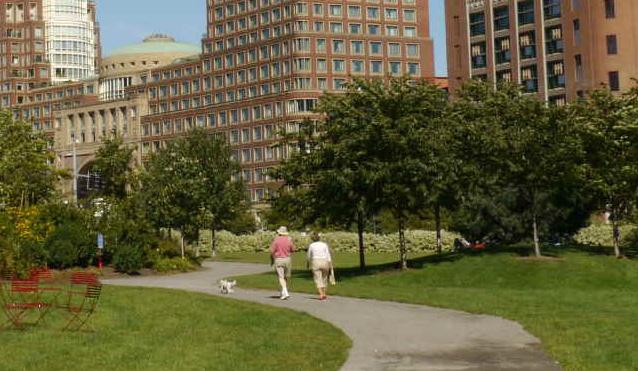
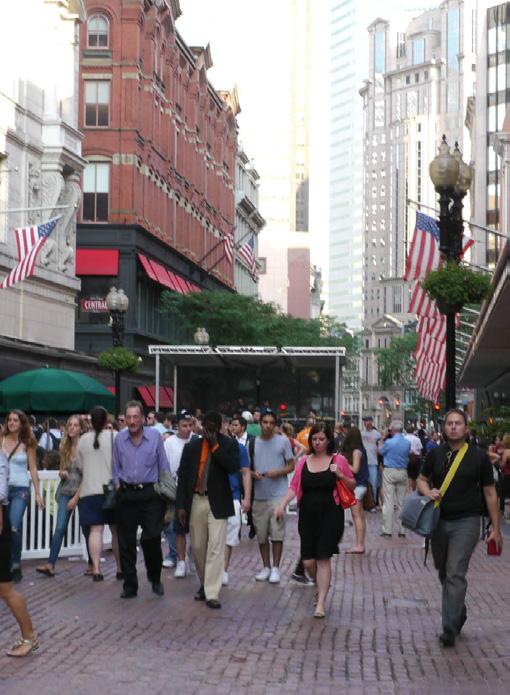
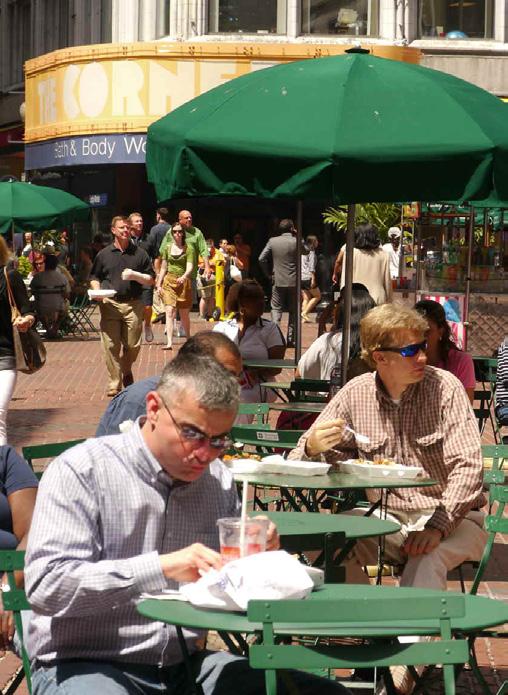
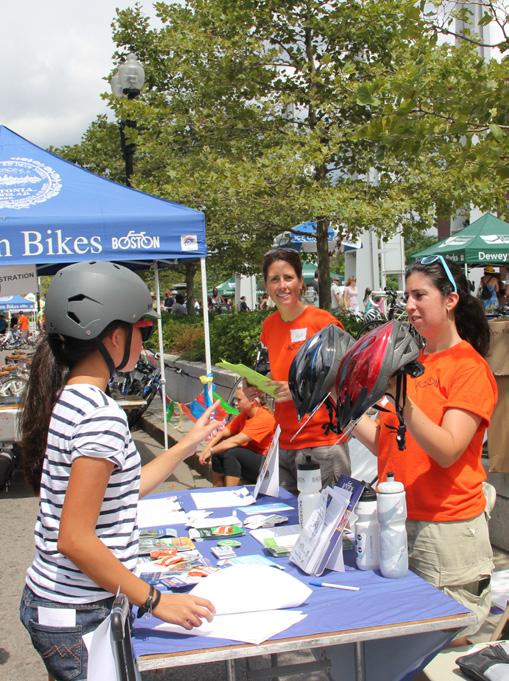
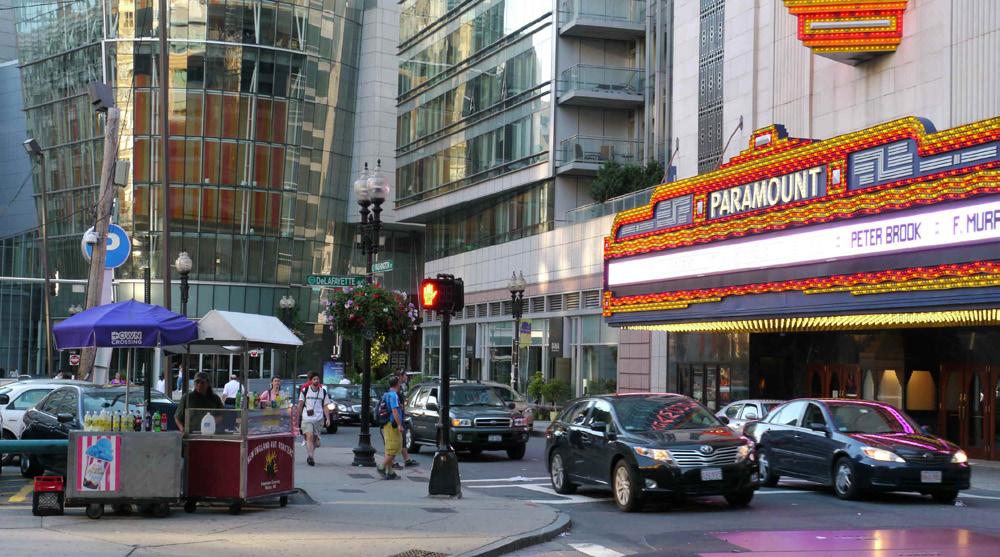
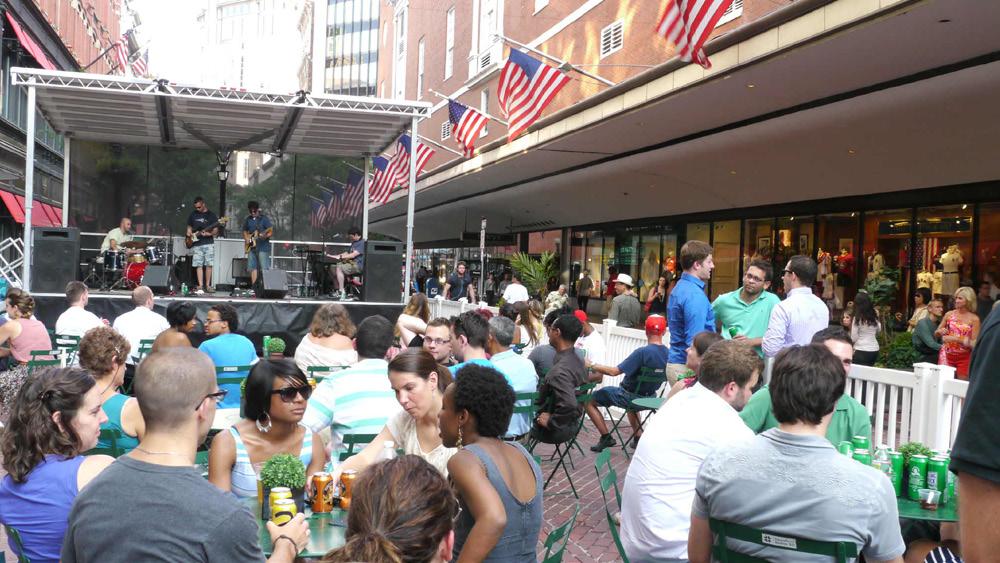
Boston’s Complete streets initiative is a unique collaboration between policy makers, community leaders, neighborhood residents, city agencies, transportation advocates and professionals, and the public at large. since 2009, participants have been conducting workshops and public meetings to assess existing design guidelines and processes, examine relevant national best practices, evaluate ongoing pilot projects, and explore new innovations in street designs. These Guidelines are the result of their hard work and dedication.
Mayor’s Complete Streets Advisory Committee
David Black
Kate Bowditch
Guy Busa
andrea d’amato
David Dixon
roseanne Foley
Michael Halle
Kate Kennan
John Kelly
Wendy landman
Carlo ratti
Jeffery rosenblum
sanjay sarma
Kishore Varanasi
Mayor’s Complete Streets Compliance Advisor
Jane Garney
Kris Carter (Mayor’s office)
Mayor’s Office
Mitchell Weiss, Chief of staff
Michael Kineavy, Director of policy and planning
City of Boston
Boston Transportation Department
Thomas J. Tinlin, Commissioner
James Gillooly
Vineet Gupta
John DeBenedictis
Gina Fiandaca
Charlotte Fleetwood
Don Burgess
Coleman Flaherty
Tracey Ganiatsos
rachel szakmary
Carl McKenzie
patrick Hoey
Bill Conroy
Joseph Fluery
robert D’amico
Boston Public Works Department
Joanne Massaro, Commissioner
para Jayasinghe
Bob astrella
Glenn Cooper
Bill Egan
Zachary Wassmouth
Matthew Mayrl
Environmental and Energy Services
Brian swett, Chief
Carl spector
Boston Parks and Recreation Department
antonia pollak, Commissioner
Bernie lynch
David Dederer
liza Meyer
aldo Ghirin
Mayor’s Office of Neighborhood Services
Jay Walsh, Director
Boston Bikes
nicole Freedman
alice Brown
Inspectional Services Department
Bryan Glascock, Commissioner
Boston Water and Sewer Commission
Henry Vitale, Executive Director
John sullivan
Boston Redevelopment Authority
peter Meade, Director
Kairos shen
prataap patrose
Jill Zick
Jim Fitzgerald
John read
Jonathan Greeley
peter Gori
John Dalzell
lara Merida
Boston Public Health Commission
Barbara Ferrer, Executive Director
ann McHugh
Daisy De la rosa
Mayor’s Commission for Persons with Disabilities
Kristen McCosh, Commissioner
Department of Innovation and Technology
Bill oates, Chief information officer
Jim alberque
Mayor’s Office of New Urban Mechanics
Chris osgood
nigel Jacob
Dana Conroy
Commission on Affairs of the Elderly
Emily shea, Commissioner
Office of Budget Management
Karen Connor, Director
abi Vladeck
Johanna Bernstein
Boston Landmarks Commission
Ellen lipsey, Executive Director
Mayor’s Office of Food Initiatives
Edith Murnane, Director
Coordinated Street Furniture Program
Michael Galvin, Chief of public property
peter o’sullivan
Guidelines Project Team
Boston Transportation Department
Vineet Gupta, project Director
Charlotte Fleetwood
rachel szakmary
Toole Design Group
Jennifer Toole
nick Jackson
Jessica Mortell
peter robie
Utile, Inc.
Tim love
Corey Zehngebot
siqi Zhu
Bill schultheiss
Michelle Danila
Christina Fink
John Dempsey
Meera Deean
ryan sullivan
Chelsea Edgerton
Charles River Watershed Association
Kate Bowditch
pallavi Mandi
all photographs have been taken in the City of Boston except where specified elsewhere. photographs have been provided by Kathy lynch, paige Mazurek, Jessica Mortell, nick Jackson, Charlotte Fleetwood, Vineet Gupta, Kris Carter, and Jessica parsons.
Roadways
Sidewalks
Smart Curbsides
Intersections
Vision
Boston’s Complete Streets initiative aims to improve the quality of life in Boston by creating streets that are both great places to live and sustainable transportation networks. The Complete Streets approach places pedestrians, bicyclists, and transit users on equal footing with motor vehicle users, and embraces innovative designs and technologies to address climate change and promote active healthy communities.
Boston’s streets have evolved over centuries of growth and development. Winding streets in the North End and Dorchester contrast with the 19th century gridiron pattern of streets in the Back Bay and South Boston. Historic parkways and treelined boulevards link downtown with neighborhoods and main street districts. The result is a patchwork of iconic streets and squares, and an eminently walkable city. Framed by a mix of historic and modern architecture, and brought to life each day by a diverse population, each street in
Boston has a distinctive flavor. This legacy of vibrant, walkable public spaces provides an ideal platform to explore new innovations in street design.
Boston’s Complete Streets guidelines establish new standards for street design and reconstruction projects. Respecting the past and responding to contemporary values and needs, they are driven by the following imperatives:
Multimodal
streets are designed for pedestrians of all ages and abilities,bicyclists, transit users and motor vehicle drivers. multimodal designs ensure Boston’s streets are safe and shared comfortably by all users.
Green
streets are energy efficient, easy to maintain, and include healthy trees, plants, and permeable surfaces to manage storm water. Design features encourage healthy, environmentally friendly, and sustainable use of Boston’s street network.
Smart
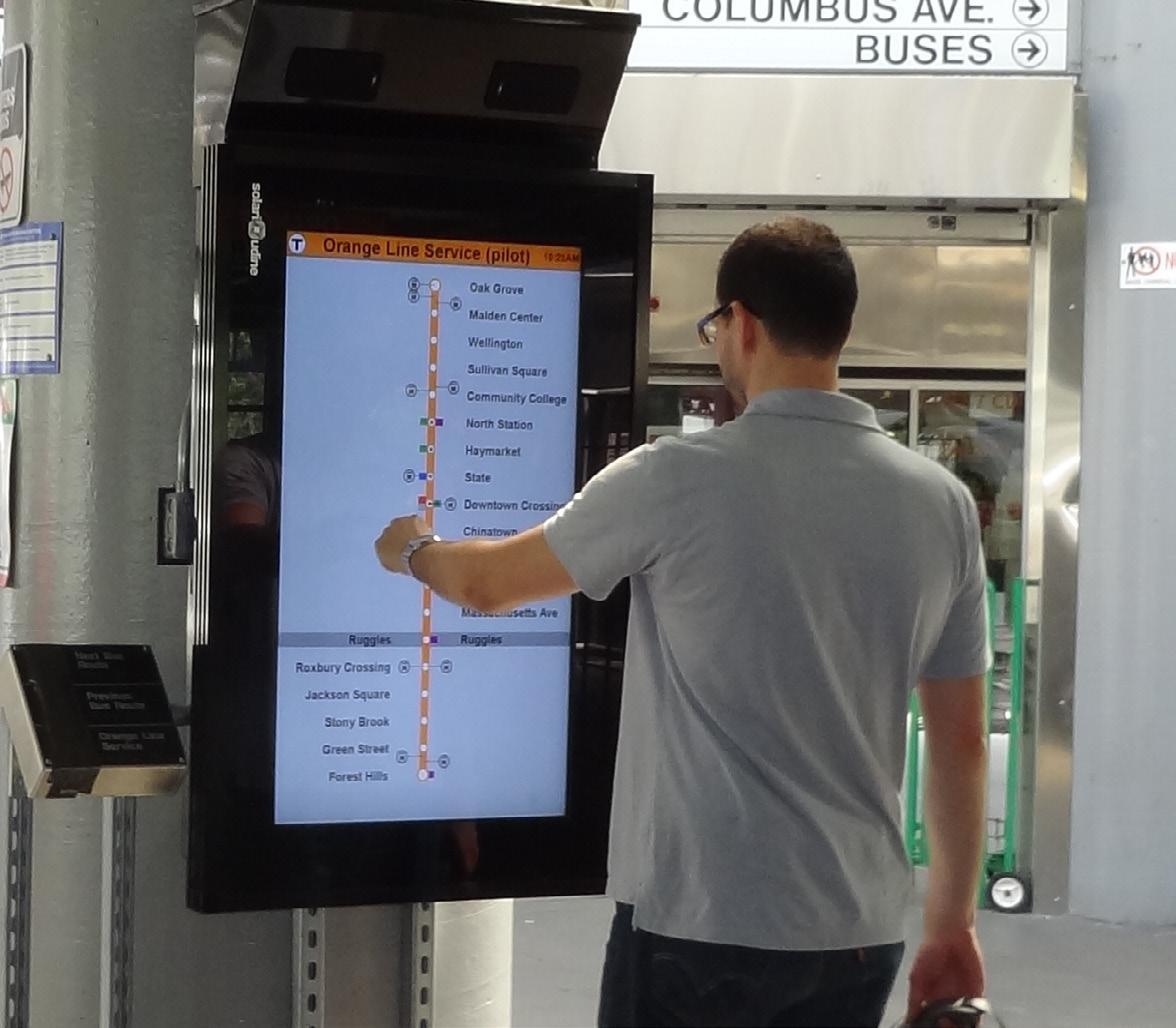
streets are equipped with the physical and digital information infrastructure required to move all modes of transportation more efficiently, support alternatives such as car and bicycle share, and provide real-time data to facilitate trip planning, parking, and transfers between modes of transportation.
Boston’s Complete Streets
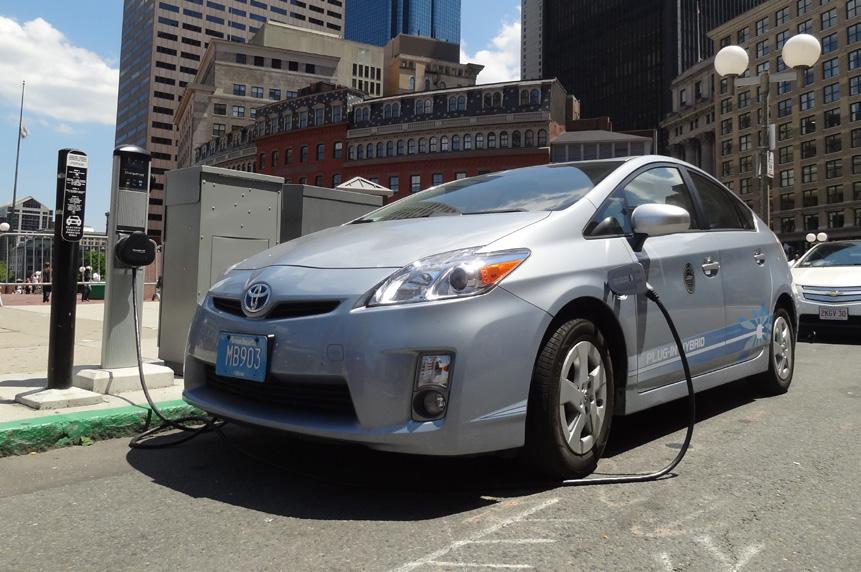
Electric Vehicle Charging Stations
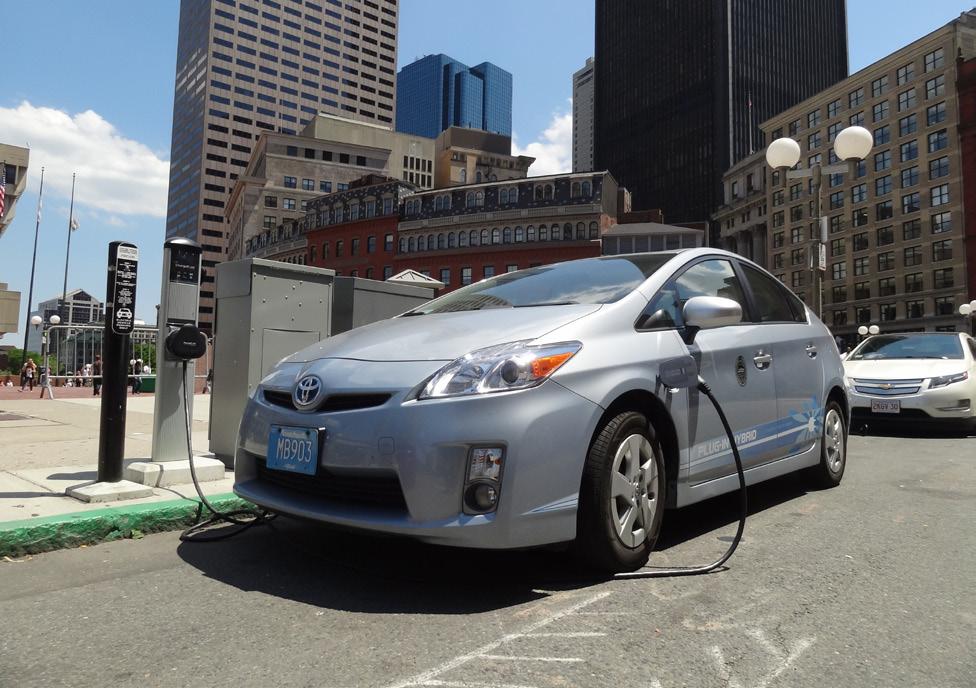
support the adoption of a new generation of clean-fuel vehicles. Linked to smart electric grids that use alternative energy sources such as solar and wind, they will help reduce dependence on fossil fuels and combat climate change.
Ease of
Maintenance informs the design of roadways and sidewalks, favoring durable materials and maintenance agreements for special features to enhance the life and upkeep of Boston’s streets.
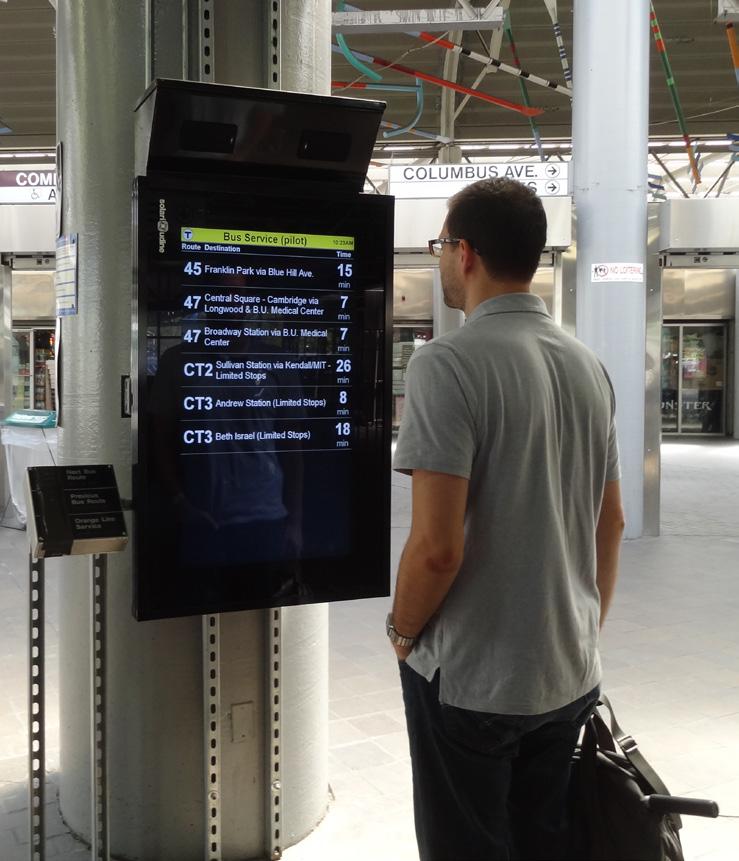
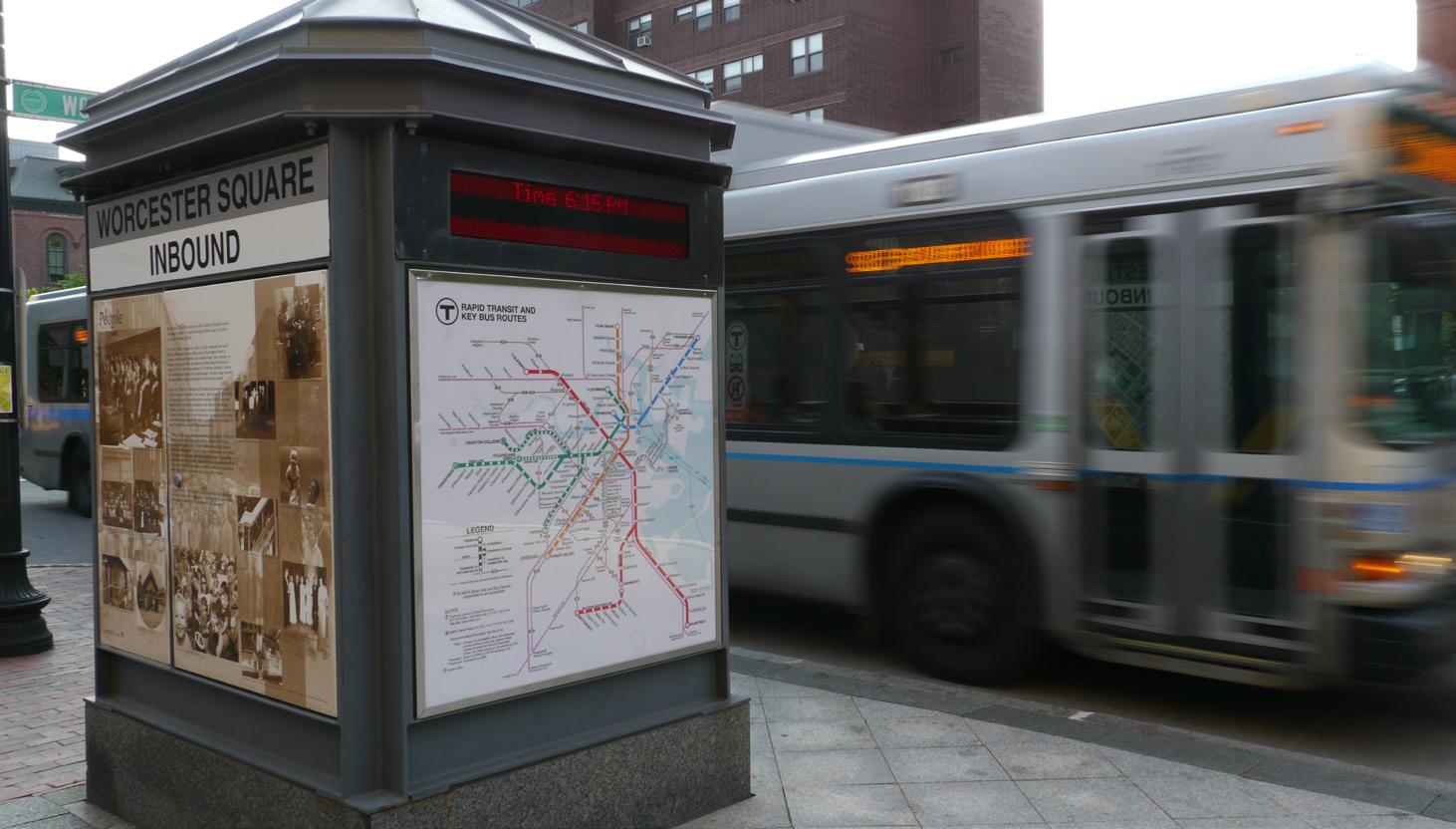
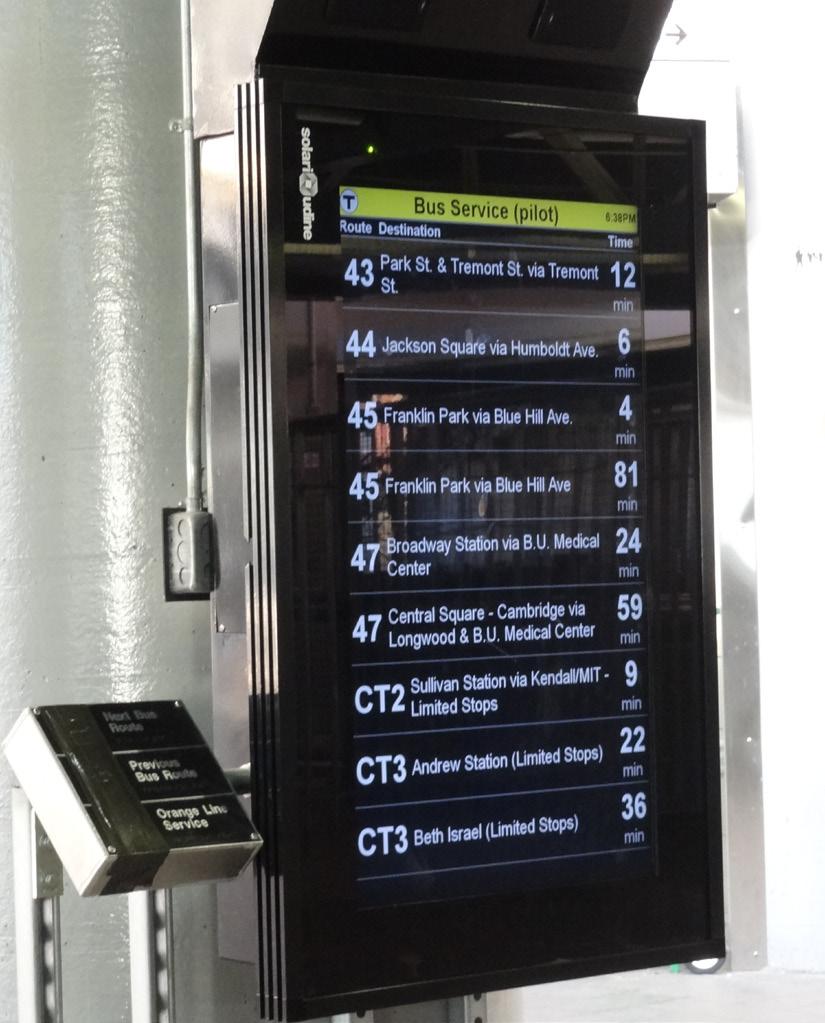
Bus Lanes and Transit Prioritization at intersections improve the reliability of routes with high passenger volumes. Shelters with amenities and next bus information improve convenience for passengers.
Intelligent Signals
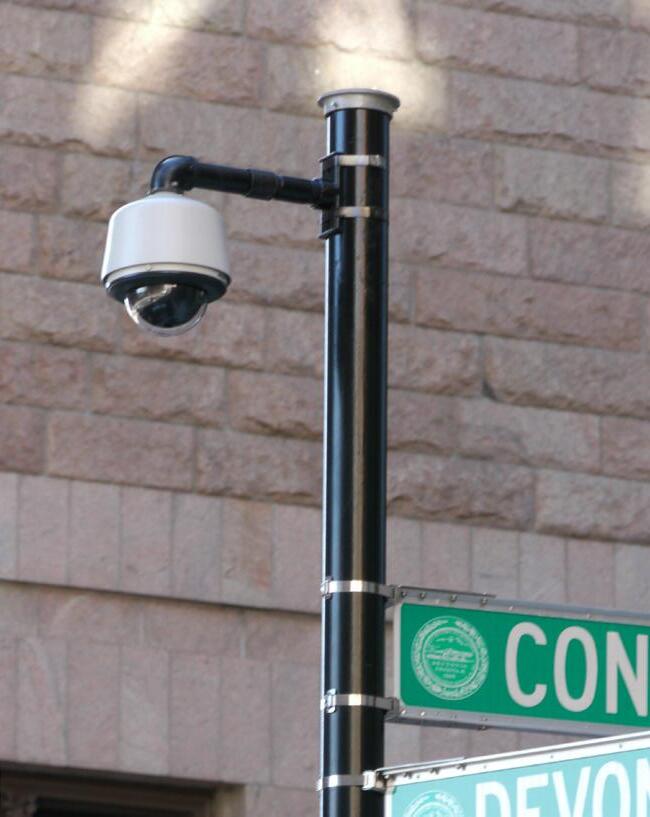
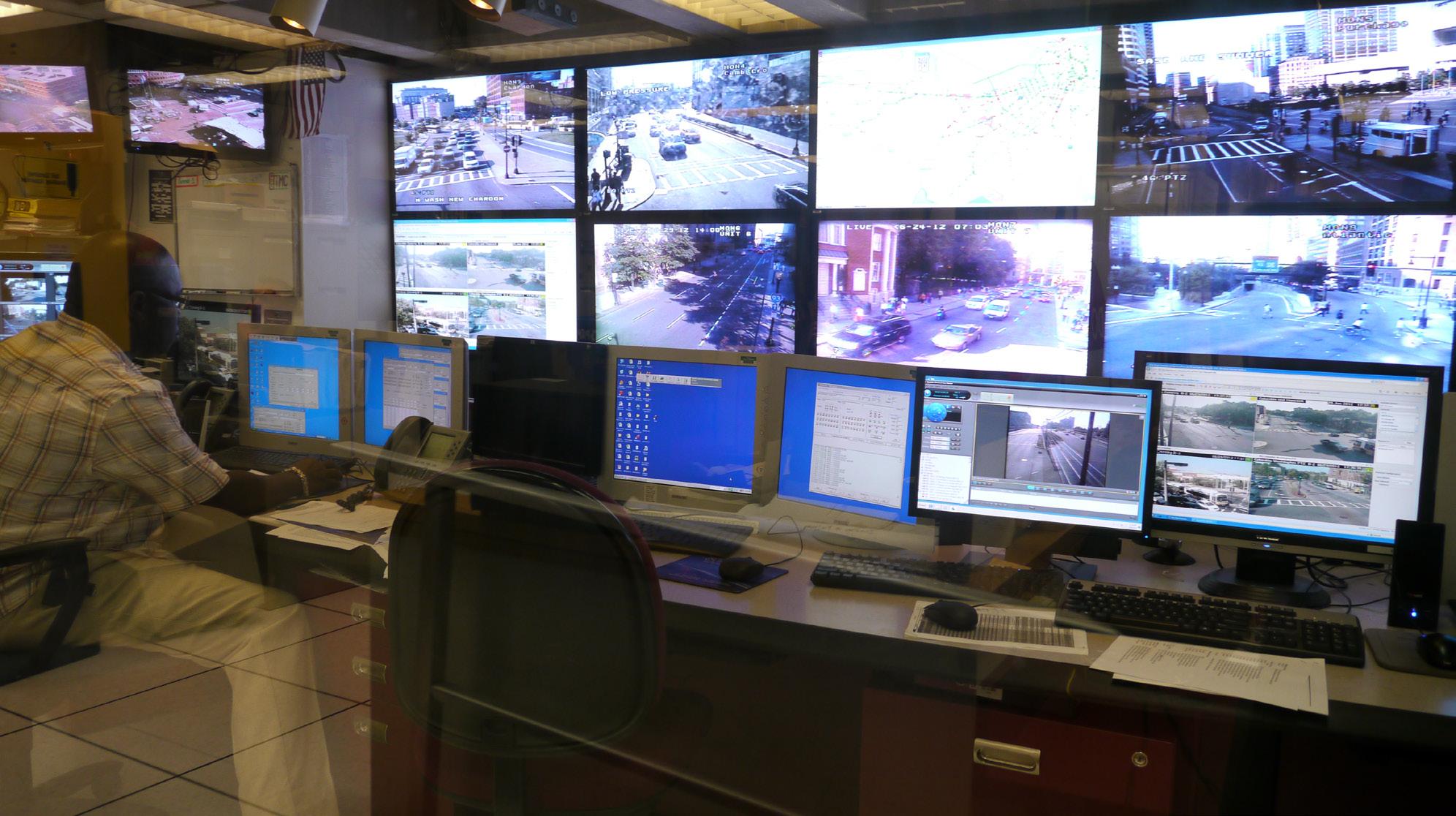
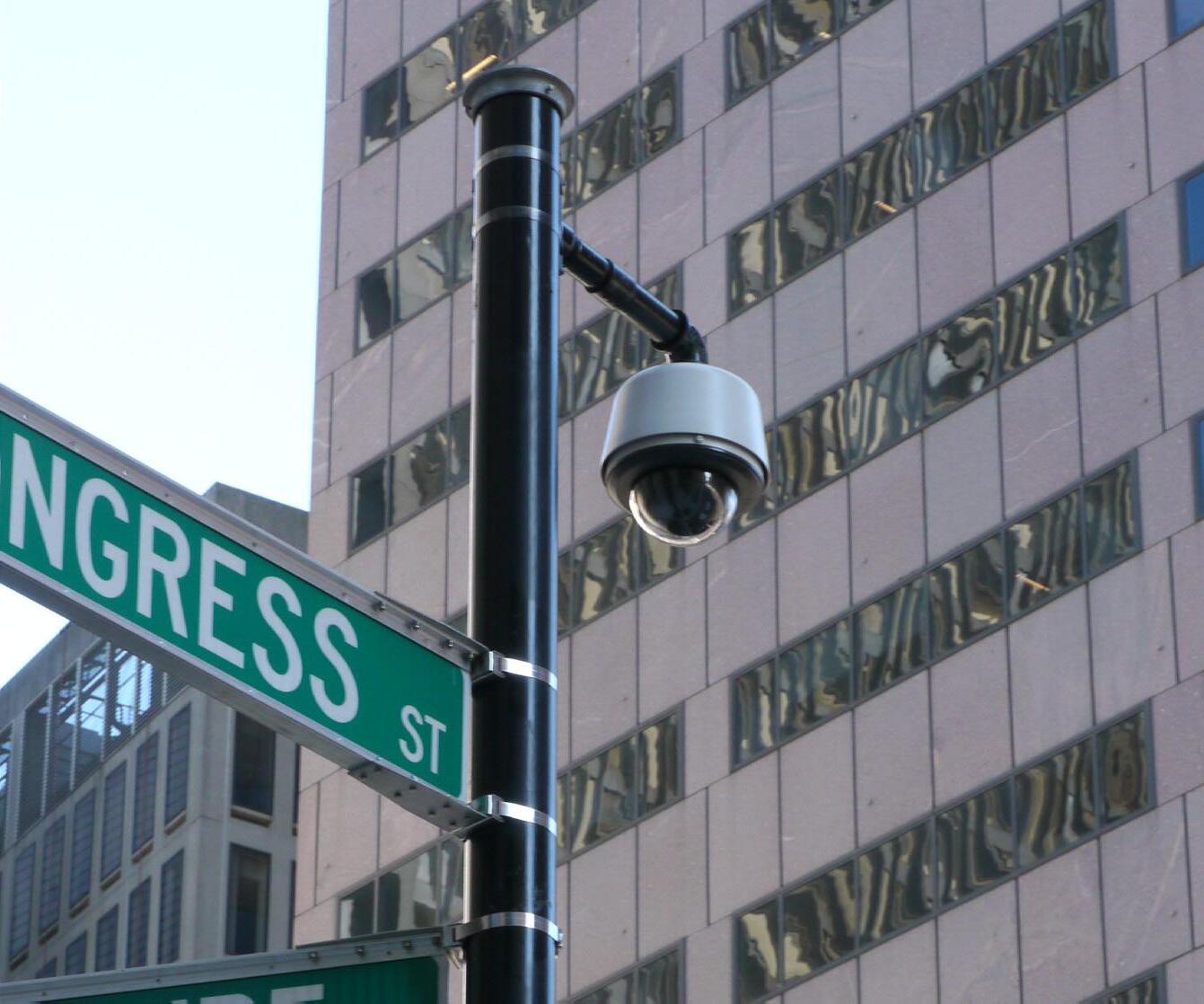
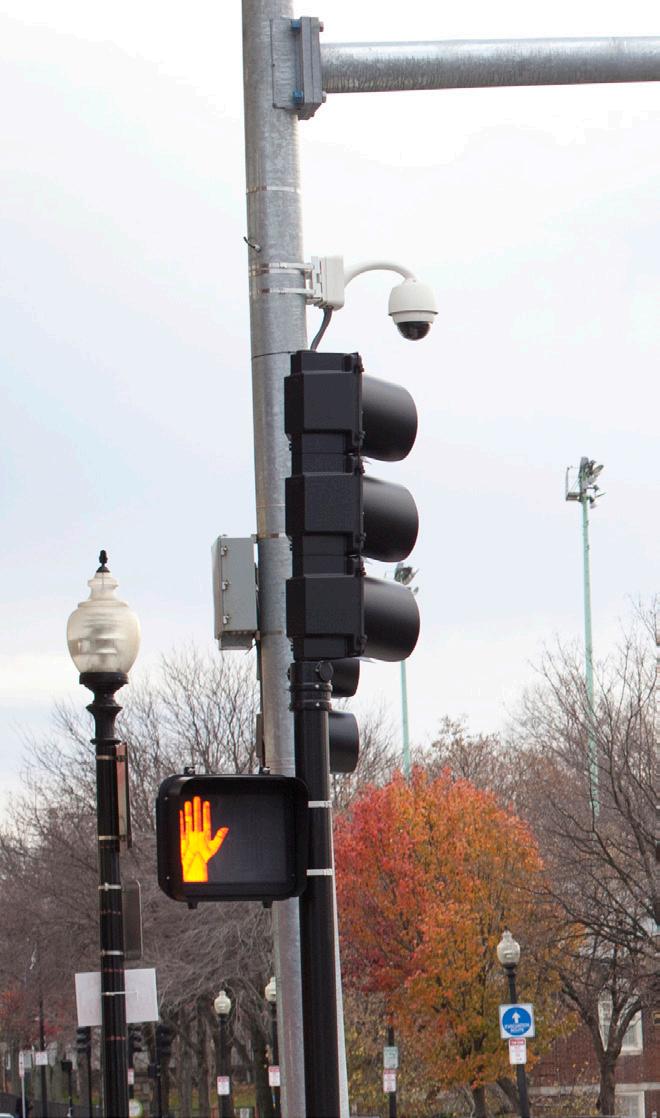
and Traffic Cameras manage traffic flow in real-time. They facilitate vehicle progression and reduce wait times, improving fuel efficiency and reducing GHG emissions.
Accessible
Surfaces with smooth, slip-resistant materials for sidewalks and crosswalks create comfortable walking environments that make streets welcoming for people of all ages and abilities.
Permeable
Surfaces for roadways and sidewalks help reduce flooding and erosion and preserve capacity in storm drains and combined sewers.
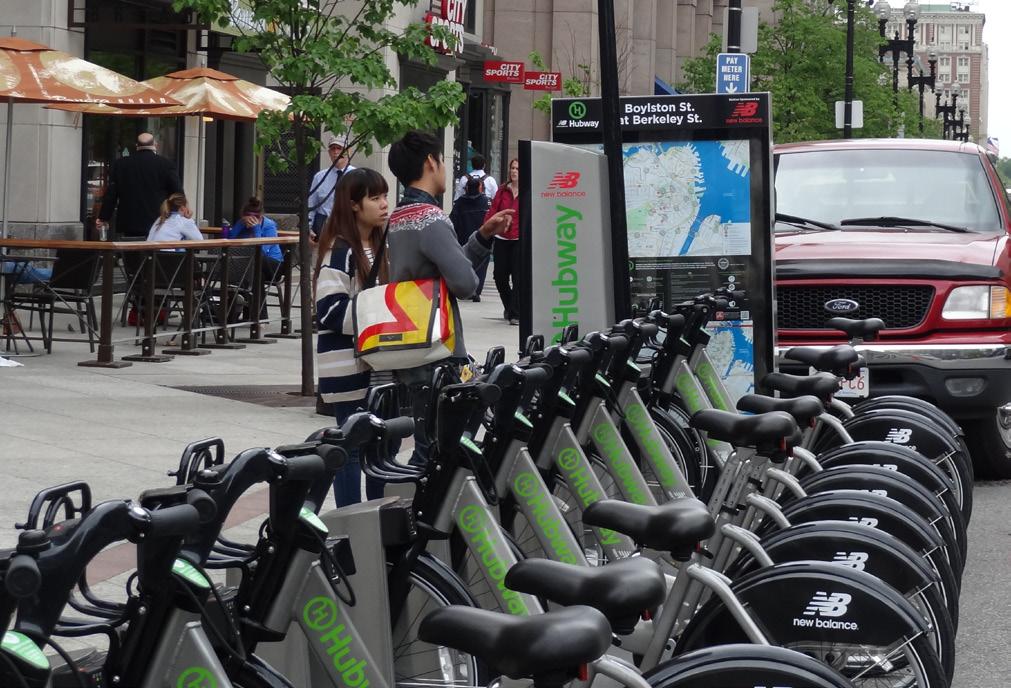
Bicycle and Car Share Stations
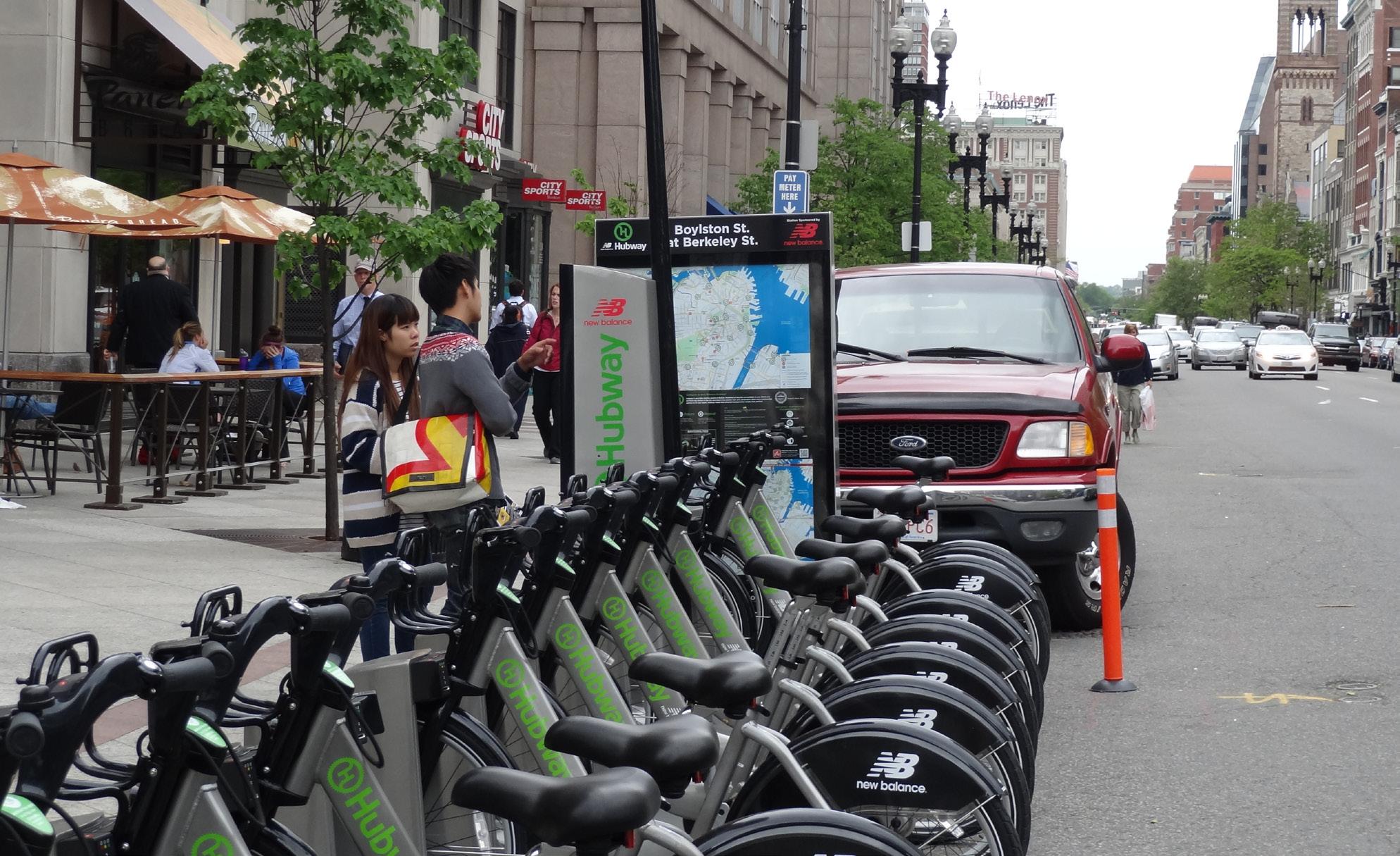
provide the convenience of personal transportation, low costs, and energy savings without the need for car ownership.
Minimum Lane
Widths assist in the accommodation of pedestrians and bicyclists when the available public right-of-way is limited in width. Narrower roadways also result in safer vehicle speeds.
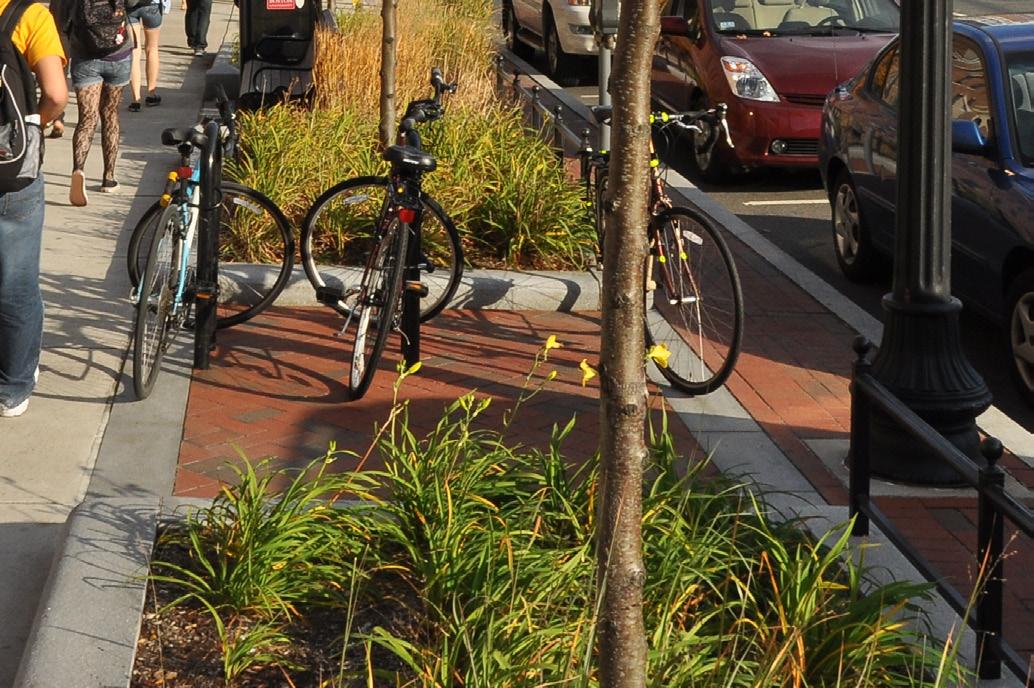
Rain Gardens and other greenscape elements at key locations divert stormwater directly to the soil. Maintainable rain gardens can filter pollutants, improve air quality, and provide greenery on the street.
Street Trees with sufficient rooting volume to thrive provide shade and beauty; support wildlife habitat and reduce air pollution; and energy consumption.
Smart
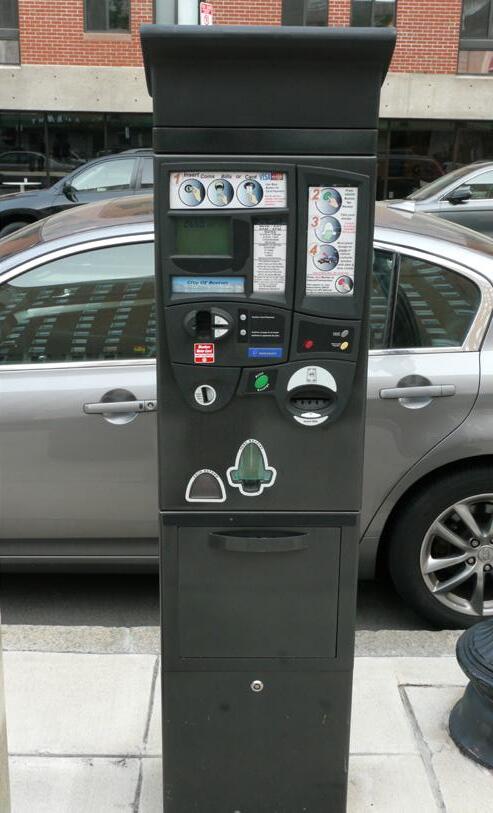
Meters that accept prepaid cards, payment by mobile phones, and allow for variable pricing facilitate more efficient use of limited curbside space.
Bicycle Lanes and Cycle Tracks
create a citywide network that increases safety and encourages more people to bicycle.
Digital Tags and Information Panels
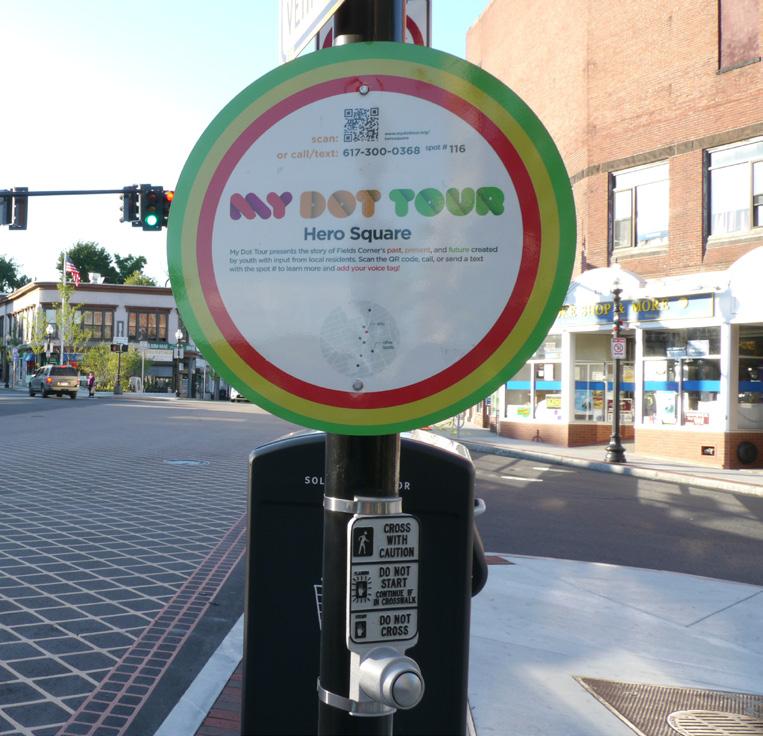
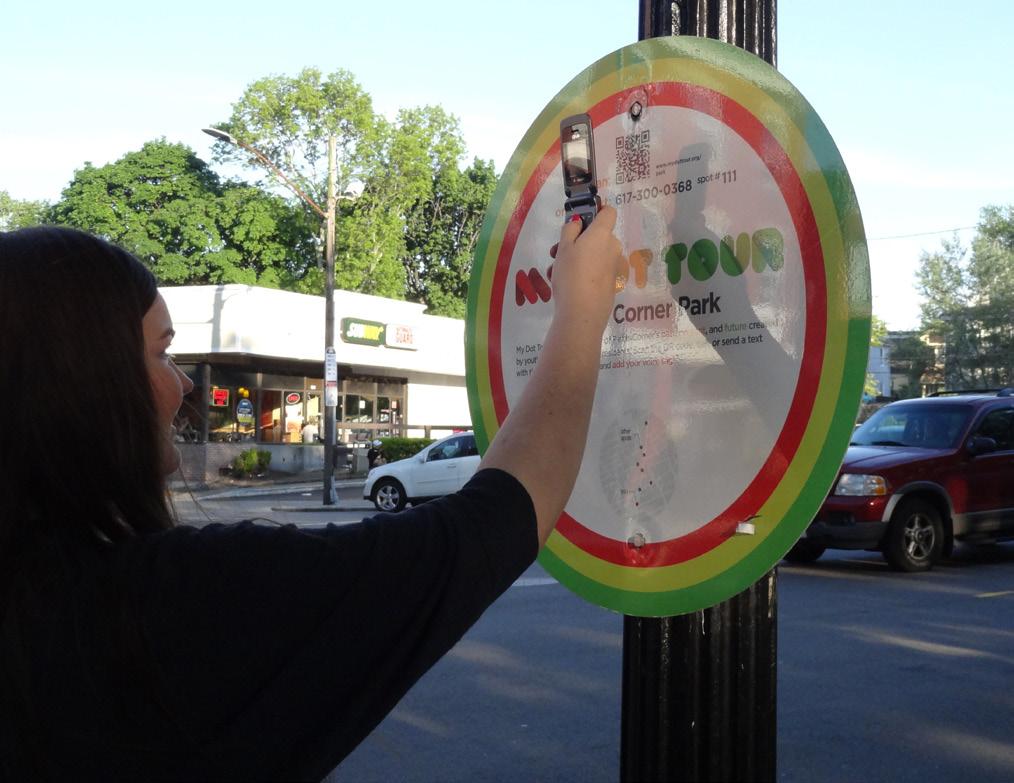
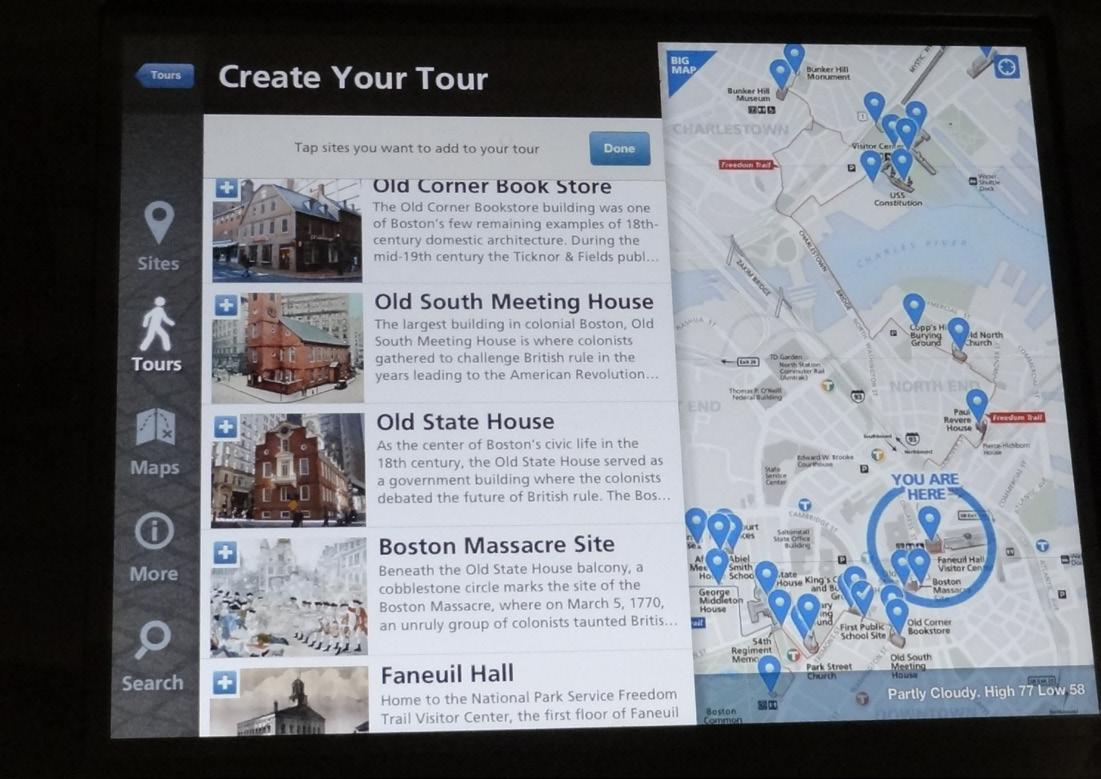
integrated with street furniture and building facades enable wayfinding, community bulletin boards, trip planning, and place-based social networking.
Wide Sidewalks
with unobstructed accessible pathways encourage walking. When combined with proper lighting, street trees, and vibrant street walls they are inviting, safer, and contribute to placemaking.
Why Streets Matter
1. Streets define the character of Boston’s neighborhoods. Great streets for walking, bicycling, and activities are great places for everyone.
2. Streets and sidewalks make up 56% of city-owned land. How we use this land reflects how we want to live.
3. Streets and public spaces are responsible for making Boston a premier walking city. Approximately 30% of all trips within the city and 75% of all trips within a neighborhood are made on foot.
4. Streets can help reduce climate change by encouraging sustainable modes of travel. As transportation currently contributes 27% of greenhouse gas emissions, Boston has a goal of reducing vehicle miles travelled by 7.5% by 2020.
5. Streets with bicycle lanes and cycle tracks create a welcoming, friendlier and safer city. Boston has installed 60 miles of bicycle facilities since 2009 with a goal of installing 20 miles per year for the future.
6. Streets that move traffic efficiently without speeding are safer for all. Boston has installed over 200 traffic management cameras, and supports 25 mph speed limits and 15 mph safety zones.
7. Streets can encourage the use of transit by providing bus lanes and welcoming station environments. In 2012, public transportation ridership in the Boston area was the highest since 1946.
8. Streets can help people make healthy decisions by supporting walking, bicycling, and transit. The Boston Moves for Health campaign has set an annual goal of logging 10 million miles citywide. A recent survey counts 23% of all Bostonians as obese.
9. Streets lined with healthy trees provide beauty, shade, and improved air quality. Boston is working to increase its green canopy 20% by 2020.
10. Streets are Boston’s primary stormwater conduit. With more than 50% of city being impervious, Boston has a goal of recharging 1” of rainfall in groundwater conservation districts and providing 25% of the Greenscape/Furnishing Zone with vegetated areas.
Using the Manual
Purpose
the City of Boston has developed the Boston Complete street Design Guidelines (the Guidelines) to provide policy and design guidance to governmental agencies, consultants, private developers, and community groups on the planning, design, and operation of roadways and sidewalks in Boston. the Guidelines are intended to ensure that Boston’s streets are safe for all users, and to foster an efficient project development and review process.
street design in the City of Boston is a complex endeavor and designs must respond to varied local conditions and site constraints. Design decisions require flexibility to balance the use of available guidance and engineering judgment with innovations in street design and technological advances. these Guidelines have been developed to supplement existing manuals and standards including the manual on uniform traffic Control Devices (mutCD), and guidance issued by the national association of City transportation officials (naCto) and the american association of state transportation officials (aasHto).
the development of the Guidelines is rooted in the experience of innovation and experimentation in street design in Boston and around the world. as such, the guidelines are intended to evolve and adapt to incorporate new treatments and techniques as they are developed and put to use.
Street Types
the new street types form the basis of Boston’s Complete street Guidelines. they have been developed to supplement the functional street classifications and to provide additional guidance during the selection of design elements. they can serve as models or as options when communities need to make informed choices in the visioning process of a corridor redesign project. taking into consideration the type of street will help ensure that land use contexts are reflected in the design and use of Boston’s streets.
Chapter Layout
the layout and design of each chapter is organized in a hierarchy to guide readers from high level design principles to individual design treatments. the principles are framed using the three themes of Boston’s Complete streets—multimodal, Green, and smart. public agencies responsible for review and/or approval of design elements are highlighted in grey at the beginning of each Chapter or main section, and in boldface text for individual treatments as appropriate.
Individual Treatments
the discussion of individual treatments in each chapter is organized within the following three sections:
> overview: provides a definition and general description of the individual treatment.
> Use: Describes under what conditions the treatment is appropriate and provides specific design guidance.
> Considerations: provides guidance to help tailor the use of individual treatment for varying contexts.
Acronyms
aps accessible pedestrian signal
aasHto american association of state Highway transportation officials
aDa americans with Disabilities act
aDt average Daily traffic
BCDC Boston Civic Design Commission
BlC Boston landmarks Commission
Bra Boston redevelopment authority
BtD Boston transportation Department
BWsC Boston Water and sewer Commission
Brt Bus rapid transit
Ctps Central transportation planning staff
CoBuCs City of Boston utility Coordination system
CCtV Closed Circuit television
Cmr Code of massachusetts regulation
Cmp Construction management plan
Clu-in Contaminated site Clean-up information
Doit Department of innovation and technology
DC Direct Current
eV electric Vehicles
ems emergency medical services
FHWa Federal Highway administration
GHG Green House Gas
Gps Global positioning system
HiD High intensity Discharge
HoV High occupancy Vehicle
HCm Highway Capacity manual
isD inspectional services Department
lpi leading pedestrian interval
los level of service
leD light-emitting Diode
lrtp long range transportation plan
mutCD manual on uniform traffic Control Devices
mBta massachusetts Bay transit authority
massDot massachusetts Department of transportation
miVis massachusetts interagency Video information system
monum mayor’s office of new urban mechanics
mmlos multimodal level of service
naCto national association of City transportation officials
opC office of the parking Clerk
ps&e plans, specifications, and estimates
pmt program for mass transit
piC public improvements Commission
proWaG public rights of Way accessibility Guidelines
pWD Boston public Works Department
Qr Quick response
rFiD radio Frequency identification
roW right-of-way
tmC traffic management Center
tapa transportation access plan agreement
tip transportation improvement program
Vmt Vehicle miles traveled
Street Types 1
Boston’s streets have developed their character over centuries of growth and evolution. Short, meandering streets in historic areas such as the North End and Highland Park cede to more generously scaled, 20th century treelined boulevards. Residential streets with narrow setbacks intersect linear connector roads, curvilinear parkways, and lively small-business districts. As the city continues to evolve, understanding how different streets interact with adjacent land uses and contexts is central to creating Complete Streets. This chapter defines new character and context-based Street Types to supplement the traditional functional classification system.
Street Type Principles
the City of Boston has developed a new set of street types that classify Boston’s streets based on the adjacent land uses and character of the street, in order to guide both future development and road design projects. the new street types will supplement the traditional functional classification system of streets, and support Complete street designs that reflect the diverse range of conditions in Boston. Guidance is provided throughout each chapter of how different elements of the public realm, such as roadways, sidewalks, intersections, and uses along the curb, should function in respect to street types.
street types are not necessarily continuous along the entire length of a street; a single street may change typology as the surrounding land uses or functions of the road changes. For example, a street may transition from a neighborhood residential to a neighborhood main street, and then back to a neighborhood residential street again as it passes through the commercial center of a community.
Different street types serve different functions; every street is unique and each street type plays an important role in the surrounding neighborhood. roadway designs and streetscape projects must support Boston’s economy and local businesses. Designs should balance the movement of freight and motor vehicles with the goal of creating vibrant, lively public spaces that enhance the quality of life for residents and encourages healthy living and active transportation.
street typology has been defined using the following principles:
Multimodal
> Designs must prioritize users based on the context of the street type, and aim to equitably share limited right-of-way space. each street type will balance the needs of users, giving priority based on the context, land use, existing built environment, and constraints of each site.
> Within Boston’s constrained right-of-way, trade-offs to achieve multimodal streets must be balanced and equitable, and should always strive to promote healthy and active transportation. Depending upon the street type, the degree of accommodations for walking and bicycling will vary; a Downtown mixed-use street will typically accommodate wider sidewalks with street furniture, trees and greenscape, and transit stop amenities, while a neighborhood residential street may have narrower sidewalks, on-street parking, and “neighborway” treatments. regardless of tradeoffs, all street types must consider the needs of pedestrians and bicyclists.
Green
> Boston is a city with a wealth of historic sites and buildings, treasured landscapes, and vital waterways and harbors. each location in the city has a rich and sensitive environmental context, with specific local concerns of sea level rise, falling ground water levels, water and air quality, and historic preservation. street design and redevelopment projects should determine how the design of the street functions with the natural and existing built environment, and seek to protect and preserve those resources.
> street trees and greenscape should be selected based on the context of the surrounding environment in conjunction with available right-of-way space. When selecting trees and plantings, consideration should be given to the context of the neighborhood and local environment, especially for the purpose of phytoremediation, or the use of plants to remove and treat pollutants in the water, ground, and air; industrial street types are particularly important locations to include phytoremediation strategies.
Smart
> smart technology should optimize the functionality of a street while remaining sensitive to the character of Boston’s different street types. as technology progresses, the City aims to monitor and enhance curbside uses such as parking, as well as energy efficiency, signalization, and wayfinding with respect to the street typology.
Functional Classification and Boston’s Street Types
Functional street classification systems use a hierarchy to group classes of streets based on the relative emphasis of vehicle mobility versus property access. the system is used to design roads that support different speeds, volumes, and types of traffic. on one end of the spectrum are arterial roadways, which facilitate higher vehicle speeds and longer trips, and accommodate the greatest number of trips for all modes of travel. at the other end of the spectrum are local streets, which provide easy access to individual residences at slower speeds. in between arterial and local streets are collectors, streets characterized by a balance between access and mobility.
the functional classification system is the basis for most local, state, and national roadway design guides and manuals. the functional classifications are based on operational characteristics predominantly for the mobility and capacity of motor vehicles, and are used to recommend values for elements such as lane widths, speeds, geometry, and intersection design.
the traditional classifications by themselves, however, are not sufficient when designing a Complete street. street design must also take into consideration the local neighborhood context, such as the type and concentration of adjacent land uses, since these factors influence how the street is used. a more nuanced system that reflects the diverse uses and functions of Boston’s streets is necessary to supplement the functional classification system. Boston’s street types were developed to provide additional guidance during the selection of design elements, and can serve as models or options when communities need to make informed choices in the visioning process of a corridor redesign project.
chart are provided in footnotes below. Note that a design exception may be required for some values on federal or state-funded projects.
Boston’s street types offer a balance between functional classification, adjacent land uses, and the competing needs of all transportation modes. each street type prioritizes users and various design elements based on the context and character of the neighborhood and street. Within Boston’s constrained public right-of-way, trade-offs must be balanced and equitable, and should always encourage the healthy and active transportation options of bicycling and walking.
in addition to reflecting a range of land use contexts, the new street types include three special types—shared streets, parkways, and Boulevards—that are characterized more by design elements unique to that type of street rather than solely by adjacent land use.
Functional classification systems predominantly emphasize the operational characteristics for the mobility and capacity of motor vehicles.
Functional Classification System
> arterials
> Collectors
> locals
Complete street types help supplement functional classification by balancing operational capacity and mobility with the context and character of the street and surrounding neighborhood.
Boston’s Street Types
> Downtown Commercial
> Downtown mixed-use
> neighborhood main
> neighborhood Connector
> neighborhood residential
> industrial
> shared street
> parkway
> Boulevard
Downtown Commercial
Overview
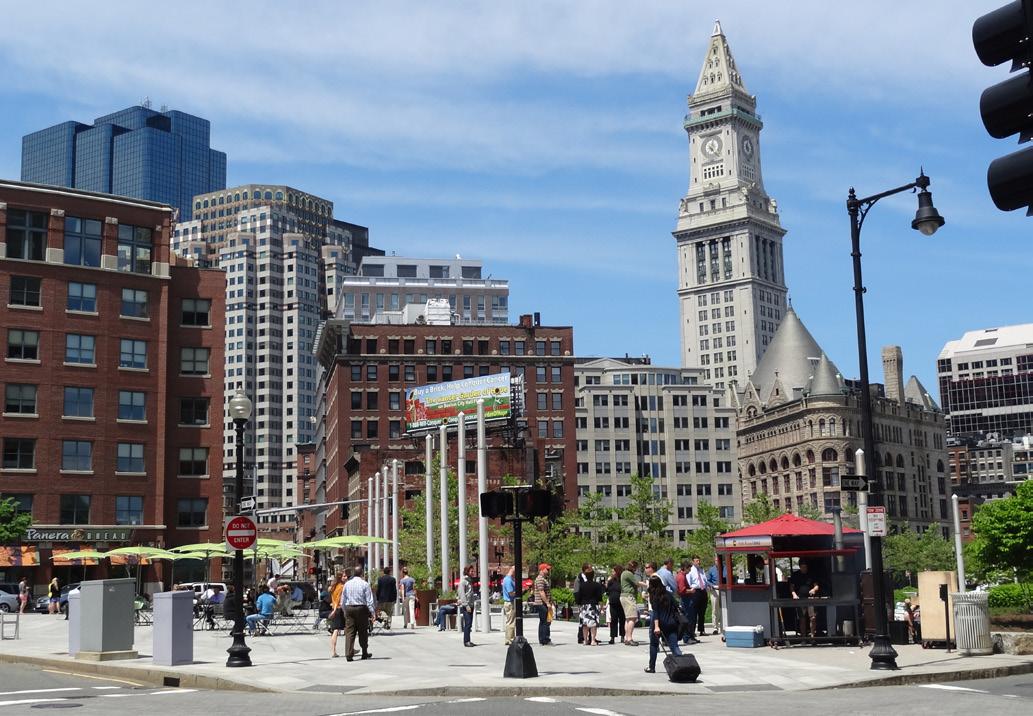
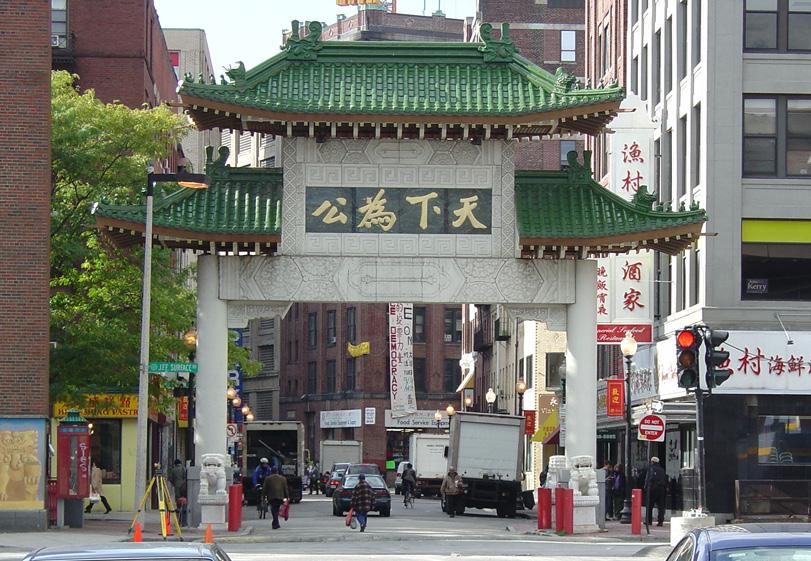
Downtown Commercial streets define Boston’s dense commercial core. these street types are found primarily in the Financial District, Government Center, Chinatown, the leather District, Back Bay, and the south Boston Waterfront. Containing a mix of mid- and high-rise office buildings, the streets serve as international cultural destinations and connect with highways and transit hubs that serve the Greater Boston region.
these often iconic streets play a key role in the regional movement of people, and designs must support extremely high user volumes. Congestion, commercial vehicle traffic, and high volumes of pedestrians and bicycles, combined with relatively short blocks and numerous irregular intersections, make achieving the right modal balance a considerable challenge. lined with a mix of centuries-old and modern
building facades and grand lobbies, these streets require wide sidewalks which typically feature enhanced finishes and materials. Designs must also respect the historic significance of these streets.
Example Streets
> Congress street (Government Center/Financial District)
> state street (Government Center/Financial District)
> Kneeland street (Chinatown/leather District)
> summer street (Financial District/south Boston Waterfront)
> Boylston street (Back Bay)
Downtown Mixed-Use
Overview
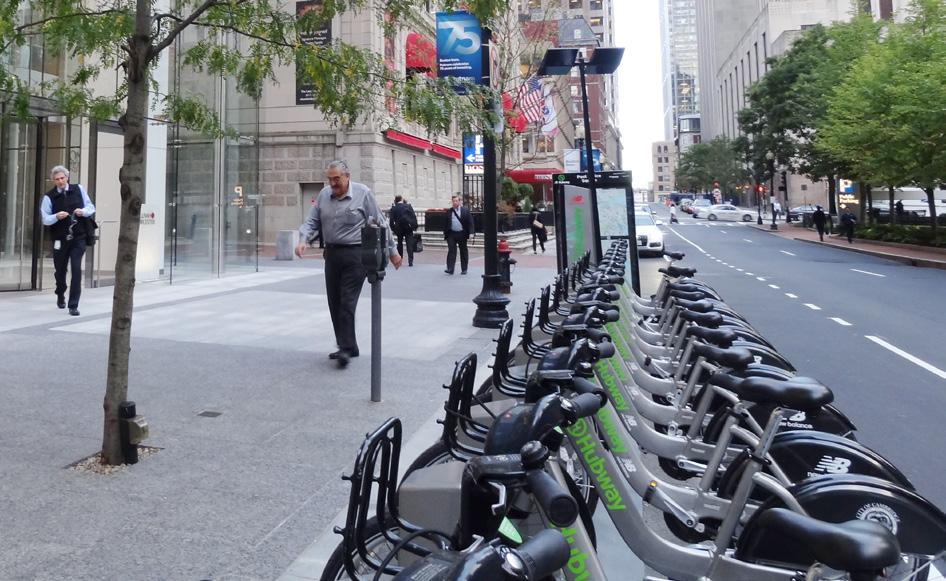
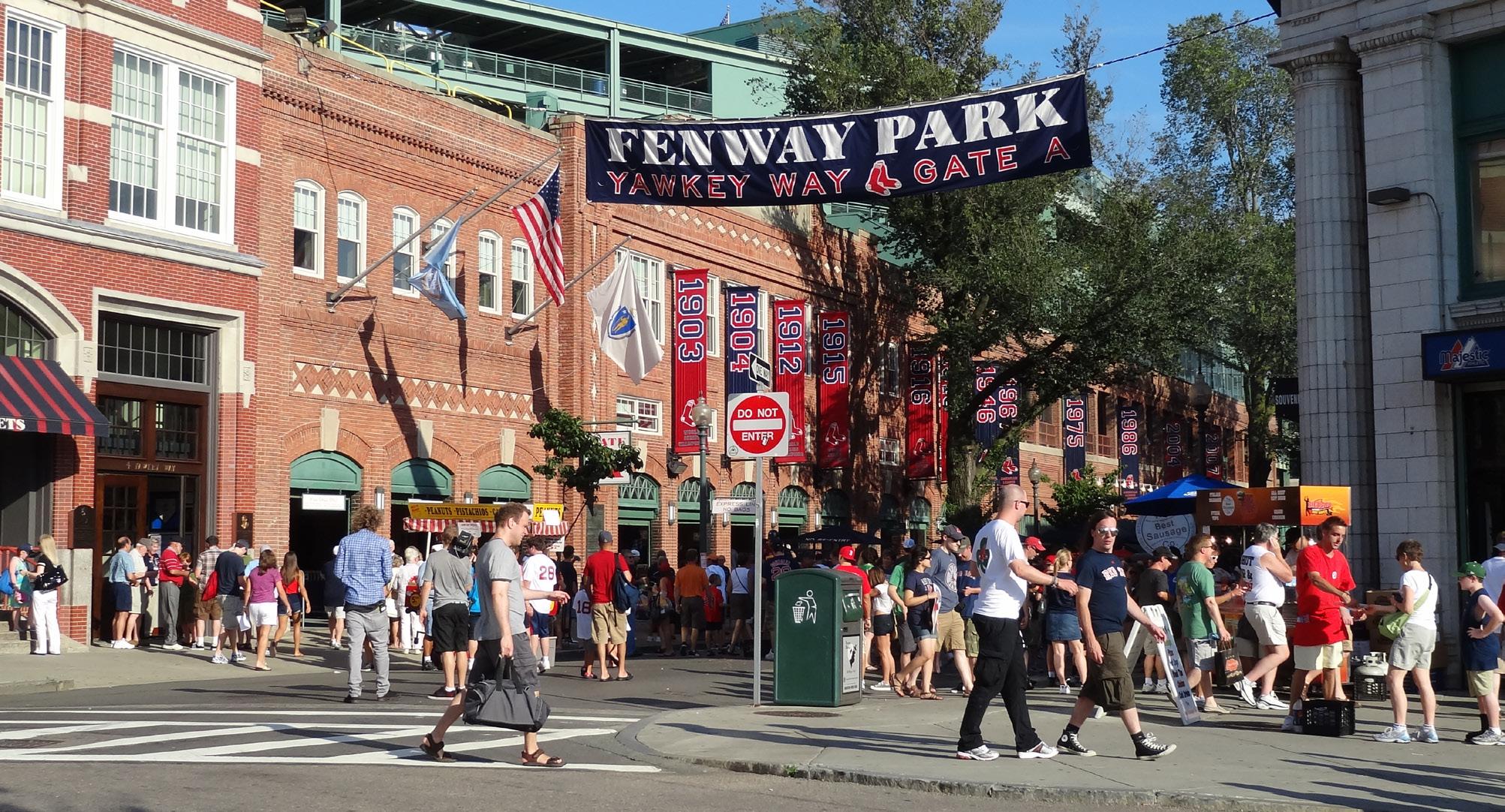
Downtown mixed-use streets serve a more diverse variety of land uses than Downtown Commercial streets. Found in the downtown neighborhoods such as Back Bay, Beacon Hill, north end, south end, Fort point Channel, West end, and in the Kenmore square and Fenway park areas, these streets support a lively mix of retail, residential, office, and entertainment uses; this wide-range creates many of the city’s most dynamic public spaces. While usually smaller in scale than Downtown Commercial streets, they similarly serve residents, visitors, and workers. they should support high levels of walking, bicycling, and transit, as well as support frequent parking turnover, including loading zones to foster economic vitality.
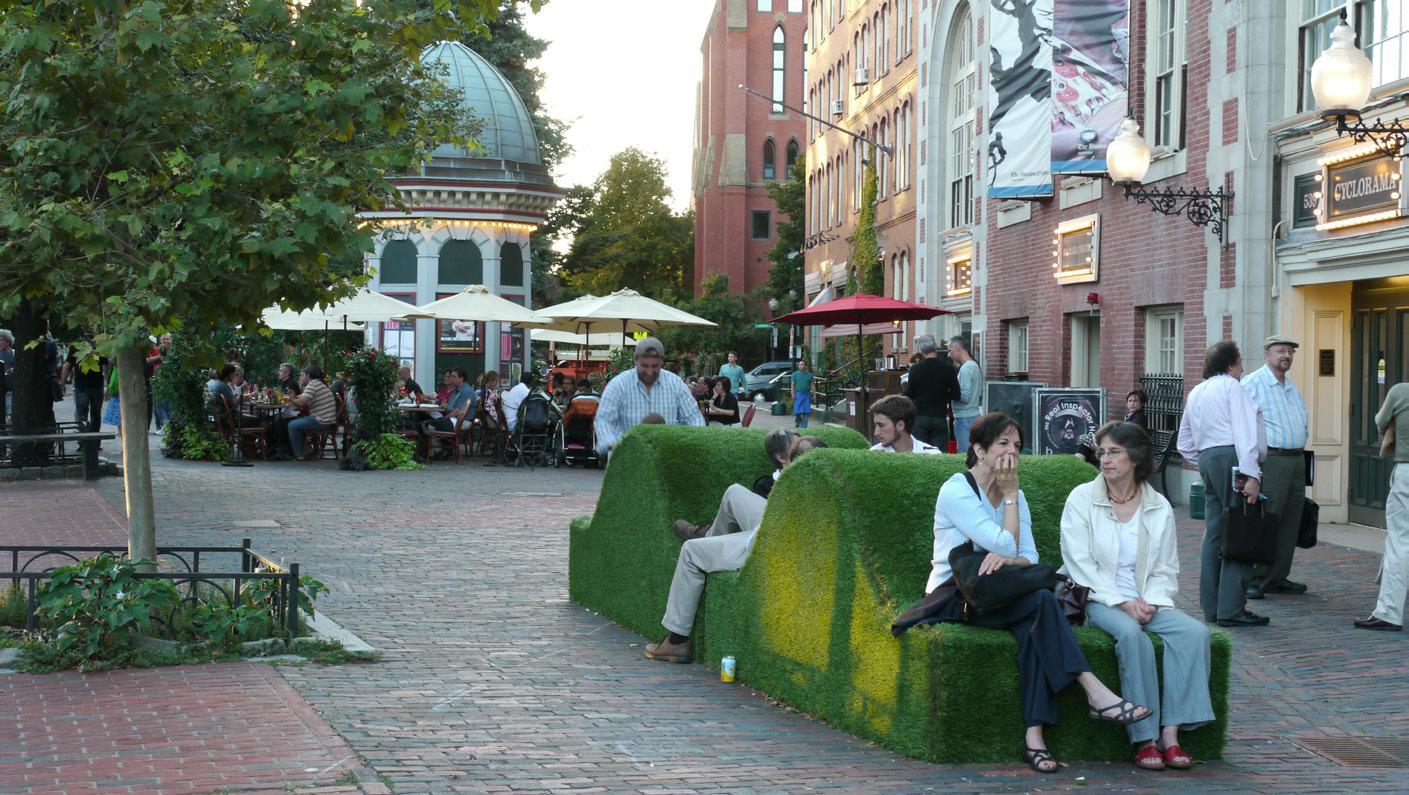
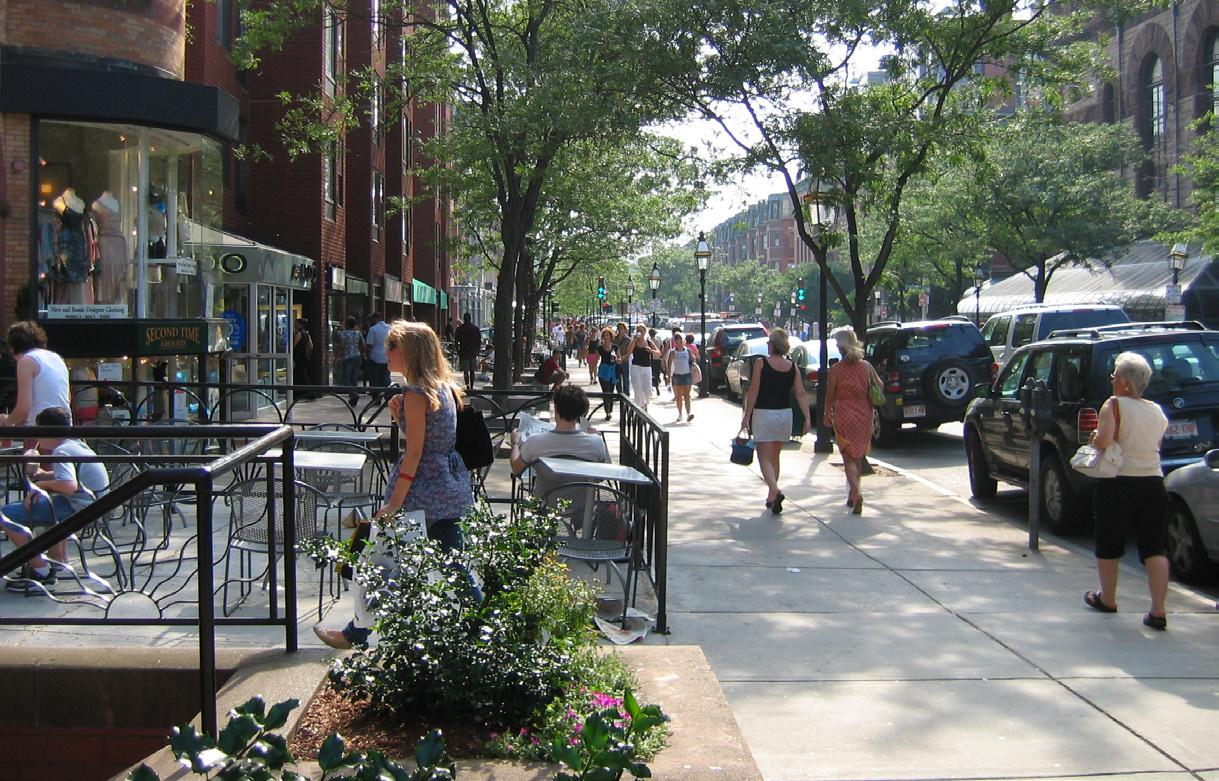
on Downtown mixed-use streets, a lively and visually stimulating public realm should be supported by greenscape, street furniture (i.e., benches, information kiosks, trash and recycling receptacles, etc.), outdoor cafés, plazas, and public art. Boston’s Downtown mixed-use streets are where people work, play, shop, eat, and gather to enjoy city life.
Example Streets
> newbury street (Back Bay)
> tremont street (south end)
> salem street (north end)
> Brookline avenue (Fenway)
Neighborhood Main Street
Overview
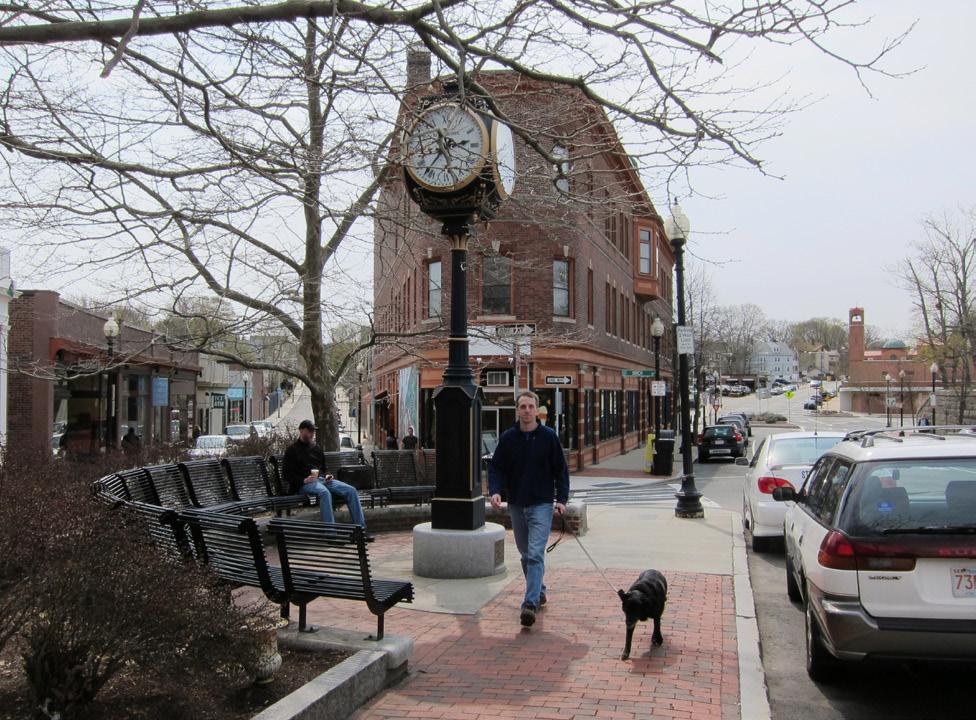
neighborhood main streets are typically located in the heart of a residential part of the city. Characterized by dense singlefloor commercial and retail use, they are often concentrated in an area only a few blocks long. they are the nucleus of the city’s neighborhood economies, providing residents with daily essentials, locally-owned businesses, and services ranging from banking to dry cleaning. similar to Downtown mixeduse street types, the curbside uses on neighborhood main streets prioritize walking, bicycling, transit, and short-term parking access and loading for local shops and restaurants.
Because these streets are a meeting ground for residents, they should be designed to support gathering and community events such as farmers’ markets and festivals. in addition they are characterized by public facilities such as libraries, as well as community and health centers.
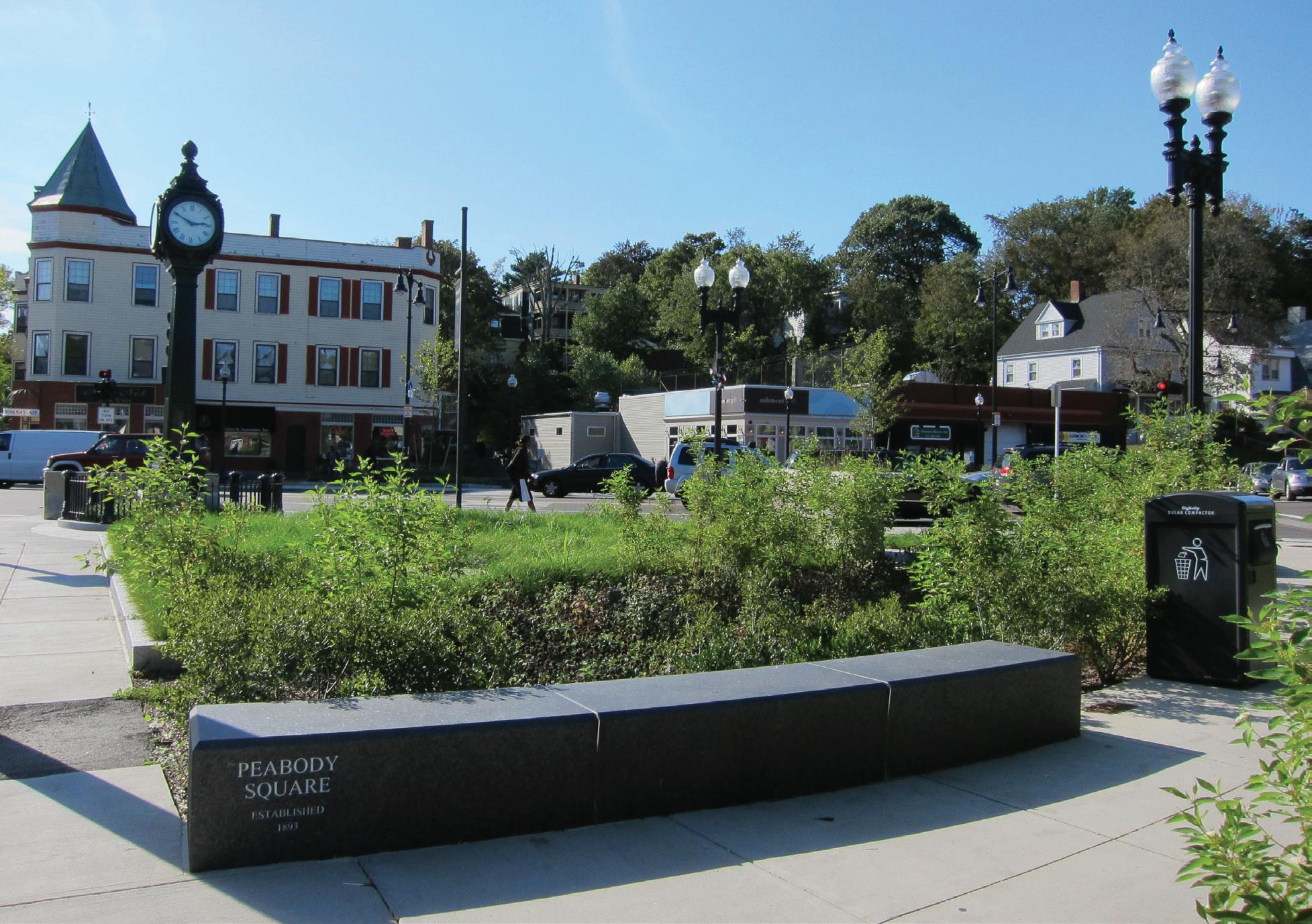
many of Boston’s neighborhood main streets are often the only through streets in a neighborhood, and are linked with well-known neighborhood squares, for example Dorchester avenue and peabody square, or Dudley, Warren, and Washington streets in Dudley square. these streets and squares often serve as hubs for bus routes and as destinations for local walking and bicycling trips.
in 1995, the City of Boston established the Boston main streets program, a community-based, public-private partnership designed to revitalize and strengthen local business districts through strong organizational development, community participation, resident and merchant education, and sustainable development. For more information on the Boston main streets program, visit the City of Boston’s website. (note neighborhood main streets can include corridors not currently participating in the main streets program.)
Example Streets
> Dorchester avenue (south Boston/Dorchester)
> Center and south streets (Jamaica plain)
> Dudley street (roxbury)
> Birch street and roslindale square (roslindale)
> meridian street, maverick and Central squares (east Boston)
Neighborhood Connector
Overview
neighborhood Connector streets are through streets that traverse several neighborhoods and form the backbone of Boston’s multimodal street network. they provide continuous walking and bicycling routes and accommodate major bus routes. While they are essential to the flow of people between neighborhoods, the needs of people passing through must be balanced with the needs of those who live and work along the street.
neighborhood Connector streets may be single or multi-lane streets. land uses, speeds, and right-of-way widths can vary, and the street typology may change throughout the duration of the street. Design considerations include encouraging efficient movements of vehicle and transit traffic, continuous and comfortable bicycle facilities, wide sidewalks with sufficient buffers to motor vehicle traffic, and safe pedestrian crossings at intersections. street lighting, tree plantings, street furniture, and other urban design elements should create a unifying identity for the entire street.
Example Streets
> Cummins Highway (roslindale/mattapan)
> Washington street (south end/roxbury/Jamaica plain)
> Cambridge street (allston/Brighton)
> Centre street (West roxbury/roslindale/Jamaica plain)
Neighborhood Residential
Overview
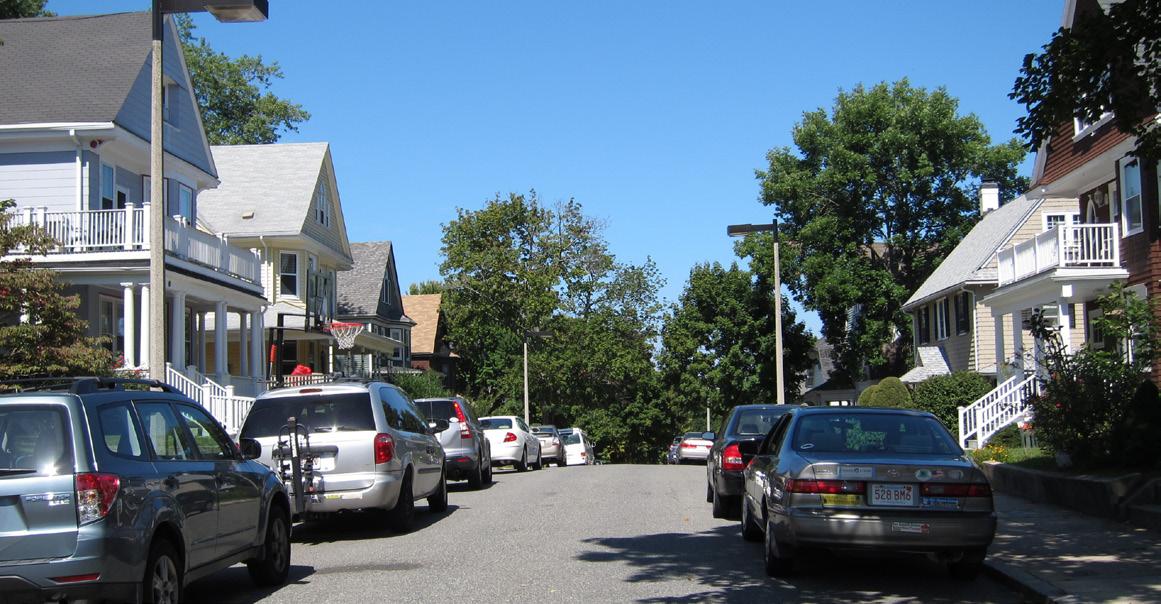
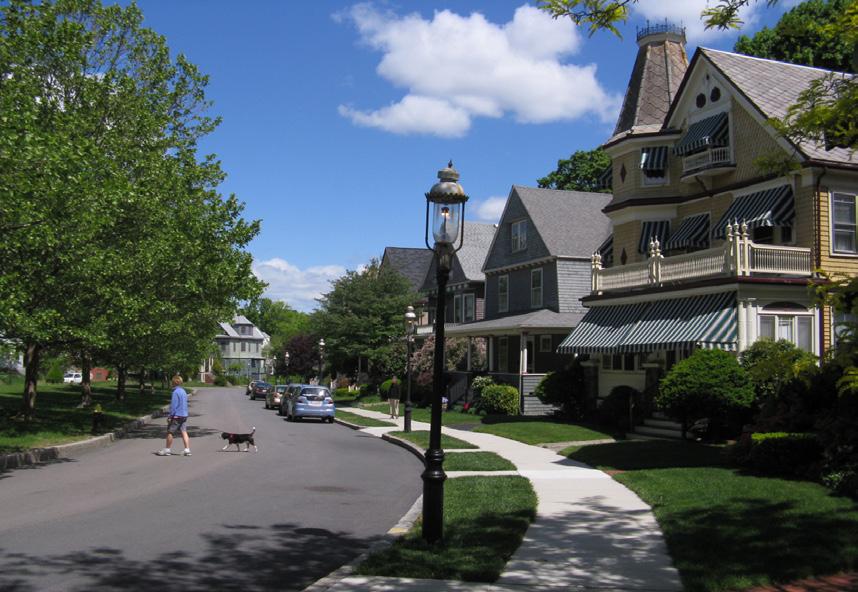
neighborhood residential streets provide immediate access to Boston’s vast residential fabric of town houses, tripledeckers, and single family homes. they are used primarily for local trips and are characterized by lower vehicle and pedestrian volumes. they often have on-street residential permit parking. the primary role of neighborhood residential streets is to contribute to a high quality of life for residents of the city. typically they are not more than two travel lanes (one in each direction) and are not intended for through-traffic.
the design of residential streets focuses on encouraging slow speeds. the emphasis is on pedestrian safety, space for children to play, ample street trees, and well defined walking and bicycling paths to nearby parks, bus stops, transit stations, community centers, and libraries. neighborhood residential streets are excellent candidates for neighborways as well as local community programming such as block parties. For more information about neighborways, see Chapter 3, roadways, Design Features that reduce operating speeds.
Overview
industrial streets are indispensable to Boston’s economy and support the manufacturing and commercial businesses that form Boston’s industrial base. Boston is committed to a “no net loss of industrial space” policy. these industrial streets support truck traffic and accommodate the loading and distribution needs of wholesale, construction, commercial, service, and food-processing businesses. they are typically located away from downtown and residential communities, and connect directly to the regional highway system and other distribution hubs such as logan airport, the marine industrial park in south Boston, the newmarket district, and moran terminal in Charlestown.
accommodation of truck traffic, including providing adequate turning radii at intersections, is a primary design consideration for these streets. While pedestrian use may be light, sidewalks and accessible accommodations must also be provided. traffic volumes and congestion may be higher on industrial streets compared to more pedestrian-oriented streets. When designing industrial streets, consideration should be given to discourage and minimize cut-through traffic on residential streets in the surrounding neighborhoods.
on these street types, it is important to consider the use of trees and greenscape specifically for phytoremediation, or the ability of plants to uptake and remove contaminates from the water, soil, and air.
Example Streets
> Harborside Drive (east Boston)
> West First street (south Boston)
Shared Streets
Overview
a shared street is a street with a single grade or surface that is shared by people using all modes of travel at slow speeds. Curbs are removed, and the sidewalk is blended with the roadway. speeds are slow enough to allow for pedestrians to intermingle with bicycles, motor vehicles, and transit. shared streets can support a variety of land uses, including commercial and retail activity, entertainment venues, restaurants, offices, and residences. they are unique spaces where people can slow down to enjoy the public realm, and create an environment where everyone must pay attention due to the organic movement of people.
When designing shared streets, special consideration must be given to accommodating pedestrians with disabilities. Because shared streets are at one grade, materials can vary and street furnishings such as bollards, planters, street lights, and benches can be strategically placed to define edges. these streets are often surfaced with pavers or other types of decorative surface treatments.
overall, the primary design consideration for shared streets is maintaining slow vehicular speeds (no more than 15 mph) in order to minimize the potential for conflicts with pedestrians. entrances to shared streets are usually raised and often narrowed to one lane in order to force drivers to slow before entering. Chicanes can be used to help regulate vehicular speeds along the length of the street, and can be formed using trees, benches, plantings, play areas, and parking areas that are laid out in an alternating pattern to deflect and slow traffic. if desired, shared streets may restrict access to personal vehicles but permit use by taxis, commercial vehicles, and buses. they may also incorporate neighborway treatments. For more information about neighborways, see Chapter 3, roadways, Design Features that reduce operating speeds.
Example Streets
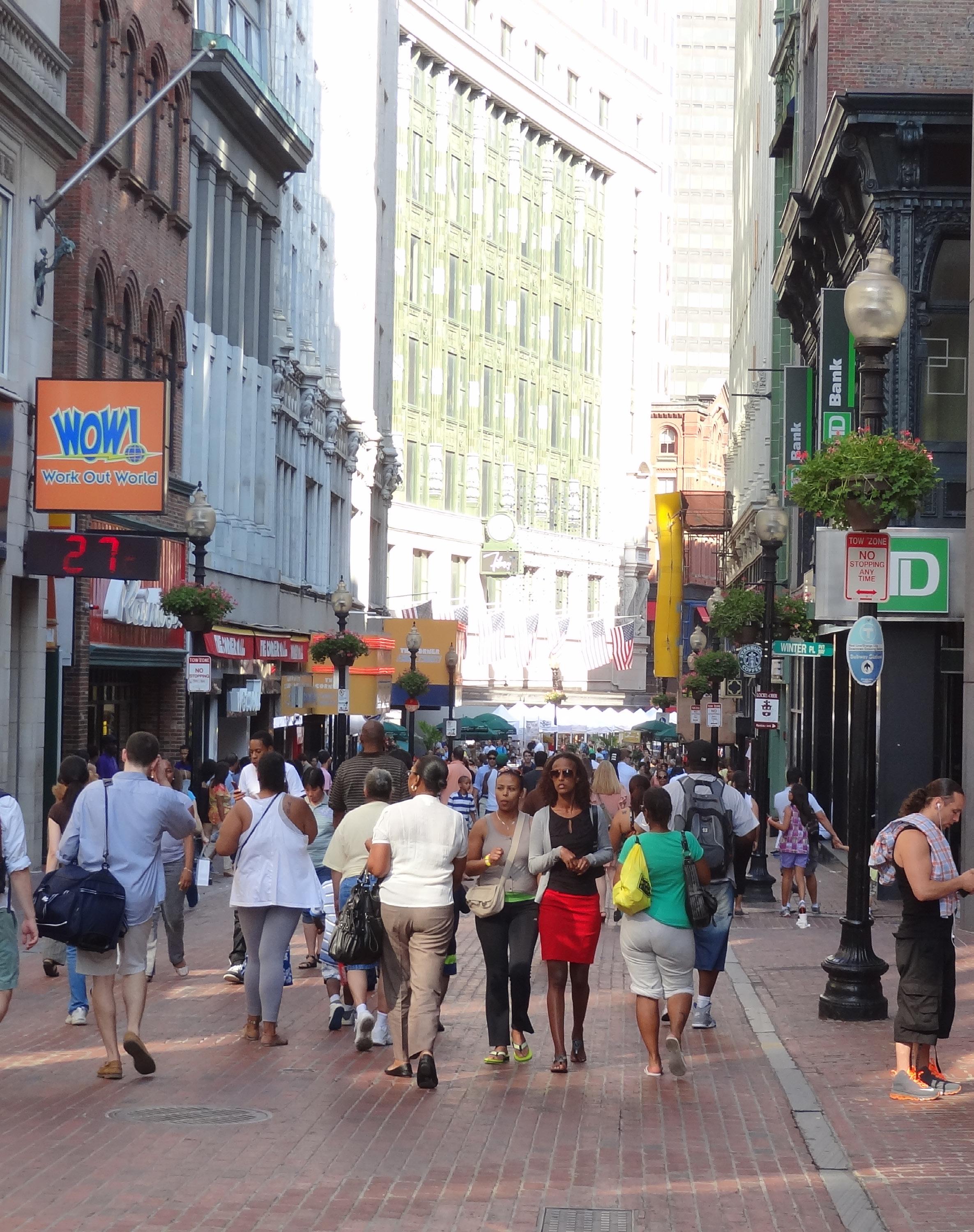
> Winter street (Downtown)
> Cross street (north end)
Parkways
Overview
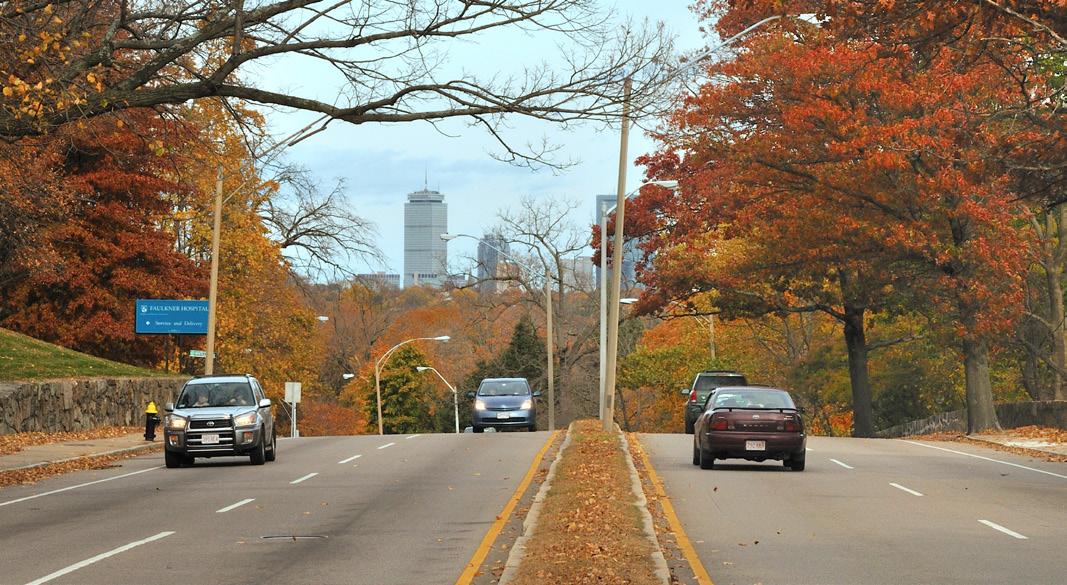
parkways are typically four lane higher-speed roads, characterized by long, uninterrupted stretches running parallel to Boston’s open space systems such as the emerald necklace and the Charles river. many parkways have historic elements, including continuous rows of trees and curbing adjacent to the parkland. as parkways have fewer intersections, which is convenient for motor vehicles, the combination of higher speeds and longer distances between signalized crossings can make parkways difficult for pedestrians and bicyclists to cross. at intersections along parkways, it is extremely important to provide safe and accessible pedestrian and bicycle accommodations.
normally, parkways do not provide transit accommodations or on-street parking, and sight lines are often limited due to hills and the curvature of the roadway. typically, existing parkways in the city are under the jurisdiction of the state.
Example Streets
> West roxbury parkway (West roxbury/roslindale)
> riverway (Fenway/mission Hill)
Boulevards
Overview
Boulevards, like parkways, are defined by a grand scale and specific urban design characteristics such as wide sidewalks lined with street trees and furnishings. Boston has a rich heritage of these streets, with Commonwealth avenue in the Back Bay being recognized as one of the nation’s premier Boulevards. they usually have a consistent design for the length of the corridor, often with wide planted medians or Greenscape/Furnishing Zones, and they connect important civic and natural places. also, Boulevards often feature longer block lengths.
significant, mature tree cover, combined with promenades or median malls provide great walking and social spaces along Boulevards. Boulevards differ from parkways in that they normally have buildings and active land uses along both sides of the street. medians may also accommodate light rail or bus rapid transit service.
the new street types form the basis of the Boston’s Complete street Guidelines. they can serve as models or as options when communities need to make informed choices in the visioning process of a corridor redesign project. taking into consideration the type of street will help ensure that land use contexts are reflected in the design and use of Boston’s streets.
the new street types have been developed to refine the existing street classification system and to provide additional guidance during the selection of design elements. in the following chapters, the recommendations and guidance for designs of sidewalks, roadways, intersections, and uses along the curb will be categorized by the new street types where appropriate.
Sidewalks 2
Boston is known as a great walking city. Like many older cities, it was designed with the pedestrian in mind, with sidewalks and street trees along most of its streets; neighborhoods within walking distance of corner stores and commercial centers; and varied street fronts that provide interesting routes and inviting destinations. Sidewalk character is a key contributor to the identity of Boston’s neighborhoods. As transit is within walking distance of virtually every place in the city, Boston is well suited for healthy, active transportation built around walking.
Sidewalk Design Principles
a major goal of these sidewalk guidelines is to enhance Boston’s legacy as a great walking city by providing a physical framework that encourages people to walk as part of their everyday routine. Walking is an integral part of every trip, whether it is a walk to a friend’s house, to the t, from the parking lot to the grocery store, or to work after parking a bicycle. Boston’s sidewalks are a part of every trip, big or small, and are essential pieces of infrastructure. sidewalks must be recognized not as a pedestrian amenity, but as the foundation of Boston’s transportation network.
an equally important goal is to enhance the vitality of Boston’s streets as public spaces. to encourage people to linger, sidewalks need to be safe, comfortable, and attractive, with facilities that provide accommodations for people of all ages and abilities. lively sidewalks become venues for people to participate in face-to-face activities, support businesses, and to use new innovations in digital technology to interact with the public realm.
Accessible to All
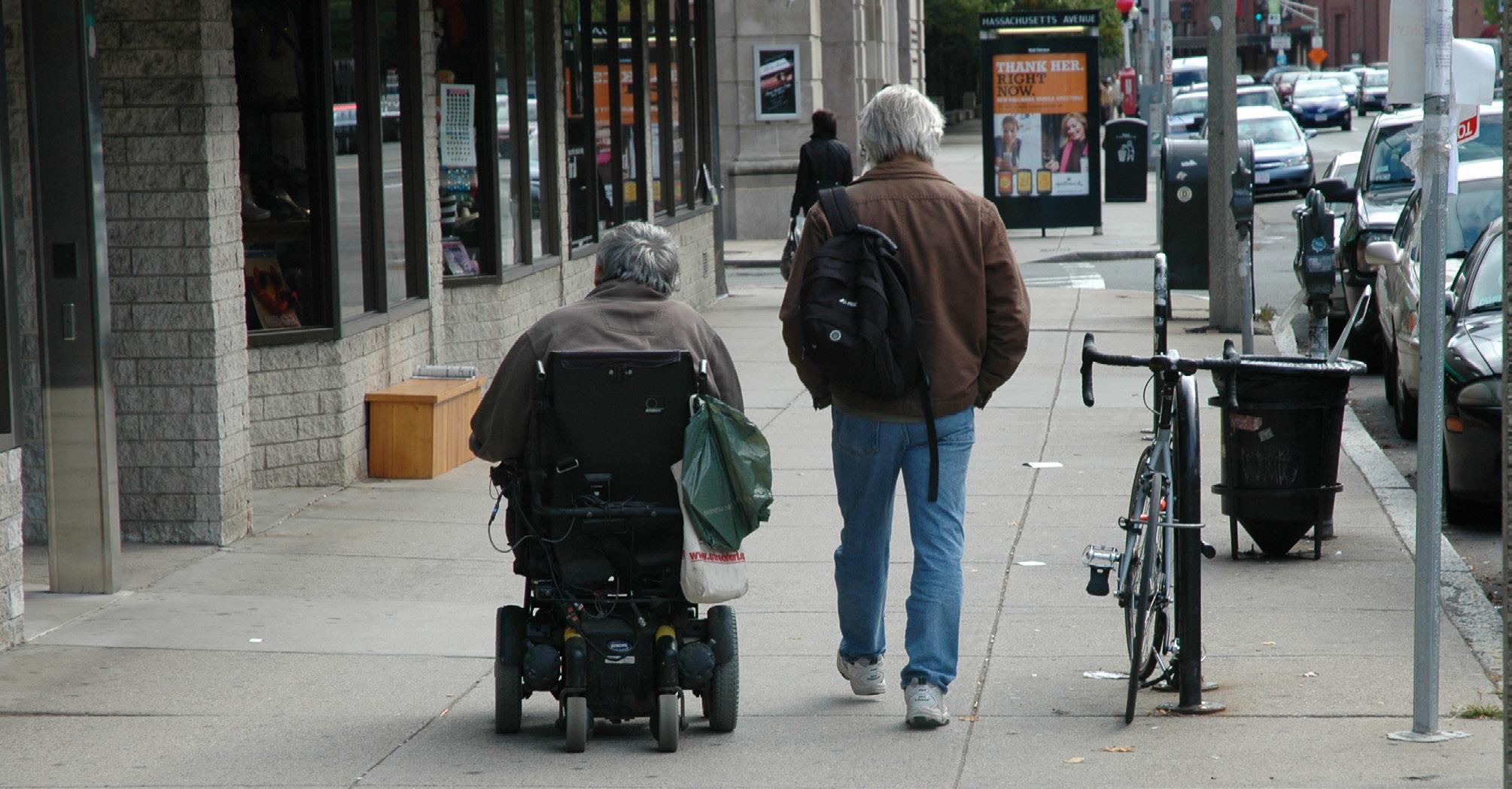
sidewalks must be safe and accessible for all users, regardless of physical abilities or age. they should be welcoming to people in wheelchairs, those pushing strollers, and those with carts or suitcases. sidewalks should have continuous and unobstructed pathways and sight lines.
All-Weather Access
sidewalks should be designed to provide storage for snow in winter, and graded to eliminate stormwater “ponding,” especially at transitions and ramps. shade trees should be provided for comfort during warmer months, and bus shelters for inclement weather.
Vibrant Walking Environment
sidewalks should be comfortable, human-scaled, and vibrant with public art, cafés, benches, trees, awnings, and signage. they should be designed with inviting building entrances and transparent shop windows.
The Boston Public works department (Pwd) is responsible for the management of publicly-owned sidewalks. all sidewalk designs must be approved by Pwd in coordination with the Mayor’s Commission for Persons with disabilities. Maintenance agreements with abutters are required when non-standard materials or installation details are used.
these guidelines set high standards for accessibility, safety, environmental performance, and aesthetics in sidewalk design. in all cases these guidelines should be viewed as the minimum design criteria for all sidewalk construction and reconstruction in the City of Boston. However, it is also recognized that sidewalk construction often occurs in constrained environments where narrow rights-of-way, utilities, steep grades, and historic streets are key factors to consider when designing accessible sidewalks.
Ease of Maintenance
sidewalks should be durable and built with time-tested materials and features. they should be sustainable using locally-sourced and recycled materials where feasible. maintenance responsibilities must be identified during the design process with a focus on reducing labor-intensive operations.
sidewalks also occupy valuable space that can be used to support healthy trees and manage stormwater. the benefits of a robust tree canopy run the gamut from reducing stress to improving air quality.
Intelligent Systems
sidewalks should be fitted with smartinfrastructure networks such as fiberoptic cables and “smart” tags, like radio frequency identification (rFiD) tags or quick response (Qr) barcodes, to create opportunities for people to access local place-based information. sensors and tags should be considered in designs to monitor air quality and noise, and to obtain real-time information, such as for trash and recycling collection and the condition of street lights.
Stormwater Management
sidewalks should be designed to divert stormwater to soil rather than to pipes wherever possible. they should include, where appropriate and maintainable, features such as rain gardens, permeable paving, and simple ways to treat runoff from roadway and sidewalk surfaces.
Efficient Technologies
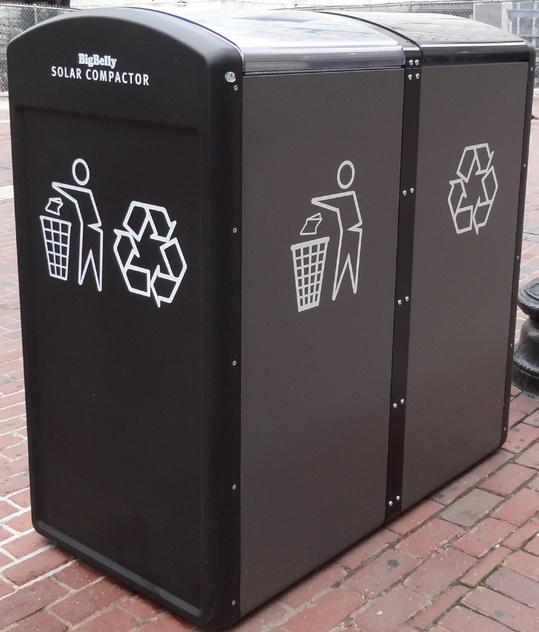
sidewalk designs should incorporate state of the art technology to maximize efficiency. energyefficient features such as solar-powered trash compactors and light-emitting diode (leD) street lights should be considered in all designs.
Sidewalk Zones
the primary objective in designing sidewalks in Boston’s constrained public right-of-way is to provide a continuous system of safe, accessible pathways for pedestrians on both sides of all streets.
sidewalks should keep as much as possible to the natural path of travel, parallel to the roadway. ideally, they will be located in a position that naturally aligns with crosswalks at intersections. it may be desirable in some locations for the sidewalk to curve to form a more direct route to an intersecting walkway, to preserve significant trees, or to provide a greater degree of separation between the sidewalk and the road.
sidewalks immediately adjacent to high-volume pedestrian generators require special consideration. this includes sidewalks adjacent to transit stations, universities, major tourism and entertainment venues, and major destinations.
Pedestrian Zone
Greenscape/Furnishing Zone
Frontage Zone
Curb
From the perspective of Complete streets, the sidewalk consists of four parts: the Frontage Zone, the Pedestrian Zone, the Greenscape/Furnishing Zone, and the Curb Zone. although the boundaries between them can sometimes be blurred, each zone serves a distinct purpose in a Complete street. Dividing the sidewalk into four distinct parts ensures that each will be given the detailed attention required to make the whole work together as an integrated system.
The Frontage Zone is the area between the pedestrian Zone and the streetwall. in locations where buildings are adjacent to the sidewalk, the Frontage Zone provides a buffer for pedestrians from opening doors and architectural elements. the Frontage Zone is the space for sidewalk cafés, store entrances, retail displays or landscaping, and it is important that these elements do not infringe upon the pedestrian Zone.
The Pedestrian Zone is the area of the sidewalk corridor that is specifically reserved for pedestrian travel. it should be well-lit and functional in all weather conditions. this zone must be free of any physical obstructions to allow for unfettered pedestrian movement. street furniture, plantings, outdoor seating, surface utilities, and other elements belonging to the Frontage Zone or Greenscape/Furnishing Zone should not protrude into the pedestrian Zone.
the quality of the surface is of the utmost importance in the pedestrian Zone, and must meet accessibility standards referenced in these guidelines, as well as Code of massachusetts regulation (Cmr) 521 architectural access Board guidelines and the Federally proposed accessibility Guidelines for pedestrian Facilities in the public right-of-Way. the surface material should be smooth, stable, and slip resistant, with minimal gaps, rough surfaces, and vibration-causing features.
in the City of Boston bicycling on sidewalks is generally discouraged. riding on sidewalks has significant safety implications, and can create conflicts with pedestrians as well as motor vehicles not expecting bicyclists at intersections and driveways. the City of Boston’s goal is to increase bicycling, and ideally provide dedicated bicycle facilities separated from the sidewalk.
The Greenscape/Furnishing Zone is the area between the curb and the pedestrian Zone. this zone is where street trees, stormwater elements, street lights, signage, hydrants, benches, bicycle racks, public art, trash and recycling receptacles, parking meters, transit stops, signal and lighting control boxes, and utility hatch covers should be located. as such, this zone collects the objects that may obstruct pedestrian flow, and simultaneously provides a buffer for pedestrians from the adjacent roadway. Vertical objects in the Greenscape/ Furnishing Zone must be strategically placed to not obstruct sight lines, prevent damage from vehicles on the street, and to allow for access to and from parked cars.
When curbs are moved to widen sidewalks or create curb extensions, all furnishings must also be moved so they do not encroach on the newly established pedestrian Zone.
this zone should also be designed to accommodate snow storage in the winter to prevent snow from being stored in the pedestrian Zone. Greenscape elements should be designed to make use of stormwater runoff from the sidewalk and/or the street.
The Curb Zone is the area between the edge of the roadway and the front edge of the Greenscape/Furnishing Zone. in Boston, typically curbs are made of granite. rolled or mountable curbs should not be used because they enable motorists to park on sidewalks. shared streets are curbless and flush with the roadway, while some historic streets have granite slabs that extend from the back of the sidewalk to the edge of the roadway. although the width of the curb can vary, it should be clear of any vertical elements to allow for access from parked vehicles.
Sidewalk Zone Widths
the width of the sidewalk contributes to the degree of comfort and enjoyment of walking along a street. narrow sidewalks do not support lively pedestrian activity, and may create dangerous conditions where people walk in the street. typically, a five foot wide pedestrian Zone supports two people walking side by side or two wheel chairs passing each other. an eight foot wide pedestrian Zone allows two pairs of people to comfortably pass each other, and a ten foot or wider pedestrian Zone can support high volumes of pedestrians.
Vibrant sidewalks bustling with pedestrian activity are not only used for transportation, but for social walking, lingering, and people watching. sidewalks, especially along Downtown Commercial, Downtown mixed-use, and neighborhood main streets, should encourage social uses of the sidewalk realm by providing adequate widths.
When determining sidewalk zone widths, factors to consider include the available right-of-way, anticipated pedestrian volumes, ridership projections for locations near transit, and the locations of bus shelters and transfer points.
Historically, a majority of sidewalks in Boston’s neighborhoods were built to be 7’ wide. Widening sidewalks by a few feet is often cost prohibitive and may require significant changes to drainage infrastructure as well as the relocation of utilities. While these guidelines prescribe more generous preferred sidewalk zone widths during street reconstruction projects, they also establish a total minimum sidewalk width of 7’ for several street types.
if feasible to adjust curb locations, the widening of sidewalks may be achieved by narrowing and/or removing travel lanes or parking lanes, or establishing setbacks as a part of redevelopments. Where setbacks cannot be established or roadway space cannot be reallocated, consider converting the roadway to a shared street to increase pedestrian space and reduce vehicle speeds.
When making decisions for how to allocate sidewalk space, the following principles should be used:
Frontage Zone
> the Frontage Zone should be maximized to provide space for cafés, plazas, and greenscape elements along building facades wherever possible, but not at the expense of reducing the pedestrian Zone beyond the recommended minimum widths.
Pedestrian Zone
> the pedestrian Zone should be clear of any obstructions including utilities, traffic control devices, trees, and furniture. When reconstructing sidewalks and relocating utilities, all utility access points and obstructions should be relocated outside of the pedestrian Zone.
> While sidewalks do not need to be perfectly straight, the pedestrian Zone should not weave back and forth in the right-of-way for no other reason than to introduce curves. meandering sidewalks create navigational difficulties for pedestrians with vision impairments.
> in high volume, high density pedestrian areas, the pedestrian Zone should be balanced with other Zones to accommodate large amounts of pedestrian traffic.
Greenscape/Furnishing Zone
> maximize the Greenscape/Furnishing Zone to provide as much of a buffer as possible between the pedestrian Zone and adjacent street traffic; however do not reduce the pedestrian Zone beyond the minimum recommended widths. When space is limited, parked cars and bicycle lanes can also serve as a buffer between the pedestrian Zone and moving traffic.
> For new developments and where opportunities are available to create a consistent setback, designs should accommodate wider sidewalks with generous Greenscape/ Furnishing Zones.
> on roadways without on-street parking and/or higher speeds, setbacks for vertical elements should be greater than 18” where feasible.
> Consider traffic calming elements, such as curb extensions or chicanes where on-street parking is present, to provide more space for street furniture, trees, and other amenities.
appropriate sidewalk widths should be determined in consultation with the Pwd and the Boston Transportation department (BTd), and approved by the Public improvement Commission (PiC).
Curb Zone
> in the City of Boston all curbs are typically made of granite and are 6” wide with a 6” vertical reveal.
> the Curb Zone should be free from all objects, furniture, sign posts, etc.
Preferred and Minimum Widths for Sidewalk Zones
the width and design of sidewalks will vary depending on street typology, functional classification, and demand. Below are the City of Boston’s preferred and minimum widths for each sidewalk Zone by street type.
(4’)*
(4’)*
(4’)*
(4’)*
Notes
5’ is the preferred minimum width of the pedestrian Zone in the City of Boston. the americans with Disabilities act (aDa) minimum 4’ wide pedestrian Zone can be applied using engineering judgement when retrofitting 7’ wide existing sidewalks where widening is not feasible.
Frontage Zone
> Where buildings are located against the back of the sidewalk and constrained situations do not provide width for the Frontage Zone, the effective width of the pedestrian Zone is reduced by 1’, as pedestrians will shy from the building edge.
> the preferred width of the Frontage Zone to accommodate sidewalk cafés is 6’.
Pedestrian Zone
> Based on engineering judgment in consultation with pWD and the mayor’s Commission for person’s with Disabilities, the aDa minimum 4’ pedestrian Zone (plus 5’of width every 200’) may be applied.
Greenscape/Furnishing Zone
> the minimum width of the Greenscape/Furnishing Zone necessary to support standard street tree installation is 2’-6”.
> utilities, street trees, and other sidewalk furnishings should be set back from curb face a minimum of 18”.
Curb Zone
> although the typical width of the Curb Zone is 6”, widths may vary; additional width beyond 6” should be calculated as a part of the Greenscape/Furnishing Zone.
Sidewalks by Boston’s Street Types
the character of sidewalks can vary widely depending upon the neighborhood context and street type. the four zones of the sidewalk — the Frontage, pedestrian, Greenscape/ Furnishing, and Curb Zones — assume different purposes and varying degrees of prominence in each street type.
Boston seeks to optimize its streets and sidewalks while respecting the historic fabric of the city. in many places, narrow streets and sidewalks are integral to a neighborhood's identity. in previous generations, buildings were often demolished to make space for wider roads and the modern highway and street network. Boston was one of the first american cities to begin the reversal of this trend, and in the early 1970s made history by converting land and funding intended for a limited access highway into a public transit corridor with bicycle and pedestrian accommodations, greenways, and open spaces.
on street types with higher speed roadways, the buffer between the pedestrian Zone and the adjacent motor vehicle traffic is important in order to encourage walking; the degree of separation from motor vehicles determines comfort and safety for pedestrians. the Greenscape/Furnishing Zone, as well as parked cars and bicycle lanes, can help improve comfort and safety for pedestrians.
the following section provides a discussion of sidewalk design considerations for each of Boston’s new street types:
> Downtown Commercial street
> Downtown mixed-use street
> neighborhood main street
> neighborhood Connector street
> neighborhood residential street
> industrial street
> shared street
> parkway
> Boulevard
Downtown Commercial
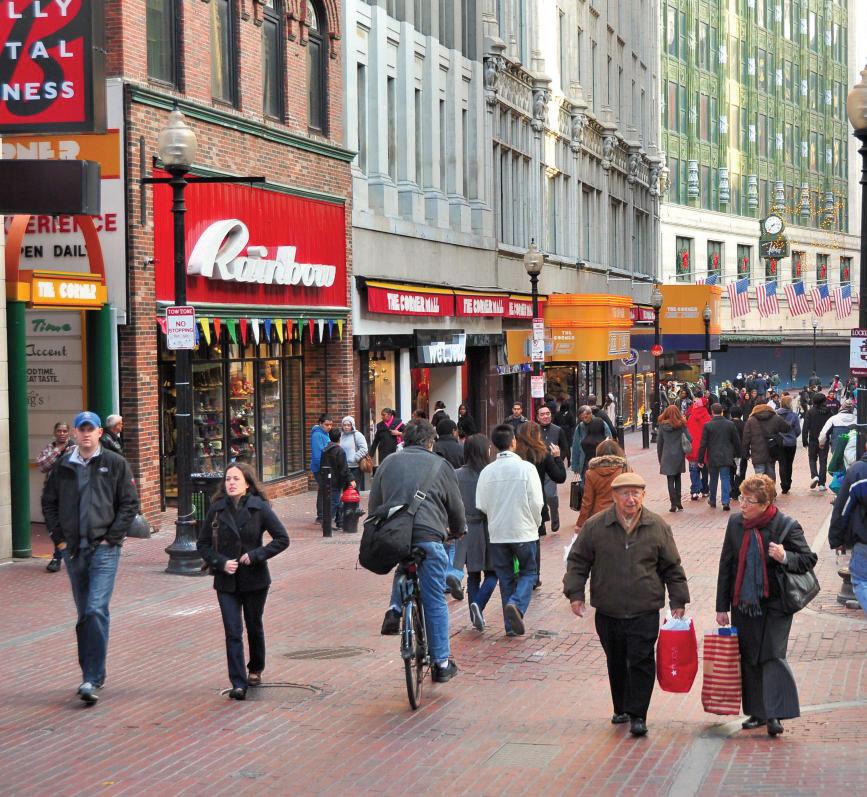
Wide pedestrian Zones dominate Downtown Commercial streets and accommodate high volumes of pedestrian traffic. Continuous building facades provide visual interest at ground-level, with the Frontage Zone announcing building entrances and the occasional café. the Greenscape/ Furnishing Zone is characterized by planters and high-quality finishes as are prominent along Federal and Boylston streets. street furniture, public art, and wayfinding are featured in the Greenscape/Furnishing Zone.
Downtown Mixed-Use
High pedestrian volumes and a wide pedestrian Zone take center stage on Downtown mixed-use streets. use of the Frontage Zone varies based on land use, such as chairs and tables at cafés, planted areas at residential entrances, and sidewalk retail spilling out of stores. typically the Greenscape/ Furnishing Zone is narrow and functional. the layered and ever-changing Frontage Zone makes the sidewalks of Downtown mixed-use streets stimulating places that encourage pedestrians to linger and interact. newbury street in Back Bay and tremont street in the south end exemplify the character of this street type.
Neighborhood Main Street
similar to Downtown mixed-use streets, these streets are also characterized by high volumes of pedestrian activity and a mix of uses along the sidewalk. the overall scale though is smaller than Downtown strees, with typically narrower sidewalks such as those on Dorchester avenue in Dorchester and along Centre and south streets in Jamaica plain. the focus is on providing access to the many entrances of small businesses lining the street. the Greenscape/Furnishing Zone should be as generous as possible and flexible in order to accommodate holiday events, farmers’ markets, street fairs, and other community gatherings.
Neighborhood Connector
neighborhood Connectors balance the needs of people passing through with those who live and work along the street. regularly spaced trees and lighting in the Greenscape/ Furnishing Zone provide unifying elements on long streets connecting neighborhoods such as Hyde park avenue. this type of street can have a relatively high volume of pedestrians and often includes transit routes. the Greenscape/Furnishing Zone is a critical buffer between pedestrians and high volume traffic, and can also provide opportunities for stormwater treatment and air pollution mitigation, especially with new tree plantings.
Neighborhood Residential
neighborhood residential streets typically have narrow widths, slower speeds, on-street parking, and a less populated sidewalk environment. the Greenscape/Furnishing Zone can accommodate street trees, utilities, and sign posts, and a clear and unobstructed pedestrian Zone should be provided. stormwater practices can be small, such as green gutters, or more extensive depending on the nature of the street. Visual interest is provided by architectural detail and greenscape elements on adjacent private property.
Industrial
the sidewalks in industrial districts should be utilitarian and uncluttered. street furniture is mainly limited to street lighting and other essential elements. there may be significant opportunities to incorporate stormwater management strategies along the sidewalks. street trees and plantings can help mitigate pollutants in the air and water via phytoremediation, as well as provide a buffer to traffic. Bollards are useful for protecting pedestrians where turning vehicles can pose a hazard. loading docks and driveways that cross the sidewalk should be clearly delineated for pedestrian safety.
Shared Streets
shared streets are curbless, and the distinction between the zones of the sidewalk, as well as the sidewalk and roadway itself, are blurred. Cross street in the north end is a recently constructed example. Frontage Zone uses such as cafés can extend from the building face towards the middle of the street and be framed by planters and railings. the creative design of street furniture, greenscape, and lighting can help channelize, direct, and slow vehicles by creating chicanes, parking, and loading zones. While the width of the pedestrian Zone can vary along a shared street, there must be a continuous accessible path along the entire length of the roadway. Bollards are often used to protect the accessible pedestrian path, and subtle changes in materials can be used to differentiate zones.
Parkways
parkways in Boston typically run adjacent to open spaces and provide travel for bicyclists and pedestrians often on shared-use paths like those along the emerald necklace. a generous Greenscape/Furnishing Zone provides a buffer between the pedestrian Zone and higher speed motor vehicle traffic, and accommodates trees and opportunities for stormwater management elements. street furniture should generally be located within the park rather than in the Greenscape/Furnishing Zone due to higher motor vehicle speeds. on parkways with bicycle routes or high volumes of bicyclists, designs should accommodate separate pedestrian and bicycle facilities; however, where space is constrained, designs should follow shared-use path guidelines.
Boulevards
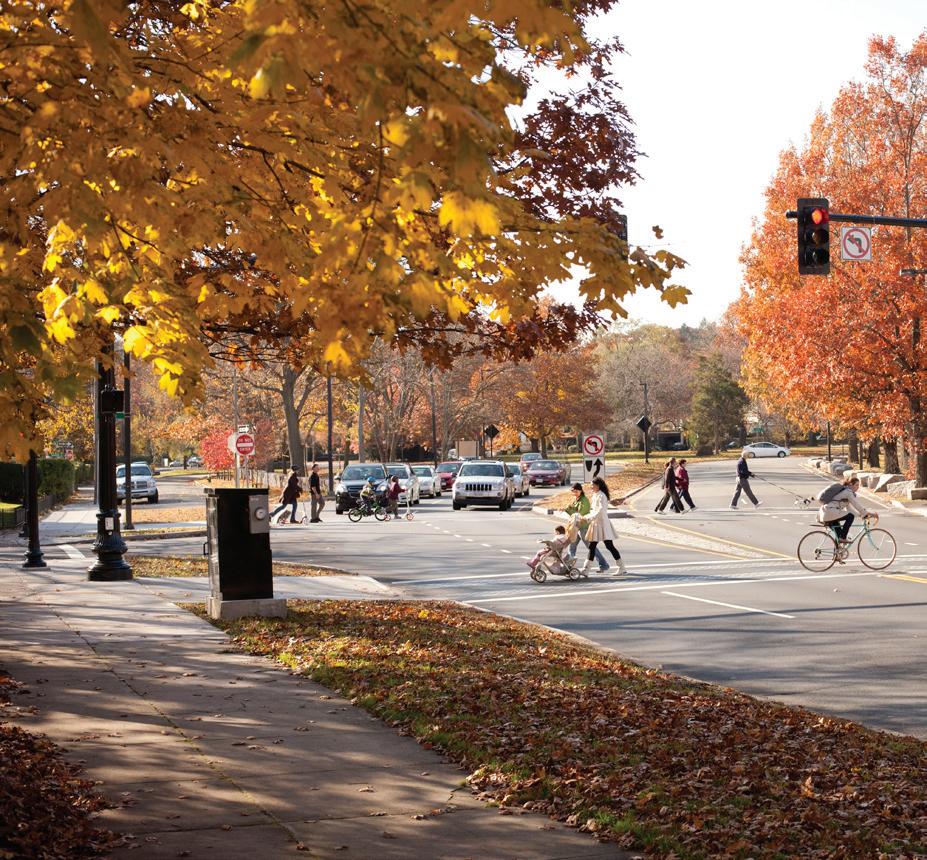
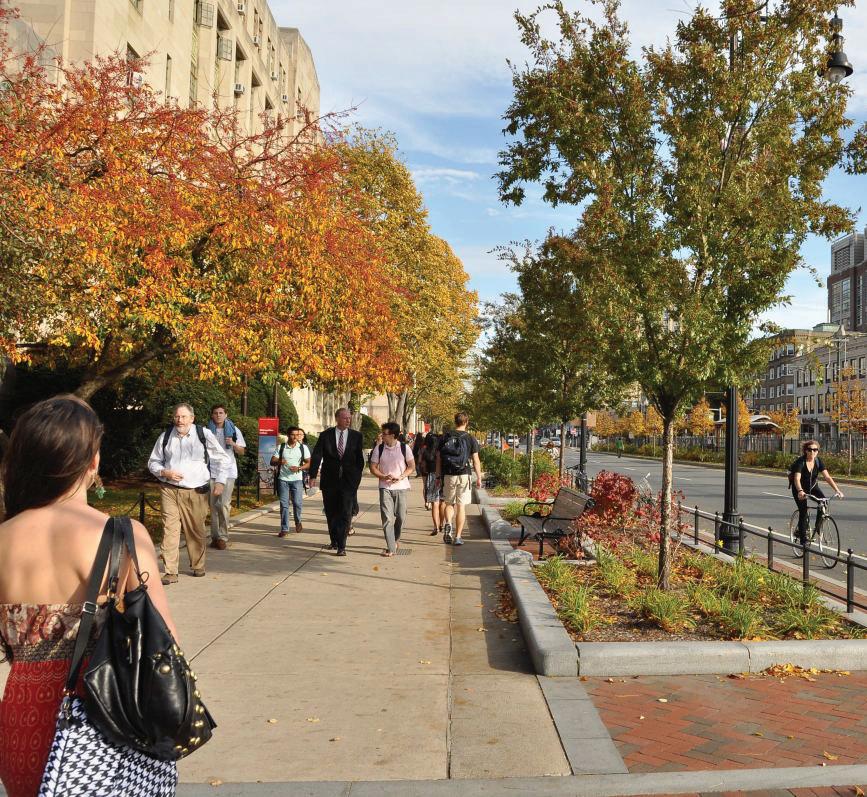
Boulevards such as Commonwealth avenue are similar to parkways in scale, but are characterized by a strong building edge and continuous rows of trees. the Greenscape/ Furnishing Zone is generally larger than the pedestrian Zone to provide a buffer from higher-speed traffic. strolling is popular on Boulevards, and the pedestrian Zone should be wide enough to accommodate groups of people passing each. stormwater management systems can incorporate large trees as well as low growing vegetation. street furniture should be formal and belong to a single style family to create a unified landscape.
Features to Activate Sidewalks
32 Vibrant Street wall
33 Green walls
34 Plazas
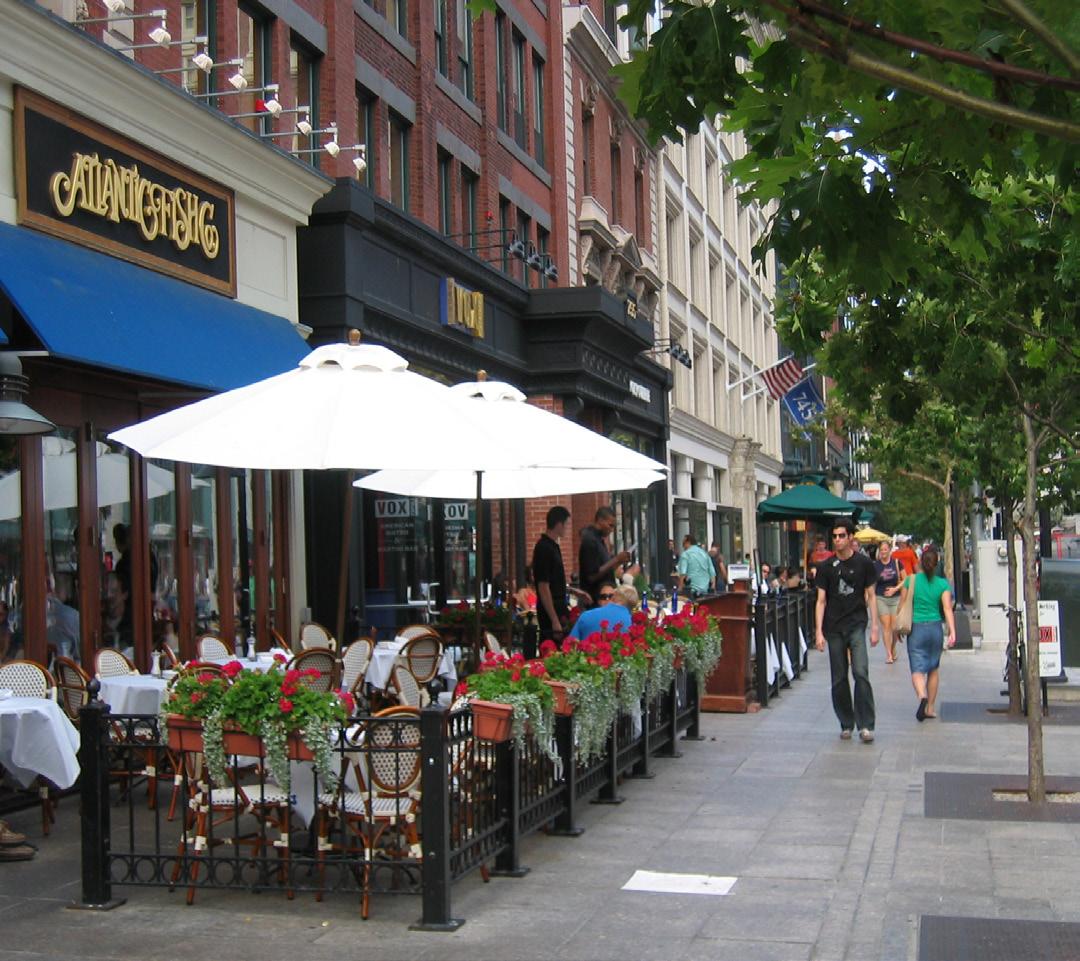
35 Sidewalk Cafés
36 driveways
38 Building entrances
sidewalks play a key role in creating a vibrant public environment; they help create a sense of place and community, provide a place to watch the world go by, and allow for face-to-face interaction. pedestrian friendly sidewalks should be comfortable in terms of scale, temperature, and security. the sidewalk environment should be pleasing to the senses, offering visual stimulation, greenery, and a social atmosphere. Vibrant, pedestrian-friendly sidewalks attract activity and are both an indicator of, and a factor in, economic vitality.
the sidewalk and street environment (public realm) work together with building facades (private realm) to create active and vibrant edges. the relationship between the public and private realm has a significant impact on the walking experience. the quality of the materials or image the private realm presents to the sidewalk is very important, as well as how the private realm crosses the sidewalk at driveways and building entrances.
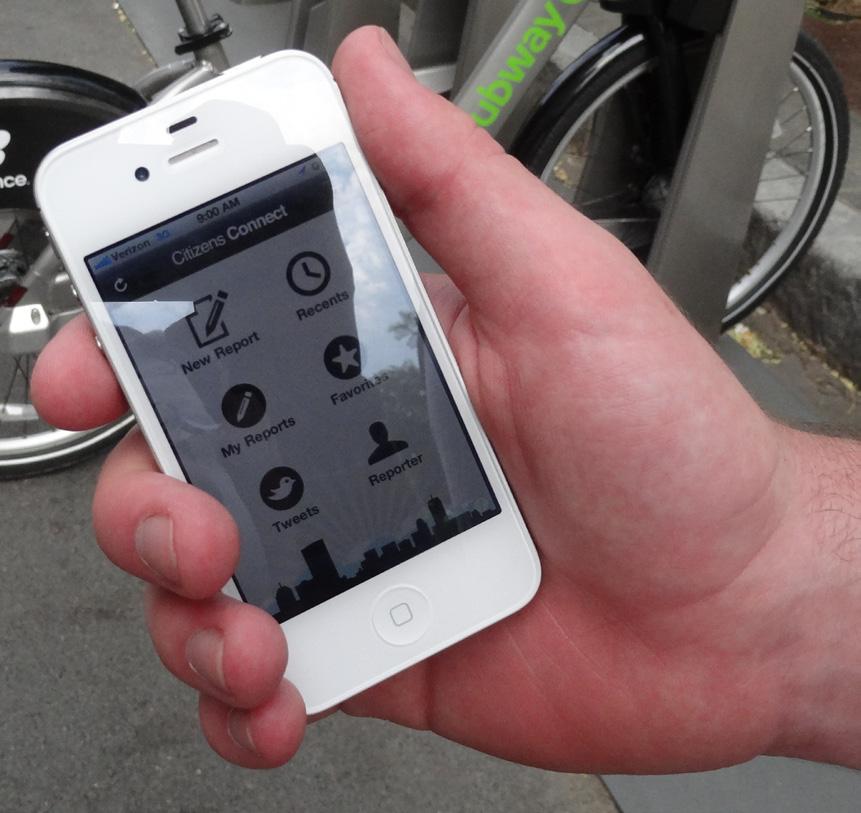
Cafés and plazas enliven the sidewalk by encouraging people to linger and socialize. as the use of cell phones and mobile computing devices continue to increase, traditional public spaces can incorporate Wi-Fi and smart technology such as informational "tags." they can also utilize feedback obtained through applications such as Citizens Connect to improve operations and efficiency, overall enhancing users' experiences. streetscape improvement projects are good opportunities to redistribute the public right-of-way to create places for people to gather along streets.
the following sections describe features to activate sidewalks, and how sidewalks can be places in and of themselves.
Publicly owned plazas and the permitting of outdoor cafés and push cart vendors are managed by Pwd and must be approved by PiC. The Boston Redevelopment authority (BRa) should be consulted in the design of plazas and cafés; maintenance agreements with abutters are typically required.
Features to aCtiVate siDeWalks
Vibrant Street Wall
Well-designed ground-floor spaces with a mix of uses are principle ingredients for a vibrant street front, particularly on Downtown Commercial, Downtown mixed-use, neighborhood main street, and shared street types. offices, residences, and other uses that desire privacy are best placed on floors above the street level. retail and restaurant uses are more conducive to a vibrant street wall and are preferred on the ground floor adjacent to the sidewalk.
the modulation of building facades and treatments creates visual interest along the street wall. large windows visible from the sidewalk expose activity within the building to the passerby, and help blend the boundary between the sidewalk environment and indoor spaces.
awnings, lighting, signs, and foliage also contribute to visual interest, as they add color and texture to the street edge. Hanging baskets of flowers and plants on light poles and building facades provide color and seasonal variety to sidewalks. this can also be achieved with flower boxes, low planters, or vines on the building face. awnings and signs should be scaled for both drivers and pedestrians. awnings can provide shelter from the elements in addition to demarcating stores and entrances. signs should be unique but made of appropriate materials reflecting the urban context of the neighborhood and street type.
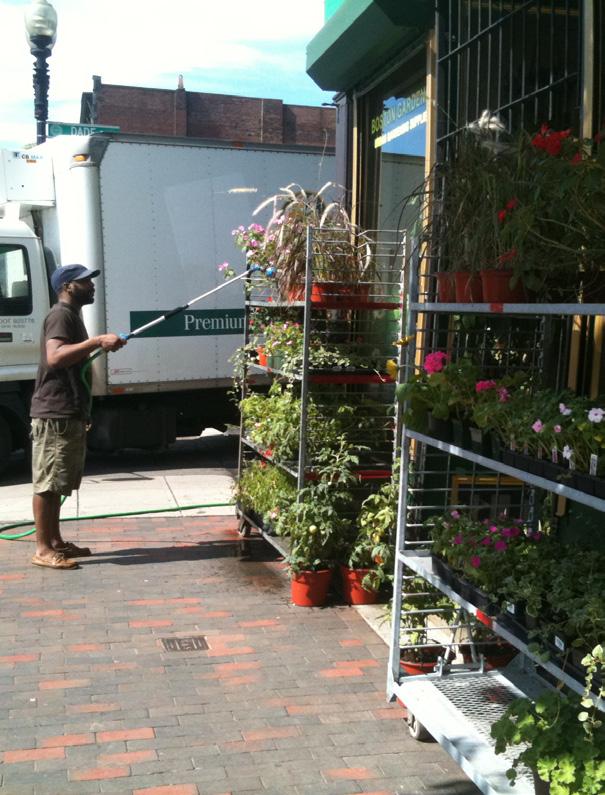
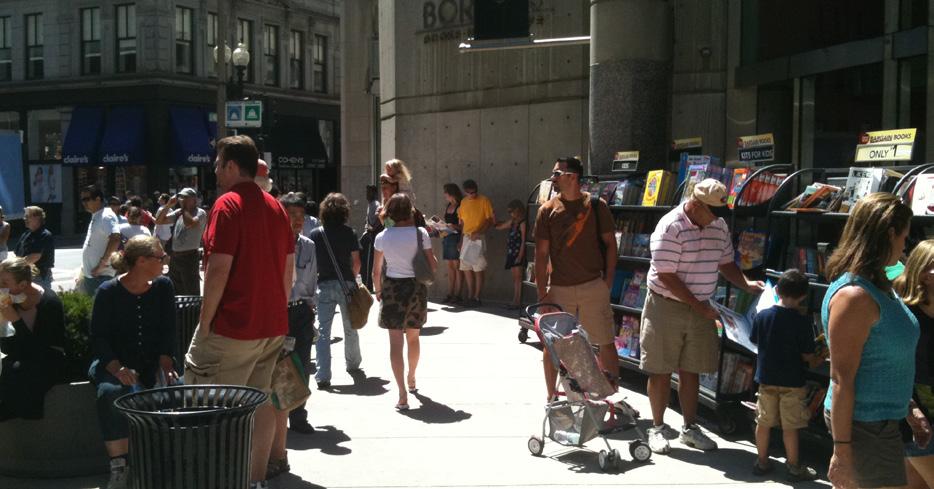
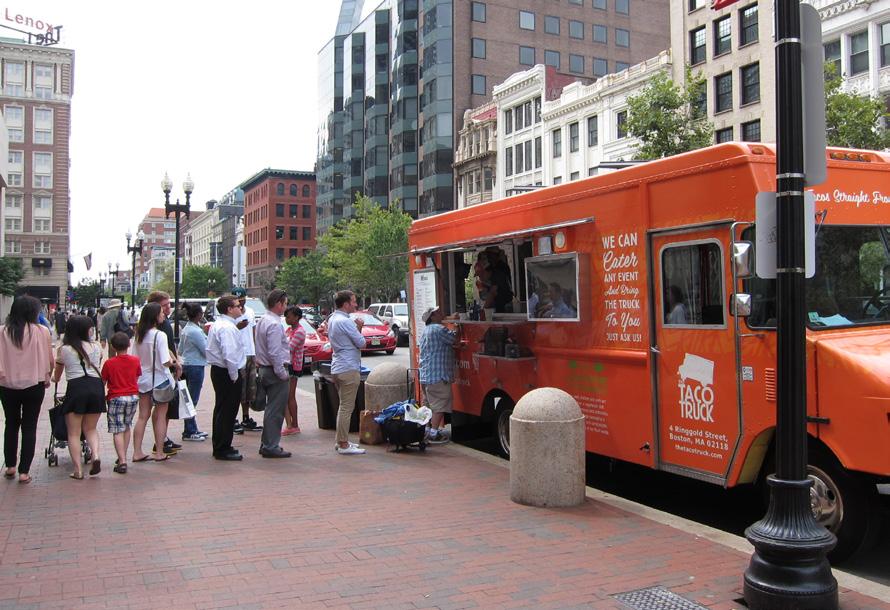
With the exception of parkways and residential street types, permitted vending in the Frontage Zone is encouraged where sufficient space exists. street vending can take the form of movable pushcarts or permanent stands or kiosks; tables are discouraged.
preferred 30’ to 75’ between entrances 10 to 15 seconds walking
on Downtown Commercial, Downtown mixed-use, neighborhood mai street, and shared street types, the ground-floor street wall should be 50% transparent. transparency calculations do not include garage entrances, loading docks, egress doors, utility vaults, and service areas. the desired distance between ground-level pedestrian entrances in new development projects along these street types is between 30’ and 75’, or about one entrance every 10 to 15 seconds as a person walks along a street. some of Boston’s older streets may have building entrances every 10’ to 20’, such as along Charles street in Beacon Hill.
street performers with proper permits and without amplification can perform along Downtown Commercial, Downtown mixed-use and neighborhood main streets. street stands, vending, and performances must maintain a minimum 5’ wide pedestrian Zone, and must not create unsafe conditions that could impact pedestrians with disabilities.
all vendors must obtain a permit from Pwd. Vendors with proper permits can sell food, print material, or goods and clothing
Green Walls
Overview
Where transparency in the building edge is not achievable, greenwalls are encouraged to provide visual interest and variation to the street edge. Greenwalls can perform stormwater management functions, increase energy efficiency, and improve air quality.
plants can be rooted in the ground and trained up the wall or in modular panels on the wall. in addition to making building surfaces more attractive, greenwalls can reduce the “heat island effect,” provide thermal insulation for buildings. most greenwalls use irrigation systems to water plants throughout the year, and come in different forms, shapes, costs, and functions.
The installation and maintenance of greenwalls is the responsibility of the building owner. if plantings encroach into the public right-of-way, greenwalls require approval by PiC.
Green walls provide attractive and environmentally friendly building surfaces that help reduce energy costs, reduce stormwater runoff, and improve air quality.
Use
modular panels come in three basic varieties of growing mediums. they are composed of loose soil, fiber or felt mats, or structural mediums which combine the two. the appropriate type of system depends on the building structure and availability of water.
> structural mediums are preferred despite higher installation costs. these systems are long-lasting, require less maintenance, and are more flexible.
> loose-soil systems are best suited where occasional replanting and regular maintenance is possible. loose soil can be messy, may erode over time, and is not suitable for tall structures.
> mat mediums are appropriate for applications where the structure cannot support heavy loads. mat mediums tend to be thin, do not retain water well, do not support robust root systems, and are not suitable for tall structures.
Considerations
> applications that require irrigation systems must be monitored and shut off so pipes do not freeze in winter.
Features to aCtiVate siDeWalks
Plazas
Overview
a plaza is a pedestrian space in the public realm built for enjoyment, lingering, and as a gathering place for special events. plazas are encouraged as a part of all streetscape designs to create a sense of place and enliven sidewalks. successful plazas attract people through the presence of others, and support a wide variety of activities including temporary markets, art installations, and/or performances. plazas are also opportunities to incorporate the green and smart principles of these guidelines.
The Boston Pwd is responsible for the management of publicly owned plazas. BTd and BRa must be consulted in the design of plazas and they must be approved by PiC; maintenance agreements with abutters are typically required.
Use
plazas can be created as a part of private developments or through the reclamation of space in the public right-of-way. they should be located adjacent to transit or other pedestrian generators wherever possible. transitions between sidewalks and plazas should be as broad and seamless as possible to invite people to the space. accessible routes must be maintained from the sidewalk and through the plaza to building entrances and transit stops.
plazas are excellent places to incorporate stormwater management elements. they should be as sustainable as possible and easy to maintain as they will require maintenance agreements.
plazas should provide a variety of seating options, some of which may be movable. seating can be incorporated into building edges, walls, and landscaping containers. typically, dedicate at least 10% of a plaza’s open-space to seating. movable chairs provide ultimate flexibility for a public space and allow for variation in arrangements to suit personal preference, to capture sun or shade, or to sit in a group or alone.
Considerations
> Consider using permeable, recycled, and/or locally sourced materials to maximize sustainability. subsurface recharge or storage for stormwater should also be considered.
> Designs should incorporate built or digital wayfinding, information installations, and temporary or permanent public art displays 1. When possible, plazas should provide public Wi-Fi.
> space in plazas should be considered for bicycle parking 2
> adjacent businesses can provide food or services to make a plaza more inviting, as well as share responsibility as caretakers of the space.
> Designs should consider how the plaza will be used. Consider providing assembly areas for people to gather for performances and special events. locations for mobile vending carts and stalls should consider the needs for power or water, and must maintain a clear pedestrian path 3
Features to aCtiVate siDeWalks
Sidewalk Cafés
Overview
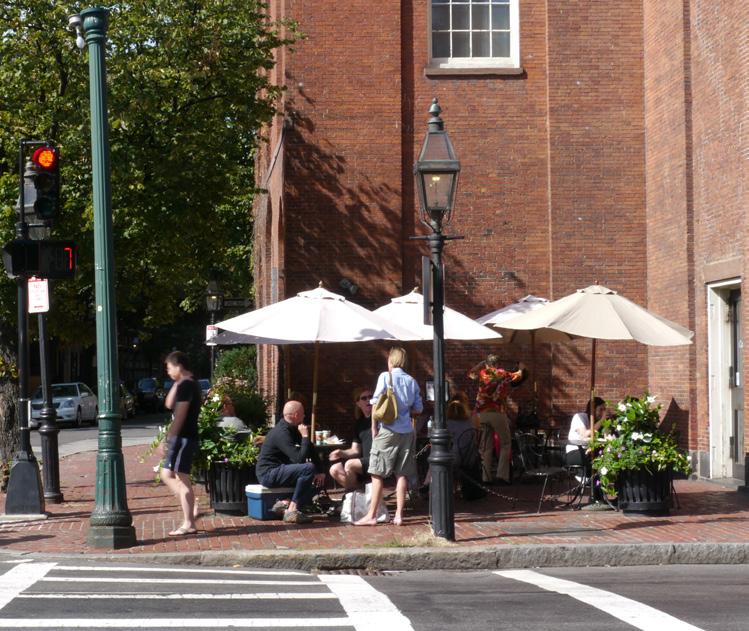
sidewalk cafés are encouraged on all street types where commercial activity occurs, including industrial areas. the extension of restaurant businesses into the public way brings activity and energy to the public realm. the renting of this space by private businesses can also result in a higher level of maintenance and cleanliness. Careful attention must be given to the design and layout of sidewalk cafés to maintain sidewalk functionality and the quality of the public environment.
the following guidelines expand upon existing regulations and the Greenway Café Guidelines while focusing specifically on the impact of sidewalk cafés on the pedestrian environment.
Pwd is responsible for the permitting of outdoor cafés. BTd and BRa must be consulted in the design of cafés and be approved by PiC; maintenance agreements with abutters are typically required.
Use
> typically, the preferred minimum width of a sidewalk café is 6’ deep, which must be contiguous with the dining establishment (not across a public way). Cafés may not extend beyond the limits of the establishment into neighboring businesses. a minimum 4’ clear path should be maintained to the front door of the dining establishment.
> a clear accessible pedestrian path of must be maintained on the sidewalk. Consider providing additional pedestrian Zone width in areas with higher pedestrian volumes. planters and other greenscape/furnishing elements must not protrude into the pedestrian Zone.
> all sidewalk cafés are encouraged to provide an enclosure dividing the café from the public right-of-way. if alcohol is served, an enclosure is required. Barriers must be attached to the ground but can be made of fence, rope, chains, or containment for live plants. permanent anchors may be installed as long as the barrier is removable and the anchor is flush with the ground and aDa compliant. enclosures must be removed after the café season has ended.
> Furniture should be durable, free-standing, and matching. plastic furniture is discouraged.
> awnings and/or umbrellas are desirable. Heat lamps, either free-standing or affixed to the underside of awnings, can extend outdoor dining into the colder months.
Considerations
> Depending on the location, applications may need landmarks Commission approval.
> Cafés located on the street side of the sidewalk or in parklets must be open to the public and cannot be claimed by individual businesses.
6’
Driveways
Overview
the design of driveways should provide a continuous and level pedestrian Zone across the vehicular path and encourage vehicles to yield to pedestrians on the sidewalk. Driveways across public sidewalks are sometimes needed to link streets to offstreet parking facilities and loading zones, however driveways can create conflicts and require special treatments in order to maintain a safe and comfortable walking environment.
Driveway Setbacks and Widths
New driveways, or changes to existing driveways for either commercial or residential use must be reviewed by BTd and Pwd and approved by PiC. min. 20’ (unsignalized) min. 40’ (signalized)
Features to aCtiVate siDeWalks
Use
the public sidewalk has the right of way over private crossings. the following general design guidelines should be followed to minimize disruption to pedestrians while ensuring safe operation:
> the pedestrian Zone should be continuous, level, and clearly delineated across driveways to encourage drivers to yield to pedestrians (e.g., if the sidewalk is composed of concrete, the concrete surface treatment should be continuous across the driveway).
> residential driveways should be designed with standard curb cuts and an apron outside of the pedestrian Zone.
> Vehicular access across sidewalks must maintain the minimum Pedestrian Zone width of 5’ and materials must meet accessibility requirements outlined in the sidewalk materials section found later in this chapter.
Considerations
> on Downtown Commercial, Downtown mixed-use, and neighborhood main street types where space permits, driveways should be designed with aprons, and maintain fully raised continuous pedestrian Zone paths (i.e. sidewalks remain at the same height and are not lowered or partially lowered to meet the road or driveway).
> in constrained locations where the width of the sidewalk is insufficient for a fully raised crossing, the roadway can be partially raised and the sidewalk partially lowered. this design minimizes the disruption to the pedestrian while still providing a traffic calming effect. on a typical 6” high sidewalk, this is achieved by ramping down the sidewalk at the driveway by 3” and raising the driveway by the same amount 1
> if the sidewalk is too narrow to meet the minimum width requirements in the pedestrian Zone, a curb extension should be considered where on-street parking is present. in locations where a driveway functions as an intersection, it should be designed with pedestrian safety features such as crosswalks, small corner radii, and pedestrian signal heads if signalized.
> additional details for driveway design are provided in Driveway Guidelines by the BtD for use by the Boston Zoning Board of appeal, found on the City of Boston’s website.
Building Entrances
Overview
Building entrances connect the indoors with the public realm and provide the public face of the building occupant. they should be convenient and welcoming to pedestrians, well maintained, and provide a good first impression. as building edges frame the street, the cooperation of building owners is critical to the success of any vibrant, livable community. public improvement initiatives and neighborhood design guidelines can encourage investment in entrances by building owners.
Use
the design of individual entrances is especially important on Downtown Commercial, Downtown mixed-use, shared, and neighborhood main street types, each of which require a strong edge and plenty of visual interest. entrances for buildings on neighborhood residential and neighborhood Connector street types may be set back from the sidewalk where appropriate, but should face the street and maintain a consistent street wall without large gaps between entryways.
the design of building entrances should include the following characteristics:
> in general, buildings should front the sidewalk, and entrances should face the street, providing access to and from the sidewalk.
> the structure surrounding building entrances should be limited to the Frontage Zone to minimize impact on the pedestrian Zone. awnings may overhang into the pedestrian Zone.
> individual building entries may be accented with the use of texture or material changes in the pavement directly in front of the points of entry. such pavement accents can also include building names, numbers, or historic information.
> large folding or retractable doorways provide the greatest connection between the public realm and building interiors. air doors and other industrial technologies can be applied to storefronts for increased transparency and accessibility.
Considerations
Buildings with raised first floors require a transition to meet the sidewalk. exterior transitions, including stairways, railings, and ramps, must not extend beyond the Frontage Zone 1 access that is integrated into the interior of the building is generally preferable but not always feasible. interior ramps or lifts can occupy valuable retail space or crowd circulation within lobbies.
work in Historic districts must be reviewed and approved by the appropriate Historic district Commission.
exterior transitions between the entrance and the sidewalk, such as ramps and stairs, must stay within the Frontage Zone.
retractable or large folding doors connect building interiors with the public realm.
Different textures or materials accent building entrances.
Sidewalk Materials
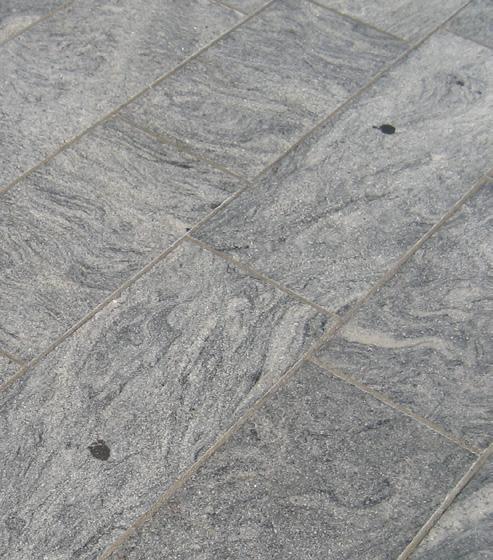
the key components of sidewalk construction are proper material selection, good detailing, and quality installation; these components work together to create smooth, stable, slip resistant, and durable sidewalks.
sidewalk design plays a major role in establishing and reinforcing neighborhood and city identity. a specific palette of materials, colors, and patterns can be used to identify a neighborhood or district. in general, neighborhood residential and industrial street types with relatively narrow sidewalks should have a single material for the entire sidewalk. Downtown Commercial and neighborhood Connector street types with wider sidewalks may have more than one type of paving material to differentiate between sidewalk zones. Varying sidewalk materials within a single zone can be used to accent or embellish special areas such as building entrances, trail approaches before crossing roadways, plaza edges, or transit stops. inserting the name of each cross street in the paving at corners is a functional wayfinding technique. new or reconstructed sidewalks should always match those of existing sidewalks to create a continuous walking and visual experience.
Boston’s sidewalks must be accessible to people of all ages and abilities. this includes everyone from people with vision, hearing, or mobility impairments to those pushing strollers or shopping carts. accessibility is most critical in the pedestrian Zone and at crossings. materials and details should be selected to minimize gaps, discontinuities, rough surfaces or any other vibration causing features. Details should be designed to prevent the creation of tripping hazards as materials settle and age and to avoid uncomfortable or painful bumps and vibrations for pedestrians using wheeled devices such as walkers, strollers, and wheelchairs.
the following sections provide guidance for creating comfortable sidewalks that also have environmental benefits and reinforce a sense of place in Boston’s neighborhoods.
Materials and Accessibility
the City of Boston follows high accessibility standards. With respect to the public realm, the City of Boston follows accessibility requirements set by Cmr 521 and the proposed accessibility Guidelines for pedestrian Facilities in the public right-of-Way (proWaG). refer to these guidelines for complete accessibility requirements and criteria.
listed below are highlights of the above accessibility guidelines, which discuss design features that have the greatest impact on accessibility including the grade and cross-slope of the sidewalk, curb ramps and crossings, and the selection of materials. the guidelines below meet or exceed all Federal and local guidelines and regulations regarding accessibility:
> surfaces should be smooth, stable, and slip resistant and should minimize gaps, rough surfaces, and vibration causing features. Discontinuities in the surface, such as gaps, rises, and falls should not exceed 1/8” where feasible.
> the cross-slope of the walking zone may not exceed 2%; 1.5% is the desired design specification.
> ramps must be present at all intersections (excluding raised crosswalks.) their design should minimize conflicts with motor vehicles. Detectable warnings must be included in the ramps or approaching raised crosswalks to indicate where the roadway begins. please refer to Chapter 4: intersections for detailed intersection and crossing guidelines.
> Design of sidewalks should avoid pooling of rainwater or ice melt. even small amounts of water can be hazardous and form ice.
> Designs should avoid conflicts with common obstacles in the pedestrian Zone. street furniture, traffic control devices, retail displays, and stormwater management features must be located outside of the pedestrian Zone. tripping hazards such as settled or uneven sidewalk materials, abandoned sign posts, and low planters should be addressed during redesign and construction of sidewalks.
n ote: t his section focuses on materials for the p edestrian Zone. Pwd is responsible for the management of publicly-owned sidewalks. all sidewalk designs must be approved by Pwd in coordination with the Mayor’s Commission for Persons with disabilities. Maintenance agreements with abutters are required for non-standard materials or installation details.
> the pedestrian Zone should be continuous across driveways and meet all of the guidelines above. please refer to Driveways found earlier in this chapter.
Materials and Sidewalk Zones
Overview
the primary goals for materials selection should be to maximize accessibility, sustainability, durability, drainage, and aesthetic appropriateness. Given that certain materials are better suited for specific zones and specific street types, designs should always be context-sensitive and reflect the character of the street. proper subgrade preparation is critical to prevent settling and deterioration over time.
To ensure durability and limit maintenance, all material specifications must be approved by the Pwd in consultation with the Mayor’s Commission for Persons with disabilities prior to installation. Treatments within the standard category may be maintained by the Pwd. Materials in the enhanced category will require a maintenance agreement between abutters and the City. in general, all non-standard materials require a maintenance agreement. Treatments in the pilot category are experimental and must be done in consultation with Pwd and the Mayor’s Commission for Persons with disabilities, and evaluated at regular intervals as they age. Treatments in the historic category are governed by guidelines of the appropriate Historic district Commission.
Preferred Materials for Sidewalk Zones
Curb
Greenscape/ Furnishing Zone
Pedestrian Zone
Concrete
Use
the following guidelines cover the selection of materials by sidewalk zone:
Curb Zone
> Granite is the standard material for curbs on city-owned streets.
> Non-standard materials may be used but require maintenance agreements.
Greenscape/Furnishing Zone
> Decorative accent strips of unit pavers are most appropriate for the Greenscape/Furnishing Zone. accent materials can include wire-cut bricks, unit pavers, or grating. thematic elements such as markers and plaques can be embedded in this zone.
> pavers are not recommended where gaps will result from cutting to meet existing surface features.
> the use of stamped concrete as a substitute for brick pavers will be considered on a case-by-case basis. in all cases, the color and stamping pattern should closely match any existing brick.
> Where curbside bus stops are present, a minimum of 5’ wide by 8’ deep concrete landing zone should be provided at all bus stop doors.
Permeable unit pavers (See next page)
Unit pavers (bricks, granite and exposed aggregate concrete)
Soft paving (grass, mulch, decomposed granite)
Smooth finish cast-inplace concrete panels with saw cut joints (preferred) or tooled joints less than 3/8” wide
Frontage Zone
dark aggregate and/or exposed fine aggregate concrete
Unit pavers (asphalt, granite, and wire-cut brick)
Permeable unit pavers (See next page)
Rubber
Permeable pavements (See next page)
Granite pavers
Brick accent strips (Consult with Historic district Commission)
wire-cut brick pavers
Granite pavers
Bluestone
when part of the Pedestrian Zone, follow Pedestrian Zone guidelines; otherwise, base materials selection on the Greenscape/Furnishing Zone guidelines.
*notes Different types of materials come in an array of textures. any paving material found in an active pedestrian path must be smooth, stable, and slip resistant, and minimize gaps, discontinuities, and vibrations. as technology progresses, pavements should be reevaluated for appropriate use in different sidewalk zones.
Pedestrian Zone
> Concrete is the standard material for the Pedestrian Zone. Concrete panels should have a smooth, slip resistant finish as opposed to a broom finish. Concrete panels should be four square feet or larger. Panels may be as small as two square feet in limited areas such as at building entrances and driveways. "Window pane" details should be avoided.
> Concrete joints should be installed to create a surface that is as smooth and comfortable as possible to accommodate people with disabilities. Where feasible, saw cut rather than tooled joints are preferred. Installation methods must be monitored carefully as concrete can crack while curing before joints are cut. Expansion joints should be filled to reduce gaps to the maximum extent feasible to meet accessibility requirements.
> Patterns can be sandblasted into standard concrete or aggregates to change the surface.
> The selection of recycled aggregates includes recycled concrete, recycled glass, and industrial by products.
> Concrete or granite joints in the sidewalk should be oriented along the direction of travel where possible to reduce the frequency of joints across the Pedestrian Zone.
> Unit pavers may be used so long that it is feasible to achieve and maintain all accessibility requirements. Larger unit pavers are preferred to minimize joints and should be oriented in the direction of travel. Beveled-edge pavers should be avoided in the Pedestrian Zone.
> Transitions between concrete panels, unit pavers, and tree grates should be given special attention and designed to minimize bumps and differential settlement.
> Tree grate surfaces are not considered to be part of an accessible Pedestrian Zone.
Frontage Zone
> When the Frontage Zone supports active pedestrian use, like at building entrances, plazas, cafés, and where seating is provided along building facades, the Frontage Zone should be designed with the same principles as the Pedestrian Zone.
> Alternatively, when the Frontage Zone does not support active pedestrian use, such as where street trees, flower beds, rain gardens, and other greenscape elements are planted along building facades, materials selection should be similar to that of the Greenscape/Furnishing Zone.
Considerations
> the installation of traditional brick pavers may result in uneven surfaces after settling if not properly maintained; this can result in uncomfortable surfaces for those with wheel chairs, pushing strollers, or pulling suitcases.
> Concrete is the preferred material for the pedestrian Zone; however, existing brick sidewalks may be replaced with wirecut brick so long that all accessibility requirements are met.
> use of unit pavers in the pedestrian Zone requires increased oversight of installation and long-term inspection and maintenance.
> Where practical, hand-holes, vaults, tree grates, and other utility access points should be located outside of the pedestrian Zone. Where this is not practical, these access points should match the level of the sidewalk and be firm, stable, and slip and shock resistant.
> as technology progresses, new materials should be piloted and tested so long that all accessibility requirements are met.
existing granite slab and bluestone sidewalks are protected historic resources often found on Downtown Commercial street types. the guidelines below should be followed when working with historic materials:
> For new projects or major reconstruction, historic materials should be modified as necessary to be made accessible. this may involve resetting the material to make it level, treating the surface to create a non-slip texture, or shaping the material to create accessible ramps.
> repair and reconstruction of existing brick sidewalks, though not protected historic resources, should include grading as necessary and repaving with wire-cut bricks.
> stamped brick (i.e. concrete stamped as brick) is generally not allowed in designated Historic Districts where brick is the standard surface treatment. stamped brick creates an uneven surface and the coloring can fade over time.
Permeable Paving Materials
Overview
permeable paving materials allow stormwater runoff to infiltrate through the material into the ground instead of being diverted as runoff into the storm drain system. Water that permeates through the material is stored underground for gradual absorption into the soil or is filtered through the soil into the groundwater or a nearby surface water body. permeable pavement systems can filter pollutants; reduce flooding, ponding, and ice; improve water quality; and potentially reduce the size of infrastructure needed to convey stormwater off site.
all permeable materials are considered enhanced or pilot treatments, and require maintenance agreements with the City of Boston. Construction and maintenance of all materials must be coordinated with the Pwd, Boston water and Sewer Commission (BwSC), Parks department, and the Mayor’s Commission for Persons with disabilities.
permeable pavements are typically under laid with an infiltration bed and subgrade soil. permeable materials come in a number of varieties and include:
> soft paving such as grass, mulch, and decomposed granite
> porous unit pavers with open joints or interlocking designs, the openings are filled with porous aggregate
> permeable concrete is concrete designed to have more void spaces that allow air and water to pass through the material
> Concrete or plastic grid systems filled with soil and grass or gravel
> Bound resin with aggregates (pervious asphalt) or bound recycled material such as glass, rubber, and plastic
Preferred Permeable Materials for Sidewalk Zones
Curb Zone
Greenscape/ Furnishing Zone
Pedestrian Zone
n ot applicable
n ot applicable
n ot applicable
n ot applicable
s oft paving (grass, mulch, and decomposed granite)
p orous unit pavers
n ot applicable
n ot applicable
p ermeable concrete
p lastic or concrete reinforcing grids
Bound recycled materials
p ermeable Concrete
Bound recycled materials
Frontage Zone When part of the p edestrian Zone, follow p edestrian Zone guidelines; otherwise base materials selection on the Greenscape/Furnishing Zone guidelines.
* n otes
Different types of materials come in an array of textures. a ny paving material found in an active pedestrian path must be smooth, stable, and slip resistant, and minimize gaps, discontinuities, and vibrations.
a s technology progresses permeable pavements should be reevaluated for appropriate use in different sidewalk zones.
Use
> permeable paving can be used in a broad variety of settings. all designs must consider the drainage characteristics of the underlying soils, the depth of the water table, and the slope of adjacent land.
> permeable pavements can be used in sidewalks, plazas, cafés, parking areas, alleys, and other low-traffic areas.
> soft paving materials are only appropriate for the Greenscape/Furnishing Zone or Frontage Zone, typically around trees, planters, and enclosed greenscape elements.
> permeable concrete pavement can be piloted for use in the pedestrian Zone as long as the resulting surface is durable, smooth, stable, slip resistant, and meets all other accessibility guidelines.
> porous unit pavers are most appropriate in the Greenscape/ Furnishing Zone or the Frontage Zone, except where there is active pedestrian use such as at bus stops or at crossings. they may also be used in small plazas offset from the sidewalk pedestrian Zone.
> in specific locations where infiltration is not desired, such as adjacent to building foundations, engineered geotextile liners can be used to redirect the water to an appropriate location.
Considerations
> Compared to traditional impermeable pavements, permeable pavements can provide increased traction when wet because water tends not to pool, and the need for salt, sand, and plowing can be reduced during winter due to low or no black ice development.
> Designs should include methods to convey larger storms to the storm drain system
> long-term maintenance costs may be reduced because permeable pavements resist cracking and buckling in freeze-thaw conditions.
> regular maintenance of permeable pavements include:
> annual inspection of unit pavers and permeable concrete for deterioration
> periodic replacement of sand, gravel, and vegetation where applicable
> annual vacuuming of pavements may be required to unclog sand and debris (note: the use of sand in ice prevention should be avoided because it will clog pavement pores.)
if used, permeable concrete in the pedestrian Zone must be smooth, stable, and slip-resistance.
infiltration bed
Greenscape
48
52 Soils Selection and Management
Trees, shrubs, grasses, and other landscape plantings, or “greenscape,” play an important role in making streets comfortable, delightful, memorable, and sustainable. Used appropriately, they can help define the character of a street or plaza, provide shade and cooling, reduce energy consumption, and absorb and cleanse stormwater. They also absorb greenhouse gases and help filter airborne pollutants. In proximity to other green spaces, street trees can contribute to native wildlife systems.
In addition to providing environmental benefits, a healthy greenscape provides psychological and social benefits. People are attracted to places that have well-maintained plantings. Healthy greenscapes are good for city life and for business. The changing light and color along a tree-lined street reminds us of the changing seasons. By connecting us with nature in its beauty and complexity, plants help reduce stress and restore a sense of calm and focus.
Maintaining landscape plantings on Boston’s dense streets is challenging. Sidewalk space is at a premium and the hard surfaces required to support concentrated activity can be hostile to trees and other plantings. Soil compaction, lack of rooting space, poor soils, road salt, temperature fluctuations, physical damage, and even air pollution and litter all put stress on plants. These guidelines seek to balance the benefits of a healthy greenscape with the realities of limited space and the ongoing need for care and maintenance.
The guidelines in this section are intended to enable street trees and plantings to thrive, and to use stormwater as a resource to support plant life and replenish groundwater. The following sections provide a discussion of the benefits of street trees, plantings, and vegetated stormwater management along sidewalks, as well as the importance of soil selection and management in cultivating plant life.
Phytoremediation/ Phytotechnologies
phytoremediation or phytotechnologies—the use of plants to clean, remove, and stabilize contaminates— should be strongly considered in the design of greenscape elements. many common organic contaminates, including petroleum hydrocarbons, can be easily processed and degraded by plants and associated soil biology. Contaminates are found in stormwater, air, existing site soils, and groundwater; it is encouraged that plantings not only be designed to treat stormwater, but other pollution sources as well. Greenscape can be designed to prevent the spread of contamination spills before they occur, or to remediate areas where a previous contamination is suspected. this is especially important on industrial street types, in maintenance yards, brown fields, and other areas where high concentrations of pollutants may be of concern. For additional information on phytoremediation, please refer to the environmental protection agency’s website page on Contaminated site Clean-up information (Clu-in) and phytotechnologies.
Greenscape elements in the public right-of-way must be approved by the Boston Parks department and Pwd. enhanced and pilot treatments will require special maintenance agreements.
Benefits of Street Trees
Environmental
> Reduced energy use and heat island effects: trees reduce energy use by shading buildings and cooling the air through transpiration. a study on heat island effects in new York City concluded that trees and green roofs substantially reduce air temperatures, with street trees providing the most cooling per unit area.* 1
> Reduced greenhouse gases and airborne particulates: trees reduce greenhouse gases by sequestering carbon dioxide and reducing the need for air conditioning. trees also improve air quality by capturing gaseous pollutants and particulates in the tree canopy surface. street trees have
* rosenzweig, Cynthia et al. mitigating new York City’s Heat island with urban Forestry, living roofs, and light spaces. new York City regional Heat island initiative, Final report. albany: new York state energy research and Development authority report 06-06, october, 2006.
2 3
been shown to remove as much as 60% of the airborne particulates at street level. 2
> improved water quality and groundwater recharge: trees capture rainfall in their leaves and in the soil, trapping sediments, breaking down organic pollutants, and stabilizing non-organic pollutants such as metals. trees also reduce the volume and temperature of stormwater runoff and help recharge groundwater. 3
> Support of natural diversity: trees make beneficial use of rainfall and runoff to support the growth of the urban forest ecosystem. 4
1
Social
> Enhanced comfort, beauty, and attractiveness of streets and public spaces: trees provide shade and scale; define and accentuate streets and spaces; and provide a soft, colorful counterpoint to the hard surfaces in the city.
> Reduced stress and improved concentration: studies have shown that even brief encounters with nature at a small scale can reduce stress and mental fatigue, restoring the ability to focus and concentrate.†
> Reduced exposure to UV rays: shade provided by street trees makes it possible to walk, bicycle, and linger in public spaces with reduced risk of sunburn, skin cancer, and other harmful effects of uV rays. 5
> Symbolic connection to the natural world: trees in the urban environment are reminders that nature is ubiquitous and interconnected through the climate, seasons, and the larger ecosystem.
Economic
> Improved comfort and appeal of retail districts: in preference surveys, consumers indicate a willingness to travel further, stay longer, visit more frequently, and even pay more for parking in shaded, well-landscaped business districts.‡
> Perception of quality and care, which extends to adjacent businesses: Healthy trees signal that a place is well managed and maintained. this benefits the image of adjacent businesses, suggesting attention to detail and good customer service.
> Increased residential property values: trees on streets and in front yards add value to home properties, with increases generally in the range of 7% for homes in areas with good tree cover.§ 6
† kaplan, stephen. the restorative Benefits of nature: toward an integrative Framework. Journal of Environmental Psychology (1995), Volume 15, p. 169-182.
‡ Wolf, kathleen. Business District streetscapes, trees, and Consumer response. Journal of Forestry (December 2005), Volume 103, no. 8. pp. 396-400.
§ Wolf, kathleen. City trees and property Values. Arborist News (august 2007), pp. 34-36.
Benefits of Vegetated Stormwater Management
Overview
Boston’s streets and sidewalks are one of the city’s most valuable resources, and they offer tremendous opportunities to improve stormwater management. new green strategies for managing runoff along streets and sidewalks can reduce flooding, increase groundwater recharge, and reduce pollution to our rivers and streams as well as to Boston Harbor. Capturing rainfall before it flows into the city’s drainage and sewer system can also help reduce sewer overflows and save the city money on upgrading and repairing infrastructure. many of the best techniques for managing stormwater runoff use trees and other vegetation to capture rainwater as it falls, and to collect and filter runoff from streets, sidewalks, and other paved areas. increasing vegetation also helps keep streets cooler, both by the shade from large trees, and by evaporation and plant transpiration, which cool the air just as perspiring cools the skin.
the City of Boston encompasses just over thirty-one thousand acres of land, over half of which is paved over with streets, buildings, and parking lots. stormwater runoff from Boston flows into four major watersheds: the Charles river, the mystic river, the neponset river, or directly into Boston Harbor. Boston also has a major challenge maintaining groundwater levels, mainly in areas that are on filled land that was previously open water and marsh. in these areas, wood pilings that support many buildings may rot if groundwater levels drop. recharging stormwater rather than directing runoff into pipes is one strategy for maintain groundwater levels.
the City of Boston owns and controls about one quarter of the land area of the city, and over half of city-owned property is streets and roads. the streetscape is one of the city’s best areas for controlling and managing stormwater runoff.
Environmental
> Reduced pollution to rivers and the harbor: stormwater is the main source of pollution to massachusetts’ waters. When rain falls, it washes pollutants from the roads, lawns, and built environment into local waterways. stormwater can also cause overflows of “combined” sewers—sewer pipes that carry both sanitary sewage and stormwater in the same pipe. reducing the amount of stormwater runoff from urban areas will reduce pollution from direct runoff and from combined sewer overflows. phytoremediation, or the use of plants to filter pollutants, is another benefit of vegetated stormwater management techniques. 1
> Decreased flooding: By capturing more stormwater in trees and vegetation and by recharging more of it back into the ground, there will be less street flooding and lower peak flows, which often cause flooding of local streams and low lying areas.
> Increased groundwater recharge: Healthy vegetation and porous soils dramatically increase how much rainfall filters into the soil instead of running off into storm drains. increasing recharge and decreasing runoff can help 2 maintain Boston’s groundwater levels.
> Reduced energy use: When stormwater flows into the combined sewer system, it is carried out to the Deer island Wastewater treatment plant, where it is treated and discharged out into massachusetts Bay as if it were sanitary sewage. keeping stormwater out of the sewer system 4 reduces the use of energy to pump and treat this water. increased urban vegetation can also reduce ambient air temperatures, reducing the demand for air conditioning
Social
> Enhanced understanding of water: When people see water flowing into planted areas in the urban environment, rather than disappearing into underground drains, they are more likely to 3 understand the importance—and the challenges—of managing water in urban areas.
> Increased support for stormwater management: Visible stormwater management in the public right-of-way can increase people’s awareness of water pollution and the importance of taking action to protect the environment. individual activities like picking up pet waste, reducing litter, and improving lawn care practices can reduce pollution in runoff.
> Sense of connection to Boston’s water resources: in Boston, streets function like small streams, carrying stormwater to rivers and harbors. people can appreciate these connections even when they are far away from the water.
Economic
> Reduced costs for wastewater treatment: When less water enters the combined sewer system, 4 wastewater treatment costs can be lowered.
> Potential capital project savings: in many cities, stormwater management systems designed to mimic natural processes, also called “green infrastructure,” have been found to be less expensive than conventional pipe and gutter systems or “gray infrastructure.”
> Potential to create new green jobs: the installation and maintenance of vegetated stormwater treatment systems requires a combination of engineering, construction and operational labor skills. there is significant potential for job creation and growth in these fields as stormwater management requirements become more demanding.
> Enhanced property values: numerous economic studies have shown that property values are higher in areas where there are water features, open space, and vegetation in the public right-of-way. Designing stormwater management systems to provide public amenities such as open streams, ponds, and street trees will 5 increase overall economic benefit.
Soils Selection and Management
Overview
Proper soil selection and management is one of the best ways to support healthy vegetation and to improve stormwater management in urban areas. Healthy soils soils that have a high organic content and plenty of pore space support healthier trees and plants and promote more groundwater recharge and better filtration of stormwater. Heavily compacted soils act almost like pavement, absorbing little water, and supporting less biological activity than well aerated soils.
Existing trees and planted areas that have become compacted and degraded can be significantly improved with aeration to restore porosity and/or the addition of soil amendments, such as weed-free compost, to help retain soil moisture. Soil improvements can make a significant difference in the health
and longevity of trees and other vegetation. They can also improve stormwater management. Soil maintenance should be part of an operation and maintenance plan for urban vegetation.
New street trees and plantings present an opportunity to use engineered soils to grow a much larger and healthier greenscape and to clean and recharge significant volumes of stormwater runoff. Design details for planting street trees and implementing vegetated stormwater management techniques are found in the following sections. In all of these applications, careful selection of soil type and providing maximum soil volume should be priorities.
soils with sufficient organic content and pore spaces provide plant roots with nutrients, water, and oxygen for healthy growth.
In constrained situations where existing street trees cause sidewalk heaving or where space is limited, consider using structural soils. Structural soils are a type of engineered soil that is designed to meet the load bearing requirements of urban streets while still maintaining adequate porosity and organic content to support healthy vegetation. Some structural soils also contain materials that specifically retain moisture. In urban contexts, structural soils allow the placement of ample, healthy soil beds beneath sidewalks and parking areas. Trees and plantings can be grown in dense urban settings with paved surfaces above the root systems, provided there is a way for water to enter the structural soil mixture.
Structural soils require irrigation (passive or active) to support a variety of plant types. Overflow drains may be necessary depending on the characteristics of the surrounding soils. Structural soil applications can both provide a healthier environment for plants and better capture, filter, and recharge of stormwater.
As an alternative to structural soils, soil cell systems can be used to provide appropriate soil volumes. See Covered Tree Trenches later in this chapter for more information about structural soils.
Honeylocust growing in a covered tree trench that provides 450 cubic feet of planting soil per tree.
Street Trees
56 Street Trees and Urban design
57 Street Trees and Street Types
58 Choosing the Right Tree
59 Tree Siting and Spacing
60 Root environment for Street Trees
61 Open Tree Trenches
62 Covered Tree Trenches
63 Raised Tree Beds
64 Tree Pits
street trees help define many of Boston’s best-loved streets and are a critical component of Boston’s urban forest ecosystem. this section describes how and where to plant street trees to achieve both environmental and urban design benefits.
any resident of Boston can request to have a street tree planted in front of their home or business, provided the sidewalk is wide enough, by calling the park line at 617-635park (7275). an arborist must inspect the site to determine if a tree can be planted.
The Boston Parks department oversees maintenance and planting of trees in the public right-of-way. The maintenance program includes pruning, disease control, removal, and storm damage repairs. The department’s oversight includes review and approval of trees to be planted by others and the planting of new trees throughout Boston’s neighborhoods. Tree selection and planting design in the public right-of-way must be approved by the Boston Parks department and Pwd.
Grow Boston Greener and Boston’s Climate Action Plan
the City has partnered with a coalition of environmental and community organizations to form the Boston urban Forest Coalition in an effort called “Grow Boston Greener,” which seeks to increase tree canopy cover in the City by planting 100,000 trees by 2020. By the time the trees are mature in 2030, the tree canopy cover is expected to increase from 29% to 35%.
Grow Boston Greener is a component of Boston’s Climate action plan. the major goals of Grow Boston Greener are to:
> increase the tree canopy cover in the City, particularly in environmental justice and low canopy areas
> mitigate the urban heat island effect and reduce energy consumption through the appropriate placement of trees on residential and commercial properties
> improve stormwater management through strategic neighborhood plantings
> improve air and water quality
Street Trees and Urban Design
Street trees can be used to serve a variety of urban design functions. Based on their location, arrangement, and spacing trees can:
> Frame, define, and accentuate spaces
> emphasize linearity and long views
> Create a ceiling and sense of enclosure
> provide needed shade and filtered light
> reinforce the rhythm of a streetwall
> add texture, delight, and human scale
iconic plantings of street trees associate neighborhoods with seasons, and contribute to a unique sense of place. red oaks in autumn on the Jamaicaway embody the essence of new england. magnolias in bloom on Commonwealth avenue mark the arrival of spring.
trees are an ideal form of shade, providing protection on hot summer days while allowing heat and light to penetrate during cold winter months. They can also calm traffic by narrowing the apparent width of the roadway.
street trees should be used in thoughtful compositions that respect the overall street context, local environment, and adjacent land uses.
Street Trees and Street Types
Street trees should be considered in every street design project; however, on some Street Types, trees are essential. For example, Boulevards and Parkways are defined in large part by the presence of trees. Below are guidelines for using trees on Boston’s Street Types.
Parkways are lined with continuous green spaces for trees, either on the sides or in the median. if sufficiently wide, green spaces provide an excellent rooting environment for largestature shade trees. trees should be planted no more than 40’ apart to help create a continuous canopy. species of a similar size, scale, and form should be planted along the length of the road for consistency and to maximize visual impact. avoid monocultures, as disease and insects may destroy street trees along an entire street.
trees on Boulevards are planted at regular intervals in a formal pattern with street lights, emphasizing linearity and long perspective views. the pattern draws the eye to the horizon or to an important terminus, such as the state House on Beacon street, the public Garden on Commonwealth avenue, or the Blue Hills on Blue Hill avenue. trees are planted in the Greenscape/Furnishing Zone and are usually surrounded by pavement. modern planting techniques such as covered tree trenches should be used to provide sufficient soil volume. large-stature shade trees of similar size, scale, and form are typically planted 30’ apart to create a continuous canopy.
Neighborhood Connector Streets are similar to Boulevards but are less formal. trees should be planted where they can best survive, such as in open or covered tree trenches.
Neighborhood Main Streets benefit enormously from trees, as visual preference studies have found commercial districts with shade trees are consistently preferred over districts without trees. shade trees create the sense of an outdoor room and make streets more comfortable for sitting, café dining, window browsing, and socializing. trees should complement and not interfere with first floor uses, entryways, cafés, or other activities in the Frontage Zone. trees should not be planted in loading zones. limbs should be pruned to maintain sight lines and maximize visibility of the street wall. Different species can be used in clusters to highlight special areas and create a sense of place.
large canopy shade trees are attractive and add value to homes on Neighborhood Residential Streets. they help keep homes cool in the summer while allowing light and heat to penetrate in colder months. the branches also have the benefit of tempering winter winds. street trees should be spaced far enough apart to allow light to reach front lawns and gardens. open tree trenches or front yards (with permission from owners) should be used where possible to maximize rooting space.
Downtown Commercial and Downtown Mixed-Use
Street Types require trees that can adapt to low light depending on building heights, street width, and street orientation. Where there is insufficient rooting depth due to underground utilities, raised tree beds can be considered.
trees in Industrial settings must to be able to withstand drought and harsh conditions resulting from heavy traffic, green-house gas (GHG) emissions, and heat island effects from surrounding lots. Where possible, trees should be set back from the street and planted in continuous filter strips between the paved lots and the sidewalks. tree species that can uptake and remove urban contaminates and air pollutants should be considered wherever possible.
Choosing the Right Tree
tree selection needs to address the ability of the tree to mature in a given microclimate, as well as its ability to meet design objectives. scale and form are key design considerations.
large canopy shade trees play a critical role in the urban forest ecosystem, and offer a unique presence on city streets. providing sufficient rooting space is a challenge, however this does not limit plantings to smaller trees; even small trees will suffer in a limited rooting environment. Given all the uncontrollable variables in a street it is worth taking a chance that a shade tree will survive in less than ideal conditions. appropriate details should be used to enable trees to grow without roots rising to the surface and deforming sidewalks.
Choosing a tree for the right habitat can help minimize conflicts with adjacent infrastructure. For example:
> shallow rooted species should be considered near sewer or drain pipes
> open-form trees should be considered near overhead wires
> trees with deeper roots and small trunk flares should be used adjacent to pavements
other considerations for selecting the right tree include: the scale and form; sight line requirements; the type of microclimate; tolerance to drought and insects; inundation; resistance to vehicular emissions and salt; the ability to remediate pollutants; and the amount of maintenance. From an aesthetic perspective, spring flowers, fall color, the quality of light and shade, and the abundance of fruit, nuts, and leaf litter should also be considered.
Examples of Parks Department Approved Street Trees
Large-Stature Shade Trees
u sed for: l arger scale streets ( e specially Boulevards, p arkways) and plazas
Canopy and form: s preading to create a continuous canopy
s ample species: s weetgum; r ed o ak; s ilver l inden; Zelkova
Medium-Stature Trees
u sed for: s maller scale streets and plazas
Canopy and form: s preading or columnar
s ample species: r ed m aple, Honey l ocust; Chinese e lm; Black tupelo
Short-Stature and Ornamental Trees
u sed for: p lanters, plazas, and areas with utility wires
Canopy and form: s preading or columnar
s ample species: Hedge m aple, Cherry, Goldenraintree, s hadblow (single-stem)
Tree Siting and Spacing
trees should be planted in locations that provide the best conditions for growth within a given design framework. this could mean planting in private yards in residential areas (with permission from owners), or clustering trees in open planting areas on wide sidewalks or in plazas. large, contiguous planting areas should be employed where feasible to enable large canopy shade trees to reach maturity.
street tree plantings should strive for continuity along a street while respecting adjacent uses. each tree should complement and not interfere with first floor uses, entryways, cafés, or other activities in the Frontage Zone. trees should not be planted in loading zones or within 10’ of bus stop landing zones. trees limbs should be pruned to maintain sight lines and maximize visibility of the street wall. 1 2 3
Consider Boston’s street types when choosing tree species. see street trees and street types found earlier in this chapter for more information
Preferred Tree Spacing and Offsets
1 Short Stature Ornamental Trees
the following guidelines have been developed for tree spacing and offsets. note: Where site-specific conditions prohibit meeting the guidelines, trees should be considered at the discretion of the Boston parks Department.
Root Environment for Street Trees
the ability of a tree to grow beyond a certain size is directly related to the volume of soil available for roots. providing sufficient rooting soil in a dense, urban environment can be costly, but is worthwhile given the unique benefits that mature shade trees provide.
tree roots do not survive well in highly compacted soil because it lacks the void spaces needed for air and water to circulate. roots in compacted soil will migrate toward the surface for air and water, causing sidewalks to crack and heave.
When the rooting space is severely constrained, the tree roots will grow to capacity, and then the tree will decline and die.
trees in the northeast u.s. need approximately 2 cubic feet of soil per square foot of canopy area † For example, a tree growing in a constrained 3’ by 8’ by 4’ pit would be expected to reach about an 8’ diameter canopy before becoming stressed and showing signs of decline. if the tree has access to soil outside the pit, the canopy can grow much larger.
landscaped areas in the Frontage Zone or on the edge of adjacent properties (with permission from owners) can be excellent places to plant trees, as they may offer open areas for roots to spread. examples include the residential edges on Commonwealth avenue, where most of the iconic magnolias are planted. When open landscape areas are not available, more intensive strategies are required.
the last decade has brought several innovations in engineered soils and sidewalk designs to support root growth. Below are four strategies for planting trees in constrained sidewalk settings. these strategies are intended to increase the volume of rooting soil while maintaining accessible sidewalks, and are discussed in detail on the following pages.
methods include:
> open tree trenches
> Covered tree trenches
> tree pits
> raised tree Beds
† urban, Jim. up By roots, Healthy soils and trees in the Built environment. international society of arboriculture, Champaign illinois. 2008
Open Tree Trenches
Overview
an open tree trench is an area of soil connecting a row of trees that is covered with mulch, groundcover, grass (or “tree lawn”), or other greenscape. tree trenches are generally located in the Greenscape/Furnishing Zone, though they can also be located in the Frontage Zone. For stormwater benefits, the sidewalk should be pitched toward the open tree trench. non-linear open tree areas can also be used for planting trees in clusters.
trees planted in open tree trenches and areas with a sufficient amount of uncompacted soil have the greatest chance of surviving and thriving in an urban environment.
Use
> Curbside open tree trenches or “tree lawns” are commonly used on neighborhood residential street types.
> provide as large of a trench as needed for sufficient rooting volume while maintaining appropriate sidewalk clearances. the typical size of a tree trench is 4’ wide by 3’ deep. if sidewalk constraints prohibit wider tree trenches, smaller trenches, as narrow as 2’-6” wide, may be approved.
> existing trenches that are smaller may be replanted at the discretion of Boston parks Department.
> plant the tree so that the top of the root ball is flush or nearly flush with the surrounding soil.
> the surface of the tree trench should be level with the sidewalk to avoid creating a tripping hazard.
Considerations
sidewalks should be flush with the edges of tree trenches to avoid creating tripping hazards.
> areas with heavily-used, high-turnover curbside parking are not compatible with open tree trenches, as the soils become compacted over time. Consider including pavement breaks to provide intermittent access to parking.
> Consider planting bare-root trees (trees with no soil around the roots). Confirm with Boston parks Department or a tree nursery specialist if bare-root planting is appropriate for the given species and timing.
Covered Tree Trenches
Overview
a covered tree trench is a linear trench covered by pavement designed to support root growth while providing structural support for sidewalks. a covered tree trench makes it possible to have large canopy shade trees in even the most constrained urban environments.
support for the sidewalk is typically provided by using engineered structural soils. structural soil is designed to be loose enough to allow air exchange, water movement, and root growth, yet compactable enough to support pavement||. soil cells and structural soils can be used in clusters around trees as well as in a linear trench if needed to avoid underground obstructions.
tree trenches should be covered with pavement and permit passive irrigation to allow water to reach the soil. provisions may include the use of pervious pavement or flexible, perforated pipes beneath the pavement.
Covered tree trenches are considered an enhanced treatment and require a special maintenance agreement.
|| the use of prefabricated "soil cells"or suspended sidewalks may also be considered.
Use
> use covered tree trenches in locations with heavy pedestrian traffic and high turnover parking.
> provide as large a trench as needed for sufficient rooting volume. the trench should be at least 5’ wide by 3’ deep, and should provide at least 450 cubic feet of soil for a single tree, or 350 cubic feet of soil per tree if the space is shared among several trees in a cluster. plant the root ball nearly flush with the surrounding pavement, allowing for the depth of any covering such as pavement or mulch.
> provide an opening around the trunk of 2’ by 2’ covered with mulch during the initial years; however keep the mulch away from the base of the trunk. over time the roots in this zone will expand and thicken with bark, eliminating the need for mulch.
> provide subsurface drain lines in areas where the subgrade drains poorly. if in doubt, install drainage infrastructure.
> Covered tree trenches must meet required load bearings.
Considerations
> Consider covered tree trenches whenever sidewalks are being replaced along the length of a corridor.
> engineered soils are required for both structural soil and soil cells. the soil used with soil cells is similar to planting soil.
> structural soils require stringent quality control to ensure proper mixing and compliance with specifications.
pervious pavement, including pervious pavers, used in the Greenscape/Furnishing zone can allow water to reach tree roots.
structural soils provide extra rooting volume for trees and, if used with pervious pavement, allow for stormwater treatment and infiltration.
Raised Tree Beds
Overview
raised tree beds can be appropriate for planting trees in locations where utilities or subsurface conditions prohibit planting in the ground. However, tree growth is strictly limited by the size of the raised bed. in this constrained situation, smaller stature trees should be considered.
raised tree beds can also provide seating if the height is between 16” and 2’, with 20” being the preferred height. they can also be used to define spaces and provide a sense of enclosure in plazas and other open sidewalk areas.
Use
> size raised tree beds as large as needed to provide sufficient rooting volume while maintaining appropriate sidewalk clearances.
> Clustering trees in large planters is a good strategy to provide greater soil volumes to individual trees.
> if there is subsurface space available for root growth, provide a shallow layer of structural soil below the adjacent pavement.
> provide subsurface drain lines in areas where the subgrade drains poorly. if in doubt, install drainage infrastructure.
Considerations
> raised tree beds should not obstruct the pedestrian Zone and should only be used in sidewalks of generous width to avoid creating a tripping hazard.
> Consider slightly smaller container grown tree stock for raised tree beds.
> Consider planting bare-root trees. Confirm with Boston parks Department or a tree nursery specialist if bare-root planting is appropriate for the given species and timing.
raised tree beds can double as seating.
Tree Pits
Overview
tree pits are used where space or resources do not permit the use of open or covered tree trenches. the tree pit should be made as large as possible to provide maximum rooting volume while maintaining the appropriate clear width for the pedestrian Zone. the sides of the pit below the sidewalk should be open to the surrounding subgrade to allow for root penetration beyond the pit.
Tree grates require maintenance to adjust for tree growth and to correct for any settlement that may cause a tripping hazard. Tree grates are considered an enhanced treatment and will require a maintenance agreements.
Use
> provide as large a tree pit as feasible while maintaining appropriate sidewalk clearances. the preferred size for a tree pit is at least 4’ by 10’ by 3’ deep or 120 cubic feet. smaller tree pits, as narrow as 2’-6” wide, may be approved if sidewalk constraints prohibit the construction of a full size tree pit.
> existing tree pits that are smaller than the recommended minimum may be replanted at the discretion of Boston parks Department.
> plant the tree so that the root ball is nearly flush with the surrounding pavement while allowing for the depth of any mulch or covering.
Create tree pits as large as possible to provide maximum rooting volume while maintaining the appropriate clear width for the pedestrian Zone.
> provide an opening around the trunk of 2’ by 2’. the remainder of the pit should be covered with mulch, pervious pavers set in sand, or, if there is a maintenance agreement, a tree grate. if mulch is used, keep it away from the base of the trunk. over time the roots in this zone will expand and thicken with bark, eliminating the need for mulch.
> install a wrapped 4” perforated water/aeration tube in each tree pit per the most current approved Boston parks street tree planting details.
> pitch the sidewalk toward the tree pit to use stormwater for irrigation.
> provide at least 50% new soil and scarify soils at the interface with adjacent soil to promote blending. Depending on the project site and soil conditions, the amount of new soil may vary.
Considerations
> Where sidewalk space is limited and minimum dimensions cannot be achieved with the installation of street trees, consider providing curb extensions.
> the surface of a tree grate is not counted toward the width required for an accessible pedestrian pathway.
> tree grates must have break-out pieces around the trunk to allow for growth.
> Consider slightly smaller container grown tree stock for tree pits.
> Consider planting bare-root trees. Confirm with Boston parks Department or a tree nursery specialist if bare-root planting is appropriate for the given species and timing.
a 2’ by 2
provide
opening around the trunk of the tree.
Street Tree Species and Heights
Under Wire Species (Shorter Trees)
Scientific Name
Evergreens
Name
1 acer campestre Hedge maple 25-40
(Ft)
2 acer ginnala amur maple (singlestem) 15-18
3 amelanchier canadensis shadblow service berry (single-stem) 15-25
44 sophora japonica ‘regent’ Japanese sophora 50-75
45 tilia cordata little-leaf linden 60-70
46 tilia tomentosa silver linden 50-70
47 ulmus americana (disease resistant) elm 40-60
48 ulmus parvifolia Chinese elm 40-50
49 Zelkova serrata ‘Village Green’ Village Green Zelkova 50-80
Oregon
Vegetated Stormwater Management
Given the economic, aesthetic, and health impacts of water pollution, compounded by climate change and more frequent and heavy rain, the City of Boston is working to identify new ways to manage stormwater more effectively. The most efficient and cost-effective way to do this is through small scale stormwater practices throughout the city to collect and manage stormwater where it falls. While the City of Boston’s streets and sidewalks make up only about 15% of the total city area, they comprise over half of the land the city owns, making streets, alleys, and sidewalks obvious candidates for stormwater management practices. Increasing urban vegetation will create more evapotranspiration water sent into the air as vapor through either evaporation or transpiration from plants. This will both cool the air and reduce the overall volume of runoff that is generated by rainfall. While trees are the most effective form of vegetation for these processes, other vegetation can make a significant improvement over traditional hardscape. Areas of grasses, swales, rain gardens, and even small vegetated planters can be used to reduce the amount of paved surfaces and increase the overall vegetation in the city.
Important considerations when selecting the right type of vegetation include sight line requirements; the type of microclimate; tolerance to drought and inundation; resistance to insects and disease; resistance to vehicular emissions and salt; the ability to remediate pollutants; and the amount of maintenance required.
The systems described in the following sections are closely related to each other and should be customized for a specific location. Landscape architects and civil engineers must survey existing soil and drainage conditions, create an overall drainage and recharge plan, and specify the various components according to the opportunities and constraints for a particular project and location.
Accordingly, these guidelines provide basic descriptions of each type of system, where they can fit into Boston Street Types, and basic maintenance requirements, but exclude recommendations for specific configurations or construction details.
Stormwater Planters and Rain Gardens
stormwater planters and rain gardens are designed to collect and treat runoff from the surrounding area. they rely on both physical and biological systems, using mulch, soil, plant root systems, and soil microbes to hold water and capture pollutants such as bacteria, nitrogen, phosphorus, heavy metals, oil, and grease. stormwater planters generally have structural elements such as curbs, retaining walls, overflow pipes, and underdrains. rain gardens tend to be simpler recessed planting beds. the fundamental design principles, however, are the same: soils are highly porous with a high organic content to support healthy plant communities. planters and gardens that are adjacent to paved areas can include structural soil beds to increase their stormwater management capacity.
stormwater planters and rain gardens are not designed to hold standing water for long periods of time and should drain down to a dry surface within 24 hours of a storm event. plants should be selected that are tolerant of short periods of inundation, but can also survive long dry periods as they will generally not be irrigated. plants should also be salt tolerant if runoff from streets or sidewalks will be captured. planters and gardens can be lined if infiltration is not desirable or feasible, but lined planters must be designed to drain to an external structure. all planters and gardens should have overflow structures. plant selection should be appropriate to the surrounding context, and should be sensitive to maintenance capacity.
Stormwater planters and rain gardens are considered enhanced treatments and require special maintenance agreements.
all vegetated stormwater management designs in the public right-of-way must be approved by the Boston Parks department and Pwd. They are considered enhanced treatments and require special maintenance agreements. 70
Stormwater Planters
Overview
stormwater planters are cost-effective enclosed structures that can be modified to fit almost any physical constraint. they can be used in medians and added to the Greenscape/Furnishing or Frontage Zones of sidewalks. stormwater planters may also be used as traffic calming devices on curb extensions or designed as chicanes. they can be designed for trees or low vegetation depending on size and visibility constraints.
stormwater planters are usually designed to capture runoff from surrounding paved surfaces, including rooftops, sidewalks, plazas, parking lots, and streets. they generally have structural walls and curbs, underdrains to keep water
from building up in the soil, and an overflow pipe to control excess flow and prevent flooding onto adjacent areas. Drains and overflows are usually connected into nearby stormdrains. they usually have open bottoms to allow for infiltration. Generally, a planter is composed of the following layers: mulch, plants, specific soil mixture, infiltration bed, and the native soil. engineered geotextile lining material may be used in some applications, but is generally not desired on the bottom of the planter as it can easily clog.
Stormwater planters are considered an enhanced treatment and require a special maintenance agreement.
stormwater planters capture and treat runoff, provide habitat for urban wildlife, and help mitigate air pollution.
Use
> stormwater planters can contain a wide variety of plant types, including simple grasses, perennials, shrubs, and, if there is sufficient rooting space, small trees.
> planters can be placed along sidewalks behind the curbline. they can also be placed inside curb extensions and in pedestrian plazas.
> planters should be designed with curbs and inlets to withstand snow plows and street sweepers, and to provide access to parking and other site-specific needs.
> runoff from rooftops, sidewalks, and pedestrian plazas can be directed into planters without pretreatment. runoff from streets and parking lots should receive some pretreatment such as flowing through a sump or a sediment capture area.
> planters can line an entire block as long as breaks are provided where on-street parking exists.
> planters can be used adjacent to buildings, but generally waterproofing is desirable to prevent flooding into basements and foundations.
> planters can be combined with seat walls to provide seating.
maintenance requirements can include:
> Removal of sediment, litter, and debris as needed
> Clean out of sumps or pretreatment areas once or twice per year
> Annual weeding and replacement of dead plant material
> Occasional mulch and top soil replacement
> Aeration and/or replacement of soils if clogging or standing water are observed for more than 24 hours after rain
> Inspection of inflow and overflow points, and other structural components after large rain events
> Spring cleaning if area is used for snow storage
Considerations
> subsurface installation must account for utilities and “areaways.”
> Designs must consider providing connections to traditional drainage systems.
Rain Gardens
Overview
Rain gardens function like stormwater planters but generally have fewer structural elements. They may appear more like conventional landscaped areas but are depressed rather than elevated from the surrounding area. They can be used in areas where a more natural garden aesthetic is desired. They are commonly used in residential areas and urban settings with ample space, as rain gardens are often larger providing opportunities for more diversity in plant life over planters.
Vegetated swales are linear rain gardens that convey runoff to a desired location and can be used to augment traditional pipe and gutter systems. Vegetated swales slow runoff velocity, filter stormwater pollutants, reduce runoff temperatures, and in low volume conditions recharge groundwater. Green gutters are narrow vegetated swales constructed in the Greenscape/Furnishing or in the Frontage Zone to capture, infiltrate, and convey runoff from the adjacent sidewalk. Sidewalks should be pitched to convey runoff into swales or green gutters.
Filter strips are rain gardens that capture sheet flow from a parking lot or other paved area. During smaller rain events, runoff is absorbed in the filter strip. For larger events, the runoff is partially absorbed and filtered before it flows to an infiltration trench or other system.
In addition to the other benefits of vegetated stormwater management, these systems are capable of:
> enhancing the aesthetic appeal of streets, neighborhoods, and commercial or industrial sites
> providing wildlife habitats
> reducing soil erosion
> providing locations for snow storage
Rain gardens are considered an enhanced treatment and require special maintenance agreements.
rain gardens can be located along sidewalks, roads, or in parking lots. in addition to other benefits, they can provide space for snow storage during the winter.
Use
> Rain gardens are typically located along sidewalks, roads, or surface parking lots. They require engineered soils to permit stormwater to permeate and dense vegetative cover to prevent erosion. Grasses are the most common plants used in rain gardens and vegetated swales.
> Filter strips are typically used along parking lot aisle and edges.
maintenance requirements can include:
> Removal of sediments, litter, and debris as needed
> Identification of eroded areas for stabilization
> Watering during dry periods
> Annual weeding and replacement of dead plant material
> Occasional replacement of mulch and top soil as needed
> Deep tilling and/or replacement of soils if clogging or standing water are observed more than for 24 hours after rain events
Considerations
> Where space is limited, green gutters should be considered.
> Where slopes exceed 5%, rain gardens should be terraced or include check dams to prevent erosion.
> plants should be selected to address site specific conditions such as amount of salt and pollutants, maintenance capacity, and aesthetic context.
Street Furniture
76 Seating 78 Bollards
79 Trash Compactors and Recycling Bins
80 Bicycle Parking
81 Bicycle Racks
Well-designed street furniture makes the sidewalk more comfortable and life on the sidewalk more convenient. Benches provide places to rest, catch up with neighbors, or have lunch. properly distributed trash receptacles help to keep the street clean. appropriately located bicycle racks and shelters are essential to encouraging people to ride by making parking more convenient, and helps support bicycling as a viable mode of transportation. in addition to providing amenities, street furniture can also provide a buffer from the noise and commotion of vehicles on the street.
street furniture that is not thoughtfully laid out can obstruct and clutter the sidewalk environment. this section provides design guidelines for street furniture in the sidewalk, including bicycle parking, seating, and waste receptacles. street furniture is normally installed in the Greenscape/Furnishing Zone, although it can also be installed in the Frontage Zone and on curb extensions. street furniture should not be installed in or protrude into the pedestrian Zone.
Boston’s street furniture must be organized in a way that maximizes safety, comfort, and function for all users. the design of street furniture should be simple and compatible with the existing built environment.
in addition to furniture, the layout of sidewalk elements such as sign and light poles, utility covers, hydrants, traffic control devices, and parking meters should seek to maximize safety, comfort, and function. these essential roadside components must be thoughtfully laid out to maximize accessibility and functionality. signs should be consolidated (based on size) to one pole or light post to reduce clutter and maximize visibility. smart meters should be centrally located. Hydrant locations should minimize conflicts with motor vehicles. traffic control devices should not be placed on curb ramps and must maximize visibility for the appropriate roadway user. utilities and “areaways” should be clear of obstructions and accessible for maintenance. in addition, the layout of the Greenscape/Furnishing Zone should function to store snow and consider which furnishings and elements must remain accessible during winter months. interagency coordination is required in order to achieve these goals.
Boston’s Coordinated Street Furniture Program
Boston’s streetscape is being transformed by the City’s Coordinated street Furniture program. implemented by the property and Construction management Department, the 20-year program includes over 400 elements on streets throughout the city, providing amenities for residents and visitors alike. the program exists at no cost to the City of Boston. the first coordinated program in the nation, it consists of a series of architecturally matching elements including bus shelters, city information panels, telephone pillars, and automatic public toilets. the installation of any of these elements must be coordinated with the City’s program.
note: in order to maintain consistent appearance within historic districts, fixture design, color, and materials must be approved by local Historic District Commissions.
Seating
Overview
providing a place to sit is a basic necessity. seating gives pedestrians a place to rest, wait, or simply to relax and enjoy street life. providing comfortable, inviting places to sit can transform a sidewalk into a gathering place and enhance its role as a public space and community amenity. seating should encourage lingering, as longer stays produce livelier sidewalks.
Use
seating comes in a variety of temporary and permanent forms, such as chairs, benches, seating walls, steps, monuments, planters, raised tree beds, etc. people enjoy watching others move about; the design and location of seating should respond to how the surrounding space is used. the best location for seating is a protected location (away from typical pedestrian flows, beneath a street tree) outside the pedestrian Zone, with views of people walking by.
> Care should be exercised to ensure that permanently installed seating does not interfere with entrances to buildings, loading zones, parked vehicles, access to fire hydrants, and other potential conflicts.
> seating should be provided for a minimum of two people. single seats may be provided as long as they are in groups of 2 or more. seating can be integrated into buildings, raised tree beds, planters, and street walls. street cafés and temporary seating are covered earlier in this chapter.
> Benches adjacent to bus stops should ideally be located at the back of the sidewalk and face the street. they should also be located to the right of and outside of the front door landing zone and outside of the pedestrian Zone.
the following aDa clear widths must be maintained when installing benches:
> 3’ minimum on either side of the bench (except beside an ad panel of a bus shelter, where 6’ clear width is required to open the panel door)
> 5’ minimum from fire hydrants
> 1’ minimum from any other amenity, utility, or fixture
> 5’ minimum, ideally 6’ clear path to provide an additional 1’ for people’s legs, in front of the bench when located at the back of the sidewalk, facing the curb
> Where the back of the bench abuts a building, wall, or other obstruction, a 1’ minimum clear width should be provided for maintenance and trash removal
> 5’ minimum clear path must be provided behind a bench when located at the front of the sidewalk facing the curb
Considerations
> seating should be provided both with and without armrests if possible. armrests provide stability for those who require assistance sitting and standing. seating without armrests allows a person in a wheelchair to maneuver adjacent to seating or to slide onto it easily. seating areas longer than 4’ should provide armrests or other dividers to discourage reclining.
> While movable seating provides flexibility to arrange the space as desired, public seating on the sidewalk should be affixed to the sidewalk unless a responsible party agrees formally to be responsible for locking it up at night and replacing it if necessary.
Drawing based on the Boston parks and recreation Department standard Bench detail.
Bollards
Overview
Bollards are permanent or temporary posts or objects used to create an unobtrusive boundary between different modes of transportation or different realms of the street. Bollards function to protect pedestrians, bicyclists, buildings, and specific areas from vehicular access and to highlight traffic calming measures. the abundance of pedestrianized streets and plazas embedded in Boston’s centuries-old fabric makes bollards a critical element of the streetscape.
Bollards can be fixed, flexible, or movable. they can be designed to withstand heavy impacts, or give way on impact. movable and breakaway bollards are intended to deter vehicle access, but allow entry for fire engines and ambulances in case of an emergency. Bollards come in all shapes and sizes, from standard posts to stormwater planters.
Use
The most important design feature when using bollards is visibility. Bollards must be clearly visible in all lighting conditions for all users, particularly pedestrians and motor vehicles. Reflective material, lighting, and colors that provide contrast to the surrounding environment should be used. Proper size and spacing should balance restricting vehicular access with providing an unobstructed path for pedestrians. There are a number of different bollards used in the city, with the standard 4” diameter black bollard being most commonly used. In addition to standard bollards, there are a number of styles that are used to distinguish the character of certain Historic Districts and some specially designated redevelopment areas.
Bollards can be used to:
> restrict vehicular access to car-free zones, trails, cycletracks, waterfronts, etc.
> prevent delivery trucks from using sidewalks in commercial and mixed-use areas
> provide security measures for buildings and infrastructure such as government and financial institutions
> reduce turning radii to decrease vehicular speeds around corners
> Create protected space for street furniture
> protect stormwater management features such as rain gardens, stormwater planters, and green curb extensions
> Direct traffic flow and highlight traffic calming measures such as chicanes on shared streets
Considerations
> Bollards require proper maintenance when damaged due to accidents or deterioration from the environment. if not maintained, they can become tripping hazards and may leave sharp edges exposed.
> movable bollards should be considered if restricting access is only needed during part of the day, but they can be more costly.
> Bollards can provide other amenities such as bicycle parking, lighting, power outlets, litter and recycling receptacles, and art.
Trash Compactors and Recycling Bins
Solar Powered Trash Compactors
in 2006, the City began installing solar powered trash compactors. these smart receptacles increase capacity, prevent trash from being blown (or taken by birds) onto the sidewalk, and discourage the disposal of household trash in sidewalk barrels. as the number of receptacles increase, it is possible to lower operational costs by reducing the number of pickups, particularly in locations traditionally requiring multiple pick-ups per day.
the minimum sidewalk width required to accommodate trash receptacles is 7’-6”. the following minimum setbacks must be maintained:
> 18” surrounding the receptacle
> 5’ from fire hydrants
> 1’ from any in ground obstruction (manhole, tree pit etc.)
> 3’ from other street furniture
> 5’ clear pedestrian Zone adjacent to the receptacle
min. 3’
minimum 18” setback surrounding the trash receptacle
min. 5’ min. 1’
in 2012, the inventory of trash compactors reached about 600 units, with a concentration in the highest volume areas of the city. additionally, the units will be equipped with Wi-Fi to report operational status and remaining capacity. solar receptacles should be considered the standard for new locations, major sidewalk reconstruction, and plazas. Because of their higher capacity, fewer receptacles are necessary in high volume locations. institutions and new developments are encouraged to provide solar compactors as part of streetscape standards.
Recycling Bins
in 2011 the City began a pilot of installing recycling bins attached to the solar compactors. at no cost to the city, 400 new solar-powered trash and recycling receptacles are currently being installed over the next year. the bins feature wireless internet, allowing city workers to check the status of an individual receptacle, helping reduce labor costs to empty bins.
Bicycle Parking
Due to the small footprint of a bicycle—the typical parked bicycle is 6’ long by 2’ wide—bicycling is particularly well-suited for a congested city like Boston where space for parking is at a premium. providing ample, well-designed bicycle parking is a key component of the City’s strategy to increase bicycling. Bicycle parking consists of a rack that supports the bicycle upright and provides a secure place to lock. Bicycle racks should be permanently affixed to a paved surface; movable bicycle racks are only appropriate for temporary use.
Bicycle parking is required in most types of new construction and redevelopment. Long-term (overnight) bicycle parking for residents, employees, and students should be provided within buildings. Short-term bicycle parking should normally be provided on the sidewalk or in plazas close to building entrances.
Bicycle parking is installed through Boston Bikes, the City’s comprehensive program to encourage bicycling, and requires approval from piC. over 1,500 racks have been installed from 2008 to 2011, with additional racks being installed throughout the city. While most racks were installed based on surveys of need, residents and businesses can request that the City install racks on public sidewalks near their properties.
The specific amount and type of bicycle parking required for new developments is outlined in the City of Boston’s Bicycle Parking Guidelines. Visit the Boston Bikes website for more information on bicycle rack requirements and how to request the installation of a bicycle rack.
Bicycle Racks
Overview
Bicycle racks are essential to making bicycle parking more accessible and bicycling a viable form of transportation. Good bicycle parking designs are permanently fixed to the ground, maximize capacity, maintain an orderly appearance, are secure, and are simple to use.
Use
the City of Boston’s Bicycle parking Guidelines require bicycle racks to be installed as part of street reconstruction projects on non-residential streets. the highlighted dimensions are from the City’s Bicycle parking Guidelines, which should be referenced for a complete list of rack placement setbacks and requirements. overall, it is most important that racks are not installed so parked bicycles obstruct the pedestrian Zone or access to fire hydrants.
Bicycle rack designs must meet the following criteria:
> support the frame of the bicycle at two points above the bicycle’s center of gravity
> provide access for different bicycle frame sizes and styles
> allow easy locking of the frame and at least one but preferably both wheels
> Be easily accessible while meeting all minimum setbacks
Considerations
> Where there is room, bicycles should be parked in clusters at a 45 degree angle in the Greenscape/Furnishing Zone or Frontage Zone 1
> in streetscape projects, bicycle racks should be located in proximity to street trees to discourage the use of trees for bicycle parking.
> property owners are encouraged to install bicycle racks on sidewalks. applications are available on the City website. requests to install bicycle racks on the public right-of-way must include a plan demonstrating compliance with the City’s Bicycle parking and Complete street Guidelines.
> on-street bicycle parking should be considered where there are space constraints on the sidewalk. eight to ten bicycles may be parked in one motor vehicle space. For more information, see Chapter 5: smart Curbsides, onstreet Bicycle parking.
Transit Stops
84 Bus Stops
86 Bus Shelters
sidewalks are essential pieces of infrastructure for the safety, convenience, and accessibility of transit riders. sidewalks provide space for passengers to wait at bus stops, and accommodate shelters and other transit stop amenities. transit stop amenities improve operations, ridership, and the value of transit to the community. amenities can include shelters, benches, trash, recycling receptacles, lighting, street trees and vegetated stormwater management, bicycle racks, newspaper boxes, and public art. personalizing transit stops gives the community a sense of ownership and pride.
travel information for riders is also an important amenity at transit stops; at a minimum this should include route and schedule information, and ideally will include real-time arrival information where possible. transit stops can also be locations for local area maps and wayfinding information.
all transit stops should be fully aDa accessible for passengers. transit stops extend from the pedestrian Zone to the curb and should provide ample room for transit riders to assemble without crowding the pedestrian clear path. transit stops may also be located on curb extensions and floating islands where on-street parking is present.
of the massachusetts Bay transit authority’s (mBta) 350,000 average weekday bus passengers, a majority board at stops and shelters located on Boston’s streets. the mBta’s busiest transit routes ply through Dorchester, roxbury, mattapan, Jamaica plain, allston/Brighton, and the south end. While many stops are demarcated only by “tombstone” signs, several hundred transit shelters have also been installed through Boston’s Coordinated street Furniture program. Where space and ridership permit, shelters should be added to bus stops to make them more comfortable and convenient.
The installation of transit stop amenities should be done in consultation with the MBTa, BTd, Pwd, and PiC. The MBTa’s Bus Stop Planning and design Guidelines serve as the primary reference for the design, spacing, and location of transit stops in Boston. These guidelines focus on transit stops on sidewalks, and do not cover the design of subway stations or light rail stops; for subway and light rail designs coordination with Pwd, BTd, PiC, and the MBTa is required. as the preferred location of transit stops is typically adjacent to intersections rather than mid-block, transit stop siting and spacing is covered in Chapter 4: intersections.
Bus Stops
Overview
Bus stops are the most basic transit stops, and should be comfortable, safe, and accessible. they must accommodate the standard 40’ bus, or the articulated 60’ bus on select busier routes. stops should be visible, providing a clear sightline between bus operators and users of the system. simple stops without shelters may be appropriate where sidewalks are narrow along lower volume routes and on neighborhood residential and industrial street types.
the area on the sidewalk where passengers load and unload at bus doors is called the landing zone (also known as the landing pad), which should be free from all obstructions including sign posts and bus stop amenities. the landing zone is a part of the existing sidewalk that is essentially an extension of the pedestrian Zone to the curb at bus stops so that passengers may access the sidewalk directly from bus doors. space should be provided for snow storage during winter months in order to maintain clear and accessible landing zones.
> the length of the stop depends on vehicle type as well as the location of the stop, (i.e., near-side, far-side, or midblock) and should be done in consultation with the mBta. in general, far-side, near-side, and mid-block stops should be at minimum 60’, 90’, and 100’ in length respectively. along routes serving articulated buses, far-side, near-side, and mid-block stops should be at minimum 80’, 100’, and 120’ respectively. For minimum and preferred bus stop lengths, see the detailed chart in Chapter 4: intersections, Bus stop location.
> trees should not be planted within landing zones of a bus stop; these may vary depending on the type of bus used. When street trees are desired near or within bus stops, the mBta must be consulted. trees require a minimum offset of 10’ from landing zones.
Use
P P min. 5’ pref. 8’ landing Zone
> the landing zone at the all bus doors should be a clear zone 5’ long, parallel to the curb, by 8’ deep. newly constructed sidewalks should have an 8’ by 8’, ideally 10’ by 8’ landing zone to provide an accessible space for loading and unloading. if the sidewalk is not wide enough to support an 8’ landing zone, a curb extension should be built where on-street parking is present to accommodate the minimum width.
> landing zones should be provided at all doors of the bus. For articulated buses, the distance between the front and rear landing zones is 18’. Different length buses have different door configurations, and landing zones should be designed in coordination with the mBta.
> Bus stops should be setback a minimum of 5’ from crosswalks. Where feasible, a 10’ setback is preferred.
> Where possible, trash and recycling receptacles should be placed near the front of the bus stop, at a minimum of 18” to the left of landing zones, minimum 3’ away from benches, and in the shade where possible. they should also be anchored to the pavement to deter theft.
Considerations
Curb extensions at bus stops, also called bus bulbs, can provide additional pedestrian space and improve bus travel time by reducing the time needed for loading and unloading. the depth of the curb extension is typically 6’, and the minimum length should allow passengers to board and exit at all bus doors.
> extensions are generally utilized at near-side bus stops; however they are not compatible with intersections that have high right-hand turn volumes.
> Curb extensions must consider bicycle lane placement.
> Bollards may be placed at the beginning of curb extensions to protect the pedestrian space.
Bus bays are a protected bus stop area with curb extensions at the beginning and end of the bus stop. Bus bays are generally not favored because they tend to procure further delay when re-entering into traffic, and are better suited for slower speed environments. on higher speed roadways, bus bays do provide more separation for pedestrians boarding and exiting the bus, but will require more space for deceleration and acceleration.
> extensions are good locations for amenities such as bicycle parking, street trees, and trash and recycling receptacles, so long as the requirements for waiting area, clear path, and the landing zone are met.
> During the winter, curb extensions also provide valuable space for snow storage at bus stops.
> For more information on curb extensions at bus stops, see Chapter 4: intersections, Bus Bulbs.
Bus Shelters
Overview
Well-designed transit stops can help make transit more comfortable and convenient. Bus shelters should be provided on all Key Bus routes, the 15 busiest bus routes designated by the mBta, if sidewalk space allows. When providing a bus shelter, an aDa compliant, 5’ long (parallel to the curb) by 8’ deep landing zone should be provided at all bus doors. space should be provided for snow storage during winter months in order to maintain clear and accessible landing zones.
shelter placement must allow for unobstructed loading and unloading. shelters must provide at a minimum the stop iD, route information, name of shelter’s owner, telephone number for maintenance, protection from the weather, seating or leaning bars. Bus shelters should have a name that incorporates a local landmark displayed on the panel facing the street.
all bus shelter installation must be approved by the City of Boston’s Coordinated Street Furniture Program.
Use
the City of Boston provides two types of shelters: standard and ship-shaped. the standard shelter has three sides and is 5’ wide, but can be modified to be two-sided. the ship-shaped shelter is 4’ wide and is one continuous oval shaped piece.
the siting of shelters is determined on a site-by-site basis. the mBta’s Bus stop planning and Design Guidelines provide criteria to help determine which stops are eligible for shelters. Factors for shelter installation include the amount of weekday daily boardings, Key Bus route designation; senior, disabled, medical or social services; key municipal facilities close to the stop; community recommendations; bus route transfer points; infrequent service; poor side conditions; or if the shelter promotes adjacent development/increased ridership. after eligibility is determined, a site suitability test must be conducted.
the following requirements must be met before a shelter can be considered:
> property ownership
> abutter approval
> Compliance with accessibility requirements
> adequate physical space and clear widths
> Close proximity to an existing bus stop
> approval and maintenance agreements by the City of Boston
the following minimum clear widths for shelter placement must be maintained:
> 1’ from a blank building face (shelters should not block active store windows)
> 4’ from the back of curb
> 15’ from crosswalks for visibility at near-side bus stops
> 1’ from any ground obstruction (i.e., manhole, tree pit, sign post, etc.)
> 10’ from fire hydrants
> 3’ to the right of the landing zone (maximum 25’ to the right of the landing zone)
Considerations
the location of transit shelters should minimize obstructions of sight lines. Curb extensions can be combined with transit shelters to alleviate sight obstructions. shelters should be located between store entrances or shop windows wherever possible. transparent materials such as glass help eliminate sight obstructions and improve security.
shelters can be placed 6’ from the building face where sidewalks are 15’ wide or greater in order to provide an accessible path behind the shelter.
shelters can provide more than just protection from inclement weather and a place to rest:
> smart shelters can provide real-time travel information or other news.
> shelters are a good location to incorporate art displays or historic information.
> Designs may also consider solar power to support lighting and heating elements to increase the comfort of waiting passengers.
Street Lights
90 Street lights
92 light Fixtures
94 lighting elements (lamps)
95 Siting and Clearances
appropriate street lighting facilitates safe movement of traffic and provides a sense of safety and security for pedestrians, but when used effectively, lighting can do much more. Good streetscape lighting lends character to a street, and by highlighting salient features, provide a sense of place and civic pride. private property owners are critical participants in creating the overall streetscape lighting environment. municipal street lighting should complement the context and land use of the street type, as well as account for existing lighting levels, nighttime design compositions, and aesthetics.
the goal of street lighting is to provide safe, even lighting while reducing energy consumption and costs, light trespass (unwanted light), and dark sky pollution. in the fall of 2010, the street lighting Division and the Boston environment Department initiated a program to replace mercury vapor lamps in existing cobrahead fixtures with leDs. leDs require less energy and maintenance and are designed to minimize light trespass and light pollution. leDs can also enhance visibility, with better color rendering (i.e., colors appear more natural) and a more even spread of light, eliminating the need for over lighting. the switch to leD lighting has the significantly reduced the City’s energy use and greenhouse gas emissions.
The Street lighting division of Pwd manages and maintains approximately 67,000 street lights throughout the city, which includes 2,800 gas lights and 1,500 fire alarm lights. in addition, the Street lighting division is in a public/private partnership with Historic Boston and Light Boston to provide architectural lighting of historical landmarks and church steeples around the city. all street lighting designs must be approved the Street lighting division.
Street Lights
Overview
The focus of these guidelines is to ensure compliance with the specifications of the Street Lighting Division. This system exists to provide adequate street lighting on Boston’s sidewalks, streets, parks, playgrounds, and public spaces. The system also includes lighting to illuminate certain building facades, entrances, plazas, public art, and other important landmarks at the discretion of the Commissioner of PWD.
street lights should:
> Facilitate safe movement of pedestrians, bicyclists, and motor vehicles
> Create an environment that feels safe and secure for pedestrians
> improve the legibility of streets, intersections, ramps, transit stops, critical nodes, and activity zones
> reveal squares, public spaces, and special districts to encourage nighttime use
> enhance the character of the streetscape by using fixtures that are in keeping with the image of the City and the unique look of specially designated districts
> use state-of-the art technology when appropriate to provide effective, energy efficient lighting that minimizes light trespass and is dark sky compliant
Use
> l ighting should reflect the character and urban design of the s treet type to create a recognizable hierarchy of roads and spaces.
> Clear and consistent patterns should be used to reinforce the direction of travel and delineate intersections.
> p edestrian scale lighting (lower than 20’) should be used alone or in combination with roadway scale lighting in high-activity areas to encourage nighttime use and as a traffic calming device.
> Critical locations such as ramps, crosswalks, transit stops and seating areas that are used at night must be visible and lit.
> n ew street lighting must be dark-sky compliant with cutoff fixtures to ensure that a minimum of 95% of emitted light is directed toward the ground.
> l ight poles may be furnished with electrical outlets
> Clamp on brackets for banners or hanging planters are possible but are not installed or managed by the s treet l ighting Division. t hey are considered enhanced treatments that require maintenance agreements.
Considerations
> paired alignment of light poles across a street provides a formal look that reinforces the direction of travel.
> staggered arrangement of light poles provides a less formal look that may allow for fewer lights.
> on neighborhood residential streets, a staggered arrangement is preferred over lighting on one side of the street to provide more uniform lighting.
> as leD technology develops, future consideration should be given to providing network control to allow for color control as a way to highlight locations during emergencies.
Light Fixtures
the street lighting Division currently maintains 19 different types of light fixtures but is working to streamline the selection to help create a consistent image for the City and to simplify maintenance. the basic set of standard fixtures includes the pendant, acorn, and contemporary leDs.
Pendant: the pendant fixture is based on the 1907 fixture designed for memorial Drive, which fixture was the first electric over-the-road fixture used on Boston. prior to this, fixtures over the road were on cables.
acorn: the acorn fixture is the current incarnation of the Boston post light, which has been used with slight variations over time since the early 1900s. leD versions are now required for energy savings and to reduce dark sky impacts.
Contemporary led: the City is in the process of reviewing designs for contemporary, leD based fixtures that can be used in certain locations and special redevelopment areas such as the Boston innovation District. leD technology is in a rapid phase of development—new fixtures are being developed each year.
Special District Lighting
In addition to the standard fixtures, there are a number of unique styles that are used to distinguish the character of certain Historic Districts and some specially designated redevelopment areas.
Examples of special district lighting include:
> Beacon Hill
> Back Bay
> marlborough street
> newbury street
> Commonwealth avenue
> Fort point Channel
> Dewey square
> Convention Center/seaport District
all street lighting installations in Historic districts must be reviewed and approved by the appropriate Historic district Commission.
Lighting Fixture Dimensions and Spacing
Lighting Elements (Lamps)
City standard light fixtures are available with a number of different lamp options that vary with respect to light color, color rendition, efficacy (light output per unit energy), application efficiency (visibility from light falling where needed), and lamp life.
in general:
> Cooler tones are used in the highest light situations (such as electronic sign districts), while warmer or pure white tones are used in medium to lower light level situations.
> light that provides more accurate color rendition is preferred in areas with heavy nighttime activity, as it improves perception and sense of safety.
as part of the City’s efforts to reduce greenhouse gas emissions, the City has been installing leD replacements for mercury vapor lamps in cobrahead fixtures throughout Boston. the leD is expected to be the lighting element of choice for future installations for a number of reasons:
> leDs offer up to 50% reduction in energy use and GHG emissions by providing light that is more natural and evenly distributed than other sources, allowing for greater visibility with less light
> leDs last 12 to 15 years, versus four to five years for other lamp types
> leDs can be color controlled to provide good color rendition where needed, such as areas with high pedestrian activity
> leDs are directional and can be targeted to prevent light trespass
Guidelines for Lighting Elements
Illumination Levels
the City of Boston uses the recommended values in american national standard practice for roadway lighting (illumination engineering society rp-8-00) for leD street lights and follows Federal Highway administration standards for lighting using High intensity Discharge (HiD) lamps to determine appropriate lighting levels for roadways, walkways, bicycle facilities, crosswalks, and pedestrian underpasses. these levels vary depending first on light type, then street functional classification (major, collector, and local roadways), and level of pedestrian activity or “pedestrian conflict” (high, medium and low).
Please refer to the current version of RP-8-00 for further recommendations on illumination levels.
Siting and Clearances
Where possible, light poles should be located in the Greenscape/Furnishing Zone and should not impede the pedestrian Zone. the location of light poles must be coordinated with landscape, civil engineering, utility, and traffic control plans to ensure that appropriate clearances are maintained and that lighting is not obscured by tree canopies.
Minimum Street Light Siting and Clearances
note: in existing constrained rights-of-way where the dimensions listed below are not feasible, street lights should be located using engineering judgement.
*note: Banners and hanging plants must be installed parallel to the roadway.
Roadways 3
Boston’s network of roads has been built over centuries, with streets first designed for walking, horses, and carriages. Over time, as existing streets were repurposed and new street grids were built to accommodate the city’s growth, they became dominated by automobiles. This chapter covers roadway design in the space between curbs. It presents techniques to rebalance the travel-lane needs of different types of users— bicycles, automobiles, delivery trucks, and transit vehicles— within Boston’s narrow rightsof-ways.
Roadway Design Principles
Multimodal
> Boston’s roadways must be optimized to balance the needs of pedestrians, bicyclists, transit riders, and motorists, and will not be dominated by cars. travel and parking lanes will be reduced to the minimum number and widths necessary to accommodate pedestrians, vehicular traffic including bicycles and transit vehicles, as well as on-street parking.
> opportunities will be taken to reallocate excess roadway space once reserved for motor vehicle use to widen sidewalks, install bicycle facilities, and/or create plazas where possible.
Green
> roadway designs must offer people viable transportation choices and should provide safe and convenient accommodations for all modes. infrastructure for non-motorized transportation, high occupancy vehicles, and transit should be considered to help reduce single occupancy vehicles, congestion, and greenhouse gas (GHG) emissions.
> roadway designs must aim to maximize sustainability to protect Boston’s environment. Designs should reduce the amount of impervious surfaces to recharge groundwater levels, treat stormwater runoff on-site, and reduce erosion and water pollution.
> roadway materials should be long-lasting, low maintenance, and sustainable. materials should be locallysourced, reused, or recycled whenever possible.
Smart
> roadway elements such as sign and light poles, utility covers, hydrants, traffic control devices, etc, must be thoughtfully laid out to maximize accessibility and functionality; signs should be consolidated to reduce clutter and maximize visibility, and utilities should be accessible for maintenance without obstructing pedestrian crossings.
> opportunities should be explored to install sensors to monitor and study operations, traffic conditions, modal counts, and air quality to improve the efficient and safe movement of people and goods on Boston’s roadways. roadway design, signage, and lane allocation will be coordinated with signal timing and intersection design to efficiently move all modes of transportation.
> Wayfinding should be provided for all users on Boston’s roadways. Walking, bicycling, and motor vehicle routes should be clearly signed and incorporate smart technologies wherever feasible for real-time updates in delays, accident reports, and roadway construction. During construction, alternative routes should be signed for all modes.
The Boston Public works department (Pwd) and the Boston Transportation department (BTd) are responsible for approving all roadway designs on city-owned streets. as a division of Pwd, the Public Improvement Commission (PIC) must approve all changes to city-owned right-of-ways. Roadway designs may also require coordination with the Boston Fire department, Emergency Medical services (EMs), and the Mayor’s Commission for Persons with disabilities.
For additional roadway design guidance, reference the Manual on Uniform Traffic Control devices (MUTCd), the National association of City Transportation officials (NaCTo) Urban street and Bikeway design Guides, and the american association of state Highway and Transportation officials (aasHTo) “Green Book” and “Bike Guide.”
Safe Speeds
streets should operate at speeds that create comfortable environments for pedestrians and bicyclists, as well as motor vehicles. street designs will aim to limit excessive speeding, and design speeds must be appropriate for the street type and context of surrounding land uses. new streets will be designed to feel uncomfortable at speeds above the target design speed. on existing streets with excessive speeds, traffic calming measures will be considered to reduce speeds to improve safety and comfort for all users.
pedestrians and bicyclists are particularly vulnerable in the event of a crash. speed is of fundamental importance: the severity of a pedestrian injury in the event of a crash is directly related to the speed of the vehicle at the point of impact. For example, a pedestrian who is hit by a motor vehicle traveling at 20 mph has a 95% chance of survival, whereas a pedestrian hit by a motor vehicle traveling at 40 mph has a 15% chance of survival.† in addition, vehicles travelling at lower speeds also have more reaction time which helps prevents crashes.
Designing for reduced vehicles speeds is especially important in a historic city like Boston. Boston has the highest walking commute rate of any city in the us, due in large part to the city’s historic compact form combined with its fine-grained network of streets and paths. the city’s irregular street pattern and short, intensely developed blocks contribute to pedestrians constantly crossing the street. in addition, Boston’s streets tend to have narrow sidewalks—often without a buffer or Greenscape/Furnishing Zone—positioning people walking in close proximity to moving traffic. together, these conditions make reducing vehicle speeds an important strategy to improve safety and the quality of life in the city.
† Killing s peed and s aving l ives, u K Dept. of transportation, 1987, l ondon, e ngland. s ee also l impert, r udolph. m otor Vehicle a ccident r econstruction and Cause a nalysis. Fourth e dition. Charlottesville, Va t he m ichie Company, 1994, p. 663.
25
MPH
Most city streets should be designed to produce an operating speed that does not exceed 25 mph.
the following exceptions apply:
15
15
20
Shared Streets should be designed to produce operating speeds that generally do not exceed 15 mph.
School Zones should be designed to produce operating speeds that generally do not exceed 15 mph.
Neighborhood Residential Streets should be designed to produce operating speeds that generally do not exceed 20 mph.
Parkways and Neighborhood Connectors should be designed to produce operating speeds that generally do not exceed 30 mph.
establishing speed regulations and posting speed limits requires conducting a comprehensive engineering study at locations where speed control is of concern. the purpose of the study is to establish a speed limit that is safe, reasonable, and self-enforcing.
as stipulated by Massachusetts state law, the statutory speed limit on most city streets is 30 mph. Lower speed limits may be posted by BTd in school and safety zones. The City of Boston supports new legislation to lower the state statutory speed limit to 25 mph.
Optimizing Use of Street Space
the configuration and width of travel lanes and parking lanes has a great impact on the availability of space on Boston’s streets. every foot of width between building faces is a precious commodity. therefore, during road reconstruction and resurfacing projects, the City of Boston shall assess reallocating street space to accommodate pedestrians, bicyclists, and transit vehicles. note that massachusetts law, under Chapter 90e, section 2a states that all reasonable provisions for the accommodation of bicycle and pedestrians shall be made in the planning, design, construction, reconstruction, or maintenance of any project. street reconstruction should also incorporate green elements such as street trees and landscaped areas. While these projects should strive to minimize delay to motor vehicles, the safety and comfort of vulnerable roadway users will be an equal priority.
Design solutions during resurfacing projects are likely to be different than road reconstruction projects (e.g., projects in which curb location and subsurface elements are impacted).
Road reconstruction projects are an opportunity to reconsider all aspects of the cross section and to achieve a balance between all users. this may include relocating the curb, widening sidewalks, installing bicycle facilities, providing transit lanes, and incorporating green street elements.
Resurfacing and restriping projects, where the curb location is fixed, should consider design solutions that reallocate existing street space to accommodate bicycle and transit facilities. resurfacing projects are usually lower in cost and quicker to implement than reconstruction projects.
Whether the project is a simple resurfacing or a more complex reconstruction, the following basic steps should be undertaken to optimize the use of street space.
and
must be consulted when street optimization projects are being designed.
The Pwd
BTd
Before road Diet: massachusetts avenue with parking on both sides of the street and two travel lanes in each direction.
after road Diet: massachusetts avenue with one parking lane, two travel lanes in each direction, and bicycle lanes in each direction, as well as transit prioritization at specific locations along the corridor.
Determine if the street is a candidate for a:
1 Road Diet
a road diet is a reduction in overall roadway width.
2 Lane Diet
a lane diet is a reduction in travel lane width.
an analysis should be done to determine if there is excess capacity that can be reallocated to other modes by removing one or more parking or travel lanes. to reduce excessive delay for motor vehicles, it may be necessary to retain turn lanes at intersections and/or adjust signal timing. a capacity analysis is often necessary to evaluate the impacts of the proposed design on the operation of the roadway or the adjacent road network.
Example candidates: Four-lane undivided roadways, which can be converted to a three-lane cross section (one lane in each direction with a center turn lane or center median), and multi-lane streets with extra capacity where one or more lanes can be removed. see three lanes with a Center turn lane later in this chapter for more information.
opportunities for reallocating space: During reconstruction projects, space can be reallocated to widen sidewalks, create curb extensions, plant street trees or greenscape elements, install street furniture, implement bicycle lanes or cycle tracks, or provide on-street parking lanes.
During resurfacing and restriping projects, removing travel or parking lanes can provide additional space to install bicycle lanes or cycle tracks. on roadways with on-street parking and bicycle lanes, it is advantageous to provide additional width to either the parking lane or the bicycle lane, particularly in areas with high parking turnover, to reduce the likelihood that a bicyclist will be struck by an opening car door.
Consider narrowing lane widths based on the guidance in the minimum lane Widths chart found on the next page. reduced lane widths encourage slower vehicular speeds and can reduce crossing widths, further improving conditions for pedestrians and bicyclists.
Example candidates: streets with travel lanes that are more than 10’ wide, streets with wide parking lanes, and streets with wide center turn lanes.
opportunities for reallocating space: During reconstruction projects, space can be reallocated to widen sidewalks, create curb extensions, plant street trees or greenscape elements, install street furniture, implement bicycle lanes or cycle tracks, or provide on-street parking lanes.
During resurfacing and restriping projects, installing minimum lane widths can provide additional space to install bicycle lanes or cycle tracks. on roadways with on-street parking and bicycle lanes, it is advantageous to provide additional width to either the parking lane or the bicycle lane, particularly in areas with high parking turnover, to reduce the likelihood that a bicyclist will be struck by a motorist opening a car door.
Minimum Lane Widths in the City of Boston
the following chart presents guidelines for designating lane widths in the City of Boston. the lane widths should be considered minimums in design where available right-of-way is constrained and trade-offs are required to meet the needs of all users. they should be applied to major street reconstructions as well as projects where lane functionality is reallocated between existing curb lines.
a design exception may be required for some widths on federal or state-funded projects. Due to coordination with other jurisdictions, minimum lane width values are categorized by the traditional functional classification system. Decisions regarding lane widths in the city should support the desired characteristics of Boston’s new street types.
the presence of heavy vehicles is a key consideration when using minimum lane widths. Wider lanes ( 11’ to 12’) are appropriate in locations with high volumes of heavy vehicles (> 8%).
Because of the intricate history of Boston’s streets, typical curb-to-curb widths vary along the length of a roadway, providing multiple cross section widths and lane configurations. some of the most frequent curb-to-curb widths found in Boston are 26’, 34’, and 40’; these cross sections highlight the narrow right-of-way the City must work within. in addition to narrow curb-to-curb widths, building setbacks provide a limited sidewalk realm, typically 7’ in width. the challenges of roadway design are emphasized when faced with trade-offs in trying to provide space for all modes.
narrowing lane widths and reclaiming space once dedicated for automobile traffic is an important tool in equitably dividing roadway space. studies‡ show that narrower lane widths have no measurable impact on capacity; however they may result in a reduction of average travel speeds by one to three mph. in response to specific conditions on a given roadway, lane widths different from those prescribed may be required.
all lane width dimensions must be approved by BTd.
‡ potts, ingrid B., Harwood, Douglas W., and richard, Karen r. relationship of lane Width to safety for urban and suburban arterials. Washington, D.C.: transportation research Board, 2007.
Minimum Widths for Roadway Lanes
Downtown Commercial
Downtown mixed-use
neighborhood main neighborhood Connector
neighborhood residential
industrial street
shared street parkway Boulevard arterial
Notes
Bus Lane
local Collector
local roadways are typically one to two travel lanes, with or without parking, and do not have pavement markings.
> the minimum width of a shared bus and bicycle lane is 12’. Wider (13’ to 15’) shared bus and bicycle lanes are preferred to enable bicyclists and buses to pass each other.
> Flexposts are only required for contra-flow bus lanes.
Travel Lanes
> Wider travel lanes (11’ to 12’) are appropriate in locations with high volumes of heavy vehicles (> 8%).
> travel lanes immediately adjacent to on-street parking should provide a minimum combined parking and travel lane width of 19’.
> shared lane bicycle pavement markings are permitted on travel lanes of any width, in locations with and without parking. Bicycle lanes are preferred to wider shared travel lanes, as narrower travel lanes are associated with lower speeds.
Bicycle Lanes
> the preferred width for bicycle lanes is 6’ in areas with high volumes of bicyclists.
> Wider bicycle lanes (6’ to 7’) are preferred in locations with heavy parking turnover.
> Bicycle lanes 4’ in width may be considered on non-arterial roadways when not adjacent to on-street parking or at constrained intersections.
Parking Lanes
> parking lanes with frequent loading zones may require wider parking lane widths.
> Decisions regarding parking lane width when adjacent to bicycle lanes should consider parking turnover rates and vehicle types.
> For lanes with peak hour parking restrictions, 12’ is the minimum width to accommodate shared use by parked vehicle and bicycles during off-peak times.
Design Features that Reduce Operating Speeds
106
Boston’s roadways must be designed to operate at speeds appropriate for the context of the street type. reconstruction, resurfacing, and restriping projects offer opportunities to redesign roadways and reduce operating speeds to desired values. as discussed earlier in this chapter, narrower lane widths have a traffic calming effect. other speed-reduction strategies discussed in this section will be considered for roadway designs in Boston.
traffic calming can be done without reconstruction or resurfacing through tactical, efficient, and cost-effective measures; these include the installation of pavement markings and/or flexposts, and the strategic placement of parking. in addition, enforcement and regulatory measures can be used to reduce speeding.
as the focus of this chapter is street design “between the curbs,” other chapters should be referenced for additional traffic calming strategies including:
> intersection treatments such as signal timing progression, raised intersections, and curb extensions can be used to reduce traffic speeds—these are discussed further in Chapter 4: intersections.
> street trees have a calming effect on traffic speeds—they are discussed in Chapter 2: sidewalks.
design features that reduce operating speeds must be approved by BTd and Pwd. designs may also require coordination with the Boston Fire department, EMs, and the Mayor’s Commission for Persons with disabilities.
For additional design guidance, reference BTd’s Pedestrian safety Guidelines for Residential streets.
DesiGn Features tHat reDuCe operatinG speeDs
Mid-block Neckdowns
Overview
roadway geometry can be altered at mid-block locations to reduce motor vehicle speeds by diverting the driver’s path of travel. neckdowns are curb extensions on opposite sides of the road which create a “pinch-point.” they are particularly useful on streets with longer block lengths where motorists tend to pick up speed. they can be combined with mid-block pedestrian crossings 1 to further enhance pedestrian safety by reducing crossing distances and increasing visibility.
Use
> mid-block neckdowns can be used on two-way streets with one lane in each direction, and one-way roads with no more than two lanes. they are sometimes combined with intermittent medians to reduce speeds along the length of a roadway.
> Vegetation used in the neckdown should generally be lowgrowing and low-maintenance.
> in locations with mid-block pedestrian crossings, sight distances should be maintained.
Considerations
> Where neckdowns provide pedestrian crossings, americans with Disabilities act (aDa) compliant curb ramps, tactile warning strips, and cross slopes must be provided; consider other traffic calming elements such as raised crossings. For more information, see Chapter 4: intersections, raised Crossings and intersections.
> mid-block neckdowns can serve as alternatives to speed tables. see speed tables later in this Chapter for more information.
> Care should be taken to avoid suddenly squeezing bicyclists into the traffic flow on streets with higher volumes of traffic, particularly in locations with steep uphill grades where bicyclists may be travelling considerably slower than motor vehicle traffic.
> on low-volume residential streets, neckdowns can reduce the street to one lane, requiring on-coming drivers to alternate passage through the neckdown, while keeping enough space for fire trucks and other large vehicles.
> Designs should consider snow removal operations. mid-block neckdowns offer space to store snow in winter; however, visual cues should alert snow plow operators of the change in the roadway.
mid-block neckdowns can help slow motor vehicle speeds, narrow crossing distances, and provide locations for greenscape.
Chicanes
Overview
a chicanes is a design feature that creates an “s” curve in the roadway that drivers must weave through, with the effect of slowing speeds. Chicanes can be created by alternating parking from one side of the roadway to the other, as well as through curb extensions 1. Chicanes provide opportunities to increase sidewalk space and introduce green street elements in the right-of-way.
Use
> Chicanes can be used on two-way streets with one lane in each direction, and one-way roads with no more than two lanes.
> the amount of horizontal deflection should be based on the proposed design speed of the roadway.
> Vegetation used in chicanes should generally be low-growing and low-maintenance. in locations with mid-block pedestrian crossings, sight distances must be maintained.
Considerations
Chicanes require traffic to slow down to navigate an “s” curve in the roadway, as well as provide space for greenscape elements.
> Chicanes can serve as alternatives to speed tables. see speed tables later in this Chapter for more information.
> Care should be taken to maintain space for bicyclists, and to avoid suddenly squeezing bicyclists into the traffic flow on streets with higher volumes of traffic, particularly in locations with steep uphill grades where bicyclists may be travelling considerably slower than motor vehicle traffic.
> Designs should consider snow removal operations. Chicanes offer space to store snow in winter; however, visual cues should alert snow plow operators of the change in the roadway.
DesiGn Features tHat reDuCe operatinG speeDs
Center Islands
Overview
a center island can be used to narrow the roadway, reduce motor vehicle speeds, and improve pedestrian crossings. Center islands also provide opportunities to introduce green elements in the right-of-way, and can be used to absorb stormwater and reduce the heat island effect.
Use
> Center islands with crosswalks and pedestrian refuges improve pedestrian safety and access by reducing crossing distances and enabling pedestrians to cross roadways in two stages. islands with crossings should be designed with a stagger, or a “z” pattern 1, forcing pedestrians to face oncoming traffic before progressing through the second phase of the crossing. Center islands with crosswalks should meet all accessibility requirements.
> Center islands can reduce the risk of head-on collisions and limit left turn opportunities to desirable locations (e.g., signalized intersections).
> Center islands should be carefully designed to ensure proper drainage and maximize the potential for on-site stormwater retention and infiltration.
> landscaped center islands are considered enhanced treatments, and require a maintenance agreement.
Considerations
> sidewalks should not be reduced in width and bicycle lanes should not be eliminated in order to provide space or additional width for islands.
> Center islands can be combined with mid-block pedestrian crossings to reduce crossing distances. For more information see the intersections Chapter, Crosswalk markings at uncontrolled locations.
> permeable surfaces, street trees, and low-growing (less than 3’ at mature height including the height of the curb and earthwork), drought-resistant plant materials should be used wherever safe and feasible.
> plants should be located as far from the curb as possible to prevent exposure to salt and sand.
> Center islands should be at least 6’ wide when used for low plantings, 10’ wide for columnar trees and 18’ wide for larger shade trees.
> Designs should consider snow removal operations. Center islands offer space to store snow in winter; however, visual cues should alert snow plow operators of the change in the roadway.
DesiGn Features tHat reDuCe operatinG speeDs
Speed Tables
Overview
speed tables are raised pavement areas that are placed at mid-block locations to reduce vehicle speeds. speed tables are elongated and have been shown to effectively reduce 85th percentile speeds. Well-designed speed tables enable vehicles to proceed comfortably over the device at the intended speed, but cause discomfort when traversed at inappropriately high speeds.
speed table designs must be approved by BTd and Pwd in consultation with the Boston Fire department and EMs.
Use
> speed tables are typically 3” higher than the roadway surface and 3” below the top of the curb, but can be fully raised 6” to the height of the curb.
> Generally speed table design provides 22’ of length, with 6’ ramps and a 10’ flat section along the top. they normally extend the full width of the roadway, although sometimes they are tapered at the edges to accommodate drainage patterns.
> speed tables should be designed with a parabolic profile or a flat top 1, with consideration for a smooth transition for bicyclists.
> speed tables should be clearly marked with reflective pavement markings 2 per the mutCD to alert motorists and bicyclists of their presence and they can adjust their speed accordingly.
Considerations
> speed tables should not be confused with speed bumps. speed bumps are used in parking lots and are NoT recommended for public streets.
> speed tables 22’ in length have a design speed of 25 to 30 mph and are easier for large vehicles to negotiate.
> avoid placing speed tables at the bottom of steep inclines where bicyclists travel at higher speeds and may be surprised by their presence.
> speed tables should be utilized in series or supplemented with other traffic calming measures to effectively reduce travel speeds throughout a corridor or neighborhood. When used alone, speed tables may otherwise result in speed spiking, or when motorists travel at higher speeds between tables.
> Designs should consider snow removal operations. Visual cues should alert snow plow operators of the change in the roadway.
speed tables should provide a smooth transition, and designs should accommodate stormwater drainage patterns.
DesiGn Features tHat reDuCe operatinG speeDs
Paving Treatments
Overview
the choice of roadway materials can have significant impacts on traffic safety and speeds, user comfort, vehicle maintenance costs, stormwater management, roadway noise, and the heat island effect. paving treatments include stamped concrete or asphalt, and colored pavements.
paving treatments can help reduce speeds and are more commonly used on streets with high volumes of pedestrians and lower volumes of motor vehicle traffic, such as shopping districts and main streets. Boston’s historic cobblestone streets are an example of the effects of textured pavements on vehicle speeds. modern textured pavements are smoother than cobblestones which help accommodate bicyclists. regardless of the material used on the roadway, an accessible, smooth travel path must be provided at crosswalks in order to accommodate people with disabilities.
Use
> Concrete is discouraged where frequent utility cuts are likely, and must have joints to allow for expansion.
> pavers should generally not be used in roadway construction; however, they may be used in historic districts but require approval from the Historic Districts Commission and the public improvement Commission.
> Care should also be taken to ensure that materials do not settle to different heights.
> the use of paving treatments in parking lanes can visually reduce the width of the roadway.
> pedestrian crossings must meet accessibility requirements by providing a smooth, stable, and slip-resistant accessible path, and should include the necessary reflective markings as required in the mutCD 1. pavers should not be used in crosswalks.
> the use of colored pavements for traffic control purposes (i.e., to communicate a regulatory, warning, guidance message) is narrowly circumscribed by the mutCD, and may be required to follow Federal Highway administration’s (FHWa) experimentation process.
Considerations
> Key considerations for pavement materials selection include constructability, ease-of-maintenance, smoothness, durability, porosity, and color. also, consideration should be given to the street type, the volumes and types of users (i.e., pedestrians, heavy vehicles, bicyclists, etc.), adjacent land uses, and stormwater management goals.
> materials that are locally-sourced or recycled should be considered.
> textured pavements are an expensive treatment and include long-term maintenance responsibilities.
> Consider the reflective characteristics of the pavement; high albedo pavements absorb less heat.
> slippery surfaces such as smooth granite, tile, or brick should not be used as they create slippery conditions for bicyclists and pedestrians in wet weather.
> pavements that resist heaving and rutting should be used for locations where heavy vehicles stand or park, or locations that are particularly susceptible to wear, such as high-volume intersections or steep grades. Concrete bus pads should be considered on high frequency bus routes.
DesiGn Features tHat reDuCe operatinG speeDs
Neighborways
Overview
neighborways, also known as “bicycle boulevards,” are quiet, often residential, streets that are designed for slower speeds, discourage unnecessary through-traffic by motor vehicles, and give priority to bicyclists and pedestrians. neighborways are shared roadways where separate bicycle facilities (i.e., bicycle lanes, cycle tracks, etc.) are not necessary. neighborways are pedestrian and bicycle friendly streets, typically designated by special wayfinding signs and pavement marking symbols. also, for other design considerations on shared facilities, see shared streets, Chapter 1, streets types.
Use
> Design features that reduce operating speeds are used to maintain low speeds (20 mph or less) on neighborways.
> neighborways are best accomplished in neighborhoods with a grid street network (where one street is chosen as the neighborway and through motor vehicle traffic is directed to parallel routes), but can also be accomplished by combining a series of road and trail segments to form one continuous route.
> ideally, neighborways should not carry more than 1,000 motor vehicles per day to be compatible with bicycling. traffic management devices are typically used to discourage motor vehicle through-traffic, while still enabling local traffic access to the street.
> neighborways should be long enough to provide connectivity between neighborhoods and common destinations.
Curb extensions can be used to create traffic calming devices such as diverters, chicanes, or mid-block neckdowns to help maintain low speeds on neighborways.
Considerations
> at major street crossings, neighborways may need additional treatments other than marked crosswalks for pedestrians and bicyclists. treatments can include signage, median refuge islands, curb extensions, rapid flash beacons, bicycle-sensitive loop detectors, and/or bicycle signal heads.
DesiGn Features tHat reDuCe operatinG speeDs
Travel Lanes
114 Three Lanes with Center Turn Lane
116 Peak Time Restricted Parking Lanes
117 Routes with Frequent Heavy Vehicles
118 Fire department & EMs accommodations
119 Reversible Lanes
the design of travel lanes will depend on available rightof-way space, land use context, the mix of users, traffic volumes, and roadway design speeds. travel lane designs should consider the impacts to all users, and the prevalence of each user on the roadway, including bicyclists, passenger vehicles, heavy trucks, buses, and emergency vehicles.
accommodating all modes is challenging within Boston’s constrained right-of-ways. opportunities to move curblines are rare and expensive. narrow right-of-way widths in conjunction with varying roadway widths along the length of the street create challenges to designing consistent facilities, especially for bicyclists. sharing roadway space has been one tool to solve the narrow right-of-way problem. strategies to share space include peak-hour parking restrictions and shared lane markings for bicyclists. another design tool widely used across the country is shared center turn lanes, also known as two-way left turn lanes.
the number and width of motor vehicle lanes will be minimized to discourage speeding, provide space for pedestrian and bicycle facilities, and decrease impervious surfaces. travel lane designs must also consider providing access for truck traffic to industrial areas, as it is necessary for economic development.
Travel lane designs must be approved by BTd and Pwd. BTd is responsible for all lane markings and Pwd for the reconstruction of city-owned roadways.
Three Lanes with Center Turn Lane
Overview
the most common road diet configuration involves converting a four lane road to three lanes: two travel lanes with a turn lane in the center of the roadway, often supplemented with painted, textured, or raised center islands 1. if considered during reconstruction, raised center islands may be incorporated in between intersections to provide improved pedestrian crossings and incorporate greenscape elements.
Four to three lane conversions have been found to reduce total crashes by an average of 29%.† the magnitude of the safety benefits at specific locations depends on the roadway context and the specific design of the conversion.
† Crash modification Factor Clearing House, Countermeasure: road diet (Convert 4-lane undivided road to 2-lanes plus turning lane), http://www. cmfclearinghouse.org/study_detail.cfm?stid=23
roadway configurations with two travel lanes and a center turn lane can:
> Discourage speeding and weaving
> reduce the potential for rear end and side swipe collisions
> improve sight distances for left-turning vehicles
> reduce pedestrian crossing distances and exposure to motor vehicle traffic
> reallocate space for sidewalks, bicycle lanes, cycle tracks, bus bulbs, or curbside parking, which in turn creates a buffer between motor vehicle traffic and pedestrians,
> improve access for emergency vehicles by allowing them to use the center turn lane to bypass traffic if a continuous two-way left turn lane is provided.
Use
> Four to three lane conversions should be considered for roadways with documented safety concerns, and along priority bicycle routes.
> routes with volumes less than 15,000 average daily traffic (aDt) are generally good candidates for four to three lane conversions.
> routes with volumes between 15,000 to 20,000 aDt may be good candidates for four to three lane conversions and should be evaluated for feasibility.
> routes with volumes more than 20,000 aDt should be evaluated for feasibility and studied to ensure that traffic controls and access management are appropriate for larger volumes of vehicles.
> the minimum width of the center turn lane is 10’
Considerations
> Four to three lane conversions typically have minimal effects on the vehicular capacity of the roadway because left-turning vehicles are moved into a common two-way left turn lane.
> Four to three lane conversion designs may consider providing a continuous turn lane down the center of the roadway, called a two-way left turn lane.
> Consider documenting before-and-after studies of the conversion for safety and traffic flow improvements.
Peak Time Restricted Parking Lanes
Overview
peak time restricted parking lanes are parking lanes that are converted to other uses during peak or rush hour times. the traditional application of this treatment involves converting parking lanes to general purpose travel lanes. However, peak time restricted parking lanes can also be converted to other purposes, including high-occupancy vehicle (HoV) lanes, bus lanes, and bicycle lanes.
peak time restricted parking lanes can increase the capacity of the roadway for general purpose traffic. Depending on conditions, an additional travel lane can improve capacity by 600 to 1000 vehicles per hour. However, the capacity advantages of peak time restricted parking lanes for moving general purpose traffic assume universal compliance with the parking restriction; enforcement is required to deter illegally parked vehicles during peak hours.
Use
> peak time restricted parking lanes may be considered on roadways where additional capacity is needed during peak hours.
> the decision to install peak time restricted parking should be accompanied by a prompt and rigorous enforcement effort that involves ticketing and towing illegally parked vehicles.
> peak hour restricted parking lanes should be a minimum of 12’ wide to accommodate parked cars and bicycles in off-peak times. see the minimum lane Width Chart found earlier in this chapter for more information.
> peak time restricted parking lanes are not compatible with curb extensions or neckdowns.
Considerations
> Converting parking lanes to general purpose travel lanes at peak times can make it difficult to install bicycles lanes due to safety concerns associated with having moving traffic on both sides of the bicycle lane. potential solutions include off-street cycle tracks or shared travel lanes.
> in some situations, there may be benefits to removing peak time restricted parking lanes where they currently exist. the availability of parking during peak times may encourage motorists to visit roadside businesses. also, parking improves pedestrian comfort and safety by providing a buffer between pedestrians and moving vehicles. Finally, full time parking spaces permit the installation of curb extensions for different purposes such as bus bulbs to improve transit efficiency.
Routes with Frequent Heavy Vehicles
Overview
many of Boston’s busiest streets are also frequented by heavy vehicles, such as commercial vehicles, buses, and heavy trucks. Heavy vehicles have different performance characteristics than cars. For example, they require more space for turning and longer stopping distances. therefore, it is important to ensure that roads frequented by heavy vehicles are designed to accommodate them safely alongside other roadway users.
providing routes for heavy vehicles is essential to supporting Boston’s economy. the transportation network should prioritize specific routes to accommodate freight, commercial vehicles, and transit vehicles.
Use
> roadways with more than 8% to 10% heavy vehicles should generally have 11’ outside lanes.
> intersections with high volumes of large trucks, transit, and commercial vehicles should be designed to sufficiently accommodate turning radii and stacking space. For additional guidance on turning radii for heavy vehicles, refer to Chapter 4: intersections, Corners and Curb radii.
> Heavy vehicle braking characteristics should be considered when determining the placement of warning signs for intersections, curves, railroad crossings, mid-block pedestrian crossings, and shared use trail crossings.
> separate cycle tracks or off-road paths should be provided on heavily used routes if insufficient space is available in the roadway to accommodate both heavy vehicles and bicyclists safely.
> skid resistance and strength should be considered when choosing pavement surfaces for routes frequented by heavy vehicles. For routes with bus stops, consider installing concrete bus pads.
Considerations
> Flush medians or center turn lanes of sufficient width can help facilitate left-turn movements for heavy vehicles by providing a space to stop and wait for gaps.
> on sharply curving roads frequented by heavy vehicles, additional lane width may be necessary.
Boston’s transportation network should prioritize specific routes to accommodate freight, commercial vehicles, and transit vehicles to supporting economic development.
Fire Department & EMS Accommodations
Overview
roadway designs must consider the needs of emergency responders driving fire trucks and ems vehicles. the goal of the Fire Department and ems are to minimize response times to save lives—seconds can make the difference between life or death. the ems department responds to an average of 300 emergencies per day and more than 100,000 per year, making Boston ems one of the busiest services in the country. in fiscal year 2010, the Fire Department responded to over 70,000 incidents, and responded to 72% of all calls within 4 minutes.
many of the treatments in these guidelines are designed to calm traffic and reclaim roadway space for a more equitable division of the public right-of-way. pedestrian deaths and injuries significantly decrease as motor vehicle speeds decrease. Where speeding is of concern, traffic calming improves pedestrian and bicycle safety and access, reduces frequency and severity of vehicle crashes, adds parking lanes, and also provides opportunities to introduce greenscape elements to reduce stormwater runoff.
designs with traffic calming features must be approved by Pwd and BTd in consultation with the Boston Fire department and EMs in order to minimize impacts to emergency response times.
Use
listed below is the Code of massachusetts regulations (Cmr) 527, which governs fire lanes in massachusetts:
> Designation. the head of the fire department shall require and designate public or private fire lanes as deemed necessary for the efficient and effective use of fire apparatus. Fire lanes shall have a minimum width of 18’.
> obstructions. Designated fire lanes shall be maintained free of obstructions and vehicles, and marked in an approved manner.
> maintenance. all designated fire lane signs or markings shall be maintained in a clean and legible condition at all times and replaced when necessary to insure adequate visibility.
the City of Boston Fire prevention Code states:
> approved hard-surface, all-weather access fire lanes, not less than 20’ in width, for use of Fire Department apparatus, shall be provided to within 25’ of any building or other structure at the site.
new streets must be a minimum of 18’ to 20’, and aim to improve connectivity; cul de sac developments are discouraged. Curb extensions at mid-block must not reduce the overall street width to less than 14’.
parking within 20’ of intersections is prohibited in the City of Boston. enforcement and design measures, including signage, pavement markings, and curb extensions should be considered to ensure intersections are free of parked motor vehicles.
Considerations
> Consider the maneuvering needs of fire trucks and emergency response vehicles. at corners, the design of curb radii must be balanced to accommodate fire trucks as well as pedestrians; see Chapter 4: intersections, Corners and Curb radii, for more information.
> the design of plazas and curb extensions must take into account the requirements for fire truck stabilization arms to provide ladder access to upper stories on buildings.
t raV el l anes
Reversible Lanes
Overview
reversible lanes have been effectively used to manage congestion in numerous cities in the u.s., including Boston (interstate 93). reversible lanes allow one or more lanes on a roadway to switch the direction of travel at different times of day. reversible lanes are intended to improve traffic flow and increase capacity during peak hours, roadway construction, planned special events, and for emergency management. reversible lanes are typically found in tunnels, on bridges, and on highways.
there are generally two types of reversible lanes:
> the direction of the entire width of the road reverses (e.g., all lanes are one-way inbound in the morning, and outbound in the evening). this type of treatment is less common in the u.s.
> the road remains two-directional, however the direction of one or more lanes in the center reverse direction during rush hour. this is a more common type of reversible lane treatment in the u.s.
Reversible lane designs must be approved by BTd and Pwd.
Use
reversible lanes are appropriate for limited access freeways, longer bridges and parkways with heavy commuter volumes. reversible lanes are not recommended for other street types as they are associated with increases in the number and severity of motor vehicle and pedestrian crashes on streets with frequent intersections and pedestrian activity. the reversible nature of the center of the street makes it impractical to provide either medians or left-turning lanes at intersections which results in higher speeds and sudden lane changes on the part of motorists, and long crossings with no median crossing island for pedestrians. the combination of higher speeds and unpredictable movements reduces safety for all modes.
Where appropriate, reversible lanes require signage, signalization, pavement markings, and/or physical separation to ensure drivers understand the operations of the roadway. all traffic control devices for reversible lanes must comply with the latest edition of the mutCD. Changeable overhead lane-use control signals require constant monitoring and maintenance, since failure of a signal can have serious consequences in terms of driver safety.
Considerations
> reversible lanes on parkways should be designed to ensure pedestrian and bicyclist safety and comfort at intersection crossings. at intersections where no pedestrian crossing island is possible, sufficient crossing time should be provided to ensure slower pedestrians can clear the intersection.
> reversible lanes on freeways and bridges are often designed with movable barriers that separate opposing directions of traffic. this can be an important safety consideration, due to increased speeds and the potential for head-on crashes.
> in locations where the entire direction of the road reverses during certain hours of the day, entry and exit points must be carefully designed to guide vehicles towards the correct direction of travel. this sometimes requires the closure of certain entry and exit points where such movements can’t be accommodated.
> reversible lanes may not work well on roads with poor sight distances caused by hills and curves in the road.
> reversible lane projects should undergo before and after studies to determine if they are achieving their purpose of easing congestion without increasing crashes.
Transit Lanes
122 Curbside Bus Lanes
123 Median Bus Lanes
124 Contra-Flow Bus Lanes
125 Median Protected Busways
efficient, cost-effective public transportation is essential for continued growth and quality of life in a dense, compact city like Boston. Compared with single occupancy vehicles, buses consume far less public space per passenger trip and can help relieve congestion, improve air quality, and reduce GHG emissions.
the massachusetts Bay transit authority (mBta) runs an extensive network of buses serving over 300,000 passengers and growing each day. Buses that travel in mixed traffic on congested streets are subject to delays. the City and mBta are working together to make bus operations in Boston faster and more reliable. setting aside street space for the exclusive use of transit vehicles is one way to improve efficiency in congested areas of the city.
Dedicated transit lanes (bus lanes and protected busways) make it possible to increase the frequency and reliability of bus service along a corridor and, where bus traffic is heavy, help reduce congestion in other travel lanes. When combined with signal priority strategies and bus stop improvements (shelters, seating, off-board fare collection, and real-time information displays), transit lanes can result in high quality, fast, comfortable, and cost effective public transportation.
While transit lanes are the preferred design, in constrained situations transit lanes may not be feasible, and enhancements such as bus bulbs, consolidation of bus stops, and queue jumps at intersections can be used to improve travel speeds by reducing boarding times and time spent at traffic lights.
these guidelines outline two basic types of transit lanes: Bus Lanes, which are demarcated with color but no physical separation, and Busways, which are physically separated from general traffic. Bus stops and shelters are discussed in Chapter 2: sidewalks. Designs for transit at intersections (i.e., queue jumping lanes, signals) are discussed in Chapter 4: intersections.
General Design Considerations For Transit Lanes
> improving the frequency, speed, comfort, and reliability of transit is critical to supporting growth and encouraging mode shift away from private automobile use.
> transit lanes are well suited for arterial roads along corridors with high population densities, frequent headways (10 minute peak or less), a concentration of bus routes, and a concentration of major destinations.
> Curbside bus lanes are typically 11’ wide. they are less expensive and easier to install than median bus lanes or busways, but can be compromised by double parked vehicles, turning vehicles, and vehicles entering and exiting parking lanes. effective enforcement is essential.
> Curbside bus lanes should always consider shared use with bicyclists when sufficient width is available; typically 13’ to 15’ enable buses and bicyclists to pass one another. the minimum width of shared bus/ bicycle lanes is 12’.
> Combining bicycle use with physically protected busways typically is not feasible. these lanes are generally designed to carry buses at high speeds with few outlets. separate bicycle facilities should be provided.
Transit lane designs must be approved by Pwd, BTd, and the MBTa. For additional guidance for the design of Bus Rapid Transit (BRT), see the Institute for Transportation and development Policy’s Bus Rapid Transit Planning Guide.
Curbside Bus Lanes
Overview
Curbside bus lanes in the roadway are reserved primarily for buses and are distinguished by colored pavement, bus-only pavement markings, and signage 1. they are generally open to private vehicles at intersections as turning lanes. Where bus lanes are adjacent to curbside parking, vehicles can cross the bus lane to access parking but may not continuously travel in them. in general, bus lanes should operate as shared bus/bicycle lanes 2 where space permits.
Use
> Curbside bus lanes provide fast, efficient service on oneway or two-way multi-lane streets where there is adequate width to accommodate them.
> Curbside bus lanes are placed on the right hand side of the road, adjacent to the curb or curbside parking. they work best in locations with no curbside parking.
> to deter encroachment by private vehicles, curbside bus lanes are marked with colored pavement and bus-only pavement markings.
> the minimum width of a bus lane is 11’.
> Curbside bus lanes can be shared with bicyclists when sufficient width is provided for dual bicycle/transit use, typically 13’ to 15’ to enable vehicles and bicyclists to pass one another. the minimum width of shared bus/ bicycle lanes is 12’.
Considerations
> space for a curbside bus lane is typically created by removing a travel lane, parking lane, or median.
> Curbside parking adjacent to bus lanes should be avoided when feasible, as vehicles performing parking maneuvers in the bus lane will delay buses and decrease the efficiency of service.
> measures to reduce conflicts with right-turning vehicles and opposing left-turning vehicles through signalization and signage should be considered.
> Curbside bus lanes can complicate access to adjacent commercial buildings particularly if parking is removed for installation. Where space permits, curbside bus lanes should allow for shared bus/bicycle use. a minimum width of 12’ is required for shared bus/bicycle lanes, but preferably 13’ to 15’ wide lanes should be provided to allow for passing.
Median Bus Lanes
Overview
median bus lanes run in the center of multi-lane streets with station stops located on center islands. Compared with curbside bus lanes, median bus lanes provide better service and have fewer conflicts with parking, stopping, and turning vehicles. However the cost is typically higher because of the need for island station stops. Generally stops are spaced farther apart than curbside bus stops. With fewer conflicts and more widely spaced stops, median bus lanes provide high quality service that approaches Brt. also see median protected Busways later in this chapter for more information.
median bus lane stations are typically spaced every 1/3 to 1/2 mile.
the minimum width of a bus lane is 11’.
Use
> median bus lanes provide fast, efficient, and reliable service on two-way, multi-lane streets with adequate width for bus lanes and stations. they are preferable to curbside bus lanes on streets with high-turnover parking and heavy right-turn volumes.
> Bus stops along median bus lanes are generally spaced further apart, ( 1/3 to 1/2 mile) than curbside bus stops ( 1/5 to 1/4 mile) to permit greater speeds and reduce trip times for buses. For more information on bus stop spacing distances, see Chapter 4: intersections, Bus stop location.
> to deter encroachment by private vehicles, bus lanes are marked with colored pavement and bus-only pavement markings 1
> the minimum width of a bus lane is 11’.
Considerations
> space for a median bus lane is typically created by removing a travel lane, parking lane, or median.
> Compared with physically-separated median busways, median bus lanes are less expensive to construct and maintain, consume less roadway width, and are more flexible for passing and entering buses, but they may be subject to encroachment by private vehicles. enforcement is required.
> station dimensions vary depending on the peak passenger volume 2.
Contra-Flow Bus Lanes
Overview
Contra-flow bus lanes run counter to the flow of general traffic on one-way streets, essentially rendering the street two-way 1. they are generally used on short segments of connector streets to provide a continuous transit network, such as the contra-flow bus lane on Washington street in the south end. Because pedestrians, bicyclists, and drivers may be unaccustomed to looking both ways on these streets, contra-flow lanes should be well marked and separated from opposing traffic lanes.
Use
> Contra-flow bus lanes provide fast, efficient, and reliable service on streets that are one-way for general traffic with no parking on the contra-flow side.
> the minimum width for a contra-flow bus lane is 11’, and may require additional width for separation depending on the context of the roadway.
> separation from opposing traffic can be achieved with double yellow lines supplemented by flexposts depending on traffic speeds, visibility, available width, and land use context.
> to deter encroachment by private vehicles, bus lanes are marked with colored pavement and bus-only pavement markings and flexposts where feasible 2
> arrow pavement markings are used to highlight the direction of travel.
Considerations
> space for a contra-flow bus lane is typically created by removing a travel lane, parking lane, or median.
> Contra-flow bus lanes are less likely to be encroached on by private vehicles than other bus lanes, as offenders would be trapped and easily apprehended.
> signal progression should take into consideration bus headways riding against regular traffic flow.
> measurements to reduce conflicts with opposing left turning vehicles through signalization and signage should be considered.
> Contra-flow bus lanes may require modifications be made to existing signal timing.
Median Protected Busways
Overview
median protected busways are transit lanes in the center of multi-lane streets that are separated from general traffic by means of a physical barrier 1. only transit and emergency vehicles are permitted in these lanes. Combined with comfortable stations and off-board fare collection, median protected busways can form the framework of a Brt system. they can also serve as a precursor to light rail.
median protected busways are less flexible than median bus lanes as they do not generally allow passing and buses can only enter and exit at specific locations. they are also more expensive to construct and maintain than median bus lanes; however, they allow for more consistent speeds and require less enforcement.
Use
> median protected busways provide fast, efficient, and reliable service on multi-lane streets with adequate width for the lane, barrier, and stations.
> separation from general traffic is achieved by means of a curb, island, fence, or other well-defined structural feature.
> Bus stations on median protected busways are generally spaced further apart ( 1/3 to 1/2 mile) than curbside bus stops ( 1/5 to 1/4 mile) to permit greater speeds and to reduce trip times for buses. For more information on bus stop spacing distances, see Chapter 4: intersections, Bus stop location.
> the minimum width for a busway is 11’ for the bus lane plus 1’ shy distance from the median barrier.
Considerations
> space for a median protected busway is typically created by removing a travel lane, parking lane, or median.
> the width of the station varies depending on peak passenger volume.
> opportunities for passing and entry/exit of buses must be designed into the system.
> Because of the physical barrier, special procedures for snow removal are required.
Bicycle Facilities
128 Cycle Tracks
129 Bicycle Lanes
130 Left-side Bicycle Lanes
131 Buffered Bicycle Lanes
132 Contra-Flow Bicycle Lanes
133 Climbing Lanes
134 Marked shared Lanes
135 Priority shared Lanes
since mayor menino launched Boston Bikes in 2007, Boston has made considerable progress in becoming a bicycle friendly city, incorporating bicycling into transportation projects, retrofitting existing streets with new bicycle lanes, and establishing new programs that support and encourage bicycling. ridership in the City has more than doubled, increasing 122% from 2007 to 2009. to date, more than 50 miles of on-road bicycle facilities and 1,500 bicycle parking spaces have been installed, with more facilities to be installed in the upcoming years.
these guidelines outline two basic types of cross sections: exclusive facilities where roadway space is designated for bicycle use, and shared facilities where bicycles and other vehicles share roadway space. like pedestrians, bicyclists are vulnerable road users and can be seriously injured in a minor collision. For many people, bicycling in close proximity to fast moving traffic can be uncomfortable. on streets without bicycle facilities, the competition for space can result in unsafe behavior by both motorists and bicyclists. in addition, the lack of on- or off-street bicycle accommodations can increase the number of bicyclists riding on the sidewalk, conflicting with pedestrian traffic. Well-designed bicycle facilities reduce conflicts and help facilitate predictable movements.
exclusive bicycle facilities are the preferred facility type in Boston; however, in general, exclusive facilities are not appropriate on neighborhood residential and shared streets where traffic conditions support bicycling without needing separation, and neighborway treatments should be considered. see neighborways found earlier in this chapter for more information. on streets where an exclusive facility is not feasible, the appropriate shared facility design should be determined by an engineer and approved by BtD.
Guidance on intersection treatments for bicycles is provided in Chapter 4: intersections, Bicycle accommodations at intersections. Bicycle parking is covered in Chapter 2: sidewalks, Bicycle parking and Bicycle racks.
General Design Considerations for Bicycle Facilities
> road diets, lane diets, and the consolidation or removal of on-street parking should be considered in order to provide adequate space for bicycle facilities. more guidance on optimizing street capacity and Boston’s minimum lane widths is provided earlier in this chapter.
> While massachusetts state law maintains it is illegal for motorists to open car doors into oncoming traffic until it is safe to do so without interfering with other traffic, including bicyclists and pedestrians, the potential hazard of opening car doors should still be considered when developing appropriate designs for bicycle facilities. Design options on the following pages have been provided to help reduce conflicts between bicycles and the opening of car doors.
> Colored pavement should be considered to increase awareness of bicycle facilities at:
> Curbside locations where there are conflicts with parking or stopping in the bicycle lane
> the beginning of the block for a short distance to highlight a bicycle lane
> intersections to increase awareness of conflicts areas and increase visibility
> roadways should be designed to provide the most direct and appropriate bicycle route, and minimize convoluted or out-of-the-way routing. Where roadway widths change along the length of the street, designs should aim to provide continuous facility types to the maximum extent feasible.
> Bicyclists are more vulnerable to broken or uneven pavement, drainage structures, and utility access covers, which can cause a loss of balance or swerving. Drainage inlets should be safe for bicycle wheels. Where possible, the installation of bicycling facilities should be coupled with an evaluation of pavement conditions and improvements to ensure smooth riding surfaces.
> angled parking adjacent to on-street bicycle facilities should require reverse-angle parking to increase visibility of bicyclists when exiting spaces.
Bicycle facility designs must be approved by BTd, Pwd, and Boston Bikes. additional guidance for the design of bicycle facilities can be found in the MUTCd, the NaCTo Urban street and Bikeway design Guides, and the aasHTo “Bike Guide.”
Cycle Tracks
Overview
Cycle tracks are bicycle facilities physically separated from adjacent travel lanes. they can be designed at the same level of the sidewalk separate from pedestrian travel 1, or on the roadway separated through the use of a raised median or on-street parking 2. Cycle tracks are for the exclusive use of bicyclists and provide added separation that enhances the experience of bicycling on urban streets. Cycle tracks can either be one-directional or two-directional, and can be provided on both sides of two-way streets or on one side of one-way streets.
Use
> Cycle tracks are typically installed on streets with higher traffic volumes and/or speeds, with long blocks and therefore fewer intersections.
> Cycle tracks can be useful on streets that provide connections to off-street trails, since bicyclists on these streets may be more accustomed to riding in an area separated from traffic.
> intersection design for cycle tracks is complex and requires careful attention to conflicts with turning vehicles. see Chapter 4: intersections, Cycle tracks at intersections for more information.
> the minimum width of a one-way cycle track is 5’ to 7’, and a two-way is 8’. When adjacent to on-street parking, a minimum 2’ to 3’ buffer should be provided between parking and the cycle track; the buffer serves as a pedestrian loading and unloading zone and helps keep bicyclists out of the door zone of parked vehicles.
Considerations
> Cycle tracks should be designed to allow bicyclists to pass one another.
> Cycle tracks require increased parking restrictions compared to bicycle lanes to provide for visibility at intersection transitions.
> Vertical curb separation should be considered where onstreet parking is not present. snow clearance will need to be considered with this option. parking protected cycle tracks may be combined with islands at corners and crossings.
> When a cycle track is provided on the same side of the road as transit operations, transit stops and waiting areas should be provided between the cycle track and the roadway to reduce conflicts between pedestrians loading and unloading, and bicyclists.
> on streets with high volumes of pedestrians and constrained sidewalks, cycle tracks may not be appropriate due to the strong likelihood that pedestrians will use the cycle track as an extension of the sidewalk.
> the presence of drainage and utility structures along the curb may reduce the effective width of the cycle track.
> maintenance should be considered during all seasons, including street sweeping and snow removal during winter.
Bicycle Lanes
Overview
Bicycle lanes provide an exclusive space for bicyclists through the use of lines and symbols on the roadway surface. Bicycle lanes are for one-way travel and are normally provided in both directions on two-way streets and/or on one side of a one-way street. Bicyclists are not required to remain in a bicycle lane when traveling on a street, and may leave the bicycle lane as necessary to make turns, pass other bicyclists, or to properly position themselves for other necessary movements. Bicycle lanes may only be used temporarily by vehicles accessing parking spaces and entering and exiting driveways and alleys.
Use
> Bicycle lanes can be used on one-way or two-way streets, and on single or multi-lane roads.
> Bicycle lanes may be placed adjacent to a parking lane or against the curb if there is no parking.
> Bicycle lanes are typically installed by reallocating existing street space (i.e., narrowing other travel lanes, removing travel lanes, and/or reconfiguring parking lanes).
> the minimum width of bicycle lanes in Boston is 5’, with 4’ permitted under limited circumstances based on engineering judgment. Bicycle lanes 4’ in width may be considered for non-arterial roadways when not adjacent to on-street parking. Bicycle lane, travel lane, and parking lane widths are provided in the minimum lane Width Chart found earlier in this chapter.
Considerations
> When deciding which side of the roadway to place bicycle lanes, consider parking configurations and turnover, the presence of medians, the continuity of the facility, and the configuration and complexity of turning movements at intersections. left-side bicycle lanes are discussed on the next page.
> Wider bicycle lanes ( 6’ to 7’) enable bicyclists to pass one another on heavily traveled corridors and increase separation from faster traffic.
> Where additional space is available, consider providing a buffered bicycle lane, discussed later in this section.
> on constrained corridors with high parking turnover, consider designing pavement markings to guide bicyclists outside of the door zone of parked vehicles. treatments include installing a buffer on the parking side of the bicycle lane, door zone, hatch marks, or using parking t’s instead of a longitudinal parking line.
> Consider using colored pavements to highlight areas where conflicts might occur, such as at intersection and driveway crossings.
Left-Side Bicycle Lanes
Overview
in some locations, bicycle lanes placed on the left-side of the roadway can result in fewer conflicts between bicyclists and motor vehicles, particularly on streets with heavy right-turn volumes, or frequent bus headways where buses commonly operate in the right-side curb lane. left-side bicycle lanes can increase visibility between motorists and bicyclists at intersections due to the location of the rider on the left-side of the vehicle.
Use
> on one-way streets where parking is only provided on the right-hand side, left-side bicycle lanes are often a better option than right-side bicycle lanes because there are fewer conflicts with parked cars. the same is true for twoway streets with continuous, raised center medians where on-street parking is not provided adjacent to the median.
> left-side bicycle lanes have the same design requirements as right-side bicycle lanes.
Considerations
> on one-way streets with parking on both sides, bicyclists riding on the left will have fewer conflicts with car doors opening on the passenger side.
> Colored pavement should be considered in curbside locations to increase awareness of the restriction against parking or stopping in the bicycle lane.
> left-side placement may not be appropriate in locations where the street switches from one-way to two-way operation.
> left-side bicycle lanes may not be appropriate near the center or left-side of free flow ramps, or along medians with street car operations, unless appropriate physical separation can be provided including signal protection where appropriate. see Chapter 4: intersections, Bicycle lanes at intersections for more information.
Buffered Bicycle Lanes
Overview
Buffered bicycle lanes are created by painting a flush buffer zone between a bicycle lane and the adjacent travel lane. While buffers are typically used between bicycle lanes and motor vehicle travel lanes to increase bicyclists’ comfort, they can also be provided between bicycle lanes and parking lanes in locations with high parking turnover to discourage bicyclists from riding too close to parked vehicles.
Use
> the recommended minimum width of a buffer is 3’; however width may vary depending upon the available space and need for separation. Buffers should be painted with solid white lines and channelization markings 1.
> Buffers can be useful on multi-lane streets with higher speeds, but are not required in these locations.
Considerations
> Where only one buffer can be installed on a constrained corridor with on-street parking, the buffer should typically be placed between the bicycle lane and parking lane, depending upon roadway speeds and parking turnover.
Contra-Flow Bicycle Lanes
Overview
the current pattern of street directions in Boston (i.e., two-way or one-way in one of two directions) has been developed primarily to facilitate efficient movement of automobile traffic and has led to significant number of one-way streets. this, combined with the organic, non-grid nature of much of the city’s layout, often make bicycling to specific destinations within short distances difficult.
a contra-flow bicycle lane can help to solve this problem, by enabling only bicyclists to operate in two directions on oneway streets. Contra-flow lanes are useful to reduce distances bicyclists must travel and can make bicycling safer by creating facilities to help other roadways users understand where to expect bicyclists.
Use
> Contra-flow bicycle lanes are used on one-way streets that provide more convenient connections for bicyclists where other alternative routes are less desirable or inconvenient.
> Contra-flow lanes are less desirable on streets with frequent and/or high-volume driveways or alley entrances on the side with the proposed contra-flow lane.
> Care should be taken in the design of contra-flow lane termini. Bicyclists should be directed to the proper location on the receiving roadway.
Considerations
> observations of wrong way riding may indicate the need to consider a contra-flow lane.
> a bicycle lane or other marked bicycle facility should be provided for bicyclists traveling in the same direction as motor vehicle traffic 1 on the street to discourage wrong way riding in the contra-flow lane.
> parking is discouraged against the contra-flow lane as drivers’ view of oncoming bicyclists would be blocked by other vehicles. if parking is provided, a buffer is recommended to increase bicyclists’ visibility. on-street parking should be restricted at corners.
> a double yellow line should be provided between the contraflow lane and opposing travel lane. the double yellow line should be dashed if parking is provided on both sides of the street.
Climbing Lanes
Overview
on roadways with steep and/or sustained grades where there is not enough space to install standard 5’ wide bicycle lanes on both sides of the street, climbing lanes are provided on the uphill side of roadway while shared lane markings are provided in the downhill direction. Bicyclists traveling in an uphill direction move at significantly slower speeds than adjacent traffic, and therefore benefit from the presence of a bicycle lane. When travelling downhill, bicyclists gain momentum and can travel at similar speeds as motor vehicles; therefore, shared lane markings are provided in the downhill direction.
Use
> Climbing lanes should be used in the uphill direction on roadways with steep grades to provide a dedicated space for bicyclists.
> Climbing lanes have the same minimum width as standard bicycle lanes, 5’.
Considerations
> in general, designs should aim to provide bicycle lanes on both sides of the street where space permits. Wider outside travel lanes with shared lane markings should be provided if standard bicycle lanes do not fit within the provided right-of-way.
> if on-street parking is provided in the downhill direction, it is particularly important to ensure that bicyclists are directed to ride in a location outside of the door zone.
Marked Shared Lanes
Overview
Where it is not feasible or appropriate, dependent upon the street type and surrounding context of the roadway, to provide separate bicycle facilities such as lanes or cycle tracks, bicyclists, motorists, and transit vehicles share travel lanes. marked shared lanes are indicated by specific bicycle symbols called shared lane markings 1 or “sharrows.”
shared lane markings help direct bicyclists to ride in the most appropriate location on the roadway, provide motorists visual cues of where to expect bicyclists, and help encourage safer passing behaviors. they may also be used in multiple lanes for positioning bicyclists for turning movements.
Use
marked shared lanes are typically provided on streets where space constraints make it impossible to provide bicycle lanes. shared lane markings should not be used on streets with speed limits higher than 35 mph, or on streets where speeds and volumes are low enough that it is desired for bicyclists to ride in traffic. For detailed dimensions on placement of shared lane markings, see the latest edition of the mutCD.
> on narrow travel lanes adjacent to on-street parking, shared lane markings should be placed in a location that is outside of the door zone 2 of parked vehicles.
> shared lane markings should be supplemented by SHARE THE ROAD signs, and MAY USE FULL LANE signs where appropriate.
Considerations
> marked shared lanes should be provided after considering narrowing or removing travel lanes, parking lanes, and medians as necessary to provide an exclusive bicycle facility.
> shared lane markings may be placed on both sides of the road where there are multiple routes along a corridor.
> For multi-lane applications, shared lane markings should generally be provided in the outside travel lane, but symbols can be marked in multiple lanes to indicate travel patterns by bicyclists. shared lane markings may be supplemented by additional treatments; see the following section, priority shared lanes, for more information.
> shared lanes can be used to complete connections between bicycle lanes and other facilities.
Priority Shared Lanes
Overview
on multi-lane streets, marked shared lane symbols, or “sharrows,” can be enhanced with dashed longitudinal lines and colored pavements 1. this marked lane within the lane can reduce conflicts by encouraging (though not requiring) vehicles to use inside lanes and reserve the outside lane for bicyclists. on streets with narrow travel lanes, priority shared lanes direct the bicyclist to the correct and most conspicuous position on the road—the middle of the travel lane.
Use
> priority shared lanes are appropriate on multi-lane oneway and two-way streets with higher traffic volumes and speeds, where roadway space is not available for separate bicycle facilities.
> shared lane markings should be supplemented by SHARE THE ROAD signs, and BICYCLE MAY USE FULL LANE signs where appropriate.
Considerations
> priority shared lanes should be provided after considering narrowing or removing travel lanes, parking lanes, or medians as necessary to provide an exclusive facility.
> Dashed longitudinal lines and/or colorized pavement may be provided along the length of the corridor, or be location specific.
> the City of Boston is currently conducting an FHWa approved experiment along Brighton avenue for design variations in dashing styles, colored pavements, and signage for priority shared lanes.
Intersections 4
Boston’s neighborhoods are defined by its squares— Dudley, Hyde, Roslindale, Mattapan, Kenmore, and Maverick—where streets, sidewalks, and public spaces come together, and all modes of travel converge.
Intersections at the heart of these squares take many forms, depending on street geometry, the character of buildings, and the presence of greenscape and art. Intersections can serve as neighborhood gateways and plazas. Ranging in scale and complexity, they can be simple or challenging to navigate. This chapter presents ways to balance the needs of all users while preserving a unique sense of place at Boston’s intersections.
Intersection Design Principles
Accessible for All
universal accessibility design principles should inform all aspects of intersection design, ranging from geometry to signal timing with a commitment to achieving the best outcome for all users within the constraints of each site.
Ease of Maintenance
intersection materials should be longlasting and sustainable, requiring a low amount of maintenance. pavers are not allowed in crosswalks, and a clear accessible path should be provided across intersections.
Minimum Signal Cycle Lengths
signal cycle lengths should be minimized to reduce delay for all users. as technology advances, traffic signalization should evolve towards a smarter, more equitable system that passively detects pedestrians, bicyclists, transit, and motor vehicles.
Reclaiming Space
intersections that contain wide, undefined areas of pavement not necessary for the efficient movement of motor vehicles provide opportunities to reclaim street space for pedestrians, transit users, and bicyclists, as well as greenscape.
Traffic Controls
intersections should be evaluated to provide the most efficient and costeffective method of control, including STOP- and YIELD-controlled, as well as signalized intersections.
Reduce Clutter
intersection elements, such as sign and light poles, utility covers, hydrants, traffic control devices, etc, must be thoughtfully laid out to maximize accessibility and functionality, and utilities should be accessible for maintenance without obstructing pedestrian crossings.
Balancing Users’ Needs
intersection design should balance the safe and efficient movement of non-motorized users with the efficient movement of motor vehicles. pedestrians and bicyclists are susceptible to far greater injuries in the event of a crash with a motor vehicle. as pedestrians are the most vulnerable roadway user, intersection designs must prioritize their needs. this design principle must inform all aspects of intersection design, from determining the number of lanes, to the configuration of crosswalks, to the design of traffic controls.
Emissions Reductions
Coordinated signal timing can reduce energy consumption and emissions and should be considered in every project, but should not cause excessive delay to environmentally-friendly modes of travel such as walking and bicycling.
Stormwater Management
Green street elements should be incorporated whenever possible to reduce runoff and the amount of impervious surface at intersections and street corners. Greenscape should be incorporated not only to recharge groundwater, but to filter pollutants and improve air quality.
Smart Tags
“tags” are an evolving technology that provide information to people via mobile devices with internet access, which are particularly useful for people walking or using transit. Designs should consider including tags to provide way-finding information, as well as details about local facilities and businesses.
All-Weather Access
intersections should function during all weather conditions including rain and snow. Designs should prevent ponding of precipitation at ramps, and provide storage space for snow during winter.
Obeying the Law
intersections should facilitate predictable movements, and encourage people to obey all traffic laws, in particular laws that impact the safety of non-motorized users. traffic controls should be designed in a consistent, predictable manner to help encourage safe behaviors.
Sensors
opportunities should be explored to install sensors to monitor and study operations, traffic conditions, modal counts, and airquality to improve efficiency.
the Boston Public Works Department (PWD) and Boston transportation Department (BtD) are responsible for approving all intersection designs. the Public improvement commission (Pic) must approve all changes made to city-owned right-of-ways. intersection designs may also require coordination with the Boston Fire Department, emergency Medical services (eMs), and the Mayor’s commission for Persons with Disabilities.
Multimodal Intersections
142
146
Multimodal Level of service
intersections are locations where modes come together, and where the most conflicts and crashes occur on the roadway. people who travel on Boston’s streets should feel safe and comfortable, and experience a minimal amount of delay during all trips regardless of whether they are made on foot, by bicycle, via transit, or in an automobile. intersection designs must address three basic needs:
Safety – the most important objective of intersection design is the safety of all users.
Convenience – intersections should be convenient to access and comfortable for all users.
Minimal Delay – users should not be unduly delayed when moving through intersections.
intersection safety is of paramount concern in the City of Boston. intersection design should carefully balance the safety needs of all users, and should recognize that nonmotorized users are more vulnerable and suffer far greater injuries in the event of a crash.
intersections should be functional and easy to navigate, and designed with intuitive geometry and clear regulatory and wayfinding instructions through signage, pavement markings, and signalization. also, designs should reflect users’ desired travel paths as seamlessly as possible.
traditional policies, both written and unwritten, have focused primarily on reducing motor vehicle delay, which offers benefits of reducing vehicle emissions and fuel consumption; however, these policies prioritized motorists over other users. moving forward, intersection design in Boston will equally address the safety, comfort, and convenience of all modes.
the design of multimodal intersections will include the following considerations:
> the safety of all users will be the priority of intersection design.
> Decisions regarding intersection design will not be made solely on the delay to individual legs or movements occurring for short periods of time.
> automatic pedestrian phases—not requiring pushbutton activation—should be used wherever feasible.
> Generally, concurrent pedestrian phases will be provided for the full length of the corresponding vehicle phase when feasible.
Different design elements of the roadway environment impact the basic needs described above. unfortunately, several elements that improve conditions for one mode can have the effect of reducing the quality of service for other modes. multimodal level of service (los), also termed “quality of service,” provides a set of tools that can be used to measure how well intersections perform for various modes. in the context of intersections, the following pages illustrate the elements that matter most to each mode, as well as a discussion of the tradeoffs faced with trying to balance the needs of safety, convenience, and minimal delay for all users.
Pedestrian Experience
the primary needs of pedestrians at intersections include:
lower motor vehicle speeds:
> narrower motor vehicle lane widths
> reduced turning radii
> traffic calming measures
less exposure to conflicts:
> Dedicated space
> shorter crossing distances
> improved sight lines and visibility
> Crossing islands where appropriate
> appropriate signal timing and crossing treatments
accessible crossings:
> american’s with Disabilities act (aDa) compliant curb ramps that prevent ponding of precipitation
> aDa compliant crosswalks
> accessible pedestrian signals that inform users when signals have been activated
Comfortable and inviting spaces:
> appropriate sidewalk widths for pedestrian volumes
> Crossings that reflect pedestrian desire lines
> Buildings that front the street
> transparent store fronts
> street trees
> amenities such as benches, recycling and trash receptacles, public art, street cafés, etc.
Frequent opportunities to cross:
> appropriate traffic controls (i.e., signage vs. signalization)
> pre-timed pedestrian signals for every cycle
> responsive pushbuttons where applicable
> Direct routes across complex intersections
Transit User Experience
the primary needs of transit users at intersections include:
Good pedestrian and bicycle accommodations (see previous sections)
less exposure to conflicts:
> Bus bulbs (Curb extensions at bus stops)
> transit-only lanes
> Far-side bus stops
accessible transit stops:
> aDa compliant landing zones at all doors
> appropriate sidewalk widths for pedestrian volumes
> Well-lit transit stops
Connections to other modes:
> Good pedestrian and bicycle accommodations
> Bicycle share stations
> Wayfinding signage
Comfortable transit stop locations:
> transit shelters
> recycling and trash receptacles
> route information
> storage space for snow during winter
minimal delay in service:
> Frequent headways
> signal priority
> Queue jump lanes
> off-bus fare collection
Bicyclist Experience
the primary needs of bicyclists at intersections include:
Safety Minimal Delay Convenience
lower motor vehicle speeds:
> narrower motor vehicle lane widths
> reduced turning radii
> traffic calming measures
less exposure to conflicts:
> Dedicated space
> shorter crossing distances
> signal design that accommodates bicycle speeds
> signal design that reduces conflicts with other modes
Degree of separation:
> intersection treatments for separate bicycle crossings
> Bicycle lanes
> Buffered bicycle lanes
> Cycle tracks
Well-maintained and bicycle-friendly intersections:
> Good pavement quality
> materials that reduce vibrations
> Connections to other bikeways
> Wayfinding signs
> Bicycle parking
> responsive traffic signals
> Bicycle signals
> Bicycle detection
> Direct routes across complex intersections
Motorist Experience
the primary needs of motorists include:
Designs that reduce conflicts and the severity of crashes:
> improved sight lines and visibility
> Dedicated space for all modes
> Warning signage and pavement markings
> Well-lit crossings
safe options for turning movements:
> phase-separated turning movements
> advanced stop bars
> separate turn lanes (only when necessary)
Well-maintained intersections:
> Good pavement quality
> Wayfinding signage
responsive signal design:
> Coordinated signal timing
> responsive loop detectors and signals
Multimodal Level of Service
Overview
level of service (los) is used to measure the effectiveness of streets and roadways in meeting the needs of travelers based on various modeling techniques. traditionally, los in urban areas focused particularly on the capacity of intersections, specifically on the amount of delay caused to motorists.
the 2010 Highway Capacity manual (HCm) provides methods for measuring multimodal level of service (mmlos) that enables road designers to balance the interrelated needs of all modes of transportation. this is a particularly useful tool for intersection design. the 2010 HCm introduces new modeling techniques that cover a broader range of factors that are important to non-motorized users, such as perceived comfort and safety in the roadway environment. a transit quality of service is a new feature of the 2010 HCm as well. the following factors are taken into account for mmlos:
> pedestrian los: includes the traditional measure of delay and sidewalk capacity (based on volumes and sidewalk width), but now also includes a pedestrian quality of service model. the model uses traffic volumes, speeds, and the quality of the buffer between the sidewalk and roadway to determine how comfortable and safe a typical pedestrian feels when walking adjacent to and crossing the road.
> transit los: determined for “urban street facilities” and “urban street segments.” Factors include the frequency of service, travel time speeds, crowding, reliability, amenities at stop, and pedestrian los.
> Bicycle los: includes two models that measure capacity—one for roadways and one for shared use paths. a third model provides a measure of bicyclists’ feeling of comfort along a roadway, given various traffic factors including travel volumes, speeds, lane widths, presence of a shoulder or bicycle lane, presence of occupied on-street parking, etc.
> motor vehicle los: the HCm continues to provide a motor vehicle los model that measures capacity (or delay) at intersections.
multimodal los will be used as a planning tool to balance the needs of all modes during future transportation projects in the City of Boston. Designers should use this tool to balance maximizing safety and accessibility with improving mobility and reducing delay for all modes.
Intersections and Street Types
the design of an intersection should reflect the context of converging street types, surrounding land uses, and the neighborhood identity. Key elements of an intersection, such as lane and curb alignments, crosswalk locations, and bicycle accommodations, vary in design and configuration depending on the function of the street and role of the intersection in the surrounding neighborhood. For example, Dorchester avenue, a neighborhood main street in most sections, has been improved with new plazas and wider sidewalks at main intersections, such as peabody square and andrews square, to support a lively pedestrian realm with retail shops and restaurants.
urban design elements on Downtown Commercial, Downtown mixed-use, and neighborhood main streets, should take precedence over design features on neighborhood Connector, residential, and industrial street types. intersections that transition from one street type to another should alert all users of the change in the character of the roadway through obvious and intuitive design features. intersections of the following street types involve important types of transitions and design considerations.
Intersections with Parkways and Boulevards
Parkways and Boulevards are characterized by longer block lengths and consistent design elements along the length of the corridor, and require special consideration at intersections. Where parkways and Boulevards cross other street types, it is important that the character of the former be maintained. For example, Commonwealth avenue, one of the Boston’s most well-known Boulevards, intersects many neighborhood residential streets; however, throughout the length of the corridor and at crossings the character of the Boulevard is maintained.
Intersections with Neighborhood Residential Streets
When other streets types intersect neighborhood residential streets, the design of the intersection should reflect the change in use of the street. users approaching the residential street should recognize a change in the roadway towards a slower speed environment. treatments such as raised crossings and curb extensions can help facilitate slower speeds, and visually demarcate the change in street type.
Intersections between Neighborhood Main Street and Neighborhood Connector
as neighborhood connectors approach neighborhood Main streets, an increase in pedestrian and bicycle activity should be expected and must be considered in designs. Gateway treatments, traffic calming measures, and the creation of inviting spaces should characterize intersections between neighborhood Connectors and neighborhood main streets.
Placemaking at Intersections
152 reclaiming space at intersections 154 Gateways and transitions
155 Building entrances
intersections, while serving important transportation functions, are also outdoor rooms for the surrounding community. they are places for people to gather and enjoy rather than only to pass through. Factors that contribute to a sense of place at intersections and along roadways include:
> physical elements such as building facades that help “enclose” the space, street trees, free standing walls, and decorative fences
> public facilities like libraries, post offices, and community centers
> local amenities including corner groceries, restaurants, and specialty retail stores
> the presence of a subway, bus-station hub, or Hubway bicycle share station
> attractive sculptures and wall art such as murals that help to define community identity
redesigning intersections to create a more lively, pedestrianfriendly environment can be achieved through simple, creative measures such as installing planters; benches at corners; neighborhood boards or kiosks to announce local events; curb extensions to create small plazas and parks; and pedestrian-scale lights.
intersections also play an important role in wayfinding and urban recognition. intersections are often where memorable landmarks are located, such as a building, plaza, or piece of art, which can help people recognize their location or remember a route through the city. major intersections can also serve as gateways, indicating the arrival at a new district or neighborhood.
Street Name Signs and Multimodal Wayfinding
street name signs and multimodal wayfinding signs are important for the safety and convenience of all users on Boston’s roadways, and should be placed at strategic locations to maximize visibility. street name signs can be mounted overhead or on posts. the placement of street name signs should be determined on a case-by-case basis using engineering judgement. Consideration should be given to possible obstructions including trees, utility poles, traffic signals, and other signs.
post-mounted street name signs should be placed on existing posts wherever possible unless obstructions reduce visibility. also, they should be placed diagonally opposite on the far-right side of a four-way intersection of two-way streets.
street name signs that highlight local district or neighborhood character are encouraged, and should be similar in look and feel to enhance the sense of place.
as street name signs play an important role in wayfinding, specific pedestrian and bicycle wayfinding signs are also important for navigating Boston’s complex street network. innovative and creative wayfinding can include street names embedded in the sidewalk at corners or installed on building facades; simple ground markers used to distinguish walking or bicycling routes or highlight specific destinations; and special pavement markings on the sidewalk or roadway demarcate popular walking routes like the Freedom trail or bicycle routes.
pedestrian scale signage should include Braille and be multi-lingual as necessary and appropriate to the specific location. in general, bicycle wayfinding signs should be post-mounted and provide directional, distance, and/ or time information to popular destinations, major transit hubs, and bicycle paths and routes.
All signs on Boston’s streets should conform to the latest edition of the Manual on Uniform traffic control Devices (MUtcD) and meet all accessibility requirements. Locations for signs should be selected based on engineering judgment and must be approved by BtD and PWD.
Reclaiming Space at Intersections
reclaiming space for pedestrians and non-motorized users at intersections can be accomplished with short-term and long-term solutions:
short-term ways to creatively redistribute space at intersections include reclaiming parking spaces for parklets 1, bicycle share stations 2, temporary plazas, and mock curb extensions. space can be redefined with seating areas, planters, and paint.
Long-term options include tightening corner radii, permanent curb extensions 3, the removal of turn lanes or parking lanes, the closure of slip lanes and incorporating the space into the sidewalk, or the narrowing of travel lanes. space can be reclaimed for a variety of purposes including improving safety, widening sidewalks, adding bicycle facilities, and providing space for traffic control devices, utilities, greenscape 4, street furniture 5, vending, and public art. space can be reclaimed in the middle of an intersection, extended from corners, or legs of an intersection can be closed to motor vehicle traffic and converted for other purposes such as a pedestrian plaza. large sculptures can be incorporated to serve as a gateway treatment and landmark. an island or extension can also provide a location for a transit stop.
some of Boston’s intersections are especially broad for historic reasons. the evolution of Boston’s transportation network produced streets that intersect at irregular angles, and often large corner radii were built to accommodate streetcar tracks; this additional roadway pavement at intersections can be reclaimed to make the space more comfortable for pedestrians and bicyclists, and to reinforce the sense of place and community identity.
non-permanent interventions, such as in-street bicycle share stations and parklets, can help redistribute space at intersections and enliven the public realm.
slip lanes and islands can be reclaimed for additional sidewalk space and help slow turning vehicles.
Curb extensions permanently reclaim space at intersections, and can create space for greenscape, seating, and public art.
Gateways and Transitions
Overview
major intersections often serve as transitions and gateways that mark a change between street types and neighborhoods. Gateways may not always mean the literal sense of the word, but can include a variety of visual cues—some are located on the surface of the roadway and sidewalks, while others are vertical elements that can be recognized from a distance. the visual cues at transitions help alert users of a change in the roadway environment, and are important features that contribute to the sense of place in the community.
Use
Vertical cues include the massing and height of buildings at corners, which should be greater to create an architectural gateway marking the entrance to a new district or the heart of a neighborhood main street. Corner building entrances should open at the corner, and help to form a visual frame around the intersection. other vertical cues that can suggest a gateway or transition include sculptures, murals, and other forms of public art; varying heights of street trees 1; decorative stormwater planters 2; special lighting fixtures 3; and banners strung across the street or mounted on light poles announcing the district or neighborhood.
Horizontal cues at intersections may be more subtle but are effective at alerting drivers, bicyclists, and pedestrians that they are transitioning into a new space. Cues include the color and texture of the paving, the geometry of the intersection, and changes in the height of the roadway. Crosswalks can be wider, accented with colored paint, and/or include special markings along the edges while providing an accessible path along the center. Crosswalks or entire intersections can be raised 4 to provide easier crossings and calm traffic as motorists enter a neighborhood. Curb extensions can also slow speeds through intersections and reinforce the sense of enclosure, similar to the presence of larger buildings.
Considerations
all visual cues should be contextual and relate to the street type or district beyond the transition or gateway. a smaller gesture of the same elements—raised crosswalks, special paving, or lighting—could be repeated in subsequent, smaller intersections. in this way, the transition or gateway at the initial intersection introduces the palette for the neighborhood and helps to set the tone for the next several blocks.
Building Entrances
Overview
the way a building entrance relates to the street can have significant impacts on pedestrian flows, access, and safety. ideally, buildings should front the sidewalk. entrances should provide access to and from the sidewalk. note, this section focuses on entrances at corners; for more general information on building entrances, see Chapter 2: sidewalks Building entrances.
Corner buildings should locate entrances at the corner rather than closer to mid-block. Building entrances located at mid-block are more likely to encourage mid-block pedestrian crossings, whereas building entrances located at corners are more likely to encourage crossing at intersections. mid-block locations offer sight lines in two roadway directions; corner locations offer sight lines in three or more roadway directions. Corner entrances provide more eyes on the street, the most direct pedestrian access to buildings for more people, natural meeting locations, and better taxi and transit accessibility.
Use
> Building entrances should be placed at corners whenever possible, to encourage pedestrians, bicyclists, and transit users to cross at intersection locations rather than mid-block.
> Corner building entrances should be set at a diagonal to the corner 1 to optimize sidewalk space and help separate movements of pedestrians entering the building with those that are passing by.
> sidewalks near building entrances should be wide enough to accommodate people who are standing, socializing, and walking through 2. additional space based on pedestrian volumes may be needed at corners to accommodate people waiting to cross the street 3.
> it is important to maintain visibility at building entrances, particularly when located adjacent to pedestrian crossings.
4
Considerations
> Building owners with store fronts and corner entrances should consider providing lighting during non-business hours for safety and to maximize visibility of the sidewalk and roadway.
> Building entrance designs should consider the relationship of the entrance 4 to transit stops.
> Vehicles may not park within 20’ of an intersection. Designs should consider striping, signage, and providing 20’ long curb extensions to deter parking. additionally, measures should be taken to prevent motorists from obstructing crosswalks while dropping off or picking up passengers at corner building entrances.
Intersection Geometry
158 corners and curb radii
160 curb ramps
162 curb extensions
164 crossing islands
166 raised crossings and intersections
168 neighborhood traffic circles
169 Diverters
Well-designed intersection geometry is crucial for creating safe and efficient multimodal intersections. many of Boston’s intersections have complicated geometric configurations as the result of patchwork, centuries-old street patterns meeting more regular street grids built over the city’s various landfills. While typical right-angled, four-legged approaches are abundant in most neighborhoods, there are also many instances of odd-angled intersections such as those along Dorchester avenue, and multi-legged approaches such as at Kenmore square, Grove Hall, and andrews square. the geometry of many of Boston’s major intersections provides a unique sense of place and can help define a neighborhood.
Designing multimodal intersections requires geometry that increases safety for all users in combination with effective and efficient traffic control measures. Changes in geometry can help to reduce vehicle turning speeds, increase pedestrian comfort and safety, and create space for dedicated bicycle facilities. one of the key considerations of intersection geometry is the location of pedestrian crossing ramps and crossings relative to vehicle paths.
intersection geometry must be approved by BtD and PWD in consultation with the Boston Fire Department, Boston eMs, and the Mayor’s commission for Persons with Disabilities. For additional roadway design guidance, reference the MUtcD, the national Association of city transportation officials (nActo) Urban street and Bikeway Design Guides, and the American Association of state Highway transportation officials (AAsHto) “Green Book” and “Bike Guide.”
Corners and Curb Radii
Overview
as one of the great walking cities, Boston intersections require well designed and pedestrian-friendly corners. Corner design has a significant impact on how well an intersection serves the diversity of roadway users. two of the most important corner design elements are the effective curb radius and the actual curb radius. actual curb radius refers to the curve that the curb line makes at the corner, while effective curb radius refers to the curve which vehicles follow when turning, which may be affected by on-street parking, bicycle lanes, medians, and other roadway features.
corner and curb radii designs must be approved by BtD and PWD.
Use
the smallest feasible curb radii should be selected for corner designs. small curb radii benefit pedestrians by creating sharper turns requiring motorists to slow down, increasing the size of waiting areas, allowing for greater flexibility in the placement of curb ramps, and reducing pedestrian crossing distances. small curb radii may be more difficult for large vehicles to negotiate, however on-street parking or bicycle lanes may provide the larger effective radii to accommodate the appropriate design vehicle.
the following guidelines should be considered when designing corners:
> Corner designs must balance the needs of pedestrians and vehicles.
small curb radii benefit pedestrians by helping to control vehicle speeds and creating more sidewalk space.
> Corner designs should maximize pedestrian safety and comfort by minimizing the actual curb radii while providing an adequate effective radii to accommodate large trucks.
> the design of the actual curb radius should be based on the elements that create the effective radius, which must accommodate the selected design vehicle’s turning radius. the design vehicle should be selected according to the types of vehicles using the intersection with considerations to relative volumes and frequencies.
> an actual curb radius of 5’ to 10’ should be used wherever possible including where:
> there are higher pedestrian volumes
> there are low volumes of large vehicles
> Bicycle and parking lanes 1 create a larger effective radius
> the maximum desired effective curb radius is 35’ to accommodate large vehicles 2; however all factors that may affect the curb radii must be taken into consideration. these include:
> the street types
> the angle of the intersection
> Curb extensions
> the number and width of receiving lanes
> Where there are high volumes of large vehicles making turns, inadequate curb radii could cause large vehicles to regularly travel across the curb and into the pedestrian waiting area
Considerations
a variety of strategies can be used to maximize pedestrian safety while accommodating large vehicles, including:
> adding parking and/or bicycle lanes to increase the effective radius of the corner
> striping advance stop lines 3 on destination streets to enable large vehicles to make the turn by encroaching into the adjacent roadway space
actual curb radius effective radius actual curb radius effective radius
> Varying the actual curb radius over the length of the turn so that the radius is smaller as vehicles approach a crosswalk and larger when making the turn
> installing a textured, at-grade paving treatment to discourage high-speed turns while permitting turns by larger vehicles
> restricting access and operational changes prohibiting certain movements
Curb Ramps
Overview
a curb ramp provides pedestrians a smooth transition from the sidewalk to the street. appropriately designed curb ramps are critical for providing access across intersections and at midblock for people with mobility and visibility disabilities. aDa guidelines require all pedestrian crossings be accessible to people with disabilities by providing curb ramps. Curb ramps also benefit people pushing strollers, grocery carts, suitcases, or bicycles.
PWD is currently in the midst of a multi-year effort to systematically install over 700 ADA compliant curb ramps annually. curb ramps must be approved by PWD, BtD, and the Mayor’s commission for Persons with Disabilities, and comply with all accessibility guidelines.
Use
intersection geometry should be influenced by the following curb ramp design principles:
> Wherever feasible, curb ramp locations should reflect a pedestrian’s desired path of travel through an intersection. in general, this means providing two separate curb ramps at a corner 1 instead of a single ramp that opens diagonally at the intersection.
> Curb ramps should be designed to avoid the accumulation of water or debris. one strategy for preventing water accumulation is to locate drainage inlets on the uphill side of the ramp. During winter, snow must be cleared from curb ramps to provide an accessible route.
> a level landing pad 2, no greater than 2% slope in any direction and a minimum of 4’ wide perpendicular to the curb, must be provided on the sidewalk.
> Curb ramps should generally be as wide as the pedestrian zone 3 on the approaching sidewalk.
> Curb ramps must include aDa compliant detectable warning strips 4 to alert people who have visual impairments that they are about to enter a roadway. Detectable warnings strips include a series of truncated domes. Detectable warning strips must ensure a 70% contrast in color to with the surrounding pavement, and the standard color is yellow. Detectable warning strips must be designed according to specifications determined by pWD.
> Detectable warning strips are required at all roadway crossings, regardless of whether there is grade separation, such as at raised crossings and raised intersections 5, at crossing islands, or at crossings along shared streets.
> if used, pedestrian pushbuttons should be easily activated and conveniently located near each end of the crosswalk, between the edge of the crosswalk line and the side of a curb ramp.
Considerations
> there are a variety of standard curb ramp designs, including perpendicular ramps and parallel ramps. in the case of perpendicular ramps, the ramp is perpendicular to the curb line; for parallel ramps, the ramp is parallel to the curb line. the appropriate design should be determined on a siteby-site basis. Key factors to consider include pedestrian crossing distances, desire lines, sidewalk width, proximity to traffic, curb height, street slope, and drainage.
> Flares are required when the surface adjacent to the ramp’s sides is walkable but they are unnecessary when this space is occupied by a landscaped buffer. excluding flares can also increase the overall capacity of a ramp in high-pedestrian areas.
> Consider installing raised crossings or raising the entire intersection 5. raising the crossing or intersection eliminates the need for curb ramps because a continuous sidewalk realm is provided across the intersection. note, detectable warning strips still must be provided at raised crossings and intersections. For more information, refer to raised Crossings and intersections later in this chapter.
Curb Extensions
Overview
Curb extensions, also known as neckdowns, bulb-outs, or bumpouts, are created by extending the sidewalk at corners or mid-block. Curb extensions are intended to increase safety, calm traffic, and provide extra space along sidewalks for users and amenities.
Curb extensions have a variety of potential benefits including:
> additional space for pedestrians to queue before crossing
> improved safety by slowing motor vehicle traffic and emphasizing pedestrian crossing locations
> less exposure to motor vehicles by reducing crossing distances 1
> space for aDa compliant curb ramps 2 where sidewalks are too narrow
> enhanced visibility between pedestrians and other roadway users
> restricting cars from parking too close to the crosswalk area
> space for utilities, signs, and amenities such as bus shelters or waiting areas, bicycle parking 3, public seating 4, street vendors, newspaper stands, trash and recycling receptacles, and greenscape elements
curb extension designs must be approved by BtD and PWD.
Use
> Curb extensions should be considered at corners or midblock only where parking is present or where motor vehicle traffic deflection is provided through other curbside uses such as bicycle share stations or parklets.
> Curb extensions are particularly valuable in locations with high volumes of pedestrian traffic, near schools, at unsignalized pedestrian crossings, or where there are demonstrated pedestrian safety issues.
> a typical curb extension extends the approximate width of a parked car, or about 6’ from the curb.
> the minimum length of a curb extension is the width of the crosswalk, allowing the curvature of the curb extension to start after the crosswalk which should deter parking; NO STOPPING signs should also be used to discourage parking. the length of a curb extension can vary depending on the intended use (i.e., stormwater management, bus stop waiting areas, restrict parking).
> Curb extensions should not reduce a travel lane or a bicycle lane to an unsafe width 5.
> Curb extensions at intersections may extend into either one or multiple legs of the intersection, depending on the configuration of parking.
> street furniture, trees, plantings, and other amenities must not interfere with pedestrian flow 6, emergency access, or visibility between pedestrians and other roadway users.
Considerations
> the turning needs of larger vehicles should be considered in curb extension design.
> Care should be taken to maintain direct routes across intersections aligning pedestrian desire lines on either side of the sidewalk. Curb extensions often make this possible as they provide extra space for grade transitions.
> Consider providing a 20’ long curb extension to restrict parking within 20’ of an intersection.
> Curb extensions should be proposed on snow emergency routes after consultation with BtD and pWD.
> in order to move traffic more efficiently, curb extensions should not be installed on arterials with peak hour parking restrictions.
> When curb extensions conflict with turning movements, the width and/or length should be reduced rather than eliminating the extension wherever possible.
> emergency access is often improved through the use of curb extensions as intersections are kept clear of parked cars.
> Curb extension installation may require the relocation of existing storm drainage inlets and above ground utilities. they may also impact underground utilities, parking, delivery access, garbage removal, snow plows, and street sweepers. these impacts should be evaluated when considering whether to install a curb extension.
> Curb extensions at bus stops are called “bus bulbs.” see transit accommodations later in this chapter for more information.
a typical curb extension is about 6’ wide, or approximately the width of a parked car.
Crossing Islands
Overview
Crossing islands are raised islands that provide a pedestrian refuge while crossing multilane roadways. Crossing islands improve pedestrian safety by reducing pedestrian exposure in the roadway and improve access at intersections and midblock crossings. they are particularly valuable when used at unsignalized crossings along multilane roads because they make it easier for pedestrians to find gaps in traffic and allow pedestrians to cross in two stages. at mid-block crossings, islands should be designed with a stagger, or in a “z” pattern, forcing pedestrians to face oncoming traffic before progressing through the second phase of the crossing. For an illustration, see Chapter 3: roadways, Center islands.
crossing islands must be approved by BtD, PWD, and the Mayor’s commission for Persons with Disabilities, and comply with all accessibility guidelines.
Use
Crossing islands should:
> include at-grade pedestrian cut-throughs as wide as the connecting crosswalks 1, detectable warnings 2, and be gently sloped to prevent ponding of water and ensure proper drainage
> Be at least 6’ wide, preferably 8’ wide, to provide adequate refuge for pedestrians with strollers or bicycles
> accommodate turning vehicles
> extend beyond both sides of the crosswalk at intersections 3
signalized intersections with crossing islands must be designed to allow pedestrians to cross in one stage. please refer to BtD’s signal operations Design Guidelines for more information.
Considerations
> Crossing islands should be considered where crossing distances are greater than 50’.
> Crossing islands should generally not be considered for two- or three-lane roads.
> to guide motorists around crossing islands, consider incorporating diverging longitudinal lines on approaches to crossing islands.
> if there is enough width, center crossing islands and curb extensions can be used together to create a highly visible pedestrian crossing and effectively calm traffic.
> Where possible, stormwater management techniques 4 should be utilized on crossings islands with adequate space, however not in the pedestrian clear path to and from crosswalks. plantings should be low growing to maximize visibility, and ideally involve minimum maintenance.
> For more information regarding median crossing islands at mid-block, see Chapter 3: roadways, Center islands.
Raised Crossings and Intersections
Overview
raised crossings and intersections are created by raising the roadway to the same level as the sidewalk. raised crossings are essentially speed tables that include crosswalks across the top of the table. raised intersections are a similar concept to speed tables applied to an entire intersection. these treatments provide an array of benefits especially for people with mobility and visual impairments because there are no vertical transitions to navigate. see Chapter 3: roadways for more information on speed tables.
raised crossings and intersections must be approved by BtD and PWD, in consultation with the Mayor’s commission for Persons with Disabilities, the Boston Fire Department, and Boston eMs. Please refer to the Pedestrian safety Guidelines on residential streets for traffic calming with raised devices.
raised crossings and intersections:
> make it physically more difficult for drivers to go through crossings and intersections at unsafe speeds
> improve drivers‘ awareness by prioritizing pedestrian crossings and helping define locations where pedestrians are expected
> eliminate water ponding and debris collection at the base of ramps
unit pavers should not be used in raised crossings or intersections.
> increase visibility between drivers and pedestrians by raising pedestrians in the motorists’ field of view and giving pedestrians an elevated vantage point from which to look for oncoming traffic
> Create pedestrian crossings which are more comfortable, convenient and accessible since transitioning between the sidewalk and roadway does not require negotiating a curb ramp
Use
> raised crossings and intersections are appropriate in areas of high pedestrian demand, including commercial and shopping districts, college campuses, and school zones. they should also be considered at locations where pedestrian visibility and motorist yielding have been identified as issues.
> raised crossings can be provided along side streets of major thoroughfares to slow traffic exiting the main street.
> raised crossings should provide pavement markings 1 for motorists and appropriate signage at crosswalks per the mutCD.
> raised crossings and intersections may not appropriate for high-speed roadways such as parkways, neighborhood Connectors, or industrial streets types. Vehicle speeds, volumes, and the types of vehicles using the roadways are also factors to consider when implementing raised crossings.
> Design speeds and emergency vehicle routes must be considered when designing approach ramps.
> unit pavers should not be used in raised crossings or intersections.
> raised crossings and intersections require detectable warnings for the visually impaired at the curb line 2.
Considerations
> Care should be taken to maintain direct routes across intersections aligning pedestrian desire lines on either side of the sidewalk.
> raised crossings are particularly valuable at unsignalized mid-block locations, where drivers are less likely to expect or yield to pedestrians.
> High-visibility or textured paving materials 3 can be used to enhance the contrast between the raised crossing or intersection and the surrounding roadway.
> installation of raised crossings and intersections may affect snow removal operations. snow plow operators should be adequately warned and trained.
> raised intersections and crossings can be used as gateway treatments to signal to drivers when there are transitions to a slower speed environment that is more pedestrian-oriented.
> Designs should be carefully thought out to ensure proper drainage. raised intersections can simplify drainage inlet placement by directing water away from the intersection. if the intersecting streets are sloped, catch basins should be placed on the high side of the intersection at the base of the ramp.
Neighborhood Traffic Circles
Overview
traffic circles, or small roundabouts, can reduce speeds and accidents in low-volume areas. they are also good for neighborways because they can be used in lieu of STOP signs which force bicyclists to lose momentum. traffic circles also move vehicles efficiently and moderate vehicular speeds through the intersection, and thereby help to reduce emissions.
traffic circle designs must be approved by BtD and PWD, in consultation with the Boston Fire Department, and the Boston eMs.
Use
> traffic circles are a good alternative to STOP-controlled intersections, particularly at four-way stops, and are designed to slow traffic at the intersection of residential streets.
> Create a mountable curb for areas with large trucks or where emergency vehicles require access in constrained spaces.
> traffic circles provide great opportunities to include green infrastructure 1. they can be designed with greenscape elements that capture stormwater and help create a sense of community. plant material should be maintained in order to not obstruct visibility.
Considerations
> Designs should consider the speed of the roadway.
> access to underground utilities must be considered.
> a neighborhood partner should be identified for maintenance of any plantings.
> Circles are ideal locations for art or neighborhood gateway treatments, however elements must not obstruct visibility.
> maintain circle visibility with paint and reflectors.
> regulatory and/or warning signage 2 should be provided to remind traffic to proceed counterclockwise around the circle.
Diverters
Overview
Boston’s neighborhood residential streets are often used as cut-through routes by traffic headed to regional destinations. Diverters are curb extensions or traffic islands used at intersections specifically to deter heavy volumes of through vehicle traffic on residential street types. Well-designed diverters can enhance the comfort and accessibility of a street for pedestrians and bicyclists by reducing motor vehicle volumes and speeds, preventing turning conflicts, and reducing pedestrian crossing distances. Diverters also provide opportunities to introduce green elements at intersections, and can be used to absorb stormwater and reduce the heat island effect.
two types of diverters are used in Boston: half-closures and diagonal diverters. Half closures block travel in one direction on an otherwise two-way street and diagonal diverters are placed diagonally across an intersection, preventing through traffic by forcing turns in one direction.
Diverter designs must be approved by BtD, PWD, the Boston Fire Department, and the Boston eMs.
Use
> Diverters should only be considered as part of an overall traffic calming strategy, including street direction changes for an area when less restrictive measures such as signs are not effective.
> appropriate regulatory and warning signage should be provided to alert traffic of changes in the roadway.
> Diverters should be designed to impact motor vehicle movement but should facilitate bicycle and pedestrian access 1. accessible pedestrian pathways must be provided.
> Diverter designs should be carefully thought out to ensure proper drainage and maximize the potential for on-site stormwater retention and infiltration.
> Vegetation used in diverters should be low-growing and drought-resistant 2.
Considerations
> Consideration must be given to the impact of diverters on emergency vehicles; designs that allow emergency vehicle access are preferred and should be coordinated with a local emergency response program.
> Diverters require strong support from the local community. a highly interactive public input process is essential.
> temporary diverters can be installed to test how a permanent diverter might affect traffic flows in a neighborhood.
> Diverters are an important component of neighborways, which allow through bicycle and pedestrian traffic but discourage through motor vehicle traffic.
> a diverter’s impact on speeding is generally limited to the intersection; additional countermeasures are usually necessary to address speeding at mid-block locations.
Crosswalk Design
172 standard crosswalks
173 enhanced crosswalks
Well-designed crosswalks are key to maintaining Boston’s status as a pedestrian-friendly city. While most of Boston’s intersections have marked crosswalks at each approach, specific locations can be specially marked to emphasize unique pedestrian desire lines. examples include a wide crosswalk across the Greenway connecting south station to the Financial District, and a diagonal crosswalk connecting the park plaza area to the Boston Common. in Boston’s neighborhoods, crosswalks are located to provide safe access to jobs, homes, and destinations such as local institutions, parks, and housing for the elderly.
safety for all pedestrians, especially for those with disabilities, is the single most important criteria informing crosswalk design. Crosswalks help guide pedestrians to locations where they should cross the street as well as inform drivers of pedestrian movements. in addition to intersections, crosswalks are used in locations where pedestrians may not be expected, such as at mid-block crossings or uncontrolled crossings (crossings where motorists do not have signals or stop signs).
this section describes Boston’s standard and enhanced crosswalk designs. as the pace of innovation and technology advances, new techniques and treatments should be considered and tested in order to maximize safety and accessibility.
crosswalk designs must be approved by BtD and PWD, in consultation with the Mayor’s commission for Persons with Disabilities.
CrossWalK DesiGn
Standard Crosswalks
Overview
the City of Boston has two primary crosswalk marking styles:
the continental style 1, also called a “high visibility” crosswalk, typically consists of 12” wide bars spaced 4’ on center perpendicular to the path of travel, and two 12” wide transverse lines placed 10’ apart (outside dimension) parallel to the path of travel.
the transverse marking style 2 typically consists of two transverse (parallel) lines 12” wide placed 10’ apart (outside dimension) to delineate the outside edges of the crosswalk, parallel to the pedestrian path of travel.
All crosswalk designs must adhere to the city of Boston’s traffic engineering standard Plans and specifications.
Use
> Crosswalks should be at least 10’ wide or the width of the approaching sidewalk 3 if it is greater. in areas of heavy pedestrian volumes, crosswalks can be up to 25’ wide.
> Crosswalks should be aligned with the approaching sidewalk and should be located to maximize the visibility 4 of pedestrians while minimizing their exposure to conflicting traffic. Designs should balance the need to reflect the desired pedestrian walking path with orienting the crosswalk perpendicular to the curb; perpendicular crosswalks minimize crossing distances and therefore limit the time of exposure.
> the mutCD provides guidance on crosswalk markings for intersections with exclusive pedestrian phases that permit diagonal crossings.
> aDa-compliant curb ramps should direct pedestrians into the crosswalk. the bottom of the ramp should lie within the area of the crosswalk (flares do not need to fall within the crosswalk).
> stop lines at stop-controlled and signalized intersections should be striped no less than 4’ and no more than 30’ from the approach of crosswalks.
Considerations
Continental style crosswalks are generally considered safer because they are more visible to drivers. Continental crosswalks should be considered at:
> mid-block uncontrolled crossings
> intersections and mid-block crossings along school walking routes
> transit stops and stations
> intersection legs with concurrent pedestrian phases
> locations with heavy pedestrian volumes as determined by BtD
in all other controlled locations, transverse style crosswalks may be considered. transverse style are more common at the intersection of neighborhood residential streets.
Crosswalk markings should consist of non-skid, thermoplastic, retro-reflective material. on new pavement, thermoplastic markings should be recessed when possible so that the surface of the marking is flush with the pavement to reduce maintenance needs and provide a smooth, accessible surface.
CrossWalK DesiGn
Enhanced Crosswalks
Overview
Boston recently began using an enhanced crosswalk design in addition to the standard designs, particularly along neighborhood Connector and neighborhood main streets. Keeping in mind that all crosswalk widths must be a minimum of 10’ wide, enhanced crosswalks are typically designed with two decorative bands along the path of travel which can be 2’ to 3’ wide, with a minimum of a 5’ wide unmarked center to provide a smooth, accessible path for wheelchairs and walkers. Crosswalks can also be enhanced with different colored pavements. the decorative bands or colored pavement can help improve crosswalk visibility, create a more aesthetically pleasing pedestrianfriendly environment, and support branding along a district or corridor. newly reconstructed sections of Dorchester avenue and massachusetts avenue have enhanced crosswalks.
Use
> all crosswalks must meet basic requirements for visibility, including 12” wide white transverse lines along the boundary of the crosswalk to maximize visibility 1. additional measures should be taken to increase visibility beyond minimum standards.
> enhanced crosswalks should only be used at intersections where they are secondary to other traffic control devices. see Guidelines for Crosswalk installation on the following page for additional design features that increase safety.
> Decorative markings should be restricted to outside the pedestrian path of travel.
Considerations
> unit pavers and materials that differ from the surrounding pavement 2, such as concrete placed on an asphalt street, may not be used in crosswalks. pavers can be susceptible to settling and damage, and can become uncomfortable and unsafe over time.
> Durability and ease of maintenance must be a consideration in material selection. paint applied to the surface of paving often wears off but is relatively easy to restore.
> enhanced crosswalks are usually marked with thermoplastic material which is inlaid into the pavement with heat; markings should be slightly depressed from the roadway surface to avoid tripping hazards, deterioration from snow plows, and excessive wear.
Guidelines for Crosswalk Installation
176 Marked crosswalks at controlled Locations
178 Marked crosswalks at Uncontrolled Locations
180 Advanced Yield Markings and signs
182 in-street YieLD to PeDestriAn signs
183 rectangular rapid-Flash Beacons
Crosswalks are defined as follows:
Marked crosswalks are distinctly indicated as a pedestrian crossing through pavement markings and can be supplemented with paving treatments and signage.
Unmarked crosswalks legally exist at every corner of an intersection but are not marked with pavement markings; they are essentially an extension of the sidewalk where pedestrians cross the street.
there are two types of marked crosswalks typically found in Boston:
> marked crosswalk at controlled locations: crosswalks are striped and vehicle traffic is controlled by signage, signalization, or pavement markings.
> marked crosswalks at uncontrolled locations: crosswalks are striped at locations where traffic is not controlled by signage, signalization, or pavement markings. motorists and bicyclists must yield the right-of-way to pedestrians in crosswalks determined by massachusetts state law.
unmarked crosswalks are mostly found on streets with low vehicle volumes where marked crosswalks are not needed for safety. otherwise, crosswalks are not marked in specific locations where pedestrian crossings are not encouraged because of safety concerns.
Massachusetts Crosswalk Laws
in accordance with Massachusetts state Law chapter 89 section 11, when traffic control signals are not in place or not in operation, motorists shall slow down or stop for a pedestrian within a crosswalk marked in accordance with the mutCD if:
> the pedestrian is on the half of the traveled way on which the motorist is traveling
> the pedestrian approaching from the opposite side of the traveled way is within 10’ of that half of the traveled way on which the motorist is traveling
motorists shall not pass any other vehicle stopped at a marked crosswalk to permit a pedestrian to cross, and shall not enter a marked crosswalk while a pedestrian is crossing.
ultimately it is the responsibility of each motorist to drive cautiously to avoid collisions with pedestrians to the maximum extent feasible, and likewise, it is the responsibility of each pedestrian to exercise care and caution to avoid injury.
unfortunately, massachusetts laws are silent on the rights of pedestrians in unmarked crosswalks at locations that are not signalized. in most other states, the right-ofway is granted to pedestrians in unmarked crosswalks. Because of this, crosswalk markings are a critical consideration in order to establish the legal right-of-way for pedestrians at stop-controlled and uncontrolled intersections in massachusetts. the City of Boston supports creating new legislation that grants explicit rights to pedestrians in unmarked crosswalks.
However, there are many locations where installing marked crosswalks alone is insufficient to address pedestrian safety. For more information on additional treatments to improve safety for pedestrians at uncontrolled locations, see marked Crosswalks at uncontrolled locations later in this section.
Marked Crosswalks at Controlled Locations
Overview
intersection controls are one of the most important factors in intersection design. the goal of controlling intersections is to provide the safest, most efficient means to move people across an intersection, whether walking, riding a bicycle, taking the bus, or driving. specific attention should be given to vulnerable users, such as pedestrians and bicyclists, at intersections. intersection controls range from uncontrolled intersections with no marked crosswalk, to complex signalized intersections with crosswalks striped on all legs, multiple phases, intervals, and indications.
engineering judgment should be used to establish the most appropriate controls on a site-specific basis. the following factors should be considered when determining intersection controls:
> Vehicular, bicycle, and pedestrian traffic volumes on all approaches
> number and angle of approaches
> approach speeds
> sight distance available on each approach
> reported crash experience
Depending on the type of intersection and the selected control devices, it may not always be appropriate or cost effective to mark crosswalks at all intersections. alternate treatments may be necessary to optimize safety and visibility, which are discussed in the sections that follow.
Marked Crosswalks at Stop-Controlled Intersections
stop-controlled approaches are easiest for pedestrians to cross because motorists and bicyclists must stop and yield the right of way to pedestrians. stop-controlled intersections also help reduce pedestrian wait times. However, the use of STOP signs must balance safety with efficient traffic flow for all modes, including bicycles and transit vehicles. STOP sign installation requires specific warrants be met as determined by the mutCD.
typically, marked crosswalks should be installed at each leg of all stop-controlled intersections, unless otherwise directed by BtD. stop lines should be striped at stop-controlled intersections no less than 4’ and no more than 30’ from the approach of crosswalks, unless determined otherwise by an engineering study. Where marked crosswalks are not provided, stop lines should be placed using engineering judgment.
in general, STOP signs may be appropriate if one or more of the following conditions exist:
> Where the application of the normal right-of-way rule (yield to those already in the intersection or to those approaching from the right) would not provide reasonable compliance with the law
> a street entering a highway or through street
> an unsignalized intersection in a signalized area
> High speeds, restricted view, or crash records indicate a need for control by a STOP sign
at intersections where a full stop is not necessary at all times, consideration should be given to using less restrictive measures, such as YIELD signs. YIELD or STOP signs should not be used for speed control. the use of STOP signs should also be limited on streets with bikeways where feasible, especially on neighborways, as it requires significant energy to stop and start and signs resulting in lower levels of compliance.
crosswalk designs at stop-controlled intersections must be approved by BtD and PWD in consultation with the Mayor’s commission for Persons with Disabilities.
Marked Crosswalks at Circular Intersections
Circular intersections, such as rotaries, modern roundabouts, and traffic circles, permit traffic to travel in one direction around a center island. the City of Boston has a significant amount of rotaries which are built for higher speeds, and can use signals, STOP signs, or YIELD signs at one or more entries. rotaries tend to be difficult for pedestrians and bicyclists to navigate. modern roundabouts have different design specifications than rotaries; the important difference is the reduction in speeds and diameters, as well as yield-controlled entry. rotaries and modern roundabouts require channelization of vehicles into the circular part of the roadway. in general, multilane roundabouts are not recommended because of safety concerns for pedestrians, especially those with visual impairments, and bicyclists.
For rotaries and roundabouts, marked crosswalks are required to be set back at least 20’ from the entry of the roundabout. sight distance for drivers entering the roundabout should be maintained to the left so that drivers are aware of vehicles and bicycles in the circle (visibility across the center of the circle is not critical), as well as to the right when exiting the roundabout for pedestrian crossings.
neighborhood traffic circles are generally used in lower speed and lower volume environments, such as on neighborhood residential street types. neighborhood traffic circles are smaller and do not require channelization for entry. Crosswalks may be marked across the legs of the intersecting streets, and do not require setbacks or yield lines. For more information, see intersection Geometry, neighborhood traffic Circles, found earlier in this chapter.
crosswalk designs at circular intersections must be approved by BtD and PWD, in consultation with the Mayor’s commission for Persons with Disabilities, the Boston Fire Department, and Boston eMs.
Marked Crosswalks at Signalized Intersections
signalized intersections are used throughout the City of Boston to assist in safely moving pedestrians, bicyclists, motor vehicles, and transit vehicles. all signalized intersections should contain indications for motor vehicles and pedestrians, and special signals for bicyclists and transit where appropriate.
typically, marked crosswalks should be installed at each leg of all signalized intersections, unless otherwise determined by an engineering study. stop lines should be striped at signalized intersections no less than 4’, to help deter motorists from encroaching in crosswalks, and no more than 30’ from the approach of crosswalks. Where marked crosswalks are not provided, stop lines should be placed using engineering judgment. signalized intersections are discussed in further detail later in this chapter.
crosswalk designs at signalized intersections must be approved by BtD and PWD, in consultation with the Mayor’s commission for Persons with Disabilities.
Marked Crosswalks at Uncontrolled Locations
Overview
this section presents guidance for when and where it is appropriate to provide marked crosswalks at uncontrolled locations (intersections that are not controlled by signage or signalization). the subsequent sections discuss when installing crosswalks alone is insufficient, and additional safety enhancements are required to increase visibility, awareness, and yielding to pedestrians. some specialized treatments, such as the pedestrian hybrid beacon (HaWK), are not included here and will be considered on a case-by-case basis.
crosswalk designs must be approved by BtD and PWD, in consultation with the Mayor’s commission for Persons with Disabilities.
Use
Crosswalks are necessary for getting around as a pedestrian in Boston, and should be implemented in appropriate locations. an engineering study should be performed to determine the feasibility of a marked crosswalk at uncontrolled locations. Components of such a study include the following:
> traffic speeds – higher motor vehicles speeds are directly correlated with more significant injuries and higher numbers of fatalities. the installation of crosswalks at uncontrolled locations should be carefully examined based on traffic speeds. if speeds exceed 40 mph, studies must consider the installation of additional safety treatments. studies should evaluate whether speed and safety concerns warrant installing traffic control devices.
uncontrolled crosswalks should not be placed within 200’ of another controlled or uncontrolled crosswalk.
3
2
GuiDelines For marKinG CrossWalKs
> traffic volumes – studies should consider the volumes of all modes, including bicycles, transit, heavy vehicles, and motor vehicles.
> crossing distances – crossing distances should be evaluated to determine whether a marked crosswalk is appropriate and sufficient for the crossing. additional treatments based on crossing distances, such as crossing islands, may be appropriate.
> crash history – engineers should identify locations within the study area that pose safety concerns based on crash history for all modes.
> Distance from adjacent signalized intersections and other crosswalks – multiple marked crosswalks or crossing treatments in close proximity may desensitize motorists and decrease the effectiveness of the treatment. in general, crosswalks at uncontrolled locations should not be placed within 200’ of another intersection with traffic control devices 1.
> need/demand for crossing – it is important to prioritize new marked crosswalks at uncontrolled locations based on trip generators, pedestrian volumes, pedestrian delay, crash history, and other issues. studies should also consider the age and mobility of pedestrians at a particular location.
> sight distance/geometry of the location – marked crosswalks at uncontrolled locations must provide adequate sight distances to enable drivers to slow down and yield to a pedestrian in the crossing.
> Possible consolidation of multiple crossing points – if multiple crossing locations are identified in close proximity, it may be possible to consolidate these into one marked crosswalk based on trip generators, pedestrian volumes, and the most visible location.
> Availability of street lighting – the proposed crosswalk location should have adequate lighting 2 or have lighting installation planned.
> Locations of drainage structures – drainage structures impact the ability to provide curb ramps and other changes that are necessary at crosswalks.
Considerations
at uncontrolled intersections on major, high speed arterials, marked crosswalks may not be appropriate on each leg of the intersection. For safety and visibility, it may be more suitable to mark only a single side of the intersection, particularly in cases where pedestrians can easily be directed to one location. note this discussion does not apply to stop-controlled or signalized intersections. in selecting the most appropriate side of an uncontrolled intersection for installing a marked crosswalk, the following should be considered:
> sight distance
> pedestrian demand (such as bus stops or transit stations)
> Vehicle turning movements at multi-leg intersections (three or more legs) to reduce conflicts between turning vehicles and pedestrians
> proximity to other marked crosswalks or crossing locations
there are many locations where installing marked crosswalks alone are insufficient to address pedestrian safety without providing additional measures to increase visibility and reduce traffic speeds. recent research by the Federal Highway administration (FHWa) provides specific guidance on when additional safety treatments should be provided at uncontrolled locations with marked crosswalks based on speeds, traffic volumes, number of travel lanes. these locations include any street where speeds exceed 40 mph and either:
> the roadway has four or more lanes of travel without a raised median or pedestrian refuge island and an average daily traffic (aDt) of 12,000 vehicles per day or greater; or
> the roadway has four or more lanes of travel with a raised median or pedestrian refuge island and an aDt of 15,000 vehicles per day or greater.
there are a number of measures that can compliment marked crosswalks at uncontrolled locations to improve pedestrian safety. the topics below are covered in depth elsewhere in this chapter:
> reducing the effective crossing distance for pedestrians by:
> providing curb extensions 3
> providing raised pedestrian refuge islands
> Completing road diets or lane diets
> installing traffic calming measures to slow vehicle speeds
> providing adequate nighttime lighting for pedestrians
> using various pedestrian warning signs, advanced yield lines, rapid flash beacons, and other traffic control devices to supplement marked crosswalks
> providing traffic signals (with pedestrian signals) where warranted
Advanced Yield Markings and Signs
Overview
advance yield lines with coordinated YIELD HERE TO PEDESTRIAN signs are used at uncontrolled and yield-controlled mid-block locations and intersections to encourage drivers to stop further back from crosswalks. advanced yield lines can make it easier for pedestrians and motorists to see one another, discourages motor vehicles from encroaching on the crosswalk, and help prevent multiple-threat collisions. multiple-threat collisions occur when there are multiple lanes of travel in the same direction and the vehicle in the near lane yields to the pedestrian while the motor vehicle in the far lane may not yield because the pedestrian is blocked from their view.
GuiDelines For marKinG CrossWalKs
Use
> advanced yield lines should not be used at locations where drivers are required to stop in compliance with a STOP sign or a signal. note advanced stop lines can be used at signalized and stop-controlled intersections.
> advanced yield lines and signs can be used on two-lane, three-lane, and four-lane roadways, however they are less effective on four-lane roadways unless vehicle operating speeds are 25 mph or less. on four-lane roads with higher speeds, the rapid flash beacon may be a better solution. see rectangular rapid Flash pedestrian Beacon later in this section.
> Yield lines at unsignalized crossings should be accompanied by YIELD HERE TO PEDESTRIAN signs 1.
> advance yield lines and signs should be placed 20’ to 50’ in advance of crosswalks 2 on uncontrolled multilane approaches, and parking should be prohibited in the area between the yield line and the crosswalk. pavement markings can be used to reinforce NO PARKING signage.
Considerations
> When determining where to place advance yield lines and signs within the 20’ to 50’ range, consideration should be given to the number of lanes pedestrians must cross, motor vehicle speeds, sight lines, on-street parking, and turning movements.
> advance yield lines may be staggered, so that yield lines in one lane are closer to the crosswalk than the yield lines in an adjacent lane. staggered yield lines can improve drivers’ view of pedestrians, provide better sight distance for turning vehicles, and increase the turning radius for left-turning vehicles.
In-Street YIELD TO PEDESTRIAN Signs
Overview
In-street YIELD TO PEDESTRIAN signs are signs placed in the roadway at crosswalk locations to remind roadway users of the laws regarding the right of way at unsignalized mid-block locations and intersections. They also increase awareness and visibility of pedestrians crossing. They are often used in busy business districts; at school crossings and other locations with vulnerable populations; or where high pedestrian volumes occur in unexpected locations. In-street signs can be used in conjunction with advanced warning signs and pedestrian crossing signs at crosswalks.
In addition to in-street YIELD TO PEDESTRIAN signs, a variety of signs may be used to indicate locations where drivers must yield to pedestrians, including YIELD HERE TO PEDESTRIAN signs, previously discussed in Advanced Yield Lines and Signs, TURNING TRAFFIC YIELD TO PEDESTRIAN signs, and overhead YIELD TO PEDESTRIAN signs. Studies have shown that these signs can help to increase motorist compliance with pedestrian laws.
Use
> In-street YIELD TO PEDESTRIAN signs must only be used at unsignalized intersections. They are prohibited from use at signalized or stop-controlled intersections.
> In-street YIELD TO PEDESTRIAN signs should be placed in the roadway close to the crosswalk location on the center line 1, on a lane line, or on a median island, but they should not obstruct the crosswalk. In-street signs should also be placed to avoid turning vehicles from knocking over the sign, and should be designed to bend over and bounce back when struck.
> In-street YIELD TO PEDESTRIAN signs work best on low speed, two lane roads. They are not recommended for roads with high speeds or volumes where drivers are less likely to see them.
Considerations
In-street signs:
> May be permanent or temporary. It may be preferable to remove them during winter for snow removal operations.
> Require regular monitoring and should be replaced when damaged. Damaged signs send the message to pedestrians that a crossing is not safe.
> Are typically not used at yield-controlled intersections, and should only be installed using engineering judgment.
> May be used in combination with pedestrian warning signs. Warning signs should be placed on the right side of the road on the sidewalk or mounted on a mast arm above the crosswalk.
Rectangular Rapid-Flash Beacons
Overview
at some unsignalized crossings, particularly those with four or more lanes, it can be very challenging to enforce that drivers yield to pedestrians. Vehicle speeds and poor pedestrian visibility combine to create conditions in which very few drivers are compelled to yield. one type of device proven to be successful in improving yielding compliance at these locations is the rectangular rapid Flash Beacon, which has been confirmed by multiple studies, including an FHWa study, the “effects of Yellow rectangular rapid flashing Beacons on Yielding at multilane uncontrolled Crosswalks.”
rectangular rapid Flash Beacons are placed curbside below the pedestrian crossing sign and above the arrow indication pointing at the crossing. they should not be used without the presence of a pedestrian crossing sign. the light-emitting diode (leD) flash is a “wig-wag” flickering pattern at a rate of 190 flashes per minute. the beacons are activated by a pedestrian call button 1. the installation should include an audible message confirming that the device is activated and instructing pedestrians to wait until cars have stopped before crossing. another leD panel should be placed facing the pedestrian to indicate that the beacon has been activated. the pushbutton and other components of the crosswalk must meet all other accessibility requirements.
Use
> massachusetts Department of transportation (massDot) has received interim approval for the use of rectangular rapid Flash Beacons for all cities and towns within the Commonwealth of massachusetts.
> the design of rectangular rapid Flash Beacons should be in accordance with FHWa’s interim approval for optional use of rectangular rapid Flashing Beacons issued July 16, 2008.
> rectangular rapid Flash Beacons can be used when a signal is not warranted at an unsignalized crossing. they are not appropriate at intersections with signals or STOP signs.
> rectangular rapid Flash Beacons are installed on both sides of the roadway at the edge of the crosswalk 2. if there is a pedestrian refuge or other type of median, an additional beacon should be installed in the median.
Considerations
> rectangular rapid Flash Beacons are considerably less expensive to install than mast-arm mounted signals. they can also be installed with solar-power panels to eliminate the need for a power source.
> rectangular rapid Flash Beacons should be limited to locations with critical safety concerns, and should not be installed in locations with sight distance constraints that limit the driver’s ability to view pedestrians on the approach to the crosswalk.
> the rapid Flash Beacon should be used in conjunction with advance yield pavement lines and signs 3, which are discussed on the previous page.
GuiDelines For marKinG CrossWalKs
Signalized Intersections
186 signal timing for Pedestrians
188 exclusive vs. concurrent Phasing
189 Automatic vs. Actuated Pedestrian Phases
190 Leading Pedestrian interval
191 no turn on red
192 coordinated signal timing
193 Accessible Pedestrian signals (APs)
the Boston transportation Department operates over 800 traffic signals located in Boston. its transportation management Center (tmC) monitors, coordinates, and adjusts signals to improve traffic flow and pedestrian safety on city streets. the tmC computers control over 450 key signals, allowing for real-time adjustments to be made in response to unusual traffic conditions and emergencies. in addition, BtD owns over 100 closed-circuit televisions (CCtV) to monitor traffic conditions, and has access to Boston police and state agency cameras.
the City of Boston’s policy is to prioritize the safety, comfort, and convenience of all users at signalized intersections. all signalized intersections should contain indications for motor vehicles and pedestrians, and signals for bicyclists and transit where appropriate. By optimizing signal phasing and timings, multiple modes are able to safely move through the intersection with limited conflicts, low delay, and more comfort.
All signal designs must be approved by BtD. For additional signal design guidance, reference BtD’s traffic signal operations Design Guidelines, the MUtcD, and the HcM.
Signal Timing for Pedestrians
Overview
signal timing for pedestrians is provided through the use of pedestrian signal heads. pedestrian signal heads display the three intervals of the pedestrian phase:
> the Walk interval, signified by the WALK indication—the walking person symbol—alerts pedestrians to begin crossing the street.
> the Pedestrian change interval, signified by the flashing DON’T WALK indication—the flashing upraised hand symbol accompanied by a countdown display—alerts pedestrians approaching the crosswalk that they should not begin crossing the street. the countdown display alerts pedestrians in the crosswalk how much time they have left to cross the street.
> the Don’t Walk interval, signified by a steady DON’T WALK indication—the steady upraised hand symbol – alerts pedestrians that they should not cross the street. the beginning of the Don’t Walk interval is called the Buffer interval, which should be displayed for a minimum of a three seconds prior to the release of any conflicting motor vehicle movements.
the total time for the pedestrian change interval plus the buffer interval is called the pedestrian clearance time, or the time it takes for a pedestrian to clear the intersection leaving at the onset of the DON’T WALK indication.
pedestrian signal heads should be provided at all signalized intersections for all crosswalks; additionally, it is highly recommended to install crosswalks on all legs of a signalized intersection unless determined otherwise by an engineering study. signal timing for pedestrians should be provided at all newly constructed signalized intersections and incorporated into all signalized intersection improvements. For information on requirements for accessible pedestrian signals, see accessible pedestrian signals later in this chapter.
Use
the following design goals can help improve pedestrian crossing safety and comfort at signalized intersections:
> reduce vehicle speeds
> minimize crossing distance
> minimize delay for WALK indication
> minimize conflicts with turning vehicles
> provide sufficient signal time to cross the street
All signal designs must be approved by BtD.
Walk Interval
Walking speed
pedestrian signals should allocate enough time for pedestrians of all abilities to safely cross the roadway. the mutCD specified pedestrian walking speed is 3.5 feet per second to account for an aging population. the pedestrian clearance time, which is the total time for the pedestrian change interval plus the buffer interval, is calculated using the pedestrian walking speed and the distance a pedestrian has to cross the street.
countdown
Pedestrian Displays
Countdown pedestrian displays inform pedestrians of the amount of time in seconds that is available to safely cross during the flashing Don’t Walk interval. research has shown that pedestrians have a better understanding of the pedestrian phase when countdown displays are provided. all pedestrian signal heads should contain a countdown display provided with the DON’T WALK indication.
Considerations
one of primary challenges for designers is to balance the goals of minimizing conflicts between turning vehicles with the goal of minimizing the time required to wait at the curb for a WALK indication. intersection geometry and traffic controls should facilitate turning vehicles to yield the right-of-way to pedestrians. requiring pedestrians to wait for extended periods can encourage crossing against the signal. Concurrent phasing should be considered to reduce delay for pedestrians and motorists. the 2010 HCm states that pedestrians have an increased likelihood of risk-taking behavior (e.g., jaywalking) after waiting longer than 30 seconds at signalized intersections. strategies to achieve this balance include minimizing signal cycle lengths, concurrent phasing, discussed on the next page, the use of a leading pedestrian interval, discussed later in this chapter, and reducing turning speeds to increase yielding, discussed in Curb radii and Corners found earlier in this chapter.
opportunities to provide a WALK indication should be maximized whenever possible. Vehicular movements should be analyzed at every intersection in order to utilize non-conflicting phases to implement Walk intervals. For example, pedestrians can always cross the approach where vehicles cannot turn at a four-leg intersection with the major road intersecting a one-way street, when the major road has the green indication.
Exclusive vs. Concurrent Phasing
Overview
there are two primary approaches to time the pedestrian phase; an exclusive or a concurrent phase. an exclusive pedestrian phase is an additional phase in the signal cycle that is provided only for pedestrian movements while all vehicular traffic is stopped. a concurrent pedestrian phase is when pedestrians are able to cross while parallel and conflicting vehicular traffic are also moving. Concurrent pedestrian phasing usually provides the least amount of delay for pedestrians, and motorists in most circumstances due to shorter cycle lengths, and therefore can reduce non-compliance (jaywalking) and increase safety.
another type of phasing is a protected pedestrian phase, which is when pedestrians are able to cross when there are no conflicting movements with motorists resulting from geometry, one-way allocations, or conflicting motorists have a red indication.
BtD’s traffic signal operations Design Guidelines encourage using concurrent pedestrian phases to promote pedestrians crossing with the Walk interval, and to help reduce delays to pedestrians and motor vehicles.
Use
> protected pedestrian phases should always be used when there are no conflicting movements with other modes.
> exclusive pedestrian phases and protected pedestrian phases should generally be used at intersections:
> Where conflicting turning vehicles are equal to or greater than 250 vehicles per hour
> Where sight distance is restricted
> With complex intersection geometry
> near elderly housing, schools, recreational areas, medical facilities, or other facilities within a safety zone
> Concurrent pedestrian phases should be used at all intersections where the above conditions are not present. Concurrent phasing should be accompanied by proper signage, such as TURNING VEHICLES YIELD TO PEDESTRIANS and WATCH FOR TURNING VEHICLES.
Considerations
> exclusive pedestrian phases increase pedestrian safety but can also increase delay for all intersection users.
> leading pedestrian intervals may be considered in conjunction with concurrent phasing and are discussed later in this section.
> NO TURN ON RED signs should be considered at intersections with exclusive pedestrian phases and are discussed later in this section.
> TURNING VEHICLES YIELD TO PEDESTRIANS and WATCH FOR TURNING VEHICLES signs should be used at intersections with concurrent pedestrian phases where conflicting vehicle movements are present.
> a leading left-turn (i.e., left-turn arrow) can be confusing for pedestrians who expect it to be safe to step into the roadway once crossing traffic receives a red indication. Where a left-turn arrow is provided for motor vehicles, a lagging left-turn phase should be used wherever possible.
Automatic vs. Actuated Pedestrian Phases
Overview
pedestrian phases can be programmed to be automatic each cycle, or be actuated using pushbuttons. automatic pedestrian phases are preferred and should be used in high pedestrian volume areas where the pedestrian phase is needed during every intersection cycle. research has shown that only 50% of pedestrians actually use pushbuttons when provided. Vehicles at signalized intersections are detected automatically, so pedestrians should be provided the same service. pedestrian pushbuttons should be used rarely, and only when absolutely necessary.
Use
Where feasible, the pedestrian phase should be automatic during every cycle. in limited situations where pedestrians are present for less that 50% of the time during peak hours, pushbuttons may be considered. in Boston there are very few intersections where this is not the case, and automatic pedestrian phasing may still be appropriate even where pedestrian volumes do not meet 50% during peak hours when determined by an engineering study on a case-by-case basis.
WALK indication displays when activated by a push button.
Actuated
Pre-timed
overall the goals of signal design are reliability and consistency. Consistent and predictable movements are crucial for making Boston’s streets safe. Boston has one of the oldest signal systems in the country, and BtD is working to update the system to accommodate all modes equitably and efficiently.
pushbuttons may be considered in the following situations:
> at intersections that experience infrequent pedestrian use.
> at intersections designed to operate with motor vehicle detection that is actuated or semi-actuated.
> in cases where pedestrians are not able to cross the entire street in one phase. in this situation, a pedestrian pushbutton must be provided in the median 1 and the median must be a minimum of 6’ wide.
> accessible pedestrian signals and pushbuttons are required in the u.s. access Board’s proposed accessibility Guidelines in public right-of-Way when new pedestrian signals are installed. note accessible pedestrian signals and pushbuttons may be used at automatically timed pedestrian signals; however, they will only call accessible features, not the pedestrian WalK indication. For more information, see accessible pedestrian signals found later in this section.
Where concurrent pedestrian phasing is used at locations where motor vehicles cannot turn onto a one-way street, pedestrian signals provided to cross the one-way street should be given a WalK indication and clearance interval each time while the major street is being served.
Considerations
Details on where pushbuttons should be provided are located in the latest edition of the mutCD. research is also being conducted on developing passive pedestrian detection devices that would activate the pedestrian phase based on the presence of pedestrians either at the curb or within the crosswalk. these devices would eliminate the need for pedestrians to use the pushbutton; however, they can be more expensive to install and maintain.
WALK indication displays automatically every signal cycle.
Leading Pedestrian Interval
Overview
the leading pedestrian interval (lpi) is when pedestrians are given the WALK indication 3 to 7 seconds before conflicting motor vehicles traveling in the same direction are given a green indication. essentially, pedestrians are given a head start, allowing people to enter the crosswalk prior to turning vehicles, increasing visibility between all modes. the lpi should be timed so a pedestrian can travel across one lane of traffic or establish themselves in the intersection in front of turning vehicles. the FHWa has determined that the lpi currently provides a crash reduction factor for pedestrians of 5%, and especially benefits slower pedestrians.
Use
> the City is looking to expand the use of lpis with concurrent phasing as an alternative to exclusive phases. lpis should be considered at intersections with high conflicts of pedestrians and turning vehicles as determined by BtD. > a lagging protected left arrow for vehicles should be provided to accommodate the lpi.
> intersections with lpis should be accompanied by appropriate signage, such as TURNING VEHICLES YIELD TO PEDESTRIANS.
> newly installed lpis must provide accessible pedestrian signals and pushbuttons.
Considerations
> NO TURN ON RED signs should be considered with lpis.
> in general, concurrent pedestrian phasing should appropriately match the motor vehicle signal phasing. at intersections with high pedestrian volumes where drivers have difficulty finding gaps to turn, the green time can be intentionally extended past the Don’t Walk interval in order to allow the turning movement.
> in addition to the lpi, bicyclists traveling in the same direction as pedestrians should be provided a leading bicycle interval using a bicycle signal head.
No Turn On Red
Overview
NO TURN ON RED signs are used to restrict vehicles from turning right, or left on intersecting one-way streets, during the red indication. restricting this movement eliminates conflicts with pedestrians crossing in front of vehicles making turns.
Use
NO TURN ON RED signs should be considered when one or more of the following conditions apply:
> an exclusive pedestrian phase
> an lpi
> High volumes of pedestrian and turning vehicle conflicts
> poor sight distances and visibility
> Geometry of the intersection may result in unexpected conflicts
> more than three accidents reported in a 12-month period between pedestrians and vehicles where turn-on-red is permitted
> Bicycle boxes
Considerations
> NO TURN ON RED signs can be provided at all times or by a dynamic sign that changes when pedestrians are present, by time of day, by a call made by an emergency vehicle, and/or at rail or light transit crossings.
> NO TURN ON RED signs can also be used in conjunction with lpis, or bicycle signals that allow through movements when turning vehicular traffic is stopped.
Coordinated Signal Timing
Overview
Coordinated signal timing is the synchronization of multiple signalized intersections in close proximity to improve operations, and is often referred to as the “green wave” for roadway users. the green wave is achieved by designing traffic signals to allow vehicles to progress along a corridor at a set speed in order to obtain green lights at signalized intersections. By coordinating signals, vehicular platoons move through signalized intersections along a corridor with ease and can minimize mid-block speeding.
All signal timing should be developed with an engineering study in conformance to BtD traffic signal operations Design Guidelines.
Use
a well coordinated signalized corridor can enhance traffic flow by minimizing travel times, stops, delay, and pollution.
BtD’s tmC monitors, coordinates, and adjusts the city’s traffic signals on a real-time basis. traffic monitoring cameras are used to monitor traffic conditions and verify incidents in realtime. signal timing is adjusted as needed by tmC engineers.
Coordinated signal timing, or the “green wave,” allows vehicles to progress along a corridor at a set speed in order to obtain green lights at signalized intersections, helping reduce traffic congestion and green house gas emissions.
Considerations
> signal progression at slower speeds is a tool that can help calm traffic, however it should be used in conjunction with other methods to deter speed spiking between signals.
> the impacts of coordinated signals for vehicles along a corridor must consider and mitigate the impacts on other users.
> the overall goal of signal design is to minimize cycle lengths to reduce delay for all users. long cycle lengths make walking less convenient and may encourage unsafe behavior such as pedestrians jay walking and bicyclists running red lights. signal coordination should be optimized to balance the needs of all users and to minimize the delay for pedestrians, bicyclists, and transit vehicles.
> Bicycle speeds should be considered when designing a coordinated signal system along priority bicycle routes. to the extent possible, the coordination should allow both motorists and bicyclists to travel through multiple intersections without stopping.
Accessible Pedestrian Signals (APS)
Overview
accessible pedestrian signals (aps) and accessible detectors are devices that communicate information in non-visual formats about the pedestrian phase to pedestrians with visual and/or hearing disabilities. aps and detectors may include features such as audible tones, speech messages, detectable arrow indications and/or vibrating surfaces.
the major functions of the aps are to provide information for:
> location of pushbuttons, if used
> Beginning of WALK interval
> Direction of crosswalk
> location of destination sidewalk
> intersection street name in Braille or raised print
> intersection signalization with speech messages
> intersection geometry through detectable maps or diagrams or through speech messages
non-visual pedestrian signal features should be provided at signalized intersections based on engineering judgment as outlined in the mutCD.
Vibrodetectable devices vibrate to communicate information through touch. Vibrodetectable arrows indicate when the WALK indication is in effect, and which direction to cross.
pushbutton locator tones are used for locating the pedestrian pushbutton needed to actuate the WALK interval. Detectable arrows should be located on pushbuttons to point in the same direction as the crosswalk. at corners of signalized locations where two pushbuttons are present, they should be separated by at least 10’ .
For automatically called pedestrian phases, pushbuttons can be used to activate accessible pedestrian signal features such as detectable arrow indications and/or speech messages.
All accessible pedestrian signal designs must be approved by BtD and conform to the guidelines set by the U.s. Access Board.
Use
> When new pedestrian signals are installed, aps and pushbuttons are required in the accessibility guidelines for the public right-of-way by the u.s. access Board.
> For existing pedestrian signals, the proposed guidelines require aps and pedestrian pushbuttons to be provided when the signal controller and software are altered, or the signal head is replaced.
> at new locations where the pedestrian phase is automatic (pushbutton activation is not required as the pedestrian phase recalls every signal cycle) accessible pedestrian pushbuttons only call accessible features, not the pedestrian WalK signal indication.
Considerations
> audible walk indications should have the same duration as the pedestrian walk indication unless the pedestrian signal rests during the pedestrian phase, in which the audible indication should be provided in the first 7 seconds of the Walk interval.
> For detailed information on accessible signals and pushbuttons, please refer to the united states access Board’s website.
Transit Accommodations at Intersections
196 Bus stop Location
200 transit Prioritization at intersections
202 Bus Bulbs
203 off-Bus Fare collection
When designing intersections to accommodate transit vehicles, the major goals are to improve the reliability and efficiency of transit service. intersections are where most transit stops occur and are a major source of delay for transit vehicles. Waiting at traffic signals accounts for at least 10% of overall bus trip time and up to 50% or more of bus delay.
a majority of the masachusetts Bay transit authority’s (mBta) transit stops are located at intersections on Boston streets. While many stops are demarcated only by signs, several hundred bus shelters have been installed through Boston’s Coordinated street Furniture program. in addition, as part of the mBta’s ongoing Key Bus routes initiative, several streets such as Cambridge street in allston/Brighton, Dudley street, and Blue Hill avenue are being improved with new bus stops and shelters.
it is important to minimize conflicts between transit vehicles and vulnerable users such as pedestrians and bicyclists. With one of the highest mode shares for walking in the country and a growing presence of bicyclists on Boston’s streets, the interactions of all modes at intersections should be taken into consideration. ideally, space will be provided for each mode, however, where space is not available, designs must maximize safety, sight lines, and minimize conflicts wherever possible. Bus drivers should be professionally trained to learn techniques that minimize conflicts with pedestrians and bicyclists.
this section covers design strategies to improve transit operations and safety, and reduce delay for transit vehicles at intersections. While individual strategies can be implemented independently, in many cases a combination of strategies, including the appropriate location of the stop and signal prioritization, will be most effective. implementation of these strategies should also be complemented by operational improvements being carried out by the mBta, including smart fare payment systems and real-time tracking. transit lanes are covered in Chapter 3: roadways. Bus stop and shelter designs are covered in Chapter 2: sidewalks.
All transit accommodations at intersections must be approved by BtD, PWD, and the MBtA. the MBtA Bus stop Planning and Design Guidelines serve as the primary reference for the design, location and spacing of transit stops in Boston.
Bus Stop Location
Overview
all bus stop locations must be aDa compliant, and should be safe, convenient, well-lit, and clearly visible. proper spacing and siting of bus stops involves many considerations such as the bus route, population density, popular destinations, transfer locations, intersection operations and geometry, parking restrictions, and sightlines.
Bus stop locations should be determined on a site-by-site basis and must be approved by BtD and the MBtA.
Use
Where buses are required to pull out of traffic, bus stops should be located at the near- or far-side of intersections wherever possible and not at mid-block locations. intersections are also convenient for passengers because they can intercept other transit connections, crosswalks, pedestrian routes, and building entrances easily. at signalized intersections, far-side placement is generally recommended.
typically, mid-block bus stops require the greatest amount of curbside space unless curb extensions are provided. Where curb extensions at bus stops are provided, also known as bus bulbs, the length of the bus stop can be less than the prescribed minimums listed below because buses will not be required to pull out of traffic. the minimum bus stop length at bus bulbs should provide a clear and level landing zone at each door of the bus 1. For more information, see Bus Bulbs later in this section.
the frequency of stops should balance passenger convenience and minimizing bus travel times. spacing is typically determined by population density. the minimum spacing between bus stops is 750’.
the charts below are from the MBtA Bus stop Planning and Design Guidelines.
MBTA Bus Stop Spacing Distances
2
MBTA Bus Stop Lengths
3
4
after Left Turn
6
the minimum recommended spacing between bus stops is 750’.
mid-block bus stops typically require a minimum of 100’ of curb space. if bus bulbs are installed, the curb side space required may be reduced to the length of the bus doors. the additional curb space can used to provide parking spaces and sidewalk amenities like bus shelters, and also does not require the bus to pull out of traffic.
Bus stop Location (cont.)
Considerations
selecting a location for a bus stop at an intersection depends on a variety of factors, such as the available curbside space, condition of sidewalks, width of sidewalks, traffic and pedestrian volumes, the number and width of travel lanes, turning movements, sight distances, and the presence of parking, bicycle facilities, and/or crosswalks.
the charts below are from the MBtA Bus stop Planning and Design Guidelines.
Far-side bus stop locations may:
> reduce delays as buses do not have to wait for a green indication after loading passengers. locating bus stops on the far-side of intersections also helps:
> encourage pedestrians to cross behind the bus, reduces conflicts and bus delay, and improves pedestrian safety
> allow buses to take advantage of gaps in traffic flow, especially with signal prioritization, rather than needing to be at the front of the queue at an intersection for a near-side stop
> minimize conflicts between buses and right turning vehicles, and provides additional right turn capacity on the near-side of the intersection
Disadvantages
may block the intersection during peak periods with queuing buses
may obscure sight distances for vehicles exiting the side street and crossing the intersection/turning left
may increase sight distance problems at the far-side of the crosswalk for crossing pedestrians
may result in traffic queued into intersection when a bus is stopped in travel lane/queuing buses
may increase number of rear-end accidents since drivers do not expect buses to stop again after stopping at a red light
Can result in the bus stopping twice, firstly for a red light and then again at the far-side stop, which interferences with both bus operations and all other traffic
Far-side Stop
Advantages
minimizes conflicts between buses and right turning vehicles traveling in the same direction
provides additional right turn capacity by making curb space available
minimizes sight distance problems on approaches to the intersection
encourages pedestrians to cross behind the bus 1
Creates shorter deceleration distances for buses since the bus can use the intersection to decelerate 2
Bus drivers can take advantage of the gaps in traffic flow that are created at signalized intersection behind the stop
recommended circumstances
When traffic is heavier on the near-side of an intersection at intersections with heavy right turns on the major approach, or heavy left and through movements from the side street
When pedestrian access and existing landing area condition are better than the near-side
at intersections where traffic condition and signal patterns may cause delays
at intersections with transit signal priority treatments at signalized intersections
Mid-block Stop Near-side Stop
Advantages
minimizes interference when traffic is heavy on the far-side of the intersection 1
allows passengers to board bus closest to crosswalk 2
Width of intersection is available for the bus to pull away from curb and reenter traffic 3
eliminates the potential for double stopping/parking
Disadvantages
increases sight distance problems for crossing pedestrians increases conflicts with right-turning vehicles traveling in the same direction
may result in stopped buses obscuring curbside traffic control devices and crossing pedestrians
may block the through lane during peak periods with queuing buses
recommended circumstances
if the distance between intersections is too far apart 2 1 1 2 3
When street crossings and other pedestrian movements are safer with the bus stop on the near-side
When traffic is heavier on the far-side of the intersection
When pedestrian access and existing landing area conditions are better than the far-side
When a bus route continues straight through an intersection or set back a reasonable distance to enable right turns
Advantages
passenger waiting areas experience less pedestrian congestion 1
minimizes sight distances problems for vehicles and pedestrians
may result in less interference with traffic flow 2
Disadvantages
requires additional curb space for no-parking restriction unless bus bulb is provided
encourages passengers to cross street at mid-block (jaywalking)
increases walking distances for passengers crossing at intersection
recommended circumstances
When traffic or street/sidewalk conditions at the intersection are not conducive to a near- or far-side stop
When the passenger traffic generator is located in the middle of the block
Transit Prioritization at Intersections
Overview
By prioritizing transit at intersections, service can become more reliable, efficient, and environmentally friendly due to less queuing and stopping and starting, thus making transit a more attractive mode of transportation. transit prioritization strategies include signal coordination, signal priority, transit only lanes, and queue jump or bypass lanes.
the first strategy for improved traffic flow is coordinated signal timing; for more information, see Coordinated signal timing discussed previously in this chapter. in addition to signal coordination, transit signal priority enables transit vehicles to shorten or extend a traffic signal phase without disrupting the phase sequence or overall signal timing. signal priority is being considered for the mBta Key Bus routes program.
transit only lanes at intersections provide transit vehicles a dedicated space to bypass traffic. Queue jump or bypass lanes 1 are specially designated transit lanes at intersections that share a similar idea to the leading pedestrian interval discussed previously in this chapter. Queue jump lanes can provide an early green signal or hold a green signal for transit vehicles while other vehicles traveling in the same direction are given a red light.
transit only and queue jump lanes must be approved by BtD, PWD, and the MBtA. All signal coordination and prioritization must be approved by BtD and the MBtA.
Use
signal coordination can reduce delay for transit as well as motor vehicles. in addition to coordination, signal priority for transit vehicles allows transit to stay on schedule during peak hours when there is congestion. signal priority allows delay to be reduced by extending a green for an approaching bus or shortening a red phase for a bus that is waiting. the difference in the time can be made up in the next cycle of the signal, but all other signal operations can remain intact.
signal coordination and signal priority can be used with or without the presence of dedicated transit only lanes or queue jump and bypass lanes at intersections. Queue jump lanes can be used at intersections without a bus stop as well as with one at either the near- or far-side so long as there is enough space on the roadway.
Considerations
> providing a queue jump lane with a leading signal phase must take into consideration the overall signal cycle lengths and impacts to delay for other users.
> if space is not available for a queue jump lane or bypass lane, consider using a right-hand turn lane to double as a bus advantage lane by allowing buses to move up in the queue at a signal where right turn on red is permitted. if right-turn lanes are used, appropriate signage such as RIGHT LANE MUST TURN RIGHT must be accompanied by EXCEPT BUSES placards.
> transit signal priority should be considered on all priority transit routes.
> transit signal priority studies should be conducted to understand the impact to traffic on cross streets of the transit route.
> signal coordination should not increase delay for all modes, and take into consideration the acceleration rates and speeds of bicyclists.
> transit agencies must address and train employees on how to handle bus and bicycle interactions in transit and busonly lanes.
> transit priority may be considered for late buses only in order to keep on schedule.
Bus Bulbs
Overview
Bus bulbs are curb extensions along the length of a bus stop that eliminate the need for buses to pull in and out of traffic. similar to normal curb extensions found at intersections, bus bulbs have the same advantages of reducing crossing distances for pedestrians and providing additional space for street furniture, landscaping and pedestrian queuing.
Bus bulbs will be installed on a case-by-case basis determined by an engineering study, and all designs must be approved by BtD and PWD in consultation with the MBtA.
Use
Bus bulbs are only appropriate on streets where on-street parking is present. Bus bulbs provide extra passenger queuing space 1 and are most appropriate at stops with higher passenger volumes. Bus bulbs are effective in enforcing parking restrictions within bus stops and do not require as much space as curbside stops because the bus does not need space to pull in and out of the stop, but may cause occasional traffic delay behind them.
Considerations
> since the bus remains in the travel lane while stopped, bus bulbs can result in traffic delays or unsafe maneuvers by drivers and bicyclists to steer around buses. Designs must consider the street type, number of travel lanes, and headways of buses.
> Bus bulbs can interfere with right-turning vehicle movements at near-side intersections
> Bus bulbs are most effective at reducing travel time if they are utilized throughout a corridor by eliminating the need for buses to pull in and out of traffic all together.
> the mBta operates different length buses. Bus bulbs will require different lengths depending on the service provided on the bus route. Consultation should be done with the mBta and BtD to determine the appropriate design.
Off-Bus Fare Collection
Overview
a significant cause of delay for transit vehicles is the queuing of customers paying fare on the vehicle. in addition to promoting “smart card” fares, pre-payment is the fastest method of fare collection, and allows passengers to enter the vehicle from all doors without waiting in line to pay. Compared to an additional minute for exact fare or dip/swipe systems, off-bus fare collection can save up to a minute over 10 passengers.§
Use
> off-bus fare collection should be used at transit stops where high ridership counts delay vehicles due to large amounts of passengers boarding.
§ t C rp r eport 90 “Bus r apid transit, Volume 2: i mplementation Guidelines”; transportation r esearch Board, Washington, D.C., 2003.
Considerations
> off-bus fare collection requires more space and infrastructure than standard bus-stops.
> electronic fare equipment may require staffing. if left unattended at stops, weather and compliance may become problems.
> an alternative to off-bus fare collection methods could be to have a second electronic fare collector to allow patrons with Charlie Cards to bypass cash-fare customers.
> Fare-free zones could be considered in extremely highvolume destinations.
Bicycle Accommodations at Intersections
206 Bicycle Lanes at intersections
207 Bicycles at signalized intersections
208 Bicycle Boxes
209 cycle tracks at intersections
With the City of Boston installing over 20 miles of new bicycle facilities annually for the past several years throughout the city, providing appropriate accommodations for bicyclists at intersections has become increasingly important. providing continuity through difficult intersections is crucial, as many of Boston’s several-mile long streets, such as Dorchester avenue and Commonwealth avenue, have bicycle lanes traversing intersections with complicated geometries and large stretches between approaching and departing legs.
the majority of motor vehicle crashes involving bicycles occur at intersections. Good intersection design makes bicycling more comfortable and attractive, reduces conflicts with motor vehicles and pedestrians, and contributes to reduced crashes and injuries. the following principles are applied to intersection design in order to accommodate bicyclists:
> provide a direct, continuous facility to the intersection
> provide a clear route for bicyclists through the intersection
> reduce and manage conflicts with turning vehicles
> provide access to off-street destinations
> provide signal design and timing to accommodate bicyclists based on an engineering study
intersection improvements for bicycles should be considered during all roadway improvement projects, street redesign, and safety improvements or upgrades. Dedicated facilities, such as bicycle lanes or cycle track markings, can be extended through intersections by means of dashed lines, pavement marking symbols, and/or colorized pavement. special intersection treatments such as cross bicycle markings and two stage queue boxes can also be provided at difficult intersections. For more information on these treatments, reference the latest edition of the naCto Bicycle Guide. For design treatments at intersections of shared use paths and roadways, consult the latest edition of the aasHto “Bike Guide” and the mutCD.
Guidance on different types of bicycle facilities, such as bicycle lanes and cycle tracks, beyond intersection design, is covered in Chapter 3: roadways.
Bicycle facility designs must be approved by BtD and Boston Bikes. Additional guidance for the design of bicycle facilities can be found in the MUtcD, the nActo Urban street and Bikeway Design Guides, and the AAsHto “Bike Guide.”
Bicycle Lanes at Intersections
Overview
the approaches of an intersection are important aspects to designing bicycle-friendly intersections. the approaches should maintain continuity of bicycle facilities to the maximum extent possible.
on streets with dedicated bicycle lanes, the City of Boston’s policy is for bicycle lanes to be striped through unsignalized and complicated intersections to provide additional guidance and safety measures for bicyclists. this design principle is especially important at intersections where there are conflicting vehicular movements, unsignalized crossings, and/ or crossings of more than four moving traffic lanes. shared lane markings should be supplemented by dashed lines at crossings where bicycles may not be anticipated, such as in contra-flow bicycle lanes or cycle tracks. signalized intersections may not require striping through each intersection, and should be evaluated on a case-by-case basis.
Use
> standard details for bicycle lane markings at intersections are provided in the mutCD and aasHto “Bike Guide.” additional guidance can also be found in the naCto urban Bikeway Design Guide.
> Dedicated bicycle lanes should be provided on all major intersection approaches where space is available.
> at intersections with a dedicated right turn lane 1, bicycle lanes should be provided to the left of the right turn only lane unless bicycle signals and dedicated phasing is provided.
Considerations
> Bicycle lane markings, including green-colored pavement, shared lane markings, dashed bicycle lane lines, and signage 2 may be provided through intersections per engineering judgment.
> selective removal of parking spaces 3 may be needed to provide adequate visibility and to establish sufficient bicycle lane width at approaches to intersections.
> shared lane markings may be used where space is not available for bicycle lanes at intersections.
> although the minimum recommended width of a bicycle lane is 5’, 4’ bicycle lanes may be considered at constrained intersections with lower speeds in order to provide a dedicated space for bicyclists.
> Bicycle lanes at the entrance and exit of a circular intersection should allow direct access to a shared use bicycle/ pedestrian path around the perimeter of the intersection via curb ramps; ramps should be provided for bicyclists to mount the sidewalk prior to the intersection. Designs should also enable bicyclists to mix with traffic and proceed through the intersection.
Bicycles at Signalized Intersections
Overview
Bicycles have different operating characteristic than motor vehicles, and special consideration is necessary in designing traffic signals that accommodate both motorists and bicyclists. in general, bicyclists have slower acceleration and velocity rates than motorists 1; to offset this disadvantage, traffic signal design should include consideration of minimum green intervals, clearance time, and extension time to ensure that bicyclists can safely cross intersections. signal progression should be designed in order to balance the needs of all users, with appropriate design speeds and traffic signal coordination settings. appropriate signal timing also can reduce delay, discourage bicyclists from running red lights, and help minimize conflicts.
All signal design and timing must be approved by BtD in consultation with Boston Bikes.
Use
> Where actuated signals are present, the signal system should automatically detect bicycles as well as motor vehicles. typically, the City of Boston uses loop detectors at actuated or semi-actuated intersections. in order for bicyclists to prompt the green phase at these intersections, bicycle detection devices should be installed.
> Detection devices should be located within bicycle lanes or bicycle boxes, marked with a bicycle detector symbol, and supplemented by appropriate signage 3.
> When it is not feasible for the detection device to be located within the bicycle lane or bicycle box, detection devices should be located prior to the stop bar and span an appropriate distance to provide for left, through, and right turning bicyclists.
> Bicycle signal heads should be considered to separate conflicting movements, such as bicyclists traveling straight conflicting with turning motor vehicles, or to accommodate an exclusive left turn phase, such as via a “jughandle” layout. Jughandle movements are where bicyclists turn right onto a jughandle shaped ramp, and then turn left.
Considerations
> reference the latest edition of the aasHto “Bike Guide” and the naCto urban Bikeway Guide for more details on the signal timing needs of bicycles at intersections.
> special attention should be given to signal timing at locations with higher vehicular speeds and longer crossing distances; at these locations, bicyclists are more likely to have different signal timing needs than motorists.
> Bicycle signal heads 2 provide dedicated signal indications to bicyclists and should be positioned to maximize visibility to bicycle traffic. they should be coordinated with pedestrian and non-conflicting vehicular movements to increase safety and minimize overall delay. Bicycle signal heads will be installed on a case-by-case basis determined by an engineering study and must be approved by BtD.
Bicycle Boxes
Overview
a bicycle box is dedicated space located between the crosswalk, and the motor vehicle stop line used to provide bicyclists a dedicated space to wait during the red light at signalized intersections. placing bicyclists ahead of stopped vehicular traffic 1 at a red light improves visibility and reduces conflicts among all users. they also provide bicyclists a head start to get through the intersection, which aids in bicyclists making difficult turning movements and improves safety and comfort due to the difference in acceleration rates between bicycles and motor vehicles. Bicycle boxes also provide more space for multiple bicyclists to wait at a red light as opposed to being constrained to a 5’ wide bicycle lane. in all cases, the bicycle box allows a bicyclist to be in front of motor vehicles, which not only improves visibility and motorists awareness, but allows bicyclists to “claim the lane” if desired.
in Boston, the first bicycle boxes were installed on Commonwealth avenue in Back Bay. Bicycle boxes should be considered for every bicycle facility improvement project.
Use
in locations with high volumes of turning movements by bicyclists, a bicycle box should be used to allow bicyclist to shift towards the desired side of the travel way. Depending on the context of the bicycle lane, left or right side, bicyclists can shift sides of the street to align themselves with vehicles making the same movement through the intersection.
in locations where motor vehicles can continue straight, or turn right crossing a right side bicycle lane 2, the bicycle box allows bicyclists to move to the front of the traffic queue and make their movement first, minimizing conflicts between the right turning motorist and the bicyclist. Where designs place bicycle boxes in front of a vehicle lane that may turn right on red, NO TURN ON RED signs must be provided.
Considerations
> in the City of Boston bicycle boxes are typically painted green, and are a minimum of 13’ in depth.
> Bicycle box design should be supplemented with appropriate signage according the latest version of the mutCD.
> Where right turn only lanes for motor vehicles exist, bicycle lanes should be designed to the left of the turn lane. if right turn on red is desired, consider ending the bicycle box at the edge of the bicycle lane to allow motor vehicles to make this turning movement 3.
Cycle Tracks at Intersections
Overview
Cycle tracks are protected bicycle facilities physically separated from adjacent travel lanes through a variety of measures, including a parking lane, grade separation, medians, or flex posts. this separation may increase comfort for bicyclists, however, at intersections, cycle track designs must manage conflicts with turning vehicles, and increase visibility for all users.
Use
increasing visibility and awareness are two key design goals for cycle tracks at intersections. Parking restrictions between 20’ to 40’ minimum should be provided at the near and far-side of intersections 1, however additional space may be needed based on sight distance calculations.
if possible, cycle tracks should be routed behind transit stops 2 (i.e., the transit stop should be between the cycle track and motor vehicle travel lanes). if this is not feasible, the cycle track should be designed to include treatments such as signage and pavement markings to alert the bicyclist to stop for buses and pedestrians accessing transit stops. Cycle track designs often involve relocating transit stops to the far-side of the intersection 3 to reduce conflicts.
Cycle tracks should be given priority at low-volume intersections, through the use of markings and signage.
Considerations
> Cycle track designs at intersections must give consideration to signal operation and phasing in order to manage conflicts between turning vehicles and bicyclists. Bicycle signal heads 4 should be considered in order to separate conflicts.
> left turning bicycle movements may require specific accommodations including bicycle signals for “jughandle” movements 5. Jughandle movements are where bicyclists turn right in a jughandle shape, either onto a ramp or a side street, and then turn left.
> shared lane markings and/or colored pavement can supplement short dashed lines through intersections where engineering judgment deems appropriate.
> at non-signalized intersections, design treatments to increase visibility and safety include:
> Warning signs
> raised intersections
> special pavement markings (including green surface treatment)
> removal of parking prior to the intersection
> Consider narrowing cycle tracks at intersections to slow bicycle traffic. another option is to remove the separation prior to the intersection and provide standard bicycle lanes with bicycle boxes where appropriate to raise awareness and increase visibility.
Smart Curbsides 5
Curbside space on Boston’s streets is a limited and valuable commodity. Passenger cars, delivery vehicles, and buses compete for limited curb space to access shops, restaurants, housing, offices, and community facilities. And, more competition is on the way. As the City of Boston pursues its ambitious goal of reducing greenhouse gas emissions, it is encouraging the use of environmentally friendly electric vehicles, bicycle and car-share systems, and is accommodating the parking needs of these vehicles on its streets. Smart and efficient management of curbs and the use of web-based, onthe-go information technology can help Boston address this diversity of demand on its curbside space equitably.
Smart Curbside Principles
Curb Space for All
the use of curbside space should be distributed equitably to support the needs of all users, and should encourage alternative modes of transportation such as bicycling, scooters, and electric vehicles.
Green Space
temporary additions of greenscape and public spaces, such as seasonal plantings and “parklets” should be considered at key locations.
Clean Energy
electric grids that power curbsides and vehicle charging should be linked with clean, renewable energy sources, particularly solar and wind.
Green Parking
parking for environmentallyfriendly vehicles such as bicycles and electric vehicles should be provided.
Variable Pricing
Demand responsive on- and off-street parking pricing should be considered.
Connectivity
proximity to transit and connectivity amongst modes should be considered when locating onstreet parking facilities.
The Boston Transportation Department (BTD) regulates curbside uses along city-owned streets, with its Office of the Parking Clerk (OPC) playing a key role. BTD coordinates with the Department of Innovation and Technology (DoIT) to implement information technology systems that support curbside management. In addition, new innovations are pursued with the help of the Mayor’s Office of New Urban Mechanics (MONUM) and the Public Works Department (PWD).
Virtual Information
the experience of walking, shopping, wayfinding, lingering, and exploring should be enriched with local information available through digital tags, interactive displays, and links to social networks.
Air Quality
Web sites, signage, and smart phone applications should inform drivers of available parking spaces in realtime to decrease green house gas (GHG) emissions and congestion caused by vehicles circulating in search of parking.
Data Analysis
Data collection and analysis of curbside use should be performed to allow adaptation to changing conditions.
Access for All
access to curbside facilities should be available to people of all ages and abilities during all weather conditions.
Balance
Curbside uses should seek to balance parking needs with the demand for other uses such as seating, greenscape, and bicycle parking.
Trip Planning
online tools for calculating carbon footprints should be available to encourage responsible trip-planning.
“Apps”
access to the location and availability of alternative transportation such as bicycle and car-share stations, and transit route information should be enhanced by mobile device “apps” with real-time information.
Mobility Hubs
mobility Hubs are centers of activity in Boston’s neighborhoods that bring together alternative transportation choices, virtual trip-planning, and placemaking at select curbside locations. they are located at prominent destinations where:
1 Alternative transportation choices such as bus and rail transit stops, electric vehicle charging, and bicycle and car share parking are co-located to enable seamless transfers.
2 Trip-planning is facilitated by providing real-time global positioning system (Gps) information to users to improve access and connectivity to alternative travel modes.
3 Placemaking is enhanced by creating comfortable and desirable streetscapes and supplementing them with interactive digital displays and tags about local community facilities, history, and events.
mobility Hubs provide both the physical and information infrastructure required to assist users in making informed travel choices. For example, using real-time information available on a digital display or mobile app, users would ascertain not only how to select a route to get to their destination, but also the best way to travel. is it better to grab a bicycle from a Hubway station, hop on a soon-approaching bus or subway train, drive using the electric car-share vehicle located around the corner, or simply walk with the assistance of a smart wayfinding app? Which alternative provides the best balance between convenience, cost, and carbon footprint?
in contrast to Boston’s more traditional multimodal centers which bring together regional transportation services at south, north, Back Bay, and other key stations, mobility Hubs can be distributed at several locations within a neighborhood, typically adjacent to a subway stop, at a key intersection or next to a community center. they complement transit systems by catering to “first and last mile” needs. mobility Hubs create a finer-grained, more personalized, and environmentally friendly network of transportation options for residents, commuters, and visitors to use on a daily basis.
Finally, mobility Hubs can enhance the sense of place of a location by linking residents and visitors to new experiences, such as community events, farmers’ markets, details about public art and sculptures, or the arrival of a new shop or restaurant in the surrounding neighborhood.
Information Infrastructure
218 Traffic Cameras
220 Smart and Multi-space Meters
222 Parking Sensors and Occupancy Monitoring
224 Variable Pricing
226 Digital Tags and Information Panels
228 Data Collection Infrastructure
For several years Boston has been “hard-wiring” its use of traffic related systems. For example, BtD’s traffic management Center controls over 490 traffic signals remotely and has installed close to 200 Closed Circuit televisions (CCtV). linked by an extensive fiber optic cable network, this physical infrastructure enables the City to observe video feeds and assess signal functionality to improve traffic flow and pedestrian safety in real-time. Guidelines and technical specifications for this hardware are well established and used extensively.
more recently, new technology—from smart phones to Gps and a resurgent spirit of civic engagement have increased opportunities for information sharing. lead by monum, Boston has embraced new projects that leverage technology to deliver services that are more personal and citizen-driven. For example, Citizens Connect, a smart phone app, enables residents to upload photographs and request the City to fix potholes and remove graffiti.
the following guidelines discuss the use of infrastructure to provide and collect information that can improve operations and efficiency along Boston’s curbsides. Web-based or virtual infrastructure allows for the installation of digital tags and information panels in public spaces to provide real-time information for next bus or train information, or for the availability of parking spaces or bicycles at a Hubway stations. sensors and smart meters can adjust pricing and parking regulations to respond to changing circumstances. opportunities to gather, display, and utilize data and technology will continue to grow and improve and will contribute to creating a more cost-effective and efficient management of Boston’s curbsides.
Traffic Cameras
Overview
traffic cameras are CCtVs that play a key role in monitoring Boston’s streets to improve traffic flow and pedestrian safety. CCtVs allow Boston’s traffic management Center (tmC) operators to investigate traffic congestion, locate accidents, disabled vehicles, illegal parking, and roadwork, as well as assist in police and fire emergencies. in addition, CCtVs can be used to observe how pedestrians and bicyclists are traversing intersections. CCtVs are used to determine the efficiency of the traffic signal system, observe the level of service (los) of roadways, and evaluate adjustments to signal timing and progression.
Boston has installed over 100 CCtVs at key intersections along major roadways throughout the city. in addition, the tmC is able to share logistics with several CCtVs provided by the Boston police Department and the massachusetts interagency Video information system (miVis).
The location and installation of CCTVs must be approved by BTD and comply with BTD’s Video Monitoring System Specifications.
Use
> CCtVs should be installed as part of every street reconstruction or large development project in the city. the system consists of a domed, pendant mounted CCtV with remotely controlled pan, tilt, and zoom capabilities.
> Camera control protocols must be compatible with existing equipment and software at BtD’s tmC.
> Communication for remote monitoring at the tmC must be via fiber optic cables or copper wires. all necessary conduit work to connect with the City’s fiber optic network should be installed.
> CCtVs should be used to inform traffic advisories posted by BtD in the event of an accident, unusual congestion, or other traffic impeding situations. they are useful to send follow-up traffic alerts as conditions change or the situation ends.
Considerations
> CCtVs and related field equipment should be designed to operate reliably in all weather conditions.
> traffic signal control boxes should not obstruct the pedestrian Zone in the sidewalk and be located to minimize visual clutter.
> When mast arm mounted, cameras should be positioned to maximize visibility and should not block, or be blocked by signs, utility wires, or other traffic control devices.
Smart and Multi-Space Meters
Overview
in Boston, single-space parking meters have traditionally been fed by coins; however, the City of Boston has been working to install new types of smart and multi-space parking meters that incorporate technologies to provide users multiple options for payment. smart meters provide more convenience for users, more flexibility for pricing, and the ability to collect parking data.
Multi-Space Meters: BtD currently manages nearly 1000 parking spaces through its multi-space meter program. these meters use kiosks 1 which accept debit/credit cards, dollar bills, dollar coins and quarters, and dispense pay and display receipts. they are solar powered and each unit typically regulates up to eight spaces. the majority of these spaces are located in the Back Bay retail district on newbury and Boylston streets.
Boston Meter Card: in 2011, BtD also launched the Boston meter Card, a debit card which gives drivers another payment option at over 7,000 single-space meters located throughout the city.
through its investment in new single- and multi-space meters, BtD has significantly improved meter operability throughout the city. as Boston explores opportunities to expand and update its meter inventory, the City will be able to optimize operations because of smart meter technologies. For example, one goal is to introduce technology that allows people to pay meters remotely.
All meter installations must be reviewed by and developed in coordination with BTD’s Office of the Parking Clerk.
minimum 18” from the curb
Use
> smart meters should be configured to allow payment through credit cards or cell phones 2. they should transmit information wirelessly to the office of the parking Clerk to facilitate real-time monitoring and maintenance.
> all meters should be located in the Greenscape/ Furnishing Zone at a minimum of 18” from the curb; meters may not be placed in the pedestrian Zone. a clear path should provide access to and from parked cars to the pedestrian Zone.
> parking spaces can be marked or unmarked in the parking lane, depending on the payment method for the multispace meter.
Considerations
> By providing many payment modes, smart meters make it easier for drivers to avoid parking tickets. at the same time, parking revenues are maintained due to the more efficient utilization of parking spaces by customers.
> smart meters should be solar powered; however, panels should be strategically placed to reduce visual clutter on the street.
> Compared to single space meters, multi-space meters reduce clutter on the street.
> if individual spaces are striped, information on usage can be collected per space. However, marking parking spaces requires more maintenance, can limit the number of spaces utilized, particularly with the growing popularity of smart cars, and can be impractical during snowy months. if parking spaces are not striped, usage rates may be harder to collect, though some sense of overall demand may be discerned from parking revenue.
> products are available to retrofit traditional single-head mechanical meters with the capability to make wireless phone payments.
> smart meter cards increase the efficiency and decrease the cost of collecting payments.
> meter card use experiences greater retention if money can be added to the card at local kiosks or online.
Parking Sensors and Occupancy Monitoring
Overview
Given Boston‘s limited on-street parking supply, residents and visitors who choose to drive are spending increasing amounts of time circulating looking for parking; this adds to congestion resulting in an increase in GHG emissions, double parking, and unsafe roadway conditions for all users. providing information about parking availability, and making it easier to find a place to park, particularly by providing information in real-time 1, is therefore of importance.
small, battery-powered parking sensors can be installed on or embedded in the roadway to detect when vehicles arrive and depart using a magnetometer, or an instrument used to measure magnetic fields. the sensors can transmit data wirelessly to communicate occupancy information to the public via the internet or smart phone apps. BtD recently completed a pilot program to test this technology.
All parking sensor proposals must be reviewed by and developed in coordination with BTD’s Office of the Parking Clerk.
Use
> sensors should be programmed to convey occupancy rates to a centralized system that can collect, store, and analyze the data over time, making it possible to identify patterns in how parking spaces are utilized and develop new management programs.
> sensors should monitor motor vehicle parking meters, electric vehicle charging parking, and Hubway stations usage rates to assist in developing strategies to encourage the use of alternative modes of transportation.
> sensors can be useful for documenting actual real-time usage and availability rates and to share this information with the public, particularly along corridors where there is a perception that on-street parking is scarce. However, the City does not support third parties selling access to parking spaces.
> parking spaces that are underutilized should be identified. usage rates can be used to develop or adjust pricing schemes. see Variable pricing on the following page for more information.
Considerations
> regular monitoring and analysis of the sensors and system should be conducted. a database of utilization can be built to support analysis over time and/or geography.
> the sensors should be durable and adapt to new england weather, particularly their ability to detect parked vehicles in snowy conditions.
> sensors can report time violations to parking enforcement officers. this can help enforcement be more efficient and increase citations.
> sensors can be pole mounted, for example on a meter or on a street light, and combined with instruments that can measure air and noise pollution, ambient light, and motor vehicle, pedestrian, and bicycle volumes.
sensors should convey occupancy rates to a centralized system that can collect, store, and analyze data over time.
City of Boston traffic management Center
Variable Pricing
Overview
With the introduction of smart and multi-space meters on Boston’s streets, parking pricing can be adjusted in response to parking demand. Variable pricing requires rates to be raised when spaces are difficult to find, for example along commercial corridors or during peak hours, and lowered when demand is low, such as in neighborhood business districts at off-peak hours or downtown during weekends. Variable pricing can also be used during special events to encourage people to take transit, walk, or bicycle. the goal of variable parking is to maximize efficiency of Boston’s limited parking supply.
When combined with parking sensors, smart meters with variable pricing can provide real-time data as to the location of available parking spaces and their price; smart phone apps may be developed to direct drivers to available on-street parking by price and location. For events, smart meters can adjust pricing as well as time limits in response to the duration of the event.
BTD’s Office of the Parking Clerk is investigating the use of variable pricing based on the experience of pilot programs such as SFpark in San Francisco.
Use
> Variable pricing should be considered when on-street parking rates are substantially lower than garage or off-street parking rates in the area to reduce the incentive for drivers to circulate and find the best deal.
> meter parking rates should be set to find the right balance between making parking spaces easily accessible while pricing spaces to encourage the use of alternative modes such as transit and bicycling.
> meter parking rates should not be adjusted too frequently to reduce confusion for the consumer and enforcement officers. For example, sFpark has different rates for off-peak and peak hours but keeps those rates fixed for several months at a time.
> new on-street parking meter rates should be adjusted in coordination with distributing information about the availability and pricing of parking in off-street lots that are permitted by BtD.
> to encourage visitors to stay for dining or entertainment in business districts, allowed parking in some areas should be extended from two hours to four hours after 6pm. smart meters can be programed to accommodate this change.
Considerations
increased rate to promote the use of alternative modes such as transit and bicycling
> monitoring is important to verify that the variable pricing is producing the desired results. regulations should consider how often rates can be adjusted.
> pricing parking according to location and time of day can create unintended spillover into adjacent neighborhoods or districts if not implemented and managed properly. parking policies may require coordination amongst adjacent districts to ensure community concerns of overflow parking are addressed.
> Variable pricing at metered spaces can be more effective when coordinated with rates for renting bicycles at Hubway stations and with massachusetts Bay transit authority (mBta) commuter rail, subway, and bus prices to make it possible for users to weigh alternatives and calculate the cost of an entire trip.
> Citation fines should also be coordinated with the use of variable pricing for parking. Fees when combined with variable pricing should ideally be greater than the price of short-term parking in nearby garages and lots to encourage turnover and for citizens to obey time limits.
> Variable pricing may have impacts on operating costs for BtD’s enforcement and opC divisions.
Digital Tags and Information Panels
Overview
a key ingredient of a vibrant street or public space is face-toface interaction where people shop, eat, or gather for events. recently, with the rapid rise of mobile internet and the desire for people to share information with one another using social media, new tools have become available to enrich this interaction. these include traditional and digital information panels as well as digital tags known as Qr, or Quick response codes. Qr codes are two dimensional bar codes that can be scanned using a smart phone causing the device’s browser to launch a selected website.
Digital tags and information panels add value to city streets by providing links to day-to-day practical information such as real-time transit information, walking and bicycling routes with times to nearby destinations, and bicycle and car-share availability. they can also inform people of place-based history
and cultural information about nearby landmarks; descriptions and schedules for local community events; and wayfinding information to the nearest library, farmers’ market, or subway station. interactive information panels can also serve as webbased community bulletin boards. these tools together have the potential to transform physical places and streetscapes into communicative and interactive destinations.
recent examples include the mBta’s installation of an information panel at ruggles station. riders can toggle screens displaying real-time bus and subway schedules to facilitate transfers between modes. my Dot tour, a collaborative program that empowers youth and community by celebrating Dorchester’s multicultural history, uses Qr codes to provide links to narratives about the past, present, and future of the neighborhood. information panels at ruggles station toggle between bus and subway real-time schedule information.
Use
> Digital tags and displays should integrate pedestrian and bicycle wayfinding with real-time information about the availability of Hubway bicycles, electric vehicles (eV) charging spaces, and transit schedules.
> Digital displays are best located in public spaces such as plazas and should be visible from, though not obstructing, the pedestrian Zone.
> information panels and tags should be americans with Disabilities act (aDa) accessible. people of all ages and abilities should be able to access information posted on display screens or linked through tags. Wayfinding options such as speech messages at kiosks, Braille text on maps and multi-lingual access should be provided as well.
> the information that is linked through digital tags and displayed on panels should encourage participation in community-based initiatives that promote local culture, public health, youth education, and public service announcements.
> Digital tags on a community building should link to the facility’s website, services provided, up-to-date hours of operation, as well as information about related facilities in the area.
> tags should be located so they are easy to find, such as at entrances to transit stops, on eV charging stations, or adjacent to posted bus schedules.
Considerations
> information panels and displays can add to visual clutter if not located in a sensitive manner; panels should not obstruct the pedestrian Zone. protection from inclement weather is often necessary.
> Digital information panels and tags should be integrated into a support network that ensures web links and transportation information is constantly updated.
> Digital panels can be expensive to install and maintain, and may need to be supported by advertising revenue from local shops, restaurants, sports, and entertainment venues.
my Dot tour uses Qr codes to provide links to narratives about the neighborhood.
Boston Complete streets Qr code
Data Collection Infrastructure
Overview
timely and accurate data collection of multimodal traffic conditions can significantly enhance the City of Boston’s ability to manage traffic flows and its curbsides more efficiently. Data can be collected and analyzed to measure modal usage, vehicle miles traveled (Vmts), identify dangerous intersections, and maximize efficiency and safety on city streets. in addition to providing overall volumes on key corridors, Vmts are a key variable in calculating levels of GHG emissions. Boston’s Climate action plan aims to reduce Vmts by 7.5% from 2010 to 2020, and requires reliable data to measure the effectiveness of its efforts to encourage the use of alternative transportation modes. using technology to reduce GHGs and air pollution caused by traffic congestion is a priority of the City of Boston’s sustainability agenda.
to meet these needs, BtD, monum, and the Doit is developing data collection, storage, and analysis protocols. a consistent set of standards as to how vehicle, pedestrian, and bicycle data will be documented and integrated into a citywide database are being established. the goal is to create a dedicated public domain website for policy makers, engineers, residents, and commuters to access transportation data at near real-time intervals. simple online visualizations of this information can reveal patterns and trends.
Collected data should be formatted and submitted in accordance with BtD requirements and linked with the Doit-maintained Gis database.
City of Boston traffic management Center
Use
> traffic data collected as part of development and street reconstruction projects should be formatted and submitted in accordance with BtD requirements. it should be linked with the geographic information system (Gis) database maintained by Doit.
> modal counts as well as crash data and infrastructure data should be collected for pedestrians, bicycles, and heavy vehicles in addition to passenger vehicles 1.
> intersection design, particularly the configuration of traffic signals, should incorporate sensors and cameras that can be used to collect data in real-time.
> Based on guidance provided by BtD and Doit, data-counting technologies to consider should include loop detectors, traffic video cameras supported by image recognition software, microwave sensors, and e-Z pass readers.
> When appropriate, the real-time traffic flow information, in addition to information from mobility Hubs and smart meters, should be made available to motorists and to app developers to make it accessible on smart phones 2.
Considerations
> installation of radio frequency identification (rFiD) or other forms of identification should be considered as roadways are constructed or repaired. tags can be embedded in asphalt patches within the roadway and serve a variety of uses, from maintaining information about the contractor to recording data about pilot materials to assess durability over time.
> maintenance of data in consistent formats over the long term is a key challenge and goal, particularly as comparisons spanning several years is necessary to identify trends in volumes and traffic flow patterns.
> supplementary data such as cell phone signals and the movement of Gps-fitted taxis and city fleets should be used to track crowding and congestion, as well as speed.
> Data collection and formatting should be coordinated with massachusetts Department of transportation (massDot) and the Central transportation planning staff (Ctps), which provides data analysis to the Boston metropolitan planning organization (mpo), to encourage consistency and opportunities for comparisons.
> Data streams that update the status, operability and energy consumption of specific street side elements can increase efficiency and convenience, as well as save money in operations and maintenance. trash receptacles, parking meters, street lights, bicycle share stations, and real-time transit signage are a few examples of items that can be connected wirelessly to a central database 3.
traffic signals should incorporate sensors and cameras for realtime data collection.
Alternative Curbside Uses
232 Accessible Parking
234 Scooter and Motorcycle Parking
236 Bicycle Share Stations
238 On-Street Bicycle Parking
240 Electric Vehicle Charging Stations
242 Parklets
244 Food Trucks
the transportation sector accounts for about one quarter of Boston’s GHG emissions. the City of Boston’s Climate action plan goal is to reduce GHGs by 28% by 2020. While a majority of these reductions will come from adherence to Federal and state standards that increase vehicle efficiency and the carbon intensity of fuel, to meet this goal Boston must also reduce its reliance on motor vehicles.
the City of Boston has formulated and implemented long term policies to encourage walking, riding transit, bicycling, the use of alternative vehicles such as scooters, motorcycles, and electric vehicles eVs. in support of these policies, the City has replaced valuable curbside parking spaces, traditionally reserved for motor vehicles and delivery trucks, to serve more environmentally friendly modes of travel, such as Hubway bicycle share and eV charging stations. one motor vehicle parking space can provide about 10 to 14 bicycle parking spaces and four to five motorcycle or scooter spaces, resulting in a more inclusive use of the space. When combined with online access, these alternative modes of travel can have the personalization, flexibility, and convenience of car-ownership; and the cost-efficiency, environmental awareness, and health benefits of public transportation.
Boston is known as a vibrant walking city. Curbside space can also be used as extensions of the sidewalk environment to accommodate facilities that support sidewalk activity. the City designates seasonal Food truck parking spaces and has established guidelines to install parklets, or temporary platforms installed over a parking space for public seating.
BTD regulates curbside uses along city-owned streets. New innovations are pursued with the help of MONUM, Boston Bikes, and PWD.
Accessible Parking
Overview
the City of Boston proactively facilitates full and equal participation in all aspects of life by persons with disabilities on city streets, including the provision of accessible parking, also known as handicap parking. accessible spaces are distributed throughout the city and installed by request. any resident of Boston who meets the requirements of the program is entitled to apply. standards are established by the Commission and adhere to aDa and the massachusetts architectural access Board guidelines.
Boston has established a Handicap Parking Space Program which is administered jointly by the Mayor’s Commission for Persons with Disabilities and OPC.
Use
> all accessible parking space surfaces must be smooth, stable, and slip resistant, and not exceed a 2% slope in any direction. accessible curbside spaces require accessible curb ramps at the head or foot of the space 1.
> accessible parking should be located as close as possible to an accessible entrance 2.
> accessible parking spaces should be marked by signs 3 using the international symbol for accessibility.
> signs should be located at the head of each parking space or no more than 10’ away.
> massachusetts’s law exempts vehicles with proper accessible parking permits from all public meter fees.
Considerations
> Handicap parking spaces are provided adjacent to public facilities such as community health centers, elderly housing, libraries and transit stations, and are distributed throughout the city.
> in general, applicants for the resident Handicap parking space program must be year-round residents of Boston; have a car registered at a Boston address; have a physical disability which is expected to last at least 12 months and limits their ability to walk less than 200’; and possess a valid handicap license plate. the City of Boston encourages citizens to report suspected abuse of a handicap placards or accessible parking spaces.
Scooter and Motorcycle Parking
Overview
motorcycles and scooters have become increasingly popular in Boston. BtD promotes their use as a greener alternative to motor vehicles and is providing all-day parking as an incentive for people to use them. traditionally, motorcycles have been permitted to park using a full curbside parking space and scooters have parked on sidewalks where they often obstruct the pedestrian Zone creating unsafe conditions.
in april 2010, Boston began instituting a pilot program of metered parking for motorcycles and scooters in the Back Bay. as an incentive to increase use, motorcycle and scooter parking is currently provided without time restrictions.
a single car space is divided into multiple stalls to allow parking perpendicular to the curb. each stall has a single-space meter 1 which costs $0.25 per hour with no time limit. scooters can lock to the meter post.
BtD plans to monitor the success of motorcycle and scooter program and make adjustments as necessary, with plans to expand the program to other parts of the Boston.
Designation and signing of scooter and motorcycle parking must be approved by BTD.
Use
> the average 20’ long parking space should be divided into four 5’ spaces 2 to create stalls for scooters and motorcycles. users prefer spaces grouped at the end of a block or close to corners rather than in between two cars.
> stalls can also be installed in pairs.
> preferred locations include parking spaces that allow cars to maneuver easily without damaging motorcycles or scooters parked perpendicular to the curb, next to crosswalks and curb extensions, or adjacent to the unoccupied, usable space in front of a fire hydrant 3. note hydrants require 10’ of clearance.
> Based on neighborhood demand, it is estimated that two to four stalls should be provided for every 50 to 75 regular parking spaces.
> uniform, easily identifiable signage provided by BtD, should be used to designate spaces.
Considerations
> scooters parked on sidewalks also take up space that could be used for bicycle racks.
> Where not enforced, people using motorcycles or scooters are liable to park on the sidewalk or plazas where sufficient space exists because it is free. additionally, pay and display multi-space meters are an issue for these types of vehicles since the receipt cannot be displayed securely and may be stolen.
> Consideration should be given to install hitches or rings installed in the asphalt or curb edge to make it easier to lock scooters and motorcycles.
Bicycle Share Stations
Overview
the City of Boston launched the Hubway bicycle share program in the summer of 2011. participants access a bicycle with the swipe of a card, and can return bicycles to any station in the network. users are able to purchase yearly, monthly, or daily passes, and the first thirty minutes of any ride is free to encourage short trips with frequent turnover of bicycles. Within the first ten weeks, more than 100,000 rides were logged and by the end of november in 2011, more than 3,600 annual memberships were purchased.
the stations are located to encourage short, one-way trips for commuting, shopping, running errands, social outings, exercise, and sightseeing. Bicycle share helps solve the first
and last mile many transit riders face when reaching a final destination. Bicycle sharing is particularly suited for Boston’s student and tourist populations, as well as its generally flat topography. Fleet access is 24 hours, and currently operates from the spring through the end of fall.
Bicycle share promotes healthy, active lifestyles and is a green sustainable transportation alternative to driving that emits zero carbon.
Hubway station locations must be approved by BTD, PWD, and the Commission for Persons with Disabilities, in coordination with Boston Bikes.
the standard bicycle share station footprint, about 7’ by 30’, provides about ten building frontage parking spaces for about one vehicle parking space.
Use
Boston’s bicycle stations typically provide ten bicycle docking spaces, with a standard footprint of about 7’ by 30’. station locations should:
> maintain a 5’ clear pedestrian path 1
> target popular destinations and high density areas.
> receive sufficient sunlight for solar apparatus 2
> utilize sidewalks, private property, or parking lanes efficiently
> avoid obstructing utilities, fire hydrants, or other street furniture
Considerations
> the City of Boston has launched a subsidized Hubway membership program, funded by the Boston public Health Commission, targeted at youth groups.
> all Hubway riders are encouraged to wear helmets, which are provided at discounts at general stores citywide.
> one on-street parking space converted to a Hubway station offers ten building frontage parking spaces, compared to one vehicle space 3.
> theft, vandalism, liability, safety, and redistribution are all concerns of any bicycle share system. stations should be located to maximize security of equipment and safety for users.
On-Street Bicycle Parking
Overview
Convenient, secure, and ample bicycle parking is a necessity for encouraging bicycling in Boston. Bicycle parking is typically found on sidewalks 1; however the sidewalk may not be wide enough to support the high demand of bicycle parking in popular destinations. on-street bicycle parking is an efficient way to use valuable curbside real estate. Converting one vehicular parking space to temporary or permanent bicycle parking creates about 10 to 14 bicycle parking spaces 2, allowing more patrons to park immediately in front of businesses and residencies.
Bicycle parking is installed through Boston Bikes, the City’s comprehensive program to encourage bicycling. over 1,500 racks have been installed since 2008, and while most racks were installed based on surveys, residents and businesses can request that the City install racks on public sidewalks or in parklets near their properties.
Use
> Bicycle racks should be permanently affixed to a paved surface; movable bicycle racks are only appropriate for temporary use.
> Bicycle racks are required to be installed as part of street reconstruction projects. the specific amount and type of bicycle parking required during reconstruction and new developments is outlined in the City of Boston’s Bicycle parking Guidelines.
> all bicycle racks must follow BtD standards and maintenance agreements. For specific details about bicycle racks, dimensions, and required setbacks and clearances see Chapter 2: Bicycle racks.
Considerations
> on-street bicycle racks can be at the same grade as the sidewalk, as a parklet style bicycle corral, or at the same grade as the street 3
> on-street bicycle racks should be considered where there is high demand for bicycle parking and there is not enough width on the sidewalk to satisfy that demand. Conditions that indicate the need for additional bicycle parking spaces include bicycles parked to trees, meters, sign posts, fences, and other street furniture.
Electric Vehicle Charging Stations
Overview
electric and other low emissions vehicles (eVs) are smart, clean, and more sustainable modes of transportation that are re-emerging in efforts to reduce GHG emissions and combat climate change.
providing incentives to encourage the use of eVs is a key component of the City of Boston’s efforts to reach its Climate action plan goal of reducing carbon emissions by 25% by 2025 citywide. the City launched its eVboston initiative in 2011 with the installation of three free public curbside charging stations in front of City Hall. eVboston aims to encourage the use of eVs through education, public-private partnerships, and providing public access to eV charging stations. the City recently received 21 dual-charging stations through a state “Green Communities” grant as part of the Chargepoint america Federal program, which have now been installed in garages, at public institutions, hotels, and other locations throughout the city.
Proposals to locate EV charging stations must be approved by BTD and PWD.
Use
> all curbside charging stations should use level 2 chargers, which operate at 220V to 240V. using a level 2 charger, a vehicle could receive a complete charge in as few as four hours from a 240V system. this would be ideal for people living in apartments or at locations that cannot accommodate private garage charging. eVs should use the industrywide standard plug, the J1772 connector, which allows for faster battery charging times.
> level 1 chargers, or typical wall plugs, and direct current (DC) charging stations, which can recharge fully depleted batteries in as little as 15 minutes, may also be considered for off-street charging.
> eV stations should be placed near utility feeder lines, clear from traffic, and away from flood zones.
> Where feasible, charging units should be incorporated in smart grids that use renewal sources such as solar or wind power.
> Charging units should be installed in the Greenscape/ Furnishing Zone, directly on the sidewalk (similar to a bollard) or pole-mounted, placed at a minimum of 18” from the curb, and located at the center of each parking space to maximize access for different positions of the charging port on eVs.
> Curbs, bollards, and/or setbacks 1 should be added to protect the station from vehicles mounting the curb.
> Charging stations should be networked and equipped with smart features that allow users to track the location of their vehicle, real-time charging updates, and the ability to reserve charging stations online or via smart phones.
> payment should be possible with dedicated rFiD cards, contact-less credit cards, or via smartphones.
> signs should designate eV-only parking 2, instructions for use, four to eight hour time limits for charging, and positioned to meet all accessibility requirements.
> on-street eVs charging stations should have a cord management system to prevent tripping, cord wrap issues, and be functional in inclement weather.
Charging units must be placed 18” from the curb.
Considerations
> periodic testing of eV hardware and software should be conducted, and parts should be replaced as necessary. stations should be connected to an online network in order to allow for software maintenance and user inquiries to be conducted remotely by an operator.
> Charging units should incorporate renewable and sustainable energy sources, such as solar or wind power 3, to the largest extent feasible.
> Charging stations that provide ports for multiple vehicles will require additional power supplies and coordination with the utility company.
> new technology should be considered to allow for wireless charging of eVs, such as through inductive capabilities using an electromagnetic field to transfer energy between the car and a charging pad.
> programs to install charging stations on residential streets should be coordinated with neighborhood groups so that location and access-time is geared toward local needs.
Parklets
Overview
a parklet is the conversion of one or more on-street parking spaces into a temporary or permanent extension of the sidewalk; parklets are installed typically where existing sidewalk widths are too narrow to accommodate street activity. parklet features can include benches, tables, chairs greenscape, bicycle parking, and art 1 that should reflect the character of the location.
these retrofitted pedestrian spaces are open to the public but are typically maintained by adjacent businesses. the reclaimed space can be used seasonally and converted back into parking or used for snow storage in the winter. parklets are considered public space and must be signed as such—table service and advertising are not permitted in parklets.
Parklets proposals must be approved by PWD and BTD.
the parklet platform must be flush with the adjoining sidewalk
Use
> parklet platforms should be safe, practical, and flush with the adjoining sidewalk. they must also be accessible and meet all aDa requirements.
> parklets cannot occupy space beyond the dimensions of the existing parking space(s). parklet designs should not extend beyond the width of the adjacent parking lane, which is a minimum of 7’. Also, designs must provide a 4’ wide buffer on either end of the parklet from the adjacent parked cars; buffers may include planters, wheel-stops, barricades, or temporary bollards.
> parklets must not be located in front of fire hydrants, over manholes, or over utility access points.
> parklets are not appropriate for every street. examples of unsuitable locations include parkways, streets with peaktime restricted parking lanes, fire lanes, authorized vehicle parking areas, no stopping zones, and within bus stops.
> parklet platforms are installed in coordination with neighborhood groups and adjacent businesses. the City will consider applications from business owners and local community organizations. the selected applicant is typically responsible for deconstructing and storing materials in the off-season.
Considerations
> parklets should be located where the street has minimal slopes, platforms are not obstructing curbside drainage, and access to below ground utilities is maintained.
> parklets are well-suited on neighborhood main streets, Downtown Commercial, and Downtown mixed-use street types. parklets should be considered in areas with moderate to high pedestrian traffic and where existing sidewalk widths do not provide space for amenities such as seating, bicycle parking, or sidewalk cafés. suggested locations include retail districts and restaurants with takeout food service.
> maintenance agreements with area businesses and community groups are key to the long-term viability of parklets.
> When sidewalk cafés are considered for parklets, designs must adhere to the guidelines found in Chapter 2: sidewalks, sidewalk Cafés. note that serving food and alcohol is not permitted across public sidewalks; however seating and tables are encouraged in parklets to allow patrons to enjoy take-out service.
Food Trucks
Overview
providing opportunities for outdoor eating is a key way to activate public spaces. since the City passed a food truck ordinance in 2011, food trucks have become a welcome and popular addition to Boston’s streets. the most popular trucks serve healthy, innovative food at a reasonable price, and use social media to update customers on their whereabouts. many have developed a loyal following, generate street life, and a positive buzz at their locations.
the city has a limited number of designated, on-street food truck sites in prime, downtown locations that are allocated once a year by live lottery. the locations were selected based on an online survey taken by food truck vendors and the general public, with review by city staff to ensure safety and
suitability. the annual lottery ensures that food truck offerings remain dynamic and that new vendors have a way to enter the market.
Food truck vendors are also welcome to work with institutions and private property owners to secure agreements to vend in off-street locations.
The Food Truck program is managed by Boston’s Director of Food Initiatives with input from the Food Truck Committee which includes PWD, BTD, Boston Redevelopment Authority (BRA), Boston Main Streets, Department of Neighborhood Development, Office of Neighborhood Services, Inspectional Services Department, and the Fire Department.
Use
in Boston, a “mobile Food truck” is a retail food establishment located on a vehicle, where food is cooked, prepared, and served for individual portion service. Food trucks contain full-service, commercial kitchens, and are usually large, up to 24’ long by 8’ wide 1 Food is typically cooked and served from inside the truck.
Food trucks on city streets must park in the center of the designated space, leaving one vacant space in front and one space behind the truck 2 for fire safety. Vendors are required to have a plan for queuing that ensures an accessible route for passing pedestrians 3. they must collect and remove all food-related trash and leave the site clean at the end of the shift.
Food trucks are encouraged to be energy efficient, generate minimal waste, offer affordable food choices, and provide access to underserved neighborhoods. they are required to offer a healthier meal item and to participate in the city’s “rethink Your Drink” campaign. once a year they are asked report on how they are employing local residents, using a local fabricator, purchasing local products, etc.
Considerations
> Food truck location should take into account factors such as existing bricks and mortar restaurants, pedestrian and vehicular traffic, and emergency vehicle access.
> the City of Boston will continue to identify locations where food trucks may work well to help activate an area.
> other types of mobile vending in Boston include food push carts, canteen trucks, and ice cream trucks. permitting for these vendors is independent of the permitting for food trucks.
> the City is committed to providing a fair, equitable, and transparent method for scheduling the use of public vending sites.
Implementation 6
Roadway and sidewalk design projects in Boston are informed by the constraints and opportunities of working in a city with a mix of historic and modern construction, multiple and overlapping jurisdictions, and a commitment to meaningful community engagement. In recent years, the City has focused on sustainability and maintenanability in all new construction. Efforts to efficiently maintain Boston’s vast network of streets, foster communityinitiated projects, and create effective partnerships with all stakeholders have been critical to the success of recent street redesign projects in Boston. This chapter identifies the fiduciary responsibilities of City departments, followed by a step-by-step description of the project development process.
Implementation Principles
the Boston Complete street Guidelines inform the planning, design, construction, and maintenance requirements for all public right-of-way improvements. the design and implementation of projects must remain flexible to the unique circumstances of each site, creating the most sustainable and innovative solutions. Below are the principles that inform implementation practices in Boston:
Project initiation is focused on revitalizing streets that improve access to major destinations and the city’s neighborhoods.
Community supported projects are encouraged.
Goals are identified at project initiation to foster multimodal designs and context-sensitive solutions.
Designs are informed by an allinclusive and transparent public process from planning through design and construction.
Designs are developed with a focus on matching available resources with expected outcomes.
Interagency review is coordinated and efficient with a commitment toward taking responsibility and action.
Key constraints are recognized early in the process, including right-of-way ownership, major utility and areaway conflicts, and long-term maintainability.
Multimodal access for motor vehicles, transit, bicycles, and pedestrians, particularly for persons with disabilities, is provided during construction.
Implementation practices seek to protect and preserve Boston’s valuable environmental and historical resources.
During all phases of implementation, stormwater management and environmental mitigation practices are considered.
Public Agency Fiduciary Responsibilities
this section outlines public agency responsibilities relative to the ownership and management of City of Boston owned assets in the public right-of-way. the public Works Department (pWD) is the primary owner and manager of the reconstruction of city streets, sidewalks, and bridges. the Boston transportation Department (BtD) is responsible for installing and operating traffic and parking management devices, and managing access for pedestrians, motor vehicles, and bicyclists. pWD owns the city’s right-of-ways in coordination with BtD, the parks Department, Boston Water and sewer Commission (BWsC), and the Coordinated street Furniture program. the Boston Fire Department and emergency medical services (ems) are also consulted.
For more information on project design approval responsibilities of city agencies and commissions, see the project Development and review section later in this chapter.
Street Furniture Coordinated street Furniture program with pWD
Street trees and plantings parks Department with pWD
Regulatory, Warning, Street name, and Guide Signs BtD
Stormwater management elements such as planters and Rain Gardens parks Department with BWsC and pWD
Bicycle Share Stations and Bicycle Racks
BtD with pWD and Boston Bikes
Sidewalk alignment and paving materials pWD
Street lights and Banners
pWD lighting Division
electric Vehicle Charging Stations
BtD with pWD
Bus Shelters and Bus Stop Signs
Coordinated street Furniture program and mBta
Roadway and Intersection Geometry and lane Functionality (Including transit and Bicycle Facilities and Crosswalks)
pWD, BtD with massachusetts Bay transit authority (mBta) and Boston Bikes
parklets
pWD and BtD
Water and Sewer System Infrastructure
BWsC
traffic Signals and traffic Control Cameras
BtD
parking meters and Sensors
BtD
trash Compactors and Recycle Bins
pWD
Project Development and Review Process
City of Boston managed
project
Initiation
pWD, BtD, or Boston redevelopment authority (Bra) identify project with community based on needs assessment and strategic planning.
Design and construction funded by the City and listed in the City of Boston Capital plan.
Concept Design
BtD, pWD, and Bra develop through corridor or district transportation action plans and project-specific initiatives.
Developer managed
Developer proposes project.
Design and construction funded by the developer and listed in BtD transportation access plan agreement (tapa) and Bra Cooperation agreement.
25% to Final Design
pWD and BtD develop design and shepherds through agency and commission review.
Developer proposes as part of article 80 and tapa approvals.
all Concept Designs must adhere to Boston Complete Streets policies and guidelines. the public Improvements Commission (pIC) must approve all final designs following city agency and commission reviews. State-funded projects must also be approved by massachusetts Department of transportation (massDot) and relevant state agencies.
Developer proposes design and shepherds through agency and commission review.
Construction
pWD bids and manages construction of City-funded projects.
Maintenance
City agencies with abutter maintenance agreements.
Developer manages construction.
City agencies with developer maintenance agreements.
Public Involvement
State managed Community
massDot identifies project in long range transportation plan (lrtp) and mBta in program for mass transit (pmt).
Federal and state funded projects are listed in the annual transportation improvement program (tip).
City-funded design with state construction funding are also listed in the tip
state agencies develop a concept design with review by city agencies.
State-funded projects must comply with massDot standards.
state agencies develop and shepherd through agency and commission review.
neighborhood, business and advocacy groups propose projects for consideration by the City, developers and state.
state agencies bid and manage construction of state-funded projects including city-designed projects.
extensive community and citizen advisory group meetings are held to inform the vision and review and select from concept design alternatives.
Community and abutter meetings are held to review design details and roW impacts at 25% and 75%; massDot holds hearings for state-funded projects.
project proponent appoints community liaison to address construction impacts.
state and City agencies based on who controls the right-of-way (roW) with abutter maintenance agreements.
local residents and businesses participate in maintenance based on abutter agreements.
Project Development and Review
256 public Involvement
257 public agency and Commission approvals
258 Step 1: project Initiation and Funding
259 Step 2: Concept Design Development
260 Step 3: 25% to Final Design and Bid Documents
261 Step 4: Construction management
projects vary in scope, complexity, and funding sources. the implementation steps outlined in these guidelines are primarily for the reconstruction of major streets, typically from building face to building face, involving the realignment of curblines and drainage infrastructure; the installation of street furniture and street trees; and the upgrade or installation of new traffic control devices. the implementation process is also significant in the rehabilitation or construction of bridges, which typically involve multiple jurisdictions.
in other projects, such as resurfacing, restriping, minor residential street reconstruction, or spot improvements such as intersection signal retiming and curb ramp construction, the basic Complete streets principles of multimodal, green, and smart should be applied. all projects will assess the needs of stakeholders, availability of resources, and effectiveness of designs.
the following distinct phases drive project design and construction:
> step 1: project initiation and Funding
> step 2: Concept Design Development
> step 3: 25% to Final Design and Bids Documents
> step 4: Construction management
For City of Boston funded projects, typically pWD and BtD form a project management partnership, with planning staff taking the lead during project Initiation and Concept Design development, including the organization of the public process; and engineering staff guiding the project from 25% Design through Construction management.
Public Involvement
Boston has a long tradition of community leadership in creating people-oriented streets and public spaces. neighborhood initiated projects such as the southwest Corridor, the treelined boulevard along the rose Kennedy Greenway, and the street-to-plaza conversion of edward everett and peabody squares in Dorchester would never have happened without the sustained commitment of people in the community.
City agencies such as BtD, pWD, and Bra work hand-inhand with the mayor’s office of neighborhood services to make sure local residents, businesses, main streets groups, and community organizations play a meaningful role in the design process. this results in designs that are site specific and sustainable over the long term.
the City also seeks input and guidance from universities and local advocacy groups on new national trends and best practices. Boston routinely partners with its research universities and is fortunate to have some of the most forward thinking advocacy groups in the country, such as WalkBoston (the country’s first pedestrian advocacy group), livable streets, massBike, the Boston Cyclists union, and the Charles river Watershed association. many projects have been shaped through their participation.
New Formats for Public Engagement
as the City explores new types of street and sidewalk configurations, there is also a need to explore new ways of engaging people in the design process. Conventional meeting formats are being supplemented with site walks, guided activities, and, where appropriate, easy-to-implement temporary projects to test new concepts before making a larger investment. the excitement around a community-initiated event can be the best way to bring a more diverse crowd into the conversation.
Process for Initiating a Project
neighborhood groups can share ideas for new projects with the City in a number of ways:
> participate in neighborhood transportation planning public meetings
> Contact your neighborhood services coordinator in the mayor’s office of neighborhood services
> Write a letter to the Commissioner of public Works or the Commissioner of transportation
all projects may not be funded immediately, but will be considered for future implementation. many Complete streets projects originate from insightful community comments.
Inclusion in Public Processes
all projects should be guided by an extensive, open to the public, and well-advertised community process. meetings should be held at each step of the project development process, from concept design through construction. Details of the level of community review and involvement are detailed later in this chapter.
Boston is committed to making public meetings inclusive and accessible, with multilingual translation provided when needed. public outreach is conducted by mail, email, local news media, and the City’s web site. the City also partners with local groups such as neighborhood councils, resident associations, small business groups, and environmental advocacy groups to encourage broad participation. During meetings everyone has a chance to speak, and decisions are made in a transparent fashion.
Public Agency and Commission Approvals
Final design approval of all projects impacting the public right-of-way is made by pWD’s piC. the piC consists of the Commissioners of pWD, BtD, property management, inspectional services (isD), and the executive Director of the BWsC.
in advance of piC approval, project designs are reviewed and approved by pWD and BtD staff in coordination with the following City of Boston agencies and commissions:
> Boston parks Commission and parks Department reviews and approves street reconstruction within 100’ of public parks, and proposals for street trees and plantings within all public rights-of-way.
> mayor’s Commission for persons with Disabilities reviews projects to ensure that designs adhere to city, state, and federal accessibility policies and regulations.
> Boston Water and sewer Commission (BWsC) reviews projects affecting water, sewer, or stormwater drain systems to ensure the optimal operation and safety of its facilities.
> Boston redevelopment authority (Bra) reviews projects for urban design and streetscape features.
> Boston Civic Design Commission (BCDC) reviews and recommends changes to design proposals that impact the public realm in coordination with Bra staff review.
> Boston landmarks Commission (BlC) reviews and approves street reconstruction if it is adjacent to designated landmarks. national register review may be required. local Historic District Commissions review projects located within their district boundaries.
> Boston art Commission reviews and approves new public art on property owned by the City of Boston. in addition, the art Commission is responsible for the care and custody of all paintings, murals, statues, bas-reliefs, sculptures, monuments, fountains, arches, and other permanent structures intended for ornament or commemoration on City property.
> Boston Conservation Commission reviews any work within a wetland resource area or within 100’ of a wetland. permits from state and federal environmental agencies may also be required.
projects that are funded through the state must also be reviewed by massDot and comply with state standards and guidelines.
Step 1: Project Initiation And Funding
Project Initiation
major street reconstruction projects are proposed from various sources including:
> City of Boston with local residents, businesses and community groups: typically projects are initiated by city agencies such as pWD, BtD, or the Bra based on needs assessments; as part of ongoing district or citywide strategic planning initiatives; and by community groups.
> Developers and Institutions: Developers are required to submit a tapa with BtD, which includes a site plan detailing improvements associated with their project as well as any off-site mitigation.
> State and Federal agencies: massDot, the mBta, and DCr often propose projects in Boston which need to be reviewed by and coordinated with the community and city agencies. these projects are listed in the Boston mpo’s lrtp and the mBta’s pmt 25 year plan.
Key tasks include:
> propose the basic design features of the project including the geographical limits of the project site
> identify potential funding sources and “sponsoring” agency
> identify and initiate coordination with adjacent and overlapping projects
> estimate project costs
> propose initial design and construction timeline
Project Funding
project funding can come from a variety of sources depending on the agency initiating the project. often design and construction are funded separately by different entities.
> City of Boston initiated projects are funded through the Capital plan released annually by Boston’s office of Budget management. note that the City’s Capital plan may include funding only for planning and design of a project in anticipation of construction funding from federal and state sources.
> Developers fund, design, and construct on- and off-site sidewalks, roadways, and intersection improvements based on the limits of the site plan associated with their building and mitigation program. the improvements are listed in tapa and Cooperation agreement negotiated with BtD and Bra respectively.
> state and Federally funded projects located in Boston are listed in the annual tip of the Boston mpo. typically, the tip includes only construction funding with the expectation that design is funded by the City of Boston. the mBta lists its projects in its own rolling 5 year Capital investment program.
> Federal earmarks and projects in various bond bills are also routed through the Boston mpo.
Step 2: Concept Design Development
Concepts designs are typically developed through extensive community-based planning processes, either as part of a district transportation action plan or through a project-specific initiative. all designs must adhere to Boston’s Complete streets policies and guidelines.
Key tasks and submittals include:
> integrate surrounding land use, environmental, social, and historical context into the design
> Develop a Complete streets based vision statement for the project
> establish a transparent community involvement and decision making process
> tabulate and analyze pedestrian, motor vehicle, bicycle, and transit data
> Complete multimodal traffic and operations modeling including traffic signal phasing and preliminary timing
> Develop design alternatives and select a final alternative
> For the selected design alternative submit roadway and urban design plans with:
> alignment and dimensions of sidewalks and crosswalks
> lane and intersection functionality for bicycles, transit, and motor vehicles
> proactive accommodations for people with disabilities
> street tree plan and “green” features such as rain gardens and pervious surfaces to promote sustainability
> street furniture including Hubway and electric vehicle (eV) stations, and “smart“ information infrastructure
> Flag potential right-of-way issues, easements, areaways and conflicts with major utility lines
> enter project in pWD’s City of Boston utility Coordination system (CoBuCs) system
> Develop preliminary cost estimate
Public Process
public meetings are held to develop the vision, review design alternatives, and develop the selected alternative. public involvement is critical during concept design development, as most decisions relative to the major features of project are taken at this stage.
Agency Review and Approvals
pWD, BtD, and the Bra review concepts designs to ensure physical feasibility within the constraints of the project site and community support. For developer sponsored projects, concept designs included in the tapa must be approved by BtD.
all concept designs must adhere to Boston Complete Streets policies and guidelines.
Step 3: 25% to Final Design and Bid Documents
engineering design involves extensive review by City agencies to ensure that all technical standards are being met. applicable state and federal agency requirements may need to be followed, particularly if they are funding the project. Detailed requirements are customized project-by-project in contract documents.
Key tasks and submittals at each design phase typically include:
25% Design
> instrument survey of streets and sidewalks including subsurface investigation
> Detailing of sidewalk design including the location of street trees, rain gardens, plantings, street and pedestrian-scale light-emitting diode (leD) lights, and all street furniture
> plans depicting traffic signal strategy including signal phasing diagrams, traffic control box locations, signage, and pavement markings
> project reviewed with BWsC and utility companies for potential advance work
> Draft maintenance agreement with identified stakeholders
> submittal of plans and renderings needed to describe the project, establish curblines, and determine impacts on abutters and existing utility lines
> submittal of right-of-way plans
> submittal of utilities plans coordinated with utility companies
> submittal of 25% cost estimates
> submittal to environmental and historic resource protection agencies (if required)
75% Design
> Finalization of maintenance and abutter agreements including construction access
> tree hearing (if required)
> submittal of plans, details, special provisions, and itemized cost estimates
> submittal of detailed traffic signal phasing and timing plans
> submittal of Construction management plans (Cmp)
100%
Design and Bid Documents
> submittal of approved final plans, specifications, and estimates (ps&e)
> submittal of quantity sheets for bidding
> submittal of signed maintenance and construction easement agreements
Public Process
Community meetings are held at the 25% and 75% design submission phases to elicit stakeholder comments, including details such as tree species, sidewalk finishes, and selection of street furniture. individual meetings with abutters are also held to assess and coordinate impacts on the right-of-way.
Agency Review and Approvals
piC reviews the project at 75% and provides the final design approval for the project to proceed to construction. in the lead up to piC approval, formal review is conducted at each design stage by pWD staff including the lighting Division, BtD, Boston Bikes, the mayor’s Commission for persons with Disabilities, Bra, BWsC, Boston parks Department, Boston Fire Department, and ems. extensive coordination with and review by utility companies is required during engineering design development. Based on location and design features additional review may be required by the Coordinated street Furniture program, mBta, Boston Groundwater trust, Boston Conservation Commission, Historic District Commissions, and the Boston arts Commission.
For state-funded projects, approvals are required from massDot at each design stage. Design exceptions may be required from massDot if particular features do not meet their guidelines and requirements.
Step 4: Construction Management
Construction is managed by pWD in coordination with the relevant city agencies. When construction funding is provided through the state, management is undertaken by massDot.
Key task and submittals include:
> Construction bids, contractor selection and award
> submittal of Cmp
> Development of a public notification plan and designation of a point of contact for the public
> monitoring of construction to ensure quality standards are met, change-orders are reviewed, and community impact mitigation commitments are honored
> resolution of “punch-list” items
> acceptance of field-checked “as-built” plans.
Public Process
project proponent appoints community liaison who is available 24/7 to address community issues during construction, including the monitoring of mitigation commitments such as the halting of night work.
Agency Review and Approvals
BtD reviews and approves the Cmp. pWD in coordination with the relevant agencies “accepts” projects based on fieldchecked as-built plans.
Maintenance
264 maintenance agreements
265 maintenance life Cycle of City Roadways and Sidewalks
266 City of Boston Utility Coordination Software (CoBUCS) and Guaranteed Streets program
267 Snow Storage and Clearance
Boston’s dense urban fabric has evolved over three centuries and its infrastructure has also correspondingly grown and aged. add the impacts of the region’s harsh rain, snow, and ice; decades-old tree roots; heavy traffic; and the need for regular maintenance becomes clear. led by pWD, the City of Boston strives to keep its sidewalks and roadways in a state of good repair, design projects with consideration for maintainability, and coordinate construction permitting to reduce redundancies and conflicts between overlapping projects.
these guidelines are designed to be flexible, adapting to innovations in technology and best practices, and take into consideration the life-cycle costs of features such as street lights and sidewalk materials. in general, city agencies that have the fiduciary responsibility of owning and managing city assets in the public right-of-way are also responsible for their maintenance. For more information on fiduciary responsibilities, see the Fiduciary responsibilities Chart found earlier in this chapter.
in addition to conducting routine preventive maintenance, such as street repaving or the clearing of catch basins, the City of Boston also encourages citizens to report areas in need of repair by contacting the mayor’s 24 Hour Constituent Service office by phone or online.
Citizens Connect, a smart phone app, enables constituents to quickly submit photos and locations of problems such as graffiti, and reports are automatically routed to the appropriate service department. the app allows residents to follow other problems reported in their area, transforming the experience of reporting an issue to City Hall into an opportunity for community organizing.
Street Bump is another smart phone app that helps residents improve their neighborhood streets. as they drive, the app collects data about the smoothness of the ride; that data provides the City with real-time information it uses to fix problems such as filling in pot holes.
Maintenance Agreements
While the City of Boston is committed to developing and building high quality streetscapes to enhance and instill pride in public spaces, newly constructed streets must also be practical from a maintainability point of view. long-term operations and maintenance costs must be factored into the design from the outset.
maintenance needs must be identified and line-itemed early in the design process. neighborhood groups and abutters who could take on maintenance responsibilities in the future should be engaged so that designs evolve in concert with their abilities and resources.
Draft maintenance agreements with identified signatories must be prepared at the 25% design phase with final maintenance and easement agreements signed at 100% design.
Standard and enhanced maintenance throughout these guidelines, specific design elements have been identified as standard, enhanced, or pilot treatments. treatments within the standard category are usually maintained by City agencies. those in the enhanced and pilot categories generally require maintenance agreements.
For example, standard sidewalk finishes such as concrete are maintained by pWD. However, non-standard sidewalk materials such as granite pavers or permeable finishes require a maintenance agreement, typically with abutters, developers, or with local businesses or “friends” groups. typically all specialized greenscape elements such as stormwater planters and rain gardens require maintenance agreements. maintenance agreements create a public/private partnership to specify what type of and how often maintenance is required. the agreements are legal instruments negotiated on a case-by-case basis to identify responsible parties for payment, maintenance, and/or operations.
Maintenance Life Cycle of City Roadways and Sidewalks
the City of Boston aims to improve the life and sustainability of roadways and sidewalks in the most cost-effective and efficient way possible. Below is a breakdown of the typical “life cycle” of city roadways and sidewalks with respect to operations and maintenance. During the design of a project, an operations and maintenance plan should be developed to address all aspects of the life of a street, from daily, weekly, and seasonal requirements to routine maintenance. note that maintenance practices are opportunities to incorporate Complete streets principles.
the list below is a general guide for when maintenance practices typically occur; however, improvements may be needed at anytime to address safety and access concerns.
1. Daily, Weekly, and Seasonal operations and maintenance
> trash/recycling pickup/removal
> street cleaning
> pothole repair, sealing of cracks in roadway
> sidewalk repair
> lighting (bulb replacements)
> Graffiti removal
> tree inspection during warranty
> tree pruning
> seasonal plantings
> Cleaning of drainage infrastructure (power washing, silt removal, etc.)
2. Restriping (typically every 3 to 5 years)
> reconfigure lane markings (reducing lanes widths, removing travel or parking lanes, adding bicycle lanes, etc.)
> install bicycle facilities
> Better realign crosswalk (new curb ramps may be needed)
in addition to the short term and routine maintenance needs, long term maintenance of Boston’s streets is required. updating centuries old streets is a continuous process, and can be done through small, incremental projects identified at specific locations, or can be accomplished through the complete reconstruction of a street. During reconstruction, determining the cross section of a street is the most critical task, including considering the feasibility of widening sidewalks, providing dedicated bicycle and transit facilities, reconfiguring intersections, and installing traffic calming devices such as curb extensions.
City of Boston Utility Coordination Software (COBUCS) and Guaranteed Streets Program
most often, projects on city streets overlap. From capital reconstruction projects to spot improvements, Boston’s roadways and sidewalks are continuously changing. pWD issues almost 8,000 construction permits each year to utility companies, private contractors, and other agencies. they typically perform repair and reconstruction for the following reasons:
> replacement of deteriorating infrastructure due to age and the effects of Boston’s harsh winters
> upgrades relative to new developments and the introduction of new technology such as replacing copper with fiber optic lines or increasing the capacity of the sewer system
Coordinating City Resurfacing and Reconstruction with non-City Construction
the pWD has developed the City of Boston utility Coordination software (CoBuCs) as a centralized database to coordinate all construction work on city-owned streets and reduce conflicts amongst ongoing projects. since august of 2009 the CoBuCs program has assisted the City in circumventing over 1,700 conflicting utility projects that may have otherwise caused excavation on a newly paved street.
CoBuCs requires all entities, including the City, to register planned excavation work. Companies who perform the majority of excavation work throughout Boston are required to review and officially “clear” streets proposed for resurfacing or reconstruction. Clearing a street indicates that there will be no excavation cuts into the pavement for utilities, drainage, telephone, gas, electric, etc. for a minimum of five years for resurfacing candidates and ten years for reconstruction candidates. the CoBuCs reservation system allows for the City to establish long term capital programs that can be successfully coordinated to ensure that newly paved roadways will not be excavated.
many times when different projects overlap there are also opportunities to “piggy back” projects on top of each other to better utilize funds and resources. For example, the Boston Bikes program analyzes the pWD annual resurfacing program to see if there opportunities to incorporate bicycle facilities from the Bicycle master plan on planned corridors.
Guaranteed Streets
the Construction management Division of the pWD ensures all completed resurfacing and reconstruction capital projects are free of utility excavation for guaranteed minimum of five years. utility companies or private contractors are not issued permits on “Guaranteed streets”, except under limited circumstances approved by the City. approved excavation work on a Guaranteed streets requires payment to the City equivalent to the cost of full curb-to-curb restoration of the roadway, and an additional 25’ beyond the limits of work on both sides of the cut (a total of 50’ in addition to the repair).
Snow Storage and Clearance
Overview
inclement weather is a familiar scene in Boston. snow, slush, and ice impact all modes of transportation; timely clearance is essential to maintaining safe and accessible streets during all seasons. Clear pedestrian paths are necessary for getting around in Boston and are of particular importance as walking is part of all trips, and pedestrians are the most vulnerable users of a transportation network. street design should proactively incorporate provisions to facilitate snow clearance and storage for all modes, with pedestrians, bicyclists, and transit users given the same attention as motorists. streets and sidewalks should be accessible for the elderly, young children, the disabled, and people pushing carts and strollers.
pWD is responsible for fully plowing and deicing approximately 850 miles of roadway in the city, and uses over 500 pieces of equipment at full deployment. property owners, public and private, are responsible for clearing snow and ice from sidewalks adjacent to their properties.
Use
sidewalks must have a clear unobstructed accessible pathway. particular attention should be given to clearing curb ramps at crosswalks. Hydrants, catch basins, crossing islands, medians, and building entrances must also be accessible. sidewalks should be cleared within three hours of snowfall ending (or three hours from sunrise if snow falls overnight). Violators will be subject to fines from the City.
on-street bicycle facilities, including cycle tracks, will be cleared by pWD as part of regular roadway clearing operations. snow clearance of bicycle racks is the responsibility of the abutting property owner.
on-street transit facilities such as busways and tracks are the responsibility of the mBta snow clearance at bus stops is the responsibility of the mBta, abutting property owners, or private contractors depending upon the location. a list of bus stop locations and the parties responsible for snow clearance is posted on the mBta’s website.
Designs that make it easier to clear snow and ice, and prevent ponding of water include:
> Wide Greenscape/Furnishing Zones and curb extensions, which provide space to store snow (both sidewalk and
roadway snow clearance operations can take advantage of this storage area)
> Vertical elements such as pedestrian signal poles and hydrants located on curb extensions, which provide a visual queue to snow plow operators of the change in the curbline
> smooth materials such as concrete, which are easier to shovel compared to bricks or pavers
> roadways pitched toward catch basins located on the upstream side of curb ramps, which prevent pooling at the base of the ramp
> Greenscape elements such as tree pits, stormwater planters, and rain gardens, as well as pervious materials, which assist in accelerating the removal of snow and ice
> ensuring street furniture and other physical obstructions are not cluttering the pedestrian Zone
on-street parking is not permitted on posted snow emergency arteries during a declared emergency. During such events a list of alternative parking lots is posted on the City of Boston’s website.
Considerations
> prioritization of streets, sidewalks, and improved strategies for monitoring and enforcing snow clearance should be analyzed and updated annually. priority should be given to emergency vehicle routes and major arterials, school bus and pedestrian routes, mBta bus routes, and major bicycle routes.
> snow should not be shoveled from sidewalks or parking spaces into the street. Disabled cars blocking the roadway must be removed as soon as possible. Cars parked in driveways must not extend into the sidewalk or street. space savers will be collected 48 hours after a snow emergency has been lifted.
> parking restrictions and regulations are strictly enforced during snow emergencies, and violators are subject to ticketing and towing.
> When treating sidewalks and roadways with chemicals, the City of Boston recommends using CaCl2 or KCl. rock salt is not recommended because of environmental concerns. sand should not be used because it can clog the drainage systems, and is difficult and expensive to clean. innovative and emerging technology, such as electrically heated sidewalks and roadways, electric rubber mats, and infrared technology to melt snow and ice at targeted areas should be considered on a case-by-case basis.