And the crowd is... confused: Taylor Swift’s ‘The Life of a Showgirl’
NEWS 3
The US government shutdown for first time since 2018
ARTS & CULTURE 6
OPINION 2 Keeping athletes in the game: No days off SPORTS Page 9
‘KLAQ Rocks the Park’ with Scott Stapp and Poppy
THE DIGITAL ISSUE
While it may seem strange and unusual, people have long sought out the thrill of being frightened. From sudden jump scares to scenes of gore and psychological twists that leave people thinking once they walk out of the theater, horror films have become a part of the Halloween season.
Over the years, the genre has changed, but it has kept its ability to draw in audiences as according to data journalist Anna Fleck in research for Statistica, from 2023 to 2024, horror had the fifth highest viewership share in the U.S.
According to the New York Film Academy (NYFA), the first horror movie is widely believed to be “Le Manoir du Diable,” also known in English as “The Haunted Castle” or “The House of the Devil.” Directed by George Méliès in 1896, the
three minute long film shows many of the clichés now associated with Halloween including cauldrons, animated skeletons, ghosts, transforming bats and the Devil.
While it may not be the horror that audiences know today, it laid the groundwork for films to come.
Over the decades, horror has shifted from tales of monsters and the supernatural to films that explore social issues and psychological tension. Modern films like Jordan Peele’s “Get Out” and “Nope” or Ari Aster’s “Midsommar” are examples of the genre’s expansion to commentary on society.
For Alejandra Casas, a senior psychology major, the shift has been one of the genre’s strengths.
“I feel like horror movies nowadays are a lot different from older horror movies… horror movies can be really
good exploration of our fears as individuals and as a society,” Casas said. “I think it used to be more of just a fun, silly little goofy story to be scared for a bit, but now I’m noticing that there’s a shift, they have more of an artistic message behind them.”
Students like sophomore digital media production major, Paola Contreras remember being introduced to horror through older films and noticing how the experience compares to today’s movie productions.
“I was seven and my mom was watching ‘House of 1000 Corpses’ the movie by Rob Zombie, and she let me watch the first half of the movie,” Contreras said. “Compared to other movies now that use more gore, that movie isn’t as scary, but at that time I was terrified.”
While Contreras is a fan of older horror movies, she added that
the changes in the genre make for better scares.
“There is more and better CGI (computer-generated imagery) in movies now and I think it makes movies now scarier,” Contreras said.
“It makes it feel like we are there more, its more realistic even though it is supernatural.”
Not everyone agrees with that perspective, including Norma Gay, a freshman studying biochemistry who argues that the use of special effects has weakened rather than strengthened the genre.
“I don’t like the feeling that you get because you feel scared even though what you’re seeing is fake,” Gay said. “The graphics, it’s definitely gotten a lot cheaper, they are just throwing effects in there.”
Casas shared that aside from differences in style and technology, to them, the core of horror films remains the same as they give
people the opportunity to confront their fears.
“It’s a nice way to let us experience fear and anxious emotions in an environment we can control it,” Casas said. “I’m choosing to be scared it kind of takes the edge off.”
From Méliès’ “The House of the Devil” to CGI-driven blockbusters and psychological thrillers, horror films have continued to be mainstream for more than a century. While students’ opinions vary on whether today’s horror is scarier, cheaper or has deeper meaning than its predecessors, the Halloween tradition continues ensuring that the genre evolves with every generation of audiences.
Horror movies are not just about ghouls and goblins anymore. The creative shift of horror lead the genre to be the fifth highest viewership share in the U.S. changing horror movie culture forever. Photo by Iziah Moreno/The Prospector
Opinion
Evelyn Palma, editor-in-chief
And the crowd is...confused: ‘The Life of a Showgirl’ review
As of February 2024, Taylor Swift was ranked as the number one most streamed artist in the world with 26.6 billion streams on Spotify. So, it was no surprise that upon the release of her latest album “The Life of a Showgirl”, on Oct. 3, her songs were No. 1 on global charts. What was surprising was that Swifties were divided on whether they loved or hated this new era.
Taylor Swift explored how it has been to live a life under the spotlight since she started releasing music in 2006. The album followed the theme of an autobiography, where Swift was inspired by her life playing the role of multiple people at once. The main topic was exploring relationships when all aspects of her life have been documented for people to see, judge, adore, or pick apart.
It’s no secret that most of her relationships, friendships and even partnerships with music agents and producers have been documented in the media and have even sparked controversy. Her love life has also been breaking the internet before social media became what it is today. For example, Swift’s
engagement post to Travis Kelce quickly gained the media’s attention and is now ranked as one of the most liked posts in Instagram’s history with 37 million likes.
“The Life of a Showgirl” aligns with recent events in Taylor Swift’s life–specifially finding her true love. Some songs were dedicated to Kelce, such as “Opalite” named after his birthstone, or “Wood” where she talks about knowing a “rock” was on the way referencing an engagement ring. Fans could assume she got what she had been looking for all along as she said, “I made wishes on all of the stars, please, God, bring me a best friend who I think is hot,” in her song “Wi$h Li$t.”
Romance wasn’t the only topic explored in the album.
With songs like “Father Figure,” “CANCELLED!” and “Actually Romantic,” Taylor Swift talks about her relationships in the entertainment industry, with either producers who took advantage of her when she was younger, or her friendships with other artists as her career has progressed.
“Wrote me a song sayin’ it makes you sick to see my face. Some people might be offended, but it’s
actually sweet. All the time you’ve spent on me, it’s honestly wild. All the effort you’ve put in it’s actually romantic. I really gotta hand it to you, no man has ever loved me like you do,” Swift’s lyrics read in her song “Actually Romantic.”
No matter how high the stage is, there would be no showgirl, if there was no audience. Swifties have been supporting Taylor Swift throughout many phases of her life, however, this past week Swifties have taken to social media to share their thoughts about this latest era.
Priscilla Alfaro has been a Swiftie since the “Reputation” era eight years ago.
“I first connected with Taylor when my father used to play songs from her first album while driving me to school,” Alfaro said.
Swift has adapted to different musical styles throughout her career, from country to pop and “Life of a Showgirl” is no exception.
“I think this album is something different from some of her previous albums, but I really liked how it represents the point of life where she is at,” Alfaro said.
Many people have been interested in Swift’s music because of the... read MORE at theprospectordaily.com
What does it mean to be a UTEP Miner
who’ve left their mark on the world.
That type of legacy makes me ask, why not me next?
A lot of my good friends moved away to out-of-town colleges, then there’s me… the one who decided to stick around.
There’s a common stigma that El Paso’s hometown college experience isn’t as valuable, but I’ve found that’s not the case.
UTEP might not have the flash or funding of bigger schools across the country, but just like any experience — and yes, this sounds cliché — it’s what you make of it.
What many overlook is the rich history of our school. UTEP has produced Olympians, successful professionals and innovators
EDITORS
Evelyn Palma, Editor-in-Chief
Abby Pedroza, Arts & Culture Editor
Kristian Hernandez, Sports Editor
Iziah Moreno, Photo Editor
Ximena Cordero, Web/Copy Editor
Sebastian Perez-Navarro, Multimedia Editor
Kahri Reyes,
Audience & Engagement Editor
Mia Colmenero, Layout Editor
ADVERTISING STAFF
Adrienne Garcia, Account Executive
Elias Segura, Advertising Videographer
STAFF
I’ve always had the dream to play in the Sun Bowl before thousands of fans, bringing passion and traction to the Sun City like no one else has done. Unfortunately, Head Coach Scotty Walden wants big dawgs, and this short king didn’t make the cut.
Through my eyes, being a UTEP Miner means adapting to any random circumstance, environment or issue that pops up. So, I found another way to channel my love for football through journalism and have future plans to continue being around the sport.
Even if the ideal position doesn’t
VOL. 111, October 25, 2025
Vivien Noe, Staff Reporter
Jewel Ocampo, Staff Reporter
Cameron Mason, Staff Reporter
Alan Acosta, Staff Photographer Nate Flores, Staff Photographer
ADMINISTRATION
Veronica Gonzalez, Director
Crystal Hinga, Assistant Director
Isabel Castillo, Accounting Specialist
Amy Ontiveros-Bocanegra, Administrative Assistant
always appear in our lives right away, there are still countless ways to make an impact.
Sometimes being a Miner means scrambling, like starting one of two assignments at 10:35 p.m., both due at 11:59 p.m., while also getting left on delivered by someone in your DMs claiming they “wanted you”—not me, though, stay safe out there, y’all.
A part of being a Miner also means society looking at you as an underdog and proving them wrong to come out on top.
Throughout my life and even today, I sometimes feel overlooked and compared to others.
Instead of feeling sorry for myself, I use it as motivation with a ‘go-get-
CONTRIBUTORS
Adrian Gonzalez
Aylin Montanez
Brisa Silva
Damaris Flores
Dustin Perez
Erick Olguin
Jazmine Gracia
Lesly Chavez Sadie Briones
Tori Adler
it’ mentality.
It may be tempting to covet someone else’s position , but as a Miner, it means digging deep for the drive within yourself to make your goals come to fruition.
Knowing that pushing myself mentally and physically will reap rewards for me in the long run, but most importantly, honoring the effort people have made in my life to get me into this position of higher opportunity.
I’ve noticed real changes when I hold myself to a higher standard. My grades improve, my perspective on home life feels livelier, my relationships with friends and family are more appreciated, I find passion in my job, and my parents
worry less about me roaming around at 4 a.m. (bless their hearts).
Everyone’s “piece of gold” may shine a little brighter, or carry a bit more dirt, yet gold is still gold— and every experience has the chance to shine its own light on the world.
For me, being a Miner truly means digging through challenges and tackling them head-on, constantly pushing myself and the people I care about to grow.
So, raise up your pick, and let’s gooo Miners!
El Paso’s Alamo Drafthouse Montecillo hosts Taylor Swift’s “The Official Release Party of a Showgirl” for three days beginning on Oct. 3. Photo by Aylin Montanez/The Prospector
STAFF REPORTER THE PROSPECTOR
CAMERON MASON B Y
Evelyn Palma, editor-in-chief
The US government
shuts down for the first time since 2018 , and for the third time under Trump
SEBASTIAN PEREZ-NAVARRO B Y
MULTIMEDIA EDITOR THE PROSPECTOR
For the first time in seven years, and the third time under Donald Trump’s presidency, the U.S. government has been shut down.
After congress failed to negotiate and pass a spending bill that would fund the United States government’s 2026 fiscal year, lawmakers have been sent home. Meanwhile hundreds of thousands of federal workers are working without pay, and almost a million have been furloughed.
It’s the 11th time that the U.S. government has been shut down.
The last government shutdown
The previous shutdown occurred in 2018 and was caused by a dispute over border wall funding. President Trump demanded $5.7 billion to build a wall after funding had been approved for the 2018 fiscal year.
Once Democrats took office and control of the house after that year’s midterm elections, they were at a stalemate with a Republican controlled senate.
The shutdown ended with a continuing resolution in January 2019. It was later followed with a spending bill for the entire monetary year. That gave Trump funds of $1.375 billion for border wall construction.
He later declared a national emergency at the border, which gave him the power to pull $6.7 billion from other capital projects to fund a wall. The Biden administration ultimately canceled the project.
That year’s shutdown lasted 35 days, the longest in U.S. history. But a stalemate over tax credits for the Affordable Healthcare Act, or Obama Care, created a deep partisan divide.
A history on government shutdowns in the U.S.
The process of government shutdowns is a contemporary process when compared to the nation’s history.
In 1974, Congress passed the “Congressional Budget and Impoundment Control Act,” which adopted the country’s current fiscal year model, which begins on Oct.1 and ends on Sept. 30, moving from the previous start of July.
The policy also created the Congressional Budget Office, which is a non-partisan economic advisory committee. A budget committee within the house and senate was also established, as well as the ability to exercise recissions and deferrals, which are processes interchanged between the congressional and executive branch to avoid impoundment.
The objective of the policy was to prevent the executive branch
from avoiding to spend money appropriated by Congress.
However, the bill’s plan allowed all government agencies to continue operating during funding gaps as government organizations held the mentality that congress would eventually pass appropriations.
That changed under the Jimmy Carter administration. Then, Attorney General, Benjamin Civiletti, submitted two opinion letters to Congress in 1980 and 1981. Both of these letters centered on his interpretation over the Antideficiency Act, which at its core, prevents federal agencies from engaging with money without congressional approval.
Civiletti in his first opinion letter wrote, “no funds may be expended except as necessary to bring about the orderly termination of an agency’s functions.” He also later wrote to Congress that some government establishments should continue if they were in charge of the “safety of human life or the protection of property.”
Congress put his interpretations into practice, which set the precedent for the process of a government shutdown.
The current shutdown
The main reason as to why Democrats and Republicans have failed to agree on a spending bill for this fiscal year is healthcare.
In December, tax credits that lower healthcare costs under the Affordable Healthcare Act (ACA) will expire.
“Tax credits created by Democrats are set to expire for millions of Americans, including 92,000 El Pasoans,” read a statement by the office of District 16 House Representative Veronica Escobar. “Should these tax credits expire, El Pasoans may pay up to $1,000 a year more for health insurance.”
Originally, these tax credits were set to expire by 2022, but through the Inflation Reduction Act passed under congress and an executive branch controlled by Democrats, these credits were extended through the end of 2025.
Now, Republicans control the government and they’re not keen on extending ACA premiums.
“It’s clear that the Democrats wanted to shut it (the government) down because they want $1 trillion, so that they can give it to illegal aliens,” Michael Aboud, the chairman of the El Paso County Republican Party said. “You can buy insurance for much cheaper.”
In the middle of September, Senate Democrats revealed a proposal that would cost $1 trillion dollars. The money in this policy would be used to restore cuts to medicaid passed in President Trump’s “One Big Beautiful Bill Act.” It would also extend tax credit premiums under the ACA and address foreign aid cuts made by budget director Russell Vought.
“Since the ACA was filed, they’ve (Republicans) always wanted to destroy it,” Chairman of the El Paso County Democratic Party, Michael Apodaca said. “The ACA
is supposed to be open for citizens and legal immigrants.”
At the moment, the power to reopen the government sits in the hands of the senate. Two weeks before the Oct. 1 deadline, the five seat Republican house majority passed a continuing resolution. However, the 53 senate Republicans need 60 total votes to pass the continuing resolution.
Speaker Mike Johnson sent the house on recess just days after the shutdown began. Alongside Senate Majority Leader John Thune, Johnson proclaimed that he will reinstate the house session once the senate passes the continuing resolution.
“If you control the Senate, the House, and the presidency, you ought to be able to pass a budget,” former El Paso mayorial candidate Brian Kennedy said. “Healthcare credits are critical, because without that, so many people would lose their health care, or it would become extremely more expensive.”
Kennedy, who ran as independent but identifies as a social liberal and fiscal conservative, believes that healthcare is critical to economic success.
“People start missing work because they don’t have healthcare. I think this is an issue where very honestly, one side is dead wrong,” Kennedy said.
One of the arguments articulated by Republicans over the refusal to extend tax credits is about how they affect undocumented immigrants.
“If you’re saying that if someone
here illegally is getting health care, then I have to prove that they’re getting health care and that they’re here illegally,” Aboud said when asked about Republican evidence of undocumented immigrants receiving healthcare tax credits.
Under U.S. law, only citizens and immigrants with legal status are eligible for ACA tax credits. Undocumented immigrants can only receive emergency medical treatment, but do not qualify for healthcare subsidies.
“I’ve defended some of the migrants that were considered rioters when that wasn’t true. There’s a whole lot of untruths being passed around right now,” Kennedy said. “If the Republicans say they don’t want to come to the negotiating table because of migrants, you can’t solve anything.”
As the government looks to find a bi-partisan agreement, Americans anxiously deal with the repercussions of a another government shutdown.
The U.S. and Texas State flags wave during the 2025 government shutdown, Wednesday, Oct. 8, 2025.
Photo by Alan Acosta/The Prospector
‘Get Back Up’: UTEP president’s new book
On Oct. 7, UTEP Press hosted a book signing to celebrate the publication of its first book in 20 years, in collaboration with Air University Press (AUP).
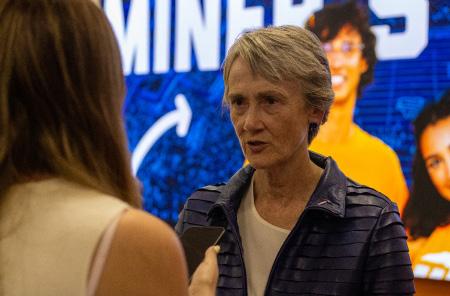
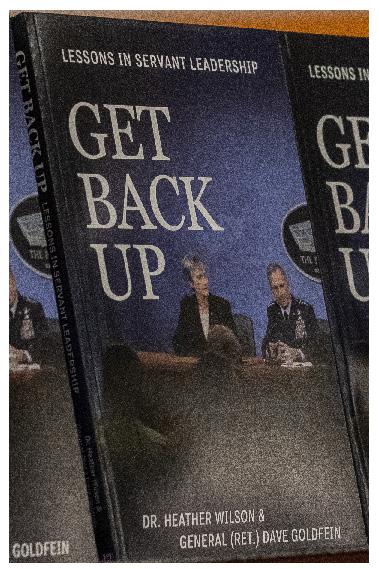
“Get Back Up” is co-authored by The University of Texas at El Paso (UTEP) President Dr. Heather Wilson and General Dave Goldfein. The book explores lessons on diversity, respect and resilience they experienced personally.
Both authors started out their careers at the United States Air Force Academy and later continued their careers in public service. Although they took different paths, Wilson became a member of Congress, and Goldfein continued serving in the military. The two reunited to write a book with the most important lessons they have learned in leadership.
President Wilson has come a long way since her days in the Air Force Academy, from becoming a Rhodes scholar, to a congresswoman and now being UTEP’s president. However, she made it clear that all those achievements wouldn’t have been possible without taking risks.
President Wilson is aware that many students are taking leadership positions in their community and acknowledges how intimidating it may feel.
“There’s a lot of lessons in the book. One of them is to learn from others, to read the stories of other leaders,” Wilson said. “One of the things that this book is about is that it’s not about you; it’s the mirror and the institution you’re trying to be, and to be worthy of those who
trust you and are putting you here. If you have that attitude, your work can inspire more people to follow and to be a part of something bigger than themselves.”
The authors also emphasized that being in a leadership position is more about the people one serves, and the relationships formed with them rather than about the individual themselves.
“One of the things that took me a while to learn, and I probably should have figured it out earlier, was that when I was a young leader, I was focused on the work,” Wilson said. “As a young woman in the military in the 1970s and 1980s, I felt I had to prove that I deserved to be there. But what lasted far longer than my work were the relationships I built. Building trust and relationships over time made more of a difference in my leadership journey than I ever knew when I was younger.”
“Get
Even though the book is inspired by stories that happened through government and military experiences, it also aims to inspire all generations to engage in leadership within their
communities, whether they are members of the military or not.
“One of the obligations of having educated yourself is to make a positive contribution to the community, which in there’s tremendous satisfaction,” Wilson said. “Whether that’s a community organization you are involved with, or even a professional society.”
The book was a moment of reflection on life-changing events
that turned into helpful lessons. As times change, Wilson and Goldfein wanted to leave something tangible for the younger generations.
“It was a lot harder than I thought it was going to be. It did take us two years, because we both have day jobs, but it was actually more fun than I thought it was going to be,” Wilson said. “I think we produced something we are proud of and proud to leave to our grandchildren and to our students.”
The book’s proceeds will support UTEP’s scholarship fund, helping students in need to pursue their education. “Get Back Up” is available through Amazon, Barnes & Noble and other retailers for nonmilitary readers. Military members can obtain their copies courtesy of AUP.
Co-Authoring the book “Get Back Up” UTEP President Heather Wilson shared the lessons she has learned in leadership positions throughout her career at a UTEP book signing. Photo by Nate Flores/The Prospector
UTEP Press hosted a book signing for
Back Up,” which is co-authored by General Dave Goldfein and UTEP President Heather Wilson. Photo by Nate Flores/The Prospector
Spreading the leadership lessons that they have learned from the Air Force Academy to Congress, General Dave Goldfein and UTEP President Wilson hope to inspire people to be active leaders in their communities.
Photo by Nate Flores/The Prospector
Arts & Culture
Abby Pedroza, editor
‘Death by denim’ comes to life on the runway
VIVIEN NOE C. B Y
STAFF REPORTER THE PROSPECTOR
Denim is a material known and used worldwide for its use in pants and jackets. The material was popularized in the 19th century when it was introduced to the United States and made its way from work outfits to casual apparel. However, the textile took on a different meaning this past Oct. 10, when designers from El Paso showcased their collection made almost entirely of denim.
“Death by Denim: Rebirth edition” was hosted by Junk Approved’s designer, Janace Walker at Concordia Cemetery. The show featured five El Paso fashion brands including BBOC Couture, Feel The Sting Clothing, Mares Couture, 7D2 Couture and Diosa Couture. All the teams used their creativity to represent a different era and use denim in their own ways.
A fashion show held at a cemetery may seem surprising, but in El Paso’s cultural context where Día de los Muertos is widely celebrated, the audience embraced the show. The show’s master of ceremonies, Heather Shade, addressed the theme with some opening words. “It’s not the confusion or clarity what matters most but the authenticity,” Shade said.
Designer Maria Fernanda Rojas
tapped into her most authentic self and participated in the show for a second time, approaching the challenge of working with denim from a different angle.
“There was a big difference, especially with the stages of life being represented, with the first one I had no idea what to do. This time it was a bit more structured, since I had an idea,” Rojas said.
“The material itself is pretty hard to work with. I broke like six needles making this collection, but it was definitely worth it.”
Even though all designers used denim, they all showcased distinct collections and made use of different elements. Rojas was the artist who represented the life phase of childhood.
“I tried to dig into my own childhood, and what I wanted to look like as a child. And so, I really dug into the scene queen era of the 2000s. So, like the big hair, the fishnets, the tutus and everything,” Rojas said.
From red hearts, to crosses, glitter, neon colors, cut outs and
feathers, each designer found ways to use materials differently and design all types of clothes and accessories such as denim hats, gowns and umbrellas.
Just like denim can be used in many ways, fashion shows are hosted uniquely as well. The atmosphere of the venue was a mix of spooky, chaotic and artistic. The cemetery setting contrasted with the techno music and the upbeat spirit of those in attendance.
The audience could choose to focus on the fashion, a tattoo artist working in the middle of the runway, fire dancers who performed throughout the show, the decor that included old horror movie clips or funeral coaches complete with caskets.
A member of the audience, Damon Finney, attended the show to show support for one of the participating models but was left pleasantly surprised.
“I really love the show. It’s really creative,” Finney said. “I’m like really surprised how amazing everything is, all the fire and the cars, the atmosphere, I like it so much.”
The show ended with all models joining the runway and screaming at the top of their lungs. The show was made to represent how
human self-expression even when cut from the same cloth, can give birth to something completely new.
Vivien Noe C, is a Staff Reporter, at The Prospector and can be reached at vgnoe@miners.utep.edu
Modeling for Feel the Sting, models strut in denim looks with a bold neon flair to them. Photos by Iziah Moreno/The Prospector
Showing off pieces from Diosa Couture, models participate in the “Death by Denim” fashion experience. Photos by Iziah Moreno/The Prospector
Dressed in full denim attire, models walk for 7D2 Couture. Photos by Sadie Briones/The Prospector
Host of “Death by Denim” and owner of Junk Approved, Janace Walker, ends the night with a scream, meant to tribute those who have passed. Photo by Iziah Moreno/The Prospector
Halloween’s heart beats for the unlikely
Halloween is often seen as a manufactured holiday, with synthetic sweeteners in candy, the signature plastic decorations, and cobwebs that adorne porches.
But alongside the synthetic and store-bought, October remains a time for creativity, rooted in imagination and reinvention.
Thrift stores are filled with items awaiting a new purpose, offering insight into the minds of individuals and allowing them to embody their creations, much like modern-day Frankenstein.
Likewise, homes too become living creations brought to life, becoming canvases of creativity alive with handmade scares.
Jasmine Canales, 25, sees Halloween as a nostalgic incubator, a holiday that was once ripe with children flooding the streets as the yellow glow of streetlights cast down in an eerie manor, and a harbinger of Halloween that was about to commence.
Halloween rears its head early to announce its presence as prematurely as summer. Yet, its hasty arrival is indicative of excitement; it’s a symptom of a culture driven by consumption. For Canales, Halloween is a lifestyle not abandoned or fleeting, reserved
only for the economic craze for the end of the year.
“One thing without fail is the prices for costumes, candy and general decor keep rising every year. Though it may be an outside cause of the economic climate, I definitely think the holidays are used by businesses to make more profit. That’s the kind of Halloween we have right now,” Canales said.
“Though trends can be fun for some, it lacks surprise. It lacks a genuine reaction from people because they know what to expect.
Being able to be creative in your own right and being able to come up with ideas and concepts brings a new life to the holiday.”
As Canales’ fingers trail along thrift store racks in search of items that allow them to embody iconic horror figures, like last year, when they searched thrift stores to recreate Billy Loomis’ look.
For them, Halloween isn’t just a seasonal obsession; it’s a lifestyle that blends the macabre seamlessly with their daily aesthetic.
“A grand interest of mine is vintage items. Specifically, items that were crafted from the 1980s to the 2000s. There’s a charm and aesthetic to Halloween decor from back then. Today, many decorations are made for trends instead of being unique,” Canales said. “So it’s
refreshing going to the thrift store and seeing more distinctive decor and being able to love an item that was previously loved.”
With the popularity of Halloween decor and costumes comes the risk of regurgitation, a cycle that can bore the eye with its lackluster, repetitive reappearance.
For Alia Marquez, psychology major, the eyes have grown strained from seeing the same costumes and decor, devoid of any personal touch, but the signature of mass production persists.
“Seeing something homemade or something with someone’s personal touch makes it unique and stands out from mass-produced products you see on lawns or on people.” Marquez said
Last year, Marquez took creative liberties with a costume, though a staple of the season — an angel — ordained by her personal touch, a vision she executed that set it apart from the mundane.
“DIY (do-it-yourself) allowed me to express myself more deeply in the challenging aspect, as I can push myself to make something out of nothing,” Marquez said. “Being able to find something that I can picture in my mind come to life is satisfying.”
Sometimes the home itself becomes a sanctuary of creativity,
Many shoppers turn to secondhand stores to avoid high prices on
much like a thrift store with its collection of specialized and unique knick-knacks. Ordinary items lie in wait — forgotten trinkets, mundane tools and underappreciated relics nestled in shadowed shelves or cluttered drawers. They patiently bide their time, yearning for the discerning eye and creative mind that can transform them into something extraordinary.
“I like to go through every nook and cranny in the house to find random knick-knacks to add to my creations,” Marquez said. “I don’t have the ability to go to thrift stores often so that becomes
a limitation either in progress or starting something.”
Perhaps the true threat isn’t what the mind can conjure–like things lurking in the shadows– but the lifelessness in the mass-produced Halloween decorations and costumes, these replicas which drain the season of its magic. And perhaps, the savior to this monotony is the breath of life that creativity fosters for October, infusing it with vitality.
Jazmine Gracia is writing contributor at The Prospector and may be reached at jigracia@miners.utep.edu
‘KLAQ Rocks the Park’ with Scott Stapp and Poppy
4 as crowds began to form and excitement built up. Photo by Sadie
ABBY PEDROZA B Y
ARTS & CULTURE EDITOR THE PROSPECTOR
The Southwest University Stadium opened its doors at 5:30 p.m. for KLAQ and Leg Up Entertainment’s “KLAQ Rocks the Park (KRTP).” A rock concert held for fans in El Paso for artists such as Hooked Like Helen (HLH), Dead Poet Society (DPS), Poppy and Scott Stapp. The event was announced on April 4, giving fans time to grab their tickets and be a part of the lively crowd down at the pit, the closest section of the venue to the stage.
The concert had fans of all ages attending, all having an unspoken dress code of mostly black and white, showing El Paso’s alternative side Most attendees also donned merchandise from their favorite
artists, including some who were performing that night.
KRTP was started as a revival of El Paso Streetfest, a two-day festival that featured live music on multiple stages downtown, but was discontinued in 2018.
Attendees who went to Streetfest, like Clarissa Duran, enjoyed the rebirth of this festival.
“It’s really cool that they’re bringing back music annually,” Duran said. “It’s a bit different, but it is still a cool way to bring bands more often to El Paso. It’s cool that they’re making that effort to make cool concerts every now and then.”
Starting the concert off at 6:30 p.m., the stage welcomed the first openers of the night, HLH, a band from Cleveland, Ohio. Describing themselves as a band with “No label, no agency and no manager”,
their alternative sound brought an expressive form of music to the border city.
KRTP was HLH’s first stadium show and first performance in El Paso. The band played an unreleased song, leading to a strong finish to their set as the night sky began to set bringing a darker mood.
The next band to perform was DPS, another act whose bassists brought high energy, providing a different tone of music for the crowd.
For attendees like Nadia Aragon, energy from the performing bands and the crowd made the night feel livelier.
“The bands have been super talented. We were dancing all night long,” Aragon said. “I like this [revival] better, it’s a lot more
intimate, everybody is closer together. Everybody is vibing and happy, this is the place to be at right now.”
Excitement grew for Poppy’s performance as the crowd doubled in size, with more seats filled, and the pit becoming increasingly packed and loud with anticipation.
The only light came from the purple stage lights and the moon.
Poppy’s sound was distinct, displaying more genre-bending and experimental music, that brought out a different vibe for the night.
“She [Poppy] was amazing, I love metalcore, I love headbanging, and she put on a really cool set,” Duran said. “It’s been a while since I have been in the middle of the crowd, as I try to be near the barricade, it was fun seeing a mosh pit upfront and that was really cool.”
Scott Stapp’s headline performance became the highlight of the night, bringing together a
mix of long-time fans and some who have never heard of Stapp or Creed. Stapp played songs from his solo albums and well-known tracks from Creed.
Victor Valenzeula, a long-time fan of Creed, who despite only getting to the event before Stapp’s performance due to work, still enjoyed the evening’s show.
“I grew up with Creed and his music and stuff, so it took me back to my childhood,” Valenzuela said. The night ended on a powerful note as Scott Stapp sang “One Last Breath,” one of Creed’s most popular songs, evoking a sense of nostalgia among the crowd, marking a successful close to KLAQ’s music festival revival plan.
JAZMINE I. GRACIA B Y
Halloween items. Photo by Iziah Moreno/The Prospector
“Hooked Like Helen”, a band created by a husband/wife duo, starts off the “KLAQ Rock The Park” event on Oct.
Briones/The Prospector
“Dead Poets Society”, made up of Jack Underkofler (lead vocals), Jack Collins (guitar), Will Goodroad (drums), And Dylan Brenner (bassist), keep the flow going as the second performers at the festival. Photo by Sadie Briones/The Prospector
October Shots
Iziah Moreno, photo editor
Photos by Alan Acosta, Tori Adler, Sadie Briones, Lesly Chavez, Damaris Flores, Nate Flores, Kristian Hernandez, Aylin Montanez, Iziah Moreno, Erick Olguin, Mia Colmenero/The Prospector
Sports
Kristian Hernandez, editor
Football, boxing and music: Josh Hancock
Josh Hancock is a redhsirt senior walk-on long snapper at The University of Texas at El Paso (UTEP). However, his story is not just centered on football. Off the field, Hancock sharpens his reflexes and mental toughness in the boxing ring under his father’s guidance and finds balance and focus on the piano and guitar.
Hancock returned to the Sun City at 18 years old after growing up in Corpus Christi, Texas.
Hancock graduated from UTEP with a 3.75 grade point average
(GPA) in political science and made the Conference USA (C-USA) Commissioner’s Honor Roll four times.
His graduation in December 2024 was a triumph for Hancock.
He shared that one of his favorite memories was celebrating with classmates the night before.
“Going through that last degree program, we all formed a really unique bond with each other,” Hancock said. “That was probably my best memory [so far].”
Now, he is enrolled in a graduate program in leadership studies. Hancock said he takes academics as seriously as he does football.
“I want to use everything I’ve learned in school, sports and life to make an impact [on the community],” Hancock said. “Even if you play professionally, you’re going to need something to fall back on. Put as much work into the classroom as you do on the field.”
Although he plans to pursue football professionally, he may also
make a return to boxing through his father’s El Paso gym and promotion company.
“He (Hancock’s father) had me doing boxing workouts from when I was a young kid,” Hancock said. “Boxing was my first love. It teaches mental toughness, patience and composure, all things that help me on the field.”
Even with football and boxing, Hancock made time for music.
“I really enjoy playing the piano, [and] I enjoy playing the guitar,”
Hancock said.
Music is a “gigantic stress reliever” for Hancock as it helps him focus and clear his mind.
“If I have any free time, you can mainly find me doing those two things (piano or guitar).”
Hancock has demonstrated that success is not confined to one arena. He walked on, worked hard and discovered that true achievement for him comes from balance and resilience.
UTEP soccer ties against Kennesaw State after early deficit
The University of Texas at El Paso (UTEP) (3-7-3, 0-2-2 Conference USA) soccer team overcame twogoal deficits to earn a 2-2 tie against Kennesaw State (1-8-4, 0-3-1 C-USA) on Oct. 4 at University Field, thrilling more than 500 fans. Early on, Kennesaw State took control of the match. The Owls struck first in the 32nd minute when junior midfielder Brenna Young scored off a pass from junior midfielder Aly Bryan, slotting the ball past UTEP freshman goalkeeper Savanah Finley. Moments later, Kennesaw State freshman forward Rebecca Womer capitalized on a UTEP miscue to extend the lead to 2-0 in the 35th minute of the first half. Even with the deficit, the Miners refused to back down. Junior defender Ashlyn Neireiter kept pressure on Kennesaw State freshman goalkeeper Sara Hill with several quality attempts, while UTEP sophomore midfielder Anai
Lopez forced key saves. Despite the push, the first half ended with the Owls leading 2-0.
At halftime, the focus shifted to regrouping and staying composed as UTEP Assistant Coach Jared Hallman said the break wasn’t about making drastic changes but about motivating the players.
“We felt like we were playing
really well,” Hallman said. “It was more of a pep talk for the girls. We had the better chances outside of the two goals they scored, so we just told them to keep fighting.” Neireiter said defensive communication was another point of emphasis for the team.
“Our coach wanted us to step up and be closer together so they
(Kennesaw State) couldn’t find the gaps,” Neireiter said. “We brought our energy up and spoke more to midfield and forwards. That helped everything click.”
Coming out of the locker room, the Miners played with renewed intensity, and in the 66th minute, Lopez broke through for her first collegiate goal, assisted by junior midfielder Dannique Wilson.
“It was my first goal, and I just wanted to get our momentum in our favor,” Lopez said. “Eventually, Grace got one too, and it was just a great feeling.”
That second goal came only five minutes later when freshman forward Grace Culver finished a well-placed pass from Lopez to tie the match at 2-2.
Momentum continued to swing UTEP’s way thanks to key substitutions and strong defensive play. Senior forward Hayden McMillan brought energy and toughness off the bench, helping spark the comeback.
“When Hayden’s on, she’s on, and she’s a force to be reckoned with,” Hallman said. “She changed the way we played in the first half on
that side of the field.”
Meanwhile, Finley and the backline tightened up, holding Kennesaw State to just two shots on goal in the second half.
“I had to read the game and my player, and being in the right positions helped us shut them down,” Neireiter said.
After the match, McMillan credited the team’s chemistry for fueling the rally.
“It takes that one flame to ignite the whole field,” McMillan said.
“We were able to come back from 2-0, and that shows our resilience.”
Looking ahead, UTEP prepares for the I-10 rivalry match against New Mexico State at University Field on Oct. 25.
“It’s the I-10 battle…why wouldn’t you want to beat New Mexico State?” McMillian said.
Throughout the match the Miners’ practiced adaptability as they overcame early struggles with a second-half surge led by Lopez, Culver, McMillan and defensive line adjustments from Neireiter.
Taking a shot at the goal, sophomore Anai Lopez scores her first career goal (66’) igniting the Miner’s offensive front. Lopez finished the game with one goal and one assist. Photo by Erick Olguin/The Prospector
ADRIAN GONZALEZ B Y Hancock loves creating music, If Hancock isn’t playing sports, you can find him playing his instruments.
Photo by Mia Colmenero/The Prospector
Editor’s Note: This is not the most recent UTEP soccer match.
Keeping athletes in the game: No days off
top of our grades, and they’re very understanding of our athletic schedules,” Westmoreland said.
The term “no days off” isn’t just a saying—it’s a lifestyle for athletes striving to be the best at their craft.
At The University of Texas at El Paso (UTEP), this dedication is evident across sports, from the softball diamond to the track and field circle.
Success begins with organization and academics, putting the “student” in student athlete, balancing training, academics and recovery routines to meet the demands of their teams.
Softball senior utility player Brianna Garcia exemplifies this effort. Off the field, she earned a spot on the Conference USA Commissioner’s Academic Roll in both 2024 and 2025 while pursuing a degree in kinesiology.
A key part of her success is a simple but often overlooked routine: Garcia uses a detailed planner to track all her activities, allowing her to structure her schedule so her academic grades never fall behind.
“Having a planner is such a lifesaver. Organization is key; managing everything becomes much easier when you’re prepared,” Garcia said.
While athletes like Garcia rely on personal strategies to stay organized, UTEP also provides institutional support. The Miner Athletic Club (MAC) offers resources to help student-athletes balance the demands of academics and athletics.
Sophomore track and field thrower Xavier Westmoreland describes how the system has been beneficial to him.
“Our professors here at UTEP are very helpful. We can schedule tutoring appointments, stay on
Even from a staff perspective, Chris Campbell, director of strength and conditioning, emphasized academic balance.
“We work around class schedules to make sure academics are the forefront of what athletes are doing. That is what they came here for,” Campbell said. “At this level, discipline off the field translates to performance on it.”
Once their academic responsibilities are in check, focus shifts to the physical grind that defines the offseason.
During the offseason, athletes focus on building strength and endurance, fueling their bodies properly to support growth, recovery and peak performance.
Both Westmoreland and Garcia noted feeling “stronger in the offseason than during the season.”
Campbell explained that training concepts change year-round.
“Offseason is the time to get bigger, stronger [and] faster,” Campbell said. “In-season isn’t about maintenance. We are always striving to improve, but we don’t hit as much volume. It’s about staying healthy and on the field or the court.”
Athletes balance technique, strength and explosiveness with recovery practices such as stretching, foam rolling and getting proper rest—tailoring routines to their individual goals.
Westmoreland takes advantage of active recovery methods in the Larry K. Durham Training Room, while Garcia supplements her routine with additional equipment at Restore El Paso, which is available through the UTEP Athletics partnership.
Each athlete’s day may look different, but the backbone for long-term success lies within the player themself.
“It is consistency with training habits, recovery, sleep and nutrition,” Campbell said. “It is easy to do it for a week, but those who do it throughout the offseason are the ones who take the next step.”
Striving for greatness demands consistent effort and focus. The pursuit of that standard often pushes athletes to their mental limits and at times, beyond it.
Garcia shared that building strong mental resilience is an important factor to managing the psychological battles that come with high-level competition. UTEP also supports athletes’ mental health such as providing access to professionals, journaling techniques and team activities.
“[The UTEP mental health support] has helped a lot. People are in a vulnerable state, and we are all doing it together, so we definitely grow closer and improve,” Garcia said.
Westmoreland echoed the significance of mental focus during intense individual training cycles, as he recalls a saying from his coach.
“Some days are good, some okay, some horrible. You just have to keep that mindset and know it will get better,” Westmoreland said.
Despite the challenges, motivation remains at the core of every routine.
Garcia channels her competitive spirit and reminds herself why she started playing.
“I just remind myself why I started playing in the first place… my family, my love for the game,” Garcia said. “Remembering your ‘why’ keeps you grounded when things get tough.”
The offseason is more than downtime; it’s a structured period of growth, recovery and preparation, where strength, nutrition and mental resilience all integrate to ensure all athletes are competition ready.
During this time, athletes follow routines knowing that every early morning, recovery sessions and carefully prepared meal build toward their readiness when the bright lights turn on.
For UTEP athletes, success isn’t built in the spotlight, but “behind closed doors” when no one is watching, never taking a day off.
Providing institutional support for student athletes to succeed, UTEP’s Miner Athletic Club provides support to help balance academic and athletic demands. Photo by Nate Flores/The Prospector
Editor’s Note: This is the second part of a three-part series covering the health and lifestyle of athletes.
In order to ensure peak performance, UTEP Athletics ensures that the offseason is a period of preparation, recovery and growth for student athletes. Photo by Nate Flores/The Prospector
STAFF REPORTER THE PROSPECTOR
CAMERON MASON B Y
Multimedia
Sebastian Perez-Navarro, editor
THE DIGEST RETURNS IN TIME FOR
Shutdown explained
Debuting last fall, The Prospector Digest returned to The University of Texas at El Paso (UTEP) as an alternate episode to season 13 of The Prospector Podcast. The Digest hosts discussions about UTEP’s Fast Track program, the implications of money games in collegiate sports, and the state of free athletic tickets for students. Associate athletic director of fan engagement and digital strategy, Jon Washington, speaks on the matter, teasing upcoming changes to the current student ticketing system. This is the third episode of The Prospector Podcast season 13. More episodes and content are available on The Prospector Youtube channel and on Spotify.
Student ticket changes coming Broadcasting to podcasting
The Prospector Podcast welcomes student employees from MinerVision, Hector Flores and Benjamin Grajeda as they discuss what it’s like working in sports media, and bringing broadcasts to life.
In addition, the voice of the Miners of 45 years, broadcaster Jon Teicher visits the podcast to discuss his career at The University of Texas at El Paso (UTEP) and his best moments in broadcasting.
Halloween is lurking and to prevent being jumpscared by it, students at The University of Texas at El Paso (UTEP) are preparing for their favorite spooky traditions. Hear stories ranging from scaring siblings to costume creating, and ice cream trucks running over feet. Sometimes, Halloween isn’t only about the candy or parties, but rather, it’s a time students can look back to standout childhood memories.
The University of Texas at El Paso’s (UTEP’s) college curriculum extends outside of the city. At UTEP, students have the chance to earn credits towards degrees by taking study abroad classes. To learn more, a fair was held on campus to grow student attention over the opportunity. The Study Abroad fair featured multiple booths from different organizations on campus. All of which encouraged students to consider studying abroad.
On Oct. 1, the United States Federal Government shut down. A congressional stalemate has been ongoing due the failure to pass a spending bill that would fund the United States 2026 fiscal year.
The policy disagreements causing the shutdown center around renewing the Affordable Care Act (ACA) at the end of this year. Hear the opinions of El Paso’s democratic and republican party chairs, along with former mayoral candidate Brian Kennedy, who ran as an independent in the 2024 election.
Learn more about local and federal politics, as well as other relevant areas by watching more videos on The Prospector Youtube channel or by visiting theprospectordaily.com.
Fall must haves
Fall has finally arrived, which means so has the season of sweaters and crewnecks being displayed on campus. The Prospector asked students at The University of Texas at El Paso (UTEP) about their fall essentials, which includes clothes, scented candles, and weather essentials. Catch up with Tiny Mic Talks by watching these videos on The Prospector’s Instagram reels or on Youtube shorts.
Kahri Reyes is the audience and engagement editor and may be reached at krreyes2@miners.utep.edu