FY 2021


Utah School and Institutional Trust System





FY 2021
Utah School and Institutional Trust System
• Increased a concerted effort towards whole trust advocacy; created individualized handouts for all 104 legislators, 29 counties and 41 schools districts, reflecting the school distributions received within each of their specific zones; totaling over $92 million for Utah’s schools.
• Started the MyTrustStory campaign to connect people with a deeper, personal understanding of the trust, its mission and goals.
• Assisted in the outreach, coordination, and advocacy for legislation that improved the distribution policy and other processes within the trust system (e.g., SB 169, HB 222)
• Developed a Guiding Principles document to help inform decisionmaking in fulfilling the Advocacy’s Office legal duty to protect and advocate for the rights and interest of current and future trust beneficiaries.
• Actively participated in trustee meetings and discussions regarding organizational projects and strategies, ensuring policy and trustee organizational decisions are sound and in the best interests of the trust beneficiaries.
• Led efforts in coordinating legislative and policy outreach with all the related parties in the trust system.
• Richard Ellis and Louie Cononelos appointed members of the Protection & Advocacy Committee.
• Tim Donaldson appointed to serve as the Advocacy Office Director.
• Completed a land exchange between SITLA and the BLM. SITLA received 89,627 acres of federal lands with renewable energy, industrial, mineral and sales potential.
• Formed the Renewables Energy revenue group.
• Began construction on three new renewable projects. Adding 200 MW of clean, renewable energy to Utah's energy infrastructure.
• Finalized the lease, including substantial royaltytermswithMagnumHoldings,LLC for hydrogen storage on the IPP Block.
• Finalized six new OBA’s for helium exploration, establishing partnerships withcompaniesinseveralstatesresulting in over 100,000 acres under contact and $500,000 in bonus payments.
• Participated in an extensive research report on Full Life Cycle Analysis for Green House Gas Emissions relating to Rockies LNG exports to Asia for power generation.
• Added Senior Landman, Lindsay Dick, to oil and gas revenue group.
• Received the largest single lease bid in July 2021, yielding $5,600 per acre totaling over $800,0000 for potential horizontalwelldrillingintheUintaBasin.
• Closed a $6,377,000 sale of approximately 3,270 acres of trust lands within the newly created Utahraptor State Park boundaries. A significant revenue increase from a heavily used and complicated parcel to manage.
• Began
for
• Distributed $97.4 million to beneficiaries; including $92.8 million to K-12 beneficiaries and $4.6 million to the other public institutional beneficiaries.
• Generated returns of $669 million through investments, a 27.12% return.
• Permanent Trust Fund balance reached $3.1 billion.
• Restructured the asset allocation; optimizing expected return and increasing private markets exposure.
• Hired additional staff to support a more complex portfolio and more easily monitor and manage the investments of each trust.
• Marlo Oaks was appointed as Utah State Treasurer in June 2021 and serves as the ex-officio Chair to the SITFO Board of Trustees.
• Distribution policy was adjusted to reduce the amount of variance in annual distributions.
Four state agencies and one constitutional officer (the state treasurer) share trustee and fiduciary responsibilities for trust land management, trust fund distribution, and trust protection and advocacy. Collectively, these agencies ensure integrity, growth, and protection of Utah's school and institutional trust lands and funds to benefit the designated beneficiaries.

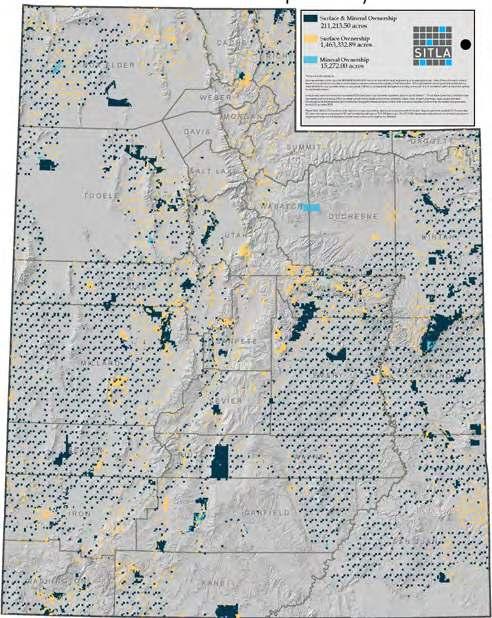
SITLA manages Utah's nearly 3.4 million surface acres and 4.5 million subsurfaceacresofschoolandinstitutionaltrustlands, depositingrevenue into the trust funds.
SITFO invests the $3.1 billion permanent funds investment portfolio, distributing constitutionally-mandated amounts each year to the trust beneficiaries.
Annual distributions are sent to the trusts' beneficiaries. Nearly 95% of trust fund distributions are sent to public schools.
The Protection & Advocacy Office represents and protects the beneficiaries' interests, provides independent trust system oversight, and helps the public understand and support these important endowments.
4.5 M3.4
Mineral, Oil, & Gas Revenue
$3.1 B TRUST
Public Schools Trust
The School Children’s Trust Section at the Utah State Board of Education administers trust disbursements to K-12 schools through the School LAND Trust Program and provides training to charter and school community councils.
Charter and School Community Councils Parents, principals, and school employees prepare plans to address the unique academic needs of their students with the School LAND Trust distributions.
1. Represent and protect with undivided loyalty the beneficiary interests in advocating for:
• Optimal and productive trust revenue generation
• Effective distribution of revenue to beneficiaries.
Miners Hospital Trust
School for the Blind Trust
School for the Deaf Trust
University of Utah Trust
Colleges of Education (Normal Schools) Trust
• University of Utah
• Dixie State University
• Southern Utah University
• Utah State University
• Utah Valley University
• Weber State University
School of Mines Trust
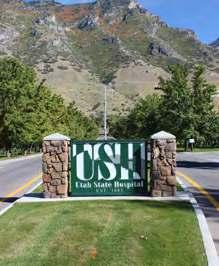
Utah State Hospital Trust Reservoirs Trust
Utah State University (Agricultural College) Trust
Juvenile Justice Services (Reform School) Trust
Public Buildings Trust
3. Ensure trust goals and purposes are maintained.
2. Represent beneficiary interests through political advocacy, with support and oversight from the state treasurer.
4. Monitor, stay informed, account, and report.
5. Promote and facilitate open communication among key individuals and organizations of the trust.

The Protection & Advocacy Office represents and protects the beneficiaries’ interests, provides independent trust system oversight, and helps the public understand and support these important lands and endowments.
The office works closely with the other three institutions that make up Utah's trust land system: the School and Institutional Trust Lands Administration (SITLA), the School and Institutional Trust Funds Office (SITFO), and the School Children’s Trust Section at the Utah State Board of Education (USBE)
The five-member committee, with the support of the Utah State Treasurer, provides policy direction and oversight for the Protection & Advocacy Office. The SITLA Board of Trustees, SITFO Board of Trustees, the Utah State Treasurer and the Utah State Board of Education appoint the Advocacy Committee members per Utah Code 53D2-202.
The Protection & Advocacy Office director is appointed by the Utah State Treasurer from a list of qualified candidates recommended by the committee and acts in fiduciary capacity to represent all trust beneficiaries.
Often, little is known or understood about the school and institutional trust lands. Yet, the lands and revenues have a significant impact on education in Utah. Providing tens of millions of dollars annually to academic programs in public schools across the state.
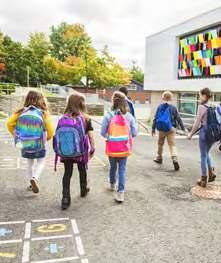
Utah’s schoolchildren are the largest beneficiary group and receive approximately 95% of all trust distributions. Guided by parent majority School Community Councils, funds are used for the instruction of K-12 students in areas of greatest academic need specific to each school. $92.8 millionwasdistributedtopublicschoolsduringthe2021-2022schoolyear.
A powerful step in advocating for the schoolchildren is by increasing communityknowledgeandsupportoftheimportantroleschooltrustlands play in education funding and academic achievement. The Protection & Advocacy Office works closely with legislators, the education community, and other key stakeholders to build awareness and enhance and preserve this perpetual source of funding.
To guide the Protection & Advocacy Office in fulfilling its legal duty to protect and advocate for the rights and interests of current and future trust beneficiaries, the Advocacy Committee adopted the following guiding principles:
1. Seek first to understand the business rationale and strategies used by trust fiduciaries at SITLA and SITFO;
2. Be an active, collaborative, and equal partner in the trust system;
3.Encourage trust fiduciaries to be as open and transparent as possible within the law, maintaining business confidentiality;
4. Engage on matters of most importance to the trust;
5. Build and maintain relationships of respect through diplomatic actions;
6. Champion the legacy and heritage of the trust;
7. Prioritize long term value creation over short term gains;
8. Represent the trust as an ambassador to all stakeholders;
9. Ensure that the trust lands and funds are managed with integrity and fidelity to the beneficiaries; and
10. Collaborate and share information with beneficiary groups and stakeholders.
"The trust lands and funds represent an important opportunity to provide enhanced funding for Utah's public schools and other beneficiaries. Sadly, after a century of statehood Utah had disposed of half the trust lands and had only $18 million in the permanent fund to show for it. But the past few decades has shown the rapid growth that can occur when the fiduciary principles underlying trust law are followed, and the important opportunities for the future if we remain true to trust principles.
Tim Donaldson


The seven-member board of trustees provides policy direction and oversight for SITLA. The Governor, with the advice and consent of the Utah Senate, appoints seven nonpartisan, qualified trustees per Utah Code 53C-1-202.
SITLA’s director is appointed by the Board of Trustees and manages a staff of 70 who carries out the day-to-day work of SITLA.
SITLA works hard to be good stewards of the land. The agency has strong partnerships with federal, state and local agencies, and private and non-profit conservation groups, that work to rehabilitate lands that have been damaged by nature or human destruction.
SITLA provides fire damage clean up, forestry reseeding, flood damage mitigation and numerous other transactions that help preserve and protect trust lands. These actions help ensure the lands can continue to provide a substantial revenue stream for its beneficiaries.
The agency also works with Utah’s Resource Development Coordinating Committee and the Division of Oil, Gas and Mining to ensure projects are reviewed through state regulatory and environmental protection processes.
SITLA manages 3.4 million acres of surface trust lands and 4.5 million acres of subsurface trust lands for the financial support of the trust’s beneficiaries. Trust lands, unlike public lands, are lands allocated by Congress specifically to generate revenue to support designated state institutions. The beneficiaries of trust land revenue include public schools, hospitals, teaching colleges, universities and reservoirs. The Utah constitution mandates that SITLA manage the lands and revenues generated from them in the most prudent and profitable manner possible; while coincidingboth current beneficiaries and the preservation of trust assets for future beneficiaries.Since its formation in 1994, SITLA has generated over $2 billion in revenue for the beneficiaries with Utah public schools being the largest recipient.
Advance education in Utah by optimizing revenue from constitutionally-granted trust lands through independent and self-funded action, innovative and prudent management and responsible stewardship.


During FY 2021, SITLA generated revenues of $102 million, a 162% increase over the projected amount despite operating through COVID-19 challenges.






SITFO invests roughly $3.1 billion permanent funds in a globally-diversified investment portfolio for the sole benefit of their respective beneficiaries. SITFO’s long-term investment objective targets an annualized return over time of inflation + 5%. This policy istomaintainthefundinperpetuity,whilestill being able to sustain and grow the annual distribution amount. Annual distributions are limited to 4% of the average market value of the trust overa20consecutivequarters. Thisbalancebetweenexpectedreturn andannual distributions provides intergenerational equity between current and future beneficiaries.
Distributions from the permanent trust funds provided more than $97.4 million dollars for beneficiaries in FY 2021; including $92.8 million to K-12 beneficiaries and $4.6 million to other public institutional beneficiaries.
Thefive-member board of trustees provides policy direction and oversight for SITFO. The state treasurer serves as chairperson, and appoints five nonpartisan, qualified trustees per Utah Code53D-1-301.
SITFO’s director is appointed by the Board of Trustees and manages a team to operate the day-to-day functions, monitor, and manage the investments of each trust. In addition to the investment professionals at SITFO, the board retains investment consulting firms, to leverage outside resources for the overall framework of agency’s investment program.
To responsibly maximize the return on the invested principal of the School and Institutional Trusts for the current and future benefit of Utah’s education programs.
While different beneficiaries ultimately own the trust funds, all are managed with a same asset allocation, as the return and risk objectives are expected to be similar.
The Asset allocation is designed carefully to avoid undue risk concentrations in any single asset class or category, thus reducing risk of the overall portfolio and optimizing the expected return relative to the level of risk acceptable to the board of trustees.



Surface Acres: 0.27
University of Utah Trust
Surface Acres: 16,157 Mineral Acres: 38,394
Surface Acres: 7,030
Mineral Acres: 16,741
41,117

In FY 2021 the Utah School and Institutional Trusts permanent funds had a net growth of $655.3 million, bringing the total permanent fund balance just over $3.1 billion.SITFO accounted for $665.6 million of net trust income, with expenses of $3.4 million and $669 million increase in permanent fund interests and gains. The trusts returned 27.9% for FY 2021.
SITLA accounted for $87.4 million of net trust income, with expenses of $15.3 million, and $102.7 million gross.SITLA revenues were shared among three major categories: mineral revenues (30%); planning and development revenues (42%); and surface revenues (28%) in FY 2021. The Land Trusts Protection & Advocacy Office had expenses of $305,328 in FY 2021.
A record distribution was distributed in FY 2021. Annual distributions from each trust were capped at 4% of the average market value of each trust’s permanent fund over a 12-quarter period. This equaled $97.4 million being distributed to 11 beneficiaries in FY 2021 (compared to 93.2 million in FY 2020). Approximately 95% of the total distributions are distributed to Utah’s public school children under discretion of school community councils and approved by local school boards.

Annual distributions are limited to 4% of the average market value of the trust over 20 consecutive quarters subject to formulas defined by statute. Distributions from the permanent trust funds provided more than $97.4 million dollars for beneficiaries in FY 2021; including $92.8 million to K-12 beneficiaries and $4.6 million to other public institutional beneficiaries.
$2,109,193
Utah State Hospital Trust
Utah State University (Agricultural College) Trust
Juvenile
the
into alternative investments such as
and highlights the
$6,140,708$7,977,28827.1%8.2%7.9%8.0%
$4,880,999$6,968,95827.1%8.2%7.9%8.1%
$4,395,262$5,694,49127.1%8.2%7.9%8.1%
$5,192,134$8,818,65527.1%8.2%7.9%8.0%
The trusts returned 27.1% for FY 2021 as shown above. Returns are trending in line with the primary objective of CPI+5%. Importantly, SITFO has diversified the trusts away from an overreliance on equity and especially U.S. equity. The introduction of diversification, including private markets, is contributing positively yet takes years to fully realize the benefits. SITFO expects to meet its investment objectives with reduced portfolio volatility from greater diversification.
The above chart displays the longer-term returns of the trusts and highlights the cyclical nature of investing. Long-term investing requirespatienceduringperiodsofunderperformance.Importantly,our objectives are best considered over an investment cycle and with the full context of the long-term investment program.


$32,573,398$20,479,537$20,430,876
$4,482,117$5,117,228$6,468,420
$36,288,845$27,693,829$30,902,575 Total Development & Planning Revenue$36,288,845$27,693,829$30,902,575 SURFACE
Sales (Auctions & Negotiated Sales) $2,125,878$716,673$14,761,413
306,212
$2,748,296$2,746,868$2,759,144
$170,214$210,470

3,252,480
4,161,124






TheCollegesofEducation(NormalSchools)Trustconsistsofsixuniversities(UniversityofUtah,DixieStateUniversity,SouthernUtah University,UtahStateUniversity,UtahValleyUniversity,andWeberStateUniversity).
DistributionsfortheCollegesofEducationaremadeannuallybasedongraduationdatafromthepreviousyear.Eachcollegeofeducation receivesapercentageofthetotaltrusts’distributionbasedonteachingdegreesawardedbythatuniversity,inaccordancewithUCA §53C 3-105, the Utah Enabling Act, and Utah Constitution.





9,584.30258,254.77