Annual Report
UTAH SCHOOL AND INSTITUTIONAL TRUST SYSTEM
FISCAL YEAR 2019-2020
Section 1: The Trust System
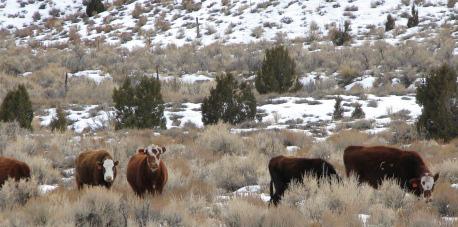
At statehood, lands were granted in trust for the benefit and support of several of the most important public purposes and institutions in the state of Utah. Expectedly, these values—public and higher education, mental and physical health, juvenile support and rehabilitation, institutes for the deaf and blind, water storage and sustainability, and housing government activities—persist among Utah’s primary commitments today.
Section 2: Trust Assets & Financial
The Land Trusts Protection & Advocacy Office (Protection & Advocacy Office) is dedicated to protecting and advocating for the preservation, stability, and growth of the trust assets on behalf of the current and future beneficiary interests. We are committed to cultivating prudent decision-making and entrepreneurial business practices, advocating for goaloriented management, and engaging in large-scale, long-range planning efforts that will result in significant upward mobility of the trust for years in the future.
We are grateful to work closely with School and Institutional Trust Lands Administration (SITLA), the School and Institutional Trust Funds Office (SITFO) and other key entities and individuals within the trust system to protect and enhance the long-term economic value of the whole trust and commend them for the work that they have accomplished.
The following is an overview of the School and Institutional Trust System, a consortium of agencies responsible for the management of the trust lands, trust fund investment, trust distribution, and trust protection and advocacy. Additionally, this report presents a summary of the status of the trust assets and permanent fund performance during fiscal year 2020.
Sincerely,
FY 2020 Highlights
PROTECTION & ADVOCACY OFFICE
• Established interactive beneficiary involvement with all beneficiary institutions through personalized updates, presentations, and one-on-one meetings
• Participated in the selection and nomination of a renewable resource expert to sit on SITLA’s Board of Trustees for a growing and diverse portfolio
• Engaged in regular meaningful consultation with SITLA and SITFO to discuss current projects, review transactions and investment strategies, and represent beneficiary interests for optimal trust management
• Created a trust lands system 101 video in partnership with SITLA, SITFO, the Utah State Treasurer's Office and the School Children's Trust Section, which was shared with all charter and school community councils
• Created and shared a comprehensive trust system handout with legislators build understanding of the School and Institutional Trust Lands System and convey the value of the trust
• Advocated and promoted reorganization of reports, and pro forma analysis for increased understanding, transparency, and enhanced decision-making
• Engaged in legislative advocacy through bill tracking, legislative meeting attendance, and speaking at legislative bill hearings
SITFO
• Distributed more than $93.2 million dollars to beneficiaries; $88.8 million to K-12 beneficiaries and $4.3 million to the other public institutional beneficiaries
• Hired investment consultant groups RVK and Albourne to support and assist SITFO in research and investment analysis
• Conducted an in-depth review of intergenerational equity and fund asset allocation
SITLA
• SITLA revenue from trust lands topped $2 billion since the agency’s inception in 1994
• SITLA IT group facilitated a remote workforce and implemented video conferencing quickly and efficiently, ensuring employee productivity during the pandemic
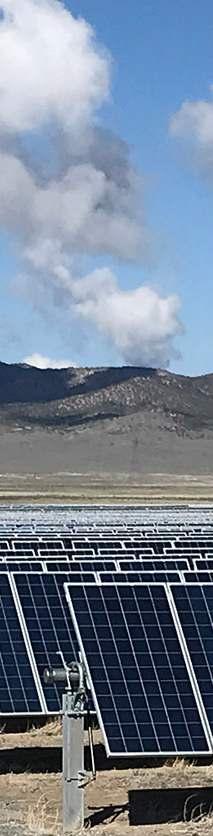
• The SITLA GIS Team received an award in the ArcGIS-2020 ESRI User Conference Map Gallery for its mapping work identifying trust lands with potential for utility-scale solar generation and development
SCHOOL CHILDREN’S TRUST
• Initiated an online training program for charter and school community councils in response to the pandemic
• Of the $82.66 million in funds distributed to Utah schools last year (FY19-20), charter and school community councils chose to spend approximately 25% or $20 million to purchase computers and tablets. When the pandemic hit, these purchases allowed students to stay connected with their teachers and resume learning online.


The Trust System
Four state agencies and one constitutional officer (the state treasurer) share trustee and fiduciary responsibilities for trust land management, trust fund distribution, and trust protection and advocacy. Collectively, these agencies ensure integrity, growth, and protection of Utah's school and institutional trust lands and funds to benefit the designated beneficiaries.

Land Management Fund Investment
SITLA manages Utah's nearly 3.4 M surface acres and 4.5 M subsurface acres of school and institutional trust lands, depositing revenue into the trust funds.
SITFO invests the nearly $2.5 billion permanent funds investment portfolio, distributing constitutionally-mandated amounts each year to the trust beneficiaries.
Distribution
Annual distributions are sent to the trusts' beneficiaries. Nearly 95% of trust fund distributions are sent to public schools.
Protection & Advocacy
The Protection & Advocacy Office represents and protects the beneficiaries' interests, provides independent trust system oversight, and helps the public understand and support these important endowments.
3.4 M
4.5 M
$2.5 B
Public Schools Trust
The School Children’s Trust Section at the Utah State Board of Education administers trust disbursements to K-12 schools through the School LAND Trust Program and provides training to charter and school community councils.
Charter and School Community Councils Parents, principals, and school employees prepare plans to address the unique academic needs of their students with the School LAND Trust distributions.
1. Represent and protect with undivided loyalty the beneficiary interests in advocating for:
• Optimal and productive generation of trust revenue for future beneficiaries; and • Effective distribution of trust revenue to current beneficiaries.
Miners Hospital Trust
School for the Blind Trust
School for the Deaf Trust
Reservoirs Trust
University of Utah Trust
Colleges of Education (Normal Schools) Trust
• University of Utah
• Dixie State University
• Southern Utah University
• Utah State University
• Utah Valley University
• Weber State University
School of Mines Trust
Utah State Hospital Trust
Utah State University (Agricultural College) Trust
Juvenile Justice Services (Reform School) Trust
Public Buildings Trust
are
3. Ensure trust goals and purposes
maintained. 2. Represent beneficiary interests through political advocacy, with support and oversight from the state treasurer.
4. Monitor, stay informed, account, and report. 5. Promote and facilitate open communication among key individuals and organizations of the trust.
Utah Land Trusts Protection & Advocacy Office
PROTECTION & ADVOCACY OFFICE
RESPONSIBILITIES:
• Represent beneficiary interests through advocacy for optimal and productive trust revenue generation and effective trust distributions
• Conduct independent oversight of land and investment management decisions to ensure fiduciary duties are always followed
• Review trust activity, stay informed, account, and report
• Promote accurate public understanding of the School and Institutional Trust Lands System
• Facilitate open and clear communication with key individuals and organizations of the trust
• Ensure trust goals and purposes are maintained


Trust Protection & Advocacy
In 2018, the Utah Legislature created the Land Trusts Protection & Advocacy Office to represent and protect the beneficiaries’ interests, provide independent trust system oversight, and help the public understand and support these important endowments.
The office works closely with the other three institutions that make up the Utah School and Institutional Trust Lands System: the School and Institutional Trust Lands Administration (SITLA), the School and Institutional Trust Funds Office (SITFO), and the School Children’s Trust Section at the Utah State Board of Education.
In accordance with the Utah Enabling Act, the Utah Constitution, and state law, the Protection & Advocacy Office provides active due diligence and risk assessment monitoring for productive and optimal revenue from trust land management, prudent and profitable trust fund investment, and effective distributions to the trust beneficiaries.
Advocate. Protect. Represent.
The duty of the office to protect and advocate for the trusts’ beneficiaries, roots the School and Institutional Trust System on firm principles with the proper checks and balances to maximize trust contributions for current and future beneficiaries and maintain the inherent purposes and goals of the trust.
Public Schools Trust
Miners Hospital Trust
School for the Blind Trust
School for the Deaf Trust Reservoirs Trust
University of Utah Trust
Colleges of Education (Normal Schools) Trust
• University of Utah
• Dixie State University
• Southern Utah University
• Utah State University
• Utah Valley University
• Weber State University
School of Mines Trust
Utah State Hospital Trust
Utah State University (Agricultural College) Trust
Juvenile Justice Services (Reform School) Trust
Public Buildings Trust
Protection & Advocacy Committee and Agency Management
A five-member committee, with the support of the Utah state treasurer, provides oversight and direction for the Protection & Advocacy Office. Committee members are selected and appointed by the SITLA Board of Trustees, the SITFO Board of Trustees, the Utah state treasurer, and the Utah State Board of Education. Individuals who serve on the Protection & Advocacy Committee are required to have significant qualifications related to the purposes and activities of the school and institutional trust, such as nonrenewable resource development, renewable resource management, real estate development, and investment management. Additionally, committee members must have demonstrated a commitment of time and loyalty to the purposes of trust.
The agency director is appointed by the Utah state treasurer from a list of qualified candidates recommended by the committee and acts in fiduciary capacity to represent all trust beneficiaries.


Richard Ellis and Louie Cononelos were appointed members of the Protection & Advocacy Committee in September 2020 concluding the terms of Mel Brown and Thomas Bachtell. Steve Ostler was elected Chairman and Paula Plant Vice Chair. Tim Donaldson, was appointed by Utah State Treasurer Damschen in December 2020 to serve as the Advocacy Office Director.
Increasing Community Knowledge and Awareness about Trust Lands
Often, little is known about the school and institutional trust lands, or they are misunderstood. Yet, the lands and revenues have a significant impact on education in Utah.
Utah public schools receive approximately 95% of the total trusts distributions to provide important funding for the instruction of K-12 students in areas of greatest academic need. $88.8 million was distributed to public schools in FY 2020-2021 at no cost to taxpayers. The funds play an import role in purchasing instructional items or hiring personnel needed to help children be successful.
Increasing community knowledge and awareness about trust lands, as well as building an understanding of the trusts’ importance and its role in education funding is a powerful step in advocating for the schoolchildren of Utah — the trust beneficiaries. The Protection & Advocacy Office works closely with various education groups and key entities and individuals within the trust system to raise awareness and understanding of the importance of protecting and advocating to enhance and preserve this perpetual source of funding.
“ Those who
act on behalf of the state as trustees hold a fiduciary duty to administer the lands and investments in the most prudent and profitable manner possible, acting with undivided loyalty to the beneficiaries and balancing the interests of today’s beneficiaries against those of all future beneficiaries to maintain intergenerational equity."

Paula Plant COMMITTEE MEMBER
Thomas Bachtell VICE CHAIR
Brigham Tomco COMMITTEE MEMBER
Louie Cononelos COMMITTEE MEMBER
Justin Atwater FORMER DIRECTOR, FY 2020
Steven Ostler COMMITTEE MEMBER
Richard Ellis COMMITTEE MEMBER
Tim Donaldson DIRECTOR
— DAVID DAMSCHEN, UTAH STATE TREASURER
Melvin R. Brown CHAIR
School & Institutional Trust

Mission
SITLA RESPONSIBILITIES
• Manage trust lands for the financial support of trust beneficiaries
• Optimize trust land revenues and values while balancing short- and long-term interests of the beneficiaries
• Upgrade trust land assets when prudent through exchange
• Ensure that no less than fair market value is received for the use, sale, or exchange of trust lands
• Manage trust lands for their highest and best trust land use
FY 2020 SITLA BOARD OF TRUSTEES AND AGENCY DIRECTOR


SITLA advances education in Utah by optimizing revenue from constitutionally-granted trust lands through independent and self-funded action, innovation and prudent management, and responsible stewardship.
Trust Land Management
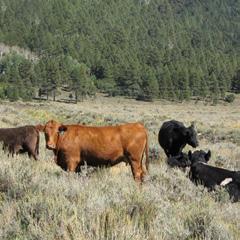
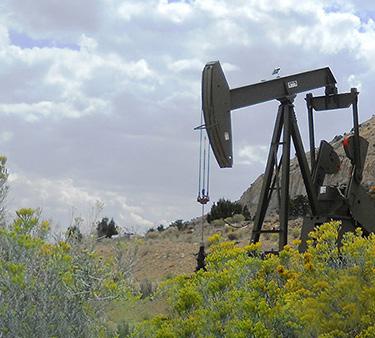
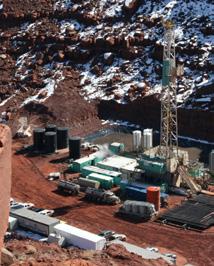
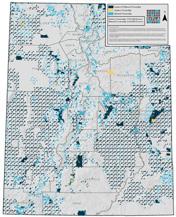
Since its inception in 1994, the Utah School and Institutional Trust Lands Administration (SITLA) has generated over $2 billion for 12 beneficiary trusts through sale and/or lease of trust lands. The agency is responsible for managing Utah’s 3.4 million acres of surface trust lands and 4.5 million acres of subsurface trust lands for the financial support of the trust beneficiaries.
Trust lands were allocated in the Enabling Act, specifically, to generate revenue to support designated state institutions, including public schools, hospitals, teaching colleges, and universities. While approximately 67% of Utah is federal public land managed for public use, trust lands comprise only 6% of the state’s acreage and are managed for the sole benefit of the respective beneficiaries.
By Utah mandate, SITLA manages trust lands to optimize trust land revenues and values, while balancing short- and long-term interest of the beneficiaries. Revenue generated from the trust lands gets deposited into the trust funds where they are then invested by the School and Institutional Trust Funds Office (SITFO) for the benefit of their respective beneficiaries.
SITLA Board of Trustees and Agency Management
A seven-member board of trustees provides policy direction and oversight for the management of SITLA.Six trustees are appointed on a nonpartisan basis by the governor with advice and consent of the Senate from a list of qualified candidates nominated via the nominating committee outlined in statute. The seventh at-large member of the board of trustees is appointed at the pleasure of the governor.
State law requires that the Board represent areas of nonrenewable resource management or development; renewable resource management or development; and real estate. Board members' expertise may also include: business, investment banking, finance, trust administration, asset management, and the practice of law in renewable, nonrenewable resources management, or business.
Under the direction of an appointed director, a full-time staff of 70 manage and operate the day-to-day functions of SITLA.
Roger Barrus was selected to serve as chairman and Donald Foot as Vice Chairman of the SITLA Board of Trustees in October 2020 concluding the term of Lonnie Bullard. Bryan Harris was appointed to the SITLA Board of Trustees in August 2020 and has expertise in renewable resource management and development.
Use & Disposition of Trust Lands
The trust lands granted at statehood are used to generate revenue exclusively for the benefit of the trust beneficiaries. Utah statute explicitly clarifies that the beneficiaries do not include other governmental institutions or agencies, the public at large, or the general welfare of the state, and they are not public lands.
Revenue generated from energy, mineral, real estate development, surface leases, easements, and land sales on these lands (minus expenses) is deposited into the beneficiary institution's permanent fund. Each beneficiary receives annual distributions from their individual endowment.
LINES OF BUSINESS
Stewardship
SITLA is a partner in land exchanges and other transactions, which preserve sensitive lands, but remains committed to its primary responsibility of generating revenues for the trust beneficiaries. The agency also works with Utah’s Resource Development Coordinating Committee and the Division of Oil, Gas, and Mining to ensure projects are reviewed through state regulatory and environmental processes.
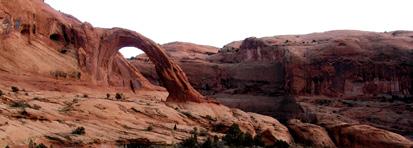
Since 1998, SITLA has been involved in numerous transactions, including land exchanges and sales that have preserved and/or protected more than 560,000 acres of Utah land, an area equivalent to the combined acreage of Arches, Zion, Bryce Canyon, and Capitol Reef National Parks. SITLA has a strong record of partnering with federal and state agencies, counties, and private and non-profit conservation entities to protect Utah lands identified as important for their scenic or recreation value, or as habitat for threatened or endangered species.
Lonnie M. Bullard CHAIR
Roger E. Barrus VICE CHAIRMAN
Donald G. Foot TRUSTEE
David Donegan TRUSTEE
Michael Mower TRUSTEE
Warren H. Peterson TRUSTEE
David Ure SITLA DIRECTOR
W. Richards Woodbury TRUSTEE
School & Institutional Trust

Mission
• Manage and invest the permanent trust funds
• Diversify the investments of trust fund money and assets
• Decision-making based on objective research and thorough due diligence


To responsibly maximize the return on the invested principal of the School and Institutional Trusts for the current and future benefit of Utah’s education programs. 310
Trust Fund Investment
The School and Institutional Trust Funds Office (SITFO), an independent government agency created by the Utah Legislature in 2014, administers the investment of earnings received from SITLA, derived from the sale and/or lease of trust lands. SITFO invests roughly $2.5 billion permanent funds in a globally diversified investment portfolio for the sole benefit of their respective beneficiaries.
SITFO is guided by an Investment Beliefs Statement and Investment Policy Statement. Under the direction of its board of trustees, SITFO manages, monitors, and evaluates the investment of the trust assets. This is done in coordination with investment managers and investment consultants. The permanent trust funds are invested in a manner that supports the distribution policy in perpetuity while providing for intergenerational equity between current and future beneficiaries.
SITFO Board of Trustees and Agency Management
A five-member board of trustees provides oversight and policy direction for SITFO’s trust fund management and investment. The state treasurer serves as an ex officio chairperson. The additional trustees are appointed on a nonpartisan basis by the state treasurer from a list of qualified candidates nominated by a nominating committee, as outlined in Utah statute. The trustees are highly experienced investment professionals. The board appoints a director who employs a team to operate the day-to-day functions and monitor and manage the investments of each trust. In addition to the investment professionals at SITFO, the board retains investment consulting firms, to leverage outside resources for the overall framework of agency’s investment program.
Asset Allocation
While different beneficiaries ultimately own the trust funds, all are managed with a similar asset allocation, as the return and risk objectives are expected to be similar. The asset allocation optimizes the expected return relative to the level of risk the board of trustees views as acceptable.
The risk and return potential of each investment is carefully considered. The portfolio as a whole is expected to provide, over time, a total return greater than or equal to the investment objectives of the trust, while avoiding undue risk concentrations in any single asset class or category, thus reducing risk at the overall portfolio level.
The permanent fund asset allocation as of FY 2020 is below.


Annual distributions from each trust are constitutionally limited to 4% of the average market value of each trust’s permanent fund over the past 12 consecutive quarters. The investment objective of inflation (CPI) + 5% allows funds to be invested in a manner that supports the distribution policy in perpetuity while providing for intergenerational equity between current and future beneficiaries.
Annual distributions from the permanent trust funds provided more than $93.2 million dollars for beneficiaries in FY 2020.
For more information on distributions and distribution formulas, see page 17.
SITFO's long-term investment objective targets an annualized return over time of inflation (CPI) + 5%. This is to maintain the purchasing power of the fund in perpetuity, while sustaining and growing the current distribution amount. Given the perpetual time horizon of the trusts, SITFO expects to achieve its investment objective over the long term, not necessarily in each year. The board recognize, over various periods, that the portfolio may over or underperform relative to indices or peer groups.
In overseeing roughly $2.5 billion in permanent trust funds, SITFO focuses primarily on long-term strategic allocations, as opposed to short-term tactical shifts. In general, SITFO’s risk tolerance attempts to minimize volatility so that it is no greater than necessary to achieve the long-term investment objective of a 5% return after inflation.
David Damschen
Kent A. Misener VICE CHAIR, BOARD OF TRUSTEES
David R. Nixon BOARD OF TRUSTEES
John Lunt BOARD OF TRUSTEES Peter Madsen DIRECTOR Jason Gull BOARD OF TRUSTEES
BENEFICIARY ASSET SCHEDULE*
3.37

Financial Summary FY 2020
In FY 2020 the Utah School and Institutional Trusts permanent funds had a net change in fund market value balance of -$133.8 million. SITFO’s net income was -$98.9 million, with operating expenses of $2.7 million and -$96.2 million decrease in permanent fund interests and gains. The trust fund balance fell modestly and returned -3.9%, trending below the primary objective of inflation (CPI) + 5%, but not unexpected given the major global economic disruptions from COVID-19.
While the total fund balance decreased in FY 2020, the total distribution increased. Annual distributions from each trust are capped at 4% of the average market value of each trust’s permanent fund over the past 12 consecutive quarters. This equaled $93.2 million being distributed to 11 beneficiaries in FY 2020 (compared to $86.7 million in FY 2019). Approximately, 95% of the total distributions were distributed to Utah’s public school children under discretion of charter and school community councils and approved by local school boards.
The Land Trusts Protection & Advocacy Office had expenses of $263,111 in FY 2020.
SITLA brought in a total net revenue of $61 million in FY 2020. SITLA revenues were shared among three major categories: mineral revenues (18%); development and planning revenues (20%); and surfacer revenues (6%). Development and planning revenue grew by 9%, while mineral and surface revenues fell. Mineral revenue fell 27%, and surface revenues fell 38%. While traditional surface revenue (e.g. grazing, forestry, easements, agriculture, and leasing) actually grew in FY 2020 by 10%, auctions and negotiated sales fell by 94% from FY 2019, contributing to a total 38% decrease in surface revenues.
Distributions vs. Market Value

Distribution Formula for Public Schools
Distribution Formula for All Other Trusts
Net Income Summary FY 2018-2020
3-Year Cummulative Net Growth $66,493,419
Schedule of SITFO Expenditures
Calendar Performance
Year Table
The above chart displays the calendar year performance and highlights the volatility of the portfolio. The diversification into alternative investments such as private markets are expected to mitigate this volatility as well as enhance returns.
Rolling 5-Year Performance vs. Investment Objective
Over the past four years, SITFO has been strategically diversifying the trust by reducing over-exposures to equity and introducing alternative markets investments, which typically follow j-curves and had not recovered from the COVID related market corrections by the end of FY 2020. Additionally, SITFO has investments in private markets, which take years to deploy and
are slower to return capital. SITFO expects that reducing the equity allocation from 70% to 37%, investing in alternative markets, and increasing greater diversification is expected to yield, over time, higher long-term returns for the trust and reduce portfolio volatility.
The above chart displays the longer-term returns of the trusts and highlights the cyclical nature of investing. Diversification and long-term investing require patience during periods of underperformance. Importantly, SITFO’s objectives are best considered over an investment cycle and with the full context of the long-term investment program.