Trust Lands Administration
State of Utah School and Institutional Trust Lands Administration
State of Utah School and Institutional Trust Lands Administration
State of Utah School and Institutional Trust Lands Administration
Fiscal Year 2013 Annual Report
July 1, 2012 — June 30, 2013

Strong business leadership and prudent land stewardship practices marked a successful 2013 fiscal year for the Trust Lands Administration. The agency celebrated 20 years of oil and gas operations within the Drunkards Wash Unit on its West Price/ Ferron Block. Since 1994, oil and gas development within this unit has generated $140 million for the Permanent School Fund and other beneficiaries.
Also this fiscal year, our principal role in the completion of a complex multi-agency land exchange helped protect wildlife habitat and provide property for a significant portion of the Utah Department of Transportation’s Mountain View Corridor project in Salt Lake County, while generating $6.6 million for the Permanent School Fund. In addition, the agency was instrumental in selling property in a collaborative effort that fulfilled mitigation requirements for three southern Utah airports impacted by the Utah prairie dog, a species listed as ‘threatened’ under the Federal Endangered Species Act.
Also noteworthy is the significant increase in revenues produced by our Planning and Development Business Group. This year’s performance exceeded the last fouryear average earnings by approximately $9 million.
Total revenue from management and development of trust lands exceeded $106 million this year. The Permanent School Fund topped $1.6 billion during this fiscal year, providing nearly $40 million to K-12 schools and supporting critical academic programs identified by individual School Community Councils. Another $3.8 million was distributed to 11 other beneficiaries.
The accomplishments outlined in this year’s annual report are due to the work of the agency’s management team, its employees, and the Board of Trustees. I want to personally thank each of them for their professionalism, dedication, and efficiency in managing Utah’s trust lands.
Kevin S. Carter
Cash Flow Fiscal Year 2013
Agency-Generated Revenue: $106.4 million
Non-Land Sales Revenue:
$86.3 million
Agency Expenditures:
Operating Costs - $9.6 million
Capital Costs - $.6 million
Stewardship Costs - $.8 million
Land Sales Revenue: $20.1 million
All sales revenue is deposited directly into the permanent fund of each beneficiary
$68.5 million
Deposited in the Permanent School Fund
$3.8 million
Distributed to the other beneficiaries
$3.9 million of unspent appropriation to be returned to all beneficiaries in FY 2014
Total revenue deposited in permanent funds or distributed to beneficiaries: $96.3 million
Mining Group
Oil Shale: The group competitively offered a 643-acre school section in Uintah County for oil shale lease. The parcel is strategically located and received a respectable bonus bid of $631,000, which is slightly more than $981 per acre. This successful lease demonstrates the importance of waiting for prime market conditions before offering select parcels for lease.
Coal: The Minerals Group successfully gained a contract presence in the Alton Coal Field. This exploration agreement includes an option to lease with Alton Coal Development, LLC., a pioneer in developing and mining southern Utah’s vast coal resources.
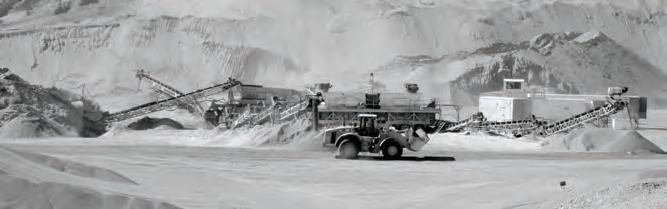
Sand and Gravel: The group reported sand and gravel production gained a moderate increase of five percent over last fiscal year. Located primarily on trust lands in Vernal, Price, Moab, and St. George, aggregates are used in a variety of materials, almost exclusively within the construction industry.
Oil & Gas Group
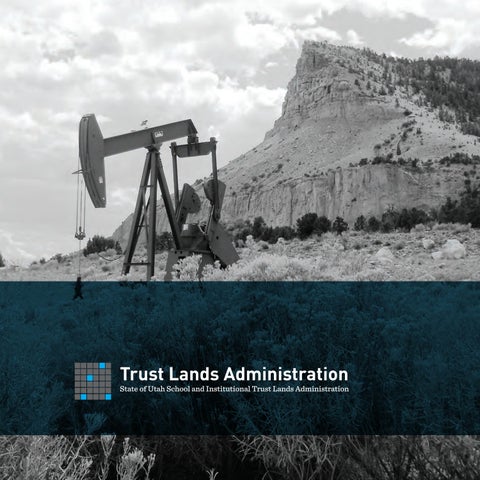
Drunkards Wash Revenue: The Oil and Gas Group marked 20 years of ConocoPhillips operations within the Drunkards Wash Unit of the West Price/Ferron Block. Acquisition of additional land within this unit from the federal government, propelled oil and gas development into a position of providing stable, long-term revenues to the Permanent School Fund and other beneficiaries. The unit has and continues to provide revenue to the Division of Wildlife Resources for mitigation and ongoing wildlife studies in Carbon and Emery counties. Of the $700 million in gross revenues derived from oil and gas since 1994, $140 million originated from this unit.
Well Site Review: The group reviewed operations and reclamation at 2,592 well sites located on trust lands throughout Utah. Due to diligence, no environmental incidents have resulted in permanent damage.
Planning & Development Group
Surface Group
Staff reported revenues for 2013 improved substantially, ending the year at just under $14 million. Total revenue over the past four fiscal years averaged $4,514,700 annually as a result of the significant downturn in global and national real estate markets. However, signs of a positive, albeit slow, recovery began to appear in 2012.
State Interagency Land Exchange/Sale: Staff completed an interagency land swap with the Division of Wildlife Resources (DWR) and Utah Department of Transportation (UDOT) that earned $6.6 million for the Permanent School Fund. The agency traded 7,000 acres of unusable lands located within Wildlife Management Areas to DWR in exchange for a parcel at 5600 West 2100 South in Salt Lake County, which was then sold to UDOT to secure a one-mile section for the Mountain View Corridor.
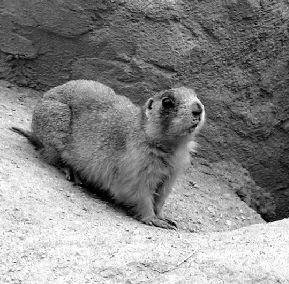
Protected Species Mitigation: The Surface Group helped local, federal, and private agencies protect habitat for the federally threatened Utah prairie dog. The sale of 800 acres of prairie dog habitat in Garfield County to The Nature Conservancy, fulfilled mitigation requirements for the loss of habitat at three airports in Iron and Wayne counties. The mitigation funds of $800,000 from the Federal Aviation Administration used for the sale were deposited into the Permanent School Fund.
Wildfire Reclamation: The group reported an unusually severe year for wildfires throughout Utah. Seven of the 12 fires affecting trust lands were significant, burning 6,148 acres, which required rehabilitation to protect watersheds and other values. The agency is an active partner in Utah’s Watershed Restoration Initiative (UWRI), which is instrumental in mobilizing collaborative fire restoration projects. Trust Lands spent $450,000 to seed affected acreage, and were supported by an additional $318,000 from other UWRI partners to meet additional seed, labor, and equipment expenses to complete fire rehabilitation work.
Audit Group
Renewable Energy Projects – Solar: The Surface Group noted an increased interest in renewable energy development, particularly solar energy, on trust lands this year. The largest and most significant project was a 300-megawatt photovoltaic solar development project on 1,754 acres of trust lands near the Intermountain Power Project plant in Millard County. When complete, it will be one of the largest solar energy projects in the country. This project and two smaller solar leases in Beaver and San Juan counties are expected to bring significant revenue to the Permanent School Fund through lease rental and royalty payments.
LaSal Off-Highway Vehicle Pilot Project: The agency completed a 135-mile off-highway vehicle (OHV) trail system on 28,000 acres in the La Sal Mountains. Trust Lands led several public meetings involving officials from Grand and San Juan counties, and representatives from the Divisions of Wildlife Resources and State Parks, and off-roading groups. Funds for the project came from a $1.50 surcharge on all OHV registrations. This collaborative project successfully curbed historic resource degradation caused by undisciplined OHV use on two of the agency’s premier land blocks.
Legitimizing County Road Claims: The Surface Group completed its sixth year of engaging with rural counties to legitimize county-claimed roads located on trust lands. Analysis is now complete for the final group of Class B and the first block of Class D roads. Efforts this year yielded 63.53 miles of roads perfected as easements and 199.28 miles of roads recognized as valid existing rights through formal disclaimers of interest. Our agency formalized a partnership with the Permanent Community Impact Fund Board, which will assist counties with road easement purchases and facilitate efficient completion of legitimizing remaining roads.
Audit staff recovered approximately $1.3 million in unpaid royalties by conducting revenue compliance reviews to determine if lessees properly reported commodity volumes. Following an audit schedule approved by the director, the group meets at various times throughout the year with the Board of Trustees Audit Committee.
Legal Group
Information Technology & Geographic Information Systems Group
The Legal Group supervised the successful completion of appraisals for the Utah Recreation Land Exchange Act (URLEA). Authorized by Congress in 2009, the URLEA exchange will convey 25,000 acres of trust lands in the scenic Colorado River corridor near Moab for 35,000 acres of federal land in the Uintah Basin that has considerably higher potential for oil and gas development. Closing of the exchange is expected to occur in early 2014.
Environmental Compliance: The Compliance Group increased lease reviews and inspections to insure lessees use best management practices and reduce the likelihood of exposing the agency to environmental liabilities, legal issues, and remediation costs. This proactive management strategy has and will continue to substantially reduce liability risks in the long term and promote good stewardship of the land.
The Technology Group successfully deployed a web-based GIS platform for online and mobile use. The new platform allows employees and others to view, query, and collect data on trust land parcels with hand-held devices. These tools increase productivity from field to office.
Kevin Carter, Director
John Andrews, Associate Director and Chief Legal Counsel
Kim Christy, Deputy Director/Surface and External Affairs
Lisa Schneider, Assistant Director/Finance
Douglas O. Buchi, Assistant Director/Planning and Development
LaVonne Garrison, Assistant Director/Oil and Gas
Tom Faddies, Assistant Director/Mining
Jeff Roe, ITS Director
Ron Carlson, Audit Manager
Nannette Johnson, Assistant to the Director and Board of Trustees
Daniel C. Lofgren, Chair
Steven B. Ostler, Vice Chair
David Ure, Member
Louie Cononelos, Member
James M. Lekas, Member
Michael Mower, Member
Thomas W. Bachtell, Member
Today, the Trust Lands Administration manages 3.4 million acres of land and an additional 1.1 million acres of mineral estate to benefit 12 state institutions, known as beneficiaries.
The School and Institutional Trust Lands Administration manages trust lands on behalf of and for the exclusive benefit of 12 state institutions designated by the U.S. Congress in 1894.
At the time of statehood, Congress granted parcels of land to Utah from which revenue could be generated to support designated state institutions. These trust land parcels were allocated by apportioning the state into townships, each six by six miles, and dividing each township into 36 square-mile sections. Utah was given sections 2, 16, 32, and 36 in each township for public schools, resulting in a checkerboard of land ownership. All other designated state institutions were granted fixed amounts of acreage selected by the state from the remaining public domain.
More than one-half of the original land grant acreages were sold during the first 35 years of statehood. Interestingly, approximately 30 percent of all private land in Utah was originally trust land.
In 1994, realizing the revenue potential of trust lands for public schools and 11 other institutions, the Utah Legislature created the School and Institutional Trust Lands Administration as an independent agency to manage and develop trust land assets.
Public schools
Public buildings
Miners Hospital at the University of Utah
Reservoirs
School of Mines
School for the Blind
School for the Deaf State Hospital
University of Utah
Utah State University
Youth Development Center
Teaching colleges at Dixie State, Southern Utah, Utah State, and Weber State universities, and the University of Utah
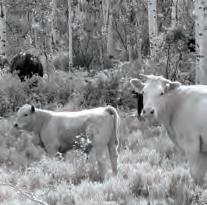
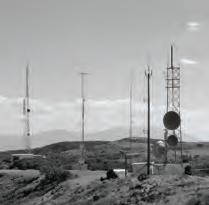
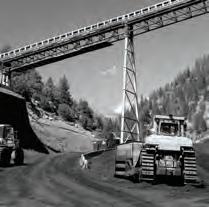
The Trust Lands Administration manages the land portfolio for each beneficiary, generating revenues through oil, gas, and mineral leases, rents, and royalties; real estate development and sales; and surface estate sales, leases, and easements. Revenues generated from each real estate portfolio are placed into individual trust funds, which are invested by the state treasurer. Income earned from each trust fund is distributed to its beneficiary.
Utah’s public schools are the beneficiary of 96 percent of all trust lands. Revenue generated from school trust lands is transferred into the Permanent School Fund, growing the endowment for public schools. Income earned from the fund is distributed annually to individual school councils using a per-pupil formula.
Permanent funds for the 11 other beneficiaries grow more slowly because they hold a smaller percentage of lands, and only revenues from land sales are placed into their permanent funds. All remaining earnings are distributed annually to each beneficiary.
Since 1994, the Permanent School Fund has grown from $50 million to more than $1.6 billion.
The Trust Lands Administration is entirely self-funded with no taxpayer or general fund support. A portion of revenue generated from managing trust lands activity is used for operations and administration.
In addition to its land management mandate, the agency administers the Land Exchange Distribution Account. The Trust Lands Administration manages the complex disbursement of development royalties from federal lands, which serve as compensation to the 27 counties that acquired or exchanged lands at the time of Grand Staircase Escalante National Monument designation. The agency anticipates this responsibility will grow as it continues collaboration with the federal government on several land exchanges.

The Trust Lands Administration employs a team of business professionals who manage all facets of land management and administrative operations.
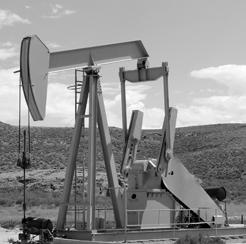
Oil and Gas: Leases trust lands for oil and gas exploration; works with the energy industry creating opportunities to generate short- and long-term revenues.
Mining: Leases trust lands to generate revenue from coal, oil shale, bitumen, potash, and phosphate; construction materials such as sand and gravel, rock aggregate, and high-quality limestone products; and copper, beryllium and uranium.
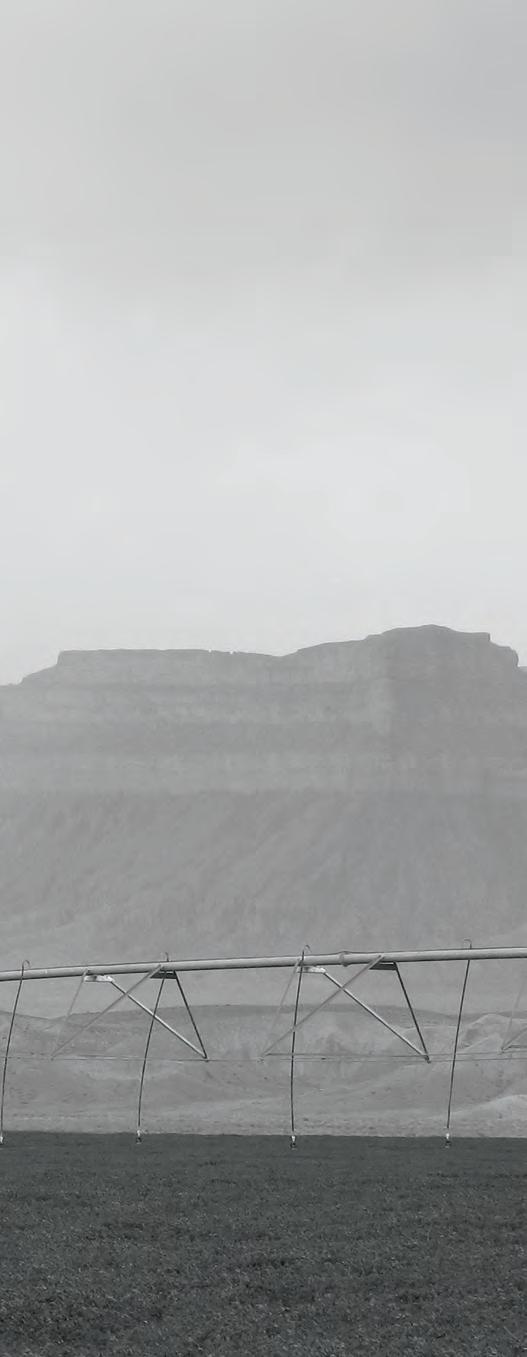
Surface: Leases surface rights for telecommunication, commercial, agricultural, and industrial purposes; issues easements, rights of entry, timber and grazing permits; conducts land sales and exchanges; and administers water rights.
Cultural Resource Management: Assists the entire agency in its compliance with Utah code requiring state agencies to consider the effects on historic and archaeological resources within project areas.
Planning and Development: Works with private real estate developers to provide residential, commercial, and industrial development in Utah’s growing communities.
Information Technology and Geographic Information Systems (GIS): Provides expertise and service in the fields of information technology, GIS, spatial analysis, cartography, remote sensing, and aerial photography to staff and the public.
Legal: Provides legal counsel on all matters affecting the trust; drafts and reviews transactional documents, such as leases and joint ventures, for disposition of trust lands; represents the agency in litigation; and supervises the agency’s law enforcement and environmental compliance activities.
Administrative Services: Provides professional administrative support in all areas, including: finance and auditing; human resources; and records management.
Main Office
675 East 500 South, Suite 500
Salt Lake City, UT 84102
801-538-5100
Central Office
130 North Main Richfield, UT 84701
435-896-6494
Southwestern Office
2303 North Coral Canyon Blvd, Suite 100-A Washington, UT 84780
435-652-2950
Southeastern Office
217 East Center Street, Suite 230 Moab, UT 84532
435-259-7417
State