State of Utah
School & Institutional Trust Lands Administration
Fiscal Year 2008
14th Annual Report
(July 1, 2007 to June 30, 2008)
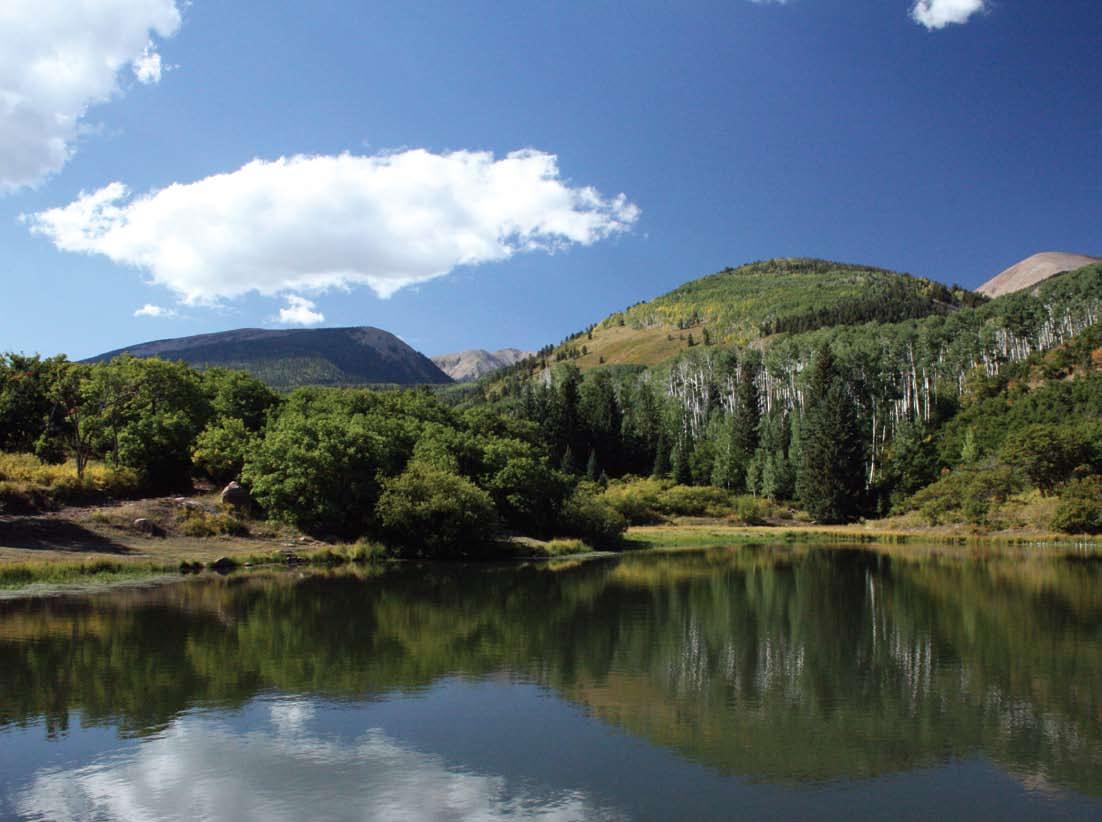
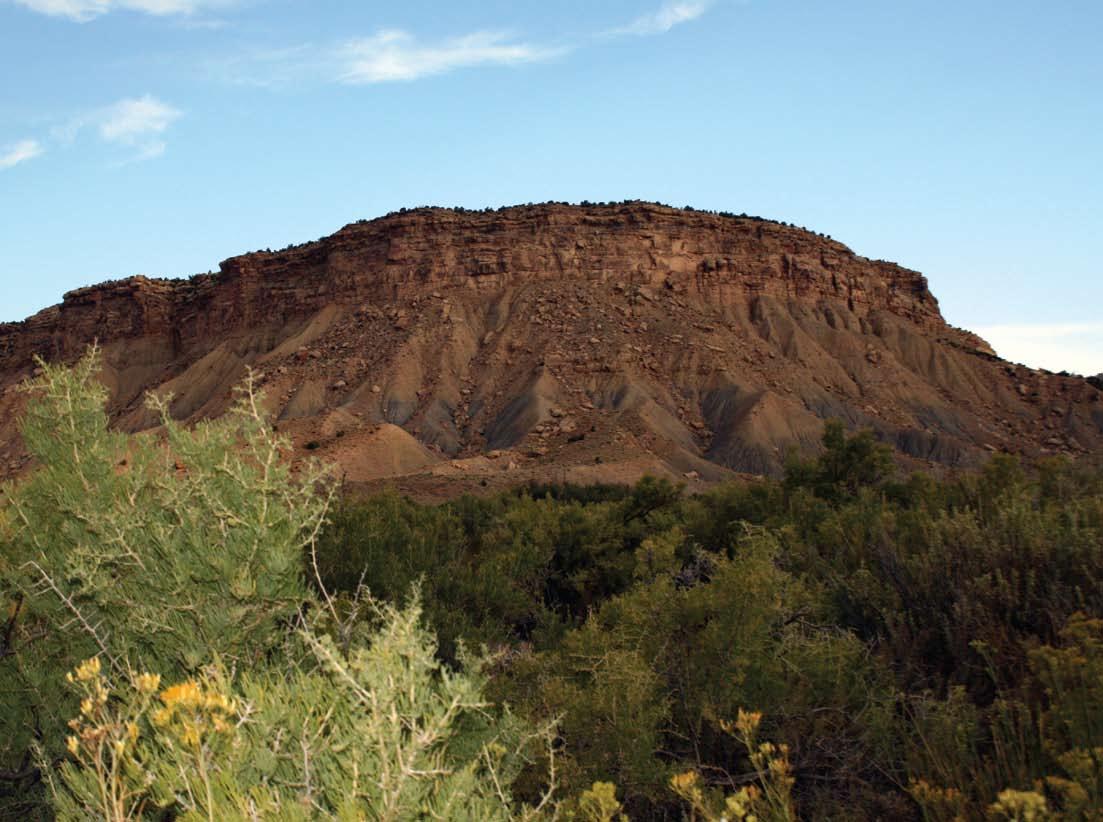
Hidden Lake LaSal Mountains near Moab

Fiscal Year 2008
14th Annual Report
(July 1, 2007 to June 30, 2008)

The Trust is an increasingly significant source of funding for Utah’s schools.
To administer the trust lands prudently and profitably for Utah’s schoolchildren and other trust beneficiaries.
Because of record-high oil and gas prices in Fiscal Year 2008, the buzzword throughout America was “Alternative Energy Resources”. I am pleased to report that we have trust lands that have been leased for the exploration of alternative energy resources. Within this report, you’ll find that we have leased land for the extraction of energy both from oil shale and geothermal resources.
Trust land oil shale has a long history of being leased, but the promise of cost-effective production has not materialized. Now new technologies may finally be able to economically (and in an environmentally sound way) get the “oil” out of oil shale. If this happens, it will be a significant boost to the revenues for our schoolchildren and the other trust beneficiaries.
Traditional geothermal energy is limited by the number of places (even worldwide) where the resource can produce economically viable energy. But new technologies are emerging where previously unusable resources may be tapped. Thousands of acres of trust lands have been leased to utilize these new technologies. More details are in the pages that follow.
In the coming year, I hope to be able to report that both wind and solar resources are also being developed on trust lands. Of course, traditional oil and natural gas are and will continue to be the big revenue-generating resources for the foreseeable future. However, I believe that alternative energy resources will become an increasing source of revenues for the schoolchildren of Utah and the other trust beneficiaries.
Kevin Carter, Director
For fiscal year (FY) 2008, total revenues were more than $150,000,000. The agency makes money in a variety of ways. The different major revenue sources are shown in Fig. 1.
Fig. 1 – Revenues by Type
Trust Lands’ revenues have grown dramatically since the creation of the agency in 1994.
In FY 1994 the agency made $17,320,242 compared to $151,127,806 in FY 2008.






705,034,100
926,291,942
968,632,227
A major component of total trust assets is the State Permanent School Fund of Utah’s public schools. At the end of FY 2008, that fund stood at $968,632,227. That’s growth of almost 11 times since the Trust Lands Administration started work, just 14 years ago, at the beginning of FY 1995.
Even though the Permanent Fund is never spent interest and dividend earnings are distributed to schools every year. Therefore the amount and rate of growth of the Permanent Fund are of paramount importance, both to the trustees and the beneficiaries of the Trust – Utah’s public schools.
A share of investment income from the Permanent Fund is distributed to each public school in the state every year for local academic needs. The distribution is primarily based on the number of students at each school.
As a result of increasing revenues and holding the line on expenses, total trust assets have also grown substantially during the past 14 years. Total trust assets are the combined assets of all 12 beneficiaries – including their permanent funds. Total trust assets have grown from $94.5 million at the end of FY 1994 (when the agency was established) to more than $1 billion at the end of FY 2008. It should be noted that total trust assets were almost unchanged from FY 2007. This was primarily due to declines in the stock market at the end of FY 2008. See Fig 2.
For additional financial information, go to the Trust Lands’ web-site at www.trustlands.com. Follow these links: Homepage/Financial Statements and Statistics/Financial Statements/FY 2008 (or any year listed). These financial reports are not audited. For audited financial information, contact the Trust Lands Administration’s Assistant Director/Finance at 801-538-5100.
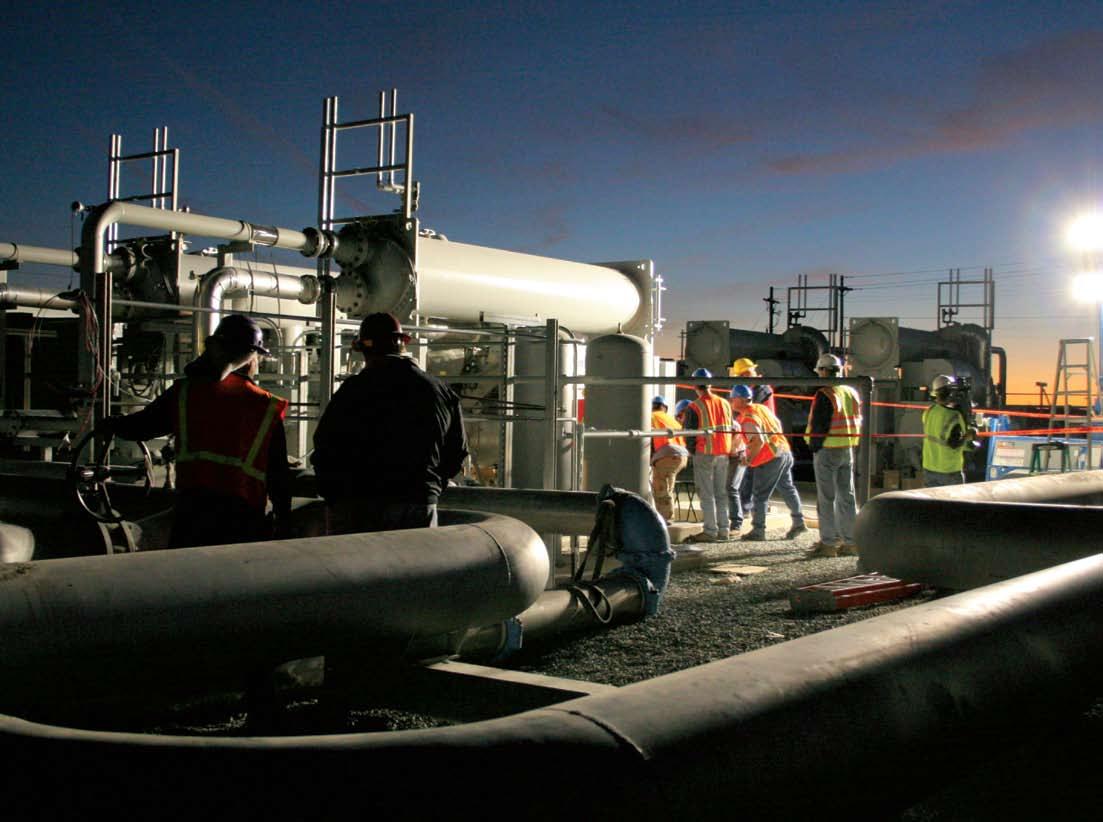
Energy extracted from the interior heat of the earth – geothermal energy – has significant potential for the clean generation of electricity. Historically, one limitation on geothermal power production has been the need to use extremely hot water or dry steam to drive turbines that generate power. There are relatively few places in the United States where underground temperatures have been hot enough to allow direct geothermal power generation. Utah has only one geothermal power plant that uses direct geothermal energy to generate power.
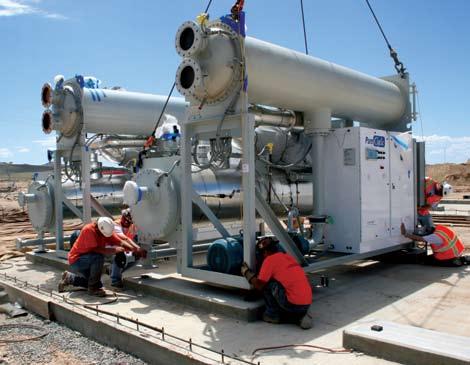
Utilizing new turbine technology developed by UTC Power, a United Technologies company, Raser Technologies, of Provo, Utah, has developed a proprietary “binary” power plant design that allows electricity to be produced using much lower temperature geothermal resources. Hot geothermal brine is run through a heat exchanger. The exchanger heats a closed-loop system filled with a working fluid with a lower boiling point, which vaporizes and drives the generation turbines before being recycled through the system. Because the system is self-contained, nothing is emitted; and because geothermal hot water is abundant in Western Utah, there is significant potential for future clean electric generation on trust lands. Geothermal power also has the advantage of being available 24 hours a day, so it can be used by utilities as reliable “base load” electric capacity.
Raser has recently completed a binary geothermal electric generation plant on school trust lands at Thermo Hot Springs near Milford, Utah. The 20-acre power plant is located on a larger 640-acre lease of trust lands that contains a number of geothermal wells. Raser has contracted with the city of Anaheim, California, to sell 10 megawatts of power from the plant. Expansion of the new plant is possible, and Raser currently plans to build additional plants on school trust lands in the area in the next several years.
Royalties to the school trust are paid on gross electric sales from the project and are expected to exceed $150,000 per year to start, with contracted increases in the future.
In addition to the 640-acre Thermo site, Raser and its affiliates have leased more than 121,000 additional acres of trust lands with geothermal potential. This acreage is widely spread over much of Western Utah.
For more information, you are invited to visit the Raser web site at http://www.rasertech.com
The School and Institutional Trust Lands Administration manages almost 100,000 acres of property with oil shale deposits. Though oil shale leasing programs have been available for about 100 years, projects to get the value from the resource have not yet materialized.
However, new and pioneering technologies for the extraction of oil from oil shale have emerged. Red Leaf Resources, of Salt Lake City, is the owner of the proprietary technology, the EcoShale In-Capsule process, which promises to economically release the kerogen oil from the oil shale through a process that is environmentally sustainable.
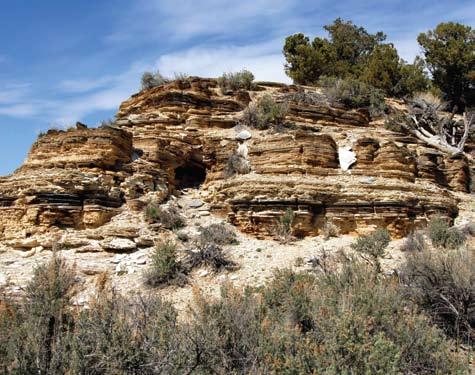
Red Leaf Resources is preparing its test facility to be applied to oil shale deposits located on trust lands in the Uinta Basin. The environmental impact of getting kerogen from oil shale is a concern with oil shale projects. The EcoShale system is founded on addressing environmental considerations at the very beginning of the procedure. This methodology has resulted in a process that is both economically and environmentally sustainable.
Here are some of the unique characteristics of the process:
• There is little or no use of water for extraction
• There are sound methods to protect surface water and aquifers
• Emissions are lower than many previously applied technologies
• The processes allow for rapid reclamation and reduced surface disturbance
• Depleted shale, although not exhibiting hazardous characteristics, can be environmentally managed or impounded
• The system does not require large plants and facilities
• The product is of high quality
Red Leaf Resources holds leases on approximately 17,000 acres of SITLA properties. If initial trials prove the technology, the result could be thousands of barrels of production with millions of dollars in yearly revenues to trust beneficiaries.
To learn more about this new process, visit the EcoShale internet site at http://www.ecoshale.com.
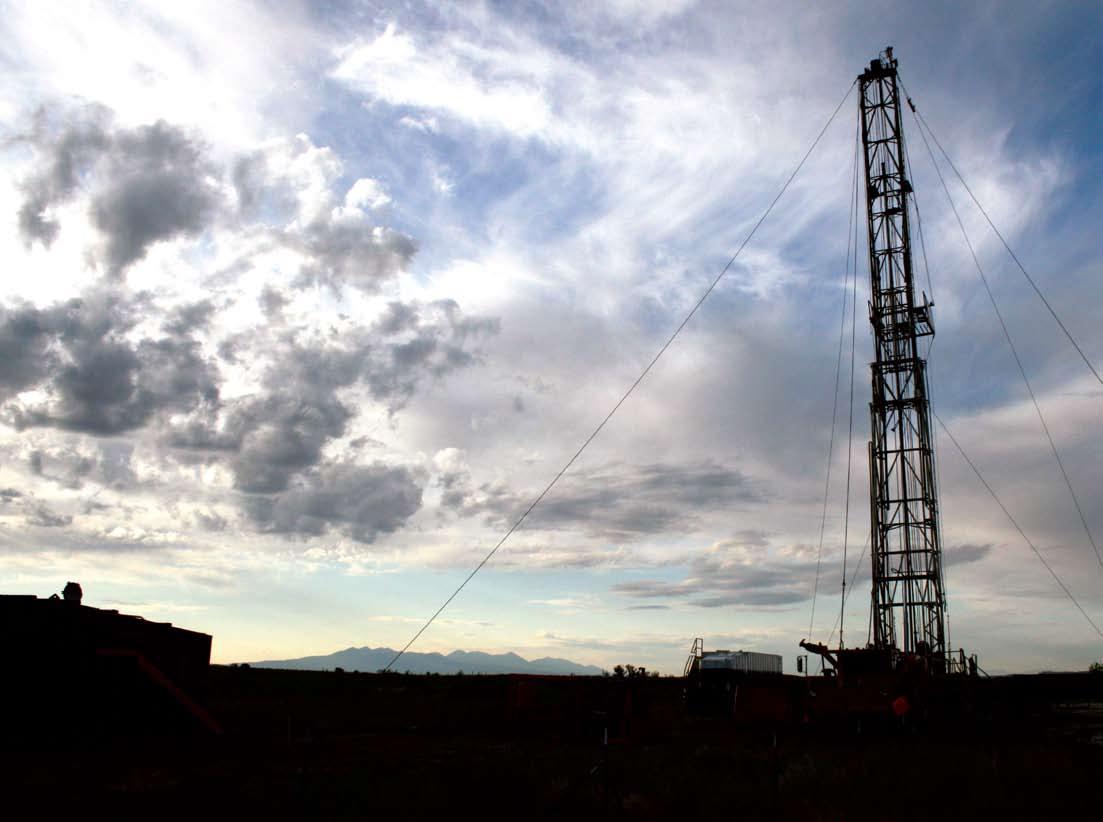
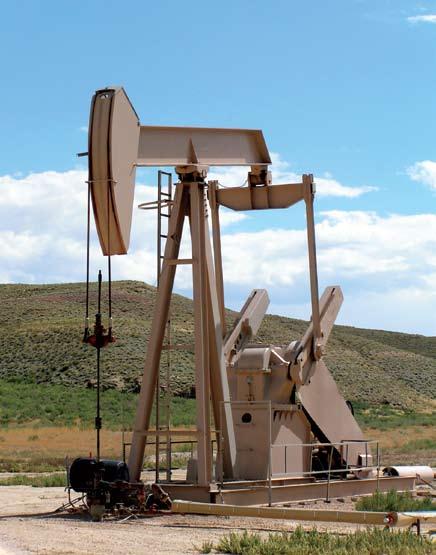
The current energy crisis has driven interest in alternative sources of energy – some of which seem very hopeful. However, for the foreseeable future, oil, natural gas, and coal will be the resources that will fuel our way of life and standard of living. These resources will also be the source of the lion’s share (50 percent or more) of trust lands’ revenue.
These oil and gas assets being developed today will be the principal force that will take the Permanent School Fund to the next billion dollars and the billion beyond that. The Permanent Fund is never spent, but the flow of revenues from oil and gas production will add stability to the Fund allowing interest and dividends to be distributed annually to the public schools of Utah.
At the Trust Lands Administration, responsible and sustainable oil and gas development is a goal the agency takes very seriously. The agency has a progressive policy on multiple use and attempts to maximize the assets of the Trust’s beneficiaries. Trust Lands must balance surface conservation and development against the value of the minerals that lie beneath. Our goal is to use the land for extraction of oil and gas today and leave it reclaimed and usable for future generations. That represents our standard of good stewardship.
• COAL: Revenue from coal production on trust lands increased this year to $10,000,000.00. About 50 percent of the coal mined in Utah was mined on trust lands. Underground mines producing coal from trust lands include: West Ridge, Dugout, SUFCO (Muddy Tract), and Deer Creek (Mill Fork Tract). In addition, the Cottonwood coal tract in Emery County was leased to Ark Land Company.
• SAND AND GRAVEL: New sand and gravel operations were established on trust lands in Washington County and Uintah County in the past year. The Washington County market is driven by residential and commercial development. The expansion of the Uinta Basin market is a result of increased oil and gas activity. After a decade of growth, sales of sand and gravel are expected to decrease in most areas of Utah.
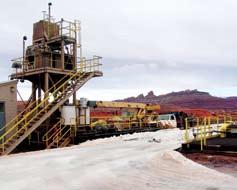
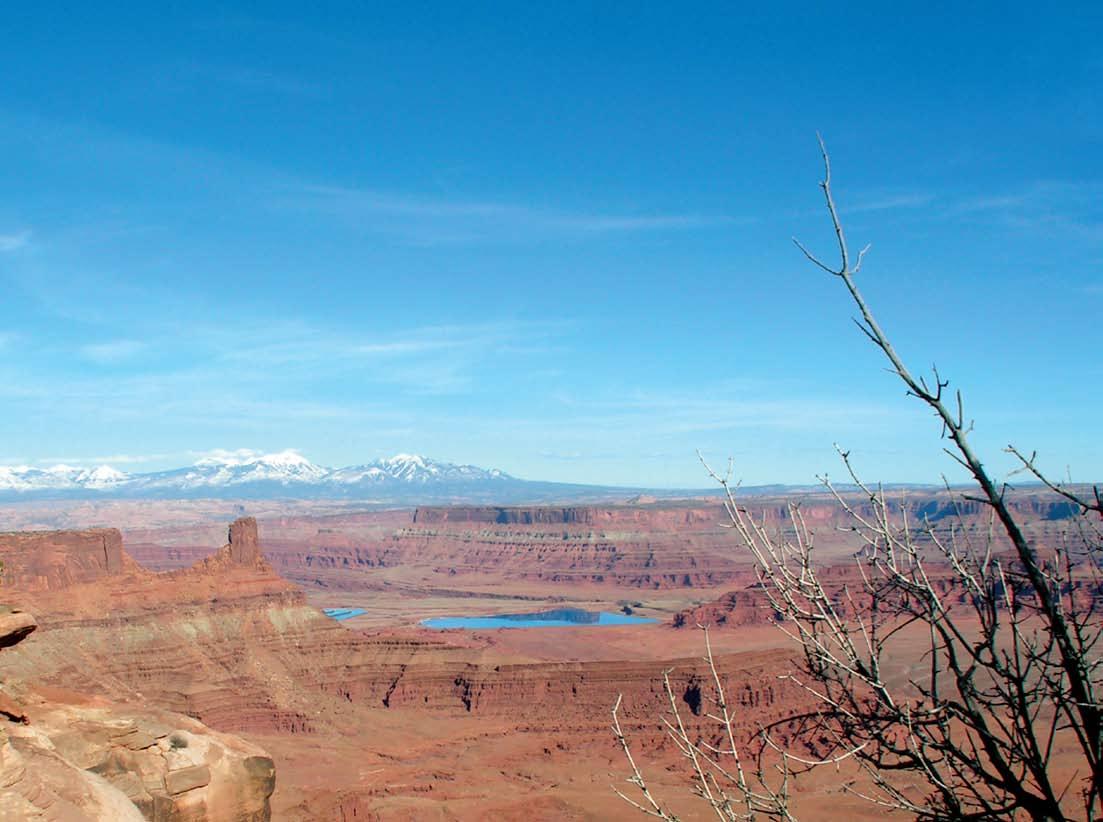
• POTASH: The Intrepid Moab and Intrepid Wendover potash facilities use solar evaporation to produce potassium chloride, a major component of fertilizer, providing one of eight required plant nutrients and essential to the creation of protein. Potash is necessary to the growth of corn, wheat, soybeans, potatoes, and hay. It improves the hardiness of plants, including their ability to withstand drought and parasites.
Due to rising demand in developing nations, a relatively small number of potash producers service the world’s potash needs. Due to rising demand in developing nations, the price of potash has risen dramatically in just the past year. The close proximity of the Intrepid locations to the second-largest consumers of potash, the Midwest and Great Plains farming communities, gives them a money-making advantage over foreign producers.
When the United States leases federal lands for mineral development, it pays 50 percent of its mineral revenue to the state where the lands are located. When the Trust Lands Administration received lands from the United States in the Grand Staircase – Escalante National Monument Exchange in 1999, it assumed the federal government’s responsibility for sharing 50 percent of mineral revenues from the acquired lands with the State of Utah.
Before the land exchange, federal law prevented the state from sharing these mineral revenues directly with county governments. The Trust Lands Administration determined that this restriction does not apply to mineral revenue coming from exchange lands acquired by the Trust and recommended that the Utah legislature permit direct distributions to Utah counties.
Of Utah’s 29 counties, 27 were affected by the exchange either through transfer of trust lands in the county to the United States, transfer of federal lands in the county to the Trust Lands Administration, or both. The Utah legislature authorized the Trust Lands Administration to distribute the funds to these counties based on a formula that considers the amount of trust land lost or gained in the exchange by county. Since the inception of the program through the end of FY 2008 (June 30, 2008), distributions* have been made to these counties:
*Actual amounts rounded to nearest $100
These distributions will continue into the foreseeable future, but may change as the production of oil and gas wells and coal tracts acquired by the trust in the exchange naturally decline over time. The distributions also fluctuate with changes in the price of oil, gas, and coal.
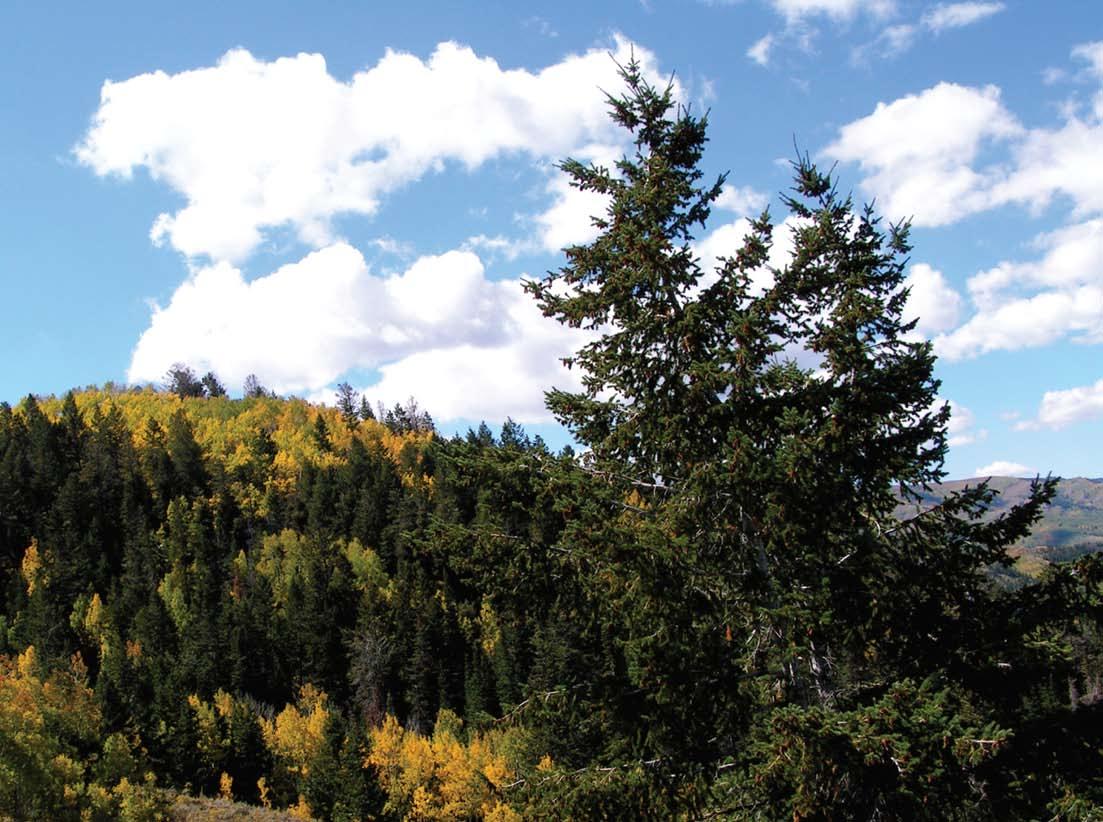
The School and Institutional Trust Lands Administration (SITLA) and the Bureau of Land Management (BLM) completed a land exchange that put almost a thousand acres of state school trust land inside the Three Peaks Recreation Area west of Cedar City into public ownership. In return, Utah’s school trust received 330 acres of federal land suitable for future development outside the recreation area.
The Three Peaks Special Recreation Management Area was established jointly by the BLM and Iron County in 2005. The area contains unique volcanic rock formations and rolling hills, as well as popular equestrian, mountain biking, and ATV trails. The land exchange protects lands within the area from possible future development and allows BLM to more effectively manage recreation uses.
The land exchange was originally proposed in 2002, but was delayed pending completion of the extensive joint planning effort undertaken by the BLM, Iron County, and local citizens for the Three Peaks Recreation area. The exchange was completed May 29, 2008, by the exchange of land-conveyance documents between BLM and SITLA.
The parcels acquired by the Trust Lands Administration from BLM include a 160-acre industrially zoned parcel on Iron Springs Road approximately 10 miles west of Cedar City that has rail and utility access and several parcels closer to Cedar City that have potential for future residential development. The SITLA parcels conveyed to BLM total 950 acres and include the actual geologic feature of the Three Peaks that is visible from most of the Cedar City area.
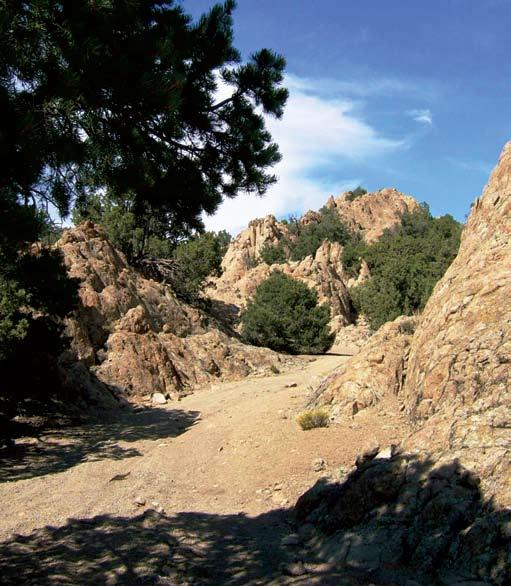
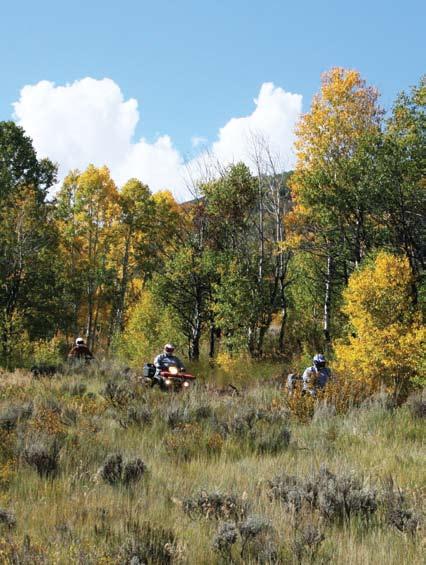
The Trust Lands Administration is spending money to create more OHV trails, make those trails safer, and repair damage caused by thoughtless and illegal OHV activities.
How does the Trust Lands Administration make more and better OHV trails?
Beginning in July 2005, the Trust Lands Administration began receiving $1.50 surcharge for each OHV registered in the state and for out-of-state machines. The resulting fund is specifically designated to both improve the OHV experience on Utah’s trust lands and protect those lands from environmental damage.
The funds are used three ways:
1 - Securing roads and trails for OHV users
2 - Providing OHV education and signage
3 - Closing and repairing areas damaged by OHV use
Since the beginning of the program in 2005 through June 2008, approximately $1,100,000 have been raised through this registration surcharge. The money has been used as follows:
• $550,000 for purchasing and improving OHV roads and trails
• $300,000 for repairing areas damaged by OHV use
• $30,000 for OHV education and signage
• The remaining $220,000 are dedicated to new projects now underway.
The Trust Lands Administration is committed to the responsible and safe use of OHV’s on trust lands – to provide more and better trails, to make repairs due to irresponsible and illegal use of OHV’s on trust lands, and to help educate OHV users on the proper and safe use of their vehicles.
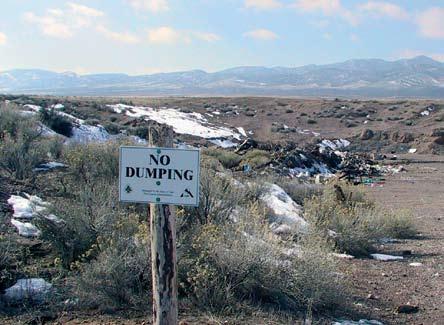
From the time of statehood, there have been individuals who have abused the lands – either intentionally or unknowingly. The abuse can be described in two general categories: theft and trespass.
Here are some examples of common types of violations.
Theft of:
• Forest Products
• Building Stone
• Native Plants and Native Plant Seeds
• Archaeological Artifacts
• Gravel
Trespass:
• Illegal Dumping
• Unauthorized Building
• Destruction of Trust improvements – fences, signs, etc.
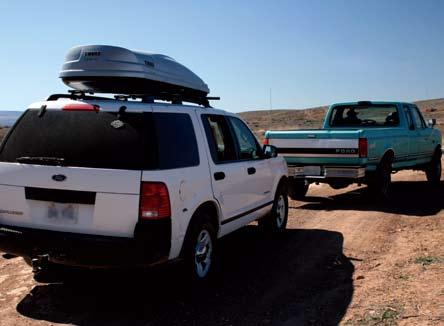
• Unlawful Off-Highway-Vehicle Use
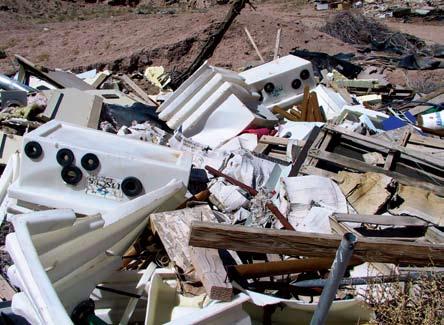
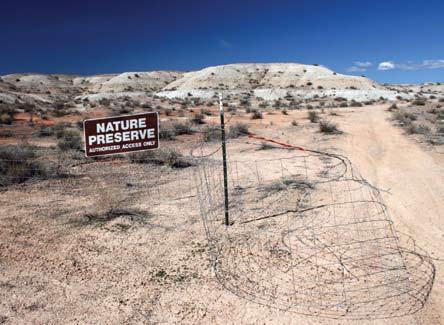
Sometimes these violations are flagrant and result in significant economic loss to the Trust beneficiaries. In 2004, the Trust Lands Administration decided to take an aggressive course in pursuing egregious exploitation of trust lands. Since the Trust Lands Administration has no statutory law-enforcement abilities, it contracted with the State Attorney General’s office for use of one of its investigators as a law-enforcement officer.
The Trust Lands Administration has had good results utilizing the investigator from the Attorney General’s office. Since 2004, there have been 92 cases of major violations pursued. Of that number, 50 cases have been settled successfully resulting in fines, restitution, prison time, and other civil remedies for the defendants. At the end of FY 2008, six major cases were under investigation or pending prosecution.
We encourage citizens to report abuse of trust lands by calling 801-538-5100 and encourage everyone to not “trash the Trust.” The cost of correcting these problems comes at the expense of our schoolchildren and the other trust beneficiaries.
Fort Pierce Industrial Park began as a unique joint-venture partnership with each of four participants bringing respective strengths to create a new industrial park to serve industry that might be attracted to the St. George area:
• Trust Lands Administration providing the land
• Larkin-Gifford-Jennings, private developers, providing capital, infrastructure,and management expertise
• Dixie Escalante Regional Electric Association providing power rate incentives and lending money for infrastructure
• St. George City lending money for infrastructure and providing incentives for new jobs
The Fort Pierce Industrial Park was designed to offer a number of benefits to potential clients:
• Excellent proximity to major markets – for example Las Vegas, Salt Lake City, Phoenix, Los Angeles, and San Diego are all within an eight-hour drive
• Fully improved industrial-zoned sites
• Low-cost utilities
• Buy, lease, or build-to-suit options
• Customized site sizes – from one acre to 100 acres
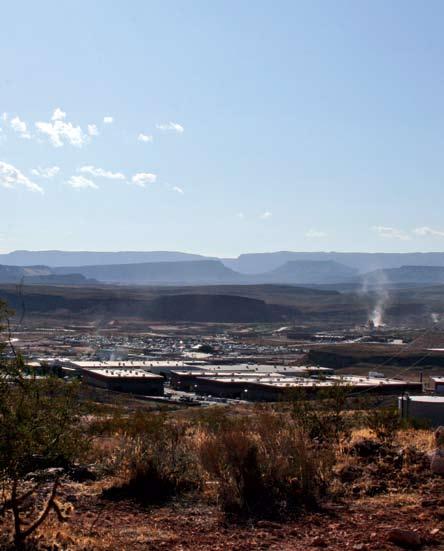
The park started with 160 acres and two tenants. That was 1999. Now, almost 10 years later, the park has grown to more than 970 acres and 115 businesses. It is anticipated that an additional 250 acres will soon be added to the park. The companies located within Fort Pierce are a diverse mix of national, regional, and local firms. These are some of those businesses:
• Wells Dairy – Blue Bunny Ice Cream
• Young Electric Sign Company
• Champion Safe Company
• Deseret Laboratories
• Geneva Pipe
• JP Excavating
• Les Olsen Company
• Quality Truss
• St. George Truss
• Sunroc Corporation
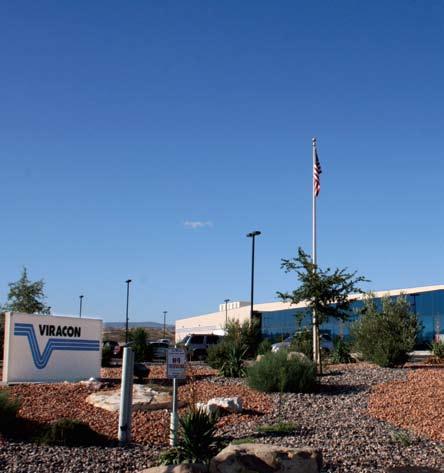
• Viracon Industries
• Sylarus Technologies
The Fort Pierce Industrial Park is now one of the premier industrial park locations in the Southwestern US and a growing source of revenues for the Trust beneficiaries. Including the next 250-acre expansion area, there are 710 acres remaining for development opportunities in Fort Pierce.
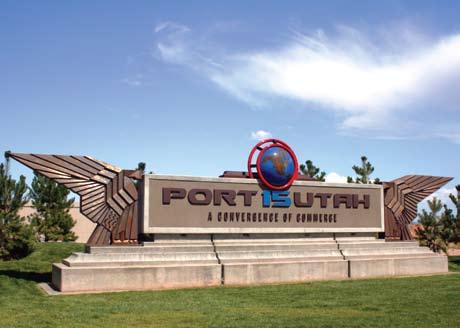
The Port 15 Utah Industrial Park is a major new business park on trust land in Cedar City, Utah. It is located on 700 acres about four miles west of downtown Cedar City.
Because of the location and strategically placed transportation services, Port 15 Utah is an intermodal business park that efficiently connects railroad, trucking, fiber optic, and air service in what is becoming a major hub for the production and transportation of goods in the Western United States. The business park is a Trust Lands Administration partnership effort with Quantum Development of Cedar City. Launched in June 2006, marketing and sales of the first phase are underway.
LM Construction, one of the largest commercial builders in Las Vegas, just completed a nine thousand square-foot building. This building was designed and built for clients that are in need of more industrial space at an affordable price. LM Construction’s tilt-up concrete building is just one of five planned structures to be built on property purchased by the firm.
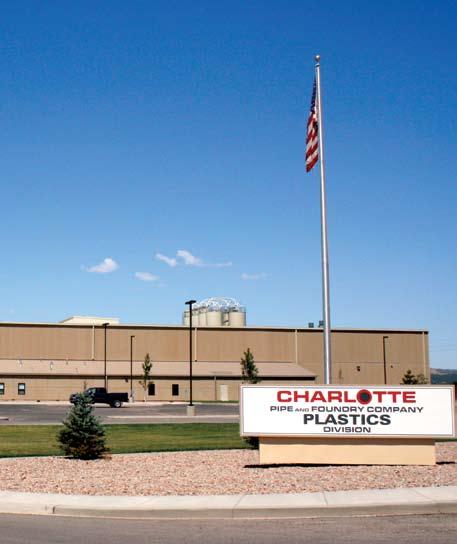
Another of the most recent new businesses to locate at Port 15 Utah is the Charlotte Pipe Company. This business came to the park in record time – from the signing of the transaction to the construction and move into the new building in just seven months! This was made possible through an aggressive City Fast Track program that allows for rapid project development
Charlotte Pipe has been a leader in producing pipe and pipe fittings since 1901. The Cedar City plant is one of six operated for the production of plastic drain, waste, and vent systems by Charlotte Pipe. The company also produces cast iron pipe at its foundry in North Carolina. The Charlotte Pipe-Port 15 Utah plant is located on 50 acres within the industrial park. They join three other businesses already located in Port 15 Utah. There are more than 600 acres remaining for development within the park.
Other businesses that have located in the park include Cerro Copper and Sunroc. There are other large tenants currently looking at the remaining 600 acres within the park
During the 11 to 15-year build out, Port 15 Utah is predicted to:
• Bring 4,000 new jobs to Cedar City – many with salaries greater than the area median income
• Generate more than $28 million in new tax revenues including:
• $16,000,000 for funding economic development
• $6,000,000 for the Iron County School District
• $5,500,000 in funding for affordable housing
Additionally, millions of dollars in revenues are forecast for Utah’s schools and other trust land beneficiaries through sales and rentals within Port 15 Utah.
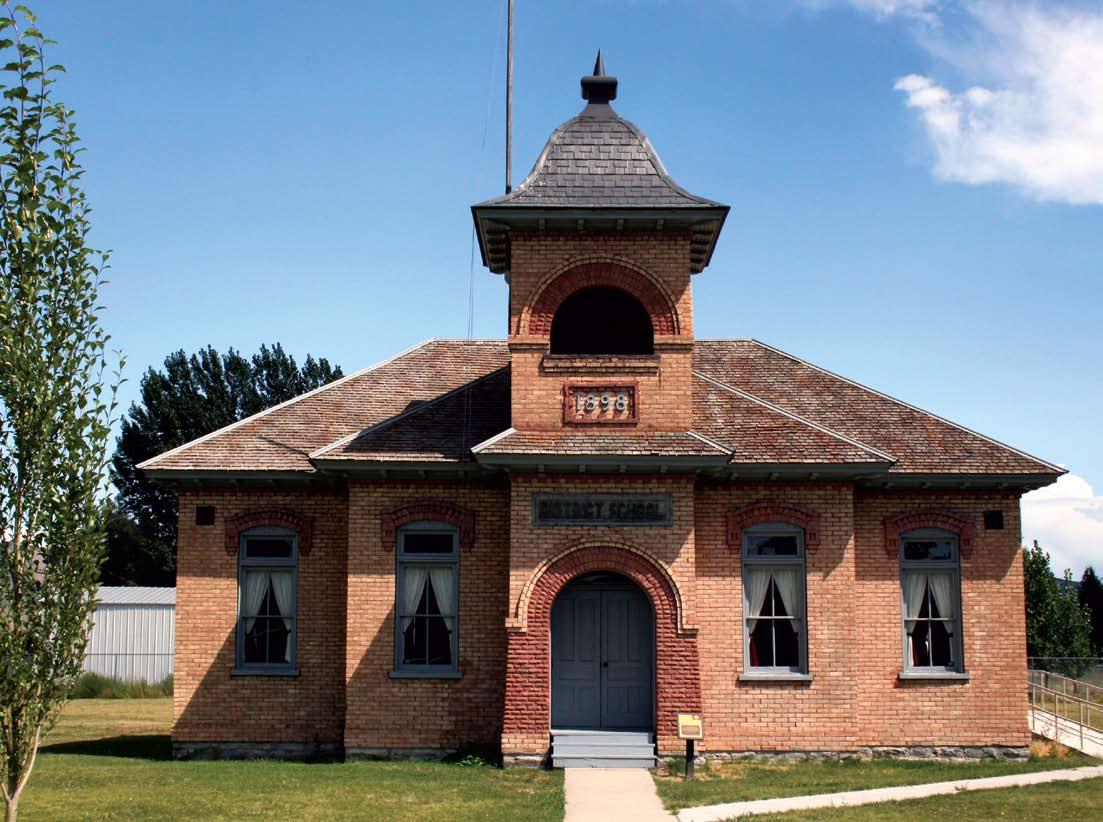
The School and Institutional Trust Lands Administration is an independent agency of state government. It was created in 1994 by the Utah state legislature to manage lands granted to the state of Utah by the United States for the support of public schools and other beneficiary institutions. Prudent and profitable trust lands management has put needed dollars to work in Utah’s schools. As a result, the Trust Lands Administration helps to create a better-educated workforce throughout the state.
When Utah was granted statehood on January 4, 1896, the federal government gave the new state parcels of land to be managed in trust in order to provide financial support for public education and 11 other public institutions. The institutions that benefit from these lands are called beneficiaries. The lands are called trust lands and are scattered throughout the state.
From time to time, trust lands are sold. In fact, more than one-half of the original land grant has been sold, much of it during the first 35 years following statehood. Interestingly, about 30 percent of all private lands in Utah were originally trust lands.
Now, more than 100 years since statehood, the trust of each beneficiary consists of two portfolios: (1) the real estate portfolio which is its remaining trust land, managed by the Trust Lands Administration; and (2) the financial portfolio which is the money from the management and sales of that land managed by the State Treasurer.
The objective is to successfully manage both portfolios to provide financial support for the beneficiaries. Successful management of Utah’s trust lands means working as partners with our beneficiaries, the governor and the legislature, other state agencies, local communities, and the public at large.
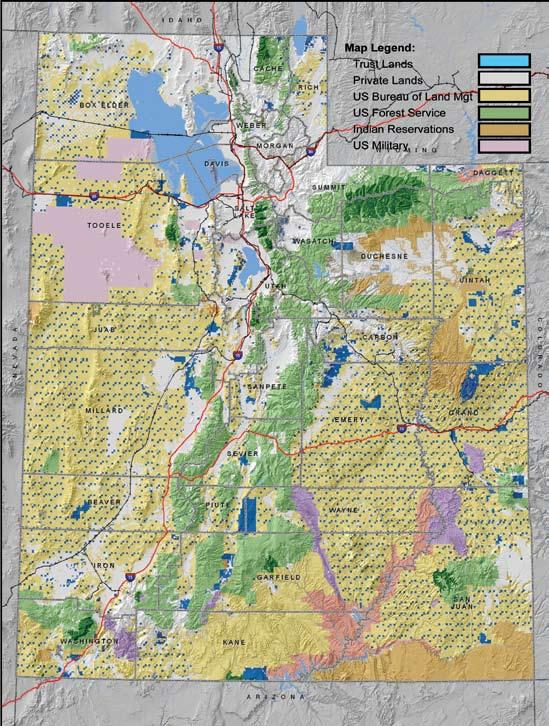
Trust lands are mostly scattered in a checkerboard pattern in rural Utah. However, there are several larger blocks of trust land that can also be seen on this map.

Money from the management of trust lands comes from a variety of different sources:
Mineral Revenues
The largest source of revenues from trust lands is from the leasing of minerals properties and royalties from the production of minerals. Mineral production comes from many sources, including gas and oil, coal, gold, and sand and gravel.
Leasing Surface Rights
Property owned by the Trust Lands Administration is leased by a wide variety of users. Leased trust lands are currently used as telecommunications sites, commercial sites, industrial sites, recreational cabin sites, farming, timber harvesting and forestry sites, and grazing lands for livestock. It is also used for rights of way and in leases to other government entities.
Trust Land Sales
There are times when the best way to make money for the beneficiaries is through the sale of trust lands. Trust land is generally sold in one of three ways: at public auction, development projects, or negotiated sales. Public auction sales are held twice a year and are becoming more and more popular, as they make more land available for private ownership in Utah.
Development sales occur when it is determined that profits for the beneficiaries could be optimized by adding value to parcels of trust land before selling them. Usually, the Trust Lands Administration participates with experienced private real estate developers to provide land for residential, commercial, and industrial uses to help Utah’s growing communities get where they want to be.
The revenues generated by the Trust Lands Administration have an increasingly significant impact on Utah public education and other Trust beneficiaries while building their permanent funds. The ultimate goal of the Trust Lands Administration is to make the school lands’ trust a major source of public school funding.
It should be noted that the Trust Lands Administration is entirely self-funded. A portion of the money generated from managing trust lands’ activity is used to operate the Trust Lands Administration. All expenses and capital costs are paid from these revenues. No tax money is required.
At the time of statehood, Congress designated 12 trust land beneficiaries in Utah. By far, the largest percentage of trust lands was granted to public schools for the benefit of Utah schoolchildren.
The other designated beneficiaries include:
• Reservoirs
• Utah State University
• University of Utah
• School of Mines at the University of Utah
• Miners Hospital
• Normal School (The current beneficiaries of this trust are the teachers’ colleges at state colleges that offer teaching degrees.)
• Utah School for the Deaf
• Utah Public Buildings
• Utah State Hospital
• Utah School for the Blind
• Utah Youth Development Center
The Trust Lands Administration works closely with local communities to build value for Utah’s schoolchildren. Cash generated by both trust land operations and trust land sales is transferred to the permanent state school fund. By doing so, the endowment for the public schools grows more and more each year. Investment income (interest and dividends) from the permanent fund is distributed to the schools each year for local academic needs. The distribution is primarily based on the number of students at each school.
As a cautious and far-sighted steward of the land, the Trust Lands Administration recognizes that certain trust lands have unique scenic, recreational, or environmental characteristics. In these situations, the organization works to sell the land for conservation purposes or exchange it for other real estate more suitable for development.
To administer the trust lands prudently and profitably for Utah’s schoolchildren and other trust beneficiaries.

Chairman
Michael P. Morris
Managing Director / Group Head
Real Estate Capital Markets
Zions Bancorporation
Background: real estate and commercial banking
Alpine, Utah
Term: expires 6/30/2008
Vice-chairman
John Y. Ferry
Vice-President, JY Ferry and Son, Inc.
Background: ranching & farm management
Corinne, Utah
Term: expires 6/30/2010
Board Member
Gayle F. McKeachnie
Governor’s Office, Rural Affairs Coordinator
Background: business and natural resources law
Vernal, Utah
Term: serves at the pleasure of the Governor
Board Member
James B. Lee
Senior Lawyer, Parsons Behle & Latimer
Litigator for more than 40 years in mineral, water, and environmental law
Salt Lake City, Utah
Term: expires 6/30/2009
Board Member
John Scales
President, Retired, Flying J Oil & Gas Inc.
Background: oil & gas exploration and development
Sandy, Utah
Term: expires 6/30/2011
Board Member
Michael Brown
Vice-President, Graymont Western US Inc.
Background: environment, safety, and geology
Kaysville, Utah
Term: expires 6/30/2012
Board Member
Daniel C. Lofgren
President, Cowboy Partners, Cowboy Properties
Background: commercial real estate development
Salt Lake City, Utah
Term: expires 6/30/2013
Board Member Nominee
Steven B. Ostler
Chief Executive Officer, The Boyer Company
Background: business operations, asset management, and strategic planning
Salt Lake City, Utah
Term: expires 6/30/2014
Kevin Carter Director
Lynda Belnap Administrative Assistant to the Director
John Andrews Associate Director and Chief Legal Counsel
Tom Faddies Assistant Director/Mining
LaVonne Garrison Assistant Director/Oil and Gas
Kim Christy Assistant Director/Surface
Douglas O. Buchi Assistant Director/Planning & Development
Lisa Schneider Assistant Director/Finance
Kay Burton Block Planner
Jeff Roe ITS Manager
Ron Carlson Audit Manager
Dave Hebertson Public Relations Manager
Photo Credits
Raser Technologies, pages 9 and 11
Red Leaf Resources, page 12
Blaine D. Hales Appraisers, page 21
Ron Barton of the Attorney General’s office, pages 23 and 24
All other photos by NormaLee McMichael of Trust Lands Administration
State of Utah School & Institutional Trust Lands Administration
Main Office
675 East 500 South, Suite 500, Salt Lake City, Utah 84102, Phone: 801-538-5100, Fax: 801-355-0922
Central Area
130 North Main, Richfield, Utah 84701, Phone: 435-896-6494, Fax: 435-896-6158
Southwestern Area
2303 North Coral Canyon Boulevard, Suite 100-A, Washington, Utah 84780, Phone: 435-652-2950, Fax: 435-652-2952
Southeastern Area
217 East Center Street, Suite 230, Moab, Utah 84532, Phone: 435-259-7417, Fax: 435-259-7473
For more information contact:
Dave Hebertson davehebertson@utah.gov
NormaLee McMichael nlmcmichael@utah.gov www.trustlands.com