State of Utah
School & Institutional Trust Lands Administration
Fiscal Year 2007
13th Annual Report
(July 1, 2006 to June 30, 2007)

State of Utah
School & Institutional Trust Lands Administration
Fiscal Year 2007
13th Annual Report
(July 1, 2006 to June 30, 2007)
The Trust is an increasingly significant source of funding for Utah’s schools.
To administer the trust lands prudently and profitably for Utah’s schoolchildren and other trust beneficiaries.
It is the duty of the Trust Lands Administration to manage Utah’s trust lands in the financial interests of the trust beneficiaries. There are only two ways to do that:
• Put the lands into production
• Sell the lands
We do both of these things. Selling (or exchanging) land shifts the ongoing care of the land to the new owner. Only a small portion of trust land is sold in any given year – on average about 5,000 acres per year. That currently leaves the Trust Lands Administration with more than 3,400,000 acres of land to manage. By selling only 5,000 acres annually, the agency will have millions of acres to manage for hundreds of years.
Taking care of the land is a major focus of the Trust Lands Administration. It is in the best interest of the trust beneficiaries to do so. As a result, the agency – as prudent guardians – puts considerable resources into the land it manages. This report explains some of the stewardship and conservation activities we undertake to preserve or build value in the land itself.
I hope you will find the information interesting and useful.
Kevin Carter, Director

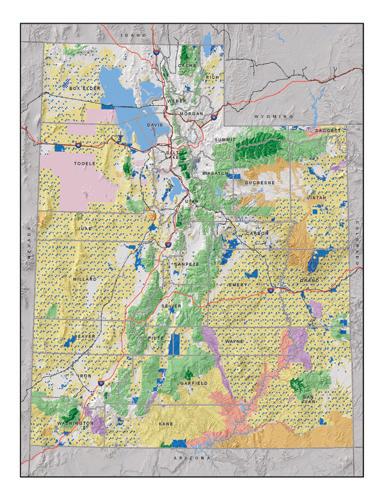
Trust lands are mostly scattered in a checkerboard pattern in rural Utah. However, there are several larger blocks of trust land that can also be seen on this map.
Map Legend
Trust Lands
Private Lands
U.S. Bureau of Land Management
U.S. Forest Service
Native American Reservations
U.S. Military
U.S. National Park Service
Annual Revenues
For fiscal year 2007 total revenues were more than $150,000,000. The agency makes money in a variety of ways. The different major activities are shown in Fig. 1.
Fig. 1 – Revenues by Type
Trust Lands’ revenues have grown dramatically since the creation of the agency in 1994. Fig. 2 shows the change in annual revenues since the agency was started.
Fig. 2 – Gross Revenues, Expenses, and Capital Investment
*Includes interest on permanent funds
As also can be seen in Fig. 2, a relatively small percentage of gross revenue is used for the operating expenses of the Trust Lands Administration.
Total Trust Assets
As a result of increasing revenues and holding the line on expenses, total trust assets have also grown substantially during the past 13 years. Total trust assets are the combined assets of all 12 beneficiaries – including their permanent funds. Total trust assets have grown from $94.5 million at the end of FY 1994 (when the agency was established) to more than $1,000,000,000 at the end of FY 2007. See Fig 3.
2004 .
2005 570,952,000
2006 .
FY 2007 926,291,942
A major component of total trust assets is the State Permanent School Fund of Utah’s public schools. At the end of FY 2007, that fund stood at $926,291,942. That’s a growth of almost 11 times since the Trust Lands Administration was created.
Even though the Permanent Fund is never spent, the interest and dividend earnings are distributed to schools every year. Therefore, the amount and rate of growth of the Permanent Fund are of paramount importance to Utah’s public schools.
A share of investment income from the Permanent Fund is distributed to each public school in the state every year for local academic needs. The distribution is primarily based on the number of students at each school.
For additional financial information, go to the Trust Lands’ web-site at www.trustlands.com. Follow these links: Homepage > Financial Statements and Statistics > Financial Statements > FY 2007 (or any year listed).
These financial reports are not audited. For audited financial information, contact the Trust Lands Administration’s Director of Finance at 801-538-5100. FY 2003
Conservation sales and exchanges are created to preserve some of the most scenic and environmentally sensitive trust lands. The transactions are made to remove these lands from the Trust’s real-estate portfolio and put them into the hands of people and organizations that manage land for conservation and preservation. These transactions may either be a sale of the land or an exchange for lands that are less sensitive and more suitable for the financial interests of the Trust beneficiaries.
Since 1998, the Trust Lands Administration has entered into transactions resulting in the preservation of almost 500,000 acres. More than 480,000 of those acres were preserved through exchanges.
Among those who have acquired trust lands for conservation purposes are the U.S. Bureau of Land Management, the U.S. Forest Service, The Nature Conservancy, Utah Open Lands, the Utah Division of Wildlife Resources, and other conservation groups.
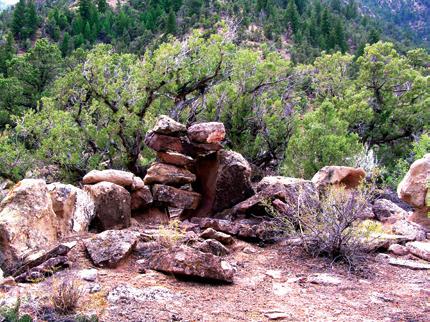
The School and Institutional Trust Lands Administration is committed to the study and mitigation of cultural resources on trust lands. The agency makes a substantial on-going investment in managing historical and archaeological sites. This work is done prior to the sale or development of trust lands to preserve the data and artifacts that may be present.
The direct cost of this effort is high – more than $4,200,000 since 1997. Archaeology is almost six percent of the agency’s annual operating budget.
In addition to archaeological compliance work, the archaeology group has investigated and prosecuted more than a dozen archaeological trespass and damage cases since the creation of the Trust Lands Administration in 1994.
Other agency archaeological conservation efforts include:
• Contributing more than $50,000 toward the upgrade and maintenance of archaeological data managed by the Division of State History.
• Involvement in numerous professional associations including the Utah Statewide Archaeological Society, the Utah Professional Archaeological Council, the Great Basin Anthropological Conference, and the Society for Historic Archaeology.
• Working with the BLM, members of USAS, and the Utah Rock Art Research Association, we strive to more effectively protect sites on trust land through monitoring and participation in the State Antiquities Section’s Site Steward Program.
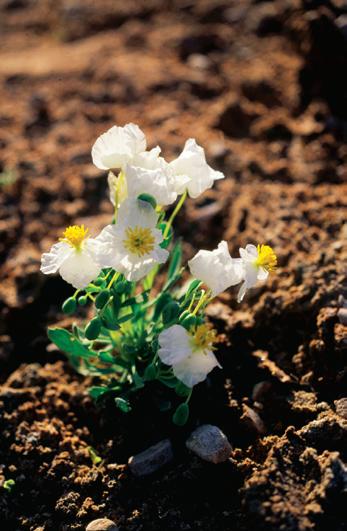
The Dwarf Bearclaw Poppy is an endangered plant found only near St. George in Southwestern Utah. Much of the best habitat for the plant is located on school trust lands. The Trust Lands Administration coordinated a land exchange with the BLM that created a 200-acre poppy preserve on trust lands, while allowing the school trust to acquire nearby BLM lands for community development. Further, the Trust Lands Administration is engaged in a process with The Nature Conservancy, the Utah Department of Transportation, and the U.S. Fish and Wildlife Service to identify and protect Bearclaw Poppy habitat in connection with the construction of a new freeway interchange and proposed development in St. George. The first 150-acre phase of the innovative White Dome Nature Preserve has been fenced to limit off-highway vehicle damage. The total preserve will eventually include more than 640 acres of protected habitat.
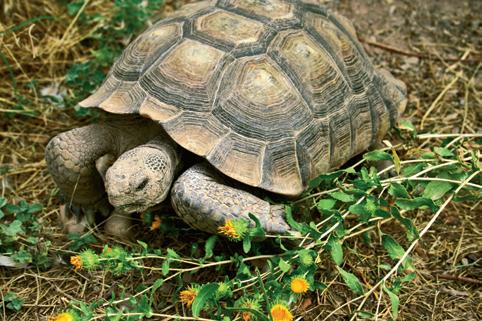
More than 10,000 acres of valuable trust land near St. George were designated by the U.S. Fish and Wildlife Service as critical habitat for the Desert Tortoise, another threatened species. The Trust Lands Administration committed these lands to the Red Cliffs Desert Reserve, a habitat preserve, as part of a habitat conservation plan for the tortoise. These lands are gradually being sold or exchanged to the BLM, but remain in conservation status pending acquisition by BLM.
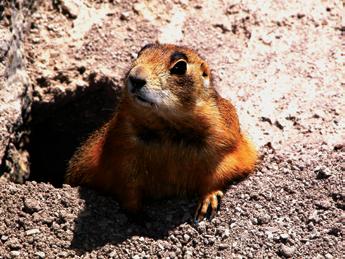
A substantial effort has been made to preserve the Utah Prairie Dog – a threatened species utilizing trust lands on Parker Mountain. The Utah Prairie Dog occupies valuable lands near cities and towns in Central and Southern Utah. Habitat-management restrictions associated with this animal curtail county and city governments’ desire to develop some of these lands to accommodate demands for growth.
After nearly five years of hammering out procedural details between multiple stakeholders (including Utah Division of Wildlife Resources, U.S. Fish and Wildlife Services, Utah State University Extension Service, and the Environmental Defense Fund), a mitigation bank agreement was created to help enhance and restore habitat for the species while providing opportunities for development and construction in growing communities impacted by its presence. In return for developing and permanently protecting new colony areas for prairie dogs on remote Parker Mountain trust lands, the Trust Lands Administration receives credits allowing habitat in urban areas to be developed. This Prairie Dog Mitigation Bank is one of the first of its kind in the nation. Depending on its success, additional lands may become part of the bank.
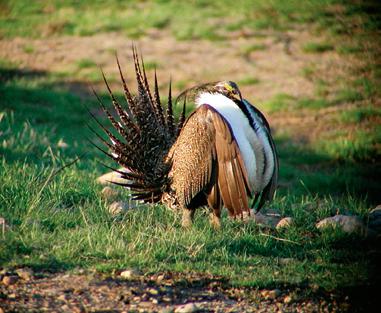
The School and Institutional Trust Lands Administration is a member of the Parker Mountain Adaptive Resource Management team and has worked closely to develop Sage Grouse, Pygmy Rabbit, and Utah Prairie Dog management plans that include strategies and action items.
These items include Trust Lands spending time and money to assist the Parker Mountain Resource Adaptive Management team in the treatment of 3,000 acres of habitat for Sage Grouse, 100 acres for Utah Prairie Dogs, five acres for aspen treatment and Utah State University research, 64 acres for sage brush treatment and USU research using sheep, and ongoing USU Sage Grouse research, all conducted on trust lands. The Trust Lands Administration has also been aggressive in using part of its grazing proceeds to assist in critical pond engineering and construction that has not only benefitted domestic livestock, but wildlife as well.
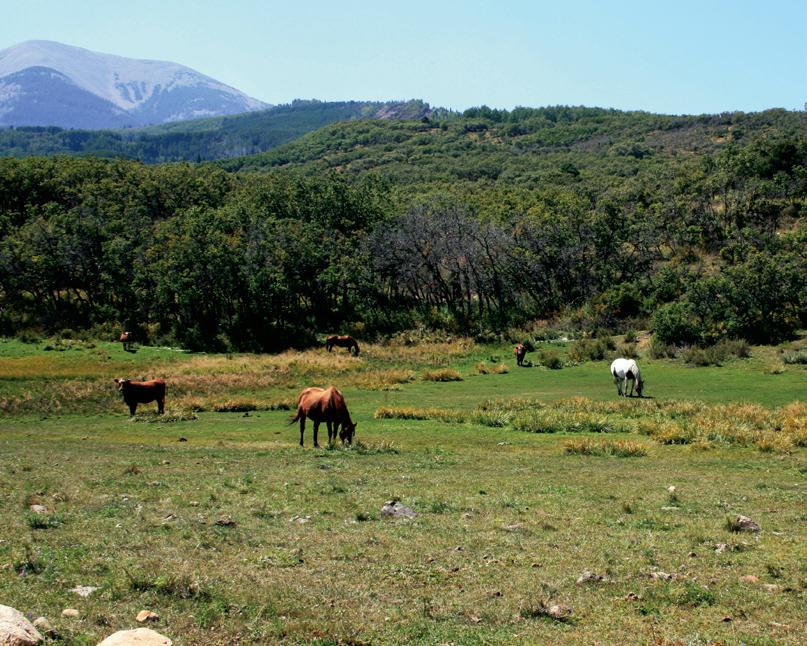
Closely related to Trust Lands’ conservation activities is our substantial investment in ongoing stewardship endeavors. Our stewardship undertakings maintain and build the value of trust assets. Here are some of the things we do to protect and improve trust lands.
The relatively dry summers of past years have resulted in destructive wildfires in Utah. Some trust lands have been damaged in those fires. The Trust Lands Administration’s efforts to rehabilitate burned areas are centered on determining which burned lands can best benefit from treatment. Over the past seven years, the agency has re-seeded more than 55,000 acres at a cost of $683,551. Further, the Trust Lands Administration has spent nearly $50,000 in cultural resource clearance for these fire rehabilitation projects.
It should be noted that efforts to rehabilitate fire-damaged areas can have mixed results. Some burned lands will benefit greatly from rehabilitation activities. Others will not respond significantly to human intervention and will need to recover through the course of natural activity. The agency’s expert foresters and range managers evaluated damaged areas to prioritize locations and specific methods of rehabilitation in order to achieve the most success.
One example of a successful rehabilitation effort is the endeavor made following the Book Cliffs fire of 2000. That year more than 40,000 acres of trust land acres were burned. The Trust Lands Administration took the lead in reseeding more than 18,000 acres of trust lands in addition to lands managed by the Utah Division of Wildlife Resources. The principal objective of the effort was to stabilize soils on steeper slopes to reduce topsoil loss. The agency spent $260,000 on this project. The results were generally successful with some areas responding beyond agency expectations. Compare the before-and-after pictures on this page.
During the summer of 2007, a year of extreme fire loss in Utah, there were at least eight wild fires that affected trust lands. Those lands are being rehabilitated. Approximately 39,800 acres of trust lands burned during the summer of 2007. Of that, 19,300 acres were deemed suitable for fire rehabilitation efforts. The Trust Lands Administration has committed up to $270,000 for those tasks.
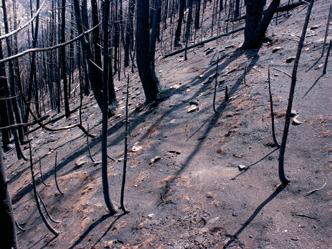
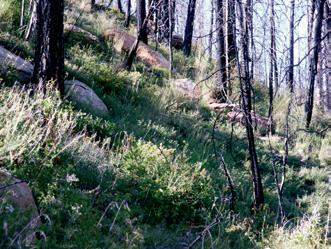
The photo on the left was taken just after the Book Cliffs Fire of 2000. It shows the devastation typical of the fire. The photo on the right shows a similar area three years later following a successful rehabilitation effort.
In 2007, the Trust Lands Administration was involved in the following fire rehabilitation efforts:
Milford Flat Fire (Millard & Beaver Counties)
The rehabilitation of the damage from this fire was coordinated by the Utah Partners for Conservation and Development – a consortium of state and federal landmanagement agencies of which the Trust Lands is a part. UPCD invested substantial resources for fire rehabilitation. More than 14,800 acres of trust lands were rehabilitated – 3,700 acres received aerial seeding only, 7,500 acres were chained and aerially re-seeded, and 3,600 acres were re-seeded by drilling. The Trust Lands Administration provided $175,000 for seed and contributed cultural resource identification valued at $55,000.
M & M Fire (Utah County)
Trust Lands coordinated with other state agencies for a green-stripping project on approximately 40 acres of trust lands and seeding other smaller isolated pieces infested with cheat grass. The agency committed $8,000 for the project.
Cedar Fort Fire (Utah County)
The agency worked with the Division of Wildlife Resources and the Division of Forestry, Fire & State Lands to treat approximately 400 trust land acres of the 800 to 900acre area burned in this fire. Nearly 100 acres were chained, utilizing sheep trampling to stir seed into the soil. The project cost $9,000.
Wine Cup Fire (Box Elder County)
Approximately 1,100 acres of trust land was damaged in this fire. All 1,100 acres have been re-seeded. The project cost $15,000 plus cultural resource clearance valued at $33,000. This rehabilitation was conducted in cooperation with UPCD.
Paradise Fire in Hamblin Valley (Iron County)
The Trust Lands Administration seeded 430 acres with an investment of $7,000. The grazing permittee also shared expenses for this project.
Greenville Bench Fire (Beaver County)
1,300 acres were burned in this fire. Reseeding was conducted with other landowners. Trust Lands supplied 4000 pounds of seed and contributed more than $5,000 for a prescribed-burn project in the area.
Salt Creek Fire (Sanpete & Juab Counties)
Approximately 400 acres of trust land were involved in this fire. Steep slopes and rough terrain made the area impractical for mechanical rehabilitation. The solution was flyover seeding, followed by sheep trampling to stir seed into the soil.
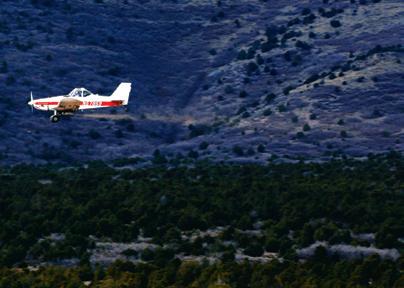
Aerial re-seeding of the Cedar Fort Fire area in Utah County.
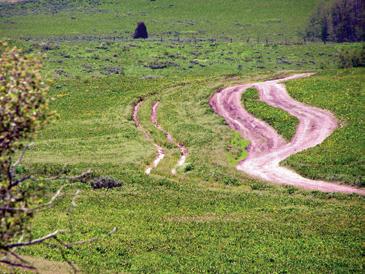
The burgeoning number of off-highway vehicles in Utah has resulted in the deterioration of some trust lands. To help mitigate this problem and to provide better trails for OHV users, the 2004 Legislature added a $1.50 fee to the annual registration of OHV’s in Utah to be used on affected trust lands. Since that time, more than $500,000 have been used by the Trust Lands Administration for mitigating OHV damage and providing OHV trail enhancements.
Trust Lands’ OHV stewardship activities include:
• Providing permanent access to more than 125 miles of OHV trails
• Trail construction
• Installing trail signage
• Providing public restrooms
• OHV education funding
• Fencing and gates
• Seasonal closures of areas where wildlife are threatened
• Closures to areas of excess damage
Our objective is to improve and secure the OHV experience on trust lands while reducing destructive OHV activities.
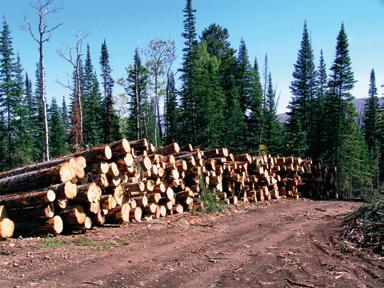
The Trust Lands Administration is vitally interested in the health of its forests and timber resources. Various agency activities promote forest stewardship. These include:
• Harvest plans to promote wildlife through aspen regeneration
• Reducing stands of decadent conifers
• Deconstruction and rehabilitation of roads
• Requiring loggers to register with the Division of Forestry, Fire, and State Lands
• Requiring loggers to make State Water Quality Guidelines part of timber contracts
• Audits of compliance to Water Quality Guidelines for each timber sale
Here are some of the other stewardship activities of the Trust Lands Administration:
• Membership in Sage Grouse working groups
• Participation in Sage Grouse habitat protection and development projects
• Participation in the state Resource Development Coordinating Committee so that other agencies and stakeholders can comment on proposed agency actions
• Coordination with the Division of Wildlife Resources for range-improvement projects to benefit wildlife
• Implementation of watershed improvement projects
• Provide funds for the control of noxious weeds
• Developing streambed management and restoration projects
• Clean-up of illegal dumping sites
• Grazing management to protect riparian areas
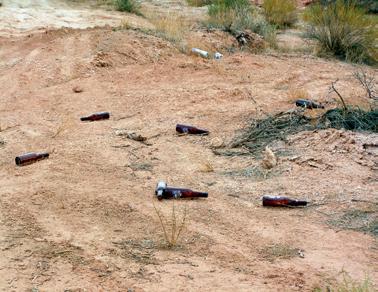
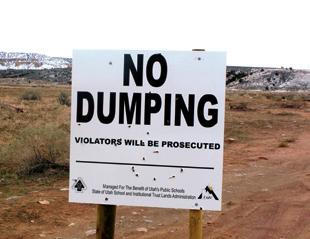
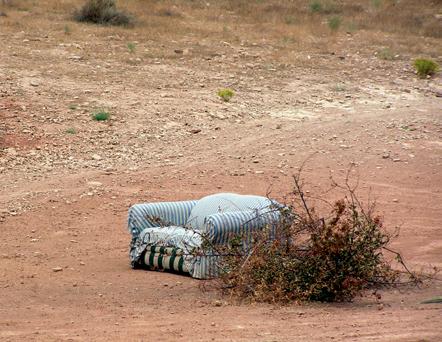
Illegal dumping and destruction of trust lands harm the financial returns to the Trust beneficiaries.
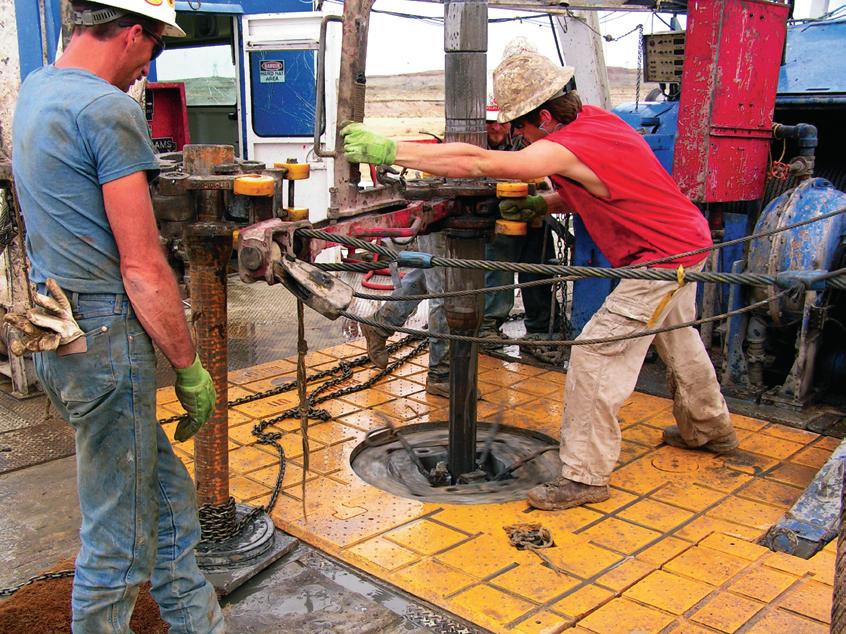
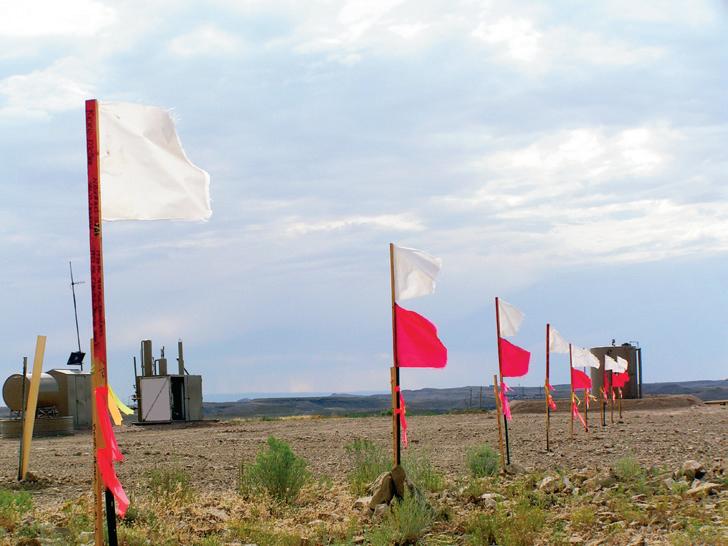
There is a new awareness about respecting the world’s resources and protecting the environment for the future. This is readily apparent with what has happened in the oil and gas industry over the past 40 years. It is now possible to develop oil and gas projects while impacting the earth as little as possible – leaving behind only a small footprint or none at all. The Trust Lands Administration has worked diligently with the energy industry to be good stewards of trust lands and to implement new strategies to protect the environment while producing new resources to meet growing energy demands. Emerging technologies are being employed by the energy industry to make better use of trust resources. Here are some of those practices:
One method of drilling wells that is being used more frequently is to drill multiple wells from the same drilling pad. While this is more expensive for the operator of the wells, it is good environmental stewardship. One trust land lessee has plans to drill 17 wells from one drillpad. Each well is drilled horizontally to different parts of the oil & gas field. Like a spider web beneath the earth, the “legs” of each well reach out as far as 2600 feet and bring back oil and gas to one surface location where it can be sent through pipelines to market. Instead of having surface disturbance at 17 locations, there will be disturbance at only one location. This protects the viewshed, bird nesting, and wildlife while reducing the number of roads and noise.
New drilling technologies allow for drilling oil and gas wells deeper than ever before. In many oil and gas fields, this prolongs the life of the field, yields additional resources for our energy needs, and has little additional impact on the surface.
3D seismic technology is a significant advance over traditional seismic processes. 3D seismic gives geophysicists a far more detailed view of subsurface structures that enables them to more accurately locate geologic formations with high potential for oil and gas. The result is that petroleum companies will drill far fewer dry holes (reducing surface disturbances) and will find heretofore undiscovered oil and gas resources. A good example of this was the discovery of a major gas field on the West Tavaputs Plateau in Carbon County. School trust lands are part of this field.
As the wells on the West Tavaputs Plateau are being completed on trust lands, the lessee is injecting carbon dioxide down the wellbores. This accomplishes two things: (1) it stimulates the production of greater amounts of marketable gas, and (2) it also reduces the amount of carbon dioxide released into the atmosphere – it is a good example of carbon sequestration.
More and more production companies are trying to blend their surface equipment into the landscape. This is not exactly a hightech process, but it does reflect a willingness to reduce the visual impact of operations. The operator of a newly built gas compressor site on trust lands has gone the extra mile to paint its buildings and equipment to match the surrounding skyline. The company has created a landscape canvas of sky, trees, and animals reflecting the viewshed of its location.
Emerging oil and gas technologies are impressive and are expected to continue to develop. The result is more energy resources for society and less impact on the environment, thereby preserving the lands for use and enjoyment by future generations.
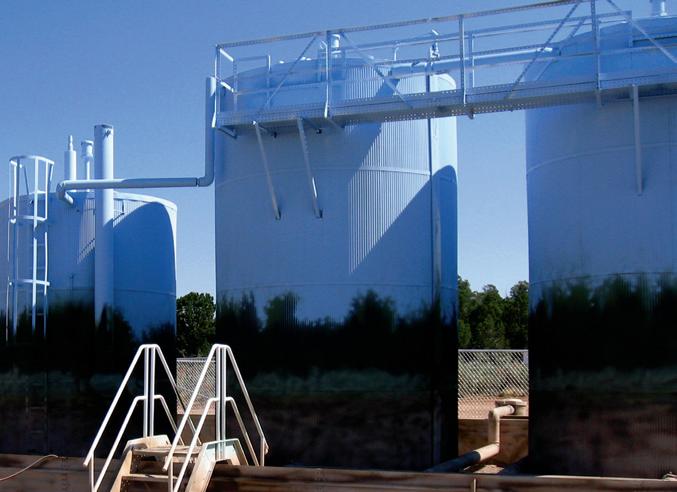
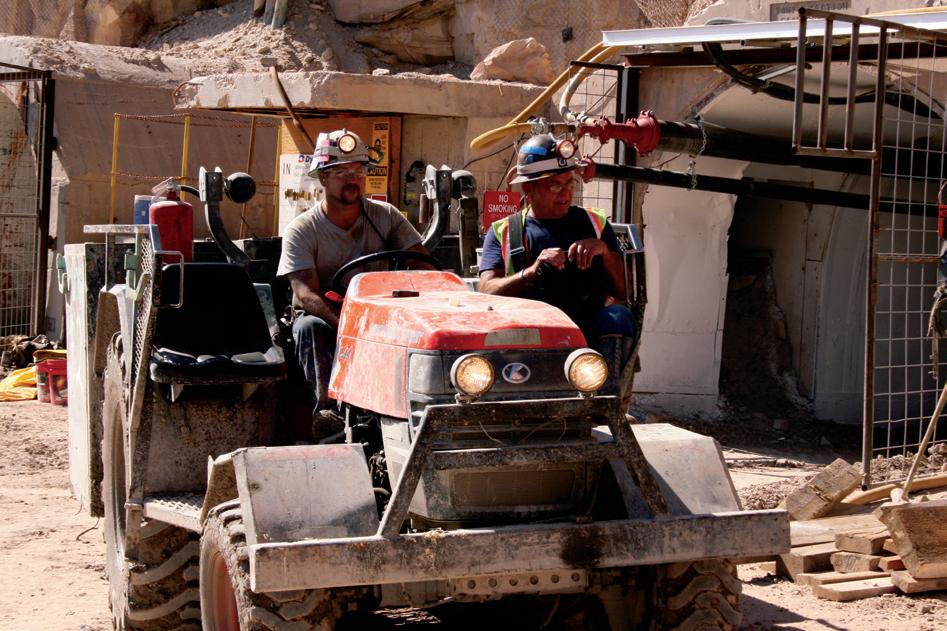
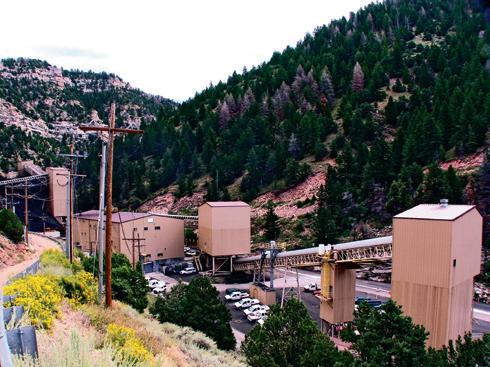
Agency revenue from coal production in fiscal year 2007 was $6.8 million. During fiscal year 2006, coal production in the state of Utah reached record production levels mainly due to increased levels of mining in the Book Cliffs and Carbon County coal fields. Exceptional production levels were also reached on trust lands coal.
Lease revenues from bituminous sands and oil shale totaled $1.4 million for FY 2007. Red Leaf Resources Inc. acquired a land position on trust lands in the Holiday and Seep Ridge Blocks in the Uintah Basin. Red Leaf announced that they would proceed with permitting for its proposed opencut mining/closed-cell retorting process.
Further, Temple Mountain Resources announced they would proceed with development of a mine and a processing plant located on the southern end of Asphalt Ridge in Uintah County. Its land position for this project includes a substantial amount of trust lands.
Copper
Constellation Copper Corporation’s Lisbon Valley Mine in San Juan County began producing copper metal from trust lands late in the fourth quarter of FY 2007.
Beryllium
Brush Resources increased metal production from its Spore Mountain Mine in Juab County after several years of depressed market conditions and has begun development of a pit expansion.
Uranium
Denison Mines continued development of the Tony M Uranium Mine on trust lands in Garfield County. The Tony M is expected to be in production by year’s end. Mineral leasing for uranium on the Colorado Plateau and for base and precious metals in the West Desert is at very high levels on trust lands.
Lime
Graymont Western continues to produce substantial amounts of highgrade chemical lime from trust lands at its Cricket Mountain Quarry in Millard County.
Sand and Gravel
Sand and gravel revenues from trust lands remained flat at $1.2 million. Key production areas are San Juan County, Uintah County, and Washington County.
Stone
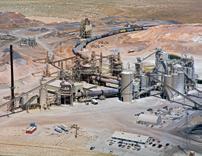
Emerging markets for aggregate made from crushed limestone in Utah County will, in large part, be met with material mined from trust lands at Pelican Point (Geneva Rock) and from a quarry on trust lands in Cedar Valley (Valley Asphalt). Demand for construction in this area remains high and is growing.
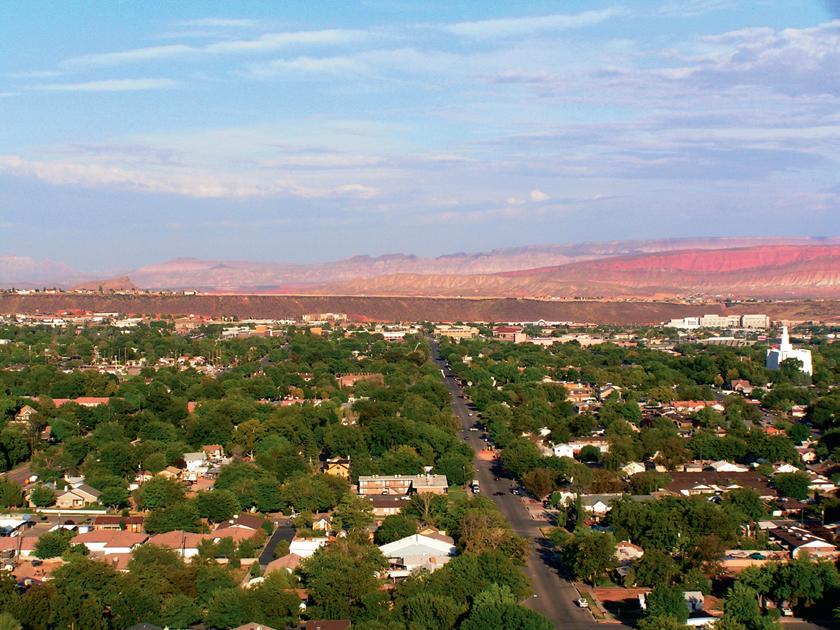
It’s a major part of the future of St. George. For now it is simply called “the South Block.” The block is approximately 6,200 acres of trust land directly south of the new Hidden Valley residential community/Fort Pierce Business Park areas southward to the Arizona border.
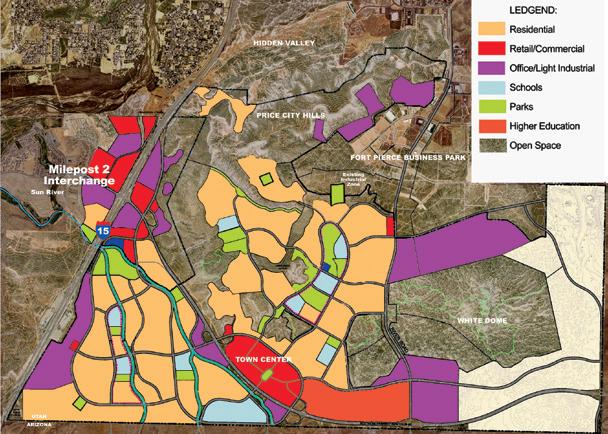
The Trust Lands Administration – in cooperation with St. George City, the Utah Department of Transportation, the Federal Highway Administration, U.S. Fish and Wildlife Service, and The Nature Conservancy – has created a master plan for the South Block. This is one of the largest master-planned communities in Utah. See the accompanying map of the South Block – Fig 5
The South Block will be a resident-friendly community of approximately:
• 2,000 acres for residential development
• 2,000 acres for commercial, office, and light industrial development
• 2,200 acres of open space, parks, and conservation areas
Some key elements of the South Block plan include:
• A new freeway interchange at Milepost 2 on Interstate 15 to serve the area and the new St. George airport
• A new Utah Welcome Center
• The Southern Parkway to connect I-15 to the new St. George airport
• A road system to provide for efficient traffic flow within the block and eliminate truck traffic from residential areas
• 13,000 residences
• Seven neighborhood elementary school sites
• Two middle school sites
• One high school campus
• More than 100 acres for city parks
• A 130-acre town center
• A 150-acre college campus
• The 530-acre White Dome Nature Preserve for threatened and endangered plant habitat
• Preservation of the historic Atkinville, Mokaac, and Lizard Washes within the area
The Trust Lands Administration has already invested millions of dollars in roads and infrastructure for the area, but expects to return $100’s of millions to the State Permanent School Fund over the life of the project. The plan creates a community that will take about 25 years to complete.
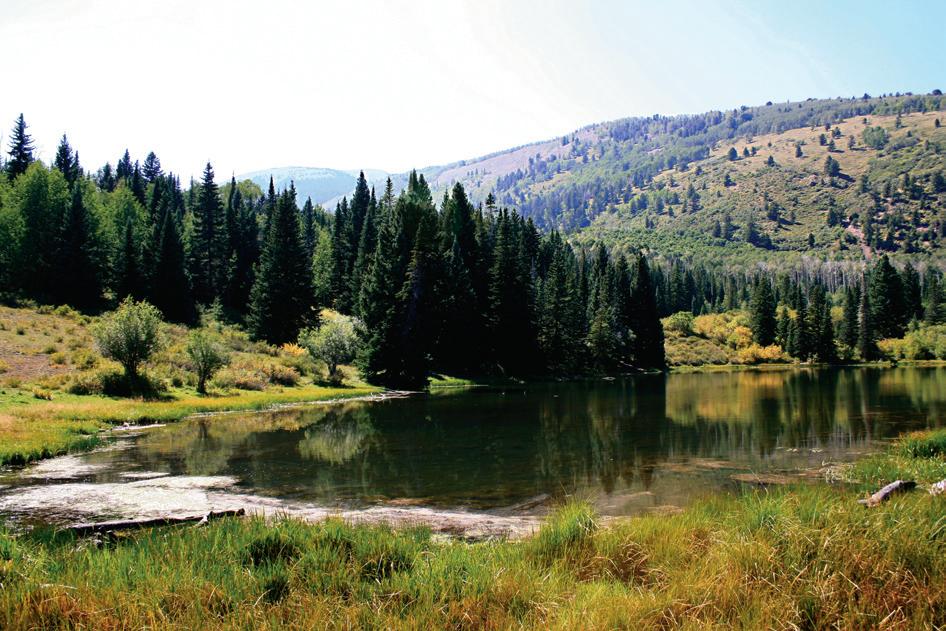
The School and Institutional Trust Lands Administration is an independent agency of state government. It was created in 1994 by the Utah state legislature to manage lands granted to the state of Utah by the United States for the support of public schools and other beneficiary institutions. Prudent and profitable trust lands management has put tens of millions of dollars to work in Utah’s schools
When Utah was granted statehood on January 4, 1896, the federal government gave the new state parcels of land to be managed in trust in order to provide financial support for public education and 11 other public institutions. The institutions that benefit from these lands are called beneficiaries. The lands are called trust lands and are scattered throughout the state.
From time to time, trust lands are sold. In fact, more than one-half of the original land grant has been sold, much of it during the first 35 years following statehood. Interestingly, about 30 percent of all private lands in Utah were originally trust lands.
Now, more than 100 years since statehood, the trust of each beneficiary consists of two portfolios: (1) the real estate portfolio, which is the beneficiary’s remaining trust land – managed by the Trust Lands Administration; and (2) the financial portfolio (money that comes from the work of the Trust Lands Administration) managed by the State Treasurer.
The objective is to successfully manage both the real estate portfolio and the financial portfolio to provide financial support for the beneficiaries. Successful management of Utah’s trust lands means working as partners with our beneficiaries, the governor and the legislature, other state agencies, local communities, and the public at large.
Where Does the Trust Lands Money Come From? Money from the management of trust lands comes from a variety of different sources.
Oil, Gas, and Mineral Revenues
The largest source of revenues from trust lands is from the leasing of mineral properties and royalties from the production of minerals. Mineral production comes from many sources, including gas and oil, coal, gold, and sand and gravel.
Leasing Surface Rights
Property owned by the Trust Lands Administration is leased by a wide variety of users. Leased trust lands are currently used as telecommunications sites, commercial sites, industrial sites, recreational cabin sites, farming, timber harvesting and forestry sites, and grazing lands for livestock. It is also used for rights of way and in leases to other government entities.
Trust Land Sales
There are times when the best way to make money for the beneficiaries is through the sale of trust lands. Trust land is generally sold in one of three ways:
1. Public Auctions – Public auction sales are held twice a year and are becoming more and more popular, as they make additional land available for private ownership in Utah.
2. Negotiated Sales – Negotiated sales are occasionally used in the sale of trust lands. Such transactions are completed only after considering competitive interest in the property. Negotiated sales are usually done with other state agencies or local governments.
3. Development Transactions – Development sales occur when it is determined that profits for the beneficiaries could be optimized by adding value to parcels of trust land before selling them. Usually, the Trust Lands Administration participates with experienced private real estate developers to provide land for residential, commercial, and industrial uses to help Utah’s growing communities get where they want to be.
Although the actual trust revenues vary considerably from year to year, a typical breakout of annual revenues could be:
This annual infusion of revenues has increased total trust assets to more than one billion dollars. The Trust Lands Administration will continue to build total assets at the rate of about $100 million each year – creating an increasingly significant impact on Utah public education and other Trust beneficiaries. The ultimate goal of the Trust Lands Administration is to make school trust lands a major source of public school funding. It should be noted that the Trust Lands Administration is entirely self-funded. A portion of the money generated from managing trust lands is used to operate the Trust Lands Administration. All expenses and capital costs are paid from these revenues. No tax money is required.
At the time of statehood, Congress designated 12 trust land beneficiaries in Utah. By far, the largest percentage of trust lands was granted to public schools for the benefit of Utah schoolchildren.
The other 11 designated beneficiaries are:
• Reservoirs
• Utah State University
• University of Utah
• School of Mines
• Miners Hospital
• Normal School (The current beneficiaries of this trust are the education departments at state colleges that offer undergraduate teaching degrees.)
• School for the Deaf
• Public Buildings
• State Hospital
• School for the Blind
• Youth Development Center
The Trust Lands Administration works closely with local communities to build value for Utah’s schoolchildren. Cash generated by both trust land operations and trust land sales is transferred to the Permanent State School Fund. By doing so, the endowment for the public schools grows more and more each year. Investment income (interest and dividends) from the Permanent Fund is distributed to the schools each year for local academic needs. The distribution is primarily based on the number of students at each school.
As a cautious and far-sighted steward of the land, the Trust Lands Administration recognizes that certain trust lands have unique scenic, recreational, or environmental characteristics. In these situations, the organization works to sell the land for conservation purposes or exchange it for other real estate more suitable for development.
Our Mission
It is the mission of the School and Institutional Trust Lands Administration to administer school trust lands prudently and profitably for Utah’s schoolchildren and other trust beneficiaries.

Chairman
Michael P. Morris
Managing Director / Group Head
Real Estate Capital Markets
Zions Bancorporation
Background in real estate and commercial banking
Alpine, Utah
Term: expires 6/30/2008
Vice-chairman
John Y. Ferry
Vice-President, JY Ferry and Son, Inc.
Background in ranching & farm management Corinne, Utah
Term: expires 6/30/2010
Board Member
James J. Eardley
President, Dixie Transport, Inc.
Background in LP gas distribution, county government and banking St. George, Utah
Term: expires 6/30/2007
Board Member
James B. Lee
Senior Lawyer, Parsons Behle & Latimer
Litigator for more than 40 years in mineral, water & environmental law Salt Lake City, Utah
Term: expires 6/30/2009
Board Member
John Scales
President, Flying J Oil & Gas Inc.
Background in oil & gas exploration and development
Sandy, Utah
Term: expires 6/30/2011
Board Member
Michael Brown
Vice-President, Graymont Western US Inc.
Background in environment, safety, and geology
Kaysville, Utah
Term: expires 6/30/2012
Board Member
Gayle F. McKeachnie
Governor’s Office, Rural Affairs Coordinator
Background in business and natural resources law
Vernal, Utah
Term: serves at the pleasure of the Governor
Board Member Nominee
Daniel C. Lofgren
President, Cowboy Partners, Cowboy Properties
Background in Commercial Real Estate Development
Salt Lake City, Utah
Term: expires June 30, 2013
Senior Staff
Kevin S. Carter Director
Lynda Belnap Administrative Assistant to the Director
John W. Andrews Associate Director and Chief Legal Counsel
Tom Faddies Assistant Director/Hard Rock and Industrial Minerals
LaVonne J. Garrison Assistant Director/Oil and Gas
Kim S. Christy Assistant Director/Surface
Douglas O. Buchi Assistant Director/Planning & Development
Lisa Y. Schneider Finance Director
Kay Burton Block Planner
Jeff Roe ITS Manager
Ron Carlson Audit Manager
Dave Hebertson Public Relations Manager
Photo Credits
Page 15 - Bear Claw Poppy by Mark A. Philbrick of BYU
Page 15 - Desert Tortoise by James Weston of Hogle Zoo
Page 16 - Utah Prairie Dog by James Weston of Hogle Zoo
Page 16 - Sage Grouse by Carol Davis
Page 25 - Directional Drilling by Jim Davis of Trust Lands Administration
Page 26 - Camouflaged equipment by Jim Davis of Trust Lands Administration
All other photos by NormaLee McMichael of Trust Lands Administration
State of Utah
School & Institutional Trust Lands Administration
Main Office
675 East 500 South, Suite 500, Salt Lake City, Utah 84102, Phone: 801-538-5100, Fax: 801-355-0922
Central Area
130 North Main, Richfield, Utah 84701, Phone: 435-896-6494, Fax: 435-896-6158
Southwestern Area
2303 North Coral Canyon Boulevard, Suite 100-A, Washington, Utah 84780, Phone: 435-652-2950, Fax: 435-652-2952
Southeastern Area
217 East Center Street, Suite 230, Moab, Utah 84532, Phone: 435-259-7417, Fax: 435-259-7473
For more information contact: Dave Hebertson
davehebertson@utah.gov
NormaLee McMichael nlmcmichael@utah.gov www.trustlands.com