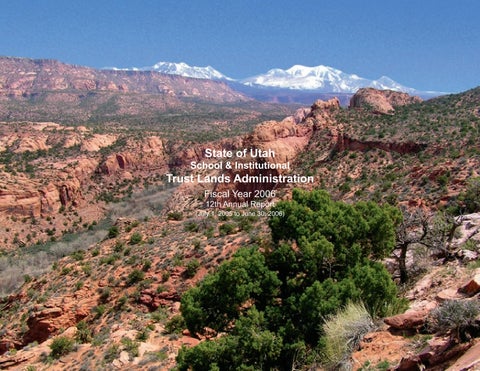
12th Annual Report (July 1, 2005 to June 30, 2006)
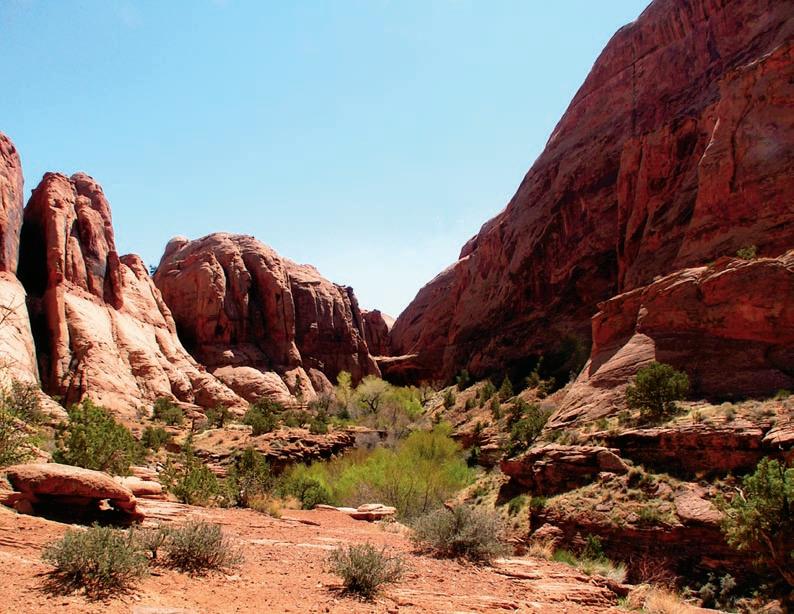
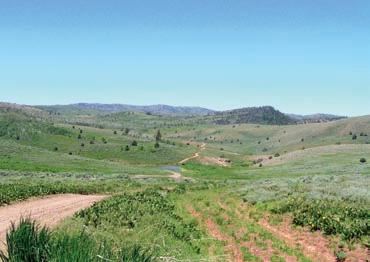
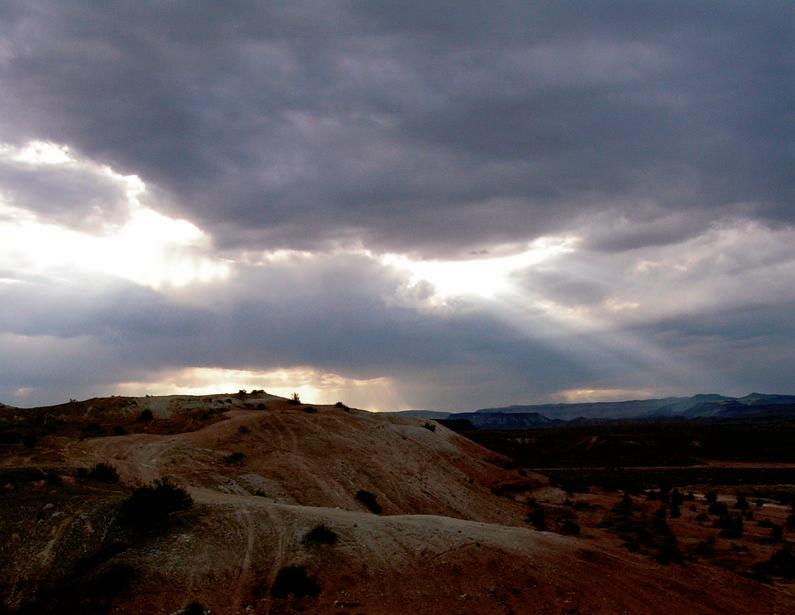
Range Creek Canyon - Carbon County
Vision
The Trust is an increasingly significant source of funding for Utah’s schools.
Mission
To administer the trust lands prudently and profitably for Utah’s schoolchildren and other trust beneficiaries.
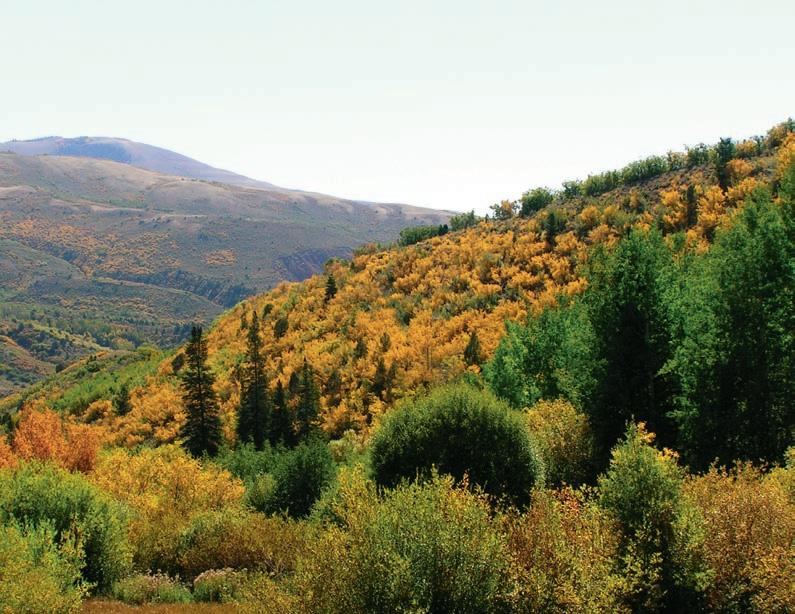
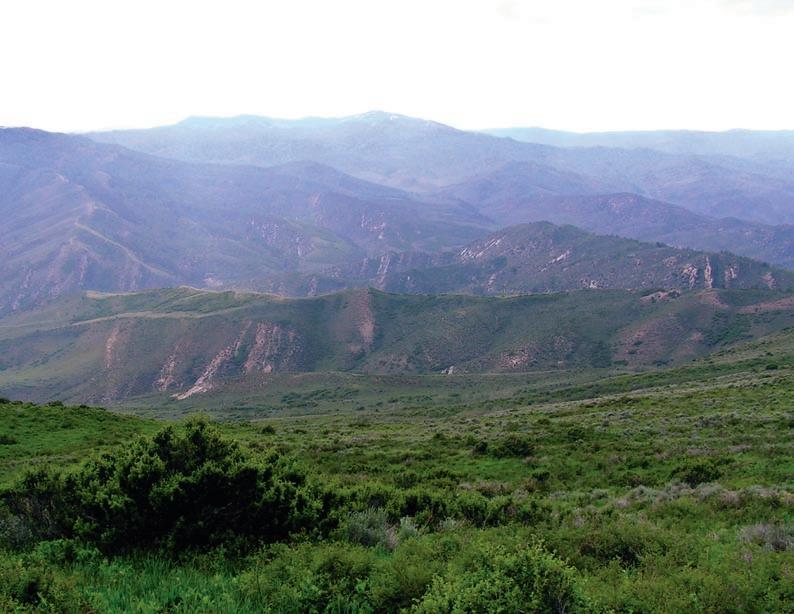
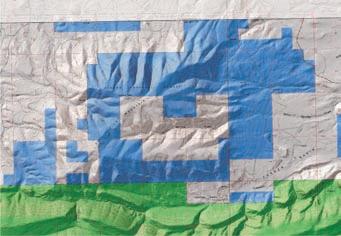
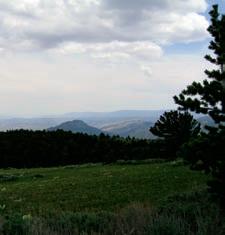
Tabby Mountain BlockDuchesne & Wasatch Counties
Message From The Director
Fiscal year 2006 was another record year for revenues at the Trust Lands Administration – more than $162,000,000. The financial success for the year is attributable to:
• The continuing robust demand for oil and gas
• The maturing of several development projects
• The continuing success of our land auctions
• The improved management of many other surface and mineral resources
Total trust assets grew by $166 million during the year – from $641 million to $807 million. That growth keeps us on track to reach our goal of $1,000,000,000 in total trust Assets by 2010.
The trust land dividend, which is sent annually to each public school, is part of the earnings from the investment of trust assets by our state treasurer. Those distributions reached $14,000,000 last year and will continue to grow in the future. It is gratifying to me that the work of this agency grows in significance each year for the benefit of our schoolchildren and at no cost to taxpayers.
During the past several years, the Trust Lands Administration has invested millions of dollars improving the value of trust lands for the beneficiaries. We have learned that these investments also benefit local citizens and governments by:
• Cultivating economic growth
• Creating opportunities for new jobs
• Improving county and local revenues by putting lands on the tax rolls
• Meeting market needs for residential, commercial, industrial, and open-space real estate
• The privatization of trust lands
• Fostering attractive and creative land use
My thanks to our Board of Trustees, the Trust Lands’ staff, our customers, and governmental leaders who make these excellent results happen.
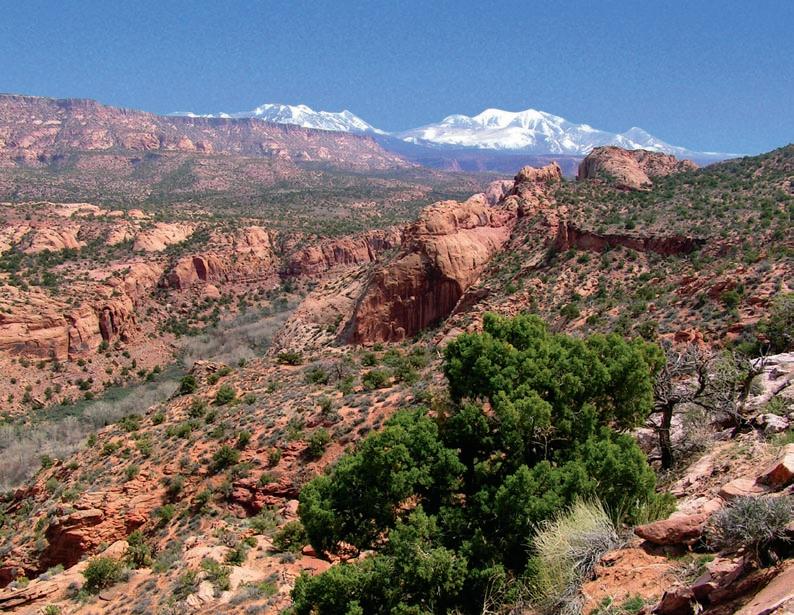
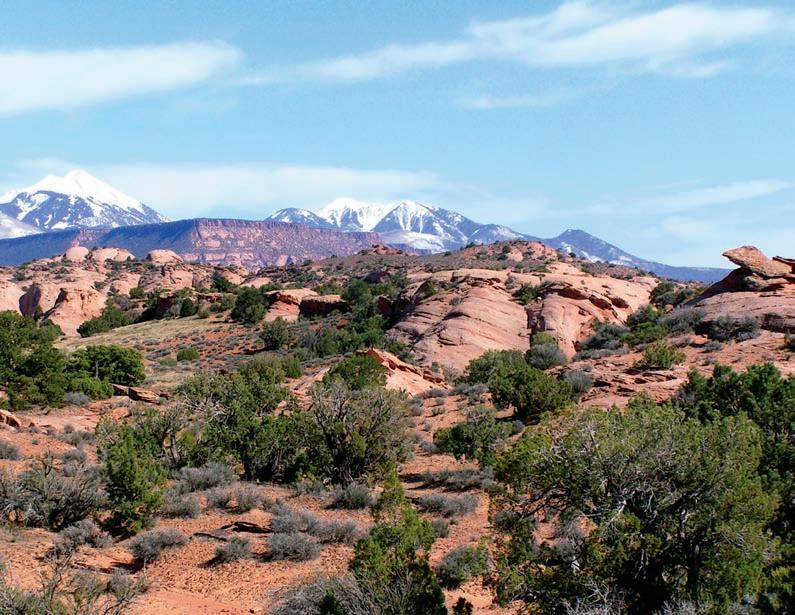
La Sal Mountains from jeep trail viewpoint
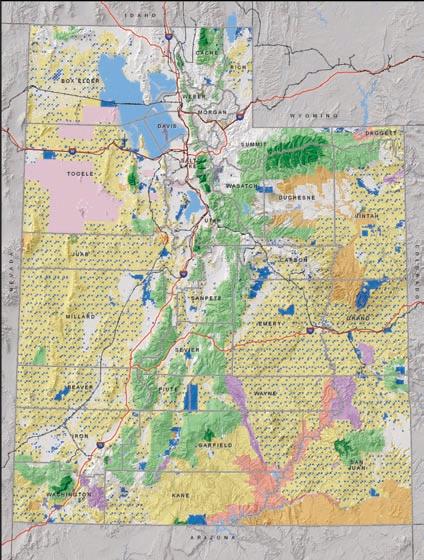
Statewide Ownership Map
Trust lands are mostly scattered in a checkerboard pattern in rural Utah. However, there are several larger blocks of trust land that can also be seen on this map.
Map Legend
Trust Lands
Private Lands
U.S. Bureau of Land Management
U.S. Forest Service
Indian Reservations
U.S. Military
U.S. National Park Service
FY 2006−Financial Summary
2006 Financial Info
Fiscal year 2006 was a record-setting year for the School and Institutional Trust Lands Administration. Revenues of more than $162 million exceeded last fiscal year by more than $53,000,000. This increase was a result of strong demand for trust land resources and continually improving management efforts.
The agency makes money in a variety of ways. Major activities are shown in Fig. 1.
Fig. 1 – Revenues by Type
Trust Lands’ revenues have grown dramatically since the creation of the agency in 1994. Fig. 2 is a summary of revenues and expenses.
Fig. 2 – Gross Revenues and Expenses
*Includes interest on permanent funds
As also can be seen in Fig. 2, a relatively small percentage of gross revenue is used to operate the Trust Lands Administration. As a result of increasing revenues and holding the line on expenses, total trust assets have also grown substantially during the past 12 years. Total trust assets are the combined assets of all 12 beneficiaries – including their permanent funds. Total trust assets have grown from $94.5 million at the end of FY 1994 (when the agency was established) to more than $807 million at the end of FY 2006. See Fig 3.
FY 2002 $353,194,700
FY 2003 390,284,500
FY 2004 469,178,100
FY 2005 570,952,000 FY 2006 705,034,100
A major component of total trust assets is the State Permanent School Fund for Utah’s public schools. At the end of FY 2006, that fund stood at $705,034,100. That’s more than nine times the amount the Trust Lands Administration started with when it was founded just 12 years ago (see Fig 4).
For additional financial information, go to the Trust Lands’ web-site at www.trustlands.com Follow these links: Homepage > Financial Statements & Statistics > Financial Statements > FY 2006 (or any year listed). These financial reports are not audited. For audited financial information, contact the Trust Lands Administration’s Director of Finance at 801-538-5100.
Fig. 3 – Trust Lands Total Asset Value
Fig. 4 – Permanent School Fund Balances
Tabby Mountain Block
Surface
Roads on Trust Lands
Rural roads have been a subject of considerable controversy in Utah for the past several decades. The scattered ownership of trust lands throughout the state has made the Trust Lands Administration a major participant in formulating trust and public land access decisions.
During the past fiscal year, the Board of Trustees created an official policy regarding roads and access on trust lands. The policy (Policy No. 2006-01) clarifies the process of how the agency will finalize easements or rights of entry for four general categories of roads on trust lands. This policy provides more certainty for the counties claiming roads on trust lands, complements their efforts in securing access within their jurisdictions, and will help bring resolution to various claims for prospective buyers of trust land properties.
Here are the four general categories of roads on trust lands:
• Category 1 – Roads that were established on trust lands prior to title to the land vesting with the state of Utah are considered valid existing rights. There is no additional process needed for these roads.
• Category 2 – Roads that do not have a grant of authority from the Trust Lands Administration, but that have been temporarily authorized by a grant of right of entry from the state legislature. This is a temporary easement that provides for roads constructed, maintained, or used on trust lands before January 1, 1992. The temporary status of such easements or rights of entry remains in effect until they are made permanent through an application process formalized by administrative rule.
• Category 3 – Roads that have been established since January 1, 1992, without a grant of an authority from the Trust Lands Administration and that are currently unauthorized. These roads may be legitimatized through the process of granting easements or rights of way as provided by current Trust Lands rules.
• Category 4 – Roads for which there is a valid easement from the Trust Lands Administration or a predecessor agency.
The Trust Lands Administration has also formalized a rule-based process that provides a mechanism for receiving input and bringing certainty to various road claims. The process provides notification to counties and other responsible authorities for the Trust Lands Administration to receive input to determine the merits of finalizing easements or rights of entry for roads that cross TLA properties before property is sold.
The policy and processes described above do not affect any valid RS2477 claims made by the counties.
Cinnamon Creek Block in Cache and Weber Counties
New Access Provisions for Nutty Putty Cave
In April, 2006, access management to the Nutty Putty Cave – located on trust lands in Utah County – was changed. The Timpanogos Grotto of the National Speleological Society completed a Memorandum of Understanding with the Trust Lands Administration whereby they would gate the cave and manage cave access.
For many years, the cave was open to anyone from the public wishing to enter at their own risk. Thousands of people have visited the cave, but many of them have been insufficiently trained and poorly equipped.
The dangers of spelunking were underscored during the Labor Day weekend of 2004 when Utah County search-and-rescue personnel were called for two rescues at the cave. Trust Land managers determined that because of the popularity of the site, better management of the cave was needed. The only other practical option was to close the cave entirely.
Proposed cave-management ideas were discussed and reviewed with various interest groups. A decision was made that the cave entrance be gated, and unrestricted general public access would be eliminated. Because of its experience in running cave access in other areas, it was also decided the Timpanogos Grotto would manage the cave.
The Grotto is allowed to restrict access and manage the cave for the foreseeable future. It will also work with other organizations willing to comply with new requirements. Visitors are still allowed into the cave, but need to gain access from the Timpanogos Grotto – subject to new caving standards proposed by them and other organizations to promote safe caving and resource-preservation practices.
Cave management by Timpanogos Grotto does not interfere with the highest and best use of the property which is mineral development. It is also completely compatible with existing livestock grazing in the area.
Those individuals or groups interested in obtaining access to the cave should contact the Timpanogos Grotto Caving Club at http://www.caves.org/grotto/timpgrotto/NuttyPuttyAccess.html.
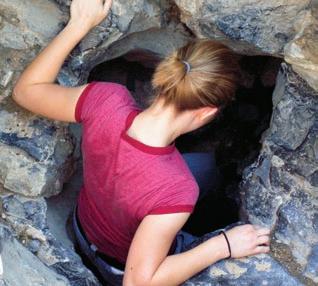
Surface entrance to Nutty Putty Cave
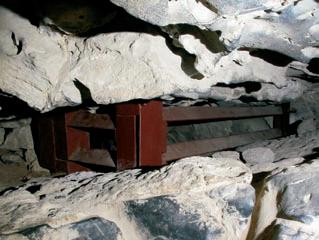
Interior gate
Prairie Dog Mitigation Bank
After nearly five years of hammering out procedural details between multiple stakeholders, a mitigation bank agreement has been created for the Utah Prairie Dog. The bank agreement enhances and restores habitat for the threatened species as well as providing opportunities for development and construction in growing communities affected by prairie dog habitat and associated development restrictions.
The Utah Prairie Dog is unique to the state and is currently listed as “threatened” under the Federal Endangered Species Act. Its habitat is located in parts of Sevier, Beaver, Iron, Garfield, Wayne, and Piute Counties. Although it has been down-listed from “endangered” to “threatened” status, such designation has presented significant challenges in areas such as Cedar City, where habitat for the species curtails development opportunities.
Three habitat bank sites have been established on nearly 800 acres of land located within the School and Institutional Trust Lands Administration’s 105,000-acre Parker Mountain Block in South Central Utah. The bank sites are now in perpetual conservation easements. A perpetual endowment fund has also been established for maintenance of these sites.
Prairie dog credits are earned by the Trust Lands Administration for the property put into perpetual conservation easements. The agency can use the credits as mitigation for its own development projects or sell them to others. Initially, 77 credits were available based on the Division of Wildlife Resource’s dog count at the sites. Because of high demand, all of these credits were sold to Iron County for $1,636 each, plus $200 per credit for the perpetual endowment fund. Iron County subsequently sold them to private developers. The values were established based upon a third-party appraisal of the bank-site properties.
This Prairie Dog Mitigation Bank is one of the first of its kind in the nation. Depending on its success, additional lands may become part of the Mitigation Bank. The other participants in this project were the Utah Division of Wildlife Resources, U.S. Fish and Wildlife Services, USU Extension, and Environmental Defense.
Phil Pico – Access Secured
Creating and maintaining access to TLA properties, particularly large land blocks, are important components of maximizing the administration’s ability to effectively manage and monetize natural resource assets. This year the agency was successful in working through some significant access problems associated with one of its blocks – Phil Pico - near the Wyoming border in Daggett County.
The block is largely surrounded by private land that has historically presented challenges for access to many portions of the block. Through negotiations with seven private landowners, reciprocal easements will now allow all parties to have access to their lands through the properties of the other landowners.
There are three primary benefits that have accrued to the parties participating in these reciprocal easements:
• Proactive forest management
• Improved fire suppression
• Additional management alternatives
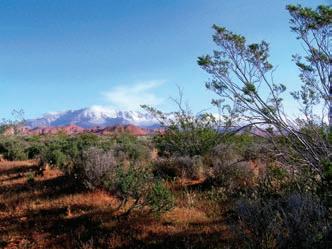
White Dome near St. George
Development
The Maturing Development Group
The Trust Lands Administration launched its Development work group in 1996. It was a classic start-up operation; and, in the first two years, the group had only a few employees. It began working to create value in the properties it manages. Value was added through activities such as land planning, zoning changes, and small investments in supporting infrastructure for key pieces. In the 1996-2000 period, the group generated annual revenues in the $2,000,000 - $4,000,000 range.
By 2000, the Development work group had become established and had entered an entrepreneurial stage. More than 100 properties with development potential had been identified. The group gained more organization and structure and pushed to grow and capture value at a higher level. The group restructured a number of historic transactions to improve profitability and developed innovative transaction structures to enable the Trust to capture higher values. A number of partnering ventures with the private sector were approved and implemented. Investment in capital improvements was accelerated on key development parcels, primarily in Southwestern Utah.
Fig. 5 shows the relationship of development revenues correlated with capital investments from FY 2000 through FY 2006. The chart shows how well capital investments have paid off during that seven-year period.
Fig. 5 – Development Revenues vs. Capital Investments
Year Revenues Investment
FY 2000 3,161,000 1,944,000
FY 2001 4,423,000 1,697,000
FY 2002 3,119,000 2,019,000
FY 2003 5,246,000 3,222,000
FY 2004 6,190,000 4,187,000
FY 2005 16,922,000 4,791,000
FY 2006 36,106,000 6,604,000
By 2005, it became clear that the Development Group was entering a growth stage. Revenues in FY2005 increased to $17,000,000, with capital investments at $6,000,000. In light of the growth and increasing complexity, a consultant was hired to study development strengths, weaknesses, opportunities, and threats and to chart out a 10-year strategic plan. This plan now directs the ongoing efforts of the group to grow and sustain its increasing importance in overall agency performance.
FY 2006 confirms the consultant’s input. Revenues were more than $36,000,000, with invested capital at $7,000,000. Projections for future years suggest that this level of contribution can be grown, subject to the overall impact of real estate market conditions.
Added Value Through Development
The Trust Lands Administration is actively developing several parcels of trust land in Utah. A number of factors are in play as the agency considers development opportunities. The Trust Lands Administration works to meet its fiduciary duty to the beneficiaries. This cannot be subordinated in any way.
In the arena of real-estate development, the agency uses a strategy with several facets:
• Foster attractive and creative land use
• Help meet the needs of local markets for residential, commercial, industrial, and open-space real estate
• Cultivate economic growth:
¬ Through the privatization of trust lands
¬ Building opportunities for new jobs
¬ Improve county and local revenues by putting lands on tax rolls
Over the past decade, the agency has worked to improve the financial position of its beneficiary institutions through development activities. That work is paying off as demonstrated by statewide development revenues exceeding $36,000,000, in fiscal year 2006.
One of our most important development areas is Washington County, Utah. The Development work group conducted a study to determine the impact of Trust Lands’ development activities in Washington County.
At the end of fiscal year 2005, a consulting economist studied five factors analyzing the fiscal impact of the Trust Lands Administration upon Washington County. The result is this analysis for the years of FY 1998 through FY 2005.
Factors studied:
Acres Privatized
Housing Units
Value of Improvements
Employment
Property Taxes
Acres Privatized since FY 1998 – a measure of land ownership changing from the state into private ownership. Private ownership brings property taxes to the county for schools and other local government purposes. Acres privatized since FY 1998:
Commercial/Industrial 199 acres
Residential 691 acres
Agricultural/Range lands 2,396 acres
Total Acres Privatized 3,286 acres
Housing Units Created since FY 1998 – the number of dwelling units built on sold trust lands:
Apartments-Condos-Townhouses 235 units
Single Family 772 units
Total Housing Units 1,007 units
Value of Improvements – the assessed value of both land and improvements according to the Washington County Assessor’s Office for the 2005 tax year:
Residential Value of Improvements
Commercial Value of Improvements
Total Value of Improvements
$131,216,496
$26,332,007
$157,548,503
Employment – according to the Utah Department of Workforce Services (thru March 2005), the number of jobs located on trust lands sold was: 616.
Property Taxes – the 2005 property taxes paid to Washington County by businesses located on former trust lands were: $2,054,180.
Trust Land Money for Washington County Schools
In addition to the direct economic enhancements that Trust Lands’ development activities have brought to Washington County, the Trust Land Dividend to Washington County public schools has been more than $2,373,000 since 2003. This is money sent to individual schools to be used for educational enhancement at the discretion of parents and teachers at each local school.
Our plan is to continue to work strategies for trust lands which will serve the interests of our beneficiaries and support the communities of Washington County and all other communities in the state where Trust Lands’ development activities occur.
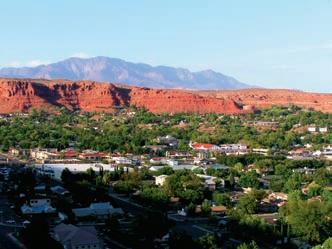
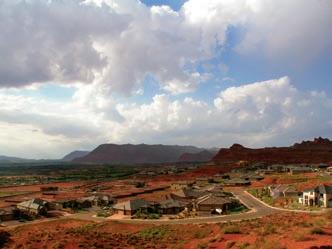
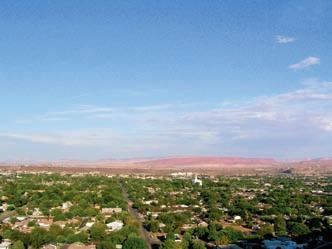
Photos of St. George and Washington County area.
Hidden Valley
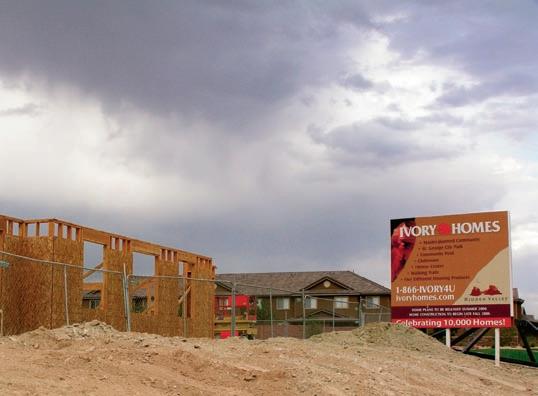
In October, 2005, Ivory Homes was selected as the developer of a community planned for 995 residences on 360 acres of trust land at Hidden Valley in St. George. Hidden Valley is located about two miles southeast of the Bloomington interchange on I-15.
The development features a variety of home designs, including apartments, town homes, villas, twin homes, single-family lots, and estate lots. The community will also have a park, an elementary school site, a community center, and an urban trail system.
Ivory Homes was chosen as developer because of a combination of factors including an excellent reputation, financial capacity, and acceptance of city-approved plans. The project signals the return of Ivory Homes to the St. George area. Ellis R. Ivory was the original developer of the Bloomington area of St. George and founder of Ivory Homes. Ivory has been a successful real estate developer and homebuilder along the Wasatch Front during the intervening years.
Port 15 Utah
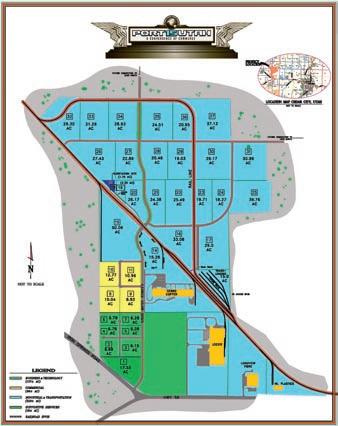
A major new business park is coming to trust land in Cedar City, Utah. Port 15 is located on 700 acres about four miles west of downtown Cedar City.
Port 15 Utah will be an intermodal business park that efficiently connects railroad, trucking, and air service in what will become a major hub for the production and transportation of goods in the western United States.
The business park is a Trust Lands partnership effort with Quantum Development of Cedar City. Construction began May, 2006. Marketing of the first phase is underway.
The launching of the project was accelerated by the creation of an Economic Development Area for its development. As a result, the project is forecast to be fully built out within the next 17 years. During that time, Port 15 Utah is predicted to:
• Bring 7,000 new jobs to Cedar City – many with salaries greater than the area median income
• Generate more than $28 million in new tax revenues including:
¬ $16,000,000 for funding economic development
¬ $6,000,000 for the Iron County School District
¬ $5,500,000 in funding for affordable housing
Additionally, millions of dollars in revenues are forecast for Utah’s schools and other trust land beneficiaries through sales and rentals within Port 15 Utah.
Coal & Industrial Minerals
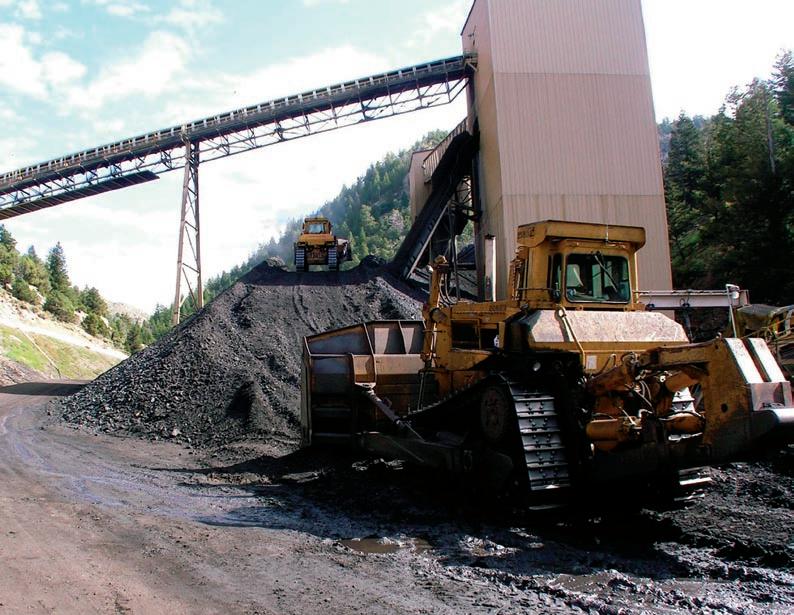
Coal business on trust lands is improving again. Coal revenues for FY 2006 were $4.7 million, up more than $3 million from the prior year. There were two reasons for this improvement:
• Over the past five years, the price of coal has gone up from $20 per ton to $25 per ton
• More trust land coal is now in production
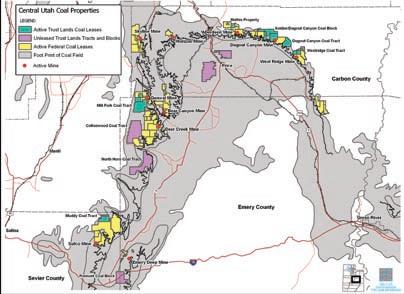
The bulk of trust land coal properties are in Carbon, Emery, and Sevier Counties in Central Utah. Last year the Mill Fork Tract of the Deer Creek Mine in Western Emery County came into full production. The production from this tract accounted for most of the increased coal revenues. This mine should continue to provide this level of production for many more years.
Further, in FY 2006, several other new tracts began coming into production. These tracts include the Muddy Tract of the Sufco Mine in Sevier County, the Westridge Tract of the West Ridge Mine in Carbon County, and the Dugout Coal Tract of the Dugout Canyon Mine in Carbon County.
Since these additional properties are just coming into full production, anticipated coal revenues for next year will increase to $9 million. Annual revenues in the $9 million to $10 million range are forecast for the next several years.
Most of these coal tracts were acquired by the Trust Lands Administration through the Grand Staircase – Escalante National Monument Exchange with the United States in 1998. The Minerals Group has been working to bring those properties into production since that time.
Additional coal tracts have not yet been leased, but will be in the future. The Trust Lands Administration will continue to work at getting its existing coal properties leased and into production. It will also continue efforts to acquire new coal properties in the future.
Other Minerals
In addition to the successes seen in the coal-management program, other industrial and hardrock minerals exhibited similar upward trends in revenue, including:
• Sand and gravel now produce annual gross revenues of $1.1 million
• Oil shale and tar sands leases yield more than $1 million per year
• Stone, potash, and gilsonite production remains strong
In the next few years, new mines will be producing uranium and copper metals from trust lands. Exploration projects for gold, copper, molybdenum, and uranium are currently being undertaken on trust lands.
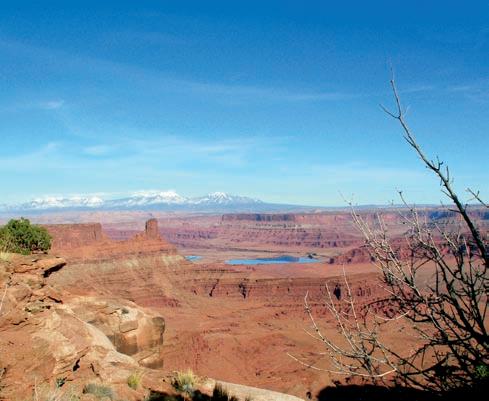
Potash ponds as seen from Dead Horse Point near Moab
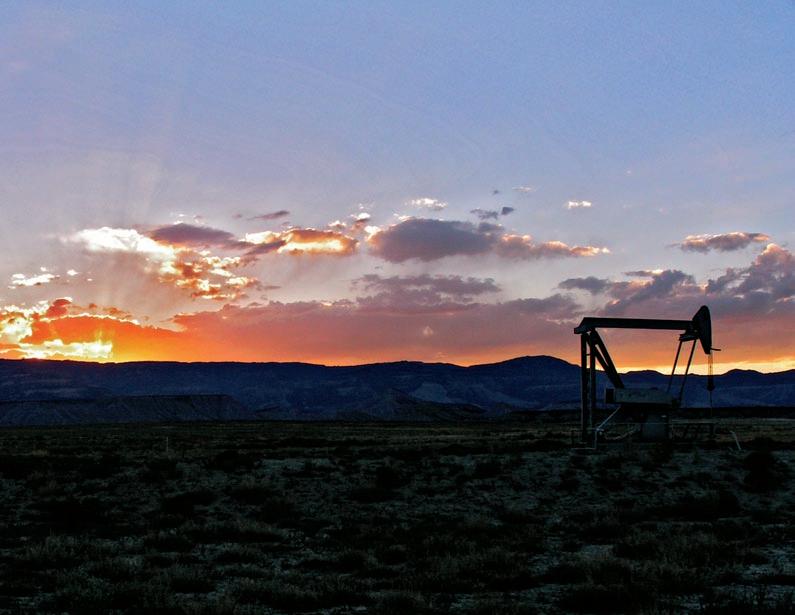
Pump Jack in Carbon County
Oil & Gas
Oil & Gas
Since fiscal year 2000, each consecutive year has produced increasingly greater revenues from Trust Lands’ oil and gas operations. This trend continued in fiscal year 2006. Total oil & gas revenues for FY 2006 were at a new high of $82,655,606. The revenues come from two sources – rentals for leasing of oil and gas properties and royalties paid on the production of oil and gas.
In FY 2006, several factors worked together to generate record-setting oil and gas revenues from trust lands:
• The availability of trust lands for lease
• Favorable drilling terms from the Trust Lands Administration
• Quick turnaround time from acquiring trust land leases to being able to start drilling
• Favorable business climate in Utah
• The steady growth in the price of oil and gas
FY 2006 was a record year with 474 applications for permits to drill for oil and gas on trust lands. It is anticipated that there will be even more permit applications in the coming year. Additionally, the agency is seeking to acquire more mineral-rich properties through land exchanges with the United States.
Many of the oil and gas trust lands are managed for the benefit of Utah’s public schools. When production is good and prices are high, substantial revenues are generated for the Permanent State School Fund. This was the case in FY 2006. With oil and gas revenues contributing 51 percent of all revenues, the Permanent School Fund increased by $134,082,000 to more than $705,034,000.
The Trust Lands Administration is also aware of the environmental impacts of energy production. Consequently, we seek to implement procedures to minimize surface disturbance and protect the lands for future generations. Here are some of the ways we try to achieve those goals:
Where possible, drilling several wells from a single well pad
Utilizing seismic and other new technologies to reduce the number of dry holes
Increased monitoring of well sites
Quicker reclamation of well sites
We will always try to help America with its energy needs while maintaining its quality of life.
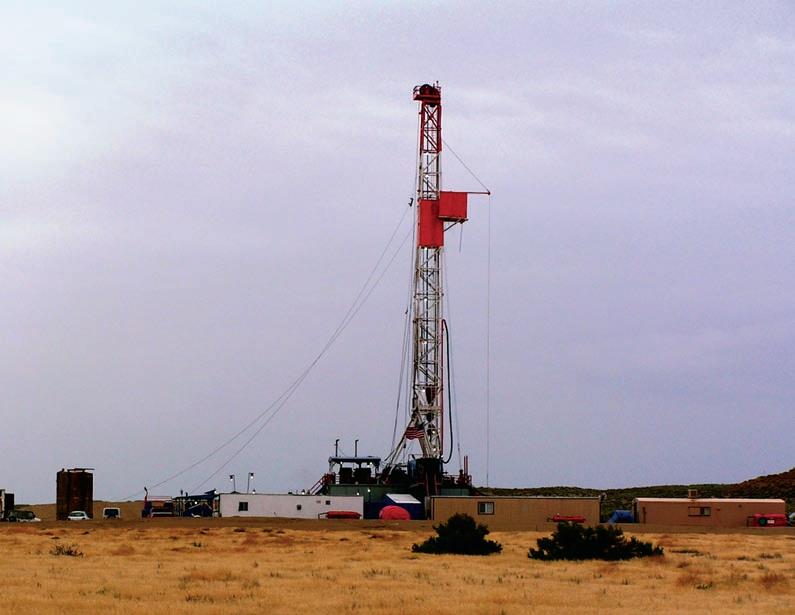
Drilling Rig near Vernal
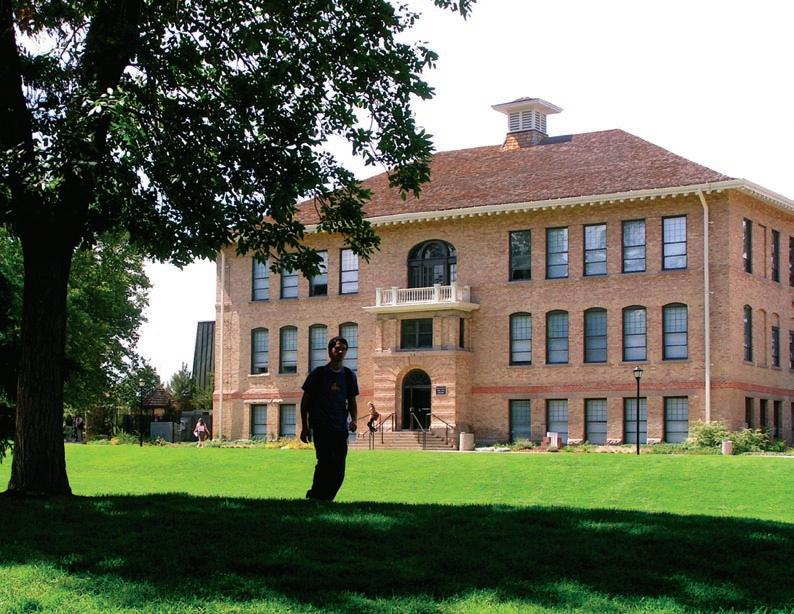
Southern Utah University in Cedar City
Normal Schools – A New Definition
Distributions to Normal Schools
The distribution of the Normal School trust fund revenues was changed in fiscal year 2006. Five new institutions started receiving this Trust Land Dividend. The term “Normal School” comes from the Utah Enabling Act that specifies the various trust land beneficiaries. In the vernacular of 1896, a Normal School meant a teachers’ college. At statehood, the only normal school in the state was at the University of Utah. As a result, the Normal School trust revenues were sent entirely to the University of Utah for its college of education. This remained the case until FY 2006.
In 2005, the state legislature changed the distribution of Normal School money to include all state colleges and universities that graduate teachers. The basis for the distributions is the percentage of teachers graduating from each school compared to the total number graduated statewide during the prior year. The proportion is recalculated each year.
The number of schools now receiving Normal School trust distributions increased from one to six.
The Normal School distributions for FY 2006 were:
Utah
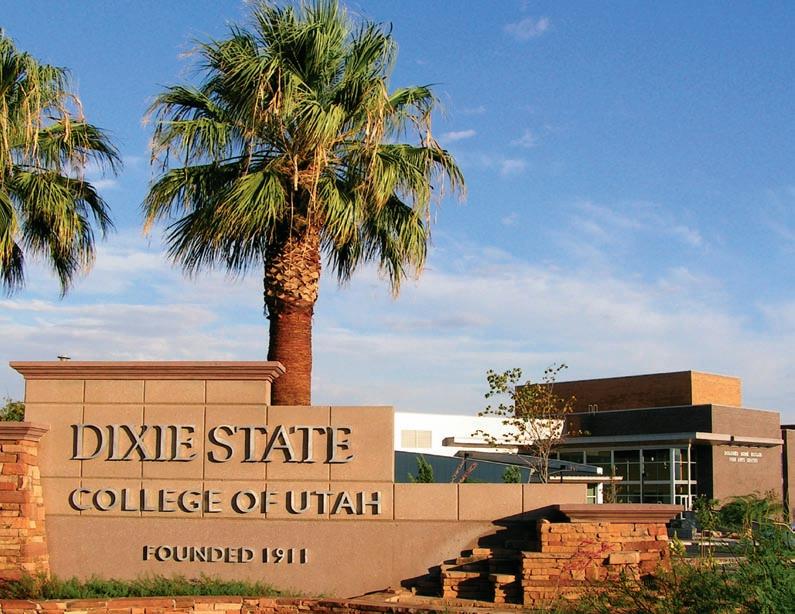
Dixie State College in St. George
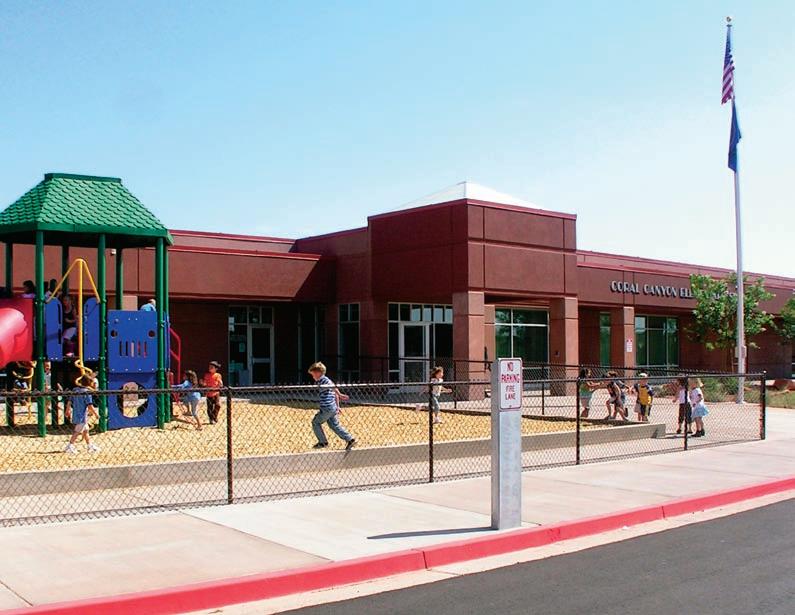
Coral Canyon Elementary School in Washington City
Trust Lands Fundamentals
What is the Trust Lands Administration?
The School and Institutional Trust Lands Administration is an independent agency of state government. It was created in 1994 by the Utah state legislature to manage lands granted to the state of Utah by the United States for the support of public schools and other beneficiary institutions. Prudent and profitable trust land management has put needed dollars to work in Utah’s schools. As a result, the Trust Lands Administration helps to create a better-educated workforce throughout the state.
What are Trust Lands?
When Utah was granted statehood on January 4, 1896, the federal government gave the new state parcels of land to be managed in trust in order to provide financial support for public education and 11 other public institutions. The institutions that benefit from these lands are called trust beneficiaries. The lands are called trust lands and are scattered throughout the state.
From time to time, trust lands are sold. In fact, more than one-half of the original land grant has been sold, much of it during the first 35 years following statehood. Interestingly, about 30 percent of all private land in Utah was originally trust lands.
Now, more than 100 years since statehood, the trust of each beneficiary consists of two portfolios: (1) the real estate portfolio, which is the remaining trust land, managed by the Trust Lands Administration, and (2) the financial portfolio, which is the money from the management and sales of that land, managed by the State Treasurer.
The objective is to successfully manage both portfolios to provide both short and long-term financial support for the beneficiaries. Successful management of Utah’s trust lands means working as partners with our beneficiaries, the governor and the legislature, other state agencies, local communities, and the public at large.
Where Does the Trust Lands Money Come From?
Money from the management of trust lands comes from a variety of different sources. Of the $162,000,000 made in FY 2006, more than 56 percent came from leasing mineral properties and from royalties from the production of minerals. Nearly 11 percent came from surface leasing and sales; another 18 percent came from development activities. The remainder came primarily from investment interest and dividends.
More than 160 million dollars was added to total assets during fiscal year 2006.
This annual infusion of revenues moves the organization closer to its goal of $1 billion in total assets by the year 2010. With that amount of money in permanent funds, the Trust Lands Administration will continue to have an increasingly significant impact on Utah public education and other Trust beneficiaries, while continuing to build the permanent funds. The ultimate goal of the Trust Lands Administration is to make the school lands trust a major source of public school funding.
It should be noted that the Trust Lands Administration is entirely self-funded. A portion of the money generated from managing trust lands activity is used to operate the Trust Lands Administration. All expenses and capital costs are paid from these revenues. No tax money is used.
Mineral Revenues
The largest source of revenues from trust lands is from the leasing of minerals properties and royalties from the production of minerals. Mineral production comes from many sources, including gas and oil, coal, gold, and sand and gravel.
Leasing Surface Rights
Property owned by the Trust Lands Administration is leased by a wide variety of users. Leased trust lands are currently used as telecommunication sites, commercial sites, industrial sites, recreational cabin sites, farming, timber harvesting and forestry sites, and grazing lands for livestock. It is also used for rights of way and in leases to other government entities.
Trust Land Sales
There are times when the best way to make money for the beneficiaries is through the sale of trust lands. Trust land is generally sold in one of two ways: at public auction or through a development project. Public auction sales are held twice a year and are becoming more and more popular, as they make more land available for private ownership in Utah. Development sales occur when it is determined that profits for the beneficiaries could be optimized by adding value to parcels of trust land before selling them. Usually, the Trust Lands Administration participates with experienced private real estate developers to provide land for residential, commercial, and industrial uses to help Utah’s growing communities get where they want to be.
What Organizations Benefit From Trust Lands?
At the time of statehood, Congress designated 12 trust land beneficiaries in Utah. By far, the largest percentage of trust lands was granted to public schools for the benefit of Utah schoolchildren.
The designated beneficiaries are:
Utah’s Public Schools
Reservoir Fund
Utah State University
University of Utah School of Mines
Miners Hospital
Normal School (The current beneficiaries of this trust are the teachers’ colleges at state colleges that offer teaching degrees.)
School for the Deaf
Public Buildings
State Hospital
School for the Blind
Youth Development Center
How Do Trust Lands Benefit Utah’s Schoolchildren?
The Trust Lands Administration works closely with local communities to build value for Utah’s schoolchildren. Cash generated by both trust land operations and trust land sales is transferred to the permanent state school fund. By doing so, the endowment for the public schools grows more and more each year. Investment income (interest and dividends) from the permanent fund is distributed to the schools each year for local academic needs. The distribution is primarily based on the number of students at each school.
Conservation of Trust Lands
As a cautious and far-sighted steward of the land, the Trust Lands Administration recognizes that certain trust lands have unique scenic, recreational, or environmental characteristics. In these situations, the organization tries to sell the land for conservation purposes or exchange it for other real estate more suitable for development. However, as with any trust lands transaction, these must provide fair value to the trust beneficiaries.
Our Mission
It is the mission of the School and Institutional Trust Lands Administration to administer school trust lands prudently and profitably for Utah’s schoolchildren and other trust beneficiaries.
People
Board of Trustees – Fiscal Year 2006
Chairman
James B. Lee
Senior Lawyer, Parsons Behle & Latimer
Litigator for more than 40 years in mineral, water & environmental law
Salt Lake City, Utah
Term: expires 6/30/2009
Vice-chairman
Michael P. Morris
Group Head | Managing Director | Chase Bank N. A.
Real Estate Mezzanine and Investment Group
Background in real estate and commercial banking
Alpine, Utah
Term: expires 6/30/2008
Board Member
Gayle F. McKeachnie
Governor’s Office, Rural Affairs Coordinator
Background in business and natural resources law
Vernal, Utah
Term: serves at the pleasure of the Governor
Board Member
Vernal J. Mortensen
Retired, Senior Vice-President, Coastal Coal, Inc.
Background in coal mining and mineral valuation
Sandy, Utah
Term: expires 6/30/2006
Board Member
James J. Eardley
President, Dixie Transport, Inc.
Background in LP gas distribution, county government and banking
St. George, Utah
Term: expires 6/30/2007
Board Member
John Y. Ferry
Vice-President, JY Ferry and Son, Inc.
Background in ranching & farm management Corinne, Utah
Term: expires 6/30/2010
Board Member
Ross Matthews
Senior Vice-President, Sinclair Oil Corporation
Background in oil and gas exploration and development
Salt Lake City, Utah
Term: expires 6/30/2011
Mr. Matthews was transferred out of state in April, 2006. Mr. John Scales was appointed to fill the remainder of the term.
Board Member
John Scales
President, Flying J Oil & Gas Inc.
Background in oil & gas exploration and development
Sandy, Utah
Term: expires 6/30/2011
Board Member Nominee
Michael Brown
Vice-President, Graymont Western US Inc.
Background in environment, safety, and geology
Kaysville, Utah
Term: expires 6/30/2012
Senior Staff
Kevin S. Carter Director
Lynda Belnap Administrative Assistant to the Director
John W. Andrews Associate Director and Chief Legal Counsel
Tom Faddies Assistant Director/Hard Rock and Industrial Minerals
LaVonne J. Garrison Assistant Director/Oil and Gas
Kim S. Christy Assistant Director/Surface
Ric McBrier Assistant Director/Planning & Development
Lisa Y. Schneider Finance Director
Kay Burton Block Planner
Jeff Roe ITS Manager
Ron Carlson Audit Manager
Dave Hebertson Public Relations Manager
Photo & Graphic Credits
Page 14 - Nutty Putty Cave interior by Jon Jasper of Grotto Club
Page 15 - Utah Prairie Dogs by James Weston of Hogle Zoo
Page 16 - Phil Pico Block by Rick Wilcox of Trust Lands Administration
Page 24 - Map and Logo by Quantum Development of Cedar City
Page 27 - Coal Map by John Blake of Trust Lands Administration
All other photos by NormaLee McMichael of Trust Lands Administration
State of Utah School & Institutional Trust Lands Administration
Main Office
675 East 500 South, Suite 500, Salt Lake City, Utah 84102, Phone: 801-538-5100, Fax: 801-355-0922
Central Area
130 North Main, Richfield, Utah 84701, Phone: 435-896-6494, Fax: 435-896-6158
Southwestern Area
2303 North Coral Canyon Boulevard, Suite 100-A, Washington, Utah 84780, Phone: 435-652-2950
Southeastern Area
217 East Center Street, Suite 230, Moab, Utah 84532, Phone: 435-259-7417