State of Utah
School & Institutional TRUST LANDS ADMINISTRATION
10th Anniversary Report (July 1, 1994 to June 30, 2004)

ision

The Trust is an increasingly significant source of funding for Utah’s schools.
Mission

To administer the trust lands prudently and profitably for Utah’s schoolchildren.
Message From The Director




The Trust Lands Administration has completed its first 10 years of operation. It has been a distinct opportunity for me to have been here for that entire time and for more than a decade with the Trust Lands’ predecessor agency, the Division of State Lands and Forestry.
Because of that experience, I have witnessed and participated in the immense struggles and transformations that occurred through the founding of the Trust Lands Administration:
• The change in attitudes as business principles were applied to trust land management
• The spectacular improvements in revenues
• The stunning growth of the Permanent School Fund and other trust assets
• The appropriate respect for and reciprocal appreciation from the trust beneficiaries
Since the founding of this agency in 1994, it has been my privilege to work with the people of the Trust Lands Administration. We have reached new heights in the generation of revenues, the building of trust assets, and in our capacity to do our duty to the trust beneficiaries while assisting in meeting Utah’s demands for numerous resources.
The pages of this report give more information on some of the major forces that shaped our first decade. The Board of Trustees, staff, and management worked rigorously and effectively to achieve the successes of the past 10 years. As a result, the significance of the trust grows each year.
I believe it will be a challenge to duplicate the results again in the next decade, but that is my objective starting with a Permanent Fund goal of $1,000,000,000 by the end of FY 2010.
In just 10 short years, Utah has witnessed only a decade of existence for the Trust Lands Administration, but a century of progress.
Kevin Carter, Director


A Decade Of Success

A New Agency

A New Agency
The State of Utah School and Institutional Trust Lands Administration was created as an independent state agency on July 1, 1994, by enactment of Utah Code Title 53-C.
Until that time, trust lands were managed by the Division of State Lands and Forestry, a division within the Utah Department of Natural Resources. The Department of Natural Resources also managed a vast array of public activities including wildlife; parks and recreation; water resources and rights; forest and wildland firefighting; and the permitting/enforcement of oil, gas and mining operations.
Utah’s education community believed trust lands operations were treated as a small and insignificant part of the Department’s total operations and that the results of trust lands management would improve if administered by those whose only responsibility was the financial performance of trust lands. They fostered the legislation to create the new agency and its mission.
Several objectives were established for the management of trust lands:
• Management of the lands for the financial support of the trust beneficiaries
• Impose trust fiduciary duties upon the state
• Manage the lands in a prudent and profitable manner
• Concern for both current and future beneficiaries
• Remove trust land management from the inherent conflicts of interest found when combined with agencies that have other mandates
• Establish that trust beneficiaries do not include other governmental institutions or agencies, the public at large, or the general welfare of the state
The Trust was required to run as a for-profit enterprise – based on business principles. No tax money was to be used in the operation of the Trust Lands Administration. This, then, is a report on the first 10 years.
Net Revenues
One of the core measurements of trust lands management is net revenues results. Net revenues are defined as the revenues generated from the operations of the Trust Lands Administration after deducting the operating expenses of the agency. As can be seen from the chart “Net Revenues,” the results have been positive over the first 10 years.
In fiscal year 1994, the year immediately before the Trust Lands Administration began managing the lands, net revenues were $8.3 million. In FY 2004 – net revenues were $52.5 million. That’s an increase of more than six times.
Permanent Fund
The importance of net revenues to the trust is the impact revenues have on maintaining and building trust assets. It is the duty of the trustee (in this case the state of Utah through the Trust Lands Administration) to protect and, if possible, build the trust assets.
One of the best measurements of trust assets (and certainly the most well-known) is the Public Schools’ Permanent Fund. The Permanent Fund is essentially money earned and put in stocks, bonds, and other financial instruments where it can grow – producing interest and dividend income for Utah schools—forever.
At the end of fiscal year 1994, after more than 98 years of statehood, the schools’ trust fund bank account was $84.5 million. Now that bank account has grown to more than $469 million – an increase of almost $385 million in just 10 years. Further, the agency has set a lofty goal of $1 billion in the Permanent School Fund by the end of fiscal year 2010.
There are many facets to the paradigm that allowed the Trust Lands Administration to achieve these financial results while practicing responsible land management.
Sources Of Revenue
Land Exchanges
In the Trust Lands Administration’s first decade, the agency was able to complete two major land exchanges with the United States.
The first exchange – The Grand Staircase–Escalante National Monument Exchange – was finalized early in 1999.
It exchanged about 375,000 acres of trust land for 139,000 acres of federal land, plus 185 billion cubic feet of natural gas, 160 million tons of coal, and more than $50,000,000 in cash. The exchange substantially improved the Trust Lands Administration’s ability to generate revenues for trust beneficiaries while putting sensitive lands into conservation status under the management of the federal government.
The second exchange – The West Desert Land Consolidation – was completed in 2001. It traded 106,000 acres of trust lands captured inside Wilderness Study Areas for 107,000 acres of federal lands that have greater income-producing potential. This became the second-largest state-federal land exchange in Utah.
A third exchange – The San Rafael Swell Exchange – failed to pass congress in 2002. The failure was blamed on questions about the process used to place values on some of the parcels included in the exchange.
Nevertheless, the Trust Lands Administration will continue to pursue land exchanges with the United States. The objective remains the same – to exchange trust lands having little revenue-generating potential for federal lands with more economic potential. The federal government will receive land with scenic, recreational, and conservation potential.
Both the United States and the Utah Trust Lands Administration satisfy their respective missions and profit in such transactions.
Minerals
While the agency made great strides in improving revenues from surface activities, revenues from oil, gas, and minerals sustain the cash flow. Oil, gas, and other minerals account for as much as 80 percent of the Trust’s annual receipts. The results hinge upon:
• The acquisition of new sources of oil, gas, and minerals
• Improved leasing practices
• Improved marketing practices


Oil and Gas
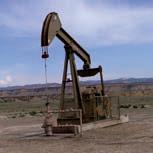
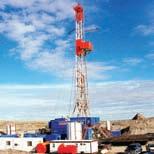
Oil and gas revenues have been the single largest source of income to the trust beneficiaries. During the past 10 years, these revenues have grown significantly.
In 1994, the trust earned revenue from oil and gas of approximately $8 million. At the end of FY 2004, that figure was $36.8 million.
This increase has happened because of:
• Strategic acquisition and development of gas properties – For example, in the Grand Staircase–Escalante National Monument Exchange in 1999, the Trust Lands Administration was able to acquire additional property adjacent to its developing gas properties in Drunkards Wash in Carbon County. The acquisition enabled the development of more than 400 coalbed methane gas wells in that area. Additionally, other oil and gas properties acquired through exchanges with the United States have been or will be developed. In exchange for these lands, the United States received lands they desired for recreation, conservation, and other public uses.
• Increased natural gas prices – Gas prices spiked in 2001 and have never returned to the prices of the 1990s. Natural gas shortages, the need to find new domestic production, and other supply-related factors have contributed to continued high prices for both oil and gas. Natural gas that was being sold for an average of $1.69 per MCF in fiscal year 1994 sold for an average of $4.25 in fiscal year 2004. Oil that brought an average of $15.49 per barrel during fiscal year 1994 sold for an average of $29.40 in fiscal year 2004. Expert predictions are that neither commodity will return to lower prices within the foreseeable future.
• A unique operating environment – The Trust Lands Administration’s legislative mandate has language that is unlike any other state. Trust Lands has the ability to enter into agreements with third parties to develop its resources. This means that instead of leasing our lands for a simple royalty – which allows the lessee control over when and how trust leases are developed – the Trust Lands Administration can tailor its agreements to optimize potential returns to the beneficiaries.
For example the agency can:
• Enter into seismic survey agreements
• Form joint exploration agreements
• Negotiate higher royalties in areas that have more potential
• Share in revenues if a company performs certain actions that add value to the trust
During the past 10 years, oil and gas revenues have grown at the Trust Lands Administration. All indications are that oil and gas will continue to be a mainstay of revenue to the beneficiaries. Predictions for the coming few years are that prices will not be significantly lower than they are now – keeping revenues up. Due to higher prices, companies are very interested in exploring for oil and gas in Utah. The Trust Lands Administration looks forward to working with companies with a suitable policy of responsible exploration for oil and gas that will add value to the trust funds.
Sources Of Revenue
Minerals – Hard Rock & Industrial
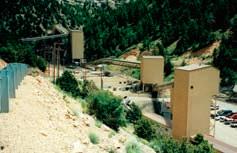
The trust land sub-surface estate provides the trust with a variety of mineral resource opportunities beyond oil and gas production. During the first 10 years of the Trust Lands Administration’s management, the reserves, development, and production of mineral resources have improved dramatically.
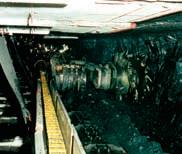
Increased new mineral resources have come from the large land exchanges with the United States. The Trust’s position in coal has improved with the addition of 178 million tons of recoverable coal since 1994. These acquired interests are significant for the trust beneficiaries because coal provides the bulk of solid mineral revenues. Coal revenues increased from $2,522,000 in fiscal year 1994 to $4,303,000 in fiscal year 2004.
Trust coal resources are primarily located in Carbon, Emery, and Sevier Counties. Several of the tracts are now in the development stage, with new production starting in 2005.
Other acquired mineral interests include:
• Beaver County – Alunite, which can be used for the production of Aluminum.
• Juab County – Beryllium ore, a valuable metal found in only a few places in the world. Also in Juab County significant limestone resources were acquired.
Significant progress has also been made in the production of other minerals:
• Sand and Gravel – revenues have improved from $150,000 annually to more than $650,000 per year
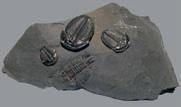

• Limestone – revenues are up from $184,500 in FY 1994 to $343,800 in FY 2004
• Potash – income has improved from $212,000 to $327,000 primarily due to increased production of the Kane Creek deposits in Grand County.
• Gilsonite – cash flows have increased from $45,700 to $118,500 over the past 10 years as gilsonite production has increased on trust lands near Bonanza (Uintah County), Utah.
Other improvements in minerals management:

• Change in leasing – many commodity interests were moved from a “lease” arrangement to a “permit” basis. This allows the Trust Lands Administration greater flexibility to adjust fee and royalty rates to reflect everchanging market conditions. Further, it encourages the actual production of commodities rather than speculation in commodities.
• Mineral inventory – a joint venture between the Trust Lands Administration and the Utah Geological Survey completed a statewide review and inventory of industrial, hard rock, and solid energy minerals on Utah trust lands. The data was developed on a county-by-county basis and is used to promote mineral exploration and development in Utah. It also assists in planning uses for these lands and in valuation of lands for exchange purposes.

Land Auction Program
Prior to 1998, surface land auctions were generally held at the county seat of the land parcel being sold. The sales were usually not widely advertised, and bidding ordinarily interested only local people. Because trust land is scattered all over Utah, this approach created numerous small inefficient transactions during the course of a year.
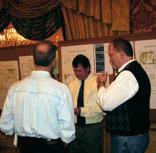
In 1998, the agency decided to consolidate its land auction into two large sales events held annually – usually in Salt Lake City. This move improved the efficiency of the auction sales program while, at the same time, exposed parcels to a much larger and more competitive bidding audience.
This resulted in several improvements for trust beneficiaries:
• More efficient auctions
• Increased market interest in the parcels offered
• Higher yield from the parcels
• Greater public awareness and understanding of trust lands
The program also benefits private citizens and local governments:
• Land moves into private hands for:
- Residences
- Recreation
- Ranching & Farming
- Business
- Open Space & Conservation
• More land on county tax rolls provides money for:
- Schools
- Community Services
There are a number of factors which may lead the Trust Lands Administration to sell a parcel of land:
• Market interest
• Small parcel surrounded by private land
• Little production value, but good market value
• Unusual opportunity for the piece
• Extraordinary administrative costs
• Test real estate market interest in the area
• Establish good comparable values for future land transactions
The auction program is a success and has evolved into a significant source of annual revenue for the Trust. The Trust Lands Administration sells an average of 5,000 acres per year generating about $4,000,000. Prices for auctioned lands have ranged from $100 per acre to more than $65,000 per acre. During the past five years, the average sales price has been more than $500 per acre.
Sources Of Revenue
Off-Highway Vehicles
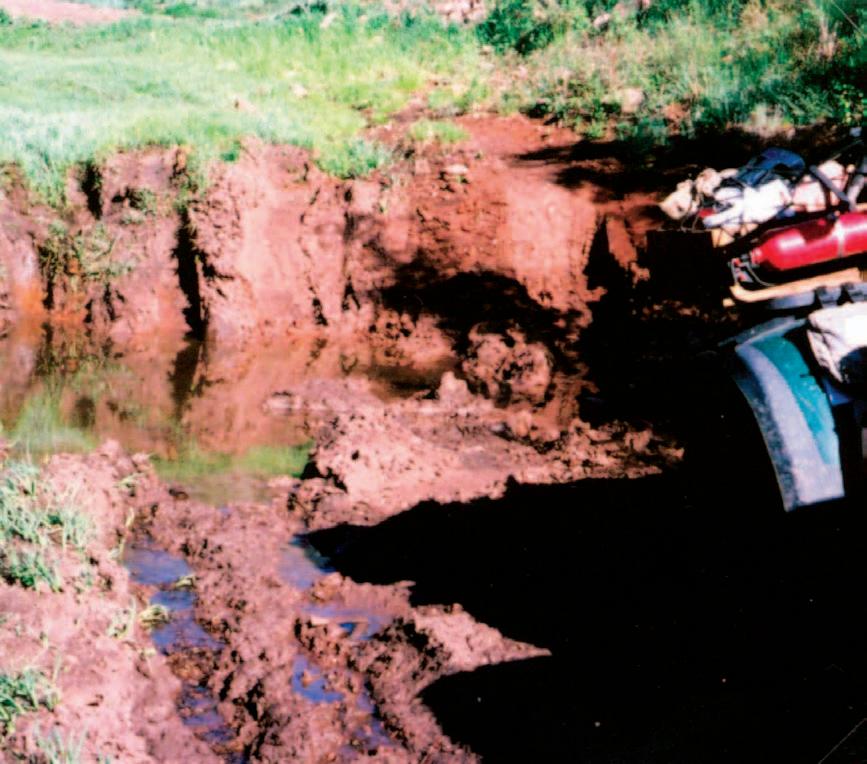
Traditional casual accommodation of unmanaged off-highway vehicle access and use by the public is now inadequate in the face of growing demand for motorized recreation. This additional demand is causing significant degradation of trust assets. Additionally, federal land management agencies are calling for reduction of OHV use on federal lands – putting even more pressure on neighboring trust lands.
Early in 2004, the Trust Lands Administration was successful in securing a surcharge of $1.50 per OHV registered in Utah and on out-of-state OHV user fees. The legislature established the fee to provide funds to accommodate disciplined use and to mitigate impacts associated with OHV activities on trust lands.
Annual proceeds from the surcharge are projected at $250,000 and will help improve recreational opportunities for OHV users while protecting trust resources.
Telecommunication Site Leasing
The past decade has seen annual revenues from leasing telecommunication sites on trust land increase from about $70,000 to more than $470,000. The agency identified and acted upon opportunities to capture a portion of the expanding cellular-wireless market. A program to encourage companies to build communication sites on trust lands and co-locate sub-leases on existing sites produced positive results. Improved lease contracts, leasing at market value, and greater site monitoring further enhanced revenues. Streamlining the leasing process was also a positive factor.


Grazing
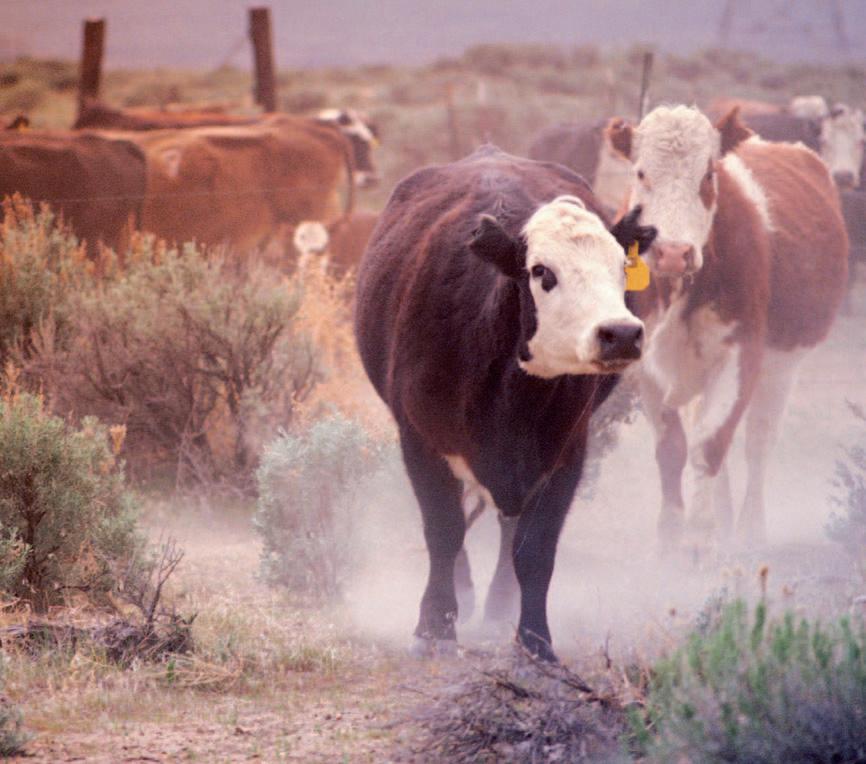
Although accounting for less than one percent of the revenues of the agency, grazing has and will continue to be a significant part of the Trust Lands Administration’s workload. The agency has engaged the livestock community to study grazing fees and bring Trust Lands’ fees more in line with the market.
Instead of a single fee applied to all permits, higher fees will be applied to certain blocks of land that are not associated with federal grazing permits or where the forage value is generally higher. When the new fees are fully implemented, along with other proposed adjustments to standard fees, the annual grazing revenues will increase by more than $400,000.
Hunter Access
A significant portion of trust lands provide high-end hunting opportunities. The market for access to these kinds of lands has grown significantly in recent years.
In 1997, the Trust Lands Administration entered into a 10-year Memorandum of Understanding with the Division of Wildlife Resources which includes an annual payment of $200,000 from DWR for public hunter access to unencumbered trust lands. While far less than comparable revenues derived from private lands, this MOU marked the beginning of recognition of the hunting value of trust lands.
The agreement has set the stage for productive dialogue with sportsmen and wildlife managers to provide incentives for the Trust Lands Administration to enhance wildlife habitat and hunting opportunities on trust lands.
Sources Of Revenue

Water Rights
Over the past 10 years, the Trust Lands Administration has taken a much more active role in acquiring and protecting water rights. In the past, most of the responsibility for these activities was left to the various lessees and permittees. The Trust Lands Administration has now taken these roles upon itself. Applications for the approval, extension of time, and proof of beneficial use for water rights are now all filed by the agency.
An important tool in protecting water rights from forfeiture was the agency’s adoption of rules allowing it to require grazing permit holders to put appurtenant stock-watering rights to beneficial use – subject to the terms and conditions of the permit and its relationship to season of use and stocking rates.
The Trust Lands Administration works closely with the Division of Water Rights to ensure that all water rights located on trust lands are filed in the name of the agency. There has also been cooperation with the Division of Water Rights to include a “TLA Action List” on its web site and include trust land information in its geographic information system database.
Roads on Trust Lands
Roads have been a subject of considerable controversy in Utah for the past several decades. The scattered ownership of trust lands throughout the state has placed the Trust Lands Administration as a major participant in formulating public land access decisions.
In 1991, the state legislature enacted a law that provides temporary easements or rights of entry for roads that were constructed, maintained, or used on state trust lands prior to January 1, 1992. The temporary status of such easements or rights of entry remains in effect until they are made permanent through an application process formalized by administrative rule.
In FY 2004, the Trust Lands Administration formalized a rule-based process that provides a mechanism for receiving input and bringing closure to various claims. The process provides notification to counties and other responsible authorities for the Trust Lands Administration to receive input to determine the merits of finalizing easements or rights of entry for roads that cross TLA properties before the property is sold. This process will help bring closure to various claims and provide more certainty for prospective buyers of trust land properties.
This process does not affect any valid RS2477 claims made by the counties.
Planning & Development
One of the first things the new Trust Lands Administration did was to organize the Planning & Development Group. The objective of the move was twofold.
• First – capture additional values available in some trust lands through planning, zoning, and the development of infrastructure rather than simply sell raw land. The agency previously achieved some successes in this arena and concluded that a more-organized approach to the process would profit the beneficiaries.
• Second – participate in developments where the trust could continue to have an interest – such as leasing ground to a business or participating in the rental stream of a building erected on trust land.
Both of these techniques require detailed, focused work and have proven to be successful. Over the last 10 years, the Development Group has been involved in the privatization of more than 5,300 acres. In selling this land, the Trust brought in more than $42 million and has averaged more than $7,900 per acre. These returns exceed historical returns received from traditional auction sales.
In pursuing recurring revenue, the Planning and Development Group has entered into 12 transactions that, in 2004, were generating more than $500,000 per year. These funds are expected to grow from year to year and should flow to the beneficiaries indefinitely.
As of the end of the first decade, the Planning and Development Group has identified lands for future privatization that have a potential value in excess of $500,000,000. Some of these lands have near-term opportunity, and others must await their optimum time for privatization. Needless to say, much work remains to be done.
In addition to the anticipated economic advantages for the beneficiaries, the Planning and Development Group focuses on building the Trust’s reputation as a concerned, cooperative member of both the local communities and the overall business community:
• A new level of understanding, cooperation and trust:
After identifying potential development opportunities, the Trust Lands’ development team meets with county officials, municipal leaders, adjacent property owners, and other interested people. This is to make them aware of lands being considered for development and to work with them in creating a vision for the property. This approach offers local citizens an opportunity to have input to development activities on trust lands and seeks to satisfy both local community needs and the agency’s responsibility to the beneficiaries.


Sources Of Revenue
• Partnering with private parties and community interests:
The Trust Lands’ development team creates master plans that consider open space, housing types, community amenities, commercial, and other uses. The team cooperates with both public and private entities to work through the local land-planning processes. It is the Trust’s goal that these efforts lead to well-planned developments in which the Trust and the community can be proud.
• Providing community and economic development:
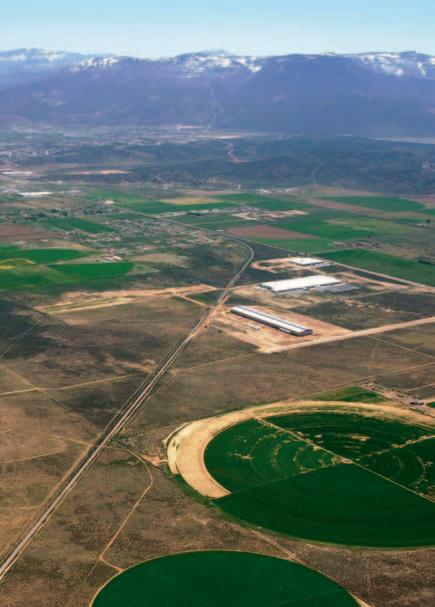
The Trust Lands Administration’s Planning and Development team works diligently with local communities to identify properties that can appropriately be developed as industrial parks in support of local economic development. After choosing the parcels and planning the project, the Trust Lands Administration reaches out to the private sector development community and local and state economic development agencies to bring the projects into reality. This effort has led to the creation of industrial parks in several Utah communities. These projects contribute to the development of local jobs and tax revenues and bring good returns to the trust beneficiaries through the sale and leasing of industrial sites.
A number of industrial parks are in various stages of development:
• Fort Pierce Business Park in St. George
• Gateway Industrial Park in Hurricane
• Cedar City Industrial Park west of Cedar City
• Ridge Road Industrial Park near Price
• Grantsville Industrial Park in Tooele County
Hundreds of people are currently employed in facilities within these industrial parks. Over time, contributions to the property tax base will be tens of millions of dollars.
The Trust Lands Administration’s policies and practices for planning and development create opportunities for wellmanaged growth and economic development while building both revenues and assets of Utah’s schools and other trust beneficiaries.



Block Planning
Much of the land managed by the Trust Lands Administration is the familiar “checkerboard” pattern of school trust lands scattered throughout the state. These are mostly rectangles of one square mile containing 640 acres. However, there are a number of trust land blocks that are considerably larger contiguous tracts of land.
In the late 1990’s, the agency decided that it needed to have more information about some of these larger blocks so that it could better manage them in the interests of the trust beneficiaries. In 2002, the Trust Lands Administration developed a “block planning” process. More than 50 large blocks have been identified. About 20 of those have been selected for planning.
The first step in the block planning process is to analyze the blocks:
• How and why the block was acquired
• What are its physical characteristics – location, size, topography, resources, etc. – there are more than 60 parameters considered for each block
• Identify the market and political dimensions associated with the block
• Determine the strengths, weaknesses, opportunities, and threats associated with the block.
The second step in block planning is to develop strategies for future management of the block:
• Determine highest and best use
• Create short-term, long-term, and exit strategies
• Recommend action plans
Though the sustained effort at block planning is relatively new, it has already brought significant new revenues to the beneficiaries and holds the promise for increased returns through more effective management of large blocks.