State of Utah
Fiscal Year 2003 (July 1, 2002 — June 30, 2003) 9th Annual Report
State of Utah
Fiscal Year 2003 (July 1, 2002 — June 30, 2003) 9th Annual Report
Special Thanks to:
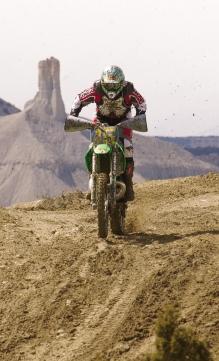
1.Maddox Photography for the photo of the motorbike rider on page 21 of this report.
2.Jameson Weston and Hogle Zoo in Salt Lake City for the photos of the desert tortoise and the Utah Prairie dog on page 30 of this report.
3.Tom Till and The Nature Conservancy for the photo of Fisher Towers near Onion Hill on page 32 of this report.
The Trust is an increasingly significant source of funding for Utah’s schools.
Mission:
To administer the trust lands prudently and profitably for Utah’s schoolchildren.
Director’s Message

Again it’s time to look back on another year of accomplishment for the Trust Lands Administration. This year is marked by a change in leadership. My predecessor, Stephen Boyden, chose to take an assignment from his church and left half way through the fiscal year. In January, following a process established in statute, I was appointed to complete his unexpired four-year term. Although I have served as Acting Director three times previously, this is the first time that I have been formally appointed as Director. I am honored by the appointment.
The loyal and dedicated staff at the Trust Lands Administration has again rallied to overcome the confusion inherent in any change in leadership, and we have been successful in reaching a challenging revenue goal established by the Board of Trustees. In addition, nearly every other objective set by the Board was met.
The diligent work of the employees of the Administration has resulted in permanent fund balances of nearly one-half billion dollars. The records of the Administration are in excellent condition, and individual title records for each beneficiary are nearly completed. Many of the historic records have been imaged and are available for public inspection on the Administration’s Business System. The images are also archived in a secure location for protection against nearly any contingency.
A major disappointment this year was the failure of the U.S. Senate to ratify a large land exchange negotiated with the Department of the Interior. The failure has set the land exchange process back several years, at best. The future success of the Administration will hinge, in part, on our ability to rebound from this setback and re-establish a functioning land exchange program. I am committed to this end.
I look forward to a new year which will conclude our first decade. With valuable assets managed by equally valuable employees, I am optimistic that we will continue to achieve our vision of becoming an ever-increasing source of education funding. Let the adventure begin!
Kevin Carter, Director
In Fiscal Year 2003, Trust Lands Administration operations posted gross revenues of $48.8 million from the various activities on trust lands. For ease of understanding revenues from trust lands, these activities are grouped into eight major categories of Trust operations. This chart shows the contribution of each activity to total revenues.
Operating Revenues, Expenses and Contributions to Beneficiaries
SOURCE: Trust Lands Administration Financial Group. Unaudited. Contact Trust Lands Financial for a complete set of audited financial statements.
In Fiscal Year 2003, total Trust assets increased by more than $45 million. The increase was due to the financial performance of the Trust Lands Administration and the beginnings of a stock market recovery. This chart shows the fiscal year end balances of total Trust assets since the inception of the Trust Lands Administration.
Of course, it takes money to manage trust lands and operate the Trust Lands Administration. The Trust Lands Administration is self-funded – a portion of the money generated from trust land activities is used to operate the Trust Lands Administration. All expenses and capital costs are paid from these revenues. No tax money is used to operate the Trust Lands Administration. Even so, the Board of Trustees, the governor and the legislature have oversight of all expenditures by the agency.
At the time Utah became a state in 1896, Congress granted the new state millions of acres of land to support Utah’s public schools and 11 other beneficiary institutions, including the University of Utah, Utah State University, and state schools for education of the blind and deaf. Under the terms of Utah’s Enabling Act and Constitution, these lands are held in trust by the State of Utah and managed to provide financial support to the public schools and other beneficiaries.
The 12 beneficiaries are
Public Schools (Kindergarten through 12th Grade)
Reservoirs
Utah State University
University of Utah
School of Mines (University of Utah)
Miners’ Hospital (Rehabilitation Unit of University Medical Center)
Normal School (Teachers’ College at University of Utah)
Utah School for the Deaf
Public Buildings
State Hospital
Utah School for the Blind
Youth Development Center
The School and Institutional Trust Lands Administration is an independent state agency created by the Utah legislature in 1994 to manage these lands.
The agency manages approximately 3.5 million acres of land in Utah, approximately six percent of Utah’s surface area. Most of this land is located in rural areas of the state, although the Trust Lands Administration does manage some urban properties in various cities and towns around the state. Because the trust lands were dedicated at statehood to provide revenue for public schools and other grantees, all uses of the lands must specifically serve those beneficiaries, a fact that distinguishes state trust lands from public lands such as parks or national forests.
The great majority of Utah’s trust lands – over 95 percent – are dedicated to producing revenue for Utah’s K-12 public schools. All revenue from these lands, after deduction of administrative expenses, is deposited in the state Permanent School Fund, a perpetual endowment fund managed by the State Treasurer. The Permanent School Fund is invested by the Treasurer in stocks, bonds, and interest-bearing securities, with income distributed annually to every public school in Utah.
The Permanent School Fund is one of 12 such Trust funds – each beneficiary has its own permanent fund. Those permanent funds, counted together, make up more than 85 percent of total Trust assets.
One hallmark of the Trust Lands Administration’s successes in the eight years since its creation has been significant growth in the total Trust assets – from less than $95 million in 1994 to almost $445 million at the end of fiscal year 2003. (See the chart“Total Trust Assets” on page five.)
The Trust Lands Administration focuses on achieving financial returns for the Trust beneficiaries, while maintaining strong working relationships with local communities and protecting long-term land values through stewardship activities. Because there are about 7,500 parcels of trust lands, each different, there is no single management paradigm that works for all trust lands. One of the continuing challenges of trust lands management is balancing competing potential uses and values for particular trust lands parcels, while maintaining focus on the interests of the trust beneficiaries.
More than one-half of the original surface grants have been sold since statehood. Most of that land was sold before 1930. What happened to that land? The bulk of it became private property owned by the citizens of Utah. A little-known fact of Utah geography is that about 30 percent of all private property in the state came from trust lands.
Original Beneficiary Grants & Trust Lands Sold Since Statehood (End of Fiscal Year 2003)
All Beneficiaries7,475,297.00
Land Sold in FY 2003 = 9,826.22 acres (7,940 at public auction)
SOURCE: Trust Lands Administration Financial Group. Unaudited. Contact Trust Lands Financial for a complete set of audited financial statements.
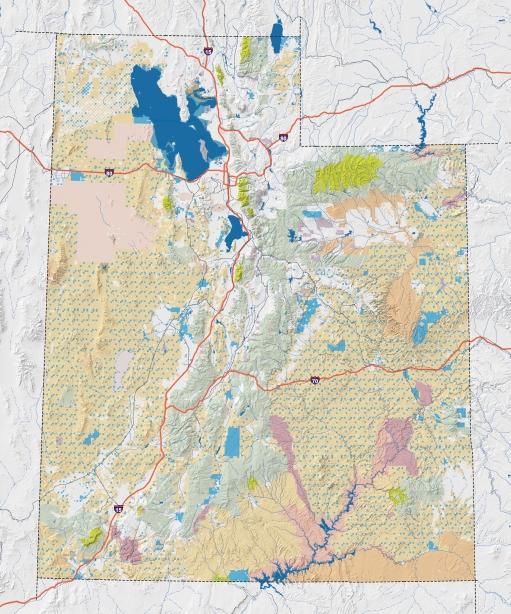
The trust lands are scattered throughout the state as depicted in blue ( ) on this map of Utah.
The revenues generated from the use and sale of trust lands are either sent directly to the particular beneficiary or put into its permanent fund. State law requires that revenues from the Public Schools’ trust must be handled differently than revenues for the other 11 beneficiaries.
Public Schools
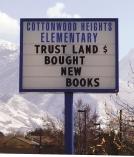
In the case of the public schools, all revenues generated from trust lands are transferred to the Permanent School Fund. By depositing all of the income to the permanent fund, the fund can continue to grow.
The schools do not get the revenues directly. It is the investment earnings (interest and dividends) from the Permanent School Fund which are distributed to individual schools each year for local academic needs. The trust land dividend is managed by the Utah State Office of Education through its School LAND Trust program. The amount for each school is based on the number of students at the school.
Each school has a committee of parents, teachers and administrators which decides how to spend the money for the school. The majority of schools have been using the money to enhance reading, science and math programs.
More than 750 schools receive trust lands dividends. As the Permanent School Fund continues to grow, the amount of the yearly dividend will also grow. For more information on trust lands dividends, call the Utah State Office of Education at 801-538-7573 or visit its School LAND Trust web site at www.schoollandtrust.org.
In the case of the 11 other trust beneficiaries, their permanent funds grow more slowly because all non-land sale revenues are distributed directly to them each year. Only the money from the sale of their trust lands is added to their permanent funds.
There are four major categories of land owners in the state of Utah – the federal government, Native American reservations, privately owned lands and state owned lands. Most of Utah is managed by agencies of the federal government. The United States controls approximately 63.8 percent of Utah’s surface acreage. Further, if native American reservations are considered a part of federal ownership, the total federal acreage increases to 68.3 percent of the total. Private ownership is approximately 21.3 percent of the total, with state-owned land at 10.4 percent.
State of Utah Estimate of Ownership and Management As of June 30, 2003
* The Utah Division of Forestry, Fire & State Lands manages the beds of the Great Salt Lake, Utah Lake and the Utah portion of Bear Lake, plus other submerged lands in the state. The total is estimated at 1.5 million acres.
SOURCE: Trust Lands Administration GIS database. The numbers shown are approximate.
The Trust Lands Administration is required to manage trust lands for the financial benefit of its 12 beneficiaries. The primary source of trust land revenue is from use of natural resources on trust lands – mostly related to mineral development – but the agency also leases and sells lands when appropriate. The agency is required by law to receive fair-market value for the use or sale of trust lands – trust lands and resources cannot be given away.
The Trust Lands Administration monitors several main revenue sources in its daily operations. Those sources consist of the following:
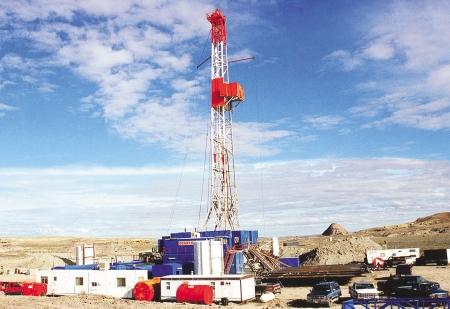
In most years, revenues from oil and gas activities are the largest source of income to the Trust. The money comes from the leasing of trust acreage for exploration and from royalties paid to the Trust Lands Administration from the sale of minerals which are actually produced.
This category includes rentals, royalties and fees from minerals other than oil and gas. The Trust Lands Administration manages significant coal reserves in central Utah, which generate substantial royalties when mined. Gold, other metals and gemstones and fossils provide lesser amounts of revenue. Industrial minerals, including sand, gravel and rock aggregate, have greatly increased in importance in recent years.
Two different groups within the Trust Lands organization are responsible for the sale of trust lands – the Surface Group and the Planning and Development Group.
The Surface Group most often sells trust lands at public land auctions held twice a year – in May and October. The auctions usually offer 10 – 20 parcels for sale. The parcels may be of any size, from a residential lot size to hundreds of acres. There is a preparation process before these parcels are sold, which may include archaeological clearances, appraisals, review by other state and federal agencies, property enhancement analysis and advertising.
The Planning and Development Group works to increase profits for the beneficiaries by permitting and developing parcels before selling them, often in partnership with private sector developers. Typically, a developer is required to invest all necessary capital to bring a trust property to the market; and the developer and the Trust Lands Administration then share revenues from sale of lots on a negotiated basis. In addition to residential sales, several business and industrial parks have been developed through the Planning and Development Group. This category also includes conservation sales (e.g. desert tortoise habitat) of lands managed by the group.
In addition to land sales, the Surface Group collects revenues from a wide variety of activities on trust lands, including the sale of easements and rights of way, recreation leases, hunting and fishing access, leasing of cell phone and telecommunications sites, commercial and industrial leases, agricultural leases and others.
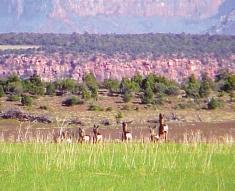
Almost three million acres of Utah trust lands are permitted for grazing. The fee for grazing is based on the amount of forage consumed by the grazing animal and is measured by the amount of forage used by a 1,000-pound animal in one month. This unit is called an Animal Unit Month (AUM).
The FY 2003 grazing fee was $2.05 per Animal Unit Month (AUM) plus a five-cent noxious weed fee. The agency administers 1,491 grazing permits representing 201,078 AUMs statewide. Most grazing permits are issued for cattle; but permits are also issued for sheep, wild horses, and wildlife.
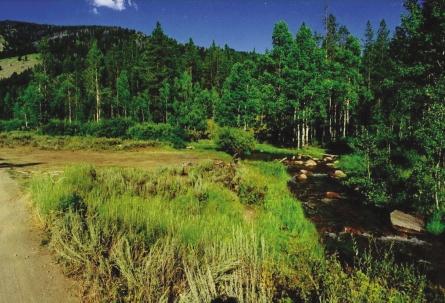
The Trust Lands Administration currently manages forest activities including timber sales, small forest products sales and firewood sales. The health and sustainability of trust land forests are major components of forest management activities for the agency.
In addition to the land sales generated by the Planning and Development Group, the group is also building a portfolio of projects which are not sold, but are leased to create ongoing revenue streams for the trust beneficiaries. These projects include ground leases of various types, commercial and industrial buildings and even a golf course.
Interest from operations is money made from interest on installment land sales and suspense account balances. This item should not be confused with the interest and other earnings the State Treasurer earns on the beneficiaries’ permanent funds. Interest on the permanent funds is a much larger amount and is reported separately.
Amortized Land Sales
The agency frequently finances the sale of trust lands – taking a down payment and then annual payments to pay off the balance. Annual interest is paid by the purchaser, which becomes interest revenue to the agency.
Suspense Accounts
The agency also earns interest on cash for transactions which are not yet completed. This cash is placed in an interest-bearing account with the State Treasurer until transactions are closed and disbursements are made. This is another component of the interest from agency operations.
Other income is just that – other small transactions which do not rise to the level of individual category accounting. Transactions such as map sales, photocopying fees, and Rock Hounding permits are typical items of other income.
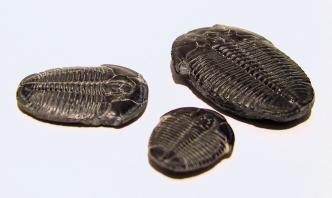
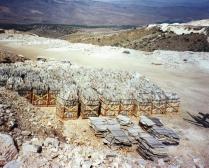
Some of the Trilobites sold in Utah rock shops come from a quarry located on trust lands.
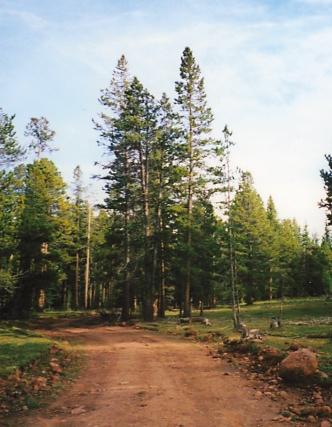
The Trust Lands Administration’s Planning and Development Group is responsible for trust lands that require special management attention or land-use planning to maximize value. Most of these development parcels are located in urban or urbanizing areas around the state, particularly in St. George, Cedar City, and Utah and Tooele Counties. The Planning and Development Group actively works with local governments to provide resources for local participation in the planning efforts, as well as supporting infrastructure development – water, roads, and utilities – that will benefit trust lands.
The Planning and Development Group’s guiding principle is that active engagement in property planning and development can greatly increase the value of lands and resulting revenues for the trust beneficiaries over the long run. For smaller parcels, this may involve simply applying for zoning and building entitlements for a property before selling it. Other parcels may require investment in infrastructure and utilities. For larger and strategically located properties, the Group actively seeks private sector partners to provide development capital for the planning, construction and marketing of trust lands.
Transactions with development partners have included leases of lands for development, with the Trust Lands Administration compensated based upon the final sales price of developed lots and joint ventures in which the agency participates as a member of a limited liability company and shares profits from the venture. More recently, the agency has participated in constructing investment properties – office buildings and warehouses – on trust lands, with the goal of building sustainable cash flows for the Trust. In each of these cases, the premise is that long-term revenues from these efforts will be substantially greater than would have been the case with an outright sale of raw land.
The Trust Lands Administration considers cooperation with Utah’s cities and counties a vital part of its planning and development process. The Planning and Development Group has initiated planning efforts in a number of communities statewide, seeking to integrate trust land planning with broader community planning efforts. The group has placed particular emphasis on “smart growth” issues such as open space, mixed uses, and maintenance of trail corridors, while keeping its legal obligations to the Trust beneficiaries. Planning efforts in 2003 included community planning in the south Spanish Valley in Grand and San Juan Counties, participation in a large wetlands planning effort in Tooele County, and conducting “charettes” – community visioning efforts – for the 8,000-acre South Block in Washington County.
During fiscal year 2003, several projects initiated by the Planning and Development Group in past years have achieved new levels of success. The Ft. Pierce Business Park, an industrial park joint venture in St. George among the Trust Lands Administration and local developers, continued as the most successful industrial development in southern Utah. During the year, the $55 million, 160,000-square foot “Blue Bunny” ice cream plant in the park was completed and went into production, sparking national interest from other potential industrial users and creating over 50 new jobs in Washington County. A 23,000 square-foot office/industrial building in which the Trust Lands Administration was a 50/50 partner was completed and sold to the Gannett Corporation for new production facilities for the Southern Utah Spectrum, with a larger speculative building planned for the current year. Distributions to the Trust beneficiaries from the Ft. Pierce park during the year exceeded $2.2 million.
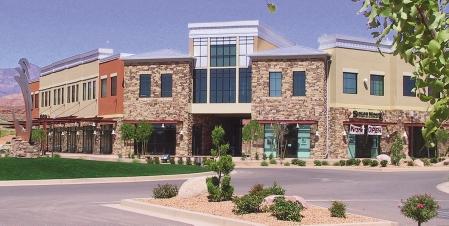
The Coral Canyon master-planned community in Washington County, a development lease with Arizona developer SunCor, also made significant progress in fiscal year 2003. Residential lot sales increased to over 100 lots during the year, and a 35,000 square-foot office building in which the Trust Lands Administration is a 25 percent partner was completed and mostly leased. Ongoing development in the commercial area of the project includes a Harley-Davidson dealership, a hotel, and a national chain restaurant. New residential phases are currently under construction as well. Other progress in ongoing developments included completion and sellout of the fourth and final phase of the agency’s Leigh Hills subdivision in Cedar City, with lot sales in excess of $1 million; strong sales from lands leased to the Kayenta development in Washington County; and developer progress with the Tuhaye Ranch golf development, located partially on trust lands in Wasatch County.
In addition to managing existing projects, the Planning and Development Group projects devoted significant efforts to planning and obtaining zoning and development permits for future developments on trust lands. In many cases, trust lands that once were considered to be in rural areas are now in the path of development – as Utah’s rapid population growth continues. During FY 2003, the agency made substantial progress in obtaining zoning and land-use entitlements for a number of projects on lands of this type. When these projects are finished, they will provide tens of millions of dollars in revenues for Utah’s schools over the next decade.
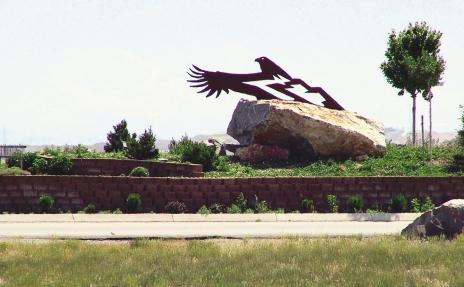
The most significant planning development in fiscal year 2003 was the execution of a master development agreement between the agency and the rapidly growing town of Eagle Mountain in Utah County. The agreement vests the Trust Lands Administration with the right to develop over 4,000 units of housing, plus several hundred acres of mixed use and commercial development on 1,200 acres of trust lands in the town. For Eagle Mountain and its citizens, the agreement will provide advance funding for roads and utility infrastructure, locations for a town center, parks and school sites, and a unique trail corridor along the old Pony Express Trail.
Other important development projects in their early stages include planning of 1,000 acres of school trust land at the proposed Milepost 13 interchange in Washington County; planning for the 8,000-acre South Block parcel near the proposed St. George airport; completion of a Master Development Agreement for the 1,500-acre Cross Hollow property in Cedar City; a 700-acre industrial park, also in Cedar City; and reconfiguration of the Cedar City golf course to create over 100 fairway lots on trust lands.
The Surface Group manages a variety of activities on trust lands including grazing and forestry, special use leases, easements and rights-of-way transactions, archaeological resources, and land sales. Here are selected highlights from the Surface Group for FY 2003.
The surface land auction program remains a highly successful component of trust land management. In FY 2003, 7,940 acres were sold into private ownership. Despite a sluggish economy for much of FY 2003, the agency had a very good year for auction land sales.
The Trust Lands Administration’s goal of realizing optimum value for its assets does not support liquidating its entire real estate portfolio. In most instances more profits can be realized by holding onto assets and leasing them rather than selling them. However, in some instances it is more prudent to maximize returns by selling selected properties and converting underproducing assets to cash. Many factors are considered in determining whether or not a parcel should be sold. They include:
• Competitive market appeal
• Long-term production
... potential vs. market value
• Extraordinarily high
... administrative costs
• Complementing
... or enhancing market
... conditions for other
... trust assets
• External issues (e.g. a
... small parcel surrounded
... by private land)
There is a specific protocol for bringing a parcel to market. This process incorporates nominating the parcel for sale by the agency or by a member of the public, evaluating its accessibility, performing an archaeological survey and mitigation for the site, examining real estate trends, assessing the revenue potential of the parcel, and reviewing other issues which might be unique to the piece. Marketing and advertising are also important components of the sales program.
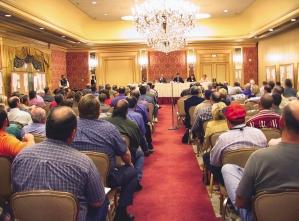
On average, it takes three years from the time a parcel is nominated for sale to actually bring it to market. Land auction sales are conducted twice a year – in May and October.
Much of Trust Lands’ 3.5 million-acre surface real estate portfolio provides quality recreation and hunting opportunities. However, what has been a casual accommodation for unmanaged access and use by the public is now presenting significant resource degradation problems. The Trust Lands Administration will actively address this issue in the coming fiscal year.
The Surface Group committed significant resources during FY 2003 to take an inventory of the many water rights appurtenant to trust lands and took actions to protect them from forfeiture. Of the nearly 1,200 water rights held by the Trust Lands Administration, more than 1,000 are “diligence rights” for stock-watering purposes. Diligence rights are perfected rights based upon the claim that the water was put to use before the time state law required an application for water right appropriations.
The Trust Lands Administration relies on its grazing permittees to make beneficial use of its water to protect the rights from forfeiture. All water rights are associated with a beneficial use, and the right is forfeited if that use ceases for five years. In FY 2003 the agency adopted rules requiring that grazing permit holders make beneficial use of the water or risk the loss of the permit.
Many communication sites are located on trust lands. The growth of the cellular telephone industry over the last decade has presented significant marketing opportunities for trust lands. Since 1996, the Trust Lands Administration has actively sought companies to locate their communication facilities on trust lands. The results have been impressive – lease revenues have increased from $70,000 to almost $450,000 per year.
The sub-surface estate of the Utah trusts is about 4.5 million acres – almost a million acres more than the surface acreage. One of the main reasons for the apparent mismatch is a law which prevents the Trust Lands Administration from selling the mineral estate when the surface is sold.
Utah is a mineral-rich state, and mineral production is an important part of trust lands management. The Trust mineral estate includes coal, beryllium, limestone, potash, gilsonite, sand and gravel and many other types of minerals. Currently, the major contributor to trust land mineral revenue is coal.
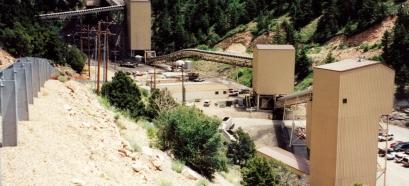
Coal production has been generating two to seven million dollars in revenue per year over the past five years. Now one of the most important coal mines on trust lands is near the end of its mine life, and operations are being concluded. The result of this will be a drop in coal revenues of several million dollars a year.
However, new mines will start up on trust lands during that period, and coal revenues will begin to rise. Trust land coal should continue to provide revenue for about 20 more years.
The Trust Lands Administration will continue seeking additional lands with coal potential through land exchanges with the federal government.
Potash is a source of soluble potassium which is one of the three primary plant nutrients –much of it is used as an agricultural fertilizer. The major trust land potash resource is located in the Kane Creek area of Grand County. That operation also produces salt for chemical applications and road salt.
Beryllium
Beryllium is classified as a precious metal. It’s a very light metal and is used as an alloy with other metals to make light-weight materials for the aerospace industry. When alloyed with copper, the result is a product which has high electrical conductivity. As a result, beryllium is used extensively in the production of circuit boards, chips and other electronics. Much of the free-world production of beryllium is from trust lands in Utah.
Limestone
Limestone is used for many purposes. The wide variety of uses and the demands for limestone make it a valuable commodity. Some important uses include manufacturing of cement and asphalt, environmental applications, and coal mine dusting. Limestone is also used in building and landscaping.
Gilsonite
Gilsonite – a natural solid hydrocarbon – is glossy black, very brittle and looks similar to coal or hard asphalt. It is easy to think of gilsonite as “a solid petroleum”. It occurs in very pure, straight, vertical veins that can be up to 22 feet wide and 1,000 feet deep.
Gilsonite is produced from deposits in Duchesne and Uintah Counties in Utah. It is used in inks, protective coatings, paints, binders, pavement sealers, explosives, drill-muds, specialty graphite products and more than 160 other uses.
Sand and Gravel
Sand and gravel remain among the most utilized commodities in the world. Demand in Utah is directly linked to population, and the Trust Lands Administration continues to increase income from deposits being mined in Utah and Tooele Counties and from locations in rural Utah. About 3,000 acres of trust lands are permitted for sand and gravel production. Revenue from sand and gravel is about $500,000 per year.
Gypsum
United States Gypsum Company – a major producer of Gypsum in the U.S. – recently entered into an agreement with the Trust Lands Administration to lease a gypsum mine prospect in Emery County. The gypsum is located in the San Rafael Swell near I-70. The sedimentary rocks that contain the gypsum mineralization are the remnants of an ancient salt water sea bed. Gypsum can be used for plaster of Paris, soil conditioner, fertilizer, cement and as a component in pharmaceuticals. This gypsum mine will be used by US Gypsum in the manufacture of sheetrock at its plant in Sigurd, Utah.
Revenues from oil and natural gas are the largest source of income to the Trust. The money comes from the leasing of trust acreage for the exploration of these resources and from royalties paid to the Trust from the sale of oil and natural gas.
In FY 2003, oil and gas revenues were more than $23 million – about 46 percent of total revenues. Refer to chart on page 4.
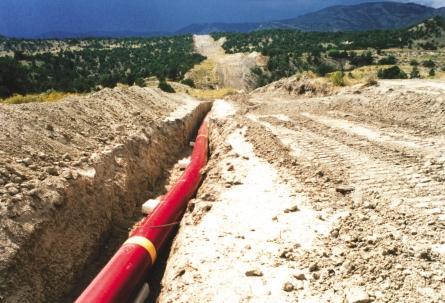
Natural gas revenues increased significantly between July 2002 and July 2003 for several reasons including increased drilling, the continued high market price for gas and the expansion of the Kern River Pipeline. The pipeline runs approximately north-south between Wyoming and southern California – directly through Utah. The pipeline capacity was almost doubled with the expansion in 2003 allowing far more gas to be delivered to gas-starved southern California.
Another pipeline was also laid connecting the gas fields of Carbon and Emery Counties to the improved Kern River Pipeline. A great deal of the gas from those fields comes from trust land. Much of it is delivered to the Wasatch Front by the Kern River Pipeline. The remainder goes to more lucrative markets in southern California.
The price received for gas sold remains at an unprecedented level. Traditionally, during the summer months, the price of gas takes a dip in value per unit sold. Due to the continued demand for gas in the summer months for power generation in the private sector and industrial uses, the price now remains fairly constant throughout the year.
Even with higher prices and increased drilling in developed fields, the production of natural gas in Utah is declining at a rate of about two percent per year. One way to counter that decline is through finding more new gas fields. Energy companies are taking a hard look at the Uintah Basin for that potential. The Trust Lands Administration believes it has lands in the Uintah Basin with significant gas reserves waiting to be explored.
One of those areas – Horse Point – is located about 15 miles west of the Colorado state line, 30 miles north of I-70. There are about 12,000 acres of trust lands which show good potential for natural gas. Successful wells have been drilled at Horse Point, but a pipeline will have to be built to the area in order to efficiently market the gas and encourage considerable new development.
One of the greatest challenges in managing Utah’s trust lands is the checkerboard ownership pattern of trust lands created by the original pattern of federal grants (see the map of Utah on page nine). At the time that these trust lands were granted to Utah, federal land policy was similar to that of the state: public lands were generally managed for resource development or sale to the public sector.
Since that time federal land managers have adopted a preservation-oriented land management model for much of the federal public land base, including millions of acres of public lands in Utah. This creates an inherent management conflict between trust lands, which must be managed for revenue purposes, and surrounding federal lands where resource development may be prohibited.
One tool for resolving this conflict is land exchanges between the state and the federal government. While historically land exchanges involving significant acreage have been difficult to achieve, the Trust Lands Administration and the federal government completed two large exchanges in the last five years – both implemented by federal legislation. The first, involving trust lands in the Grand StaircaseEscalante National Monument and Utah’s national parks and forests, placed over 375,000 acres of trust lands into conservation management, while providing both cash and mineral lands for the benefit of Utah’s schools.
The second exchange, in 2001, removed over 100,000 acres of trust lands within proposed federal wilderness in Utah’s west desert, while giving the Trust ownership a similar amount of more useable federal land. These were remarkably good transactions for both Utah and the federal government –allowing both parties to pursue their legal management obligations with less interference from the other.
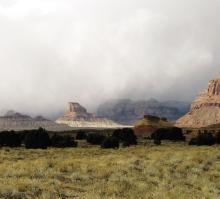
Early in 2002, the San Rafael Exchange was proposed based on these same principles. The Trust Lands Administration agreed to exchange scattered trust land parcels in the magnificent San Rafael Swell (and other environmentally sensitive trust lands – including captured trust lands inside desert tortoise habitat in Washington County) for federal lands of equal value.
There was some public criticism that the transaction was financially unbalanced in favor of the Trust. The Trust Lands Administration strongly disagrees with that assertion, as the exchange was fully reviewed and approved by independent valuation experts. Nonetheless, although the exchange was approved by the U.S. House of Representatives, it failed to pass in the last days of the lame-duck session of the U.S. Senate; and the proposal has been terminated by the parties.
There are still hundreds of thousands of scattered acres of trust lands held captive in wilderness study areas and other restrictive federal designations, many of which encompass scenic areas like the San Rafael Swell. It truly makes sense for the Trust Lands Administration, the United States and the public to solve this problem; and land exchanges remain a key tool that the Trust will pursue in doing so.
At the close of the Clinton administration, the Department of Interior (DOI) administratively created multiple de facto wilderness study areas around Utah, although Congress had granted DOI no authority to do so. This had an enormous negative impact on the Trust beneficiaries because it trapped hundreds of thousands of acres of trust land inside areas that DOI chose to manage very restrictively – allowing no mineral leasing or other development.
The Trust Lands Administration, the State of Utah, and the Utah Association of Counties had been in continuing litigation with DOI since 1996 over DOI’s illegal management of federal lands in Utah as de facto wilderness, in violation of existing land-use plans and federal law. The Clinton administration’s decisions in January 2001 to formalize this practice had the potential for permanently impairing the Trust’s ability to use more than 300,000 acres of trust lands. As a result, the agency felt the need to actively pursue litigation to resolve this issue. Fortunately, DOI eventually chose to settle the suit out of court in April, 2003 – admitting it had acted improperly in creating new wilderness study areas and in managing those areas as wilderness without legal authority to do so.
The settlement of the litigation returned the decision to designate wilderness back to where it is supposed to be – with the U.S. Congress. In the meantime, DOI continues to have full management tools for protecting sensitive natural areas through its land-use planning process.
The Trust Lands Administration does not oppose wilderness designation of federal lands in Utah, as long as it is coupled with a fair mechanism to exchange captured trust lands out of the designated areas. Many areas in Utah clearly qualify for wilderness designation; however, Congress must also consider how to protect the Trust beneficiaries in any action it takes to designate wilderness through legislation. The Trust Lands Administration remains willing to work with Utah’s congressional delegation, state and local government, and the environmental community to resolve this difficult issue.
At the close of the Clinton administration, the Department of Interior (DOI) administratively created multiple de facto wilderness study areas around Utah, although Congress had granted DOI no authority to do so. This had an enormous negative impact on the Trust beneficiaries because it trapped hundreds of thousands of acres of trust land inside areas that DOI chose to manage very restrictively – allowing no mineral leasing or other development.
Unique preservation opportunities sometimes present themselves to the Trust Lands Administration. These opportunities allow the structuring of transactions whereby the Trust beneficiaries receive fair value for the lands involved while the land is utilized for a non-revenue producing purpose. Such transactions provide for the financial interest of the Trust beneficiaries while preserving the land.
In FY 2003, the Trust Lands Administration began a unique program to protect a threatened species – the Utah Prairie Dog. These prairie dogs occupy valuable development land. Counties and cities want to use these lands to accommodate growth demands.
As a result, the Trust Lands Administration began organizing a program for moving threatened prairie dogs from valuable development areas to remote trust lands where they can reside and multiply without daily interference from man.
A group was formed in an effort to engage the affected parties and prairie dog advocates. The venture includes the Trust Lands Administration, four southern Utah counties impacted by these prairie dogs, farmers and ranchers, Senator Tom Hatch (and other legislative leaders), the Environmental Defense Fund, Utah State University and the state Division of Wildlife Resources.
The initial plan is to move some prairie dogs to suitable habitat trust lands at the Parker Mountain block in Wayne County – a few miles south of Fish Lake. The Division of Wildlife Resources will monitor the new prairie dog community to evaluate the success of the transplant program. Utah State University will conduct research on the effects of merging prairie dog habitat and grazing lands.
If the initial project is successful, the Trust Lands Administration will earn credits for creating prairie dog habitat. The credits can be used to mitigate the loss of habitat through the development of other trust lands. The credits can also be sold to private developers to mitigate habitat loss on their lands.
A successful project will ensure the future of the Utah prairie dog, the future growth of Utah’s towns and cities, and revenues for Trust beneficiaries.

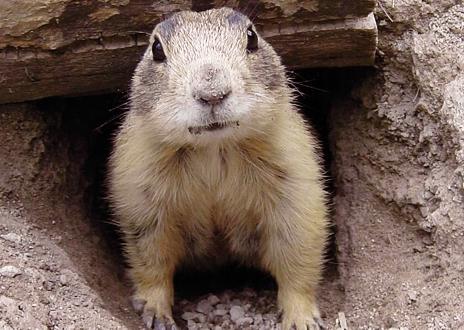
The Trust Lands Administration strives to provide habitat for threatened species.
The Trust Lands Administration cannot give away trust land or even set it aside for non-trust purposes without compensation. Nevertheless, some trust lands have unique scenic, recreational or environmental characteristics. In these situations, the Trust Lands Administration may endeavor to maintain these characteristics by selling the land to buyers interested in protecting it for conservation purposes or exchanging the lands with the United States (or others) for real estate more suitable for Trust purposes. We strive to resolve problems when trust land sales or development issues conflict with conservation issues.
In FY 2003, the Trust Lands Administration; the Utah Division of Oil, Gas and Mining; and the Utah State Historic Preservation Office signed a Memorandum of Agreement regarding the preservation of historical and cultural resources during the exploration for oil, gas and hydrocarbons. The agreement was created to ensure that oil and gas operators leasing property from Trust Lands have met all requirements regarding cultural resources before receiving a Permit to Drill from the Division of Oil, Gas and Mining.
Trust Lands will require the oil and gas operators to show either a cultural resource inventory or evidence of a completed State Historic Preservation Office review of the drill site and any other part of surrounding trust lands that will be disturbed by the proposed undertaking.
This agreement formalizes the cultural resource clearing process ensuring that appropriate precautions have been met before any disturbance is undertaken.
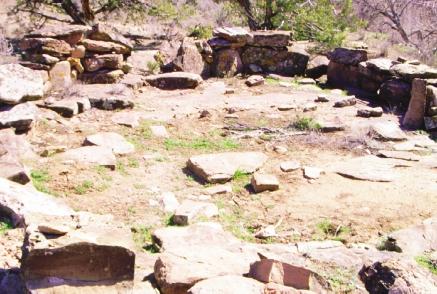
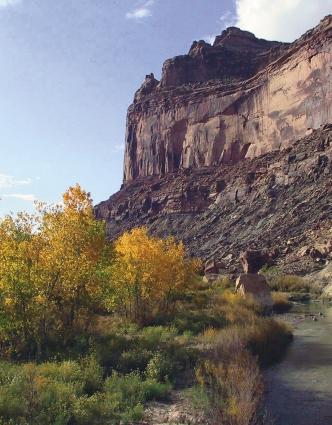
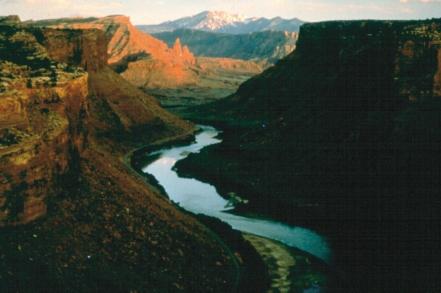
In June of 2003, The Nature Conservancy purchased 640 acres of trust lands, known as Onion Hill, that lie at the foot of the famous landmark Fisher Towers in Utah’s Colorado River Corridor. This transaction garnered positive results for both The Nature Conservancy and Trust Lands.
For the Conservancy, Onion Hill represented a gap in the protected areas of Utah’s Professor Valley. Surrounded by land owned by the Bureau of Land Management, the breathtaking landscape of Onion Hill stands as a gateway to hundreds of acres in the area with high ecological significance.
For Trust Lands, the transaction presented an opportunity to obtain fair value for this parcel –$425,600 – and to convert an underproducing surface asset to cash for the benefit of Utah’s public schools.
In addition to the Onion Hill transaction, the Conservancy has joined with Trust Lands on other key properties in its ongoing efforts to conserve a 35-mile stretch of Utah’s Colorado River Corridor located northeast of Moab. The Trust Lands Administration encourages continuing these kinds of transactions that are mutually beneficial in protecting environmentally sensitive areas.
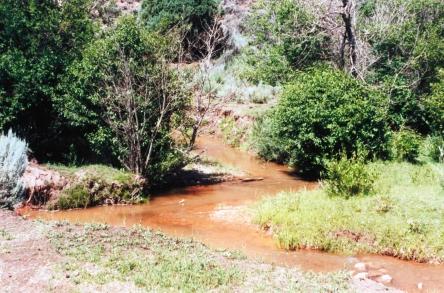
The Trust Lands Administration established a donations program in March 1999 for the purpose of accepting gifts of real estate, cash and personal property for Utah’s schoolchildren. Since then, the agency has received several such donations.
In August of 2002, Mr. Roen A. Hale, chairman of the board for Simpson Steel Fabricators, arranged for the company to donate 160 acres of land in Duchesne County to the Trust Lands Administration. The property is located approximately 10 miles south of Strawberry Reservoir near Red Creek. The donation was made in connection with a voluntary dissolution of the company.
Simpson Steel had many choices for disposing of the property, but Mr. Hale said that he was appreciative for the education he received as a child in Utah and believed that his donation was a good way to give something back to the schools. The land has been placed in the public school trust portfolio to be managed by the Trust Lands Administration for the economic benefit of Utah’s schoolchildren.
Cash donations or funds received from the sale of donated real estate go directly to the Permanent School Fund. The Trust Lands Administration welcomes donations from the public to help reach its goal of $1 billion in total trust assets.
The Board of Trustees consists of seven members. One of the members serves at the pleasure of the Governor and remains on the Board for as long as the Governor wants. The other members are appointed for a six-year term each. Every fiscal year one new Board member is appointed to replace the current Board member whose term expires.
Prospective new Board members are selected yearly by a nominating committee. The committee sends the Governor the names of two or three nominees. The Governor then selects one to be the new member. The nominating committee has 11 members representing education, industry, and other public interests.
In FY 2003, the Board consisted of the following people:


Chairman – Lonnie M. Bullard
President, Jacobsen Construction
Background in real estate financing and construction
Farmington, Utah
Term: expires 6/30/2003
Vice-Chair – John W. Creer
President, Farm Management Company
Background in agricultural management and law
Farmington, Utah
Term: expires 6/30/2005
Board Member – John A. Harja
Sr. Policy Advisor for Natural Resources Policy and Planning and Indian Affairs
Governor’s Office, State Planning Coordinator and Department of Natural Resources
Salt Lake City, Utah
Term: at pleasure of the Governor
Board Member – Ruland J. Gill, Jr.
Vice-President, Government Affairs, Questar Corporation
Legal background in oil and gas exploration and development
Bountiful, Utah
Term: expires 6/30/2004
Board Member – Vernal J. Mortensen
Retired, Senior Vice-President, Coastal Coal, Inc.
Background in coal mining and mineral valuation
Sandy, Utah
Term: expires 6/30/2006
Board Member – James J. Eardley
President, Dixie Transport, Inc.
Background in LP gas distribution, county government and banking
St. George, Utah
Term: expires 6/30/2007


Board Member – Michael P. Morris
President, Bank One Real Estate Investment Corporation
Background in real estate and commercial banking
Alpine, Utah
Term: expires 6/30/2008
Board Member Nominee – James B. Lee
Senior Lawyer, Parsons Behle & Latimer
Litigator for more than 40 years in mineral, water & environmental law
Salt Lake City, Utah
Term: expires 6/30/2009
Kevin S. Carter
Director Since 1/1/03
John W. Andrews
Associate Director and Chief Legal Counsel
Tom Faddies
Assistant Director/Hard Rock and Industrial Minerals
LaVonne J. Garrison
Assistant Director/Oil and Gas
Kim S. Christy
Assistant Director/Surface
Ric McBrier
Assistant Director/Planning and Development
Lisa Y. Schneider
Finance Director
Lynda Belnap
Administrative Assistant to the Director
Ron Carlson
Audit Manager
Jeff Roe
ITS Manager
Dave Hebertson
Public Relations Manager
Stephen G. Boyden
Director Through 12/31/02