
Following my first fiscal year as Director of the School and Institutional Trust Lands Administration, I send my heartfelt thanks to the many people on the staff and the Board of Trustees who have had a positive influence on the results of the Trust Lands Administration. I also thank those at other state resource management agencies, county and city leaders, the state legislature, the Governor and Utah’s congressional delegation. In addition, I greatly appreciate the generous support and untiring assistance of our beneficiaries. All have helped propel us to another successful year.
For the seventh consecutive year, Trust Lands’ revenues exceeded expectations. The budgeted revenue for FY 2002 was $40,200,000; but when the final tally was made, revenues topped $47,000,000 – 18 percent over budget. The agency contributed more than $41 million to the beneficiaries.
We implemented some staffing changes in the Trust Lands Administration, that provided needed help for the burgeoning tasks of the agency. The changes also furnished me more opportunity to personally work with state and local leaders and with our congressional delegation to continue building Trust assets.
As a result, we have entered into an agreement with the United States Bureau of Land Management for the exchange of inheld school trust lands in the San Rafael Swell region for other federal lands in the state which may have greater financial potential for Utah’s schoolchildren. As of the end of FY 2002, the agreement was ratified by the Utah state legislature and was pending action by the United States Congress. We will continue to pursue Congressional ratification in fiscal year 2003.
We are gratified to see Utah’s school trust land dividend grow each year. Parents, teachers and school officials have expressed their appreciation for the program and the money it puts directly into their hands. Our projections show that the distributions to the schools should be increasingly more significant year after year.
My thanks to all of you who help make this so.
Sincerely,
Director
and Contributions to Beneficiaries Fiscal Year 2002
For a more detailed review of the Trust Lands Administration’s FY 2002 financial results, see Appendix 1 “Consolidated Revenues” and Appendix 2 “Consolidated Balance Sheet.” Operating
In Millions
Beginning with the admission of Ohio as a state in 1803, Congress granted federal lands to each newly admitted state for the support of public schools and other public institutions.
When Utah became a state on January 4, 1896, the United States agreed to transfer ownership of more than seven million acres of federal land in Utah to the new state and required that this land was to be administrated by the state as a trust to provide financial support for specific beneficiaries. The federal government specified 12 institutions as beneficiaries of these trust lands. Each institution received distinct lands for its trust.
The 12 beneficiaries are:
Public Schools (Kindergarten through 12th Grade) Reservoirs
Utah State University
University of Utah
School of Mines (University of Utah)
Miners’ Hospital (Rehabilitation Unit of University Medical Center)
Normal School (Teachers’ College at University of Utah)
School For The Deaf
Public Buildings
State Hospital
School For The Blind
Youth Development Center
The Public Schools’ trust received the great majority of trust lands, currently accounting for more than 96 percent of the total acreage managed by the Trust Lands Administration (Appendix 3).
At first, Utah trust lands were managed by a board of elected officials including the Governor, the Secretary of State, the Attorney General and two resident commissioners appointed by the Governor. In 1931, the form of management was changed to three citizen land commissioners appointed by the Governor. Over time, the board was expanded to include representatives of various user groups. By 1988, the board had 11 members including one beneficiary representative.
As of the early 1990’s, the historic performance of the Trust was unimpressive with total Trust assets among the lowest of all western states owning trust lands. At that time, a coalition of educational groups challenged the state to do a better job. After much effort, in 1994 the legislature created a new agency to manage trust lands – the School and Institutional Trust Lands Administration.
The new organization was instructed to run trust lands as a profitable business, in compliance with generally accepted trust principles including undivided loyalty to the beneficiaries. Since 1994, the Trust Lands Administration has been managing trust lands; and total trust assets have increased from $94.8 million in fiscal year 1994 to $398.8 million at the end of FY 2002.
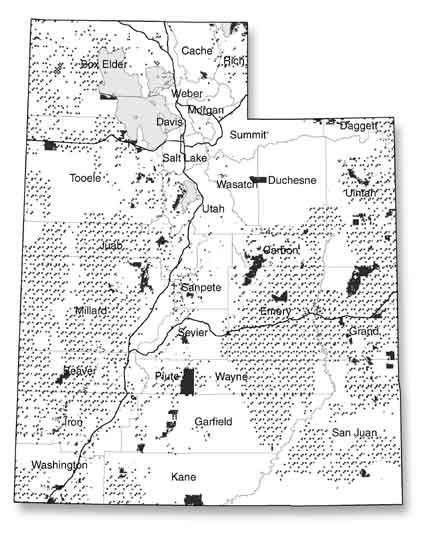
Trust lands are shown in black
The trust lands are scattered throughout the state as depicted on this map of trust lands.
At this time, there are almost 3.5 million surface acres of trust land - more than 7,500 parcels. More than one-half of the original surface grants have been sold since statehood (see appendix 3). Most of that land was sold before 1930. What happened to that land? The bulk of it became private property owned by the citizens of Utah.
A little-known fact of Utah geography is that about 30 percent of all private property in the state came from trust lands.

The revenues generated from the use and sale of trust lands are either sent directly to the particular beneficiary or put into its permanent fund. State law requires that revenues from the Public Schools’ trust must be handled differently than the other 11 beneficiaries:
In the case of the public schools, all revenues generated from trust lands are transferred to the schools’ permanent fund. By depositing all of the income to the permanent fund, the fund can continue to grow.
The schools do not get the revenues directly. It is the investment earnings (interest and dividends) from the permanent fund which are distributed to the schools each year for local academic needs. The trust land dividend is managed by the Utah State Office of Education through its School LAND Trust program. The amount for each school is based on the number of students at the school.
Each school has a committee of parents, teachers and administrators which decides how to spend the money for the school. The majority of schools have been using the money to enhance reading, science and math programs.
More than 750 schools receive trust lands dividends. As the permanent fund continues to grow, the amount of the yearly dividend will also grow. For more information on trust lands dividends, call the Utah State Office of Education at 801-538-7573 or visit their School LAND Trust web site at www.schoollandtrust.org .
In the case of the 11 other trust beneficiaries, their permanent funds grow more slowly because all non-land sale revenues are distributed directly to them each year. Only the money from the sale of their trust lands is added to their permanent funds.
See Appendix 4 for a list of distributions and transfers to the trust beneficiaries in FY 2002.
The Trust Lands Administration is required to manage trust lands for the financial benefit of the various beneficiaries. There are only two ways to generate revenues from real estate:
1. Put it to use
2. Sell it
The Trust Lands Administration does both to create wealth for schools and the other beneficiaries. Further, the agency is required by law to receive fair-market value for the use or sale of trust lands – it cannot be given away.
Here are some examples of how revenues are generated from trust lands:
• Oil, Gas and Coalbed Methane
• Grazing
• Mining –Coal Gold
Copper
Industrial Minerals
Building Stone
• Land Sales to the General Public
• Cell Phone & Telecommunications Sites
• Sand & Gravel Operations
• Residential & New Subdivisions
• Golf Courses
• Sales to Counties and Local GovernmentsWater Tanks
Open Space
Easements
• Recreation Leases
• Hunting & Fishing Access
• Gemstones, Fossils and Rockhounding
• Land Sales and Leases to BusinessesConvenience Stores
Industrial Parks Hotels
• Skiing Areas & Facilities
• Forest Products and Timber
• Farms and Agriculture
• Conservation Sales
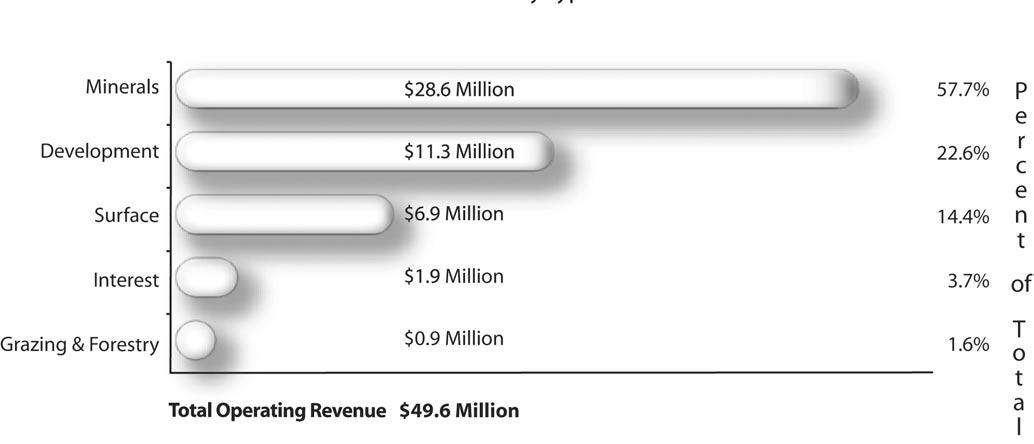
In Fiscal Year 2002, Trust Lands Administration operations posted revenues of $49.6 million from the various activities on trust lands. These activities are grouped into five categories of trust operations. The following chart shows the contribution of each category to total revenues.
Of course, it takes money to manage trust lands and operate the Trust Lands Administration. The Trust Lands Administration is self-funded – a portion of the money generated from trust land activities is used to operate the Trust Lands Administration. All expenses and capital costs are paid from these revenues. No tax money is used to operate the Trust Lands Administration. Even so, the Board of Trustees, the governor and the legislature have oversight of all expenditures.
The Trust Lands Administration focuses on achieving excellent returns for the beneficiaries. Every project is viewed from that perspective.
There are 7,500 parcels of trust land. Every parcel is different. No single management paradigm works for all of the pieces. That means the approach for utilizing any particular tract may be quite different from plans implemented for other pieces.
When developing trust lands, the Trust Lands Administration collaborates with local communities to achieve the goals of the Trust. Trust Lands Administration managers are continually meeting with and reaching out to community leaders to evaluate local conditions and needs.
Income from minerals continues to be the major source of trust land revenues. In FY 2002, mineral revenues were $28,603,000 – 57 percent of Trust operating revenue for the year. The revenues came from these main areas:
1,279,000 TOTAL $28,603,000
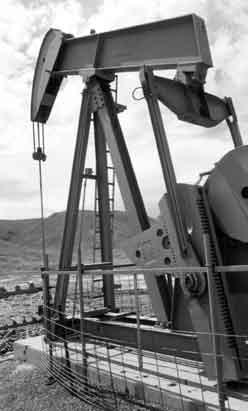
Much of the gas revenue received by the Trust in FY 2002 came from the production of natural gas (coalbed methane) from trust lands in Carbon and Emery Counties. As the coalbed methane properties in those areas continue to be developed, it is anticipated that this region will continue to be a major source of income to the Trust for the next 20 years.
Significant oil and gas revenues are also being generated from trust land production in Duchesne, Uintah, Grand and San Juan Counties.
This pump is lifting large volumes of water from a coal bed in Carbon County to allow the coalbed methane gas to flow to the surface.
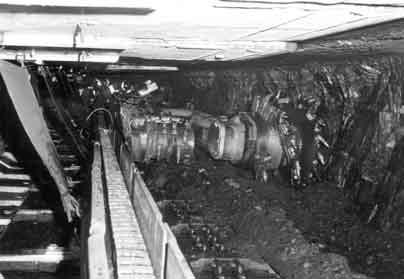
For years, coal has been a mainstay of trust mineral revenues. In FY 2002, coal revenues were 22.5 percent of total mineral revenues. The Trust Lands Administration’s strategy for acquiring additional coal properties, through land exchanges with the federal government, should sustain Trust coal revenues for years to come.
For example, the Dugout Canyon mine, a relatively new mine in the Book Cliffs region of Carbon County, contains trust land coal. The entire coal reserve at Dugout is estimated at 41.2 million tons. Of that, Trust coal is expected to exceed 22 million tons, with the rest belonging to the federal government and private owners. The Trust coal reserves should last about 18 years, bringing more than $20,000,000 to the Trust in the future.
It’s not well known, but gemstones and fossils are another source of trust revenues. Trilobite fossils are at the top of that list.
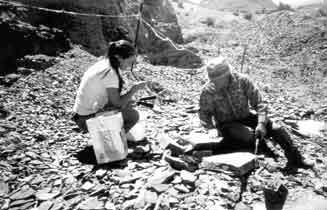
To the fossil collector, U-Dig Fossils could possibly be the trilobite mother lode. A lessee of the School and Institutional Trust Lands Administration, U-Dig Fossils is located about 52 miles west of Delta, Utah. U-Dig Fossils leases a quarry of shale that holds fossil trilobites. The trilobite was a prehistoric invertebrate life form that lived on the bottom of an ancient sea. Fossil trilobites are plentiful throughout Utah, but this particular quarry seems to have an almost endless supply.
U-Dig Fossils charges those wanting to discover their own piece of prehistoric nature. Since 1995 the pit has seen as many as 60 visitors a week from April 1 to October 15. The fossil hunters are not all from Utah either. U-Dig says that almost half of the guests are from out of state or foreign. There are families, groups of Boy Scouts, and even tour buses of active seniors.
Much of the fossil-bearing shale is already loosened from the quarry, but visitors may extract their own rock using larger tools available. U-Dig Fossils also provides hammers to split the shale, buckets to collect the trilobites and all the assistance and instruction needed for finding the notso-elusive creatures.
The trust beneficiaries earn royalties based on quarry operations.
A couple of trilobite prospectors search the shale at the U-Dig quarry to find the fossilized bodies of the ancient creatures.
The Trust Lands Administration is always looking to enhance revenues by locating new deposits of minerals. To do this, the agency embarked upon a statewide inventory of minerals in FY 2002.
The inventory project is a cooperative venture between the Trust Lands Administration and the Utah Geological Survey. The outcome of the project will be a database that can be conveniently used to (1) establish baseline mineral values for trust lands, (2) help promote mineral development on trust lands, and (3) help value trust lands for land exchanges.
The inventory is limited to metallic minerals, industrial rocks and minerals, and selected energy fuels (tar sands, oil shale and uranium). Oil, gas, coal, coalbed methane, water, and geothermal resources are excluded from this project – these minerals are being evaluated separately.
The database is being developed on a county-by-county basis and will eventually be available on the Internet with information on status and availability of the lands. The on-line system will have the capability to provide reports, maps and copies of related documents to the public.
The inventory will embrace 4.2 million acres of trust land minerals and should be completed by June 2003.
Another way the Trust Lands Administration creates wealth for the trust beneficiaries is through the sale of trust land. The money which comes from the sale of trust land is never spent, but is put into the permanent fund of the appropriate beneficiary. Depositing land sale revenues into their permanent funds builds the asset values of their individual trust accounts.
Trust land is sold in one of two ways: (1) a public auction, or (2) a negotiated sale. The Trust Lands Administration determines which type of sale will generate the optimum value for the beneficiaries before putting the land on the market.
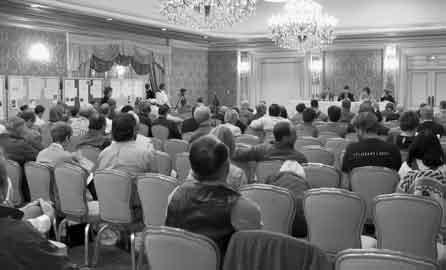
Public land auctions are held twice a year. Land sold at auction is usually undeveloped raw land. Sometimes trust land is sold through a negotiation process. Negotiations are used to handle complex transactions and when planning and development activities are used to improve the returns for the beneficiaries.
Historically, trust land has been purchased for housing, agriculture, commercial, recreation, wildlife habitat, and specialty uses such as conservation and open space.
Interested people attend a Trust Lands’ auction to watch and participate in the bidding. The public is invited to the Trust Lands’ auctions held twice a year.
State law requires that all trust land sold must be at or above fair-market value in order to preserve the asset value of the Trust. Increasing public participation in the sale of trust lands further contributes to building beneficiaries’ permanent funds.
Total land sales revenue in FY 2002 was $15,603,000, which includes the sale of 579 acres of desert tortoise habitat to the Utah Division of Wildlife Resources for $5,593,700.
In some cases, profits for the beneficiaries are optimized by adding value to parcels before selling them. Value can be added through a variety of activities including: planning, zoning, subdivision and construction. The Planning & Development group of the Trust Lands Administration works diligently with local communities and participates with experienced private developers to provide land for residential, commercial, industrial and other uses for Utah’s growing population.
Industrial and business parks represent one type of planning and development activity being pursued by the Trust Lands Administration. Over the past five years, the Trust Lands Administration has worked to identify properties that can appropriately be developed as industrial/business parks. This has led to the creation of such parks in several Utah communities. These projects contribute to the development of local jobs and tax revenues while bringing good returns to the trust beneficiaries through the sale and leasing of the properties.
Trust lands have been used in the development of these industrial parks:
• Ft. Pierce Industrial Park in St. George
• Ridge Road Business Park near Price
• Gateway Industrial Park in Hurricane
• Cedar City Industrial Park west of Cedar City
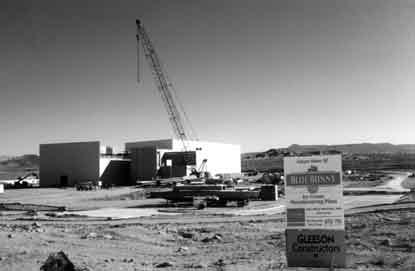
This is the new Blue Bunny ice cream plant under construction at the Ft. Pierce Industrial Park in St. George. The new plant will bring nearly 70 new jobs to St. George. Blue Bunny is the brand name for Wells’ Dairy ice cream. Although Wells’ Dairy distributes products throughout the United States and in 18 foreign countries, this is its first facility outside its home state of Iowa.
The Trust Lands Administration cannot give away trust land or even set it aside for non-trust purposes without compensation. Nevertheless, some trust lands have unique scenic, recreational or environmental characteristics. In these situations, the Trust Lands Administration endeavors to maintain these characteristics by selling the land to buyers interested in protecting it for conservation purposes or exchanging the lands with the United States for other real estate more suitable for trust purposes.
Here are two examples of projects which promote conservation on trust lands.
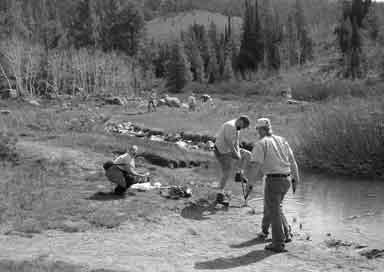
Volunteers help restore the bank of Beaver Creek by planting new vegetation in damaged areas. The restoration will also include the building of fences around the area to protect the new plants and promote renewal.
The Logan Cache Anglers’ Chapter of Trout Unlimited, the U.S. Forest Service, and the Trust Lands Administration are working together on stream channel restoration for Beaver Creek. Beaver Creek is located 35 miles northeast of Logan near the resort of Beaver Mountain. Beaver Creek is one of the main contributories to the Logan River.
The work on Beaver Creek began when the Forest Service needed to do road repair and wanted to make sure that the stream and its aquatic inhabitants would not be negatively impacted. The project turned into a multi-party – U.S Forest Service, Trust Lands Administration and private landowner’s collaboration. The U.S. Forest Service contributed $40,000 for the improvement of the road. They worked with biologists and Trout Unlimited so that water draining from the road would not harm the stream.
Trust Lands Administration closed four camp sites that were near the creek. Because these camp sites were so close, the stream banks had lost much of their vegetation and were beginning to wear away. The Trust Lands Administration also contributed $1,500 for signs posted in the area explaining the project and the reasons for closing the campsites.
The Logan Cache Anglers’ Chapter of Trout Unlimited received a grant from the national group’s special program called “Embrace a Stream”. The grant paid for dogwood and sedge grass that Trout Unlimited volunteers planted to re-vegetate the stream banks. The volunteers also cut and planted willow starts.
This cooperative effort simultaneously improves the health of the stream, habitat for the Bonneville Cutthroat Trout and improves the trust lands in the project area.
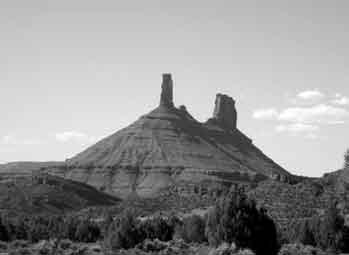
The Trust Lands Administration and Utah Open Lands have negotiated an agreement for the preservation of scenic Castleton Tower in the heart of Utah’s Redrock Country. Purchasing the land for $640,000, Utah Open Lands will maintain the land in its natural state when they are successful in raising the needed funds.
Utah Open Lands’ down payment secures the property until July 2003. An extensive fundraising campaign is devoted to completing the purchase. With critical support from the outdoor industry, UOL has raised awareness and financial commitments for the preservation of the location, which has become an icon for climbers, recreational enthusiasts and tourists.
This transaction will benefit all Utahns by adding needed funds to the permanent school fund while preserving a remarkable piece of property in a unique, scenic environment. The Trust Lands Administration cheers Utah Open Lands for its efforts to achieve a win-win outcome.
The donations program of the Trust Lands Administration was established in March of 1999 for the purpose of accepting gifts on behalf of Utah’s schools. Since then, the agency has received property, cash and testamentary donations.
During FY 2002, an anonymous donor sent a check for $24,895.37 designated for the schools’ permanent fund. The benefactor never was identified, but every penny of the donation was put into the schools’ permanent fund. The interest and dividend revenue from this fund is distributed directly to the schools.
Donations of real estate are also accepted. Gifts of real estate become part of the 3.5 million-acre real estate portfolio and are managed like other trust lands.
Trust Lands Administration welcomes donations of cash and real estate to help reach its goal of $1 Billion in total assets by 2010. Contact us at 801-538-5100 for more information.
Because many trust lands in Utah’s San Rafael Swell region have been captured in Wilderness Study Areas and other federal reservations and, therefore, have little potential for generating revenues, the Trust Lands Administration initiated a trade for trust lands in the San Rafael area in exchange for federal lands elsewhere in the state.
In January of 2002, Governor Leavitt announced a proposal to have President George W. Bush create a new national monument in Utah’s San Rafael Swell. Exact boundaries were not announced, but the Trust Lands Administration estimated that the area might embrace more than 650,000 acres – of which more than 100,000 acres would be trust lands.
When the monument was proposed, the Trust Lands Administration stepped up efforts to complete a trade with the federal government. Within a few months, an agreement for an exchange was successfully negotiated between the Trust Lands Administration and the United States Bureau of Land Management. Although the possibility of a monument designation accelerated Trust Lands’ desire for the trade, the agreement is not connected to the monument proposal. The Trust Lands Administration will pursue the exchange regardless of the decision for a San Rafael monument.
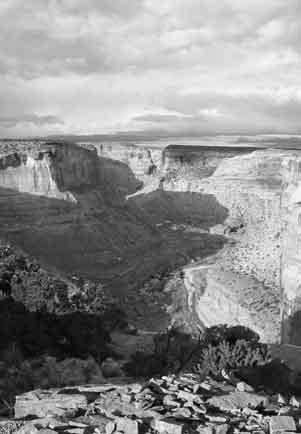
The view from the Wedge Overlook in the San Rafael Swell. Some call this part of the Swell “The Little Grand Canyon.”
The agreement has three main elements:
1. A land exchange of approximate equal value of $35,000,000
2. A deferred purchase of desert tortoise habitat of about $32,000,000
3. Restructuring of the trust lands beneficiaries’ interest in federal coal of about $15,000,000
The United States Receives:
• 102,231.70 acres in the San Rafael Swell
• 2,892.56 acres in scattered forest sections
• 2,487.81 acres of habitat for the threatened desert tortoise
• 31.00 acres of habitat for a threatened plant species
• Control and unified management over much of the San Rafael Swell with remarkable scenic, recreational and conservation characteristics. Much of the acreage is in or near current Wilderness Study Areas.
• Lands within the Habitat Conservation Plan for the Mojave desert tortoise in Washington County and other lands desired for conservation.
• A continuing interest in rentals and royalties in oil shale tracts.
• A reversionary interest in the Walker Flat coal tract.
The State of Utah Receives:
• 6,477.33 acres in Utah County
• 22,919.10 acres in Emery County
• 98,826.62 acres in Uintah County
• 5,029.84 acres in Washington County
• Lands which have greater potential for residential, commercial, oil, gas and mineral development – greater potential to build the Permanent State School Fund and increase Trust Lands dividends to Utah’s schools.
• Increased mineral development revenues for other state agencies and Utah’s counties.
• A reduction in the burden of managing scattered in-held land parcels which have little potential for generating revenues due to the presence of Wilderness Study Areas and other federal restrictions.
The Desert Tortoise Habitat Conservation Plan for Washington County, Utah, encompasses approximately 10,000 acres – much of which is state school trust land. This is high-value development land in the city of St. George. The federal government has been acquiring the land piece-meal over the past few years to protect tortoise habitat.
This transaction puts 2,487.81 acres of that land directly into the hands of the federal government as part of the equal-value exchange. In addition, the agreement provides for the federal government to purchase another 3,954.46 acres of the habitat on a deferred basis.
The deferred purchase breaks the remaining 3,954.46 acres into nine smaller parcels. The price for the acreage is locked in at today’s price plus simple interest. The federal government can purchase the acreage one parcel at a time. The anticipated primary funding for the habitat purchase comes from royalties from the Walker Flat coal tract.
The federal government owes the state of Utah trust land beneficiaries about $15,000,000 from a prior exchange. That amount was originally to be funded from dedicated royalties of a particular coal tract. However, mining that tract has been delayed due to unanticipated geologic issues. Both the federal government and the state of Utah agreed that the current amount due, plus interest, should instead be funded from royalties in the Walker Flat coal tract.
When the coal at Walker Flats has paid for both the purchase of desert tortoise habitat and for the beneficiaries’ interest in federal coal, the remainder of the coal in Walker Flat will revert to the federal government.
The agreement requires approval of both the Utah state legislature and the United States Congress. As of the end of FY 2002, the agreement has been approved by the Utah legislature and is pending approval in the U. S. Congress.
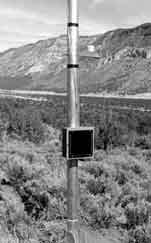
The data-logger at the base of a meteorological test tower records wind information for analysis by wind engineering consultants. The data will tell Trust Lands managers if the site is a likely candidate for wind-generated electricity.
The use of wind energy is gaining popularity in many parts of the country. During FY 2002, the Trust Lands Administration began studying the feasibility of using trust lands for wind power generation when the demand develops in Utah.
The agency purchased three meteorological towers and hired wind engineering consultants to install towers and collect data from selected study sites over a one-year period. The three experimental towers are on trust lands in Washington, Rich and Piute Counties.
The data will be evaluated to determine the potential for power generation. Wind velocity, consistency and direction are important considerations in choosing a wind farm location. The proximity to existing utility corridors is another important factor in determining the feasibility of wind power generation.
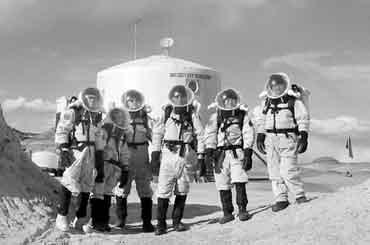
The crew of a simulated Mars mission pose outside their habitat in the red-rock desert of south-central Utah. The Mars Society, which operates the site, is promoting the manned exploration of the red planet.
In fiscal year 2002, Martians invaded trust lands and then continued their occupation by building a Mars Analog Research Station. The Martians are actually a group of volunteers from the Mars Society who believe in promoting the exploration and eventual settlement of Mars. Sixmember crews volunteer one or two weeks of their own time to live in the station located on leased trust land in the remote desert area near Hanksville in Wayne County.
The research station is a cylindrical, two-deck structure that looks something like a tall, white water tank. The first floor of the habitat is where the scientists conduct most of their research; the second floor is reserved for sleeping quarters of volunteers. The station is a field facility where scientists, engineers and other professionals conduct research in learning how to live and work on another planet.
The Mars Society plans to continue with its project at this location for some time to come. Mars Society officials explained that the location was chosen because it provides a large expanse of uninhabited, un-vegetated land with interesting geology and a climate suitable for Mars simulation activities.
The public is invited to visit the station on the weekends.
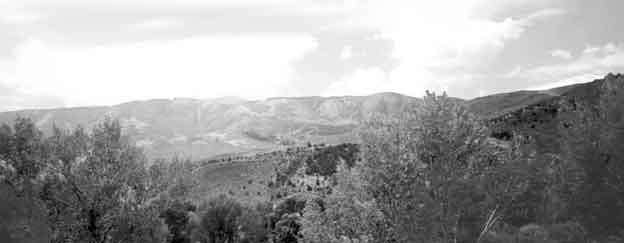
The Trust Lands Administration is conducting a visitor survey on its Tabby Mountain Block. Tabby Mountain is a trust land block of approximately 27,500 acres within the Ashley National Forest straddling the Wasatch-Duchesne County line.
The purpose of the survey is to determine the types of impacts and number of visitors on the block and to provide a guide for management actions. Management activities might include fencing, timber harvesting, stream-bank repair, topsoil erosion control, cattle guard construction, and road re-alignment to protect water courses.
Tabby Mountain. More than 27,000 acres of magnificent high-country trust lands.
Stephen G. Boyden Director
Kevin S. Carter
Deputy Director
Art DuFault
Associate Director
John W. Andrews
General Counsel
Ric McBrier
Assistant Director/Planning & Development
Tom Faddies
Assistant Director/Hard Rock & Industrial Minerals
LaVonne J. Garrison
Assistant Director/Oil & Gas
Kim S. Christy
Assistant Director/Surface
Lisa Y. Schneider
Finance Director
Lynda Belnap
Administrative Assistant to the Director
Ron Carlson
Audit Manager
Dave Hebertson
Public Relations Manager
The Board of Trustees consists of seven members. One of the members serves at the pleasure of the Governor and remains on the Board for as long as the Governor wants. The other members are appointed for a six-year term each. Every year one new Board member is appointed to replace the current Board member whose term expires.
Prospective new Board members are selected yearly by a nominating committee. The committee sends the Governor the names of two or three prospective Board members. The Governor then selects one to be the new member.
The nominating committee has 11 members representing education, industry, and other public interests.
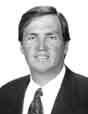
Chairman –
Ruland J. Gill, Jr
Assistant Vice-President, Government Affairs, Questar Corporation
Legal background in oil and gas exploration and development
Bountiful, Utah
Term: expires 6/30/2004
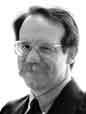
Vice-Chair –Lonnie M. Bullard
President, Jacobsen Construction
Background in real estate financing and construction
Farmington, Utah
Term: expires 6/30/2003
Board Member –John A. Harja
Director, Center for Policy and Planning
Background in natural resources law
Salt Lake City, Utah
Term: at pleasure of the Governor
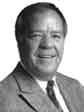
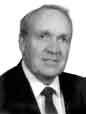
Board Member–Robert P. Morris
President, Robert Morris and Associates
Background in commercial, industrial and municipal real estate development
Park City, Utah
Term: expires 6/30/2002
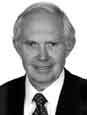
Board Member –John W. Creer
President, Farm Management Company
Background in agricultural management and law
Farmington, Utah
Term: expires 6/30/2005
Board Member –Vernal J. Mortensen
Retired, Senior Vice-President, Coastal Coal, Inc.
Background in coal mining and mineral valuation
Sandy, Utah
Term: expires 6/30/2006

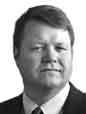
Board Member –James J. Eardley
President, Dixie Transport, Inc.
Background in LP gas distribution, county government and banking
St. George, Utah
Term: expires 6/30/2007
Board Member Nominee –Michael P. Morris
President, Bank One Real Estate Investment Corporation
Background in real estate and commercial banking
Alpine, Utah
Term: expires 6/30/2008
Fiscal Year 2002 (July 1, 2001 - June 30, 2002)
(Prepared on a Modified Accrual Basis) School and Institutional Trust Lands Administration Consolidated Revenue, Expenses and Distributions Fiscal Year 2002
Fiscal
(Prepared on a Modified Accrual Basis)
NOTE: For a complete set of audited financial statements, contact the Trust Lands Administration Finance Director
State of Utah Summary of Ownership and Management
June 30, 2002 Appendix 5
Fiscal Year 2002
*The Utah Division of Forestry, Fire & State Lands manages the beds of the Great Salt Lake, Utah Lake and the Utah portion of Bear Lake, and other submerged lands in the state. The total is estimated at 1.5 million acres.
Source: Trust Lands Administration GIS database. The numbers shown are approximate.
The State of Utah School and Institutional TRUST LANDS ADMINISTRATION
Main Office
675 East 500 South, Suite 500 Salt Lake City, Utah 84102 801-538-5100, FAX 801-355-0922
Central Area 130 North Main Richfield, Utah 84701 435-896-6494, FAX 435-896-6158
Southwestern Area 63 South 300 East, Suite 201 St. George, Utah 84770 435-652-2950, FAX 435-652-2952
Southeastern Area 1165 South Highway 191, Suite 5 Moab, Utah 84532 435-259-3760, FAX 435-259-3755
Toll Free Land Sales Information: 1-877- LAND SALE