State of Utah
School and Institutional Trust Lands Administration
fiscal year 2000 (July 1, 1999 - June 30, 2000)
Mission
To administer the trust assets prudently, profitably and exclusively for the trust beneficiaries.
Cover Photo
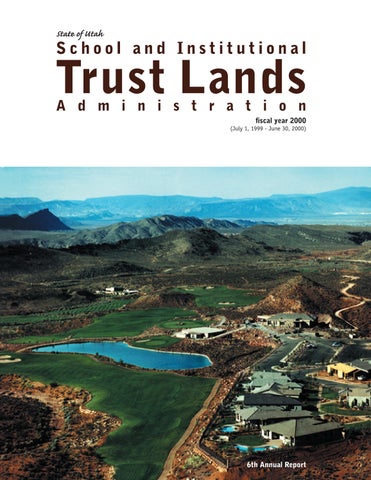
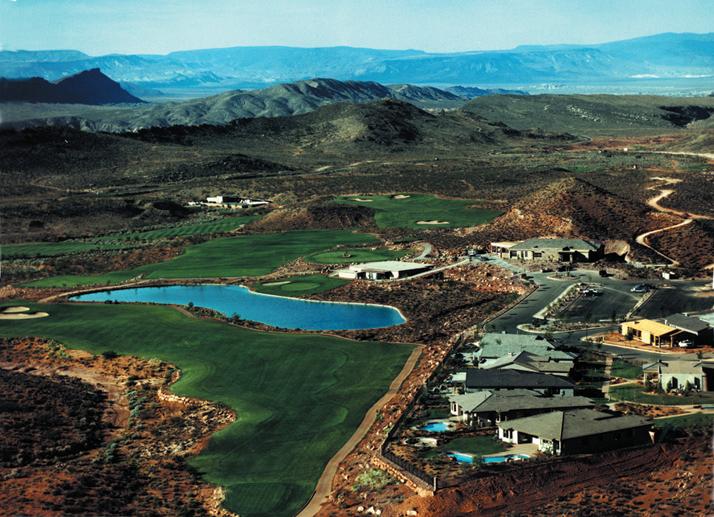
View of Coral Canyon golf course, club house and model homes. Coral Canyon is a new Master-Planned Community on trust lands near St. George. For more details see page 20 of this report.
Table of Contents
Mission & Purpose
Message From the Director
Financial Highlights Chart
Total Assets Growth Chart
Objectives/Results
Who We Are What Are Trust Lands Where The Money Comes From Major Goal
Managing the Land & Resources Producing Land Leasing of Mineral Rights
Leasing of Surface Rights Trust Land Sales
Conservation Activities
Sr. Staff
Board of Trustees
Financial Information
Contact Info
PHOTO COURTESY: SunCor Development Company
Mission
To administer the trust assets prudently, profitably and exclusively for the trust beneficiaries.
Trust Lands Administration
Purpose
The School and Institutional Trust Lands Administration– an independent agency of state government– is established to manage lands that Congress granted to the state of Utah for the support of common schools and other beneficiary institutions under the Utah Enabling Act.
The state of Utah expressly accepted this grant in the Utah Constitution, thereby creating a compact between the federal and state governments which imposes upon the state a perpetual trust obligation to which standard trust principles are applied.
Title to these trust lands is vested in the state as trustee to be administered for the financial support of the trust beneficiaries. The trust principles impose fiduciary duties upon the state, including a duty of undivided loyalty to, and strict requirement to administer the trust corpus for the exclusive benefit of,
the trust beneficiaries.
As trustee, the School and Institutional Trust Lands Administration must manage the lands in the most prudent and profitable manner possible and not for any purpose inconsistent with the best interest of the trust beneficiaries.
The trustee must be concerned with both income for the current beneficiaries and the preservation of the trust corpus for future beneficiaries, which requires a balancing of short and long-term interests so that long-term benefits are not lost in an effort to maximize short-term gains.
The beneficiaries do not include other governmental institutions or agencies, the public at large, or the general welfare of the state.
Paraphrased from Title 53C, Utah Code
Message From the Director
Greetings:
Net revenue from school and institutional trust lands exceeded projections in Fiscal Year 2000 for the fifth consecutive year. The total assets for all funds rose above the $370 million level, well on the way to the $1,000,000,000 (that’s billion) goal.
Creating a market value of $1 billion in total assets by 2007 continues to be an achievable goal comprised of three components. First, the trustee must protect the corpus of the trust. Second, the trustee must add to the corpus with income from the land. Third, the trustee must grow the existing fund at a nine percent rate. Adding to the corpus with income from the land is the primary responsibility of the Trust Lands Administration. The Trust Lands Administration also works with the Utah State Treasurer on the other two requirements. Permanent Trust Fund earnings now flow directly to Utah’s schools without legislative appropriation to be spent on needs identified by committees of parents, teachers and administrators at local schools.
Equally important to sound financial management is the Trust Lands Administration’s community membership. Through sales, trades and exchanges, the Trust Lands Administration has conveyed more than 450,000 acres of land to open space, wildlife habitat and other conservation roles since 1995. Trust lands have been sold or traded to the Bureau of Land Management, the National Park Service, the Bureau of Indian Affairs, the National Forest Service, the Utah Division of Wildlife Resources, the Nature Conservancy and various private parties. All transac-
tions were at full-market value as required by the Utah Constitution.
In addition to lands conserved through trades, more than 90 percent of the lands sold through auctions and other sales programs remain as open space or wildlife habitat today.
The Trust Lands Administration continues to work with communities to plan land use in Castle Valley; Beaver Mountain; Tooele, Utah, Iron and Washington Counties.
The Trust Lands story is one of teamwork and success. The successes are the result of the synergy among the Board of Trustees, the beneficiaries, the administrators, the counties, cities, towns and other state and federal agencies working together to build trust assets for the trust beneficiaries while working toward Governor Leavitt’s goals of quality education, quality environment, quality employment, quality government service and quality of life.
Sincerely,
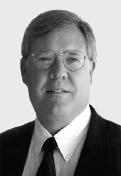
David T. Terry Director
Financial Highlights
Fiscal Year 2000
Revenue: Minerals
Land Sales
Surface
Grazing & Forestry
Development Rents
Other
TOTAL OPERATING REVENUE
Operating Expenses
Capital Expenses
CONTRIBUTION FROM OPERATIONS
Earnings On Investments
TOTAL TRUST CONTRIBUTIONS
$ 24,249,032 8,378,089 1,826,219 918,115 384,362 56,605 $ 35,812,422 $ 4,685,661 1,944,255
$ 29,182,506 $ 11,885,228 $ 41,067,659
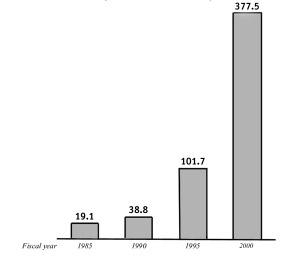
Consolidated Trust Assets
Growth Since 1985 (Market Value in $ Millions)
Objectives/Results
Objectives
Net Revenue: $24.5 million
Strategic Plan: Acquire water rights
Strategic Plan: Complete a land exchange
Surface: Assess viability of surface sales program at about $4 million per year. Investigate access to sales parcels.
Surface: Add value to trust assets by subdividing land prior to sale.
Hard Rock & Industrial Minerals: Organize the Minerals department to manage trust mineral assets in a manner more consistent with the Trust Lands Administration mission.
Hydrocarbons: Inform management and beneficiaries of the status of gas and oil properties.
Results
Actual Net Revenue: $29.0 million
Acquired $900,000 in water rights
Completed three land exchanges
Auction sales will be an integral part of Trust Lands business activities for at least the next decade.
Two recreational subdivisions were prepared for sale.
Consultants were hired to review Minerals Rules for consistency with current and best business practices. A similar review is underway for Oil & Gas Rules.
Identified properties for acquisition in the West Desert Land Exchange.
Implemented a process for identifying mineral acquisition targets throughout the state.
A detailed report on gas & oil properties was created showing that there are 1747 gas & oil leases. Of those, 1304 are in their primary term, 330 are held by production, 82 are held by unit and 31 are shut in.
Development: Promote potential of trust land development opportunities state-wide.
In addition to the Assistant Director – Development, three Development Specialists promote and manage activities throughout the state.
Development opportunities are now marketed, in detail, through the newly created “Development” web site, as well as traditional sales methods.
Who We Are...
What are Trust Lands
At statehood on January 6, 1896, the federal government gave Utah land to be held and managed in trust to provide financial support for public education and 11 other public
institutions. Institutions which receive benefits of these trusts are called beneficiaries. The lands are called trust lands and are scattered throughout the state.
At this time there are more than 3.4 million surface acres of trust land. There are also 1.1 million additional sub-surface only (mineral) acres.
There are more than 7,000 parcels of trust land.
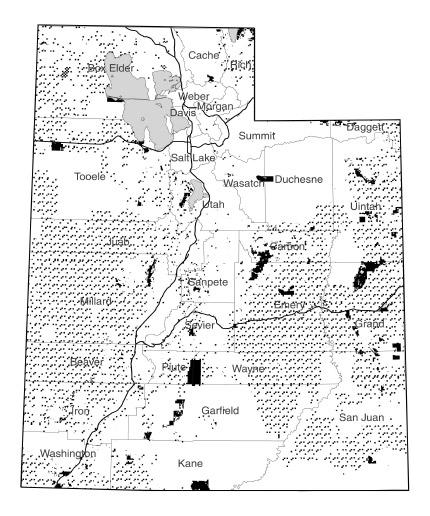
Trust Lands are shown black.
Two Portfolios
The trust corpus consists of two main parts, a real estate portfolio and a financial portfolio. The financial portfolio is the depository of revenues received from the management of trust
REAL ESTATE AND FINANCIAL PORTFOLIOS
As of June 30, 2000
The Real Estate Portfolio:
lands. The Trust Lands Administration manages the real estate portfolio (with oversight by the Board of Trustees). The Utah State Treasurer manages the financial portfolio (with oversight by the Trust Lands Administration).
3.4 million acres of surface and mineral trust land. 1.1 million acres of mineral only trust land.
The Financial Portfolio: $362,000,000 million in permanent funds.
Total Market Value of Assets: $377,500,000 million.
Twelve Beneficiaries
At the time of statehood, the Congress of the United States designated 12 beneficiaries in Utah. The following chart names the beneficia-
TRUST LANDS SOLD SINCE STATEHOOD
End of Fiscal Year 2000
Public Schools
Reservoir Fund
Utah State University University of Utah School of Mines
Miners Hospital
Normal School
School for the Deaf
Public Buildings
State Hospital School for the Blind
Youth Development Center
TOTAL
ries, shows their original surface grant, surface land sold since statehood, and current surface holdings.
Original Surface Trust Land FY 2000 Trust Land - Sold Since = Trust Land Grant Acreage Statehood Holdings
5,855,217.00
2,510,340.06 452,823.66 171,840.73 139,444.31
92,450.82 92,787.70 93,353.49 94,066.46 60,443.46 96,803.28 99,344.45 99,980.82
More than one-half of the original surface acres have been sold - mostly between statehood and 1930. What happened to that land? A littleknown fact of Utah geography is that about 30 percent of all private land in the state came from 3,344,876.94 47,176.34 28,159.27 16,635.69 7,549.18 7,212.30
7,475,297.00
4,003,679.24
trust lands. The money from the sale of that land is in the beneficiaries’ permanent funds. Further, the taxes paid on that land also helps support public education.
Public Schools
In the case of the public schools, cash generated by both trust land operations and trust land sales is transferred to its permanent fund. By depositing all of the income to the permanent fund, the endowment for the public schools grows and grows every year.
Investment income (interest and dividends) from the financial portfolio is distributed to the schools each year for local academic needs. The amount is primarily based on the number of students at each school. Distributions of revenues, based on new legislation, will begin during the 2000 – 2001 school year. The program is administered by the Utah State Office of Education. For more information call the Office of Education at 801-538-7573 or visit their trust land web site at:
www.usoe.k12.ut.us/trustlands/ .
Other Beneficiaries
In the case of the 11 other trust beneficiaries, cash flow, other than from land sales, is distributed directly during the year. Only money from the sale of trust land is added to their permanent funds.
Where Does the Money Come From?
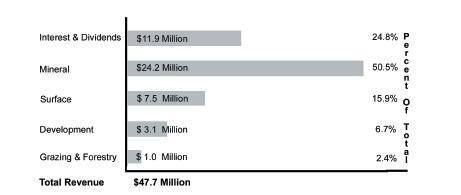
In Fiscal Year 2000, the Trust Lands Administration posted total revenues of $47.7 million from several major categories of trust
operations. The following chart shows the contribution of each activity category to the $ 47.7 million of revenues for FY 2000.
Fiscal Year 2000 Revenue
No Tax Money
The Trust Lands Administration is selffunded. A portion of the money generated from managing trust land activity is used to operate the Trust Lands Administration. All expenses and capital costs are paid from these revenues. The annual operating budget is approved by the Board of Trustees, the governor and the legislature.
A Major Goal
Because of the emphasis the legislature and the educational community have placed on the size of the Permanent School Fund, a major goal of the Trust Lands Administration is the building of total assets by putting money into the permanent funds of all beneficiaries. The market
value of fund assets (of which permanent funds are the major part) has grown substantially in the past few years. At the end of FY 2000, the market value of all trust assets exceeded $377,000,000! In his January 2000 State of the State Address, Governor Leavitt acknowledged the goal of increasing total trust assets to more than $1 billion by the end of FY 2007!
The $1 billion will come from three sources:
The current balance = $ 377,000,000
Appreciation and earnings of the current balance = $ 320,000,000
Net contribution from trust lands management = $ 344,000,000
TOTAL PROJECTED BALANCE = $1,041,000,000
New real estate ventures on trust lands, an improved auction sales program, and increased opportunities for new mineral royalties will contribute to the trust lands management portion of this goal.
Consolidated Trust Assets Projected Through 2010
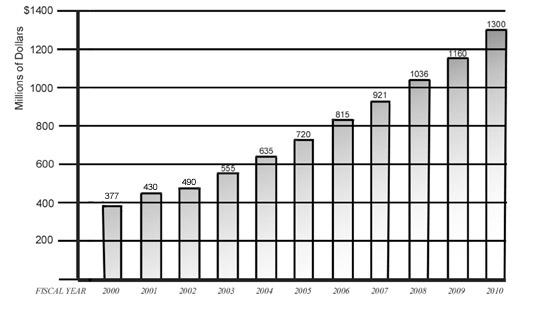
This chart projects total assets on target for $921 million by 2007. As you can see, we’ll have to stretch to hit the $1 billion. You too can help. Your contribution, no matter how small, will go directly to the permanent state school fund. Call the Trust Lands Administration at 801-538-5100 and ask for the Public Relations Manager for more information.
Managing the Land & Resources
There are only two ways to make money from real estate:
·Put the land into production
·Sell it
The Trust Lands Administration does both to create wealth for the beneficiaries.
Producing Land
The Trust Lands Administration generally leases trust land to individuals and businesses which put it into production. The lands generate revenues from:
·Mineral rentals and royalties
·A wide variety of Surface uses
Managing the Land and Resources
Mineral Revenues
The largest source of revenues from trust lands is from the leasing of minerals properties and royalties from the production of minerals. Mineral production comes from many sources including gas and oil, coal, gold and sand and gravel.
In Fiscal Year 2000, mineral income was $24.2 million – 50.5 percent of total revenue for the year.
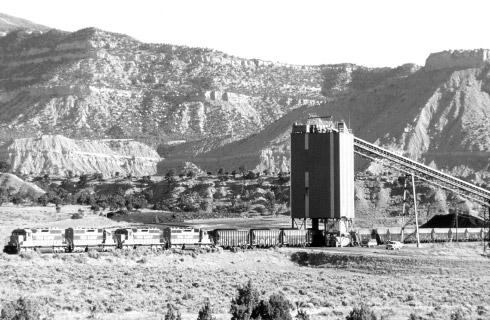
A train is loaded with coal from an underground mine. The sale of coal is an example of how we make money from trust mineral lands.
COURTESY: Andalex Resources, Inc.
PHOTO
The Ferron Fairway-It’s Not Golf
They’re calling it the Ferron Fairway because on a map it looks a bit like a golf course fairway – except it’s a lot bigger and has a lot more holes.
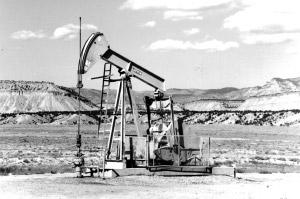
The Ferron Fairway is a natural gas field stretching along the foothills on the east side of the Wasatch Plateau in Carbon and Emery Counties. For years, the Trust Lands Administration had holdings at the north end of the fairway –in Carbon County. During the past few years, technology progressed enough that natural gas could be successfully produced from the coal beds located in that acreage. Increasingly, more of that acreage is producing gas, with revenues increasing from $5.6 million in FY 1999 to more than $10 million in FY 2000. It’s a good deal for the trust. That good deal is getting a lot better.
In a land trade completed in January, 1999, the Trust Lands Administration exchanged hundreds of thousands of acres it owned inside national monuments, parks and forests for cash,
minerals and federal lands with greater financial potential. Some of the lands acquired were lands in Carbon and Emery Counties adjoining the south end of the existing gas field. The acquisition of this land increased trust land acreage in the Ferron Fairway from 20,000 acres to more than 78,000 acres!
With the acquisition of these new lands, the future for trust holdings in the Ferron Fairway is bright. As the lands acquired are explored, revenues should continue to increase. Geologists say the gas field could bring more than $200 million to the trust during its projected economic life.
The Trust Lands Administration is actively pursuing more exchanges which would trade environmentally sensitive trust land for other lands with more financial potential.
Pumps like this remove water from the gas-bearing formations of the Ferron Fairway. When the water is removed, the natural gas flows freely to the surface.
At the end of the life of the field, the pumps and other equipment will be removed and the ground restored.
Coal
Coal revenues increased dramatically in FY 2000. Compared to FY 1999 revenues, fiscal year 2000 was almost 13 times greater at $3,888,000. This increase was primarily due to the start of mining a new section of trust coal in the Crandall Canyon Mine about 17 miles northwest of Huntington, Utah.
This particular part of the mine is estimated to have nine million tons of trust coal. About 3.7 million tons will be mined each year for the next two and one-half years. This section should bring more than $10,000,000 to the trust.
The mine is operated by Genwal Resources Inc., a wholly owned subsidiary of Andalex Resources of Price, Utah. Andalex provides highly efficient and effective operations and has consistently completed excellent work on trust land properties. The mine currently employs 130 people.
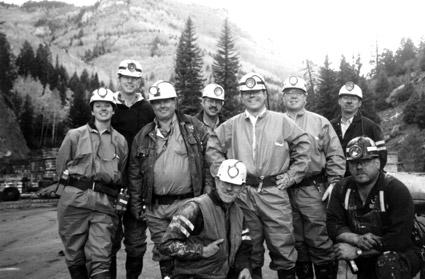
Officials of Andalex Resources, Inc. and Trust Lands staff suit up to inspect trust land coal resources inside the Crandall Canyon Mine near Huntington, Utah.
In the larger coal picture, the trust has approximately 180 million tons of recoverable coal in a variety of locations – mostly in Carbon and Emery Counties. Because of the volatility of the coal market, it is difficult to know when other properties will go into production. However, trust coal managers say this coal should be produced within the next 30 to 50 years.
Sand & Gravel
Pay Dirt! It’s sand and gravel!
Sand and gravel products are among the most utilized commodities in the civilized world. This has been the case throughout recorded history. Sand and gravel products are used in making roads, buildings, homes- the list of products containing sand and gravel is very long indeed.
The demand for sand and gravel in Utah is high due to the reconstruction of highways, roadbeds for mass transit, and the new construction needed by a growing population. There are many excellent sources of sand and gravel on the 3.5 million acres of Utah trust land.
In FY 2000 the Trust Lands Administration implemented a new strategy for increasing values and revenues from sand and gravel assets. Sand and gravel geologists believe that this new business plan has the potential to substantially increase sand and gravel revenues.
There are four main elements to the strategy.
• Re-inventory existing sand and gravel sites:
-locate parcels of trust land having highquality sand or gravel deposits
-evaluate the parcels’ potential relative to the market
-conduct market potential studies
• Acquire new, high-quality sand and gravel locations through exchanges
• Find customers who:
-will take long-term permits (15-30 years)
-plan high-volume operations (250,000 tons + per year)
-will develop operations which fit in with community master plans
-provide for reclamation of the site at the end of its mining life
• Pursue an active sales program for sand and gravel and advertise opportunities through:
-internet -direct mail
-newspaper -industry contacts
The goal of this strategy is to create a total of 10 large sand and gravel (or rock aggregate) operations statewide. Currently there are three:
• The Fort Pierce site in Washington County
• The Cedar Valley quarry in Utah County
• The Stockton site in Tooele County
A well-positioned sand and gravel development is as good as gold.
Managing the Land and Resources
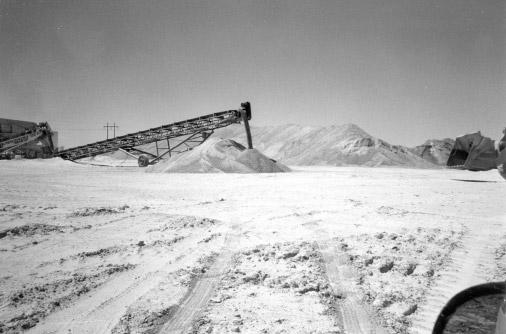
Less than one percent of trust lands, about 3,000 acres, are permitted for sand and gravel operations. Revenues from sand and gravel on trust lands topped $480,000 in FY 2000. The Trust Lands Administration is pursuing a new strategy to substantially increase sand and gravel revenues in the coming years. The photo shows an operation near Vernal, Utah.
Leasing of Surface Rights
Surface leases encompass a multitude of uses. Here are some of the major categories:
·Telecommunications sites
·Commercial & industrial sites
· Recreational cabin site leases
·Agricultural leases
·Timber harvesting and forestry
· Grazing
·Rights of way
·Leases to other government entities
In Fiscal Year 2000, surface leasing activities generated more than $2,731,000 in revenue.
Managing the Land and Resources
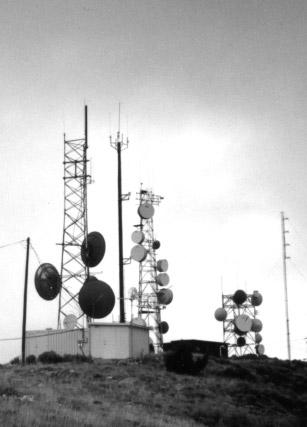
This telecommunications complex on Lake Mountain, just west of Utah Lake, is just one of more than 40 different telecommunications sites located on Utah trust lands throughout the state. Telecommunications sites take relatively little space, but yield good revenues. At the end of FY 2000, there were just 115 acres leased for telecommunications operations on trust land, but generated revenues of more than $320,000. That’s more than $2,780 per acre in average annual rents.
Many trust land parcels are well-situated for cell phone antennas. The Trust Lands Administration is actively seeking wireless phone providers to lease these sites for cell phone operations.
Managing the Land and Resources
Trust Land Sales
There are times when the optimum outcome for a beneficiary is the sale of its trust land.Trust land is generally sold in one of two ways:
(1) at a public auction or (2) through a development project.
Auction Sales
Parcels of trust land are sold to the public at auctions held twice a year. During fiscal year 2000, more than 10,000 acres of trust land were sold at two public auctions. The lands were mostly in rural Utah. Total public auction sales revenue for the year was $4,851,000.
Historically, trust land has been purchased for housing, wildlife habitat, agriculture, commercial, recreational and special uses such as preservation and open space.
When land is sold, the Trust Lands Administration is required by law to keep the mineral rights associated with that land. Accordingly, if valuable minerals are discovered in the future, the beneficiaries will benefit from any development of those minerals. This is one reason why the trust has more mineral acreage than surface acreage.
Trust land auctions are becoming more and more popular. Increased public participation in the sale of trust lands will further contribute to building the permanent fund. State law requires that all trust land sold must be at or above fair-market value in order to preserve the asset value of the trust. Trust land auctions help make more land available for private ownership in Utah.
Several factors may be used to determine which tracts are designated for sale. Here are some of those factors:
·A small parcel surrounded by private land
·Market interest (or potential market interest) in a specific parcel
·A parcel has little production potential
but has good market value
·External issues (i.e. the creation of a Cooperative Wildlife Management Unit)
·A parcel has extraordinary administrative cost.
·To test the market for land in a specific area
Trust land managers believe that there is enough trust land, meeting the factors listed, to sustain the auction sales program for at least 10 more years.
Anyone interested in learning about trust land auction sales is invited to call the Trust Lands Administration toll-free at 1-877-LAND SALE or visit the Internet at www.trustlands.com.
Development Sales
In some cases, profits for the beneficiaries are optimized by adding value to parcels of trust land before selling them. Value may be added through planning and zoning work or subdivision and construction. Typically, the Trust Lands Administration participates with experienced private real estate developers to provide land for residential, commercial and industrial uses for Utah’s growing communities.
Managing the Land and Resources
After identifying opportunities, the Trust Lands’ development team meets with county officials, municipal leaders, adjacent property owners, and other interested people. The purpose of these meetings is to gather information and create a vision for the property. This approach satisfies both local community needs and the Trust Lands Administration’s legal responsibility to the beneficiaries. One area in this process is Castle Valley, Utah.
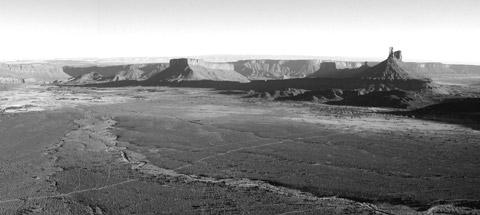
Castle Rock is the predominant feature on the right-hand side of this photo. It dominates the skyline of the Castle Valley.
Castle Valley
The town at Castle Valley is nestled 25 miles east of Moab, Utah, just a mile south of the Colorado River. It is a place of spectacular scenery! One of the dominant features of the valley – Castle Rock – is seen in hundreds of travel magazine articles, featured in a multitude of scenic calendars and is one of the best-known climbing venues in the United States. Because the area is so well known, the pressures from people wanting to move there increases continually. And that’s the rub: can more people move to Castle Valley without destroying the very reason they wish to move there?
Much of the available remaining land in Castle Valley is trust land – more than 5,000 acres. Trust land is the major source for new residences in the area.
The ultimate use of trust land in Castle
Managing the Land and Resources
Valley will affect the future of that community. The Trust Lands Administration is working with the community to build a master plan in an effort to design a strategy for the use of Castle Valley trust land that meets community needs and fulfills the trustee’s fiduciary responsibility.
The master planning process evaluates the very nature of the land – its location and relationship to other lands, its resources, its possible future uses. The process also considers input from many parties including the Trust Lands Administration, local community groups, the city and the county.
Planning requires mutual respect, trust and creativity. A properly designed and implemented plan will result in higher values for trust beneficiaries while maintaining or enhancing the quality of life for Castle Valley residents.
Coral Canyon
Another good example of high-quality community planning and real estate development is Coral Canyon in Washington City, Utah.
Coral Canyon is destined to be one of Utah’s most scenic, livable and desirable communities. Situated near the junction of Interstate 15 and Utah State Road 9 in Washington County, the Coral Canyon Community will have homes for more than 10,000 people, a city center, shopping, churches, schools, office buildings, golf and recreation. It will have more than 50 percent open space.
The business arrangement provides trust land beneficiaries higher values than the simple sale of raw real estate. The beneficiaries receive added value from the sale of homes and lots, ownership of the golf course, and a continuing interest in commercial leases.
The genesis of a city is a new undertaking for the Trust Lands Administration. Coral Canyon is a model of what can be accomplished through meticulous planning and creative business associations – combining private enterprises with state and local governments.
The trust beneficiaries at Coral Canyon include Miners Hospital, Public Schools and Public
Buildings. Coral Canyon is a joint venture of the Trust Lands Administration and SunCor Development.
The photo on the front cover of this report is an aerial view of part of Coral Canyon.
Conservation of Trust Lands
The Trust Lands Administration may not give away trust land or simply set it aside for non-trust purposes. However, some trust lands have unique scenic, recreational or environmental characteristics. In these situations, the Trust Lands Administration has endeavored to sell the land for conservation purposes or exchange the lands for other real estate more suitable for development. In FY 2000 a couple of such projects were begun – the Goshen Bay Wetlands project and the West Desert Land Consolidation Exchange.
Goshen BayWetlands Conservation
One particular piece of trust land was ideally situated to complete a wetlands conservation project at the south end of Utah Lake adjacent to Goshen Bay – about two miles north of Goshen, Utah. The problem was how to set the land aside for conservation yet, still fulfill trust fiduciary requirements.
In November 1999, Utah Nature Conservancy provided a solution. They purchased the 440-acre parcel for fair-market value. The sale accomplished two things: (1) it allowed the Trust Lands Administration to satisfy its trust responsibilities to Utah’s public schools, and (2) it put the land itself into a permanent wetlands conservation area and open space.
This is part of the wetlands preserved by the sale of trust lands at Goshen Bay to the Nature Conservancy.
The Goshen Bay conservation project was a good deal for the trust and a good deal for the environment The transaction further paved the way for more discussions with the Nature Conservancy to pursue additional projects which can yield good results for trust beneficiaries and conservationists.
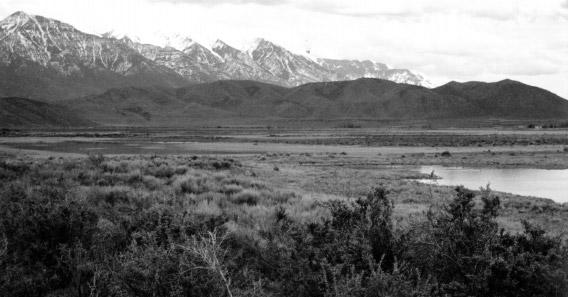
West Deseret Land Consolidation Exchange
The state of Utah and the United States Bureau of Land Management have reached agreement on an exchange involving more than 200,000 acres in Western Utah. The BLM will receive more than 175 scattered state-owned school trust lands which have environmental, scenic and recreational value in exchange for 17 consolidated blocks of federal lands which have financial potential for Utah’s public schools.
Now that the state and federal land management agencies have created this agreement, the proposal is before the congress of the United Sates to be enacted into law. If the law is passed, it will become the second largest land exchange in the history of Utah.
This is a win-win solution for the people of Utah – to protect sensitive lands while obtaining other federal lands that can be used to generate revenue for public schools.
The basic points of the proposal:
• The land exchange will remove more than 175 scattered school trust land parcels from Wilderness Study Areas throughout the West Desert and consolidate them into 17 manageable blocks.
• The exchange will result in no net gain of federal surface acreage in Utah. In fact, there will be a slight decrease in federal surface ownership. Utah’s school trust will acquire approximately 107,000 acres of surface and mineral lands while giving up about 106,000 acres of surface and mineral lands to the federal government.
• School trust administrators have carefully chosen the targeted lands to select tracts that can be managed for the benefit of Utah’s public schools and for local economies. For example, the state will acquire BLM lands near the Intermountain Power Project that can be made available to support local economic development.
• The state trust lands that will be traded to the federal government are, in many cases, special – including lands in the heart of the Deep Creek Mountains, the Notch Peak area, and other scenic western Utah areas.
• As another part of the exchange, the BLM will acquire $6 million of school trust lands for the Red Cliffs Desert Reserve just outside of St. George, to be permanently protected for open space and desert tortoise habitat.
Senior Staff
David T. Terry, Director
Mr. Terry has more than 20 years’ experience working with landowners to facilitate transactions that allow for utilization and/or preservation of land. Mr. Terry has a B.A. degree from Emory University and an M.B.A. from the University of Utah. Prior to his four years at the Trust Lands Administration, Mr. Terry worked as a real estate broker and land manager for Barrick Gold Corporation and Getty Oil Company.
Kevin S. Carter, Assistant Director – Surface
Mr. Carter has more than 20 years’ experience in the management of trust lands. He pioneered the shift from traditional resource management activities to high-return land-use enterprises on trust lands. He holds a Bachelor of Science Degree in range ecology and a Masters Degree in range science, both from Utah State University.
Ric McBrier, Assistant Director – Development
Mr. McBrier has more than 25 years’ private sector experience in the real estate development business. After practicing real estate law for five years, he worked for American Stores Company for eight years in positions including Senior Vice-President as well as General Counsel of American Stores Properties, Inc. and Senior Vice-President/Assistant General Counsel of American Stores Company.
Tom Faddies, Assistant Director – Hard Rock & Industrial Minerals
Mr. Faddies has more than 30 years’ experience in the hard-rock mining industry. Before joining the Trust Lands Administration, he was an executive with Barrick Resources (USA) Mercur Gold Mine, responsible for mine operations and maintenance until closing of the mine in 1997. He has an M.S. from Weber State College and an M.S. degree from the University of Utah.
John W. Andrews, General Counsel
Mr. Andrews supervises all legal matters affecting the agency. Mr. Andrews received his J.D. degree in 1981 from the University of Utah College of Law, where he served as Associate Editor of the Journal of Energy Law & Policy. Prior to joining state government in 1994, he was a partner in the Salt Lake City law firm of Van Cott, Bagley, Cornwall & McCarthy. He is an officer of the Utah State Bar’s Energy and Natural Resources section, and received that section’s Lawyer of the Year Award in 1998.
Lisa Y. Schneider, Finance Director
Ms. Schneider has been with the Trust Lands Administration for more than 15 years. She holds a B.S. in finance from the University of Utah and an M.B.A. from the University of Houston. Ms. Schneider manages both accounting and data processing for Trust Lands.
LaVonne J. Garrison, Assistant Director – Oil & Gas. (Hired November 2000)
Ms. Garrison has more than 25 years’ experience in the oil and gas industry as both an independent landman and as the Regional Land Manager for Flying J Oil & Gas Inc., an independent oil and gas producer. Ms. Garrison has a B.A. from the University of Montana in English and history. She is a member of the American Association of Professional Landmen (AAPL) and the Utah Association of Professional Landmen (UAPL).
Board of Trustees
School and Institutional TrustLands Administration
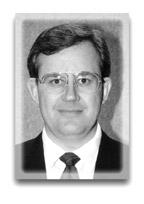
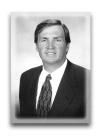
Chairman – Ruland J. Gill, Jr.
Assistant Vice-President, Government Affairs, Questar Corporation. Legal background in oil and gas exploration and development.
Bountiful, Utah Term: expires 6/30/2004
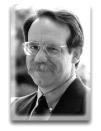
Vice–Chair – Lonnie M. Bullard
President, Jacobsen Construction. Background in real estate financing and construction.
Farmington, Utah Term: expires 6/30/2003
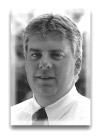
Board Member – John A. Harja Sr. Research Analyst, Governor’s Office of Planning and Budget. Background in natural resources law. Salt Lake City, Utah Term: at pleasure of the Governor
Board Member – Donald Keith Peay
President, Sportsmen for Fish, Wildlife and Habitat. Background in environmental management and engineering.
Salt Lake City, Utah Term: expires 6/30/2000
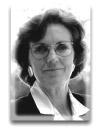
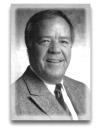
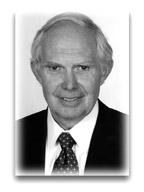
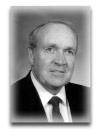
Board Member – Louise Liston
County Commissioner, Garfield County.
Background in teaching school, public administration and ranching.
Escalante, Utah
Term: expires 6/30/2001
Board Member – Robert P. Morris
Owner of Robert P. Morris and Associates
Background in commercial, industrial and municipal real estate development
Park City, Utah
Term: expires 6/30/2002
Board Member – John W. Creer
President, Farm Management Company
Background in agricultural management and law
Farmington, Utah
Term: expires 6/30/2005
Board Member Nominee – Vernal J. Mortensen (replacing Donald Keith Peay)
Retired, Senior Vice-president, Coastal Coal, Inc.
Background in coal mining and mineral valuation
Sandy, Utah
Term: expires 6/30/2006
Financial Statements
Fiscal Year 2000 (July 1, 1999 - June 30, 2000)
Consolidated
Consolidated Financial Statement
School and Institutional Trust Lands Administration
Assets, Liabilities and Fund Balances
Consolidated Assets:
LGM Fund
Accounts Receivable
Investment With State Treasurer
Due From Other Funds
Enabling Act Land @ $1/Acre
Purchased Land at Cost
Donated Land
Water Rights
Equipment/Fixed Assets
Capitalized Improvements
Unexpended Appropriation Recv.
Royalty Receivable
Accrued Interest Receivable
Liabilities:
Vouchers Payable Total Suspense Fund Funds Held For Dist. Or Trans. Total
Income, Expenses, Distributions and Transfers
Income:
Land Sales
Investment Income
Mineral Income
Surface Income
Grazing
Development Income
Other Gross Income
Less: Expended For Operations Net Income
Distributions and Transfers:
Transfer to Permanent Fund
Transferred For Inflation
Unused Appropriation Prior Yr.
Non-Lapsing Budget Returned*
Distributed to Beneficiary Adjustment To Beginning Bal
Balance to Dist. or Transfer Totals *also includes "Recoup of Capital Expenditures" 8,378,089 11,885,228 24,249,032 1,826,219 918,115 384,362 56,605 47,697,650 (6,629,991) 41,067,659 (25,805,351) (5,754,641) 2,107,695 (2,538) (3,804,942) (8,418,602) 610,720 (41,067,659)
Public Schools
Expenses, Distributions and Transfers
School For The Blind
Assets, Liabilities and Fund Balances
Assets: Cash
LGM Fund
Accounts Receivable
Investment With State Treasurer
Due From Other Funds
Enabling Act Land @ $1/Acre
Purchased Land at Cost
Donated Land
Water Rights
Equipment/Fixed Assets
Capitalized Improvements
Unexpended Appropriation Recv.
Royalty Receivable
Accrued Interest Receivable
Liabilities:
Vouchers Payable
Total Suspense Fund
Funds Held For Dist. Or Trans.
Income, Expenses, Distributions and Transfers
Income: Land Sales
Investment Income
Mineral Income
Surface Income
Grazing
Development Income
Other
Less: Expended For Operations Net Income
Distributions and Transfers:
Transfer to Permanent Fund Transferred For Inflation
Unused Appropriation Prior Yr. Non-Lapsing Budget Returned* Distributed to Beneficiary Adjustment To Beginning Bal Balance to Dist. or Transfer Totals
(522,160)
(515,309)
*also includes "Recoup of Capital Expenditures"
Fund Balances:
Beginning Fund Balance Retained Earnings
Current Year Increases
Assets, Liabilities and Fund Balances
Assets:
Cash
LGM Fund
Accounts Receivable
Investment With State Treasurer
Due From Other Funds
Enabling Act Land @ $1/Acre
Purchased Land at Cost
Donated Land
Water Rights
Equipment/Fixed Assets
Capitalized Improvements
Unexpended Appropriation Recv.
Royalty Receivable
Accrued Interest Receivable
Reservoir
Liabilities:
Vouchers Payable
Total Suspense Fund
Funds Held For Dist. Or Trans. Total Liabilities
Fund Balances:
Beginning Fund Balance
Retained Earnings
Current Year Increases Total Fund Balances Total Liabilities & Fund Bals.
Income, Expenses, Distributions and Transfers
Income:
Land Sales
Investment Income
Mineral Income
Surface Income
Grazing
Development Income
Other Gross Income
Less: Expended For Operations Net Income
Distributions and Transfers:
Transfer to Permanent Fund
Transferred For Inflation
Unused Appropriation Prior Yr.
Non-Lapsing Budget Returned*
Distributed to Beneficiary Adjustment To Beginning Bal Balance to Dist. or Transfer Totals *also includes "Recoup of Capital Expenditures"
Miners Hospital
Assets, Liabilities and Fund Balances
Assets: Cash
LGM Fund
Accounts Receivable
Investment With State Treasurer
Due From Other Funds
Enabling Act Land @ $1/Acre
Purchased Land at Cost
Donated Land
Water Rights
Equipment/Fixed Assets
Capitalized Improvements
Unexpended Appropriation Recv.
Royalty Receivable
Accrued Interest Receivable
Liabilities:
Vouchers Payable
Total Suspense Fund Funds Held For Dist. Or Trans.
Income, Expenses, Distributions and Transfers
Income:
Land Sales
Investment Income
Mineral Income
Surface Income
Grazing
Development Income
Other Gross Income
Less: Expended For Operations Net Income
Distributions and Transfers:
Transfer to Permanent Fund
Transferred For Inflation
Unused Appropriation Prior Yr.
Non-Lapsing Budget Returned*
Distributed to Beneficiary Adjustment To Beginning Bal
Balance to Dist. or Transfer Totals
School of Mines
Assets, Liabilities and Fund Balances
LGM
Accounts
Investment
Enabling Act Land @ $1/Acre
Purchased Land at Cost
Donated Land
Water Rights
Equipment/Fixed Assets
Capitalized Improvements
Unexpended Appropriation Recv.
Royalty Receivable
Accrued
Liabilities:
Income, Expenses, Distributions and Transfers
Income:
Land Sales
Investment Income
Mineral Income
Surface Income
Grazing
Development Income
Other
Less: Expended For Operations Net Income
Distributions and Transfers:
Transfer to Permanent Fund
Transferred For Inflation
Unused Appropriation Prior Yr.
Non-Lapsing Budget Returned*
Distributed to Beneficiary
Adjustment To Beginning Bal
Balance to Dist. or Transfer
Youth Development Center
Assets, Liabilities and Fund Balances Assets:
LGM Fund
Accounts Receivable
Investment With State Treasurer Due From Other Funds
Enabling Act Land @ $1/Acre
Purchased Land at Cost
Donated Land
Water Rights
Equipment/Fixed Assets
Capitalized Improvements
Unexpended Appropriation Recv.
Royalty Receivable
Accrued Interest Receivable
Income, Expenses, Distributions and Transfers
Income: Land Sales
Investment Income
Mineral Income
Surface Income
Grazing
Development Income
Other
Less: Expended For Operations
Distributions and Transfers:
Transfer to Permanent Fund
Transferred For Inflation
Unused Appropriation Prior Yr. Non-Lapsing Budget Returned*
Distributed to Beneficiary Adjustment To Beginning Bal Balance to Dist. or Transfer
LGM Fund
Accounts Receivable
Investment With State Treasurer
Due From Other Funds
Enabling Act Land @ $1/Acre
Purchased Land at Cost
Donated Land
Water Rights
Equipment/Fixed Assets
Capitalized Improvements
Unexpended Appropriation Recv.
Royalty Receivable
Accrued Interest Receivable
University of Utah
Liabilities: Vouchers Payable
*also includes "Recoup of Capital Expenditures" Assets, Liabilities and Fund Balances
Income, Expenses, Distributions and Transfers
Income: Land Sales
Grazing
Development Income
Other
Less: Expended For Operations Net Income
Distributions and Transfers:
Transfer to Permanent Fund Transferred For Inflation
Unused Appropriation Prior Yr. Non-Lapsing Budget Returned*
Distributed to Beneficiary Adjustment To Beginning Bal Balance to Dist. or Transfer Totals
Utah State University
Assets, Liabilities and Fund Balances
Assets: Cash
LGM Fund
Accounts Receivable
Investment With State Treasurer
Due From Other Funds
Enabling Act Land @ $1/Acre
Purchased Land at Cost
Donated Land
Water Rights
Equipment/Fixed Assets
Capitalized Improvements
Unexpended Appropriation Recv.
Royalty Receivable
Accrued Interest Receivable
Liabilities:
Vouchers Payable
Total Suspense Fund Funds Held For Dist. Or Trans. Total Liabilities
Fund Balances: Beginning Fund Balance
Retained Earnings
Current Year Increases Total Fund Balances
& Fund Bals.
Income, Expenses, Distributions and Transfers
Income:
Land Sales
Investment Income
Mineral Income
Surface Income
Grazing
Development Income
Other
Income
Less: Expended For Operations Net Income
Distributions and Transfers:
Transfer to Permanent Fund
Transferred For Inflation
Unused Appropriation Prior Yr.
Non-Lapsing Budget Returned*
Distributed to Beneficiary
Adjustment To Beginning Bal
Balance to Dist. or Transfer Totals *also includes "Recoup of Capital Expenditures"
School For The Deaf
Assets, Liabilities and Fund Balances
LGM Fund
Accounts Receivable
Investment With State Treasurer
Due From Other Funds
Enabling Act Land @ $1/Acre
Purchased Land at Cost
Donated Land
Water Rights
Equipment/Fixed Assets
Capitalized Improvements
Unexpended Appropriation Recv.
Royalty Receivable
Accrued Interest Receivable
Liabilities:
Vouchers Payable
Or
Income, Expenses, Distributions and Transfers
Income:
Land Sales
Investment Income
Mineral Income
Surface Income
Grazing
Development Income
Other
Less: Expended For Operations
Distributions and Transfers:
Transfer to Permanent Fund
Transferred For Inflation
Unused Appropriation Prior Yr.
Non-Lapsing Budget Returned*
Distributed to Beneficiary Adjustment To Beginning Bal Balance to Dist. or Transfer
Utah State Hospital
Assets, Liabilities and Fund Balances
LGM Fund
Accounts Receivable
Investment With State Treasurer
Due From Other Funds
Enabling Act Land @ $1/Acre
Purchased Land at Cost
Donated Land
Water Rights
Equipment/Fixed Assets
Capitalized Improvements
Unexpended Appropriation Recv.
Royalty Receivable
Accrued Interest Receivable
Liabilities:
Vouchers Payable
Or
Income, Expenses, Distributions and Transfers
Income:
Land Sales
Investment Income
Mineral Income
Surface Income
Grazing
Development Income
Other
Less: Expended For Operations
Income
Distributions and Transfers:
Transfer to Permanent Fund
Transferred For Inflation
Unused Appropriation Prior Yr.
Non-Lapsing Budget Returned*
Distributed to Beneficiary Adjustment To Beginning Bal Balance to Dist. or Transfer Totals
Normal School
Assets, Liabilities and Fund Balances
Assets: Cash
LGM Fund
Accounts Receivable
Investment With State Treasurer
Due From Other Funds
Enabling Act Land @ $1/Acre
Purchased Land at Cost
Donated Land
Water Rights
Equipment/Fixed Assets
Capitalized Improvements
Unexpended Appropriation Recv.
Royalty Receivable
Accrued Interest Receivable
Liabilities:
Vouchers Payable Total Suspense Fund Funds Held For Dist. Or Trans.
Income, Expenses, Distributions and Transfers
Income:
Land Sales
Investment Income
Mineral Income
Surface Income
Grazing
Development Income
Other
Less: Expended For Operations Net Income
Distributions and Transfers:
Transfer to Permanent Fund
Transferred For Inflation
Unused Appropriation Prior Yr.
Non-Lapsing Budget Returned*
Distributed to Beneficiary Adjustment To Beginning Bal
Balance to Dist. or Transfer Totals *also includes "Recoup of Capital Expenditures"
Public Buildings
Liabilities and Fund Balances
Investment With State Treasurer Due From Other Funds
Enabling Act Land @ $1/Acre
Purchased Land at Cost
Donated Land
Water Rights
Equipment/Fixed Assets
Capitalized Improvements
Unexpended Appropriation Recv.
Royalty Receivable
Accrued Interest Receivable
Income, Expenses, Distributions and Transfers
Investment Income
Mineral Income
Surface Income
Grazing
Development Income
Other
Less: Expended For Operations
Distributions and Transfers:
Transfer to Permanent Fund
Transferred For Inflation
Unused Appropriation Prior Yr.
Non-Lapsing Budget Returned*
Distributed to Beneficiary Adjustment To Beginning Bal
Balance to Dist. or Transfer
Suspense and Land Grant Management Funds
Assets, Liabilities and Fund Balances
Assets: Cash
LGM Fund
Accounts Receivable
Investment With State Treasurer
Due From Other Funds
Enabling Act Land @ $1/Acre
Purchased Land at Cost
Donated Land
Water Rights
Equipment/Fixed Assets
Capitalized Improvements
Unexpended Appropriation Recv.
Royalty Receivable
Accrued Interest Receivable
Liabilities:
Vouchers Payable
Total Suspense Fund
Funds Held For Dist. Or Trans.
Retained Earnings
Current
Contact Information
The State of Utah School & Institutional Trust Lands Administration
Main Office:
675 East 500 South, Suite 500 Salt Lake City, Utah, 84102 801-538-5100, Fax 801-355-0922
Development Office:
675 East 500 South, Suite 390 Salt Lake City, Utah, 84102 801-538-5178, Fax 801-328-9452
Central Area: 130 North Main Richfield, Utah, 84701 435-896-6494, Fax 435-896-6158
Southwestern Area: 63 South 300 East, Suite 201 St. George, Utah, 84790 435-652-2950, Fax 435-652-2952
Southeastern Area: 1165 South Highway 191, Suite 5 Moab, Utah, 84532 435-259-3760, Fax 435-259-3755