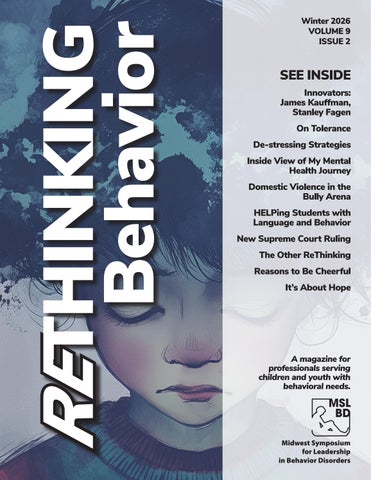

RE THINKING Behavior
UPCOMING EVENTS

44th Annual Midwest Symposium for Leadership in Behavior Disorders
March 5-7, 2026
Sheraton Crown Center, Kansas City, MO
For the 44th year, the Midwest Symposium for Leadership in Behavior Disorders will address cutting-edge issues of interest to professionals working with students with emotional/behavioral disorders and autism spectrum disorders.
Visit our website, www.mslbd.org, for a full program of events that includes Presymposium Workshops, Keynote Session, 36 Concurrent Breakout Session, Posters, Saturday Workshops, BCBA CEUs available including Ethics Credits.
Patrick Friman, PhD, Dir. CBH Emeritus, Boys Town, Boys Town, NE Keynote Session
The Knobs and Dials of Behavior: A Spectrum of Clinical and Practical Applications Derived from Behavior Analysis
Workshop Highlights
• What Do I Do If They Don't: Behavioral Strategies and Philosophical Changes That You Can Use on Monday Morning, Matt McNiff, PhD
• An Ounce of Prevention: Antecedent Strategies for Supporting Students with Developmental Disabilities, Keith Radley, PhD. BCBA-D, NCSP
• An Awesome Academic Session at this Behavior Conference, Sarah Powell, PhD & Erica Lembke, PhD
• Supporting Student Behavior with AI: A Hands-On Workshop, James D. Basham, PhD, Yerin Seung, & Teddy Kim
• Supports and Services Around Challenging Behavior in a Shifting Policy Landscape: Whither EBD? Timothy J. Landrum, PhD
• 100 Real World Strategies for Students with Oppositional Defiant Behaviors, Anxiety, ADHD and More, Beverley Johns, MS
• From "Oh Sh*t to "A-Ha!": Core Components of an Effective Behavior Support Program, Carrie Fairbairn, MEd
• What's Your Recipe for MTSS Success? Erika McDowell, EdD
• From Escape to Engagement: Transforming Challenging Behavior, Joel Ringdahl, PhD, BCBA-D
REGISTER BY JANUARY 30 FOR DISCOUNTED REGISTRATION
Register early for preferred workshops
Visit our website: https://mslbd.org/symposium
Mary Jo Anderson
John J. Augustine
Anne K. Baptiste
Lisa Bowman-Perrott
Janet Burgess
Scott M. Fluke
Katherine A. Graves
Deborah E. Griswold
Aimee Hackney
Jessica Hagaman
Mike Hymer
Shannon Locke
Maria L. Manning
Sharon A. Maroney
John W. McKenna
Lindsey G. Mirielli
Raschelle Nena Neild
Reece L. Peterson
Sandy Shacklady-White
Brian Sims
Carl R. Smith
Vanessa Tucker
Graphic
Vivian Strand

Rethinking Behavior, ISSN 2578-5397, a magazine for professionals serving children and youth with behavioral needs, is published three times per year, fall, winter, and spring, Copyright ©2026 by the Midwest Symposium for Leadership in Behavior Disorders, P.O. Box 202, Hickman, NE 68372. 402-7923057. www.mslbd.org. Email: rethinkingbehavior@mslbd.org.

Rethinking Behavior welcomes proposal and manuscript submissions; for information visit www.mslbd.org or email rethinkingbehavior@mslbd.org
Three Cheers for the Supreme Court
Students and families have celebrated three landmark victories at the United States Supreme Court! (SCOTUS) Each one bolsters the promise of meaningful education and equal opportunity under the Individuals with Disabilities Education Act (IDEA) and Section 504 of the Americans with Disabilities Act (ADA). In each case, all nine justices agreed with the families of students with disabilities; there was no dissention among SCOTUS, the highest court in the nation. The Supreme Court made clear its commitment to the rights of students with disabilities and their families as granted by Congress.
1
The first decision, Endrew R. v. Douglas Cnty. Sch/ Dist. was written for the Court by Chief Justice Roberts, who stated that for schools to comply with the standards of IDEA, schools must provide a child with a disability an Individual Education Plan (IEP) that will enable the child to progress as appropriate to the child’s circumstances. This high standard, the Chief Justice pointed out, was far more demanding than the “merely more than the de minimis standard”. This means that schools must design IEPs that lead to meaningful growth – not minimal or trivial progress –and they are responsible for ensuring that students make that progress. See the article about this Supreme Court decision in the Fall 2017 issue of Rethinking Behavior.
2
The second victory was a unanimous Supreme Court Ruling written by Justice Gorsuch in Perez v. Sturgis Public School, et al. 598 U.S. 142 (2023). The second victory was a unanimous Supreme Court ruling authored by Justice Gorsuch in Perez v. Sturgis Public School, 598 U.S. 142 (2023). The Court held that students may seek ADA damages without first completing IDEA procedures, affirming that ADA protections stand on their own. For families, this means faster access to remedies when discrimination occurs. For schools, it reinforces that legal responsibilities extend beyond providing a FAPE under IDEA; districts must also fully comply with the ADA or risk legal and financial consequences. See the discussion of this case in the Fall 2025 issue of Rethinking Behavior
3
Victory number three occurred on June 12, 2025, when the Supreme Court issued its decision in A.J.T., by and through his Parents v. Osseo Area School District. This ruling marked an important shift in how disability
discrimination claims in education are evaluated. Writing for a unanimous Court, Chief Justice Roberts explained that students no longer must prove that a school acted with “bad faith” or made an extreme mistake to show discrimination. Instead, they only need to show that the school knew about a problem and failed to take reasonable action under the ADA or Section 504. This decision lowers the legal burden for families seeking protection from discrimination and reminds schools that discrimination claims are judged by the quality of their actions, not by their intent. For schools, it means they must ensure not just good intentions, but consistent, documented practices that fully uphold ADA and Section 504 protections, or risk serious legal and financial consequences. A more detailed analysis of this case, appears later in this issue on page 37.
Lessons from SCOTUS! What Educators Must Know!
• Design IEPs and 504 plans that lead to meaningful progress, not minimal or trivial growth.
• Implement services, supports, and accommodations exactly as written – full fidelity is required.
• Proactively communicate with families, especially when changes, concerns, or delays arise.
• Document services, data, meetings, and decisions consistently, showing that the school acted responsibly and responded to student needs.
• Address problems quickly and collaboratively – families can now pursue ADA claims without completing long IDEA processes.
• Hold high expectations and individualize plans based on student needs, because strong goals, evidence-based supports, and measurable outcomes are legally required.
Lawrence J. Altman, Mary Jo Anderson and Deborah E. Griswold Issue Editors
Note: For complete references for these cases, please contact Lawrence J. Altman, ljalaw@ sbcglobal.net

November 2025 was the fiftieth anniversary of the passage of federal special education legislation! Just after Thanksgiving of 1975, President Gerald Ford signed the “Education for All Handicapped Children Act,” which was later renamed the Individuals with Disabilities Education Act (IDEA). This law is the backbone of our current system of special education.
IDEA and its updates have ensured a “free appropriate public education” (FAPE) for all children with disabilities in the United States.
Although there are no efforts to change the law at this time, and continued federal funding has been assured, the federal government is considering transferring enforcement of IDEA to the individual states.
INNOVATORS
James M. Kauffman
An Intense, Prolific Leader and Advocate
By Robert Zabel and Reece L. Peterson
James M. Kauffman was a leader in the education of children with emotional and behavioral disorders (EBD) for more than 50 years. When he took a position at the University of Virginia in 1970, he embarked on a prolific career of analysis, thinking, and writing. His primary focus was on children and youth with EBD, but his work spanned many disabilities and special education generally. He published 368 journal articles, papers, and chapters and made countless presentations! Additionally, he co-authored 33 books and scholarly volumes.
Perhaps more impressive is that he collaborated with a wide array of people. Over one hundred different individuals, from eminent researchers to doctoral students, were co-authors and collaborators in these articles and materials, including many in international journals and papers.
Kauffman’s writing covered a wide array of topics and addressed many disabilities and issues related to disability. His Handbook of Special Education is one example in which he integrated and summarized existing research, as well as gaps and weaknesses across the field of special education. His primary focus of thinking and writing, however, was on the education of children and youth with emotional or behavioral disorders.
A “signature” theme of his work – but certainly not the only theme - was opposition to “full inclusion” of all students with EBD. Kauffman argued that separate instruction for some students with disabilities, and particularly students with emotional or behavioral disorders, was sometimes appropriate and more effective than simply being with non-disabled peers

James M. Kauffman, source of analysis, thinking, writing, and leadership for children and youth with emotional and behavioral disorders and other disabilities.
100% of the time in regular classrooms. Examples are, “Has inclusion gone too far?” (Kauffman, 2019) and his 2025 chapter, What “All” Means (2025).
Kauffman also authored numerous textbooks. Most special educators, as students or instructors, have read or used at least one of Kauffman’s texts. He collabo-
rated with Dan Hallahan – and later with Paige Pullen – to co-author the widely used textbook, Exceptional Learners – a nationwide standard text for beginning special education teachers. With Timothy J. Landrum, he co-authored the widely used textbook, Characteristics of Emotional and Behavioral Disorders of Children and Youth, now in its 11th edition.
Born in 1940 in Hannibal, Missouri near St. Louis, Kauffman was raised in a Mennonite family where his father was a minister. Mennonites are a Christian denomination that believes war is wrong and is committed to pacifism, living a simple lifestyle, and social justice. He later credited his early experiences with his choice to pursue a career in special education.
After graduating from Goshen College in Indiana, and concerned about a developing war in S.E. Asia, Kauffman applied for and received Selective Service System status as a conscientious objector. This status requires two years of alternative service in a position that makes meaningful contributions to national health, safety, and interest and is approved by the Selective Service System.
Kauffman found such a position as a teacher at the Southard School of the Menninger Clinic, a residential treatment center and mental health education program in Topeka, Kansas. Founded by Karl Menninger in 1925, Menninger’s was a leading mental health residential treatment and education/training program for psychiatrists, psychologists, and other mental health professionals. (In 2003, the Menninger Clinic moved from Topeka to join Baylor University in Houston. TX.).
Kauffman was hired by and taught for two years at Southard School with Richard (Dick) Whelan, who later became a national leader and innovator in education of children with EBD [For more about Whelan, see Kaff, Teagarden, & Zabel (2013) and Zabel (2024)]. Many years later, Whelan wrote an article for Rethinking Behavior about his own early work with “Space Boy” at Menninger’s (Teagarden, 2019).
Kauffman taught for two years at Menninger’s while also earning a master’s degree in elementary education at Washburn University. He then taught in the Shawnee Heights School District near Topeka in what

may have been the first public school class in Kansas specifically for students with EBD.
Although Kauffman considered pursuing doctoral studies in philosophy of education at New York University, he was contacted by Whelan (who by then had joined the faculty at the nearby University of Kansas) who invited Jim to consider KU’s doctoral program in special education. Kauffman later wrote,
“I have never been sorry that I chose Dick’s program at the University of Kansas…studying these phenomena that we call “disabilities” seemed ordinary to me, and trying to improve the lives of children and youth who have them was consistent with my upbringing and beliefs… my experience in teaching emotionally disturbed children at Southard had intrigued me, and my knowledge of Dick Whelan encouraged me to choose his program at KU.” (2025)
After finishing his doctorate, Kauffman took a faculty appointment at Illinois State University for one year before moving to the University of Virginia in 1970, where he stayed for the rest of his career. He taught and advised students, served as department chair
and associate dean of research, conducted research, and directed grants.
While in Virginia, Kauffman collaborated with colleagues, including Dan Hallahan, John Lloyd, and others on teacher preparation, effective teaching and management techniques, minority special education, and numerous other topics. He retired in 2003, but continued to be professionally active and write prolifically for another twenty-two years.
In addition to teaching, advising, research, writing, consulting, and presenting, Jim served in significant national professional leadership roles, including serving on the Executive Committee and as Presi dent of Council for Children with Behavior Disorders (now Division Emotional and Behavioral Health) and as Editor of the journal, Behavioral Disorders. received numerous awards and recognition for his work, including MSLBD’s Leadership Award in 1991 for contributions to our field.

References
Jim was an active contributor to MSLBD as a speaker, keynoter, and debater, since its beginning more than 40 years ago. In 1984 he presented “Saving children in the age of Big Brother: Moral, and ethical issues in the identification of deviance” (also published in the journal, Behavioral Disorders). In addition, one of Kauffman’s early books (Kauffman & Lewis, 1974) was an inspiration MSLBD’s Janus Oral History Project and for ReThinking Behavior magazine’s “Innovator” series.
James M. Kauffman passed away at his home in Virginia in the summer of 2024.
Kauffman on Science
I think the behavioral approach, in my lifetime, has had the biggest impact on the way people think and what they do. The scientific approach -asking what evidence we have - is probably the most important development that I see in our field…I do think that more of us in higher education need to ask questions about the evidence…become more grounded in evidence-based practices, be more scientific in our approach (In Kaff, et al., 2012)
Kaff, M. S., Teagarden, J. M., & Zabel, R. H. (2012). Understanding and teaching students with emotional and behavioral disorders: A conversation with James Kauffman, Intervention in School and Clinic, 47(5), 316-320.
Kauffman, J.M. & Lewis, C.D. (1974). Teaching children with behavior disorders: Personal Perspectives. Merrill: Columbus, OH. Kauffman, J.M. (spring 2019). Has inclusion gone too far? Reflections on change and progress. ReThinking Behavior, 3(2), 11-18.
Kauffman, J.M. (2025). What “all” means. Chapter 4 In J. Banks (Ed), Conversations and key debates on inclusive and special education. Routledge.
Peterson R. & Zabel R. H. (2024). Richard Whelan – A humanistic behaviorist. ReThinking Behavior. 7(2), 6-7.
Teagarden, J., Zabel, R, & Peterson, R. (Fall, 2019) Learning from Space Child and Mechanical Robby. An Interview with Richard J. Whelan. ReThinking Behavior. pp. 28-34,
Robert Zabel, Professor Emeritus, Kansas State University robertzabel@gmail.com and Reece L. Peterson, Professor Emeritus, University of Nebraska-Lincoln. rpeterson1@unl.edu
Stanley A. Fagen
An Early Advocate for Teaching Social Skills
By Reece L. Peterson and Robert Zabel
Stan Fagen’s Teaching children self-control: Preventing emotional and learning problems in elementary school (1975) signaled an emerging approach of deliberately teaching social skills as a strategy to decrease inappropriate behavior in children. (Another edition published the same year added Nicholas Long and Donald Stevens as coauthors.)
Fagen’s focus on teaching social skills represented the beginning of a significant shift in approach to understanding and addressing disruptive behavior.
“From an earlier emphasis on intervention at the level of reaction, crisis, and psychotherapy we have moved to the position that disruptive behavior signifies a limitation in skills- on the part of either the child or the educational system” (Fagen, Long, & Stevens, 1975, p.v.)

“Through a process of classroom observation, literature review, and shared reflection, we have identified a core set of eight skills that seem to determine an individual’s capacity to
Stan Fagen is one of the first educators to advocate for and demonstrate the value of social skills instruction for decreasing disruptive behavior in children.

This early focus on social skills instruction was compatible with the “Engineered Classroom” model of Frank Hewett (1968). Hewett also matched student skills with types of classroom structure. Fagen’s social skills curriculum (1975) may have led later to more sophisticated social skills curricula such as those of Tom Stephens (1979), Arnold Goldstein (1988), and others.
Today these same types of curricula are central to “social emotional learning” (SEL), which is the process of developing self-awareness, self-control
Eight Curriculum Areas
1 Selection (focusing, concentration, etc.)
2 Storage (visual and auditory memory)
3 Sequencing and ordering (time; planning)
4 Anticipating consequences (alternatives;
5 Appreciating feelings (identifying; managing)
6 Managing frustration (accepting; tolerating)
7 Inhibition and delay (controlling action)
8 Relaxation (body, thought, movement)
and interpersonal skills. Social emotional learning has become an emphasis for all students at all grade levels, not just students with emotional or behavioral needs. They are intended to help individuals understand and manage emotions and build relationships, beyond the relatively simple social skills in Fagen’s book and other later advocates for social skills instruction in special education.
While Social Emotional Learning (SEL) has enjoyed widespread support in education and has seen valuable outcomes for students, recently some critics have claimed that it brought “divisive” subjects into the classroom and have associated it with “diversity, equity, and inclusion (DEI) initiatives in schools (Vilcarino & Borowski, 2025).
Stanley Fagen earned a bachelor’s degree from Brookline College, and a Ph.D. in clinical Psychology from the University of Pennsylvania. He also holds a certificate in group therapy from the Washington School of Psychiatry. At the time of much of his work on social skills instruction, Fagen was a school psychologist, supervisor of special education training, and director of
staff development for the Montgomery County (Maryland) Public Schools. Later he was associate director of the Hillcrest Children’s Center-Children’s Hospital Psychoeducational Institute, and chief child psychologist for the Walter Reed Army Medical Center as well as a therapist.
Fagen also published several journal articles on teaching specific social skills, and on “mainstreaming” of students with disabilities in the early years of the federal special education law. According to an Internet post, Stan Fagen continues to have a private counseling practice in Maryland.

Stan Fagen Presented at the Midwest Symposium for Leadership in Behavior Disorders (MSLBD) in 1983.
References
Fagen. S. A., Long, N. & Stevens, D. (1975). Teaching children self-control: Preventing emotional and learning problems in elementary school. Charles E. Merrill Publishing Co.
Goldstein, A. (1988). The prepare curriculum. Research Press. Hewett, F.M. (1968). The emotionally disturbed child in the classroom. Allyn & Bacon, 1968.
Hewett, F.M. (1968). The emotionally disturbed child in the classroom. Ally & Bacon, 1968.

Stephens, T. (1978). Social skills in the classroom. Cedars Press.
Vilcarino, J. & Borowski, J., (April 1, 2025). What’s Behind the Political Criticisms of Social-Emotional Learning? Education Week.
Reece L. Peterson, Professor Emeritus, University of Nebraska-Lincoln. rpeterson1@unl.edu and Robert Zabel, Professor Emeritus, Kansas State University robertzabel@gmail.com
How Tolerance Made Me a Better Teacher

By Michael J. Marlowe
To have any success at all teachers of students with emotional disturbance must develop tolerance of a wide array of frightening, disgusting, offensive, and painful behaviors.
Ibegan teaching in 1972 and continued working with students withemotional and behavioral disorders (EBD) and their teachers for the next 46 years. While much of what we now know about special education and the education of students with EBD has moved forward, Fritz Reld’s work has been a foundation for my career and for how I work with students with EBD. I’d like to share that with you.
Photo courtesy of AdobeStock.com
Fritz Redl was the clinical director of Pioneer House, the first residential treatment program for children with emotional disturbances (ED) in the United States in 1946. In his classic text, When We Deal with Children (1966), Redl identified toleration as one of five strategies for handling behavior problems. Redl posited that to have any success at all, teachers of students with ED must develop tolerance of a wide array of frightening, disgusting, offensive, and painful behaviors.

Redl stated that to tolerate a behavior problem is to accept it temporarily. This is an appropriate strategy when students cannot control all their behavior all the time, when it will take time for teachers to eliminate the cause of the problem, or when management techniques cannot handle the problem. When teachers tolerate students’ behavior problems, they allow them to misbehave, to give up, to be verbally aggressive, to destroy schoolwork, to refuse to take part in group work, to tantrum, and so on because the teacher knows the student cannot help themselves for that moment. Teachers tolerate the behavior only temporarily until the behavior can be managed or changed.
Among the most common reasons cited by Redl for tolerating behavior are the following.
• Learner’s leeway. Students need to have a chance to make mistakes while learning a new behavior.
• Unavoidable symptoms of a mental health condition. For example, students with ADHD, PTSD, or the impact of trauma may be impulsive, anxious, or oversensitive.
• Strategic toleration. We sometimes tolerate a behavior we will later take issue with because of other priorities, such as establishing relationships.
Know thyself. ~ Socrates
• Extenuating circumstances. For instance, the student is non-compliant or argumentative after having been bullied in the school cafeteria.
• Age typical behavior. One example is that preadolescent students need to have a chance to run around, engage in funny antics, and so forth given their metabolic need for physical activity.
Redl cautioned, however, against tolerating behavior that is self-defeating, unfair, disruptive, contagious, harmful, or dangerous.
Tolerance and permissiveness are not the same thing. Tolerance is understanding and accepting that a student is doing the best they can in a given situation at a given moment even though they may fall short of where they should be. Tolerance is understanding and accepting that things may look different from the student’s point of view than from our point of view. Thus, it is possible to be tolerant of a student who misbehaves without condoning their behavior while still upholding the need for change.
So how does one become more tolerant and accepting of students and their behavior? Influenced by Redl’s work, Torey Hayden and I constructed a relationship-driven classroom model (Marlowe & Hayden, 2013). Incorporating our rich experiences as teachers of students with emotional and behavioral disorders (EBD), our classroom was designed on the following concepts crucial in developing tolerance.
Begin with Self-awareness
Self-awareness is the ability to recognize and understand our own thoughts and emotions, and to know how they influence our actions. It involves stepping back to reflect on what we are thinking and feeling, and to understand why we behave the way we do. Those skilled in self-awareness can pause before reacting and then choose how they will respond.
Redl stated that self-awareness was key for succeeding with students with EBD. It involves the understanding of what we feel and think amid conflict and how our traits, temperament, and experiences condition us to respond to select behaviors in specific ways. What happens to us emotionally in the process of teaching kids with emotional disturbance is the critical factor in determining our effectiveness (Redi cited in Long, 1991, p.44).
Self-awareness is important to learning to be tolerant because it enables us to maintain our behavior as a conscious action rather than a reaction to what the student is doing. It allows us to monitor our own behavior and make the almost continuous small adjustments necessary to discourage inappropriate behaviors and encourage appropriate ones.
Developing tolerance is predicated upon not feeling personally threatened by directed inappropriate behavior (e.g., Hoo-ee, Teacher, haven’t you heard of mouthwash? You got yucky breath!). Self-awareness allows us to step back and not take misbehavior personally (as most of life is not personal). Chances are the reacting student doesn’t feel personally about us at all; we just happened to be in the way. Thus, we shouldn’t feel the need to retaliate, to intimidate, to show who is boss. We don’t need to prove it, and if we are proving it, all we are really playing is one-upmanship.
Choose Objectivity
In a relationship-driven approach objectivity is used in conjunction with its opposite, subjectivity. Objectivity refers to the ability to let go of the self-oriented point of view and to see things from either the perspective of the student or from a general perspective external to ourselves. In cultivating objectivity, we recognize three things: that our own perspective is limited; that the student also has a limited perspective, which will be unique to them and different from ours, due to their different life experiences and circumstances; and that there is always a bigger picture that is both outside these individual perspectives and inclusive of them.
One reason objectivity is important to learning to be tolerant is because it helps us recognize that our own perspective on a situation is always limited. It
reminds us to consider how the student sees things and how their own experiences influence what they are doing.
A second reason objectivity is important to learning to be tolerant is because it helps us remember that there is a bigger picture. We are hard-wired to look at the world in a way that puts our thoughts and our motivations on center stage. Objectivity helps us realize that what may feel very important or very major is only part of a bigger world.
Walk a mile in someone’s moccasins.
~ Native American proverb
Separate the Student from their Actions
To relate in a warm and tolerant manner, we must accept that each student is ultimately separate from their actions. It is crucial to understand this distinction between who we are and what we do. We cannot change who we are. We can change what we do.
We cannot change our birthdate, the circumstances in which we were born, who our parents are, our ethnicity, the genes we were given, the disabilities we have to cope with, and what our society or neighborhood is like. Those factors, among others, make us who we are from birth to death. Actions and thoughts, however, are different; they can change. So, the focus of change is always on what we do and what we think.
Understanding this concept is important to tolerance because it helps us understand that we should unambiguously like the student most of the time. This doesn’t mean accepting everything the student does but making it clear that the student is acceptable. We do this by focusing on the student, showing an interest in the student, paying attention, being present, and listening to them.
You Are Valuable Just for Being Who You Are.
Embrace Commonality
Commonality simply means what we all have in common. While we are aware of our individual subjective realities, experiences, and differences, we must also acknowledge that we share the same basic humanity, no matter how different we may appear from the outside. We all experience fear, joy, pleasure, anger, and discouragement. We all experience pain, tiredness, arousal, hunger, illness. At our core, we all are much more alike than different.
I recall being asked by a group of fellow teachers how different it must be to teach children in the Appalachian Mountains of eastern Kentucky having previously taught children in an industrial chemical neighborhood in inner city Indianapolis. “It’s not very different, not really,” I replied, “Kids are kids are kids. They all share the same human traits and human needs despite their differences, whether it be skin color, the way they speak, or cultural background. Their differences are superficial.”
A lack of understanding of commonality can cause us to be intolerant and judgmental. It is one of the major underpinnings of prejudice and contributes directly to racism, bigotry, gender, transgender, and sexual orientation discrimination, religious fanaticism, hate crimes, and similar problems. Embracing commonality lets us realize that the student, however different, bad, or repugnant, is just like us under the skin. Commonality helps us understand the student is not a beast or inhuman or unreachable but simply doesn’t know how to be different at this time and place. And if we connect with this common ground, we have a chance of bringing about change.
No One Chooses to Be Unhappy
No student walks through the schoolhouse door and says, “Hey, I think I will be depressed and angry today.” No student says, “What a fun place to have a
panic attack. I think I will have one giving my book report in my overcrowded classroom.” No one chooses unhappiness. So, if a student continues to do something that makes them or everyone else unhappy, it is safe to assume the student doesn’t know how to do differently. If they did, they would because unhappiness is a bummer.
Everything we do, no matter how odd or misguided, is done because we think consciously or unconsciously that it will lead to our feeling happier. Students engaging in difficult or destructive behavior do so in the erroneous belief that this will relieve their unhappiness. They are not trying to be unhappy. They are trying to be happy but going about it in unproductive ways, because - for whatever reason – they are simply not able to do differently at this point in time. A misbehaving student simply hasn’t come up with a more effective way to be happy.
Understanding this is important to tolerance because it helps us realize that however annoying or incomprehensible a student’s behavior seems to us, they simply haven’t learned how to do differently. Our job is to teach them.
The lack of understanding of commonality is frequently the root of bullying. Teaching commonality and actively practicing it decreases bullying markedly in the classroom.
Expect Approximations
Changing ingrained personal behavior is extremely hard to do in large part because we are creatures of habit. We are hardwired to do things as we’ve always done them. Changing our behavior is hard for everyone and it seldom happens overnight. It takes a lot of focused work and patience.
Happiness is not something readymade. It comes from your own actions.
~ Dalai Lama
Redl coined the term learner’s leeway to denote a student’s need to be allowed to make mistakes while learning new behaviors. While not all efforts will be successful, unsuccessful efforts are not invalid, wrong, or useless. Quite often we learn more from our failures than our successes, but this only happens in a climate where failure is not a source of humiliation, distress, or punishment.
A tolerant teacher is open to approximation. It usually takes several efforts or approximations before a new behavior is mastered. Understanding this is important to tolerance because it helps us realize that a student may genuinely want to change their behavior, but because they are not yet adept, they initially fall short of the desired behavior. It is important to recognize and encourage these approximations for what they are, rather than as failures to complete the behavior perfectly. In this age of instant gratification, many of us want things immediately and perfectly. A tolerant teacher understands that approximations and slips do not mean change is impossible. They simply mean the student hasn’t gotten there yet.

backslides may encourage the student to believe they got away with it, so it really doesn’t matter how they respond, or we really don’t care how the student is behaving.
In this world, we all tend to only form relationships with people who are tolerant and accepting of us just as we are. We tend to avoid people who don’t accept or tolerate us - with our strengths and weaknesses, our good jobs and mistakes. As educators we strive to build relationships with our students because we know how vital student-teacher relationships are. We can begin by communicating to our students that we think they are OK as they are and that building a relationship with us is worth the risk. Redl and David Wineman (1957) provided a prologue to this viewpoint when summarizing their residential treatment program message to their students: “We like you; we take you the way you are, but of course in the long range we would like you to change.”
References
Long, N.J. (1991). What Fritz Redl taught me about aggression: Understanding the dynamics of aggression and counter aggression in students and staff. In W.C. Morse (Ed.), Crisis intervention in residential treatment: The clinical innovations of Fritz Redl (pp. 43-55). The Haworth Press.
Marlowe, M.J., & Hayden, T. (2013). Teaching children who are hard to reach: Relationship-driven classroom practice. Corwin.
Redl. F. (1966). When we deal with children. The Free Press.
Redl, F. & Wineman, D. (1957). The aggressive child. The Free Press.
Approximations and slips do need to be addressed matter-of-factly and constructively while encouraging the student to get back on track. Ignoring
Michael J. Marlowe, Professor Emeritus, Department of Child Development, Literacy, and Special Education, Appalachian State University, Boone, NC, marlowemj@appstate.edu
By MSLBD Master Teachers
We asked several master teachers this question. Here are some words of wisdom that they shared.
I was not very good at this in my early days of teaching, and it left me exhausted and regretting my choice to become an educator of students with behavioral challenges. A great mentor taught me about
“rational detachment” and it helped turn my career around in the best way possible! When I come home, email notifications are turned off and I focus on my and my family’s needs. I know that I cannot be the

best teacher for my students when I am stressed out about teaching. Being able to “drop it at the door” is hard, but with years of practice I feel much better about going back to work each day knowing that I can do anything for 8 hours!
– Kaleigh Pickett, Assistant Director, Teacher Apprenticeship Coordinator, Instructor, Missouri State University, Springfield, MO, KaleighPickett@MissouriState.edu
After a tough day, I sit in my car in the driveway and question all my life choices. Then I go inside, put on sweatpants that haven’t seen a waistband since 2009 and binge-watch true-crime shows - not for relaxation, but to take notes.
– Carrie Fairbairn, Special Educator 3-5, LaVista, NE, cfairbairn@esu3.org
I try to take some time to really enjoy the students before a stressful day is over. If one student has a crisis that leaves me drained, I’ll indulge in some oneon-one time with a student who brightens my day. A good conversation with a trusted colleague also helps. Some days, though, are beyond very difficult. Those days end with ordering supper and checking out with mindless entertainment.
– Anne Baptiste, Learning Academy Teacher, Educational Service Unit 7, Columbus, NE, abaptiste@ esu7.org
Talk with my co-workers - they just “get” it and go shopping!
– Sallye Vanderplas-Lee, K-2 Primary Teacher, La Vista, NE, slee@esu3.org
One of the most important things I do is talk about the situation. This debriefing allows me to share my feelings and to focus on what we did right and what we could do differently next time. When I get home, I spend some quiet time, connecting with nature if I can. Swinging is my favorite, but going for a walk, or just sitting outside and listening to the world around
me helps me to center. I then do my best to just move on and remind myself that there are tough moments - not tough days.
– Janet Burgess, Facilitator, Temporary Alternative Placement Center, North Kansas City School District, MO, burgessjanet@yahoo.com
After a very difficult teaching day, my go-to stress strategies vary depending on the severity of the day, but they almost always involve a combination of:
• Physical Activity: A brisk walk, walking my dog, yoga, or even just some stretching helps to release pent-up energy and clear my head.
• Disconnecting from School: I try to avoid checking emails or planning for the next day immediately. I might listen to music, read a non-school-related book, or watch a lighthearted show.
• Connecting with Loved Ones: Talking to my husband, a friend, or family about my day - sometimes just to vent, sometimes for advice - can be incredibly cathartic.
• Mindfulness/Relaxation: Sometimes, a few minutes of meditation, deep breathing exercises, or simply just an uninterrupted “me” time doing something I enjoy.
• A Treat (in moderation): This could be a warm bath, or just an hour of uninterrupted “me” time doing something I enjoy.
The key is to create a clear separation between my work life and personal life, allowing for genuine rest and recovery.
– Janice Motta, Secondary SPED Teacher, Lee’s Summit, MO, janice.motta@lsr7.net
After a difficult teaching day, I like to listen to loud rock music and jam out, sometimes to exercise and sometimes to dance! I rarely cry, but I definitely vent, too.
– Barbara J. Gross, ESU 5 Behavior and Autism Consultant, Beatrice, NE, bgross@esu5.org
An Inside View of Anxiety, Depression, and Treatment
By Sophia Turner
With Janet Burgess and Scott Fluke as Commentators
Notice for those who might be sensitive – This article discusses symptoms which include contemplation of suicide.
Mental health is often something we’re hesitant to talk about, but for many of us, it’s a reality we live with every day. My own struggles with anxiety and depression have been a constant companion, shaped by family history and amplified by life events. From early childhood to adulthood, my journey has been marked by moments of profound fear, confusion, and, at times, despair. But through therapy, treatment, and an incredible support system, I’ve come to understand that mental health challenges don’t define me — they’re just part of my story. In this account, I share the path I’ve walked, including the darkest moments and the steps I’ve taken to find hope, healing, and purpose.
As I tell this story, an educator and a school psychologist will provide comments about my story and suggest ways that could work to prevent or diminish circumstances like mine. They also put my treatment in the context of the treatment for children and youth with similar symptoms. See the commentaries where indicated.
My Mental Health
After becoming educated on what depression and anxiety look like in adults and children, by high school I realized that the emotions and breakdowns I felt as young as my daycare years were actually anxiety attacks. I knew that mental health struggles ran in my family as family members had struggled with depression and suicide. By high school, I realized that I would also be battling these issues. At that age I had severe separation anxiety, which had now morphed its way into a generalized anxiety disorder. I vividly remember spending many days at daycare sitting underneath the living room window crying and wishing my mom would come back. Later, I remember the sense of dread when I would look at the family calendar hanging on the wall and read that a parent would be out of town. I was picked up from sleepovers as soon as it was time to go to bed
because as we got quiet my brain had time to think about being away from home. And all of my family remember the horrors of my first time at sleep away camp in elementary school. I begged my mom to chaperone every school field trip.
Commentary #1. The growing availability of early intervention services for anxiety. While separation concerns are common, symptoms that are this intense are early indicators of anxiety, which mental health professionals are trained to recognize. School psychologists, school counselors, school social workers, and school nurses play an important role in early identification of mental health concerns. In some cases, these concerns may constitute eligibility for special education services; indeed, modern special education “child find” is intended to identify children, even young children, who have these and other potential disabilities. Early intervention has been shown to dramatically decrease long-term effects of these difficulties. However, externalizing issues such as aggression, anger, and defiance are more often noticed and acted on compared to internalizing issues such as anxiety or depression. Fortunately, since the 1980s, school mental health programs have been gaining momentum. Now, many schools complete regular universal screening for social-emotional and mental health issues. These data support early intervention efforts that often do not require special education services.
Not much had changed by the time I was about to start high school. Mental health struggles ebbed and flowed. In high school my parents started to notice the symptoms of depression. I would come home from school and immediately fall asleep, my grades slipped, I didn’t care about school as much as I did before. I started therapy and medications during high school.
I dreaded vacations, and any sort of coming change such as going to college. The desire to move away and start my own adventure was there, but the reality was riddled with anxiety. The night before college
move-in day was spent lying awake in bed followed by the day spent crying in the stairwell with my dad. The next semester I could hardly wait to go back to school, only for the first evening to be full of tearful calls home while other students celebrated being back together. It wasn’t my lack of wanting to be somewhere, it was just the anxiety that came with any sort of change.
Commentary #2 – Dangers of anxiety, depression and suicide in middle and high school.
Suicide is the second leading cause of death for adolescents between the ages 10 and 19 in the USA. The incidence has been steadily rising in the USA. 5.1% of male and 9.3% of female high school students in the USA report a suicide attempt in the past year according to the National Institutes of Health (2022). As research has highlighted the prevalence of mental health issues like depression, anxiety, and suicidal ideation among teenagers, the need for dedicated mental health support within schools has become more apparent. Advocacy groups and mental health professionals have pushed for legislation and funding to integrate mental health services into school systems. School counselors started taking on a more comprehensive role, including mental health counseling and crisis intervention alongside academic advising. Beyond traditional counseling, schools began offering programs like peer support groups, mindfulness practices, and mental health education to promote overall well-being. Unfortunately, these services and options are not available universally across secondary schools. Of course, caring educators who are sensitive to these symptoms in students are also a source of support and referrals to students and parents.
I attended college in Iowa for a year before transferring to the University of North Dakota where I graduated with my Bachelor of Science in Elementary Education with a minor in Special Education. I then also started working on a master’s degree in teaching English to Speakers of Other Languages (TESOL) online at the University of North Dakota.
TESOL (Teacher of English to Speakers of Other Languages) is a general term for the field of teaching English to non-native speakers. TESOL is a broader term that includes ESL, (English as a Second Language) as well as teaching English as a Foreign Language (TEFL).
During this ten-year period, I continued to struggle with the ebb and flow of these symptoms. I would try different therapists, different colleges, different jobs, and even getting a pet cat. I was able to maintain a functional life.
Crisis
In September of 2023 a lot of my life changed. I accepted an elementary teaching position, moved to the Twin Cities, a new place for me, and adjusted to living alone. I soon realized that the general education teaching position I had just started wasn’t what I wanted to do for my career. At about that same time my grandpa passed away, with whom I had had a close relationship. I also found out that the medication that I had been taking for 10 years had stopped working. This all happened in a little more than one week. It was intensely stressful!
I ended up quitting my job I had just started as a fifth-grade teacher and accepted a TESOL position at that same elementary school. The director gave me a week of bereavement leave while they prepared for this transition. It gave me time to grieve the loss of my grandfather and spend time with my family. The director could see I wasn’t doing well and gave me grace by letting me continue to be employed but also giving me the time off that I needed.
During this time, my mental health was at an all-time low. I had anxiety attacks for two weeks straight. My body hurt. I had absolutely no appetite. Actually, just the thought of eating would make me nauseous. I was panicked, tense and restless. I couldn’t make decisions or comprehend much. I was fearful of the future. And my chest hurt. There was a pit in my stomach that physically hurt. As this slowly subsided, it was replaced by severe depression. I didn’t care about anything. I couldn’t clean, cook, eat, or do any
basic hygiene. I laid in bed until 4pm most days and the tears were endless. I had episodes of self-harm and wondered what I should take care of if I were to die. Should I pack up my apartment? Write a list of passwords? Bank information? What would I do with my cat? Who would take care of her? I was at the point where I could no longer take care of my basic needs. I couldn't function at work and wasn't able to keep myself safe or alive.
After the week off, I went back to teaching for one day. During that day, I couldn’t get out of my head. There were constant tears, horrible thoughts, and debilitating anxiety. During this time, I continued to have thoughts of not being alive. The thought continued to come back over and over. At that point I sat in the back of a 5th grade classroom, took out my phone, and reached out for help.
I texted someone I knew who also struggled with their own mental health and had been hospitalized. I was concerned that I was just being dramatic, but also terrified and relieved. Through text messages, I was able to learn more about the options for help in the Minneapolis/St. Paul area. I asked this person to come to my apartment after school – that person graciously came to me. We talked about options and what each option would look like. We phoned my parents to help decide.
An Inside View of My Treatment
This is where I made one of the hardest and scariest decisions. I went to the emergency room. This turned out to be the very best decision I could
have made for myself, and looking back, I should have made it weeks earlier.
Commentary #3. Recognizing and acting on the need for help is difficult but essential.
For adults the disruption in day-to-day life can be overwhelming and it is difficult to know when to seek help. There is still a stigma in reaching out for help. It can also be challenging to navigate insurance benefits and Employee Assistance Programs (EAPs). Just like with our students, employers can assist by recognizing signs of a potential crisis and providing staff with the time and support they need. The latitude provided by school in this story is one positive example. Employers can also help proactively by having a plan in place to support any staff member who experiences a mental health crisis, including who they can contact to help them navigate EAPs and community support options.
The only reason I went to the ER was because I was able to talk to someone who had also gone through a similar mental health crisis. If I hadn’t talked to that person, I don’t think I would have ever decided to go to the hospital. I share this so that if you are going through something similar, or are in crisis, and are scared out of your mind about what going to the hospital might look like, let me tell you that it is the most helpful decision I’ve ever made in my mental health journey.
Hospitalization Psychiatric Unit
I ended up being admitted to the psych unit for a week. There I switched meds, attended group therapy, talked to others about their tips and tricks for mental health, and of course did my fair share of coloring, arts and crafts, and puzzles. I also met daily with psychiatrists, psychotherapists, occupational therapists, and social workers to figure out what the best treatment plan was for me.
Partial Hospitalization
After my week in the hospital, I was recommended for a 2-week Partial Hospitalization Program (PHP), which involved 5 hours of therapy, 5 days a week. The program combined group check-ins, psychotherapy, occupational therapy, and a group led by nurses to discuss the physiological aspects of mental health. Each day started with group check-ins, where we answered 10 questions about how we were feeling, our goals, and any challenges we were facing. We’d also process and discuss any personal struggles as a group.
Another example of an activity we did was “coping cards.” We wrote our coping skills (what we could do, who we could call, different skills that we had learned) and put them on a ring so we could carry them with us. We practiced skills that were related to our senses and to focusing on what is making us anxious or depressed, or whatever type of episode we had.
Once a week we would have a support system meeting, where we were able to invite our support system in and they could learn about what we were going through, what the program looked like, and
how they could help us. My parents always Zoomed in for these meetings, so they were able to be there for me, even though they lived hours away.
Next, we participated in a psychotherapy session, where we learned skills such as radical acceptance, social skills, and techniques for calming ourselves during an episode. The third session of the day was occupational therapy, where we focused on doing something to break the cycle of depression — like taking action instead of staying stuck in bed. We weren’t allowed to sleep or “doom-scroll,” but could engage in activities like making phone calls, creating art, or learning new skills.
This partial hospitalization was by far the most helpful therapy I have attended. The number of skills I learned was tremendous. I was also able to meet with therapists to create a safety plan, a treatment plan, and set goals. I met with a psychiatrist who oversaw that my meds and therapy were working together in a positive way.
Intensive Outpatient Treatment
After completing the Partial Hospitalization Program, I transitioned to a 9-week Intensive Outpatient Program (IOP), which involved 3 hours of therapy, 4 days a week. The program included group check-ins, psychotherapy, and nursing sessions. It offered a supportive environment to practice new skills, process challenges, and work toward returning to daily life.
Throughout the program, I regularly met with therapists, nurses, and a psychiatrist to discuss medication, goals, and treatment plans. Individual meetings were held if someone expressed suicidal thoughts or was struggling, allowing for deeper exploration of issues. I often went last in check-ins, which led to discussions about self-worth and self-esteem.
My treatment plan and safety plan were reviewed every few weeks. The safety plan outlined warning signs, coping strategies, people I could reach out to, and steps to take in crisis, including emergency contacts and the option to call 911 if necessary. This program helped me continue my recovery with the right tools and support.
Commentary #4- The levels of treatment in hospitals or residential centers are parallel for adults and children.
The continuum of care represented in this story parallels services available to children and youth. When a person (child or adult) presents in an emergency facility, an assessment is completed to determine the level of care needed. For children with various psychological needs, day and residential treatment programs may provide services parallel to those described in the story. Like in the story, it is common to “step down” through lower levels on the continuum of care, ensuring that skills gained continue to be successful with gradually less structure and supervision.
Schools often want to help when students are working through the continuum of care. While confidentiality requirements can make communication difficult, in some cases schools can work with community mental health providers to ensure supports continue into the school day when the student is able to return. For example, a school district may create a standard discharge packet that providers can complete with families, that includes a release of information, who to contact at the school for re-entry, and spaces to list treatment goals and strategies that can be used in the classroom.
Healing and Recovery
All of that leads us up to today, where I have found a job I love, still in education. At the end of the 20232024 school year my TESOL position at my school was eliminated. I handled the transition with minimal anxiety, and I am now teaching TESOL in another school district at a school I absolutely love. I am back to my “normal” life (with my cat), and I continue with my recovery in a place where I am confident in my skills, educated in what I need, and balanced in my mental health.
I am beyond lucky that there are so many incredible resources near me. Others may not have this array of services nearby. I am also thankful for a family that has been incredibly supportive. I’ve been fortunate
to be able to strengthen relationships with them because of the vulnerability it requires to be open and honest about my experience.
Commentary #5- Could this story have been prevented with earlier intervention?
One can’t help but wonder if the early intervention that is often available in our schools would have prevented the crisis described in this story. It is impossible to know for sure! However, early intervention may have provided the author with language to describe her symptoms and needs, strategies to manage anxious and depressive symptoms, and knowledge about when and how to ask for help. Of course, many individuals who have early intervention still need very intensive services at some point in their lives, and we are grateful the author had access to these services (and a friend to help them get connected!) in their time of need. This is such a success story and illustrates that while anxiety and depression are a part of the author’s life, they do not define her. With the right support in place, she can live a safe, positive, healthy, and productive life as an educator. Bravo!
Looking back, it’s clear that the road to recovery is neither linear nor easy. Through my experiences with therapy, support systems, and various treatment options, I’ve learned that healing is possible. Today, I’m
proud to say I’m in a place of balance, with a career I love and a renewed sense of hope for the future.
My story is a testament to the power of vulnerability, self-awareness, and the importance of asking for help. If you’re struggling, please know that you’re not alone – there are resources, people, and pathways to a better tomorrow. Don’t be afraid to reach out, because as I’ve learned, no one should have to fight mental health battles in isolation.
You may reach me at: sophiaturner353@gmail.com
Reference
National Institutes of Health (2022).
Sophia Turner, Elementary TESOL Educator, sophiaturner353@gmail.com
Commentators
Janet Burgess, Alternative Program Center Facilitator, North Kansas City Schools and MSLBD Master Teacher, burgessjanet@yahoo.com
Scott Fluke, Assistant Director, BSEL and Mental Health Services and Licensed Psychologist, Olathe Public Schools. smfluke@olatheschools.org
Attention!
Anyone who feels they might know of or be in the presence of someone experiencing a mental health crisis or in danger of taking their life, please call or text The National Suicide and Crisis Lifeline - available 24-hours and toll-free.
Call or Text 988
By Michele A. Montour-Kumm
Current studies indicate that up to 30% of all school children encounter bullying in some form or another. Sadly, the rate runs higher with up to 60% for children in vulnerable groups such as children identifying as LGBTQIA+ or children who are disabled. Statistics place a peak for this behavior at mid-adolescence. Prevention and intervention programs have emerged with varying effects on the participants in a bullying event: the perpetrators, victims, bully/victims (those who may play either role), or bystanders. The impact of exposure to bullying can span a lifetime, negatively impacting physiological, somatic, stress regulation, psychological, social, familial, and academic performance. When so many students face bullying in some form effective prevention programs are crucial.
One piece of the bullying puzzle rests with the students’ home life, before and during the years they are enrolled in school. Approximately 37% of households experience domestic violence and familial discord. Such violence and discord are damaging to the mental health, social and behavioral functioning, and ultimately quality of life for all family members who experience, witness, or cause the violence or discord.
Children who live with domestic violence may experience or witness repeated incidents of abuse and violence. These children may also hear parents, guardians, siblings, and other family members justify or even normalize those actions. Modeling research indicates that children model aggressive behavior and learn how to react to stressors through observation. The severity and length of time a child experiences or observes abuse in the home increases the likelihood they will model that behavior, justify its use, and remove any sense of guilt (Fan, 2024). By the time the child enters school, there may be a troublesome mixture of genetic, developmental, and psychological maladaptation generating behavioral problems in school settings that may be difficult for educational professionals to sort out. These problems can include bully, victim, or bully/victim behavior. In fact, mistreatment at home is a major factor in creating bullies/victims (Nocentini et al., 2019).
What distinguishes many children from abusive environments from typical children is their personal tendency in how they direct their intense feelings. Those who direct it inwardly typically face depression and anxiety, making them a mark for victimiza-
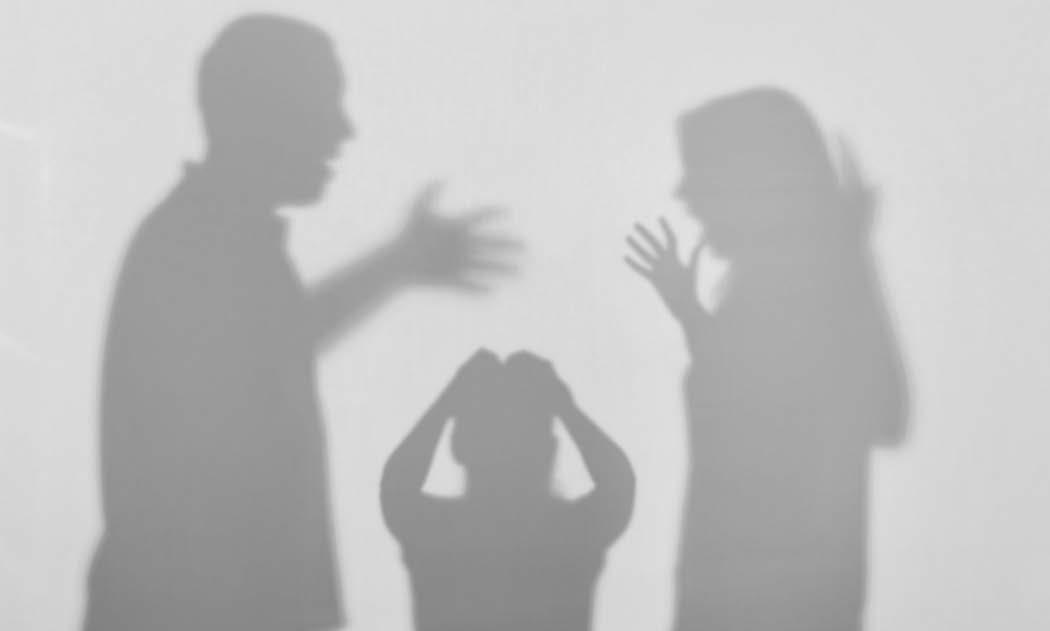
tion. Those who externalize their feelings are more likely to display bully or bully/victim behaviors. The more chaotic and abusive the home, the more likely children will become bullies/victims.
Identifying and addressing harmful issues within the home is required to give children an opportunity to move forward in life with a chance at social, familial, psychological, and academic success. How can schools address the needs of these children and their parents? There are three intervention programs worth consideration. Fast Track is a multiyear child, parent, and school intervention focused on the prevention of behavior disorders in children. Cognitive Behavioral Intervention for Trauma in Schools (CBITS) is a skills-based, group intervention for middle and high school students who have been exposed to traumatic events and have symptoms of Post Traumatic Stress Disorder (PTSD). Brief Strategic Family Therapy (BSFT) is a short-term family-treatment model developed for youth with behavior problems such as drug use, sexual risk behaviors, and delinquent behaviors.

Fast Track
Fast Track is a comprehensive intervention which includes parent training, home visiting, case management, social skills training, academic tutoring, and teacher-based classroom intervention designed to prevent conduct problems among high-risk children. This multi-year program addresses two important transistional stages: entry into elementary school and promotion to middle school. The initial stage addresses a broader student body, while the second stage recognizes that progress could be lost if support is discontinued during a major transition.
30% of all school children encounter bullying in some form or another.
Thorough training is vital to the success of bullying programs for high-risk students. Fast Track provides training to all teachers and administrators involved. Those on the front lines need confidence to buy into the program and help it reach its potential. On-site Fast Track staff members are available to answer questions and provide additional assistance and program personnel help run the group sessions for children and parents. Teachers are not left to shoulder the program on their own. Support is provided on many levels.
Through Fast Track, children and their parents have access to group and individual projects where they work on problem-solving and communication to create better home and school environments. This may be during school and through home visits, depending on circumstances. Children are provided individual tutoring and support to help them acclimate, focus their attention, and develop better socialization skills. As children work through grade school, the effects of Fast Track become evident with improved social skills, academic achievement, self-control, and problem-solving. Parents demonstrate improvement in communication with their children, more warmth in their relationships, and joint problem-solving in the home.
When students reach middle school, Fast Track becomes a targeted program. The students still considered significantly at-risk continue their studies in a modified version of the program. These students continue to participate with their families, strengthening the family dynamic and focusing on goals. Parents work with teens in group work or through at-home sessions to establish boundaries, and strengthen parent-child communication and joint problem-solving. The sessions focus on attachment bonds and family boundaries as teens begin to test
independence and face new social temptations (e.g. less desirable social decisions and substance use).
Youth are placed in ongoing workshops where they can focus on goal setting as well as pertinent topics for their age group. The staff continually watch for signs of trouble stemming from the changes teens exhibit alone or in groups. At times groups need to be adjusted due to a potential to foster deviant socializing among students which may occur when bullying behavior as actually coalesced rather than socially discouraged. All at-risk youth are evaluated three times a year to adjust their program to their needs. Some are placed in individualized counseling in an attempt to maintain progress.
Long-term results of Fast Track are mixed. Studies have shown that social skills are maintained at some level by students, but their academic performance deteriorated after the individual tutoring provided in grade school was discontinued. Fast Track success rates are not as high as other universal programs. Fine tuning and more research are needed.
Cognitive Behavioral Intevention for Trauma in Schools
Cognitive Behavioral Intervention for Trauma in Schools (CBITS) is a selective therapy-based intervention program addressing trauma experienced by kids. It may be used with those who have experienced abuse and have not been able to reach therapy services. CBITS brings recognition of shared traumatic experiences together with the skills needed to face trauma and manage more effectively. It includes students who have experienced or wit-
nessed a range of traumatic events including community, family, or school violence, natural disasters, abuse, neglect, or traumatic separation from a loved one. Children are usually selected based on the recognition of Post Traumatic Stress Disorder (PTSD) and pulled from classes for typically ten sessions. Students learn skills in affect regulation, relaxation, challenging maladaptive thoughts, and problem solving with a focus on processing their traumatic memories and grief. CBITS has a modified program that works with parents as well, with typically 37% of parents attending.
Implementation of CBITS, according to researchers, is a process of “selling” the concepts to faculty, staff, and administrators with, at times, a year of psychoeducation to highlight the value in the specialized program. Successful implementation requires a full “buy-in” by all decision-makers for the proper establishment of a program. Teachers are given comprehensive training plus support. While some educators balk at the commitment of students being out of class for ten meeting sessions, after learning the scope and success of the program, they often become supportive. However, if the CBITS team does not feel the teachers and administration are fully invested, they will move on to another school and implement there, returning after the other school demonstrates the expected results. If schools want to implement CBITS but cannot afford the on-site training and support, training is available on the website and additional help is available.
CBITS has shown improvement in several areas. In one study, the program helped students from abusive, chaotic homes who had become bullies, victims, and bully/victims manage their emotions with more productive techniques (Kennedy, 2021). Aggressive behaviors previously used to express or respond to triggering situations were significantly reduced. Victimized students learned how to address their triggers in ways that involved less internalization and more support for depression and anxiety. Additional research on the impact of CBITS showed improvement in the areas of PTSD, depression, psychosocial skills, and anxiety as well as improvement in student ability to manage triggering events even after the program ended. However, there was no
change in conduct and impulse control in the classroom (Yohannan & Carlson, 2019).
Brief Strategic Family Therapy
Brief Strategic Family Therapy (BSFT) is an intensive, individual program for more severe at risk situations. Unlike the other programs, BSFT is neither administered or supervised by teachers nor normally held in schools. Implementation is decided by the family and conducted by certified therapists trained specifically in BSFT. Certification and recertification are both stringent.
Family relationships are the basis for BSFT. Entering into the process requires an acceptance that there are fundamental problems in the communication and relationships in the household. The underlying belief is that dysfunctional family communication contributed to the developing of the child’s current negative behavior. Dysfunctional relationships within the home often create attachment disorders, rendering parent and child unable to maintain a healthy
relationship. This then extends to an inability to have and maintain healthy friendships and intimate relationships in adulthood. When youth perceive their parents as either too unresponsive, permissive, aggressive, or maladaptive, the likelihood of bullying behavior and other misconduct increases. And when, the parent is not equipped to respond in appropriate, healthy ways, a cycle of dysfunction results.

To change, families must work together to make necessary modifications. Commitment to open

discussion and change is vital to success. The therapist meets with the family for 12 to 16 sessions over the course of three to four months to guide them to change communication and modify the relationships feeding the dysfunction. Therapists first work through the process of getting to know the family members individually and as a group. Next the therapist works to engage and motivate the family members in the therapy process and in working together. The therapist then encourages interaction and new relationship frameworks so the family can transform from dysfunctional to effective. During this time, the therapist maintains contact and relationships with all family members and addresses any negative feelings that emerge from the change and communication.
While research on BSFT is still in its early stages, the results are encouraging. Two studies in particular, show promise and provide separate perspectives. One focused on male reactions, while the other collected information from girls who bully. Using saliva cortisol tests, males indicated a clear reduction in aggression over the course of 12 weeks (Nickel et al., 2006a). The female group self-reported via questionnaire over 12 weeks with a one-year follow-up. Females reported the positive changes of decreased risk-taking behavior, improved anger and aggression management, and fewer occurrences of social and psychological problems. A year later, the basic effect remained even if the behaviors partially slipped back to old patterns (Nickel et al., 2006b).
Conclusion
When up to 30% of the population experiences domestic violence, often resulting in developmental, behavioral, physical, psychological, and psychosocial damage, and future participation in bullying situations, prevention and intervention programs are needed. There is little relief from the trauma if steps are not taken to address the issues and provide an establish an appropriate program. Successful intervention that helps children modify their behavior and create better relationships and opportunities ultimately gives children the chance of a better future. Children involved in bullying who do not receive intervention can advance through school and into adulthood to more targeted and harmful actions and
activities. Breaking the cycle of domestic violence, bullying, and victimization is a journey with many roadblocks and detours, but a journey that must be taken.
References
Brief Strategic Family Therapy (2020). Title IV-E Prevention Services Clearinghouse.
Cognitive Behavioral Intervention for Trauma in Schools (2024). National Child Traumatic Stress Network.
Fan, X. (2024, May 17). The mediating role of moral disengagement in the association between maltreatment and bullying perpetration: Testing the differences of gender and household registration. Child & Family Social Work.
Fast Track Project (2020) California Evidence-Based Clearinghouse for Child Welfare.
Kennedy, R. S. (2021, June). Bully-victims: An analysis of subtypes and risk characteristics. Journal of Interpersonal Violence, 36(11/12), 5401-5421.
Nickel, M., Luley, J., Krawczyk, J., Nickel, C., Widermanng C., Lahmann, C., Muehlbacher, M., Forthuber, P., Kettler, C., Leiberich, P., Tritt, K., Mitterlehner, F., Kaplan, P., Gil, F. P. & Rother, W. Loew, T. (2006a). Bullying Girls – Changes after Brief Strategic Family Therapy: A randomized, prospective, controlled trial with one-year follow-up. Psychotherapy & Psychosomatics, 75(1), 47-55.
Nickel, M. K., Muehlbacher, M., Kaplan, P., Krawczyk, J., Buschmann, W., Kettler, C., Rother, N., Egger, C., Rother, W. K., Loew, T. K. & Nickel, C. (2006b). Influence of family therapy on bullying behaviour, cortisol secretion, anger, and quality of life in bullying male adolescents: A randomized, prospective, controlled study. The Canadian Journal of Psychiatry, 51(6), 355-362.
Nocentini, A., Fiorentini, G., Di Paola, L. & Menesini, E. (2019, March 1). Parents, family characteristics and bullying behavior: A systematic review. Aggression and Violent Behavior, 45, 41-50.
Yohannan, J. & Carlson, J. S. (2019, March). A systematic review of school-based interventions and their outcomes for youth exposed to traumatic events. Psychology in the Schools, 56(3), 447-464.
Michele A. Montour-Kumm, Graduate Student, University of Missouri School of Law, Columbia, makd77@missouri.edu
HELPing Students with Language and Behavioral Challenges
By Mary Beth Hammond and Marie Manning

Which came first – the chicken or the egg?
We’d all like to know the answer to this hotly contested debate. Yet, there is a bigger quandary that drastically affects public education and significantly influences student outcomes. Which comes first – language deficits or behavior problems?
With increasing behavioral disruptions in classrooms across the nation, this causality dilemma is more relevant than ever. We know that a behavioral disruption negatively affects student learning which changes school culture as a whole. We also know that language development is the cornerstone on which everything else is built. Do behavioral issues interrupt language development? Or, do language deficits create behavioral challenges? What if an undiagnosed language disorder is driving a student’s behavioral disruptions? More importantly, how do we help students thrive when both exist?
You’re probably already thinking of THAT student – the one whose body language tells you there’s trouble coming as soon as she walks in the classroom? She’s unresponsive to direction and ignores non-verbal cues or verbal direction. During group activities, she is argumentative and defiant. Maintaining her attention during class instruction is next to impossible. She cannot sit still for longer than a few minutes without explicit guidance from the teacher. She avoids eye contact and requires constant redirection. Following the rules appears to be the last thing on her mind. Personal boundaries and respect for classroom materials are non-existent. Working with her peers is a huge challenge, but working independently is completely untenable. Her behavior has become so disruptive that it is negatively affecting her educational outcomes and those of her peers. Is there an underlying language disorder that came first? Is there a behavior disorder that is causing a language barrier? Queries you might ask yourself while trying to manage these day-to-day interruptions swirl around in your head and consume your every thought. Most importantly, what can you do to HELP her?
Before simply diving into behavior strategies, we need to understand where her disruptive behavior is coming from. These challenges could result from a language disorder, behavioral disorder, or both. Current research from Rautakoski et al. (2021) shows that language and behavior challenges could be bidirectional. They both influence the other making it difficult to know which comes first. Researchers believe 81% of children with social, emotional, and
behavioral challenges have significant unidentified communication needs (Curtis et al., 2017). American Speech Hearing Association (ASHA, 1997-2024) has reported that 1 in 12 school-aged children have a speech or language disorder. Other sources reported this rate has increased to 1 in 10 (Currigan, 2020), suggesting that more students have both behavioral disorders and unidentified language disorders than in the past. Disruptions caused by language and/or behavioral disorders have traditionally been addressed within special education. These challenges have also become more common within general education classrooms. It is hard to know where to start and what to do when both disorders exist simultaneously. The purpose of this paper is to help educators understand possible language barriers and provide strategies to manage behavior.
Understanding the Differences Between Language and Behavioral Disorders
When considering whether a behavioral or language disorder exists, we must first understand how these categories are defined. Behavioral disorders can be defined as behavior that negatively impacts the educational learning process or learning outcomes of peers. Some examples include aggression, inattention, defiance, and non-compliance. These same challenges can also manifest in students with language disorders. One aspect of behavioral disorders that interrupts language development is social emotional learning (SEL). Deficits in SEL include the inability to understand others, express oneself, manage emotions, and interact with peers and adults. As reported in a meta-analysis by Curtis et al. (2017), students with language disorders engage in more problem behavior than their peers, with increasing aversive impacts with age. Recognizing the differences and potential behavioral outcomes for both is paramount.
When behavior is the sole focus, expressive, receptive, and pragmatic language disorders can be easily overlooked. Certain behaviors that coexist with a language disorder can often mislead others to believe that a behavioral disorder, such as attention deficit hyperactivity disorder (ADHD), autism,
or oppositional defiant disorder (ODD), are the root cause of the behavior. Often, this singular focus leaves behind speech and language supports. The impact of unidentified and untreated language disorders has a lasting impact. Research supports an increased risk of mental health challenges such as anxiety and depression later in life (Blaskova & Gibson, 2021). Long-term outcomes set back academic outcomes, relationship development, and positive postsecondary outcomes such as job security and societal contributions. Three key language disorders that affect a student’s ability to understand, produce, or use language effectively resulting in behavioral challenges include expressive, receptive, and pragmatic disorders. Understanding how each of these disorders impact behavior is critical.
Expressive Language Disorder. Simply defined, expressive language is what we say. An expressive language disorder can be explained as having difficulty using words to communicate thoughts or ideas. A student with an expressive language disorder has limited vocabulary or difficulty with word finding and may tend to use generic terms like “thing” or “stuff.” They struggle with creating grammatically correct sentences, telling a story from start to finish, conveying a concept or idea, recalling words, giving correct responses, and stringing together more complex sentences. When a student has an expressive language disorder, they may demonstrate frustration (e.g., limited engagement, low response rates from the teachers or peers) and exhibit low self-esteem (e.g., use phrases like “I can’t”, “I am stupid”, or “I hate this”) simply because they cannot effectively communicate their intended message. This type of language disorder can be misinterpreted as a behavioral issue such as non-compliance when refusing to actively engage in classroom instruction. These responses not only disrupt the student’s learning outcomes but also make the learning process for others challenging.
Receptive Language Disorder. Receptive language is the ability to interpret what we hear. A receptive language disorder presents as difficulty understanding language. A student with a receptive language disorder has challenges following directions or verbal instructions, answering comprehension questions,
When behavior is the sole focus, expressive, receptive and pragmatic language disorders are easily overlooked.
understanding long or complex sentences, delaying and/or giving a response, or taking turns during conversation. When a student has a receptive language disorder, they become easily confused and frustrated during communicative interactions, which leads to trouble making friends and getting along well with peers. They appear to be overly shy and can be aggressive toward others when their messages are misinterpreted. It should be noted that a child can have a mixed receptive-expressive language disorder, with symptoms of both language disorders.
Pragmatic Language Disorder. While expressive language explains what we say, and receptive language describes what we hear, pragmatic language incorporates social elements. A pragmatic language disorder refers to the distinct challenges related to both nonverbal and verbal communication skills used in social settings. A student with a pragmatic language disorder struggles to hold conversations, use language in socially proper ways, and adapt or adjust their communication style to fit different social contexts. Other examples include difficulties taking turns during conversation, and understanding nonverbal communication cues such as eye contact, facial expressions, and hand gestures. Pragmatic language disorders interrupt nonliteral language usage such as sarcasm, metaphors, and idioms used in conversation. Challenges with pragmatics make forming and keeping friendships difficult. Students may become frustrated with unpredictable or complex conversational exchanges and have difficulty responding to nonverbal cues and facial expressions. Students with a pragmatic language disorder may become argumentative and easily annoyed by others resulting in resistance when engaging in rules or directions.

HELPing Students with Language and Behavioral Challenges
Prior to focusing exclusively on a student’s behavior challenges, a language disorder must be identified or ruled out. Speech language pathologists (SLP) are imperative at this point. They conduct comprehensive assessments to help differentiate between language disorders that interfere with phonology (sound production), morphology (word structure), syntax (sentence structure), semantics (vocabulary), or pragmatics (social communication). SLPs will determine whether or not behavioral challenges interfere with language development or if language challenges interfere with behavior. When there is a serious behavioral concern, a functional behavior assessment (FBA) may be requested which may lead to the development of an individualized behavior intervention plan (BIP). FBAs help determine the underlying causes of the behavior which will guide the team to develop an BIP.
We often say that negative behaviors are attention-seeking; however, we should be thinking that aversive behaviors are attention-needing.
FBAs focus on the two key functions/reasons for behavior: to get something or get away from something. These functions are broken down into four areas: sensory, attention, tangible, and/or escape (Alberto et. al., 2021). Since language and behavior are so closely connected, BIPs should be developed to address the targeted behavior, with careful consideration for language interventions. It is important to note that BIPs require consistent progress monitoring to ensure the plan is effective.
These assessment procedures provide a starting point when deficits in language development manifest as behavior problems. Even after speech services are in place and intervention plans are implemented, it can take several months to years to see improvements in language and behavior skills especially in the area of social-emotional learning. Selecting interventions that provide a holistic approach to address both communication and behavioral issues is essential. Let us give you some HELP.
Have patience
Earn trust
Leverage the environment, and Promote communication.
Have Patience. Developing communication skills in students who also have behavioral challenges requires that teachers invest in the student long term. It demands persistence and continued attention to detail. Patience with your professional team is critical within the identification process. It takes
HHave Patience
HELPing Students with Language and Behavioral Challenges
• Allow for time to identification of challenges
• Give longer wait times for responses
• Allow for additional time to submit assignments
• Slow down your speaking rate during class discussions
• Provide think–time by using verbal, visual cues to build in pauses after asking a question
• Incorporate partner thinking activities such as think–pair–share
• Incorporate self–care by establishing boundaries, using relaxation techniques, take mental breaks
• Allow time for communication skills to evolve
EEarn Trust
LLeverage Environment
PPromote Communication
• Watch for irrational beliefs about self and others.
• Look for overgeneralizations about school
• Take steps for students to believe in you
• Listen attentively and teach explicit socio–emotional skills
• Recognize elements of trauma
• Use a variety of communication methods to caregivers and families
• Create a classroom that feels welcoming and supportive
• Provide structure, routines and predictability in various ways
• Cultivate a sense of belonging
• Incorporate practices that use wait time
• Reduce unnecessary classroom noise as much as possible
• Establish a school culture that recognizes language and behavioral challenges
• Develop structured conflict–resolution protocols
• Use clearly written instructions and visual aids that are simple to follow and easy to understand
• Recognize that behavior is communication for an unmet need
• Provide opportunities to communicate early and often
• Use visual, verbal, and auditory methods that promote access
• Incorporate assistive technology such as recording devices and text to speech
• Use peer groups to your advantage
• Avoid ineffective coping strategies such as humor and sarcasm
time to identify challenges and develop effective interventions. Patience with your students in the classroom is paramount. In general, students need longer wait times between a prompt and a response. When asking students to answer a question or complete a task it takes them longer to give the correct answer or turn in the assignment. These behaviors could be viewed as trying to avoid/escape the task demand. Monitoring your own speaking style and reducing the speed at which responses are expected allows for processing time. While their peers listen
to instructions and follow these steps simultaneously, think-time is very important when there is a language disorder at play. Make sure to pause for at least a minute or two after asking a question before expecting a response. Providing verbal prompts such as “take a minute to think about,” or “wait for my signal to respond” provides clear expectations when a reply is expected. Partner thinking activities such as think-pair-share will also provide think- time. Patience allows students the much-needed time to hear, interpret, and act on your directions.
Having patience with yourself is also important. Often, we become focused on the student and the larger challenges, overlooking the grace we need to provide to ourselves. Consistent disruptive behaviors from students can test your resilience and resolve. Be sure to incorporate self-care strategies such as establishing boundaries, incorporating relaxation techniques (e.g., breathing, counting, pacing, listening to calm music, walking away), designating specific times during the day to take a mental break, and seeking support from others. It is OK to put grading and other tasks aside for a few minutes. Most important, saying “no” to interruptions that tend to chip away at planning periods and lunch breaks helps build time in the day for momentary respite.
Earn Trust. While there is the expectation that teachers can be trusted, not all students agree. Students who have not experienced success in the classroom because of a behavioral and/or language challenges can develop irrational beliefs that disrupt the process of building trust. Irrational beliefs are ways of thinking about ourselves or others that are out of context with reality and can lead to negative feelings about oneself or others. Examples include negative self-talk such as I am not smart enough, all mistakes are bad, no one can help me. Expressive language statements that manifest as negative self-talk can also co-exist with behavioral challenges. Students who engage in irrational mindsets often overgeneralize aversive school-based experiences. This overgeneralization inhibits the development of a sense of belonging and limits opportunities to establish trust. Instead of expecting students to trust them, teachers must earn student trust before moving forward. Recognizing that student beliefs, feelings, and emotions are real to them during a crisis helps to reframe trust. It’s helpful to take time to address any irrational thoughts by listening attentively and explicitly teaching proactive social/emotional skills.
Keep in mind that trauma plays a role in both language and behavioral development (e.g., Busch & McNamara, 2020; Cruz et al., 2022). Adverse childhood experiences such as limited school and community support, excessive caregiver transitions, and frequent academic obstacles are contributing factors that influence trust. It is important to watch
for significant perceptual shifts related to trauma. For example, adults interpret trauma differently than students. Teachers understand what is expected when a fire alarm goes off. However, this same event can be extremely disorienting to a student who has experienced trauma. Key strategies to promote trust include noncontingent reinforcement, pairing classroom experiences with highly engaging preferred activities, and using step-by-step instructions to provide predictability and stability. Most important, collaborate closely with families and caregivers with consistent systems of communication that match the family’s needs. Maintaining trust is key to building a solid bridge between home and school. While e-mail is often used by teachers, email is effective only if the family has internet access and checking as part of their daily routine. Be sure to use a variety of communication methods, including opportunities for face-to-face interactions, phone calls, and written notes.
Selecting key interventions that provide a holistic approach to address both communication and behavioral issues is key.
Leverage Environment. Leveraging the environment uses the physical classroom space and layout to effectively manage student behavior while incorporating teacher presence in the room. Creating a classroom that feels welcoming and supportive is essential for fostering positive behavior and nurturing language development. Examples include greeting students when they enter the room, showing genuine interest in their well-being when they appear out of sorts, and cultivating a sense of belonging and acceptance among all students by ensuring everyone’s voice is heard during discussions. Make sure to redirect behavior and language faux pas by providing choices and correct responses as soon as the error occurs. As mentioned previously, integrating consistent processing time is equally important.
Leveraging the environment involves teacher behaviors that build a supportive teacher-student relationship. Routines and predictability ensure that students feel supported and are safe and secure. Understanding what is expected helps to reduce cognitive load, leaving more opportunity to foster language learning and develop socio-emotional competencies. Finally, reducing unnecessary classroom noise establishes an effective learning environment. Excessive noise in the classroom can be both distracting and disruptive, making it even more difficult for students to focus and engage in learning activities. Take the steps needed to minimize noise by arranging classroom furniture to reduce sound reverberation and dampening heating and air conditioning units with soft materials like padding or curtains. Provide noise-related structure to the classroom such as visual cues to signal quiet work time, noise level indicators, and advance notice when there will be an increase in noise levels (e.g., announcements, bells, fire drills, assemblies). When levels are high, use proximity control and provide access to noise-canceling headphones.
These suggested strategies help establish a school-based culture that recognizes language and behavioral challenges and development as part of the academic process. Consistent protocols that are used across all settings within the school are a priority. Conflict-resolution protocols develop generalizable, repeatable behaviors that can be used in various situations throughout the school. Developing specific procedures to address miscommunication during classroom instruction fosters pro-social competencies that have direct applications in real world situations. Written instructions that are straightforward, concise and easy to understand facilitate independence. Avoid using language that is overly complex or ambiguous, as this can lead to confusion and frustration especially when a language disorder is present. Using visual aids within
the classroom that support these protocols can further enhance understanding and reinforce directions.
Promote Communication Language disorders are often undiagnosed and misdiagnosed when behavioral challenges are present (Chow et al., 2022). The ability to process language for students with behavioral challenges can become intertwined. When behaviors manifest, showing and evaluating alternative behaviors and using all forms of communication measures are required. It is important to remember that behavior is communication. For some students, their perplexing actions in the classroom are their only way to communicate that something is wrong, troubling, confusing, or needed.
We often label some student behavior as attention-seeking; however, we should consider that behavior can be attention-needing. These behaviors can take two very different forms. Externalizing behaviors are fairly easy to see when students demonstrate poor impulse control or become verbally or physically aggressive toward peers and/or adults. Internalizing behaviors are not as obvious. Students who experience anxiety or depression tend to withdraw from others through limited communication and engagement. Students may also refuse to start or complete tasks, lack focus or attention, and avoid eye contact. Offering numerous opportunities to develop communication early and often is as important as practicing key academic skills. Using a variety of communication tools that simplify language including visual, verbal, and auditory methods, and promoting communication through the use of assistive technology, such as recording devices, and speech-to-text, can be effective to increase student access to instruction.
Peer engagement and social interaction is difficult when expressive, receptive, and

pragmatic disorders are present. Conversational strategies, such as using humor to diffuse a situation, may not be available to students with language disorders. Sarcasm is especially difficult and should be avoided. Difficulty interpreting social cues limits comprehension during conversations. Engaging peers who can model communication, provide motivation, and ease communication is a powerful tool to support both pragmatic language skills and positive social behavior for all students. As Blaskova and Gibson (2021) emphasized, the use of pragmatics promotes social interaction even if a disorder does not exist.
Collaborating to Address Language and Behavioral Challenges
We may never know which came first – the language disorder or the behavioral disorder. Language and behavioral skills and challenges are deeply intertwined, often making it difficult to determine where one ends and the other begins. As we navigate the complexities of the classroom, it is clear that the interplay between the two demands a nuanced and proactive approach that extends beyond special education services.
A collaborative, holistic approach is essential to fostering language-rich environments, embedding targeted supports, and ensuring consistent opportunities for skill development across all educational settings. Whether it is breaking down directions for a student with receptive difficulties, integrating creative expression for those with expressive challenges, or explicitly teaching a social skill to students with pragmatic deficits, the key lies in teamwork and intentionality. When SLPs and educators work in tandem, they not only unravel the complexities of language and behavior, but also empower students to thrive – academically, socially, and beyond. Using the HELP acronym is a great first step. However, there is more to do. We are increasingly reminded that understanding the origins of behavioral problems – whether stemming from language challenges or vice versa– requires careful examination and interventions across all settings. In the end, attributing blame to one deficit over the other does not result in clear outcomes for the student and does not provide clear direction for the teacher. It’s time to re-think how SLPs and teachers work
together to provide language-rich environments in special education and general education classrooms. With intentional partnership, SLPs and teachers can bridge the gap between communication and behavior to support meaningful growth for every student and equip them with the tools necessary to thrive in both school and life.
References
Alberto, P. A., Troutman, A. C., & Axe, J. (2021). Applied behavior analysis for teachers, 10th Ed. Pearson.
American Speech-Language-Hearing Association (1997-2024). Spoken language disorders.
Blaskova, L. & Gibson, J. L. (2021). Reviewing the link between language abilities and peer relations in children with developmental language disorder: The importance of children’s own perspectives. Autism and Developmental Language Impairments, 3(6),
Busch, B. & McNamara, T. (2020). Language and trauma: An introduction. Applied Linguistics, 41 (3), 323-333.
Chow, J. S., Wallace, E. S., & Kumm, R. S. (2022). A systematic review and meta-analysis of the language skills of youth offenders. Journal of Speech, Language and Hearing Research, 65(3), 1166-1182.
Currigan, S. (2020). Ever taught a pupil who seemed to misbehave deliberately? Beacon.
Curtis, P., Kaiser, A., Roberts, M. Y, Estabrook, R., & Roberts, M. (2017). The longitudinal effects of early language intervention on children’s problem behavior. Child Dev. 90(2), 576-592.
Cruz, D., Lichten, M., Berg, K. & George, P. (2022). Developmental trauma: Conceptual framework, associated risks and comorbidities and evaluation and treatment. Front Psychiatry, 13, Article 800687.
Rautakoski, P., Ursin, P., Carter, A. S., Kaljonen, A., Nylund, A., & Pihlaja, P. (2021). Communication skills predict social-emotional competencies. Journal of Communication Disorders, 93, Article 106138.
Mary Beth Hammond, Speech-language pathologist for K-12 students, Model Laboratory School, Richmond, Kentucky, Mary.Hammond@eku.edu and Marie Manning, Associate Professor, College of Education and Applied Human Sciences, Eastern Kentucky University, Richmond, Marie.Manning@eku.edu
The New Supreme Court Ruling and What It Means for You
By Lawrence J. Altman and Katherine A. Graves
On June 12, 2025, the United States Supreme Court issued a ruling that represents a significant shift in the legal landscape for disability discrimination claims in education in the case of A.J.T., by and through his Parents, A.T. et al. v. Osseo Area Schools, Independent School District No. 297 U.S. (2025). Chief Justice Roberts, writing for a unanimous Court, ruled that plaintiffs who are students in federally funded schools are not required to make a heightened showing of “bad faith” or “gross misjudg-
ment” to prevail under the Americans with Disabilities Act (ADA) or Section 504 of the Rehabilitation Act. This decision reverses precedent from several federal circuit courts, marking a pivotal moment for students alleging disability discrimination under these laws. The following paper discusses the ruling and its implications for students’ rights under federal disability statutes.

Rejection of the Requirement to Prove “Bad Faith” or “Gross Misjudgment”
The case involved a student with a seizure disorder that prevented her from attending school before noon. The student required an accommodation allowing her to receive instruction after normal school hours. However, the school district refused to provide this accommodation, leading the student to file suit alleging discrimination under the ADA and Section 504. The United States Court of Appeals for the Eighth Circuit upheld the district court’s dismissal of the claim, holding that plaintiffs in educational settings must prove that the school acted with “bad faith” or “gross misjudgment.” This standard was rooted in an earlier Eighth Circuit precedent from 1982. The plaintiffs then appealed this decision to the Supreme Court.
In reversing the lower court, Chief Justice Roberts explained that plaintiffs bringing ADA or Section 504 claims must prove that the defendant acted with “deliberate indifference.” This standard is met if a plaintiff shows that the defendant disregarded a “strong likelihood” that its actions would result in the denial of federally protected rights. To illustrate, if a school fails to implement an accommodation for a student written into the student’s IEP or 504 Plan, this would meet the standard of deliberate indifference because the disregard of providing a accommodation for a student with a disability specified in the student’s plan would result in a strong likelihood of a violation of that student’s federally protected rights. The Court, therefore held that a student need not demonstrate bad faith or gross misjudgment, a more difficult burden than deliberate indifference to establish a claim of disability discrimination under the ADA or Section 504.
The “Words Have Meaning” Approach
Chief Justice Roberts emphasized that nothing in the text of Title II of the ADA or Section 504 suggests that student claims under these statutes should be subjected to a higher burden of proof than similar claims in other contexts. Both statutes apply to “qualified individuals with dixsabilities,” and there is no indication that Congress intended these words to apply with lesser force to students or specific types
of claims. The Chief Justice described the statutory language as “expansive and unqualified,” affirming that it applies to all individuals with disabilities “without distinction or limitation.” Thus, requiring students to show bad faith or gross misjudgment to obtain compensatory damages lacks support in the text of either statute.
This interpretive approach is consistent with prior Supreme Court jurisprudence. For example, in Bostock v. Clayton County, Georgia (2020), Justice Gorsuch relied on statutory text to determine that Title VII of the Civil Rights Act of 1964 protects individuals from discrimination based on sexual orientation or transgender status. As he noted, “After all, only the written words on the page constitute the law adopted by Congress and approved by the President” (Bostock v. Clayton County, 590 U.S. 644 (2020). Justice Gorsuch further explained that individuals are entitled to rely on the law as written, without fearing that courts will disregard statutory language. Chief Justice Roberts followed this principle in A.J.T., underscoring that the absence of language imposing a heightened standard for students means that no such requirement exists under the ADA or Section 504. Both justices cited dictionary definitions to support their textual interpretations, reinforcing the “words have meaning” doctrine in statutory construction.
What Does This Mean for Schools?
The Supreme Court’s ruling impacts school districts within the jurisdiction of the five federal circuit courts that previously imposed the now-rejected “bad faith” or “gross misjudgment” standard. These circuits include the Second, Fourth, Fifth, Sixth, and Eighth Circuits (i.e., Connecticut, New York, Vermont, Maryland, Virginia, West Virginia, North Carolina, South Carolina, Louisiana, Mississippi, Texas, Kentucky, Ohio, Tennessee, Missouri, Arkansas, Iowa, North and South Dakota, and Minnesota). In jurisdictions outside those circuits, courts had already applied the deliberate indifference standard that the Supreme Court has now made uniform nationwide. Ultimately, the best strategy for schools to avoid litigation is straightforward: comply with the law.
For those schools impacted by the Supreme Court Ruling, training of school staff will be required
that explains what must be done to prevent illegal disability discrimination. When training staff, a good teaching method is sharing examples of failures of school staff that led to legal liability. A good example of this would be a case from the District of Columbia (2024). In this case, the child’s IEP required that the child receive 120 minutes per month of behavioral support in a small group setting outside of the general education classroom. For five months, the school did not provide the services because of a clerical error that resulted in the child being left off the school’s service worker’s student service list. Although this was a clerical error, the court ruled that schools must implement a student’s IEP and all provisions within the IEP to comply with the IDEA. There was no evidence that the school acted in bad faith or gross misjudgment; instead, this was a clerical error. Yet the court held the school violated federal law. The court concluded that the school’s failure to provide the IEP services required denied the child a FAPE and was a violation of the IDEA.
The lesson learned from this case is that even accidental mistakes can lead to violations of the IDEA and result in disability discrimination in violation of Section 504 and the ADA. In the training of teachers, staff need to understand that even mistakes can result in illegal disability discrimination. This should lead to a discussion of how to develop policies, protocols, and procedures to prevent errors of this type. Accordingly, introducing examples of school failures that resulted in illegal disability discrimination is an excellent tool to help teach what must be done to comply with the recent Supreme Court ruling.
Conclusion
The Supreme Court’s decision in A.J.T. v. Osseo Area Schools establishes a consistent standard of proof for students pursuing disability discrimination claims under the ADA and Section 504. This ruling is transformative for students in jurisdictions that had imposed a more burdensome standard. As Chief Justice Roberts concluded:
“That our decision is narrow does not diminish its import for A.T. and a great many children with disabilities and their parents. Together they face daunting challenges on a daily basis. We hold today that those
challenges do not include having to satisfy a more stringent standard of proof than other plaintiffs to establish discrimination under Title II of the ADA and Section 504 of the Rehabilitation Act.” (Luna Perez v. Sturgis Public Schools, 598 U.S. 142 (2023)).
This decision brings clarity and fairness to disability discrimination claims in education and ensures that all individuals with disabilities are afforded equal protection under federal law.
References
Bostock v. Clayton County, 590 U.S. 644 (2020).
District of Columbia Schools, 125 LRP 4342 (District of Columbia State Education Agency, 2024-0166, December 14, 2024)
Luna Perez v. Sturgis Public Schools, 598 U.S. 142 (2023).
A.J.T., by and through his Parents, A.T. et al. v. Osseo Area Schools, Independent School District No. 297 U.S. (2025).
Lawrence J. Altman, Adjunct Professor, Avila University, and Retired Lead Compliance Officer, Special Education, Kansas City Missouri Public Schools. ljalaw@sbcglobal.net and Katherine A. Graves, Assistant Professor, Special Education and Rehabilitation Counseling, Utah State University, Logan, katherine.graves@usu.edu

Review of [the Other] ReThinking…
By Robert Zabel
It’s likely you’re familiar with Rethinking Behavior, the on-line magazine of the Midwest Symposium for Leadership in Behavior Disorders (MSLBD). You are, after all, right now reading this podcast review published in Rethinking Behavior. But this review is of another Rethinking: ReThinking with Adam Grant.
Adam Grant is an organizational psychologist at the University of Pennsylvania. He is a prolific researcher, writer, and teacher. For the past five years, Grant has interviewed “some of the world’s most interesting thinkers, creators, achievers, and leaders—from Nobel laureates to Olympic champions to Oscar and Grammy winners.” Participants represent a variety of backgrounds, areas of expertise and accomplishment. According to the ReThinking with Adam Grant website, these conversations take us "inside the minds of fascinating people to explore new thoughts and ways of thinking.” Importantly, Grant always values ideas that are scientifically valid and verifiable.
A few examples of previous topics include:
• Improving teen mental health
• How to be productive without burning out
• You have more control over your emotions than you think
• The art of failure
• Do incentives really work?
Grant actively engages his guests, asking challenging questions and engaging in spirited discussions and, sometimes, friendly debate about the meaning and applications of his guest’s ideas.
Many of the guests and their ideas are directly relevant to readers of Rethinking Behavior Magazine, including special educators,

administrators, mental health professionals, parents, and researchers. This is not surprising, given Grant’s professional identity and expertise. A synonym for “organizational psychologist” could be “educator.” After all, educators organize environments, ideas, and experiences to enhance their students’ development and learning.
For example, a recent episode (2/17/25) featured Carolyn Fleck, a clinical psychologist/therapist at Stanford. She shared ideas from her book, Validation, about ways to build relationships with others, such as therapy patients, by communicating empathy and compassion for their thinking, feeling, and behavior. Fleck points to the importance of affirming others’ emotional experiences without necessarily approving or reinforcing.
In another recent episode (3/10/25) Grant discussed emotion regulation with Ethan Kross, a University of Michigan psychologist. Kross made the case that emotion regulation is about choosing how to respond to feelings like anger, fear, or sadness. He said expressing feelings, verbally or
physically, is often counterproductive because it amplifies emotions but gets you no closer to solutions. Kross stated that it is better to choose how to respond since time and distance often yield better, more lasting solutions than venting, which often exacerbates negative feelings. Kross also recommended “self-talk,” especially using one’s second person voice (e.g. “You can do this”) or third person voice, “(They can figure out solutions”) to create emotional distance.
If you’re looking for engaging, entertaining, often challenging conversations on a variety of topics relevant to your life and work, check out ReThinking with Adam Grant. The podcast is produced by the TED (Technology Entertainment and Design) Audio Collective. All episodes (now
On-line Magazine
Review of Reasons to Be Cheerful
By Sharon A. Maroney
Do you feel weighed down by negative news? If so, let me introduce you to Reasons to Be Cheerful an online newsletter started by David Byrne. Reasons to Be Cheerful publishes stories that present solutions supported by evidence. The stories come from around the world, sharing positive efforts to make things better. Here’s an interview with Byrne on the 5-year anniversary of Reasons to Be Cheerful on the Rotary Voices Podcast (12/9/24). – Rotary Voices Podcast 12/9/24
Articles published in Reasons to Be Cheerful cover several topics but I’ll limit myself to education. Here are a few that I think you might find cheerful.
What happens when you give teens no-strings cash? by Neal Morton published on July 25, 2025
more than 150) are available on Apple and Spotify. They are about an hour in length with a new episode available nearly every week. In addition to the audio recordings, written transcripts are available.
This podcast has many similarities to Rethinking Behavior Magazine in that it covers a wide array of topics all around behavior and mental health topics. Educators might find many of the topics covered to be of direct interest to their work with children and youth in school.
Robert Zabel, Emeritus Professor, Kansas State University,
robertzabel@gmail.com
Can a little bit of spending money make a difference in the lives of high school students? The $50 Study in New Orleans says Yes. The positive results include school attendance and achievement, financial competence, and personal well-being and agency. This program began with 20 students at the Rooted School, a public charter school with a mission to
prepare students for successful and financially stable lives. The $50 Study is now operating in eight high schools in New Orleans and may soon be adopted in Washington DC.
How kids are learning empathy at school by Anna Patton published on June 20, 2025.
Have you ever thought of empathy as a muscle? A muscle that all children have. A muscle that needs to be exercised to become strong. Educators at a primary school in Cambridge, England have adopted EmpathyLab’s lessons and resources to strengthen student empathy muscles, build community, and address bullying. This article includes research info and discussion of other empathy-focused educational programs. After reading, make sure you visit the EmapthyLab website and check out the free Read for Empathy lists (ages 3-11 and 12-16+).
Students are learning right alongside their peers by Jackie Mader published on June 12, 2025.
Does the Inclusion program at your school need a jumpstart? Educators in Western Nebraska thought so. Even though Nebraska has consistently included the majority of their students with disabilities in the general education classrooms, student achievement was not as strong as desired. Schools, like Westmoor in Scottsbluff, developed and implemented a new program – Journey to Inclusion. Using evidence-based info educators are focused on educating students with disabilities in the general classroom. When compared with 2021 data, 2024 math proficiency and graduation rates for students with disabilities have already improved. Thank you Nebraska!
When it comes to banning smartphones from schools, what really works? By Michaela Haas, published September 12, 2024.
What can schools do about students and their smartphones? And can schools also address the total time spent on digital devices, the negative behavior on social media, the demands from parents to be able to keep in touch, student demands to check their email or apps, and/or the content available online? This article, focused on the Würenlos school near Zürich, Switzerland, covers research info, what has been tried
in schools in Europe and the US, what has and hasn’t worked, and related considerations. It may make you rethink your relationships with your devices.
The Montana city where students are on the front lines of mental health support by Matt Hudson published on March 3, 2025.
What school isn’t struggling with the high rates of student anxiety and depression and the lack of mental health supports? Across Montana, 2023 survey data showed that nearly a third of students reported serious stress, anxiety, and depression. At Great Falls High School peer mentors are trained to get peers to talk about tough personal problems and mental health concerns. The program began with seven students at one school and has grown to over 200 peer mentors in three high schools and two middle schools. These peer mentors are making a difference.
What happens when France sent low-income kids to wealthy schools by Peter Yeung published on May 26, 2022.
Can bussing students from the lowest-performing, impoverished, immigrant neighborhoods to wealthy schools work? The US incorporated bussing to desegregate schools in the 1960s. Was it effective then and can it be effective today? For the past five years, 1,000+ students residing in impoverished Bellefontaine, a French city of Toulouse, have been bussed to prosperous schools with amazing results. Sure, it takes shared desire, communication, and resources –but the impact on the lives of students, parents, and community cannot be ignored.
Note: I am a long-time David Byrne fan and have followed his work. I love the Talking Heads as much today as when they were together in the 1980s. If you haven’t already, find a way to see the film Stop Making Sense. Like maybe today.

Sharon A. Maroney, Professor Emeritus, Western Illinois University, sa-maroney1@wiu.edu
AFTER HOURS

It’s About
By Brian Sims
Special education is not about laws, regulations, funding, nor politics. Special education is about You.
It’s about your empathy, your trials, your successes, your sorrow, your joy. It’s about your students, their successes, their failures, their goals, their dreams.
Special education is about perseverance.
It’s about overcoming challenges, it’s about climbing mountains, and it’s about swimming oceans.
It’s cherishing a well-deserved respite after the mountain climb while admiring a small pebble in your palm at the summit.
It’s about finding meaning and fulfilment in a single grain of sand after an exhausting swim.
Special education is about You! It’s about Your Students! It’s about Hope!
Brian Sims, Associate Professor in Special Education, Pittsburg State University, Pittsburg, KS, bsims@pittstate.edu
Jessica Rawson Honored with 2025 Outstanding Educator of Students with Autism Award AWARDS
The Midwest Symposium for Leadership in Behavior Disorders (MSLBD) is proud to announce that Jessica Rawson, Autism Consultant for the McPherson County Special Education Cooperative, has been selected as the recipient of the 2025 Outstanding Educator of Students with Autism Award.
Ms. Rawson was recognized during a special awards luncheon on Friday, October 3, 2025, at the Seventh Annual Richard L. Simpson Conference on Autism. Jessica Rawson was selected for her outstanding leadership in advancing evidence-based practices,
and school systems. Her unwavering advocacy for students with autism and her commitment to student-centered, collaborative support have made a lasting and meaningful impact across the region.
The Richard L. Simpson Conference on Autism, sponsored by MSLBD, TASN ATBS, and Project ACCESS, brings together educators, professionals, and families to promote best practices and innovative strategies for supporting individuals with autism.
Learn more about the conference at: https://mslbd.
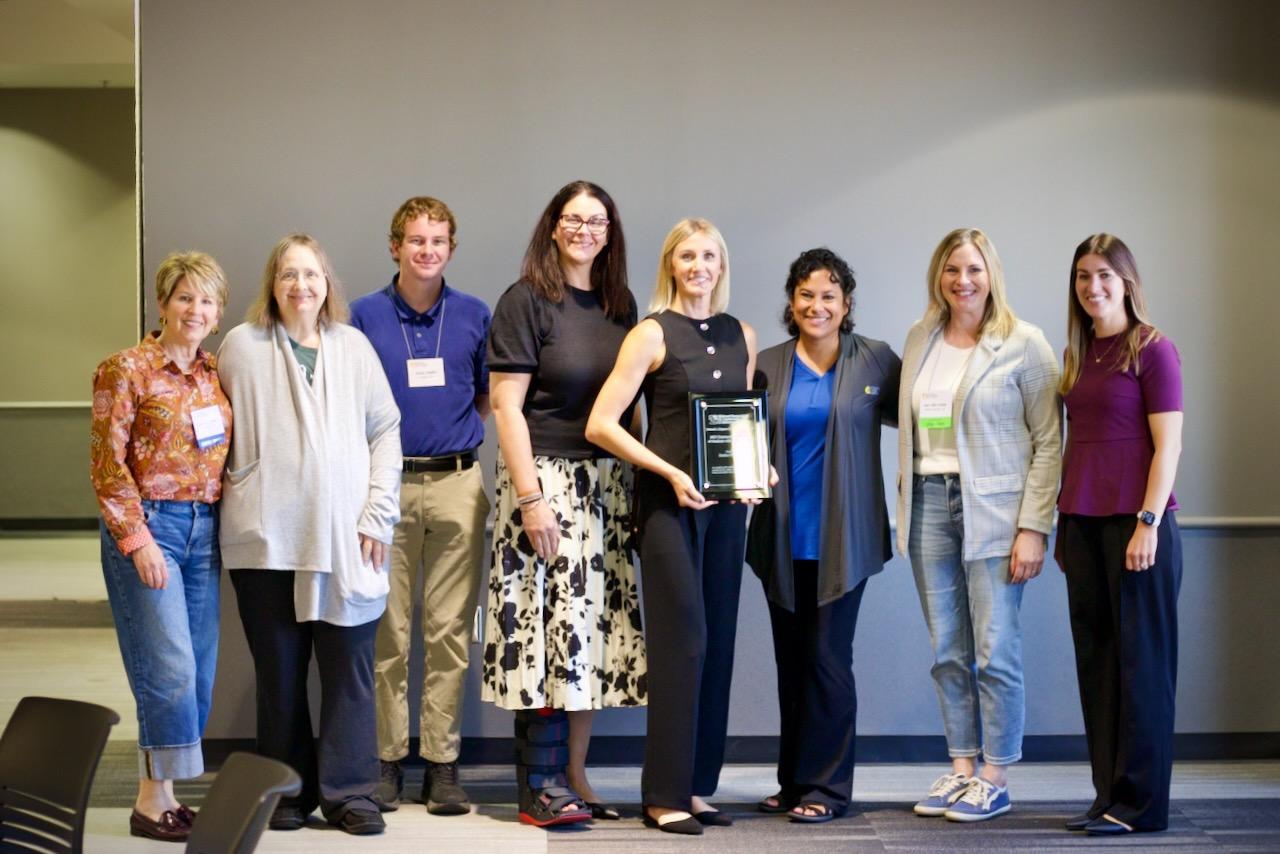
For more on the award and its criteria, visit: Outstanding Educator of Students with Autism Award
(Left to right) Melissa Strathman, Executive Director McCSEC (McPherson County Special Education Cooperative), Jessica Rawson, Autism Consultant, McCSEC, Chantal Cox, TASN ATBS, Mary Ellen Hodges, TASN ATBS and Molly Dohrman, Speech Language Pathologist, McCSEC.


RE THINKING Behavior
2026 Midwest Symposium for Leadership in Behavior Disorders
March 5-7, 2026
Sheraton Crown Center, Kansas City, Missouri
2026 Richard L. Simpson Conference on Autism
October 2026 Overland Park, KS

Midwest Symposium for Leadership in Behavior Disorders