
RE THINKING Behavior
2024SYMPOSIUM
February 29, March 1 & 2 | Sheraton Crown Center | Kansas City, Missouri
For the 42nd year, the Midwest Symposium for Leadership in Behavior Disorders will address cutting-edge issues of interest to professionals working with students with emotional/behavioral disorders and autism spectrum disorders.
KEYNOTE
Friday, March 1 | 8:30 -10:00 a.m.
Saving the World: Embracing Your Powers and Remembering Why We Teach
Deep in the belly of the school system, a hero is waiting to be the champion of children everywhere. Their name is called and they leap to action, ready to advocate, support, and encourage those who need help. It is no mystery, surprise, or secret that our staff who work with children with special needs are heroes. The work is challenging and exhausting, but these heroes report every day because they know that a child needs them. This keynote address will lay out why your work is so important, how to be the best teacher for your students, and how to meet the challenges of including our students in all aspects of the school day.
Matthew McNiff, PhD, Behavior Consultant and Special Education Director, Educational Service Unit #5, Beatrice, NE
REGISTER BY JANUARY 26 FOR REGISTRATION DISCOUNT
Register early for preferred workshops
No Walk-In Registrations
Visit our website https://mslbd.org/ symposium-conference/ MSLBD @MSLBD1


SYMPOSIUM AT-A-GLANCE
Thursday, February 29
7:30 a.m.
Conference Desk Opens
9:00 a.m.-12:00 p.m. Pre-symposium Workshops
11:30 a.m.-5:00 p.m. Exhibits
12:00 p.m.-1:30 p.m. Lunch (on your own)
1:30 p.m.-4:30 p.m. Pre-symposium Workshops
Friday, March 1
7:30 a.m.
Conference Desk Opens
8:00 a.m.-5:00 p.m. Exhibits
8:30 a.m.-10:00 a.m. Keynote Session
10:20 a.m.-11:20 a.m. Concurrent Sessions, Set I
11:30 a.m.-12:30 p.m. Concurrent Sessions, Set II
12:30 p.m.-2:00 p.m. Lunch (on your own)
2:00 p.m.-3:00 p.m. Concurrent Sessions, Set III
3:15 p.m.-4:15 p.m. Concurrent Sessions, Set IV
4:15 p.m.-6:00 p.m. Poster Session & Table Talks Cash Bar and Complimentary Hors d’oeuvres
8:00 p.m.-11:00 p.m. Symposium Party
Saturday, March 2
8:00 a.m. Conference Desk Opens
9:00 a.m.-11:30 a.m. Saturday Concurrent Sessions 11:45 a.m. Adjournment
Mary Jo Anderson
John
Anne K. Baptiste
Jennifer Bossow
Lisa Bowman-Perrott
Jenah Cason
Scott M. Fluke
Nicolette Grasley-Boy
Katherine A. Graves
Deborah E. Griswold
Mike Hymer
Shannon Locke
Maria L. Manning
Sharon A. Maroney
John W. McKenna
Kris Melloy
Lindsey G. Mirielli
Reece L. Peterson
Sandy Shacklady-White
Brian Sims
Carl R.

Rethinking Behavior, ISSN 2578-5397, a magazine for professionals serving children and youth with behavioral needs, is published three times per year, fall, winter, and spring, Copyright ©2024 by the Midwest Symposium for Leadership in Behavior Disorders, P.O. Box 202, Hickman, NE 68372. 402-7923057. www.mslbd.org. Email: rethinkingbehavior@mslbd.org.
Rethinking Behavior welcomes proposal and manuscript submissions; for information visit www.mslbd.org or email rethinkingbehavior@mslbd.org
Transition Planning Too Little, Too Late
The Individuals with Disabilities Education Act (IDEA) has emphasized the importance of transition planning in Individualized Education Programs (IEPs) for more than three decades. The Individual Transition Plan (ITP) has been a crucial component to help students transition to post-secondary life. Key components of positive post-secondary outcomes including community-based referrals and job placement services are necessary. While the ITP is designed to address these challenges, poor postschool outcomes for students with emotional-behavioral disorders (EBD) remain constant. We must confront the existing state of transition planning and champion a paradigm shift towards proactive, comprehensive, early supports that empower students with EBD.
IDEA mandates ITPs that focus on developing functional skills, person-centered planning, and self-determination goals. However, federally mandated supports are not securely in place before the age of 16. IDEA delineates prerequisites for the age of majority, usually set at 18, affording students the right to decline services. Thus, students nationwide are expected to actively participate in the transition process and cultivate self-determination and advocacy abilities within a two-year window. For students with EBD, transition planning becomes too little too late. Changes are paramount. Four key areas to consider policy and practice reform include: student age, quality of services, community supports, and family and community engagement.
Students with EBD experience delays in academic achievement, interpersonal relationships, and social and behavioral expectations; all critical skills that should be addressed in the ITP process. While certain states begin transition planning at 14, key developmental phases have already been missed. Choices regarding high school coursework, graduation paths, and college planning are already underway for their peers by middle school. Critical opportunities to develop self-determination and advocacy skills have already been lost. By changing the federal age of 16 to 12, students have opportunities to significantly improve skill sets. Further, this leaves more time to address quality of services.
Quality of services needs to be of high value, focusing on personalized, transition plans that consider student interests and strengths. The development of the plans must include the student. The plan must address the three areas required by IDEA: education/training, employment, and independent living skills such as medical care, transportation, nutrition, and household responsibilities. Transition activities must begin early and should evolve annually based on assessments. More importantly, the ITP process should not be rushed or based on credit completion. The stigma associated with students staying in school past 18 must also be targeted. We must address the opportunity barrier that school districts inadvertently put in front of these students. Most programs for students 18 or older are tailored to support students with more significant cognitive and adaptive disabilities. These initiatives leave students with EBD few options based on school district design. Districts should expand their offerings to include students who do not meet their currently limited criteria.
The current transition planning process for students with EBD face significant challenges related to community supports and family engagement. Waitlists for community services across the nation are long, sometimes taking up to 14 years, closing doors for students before families are even aware of their existence. To address this, IEP teams should involve outside agencies as early as possible building aware-
ness of the student and family long before graduation. Teams should establish self-determination skills by researching services adult agencies can provide, developing self- advocacy skills, and fostering collaboration skills by assisting students to invite agency personnel to meetings.
Families serve as advocates, ensuring necessary accommodations and services continue after high school. Without clear guidance early and often, the role of families can get overlooked. Family engagement is equally critical, as family members provide unique insights into students’ strengths, challenges, and dreams. In addition, they support informed decision-making during the transition process. Establishing positive rapport and trust is essential in the provision of emotional support, bolstering self-esteem, and nurturing a sense of belonging. By valuing family expertise and involvement, the transition process can empower students with EBD to achieve their goals and lead fulfilling lives in their communities.
In conclusion, addressing the challenges in transition planning for students with EBD requires immediate attention from policymakers at the state and federal levels. To enhance post-secondary outcomes, it is imperative to revise IDEA to align with the evolving needs of today’s student population. Recommendations include changing the mandated age, building stronger programs for students 18-21, ensuring the provision of high-quality, personalized service, addressing community support challenges, and recognizing the pivotal role of family engagement in the transition process. By implementing these recommendations, policymakers and districts will provide a more comprehensive, supportive framework that empowers students with EBD for successful postsecondary lives.
Anne K. Baptiste, Marie L. Manning, Sandy Shacklady-White, and Vanessa Tucker Issue Editors
INNOVATORS
William C. Morse
Psycho-Educators
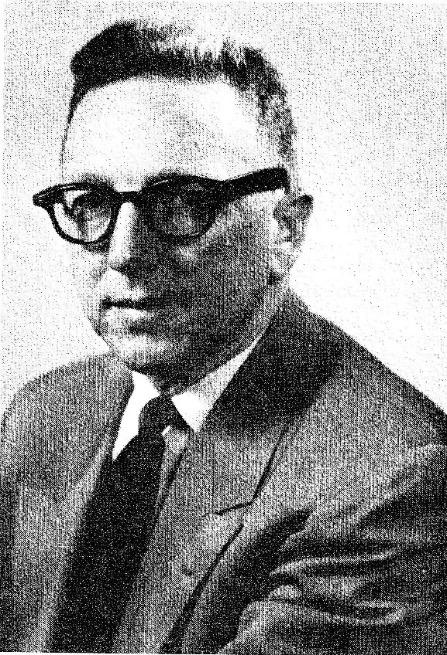
William (Bill) Morse advocated for special educators’ dual roles of “teacher” and “therapist”. He described educators’ roles and skills as needing to be a mixture of these two. He said teaching students with emotional or behavioral disorders is the hardest profession because the students are the most challenging. Morse referred to psycho-educators as “helping” or “caring professionals” who need multiple skills, including preventive discipline, crisis intervention, cooperative learning, teaming, using community resources and networking. He advocated for teachers creating therapeutic milieus. Most importantly, teacher therapists need empathy and a sense of humor.
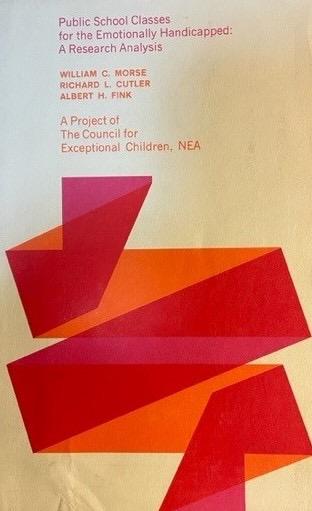
Morse conducted the first survey of classrooms and teachers of students with behavioral needs published in 1964 by the newly formed Council for Exceptional Children (Morse, et al., 1964). Except for two reports describing examples of programs for emotionally disturbed students in 1962 by Norris Haring and Eli Bower, he was among the first to focus on emotional disturbance in special education.
He identified strengths and weaknesses of existing special education programs for emotional disturbance. His study was referred to widely, then repeated by others for over 40 years. He applauded efforts to improve the lives of challenging or challenged children but questioned an emphasis on where children are placed rather than on how well programs meet individual student needs. Morse also said that all “ideologies” –psychodynamic, behavioral, cognitive, ecological, and biophysical – can contribute to our understanding of a child’s individual psychology, the systems in which
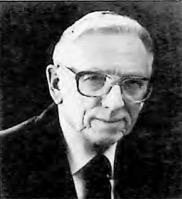
Bill Morse recognized the unique situation of educators serving students with emotional disturbance, and the special skills needed to be a “helping” “psycho-educator.” He supported empirical research on the characteristics of these students and the teachers and programs that served them. He was a mentor to numerous leaders in the field over three generations.
the child lives, and help us design therapeutic interventions. He was among the first to advocate for an empirical approach to classifying children’s behavior disorders (Quay, Morse & Cutler, 1966).
In the 1940s, 1950s, and 1960s, there were very few therapeutic programs for children with EBD in
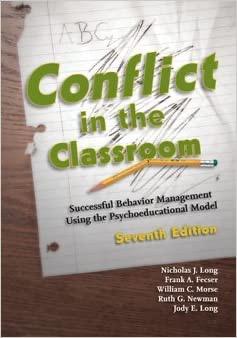
schools. The few that existed were in institutions, residential treatment centers, and/or private clinics. In his early years, he coordinated the Fresh Air Camp, a therapeutic summer camp for “troubled” boys which also provided practicum experiences for students in education, social work and psychology. Later, Fritz Redl and David Wineman, directed the Fresh Air Camp and drew upon their camp experiences to design an experimental, therapeutic residential treatment program, resulting in their books Children Who Hate (1951) and Controls from Within (1952). Nicholas Long also worked at the Fresh Air Camp. Over the years, Morse influenced several other pioneers in in the field, including William Cruikshank, William Rhodes, Matthew Trippe, and Herbert Quay, among many others. Morse with Long and Ruth Newman edited a classic and highly influential text, Conflict in the Classroom: Successful Behavior Management Using the Psychoeducational Model, which continued with 7 editions.
Morse spent most of his professional life at the University of Michigan, first as an undergraduate and then as a master’s and doctoral student in the 1930s and 1940s. Later he served as a faculty member and chair of educational
psychology at Michigan starting in 1965. After retirement as faculty emeritus, Morse served as visiting professor at the University of California/ Northridge and the University of South Florida at Tampa. He was born in 1915 and passed away in 2008.
Dr. William (Bill) Morse received the Wallace W. Wallin Award from the Council for Exceptional Children in 1977, and he was honored by a scholarship created in his name at the University of Michigan where he also received the Distinguished Faculty Achievement Awards in 1969-70. In 1988, Morse received the MSLBD Leadership in 1998, and was twice a keynote presenter- The Pursuit of Excellence in Behavior Disorders (1985) and Teacher as Therapist (1992).
References
Long, N. J., Morse, W. C., & Newman, R. (1965-1st of 7 editions). Conflict in the classroom: Successful behavior management using the psychoeducational model. Belmont, CA: Wadsworth.
Morse, W. C., Cutler, R. C. and Fink A. H. (1964). Public School Classes for the Emotionally Handicapped: A Research Analysis. Washington, D.C.: Council for Exceptional Children, 1964.
Quay, H., Morse, W., & Cutler, R. (1966). Personality patterns of pupils in special classes for the emotionally disturbed. Exceptional Children, 32, 297-301.
Robert Zabel, Professor Emeritus, Kansas State University, robertzabel@gmail.com, Reece L. Peterson, Professor Emeritus, University of Nebraska-Lincoln, rpeterson1@unl.edu, and Carl R. Smith, Professor Emeritus, Iowa State University, csmith@iastate.edu
INNOVATORS
Richard J. Whelan
A Humanistic Behaviorist
Richard J. Whelan viewed himself as a “humanistic behaviorist,” who could reconcile and synthesize multiple perspectives and find common ground in seemingly disparate approaches to educating and treating students with challenging behavior.
An example is his ability to find common ground is his account of the history of education of students with EBD from the perspective of a 50-year participant in that history. He argued that the key to effective intervention is student and teacher relationships. He concluded, “Our students with EBD need something before general education and therapy will produce results, and that something is us, caring professional special educators who know what, when, where, and how to do with students and their families. Our past was turbulent but exciting in what we learned. It’s a sure bet that our future will bring even more excitement, learning, and well-deserved success” (Whelan & Kauffman, 1999).
Following military service in the Korean War, Dick Whelan attended Washburn University in Topeka, Kansas. After graduating in 1955, he began his teaching career at the Southard School at the Menninger Clinic, eventually serving as educational director. After completing a doctorate in special education, psychology and research at the University of Kansas (KU) in the 1960s, he joined the faculties of both Special Education and Psychiatry at KU’s Lawrence and Kansas City campuses, where he taught, conducted research, directed grants, served on editorial and advisory boards. He mentored numerous graduate students, many of whom
Richard (Dick) Whelan was a “humanistic behaviorist,” who could reconcile and synthesize multiple perspectives and find common ground. He argued that the key to effective intervention is student and teacher relationships. He also provided sustained leadership preparing leaders, at the local, state, and federal levels while advocating for and interpreting special education policy.


(Lyndall Bullock, James Kauffman, C. Michael Nelson, Richard Simpson, to name a few) became leaders in the field. From 1972-1974, he took a leave from KU to direct Personnel Preparation for the Bureau for Education of the Handicapped (now Office of Special Education Programs) in Washington, D.C.
Whelan also held several major administrative positions at the University of Kansas, including special education department chair, director of education at the Children’s Rehabilitation Unit, and dean of the School of Education. In 1968 he was named the Ralph L. Smith Distinguished Professor of Child Development. His leadership contributed to KU’s ranking as a premier graduate program in special education.
After his retirement, Whelan was a special education due process hearing officer and trainer, and a Kansas Supreme Court mediator and trainer. He continued to consult with the Kansas State Department of Education and public schools.
"We all knew and loved Dick Whelan, many of us for a long time—50 years or more. But we didn’t just know and love him. We admired and respected him, too. He was not only a man of great accomplishment but a man of great character. We’re all grateful that he graced this world for 83 years, but we all wish he’d lived many more."
From the tribute to Dr. Whelan Sept 21, 2015: Reflections on the Life and Works of Richard J. Whelan by James Kauffman, Distinguished Professor Emeritus, University of Virginia and Dick Whelan’s Student. jmk9t@virginia.edu
Throughout his career, Whelan served on numerous professional and state boards and committees. and received numerous recognitions for his professional service and leadership, including the MSLBD’s first Award for Outstanding National Leadership in 1986. Born in 1931 he passed in 2015.
Dr. Whelan described his most memorable students when he was at Menninger Clinic, Space Child and Mechanical Robby, in both a video and an article in ReThinking Behavior (Winter, 2020).
A Janus Project interview is also available on the MSLBD website.
Robert Zabel, Emeritus Professor, Kansas State University, and Reece L.Peterson, Emeritus Professor, University of Nebraska-Lincoln.
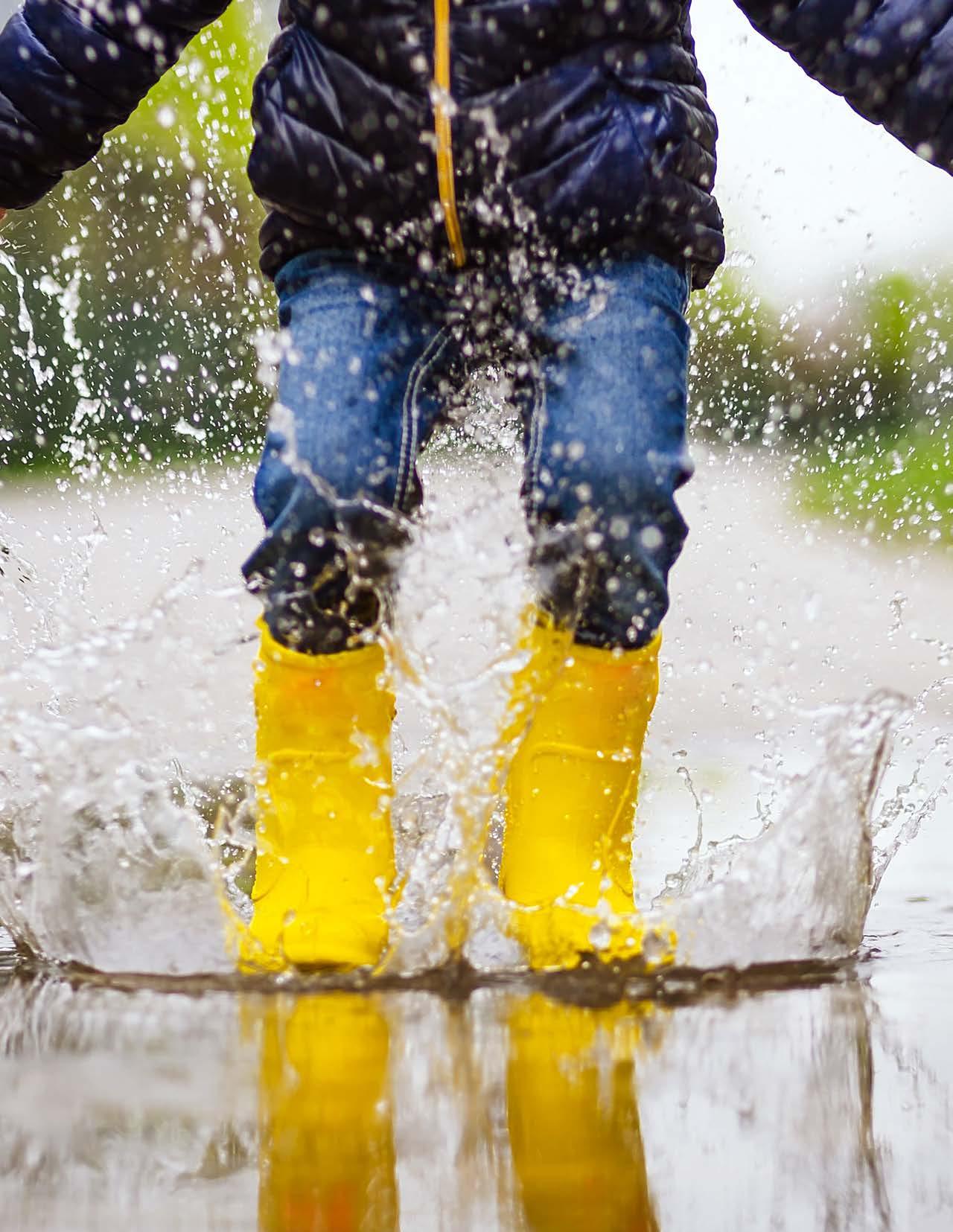
Photo courtesy of
By Patricia Stott Prince RELAX, Mrs. Stott!
It was 1982. All school boards in Ontario Canada were in the process of addressing the needs of special students. I was assigned a class of six children between the ages of six and eight. Each child had a particular need or two and was not yet placed in a class.
One was a thin little boy with health problems and delayed language skills. He had a perpetual smile and an obsession with jumping in water puddles. The striking sound of his boots, or shoes hitting the water and the ripple effect of the puddle closing up once more over his feet seemed to mesmerize him. Nothing fazed Danny. He loved life and everything around him.
Alan was the oldest of the six. He was a kind, gentle old soul and took it upon himself to try to keep everything and everyone flowing along without hitting bumps on the road. Disagreements with rising voices caused him great anxiety.
Alan assigned himself the role of watching out for Danny. He helped when Danny’s fingers and attentiveness did not serve him well when doing up or undoing jackets and shoes or opening a stubborn lunch box or thermos. Danny adored Alan.
One particular overcast morning after a night of rain there were many puddles on the playground. Most students were careful to avoid them, but for Danny, it was a jumper’s paradise. He returned to the classroom after the outdoor interlude soaking wet and muddy from his toes to his shoulders. He wore a slap-happy smile of fun on his face.
I greeted him with exasperation, held my arms up to the heavens and declared, “Danny! Look at you! We try so hard to keep you dry! There are no clothes for you to change into. What will your mother think? What’s a teacher to do?”
From the back of the room came the wise words of wisdom from Alan, the old soul. “Well, Mrs. Stott, I think you should sit down and relax!” . . . And so I did. Alan had defused me.
Both boys, like all children, need assurance that they are worthy and deserve to live the life of their age and ability.
At day’s end, there was time to reflect on my reaction to Danny’s puddle bath and Alan’s protectiveness. Giving thought to the home life of all three of us, I concluded mine was the only one that I could change.
Danny couldn’t change the overprotectiveness of his mother. He could not understand her concern. Sickness and medical monitoring were the only way of life he knew. He was not aware of his health consequences. When he was well, he celebrated his being in the only ways he could. Doing what he loved. Puddle jumping. Who knew but that may have been the last puddle he had a chance to investigate.
Alan’s home life was precarious. He witnessed regularly the warming up of disagreements between his parents as they exploded into screams and insults. He would hide when they reached a crescendo and emerge when all was quiet. He went about picking up the pieces both physically and emotionally.
I realized my thoughts that morning were on the mother’s natter I had with my son before we started our day. “Did you brush your teeth? Your socks don’t match. Did you finish your homework?” He left the house grumpy as did I.
Stopping Danny’s puddle jumping would be like denying all pleasure to him. Perhaps it could be monitored along with Alan’s mentoring. Both boys, like all children, need assurance that they are worthy and deserve to live the life of their age and ability. Danny needed independence, and Alan, not so much.
Patricia Stott Prince, stottprince@gmail.com.
By Chad Rose
Early in my career, as a doctoral student and junior faculty, I would travel to conferences across the country, often alone, and attend networking events. I would stand at a table, surrounded by my peers, yet feel this overwhelming sense of loneliness. I knew that participating in these events, no matter how uncomfortable, was important to my success as an academic. You see, we are told from a very young age that cultivating meaningful and lasting relationships is the foundation for success and happiness. As social beings, we need people in our lives to serve various roles. We need intimate partners, social friends, family connections, and collaborators at work. While we understand the importance of these people in our lives, we are rarely taught how to cultivate these relationships.
The reason we are not taught the “how to” is because relationships are complicated. Specifically, we recognize the importance of friendship, but we don’t know the essence of friendship. In schools, we oversimplify friendship beginning at a very young age. For example, on a brisk fall afternoon in 2014, I went to pick up my four-year-old daughter from preschool, when the Director pulled me aside and said, “Excuse me, Dr. Rose, we would like to speak to you about your daughter bullying another student in class.” My heart dropped. As many of you know, I’ve made it my life’s work to reduce bullying among school-aged youth, and I never imagined that my daughter would be involved, especially at the age of four.
While I listened to the Preschool Director explain the situation, several thoughts ran through my head. Ultimately, I had to make a decision. Do I respond through consequences, such as grounding, taking away her toys, or removing access to television, or do I respond by allowing her to tell her story? I chose the latter, and I listened as she explained the situation. After several probing questions, she concluded her story by saying, “It’s okay Daddy, tomorrow I will play with her.”
Specifically, we recognize the importance of friendship, but we don’t know the essence of friendship.
These words would make most parents proud. She clearly understood the gravity of the situation and proposed a solution that had been modeled for her. However, I responded with one last question. “Do you want to play with her?” The response that followed is important for all of us to understand. After thinking for a second, she looked me straight in the eyes and said “no.” This simple, yet powerful word, changed me. I realized that we are forcing friendship without teaching the essence of friendship.
Do you want to play with
her?
I had to ask myself, would I want to play with someone just because I was told to? As adults, we are free to make decisions on who we do and who we do not play with. Yet, we consistently tell kids, directly and indirectly, that they need to be friends. So, I responded to my daughter by telling her two things. First, I told her that she did not have the right to make anyone feel bad about themselves, just as others do not have the right to make her feel bad about herself. Second, I told her that she did not need to be friends with everyone; she just needed to be friendly.
To be honest, I’m not sure if my daughter remembers this incident, but she does remember the message. I believe she remembers the message because I was changed. I began to view relationships through a different lens. I began to talk openly about the importance of embracing individuality, celebrating differences, and finding joy in listening to others’ stories, while recognizing that we don’t have the capacity to be friends with everyone, but we do have the capacity to be friendly to everyone.
Unfortunately, the distinction between being friends and being friendly has not resonated in our schools. Specifically, we can walk into any number of classrooms and hear the word “friends” universally applied. In my opinion, messaging is important for youth to understand how to cultivate relationships.
For example, there are several youth that go to school each day, surrounded by their peers but feel alone because they have not been taught the skills necessary to develop meaningful and lasting friendships. So instead of implying that all youth should be friends, we should be teaching youth how to navigate the social world by being friendly, respecting one another’s differences, and embracing their individuality.
I would be remiss if I didn’t note that teaching the concept of friendship and understanding the complexity of friendship is further complicated by social media. However, for years we have told youth that the people they interact with online aren’t actual friends. But why? Is physical interaction a requisite for lasting and meaningful friendships? Well, my perception of friendship was again challenged by my daughter.
In the heart of the pandemic, my daughter ran out of her room, crying. She said, “Daddy, you need to do something, my friend is talking about hurting themselves”. I said, “Oh no, who?” You see, I knew all of her friends in physical space, so I was unprepared for her response. She said, “Cool Ninja 2447”. Again, I had a decision to make. Do I respond by saying, that is not your real friend, or do I recognize that her emotional response was indicative of a caring friendship? Well, I decided to recognize that she viewed this person as a true friend and took swift action.
A couple days later, my wife sent me a picture of a plant, with a message that said, “Check this out.” To me, it looked like any other plant, but to a collector like her she saw something more beautiful. My response reflected my indifference, and I simply said
“cool.” Unhappy with my response, she quipped, “Well, my friends in the plant group love this!”. When she got home later that evening, I asked her about this plant group. I said, “Do you know these people? Have you met them in person?” She said, “I know them, but I haven’t met them in person.” I quickly realized that she viewed these people as friends, and they were filling a void that her friends in physical space could not fill. Again, I was changed.
These two incidents, so close in proximity, changed me in a profound way. I started reflecting on what I thought I knew about friendship, examining my friend list on Facebook, and trying to make sense of it all. Not to brag, but I have around 1200 friends on Facebook. However, I also know that we don’t have the human capacity to be friends with that many people. For example, we can’t navigate 1200 text messages on Friday night, or roll in 1200 deep into the local pub, so I was perplexed. Was it possible for a true and meaningful friendship to be cultivated with someone that you haven’t met in physical space? If so, what does it mean for teaching youth about friendships?
Too often in our schools, we force unidirectional friendships by oversimplifying the concept of friendship. In other words, we imply that all youth should be friends without identifying the purpose, structure, and essence of true and lasting friendships. We fail to recognize that the foundation of friendship is not grounded in physical proximity, so we send the message that all youth within a given physical space
should be friends, and if they are not, something is wrong. Instead, we should be teaching youth that friendship and being friendly are two distinctly different concepts. A foundation of a true and lasting friendship is bidirectional that is mutual, where individuals have shared interests, each are loyal and trusted, where they support and improve one another. However, being friendly is a simple behavior that recognizes that everyone has worth, and their contributions to a given social group is valued and welcomed. The hardest part for us is becoming comfortable with recognizing and saying that we all don’t need to be friends, but we do need to be friendly.
Recently, I reflected on this overwhelming sense of loneliness that I used to feel at networking events when I was standing in a room filled with unfamiliar peers, and realized that my immediate response was to whip out my phone and interact with individuals online. Maybe this response was to pass the time, a way to look busy, or a strategy to appear less lonely, but, in reality, it was a mechanism to find comfort in an uncomfortable situation through socializing with friends in an electronic space.
If you know me, you know that I’m not one to be vulnerable, especially on stage. I don’t often say this out loud, but like many of our youth, I’ve never really felt like I belong. While I continue to suffer from imposter syndrome, I’ve learned a few things about friendship that can help our youth feel a stronger sense of self and belonging. First, youth should know that establishing meaningful and lasting friendships is complicated. Second, youth should know that no one has the right to make them feel bad about themselves. Third, they don’t need to be friends with everyone, but they should be friendly. Fourth, friendship is not defined by physical space. Fifth, it is important to embrace their individuality and be uniquely themselves. Most importantly, it is not how others see you, it is how you see yourself.

Chad Rose, Associate Professor, University of Missouri, Columbia, MO, rosech@missouri.edu

By Tobias Kreifels

This is me and this is my experience as a student.
It’s broken...Shattered across the school halls…You can see it in our eyes and in the way we fight with one another. Do you remember when you walked these halls? Does that memory ever cross your mind as you scream at us, shame us, and dismiss us from your class? Do you ever wonder – What’s their story…What’s their pain…What’s happened to them?
I would like to ask all teachers, administrators, and anyone who works with students to listen as I share my experiences and those of my peers on how we saw you. How it felt to be in some of your classrooms and schools. How some of you made us feel and how it permeated our thoughts about ourselves. Your words and actions have great power and impact both to lift us up or tear us apart. Our voices need to be heard and we are asking you to listen. In this article, I am asking you to listen.
ADHD – Grades 1-5
Let me begin by sharing some of my memories from elementary school. I started my year pretty badly. I had a lot of things going on in my home life. I thought
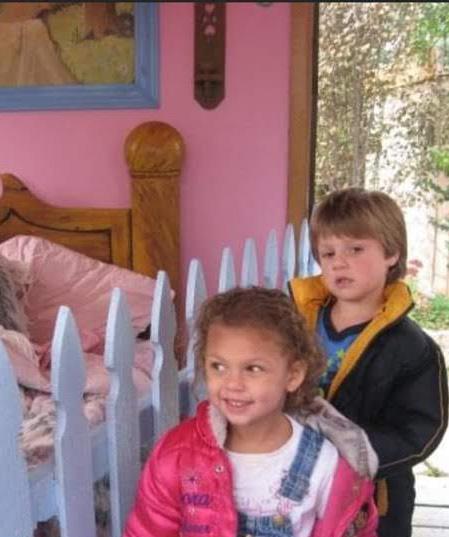
I could use school as a safe place to talk about my problems. It’s nice to have someone to listen, but sadly no one did. I was told to “suck it up.” Instead of keeping my pain private, some staff shared and discussed it publicly with others. The teachers talked about my personal life and struggles in front of others which led to me being bullied. Even through the bullying, I tried to see the positive side of it – learning the difference between a real and a fake friend. Some friends stuck by my side even after knowing I had some problems and that felt nice. I’ve shared one of those friends’ comments later in this article.
Looking back, if the adults I confided in had just listened or kept my personal info between me and them, I possibly wouldn’t have been bullied so much. I might also have learned how to keep bad people out of my life – the ones who don’t show it at first.
Dress Code – Grades 6-8
When I entered middle school, I walked into a school filled with so many kinds of kids. I was one among the mass of students in all shapes, sizes, and walks of life. It was easy to see who liked video games, clubs and/or sports by the way they dressed, acted, their friend groups, the way they talked, and the things they talked about. I was put into the “bad kids class” so I got along with the “outcasts” in a way. I noticed I was judged a lot in that group – not by classmates but by teachers. They thought we were all just the same. Just plain bad kids who enjoyed getting into trouble as our accomplishment. Teachers didn’t realize that we were like all other students – searching for who we are, where we belong, and then how to show how good we are at what we choose.
My reasons, however, were different. I had really bad depression. Which hurt – hurt a lot. But what hurt worse was seeing others who were hurting just as much as I was. I started to get into fights to protect my friends, not just physically but mentally too. I would report what was going on to teachers, staff, or anyone, but no one would help. We were told, ”Maybe, if you didn’t dress that way, other kids wouldn’t bully you and they’d run out of things to
Younger Tobias (left) and her older brother.
say. Or, "Well, don’t act like that, and they won’t bother you." And it probably doesn’t help your situation when you display that you are gay couples.” However, the one comment from a teacher that hurt the most was when I was told to “Just smile through it.” In other words, bottle it up. I exploded after that one. Then it was said, “See, it’s like I told you. These kids are all so aggressive.”
Now I think a lot about what my life could have been like if teachers had not grouped us all together and thought we were all the same. Maybe they could have seen our real issues. Maybe if we were not judged by our looks, I would have been able to feel better about myself.
Look in the Book –Grades 9-12
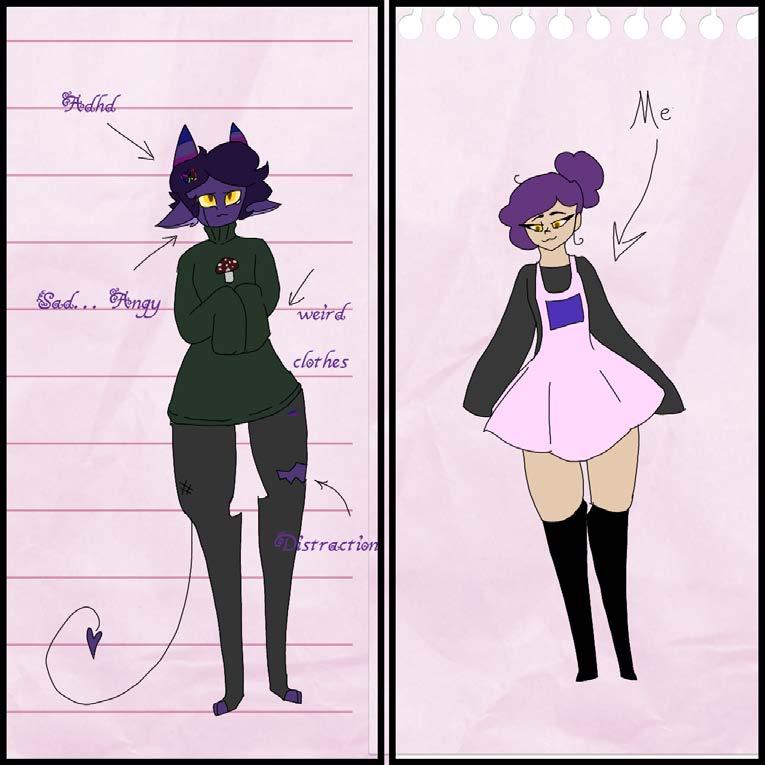
One day in a high school classroom, I sat in my chair, my head pounding. I had looked at the same problem for what seemed like hours. I had done everything the teacher told me to do. I bravely raised my hand and straightened up my posture. I didn’t dare look around to see the reaction my speaking had on the rest of the room or I would have lost my courage. “Yes, Tobias?” I turned around and spoke. “I don’t understand the question.” “NO! Really guys, we’ve been working on this for 3 days now,” was the abrupt and aggressive response I got from the teacher. The whole room turned and looked at me. Their eyes felt like stabs to my heart. I looked down, teardrops fell and hit my jeans. I thought – I can’t take this, I
can’t do this anymore. Their eyes were no longer watching. I couldn’t hear anyone. Everything was getting dark. I still had no idea how to complete the assignment. I had looked and looked in the book like I was directed to do every time I asked for help and it did nothing to help me. I learn differently. Why didn’t this teacher understand?
Sometimes the smallest, simplest thing to one person can be the biggest issue to someone else. After not being believed and not being believed in for so many years by so many people, some kids really believe they can’t do anything right. They lose hope that they have a real purpose in life and future, and without hope life can be a very dark place to live in. Some kids even end up taking their own lives. Just
Illustrations by Tobias, as she believes her teachers see her (left) and as she sees herself (right).
because the student is young, doesn’t mean they don’t already have traumas that are part of them and their life journey. Teachers may have no idea what the student has gone through, what distracts their thoughts, and how they process information and learn.
After Words
In bringing my essay to a close, I’d like to share some highlights from my interviews with other people, like me, who want to share their experiences with teachers. These were the questions I asked.
What are some of your memories looking back on your school experience K-12? Can you give teachers some feedback on some Dos and Don’ts when it comes to interacting with students and how it affected how you either succeed or failed?
A staff member lost his temper with me, sadly he did not apologize. Let me explain. I was doing work in class like I always do. It actually was my favorite class! I ended up having a question on an assignment. “Hey”, I said, “I don’t understand anything on this. Could you help me?” He got heavily frustrated with me because I didn’t understand the question. He told me to go back to my desk with a very aggravated tone, so I sat down and got out my other work for that class. He saw me doing this and he told me to leave at once, which hurt. I wasn’t doing anything wrong. I also was not doing well mentally and he wanted nothing to do with me. I feel if teachers took the time to understand what we are going through, or even helped us look through the book to break down the information when we learn differently, it would’ve helped so much more. I did have a para who was patient and that helped me through a lot of that. I’m very thankful he was there.
– Barbara, 12th grade student
I was born with ADHD. I was very skinny and scrawny so I got bullied quite a bit and teachers
I want teachers to be aware of the effect of their words and actions on students.
just seemed to ignore it. Teachers just seemed to say, “Act like a man.” Some teachers stood up against bullying but most just looked the other way and thought we’d know how to make it through. Back then ADHD was not talked about much. My teachers met with my mom and gave her a pamphlet and expected her to do something about it and that I was the only one. Teachers need to bring awareness to the issue and not ignore or turn their backs when kids are being mean.
– My Dad
It was so different back then. They paddled you back then. In Home Economics we were cooking and took some of the cookies. They showed us the paddle. They ignored the students who had problems and just passed them on. They had a dress code. Girls had to wear dresses. If you wore pants they would send them home.
– My Grandma
My experience is three-fold. As a student, I experienced both public and private schools. As a parent, I struggled alongside my children as they would often report things to me that happened at school that made them feel powerless, bullied, or unliked by teachers. Today, as a teacher, I try to not only observe and listen to my students and peer teachers but to also pay attention to which ones are most successful and why. I have experienced bullying and had both good and bad experiences with peers and teachers. I experienced many teachers and adults who have all the
power. Some used that power wisely and respectfully towards students and some did not. I had a teacher take me out into the hallway after I had repeatedly asked for my math assignments back so that I could study for a test. He showed me a large box of papers and told me that he did not have time to grade them all. This is the same teacher who I watched sit in his chair daily, talking about random subjects with students, and sending his favorites to get him coffee as he ate most of the day. I also felt powerless as a parent to help my children at school with both teacher and peer issues. The more involved I would get, trying to have meetings to problem solve or reporting issues to the counselor, the more my children would say the issues were getting worse and they would be told, “What are you going to do, run home and tell your mommy on me?” This caused my own children to distrust me as I was not able to help and protect them. I have tried as a teacher myself to not do the things I have been told are not helpful and to advocate for all students, create a fair and safe classroom feeling, and not let my ego or power trips get in the way.
– My Teacher

I hope that by sharing my journey, others with similar experiences can relate and find comfort. I also want teachers to know what it sometimes feels like to be in their classes. I want teachers to be aware of the effect of their words and actions on students.
Teachers, it is not that hard to just simply come out of your own stuff for a while to look, listen, and feel what your students are saying and try to find out what they really need from you. Get more specialized training in how to work with the kids who need special care and interventions. Learn how to
be aware of and look for signs and symptoms when kids need more than just being told to look in the book for help. You have the ability to make a positive difference in the lives of students; to help students to be successful in school and beyond. Isn’t that why you entered the profession?
Tobias Kreifels, Student,
La Vista, NE
Tobias today.
Trauma-Informed Active Shooter Drills
By Robin Ennis,
Antonis Katsiyannis, Ashley S. Virgin, Alex Carlson, and Denise Whitford
Photo courtesy of AdobeStock.com
School violence has become a common occurrence in America’s schools. According to the School Shooting Database, since 1999 in K-12 schools in the US 392 people have been killed, 1,119 have been injured, and 118 active shooter incidents have been reported (Center for Homeland Defense and Security [CHDS], 2022). Schools have responded to campus shootings and related school violence with increased security measures (e.g., school safety plans). School safety plans are now mandated by law in 43 states and of those 30 require that law enforcement agencies are involved in developing the plan (Education Commission of the States, 2021). Specific safety measures include
• controlling access to the school grounds and school buildings;
• requiring students, faculty, and staff to wear identification badges;
• using security cameras on the school campus
• placing school resource officers (SROs) in schools; and
• utilizing threat assessments and active shooter drills.
Active Shooter Drills
Active shooter procedures and drills have become almost universal in public schools. The purpose of such drills is to prepare staff and students to respond and protect themselves in the event of an armed intruder or active shooter emergency. Active shooter drills typically fall in one of two categories: with or without simulation aids. In an active shooter drill with simulation aids, students and staff can expect a realistic shooter scenario to play out within their school environment, up to and including the use of airsoft guns and bullets (National Association of School Psychologists [NASP] & National Association of School Resource Officers [NASRO], 2021). Other props or simulation aids used in active shooter drills include announcements made over the intercom within the school, the use of audio recordings of sounds of gunfire, and having an actor serve the role of the gunman. Active shooter drills without simulation aids include traditional approaches such as lockdowns, where the door is locked or
Students with a history of trauma and students with disabilities, such as autism spectrum disorders and emotional disturbances, may be traumatized by simulations with and without simulation aids.
secured, and students are moved out of sight and directed to remain quiet within the designated space (NASP & NASRO, 2021).
The lack of regulation regarding how these drills should be executed has allowed some school leaders to exercise extreme measures. Some schools have conducted active shooter drills without notifying school personnel. The schools then have actors portray active shooters and fire blank ammunitions from real guns. In such cases, there is the potential for the unintentional traumatization of both students and staff (Rygg, 2015). [See Ennis et al. (2022) for details on resulting case law related to concerns with the execution of active shooter drills.]
A Trauma-Informed Response
Many unintended consequences can be associated with extreme forms of active shooter drills. School officials should be deliberate in ensuring such drills are well planned, that involved individuals are informed in advance, and procedures are in place to address any mental health related concerns, particularly among students. Students with a history of trauma and students with disabilities, such as autism spectrum disorders and emotional disturbances, may be traumatized by simulations with and without
simulation aids. Researchers have suggested that adolescents who participated in an active shooter drill in high school experienced increased fear and risk perception and decreased feelings of school safety (Huskey & Connell, 2021).
The Best Practice Considerations for Armed Assailant Drills in Schools put forth by NASP and NASRO (2021), provides guidelines for consideration when conducting active shooter drills. These guidelines adhere to the main tenants of trauma-informed care:
• fostering an environment that promotes a feeling of safety for all individuals,
• developing a connection between care providers and those who have experienced trauma, and
• explicitly teaching strategies for managing emotions in complex situations (Bath, 2008).
Regarding developmental and mental health concerns, they recommend that staff seek to “inspire calm and confidence” in children during simulations. They also implore educators to consider students’ personalities, developmental levels, prior traumatic events, and special needs. Below we expand upon ideas for how all educators can support one another and their students at every stage of the active shooter drill.
Before the Drill
To best prepare staff for active shooter drills, schools should work collaboratively with law enforcement and
first responders to facilitate the best process possible and be aware of current best practices. Within the school, a school safety team should be formed to make sure all perspectives within the school are represented (i.e., administrator, school nurse, school counselor or psychologist, teachers, and parents). It is also important that all participants are informed of the approximate date and time of the drill, and what it will entail (e.g., with or without simulations; shelter in place or exit the building). Schools should also consider obtaining active consent from parents (guardians) and students prior to participation.
Schools should plan for the use of developmentally appropriate language, so as not to overly frighten younger students and students who are developmentally delayed. For these students, advanced planning, such as the development of social stories or other tools, may be necessary to help facilitate a dialogue with younger students, students with disabilities, and/or a history of trauma. Since active shooter drills take place within the traditional school day, supports provided should be aligned with the existing supports in a student’s IEP, so consider needed accommodations and modifications at the individual student level. For example, if a student receives the support of paraprofessionals, make sure they are present to help them navigate the drill. If a student has a visual schedule that follows them throughout the day, include the drill in the schedule.
During the Drill
Knowing what to do in an emergency can help combat fears and anxiety surrounding the potential for an active shooter event.
Knowing what to do in an emergency can help combat fears and anxiety surrounding the potential for an active shooter event. Therefore, as an alternative to simulation drills, schools should focus more on explicit training. One effective training method for responding in an active shooter situation can be found at alicetraining.com. The mnemonic ALICE is used to help individuals remember the appropriate steps for effective response in an active shooter situation: Alert, Lockdown, Inform, Counter, Evacuate (Navigate 360, 2021). ALICE can be used to train children and adults of all ages, with coloring pages available
on their website. School staff should be aware of any signs of psychological stress among their students and/or other staff, and follow-up accordingly. Similarly, the FBI has adopted a simplified tactic: run, hide, fight. Specific training videos on this approach are available online (Federal Bureau of Investigation Office of Partner Engagement, 2020).
After the Drill
After a drill or training exercise, it is important that teachers and other school staff debrief with students about their experiences and feelings. It should be emphasized that the likelihood of participating in an active shooter event is very low, but that we practice in order to be prepared, much like a fire or other emergency-preparedness drills. Staff should follow-up immediately with any students who showed signs of traumatic stress both during and after the drill such as those outlined by the National Child Traumatic Stress Network (2021):
Intense and ongoing emotional upset, depressive symptoms or anxiety, behavioral changes,
difficulties with self-regulation, problems relating to others or forming attachments, regression or loss of previously acquired skills, attention and academic difficulties, nightmares, difficulty sleeping and eating, and physical symptoms, such as aches and pains (p. 1).
If parents were not notified in advance or consent was not obtained, it is essential that school officials notify parents so that they too may look for potential signs of traumatic reactions and notify the school if observed. Documentation of active shooter drills is important so that the frequency is not excessive. In many states, it is required by law that schools document all types of school security drills (e.g., a log of dates/times/details of drills; Rygg, 2015).
Beyond the Drill
Outside of active shooter drills, there are a great number of practices that can help reduce threats to schools. As previously discussed, threat assessments should be conducted at all schools to make sure
that schools are secure throughout the day. Further, discussion-based preparation and explicit training can have benefits that exceed active simulations with and without simulation aids (NASP & NASRO, 2021). Huskey and Connell (2021) found a strong correlation between a positive school climate and decreased fears and risk perception as well as increased school safety, even for students who participated in active shooter drills.
School-wide approaches that improve school climate and utilize a trauma-informed response are necessary. For example, social emotional learning programs are associated with a reduction in school violence and should be used as a universal practice for response to and prevention of trauma (Belfield et al., 2015). Finally, the rate of firearm injuries and fatalities is a public health crisis in the United States (American Public Health Association, 2021). Consequently, legislative action is needed to reduce the threat of gun violence and allow for research on what practices are effective at reducing gun violence (Katsiyannis et al., 2018b).
Active shooters pose a real and present threat to public spaces in the United States, including schools. As such, active shooter drills may be needed to prepare students and staff. These drills should be conducted following trauma-informed approaches to facilitate the safety of everyone in schools.
References
American Public Health Association. (2021). Gun violence fact sheet.
Bath, H. (2008). The three pillars of trauma-informed care. Reclaiming Children and Youth, 17, 17-21.
Belfield, C. Bowden, A. B., Klapp, S., Levin, H., Shand, R., & Zander, S. (2015). The economic value of social and emotional learning. Journal of Benefit-Cost Analysis, 6, 508-544.
Education Commission of the States (2021). Fifty state comparison: K-12 school safety.
Ennis, R. P., Katsiyannis, A., Virgin, A., Carlson, A., & Whitford, D. (2022). Conducing active shooter drills: Legal considerations. Rethinking Behavior, 6, 43-46.
Federal Bureau of Investigation Office of Partner Engagement. (2020). Active shooter resources.
Huskey, M. G., & Connell, N. M. (2021). Preparation or provocation? Student perceptions of active shooter drills. Criminal Justice Policy Review, 32, 3-26.
Katsiyannis, A., Whitford, D. K., & Ennis, R. P. (2018b). Firearm violence across the lifespan: Relevance and theoretical impact on child and adolescent educational prospects. Journal of Child and Family Studies, 26, 1748-1762.
National Association of School Psychologists & National Association of School Resource Officers (2021). Best practice considerations for armed assailant drills in schools. Bethesda, MD: Author.
National Child Traumatic Stress Network. (2021). What is a traumatic event?
Navigate 360. (2021). Active shooter training and preparedness solutions with ALICE, www.alicetraining.com
Rygg, L. (2015). School Shooting Simulations: At what point does preparation become more harmful than helpful? Children's Legal Rights Journal, 35, 215.
Robin Parks Ennis, University of Alabama at Birmingham, rennis@uab.edu, Antonis Katsiyannis, Clemson University, antonis@clemson.edu, Ashley S. Virgin, University of Alabama, Alex Carlson, Clemson University, and Denise Whitford, Purdue University.
By Valerie C. Williams, Director,
This is the total number of disciplinary removals students with disabilities experienced over the 2019-20 school year. Each removal represents a child’s time away from their typical learning environment: time away from their teachers, their peers, and their friends. For many children with disabilities, particularly those who find comfort in routines, it can be an uprooting and distressing experience. It is hard for a child to learn when they are removed from their class.
And yet, these data are not an anomaly. In fact, the number of disciplinary removals for children with disabilities has remained fairly consistent over the last decade (see Previous Civil Rights Data Collection Reports). I mentioned in my last blog, Discipline Discussions: The Impact and Harm of Exclusionary Discipline, we can’t suspend our way to better behavior; we must take a more thoughtful, evidence-based approach.
In the Office of Special Education Programs’ (OSEP) recently released discipline guidance package, the U.S. Department of Education called on State and local leaders to double down on their efforts to reduce their reliance on exclusionary discipline practices. Too often, disciplinary removals are seen as a first response to addressing challenging behavior rather than a last resort.
Our school discipline policies reflect our priorities. Let me explain more.
Of course, every school and classroom must clearly convey behavioral expectations to its students. This allows for creating safe, predictable learning environments for students and educators. The systems we establish to address a child’s behavior reflect how we think about our children, their development and whether we prioritize understanding why a child behaves in a certain way so that we can address the root cause and work to prevent future challenges.
How we support the behavioral needs of our children reflect how we value our children as learners and our educators as professionals.
a framework of positive behavioral interventions and supports. Two OSEP-funded technical assistance centers focus on addressing the behavioral needs of children with disabilities: Center on Positive Behavioral Interventions & Supports (Center on PBIS) and National Center on Pyramid Model Interventions (NCPMI). I asked them to share about the power of preventative models of addressing the behavior of young children with disabilities (NCPMI) and school-aged children with disabilities (Center on PBIS).
As the data noted above show, a common response to addressing challenging behavior is to remove a child from their typical learning environment. While removal may be warranted in selected situations, particularly those related to safety, removal alone rarely provides us with the true remedy we are seeking: to support students’ behavioral needs and minimize or prevent challenging behaviors before they occur.
I have heard from many educators that they feel underprepared to address the behavioral needs of children. They lack access to evidence-based practices and exposure to school-wide approaches anchored in proactive prevention. As a result, they feel they have few “tools in their toolbox” to call upon when addressing challenging behavior. With a lack of alternatives, it’s no surprise that a punitive and reactionary response of removal is commonplace.
How we support the behavioral needs of our children reflect how we value our children as learners and our educators as professionals. Let me be perfectly clear, if we value our students and school staff, we must support their needs; this in turn creates a more positive school culture and environment. Let us all consider, as a system, how we can connect, collaborate and impact positive change for those whom we serve. Collectively, we have the knowledge and tools necessary to improve outcomes.
Thankfully, we have decades of OSEP-funded research that shows the powerful impact of shifting toward a proactive, preventative mindset and establishing
I hope the questions and responses below will support your own discipline discussions with colleagues and families. Click to view the responses from NCPMI and the Center on PBIS.
• What is a preventative model of addressing behavior? Is it effective?
• What advice do you have for educators who want to move toward a preventative model for addressing behavior?
• How can schools or early childhood programs begin to make a shift toward prevention using MTSS?
• For schools or early childhood programs already embracing MTSS, how should they check to ensure they are implementing with fidelity?
• How can schools and families work collaboratively to address the behavioral needs of a child?
Reprinted from the January 30, 2023 Office of Special Education and Rehabilitative Services Blog, U.S. Department of Education.
Valerie
C. Williams,
Director, Office of Special Education Programs, U.S. Department of Education

Self-Determination and Why it Matters
By Kristina N. Randall and Joseph B. Ryan
It is not uncommon for many students with disabilities including those with emotional disturbance and intellectual disabilities to exhibit high levels of challenging behaviors. These students’ social and academic achievement are often negatively impacted by their challenging behaviors. Students with behavioral challenges typically struggle with the use of social, self-regulation, and communication skills (Gardner et al., 2008), which tend to only intensify challenging behaviors. Fortunately, we know through research that enhancing self-determination skills in students with disabilities can positively influence social, academic, and post-school outcomes (Shogren et al., 2017), and that self-determination is a predictor of success for students with disabilities.
What is Self-Determination?
Self-determination (SD) refers to a person’s ability to make choices and manage their own life. While the concept of SD emerged during the 1940s along with the field of personality psychology, the importance and study of SD for students with disabilities was brought into focus during the 1970s and 1980s as researchers began to study how to best help those
Enhancing self-determination skills in students with disabilities can positively influence social, academic, and post-school outcomes.
with disabilities experience a “normal” life, to the maximum extent as their non-disabled peers. For students with disabilities, SD has proven to be a critical area of both intervention and support for increasing and developing adaptive behavior skills (e.g., following rules, making friends), as well as in improving post-school and life outcomes. SD is especially important for students with emotional and behavioral disorders (EBD) given research has demonstrated these students have limited knowledge of SD, confidence in the effectiveness of their SD efforts, and awareness that their SD deficits impede their behaviors and social relationships (Zirkus & Morgan, 2020). Hence, some researchers have argued that of all the
Intervention
Choice-Maker Series *
Self-Determination Curriculum
Focus
Choosing employment and personal goals, Self-directed IEP, Take Action: Making goals happen
Suggested Grades/Ages
Transition age
MAPS (The McGill Action Planning System) *
ME! *
NEXT Step ^
Person-Centered Employment Planning and Goal Setting *^ Citizen Centered Leadership, Secondary Transition
Person-centered planning
Self-awareness and self-advocacy
IEP/Transition procedures
Goal attainment and selfmonitoring
Post-Secondary Education Programs ^ Varies by the program– work experiences, career skills, socialization and extracurricular activities, independent living, academic enrichment
Project TEAM (Teens making Environment and Activity Modifications) *
Self-Advocacy Strategy *
Self-Determined Career Development Model *
Self-Determined Learning Model of Instruction *
Self-Monitoring Tools *
Whose Future Is It? *
Goal attainment and problem solving
Prepare for and participate in education or transition planning meetings
Goal attainment and problem solving
Goal attainment and IEP/ Transition process
Self-regulation skills
Transition planning process emphasizing student preferences, needs, and interests
Transition age – 14 years and older
Transition age
Transition age
All ages
Additional training and post-high school (18 years and up)
Teens and young adults
All ages
Anyone who wants to plan their career path
Transition Age (13 – 21 years)
All ages
Transition Age
Note. *Indicates free curricula and materials. ^Indicates paid curricula and materials.
disability categories students with EBD demonstrate the greatest need for SD assessment and instruction.
Students’ SD skills can be assessed by identifying and measuring behavior (e.g., choosing a favorite activ-
ity) or lack of behavior (e.g., deciding to not go to an activity) that is believed to show self-determined or self-determining behaviors. SD behaviors include autonomy, self-regulation, psychological empowerment, and self-realization (Wehmeyer et al., 1996).
Over the past quarter century there has been tremendous time and research focusing on the development of model strategies and practices to increase SD skills in students with disabilities. Activities to promote assertiveness, creativity, self-advocacy, and other skills associated with self-determination were identified resulting in a number of SD curriculums and programs being developed. Table 1 provides links to research or evidence-based SD programs. In addition to formal curriculums, there are many other ways teachers and families can help increase SD skills in children and youth.
Autonomy
When someone acts autonomously, they are acting in ways that correspond with their own personal preferences, abilities, or interests, without excessive pressure from others. Behavioral autonomy can be placed into the following categories: self and family care activities, self-management activities, recreational activities, and social or vocational activities. Self and family care include activities such as helping to choose and shop for items while grocery shopping, completing household chores, and making choices regarding personal care (such as what kind of shampoo to use). Students can demonstrate autonomy by choosing what extra-curricular or recreational activities they wish to participate in based on their personal preferences and interests. Also, social involvement and/or vocational activities show autonomous behaviors when they include the student’s personal preferences and interests.
Teachers and families can help students with disabilities practice and expand autonomy by ensuring that the student is involved in choice making. Increasing opportunities for students to make choices, allows them to practice making and displaying personal preference. Within school settings students should be given the opportunity to choose courses and extra-curricular activities and to be involved with the development of their annual IEP and transition plan. For example, during a yearly planning meeting for a middle-school aged student with EBD, they are given four choices of classes for which they can
register. The student shares that they do not want to take the computer or foreign language options, but would much rather take gym or art. The student’s preference should be heavily considered when placing them in classes. Another important area in which families and teachers can help students with disabilities show autonomy is their choice of vocation. While not all vocations may be appropriate for every student, personal interest should be considered to the maximum extent possible. For example, a student may want to be a doctor but reads independently on a 5th grade level and uses assistive technology to complete written work. For this student, exploring and gaining skills for other vocations that work within the medical field (e.g., patient care assistant, pharmacy technician, or nursing assistant) should be provided.
Self-Regulation
Self-regulation is a complex SD component that many students with disabilities struggle implementing. It includes a person’s ability to examine their environment while also taking into consideration their abilities, experiences, or responses for coping with the environment when deciding on how to act, evaluate the outcomes of their actions (both good or bad), and revise their plan as necessary. Self-regulated behaviors also show SD skills. Examples of self-regulated behaviors include self-management strategies (e.g., self-monitoring, self-evaluation, self-instruction), goal setting and attainment strategies, problem-solving behaviors, and “observational” learning strategies.
Teachers and families can take an active role in helping students with disabilities expand their self-regulation abilities in academic, functional, social, and emotional areas. Academic and functional activities that encourage self-regulation include planning, managing time, and higher-order thinking skills. Deep thinking into concepts and tasks provide students with the opportunity to practice self-regulation, but basic or remedial lessons may cause deficits in a student’s ability to self-regulate as they don’t require complex thinking. Teachers and families can
help support self-regulation by creating predictable routines, integrating supports, and focusing on individual goals. Additionally, teaching and using a model to approach tasks, along with strategic questioning, will help students build confidence in having control over their learning by being able to plan strategically and achieve positive outcomes. Teachers can help students with self-regulation through breathing exercises. Teachers can show students how to use “box breathing” using a 4 second count to calm down. Students inhale for 4 seconds, hold their breath for the same count, exhale for 4 seconds, and then hold for the same duration. Students should practice taking 10 breaths to help them calm down whenever they become upset.
Self-regulated strategy development (SRSD) is a well-researched strategy that can be used across
content and functional areas. But SRSD is often found in writing instruction - an area that students with EBD struggle with greatly. SRSD with writing often involves teaching students a mnemonic that is used to help support planning, drafting, editing, and revising pieces of writing. SRSD also integrates goal setting and completion tools. SRSD can be used in other areas and is often used in self-managing task completion. For example, a student is given a dry-erase marker and a laminated daily schedule, listing each class period and areas to add homework, projects, and upcoming tests. As the student proceeds through their day, they use the marker to indicate each scheduled class they attend and add any corresponding work. At the end of the day the student and teacher or parent look at the schedule and what the student wrote throughout the day to determine what work will
Activities to Increase Self-Determination
and Thought-Based Self-Determination Domains Autonomy Personal Preferences Self-Regulation Changing your behavior to attain a specific outcome Psychological Empowerment
Belief that you control your actions and thus the outcomes Self-Realization Understanding yourself and capitalizing on that knowledge
Activities to Increase and Practice Self-Determination
Choosing recreational and social activities Goal Setting and Attainment Volunteering for a Cause Identifying individual strengths and weaknesses
Choosing vocational positions Self-monitoring Developing different skills Knowing how to overcome limitations
Self-care activities (choosing clothing, hair style, etc.)
Note. *Indicates activities and practices that impacts all four self-determination domains
need to be completed that night and over the upcoming days. Self-regulation and self-monitoring strategies are also often used in the commonly implemented Check-In, Check-Out intervention.
Psychological Empowerment
Both autonomy and self-regulation are SD skills that are action-oriented, meaning teachers and families can “see” their students practicing these skills. However, the next two domains focus on how a person thinks and their perceptions. Psychological empowerment is the belief that an individual can control their personal matters. That is, individuals have the skills and abilities that when applied will enable them to achieve a desired outcome (Zimmerman, 1995). Students who initiate and respond to events in a psychologically empowered manner demonstrate SD. It is important to understand that empowerment does not necessarily mean an individual will make the best choice, but rather that they know that they have the power to choose. As psychological empowerment is a student’s personal perceptions and beliefs, it is up to teachers and parents to provide opportunities for students to be self-efficient and control their own courses of action. Students should be given opportunities for making autonomous choices, while being involved in discussions about potential outcomes to increase their thoughts and perceptions of being in control.
Another way to increase psychological empowerment is through collective action. Parents and teachers can encourage students with disabilities to participate with a cause in which they may feel connected. Including students in goal setting (both academic or personal) such as taking an active role in their own IEP or transition meeting, can encourage and build psychological beliefs. For example, at an annual IEP transition meeting, the student shares that they would like to explore different medical careers. Together, the IEP team develops an annual goal focusing on exploring different careers in the field of medicine (e.g., phlebotomy, assisted living). Throughout the school year the student spends time
each week researching different medical careers and focuses on Personal Care Assistant (PCA). At their next IEP transition meeting, the student shares all they have learned and informs the IEP team that they would like to pursue a career as a PCA. The student states that they would like to now begin exploring different PCA training options. The IEP team agrees, and a new annual goal is developed. Through this process, the student is connecting their actions to outcomes, which in turn enhances feelings of control and self-efficacy, both of which increase beliefs of psychological empowerment.
Self-Realization
Self-realization occurs when a person achieves the full development of their abilities and talents. When people act in a self-realizing or self-aware manner, they demonstrate SD. Self-realization requires a student to have a good understanding of themselves including their strengths and limitations, and then act in a way that utilizes this knowledge. Self-realization includes having both self-knowledge and self-understanding. Self-knowledge develops through experience with and understanding of a person’s environment, and can be affected by evaluating other environments, reinforcements, and causes of specific behavior (Wehmeyer & Garner, 2003). For example, a student may recognize that when they are in a very loud environment, such as gym class, they typically get very anxious and as a result become physically aggressive. With this self-knowledge, the student can explain the situation to the gym teacher to see if they could take a break or wear ear plugs during class.
Like psychological empowerment, self-realization is a SD domain that is primarily a thought-based belief. However, families and teachers can still help increase and build a student’s understanding of self. For instance, there are several SD curriculums (see Table 1) which include lessons focused on topics such as self-understanding and knowledge, identifying individual strengths, limitations, and supports. Families and teachers can employ the use of various strengthbased assessments (often free) to help students
explore personal strengths and limitations. Parents and teachers can also ensure that the student receives instruction in how to self-advocate for accommodations or modifications that can help them learn and access their academic and work environments. For example, through various self-reflection and discovery activities, a high school student discovers that they often need questions repeated to comprehend what is being asked due to difficulties they have with auditory processing and short-term working memory. The student shares that when questions are written down for them to reread, they are more successful in responding. The student approaches a teacher and explains their difficulties with auditory processing and short-term working memory, so an accommodation is included in their IEP that questions be presented in a visual format. The student shares that this helps them to be more successful in schoolwork. Through the self-advocacy process, the student develops a greater sense of self-awareness and self-realization.
While students with disabilities are more likely to develop challenging behaviors that can impact their
In addition to formal curriculums, there are many other ways teachers and families can help increase SD skills in children and youth.
ability to achieve academically and develop social relationships, research has shown that teaching self-determination (SD) skills has been directly linked to more positive academic and post-school outcomes (Shogren et al., 2017). Increased SD skills also impacts higher quality of life and higher levels of life satisfaction for individuals with disabilities (Schalock, 2005; Shogren et al., 2015). Due to all the positive outcomes that increased SD skills have for students with disabilities, parents and teachers should en-
Resources for Increasing Self-Determination
Autonomy Self-Regulation Psychological Empowerment
Autonomy activities for preschoolers
Developing responsible and autonomous learners
Encouraging learner autonomy webinar
Autonomy Supportive Parenting
Self-Regulated StrategyDevelopment writing practice
Go 4 It! SRSD writing strategy
Teaching self-regulation skills
How to teach selfregulation
Promoting self-regulation in the first 5 years
Books on All Domains of Self-Determination
Teaching to Empower book
Classroom strategies for empowering students
Psychological Empowerment in the work place
Ways to empower youth through social-emotional learning
Self-Realization
The Arizona Department of Education Padlet: links to various self-realization measures
Building self-awareness activities
Self-awareness in the classroom
Self-awareness and self-management for students
Self Determination: Instructional and Assessment Strategies by Michael Wehmeyer and Sharon Field
Theory in Self-Determination: Foundations for Educational Practice by Michael Wehmeyer and colleagues
sure that student educational programs include an emphasis on the development of skills among the different SD domains.
References
Gardner, T. W., Dishion, T.J., & Connell, A. M. (2008). Adolescent self-regulation as resilience: Resistance to antisocial behavior within the deviant peer context. Journal of Abnormal Student Psychology, 36, 273-284.
Schalock, R. L. (2005). Introduction and Overview of the Special Issues on Quality of Life. Journal of Intellectual Disability Research, 49(10), 695-698.
Shogren, K. A., Villarreal, M. G., Lang, K., & Seo, H. (2017). Mediating role of self-determination constructs in explaining the relationship between school factors and postschool outcomes. Exceptional Students, 83(2), 165-180.
Shogren, K. A., Wehmeyer, M. L., Paler, S. B., Rifenbark, G. G., & Little, T. D. (2015). Relationships between self-determination and postschool outcomes for youth with disabilities. The Journal of Special Education, 48(4), 256-267.
Wehmeyer, M. L., & Garner, N. W. (2003). The impact of personal characteristics of people with intellection and developmental disability on self-determination and autonomous functioning. Journal of Applied Research in Intellectual Disabilities, 16, 255-265.
Wehmeyer, M. L., Kelchner, K., & Richards, S. (1996). Essential characteristics of self determined behavior of individuals with mental retardation. American Journal on Mental Retardation, 100(6), 632-642.
Wehmeyer, M. L., Palmer, S. B., Shogren, K., Williams-Diehm, K., & Soukup, J. (2013). Establishing a causal relationship between interventions to promote self-determination and enhanced student self-determination Journal of Special Education, 46(4), 195–210.
Zimmerman, M. A. (1995). Psychological empowerment: Issues and illustrations American Journal of Community Psychology, 23(5), 581-599.
Zirkus, K. J., & Morgan, J. J. (2020). Enhancing Self-Determination Skills for Students With Emotional and Behavioral Disorders. Intervention in School and Clinic, 55(4), 238–244.
Kristina N. Randall, Assistant Clinical Professor, knranda@clemson.edu and Joseph B. Ryan, Ph.D., Professor, jbryan@clemson.edu, Clemson University, Clemson, SC.
How Educators and Families Can Maximize Engagement
By Paloma Pérez and Kathleen Lynne Lane

It is estimated that at least 1 in 5 children and youth struggle with patterns of behavior associated with emotional and behavioral disorders (EBD) at some point in their lives. Such behaviors include uncontrolled (e.g., aggression, noncompliance) and overcontrolled (e.g., anxious, socially withdrawn) behaviors. These challenges include misbehavior and disengagement which can impede a student’s learning progress whether at home or at school.
In recent years, there has been abrupt and massive shifts in learning environments with in-person, remote learning, and combinations of those (hybrid instruction). Researchers and practitioners can assist not only educators, but also families, in learning to use practical, feasible strategies to support engagement. These “low-intensity” strategies may limit disruption to promote engagement, learning, and positive experiences in both school and home settings (Lane et al., 2023).
In this article, we feature three practical and effective strategies for educators to implement at school, but also to share with families for use in learning at home. These are behavior-specific praise, precorrection, and choice. We provide resources for educators at school, and resources educators can share with families to help them understand and use these strategies. Many of these training materials are also available for Spanish speaking families. In our context, “families” refers to parents, older siblings, or other care givers who supervise students in home learning situations. Ideally the strategies implemented by educators in school would be adaptable to these home settings, creating opportunities to be successful, regardless of the learning situation.
Behavior-Specific Praise
Behavior-specific praise is a strategy that can be used to reinforce skills and expected behavior to promote their future occurrence. It can also be paired with tickets for reinforcement, which may be used in schools as part of their Tier 1, universal reinforcement system, or rather how faculty and staff acknowledge students’ expected behavior.
Behavior-specific praise is used to teach new behaviors and reinforce expected or desired behaviors and is different than general praise like “thank you” and “great job!” One example of behavior-specific praise would be, “Ana, thank you for washing your hands as soon as you came into class.”
Behavior-specific praise can be used with all students in a classroom, with some students who need additional support, and even with a few students who need individualized and intensive supports. Additionally, behavior-specific praise is a key strategy to reinforce and promote positive behaviors, as well as prevent challenges from occurring at home and school.
Precorrection
Precorrection refers to reminding students of expected behaviors, and it is a proactive strategy that can be used by adults during predictable times when youth may need more guidance and support. Educators and families can shift from responding to challenging behavior with negative consequences from preventing challenges by reminding students of expectations before a new activity starts.
Steps for Behavior-Specific Praise
1 Evaluate current rates of general and behavior-specific praise. Reflect on your current use of general “good job” and behavior specific praise “I see that you cleaned your room today!”
2 Identify behaviors to reinforce. Identify the behaviors you would like your child to do more of in the future.
3 Practice delivery behavior-specific praise. Practice giving behavior specific praise.
4 Observe student behavior. Notice your child’s behavior throughout the day.
5 Provide behavior-specific praise. Provide behavior specific praise when you notice desired behavior.
6 Monitor behavior-specific praise delivery. Make a mental note of how often you are giving behavior specific praise throughout the day.
7 Seek student input. Ask your child what they think about receiving behavior specific praise from you.
Source: www.ci3t.org/pl and www.ci3t.org/COVID
For Educators
Steps for Precorrection
For Families
1 Identify context and anticipated behaviors. Identify a time during the day or a specific activity when your child tends to need more of your direction or supervision.
2 Determine the expected behaviors.
3 Adjust the environment.
4 Provide opportunities for behavioral rehearsal.
5 Provide strong reinforcement to students engaging in expected behavior.
6 Develop a prompting plan to remind students about the expected behavior.
7 Develop a monitoring plan to determine the effectiveness of the precorrection plan.
8 Offer students an opportunity to give feedback on this strategy.
Source: www.ci3t.org/pl and www.ci3t.org/COVID
One way to use precorrection is to remind a student to put their phone away and in silence before class, or at home reminding a child to leave their phone on the charger before coming to the dinner table. A teacher might remind students of expected behavior before heading to the cafeteria, the gym for an assembly, or their small group to work on a project. Precorrection is also a way to help prepare students to be successful and prompt them proactively, instead of only pointing out when they do not meet expectations. It is important to reflect and consider the most needed times for the use of precorrection.
Choice
A third low-intensity strategy is providing choices. Offering students a few feasible choices is effective not only for maximizing engagement, but also fostering self-determined behaviors such as decision-making
Determine the expected behavior you would like to see from your child.
Check the space to see if the environment needs some adjustments to set the stage for the desired behavior to occur.
Provide opportunities for your child to practice the desired behaviors.
Acknowledge your child when they engage in the expected behaviors.
Develop a plan to remind your child about the expected behavior before they begin the activity or enter the location.
Watch to see how your child responds when you “precorrect” to see if it is helpful.
Ask your child what they think about “precorrection.” Is it helping them have a more positive day?
in youth (Royer et al., 2017). Giving choice can give students at school and youth at home some control over their daily activities which is important to build intrinsic motivation (Lane & Menzies, 2011). Additionally, offering choices is one way to prevent future problems because all choices offered by the educator or parent would already be acceptable and pre-planned.
Supporting Students in Everyday Settings
Educators and families can use strategies that are easily adaptable and flexible for use in different settings to support students and youth as they navigate life. The same procedures for teaching expected behaviors, recognizing and reinforcing behaviors, being proactive, and responding respectfully when challenges occur can be used both at home and in
Steps for Choice
For Educators For Families
1 Determine which type of choices you would feel comfortable offering to students in your classroom and create a menu of choices.
2 Use the menu to determine which type of choices to add to a particular lesson.
3 After choice is built into the lesson, offer the established choices.
4 Ask the student to make his or her choice.
Determine what types of choices you would feel comfortable offering to your child during various settings or activities throughout the day and create a menu of choices.
Use the menu to select the choices to offer each day.
After you have made your “choice menu,” offer these choices to your child during the identified setting or activity.
Ask your child to make their choice.
5 Provide wait time for the student to select their choice. Provide wait time for your child to select their choice.
6 Listen to (or observe) the student’s response.
7 Prompt the student to make a choice from one of the available options if the student has not made a choice within the time allotted.
8 Reinforce the student’s choice, providing them with the option they selected.
9 Offer students an opportunity to give feedback on the choice they selected.
Source: www.ci3t.org/pl and www.ci3t.org/COVID
Listen to (or observe) your child’s response.
Remind your child to make a choice from one of the available options if they have not made a choice within the time you gave them.
Praise whatever choice your child makes and provide them with the option they chose.
Offer your child a chance to give feedback on the choice they made.
school. The table below hosts resources provided on www.ci3t.org, designed for use within and beyond tiered systems of support. Educators can use these strategies in school contexts and also share with families to learn and implement behavior-specific praise, choice, and precorrection. These resources include steps, examples, infographics, and videos to illustrate the use of these three low-intensity strategies to support engagement and minimize challenges across settings in school and at home learning remotely and with family.
Educators can share resources to implement low-intensity strategies at home in a variety of ways: email,
texts, newsletters, website posts, back to school nights, and even through regular mail. Resources can be downloaded, printed, or hyperlinked and shared with the goal of creating positive, productive school and home partnerships to facilitate students’ success- especially when engaged in remote learning. For example, it might be helpful for educators to communicate which strategies are effective in the classroom such as providing instructional choices, and then collaborating with families to explore offering choices at home (e.g., would you like to set the table for dinner, or clear the table when dinner is over?).
Resources for Educators
Resources for Families
Recursos para Familias - En español:
Behavior-Specific Praise Precorrection Choice
• Powerpoint Presentation
• Virtual Implementation Checklist
• Infographic
• Video
• Checklist
• Infographic
• Video
• Guia paso a paso
• Infografi
Source: www.ci3t.org/pl and www.ci3t.org/COVID
• Powerpoint Presentation
• Virtual Implementation Checklist
• Infographic
• Video
• Checklist
• Infographic
• Guia paso a paso
• Infografi
Consider scheduling times and methods for meeting with families. For example, if in person meetings are difficult to schedule, considering meeting virtually (e.g., using Zoom) or connecting on the phone using FaceTime. Flexibility is the key! Educators can find ways to share key strategies for parents to improve their child’s home learning.
The three low-intensity strategies of behavior-specific praise, precorrection, and choice require low effort to implement, and may be equally useful to both educators and families to promote positive behaviors and limit disruptive behaviors. These strategies implemented by educators can also be used by families to support student engagement while learning remotely at home and other positive behaviors. When educators and families partner to combine efforts to support students, students are given more opportunities to extend and generalize their learning by making real-life connections with others.
References
Comprehensive, Integrated Three-tiered Models of Prevention (Ci3T). https://www.ci3t.org/
Lane, K. L., Oakes, W. P., & Menzies, H. M. (2023). Using low-intensity strategies to support engagement: Practical applications in remote learning environments for teachers and families. Preventing School Failure.
• PowerPoint Presentation
• Virtual Implementation Checklist
• Infographic
• Video
• Checklist
• Infographic
• Guia paso a paso
• Infografi
Menzies, H. M. & Lane, K. L. (2011). Using self-regulation strategies and functional assessment-based interventions to provide academic and behavioral support to students at risk within three-tiered models of prevention, Preventing School Failure, 55 (4)
Royer, D. J., Lane, K. L., Cantwell, E. D., & Messenger, M. (2017). A systematic review of the evidence base for instructional choice in k-12 settings. Behavioral Disorders, 42(3), 89-1
Royer, D. J., Lane, K. L., Dunlap, K. D., & Ennis, R. P. (2019). A systematic review of teacher-delivered behavior-specific praise on k-12 student performance Remedial and Special Education, 40(2), 112-128.
Paloma Pérez, KU RITE Scholar, pperez@ku.edu, and Kathleen Lynne Lane, Distinguished Professor and Associate Vice Chancellor for Research, k923l138@ ku.edu, University of Kansas.

Telling Isn’t Teaching –Saying Isn’t Doing!
By Regina M. Oliver Stiehm
Igrew up in a small town in Massachusetts where Vermont and New Hampshire meet the border, so downhill skiing was a common pastime. I’m not sure how I managed to escape participating in this pastime until I was in my late teens but I did, until some friends asked me to go skiing with them. So, I hopped in the car with them and headed to the mountain.
Because I had never skied before, on the way to the ski resort they gave me instructions. “Remember, put your weight on the downhill ski. Be careful not to get your poles stuck in the snow. Turn your skis together to the inside in a ‘snowplow’ to slow or stop.” When I got to the ski resort I even had models to watch and learn from.
I strapped on my skis and went up to the top of the bunny slope using the J hook. When I got to the top, I froze. I didn’t know what to do as angry skiers were passing me by and commenting on how I was blocking the way. The slope was short but steep and there was some ice. I eventually made it down, mostly on my bottom. I bid my friends farewell and said I would be inside the lodge drinking hot cocoa. I haven’t been skiing since.
So why couldn’t I ski? I was told how to ski and even had models to watch and learn from? If you asked me how to ski I could repeat to you all of the instructions I had received. “Remember, put your weight on the downhill ski. Be careful not to get your poles stuck in the snow. Turn your skis together Photo courtesy of AdobeStock.com
to the inside in a ‘snowplow’ to slow or stop.” Yet I couldn’t ski. It’s because telling isn’t teaching and saying isn’t doing.
Yet we do the same thing to students all the time. We provide instruction on how to behave, problem solve, and handle difficult situations with peers. We have them repeat what they would do or say in various situations. We may even role play with them. Yet when we send them out to the playground, or the basketball court, or in the classroom in cooperative learning groups, they are not able to perform those skills. When we go to correct them, we ask what they should have done differently and 9 times out of 10 they tell us exactly what they should have done differently.
Every task we ask students to do has three parts.
First, do they have the skills to perform the task and are they fluent with it? I certainly did not have the skills to ski nor did I have any opportunity to practice to fluency. If a student does not have the skill, we need to teach it explicitly and provide multiple opportunities to practice in real life situations.
Second, do they have the behaviors necessary to organize and implement the task? Think about our students with ADHD. They may have the academic skills necessary to complete an assignment but may not be able to organize themselves in a way to successfully implement the task.
Third, consider social-emotional learning. How does the student engage in the task or can they engage in it when they don’t want to? Students who are disregulated or who have not come into contact with reinforcement for successfully completing the task may not have the social/emotional skills to engage in the task even though they have the ability to do so. All of these things factor into whether or not a student can or will perform a task. A student may know that they should walk away from a fight, but if they feel threatened and don’t have the self-regulation skills to do so, they won’t be able to perform the task of walking away.
If a student does not have the skill, we need to teach it explicitly and provide multiple opportunities to practice in real life situations.
Where does reinforcement fit into all of this? Reinforcement is necessary but not sufficient to teach a student a new skill or to expect that a student will be able to perform a task when they do not have the necessary organization or social/emotional regulation to do it in the actual context. By the way, I didn’t ski that day with my friends because I didn’t want to ski or was being noncompliant. In fact, you could have offered me a brand, new BMW X5 if I went to the top of the mountain and skied down, but I still couldn’t have done it. Yet we expect providing some type of reinforcement alone will be enough to change student behavior. Think of how frustrating that would be to a kid that really wants to achieve that goal, but doesn’t have the skills to get there.
When students are asked to do something above their skill level, there will be a behavior and a social-emotional reaction that is proportional to the discrepancy between their current skill level and the skill level they are being asked to perform. As an adult, we can get up and walk out like I did that day, heading to the ski lodge. But kids are told they can’t, so we see behaviors and social-emotional reactions that may lead to walking out with subsequent punitive consequences. We need to give kids the option of saying “I can’t do this right now” without shame or embarrassment. We need to change our lens with how we view student behavior and how we need to teach behavior and social/ emotional regulation skills.
Now Think
Think about a child you know - the one who has been so difficult . . . the one who has faced traumatic experiences or lives in chronic poverty, . . . the one whose parent is incarcerated or close family member has passed . . . the child who is a victim of abuse or neglect and a witness of domestic violence or any other kind of toxic stress.
Do you have that student in mind?
What are the expectations that are put on that child on a daily basis?
What skills does this child have or lack, and do they have the social-emotional skills to perform the tasks we ask of them?
Do we expect that telling them how they should behave or react will be enough to see changes in their behavior?
Are we considering all that needs to go into teaching this student to navigate a world where their brain perceives every little negative interaction or correction as a threat?
Keep this student in mind as you plan and deliver instruction, as you work to strengthen your skills and student progress, and as you connect with your students . . . even the most difficult ones. You already have the most important thing that impacts students – your big heart that shows up every day, building positive relationships with your students.
Regina M. Oliver Stiehm, School Psychologist, MTSS Coordinator/School Psychologist, Beatrice, NE, roliver@esu5.org

Photo courtesy of
41 States Sue Meta Over the Social Media Giant’s Impact on Kids
By Alyson Klein and Arianna Prothero
Reprint from Education Week, October 24, 2023

Thirty-three states are banding together to sue Meta, the company behind Facebook and Instagram, saying the social media giant is consciously harming children’s mental health. An additional eight states, plus the District of Columbia, are filing suits in their own states over similar issues.
The broader lawsuit, filed by a bipartisan coalition of 33 state attorneys general in California’s federal court, also claims that the company shares data about children under 13 without their parents’ consent, in violation of federal privacy laws.
Meta disagreed with their contention and said states should be working to craft standards for platform use by young people. But the language in the lawsuit from the 33 states made a strong case against the social media company.
“Meta has harnessed powerful and unprecedented technologies to entice, engage, and ultimately ensnare youth and teens. Its motive is profit, and in seeking to maximize its financial gains, Meta has repeatedly misled the public about the substantial dangers of its social media platforms,” the complaint from the 33 states says. “It has concealed the ways in which these platforms exploit and manipulate its most vulnerable consumers: teenagers and children."
The broader lawsuit alleges that the company is exploiting young people’s vulnerabilities by developing algorithms intended to keep users on the platform as long as possible, even compulsively; creating visual filters it knows can contribute to body dysmorphia; and presenting content in an “infinite scroll” format that makes it hard for children to disengage.
In a statement, Meta said it shares “the attorneys general’s commitment to providing teens with safe, positive experiences online, and have already
introduced over 30 tools to support teens and their families,” including regular reminders encouraging teens to take breaks from platforms like Instagram. But the company added that it is “disappointed that instead of working productively with companies across the industry to create clear, age-appropriate standards for the many apps teens use, the attorneys general have chosen this path.”
Educators have raised alarms over how social media use negatively impacts kids’ mental health – and ability to learn – for several years. In 2023, several school districts took the extraordinary step of suing Meta and other social media companies over the harm their products allegedly cause.
Schools ‘deal with the consequences all day, every day’
Educators should cheer the states’ legal action, said Jim Steyer, the founder of Common Sense Media, a nonprofit that focuses on the impact of technology on youth.
“The majority of attorneys general in the United States might be taking a stand against Meta’s harmful and addictive design practices,” Steyer said in an
interview. “But teachers and principals and district leaders deal with the consequences of that all day, every day.”
Any financial gain to states stemming from the lawsuits should be spent on investing “far more resources” into schools and mental health services, he said.
Educators have spent an increasing amount of their time thinking about what students are looking at online and how it may be impacting them emotionally, said Chrissie Masi, an education technology specialist in Morris school district in New Jersey, addressing the impact of social media on students in her district and not the lawsuits specifically.
“For someone who is a director of tech, this is the stuff that keeps you up at night,” she said. “You always have that in the back of your head, ‘are our kids making positive virtual choices?’” Her district has put a heavy focus on digital citizenship, helping students find a “digital balance” and learn how to communicate with one another in person, without the aid of devices, she said.
A little more than half of U.S. teenagers – 51 percent – report spending at least four hours a day on social media apps, including YouTube, TikTok, Instagram,
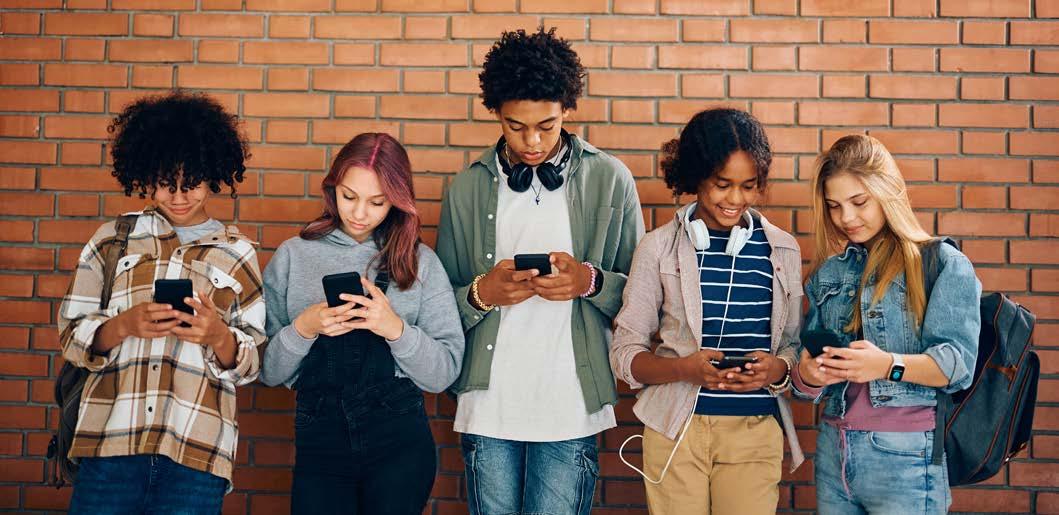
Facebook, and X (formerly Twitter), according to a recent Gallup survey of more than 1,500 adolescents. That amounts to 4.8 hours per day for the average teen across the seven social media platforms examined in the survey, the company reported.
Steyer argues that Meta is the “biggest offender” when it comes to ignoring evidence of its platforms’ impact on youth mental health. But he believes the sweeping legal action will put other companies on notice.
“This is a warning shot across the bow,” Steyer said.
Thousands of pages of documents released in 2021 by a whistleblower show Meta conducted extensive research on the negative impact of its platforms on children’s mental health and the spread of false information, but failed to act on any of those findings.
‘It’s
just like cigarettes’
The company ignored those findings, Frances Haugen, the whistleblower, a former Facebook product manager, said in testifying before Congress in October of that year.
“Facebook understands that if they want to continue to grow, they have to find new users, they have
to make sure that that next generation is just as engaged on Instagram as the current one,” Haugen said. “And the way they’ll do that is by making sure that children establish habits before they have good self-regulation … It’s just like cigarettes. [Teenagers] say they feel bad when they use Instagram but can’t stop.”
What’s more, in May, U.S. Surgeon General Vivek Murthy warned that social media poses serious potential risk to children’s mental health.
“We do not have enough evidence to conclude that social media is sufficiently safe for our kids,” Murthy said in an opinion piece published in The Washington Post. “In fact, there is increasing evidence that social media use during adolescence – a critical stage of brain development – is associated with harm to mental health and well-being.”
Arizona, California, Colorado, Connecticut, Delaware, Georgia, Hawaii, Idaho, Illinois, Indiana, Kansas, Kentucky, Louisiana, Maine, Maryland, Michigan, Minnesota, Missouri, Nebraska, New Jersey, New York, North Carolina, North Dakota, Ohio, Oregon, Pennsylvania, Rhode Island, South Carolina, South Dakota,
Resources for Educators and Families
These resources can help teachers, special education teachers, and families better understand the impact of social media on children’s mental health and provide strategies for responsible and safe usage.
Common Sense Media. Common Sense Media provides resources, reviews, and recommendations for parents and educators on managing children’s media use, including social media. Their website offers guides, articles, and reviews of apps and games.
National PTA. The National PTA offers resources for parents, including guidance on managing children’s online activities and promoting digital citizenship.
Gallup’s Research on Teens and Social Media: Gallup periodically conducts surveys on teenagers’ social media use and its impact. Educators and parents can find valuable insights and data from these surveys.
US Surgeon General’s Warnings: Parents and educators can access information and recommendations from the US Surgeon General regarding children’s use of social media and its impact on mental health.
Check with your school regarding their technology use policies and practices.
Resource list created by Jennifer Bossow, MA, BCBA, Educational Technology Support Specialist, Albuquerque Public Schools, bossow@aps.edu
Virginia, Washington, West Virginia, and Wisconsin have joined the broader lawsuit filed in California’s federal court, according to James’ statement.
Florida, Massachusetts, Mississippi, New Hampshire, Oklahoma, Tennessee, Utah, Vermont, and the District of Columbia, filed similar action in their own state courts.
Track record of district lawsuits
This isn’t the first time Meta has faced legal action for its impact on student mental health. Several school districts across the country have sued Meta and other major social media companies, claiming their products are designed to be addictive, have been marketed to children, and are eroding students’ mental health.
Schools have been left to cover the growing costs of increased mental health problems among students, such as hiring additional personnel to manage the academic fallout from students who are anxious or depressed and are struggling to learn in school.
Seattle Public schools was the first to file such a lawsuit in January, and since then districts across the country have initiated their own, several of which have been consolidated into one lawsuit.
In Seattle’s case, the district claims that the number of students in the school system reporting that they feel “so sad or hopeless almost every day for two weeks or more in a row that they stopped doing some usual activities” has risen 30 percent in the decade since 2009. Around that same year was the beginning of the rise of widespread student access to smartphones and social media. King County, where the Seattle district is located, has seen an increase in suicides, attempted suicides, and mental health emergency room-related visits among school-age children, the lawsuit says. The district is asking for the social media companies named in its suit to pay for damages as well as preventative education and treatment for problematic social media use, among other remedies.
The flurry of lawsuits echoes a pre-pandemic push by districts to use the courts to push the manufacturers of e-cigarettes to pay for the money districts spent on counseling, treatment, and smoking prevention programs among teens. In some cases, the same attorneys who represented school districts in their e-cigarette lawsuits are working with them to sue social media companies.
Even though Seattle’s lawsuit cites a large body of research that has found social media is hard on children and adolescents’ mental health, it’s hard to draw a direct line from social media use to the worsening youth mental health crisis when so many other factors could be at play, say legal experts.
The chance that these district-led lawsuits against social media companies will culminate in a legal victory is slim, say legal experts, but the lawsuits will have the effect of raising awareness of the crisis schools and youth are facing.
State legislatures have also been proposing laws to curb youth social media use, with Arkansas and Utah passing laws requiring social media companies to verify users’ ages and get parental consent before allowing minors to set up profiles on their platforms. Two similar federal bills have been proposed in the U.S. Senate.
Alyson Klein, Assistant Editor, Education Week, aklein@educationweek.org, and Arianna Prothero, covers technology, student well-being, and the intersection of the two, Education Week, aprothero@ educationweek.org
Copyright Education Week. October 24, 2023
MEDIA
Books
The Teachers: A Year Inside America's Most Vulnerable, Important Profession Review by James M. Kauffman
Robbins is not only a journalist and a gifted writer but a teacher. She knows people, children, and schools.
In The Teachers: A Year Inside America’s Most Vulnerable, Important Profession (2023), Alexandra Robbins tells the stories of many teachers but concentrates on three, including Miguel Garcia, a sensitive, talented middle school special education teacher who faces enormous challenges and sometimes abuse from his students as well as from the education system. Because of his dedication to his students he has too little time to spend with his husband and daughter. Consider this excerpt describing how the system treats him and other teachers:
“But, Miguel,” [his husband, Jim, said], “ultimately it’s not going to be good for your health if you keep running at this pace.” ... [Miguel told Robbins] “Politics, greed, and mismanagement have made this profession incompatible with physical and mental health. I could retire early in a few years, but I don’t have the energy to fight this awful district anymore. Most teachers I know have had it.”
... His sister, who had been teaching for more than three decades, had decided this would be her last year because her school district, too, was trying to mainstream all special ed students without a plan, training, or support staff. She was already struggling with the special needs students her district increasingly placed in her class. (pp. 96-97)
Robbins also describes in agonizing detail, the stories of two female general education teachers (Rebecca and Penny), sparing neither particulars of their personal traumas nor their professional triumphs and disappointments, including their work with students with histories of failure. She knows that teachers often sacrifice their personal lives for their profession. She sees the dilemma educators face when it comes to inclusion. She knows that “all means all” applied to placement of student with disabilities in general education is the poppycock of individuals who do not really understand disabilities, especially those involving the extremes of behavior, nor do they understand the work of and demands on general education teachers.
Good, even great teachers often continue doing what they know is right in the face of government or administrative misunderstanding and intransigence. Teachers often do what is right or best even in the face of scorn, derision, ignorance, denial, negligence, and outright cruelty—not just by the public in general but sometimes by parents, administrators, even other teachers and, most regrettably, by the students they are trying to help.
Robbins is not only a journalist and a gifted writer, but also a teacher. She knows people, children,
and schools. This includes teachers, administrators, and parents, as well as children and adults of great diversity. She understands the historic mistreatment of teachers and marginalized children and adults. She acknowledges the fact that many general education teachers successfully include students with disabilities in their classes, yet she comes to grips with the necessity of having special education teachers. She understands the cruelty visited upon special educators, the abuse and neglect they endure even as they do their best to educate those who will simply not be tolerated in general classes by good teachers (often for good reason). She understands that special education teachers could often do a better job of educating students with disabilities if they had them in their classes for the entire day:
To save money, district administrators told some staff members they would eradicate special ed classes for mildly to moderately disabled students beginning the following school year. The students would be mainstreamed, while special ed teachers would rove among classes as helpers. Miguel was devastated. Not only were his students getting squeezed out of their school, but now they’d get lost in larger classes of strangers with gen ed teachers overloaded with too many students to give special ed students the extra time they needed. “It’s going to be a nightmare. Disastrous. I shudder to think what’s going to happen to my kids next year,” Miguel told me. “In a small, structured class, I can get their behaviors under control. But the gen ed environment is wide open and they’re going to get in trouble again all the time. I can’t properly do behavior modifications and social supports if I’m not consistently their teacher.” (p. 35)
Yes, Robbins will be accused of muckraking. But I can say with great confidence that the muck she rakes is typical, not atypical, and the muck she turns up should turn the stomachs of the general public as well as the stomachs of educators, gen-
Yes, Robbins will be accused of muck-raking. . . the muck she turns up should turn the stomachs of the general public as well as the stomachs of educators, general and special.
eral and special. Indeed, some teachers I know find her depictions of teachers’ lives so familiar and upsetting that they simply stop reading. That’s understandable but unfortunate.
Robbins describes how inclusion sometimes works brilliantly. As well, she details inclusion’s limitations and the incredible naivete of those who think that general education can be made appropriate for each and every student, no exceptions—unless, of course, some children are simply excluded from school. Surely, we may think, if someone actually considers all the varieties and extremes of disabilities, including the extremes of maladaptive behavior, then they will understand that in the matter of inclusion or “rightful presence” “all means all” can not be taken literally. It is a fantasy that belongs in Garrison Keillor’s Lake Wobegon, where all the women are strong, all the men are good looking, and all the children are above average.
Robbins, A. (2023), The Teachers: A Year Inside America's Most Vulnerable, Important Profession, Dutton Publishing.
Review by James M. Kauffman, Professor Emeritus of Education, University of Virginia jmk9t@ virginia.edu
Podcast
The Epic Classroom Review by
Sandy Shacklady-White
“Ideas, stories, and inspiration for creating and leading a more memorable and transformational classroom.”
“Welcome to the Epic Classroom Podcast. My name is Trevor Muir and I like to talk about teaching, whether its from my own classrooms or ideas I’ve learned from other educators. I love to explore different ways to help students grow and thrive and for their educators to thrive as well. And so that’s what I talk about on this podcast. Whatever you teach or however you serve in your schools, how can you lead a more impactful, dynamic, meaningful, and epic classroom?” (Opening to Episode #36)
This is how listeners of the podcast The Epic Classroom with Trevor Muir will be warmly and enthusiastically greeted by Trevor at the start of nearly every episode. Trevor is a passionate educator who was a secondary language arts/English teacher. He now facilitates learning with preservice teachers at Grand Valley State University in Michigan as a keynote speaker and as a consultant for schools across the nation. His pursuit is to bring positive change to unlock the potential of every student and every adult involved in their educational journey.
Trevor is also an author, blogger, and vlogger. He has published two books: The Epic Classroom: How to Boost Engagement, Make Learning Memorable, and Transform Lives (2017) and The Collaborative Classroom: Teaching Students How to Work Together Now and for the Rest of Their Lives (2019). He uses the word ‘epic’ to describe a classroom rich with opportunities for memorable long-lasting learning through narratives and storytelling. According to Trevor,

learning must be made memorable for it to stick. For too long our traditional education system has relied heavily on a cycle of teacher lectures where students write the information down, take a test, forget the content, and begin the cycle once again. Trevor suggests and encourages a project-based approach to learning that uses the power of storytelling and brain science to solicit student engagement. He recommends activities that are appropriately challenging, authentic, and relevant for students at any level so the learning will be memorable and permanent.
Starting the podcast in January 2022, Trevor set out to use his experiences and those of others he has encountered in his career to share strategies to transform schools and classrooms. At the core of his episodes and of his overall work is the importance of building positive rapport with students. He shares his experiences, both the successes and failures. In his descriptions of his varied experiences, Trevor uses story telling with exuberance and passion, to convey what he has learned so his listeners can visualize and grasp what the intention is - to transform our classrooms for the benefit of all our youth. Currently his podcast is rated a 4.9 out of 5 stars on Apple Podcasts.
Trevor has over 37 episodes posted. He records in his local public library’s podcast room. All episodes are 34 minutes or less, many of them being 20-25 minutes. The listener can ‘catch’ Trevor’s positivity in these brief episodes, whether in the car, on the train, on a walk, in the classroom, or wherever one
enjoys a high energy podcast. Anyone working in our schools in this era of challenges will feel uplifted by Trevor’s messages. Each episode focuses on a topic with Trevor telling a real-life story or stories to convey the lesson he learned and wishes to share with his podcast subscribers. He hooks the listener with his narrative and weaves in the key points in an extremely natural manner. While he appears to have an outline for each episode, it is not purely scripted which makes it especially enjoyable.
To give you a flavor of Trevor’s content, I recommend the following episodes. Specifically, if you are a teacher of students with learning differences, including those presenting with behavior challenges, Episode #36 and Episode #20 are great places to start your venture into Trevor’s podcast.
The Epic Classroom with Trevor Muir is a must-listen for educators. Trevor is engaging, enthusiastic and speaks from his heart as a teacher. Through his storytelling approach, he offers insights into the life
Episode Title
Creating a Positive & Engaging Classroom Climate #36 (August 15, 2023)
The Hardest Part about Teaching #33 (April 6, 2023)
Teaching How to Give and Receive Critical Feedback # 31 (March 3, 2023)
Ditching Teaching Practices That Don’t Work #23 (November 2, 2022)
Not Taking It Personal (When a Student Says They Hate You) #20 (September 15, 2022)
of working with students on a daily basis and suggests practical strategies that can be implemented in any school and/or classroom. The episodes are easy going, well-structured, informative, and entertaining. Bottom line, Trevor “gets it”. I highly recommend The Epic Classroom to those who wish to be inspired, to gain new ideas, to have their work validated, and to be encouraged to keep doing this hard yet rewarding work with our youth.
Tune in and enjoy!
Please note: The podcast does not explicitly cite the use of evidence-based practices. It is anecdotal in nature and based Trevor’s professional experiences.
Sandy Shacklady-White, Educational Consultant, Pennsylvania Training and Technical Assistance Network (PaTTAN), Malvern, PA, sshackladywhite@ pattankop.net
Description
Let’s talk about creating a classroom climate that helps make students feel safe, secure, and ready to engage in this year.
Trevor describes his many efforts to connect with a student he had in his high school classroom. The student was often disruptive and not engaged in learning. Anything Trevor tried did not work and then the student moved away.
Giving critical feedback can be a very difficult task. Receiving such feedback can be even harder, especially for students. It is the job of the teacher to model this process and show how being critical can be different than being negative. Trevor shares the Tuning Protocol that is part of the Project Based Learning (PBL) framework to use with any content and any age level.
Educators are so often given new ideas and strategies to get better at what we do, but we don’t have space for them. There’s got to be room to grow, and sometimes that means making room by discarding practices that aren’t working like they used to, or never worked and you are finally realizing that.
It’s easier said than done to not take it personal when students say hurtful things. But what if it’s not actually personal? In this episode Trevor discusses how to respond to a student when they are deliberately trying to irritate and how we can approach our work despite not being liked by every student.
AFTER HOURS
Weight You Carry
By David G Smith
You don’t know the weight you carry
Until it’s gone
You don’t know the weight you carry
Or a way to move on
You don’t know how much you buried
Only that somethin’ feels wrong
You don’t know the weight you carry
You don’t know
Somethin’ that’s a fork in the road
Somethin’ that you wanna unload
Somethin’ that’s dragging you down
Somethin’ that making your heart pound
Somethin’ that you don’t want to fight
Somethin’ that you wanna make right
Somethin’ that causes you pain
That keeps hittin’ you kinda like a freight train
Somethin’ on your heart that’s heavy on you
Somethin’ on your tongue wants to speak the truth
Somethin’ that you never told anyone else
Somethin’ that you never even said to yourself
You don’t know the weight you carry
Until it’s gone
You don’t know the weight you carry
Or a way to move on
You don’t know how much you buried
Only that somethin’ feels wrong
You don’t know the weight you carry
You don’t know.
Inspired by testimonials of staff of the Ellen Degeneres Show – Weight You Carry, a song by David G Smith, conveys their feelings after coming out. “You don’t know the weight you carry.”
Many of us, adults and children, carry a “weight.”
The weight of our sexuality or gender, personal struggles, mental illness, trauma, disability, discrimination, judgement by others . . .
Weight You Carry by David G Smith, is included on his CD, Witness Trees.
The Weight You Carry Video
David’s Website
David G Smith, Artist-Songwriter, Iowa and Nashville, davidgsmithmusic@yahoo.com


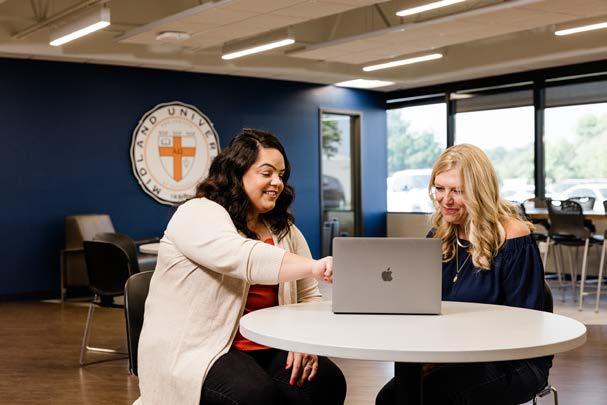


RE THINKING Behavior

42nd Annual
Midwest Symposium for Leadership in Behavior Disorders –2024 Symposium Sheraton Crown Center, Kansas City, Missouri
February 29, March 1 & 2, 2024 Register Today
SAVE THE DATES
Sixth Annual Richard L. Simpson Conference on Autism Overland Park, Kansas October 3 & 4, 2024
43rd Annual Midwest Symposium for Leadership in Behavior Disorders –2025 Symposium Sheraton Crown Center, Kansas City, Missouri February 20 - 22, 2025
Midwest Symposium for Leadership in Behavior Disorders