
RE THINKING Behavior
UPCOMING EVENTS
Supporting
Students’ Behavioral Needs During Virtual Instruction
Presented by Valentina Contesse, M.Ed., Doctoral Candidate, University of Florida
This session will highlight helpful tips and resources for supporting students' behavioral needs during virtual instruction. The workshop is free and open to any educator, but advance registration is required! To register go to https://mslbd.org/free-virtual-webinar.html. Once registered, a link to access the workshop will be sent to all registrants approximately 24 hours prior to the start of the event.

Sponsored by the Midwest Symposium for Leadership in Behavior Disorders And The Kansas Technical Assistance System Network
Program information available this spring.
https://mslbc.org/autism-conference/

Reesha M. Adamson
Mary Jo Anderson
Jennifer Bossow
Erika Calderon
Mary Davis
Scott M. Fluke
Linda Geier
Deborah E. Griswold
Mike Hymer
Marie Manning
Liv Marie
Sharon A. Maroney
John McKenna
Jessica Nelson
Mike Paget
Reece L. Peterson
Seth A. Piro
Lisa A. Robbins
Carl R. Smith
Ryan Spelman
Jim Teagarden
Jason C. Travers
Vanessa Tucker
Cassandra L. Williams
Keneesha Woods
Kathleen N. Zimmerman
Robert H. Zabel
Rethinking Behavior, ISSN 2578-5397, a magazine for professionals serving children and youth with behavioral needs, is published three times per year, fall, winter, and spring, Copyright ©2021 by the Midwest Symposium for Leadership in Behavior Disorders, P.O. Box 202, Hickman, NE 68372. 402-7923057. www.mslbd.org. Email: rethinkingbehavior@mslbd.org.
Rethinking Behavior welcomes proposal and manuscript submissions; for information visit www.mslbd.org or email rethinkingbehavior@mslbd.org
TDiversity and Discourse
he planned February 2021 Midwest Symposium for Leadership in Behavior Disorders, like the Conference on Autism and so much more this year was postponed due to the coronavirus. The MSLBD Board of Directors and the Planning Committee are using this opportunity to revitalize our commitment to the students facing behavioral obstacles, their families, and the professionals who work to help them prepare for successful engagement in community and national life. Two areas of focus stand out in this regard: increasing diversity and equity, and encouraging discourse of high interest topics in our field and organization.
George Floyd’s murder and the subsequent protests and discussions of systemic racism prompted MSLBD to create an ad hoc subcommittee to review the current presence or absence of diversity and equity within our organization. This committee feels that progress has been made in recent years in gender representation in our keynotes, workshops, and breakout sessions, and acknowledges that more needs to be done. Equitable racial/ethnic representation, however, has proven to be more elusive. In this, MSLBD reflects the challenges within the field of education and special education.
This committee made a variety of far-reaching proposals to address equity in every aspect of MSLBD’s work for students, families, and educators, feeling that concerted and sustained effort could lead to broader participation of people of color. Proposals emphasized inclusion, broadening the vision and
goals of the organization, and holding ourselves accountable over the long term. We will update you on these proposals and the progress MSLBD makes in implementing them.
A second initiative reflects a desire by the ReThinking Behavior Committee to stimulate and support more active, challenging, and broad discussions of significant issues among our readers. To achieve this goal, the editors plan to take-a-stand on research findings, interventions, practices, and policies of current high interest or controversy within our field through editorials and to encourage our readers to respond. To support the exchange of ideas on these subjects and others, ReThinking Behavior will publish responses from readers. These responses will reflect a variety of views, practices, and experiences of our readers and community. This issue initiates that effort. The Responses From Our Readers (page 50) presents several excerpted responses to an editorial which appeared in the Spring 2020 issue advocating for the end of the use of seclusion in schools.
Can we, as a concerned community, reinvigorate our commitment to all children in the United States?
As the editors of this issue, we think we can. As the editors we also hope that by providing a more active exchange of ideas in ReThinking Behavior, we can address the most pressing topics in the field. We invite you to join us in active discourse to support real change where we live and work.
Mike Hymer and Deborah E. Griswold Issue Editors

By Robert S. Harvey
Photo courtesy of
In January, on a cold, sunny Boston day, just two months before the COVID-19 global pandemic shut down schools across the nation, I visited a neighborhood school full of Black students. After observing a full day, a well-meaning white teacher – chair of Black Lives Matters week – stood in front of a group of faculty members with an abundance of anxious energy.
She told us that she was planning on inviting successful Black people to talk to the students. “They don’t have to be President Obama or Beyoncé or anything, they can be anybody,” she said. “We just want our students to see really good, really successful Black people.”
All I could think to myself was here we go again –another well-meaning white teacher entranced by the romanticisms of talking about Black folks and our progress in America through an individual lens. Little did I know that only a few months later, a public reckoning on racism would erupt across the nation.
As schools fumble to talk about America’s original sin – racism – well-meaning white teachers (and some Black folks) often assume that cultural relevance equals applauding individual progress.
As we now strategize our re-entries into school buildings after months of a global pandemic and ongoing demonstrations for racial justice, Black and brown families disproportionately carry the burden of food, housing, health, and income insecurities. Well-meaning white teachers have another chance to rethink classroom talks on race. As we continue to call the names of Trayvon Martin, Mike Brown, Sandra Bland, Breonna Taylor, Ahmaud Arbery, George Floyd, Elijah McClain, Atatiana Jefferson, and Tamir Rice, well-meaning white teachers must question their pedagogical souls.
Against the backdrop of a dwindling moral fabric and farcical political leadership, all of us, but especially well-meaning white educators, have the burden of building a learning environment that

centers the truths of Black progress in a nation plagued by “alternative facts.”
The question, then, is how do well-meaning white teachers reimagine their classroom rhetoric? Here are three strategies that can reimagine the experience of our students.
1.
Talk about systemic racism, not individual stories.
The system or the person – who’s to blame? Every lesson is an opportunity to talk about the legacy of systemic racism, not solely the wonder of individual stories. And when we neglect to talk about how systemic racism is embedded within American structures – education, justice, employment, housing, and health care – we unintentionally teach students that “really good, really successful” Black folks are exempt from racist structures. We have a duty to resist this logic by acknowledging that those we acclaim – King, Morrison, Hughes, Angelou, Baldwin, Winfrey, Obama, and Knowles-Carter – existed and exist within a structure of systemic racism despite their individual feats.
Ask yourself, “What assumptions have I constructed about the Black experience, historical and current,
that causes me to center individualism over the racism? Then, ask yourself, “Am I privileging individual stories over systemic racism to avoid having to wrestle with the risky and dangerous truths of how racism contributes to my attitudes and practices?”
As a Black educator with a modicum of Americandefined success, I have seen white colleagues attempt to co-opt my own individual narrative without the context of systemic racism. When white educators see their Black colleagues as exceptions to the systemic racism of America, transformative dialogue can’t happen. Our journeys to the job of educator were formed and informed by the different privileges we had or lacked. Ignoring the existence of a structure I exist within perpetuates the alternative fact of a personal American Dream while ignoring the oft-experienced Black communal reality of an American Nightmare.
2.
Talk about history in today’s context.
When we teach units that are grounded in American history – slavery, the Civil War, and Jim Crow – we often leave those units in history, without employing today’s context. Most of our students need a clear reason why something is
Photo
meaningful before it is learned and internalized. Our responsibility, then, is to provide that why for students – a why that is grounded in knowing that history is not only insight into what has been but also a catalyst for reimagining what can be.
What is it to esteem Frederick McKinley Jones’ refrigerated-truck ingenuity without discussing Trump-era cuts to the Supplemental Nutrition Assistance Program, effectively sustaining food deserts – areas without easy access to fresh food –in low-income urban and rural communities? What is it to know of the first successful pericardium surgery performed by Daniel Hale Williams without talk of persistent health-care disparities between races and the biases of medical practitioners who disregard the symptoms of Black women? What is it to be moved by the Rev. Martin Luther King Jr.’s nonviolent protests during the civil rights era of the 1960s without talk of the hyperviolent policing tactics and Draconian curfews against Black Lives Matter movements?
3.Talk about navigating and disrupting racism.
In 1993, Harvard professor Evelyn Higginbotham coined the phrase “respectability politics” to describe when racially marginalized groups attempt to distance themselves from stereotypical aspects of their communities to fit whitesupremacist standards. The underlying assumption is that respectability will position Black folks to access white America’s “inalienable rights.” Students are told to “pull your pants up to look professional” or “stand straight, arms to the side, eyes in front of you, and lips sealed” as if treating children like prisoners will maximize their potential.
This philosophy expects students to navigate racism without any tools for disrupting the system. Instead, we should teach our students to disrupt language, writing norms, and even dress codes.
Well-meaning white teachers (and some Black folks) often assume that cultural relevance equals applauding individual progress.
For example, I’ve explained to my students that I spell my name “rob” – with a lowercase R –because, as an educator, I choose to reimagine the recommended relationship between capitalization and proper nouns because all constructed knowledge can be deconstructed.
The seemingly innocent rhetoric, academic tactics, and teaching frameworks of white wellmeaning teachers need to bend toward justice. The democratic futures of our Black students, and the moral sustainability of our nation, depend on educators willing to disrupt their sensationalism of Black progress and rethink rhetoric, with love and justice, which centers the complex truths of Black folks in a white nation.
Robert S. Harvey, Superintendent and senior managing director of East Harlem Scholars Academies, a network of public charter schools in New York City.
This essay was first published in Education Week on Aug. 17, 2020 and was reprinted with the permission of the author. https://www.edweek. org/ew/articles/2020/08/17/an-open-letter-towell-meaning-white-teachers.html

For Many Teachers, Black Lives Only Matter Conditionally
What
your history textbook says about your priorities.
By Rann Miller
When I was first assigned to teach U.S. history nearly a decade ago during my second year as a social studies teacher, my first stop was to a Black-owned bookstore around the corner from where I taught. A month before the school year began, I had decided that I couldn’t use the old course textbook.
Photo courtesy of Shutterstock.com
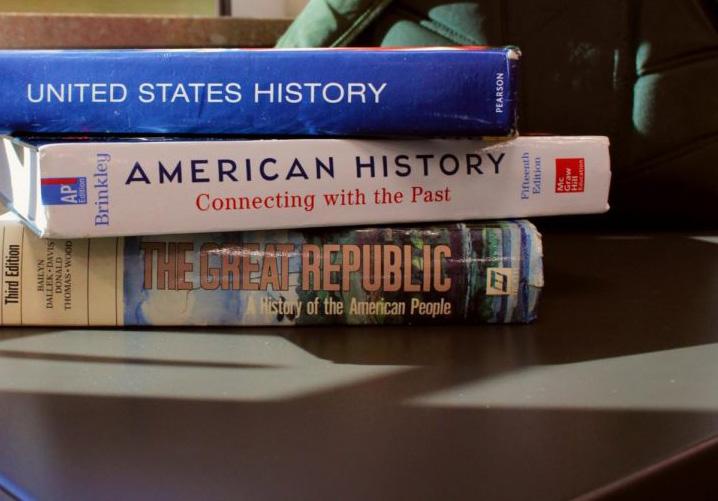
same population. That textbook hadn’t reflected my history and heritage as a Black man, nor that of the predominately Black and Latinx students I was preparing to teach.
So at LaUnique African American Books and Culture Center, I purchased Africa’s Gift to America, a text written by historian Joel Augustus Rogers.
It was because of that text that my students learned about Crispus Attucks, the African American man who was the first colonist killed by British forces in the massacre that sparked the American Revolution. It was from this book that they came to understand the extent to which enslaved Africans were the foundation for America’s wealth.
While it wasn’t the only book we used in my history class, it helped establish a foundational truth that allowed my students to understand their world in a proper historical context.
There is a racial reckoning happening in America now. The names of racists are being removed from school buildings and colleges, the statues of men who fought to maintain Black enslavement are coming down, and universities and school districts are even severing ties to police departments.
“Simply put, students like books where they can
see themselves. That’s not happening for Black children in your average U.S. history textbook.”
Thankfully, the percentage of white people who express support for the Black Lives Matter movement has increased by half in the past four years, to 60 percent in a June poll from the Pew Research Center. That support is even higher among white educators, 83 percent of whom say they support Black Lives Matter. However, is simply saying so enough?
I don’t think that it is. Particularly if you believe current history textbooks are suitable for students to
According to a recent Education Week survey, when asked, “To what extent if any do the textbooks used in your district, classroom, or school accurately and fully reflect the experiences of people of color?,” 13 percent of educators of color answered “none” while only 5 percent of white respondents said the same thing.
Those survey results suggest a discrepancy between what a white educator means by saying “Black lives matter” and what that actually looks like in practice.
Research demonstrates a relationship between positive racial identity and academic achievement for Black children. Simply put, students like books where they can see themselves. That’s not happening for Black children in your average U.S. history textbook.
Recently, I decided to check how much had changed since I left the history classroom in 2016. I borrowed a 2018 high school U.S. history text that is still in use from my district. I scanned it to see if I could find positive images of Black people or even any mention that explains why Christopher Columbus statues are coming down across the country or why Juneteenth received mainstream attention this year.
Photo by Seven Shooter on Unsplash
There was no mention of Christopher Columbus’ murder and enslavement of Indigenous peoples and there was no mention of Juneteenth. There were a few other glaring omissions. There was no mention that George Washington originally opposed Africans joining the fight for independence. There was no mention that there were hundreds of armed and unarmed rebellions of enslaved persons. There was no mention that the Texas Revolution was prompted by Mexico’s abolishment of slavery. There was no mention of the significance of the Haitian Revolution in the American acquisition of the Louisiana Territory.
Perhaps these omissions were to be expected, considering five of the six authors were white, and 10 of the 11 textbook consultants were white.
And, for good measure, the cover features a picture of Thomas Jefferson, a man who enslaved African peoples, repeatedly forced himself on an enslaved woman he held in bondage, and wrote that Black people “are inferior to whites in the endowments of both body and mind.”

It is not enough for teachers to say that Black lives matter. Teachers must live those words; school districts must live those words as well. But not all teachers believe that Black lives matter, and not all teachers believe that Black lives matter enough to abandon textbooks that devalue Blackness,
. . . not all teachers believe that Black lives matter enough . . .
elevate whiteness, and seek texts that portray American history accurately.
School districts must abandon the use of any text in any content area that fails to reflect Black life in a way that does not affirm Black children. They must abandon texts that fail to portray history accurately and that fail to tell the humanizing stories of the Black experience.
Every white educator who “believes” that Black lives matter should think critically about how Black students will see themselves in curricular materials that devalue or omit the contributions of Black people, that overly emphasize the contributions of white people, and that portray the history of Black life as pitiable.
We don’t need more educators whose valuing of Black lives comes with the condition that history remains whitewashed.
Rann Miller, Doctoral candidate at Rutgers University and 21st-Century Community Learning Center Director, southern New Jersey.
This essay was first published in Education Week on Sept. 16, 2020 and was reprinted with the permission of the author. https://www.edweek.org/ew/ articles/2020/09/16/for-many-teachers-blacklives-only-matter.html?cmp=eml-enl-eu-news2-rm &M=59692232&U=99453&UUID=0f65931b1b56d 8cf0e60d2a76062562e

One Parent’s Journey
By Jennifer Bartimus
Being a parent of a child with special needs is the most challenging yet sometimes the most rewarding experience. As a parent of a child with special needs in school, the IEP process can be both daunting and scary. I am Jennifer. My daughter, Sam, is 25. This is my story of navigating the IEP process with my daughter over her lifetime.
I will give you a little background. When I was in school, I knew kids with special needs like my daughter’s existed, yet I never saw them in school. I am unsure as to why but the only person I really knew with special needs was my aunt who had cerebral palsy. I knew nothing about her schooling until years later after my daughter was in school.
My parent experience with the IEP process can be described as a difficult roller coaster ride. To be honest, it had its ups and downs and I felt like a deer in the headlights when it came to IEP meetings. I knew nothing about the education of a child with special needs let alone the process. I also felt like a single parent because my husband was not able to attend meetings due to his jobs. If I had known then what I know now, I would have asked my mother to come and sit in on the IEP meetings so I would have had at least one familiar face to look at during the meetings. I was so intimidated at these meetings. I did not ask any questions or make any requests about my daughter’s education. I did not know how to prepare or participate. The educators around the table seemed to know exactly what they were doing and saying. They seemed to be looking at me as just some parent. At least that’s how I felt at times. I was just a parent of two kids, one who desperately needed to get this assistance.
It has been a long time since Sam’s first IEP meeting. While I don’t remember everything, I do remember that the educators used words I did not understand. They talked about the laws and regulations, which made no sense to me. I didn’t know what an IEP was. All I knew was that they gave it to kids like Sam. I remember
being told it was time to come in for a meeting to set up and figure out “placement” for Sam in school. I didn’t know what placement was. I was asked what I wanted for Sam. I didn’t know what I was supposed to want for Sam. I didn’t ask questions because I didn’t know that I could. I let the educators dictate everything and I did this for several years during each IEP meeting.
Sam was tested for placement in the state school in second grade if I remember correctly. She did not rate severe enough even though she had not advanced from PreK. So, Sam continued in public school and I continued going through the same scary IEP process each year. Each time the educators looked at me and treated me like I knew nothing. They continued creating goals that made no sense for Sam in my eyes. Now I can see they were all academic goals - nothing about social skills, playing with friends, being able to walk up and down stairs, or dress herself. I was told about therapies, but I did not know the difference between occupational and physical therapy, let alone how these could help Sam. Again, I did not know I could ask questions. Speech therapy was included in her IEP as the years went on,
but they stopped working on her ability to speak and instead worked with her choosing what she wanted from pictures. Had I realized that at the time, I might have asked why because using pictures was not something we did at home.
When Sam was almost in middle school, I spoke up and got the educators to add some functional skills to her IEP - not that I knew that they were called functional skills back then. We had moved to a different school and the special education at that school left a lot to be desired in my eyes. The educators initially placed Sam in the back of a kindergarten class because she was the only student with such severe needs at this school. By then I had learned a bit about special education and I fought back stating that schools, no matter how small, cannot fail to provide a special education program. Then, without my knowledge, or so I thought at the time, they started doing the same testing the previous educators did when Sam was in second grade to see if she qualified for the state school services. I realize now that it was the 3-year evaluation review that she was supposed to have and that these educators really did have her best interest in mind.
I didn’t ask questions because I didn’t know that I could.
A staff person from the state school attended the next IEP meeting. Once again, I felt like I was being ganged up on. I had finally gotten used to the IEP meetings and things going the same way year after year. But this time the team talked about placing Sam in the state school. I did not know what this meant but I was more than willing to listen because I did not like Sam’s education in this school.
Sam was placed in the state school close to where we were living, with new teachers, new goals, and new transportation to get used to. Her new IEP covered all types of goals like writing her name, being able to fold laundry, picking up trash, putting on her own clothes, and helping around the house. This IEP discussed and emphasized her therapies, more clearly stating what services she would receive and how each educator would work with her. Even though I did ask some questions, I still did not realize I was asking the wrong questions. I should have asked, “How will this help Sam in the future?”
When Sam got to the age when a transition plan was added to her IEP, I was asked what I wanted for her future. “I want her to be happy and healthy.” When asked about where she was going to live as an adult, I said “With me,” because I did not know other options existed. That question was asked at several IEP meetings but I was never told of any available living options for Sam. Group homes or independent supervised living facilities (ISLs) were never mentioned and I didn’t know they existed until years later after Sam graduated. Sam’s IEPs stayed focused on functional living skills and she graduated a few months before turning 21.
I started working at the state school about a year after Sam graduated and 5 years after starting my education, became a special educator. I have learned that parents have to ask questions during IEP meetings and knowing what to ask is very difficult. Today, as a parent of a child with special needs and future educator, I believe that I am able to be an advocate for parents by explaining my knowledge and experiences to them, so they are not as lost as I was for so many years.
To become advocates for their children, parents need to be informed, build relationships, and maintain communication with educators and service providers. They can do this by –
• Asking questions, at any time and to anyone, to fully understand their child’s program and accommodations.
• Learning about and staying informed of their child’s education, learning, attention, functional and social skills, and possible medical issues through information from educators, paperwork, support systems, videos, and the Internet.
• Exploring their child’s strengths and needs to discover how their child learns best and to work more effectively with educators.
• Communicating regularly with their child’s teacher via email or a daily logbook, not just during IEP meetings and parent-teacher conferences, and keeping a communication log and notes.
• Keeping copies of all paperwork, such as report cards, evaluations, medical records, homework samples, and IEPs, in a binder or file box.
• Building relationships with their child’s teachers, the school psychologist, speech therapist, and other service providers and keeping the lines of communication open. There is less chance of misunderstanding when everyone communicates.
• Staying calm when listening to suggestions from teachers, therapists, and psychologists. If something does not sound right, parents should not feel pressured to sign the IEP. Parents can disagree. Parents can ask questions. Parents can make suggestions about different things to try with their child.
As I shared, navigating the IEP process can be a roller coaster of intimidation, confusion, and apprehension. In my future position as a teacher in special education, I plan to continue to share my experiences with parents and to help them become advocates for their children by being open to all forms of communication with the parents and keeping them informed of everything I believe they need to know.
Jennifer Bartimus, Parent and Student, Missouri State University, bartimus74@live.missouristate.edu
Do teachers know it when they see it?
School Bullying
By Jennifer Farley
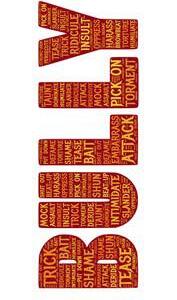
In a crowded cafeteria, a student holding a lunch tray slowly approaches a table with an empty seat. As she gets closer, a seated student quickly sets a backpack on the open seat then, looking directly at her, says, “This seat is taken.” Another student chimes in, “Yeah, why don’t you go sit over there with the other losers?” She pauses, shocked for a moment, and then quickly turns to walk away. The students at the table start to laugh, saying “Later loser,” “You don’t belong here,” and “Let’s make sure everyone ignores her.” This event is witnessed by two teachers. School policy prohibits bullying, but what does each teacher see? Bullying? Teasing? Or, some other behavior? Do they think it’s a case of “kids being kids?” And, depending on what they see, how do they respond?
Since 1999, all 50 states in the U.S. have adopted anti-bullying policies. In order to provide students with safe learning environments, most policies outline prohibited behavior and protections, however these policies vary in how educators are supported to create safe environments. Half of state policies require teachers to participate in training related to school bullying, however, only three provide funding for this kind of training (Stuart-Cassel et al., 2011). As a result, professional development budgets may determine whether teachers are provided training regarding their school’s policy. Considering that teachers are on the front lines of bullying prevention, it seems these policies could do more to prepare the very people who implement them.
How is bullying understood? While state and school anti-bullying policies prohibit bullying behaviors, they don’t all define bullying the same way (Swearer et al., 2017). Furthermore, few policies include a definition of bullying that aligns with the definitions adopted by researchers and evidence-based prevention programs (Cornell & Limber, 2015). For example,
the U.S. Department of Health and Human Services defines bullying as “unwanted, aggressive behavior among school aged children that involves a real or perceived power imbalance. The behavior is repeated, or has the potential to be repeated, over time” (www.stopbullying.gov). However, state policies include definitions like “the intentional harassment, intimidation, humiliation, ridicule, defamation, or threat or incitement of violence by a student against another student or public school employee” (Arkansas Antibullying policies, 2012), or “intimidation or harassment that causes a reasonable student to fear for his or her physical safety or property,” (Missouri Antibullying policy, 2011) and some policies fail to define the term at all.
This means that teachers, who are on the front lines of a school’s prevention and intervention efforts, have to reconcile multiple definitions of bullying behavior. Teachers’ understanding may be further complicated by how other people use the term bullying or bully, interpretations which may or may not be accurate. Take, for example, the teacher who ends her school day talking with a parent who claims his son is being bullied by a girl who said “no” when asked to the school dance. After school, during her son’s gymnastics practice, another mom shares the “miracle” that happened at her daughter’s school where they ended school bullying with a single assembly featuring a band that played songs about kindness and friendship. Later that evening, while grading papers, the teacher overhears a reality star on TV calling a co-star a bully for hosting a party at a rival restaurant rather than the one the reality star owns. In a single day, this teacher experiences three different interpretations of bullying, all of which miss the mark. Exposure to these kinds of messages may cause teachers with a solid understanding of bullying to pause when trying to identify bullying.
Art courtesy of Shutterstock.com
The complexities surrounding a teacher’s ability to accurately assess and identify bullying behavior is especially important for students with emotional and behavioral challenges. Research tells us that students with disabilities are more likely to be targets of bullying, especially if they have more severe disabilities, receive services in special classes or schools, or have difficulty reading social cues (Rose et al., 2011). However, these students may also be provocative targets; or students targeted by bullying behavior who respond in a way that leads to their misidentification as a perpetrator of bullying (Grumpel & Sutherland, 2010). It is difficult for teachers and investigators of such bullying incidents to properly identify these students as a target of bullying. Additionally, multiple definitions and interpretations of bullying further complicate a teacher’s understanding and ability to identify not only bullying behavior, but the roles of the students involved.
Do teachers know bullying when they see it? The success of anti-bullying efforts may largely depend on a teacher’s ability to identify and respond to school bullying. However, inconsistencies in how teachers understand bullying behavior may make it hard to identify student behavior as bullying or differentiate bullying from other types of peer aggression (e.g., teasing, physical fighting, sexual harassment).
In 2016, I conducted a small research study to explore teachers’ perceptions of bullying behavior and interventions in their school buildings. I developed a survey, which was unique in that it included short video scenarios of student behavior, and invited middle school teachers in two large Midwestern school districts to participate. During the survey, 63 teachers viewed three video scenarios related to bullying (one physical, one verbal, and one social bullying scenario) and two videos that depicted incidents that were not bullying (one physical and one verbal). After viewing, the teachers were asked to identify the behavior as bullying or not bullying and share how they would respond to the situation. The results of the study suggest that some teachers have difficulty identifying bullying.
Results: Teacher Accuracy
• 25% of teachers accurately identified the three bullying scenarios.
• 80-81% of teachers accurately identified physical and verbal bullying.
• 41% accurately identified social bullying.
Consistent with the findings of existing research, these results suggest that teachers not only have difficulty identifying bullying behavior, but also identifying non-bullying behaviors, such as teasing and fighting, as bullying. Additional results question the impact of bullying prevention training.
Results: Teacher Training
• 57% of teachers previously participated in bullying prevention training.
• 61% of teachers with 100% accuracy were previously trained.
• Training had a small effect on teacher accuracy.
It is reasonable to think that training would increase teacher accuracy in identifying bullying, so the small effect is somewhat surprising. However, it is important to note that the length and content of the trainings teachers participated in are not known. It is possible that trainings emphasized examples of physical or verbal bullying, or may have focused on a definition of bullying behavior with few examples.
Results: Teacher Training
• 58% of teachers had more than 10 years of experience.
• More experienced teachers (10+ years) were less likely to accurately identify bullying.
• 24% of teachers with 10+ years of experience were 100% accurate.
Compared to training, teachers’ years of experience had a greater effect on accuracy. However, this effect was not positive and is contrary to what one might assume about teacher experience and accuracy. However, it likely only begins to scratch the surface of the relationship between experience and how teachers understand bullying behavior, and should be further explored. It is unknown how trainings, definitions, policies, and procedures regarding bullying-related behavior may change over a teacher’s tenure. Additionally, experienced teachers may be more likely to emphasize intervention in any problem behavior or situation and may be less focused on whether the behavior they witness meets a definition or understanding of bullying before taking action. Despite effects on teacher accuracy, training and experience lead teachers to feel knowledgeable about bullying intervention strategies.
Results: Teacher Knowledge
• 60% of teachers agreed or strongly agreed they were knowledgeable about bullying intervention strategies.
• 78% of trained teachers indicated they were knowledgeable.
• 81% of experienced teachers indicated they were knowledgeable.
The significant role of training on knowledge of intervention strategies is noteworthy. However, teachers cannot use these intervention strategies if they are unable to identify bullying behavior. Furthermore, a National Education Association study found teachers’ knowledge of intervention strategies to be limited to certain types of bullying and specific student populations. As a result, teachers requested additional training to appropriately handle cyberbullying and sexting as well as bullying of LGBTQ students and students with disabilities (Bradshaw et al., 2013).
Taking Steps to Support Teachers
There are a number of steps that support teachers’ identification of bullying behavior. Such steps may help to shore up any gaps in teachers’ understanding of bullying or how they apply their understanding to identify bullying behavior. Overall, these suggestions go beyond simply defining bullying behavior - while a clear definition is important, it is only the beginning - and seek to provide actions that can be taken to support teachers’ ability to “know” bullying when they “see it.”
1. Know how it’s different. Teachers must be supported to not only understand bullying, but know how it’s different from other problem behaviors. In order to achieve this schools must define both bullying and sexual harassment and highlight how they are different. Often, school policies created address both bullying and harassment. While both behaviors must be addressed, harassment, and specifically sexual harassment, may also fall under its own policy
and associated procedures. Furthermore, dating relationships make it harder for teachers to identify bullying (Anagnostopoulous et al., 2009). Therefore, it is key that teachers understand both behaviors, to ensure that sexual harassment isn’t identified as bullying and treated as such. The U.S. Department of Health and Human Services’ website, www.stopbullying.gov, provides resources which describe the differences between bullying and other aggressive behaviors, as well as resources regarding federal harassment laws
2. Know what to do. It is important for teachers to know district or school building policies and procedures for intervening in school bullying. However, it is equally important for them to know how these procedures may differ from intervention in other problematic behaviors, such as sexual harassment. Often the protocol for responding to bullying, which is frequently established by district or state anti-bullying policies, may require documentation and investigative procedures. In general, bullying requires different procedures, for both prevention and intervention, because of the imbalance of power involved (Cornell & Limber, 2015). For example, peer mediation is frequently used successfully in instances of peer conflict, like when two friends within a peer group aren’t getting along because one didn’t go to the other’s party. However, such peer mediation is not recommended in instances of bullying, because the two peers don’t have equal power (Cascardi et al., 2014). Peer mediation would not be recommended when former friends aren’t getting along because one didn’t go to the other’s party, and as a result one friend has convinced the entire peer group and others in the school to ignore and exclude the other friend.
3. See it. One way in which schools may move beyond a written definition of bullying behavior, and make sure teachers “see it” when it happens, is to use video scenarios in teacher training. Such videos should include examples of bullying and examples of other similar behaviors that are not
bullying, like the scenarios included in the Virginia Youth Violence Project’s Bullying or Not video. Video scenarios can be used in a way that allows teachers to both practice identifying bullying behaviors and consider intervention strategies. Schools can also use bullying incident data to inform the creation of video scenarios which feature commonly occurring bullying behaviors within the district.
4. Take action. Students are more likely to report bullying when they think teachers will do something about it (Veenstra et al., 2014). Therefore, teachers should be equipped with the tools they need to successfully intervene in any type of peer aggression or problem behavior, regardless of whether or not it is defined as bullying. Given that teachers and other school staff only witness a fraction of the bullying behavior that takes place, it is important for teachers to intervene in the incidents that do take place, which may increase
student reports of bullying behavior. Tips for intervention include stopping the bullying right away, gathering information to understand what happened, and supporting the students involved. However, increased focus on prevention may help to alleviate the need for intervention. This Iowa Department of Education presentation, featuring Dr. Susan Limber, reviews 10 best practices in bullying prevention (https://www.youtube. com/watch?v=vCm4Z7SbxU0&feature=youtu. be). Furthermore, schools may benefit from implementing an evidence-based bullying prevention program.
5. See the actions of others. The field of bullying prevention is just beginning to explore how teacher intervention in school bullying may be influenced by other adults in the school building. A recent study found that teachers’ intended bullying interventions were significantly related to perceptions of how building administrators and fellow teachers responded to bullying. Yet, teachers may not always accurately understand how others in their building respond. Therefore, it is important that building leadership make efforts to ensure all staff are aware of the actions of their co-workers when they intervene in bullying incidents. This may include following up with teachers to let them know the outcome of bullying incidents, publicly recognizing teacher efforts in bullying prevention and intervention, or including teachers in planning monitoring and intervention efforts in common spaces within the school building (e.g., cafeteria, hallways, locker rooms).
For bullying prevention and intervention efforts to be effective, the teachers who prevent and intervene in bullying behavior need to be prepared and supported. While training is important, even trained teachers aren’t always able to correctly identify bullying behavior and may benefit from clarification and additional examples of how bullying behavior differs from other behaviors such as teasing and sexual harassment. Schools with clear policies and procedures, which define how
Resources to Address Bullying
www.stopbullying.gov provides resources about bullying and cyberbullying, including recommendations related to prevention, intervention, policy and training.
Find out more information about evidence-based programs through the What Works Clearinghouse or Blueprints for Health Youth Development
PREVNet provides bullying prevention resources including toolkits and factsheets
PACER's National Bullying Prevention Center provides classroom curriculum and activities, resources specific to students with disabilities, and information f or parents
bullying is different from other behaviors, not only support teacher understanding but also ensure they know what steps to take after an incident of bullying. Attention should also be drawn to building-wide efforts to address bullying. Teachers should be made aware of the formal policies which guide their actions, as well as how others address bullying. It is key, however, that teachers’ voices remain at the center of both district and research efforts related to bullying. Further understanding of their experiences will ensure that any challenges with bullying are addressed with prevention and intervention efforts, and that, ultimately, teachers know bullying when they see it.
References
Anagnostopoulous, D., Buchanan, N., Pereira, C., & Lichty, L. (2009). School Staff Responses to Gender-Based Bullying as Moral Interpretation: An Exploratory Study. Educational Policy, 23(4), 519-553. doi: 10.1177/0895904807312469
Arkansas Antibullying policies, AR Code §6-18-514 (2012).
Bradshaw, C. P., Waasdorp, T. E., O’Brennan, L. M., & Gulemetova, M. (2013). Teachers’ and Education Support Professionals’ Perspectives on Bullying and Prevention: Findings from a National Education Association study. School Psychology Review, 42(3), 280-297.
Cascardi, M., Brown, C., Iannarone, M., & Cardona, N. (2014). The Problem with Overly Broad Definitions of Bullying: Implications for the Schoolhouse, The Statehouse and the Ivory Tower. Journal of School Violence, 13, 253-276. doi: 10.1080/15388220.2013.846861
Cornell, D., & Limber, S. (2015). Law and Policy on the Concept of Bullying at School. American Psychologist, 70(4), 333-343. doi: 10.1037/a0038558
Grumpel, T., & Sutherland, K. (2010). The relation between emotional and behavioral disorders and school-based violence. Aggression and Violent Behavior, 15(5), 349-356.
Missouri Antibullying policy, MO Rev Stat §160.775. 1 (2011).
Rose, C., Monda-Amaya, L.E., Espelage, D. (2011). Bullying perpetration and victimization in special education: A review of the literature. Remedial and Special Education, 32(2), 114-130.
Stuart-Cassel, V., Bell, A., & Springer, J. (2011). Analysis of State Bullying Laws and Policies. Washington, D.C.: U.S. Department of Education.
Swearer, S., Martin, M., Brackett, M., & Palacios, R. (2017). Bullying intervention in adolescence: The intersection of
legislation, policies, and behavioral change. Adolescent Research Review, 2, 23-35.
U.S. Department of Health and Human Services. (2012). Bullying Definition. Retrieved from Stopbullying.gov website: http://www.stopbullying.gov/what-is-bullying/definition/index. html
Veenstra, R., Lindenberg, S., Huitsing, G., Sainio, M., & Salmivalli, C. (2014). The Role of Teachers in Bullying: The relation between antibullying attitudes, efficacy and efforts to reduce bullying. Journal of Educational Psychology, 106(4), 1135-1143. doi: 10.1037/a0036110
Virginia Youth Violence Project. (2009, June 4). Bullying or Not? Charlottesville, Virginia. Retrieved from https://www.youtube. com/watch?v=iXXKMehgiAk
Jennifer Farley, Postdoctoral Research Fellow, University of Nebraska, Lincoln, NE, jfarley3@unl.edu
Art courtesy of John Hain from Pixabay
Be the Reason Students Want to Come to School

By Jaime L. Wright
Photo courtesy of AdobeStock.com
It’s first hour. Need I say more? I was in a resource algebra class, which happened to be my best and favorite subject. The students were split up into smaller groups. I was with the “review” group to practice previously learned math concepts. I wrote a problem on a white board and asked the students to do the same.
“Who remembers what we do first in this problem?” I asked.
I was met with silence.
Okay, I thought, I will just walk them through this problem, then call on students on the next problem. We got through that problem and I began the next problem.
“This problem is very similar to the problem I just showed you. Who can tell me what we do first?”
Again, I was met with silence.
“Come on guys, you know how to do this. I am not going to do all these problems for you. Your choice is we can work on these problems together or you can do them on your own.”
Still more silence.
This is not the first time I had worked with this group, but they were obviously not in the mood to talk or do math.
“Okay, you can finish these problems on your own since you are not talking. I will be here if you have any questions.”
A student muttered under her breath, “B!$#h.” I was actually excited that I had been called a bad name. It made me feel like I was doing my job of being strict and firm with my students, not being a pushover. A later experience with this same group of students made me realize this was NOT a moment that I should have been proud of myself.
A few days later, I worked with the same group

again. Some of them looked tired. I put my whiteboard down and asked, “Are you guys tired?” There were responses immediately.
“I didn’t want to get up this morning,” one student said.
“I wish I was still in bed,” another student responded.
I could definitely relate to their feelings. I am not a morning person, never have, and never will be. I said, “I didn’t want to get out of bed either. I think I snoozed my alarm four or five times because my bed was so comfortable.”
We had a few minutes of conversation about why we went to bed late or what we did over the weekend that left us tired.
Now, we had a connection of loving sleep and loving our beds. I redirected them back to math and started back on the problem. This time
they participated and answered my questions. They even asked questions when they did not understand something. I realized then, that this was the moment I SHOULD be proud of because I took the time to connect with those students beyond instruction. The result was amazing and completely different than before. It carried over into other small group sessions and even during regular class time. They would ask me questions or say they could not figure out what they did wrong and wanted my help. This was all because I took the time to connect with them.
When teachers take the time to develop relationships with students, the relationship building can carry over into other aspects of the classroom. The idea of building relationships with students is a strategy that researchers continue to study. “This movement is aligned with research indicating that supportive and genuine relationships are essential in creating a positive school climate, reducing problem behaviors, and lessening racial discipline gaps” (Anyon, Atteberry-

Ash et al., 2018, p. 222). If building positive relationships can carry over into other aspects of the classroom, then what is the proper way to build those positive relationships? Unfortunately, even though relationship building is strongly encouraged there is no manual on how to correctly build those relationships (Hinton et al., 2011).
When I was a paraeducator for a local high school, I saw first-hand what relationship building could accomplish. Being a paraeducator allowed me the opportunity to work on a more individual level with students. I was able to get to know the students I worked with. I learned what motivated them and learned to listen when they needed to talk. Some of the most stubborn students who would refuse to work for their teachers would complete their work when they were with me. I am far from a miracle worker, but I wanted the students to know I cared about them especially when they thought no one else did.
I may not know what my students’ home lives are like, but I strive to be a warm and positive person in their life. What do I mean by warmth? “Warmth is defined as the teacher’s ability to exhibit unconditional positive regard, convey a sense of caring for students’ well-being, show authentic interest in children’s lives, and demonstrate mutual respect,” (Sandilos et al., 2017, p. 1322). Even when our students make mistakes, best practice is to show them we care no matter what. Sandilos and colleagues also shared that when students sense their teacher’s warmth and caring, student academic motivation and engagement in classroom activities improved. In their 2011 article, Hinton et. al., agreed that “...establishing a safe, secure, and trusting environment which accentuates human relationships allows students to reach a higher level of academic achievement” (91).
Start Small
To begin building relationships with your students, my advice is to start small. Ask the students what
their favorite pizza is, what television shows they watch, or what kind of music they like. Find ways to connect with them. Food has always seemed to be an easy way to connect. Having inexpensive food or candy (e.g., granola bars, peanut butter crackers, lifesavers, mints, water flavor packets, etc.) may help build relationships. Students will let you know when you run out and that can be an easy conversation starter. Talk to them about what they like to do when they are not in school. I tell students that napping is my hobby and that usually gets at least a smile from them. Gradually, I will begin joking around with them. Not all students get my jokes and I only use them with those that I know will understand.
When a relationship has been established with a student who displays inappropriate behavior it becomes easier to handle difficult situations calmly and the student is less likely to get defensive. I brainstorm with them about what they could do differently next time. I encourage them to be the ones who come up with the solutions. I may be hard on some of my students, but it is only because I KNOW they can make better choices. Getting to know your students and holding high expectations for them may inspire them to try harder and accomplish more. Someday, a student might even thank you for it.
Building relationships with students is very important not just for your classroom, but for the students as well. I have carried this strategy into my teaching career. It does not work 100% of the time, but students work harder for me when I have a better connection with them. Students need to know someone at school cares about them. Even though students drop out of school for many reasons, many students say they drop out because they did not have a connection with the school (Hinton et. al., 2011). Be the reason why students want to come to school. Be the reason why students want to do better. Be the reason.
References
Anyon, Y., Atteberry-Ash, B., Yang, J., Pauline, M., Wiley, K., Cash, D., Downing, B., Greer, E., & Pisciotta, L., 2018, “It’s all about the relationships”: educators’ rationales and strategies for building connections with students to prevent exclusionary school discipline outcomes, Children & Schools, Vol. 40 (4), 221-230.
Hinton, D., Warnke, B., & Wubbolding, R.E., 2011, Choosing success in the classroom by building student relationships, International Journal of Choice Theory and Reality Therapy, Vol. 31 (1), 90-96.
Sandilos, L.E., Rimm-Kaufman, S.E., & Cohen, J.J., 2017, Warmth and demand: the relation between students’ perceptions of the classroom environment and achievement growth, Child Development, Vol. 88 (4), 1321-1337.
Jaime L. Wright, Special Education Teacher, Missouri, jlwright1980@gmail.com
Strengthening Your BIPs
By Sharon A. Maroney
Photo courtesy of AdobeStock.com
In the Winter 2018 Issue of ReThinking Behavior
I wrote the article, Persistent and Inconvenient Behavior: What Can You Do?, in which I presented my top ten strategies for dealing with student behavior problems incorporating a preventative and instructional model. In my experience, I found that teachers who really do implement these ten evidence-based strategies consistently and effectively have fewer behavior problems in their classrooms. So, whenever a teacher asks me, “What do I do with a kid who does . . .?” – my first response is my top ten. But, as we all know, some students need more. This article will provide a few insights into –
“And what if that doesn’t work?”
The simple answer is the Behavior Intervention Plan – an individually developed plan that describes both the problem behavior and the reason behind that behavior, and details an intervention to reduce or eliminate the problem behavior and replace it with a desired behavior. Most school districts have an established BIP form and procedure for teams developing plans. This article is not intended to teach how to develop a BIP – there are many sources readily available for that purpose. Instead, I will share a few insights that may help improve the BIPs you develop.
BIP Resources
Behavior Intervention Planner, Intervention Central
https://www.interventioncentral.org/tools/ behavior-intervention-planner
Behavior Intervention Plans, PBIS Missouri
https://pbismissouri.org/wp-content/ uploads/2018/08/Tier-3-2018_Ch.-6.pdf
BIP Resource Page, pbisworld.com
https://www.pbisworld.com/tier-2/ behavior-intervention-plan-bip/
Top Ten Behavior Management Strategies
1. Focus on preventing undesired behavior rather than reacting to it
2. Consider why students behave and misbehave
3. Take an instructional approach to behavioral intervention
4. Establish classroom and schoolwide expectations or rules
5. Establish classroom procedures
6. Teach desired behavior
7. Consider behavioral expectations when planning lessons
8. Use frequent praise, recognition, and appreciation
9. Use surface management techniques
10. Deliver more effective reprimands and correctives
Taking a Closer Look
The first step is to take a closer look at why the behavior is occurring by gathering as much information as you can about the student’s behavior.
• What exactly is the student’s undesired/problem and desired/ replacement behavior you wish to focus on? What exactly is the student doing that is problematic and what exactly would you like the student to do instead? Many teachers would like students to stop calling out during class discussions (undesired/problem behavior) and would rather students raise their hands and wait to be called on before speaking (desired/ replacement behavior).
• Focus on the desired/replacement behavior. Whenever you take away a behavior that the student has been using, you must give them something to do instead. Asking students to
“Stop doing that” and expecting them to sit quietly and do nothing just does not work.
• Specifically, when, where, under what conditions, with whom, how often, and to what degree does the student demonstrate the undesired and desired behaviors? While it is important to gather info about the undesired behavior, it might be more helpful to gather info about the desired behavior. Are there occasions when the student does use the desired behavior? If so, try to determine when and why. One of my students was engaged and industrious during the first three class periods, but not so during Period 4. Discussions with the student and his teacher and a quick observation showed that Period 4 was different. He was not socially interacting with any classmates and pretty hungry, since his lunch was after Period 4. The teacher employed a few activities to build social connections among students and restructured others. (We noticed there were other students left-out.) And, we gave the student a few snack bars to carry in his bookbag. Granted, it’s not always that simple, but the key was gathering info about the student and the environment.
• Is it a skill deficit or a performance deficit? Has the student learned and mastered the desired behavior? Can they perform the desired behavior when, where, and how they are being asked to or do they need additional behavioral instruction? (skill deficit) Is it that the student is able to perform the desired behavior, but does so inconsistently or under some but not all circumstances? Is the student motivated to use the desired behavior? (performance deficit)
• What strengths or interests does the student have that can assist them in learning new behaviors and learning to use them when and where needed? While it may be overlooked, all students have strengths and interests, even students with challenging behavior. I had

students who liked to argue, so I incorporated debate including researching both sides, defining essential arguments, expressing oneself clearly and convincingly without yelling and name calling. Additionally, I often asked parents and guardians to share their child’s strengths and interests resulting in helpful and encouraging talks.
Most BIPs require teams to complete a functional behavior assessment (FBA) to create a hypothesis for the cause and purpose of the student’s behavior and identify the factors that predict and maintain the undesired and desired behavior. FBAs involve an ABC analysis of the student’s undesired and replacement behaviors to identify: A = the antecedents - what happens before a behavior that can trigger/cause that behavior; B = the behavior and; and C = the consequences - what happens after a behavior that reinforces and maintains the behavior. I have found it essential to complete two analyses - one for the
undesired and one for the desired/replacement behavior. Additional ABC analyses can be completed for different settings, peer groups, or activities if the student’s behavior varies significantly under different conditions. Yes, this is time consuming, but determining the As and Cs of the student’s undesired and desired behavior is valuable in developing an effective BIP. What happens before (antecedents and triggers) and what happens after (consequences, positive and negative) are necessary info.
FBA is founded on the assumption that in most cases people use specific behaviors because they serve a function for that person. Some BIPs provide a short checklist of a few common functions of behavior, such as attention, access, and escape, which limits the thinking and planning of team members. I recommend educators consider this list of common functions of behavior in both respects – to access or seek and to escape or avoid. For example, one student may be making remarks in class to access attention from peers, while another student may be walking alone to escape peer attention.
To Access/Seek or To Escape/Avoid one or more of the following
• Attention, recognition
• Affiliation, acceptance

• Mastery, control, power, status
• Tangible items, activities, tokens
• Physical sensation
• Self-gratification or self-entertainment
• Justice, revenge, retaliation
If it is determined that the function of a student’s undesired behavior is to obtain acceptance by his peers, then the BIP can be designed to teach him more appropriate ways to gain acceptance, create opportunities for him to try out the new behaviors, motivate and reinforce his efforts, and encourage his peers to respond positively. FBAs may also show that while one student might yell out in class to obtain teacher and peer attention another might yell out to escape the classroom. Very different interventions are needed for these two students even though they use the same undesired behavior to achieve their goal. Instead of yelling out to gain attention, a BIP could be developed in which the teacher calls on the student at least 3 times each class period and the student is taught to prepare responses that will access positive attention. Instead of yelling out to escape the classroom, a BIP could be developed in which the student is taught how and when to ask for a 2-minute break from the classroom.
In addition to determining the function of the behavior, the following considerations are also needed (but sometimes forgotten) to develop more effective intervention plans.
• Is the behavior a form of communication for the student? If so, can we teach a more acceptable communication behavior?
• Does the student have the required motivation to perform the desired behavior? If not, we need to design the BIP from the student’s point of view. The lack of motivation became clear to me when I taught high school students with EBD. I’d say, “Today we are going to study poetry.” My students would reply, “Why?” Reasons like, “It’s our required curriculum,” or “It’s what all high school students learn,” just didn’t connect with
Photo courtesy of AdobeStock.com
my students. I learned quickly to put myself in their shoes and to be ready before they asked the question. At the top of every lesson plan I prepared my answer to “Why do we have to learn/do this?”
• Are there other factors that make it difficult or impossible for the student to perform the replacement behavior at the times and in the manner required? Does the student have cognitive, physical, learning, social, or other conditions that interfere with their behavior regulation? If so, what supports can be provided to make it easier for them to meet the behavior expectations? If the student is realistically not able to perform the desired behavior, what changes should be made to their behavioral expectations?
Determining the Desired Outcome
After taking a much closer look at the student’s behavior you will need to determine the desired outcome of the behavioral intervention you intend to develop. There are four basic outcomes of behavioral interventions and most BIPs have more than one intended outcome. Interventions can be designed to
• Increase the student’s use of a desired/ replacement behavior
• Decrease the student’s use of an undesired/ problem behavior
• Teach the student a new behavior or set (or chain) of behaviors
• Refine and re-define a student’s behavior or pattern of behavior
To increase the student’s use of a desired/ replacement behavior the intervention should include these components.
• Teach the student the desired behavior through explicit instruction (e.g., modeling, guided practice with performance feedback, precorrection, and prompting)
• Reinforce strongly and frequently the student’s use of the desired behavior
• Teach the student the positive consequences of using the desired behavior
• Provide lots of opportunities for the student to practice with corrective and encouraging feedback
• Reteach as needed until the student has achieved mastery and application
• Continue to reinforce strongly and frequently
To decrease the occurrence of an undesired behavior the intervention should include these components.
• Teach the student the replacement behavior through explicit instruction
• Reinforce strongly and frequently the student’s use of the replacement behavior
• Teach the student the positive consequences of using the replacement behavior
• Make sure the undesired behavior is not reinforced
• Provide lots of opportunities for the student to practice with corrective and encouraging feedback
• Reteach as needed until the student has achieved mastery and application
• Continue to reinforce strongly and frequently
Refining and re-defining behavior means teaching students to move from “THIS ASSIGNMENT SUCKS!” to “I need some help.” Interventions designed to refine and re-define a student’s behavior or pattern of behavior involve teaching students the how, when, where, for how long, to what degree, in addition to the look and sound of the desired behavior. Most of us have learned several ways of expressing frustration and what’s OK and not OK with our boss, our friends, our family, and our dog. We have learned that some behavior is OK at a football game, but not in the classroom. Refining and re-defining includes teaching students the finer and necessary details of social behavior.
Instruction and Motivation
As we’ve experienced, most school districts have guidelines for the development of BIPs which include
• Making modifications to the setting, antecedents, consequences, and instruction
• Providing positive instructional, environmental, and behavioral supports and accommodations
• Data collection of student progress and for intervention evaluation
• Coordination and collaboration among teachers and support staff
But what, in my experience, is too often missing is
• The instructional plan detailing how the student
Behavior Instruction
• Tell Them what will be taught
• Engage Them in the instruction
• Teach Them the skill components
• Watch Them perform the skill
• Coach Them as they learn
• Provide Practice, Practice, Practice
• Encourage Them Throughout
• Remind and Reteach as needed
• Teach in Other Settings/Situations

will be taught the what, when, how, where, under what conditions, with whom, how often, and to what degree of the desired skill AND the motivational plan designed to give the student a reason to perform and to continue to perform the desired skill. Failing to include either one of these components will cause a plan to fail.
In my view, there is no mystery to teaching new behaviors to students. The steps are very similar to the steps of explicit instruction used to teach academic skills.
If you are like me, you’ve tried several diet and exercise programs over the years and know how
Academic Instruction
• Present Instructional Content and Goals
• Establish Relevancy
• Teacher Modeling and Instruction
• Guided Student Practice
• Feedback on Performance
• Opportunities for Correct Practice
• Motivation Throughout
• Review to Maintain Mastery
• Teach for Generalization
difficult or impossible it is to change your own behavior. You’ve learned the what, when, and how of the desired behaviors. You have the needed skills; your instruction was successful. You’ve experienced many successful Mondays only to go off your new diet on Tuesday. Do you recognize that this happens even though you are not only older and wiser, but also have stronger behavioral regulation skills than your students? Consider how difficult it is to motivate yourself to change your behavior and then consider what needs to be included in the BIP to motivate your students and support them in their setbacks?
The most commonly used classroom strategy to build motivation is the use of reinforcement. There are numerous resources available to you presenting the assumptions, types, and schedules of reinforcement and many of you are highly skilled in this area so I won’t replicate that info here. I will share a few considerations related to reinforcement that other educators have found helpful.
• Praise, recognition, and appreciation can be tremendously effective forms of reinforcement and are free to use.
• Reinforcement can be given to an individual student, a few students, or a group of students, publicly or privately.
• Students should be clearly told why they are receiving a reinforcer.
“ Thanks Adam, Olivia, and Anna for coming into the room and taking your seats quietly.”
• The focus for earning reinforcement must be on student achievement and/or accomplishment.
• To be effective, reinforcement must be rewarding to the student. Incorporate preference assessment tools to identify effective reinforcers for individual students.
• On the other hand, just because a student really likes something, does not mean it is an appropriate reinforcer. “I’d like to earn no homework for a month.” The teacher or school determines which reinforcers will be given, not the students.
ReThinking Behavior Resources
Ten Teacher Friendly Data Collection Tools for Use During Instruction
https://www.pageturnpro.com/MidwestSymposium-for-Leadership-in-BehaviorDisorders/94748-RETHINKING-BehaviorSpring-2020/flex.html#page/29
Taking the Pulse of Your Students, There’s an App for That (data collection)
https://www.pageturnpro.com/MidwestSymposium-for-Leadership-in-BehaviorDisorders/88384-ReThinking-BehaviorWinter-2019/flex.html#page/38
Unlocking your Creativity with Kernels (behavior strategies)
https://www.pageturnpro.com/MidwestSymposium-for-Leadership-in-BehaviorDisorders/86925-RETHINKING-BehaviorFall-2018/flex.html#page/33
Behavioral Interventions to Improve Compliance (effective instruction)
https://www.pageturnpro.com/MidwestSymposium-for-Leadership-in-BehaviorDisorders/81890-Rethinking-Behavior/ sdefault.html#page/27
• Reinforcement must be given after the student performs the desired behavior – even if this is difficult to endure.
Mr. Jensen states, “If all students earn a B or above on their spelling quiz, the class will have 5 extra minutes of recess time today.” Everyone earns a B or above except Cora (who is so very sweet and just having a hard day). Mr. Jensen, says, “That’s close enough. It’s a beautiful day, let’s all have 5 extra minutes of recess.”
What has Mr. Jensen just taught his students and himself?
• If used too often reinforcement loses its value. A new game on the iPad may be very reinforcing

in September, but not so much in October, November, and December.
• There is no one reinforcer that works for every student or works every time.
• Students can be taught to appreciate different reinforcers.
• Use activity, social, and group reinforcers, and avoid edible reinforcement (Edible reinforcement is the lowest form and too often unhealthy.)
• Sometimes it’s effective to reinforce a replacement behavior.
Megan’s undesired behavior is getting out of her seat. She does this at least 8 times during reading class. Ms. Lu’s intervention is to give Megan teacher praise and a big smile when she is in her seat during reading. Ms. Lu will do this at least 8 times each class until Megan stays in her seat at the same level as the other students.
Ms. Lu will slowly decrease her intervention to 6, then 4, or as needed for Megan’s behavior to maintain.
• A different strategy is to reinforce lower rates of the undesired behavior and remove
reinforcement related to the undesired behavior.
Ms. Lu has informed Megan that she will earn a sticker during every reading class she is out of her seat less than 5 times - then less than 3, then only with teacher permission.
Ms. Lu does not interact with Megan when she is out of her seat, she does interact with Megan when she is in her seat. Ms. Lu teaches the other students to do the same.
Educators are in a unique position. They decide what is desired and undesired student behavior. They decide when and how a particular student’s behavior should be changed. They decide which supports will be provided and which interventions will be used to facilitate behavior change. They also observe when a student’s behavior interferes with or prevents learning. I see this as a tremendous power and responsibility. Hopefully, the information provided here will facilitate the work of educators leading to positive outcomes for their students with challenging behavior.
Sharon A. Maroney, Professor Emeritus, Western Illinois University, Moline, IL, sa-maroney1@wiu.edu
You know you’re a teacher when you just can’t stop sanitizing the hand sanitizer.
Providing FAPE During COVID-19
By Mitchell L. Yell and Mark D. Samudre
Teachers and administrators are faced with having to provide appropriate educational opportunities to students with disabilities in these unprecedented times. As state and local school districts continue to navigate the challenges posed by the COVID-19 pandemic, the safety and academic progress of students are critical. With these concerns at the forefront, educators have had to reinvent how they provide an education. For example, school districts have given parents the choice to have their child receive their instruction remotely, in-person, or via a hybrid model (i.e., combination of remote and in-person instruction). With appropriate safety precautions in place, school personnel, parents, and students are required to adapt to the new norm. This can present unique challenges to promoting positive academic and social outcomes for students.
This is especially true in special education where federal law requires the provision of a free appropriate public education (FAPE) to eligible students with disabilities. The individualized nature of special education services during COVID-19 presents new challenges to educators in how to carry out the mandates of the Individuals with Disabilities Education Act (IDEA) and Section 504 of the Rehabilitation Act. The most important of these mandates, and the central obligation of special educators, is to develop and implement a program of special education and related services that provides a FAPE. Clearly, the Congressional authors of these laws did not anticipate a pandemic that would alter the delivery of services as drastically as has occurred during this pandemic. Nonetheless, state educational agencies and local school districts
by
Photo
Joshua Sukoff from Unsplash
are not relieved of their obligation to provide FAPE for students with disabilities.
Our purpose in this article is to provide administrators and teachers with guidance on how to ensure the provision of FAPE under the IDEA during the COVID-19 pandemic. To do this we first define the FAPE provision of the IDEA as updated in the US Supreme Court rulings in Board of Education v. Rowley (1982) and Endrew F. v. Douglas County School District (2017). Second, we review policy letters on FAPE and COVID-19 issued by the Office of Special Education Programs (OSEP) in the US Department of Education. Third, we examine a ruling from the US District Court that involved issues of FAPE during the time of COVD-19. Finally, we provide recommendation regarding providing FAPE during the pandemic.
The Obligation to Provide a FAPE under the IDEA
The Education for All Handicapped Children Act (EAHCA) was signed into law in 1975 (the name of the law was changed to the IDEA in 1990). Under the law, the primary responsibility of states and local
school districts was to provide special education and related services that conferred a FAPE to all eligible students with disabilities. A FAPE was defined in the EAHCA as special education and related services that (a) are provided at public expense; (b) meet the standards of the state educational agency; (c) include an appropriate preschool, elementary, or secondary education in the state; and (d) are provided in conformity with the individualized education program (IDEA 20 U.S.C. § 1401 [9][A-D]). Despite repeated reauthorizations and amendments to the IDEA, the definition of FAPE has remained unchanged since 1975.
The US Supreme Court added clarity to this definition in two rulings, Board of Education v. Rowley (1982) and Endrew F. v. Douglas County School District (2017). These rulings further defined FAPE to include two types of requirements. The first requirement is procedural. That is, school districts must adhere to the procedures mandated by the IDEA and state special education law and include child find (i.e., identify and evaluate all students who are reasonably suspected of having a disability), evaluation (e.g., a student must be determined to
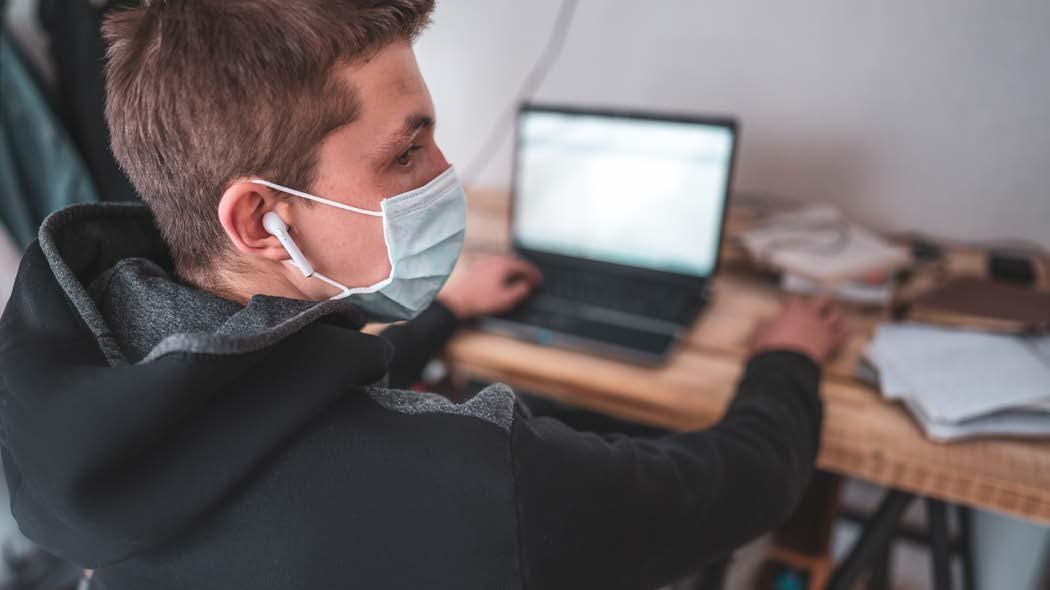
either be eligible under the IDEA or not have an IDEA disability within 60 days following the receipt of parental consent for an evaluation), and the IEP development process (e.g., the composition of the IEP team). The second requirement is substantive. The Supreme Court’s ruling in the Endrew F. cases established that in order to meet the substantive requirements of the IDEA, schools must develop individualized education programs (IEPs) that are reasonably calculated to enable a student to make progress in light of the student’s circumstances. These requirements involve the content of a student’s programs and require that IEPs conduct full, individualized, and relevant assessments, linking the results of the assessments to a student’s special education programming, crafting ambitious and measurable annual goals, and collecting and reacting to meaningful data collected on student progress.
A final FAPE-related issue that was not addressed in either of the Supreme Court’s ruling in Rowley or Endrew F, is accuracy in implementing a student’s IEP. Parents have brought lawsuits against school districts alleging denial of FAPE because school personnel have failed to fully or partially implement a student’s IEP. Two important cases on a school’s failure to implement have come out of the US Courts of Appeals for the Ninth Circuit, Van Duyn v. Baker School District, 2007 and M.C. v. Antelope Valley School District, 2017. According to these rulings, a failure to implement a material part of a student’s IEP (e.g., failing to provide the minutes of services included in an IEP, failing to collect and report data on student progress) violates the FAPE requirements of the IDEA.
Thus, there are procedural, substantive, and implementation requirements to which special educators must adhere to ensure they develop a FAPE. Clearly, COVID-19 is a public health emergency that has led to school closures and interruptions in educational programming. Most school districts, however, have continued to provide services to all students in a modified format. The US Department of Education and the Office of Special Education
Clearly, the Congressional authors of these laws did not anticipate a pandemic that would alter the delivery of services as drastically as has occurred during this pandemic.
Programs (OSEP) within the Department have issued guidance to school districts on how to provide special education services to students with disabilities during the COVID-19 pandemic. We next review this guidance.
The US Department of Education, FAPE, and COVID-19
Because most, if not all, public school districts throughout the country have continued to provide educational opportunities to general education students during the COVID-19 public health crises, these school districts must have also ensured that students with disabilities had equal access to the same opportunities, including the provision of FAPE under the IDEA. In March 2020, Department officials released a question and answer document and a fact sheet on school district responsibilities to provide services to students with disabilities at the start of the pandemic.
Department and OSEP officials recognized that schools were straining to provide educational programming during this health emergency. Department and OSEP officials, however, noted that during the pandemic school districts were still responsible for providing a FAPE under the IDEA. Additionally, school districts were also responsible for providing services for students with disabilities who were covered under Section 504 of the Rehabilitation Act and Title II of the Americans
with Disabilities Act. In other words, administrators and teachers needed to continue the services or accommodations listed in a student’s 504 plan.
Department and OSEP officials also recognized that many schools were moving to virtual instruction but that many school administrators were reluctant to do so because they believed that federal disability law presented a barrier to providing remote education. Both documents were clear that this notion was simply not true and that nothing in federal disability law would prevent special educators from providing services through distance instruction. Moreover, officials noted that the IDEA and Section 504 allowed for flexibility in providing educational services to students with disabilities as long as FAPE was provided, even if education programming looked different during COVID-19.
Department and OSEP officials made the following additional points in the documents:
• If public school districts provide educational services the students in the general education population, they have to provide equal access to students with disabilities. For example, if a school furnishes social studies classes, whether online or in-person, to general education students, the school would have to offer the social studies classes to students with disabilities. (To fail do so would probably violate Section 504).
• To the greatest extent possible, public school districts have to ensure that students with disabilities are provided with the special education and related services listed in their IEPs or Section 504 plans. How they are provided may look different during the pandemic; nevertheless, such services must provide FAPE.
• If a student is absent for an extended period of time because he or she has been infected with COVID-19, the public school is still required to provide special education and related services. If the absence extended beyond 10 consecutive days, a student’s IEP team should meet to change placement and the IEP if needed.
• The forum for making changes in programming for students with disabilities under the IDEA is the IEP team.
• If services had not been provided to students with disabilities for an extended period of time, the IEP team should determine if compensatory services are needed.
Readers should note that policy letters and documents such as these are non-regulatory guidance. Although they do not have the legal weight of legislation, regulations, or litigation, these policy documents are important and can be cited in courts. In fact, these documents were cited by a US District Court judge in a case titled Hernandez v. Grisham (2020).
A US District Court Ruling, FAPE, and COVID-19
Department and OSEP officials recognized that schools w ere straining to provide educational programming uring this health emergency.
On October 14, 2020 the US District Court in New Mexico issued in ruling the case of Hernandez v. Grisham. The ruling was complex, lengthy, and involved multiple issues. For purposes of this discussion, an important part of the district court ‘s ruling addressed the provision of FAPE during the COVID-19 pandemic. This case is of special interest because it addressed an issue that likely will be more frequently heard in future court cases and due process hearings. We will only address the FAPE issue aspect of the court’s ruling.
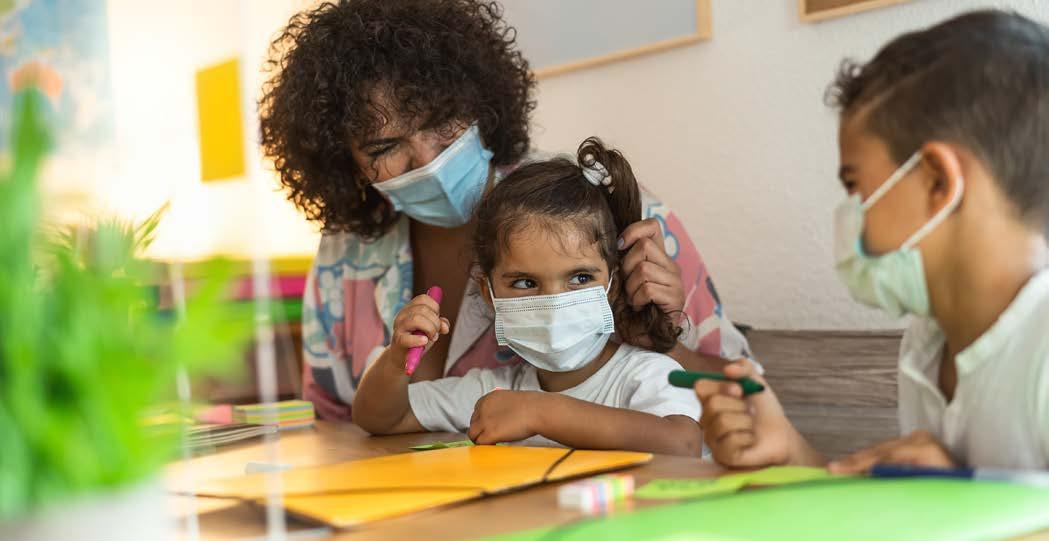
One of the plaintiffs in this case, Shannon Woodworth, had a school-aged child with a learning disability. The child had an IEP but was unable to receive her services because of the COVID-related school closing. Schools in New Mexico were shut down due to the pandemic by order of the state’s governor, Lujan Grisham. Although the child’s school was closed, educational services were provided remotely. Students’ IEPs were amended to include only remote learning services.
Woodworth alleged that the school district denied her child a FAPE because many of the services in her child’s IEP could not be provided remotely. Moreover, the child had regressed despite having remote instruction. Woodworth contended that the school district needed to provide some inperson services for her child to receive a FAPE. The plaintiff requested a preliminary injunction to force the revision of the student’s IEP to include in-person learning.
In his opinion, the district court judge recognized that for some students school closures and remote learning would not be effective and in-person instruction may be necessary. Because Woodworth’s child had suffered severe educational loss when
receiving only remote special education services, the judge held that the State Department of Education was to order the school district to revise the IEP to include in-person instruction and granted the parent’s request for an injunction to provide the student with a FAPE.
The request for the injunction was granted because the judge believed that Woodworth was very likely to succeed in an IDEA claim that her child was not provided a FAPE. Moreover, because the child’s current IEP failed to address their needs and that the child would likely suffer educational harm if the injunction were not granted.
What does the decision mean for special education administrators and teachers? First, a ruling from a US District Court only applies to the district court’s jurisdiction, which in this case was the state of New Mexico. Nonetheless as a ruling from a US District Court, and one of the first to address the issue of FAPE and COVID-19, it is very likely to have persuasive authority in hearings or courts that encounter similar FAPE and pandemic-related issues. Second, the ruling was a preliminary injunction issued because in the eyes of the court, the plaintiff was very likely to succeed if she brought a denial of
FAPE suit against the school district. It is very likely that this clear signal from a federal court judge will result in the school district losing the FAPE case and the child’s IEP being amended to in-person instruction. Third, this does not mean that all school districts should immediately require in-person services to all students with disabilities; rather, as always, students’ IEP teams must make decisions on the basis of the individualized needs of students.
Providing FAPE During COVID-19
The COVID-19 pandemic has presented tremendous challenges for state educational agencies and local school districts, which must balance the safety and health of administrators, teachers, staff, and students with the obligation to provide educational services. The IDEA mandate that a FAPE is provided to eligible students with disabilities certainly presents a unique set of challenges to school district personnel; nonetheless, school districts are still responsible for providing special education and related services that confer a FAPE. We next offer guidance to school districts in providing FAPE to IDEA-eligible students with disabilities.
Continue to meet as an IEP team when required or needed
According to OSEP, IEP teams remain responsible for ensuring that a FAPE is provided to all children and youth with disabilities (OSEP, 2020a). Despite the problems inherent in holding in-person IEP meetings, such meetings must continue when needed or
when requested by a student’s parents or school personnel. It is most likely that IEP meetings will be held virtually. This is permitted under the IDEA, which allows parents and school personnel to agree to use alternative formats (e.g., online, video conferences) to hold meetings (IDEA, 20 U.S.C. § 1414[f]). Frequent and ongoing communication regarding any facet of IEP implementation or decision-making processes is crucial during this period.
Use evidence-based practices
Clearly, the unprecedented health and safety challenges demand a unique and novel approach to designing and providing educational experiences for students with disabilities to provide a FAPE. Although research has yet to determine the specific educational programming that may be most effective in educating students with disabilities in a virtual environment, officials at OSEP have tasked their technical assistance centers to address these challenges by providing resources to special education personnel (OSEP, 2020b; OSEP, 2020c). Table 1 lists and describes some of these resources.
Woodworth alleged that the school district denied her child a FAPE because many of the services in her child’s IEP could not be provided remotely.
Although special education and related services may look different during this public health crisis, it is our responsibility to ensure the provision of FAPE and provide individualized and effective special education programming. School district administrators, teachers, and related service providers must individualize instruction to meet the unique educational needs of eligible students with disabilities, while considering the safety and health of teachers, parents, and service providers. This may require that schools provide hybrid instruction (i.e., a mixture of traditional learning formats and virtual instruction) if that is needed to confer a FAPE.
Monitor student progress
The substantive requirement of FAPE, as announced by the US Supreme Court in Endrew F., is that student IEPs must be reasonably calculated to enable them to make progress in light of their circumstances. Thus, the substantive requirement of FAPE focuses on the likely or actual results of
Resources for Educators and Parents During COVID-19
Resource Description Link/Citation
Center for Parent Information and Resources (CPIR)
Comprehensive Center (CC) Network
Early Childhood Technical Assistance (ECTA) Center
The Center maintains a Coronavirus suite landing page with a wide range of COVID-19 resources for parents and families.
The CCNetwork website includes numerous COVID-19 related resources for school administrators and personnel.
The ECTA Center website includes numerous COVID-19 resources for school personnel and early childhood education providers.
https://www.parentcenterhub.org/ coronavirus-resources/#non
National Center for Systemic Improvement (NCSI) COVID-19 Resource Hub
National Center on Intensive Intervention (NCII)
Office of Special Education Programs (OSEP) Ideas That Work: Continuity of Learning During COVID-19
The NCSI website includes links to state-bystate links to COVID-19 Guidance and plans. Find your state’s COVID plan here.
The National Center on Intensive Intervention website includes sample lessons, tools, tips, and videos related to COVID-19.
The OSEP “IDEAs that Work” website includes a series of webinars, information, and resources to help educators, parents, and related service providers provide FAPE during COVID-19.
a student’s IEP (Zirkel, 2017). It is through the collection and use of legitimate data on student progress, therefore, that school districts can show that they meet the Endrew F. standard. Although it may be difficult during the COVID-19 crises, collecting data on student progress and making instructional decisions based on the data is just as important during the pandemic as it was before and will be after.
The COVID-19 pandemic presents an unprecedented challenge to special education administrators, teachers, and related service providers. In addition to providing educational services, school district personnel must ensure
https://www.compcenternetwork. org/covid-19
https://ectacenter.org/topics/ disaster/coronavirus.asp
https://ncsi.wested.org/newsevents/state-by-state-links-tocovid-19-guidance-and-plans/
https://intensiveintervention.org/ resource/using-sample-lessonssupport-continuity-learning
https://osepideasthatwork.org/ continuity-learning-during-covid-19
the safety of students and faculty. Despite these challenges, school district personnel must meet the requirements of federal law, specifically the IDEA’s FAPE requirement. Recently, the US District Court for the state of New Mexico in Hernadez v. Grisham (2020) ruled that the state had to order a school district to revise a student’s IEP to include in-person services because of evidence the student was being harmed by the interruption of services. This ruling, and others that will certainly be forthcoming, require that decisions regarding a student’s special education and related services must be made by their IEP team and enable a student to make progress in light of their circumstances. To ensure that students make progress, special education
must collect legitimate data and make educational decisions based on that data.
References
Board of Education v. Rowley, 458 U.S. 176 (1982).
Endrew F. v. Douglas County School District Re-1, 137 S.Ct. 988, 580 U. S. ____ (2017).
Hernandez v. Grisham, 120 LRP 31613 (D. NM, 2020).
Individuals with Disabilities Education Act, 20 U.S.C. § 1401 et seq.
M.C. v. Antelope Valley Union High School District, 858 F.3d 1189 (9th Cir. 2017).
Office of Special Education Programs. (2020a, September 28). Implementation of IDEA part B provision of services in the COVID-19 environment. https://www2.ed.gov/policy/ speced/guid/idea/memosdcltrs/qa-provision-of-services-ideapart-b-09-28-2020.pdf
Office of Special Education Programs. (2020b). Information briefs on evidence-based and promising practices to support continuity of learning: Practices and resources to support parents and families. https://osepideasthatwork.org/sites/ default/files/SWDLearning-Families-508.pdf
Office of Special Education Programs. (2020c). Information briefs on evidence-based and promising practices to support continuity of learning: Practices and resources to support teachers https://osepideasthatwork.org/sites/default/files/ SWDLearning-Teachers-508.pdf
Van Duyn v. Baker School District 5J, 502 F.3d 811, 815 (9th Cir. 2007).
Zirkel, P.A. (2017). Failure to implement the IEP: The third dimension of FAPE under the IDEA. Journal of Disability Policy Studies, 28(3), 174-175.
Mitchell L. Yell, Chair in Teacher Education, and Mark D. Samudre, Assistant Professor, University of South Carolina, Columbia, myell@mailbox.sc.edu, msamudre@mailbox.sc.edu
I checked into the hokey-pokey clinic and I turned myself around.
Answer for Page 49 Conduct Disorder
Podcast Pulse
By Erika Calderon
The Behavioral Observations: Episode 101- The Ethics of School Consultation for BCBAs with Dr. Missy Olive
(Nov. 22, 2019)
(https://behavioralobservations.com/the-ethicsof-school-consultation-for-bcbas-session-101-withmissy-olive/
I listen to The Behavioral Observations Podcast because I truly value the opportunity to connect with professionals in the field that I might not otherwise come across. One of those professionals is Missy Olive. In this podcast Matt Cicoria and Olive go into detail about the ethics of school consultation for BCBA’s and other behavior specialists, and how this working relationship has changed over the years. Olive’s experience dates back to the early 80’s, long before the Behavior Analyst Certification Board (BACB), the national organization responsible for overseeing the ethical and successful dissemination and implementation of applied behavior analysis. She discusses how ABA affected her family when she was only a child, and how her experiences set the foundation for a career in special education advocacy and law. Olive brings up a range of very important topics, such as the need for the structured oversight of ABA in schools, the importance of already existing behavioral research in special education and the difficulties regarding behavior consultation in the schools.
As a practitioner who has worked in clinics and school settings, I have also identified the need for many of the issues Olive brings up, such as closer
management of individual caseloads, longevity of services and stakeholder responsibilities in individual education and behavior plans. In many situations, behavior change is expected from analysts who have too large of a caseload, have spent too little time working in the schools, or both. This can often set the stage for very ineffective, or worse, dangerous behavior intervention. Olive points out that the majority of behavior professionals working in the schools were certified in 2016 or later. This implies that professionals who have spent less than a decade in the school systems are expected to be catalysts of meaningful change, many of which do not have proper understanding of special education law or policy, yet they, and the students they serve, are expected to thrive. This creates a potential conflict in many schools. Olive offers the perspective
of a seasoned analyst who started her ABA career long ago, observing critical changes in the schools, policies, and trainings surrounding special education. She urges practitioners to look beyond popular behavior analytic research in order to be effective in the schools, and sites several educational journals and magazines that offer valuable behavior science in a language that is familiar to educators. She reminds all special educators that we have the ability to make meaningful changes in the lives of the individuals we serve when we collaborate with language that is clear and meaningful and consider all aspects of our science.
Beautiful Humans: A Behaviorist’s Role in the Social Justice Movement with Megan Sullivan Kirby of UncomfortableX
(December 10, 2019)
(https://anchor.fm/beautiful-humans/episodes/ABehaviorists-Role-in-the-Social-Justice-Movementwith-Megan-Sullivan-Kirby-of-UncomfortableXe9d4g9)
Megan Sullivan Kirby has a unique journey in which she applies her years of experience working in the fields of special education and outpatient behavioral services to advocate and inform others on issues related to social justice, equality in education/ therapeutic services and human rights. The podcast starts with a quick overview of Kirby’s background, and the path that brought her to pursue a doctorate at University of South Florida and develop the educational platform that is UncomfortableX, a site that offers a variety of CEU’s to analysts, advocates, and other professionals. Kirby discusses how she was raised to value human compassion and unity. She cites a very empowering speech by Dr. Martin Luther King in which he urges individuals in psychology and education to consider similar values by sharing important social and behavior science that may encourage society to move in a more unified and accepting direction.

Kirby humbly carries the torch by providing practitioners with the framework they need to be active advocates for social justice in their communities and reminds all behavior and special education professionals that above all, we must value socially significant behavior change in the individuals we serve, even when it gets uncomfortable. Reflecting on what I heard as a practitioner in the schools, I do worry what will happen to my young clients as they get older and no longer have a whole team of people advocating for their needs to be met. This encourages me to speak up for sustainable interventions that are rooted in educational and behavioral science. At a time in history where social injustice is so prevalent, many individuals do not have anyone pushing for even their most basic needs to be met. Kirby encourages us to reconsider what our science is capable of. We have the ability to change the world. In the words of B.F. Skinner “The only geniuses produced by the chaos of society are those who do something about it.”
Erika Calderon, Behavior Coach, Lee Summit, Public Schools, Kansas, erika.calderon.sbx@gmail.com
Books
Seven Things I Learned from Torey Hayden
By Michael J. Marlowe
Torey Hayden is a special education teacher and educational psychologist who, since 1979, has chronicled her work with at-risk children in a succession of bestselling nonfiction novels. Torey, as the children call her in her novels, first penned One Child (1980), the story of six-year-old Sheila, who finds herself in Torey’s self-contained classroom after being accused of critically burning a neighborhood toddler. Over the course of the next five months, Torey and Sheila form a relationship that transforms both of their lives.
One Child was followed by Somebody Else’s Kids (1982), Murphy’s Boy (1983), Just Another Kid (1986), Ghost Girl (1992), The Tiger’s Child (1995), the sequel to One Child, Beautiful Child (2002), Twilight Children (2006), and Lost Girl (2019). Torey’s novels have been translated into 37 languages, sold tens of millions copies world- wide, and appeared as films, stage productions, opera, and even kabuki theatre (a form of classical theatre in Japan)..Torey has an author fan website to promote her work: http://www. torey-hayden. com/

Nonfiction Novels by Torey L. Hayden
One Child (1980)
Somebody Else’s Kids (1982)
Murphy’s Boy (1983)
Just Another Kid (1986)
Ghost Girl (1992)
The Tiger’s Child (1995)
Beautiful Child (2002)
Twilight Children (2006) Lost Girl (2019)
All of Torey’s novels are particularly helpful in understanding relationships. They stress the relationship interface between a teacher and their students and the interpersonal dynamics and emotional connections involved. Her books emphasize the active use of interpersonal relationships as a means of changing the behavior of resistant and difficult children.

My introduction to Torey happened in 1992 when I adopted three of her novels as texts for training teachers in emotional and behavioral disorders (EBD) (Marlowe et al., 2017); we subsequently met in 1998 just as the Internet was finding its feet. Since then we have had many discussions about educational methods, trends, and philosophies, and these extensive conversations led to our collaborating on a book describing the relationship-driven classroom methods Torey used in her classroom augmented by my own observations and commentary from the perspective of a professor of special education (Marlowe & Hayden, 2013). Here are seven philosophical principles I learned from Torey that underpin and inform all action taken in a relationship-driven classroom. These principles evolved from Torey’s day-today interactions with her children rather than being a philosophy she applied to her work.
1. Relationships are a process, not a goal
Torey has pontificated many places why an understanding of the difference between goal orientation and process orientation is important to using relationships as a means of changing children’s behavior. Both orientations are a normal part of human behavior.
Goal orientation is when your focus is on the outcome. You do what you do for the ultimate outcome. With a child with EBD, for example, you work with them because you have expectations of making them better and more capable of living a fulfilling life. Fulfillment comes when you reach the goal.
Process orientation is when your focus is on the act of doing. You do what you do for the process of doing it. With a child with EBD, for example, you work with the child because you enjoy the act of being with the child. Fulfilment comes from an awareness and appreciation of having the experience while it is happening.
Torey emphasizes that relationships are by their very nature, process oriented. We can remember or dream about a relationship, but we can only experience a relationship now, in the present moment. Thus, in order to use relationships as a means of changing behavior, we need to be oriented to the present process as opposed to a future goal. In other words, the relationship we have with the child now is used to change behavior. We are working with the environment, modifying what is happening right now by relationship skills, intuition, and the social milieu, all of which exist in only the present.

Torey considers being in the process when working with the child akin to riding a raft down the river. If you lose focus, if you do not pay attention, if you do not stay in the moment, and start thinking about the child’s unmet IEP goals or errands to run after school, these distractions are like little streams that drain the water off, and if there are too many, soon your river will be too small to raft on, and you won’t go anywhere
Process is Torey’s main orientation. She works with children because she thoroughly enjoys the process itself. She loves the act of being with children. While she is open to the fact that improvement for her children is desirable, this is not what guides her work. Her pay-off, her fulfillment in working with children, comes during the time spent together, during the interactions, during the moment itself.

Torey, an experienced meditator, in collaboration with Tibetan meditation master, Yongey Mingyur Rinpoche, created Ziji: The Puppy Who Learned to Meditate (2009) and Ziji and the Very Scary Man (2018). These books are intended to introduce young children to the practice of meditation. Meditation is nothing more than staying fully present in the process
2. There is a difference between a person and a person’s actions
Torey is unequivocally on the child’s side. This doesn’t mean accepting everything the child does, but it means making clear that the child themself is
acceptable. The difference between the person and the person’s action is another way of saying it.
Understanding the difference between the person and the person’s actions is also at the heart of developing a tolerant and nonjudgmental attitude toward children’s abilities to change. If a child’s ac-
We can’t change who we are. We can change what we do.
tions were as unchangeable as their identity, then there would be little hope for them to learn new or more adaptive behaviors because “they will always do that,” or “they won’t change.” Understanding that a person is not their actions regardless of the number of times he/she has engaged in a certain action, allows us to recognize they have the capacity for different actions.
3. No one chooses to be unhappy
Unhappiness sucks. If people learn anything from Torey she hopes it’s that! No one wakes up in the morning and says, “Wow, I want to spend the day having a crappy time.” No one wants to be unhappy. Everyone wants to live a fulfilling life full of love and connection. So, if a kid continues to do something that repeatedly makes them unhappy or everyone else unhappy, you can pretty much rest assured it isn’t because they want it that way. It’s because they don’t have another way of behaving securely in their repertoire.
Torey postulates if teachers accept the notion that no child chooses to be unhappy, then they must also recognize it is no longer the child’s responsibility to sort the problem out, it is the teacher’s as well. There are many things teachers can do to help – ranging from teaching, role modeling, therapy, and supervision to just plain old caring. As Torey’s books attest, an amazing amount of change can be brought about by one person caring enough about one other.

4. Misbehavior is a teaching opportunity

Torey and I conducted a two-day conference for teachers at Appalachian State University, and her operative phrase was, “Always remember you are a teacher.” It is her position that a gigantic amount of misbehavior occurs because the child simply does not know to behave differently, because they have misconceptions about how they should behave, or because they have misconceptions about themselves. These situations are not corrective occasions. They are teaching opportunities. Being a teacher overarches every other aspect of what you do. You are not a prison warden. You are not a psychologist. You are not a research scientist. You are a teacher, and to Torey this means you want to approach every situation in the classroom with a mind open to teaching opportunities. As a teacher you teach!
5. Everyone can change
Torey believes that everyone regardless of who they are and what they have done can change. To her this is simply a practical attitude. We don’t know everything.
Pollyanna says, “Everyone will change.” This statement is just as black-and-white as “He’ll never change.” What Torey wants to cultivate is the ability
to stay positive about the possibility of change, and the recognition that we are not omniscient. It is easy to fall into using black-and-white terms like never or always in regard to difficult behavior, but in doing so we are implying that the children and situations we are dealing with are fixed, and discreet, and therefore entirely predictable when they are, in fact, constantly changing, connected, and affected by an infinite number of other things that we have no knowledge of, insight into, or control over.
Torey cautions that we can’t see the finish line. None of us is all seeing. So, we just need to keep running the race and keep assuming that things can change. In her opinion if you do not believe change is possible, reflect on your role, you may be in the wrong business, and you should go now.
6. Personal change is very difficult
In Torey’s experience permanently changing ingrained personal behavior is very, very hard to do. There are many reasons for this. Genetic make-up and environmental circumstances factor in, as well as motivation and consequences. Oftentimes, these factors all interact to a point where it is difficult to tease out just what exactly is standing in the way of personal change taking place.
The important thing to recognize is that change is very hard. For everyone. As a consequence, it is normal for the individual who is trying to change to make many approximations before managing the right behavior. It is also normal to slip up or fail many times before eventually achieving the behavior. Torey recognizes that slips and failures are part of the process and not the outcome.
Consequently, when we attempt to change a child’s behavior it is normal for the child to try but fail, to backslide, to slip up, to miss, and sometimes to totally fail and come off the program. This does not mean that change is not taking place or that change is impossible. It simply means the child hasn’t gotten there yet.

Torey regularly repeats group homilies, simple, easy-to-remember phrases that encourage desired behaviors s uch as “You haven’t failed as long as you are still trying” or “Hard is not impossible.”
7. The world is complex
Torey posits that black-and-white thinking – the tendency to perceive things as all-or-nothing and thus able to be put into discernible, discreet, and permanent categories - seems to be a hard-wired trait for humans. We categorize and generalize by nature.
Unfortunately, this way of looking at the world gives people a false picture because all things change over time and almost all behaviors occur on a spectrum and not at the two (black or white) extremes. From the perspective of a relationship-driven approach, recognizing the process of change and the spectrum nature of behavior makes it much easier to accept approximations of appropriate behavior and to see positive movement toward the wanted behavior because we can see what is being done is further up the spectrum than the previous behavior. Blackand-white- thinking allows us only two outcomes: success or failure.
Black-and-white thinking also tends to generate clear and unambiguous rules that have the potential for creating power struggles. If you set a rule and say, “Here’s the line, I dare you to cross it,” you are setting up a power struggle. The kid just has to break that rule to prove they can. Save black-and-white rules for those occasions when you have no other choice. More ambiguous rules allow you as a teacher to be more flexible in your interpretation, and that way you can avoid a power struggle. Also, it allows you to accommodate special situations.
Torey kept her rules open-ended or gray. She basically had only two rules with the first being “Do your best.” Most children do have a sense of when they are putting forward their best effort – and yet it allows the teacher and the child some leeway in interpreting and applying the rule. For example, if you have a child who comes in very tired from having a very horrible night at home with his family, doing their best that day may be different than doing their best another day. So, you can stop where they are and say, “You’ve done your best,” and be truthful. The second rule “You are not allowed to hurt people, animals, or things that belong to others or are for everyone to use” is more specific for safety reasons, but it allows for interpretation in instances of accidental behavior and in terms of what constitutes “things for everyone to use.”
It is important when working with a relationship-based methodology that one has a clear understanding that we are messy creatures living in a messy world, and life itself is never black-and-white. It is one of the most crucial attributes for success in the dynamic realm of relationships.
References
Marlowe, M.J., Garwood, J.D., & Van Loan, C.L. (2017). Psychoeducational approaches for preservice teachers regarding emotional and behavioral disorders and the relationship-driven classroom. International Journal of Special Education, 32, https://eric.ed.gov/?id=EJ1184059
Marlowe, M.J., & Hayden, T.L. (2013). Teaching children who are hard to reach: Relationship-driven classroom practice. Corwin.
Michael J. Marlowe, Department of Reading Education and Special Education, Appalachian State University, Boone, NC, marlowemj@appstate.edu;
The Nickel Boys
Reviewed By Mike Paget
The Nickel Boys is a novel based on an actual institution, the Arthur G. Dozier School for Boys, written by Colson Whitehead (2019). To learn more about the story of this reform school, I read several reports, encountering their dark historical accounts. As my personal work has focused on working with students who in some cases have similar histories to those students served at this reform school, reviewing these accounts was quite distressing.

The Arthur G. Dozier School for Boys, Florida’s first juvenile detention center for boys, was opened January 1, 1900 as the “Florida State Reform School.” It closed its doors June 30, 2011 after a series of exposes about alleged deaths, murders, and inhumane treatment of the boys who spent time there. Reports, articles, and personal accounts vary regarding the number of deaths, ranging from 55 to over 100.
Spanning a historical period that begins during the Jim Crow era, continuing through the civil rights and social justice activities of the 1960’s, and finally coming to a close in 2011, this alternative/ reform school reflected many racist attitudes of the 111 years they were in operation. While all records of who attended the school and details of what occurred at the school are scarce, records for African American youth are even more scarce. As an example, it is rumored that the white students who died were more likely to be buried in marked graves in the “Boot Hill Burial Ground” while African American students were more likely to end up in unmarked graves.
University of Florida archaeology students conducted research on Boot Hill Burial Ground and other areas with unmarked graves, issuing their report in 2016. The state of Florida completed an investigative report in 2010. There also were news reports over the years, as allegations would bring some degree of public scrutiny. During the last decade the school was operating I often spent time in Florida, and recall reading the extremely upsetting articles.
Colson Whitehead is a respected author who decided to take on this story in novel form so that more awareness might be raised about the story, and to common cultural dynamics that played a role in the history of this school. The story centers on Elwood Curtis, a teenage African American boy being raised by his grandmother. Elwood had a thirst for knowledge, and a thirst to do the right thing. Inspired by the words of Dr. Martin Luther King, Elwood aspired to go to college, to join “the movement”, and to make a difference in the world. His initiative, industriousness, and respectful character were noticed in his neighborhood and caught the attention of more than one employer.
An exciting opportunity came to Elwood – one of his teachers, Mr. Hill, recommended Elwood to take a college course at nearby Melvin Griggs College in a special program developed for prom-
ising high school students. Elwood was so excited at the prospect that he decided to make an early visit to the campus, just to soak it in. As his bicycle had been damaged, he made the decision to hitch a ride. Little did he know that the car that pulled over to let him in was stolen. In short order police pulled the car over, charges were pressed, and Elwood was ordered to Nickel Reform School.
The pages that follow unfold stories of racism, brutality, sexual and physical abuse, and the extremes that a community allowed under the mirage of turning wayward boys into respectful citizens. Woven into the stories are themes of the local power structure and communities being blind to the abuse, while the school leaders employ abusive strategies to keep the young men in line.
The fact that the Arthur G. Dozier School for Boys was finally shut down in 2011 is startling. For those of us who have worked with challenging students in schools, we may have seen practices and attitudes that seem related to the unacceptable things done to the students of Nickel. The Nickel Boys is an important read, perhaps reminding us that these complicated students will always be around, and if we don’t remain vigilant and determined to use practices that are safe, effective, and caring, then harmful and abusive practices may be closer than we want to acknowledge.
Finally, for the reader who takes this on, I suggest that you first begin with reading some of the historical accounts of this travesty of justice. Gird yourself to be unsettled, and perhaps to strengthen your resolve to bring effective and healing opportunities to our students.
Mike Paget, Independent Trainer on Student Mental Health, Overland Park, KS.
Hanging In There, Clearing the Way
By Jim Teagarden
Over the past several issues of ReThinking Behavior I’ve shared a selection of the artistic representations of various mental health disorders constructed from paper clips. Each of these representations was the product of an art therapy experience designed to illustrate the central features or feelings associated with major mental health disorders. For those of us who may have not experienced these conditions, it can be difficult to understand just how overwhelming they may be. So as is often said, “a picture is worth a 1,000 words,” it is my hope that in some small way these representations have allowed you to experience the conditions.
This issue features the final piece from the collection. This final piece represents one of the most challenging of conditions that presents itself in the classroom. I’d invite you to think about what this piece could represent and then check page 40 to see if your interpretation matches mine.
I would encourage you to get out your stash of paper clips and your handy copy of the DSM 5 and try your hand at composing a representation of one of the remaining 255 disorders that I
haven’t yet composed. It’s a great way to survive the COVID imposed cabin fever season.
Join the ongoing discussion of the impact of mental health issues on children and families on the MSLBD Facebook page.
Jim Teagarden, Associate Professor, Kansas State University, Manhattan, KS, mrt@ksu.edu
©James Teagarden, 2021
RESPONSES From Our Readers
Should the Use of Seclusion End?
In the Spring 2020 issue of ReThinking Behavior an editorial advocated for the elimination of the use of seclusion procedures in schools. Five individuals responded to that editorial with their own position and comments on that topic. Excerpts of those comments are below.
I have a hard time with the concept of eliminating the option for locked seclusion. I believe that locked seclusion needs to be available, but only be used when there is an imminent risk of injury to someone. With good alternative placement options becoming very rare, the public schools are left to be the only option for serving some students, who can be very dangerous and assaultive…
I have served students, who are not triggered by events at school, but by setting events that were out of our control (i.e. abuse at home, conflicts with siblings, etc.). Some of these students were actively trying to injure another person, and the plan was not successful in de-escalating the student during the crisis. Good plans are almost always successful in eventually teaching the student replacement behaviors and putting supports in place to make problem behavior inefficient, but it takes time to develop plans, as well as train staff and get fidelity. I do not believe that there is a therapeutic component to seclusion, but there is a need to maintain safety for other students and staff in the building…
I support and advocate for making restraint and seclusion extremely rare and putting policies and training in place to govern its use. However, I believe that it is irresponsible to advocate for total elimination, because the unintended
consequences of this type of policy could cause injuries to staff and other students as well as bring about more police involvement. In addition, many teachers like myself would consider leaving the field, because we have witnessed how having the option for locked seclusion stopped a student from hurting someone else.
Craig Rosen, Special Education Teacher, craig. rosen67@gmail.com
I agree [seclusion is necessary]. I was just involved in a situation where everything possible was done to prevent [but] the student attacked me… There aren’t many, but we do have students who are particularly violent… more than we used to see, for sure. We can work with these students and support their behavior change, but only if we have the capacity to protect ourselves and others when violence erupts.
The complete restriction of seclusion and restraint is a nice ideal but it doesn’t match the reality educators are facing on a daily basis… Oversight of such practices must be tightened. But the use of seclusion and restraint must be an option in those rare occasions when a student becomes dangerous.
Linda Geier, Consultant, lgeier98@gmail.com
… I have struggled often with resolving the pro and con of seclusion. More often, I stand with the elimination of this intervention option, however, I know by experience there are situations in which it can be the safest intervention option. While these situations are rare, they do occur… In my experience the down side of seclusion in schools is that it becomes a frequently used option for students that present repetitive disruptive behavior. In schools that are not staff rich, this can be very harmful – especially with Trauma students…
I honestly believe that schools could operate without locked seclusion. They need to be staffed with well trained personnel. I do think there is strong potential for more misuse than appropriate use – I think that I would opt for a time out room with trained staff [not seclusion].
Joe Mullen Sr., President, JKM, Inc. Training, jmullen@jkmtraining.com
Been there done that. I too spent many years working with students that had very aggressive behaviour towards themselves and others. When I started, we had 2 ‘safe rooms’ with magnetic locks in just my classroom of 6 students. Even with a positive system approach and the very best staff, students would still become aggressive… It also became clear that school board administration and Unions were not supportive [of safe rooms]. In our setting, staff made the decision to take the doors off the rooms as we could no longer support the idea of isolation rooms… if something adverse happened, we as staff would be left holding the bag…
As a result of this decision [to take the doors off] these isolation rooms were now used for small individual quiet classrooms, or students would go into them on their own to wind down or help with transition. Aggressions did not magically disappear, but more detailed behaviour plans
were written up and more professionals became involved. Students needed to be picked up from school far more often either by family, group homes or the police. There were more restraints, which I argue are often far worse than isolation rooms… Shutting down isolation rooms certainly created other problems, but looking back I believe it was the lesser of 2 evils. And there’s always the question, where does an educator’s job end and it becomes the responsibility of others to come up with better ideas. We need more social workers and psychiatrists in schools for better and proactive mental health supports. Educators have a tendency to take on too much responsibility, and that leads to early burnout.
Hubert van Niekerk, hjvannie@yahoo.ca
I 100% agree [that seclusion should not be banned]. Based on my 30 years of experience on the “front lines” of providing services to those with extremely challenging behavior, I believe the likely result [of eliminating seclusion] will be more police involvement, ridiculously expensive contractual placements that may or may not use evidence-based practices and a loss of quality school staff. I think there needs to be way more oversight and regulation and more incentives for districts to follow evidence based MTSS PBIS practices but, just as with many well intended idealistic things, a total ban would lead to unintended undesirable consequences and more dangerous situations, not less…
Kaye Otten, PhD, BCBA, kayeotten@mac. com
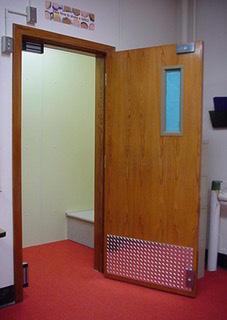
Seclusion Room –
Photo by Reece Peterson
A Free Virtual MSLBD Webinar
For Educators Serving Students with Behavioral Needs
Monday, Feb. 15, 2021
4 PM CST Supporting Students’ Behavioral
Needs During Virtual Instruction
Presented by Valentina Contesse, M.Ed., Doctoral Candidate, University of Florida
This session will highlight helpful tips and resources for supporting students' behavioral needs during virtual instruction. The workshop is free and open to any educator, but advance registration is required! To register go to https://mslbd.org/free-virtualwebinar.html. Once registered, a link to access the workshop will be sent to all registrants approximately 24 hours prior to the start of the event.
How do you make a Kleenex dance? Put a little boogie in it.
I swallowed a dictionary. It gave me Thesaurus throat I've ever had.
would like to thank the following for their financial support Consider Making a Financial Donation to
Donations will help to offset the costs of our free electronic magazine, ReThinking Behavior, and the other activities of MSLBD. Donations are tax-deductible, and any amount is welcomed! Donations of $300 or more will result in an acknowledgment in ReThinking Behavior. To donate go to https://mslbd.org/get-involved/donate.html.