
RE THINKING Behavior
2019 SYMPOSIUM
February 21, 22, 23, 2019
Sheraton Crown Center Kansas City, Missouri
For the 37th year, the Midwest Symposium for Leadership in Behavior Disorders will address cutting-edge issues of interest to professionals working with students with emotional/behavioral disorders and autism spectrum disorders.





• What are the causes of the apparent increases in anger and aggressiveness in students?
• What do we know about how to treat or address angr y and defiant children?
• How do these things affect us in our families and community as well as schools?
• What should educators do to create and teach civility?
This MSLBD keynote will provide four short, intense, “TED Talk-like” responses to these and other questions about how anger, aggression and violence are affecting us in our communities, families and schools. Each speaker will examine these questions from their own personal as well as professional position.
Each speaker will offer a follow-up breakout session to allow discussion, and answer questions.
SYMPOSIUM AT-A-GLANCE
Thursday, February 21
7:30 a.m. Conference Desk Opens
9:00 a.m.-12:00 p.m. Pre-symposium Workshops
12:00 p.m.-1:30 p.m. Lunch (on your own)
1:30 p.m.-4:30 p.m. Pre-symposium Workshops 11:30 a.m.-5:00 p.m. Exhibits
Friday, Februar y 22
7:30 a.m. Conference Desk Opens
8:00 a.m.-5:00 p.m. Exhibits
8:30 a.m.-10:00 a.m. Keynote Session
10:20 a.m.-11:20 a.m. Concurrent Sessions, Set I 11:30 a.m.-12:30 p.m Concurrent Sessions, Set II
12:30 p.m.-2:00 p.m. Lunch (on your own)
2:00 p.m.-3:00 p.m. Concurrent Sessions, Set III 3:15 p.m.-4:15 p.m. Concurrent Sessions, Set IV 4:15 p.m.-6:00 p.m. Poster Session: Cash Bar and Complimentary Hors d’Oeuvres
Visit our website: www.mslbd.org
Follow us on:
8:00 p.m.-11:00 p.m. Symposium Party
Saturday, February 23
8:00 a.m. Conference Desk Opens 9:00 a.m.-11:30 a.m. Saturday Concurrent Sessions 11:45 a.m. Adjournment
Reesha M. Adamson*
Mary Jo Anderson
Felicity Post*
Marc Benedetto
Jacqueline HuscroftD’Angelo*
Linda Geier
Deborah E. Griswold
Scott M. Fluke *
Cassandra L. Hunt
Marilyn S. Kaff
Sharon A. Maroney *
Jessica Nelson*
Regina M. Oliver
Mike Paget
Reece L. Peterson *
Corey D. Pierce*
Seth A. Piro*
Lisa A. Robbins
Carl R. Smith *
Jim Teagarden*
Jason C. Travers
Nicole E. Wiseman
Kathleen N. Zimmerman
* Production Team
Rethinking Behavior, ISSN 2578-5397, a magazine for professionals serving children and youth with behavioral needs, is published three times per year, fall, winter, and spring, Copyright ©2019 by the Midwest Symposium for Leadership in Behavior Disorders, P.O. Box 202, Hickman, NE 68372. 402-7923057. www.mslbd.org. Email: rethinkingbehavior@mslbd.org.
Rethinking Behavior welcomes proposal and manuscript submissions; for information visit www.mslbd.org or email rethinkingbehavior@mslbd.org
RETHINKING Behavior

As a Sponsor, you will:
• Show your support of ReThinking Behavior by helping defray publication costs
• Be recognized and provided space to publish your organization information and web links
• Reach an audience of over 5,000 individuals and groups involved in the education of students with emotional, behavioral, or mental health needs
For more information, contact rethinkingbehavior@mslbdl.org
ONLINE PROGRAMS
Advocate and Innovate for Students & Families
Committed to excellence in basic and advanced teacher preparation in special education, University of Northern Colorado's expert faculty develop educators who advocate for children and youth with exceptionalities. UNC Extended Campus offers online special education programs designed for working educators.
CONTACT THE ENROLLMENT COACH
Kara Murray kara.murray@unco.edu 970–351–3797 extended.unco.edu
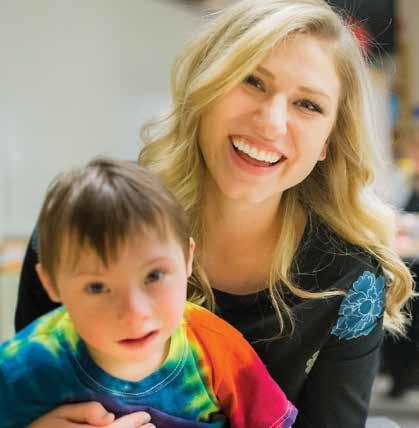
Building Relationships
In light of the many challenges educators must face, we believe that one of the most pressing challenges of all is building relationships with the people meant to benefit most from education - the students. It is hard to define a “typical” student in today’s world. Students’ needs are constantly evolving and seem to be much more visible than they were in years past. The need for positive relationships, however, has remained constant.
Relationship building is not black and white, but rather a wide range of colors. Each individual student must be viewed as just that, an individual. What one student may need, another may not. It is this vast array of individuality that requires educators to ask the right questions, listen to the responses, and act. In order to do so, we must erase what we think students should be and discover who they truly are. It is in doing so that we build the relationships needed to guide students through the toughest of times.
Felicity Post and Seth A. Piro, Issue Editors, and the Editorial Team
We’d love to hear from you!
Thanks for reading our 5th Issue of ReThinking Behavior. We’ve been working hard to publish important, relevant, and useful information and we know that, as one of our readers, you are in the best position to tell us how we are doing. Looking at this and our past issues –
• What’s been good?
• What needs improvement?
• What should be added and what should be deleted?
• Did we make you think? Smile? Change? Try something new?
• What topics would you like us to address?
Email us at rethinkingbehavior@mslbd.org.

Six Things You Can Do to Prevent School Shootings
By Kaye Otten

Once again, I find myself being asked to write in response to school shootings. The first time I was asked to respond was in January 2011. A high school student at Millard South High School in Omaha, Nebraska was suspended from school for property vandalism after joy riding on the football field with some of his peers. After being suspended, he went home, got one of his father’s guns, returned to school, shot the principal and the assistant principal, and then shot himself.
(https://www.huffingtonpost.com/2011/01/05/millard-south-high-school-shooting_n_804875.html).
Photo courtesy of Jaclyn Moy at Unsplash
That tragedy struck a personal chord as I had been a special education teacher for seven years in that district in an elementary program for students with severe emotional and behavioral disorders. While there I was a strong advocate for alternatives to suspension and other evidence-based practices to support students with social, emotional, and behavioral challenges. I had worked hard to support my students and colleagues and presented several times on these topics at district inservice days to very receptive audiences. For me this wasn’t an unknown district in some far away community and I thought, “If it can happen in Millard, it can happen anywhere.” My response ended with a challenge for readers to advocate for alternatives to suspension and punitive discipline systems that do not teach missing skills, support at risk students, or have any evidence to support their use.
I was not asked but was compelled to respond to school shootings a second time on December 16, 2012 after the heartbreaking loss of 26 lives in Sandy Hook, Connecticut. In my 20+ years of experience working on the front lines in the field of emotional and behavioral disorders I had served several students who shared some characteristics with the shooter. In my response, I hoped to share information that could prevent similar horrific events from happening in the future and decided to use Facebook as a platform to do so. In my initial and several follow-up posts I described: how aggression and violence can be a result of delayed or absent development of various skills such as theory of mind and executive functions based on an individual’s neurological make-up; how this can be prevented and/or treated through evidence-based multitiered systems of social, emotional, and behavioral instruction and support; and what every person could do to encourage and support these practices in their schools and communities.
After the Sandy Hook tragedy, there was a flurry of promising action. Ann Curry’s 26 Acts of Kindness Campaign went viral, parents and friends of the children lost organized to lobby for legislation on a
In my 20+ years of experience working on the front lines in the field of emotional and behavioral disorders I had served
several students
who
shared some characteristics with the shooter.
variety of related issues, Facebook and other social media platforms were flooded with support for these families, and it appeared that as a country we were uniting to do something to stop this disturbing trend in our society. I wanted to be hopeful but had my reservations. The last sentence of my final post was this; “I fear that after some time has passed, these acts of goodwill will fade away (like after 9/11) without true progress being made to solve this problem.” My posts got a combined 109 Likes, 60 Shares, and 50 Comments. This was by far a personal record for me, a beginner on social media, and I was naively excited and sure my posts would soon go viral. Meaningful change was finally going to happen and I was going to be a part of it!
At the time I wrote my first draft of this response it seemed my fears had been realized as our country was again heartbroken by the 17 innocent lives lost at Marjory Stoneman Douglas High School in Parkland Florida on Valentine’s Day, 2018. As of November 12, 12018, there have been at least 80 incidents of gunfire on school grounds (https:// everytownresearch.org/gunfire-in-school/).
I believe that most people are good and truly care about this issue but we seem to be in a continuous debate about gun control and mental health; stuck in endless, circular arguments of a seemingly hopelessly divided country. I refuse to accept the status quo as our new normal. We need to focus on action steps that unite and empower us as the great nation we are. Every single person in our
country pays taxes to public schools and there are things each of us can do right now to help prevent future similar tragedies. We are not powerless. We are free citizens of the United States of America, caring and resourceful, and need to step up and take responsibility. I challenge you to explore and initiate the following six action items to reduce and hopefully put an end to school shootings and I challenge you to begin now.
1. The most effective school intervention for children and youth at risk are evidence-based multi-tiered social, emotional, and behavioral instruction and supports. Google the terms multi-tiered systems of support, positive behavior support, social emotional learning, and wrap around school based mental health services. Learn about these supports and how they can address the mental health needs of students, decrease the use of suspension, and improve the culture of our schools. Visit these excellent resources:
• Positive Behavioral Interventions and Supports: https://www.pbis.org
• Collaborative for Academic, Social, and Emotional Learning: https://casel.org/whatis-sel/
• National Association for School Psychologists: https://www.nasponline. org/resources-and-publications/resources/ mental-health/school-psychology-andmental-health/school-based-mental-healthservices
2. Contact your local school administrators, district superintendents, and members of the school board and ask what evidence-based social, emotional, and behavioral interventions and supports are in place at the district, school, classroom, and individual levels. Ask what strategic plans are in place to develop and strengthen existing and additional interventions and supports. If they aren’t aware of these terms, educate them. Share what you’ve
learned, attend meetings, and/or volunteer to serve on or form committees to develop these systems in your schools.
3. During these same conversations, ask what alternatives to suspension are in place at the school and district levels. In my opinion, there is an immediate need to develop alternatives to suspension that are designed to teach specific skill deficits and provide restitution and restoration rather than punishment. Sending troubled students out of the supervised school environment and into unsupervised or minimally supervised communities where potentially deadly weapons are available is a recipe for
Although it is true that education budgets can be very tight, educating yourselves and starting conversations within your community is free.
future tragedies. Volunteer to serve on or form a committee to develop these alternatives. Google the terms alternatives to suspension or restorative justice in schools to educate yourself. Read this article to learn of a school’s effective use of reverse suspension in which parents are invited to school: https://www.theblaze.com/ news/2016/05/02/middle-school-reduces-badbehavior-dramatically-with-reverse-suspensionsthat-invite-parents-to-school-when-studentsmisbehave Another excellent resource is Positive Alternatives to Suspension by Boys Town Press (DeSalvo, Meeks, & Buckman, 2016): https://www.amazon.com/Positive-AlternativesSuspension-Procedures-Suspensions/ dp/1934490997
4. Do not tolerate any form of bullying in your schools and communities in person, in print, or online. If you see something, say something. Research indicates that many individuals who have acted out violently were the targets of bullying. The US Department of Health and Human Services and the National Education Association provide several resources on bullying and prevention which can be found via these links: https://www.stopbullying.gov and http:// www.nea.org/home/63898.htm.
5. When you see someone who is struggling socially, emotionally, and/or behaviorally, rather than thinking “What’s wrong with them?” think “What happened to them?” Learn about trauma informed care and neurological differences. Support local agencies that serve these families and children, reach out to and engage with those in your community to prevent them from becoming isolated. These links will help you get started.
• Nadine Burke Harris’s TED Talk: https://www.youtube.com/ watch?v=95ovIJ3dsNk&t=777s
• Substance Abuse and Mental Health Services Administration: https://www.samhsa.gov/ nctic/trauma-interventions
• National Council for Behavioral Health: https://www.thenationalcouncil.org/areasof-expertise/trauma-informed-behavioralhealthcare/
6. Get the word out. Share this and any related information to every person you know through multiple forms of communication (discuss, post, email, tweet, print, etc). Change comes with awareness, information, engagement, and action.
Some of you may be thinking, “But aren’t schools and teachers already asked to do too much? Their resources are already stretched too thin. How can you suggest we ask schools to increase their supports for student social, emotional, and
After the Sandy Hook tragedy, there was a flurry of promising action.

behavioral needs?” Although it is true that education budgets can be very tight, educating yourselves and starting conversations within your community is free. Some of those conversations can address the reallocation of funds currently used for punitive, punishing, and exclusionary practices and the legal activities sometimes needed to defend those practices to develop positive social, emotional, and behavioral interventions and supports. Many schools around the country that have done so are not only experiencing improved social, emotional, and behavioral outcomes but also increased academic test scores and improved morale for students, staff, families, and communities. Read about one school example at this link: https://www.pbis.org/school/
Photo courtesy of Max Nelson at Unsplash
exemplar-from-the-field.
Schools have more access to students and their families than any other institution in the United States because all children and youth in America are legally required to attend school. In the past, when our children and youth have been in need of care, we looked to our schools. Schools have successfully addressed the immunization, nutrition, vision, hearing, and other needs of our young citizens. It makes sense in our current time of national crisis that schools now play a larger role in addressing the needs of students experiencing mental health challenges.
As far as stretching educators too thin, in my many years of experience I have found a vast majority if not all educators truly love the children they serve! The heroic acts of many of the Sandy Hook, Marjory Stoneman Douglas, and other educators involved in similar tragedies attest to this. They want to be part of the solution! I would overwhelming describe the educators I have known as hard working, creative, and determined problem solvers. School psychologists, school counselors, behavior specialists, board certified behavior analysts, and others with the needed expertise and skills are eager to collaborate with educators, administrators, and community members. Time is way overdue to work together for our children – our future and our hope. Join me and many others and take action now!
Every single person in our country pays taxes to public schools and there are things each of us can do right now to help prevent future similar tragedies. We are not powerless.
Kaye Otten, Board Certified Behavior Analyst, Summit Behavioral Services, Kansas City, MO, kayeotten@me.com

Photo courtesy of Joanna Nix at Unsplash
When Meetings Go Bad
By Victoria Rollins Ballew
If you are an educator you’ve been in a meeting that you just knew was headed in the wrong direction. You may have squirmed a little in your seat and avoided eye contact with some of your team members, not knowing what else to do.
Photo courtesy of BoysTown
Having sat through hundreds, if not thousands, of difficult and emotional meetings, I can quickly recognize patterns in the ways that meetings can turn sour and end up unproductive or worse. The other day, someone asked me my thoughts on the top reasons meetings go badly. As I started making the list, I reflected back on my many years in education. I remembered in vivid detail some of the moments I just knew we were headed in the wrong direction. Meetings, whether they are about IEPs, behavior plans, or professional collaboration, can get emotionally charged when people are discussing children. Combine that with differences in professional or parent self-esteem, determination, and/or expectations and you can have a perfect storm brewing. Why can this happen and what can we do to prevent it? Here’s my list of factors that can cause meetings to go badly and what team members can do.
Digging in Your Heels
Never head into a meeting with the notion that there is only one outcome.

The old saying, digging in your heels, comes to mind when I see people not wanting to give even a little. To come to consensus, team members need to give a little and sometimes more than a little. Never head into a meeting with the notion that there is only one outcome. Trust me, your body language will give you away long before you state your position. If you are truly approaching a meeting from the idea that you want to collaboratively create something, then coming in with a plan already solidified in your head does nothing but show that you are not willing to consider the ideas of others. Inflexibility and the idea that there is only one way to do something will get you nowhere. Remember, each person brings ideas unique to their experiences to whatever you are creating whether it is a behavior plan, an IEP, or an accommodation plan. Statements like, “We can’t do that” or “We don’t do that” convey that you won’t consider other ideas. I do prepare a simple outline or agenda for each meeting, but never go in thinking there is only one way it will end. When all team members are encouraged to give their input, the plan evolves. Let it evolve! There is something exciting about watching a plan evolve that everyone feels good signing.
Not Accepting Other Perspectives
Everyone comes to the table with their own unique perspective. Whether you’re a parent, teacher, administrator, advocate, specialist, or the student, you have a unique perspective to bring. Before your next meeting, spend a couple of minutes thinking about who will be there. Put yourself in each of their shoes, be open-minded and positive. Think about that new teacher who is unsure of himself and his role in the meeting. Think about the parents who just discovered their child qualifies for services and are unsure what the future will hold for them and their family. Think about the behavior specialist that wants to recommend a novel intervention for the student and wonders if they will be dismissed or told it can’t be done. Every person at the table
Photo courtesy of Thomas Drouault at Unsplash
has perspectives and experiences that create their personal reality. Those realities deserve validation and respect. Understanding that personal perspectives, perceptions, and experiences create individual realities will help you comprehend statements and ideas you might have dismissed or misinterpreted.
Taking it Personally
Taking personal offense to questions or suggestions will surely derail a meeting. It’s difficult not to defend a plan you created or an idea you have. However, when someone questions you or adds a suggestion it does not instantly mean you have been overruled or wasted your time. It’s unlikely anyone at the table has an identical skill set to yours and maybe, just maybe, they have valid questions and/or suggestions. After all, the more ideas that are presented, the more likely you all are to work through the problem and come up with the best plan possible. One strategy that works well is using a simple statement to communicate your willingness to listen and clarify. When you start feeling attacked, take a deep breath and say, “That’s interesting, tell me more.” Remember your tone can communicate as much, if not more than your words, so say this in a way that shows you will listen. The worst thing you can do when you feel you’ve been attacked is to come back with another attack or a defensive statement. Don’t get sucked in. If you come back with something less than a statement that says you’re open and will listen to what others have to say, you will likely stall the process or create a situation that will destroy any trust you are trying so hard to build. After all, everyone at the table should be focused on the child. Taking things personally is selfish and unproductive.
Denying Your Mistakes
Mistakes happen. Someone overlooks a service. Someone puts the wrong date in an IEP. Someone doesn’t follow a behavior plan. Folks, mistakes happen. We are human, so be human. Don’t
Every person at the table has perspectives and experiences that create their personal reality. Those realities deserve validation and respect.

blame. Don’t make excuses. Own the mistake if it’s yours. Accept responsibility and work to fix it. Parents don’t want to hear excuses or see you avoid the mistake. Owning a mistake takes a lot of courage but goes a long way in mending relationships. Making excuses for a mistake increases your risk for complaints and litigation. Covering up mistakes doesn’t hide them, it legitimizes avoidance, increases the likelihood of future mistakes, and does not fix the problem. When a parent or student sees you covering up your mistakes and not owning them, it destroys trust and contributes to an us-versusthem mentality. If you are the administrator or team leader, it is your responsibility to own your team’s mistakes and fix them. This shows respect and support for your staff. It says, “we are in this
together.” Staff who feel safe are less likely to hide mistakes and will come to you for help when they need it.
Email Nonsense
Some meetings are doomed before anyone enters the room. I’ve seen this happen more often lately because of email. This happens when group emails are sent to a variety people, including parents, and reply all creates an incomprehensible thread that is read without body language, tone of voice, or the opportunity to clarify. I’ve seen email threads cause people to reply with arguing and posturing through their words. I can just see these individuals speaking their emails in harsh tones with hands on hips or fingers pointed at one another. Admit it. It is far too easy to misinterpret an email and often there have been several email threads before anyone ever gets to the meeting. I’ve heard people say how much they don’t trust or don’t like someone they haven’t even met because of email nonsense. Stop the emails! Make a quick phone call or save your question or comment for the meeting where you can express your compassion, concern, and clarify any misunderstanding immediately.
Surprise!
Likewise, never bring surprises to a meeting. Trust is broken when the first time a parent hears about an issue is in front of five other people. If you have issues or concerns, share them ahead of time so that parents are aware and prepared. It’s tough enough for parents when it’s one or two of them and four or more district people at the meeting, let alone when they are given new information that the rest of the team already has. Also, when you spring surprises on parents, that’s all they can think about for the rest of the meeting and they won’t remember much else. Communicate with parents before the meeting. Let them know what will be discussed. Give them a heads up if an administrator or other unexpected person will attend. Make sure they are aware of all behaviors that will be brought up at the meeting. Ask if they
have specific issues they’d like to discuss. Plan ahead with parents and actively include them in every meeting.
Ignoring the Importance of Trust
The biggest reasons for parent dissatisfaction and contention is lack of trust and/or a history of poor meeting experiences. Too many parents feel that their input is not validated, and the district is hiding things from them. Their experiences, perceptions, and perspectives are real, just as real as yours are. Try to see these meetings through the eyes of the parents. They don’t understand your lingo, acronyms, and interventions. There are always way more of you than them. Avoid being the sole presenter of information. Parents have information about their child that you will never learn if you don’t encourage them to share and really listen to what they have to say. Consider how hard it is for parents to hear what you have to say about their child. Put yourself in their shoes, how would you like sensitive or disappointing information shared with you if you were the parent? Remember, parents are trusting you with their most prized possession, their child.
Blaming
Finger pointing tends to happen when frustration and defensiveness set in. Blaming gets you nowhere. Resist the urge to lay blame for whatever issue is on the table. Instead, take a solutionoriented approach. What ultimately matters is how the team is going to move forward for the student. Focus on that. You can discuss events in the past that help to drive future actions but don’t get caught up in reliving every unpleasant event; why it happened, and whose fault it was. That’s not why you’re here. I like to start meetings with an agenda. Through that agenda, I can discuss the purpose and expected outcome for the meeting. If people start getting off track or begin blaming, I can quickly bring them back by mentioning the meeting’s purpose and expected outcomes, returning everyone’s focus on the student.
Toxic Team Members
We have all sat in an IEP or behavior plan meeting with the person who dismissed every idea with “That won’t work” or “We’ve already tried that.” They sigh, cross their arms, and look like they would rather be at the DMV renewing their driver’s license than in that meeting. They exude negativity. You can feel it permeating from their pores. These people are toxic, and their presence is toxic to the process damaging the relationship between school and home. Parents view them as people who don’t like them or their child and who will sit in this meeting and then go on to do whatever they want. Personally, I don’t want these naysayers at the meeting but there are times when the naysayer is a required member of the team. The best thing you can do is spend time preparing the naysayer before the meeting answering any questions they have. Explain to them that you want the meeting to be positive and communicate a willingness to work together for the child. When the naysayer is the parent, you may need to back up, build some trust, and show your willingness to listen to them. Show them you aren’t giving up, have put thought and effort into working with them as a family, and value their insight as parents. Naysayers may be people who don’t trust the ideas of others or the process itself. They may have felt their concerns and input have not been respected. They are tough to win over, but every step forward is a step forward.
Autopsy Your Work
No matter how hard you try, you are going to have meetings that go badly, sometimes quickly. You’re going to walk away from a meeting someday, if you haven’t already, and ask yourself, “What happened?” The best thing you can do is take time and do a meeting autopsy. Take the perspective of a neutral observer and dissect the conversation and behavior. Identify the point where things took a wrong turn. Analyze the responses and reactions of all team members, considering everything from body language to words and phrases to reactions
Trust is broken when the first time a parent hears about an issue is in front of five other people. If you have issues or concerns, share them ahead of time so that parents are aware and prepared.

to the plan. Then ask yourself, “How could this have been avoided?” When you have a fabulous meeting, do the same. Determine what worked and what you can do in the future to replicate a successful process. You can’t expect to do better or be better without honest reflection and planning. You can make a difference for parents and colleagues with meetings that foster collaboration, compassion, honesty and understanding. Be the one who makes that difference.
Victoria Rollins Ballew, Ballew Educational Consulting, Columbia, MO, toriballew@gmail.com
Photo courtesy of Nik Macmillan at Unsplash
Contemplating Puzzles One Paraeducator’s Experience
By Ryan Zickefoose
My name is Ryan Zickefoose but if you asked some of my current and former students my name may vary slightly. Over the years I have accumulated such names as Err Z, Mr. Sne, and We. With a last name like Zickefoose a mispronunciation is not an atypical occurrence even with many of my colleagues. I have spent the last five years working as a paraprofessional at a
level three school located in Nebraska. The school is highly specialized to meet the individual needs of students with disabilities who exhibit a variety of behaviors that adversely impact their ability to function in a traditional school setting. The unique nature of the school is mirrored by the diverse students inhabiting the classrooms. Although the predominate diagnosis for these students is
autism, the comorbidities are a vast presence. My duties as a paraprofessional have ceased, my responsibilities as a teacher have commenced. I now have the unique opportunity to begin my teaching career at the same school where I have spent my grizzled years as a paraprofessional. It is in this shade that I will be shedding light, but I must admit my perception has not deviated through this metamorphosis.
Prior to becoming familiar with the symbolism associated with the puzzle piece and autism, I often found myself musing over the concept. It is widely agreed upon that the multiple shapes and colors are reflective of both the diversity and complexity that exists within the autism spectrum. Although this is a beautiful representation, the puzzle piece has grown to have that meaning and one that touches me at an even deeper level. The puzzle piece has become a reminder of a former student and the undeniable importance of developing positive relationships with students.
I mentioned beforehand that one of my students would call me We as opposed to Mr. Z. This was not out of disrespect but because Z’s posed a formidable pronunciation challenge for him. This young man displayed a variety of noncompliant and violent behaviors that left many fearful to either work or interact with him in a meaningful way. Having always taken a special interest in challenging behaviors, it became my mission to get through to this young man. Working with him allowed me to hone the skills needed to determine the function of behaviors; the concept that all behaviors have meaning resonated with me. I became fluent in language not written in text. Behavior, body language, and other forms of nonverbal communication gave more insight on this child than written text ever could.
My allocation of time and patience allowed me to determine this young man’s unique needs and provided me with the insight required to find the balance between promoting growth and
dysregulating him. This additional interest made me keenly aware of his interests and I was able to develop a hierarchy of reinforcers to motivate him. I grew with each and every interaction with him and it was during that journey that I discovered his love for puzzles. He would request working with me daily, I became the first person he greeted in the mornings and said goodbye to in the afternoon. When our work was done we would often sit completing puzzles together. Eventually this young man aged out of the building where I worked and I often pondered whether the impression I made on him was as meaningful as the one he made on me.
While reflecting upon the relationship he and I developed, I attribute much of my success to the degree to which I care. Admittedly this is not easily measured nor can I excogitate a theoretical model that can help one achieve this. I truly believe the statement one size does not fit all not only applies to teaching methodologies but also discretely applies to relationship building. I have found formulating positive relationships with students requires a tailored approach that is similarly intricate and as individualized as their education plans.
The puzzle piece has become a reminder of a former student and the undeniable importance of developing positive relationships with students.

In the beginning, there were innumerable times when this young man would arrive at school and not want to transition from the bus into the classroom. If prompted in too rapid succession, he would become dysregulated or physically aggressive towards the bus driver and staff members. In order to avoid this struggle, I would address him with patience and validation of feelings. I validated his aversion to school and distaste for early mornings. I let him know that I too was not fond of mornings and that we would get through it together. This reassured him that it was okay to feel the way he did and he would not be alone. He needed to know that I would be there for him. This when paired with ample wait time heightened his level of emotional security which encouraged a smooth transition into the classroom. If he had misbehaved on the bus, he would stick his hand out with his thumb up in
hopes of reciprocation from those he displeased. It was with that gesture I took particular interest.
Although a seemingly superficial gesture, the thumbs-up proved to have palpable significance to this young man. It had a very literal meaning that everything is okay. He was not giving a thumbs-up to express his behavior was appropriate but to ensure that he had not damaged his relationship with others. The thumbs-up was a concrete representation that ultimately poured the foundation for the positive reinforcement system I employed. My behavioral expectations of being safe, kind, and responsible were reinforced with a thumbs-up and specific praise of the desired behavior. This form of social reinforcement proved to satiate his need for positivity and attention. When confronted with challenging behaviors the utilization of positive reinforcement as opposed to punitive punishment will always be favorable.
The clearly defined behavioral expectations combined with consistent positive reinforcement of appropriate behaviors promoted the consistency he craved. Consistency in all aspects of our relationship proved to be imperative. I needed to be the same Mr. We everyday regardless of any internal factors that altered my own emotions. It takes a conscious effort and a momentous amount
Behavior, body language, and other forms of nonverbal communication gave more insight on this child than written text ever could.
of self-reflection to set aside one’s emotions, especially when confronted with a variety of behaviors. Prior to entering the classroom each day, I did then and continue to set aside any distractions that could potentially damage my relationship with this or any other child. This young man was adept at reading my mood, expressions, body language, and tone, just as I had become proficient at reading him.
Many would describe this young man as a social butterfly, myself included. A butterfly would be an accurate portrayal because he loved color and brightly colored clothing. This gravitation towards color also mirrored that of the colorful puzzles he loved. Just as butterflies sample flowers, he would sample behaviors. I hypothesize that many of these residual behaviors were displayed to ensure that I would still be there. Just as I was always there for him, he continues to be here with me.
It was on a rainy February day that I received the devastating news that the young man who taught me more that I could ever hope to teach him had passed. The effects of his passing linger to this day but his memory will never fade, nor will I forget the lessons I learned from him. This year I became a teacher and inherited the classroom in which he would have been a student. At the beginning of the year, I introduced myself to my paraprofessionals, most of whom had worked with him. I went on to tell my staff members that although my name is Mr. Zickefoose, everyone can call me Mr. Z. Then I jokingly commented that I have even been known as Mr. We. They laughed and said, “Ohhh, you are the infamous We!” The paraprofessionals went on to explain that my former student would talk about me and request to see me daily, but none of them ever knew who the mysterious We was. In that moment, I knew that the profession I selected is the very reason I was placed on this earth. I was given the gift of knowing that I had made a positive impact on this special young man’s life. Whether teaching in a highly-intensive behavioral classroom or a general education class, I have learned that a teacher’s greatest asset is their ability to formulate positive relationships with students.
Ryan Zickefoose, Student, Peru State College, Nebraska, ryan.zickefoose05172@campus.peru.edu

By Amy Cannava

Dear Teacher,
As a School Psychologist, I see the students who are referred to me by their parents, school staff, and their peers. I release them back into the school environment after I have taken a few minutes to build resiliency, encourage coping skills, and de-escalate emotional crises before turning my attention to another of the other 2,500 students on my caseload. I don’t see the same students every day and like most people, kids only come to me on their bad days – people don’t seek out psychologists when things are going well. Therefore, I have to rely on teachers who see students every day to be aware of changes in grades, demeanor, dress, attitude, and habits. In short, teachers are my triage nurses, my security surveillance, and my Richter scale for helping determine who needs my attention most. I simply could not do my job without you doing yours. Thank you for being the person we all needed when we were younger.
With Admiration, Amy Cannava, Nationally Certified School Psychologist
Like most educators, I did not learn about LGBTQ+ youth in grad school. I went to school at a time when we were taught to be culturally blind as a way of demonstrating “acceptance.” But what we were actually doing was denying recognition of what is most important and valued by all people - their individuality. As a school psychologist, I quickly learned that I had no idea what to do with LGBTQ+ students. I clearly remember being asked to work with my first bisexual student, a 16-yearold who had been dumped by her girlfriend after becoming pregnant by a male student outside of their relationship. At the time I knew nothing about how to support her other than just to listen and validate her, which I’ve learned is often how many teachers feel.
Teachers have a huge desire to help, but often don’t know what to do or where to start. Teachers want knowledge. They want strategies. They want to know how to help. Without these tools, they are hesitant to do something wrong and make matters worse. I believe teachers are more prepared to work with LGBTQ+ students than they think because these students are students first and LGBTQ+ youth second. In many cases, the student approaches a particular teacher for help because that teacher has already earned their trust.
At Risk
While LGBTQ+ youth represent a minority of the students we serve in schools, it is likely you and your colleagues have discussed this population more than once. Despite increased social awareness and acceptance, LGBTQ+ students continue to experience a disproportionate number of negative risk factors when compared to their heterosexual peers. Schools, as one of the few places in the US that children and adolescents are required to attend, are in a unique position to meet the socio-emotional needs of this at-risk group. A first step is awareness of the risk factors faced by this group of students.
RISK FACTORS FOR LGBTQ+ YOUTH

• Decreased academic attainment
• Increased drop-out rate
• Reduced college ambitions
• Increased incidence of abuse and neglect
• Increased homelessness (40% of homeless youth are LGBTQ+)
• Increased rates of suspension and discipline
• Often feel unsafe at school
• Increased substance abuse
• Increased rates of mental illness
• Increased rates of being bullied and harassed
• Increased rates of dating violence
• Increased rates of sex work
• Difficulty seeking adequate mental health and medical care
• Increased suicidal ideation and attempts
LGBTQ+ Basics
It’s difficult to estimate how many youth are LGBTQ+. In part because data collection often requires parental consent and youth who aren’t out to their parents are unlikely to obtain consent. A GLAAD (2017) nationwide survey found that 20% of millennials identify as LGBTQ+ which is an increase over previous generations. That said, a student in your class may have friends who are LGBTQ+, parents who are LGBTQ+, or may later identify as LGBTQ+. You might not know who is LGBTQ+ or LGBTQ+-connected, and that is why having an accepting classroom environment is imperative.
Lesbian, gay, bisexual, transgender, queer, and questioning youth are gender and sexual minority youth, those whose gender identity and/or sexual orientation differ from the majority of society. Currently this group is often characterized by the acronym LGBTQ+, with the plus sign signifying an expansive list of various sexualities or genders. Most of us have seen changes in the LGBTQ+ label and terminology as well as in the population itself. Labels and definitions have and will continue to expand, contract, divide, and combine. Youth are responsible
for much of this movement as they redefine terms to better fit their own unique circumstances. While it is important to have a basic understanding of the terms, at the end of the day, labels are unique to individuals; two people may choose the same label but define it differently. It is important to understand that sexual orientation is unrelated to gender identity and that both exist on a spectrum or continuum.
When a person’s biological sex, gender identity, gender expression, and gender presentation are aligned, there is no internal identity conflict. While a person may not identify with their biological sex, it is when their gender identity, expression, and presentation are not aligned that they are more likely to experience gender dysphoria (i.e. physical and/or psychological discomfort when one’s assigned sex differs from their innate sense of gender). For example, a person, whether assigned
GENDER IDENTITY – WHO YOU ARE SEXUAL ORIENTATION – WHO YOU LIKE
Biological Sex is how the doctor identifies a person at birth. This is determined by visible external genitalia so there are only three possibilities: male, female, or intersex (having characteristics of both external sex organs). Additional acronyms used include AFAB (assigned female at birth) and AMAB (assigned male at birth).
Gender Identity. Generally, a person identifies with their biological sex, but some people do not. Gender is how a person feels inside. Regardless of biological sex, a person might feel exclusively masculine, exclusively feminine, or somewhere between. We used to think of gender as binary (male or female), we now know it exists on a spectrum.
Gender Expression is how a person expresses their gender to others. This can be through hair style, make-up (or lack of), or clothing. A person may present as masculine (e.g. stereotypically pants, athletic clothes, baggy clothes, short hair, etc.), female (e.g. stereotypically tight clothes, skirts/ dresses, heels, make-up, longer hair), or neither/ androgynous/non-gendered. People can also change their gender expression from day to day.
Gender Presentation is how other people perceive someone (e.g as a man or woman, as a trans man or trans woman, or somewhere in between).
Related Terms include gender queer, gender fluid, cisgender, transgender, trans, male, female, masculine, feminine, masc, femme, bigender, agender, non-binary (NB), FTM (female to male), MTF (male to female), GNC (gender nonconforming), etc.
Attraction is to whom and to what extent a person is romantically and sexually attracted. This exists on a continuum from exclusive attraction to men on one side, exclusive attraction to women on the other, or attraction somewhere along this continuum.
Self-identification is how a person labels themselves and/or their attraction. A boy may be attracted to other boys, for example, and may label themselves as either gay or queer for example. Or they may be attracted to boys and girls and identify as bisexual, queer, or pansexual. A person may also be attracted to the same sex but identify as straight; it’s their label and they choose it.
Fantasy refers to what a person thinks about doing or wants to do in terms of romantic and/or sexual attraction and how that affects their life.

Behavior is what a person actually does, either privately or publicly, romantically and sexually.
Related Terms include straight, hetero, heterosexual, lesbian, gay, bisexual, pansexual, asexual, queer, sapiosexual (attracted to people’s intelligence), etc.
as a boy or a girl at birth, who identifies as a boy and tries to present as a boy, but is only seen as female by others, is likely to experience dysphoria. A student with gender dysphoria may not be able to concentrate on school work because they are consumed with severe distress anxiety or depression. They may be irritable, act out, experience difficulty with concentration, or overreact to seemingly insignificant stressors. Comparatively when a person identifies as one way (e.g. “straight”) but has a desire to engage in different types of romantic or sexual relationships (e.g. same-sex) but cannot or does not despite that desire, internal conflicts can occur.
Gender Identity
There is an unfounded argument that LGBTQ+ related topics shouldn’t be discussed until high school. In reality, preschool is when discussions should begin. Gender development, whether typical or atypical, follows the same trajectory with awareness of gender beginning at 2 to 3 years old when toddlers learn the terms “boys” and “girls.”
By the age of 5, children use gender when thinking about others, begin to label and assign gender roles to others (“You are a girl so you can be the mommy.” “I am a boy so I’m going to be a firefighter.”), and play with gender stereotypical toys.
Eighty percent of transgender adults knew their gender identity before the age of 10 with 96% knowing before the age of 18 (Savage et al., 2015).
While the average age of self-realization was 7.9, it was not until age 15.5 that transgender individuals reported knowing how to describe their feelings. With the increased media presence on transgender youth, those statistics are undoubtedly changing, but imagine how it would feel to know you’re different, presume that difference indicates a flaw, and not learn that there are others like you for eight years?
It’s no wonder that these youth experience a rate of suicidal ideation 8 to 20 times the national average (The Trevor Project, 2015).

“I’m a math teacher, why do I need to start thinking about the romantic and sexual behavior and thoughts of my students?
You don’t need to be thinking about the romantic or sexual relationships of your students and your students probably don’t want you to. But we must be mindful that their personal lives, like our own, can contribute to or hinder their achievement. During my presentations, I ask attendees to write down 3-5 things that make you “You.” Mine are School Psychologist, Driven, Passionate, Firecracker/Pistol, and Friend. Then I ask them to turn to someone they don’t know and introduce themselves, without using those words. Jaws drop, they smile, shake their heads, and then engage in awkward conversations. When asked they said it felt fake, awkward, contrived. I then explain that this is the closest way I can get people to feel what it’s like to have something deeply personal that they want to share, but can’t. Then I ask them to imagine feeling that way 24 hours a day, 7 days a week. Could you focus in a classroom? I know I couldn’t.
It’s not about envisioning students with their partners or on dates. It’s about knowing that they are struggling with so many things and that seeing school work as relevant is just one of them. The best teachers have good rapport and strong interpersonal relationships with students. If you have this, they’ll want to care about numbers, variables, equations, inequalities, and statistics too. Additionally, if you can incorporate something that is meaningful to them they will be even more motivated to learn. Did you know that Robert MacPherson is a well-known gay mathematician? (https://people.uwm.edu/ musson/lgbt-resources/). I didn’t either, but it may help you get the attention of that kid in your 2nd period class who has never turned in homework.
Sexual Orientation
How old were you when you had your first crush? For most people, this occurs between the ages of 9 and 11 in grades 3 to 5. Talking about sexuality, in the context of attraction, is very appropriate for elementary students. Most of these actual discussions and media portrayal of such involve heterosexual attraction. Same sex or both sex attraction is seldom discussed or presented in our culture. Many lesbian, gay, and bisexual youth do not have parents who have initiated discussions of sexual minority orientation and attraction and most do not have parents who are LGBTQ+. This can leave children feeling confused, different, and possibly flawed since they do not have a relationship to observe that they can relate to. A third of LGBTQ+ youth report not having an adult they can talk to (Kosciw et. al., 2016) and teachers who are accepting can have a profound impact on this vulnerable population.
LGBTQ+ and Disability
The question often arises as to whether or not a student, particularly a student who is transgender, requires accommodations through a Section 504 plan or if the gender dysphoria and associated mental health concerns rise to the threshold of special education eligibility (e.g. Emotional
A third of LGBTQ+ youth report not having an adult they can talk to and teachers who are accepting can have a profound impact on this vulnerable population.
Disability). Being transgender is not in itself a disabling condition. That said, some students who are transgender may also have comorbid anxiety and/or depression which meets special education criteria under IDEA. Before considering such, it is important to ask the following question: are we simply ALLOWING access (e.g. to gender neutral or gender preferred bathrooms) or are we needing to provide ACCOMMODATIONS to allow access? Best practice is to allow a student access to bathrooms of their choice, but admittedly in certain regions of the country, students have been denied access. In these cases, a Section 504 Plan may be needed to allow the student access to the bathroom and the curriculum for without such they will be unable to attend school for a 6.5-hour day.
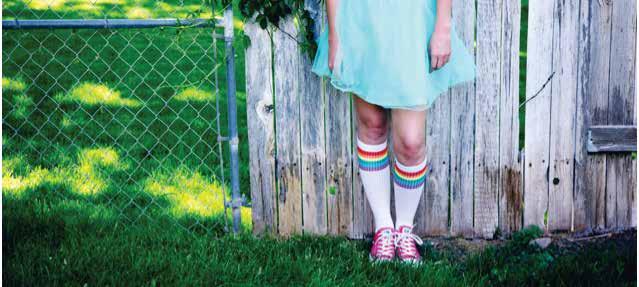
Sharon Mccutch at Unsplash
In the case of mental illness, the question becomes is the mental illness itself significantly impacting and requiring special education services? In some cases, while mental illness may be secondary to the student’s transgender status, those mental health concerns can warrant special education eligibility consideration. To deny a student such would be discriminatory.
Interested readers are encouraged to consult a 2016 document produced by the National Association of School Psychologists (NASP) and Gender Spectrum, Frequently Asked Questions: Safe and Inclusive Learning Environments for Transgender and Gender Expansive Students (Westheimer et al. 2016). This document is one from a series of four topical sets of frequently asked questions related to creating safe and inclusive learning environments for transgender and gender-expansive students. The series was developed in collaboration by Gender Spectrum and NASP. For the full series and a corresponding reference list, see www.nasponline.org/resourcesand-publications/resources/diversity/lgbtq-youth
How School Leaders Can Help
Being LGBTQ+ in and of itself does not put youth at greater risk for deleterious outcomes; however, being LGBTQ+ in heterosexist, homophobic, sexist, and transphobic environments in which youth are more likely to experience harassment, bullying, discrimination, and oppression can negatively impact LGBTQ+ youth’s developmental trajectories.
Within schools, higher levels of victimization for LGBTQ+ youth are associated with poorer school attendance, lower grade point averages, fewer plans for postsecondary education, lower self-esteem, higher rates of depression, greater substance abuse, and higher risk for suicide. In contrast, when LGBTQ+ youth develop in more positive school climates which include various supports such as a Gender and Sexuality Alliance (GSA), an LGBTQ+ inclusive curriculum, comprehensive anti-bullying policies, and
When I have asked recent high school LGBTQ+ graduates and drop-outs what they wish they had when they were in school their responses included: respect, guidance, more safety, closer adherence to the no tolerance policies, having a GSA (Gender-Sexuality Alliance), showing more concern for reported incidents/concerns, and taking every student’s security seriously.
supportive educators, allies, and role models, they report greater feelings of safety and improved educational outcomes. (Excerpted from the NASP 2017 Safe and Supportive Schools for LGBTQ Youth Position Statement)
School leaders can implement evidence-based policies, procedures, and activities designed to produce healthy environments and increase school connectedness in the following ways (Case & Meier, 2014).
• Develop administrative policies that prohibit discrimination based on sexual orientation, gender identity, and gender expression.
• Encourage respect for all students and prohibit bullying, harassment, and violence against all students.
• Value and provide education and training for students and staff on creating safe and supportive school environments for all students and the needs of LGBTQ+ students.
• Identify safe spaces, where youth can receive support from teachers, administrators, or other school staff.
• Support the use of affirming classroom activities and student-led and student-organized school clubs that promote a safe, welcoming, and accepting school environment.
• Ensure that health curricula or educational materials include HIV, other STD, and pregnancy prevention information relevant to LGB youth (e.g. inclusive language and terminology as well as behaviors).
• Facilitate access to community-based, affirming providers (i.e. those experienced in providing health services, including HIV/STD testing and counseling, social, and psychological services to LGBTQ+ youth) and connect students and families with needed resources.
• Identify at least one caring, supportive, and affirming adult for each LGBTQ+ student.
Fortunately, research consistently demonstrates that youth, including LGBTQ+ youth, are resilient and can thrive in environments where they feel safe, supported, and valued and that ONE supportive adult in a youth’s life can provide life-changing, and at times life-saving validation.
genders, sexualities, and abilities. Incorporating LGBTQ+ topics across academic curricula is a way of normalizing such while connecting students to the material being taught. It also allows cisgender, straight students to “gain an unbiased and more thorough understanding of the LGBTQ+ community while learning how to promote acceptance; LGBTQ+ students receive validation of their experiences, sexual orientations and gender identities and find a safe space to express their opinions and values” (Lowenthal, n.d.). Some organizations such as GLSEN, Gender Spectrum, Teaching Tolerance, Advocates for Youth, HRC’s Welcoming Schools, and the Safe Schools Coalition, among others, provide ready-to-print LGBTQ+ inclusive curriculum with recommendations for immersing them in science, English, history, the arts, and even math.
How Teachers Can Help
Inclusive and affirming schools are those where educators consciously and systematically incorporate practices in a developmentally-appropriate way, across grade levels, thus allowing all students to feel safe and supported. They also create environments which convey and expect appreciation and respect for diversity by having posters and library books which reflect the diversity within the school population across races ethnicities,
Fortunately, research consistently demonstrates that youth, including LGBTQ+ youth, are resilient and can thrive in environments where they feel safe, supported, and valued and that ONE supportive adult in a youth’s life can provide life-changing, and at times life-saving validation. Teachers often are that one adult with 97% of LGBTQ+ students having at least one teacher they could talk to (Kosciw, et. al. 2016). On the other hand, some students share that some teachers “just don’t get it” and they ignore anti-LGBTQ+ comments and microaggressions that occur in their classrooms. Furthermore, when known LGBTQ+ people are discussed within the curriculum, there is often no mention of their queer identities which makes LGBTQ+ students feel the need to remain closeted while preventing teachable moments they could connect with. Teachers who may or may not know a student’s LGBTQ+ status, and always provide the same unconditional support, understanding, and guidance to all students may be especially valuable and at times life-saving to queer and questioning youth. The table that follows lists several additional things teachers can do to help LGBTQ+ students.
ALL TEACHERS CAN

Use inclusive language.
• Use “Pick a friend/partner/person”, rather than “Pick a boy or girl.”
• Use terms like partner instead of boyfriend, girlfriend, husband, or wife.
• Divide the class by shirt color rather than gender.
• Don’t shy away from using the words lesbian, gay, bisexual, transgender, queer, questioning, etc.
• Make positive references to LGBTQ+ persons.
Create an inclusive class environment.
• Hang LGBTQ+ posters or those which celebrate diversity and respect in your classroom.
• Include queer and autobiographical literature in your classroom.
• Seek opportunities to incorporate the contributions of LGBTQ+ people in science, history, athletics, literature, media, and the arts into your curriculum.
Never tolerate abusive language.
• Micro aggressions such as “That’s so gay” or “You’re such a fag” create an unsafe environment for LGBTQ+ students and allies.
• Always respond to abusive language. Teach students why certain language is abusive or hurtful and that it will not be accepted. Provide alternative language options.
Don’t assume a student’s sexuality.
• Don’t assume sexuality based on a student’s clothing or behavior.
• Use “Are you seeing anybody these days?” rather than, “Do you have a boyfriend/girlfriend?”
Maintain confidentiality within the confines of your professional responsibilities.
• Be careful never to out an LGBTQ+ student. Be aware who a student is out to and realize that their sharing such with you is privileged information. It is their story to tell, not yours.
• Recognize that sharing dead names (a name they were given at birth but no longer use)/pronouns/trans identity cannot only out the student but endanger them.
• Create a space and time when students can talk to you about their struggles, while explaining what you can and will keep confidential and what you are mandated to report.
Keep an eye out for bullying and act to stop it.
• This may require interrupting bullying as it happens or talking to the bullies and the bullied afterward.
• Be careful to not make the bullied student appear as weak in any way.
Respect the needs and wishes of LGBTQ+ students.
• Respect the names students wish to be called and the pronouns they prefer. When unsure, ask respectively and privately. Honor their choice.
• Respect the clothing choices students make without questioning.
• Reach out or encourage the school counselor/psychologist/nurse to talk to a student, if they are wearing the same clothes every day. They may be changing into clothes stowed at school that they feel comfortable wearing.
• Support students in their decisions and help them to make safe choices.
Encourage respectful disagreement on issues of sexual identity.
• Don’t shut down conversations about sexual orientation and gender identity. Help facilitate the conversation down inclusive roads and correct misconceptions.
• Expect respectful conversations in the classroom.
Recognize that you’re not an expert. You will make mistakes and occasionally be insensitive.
• Apologize when necessary, learn from your mistakes, and always try to broaden your understanding of LGBTQ+ issues.
• When changing names and pronouns for a student, admit that you may make mistakes but you will try to honor them. Let the student know it’s okay to let you know when you’ve messed up.
• Ask students, “If I mess up, how do you want me to correct it?”
• Don’t make a bigger deal out of your mistakes than you need to. Profuse apologies can create unnecessary scenes.
Acknowledge that building an inclusive community is better for everyone, and fight to make it a school-wide priority.
• Inclusive communities experience less bullying and violence, higher achievement and stronger school spirit.
ELEMENTARY TEACHERS CAN

• Read books which showcase the diversity of families (i.e., What is a Family?, Love Makes a Family, The Great Big Book of Families: A Discussion Guide).
• Teach empathy and understanding.
• Dispute gender stereotypes by encouraging and allowing all students to play with any toy (Gender Doesn’t Limit You by Teaching Tolerance).
• Celebrate No Name Calling Week (GLSEN and The National Association of Elementary School Principals).
• Prevent bystanders by teaching Say Something from the Anti-Defamation League.
SECONDARY TEACHERS CAN
• Include LGBTQ+ literature in class libraries and on approved class and summer reading lists.
• Teach Rights, Respect, Responsibility: A K-12 Sexuality Education Curriculum from Advocates for Youth.
• Continue using gender-inclusive language while expecting such from students.
• Have discussions about civil rights, laws, and proposed laws affecting LGBTQ+ and other marginalized groups.
• Discuss gender development, recognizing that such occurs for both transgender and cisgender persons.
• Openly discuss bullying and take steps to thwart such, involving students in the planning of such (i.e. No Name Calling Week, Day of Silence, etc.) with the recognition that bullying peaks during the middle school years.
• Assist students in starting Gender-Sexuality Alliances (GSAs).
• Post The Trevor Project posters throughout the school to encourage students to seek support when needed.
• Ensure school dress codes are enforced equally and allow students to dress consistently with their affirmed gender.
• Support and encourage philanthropic student activities which support the LGBTQ+ Community. (High School)
• Work with the school SGA to ensure that school dances do not discriminate against LGBTQ+ youth in Homecoming Royalty selection. (High School)
• Actively involve students in School Improvement Plans regarding school climate. (High School)

Helping Students Come Out
Coming out, or the process by which a person in the LGBTQ+ community admits to themselves or others who they are or who they are attracted to is a very personal and difficult thing to do. If a student has the courage to come out to you it shows incredible trust and respect for you which should be returned, appreciated, and valued. Sometimes students, particularly at the secondary level, will ask for assistance in coming out. What youth need most at that time is simply to be heard, without question, judgment, and inquiry. In my experience, I have reminded students that I can never predict or guarantee how other people will respond since we can only control our own behavior. I also promise to work with them to find support where they need it most.
Helping Parents and Families
Within the context of schools, we often narrow our thinking to LGBTQ+ youth, but we have to also be mindful that some youth have LGBTQ+ parents. These parents frequently report feeling stigmatized, unwelcome, ignored, or disregarded. Inadvertently offensive schools and most organizations operate from a cisnormative and/or heteronormative presumption, which can exclude same-sex couples. A cisnormative presumption assumes people identify with the gender and sex assigned at birth and the heteronormative presumption assumes people are straight. Activities such as “Muffins for Moms” and “Donuts for Dads” are well-meaning and designed to encourage parent involvement in their child’s education. Unfortunately, for same-sex families,
DO’S FOR STUDENTS COMING OUT
Think ahead. What reactions do you expect from various people when you come out? Is it safe to come out?
Test the waters. In your experience, how do people react to LGBTQ+ topics? How do your family members and friends react?
these activities can appear exclusionary for both the students and the parents. Likewise, forms and computerized systems which ask for the mother’s and father’s names can feel dismissive. Simple changes can make big differences for parents and students.
Creating safe and inclusive schools and classrooms will not happen overnight, but efforts to do so will be recognized, appreciated, and valued. Small steps make huge differences. Youth who need support will be looking for such and will quickly pick up on inclusive language, posters, literature, stickers (e.g. Safe Space), and other actions.
Teachers carry immense power to be a safe place in an overwhelming sea of unsafe. You don’t have to
DO’S FOR HELPING PROFESSIONALS

Planning Ahead. Recognize that there is no perfect time or best way to come out.
Identify Who. Identify people who are more likely to be supportive and consider coming out to them first.
Labeling. Remember labels are your own. You don’t have to fit to a label; you can define your label.
Take Care. Develop a safety plan. What coping and self-care strategies do you have and how will you use them whether your coming out is or is not supported?
Keep Confidences. Know that a youth may not be completely out or out in all settings and groups.
Build Support. Help youth identify supportive people at school and in their family and friends. Talk about “yet.” (Even though your parents don’t support you yet, with time and support hopefully they will.) We don’t want to take away a student’s hope for support because no matter how rough someone’s situation is, children often continue yearning for such.
Be Aware. Be familiar with the various ways people come out and the potential positive and negative consequences that may result.
Resources. Be ready to provide several resources (local, national, face-to-face, online, etc.) to the student, their families, and friends.
Options. Reassure youth that they don’t have to come out; it’s their choice. Help them explore labels.
Safety. Recognize that a youth’s safety, home, and relationships may be jeopardized by their coming out. Do they have back-up plan for housing if needed? Provide them with information on shelters and crisis assistance.
INSTEAD OF THIS TRY THIS
Muffins for Moms and Donuts for Dad

Mother’s and Father’s Day Cards
Daddy and Daughter Dance
Pancakes for Parents or Eggs for Everyone
Invitations and announcements should state that any or all adults who parent are welcome to the event and to be involved in the student’s education and school.
These are national holidays and should be recognized. When creating cards with students, know that some students might not have a mother or a father. If the purpose is to honor or thank the adults in our lives who have provided and mentored us, help students select the adults they wish to honor. Provide options.
First Dance or Special Dance
Again, have students invite any adult they wish to the dance and be supportive of same sex dance partners.
Mother and Father Parent or Guardian
Husband/Wife
Partner/Significant Other
have all the answers to be a listening ear and your students will thank you for it. Be willing to help find answers and information and don’t be afraid to admit what you don’t know. There’s a Foster Care Campaign (AdoptUSKids, https://www.adoptuskids. org) that uses the tagline “You don’t have to be perfect to be the perfect parent.” Similarly, you don’t have to have all the answers to make a significant and meaningful difference in a LGBTQ+ youth’s life.
References
Case, K.A, & Meier, S.C. (2014). Developing Allies to Transgender and Gender-Nonconforming Youth: Training for Counselors and Educators, Journal of LGBT Youth. Retrieved from https://www.tandfonline.com/doi/abs/10.1080/19361653.201 4.840764
GLAAD (2017). Accelerating Acceptance 2017, A Harris Poll Survey of Americans’ Acceptance of LGBTQ People. Retrieved from http://www.glaad.org/files/aa/2017_GLAAD_ Accelerating_Acceptance.pdf
Kosciw, J.G., Greytak, E.A., Giga, N.M., Villenas, C. & Danischewski, D.J. (2016). The 2015 National School Climate Survey: The experiences of lesbian, gay, bisexual, transgender, and queer youth in our nation’s schools. Retrieved from https://www.glsen.org/sites/default/files/2015%20
National%20GLSEN%202015%20National%20School%20 Climate%20Survey%20%28NSCS%29%20-%20Full%20 Report_0.pdf
Lowenthal, T. (n.d.). Teachers as LGBTQ Allies, Creating Inclusive Classrooms for Students of All Gender Identities and Sexual Orientations. Retrieved from https://www.accreditedschoolsonline.org/education-teachingdegree/lgbtq-youth/
NASP 2017 Safe and Supportive Schools for LGBTQ Youth Position Statement. Retrieved from https://www.nasponline.org/research-and-policy/advocacytools-and-resources/communications-strategies-and-resources/ school-climate—connectthedots/safe-and-supportive-schoolsfor-lgbtq-students
Savage, T.A., Springborg, H., & Lagerstrom, L. (2015). School building transgender and gender diverse readiness assessment. Retrieved from http://www.doe.virginia.gov/support/prevention/mentalhealth/professional-learning/2016/session-3-day-one-savagetransgender-gender-diverse-readiness-assessment.pdf
The Trevor Project. (2015), https://www.thetrevorproject.org
Westheimer, K., Persinger, L., Cannava, A., & Klotz, M. B., (2016). Frequently Asked Questions: Safe and Inclusive Learning Environments for Transgender and Gender Expansive Students. San Leandro, CA: Gender Spectrum; Bethesda, MD: National Association of School Psychologists.
RESOURCES FOR SCHOOLS
• NASP Dignity for All, https://www.nasponline.org/books-and-products/products/books/titles/dignity-for-allsafeguarding-lgbt-students
• Orr, A. & Baum, J. (2015) Schools in transition: A guide for supporting transgender students in K-12 schools, https://www.genderspectrum.org/staging/wp-content/uploads/2015/08/Schools-in-Transition-2015.pdf
• Out History, http://outhistory.org/
• Safe Schools Coalition, http://www.safeschoolscoalition.org
• Sexuality Information and Education Council of the US, https://siecus.org
• Teaching Tolerance’s “Bullied” Documentary, https://www.tolerance.org/classroom-resources/film-kits/bullieda-student-a-school-and-a-case-that-made-history
• The Trevor Project –Model School Policy on Suicide Prevention, http://www.thetrevorproject.org/pages/ modelschoolpolicy
• The Trevor Project –Training for Youth Serving professionals
• https://www.thetrevorproject.org/education/trainings-for-youth-serving-professionals/#sm.0000gmw8rb2p7do ryd31zv5skblda
• Welcoming Schools-Elementary, http://www.welcomingschools.org/
RESOURCES FOR STUDENTS
• 30 Best Colleges for LGBTQ Students, http://www.bestcolleges.com/features/best-colleges-for-lgbt-students/
• ACLU’s How to Start a Gay Straight Alliance, https://www.aclu.org/other/how-start-gay-straight-alliancegsa?redirect=lgbt-rights/how-start-gay-straight-alliance-gsa
• Advocates for Youth, http://www.advocatesforyouth.org/
• Asexuality Visibility and Education Network, http://www.asexuality.org/en/
• Born This Way Foundation, https://bornthisway.foundation
• Campus Pride, http://www.campuspride.org/
• CenterLink, http://www.lgbtcenters.org/
• College Guide for LGBT Students, https://www.accreditedonlinecolleges.com/lgbt-college-guide/
• Gender Spectrum Teen Section and Lounge, https://www.genderspectrum.org/explore-topics/teens/
• GLAAD, http://www.glaad.org/
• GLBT National Resource Database, http://www.glbtnearme.org/
• It Gets Better Project, http://www.itgetsbetter.org/
• LGBT National Help Center, http://www.glbtnationalhelpcenter.org/
• Matthew’s Place, http://www.matthewsplace.com/
• National Center for Lesbian Rights, http://www.nclrights.org/
• No H8 Champaign, http://www.noh8campaign.com/
• Sex Education for the Real World, http://www.scarleteen.com/
• Sexual Information and Education Council, https://siecus.org
• SMYAL, https://www.smyal.org/index.php
• The ABC’s of LGBT, https://www.youtube.com/watch?v=uFqLrSHWNT4
• The Trevor Project Support Center, https://www.thetrevorproject.org/resources/trevor-support-center/#sm.000 0gmw8rb2p7doryd31zv5skblda
• We Are the Youth, http://wearetheyouth.org

Amy R. Cannava, School Psychologist, Montgomery County Public Schools, Rockville, MD, Amy_R_Cannava@ mcpsmd.org
Four-Legged Support Staff
Assistance Animals in School
By Angela Prince, Sarah Kavan,
Mary Jo Anderson, and Reece Peterson
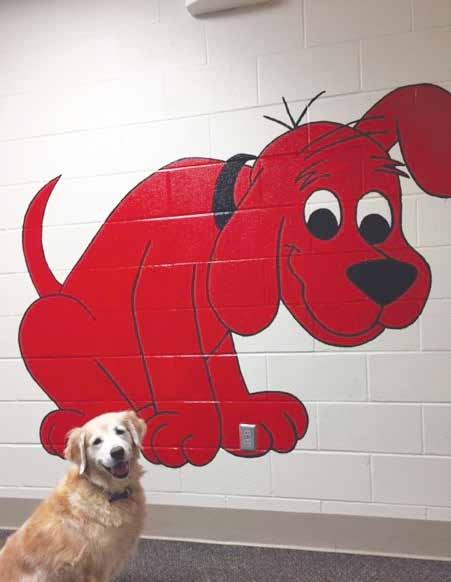
If you and I were to take a tour of some of the nation’s top companies, we may be surprised at the extra creatures who inhabit workspaces. Tech companies like Google and GoDaddy™ welcome dogs into the workplace.
The candy company Mars produces pet food in a pet-friendly environment. Missouri-based Build-aBear™ knows more than the value of cuddling stuffed animals. They have developed an etiquette agreement to facilitate the bringing of dogs to their campus (Kokalitcheva, 2016). Most of us are accustomed to having animals be a part of our everyday home and community lives. More of us are experiencing this now at school. And as more requests for assistance animals are submitted to schools, educators are struggling with all the when, why, how, what if, for whom, and do we have to questions.
The use of animals to encourage positive demeanors is not a new phenomenon. Birds have reduced depression in elderly veterans (Holcomb, et.al., 1997); animal facilitated therapy has benefited pediatric cancer patients both physically and emotionally (Urbanski & Lazenby, 2012); and dog ownership was associated with increased physical activity in older women who live alone (Garcia, et. al., 2015). The widespread acceptance of animals in a variety of settings and activities demonstrates what we inherently know – animals can make our lives better.
Some teachers have included animals as a part of their classrooms, and many of us remember animals in school from our own experiences. Rabbits, gerbils, fish, and others have often been used to teach science lessons, instill responsibility and caring as classroom pets, and provide a stimulating classroom environment. Now, educators may be asked to include animals in school settings to serve as supports for specific students (Brelsford, et.al.,2017). These supports include a range of tasks from listening to emerging readers, enhancing motivation, to addressing social or emotional support for students with behavioral needs. Animals may also assist students with disabilities in a variety of capacities, including but not limited to mobility, vision, hearing, and seizure detection. The most common use of animals in school settings has been by students with physical impairments, visual impairments, cerebral palsy, epilepsy, and autism spectrum disorders (Hill, et al., 2014), with canines the most common animals to serve in assistive roles.
Types of Assistance Animals
Animals in our society can be divided into two broad categories: companion animals and assistance animals. Companion animals are most common in society, including both pets and mascots. However, they are not our focus here. Assistance animals are less common but have an increasing presence in school settings. Assistance animals can be divided into six categories based on their function.
• Public safety or military service animals are trained for specific tasks related to public safety or criminal activity detection, such as police horses or mine hunting dolphins.
• Sporting, recreational, and agricultural animals include those used for show, herding, and hunting, such as bulls used in rodeos and oxen used as draught animals in many parts of the world.
• Visitation animals provide companionship, communication, or socialization in hospitals, nursing homes, and long-term care facilities. These animals are sometimes grouped with service animals.
• Therapy animals, sometimes grouped with support animals, are used by a variety of therapists (e.g. physical, occupational, psycho-social) to assist in the treatment plan for an individual. An example may be the use of hippotherapy (horseback riding) by therapists to develop muscle control, balance, and communication skills in a motivating environment.
• Service animals are frequently used for guiding, hearing, alerting, and stabilizing a person with a disability. Qualified service animals, dogs or miniature horses, are typically trained and certified for their role.
• Support animals are trained to provide physical or emotional support. These animals accompany their owners into settings to help improve the lives of people who would benefit from an animal’s support. These animals “provide companionship, relieve loneliness, and sometimes help with depression, anxiety,
or certain phobias” (Brennan & Nguyen, 2014, p.3). Places where they can be seen are schools, counseling centers, hospitals, and nursing homes. Children practicing their skills by reading to a dog or cat in the classroom would fit this category. Unlike service animals which are most often dogs, support animals include cats, horses, rabbits, birds, donkeys, and others.
Risks and Concerns
Concerns do exist regarding animals in public settings, particularly in schools. These concerns are related to safety, aggression, cleanliness, disruption, and/or distraction. Common concerns are if there is any chance of aggression by the animal or does the animal’s size or power increase the potential for accidents such as jumping on students and knocking them over. In the school environment, some people will be allergic to certain animals and managing the potential health issues can be difficult. However, procedures for accommodating or moving those with allergies and for cleaning the areas where animals are used can manage these issues. Planning will also be required to give the animal urination or defecation breaks. Depending on the student’s abilities, an adult may be needed to help with animal breaks and waste disposal.

While animals may also bring disruptions or distractions to the school setting, well planned instruction and accommodations can decrease this concern. Classroom peers will have to be explicitly taught the difference between a pet and a service dog and the need to abide by rules related to interacting with the service animal. Similar instruction and procedures may be needed for other assistance animals included in the school or classroom.
Animals in schools require extensive training and monitoring for the animal, the person being assisted, and the supervisor of the school activities. Community agencies provide training for the animal, the handler, and the person benefitting from the animal’s services. Many animals and handlers receive certification as a result of this training, although there are few universally accepted training programs. Adequate training for all parties will maximize the benefit of the animal to the student and mitigate the risks and concerns that exist by introducing a service animal to a school setting.
Legal and Policy Issues
When we think of animals, their roles in public places, and the laws that support these interactions, it is important to know when animals are discretionary and when their presence is a legal accommodation. Recently, some airlines have restricted the free accompaniment of certain animals with passengers in the cabin. For instance, Delta airlines announced it would implement additional restrictions on traveling with emotional support animals. “The new policy is aimed at curbing animal behavior such as urinating, defecating, and biting while on board planes” (Jansen, 2018). The airline will now require documentation of the training, inoculation, and role of the animals in advance of the flight.
As a result of both the benefits and the risks associated with the inclusion of animals in school settings, educators also face legal and policy issues related to these animals. The use of service animals
Ehlena Fry and her service dog, Wonder.
Meet Bali
We have had two therapy dogs in our building. They have had a profound impact on our students and staff, and they’ve become part of the culture of Marlatt Elementary School in Manhattan, Kansas. One of them, Bali, is a Certified Professional Therapy Dog trained through CARES, Inc. She completed about 14 months of specialized and intense training in obedience, socialization, and public manners before she was ready to work with students. She completed the Public Access Test by Dogs International and a skills test provided by CARES, Inc. (http://www.caresks.com/), applicable to the laws of the State of Kansas and the Americans with Disabilities Act. She spends most of her day in the Speech and Language room, but because Bali’s services are not included in any 504 or IEP plans, she is available to any student in the building. Bali is both an incentive and emotional support written into Student Improvement Plans.

• A student was struggling to come to school and refusing to get out of the car in the morning. His plan included the responsibility of filling Bali’s water bowl in the office each morning and spending a few minutes with her before going to class. He no longer had difficulty coming to school.
• Another student, working to regulate his own behavior, earned time with Bali and the role of taking charge of our unofficial Canine Safety Patrol Team. He was very committed to his role of keeping our hallways debris free for our dogs’ safety. His independent behavior regulation greatly improved.
• We have had several students who have suffered losses in their families. Bali has played a major role in comforting them and making school attendance more manageable.
Although our therapy dogs support all of our students, they have been used extensively to help support the children who have identified emotional disturbances. Their mere presence can de-escalate potentially severe student behaviors because, in those challenging moments, some students connect better with the dogs than with an adult. Our therapy dogs provide incentives for our students as well. Students enjoy the positive consequences of having lunch with the dogs, or playing ball, or walking with them. A dog at their side while working or a hand touching the dog’s fur can make all the difference in how safe and productive a student feels at school.
Bali’s presence is a model for tolerance, acceptance, kindness, compassion, and teaching responsibility. Our dogs certainly work their magic every day!
Julie Koenig, Speech-Language Pathologist (Juliek@usd383.org)
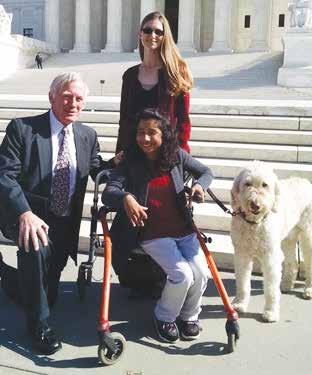
for students with disabilities is an emerging issue that school districts are likely to encounter when families and educators advocate for free and appropriate public education. Animal-assisted therapies are viable treatment options with growing evidence that shows positive benefits to psychological well-being when used for emotional support or comfort (Rabbit, et al., 2015).
Mandates for Service Animals
The Americans with Disabilities Act of 1990 (ADA) requires schools to provide education access to students with disabilities. As such, service animals are only used by people who have documented disabilities. In September, 2010, the U.S. Department of Justice developed regulations pertaining to service animals under the Americans with Disabilities Amendment Act (2011). Currently, a service animal is “any dog that is individually trained to do work or perform tasks for the benefit of an individual with a disability, including a physical, sensory, psychiatric, intellectual, or other mental disability” (Brennan &
Nguyen, 2014, p. iii). These animals meet certain requirements and serve specific functions. Dogs and miniature horses are the only animals that have been approved for these roles. Disabilities may include those defined in the Individuals with Disabilities Education Act (2004) or Section 504 of the Rehabilitation Act of 1973. Based on the ADA definition, emotional support animals, comfort animals, and therapy animals are not service animals whether they be trained or untrained. Some states have laws that define animals used for support, comfort, or therapy, but they are not covered under federal laws that protect the use of service animals by people with disabilities.
Public health and welfare laws and regulations provide protections for people with disabilities related to employment and housing in facilities with “no pets” policies. The law applies to both public and private facilities that are open to the public (e.g., restaurants, stores, theaters, schools, parks), though private clubs and religious entities are excluded (42 U.S.C. 12187). While a religious pre-school is exempt, a preschool renting from a religious entity but not run by it must follow the ADA law governing service animals.
A common argument against service animals accompanying students to school is that if the use of the animal is not on the child’s IEP then the school is not required to allow the animal in order to provide FAPE. According to a February 2017 United States Supreme Court ruling in the case of Fry vs. Napoleon Community School District, service animals were judged an ADA issue rather than an IDEA/special education one. Consequently, if a service animal, as defined by the ADA, provides educational accessibility then they must be allowed, and no permission or discussion of “need” in the IEP is required (Wiscarson, 2017 p. 2).
Mandates for Support, Comfort, or Therapy Animals
Animals used for support, comfort, or therapy are not included in the Americans with Disabilities Act. As a result, their use becomes a separate consideration within the scope of The Individuals with Disabilities Education Act (IDEA) and Section
Ehlena Fry and her service dog, Wonder, at the U.S. Supreme Court.
504 of the Rehabilitation Act. IDEA ensures students with disabilities have a free and appropriate public education (FAPE) in the least restrictive environment (LRE). If a therapy animal is required to meet the mandates of IDEA for FAPE or Section 504 for necessary accommodations, then it becomes a part of the student’s IEP or Section 504 plan. This means that a therapy animal determined to be necessary for the student to have an opportunity to benefit from an educational program to receive FAPE, but not meeting the service animal definition provided by ADA can be allowed if the IEP or Section 504 plan specifies the animal is necessary. Animals used for support, comfort, or therapy are not as common in public schools, so it becomes a decision of IEP and Section 504 teams ultimately whether this type of support will be utilized (Brennan & Nguyen, 2014). When included in IEPs or Section 504 plans, the schools are required to allow the animals. However, when this is not included, schools have the option of allowing or not allowing these animals. When allowed in this situation, the animals may be used for any or all students.
Employing assistance animals in schools to achieve goals for or provide support to students is more common than in the past. Requirements for certain animals to have specific support roles for students with disabilities are now included in federal law. Educators should be careful to comply with legal requirements and develop policies and procedures to include animals in schools to more effectively provide animal assistance, therapy, service, and support to students.
References
42 U.S. Code § 12187 - Exemptions for private clubs and religious organizations
Americans with Disabilities Act of 1990, 42 U.S.C. § 12101 et seq (1990) (amended 2008).
Americans with Disabilities Amendment Act (2011).
Brelsford, V. L., Meints, K., Gee, N. R., & Pfeffer, K. (2017). Animalassisted interventions in the classroom—A systematic review. International Journal of Environmental Research and Public Health, 14(7), 669.
Brennan, J., & Nguyen, V. (2014). Service animals and emotional support animals: Where are they allowed and under what conditions? Retrieved November 16, 2017, from https:// adata.org/publication/service-animals-booklet
Fry v. Napoleon Community Schools, 580 U.S. (2017)
Garcia, D. O., Wertheim, B. C., Manson, J. E., Chlebowski, R. T., et al. (2015). Relationships between dog ownership and physical activity in postmenopausal women. Preventive medicine, 70, 33-38. DOI: 10.1016/j.ypmed.2014.10.030
Hill, D. R., King, S. A., & Mrachko, A. A. (2014). Students with autism, service dogs, and public schools: A review of state laws. Journal of Disability Policy Studies, 25(2), 106-116.
Holcomb, R., Jendro, C., Weber, B., & Nahan, U. (1997). Use of an aviary to relieve depression in elderly males. Anthrozoös, 10(1), 32-36.
Individuals with Disabilities Education Improvement Act, 20 U.S.C. § 1400 et seq. (2004).
Jansen, B. (2018). Delta tightens leash on comfort animals on flights, with rules for lack of federal regulation. USA Today. Retrieved from: https://www.usatoday.com/story/ news/2018/01/19/delta-tightens-leash-comfort-animalsflights-rules-lack-federal-regulation/1046380001/.
Kokalitcheva, K. (2016, March 6). Here are the 12 most pet-friendly companies. Retrieved November 14, 2017, from http:// fortune.com/2016/03/08/here-are-the-12-most-pet-friendlycompanies/
Rabbit, S. M., Kazdin, A. E., & Hong, J. E. (2014). Acceptability of animal-assisted therapy: Attitudes toward AAT, psychotherapy, and medication for the treatment of child disruptive behavioral problems. Anthrozoös, 27(3), 335-350.
Rehabilitation Act of 1973. Pub.L. 93–112, 87 Stat. 355, enacted September 26, 1973.
Section 504 of the Rehabilitation Act of 1973, 29 U.S.C. § 701 et seq. (1973) (amended 1998).
Urbanski, B. L., & Lazenby, M. (2012). Distress among hospitalized pediatric cancer patients modified by pet-therapy intervention to improve quality of life. Journal of Pediatric Oncology Nursing, 29(5), 272-282.
Wiscarson, D. (2017). Are Service Animals: Required in the IEP? NOT!, Downloaded from: http://www.autismempowerment. org/autism-service-animals-required-iep/.
Angela Prince, Iowa State University, aprince@iastate. edu; Sarah Kavan, University of Nebraska-Lincoln, sarah.kavan@huskers.unl.edu; Mary Jo Anderson, University of North Carolina, MJ.Anderson@uncc.edu, and Reece Peterson, University of Nebraska-Lincoln, rpeterson1@unl.edu.


There’s an App for That!
Taking the Pulse of Your Students
By Brian T. Sims
“I just wish I had been better prepared for that meeting. I know that Thomas’s behavior has been better. I know things are working for him. But when the team asked me how much better – I didn’t have the data organized and ready to show them.”
School districts across the US have adopted the idea of positive behavior supports and interventions (PBIS). One of the hallmarks of PBIS is the concept of data-based decision making, a cornerstone of which is the ability of educators to regularly collect data to determine if a student needs a behavioral intervention and also to determine if the intervention is successful (Lee, et al., 2011). Such ongoing progress monitoring is a way to take the pulse of a student’s behavior, and teachers need both a simple and accurate way to do this. On the other hand, carrying out a behavioral intervention without on-going progress monitoring (that is, without regularly taking the pulse of the situation) denies educators the ability to determine whether or not an intervention is effective and the student is making adequate progress. Educators need to take every opportunity they can to highlight student success while at the same time guarding against ineffective practices.
Educators in both general and special education settings have pointed out that monitoring behavioral progress can be difficult, given the many other responsibilities placed upon them. Schools are often much better equipped to monitor progress related to academic interventions, while monitoring behavioral progress usually requires more support (Flannery, et al., 2014). So how can educators collect essential behavioral data on one or more students while also providing quality classroom instruction to an entire class of students with differing needs?
Ms. Allen is a second-year teacher who loves her job teaching students with behavioral challenges. She enjoys the challenges associated with trying to find out why her students do what they do and designing interventions that really make a difference for her students. Ms. Allen actually likes the detailed functional behavior assessment process and being able to document and share student progress with her colleagues, parents, and especially other teachers. But with all the interventions operating in
her classroom at the same time, she just can’t do it all. She needs an easy and accurate way to collect data.
Momentary Time Sampling, Step by Step
There are a variety of data collection tools available to educators, like Ms. Allen. A very common technique to measure a discrete behavior is event recording, collecting the frequency of a behavior during a given timeframe. Frequency data can certainly be useful but requires almost constant observation to be collected accurately. An alternative method of collecting a discrete behavior is to use Momentary Time Sampling (MTS). MTS is a procedure in which the occurrence of a behavior is estimated by dividing a specific time period into equal intervals and then glancing at a student at the end of that interval to determine if the student is engaged in that behavior (Lee, et al., 2011). MTS allows the teacher to devote the majority of their time to instruction while sampling how often a behavior occurs during a given timeframe. MTS is easy to use in the classroom.
First the teacher needs to operationally define the problem behavior. Operationally defining a behavior means that the teacher and other team members agree on what that behavior is and what it is not (Alberto & Troutman, 2017). This is important so that all team members are able to determine in an instant (at a glance) whether a student is or is not engaged in or not in that behavior. This enables any team member to collect MTS data, freeing the teacher of this task.
VAGUE DEFINITIONS
• Ed is aggressive to his peers.
• Stephanie is disrupting the class.
• Sarah is off-task.
Once the behavior is operationally defined, the teacher or team identifies a timeframe for observation and data collection. In an educational setting, it is just not practical to try to collect data all day long so it is best to observe the student when he/ she is most likely to exhibit the behavior of concern. Is that during reading, math, recess, or lunch? It is also typically best to identify a 20- to 30-minute observation period during the high concern timeframe. MTS will give teachers an estimate of how often the student exhibits the behavior during this timeframe.
Next, the 20- or 30-minute timeframe is divided into equal length segments/intervals. For example, if a 20-minute observation period and is divided it into ten equal intervals, there would be two-minute intervals. Dividing the observation period into ten or twenty intervals enables the data to easily be reported in terms of percentages. For example, a 20-minute timeframe with two-minute intervals allows for ten data collection points that can be easily reported as a percentage – 8 out of 10 = 80%.
In Ms. Allen’s attempt to simplify the data collection process she decided to use MTS to help collect data on Thomas’s out-of-seat behavior. First, she defined his out-of-seat behavior to include anytime he was out of his seat and away from his assigned area. Whether or not Thomas is at his assigned area is an important distinction because Ms. Allen allows him to stand at his desk to complete his work. As part of the FBA it was determined that Thomas is most likely to be out of his seat was during math independent work time.
OPERATIONAL DEFINITIONS
• Ed hits his peers with an open hand.
• Stephanie makes noises and talks out without teacher permission.
• Sarah puts her head down or stares away from her work during independent work time.
Therefore, Ms. Allen chose this time to collect data using MTS. Independent work time in math is from 10:00 to 10:20 every day. Ms. Allen decided to divide independent math time into ten two-minute intervals.
A timer will need to be selected and used to signal the teacher at the end of every interval. It is also helpful if the sound on the timer can be turned down or off while keeping the vibration signal. There are many options available, but given the increases in technology, there’s an app for that.
Now that the MTS system has been set up, it is easy to collect data. When the timer signals the end of an interval, the teacher quickly glances at the student being observed and records whether or not the student is exhibiting the target behavior at that moment. An example of a commonly used paperpencil MTS data collection form is provided below. Most often the symbol “+” represents the behavior was being exhibited at the time of signal whereas, “-“ represents the behavior was not observed. It is at this time that having a well-defined behavior is very important. The process of glancing and recording will only take a second or two.
As stated previously, the data collected in MTS is whether or not the student was exhibiting the behavior of concern at the end of each interval. This is an
Behavior: Reading
Behavior Definition: Reading printed or digital materiaol either silently or out loud. Reading can be done alone or in groups.
Total Observation Session: 120 minutes (2 hrs)
Interval Length: 15 minutes
Date: 7-15
Interval Number
estimate of the student’s actual behavior, which can be collected easily by the teacher without interrupting instruction. The more days observation data is collected, the more accurate the estimate becomes.
Using an App
While MTS can be as a low-tech as using a small egg timer, a piece of paper, and a pencil, it can also move into the world of high-tech. Given the prevalence of smart phones and tablets in classrooms, it makes sense to consider applications that help signal the end of intervals and record the data. An example of such an application is Intervals ABA by elocinSoft (Intervals, An ABA Interval Recording App, 2018). Intervals ABA is available for IOS and Android devices. This application allows the teacher to input a student’s name, behavior, set interval length, and set interval count. Once this information has been inputted into the app, the teacher simply starts data collection at the beginning of the observation timeframe. The device will signal with a sound and/ or vibration the end of each interval. The teacher will then glance at the student and tap his/her
phone to record whether or not the behavior was observed. At the end of the observation session, the data collected during the session is displayed visually and can also be texted or emailed in the form of a CSV file. The CSV file could be merged together into a larger database and graphed to be used as part of the data-based decision process. Currently the cost of the Intervals ABA app is less than you would expect to spend on a meal at McDonald’s.
Admittedly, there are free interval signaling apps available that are primarily designed for athletic workouts. These applications can be substituted in place of the Intervals ABA app or the old-fashioned egg timer, but do not allow data to be emailed in a CSV format after data collection.
Ms. Allen had recently heard about the iPhone app, Intervals ABA, and decided to use it to help collect MTS data to determine how often Thomas is in his seat/assigned area during independent math work time. Ms. Allen went into the settings of the app and selected the appropriate number of intervals and interval length. At 10:00 she touched the green bar on the app to begin recording observation data.
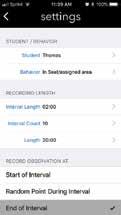
Intervals ABA app main settings menu
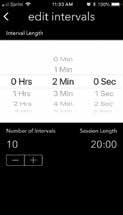
Intervals ABA app interval setup screen
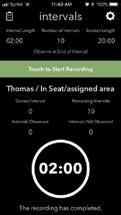
Intervals ABA app start screen.
She then went on providing extra assistance to students who needed it during the independent work time. When Intervals ABA signaled her to record, she glanced up to see if Thomas was in his seat/assigned area. Because she had previously defined the behavior, she was able to instantly determine whether or not Thomas was in his seat. She quickly tapped the phone to record Thomas’s behavior and continued working with her students.
Intervals ABA app immediately after an interval signal
Intervals ABA app at the file share menu
Regardless of which interval signaling tool you might choose, MTS can be a useful tool when collecting data on a high frequency behavior. It has the ability to free-up valuable instructional time and energy while providing useful information to help guide decisions in a classroom.
References
Alberto, P. A., & Troutman, A. C. (2017). Applied behavior analysis for teachers (9th ed.). Indianapolis, IN: Pearson. Flannery, K. B., Fenning, P., Kato, M. M., & McIntosh, K. (2014). Effects of school-wide positive behavioral interventions
At the end of independent work time, Ms. Allen was able to use the app to email herself a CSV file of the MTS data. This data will be exactly what the team wants to determine whether or not the behavior intervention plan that she has set up for Thomas is successful. Next time Ms. Allen will be prepared!
and supports and fidelity of implementation on problem behavior in high schools. School Psychology Quarterly, 29(2), 111-124. doi:10.1037/spq0000039
Intervals, an ABA interval recording app. (2018, April 18). Retrieved from https://itunes.apple.com/us/app/intervalsan-aba-interval-recording-app/id431231950?mt=8
Lee, D. L., Vostal, B., Lylo, B., & Youjia, H. (2011). Collecting behavioral data in general education settings: A primer for behavioral data collection. Beyond Behavior, 20(2), 22-30.
Brian Sims, Pittsburg State University, KS, bsims@pittstate.edu
Podcast Pulse
By Marc Benedetto
Welcome to another round of podcast reviews with two Ted Talks thrown in for good measure.
The first quarter of school and the honeymoon has been over for some time now and winter is upon us. Hopefully, these episodes can inspire and inform as we begin 2019.
Overcoming Childhood Trauma - How Parents and Schools Work to Stop the Cycle
(9/25/18, 25 minutes)
https://www.kqed.org/mindshift/52229/ overcoming-childhood-trauma-how-parents-andschools-work-to-stop-the-cycle

You may recognize the town of Paradise, California, as the location of the devastating Camp Fire in November, 2018. While this podcast was created prior to the fires, with a focus on the high incidence of childhood trauma in Paradise, we can only imagine the additional trauma experienced by the children and adults in Paradise, today.
Laura Klivins, a community health reporter for KQED Public Radio in San Francisco and a lecturer at UC Berkeley, hosts this podcast. Klivins interviews several staff and parents from Honey Run Academy, an alternative school serving 7-20 students each year, who have not been successful in other schools. If you are working to provide trauma-informed education, this podcast will be of interest. Mindshift is one of our favorite websites to search for podcasts, offering teaching strategies and big ideas.

The Magic of Validation
(12/18/17, 25 minutes)
https://www.cultofpedagogy.com/magic-ofvalidation/
Cult of Pedagogy is another one of our favorite sites to peruse for material. Jennifer Gonzalez runs the site and in this episode, she discusses the impact of using validation with students. A student enters the classroom and looks at the daily agenda on the board regarding choosing speech topics. The student states, “I hate speeches.” Which of the following responses would you likely choose?
A. What? Speeches are awesome.
B. You talk all the time! You are going to love it!
C. Shocker, another complaint!
D. Remember to always enter the classroom quietly.
E. Why do you hate speeches?
Listen as Gonzalez discusses how each response impacts your student and your relationship with that student. While validation can be initially difficult to implement, Gonzalez provides a three-step process to assist you in validating your students, as well as addressing all of those objections you might have. In all of her podcasts, Gonzalez presents the information clearly and completely and provides a full text transcript, which I find very helpful.
How to Fix a Broken School? Lead Fearlessly, Love Hard (2015,
17 minutes)
https://www.ted.com/talks/linda_cliatt_wayman_ how_to_fix_a_broken_school_lead_fearlessly_ love_hard
On her first day as a principal, a huge fight broke out and Linda Cliatt-Wayman was determined to lay down the law at a school assembly. Instead, one student made a lasting impression by asking, “Miss, why do you keep calling this a school. This is
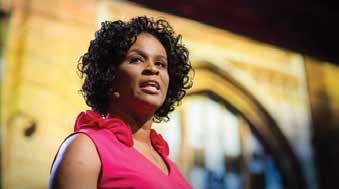
not a school.” Cliatt-Wayman passionately shares her leadership style and how she and the faculty fixed one high-poverty, low-performing, and persistently dangerous high school in Philadelphia. If you are on a school improvement team, take a
few minutes to listen to this. Would this work for your school?
My Story, from Gangland Daughter to Star Teacher
(5/2013, 8 minutes)
https://www.ted.com/talks/pearl_arredondo_my_ story_from_gangland_daughter_to_star_teacher
In this TED Talk, Pearl Arrendondo tells her story and how she felt dismissed by school staff as a student who had difficulty dealing with authority figures and a father in and out of prison. Even after transferring to a better middle school with a one-hour bus ride each way, she still heard teachers say, “She’ll never graduate high school.” Arrendondo is now a young teacher and one of the creators of a pilot middle school that strives to be a “school worth coming to every day.” Learn more about this pilot school, the San Fernando Institute of Applied Media, at https://sfiam-lausdca.schoolloop.com.
The Body Keeps the Score: Brain, Mind, and Body in the Healing of Trauma
Book Review by Billie Jo Clausen
When behavior is harmful to self or others, the quest of positive behavior support is to help people learn to be heard by using communication strategies which replace
Marc Benedetto, Retired Special Services Coordinator, Westside Community Schools, Omaha, NE, mbe62571@gmail.com

negative behaviors, including aggressive behaviors, self-abusive behaviors, and withdrawal behaviors –behaviors that interfere with friendships and create lives filled with struggle. Observation of behavior in various settings can help identify motivators and maintainers leading to intervention plans. But what if the behavior is invisibly motivated? How then do we understand without seeing and measuring the antecedents to behavior? Is untreated trauma the internal ambient stimuli or setting event that we are
struggling to discover? Imagine having access to a mentor who can explain what is happening inside the brain, mind, and body of trauma exposed people – making the invisible visible?
Dr. Bessel van der Kolk’s The Body Keeps the Score: Brain, Mind, and Body in the Healing of Trauma (2014) shines a piercing light into the world of trauma informed practice. Van der Kolk generously shares more than 30 years of research and practice where he focused on understanding what happens to humans who experience trauma. His compassion for others in adverse circumstances began when he was a teenager, and his life work has been about untangling the web of trauma, so that people can live lives unencumbered by triggers and fallout of traumatic events. From the book’s introduction: “Dr. van der Kolk is the director and founder of the Trauma Center in Brookline, Massachusetts. He is also a professor of psychiatry at Boston University School of Medicine and director of the National Complex Trauma Treatment Network.”
Van der Kolk tackles the daunting task of telling the story in a precise structure, making the book a usable handbook for the field. The book is divided into 5 sections enabling readers to go directly to the section that will provide answers to specific questions. Each section addresses thoroughly the impact of trauma induced stress on the mind and body, how different people respond differently to stressors, and what can be effective in the treatment of trauma.
Part One - The Rediscovery of Trauma
Part Two - This is Your Brain on Trauma
Part Three - The Minds of Children
Part 4 - The Imprint of Trauma
Part Five - Paths to Recovery
Read in its entirety, the index and sections allow easy access for re-visiting and embedding understanding so that the tenant of the book can be applied in practice to help heal. The implications of healing the body and not spending an entire lifetime being numbed and taking medications to alleviate the

symptomology of trauma are enormous, and provide the reader with both tools and hope.
“If we look beyond the list of specific symptoms that entail formal psychiatric diagnoses, we find that almost all mental suffering involves either trouble in creating workable and satisfying relationships or difficulties in regulating arousal (as in the case of habitually becoming enraged, shot down, over excited, or disorganized). Usually it’s a combination of both. The standard medical focus on trying to discover the right drug to treat a particular “disorder” tends to distract us from grappling with how our problems interfere with our functioning members of our tribe.” (page 81)
Van der Kolk presents the history of trauma research and the need for treatments based upon the individual’s response to trauma. Did they get stuck in fight, flight, or freeze? Is their primary coping strategy to check out and be not there when faced with trauma? Van der Kolk makes a strong case for the revolution he is proposing.
• 1 in 4 children is abused and 1 in 8 sees a mother or father be abused.
• Children who are hit have increased likelihood of hitting their own children.
• Girls who see their mothers beaten have an increased likelihood of being in abusive relationships by a factor of 50.
• Boys who see their mothers beaten have an increased likelihood of beating their intimate partners by a factor of 200.
• Children who are hurt, physically, mentally or sexually, or neglected by a primary caregiver, have an increased likelihood of becoming a drug or alcohol abuser by a factor of 4600.
• Children and adults are much more likely to be hurt at the hands of caregivers or intimate partners than by anyone else.
Van der Kolk explains how the stories children hear become imprinted and become their way of being. Imagine what happens to the child who hears from a parent: “I’m an alcoholic because of you, you’re a terrible child,” instead of “What a wonderful helper you are, you are an amazing child.” Not only does van der Kolk explain what happens to the wiring of the brain when young children are exposed to trauma, he sets out to find the pathways to healing. In presenting journaling, yoga, mindfulness, and brain/computer interface technology to re-wiring the fear-driven mind (Chapter 19), he generously provides both the why and how with a variety of evidence-based and promising practices.

Van der Kolk, along with the lead authors of the Adverse Childhood Experiences (ACE) Study, Felleti and Anda, invites us to address the impact of trauma caused by abuse and neglect as a mental health crisis in America. More importantly, he argues for correct treatment so that trauma can be healed, and children can lead full and happy lives. Because the symptomology of trauma looks similar to ADD/ ADHD and autism in very young children, accurate diagnosis and treatment are essential. Van der Kolk has joined colleagues to make the case for the adoption of “developmental trauma disorder” in the Diagnostic and Statistical Manual for Mental Disorders (DSM) so that treatment could be holist in 2013. The proposed criteria are outlined in the appendix as well as extensive resources and suggestions for further reading.
The only identified shortfalls of this writing are that van der Kolk’s research does not include an accurate portrayal of the complexity of very young brains and is woefully inadequate in defining implicit versus explicit memory capabilities of very young children. He nearly makes up for this in his discussion of attunement and attachment as vital in establishing a secure base for strong life-long relationships.
Kudos to van der Kolk. Adding this book and this trauma informed lens to your practice and life can create a dynamic that is warmly responsive. The healing that could happen for those behaving badly due to trauma can settle into your heart and mind, finding a space in your own work.
Billie Jo Clausen, MS, IMH-E®, Infant Mental Health Specialist, Green Hills Area Education Agency, Council Bluffs, Iowa, bclausen@ghaea.org
Annie Spratt at Unsplash
AFTER HOURS
I Wish My Teacher Knew …
By Felicity Post
During her first year of teaching, Kyle Schwartz (2016) posed a personally groundbreaking writing prompt to her third- grade students. The prompt itself was simple in nature and wasn’t developed in response to a particular text. It, instead, was the result of a worry that every educator has heard in the back of his or her mind. What do I not know about my students?
While relationship building can be tedious, heart wrenching, and at times discouraging, it can also
be uplifting, rewarding, and overwhelmingly worthwhile. In an effort to develop these relationships that are the cornerstone of any healthy classroom community, Schwartz managed to formulate a prompt that elicited these emotional responses and so many more. The prompt? I wish my teacher knew…
When her efforts went viral on social media, I was blown away by the mere simplicity of such an effort and the wealth of information that students chose

Photo courtesy of Daria Nepriakhina at Unsplash
to share. Shedding light into corners that were once covered in shadow allowed Schwartz to develop relationships with her students on an intensely personal level. It took me a mere second to decide that such a prompt was exactly what I needed to let my students know that I not only cared about what was important to them, but that I was listening. Their responses left me speechless, and some brought me to tears. In no time at all, I realized what my students were facing in their world outside the classroom. Here is what I learned from my college students.
I wish my teacher knew how much other kids would cheat in high school. A lot of kids would finish with better grades than me even though I put in way more time and effort. Academic integrity is important. I also wish my teacher knew that I talk differently. I kind of have a lisp and have been made fun of some for it before. A lot of people don’t realize how much it bothers me. That is the only reason I am pretty quiet. I would talk and interact more if I didn’t have it. I just don’t want to be judged. I am still smarter than I may seem.
I wish my teacher knew when I misspell something it’s not a typo. I have a hard time spelling the smallest words because I have a learning disability.
I wish my teacher knew that school is really, really hard for me. I struggle a lot with the basic stuff. I wish that I could get more help or that people are aware of it.

I wish my teacher knew my parents have been divorced for almost 16 years now and I live with just my mom. I don’t have the greatest relationship with my dad and his wife. My step mom and I don’t get along.
I wish my teacher knew I have anxiety. I was on an IEP in school because of my anxiety. I am currently in the process to be on an IEP again.
I wish my teacher knew that my father has been fighting alcoholism all summer and hasn’t been around. I hate it!
I wish my teacher knew that I will be the first person in my family to graduate college with a degree. The amount of pressure I put on myself is due to being the first to graduate with a degree. I always have to make sure I don’t fail. When I do fail, I am super hard on myself.
I wish my teacher knew that some days my social anxiety cripples me. I’ve been working on techniques to help with this. Sometimes I may laugh when others deem it inappropriate but it’s my way of dealing with my anxiety.
I wish my teacher knew that I sometimes have a hard time with assignments. I have always struggled in school. It is not something that comes easy to me. I noticed my academics declining after my parents split up when I was in 6th grade.
I wish my teacher knew that I feel like I have the weight of the world on my shoulder at times. I am the first in my family to attend college and the expectations I am held to make it hard to breathe sometimes.
Photo courtesy of Wadi Lissa at Unsplash
I wish my teacher knew how much I try to put on a happy face for the people around me. When in reality I am sometimes breaking down on the inside. Another thing I wish my teacher knew is I would do anything for my family and it was so heartbreaking when I found out that my parents didn’t tell me about my brother’s failed suicide attempt until after I got done with basketball practice.
I wish my teacher knew I’ve struggled with anxiety since my father passed away when I was very young. Teachers in elementary school often thought I wasn’t paying attention because I avoided contact. In reality, I do this because I don’t want to be called on. I may know the answer but I don’t want to be wrong, especially in front of everyone.

I wish my teacher knew I am a perfectionist and a worrywart. I always want everyone to like me and I always try to please people, even if it isn’t in my best interest. For example, I have people on my volleyball team that always ask me to do things for them because they know I can’t say no. I love to help, but sometimes I commit myself to too much and then get stressed out because I’m doing more for them than I am for myself.
I wish my teacher knew that it takes me a little bit to focus and process information. I tend to ask myself a bunch of questions when given a task to better understand it. I procrastinate a lot of my work, which surprisingly helps me get things done more efficiently.
I wish my teacher knew that before this semester I had taken off from school and I was trying to figure out what to do. It’s nice to be back on track again!
I wish my teacher knew that I am extremely close with my mom. She is married to her third husband
and we’ve moved a total of eight times from the time I was two years old to about eight years old. Also, I am convinced I have some type of ADHD and would like to look into getting more help.
I wish my teacher knew that my son is my world and that even though I struggle through school I will keep pushing until I walk across the stage with my degree. I will do anything it takes to provide my son with nothing but the best. I want to show him that being strong willed and determined will get you through everything. So, I do struggle at times but I always try to get through it.
I wish my teacher knew how much death I have experienced all around me in my loved ones the past three years.
I wish my teacher knew that I struggle at times, thinking I might have depression, anxiety, or ADHD, but I’m not sure if I’m “playing it up.” I wish she knew that I don’t see my mom much because whenever I go
Photo
home, she’s working, and I don’t feel like I have that much support since coming to college. Emotionally, I mean, but it’s not her fault. I wish she knew that I’m a perfectionist, and a small mistake in front of people can make me feel incompetent. I wish she also knew that I have two young half-brothers I never get to see either. They live in a different state with one drug addict parent, and I don’t know how to help.
I wish my teacher knew that I came to the United States ten years ago when I was 16 years old with no parent support in this country. I didn’t speak any English when I came to this country so sometimes I struggle on understanding assignments, and they may need to be explained deeper.
I wish my teacher knew how much college means to me. I want to be something in my life and to do something better for future generations. College, this opportunity, is my chance to do something a lot don’t get to do.
I wish my teacher knew that I don’t want to go back home this summer and live with my parents.
I wish my teacher knew that I am nervous about my education classes. I feel like I’m going to fail and never get to be a teacher.
their minds. I reassured them that what they shared would be considered every day moving forward. As I spoke, I watched their faces. Many smiled, some grew teary eyed, and others shook their heads in agreement. Without a doubt, I had communicated to every single student that they were important. In return, they had done the same to me by answering with candid honesty and heart.
While I have many valuable assignments each semester that I ask my students to complete, this prompt remains my favorite and most valuable. Every day I make an effort to call my students by name, to follow up on weekend activities, and to take an interest in their lives beyond the classroom just like I have been told to do in my college courses, workshops, and professional literature. If I am to be honest, however, asking students to complete this prompt has been the true game changer when it comes to relationship building. The end of our semester feels so much different than the beginning. Much of what I do will continue to change as the semesters pass, but this is one assignment that will remain the same. My students are too important, and they deserve to have a teacher who not only teaches, but one who listens. Don’t your students deserve that as well?
*Note: All student responses are original. No edits were made to uphold their original integrity.
The next time my students walked into the classroom, there was a palpable difference that could be felt in the air. My students carried themselves a bit higher, sat a little straighter, and breathed a little easier. Honestly, so did I. I stood in front of them and thanked them for the small glimpse each one had provided into their lives. I stood there in tears as I told them how moved I was by what they felt safe enough to share. I acknowledged that without this simple prompt, I never would have known what weighs so heavily on
To learn more about Kyle Schwartz, check out her book I Wish My Teacher Knew (http:// iwishmyteacherknewbook.com), listen to her TED Talk (https://www.youtube.com/watch?v=8pcKbf_ vpHg), or read about her in the New York Times (https://www.nytimes.com/2016/08/31/well/family/ what-kids-wish-their-teachers-knew.html).
Reference
Schwartz, K. (2016). I wish my teacher knew. Boston, MA: Da Capo Lifelong Books.
Felicity Post, Assistant Professor, Peru State College, Peru, NE, FBalluch@peru.edu
for the Second Annual
OCTOBER 10 & 11, 2019
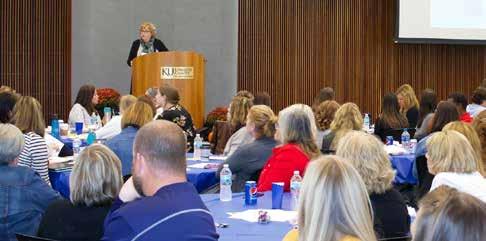

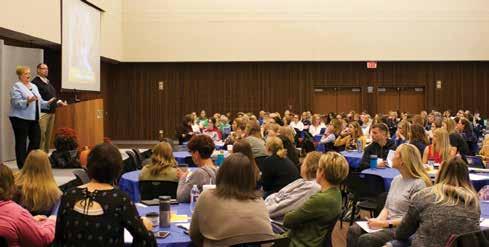

This year’s conference will include:
• Two keynote sessions
• Half day workshops
• A variety of breakout sessions
The conference is open to all educators who serve children and youth with autism.

In October 2018 at the first annual Simpson Autism Conference, Danielle Wesley received the MSLBD “Outstanding Educator of Students with Autism Award” for her excellence in classroom service to students diagnosed with autism spectrum disorders (ASD). She has served as a teacher in the Shawnee Mission School District, and is currently a Behavior/Autism Specialist in the Lee’s Summit School District.
RECOGNIZING OUTSTANDING EDUCATORS!
The Midwest Symposium for Leadership in Behavior Disorders annually recognizes excellence in classroom service to students diagnosed with autism spectrum disorders (ASD), and classroom service to students with behavioral or mental health needs with its “Outstanding Educator” awards.





Do you know someone who should be recognized for their work with students? If so please nominate them! Nomination information for these and other awards can be found at: https://mslbd.org/what-we-do/awards/


RETHINKING Behavior is a free online magazine for professionals serving children and youth with behavioral needs published three times per year by the Midwest Symposium for Leadership in Behavior Disorders. Access RETHINKING Behavior at: www.mslbd.org/RTB.html.
Our goals are to:
• Lend support and affirmation;
• Provide thoughtful and simulating discussion;
• Provide a source of analysis and commentary;
• Provide current news and information;
• Present personal stories and perspectives;
• Provide unique information; and
• Offer humor, parody, and fiction.
What are you thinking?
What do you like? What should we add?
What do you take issue with? Agree with?
Did we make you think? Smile?




Send thoughts or a proposal to rethinkingbehavior@mslbd.org.
Tell us on Facebook at: https://www.facebook.com/mslbd1/ or on Twitter at @MSLBD1 and search #rethinkingbehavior.