
RE THINKING Behavior
UPCOMING EVENTS
October 3 & 4, 2024
Overland Park, Kansas
https://mslbd.org/autism-conference/
Sponsored by the Midwest Symposium for Leadership in Behavior Disorders, The Kansas Technical Assistance System Network, and Project ACCESS– Missouri’s Leader in Autism Education
Highlight of Topics to Be Featured and More!
The Ethics of School Consultation for BCBAs
Model Classroom Integration, PEAK, VB-MAPP, BFA/SBT, Balance
Core Components of Behavior Supports Program for Students on the Autism Spectrum
Supporting Paraeducators
Professional Development Needs FBA & BIP
Transition Across the Lifespan Pre-K to Adulthood
Overview of Legal Parameters FBA & BIP
Collaborating with Parents
Naturalistic Developmental Behavior Interventions and Social Skills
Scaffolding Early Intervention
Self-Management Programs
Peer Mediated Interventions for Young Adults with ASD

https://mslbd.org/symposium-conference/
Mary Jo Anderson
John J. Augustine
Anne K. Baptiste
Jennifer Bossow
Lisa Bowman-Perrott
Jenah Cason
Scott M. Fluke
Nicolette Grasley-Boy
Katherine A. Graves
Deborah E. Griswold
Mike Hymer
Shannon Locke
Maria L. Manning
Sharon A. Maroney
John W. McKenna
Kris Melloy
Lindsey G. Mirielli
Reece L. Peterson
Sandy Shacklady-White
Brian Sims
Carl R. Smith
Jim Teagarden
Vanessa Tucker
Graphic
Vivian Strand


Rethinking Behavior, ISSN 2578-5397, a magazine for professionals serving children and youth with behavioral needs, is published three times per year, fall, winter, and spring, Copyright ©2024 by the Midwest Symposium for Leadership in Behavior Disorders, P.O. Box 202, Hickman, NE 68372. 402-7923057. www.mslbd.org. Email: rethinkingbehavior@mslbd.org.
Rethinking Behavior welcomes proposal and manuscript submissions; for information visit www.mslbd.org or email rethinkingbehavior@mslbd.org
Katherine
Supporting Mental Health and Wellness
In the Fall 2023 Issue of ReThinking Behavior, Lawrence Altman (Fall 2023) established the urgency of the mental health crisis facing children in the US. He concurred with Surgeon General Vivek Murthy’s assertion that it is in fact a national emergency and he endorsed Murthy’s recommendation that schools create comprehensive systems to support student and staff mental health and wellness. The good news is that schools already have some programs in place; many staff members, including teachers of students identified with EBD, have training and experience supporting students facing mental health challenges; and these challenges are preventable and treatable.
Where should teachers and others working to make mental health supports more comprehensive begin? We suggest they: 1.) ensure the strength and integrity of existing support programs, 2.) explore researched-based options to fill identified gaps, and 3.) prioritize the mental health needs of all staff members.
Ensuring that existing mental health support programs are effectively and fully implemented is essential. Chad Rose in “Bully Prevention Training: State Requirements and Legal Implications” focused on how to fully implement an anti-bullying program in a school. He concluded by offering five guidelines for building a high-quality program. Those emphasized the importance of having expert consultants, effective training, criteria for recording and responding, regular reviews of data, a leadership team, etc. We think his suggestions there could be useful in measuring the quality and integrity of other mental

health support programs and would guide efforts to make existing programs more effective.
When unmet mental health needs are identified in a school, it is essential that research-based interventions be explored and selected to fill the gap. We believe that ReThinking Behavior is a great resource for such investigations. Its articles address a wide variety of relevant topics including: social-emotional learning; trauma informed instruction; teaching and supporting resilience; teaching mindfulness; helping students connect with peers, teachers, and their school; bully prevention strategies; integrating community mental health supports with school services; and methods to enhance and support good mental health for school staff.
The motto “Let it begin with me” stresses the importance of good self-care. Teachers with good mental health and wellness are more sensitive to student needs and better able to encourage and support student independence and resilience and are better able to respond effectively when needed.
Because we think that self-care should be included in early school-wide mental health support efforts, we included brief discussions of a few of the relevant articles from ReThinking Behavior below.
Even though the mental health challenges of our children appear daunting, schools do have some programs in place and staff with training and experience. Additionally, mental health difficulties are preventable and treatable. We encourage readers to embrace the challenge imparted by Altman and Murthy by strengthening existing supports, reviewing research-based information to fill identified gaps, and prioritize supporting teacher and staff mental health.
Michael Hymer, Deborah Griswold, Kris Melloy, & Mary Jo Anderson Issue Editors
Supporting Mental Health for Teachers and Staff
By sharing his experience in “ The Multiple Worlds of Mental Illness and Stigma: Is it us? Is it them? Or is it both?” Carl Smith encouraged readers to drop the stigma they attach to mental health challenges. He pointed out that the “us versus them” outlook and other judgement-based attitudes block understanding and providing effective supports. Smith cited research showing that nearly every American family will be touched by a mental health challenge at some point in time to support before concluding that everyone would be empowered by being more accepting of the existence of mental health challenges and believing in the effectiveness of treatment and recovery.
Adam D. Weaver in “ The Emotional Labor of Teaching Students with EBD” shared his research showing how significant but underappreciated the stresses faced by teachers are. He pointed out that this is especially true for teachers of students identified with EBD. His research explored the adaptive and maladaptive ways that teachers manage their stress and provided recommendations for adopting more effective coping styles.
Tracy Kidd Sloan and Marie L. Manning focused on teacher self-care in “Learning to Pivot, Self-Care and the Pandemic”. They emphasized that true self-care isn’t selfish or self-indulgent. They directed teachers to articles and tools to help them examine their stress and successfully manage it. They recommend that teachers create a “self-care protocol” with the goal of improving awareness, balance, and connections— components essential for good mental health.
INNOVATORS
Norris G. Haring
Employing ABA to Behavior
Problems
Norris G. Haring was one of the first to promote applied behavior analysis (ABA) to educating students with EBD (Haring & Phillips, 1962). ABA includes careful definition and measurement of behavior, observation, and contingent consequences to modify and shape targeted behaviors. Before that most intervention efforts were based on psychodynamic explanations and treatments of disturbed behavior (see, for example, Redl & Wineman).
Haring was born in 1923 on a farm near Kearney, Nebraska. After serving in WWII, he pursued a degree in psychology and music at Kearney State College and then taught music and band at the nearby Nebraska Boys Training School. Later, he said, “So many of those young men didn’t belong there, particularly those who had dropped out of school and had gotten into trouble. Little things that we could have intervened with in their early years in education would have helped keep them in school.” Haring pursued graduate studies in Educational Psychology at the University of Nebraska-Lincoln. After completing an M.A. in 1950, he became a school psychologist in the Omaha school district working with school dropouts.
At a Council for Exceptional Children conference, Haring met William Cruikshank, an early leader in an emerging field of special education. Cruikshank encouraged him to come to Syracuse University for further graduate studies. At Syracuse, he worked with kids with “minimal brain damage” (precursor term for learning disabilities) and became fascinated about arranging classroom environments to promote learning.
After earning his EdD in 1956, Haring moved to Arlington, Virginia as director of special education. While there, he collaborated with E. Lakin Phillips,
Haring was one of the first to apply B.F. Skinner’s operant learning theory in the education of students with behavioral and learning challenges.

head of the guidance center at nearby George Washington University, to design new classrooms for children with learning disabilities, hyperactivity, distractibility, and behavior disorders. Phillips had encountered B.F. Skinner (the “father” operant learning theory) while he was a graduate student at the University of Minnesota. (Prior to his Harvard appointment, B. F. Skinner was a member of the Psychology faculty at the University of Minnesota for nine years and Indiana for three years). On the basis of those experiences, Haring and Phillips co-authored Educating Emotionally Disturbed Children (1962).
Following another two years on the faculty at the University of Maryland, Haring returned to the Midwest as Education Director of the Children’s Rehabili-
tation Unit (CRU) at the University of Kansas Medical Center working with children with disabilities. He later said, It was there “my career all came together. This was the population of my great concern. It got me very deep into the whole area of learning disabilities and behavior disorders.”
The CRU at the University of Kansas was also where Haring recruited Ogden Lindsley, who had worked closely with Skinner at Harvard. Haring and Lindsley have been credited with applying laboratory behavioral research methodologies, especially precision teaching, to applied settings, including classrooms.
While at KU in the early 1960s, Haring also collaborated with Richard C. Whelan, a young special education faculty member who had been a teacher and director of The Menninger Foundation’s Southard School in nearby Topeka. Among their joint projects, Haring and Whelan co-authored “Experimental methods in education and management” (Haring & Whelan, 1965) and “Modification and maintenance of behavior through systematic application of consequences” (Whelan & Haring,1966). Haring described Whelan as a “marvelous educator.”
In 1965, Haring moved to the University of Washington where he became founding Education Director of the Experimental Education Unit. There he worked with several pioneers in applied behavior analysis, including some with connections to the Midwest. They included Sidney Bijou (U of Iowa PhD), Donald Baer (St. Louis native, U of Chicago PhD), Todd Risley, and
James Kauffman recalled when he was hired to teach at the Menninger Clinic, “Dick [Whelan] gave me what was then a very new book, “hot off the press”, Haring and Phillip’s Educating Emotionally Disturbed Children. That’s the first special ed book I read, and it made a lot of sense to me… so I got to apply what I had read in that book… that’s really how I got into the field.”
(Janus interview, 2012)
As Haring said, “I was willing to stand on my head for Jim Kaufmann to get him to take his doctoral program at the University of Kansas.”
Montrose Wolf. Later, Baer, Risley, and Wolf moved to KU, where they conducted research involving applied behavior analysis and established the Journal of Applied Behavior Analysis.
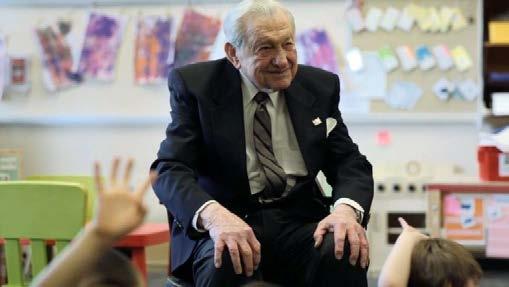
Haring coordinated research, training, and advocacy related to inclusionary educational practices for children with a variety of disabilities. He served as the founding president of TASH, the first international organization devoted to addressing the needs of people with severe disabilities. Before he passed away in 2019, the Experimental Education Unit was renamed the “Haring Center for Applied Research and Training in Inclusive Education.”
The Janus Oral History Project interviewed Dr. Haring at his home in Seattle in 2013. Video on the interview is available on the MSLBD website.
References
Haring, N. G., & Phillips, E. L. (1962). Educating emotionally disturbed children. McGraw-Hill: New York.
Haring, N. G. & Whelan, R. C. (1965). Experimental methods in education and management In Conflict in the classroom, N.J. Long, W.C. Morse, & R.G. Newman (Eds.), 389-405. Belmont, CA: Wadsworth.
Teagarden, J., Zabel, R. H., & Kaff, M. (2013). Charting changes: A conversation with Norris Haring, Intervention in School and Clinic, 49(2), 121-126.
Whelan, R. & Haring, N. G. (1966). Modification and maintenance of behavior through systematic application of consequences, Exceptional Children, 32, 281-289.
Robert Zabel, Professor Emeritus, Kansas State University, robertzabel@gmail.com and Reece L. Peterson, Professor Emeritus, University of Nebraska-Lincoln, rpeterson1@unl.edu
Photo from Seattle Times at the University of Washington.
INNOVATORS
John L. Johnson A Focus on Social Inequalities
As an academic and an administrator, Dr. John L. Johnson was able to foster ways of teaching students with special needs and ways of thinking about social equality. He contributed greatly to the social conscience of Syracuse University while he was there, and was always guided by a strong sense of compassion and equality.
Johnson was born in 1933 in Detroit, Michigan. He received a bachelor’s and a master’s degree from Wayne State University in Special Education and Education Psychology respectively, and subsequently found work as a teacher, consultant, and research associate in the area. While working in the field, Johnson also attended Michigan State University and earned a Doctor of Education in 1965.
Due to his background in teaching and teacher training, Syracuse University hired Johnson in 1966 as an assistant professor in the School of Education’s Division of Special Education. During this time, he continued to consult and train teachers on local and national levels; administrators would invite Johnson to come to their schools to evaluate their methods of teaching students with special needs. His skill and effectiveness in this role were recognized by many in the field, and in 1967, he was asked to serve on a consultation panel for the United States Office of Education.
While his work and contributions to the field of special education were significant in a practical way, Johnson’s diverse roles benefitted the universities and programs for which he worked in much broader ways. He was a skilled professor, but the administrative positions he filled reflected his personal interests as well. Johnson was a vocal presence in
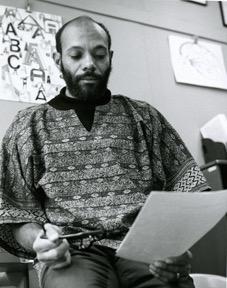
John L. Johnson one of the first special education faculty at Syracuse University and was involved with developing teacher training and school programs. He also served in several administrative roles at the University and in the schools. He was a vocal presence in the University and the community with regards to civil rights, social inequalities, and institutional racism.
the department and the larger community with regards to civil rights, social inequalities, and institutional racism. When nine African American football players at Syracuse were reprimanded for boycot-
ting practice in 1970, citing racial discrimination, Johnson served on the committee investigating the incident. He coordinated the Croton-on-Campus program, which brought local school children from inner city schools to classrooms on campus to provide learning opportunities they would otherwise not have. Johnson was appointed Assistant Provost for Minority Group Affairs in 1969, a position that allowed him to help develop the University’s policies on issues relating to minority groups. Additionally, Johnson was the first director of the African American Studies program, which was organized as both an academic subject and a tool for social change. His administrative roles were ultimately the intersection of his personal and professional passions.

“The trend of the future suggests a shift to a more comprehensive framework for assessment, one that takes into account the behavior of the environment and its influences upon the individual. Assessors will have to be trained to understand and use these methods, particularly as they contribute to the development of educationally relevant data and more appropriate educational programs for handicapped youngsters.”
From: Johnson, J.L. (May 1980). Psychosocial Assessment of the Handicapped, Journal of School Health.
justice and social action. In 1993 he was honored by the Council for Children with Behavioral Disorders (now DEBH) with their prestigious Leadership Award, recognizing a lifetime of service to students with behavioral disorders.
Note: This article was adapted in part from the Syracuse University Archives.
Reece L. Peterson, Professor Emeritus, University of Nebraska-Lincoln, rpeterson1@unl.edu
Johnson resigned from Syracuse University in 1971 to become the associate superintendent of schools for specialized education in Washington, D.C. He has had an extensive career in children’s mental health as a psychoeducational consultant and as an administrator of urban special education programs. He has held academic appointments at Syracuse, Michigan State, and Federal City College, in addition to numerous adjunct appointments.
Throughout his life, Dr. John L. Johnson has continued to balance his role as an educator and as an activist. He has remained committed to finding solutions to problems of inequality.” Johnson presented at the Midwest Symposium in 1995 on teaching African American students with behavior disorders.
Johnson worked in the field of conflict resolution and in bridging theory and practice on issues of social
The John L. Johnson Lecture at Syracuse University takes its name from a Syracuse faculty member who chaired the committee to organize an African American Studies program. He became its first director and was appointed assistant provost for minority affairs. Johnson, who joined the faculty in 1966, also helped retain scholarships for the “Syracuse 8,” a group of African Americans unfairly dismissed from the University’s football team in 1970.
The Persistence of a Ninja
By Tabitha Hayes
Student behavior is a hot topic in education and has been for some time. As such, there are an abundance of theories for dealing with student behavior. Sadly though, many teachers historically have viewed undesired student behavior as intentional acting out. That is just not the case in many situations. I will, however, admit that sometimes students are intentionally acting out. But not for the reasons most teachers believe, such as work avoidance or looking for attention. Students who do intentionally act out may be testing the teacher. They may be looking to see what reaction they get. They may have been let down by so many adults in their lives that they find it is easier to push adults away, than to risk the pain of disappointment when they are let down yet again. That is why it is so important to stick by those “difficult” students no matter what.
In 2015, I was student teaching and ready to graduate in December. I had my career all planned out. I was going to immediately start applying at local elementary schools, hoping to get hired for an upper elementary classroom, possibly 4th or 5th grade. If I did not get hired, I was going to substitute teach to get my name out to as many schools
as possible. I had my teaching philosophy set in stone and knew that I was going to be that one teacher - the one that students would see later in adulthood, run up to say, “You are the teacher that changed my life.”
Then November came along and I found out that I was pregnant. As happy and excited as I was at the thought of extending my family, it threw a monkey wrench into my plans. There was no way I could sub now; I needed medical insurance.
My applications were then for a para-educator, secretary, or kitchen staff. I still wanted to stay within a school system, but I needed the flexibility to attend doctor’s appointments and cope with morning sickness. In January of 2016, I was hired as a para in a local elementary school where I would be working in a special education classroom focused on behavior modification. I was told that this was a “tough” group of kids and warned about the behaviors I would likely see.
Honestly, that first semester was hard. Due to my pregnancy, I was not able to engage with the students the way I wanted to. When school began in August, I was no longer pregnant and ready to dive in. I still had rose-colored glasses on and knew that now I was going to be that awesome influence. I was quickly deflated by a young man I will call “Sam.”
I was asked to work primarily with Sam. I just knew that he would be excited to have me in class with him and we would hit it off great. But that was not the case. The thing was, Sam had been let down by adults in the school system at every turn and was only in the third grade. He was not interested in letting me into his inner circle. Looking back, I now see he was tired of being let down. I tried everything in my toolbox to get to Sam, but after working with him for a year, I had almost given up on ever reaching him. ALMOST.
One day, we were walking back to the classroom after lunch and he was “bottle flipping” his milk carton. I asked him to stop, citing what a mess it
I had almost given up on ever reaching him. ALMOST.
would be if it broke open. Of course, he did not care about the mess and continued to bottle flip the milk. Frustrated, I snatched the milk carton right out of the air. He was shocked; he told me that he didn’t think an “old” person (I was only 30) would be that quick. He then asked me how I did that. The first thing that came to my mind was, “Easy, I’m a ninja. I thought you knew that.” That moment was a turning point in our relationship.
From that moment forward, he softened ever-soslightly towards me. He still did not want me to be anywhere near him in class, but now he did not fight about me going to class with him. Once there, as long as I did not engage him first, he was willing to occasionally ask me for help. These were small, almost inconsequential changes that might not be noticed by someone who only occasionally saw our interactions. To me, though, it was a glimmer of hope.
The pivotal moment of our relationship came months later. We were in his general education class during independent work time. He was working with a peer on a project. Seemingly out of nowhere, he turned to his peer and said, “Did you know she’s a ninja?” He was pointing to me. The peer said, “No.” Sam then made a statement that almost made me cry right there in class. He told the peer, “Yeah, I’m the ninja master, but she’s my sidekick. I taught her.” The reason this hit me so hard was the realization that he had just allowed me into his inner circle.
From that day forward, his pushback towards me and other adults decreased. His behavior struggles were not “fixed” overnight. But his attitude
towards adults in school had started to shift. I saw him snap at adults less often, and he began to enjoy going to his general education class. One day, I saw him run up to his classroom teacher to tell her a story. Again, to anyone who didn’t know him well, this was no different than what any other student would do. But to those of us close to Sam, this was a grand leap. He was beginning to trust adults with stories from his life that he used to keep secret.
I left that district a year later to follow my dream of being a classroom teacher. I did check on Sam from time to time. He was still progressing and doing great. His behaviors had diminished to almost nothing, and his grades were higher than I had ever seen them. He was not a straight A student but he was so proud of the grades he did have (mostly B’s with a couple C’s) and seemed to enjoy school.
The moral of my story is not what I taught Sam. The moral is what Sam taught me.
Prior to this experience, I had absolutely zero desire to work in special education. This group of kids, and especially Sam, showed me how amazing kids are and how much they can surprise you at every turn. All students need to feel like they belong. That need can be more powerful than you may ever see or they will ever let you see. The
“Easy, I’m a ninja. I thought you knew that.”
key is to look for the small signs; the ones they don’t even realize they are giving you.
I also learned how powerful relationships are to children with “behavior problems.” You can never give up on them. Sometimes it is important to step away for a moment, but if you stick with them, eventually they will see how much you care. And even if you never get an “Ah ha” moment as I did, your influence could be the difference between a student’s success and a lifetime of disappointing encounters. So please continue to strive for positive interactions and build those strong relationships. It may be nothing but a couple of extra minutes to you, but could be the whole world to those students.
Tabitha Hayes, 7th Grade Co-Teacher, Pleasant Hill School District, MO, thayes@phr3.org
I am a Teacher
By Reesha M. Adamson

When I think about what created me as a person, and what helped shape who I am today as an adult, I think back to the people and the moments that created the scheme to answer the question “Who do I want to be?”
Picture a younger me with aspirations to work in education as my parents, and grandparents did before me. Many of us create expectations for ourselves early in life. Our families and our role models play an important role in this.
As teachers, we often talk with our students about, “Who we want to be.” During social skill instruction we teach students to consider how their behavior may look to others. But ultimately, as educators, do we step out and examine ourselves, our behaviors, our schools, and our structures?

“Are you a teacher?”
I
responded simply with a smile and replied, “Yes”. He smiled in return and said, “I knew it! I
knew you were here to help me!”
Are we looking farther than just that student? Are we asking our students questions that make them think about who and what is around them and influencing them? What are the experiences shaping their world, their relationships, their goals, and ultimately their educational story? What is the most important skill to teach, and how do we get there?
Early in my teaching career, I got the gig of being a “district behavior classroom,” a glorified term for the classroom that could have been the last stop for the most challenging students from any of 30+ elementary schools. As part of this job and this role, I did lots of observations of students. Many times, I offered strategies and suggestions and got to know the kids, teachers, and families from their home schools. I tried to see if the challenges the students were facing were things that could be handled with the current resources of the home schools or if the supports and instruction needed could only be provided in my classroom.
There were times during those observations that I was a witness to students beginning to escalate. It was hard to determine if the escalation was a frequent event or if it was more likely due to my presence. I also wondered if the event was stoked by the adults in the setting, so I could witness their belief in the “severity of the situation.”
With that in mind, in one school I met a phenomenal child. He was in a moment of severe crisis. Struggling to control his emotions, fleeing from those around him, and retreating within himself. He was communicating really effectively. He was out of control and just wanted some time away from everyone. He needed to regroup. He was literally screaming for a way to escape. Eventually he retreated into a dark corner of the coat closet crying and talking to himself. I went to the closet, sat down next to him, and just sat. I did not talk. I used my presence to show my support and caring. As his rage diminished, I sensed sadness and hurt creeping in its place. His tears streamed down his face. Gradually he slowly moved closer to me until his head was against me. I gently placed my hand on his back to comfort him. After five or so minutes, he looked up at me and asked through his bloodshot eyes, “Are you a teacher?” I responded simply with a smile and replied, “Yes”. He smiled in return and said, “I knew it! I knew you were here to help me!”
As I move through my career, I can still see those eyes looking up at me, begging for the level of comfort, security, and support he knew he could get from a “teacher.” This is the hallmark of our field, our profession. We have been inspired to greatness by those who have come before and hope to leave a legacy to those who will come afterward. We are
teachers. We are strong. Yes, we are underpaid and undervalued many times in our society of turmoil and uncertainty, but we are also a force to be reckoned with. We are powerful advocates for children. We are here to support the growth and development of the next generation. We will continue to do everything possible through innovation and bulletin boards, through dedication and word walls, through knowledge and hand sanitizer. Do not discount any of these actions. What we do will make a difference – as we teach students skills for a lifetime, celebrate their successes no matter how big or small, and catch them when they struggle and falter.
Our needed response is simple for students motivated to escape. Make the environment less aversive! If only it was that easy our lives as teachers would be so much happier and fulfilling. Making an environment less aversive is a challenge and an opportunity. We need to consider if the antecedent involves academic issues or behavioral issues. My mentor has told me thousands of times, “The best behavioral intervention is good academic instruction,” and I believe this wholeheartedly. But a perfect lesson plan is not cure-all.
Let me share with you the tough way I found this out. During my first few years of teaching I taught in a trailer outside of the school building. We were given students considered the misfits of the school – to be separated and forgotten. (Thankfully, that trailer of exclusion has since been destroyed.) Like every new teacher, I entered the job thinking I had the answers. I confidently knew that I could handle whatever was thrown in my direction. I knew the fundamentals of behavior. I knew how to respond to issues and keep my emotions in check. I also knew how to write and teach highly effective lesson plans based on IEP goals. Thanks to my preservice education and my confidence, I felt I was prepared. I felt on top of the world in my abilities. However, I soon learned that I had walked into something I had not expected. My wake-up call came on the first day when I used planned ignoring. I had a student who I could tell was escalating. I believed she was atten-
tion motivated and seeking my attention. I chose to ignore the problematic behavior and to positively reinforce the students around her who were following expectations. Each time I saw her attempt to do as expected, I gave her my positive attention.
Let’s just say that things escalated a bit more than I had imagined. This student ended up jumping out the classroom window and running from the trailer to the neighboring park. Needless to say, I cried that day. For those that know me - that is not me.
As I reflected on that day with mentors and colleagues, they helped me realize I had learned some valuable lessons. They also convinced me not to leave teaching to become a Wal-Mart Greeter, as had been my first impulse. Here’s what I learned.
• Don’t expect anything to always work. Behavior is a moving target and it’s not uncommon for things to get worse before they get better. Be

Nothing always works.
Not knowing what to do is OK. Value trust.
prepared to modify and pivot your strategies in response to the events that unfold.
• Know that it is okay to not know what to do. Mistakes will be made. Teachers and students will learn from each other. Seek advice and guidance from your support network. Find them, call, text them, and simply hang out with them.
• Trust your professional network. They will listen and support you without judging you. This includes trusting your administrators. (I learned my administrators would listen to me when they agreed not to suspend a student after I explained that I needed to reteach sooner rather than later.)
• Build the trust of families. Show them you are an advocate for their child as well as for them. Some families have generational experiences with schools that are not always positive. They may feel the school system is against them and become defensive. Take extra efforts to build their trust.
I know I do not do everything right as a teacher, yet I deeply value relationships and the process of genuine collaboration. I consciously work on building that foundation. Whether I am sitting quietly with a student who is crying in a school closet, having a tense discussion with a colleague, or speaking with a parent who is frustrated with the school. I take time to acknowledge the individual’s viewpoint, make connections through that new knowledge, and continue to build upon that shared understanding.
I know I am an advocate for students. I am here to help support and work with them, their parents, and other educators. I will make every effort to find resources and solutions through discussion and compromise to determine a plan of action that will ultimately benefit the student.
So, now I ask: What is your plan of action? Who are your people - your network of support? With whom can you be vulnerable? Who can help create your community? In addition, how will you find your voice to assist those who are struggling and maybe are not able to speak for themselves?
More than anything, know that no matter what you do and what role you may take on professionally, you are there for each other and for your students. Throughout your career, you will experience the everyday events, along with the brightest and the darkest moments, the celebrations and the consequences, the thumbs up, and melt downs. Through it all, you and I are teachers who are committed to youth and families, and you care.
And whenever asked, “Are you a teacher?” you and I will respond, “Yes. I am a teacher and I am here to help.”
Reesha M. Adamson, Associate Professor, Assistant Department Head, Counseling, Leadership, and Special Education, Missouri State University, radamson@ missouristate.edu
Grade One is More Than Dick and Jane
By Ila Sanders
Hesitantly I said, “Hi,” the single word I could manage as I eyed up the little girl with dark skin next to me - my assigned seat mate for the first day of elementary school. I had long been anticipating sitting next to Bonnie, my neighborhood “bestie.” Instead, at age six, I was thrown into the beginning of learning more than stories about Dick and Jane.
In 1954, our rural school offered no kindergarten. Suffice it to say we were all precocious! Mildred, a resident of the nearby Wisconsin Stockbridge Munsee Indian Reservation, was very brown, especially when compared to my freckled fair skin and red hair. Her chocolate-colored eyes, focused like a camera capturing the surroundings. She surveyed the
school setting without any hint of emotion. I’m not sure what I expected, but I was beginning to realize that a school environment was new to Mildred.
I guess you would say I was indulged. My father had passed two years prior. In this new school dedicated in his honor, I was, at the very least, familiar. School days passed, and skeptical eyes softened as Mildred and I got to know each other. Her short black hair, cut for convenience, formed a circle around her face. Her beautiful dark eyes seemed to widen as she learned new things. I recall our teacher, Mrs. Stoehr, instructing us to draw lines to connect like things on worksheets. Would you believe that two kids of different backgrounds were also “things that are alike”? Over time, differences faded into familiarity and color became a mute issue. And, I envied those dark eyes of hers!
Bonnie, though not my desk mate at school, was still my bestie and a town kid, like me. Her mother, Mary, had honed her recipe for the best salmon noodles ever! When she would smile and say “Guess what’s for supper,” I knew that egg noodles drowned in a savory sauce with a crusted topping were on the menu. I can still picture the long dining table, with Eldred’s and Mary’s seven children sitting elbow to elbow with me, her salmon noodle devotee. There was always room!
Bonnie’s family had an outdoor toilet. At my age, I didn’t find this offensive, but more unique and memorable. My family actually contributed issues of Sears and Roebuck catalogs for privy use. Recycling in the 1950’s!
My maternal grandmother, strict in her beliefs, lived with my mother, my sister, and me. Through conversations between Grandma and Mother, I gleaned that Grandma was not inclined to make associations with reservation residents. Grandma maintained a strong Christian background and knew God loved all equally, but she wasn’t required to form deep connections. It was clear, her position was to be respected!
One shared meal might potentially provide the foundation for future relationships.
By the time we were a few weeks into the school year, Eileen, another girl from the reservation, and I often played together at recess. Fifteen minutes never seemed long enough for us. I wanted to bring Eileen to my house after school. “How about tomorrow, Eileen? Ask your mom!”
I concocted a plan. Step One: inform Mrs. Stoehr. I wasn’t sure how she would adjust the dismissal plans, I only knew that she was efficient. I pictured two happy little girls, swinging our arms together as we literally skipped to our after-school destinationour family-owned store where my mother would be working.
Step Two: Eileen would hide behind the store building. Mature reasoning at age six told me it would be best to ask mother about this potential guest before we just appeared. “I’m really good at hiding,” Eileen said, which puzzled me. “From your brothers?” I asked, quickly turning to face her. “Oh, sometimes strangers come to our house,” was her reply. Her answer stopped me, but I decided not to ask more. I found a spot behind the store for Eileen, pretty well hidden.
Step Three: pose the question to mother: “Would it be ok for me to bring an Indian girlfriend home?” My mother was startled! “Of course, your friend would be welcome,” her voice radiating affirmation. Surmising the situation, she lifted her eyes. “Where
is this girl? Is she hiding? Behind the store? . . . Why did you think . . . ? Come on, let’s go!”
Eileen was not visible. Long minutes passed as we searched, calling her name with increased urgency. In what was elevating to a near panic level, I defended my actions. “Mom, I left her here, just behind the building.” Apparently, Eileen had sensed the need for more cover. But where? It seemed like hours to me, but then we both heard it - some rustling in among discarded boxes. A little face blending in well with the cardboard slowly peeked out. “Time for some ice cream treats in the store,” offered Mother. Our faces beamed, for more than one reason. Eileen’s reply, “I like chocolate,” put all of us more at ease.
I don’t recall the supper menu, just the delight of having a new friend in my home. Grandma’s eyes, without any telling expression, scrutinized the faces at the table. To my mind, the exchange of smiles seemed genuine, and conversation, initiated by my mother, seemed easy. One shared meal might potentially provide the foundation for future relationships.
Afterward, we drove the five or so miles to the reservation. Entering the unpaved road, mud splattered as barefoot children along the road creatively used nearby pot holes. They splashed the muddy water to create attention-getting waves, grinning from ear-to-ear.
We continued for another mile with little signage visible, following Eileen’s directions. “Turn here, down that road.” A dirt path defined Eileen’s family driveway, leading to a meager abode. Her robust mother greeted us at the door with a ready smile, inviting me into the doorway space. This was the family home, and her family owned this property!
What I recall most is that Eileen’s house had a dirt floor. Turning away, after saying good bye, I bit my lip. I know my chin was quivering, trying to avoid tears. I felt like a somewhat broken vessel, holding water, yet some seeping out. I was ill-prepared to name the type of guilt surfacing inside me.
Later that evening, as my mother and I talked, I surmised that she felt compelled to share some of the realities of life that affect adults and six-year-olds. She explained that families face different challenges based on their situations. Some have very little, and they learn that simple things mean a lot. She continued, “Today you’ve become more aware of your privileges. Use that knowledge for good. Be a helper and a kind friend.”
Our school years moved forward. Eileen, Bonnie, Mildred, and I each learned to play a musical instrument. The four of us added two clarinets (excuse the squeaks, please), a flute, and percussion to the band. We proudly performed together, guided by an instructor who understood the need to belong and to feel valued. Our families, including Grandma, attended. Audience applause was easy, any imperfections ignored.
She explained that families face different challenges based on their situations.
Reflecting back, students and adults alike appreciated the constructive role the school setting played in bringing people with diverse backgrounds together. My first-grade teacher’s lessons were pivotal in shaping our attitudes of acceptance, and the music concerts are just one example of many activities that helped foster quality relationships.
Ila Sanders, Retired Teacher/Coordinator, Iola-Scandinavia Schools, Iola, WI sandersilamae@gmail.com
April is Autism Awareness Month: Let’s Do Better

By Shannon Locke
April is National Autism Awareness Month. It’s time to shift the focus from awareness to appreciation and belonging in our communities. While awareness has grown, potentially thanks to past awareness campaigns, the lifetime outcomes for the autistic community remain devastatingly low.
• The lowest employment rates of any disability group.
• Greater than 50% require guardianship beyond age 18 despite many having average and above IQ.
• 70% have at least 1 comorbid mental health condition (high rates of depression and anxiety among others).
• Nine times suicide ideation and five times suicide attempts compared to non-autistic peers.
• Consequential mental health trauma from masking/camouflaging their autism to fit in.
The CDC’s Autism and Developmental Disabilities Monitoring (ADDM) Project reported that based on data from 2022, one in 36 8-year-olds across the US have been identified as hav-
ing autism. That’s at least one student in every two classes. This suggests that most of us know at least one and often many autistic people, yet individuals with autism are NOT experiencing equitable access or inclusion in their communities, in our communities.
The bottom line is Autism Awareness is NOT enough. Stigma is the culmination of public labeling, stereotyping, separating, and discriminating against persons not able to conform to standards that society calls “normal,” hence disqualifying them from full social acceptance. It takes more than awareness to curb the harmful impact of autism-specific stigma that is ever-present and experienced, not only by individuals with autism but also by their families, care-givers, and friends. For many years, the narrative of autism has been told from the misconceptions of pseudoscience and speculation resulting in what is now a very large population in our communities feeling excluded, shamed, and pressured to conform to standards they are unable to meet. Changing knowledge is just the first step to undo explicit and implicit bias-based behaviors toward or avoidance of the autistic community.
Autism and Autism Spectrum Disorder looks different in every individual, but what we can do about it is the same for all. To combat stigmatized bias and exclusion, we must be intentional about recognizing misperceptions and our own biases, and be more inclusive. It is not enough to provide training and services for an individual with autism, effort must be taken to generate inclusive and supportive social environments. This takes all of us and it’s time to:
• Increase Positive Representations of autistic people in the media and in our homes.
• Provide intentional Opportunities to Learn about autism starting with children’s literature – Ten Children’s books (PBS), Reading Rockets Booklist, San Francisco Public Library List
• Design for High Quality Contact - create settings for all to build relationships by providing structure or guidelines for community groups, networking, and social events.
• Employ Inclusive Pedagogy (Sanger, 2020) - a person-centered approach that pays attention to the varied background, needs, and abilities of all those involved so that everyone feels valued in their contribution and/or participation.
• Be self-reflective of your own Power and Privilege to guide you in interacting empathetically with the autistic community.
• Employ Universal Design/ Universal Design for Learning (UDL) by providing multiple and creative ways of engaging and belonging that work for everyone.
• Create “Autism Friendly” Spaces by supporting neurodiversity, use more visuals, get to know the interests and routines that autistic members of your community are comfortable with. Ask them if they prefer person-first or identity-first language.
• Recognize and respect that comfort levels with Disclosing/Recognizing Autistic Identity vary among individuals and contexts.
This April lets shift the narrative beyond autism awareness to embracing autism. Research is clear that a sense of belonging is instrumental for mental wellness and academic achievement. Now is the time to create a sense of belonging for the autistic community to combat our society’s misguided autism-specific stigma. It’s time for a new campaign – the ABCs of Autism.
Autism Belongs in my Community.
Note: Contact the author for reference information.
Shannon Locke, Ph.D. Candidate, Special Education –Autism, University of Missouri – Columbia, slocke@ mail.missouri.edu
References are available from the author.
Beyond ACEs –Lessening the Impact of Trauma

By Francie Murry and Kristine J. Melloy
What is it about the trauma that impacts each person’s life? How does it happen that two people may experience similar incidents and react with very different responses? One person has negative long-term outcomes that show up unexpectedly throughout their life, and the other does not.
When suspected trauma occurs, educators can plan activities that will change the way in which their students’ brains react. They can implement strategies for creating environments that can buffer the immediate effects in childhood and adolescence and mitigate the long-term negative effects of trauma. Using the strategies and the information provided, teachers can overpower trauma-induced toxic stress and support student learning. These strategies used during the school day can help students to naturally release feel-good hormones; allowing teachers to do what they want to do most - TEACH.
Adverse Childhood Experiences
In 1998, Felitti et al., published the results of their study in which 9,508 adults responded to a health appraisal questionnaire providing demographic and biopsychosocial information, a review of organ systems, previous medical diagnoses, and family medical history. These adults were middle-class and middle-aged US citizens; the sample lacked a wide range of diversity and consisted mostly of college-educated Caucasian patients. Using this data, Felitti and colleagues determined that ten specific traumatic experiences that occurred before age 18 could be linked to a higher likelihood of physical and emotional health challenges later in life. These adverse childhood experiences became known as ACEs. Click here to view the 10-question survey asked of adults used to identify the number of ACEs experienced before the age of 18 years.
The most prevalent ACE categories identified were abuse, neglect, and dysfunction occurring in the household, community, and/or environment. Abuse included physical, emotional, and sexual abuse, either experienced or witnessed by the child. Ne-
glect experienced by a child is physical or emotional. Dysfunction included familial mental illness, incarceration, violence, substance abuse, and divorce. This study found that child-parent trauma experiences, left untreated, led to negative long-term outcomes.
In combination with correlational studies, and medical, and neuroscience research, long-term negative outcomes have been identified as those that emanate from traumatic experiences during children’s developmental years. When reactions to these traumatic experiences are left unresolved, there can be long-term negative outcomes on brain development and mental and physical health. When children grow up in community environments plagued by such adversarial conditions as widespread poverty, refugee status, lack of opportunity, pandemics, and a lack of needed social services, they also experience long-term negative outcomes like those identified in the ACEs study.
The results of the ACEs survey for adults should not be considered as a checklist to identify school-age children for trauma-informed practices. It is important to remember that not every childhood incident produces significant traumatic aftereffects. The higher the number of ACEs experienced before the age of 18, the more likely the child also experienced disruptions in brain development, health, quality of life, economics, and education. The impact is measured by what degree the child reacts to the experience and how the incident is responded to by adults and caregivers.
The stress response in childhood to these events has been known to disrupt the development of brain architecture as well as other bodily systems — creating high levels of stress hormones to be released into the nervous systems at a consistent rate, leading to what is referred to as toxic levels of stress (Harris, 2020). The emotional and psychological reaction to events perceived as physically or emotionally damaging has enduring impacts on an individual’s development, functioning, and well-being in physical, emotional, social, and spiritual aspects (Murry & Melloy, 2023).
The Brain and Trauma
At one point, trauma was considered an aberrant experience; however, trauma is very prevalent, and it is not uncommon for individuals to have multiple traumatic experiences (Kessler, 2000). Current studies show that two-thirds of Americans have experienced at least one ACE, and one in six have experienced four or more ACEs (Merrick et al., 2018).
An individual’s brain is affected and changed by constant or repeated exposure to trauma. The exposure can be through direct repeated experience or triggered memory of the incident. The change occurs because the brain creates chemical releases within our body in response to recognized needs. For instance, when our brain perceives a threatening situation, the need for a quick response produces high levels of the hormone epinephrine, also known as adrenaline. During the minutes our nervous system releases adrenaline into the blood and sends impulses to organs, the body is also flooded with other chemicals supporting the perceived need. The amygdala, hypothalamus, hippocampus, and prefrontal cortex are the primary areas of our brain that control
memories and are initially affected when trauma occurs. Over time, if these areas have chronic activation by chemicals released into the brain, the brain changes to adjust to the consistently higher levels. In turn, our body is also affected.
Chemicals are released with each traumatic experience encountered, even a false alarm. The changes to the brain continue. These changes affect how neurons send, receive, and process signals telling the body to react. For instance, hormones are released and influence emotions. The major hormones influencing our emotional responses are oxytocin, dopamine, serotonin, and endorphins. These hormones promote feelings of happiness, pleasure, and reinforcement while reducing depression and anxiety, helping to bring the nervous system back to balance and calm. These hormones are connected with experiences in school, and the memory is stored in the major areas of the brain. Educators can teach and do activities that will naturally boost the release of these feel-good hormones and positively influence changes to the brain and long-term physical and mental outcomes.
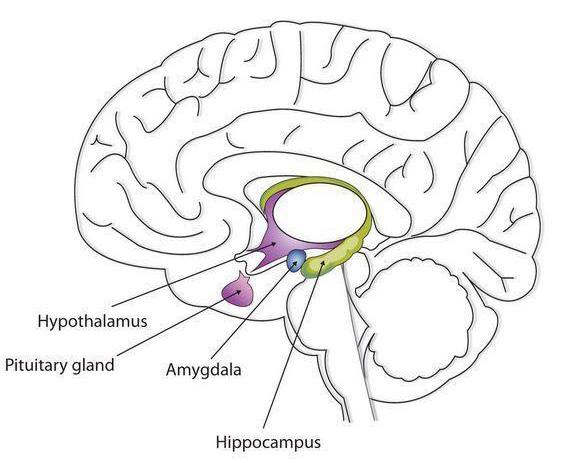
Memory Command Center of Brain
Benefits of Early Action
We rarely can prevent childhood trauma; however, as educators, we have knowledge and techniques that we can share with families and perform in our schools that can change the trajectory of what could become detrimental long-term effects. The benefits of addressing ACEs before the child enters adulthood can facilitate brain development in a positive direction. Teachers can promote the use of trauma-informed practices (e.g., establishing safe, stable, nurturing relationships and environments in schools, homes, and communities) that will support children and youth to become productive engaged members of society. The short and long-term benefits include healthier relationships, better school performance, higher graduation rates, fewer mental health problems, less substance abuse, fewer behavior problems, less violence, fewer arrests for violent crimes, and less burden and cost from violence and health problems. Table 1 provides interventions and strategies for educators to mitigate the long-term impact of ACEs.
Teach Life Skills
● Prosocial skills
● Self-regulation learning
● Solution-finding, decision-making, and problem-solving
● Emotional identification in self and shown by others
● Safe dating and healthy relationship skill programs
● Self-calming and soothing skills
Use classroom strategies to promote connections that combat the toxic chemical reaction in the brain to ACEs
● Make connections within the context of a safe relationship (e.g., being present with a student, sharing a smile, sitting near a student who is upset, or doing an activity together)
● Focus on encouraging students to be their best selves by showing belief in their future abilities
● Use mistakes as opportunities to teach instead of taking punitive actions
● Promote self-regulation by cueing verbal and nonverbally to expected behaviors and focusing on teaching and reinforcing desired behaviors
● Help students think through and problem-solve using the “frontal cortex” to strengthen cognition and reduce brain arousal
● Give students meaning for the tasks they are resistant to do
● Balance respect for the student’s needs with teaching needs that address the current situation
● Recognize what trauma reactions look like and that those reactions are adaptive
● Provide warnings for unscheduled sensory interruptions to school (e.g., fire drills, bells, sirens, lighting, sudden movements)
● Movement activities such as those found in the Brain Gym curriculum
Table 1: Strategies to Address Long-Term Impact of ACEs
Make connections with youth and caring adults and engage youth in organized activities
● Ensure that at least one educator connects with the student, creating a trusting and stable relationship
● Use adult/student connection tools such as Check In/Check Out
● Mentoring programs
● After-school programs (e.g., clubs, sports, community youth activities, swim lessons)
● Peer-buddy connections during school
● Sports programs (e.g., Special Olympics, Unified Sports)
● Supervised human society volunteerism or other age-appropriate facilities
● Kempo karate, tai chi for kids
Refer youth for services that lessen immediate and long-term effects of negative health and mental health outcomes
● Dental and vision services
● Have a shared understanding among all staff concerning trauma’s impact on learning, behavior, and relationships at school
● Promote families to access therapeutic, medical, and mental health services by being clear on information about roles and boundaries
● Refer to services for medication management, Medicare, and Medicaid services
● Make the family aware of available parenting classes
● Recommend access programs for family employment support and food
● Neurofeedback, EFT Tapping, mindfulness, meditating
Promote the release of positive emotional hormones
● Silent walks with a trusted adult, note moments of gratitude (called glimmers)
● Take a quick stroll, use a golf or tennis ball for a foot massager, or squeeze a stress ball
● Pranayama breathing
● Spend time outside (getting sunshine)
● Playground activities (e.g., swinging, teeter totter, slides, merry-go-round)
● Read for enjoyment
● Play with favored animals (cuddling and caring for them)
● Exercise heavily for 10 minutes or regularly for 30 minutes
● Get a massage, a vibrating massage chair, or self-hand massage, listen to feel-good music, and dance
● Eat a balanced healthy meal (maintain a nutritious diet with Vitamin C and D)
● Drink green tea and eat some chocolate
Changing Students’ Brains with FeelGood Hormones
Resilience builds throughout life, and close relationships are key. When children and youth experience compassionate and dependable relationships, they re-establish trusting connections with others that foster health and well-being. The amygdala forms the emotional memory connection and triggers the release of endorphins to brain areas responsible for arousal and emotion. The better a student feels about an educational activity and those they are doing it with, the more effort they will put forth, and the more hormone chemistry the brain triggers for feeling good. The social relationship with adults and peers during the activity is key in triggering good feelings for the student, even if they are not successful at the task the first time.
Trusting and stable relationships can act as a cushion against the effects of ACEs, enough to restore the balance of the nervous systems. Even in the hardest times where significant and prolonged stressors exist, it becomes crucial for educators to step in. Social bonding can have a foundation in laughter which releases hormones like endorphins and oxytocin and can be the beginning of stabilizing relationships. Stabilizing relationships is essential to shield the child from the harmful impacts of these challenges. Well-developed mentoring and peer buddy programs in the classroom can buffer against outside unresponsive or inconsistent adult relationships. These school relationships can help students regain the ability to calm the nervous system and learn.
The interaction between parent and child is the first and essential relationship for the student developmental process (Center on the Developing Child at Harvard University, 2021). Schools can support families by promoting positive interactions between parents and children. Activities and approaches can help change trauma-related behavior and physical and mental health problems. Simple acts of good physical touch, petting a loved animal, playing at a park, or taking a walk outdoors can get the brain to
increase oxytocin - one of the feel-good hormones. Families can be encouraged to do these low-cost activities. Educators can achieve these hormonal increases by taking mini breaks throughout the school day to practice a gratitude moment or other mindfulness activities that fit the classroom culture.
Another hormone in the feel-good category is dopamine. It plays a role in the functions of learning, attention, mood, movement, and sleep. Dopamine is involved in producing feelings of reinforcement. When we smell something good to eat, our brain releases dopamine, and we want to eat it. Families can increase this hormone with foods with tyrosine to boost levels in the brain. A diet rich in tyrosine can also improve memory and mental performance. Some dopamine tyrosine foods are chicken and other types of poultry, dairy foods, avocadoes, bananas, and soy. There is evidence that mindfulness practices can trigger dopamine releases as well.
The last of the four feel-good hormones our brain memory center can release is serotonin. It acts on different brain parts to affect various functions and behaviors, such as the stress response, digestion, sleep, breathing, and addiction. This hormone is more difficult to increase through food intake but is easily increased naturally. It can easily be triggered by physical exercise, light therapy, or sunshine, and can stave off depression and poor moods.
The areas of the brain - the amygdala, hypothalamus, and hippocampus - work together to house memories that can produce chemistry that promotes a sense of danger and fear. Yet they are also the areas that hold good memories and can work as protective factors and, when needed, are essential. These areas can be reprogrammed, so to speak, to produce hormones that can boost motivation, attention, mood, and the desire to learn.
Educator Resources
There are many resources available for educators to explore that will assist them in becoming knowledgeable about trauma and practices that can promote
positive influences. Educators whose younger lives were impacted by ACEs must also be able to explore the approaches to add buffers to their own lives. Doing so adds a preventative approach to not triggering students’ display of behaviors influenced by ACEs. Table 2 lists several resources.
Table 2: Educator Resources
Teaching Life Skills
• CASEL Framework
• Panorama Education
• Bloomsights
Trauma-Informed Classroom Strategies
• Positive Behavior Interventions and Supports (PBIS)
• Restorative Practices in Schools
• Peace Corner
• Mindfulness Practice
Professional Development
• Dr. Bruce Perry and Trauma-Informed Practices
Trauma-Informed Practices
• Child Mind Institute Trauma Report
The ACE study is not a checklist or a quiz but a survey that led to strong correlational findings about potential negative adult outcomes if a person experienced unaddressed trauma in childhood. ACEs are not the final word on how students respond to their lives, nor are they written as a pathway to be followed into adulthood.
The case examples of Callie and Emilio present narratives of the timelines for two individuals who experienced several ACEs before the age of 18 and how their caregivers and trusted school personnel intervened to mitigate negative long-term outcomes. The ways in which the actions of others provided protective factors and promoted positive brain change through the release of feel-good hormones are identified.
Callie
An example of the long-term impact of ACEs on a child.
Callie was born with a serious disease (ACE 1) that resulted in surgery when she was an infant. She spent the first one and a half months in the hospital recovering from her surgery. When Callie was finally allowed to go home, she was welcomed by her loving parents and siblings. Throughout her early years, Callie made many follow-up visits with healthcare providers. During those visits, she spent much time crying and expressing fear demonstrating the fight, flight, or freeze response. Upon leaving the office, Callie calmed, stopped crying, and ceased acting fearfully, and her nervous system returned to calm. This calming occurred because she was held by a loving family member and assured she was ok with calming words (triggering feel-good hormones). All efforts to figure out why Callie became so fearful and upset in these situations led to the conclusion that she showed anxiety and fear whenever around anyone dressed in white (i.e., doctors, nurses, and relatives in white clothing). This connection was due to the trauma she experienced as an infant being restrained for the administration of anesthesia for surgery and enhanced during her visits with doctors and nurses dressed in white.
In addition to Callie’s ACEs associated with significant health issues from birth and subsequent repeated exposure to medical professionals that placed her at risk for lifelong impacts, she also experienced other ACEs as a youngster. The family lived in conditions of poverty (ACE 2). However, to offset this stressor, Callie’s family was deeply involved in church activities, and she was committed to prayer and her religious beliefs (triggering feel-good hormones). There was also common verbal aggression among family members (ACE 3), which was often related to
the family member with a mental illness living within the household (ACE 4), and physical and emotional abuse was ongoing, as well as emotional neglect (ACE 5).
As a result of Callie’s responses to unaddressed ACEs, she demonstrated symptoms associated with trauma as a child. She continued to have great anxiety, performed poorly in school, became pregnant in her teens, smoked, and abused alcohol. If educators had recognized symptoms of unresolved ACEs in Callie’s youth, they could have selected some of the interventions described in Table 1 to lessen the longterm impact. For example, at home, she could have taken walks in nature with her dog and continued her prayer and religious activities. At school, Callie could have participated in mindfulness practices, talked with a school counselor trained in trauma-informed practices, gotten involved in sports or clubs, and developed meaningful social relationships with peers. These suggested activities could have helped calm Callie’s nervous system and trigger the release of feel-good hormones.
Emilio
An example of how trusted adult actions and strategies can buffer the impact of ACEs.
Emilio was born to a family with one older sister and a father and mother who had been referred to social service agencies for domestic violence several times (ACE 1). By the time Emilio was 11 years old, he had two younger siblings, and his mother had died of cancer (ACE 2). His dad was at a loss for how to care for four children and turned to drugs and alcohol to relieve his grief (ACE 3). He often left Emilio and his siblings alone. Their grandma would come to pick them up when neighbors noticed and called to
tell her that the children were alone. Emilio did average in school and expressed he could have done better if he had felt he could concentrate. He said he worried a lot about his family. His teachers said Emilio spent much of the school day daydreaming. He loved to read and got lost in books (triggering feel-good hormones). His grandma tried to give the children a good home while they lived with her, but eventually, their dad would return, and the children would go back to live with him. Their dad brought several girlfriends home over the next year; however, they acted emotionally aloof with the children, and each left, saying they did not want a readymade family (ACE 4).
When Emilio was twelve, he started showing signs of anxiety and anger in reaction to seemingly insignificant events. While staying with Grandma, Emilio became angry, beat up his younger brother, and stole cash from Grandma’s purse, his aunt’s car keys, and her car. He wrecked the car. These behaviors resulted in the beginning of his repeated stays in detention centers and residential facilities. His grandma refused to take him back into her home but said that she would support him during his incarceration by participating in decisions for medical needs and education. He was diagnosed as pre-diabetic and with hypertension when he was thirteen and was told it could be controlled with diet and calming activities.
While staying in facilities, Emilio stole vehicles two more times and was charged as a minor, resulting in more detention commitments. He was at a loss to explain why he felt the need to run, and when given freedom, he would walk for miles without a destination. Between the ages of 13 and 15, he lived in five different detention centers and two residential placements due to his continuous running away and serving more time for charges he picked up while out on his
own. His last release was to a foster placement, where he could stay until he reached the age of majority. He attended high school in a small town where neighbors watched out for one another and were supportive. Since he now lived within a community setting, his foster parents and teachers collaborated with him to decide which types of functional life skills would be most helpful to reinforce (triggering feel-good hormones).
His teachers encouraged him to use his academic strength in reading to catch up on schooling he had missed from the inconsistent placements in the juvenile correctional system (triggering feel-good hormones). His school counselor had weekly meetings with a small family group that included Emilio and his grandmother to promote communication skills, social skills, and healthy expression in families (triggering feel-good hormones). He also participated in a weekly neurofeedback program sponsored by the Department of Human Services (triggering feel-good hormones). These trauma-informed practices allowed Emilio to learn how to calm his nervous system enough to attend to learning and develop bonded relationships.
The emphasis in his foster home was on Emilio learning to prepare health-conscious meals, other self-care and life skills, earning his driver’s license, and maintaining an after-school job at a local distribution store for auto parts (triggering feel-good hormones). His foster parents worked with his grandmother to ensure he had regular visits with her and his younger siblings and helped him gain access to his dad, who had been in prison. He and his father worked with the prison-based therapist to recover their relationship through weekly Zoom meetings (triggering feel-good hormones).
ACEs. Children and youth who have experienced four or more ACES - an increased risk of developing longterm negative outcomes - benefit from effective trauma-informed practices and trauma-informed schools. Schools in which students feel cared for and safe and practices that include the explicit teaching of life skills, strategies that increase feel good hormones, and opportunities for students to connect with caring and supportive adults. Learning how the brain integrates information and disseminates chemical output in response to that information increases the ability of educators to effectively implement trauma-informed practices and lessen the impact of ACEs for the children and youth they serve.
References
Center on the Developing Child at Harvard University. (2021). Three Principles to Improve Outcomes for Children and Families, 2021 Update.
Felitti, V.J., Anda, R.F., Nordenberg, D., Williamson, D.F., Spitz, A.M., Edwards, V., … Marks, J.S. (1998). Relationship of childhood abuse and household dysfunction to many of the leading causes of death in adults. The Adverse Childhood Experiences (ACE) Study. American Journal of Preventive Medicine, 14(4), 245-58.
Harris, N.B. (2020). Screening for adverse childhood experiences. Journal of the American Medical Association, 324(17), 1788-1789.
Kessler, R. C. (2000). Posttraumatic stress disorder: The burden to the individual and to society. Journal of Clinical Psychiatry, 61(5), 4–12.
Merrick, M.T., Ford, D.C., Ports, K.A., & Guinn, A.S. (2018). Prevalence of adverse childhood experiences from the 2011-2014 Behavioral Risk Factor Surveillance System in 23 states. JAMA Pediatrics, 172(11), 1038-1044.
Murry, F., & Melloy, K. (2023, November). Beyond ACES: Adverse or beautiful outcomes of knowledge. Teacher Educators of Children with Behavior Disorders 46th Annual Convention. Tempe, AZ.
Kristine J. Melloy, Academic Coach, Windsor, CO, kmelloy2136@gmail.com and Francie Murry, Emeritus Professor, University of Northern Colorado, Francie.Murry@unco.edu
According to the research used here, most of the US population has experienced some level of trauma and has been affected by at least one of the listed
By Erika L. McDowell
To continue building an equitable mindset to cultivate belonging within your multi-tiered systems of support (MTSS), we must start with what it takes to sustain this environment. As much as we enjoy seeing the positive results from data and evidence-based practices, we rarely discuss the process of getting there. However, we all come to work with something. This is where the work begins. It truly starts with you. A tool is only as good as its user. Thinking about how MTSS is the overarching referent for frameworks designed to target academic and behavioral challenges with a focus on a tiered continuum of evidence-based practices within the context of prevention science and implementation research (Freeman et al., 2017), we look at the user and recipient of the framework. Recipients of the MTSS framework are inclusive of our learners and the communities in which they dwell.
Everyone in the community in which a learner dwells knows our learners. The teacher, staff, parents, administrators, the local grocer, salon owners, and even barbers are all a part of the implementation process. The community has a responsibility to support what is happening in our environment. We must ensure that in our planning of MTSS in schools, we leverage the bonds the community has and involve members in implementation. We must first unpack community and the intersection of MTSS, belonging, and equity. We can use the tools and strategies in MTSS to center community and build a framework in which difference of thought and lived experience is seen as a strength. We will begin with unpacking your greatest tool within MTSS and how practitioners can learn even more about the folx in their community. Understanding MTSS through a pedagogical lens on love and belonging will and can liberate our collective use of this framework.
You and MTSS
There is something that you, as the practitioner, can do to prepare for the work of creating a more community-reflective MTSS in your environment.
There is an opportunity for all of us to look deep into our MTSS work and to improve our practice for the belonging of all.
List all the things YOU have to do in a week. Separate them into categories. You lead the charge on what “data” we should look at. I would highly suggest, at a minimum, adding these: Work, Home, and Fun. Yes. Fun! What makes you tick? What is your structure of joy? This is your framework. If you are human, there are times that you must adapt this framework to get maximum use from this thing called life.
This same concept could assist in implementing MTSS with equity, belonging, and community at the center. One of the most powerful parts of implementing MTSS is the solid framework built and sustained in various educational spaces. Frameworks define the work and thinking skills shared so that all school partners/participants are welcomed and included in safe environments, creating a world where we all can thrive.
You could argue that frameworks are a little like a recipe. Let us look at MTSS as a recipe. A recipe? Yes, a recipe. We all eat. It stands to reason that we must adapt our MTSS work for ALL. Why? Glad you asked. Say you are hosting community gatherings. Remember why most invitations ask questions about food? The planner needs a certain amount of data to make decisions about the recipients of food being prepared. This person can adapt the “recipe” of the event to make the necessary adjustments to make that moment in time a safe experience. What is your recipe for your implementation? What data are you using to assist in making the MTSS framework equitable and culturally responsive? We must be committed to using data and understanding the history of our work as practitioners.
Learning You, Learning Us
There is an opportunity for all of us to look deep into our MTSS work and to improve our practice for the belonging of all. Belonging is experiencing appreciation, validation, acceptance, and fair treatment within an environment (adapted from Cobb & Krownapple, 2019). It starts with understanding and building relationships with the folx in your communities to sustain and cultivate belonging within MTSS. No one solution exists that will transform schools to impact disparities in educational
opportunities and outcomes. Approaches must be associated with behavior and not the student regarding discipline (McNeill et al., 2016). These interventions and their implementation are great efforts, yet none are working in isolation to combat the issue of disproportionality. Practitioners are trying to combine evidence-based approaches but still need to catch up. Simultaneously, we are human. We cannot change who we are, but we can reflect on how we show up and the relationships we build with all members of our local community.
Employees cannot change their cultural or linguistic background; nevertheless, steps can be made to understand further the backgrounds of the learners they serve. Critical race pedagogy notes that race informs the culture of schools (Ledesma & Calderón, 2015) and teachers are encouraged to use cultural referents in pedagogy. Staff must increase their knowledge of parents’ and students’ distinctive cultures and characteristics (Kourea et al., 2016). Defining school culture and context is crucial to understanding staff, students, and parents and creating more inclusive discipline practices. Defining culture has been difficult and done differently depending on the legal, political, and educational perspectives of those involved (Sugai et al., 2012). Nevertheless, multiple studies have attempted to tackle defining culture in their work. This work stems from the need to understand students’ various school backgrounds.
You are the greatest and dearest tool we have in dismantling systems of oppression that impact us, too, and walk into a season of implementation that centers our most beloved.
The population of students in public schools has become increasingly diverse, and behavior management outcomes and practices are continuously different among cultural groups (Fallon et al., 2012). However, the current mode in the United States maintains racial power and further marginalizes non-dominant communities (Bal, 2016). Therefore, an operational definition of culture is important because of the changing demographics in schools, concerns about problem behavior, and, most importantly, the context of negative outcomes for culturally and linguistically diverse students (Sugai et al., 2012).
Influencing students’ social and academic success is related to cultural factors, and these factors should be considered. From Knoster’s (2018) viewpoint, culturally competent approaches must be emphasized to reach diverse students. Thus, practically defining culture can limit cultural misunderstanding. Natesan et al. (2011) noted that understanding Black students’ instructional and educational needs is challenging for teachers. Schools might develop structures of support built around student outcomes and push strategies that students can succeed in regardless of cultural background (Vincent et al., 2011). Understanding culture and context can be crucial in changing schools’ climates and our MTSS implementation.
A strategic focus on building these relationships before a behavioral infraction for all students can assist in improving a classroom environment. Educators can see the cultural distinctions in diverse family dynamics by viewing behaviors from a cultural and contextual lens. This understanding can inform behavioral decisions, even minor occurrences, and give more attention to the academic efforts necessary for continued achievement. It should be noted that implementation can be improved by considering the context, learning history, and culture of families, students, community members, and staff (Sugai et al., 2012). Building and refining MTSS must consider all stakeholders’ cultural and linguistic dynamics.
Equity Through Community
Before you jump into this work on a deeper level, there is an assessment (informal or formal) of who is in your school community and the circle you have to support MTSS implementation, particularly at the district level. Equity has been defined as “every student having access to the educational resources and rigor they need at the right moment in their educa-
tion across race, gender, ethnicity, language, disability, religion, sexual orientation, gender identity, family background, and family income” (adapted from www.ccsso.org). As you reflect on this definition, I want you to ponder the intersection of community. Several studies (e.g. Millspaugh, 2022) revealed the importance of this support and how it impacts the day-to-day work of disciplinary strategies. Moreover, approval of fully implemented MTSS should be culturally responsive. Therefore, administrators can make more strategic choices in ensuring that staff has a range of alternative approaches within the school building.
In tandem, you should be culturally responsive in your practice and understand the need to recruit and keep culturally responsive teachers better prepared to work with students of color (Khalifa et al., 2016). Working with culturally responsive staff to enhance these school-wide measures will ensure more equitable outcomes. Thus, MTSS implementation plans should be reviewed periodically to provide the student population is reflected in practice.
The efforts of the school-based team are instrumental in MTSS ultimately being successful. However, this success must be sustained by policy and systematic efforts at the district level. Developing effective leaders becomes a critical part of the pro-
cess of retaining and recruiting the best teachers for students who have been marginalized (Khalifa et al., 2016). Districts can allocate more funding for classroom personnel to help teachers implement an evidence-based intervention, such as MTSS. Classroom sizes may not be reducible, but increasing staff in these classrooms and removing barriers to comprehensive instruction offer greater outcomes for students. As the student population in schools has become more diverse, the teaching field remains mostly White and female (Will, 2020). These data are reflected in the national population of the teaching field, which may need to remember the people in your environment.
A focus on training and support for culturally responsive approaches is necessary for the continual improvement of classroom, disciplinary, and teaching practices. One must remember the greatest tool in our districts - You. Districts and schools must give sufficient time to professional development regarding culturally responsive approaches and classroom management (Skiba & Losen, 2015). These approaches can assist folx on different journeys around cultural responsiveness and equitable practices.
Culturally relevant pedagogy
in coaching and training can assist teachers in responding to behavior from students whose backgrounds may not mirror their own.
Some communities start the day with a song before proceeding with the rest of the day. Others may use affirmations or pledges during this time. This space is usually created to set intentions for the day. As an assistant principal, we chanted affirmations as a school community. Even my parents knew our chants and cheers! This is a small act in dismantling a system of oppression preventing us from starting every day with intention and clarity. Where in your MTSS can you adapt to bring this sense of belonging to your environment? Still, should we adjust our work? The school-to-prison pipeline is very real, and if we do not adapt our implementation, MTSS and any other framework can and will be oppressive. MTSS should not be a replica of this horrible power dynamic. Let us build an equitable mindset, center community, and create a liberating environment through MTSS to dismantle a host of oppressors in schools, including disproportionality and inequitable practices.
Pedagogy of Love and Belonging
We can only adapt and use this framework as a tool of liberation if we are clear about who we are and our roles within the implementation. Once we resolve that this pedagogy of love and belonging is critical to the adaptive work ahead, we know it is acceptable and appropriate to adopt an embedded loving pedagogy into our settings and practice (Grimmer, 2021). Your tools are important in centering equity through community engagement, involvement, and sustainability. Still, with the theoretical underpinning of love and
Unless we discuss the lack of love and belonging in our implementation, we will be reproducing an oppressive environment for our communities.
nities must not be tolerated” (Francis-Thompson, 2017). Schools’ disproportionality issues need an adaptable, equitable framework that considers the cultural and contextual shifts in schools today.
Equity, belonging, and community must be centered on responding to and building MTSS for your environment, cultivating belonging, and strengthening community bonds. A quote, curated from a group of Aboriginal rights activists from Queensland, Australia, can be our “why” in using your resources and strategies. It is often attributed to Lila Watson, a group member, who insists it was a collective endeavor.
belonging, it will be easier for you as a practitioner. You will see MTSS as you are instead of what implementation must be for all of our community members and partners.
There is a pedagogy of love, community, and belonging that we are missing. Unless we discuss the lack of love and belonging in our implementation, we will be reproducing an oppressive environment for our communities. Internalization can cause Black, Indigenous, or People of Color children to disassociate themselves from practices and position themselves as not belonging to learning spaces where academic language is key. Propose a move toward a healing pedagogy of communicative belonging. Let us avoid making our practices and implementation within MTSS promote this lack of belonging (Souto-Manning et al., 2022).
Next Steps
Lack of belonging and equitable practices for all is an emergent concern, and this issue must be tackled at all levels of our education system. The history of race in America must be reviewed and discussed to trace how racial disproportionality has grown. Also, the history of education and the major decisions made to equalize the school experience for all students must be reflected upon for its effectiveness. “For MTSS to be fully realized… racial discrimination, poverty, denials of constitutional liberties, or inequalities in educational opportu-
If you have come to help me, you are wasting your time. However, let us work together if you have come because your liberation is bound to mine.
Tools in many articles and books (Hollins-Sims et al., 2022) can assist schools in becoming more culturally and contextually responsive to student needs and highlighting contributing factors to disproportionality, and building MTSS supports to dismantle systems of oppression that are showing up in various data sources across school districts. It will also assist you in the building; as bell hooks notes, “a community of resistance” places YOU as a leader to know you are not alone in implementing MTSS.
Your faithfulness to the work has been great, yet we have more to do. For you, our environments, and most of all, our learners, and their communities. Everyone reading this may have a smaller budget, structures, and systems. However, what do you have? YOU. You are the greatest and dearest tool we have in dismantling systems of oppression that impact us, too, and walk into a season of implementation that centers our most beloved. These strategies can affect your performance to be responsive and inclusive. Look at how you have done so far. We shall conclude this article with an affirmation:
In community, we will adapt, liberate, and transform MTSS for the work ahead!
References
Cobb F. & Krownapple J. (2019). Belonging through a culture of dignity: The keys to successful equity implementation Mimi & Todd Press.
Fallon, L. M., O’Keeffe, B. V., & Sugai, G. (2012). Consideration of culture and context in school-wide positive behavior support: A review of current literature. Journal of Positive Behavior Interventions, 14(4), 209–219.
Francis-Thompson, N. (2017). Beyond the pink sand: case studies of experiences of multi-tier system of supports implementation in the Bermuda Public School system. ProQuest Dissertations Publishing.
Freeman, J., Sugai, G., Simonsen, B., & Everett, S. (2017). MTSS Coaching: Bridging knowing to do Theory into Practice, 56(1), 29–37.
Grimmer, Tamsin. Developing a Loving Pedagogy in the Early Years: How Love Fits with Professional Practice, Taylor & Francis Group, 2021. ProQuest Ebook Central,
Hollins-Sims, N.Y., Kaurudar, E.J., & Runge, T.J. (2022). Creating Equitable Practices in PBIS: Growing a Positive School Climate for Sustainable Outcomes (1st ed.). Routledge.
Khalifa, M. A., Gooden, M. A., & Davis, J. E. (2016). Culturally responsive school leadership: A synthesis of the literature. Review of Educational Research, 86, 1272-1311.
Knoster, T. (2018). Commentary: Evolution of positive behavior support and future directions Journal of Positive Behavior Interventions, 20(1), 23-26. doi:10.1177/1098300717735056
Kourea, L., Lo, Y., & Owens, T. L. (2016). Using parental input from Black families to increase cultural responsiveness for teaching SWPBS expectations Behavioral Disorders, 41, 226–240.
Ledesma, M. C., & Calderón, D. (2015). Critical race theory in education: A review of past literature and a look to the future. Qualitative Inquiry, 21(3), 206-222.
McNeill, K. F., Friedman, B. D., & Chavez, C. (2016). Keep them so you can teach them: Alternatives to exclusionary discipline. International Public Health Journal, 8(2), 169.
Millspaugh, R. L. (2022). Implementing Universal Multi-Tiered Systems of Support for Behavior with Fidelity: What Principals Do that Makes a Difference. ProQuest Dissertations.
Natesan, P., Webb-Hasan, G. C., Carter, N. P., & Walter, P. (2011). Validity of the cultural awareness and beliefs inventory of urban teachers: A parallel mixed methods study. International Journal of Multiple Research Approaches, 5(2), 238-253.
Skiba, R. J., & Losen, D. J. (2015). From reaction to prevention: Turning the page on school discipline. American Educator, 39(4), 4.
Souto-Manning, M., Martinez, D. C., & Musser, A. D. (2022). ELA as English Language Abolition: Toward a Pedagogy of Communicative Belonging. Reading Research Quarterly, 57(4), 1089–1106.
Sugai, G., O’Keeffe, B. V., & Fallon, L. M. (2012). A contextual consideration of culture and school-wide positive behavior support Journal of Positive Behavior Interventions, 14(4), 197-208.
Vincent, C., Cartledge, G., May & Tobin, T. (2009, Oct). Do elementary schools that document reductions in overall office referrals document reductions across all student races and ethnicities?
Will, M. (2020, November 19). Still mostly white and female: New federal data on the teaching profession. Education Week. Retrieved February 11, 2023.
Erika L. McDowell, Inspired Minds Collide, Founder, Black Wildflowers Fund Co-CEO, inspiredmindscollide@gmail.com
Increasing Compliance with Momentum
By Cassie S. Barnett

Megan, a third-grade teacher with eight years of teaching experience, dreads independent work in her classroom. While it should be a time to work with students needing additional academic support, Megan instead spends her time arguing with Rachel. Rachel, a third-grader who receives Title I math support, will do just about anything to avoid work. In a typical 30-minute, independent work session, Rachel will get up to sharpen her pencil, ask to go to the bathroom, tie her shoes, search through her supply box, lay her head down on her desk, and complain “it’s too hard”, repeating each step for what feels like 100 times. Megan is constantly interrupting her small-group intervention sessions to tell Rachel to “get to work”, often reminding her of the time she has wasted and threatening to take away another day of recess if the work isn’t done.
Photo
Dealing with challenging student behaviors is among the most stressful aspects of a teacher’s job, with noncompliance being one of the most common challenging student behaviors. One evidence-based approach for addressing student noncompliance is the use of High-Probability Request Sequence (HPRS) or high-p.
High-Probability Request Sequence
High-p is a low-intensity strategy that can be used in a variety of settings, with all age groups. It is easy to implement, and does not require specific materials (Lane et al., 2015). High-probability requests are requests with which a student has shown a high rate (80%) of compliance. In turn, low-probability requests are those with which a student is unlikely to comply. This strategy takes advantage of behavioral momentum theory (Lee et al., 2004). By increasing compliance and corresponding reinforcement, momentum is created for compliance to another
behavior. Students build momentum by completing a sequence of 3 or 4 easy, preferred tasks (high-p requests) increasing the likelihood of compliance with a non-preferred task (low-p request).
There is an extensive research base supporting the use of high-p in academics. A 2000 study by Wehby and Hollahan looked at the effect of high-p on latency and academic task initiation for a student with mild learning disability. Their findings supported the use of high-p to address noncompliance. Many other studies have found similar results when implementing high-p to address noncompliance, task initiation, transitions, and targeting specific academic activities (Axelrod & Zank, 2012; Lee, 2006).
Combining high-p and behavior momentum is not school-specific practice. Parents often use this method at the playground to get toddlers to socialize (e.g. “Say Hi”, “Tell him your name”, “Ask him his
The Seven Steps of High-p Implementation
Step 1: Select a low-p Behavior
Step 2: Generate a list of high-p behaviors
Planning Stage
Step 3: Test the high-p behaviors for 80% or greater compliance
In Action
Step 4: Deliver 3-5 high-p requests followed by praise for compliance
Step 5: Deliver low-p request
Step 6: Praise the low-p behavior upon compliance
Follow-Up
Step 7: Collect stakeholder feedback
Lane, Menzies, Ennis, and Oakes (2015)
name”, “Ask if he wants to play”). It also works for adults. For instance, there are apps to help turn couch potatoes into marathoners; it seems like a stretch, but they start easy and build momentum (Day 1: walk for 5 minutes, Day 2: walk for 5 minutes and run for 1 minute, Day 30: Run a 5K!).
How to Effectively Implement High-P
The following 7 steps, recommended by Lane et al. (2015), will help you successfully implement high-p in your classroom, with attention to the appropriate selection of behaviors, requests, and student feedback. Examples are provided to explain how Megan, the third-grade teacher, implemented high-p in her classroom to address Rachel’s challenging behavior during independent work. Additional information and examples for each step can be found on www.Ci3T.org.
Step 1. Identify and operationally define the targeted low-probability (low-p) behavior.
Megan, the teacher, chose working independently as the targeted low-p behavior. She defined this as Rachel sitting quietly in her workspace, actively working on the assigned task.
Step 2. Generate a list of several high-probability (high-p) behaviors that are similar to the desired low-p behavior.
Megan jotted down a list of behaviors, or requests, she believed Rachel would likely comply with. The high-p behaviors she came up with were sharpen her pencil, choose her workspace, write her name, do the last problem first, pass out papers, decide where everyone will turn in their work, write the directions on the whiteboard, and choose a silent reading book for when the work is complete.
Step 3. Identify which behaviors the student is most likely to comply with by repeating each request 10 times. The behaviors with 80%
Megan, the teacher, is constantly interrupting her small-group intervention sessions to tell Rachel to “get to work.”
compliance are the high-p behaviors you will retain.
Megan now needed to see if Rachel would complete the requests or behaviors that she had generated in Step 2. To do this, she made a quick data collection sheet. Throughout the week, Megan would casually ask Rachel to complete one of the behaviors. If Rachel complied, Megan would put a plus (+) in the box, if she did not, Megan would put a minus (–) in the box. At the end of the week, Megan had made a request for each behavior 10 times. Using her data sheet, she narrowed the list of high-p behaviors down to those Rachel complied with at least eight of ten times. The high-p behaviors she would be using for Rachel were sharpen her pencil, choose her workspace, write her name, pass out papers, and decide where everyone will turn in their work.
Step 4. Administer three to five high-p requests in succession, followed by praise for demonstrating the requested behavior.
Megan was ready to try out this new strategy with Rachel. When it was time for independent work to begin, Megan gave the directions to the whole class as she typically would. She then walked over to Rachel and quietly asked her to pass out the worksheet. Once Rachel was done, Megan thanked her
Data Collection Sheet for Step 3
P Behaviors
sharpen your pencil choose your workspace write your name last problem first pass out papers pick the turn-in space write directions on board choose a silent reading book + complied – did not comply
for helping pass out the papers and then asked her to choose where everyone would turn in their work. Rachel quickly pointed to a space on the back table. Megan thanked Rachel publicly, while announcing to the class where they would turn in their work when they were done. She immediately handed Rachel a pencil, walked her back to her desk and prompted her to write her name at the top. Once Rachel began to write her name, Megan bent down next to her and praised her beautiful handwriting.
Step 5. Deliver the low-p request within 10 seconds of the last high-p response.
Rachel was on a roll and Megan was ready to request that she work independently. While she knelt by Rachel’s desk, Megan calmly and matter-of-factly reminded Rachel to work on the worksheet quietly at her desk, gave a quick smile, and walked away.
Step 6. Praise the low-p behavior upon compliance or demonstration.
After a couple of minutes, Megan noticed
Rachel was working quietly at her desk. She walked over to Rachel’s desk, bent down, and praised her for her hard work and perseverance. Now Megan could walk away and call over her first small group for academic interventions.
Step 7. Offer those involved an opportunity to give feedback on the use of the high-p strategy.
After a few days of using high-p, Megan met with Rachel, one-on-one, and they talked about how independent work time had been going. Megan reiterated how proud she was of the work Rachel had been doing, and Rachel shared how much she loves to be a teacher-helper.
Intervention Examples
High-p is not only an effective intervention for individual students, as demonstrated with the example of Megan and Rachel, but high-p is also an effective tool for groups of students. Here are some examples of each.
Individual Intervention. The following is an example, illustrating steps 4-6, of a teacher using high-p to
By increasing compliance and corresponding reinforcement, momentum is created for compliance to another (lower-probabilty) behavior.
motivate a student who usually resists reading group.
High-p request 1: “Nicole, please erase my whiteboard.”
Teacher praise: “Wow, you did a great job clearing the board!”
High-p request 2: “Can you set up 6 chairs at the reading table?”
Teacher praise: “Thank you for getting the chairs, Nicole.”
High-p request 3: “Please put one of these books in front of each chair.”
Teacher praise: “I really appreciate you getting our table ready, it looks great!”
Low-p Request: “Have a seat and read your book to your shoulder partner.”
Teacher praise: “Nice job reading with your partner, Nicole!”
Whole Class Intervention. Here is an additional example of the use of high-p, this time for a class that gets stressed before unit tests.
High-p request 1: “Clear your desks.”
Teacher praise: “Great job clearing off your desks.”
High-p request 2: “Pull out a pencil and a scrap paper.”
Teacher praise: “I appreciate how quickly you all were able to follow that direction.”
High-p request 3: “Let’s work this review problem together.”
Teacher praise: “I see a lot of great problem solving!”
Low-p Request: “You are set! Complete the rest of the test independently.”
Teacher praise: “Everyone is off to a great start! Voices are off and everyone’s eyes are focused on their work.”
Once you become comfortable with implementing high-p it can become regular classroom practice. Try it in your classroom, at home with your kids, or even with yourself when you sit down to write lesson plans this week. You will be excited to see the many challenging situations you are able to improve, it might even help you build some momentum and inspire you to try even more low-intensity strategies!
For more information and free resources, including a downloadable resource guide, PowerPoint presentation, and implementation checklist please visit www.ci3t.org/pl#hp.
References
Axelrod, M. I., & Zank, A. J. (2012). Increasing classroom compliance: Using a high-probability command sequence with noncompliant students. Journal of Behavioral Education, 21(2), 119-133. doi:10.1007/s10864-011-9145-6
Lane, K.L., Menzies, H.M., Ennis, R.P., & Oakes, W.P. (2015). Supporting behavior for school success: A step-by-step guide to key strategies: Guilford Press.
Lee, D.L. (2006). Facilitating transistions between and within academic tasks: An application of behavioral momentum. Remedial and Special Education, 27(5), 312-317.
Lee, D.L., Belfiore, P.J., Scheeler, M.C., Hua, Y., & Smith, R. (2004). Behavioral momentum in academics: Using embedded hihg-p sequences to increase academic productivity. Psychology in the Schools, 41(7), 789-801.
Wehby, J. H., & Hollahan, S. M. (2000). Effects of high-probability requests on latency to initiate academic tasks. Journal of applied behavior analysis, 33(2), 259-262.
Cassie S. Barnett, Special Education Teacher, Olathe Public Schools, KS, csbarnett@olatheschools.org
The Six Ps of Implementation Fidelity
By Chris Perry
If you were to wager a guess on the percentage of educational initiatives that were implemented as intended and successfully yielded results, which would you guess?
75%
22%
50%
8%


Photo courtesy of AdobeStock.com
While research varies a bit on the terminology used to describe both “implementation” and “results,” the most commonly used statistic that answers the question above is answer D: 33% (Lyons 2018). Think about that for a minute concerning your classroom, school, or district. According to typical implementation patterns, only one out of three of your current initiatives, behavior plans, interventions, strategies, and other practices will be implemented as intended and yield the results you seek! In this article, we will explore how pre-planning for implementation using a fidelity framework can enhance implementation outcomes regardless of the size of your initiative.
Educators are often quite aware of the difficulties with initiative implementation, as we have seen countless initiatives come and go over the course of our careers. Many times, initiatives are complex and nebulous, so it is very difficult to monitor whether an initiative is being implemented as intended and is achieving its intended impacts. The most straightforward definition of fidelity comes to us from Sanetti and Collier-Meek (2019) as “the degree to which the intervention was implemented as prescribed or intended.” As straightforward as this definition is, sometimes the practice of monitoring fidelity is anything but.
The Six Ps
To combat this difficulty, Cultivate Education has begun to advocate for and support our partner schools in reflecting on implementation from a fidelity lens, upon the onset of our partnership. Whether the initiative is large or small, the “Six Ps” of the Cultivate Fidelity Framework have been transformative in providing space for district partners to be able to acknowledge many of their frustrations in trying to implement a previous or existing initiative with fidelity, as well as in identifying where to devote their energies to advancing implementation. In the table, each of the six categories of fidelity is defined and the primary questions to consider are provided.
To illustrate these categories of fidelity, let’s use a fairly common classroom example. As the teacher, you are
planning to incorporate 30 minutes of Social-Emotional Learning (SEL) instruction into your daily class schedule using a district purchased curriculum.
The Purpose fidelity of this initiative might be to improve the social and emotional skills and competencies of your students. A lack of clarity in purpose behind your efforts will lead to ambiguity in why you are dedicating 30 minutes of instruction time to this effort, and will be felt by your students as well. If you can’t clearly articulate why these skills and competencies are important for students, then how likely are they to buy-in?
The Paper fidelity refers to the guidance documents (such as a curriculum, scope and sequence, lesson calendar, or standards progression) that articulate what the instructional plan is. Without this fidelity feature, there will be variance and a lack of coherence within your implementation. Furthermore, if more than one teacher is involved in an initiative like this and it isn’t clearly written out how it should be implemented, it is highly unlikely that the pacing, instruction, and outcomes will be similar.
The Process fidelity in this case refers to how well you follow the Paper plan for implementation. Curricula often come with some sort of fidelity monitoring tool, such as a walkthrough, observation, or self-reflection form. What often happens is that schools may use these fidelity forms for the first or second year of implementation, but then increasingly rarely afterwards. This situation does a supreme disservice to those educators who did not receive that initial training or fidelity monitoring, as there is often nonexistent continuous support for initiatives after the first few years of implementation. Most importantly, students miss out on the benefits of a spiraling and long-term implementation of this curriculum, and only have the opportunity to develop a patchwork of the desired skills and competencies.
The Perception fidelity is a commonly overlooked aspect within an initiative, especially as it relates to social-emotional content. Alternatively known
Cultivate Fidelity Framework
Definition
Purpose The reason for your school system engaging in this work. This addresses your Why behind the initiative
Primary Questions
Why is your system engaging in this initiative? What area of concern does this initiative address? How does this initiative connect with other existing initiatives?
Paper The documents, protocols, resources, etc. that your system has agreed to use as guidance and structure the implementation of this initiative. This addresses your What and the How To behind the initiative.
Process The degree to which your system is consistently implementing the specifics within your documents, protocols, resources, etc. This addresses your How Much and How Well behind the initiative.
Perception Gathering feedback from stakeholder groups regarding their impression of the implementation of this initiative. This addresses your Who and the s behind the initiative.
Product Identify the types of outcomes you intend to get by engaging in this initiative. This addresses your Where and Which behind the initiative.
Persistence If fidelity is established and products (outcomes) are equitable, this initiative will be woven into the operations through intentional planning for longterm sustainability and innovation. This addresses your When behind the initiative.
What are the agreed upon standards, practices, and strategies for this initiative?
How are you measuring the implementation of the specific steps within your Paper initiative?
How do various stakeholder groups view the Purpose, Paper, and Process implementation?
What are the outcomes you intend to influence with this initiative?
How do you intend to utilize data for decision making, build capacity, and sustain this initiative in the coming years?
Note: A pdf version of this chart can be found at www.cultivateeducation.org/resources
as “social validity” in research, this piece speaks to how the recipients of the initiative, in this case the students, perceive what this SEL instruction is all about, their level of buy-in to the initiative, and understanding of the benefits of their participation and advancement in the selected skills and competencies. Without keeping an eye on perception, an initiative is likely to be viewed with apathy by those that are the intended benefactors, as they will begin to see that the initiative is not responsive to their ideas and perspectives.
The Product fidelity in this example refers to whether students are gaining the social emotional skills and competencies that you identified in your Purpose. If students do not gain those skills, or even gain them inequitably, this can lead to frustration with the initiative.
The Perseverance fidelity within this example refers to how you intend to sustain the initiative as well as how to assist in generalization of the student skills and competencies. Without planning for fading procedures for the current set of SEL skills, as well as progressively building within the instruction and lessons, the initiative is likely to stagnate and degrade over time.
Implementation Challenges
Accounting for all six of these fidelity categories together within one initiative allows the implementer or implementation team to progressively evaluate the totality of the initiative, and more accurately pinpoint specific areas to improve. For instance, if this SEL initiative example collects Perception data that indicates that the students are not seeing the value of this instruction, the teacher can look at the Process and/or Product data to determine if they have been able to teach the lessons and whether the students are gaining the skills and competencies as intended. If Process and Product data look favorable, it may be appropriate to reconnect students with the Purpose of the work, as well as share both the Process and Product data with them to allow them to see the growth that everyone is making.
One
difficulty educators often encounter is that existing Process fidelity tools do not adequately measure the features of the intervention/initiative they are trying to monitor.
In many cases of initiative implementation failure, we get to the end of the school year, and even after herculean implementation efforts, our student outcomes are no different than the year before. If we do not have implementation fidelity data, we cannot accurately triage this situation and determine what went wrong. For instance:
• Did all staff know why we were engaged in this effort and how to access and use the materials? Perhaps this isn’t known because no one kept track of who was involved in creating the initiative and who was trained. (No Purpose or Paper fidelity)
• Was the instruction provided adequately and consistently? Perhaps we don't know because an intervention log was not kept. (No Process fidelity)
• How was the initiative viewed by the students? Perhaps we don’t know because students were never surveyed or asked. (No Perception fidelity)
Collecting implementation data according to the Six Ps allows us to conduct this type of problem-solving effort, so when we fail to achieve an improvement in student outcomes (Product), we can look back and see that we didn’t adequately train the right people, didn’t gather buy-in from the students themselves, or any number of other common implementation shortfalls.
Crucial Role of Process Fidelity
While no fidelity category is more important than the others, Process fidelity is a common area of implementation struggle. As Sanetti and Kratochwill (2009) clearly articulated, “most implementers struggle to deliver interventions as intended for more than 10 days.” For many of the same reasons that diets and exercise plans are difficult, it is hard to change our habits and be consistent, even when we are very motivated and have a great plan in place! Viewed from a slightly different angle, recent re search from Alley et al. (2023) found that “process fi delity was positively and significantly associated with achievement of program start-up and competency.”
this lack of Process fidelity led to feelings and evidence of inconsistency and anxiety around implementation efforts, as well as a lack of improvement in the student’s behavior (Product).
As an example, Cultivate Education recently had a consult series with a grade-level team that was struggling to support a student with rather disruptive behaviors. During our initial meetings, the team had very little difficulty in identifying the Purpose - the why behind interventions being needed, as well as the Paper - what was already being done to support the student. The conversation crawled to a halt once we ventured into Process fidelity questions such as “how are you monitoring how often the student uses the calming corner?” This is extremely common within initiatives regardless of size, as it becomes logistically challenging to determine how to monitor if each of the features of our initiatives were completed.
When considering how to measure Process fidelity, the basic question we seek to answer is, “What evidence is there that shows that we are doing what was initially stated and planned?” Table 2 below provides examples of effective Process fidelity measures.
One difficulty educators often encounter is that existing Process fidelity tools do not adequately measure the features of the intervention/initiative they are trying to monitor. This is especially common for Behavior Intervention Plans (BIPs) that have intervention features that are uniquely tailored to the needs and skills of the student. One common solution is to make your own fidelity monitoring tool using a basic template. In the case of the recent consult meeting,
Process
Fidelity Measures
• Walkthrough Tools
• Checklists
• Observations
• Intervention Logs
• Student Work
Prevent, Teach, Reinforce
In the example school that struggled to identify their Process fidelity steps, we utilized the intervention structure of the Prevent, Teach, Reinforce model (Dunlap et al., 2018) as a way to categorize the Paper features of the existing intervention plan. We then applied those features onto a Process fidelity form that allowed the school staff to self-reflect on their utilization of those strategies each day of the week. Using this model enabled teachers to develop specific strategies and practices to more comprehensively support student needs, including a built-in Process fidelity self-reflection form that staff reviewed at the end of the week to keep tabs on Process fidelity.
Using this simple type of Process fidelity monitoring allowed the staff to better track the specific strategies and practices they were implementing and directly correlate their efforts to the changes in student behavior and learning. The student began to make improvements as measured by frequency and duration of emotional outbursts. We were then able to use times of day, days of the week, and specific activities in which the student tended to struggle more, and then the implementation plan was recalibrated to provide better support.
Fidelity at the District-Level
As a district-level example, Cultivate Education recently partnered with a mid-sized school district in
Process Fidelity Self-Reflection Form
Mon. Tue. Wed. Thur. Fri. Weekly Total Prevent
Reinforce
Daily Total
Note: A pdf version of this chart can be found at www.cultivateeducation.org/resources
the Midwest to conduct a large-scale implementation audit of their district Strategic Plan. This Strategic Plan was originally developed by their district leadership team and approved by the school board, so the Purpose behind this was already established. This Strategic Plan contained over 75 indicators across 3 objectives. Indicators ranged from “Develop a MultiTiered System of Support (MTSS) protocol for literacy” to “Identify and engage community partners.”
Using a customizable Implementation audit process, we found evidence of the Paper fidelity category in 68% of the indicators, but only 10% of the indicators had Process fidelity in place. Like many organizations, this district was well on its way to developing detailed plans regarding the “how to” and “what” they intended to do as an organization but needed to spend more time developing systems to monitor the “how much” and “how well” of their efforts. The Cultivate Education team is continuing to support this school system to finalize the remaining Paper implementation documents, in addition to building fidelity tools for monitoring the Process fidelity in the future.
While there are many forms, templates, methods, and measures for keeping track of implementation fidelity, there is little doubt about both the importance of such monitoring and its inherent difficulty. How can we hope to improve student outcomes if we are not willing to diligently monitor and examine our own efforts and use this information to refine what we do and how we do it? As in the timeless
words of Philip Stanhope, the 4th Earl of Chesterfield from the year 1746, “Whatever is worth doing at all, is worth doing well.” If we truly seek to implement initiatives above our current 33% implementation success rate, then planning for fidelity monitoring has to be a central tenet.
References
Alley, Z.M., Chapman, J.E., Schaper, H., Saldana, L. (2023) The relative value of Pre-Implementation stages for successful implementation of evidence-informed programs. Implementation Science 18, 30.
Dunlap, G., Strain, P., Lee, J. K., Joseph, J., & Leech, N. (2018). A Randomized Controlled Evaluation of Prevent-Teach-Reinforce for Young Children. Topics in Early Childhood Special Education, 37(4), 195–205.
Lyon, A. (2018). Implementation Science and Practice in the Education Sector
Sanetti, L.M.H, & Collier-Meek, M.A. (2019). Supporting Successful Interventions in Schools. New York, NY. Guilford Press.
Sanetti, L.M.H, & Kratochwill, T.R. (2009). Toward developing a science of treatment integrity: Introduction to the special series. School Psychology Review, 38, 445-459.
Stanhope, P. (1746).
Chris Perry, Executive Director of Cultivate Education. Baldwin City, KS, chris@cultivateeducation.org
Corporal Punishment
By Katherine A. Graves, Madison Imler,
Chad A. Rose,
Reece L. Peterson, and Ann O’Conner
Many schools across the US continue to permit the use of corporal punishment. The focus of this article is to explain issues related to the use and controversy surrounding corporal punishment as a school disciplinary procedure.

Photo
What is Corporal Punishment?
Corporal punishment uses infliction of pain as a punishment. Specifically, corporal punishment is physical punishment that uses physical force to cause bodily pain to correct or punish a child’s behavior. The American Academy of Child & Adolescent Psychiatry (2014, p.1), states that corporal punishment is when “a supervising adult deliberately inflicts pain upon a child in response to a child’s unacceptable behavior and/or inappropriate language.” Corporal punishment may include physical pain created by various methods, including paddling, excessive exercise drills, or requiring students to assume painful body positions.
However, an important distinction must be made between corporal punishment and restraint and/or seclusion. That is, corporal punishment does not include an adult restraining a student who is a danger to themselves or others, nor does it include using physical force to protect students or staff from the imminent danger posed by a student (i.e., restraint). It also does not include the isolation of a student to prevent self-harm or harm to others (i.e., seclusion).
Who May Employ Corporal Punishment?
Corporal punishment is permitted by courts to be used by law enforcement as a punishment for law violations, as well as by parents (e.g., spanking) within their household in all US states. In the past, corporal punishment was a common disciplinary consequence in school but has now been banned by most states. However, 19 states still allow its use in both public and private schools (Gershoff et al., 2019). States reporting the highest rates of corporal punishment are Arkansas, Mississippi, and Alabama.
How Does Corporal Punishment Impact Students?
Although COVID-19 has made more recent data difficult to interpret, during the 2015-2016 school year 69,492 students in public schools experienced corporal punishment (US Department of Education, 2016).
Corporal punishment
is when “a supervising adult deliberately inflicts pain upon a child in response to a child's unacceptable behavior and/or inappropriate language.”
During the 2017–2018 academic year, the number increased to 92,479 (US Department of Education, 2018). Based on existing federal data, the total number of students exposed to corporal punishment increased by 24% from 2015-2016 to 2017-2018.
Corporal punishment is associated with many negative outcomes for students. For example, reports have documented broken bones, bruises, and injuries requiring medical treatment (Block, 2013). Additionally, detrimental outcomes have included academic problems (Ogando Portela & Pellis, 2015), such as lower academic scores in reading comprehension and numeracy (Maiti, 2021), as well as increased mental health and behavioral issues (Gershoff & Grogan-Kaylor, 2016).
Recent research has found that school corporal punishment was significantly associated with externalizing and internalizing behaviors in children. It is hypothesized that exposure to aggression by adults in the form of corporal punishment as an “appropriate” means of disciplining may increase the likelihood of children mimicking such behaviors and in turn, engaging in aggressive behaviors (Visser et al., 2022). Another criticism of corporal punishment is that it does not teach students why their behavior violated expectations, how their behavior could be corrected, or which socially appropriate behaviors to use instead. This same criticism may be applied to
other forms of discipline grounded in a “punishment model,” including detention, suspension, or expulsion. Overall, there is very little evidence that corporal punishment has been successful in decreasing problem behaviors and promoting prosocial behavior; however, it is documented that corporal punishment can have serious negative behavior, mental health, and academic consequences for students.
Corporal Punishment as an Alternative to Suspension
The North Carolina Department of Education (NCDOE) data from 2013-2014 indicated that 63% of instances of corporal punishment were due to student bullying, fighting, aggression, and disruptive behavior and 37% were for bus misbehavior, disrespect, language, and cell phone use (NCDOE, 2015). In many cases, the behaviors that led to corporal punishment were also behaviors that would lead to suspension. This association suggests lower rates of corporal punishment parallel lower rates of suspension. However, this association differs in districts with higher enrollment of youth from racial or minority backgrounds, where a reduction in corporal punishment predicts higher levels of suspension (Curran & Kitchin, 2018).
These results demonstrate the difference for youth from racial or minority backgrounds, which are likely explained by the disproportionate application of corporal punishment and exclusionary discipline among this subset of youth.
Disproportionality of Use
Corporal punishment has been disproportionately applied to specific subgroups of youth (Gershoff & Font, 2016). Specifically, Black males have been almost twice (1.8 times) as likely as White males to be subjected to corporal punishment. For example, Black children in Alabama and Mississippi are 51% more likely to be subjected to corporal punishment than their White peers. Biological sex is also a factor when examining the disproportionate use of corporal punishment; males are 3 times more likely than females to be subjected to corporal punishment. When considering disability status, the highest levels of disparity between youth with and without disabilities occur in states with high levels of corporal punishment (i.e., Alabama, Arkansas, and Mississippi), where youth with disabilities are 5 times more likely to be subjected to corporal punishment (Gershoff & Font, 2016; US Department of Education, 2019).
Distinguishing Aversive Procedures from Restraint and Seclusion
Some behavior modification procedures, called aversives, aversive procedures, or aversive therapy, are occasionally implemented in controlled clinical settings after all other less aversive procedures have been attempted, and following a specific plan of implementation, monitoring, and fading. These procedures include but are not limited to, noxious odors (e.g., vinegar), foul tastes (e.g., lemon juice in the mouth), loud noises, mild electric shock, and slapping or striking. These aversive procedures are administered contingent on the individual’s engagement in serious destructive behavior (e.g., head banging) as part of a formalized plan to decrease such behaviors. While used to reduce difficult, complex, harmful, or dangerous behaviors, these procedures are also very controversial, even in a controlled clinical environment. Many organizations oppose their use with children on ethical or moral grounds, especially within educational placements (i.e., schools). It should be noted, the legality of these aversive procedures implemented in schools is unclear, especially in areas where corporal punishment is banned. Among others the following organizations have expressed opposition to the use of aversive procedures: the American Association of Intellectual and Developmental Disabilities, the National Association of School Psychologists, the American Pediatric Association, and the American Bar Association.
Opposition to Corporal Punishment
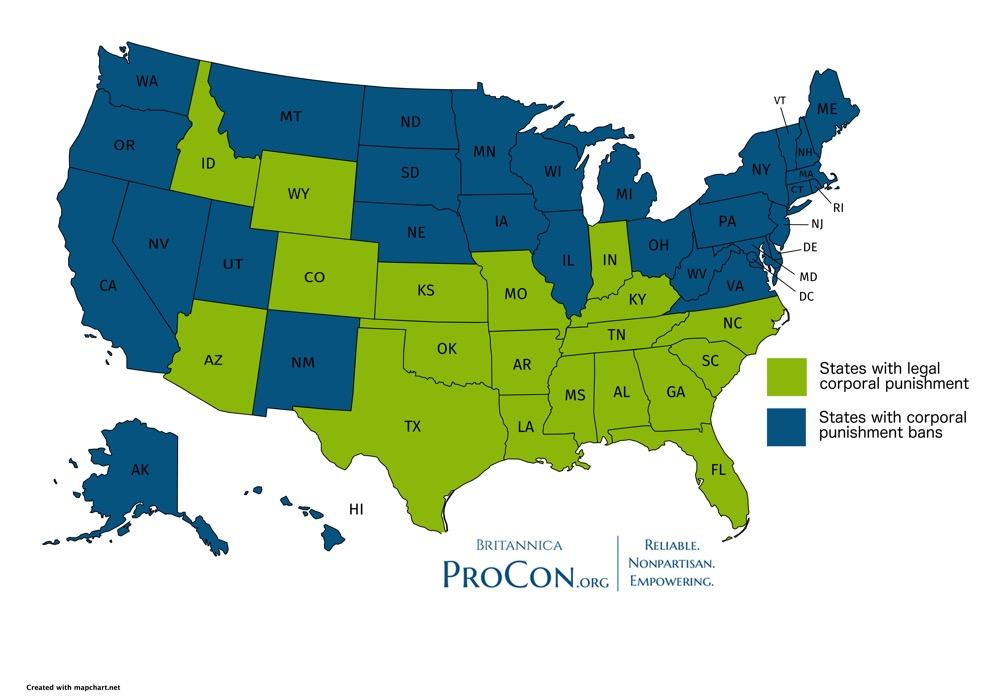
A wide variety of educational and parental organizations have gone on record opposing the use of corporal punishment in schools. The reasons include, but are not limited to, ethical and moral arguments against the use of physical force on children; the lack of supporting data on effectiveness; the physical and emotional danger to students; and the representation of inappropriate modeling and reinforcement of aggressive behavior. Among others the following organizations have expressed opposition: the American Academy of Child and Adolescent Psychiatry, the American Academy of Pediatrics, the American Bar Association, and the American Humane Association.
The Legality of Corporal Punishment in Schools
Court Decisions. Ingraham v. Wright is the only Supreme Court case regarding corporal punishment in schools. In a 5-4 decision, written by Justice Lewis Powell in 1977, the Court held that the Eighth Amendment does not prevent corporal punishment
in schools was not “Cruel and Unusual Punishment” prohibited by the Eighth Amendment. The court supported the doctrine of “in loco parentis” (i.e., the school acting as a parent while the student is in the custody of the school) but permitted states and districts to ban or regulate the use of corporal punishment. Several cases have challenged this ruling since the Ingram v. Wright case, but little further federal guidance has been provided.
Federal Law or Policy. In the US Congress, “The Ending Corporal Punishment in Schools Act” has been introduced over several sessions. This act would prohibit the Department of Education from funding any educational agency or institution that allows school personnel to inflict corporal punishment upon a student as a form of punishment or to modify undesirable behavior. Among other provisions, the iterative bills included in this act would require state educational agencies to submit state-level plans to eliminate the use of corporal punishment in public schools. To date, none of these bills have been
Photo
enacted by the US Congress. As a result, there is no federal law or policy regulating corporal punishment in schools.
State Policy. Even in a state that permits corporal punishment, it may not be permitted in a particular district with a policy against its use. For example, Columbia Public Schools (Missouri) does not allow corporal punishment, but it is not directly prohibited in the state of Missouri. Recently a different Missouri school district decided to allow parents to opt-in to paddling to correct or maintain discipline and order (Riess & Levenson, 2022). In Indiana, corporal punishment is illegal when involving vertebrate animals (under the animal cruelty statute); however, corporal punishment with children in school is permitted (Greshoff & Font, 2016).
In states that permit corporal punishment, regulations typically specify when and where corporal punishment can be used, the number of strokes or swats of a paddle that can be administered, and whether parents must be informed. When brought to court, these types of regulations have generally been deemed acceptable. Additionally, some states have proposed and supported legislation to provide immunity to teachers from litigation related to the use of corporal punishment (McDaniel, 2020).
Recommendations
While the authors of this manuscript oppose the use of corporal punishment in schools, in states that allow corporal punishment, it is important to develop and implement policies and procedures with a systematic decision-making process that ensures student safety and provides parents with adequate knowledge regarding adopted policies and procedures. Educators should inform themselves whether their state permits corporal punishment, and if so, the circumstances, policies, and procedures for its use. In instances where corporal punishment is executed, it should be documented that other less aversive interventions have been attempted and unsuccessful, and all other alternative approaches have been exhausted.
Given existing data on the scope and reasoning behind employing corporal punishment, the ineffectiveness of implementation, and the broader, unintended consequences (e.g., increased externalizing behaviors, escalated mental health concerns, decreased academic performance), it is recommended that educators employ more socially appropriate interventions designed to reinforce desired behavior. While an exhaustive list of reinforcement strategies is beyond the scope of this manuscript, interventions and approaches such as check-in/check-out, social and emotional learning, targeted social skills groups, mentoring, behavior contracting, and behavior-specific praise have documented success in reducing challenging
The total number of students exposed to corporal punishment increased by 24% from 20152016 to 2017-2018.
behaviors and related office disciplinary referrals. Furthermore, proactive approaches such as school-wide climate assessment, behavioral risk screeners, functional behavior assessments, and behavior intervention plans allow for screening, planning, implementing, and monitoring socially appropriate approaches to reducing challenging behaviors.
Even when allowed, corporal punishment is a controversial form of discipline that can evoke strong emotions from parents, educators, and the general public based on ethical and moral issues and a lack of evidence of its effectiveness. Regardless of whether corporal punishment is legally permitted in some states or school districts, all educators should consider adopting disciplinary approaches that directly support the prosocial development of youth, including well-documented reinforcement strategies for appropriate behavior, and multi-tiered systems of support for addressing problematic behavior.
References
American Academy of Child & Adolescent Psychiatry. (2014). Corporal punishment in schools.
Block, N. (2013). Breaking the paddle: Ending school corporal punishment. Columbus, OH: Center for Effective Discipline.
Curran, F. C., & Kitchin, J. (2018). Estimating the relationship between corporal punishment use and school suspensions: Longitudinal evidence from the Civil Rights Data Collection. Peabody Journal of Education, 93(2), 139-160.
Gershoff, E. T., & Font, S. A. (2016). Corporal punishment in US public schools: Prevalence, disparities in use, and status in state and federal policy. Social policy report, 30.
Gershoff, E. T., & Grogan-Kaylor, A. (2016). Spanking and child outcomes: Old controversies and new meta-analyses. Journal of family psychology, 30(4), 453.
Gershoff, E., Sattler, K. M., & Holden, G. W. (2019). School corporal punishment and its associations with achievement and adjustment. Journal of Applied Developmental Psychology, 63, 1-8.
Ingraham v. Wright, 430 U.S. 651, 97 S. Ct. 1401, 51 L. Ed. 2d 711
Maiti, A. (2021). Effect of corporal punishment on young children’s educational outcomes, Education Economics, 29(4), 411–423.
McDaniel, T. R. (2020). School Law and Classroom Discipline: New Questions about Corporal Punishment. Clearing House, 93(2), 58–61.
North Carolina Department of Public Instruction. Consolidated Data Report, 2013–2014. State Board of Education, Public Schools of North Carolina; 2015.
Ogando Portela, M. J., & Pells, K. (2015). Corporal punishment in schools: longitudinal evidence from Ethiopia, India Peru and Viet Nam.
Riess, R., & Levenson, E. (2022, August 25). Missouri School District adopts opt-in corporal punishment policy. CNN.
U.S. Department of Education (2016). 2015-16 Protecting Students With Disabilities.
Visser, L. N., van der Put, C. E., & Assink, M. (2022). The association between school corporal punishment and child developmental outcomes: a meta-analytic review. Children, 9(3), 383.
Katherine A. Graves and Madison Imler, Doctoral Students, Bully Prevention Lab, University of Missouri-Columbia, kgd45@mail.missouri.edu, mhivby@ health.missouri.edu, Chad Rose, Associate Professor, University of Missouri, Columbia, MO, rosech@ missouri.edu, Reece L. Peterson, Professor Emeritus, University of Nebraska-Lincoln, rpeterson1@unl.edu, and Ann O’Conner, Project Manager, 4-H Nebraska Extension, aoconnor1943@gmail.com.

AFTER HOURS
Chef Boyardee and Corn Flakes
By Chris Burros
Stuck between my backpack and THE bully, Brown vinyl over Styrofoam and hard metal frame traversing narrow roads in a yellow metal box with seventy-three other students all covered in recess sweat just trying to figure out life and if this bus ride means anything.
Corn flakes flying over head Cereal thrown in rebellion at the bus driver who told Billy that NO

I know it can sting But not as bad
As when my bully called me worthless Or when my dad never came home.
He could not drink cold raviolis from a can on the bus
In my periphery – a wasp It lands on a window— The exuberant announcement of its presence Ignites every voice with fear
Except mine.
Predictable response from the tired man at the front whose overly-tight grip on the steering wheel has whitened his knuckles.
The bus halts; The driver stands. He releases a sigh, Grabs the microphone.
Over the speaker we hear a stern reminder That screaming functions as an emergency brake on our bus.
I see a window lowered— I reach through; I release the wasp.
I realize I’ve not been stung.
The bus driver (Who I’ve never spoken to) Calls me a hero for saving the bus From the big scary wasp.
As I sink back down Into the overworn vinyl, The Corn Flakes resume their flight forward While the metallic odor of Chef Boyardee Lingers back from the can Billy had to throw away
I turn to see my bully has changed seats— This bus ride does mean something.

Chris Burros, c.burros@outlook.com
Congratulations to the 2024 MSLBD Award Recipients!
The Outstanding Leadership Award for outstanding service and leadership to the field of behavior disorders on a national level. In recognition of his outstanding research, leadership in the field, and commitment to colleagues and students to improve the lives of students with emotional and behavioral disorders.
Mike Couvillion presenting the MSLBD Leadership Award to Dr. Richard Van Acker, Professor Emeritus, University of Illinois at Chicago

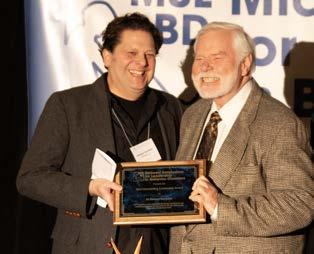
Building Leadership Award for outstanding achievement and excellence as a building or program administrator serving students with behavioral needs. For exemplary leadership to cultivating a culture that promotes the potential in all students, teachers, and staff.
Outstanding Building Leadership Award winner Mrs. Teagan L. Stanley, Pine Hills School, Miles Cit, MT
Unsung Hero Award. This award recognizes an individual who has contributed significantly to the success of MSLBD but may not have been recognized for these contributions.
Dr. Reece Peterson presented the Unsung Hero Award to Dr. Deborah Griswold, University of Kansas, Lawrence, KS
Doctoral Degree Stipends. These stipends of $2000 support the study of
Mya H. Kelley, Doctoral Student, Clemson University (left)
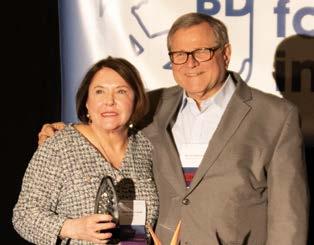
Lindsey Mirielli, Doctoral Student, University of Missouri
Columbia, With advisor Professor Chad Rose University of Missouri
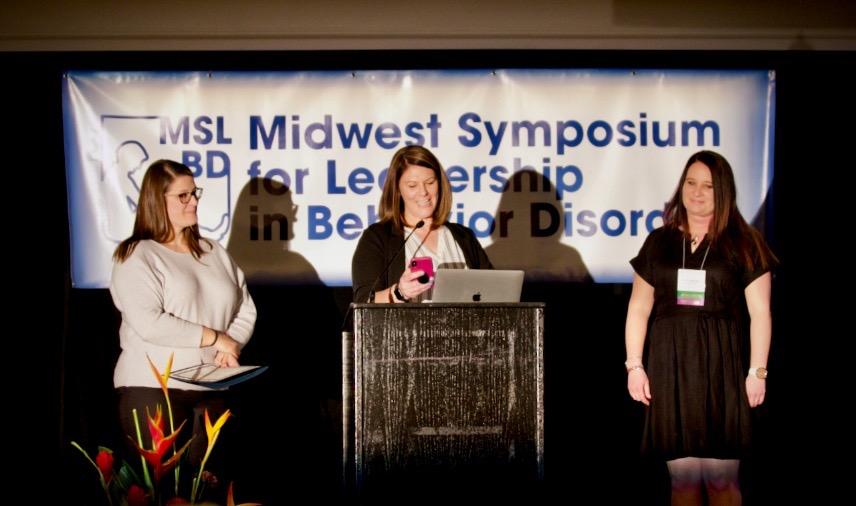
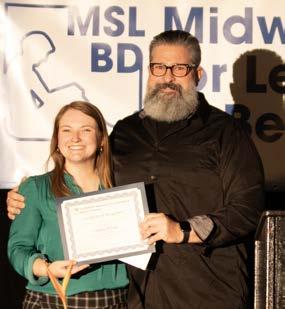
Felicity Post (left) and Jessica Nelson (center) welcome the new member of the MSLBD Master Teachers group, Stacy Slabaugh, Olathe Public Schools, Olathe, KS (on the right)

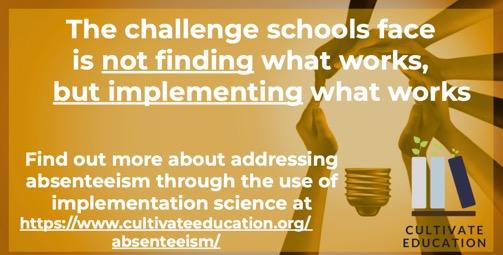

https://education.missouristate.edu/clse/


RE THINKING Behavior
2024 Richard L. Simpson Conference on Autism October 3-4, 2024 Overland Park, KS
2025 Midwest Symposium for Leadership in Behavior Disorders February 20-22, 2025
Sheraton Crown Center, Kansas City, Missouri
Call for Breakout & Poster Proposals
2025 February Symposium June 15, 2024
Call for MSLBD Award Nominations Nomination Deadlines! For details see MSLBD website
Before July 1
Outstanding Educator –Autism Award
Before November 1
Outstanding Leadership to the Field Outstanding Educator Outstanding Building Leadership Outstanding Advocacy

Midwest Symposium for Leadership in Behavior Disorders