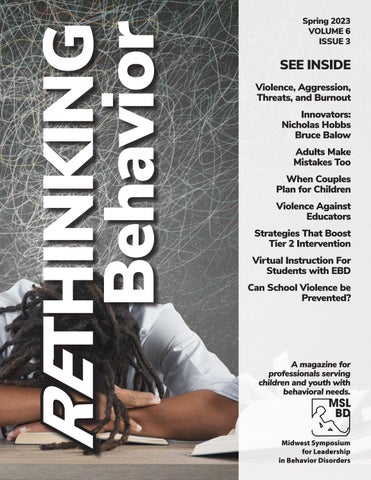

RE THINKING Behavior
5th Annual
Richard L. Simpson Conference on Autism
October 5 & 6, 2023
Plaster Student Union at Missouri State University Spring eld, Missouri
Sponsored by the Midwest Symposium for Leadership in Behavior Disorders, The Kansas Technical Assistance System Network, and Project ACCESS– Missouri’s Leader in Autism Education
Theme Practice-Based Evidence: Meeting the Needs of the Entire ASD Spectrum
Keynote Presentations
Armando Bernal
What's Behind the Mask? A Story of Autism and the Negative E ects of Masking
Armando Bernal is a Board Certi ed Behavior Analyst with autism who works primarily with children diagnosed with autism spectrum disorder ages two to ten. Armando is a proud graduate of Texas A&M University, where he earned his master’s in special education in 2019. In addition to his position, Armando is the host of the podcast A Di erent Path, which presents the diverse stories of other individuals diagnosed with autism.
Rosalie Prendergast
Embracing the Complexity of a Compassionate Approach in the Educational Setting
Rosalie Prendergast has worked with children with disabilities since the age of 12. A long-time equestrian, she began her journey helping children using equine therapy. Rosalie focused on that journey when she obtained a degree in Interdisciplinary Studies from the University of Northern Colorado, concentrating on Art, Human Rehabilitation services, Special Education, and Psychology. In 2009 she graduated from Nova Southeastern University with a Master’s degree in Counseling and Advanced Behavior Analysis and became a Board Certi ed Behavior Analyst. She strives to enhance the lives of all the individuals she works with through increasing their access to meaningful participation in all areas of their life. Rosalie is the founder of Eclipse Therapy which provides a variety of in person and telehealth services using “The Happy Medium Approach”.
Topics for Half-Day Workshops and One-Hour Breakout Topics from of Dynamic Speakers
o Serving Diverse Minimally or Nonverbal Autistic Students
o Literacy
o Training and Supporting Paraprofessionals
o Programming for Higher Support Need Students in Rural Communities (Make & Take Session)
o Strategies for Addressing Executive Functioning, Theory of Mind and Pragmatic Language Skills
o Parent Coaching
o Streamlining Data Collection Using Digital Tools and Resources
o Reducing Physical Restraint
o Pivotal Response Treatment in Early Intervention
o Compassionate Practice
o The Developing Brain of the Young Child
o Technology
o Overview of The Educators’ Guide to Autism Spectrum Disorders: For Educators By Educators-Newly Published Book Written in Rich Simpson’s Honor/Memory
o Evidence-Based Strategies for Teaching Social Competencies and Facilitate Meaningful Communication in Inclusionary Environments
o Teaming to Plan Functional and Socially Valid Learning Targets for Secondary Students
Discounted registration rate of $175.00 through September 15.
Regular Registration Rate of $210 after September 15.
Program Information and Registration: https://mslbd.org/autism-conference/
Reesha M. Adamson
Mary Jo Anderson
Anne Baptiste
Jennifer Bossow
Erika Calderon
Jenah Cason
Scott M. Fluke
Nicolette Grasley-Boy
Katie Graves
Deborah E. Griswold
Mike Hymer
Maria L. Manning
Sharon A. Maroney
John W. McKenna
Kris Melloy
Lindsey Mirelli
Mike Paget
Reece L. Peterson
Lisa A. Robbins
Sandy Shacklady-White
Carl R. Smith
Jim Teagarden
Vanessa Tucker

Rethinking Behavior, ISSN 2578-5397, a magazine for professionals serving children and youth with behavioral needs, is published three times per year, fall, winter, and spring, Copyright ©2023 by the Midwest Symposium for Leadership in Behavior Disorders, P.O. Box 202, Hickman, NE 68372. 402-7923057. www.mslbd.org. Email: rethinkingbehavior@mslbd.org.
Rethinking Behavior welcomes proposal and manuscript submissions; for information visit www.mslbd.org or email rethinkingbehavior@mslbd.org
Violence, Aggression, Threats, and Burnout
Now, perhaps more than ever, educators experience more stress and less support from their communities, parents, organizations, politicians, and fellow educators. Intensifying political and ideological polarization have undoubtedly entered the K-12 space in recent years.
Divisiveness, negativity, name calling, and verbal threats about individual rights erupt when terms such as Critical Race Theory (CRT) and Social Emotional Learning (SEL), often shrouded in misunderstanding, are uttered. We also saw anger and judgment escalate quickly on social media, outside administration buildings, and in school board meetings during the height of the COVID-19 pandemic. This is partly due to political partisanship and the influences of extremist opinions and beliefs.
A barrage of harsh criticism regarding methodologies, pedagogies, and philosophies has become pervasive in some locations. Restricted access to certain books in classroom and school libraries, sanctions on topics of discussion, curriculum content, and instructional activities tie educator hands. No one seems exempt from these censures – and in some cases –verbal and physical attacks.
K-12 education faces increasing occurrences and severity of threats and violence, simultaneously. Not surprising, teachers, school psychologists, social workers, educational staff, and administrators are among those who are often on the receiving end of agitation and aggression. The aggressors include parents, students, teacher colleagues, and administrators.
Recently a technical report from the American Psychological Association provided an update of an earlier report on violence directed against educators and school personnel (McMahon et al., 2022). The Task Force for the year 2020-2021 surveyed approximately 15,000 educators in an effort to determine what was happening on these topics in schools during COVID. They wrote:

Individuals from all roles identified aggression from students as a major theme, with verbal and physical aggression being most prominently identified by Teachers, School Psychologists, Social Workers, and Staff. Aggression from parents was also identified as a major theme across all roles, with an emphasis on verbal aggression and the increase of aggression since the start of COVID. Harassment as a form of aggression was identified as a major sub-theme by Teachers, Psychologists, Social Workers, and Staff (McMahon et al., 2022).
They went on to indicate that teachers and other staff are leaving the profession in record numbers causing a teacher shortage crisis.
Some 300,000 teachers and staff left the field between February 2020 and May 2022, a nearly 3% drop in that workforce, according to Bureau of Labor Statistics data. Worn down by the challenges of teaching through the past few years, more educators say they are considering doing the same. A National Education Association poll conducted this year found 55% of teachers said they would leave education sooner than planned, up from 37% last August (Dill, 2022).
In our last issue, Zabel’s article, “Special Education Burnout: Macro- and Micro- Ecosystem Considerations” (Winter 2023) describes the multi-layered issues surrounding educator burnout exacerbated by the COVID era.
In this current issue, McCain reports on educator experiences and perceptions of violence. McCain notes that incidents of physical violence and verbal aggression have affected their personal lives, and shares how these educators developed supports and coping mechanisms.
We all want violence and aggression against educators to end, but there are no broadly effective solutions (Gomez, 2022), Rather, we look to recommendations for systemic change such as:
• Increased mental health services within and outside of schools,
• Increased staffing in schools,
• Better training and preparation of educators,
• Efforts to increase public support of educators, and
• Lightened teacher workloads.
References
Dill, K. (2022, June 20). School’s out for summer and many teachers are calling it quits. The Wall Street Journal. Gomez, D. (February 23, 2022). Stress Is pushing many teachers out of the profession. Forbes.
McMahon, S.D., Anderman, E.M., Astor, R.A., Espelage, D.L., Martinez, A., Reddy, L.A., & Worrell, F.C. (2022). Violence Against Educators and School Personnel: Crisis During COVID. Technical Report. American Psychological Association.
Additional resources
McMahon, S. D., Anderman, E. M., Astor, R. A., Espelage, D.L., Martinez, A., Reddy, L. A., & Worrell, R. C. (2022). Violence against educators and school personnel: Crisis during COVID. Policy Brief. American Psychological Association.
McMahon, S.D., Espelage D.L., (Chair), Anderman, E.M., Lane, K., Reddy, L.A., Cecil Reynolds, C., Brown, V, Jones, A., (2022). National Survey of Violence Against Teachers: APA Classroom Violence Directed Against Teachers Task Force Report. American Psychological Association.
Deborah Ayers Griswold, dgriz@ku.edu
Mary Jo Anderson ,mjoand@gmail.com Issue Editors
Related Articles
• Special Educator Burnout, Macro- and Micro Ecosystem Considerations (Zabel, Winter 2023)
• School Safety: Research on Gathering Tips and Addressing Threats (Carlton, Fall 2022)
• Special Educators as First Responders (Zabel, Fall 2020)
• Teaching Never Gets Any Easier, But It Does Get Better (Minkel, Fall 2020)
• A Trauma-Informed Approach to Managing Educator Stress (Jones, Fall 2020)
• Podcast Pulse - A Time for Self-Care (Trump, Fall 2020)
• Let me Help Carry Your Baggage (Rinehart, Spring 2020)
• Teacher Shortage in Special Education (Anderson et al, Fall 2018)
• Rethinking the Role of School Resource Officers (Johnson & Fluke, Spring 2018)
Nicholas Hobbs
Project Re-ED, Teaching as Treatment INNOVATORS
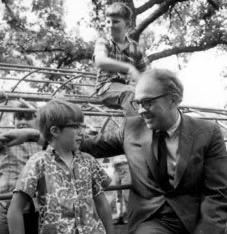
Nicholas Hobbs, Ph.D. left an enormous legacy on psychology and education and was largely responsible for re-imagining approaches to the treatment of children with emotional and behavioral disorders. He is probably remembered most for his work with Project Re-Education (Re-ED), which he piloted with a grant funded by the National Institutes of Health in 1961.
The idea of Re-ED emerged through Hobbs’ study of programs for children with intellectual and emotion al disabilities in western European countries. There he learned of the support to students with special needs by educateurs, persons with an educational rather than a psychiatric orientation. In Project ReED, Hobbs adapted this role to that of teacher-coun selor - whose concerns are “with the behaviors of the child and with the behaviors and expectations of those who define [the child’s] life space here and now as well as in the future.”
Hobbs’ Project for the Re-Education of Emotionally Disturbed Children established two Re-ED schools, the Wright School in Durham, North Carolina and Cumberland House in Nashville, Tennessee. These schools demonstrated that the emotional, academic, and behavioral challenges of children could be improved through interventions applied by educators in school and by providing support in students’ ecological set tings - home, family, and community. Re-ED schools and programs based on the Re-ED model have been established throughout the US and are supported by the American Re-Education Association.
Re-ED programs involve short-term residential place ment - typically 6-7 months. Children in residence
Nicholas Hobbs’ Project Re-ED ecological model emphasized health rather than illness, teaching rather than treatment, learning rather than personality reorganization, the present and the future rather than the past, and the operation of the total system of which the child is a part rather than on intrapsychic processes.

are served by day teacher-counselors throughout the school day and by night teacher-counselors the remainder of their wakeful hours. Children go home on weekends, but liaison teacher-counselors work with children’s home and family units and the schools to prepare for their successful return.
Hobbs’ contributions to the education and treatment of children with emotional and behavioral disorders cannot be overstated. The pioneering “ecological approach” of the Re-ED model has shown that effective treatment can be delivered “at home and in school in less time and at less cost than traditional programs are able to do”. Hobbs

insisted that the goal of intervention should not be achieving a “cure” but rather restoring the child to effective functioning - meaning the ability to deal with the usual challenges in life.
Although he published widely, Hobbs is known especially for his two-volume compilation of views on issues in the Classification of Children (1973), along with his books, The Futures of Children (1975), and The Troubled and Troubling Child (1982). In addition to his work with Re-Ed, Hobbs was the first Director of Selection and Research for the Peace Corps (1961). In the late 1950s, Hobbs was Vice-Chair of the Joint Commission on Mental Health and Illness, which gave rise to the Community Mental Health Centers Act and helped set in motion a revolution in the care of persons with mental illness. He served as Chairman of the Division of Human Development at Peabody College, was a co-founder of the John F. Kennedy Center for Research on Education and Human Development (1965), and Provost of Vanderbilt University (19671975). Born in 1915, Hobbs passed away in 1983.

Michael Nelson, Professor Emeritus, University of Kentucky.
Bruce Balow
A Legacy of Note INNOVATORS
Bruce Balow received all of his academic training from the University of Minnesota culminating in his Ph.D. in 1958. He was immediately appointed assistant professor at the University. He along with Maynard Reynolds, recruited Frank Wilderson to the Special Education program at Minnesota (see the Spring 2022 issue of ReThinking Behavior), and later added his doctoral advisee, Frank Wood, to the faculty. Buce remained a faculty member there for the remainder of his life.
Dr. Balow’s one leave from his Minnesota position and home was an important one. For two years he was in Washinton, D.C. as Director of the Division of Training Programs, Bureau of Education for the Handicapped in the U.S. Department of Education. He helped develop and initiate federal support for special education training programs in colleges and universities based on the first federal special education law in the Elementary and Secondary Education Act amendments in 1966, and the Education of the Handicapped Act of 1970. That work preceded the passage of Public Law 94-142 which later became known as the Individuals with Disabilities Education Act (IDEA).
When he returned to the University of Minnesota, he worked with doctoral students to create one of the first University courses on special education policy, court decisions, and law. Topics included the PARC and Mills cases which established the rights of students with disabilities to be afforded a public education. This preceded the first comprehensive federal special education law (94-142), His policy interest was strong and continued throughout his career.
Bruce Balow contributed to the early development of special education policy and university training programs. And as an innovative longitudinal researcher. Balow was a role model for the thoughtful, ethical treatment of students with disabilities and a important mentor to many doctoral students in special education.

Although he considered teaching of reading as his specialty, he not only was active in developing the training program in learning disabilities, but also established one of the first teacher training programs in behavioral disorders with Frank Wood and Frank Wilderson. He was interested in and thoughtful about the implications of policies on the ability of educators to effectively treat children and youth with emotional and other disabilities. For example, he studied state definitions of emotional disturbance as states began to serve this population of children and how these definitions could affect practice in the schools.
As the understanding of autism evolved from being viewed as a type of childhood psychosis and schizophrenia to an understanding of it as a developmental disability, Balow studied and wrote several articles and book chapters about defining and identifying children with autism. He addressed practical as well as policy issues. He supported creation of an experimental program for children with autism at the University (later described in a book written by Uwe Stuecher, a doctoral student). In addition to these training efforts, he was consistently active in scholarship, publishing many articles in professional journals and chapters in books about autism.Balow also served as principal investigator for significant federally funded research projects. One of these, the “Perinatal influences on the behavior and learning problems of children”, was one of the first longitudinal studies of disability. As a part of a larger medical study, this investigation followed a large cohort of children from their birth through their elementary education to determine when and how learning and behavior disabilities first occurred and were first identified.
Balow, who passed away in August 1989, also felt strongly about the tendency of “the child” to be forgotten in our excitement with “new methods.” He spoke strongly of the obligation to not forget the “person-ness” of these children. He once wrote,
“I do not at all count myself as any enemy of behavior modification procedures, but I do get upset when people of any ‘religion’ go to extremes in following the dictates of their particular system and neglect the humanity with which they are dealing…”
Dr. Balow spoke at the first Midwest Symposium in 1983. A recording of his talk can be found at this link.
Prevalence of Teacher Identified Behavior Problems: A Longitudinal Study
Rosalyn A. Rubin and Bruce Balow; exceptional Children, October 1, 1978
In a longitudinal study from kindergarten through grade 6, teachers annually rated the behavior of 1, 586 children who were normally distributed on measures of IQ, socioeconomic status, and school achievement. In any single year, from 23% to 31% of the subjects were judged by their teachers as manifesting behavior problems. Long term cumulative prevalence rates were much higher. Among subjects receiving three or more annual ratings, 59% were considered as having a behavior problem by at least one teacher, and 7.4% were considered as having behavior problems by every teacher who rated them. Results indicate that behavior that at least one teacher is willing to classify as a problem is the norm rather than the exception for elementary school children, which raises serious questions about contemporary expectations regarding children's behavior in school.
Bruce felt strongly about the value of experiences and took several doctoral students to visit various programs related to emotional disabilities. We remember our visit to the St. Cloud State Reformatory (a prison for young offenders) and going through the several gates closing behind us. We also visited two of Minnesota’s state hospitals sitting in on “grand rounds” at Faribault State Hospital (discussing the progress or lack thereof, of young patients). We also visited an experimental program where punishment- mild electric shock- was used to reduce severe selfabusive behavior. We also visited several day and residential treatment programs.
Reece Peterson, Professor Emeritus, University of Nebraska-Lincoln
Robert Zabel, Professor Emeritus, Kansas State University

One of my first contacts when I worked as a consultant in the Iowa Department of Education was with Dr. Bruce Balow at the University of Minnesota who keynoted two of the first conferences I organized. Bruce became one of my primary mentors and friends. Later I would be working quite a bit in the area of autism and Bruce was leading an innovative program at the University of Minnesota serving children with this diagnosis. For whatever reason he considered me as his primary contact in Iowa and would insist that anyone seeking assistance from him or his program at the University of Minnesota would have to include me in their visits to Iowa. On one visit to Iowa Bruce first came to Des Moines with the plan that I would transport him on to Iowa City. This provided an opportunity for me to pick his brain about my various plans for staff development in Iowa. One of the most profound insights that Bruce shared with me was the importance of what we leave after departing a particular role, rather than solely what we do during the time we are there. He was an early advocate for the concept of sustainability. Bruce was also a wonderful role model for what mentorship can mean to a young professional.
Carl Smith, Professor Emeritus, Iowa State University.
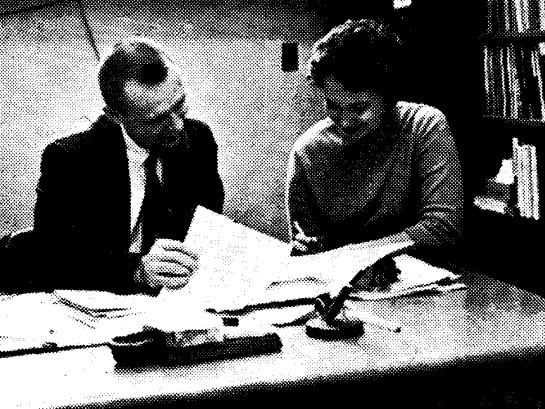
Bruce Balow, director of the Psycho-Educational Clinic, and his secretary, Barbara L. Knight. The Minnesotan, March 1961.
Reference
Stuecher, Uwe. (1972). Tommy: A Treatment Study of an Autistic Child. Council for Exceptional Children.
Carl Smith Professor Emeritus, Iowa State University, csmith@iastate.edu, and Reece Peterson, Professor Emeritus, University of Nebraska-Lincoln, rpeterson1@unl.edu.
Adults Make Mistakes Too
By Kristin Lyon
Mistakes. We all make them. Sometimes it’s getting the wrong answer on an assignment. Sometimes it’s shooting the soccer ball in the wrong goal. Sometimes it’s using an unkind tone toward someone you love. Sometimes its losing complete control and lashing out with aggression. We are human and we are learning.
As a behavior specialist, my focus is always on teaching students that it is ok to make a mistake, but when we do, we must not only own it and learn from it, but also make restitution. Of course, this applies to adults too. In professional development I am always preaching that sometimes it will be us grown-ups that make the wrong call. It will be our fault that a student is triggered or
goes into crisis behavior. And when it is, it’s critical that we practice what we teach and WE own it.
Suffice it to say, it doesn’t make those moments when we mess up easy, or any less humblingespecially when it’s your 6-year-old that calls you out.
A few weeks ago, my 3-year-old son asked my 6-year-old daughter to have a sleepover. My daughter respectfully declined his offer, which immediately made him sad. I encouraged her to rethink his invitation and told her “how happy” it would make him. Being the kind-hearted soul and people-pleaser that she is, she decided to accept. He was
overjoyed and away they went to his room for their slumber party. Whew...safely avoided any bedtime meltdowns and could finally sit down, enjoy a glass of wine, and watch the finale of Ozark. #MomWin
Fast forward 10 minutes and cue the crying coming from above. What could possibly have gone wrong? I reluctantly set down my wine and made my way up the stairs to investigate, only to find out she had changed her mind and no longer wanted to sleep with him, remembering how loudly he snores. Naturally, he was devastated and in turn she was crushed about the devastation she had created. Through heavy sobs, she just kept saying, “I feel like I am just a bad sister.”
Great, a teachable moment; I live for these! “You are not a bad sister at all, you are a great sister. He just doesn’t understand why you changed your mind after you initially said yes, so he feels confused and maybe hurt. Next time, if you don’t want to sleep with him you should just say “no” upfront so he doesn’t get excited and then feel let down when you change your mind.”
There. That wasn’t too bad. She was no longer crying, I was feeling like a great mom for calmly supporting her through her emotions and still finding a way to teach a lesson, it seemed to have all worked out - and then she shared her response...
In the most calm and quiet voice, my sweet 6-year-old said, “Mom, I DID say “no” upfront. You are the one who told me I should do it even though I didn’t want to because it would make him happy. It feels like you protect his feelings and not mine.”
Holy crap. She was totally right! This whole incident was all my fault. It was like a sucker punch to the gut as I realized I was the one responsible for the hurt both my children were experiencing. Time to put my preaching into action - time to own it and right my wrong.
For the next several minutes, I took time to not only validate my daughter’s feelings, but also tell her how incredibly right she was. It was ME who talked her
Next time you are in that moment and feeling so ashamed that you were the one who messed up,
Give Yourself Grace.
into doing the sleepover, failing to respect her initial wishes. It was ME who was responsible for the sadness my son was feeling because it was ME who put her in the unfair situation where she had to choose between her own happiness or his. It was all ME.
After telling her how very sorry I was, I also told her how very proud I was of her. The courage it must have taken to respectfully call me out on my mistake and share her feelings in that moment had to be immense, but I love that she was brave enough to take the risk. I love that she was confident enough to stand up for herself and articulately express her thoughts. And more than anything, I LOVE that she gave me the opportunity to say “I’m sorry” and to show her that I make mistakes too.
So next time you are in that moment and feeling so ashamed that you were the one who messed up, give yourself grace. Remind yourself that you are human and simply take it as an opportunity to model for your students what it looks like to own your mistakes and make restitution. I promise it will be one of the most meaningful teaching opportunities you could have. #AdultsMakeMistakesToo
Reprinted with permission from School Behavior Support. https://www.schoolbehaviorsupport.com/
Posted on June 24, 2022. https://www.schoolbehaviorsupport.com/post/ adults-make-mistakes-too
When Couples Plan for Children
By Jennifer Matson
When couples plan for children, they create a vision in their minds of how it will be. The joy of a newborn, the pride in a graduate, and the glory in watching their own children have children. The idea of parenthood creates this picturesque life once we’ve learned we have conceived. For me, that vision included a daughter I could connect with and experience a mother-daughter bond I had always dreamed of. What it didn’t include was an autism and intellectual disability diagnosis, treatment, therapy,

maneuvering an IEP, and advocating to keep her out of a self-contained setting.
I knew long before the formal diagnosis that my daughter, Felicity, was on the autism spectrum. It’s as if I could sense it. I remember signing and then revoking an educational evaluation in the birth-to-three program when she was a toddler. I wasn’t ready to get a confirmation. At eighteen months old, she still was not walking. Our pediatrician made me feel like an overly concerned
I knew long before the formal diagnosis that my daughter, Felicity, was on the autism spectrum.
first-time mom. My husband and I were on our own to get her support. Luckily, we pursued community-based services. Felicity had intense physical and occupational therapy several times a week and started to walk at twenty-two months. She was the oldest child in our play group, and the furthest behind in all areas of development.
Once she entered a community-based preschool, I was convinced that she would catch up. On the final day of her first year I went in to pick her up and checked in on her enrollment for the following school year. The teacher informed me, in front of a large group of parents that Felicity would not be advancing on to the four-year-old class with her peers. Rather, she would stay behind with the three-year-olds as she “took too much time away from the other kids and it wasn’t fair.” I stood in absolute shame as I tried to fight back the tears. I made it to the car where my husband was before I lost it. He called the director the minute we got home and withdrew her from the program.
By the time Felicity was ready to enter Kindergarten, I had given birth to our son. Experiencing his typical development was an eye-opening experience. Our family counselor told us our son would surpass Felicity in milestones, and neither of us believed it. They were three years apart. Of course, he was right. It started with milestones, and then it was behavior, and soon after academics. When you have a child with special needs no
one tells you that you will grieve the loss of what you once envisioned over and over again.
By the end of her first-grade year, we pursued a formal diagnosis with a community based specialist. Despite my own personal diagnosis of her, I was completely unaware of how much validation a professional’s opinion would mean to me. It gave me comfort knowing that my intuition was correct. The diagnosis solidified the types of interventions and supports she needed and that I could advocate for.
Here is where the story fast forwards to today. Felicity is just starting her senior year of high school. She has swam on the high school swim team for the past four years, and is a member of the school bowling team. She is mainstreamed for a large portion of her school day. She has held a job, she has a cell phone, makes her own hair
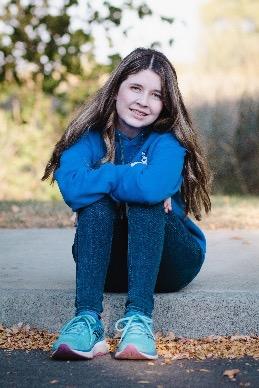

appointments, and attended her junior prom and homecoming dance this year. All things I had envisioned for her. Are her experiences different than what I had imagined? Yes, they are so much better.
At the heart of all of our experiences in education, the one area I contribute the majority of her growth to is inclusion. Keeping her with her peers during school and athletics has been the single best decision we have made. Felicity’s confidence has soared. She says things like, “I am so smart,” and “I did a great job.” When we are out it the community, I am amazed at how many people know her. Inclusion has not just been about Felicity, however. Time and time again, her peers have shared what an impact having her involvement at school has made on them. That is because at the heart of inclusion is not students with special needs, it’s shifting the lens of everyone around them to experience the same joy.
My husband and I have had to fight for inclusion since preschool. We are both educators and have had the luxury of knowing educational jargon, processes, and the ability to network with the right people. What about those parents who
don’t? Shouldn’t their children receive the same degree of support? As an educational system, we owe it to all students to make inclusion the norm. Advocacy for students with special needs is not the role of just parents. Advocacy is the role of the whole team.
When couples plan for children, they create a vision in their minds of how it will be. Some parents have to let go of the picture of what they thought life would be like and learn to find joy in the story they are actually living. What a joy our story has been. The tears I shed today are no longer tears of grief. Rather, they are tears of pride. I can’t wait to live the next chapter.
Jennifer Matson, Parent and Lead Behavior Specialist, Walla Walla Public Schools, Washington, jmatson@wwps.org

Violence Against Educators
By Skyler McCain
Photo
Students with emotional or behavioral disorders (EBD) make up approximately one percent of the total student population in US public schools (National Center for Education Statistics, 2022).
While relatively small in number, students with EBD are a diverse group whose symptoms may manifest as externalizing or internalizing behaviors. Students with externalizing symptoms – such as aggression and destructive behaviors – are more likely to be identified for special education services than students with internalizing behaviors. Since externalizing behaviors are more likely to capture the attention of a school assessment team, many of the students who are identified as having EBD are those who display a pattern of noncompliant, disruptive, and aggressive behaviors (Smith et al., 2020). These students are at an increased risk of negative outcomes in school and beyond; therefore, it is important to provide them with high-quality education and behavioral supports to promote success and student resilience.
While special education teachers, paraprofessionals, and support staff can have a powerful impact on the outcomes of students with EBD, it can be difficult for school districts to find and retain effective special education teachers due to high turnover rates. Special educators leave the teaching profession more often than their general education counterparts, and they frequently cite difficult working conditions as their reason for leaving. A recent study found that special educators who primarily serve students with EBD have a higher rate of attrition than special educators who serve other disability categories (Gilmour & Wehby, 2020). Teacher turnover is a complex issue, and much more research is needed to pinpoint the causes of special educators leaving the profession. Over the last decade, researchers have linked teacher experiences of violence with turnover intent (Peist et al., 2020).
While it is rarely discussed in the media or educational policy, student physical aggression and violence against educators occurs at alarming rates across the United States. In the 2015-2016 school year, 9% of elementary school teachers and 2%
In the 2015-2016 school year, 9% of elementary school teachers and 2% of secondary teachers reported being physically attacked by students at school.
of secondary teachers reported being physically attacked by students at school (Irwin et al., 2021). Since these statistics are averages for the total student population, the prevalence of physical aggression against special educators of students with EBD is unknown. We do know that teachers who experience school violence are likely to report a decline in job performance and negative physical and emotional symptoms. Moreover, researchers have discovered that teacher well-being has a direct impact on student prosocial behavior and the levels of emotional and behavioral problems within the classroom.
The purpose of this article is to explore whether educators of students with EBD experience violence at school, and if so, to identify the supports and coping mechanisms that these special educators use. Not all students with EBD engage in physical aggression, and it is important to recognize that a complex set of factors influences the behaviors of an individual. Additionally, this article does not attempt to explain why students engage in aggressive behavior, but rather to explore the perspectives of educators during and after these intense situations. The ultimate goal for exploring this topic is to identify future steps to reduce violence against special educators and increase the supports that promote teacher well-being.
To explore this topic, I interviewed five special educators: two teachers, two paraprofessionals, and one behavior technician. I recruited participants who
worked with students with EBD, but I did not require that the educators had experienced violence in order to be interviewed. The five participants were employed at one secondary and two elementary schools in Central Florida. They were all female, ranging in age from 25 to 68, with an average of fifteen years of experience working with students with EBD. After agreeing to the interview, the participants met with me either in person or online. The interview consisted of fifteen open-ended questions, and I transcribed the participants’ answers onto the interview form. These questions prompted participants to share their experiences of student-perpetrated violence, associated physical and emotional effects, and coping strategies following violent events.
Frequency and Forms of Violence
Of the five special educators interviewed, three reported that their students engaged in physical aggression towards staff members multiple times per day. One participant indicated that this happened daily at her school, while the other stated it occurred weekly. The four educators who reported at least daily episodes of violence worked at elementary schools, while the fifth educator worked at a secondary school where violence against staff was less frequent.
Each special educator described aggressive student behavior that they had directly experienced or witnessed at school. The elementary educators were more often victims of physical aggression than
the secondary educator, who had personally experienced destruction of property, intimidation, and threats, but no physical aggression.
“Safety is always a concern because the training we received is inadequate for some of these children, as is evidenced by the amount of staff injuries.”
The most frequently reported forms of physical aggression included hitting, kicking, punching, biting, and throwing objects or furniture at a target. Other student behaviors mentioned by participants were scratching, pinching, tackling, choking, pulling hair, harming self, killing animals (i.e., lizards, insects), and approaching targets aggressively with sharp objects.
Most Significant Episodes
The special educators described the most significant episodes of violence that they had experienced or witnessed at school. A few common themes emerged from their descriptions.
High Levels of Pain. Educators were more likely to recall a significant instance of student violence that resulted in high levels of pain. One participant remarked, “I saw an administrator get a fistful of hair torn out of her head,” while another stated that she had seen a staff member using ice packs on her arms because they were covered in bites from a student.
Lasting Injuries. Another theme across the descriptions of major episodes of violence was that they often resulted in lasting injuries. Examples included a staff member who got a black eye, one who sustained an injury in her shoulder and hip, and one who was hit in the chest with a flowerpot that shattered.
Risk of Fatality. While less common, a few participants described instances of violence in which they feared for staff fatality. One educator stated, “A student got his teacher on the ground outside and was struggling with her, and I was afraid he was going to kill her if he slammed her head into the concrete.” Another educator recalled a time a student came up behind her and wrapped his arms around her neck, but fortunately another staff member intervened before he could restrict her airway.
Threats and Intimidation. One of the participants had not directly experienced physical aggression; her most significant experiences with students included threats and intimidation. An example of this was: “If you tell the principal that I did that, I’m going to get a gun and kill your whole family.” She indicated that these threats were very concerning as many of the students at her school had previous felonies and histories of violence.
Lack of Power. A final theme in these descriptions was the lack of power of the educator to help diffuse the situation. This included the inability to protect oneself, other staff members, and the student displaying the behavior. One participant stated the most upsetting instances of violence are “When I can see the pain of the child, and they are so overwrought with violence or emotion, and I know that I cannot do anything to help them.”
Physical and Emotional Effects
Two of the five special educators reported that they had sought professional treatment for injuries sustained from students. One of them had gone to urgent care for a black eye, while the other had a double contusion in her shoulder and a strain in her hip and waist. At the time of our interview, the participant with the double contusion was attending physical therapy three times per week for her injury. Participants also reported minor physical injuries for which they did not seek professional treatment, including:
• Bruises
• Bites
• Pinches
• Scratches
• Busted lip
• Hair loss
• Toenail loss
• Lasting soreness

Photo Courtesy of Danilo Duarte on Pexels
Four out of five educators reported feeling sad for the students after a violent episode. One of them stated, “I consider myself an empathetic person, so I feel the pain they are feeling, which makes me emotionally exhausted. I often will cry afterwards because I need that release. It takes so much energy to maintain a stable affect with the kids.” Another educator also reported crying after violence, saying “I am very distraught when it is that hard to keep kids safe.”
Not a single participant reported feeling anger towards the students who perpetrated violence. Instead, special educators reported feeling sadness for the students and their own feelings of powerlessness in the situation. Similarly, none of the special educators reported feeling afraid for their own safety, but rather for the safety of the students and other staff members, particularly staff that had physical limitations or a lack of training in crisis management.
Impact of Violence on Job Performance
Four of the special educators indicated that student-perpetrated violence had affected their job performance at school. One of the participants had sustained an injury from a student, and she was on light duty at the time of our interview. She remarked that this limitation put more responsibilities on her team members who had to cover for her until she was released from light duty.
Another educator stated, “So many students in our class have intense behaviors and are constantly interacting with each other, so there will be multiple kids blowing up at the same time. Some individual kids require multiple adults to intervene when they are in crisis, and we do not have enough staff to respond and handle it appropriately.” She then explained how the constant episodes of violence impact her ability to form positive relationships with the students, which is crucial to helping them make progress.
Additionally, three special educators stated that student violence had decreased their feelings of safety at school. One participant said, “Safety is always a
“Violence comes from a place of insecurity, such as lack of food, homelessness, or trauma. If we work to preempt or treat these root causes, the violence does not perpetuate.”
concern because the training we received is inadequate for some of these children, as is evidenced by the amount of staff injuries.” Another stated that her mornings were consumed by dread and worry about how the students would behave.
Impact of Violence on Personal Life
Three of the five special educators reported that student violence had impacted their personal lives at some point during their career, and two of them were experiencing negative effects at the time of the interview. The third participant stated that early in her career she would feel extremely anxious before work and on Sundays, but that she had learned coping skills to stop the negative events at work from interfering in her personal life.
One of the special educators who had been injured by a student reported that this injury was interfering with her interactions with others and her ability to engage in her usual extracurricular activities. Another educator was struggling to complete her online bachelor’s degree and feel fulfilled in her personal relationships due to experiencing violence regularly. She stated, “My mind is foggy, I am so stressed, and I keep thinking about what went wrong today. I’m emotionally exhausted and it affects how I respond to my daughter.”
Supports and Coping
Each of the special educators reported using various school-based and outside supports to help them
cope with the violence they experience at work. The school-based supports that they mentioned fell into two categories: removing oneself from the physical environment (Category 1) and talking to other staff members (Category 2).
Removing Oneself from the Physical Environment
• Taking a break in a designated location
• Eating lunch outside of my classroom
Talking to Other Staff Members
• Reporting incident to secretary
• Speaking to the school guidance counselor
• Seeking help from administration
• Confiding in trusted colleague
• Crying with friends at work
Participants reported using outside supports more frequently than they used school-based supports. These supports included seeking professional services (Category 1), socializing (Category 2), engaging in activities (Category 3), relaxing (Category 4), practicing faith and spirituality (Category 5), and self-medicating (Category 6).
Seeking Professional Services
• Meeting with mental health therapist
• Getting deep tissue massages
Socializing
• Spending time with friends and family
• Debriefing with spouse
Engaging in Activities
• Exercising
• Watching TV
• Getting a manicure
Relaxing
• Prioritizing time to relax
• Designating time to be alone
• Going to bed early
Practicing Faith and Spirituality
• Seeking religious advice

• Praying
• Practicing yoga or meditation
Self-Medicating
• Taking Ibuprofen or Tylenol
• Taking vitamins
• Drinking a glass of wine
Three of the five special educators reported feeling very confident in their ability to handle student-perpetrated violence. One special educator reported feeling moderately confident in her coping skills, but she stated that her resources were very limited.
The final participant reported that she was not confident in her ability to cope with student violence, stating “I’m at a point where I am seeking other options for my job. I don’t have time to seek help even with the resources that are offered.”
Recommendations from Special Educators
In addition to highlighting their supports and coping strategies, the special educators voiced their opinions on how to decrease student violence and increase school safety.
Offer Staff Breaks. One special educator praised her school for allowing staff to take breaks after difficult encounters. She stated that her administrators were extremely supportive of staff breaks, allowing teachers to go home for the day when necessary.
Implement Debriefing Protocol. Another educator advocated for the implementation of a debriefing protocol to be utilized following violent events. She explained how negative experiences need to be addressed in a systematic way to allow the individual to process and move on from the event.
Provide Therapeutic Resources. One participant described the importance of offering staff therapeutic resources to overcome trauma. She recommended that school employees who experience violence at work should be entitled to services from an approved list of providers.
Connect Families with School. Another special educator emphasized the importance of connecting
families and schools. She believed that an improved partnership between families and staff members would help decrease student violence. She also stated that schools could connect families with psychologists to provide additional supports.
Implement Consistent Consequences. Two participants stressed the importance of having consistent expectations and consequences. One of them aptly stated, “Inconsistency makes the kids gravitate towards people who tolerate more.” She explained the challenges of upholding the classroom consequences for misbehaviors when other staff members chose to relax the rules. This damaged the relationships she had with the students because they perceived her as being unfairly harsh, while the other staff
Summary of Findings
What instances of student-perpetrated violence do educators of students with EBD experience at school?
• Four out of five special educators reported that students engaged in physical aggression towards staff at least daily.
• The most frequent instances of violence included hitting, kicking, punching, biting, and throwing objects or furniture at staff.
• Special educators were more likely to recall significant episodes of violence that caused high levels of pain, resulted in lasting injuries, or included a risk of fatality.
What physical and emotional effects do educators report following these episodes of violence?
• Two of the five special educators had sustained injuries that required professional treatment.
• Most educators reported feeling emotionally exhausted and sad following a violent event, but no educators reported feeling anger towards the student who perpetrated the violence.
• Participants were more likely to report concerns for the safety of the students and other staff members than their own safety.
• Four educators stated that student violence had resulted in decreased job performance, and three educators stated it had negatively affected their personal lives.
What supports and coping strategies do special educators use following violent events?
• The most frequently reported school-based supports included removing oneself from the physical environment and talking to other staff members.
• Educators used a variety of outside supports that included seeking professional services, socializing, engaging in activities, relaxing, practicing faith and spirituality, and self-medicating.
• While all educators acknowledged that student-perpetrated violence was an issue, three of the five participants reported feeling confident in their ability to cope with violent events.
members inadvertently created what another educator deemed “a culture of violence.”
Study Successful Schools. One educator acknowledged that some schools are more effective in preventing staff injuries than others. She was familiar with an alternative school in her district that “had clear boundaries for their students not to touch staff,” which resulted in fewer staff injuries. She recommended that we identify the policies and procedures of these schools that kept both staff and students safe.
Treat Root Causes of Violence. A final recommendation to decrease student violence is to treat its root causes. One participant remarked, “Violence comes from a place of insecurity, such as lack of food, homelessness, or trauma. If we work to preempt or treat these root causes, the violence does not perpetuate.” She recognized that this preventative approach would not eliminate violence, but it would greatly decrease what is currently occurring in many classrooms for students with EBD.
Future Steps
Spread Awareness of Educator Victimization. While student violence can be a difficult subject to discuss, it is essential that we recognize this issue in order to generate solutions. Despite mounting evidence of student-perpetrated violence against educators, teachers are often overlooked as victims. Educators may feel more comfortable seeking supports if they understand that student violence is a widespread issue that many special educators experience.
Utilize Preventative Frameworks. The best approach to reduce violence in schools is to implement a preventative framework, such as school-wide positive behavioral interventions and supports (SWPBIS). SWPBIS aims to prevent behavior problems by providing universal supports for all students, as well as targeted interventions for students with more significant needs. This preventative framework has been well-validated by research for reducing challenging student behaviors (Lee & Gage, 2020). Furthermore,

teachers at schools that implement SWPBIS report higher levels of satisfaction with teaching conditions.
Improve Interventions for Students. Students who engage in high rates of physical aggression often require individualized interventions to be successful in school. These students benefit from function-based, targeted behavior intervention plans (BIPs) that employ evidence-based strategies to replace their challenging behaviors with appropriate ones. It is important that BIPs are of a high quality, completed by trained staff members, and implemented with fidelity, as these factors are significantly related to student outcomes (Charlton et al., 2021). Additionally, school personnel should continuously evaluate and update student BIPs using the student’s most recent behavioral data.
Deliver Targeted Supports to Educators. Special educators exit the field of education at a higher rate than their general education counterparts. To retain qualified educators for students with EBD, it is important to provide targeted supports for those
Photo Courtesy of Fauxels on Pexels
who need them. One finding from my interviews was that educators with more experience reported using more supports and rated their coping ability as higher than early career educators. This resembles the findings from previous studies that while veteran teachers still experience high levels of stress, they are less prone to burnout than novice teachers. For this reason, it may be beneficial to provide early career special educators with supports designed to build resiliency and promote wellbeing.
Implement Adequate Training and Procedures. Educators of students with EBD need to be adequately prepared to respond to behavioral crises. While emphasis should be placed on preventative interventions and de-escalation strategies, educators must be trained on how to physically intervene if these procedures fail. It is important that school districts develop protocols for the use of physical restraints to ensure the safety of students and staff. The Council for Children with Behavioral Disorders (CCBD) recommends that physical restraints only be implemented during emergencies in which students or others are in immediate physical danger (2020). It is important to note that physical restraints are not an intervention, but rather a response to a crisis situation in which there is a serious risk of injury. Some of the educators that I interviewed expressed pressure from their districts to not restrain students, even when danger was imminent. Participants stated that many student and staff injuries could have been avoided through the implementation of physical restraints from properly trained staff members.
Conduct More Research. Finally, it is important to conduct more research exploring how educators experience and cope with student-perpetrated violence. Future research studies should aim to explore methods to reduce student violence against staff, recognize the policies and characteristics of schools that are more successful in preventing staff injuries, and identify the coping strategies of educators that increase wellbeing and retention rates. Student violence against educators is complex issue that will require support and collaboration from key stake-
holders including policy makers, community leaders, school personnel, parents, and students.s
References
Charlton, C. T., Rigby, D. M. G., Moulton, S. E., Sabey, C. V., & Richardson, M. J. (2021). Implementing Behavior Intervention Plans in Schools: A Pilot Study of the Complex Relationship Between Technical Adequacy, Treatment Integrity, and Student Outcomes. Journal of Behavioral Education, 1-22.
Council for Children with Behavioral Disorders. (2020). CCBD’s Position Summary on the Use of Physical Restraint Procedures in Educational Settings. Behavioral Disorders, 46(1), 54-63.
Gilmour, A. F., & Wehby, J. H. (2020). The association between teaching students with disabilities and teacher turnover. Journal of Educational Psychology, 112(5), 1042.
Irwin, V., Wang, K., Cui, J., Zhang, J., & Thompson, A. (2021). Indicators of School Crime and Safety: 2020 (NCES 2021-092/ NCJ 300772). National Center for Education Statistics, U.S. Department of Education and Bureau of Justice Statistics, Office of Justice Programs, U.S. Department of Justice. Washington, DC.
Lee, A., & Gage, N. A. (2020). Updating and expanding systematic reviews and meta-analyses on the effects of school-wide positive behavior interventions and supports. Psychology in the Schools, 57(5), 783-804.
National Center for Education Statistics. (2022). Students with Disabilities. Condition of Education. U.S. Department of Education, Institute of Education Sciences.
Peist, E., McMahon, S., Davis, J., & Keys, C. (2020). Teacher turnover in the context of teacher-directed violence: An empowerment lens. Journal of School Violence, 19(4), 553-565.
Smith, S. W., Splett, J. W., Poling, D. V., & Graham, J. W. (2020). Cognitive-behavioral prevention and intervention approaches to student emotional and behavioral functioning. In T. W. Farmer, M. A. Conroy, E. M. Z. Farmer, & K. S. Sutherland (Eds.), Handbook of research on emotional and behavioral disorders: Interdisciplinary developmental perspectives on children and youth. (pp. 386-399). Routledge/Taylor & Francis Group.
Skyler McCain, Special Education Doctoral Student, University of Florida, skylermccain@ufl.edu
Strategies That Boost Tier 2 Intervention
By Lee Kern and Samantha Kelly
Tiered intervention frameworks, such as Schoolwide Positive Behavior Interventions and Supports (SWPBIS), have become increasingly popular for several reasons. First, they approach intervention in a preventive manner. This means strategies are introduced prior to problem behavior to reduce the future likelihood of that behavior, rather than initiating intervention after a problem occurs. Second, they include instructional approaches in that students are taught behavior expected at school, avoiding assumptions that students enter the schoolhouse with such knowledge. Third, tiered intervention capitalizes on available resources because preventive interventions reduce problem behaviors overall. This allows limited resources to be allocated to fewer students who indeed require more intensive intervention.
Tiered frameworks are most commonly comprised of three tiers. Tier 1, or Universal Support, is so named because it is applied with all students in a school (i.e., schoolwide) and also is extended classwide. Tier 2, or Targeted Support, is aimed at a smaller group of students, estimated to be about 15% of a school’s student body, who do not sufficiently respond to Tier 1 Support. Finally, Tier 3 is intensive, specialized, and individualized, used only with small numbers of students (approximately 3-5%) who have ongoing and more serious behavior needs.
Our attention here is on Tier 2 Support. Although the literature has seen a recent increase in Tier 2 intervention research, it still lags behind Tiers 1 and 3 in both conceptualization and empirical evidence. Our research and work in schools also indicates that it lacks the consideration that Tiers 1 and 3 receive in applied settings. This is unfortunate because Tier 2 intervention has immense potential to address many common behavior problems and mental health challenges that students have long experienced, exacerbated by COVID. Our purpose is to describe three strategies that educators can use to improve Tier 2 intervention.
1. Conducting Universal Screening
The first strategy to strengthen Tier 2 interventions is to conduct universal screening. One important advantage of universal screening is that it can spot students who would benefit from intervention, but their behavior problems are not readily noticeable to staff. In addition, screening can help to identify students with emerging emotional/behavioral problems. When intervention is provided upon the first appearance of symptoms, less intensive interventions are generally effective. Further, early intervention is much more resource efficient than waiting until problems worsen and intensive intervention is needed. The National Alliance on Mental Health (2016) found that most individuals first seek treatment 8-10 years after mental health symptoms initially appear highlighting the importance of early identification and intervention.
There are dozens of screening instruments commercially available that have been psychometrically validated, meaning that experimental testing indicates they adequately measure what they are designed to measure (in this case, internalizing behavior concerns) and do so reliably. Further, some are free of charge and can be completed quickly (10-15 min). Several commonly instruments are included in the table. The Wyoming Instructional Network provides an extensive list.
When adopting schoolwide screening, consider who will complete the screeners. Some screeners are designed only for teachers to complete. Many, however, also have parent and student versions. Ideally, information would be obtained from multiple sources. In addition, because the presence of some internalizing problems (e.g., depression, anxiety) may be best recognized or understood by students themselves, self-report can be advantageous. It is best to complete screeners early in the school year so that preventive support can be provided. For teacher completed screeners, time is needed to become familiar with their students. The ideal time seems to be 4-6 weeks after the start of the school year. Screening conducted in this window of time accurately predicts students who will struggle throughout the school year. Schools might allocate time for teachers to complete screening, perhaps during part of an in-service day, a prep period, or an assembly. The availability of online screeners has reduced staff time, particularly as publishing companies provide summarized data.
Another consideration is assuring that resources are available to address the needs of students who need support. This involves planning ahead. Schools can collaborate with community mental health agencies; however, it is important to know that few people access community-based mental health services, even when they are available and 40-60% of families who begin services prematurely discontinue, with most attending just one or two sessions (Merikangas et al., 2011). Therefore, every effort should be made to bring community providers into the school setting. Finally, research indicates that online cognitive behav
ioral treatment programs, the most well-researched and effective intervention for depression and anxiety, are just as effective and face-to-face programs (Calear & Christensen, 2010). Several programs are available free of charge. These online programs allow students to access effective intervention without the need for any additional school resources.
In the absence of administering a schoolwide screener, schools often use office disciplinary referrals (ODRs) to identify students for Tier 2 (and perhaps Tier 3) intervention. One benefit is ease, as ODRs are common and an integral part of SWPBIS when
Examples of Screening Instruments
Behavior Assessment System for Children 3rd Edition: Behavioral and Emotional Screening System (BASC-3: BESS; Kamphaus & Reynolds, 2007)
Social, Academic, & Emotional Behavior Risk Screener (SAEBRS; Kilgus et al., 2013)
Student Risk Screening Scale – Internalizing and Externalizing (SRSS-IE; adapted from Drummond, 1994)
Systematic Screening for Behavior Disorders (SSBD; Walker et al., 2014)
Emotional and behavioral strengths and weaknesses
No
Social, academic, and emotional
Antisocial/internalizing and externalizing behaviors
Internalizing or externalizing patterns of behavior
Elementary, Middle, Secondary
No
https://www.pearsonassessments.com/store/usassessments/ en/Store/Professional-Assessments/Behavior/Comprehensive/ BASC-3-Behavioral-and-Emotional-Screening-System/
https://www.rand.org/education-and-labor/projects/assessments/tool/2013/saebrs-teacher-version.html
Yes https://www.ci3t.org/ispring/ screening_manual/
– 9
No
https://www.pacificnwpublish. com/online/ssbd.html
used as a consistent response to student problem behavior. Typically, schools establish a cut-off for the number of ODRs that indicate a student is not sufficiently responding to Tier 1 support and needs additional Tier 2 (or 3) support. These data can easily be extracted from systems that are designed to monitor schoolwide practices, such as the Schoolwide Information System (SWIS).
Indeed, ODRs are an efficient strategy for identifying many students who need additional support, particularly when behaviors that warrant an ODR are clear, operationalized, and consistently delivered by school staff. However, the behaviors that typically lead to a school issuing an ODR are externalizing or acting out behaviors, such as cursing, aggression, and being disrespectful. In contrast, behaviors that are internalizing, such as feeling anxious, sad, or disinterested in interacting with peers frequently go unnoticed by staff because they cause little disruption to the school environment. Thus, students with internalizing problems may not be identified for intervention based on ODRs alone. Another limitation of ODRs is that minoritized students receive a disproportional number of ODRs. Therefore, although ODRs can be used as a supplemental strategy to identify students needing additional support, because of their limitations, universal screening is recommended.
2. Implementing a Variety of Interventions
A second way to improve Tier 2 is to implement a variety of interventions. Tier 2 interventions are generally provided in some type of group format to reduce the resources needed for delivery. It is important that Tier 2 interventions are appropriately matched to the nature of student challenges in order to effectively serve the relatively large number of Tier 2 students and avoid the need for Tier 3 intervention. This can best be accomplished by relying on multiple Tier 2 interventions. Our work in schools suggests that most schools implement only a single Tier 2 intervention. At a minimum, we recommend three interventions that have been successfully imple-
mented at Tier 2 and benefit from research support. These are Check-In, Check-Out (CICO); social skills instruction (SSI); and self-management (SM).
Check In Check Out
Check In Check Out (CICO, Hawken et al., 2020) is the Tier 2 intervention most commonly used in schools. In brief, the intervention involves the following steps. Each student is assigned an adult mentor, usually a staff member in the school. Students “check in” with their mentor at the start of each school day. During the check in, the students are given a Daily Progress Report (DPR) that lists the schoolwide expectations, class periods or time intervals during which student behavior will be evaluated, and a 3-point numerical rating system corresponding to the extent to which schoolwide expectations were followed (e.g., 0 = no; 1 = somewhat; 2= yes). An example is shown below. In addition, mentors may establish daily goals for the number of points a student will earn. At the end of each class period or designated time interval throughout the day, teachers rate the student’s behavior on the DPR and provide feedback. The student then checks out with their mentor at the end of the school day. At check out, the mentor reviews the student’s DPR, pointing out accomplishments and problem-solving areas for improvement. The mentor also delivers a reward if the student met their daily goal (generally 80% of possible points earned). Finally, the student takes the DPR home for caregivers to review and sign. This allows schoolhome communication regarding student behavior. The student returns the DPR the following day to document caregiver review. Other than assigning an individual as mentor, few additional resources are needed for CICO.
Student: _______________________
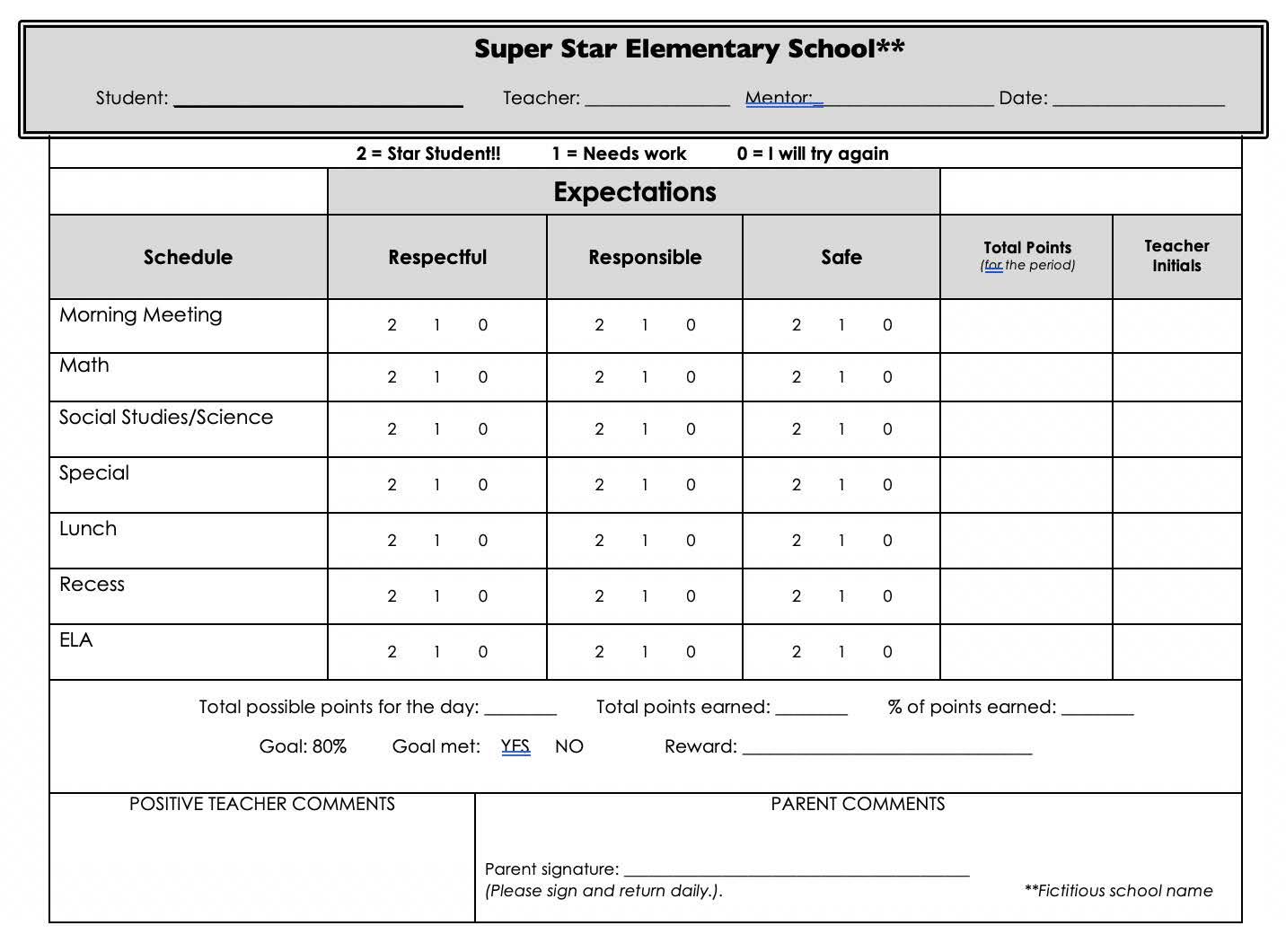
Super Start Elementary School**
Teacher: ___________________
Mentor: __________________
Total Points (for the period)
Although limited, some research suggests that CICO may be more effective for students with behavior problems that function to gain attention. In other words, an alternative (or additional) intervention might be in order for students who struggle academically and seem to engage in problem behavior primarily during academic activities. Another tip is to make sure that the mentor is truly engaging in problem-solving strategies with the students to improve their behavior. We often find mentors become punitive, rather than using the time as an opportunity to support the student in identifying specific ways to improve their behavior.
Social Skills Instruction
A second common Tier 2 intervention is social skills instruction (SSI). Social skills comprise the plethora of social behaviors, such as greeting others, listening, sharing information, and responding to comments
and questions, that students need to exhibit in particular situations (during instruction, at recess, on the bus). Social behaviors are essential for establishing constructive peer and adult relationships, are linked to academic performance, and are necessary for productive post-school functioning (e.g., Maggin et al., 2016).
Because the school setting is often the first and principal locale where students have the opportunity to interact with their peers, it is both well suited and crucial for SSI. SSI typically involves four components –
• explicit instruction in a particular skill (e.g., how to respond to criticism),
• modeling and role play of the skill,
• teacher feedback on student performance, and
• strategies generated to help students generalize the skill outside of the instructional setting, which might include teacher prompting or student self-management (described below).
Tier 2 intervention has immense potential to address many common behavior problems and mental health challenges that students have long experienced, exacerbated by COVID.
to engage in an appropriate social skill at the time. In this situation, instruction would focus on removing the barriers that interfere with performing the skill. For example, a student might be taught to engage in calming strategies during stressful situations.
Self-Management
The third Tier 2 intervention we recommend is self-management (SM). SM involves the process of observing and documenting occurrences of one’s own behavior. The steps are
• identify a target behavior that the student will self-manage,
• develop a self-recording sheet (many are available online),
SSI is typically delivered in small groups for efficiency. However, staff must be available for instruction. It is important to follow a pre-established curriculum that is evidence-based. There are numerous social skills programs commercially available with substantial research support. A description of social skills programs can be found at this link: Social Skills Resources.
Supporting research can be found at the following link: Strategy Brief.
A strategy to increase the effectiveness of SSI is to match the type of instruction to the student concern. For instance, a student may have few problems interacting during recess with her peers, but has difficulty managing her anger when she does not win games. In this situation, social skills would focus on teaching her strategies to respond appropriately to losing.
Another consideration when deciding how to teach social skills is whether the student has a skill deficit or a performance deficit. Skills deficits occur when a student does not exhibit a particular skill because they have not learned the skill. In this case instruction would focus on teaching the student the steps of the skill. A performance deficit occurs when the student has the skills in their repertoire, but does not engage in the skill when it is required. This usually happens when the student is emotionally aroused and that emotional state interferes with their ability
• determine interval length for which students will assess and document occurrences or nonoccurrences of their target behavior,
• teach the student to use the SM recording sheet, and
• implement the SM intervention.
SM interventions hold many advantages. Perhaps most important is that they encourage student independence in that they do not rely on adult prompting, feedback, or reinforcement. A related benefit is that they do not require much teacher time since students carry out most aspects of the intervention. Finally, by nature SM interventions promote generalization in that students are responsible for their own behavior, rather than behavior being controlled by
teacher prompts or teacher delivered reinforcement.
SM strategies are particularly effective for students who are resistant to adult control. In addition, they are well suited with older students for whom adult-controlled interventions are not matched to their age or maturity level. SM interventions also combine well with other interventions. For example, a student receiving a social skills intervention could self-manage their use of relaxation strategies.
3. Adapting Interventions to Meet Student Needs
The third recommendation to boost Tier 2 is to consider adaptations. Interventions can be adapted to make them more effective and reduce the need for a more intensive Tier 3 intervention. Adaptations involve making a slight adjustment or modification to a core component of the standard protocol or procedures of a Tier 2 intervention. Generally, the intensity or dosage of an intervention is increased, although adaptations also may be used to fade an intervention when a student is doing well.
Typically, adaptations are made after a student is not responding sufficiently to a standard Tier 2 intervention. However, they can also be made prior to implementing the intervention. For example, CICO involves monitoring student adherence to the schoolwide expectations. Recognizing that a student has particular problems with anxiety, a teacher may modify the standard protocol at the start of intervention by adding an expectation that pertains to using calming strategies.
Before adapting, it is important to ensure that the standard Tier 2 intervention has been implemented as it was designed (with high fidelity). This way, practitioners can be certain an adaptation is truly needed, rather than lack of intervention effectiveness potentially resulting from poor implementation. This requires developing a checklist with key components of the intervention and observing to make sure these key components were implemented.
Adaptations are made on an individual basis and therefore will look different for each student. Adaptations are chosen by using a problem-solving mindset considering the needs of the student and potential function the behavior serves. This does not mean that a comprehensive functional assessment needs to be conducted. Instead, practitioners can rely on the data they regularly collect (e.g., CICO and DPR data, discipline referrals, observational data) along with clinical judgment and work as a team to identify an adaptation likely to increase intervention effectiveness. Students typically engage in problem behavior to gain peer attention (e.g., friends laughing at them), to gain adult attention (e.g., on-on-one time), to avoid doing classwork (e.g., math problems, reading assignments, writing, etc.), or to gain an item or activity (e.g., game, more recess). Thinking about when, where, and why behavior problems occur helps to select an adaptation that addresses the cause. Data help to guide this process. For example, a SSI program may improve social skills throughout most of the school day, but not during gym class. An adaptation could be made to add an intervention component (e.g., SM) during gym. Below we describe Tier 2 adaptations that have research support.
CICO Adaptations
Mid-Day Check-Up
A mid-day check-up is an adaptation that can be used for a student with behavior that appears to gain adult attention or a student who tends to lose points during a certain part of the day. Mid-day check-ups provide the student with adult attention and a reminder that they are either meeting the schoolwide expectations to earn their reinforcement at the end of the day or can turn their day around and still meet their daily
goal. To provide a mid-day check-up, the student’s mentor needs to be available to meet with the student. When providing feedback, the mentor should
• meet with the student,
• total the amount of points earned,
• determine if the mid-day goal was met,
• provide praise or corrective feedback for each expectation, and
• remind the student they can work hard the rest of the day to earn additional points, meet their goal, and earn their reinforcer.
Weekly Goal
For a student who inconsistently meets their established daily goal (e.g., 80%) and might benefit from a different type of reinforcement, adding a weekly goal can enhance the likelihood they will meet their daily DPR goal more consistently. The weekly goal can be added to the DPR point sheet. Depending on the need of the student, the goal can be accompanied by a description of the reinforcer that will be provided if the goal is met. For example, a goal might state
- If you meet 80% of your goal on four out of five days during the week, you will earn 15 min of free time on Friday to engage in your favorite free time activity (e.g., play basketball, tech time, drawing).
Breaks as Rewards
Some students avoid work when they are assigned an undesired activity. Incorporating breaks as rewards is one way to increase the likelihood a student will persist with the shorter work interval to earn a break from the work. To implement this adaptation, practitioners must first teach students how to appropriately take a break. First, the student must ask the teacher for a break. Next, if given a thumb-ups to take a break, the student can start a timer (5 min) and begin to engage in the predetermined break activity. Once the timer sounds, the student should get back to the classwork that was assigned. If it is not a good time for a break (e.g., too soon, test time) the student should go back to their seat, re-set the timer (2-3 min), and continue working on classwork. Once the timer again sounds, they can once again ask for a break. The opportunity to earn breaks and the num-
ber permitted each class period can be included on the student’s DPR. When reviewing the DPR at the end of the class period, the teacher and student must discuss if breaks were or were not used appropriately by providing specific praise or corrective feedback. Additionally, students can earn points for using breaks appropriately.
SSI Adaptations
Change the Number or Length of Sessions
The number or length of the sessions in an SSI program can be adapted to better meet the needs of the individual student or group of students. For example, if a student is not engaging in the desired behaviors as often as hoped, session time or the number of sessions can be increased to allow for more practice.
Incorporate Peers
Incorporating a peer as a mentor (or interventionist) during social skills lessons is an adaptation that can enhance the efficiency and success of SSI. This adaptation is particularly effective for students with behavior that functions to obtain peer attention or those who need more social skills practice in situations that replicate the typical environment. To make this adaptation, the target student should be matched with a peer (same-age or cross-age) who they get along with and interact with appropriately. A teacher trains the peer to implement social skills lessons or practice specific skills until they can do so with high fidelity. After the peer is trained, social skills sessions can begin with the student, supervised by an adult. Multiple pairs of students can be supervised at one time.
Schedule Reinforcement
Providing reinforcement on a schedule is an adaptation to SSI that is appropriate for students who may benefit from external rewards to motivate them to engage in appropriate social behavior. Practitioners can provide reinforcement (e.g., tokens, schoolwide tickets, points) on a continuous (i.e., after every response) or intermittent (i.e., after a set number of responses) schedule. When a student is first learning a new skill, continuous reinforcement should be used. This assures that students clearly understand and rapidly learn the desired social skill. After behavior becomes a part of their repertoire, intermittent schedules should be used to maintain the skill.
There are four main intermittent schedules of reinforcement: fixed ratio, fixed interval, variable ratio, variable interval. Fixed ratio refers to a practitioner providing reinforcement after a set number of correct responses. For example, the reinforcer is delivered every third time a student appropriately approaches and greets the teacher. Fixed interval schedules provide reinforcement for the first occurrence of the desired behavior after a set amount of time. For example, a teacher might provide reinforcement after 10 minutes have passed and as soon as the student is observed engaging in an appropriate interaction with a peer. When using a variable ratio schedule, reinforcement is given after a random number of occurrences of the desirable behavior; however, the frequency with which reinforcement is delivered must equal a preset average. For example, if a target social behavior is sharing toys which will be reinforced on a variable ratio schedule of 4 (VR4), reinforcement can be given after 2, 6, 4, and 2 occurrences of sharing. The total number of occurrences of sharing was 20, and reinforcement was given an average of every 4 occurrences. Finally, variable interval schedules mean providing reinforcement after a varied amount of time that averages a specified time interval. For example, reinforcement could be provided each time a student is working cooperatively after 7, 12, 8, and 13 minutes, representing a variable interval schedule of 10 minutes on average.
Our
work in schools suggests that most schools implement only a single Tier 2 intervention. At a minimum, we recommend three interventions.
Ratio schedules (fixed and variable) require that each occurrence of behavior is observed and counted. This can be done using tally marks on a sheet of paper or a counter. It should be noted that such tracking can be difficult in school settings, particularly when teachers are responsible for supervision of multiple students. When using a fixed interval or variable interval schedule, a timer or vibrating watch may be used to keep track of the time that passes. Because interval schedules (fixed and variable) require only noticing the first occurrences of the target behavior the designated time interval has elapsed, they are generally easier for teachers/staff to use in the classroom.
SM Adaptations
Technology
Using an app instead of a paper/pencil/timer combination is an adaptation to SM that makes it more efficient, discrete, and perhaps accurate. Practitioners should train the student how to use the app before implementing this technology adaptation. We recommend a free, easy-to-use app such as I-Connect (Wills & Mason, 2014).
Frequency of Feedback
Adapting the amount of teacher feedback can be useful for students who continue to have difficulty with social skills or benefit from adult attention. For example, if a student is frequently making antagonizing comments to peers, the teacher might provide feedback every 10 minutes by describing the student’s appropriate and inappropriate interactions.
Adaptations can increase Tier 2 intervention effectiveness, reducing the need for more costly Tier 3 interventions.
Maggin, D. M., Wehby, J. H., Farmer, T. W., & Brooks, D. S. (2016). Intensive interventions for students with emotional and behavioral disorders: Issues, theory, and future directions. Journal of Emotional and Behavioral Disorders, 24(3), 127-137.
Merikangas, K. R., He, J. P., Burstein, M., Swendsen, J., Avenevoli, S., Case, B., . . . & Olfson, M. (2011). Service utilization for lifetime mental disorders in US adolescents: Results of the National Comorbidity Survey–Adolescent Supplement (NCS-A). Journal of the American Academy of Child & Adolescent Psychiatry, 50, 32–45. doi:10.1016/j.jaac.2010.05.017
National Alliance on Mental Illness. (2016). Mental health facts: Children and teens.
Wills, H. P., & Mason, B. A. (2014). Implementation of a self-monitoring application to improve on-task behavior: A high-school pilot study. Journal of Behavioral Education, 23(4), 421-434.
Once the student begins to engage in appropriate interactions and inappropriate interactions decrease, the teacher can systematically fade the intervention.
Goal Setting
Attaching a goal to a student’s SM intervention can provide an additional level of motivation and ownership for engaging in appropriate behaviors. To adapt SM with goal setting, practitioners can work with a student to identify short-term and/or long-term goals. For example, a goal might be that the student responds appropriately to teacher corrective feedback during 70% of SM intervals. A reward could be provided if the student meets their goal. Additionally, students can graph their progress daily while working toward their goal.
Tier 2 interventions are essential to tiered systems of support. A few key tactics can make them maximally effective. Universal screening assures that all students who would benefit from Tier 2 intervention are identified. Implementing a variety of Tier 2 interventions increases the likelihood that intervention will be matched to student need. Finally, adaptations can increase Tier 2 intervention effectiveness, reducing the need for more costly Tier 3 interventions.
References
Calear, A. L., & Christensen, H. (2010). Review of internet-based prevention and treatment programs for anxiety and depression in children and adolescents. Medical Journal of Australia, 192, S12-S14.
Hawken, L. S., Crone, D. A., Bundock, K., & Horner, R. H. (2020). Responding to Problem Behavior in Schools. Guilford Publications.
Lee Kern Professor and Director of the Center for Promoting Research to Practice, lek6@lehigh.edu, and Samantha Kelly, Doctoral Students and Research Assistant, sak617@lehigh.edu, Lehigh University, Bethlehem, PA.
Virtual Instruction For Students with

By Nargiza Buranova and Chad Rose
Photo
The COVID-19 pandemic forced schools around the globe to shut down in-person classes and immediately pivot to online or virtual instruction. At the same time, the US Department of Education continued to require that Free and Appropriate Public Education (FAPE) was provided to all students with disabilities - a challenging task for educators of students with and at-risk of EBD, to say the least.
Students with EBD, challenged by poor self-regulation, problem solving, academic, social, and communication skills during in-person instruction, struggled significantly during online education, as did their teachers and their families. Virtual learning with its added distractions in home environments (noise, siblings, pets), issues with internet connectivity and technology tools, and the unfamiliar structure of computer-based instruction exacerbated the behavior challenges of many students. Currently, we are beginning to see how this pandemic and the abrupt transition to virtual education has negatively impacted the psychological, social, and mental well-being of many of our students with and at-risk of EBD and their teachers.
With the availability of effective vaccinations, a majority of schools have returned to in-person instruction. However, there is a high chance that some students will continue to receive some level of educational support, or a portion of their education in remote or virtual formats. Virtual learning for K-12 students has been implemented for years (e.g., homeschooling, online extracurricular classes), became widespread during the COVID-19 pandemic, and will likely be a mainstay as an educational option for students, including students with EBD (Hirsch & McDaniel, 2021).
How can educators structure virtual instruction to better support students with behavioral challenges and to better support themselves as teachers?
• By Setting Clear Behavioral Expectations
• By Delivering Positive Reinforcement
• By Providing Opportunities to Respond
• By Establishing Parent-Teacher Collaboration
Setting Behavior Expectations
To support students’ academic learning and behavioral development, the virtual learning environment should be predictable and positive. Just as in brickand-mortar schools, a structured and predictable classroom environment will allow students to focus on learning, process information more quickly, and reduce inappropriate behavior. When students know the classroom rules and expectations their behavior and academic performance improves. The behavior expectations for the virtual classroom should be established early, at the beginning of the virtual sessions, taught to students using explicit instruction (Lohmann et al., 2021), and reviewed regularly. This must include the virtual environment-specific behaviors and instructions on the appropriate use of technology. The Center on Positive Behavior Interventions and Support (PBIS, 2020) has developed a matrix for behavior expectations in remote learning (see Table 1). Using this matrix a teacher can include three to five positively phrased prosocial behaviors, define the expectations for each prosocial behavior considering the virtual learning environment, model the expected behaviors, and reinforce the implementation through behavior-specific praise. Teachers are encouraged to create short videos to provide examples (Hirsch et al., 2021), use visuals (see Figure 1), and create lessons that teach these rules and behavior expectations. A visual of classroom expectations should be posted (screen-shared) in an online environment so the students can regularly refer to it.
Remote Learning Matrix - Elementary (PBIS.org)
We are... Entering Class
Choose a distraction- free space
Safe
Respectful
Use kind words and faces
Use equipment as intended
Teacher-led Whole Group Instruction
One-on-One Instruction
Small-Group Acitivites (Breakout Rooms)
Responsible
Video optional
Audio off
Use chat with classmates for first 5 minutes
Ask in chat if you need help
Use kind words and faces
Video optional
Audio off
Answer questions in chat box on cue
Answer polls promptly
Be on time and ready to learn
Start class charged or plugged in
Have materials ready
Ask questions (voice or chat) when you have them
Be present – avoid multitasking
Delivering Positive Reinforcement
Similar to in-person teaching practices, educators should develop a reinforcement system that recognizes prosocial behaviors in online learning. Positive reinforcement is an effective practice in increasing appropriate student behavior and decreasing problematic behaviors among students with behavior challenges in both in-person and virtual classrooms. However, research conducted by Hirsch et al. (2021) on the experience of educators serving students with emotional and behavioral disorders during the COVID-19 pandemic indicated that only 17.2%
Use kind words and faces
Use “stop-leave-talk” when you hear disrespect
Encourage others to participate
Use kind words and faces
Video on at all times
Audio on Listen attentively
Answer questions out loud on cue
Ask questions out loud when you have them
Be present – avoid multitasking
Try your best
Video optional
Audio on
One speaker at a time: wait or use chat to respond when others are talking
Respect others’ cultures, opinions, and viewpoints
Encourage each other to stay on topic
Complete the work together
Use “Ask for Help” button if you have questions
Be present – avoid multitasking
of teachers used reinforcement strategies in online teaching. Some examples of providing positive reinforcement online include:
• Stating specific verbal praise and acknowledgment following the socially appropriate student behavior. For example: “Karen, I like that you muted your microphone during your peer’s presentation” or “John, thank you for unmuting and sharing your ideas”, and “Asal, great job staying in your workplace and following the instruction”. The praise can be delivered verbally or typed in the chat.
• Utilizing virtual praise and reinforcement tools. Teachers can use electronic gestures available
in Zoom such as clapping, thumb up, heart, and other reactions available on the platform. They are easy to use, and students will see them instantly on their screens. The teacher’s background on the platform can be used as a reinforcement tool. For example, the teacher may set background with the picture of the student’s favorite football team, place, or movie, when the student performs an expected behavior.
• Using apps that have a built-in token economy system. The Class Dojo app, for example, has a token system which is available for both teachers and parents, and allows the user to reinforce a child for socially appropriate behavior in class (both in-person and virtual) such as staying on task, making smart choices, following directions, and at home such as doing homework, reading, and doing chores. Once the student collects a predetermined number of points, the student can be provided with tangible reinforcement such as a toy, favorite food, sticker, board game, extended time with friends.
• Educators could incorporate virtual lunch with the teacher, game time with peers, “student of the week”, costume parties, and celebrations in the online setting.

Virtual learning for K-12
students has been implemented for years became widespread during the COVID-19 pandemic, and will likely be a mainstay as an educational option for students, including students with EBD.
Consistent with in-person instruction, online reinforcement should be based on student interests, provided consistently, and directly connected to the student’s behavioral function. Approach each student individually and conduct a brief preference assessment to determine reinforcers for each student, including a student self-report survey of available online reinforcers. Communicating with caregivers, parents, or guardians who support the student’s online learning, can promote consistency of reinforcement across settings.
Providing Opportunities to Respond
Providing opportunities to respond (OTR) incorporates promoting frequent and multiple student responses through a variety of forms (e.g., verbal, written, gestural). Higher rates of OTRs during instruction lead to increases in academic performance, appropriate social behavior, and a decrease in disruptive and off-task behaviors.
In-person options for OTR include response cards, signs, and whiteboards on which students write answers to teacher questions and yes/no and thumbs up/down cards student hold up to respond to close-ended questions. Virtual options are included in most online instruction platforms
Students can use “thumbs-up” or “thumbs-down” to agree or disagree with the statement.
• Use the “raise your hand” button and different other response buttons in the online platform you use for teaching.
• Provide opportunities to present in groups so multiple students can work on the project and present together.
• Engage students by asking direct questions and offering choices for ways of participation (e.g., group work, pair work, individual presentations, verbal or written input, etc.).
• Make use of the chat feature in the platform (e.g., students can send their answers in chat instead of saying verbally in class).
Furthermore, consider using websites and apps to provide opportunities to respond in the virtual setting:
• Kahoot offers an interactive game format of response cards to amplify students’ engagement.
• Padlet is a website where students can post their answers in textual form rather than providing verbal input in the classroom.
• Poll Everywhere and Pear Deck can be used in online synchronous instructions depending on student’s age and abilities.
Establishing Parent-Teacher Collaboration
Parents/caregivers of children with EBD are essential partners in providing quality education to their children. Parents/caregivers are often the first assistants to their child during online learning, as they may provide critical support with navigating technologies, setting up the place for online learning, and helping with homework. Both parents and educators recognize the importance of regular and productive communication and relationship building. Parents, guardians, and/ or caregivers can provide valuable information about student interests, changes in behaviors, and academic progress that may not be directly observable in an online environment. Communication should be ongoing and start at the beginning of online learning. Strategies for building parent-teacher collaboration during online learning include:
• Hold an opening meeting with parents in the virtual environment to establish communication

with parents early. It is recommended to hold quarterly meetings for all parents throughout the year. During the first meeting communicate with parents about their internet access and technology needs.
• Use multiple means of communication such as email, phone calls, text messages, and schoolbased apps (e.g., Class Dojo). Invite parents to meet in virtual live meetings such as in Zoom or Microsoft teams.
• Host a consistent virtual office hour when parents and students can pop in and ask questions, just as they would in a brick-and-mortar setting. This will allow parents to connect, ask questions, request support, and share any information about the student with the teacher.
• Conduct brief online surveys with families to learn about possible challenges they experience in virtual learning. This will help educators understand specific barriers for parents in online learning and how to address and support them. For example, some parents may have no experience supporting their child learning in a virtual environment, and may need training on how to use technology (e.g., Zoom). Additionally, a parent
may not speak English as their first language, and an interpreter may be needed to support the family. Therefore, the teacher should be ready to provide information in the family’s native language when needed.
• Share with parents strategies to support their children with behavior challenges in the home setting and in virtual environments. Provide handouts with easy-to-follow instructions supplemented with visuals, so parents can implement within the home environment. These strategies may include visual schedules, positive reinforcement systems (e.g., token economy system, behavior-specific praise), direct instruction, self-management strategies, and behavior contracts (Riden et al., 2021) depending on individual student’s needs and goals.
Virtual Exclusion Considerations and Cautions
Virtual exclusion, a punishment strategy used by some educators, requires discussion. When a student engages in problematic behaviors (e.g., being aggressive to teacher or peers, not following the instruction), an online instructor can put the student on hold, turn off the student’s camera, mute the stu-

dent’s microphone, or send them out of the virtual classroom. However, when the student is excluded, they lose valuable instruction time. Furthermore, it may get challenging to bring them back to the virtual classroom as they have control of the platform and may wish not to re-join the classroom. Virtual exclusions may reinforce a student’s problematic behavior if the function of the behavior is to escape or avoid class participation and limit the instruction time for the student. There is a causal relationship between expulsion and student outcomes such as academic achievement, social performance, retention, and absenteeism (Gage et al., 2019). Therefore, the teacher should avoid exclusion and implement strategies to involve the student in virtual classroom participation through providing more opportunities to interact with classmates, give choices, and relate curriculum to student’s interest areas.
Exclusion from the online learning environment should be considered similar to an in-person school setting and should be avoided to the extent possible (TSDC Toolkit, 2020). To avoid exclusionary discipline, the following strategies are recommended:
• Clearly describe the type of behavior that can lead to exclusion, so the student understands the behavior expectations and consequences for inappropriate behavior in the online classroom.
• Make sure that parents are informed about the behavior expectations and consequences.
• Provide corrective feedback to the student via a private chat/direct message after the student’s problematic behavior.
• Implement the “praise around” approach to acknowledge publicly those students with appropriate behaviors and be ready to provide behavior-specific praise to the student when displaying socially appropriate behavior.
• Use group contingencies such as student/teacher games, which can be implemented in online environments.
• Provide more opportunities to respond and participate in the online classroom through engaging and relevant content.
How can educators structure virtual instruction to better support students with behavioral challenges and to better support themselves as teachers?
ter the COVID-19 pandemic requires educators to strengthen their online instructional skills. Teachers of students with and at-risk of EBD who adapt the evidence-based strategies regarding behavioral expectations, positive reinforcement, opportunities to respond, and parent-teacher collaboration can better support their students and the education they provide to those students.
References
• Give choices to engage students, such as order of assignment completion (e.g., what assignment to do first) and presentation of knowledge (e.g., in written form or verbally, through drawing or presentation with a peer).
• Relate content to students’ interest areas and culture.
In situations when virtual exclusion is unavoidable, the following recommendations are suggested:
• The student should be placed in a “waiting room” or another type of isolation (muted with the camera off) and should be provided with an alternative assignment or task.
• Inform student’s parent, caregiver, or any person who assists the student in online learning about student’s exclusion from the online classroom.
• Set a time limit for exclusion (e.g., 5 minutes), inform the student, and stick to it.
• Discuss the behavior that resulted in exclusion with the student prior to re-engaging.
• Take steps to re-engage the student and support the student in making up any missed assignments.
• Require the student to write a reflective paper, or engage in a reflective activity, regarding their behavior.
• Conduct a virtual conference with the student and parents to discuss the student’s behavior and work on a solution together.
The expectation that virtual instruction, in various forms and content areas, will continue even af-
Center on Positive Behavior Interventions and Supports. (2020). Creating a PBIS behavior teaching matrix for remote instruction. University of Oregon.
Gage, N. A., Grasley-Boy, N., Lombardo, M., & Anderson, L. (2019). The Effect of School-Wide Positive Behavior Interventions and Supports on Disciplinary Exclusions: A Conceptual Replication. Behavioral Disorders
Hirsch, S. E., Bruhn, A. L., McDaniel, S., & Mathews, H. M. (2021). A Survey of Educators Serving Students With Emotional and Behavioral Disorders During the Covid-19 Pandemic. Behavioral Disorders
Hirsch, S. E., & McDaniel, S. (2021). Remote Instruction and Interventions: Considerations for Students With Disabilities. Intervention in School and Clinic, 57(2), 75–77.
Lohmann, M. J., Randolph, K. M., & Oh, J. H. (2021). Classroom Management Strategies for Hyflex Instruction: Setting Students Up for Success in the Hybrid Environment. Early Childhood Education Journal, 49(5), 807–814.
Riden, B. S., Kumm, S., & Maggin, D. M. (2021). Evidence-Based Behavior Management Strategies for Students With or At Risk of EBD: A Mega Review of the Literature. Remedial and Special Education, 074193252110479.
Transforming School Discipline Collaborative (2020). Toolkit for Transforming School Discipline in Remote and Blended Learning During COVID-19. Chicago.
Nargiza Buranova, Doctoral Student, nargiza.buranova@mail.missouri.edu, and Chad A. Rose, Associate Professor, rosech@missouri.edu, Special Education, University of Missouri Columbia.
Can School Violence Be Prevented?
By Lawrence Altman
On April 14, 2022, the Kansas City metropolitan area suffered its second act of on campus school violence in the past thirty days. A middle school student knifed and killed another middle school student on the campus of a Kansas City Missouri public middle school. This incident took place less than one hour after the mayor of Kansas City, Missouri spoke at the Jackson County Court
Appointed Special Advocate (CASA) Missouri breakfast meeting. During his presentation, the mayor addressed the killing of a middle school child while he was in his home. Less than a month before the
April school incident, a student attending Olathe High School, shot and wounded several staff members of the school. In both of these cases, moreover, students somehow were able to bring weapons into school undetected by school staff.
Sadly, these recent acts are not confined to the Kansas City area. Indeed, in South Carolina earlier this year, a middle school student, on campus, shot and killed another middle school student. And late last year in Michigan, four students on campus were shot and killed by another student. Then in Texas, nineteen students and two school staff members
Photo
were killed on campus in the Uvalde school by a high school student. To be sure, each of the above acts of violence shared some things in common.
This article examines the commonalities in these acts of school violence. After each incident, local leaders and some national leaders sent their thoughts and prayers to the victims and their families. Each school’s staff was either praised or condemned for their responses after the incident. Meetings were also held to discuss how to improve school safety after the first the threat arises. But what was missing from these discussions? What if anything could be done proactively rather than reactively to prevent the acts of violence?
In his closing comments at the CASA conference, the mayor said that it was time for leaders to be innovative and to create new methods for preventing violence and racism in our cities. He made a call to those in attendance to be leaders in creating and implementing new policies designed to prevent violence and racial inequality. That said, the United States Secret Service has suggested a course of action that may be an answer to prevent violence in schools.
In 2018, the US Secret Service published Enhancing School Safety Using a Threat Assessment Manual. Prepared by the staff of the US Secret Service National Threat Assessment Center (NTAC), this operational guide was developed to help prevent school
violence. The director of the Secret Service, Randolph D. Alles, said that the goal of the Service was to help schools identify any student who might be a threat, assess the potential threat the student might pose, and then determine what, if any, assistance could be provided to the student that might prevent a tragic outcome.
Building upon its 2018 publication, in November of 2019 the US Secret Service published its second article about school violence. The 2019 publication analyzed data the Secret Service collected providing insight into what factors taking place in a child’s life
contribute to a child acting violently when attending school. Accordingly, in 2018 and 2019 the Secret Service may have provided what the Kansas City mayor was looking for: An innovative and new method for preventing school violence.
There is no profile of a student who will commit an act of violence at school.
The Secret Service’s guides opine that there is no profile of a student who will commit an act of violence at school. Students, who are referred to as attackers, can be of any gender, may or may not have good grades, or may or may not be loners. To be sure, schools should not focus upon specific character traits of students.
Indeed, the Secret Service recommends that schools develop a threat assessment process. This process is designed to gather information about a student’s communications, behaviors, negative or stressful events experienced by the student, and what, if any, resources the student has to deal with to overcome these negative or stressful experiences. The goals of a threat assessment are to “identify students of concern, assess their risks for engaging in violence or other harmful acts, and identify interaction strategies to manage that risk.”
Three contributing factors to student-caused violence in schools:
• Most attackers had experienced negative psychological, behavioral, or developmental symptoms.
• All attackers experienced social stressors involving their relationships with peers and/or with romantic partners.
• Most attackers were victims of bullying that was often observed by others. In addition, 80% of school attackers were bullied by classmates. What’s more, 57% of attackers were persistent victims of bullying that lasted over a period of weeks, months, or years.
Anti-Bullying Policies
To address the mental health national emergency impacting our youth, a December 2021 report from the Surgeon General of the United States included a recommendation that school districts develop and enforce anti-bullying policies. The Surgeon General opined that this would help create positive, safe, and affirming school environments for students. This would also help reduce the number of children suffering from mental health issues. The Surgeon General’s suggestions regarding bullying are in line with the Office for Civil Rights enforcement rules under the IDEA and Section 504 of the Rehabilitation Act. In its
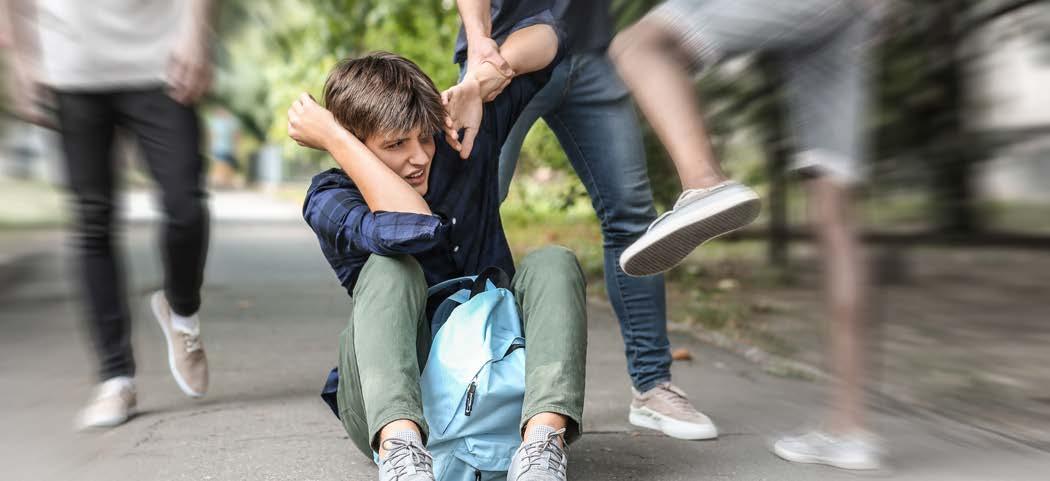
recent publication of the updated Title IX regulations regarding sexual harassment, the Department of Education requires schools to take prompt AND effective action to end any discrimination in their program and activities. What’s more, the schools must prevent its recurrence AND remedy its effects. In fact, sexual harassment is a type of bullying that the Department of Education and the OCR demands ending in schools. Since 2010, the Office for Civil Rights has mandated that schools must eliminate disability-based bullying and prevent its recurrence.
Violence Protection Plans
Schools need to create a comprehensive, targeted violence protection plan. The Secret Service’s 2018 guide provides suggestions to assist schools to create plans that might prevent students from self-harm or harm to the community. That said, the Secret Service informs schools that the guide provides only what it considers to be the minimum steps that should be taken to help reduce the risk of violence. Nonetheless, the Secret Service wanted to provide a series of steps schools should take to develop their own violence prevention plan. The guide suggests eight steps schools should consider in developing their plans.
1Step One: Establish a multidisciplinary team.
The purpose of this team is to direct, manage, and document the school’s threat assessment process. Schools should direct this team to receive all reports of students of concern and their situations, gather information, assess the potential risk of student self-harm or threat to the school community, and if there is a risk, develop an intervention plan to mitigate the risk of harm. The Service suggests that the teams should include teachers, coaches, guidance counselors, school resource officers, administrators, parents, students, and mental healthcare providers. Because schools may not have representatives from each of these disciplines, schools may need to reach out for volunteers to fill those gaps.
What if anything could be done proactively rather than reactively to prevent the acts of violence?
The United States Secret Service has suggested a course of action that may be an answer.
Step Two: Define prohibited and concerning behaviors.
The guide urges schools to create a policy defining prohibited behaviors including, but are not limited to, threatening or engaging in violence, bringing weapons to school, bullying or harassing others, criminal behaviors, or other behaviors that are concerning. The policy should clearly state that any of the aforementioned behaviors will result in immediate action by the school against the perpetrator. It also informs schools that “concerning behaviors occur along a continuum” and that schools should, therefore, identify and address student behaviors that are not an indication of the potential for violence but are concerning.
Step Three: Create a central reporting mechanism.
When someone is concerned about the actions or conduct of a student that might escalate into selfharm or some other violent action, schools must have a system in place to report those concerns to the team. To illustrate, the school could create a program that allows all staff to report to a school team or individual concerns they may have for a student. The person or team who receives this report of concern then has an obligation to send these concerns to the threat assessment team. That team then moves onto the next step in the process
If the Secret Service plan works to prevent the death of even one person, is that not worth the cost? Indeed, what is the saving of even one life worth?
of assessment. Further, all staff must be trained and instructed to use the reporting system. Further, their job is not to assess the treat. Rather, the assessment is the job of the Assessment Team
Accordingly, full implementation of the reporting mechanism will allow the Threat Assessment Team to have the information they need to proceed with assessment of the student.
Step Four: Determine the threshold for law enforcement intervention.
Schools should establish a clear threshold to determine when law enforcement should be called to help with or take over an assessment of a potentially threatening situation. Student behaviors that involve weapons, threats of violence, physical violence, or concerns about an individual’s safety should immediately be reported to law enforcement.
Step Five: Establish assessment procedures.
Teams must create policies and procedures to guide their assessment of a situation. These policies and procedures, moreover, must always be followed because this will help the team assess the situation and identify appropriate interventions. Teams must maintain documentation of everything related to each report.
Step Six: Develop risk management options.
When an assessment of a student has been completed, the team should evaluate whether or not the student is at risk for self-harm, harming someone else, or committing an act of violence. The guide includes a reminder to the teams that their job is not to predict whether violence is a certainty. The job of the team is to evaluate the known factors indicating that violence might be possible. If the team concludes that the student might be at risk for violence, it should create strategies to reduce that risk. Teams should, therefore, create an individualized management plan for each of these students. It is also suggested that schools stay in contact with suspended or expelled students. If it is determined that the suspended or expelled student’s condition is escalating to the point where the school is concerned about a possible act of violence, a plan can be promptly implemented to address the concern. Management plans must stay in place until the team is no longer concerned about the student or their risk for violence.
Step Seven: Create and promote safe school climates.
The Secret Service believes that everyone, including students, must play a role in creating and then maintaining a safe school environment. The guide makes the following suggestions to accomplish this goal:
• Help staff and teachers develop positive, trusting relationships with students. This can be accomplished by taking an interest in and actively listening when a student talks to staff or teachers. This will help students feel connected with the school, staff, and teachers.
• Encourage students to feel safe in coming forward to staff and teachers to discuss their problems. Students who believe they are connected to a “trusted adult” will be more forthcoming in discussing problems.
• Help students feel connected to their classmates. A few suggestions are to encourage students

to join school clubs or teams or start their own special interest groups.
• Schools should also create and implement positive behavioral interventions and support programs.
8Step Eight: Conduct training for all stakeholders.
Teachers, staff, administrators, parents, students, school resource officers, and law enforcement must all be trained on the threat assessment process, where to report concerns, and what information they should bring forward. In addition, periodic training should also be implemented to update the training and keep it current. As added information becomes available, improvements can be made to the existing plan. Everyone should be made aware of any changes or amendments to the plan to help improve outcomes.
Addressing Opposition
These responses are suggested to address common reasons given for not adopting the Secret Service’s suggestions.
• The creation and implementation of a Threat Assessment Model are too expensive and would take too much time to create and implement.
Response. After an act of school violence takes place, an announcement is often made that the school will provide counselors and mental health specialists to help the students and staff deal with the impact of the traumatic effect of the incident. The cost for these services after the traumatic event occurs would likely far exceed the cost of implementing a plan to prevent the violence from happening at all. In addition, if the Secret Service plan works to prevent the death of even one person, is that not worth the cost? Indeed, what is the saving of even one life worth?
• The Secret Service publications are old and out of date.
Response. In December of 2021, the Surgeon General agreed with the 2018 and 2019 Secret Service’s reports regarding the need and enforcement of anti-bullying policies.
• How do you know whether or not this plan will work without trying it first?
Response. This will require collection of and periodic review of data. Data review should be conducted at three separate times each equally spaced. This will provide what is referred to as a trend and provides information regarding the success of the plan or what might need to be
changed to help improve outcomes. Some examples of data to collect and review, is what was the age and grade of the student that is being assessed for a possible problem.
○ What is the gender of the student?
○ What type of behavior is causing the concern? Is it self-harm or threat against others?
○ What outside factors contribute to the student’s problems?
○ What interventions were used to help the student?
○ Did the interventions help the student?
○ This not an all-inclusive list and other items may need to be added as time goes on.
• A Threat Assessment plan could be used as a tool for racial profiling.
Response. To prevent this from happening, schools must collect and periodically review data to make certain this does not occur. Indeed, the collected data must include, at a minimum, the race and gender of all those who are assessed. In addition, whatever plan is adopted, it must always be implemented without fail in order for the data to be considered accurate.
• Some parents may object to the implementation of the plan because it might infringe upon their child’s rights.
Response. Not all will agree, and many will not care at all. Yet, this is where leadership comes into play. We should remind parents that as a nation, we have not had success in protecting our children. The Threat Assessment plan is a possible tool to use to improve safety in our schools.
The Secret Service opines that a thorough review of its 2019 and 2018 reports makes clear that school administrators can take steps to reduce the possibility that any student might cause harm or be harmed in the school environment.
“The safety of children in school is a topic everyone agrees on. Ensuring their safety requires leadership and vision as well as common sense.”
We
should remind parents that as a nation, we have not had success in protecting our children. The Threat Assessment plan is a possible tool to use to improve safety in our schools.
The Secret Service concluded that it is now up to the schools to hire leaders that know how to use common sense and vision to create and fully implement policies, protocols, and procedures to stop the killings.
Resources
ENHANCING SCHOOL SAFETY USING A THREAT ASSESSMENT
MODEL, U.S. Department of Homeland Security, United States Secret Service, National Threat Assessment Center, July 2018.
Protecting America’s Schools/ A U.S. Secret Service Analysis of Targeted School Violence (November, 2019, U.S. Department of Homeland Security, United States Secret Service National Threat Assessment Center).
Protecting Youth Mental Health, The Surgeon General’s Advisory ( December 7, 2021), Page 19.
FACT SHEET: U.S. Department of Education’s 2022 proposed Amendments to its Title IX Regulations. (June, 23, 2022).
Dear Colleague Letter, 55 IDELR 174 (OCR 2010).
Baldrige Criteria for Performance Excellence.
Lawrence Altman, Retired Lead Compliance Attorney, Kansas City Public Schools and Adjunct Professor, School of Business, Avila University, Kansas City, Missouri, ljalaw@sbcglobal.net
MEDIA Books
Road Trip on The Lincoln Highway
Book Review by Robert H. Zabel
The Lincoln Highway: A Novel by Amor Towles, tells the stories (from multiple perspectives) of an improbable, incredible,10-day journey across the eastern US in June 1954. It begins in rural Nebraska when 18-year-old Emmett Watson is delivered to his farm home by the warden of a juvenile detention facility in Salina, Kansas where he was confined for accidentally killing a local bully. Emmett is released to care for his brother following the death of their father. Billy is a gifted 8-year-old with a passion for Professor Abacus Abernathe’s Compendium of Heroes, Adventurers and Other Intrepid Travelers, recounting the journeys of 26 historical and mythological figures (Achilles to Zeus).
We learn that the Watson boys’ mother had deserted the family when Billy was a still baby. She had sent postcards en route, presumably, to San Francisco, but had not been heard from since. As the bankrupt farm is now owned by the bank, Billy and Emmett decide to drive Emmett’s prized 1948 Studebaker to California in search of their mother…and a new life.
Their plans soon change, however, when they discover that two fellow Salina detainees, Duchess and Woolly, had escaped Salina in the trunk of the Warden’s car. Duchess is the son of an itinerant thespian, gambler, alcoholic – who deposited him at a Nebraska orphanage several years earlier. Woolly is a sensitive, anxious boy from a wealthy New York family. His father died in WWII, his mother deserted the family, and he was kicked out of several exclusive prep schools. Both boys ended up in Salina for crimes due to their poor decisions and “being in the wrong place at the wrong time.”
Duchess and Woolly want to go New York to search for their lost families and a treasure promised to Woolly.
They talk Emmett into driving them to Omaha to catch a train east… and to visit Duchess’s orphanage along the way. While there, they steal the Studebaker, leaving Emmett and Billy to chase after, via their only alternative transportation – railroad boxcars.

Their subsequent journeys via highway and railway cross eight states toward the eastern terminus of the Lincoln Highway (predecessor of the Interstate system) at Broadway and 42nd Street in NYC. Both duos have multiple encounters and (mis)adventures with fellow travelers – grifters, misfits, and, sometimes, helpers. Once in New York, Emmett and Billy are also joined by Sally, their Nebraska neighbor who cared for Billy after his father’s death. Sally, too, seeks a new life.
Improbable, incredible?! Yes, and this is just the beginning of their fantastic adventures. The stories are fiction, of course, yet they contain truths. Like the young characters in this story, everyone’s life journey is affected by unpredictable, improbable, unplanned experiences, events, and chance encounters that alter its course.
As I read Towles’ story, I was struck by coincidences with of my own life. To name a few: I grew up in Nebraska in the 1950s (same age as Billy) in a town on both the Lincoln Highway and Union Pacific RR, lived next to an orphanage, traveled two days by train (thankfully in a passenger, not a box car) to prep school in New England. My family had three Studebakers, a vehicle already rare in 50s! Most of my adult life was in Kansas, where I taught classes at a state youth center in Beloit, just down the road from Salina. And, my career focused on kids with life stories not so different than Emmett, Duchess and Woolly.
I believe The Lincoln Highway will resonate especially with people working with kids with emotional and behavioral needs, whose real-life journeys are incredible, improbable, and engaging.
Amor Towles (2021), The Lincoln Highway: A Novel Viking Press.
The Dictionary of Difficult Words
Book Review
by Reece L. Peterson
With more than 400 perplexing words to test your wits!
The Dictionary of Difficult Words is written by Jane Solomon, a lexicographer, with illustrations by Louise Lockhart. The back cover asks, “What is a BUMBERSHOOT or MOONBOW?”
“Test your knowledge with more than 400 words to amaze, confuse, and inspire budding wordsmiths. All of the words featured in this book are difficult to spell or hard to say and have meanings that are obscure to most children (and most adults)!”
For each letter in the alphabet, this large (10.5 X 12.5 inch) dictionary identifies about 16 “difficult” words which start with that letter. A pronunciation guide and a child-friendly explanation of the meaning is included for each word. The artwork for every page is beautiful, creative, and adds to the explanation of the words.
This is a “coffee table” book written specifically for children, which I think would offer equal interest to adults interested in words or writing. Adults who pick it up will recognize a few words, and find many others which they did not know. In the opening the author explains what a dictionary is, some of the kinds of dictionaries, and a list of 10 different ways this dictionary can be used. In my mind, that list works for adults as well as for children.
I think that this would be a great book for parents or grandparents to create conversations with their children or grandchildren – especially as children learn to read, write, and think. It is also a great book for educators to
Robert H. Zabel, Professor Emeritus, Kansas State University, robertzabel@gmail.com
intrigue students about words. It could be used to help them learn one of these difficult words each day or week. It could also be the topic of a “star chart” when proper usage gains the classroom a “star”.

Do your students consider you to be a blatherskite?
This book offers you the chance to become a sesquipedalian!.
Should you be concerned about spaghettification?
For student who are struggling readers and writers, allowing them to learn these difficult words which their peers or even their parents would not know, might be a great motivating vehicle for their learning. For the right students, learning and using these difficult words might be a powerful reinforcer. Creative teachers will find many ways this book could be used effectively in their classrooms!
The Dictionary of Difficult Words: With more than 400 perplexing words to test your wits! by Jane Solomon with Louise Lockhart (Illustrator), 2019, Frances Lincoln Children’s Books Publisher.
Reece Peterson, Professor Emeritus, University of Nebraska-Lincoln
TV Shows
Somebody, Somewhere, Abbott Elementary, and As We See It
Reviews by Robert H. Zabel
For two years, COVID-19 kept us away from group gatherings that risked contagion. With theaters, concert halls, and other venues closed, some of us looked for entertainment and distraction on our home screens – cooking and home improvement shows, streamed movies, re-runs of old favorites, etc.. Fortunately, several new television shows helped fill a desire for social engagement with interesting people, albeit virtual. Three series that may have a special resonance for educators – especially special educators – are Somebody, Somewhere; Abbott Elementary; and As We See It.
Somebody, Somewhere (HBO) follows Sam, a single woman in her 40s who has returned from the “big city” to her hometown of Manhattan, Kansas to help care for her sister who died shortly before the story begins. Sam is at an uncertain point in her life, trying to figure out “what next?!” She is played by Bridget Everett, a celebrated cabaret performer, singer and actor in New York, as well as the show’s executive producer and writer. Somebody, Somewhere is somewhat autobiographical. Everett actually grew up in Manhattan, where her father was once mayor and served in the Kansas Legislature.
The stories focus on Sam’s interactions with her family – all grieving the death of their daughter/sister – and dealing with their own life challenges. Sam discovers a community of new friends. Like Sam, they’re “outsiders,” not stereotypical Kansans. They’re talented, nerdish, funny, compassionate, and mutually supportive individuals. Each character has encountered difficulties fitting into a “normal” world and seems like someone we could know…or are. Somebody, Somewhere will keep you coming back to share their journeys.

Abbott Elementary (ABC) is a situation comedy set in an inner city Philadelphia school. Abbott is like many under-resourced, under-funded, and mostly ignored urban schools. The series focuses on the challenges and interactions of several faculty members committed to providing the best education possible for their students. A documentary film crew is also in the school reporting on inner-city schools, allowing characters to sometimes directly address the audience.
The main character is Jeanine Teagues, a young, second grade teacher played by Quinta Brunson, who also created the show. Jeanine is energetic and optimistic, always looking for ways to improve the school and enlist her colleagues in her efforts. Several episodes feature teachers dealing with student behavior that disrupts and upsets (sometimes, entertains) the classroom. An early episode features a colleague so overwhelmed by her inability to manage a chaotic class, she kicks a student…and is fired. Reflecting on that incident, another teacher states, “I can’t burnout… Who would take care of my students?”
Jeanine has taken on a big assignment at Abbott. The principal, Ava Coleman, is ambitious, inept and narcissistic, and she’s threatened by Jeanine’s efforts. Other main characters are Jeanine’s colleagues: her buddy, Jacob, a young, idealistic, socially awkward history teacher; Melissa, an experienced, tough teacher from South Philly with questionable connections to the mafia; Barbara, a veteran kindergarten teacher who holds high expectations despite inadequate support and
mostly achieves them; and Gregory, a substitute teacher who is initially skeptical about his fit with Abbott, but connects with his students, develops a crush on Jeanine, and decides to stay on.
As We See It (Amazon) follows three young adults on the autism spectrum living in a small group home in California with their 20ish houseparent/aide. The show’s creators/producers (one is Joe Mantegna, who also plays one character’s (Jack’s) father) have children on the autism spectrum. Most notable, all three actors who play the central characters are themselves on the spectrum, giving them first-hand insights about depicting their characters with realism and sensitivity.

her own feelings, relationships, and future. As time passes, she discovers how much she cares about her clients and the satisfaction she gains from helping them navigate through rough waters.
Each of these new shows – Somebody, Somewhere, Abbott Elementary, and As We See It – addresses topics and features characters familiar to special educators. They portray people dealing with array of issues, emotions and relationships while avoiding stereotypes. Even when challenging situations aren’t always successfully resolved, there are plenty of opportunities (for viewers and characters) to smile…and even to laugh.
Fortunately, all three series have been renewed another season, so we should be able to follow these new friends and colleagues as they encounter challenges, struggles, and triumphs for at least another season.
Violet is a too-trusting young woman working at Arby’s where she regularly miscommunicates with co-workers and customers. She’s indiscriminate in her search for romantic relationships and experiences serial rejection and dejection. Harrison is passive and agoraphobic. Left on his own, he binge watches t.v. game shows, eats junk food, and avoids human interaction. Jack is a technology-gifted loner who has little interest in or tolerance for others. His unfiltered verbalizations of whatever frustration-elicited thoughts enter his mind, result in regular conflicts with co-workers and others. In addition to their idiosyncrasies, each character is also sensitive to others’ feelings.
The trio’s care provider is Mandy, played by actor Rosie Bacon (“one degree of separation” from Kevin Bacon). Despite little prior preparation for her job, Mandy tries to support, counsel and coach these three characters while she struggles to figure out

Robert H. Zabel, Emeritus Professor, Kansas State University, robertzabel@gmail.com
AFTER HOURS
Strong Coffee
By Anne Higgins

Strong coffee smells like a current of warm southerly air in the climate of dawn. Strong coffee gets stronger when poured back through the grounds. Opaque, thick, hot, bitter for waking up, the caffeine pumps through your center, stains your mouth with morning, with going to work, surprises you with your own breath.
“Strong Coffee” by Anne Higgins from At the Year’s Elbow. © Mellen Poetry Press, 2000. Reprinted with permission of Wipf and Stock Publishers,www.wipfandstock.com.

Photo courtesy of AdobeStock.com
Congratulations to the 2023 MSLBD Award Recipients!
The Outstanding Leadership Award for outstanding service and leadership to the field of behavior disorders on a national level. In recognition of his outstanding research, leadership in the field, and commitment to colleagues and students to improve the lives of students with emotional and behavioral disorders.
Dr. Terrance M. Scott, Professor of Special Education, University of Louisville, Kentucky.
Dr. Terrance Scott (center) with Dr. Antonis Katsiyannis (Awards Committee) and colleague Dr. Timothy Landrum
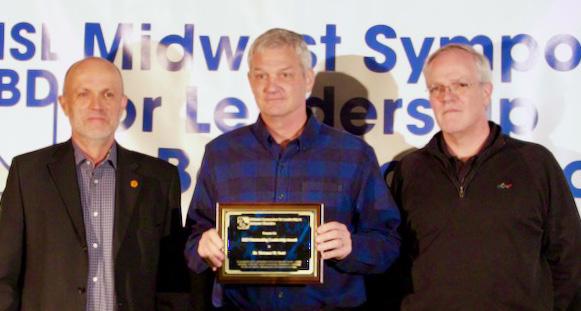
The Outstanding Advocacy Award for outstanding advocacy of students with Emotional or Behavioral Needs. In recognition of her dedication to improving outcomes for students with emotional and behavioral needs by developing meaningful partnerships with educators, families, and community members.
Alexis Walker, Greenville County Schools, Greenville, South Carolina.
Dr. Shanna Hirsch & Alexis Walker
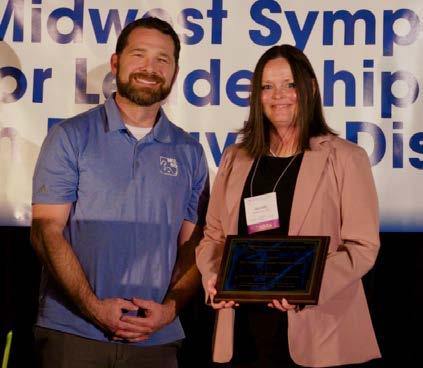
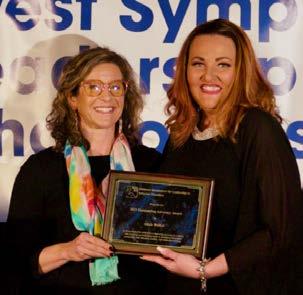
Building Leadership Award for outstanding achievement and excellence as a building or program administrator serving students with behavioral needs. For exemplary leadership to cultivating a culture that promotes the potential in all students, teachers, and staff.
Dr. Tara Kalis, Russell Jones Education Center, Park Hill School District, Kansas City, Missouri
Dr. Tara Kalis with James Hogan (Awards Committee)
Unsung Hero Award. This award recognizes an individual who has contributed significantly to the success of MSLBD but may not have been recognized for these contributions.
Dr. Howard P. Wills, University of Kansas, Juniper Garden Children’s Project, Kansas City, Kansas
Unsung Hero, Howard Wills

Building Bridges: Seeds for Development Award. In recognition of outstanding educational endeavors supporting students with emotional and behavior disorders.
Carrie Fairbairn, Brook Valley South, Educational Service Unity #3, LaVista, Nebraska.
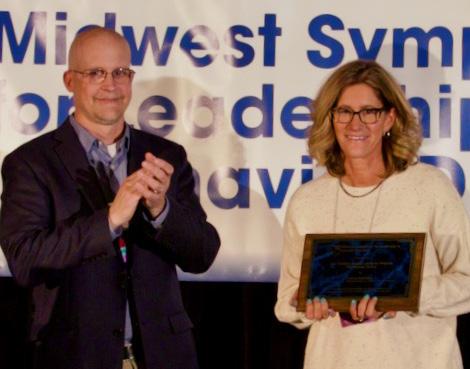
Dr. Howard Wills (Awards Committee) & Carrie Fairbairn
Master Teacher Recognition.
Andrew Morton, Willard Public Schools, Missouri.
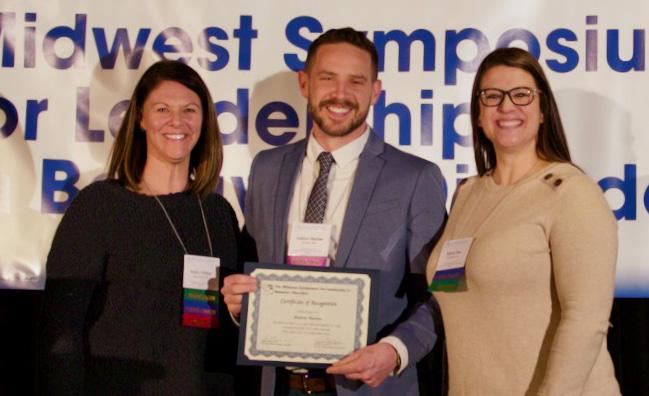
Andrew Morton (center) with Dr. Jessica Nelson & Dr. Felicity Post, Co-chairs, MSLBD Master Teachers
Stipend Recipients. (Photos Unavailable)
Doctoral Stipend: Mr. Alex Carlson, Clemson University, South Carolina
Commitment to Equity Student Award: Ms. Kyndal C. Williams, Iowa State University, Ames, Iowa


https://education.missouristate.edu/clse/
would like to thank the following for their financial support Consider Making a Financial Donation to MSLBD!
To donate go to https://mslbd.org/getinvolved/donate.html. Department of Counseling, Leadership and Special Education "Make a positive impact on the world"
RE THINKING Behavior
2023 Richard L. Simpson Conference on Autism
October 5-6, 2023
Missouri State University
Springfield, MO
Midwest Symposium for for Leadership in Behavior Disorders
February 29-March 2, 2024
Sheraton Crown Center, Kansas City, Missouri

Midwest Symposium for Leadership in Behavior Disorders