
RE THINKING Behavior
Fourth Annual Richard L. Simpson Conference on Autism! October 6 – 7, 2022
Overland Park, KS • BCBA CEUs Available
Sponsored by the Midwest Symposium for Leadership in Behavior Disorders And The Kansas Technical Assistance System Network
Early Bird Rate of $175 through September 16


Sheraton Crown Center, Kansas City, MO
Keynote Session – Shifting from Classroom Management and Behavioral Control to Skill Instruction and Support Workshops
• Evidence-Based Practices for Reading and Writing
• Developing, Assessing, and Improving Program for Students with EBD
• Using FBA to Guide Individualized Interventions in Secondary Schools
• Tools and Techniques for Coaching Educators to Support Classroom Management
• School-Based Mental Health within the Framework of MTSS
• Trauma-Informed ABA
• Addressing Aggressive and Violent Behavior in Schools
• Perceptions and Decisions in Urban School Discipline
• Data-Based Decision making to Improve Math and Reading Performance
REGISTER BY JANUARY 27 FOR DISCOUNTED REGISTRATION Register early for preferred workshops Visit our website: https://mslbd.org/symposium
Reesha M. Adamson
Mary Jo Anderson
Anne Baptiste
Jennifer Bossow
Erika Calderon
Jenah Cason
Scott M. Fluke
Nicolette Grasley-Boy
Katie Graves
Deborah E. Griswold
Mike Hymer
Maria L. Manning
Sharon A. Maroney
John W. McKenna
Kris Melloy
Lindsey Mirelli
Mike Paget
Reece L. Peterson
Lisa A. Robbins
Sandy Shacklady-White
Carl R. Smith
Jim Teagarden
Vanessa Tucker
Graphic
Vivian Strand

Rethinking Behavior, ISSN 2578-5397, a magazine for professionals serving children and youth with behavioral needs, is published three times per year, fall, winter, and spring, Copyright ©2022 by the Midwest Symposium for Leadership in Behavior Disorders, P.O. Box 202, Hickman, NE 68372. 402-7923057. www.mslbd.org. Email: rethinkingbehavior@mslbd.org.
Rethinking Behavior welcomes proposal and manuscript submissions; for information visit www.mslbd.org or email rethinkingbehavior@mslbd.org
Robin
The Door is Open for Connection, Normalcy, and Grace
Last fall the first full school year post-COVID started with high hopes. Collectively, educators hoped that we could get back to the classroom, back to our routines, and back to the business of educating our students. We quickly discovered that not only were our students different, but the field of education was also different. The behavioral challenges presented by students before COVID resumed with vigor in an increasingly strained educational system. A system previously plagued with burn-out, staff shortages, teacher training needs, limited resources, and safety concerns, was now challenged to address secondary trauma, equity, and inclusion. The challenges traditionally faced by Special Education were now part of the daily routine across all education. The challenges of housing, food insecurity, and family stability alongside deficits in social-emotional learning and academic outcomes were new realities for many. On a much grander scale was the reality that school shootings and other acts of violence have taken the lives of too many teachers and students. Just as the 2021-2022 school year came to an end, so did the lives of 18 young souls and two classroom teachers - ripping old and new wounds wide open.
Collectively, we have survived and are surviving a brutal pandemic that killed over a million people in the United States alone and created painful divisions among our own families and communities over vac-
cines, social distancing, and masking. We have borne the weight of the economic and political fallout of COVID on an already fragile system of collective interconnectedness. We are deep in exhaustion, pandemic fatigue, aftermath-denial, and emotional numbing, all the while attempting to deal with the next crisis. Our teaching force runs the risk of disconnecting from others and turning away from education altogether to escape the daily pressures. This past year educators carried a silent, heavy, invisible knapsack filled with questions. Wear masks or don’t wear masks? Teach social-emotional learning skills or academics? Buy a bullet-proof backpack or a box of crayons? Darker questions also crept in. When will the next crisis happen? Will we be asked to move back online? Are my students safe? Am I safe? Will my school be the location of the next school shooting?
Today there is a deep collective exhaustion that is palpable when we walk into buildings and classrooms. There is an unspoken need for connection, normalcy, and grace. Some of our students, teachers, and administrators have managed to pick up the educational ball and run with it. But overall, tempers continue to run high, while patience runs low. Conversations stop. Creative solutions dwindle and the field becomes gripped in fear and despair.
What about our students with emotional and behavior disorders (EBD)? Are the teachers of these
students, who are so much more difficult to manage, able to pick up that educational ball and run? On the best day, these teachers struggle in a constant interplay of teaching behavioral skills while attempting to somehow sell academics to skeptical and often volatile students. The empathy, energy, and ingenuity required to do this job well are almost indescribable. Teachers in the field of EBD are accustomed to significant behavior challenges, but when the entire school system is in disarray - it makes the possible impossible. The impact of all of this has created symptoms of Post-Traumatic Stress Disorder across education, leaving teachers in the field of EBD feeling even more isolated and alone.
On top of all this, educators across the US are leaving the field. This year the National Center for Education Statistics reported that 44% of public schools are currently reporting vacancies, with the most in Special Education. Additionally, a recent National Education Association poll found that 55% of all teachers plan to leave education sooner than they had originally intended. Of concern is that some states are attempting to address this shortage by reducing teaching standards, using contractors to fill positions, and increasing the number of emergency-certified teachers. Particularly in our field, we know that teacher quality is imperative for our students. If we have learned anything from this past year, it is that it takes a strong resilient educator with well-defined teacher training to support our students with EBD.
Teachers need the support of their administrators and strong relationships with other teachers. They need to be engaged in the school culture and feel supported in their unique and often difficult positions. They need the support of their communities both in terms of service delivery for their students and family obligations. Providing that support requires creative incentives such as school-based delivery services that help teachers with nightly meals, car washes, and laundry delivery. Other employment practices, such as conducting retention interviews, shifting to a four-day work week, and increasing teacher pay can also provide needed support.
Despite the fragility caused by current events, most students and teachers manage to go on. Educators,
administrators, and parents have demonstrated unspeakable heroism in unexpected ways. We posit that in the middle of a crisis there is always opportunity for growth. The current strained and fragile educational system requires the need to open the door for repair and change. It’s time to acknowledge our need to embrace change collectively. It’s time that all teachers open lines of communication and extend systems of support beyond the classroom. Most important, it’s critical that we focus on building stronger connections. Challenging student behavior is occurring at high rates in all settings, not just Special Education. Due to this, we need to rethink how we utilize our resources and ensure teacher quality. Special Educators cannot remain siloed in the midst of significant turnover rates. There are opportunities to rely on the strengths of others, learn from one another, and support growth. We have been entrenched in many of the current educational challenges for decades. It’s time we use our voices and best practices beyond the Special Education classroom walls.
While it may seem like we woke up one day to find these challenges waiting to pounce on us all at once - these challenges have been slowly festering, ignored, and pushed aside for too long. Rather than staying silent, emotionally numb, and feeling helpless, now is the time to act by addressing key issues. Nationally, the July 2022 Special Education Legislative Summit sponsored by Council for Exceptional Children advocated for a three-prong approach that includes appropriations, teacher training, and mental health. Earlier, the Interdisciplinary Group on Preventing School and Community Violence published a Call to Action to Prevent Gun Violence in the United States of America (May 2022). These initiatives have one thing in common: connectedness. At the local level, building a sense of connection and community is powerful. It allows us to talk about the challenges in a meaningful way and provides a structure of mutual support. Change takes time, but the decision to make a change starts today!
Maria L. Manning and Vanessa Tucker, Issue Editors

School Violence Call-To-Action
By Katherine A. Graves
It is estimated that about 180,000 students since the 1999 Columbine High School shooting have witnessed a school shooting which has resulted in at least one death (Levine & McKnight, 2020). Following the devastation in Uvalde, Texas where 21 elementary school students died as a result of gun violence, the Interdisciplinary Group on Preventing School and Community Violence published a Call to Action to Prevent Gun Violence in the United States of America (2022). The coalition consisted of researchers who, for decades, have studied school safety and violence prevention. This article summarizes the three-tiered call to action and provides
resources for those who wish to act. As a nation, our priority must be the safety of children. Educators cannot teach and students cannot learn if they are not safe.
The call to action includes eight steps categorized into three levels based on a public health model: universal safety; practices and protective factors for those at-risk for violent and aggressive behaviors; and specific, targeted interventions for persons who demonstrate violent and aggressive behaviors. The resources provided include tools, steps, and recommendations for all involved members.
1.
Eight Steps for Protecting Children and Adults from Gun Violence
Steps
2.
3.
4.
5.
Resources
UNIVERSAL School Safety Practices for all students and staff
Schools must assess and support a positive school climate to help decrease violence and increase safety.
Governments must enforce and require background checks on gun purchases and ban assault weapons and automatic accessories, including high-capacity ammunition clips and items that modify guns to enable them to be used as automatic firearms.
Responding to School Violence: Tips for Administrators, nasponline.org
Guidance for Measuring and Using School Climate Data, nasponline.org
Firearm Purchaser Licensing, publichealth.jhu.edu
AT RISK Practices for those at-risk for violent and aggressive behaviors
Schools and communities must ensure adequate resources (social workers, psychologists, counselors, and psychiatrists) for those at risk of violent and aggressive behaviors. The providers should understand that these behaviors may not be a result of mental illness.
Schools must review and change exclusionary discipline practices. The remediation should include prevention and intervention practices to meet students’ academic, behavior, and social-emotional needs.
A Framework for Safe and Successful Schools, nasponline.org
Supporting and Responding to Students’ Social, Emotional, and Behavioral Needs: Evidence-Based Practices for Educator, pbis.org
Governments must create restrictive gun laws, so youth do not have access to firearms. Example laws would ban large magazines, require extensive background checks for purchase and license of firearms, and require guns to remain in a locked location.
A Framework for Effective School Discipline, nasponline.org
School-Wide Bullying Prevention and Safety, nasponline.org
Wise Use of Coordinated Early Intervening Services (CEIS) to Achieve Equity in School Discipline, pbis.org
Preventing & Responding to Violent Behavior in Schools, pbis.org
Keeping Our Schools Safe: A Plan for Preventing Mass Shootings and Ending All Gun Violence in American Schools, everytownresearch.org
6.
TARGETED Interventions for persons who demonstrate violent and aggressive behaviors
Governments and schools must employ equitable training in crisis intervention. Means of receiving reports, developing a plan, and implementing interventions should be the responsibility of mental health and law enforcement teams. These teams will work together to support individuals in an equitable and consistent way.
7.
8.
Governments and schools must have the legal ability to share information regarding instances where violent threats have occurred.
Governments must create Gun Violence Protection Orders. Gun Violence Protection orders allow for law enforcement to remove firearms from the residences of individuals who demonstrate that violence and or harm toward others or self appears likely.
It is with great urgency that governments, schools, and community partners take immediate action toward the implementation of these eight steps. We, as a collective, must ensure the safety of our youth in schools.
References
Levine, P. B., & McKnight, R. (2020). Exposure to a School Shooting and Subsequent Well-Being. National Bureau of Economic Research. https://www.nber.org/system/files/ working_papers/w28307/w28307.pdf
The Interdisciplinary Group on Preventing School and Community Violence (May 27, 2022). Call to Action to Prevent Gun Violence in the United States of America. https://education.virginia.edu/prevent-gun-violence
Threat Assessment at School, nasponline.org
Supporting Child and Student Social, Emotional, Behavioral, and Mental Health Needs, pbis.org
Shared Framework for Reducing Youth Violence and Promoting Well Being, ojjdp.gov
Installing an Interconnected Systems Framework at the District/Community Level: Recommendations and Strategies for Coaches and District Leaders, pbis.org
Speak for Safety – How to Get a Gun Violence Restraining Order for Teachers and School Officials, speakforsafety.org
California’s Gun Violence Restraining Order for School Safety, speakforsafety.org
Katherine A. Graves, University of Missouri –Columbia, kgd45@mail.missouri.edu
More Articles on School Safety
• Putting the Prevention in Violence Prevention
• Don’t Wait Until It Happens to You
• Leading in the Wake of Violence
• Six Things You Can Do to Prevent School Shootings
• Schools are the Safest Place for Kids
• 5 Facts about Mass Shootings in K-12 Schools
INNOVATORS
Frank M. Hewett
The Engineered Classroom
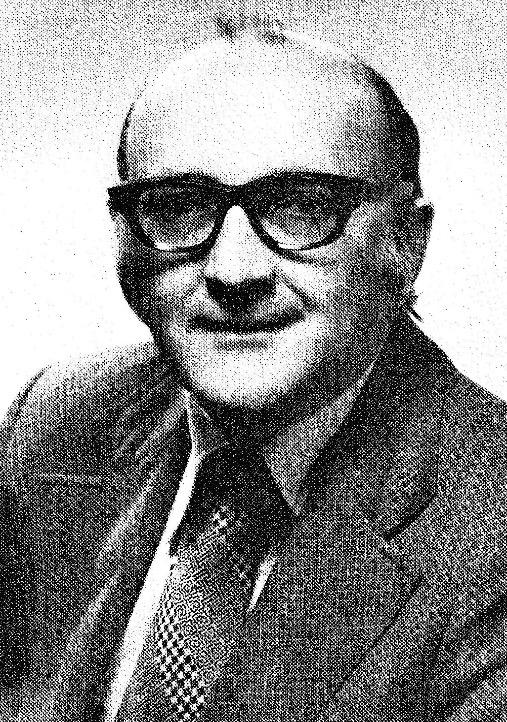
Frank M. Hewett, Ph. D, was born in Los Angeles in 1927 and passed away on December 1, 1994. He received his bachelor and doctoral degrees in clinical psychology from the University of California Los Angeles (UCLA). During his undergraduate years, he worked in church youth programs, was active in campus government, and edited the UCLA humor magazine. Before entering graduate school, he also served with the U.S. Army Band in Italy. During his graduate studies, he worked at the UCLA Fernald School with children with learning disabilities and coauthored one of the first high-interest, low-ability reading series.
Hewett was the first clinical psychology intern ever to train at the UCLA Neuropsychiatric Institute and, shortly after his graduation, he was asked to begin its first inpatient school in 1961. As he described “school,” it consisted of nursing staff bringing eight severely disturbed children down the hallway and locking them in a classroom with him for two hours. From these humble beginnings, Hewett did pioneer work teaching children with autism and developing one of the first errorless reading programs for children with emotional and learning disorders.
Hewett became chair of the Special Education Department in the UCLA Graduate School of Education in 1967 and was a professor emeritus there at the time of his death. He was interim director of the UCLA Fernald School in 1986-87.
During his career, Hewett developed the first public-school, behavior modification classroom in the country for children with emotional disorders in
Frank M. Hewett developed one of the first model behavior modification classroom programs for children with emotional disorders known as the “engineered classroom.”
Tulare County, California. In collaboration with the Santa Monica public schools, he subsequently received one of the first federal grants to conduct a controlled study of this type of classroom. This was known as the “engineered classroom” since it was
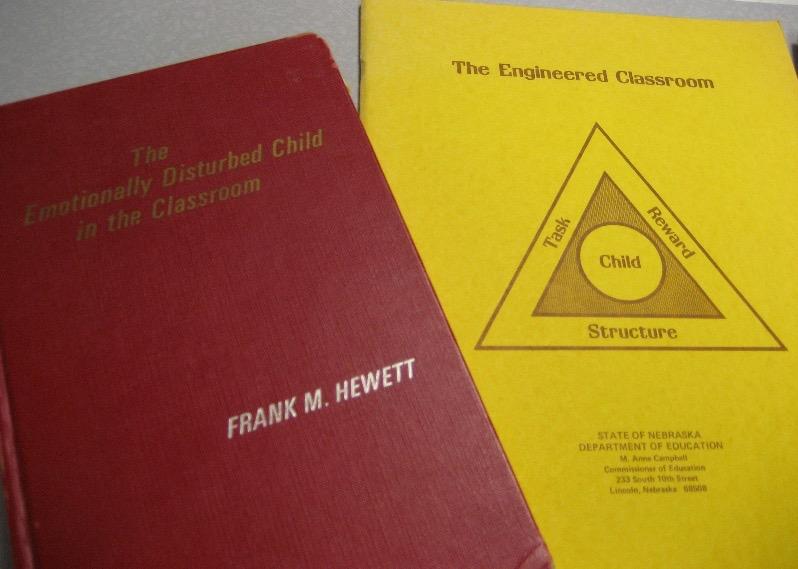
succession of curricula and related activities. To this day, some teachers continue to refer to their classrooms as a “Hewett classroom.”
In the 1970s he received a grant to expand this program into a complete array of classrooms from special to mainstreamed classes for children in all categories of special education. The “Madison School Plan,” as this non-categorical program is known, has four levels from an engineered classroom to a small class with less emphasis on token economy, to a larger class (about half the size of a regular class) with systematic hourly feedback, and then to full inclusion in the regular class with consultation from the special education teacher. Later is his career, while at Camarillo State Hospital, Hewett also developed one of the first family ecology treatment programs on the west Coast, using the Re-Ed model. Based partly on these projects, he authored a classic textbook in 1968 on the education of children with emotional disorders, translated into three languages, and coauthored the first non-categorical introducto-
ry textbook in special education in 1974. Subsequent editions of both texts continued to appear into the 1980s.
Hewett received several awards toward the end of his career, including a life achievement award from the American Re-Education Association and an outstanding career leadership award from the Midwest Symposium for Leadership in Behavioral Disorders in 1990. Over the course of his university years, Hewett remained an inspired teacher with a ready sense of humor and continued to enjoy teaching the undergraduate introductory special education course until his retirement. He was a beloved mentor to countless graduate students and young faculty and will be remembered as a warmly supportive friend and colleague to all of us who had the honor to know him.
Steve Forness, Distinguished Professor Emeritus, University of California Los Angeles
INNOVATORS
Nicholas J. Long
The Conflict Cycle and Life Space Crisis Intervention
For more than 60 years, Dr. Nicholas J. (Nick) Long was a leader in psycho-educational treatment of children with emotional/behavioral disorders. He was a prolific practitioner, innovator, writer, journal editor (The Pointer), trainer, and developer of psychoeducational interventions, programs, and materials.
In the early 1950s, after completing undergraduate studies at Wayne State University, he spent the summer as a counselor at the Fresh Air Camp, a program for delinquent youth, which was a “life changing experience.” There, he encountered William Morse, Fritz Redl, and David Wineman, all pioneers in psycho-educational interventions, such as therapeutic milieu and life space intervention.
At the end of that challenging summer, Morse offered Long a graduate assistantship in a new special education program at the University of Michigan. After finishing a doctorate, he became principal of the new Children’s Psychiatric Institute at Michigan, the first independent child psychiatric hospital in the country. Two years later, Fritz Redl, by then at the National Institute of Mental Health, asked him to be a house-father for several highly aggressive boys in an experimental residential treatment program. After two years there, Long accepted a faculty position at the University of Indiana, before eventually returning to the D.C. as executive director of the Hillcrest Children’s Psychiatric Center. His early and on-going experiences led to Long’s commitment to psycho-educational approaches, especially his development of the Conflict Cycle and Life Space Intervention.
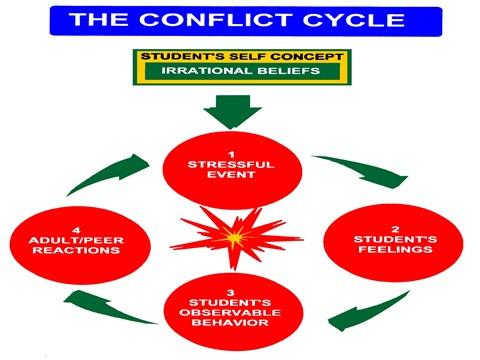
Nick Long was a prolific writer and developer of psycho-educational interventions such as the Life Space Interview. He is best known for designing the Student Conflict Cycle model to explain how children’s antisocial behavior develops and escalates, and how adults may be drawn into that conflict cycle.
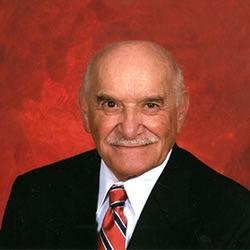
For many years, Long was on the faculty of American University. While there, he founded the Rose School, an inter-agency program for seriously emotionally disturbed students excluded from the D.C. public schools. Throughout his career, he remained directly involved with students, modeling interventions and coaching graduate students. In addition, he was a frequent consultant, presenter at professional conferences, co-author of several books, numerous articles, and training materials.
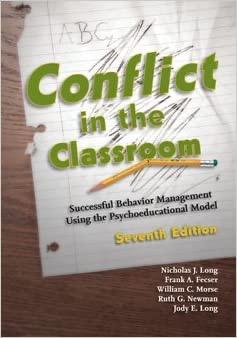
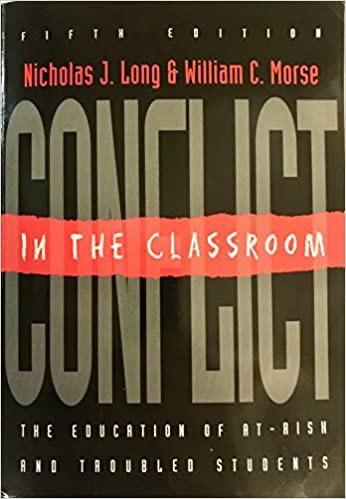
Together with William Morse and Ruth Newman, he co-authored Conflict in the Classroom (1965), a unique collection of perspectives of emotional disturbance (some from literature), discussions of the helping process, approaches for understanding students and families, promot ing positive individual and group behavior, intervening for common behavior problems, dealing with crisis situations, and designing therapeutic programs. It is considered a classic text in the field. The book has been revised several times and is now in its 7th edition.
Long is well-known for his description of the Student Conflict Cycle that describes the interplay of children’s disturbed emotions and behavior and their influence on the feelings and behavior of teachers. The conflict cycle explains student negative self-concept, stress, feelings, and behavior can engage educators in negative and destructive interactions. It stresses the importance of understanding that dynamic and adopting therapeutic interactions that interrupt the cycle.
Speaking about therapeutic approaches, Long observed, “We believe every student wants to tell you his story. Now we have a choice. We can focus on the behavior…or we can say, ‘tell me what happened this morning. Tell me your story. I am listening.’” Together with Frank Fecser, he founded the Life Space Crisis Intervention Institute to offer training for
educators, mental health providers, school districts and organizations. He developed and refined Life Space Interview techniques to interfere with and treat children’s antisocial behavior and has provided training to thousands of educators, therapists, and other childcare providers through the Institute.
Dr. Long passed away February 26,2022. His mission to help troubled and troubling children will go on through the Life Space Crisis Intervention Institute which he founded. Videos of Long’s 1991 MSLBD keynote presentation, “Eight concepts for empowering an endangered species: BD advocates” and his Janus Oral History Project interview in 2007 are available on the MSLBD website [Add link here]. In 1996, Long received MSLBD’s Leadership Award in recognition of significant contributions to the field.
Robert Zabel, Emeritus, Kansas State University and Reece Peterson, Emeritus, University of NebraskaLincoln.
1,500 Decisions a Day (At Least!)
How Teachers Cope With a Dizzying Array of Questions
By Alyson Klein
How many decisions do teachers make a day? When you Google that question, the first answer that pops up is “1,500.”
That number, which equates to about three decisions per minute in an 8-hour work day, is based on research that was conducted in the 1980s and 1990s, but is still widely cited in education circles today.
But tack on all the new technologies now used by teachers, the decisions they are increasingly asked to make about the social-emotional learning of their students, and all the COVID-related decisions they have had to make during the pandemic, and to some educational experts, that 1,500 seems like it should be much higher in today’s world.
“I mean, yeah, that 1,500 [decisions a day] sounds
low to me, really,” said Alicia Tate, the director of leadership services for TregoED, a nonprofit that consults with district leaders, principals, and teachers about how to make better decisions.
For Susan Wetrich, a prekindergarten teacher at Hoover Elementary School in New Berlin, Wis., the oft-reported fact that those decision-making numbers rival those of air traffic controllers rings true.
“Decision making is absolutely nonstop throughout the day,” she said. She finds herself gaming out the day’s potential trouble spots in the shower or on the drive to school. “My brain is always thinking: Who will work best together for certain tasks? Who do I need to keep apart? What’s my Plan A, what’s my Plan B, what’s my plan C?”
Wetrich, who started in the classroom, then worked as a Head Start administrator and college instructor before returning to teaching, said she’s got more decisions on her plate now than in any other role or any other time in her career.
That doesn’t surprise Tate.
“You’ve got every individual student in your classroom that you are having to make on-the-spot, just-in-time decisions for as you’re navigating your day logistically and instructionally,” said Tate, a former district special-education administrator. “You’re making decisions about what they do in their unstructured time, how they’re lining up, how they’re going to transfer from one thing to another.”
What’s more, when dealing with students from a variety of different racial, cultural, and economic backgrounds, teachers have to think carefully about whether their own unconscious biases are impacting some of the split-second decisions they make on things like discipline, grades, or even who to call on to answer a question during a classroom discussion.
“We make decisions as educators in the same way we make decisions as people at large,” said Paula White, the executive director of the New York City chapter of Educators for Excellence, a nonprofit that seeks to lift up educators’ voices in policy-
making. That’s based on “our own schema and our own biases we all have as humans.”
But those biases can lead to big decision-making problems, everything from a teacher who is more likely to call on girls than boys to participate in class discussions (or vice versa) to one who is prone to disciplining Black students more harshly than their white peers.
Some teachers also worry that their own decision making gets a little foggier or less disciplined later in the school day, which could lead to differences in the quality of instruction students receive in the afternoon versus the morning. Neema Avashia, who teaches ethnic studies in the Boston Public Schools, noted that studies have shown that parole boards and jurors are likely to make poorer decisions later in the day, when they are battling fatigue.
“One hundred percent, we struggle with decision fatigue,” she said. “I’m sure there’s an erosion in [teachers’] ability to make sound decisions and grounded decisions the further you get into the day, because you’re just so bombarded. And a lot of that also has to do with the scale of the work that we ask teachers to do.”
So how do teachers deal with the difficulties of decision making, especially during fast-changing
times that include greater use of technology in education, rising concerns about social justice, and the day-to-day challenges of teaching during a pandemic? Education Week asked three veteran educators to talk about their decision-making approaches. Here is their advice:
Give the students a decision-making role and consider their feedback carefully
Knowing how overwhelming decision making can be – and her own preference for a student-centered classroom – Susan Wetrich tries to shift as much decision making as possible to her prekindergarten and kindergarten students. For instance, two years ago, she and some students noticed that the way the class kicked off the day – a “soft start” of quiet activities, like reading books or putting together puzzles – wasn’t working because some students needed more teacher guidance.
So Wetrich assigned two students to suggest an alternative. They decided they wanted to be able to dive right into playtime first thing in the morning. Wetrich was skeptical, but she had them present the idea to their classmates. The kids agreed to give it a try.
Wetrich let the new schedule stand for a couple weeks. Then, she got the class together to discuss how things were going.
“The students themselves decided that it wasn’t working very well, because they were just getting too excited,” she said. “It was hard for them to slow down again and come back to the rug and do our morning meeting.”
With the kids’ approval, the class switched back to puzzles and books. This time, it worked much better in part because the students had “ownership” of the arrangement, Wetrich said, and they had learned that it was better than the other alternative.
Making learning relevant based on student concerns and feedback
Nearly all of Andrew Zimmerman’s decisions – big and small – are guided by his overall philosophy of trying to do whatever he thinks is best for his students. Zimmerman, who works at Claymont High School in Uhrichsville, Ohio, spent years teaching a subject he loved – history – but was constantly fielding questions from students about how they would use the course content beyond high school.
After reading an article that emphasized the need for teaching entrepreneurial skills to K-12 students, “a lightbulb went off,” Zimmerman said. He decided to start the school’s first business education program, modeled on an exemplary program in a nearby district. He enlisted help from a colleague and got support from the administration.
In the program, students can now learn about marketing, accounting, stocks, even car loans and mortgage applications. There are plans to expand the program to lower grades. Best of all: The real-world implications are obvious to the kids.
“If I’m not constantly asking them, ‘What do you need, and how can I get you there and where do you want to be, and what is the most beneficial thing that I can leave you with before you leave this school?’, then I’m not doing anybody any justice here. I’m not doing my job,” Zimmerman said. “That’s where a lot of my decision making comes from. Am I doing the right thing for these kids?”
Deciding what approaches to keep, and what to discard, from pandemic-era learning
Coming back to the physical classroom after nearly a year of virtual learning has made Candace Fikis, a 25-year-veteran educator, feel almost like a brand-new teacher again.
She’s not used to that feeling because, typically, teaching a class over and over can help educators predict what issues may arise and how best to handle them. “The more times you teach something, the more you can anticipate where things could go or questions that kids could ask or [game out] option A, B, or C,” said Fikis, who teaches social studies at West Chicago Community High School.
But all that changed in the past two years. Even for a veteran educator like Fikis, decision making became very difficult when her school was doing full-time remote or hybrid instruction.
“I think that’s why last year, a lot of teachers burned out,” Fikis said. “It was especially [hard] for older teachers who’ve been doing this for a while. We know we have a standard of what good teaching is. And we couldn’t anticipate where things were going to go. We [had to] make so many more new decisions that we weren’t trained for.”
Even now that she’s back to face-to-face teaching, Fikis feels like she’s charting new decision-making territory. She wants to keep the best of what worked during the pandemic, but that can entail revamping lessons she’s used for years. Is that worth the time? What impact will it have on student learning?
For instance, Fikis typically has her civics students stage their own Congress, complete with committee hearings, legislation, and lobbying. In the past, she had kids create posters or handouts to explain their bills. But when school went virtual, she had students post those materials online. That actually worked better.
“We don’t want to go back, we want to go forward with this new knowledge, but that requires a whole lot of decision making,” Fikis said.
Teachers are asking themselves questions like: “What do we want to grade now that we used to not grade before? Is this part even important, like we thought it was in 2019?”
Alyson Klein, Assistant editor for Education Week.
Reprinted with permission from Education Week. Originally published on December 6, 2021. Web version available at edweek.org.
What Educators Need to Know: Educating Students Involved in Foster Care
By Jacqueline Huscroft-D’Angelo and Alex Trout
Tony (pseudonym) is a 16-year-old junior in high school who has lived in three states within the last two years and has attended 5 high schools in that timeframe. Today, he goes through his normal morning routine and stands at the door waiting for his ride. He arrives at school, tardy, yet again because he is the last to be picked up and his school is on the other side of town. Tony checks into the office before heading to first period and is informed that he will have detention after school due to his ongoing tardiness. He sighs, and heads towards first period frustrated at a situation that is completely out of his control. Tony is one of the approximately 430,000 children who is involved in child welfare through the nation’s foster care system.
Schools serve as a primary protective factor for children who are involved in the child welfare system. At some point, most education professionals will have a student who has been systems-involved; yet there are few mechanisms in place to indicate if a child has experienced placement. This leaves education professionals unaware of students that are or have been involved in child welfare and the impact this has on individual social, emotional, or educational needs. This was the case for Tony, who had recently moved to a new state and was awaiting foster family placement in an emergency shelter nearly 20 miles away from his school. There had been no communication between the school and agency to convey that he was in foster care and the shelter was the last stop every morning on the transportation pickup route, resulting in school tardiness. Tony, who was
already disconnected from the school environment and did not have a trusted adult in the building refrained from sharing any context to his background or tardiness.
Many school districts across the nation embed strategies and supports to address the academic needs of students at-risk. However, for systems-involved learners, it is crucial to understand existing barriers which prevent these students from success. School systems, including education professionals, must be equipped with knowledge and resources that guide them to meet the unique needs of this population. For example, it is imperative that schools recognize that by the time youths in foster care reach maturity or “age out”, they have been disrupted by school changes on average three times, but for some as many as seven times (Pecora, 2012; USDHHS, 2019). With each change, it is estimated that they will fall three to six months further behind their peers in academic achievement. They are also presented with barriers that many other student populations do not face such as limited to no caregiver engagement in schools,
limited involvement in extra-curricular activities, and difficulty establishing relationships integral to school connectedness and academic success. Understanding key characteristics of this population can help educational professionals promote school success for this vulnerable population. In this article, we provide education professionals with three primary areas of knowledge to better prepare schools to support the educational needs of students involved in foster care. First, we present a brief overview of foster care placements and its implications on student academic, social, emotional, and behavioral success. Second, we provide input from key stakeholders regarding the educational needs of this population. Finally, we offer strategies that educators can apply to help this population succeed in the school environment.
The Foster Care System
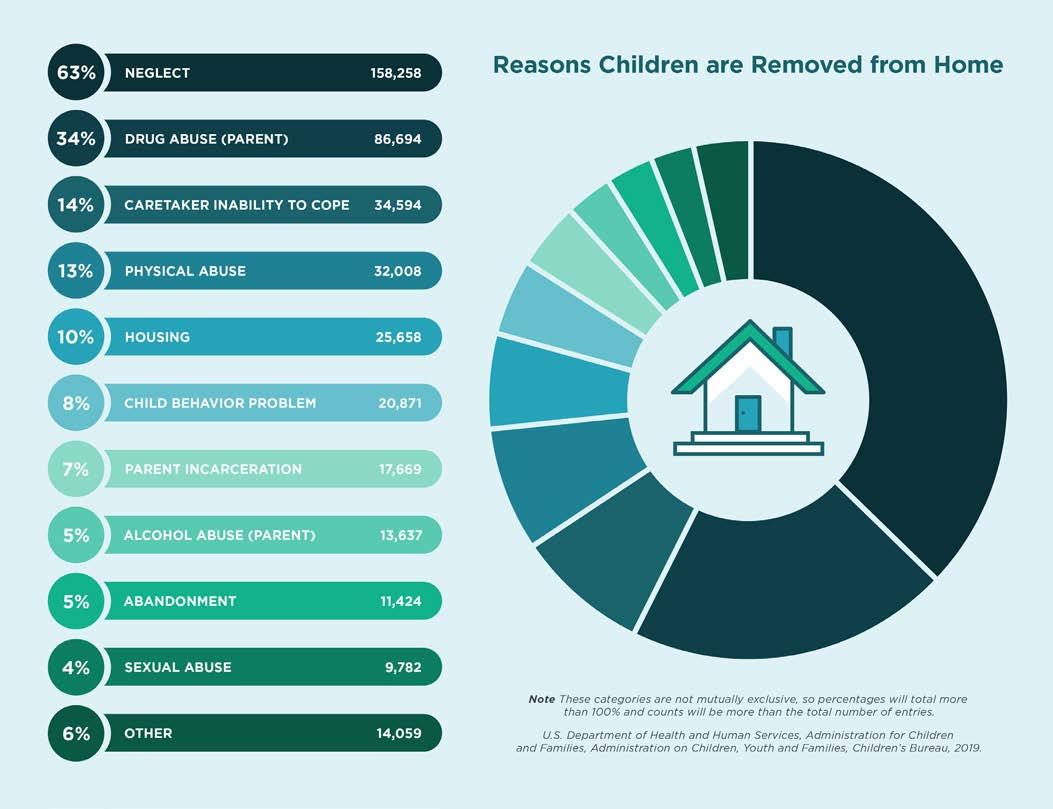
In most cases, children are removed from their homes through no fault of their own, but due to ongoing abuse, neglect, or maltreatment. Many have been exposed to chaotic, unstable, and highrisk environments, and are placed into unfamiliar
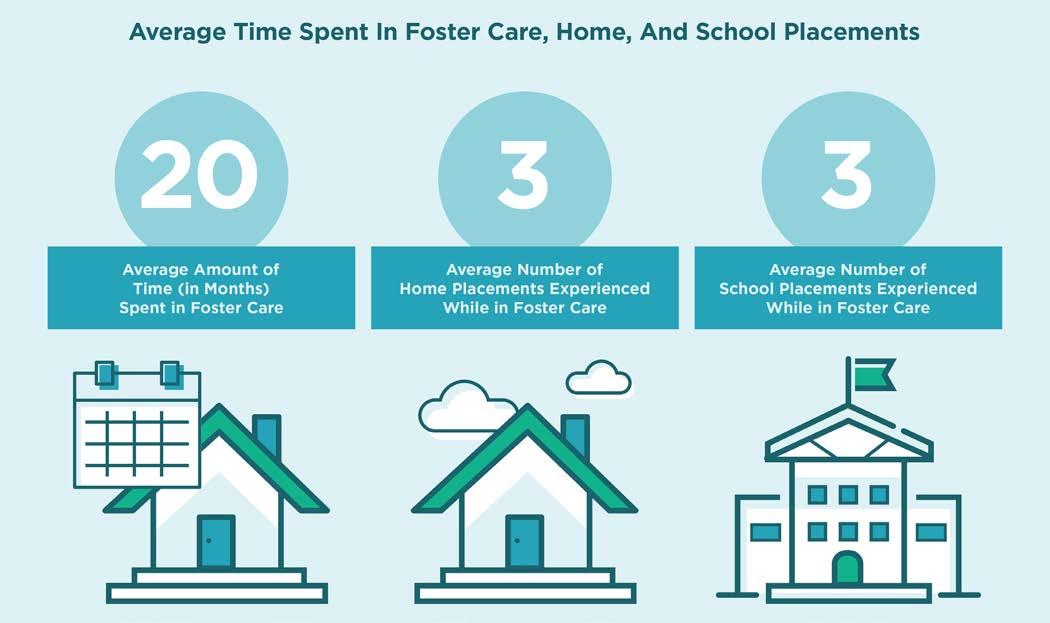
home environments and often new school placements. On average children remain in foster care for 20 months and most experience more than one placement. Although foster care is intended to provide a temporary, safe environment free from adverse caregiving conditions, for many, these conditions coupled with limited supports, leave children at high-risk for maladaptive social behaviors and poor educational outcomes.
This risk continues during the transition from foster care to permanency placement (e.g., adoption, reunification, kinship, guardianship) for which nearly 90% of students will go following involvement with child welfare. It is important to understand that removal from home and permanency planning are unique to each individual child, but any transition involves disruptions to relationships, a sense of insecurity, and variability with recommended supports and services. This, in turn, contributes to increased vulnerability impacting many areas of the child’s life.
Academic Characteristics
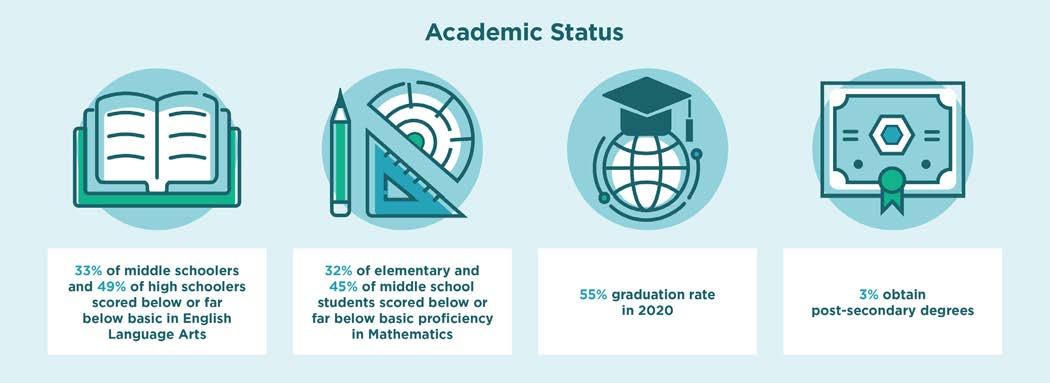
Students involved in foster care walk through the school doors every day having faced numerous challenges which hinder attaining academic success. For example, when compared to other student populations (i.e., living in poverty, receiving special education services or extra supports [504s], and those in the general population), students in foster care perform lower on standardized tests,
report significantly lower grade point averages (GPAs), have higher rates of absenteeism and grade retention, experience more school placements, are significantly more likely to be placed in the most restrictive educational settings, and are twice as likely to drop out of school. Many require multiple years of ongoing intensive academic intervention due to large gaps in academic achievement and proficiency. Although many are eligible for formal educational supports such as special education services under the Individuals with Disability Education Act (32-73%) or Section 504 of the Rehabilitation Act, services get disrupted with placement changes as student files are often lost, not transferred, or incomplete. This leaves schools with limited background information on the student, and in many cases, forces them to start from the beginning in identifying academic needs and appropriately aligned supports.
Social/Emotional/Behavioral Characteristics
The experience of removal from the home environment and multiple home/school placement changes contributes to increased trauma, anxiety, and stress. This results in school isolation, poor relationships with peers and teachers, increased negative behaviors, and limited academic engagement. Stress can also carry over and present as being overwhelmed, disorganized, off-task, and detached into the school setting. New settings, situations, or activities may result in social withdraw-
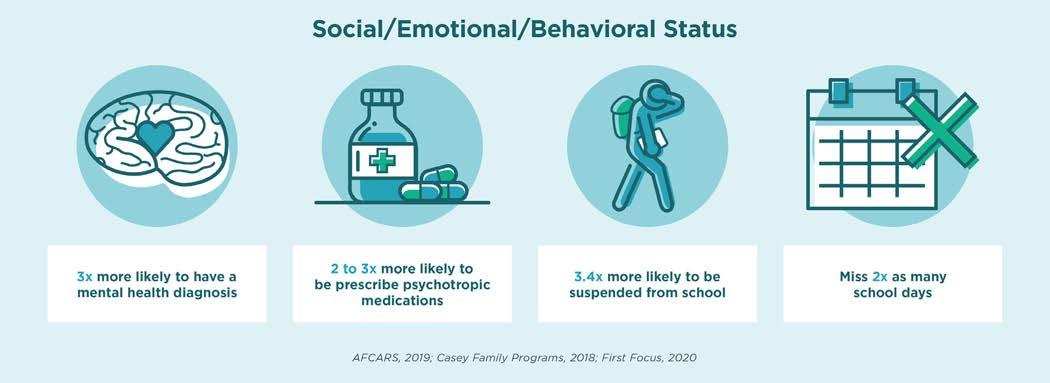
al, or in contrast, may manifest in externalizing behaviors. As a result, students involved in foster care are more likely to be diagnosed with a mental health disorder and prescribed psychotropic medications and reveal higher rates of absences and suspensions related to behavior and mental health. As such, it is imperative that educators recognize that the trauma from removal and instability may present differently but building trust will help connect the child to the school and promote a necessary sense of school community and engagement.
Perspectives on Educational Needs
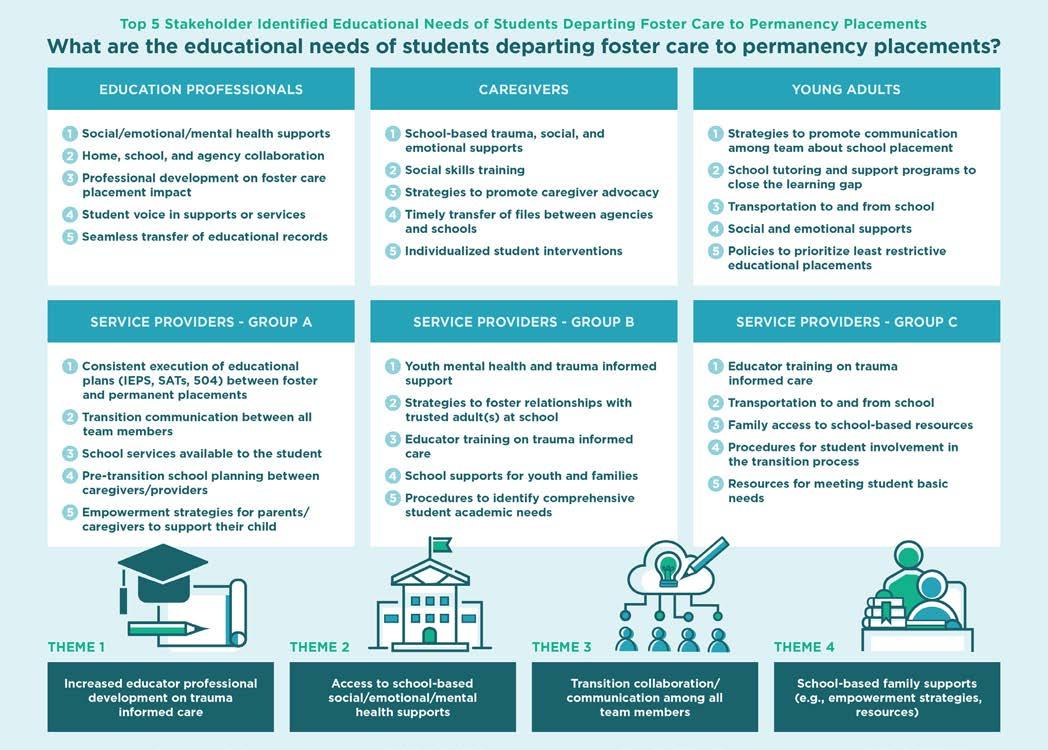
Although educators are on the front lines for promoting student educational success, their voice is too often overlooked. To better understand the front-line perspective, we conducted a series of focus groups with educators (e.g., general and special education teachers, counselors, school psychologists, social workers), caregivers, and young adults who have experienced involvement with foster care and the transition to permanency. Although each group revealed important needs identified through their unique lens, findings across groups echo the importance of these overarching themes: Ensuring that:
(1) Educators are provided with the training to address the unique trauma related needs of systems involved students.
(2) Students are provided with access to school-based social, emotional, and mental health supports.
(3) Communication and collaboration is facilitated between providers and educators to promote student outcomes.
(4) Families are informed of and offered school-based supports to better support their child’s education.
Addressing the Educational Needs
In addition to the educator, caregiver, and student recommendations noted above, the U.S. Department of Education (USDOE, 2016) highlighted several areas that should be addressed to best support students in foster care. Recommendations include engaging primary stakeholders, collaborating between child welfare agencies and schools, seamless transfer of records, and implementing evidence-based educational and social-emotional supports.
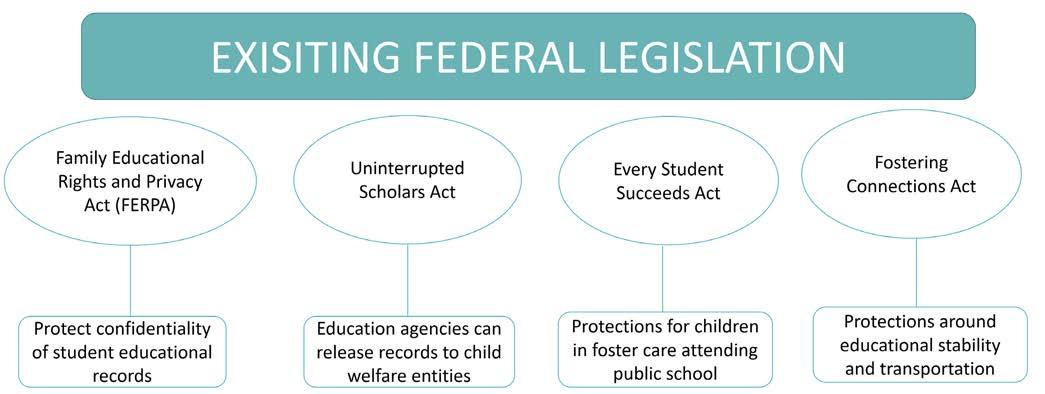
Understanding federal protections
There are several portions of federal legislation that are in place to support students involved in child welfare within educational settings. Being aware of these policies and establishing a basic understanding can help provide schools with steps to ensure that the educational needs of this student population are being addressed. Each policy addresses a unique area covering
important aspects of access to and support of the child’s education. This includes enrollment in school, access to and release of educational records, school stability, transportation, and reporting of student educational/assessment data specific to this population. The additional recommendations we provide are linked directly to policy and guidance from federal legislation, and the USDOE. Taking time to briefly review these, will help you understand your role in ensuring these policies are met.
Collaboration among key team members
Collaboration is strongly encouraged by the USDOE (2016), expected in existing legislation (ESSA, 2015), and recommended within best practice literature (Annie E. Casey, 2014). It is imperative for the best interest of the child, that all key team members work together to understand the student’s educational needs. For schools, this is
something that could be embedded within systems-support frameworks to include identification of when students are systems involved. This may also be an established process outside of a formalized support system to communicate to key school team members when they have a student who is systems involved. Too often schools are unaware of a student’s status within child welfare which does not adequately prepare the school, family, or agency to best support the student in educational settings. Developing relationships with child welfare agencies or having a point of contact within each respective team entity (e.g., school, agency, service provider, family) to promote ongoing and effective communication helps to promote school stability and positive educational outcomes. Collaboration among these key team members can allow for adequate planning and preparation for systems involved students including timely school enrollment, school tours, developing course
schedules, explanations of school policies and procedures, introductions to both teachers and peers, identification of interest in school clubs or sports, and academic history.
File reviews and educational history
Despite the federal protections which exist, there continues to be challenges with ensuring a seamless transfer of educational files and historical records. The legislation promotes access to and communication of individual student records. Identifying an individual within the school setting who is responsible for managing educational records and ensuing that a “Release of Information or Records” (ROI/ROR) is filled out for every prior school placement will assist with comprehensive records gathering. Similarly, ensuring there are ROI/ROR forms completed with the supporting child welfare agency in the event they have access to any educational records. Once documents are received, a thorough analysis of records to examine prior involvement in any specialized school programs (e.g., special education, response to intervention), access to school-based supports (e.g., 504 plans, counseling, tutoring), and for secondary students conducting a review of credits earned should occur. Too often, this information is lost between placements and students end up further behind and in many cases starting over. Prioritizing the gathering of comprehensive educational
records and conducting thorough reviews can help establish a strong foundation for starting within the school and assist in identifying an efficient plan to support the student in the educational environment.
Professional Development
One way to improve overall knowledge on students who are involved in child welfare is to engage in professional development or training opportunities. This could come in the form of formalized trainings offered through the district, local agencies, or attending conference presentations. Finding ways to incorporate information about systems involved students into existing trainings is one way to accomplish this, without adding new trainings or requiring a financial investment from the school district. Education professionals already experience numerous demands and have many responsibilities; therefore, it is not feasible to assume they can become experts in understanding the educational needs of this specific population. However, it is reasonable to become aware of the child welfare system broadly, risks associated with being in care, impacts it has on educational performance, and benefits of involvement in extra-curricular activities. For example, these topics can be integrated into existing trainings on recognizing signs of abuse and neglect, trauma training, and social, emotional, or behavioral related content.
This could be done by dedicating a small portion of the training specific to this population as well as integrating relevant examples.
It is also beneficial to access the expertise of current school employees who may be available (e.g., social workers, counselors, psychologists) and have some foundational knowledge of risks and/or characteristics. Incorporating these professionals into existing trainings would also provide a mechanism to deliver information on this population of students. This could also occur through informal conversations among education professionals if a student has been identified as being systems involved. The professional could provide some background context about the system, risks, and educational status. If you have a student who you know is systems involved, find a time to meet with an expert in your building to develop your own knowledge base.
Implementing individualized supports
As mentioned above, in many cases students who have been involved in the child welfare system are behind academically and require ongoing, intensive intervention to address educational gaps. After conducting a thorough records review process, it is important to align educational services with the individualized needs of the student. If a thorough records review has not been completed, you can gather anecdotal information from the student by having them complete some assignments or informal assessments to determine educational functioning and learning style. This will provide you with some initial information to determine the student’s instructional level and identify any potential supports that would be aligned and implemented to address the student’s needs. Should you notice significant academic difficulty, contact the support team within the building to identify appropriate steps to ensuring the student has access to individualized support. Keep in mind, these students often need access to ongoing, intensive academic and in some cases, behavioral supports. If the records have not been thoroughly reviewed,
We know that when these students are supported and connected to school they experience better school attendance, remain in school, and attain greater academic success.
you will want to gather your own understanding of the student’s educational history to identify any prior individualized or intensive instruction. This can be related to academics or behavior, but likely in many cases both. It is also important to have high expectations for these students and visualize them being successful in your classroom. Conveying these expectations to students is very important as it can promote relationship development and a sense of school connectedness.
Despite these continued challenges for students who are systems involved, facilitators of success can prevent negative long-term consequences. Schools provide particularly strong protective factors that promote resilience when students are exposed to adverse events. We know that when these students are supported and connected to school, they experience better school attendance, remain in school, and attain greater academic success (Centers for Disease Control [CDC], 2016). Therefore, to begin to change the trajectory of outcomes for this student population, it is important that educational settings begin to understand the risks and subsequent needs for individuals who have been systems involved. Integrating feasible practices that we have mentioned can promote resilience and establish connections to school which are imperative to the long-term success of these individuals. The reality is these students are in your classroom and need you now more than ever!
For Additional Information on Supporting Systems Involved Students go to:




Child Welfare Information Gateway
Mission: Promotion of safety, permanency, and well-being for children, youth, and families. Connects child welfare, adoption, and other related professions. Provides public with information, resources, and tools about child welfare, abuse, neglect, out-ofhome care, adoption, etc. Phone: 1-800-394-3366
Website: https://www.childwelfare.gov/
Child Welfare League of America
Mission: “CWLA leads and engages its network of public and private agencies and partners to advance policies, best practices and collaborative strategies that result in better outcomes for children, youth and families that are vulnerable.” Focusing on children/youth who have experienced abuse, neglect, family disruption, etc. that has jeopardized safety, permanence, or well-being, and the families, caregivers, and communities who support these children/youth. Phone: 202-688-4200
Website: https://www.cwla.org/about-us/
National Association of School Psychologists
Mission: Working to advance effective practices to help improve student learning, behavior, and mental health. World’s largest organization of school psychologists. Phone: 301-657-0270
Website: https://www.nasponline.org/
Safe Schools, Healthy Students
Mission: Connecting resources and technical assistance with states, tribes, territories, and local community resources to promote overall well-being and positive outcomes for children, youth and families via the right resources and supports no matter the ZIP code. Phone: 1-866-577-5787
Website: https://healthysafechildren.org/grantee/safe-schoolshealthy-students
US Department of Education
Mission: Fostering educational success and equal access helps the promotion of student achievement and prepare them for global competitiveness. Works with policies for federal financial aid for educational purposes, distribution of, and monitoring of the funds. Collects data and conducts research on America’s schools. Highlights national attention to educational issues. Prohibits discrimination to ensure equal access. Phone: 1-800-872-5327
Website: https://www.ed.gov/
References
Annie E. Casey Foundation. (2014). What is foster care? Retrieved from http://www.aecf.org/blog/what-is-foster-care/
Center for Disease Control. (2016). Adolescent and school health: School connectedness. Retrieved from https:// www.cdc.gov/healthyyouth/protective/ school_connectedness.htm
Every Student Succeeds Act, 20 U.S.C. § 6301 (2015). https://www.congress.gov/ bill/114th-congress/senate-bill/1177
Pecora, P. J. (2012). Maximizing educational achievement of youth in foster care and alumni: Factors associated with success. Children and Youth Services Review, 34, 1121-1129.
U.S. Department of Education. (2016). Students in foster care. Retrieved from https://www2.ed.gov/about/inits/ed/ foster-care/index.html
Acknowledgements
This research is supported by a grant from the Department of Education (U411C190009). However, this research does not necessarily represent the policy
of the Department of Education, and you should not assume endorsement by the Federal Government. This work was also supported in part by was supported in part by the Institute of Education Sciences, U.S. Department of Education, through grant (R324B16033) to the University of Nebraska-Lincoln. The opinions expressed are those of the authors and do not represent views of the Institute or the U.S. Department of Education.
Jacqueline Huscroft-D’Angelo, Associate Professor, jndangelo@unl.edu, and Alex Trout, Professor, University of Nebraska-Lincoln.
By Mary Poulin Carlton
Photo
Anew area of research suggests that schools should have a systematic and coordinated approach in place to gather and process information on threats, respond appropriately, and document the response.
A warning that someone is planning a school shooting can save lives if it is received and acted upon in a timely manner. Research has shown that individuals who plan to conduct a school attack typically share that information with someone else. These are often peers, such as friends or other students at school.[1] Schools that use planned, systematic techniques for gathering information on threats may be well-positioned to receive tips on planned attacks and respond appropriately.
This notion that a warning can save lives is arguably the central premise for developing school safety tip lines and likely one of the key drivers behind a surge in new tip lines within the past few years. By the end of the 20182019 school year, about half (51%) of public middle and high schools in the United States had a tip line.[2] Most schools (about 60%) reported having tip lines for three years or less. [3]
Tip lines – designed in many different ways –offer one mechanism for gathering information on a threat to student or school safety. Tip lines collect information via phone, text message, app, email, or a website; they may involve live interaction, or information may be retrieved following submission. They often, but not always, offer anonymity or confidentiality to the submitter. School administrators, law enforcement, or others may operate tip lines at the state or local level.
Schools may also obtain information through more traditional sources, such as student discussions with trusted teachers or social media monitoring. But what is the most effective way to gather information on threats?
From 2014 to 2017, the National Institute of Justice (NIJ) funded several studies through its Comprehensive School Safety Initiative [4] that address a wide range of questions about identifying and reporting threats, and school

response strategies. Many studies are ongoing, but the research is starting to indicate that although tip lines may be useful violence prevention tools, not all of them are likely to be equally successful. Tip lines should be coupled with efforts to facilitate an informed and coordinated response to the tip. In addition, the research shows that approaches to collecting tips – through a tip line or other method – should be accompanied by investments in technology, training, and engagement, as well as reliance on expertise by a variety of individuals and a systematic approach to responding to tips.
Gathering Information
Colorado is generally credited with starting the first school safety tip line, Safe2Tell. Following the 1999 Columbine High School shooting, a review found that students and others had knowledge of the shooters’ intent, but that the school’s culture kept students from reporting their plans.[5] The Safe2Tell tip line – which guarantees anonymity to users – was created to help break this code of silence among students. There are also training and

education components to Safe2Tell that may help increase knowledge of and trust in the tip line.[6]
This raises a critical point: It is not enough to build the technological infrastructure for a tip line. Planning and implementing tip lines should also include engagement with stakeholders, training, and awareness campaigns to ensure buy-in and use.[7] Previous research demonstrates that tip lines without an engagement component are underused.[8]
Lack of awareness is a key reason for underutilization, but there are other reasons as well. With or without a tip line, students may choose not to report a threat because they are concerned about what will be done with the information they provide (e.g., no response by the school, perception that the threat is not serious, or fear of retaliation against the reporting student) or because of a school culture that encourages a student code of silence.[9] In addition, certain features of a tip line – for example, accepting only phone calls – may limit usage.[10] Although research evidence is limited, making tip lines anonymous may help break the student code of silence and encourage students to use the tip line.[11] Ensuring that sufficient resources are available, including well-trained individuals who receive the information and respond to tips, is important as well.[12]
Tip lines can help identify school safety problems beyond the potential for serious physical violence. Preliminary evidence indicates that reports of bullying, self-harm, and suicide threats are among the most common types of tips received.[13] Even if schools do not intend to collect information on these concerns, they should be ready to respond to reports of these issues.
Early data also suggest that schools should be prepared to receive a large volume of tips. In its first 22 months of operation, a statewide school tip line in Oregon received 2,578 tips. Of these, 898 were related to bullying or harassment, 250 were tips on suicides others were planning, and 139 were tips related to threats of a planned school attack.[14] One Pennsylvania tip line received more than 23,000 tips in its first six months.[15]
In addition to tip lines, schools can encourage students to report school violence threats in other ways. As part of a larger NIJ-funded study on threat assessment by the University of Virginia,[16] researchers tested an online training program that aims to educate students about threat assessment and increase their willingness to report threats to school authorities.[17] The program emphasizes that students can report threats by talking to a school administrator.
... schools should have a systematic and coordinated approach in place to gather and process information on threats, respond appropriately, and document the response.
Results from this study indicate that the training program increased students’ knowledge of how to report threats of violence and their willingness to do so.
After a Tip Is Received
Receiving a tip is just the first step in preventing a violent act or other negative outcome. A tip line should be coupled with a systematic approach to processing the information received, responding appropriately, and documenting the response. Unfortunately, many tip lines do not have formal written guidance on how to process tips. A 2019 national survey of tip lines found that only 35% had a formal, written policy in place for how to respond to tips.[18]
This is a concern for a few key reasons. First, it leaves room for the possibility that there will be no response to the tip or that there will be multiple, conflicting, or uncoordinated responses from different individuals. It may also result in an inappropriate response (e.g., overreaction or underreaction). Further, tip lines are likely to receive information on various types of threats, tips may or may not represent imminent concerns, and tip lines can expect to receive some false tips. Having a formal strategy and guidance in place – along with a team of individuals from various backgrounds, including educators, law enforcement, and mental health professionals – may allow schools to appropriately respond to tips and assess threats.[19]
Using a systematic approach to assess a student’s threat to cause harm, such as behavioral threat assessment, can help determine the seriousness of the threat and inform an appropriate response.[20] In a school setting, behavioral threat assessment generally refers to a methodical approach to evaluating the likelihood that a student will carry out a violent act given an explicit threat or behavior
indicative of a threat. There is evidence that at least one threat assessment approach, the Comprehensive School Threat Assessment Guidelines, can resolve threats without violence and lead to other positive outcomes for the school and the student making the threat. [21] Research on the effectiveness of other approaches is ongoing.
A recently completed study at the University of Virginia[22] examined whether threat assessment could prevent school violence and reduce the use of school suspension. The NIJ-funded study demonstrated a number of positive findings. For example, school threat assessment teams were able to resolve threats with few violent incidents. In addition, students making threats were most often referred for mental health services, less than half were suspended, and few were expelled from school. Threat assessment outcomes did not vary for students by race or ethnicity.[23]
Although useful, threat assessment can also prove challenging.[24] Schools must substantiate information and be prepared to respond to a dynamic environment in which new information will likely change the response. In addition, behavioral threat assessment will not be sufficient for assessing all tips. School safety threats posed by nonstudents or other types of tips (e.g., interpersonal conflicts, alcohol abuse, or theft) will require different responses. As the number of tip lines increases, better information will be available about the types of tips schools may receive, which can help inform appropriate responses.
Additional NIJ Research on Tips and Threats
Given the nascency of approaches to gathering tips and responding to threats, there are many outstanding questions about their effectiveness. From 2014 to 2017, NIJ funded several studies via the Comprehensive School
Safety Initiative to try to fill the gaps in our knowledge and provide information that schools and other stakeholders can use when developing or refining their own approaches. Many of these studies are ongoing.
For example, we are learning a great deal about the prevalence and characteristics of tip lines across the United States from the NIJ-funded study “Assessment of National and State Tip Line Technology as a Strategy for Identifying Threats to School Safety.”[25] We have shared a number of findings from this ongoing study (conducted by RTI) throughout this article.
Several studies are examining approaches to collecting tips. For instance, researchers at the University of Michigan are evaluating the Say Something Anonymous Reporting System (SS-ARS) in Miami, Florida. SS-ARS is a Sandy Hook Promise Foundation
program that allows both youth and adults to submit anonymous safety concerns online or by phone; a crisis center then reviews and shares the tip so that schools or law enforcement agencies can respond to prevent a negative outcome. The NIJ-funded study is examining whether SS-ARS improves the recognition of antecedents to violent and risky behavior and decreases the conduct of such behavior.[26]
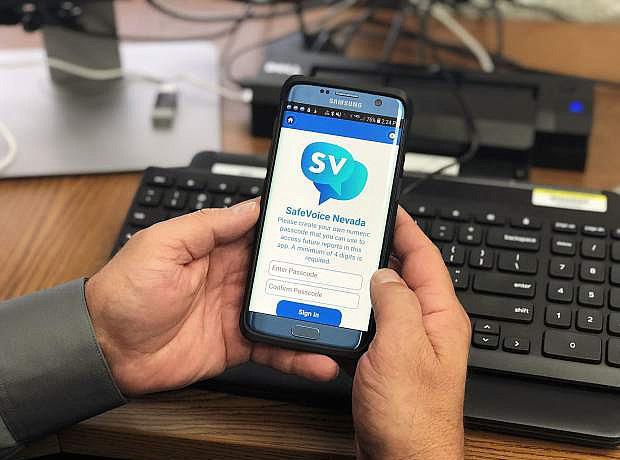
A statewide experiment in Nevada is focused on whether the dual approaches of SafeVoice – an anonymous tip line coupled with multidisciplinary response teams – help improve school climate, address problem behavior in students, and result in appropriate responses by school staff and law enforcement. In addition, the NIJ-supported experiment is exploring how tip line implementation influences outcomes.[27]
ADVOCATR is a cellphone app that students can use to share confidential information on issues that negatively affect their safety, as well as positive issues that make them feel safe. A study of this app is being conducted as part of a larger evaluation of the Student Ownership, Accountability, and Responsibility for School Safety (SOARS) program. SOARS involves trainings and interventions designed to increase students’ resilience to victimization.[28] This NIJ-funded study will help us understand the impact of a tip line in combination with other approaches to improving school safety.
NIJ has funded additional studies to help inform the development and use of other approaches to identify and respond to school violence threats. For example, Chicago Public Schools and researchers at the University of Chicago Crime Lab studied the use of social media monitoring to identify online behavior that suggests pending violence by students and then intervene quickly.[29] The results of the study,[30] as well as concerns arising from the implications of monitoring students’ posts on social media,[31] suggest that more research on social media monitoring to prevent school violence is worthy of future consideration.
In Colorado, NIJ-supported researchers are exploring the impact of the Safe Communities Safe Schools approach, which incorporates an information-gathering system (including, but not limited to, the Safe2Tell tip line), a multitiered system of support for students, and multidisciplinary school team and community partners. Early findings offer evidence of how schools can implement comprehensive school safety approaches; when the project concludes, information on the approach’s overall effectiveness will be available.[32] The results of this and other studies examining comprehensive approaches will be particularly valuable given available evidence that singular strategies to address school safety are insufficient for tackling the range of safety challenges facing schools.
Outstanding Questions
The field is starting to learn how to collect tips and how to respond to school violence threats. Research indicates that to be successful, these approaches require technological investments, training, trust building, and expertise by individuals across a variety of topics – as well as a systematic approach to assessing threats and responding to tips.
However, a number of critical questions remain. We need to improve our knowledge on the most effective – and, perhaps, least costly – approaches for learning about, assessing, and responding to threats. We must identify how to best incorporate these approaches with comprehensive strategies on school safety. In addition, we must learn how to implement strategies in a context where resources are strained and information is dynamic, limited, or shared across a variety of individuals or systems. Further, systems typically track incidents rather than students. This limits our knowledge on, for example, how helpful these strategies are for students who pose ongoing behavioral risks.
Finally, we do not have a strong understanding about which characteristics of the existing strategies for collecting tips and responding to threats are the most important in preventing undesirable outcomes, including school shootings and other violent acts.
A warning that someone is planning a school shooting can save lives if it is received and acted upon in a timely manner. Research has shown that individuals who plan to conduct a school attack typically share that information with someone else . . . often peers.
As school administrators and other stakeholders discuss what policies and practices to adopt so they can gather tips and respond to school safety threats, they should consider the research but also be prepared to make adjustments as knowledge grows and circumstances change.
All Notes and Reference Information are available here.
Mary Poulin Carlton, social science analyst, NIJ’s Office of Research, Evaluation, and Technology.
ReThinking Behavior gratefully acknowledges the U.S. Department of Justice, National Institute of Justice, for allowing us to reproduce this article. The opinions, findings, and conclusions or recommendations expressed in this article are those of the author and do not necessarily represent the official position or policies of the U.S. Department of Justice.
Original publication: National Institute of Justice Journal, Issue 283, April 12, 2021.
Acceptance and Commitment Therapy:
ACT for Emotional, Behavioral, and Social Challenges
By Ryan C. Speelman
What happens in educational settings when a student says “I just don’t care about anything” or “School is stupid” or “I’m no good at this” or “I’m a loser”?
What are educators supposed to do with a student who suffers a minor setback that ruins the rest of their day?
Or a student whose challenging home life influences their performance at school?
Maybe you’ve dealt with these students.
Maybe you’ve had these same thoughts and experiences.
How normal or abnormal is this? What can be done?

This article addresses the questions above and provides advice for educators that encounter students who experience behavior, emotional, or social challenges and troubling thoughts – in other words all children. The reality is about half of us will meet criteria for psychiatric disorder at some point in our lives (Hayes et al., 2012) and it is no secret that mental health is a growing concern in our schools regardless of class or grade. It is also not uncommon for students and teachers who do not satisfy one of the DSM V’s 157 diagnoses to experience troubling thoughts and challenges.
Acceptance and Commitment Therapy (spoken as one word; ACT; Hayes et al., 2012) is an evidence–based behavior science approach that provides strategies to handle all that occurs between our ears. This therapy was born from a bottom-up, behavioral study of language and cognition. A consistent finding within this research was that troubling thoughts are ubiquitous; referred to as the “unhealthy normality” (Hayes et al., 2012). If mental health problems are “abnormal” but common, then it is “normal” to be “abnormal.”
Paradoxically the same problem-solving skills that put us on the moon trap us into believing we can avoid painful private moments. Removing a strong distinction between mental illness and mental wellness frees us to see a continuum across all people from severely clinically depressed to happy-go-lucky. We all fall somewhere along the continuum and psychology draws the line where everyone on one side crosses the threshold for diagnosis while others do not. ACT provides a roadmap for progress on every step along the continuum between psychological health and psychological pathology.
Core Tenants of ACT
Six core tenants or processes can be conceptualized as broad overarching areas that encapsulate psychological pathology. Each can be observed at varying degrees across mental disorders as well as those not meeting diagnostic criteria. For each item, there is a corresponding symmetrical tenant exemplifying
psychological health. To put it simply, the clinical goal of ACT is to move along the continuum from psychological inflexibility or pathology towards
psychological flexibility or health with specific evidence-based strategies targeting each area.
Anyone may benefit from the ACT strategies no matter where they currently fall along the continuum, just as physically healthy and physically unhealthy individuals may both benefit from exercising or choosing a healthy diet. Thus, educators who use ACT as a therapeutic intervention may notice that they fall victim to the same behavioral and cognitive patterns that their students do, to greater or lesser degrees from time to time. The research behind how people think, learn, and make sense of the world and why ACT works can be admittingly complex. Fortunately, dissemination efforts now provide a curriculum to ensure these methods can be used in the classroom and integrated with every aspect of education including individualized education and behavior support plans.
The AIM Curriculum
Like a caveman with a smartphone, technology is simply not useful if people do not know how to use it. AIM: Accept, Identify, Move (Dixon & Paliliunas, 2018) provides solutions to the problems described above in a manner that is user-friendly with pre-packaged activities, data collection systems, daily exercises, and tips for integrating ACT into existing practices. While there are many ACT books and tools targeting a broad range of psychological pathology, a comprehensive review is beyond the scope of this article. The AIM book will be the focus here with brief descriptions of strategy examples for each of the six ACT core tenants and associated continuums of psychological inflexibility/pathology and flexibility/health.
Cognitive Fusion - Defusion
Have you ever been so worked-up and worried about something that you simply could not stop thinking about it and all the possible terrible outcomes? Have you ever found that in the end, the predicted terrible outcomes never occurred? All of us tend to get lost in our own heads from time to time. We predict catastrophes when they are unlikely and make “mountains out of mole hills.”
The reality is about half of us will meet criteria for psychiatric disorder at some point in our lives.
Cognitive Fusion occurs when we become so tightly stuck on our thoughts that we cannot separate our thoughts from ourselves or from reality. This is common because typical language processes remove us from direct experience with the current environment. Many students presenting problem behavior or emotional disorders experience cognitive fusion; they have trouble working through their own thoughts and beliefs of self-doubt and self-loathing in productive ways. This results in rigid thinking; with rigidity there is struggle, and with struggle maladaptive behaviors emerge. Cognitive Fusion can “mess up” our experiences with confusing verbal constructs or hypothetical predictions that are largely inaccurate and unrelated to the event itself. For example, I might think that all my students are staring at the small stain on my shirt but that does not make it true nor does it guarantee that my next class will be a failure.
Cognitive fusion is reduced when defusion is developed. Defusion is a skill that teaches us to treat thoughts as thoughts, which are distinct from both our actions and the objective world around us. This practice functions to separate or create some distance from our thoughts and enable us to see them for what they are: thoughts. From a defused stance a student who just failed may still be confident. A teacher with a small stain on their shirt is not literally “falling apart,” even though they may have briefly held that thought.

Thought Bubbles
Thought Bubbles is a defusion activity that begins by asking students if they have ever seen a comic book or cartoon with thought bubbles? On one page a character may be thinking one thing, turn the page and sure enough, they are thinking something else. The activity involves a questioning strategy leading to an action plan. Are thought bubbles ever filled with something inaccurate? Have you noticed your own thought bubbles? Have you noticed how a thought can float around for a while then pop! It is suddenly gone! What thoughts did you think would never go away? Did they? What can you do the next time a troubling thought appears? (Dixon & Paliliunas, 2018; pg. 137).
Experiential Avoidance – Acceptance
Have you ever had a painful thought, memory, or sensation so strong that you acted to avoid it? If cognitive fusion involves becoming tangled in our thoughts then Experiential Avoidance occurs because we are so tangled that our thoughts seem real and we become unwilling to remain in contact with them. Stated simply, experiential avoidance is exemplified by the colloquially phrases “try not to think about it” or “bury it deep inside.” These techniques may work for smaller events but what about the death of a parent? What about the thought that you’ll never be good enough? Or that you are not smart, cool, talented, popular (insert any adjective) enough? For these examples, avoidance (trying not to think of it) often has the opposite effect. That is, the more you try not to experience it, the more it occurs. If you are unwilling to remain in contact with particular thoughts or feelings – you may try to avoid them even if doing so produces psychological harm. This unwillingness can lead to impulsive choices –tantrum, aggression, substance use, purposefully not trying, avoiding academic or social situations, etc. –
as efforts of escape or reprieve. ACT takes the view that trying to change difficult thoughts and feelings as a means of coping can be counterproductive whereas acceptance promotes psychological resilience to adversity.
Acceptance is the non-judgmental stance and acknowledgement of events or thoughts as they are, without efforts to change or interact with them. In other words, a person can take the thought “I will fail” with them while actively choosing behaviors in service of personal values that promote success. This person has developed acceptance and can interact flexibly with their private experiences. For instance, they may have the thought “I’ll never be good enough” while actively taking steps to better themselves academically or socially. Acceptance makes room for both the bad and good life throws at us while teaching us that we are the driver of the bus we call our life.
Attachment to the Conceptualized SelfSelf as Context
Saying Yes
Saying Yes is an acceptance activity that asks students to identify thoughts they have that are awesome and they wish could come true versus those that are troublesome and wish they could make go away with a delete button. Students are taught that both the bad and good make up life, something we cannot change. So instead of searching for a delete button that doesn’t exist - Say YES! Show up to life and remember no class, assignment, or bad thought or experience will last forever. Students discuss thoughts that they had that were awesome as well those that have been worrisome and how it is not always possible to hit the delete button. (Dixon & Paliliunas, 2018; pg. 134).
Fill in the blank with a descriptor: I am ______. Regardless of the label you attached, there are likely instances in your life in which the descriptor did not apply. Perhaps you have said you were “bad at math.” That descriptor could hold true until, after some study, you earn an A on the exam, and subsequently “are no longer bad at math.” Attachment to the Conceptualized Self is the story we tell about ourselves. Perhaps we strongly feel the story is objectively true however upon further examination find most of the story is subjective. Our story may become a self–fulfilling prophecy if we buy too much into what we tell ourselves. We know that negative stories are not healthy for us, but even positive statements have the potential to become problematic when we make mistakes. In such cases do we become the opposite? You may think, “I am a great teacher” until you make an important error. At what point does our story change and we become a “bad teacher?” The logical error we commit is assuming we are the story we tell ourselves and that story cannot change.
A rigid adherence to our own subjective story is countered by practicing Self as Context. Self as Context involves taking the stance that our story is fluid and transient. This involves contacting all thoughts, feelings, and labels from continuing perspective of observation while recognizing we are not any of those things. From this vantage point we see millions of subjective labels we have attached to ourselves, none of them are literally true and to state they are is further attachment to the conceptualized self. The goal is to teach that we are separate and distinct from the labels we attach to ourselves in any given moment. For example, a student may say “I am a loser” in one context, but also recognize the times they have won. Developing this skill promotes growth or a work-in-progress mindset - to provide the context for experiences to occur, knowing we are not the experiences themselves. Failing or succeeding in one instance does not entail failing or succeeding in

another. To use a metaphor, self as context teaches us that we are the arena, not the bad play on the field.
Chameleon
Chameleon is a self as context activity which asks students to envision a chameleon changing colors to fit the surroundings. No matter what color the chameleon changes to it remains the same animal. Students are asked to consider how they have changed but also remain themselves through time and different situations. Students then discuss how they might think differently about themselves in different contexts, as well as how they remain the same. An experiential exercise calls for students to divide a paper in four sections and label each section with a different part of their life. Students write or draw how they thought or acted in each context. Next, they draw a large circle in the center and inside illustrate or describe the part of them that is always there, that remains unchanged. (Dixon & Paliliunas, 2018; pg. 136).
Dominance of Past and Future - Present Moment Awareness
How much time do you spend somewhere else? Are you mentally already at work when brushing your teeth in the morning? When at work are you wishing you were with friends or family or on a golf course? When the weekend arrives do you find yourself mentally back at work? More problematic examples of Dominance of Past and Future can be observed when a person is “stuck in their own head,” “has jumped to hasty conclusions,” or “are a million miles away.” Cognitive fusion and experiential avoidance remove of us from the objective reality of the present. This tendency is akin to a problematic daydream or unhealthy focus on past events we can no longer change. We do this when we make predictions or
construct a future that may or may not happen or perseverate on past mistakes. While reflecting on the past can be beneficial, inflexible pathological forms develop when we are so focused on what has happened we cannot move forward in a valued direction. Behavior dominated by a predicted future may also interfere with meaningful action when we predict that we will fail and thus should not try.
Dominance of the Past and Future is exemplified by the athlete who, after making a single error, plays poorly the rest of the game. Announcers may say the opposing team has “gotten in their head” or that they are “rattled.” You may notice this in the classroom when yesterday’s mistakes influence today’s effort, when what happened at recess spills over to the classroom, or when one failure seems to automatically entail more failure. Teachers may notice this in themselves when treating a student differently today because that student had a tantrum or outburst yesterday. The problem with this frame of thought is that making a prediction about today’s behavior based on yesterday’s behavior may influence our interaction with the student - subtle differences occur in how we treat the student which causes the student to conform to our expectation.
Present Moment Awareness is the ability to contact the here and now rather than ruminating on past experiences or wishing for how things could be. Being lost-in-your-head does not serve us and actually takes us out of the important moment we are currently experiencing. Contacting the present moment opens us to a range of potential possibilities. This involves opening ourselves up without subjective predictions to the world as it unfolds before us. Adverse events can be made worse by our actions. When we are mindful and present we may notice ourselves becoming angry and choose more productive actions. Likewise, our greatest moments of happiness are experienced in the moment with little regard to what might occur tomorrow.
Eyes Closed, Feelings Open
Eyes Closed, Feelings Open asks students to pause for three minutes and to notice how their body feels moment to moment and the emotions experienced. Students are asked to notice how quickly emotions come and go. Perhaps there are some emotions that linger. How does the body feel when we are upset? What do we do when we feel angry? Can we make room for a certain feeling and sit with it without acting? As we pause and notice our sensations, thoughts, and feelings we might be surprised by the amount of emotion we experience in a short time frame and how little or much weight we are able to assign to any given feeling, thought, or emotion (Dixon & Paliliunas, 2018; pg. 144).
Lack of Clarity or Contact with ValuesClarify and Pursue Values
A person without values does not know what they want their life to be about. They may state that they “do not care about anything.” Lack of clarity or contact with values is exemplified by the person who lacks intrinsic motivation or is apathetic and those who do not connect their behaviors with larger, broader, meaningful outcomes. Values are chosen life directions. Commitment to a value is an ongoing pattern of behavior in a purposeful and meaningful direction. Personal goals can then be set in valued directions however goals are not values in and of themselves. Values can be considered metaphorically as a direction on a map. We may travel east however we may never arrive at the point on earth that is labeled “east.” Likewise, we may value our careers as educators or personal growth through education though we never arrive at the destination or point where we are able to cross the value off of our to-do list. For instance, if “being a good educator” is a value, I cannot simply state that I fulfilled the

ACT provides a roadmap for progress on every step along the continuum between psychological health and psychological pathology.
value by being a good educator this morning. We can however, set fulfillable goals around a value such as attending a professional development seminar with the aim of becoming a better educator. Thus, values last a lifetime and there is never a moment in which we have moved too far away from our values that we cannot simply turn around and start pursuing them again.
Clarifying Values involves figuring out what you want your life to be about. Values are self-defined and generally fall in distinct categories (e.g. family relations, friendships and social relations, employment education and training, recreation, spirituality, citizenship and community life, physical well-being). Once defined, actions can be outlined that place an individual in harmony with their values. There are no right or wrong answers as to which values are most important. Teachers who notice students say “I don’t care about anything” or “I don’t value education” may look towards other values to connect with students, such as earning a GED, making their mother proud, or a career goal. While academics in and of themselves may not be important to the student, perhaps family is and personal academic goals can be connected to the student’s personalized chosen values. Likewise, a student who does not want to follow classroom rules may value their friends (friendship and social value domain) and thus may choose to follow rules in order to earn time spent with friends at recess.
Once clarified, teachers and students alike will notice that being right, yelling, hitting others, giving half effort, neglecting your health, or scoring 100% on every test, are not values.
Prioritization Station
Prioritization Station asks teachers to gather all students in the center of the room while presenting two or more possible values. Students are required to select one value that is more important to them by moving to one side of the room or the other. Teachers repeat the scenario with different combinations of valued directions, pausing throughout to allow for discussion. The overarching goal of this exercise is to require students to think about, discuss, and begin to prioritize their personal values. An experiential exercise involves students cutting out a triangle and writing their most important values at the top followed by those they care about but are not a top priority in the middle and those less important at the bottom (Dixon & Paliliunas, 2018; pg. 141).
Inaction or Avoidance PersistenceDevelop Committed Action
Inaction or Avoidance Persistence is personified in the person who gives up when a task is hard or the individual who allows minor or irrelevant setbacks to influence unrelated events. We may notice times in our students’ lives (and our own) when values are not pursued, marginalized, or given up. Lack of committed action may take the form of action dominated by short-term happiness. Yes, it may feel good to sit on the couch, eat doughnuts, and watch movies all day however this decision certainly is a tradeoff between short- and longterm happiness. Often the happy-now incentive is at odds with happiness that accompanies behavior
in pursuit of personal values. Meaningful engagement in work, education, social lives, and so on can be difficult. A continual pursuit of personal values in the face of adversity is central to committed action.
Developing Committed Action requires active practice in each valued area mentioned above. Once chosen life directions are found, committed action is the pursuit of valued directions. Stated simply, committed action involves trying when it is hard and also acknowledging why trying is worth it. This tenant is exemplified by the colloquial phrase “You miss 100% of the shots you do not take.”
Flat Tire
Flat Tire is a Committed Action activity that asks students to remember or imagine a time when they were riding on their bike or in a car and experienced a flat tire. Students are taught that a flat tire may make us think that the day is ruined or we will never arrive at our destination; yet flat tires are fixable and we keep moving forward. The discussion centers around how we all get flat tires now and then and how we can learn to fix them quickly. (Dixon & Paliliunas, 2018; pg. 135).
Conclusion
Psychological health and flexibility can be improved. Each tenant described above is a skill that can be learned, generalized, and applied through an entire lifetime. As mental health is a growing concern in schools, we as educators should consider teaching strategies mentioned above. While teachers are not therapists, AIM provides a curriculum designed for educators to use empirically validated methods to improve mental health. The activities outlined can be completed in 10 – 30 minutes and incorporated into typical classroom

While teachers are not therapists, AIM provides a curriculum designed for educators to use empirically validated methods to improve mental health.
schedules. Thousands of small therapeutic doses, starting from a young age, is an excellent prevention or inoculation for any trouble life throws at us. It is my belief that teaching these skills should begin in early childhood and continue through high school. I know this would have benefited me.
References
Dixon, M. R., & Paliliunas, D. (2018) AIM Accept. Identify. Move. Shawnee Scientific Press.
Hayes, S. C., Strosahl, K. D., & Wilson, K. G. (2nd Edition; 2012). Acceptance and Commitment Therapy. New York, NY: The Guilford Press.
Ryan C. Speelman, Ph.D., BCBA, Associate Professor of Psychology and Counseling, Director, M.S. Psychology Behavior Analysis, Pittsburg State University, rspeelman@pittstate.edu
Legal Considerations Conducting Active Shooter Drills
By Robin Parks Ennis, Antonis Katsiyannis, Ashley S. Virgin, Alex Carlson, and Denise Whitford
School shootings and gun violence have created a threat to the overall safety and feelings of safety in schools. In 2017, about 2% of students ages 12–18 reported being victimized at school during the previous six months; about 4% reported carrying a weapon on school property at least one day during the previous 30 days. There were also 66 school shootings; 29 with deaths and 37 with serious injury (Wang et al., 2020). School shootings, and in particular school mass shootings, have resulted in numerous security measures, including active shooting drills. Indeed, active shooter procedures (and drills) have become almost universal in public schools; from 79% in 2003–04 to 92% in 2017–18 (Wang, 2020; see also, Katsiyannis et al., 2018; Temkin, 2020). However, these drills can result in the unintentional traumatization of both students and staff (Everytown Research and Policy, 2021; Rygg, 2015). As such, organizations such as the National Association for
School Psychologists (NASP) and National Association of School Resources Officers (NASRO) have put forth recommendations for engaging in safe school-based drills. These drills must ensure “best use of resources, maximize effectiveness, and minimize physical and psychological risks.” Failure to take actions to reduce the traumatic nature of such drills and ensure the safety of all involved could leave school officials liable to complaints and lawsuits.
While to date active shooting drill lawsuits have been relatively uncommon, it is essential that school districts understand their own rights and the rights of the individuals they serve and employ. In lawsuits involving the potential abuse of power, as extensions of the state government, law enforcement officers and school district personnel acting in their capacity as employees are entitled to “qualified immunity” (protection for public officials accused of violating constitutional rights), unless they are knowingly violating
Photo courtesy of Hannah Yoon
the rights of the individuals they serve (see Pierson v. Ray, 1967). Every citizen in the United States has also a constitutional right to substantive and procedural due process (Amendment XIV) and the right to be free from unreasonable search and seizure (Amendment IV); both of which could potentially be violated from an active shooter drill gone wrong.
In McLean v. Pine Eagle School District (2016), the plaintiff alleged that the school board was liable for violating her protected constitutional liberties by inflicting psychological trauma and emotional distress during an announced active shooter drill. In April of 2013, following the horrific attack on Sandy Hook Elementary school in December of 2012, a group of Pine Eagle School District administrators planned an active shooter drill to test their teachers “Run, Hide, Fight” responses. On April 26, 2013, Pine Eagle Elementary School held a teacher workday, in which no students were present in the building. Pine Eagle Elementary School Principal, Cammie deCastro, instructed her teachers to work in their classrooms. Concealing their identities behind paintball masks, two administrators, acting as active shooters, entered the school building with pistols loaded with
.22 caliber blanks and lit firecrackers. McLean heard the noise and was confused. Then a man entered her classroom, pointed a pistol at her and pulled the trigger, which resulted in a loud “bang” and caused smoke to rise as though it were a real gun. The man said, “You’re dead”, before running out of the classroom. In total, the active shooter drill lasted about 90 seconds. In that time, two teachers collided with each other in the hallway, resulting in injuries to both individuals, and one teacher wet herself. When all the teachers were brought together to debrief the drill, the leaders of the drill handed out slips of paper with red dots on them to indicate how many times that teacher had been “shot” during the drill. In total 13 of the 15 teachers present for the drill received red dots.
These events led McLean to file suit against the Pine Eagle School Board and the administrators involved in the planning and execution of the unannounced active shooter drill claiming violations under the 14th and 4th Amendments. Additionally, McLean filed suit under Oregon common law for civil assault and intentional infliction of emotional distress. The court granted summary judgment (i.e.,
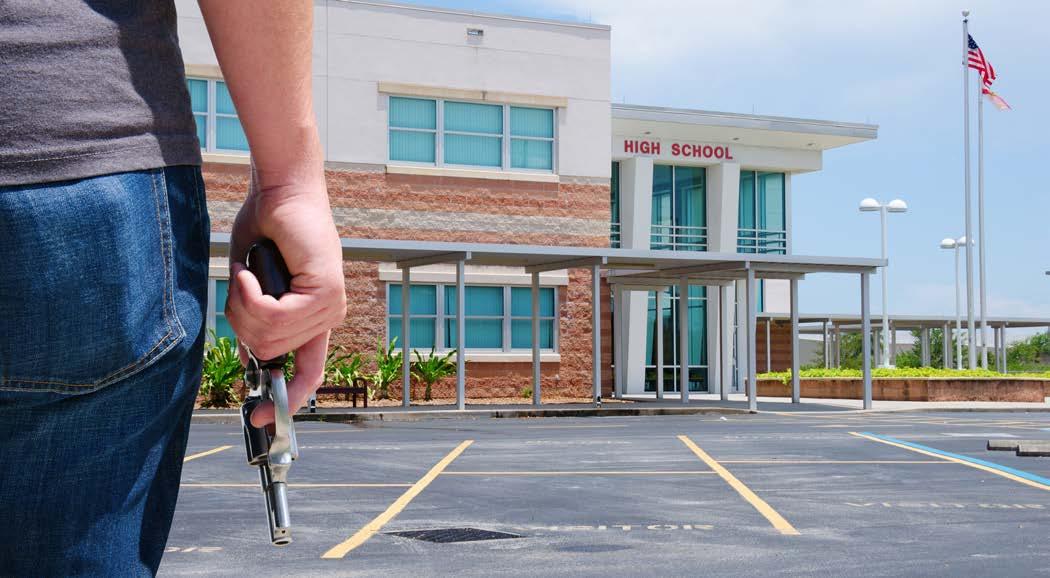
a judgment entered by a court for one party and against another party without a full trial) on the plaintiff’s 14th amendment claims because she was not able to provide evidence that the Pine Eagle School District had violated her protected liberties under the amendment. The court noted that even if the plaintiff’s claims did indicate a violation of her protected liberties, summary judgment would still have been granted as the district and its employees would have been entitled to qualified immunity. The courts also granted summary judgement for the plaintiff’s 4th amendment claim that she was subject to unreasonable seizure because the interaction between McLean and the acting shooter only lasted a few seconds and McLean was free to leave at any time. Despite granting summary judgement on the constitutional claims, the court found that a reasonable jury could determine that the administrators’ plan to hold an active shooter drill, using replica guns and disguises, without informing any of the staff, was outrageous or shocking to the conscience. Therefore, McLean was entitled to pursue punitive damages against Pine Eagle for both claims of intentional infliction of emotional distress and civil assault.
In a similar action, currently in progress, Baltes et al. v. White County et al. (2020), teachers were subjected to an intense active shooter drill. Unlike the teachers at Pine Eagle Elementary, the teachers of Meadowlawn Elementary School were informed that during the coming teacher workday, they would undergo an “ALICE active-shooter training.” ALICE is an acronym for active shooter response procedures, which include: Alert, Lockdown, Inform, Counter, Evacuate (Navigate 360, 2021). When the 15 female teachers arrived at the school on the day of the active shooter training, they sat in a classroom with four male police officers from the White County Sheriff’s Department. The officer leading the session explained that they would be undergoing ALICE training, however, did not provide the teachers with any details regarding what that would entail. The officers then split the teachers into small groups and two male officers escorted one group into a different classroom. Upon entering the classroom, the officer
Failure to take actions to reduce the traumatic nature of active shooter drills and ensure the safety of all involved could leave school officials liable to complaints and lawsuits.
did not turn on the lights in the room, despite the darkness, and informed the teachers to line up and kneel down facing the wall with their backs to the exit. The path to the exit was blocked by the two officers. Following compliance by the teachers, the officer said, “This is what happens if you just cower and do nothing.” And then without warning, proceeded to shoot the teachers with an airsoft gun at close range, moving from teacher to teacher until he ran out of pellets. This execution style drill not only left teachers emotionally traumatized, but due to the close-range discharge of the airsoft gun, teachers were left with bleeding welts. In shock following this experience, the teachers were told to return to the room they had met in earlier and were explicitly told not to inform the other group of what had just occurred. This same execution style drill was performed on other groups with officers said to be smiling, joking, laughing, and making light of the events.
Once every group had been subject to the execution style drill, the training moved to a series of three rotating drills in which teachers were put into scenarios where they hid, locked the door to barricade the shooter out, and participated in counter assaults. In each of the three drills, teachers were again subject to being shot at close range with air soft guns, even at times when they were completely helpless. As a result, plaintiffs experienced increased anxiety at school and around law enforcement with one teacher has been diagnosed with post-traumatic stress
disorder and another teacher needing to receive medical treatment for a drill related injury which left a permanent scar.
Due to the extreme nature of this training, the plaintiffs alleged that the White County Sherriff’s Department and the officers conducting the training violated their 4th and 14th Amendment rights. In addition to the constitutional violation claims, the plaintiffs also filed Indiana common law claims of false imprisonment, assault and battery, intentional infliction of emotional distress, and negligent infliction of emotional distress. In filing these claims, the plaintiffs sought both compensatory and punitive damages against the defendants, attorney fees, and any other forms of relief that were deemed appropriate. On January 2021, the plaintiffs amended their complaint to include a first amendment violation for retaliation (i.e., officers would not respond to needs in a teacher’s classroom after she criticized the department/active shooter training).
In summary, the McLean case held that the school board and several individuals acting in their capacity as employees were liable for both civil assault and intentional infliction of emotional distress under common law. It is important, therefore, that schools adopt procedures that ensure the mental health and safety of all individuals in a school. The Best Practice Considerations for School in Active Shooter and Other Armed Assailant Drills put forth by the NASP and NASRO (2021), provides guidelines for consideration when conducting active shooter drills. These recommendations include nonsensorial lockdown drills, considering developmental and mental health needs, and taking steps for safe, effective, and appropriate drills (e.g., establish a multidisciplinary team for coordination, conduct needs assessment, match drills to school environments, ensure physical and psychological safety, conduct simple, lowest cost training, and develop a communications plan). Advance notice of such drills and the option to opt out are strongly recommended. Further, steps for taking a trauma-informed approach to active shooter drills are recommended.
References
Baltes et al. v. White County et al., Case No. 4:20-cv-67 JVB-JPK (2020).
Katsiyannis, A., Whitford, D. K., & Ennis, R. P. (2018). Historical examination of United States intentional school shootings by students in the 20th and 21st Centuries: Implications for students, schools, and society. Journal of Child and Family Studies, 27, 2562-2573 https://doi.org/10.1007/s10826-018-1096-2
McLean v. Pine Eagle Sch. Dist., No. 61, 194 F. Supp. 3d 1102, 2016 U.S. Dist. LEXIS 85943 (United States District Court for the District of Oregon 2016).
National Association of School Psychologists & National Association of School Resource Officers (2021). Best practice considerations for armed assailant drills in schools. https://www.nasponline.org/resources-and-publications/resources-and-podcasts/ school-safety-and-crisis/systems-level-prevention/best-practiceconsiderations-for-armed-assailant-drills-in-schools
Pierson v. Ray, 386 U.S. 547 (1967).
Rygg, L. (2015). School Shooting Simulations: At what point does preparation become more harmful than helpful? Children’s Legal Rights Journal, 35, 215. https://lawecommons.luc. edu/clrj/vol35/iss3/3
Temkin, D., Stuart-Cassel, V., Lao, K., Nunez, B., Kelley, S., & Kelley, C. (2020, February 12). The evolution of state school safety laws since the Columbine school shooting - Child Trends. Child Trends. https://www.childtrends.org/publications/evolution-state-school-safety-laws-columbine
Wang, K., Chen, Y., Zhang, J., and Oudekerk, B.A. (2020). Indicators of school crime and safety: 2019 (NCES 2020-063/NCJ 254485). National Center for Education Statistics, U.S. Department of Education, and Bureau of Justice Statistics, Office of Justice Programs, U.S. Department of Justice. https://nces. ed.gov/pubs2020/2020063-temp.pdf
Robin Parks Ennis, Assistant Professor, University of Alabama at Birmingham, rennis@uab.edu, Antonis Katsiyannis, Professor, Clemson University, antonis@ clemson.edu, Ashley S. Virgin, Doctoral Student, University of Alabama, Alex Carlson, Doctoral Student, Clemson University, and Denise Whitford, Assistant Professor, Purdue University.
Podcast Pulse
The Educator’s Blueprint Podcast
Review by Jamie Grieshaber and Sara Estrapala
If you are interested in exploring issues, trends, topics, and innovations impacting our education systems, check out the newly established podcast, The Educator’s Blueprint. This podcast was launched the Summer of 2021 and is produced by the University of Missouri (MU) Center for Schoolwide Positive Behavior Intervention Supports (SW-PBIS), a technical assistance (TA) and professional development (PD) provider. The hosts, Trisha Guffey, Ed.D. and Lisa Powers, PhD, are both Senior Research Associates at the MU Center for SW-PBIS, and provide TA and PD for schools, district, and state PBIS leadership teams. As its producers, we would like to take this opportunity to formally introduce The Educator’s Blueprint Podcast and invite ReThinking Behavior readers to listen to experts discuss topics related to school culture, climate, teaching, and learning in this ever-evolving educational landscape.
The Seed
Podcasts, by nature, are a medium intended to create connection all over the world as they are not bound by physical space. They are an invitation for the listener, from the comfort of wherever, to be curious, affirmed, challenged, seen, connected. And interestingly, it was the isolation caused by COVID-19 that spurred the creation of The Educator’s Blueprint Podcast.
Prior to COVID-19, hosts Guffey and Powers enjoyed many professional opportunities to travel together, both domestic and international, for research, TA, and learning on a global platform. It was during
these trips that the seed of an idea was planted. Guffey and Powers pondered, “We would have long, in-depth conversations that would evolve with bigger questions. We wondered and shared who we would connect with and what we would ask them. It was exciting to think about!”
Fast forward to the historical year that the world seemingly stopped. Zoom entered the scene and propelled us all into a virtual space – to not only navigate – but also attempt to convert our personal and professional lives to a grid of faces on a screen. The urgency and abruptness of the pandemic forced people to change, and an invitation to collaborate and learn differently emerged. Although the inside of brick-and-mortar schools were eerily quiet, empty, the MU Center team was experiencing an increase in connections, networking, and support across districts, the state, and the entire nation. Leaders, teachers, staff, and parents were all making extremely difficult decisions and needed time to acknowledge and process grief, discuss real challenges, and explore the uncertainty together. Stress, rethinking roles, evolving working structures, and the ability to receive and retain information became limited. We all had to “get to the point,” and it was no different in education.
One area in particular that halted was Professional Development (PD), a cornerstone in this field: effective PD is essential for innovation, adaptation, and ultimately student success. It became clear that
the days of 8-plus-hours in-person training sessions were long gone. Who wants to sit through a full-day PD in a conference room, let alone at their computer watching lagged videos of presenters saying, “Next slide”? We had to adapt.
Germination
So many raw questions surfaced: How do we engage our kids virtually? Are they safe? fed? What data are real and meaningful? What does a successful outcome even look like? Can I keep this pace? Will we be okay? What do schools/districts need? How can learning continue for teachers and administrators? The MU Center team met every Friday to unpack these questions while exploring our own efficacy in supporting our partner districts as they continued to navigate the unknown. After countless hours of formal and informal conversations through webcams, phone calls, and texts, that seed began germinating.
Guffey and Powers go on, “How do we take these conversations that we are having with each other and make it available to stakeholders that might be wondering some of the same things? Further, how do we invite practioners in the field to share what they are learning? What if we create a podcast where we simply ask these questions out loud, with guests, and share the conversations with schools, districts, states?” Could it work? “As we were having these conversations with each other, we knew teams, districts, and states are all connected. Decisions made by the [local, state, national] Board of Education directly impact classroom teachers. So, let’s talk about all things education, and invite people to see their place and perspective within the conversation.”
A podcast felt inclusive, helpful, and the right next step for our work. It was the perfect marriage of succinct and innovative PD content, a way to provide opportunity for “just in time” PD, to build communities of virtual learning based on science, and simply put, human connectedness. Thus, the idea of developing a podcast was brought to the MU Center team, a small production team formed, and the work began.
Seedling
Hope is not a strategy, but it fuels survival. The hope of this work, led by Guffey and Powers, was that every listener would see themselves in the conversation, be affirmed for their commitment and effort in the work, take something away that makes them think, and potentially identify a step towards growth in their craft.
To date, there have been several mini-series on topics like Reinforcement vs Bribery, Mental Health and Well-Being, Maximizing Tier 2 Success, Global Conversations on PBIS, and a riveting, two-part history of PBIS, and it is safe to say that we are just getting warmed up. In additon to these topics, we have invited a diverse array of guests, including Center on PBIS Director, professors of education and special education, prinicpals, coaches, and teachers. We strive to not only address a diverse array of professionals in the education community, but represent diversity across genders, socioeconomic statuses, and race. As such, many of our topics address disporoportionality, emotional wellbeing, and related challenges as PBIS continues to elvolve in light of the global pandemic, changing social norms, political unrest, and current civil rights movements. For example, in Series 2, Episode 9, guest speaker Rhonda Nese discusses strategies to ensure the school culture reflects the community, the role of empathy in respecting others’ opinions, and how to check ourselves for bias when discussing politics and/or social norms with others. Episodes 19 and 20 from Series 5 take a different approach, as the hosts invited two elementary teachers, Melissa Yontz and Melissa Lawrence (Episode 19) and two secondary teachers, Gina Lange and Victoria Brinkmeyer (Episode 20) to discuss what it has been like teaching during the last two years of COVID-19. Moving forward, our goal is to create a space to let diverse guest speakers shine light on educational perspectives and expertise, with a dash of teaching and interviewing, and heaps of rich storytelling.
From the classroom to the boardroom, we invite you to grab some tea, take some time, and have some
fun with us while we consider and grow. The Educator’s Blueprint Podcast and resources can be found on all major podcast platforms. If you have any ideas or possible guests for future episodes, please Tweet us @EducBlueprint.
The Freakonomics Podcasts Podcast Review by Robert
H. Zabel
Many people are drawn to education, and especially to special education, because they’re curious about what makes people tick. Why do people think, feel, and behave as they do? What are typical, “normal” patterns of behavior? What (and why) are there exceptions?
Having spent most of my adult life studying human behavior, both typical and atypical, I’ve learned that there’s no single, completely satisfying “way of knowing.” Human behavior is infinitely variable and determined by complex, dynamic genetic and environmental influences. Hence, we need the insights of multiple scientific disciplines that study behavior –psychology, biology, sociology, anthropology, economics, etc. – as well as arts and literature.
Professional educators have formal education in at least some of these disciplines. And, many continue to expand their understanding and skills by taking advanced courses, reading professional literature, participating in professional meetings, and independently seeking information and ideas. In addition, the Internet has expanded convenient access to continuing education.
Over the past 10-15 years, podcasts have become a key source of information on a wide variety of topics. Some podcasts focus on topics directly relevant to special educators, and there are many others that can be less obvious, yet still highly relevant resources. Several of those “often-relevant” podcasts make up the Freakonomics multimedia franchise.
Jamie Grieshaber, LCSW, Senior Research Associate, MU Center for SW-PBS, grieshaberj@missouri.edu, and Sara Estrapala, PhD, Postdoctoral Fellow, Special Education, University of Missouri.
The flagship, Freakonomics Radio (FR), was reviewed in a recent issue of ReThinking Behavior. FR is a spinoff of the bestselling book, Freakonomics: The Hidden Side of Everything (2005 and later revisions), co-authored by journalist Stephen Dubner and behavior economist Steven Levitt. FR, hosted by Dubner (early on, Levitt was a frequent guest/co-host) “tells you things you always thought you knew, but didn’t, and things you never thought you wanted to know.”
Typically, Dubner asks an expert, often a behavioral psychologist, to share their ideas and research about some aspect of behavior and its implications for individuals and society. Since beginning in 2009, there have been more than 400 episodes on a wide range of topics. They include, for example, How do you cure a compassion crisis?, Is ‘toxic positivity’ a thing?, Reasons to be cheerful, Nap time for everyone, and How to get anyone to do anything. Even when the topic may seem obscure or strange, FR is always interesting and engaging.
There are also several newer additions to the Freakonomics podcast family. Levitt hosts People I (Mostly) Admire where he invites
“high achievers” – successful and influential leaders engaged in a variety of endeavors – discuss their ideas, passions, and advice for making a difference. His guests have included Nobel Prize winners, CEOs, performers, film makers, Jeopardy champions, and other luminaries. Topics are as varied as Why treating humanity like a child will save us all, Don’t neglect the thing that makes you weird, On why being nice, forgiving and provokable are the best strategies for life, and Who gives the worst advice? The conversations often include spirited, friendly debate between Levitt and his guest, and they’re always thought-provoking.
Recent NSQs topics have included: Why do we put things off until the very last minute? If everyone hates meetings why do we have so many of them? How contagious is behavior? What’s more effective, punishment or reinforcement? and How you can you avoid boredom.

The newest Freakonomics podcast is Freakonomics: MD hosted by Bapu Jena, a physician and economist. Jena responds to questions submitted by listeners and looks for answers in the intersections of healthcare and economics. To do that, he draws on relevant research and questions experts on those topics. Recent questions are Does your doctor’s political views affect your care?, Why do kids with summer birthdays get the flu more often?, Why Fridays may be dangerous for your health, and Do as docs say, not as they do.
My favorite Freakonomics podcast is No Stupid Questions (NSQs). Co-hosts Stephen Dubner and Angela Duckworth (D & D) discuss questions about human behavior that have been submitted by listeners. Duckworth is a behavioral psychologist (and former high school teacher). She’s also co-author of Grit, a book about the important role of passion and perseverance in achievement and ways adults can help promote development of grit in their children and students.
In the punishment/reinforcement episode, for example, D & D consider a topic familiar to special educators – reinforcement and punishment. First, they define behavioral terminology – punishment vs. negative reinforcement, shaping, successive approximations, and types, forms and schedules of reinforcement. They then discuss proper/effective use of reinforcement and punishment and ways parents, educators, and government could use them to promote healthier, more positive behavior.
D & D’s conversations are fast-paced, informative and entertaining, they cite relevant research and theories, share hunches and opinions, and challenge one another’s views. In addition, at the end of each episode, the producer corrects any errors and clarifies inconsistencies that may have occurred. And, for listeners who want to learn more about a topic, all the cited research is included on the NSQ website.
If you’re interested in what makes people – including yourself – think, feel and behave (i.e. you work with children with emotional/behavioral challenges), check out the Freakonomics podcasts. You’ll find plenty of food for thought.
Robert H. Zabel, Emeritus Professor, Kansas State University, robertzabel@gmail.com.
We heard you! We’re working on it! Thanks!
At the 2022 MSLBD several of you let us know what topics you’d like to see in ReThinking Behavior. Thanks! While we’re working to get new articles on your requested topics – here are a few links to previous articles that might be helpful.
You asked for Any topics relating to behavior, behavior success stories, Tier 1, 2, and 3 interventions, strategies for All teachers and for students not identified as EBD, cultural responsiveness/equity in behavior plans.
• Things to Do and Things to Stop Doing, Michael P. George (Winter 2018)
• Persistent and Inconvenient Behavior: What Can You Do?, Sharon A. Maroney (Winter 2018)
• Behavior Interventions to Improve Compliance, Sara A. Sanders, Nicole E. Wiseman, & Erica Sponberg (Fall 2017)
• Bus Behavior- Positive Supports on the GO!, David Bateman & Jacquelyn Chovanes (Winter 2020)
• Understanding the Conflict and Acting-Out Cycles, Reece L. Peterson and Ken Parnell (Winter 2022)
• Moving Toward Effective Discipline-One Middle School’s Success, Jan Burgess (Fall 2019)
You asked for trauma-informed strategies.
• Mitigation of Trauma for BIPOC Learners, Elizabeth Bifuh-Ambe and John William McKenna (Spring 2022)
• Trauma Informed Classrooms, Elisabeth Kane, Nicole Bricko, Natalie Hoff, & Reece Peterson (Spring 2018)
• Special Education Teachers as First Responders, Robert H. Zabel (Fall 2020)
You asked for connecting with other teachers, community programs, prison populations, parents, education that goes beyond the school.
• Buddy Up to Improve Classroom Behaviors, Nicolette M. Grasley-Boy (Fall 2021)
• Parents as Partners: Empowering Parents of Youth with EBD, Jacqueline Huscroft-D’Angelo, Alexandra Trout, Kristin Duppong Hurley, and Matthew Lambert (Fall 2020)
• From Acting Up to Moving Up: Post-Secondary Outlooks for Students with EBD, Delaney Boss (Winter 2022)
• Out of Something Bad Came Something Good: School-Based Mental Health Services Integration in Rural Missouri, Lisa A. Robbins and Jaimee L. Hartenstein (Fall 2021)
• Reentry: Increasing Success for Our Justice Involved Youth, Kennesha Woods (Fall 2021)
You asked for teacher mental health and well-being, recognizing and reducing burnout and compassion fatigue.
• Interconnections of the Pandemic, ACEs, and Compassion, Robert H. Zabel (Spring 2022)
• A Trauma-Informed Approach for Managing Educator Stress, Rachel Jones (Fall 2020)
• I Can Do Hard Things, Brandi Burt (Fall 2018)
• Learning to Pivot, Self-Care and the Pandemic, Tracy Kidd Slone and Maria L. Manning (Spring 2022)
• Start Piddlin’ Around, Faith Nicole Pearson (Winter 2022)
You asked for technology, teaching strategies, modern classrooms.
• Supporting Behavioral Needs During Virtual Instruction, Valentina Contesse and Holly Lane (Fall 2020)
• Ten Tech Tools that Really Do Engage Students, Kristen Ricker (Spring 2019)
• Check-In/Check-Out with Google Forms, Reesha M. Adamson, Jessica Nelson, and Lauren Rector (Spring 2022)
• There’s an App for That! Taking the Pulse of Your Students, Brian T. Sims (Winter 2019)




RE THINKING Behavior

October 6-7, 2022 2022 Richard L. Simpson Conference on Autism 12600 Quivira Road
Overland Park, Kansas
February 23-25, 2023
41st Annual Midwest Symposium for Leadership in Behavior Disorders
Sheraton Crown Center, Kansas City, Missouri Award Nominations! Nominate by November 1!
Outstanding Advocacy Outstanding Leadership Outstanding Educator Outstanding Building Leadership Building Bridges Program
Stipends - Master’s & Doctoral Students Master Teacher Commitment to Equity Pre-Service Student Midwest Symposium for Leadership in Behavior Disorders