
RE THINKING Behavior
Third
UPCOMING EVENTS
October 7 – 8, 2021
Live Virtual Event
Early Bird Rate of $75 through September 24
https://mslbd.org/autism-conference/


40th Annual Midwest Symposium for Leadership in Behavior Disorders – IN
PERSON
February 17 - 19, 2022
Sheraton Crown Center, Kansas City, MO
Keynote Session – Great Educators at Work: What Does it Take to Make the Grade as a Teacher of Students with EBD? Workshops
• Managing Resistance
• Safer Spaces for LGBTQ+ Youth
• Reducing Disproportionality
• Supporting Teacher Well Being
• Transition for Students with Autism
• Behavior Management Tools
• Cyberbullying in the COVID Era
• Disrupting the School to Prison Pipeline
• Improving Student Engagement and Academic Outcomes
REGISTER BY JANUARY 21 FOR DISCOUNTED REGISTRATION
Register early for preferred workshops
Visit our website: https://mslbd.org/symposium
Reesha M. Adamson
Mary Jo Anderson
Jennifer Bossow
Mary Davis
Scott M. Fluke
Linda Geier
Nicolette Grasley-Boy
Deborah E. Griswold
Mike Hymer
Maria L. Manning
Sharon A. Maroney
John W. McKenna
Mike Paget
Reece L. Peterson
Lisa A. Robbins
Carl R. Smith
Ryan C. Speelman
Jim Teagarden
Vanessa Tucker
Vivian Strand
Rethinking Behavior, ISSN 2578-5397, a magazine for professionals serving children and youth with behavioral needs, is published three times per year, fall, winter, and spring, Copyright ©2021 by the Midwest Symposium for Leadership in Behavior Disorders, P.O. Box 202, Hickman, NE 68372. 402-7923057. www.mslbd.org. Email: rethinkingbehavior@mslbd.org.
Rethinking Behavior welcomes proposal and manuscript submissions; for information visit www.mslbd.org or email rethinkingbehavior@mslbd.org

Say No to Chemical Restraints
While increasing attention in our field has been paid to concerns for the use of physical restraint and seclusion, the same concern has not occurred for chemical restraint! Educators must understand the dangers posed when we rely on drugs instead of behavioral science to address student behavior.
What is Chemical Restraint?
Chemical restraint is medication used to control behavior or to restrict a person’s freedom of movement that is not a standard treatment for the person’s medical or psychiatric condition. This means medication given in any form (oral, injection, or patch) that restricts movement by altering behavior, alertness, or activity level which is given in a crisis emergency. For example, injecting a prescribed medication to chemically calm a student who is in the middle of a behavioral crisis is chemical restraint. Giving a regular daily dose of a stimulant prescribed to a student with ADHD is not an example of chemical restraint.
Often, medications used for chemical restraint come with a prescription labeled “PRN,” which stands for the Latin Pro re Nata, or “administer as needed.” This means that the medication can be administered by school staff “as needed.” To be clear, not all PRN medication is used for chemical restraint. Inhalers, for example, are often prescribed PRN for use as needed.
The Danger of Chemical Restraint
Relying on medication to control behavior in emergency situations poses many risks to the student. Injuries and deaths can occur during chemical restraint from an overdose or interaction of medications, as well as from the struggle to inject a medication or get a student to swallow it. We do not know how often this happens because there is no national data set of these incidents.
Chemical restraint is prone to the same core problems as physical restraint.
• It does nothing to teach the student the skills they need to avoid future behavioral crises.
• It is too often misused, overused, and disproportionately used. We use it too often, for the wrong reasons, and disproportionately with students with disabilities.
• It also poses ethical and human rights issues. Is it morally right to solve behavioral problems with chemical restraint?
Consider this real-life scenario. A 14-yearold student with low communication and cognitive skills has a history of aggression towards students and family members. One such aggressive episode results in a physical restraint. During the restraint, a paraprofessional calls for “the pill.” The student is given the pill, visually monitored, then escorted to the bus. The team is open about using the pill when the stu-
dent acts out. Yet they do not know the name of the medication or anything else about it (In this case, it is Ativan©). The student has a prescription for this medication, but the team does not know when or if their actions are breaking rules around giving or failing to give it. There are no accompanying positive behavior supports or interventions – just the pill. Unfortunately, this scenario is a true story – and one that is rife with serious risks to the health and safety of the student as well as liability to the school staff.
What Should We Do?
It is time we stopped relying on “the pill” or “the shot” for behavior management. It is time for all educators to advocate for proactive, evidence-based positive behavior supports for students. Here’s how you can be a part of the solution.
Educators
• Insist that all students with aggressive behavior have positive behavior support plans based on the function of their behavior that include teaching students and staff what to do to avoid future behavior crises. Ensure all relevant staff know the plans and are implementing them with fidelity.
• Know your students’ medications. Research the side effects or have your school nurse do so. Rxlist.com is one searchable database for any prescription medication.
• Any medication you or your team are asked to administer should be paired with training by the school nurse and ongoing monitoring of its use. If a PRN for medication is anticipated, the specific behaviors and circumstances for its use should be explicit and shared with all team members.
• Always convene an IEP team meeting including the school nurse to have an honest discussion of the dangers of overdoses and side effects of particular medications.
School Nurses
● Take the lead in informing school staff about medications that students are taking, including side effects.
● Make sure that you as well as colleagues and administrators understand the risks of accepting a physician’s order for PRN medication for behavioral control.
● Ensure your students’ teams have the right support plans in place before accepting a medication order for PRN behavioral control. These include a functional behavior assessment and a positive behavior intervention plan.
Doctors
● Acknowledge that PRNs for behavior management can be used inappropriately by school staff and should be avoided if possible. If necessary issue specific instructions for when and how to administer these medications and how to monitor for over dose or other side effects.
● Do not issue PRNs unless a full-time nurse is available in the building and other behavioral supports are included in the student’s treatment plan.
Researchers
● Advocate for systematic data systems to gather data and conduct research on chemical restraint.
Policy Makers
● Write policies with clear definitions and reporting requirements for all forms of restraint and seclusion, including chemical restraint and that they are only used as a last resort.
● Address the inconsistent, absent, or minimal policy standards across states, districts, schools, and classrooms for use of chemical restraint in schools.
Chemical restraints are dangerous and do not solve the problem of aggressive, dangerous, or harmful behavior. Educators must understand the dangers posed when they rely on drugs instead of behavioral science to address student behavior. They must advocate for better, safer practices for our students.
Vanessa Tucker and Scott M. Fluke tuckerve@plu.edu, smfluke@gmail.com
Issue Editors
CELEBRATING 40 YEARS
The Origin of MSLBD
An Accident of Time, People, and Location
February 2022 will mark the 40th anniversary of the Midwest Symposium for Leadership in Behavior Disorders. How did this all begin? The story is in large part an accident of time, people, and location.
Time
The time happened to be just after the first federal special education legislation (The Education for All Handicapped Children Act, known then as P.L. 94-142) became federal law in 1975. The federal and state Departments of Education were anxious to train special education teachers, and states had grant monies to initiate local school programs and hire faculty to train teachers. The disability category of “serious emotional disturbance” was especially lacking in widespread programming or expertise regarding effective special education programming. As a result, and at about this time, several federal and state funded projects were underway. These included the Advanced Training Institutes in Serious Emotional Disturbance at the University of Minnesota (Frank Wood), the Conceptual Project in Child Variance at the University of Michigan (William Rhodes), and the National Needs Analysis Project at the University of Missouri (Judith Grosenick) and others. The newness of the field, along with new young faculty at several nearby locations in the Midwest, promoted an interest and desire to learn and share state of the art knowledge about special education interventions and programs.
People
In the fall of 1974, Robert and Mary Kay Zabel and Reece Peterson were in doctoral programs at the University of Minnesota, where they worked with and participated
in the Advanced Training Institutes led by Frank Wood. Beginning in the mid-1970s, the project brought virtually all the contemporary leaders, thinkers, and innovators in the new field of education of children with EBD to share their research, innovative programming, and ideas with teacher educators from across the country.
After finishing doctoral programs at Minnesota, the Zabels took positions on the special education faculty at Kansas State University. Richard Simpson, who had recently joined the special education faculty at the University of Kansas, invited them to join occasional meetings with other special education teacher educators to discuss their work and collaborate with one another to better meet the needs of Kansas children with EBD. Participants included Richard Whelan (Kansas University), Gene Plank (Emporia State University), Bill Boomer (Fort Hays State University, and later Wichita State University), and Diana Larson (Fort Hays State University). One outcome of their discussions was a commitment to plan and produce a state-wide conference for educators of students with EBD to be held in Wichita in 1981.
About the same time, Peterson took a position at Drake University in Des Moines, IA where he immediately met Carl Smith, who was then the consultant in behavior disorders for the Iowa Department of Public Instruction. Smith and Peterson discovered common interests and
pursued some Iowa-focused research projects. The following year, Peterson moved to the University of Nebraska-Lincoln where he connected with the Nebraska State Department of Education on a technical assistance project for teachers working with students with behavior problems. Simultaneously, Sharon Huntze was working with Judy Grosenick on the National Needs Analysis in Behavior Disorders Project at the University of Missouri. As part of that Project, Huntze had consulted in Iowa where she met and worked with Smith.
In 1981, several of these educators from Missouri, Nebraska, and Iowa attended the Kansas Conference on Emotional Disturbance in Wichita and saw the need and potential for a four-state consortium of educators of students with emotional/behavioral disorders. The Zabels, Huntze, Peterson, Simpson, Boomer, Larson, and Smith were part of that initial MSLBD planning committee. Over the following year they met at a second Kansas EBD conference held in Overland Park, KS and communicated via mail, telephone, and face-to-face (well before Internet, cell phone, or Zoom!).
They and a few others – administrators, teachers, university faculty, state department consultants, and advocates – met to discuss the need, purpose, and nature a “symposium” which would become the Midwest Symposium for Leadership in Behavior Disorders (MSLBD). They envisioned a Symposium that would focus on “Leadership” in the field. It would identify and invite top thinkers, researchers, and practitioners to use innovative formats to share their ideas, engage participants, and provide opportunities for participants to connect and interact with one another. The Symposium would be a place to take risks, challenge conventional “groupthink”, and have “fierce conversations” on controversial issues, avoiding complacency, inertia, and quick fixes.
Members of the initial group volunteered to help identify and invite presenters, arrange conference logistics, and work with state departments, universities, and school districts in the region to invite and encourage participation. The Kansas, Missouri, and Nebraska State Departments of Education and the Mountain Plains Regional Resource Center office at Drake University in Iowa each contributed $500 to support speaker expenses. Since that first conference, the organization has been self-sustaining without further external financial support.
Location
The initial focus was on the four states – Iowa, Kansas, Missouri, and Nebraska – represented by the early planners, although there was no intention of limiting participation to those states. Because Kansas City was at the geographic center of the region, readily accessible to planners, participants, and speakers, and an appealing destination with excellent conference accommodations, it was selected to host the first Symposium.
In February of 1983, more than 300 persons attended the first MSLBD at the Radisson Muehlebach Hotel in downtown Kansas City with a registration fee of $30. In 1984, MSLBD moved to the Adams Mark Hotel and attendance increased to more than 400. In 1985 MSLBD moved to the Hyatt Regency Hotel at the Crown Center (now the Sheraton Crown Center) where it has been ever since. From the beginning, many participants have come from beyond the original four Midwest states, and today, MSLBD is a national organization.
In addition to the annual symposium, always held in late February, MSLBD has sponsored several additional activities. They have included a Conference for School Leaders on Behavior, the Simpson Autism Conference, the online magazine, ReThinking Behavior, the Janus Oral History Project, the Master Teacher Project, as well as awards for national leadership, exemplary programs, advocacy, and undergraduate and graduate education. Financial and registration arrangements for the first few MSLBD conferences were managed by Wichita State University and later, by the University of Missouri, Kansas City. In 1992, MSLBD was incorporated as a 501c3 non-profit organization in Kansas.
Over its 40-year history, the MSLBD Planning Committee has continued to evolve, adding membership from across the country. During that time, 200 individuals have been members of the planning committee including teachers, administrators, parents, advocates, and university faculty. Currently, about 40 members volunteer their time, expertise, and talents to plan and produce the Symposium and its other activities. Thus, an accident of the particular time, these people, and the Midwest location, contributed to the creation and evolution of this remarkable organization, The Midwest Symposium for Leadership in Behavior Disorders
The First Symposium
The first Midwest Symposium was held at the Radisson Muehlebach Hotel in downtown Kansas City, MO on February 24-26, 1983. The intended audience was persons in roles of leadership in public schools, residential treatment, teacher education programs, state departments of education and others interested in children and youth with behavior disorders. Registration was $30 and approximately 200 people attended. Financial support for the conference was provided by several universities and State Departments of Education in Iowa, Kansas, Missouri, and Nebraska as well as other agencies.
The program was designed to bring some life, zest and fun back into the field of behavior disorders, as well as provide a stimulus for an examination of controversial issues. It included an old-fashioned, collegiate Oxford-style debate, complete with academic gowns, timers, and debate judges, on whether or not the education of youth with BD is best provided from a non-categorial framework.
Four central topics were presented by four keynote presenters:
• Identification and Assessment by Bruce Balow, University of Minnesota


• Human Resources by William Rhodes, University of Michigan and author of the Study of Child Variance Project materials
• Curriculum by Stan Fagen, co-author of Teaching Children Self-Control (1975)
• Reintegration by Robert Bloom, Bellefaire Child Care Center in Cleveland

Other leaders in the field of EBD participated as presenters and/or panelists including: Lyndal Bullock, North Texas State University and President of the Council for Exceptional Children; Frank Wood and Maynard Reynolds, University of Minnesota; Judith Grosenick, University of Missouri-Columbia; C. Michael Nelson, University of Kentucky; and Pat Gallagher and Richard Whelan, University of Kansas.
In addition to the debate and keynote presentations, 44 sessions were presented by 70 other presenters. Topics included: reintegration practices and roadblocks; smoothing transitions to regular classrooms and from institutions; self-control curriculum; career and vocational programming; teaching reading; autism and strategies and procedures for autistic children; rural programming; preservice and inservice training; interagency cooperation and collaboration; and a review of the video “The Anger Within” by Nicolas Long and Fritz Redl.
While so much in our world has changed in the past 40 years, we’ve continued to wrestle with many of the same issues presented at the First Symposium.
Who Created the MSLBD Logo?
The MSLBD logo of a sitting student was created in 1984 and first appeared on the 1985 MSLBD program. This logo has been used on all MSLBD brochures and materials since.
The logo was created at the request of Reece Peterson by Cliff Hollestelle who was an administrator, illustrator, and deaf educator at the Barkley Center, Department of Special Education and Communication Disorders, University of Nebraska-Lincoln. He had a dual career for 32 years with his work at the Barkley Center and as a wildlife sculptor. The MSLBD logo was created quickly and had no intended specific meaning. Nevertheless, its tone may reflect the isolation, anxiety, or even depression of students with behavioral needs.

time sculptor and has won numerous awards including “Best of Show” at the Ward Foundation World Championship in Ocean City, Maryland. Hollestelle has created full-size and miniature bird, waterfowl, and feather sculptures, some selling in the tens of thousands of dollars. His bronze sculptures are displayed across the United States. Photos of Hollestelle’s art can be found at: https://wildlifeltd.wordpress.com/. Additional information is included in Cliff Hollestelle, a Retrospective, published in 1970 by the University of Nebraska Press.
Midwest Symposium for Leadership in Behavior Disorders

Although the MSLBD logo did not bring Hollestelle fame and fortune, his sculptures did! Hollestelle is an internationally acclaimed wildlife artist. In 1996, he became a full-

The Grey Area: Realized Student Experiences at School
By D’Annette Mullen
Whoever decided that angels and devils were shoulder partners intentionally chose a student, Wendy Wayne, as their subject. Wendy was a teen as intelligent and angelic as a teen could be, with a temper that could have given demons a run for their money. I had only heard stories of Wendy from other teachers before she first got to the school where I was teaching. By her second year attending our school, stories of Wendy’s desk-throwing and storm-outs were rampant among the teachers at our school. Suspension and Wendy became synonymous as she forged her way through year two.
Although our school had a high percentage of students with disabilities, it was not considered a special education school. The school didn’t have the best reputation, but as teachers we genuinely cared about the students who showed up to walk the damp, dark halls of EBD High School. Of course, EBD High School wasn’t my school’s actual name, but that was how our school was commonly referred to by teachers from other schools who heard stories about the percentage of students who attended and had been labeled as having an Emotional or Behavioral Disorder.
While disability labels were common at my school, it was important for all teachers to see students as people first. That’s one of the things I pride myself on. Though this may seem like an innate thing for educators, seeing students as people is not always the case. As a high school math teacher who had been working at the same school for four years, I had been exposed to teachers who always saw students as people first, and teachers who rarely saw students that way. The spectrum of educators varied, therefore, the way students responded to educators varied. This is where Wendy came into the picture.
On the first day of geometry class in Wendy’s 11thgrade year, she found my classroom by searching the rickety numbers that lined the left side of all classroom doors that seemed more like “enter if you dare” than the “welcome students!” atmosphere
She shuffled through my door so slowly that, for a second, I thought she was floating there, frozen in time.
that we wanted kids to feel upon entry. Once Wendy made out the blurry numbers to the left of my door, she shuffled through my door so slowly that, for a second, I thought she was floating there, frozen in time. She wore shiny pink headphones that matched her bright pink hair highlights and a shirt that complimented the bedazzled design at the tips of her nails. I spoke my first greeting to her as she swiped letters on her phone that looked like the formation of a long text ready for sending, emojis included. Needless to say, she walked right past me without a response, and I couldn’t take offense to it because of the brilliant multitasking she was doing on her phone as she floated by.
I took a moment and marked her on my class list as a student I needed to greet at some point during the class since I missed that opportunity at first sight, and I continued to greet my 32 other students that I would have for geometry that semester as they made their way in. I wrote a note saying “pink princess” as a reminder. Esthetics aside, there was no way I could forget who this reminder was for.
As class began, I started with my usual awkward class opening introductions for all students, and
that’s when I listened for student personalities and took observations on them. It was at this moment that I realized who the “pink princess” was. She stood with confidence. She introduced herself from the farthest back left corner of the room where I had placed the wobbly desk that I assumed no student would want to occupy unless my classroom didn’t have enough chairs.
“I’m Wendy, and I like to be by myself so don’t bother me.” I was completely thrown off since her ensemble screamed for attention, but her words begged for separation and shuddered with sadness. A chill went through my body as I tried to listen intently to every other student’s introduction, but the words don’t bother me repeated themselves like a Christmas carol on repeat in my head. Not sure what made me want so badly for her to feel like a valued human being in my classroom, but that was my mission.
As class went on, and the students began their first assignment describing their relationships with math on paper, I zigzagged my way through the 33 desks,
checking on progress and asking questions to get to know my students along the way, and taking notes on my class list throughout the process. With ten minutes until the period ended, I had reached the desk of the student I marked “pink princess” on my notes. She glanced up from a blank paper and slouched back as I approached her desk, dropping her pencil next to her feet with a force as if she purposely wanted me to hear and see it drop.
“This is a dumb assignment,” she blurted out as she crossed her arms.
“Well, I’m just in time for coming to ask you how you’re doing then,” I responded with a smile. Wendy looked at me with her nose crumpled and eyes squinted, a confused face. “I wanted to speak to you about this at the door, but I also didn’t want to interrupt your music, so what better time to ask than now? How are you today…not pertaining to math?“
Wendy looked at me as if I was from a different planet, “Um, I’m good. Math ain’t my thing though so I might get mad sometimes or leave.” I acknowledged to Wendy that it’s okay to get frustrated about something and proceeded to my work bag in my dingy locker in the back of the room to grab a pink pen from my bag. I quickly handed the pen to Wendy so that she could replace the pencil she dropped by her foot.
She wrote about how my class was different because it allowed her the freedom to walk the thin line between suspect and victim.
“There’s a pen. How about you write about something else since we just discussed your relationship with math? You can bring it in tomorrow since time is almost up for this period.” As I finished my comment, the bell rang and I dismissed the class, reminded them to push in their chairs, and wished them well for the rest of their first day of class. I glanced at the back corner to see Wendy diligently writing on her paper with one hand and putting her headphones on with the other. As the warning bell rang three minutes later, she grabbed the paper and pen from the desk and scurried out of my classroom. My response to Wendy had set the tone for the rest of the semester.
The next morning, I stood in my usual place at the door and greeted students as they arrived. Overall, students seemed more tired than they had been the previous day, but they poured in with new outfits and more certainty, waiting for the tasks I had for them that day. While greeting and making observations, I heard a commotion from the front office, which was five doors down on the right side of the hallway. It was Wendy and Dean Thomas arguing, and Wendy yelled, “Okay! Just let me go to math class and I’ll come back afterward to explain! Dang!” As she finished her words, Wendy rushed to the entrance of my classroom, headphones falling to the side, looking a little disheveled but changing her frown to a slight smirk as she neared my classroom door. “Good morning, I did my homework,” she touted as she thrust a crumpled piece of paper towards my hands. “Sorry, it got messed up a little.” I caught eyes with Dean Thomas who looked perplexed at the exchange that had just taken place. I waved awkwardly and rushed in to close my door and begin class for the day. I taught for the first 20 minutes with Wendy’s paper still wrinkled in my hand.
Once I finished giving the review lesson, and all students had their materials, I unwrinkled the paper to find a one-page explanation of her love with the color pink. She had so elegantly described the way the mix of a really strong color, red, was dulled to a softer hue by mixing with white and how it had always intrigued her. So, she had many things in the color pink and wore it almost every day. At this point, I glanced up to the back-left corner of the room that Wendy had chosen to favor, and I saw the corners of her mouth turn up and her eyes glimmer a little as she glanced back. She had been watching me take in what was on that paper and seemed to be thrilled with my reaction. I gave a loud joking chuckle and she lowered her eyes back down to her paper and continued to work on her review assignment with the same pink pen I had handed her one day prior. During my observation, Dean Thomas violently swung open the door of my classroom and headed towards me with a stern look on his face and a purposeful walk. As he came and whispered to me
about an incident, all of the students’ eyes on me, waiting to hear whatever news he had brought in with him. The dean whispered to me about a class disturbance that had taken place in a class the day before, and I knew he was coming to get Wendy. I peeked up to see her packing her bag from the corner of my left eye.
Dean Thomas followed my gaze and found Wendy. “See, she’s planning to escape like she always does! Wendy, you’re coming with me or you will get suspended again for defiance! Pick your poison,” he yelled while attempting to keep his poise. I’m not sure if I was angrier about him making a scene in my classroom and distracting all of my students, or putting Wendy’s business out into the public like an old-time newsstand owner.
“You see me getting my stuff together, don’t you? I swear I didn’t know you were dumb and blind. You gotta do gooder than that sir!” Wendy said sarcastically to the dean. With this comment, the class burst into laughter as Dean Thomas made his way to the door to lead Wendy to the office and gave a snarky response of his own. It was mumbled so I couldn’t make out the words.
I noticed Wendy shuffling out of the room, and in a low voice with her bag sagging off of her right shoulder, she murmured, “Sorry for disrupting Miss” with her eyes towards the ground. She closed the door softly behind her as she exited to the hallway into the abyss. Amid the chaos that had just happened, the kid/girl apologized; another action that seemed not to match the child that had been described to me for years prior. I was perplexed. This was the beginning of a pattern that would continue throughout the year for Wendy.
Eighteen weeks into the semester, through three different suspensions, countless different violations, and a pending court case, I still made an effort to keep Wendy engaged and review things she missed when she was suspended from school. These events led to the letter that she left on my desk one brisk Friday morning before Winter break.
The letter started with the words THANK YOU, in bold pink script at the top where the greeting would be in any other case. She told me how she was in this constant battle between being good and bad. How most teachers saw her as bad but it was because she had trouble controlling her outbursts and responded unreasonably most times, according to her teachers. She talked about her series of loveless friendships and relationships. And wrote about how most people who considered themselves her friend were actually enemies put in place to encourage her to act out, and she knew this but did not want to face the reality of not having friends, so she stayed with them. She even went into the drama that came with being labeled as EBD and her family’s response of calling her dumb and crazy, and about how those labels had been perpetuated at the school by everyone. Everyone but me.
Wendy raved how she felt I saw the human side of her from day one when I responded to her by trying to get to know her as opposed to yelling or putting her out. Even when she would come into class one suspension after another, I would treat her like a person who mattered. I placed no judgment on her, and she felt like she didn’t have to choose between good and evil in my classroom. She was her most comfortable self.

between suspect and victim, and most times her balancing act ended in positive reinforcement from me, as if I could see the battle going on in her mind daily. Wendy thanked me for the opportunity to begin every day as a new opportunity. For teaching with grace and not allowing a label to define her. What Wendy didn’t realize was, as I was looking beyond her (dis)abilities to see her, I had hoped that she was looking beyond mine as well.
I share this story for a couple of reasons: 1) in my experience as a teacher, providing context gives depth to understanding, and 2) sharing insight from a student’s perspective, one who’s labeled as EBD, can inform educators about how certain responses can trigger students.
She talked about waking every morning and getting ready for school knowing that she would always be navigating a space between two worlds: Suspect and Victim, and how there was no way to alleviate them because she was both, all the time. She was a suspect to the teachers who always seemed afraid of her when she entered the room, just waiting for her to misbehave. Not thinking that it could be their expectations that got her to that point in the first place; she was a victim to this EBD label that had followed her since she first started acting out in the 6th grade and to the countless suspensions she endured that only pushed her further away from her connection with school.
She wrote about how my class was different because it allowed her the freedom to walk the thin line
The grey area between suspect and victim brought up an authentic perspective for me. When the mentality of the education system is to label students as one or the other, are we offering space for students to thrive in the area between the two? Have we ever even allowed ourselves to open up to that unchartered space? If you have never considered this question before as an educator or administrator, it may be time to take a step back and reevaluate the education systems and special needs labels that we perpetuate daily. There should always be a space for students that does not require them to fall into a category. Space where they can just…be.
D’Annette Mullen, Doctoral Candidate, Special Education, School Psychology, & Early Childhood Studies, University of Florida, Gainesville, dl.mullen@ ufl.edu

Sailing Away –From COVID-19, Worries, and Disability
By Adele Fugate


"I feel more at peace and relaxed being out on the water with a breeze on my face." – AG

Adults with physical disabilities have always experienced barriers - and COVID-19 has really amplified this. Well, maybe for some, but not for AG. My friend, AG is 26 years old and has cerebral palsy. When faced with the COVID-19 pandemic AG decided not to stay home and stay safe. He decided to sail away . . . Literally.
Research has shown, especially in the past year, that students with physical disabilities are left behind without support if not connected to a school system (Sulkes, 2020). Even more so, adults with physical disabilities have had few if any support systems available to them during COVID-19. Adults with physical disabilities often have complex sets of specific physical and mental health needs. During this pandemic, many have faced difficulties or impossibilities receiving their speech, occupational, and physical therapies, which cannot be provided hands-on over the Internet. These adults, many with compromised immune systems, often rely on public transportation but cannot do so safely during this pandemic. Without transportation access to therapies and supports outside the home diminishes. Currently, many are unable to participate in society without fear and extreme caution (Mills, et al. 2020). The result is that adults with physical disabilities have reduced access to needed services and supports during a pandemic. Under normal circumstances these adults experience a higher risk of depression, lower life satisfac-
tion, and increased loneliness. The additional problems of isolation, lack of services, being neglected by the media, and increased lack of mobility, have resulted in a diminished social and mental sense of well-being. For many individuals this global pandemic has upped the levels of frustration leading to mental anguish and often despair.
Cerebral palsy (CP) is the most common cause of motor disability in children. Approximately 1 in every 323 children worldwide are born with CP (CDC 2020). Cerebral means related to the brain. Palsy means problems with the muscles. Limitations in physical movement, an inability to walk or maintain balance, pain, fatigue, and depression are the most prevalent symptoms of CP and most often addressed. While some persons with CP also have cognitive impairments, those are not caused by CP but by other types of brain damage. Due to the fact that respiratory illness is the leading cause of hospitalization for persons with CP, avoiding hospitalization at all costs during COVID-19 is a necessity. Unfortunately, beyond the physical deficits the mental anguish of CP is often overlooked (Sienko, 2018).
AG likes to be active; he gets bored at home. He enjoys trips to coffee shops, restaurants, stores, and parks. But since he has asthma and is highrisk, he and his family were very anxious to even get groceries during COVID-19. Subsequently,
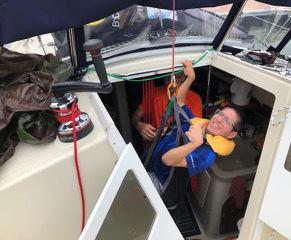
Photos provided by AG.
AG stayed home. He was very concerned that not everyone was wearing a mask especially with a 9.5% mortality rate for those with disabilities who test positive for coronavirus compared to 2% for the general population (Sulkes, 2020). COVID-19 prevented AG from living his life.
Soon, AG decided to meet COVID-19 head on by moving to Florida with his parents. He was fortunate to have the resources needed to make this move. His parents had recently retired, moved from Kansas to Florida, and bought a boat. After researching what would be needed for AG to sail, they contracted with Island Packet and Seaward Yachts for specific modifications to their boat. First of all, AG needed to be able to get in and out of the boat safely. A track was mounted to the cabin ceiling and a pulley system along the boom to lift AG in and out of the boat. Additional battery power was needed for this and other modifications, so solar modifications were made which increased the battery power bank. The boat was outfitted with a special cockpit seat and other mobility equipment for AG. The whole family worked enthusiastically on this project, learning which modifications were possible and doable. When he initially moved to Florida, AG was not expecting sailing trips and adventures, but now he is often found on a boat, without land in sight, enjoying the beauty of the Florida coast and the Gulf of Mexico.
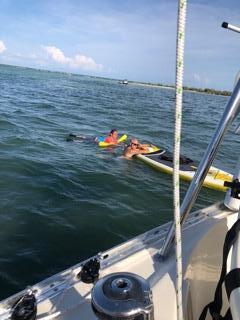
With their boat ready, AG and his family started to prepare for some “real cruising” – longer trips, further away. On November 14 and 15, 2020, the family began testing their equipment. The tracks and pulleys worked without flaws. AG was easily lifted in and out of the boat. On two occasions he was lifted from his special seat in the cockpit into the ocean to swim and hang out on a paddle board. The family felt ready to push ahead.
On November 23-25, 2020, the family extended their sailing, spending three days and nights on calm seas with beautiful afternoons. Smooth sailing was a wonderful comfort to AG. On November 26th, they set off for six nights away from home. From their boat they watched manatees, dolphins, pelicans, and other

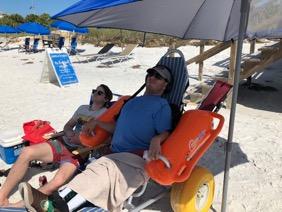
water birds, as well as the constantly jumping mullet fish and the occasional shark. AG relaxed for hours in the sunny cockpit and used the solar shower to warm up when the breeze got too strong. The family wanted to sail again before Christmas to prepare for a longer trip, but AG’s asthma complications required medicine and rest.
On January 6, 2021, AG’s twin brother, SG, joined the family. They sailed as far as Mullet Key, but higher and stronger waves shortened this trip. AG laid on the large salon bed below allowing the family to sail longer. They sailed 29 nautical miles in the two days and even docked at Gulfport Florida Marina. AG didn’t get seasick during that trip, but he did say, “It was fun, not that I want to do it very often.”
AG eagerly anticipates future sailing trips. The next one planned is to anchor at Cayo Costa State Park for a couple weeks, maybe in February 2021! Mask-less, no social distancing, no Internet, no public transportation, and no therapies required! Instead of depression and isolation, AG now feels freedom and independence. Happiness attainable without barriers is much greater than anxiety and anger. As AG says and lives, “Don’t give up on your dreams by limiting yourself. Personal happiness is just an anchor away.”
Rather than relenting to the pandemic AG pushed past the additional challenges. I highly commend AG for his perseverance. I too am an adult with physical disabilities, having had 14 surgeries. Through our discussions and his insights AG has helped me finish my doctorate in special education. While few of us may have the resources needed to move to Florida and take up sailing, I think we can all learn a thing or two about plunging headfirst through COVID-19 from AG. He is an inspiration to me and hopefully to you too, whether you are disabled or not.
Sail away, my friend.
References
Centers for Disease Control and Prevention. (2020). What is Cerebral Palsy? Retrieved from https://www.cdc.gov/ncbddd/cp/facts. html
Mills, W.R., Sender, S., Lichtefeld, J. Romano, N. Reynolds, K., Price, M., Phipps, J. White, L., Howard. S., Poltavski, D., Barnes, R. (2020). Supporting individuals with intellectual and developmental disability during the first 100 days of the COVID-19 outbreak in the USA. Journal of Intellectual Disability Research, 64, 489-496. doi:10.1111/ jir.12740
Sienko S.E. (2018). An exploratory study investigating the multidimensional factors impacting the health and well-being of young adults with cerebral palsy. Disability Rehabilitation, 40, 660-666. doi: 10.1080/09638288.2016.1274340
Sulkes, S. (5-2020). COVID-19 and people with intellectual and developmental disabilities. The Exceptional Parent,50(5), 22-24.
Fugate, Adele. K-State University. Topeka, KS. adelefugate@ymail.com
AG on the yellow float ready to ride the paddleboard with Dad.
By Lisa A. Robbins and Jaimee L. Hartenstein
For more than 7 years I have had the opportunity of providing various supports to a small school district housed in the middle of Missouri tucked away along the banks of the Missouri River. Not unlike many small towns the people who live in the area all know each other and many of them have extended families in the area. In this picturesque rural community, there are so many good people working hard to provide a good education for the students in the area. The parents and community try to support each other the best ways they know how. On December 21, 2016, things in the Glasgow, Missouri community were shattered when a high school student died by suicide surrounded by circumstances that brought them unexpected notoriety and the focus on national news. Unfortunately, the district and community experiencing this crisis had no real help with the limited amount of services which were available in their area. Like many others, this student really wasn’t on anyone’s radar as someone to watch or be concerned about. This was a life changing event for so many in the community, leading to some very divisive feelings. From the district’s standpoint one student loss was
too many. The school leaders and teachers were determined to do what they could to make sure they didn’t lose another student or miss any signs/ red flags. They really didn’t know where to start, but they knew they had to do something moving forward.
While more than 97% of Missouri is considered rural, only about 30% of the state’s population lives in rural settings. In short, about one third of the population in the state are spread out in rural communities across almost 100% of the land in the state. Not surprising, most of the mental health services and other resources can be found in the larger cities, making it difficult for those living in rural areas to secure adequate interventions and supports on a regular basis. Rural communities are sometimes incorrectly perceived as having fewer mental health needs given their small populations and low residential density. There are other factors that may come in to play when trying to secure access to services for children in rural communities. The limited services available may only be offered on limited days and times. Parents may not have transportation or childcare easily available. The cost for services can also be a significant challenge for many families in addition to the time and distance associated with travel for appointments. Many families are uninsured or underinsured. Given the lack of access to mental health services, in general, in rural areas, when services are available, they may not be appropriate for children and youth. Stigma associated with mental health services can also be a significant barrier to receiving services. They may not want others in the community to find out they are seeking these types of services, and they may feel that confidentiality will be exposed as providers are also members of the community. This, along with their geographic isolation and scarce resources, has resulted in limited mental health service options for rural youth and their families. Glasgow is one of example how challenging it can be to access services. For example, the population of Glasgow is approximately 1,100 and there are
four factories in town that employ several hundred people from the area. There is one grocery store with limited hours and there is one medical satellite location in town that provides a nurse practitioner in family medicine. There is no dentist or hospital within a 35-45-minute drive. The death of their student helped to identify the need for increased mental health support and updated school policies and the community’s perception of mental health needs.
In Spring 2017, the former principal, Sonya Fuemmeler, attended a Trauma Informed Schools workshop in Columbia, Missouri. Afterwards, she visited with the presenters from the workshop begging for help in rural Missouri. Fuemmeler and her staff knew they needed more help to better serve their students and their families. In her words she “cried the ugly cry” doing whatever she could to get help for her teachers and students; sharing that her students and their families struggle with limited resources, making the long commute to the larger cities impossible. Some of them do not have cars. Some of them already commute over an hour to the city for work and cannot make the return trip for their child to receive needed services. The district’s networking efforts led them to Burrell Behavioral Health (BBH) in the summer of 2017.
BBH provided quality in-service training on Suicide Prevention and taught teachers how to heal. BBH is a Certified Community Behavioral Health Organization (CCBHO) located in southwest and central Missouri serving 17 counties with approximately 1 million residents. They employ 1,500 people across 50 different locations and serve an average of 40,000 clients annually with a budget of $125 million. BBH has a strong commitment to bringing behavioral health services to clients wherever they are. They have a provider base of 150 clinicians and offer a full continuum of care through their integrated network. BBH creates individualized care plans and their team collaborates with families, schools, medical, and legal partners to provide the appropriate care
for each situation and community. Though the in-service was valuable, the district continued to request more help and support from BBH.
In response to Missouri Senate Bill 638, there has been a push for Trauma Informed Care training for school district members to receive resources and training. Beginning July 1, 2017, the Missouri Department of Elementary and Secondary Education must provide information regarding the traumainformed approach to all school districts, and offer training on recognizing and responding to trauma. It’s difficult for children to learn when they do not feel safe and are anxious, angry, or sad. It is estimated that more than 45,000 children and adolescents in Missouri are struggling with anxiety (Depue, et al., 2018). We know that 1 in 5 children struggle with emotional and behavioral issues in the classroom and 50% of all lifetime cases of mental illness begin by age 14. According to the Missouri Student Survey 2018 Report, more than 1 in 10 youth (14.1%) surveyed reported that they had considered suicide in the last year and almost 11% made a plan to attempt suicide. While the majority of students “agreed” or “strongly agreed” with the questions related to knowing where to get help, feeling optimistic, and handling stress well, more than 3
in 10 were unaware of where to get help (Depue, et al., 2018). A similar number didn’t feel like they had healthy coping mechanisms. In addition, the average delay between the onset of symptoms and intervention is 8-10 years for a variety of reasons, one of which is a lack of access to care.
Numerous studies have shown how childhood stress and trauma can impact adult health. The Adverse Childhood Experiences (ACE) Study is the largest study that investigated the health and social effects of negative childhood experiences. ACEs are the best predictor of poor health and the second-best predictor of academic failure. In a classroom setting, students who experience numerous ACEs have a greater likelihood of performing below grade level. They often have higher rates of office referrals, suspensions, and expulsions. We may see language and processing delays in addition to reading difficulties. They may experience decreased ability to concentrate and focus, often leading to a greater tendency to be misclassified with developmental delays. Almost
half of children under 18 in Missouri have had at least one adverse childhood experience and more than 27 percent of children in Missouri have had at least two adverse childhood experiences, which surpasses the national average of 21.7 percent (Martinez, 2017). We know that 1 in 7 Missouri students have three or more ACEs, making them 32 times more likely to have academic and behavioral problems in school. Particularly with complex trauma, there can be devastating emotional, behavioral, social, and cognitive effects. Many of the students in the district, not unlike many others, have experienced complex trauma, or exposure to multiple traumatic events that are severe and pervasive, like living in poverty or experiencing abuse or neglect. Overall, children who experience complex trauma are three times more likely to drop out of school than their peers. Changing the negative course that many children are on is our best way to prevent abuse in future generations. Strategies such as identification and assessment, reducing risk and exposure, and nurturing resiliency and skill building can be effective interventions.
Now that we have the research, what can we do with it to bring about change? How can effective interventions occur for many of these children when they live in rural Missouri? As previously mentioned, rural communities are sometimes incorrectly perceived as having fewer mental health needs given their small populations and low residential density in addition to their geographic isolations and scarce resources.
When Glasgow began a relationship with BBH, they opened the door to expanding opportunities for their students and their community that reached beyond the free training provided to their staff. In 2001, MO SW-PBS, Missouri School-Wide Positive Behavior Supports (MO SW-PBS) was formed. It’s the social behavioral, three-tiered intervention plan utilized in the Statewide System of Support where supports are provided to all students and additional supports
are provided for those students who need more intensive, individualized services. BBH uses this model as their framework for providing SchoolBased Mental Health Services. They believe having a whole-school approach leads to the best outcomes. This philosophy paired up with Glasgow’s needs and the beginning of a successful partnership was initiated. This relationship has provided a variety of trainings for all staff which included an Introduction to School Based Mental Health training. Additional opportunities are available for working with small groups of teachers to build skills and identify embedded classroom strategies around specialized topics. BBH provides on-site therapy and psychiatric case management services to students who qualify with the goal or reducing symptoms and increasing learning at no cost to the district. BBH works with a student’s payer source. If there is not a payer source, BBH will help families apply for Medicaid or defer to a sliding fee scale schedule. It’s also possible that grant funding may be an option for some families demonstrating financial hardship.
So how does a partnership get started and become successful? The more buy-in from a school district, the better. The counselor in Glasgow, Erica Deboven, has always been willing to go above and beyond for these students, and she was ready to move even before talks started. Sometimes things can take a while to get moving and bring everyone on board. That was not the case with Glasgow. The fact that they were unfortunately still reeling from the long-term impact of a student suicide helped to fuel the overall support from the various entities required to move things forward. One of the many benefits of smaller school districts can be that all the hoops required to be jumped through with new initiatives can move along more quickly than the length of time required by larger districts. An important aspect to implementation is to identify what the anticipated needs are for the school/ district and what staffing should look like to meet those needs. Some things that must be considered are simple logistics.
• Is there available space to accommodate the needs?
• How will the referral process work?
• How will scheduling take place and who will handle it?
• What about the payment for services?
• How is private insurance handled versus Medicaid?
• What about the referrals who have no insurance and do not receive Medicaid?
Since BBH is a Certified Community Behavioral Health Organization they can be more competitive than other service providers when it comes to things such as compensation and other benefits. They are the Department of Mental Health provider for the state and as such they are allocated funds for these services.
Howard County was able to see a large impact on BBH services. For example, during the 20182019 school year a total of 79 referrals were submitted for School-Based Services (SBS). Of those referrals, almost 39% had attendance/school
related concerns, 73% had home environment concerns, and almost 83% had social/emotional/ behavioral concerns. A total of 55 students received SBS, a combination of both Community Psychiatric Rehabilitation Services (n=54) and Outpatient Services (n=7, Robbins, 2019). Almost 80% of students were able to access additional supports outside of school resources to focus on behavioral health and concerns. The impact that these specific supports had on school personnel and already burdened school supports is beyond measure. The direct impact on preventing escalating issues and another tragedy as experienced in the Glasgow community is intangible. With the Rural School-Based Mental Health Integration there are several successes and challenges. One of the successes was agency coordination. A relationship was established between the school and BBH, Children’s Division, Juvenile Office, private practice therapists, and other community agencies. These agencies met monthly to discuss the progress of the program as well as opportunities for improvement through interagency meetings. Access to care and resources was another success, families were more likely to consider a referral knowing the process would take place within their community, and with partnering agencies which were trusted and known by school personnel. A third success was the school buy-in and involvement. Due to the leadership in Glasgow, there was a strong level of buy-in, in the school and community as observed
through teacher involvement and understanding of the process. The initial outcome data gathered indicated very promising results. As with any initiation of services, there were also challenges that were experienced with the Rural SchoolBased Mental Health Integration. One challenge was staffing. It was difficult to find providers who were willing to travel to the rural areas or to find providers living in the community. The payor source was also a challenge. Determining who or how the payment would be made sometimes required some creativity due to cuts to Medicaid for youth services, but the process continues to get easier as the program moves forward. An additional challenge was parent engagement. Parents would agree during the initial contact when talking with the school but would later decline the call from the partnering agency when attempts to move forward with services were made. Sadly, the communication challenges would mean the child would not receive the care that was recommended. The relationship between the school, the parents, and the partnering agency is ongoing and continues to improve leading to improved support for students and their families.
Rural communities are sometimes incorrectly perceived as having fewer mental health needs given their small populations and low residential density.
Before Missouri Statues were revised in July 2018 to require school districts to develop a suicide awareness and prevention policy, Glasgow had already implemented numerous trainings and strategies to address and prevent any further incidents in their district and community. Their efforts began with the implementation of a Crisis Assist Team in the school setting to review policies and procedures annually and as needed. Response procedures are currently in place to gather information throughout the year and notify the team with any situations that arise. An integral part of this process includes the parents which is essential for the support and protection and the students. Students have been completing the Signs of Suicide survey each year since 2017. In September 2019 students in grades 5-12 completed the survey. Following the survey 34 students saw the BBH counselors, 34 parents were
contacted, 4 referrals were made to Burrell, and 2 students were already pending in the referral process. At that time there were already 13 students receiving school-based services in grades 5-12 and 4 students in grades K-4 (Robbins, 2019). These outcomes are part of the positive impact that has occurred since the implementation of the school wide emphasis to prevent suicides in this rural community.
None of this would be possible without the continued collaboration between the school district, the parents, and agencies on behalf of the students in the community. So many positive things have happened and continue as a long-term result of the loss of one student, and the intent of this article was to share some of that process and outcomes that have taken place. The young man whose death sparked these changes is still not forgotten. While his death hit the headlines worldwide his mother felt strongly that his story was never told. She invites us all to know Kenny and what he went through, what they have all been through. She has taken on the role of a warrior against bullying and shares Kenny with all of us in her newly released book, Where the Trail
Ends by Angela Suttner. It is her hope that the book will offer a glimpse into the fatal effect bullying can cause in addition to honoring Kenny’s life. One more piece to the puzzle, and one more good thing that has come “out of something bad.”
References
Andrews, T. (2017, February 2). A horribly bullied teen committed suicide. Now his former Dairy Queen boss has been charged with involuntary manslaughter. Washington Post. Retrieved from https://www.washingtonpost.com/ news/morning-mix/wp/2017/02/02/a-horribly-bullied-teencommitted-suicide-now-his-former-dairy-queen-boss-hasbeen-charged-with-involuntary-manslaughter/
Depue, S., Kryah,, R., VonDras, S., Sale, L., & Tokac, V. (2018) Missouri student survey 2018 report. Missouri Department of Mental Health. Retrieved from https://dmh.mo.gov/sites/ dmh/files/media/pdf/2019/04/mss2018report.pdf
Robbins, L. (2019, October 17). Personal Interview with S. Fuemmeler.
Lisa A. Robbins, Associate Professor, Special Education, School of Teaching and Learning, University of Central Missouri larobbins@ucmo. edu
Jaimee L. Hartenstein, Assistant Professor, Child and Family Development School of Human Services, University of Central Missouri hartenstein@ucmo.edu
Where the Trail Ends: The Kenny Suttner Story by Angela Suttner and Lindsay Schraad can be found at Amazon.


By Kennesha Woods
Photo courtesy of

Malachi Johnson is a 13-year-old, 9th grade student who just completed 18 months in a secure justice facility. He receives special education services to address his learning disability and emotional disturbance. At age 10, Malachi was cited and taken to a juvenile detention center when he was caught shop lifting at a local grocery store and alleged to have committed theft frequently. Malachi was ordered by the court to complete 30 hours of community service and not trespass at the grocery store. He completed some, but not all of those hours. As Malachi continued to progress through 6th grade he was in a school fight, arrested, and transported to the local youth shelter. While at the shelter, he had other behavior problems, ran away, and was arrested again for theft. In 7th grade, while he was living at home, Malachi was arrested for auto theft and other offenses. He was then taken to a juvenile detention program where he was sentenced to a residential secure treatment facility for school-aged youth. He has not returned to his home school since then, until now.
Clearly Malachi’s first involvement in the juvenile justice system was not successful. How can children and youth be best served when they become involved in the Juvenile Justice System? What could happen now to improve the likelihood that Malachi successfully returns to his home school? The purpose of this article is to provide a description for educators of how the juvenile justice system works for children and youth and suggest some strategies which might increase the success of youth who are returning from that system to their home schools.
Our Juvenile Justice System
The juvenile justice system includes a broad array of agencies and staff. It includes police, probation officers, prosecuting attorneys, court-appointed or private attorneys, judges, and probation officers. It also includes detention center and shelter staff, group home workers, foster care parents, and child protection workers. In short it includes all
the professionals who might work with youth who have violated the law and those assigned to protect those youth from being harmed or harming themselves or others. Finally, it also includes staff who work to understand and reduce the risk factors associated with criminal conductthe criminogenic needs of young people.
Juvenile courts are courts which have authority to make judgements about crimes that are committed by children or adolescents who have not reached the age of majority (typically 18; but 19 in Nebraska and Alabama and 21 in Mississippi). The rules governing juvenile courts vary from state to state and may depend on the nature of the offense, but the broad goal is to provide an alternative to the adult criminal justice system. Typically, juvenile courts do not have juries, and the judge works with parents, social workers, and probation officers to achieve positive results and save the minor from involvement in future crimes. However, some juvenile offenders can still be tried as adults depending on the circumstances.
Juvenile Justice Involved Youth
Some youth become involved with the juvenile justice system because they are accused of committing a “delinquent or criminal act.” These include crimes committed against a person, property, or the public such as assault, shoplifting, stealing autos, robbery, drug abuse. These actions are crimes whether committed by a child or by an adult.
Other youth come into contact with the juvenile justice system for “status offenses” – actions that are illegal only because of a youth’s age – such as truancy, underage drinking, underage smoking, and running away from home. Depending on the youth’s history, these offenses can, but don’t always, result in processing through a court.
Proceedings in juvenile courts are not always adversarial, although youth are entitled to being represented by a lawyer. Differing models, such as
restorative justice or peer courts, are sometimes employed by these courts. Also addressed are situations in which neglect or parental loss of control are issues, and in which the minor may be made a “ward of the court” or assigned to a foster home for the child or youth’s protection.
Most juvenile justice cases are initiated by law enforcement or a child protection agency although they could be initiated by parents or guardians. A young person’s case is either brought to a judge or diverted out of the system through community services or monetary fines. Before making this decision, law enforcement follows up with the young person, their guardian, the victims (if any), to obtain the facts of the case including the young person’s prior history with the justice system.
If the matter is referred to a court, it is typically assigned to a juvenile court judge, and a prosecutor determines whether the young person should be tried as an adult or a juvenile. While the case is under investigation, the young person may be ordered to a detention center if the case involves criminal activity, to a shelter if there is a need for child protection, or to the parents,
guardians, or other care providers. During this time, the young person may or may not be on probation. If the young person is on probation, the probation officer meets regularly with the youth to prepare a report communicating the young person’s status while under supervision. Once the young person’s attorney and the criminal court attorney prepare their case, they argue it before the assigned judge. If a court proceeding finds the young person “guilty” it will also determine if the youth is ordered to a specific number of days in a confined space or ordered to be supervised in the community through probation services. These orders may include restitution, required community service, or other consequences depending on the case.
Facilities for Youth
Facilities for youth are either unlocked or locked “secure” facilities. They may be large or small, short-term or long-term. Detention centers, residential treatment programs, or group homes are examples of confined and restricted housing for youth involved with the justice system. Some facilities look like prisons (some were prisons), and
Facility Definition (From the Juvenile Residential Family Census, 2014)
Youth Shelters Provide short term supportive housing for a specific number of youth within a specific age range.
Designed to meet their immediate needs by providing youth with the tools to be healthy and independent.
Group Homes/ Halfway Houses
Residential Treatment Centers
Detention Centers
Training Schools/ Youth Correctional Facilities
Residences for youth for specific types of offenses to receive support and treatment.
Rehab, live-in, health care facilities providing therapy for substance abuse, mental illness, or behavioral problems.
Institutions where youth are held in detention for short periods awaiting sentencing or trial.
These might be in a community setting (group home) and are usually capable of locking youth within the facility.
Public or private facilities typically providing corrective education, rehabilitation, and reintegration support although the services available may vary considerably.
Table 1 – Residential Facilities for Justice-Involved Youth
services provided within these facilities vary within and across states. Youth may also be incarcerated for offenses that were not crimes but which were technical violations such as not reporting change of address, missing curfew, and failing to attend school on a consistent basis (Wagner & Rabuy, 2017). Generally, minors are not housed in the same facilities as adults, and status offenders are not housed in the same facilities as delinquent youth.
As of 2018, there were 63,000 confined youth and 46,000 more justice-involved youth in the US (Sawyer & Wagner, 2019). Within residential facilities, two-thirds of the youth were held for longer than a month, with about one-quarter held over six months, and nearly one in thirteen youth –almost 4,000 in total –held over a year (Wagner & Rabuy, 2017).
Effects of Incarceration
Whether held in residential treatment facilities or a secure prison-like space, being confined is generally viewed as detrimental to the youth (OJJDP, 2017). Incarceration, to any extent, can have serious, harmful long-term effects on a person’s mental and physical health, economic and social prospects, and interpersonal relationships. Confined spaces, punitive conditions, racial disparities, and overcriminalization are all examples of potentially harmful effects (Sawyer & Wagner, 2019). Additionally, isolation from friends and loved ones, and insensitivity towards the trauma youth may have experienced prior to entering or occurring within the justice system are also associated with the harmful effects on youth.
Barriers to Reentry
Almost all justice-involved youth return to a community and school setting. Reentry is the process whereby a youth transitions from court supervision and confinement to the community. Youth considered for reentry have either exhausted their stay in confinement (residential

placement, academy, training school, etc.), their criminal or court-ordered sentence has expired, or they have successfully completed confinement expectations and are ready to reenter the community.
Youth may encounter many types of barriers when reentering their home schools and communities. The most impactful barrier for youth is meeting their basic needs including mental health, substance abuse, and cognitive programming, community and school support systems, and team coordination (Houchins, et al, 2009). Systemic racism, exclusionary discipline practices, and zerotolerance policies in schools that target students with a history of engaging in criminalized behavior create the institutional rejection justice-involved youth encounter when reentering their home
schools (Daniel & Bondy, 2008; Feierman et al., 2009). Furthermore, justice-involved youth often risk experiencing low academic achievement and not feeling accepted in their school community, placing them at higher risk for dropping out of school. These barriers cause these youth to experience a lack of a sense of belonging while struggling to access needed resources and services.
Reentry Supports
The most impactful barrier for youth is meeting their basic needs including mental health, substance abuse, cognitive programming, community and school support systems, and team coordination.
Reunifying youth from confinement to the community requires significant collaboration among community-based organizations, support systems, and the school receiving the returning youth, as well as the courts. Student inability to access resources and maintain stability in housing, basic needs, mental health, and substance abuse can result in re-offending acts, removal from the community, and returning to a confined situation. Successful reentry requires the design and structure of a plan that involves educators, community service providers, support systems, families, friends, police and probation officers, and other partners who share a common goal of helping the youth succeed. This success might be obtaining a high school diploma or equivalency, job placement, vocational training, or professional certification.
Table 2 – Barriers to Reentry
• Zero-tolerance policies
• Exclusionary school discipline practices
• Institutional rejection
• Low academic achievement
• Increased risk for dropping out
• Lacking a sense of belonging
• Basic needs not being met
• Insufficient supports to access needed resources and services
• Lack of access to school materials, supplies, resources
• Missing credits for graduation and ineligible transfer of course credits
• Lack of coordination, planning, and communication of the Reentry Team
• Reentry Teams not including necessary support personnel
• Reentry Teams not formed early enough for adequate planning
• Lack of parental, family, or guardian
• Lack of parental, family, or guardian involvement
• Lack of family financial stability
• Lack of transportation, stable housing, finances
Employing RUSS
Educators can play a pivotal role on the reentry team by developing programs and interventions to enable justice-involved youth to be successful. For example, educators make sure the youth’s credits are calculated correctly and transferrable and work together to create a class schedule that meets the needs of the reentering youth. Educators can implement a school-based program to assist the youth in achieving and maintaining stability during the reentry phase. This will involve coordination among the professionals of the youth’s reentry team to address mental health, substance abuse issues, academic integrity, challenging behaviors, career readiness, and/or personal growth
needs. RUSS is a helpful anacronym which defines the essential role educators play in the reentry process for justice-involved youth.
REFER. Educators refer students to programs and services in the school and community that effectively respond to student needs (special education, behavior intervention, and career development programs; academic, mental health, socialization, and basic need supports).
UTILIZE. Educators utilize existing programs in the school or community to support students. Following referrals made, educators work with others to ensure the youth is receiving the offerings of each program.
SEARCH. Educators continually search for interventions that respond to these studentspecific needs and behaviors (tutoring programming, school-based mentors, special education services, social skills coaching, accountability practices).
SEEK. Educators seek information, opinions, support, and direction from school and community professionals, members of the youth’s reentry team and family, and the youth themselves.
Malachi, our 13-year-old, 9th grade student who just completed 18 months in a secure justice facility, is now returning to his mother’s home and his home school. How did Malachi’s educators implement RUSS to increase his chances for a successful reentry?
REFER. A juvenile court or parole officer initiated a
referral to the reentry school and community well before Malachi’s planned reentry date. A school and community reentry team was then identified to work on this transition. Educators on the team communicated with the court case worker and parole officer to obtain the school work Malachi had completed and other educational records. They reviewed any credits eligible for transfer and other student needs or potential issues. Educators identified school and community programs to meet Malachi’s needs and began making the required referrals.
UTILIZE. Since Malachi qualified for special education services, school personnel reviewed Malachi’s IEP and BIP and created a plan for his reentry into the school community that included a decision about the least restrictive environment to address Malachi’s academic and functional needs. They drew in his juvenile justice case worker and educators from his secure facility to provide information useful to support his success. Educators monitored Malachi’s involvement in all components of his reentry plan to increase his likelihood of success.
SEARCH. All team members searched for potential barriers and creative solutions and resources. Malachi’s school reentry team included a mental health and substance abuse counselor, psychiatrist, behavior specialist, school case manager, probation officer, and his educators who worked together to address his needs. Malachi’s home school staff solidified his class schedule, strategies for academic and social engagement and progress monitoring with Malachi, and effective supports to strengthen Malachi’s academic and social behavior.
Almost all justice-involved youth return to a community and school setting
SEEK. Throughout his reentry, Malachi’s team actively collected information from his mother and others including updates on personal interactions, engagement, progress, questions, concerns, suggested changes in direction, and academic or personal needs. The probation officer and school
personnel corresponded regularly to unsure Malachi was meeting justice and school related expectations. The school case manager made sure all team members were engaging in effective communication, encouraged them to treat Malachi as they treat his peers not involved in the justice system, and reminded them that Malachi had been out of the school setting for 18 months so needed support to adapt to the structure of this school environment. Homeroom or general education teachers were tasked with sharing information with the social workers, teachers, nurses, and other school staff who needed to know more about Malachi in order to provide supports to him.
During this process, the reentry team addressed many barriers that could have deterred Malachi from successfully reentering and remaining at his home school. Some of those barriers included a lapse in services, inconsistent modes of transportation, justice facility academic course work and credits not transferring to Malachi’s home school, missing transcripts, and teachers accessing Malachi’s probation officer instead accessing existing supports in his home school. Ultimately, Malachi’s reentry plan was successful due to the collaborative efforts between Malachi’s

Illustration courtesy of AdobeStock.com
home school and the justice facility personnel and their ability to access community resources and services. By implementing school-based interventions and programs, the reentry team utilized effective communication with Malachi and those around him. Clearly if the process and supports described were not in place, Malachi’s chances of success would have been limited.
When youth become involved with the juvenile justice system, and the courts mandate them to a confined facility, they are removed from their home school and community. When these youth reenter their home school and community, we are not meeting their needs. Therefore, when youth are in reentry programs, it is essential that the home school, community, and justice system personnel cooperatively and efficiently prepare for a successful transition. Failing to do so, is failing our youth.
References
Daniel, Y., & Bondy, K. (2008). Safe schools and zero tolerance: Policy, program, and practice in Ontario. Canadian Journal of Educational Administration and Policy, 70, 1-20.
Feierman, J., Levick, M., & Mody, A. (2009). The school-toprison pipeline... and back: Obstacles and remedies for the reenrollment of adjudicated youth. NYL Sch. L. Rev., 54, 1115.
Houchins, D. E., Puckett-Patterson, D., Crosby, S., Shippen, M. E., & Jolivette, K. (2009). Barriers and facilitators to providing incarcerated youth with a quality education. Preventing School Failure: Alternative Education for Children and Youth, 53(3), 159-166.
Office of Juvenile Justice and Delinquency Prevention (OJJDP). (2017). OJJDP 2015 Annual Report-Moving Ahead: Our Commitment to Reforming the Juvenile Justice System.
Sawyer, W., & Wagner, P. (2019). Mass incarceration: The whole pie 2019. Northampton, MA: Prison Policy Initiative. Retrieved April, 8, 2019.
Wagner, P. & Rabuy, B. (2017). Mass incarceration: The whole pie 2017. Prison Policy Initiative, 119, 1-23.
Kennesha Woods, Doctoral Student, Iowa State University, Ames, krwoods@iastate.edu
5 Critical Attributes of a Successful ED/BD Classroom
By Mary Davis
Thirteen years in and this was hands down, the hardest year of my career. I spent the first six years of my career in self-contained classrooms teaching young students with moderate to severe disabilities and have spent the last seven years as a Director of Special Education. I have loved all of these positions and I mentored many staff along the way. I’ve told countless new staff that after you get through your third year, “you’ll be in such a better place” and “don’t worry, it can only get better.”
Well…I take it all back.
It’s not like every year since year number three has been easy. I spend my days supporting special education programs across a large unit district in multiple schools, advocating for student’s rights, and trying hard to make a difference. I am no stranger to hard work, conflict, stressful situations, and disappointments. It has never been an easy job, but it is very fulfilling. The students, their families, and my staff are always on my mind and in my heart. I think that is why this year took such a toll on me. You see, in my current position, I have the honor of leading programs that serve students with significant emotional and behavioral needs. Many of these students have experienced abuse, severe trauma, neglect, or poverty and they attend our in-district, public school programs to get more intensive support. For the last several years, my teams have done phenomenal work on behalf of our students and we pride ourselves for offering this program “in house” as a public school district and have very good historical outcome data.
So, you’re probably wondering what happened, right? Why was this year so different?
After countless team meetings, several difficult conversations, a ton of problem solving, many new “plans”, and
Thirteen years in and this was hands down, the hardest year of my career.
some good, honest reflection, a few key issues were identified in regards to our program. These issues included navigating significant staffing challenges, chaotic-feeling classrooms, split second alterations to our practices due to emergency state regulations, multiple student crisis events, staff injuries, and some inner team conflict. Staff felt like they were working very hard, and they were, but they were trying to keep up with the fires and unable to get ahead. In short, we lost our vision and the teams were moving in different directions. Our program was, simply put, in crisis.
Reflective work on the issues we were facing led to the formation of what I believe are five critical attributes of a successful ED/BD program. To our team, a successful program would be where students are learning and growing in an atmosphere that is safe, structured, responsive, and calm, where student needs are being met, and where staff can do their best work. There is so much to say about the importance of each one of these attributes, but I’ve tried my best to capture and summarize the highlights.
Hire the Right Teacher
I believe the most critical attribute of a successfully run ED/BD classroom is hiring the right classroom teacher. The rest of these attributes are in no particular order except this one because I have learned that the classroom teacher is the ultimate linchpin. We have found that our ED/BD classrooms run the best when the special education teacher has a passion for working with these students and their skills are equally honed
for this special population of students. The teacher needs to be collaborative in nature, yet exercise leadership within the team. The best teachers in our ED/BD programs, particularly at the elementary level, have been observed to embrace a team approach while being relationship oriented, critical thinkers, and highly skilled in programming for both the delivery of academic content and responding to significant behaviors.
I’ve also learned over time that it is hard to keep quality teachers in these positions because the workload is so challenging. The more you can make the position manageable (Think: protecting plan times, reduced building duties, regularly scheduled meetings with the support team, filled assistant positions, ongoing coaching, professional development, etc.) the better your collective efforts will be. The value of a manageable workload in this position cannot be overlooked, and the value of a happy, quality teacher in this position cannot be understated.
Gain Instructional Control, and Quickly
The next critical attribute we’ve found also relates back to the classroom teacher and highlights one of the many skills they must have. Instructional control of an ED/BD classroom must be in the hands of the teacher by implementing solid foundational practices to make their classroom a good place to be for children. Their classroom should be inviting, flexible, and encouraging with a consistent hierarchy of positive and negative consequences. (Note: Our team uses Randy Sprick’s STOIC framework from Safe & Civil Schools as a multi-tiered system of prevention and intervention.) The teacher should have a
healthy relationship with the students that establishes the teacher as the leader with authority over the instruction, work load, and reinforcements while the student’s voice and experiences are honored, acknowledged, and integrated; it’s certainly a delicate dance. With this in place (sooner rather than later) students respond positively to a very structured and predictable classroom environment and realize when following the classroom routines and management system, they will learn new skills and experience success in school. If it takes too long to establish instructional control, you’ll have a runaway classroom on your hands (i.e. increased escalated behaviors).
Identify a Clear Learner Profile and Keep the Class Size Reasonable
I have seen through the years that there is a strong correlation between a manageable class and how similar or different the needs of the students present. Although no two students are the same, we have found the most success in our ED/BD programs when we have narrowed the focus of who we serve, have a clear vision for the program, and commit as a team to a common set of beliefs.
For reference, we have primary students in one classroom and intermediate students in another classroom. Additionally, all students in the program are capable of doing grade level work and common areas of need include building skills for appropriate socialization, self-regulation, and self-advocacy skills. Finally, our team created and commits to the following beliefs:
• All students deserve and must be treated with respect and dignity.
• Students should be taught the skills necessary for success and given frequent opportunity to practice.
• Building relationships and having positive interactions are essential.
• Unexpected behaviors represent communication and a teaching opportunity.
• Students can learn the difference between expected/unexpected behaviors and connections between choices/consequences.
• Teachers should be reflective and adaptive.
These structures and beliefs help us program more intentionally for the needs of our students, have open and honest dialog with students about their emotions and behavior, and stay focused on our program goals.
Embrace a Team Approach
I have found that a fully available, dedicated, and well-functioning support team is hands down a “must-have” when it comes to serving students with emotional and behavioral challenges. And when I say support team, I mean everyone including the classroom assistants, social worker, school psychologist, speech pathologist, occupational therapist, school nurse, behavior specialist, coordinators, coaches, leadership, and many others depending on who supports the students in your building. Students benefit when related service members integrate their services into the classroom through classroom groups and station work, in addition to any individual or small group pull-out services they may provide. However, no one does their best work when they are stretched too thin. We found that we needed to take care of these team members and support their roles better if we want them to take care of our students well.
One way to do this is by giving the team dedicated and sacred time for problem solving and professional
I believe the most critical attribute of a successfully run ED/ BD classroom is hiring the right classroom teacher.
development that is supported through consistent classroom coverage or arranged at a time when students are not in attendance. These teams need ongoing professional development to expand their skills, use research and best practices to guide their discussions, and ample discussion time to put all of that knowledge into action plans for students.
Finally, we’ve learned that crisis situations are typically time consuming and require a high level of compassion and care to support the student and their family. In order to help all students in the building receive what they need, we recognized that program staff need caseload flexibility to fully respond to crisis situations. We moved to a staffing model that allocates a large amount of staff time to be “in program.” This provides staff much more flexibility without impacting the rest of the building and this flexibility also helps promote coordination of care efforts so students fully benefit from wraparound services. Coordination of care among school professionals, the family, and any outside providers has become increasingly important for the success of the students in our program.
Empower Expert Staff and Committed Administration
Due to the complexity of needs, it takes intentional coordination to ensure the team is supporting the student from all angles. I believe a highly skilled behavior specialist is vital to a successful program as they can help train, mentor,
and coach staff on the appropriate ways to program, intervene, and respond to students in the program. They can also help problem-solve the intense behaviors that come up, assist the team with conducting and creating comprehensive FBA/BIPs and of course, serve as another team member who can form a positive relationship with the student and their family. Their knowledge, expertise, and leadership has proven to be very valuable to our teams through the years.
Additionally, a committed administration team cannot be underestimated as an important part of this programming within a public school setting. Committed administration means from top to bottom, administrators believe these students belong in our public schools. It’s important that the program is hosted by a building where the leadership truly embraces the program as that will trickle down and impact the rest of the building staff, community, and school culture. Committed administration also means that the allocation of support and resources is informed, thoughtful, and adaptable to the needs of students. But most of all, committed administration means the “boots on
Committed administration means from top to bottom, administrators believe these students belong in our public schools.
the ground admin” as I call them (i.e. Principal, Coordinator, Director of Special Education, etc.) walk the walk alongside the students and staff. They arrange for space, flexible schedules, and proactive communication. They advocate for resources and prioritize needs in an equitable way. They are knowledgeable and confident in special education programming, creative in their problem solving, and truly care for these children. They lead by example and hold high expectations for their students and staff. These dynamic leaders do not shy away from conflict or hard conversations, they form positive relationships with families, and provide unwavering support to their team.
A Bit of Reflection
Educational leadership is a tough gig. Educational leadership in the area of Special Education is even more so at times. But I can say although this year went down in history for me, there were so many positives. This year stretched my leadership further than I ever thought possible. This year showed us the gaps in our programming and we used that to improve what we do for kids. And this year taught me so much about the importance of my job, the importance of the work my teams do each day, and the importance of having strong, well supported programs in our public schools. These students are absolutely worth it!
Mary
Davis, Director of Special Education, Community Unit School District #200, Wheaton, Illinois, Mary.Davis@cusd200.org
Buddy Up to Improve Classroom Behaviors
By Nicolette M. Grasley-Boy
Mrs. Moone is a fourth-year teacher who has 22 students in her fifth-grade classroom. She recently attended a professional development session where the trainer discussed the benefits of classroom management strategies, such as behavior-specific praise and opportunities to respond. After the session, Mrs. Moone wanted to know how often she actually used these strategies. She tried tracking them for several days but struggled to remember to tally them while she was teaching. She really felt these strategies could improve her classroom, but she was overwhelmed trying to remember to use them while running her classroom.
Teachers have myriad responsibilities in the classroom beyond instruction, with managing behaviors being one of the most critical. Classroom management ranges from using strategies that set up all students for behavioral success to implementing specific, individualized interventions to improve one student’s behavior. Teachers who have strong classroom management skills are more satisfied in their jobs and less likely to burn out (Aloe et al., 2014), while their students have better behavioral and academic outcomes (Korpershoek et al., 2016). Given all of their responsibilities, though, it can be difficult for teachers to observe and reflect on their own classroom management practices while simultaneously teaching and managing behaviors, among other things. Similarly, it is often difficult for a teacher to take data on their student(s) while also teaching and managing behaviors.
Direct observations are one method of collecting behavioral data to help inform both class-wide and individual behavior management decisions. They may be used for individual students (e.g., a teacher or school psychologist observing one student’s behavior), several or many students (e.g., a student teacher collecting data on a small group in his mentor’s classroom), or teachers (e.g., a behavior specialist observing the teacher’s classroom management behaviors). Direct observations range from informal (e.g., anecdotal notes) to formal (e.g.,
counting the frequency of one specific behavior), and can use paper-based or electronic systems. This article will focus on how to conduct more formal observations of specific behaviors.
Although direct observations are a tried and true method, there are many challenges associated with them. Perhaps the greatest is the amount of time needed to perform good observations. In the event that your school has the resources to have staff dedicated to doing observations, it is likely that they already have many other observations to conduct, or perhaps they are forced to triage the most severe cases. Many teachers have likely been asked to observe one or more of their students to collect evaluation or progress monitoring data, but this is very difficult to do while leading a class. Trying to collect data on your own skill use can also be hard while juggling other responsibilities. One potential solution to these challenges is to find a colleague to serve as a buddy to help conduct observations.
Using the Buddy System
Finding a Buddy
There are several things to consider when looking for an observation buddy. First, you should look for someone you trust and feel you can work with. Similarly, look for a buddy who you know either has observation experience or is eager to learn from you. Second, think about their other commitments and availability related to your observation needs. Don’t be afraid to consider people outside of your grade level or teaching team. Finally, consider if your potential buddy has an existing relationship with your students. For observations of your behavior, having someone the students know may help them be more comfortable with an additional adult in the room. For individual student observations, however, another adult that the student knows well may inadvertently influence that student’s behavior and not provide an accurate estimate.
Establishing Realistic Expectations
Once you have identified a potential observation
buddy, you must work together to establish realistic expectations for your partnership. It is critically important for you and your partner to know who will be doing what and when it will occur. You should discuss the following responsibilities and activities before beginning any observations.
Responsibilities before observations. Communicate with your buddy about the times for and lengths of the planned observations, specific behaviors to be observed, and details about the observation system. You should also discuss any specific procedures your buddy should do during the observation. Do they need to sit somewhere specific to see you or the student during that period? What should they do if students ask why they are in your class or try to talk to them instead of paying attention to class? Your buddy’s role should be to share their availability and work with you to determine an appropriate schedule for the observation(s). Additionally, ask your buddy for feedback and suggestions about your plan.
Responsibilities during observations. As a teacher being observed, your main responsibility during the observation is to conduct your class normally. You may need to work out with your buddy if you need to cue them to begin the observation, but beyond
that, you should focus on your typical activities –that’s the point of finding a buddy! During this time, your buddy will focus on attending to your behaviors or those of the target student. As much as possible, try to limit their distractions (though we all know this is a lot to ask some days).
Responsibilities after observations. Given teachers’ schedules, it may be unlikely that you and your buddy will be able to debrief immediately, so it is essential to plan this follow-up meeting ahead of time. When doing so, your buddy should have time to finalize the observation results as well as prepare any feedback, if necessary. You also need to consider the urgency of discussing the observation. Sometimes it may be fine to wait a day before you can meet, but other times you may need the data that same day, so make sure you have both worked this out ahead of time. It would also be helpful to determine ahead of time which person will be responsible for graphing the data. During the post-observation meeting, your buddy should prepare to share the observation data and provide constructive feedback on what they observed or the observation system itself. If you are being observed (as opposed to an individual student), you should use this debriefing time to listen to your buddy’s feedback on your behaviors and ask for clarification. This will be important to help you reflect and change your behaviors going forward. Finally, you and your buddy should discuss plans for further observations, if applicable.
Conducting Direct Observations
As mentioned, there are many reasons you may need an observation conducted in your classroom. You may need to take data for a student with an existing behavior plan, or perhaps you have implemented a behavior intervention for one student on your own. Maybe you, like Mrs. Moone, recently learned about trying to increase your behavior-specific praise, and you need help finding out how much you already use it and if you can increase it by tracking it. Regardless of whose behavior is to be observed, it is important to
Operational definition (include examples and non-examples)
A verbal statement conveying positive feedback and stating the specific behavior the student(s) did right
• Examples
o Great work following directions
o Nice job talking through the steps you took to solve that problem
o Thank you for lining up quickly
• Non-examples
o Good job
o Nice work
o Thanks
Frequency or duration? Frequency
Observation time and class 9:30-9:45
Whole group math
Planned observation dates 10/1/19, 10/3/19, 10/8/19
Planned check-in to discuss observation results and next steps 10/8/19
establish several key pieces before observing. Figure 1 provides a sample plan that summarizes the steps discussed below; an editable template of this is available from https://osf.io/crua3/.
Once you have determined who will be the focus of the observation (i.e., you or a student), you need to define the specific behavior(s) to be observed. If you are observing a student who already has a behavior plan in place, this step may have already been done and you should use the existing behavior definition for consistency. It is imperative that you operationally define the target behavior (i.e., explicitly define a behavior so that it can be observed and measured) so your buddy knows what counts as the behavior and what does not count. For example, if you want to have your use of behavior-specific praise observed, you may define that as “a verbal statement conveying positive feedback and stating the specific behavior the student(s) did right.” It also helps to provide examples (e.g., “Nice job raising
your hand”) and non-examples (e.g., “Good work”) for additional clarification. Operational definitions are especially helpful for behaviors that may vary from person to person, such as “disruption.” One student’s disruption may take the form of calling out while another’s may be getting out of her seat.
Once the behavior is defined, you can determine if your buddy will observe its frequency (i.e., how often it occurs) or duration (i.e., how long it occurs). Frequency is used for behaviors that are short, such as calling out, opportunities to respond, or raising a hand. Duration is used to record behaviors that last longer, such as time engaged, time to start a task, or time actively teaching. Frequency and duration can both be converted for comparison if you suspect each of your observations will not be the same amount of time, provided the observer tracks how long each observation lasts. Frequency can be converted into rate by dividing the total frequency by the total observation time (e.g., 2 behavior-
Figure 1. Sample Observation Plan
specific praise statements in a 10-min observation is 0.2 behavior-specific praises per minute). Similarly, duration can be converted into the percentage of the observation by adding the total duration of the target behavior and dividing by the total observation time (e.g., 3 min out of seat in a 10-min observation is out of seat 30% of the observation). Be careful to make sure that the total duration of the behavior and the total duration of the observation are in the same units (e.g., minutes).
You also need to determine when to observe the target behavior. Student-focused observations should be conducted during times when you know the target behavior occurs frequently or during a period where you have specifically begun a behavioral intervention. If a behavior intervention plan is already in place, try to conduct the observations during the same time as those that were conducted prior to the intervention plan. Teacher-focused observations should also be conducted during a time you feel you need the most help with your own behavior.
Observation Systems
There are a number of ways to collect data during your observations. Though having an observation buddy will open up other observation methods, there is no harm in keeping the system simple. By this point, you should have operationally defined the target behavior(s) and should know whether you will be collecting frequency or duration data, which will inform your data collection system.
Paper-based. Paper-based observation systems provide a low-tech, perpetually customizable solution for your data collection needs. You and your partner can work together to create a system that meets your needs. For any observation, it is good practice to record general details, including the date, class period, and start and end time, along with having somewhere to write any notes that come up during the observation. If you are converting frequency to rate or duration to percentage of observation, it is also nice to have a space to record
Teacher-focused observations should also be conducted during a time you feel you need the most help with your own behavior
that with a reminder of the calculation (e.g., Rate = Total Behaviors / Total Observation Time). For frequency observations, the observer needs a space to tally the target behavior. For duration observations, they will need some type of stopwatch and a space to record either the total time of the behavior across the observation, or multiple spaces so they can record the duration of each instance of the behavior to add and get the total duration later. Figure 2 provides an example of a frequency and duration data collection form; editable templates of these are available at https://osf.io/crua3/.
Electronic. There are several electronic observation applications that range in cost and ease of use. The School-Wide Classroom Observation and Analysis (SCOA; Anderson, 2012) program is a low-cost iOS application that is also easy to use while providing useful data. SCOA has a number of student and teacher behaviors pre-loaded (see https://louisville. edu/education/abri/assessment/scoa-application. pdf for a detailed list), and allows the user to create additional frequency and duration behaviors. SCOA provides the total frequency or duration at the end of the observation and gives the observer the option to email a summary table while also saving the observation data in the program. SCOA users can also create profiles for observing multiple teachers or students, which can be useful for repeated observations. This observation system may be preferable if the observer is collecting data on more than one behavior during a single observation period.
Be+ (University of Oregon Digital Press, 2020) is a free mobile application that can be used for tracking behavior data and is available for both Android and iOS devices. Currently, Be+ can only collect frequency data. Similar to SCOA, this application has several pre-loaded behaviors and allows users to add additional behaviors for frequency data collection. Be+ provides in-app graphing of both frequency and rate for individual sessions and across multiple sessions, with the ability to share these graphs from within the application. Unlike SCOA, Be+ is geared towards a single user and does not have the ability to have multiple profiles or separate data collected for different individuals on the same behaviors during the same time period. Be+ has additional reminder and alarm features to help teachers increase their use of specific behaviors.
After Observations
Graphing Data
Graphing data is an easy way to monitor progress for both your students’ behaviors and your own, and the types of observations discussed here lend themselves to this well. Graphs can be created either by hand or electronically using software such as Microsoft Excel or the Be+ application. While graphing by hand may often be simpler, there are many online tutorials (both written and video) to guide you through creating a graph in Excel. One benefit of using Excel is the potential to reuse previous graphs as templates for new ones.
When setting up your graphs, you need to be clear about your axes and what they represent. In general, for these types of observations, your x-axis (or horizontal axis) will represent the date or session number so you can show how the data change over time. Your y-axis (or vertical axis) will be the target behavior. With either graphing method, you should also label both the
numbers and titles for each axis. You may also need to make some form of notes with each graphing method, the most important of which is illustrating when an intervention was put in place (if applicable). Typically, we would do this by drawing a vertical line just before the first observation following the intervention.
Making Decisions
Depending on the focus of your observation, a number of things may take place afterwards. For observations of teacher behaviors, you and your buddy should debrief to discuss your data and any other notable things observed. This will also be an opportunity for constructive feedback on your behaviors, which you can use to help make changes by creating an intervention plan for yourself. For example, if your buddy was tracking your use of behavior-specific praise and only observed you use two or three times in each observation, you might plan to use some sort of cue (e.g., timer set to vibrate every 3 minutes) to help you increase your use of behavior-specific praise. If your buddy is able to continue observing you, even just once or twice a week, you can begin to track your progress over time to see if the intervention was successful or needs to be modified.
For student-focused observation based on an existing behavior intervention plan, you should work with the team that developed the plan to monitor progress and
Target Behavior: Behavior-Specific Praise
Intervention started – BSP to each group
Intervention modified – reminder every 3 min on Be+ app
Target Behavior: Active Teaching
Figure 2. Frequency and Duration Data Collection Form Examples
intervention effectiveness using the data your buddy collects. For those without an existing intervention plan, you and your buddy could brainstorm possible interventions that would be feasible for you to implement in your classroom, and then conduct follow-up observations to see if the student’s behavior has changed as well as if you are able to effectively implement the intervention.
After struggling on her own, Mrs. Moone decided to find someone to help her with classroom management observations. She thought her Math class would be a good time to observe and asked
around for teachers who were free during that period. Mr. Rhodes, a second-grade teacher, had his prep period during that time and was excited to help Mrs. Moone. They first met to discuss their plan, and decided Mr. Rhodes would conduct three observations of Mrs. Moone’s behavior-specific praise over the course of two weeks on Tuesdays and Thursdays, after which they would meet to plan the next steps. He found that she was only using one or two behavior-specific praises during each 15-minute observation and that they were directed toward the same handful of students. Together, they made a
plan that Mrs. Moone would try to give behaviorspecific praise to at least one student in each desk group during the period, and Mr. Rhodes would do three more observations over two weeks. They met again after trying this intervention and found that Mrs. Moone started strong but decreased her use of BSP quickly. They decided the next step was for Mrs. Moone to use the Be+ app to provide a reminder to use BSP every 3 minutes. Mr. Rhodes continued observing her and found she quickly increased her BSP use. Mrs. Moone decided to continue using this strategy for a few weeks with a plan to fade its use over time. The pair made a plan for Mr. Rhodes to observe only once per week, then every other week, to make sure Mrs. Moone was continuing to use plenty of BSP until she was able to maintain a high rate without reminders. The pair also started planning how Mrs. Moone could help Mr. Rhodes collect data on an individual behavior intervention in his classroom.
References
Aloe, A. M., Amo, L. C., & Shanahan, M. E. (2014). Classroom management self-efficacy and burnout: A multivariate meta- analysis. Educational Psychology Review, 26, 101–126. doi:10.1007/s10648-013-9244-0
Anderson, J. (2012). School-wide Classroom Observation and Analysis (SCOA) (Version 1.8) [Mobile application software]. Available from http://itunes.apple.com
Korpershoek, H., Harms, T., de Boer, H., van Kuijk, M., & Doolaard, S. (2016). A meta-analysis of the effects of classroom management strategies and classroom management
Together, they made a plan that Mrs. Moone would try to give behavior-specific praise to at least one student in each desk group during the period, and Mr. Rhodes would do three more observations over two weeks.
programs on students’ academic, behavioral, emotional, and motivational outcomes. Review of Educational Research, 86, 643–680. doi:10.3102/0034654315626799
University of Oregon Digital Press (2020). Be+ (Version 1.0.40) [Mobile application software]. Available from http://play. google.com and http://itunes.apple.com
Nicolette (Nikki) M. Grasley-Boy, Postdoctoral Researcher, Juniper Gardens Children’s Project, Kansas City, KS, formerly at the University of Florida in Gainesville, FL, ngb@ku.edu
By Thomas McIntyre
Think before you speak.” We’ve all heard that aphorism. Its meaning; You should have considered the implications of what you planned to say and made certain that your words were monitored carefully, while well-intended, is often delivered in a sharp tone of voice that negates the grateful acceptance of that advice.
THINNK acronym ensures that we engage in civil and relationship-sustaining message deliveries that contribute to productive resolutions of situations in which student teacher-conflict could ignite and escalate. THIINNK involves in-the-moment quick reflections upon our impending reaction to behavioral violations in our classrooms. This sequence of considerations is delineated below.
Before speaking to a misbehaving student consider whether the planned commentary is-
Thoughtful
Pause for a moment to reflect upon whether the impending response is based on an accurate understanding of the events that transpired.
• Did we witness the entire sequence of events that led up to action that instigated our urge to speak to it?
comprehensive understanding that develops devise a response that is instructional; resulting in learning of new behavior on the part of our student.
Helpful
• Are we providing a life lesson to the student in a manner that enhances the chances of that lesson actually being learned? (Understanding its content and recognizing its importance)
HIt is crucial to remember that “Teaching ‘em a lesson” doesn’t. While punishment may identify what NOT to do, it fails to teach a replacement behavior. Instruction and practice in such areas as values clarification, social-emotional learning, social skills training, and alternatives to aggression, accompanied by activation of the student’s motivation to attend, emulate, and adopt the alternative action pattern does teach new, more appropriate (re)actions.
Important and Inspiring
• Is there an urgent and valid need to address the situation at this moment?
• How can we respond in a manner in which the emotionally-charged student recognizes that we are there to help make the situation better?
• Are we considering the special-needs learner’s interpretation of happenings given his/her/their school-based and outside-life experiences?
• Is our assumption regarding the student’s intent correct? Have we considered the source, antecedent, and function of the student’s actions?
T• If a consequence is stated, will it serve to help the student understand the need to respond differently in the future?
• If a consequence is identified, are we be willing and able to implement it, thus ensuring consistency and fidelity in approach?
Some incidents require another immediate practiced response. However, when urgency is not the priority, when in doubt ask information-seeking questions so as to ascertain a full and detailed framing of the elements involved in the situation. From that more
• Will our intervention in the matter maintain and bolster our student-teacher relationship?
• Is the wording of our commentary likely to be persuasive and influential? Will it move the young person to a higher stage of willingness to engage in changing a deeply ingrained behavior pattern for the better?
IThe greatest motivator for undertaking positive change in one’s behavior patterns is possessing strong trust in the good intentions and reliability of support of the person who is leading the effort. It’s human nature to cooperate more with people we like, respect, and admire. This need for the establishment and maintenance of trust bonds is especially true in the education of behaviorally disordered children and youth. As Nicholas Hobbs (1982), a pioneer in the education of kids with pronounced behavior challenges reminded us in his 12-point listing of
Iprinciples for reaching and teaching them; “Trust between child and adult is essential, the foundation on which all other principles rest…”
If a change in a student’s behavior pattern is deemed necessary, we must ensure that our interventions and statements result in increased heartfelt positive motivation on the part of the learner to engage in the new action pattern. The words we use, how they’re presented, and when they’re uttered have considerable impact on the outcome.
Necessary and without Negativity
• Have we engaged in symptom separation? (separating the behavior from the student who displayed it). Does our disapproval of the action still result in our recognizing that there is a young learner in need of our compassion, support, and guidance?
N• Do we have the necessary training to work productively with our special needs young people, or are our responses reflective of fight/flight/ freeze reactions to a perceived threat to our personal and professional safety?
• What good would come of succumbing to the urge to make a terse and strident comment? Is now the time to address the situation, or is the optimal time to address it later when the involved parties, including us, are calm and temporally removed from the event?
• If the optimal time to intervene is now, how can we phrase our utterances so that we present as being assertively in-charge, and strengthen the student-teacher relationship at the same time?
We may feel a “need” to say something, but is there a need for the student to hear it? If it is deemed necessary to address and correct inappropriate actions at that moment, instead of pointing out what was done wrong, let’s state which action should be displayed in order to make things right. Telling the offender what TO DO, and in a voice tone and body language that communicates WITH the student, rather than talking AT the errant learner is the most productive avenue of intervention. Immediately
following that respectfully stated direction with a note of encouragement and expression of confidence in the student’s ability to make the right decision activates the positive student-teacher bonds for both parties.
Just as we want our students to be emotionally and behaviorally self-managed, we too need to be in control of our emotions and their expression. In order to calm a child, we must be calm.
Kind
• Would we appreciate being publicly addressed at this time and place if we were in their position?
• Would the delivery and wording of the commentary be appreciated if it were directed at us?
• Would the approach and wording motivate us to engage voluntarily in the desired behavior?
Kindness, is an admirable personal quality that also strengthens interpersonal relationships with the vast majority of our youth with mental health and behavioral challenges. However, it must be accompanied by an alert wariness when extended to a certain segment of our behaviorally misdirected children and youth. Initially, students with assigned labels such as socially maladjusted and conduct disordered might perceive kindness as a weakness to be exploited in order to gain power and influence over its presenter.
NKAn awareness of this possible misinterpretation, and making it known to the student that it is not the case, parries attempts at victimization with a firm, confident, and effective verbal countermove. Kindness combined with assertiveness promotes the positive interpersonal bonds and understandings that reduce the future incidence of manipulative ploys. This dually powerful combination deflects attempts to take misguided advantage of our positive outreach, and allows our goodwill efforts and personal warmth to be recognized for what they are; components of caring and competent professionalism.
“A teacher–counselor is a decent adult; educated, well trained; able to give and receive affection …
a professional through and through… a person of hope, quiet confidence, and joy; one who has committed themselves to children and to the proposition that children who are disturbed can be helped….” (Nicholas Hobbs, 1966)
Epilogue
When we witness behavioral outbursts, it is likely that the youth are experiencing stress that overwhelms their capacity to manage it. In those moments, it is professionally crucial that we think to ourselves; “I am in the presence of a kid in crisis who needs help. What should a consummate professional do at this moment?”
If asking that question of oneself brings forth few productive ideas for intervention, there are myriad suggestions for intervention in the resource section located below.
Engaging in caustic power-oriented reactions to misbehavior simply adds to the stress experienced by our students, prompting accelerating displays of the action one is trying to abate, thus engaging the us in an escalating Conflict Cycle (Long, 1979). Even if those reactions are successful in subduing the behavior, that conquer creates resentment that corrodes the essential positive student-teacher relationship.
The Golden Rule applies to the classroom setting. Empathy and compassion bring out the best in us and others. As the old adage informs us: They gotta like the messenger if they’re gonna listen to the message.
Engaging in the THIINNK style of reflective but expeditious in-the-moment decision making during emotionally charged moments does not happen simply because we’ve read about it. However, like any new behavioral acquisition, it becomes automatic with practice. Initially, it derives from telling ourselves to “Stop! Reflect for a moment before responding to this event.”
Later on, when we have the time and tranquil mindset needed to reflect upon the implemented intervention and its outcome, we make use of the
above-stated THIINNK considerations in our postevent analysis. Doing so brings them to mind more quickly and clearly during future events, eventually becoming our standard, almost automatic response when students stray from the behavioral straight and narrow path.
Let’s put on our THIINNKing caps and keep them tight on our noggins during those moments that try our personal and professional souls. Let’s THIINNK before we speak.
Resources
Behavioradvisor.com (McIntyre, T.)
• Nice Ways to Gain Compliance & Help Kids Develop Self-Management of Their Behavior.
• Giving and Getting Respect.
• Giving Criticism that Helps, Not Hurts
• Giving Effective (versus ineffective) Praise
• Praising Praise-Resistant Kids.
• I Messages.
• Non-directive counseling.
• Assessing and Improving the Readiness of AtRisk Youngsters to Change Aberrant Behavior Patterns.
Plevin, R. (2015) Classroom Management StrategiesChange your attitude
Stacho, T.J., It’s All About Relationships: Meshing Philosophy and Daily Practice
References
Hobbs, N. (1966). Helping disturbed children: Psychological and ecological strategies. American Psychologist, 21(12), 1105–1115.
Hobbs, N. (1982). The Troubled and Troubling Child. San Francisco: Jossey-Bass.
Long, N. J. (1979). The conflict cycle. The Pointer, 24 (1) 6-11.
Tom McIntyre, Professor of Special Education, Hunter College, City University of New York and author of BehaviorAdvisor.com, tmcintyr@hunter.cuny.edu
Social Maladjustment Versus Emotional Disturbance

By Michael Rozalski, Mitchell L. Yell, and Christina Interlichia
The federal definition of emotional disturbance (ED) in the Individuals with Disabilities Education Act (IDEA) has long been criticized on logical and empirical grounds. Perhaps the most controversial aspect of the federal definition of emotional disturbance is the social maladjustment (SM) exclusion. According to the definition of ED in the 2006 regulations to the IDEA, the term ED “does not apply to students who are socially maladjusted, unless it is determined that they have an emotional disturbance.” The problem with this exclusion is that it may result in students being denied special education services. Our purpose in this article is to address the SM exclusion and offer suggestions that clarify the definition and lead to programming that will better serve students with behavior problems, regardless of their ED and/or SM diagnoses.
The federal definition of ED has its historical roots in the work of Eli Bower, who in the 1960s did research on identifying students who required specialized services because of their severe emotional and behavioral problems (Bower, 1982). The term “emotional disturbance” was first referenced in the Elementary and Secondary Education Act in 1965, then adopted by Congress in 1975 with the passing of the Education For All Handicapped Children Act (EAHCA; now the IDEA, 2004). The social maladjustment clause that was used in the ED definition in IDEA was not taken from Bower’s definition. In fact, Bower disagreed with excluding students with SM from the federal definition, finding that it was inherently illogical because he believed that the students he identified in his definition were socially maladjusted while at school.
For a period of time the interpretation of social maladjustment was very controversial, and some advocated for interpreting this to mean that children and youth with a diagnosis of conduct disorders should be considered as socially maladjusted, and thus excluded from being considered emotionally disturbed. However, this view was strongly contested by the professional community and resulted in efforts to actually change the definition by eliminating this clause (Forness & Knitzer, 1992). While no changes were made directly as a result, that discussion has been interpreted by the courts as described below.
The definition of ED that had the most approval from professionals in special education was the proposal advanced by the National Mental Health and Special Education Coalition (Federal Register, 1993; Forness & Knitzer, 1992). This definition, presented on page 50, has a number of advantages over the current definition (Forness & Kavale, 2000), including that:
• It focuses directly on the student’s behavior in school settings and places the behavior in the context of appropriate age, ethnic, and/or cultural norms.
• The four qualifying statements (e.g., more than a temporary stressor) ensure that only students who qualify will be identified.
• It emphasizes a two-step process for eligibility determination.
• The definition stresses the need for multiple sources of data for decision-making.
• It increases the likelihood of early identification and intervention.
• Finally, this definition eliminates the distinction between emotional behavioral disorders and social maladjustment.
The definition was approved by Head Start and over 30 other professional and advocacy groups. Although this definition was not included in the IDEA in the reauthorizations of 1997 or 2004, it is likely that there will a push to include the definition in the federal law when the IDEA is next reauthorized.

The Current IDEA Definition of Emotional Disturbance:
Regulations to the IDEA define the category as follows:
(4)(i) Emotional disturbance means a condition exhibiting one or more of the following characteristics over a long period of time and to a marked degree that adversely affects a child's educational performance:
(A) An inability to learn that cannot be explained by intellectual, sensory, or health factors.
(B) An inability to build or maintain satisfactory interpersonal relationships with peers and teachers.
(C) Inappropriate types of behavior or feelings under normal circumstances.
(D) A general pervasive mood of unhappiness or depression.
(E) A tendency to develop physical symptoms or fears associated with personal or school problems.
(ii) The term “emotional disturbance” includes schizophrenia. It does not apply to students who are socially maladjusted, unless it is determined that they have an emotional disturbance (IDEA Regulations, 34 C.F.R. 300.8 [4][i-ii], 2006).
The definition has four main components. First, a student must exhibit one or more of the characteristics listed in the definition (e.g., An inability to learn that cannot be explained by intellectual, sensory, or health factors). According to the U.S Court of Appeals for the Eighth Circuit, “Read naturally and as a whole, the law and regulations identify a class of children who are disabled (because) their abnormal

emotional conditions prevent them from choosing normal responses to normal situations” (Independent School District No, 284 v. A.C., 2001).
National Mental Health and Special Education Coalition Proposed Definition of Emotional & Behavioral Disorders (Federal Register, 1993; Forness & Knitzer, 1992).
The term emotional or behavioral disorder means a disability characterized by emotional or behavioral responses in school programs so different from appropriate age, cultural, or ethnic norms that they adversely affect educational performance, including academic, social, vocational, or personal skills, more than a temporary, expected response to stressful events in the environment; is consistently exhibited in two different settings, at least one of which is school related; and unresponsive to direct intervention applied in general education, or the child’s condition is such that general education interventions would be insufficient; persists despite individualized interventions within the educational program, unless in the judgement of the team, the child’s or youth’s history indicates that such interventions would not be effective.
Second, these characteristics must be exhibited over time and to a marked degree. Unfortunately, neither the statute nor the regulations define what a long period of time is or what a marked degree means. A state’s administrative regulations may define these terms, so readers should consult their state’s statutes, regulations, or guidance documents. In nonbinding guidance, officials in the Office of Special Education Programs in the U.S. Department of Education wrote that a long period of time is a range of time from two to nine months assuming that interventions in the general education classroom had been tried and had failed (Letter to Anonymous, 1989). In the same nonbinding policy letter, OSEP officials also took the position that to a marked degree refers to frequency, duration, or intensity of a student’s behavior in comparison to a peer without disabilities.
Third, a student’s emotional disturbance must have a negative effect on the educational performance of the student. That is, a student must need special education services and related services because of his or her disability. Although there is some variation in States’ definitions of educational performance, it generally is taken to mean that a student needs specially designed instruction and services, academic or functional, to ensure their individualized education program enables the student to receive a free appropriate public education.
Fourth, the definition includes two qualifying statements. The first is that emotional disturbance includes schizophrenia, and the second is that the term does not apply to students who are socially maladjusted unless they are also emotionally disturbed. This second qualifying statement has been the subject of considerable controversy. It would be an unusual social maladjusted child who did not show inappropriate types of behavior under normal circumstances. The social maladjustment exclusion
makes little sense because a student who was determined to be socially maladjusted would certainly also be determined to meet criteria for emotional disturbance.
The Social Maladjustment-Emotional Disturbance Distinction
The term social maladjustment is not defined in the IDEA nor its regulations. Because the law offers no definition of the term, it makes little sense to exclude special education services from an unknown group of students. Nonetheless, it is implied in the exclusionary clause that somehow educators will be able to separate students with SM (the undefined population of students) from the poorly defined population of students with ED (Merrill & Walker, 2004) when making eligibility decisions. Although it would seem a difficult, if not impossible, distinction to make, the SM exclusion from the category of ED difference seems to boil down to an attribution of a student’s antisocial behavior as being either a willful choice or influenced by a student’s disability.
Because of this statutory gap, due process hearing officers, administrative law judges, and judges in state and federal courts have nevertheless had to determine who students with SM are and whether or not they are also emotionally disabled when ruling on lawsuits against school districts based on the SM exclusion. Social maladjustment has generally been defined in hearings, court cases, and the legal literature as a persistent pattern of conduct in which the basic rights of others and age-appropriate social norms are violated. Similarly, the U.S. Courts of Appeals for the Fourth Circuit has determined that SM is “continued misbehavior outside acceptable norms” (Springer v. Fairfax County School County School Board, 1998). These decisions have often equated SM with conduct disorders. For example, in Springer v. Fairfax County School County School Board (1998), the fourth circuit court held that a student was not eligible for services in the category of ED under the IDEA, because “the most consistent diagnosis of (the student’s) problems was that of a ‘conduct disorder,’ which supports a finding of social
According to the definition of ED in the 2006 regulations to the IDEA, the term ED “does not apply to students who are socially maladjusted, unless it is determined that they have an emotional disturbance.”
maladjustment” (p. 664). The primary problem with this ruling, and similar rulings by other courts, is that by equating SM with conduct disorders and externalizing behavior problems (e.g., acting out, antisocial behaviors) in general, many students with ED will be denied the services they need because as Landrum (2017) has pointed out, the majority of students served as ED exhibit externalizing behavior problems.
Examining the literature and the law leads us to the following conclusions.
• First, there is no empirical way of distinguishing between students who exhibit SM behaviors and those students served in special education programs under the category of ED, who primarily exhibit externalizing behavior disorders.
• Second, due process hearings and lawsuits in state or federal court are costly, time consuming, and emotionally difficult for all involved parties. Unfortunately, when school district officials make a stand that they will not provide services to a student because of the undefined label of SM, they may be increasing the likelihood of going to a hearing to defend their position. The second author of this article was recently involved in a due process hearing involving this very issue. Both sides had to hire attorneys and expert witnesses, engage in approximately six months of
prehearing preparation, and conduct a three-day hearing in which 10 administrators and teachers were examined and cross examined. In 2015, Blackwell and Blackwell found that the financial costs of special education due process hearings could run as high as $50,000 per hearing, with an average cost running between $8,000 and $12,000. Of course, if a hearing ruling were to be appealed to a court, costs would increase significantly.
• Third, because the SM exclusion remains in the law, it is likely that adjudication of this issue will continue. In the following section we offer our recommendations for practice and legislation.
Recommendations
We offer recommendations for both schools and policy makers.
Be Proactive. Rather than spending a school district’s limited funds on litigation, these funds should be spent on improving the educational programming for students with ED. We strongly agree with Merrill and Walker (2004) who aptly asserted that “rather than focusing our future efforts on ways of excluding a small number of students from receiving services, we should be more concerned with improving our systems of service delivery to enhance the benefit and outcomes for those who are served as ED” (p. 904). To this end, we advise school district personnel
to be proactive and avoid the wait to fail model of service delivery where students are denied support until the escalating behavior problems can no longer be ignored.
Adopt Research-Based Strategies. Thus, our second recommendation is to adopt a multi-tiered system of support (MTSS) that includes a school-wide positive behavior intervention and support (PBIS) system. MTSS and PBIS are used to inform decision making, helping to prevent academic and behavior problems before they become so serious that the problems require special education programming.
Intervene Early When Possible. Our third recommendation is to implement a system of school wide behavior screening and early identification of behavior and mental health needs. Smith and his colleagues (2014) reminded us to be proactive, and rather than relying on relatively subjective measures to differentiate emotional disturbance from social maladjustment, they recommended earlier identification, proactively using data to identify students whose troubling behavior impacts their academic success, rather than the traditional “wait to fail” approach. One screener that schools may utilize is the Social, Academic, and Emotional Behavior Risk Screener (SAEBRS) that takes a few minutes to complete and “has demonstrated contextual appropriateness, in that it assesses behavior across a variety of domains,” such as social behavior, academic behavior, emotional behavior, and total behavior (Hoff et al., 2017, p. 2-3).
Because the law offers no definition of the term, it makes little sense to exclude special education services from an unknown group of students.
Build Mental Health Resources. Fourth, schools should adopt proactive programs to address students’ mental health problems. Regardless of a student’s diagnostic label, practitioners, including administrators, teachers, social workers, and school psychologists must use the latest evidence-based services and interventions in dealing with these problems. An interconnected systems framework applies the core features of MTSS to integrate mental health, community, school, and family partners through a single system of support for students with
Is antisocial behavior a willful choice or an aspect of disability
mental health problems.
Revise the Definition. Our final recommendation is for federal legislators to adopt a new definition of ED that avoids the problems of the current definition. To eliminate the SM exclusion, federal lawmakers will need to revise the definition during the next reauthorization of the IDEA by either removing the SM clause or adopting another definition. Although most states have adopted the ED definition from IDEA and regulations, some states have already adopted a more inclusive definition of ED that does not specifically exclude students with SM (i.e., Indiana, Iowa, Minnesota, Nevada, Wisconsin). These latter states could simply change their policies to delete references to “social maladjustment.” To date, there has been no pushback from the U.S. Department of Education, and it is likely that including the students who meet the criteria of emotional disturbance rather than trying to figure out an undefined exclusionary clause will serve students better, and be less likely to cause hearings and lawsuits, than moving in the other direction.
References
Blackwell, W.H. & Blackwell, V.V. (2015). A longitudinal of special education due process hearings in Massachusetts: Issues, representation, and student characteristics. SAGE Open. https://doi.org/10.1177/2158244015577669
Bower, E. (1982). Defining emotional disturbance: Public policy and research. Psychology in the Schools, 19, 55–60. https://doi.org/10.1002/1520-6807(19820108)19:1<55::AIDPITS2310190112>3.0.CO;2-2
Federal Register, v. 58, n. 26, February 10, 1993, p. 7938.
Forness, S.R. & Kavale, K.A. (2000). Emotional or behavioral disorders: Background and current status of the E/BD terminology and definition. Behavioral Disorders, 25(3), 264-269.
Forness, S.R. & Knitzer, J. (1992). A new proposed definition and terminology to replace “serious emotional disturbance” in the Individuals with Disabilities Education Act. School Psychology Review, 21(1), 12-20.
Hoff, N., Strawhun, J. & Peterson, R. L. (2017). Resource brief: Examples of behavior screeners. Lincoln, NE: Student Engagement Project, University of Nebraska-Lincoln and the Nebraska Department of Education. https://k12engagement.unl.edu/ Examples Behavior Screeners 3-13-17.pdf
Independent School District No. 284 v. A.C., 88 F.3d. 556 (8th Cir.) 2001.
Individuals with Disabilities Education Act, 20 U.S.C. §1401 et seq.
Individuals with Disabilities Education Act Regulations, 34 C.F.R. § 300 et seq.
Landrum, T. J. (2017). Emotional and behavioral disorders. In J. M. Kaufman, D. P. Hallahan, & P. C. Pullen (Eds.), Handbook of special education (2nd ed.) (pp. 312-324). Routledge.
Letter to Anonymous, 213 IDELR 247 (OSEP 1989).
Merrell, K. W. & Walker, H. M. (2004). Demonstrating a definition: Social and maladjustment versus emotional disturbance and moving the EBD field forward. Psychology in the Schools, 41(8). https:/doi.org/10.1002/pits.20046
Smith, C. R., Katsiyannis, A., Losinski, M. & Ryan, J.B. (2014). Eligibility for students with emotional or behavioral disorders: The social maladjustment dilemma continues. Journal of Disability Policy Studies, 25(4), 1-8. https://doi. org/10.1177/1044207313513641
Springer v. Fairfax County School County School Board, 134 F.3d. 659 (8th Cir. 1998).
Michael Rozalski, Associate Professor, State University of New York at Geneseo, rozalski@geneseo. edu, Mitchell L. Yell, Fred and Francis Palmetto Chair in Teacher Education, Special Education, University of South Carolina, myell@mailbox.sc.edu, and Christina Interlichia, Student, State University of New York at Geneseo, cri1@geneseo.edu.
Books
Compassionomics and The Empathy Effect, Book Reviews
By Robert H. Zabel
Two books written by medical doctors/researchers examine causes of an “epidemic” of burnout among health care workers and suggest ways to help treat it. They are Compassionomics: The revolutionary scientific evidence that caring makes a difference (Trzeciak & Mazzarelli, 2019) and The Empathy Effect: 7 Neuroscience-based Keys for Transforming the Way We Live, Love, Work, and Connect Across Differences (Riess, 2018). I think these books have a lot to say to educators, especially those of students with emotional and behavioral disorders, about effective interventions, prevention, and treatment of occupational burnout.
I first heard the authors of both books interviewed by Stephen Dubner, host of Freakonomics (Ep. 444, 2020), a popular podcast that features interviews with experts about social and psychological factors in economics. Impressed and intrigued by the apparent relevance of the books to our own professional practice, I read the original sources.
In many respects the two books consider the same, or at least overlapping, topics of compassion and empathy in the practice of medicine, but they’re different in style and tone. Compassionomics is a comprehensive review and interpretation of scientific literature related to compassion, while The Empathy Effect is a more topical presentation of nature and practice of empathy that draws on diverse forms of evidence – scientific research as well as psychology, sociology, literature, and art.

Compassionomics
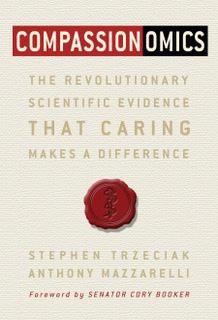
Compassionomics focuses on what the authors believe is a serious and pervasive problem in practice of medicine - occupational distress and burnout. Trzeciak (an intensive care physician and researcher) and Mazzarelli (an emergency medicine physician and hospital executive) were disturbed by poor patient outcomes, rising medical costs, occupational burnout, attrition, and high rates of suicide in the medical profession. Motivated to explore relationships among these factors that might lead to remedies, they embarked on a comprehensive review of relevant research – approximately 280 scientific studies in all. Their review included not only studies of patient and caregiver feelings and behavior, but also physiological measures of health and well-being. The strong conclusion from their review pointed to the central role played by compassion (or lack thereof) –“the emotional response to another’s pain or suffering involving an authentic desire to help.”
Trzeciak and Mazzarelli conclude that the health-care profession is indeed experiencing what amounts to a compassion crisis. And, they found that when caregivers deliberately express compassion for their patients in their nonverbal behavior (e.g. eye contact, facial expressions, touch, body language) and verbal behavior (e.g. asking and listening, expressing understanding and caring), their patients experience better outcomes, feel less pain, and recover faster.
They also determined that practicing compassion requires no more time or resources compared to usual
practice and that medical costs are actually lower, because patients are more likely to follow recommended treatment protocols (e.g. taking medicines) and require fewer referrals. The most compelling finding was that health care providers who practice compassion benefit too. They are happier and more satisfied with their work, more resilient, and experience less stress, burnout, and attrition.
Do these same elements of compassion affect our success as educators working with students with mental health and behavioral needs and their parents? Do we, too, benefit when compassion is a strong component in our work? Do we experience more satisfaction and experience less stress and burnout when we practice compassion?
The Empathy Effect
to and practiced by health care providers. She has developed an acronym she calls the “Seven Keys of E.M.P.A.T.H.Y” that highlight ways to communicate empathy:
E for eye contact.
M for muscles of the face.
P for posture.
A for affect.
T for tone of voice.
H for hearing (listening).
Y for your response.
Drs. Trzeciak, Mazzarelli, and Riess make a strong, evidence-based case for the critical role of compassion and empathy in medical treatment, and the reciprocal benefits for care-givers who deliberately practice empathy. Those who practice compassion or empathy will see the benefits to their patients and themselves.
Prescription for Special Educators
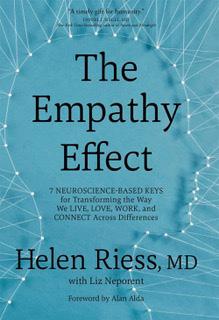
In The Empathy Effect, Helen Riess, a Harvard psychiatrist, defines empathy as “a human capacity consisting of several different facets that work together to enable us to be moved by the plights and emotions of others.” Empathy is not the same as sympathy, because it represents not just “concern about,” but also “concern for” others. Empathy involves seeing and feeling through the eyes of another, as well as communicating that understanding in words and behavior.
Riess’ wide-ranging, engaging book explores ideas and research about how empathy works, who has it and how they got it, the influences of evolution, genetics, and environment (especially childhood relationships). She also explores the effects of increasing digital communication, and the influences of art, literature, leadership, and politics, and self-empathy.
Riess believes that empathy is essential to healthy human relationships and self-esteem. She believes that empathy can (and should) be deliberately taught
Like doctors, I believe that most educators, and particularly special educators, are drawn to their profession and sustained by their empathy or compassion for the students and families they help. The work is demanding, sometimes frustrating, and can lead to emotional exhaustion, cynicism, and occupational burnout and attrition.
From its beginnings, special education for students with emotional and behavioral disorders has emphasized the essential role of emotional relationships between teachers and students. Pioneers, such as Fritz Redl and David Wineman (1951, 1953), William Morse and Nicholas Long (e.g. Long & Morse, 1996) placed understanding students and empathic relationships at the center of therapeutic interventions.
Also, like doctors and other health care providers, to be effective, educators need knowledge and skills in several domains. Special educators need skills in understanding and diagnosing their students’ needs, using evidence-based academic curricula and instruction, and social and behavioral interventions. The authors of these books remind us how another kind
of skill – practicing and communicating compassion –may be critical to our intervention effectiveness and our survival. I suspect the relationships are as strong for teachers as doctors and should be deliberately addressed in our teacher preparation programs.
All educators, and especially special educators, will learn something of value in both of these books. They address an issue important to our work, they draw on empirical sources, and they’re interesting and engaging. If your schedule doesn’t allow that, the Freakonomics podcast (2020, Ep. 444) is a good alternative.
References
Dubner, S. (2020). How do you cure a compassion crisis? Freakonomics, (Ep. 444).
Long, N.J.,& Morse, W.C. (1996, fifth ed. ) Conflict in the classroom: The education of at-risk and troubled students. ProEd: Austin, TX.
Passing for Normal: A Memoir
Book Review by Jim Teagarden
Passing for Normal:
A Memoir (2020) is an account of Dr. Carl Smith’s personal experiences resulting from being diagnosed with a form of schizophrenia in 1973. Smith provides a powerful record of the challenges he faced as doctoral student in the field of behavior disorders as the symptoms of mental illness began to impact his daily life. These symptoms and the challenges they presented resulted in two hospitalizations in a mental health facility for a total of six weeks.

Redl, F. & Wineman, D. (1951). Children who hate. New York: The Free Press.
Redl, F. & Wineman, D. (1953). Controls from within. New York: The Free Press.
Riess, H. (2018). The Empathy Effect: 7 Neuroscience-based Keys for Transforming the Way We Live, Love, Work, and Connect Across Differences. Boulder, CO: Sounds True.
Trzeciak, S. & Mazzarelli, A. (2019). Compassionomics: The revolutionary scientific evidence that caring makes a difference. Pensacola, FL: Studer Group.
Robert H. Zabel, Emeritus Professor, Kansas State University, robertzabel@gmail.com.
Smith provides the reader with insight into his early childhood experiences and some early warning signs that he experienced through the mental health crisis
phase and his personal and professional experiences since the crisis. Through his reflections he uses interviews with significant persons and clinical records to describe the hospital experience and recovery. The memoir continues with the post recovery and the ongoing impact on the professional trajectory of Smith’s career.
Smith stated that a major goal of this work is to address the ongoing stigma associated with the experience with the mental health intervention. This work truly does this. Smith’s ongoing contribution to those who experience similar challenges illustrates that sometimes empathy truly is a learned skill. In the dedication of the book Smith states that his children are the reason he wanted to write this book, it is our hope that others will find it inspiring and hopeful. After all, we all are attempting to meet life’s challenges and pass for normal.
Smith, C; R. (2020). Passing for Normal: A Memoir, Middletown, DE: Amazon.
Jim Teagarden, Associate Professor, Kansas State University, Manhattan, KS, mrt@ksu.edu
The Boy in the Black Hoodie
By Cecil Bratton

Isn’t it crazy how you can be in a room full of people and still be completely alone? Whether at home or school, I fail to grasp the opportunity to form any meaningful relationships. I know that I am different. How can I forget? Their whispers and stares are my constant reminder, and I hear every single word. How can I help it? Every sound draws my attention. Every movement catches my eye. Every stare… I notice every single stare. So I tend to keep to myself. I throw my headphones on and pull my black hood up. Pure warmth and tranquility fill my body. I bounce my leg and tap my pencil on my desk. The world is my concert, and I am an absolute star. “Can you cut that out? You’re getting on everyone’s nerves, freak,” one of my classmates exclaims. I am catapulted back into reality. Everything goes black.
I glance at the board as the teacher speaks to the class. I appreciate the effort; however, it falls on deaf ears. I cannot be bothered. I have been told not to listen to the negativity, but every word sticks with me. My day has been rough, and I now look for any form of stimulation to occupy my thoughts. I throw my headphones on again, pull my black hood up, and play on my phone. All of their hurtful words go away, and I experience something that I rarely have had the pleasure to. My thoughts slow down, and my mind starts to numb. “Take your headphones out,” the teacher shouts at me. “Everyone else is doing what they have been asked to, but you just want to do your own thing. I cannot deal with you right now, go to the office,” she demands. I cannot even defend myself. Everything goes black.
I struggle to call my house a home. I would do anything to make my mother proud of me; however, I hide in the shadows of my brilliant “normal” siblings. Her eyes glow as she stares at my brother and sisters. They give her so much to be proud of. He is a star athlete, and she is at the top of her class. My mother’s family was almost perfect. Not long after her eyes settle on me, disgust and disdain fill her face. A common look that I have grown accustomed to since she stepped into the role of a single parent. “I heard you got in trouble today at school again,” she mutters with great disappointment. “I tried my best, mom; I really did,” I try to explain. “I wish you could just behave. Why can’t you be more like your siblings,” she asks. “Why can’t you just be normal?” Her words cut me like a hot knife. The things people say always stick with me throughout the day; however, her words haunt my nightmares. She was there for every assessment, test, and appointment, yet she can still say this to me. I throw on my headphones, pull my black hood up, and escape to my room. I punch my wall repeatedly as I try to fight back the tears. My hands throb horribly, but the pain pales in comparison to the question that echoes through my head. “Why can’t you just be normal?” If I could snap my fingers and make it all go away, I would. I know I will never be normal, no matter how much I try. I know I will never be loved by my mom as much as my siblings. I can’t help but love her unconditionally anyway. Things have not been easy for her; just give her time, I think to myself. As I close my eyes, I pray that sleep can be my escape. Everything goes black.
We get a new teacher midway through the year. I want to make an excellent first impression; however, I know he will just be another person to let down. Why should I even try? So, I throw my headphones on and pull my black hood up. I mutter to myself as I bounce my legs and tap my pencil. My mind is running a million miles a minute. I see the new teacher approaching my desk. My heart races. I pull my hood down, take my headphones off, and prepare for the worst. Whatever he says, it can’t be any worse than what I hear on a daily basis.
“Hey buddy, is everything alright?” he calmly asks. I look at him with utter confusion. “You seem a little distracted buddy, is something on your mind”? I want to place more bricks on the walls that I have spent so much time building to keep people out, but when I look up at him, all I see is genuine care and concern. Something I have not seen since I lost my father. In an instant, my wall crashes down. We step away from the classroom, and everything begins to pour out. I have successfully distanced myself from everyone around me for so long, yet here I am, pouring my heart out to a complete stranger. I tell him about my ADHD and my inability to make friends with my peers. I tell him about my relationship with my dad and how my mom and I always argue at home. I let him know that I want more than anything to be a good student, but music is one of the only things that calms me down, and my hoodie, which had once belonged to my father, hides me from the rest of the world.
My new teacher welcomes me with a comforting smile. He tells me stories of his brother, who also has ADHD. We talk about different ways to draw my focus back in and ways to interact with people around me. As time goes on, he becomes a source of comfort for me. I never have a problem that is too big for him. Each and every time I give into my impulses, he meets me with understanding. He uses secret signals to let me know to draw my attention back in rather than call me out in front of the whole class. He offers me breaks during assignments when he sees my attention begin to go elsewhere. Most importantly, he always lends an ear to me.
Today, I come to school without my hoodie, leaving my headphones at home. Everything feels bright.
Cecil Bratton III, Graduate Student, Missouri State University, Springfield, Cecil72@live.missouristate.edu






RE THINKING Behavior
Nominate by November 1! Outstanding Advocacy
Outstanding Leadership
Outstanding Educator
Outstanding Building Leadership
Building Bridges Program
Stipends- master’s & doctoral students
Master Teacher – Nominate yourself or a colleague Conference Dates!
October 7-8, 2021 2021 Richard L. Simpson Conference on Autism Live Virtual Event
February 17-19, 2022
40th Anniversary Midwest Symposium for Leadership in Behavior Disorders
Sheraton Crown Center, Kansas City, Missouri IN PERSON
Midwest Symposium for Leadership in Behavior Disorders Award Nominations!