









February 21, 22 & 23
Sheraton Crown Center
For the 37th year, the Midwest Symposium for Leadership in Behavior Disorders will address cutting-edge issues of interest to professionals working with students with emotional/behavioral disorders and autism spectrum disorders.
Four Short TED Talk-like Keynote Speeches Sharing Perspectives on: Anger, Aggression, and Violence! Can we create civility in schools?




Thursday, February 21
7:30 a.m. Registration Opens
9:00 a.m.-4:30 p.m. Pre-symposium Workshops & Exhibits 12:00 p.m.-1:30 p.m. Lunch (on your own)
Friday, February 22
7:30 a.m. Registration Opens
8:00 a.m.-5:00 p.m. Exhibits
8:30 a.m.-10:00 a.m. Keynote Session
10:20 a.m.-11:20 a.m. Concurrent Sessions, Set I
11:30 a.m.-12:30 p.m. Concurrent Sessions, Set II
12:30 a.m.-2:00 p.m. Lunch (on your own)
2:00 p.m.-3:00 p.m. Concurrent Sessions, Set III
3:15 p.m.-4:15 p.m. Concurrent Sessions, Set IV
4:15 p.m.-6:00 p.m. Poster Session: Cash Bar and Complimentary Hors d’Oeuvres
8:00 p.m.-11:00 p.m. Party & Lip Sync Battle
Saturday, February 23
8:00 a.m. Registration Opens
9:00 a.m.-11:30 a.m. Concurrent Sessions 11:45 a.m. Adjournment
October 4 & 5 | Overland Park, Kansas
Kansas City, Missouri Visit our website: www.mslbd.org Follow us on:
Visit our website, www.mslbd.org, for a full program of events that includes Presymposium Workshops, 36 Concurrent Breakout Sessions, 20+ Posters, four Saturday Workshops, sessions for BCBA CEUs and more.
Register by January 23 for Discounted Registration.
We are proud to announce our first Richard Simpson Conference on Autism sponsored by MSLBD and TASN.
This new conference will be offered annually and specifically caters to professional educators and related service providers who serve learners with autism in public schools.
If you are already registered, we look forward to seeing you October 4. If not, registration has closed and no walk in registrations are available. Instead, we hope to see you at the second Simpson Autism Conference October 10 & 11, 2019!

Brenda Smith Myles To Graduation, and Beyond! Planning for Success
Friday Keynote

& Brenda McNiff
The Problem isn’t the Game, it’s the Playbook: How having a Child with Autism Changed our Lives
Reesha M. Adamson*
Mary Jo Anderson
Felicity Balluch*
Marc Benedetto
Jacqueline HuscroftD’Angelo*
Linda Geier
Deborah E. Griswold
Scott M. Fluke *
Cassandra L. Hunt
Marilyn S. Kaff
Sharon A. Maroney *
Jessica Nelson*
Regina M. Oliver
Mike Paget
Reece L. Peterson
Corey D. Pierce*
Seth A. Piro*
Lisa A. Robbins
Carl R. Smith *
Jim Teagarden*
Jason C. Travers
Nicole E. Wiseman
Production Team
Rethinking Behavior, ISSN 2578-5397, a magazine for professionals serving children and youth with behavioral needs, is published three times per year, fall, winter, and spring, Copyright ©2018 by the Midwest Symposium for Leadership in Behavior Disorders, P.O. Box 202, Hickman, NE 68372. 402-7923057. www.mslbd.org. Email: rethinkingbehavior@mslbd.org.
Rethinking Behavior welcomes proposal and manuscript submissions; for information visit www.mslbd.org or email rethinkingbehavior@mslbd.org

The current teacher shortage crisis in the United States is something that cannot be underestimated. Over the past decade, nearly 8% of teachers have left the profession, with percentages much higher for special education teachers. In 2017 less than 5% of college freshmen indicated that they planned to pursue careers in education. We are certain you feel this burden in your day-to-day interactions through higher caseloads, increased demands, more teaching responsibility, less support, and – we cannot forget the ultimate test –increased accountability for student performance. We also place significant value on the variables which contribute to retaining educators for an entire career. This includes factors such as building relationships, having access to readily available and easy to implement strategies, and knowing what has worked for veteran educators.
Our purpose, in this issue of ReThinking Behavior, is to shed light on the topics which surround teacher shortage and look at several sides of this issue, both positive and negative. In Features and Policies, we address the questions of why so many teachers are leaving the field and why so few individuals are choosing to enter, and what you can do to help. In Voices and After Hours, we focus on what keeps teachers teaching. The two Strategies articles provide approaches that can be easily
implemented in classrooms, adding to your intervention toolbox. We have also included several media resources intended to support, inspire, and inform. If you have recently turned on the television or picked up a newspaper, it has been apparent that our field is facing many challenges.
We cannot stop at simply considering the problem. We must seek to understand and find solutions to get back to a place of order, promote workplace satisfaction, motivate new professionals to join the field, and ensure that increasingly diverse student needs are being met. We must also identify what it is that retains educators and foster that in our schools. This is a conversation we must have now for the sake of our future. We have to establish a field of motivated, qualified, and supported individuals to enter and stay in the teaching profession. We must also retain those individuals in the field who truly want education to remain their profession. Our children need teachers now more than ever.
We hope this issue leaves you with some answers to the big questions, an understanding of important aspects which promote retention in the field, and resources that support your daily work. We are all in this together and we can make a difference.
Jacqueline D’Angelo and Corey Pierce, Issue Editors, and the Editorial Team
By Cathy DeSalvo

Relationships sustain us! At a time when our media tends to focus on relationships that destroy and damage us, let me repeat, relationships sustain us. My experiences have taught me this again and again. Relationships can sustain us in our roles as student, teacher, peer, colleague, and mentor as we shift, shape, and move back and forth in our professional, personal, and social lives. This happens early in our career, continues and changes in mid-career, and then looks very different towards the end of our career.
“Those kids are going to eat you for lunch,” said the maintenance engineer when I told him I was taking the job of educational therapist at the Nebraska Psychiatric Institute. He had known me as a summer inventory control clerk. My job was to find new purchases at the University of Nebraska Medical Center and stick labels on them. This included the new electroshock machine, the EEG machine, a coffee maker, a chair, or a copier– everything needed a label.
But not the kids. They did not need another label, nor did they eat me for lunch. They were kids on the adolescent unit who challenged and baffled me, but were never purposely unkind. Fortunately, I was surrounded by nurses, doctors, social workers, psychiatric assistants, and psychologists who helped me understand my students’ challenges. I also received on the job training from two fellow teachers and other professionals who unselfishly shared their knowledge, giving me opportunities to learn with and from them.
I have often wondered how effective I would have been with the students if I hadn’t had those considerate peers. Students including Monroe, who could put complex puzzles together and rhyme
spontaneously but struggled with reading comprehension, attention, and controlling the outrageously funny things he said about staff members, and Nancy, who had repeatedly attempted suicide and was not responding to medical interventions for her depression. When I first started, I only focused on what was wrong with my students but from my colleagues I learned to accept them as they were and build from there. I learned that when Monroe or Nancy met an academic goal, they felt hopeful and proud. As I watched my peers, I learned that my job was not only to teach English/Language Arts but to teach in ways that made learning available to my students.
Not realizing the value at the time, my supportive relationships grew. I maintained relationships with my university professors and former dorm mates from grad school, two of whom worked in classrooms for students with behavioral disorders. I lived with two other novice teachers in an old house, lovingly referred to as “Roach Haven,” where we often hosted impromptu after school get-togethers with fellow professionals. One day, a fellow teacher caught my eye and we began the process of sharing the frustrations and joys of teaching, having frank and nurturing conversations about our students and our methods. That conversation continues today, nearly 40 years later! We still share, laugh, vent, brag, question, challenge, advise, and support.

Relationships can sustain us in our roles as student, teacher, peer, colleague, and mentor as we shift, shape, and move back and forth in our professional, personal, and social lives.
During this phase, I also found relationships through professional organizations. There was the state Council for Exceptional Children (CEC) and the state Council for Children with Behavioral Disorders (CCBD) where I connected with researchers and professionals at the large university in my state and professionals in the public schools and other mental health settings in my community. I began to work on my special education endorsement and was able to take what I was learning in my classroom and connect it to the research in my graduate courses.
My early phase was all about survival–approaching the task of teaching and gauging the effect of my teaching on my students. I became a student of the craft of teaching, engaging in dialogue with colleagues to challenge and refine this practice as I came to realize the importance of supportive peer and mentor relationships. While they were necessary for my survival in the

profession, continued learning, and ability to impact students, they allowed me to have fun with people who loved doing what I loved doing! Those relationships helped me stay passionate and enthusiastic about teaching as I moved into my mid-career.
After ten years of teaching, I felt I was moving into the middle phase of my career. I started developing autonomy in my career choices, raising my own sons (future teachers), and working with my third professional organization. This involved moving from the psychiatric hospital to an Area Education Agency (AEA) and developing new skills in behavioral consultation, leading me eventually to Boys Town. I was hired as a behavioral consultant at Wegner Middle School, which for me was like coming to Mecca! I was able to mentor others in an environment where expectations and tolerances were similar to mine and focused on doing-whatever-it-takes for students to be successful.
Mid-career is often the time when opportunities present themselves. I enjoyed opportunities to mentor new teachers, student teachers, and paraprofessionals. I found these relationships challenged me to be thoughtful and supportive and to focus on what my colleagues needed to flourish in their roles. As one colleague shared, “When people ask me if I want to do a project, I always say yes, even if it sounds daunting.” At this stage, I also
challenged myself to say yes to new responsibilities in administration. This openness has led to terrific opportunities for professional growth.
As a behavioral consultant, I found myself paying more attention to codifying what works and communicating it to peers and mentees. I was leading committees, learning and embracing different perspectives, flexing my organizational muscles, and refining, adapting, and renovating curriculum and instruction.
Professional relationships grow and expand as people recognize and seek your expertise. Decide what your leadership style is and watch other leaders closely, those who embrace similar leadership philosophies as yours and those who do not. This will help you to establish a wellrounded skill set and prepare you for what the later-phase of your career has in store.
To summarize this phase, I look at stabilization, experimentation, and taking stock. With respect to stabilization you will likely feel more confident about your professional skills and knowledge, and find yourself in a predictable pattern of teaching. But is this enough? Is there more you could do to keep yourself engaged in the profession? This leads into experimentation and the point I made previously about considering your own professional development. If you want to stay in teaching, look for ways to spice up your instruction, experiment with new approaches and activities in the classroom, or attend a
professional development that you may not have previously considered. Always take time to remember the small victories and remember to continue maintaining healthy relationships with peers and students. It is so much more natural at this stage to gain gratification from watching your students and teammates succeed.
In many districts, you can be considered late-career at 55. For example, when I came to my present position after retiring from Boys Town, I was the oldest person at most meetings. Yet, in terms of my tenure and experience within the district, I was a novice. So, the point is, know that there is a lot of variability in these career phase designations.
It is also important to recognize the characteristics that come along with this phase of teaching. There is serenity, individuals are comfortable with classroom life and their role in it. Many have become formal or informal mentors for new teachers and are at ease with student and peer relationships. It is also likely that many move into school or district leadership. We must also recognize that some become disengaged, and bitter, and sometimes even toxic relationships may develop. To combat this, look for challenges in other settings and treasure the opportunities you have to maintain relationships with former students and colleagues.
Relationships have been integral to my role in education. I look back on each phase of my career and consider how these have contributed to my desire to continue from one year to the next. I think about myself as a novice teacher, someone who knew enough to ask for help from others. In my mid-career phase, I could apply what I learned in my early-career phase to myself and the teachers I was mentoring. Today, I take these key experiences and pieces of knowledge to my later phase where I have the privilege of serving in a school district where my work can affect the lives of thousands of students and teachers.
Some may think that I’ve had a career focused on education, which is partially true. But now you know that my true focus has been on relationships. I treasure my long relationships with the educators I met at Nebraska Psychiatric Institute, Boys Town, and Roach Haven. I treasure my relationships with my teacher sons who are committed to making their classrooms warm and productive. I am grateful for the relationships I made with Monroe, Nancy, and so many other students. I value the newer relationships I have developed with my new mentors, the dedicated professionals in the Omaha Public Schools. I am also grateful to one of the editors of this issue who, not long ago, was a student teacher in my Boys Town school and who now carries the torch in educational research. I treasure my professional friendship with a professor at Drake University, a scholar in Behavior Disorders, who started as a paraprofessional at Boys Town as we both serve on the MSLBD Planning Committee. I continued to be mentored and nurtured by all of these individuals plus so many more. Relationships sustain me.
CLICK HERE to view this author’s keynote presentation on relationships from the 2018 Midwest Symposium on Leadership in Behavior Disorders.
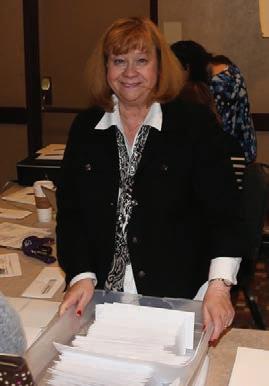
Catherine
DeSalvo, Supervisor for MTSS-B, Omaha Public Schools, Nebraska, catherine.desalvo@ops.org
By Mike Meeks
In each phase of my career – early, middle, and late- there have always been one or two kids who left a lasting impression. My career began as a wide-eyed student teacher in a Kindergarten classroom full of students needing a lot of attention, not necessarily due to problem behaviors, but more because developmentally they required more adult support. As my teaching career progressed, I found that I enjoyed working with students who needed more behavioral support, which led me to work for Boys Town, an organization that specializes in helping students with high-level needs. I have had the opportunity to support students of all ages in and out of the classroom as a behavioral interventionist across the entire continuum of Boys Town programs. This included 10 years at the Residential Treatment Center where I learned important lessons about student behavior, trauma, and mental health in addition to the mental, physical, and emotional impact these students had on me. These experiences gave me many tools which I felt needed to be shared with other educators across the country, creating my passion for training and consulting educators to work with students needing additional behavioral support for the past 10 years.
More often than not, the students who leave the impressions are the tough kids. The students that have the ability to be the epicenter of attention,

courtesy of BoysTown
find all of our triggers, require all our patience and time, and often touch our hearts. Some of us enjoy working with these students, but some find this task exhausting if not impossible. Many teachers and administrators consider the tough kids enigmas wrapped inside Pandora’s Box and for the most part, I would agree. There is no magic strategy, rulebook, or easy answer. More often, these students present an ever-changing set of challenges that require multiple approaches and supports. However, in all my years of experience I have found three simple shifts in mindset that can make working with these students easier and in many cases rewarding.
As educators, we bring varying tolerances and values into our schools and classrooms. This variance creates environments that are often inconsistent and unpredictable for students. Unpredictable environments are difficult for even the most socially adept student to navigate, much less students who have difficulty managing their behaviors. Our students that sit at the top of the triangle often come from home environments that are chaotic, unstable, and potentially unsafe, with an ever-changing set of rules that are based on necessity and survival not order and stability. In addition, these students often create their own rules rather than following rules created by the adults in their life. The best thing we can do is to create environments that are consistent and predictable. This can be done through a consistent set of expectations and tolerances so that each day is an instant replay of the day before.
I recommend that all teachers start each class by greeting every student at the door. You may think this is too simple or too time consuming. However, this simple act introduces a classroom culture of predictability for students each day. This predictability creates a level of trust between you and the students, and that trust can improve compliance in the classroom.

Many teachers and administrators consider the tough kids enigmas wrapped inside Pandora’s Box.
There are many reasons students may exhibit high rates of challenging behaviors. Most often, the tough kids have experienced trauma in their home environments and with the adults in their lives. Therefore, they often have difficulty trusting adults and building relationships. Moreover, these students exhibit negative behaviors that push adults away, making it difficult to build relationships with these students. However, as educators it is important for us to make “space for grace” –acknowledging and expecting negative behaviors and attempts to push us away but not taking these actions personally. In my experience, many tough kids will intentionally refuse to follow simple instructions, seek attention in negative ways, display behaviors that cause emotional reactions in adults, and find ways to exclude themselves from the classroom culture. We have to be able to separate the behavior from the student and create space and grace to build relationships over time.
This process will not happen overnight, but the outcome is worth the wait.
I have worked with many tough students over the years; however, Marcus is the one who consistently reminds me to create space for grace. Marcus had a traumatic upbringing, being homeless, bounced from placement to placement, and living with a family of drug users. He never had the opportunity to experience a normal life or positive adult relationships. I first met Marcus at Boys Town’s Therapeutic Group Home School where he immediately made an impression on all of us as he earned referral after referral for verbal and physical aggression in class and refusal to accept adult decisions. In his first year, Marcus earned over 100 referrals, earning over 250 in less than two years.
Some people would have given up on Marcus and honestly, there were days I prayed Marcus would stay in class and not enter my intervention room. His referrals were so frequent that I recognized his footsteps coming down the hall. Marcus did eventually find his way and began his transformation socially and emotionally, eventually graduating our program. On his last day, I asked Marcus to come to my office to congratulate him on his success. During that meeting Marcus asked me how many times he had been to my office. I let him know over 250 times and that I had spent about 700 hours working with him–about a month of my life. I remember Marcus just looking at me as I told him good luck and to keep working hard to be your best self. He left without a word.
I didn’t see Marcus for another 5 years. My wife and I were about to have our first child and attending a delivery preparation class. There was a young man across the room staring at me as if he knew me, making me uncomfortable as I tried to work seriously on breathing with my wife. After class, he came up to me and said, “Hey, Mr. Meeks do you remember me?” I took a long
look and recognized his eyes and mischievous smile. “Of course, Marcus, how are you?” He said, “Great”, introduced me to his wife, and let me know that he had just finished his degree in engineering and was working for a prominent company in town. He then apologized for never thanking me for spending so much time and not giving up on him. He told me that he never forgot to be his best self. I told him “Those were the best 700 hours I ever spent.” We both laughed, I gave him a hug, and wished him the best.
Marcus was an extreme case, but many of you have a similar student that tests you every day. Remember to create space for grace with these students because the work you do could be the catalyst that changes the trajectory of their lives. Be intentional with your words and actions; for example, correct behavior when it is small and remain calm in your approach. Keep in mind that every day is a new day, each behavior is a new behavior, and with some students this approach may be minute to minute. Behavior change takes time and we may not always see that change immediately, or ever, but always believe that your actions have impact.
Reinforcement is a powerful tool in promoting positive behavior. Tough kids often crave attention, but may only know how to get attention in negative ways. By being intentional with your
As educators, it is important for us to make “space for grace” –acknowledging and expecting negative behaviors and attempts to push us away but not taking these actions personally.

praise, you are able to provide attention in a positive way and increase the likelihood of positive behavior. Additionally, we need to look for the small changes toward positive behavior. Reinforcement of these approximations makes it possible for students to achieve small goals on the way to larger positive changes. For example, if you have a student that continuously blurts out responses rather than raising their hand, reinforce the fact that they are answering questions and proactively work on the skill of raising their hand at a neutral time. We could easily just correct the behavior of blurting out, which we can all agree is distracting and not acceptable, but it’s more effective to intentionally look for opportunities to reinforce the small stuff. Over time, your reinforcement can empower students to make more positive choices as they seek more positive attention from you. As educators, we have the power to affect change in students through the application of positive praise.
I would say that my intentional application of praise was one of the primary change agents while working with Marcus. Two specific behaviors come to mind - coming to school and reporting directly to the office whenever he earned a referral. When Marcus first started, he rarely came to school, maybe one or two days a week. However, I made it a point to greet him at the door and thank him for coming each day he attended. He would look at me funny, mumble “Good morning,” then go to class.
After a few weeks, he began coming to school more often, until finally his truancy was not an issue anymore. In addition, Marcus would often roam the hallways and disrupt other classes when he earned a referral rather than report to the office. As a team, we decided that anytime Marcus earned a referral and left the room without disruption, the teacher would reinforce this behavior and the moment he reported to my office I would also reinforce him. One day Marcus asked, “Why do you always tell me nice job coming to the office, I’m in trouble?” I told him, “Because you have a lot of other choices and I really do appreciate it when you report to the office.” After that point, it was rare that Marcus did not report directly to the office. He stilled earned a lot of referrals, but with tough students you have to start small and be intentional with the behaviors you reinforce.
It would be dishonest to say that working with tough kids will ever be easy, however, when you are able to affect change in the lives of these students the payoff can be life changing for you and them. By applying these three shifts in mindset, you may be able to improve student behavior and appreciate your love for teaching even the most difficult students.
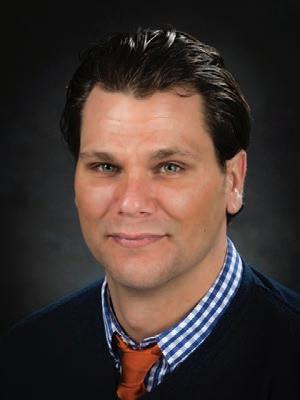
Mike Meeks, National Training Manager, Boys Town, NE, mike.meeks@boystown.org
By David Chura

ver any teacher’s career – in my case, 26 years of teaching high school English to teenagers at-risk, the last 10 of those years in an adult county jail – you get asked lots of questions. Some about the topic you are teaching; others, well, it’s hard to know where they come from. But there’s one question I heard a lot, most frequently from my jail students, “Why don’t you teach in a real school?”
This usually happened when a lesson went well and a kid really got what we were talking about.
“That was a good lesson, Mr. C. You should teach in a real school instead of here.” That last part was typical of incarcerated kids. Instead of taking credit for understanding some new idea, the student was quick to give it to me.
I knew where the “real school” remark came from. My students were mostly poor youth of color; many bereft of families. The education they received in their home districts was pretty bogus, and they knew it. Minimal supplies. School buildings as dilapidated as the warehouses (called

“public housing”) they lived in. The curriculum dummied down because “they can’t handle the real thing.” For these locked up kids a “real school” was one they weren’t in.
They knew my take on the “real school” remark. My classroom was a real school; they were real students doing real learning; and I expected them to act that way. I confess, I wasn’t always polite about it. It made me mad – at them; at the educational system; at society; at myself. And it made me sad because within that comment was their bone-deep belief that they were worthless.
But in their remarks I heard another question. It’s a question every teacher asks with each new school year, “Why do I teach?” For me it was, “Why teach the hard to reach kids at-risk in the first place?” It’s a fair question, one that deserves an answer.
Of course, there’s the obvious one. Everybody knows that education affects the quality of your life. Jobs. Where you live. Where your children will be able to grow up. Your health. Perhaps even your happiness. So as an English teacher, I knew the incalculable value of being able to read and write.
Yet I wanted my students to learn more than basic survival skills. I’ve always been a passionate
believer in literature’s ability to change people’s lives on a deeper level. It was never an easy sell. By the time my students got to me their minds were slammed shut; their worlds, small. Presented with a story or a book to read they’d growl, whine, practically stomp their feet in a tantrum. “Why do we have to read this? It’s stupid…boring…crazy” (you supply the adjective.) Still I insisted we read.
It didn’t always work. Some refused to leave the streets behind, to glimpse a less hopeless life, even just for the duration of a short story. But not always. Warren read way below grade level. I wasn’t sure that could improve since his teenaged mother drank heavily while she was pregnant. But one day he announced that he was 15 and had never read a book. A friend told him about Claude Brown’s Manchild in the Promised Land, and he wanted to read it. I worried about the reading level, but Warren was captivated from the start by a kid just like him, steeped in the hood and all its troubles, yet with a message of hope that kind of sneaks up on you. It took him months, but Warren painstakingly, proudly read every word.
I’m not saying that reading a book will radically change a kid’s life, but it may come close. It does happen. Wilbert Rideau who served 44 years,
many of them in solitary confinement, in Angola, the nation’s largest maximum-security prison, is a testament to that power. In his riveting memoir of his incarceration, In the Place of Justice, he writes that the books he read then saved him emotionally,
Reading allowed me to feel empathy, to emerge from my cocoon of selfcenteredness and appreciate the humanness of others…It enabled me finally to appreciate what I had done.
Those words should give any Language Arts teacher the courage to continue pushing books on his or her students.
Yet, my jailhouse teaching wasn’t just about hustling books. You need a lot more than that to survive ten years of prison’s daily grind. No. I knew there was more to it than that. Since I


always believe in practicing what I preach, I often got solace and inspiration from what I read. On my toughest days a few lines from Galway Kinell’s poem, “St. Francis and the Sow,” reminded me why I even bothered, for everything flowers, from within, of self-blessing; though sometimes it is necessary to reteach a thing its loveliness.
At times, that reteaching loveliness was the hardest lesson I had to teach. But ultimately, I knew it was what every day of my teaching was all about.
David Chura, teacher and author of I Don’t Wish Nobody to Have a Life Like Mine, on the lives of children in adult lockups, davidchura2@gmail.com
This article originally appeared on Beacon Broadside, a project of Beacon Press in 2010, http://www.beaconbroadside.com/ broadside/2010/09/why-teach-the-hard-to-reach. html#more Reprinted with permission.
By Jeffery Alvin Anderson, Laurie Andrews, & Lisa Monda-Amaya
“Few issues in education threaten the nation as seriously as the present and growing shortage of teachers”
(Zhang & Zeller 2016, p. 73)

Such a bold statement might best be understood by exploring the impact that teacher shortages are having on communities across the United States. A recent incident demonstrates the enormity of these challenges: On February 5, 2016, the governor of the State of Nevada issued a Statement of Emergency for its K-12 public education system. Nevada had nearly 1,000 teaching positions unfilled more than half way into the 2015-2016 school year. Sadly, this is not an isolated concern. Data from a 2018 survey of the Illinois Association of Regional Superintendent of Schools shed additional light on the problem. Survey results show that 60% of respondent districts had difficulty fully staffing available positions and 76% reported having fewer qualified applicants than in previous years.
To better understand the negative impact of these shortages, it is important to grapple with trends. For example, coupled with the availability of fewer qualified educators, it is estimated that by the year 2020, an additional 300,000 new teachers will be needed annually and that number will continue to increase by as many as 3,000 new teachers each year (Sutcher et al., 2016). In many cases, shortages have been linked closely with specific content areas (math, science, special education, bilingual education), and specific regions (urban and rural areas). Scholars also have noted that teacher shortages disproportionately affect our most disadvantaged schools. Indeed, evidence suggests that hard-tostaff schools serving high poverty populations and rural schools have experienced particularly acute shortages (Dee & Goldhaber, 2017). Sutcher and colleagues further reported that schools with large minority populations had four times as many uncertified teachers and that unless major changes in teacher supply or a reduction in the demand for additional teachers occurred in the coming years, annual teacher shortages could increase to more than 100,000 each year. These numbers are staggering and leave no doubt as to why there is serious and growing concern.

Unfortunately, building up the available cadre of skilled teachers does not look promising either. The national report on the Condition of Future Educators (ACT, 2015) reported that of the 1.9 million students who took the ACT in 2015, fewer than 5% indicated an interest in education majors and professions. For young people who did indicate interest in pursuing an education major, many had lower-than-average achievement levels in three of the four subject areas measured by the ACT. Not surprisingly, universities have also seen a big decline in enrollment in general and special education teacher preparation programs with a nearly 35% drop from 2009 to 2014. This distressing trend translates to almost 240,000 fewer teachers entering the profession each year (Sutcher et al., 2016). Some scholars have stated that these shortages are not the result of the insufficient production of new teachers. Indeed, some argue, production has increased steadily over the past several decades (Cowan et al., 2016) and point out that shortages result from staffing difficulties in specific subjects and school types (e.g., rural schools or schools serving disadvantaged students). However, our purpose in this article is not to contribute to that debate, but instead to specifically address the chronic shortages in special education in particular and explore responses and solutions.
The special education teacher shortage is not a new problem as the field has experienced a chronic shortage of qualified teachers for decades. Although the special education teacher shortage is chronic and pervasive, trends have fluctuated over time. For example, the special education teacher shortage appears to have shrunk from 11% of classrooms without qualified special education teachers in 2006, to a level closer to 6% in 2010 (Boe et al., 2013). However, exact patterns and trends are hard to quantify over time because our understanding of “demand” can be manipulated in a variety of ways, such as by increasing teacher caseloads or increasing inclusive education options for students. Plus, the growing trend of filling special education positions with unqualified or underqualified teachers cannot be ignored.
In an effort to close the shortage gap, school districts are filling special education positions with teachers who are not qualified or who are not specifically trained for special education roles. In school districts across the U.S., the number of special educators who are not prepared for the classroom continues to increase. For example, Carver-Thomas (2017) reported that in California, educators with substandard credentials and permits outnumber those who are fully prepared by 2:1. Further, roughly one million students with disabilities are either receiving services from under- or unprepared teachers - or receiving no

It is estimated that by 2020, 300,000 new teachers will be needed each year and that number will continue to increase by as many as 3,000 new teachers each year.
services at all (Tyler & Brunner, 2014). Not only does this significantly increase the likelihood that schools will be out of compliance with federal laws (such as when students with IEPs are not receiving a free AND appropriate public education because they lack competent teachers), it also increases the chance that our most vulnerable students will continue to have teachers who are not fully qualified, leaving them more vulnerable to inferior school experiences. On the other hand, we know that effective, high-performing teachers are very important for improving student learning.
Factors contributing to special education teacher shortages can be examined simply as too few new teachers entering the field, too many teachers leaving the field, or both. While people are drawn to the special education teaching profession for a variety of reasons, efforts to entice candidates to enroll in teacher education programs have proven to be difficult. With declining enrollment, using incentives that are appealing to potential teachers becomes critically important. Effective incentives exist; unfortunately, the real issue appears to be that they aren’t always implemented well. For example, many strategies have been tried, such as alternate routes to teacher licensure or pathways to teaching that are outside traditional university programs, student loan forgiveness, and service
scholarships. However, the actual challenge may be that these incentives, even with the significant increase in alternate fast tracks to licensure, are not sufficiently comprehensive to reduce or even keep up with shortage levels.
Teacher salaries also become a factor, as the education profession is less appealing for candidates who can earn more money in other fields. For example, while starting salaries may be similar for teachers when compared to other professions, earning trajectories across a career tend to be lower for teachers. Additionally, if candidates must incur debt to complete their teaching degree, less competitive teacher salaries make it difficult to repay loans. Furthermore, salary concerns make it even more difficult to attract mid-career changers to a profession that pays less than other possible career paths. We also know that teacher salaries

vary widely from state to state and district to district and that teachers who earn higher salaries are more likely to stay in the profession.
Although teacher preparation enrollment is in decline, some scholars have suggested that it is teacher attrition, not declining enrollments, which is the likely driver of special education teacher shortages. In a study completed almost 15 years ago, Brownell and colleagues (2004) found that during the first five years of teaching, the national attrition rate was 50% for all teachers and 75% to 80% for special education teachers. Other researchers have noted that special education teachers leave the profession at nearly double the rate of general education teachers (Keigher, 2010), with more recent data indicating that attrition accounts for anywhere from two-thirds to nearly 100% of demand in all teaching areas (Sutcher et al., 2016).


The possible solutions to the teacher shortages plaguing special and general education are endless; but without immediate and concerted efforts, the status quo is likely not only to continue, but deteriorate. The Council of Chief State School Officers (CCSSO, 2017) is promoting six strategies for addressing critical shortages, all of which are germane to the field of special education (see https://ccssoteacherpipeline.org/ six-key-strategies/).




First and foremost, to elevate the teaching profession teachers, administrators and other public school advocates must engage in broad efforts to improve the public’s perception of teaching. This can be done through coordinated social marketing campaigns that share information about teacher roles, the importance of special education to the K-12 system, and the ongoing need for qualified educators to fill the ranks. Partnerships might be developed with organizations such as Teach Plus that empower teachers to improve public perception by engaging in advocacy and policymaking. Teachers in secondary schools can be supported to develop programs that encourage high school students to become future teacher candidates. Towson University and The Teacher Academy of Maryland, for example, developed a program of study for high school students to earn college credits, while simultaneously providing students exposure to what it is like to be a teacher (Teacher Academy of Maryland, 2018).
LEAs and SEAs must take steps to improve the financial incentives for becoming and remaining a teacher. There has been a continued decline in teachers’ salaries across states and districts and it is logical that places offering higher pay are more successful at attracting new teachers (Abamu, 2018). Not surprisingly, salaries also impact attrition rates. For instance, there is a 10-percentage point attrition difference between new teachers who earn $40,000 or more, as compared to new teachers who earn less than $40,000 (Gray, et al., 2015). History has shown that veteran teachers are more likely to leave the field when working in districts with lower wages (Loeb, et al., 2005; Thomas, 2018). Fortunately, several examples of potential solutions are available.

• Districts can offer targeted incentives, higher salaries, or scholarships for entering the field.
• Financial incentives such as forgivable loans and scholarships can be used to attract high school and college students, as well as career changers.
• Teachers and administrators can advocate for signing bonuses for educators who are willing to work in shortage areas or in hard-to-staff subjects, such as special education.
As of 2011, roughly 10% of all newly certified teachers completed an alternate route teacher preparation program (Feistritzer, 2011). With enrollment in traditional teacher education programs declining, it becomes necessary to ensure that other effective opportunities exist for capable people to become qualified teachers. Regardless of the preparation route, researchers report that teachers with more intensive and rigorous training are more likely to stay in the profession (Stronge, et al., 2011). Thus, an important goal for alternative programs is to ease the barriers of entering the teacher force without compromising quality or expectations.
• Districts or SEAs can collaborate with universities to offer “step up” or “grow your own” programs that can expedite opportunities for paraprofessionals or teaching assistants, who are already employed in their schools, to become licensed teachers. (Visit http://careers. dpsk12.org/teachers/additionalpathways-to-teaching/ for a model program.) Grow your own programs also appear to promote long term retention in rural areas, specifically because teachers who have been recruited from the local community are more likely to stay in a position when they already feel connected to the community and consider it home (Hammer, et al., 2005).

• Specialty programs can be developed to help military veterans become teachers such as the federally supported Troops-to-Teachers program, or local programs that help people move into teaching after being laid off when a big employer leaves a community.
Teachers in the US have long been predominately Caucasian, even as the public K-12 student population in schools has become increasingly nonwhite. In 2012, teachers of color comprised only 18% of public school teachers in the workforce. As such, schools and districts should work with their business communities to create a workforce development plan that has direct objectives for attracting a pool of teachers that reflects the local student population. Targeted programs, such as Call Me MISTER (Mentors Instructing Students Toward Effective Role Models), show promise in recruiting and supporting teachers from diverse backgrounds (“Call Me MISTER”, 2018).


As trends clearly indicate, attraction and recruitment to the profession of teaching will not be sufficient for overcoming the shortages in special education without accompanying strategies aimed at keeping good teachers in the field. Retention may become even more critical in the future as this generation’s workforce is increasingly mobile. As we know, teachers may be enticed to move into other professions that offer better pay. Thus, SEAs and LEAs must develop clear plans and policies that align with realistic trends in today’s workforce.


Induction and mentoring have a strong influence on retention. High quality induction programs can mitigate work condition stressors in the early years of teaching when a new teacher is most vulnerable to leaving and have demonstrated a reduction in attrition rates (Leko & Smith, 2010). However, effective induction and mentoring programs require long-term commitments from districts that include monetary investment; so, continued research and focused attention on practices that are effective in keeping teachers in the field are important. Characteristics of effective approaches uncovered so far include mentors as experts, clearly specified program objectives, and evaluations that focus on outcomes (Brownell, et al., 2004; Falconio & Carlough, 2016).




Finally, it is critical that, at district, state, and national levels, we maintain accurate records and use data to target strategies based on where shortages exist. The use of trustworthy data can help us better understand how, why, and where teacher shortages are occurring and the contexts that perpetuate or exacerbate shortages. We know, for example, that shortages are more pronounced in certain locations, subject areas, and grade levels, such as urban and rural high schools in STEM and special education.
To CCSSO’s six strategies, we add a seventh, acknowledging the critical role of administrators in overcoming teacher shortages. To get at this point quickly, administrators can provide supportive work environments. Although special
education teachers cite a range of factors that contribute to their decision to leave the field, challenging working conditions appear to be the most significant reason. All professions experience attrition (e.g., unanticipated displeasure with the work, relocation, opportunities for newly emerging careers such as technology, raising children). However, unlike other professions, most teachers leave education due to dissatisfaction with their work environments (Sutcher et al., 2016). The term “work conditions” encompasses many factors or combinations of factors such as administrative support, paperwork, and role clarity that can contribute to job satisfaction or lack thereof. While poor work conditions lead to low job satisfaction, not surprisingly, teachers with high job satisfaction tend to stay in the profession. For example, having a sense of self-efficacy about your ability to successfully serve students, along with adequate planning time, have been associated with teacher job satisfaction (Plash & Piotrowksi, 2016). Attrition rates are lowest among teachers who attended programs that provided high levels of supervision and support during pre-service training (Falconio & Carlough, 2016). Therefore, we encourage administrators to continue to focus on creating positive climates, promoting mentorship programs, and ensuring adequate resources are available to teachers.


The shortage of teachers in special education has always been problematic; but when combined with growing teacher shortages in general education, challenges are magnified. Ultimately, all of us who support public education and particularly those of us devoted to special education, must step up. Advocating for the future of our profession is an essential part of
our job. Administrators should lead the way in creating expectations and environments that are supportive and inviting to teachers. Supportive, collaborative environments in which teachers have access to innovation and cutting-edge technology enable educators to thrive in their work environments.
Teachers and administrators must advocate for sufficient supports that enable planning for and implementation of instruction that is most beneficial to their students.
Effective induction and mentoring programs for new teachers are at the core of developing and maintaining a stable and satisfied workforce.
Researchers need to identify evidence-based practices for recruitment and retention of special educators and disseminate information in a timely and meaningful format.
Our next generation of teachers should be inspired by models of great teaching and supportive environments in their current P-16 school and universities.
Stakeholders (e.g., schools, districts, SEAs, and universities) need to collaborate to develop innovative personnel preparation programs that are uniquely responsive to the needs of their respective settings.
Educators must become active members of policymaking committees that influence all decision-making related to P-16 education, at local, state, and federal levels.
Remember, there is strength in numbers. Talk with your friends, colleagues, and neighbors. Invite them to become our advocates. Write letters to the editor. Share inspiring stories of teachers and teaching on social media. Call or write a legislator today. Get to know your neighborhood schools
and brag loudly about them. Ask your principal or superintendent to form an advocacy group specifically to inform educational policymaking. Reach out to your local or state parent advocacy groups that support young people with disabilities and their families and ask what you can do. We –all of us reading this article – know what needs to be done. So, let’s do it and let’s start now.
Abamu, J. (2018). The data tells all: Teacher salaries have been declining for years. Retrieved from https://www.edsurge. com/news/2018-04-05-the-data-tells-all-teacher-salarieshave-been-declining-for-years on August 23, 2018.
ACT (2015). The Condition of Future Educators. Iowa City: ACT, Inc. Retrieved from: http://www.act.org/content/dam/ act/unsecured/documents/Future-Educators-2015.pdf
Boe, E. E., deBettencourt, L. U., Dewey, J., Rosenberg, M., Sindelar, P., & Leko, C. (2013). Variability in demand for special education teachers: Indicators, explanations, and impacts. Exceptionality, 21(2), 103-125.
Brownell, M. T., Hirsch, E., & Seo, S. (2004). Meeting the demand for highly qualified special education teachers during severe shortages: What should policymakers consider? The Journal of Special Education, 38(1), 56-61.
Carver-Thomas, D. (2017). The special education teacher crisis: Who’s teaching our most vulnerable students? Learning Policy Institute. Retrieved from: https:// learningpolicyinstitute.org/blog/special-educationteacher-crisis-whos-teaching-our-most-vulnerablestudents
Council of Chief State School Officers (CCSSO) (2017). Strategies for Building Teacher Pipelines. Retrieved from: Pipelines https://ccssoteacherpipeline.org/six-keystrategies/
Cowan, J., Goldhaber, D., Hayes, K, & Theobald, R. (2016). Missing elements in the discussion of teacher shortages. Educational Researcher, 45(8), 460–462. DOI: 10.3102/0013189X16679145
Dee, T. S., & Goldhaber, D. (2017). Understanding and addressing teacher shortages in the United States. The Hamilton Project, April
Feistritzer, E. C. (2011). Profile of teachers in the United States. National Center for Education Information. Falconio, J. & Carlough, S. (2016). Field notes: Solving root problems with teacher voice and support. Disrupting Inequality, 12(6). Retrieved from http://www.ascd.org/ ascd-express/vol12/1206-toc.aspx on August 23, 2018.
Gray, L., Taie, S., & O’Rear, I. (2015). Public school teacher attrition and mobility in the first five years: Results from the first through fifth waves of the 2007-08 Beginning Teacher Longitudinal Study. First Look. NCES 2015337. National Center for Education Statistics. Retrieved from http://nces.ed.gov/pubsearch
Hammer, P., Hughes, G., McClure, C., Reeve, C., & Salgado, D. (2005). Rural teacher recruitment and retention practices: A review of the research literature, national survey of rural superintendents, and case studies of programs in Virginia. Charleston, WV: Appalachia Educational Laboratories at Edvantia. Retrieved from https://eric.ed.gov/?id=ED489143
Keigher, A. (2010). Teacher attrition and mobility: Results from the 2008-09 Teacher Follow-Up Survey. First Look. NCES 2010-353. National Center for Education Statistics
Leko, M. M., & Smith, S. W. (2010). Current topics in review Andrea M. Babkie, Associate Editor: Retaining beginning special educators: What should administrators know and do?. Intervention in School and Clinic, 45(5), 321-325.
Loeb, S., Darling-Hammond, L., & Luczak, J. (2005). How teaching conditions predict teacher turnover in California schools. Peabody Journal of Education
Plash, S., & Piotrowski, C. (2006). Retention issues: A study of Alabama special education teachers. Education, 127, 125-128.
Stronge, J. H., Ward, T. J., & Grant, L. W. (2011). What makes good teachers good? A cross case analysis of the connection between teacher effectiveness and student achievement. Journal of Teacher Education, 62(4), 339355. https://doi.org/10.1177/0022487111404241
Sutcher, L., Darling-Hammond, L., & Carver-Thomas, D. (2016). A coming crisis in teaching? Teacher supply, demand, and shortages in the US. Learning Policy Institute. Retrieved from https://learningpolicyinstitute. org/product/coming-crisis-teaching.
Teacher Academy of Maryland. (2018). Retrieved from: https://www.towson.edu/coe/resources/ teacheracademy/
Thomas, A. (2018). Why teachers quit: How we’ve made them miserable doing what they love. Retrieved from https://thebestschools.org/magazine/why-teachersquit/ on August 23, 2018.
Tyler, T. A., & Brunner, C. C. (2014). The case for increasing workplace decision-making: Proposing a model for special educator attrition research. Teacher Education and Special Education, 37(4), 283-308.
Welcome to Call Me MISTER®. (2018). Clemson University, South Carolina. Retrieved from www.clemson.edu/ education/callmemister/.
Zhang, G. & Zeller, N. (2016). A longitudinal investigation of the relationship between teacher preparation and teacher retention, Teacher Education Quarterly, 43(2), 73-92.
Jeffrey Alvin Anderson, Professor & Coordinator, Special Education PhD Program, Indiana University, Bloomington, jander2@indiana. edu; Laurie Andrews, Practicum Coordinator, Department of Special Education, andrewsl@ illinois.edu, and Lisa Monda-Amaya, Associate Dean for Undergraduate Programs and Director of Teacher Education, lmonda@illinois.edu, University of Illinois, Urbana-Champaign

By John W. Maag
ver 25 years ago, I wrote an article that appeared in Beyond Behavior titled “Oppositional Students or Oppositional Teachers” that raised the issue of the extent to which teacher resistance to changing their own behavior adversely impacted students’ ability to display higher levels of compliance-based behaviors (Maag, 1991). I believe this issue is still very relevant today and deserves an update in terms of message, issues, and solutions.
People enter the teaching profession, ostensibly, to help children learn with the tacit understanding that they like working with children. Researchers have corroborated this belief. Preservice classroom teachers’ main motives for entering the profession are the desire to help students learn and love for the teaching process (e.g., Osguthorpe & Sanger, 2013). It should come as no surprise that dealing with students’ challenging behaviors is a main reason to leave teaching (Hodge, 2015).

Classroom teachers have consistently listed behavior management as the most needed topic for inservice training and one of their main sources of stress and burnout.
Part of the problem may be the perceptions teachers hold toward undesired student behavior. Many schools and teachers rely heavily on various punishment and exclusionary approaches that create a culture that does not view behavior management positively nor recognize teachers have any role in creating and maintaining student behavior problems. The dominant paradigm is clearly that misbehavior originates from students and that these students, not teachers themselves, must change. Further, exclusionary practices are highly negatively reinforcing to most teachers because sending a misbehaving student out of the classroom terminates the unpleasantness of the student’s misbehavior. Consequently, few teachers see a need to reflect on how their behaviors may trigger or exacerbate student misbehavior. Therefore, this article focuses primarily on sources of teacher resistance, erroneous assumptions they may hold regarding students’ challenging behaviors, and the role psychological flexibility plays in combating longstanding entrenched beliefs.

Many people resist change because it would take them out of their comfort zone.
Haynes (1998) believed teacher resistance to change was due to educators’ exposure to one program after another with no perceptible improvements in outcomes, misunderstandings or lack of information about a new program, weak or nonexistent commitment on the part of educators to change, and a lack of incentives for implementing different programs. However, Barker (1992) had a more encompassing belief that adherence to dominant paradigms was the root cause of resistance to change.
He described paradigms as patterns or models for interpreting information. They provide us with rules and regulations that establish boundaries and explain how to be successful by solving problems within the given boundaries. Over 45 years ago, Kuhn (1970) wrote in his book, The Structure of Scientific Revolutions, that paradigms acted as filters that screened data coming into scientists’ minds concerning assumptions they held regarding their theoretical beliefs. Data that agreed with their paradigms were easily recognized and accepted. Conversely, data that did not match their expectations caused substantial difficulty. The more unexpected the data, the more difficulty scientists had perceiving and accepting them.
Maybe these same filters apply to teachers. When faced with a new paradigm – a different way of thinking about and understanding a phenomena – individuals from any discipline must gather considerable information that supports the new paradigm, before accepting this new way of thinking. The more different the new paradigm is from
currently held beliefs, the more resistance individuals display toward accepting it. When teachers, for example, are exposed to new positive management techniques that do not fit their preconceived notions about discipline or student behavior, some resist.
The concept of consistency, explained in the cognitive psychology literature, may provide another reason for resistance to change. Cognitive consistency is the notion that individuals have a preference for their beliefs, opinions, thoughts, attitudes, and knowledge to be congruent so that they do not contradict each other (Simon et al., 2004). Individuals anticipate consistency, and inconsistencies create imbalance and dissonance. The subsequent tension it creates compels them to create consistency in order to achieve balance. Consistency breeds predictability which, in turn, leads to feelings of comfort, and a sense of selfassurance (Critto, 2000).
Many people resist change because it would take them out of their comfort zone. Therefore, even when educators apply certain forms of discipline and do not get the response they want from students, they will nevertheless continue using the same approach because it is predictable, familiar and, consequently, comfortable. A logical belief of teachers would be that if some form of punishment works for 29 out of 30 students in their classroom, then the solution for a student displaying challenging behaviors is to do more of it. This phenomenon results in the application of linear interventions

which, put simply, are more of the same and seldom work for students who display the most challenging behaviors.
There are several commonly held teacher beliefs that interfere with their ability to overcome resistance and apply different and more effective methods of managing students’ challenging behaviors. These paradigms include believing they need to treat all students the same, that changing what they do for one student may have a contagion effect in which other students will question its fairness and request differential treatment, that some disabilities should be treated with forgiveness and others with damnation, and that students should behave well and respond to teacher negative consequences when they misbehave.
The more different the new paradigm is from currently held beliefs, the more resistance individuals display toward accepting it.
Teachers may address students on the first day of the school year that everyone begins with a clean slate and that all students will be treated the same–no favorites. The rationale is often to reassure students that the teacher will be fair and unbiased. No matter how well-intentioned, this statement is counterproductive for two reasons (Maag & Kemp,
2005). First, all humans are inherently fallible. It is impossible for teachers to treat every student exactly the same way, nor is it desirable to do so. Second, treating all students the same makes it impossible to break out of traditional linear approaches, preventing teachers from fostering student diversity, and responding to individual student needs. Students with challenging behaviors are simply those who do not respond to traditional forms of discipline such as punitive exclusionary practices mentioned previously. Managing their behavior effectively requires – more than anything – an openness to learning and using different strategies and delivery mechanisms that vary in type and structure to meet the communication patterns of students.
I recommended, in a chapter I co-authored (Maag & Kemp, 2005), that at the beginning of every new school year teachers tell students, “I’m going to treat each of you differently because I believe each of you have wonderfully diverse qualities.” (p. 32). This statement acknowledges the inevitable – that teachers will treat students differently – and also sets the stage for using different approaches with different students. Therefore, when a student says, “It’s not fair that George gets a cool chart,” a teacher can respond by saying, “Don’t worry, I’ll come up with something just as cool for you when you need some encouragement.” This example illustrates the importance of teachers formulating techniques to meet the uniqueness of each student’s needs rather than requiring the student to fit any one of their approaches. There is a profound simplicity in the statement, “If what you are doing is not working, try
It may be that some teachers are simply more adept and receptive to changing their behavior and embracing change than others.

something else.”
A common rationale for some teachers not wanting to treat students differently is because then every student will want to be treated differently. The core of this myth is contagion – a term used to describe how diseases spread.
Teachers fear that treating certain students differently will lead to peers also wanting the special treatment. For example, a common response from teachers who resist modifying an assignment for one student is “I can’t give Wally a worksheet with only 10 multiplication problems instead of 20 because then other students will notice and also want their worksheet shortened to 10 problems.” Teachers fear that peers would respond by saying, “That’s not fair!” The irony is that other students are currently seeing Wally complete no problems on his worksheet and now they would see him complete 10. Students recognize peers that need accommodations and are much often less concerned with the fairness of it than teachers fear they will be.
Teachers seem cooperative and even enthusiastic to make accommodations for students with sensory (i.e., visual, hearing) disabilities, physical disabilities,
and other visible disabilities. For example, a teacher’s immediate response upon finding out she will have a student in a wheelchair would be to ensure the aisles between rows of desks would be wide enough for the student to pass.
Teachers’ willingness to make accommodations for students who have invisible disabilities, such as a learning disability or emotional or behavioral disorder (EBD) is understandably more difficult. First of all, these disabilities are not readily apparent and for some that creates the question, “Is it a real disability?” Secondly, there is a difference in the way some teachers view these two invisible disabilities. Noblit, Paul, and Schlechty (1991) described how disability categories could be characterized as either labels of forgiveness or labels of damnation. Labels such as learning disability, or more specifically dyslexia, are labels of forgiveness because their conditions are typically thought to have some neurobiological bases. Consequently, teachers are somewhat willing, for example, to give students with learning disabilities more time to take tests or use a read-aloud strategy. Contrast this with the view held for conditions such as emotional or behavior disorders or conduct disorder as labels of damnation. They imply that the student is purposely engaging in untoward behavior and, therefore, no accommodations should be undertaken. Teachers who hold this rigid belief are less willing to provide accommodations for students with challenging behaviors.
Students with EBD or those at-risk displaying challenging behaviors would benefit from a variety of interventions to improve their appropriate behaviors, such as token economies, behavioral contracts, some types of group-oriented contingencies, and other novel methods for delivering positive reinforcement. Nevertheless, teachers may view these reinforcement techniques as uncalled for and ask this question, “Don’t you think there comes a time when we should expect this student to behave as well as others without always needing rewards?”
This rhetorical question assumes behavioral interventions are not accommodations for certain students when, in fact, they are. That spurious logic would be tantamount to a teacher saying, “Don’t you think there comes a time we should expect this student who wears glasses to see just as well as others without them?”
Over 40 years ago, Howell (1978) described a major impediment to teachers dealing effectively with students’ challenging behaviors called the concept of control – the belief that teachers’ primary responsibility is to promote academic behavior through instruction and to control inappropriate behavior through punishment. Consequently, teachers expect students to behave well, tend to ignore them for doing so, but then react to them negatively when they misbehave. Teachers would never treat academic behavior in such a fashion as Neel (1988) cogently illustrated.
A common rationale for some teachers not wanting to treat students differently is because then every student will want to be treated differently.
In a reading lesson, who schedules the time of instruction, selects the material, makes the presentation, looks for responses, and then provides correction? The teacher does. When a behavior problem occurs, who schedules it, provides the materials, evaluates the response, and decides if the incident need to go on? The student does. Who, then, is doing the learning? (p. 26)
The same problem can be illustrated in a different, but also telling, way. It would be difficult to imagine a teacher, upon seeing a student write an incorrect answer for a division problem on a worksheet saying,
“That’s totally inappropriate, go to the principal’s office, and there will be a conference with your parents. I will not tolerate that behavior in my classroom!” Rather, the teacher would provide the student with corrective feedback. However, when a student makes a social behavior mistake, a common teacher reaction is to administer a verbal reprimand and perhaps remove him or her from the classroom, depending on the extent to which the behavior escalates. The irony of this is that academic and social behavior are governed by the same principles of learning and respond to the same types of interventions (Ledford & Wolery, 2013).
The ability of classroom teachers to approach behavioral challenges differently may depend on their personality traits such as originality and curiosity, open-mindedness, pliability, and understanding and accepting differences in other people (Lee & Min, 2016). Conversely, the characteristic of neuroticism may lead to teacher resistance and burnout (Kokkinos, 2007). It is no stretch to say that individuals who have control issues, are rigid, and take children’s misbehavior personally would not make ideal teachers – certainly in terms of managing challenging behaviors. Conversely, individuals possessing high levels of psychological flexibility may be the most effective at changing their beliefs and openness to trying novel approaches.
The ability of classroom teachers to approach behavioral challenges differently may depend on their personality traits.
As I stated over 25 years ago and maintain today, teacher resistance to trying interventions that do not fit their dominant paradigm is just as important, if not more so, than the resistance a student displays in their classrooms. Thus, the question is how to change those teacher beliefs that create resistance? On one hand, there is ample research on effectively changing teacher beliefs about a variety of topics such as diversity, student use of computers in mathematics instruction, and students as writers through the use of inservice training and professional learning communities (Maag, 2009). On the other hand, there is no research on changing teacher beliefs regarding perspectives and approaches to managing students’ challenging behaviors. Nevertheless, I believe that changes in teacher beliefs in this area can occur.
Psychological flexibility is a term used in positive psychology to describe an individual’s ability to modify responses to best match any given situation. Block and Block (2006) found that individuals with the resilient characteristic had a dynamic ability to momentarily change from typical reactions or preconceived notions to reactions and perceptions responsive to the immediate situation. Further, when people are open, receptive, and curious, they identify and pursue new knowledge and experiences and are inclined to accept the positive and negative feelings that often occur when confronting novel, complex, uncertain, and unpredictable stimuli. The essential issue is whether traits that predispose psychological flexibility in individuals can be nurtured or taught to those who are more psychologically rigid.
While personality traits tend to grow out of individuals’ temperament, changes in those traits can occur as a result of life experiences. First time parents or people heavily invested in new jobs can find themselves becoming more conscientious with their new responsibilities that can lead to changes in how they think, feel, and behave. For that matter, simply growing older can mean significant personality changes. Other individuals have expressed the desire to change their personality traits for the better – to be more forgiving, less rigid, or more flexible. Though
many people have tried to change their personalities either through counseling or other self-improvement programs, it is still debatable how effective these approaches are in the long run.
It may be more problematic for many classroom teachers to change their beliefs about, and tactics for, managing students’ challenging behaviors. For example, if a student makes animal noises and the teacher sends the student to the office, but only to return and continue to make animal noises, then the teacher should change to an alternative strategy. One possible solution would be for the teacher not to turn in the direction of the disturbance but rather scan the classroom and identify three or four peers who are giving the student making animal noises the most attention. The teacher would take those peers aside and tell them she is writing their names on three by five cards and every time the student makes animal noises, she will turn to those four peers and if they are not looking at the offending student or saying anything to him, a tally mark would be made next to their names. The tally marks each represent one minute of free time at the end of class. This solution requires a significant paradigm shift for many teachers and represents the type of behavioral adaptability on the part of the teacher that we expect of students.
The question remains, can teachers make such changes? The answer is that some may be able to and some may not. There is some evidence that teachers keeping a daily log regarding their responses to students who display challenging behavior and then reflect on the relative success or failure of those interventions can help motivate change. Setting and evaluating goals for dealing with students’ misbehavior positively
may also facilitate change. Not long ago I developed and recommended a novel approach to stimulate psychological flexibility called the 30-day change challenge (Maag, 2012). The way it works is that teachers keep a log of one small change they make each day for a month. Some examples would be using your nondominant hand on the mouse for five minutes, setting your alarm for 5:59 am instead of 6:00, pressing the garage door opener before pulling into the driveway or vice-versa, or beginning grocery shopping in a different aisle. These actions represent small daily changes that encourage flexibility and combat rigidity.
In the end, it may be that some teachers, like people in any walk of life, are simply more adept at and receptive to changing their behavior and embracing change than others – with or without guidance. They experience a sense of accomplishment for doing so. Perhaps it is not too outrageous to give prospective teachers a personality test, such as the Myers-Briggs Personality Type Indicator, just as they are often administered the Perceiver Interview during the hiring process. Of course the reality of giving such a test may not predict teacher flexibility to changing what they do anymore than passing the written driving test predicts who will be good drivers. Yet, the practice of creating or enhancing teacher flexibility to change is too important for effectively managing students’ noncompliance to be ignored.

Barker, J. A. (1992). Paradigms: The business of discovering the future. New York: Harper Collins
Block, J., & Block, J. H. (2006). Venturing a 30-year longitudinal study. American Psychologist, 61, 315-327.
Critto, A. (2000). Consistency: Being coherent. Lanham, MD: University Press of American.
Haynes, N. M.(1998). Lessons learned. Journal of Education and Students Placed at Risk, 3, 87-99.
Hodge, K. (2015, January 27). Workload forcing new teachers out of the profession, survey suggests. Retrieved from https://www.theguardian.com/teacher-network/2015/ jan/27/workload-new-teachers-work-life-balance
Howell, K. W. (1978). Evaluation of behavior disorders. In R. B. Rutherford, Jr., & A. G. Prieto (Eds.), Severe behavior disorders of children and youth (Vol. 1, pp. 116-125). Reston, VA: Council for Children with Severe Behavioral Disorders
Kokkinos, C. M. (2007). Job stressors, personality and burnout in primary school teachers. British Journal of Educational Psychology, 77, 229-243.
Kuhn, T. S. (1970). The structure of scientific revolutions (2nd). Chicago, IL: University of Chicago Press.
Ledford, J. R., & Wolery, M. (2013). Modeling of academic and social behavioral during group direct instruction. Exceptional Children, 79, 439-458.
Lee, S. Y., & Min, J. (2016). The profiles of creative potential and personality characteristics of adult professionals. Creativity Research Journal, 28, 298-309.
Maag, J. W. (1991). Oppositional students or oppositional teachers: Managing resistance. Beyond Behavior, 2(4), 7-11.
Maag, J. W. (2009). Resistance to change: Overcoming institutional and individual limitations for improving student behavior through PLCs. Journal of the American Academy of Special Education Professionals, 4(2), 41-57.
Maag, J. W. (2012). Challenging classroom behaviors: Overcoming resistance through uniquely audacious interventions. Port Chester, NY: Dude.
Maag, J. W., & Kemp, S. E. (2005). I can’t make you: Attitude shifts and techniques for managing resistance. In P. Zionts (Ed.), Inclusion strategies for students with learning and behavior problems (2nd ed., pp. 247-281). Austin, TX: Pro-Ed.
Neel, R. S. . (1988). Classroom conversation kit: A teacher’s guide to teaching social competency. In R. B. Rutherford, Jr., & J. W. Maag (Eds.), Severe behavior disorders of children and youth (Vol. 11, pp. 25-31). Reston, VA: Council for Children with Behavioral Disorders.
Noblit, G. W., Paul, J. L., & Schlechty, P. (1991). The social and cultural construction of emotional disturbance. In J. L. Paul & B. C. Epanchin (Eds.), Educating emotionally disturbed
children and youth: Theories and practices for teachers (2nd ed., pp. 218-242). Columbus, OH: Merrill. Osguthorpe, R., & Sanger, M. (2013). The moral nature of teacher candidates’ beliefs about the purposes of schooling and their reasons for choosing teaching as a career. Peabody Journal of Education, 88, 180-197.
Simon, D., Snow, C. J., & Read, S. J. (2004). The redux of cognitive consistency theories: Evidence judgments by constraint satisfaction. Journal of Personality and Social Psychology, 86, 814-837.
John Maag, Professor, University of NebraskaLincoln, jmaag@unl.edu
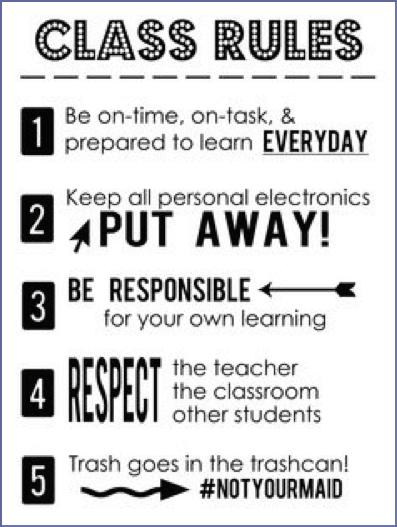
By Scott Fluke
The next time you swallow some cold medicine, take a moment to look at the back of the bottle. You’ll notice the ingredient list features a slew of chemicals that test your phonemic awareness. Most medicines have two types of ingredients: active and inactive. Inactive ingredients play a supporting role. They make the medicine dissolve appropriately, stay fresh longer, or taste sweeter. These are important, but active ingredients are the stars of the show. They actually suppress your cough or relieve your headache. Active ingredients make the difference between real medicine and placebos. You can think of behavioral programming in the same way. If you learn to think about behavior plans in terms of active and inactive ingredients, you can begin to build powerful interventions that are custom tailored to meet the needs of your specific students.
The term “kernel” refers to a “fundamental unit of behavioral influence” (Embry & Biglan, 2008, p. 75). If an atom is the smallest unit of matter, kernels are the smallest unit of evidence-based intervention. A kernel cannot be broken down any further without losing its effectiveness.
An example of a kernel is verbal praise. Praising includes several components (getting the student’s attention, labeling the positive behavior, and using a praise word). But if you take any one away, it loses its effectiveness. Since verbal praise is an evidence-based strategy for changing behavior and cannot be broken down further, it qualifies as a kernel.

Some kernels increase behavior. Other kernels decrease behavior. Still others are antecedent strategies that set students up for success. Take a look at this list of kernels. Which ones might work for your students?
Kernels that Increase Behavior
Verbal praise
Brief Definition
Acknowledgement for engaging in positive behaviors
Peer-to-peer praise (i.e., “Tootling”)Students taught to catch each other being good
Beat the buzzer
Mystery motivator
Public graphing of feedback
Token economy
Reward for finishing a task accurately before a timer goes off
An unknown prize is “hyped” and given to students when they accomplish a goal
Performance on a skill is publicly graphed or posted
Tokens or other symbolic reinforcers are given for positive behavior. Tokens can be turned in for rewards
Team competition Groups compete on some task, performance, or game
Contingent music
Kernels that Decrease Behavior
Time out
Music is played or stopped based on observed behavior
Brief Definition
Removal from natural reinforcement for 1 minute + 1 minute for each year of age
Positive note home for inhibitionNote sent home for choosing not to engage in negative behavior
Timed reward for inhibition
Premack principle
Response cost
Private reprimands
Stop clock
Positive practice
Antecedent Kernels
Non-verbal transition cues
Stop light signals
Boundary cues
Self-modeling
Self-monitoring
Kernels Affecting Physiology
Pleasant greeting
Aerobic play
Nasal breathing
Progressive muscle relaxation
Table adapted from Embry & Biglan (2008)
Reward earned for not engaging in negative behavior for a set amount of time
First-Then strategies. Student must first complete a task to access a more desirable activity
Points or tokens lost after engaging in negative behavior
Corrective feedback given in a private, non-threatening way
Clock starts when misbehavior occurs. Lower times on the clock result in access to rewards.
Repeat corrective behavior many times
Brief Definition
Visual, kinesthetic, or auditory cues that transition will occur
Distinct signal given when behavior is appropriate versus inappropriate
Physical cue, such as a rail or line, marking a specific area where a behavior is acceptable
Video, audio, photo, or drawing of a student engaging in appropriate behavior
Student tracking their own behavior, with guidance from teachers
Brief Definition
Friendly physical and verbal gestures on a frequent basis or to start the day/period
Running, sports, or other aerobic activity
Deep breaths through nose instead of mouth
Tensing then relaxing sequences of muscle groups
Students with emotional and behavioral disorders often don’t benefit from one-size fits-all programs. It is therefore crucial to develop interventions for our students that are based on scientific research, yet still tailored to their individual needs.
Kernels are an excellent way to achieve this goal. Start by identifying the behavior you want to change. Scan through the list of kernels and pick two, three, or four that might be effective. Then, put on your creative thinking cap and envision how you might combine these kernels into one powerful intervention. Finally, identify inactive ingredients that will help you deliver the active ingredients – your kernels – most effectively.
Consider Annabelle, a 14-year old female in a selfcontained program. She gets agitated and starts to roam the room when given a writing assignment. Looking at the menu of kernels, perhaps you think these three might be helpful: contingent music, boundary cues, and nasal breathing.
Now combine them! Start by taping off a large square on the floor. This is the space in which Annabelle is allowed to roam. Next, teach her that she can listen to her favorite radio station as long as she is in her space – but it turns off when she leaves. Finally, teach her nasal breathing strategies to help her regulate her emotions when she gets frustrated.
Let’s try one more. Consider Mrs. Winslow’s class of eight high school students with emotional and

behavioral disorders. It’s a tough group, and they feed off each other. Mrs. Winslow wants to reduce how often they laugh at one another’s inappropriate behavior. Looking at the menu, she identifies:
Team competition
Mystery motivators
Stop light training
Positive notes home
Students with emotional and behavioral disorders often don’t benefit from one-size fits-all programs.
Mrs. Winslow combines these kernels to build a custom intervention for her class. She divides the class into two teams. She teaches everyone a stop light signal, with green meaning that laughter is okay and red meaning that laughter is not okay. Each team gets a mark on the board when they laugh during a red signal. At the end of the day, the team with the fewest marks earns a mystery prize, as well as a positive email home.
These are just two examples. The possible combinations of kernels are endless. Think about what your students need and which kernels might address the issue. Use your creativity to combine them, and you’ll have a custom intervention that has a strong chance of being effective!
Kernels do the heavy lifting in behavior change. But the inactive ingredients are important too. Remember, these are the ingredients that help the medicine do its job well. In education, some of the most important inactive ingredients include:
Communication between staff members
Creating attractive and developmentally appropriate materials
Hyping up interventions to make them feel fun for students
Implementing with high fidelity and consistent follow-through
Effective instruction of each kernel to all students
Re-teaching, pre-teaching, and reminders of the kernels to your students
If you’ve built a strong intervention with several kernels, but you’re not seeing the change you want, think about how you can support it by strengthening the inactive ingredients above.

The possible combinations of kernels are endless. Think about what your students need and which kernels might address the issue.
Forget the one-sized fits-all programs that come in a box. It’s time to put your training, creativity, and unique knowledge of your students to the test! With kernels as your active ingredients, you are ready to build custom interventions to meet the needs of your individual students. Kernels might be just what the doctor ordered!
Embry, D, & Biglan, A. (2008). Evidence-based kernels: Fundamental units of behavioral influence. Clinical Child and Family Psychology Review, 11, 75-113. doi: 10.1007/ s10567-008-0036-x
Scott M. Fluke, Emotional Disturbance Program Facilitator, Olathe Public Schools, Olathe, KS, smfluke@gmail.com
“Nothing improves a student’s hearing more than praise.”
By Sharon A. Maroney

It seems that my students and I have lost our motivation and our zip.
In this new classroom I need a management program, but where do I start?
My management program just isn’t working. I feel like I’m missing something, but don’t know what. I need to liven things up.
I’m betting you’ve been in one, two, or all three of these situations. Teachers of students with behavioral needs are required to use classroom behavior management programs but are seldom given one to use or to learn from. This causes teachers to spend hours creating and recreating their management programs. The Stars program is a basic classroom behavior management program that has been effectively used by beginning and experienced teachers looking for an easy to implement, adapt, and enrich program. It can be adapted for most grade levels and includes the best practice strategies of setting and teaching expectations, reinforcing desired behaviors, and a token economy system. It’s an easy-to-use program designed to increase desired student behavior and decrease undesired behavior through the use of activity rewards and engaging themes. Stars involves a set of five target desired behaviors, selected collaboratively by the teacher and students frequent and varied positive reinforcement of desired classroom behavior
teaching and re-teaching of each desired behavior to ensure student ability to perform behavior
the use of reinforcers which are activity oriented, teacher controlled, and inexpensive or free
frequent feedback to students on their behavior.
Stars is designed to target five basic classroom behaviors. These target behaviors must be classroom behaviors desired of all students which when demonstrated increase student success and achievement. Listed below are some suggested target behaviors. Teachers should work with their students to select those behaviors most directly related to success in the classroom or those included in their school’s program and adjust the wording to fit their students. As students build
their behavior skills and consistently use the target behaviors, teachers change the five target behaviors to focus on new behaviors the students need to learn and use.
Follow Directions
Use OK Language
Be Ready to Learn
Be In Control of Yourself
Work to Learn Something New Today
Accept Responsibility
Help the Class Learn
Try Your Best
Respect Others
Ask for Help When You Need It
Wait Your Turn to Talk
Keep Hands, Feet, and Objects to Self
Help Your Classmates Learn
Listen to Others
Complete Assignments at a Passing Level or Above
Stars sheets are used to document student performance and to provide feedback to students on their behavior. Differing sheets can be easily made for use at either the elementary or secondary levels. Elementary sheets can consist of a simple outline of a 5-pointed star. Each point would be labeled to represent one target behavior.
Follow Directions
Secondary sheets could be designed as a table or spread sheet. These sheets must be designed to enable the teacher to easily draw stars or add their signatures as students demonstrate the targeted behaviors.
Be prepared + ready Give your best effort Ask for help when needed Use classroom language Earn a C or above Totals 9-9:30
As with all behavior management programs, teachers must teach each and every target behavior to all students. Only after direct observation of a student’s correct performance of a target behavior can teachers expect that student to perform that desired behavior. Teachers should not assume that students know what they are supposed to do or that they can actually do it. Therefore, the first step in program implementation requires teachers to teach the program and the targeted behaviors to the students. Role playing with practice is one way to observe a student’s ability to perform a desired behavior and is a more accurate assessment than asking a student “What would you do if . . .?” Teaching behavior skills is very similar to the explicit instruction of academic skills and as with many academic skills, it is more effective to teach one behavior at a time.
Step 1: Tell Them. Tell the students exactly what they will be taught. Clearly and positively state the what, when, why, and how of learning and using the desired behavior.
Step 2: Teach Them. Teach students exactly what and how you want them to demonstrate the behavior. Actively model the steps of the target behavior. Post or print the steps for your students.
Step 3: Watch Them Ask your students to demonstrate the behavior and then watch them carefully.
Step 4: Coach Them. Coach students who look unsure or do not demonstrate correctly. Give students encouraging and corrective feedback on their performance.
Step 5: Encourage Them. Encourage students every step of the way! Praise their efforts and remind them why they need to use this behavior.
Step 6: Remind Them Remind students frequently as they learn new behavior skills throughout the entire school year. Use verbal, signal, text, gesture, and graphic reminders of the what, when, why, and how.
Step 7: Practice, Practice, Practice. Practice makes perfect! Students need many chances to practice a skill to be able to use it accurately and automatically.

The following implementation steps occur after the teacher has taught the target behaviors and program to the students and assessed every student’s ability to perform each target behavior. Prior to implementation, each teacher needs to determine how frequently their students need to be reinforced for desired behavior or redirected. For some students 15 to 20 minutes works well while other students need teacher feedback every 5 to10 minutes. Time limits in this article are only suggestions and are to be adjusted to meet student needs.
Elementary Level.
At the start of each day, the teacher informs the students that it is time to begin Stars and asks the class read and review all five target behaviors on their Stars sheet, which have been taped to their desktops and posted prominently in the classroom.
A timer is set for 15 or 20 minutes and placed out of sight to avoid unnecessary distractions.
Before you toss this idea because you can’t imagine recognizing student performance every 15 or 20 minutes, consider this. Short time periods are required at the start of this program so you can monitor student behavior, reminding and reteaching along the way. Your students are learning the desired behaviors and need your frequent recognition, praise, and feedback. As they get proficient in demonstrating the desired behaviors, you will lengthen the time periods.
During the 15- or 20-minute period the teacher verbally praises students for demonstrating Stars behaviors as often as possible without interrupting instruction. When the timer goes off, the teacher quickly goes around the room and gives students one star for each behavior they demonstrated
during that 15 minutes. (Teaching assistants can be especially helpful now.) Using a pen in a color not available to the students, teachers can quickly complete each student’s sheet in a few seconds. Teachers also verbally praise students and the class for demonstrating the target behaviors. Moving quickly, the teacher announces to the class that the timer is being reset for the next Stars period. This continues throughout the morning.
Five minutes before lunch, the teacher asks each student to count up the stars they earned that morning and write the number on their Stars sheet. The program is repeated after lunch. Each day the total stars earned by each student is added to their Stars bank account. Bank account totals can be posted on the bulletin board or recorded in individual student bank books, with a separate teacher record as back up data. Teachers need to retain all Stars sheets for documentation of student behavior and changes in student behavior.
Secondary Level. Teachers of older students should follow similar implementation procedures with a few variations. For most secondary students 20- to 30-minute periods are appropriate, but these can be adjusted to fit the length of the class period so students receive feedback 3 or 4 times each class period. If paper Stars sheets are used, they do not need to be taped to student desks but can be included in assignment books or folders. If students change classes, it is important to total stars or signatures before the end of class so that the teacher can deliver and the student can receive immediate feedback. Therefore, a student who attends 1st period English class, 3rd period math class, and 6th period government class, would have three Stars totals each day. Another adaptation often used with older students is to include self-monitoring and self-reinforcement by having the students consider their behavior and give themselves signatures each time period in collaboration with the teacher.
Teachers should allow 15 to 20 minutes once or twice a week for purchasing Stars Rewards. Spending more than 20 minutes takes too much time away from academic instruction. At the beginning of each week, provide students with the rewards (reinforcement) menu for that week. Teachers need to carefully determine what rewards will be offered to students and how much each will cost.
Teachers should select from 3 to 5 rewards which will be available to their students each week. This reduces the confusion caused by offering and managing multiple reinforcers. Student motivation and desire for rewards will be maintained with weekly variety and change. Students typically do not desire rewards that are used over and over and over again. The secret to any successful reinforcement program is that the reinforcers must be reinforcing to the students and acceptable to the teacher. This may sound like common sense, but it’s essential and too often neglected. Teachers can use rewards related to classroom themes, seasonal activities, and current cool activities for the age level. Even though students may request other rewards, each teacher determines which rewards he/she will make available in his/her classroom. Just because students ask for certain things, doesn’t mean they should be given those things (e.g., free time to hang out with friends, no homework, leaving class early, unhealthy treats).
Stars is focused on the use of activity rewards as evident in the sample list included in this article. Activity rewards are used for several important reasons.
They offer students opportunities to practice a variety of skills.
They can be provided to pairs or groups of students offering opportunities for social interaction.
They have been shown to increase student engagement and interest.
They involve higher-level skills than those required by edible, sensory, and tangible reinforcers.
STARS REWARDS - Week 1
• Using stamps and ink pads for 10 mins = 503
• Sitting + looking out the window for 10 mins = 503
• Listening to an audio book for 15 mins = 753
• Making a cartoon on the tablet = 753
• Writing tomorrow’s assignments on the board = 1003
STARS REWARDS – Week 2
• Working with the radio on for 15 mins = 503
• Reading a story to someone for 15 mins = 503
• Working on the classroom mural for 20 mins = 753
• Creating a video on the computer or tablet = 753
• Lifting weights for 10 mins = 1003
As stated previously, a total of 15 to 20 minutes once or twice a week should be set aside for purchasing Stars rewards. This program is designed to improve student behavior and increase time on task. It is not designed to reduce instructional time.
Teachers need to determine approximately how many stars their students might earn per day and how many rewards might be purchased each week. It is important that students experience success in this program, rather than frustration at not being able to earn a reward. On the other hand, rewards cannot be so easy to purchase that the focus on student effort is lost. Stars is designed so that teachers can make changes as frequently as each week in the rewards are offered and the cost of each. This allows teachers to accurately match student behavior and effort to rewards offered and earned. In many cases students will not be able to cash in all their stars, teaching students to save is an important part of this program. A Stars bank account can be set up for each student for this purpose.
Students and teachers lose interest and motivation if the same behavior management program is used throughout the entire school. On the other hand, consistency in expectations, rewards, and procedures is helpful for many students with challenging behavior and teachers with many other things to do. Therefore, the addition of a monthly theme coordinated with Stars is highly recommended. Teachers can exercise their creativity in developing instructional units, academic content, Stars sheets, and related activities in many star related themes.
• Stars of All Sizes and Shapes – a geometry unit on shapes, angles, drawing figures, 4-, 5-, 6-, and 8pointed stars, etc.
• Star System, Falling Stars, Shooting Stars, North Star – instruction on the science of the solar system and the stars within it
• Stargazing – a unit on the constellations and their mythological origins
• Stars and Stripes Forever or Star- Spangled Banner – the study of the history of our flag and/ or national anthem
• Star Wars and Star Trek – instructional activities involving these two popular movies/TV shows
• Starboard – instructional activities related to sailing, navigation, ships, and nautical terminology
• Star Patterns – a unit on the use of various star patterns in American quilting, including the history and construction of quilts
• When You Wish Upon a Star – a unit on wishing, what people wish for, how and when people make wishes, and how to make wishes come true
• Star Search – searching for stars in our class with activities involving the identification of personal strengths, skills, interests, and goals and what makes each student a star
• Starburst – a unit on candy, how candy is made, what are our favorites, how much candy is sold per year, and the nutritional value of candy
• Starry Starry Night – instructional unit on art or
music, famous artists/musicians, and works of art/music related to stars
• Stars in your Eyes – the study of popular phrases expressions, their meanings, and their origins
• Movie Stars, Sport Stars, TV Stars, and Rock Stars – instructional activities on biographical information, what it’s like to be a star, and what qualities stars have, or should have
• Superstars – the identification of superstars in our schools, neighborhoods, state, country, world, of today and in the past, and what makes someone a super star
As mentioned earlier, Stars sheets are kept by the teacher and used to document student behavior and changes in behavior. Teachers can easily determine the behaviors demonstrated and not demonstrated by each student, noting patterns in time of day, activity, classmates, day of the week, etc. This will allow teachers to consider making changes to Stars on either a class-wide or individual basis. Teachers working in PBIS (Positive Behavioral Interventions and Supports) or MultiTiered System of Support (MTSS) schools will value this data.
The goal of Stars is to increase desired behavior, engagement, and achievement while decreasing student undesired behavior and time off-task. If Stars is working effectively, teachers can consider gradually lengthening the time periods from 15 to 20 or even 30 minutes. Teachers can also vary time limits – for example, 15, 17, 14, 19, 16, and 21. Both of these changes will strengthen student behavior skills.
As with all behavior management programs, nothing works for all students and nothing works all the time. This program is intended to promote positive classroom behavior and will be effective for many students. Students with more challenging behavior and for whom this program is not effective will need individually designed behavior change programs that will include a combination
of positive behavior interventions. PBIS, student assistance, and MTSS teams can assist teachers in developing effective behavior plans for students.
Finding fun ways to recognize student effort and achievement is a challenge for all teachers. This task is complicated by the fact that there is no one reinforcer or reward that is valued by all students and even the most valued reinforcers or rewards weaken with repeated use. What motivates one student does not motivate another. What motivates students today may not motivate them next month. Therefore, teachers can benefit from a list of possible reinforcers, especially those that are inexpensive or free, fun, and healthy. When using this or any other list of possible classroom reinforcers, teachers should be mindful of the following.
• Teachers decide which reinforcers they will incorporate in their classroom, not the students. As all parents learn very early, just because a child wants something does not mean the child should have it. Teachers are also the best judges of when and for how long reinforcement should be given to students.
• Reinforcers with multiple sources of reinforcement are recommended over more limited reinforcers. If a group of three students is rewarded with the opportunity to present a 5-minute joke telling presentation to the class, they will receive recognition and reinforcement from several sources. If this same group of students were each given a very cool pencil, their sources of recognition and reinforcement are much more limited.
• Absence makes the heart grow fonder is true for reinforcers. Even the most desired rewards lose their attraction with over use. Changing the reward menu each week allows teachers to avoid over use and introduce new rewards to their students.
This list provides some fun suggestions – but the options are limitless. Be creative in offering variety and choice to your students. Select a few reinforcers to offer to your students and change your reinforcement menu frequently. Disregard any suggestions that are not appropriate for your setting, and when you find reinforcers that work for you and your students, add them to this list. While suggestions for time limits are included with some of the reinforcers listed below, time limits can be set for many others. Rewards should not reduce instructional time.
• Arm wrestling
• Lifting weights
• Making cartoons
• Being line leader
• Listening to music
• Surfing the Internet
• Learning a magic trick
• Using the copy machine
• Taking a 5-minute break
• Sitting near the class pet
• Telling a joke to the class
• Using the computer/tablet
• Taking roll or lunch count
• Using stamps and ink pads
• Making an audio recording
• Making a phone call/texting
• Having lunch with the teacher
• Working on a classroom mural
• Being the teacher for 10 mins
• Having something laminated
• Taking and editing fun photos
• Writing on the board or projector
• Leading or making up a class rap
• Writing the assignment on the board
• Shaking hands with the entire class
• Watching an old cartoon with the class
• Playing the radio in class for 20 minutes
• Tossing balloons in class for 10 mins
• Listening with headphones for 15 mins
• Recording the spelling test for this week
• Choosing any classroom job for the week
• Changing one class rule for one hour
• Being the neat desk or locker inspector
• Staring out the window for 10 minutes
• Having school lunch with someone special
• Taking a class game home for one night
• Earning a coupon to skip one test question
• Inviting someone special to visit the class
• Using a special pen or pencil for the day
• Receiving a Happy Gram from the teacher
• Thumbing through magazines for 10 minutes
• Creating a video and playing it for the class
• Having a special sign displayed on your desk
• Getting the Thumbs Up from the whole class
• Moving your desk to a new location for the day
• Adding two words to this week’s spelling list
• Shooting baskets in mini-basket hung on door
• Sitting in any chair you’d like for the afternoon
• Getting special recognition from the principal
• Making this week’s spelling
crossword puzzle
• Playing a game with a classmate for 15 minutes
• Leaving 2 minutes early to lunch, recess, or the bus
• Sharpening your pencil without asking for the day
• Making up and teaching a new secret handshake
• Using special stationery to write and send a letter
• Choosing the book for the teacher to read to class
• Having your teacher use your favorite way to learn
• Having the teacher call your parents to brag about you
• Listening to a scary, funny, spooky, or silly audiobook
• Wearing a hat in the classroom for the afternoon
• Designing a special section in classroom newsletter
• Wearing a “My Teacher Thinks I’m Great!” pin or shirt
• Making an announcement over the school’s intercom
• Receiving a class “3 Cheers for ____, Hip, Hip, Hooray!”
• Receiving class applause with the class applause sign
• Decorating the bulletin board or door to the classroom
• Bringing in and listening to your favorite CD for 15 minutes
• Spending recess inside playing a game with a special friend
What teachers have liked best about Stars is that while the components are clearly presented and structured, there is a lot of room for teacher creativity. Hopefully this article has provided you with a new management program or a few ideas on how you can tweak your current one in ways that
• Wearing rabbit ears, clown nose, or crazy glasses for one hour
• Putting stickers on the papers as the teacher corrects them
• Having the teacher or class sing “For s/he’s a jolly good fellow”
• Making a 5-minute speech to the class on a topic of your choice
• Having the teacher send a note home or to someone you request
• Singing/lip syncing a song to the class or leading the class in singing
• Making a greeting card on the computer/tablet or with art supplies
• Sending a Valentine to someone (when it’s not even Valentine’s Day)
• Sitting in the special chair (an old chair painted with lots of colors)
• Getting total listening time from the teacher or principal for 5 minutes
• Being a helper in the kindergarten, lunch room, media center, or office
• Receiving Thank You notes from the teacher, classmates, principal, staff, etc.
• Reading a story to younger children, the principal, the class, or someone special
• Having lunch in the classroom, with a special table cloth, napkins, and a friend
increase interest and motivation for you and your students.
Sharon
A. Maroney, Professor
Emeritus,
Western Illinois University, sa-maroney1@wiu.edu
By Jane E. West
If you are a teacher or have ever been a teacher, you know that teaching is a team sport. The students who walk into your class bring with them their knowledge and experiences from every teacher they have ever had. You work in teams every day – sharing ideas, brainstorming best strategies for challenging students, participating in your school leadership, and collaborating with special education and specialized instruction support personnel. You depend on your colleagues to know their craft, contribute to the school climate, and partner with you for maximum impact. So, when districts begin to hire teachers who are not up to the job, it matters. It certainly matters to students whose learning will be compromised, but it also matters to teachers who depend on their colleagues to be their partners in advancing a positive school climate and providing effective instruction.
Shortages of teachers, particularly in special education, are causing too many states and districts to make short cuts – lowering standards and adopting quick fixes to fill vacancies regardless of the qualifications of applicants. And who has more skin in the game than teachers?! That’s why policy makers need to hear from teachers about how teacher shortages in schools and the quick fix remedies provided are affecting them, their students and school. Teacher voices will make a difference!

• In 2015-16 there was a national teacher shortage of about 60,000. If current trends continue, the shortage could rise to 112,000 by the end of 2018.
• Special education is the field with the greatest shortage with 48 states and DC reporting shortages (12.3% v. 7.6%); STEM fields and foreign languages also experience significant shortages.
• 90% of high poverty schools have experienced a teacher shortage.
• Teacher preparation program enrollment has decreased by 35% nationally in the last 5 years.
• Teachers prepared through alternate pathways with less coursework and student teaching are 25% more likely to leave their schools and the profession than those who are well prepared.
• Teachers of color leave schools and the teaching profession at a rate higher than white teachers – 18.9% compared to 15%.
• Teacher replacement costs, fueled by teacher turnover and shortages, is approximately $8 billion per year.
There are several critical considerations when addressing the shortage effectively and efficiently without lowering the standards – the first being federal policy. While lowering the entry bar for new teachers is detrimental for all students, it is guaranteed to have a disproportionate effect on students of color, English learners, low income students, and students with disabilities. Without access to funds for training and growth in the field, how can these current and future problems be addressed? What is the role of federal policy? What are the current policies, and what is being proposed for future policy changes?
Teachers leave the field for many reasons including poor compensation, lack of administrative support, dissatisfaction with working conditions, dissatisfaction with testing and accountability pressures, and lack of opportunities for advancement.
How has federal policy impacted teacher shortage? The most direct and significant federal policy shift related to teacher shortages and teacher quality is the elimination of the “highly qualified” requirement in 2015 when the Every Student Succeeds Act (ESSA) replaced No Child Left Behind (NCLB). The thirteen-
year-old federal “highly qualified” requirement (while controversial and reinterpreted through amendments and regulations a number of times) required teachers to meet a sufficient level of content knowledge in their area of certification, have at least a BA, and hold full state certification. In addition, alternate routes to teaching allowed participants to serve as the teacher of record for up to three years as long as they were enrolled in a preparation program leading to full certification and receiving ongoing high quality professional development and supervision.
Federal law no longer dictates these requirements for teachers or those seeking certification through alternate routes. States are free to determine criteria without a federal floor. States define an individual’s readiness to teach through their certification systems. As a result of this expanded authority, and in the midst of teacher shortages in multiple areas, states are adjusting their certification schemes.
It is important to note that ESSA does require states to examine and address the “equitable distribution” of teachers. This means that high need schools should not be staffed by a greater number of lesstrained, less-experienced, uncertified, and/or outof-field teachers than other schools. This mandate allows states to define terms, such as ineffective, inexperienced, and out-of-field placement, and
Oklahoma and California have issued more emergency certificates.
Arizona, Illinois, and Minnesota have lowered teacher licensing requirements.
Arizona gave local school administrators the power to determine teacher certification.
New York allowed charter schools to certify their own teachers with less rigorous preparation than is required for other teachers and dropped literacy tests for teacher candidates.
http://www.businessinsider.com/teacher-shortage-leads-states-to-lowerrequirements-2017-9
https://www.washingtonpost.com/news/posteverything/wp/2018/01/09/ americas-teacher-shortage-cant-be-solved-by-hiring-more-unqualifiedteachers/?utm_term=.d6ccd1719fdb
http://www.businessinsider.com/teacher-shortage-leads-states-to-lowerrequirements-2017-9
https://www.chalkbeat.org/posts/ny/2018/06/19/judge-strikes-down-ruleallowing-some-new-york-charter-schools-to-certify-their-own-teachers/
develop plans to meet this requirement. But at this point in time, with updated provisions in ESSA not yet implemented and state plans still under development with many details unavailable to the general public, the jury is still out on how this activity will be implemented. It must be noted that states have been required to undertake this activity for some years, yet the persistence of this inequitable distribution remains.
Another key federal policy change which accompanied the enactment of ESSA was an amendment to the federal special education law, the Individuals with Disabilities Education Act (IDEA). This amendment eliminated references to “highly qualified” which had been placed in the law when NCLB was adopted. The new provision in IDEA requires that special education teachers must have at least a BA degree and:
• Obtained full state certification as a special education teacher – including participation in alternate routes, as defined under NCLB, or
• Passed the state special education teacher licensing exam and hold a license to teach in the state as a special education teacher.
When comparing teacher quality requirements of ESSA with IDEA, it is clear this provision sets a higher bar for special education teachers in at least two ways. First, a special education teacher must have a BA degree. There is no such requirement in ESSA. Second, if a special education teacher is participating in an alternate route

Title II A ESSA
TEACH Grants, Higher Education Act (HEA)
Currently funded at $2.05 billion, this focuses on professional development and educator quality.
Grants support promising candidates with scholarships for teacher preparation programs (up to $4000 a year for undergraduates and $8000 a year for graduate students) in hard-to-staff fields. If students do not fulfill a service obligation, the grants are converted to loans which the grantee must repay.
Loan Forgiveness, HEAThree programs serve as incentives to recruit teachers – the Public Service Loan Forgiveness Program, the Stafford Loan Forgiveness Program for Teachers, and the Loan Forgiveness for Service in Areas of National Need.
Teacher Quality Partnership Grants, HEA
Personnel Preparation IDEA
State Personnel Development Grants IDEA
Currently funded at $43 million, this is the only program targeted to transform teacher preparation, with a focus on clinical preparation in partnership with high need school districts, including residency programs.
Currently funded at $83.7 million, this provides grants to institutions of higher education to support the preparation of special education personnel.
Currently funded at $38.6 million, this provides grants to states to strengthen their special education personnel development systems.
and serving as the teacher of record, the former rules still apply – the person may teach for up to three years while they are enrolled in a program leading to full certification and they must have ongoing professional development and supervision. These rules are not included in ESSA.
It is imperative that educators be at the table for both state and national policy deliberations. There is too much at stake. Policy makers, as capable as they may be, are not expert educators. Yet, their job is to make decisions about education which will significantly affect students and educators. If educators bring their expertise, experience, and scholarship into the dialogue, the outcomes can only improve.
But before rolling up your sleeves and contacting your members of Congress, it is important to know what the opportunities are. At least six federally funded programs, included in the table, can help address teacher shortages in ways that will support full preparation and professional development thus elevating the profession and student learning. Advocating for these programs and letting your Senators and Representatives know the difference they make in your school and your school district will
matter. Elected officials want to know if the funds they appropriate impact their constituents. If they do not hear from their constituents and there is pressure to cut funding, these programs become vulnerable.
Also of note, with the exception of the two IDEA programs listed, the others have been in jeopardy through the Administration’s budget proposals. For example, for the FY 2019 budget, the President urged the elimination of funding for Title II ESSA as well as the Teacher Quality Partnership Grants. Eliminating these dollars would reduce mechanisms for providing professional development to teachers. It would also eliminate opportunities for pre-service teachers to obtain this funding for university preparation. Furthermore, it would eliminate one solution of filling teacher shortages in high needs areas in partnerships between LEAs and institutions of higher education.
Congress is currently considering the reauthorization of HEA. Deliberations have begun and will surely continue well into 2019 and probably beyond. The most significant bill proposed to date, H.R. 4508, the Promoting Real Opportunity, Success, and Prosperity Through Education Reform Act (PROSPER)
As a person who has been involved in federal education policy for many years, I remain astounded at the lack of significant federal attention paid to teacher quality and the teacher shortage. For example, while equity was a key component of the dialogue around the development of ESSA, it never included teacher quality. Rather, the equity focus was on accountability for the achievement of student subgroups. Regularly measuring and addressing the performance of students, disaggregated by subgroups (race/ethnicity, gender, socioeconomic status, disability, and English language learners) is an equity feature of the law and one that generates voluminous policy dialogue and remains a priority for virtually all civil rights and disability organizations that work in Washington in the education arena, and rightfully so. However, the elimination of the “highly qualified” requirement in ESSA (and IDEA) was virtually never raised by equity advocates or policy makers. The assumption was that NCLB and the Obama Administration’s implementation of it had overstepped federal bounds and “highly qualified” was a big part of that, so it had to go. In my view, the elimination of that provision and substituting it with state decision making, was a significant loss for equity and quality for students. Federal debate is predominately focused on student outcomes with limited consideration for input. I believe this approach has in many ways contributed to the situation we face now, where teacher quality is virtually the sole prerogative of the state, so the door to lower standards in the face of a teacher shortage becomes an inviting possibility.
I also acknowledge that the highly qualified definition was flawed. I was a vocal critic of its allowance that people learning how to be teachers could also serve as the teacher of record and be described as highly qualified. This approach, learning how to be a teacher on other people’s children, was – and continues to be – disproportionately experienced by our high need students, including students with disabilities. However, what we have lost in ESSA are the federal guardrails requiring such individuals who are serving as teachers of record to be enrolled in a teacher preparation program leading to full certification, robust supervision, and a three-year limitation.
The fact that the PROSPER Act eliminates virtually any federal role to support teachers is another statement that the majority in Congress is not interested in addressing teacher quality or the teacher shortage.
The teacher shortage brings to a head the equity and quality dilemma. How can we expect better results for students if the people teaching them are not well prepared and skilled? As educators, we need to connect the dots between teacher quality and student outcomes for policy makers. That connection is not getting the attention it requires in the policy dialogue. It is up to us to raise our voices.
Jane E. West
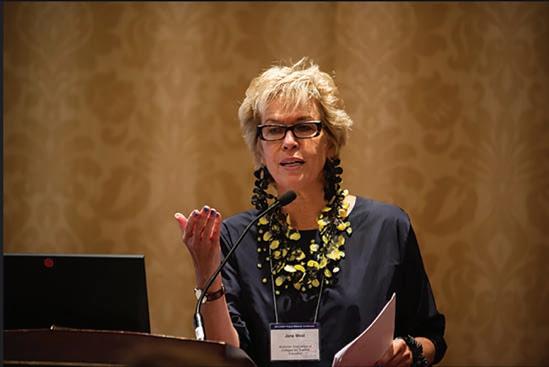
(http://www.acenet.edu/news-room/Documents/ ACE-Summary-of-House-Prosper-Act.pdf) has gained traction with Republicans, but is opposed by Democrats. This bill would eliminate all higher education programs listed in the table which support teachers and teacher education (specifically loan forgiveness programs for teachers, TEACH grants, and the Teacher Quality Partnership Grants). Before contacting your members of Congress, do some homework to determine the status of efforts to reauthorize the HEA. The resources at the end of this article can help.
As you begin to plan your advocacy work, it is important to decide what you care most about in terms of your profession. There are so many policy issues facing education these days it is easy to get lost in the fray. My advice is to pick one issue that makes your blood boil or your heart sing and stick to that one! Your passion will engage policy makers and it will sustain you over the long term. Here are a few steps to get you started.
Become active in your state and local education organizations which routinely engage in advocacy.
Do your homework; know what is on the agenda for your policy makers and what their views are.
Meet with your legislators and build

relationships with them in your state or district; you do not have to come to Washington!
Become a resource to your legislator – provide information and answer questions.
Share compelling personal stories and provide meaningful data including the nature of the teacher shortage in your district and its impact.
Get on Twitter and tweet regularly to your legislators (they all have Twitter accounts); share the take-aways from your latest research and experiences as educators.
Make it a point to be in contact regularly –perhaps once a month – be sure to share the GOOD news, e.g. an award your school received, a new grant to your university.
Working with policy makers is like dating. You have to invest and build the relationship! The rewards grow over time and become richer and deeper. The job of a legislator is to represent their constituency. That’s you. You can help them to understand what is happening in their district and offer your expertise as a resource. Finally, always be part of the solution, not part of the problem!
American Association of Colleges for Teacher Education https://aacte.org/policy-and-advocacy https://aacte.org/resources/colleges-of-education-anational-portrait
Coalition for Teaching Quality http://coalitionforteachingquality.org/main/
Committee for Education Funding
https://cef.org/cef-budget-book/
Learning Policy Institute
https://learningpolicyinstitute.org/topic/educator-quality
Politico
https://www.politico.com/
Twitter Lists for Members of Congress https://twitter.com/cspan/lists/members-of-congress/ members?lang=en
Jane E. West, Education Policy Consultant, JaneWest Consulting, Washington DC, janewestdc@gmail.com
By Marc Benedetto
We are pleased to recommend a rather diverse menu of podcasts for this issue focused on the unique needs of black female students and LGBT youth, a program incorporating yoga and therapy dogs, and the personal story of an elementary school principal. We revisit one of our favorite websites, Cult of Pedagogy, for two intriguing episodes. Jennifer Gonzalez is the moderator of our first two podcasts.
(7/3/16, 1 hour)
https://www.cultofpedagogy.com/pushout/
In this important episode (#47), Gonzalez interviews Monique Morris, the author of Pushout: The Criminalization of Black Girls in School (2016). Morris discusses how difficult it is for some black female students to fit the mold of the typical quiet, compliant student that most teachers crave. She notes that too often our responses (and biases) to these girls actually serve to push them away from school. Morris holds that girls need education to stay away from victimization, abusive relationships, drug use, incarceration, and even sex trafficking. Having interviewed students over a four-year period Morris concludes that we need effective cultural competency in school policies, co-construction of cultural norms, and more alternatives to exclusionary discipline practices. Teachers will find important recommendations and topics for further study in this podcast.
(11/15/17, 31minutes)
https://www.cultofpedagogy.com/lgbtq-students/


A 2015 National School Climate Survey conducted by GLSEN (www.glsen.org), an organization focused on ensuring safe and affirming schools for LGBTQ students, found that over 85% of LGBTQ students have experienced verbal harassment. Another 66% have been discriminated against based on their sexual orientation or gender identity. More than 50% of the 10,500+ students surveyed, which included LGBTQ and peers between the ages of 13 and 21, reported hearing biased remarks made by school personnel. They also reported the failure of staff to intervene when
offensive remarks were made at school. In this podcast (#82), Gonzalez interviews Becca Mui, GLSEN’s Education Manager who provides tips and resources on what teachers and schools can do to make schools safer and more welcoming for LGBTQ students. In addition to this podcast, full of great information, educators will also want to visit the GLSEN website for its large offering of resources and information.
Kids (11/20/17, 15 minutes)
https://www.npr.org/ podcasts/381443931/americanradioworks/
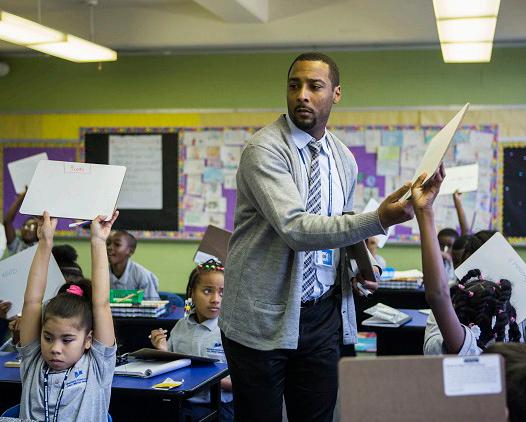
Our third recommended podcast is an NPR production that highlights the River Bend Education Center in Minneapolis, MN. This a locked school facility serving a special education population of students with a common characteristic that they have been removed from other schools due to their extreme anger issues and behavioral outbursts. Sasha Aslanian, a producer and correspondent for Minnesota Public Radio, discusses with several school staff members how mindfulness, yoga, and therapy dogs are assisting these students in developing their selfregulation skills.
(4/25/18, 38 minutes)
https://whyy.org/programs/schooled/
Our final podcast recommendation is from WHHY in Philadelphia, PA. It is the initial episode of a four-part radio documentary from the station’s SCHOOLED podcast. Jovan Weaver is the 34-yearold principal of Wister Elementary School in
Philadelphia. As the episode begins, Jovan is about to address his staff regarding the recent shooting that killed two of their six-year-old students. Jovan decides to tell his personal story of enduring trauma, poverty, and neglect while growing up in Philadelphia during the crack cocaine epidemic. Jovan details the importance of his relationship with his grandmother and how several teachers helped him find the right path. The other three episodes of this podcast documentary on Wister Elementary, also available at this link, detail the controversial decision to select Wister Elementary as one of three failing schools that the Philadelphia Public School District transformed into a mastery charter school. In the process, every staff member lost their job and Jovan Weaver was chosen to lead the transformation during his first two years as principal. The podcasts examine the perspectives of families, staff, and students, covering the successes and the challenges that Wister Elementary experienced.
Marc Benedetto, Retired Special Services Coordinator, Westside Community Schools, Omaha, NE, mbe62571@gmail.com
Reviewed by Robert H. Zabel
All educators, and especially those working with children with emotional/behavioral disorders, know that multiple risk factors in their students’ lives often contribute to their troubled and troubling behavior. Some risk factors involve internal cognitive and temperamental traits, and some are conditions of their physical and social/emotional environments, such as poverty, maltreatment, dangerous neighborhoods, poor nutrition and health care. While teachers recognize the many risk factors in their students’ lives, they may not be as aware of their potentially powerful role in mitigating those risks.
Last summer, I encountered Dr. Elaine Richardson at the Minnesota Fringe Festival where she performed excerpts from her memoir, PHD (Po Ho on Dope) to Ph.D.: How education saved my life.
“The Fringe” is a two-week festival in Minneapolis that showcases new and unique performance pieces with a diverse range of topics, themes, venues, artistic and performance styles. It’s a big event: the 2017 festival featured more than 150 unique shows that were performed before a total audience of over 50,000.
PHD to Ph.D. is Dr. Richardson’s one-woman performance of excerpts from her memoir of the same name. It was both emotionally draining and uplifting, despairing and redemptive – both for the author/performer and the audience. Richardson, who is a professor of Literacy Studies at Ohio State University (and previously the U. of Minnesota and


Penn State), shared an intensely personal story – almost relived it on stage – of her childhood growing up in a poor but stable family in an African American community in Cleveland, OH. She is daughter of a Jamaican immigrant mother who worked multiple jobs and a much older father, who had once been a professional musician. Despite socioeconomic challenges and some intense conflicts between her parents, the family stayed together, and, Richardson says, her parents “were full of hope for us, especially Mama.”
In her performance and book, Richardson vividly traces her remarkable life experiences, especially from about the time she first became pregnant at age 13 and had an abortion, through several years of conflict and estrangement from her family, life on the streets, prostitution, drug abuse, and multiple arrests. Somehow, she was able to find the strength to return to school and stay in school, and eventually earn bachelors, masters, and Ph.D. degrees.
Viewing her live performance and then reading her memoir, I experienced many emotions and thoughts. The performance is emotionally draining, yet ultimately optimistic. Dr. Richardson offers a personal guided tour of a tumultuous period of her life. Her story represents well the multiple social, psychological, and physical risk factors often experienced by students with emotional and behavioral disorders. It seems Richardson has written this memoir both to understand her own life journey and to serve as a kind of model where others can find hope and optimism in their own possibilities.
In that way, she provides a dramatic case example of resilience, a phenomenon first studied in the 1970s by developmental psychologists such as Michael Rutter, Norman Garmezy and Ann Masten. There was at the time a lot of research and public policy attention on the adverse effects
of various risk factors on child development. These risk factors included poverty, poor nutrition, homelessness, parent drug and alcohol abuse, dangerous neighborhoods with high crime rates, poor schools, and absent or dysfunctional parenting. Not surprisingly, most children who experience these conditions – especially when there are multiple risks – have especially poor social, emotional, economic outcomes. They usually experience poor academic achievement and educational attainment, social/emotional maladjustment, high rates of dropping out of school, and incarceration.
While the relationships between risk factors and outcomes were clear, some researchers were intrigued by exceptions to the apparent rule that risks produce dysfunction. They wondered how a small subset of high-risk children not only survive multiple adverse conditions, but sometimes do exceptionally well. Surely, there must be something – innate temperament variables and/ or environmental conditions – that enable them to have better outcomes than would be predicted. At first, these exceptional individuals were referred to as “invulnerable,” but that terminology later shifted to “resilient.” These children were not invulnerable or immune to destructive factors so much as they were resilient – better protected from the damaging effects.

Resilience researchers have since identified two key types of protective factors. According to Ann Masten, a developmental psychologist at University of Minnesota, “Some resilience factors are drawn from within, involving abilities such as problem solving, self-control, emotion regulation, motivation to succeed and self-efficacy. But external factors are important, too. Some of those influences are related to the attachment system, including having supportive parents or primary caregivers, close relationships with other caring adults and close peer relationships. Still others exist in systems beyond the family, such as effective schools and neighborhoods and the qualities of faith and hope embedded in spiritual and cultural beliefs” (Weir, 2017).
First, intellectual and social abilities seem to enable some at-risk children find ways to survive despite the odds. For example, skills in “problem solving, self-control, emotion regulation, and motivation to succeed” help them do better academically than other at-risk children who experience academic frustration and failure.
The second powerful protective factor is the involvement of caring adults in the child’s life. Often a parent or another caregiver – a grandmother, aunt or older sibling – fills this role. Even in the context of otherwise adverse environmental conditions, that adult is able to provide a nurturing, stable, protective environment. She may be a model of stability, encouragement, support, and sense of a future for the child. Of course, these innate and external protective factors are interactive. It’s likely that many adults are more willing and eager to engage with, invest more effort in, and provide resources to children with more obvious positive attributes and who more readily respond to their efforts.
About her own mother, who had only a 6th grade education in Jamaica, Richardson says, “She joined the field of education, moppin and cleaning my school, where she dug gum and cleaned toilets for the Cleveland Board of Education for 24 years…
While teachers recognize the many risk factors in their students’ lives, they may not be as aware of their potentially powerful role in mitigating those risks.
Mama did everything with us. She taught us how to pray… she taught the ABCs and how to write our names, and little bit of reading before we went to kindergarten…She was always fussin at us about speaking ‘Propah Henglish…Ball games, the park, the YMCA.” Throughout her childhood and continuing into her adulthood, even during times of tremendous conflict between them, Richardson says her mother was a constant support. She never gave up on Elaine, who says, “If I am worth anything, it’s because of Mama. Mama always let me back in the house. Mama kept my oldest daughter for me when I was a po ho on dope.” That adult influence, Richardson believes, extends back to her Jamaican grandmother, who “passed the baton of her beliefs, intellect, hard work, and ambition to Mama.”
In addition to her mother, Richardson cites examples of other caring, nurturing adults –mostly educators (the subtitle of her book is “How Education Saved My Life”) – beginning in elementary school and continuing through her doctoral program. They were individuals who recognized her talents and potential. They selflessly offered her support, encouragement, and communicated their belief that she could and would succeed. So, Richardson was doubly fortunate to be intelligent, talented and motivated and to encounter adults who recognized her potential and provided on-going support and encouragement, even during risky, dangerous times in her life.
I think Dr. Richardson’s story is one that will resonate with educators, particularly special educators who work with emotionally and behaviorally challenged and challenging students. Not all children who experience multiple risk factors will readily show the intellectual and socio-emotional attributes that Richardson’s teachers saw in her. However, I believe that many special educators, especially those who choose to work with troubled children, are persons who themselves have special talents – intrinsic empathic sensibilities, perhaps, that have been honed through experience and training.
They are able to see and willing to seek a child’s positive attributes, even when they are hidden in a thicket of risk factors. Not only are these “special” educators able to see a child’s worth and potential for positive growth and adjustment, they are willing to dedicate their efforts and energies toward developing the child’s possibilities. For some at-risk kids, I believe that the most influential protective factor in their lives is a caring, supportive, encouraging teacher who believes in their possibilities for healthy growth and adjustment.
Richardson, E. (2013). PHD to Ph.D.: How education saved my life. New City Community Press. Philadelphia, PA.
Weir, K. (2017). Maximizing children’s resilience: New psychological research points the way toward boosting resilience in children at risk, particularly the importance of supporting parents and early interventions for children and adolescents, Monitor on Psychology, 48(8).
Robert H. Zabel is Professor Emeritus of Special Education, Kansas State University.
The world won’t come to an end if you don’t have an education, it will simply pass you by.


By Brandi Burt
The alarm goes off at 4:30 and I wonder to myself, “How badly do I really need this job?”
The answer is I do need this job, but mostly, this job needs me. The kiddos in room 703 count on me showing up every day. Not only are they counting on me to show up, they are counting on me to invest everything I’ve got into them.
I nose my old SUV into the second parking spot from the left in a completely deserted parking lot. I take a final puff of my cigarette and slug down the last of my lukewarm coffee. I check my graying roots in the rearview mirror and chuckle quietly, knowing I am anything but a typical teacher. I am a special education teacher. Specifically, I am a teacher of students with emotional disorders. I didn’t know I could love a job that takes such a physical and mental toll on me, but I do. I not only love this job, I love everything that comes along with it. I love the data collection, the trend lines that show decreases in target behaviors. I love the sound of a kid giving a voice to his feelings by using the words, “I’m frustrated.” And I love the
connections that I have made with my students, their parents, and coworkers who are also kneedeep in the weeds of frustration. The things that most teachers take for granted, I relish.
As a kid, I knew I wanted to teach. My mom was a teacher, my dad was a teacher, and I just assumed the natural progression was that I would someday have my own classroom. I took the long way around to get my degree, raising a family and working secretarial jobs that never left me feeling challenged. My start in education came as a oneon-one paraeducator for a boy with cerebral palsy. I then moved on to work with a boy with muscular dystrophy and other students with cross-categorical disabilities. In 2016, I landed a job that introduced me to the facet of special education that would change my life and put me headlong into the path of kids with emotional disorders. I learned about behavior analysis and data collection. I fell in love with the idea that I could help kids learn academics by first helping them learn how to display socially acceptable replacement behaviors.
As I was thinking about writing this article, I wasn’t sure how I wanted to tackle it but when my boyfriend asked me one evening, “How was your day?” and I responded with, “It was a great day, but I’m going to be a little late this evening, I need to stop by urgent care and get a tetanus shot.” There was a brief pause on his end of the line and then he replied, “Again?” That’s when I knew that I wanted to share the struggles and joys of being captain of a ship, navigating rough waters. My job comes with a certain set of challenges that I didn’t envision as a bright-eyed college student ready to change the world of education. Even when I am doing everything by the book, sometimes situations arise that put me in harms way. Regardless of filing accident reports and transport/restraint paperwork, I still know that I am doing what I was called to do. I don’t give up and I don’t back down. I push through. Every single day, I push through.
Being a teacher in special education is difficult because progress isn’t always quick or easy. An emotional disorder is a scary thing for individuals, but even more so for kids. They often don’t understand their frustrations and use unloving ways to ask for help. You may have a kid on your caseload for more than one year and you see only tiny steps of progress. As a teacher of students with emotional disorders, you may find yourself fighting battles that stem from home lives or, even, neurological diagnoses – situations out of a teacher’s control. But teachers who work with these students must be ready (and willing!) to do whatever it takes. I have learned many effective strategies to help students use coping skills and replacement behaviors which allow them to be successful in a regular education setting.
Each day as I unlock the door to my classroom and enter the room, I am greeted with my life motto placed strategically on the wall to the right of my desk – “I CAN DO HARD THINGS.” And the truth is, I CAN do hard things. I take out my data collection binder and look through the previous day’s data. I see the colorfully graphed
trend lines that represent a month-long tracking of unsafe behaviors, off-task behaviors, and access to reinforcement. I note what things have been successful and what strategies need to be changed. I begin to prepare my mind for the day’s schedule. I refer to my calendar for meetings that I have and special activities that are going on in my building that day. I check emails, lunch menus, and weather reports. Finally, I prepare my heart. I breathe prayers over each of my kiddos and ask that I be given an extra dose of patience, as I know that each day presents a new set of challenges and experiences. I don’t pray that my students will be “good”; I pray that I will be my best. I try to visualize myself as the caring, compassionate teacher that I would want for my own four sons.
While I value my education and the support network of people who have invested in me, I know that my most valuable asset is the connections that I make with students. Each of my students knows that they are important to me.
The coffee is taking effect and the bell is getting ready to ring, signaling the arrival of my tribe. I am going to shut my computer and put on my best (and genuine) smile to go greet buses 15 and 120, knowing that today, I WILL DO HARD THINGS.
Brandi Burt, Cecil Floyd Elementary School, Joplin, Missouri, brandiburt@joplinschools.org

By Allison Spurck
A little rebellion is good every now and then.
The best thing about rebellion is when you don’t notice someone is rebelling.
The second-best thing about rebellion is that you don’t know what’s going to happen next, what’s going to come out of my mouth or what action it will entail.
If you don’t take risks, then you are not living.
You’ve got to break rules once in a while so that you make mistakes.
So be young and reckless and never stop living.
That way you stop worrying about people or things that are going to happen.
If you spend your whole life worrying then you might cry over a lot of stuff.
So it’s better to live life without worrying.
You know we all do stuff we are not proud of but shouldn’t let it affect how we see ourselves.
Like they say, soar above the eagle and fly above the mockingbird.
I am the mockingbird.


As a Sponsor, you will:






• Show your support of ReThinking Behavior by helping defray publication costs
• Be recoginized and provided space to publish your organization information and web links
• Reach an audience of over 5,000 individuals and groups involved in the education of students with emotional, behavioral, or mental health needs
For more information, contact rethinkingbehavior@mslbdl.org
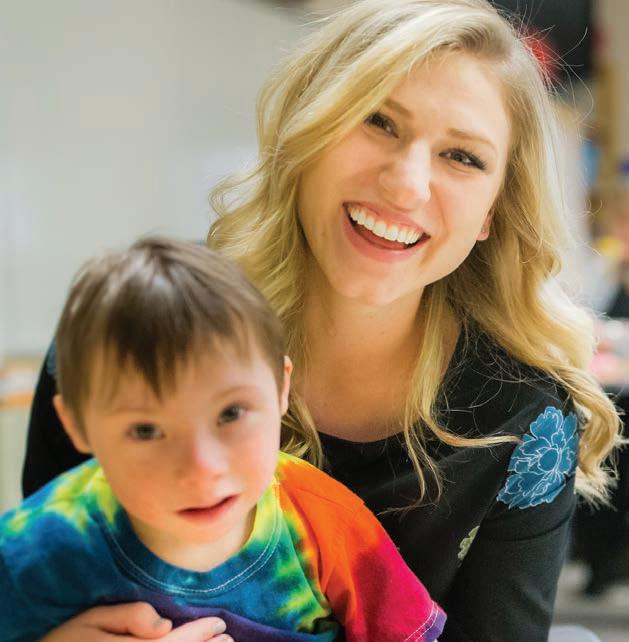
Advocate and Innovate for Students & Families
Committed to excellence in basic and advanced teacher preparation in special education, University of Northern Colorado's expert faculty develop educators who advocate for children and youth with exceptionalities. UNC Extended Campus offers online special education programs designed for working educators.
CONTACT THE ENROLLMENT COACH Kara Murray kara.murray@unco.edu 970–351–3797 extended.unco.edu
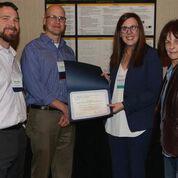
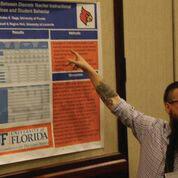
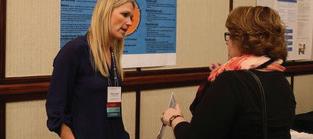
37th Annual Midwest Symposium for Leadership in Behavior Disorders February 21-23,







The Midwest Symposium for Leadership in Behavior Disorders annually recognizes individuals for the following awards and stipends.
• Outstanding Advocacy: Outstanding advocacy for students with Emotional or Behavioral Needs
• Outstanding Leadership: Outstanding service and leadership to the field of E/BD at the national level
• Outstanding Educator: Outstanding achievement and excellence in classroom service to students with behavioral needs
• Building Bridges Award: A stipend to a program serving students with behavioral needs to provide seed money for program development
• Masters Degree Student Stipends: Up to two Master’s students pursuing degrees with an emphasis in working with students with behavioral needs
• Doctoral Degree Student Stipends: Up to two Doctoral students pursuing degrees with an emphasis on serving students with behavioral needs
Nominations Due November 1
Preparation and Support for Teachers in Public Schools: Re ections on First Year of Teaching
National Center for Education Statistics (NCES)
This Statistics in Brief investigates early-career teachers’ preparation for teaching and receipt of support by selected characteristics of the schools in which they taught during the 2011–12 school year. https://nces.ed.gov/pubs2018/2018143.pdf
Fact Sheet on Teacher Pay
The Center for American Progress
This Fact Sheet on Teacher Pay demonstrates how underpaid teachers are as a profession.
https://www.americanprogress.org/issues/ education-k-12/reports/2018/06/14/452130/factsheet-yes-increase-salaries-teachers/
Taking Stock: A Teacher Perspective on Informing and Improving Teacher Preparation Programs. Teach Plus

This report shares the ndings of a survey of Teach Plus members including: Teachers want teacher preparation programs to be measured by the performance of graduates in the classroom, and teachers believe programs should be rated and held accountable for program graduates’ impact on student learning and their demonstrated teaching skill. https://teachplus.org/news-events/publications/ taking-stock-teacher-perspective-informing-andimproving-teacher
National Education Policy Center
NEPC posts a number of reports related to teacher quality, teacher development and teacher preparation.
https://nepc.colorado.edu/topics/312
Three Practices and Three Policies
The Alliance for Early Success issued Three Practices and Three Policies outlining three “indispensables” for high quality pre-K. https://qualitypre-k.earlysuccess.org/
RETHINKING Behavior is a free online magazine for professionals serving children and youth with behavioral needs published three times per year by the Midwest Symposium for Leadership in Behavior Disorders. Access RETHINKING Behavior at: www.mslbd.org/RTB.html.
Our goals are to:
• Lend support and a rmation;
• Provide thoughtful and simulating discussion;
• Provide a source of analysis and commentary;
• Provide current news and information;
• Present personal stories and perspectives;
• Provide unique information; and
• O er humor, parody, and ction.
What are you thinking?
What do you like? What should we add?
What do you take issue with? Agree with?
Did we make you think? Smile?



Send thoughts or a proposal to rethinkingbehavior@mslbd.org.





Tell us on Facebook at: https://www.facebook.com/mslbd1/ or on Twitter at @MSLBD1 and search #rethinkingbehavior.