



By Ella Stott STATESMAN EDITOR
Editor’s note: Following the public conduct trial of Po’okela Yamakoshi-Sing, USUSA Logan vice president, on Nov. 5, the decision was put in place by USUSA to use the word “hearing” instead of “trial” when referring to the presentations in front of a hearing board. For consistency in reporting, the word “trial” will be used in this article. This is not a reflection of USUSA’s language choice nor the nature of the event.
USUSA Logan Vice President Po’okela YamakoshiSing was reinstated to his position on Dec. 4 following an appeal from his original public conduct trial. The first trial on Nov. 5 removed Yamakoshi-Sing due to his public intoxication at the Utah State University event the Howl and lying to police officers, counts that violate the Article V of the USU Student Code.
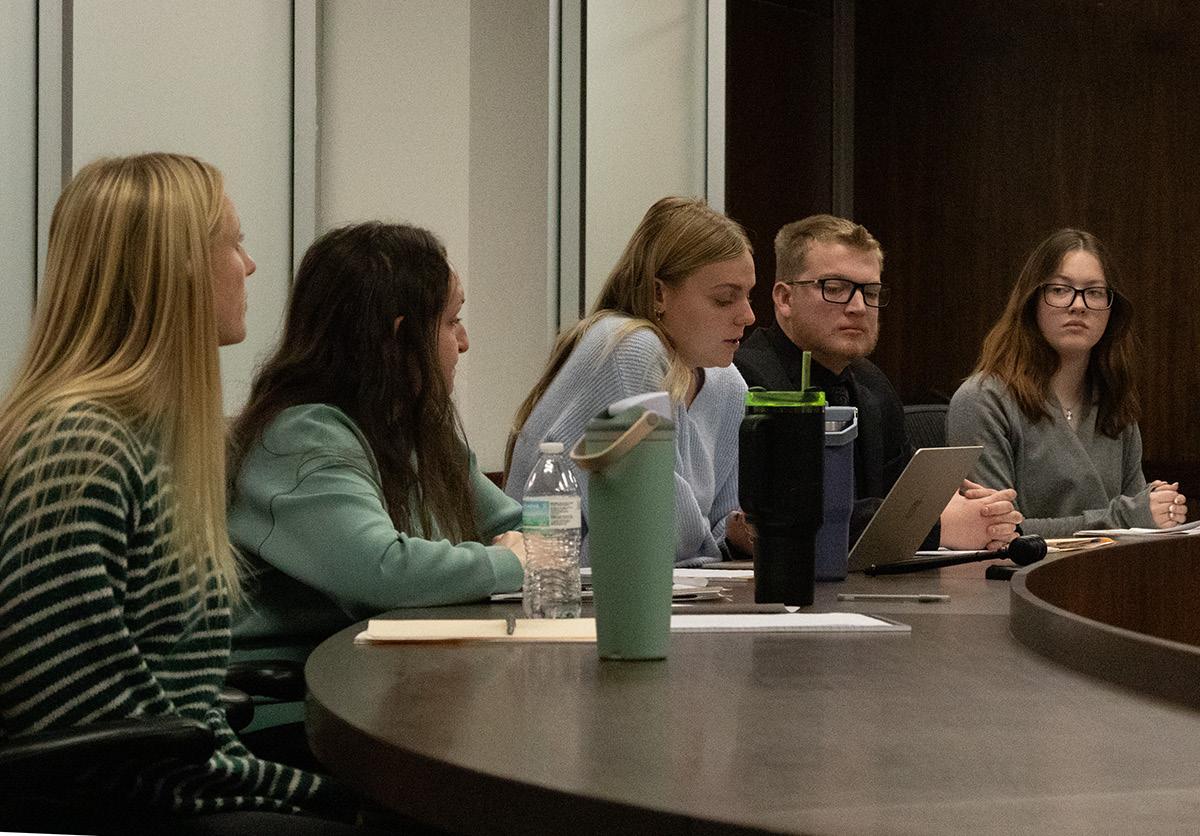
His appeal was heard by student hearing board members Priya Corley, AJ Brannan, Kylie Peasley and Gracie Kay as well as student chair Kate Robison, and the decision to reinstate him and place him on probation was moved after a private vote 3-2.
Yamakoshi-Sing appealed on the following grounds: His appeals before his original trial date — to extend the time he had to prepare beyond one day and to remove two members of the hearing board with whom he felt he had a conflict of interest — were denied, and he believed there was inconsistency in the treatment of his trial and that of USUSA Athletics and Campus Recreation Executive Director Ben Burdette.
Burdette’s trial took place on Nov. 12, five days after the original scheduled time. The decision to move it back was addressed in his trial: The original date was on a Friday, and campus resources to help students with mental health such as CAPS would not be open over the weekend. Colin Hastings, USUSA student advocate vice president, explained in a written statement to The Utah Statesman why Yamakoshi-Sing’s original appeals were denied.
“Hearing Board bylaws state that a trial must take place within ten days of a complaint, and his extension
exceeded that timeline, and his reasoning for the extension did not fall under extenuating circumstances,” Hastings wrote. “His request to remove both [hearing board members] was looked into by myself and several members of the faculty, however we found no conflict of interest, and did not believe that his reasoning met the threshold for removal.”
Yamakoshi-Sing felt there was inconsistency in treatment of him and Burdette in their respective trials beyond the date change. Burdette’s trial was initiated after his alleged failure to uphold an MOU, a memorandum of agreement, that he signed after misconduct in his position. His trial resulted in a 15-week probation.
“My request is to be treated with the same fairness and consistency that others have been shown,” YamakoshiSing said in the trial. “My violation was the first offense. He broke that MOU — breached a formal agreement.”
The trial began with remarks from the claimant, USUSA President Brandon Sorensen.
Sorensen outlined the same argument he made in the original trial, showing the board the police report that documented Yamakoshi-Sing’s intoxication and providing misinformation.
“His character is not on trial. His effort is not on trial. What’s on trial is his eligibility for office,” Sorensen said. “A person may be well-liked and still violate policy. A person may be effective and still breach contract. A person may perform good work and still go against his qualifications and responsibilities as a leader.”
After Sorensen yielded his time, Yamakoshi-Sing was brought to the stand, where he admitted to the charges against him and outlined his case to instead be put on probation. He explained the police charge against him for a minor in possession, as well as the student code of conduct violation, has allowed him time to reflect and grow. Additionally, he highlighted the grace shown to him in these charges.
“I’m starting to go through a university class. It’s a drug and alcohol reconciliation advisory course — and probation for a year,” Yamakoshi-Sing said. His probation after attending court is six months. “They recognize that young people do make mistakes, and they focus on growth not punishment.”
According to Yamakoshi-Sing, if the other offices were able to recognize his growth and commitment to change, USUSA should too.
“I understand what I did was wrong. I don’t expect to get off very easily,” Yamakoshi-Sing said. “Although, I don’t want my message to be ‘Oh, I drink alcohol underage.’ I want it to be ‘Hey, I do make mistakes. I can be better from that.’”
Following the claimant and respondent statements and rebuttals, the hearing board asked questions to both Yamakoshi-Sing and Sorensen to clarify their arguments. Yamakoshi-Sing had other students come with testimonies. These testimonies were scheduled to be heard during the presentation of evidence, but the board moved to hear them following the question portion of the agenda in a 3-2 vote.
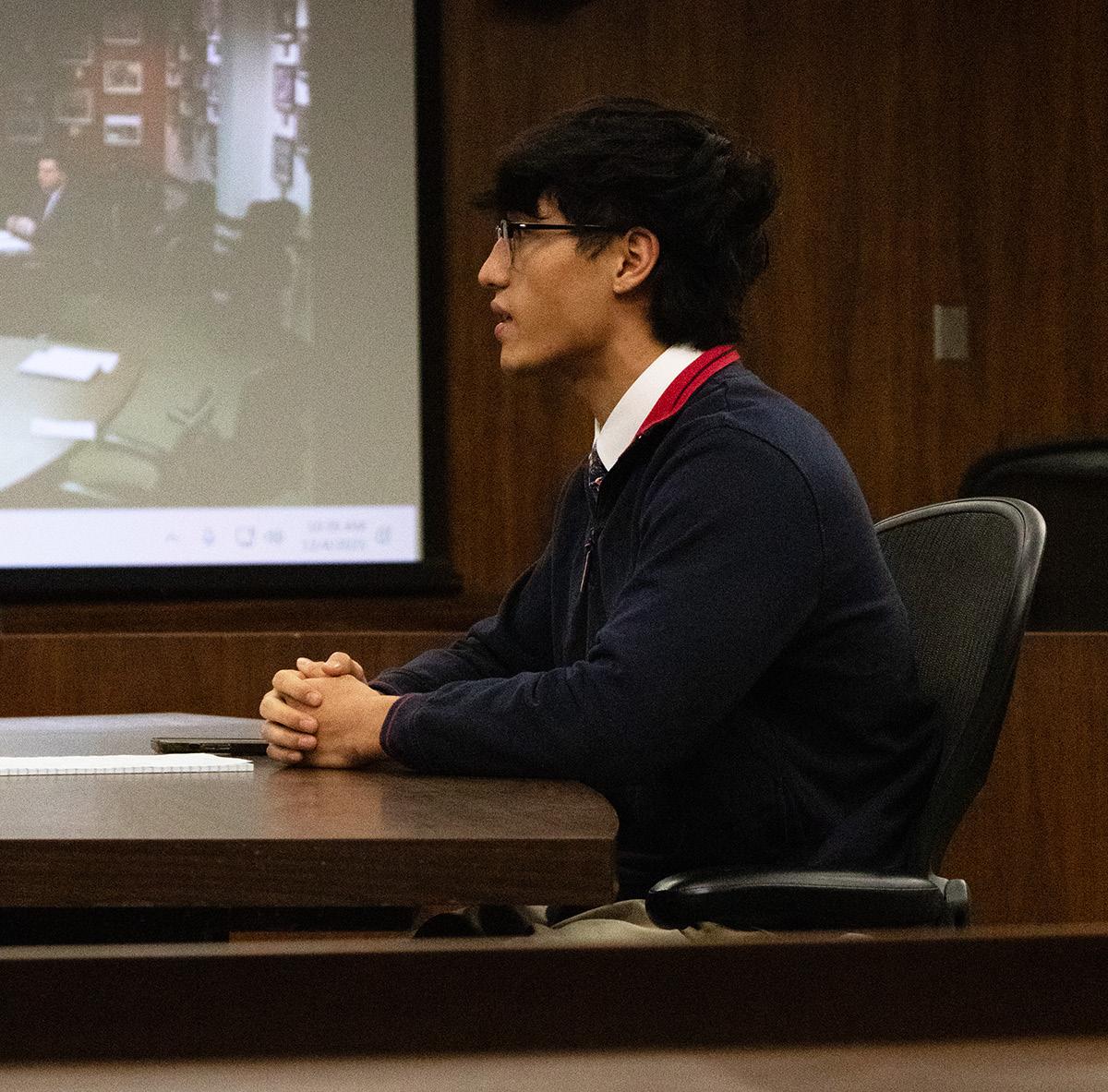
USUSA Clubs and Organizations Executive Director Mia Bean spoke first.
“We all have made mistakes … and [Yamakoshi-Sing] has worked hard to overcome what has happened,” Bean said. “He really does care deeply about this position and Utah State, and honestly, I would rather have someone who truly cares about students and making a difference than someone who never makes mistakes and just goes through the motions of the position.”
The second testimony was from Ryley Cottrell, humanities and social sciences senator in the Academic Senate.
“As we saw with Director Burdette’s trial, there is a precedent to do probation instead of automatic removal should you choose to do so,” Cottrell said.


Ella Stott is a senior studying creative writing. When she is not writing, she is eating gummy bears. She also does that when she is writing.
— ella.stott@usu.edu

In light of the recent hearings of USUSA officers Po’okela Yamakoshi-Sing and Ben Burdette, we as an editorial board want to express the need for further transparency and professionalism within USUSA. The decisions made in the hearings affect the overall student body. These are the officers the students elected to office, and the effects of the hearings do impact them. We find reporting done on the hearings is necessary, as many students would be unaware they took place without this. Our goal is not to have students scrutinize the mistakes of USUSA officers, but in turn, we believe if these mistakes constitute a hearing, students should be aware of how the outcome of such could influence the representation they have within student government.
These hearings are open to public attendance and knowledge but can be time-consuming and rigorous for students to sit through. A recent hearing for one of the aforementioned officers exceeded six hours and went well beyond standard business hours. If these hearings cannot be handled swiftly or even in a timely manner, it calls into question the integrity and professionalism of our student association and its bylaws. Therefore, the decision to report on these hearings and alert students about their results was made in order to ensure all students are aware of who is representing them in USUSA.
— The Editorial Board



By Emi Ludlow STATESMAN REPORTER
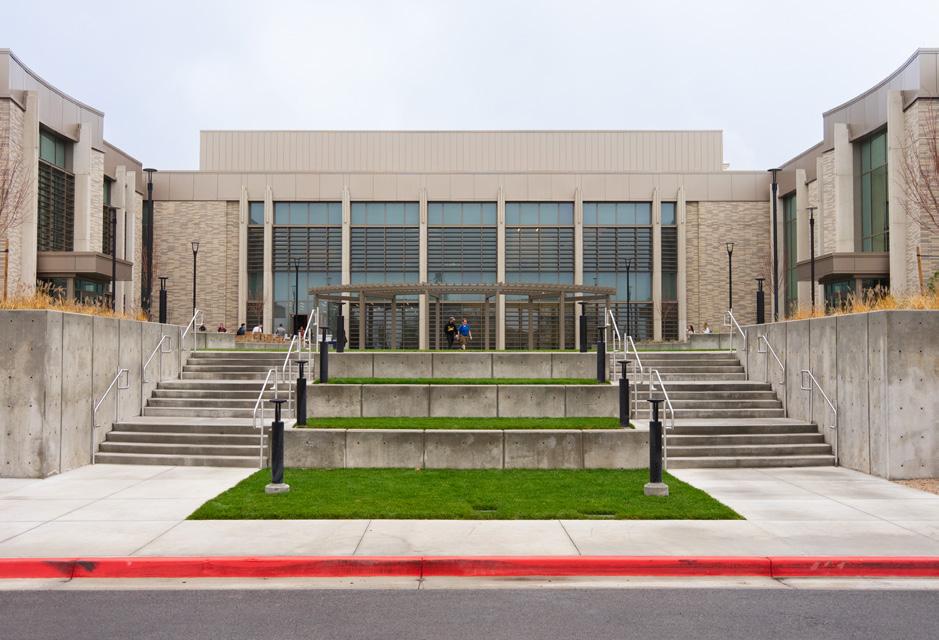
On Nov. 23, the Logan Institute of Religion building for the Church of Jesus Christ of Latter-day Saints was officially opened with a dedication by Elder Gérald Caussé of the Quorum of the Twelve Apostles. The original institute building was torn down in 2023, according to the Church Newsroom. The new plans were approved in January 2022 with it being two stories and approximately 100,500 square feet.
The building is located at 600 Darwin Avenue, near the TSC on Utah State University campus. The open house was open to all community members and students who wanted to walk in and tour around the new building. The ushers and instructors were scattered around to help answer questions in church wear with name tags of their callings.
Emily Keele is a religious education instructor for the church. She has been teaching in classrooms on campus and in the church buildings for the past two years.
“We’ve been scattered in different buildings on campus and different church buildings, and now we’re all going to be together,” Keele said. “It’s going to be easy to find your friends and teacher and have a place to meet.”
The building houses multiple classrooms that each accommodate over 100 students, as well as a large gymnasium that can split into three separate chapels.
“We want a place to be together, to connect,” Keele said. “This building is all about relationships and connection.”
There is a council set up for the institute, made up of students that plan and run the activities offered. There are spiritual meetings, dances and “Family Home Evening” activities where students come together to worship and get to know each other. Bryson Newswander, vice president of the council, was called to his position by his church as a way to serve.
“I lead the institute student council and in our efforts to help students have a place they feel like they belong and can gather,” Newswander said. “The building is glorious. It is designed to create spaces where people can come together as a community as students.”
There are study rooms and a cafe where students are
able to come together in groups. The building’s capacity is 10,000 people.
“There are a lot of fun opportunities — different things that we can do with activities that we didn’t have the ability to before,” Newswander said. “We’re able to handle a larger capacity and host more people.”
The building had an open house to the public on Nov. 21 where there was a self-guided tour through the rooms with descriptions of what certain paintings represented.
“There are paintings here of Jesus Christ I’ve never seen before,” Newswander said.
Each painting is chosen from a department in Salt Lake City run by the church.
“Coming and seeing the artwork is something we’re encouraging the community to do,” Keele said.
The classes taught in the building range from religious classes — focused on the New Testament, Old Testament and the Book of Mormon — to dating and marriage preparation.
“You don’t have to be a member of the Church of Jesus Christ of Latter-day Saints to take a class,” Keele said.

Emi Ludlow is a first-year student majoring in English. She has been involved in journalism for four years now, and her favorite part is telling people’s personal stories. — a02474473@usu.edu

November 20

Information received from a threat assessment management team report about possible threats of violence in the TSC Marketplace. Officers met with the individuals involved and determined no threat of violence occurred.
November 21
K-9 Officer Sage and Officer Nebeker attended an alcohol awareness activity and social at Richards Hall. Alcohol awareness tips were provided, and the residents met and interacted with Sage.

USUPD received a report of an individual that was filling a university fleet vehicle with gasoline and noticed it had over filled and was spilling on the ground. The individual stopped that pump and called it in. USU fire marshals, LFD and USU EH&S worked together to address the spill and once the area was cleaned, cleared the area and returned to duty.
November 23
Officers responded to a medical call for service at the Living Learning Center regarding an allergic reaction. Officers and EMS assessed the individual, and transport to LRH was not required.
By Rory McNeill STATESMAN REPORTER
Utah Gov. Spencer Cox and Brigham City Mayor DJ Bott, announced in November Brigham City would soon be home to a new nuclear power plant, as well as other facilities, to promote the growth of nuclear energy throughout the state.
The Nov. 17 press release stated the project will “position Brigham City as a hub for Utah’s nuclear energy renaissance,” and that it is “marking a major milestone in Operation Gigawatt, the Governor’s initiative to double Utah’s energy capacity and create domestically sourced energy ecosystems.”
The project is slated to be completed in five phases. Having already finished phase one, the announcement, the remaining phases include planning and site studies, approvals and construction, hiring and training workers and finally, powering on.
“The piece most people are talking about is the location of a nuclear generation facility somewhere in Box Elder County. That facility is probably a decade away and will not be located within Brigham City limits,” wrote Cami Sabin, communications specialist for Brigham City, in an email to The Utah Statesman. “The other two pieces of the project are an education and certification program owned by Hi Tech Solutions and a manufacturing facility owned by Holtec International. Both of those businesses will be in Brigham City, and we expect they could be operational within a couple of years.”
Though the power plant itself is not expected to be completed soon, the education programs and manufacturing facility are expected to bring 1,350 jobs to Brigham City in the next 3-5 years. Construction will make up 700 jobs, while the other 650 will be permanent positions.
Brigham City was ultimately decided upon to be the location of the facilities after years of planning and searching. With sights already set on Utah, Hi Tech Solutions needed to find a town that shared common goals with the company.
“As far as how this came to be located in Brigham City and Box Elder County: One of the owners of Hi Tech Solutions has been wanting to bring his company to Utah for many years, but he was looking for a place that could accommodate a full ‘nuclear ecosystem,’ including manufacturing and a highly trained workforce,” Sabin wrote. “During his search for a good location, he reached out to leaders of several cities and ultimately decided Brigham City was where he wanted to be.”
The residents of Brigham City have largely accepted the news with positivity, although many of them were surprised by the announcement.
Brooke Duersch, student at Utah State University and Brigham City USUSA vice president, wrote in an email to the Statesman about her reaction to the announcement. “Excitement that our city is wanting to move forward with implementing nuclear power as a cleaner alternative to what we are using and overall surprise that Brigham City would have this in their plans. I was also shocked

about hearing about this and had heard nothing about it until it was announced,” Duersch wrote.
She also shared her worry about the possible social implications the new businesses and power plant may have on the city.
“I enjoy living in Brigham City because of the small town, no traffic, and a friendly collaborative community that it is. I feel like this decision is telling everyone that Brigham is ready to grow without the input of those of us who live here,” Duersch wrote. “I hope as growth does occur that it is done with the best interest of those who already live in the community and not at the citizens expense.”
The city acknowledged the community was not involved greatly in the decision but that it kept residents’ goals in mind throughout the process and are establishing plans to ensure they are informed and engaged as the project progresses.
“Residents often express their interest in stable energy prices and strong employment opportunities, and city leaders consider these long-term priorities when evaluating major projects,” Sabin wrote. “While this proposal originated with city and industry leaders, the project will now include a formal, structured engagement process to ensure the community receives clear information and has defined opportunities to participate as the proposed project advances.”
In addition to worries about social implications on the city, community members have also expressed worry about the safety of the plant and its effects on the surrounding environment. The city has ensured all proper precautions will be put into place to maintain the well-being of the community and the surrounding area.
“The site evaluation process is extensive. Evaluators look at everything you can think of and probably a lot
you would never consider. The facility will have a variety of safety features that will be triggered automatically depending on the conditions, and it will also have extensive emergency plans.” Sabin wrote. “In addition, every stage of this process will be required to follow all applicable state and federal laws, as well as oversight from the relevant industry regulators. These requirements guide the siting, design, safety systems, construction, and long-term operations of any facility, ensuring that the project meets the highest standards throughout its development.”
The press release also highlights the involvement of federal officials to guarantee the project is completed appropriately, stating, “The project will undergo full state and federal review—including National Environmental Policy Act (NEPA) and U.S. Nuclear Regulatory Commission (NRC) oversight—in coordination with the Utah Department of Environmental Quality (DEQ) and industry bodies to ensure the highest standards of safety, transparency, and public trust.”
The project is expected to have lasting effects on both Brigham City and Utah, helping move the state forward with its goals of becoming the “best place in the nation for innovation and energy development,” as stated by Utah House Speaker Mike Schultz in the press release.

Rory McNeill is a sophomore from Rocklin, California studying mechanical engineering. He loves Aggie sports, skiing, golf and writing music.


By Katie Smith STATESMAN REPORTER
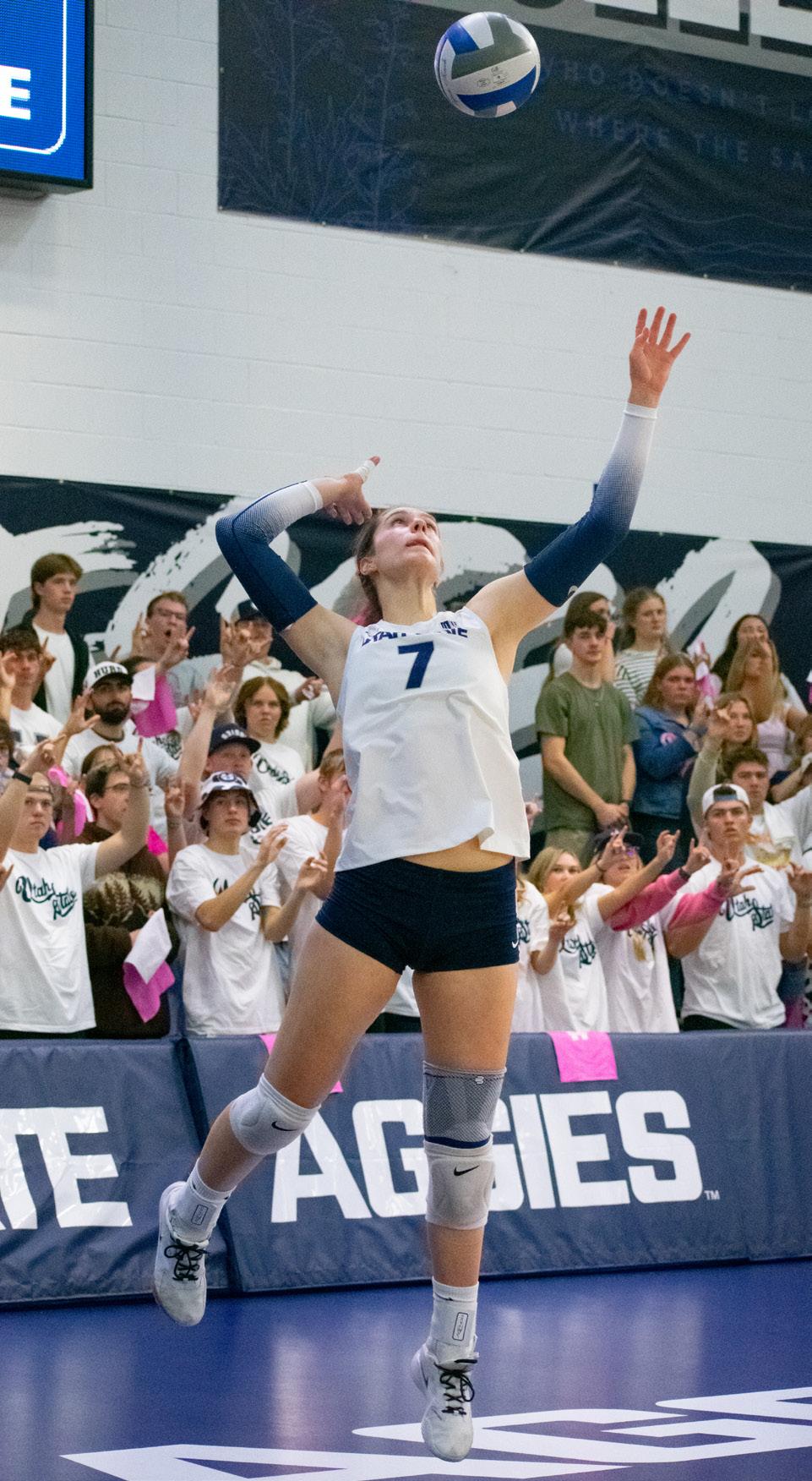
Leading her team in aces, Andrea Simovski has continued to be an asset on the Utah State Volleyball team. The team has gone 18-0 in conference play and 20-0 including the Mountain West tournament.
A serve in volleyball is one of the only aspects of the game the individual player controls on their own. Just like most players, Simovski has her own way of serving that produces results.
I had the opportunity to be given a quick lesson on serving by Simovski herself. While I certainly don’t have it down like her, after a couple practice serves, I wasn’t doing half-bad. Simovski walked me through her personal serving routine, starting with her mental state.
“You get focused as much as you can,” Simovski said. While many athletes have certain rituals they perform before serving, Simovski’s routine doesn’t include any.
“I’m not superstitious, so I don’t do those things,” Simovski said.
Instead, she hits the ball on the court a couple times — not as a ritual but to ensure her hand is lined up correctly on the ball. According to Simovski, it’s very important to make full contact with your palm.
After watching Simovski, I figured I could give it a try. As I began her routine, Simovski noticed a couple more things that were important to the serve.
Because she is right-handed, Simovski plants her feet with her left foot forward and right foot backing it up. She also pointed out the toss is very important when it comes to serving. I needed to throw the ball directly in front of me so I could make contact in the most ideal spot.
After giving me these pointers, Simovski let me loose to try it myself. My first attempt went in the net, and Simovski pointed out I needed to make better contact with my hand. After fixing this, my next serve was, in my opinion, pretty good. It went over the net, at least.
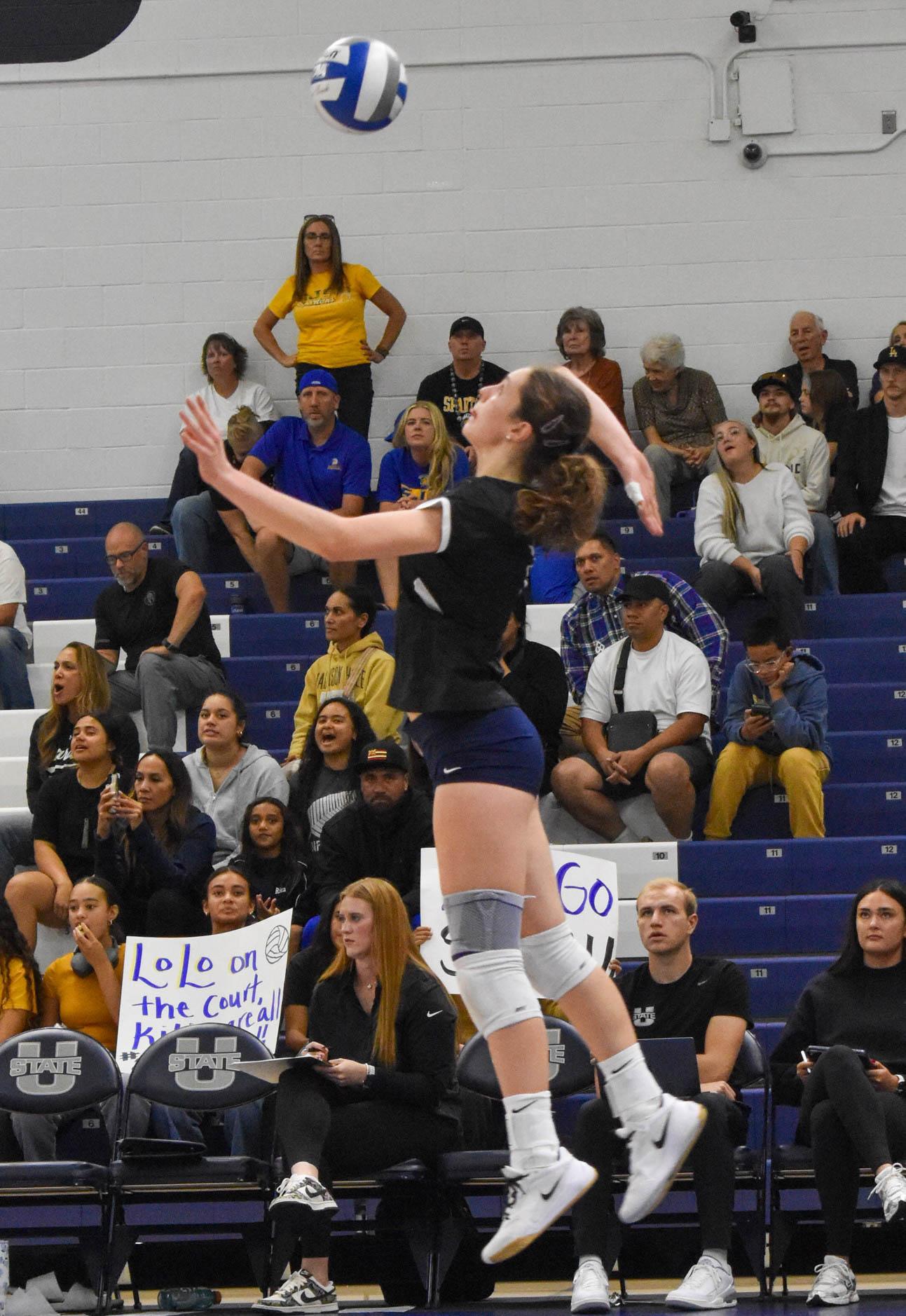
Simovski’s serve doesn’t stop there, though. Next up was a jump serve. Simvoski explained most players in the United States use one hand for a jump serve to toss the ball.
“I usually do it with two though because I think it’s easier and it’s easier to manage where the ball goes,” Simovski said.
Instead of serving from a fixed position like the first serve, Simovski starts further back and approaches the line in four steps. Between her second and third steps, Simovski tosses the ball slightly in front of her.
As the ball is in the air, Simovski takes her final steps, and then meets the ball above the court, sending it flying across the net. No wonder she’s leading in aces. But then it was my turn.
If I was confident with the first serve, that was not the case with the second. Adding a jump turned out to be very difficult. Simovski helped me go through the motions of the serve before trying for real.
When I attempted the jump serve, the result wasn’t nearly as promising as the stationary serve. My ball fell to the court before ever reaching the net, and my second try wasn’t any better as my ball rolled over to the other courts, interrupting the rest of practice.
Nevertheless, Simovski continued to cheer me on and reassured me I could get it with a little more practice. And while I won’t be playing on any professional teams soon, I’ll
hopefully be able to turn some heads when I’m playing for fun.
With Simovski as my coach, I understand the importance of cheering on your teammates and keeping their spirits high. That’s certainly what she did for me.


— katie.smith@usu.edu
By Grace Colvin STATESMAN REPORTER
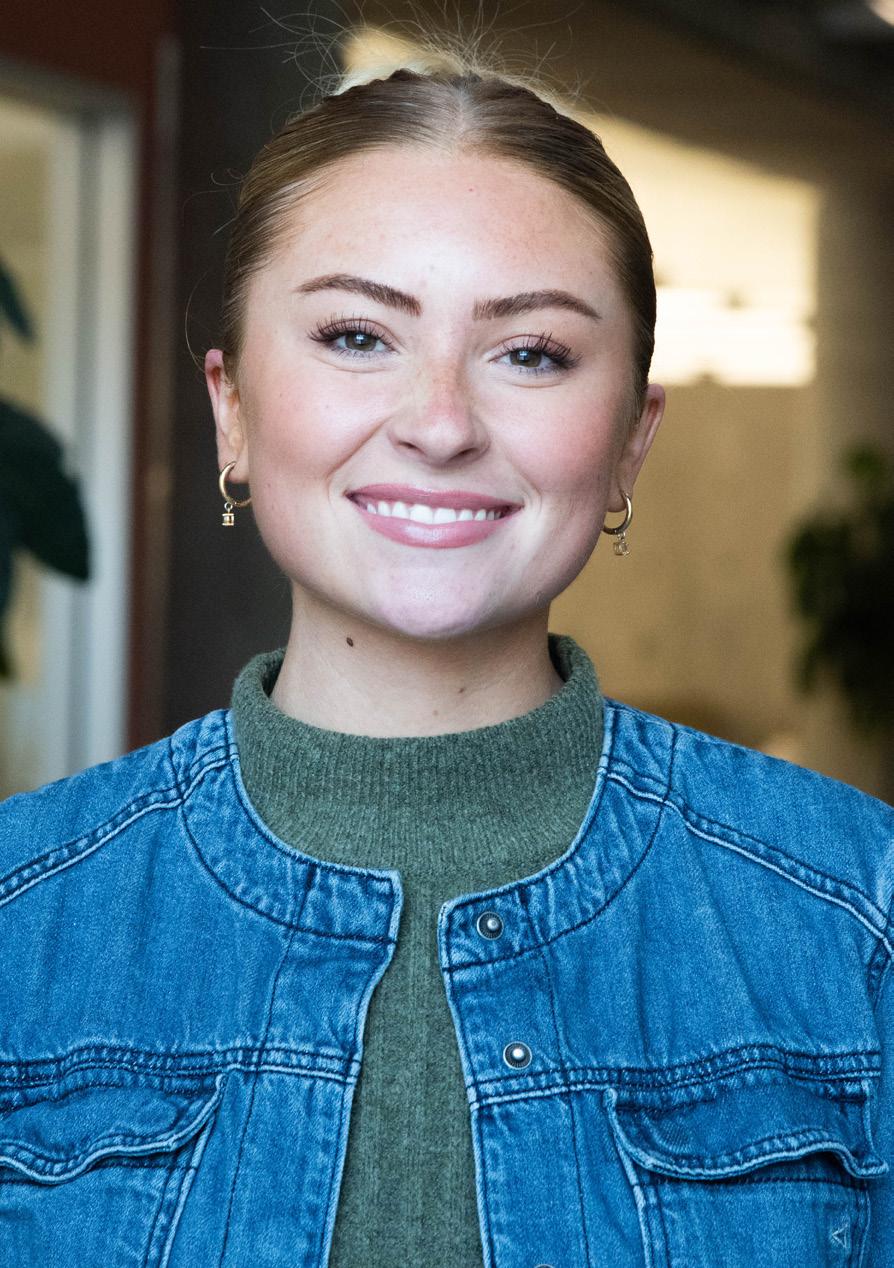
When Utah State senior Allie Berry decided to participate in the Miss USU Pageant last spring,
she’d never even considered doing pageants before. Now, after winning the title, she can’t imagine her life any other way. This week, The Utah Statesman sat down with Berry to catch up on her time as Miss USU thus far — an experience she has called “irreplaceable.”
“I seriously wasn’t planning on it,” Berry said. “I ended up, you know, giving it a go, and I had an amazing experience.” Representing USU’s Student Alumni Association, she was crowned on April 8, and now, she’s using her public position to share her message of belonging and student involvement.
Each year, Miss USU is tasked with creating a campaign that embodies what the “spirit” of USU means to them.
“It’s a scholarship pageant, so this year, with spirit of USU, was focusing on how to make USU a better place,” said Tabitha Wagner, SAA executive assistant who organized the 2025 event.
For Berry, that started with giving students a sense of belonging.
“You should feel loved and feel like you belong — because you do,” she said. Dubbed “Ask Miss USU,” her program focuses on getting the word out about events around campus.
Between weekly Instagram posts, direct message Q&As and appearances at events, she has spent the last semester trying to prove to students there is a place for everyone.
“My DMs are always open — my own personal Instagram account, Miss USU’s Instagram account, the alumni Instagram account,” Berry said. “Seriously, if you have questions about anything — you’re wanting to know how you can be involved, you’re wanting to know what event is coming up, if you’re wanting to talk and you just need a friend — I am seriously always here.”
As a member of the SAA committee, the ideals of community and Aggie belonging aren’t new to Berry. The organization focuses on building bridges between current students and alumni, creating an Aggie family that spans generations and ensuring there is always a place for students to call home.
“I absolutely love it,” Berry said. “Seeing alumni come back and speak to us and tell us about their time at USU has made me appreciate mine more. I just feel more involved. I feel like I’m spending my time in a way that I’m going to remember.”
In addition to hosting alumni speeches, the committee plans events for the student body and is heavily involved in Homecoming and A-Week. As Miss USU, Allie Berry is grateful to bring awareness to SAA’s work, particularly regarding its support and organization of the Miss USU program. In fact, she considers her promotion of Miss USU to be her proudest accomplish-
ment so far. Months of work go into the production of the large-scale event, and Berry is proud to shout-out everyone involved.
“The girls, the directors and everyone in the committee is putting in so much effort way beforehand,” Berry said. “I just want to emphasize how amazing it is and how much work is put into it.”
Featuring over a dozen girls, the annual pageant includes a choreographed group dance as well as interview portions for each contestant. SAA handles the planning, decorating and execution of the night.
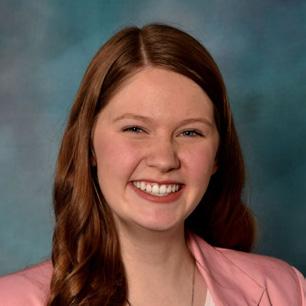

isn’t writing or working on a
she loves making crafts and woodworking.

“Wicked Work” is a late-night talk show without any of the class or prestige you’d expect. Hosts Ryker Thompson and Harrison Jones take life a little less seriously and aim to make listeners laugh — maybe even think on rare occasions. Tune in to “Wicked Work”














By Carson Frost STATESMAN SENIOR REPORTER
Utah State Soccer first-year defender Capriel Winder spent the fall doing something few freshman college players can imagine: logging nearly every possible minute for a Division I program and earning a callup to the U.S. U-20 Women’s National Team training camp. But if you ask her how she handled the whirlwind, she’ll point to someone who’s been by her side her whole life. Her older sister Talia Winder, a sophomore defender for the Aggies, was the first to help Capriel find her footing in the college game. And when Capriel stepped onto the field with the country’s top U-20 players in Kansas City, Talia was the first one beaming with pride.
“It was honestly like a proud sister moment,” Talia said. “That’s everyone’s biggest dream — to play at that national level. It was really cool to see her have that opportunity and to get through the struggles and the hardships and to make it a good experience.”
Capriel entered her first fall at Utah State University already known as one of the best high school defenders in the state of Utah: a former Green Canyon standout, ECNL All-Conference player and someone who could contribute both defensively and offensively.
However, her immediate impact at the college level surprised even her sister.
“Honestly, I thought she would be terrible coming in,” Talia joked. “I knew she’d thrive in this environment. It’s been really cool to see her grow and play at such a high level. It can be a huge jump, and it can be kind of scary sometimes, but she just faced it head on and did really well this season.”
Capriel played 1,867 minutes for the Aggies this season, the third highest total on the team despite missing two games for the national team camp. Her presence and aggression helped the Aggies hold opponents to 0.91 goals per game, second best in the Mountain West.
That workload made her invitation to the national training camp all the more notable.
For the first time in her life, Capriel found herself surrounded by elite young professionals — players who had already trained overseas, signed professional contracts or spent years in national team pipelines.
“It was crazy,” she said. “The rest of the players there had been doing it for a long time. A lot of them were playing professionally. I was out of my comfort zone.”
The speed, physicality and technical quality were unlike anything she’d ever experienced.
“But as the week went on, I got used to it,” Capriel said. “I started competing a little more and getting used to the speed of play. It was really fun.”
When she came back to Logan, she felt like she had a new gear.
“Maybe a little more confidence on the ball,” Capriel said. “Driving forward, being more aggressive. But otherwise, I didn’t feel like a huge difference — just more belief in myself.”
Utah State made national headlines this season for rostering three sets of sisters, something almost unheard of in Division I soccer. Head coach Manny Martins said the overlap wasn’t planned. He was simply recruiting players who fit the program, and the Winders happened to be among them.
“It’s not by design per se,” Martins said. “We didn’t recruit them because they were sisters. We recruited them because they’re good and they fit. But the fact that they’re sisters and they played high school together certainly helps because these are kids that know each other, and they love each other.”
For Capriel and Talia, the connection runs has followed them from high school fields to the Division I pitch.
They’ve been training together for years, through club soccer, high school and now NCAA competition. Talia favors the middle of the field and contributes on both ends of the pitch, while Capriel is known for her defensive aggression and physicality. According to the sisters, they’re different but complementary.
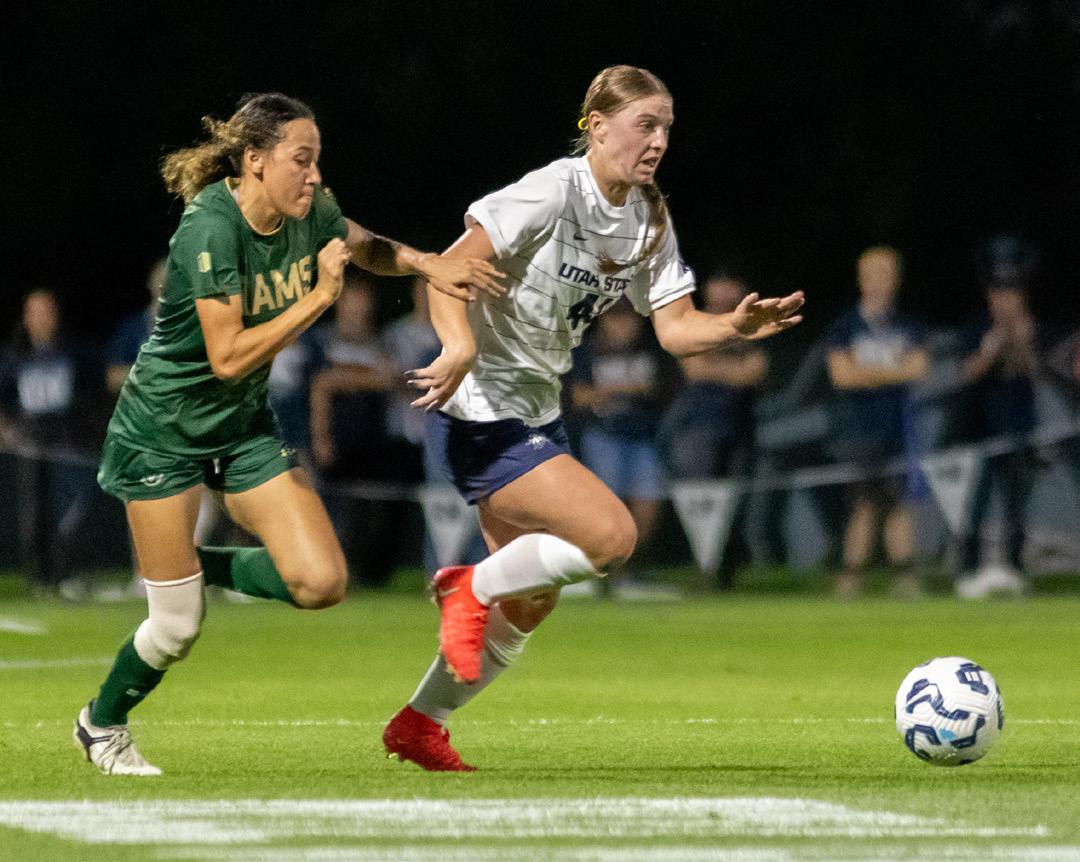
“We definitely have different playing styles,” Talia said. “But the similarity is we give it our all every time. No matter the opponent or situation, we always fall back on that.”
They didn’t play many minutes together this season, but when they did — most notably in the NCAA tournament game against BYU — it felt natural.
“It’s really cool,” Talia said. “I fully trust Capriel as a player and person, and she trusts me. We communicate on a different level than anyone else.”
Off the field, the relationship is just as strong.
“We hang out a lot,” Capriel said. “We live in different places, but our houses are like five minutes away, so often, we’ll practice all day, and then we’ll go home and be together.”
Talia said having a sister in the program strengthened their already close relationship.
“It’s nice having someone who understands everything you go through,” she said. “You can’t always explain the college soccer experience to people outside the program. It’s cool to have someone in the program who’s also in your family, and it just kind of creates a special bond.”
Utah State’s postseason run featured a third consecutive Mountain West championship and a hard-fought NCAA tournament match, leaving both sisters encouraged about what’s ahead.
“Our team showed a lot of resilience this season, just with a lot of injuries and a lot of unexpected things happening,” Talia said. “We really had to fight through that whole tournament and even in the NCAA game. I think we really showed our true Aggie colors, as [Martins] likes to say.”
Despite key seniors graduating, neither sister is worried.
“I’m pretty confident about next year,” Capriel said. “We have good players coming in and good players already here. Our team is at a level where we can still bring the same success we had this year.”
Under Martins — who recently signed an extension through 2030 — the sisters believe the program is just beginning its rise.
“It just really shows that he’s committed to us,” Talia said. “Because he’s staying, I think the team will be able to be more consistent instead of having to change stuff around.” Martins, who has his own history helping with the U-20 Women’s National Team and called Capriel an “All-American caliber player” at the start of the season, may have helped open the door for her opportunity. The U-20 camp is part of the U.S. team’s buildup to the 2026 FIFA U-20 Women’s World Cup in Poland, and Capriel is now part of a pool of top college players and young professionals, with more opportunities likely ahead.
Right now though, she’s focused on being a better Aggie.
“Having that experience gives you confidence that you can compete with the best,” Talia said of her sister. “And now she brings that back to our team.”
The Winders expect to take on bigger roles next season as leaders and not just players.
“We’ve been talking about how we can make this year the floor, not the ceiling,” Talia said. “We can just build on everything and improve in all categories.”
For Capriel, the national team call-up is one step in a longer journey, one she’s pursuing alongside her sister and teammates at Utah State.



Carson Frost is a transfer student from Denver studying journalism. His family originally hails from Los Angeles, and he is a passionate fan of the Lakers, Dodgers and Philadelphia Eagles.
By Dylan Moore STATESMAN REPORTER
For Utah State hockey senior Titan Anderson, playing in Logan is more than convenient. It is home. The Wellsville native has been on the ice nearly his entire life, and after years spent traveling across the country to chase competitive hockey, he returned to Cache Valley to compete in front of the people who rarely got to see him play.
Anderson is a fourth-generation Aggie and the president of the USU hockey team. His family ties run deep on campus. The Richard and Moonyeen Anderson Engineering Building is named after his grandparents, one of several reasons he said Utah State was the right fit.
“My family’s really big into Utah State,” Anderson said. “All my friends growing up knew I played hockey, but they never got to see it. So, coming here meant my grandparents and everyone else could finally watch.”
Anderson started skating when he was 3 years old and picked up hockey at 4, learning at the George S. Eccles Ice Center. By 6, he switched to goalie after his team needed someone in net.
“Everyone knew I was kind of different, and to be a goalie, you have to be a little bit weirder,” Anderson said. “One of
He lived in Park City, Colorado and Tennessee with host families while playing for competitive youth programs. He returned home at 16 and later joined the Junior Mustangs Youth Hockey program before committing to Utah State.
Anderson said the sport’s growth in Utah has accelerated in recent years, especially with the arrival of the Utah Mammoth.
“They’ve been so good for the community,” he said. “It’s getting kids excited about hockey. I think the next 10 years are going to change a lot for the sport here.”
At Utah State, Anderson has become one of the program’s most experienced players. As a starter, he holds the record for the most starts in team history, and as president, he manages scheduling, travel and administrative tasks alongside a board of officers.


Dylan Moore is a junior majoring in political science and minoring in anticipatory intelligence and Russian. He always loves going on outdoor adventures and cooking.
— dylan.moore@usu.edu
Ingredients
4-5 potatoes, peeled and cubed
1
Instructions
Place potatoes, carrots, onion, and salt in a large soup pot Cover vegetables with water and bring to a boil. Simmer over medium heat for 20 minutes
Once vegetables are soft, add milk and mash until desired consistency.
Stir in cheese and pepper
Optional toppings: bacon bits, green onion, sour cream, more cheese


As students and faculty alike prepare for the holiday break, SNAC wants our Aggies to know that we will remain open. While campus activity often slows, the need for reliable access to groceries does not, and SNAC’s continued operation ensures that students staying in Logan will not lose access to this essential resource. Visiting SNAC is a great way to reduce food waste and learn about the year-round resources available for you at USU
Come visit us to see our SNAC stockings and decorated tree, and take some nutritious, free food to get you through the break! Our holiday hours are as follows:
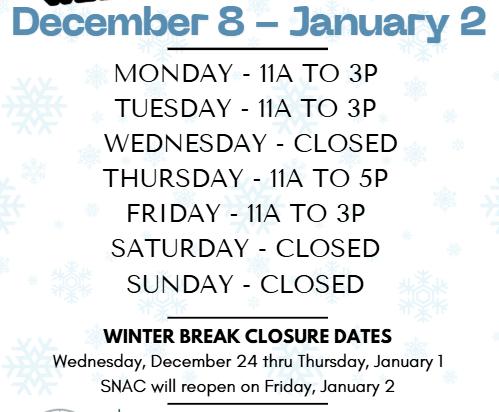

As we move into the holiday season, we at SNAC want to thank the Cache community for the support that keeps our shelves stocked year-round. Recently, Le Croissant donated over a hundred pounds of fresh baker y items to SNAC, and SNAC is incredibly grateful. We encourage those who can to donate to programs they are passionate about Ever y contribution - large or smallmakes a meaningful difference for someone in our community Have a great break, Aggies!


By Asher Schroader STATEMAN COLUMNIST
The Utah State University Aggie Marching Band is a fairly common sight among fields across campus. Every Tuesday and Thursday afternoon, they spread across the turf, diligently rehearsing formations and refining the songs they play at games.
Just before a training session in mid-November, the shoulder strap for a drum harness snapped, leaving a bass drum in the grass. Though one might expect a spare harness to be provided while the original was under repair, no such spares existed, leaving a member of the band to march without her instrument.
This incident echoes a growing sentiment among students and staff alike: Significant funding disparities among university departments allow some extracurriculars to flourish while others struggle to remain afloat. Recent changes in university funding have only widened this divide.
Nine months ago, the Utah Legislature sent House Bill 265, the “Higher Education Strategic Reinvestment,” to the Utah Governor’s Office, kickstarting a series of sudden changes that have since dramatically altered the landscape of higher education across the state. The bill in question stripped 10% from the instructional budgets of Utah’s eight public universities and colleges, with total losses exceeding $60 million when combined.
The legislature stated it would return these funds once it was presented with viable 3-year reinvestment plans, which universities have bent over backwards to produce. Many of these have created new programs and courses related to STEM, healthcare and AI while slashing offerings for humanities, social sciences and the arts.
The University of Utah cut 81 programs alone, including everything from a bachelor’s program in chemistry teaching to a doctorate in theater. Since Utah Gov. Spencer Cox signed the bill into law on March 26, all eight institutions have made massive changes to their curricula, but of the plans proposed, only one has been rejected: USU’s. While the reason behind this was USU’s lack of a permanent president at the time, the university is currently not eligible for the reinvestment. Despite axing 14 majors, eliminating half a dozen full-time positions and more than 80 student jobs and squeezing five colleges into two, the legislature continues to withhold over $12.6 million from the budget. While this has led faculty and students in “underproductive” majors to scramble, a lesser-known effect has taken hold among the university’s various extracurriculars.
Erica Brady, a master’s student majoring in business administration, is a bass drum player in the marching band. It was her harness that broke on Nov.13, preventing her from carrying her bass drum, which weighs more than 20 pounds. She recounted her experience in an interview with The Utah Statesman.
“We were getting ready to warm up actually, and one of the metal pieces on my harness broke, and this has happened to several other people this semester already, and so there were no extra replacements,” Brady said. “We ran out of replacements, and I don’t know when we’re ordering more.”
According to Brady, four or five of the band’s harnesses have broken this semester. Others have had their interiors filled by towels and duct tape, the original padding having long since worn out. When asked for his opinion on funding discrepancies, Lane Weaver, the USU director of athletic bands, declined to comment.
“There’s some setbacks there for sure that could be alleviated at least to some degree by additional funding,” Brady said.
Although their current financial situation is less than ideal, the marching band is among the university’s luckier extracurriculars, with new uniforms and stipends thus far unaffected by cuts. On the other side of campus, USU’s chapter of the Public Relations Student Society of America saw its entire yearly index eliminated, now operating on the funds that rolled over from last year.
Chloe Miller, the club’s president, is a senior majoring in journalism with an emphasis in PR. She expressed disdain at how the lack of funding has affected club members’ ability to take part in events that strengthen their career prospects.
“The lack of funding this year has been very frustrating to me, particularly watching my peers pay completely out-of-pocket for a conference experience that was well over $1,000, which the department aided in years past,” Miller said. “At the conference, which took place in Washington, D.C. this year, many students from across the nation were shocked to hear that our university did not fund at least a portion of the trip.”
Miller highlighted the seemingly paradoxical effect of the legislature’s new bill.
“It’s my understanding that a reason USU has felt so much legislative pressure is because they are not meeting certain requirements for job placements,” Miller said.
“The ICON Conference and other opportunities PRSSA provides to its members all have one goal: to get students jobs. It’s bizarre that our efforts would not be met with more support from higher-ups.”
Various students not involved with extracurriculars also shared their emotions toward what they feel is an injustice to their peers, especially those in less prioritized fields.
Joshua Sipe, a junior majoring in history, said he feels funding for extracurriculars already had an unfair bias towards athletics even before governmental cuts, limiting students’ self-expression.


“Sports gets most of it, so the other groups have to rely on fundraising,” Sipe said. “When you don’t have funding, you can’t go to a lot of things. You probably also don’t get recognition.”


Asher Schroader is a junior majoring in creative writing. Aside from his work as the Statesman’s opinion columnist, he is passionate about his novel projects, learning French and engaging in social and political action.

By Hazel Harris-Staples STATEMAN EDITOR
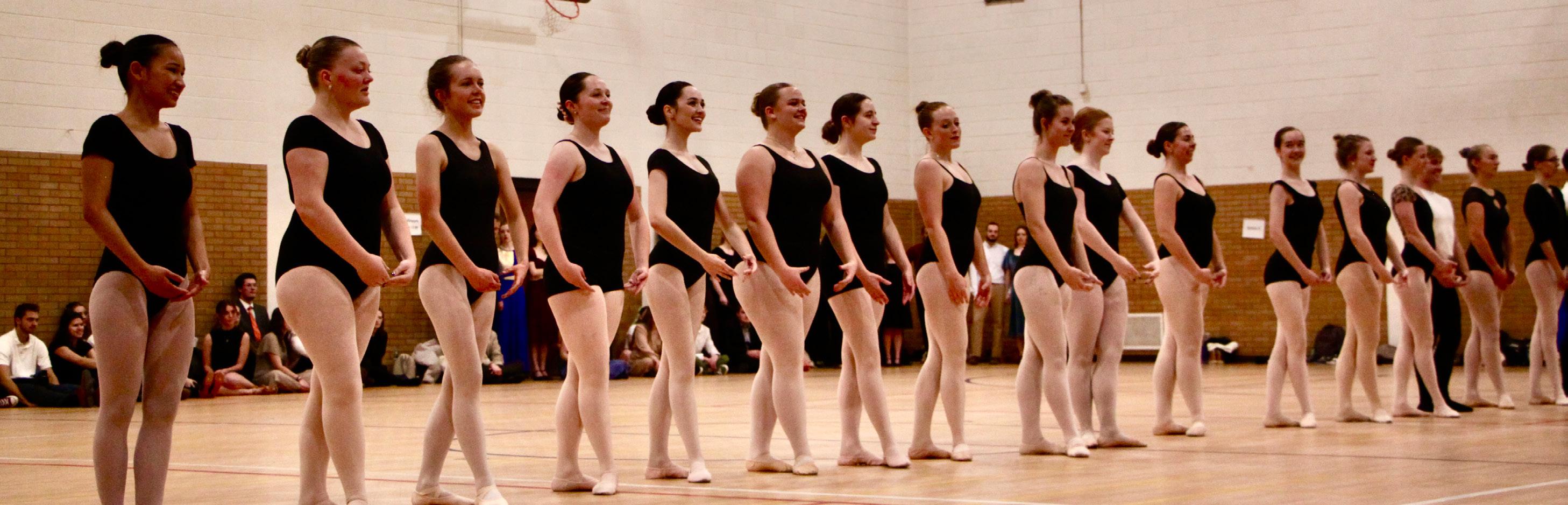
While many people my age were gearing up to see if Robert and Whitney stayed in the next episode of “Dancing with the Stars,” I had the opportunity to attend a ballet and ballroom recital performed by my peers. I was excited for the opportunity, not only because it was my first time seeing my friend Ella dance, but also because it gave me the chance to be a part of the campus community in a way that I hadn’t before. I wasn’t sure what I was getting into, but boy was I in for a treat. Growing up, I didn’t have a lot of exposure to dance like this. I saw a lot of line dances — my favorite being “Any Man of Mine” by Shania Twain — and clogged when I was really young, but this was one of my first real forays into the world of dance. The students in ballet and social & ballroom dance didn’t disappoint for my first recital.
Right off the bat, I was surprised by the way the ballroom dances worked. It never occurred to me the dances wouldn’t be choreographed to a specific song but rather, the students would practice the skills to a variety of different songs. My favorite example of this was watching the Ballroom II class tango to “Toxic” by Britney Spears. Besides the wide variety of genres in music, there were other things I was surprised to see. The Ballroom I dances were each done first to one song, and then judges would go up and tap a few couples on the shoulder, meaning they were supposed to come back for another round.
After the second round, the dancers were narrowed down to three couples. At the end of the dance, the couples came forward and were handed a certificate indicating which place they had ranked. I would have liked the award to be a Mirrorball Trophy — maybe I’ll talk to the university about providing one of those next time.
I think my favorite part of the ballroom portion was seeing what outfits each individual had chosen to wear. There were long flowy skirts, cool sneakers, patterned vests and ties — and it wouldn’t be an Aggie event without a pair of cowboy boots. The cha-cha I watched at this recital was possibly the first one I’ve ever seen done in a pair!
I’ve always thought ballerinas were cool. Ask me about the anesthesiologist who put me under for my wisdom teeth removal — she had a skeleton ballerina tattoo, and it was all I could talk about until I wasn’t so loopy anymore. It was awesome to see ballet students from the PE 1705 classes show off what they had been working on all semester.
Unlike some of the ballroom dances, these performances seemed to be done to songs and had already been choreographed, rather than freestyling it. I again thought the wide variety of music that was utilized in these performances was impressive — songs ranged from the classical kind of music that I picture when I think of ballet to songs you will often find me listening and singing along to in the car, like “Eleven Eleven” by Conan Gray and “How to disappear” by Lana Del Rey. My only wish was that these ballet performances could’ve been longer.
It intrigued me that many of the numbers performed by students in the Ballet II class were self-choreographed. I didn’t expect to see students taking such an active role in something for a one-credit PE class, but it was more meaningful for me watching these dances knowing my peers had poured time and effort into the choreography. Many of these dances were duets, and it was mesmerizing to watch how each of the dancers interacted with each other, their steps and themselves.
If I had to take one thing from this experience, it’s this: Getting involved on campus doesn’t have to look like starting a new club or going on a study abroad trip to Europe. You don’t have to stand on stage and sing karaoke or dress up in a costume. Involvement can simply look like popping over to the HPER for a ballet and ballroom dance recital performed by students who took a class on the topic and are passionate about it. As we go into the next semester, think about how you can show up in little ways to make yourself part of a community who cares about you.

Hazel Harris-Staples is a junior studying photography, art history and entrepreneurship. She enjoys supporting the arts, eating food with hatch green chiles in it and yapping with her friends.
— hazel.harris@usu.edu



Dane Johnson is the senior photographer for the Statesman in his third year with USU Student Media. He has photographed sports, concerts, nature and everything else under the sun — or snow — across Cache Valley. He enjoys working with the talented photographers of the Statesman and documenting the people and moments that make USU special.