
G E O S C I E N C E S
G E O S C I E N C E S
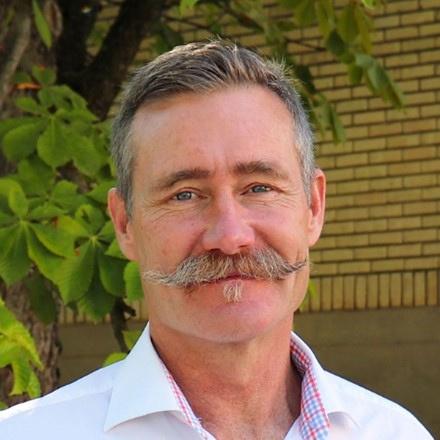
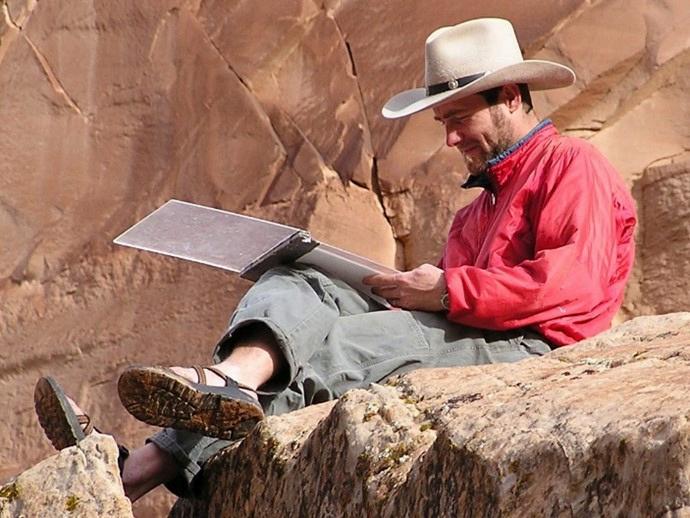
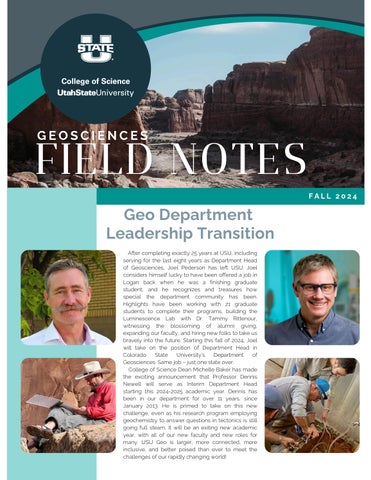
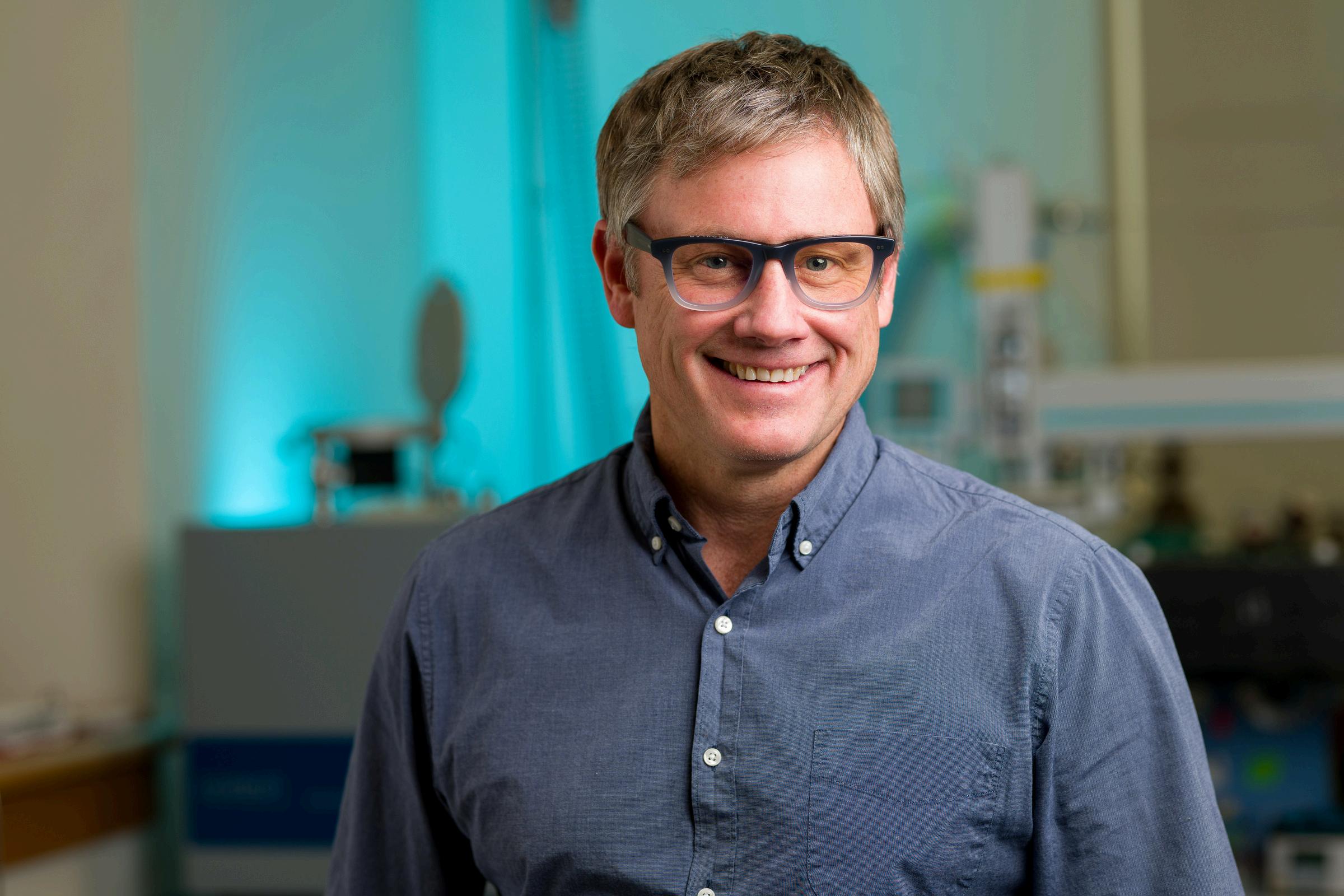
After completing exactly 25 years at USU, including serving for the last eight years as Department Head of Geosciences, Joel Pederson has left USU Joel considers himself lucky to have been offered a job in Logan back when he was a finishing graduate student, and he recognizes and treasures how special the department community has been Highlights have been working with 21 graduate students to complete their programs, building the Luminescence Lab with Dr Tammy Rittenour, witnessing the blossoming of alumni giving, expanding our faculty, and hiring new folks to take us bravely into the future Starting this fall of 2024 Joel will take on the position of Department Head in Colorado State University’s Department of Geosciences Same job – just one state over College of Science Dean Michelle Baker has made the exciting announcement that Professor Dennis Newell will serve as Interim Department Head starting this 2024-2025 academic year Dennis has been in our department for over 11 years, since January 2013 He is primed to take on this new challenge, even as his research program employing geochemistry to answer questions in tectonics is still going full steam It will be an exiting new academic year, with all of our new faculty and new roles for many USU Geo is larger, more connected, more inclusive, and better poised than ever to meet the challenges of our rapidly changing world!
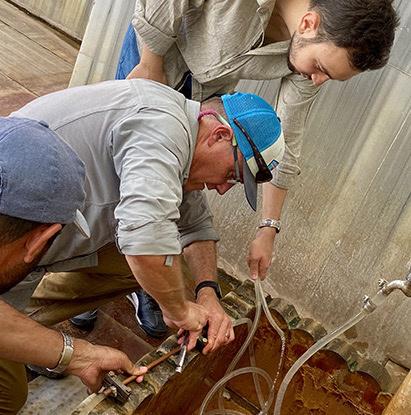
USU Geo has a long and strong history of studying mineralization along faults and in fault gouge and how it affects deformation The tradition has continued over the last two years with grad student Alex DiMonte, mentored by Dr Alexis Ault, who has published two manuscripts that highlight the role of hematite in deformation during the earthquake cycle For her MS research, DiMonte sampled hematite-coated fault surfaces in the Mecca Hills, California, analyzing them with the scanning electron microscope and (UTh)/He thermochronometry data. She also simulated faulting in the lab by deforming hematite in a rotary-shear apparatus, mentored by collaborator Dr Greg Hirth at Brown University
Geodetic data show that today, different strands of the southern San Andreas fault experience episodes of creep (slip without an earthquake) DiMonte reveals in a 2022 paper in Geology that networks of hematite fault surfaces may have formed and deformed in the upper km of the fault zone during creep episodes over the past million years. DiMonte followed this up with a 2024 paper in the Journal of Geophysical Research: Solid Earth, which illustrates that some hematite is frictionally strong and strengthens when slip rates increase, consistent with creep documented in natural fault rocks
As DiMonte is continuing now towards a PhD, she is building upon this work to investigate how clay – perhaps the m important mineral in the shallowest por of a fault – forms, deforms, and cont how fault slip and earthquake energ distributed throughout the seismic cycl
Southern Utah’s famous canyon cou has long puzzled and fascina geoscientists What accounts for the high elevation of the Colorado Plateau and for the deep exhumation of its strata? The broad plateaus edged by cliffs or cut by youthful-looking gorges, hint at a long and complex history of landscape evolution
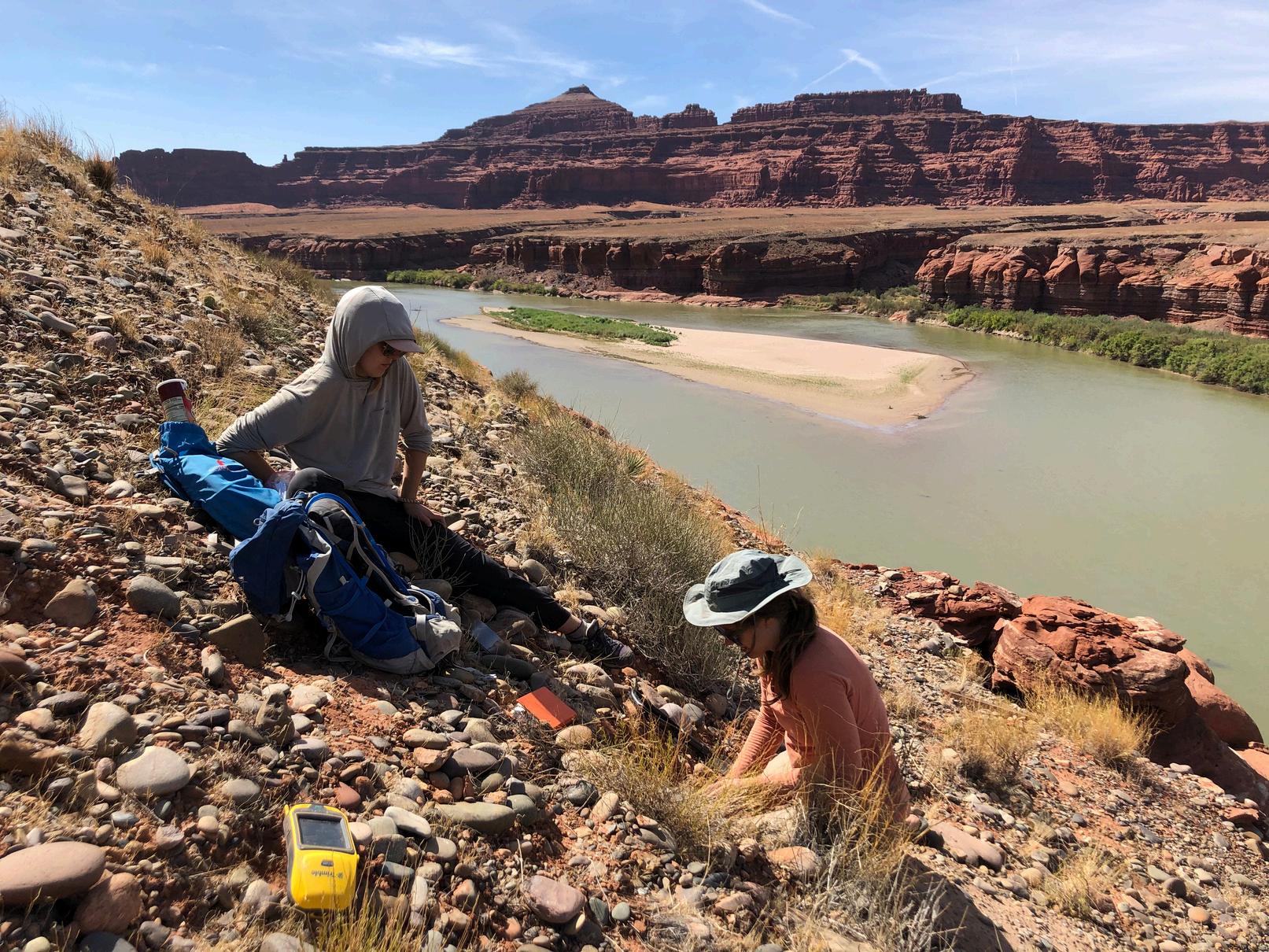
USU Geo’s 2024 PhD student of the year, Natalie Tanski, has tackled these questions in her dissertation research with Dr Joel Pederson and Dr Tammy Rittenour. A first component of Tanski’s findings were published in the journal Geology this past year, focused on the Colorado River through the unusually lowgradient Meander Canyon and then the outrageously steep Cataract Canyon, downstream of Moab, Utah.
Using a complete inventory of river terrace deposits preserved in these reaches and extensive luminescence dating, Tanski found a complex pattern of canyon incision through time Over the past 350 thousand years, river incision has been quite rapid overall, but with distinct pauses that last 10s of thousands of years and that follow a pattern of incision as pulses or waves, moving upstream Tanski and coauthors attribute these waves of incision to the unsteady dynamics of salt diapirism and mass wasting that mark the late Quaternary history in Cataract Canyon
Tanski’s next publication in review is a broader study of canyon incision patterns across the central Colorado Plateau She is finding and analyzing even larger-scale bursts and pauses of erosion that reinforce some of the great mysteries about the landscape In the meantime, Tanski successfully defended and completed her PhD in summer of 2024!
Mineral springs are often located along fault zones, and investigating their geochemistry provides insight into the roles of faults, earthquakes, and deeply circulated groundwater in the evolution of tectonically active regions Dr Dennis Newell’s research group specifically uses the isotopic composition of thermal springs as windows to deep tectonic processes, revealing the contributions of magmatic activity, metamorphism, and mantle degassing Newell spearheaded NSF-funded research and a 2023 paper in the journal Geology conducting such analyses along the Denali Fault in Alaska The Denali fault zone is a major rightlateral strike-slip system traversing Alaska’s interior, recently giving rise to the 2002 Mw 7 9 Denali Fault earthquake Newell and colleagues investigated warm springs located along and outside of the 2002-ruptured segments of the Denali and Totschunda faults Isotope results show the presence of up to 30% mantle-derived helium in segments of the faults that did not rupture in 2002 This supports the presence of deep conduits through the crust, tapping volatiles being released from the upper mantle, similar to observations from other major transform systems like the San Andreas and North Anatolian fault zones contrast, the isotopic results from ngs located along the 2002 rupture cate the presence of only mosphere-derived helium, and no ve pathway for mantle volatiles. hough this data indicates that undwater-flow paths are shallow ay, accumulations of older travertine ng the faults suggest deeper mbing in the past Newell and authors ggest the 2002 earthquake disrupted se mantle flow paths.
With global warming comes worries about the potential collapse of Earth’s remaining glaciers, including the second largest body of ice on our planet -- the Greenland ice sheet Dr Tammy Rittenour’s luminescence analysis of samples collected from the ground surface deep underneath Greenland’s ice sheet reveals the Arctic island was indeed a green land, as recently as 416,000 years ago “We’re discovering the ice sheet is much more sensitive to climate change than we previously thought,” says Dr Rittenour
Rittenour and colleagues from the University of Vermont and 14 other institutions, reported findings of their NSF funded research this past year in the journal Science. “We had always assumed the ice sheet has remained about the same for nearly 2 5 million years, ” says Rittenour, “but our investigation indicates it melted enough to allow the growth of moss, shrubs and buzzing insects during an interglacial period called Marine Isotope Stage 11, between 424,000 to 374,000 years ago ”
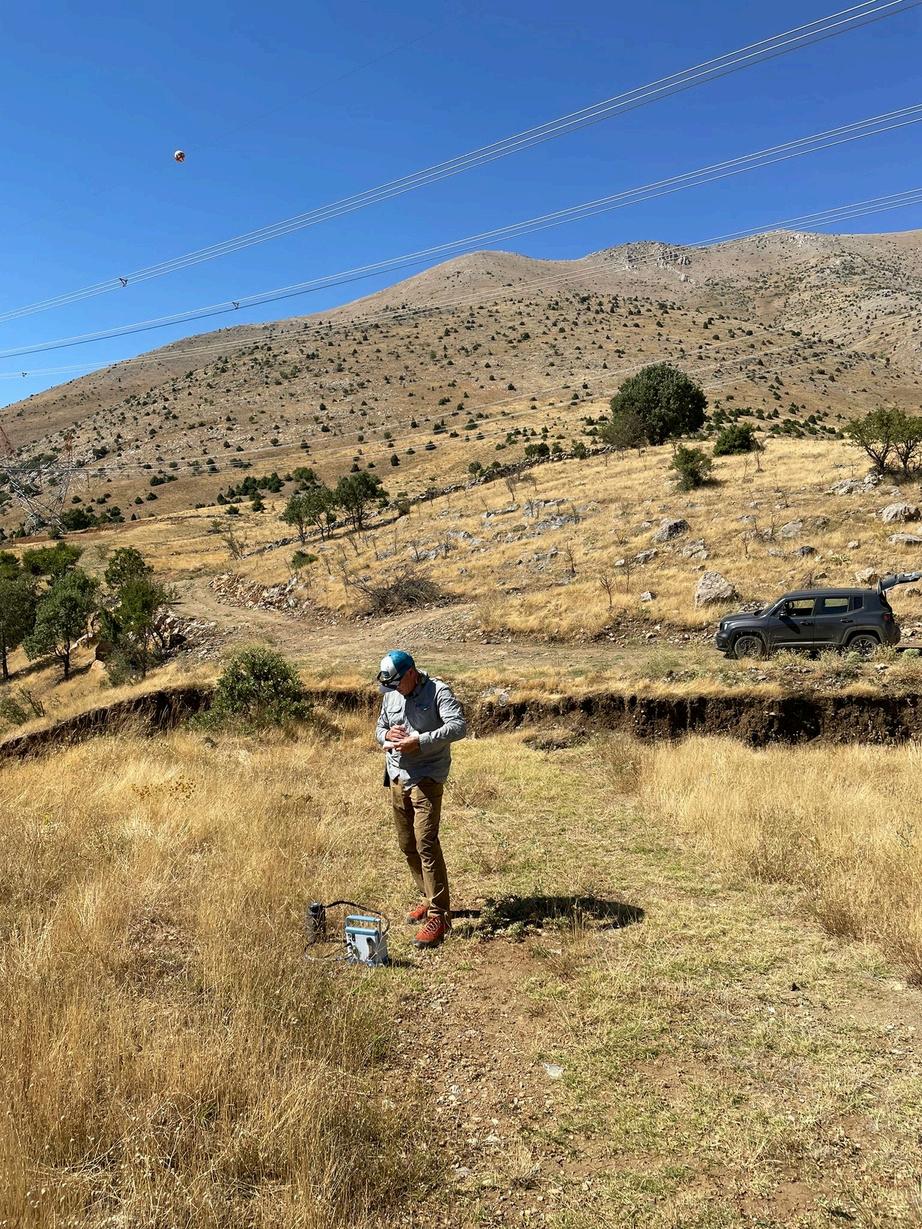
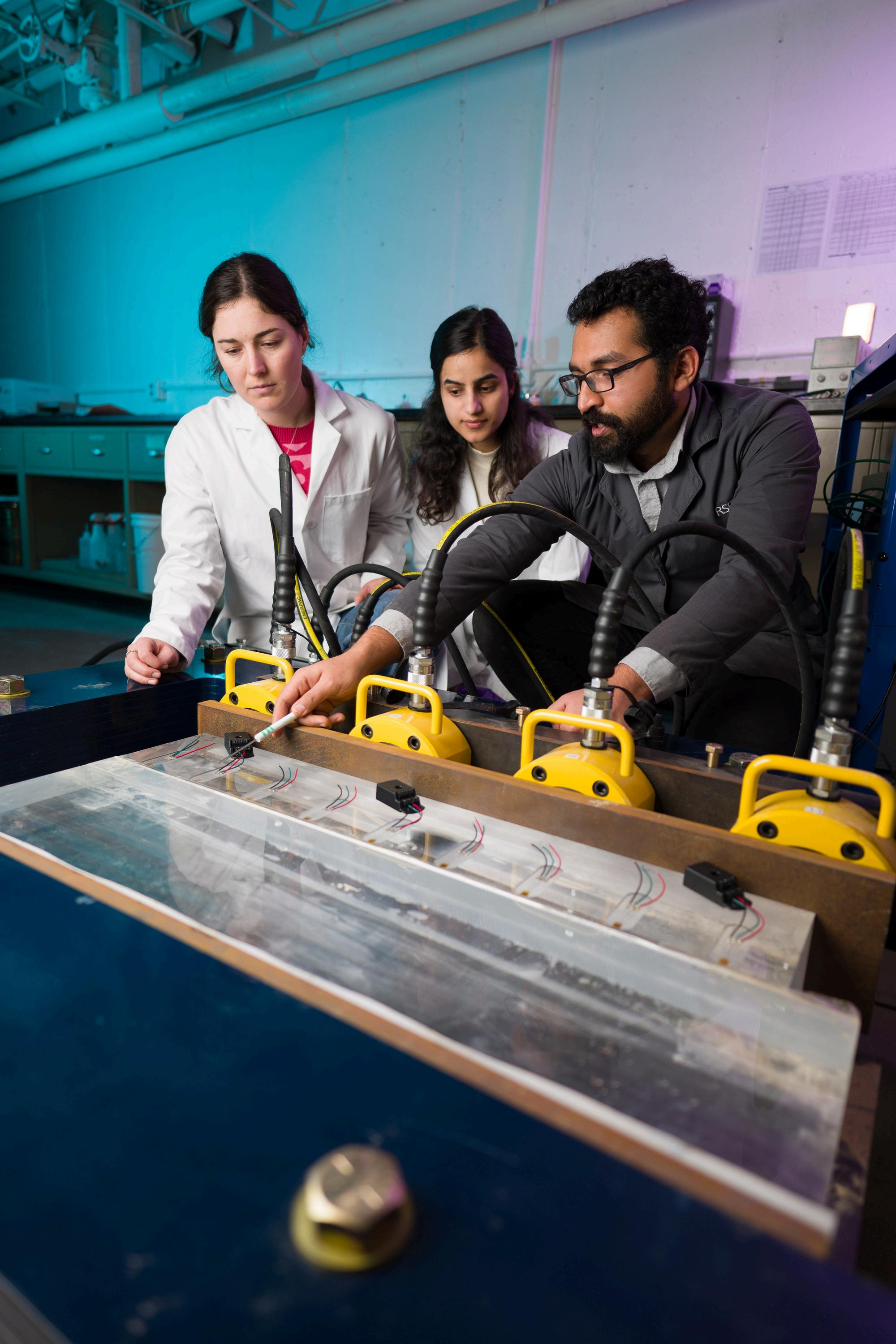
Dr Srisharan Shreedharan, one of our newest faculty, is shaking things up as he launches his earthquake-science research program Shreedharan has a background in geoscience and engineering, and his Rock Deformation and Earthquake Mechanics lab here in the Geology Building has grown to feature three different instruments that he and his students employ for rock-deformation experiments
The team’s analysis is possible due to samples collected from an extraordinary and nearly forgotten archive -- frozen soil samples from the base of an ice core collected at Camp Century (a secret, coldwar military base in Greenland) The core spent more than 60 years in a freezer until recently rediscovered
“We have very few samples from below the Greenland ice sheet, because most drilling missions stop when they reach the base of the ice,” Rittenour says “These rediscovered Camp Century sediments represent a unique, unspoiled time capsule of past conditions If we can lose the far northwest portion of the Greenland ice sheet under natural conditions, then we ’ re treading dangerous waters given current elevated greenhouse gas conditions ”
For geoscientists to assess hazards and understand how faults work, they sometimes must infer whether fault-zone rocks observed in the field deformed during an earthquake or while slipping slowly in-between events To improve these interpretations and better address earthquake hazards, Dr Alexis Ault and Dr Dennis Newell have taken advantage of an unprecedented opportunity to document and sample rocks, sediment, water, and gas from two recent, catastrophic earthquake surface ruptures Ault and Newell, together with a colleague from Cal State Fullerton, were awarded a National Science Foundation (NSF) “RAPID” grant to study the devastating February 2023, MW 7 8 and MW 7 6, Kahramanmaraş earthquakes in Turkey
Traveling to Turkey in August 2023, Ault was able to sample the still-preserved rupture interface of the MW 7 6 event and Newell surveyed gas (CO2) flux from along the rupture. Newell returned to Turkey in November 2023 and June 2024 to repeat the CO2 flux surveys Their observations demonstrate that the surface ruptures exploited pre-existing damaged rock from past earthquakes, and they suggest the rapidly declining gas flux along the rupture may reflect decreasing permeability as the fault heals following the earthquake Their observations, data, and experiences have laid the foundation for a major proposal to NSF Frontier Research in Earth Sciences program, which received funding in July.
Shreedharan has been awarded several grants in the past months, putting his lab to work! A highlight is an NSF Geophysics project with a Cornell University colleague exploring elastic wave properties throughout the seismic cycle with experiments on meter-scale faults. In this project, the strain signals observed from the “labquakes” will be used to design machine learning approaches to aid in earthquake forecasting Furthermore, the USGS Earthquake Hazards Program has awarded Dr Shreedharan’s group two different awards to study laboratory earthquakes, including with the Wasatch fault zone in mind, while SCEC is funding experiments with implications for southern California faults
The upcoming years of interdisciplinary research in Shreedharan’s lab will provide new insights into the mechanisms driving seismic activity, ultimately contributing to improved earthquake preparedness and resilience
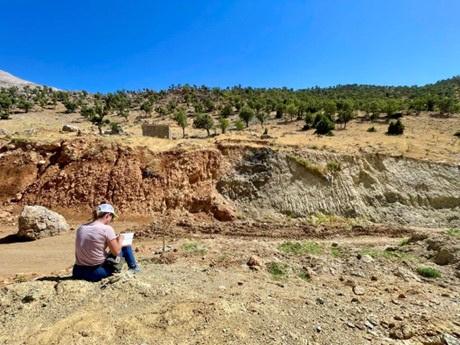
Dr Aultrecordingobservationsofthefaultzoneandscarpof theMW76KahramanmaraşearthquakeinTurkey
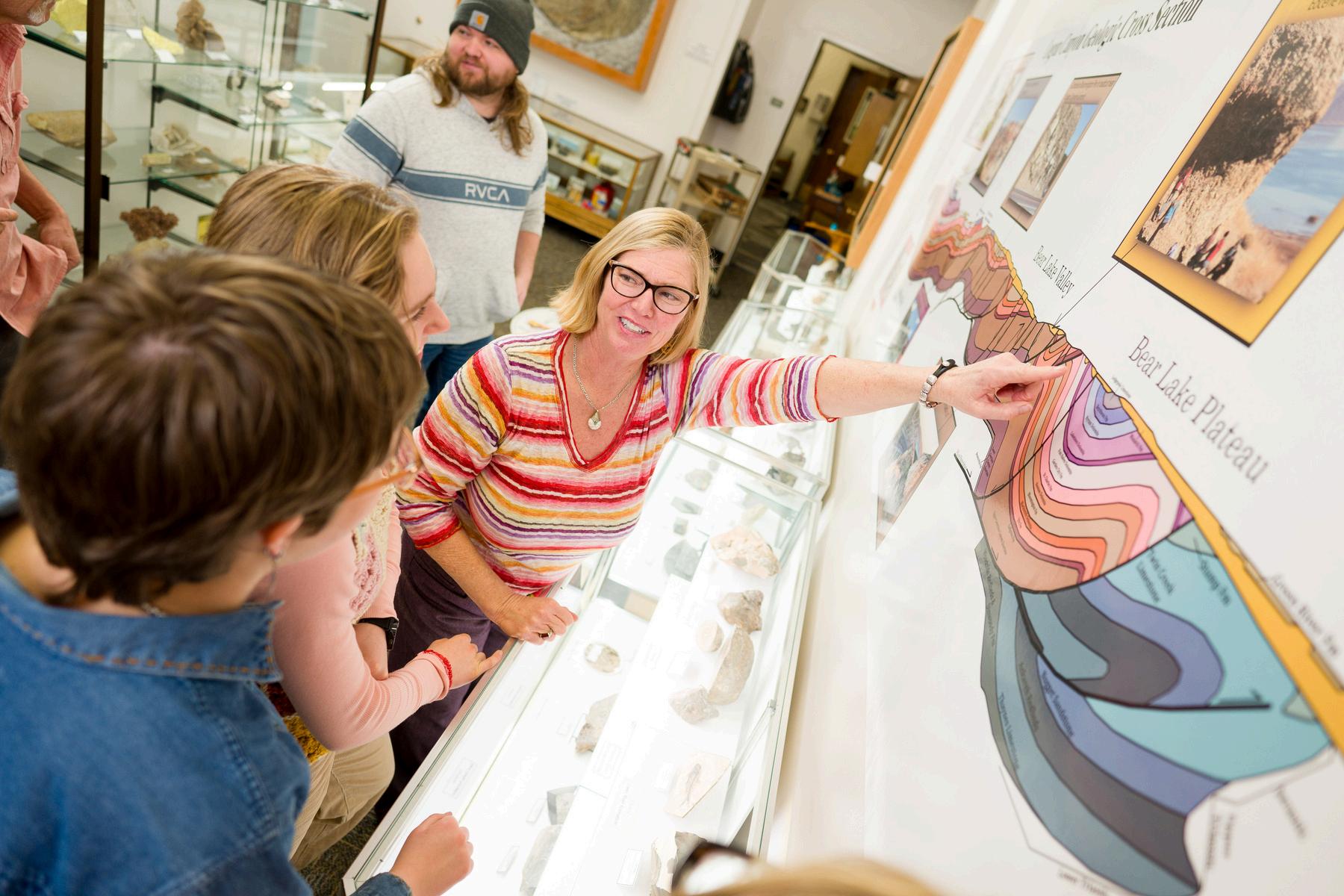
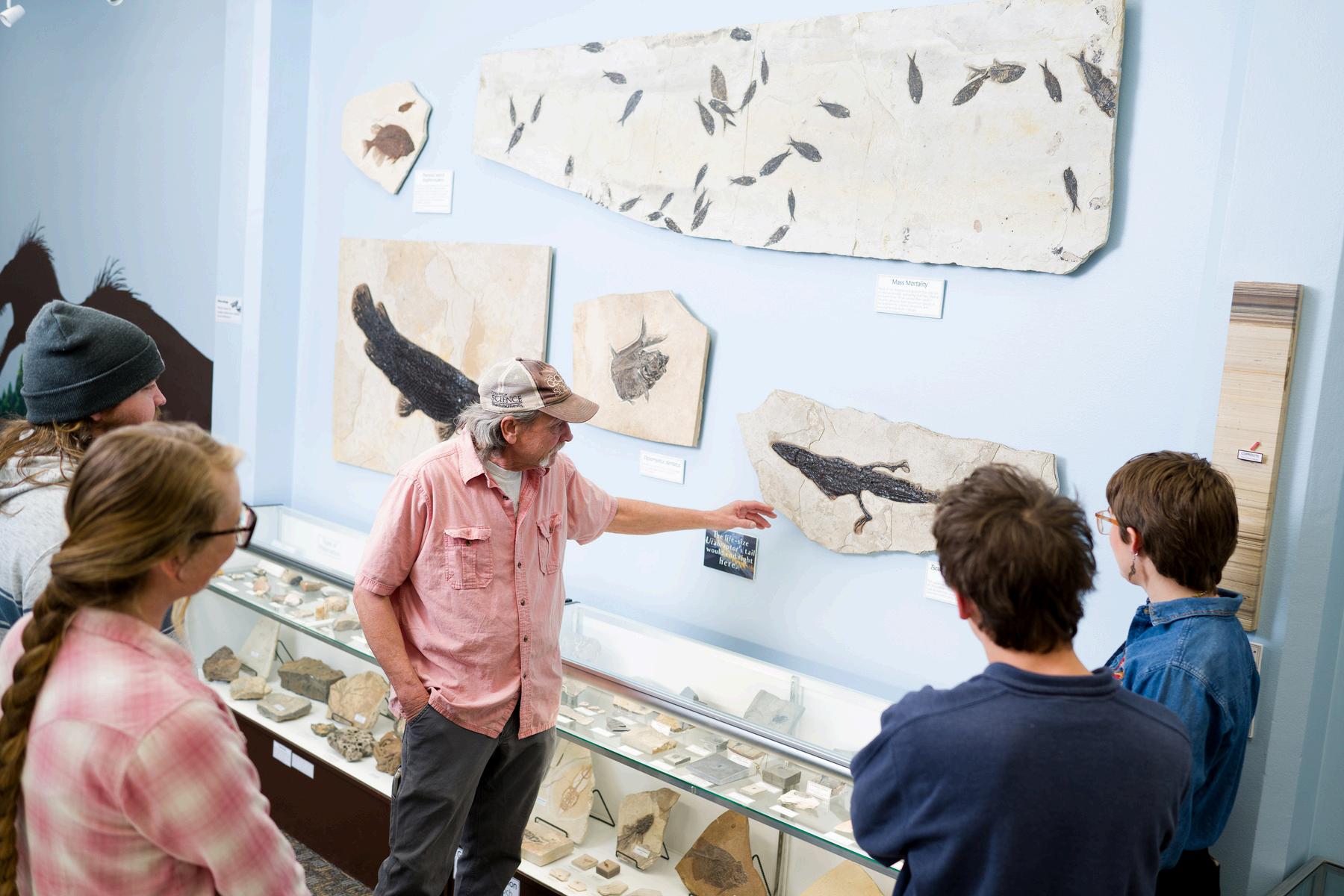
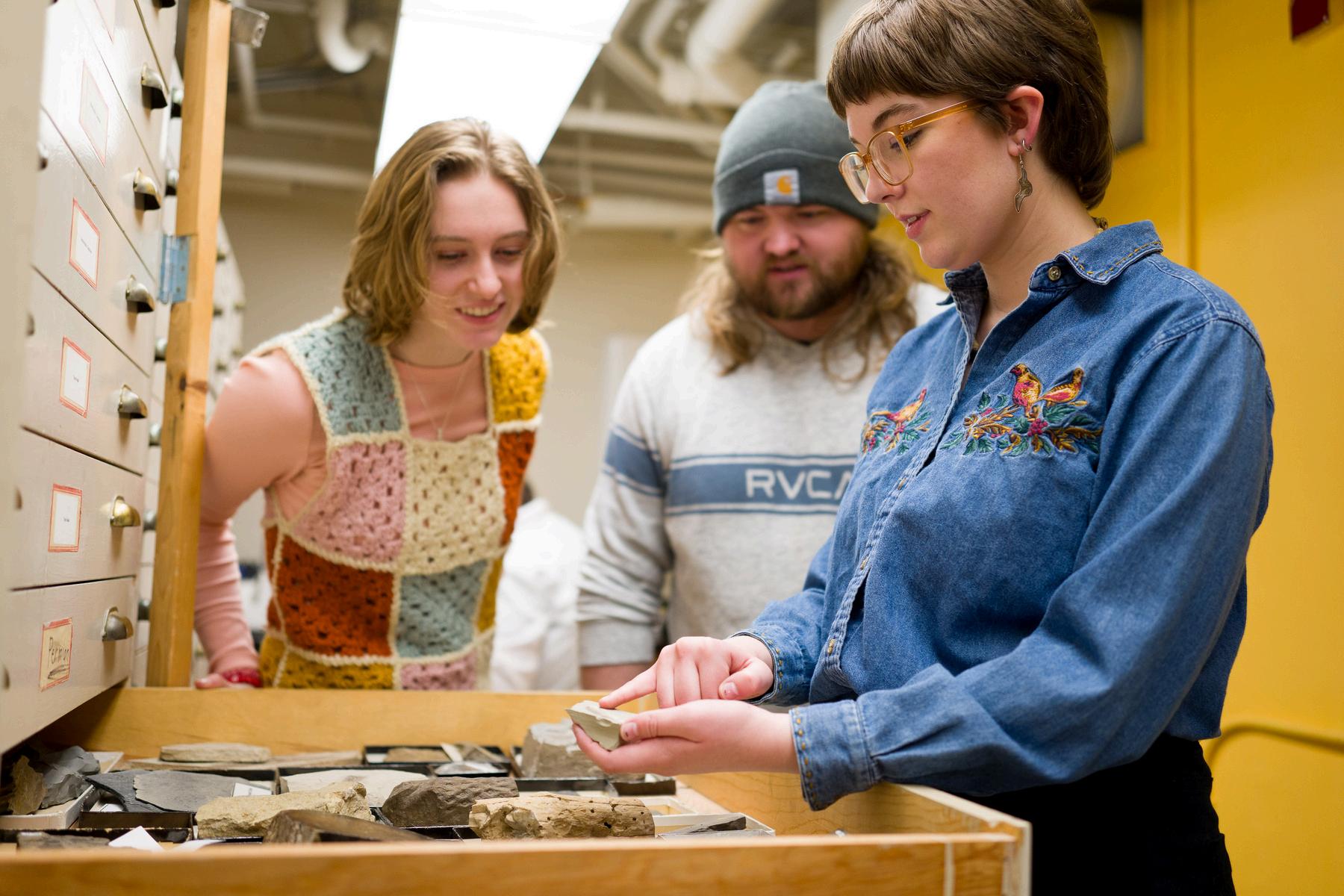
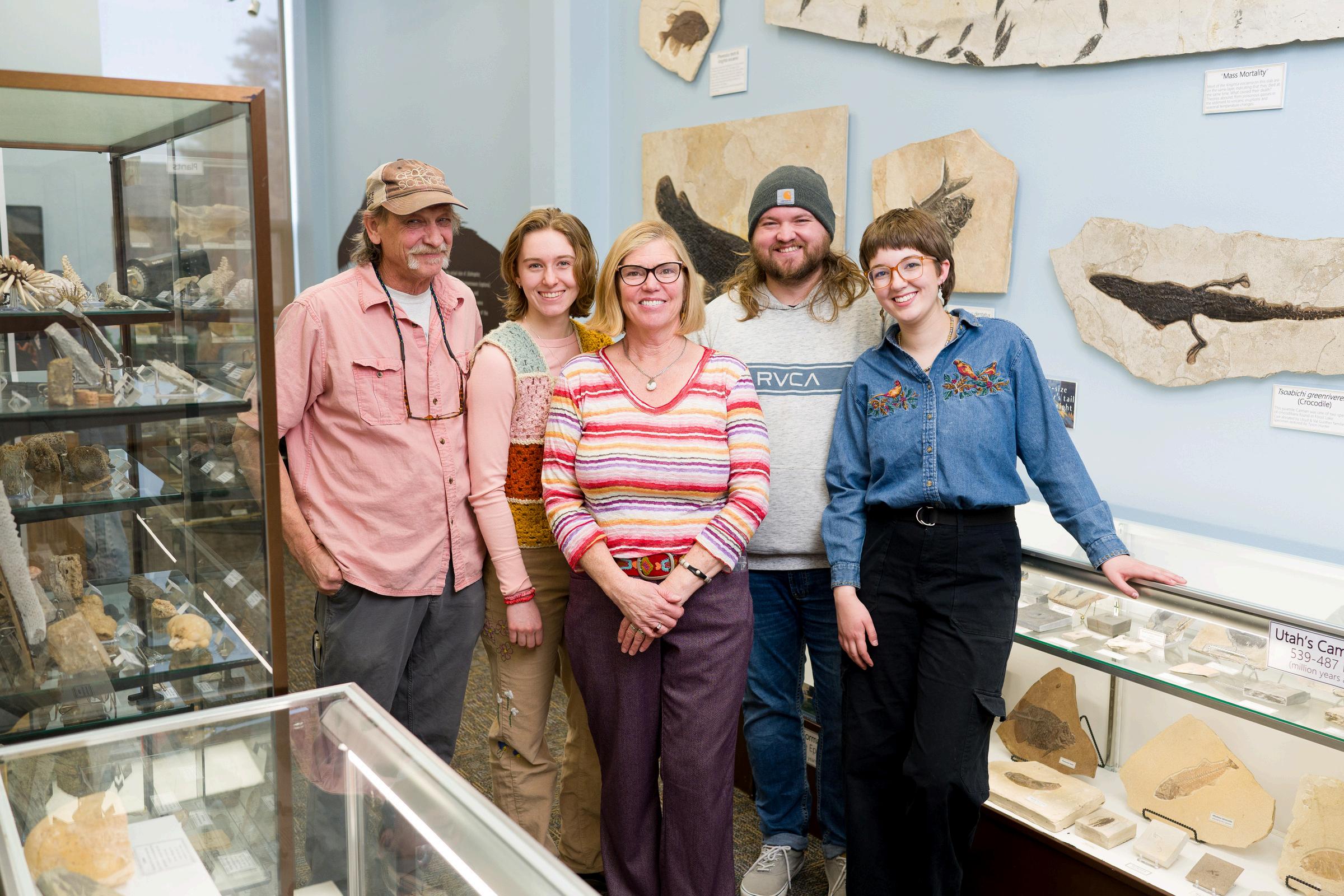
The Museum of Geology was established 13 years ago after the remarkably bold and misguided theft of most of the rocks and fossils we had in display cases lining our main hallways Our specimens were all quickly recovered, but department head at the time, Dr Dave Liddell, realized that we must consolidate our treasures into a secure room
Ever since, there have been incremental renovations, additions, improvements, several new display cases, added oversight from Dr Carol Dehler and Program Assistant Ellen Imler, and then – the gamechanger – alumnus Paul Jamison retired from teaching and started volunteering as our department’s Collections Manager That kickstarted transformations of our displays, outreach, and our collections more broadly
A major change was the addition of “Percy” the Utahraptor in 2018 -- a scale-model, scientifically informed and lifelike sculpture created by USU art student Justin Tolman With the draw of Percy, the increasing coordination between museums across the USU campus, and Paul Jamison’s thoughtful planning for outreach to younger students, we have seen an explosion of visitation For example we have been on a regular
circuit of monthly tours by 4th grade classes for the past three years Add to that multiple drop-in visitations per week, groups planning tours, our huge annual Rock-n-Fossil Day, and the result is that our Museum experiences 2,500 visitors per year! Even more ambitious is the work going on behind-thescenes The basement and other corners of our Geology Building have many cabinets of specimens from research, donations, for teaching, and the typical mysterious rocks that no one remembers where they came from Since Dr Don Fiesinger retired, we have not kept up with the organization of these Paul and undergraduate super-student Whitney Greaves (recipient of our Jamison Scholarship and Fiesinger Award), in addition to three museum interns have tackled making our collections indexed, organized, and useful They have been building a new spreadsheet database, reorganizing specimen storage, sorting out what is not needed, creating systems for documenting new items, and just making it all more like the real thing
Stop by and check out our displays and collections! And visit our Museum website for more info: wwwusuedu/geo/info/geology-museum

Tell us a little about your latest research.
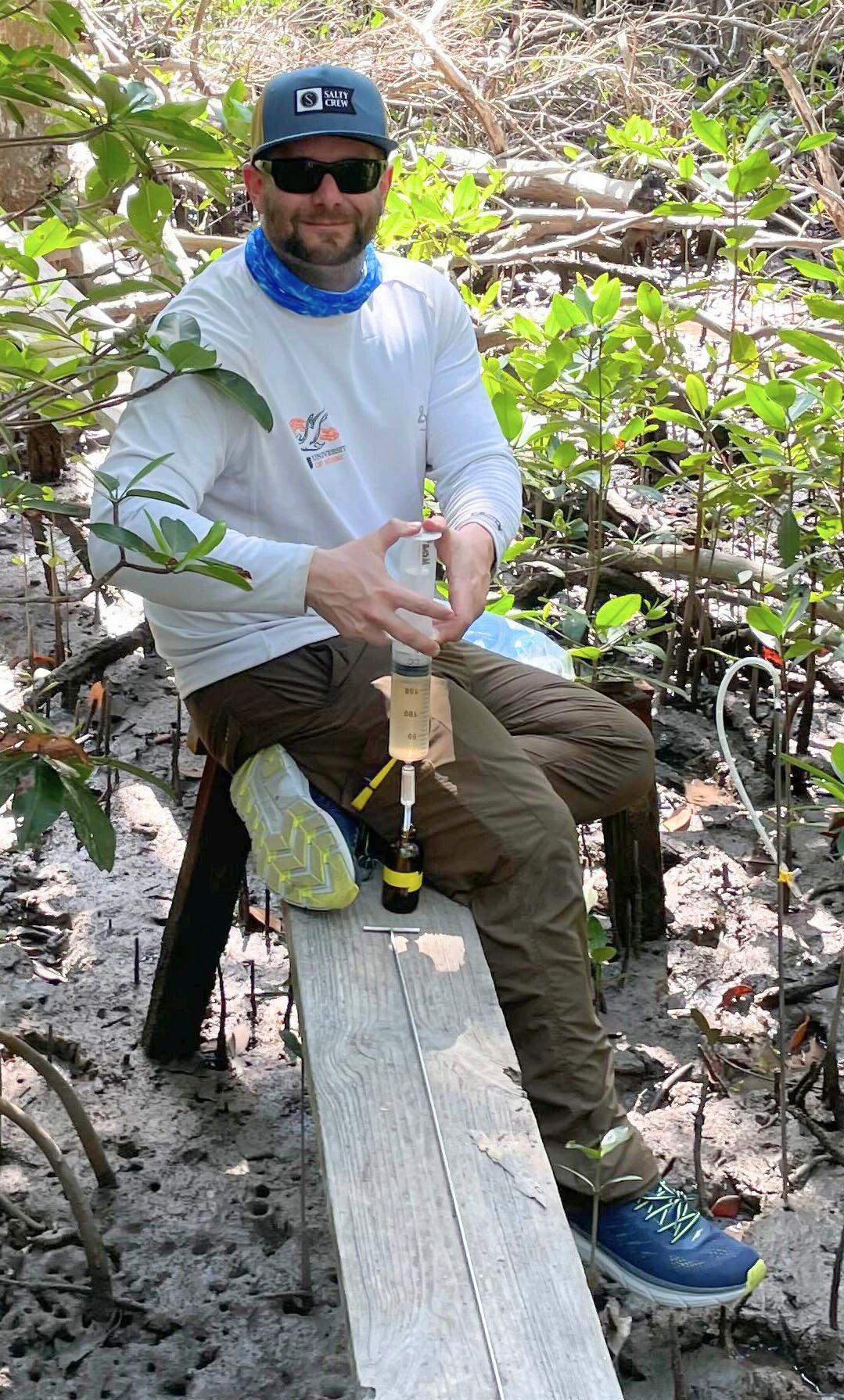
I study carbon cycling in a variety of ecosystems along the landsea continuum, with an emphasis on coastal wetland carbon As part of my work in coastal vegetated ecosystems (e g mangroves, salt marshes, seagrass meadows), I’ve developed a global network that aims to improve our knowledge on how much carbon is being stored in these ecosystems This becomes increasingly important as a variety of stakeholders, including Federal and State agencies, as well as private non-governmental organizations (NGOs), are recognizing the carbon-sink potential of coastal wetlands and would need the data products from this network to inform coastal wetland protection and restoration efforts
What goals/plans do you have for this job?
I’ m excited to start my own biogeochemistry lab and have plans to grow my current coastal carbon work as well as expanding my interests to other ecosystems, including polar and alpine Much of my current work involves the use of radiocarbon as a dating tool for sediments and soils, and I plan to expand my use of radiocarbon in the coming years with respect to thermal and chemical stability of organic matter
What kind of music do you like?
arriving to USU Fall 2024
What is your favorite food?
Pizza! Living in New Haven (recently named the pizza capitol of the US) for the past couple of years, I have probably eaten more pizza than I had in my first 30-some years of life Since I’m an avid baker, I’m also a big fan of desserts.
What is your favorite thing to do on the
I like all kinds of music, but I tend to gravitate more towards 70s/80s music
Besides working at USU Geo, what is something you are excited to do in Utah?
I’m excited for all of the future adventures with my dogs! They both love to hike, but they have yet to experience hikes beyond the east coast
d time outside with my ying new dessert recipes I ing in baked goods for my mates so expect to see me baked goods in the eosciences department!
ineral?
estone but emist with an interest in sils (particularly marine!)
ike us to know about you? My nyone who is looking to join don’t just have to chat about my housing search, Sharan, ion at dinner about longeston’t count out Scooby-Doo!)
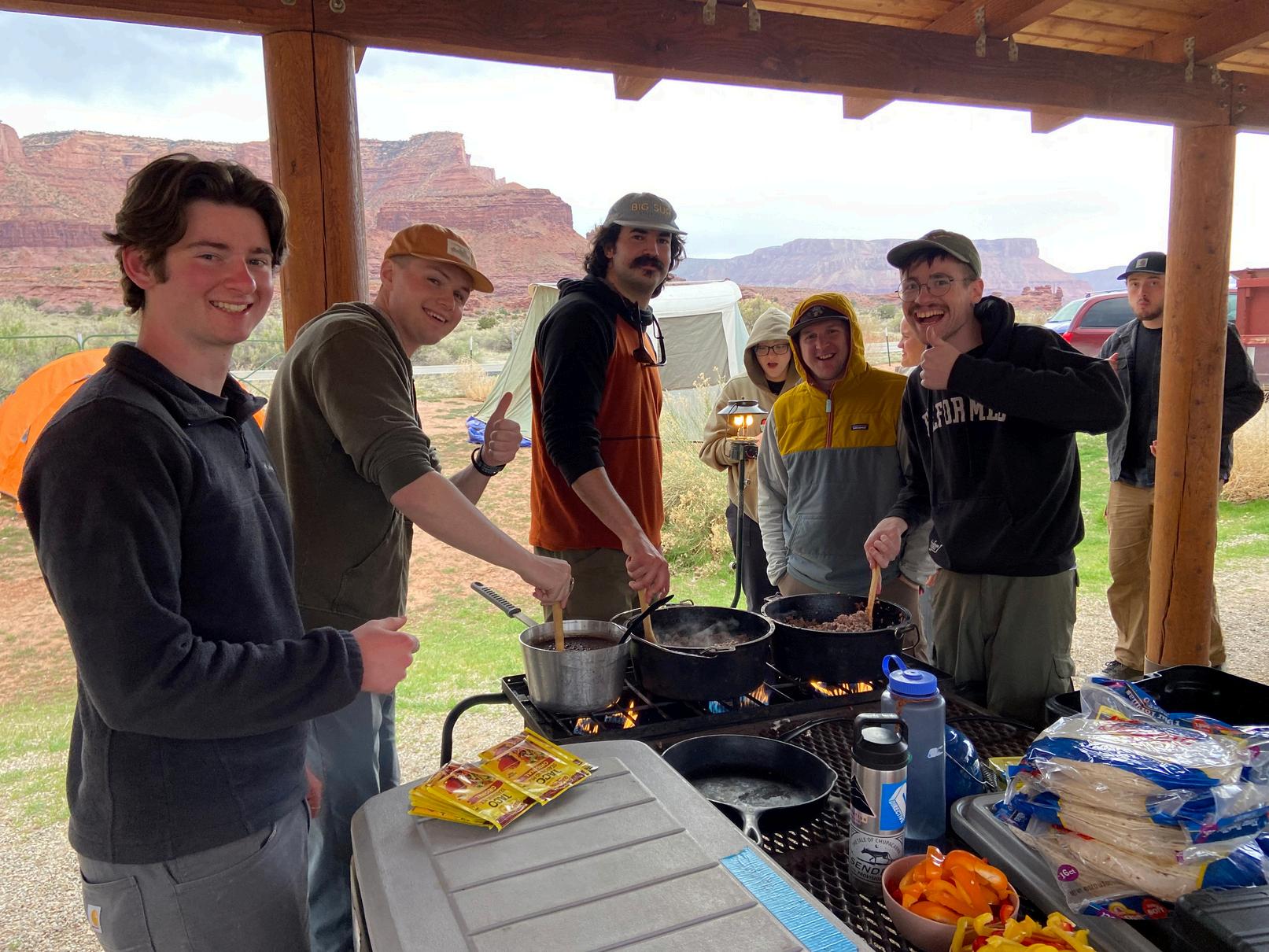
USU Geosciences graduate student Chels Howard is a shining example of how a Masters degree in the geosciences can lead to an enriching career in the public sector An enthusiastic baseball fan from the Pacific Northwest, Chels came to us from Eastern Washington University, joined the first group of graduate students advised by recently hired Dr Don Penman in 2021, and made our department a better place
Chels’s MS research used the geochemistry of ancient microfossils preserved in deep-sea sediment cores to reconstruct an ancient episode of climate change known as the Paleocene-Eocene Thermal Maximum (PETM) During this event, ocean and land-surface temperatures rapidly increased by about 5 °C, drawing comparisons to our currently changing climate Their samples came from a site in the Tropical Atlantic – a region that climate models indicate is very sensitive to hydrologic change during warming To constrain changing temperature and hydrology, Chels measured the magnesium content and oxygen isotopes of foraminifera (marine microfossils) and compared results to recent climate model simulations of the PETM The excellent agreement bolsters our confidence in the skill of climate models The results of Chels’s research are currently under review at the journal Paleoceanography & Paleoclimatology
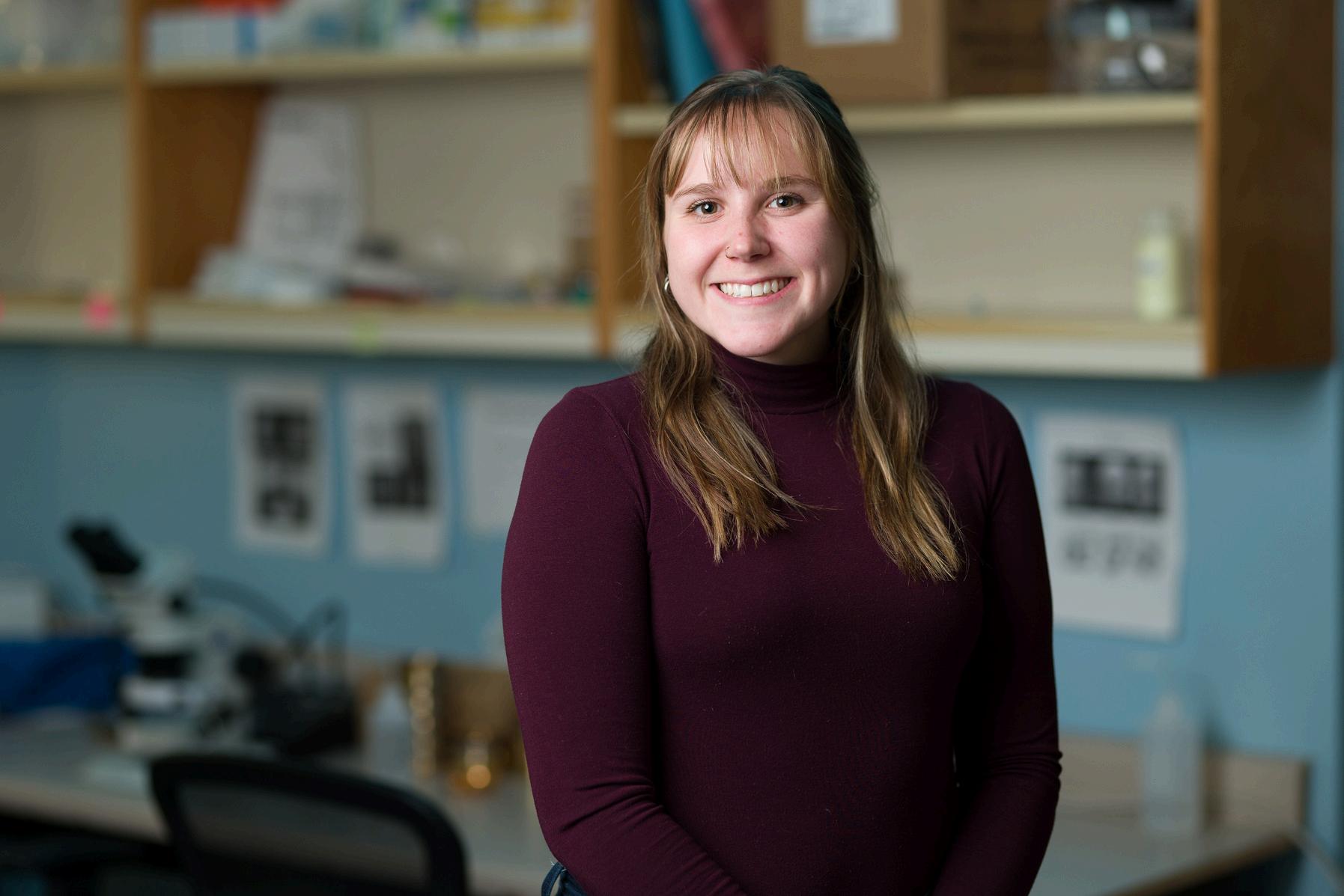
Chels still practices geochemistry, but with different intentions Immediately after graduation last December, they started work at the New Mexico Environment Department as a Project Manager in the Groundwater Quality Bureau Working with data from several of New Mexico’s Superfund sites Chels uses analytical geochemistry to quantify the extent of contamination and verify remediation efforts Keep up the great work Chels!
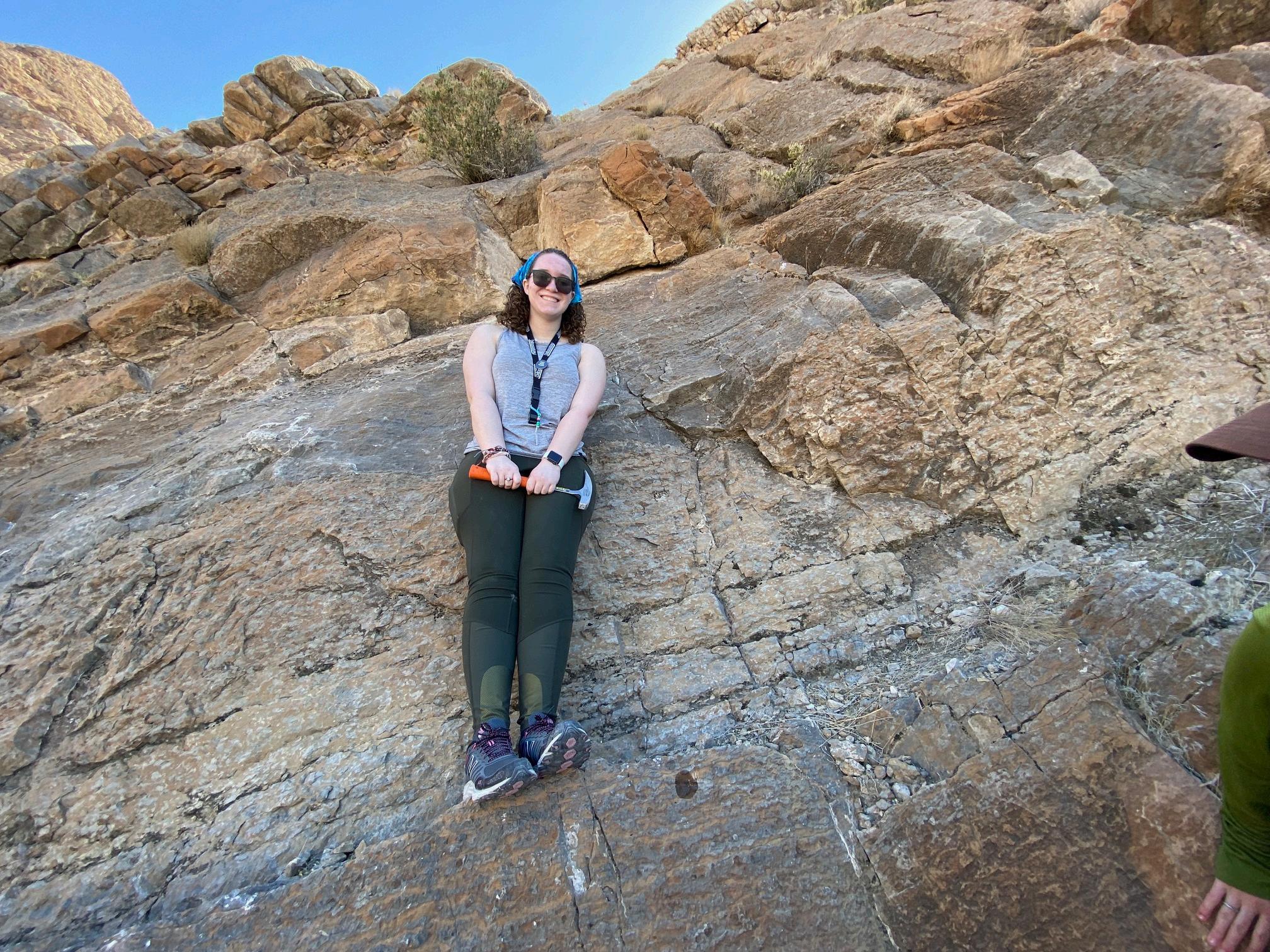
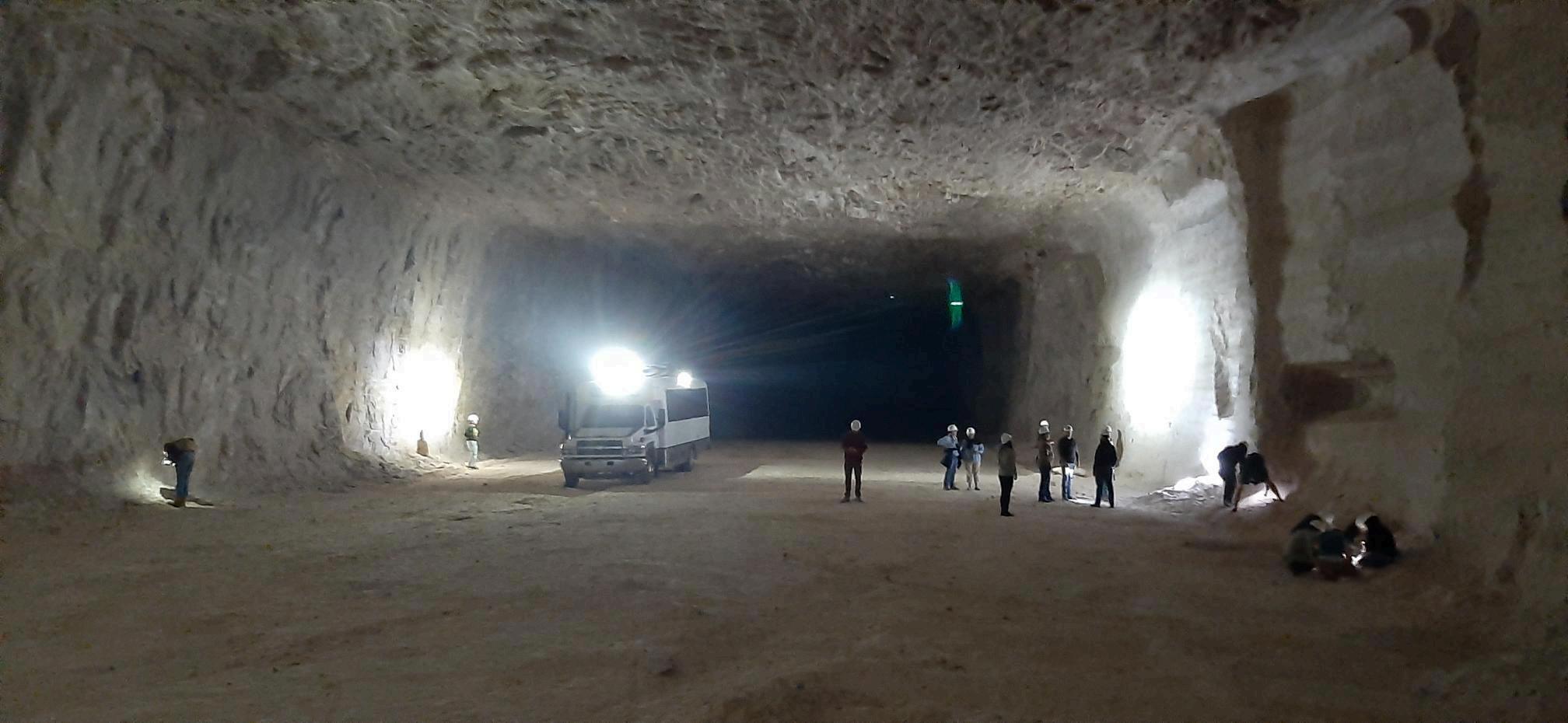
There is a lot to share about our top undergraduate student, Michelle Norman Michelle entered our program as a freshman in 2021 with a Presidential Scholarship and is also pursuing a minor in math Perhaps attending USU was a predictable choice, as Michelle’s parents are both Aggies and their sister became an Aggie last year Michelle immediately got involved in our department, serving as Geology Club President for three years and being a constant volunteer for outreach If you ’ ve visited the Geo Department in recent years, you ’ ve likely run into Michelle conducting student worker duties in our front office and every nook of the building
Most of what to share is about Michelle’s amazing involvement in research from day one Michelle has been working with Dr Carol Dehler on the only Global Boundary Stratotype Section and Point (GSSP) in Utah, in the middle Cambrian Wheeler Formation of the Drum Mountains Michelle is investigating a carbonisotope excursion associated with the GSSP the ‘DICE’ (Drumian Isotope Carbon Excursion) Although the DICE event is used as a global correlation tool and for placement within the Geologic Time Scale, Michelle’s work is showing that, in fact, it is not a reliable correlation marker
Michelle has presented their work at several USU research venues, winning first place two times in the College of Science ‘Rapid Fire’ competitions, and also presenting at a GSA meeting in Denver as well as scheduled to give a talk at the upcoming GSA meeting in Anaheim Michelle has received a College of Science minigrant, a USU URCO (Undergraduate Research Creative Opportunity) grant, and currently a Peak Summer Fellowship In the Geo Department Michelle has received a Branch Scholarship and is this year ’ s recipient of the Michael V Lowe Scholarship as our top student
Michelle is already talking to potential Masters advisors for the 2025-2026 school year and is planning on submitting a proposal to NSF’s Graduate Research Funding Program this fall We are so proud of Michelle and are excited about their next adventures!
GennaBaldassarre,MS,CharacterizationofCarbonaceous FaultRocksofthePioneerFaultZone,South-centralIdaho (Dr KellyBradbury)
KaylaChaudoir,MS,SilicaFaultMirrorDevelopmentalongthe CordilleraBlancaDetachmentFault,Peru (Dr DennisNewell)
JoeClevenger,MS,ShakingofftheRust:Unravelingthe DepositionalandDiageneticHistoryofEnigmaticFerroan DolostonesintheCambrianBrightAngelFormation,Tonto Group,GrandCanyon (Dr CarolDehler)
EmmaKrolczyk,MS,UsingOSLtoInvestigate GeomorphologicalandArchaeologicalFeaturesattheWiggins ForkBisonJumpComplex (Dr TammyRittenour)
AmandaLeaman,MS,AnIntegrated LithosphericThermal ModelfromSeismicFieldsandPlateAges (Dr TonyLowry)
ShelbyLitton,MS,HydrogenStableIsotopeConstraintson HydrationofColoradoPlateauLowerCrustfromOligoceneMioceneNavajoVolcanicFieldXenoliths (Dr DennisNewell)
MichaelaShallue,MS,BuildingandUsingaHydrology ExperimentforPlace-basedLearningwithNativeAmerican Students (Dr JoelPederson)
KitriSpencer,MS,CreatingPlace-BasedIntroductory GeoscienceFieldTripCurriculaforIndigenousStudents (Dr.KatiePotter)
NatalieTanski,PhD,GeomorphicRecordsofClimate,Tectonics, andSurfaceProcesses:ColoradoPlateau,GreatBasin,andSicily (Dr TammyRittenour&Dr JoelPederson)
JackWillard,MS,TestingforPatternsofDeformationfromthe YellowstoneHotspotalongtheGallatinRiver,SWMontana (Dr JoelPederson)
HawkeWoznick,MS,SheddingLightonPastIce-freeIntervals inNorthwestGreenland:LuminescenceDatingoftheBaseofthe CampCenturyIceCore (Dr TammyRittenour)
The Geo Advisory Board and our Industry Council are alumni and friends who visit us, receive updates, provide advice and advocacy, and interact with our students The Advisory Board considers all aspects of our department's mission while the Industry Council focuses on training in our undergraduate program
Advisory Board
Carrie Elliott (Chair)--US Geological Survey
Dawn Hayes--Petroleum Consultant
Paul Inkenbrandt--Utah Geological Survey
Al Jones--Browning Foundation
Steven Kerr--Millcreek Mining Group
Mike Lowe--Utah Geological Survey
Karen Merritt--Cache County School District
Craig Nelson--Western GeoLogic LLC
Dan Rogers--Amsted Industries Inc
Sarah Springer--Central Plateau Cleanup Co
Industry Advisory Council
Chris Ballard--Rio Tinto
Faye Geiger--Occidental Petroleum Corporation
Stefan Kirby--Utah Geological Survey
Skyler Sorsby--WSP Global
Laura Symmes--Practical Mining LLC
Christopher Tressler--Coconino County Cianna Wyshnytzky--Bureau of Reclamation Rock-n-Fossil
Next year ’ s event will be on February 22, 2025! Day Day