MIDDLE AND HIGH SCHOOL PROGRAMS AVAILABLE!
MIDDLE AND HIGH SCHOOL PROGRAMS AVAILABLE!
Horses & Large Animals, a Veterinary Academy Program
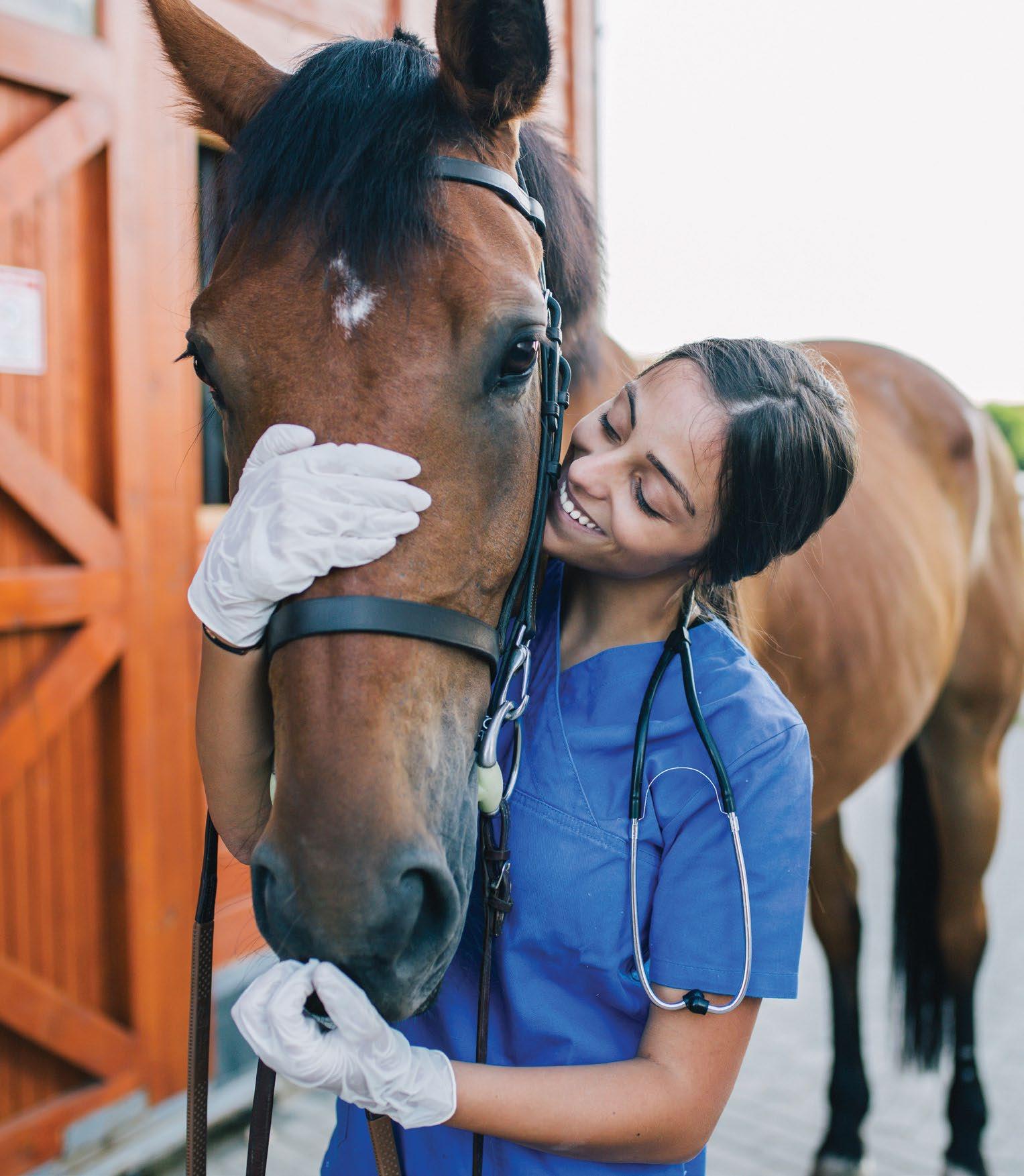
Help care for rehabilitating horses as you:
Shadow a teaching veterinarian in the lab and stable
Spend time at an animal rescue
Participate in hands-on field classes about large animal care
Earn up to 40 veterinary hours
Summer 2026 sessions available in New York & Arizona!
Horse & Large Animal Medicine
Pine Bush Equine Services & Veterinary Hospital, New York
Gud Ark Animal Sanctuary, Arizona
Veterinary Academy offers programs across the U.S., in Costa Rica, and in Australia for all types of animal lovers.
Secure your spot for summer 2026
President: Jennifer Sweet
Executive Director: Teresa Woods
Editor: Sarah Evers Conrad
Graphic Designer: Cindy Kassebaum
DISCOVER USPC, The Official Magazine of The United States Pony Clubs, Inc. is published two to three times a year by The United States Pony Clubs, Inc. and mailed to Pony Club members/families and Corporate Members. Readers are encouraged to submit ideas or articles for publication. Address all correspondence to the Editor at the above address. USPC is not responsible for the opinions and statements in signed articles and paid advertisements. These opinions are not necessarily the opinions of USPC and its staff. Pony Club recognizes that equestrian headgear that does not meet USPC Policy #0810 is not safe, although certain equestrian activities pictured in this magazine may not adhere to these requirements. Change of address must be made six weeks before date of publication for next issue to be delivered to a new address. Address changes can be made to your USPC member profile online or by mail. POSTMASTER: Send address changes to United States Pony Clubs, 4041 Iron Works Parkway, Lexington, KY 40511-8483.
ABOUT ADVERTISING: Pony Club does not endorse any publication, service, or product, and reserves the right to refuse any advertising not in the best interest of USPC membership. Advertising in DISCOVER USPC, The Official Magazine of The United States Pony Clubs, Inc. does not imply any such endorsement; nor does Pony Club warrant as to the accuracy of any claims made by such advertisements that claim to meet Pony Club needs or requirements. Advertising does not necessarily reflect the standards and practices of Pony Club.
PUBLICATION EDITORS, NOTE: Unless it has been cited as having been reprinted from another publication, permission to reproduce any article or other editorial content published in DISCOVER USPC, The Official Magazine of The United States Pony Clubs, Inc. must be requested from the Editor at communications@ponyclub.org and with the condition that credit is given as follows: Reprinted from (issue date) of DISCOVER USPC, The Official Magazine of The United States Pony Clubs, Inc. with permission of the United States Pony Clubs. © 2025, The United States Pony Clubs, Inc. All rights reserved. Reproduction in whole or in part without permission is prohibited. No rights for commercial use or exploitation are given or implied. DISCOVER USPC are trademarks of The United States Pony Clubs, Inc., registered in the U.S. Patent and Trademark Office.


website: ponyclub.org uspc@ponyclub.org inquiries@ponyclub.org shopponyclub@ponyclub.org marketing@ponyclub.org communications@ponyclub.org development@ponyclub.org executivedirector@ponyclub.org memberservices@ponyclub.org instruction@ponyclub.org activities@ponyclub.org testing@ponyclub.org advertising@ponyclub.org
ISSN 2767-1860 (Print) ISSN 2767-1887 (Online)


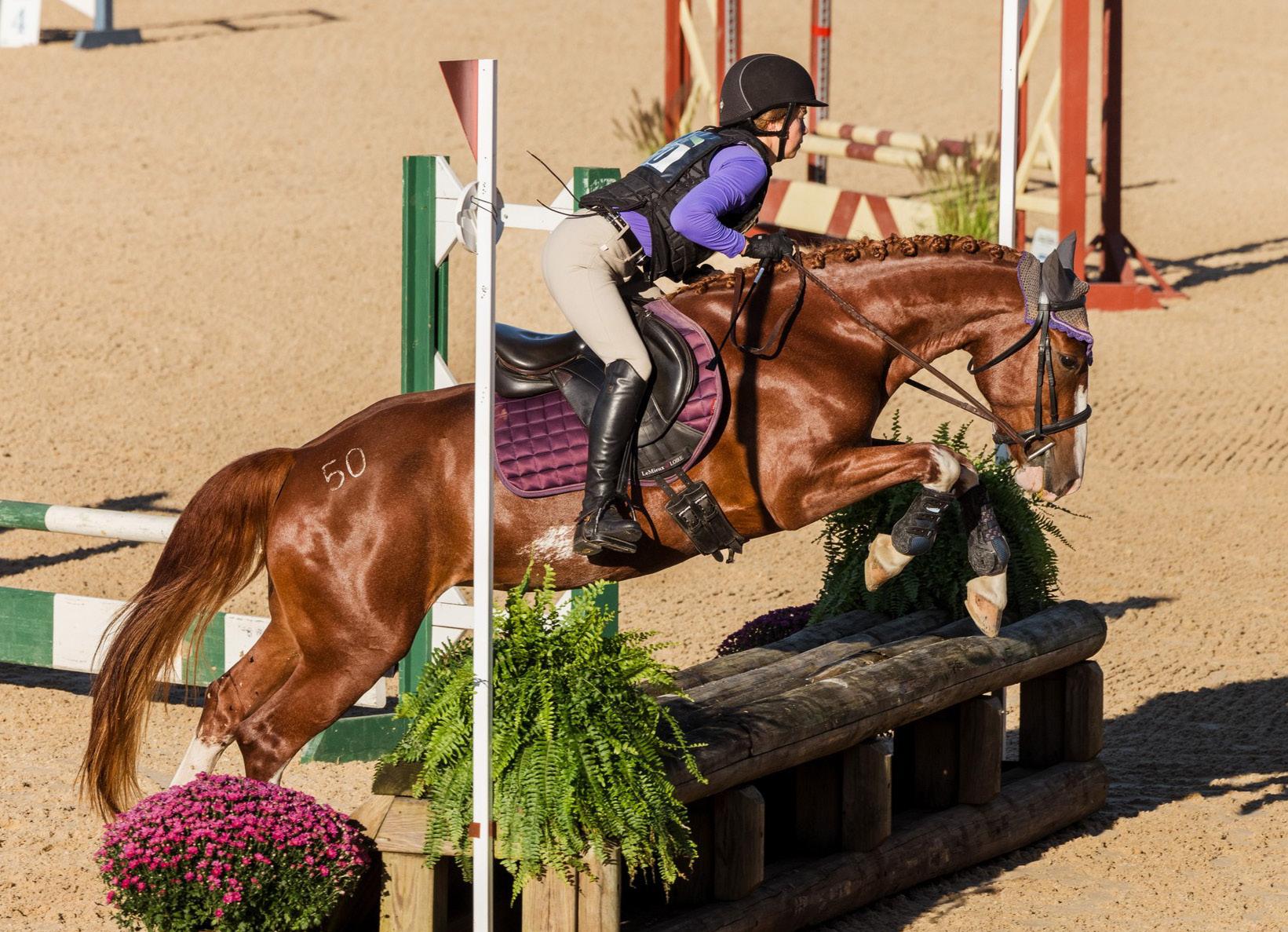
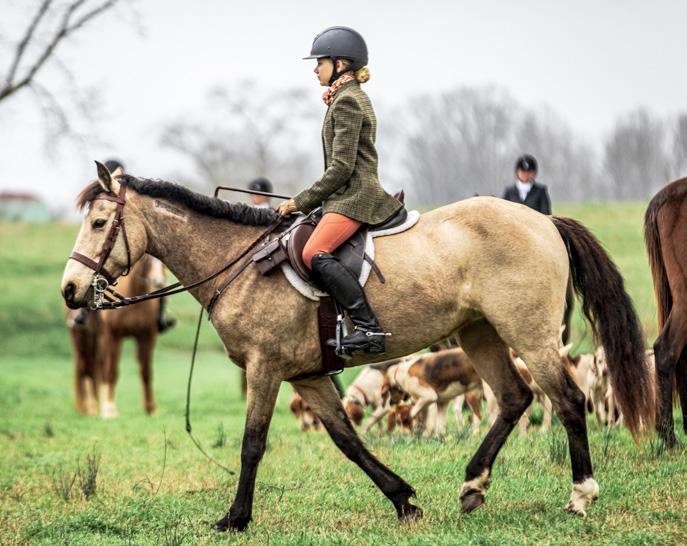

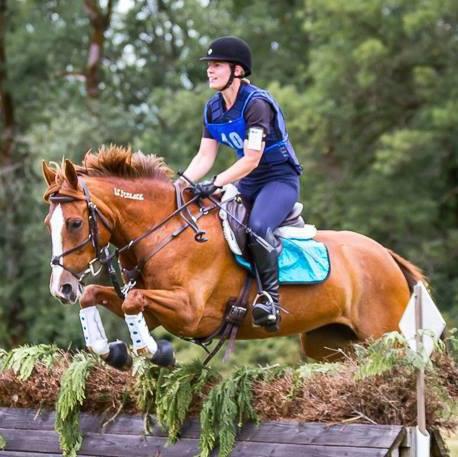
Discover the untapped potential of America’s wild horses and burros. From the open ranges of the West, wild horses bring heart, athleticism, and unmatched versatility to every discipline. Whether your passion is dressage, trail riding, eventing, or simply enjoying the partnership of a loyal companion, these symbols of American freedom have what it takes to shine.
Visit BLM.gov/whb to get started, or scan the QR code with your phone. Join the community of 140,000+ riders, trainers, and families who have given a wild horse or burro a good home.
EARLIER THIS YEAR, the United States Pony Clubs, Inc. took another significant step forward in its long-standing commitment to horse well-being with the formation of a task force on equine well-being. This group was established to build upon decades of education, advocacy, and care that have defined Pony Club’s mission since its earliest days.
Now, USPC is proud to launch a new Horse Well-Being Initiative and campaign (see page 6), focusing on the internationally recognized Five Domains of Welfare: nutrition, environment, health, behavior, and mental/emotional state. These five areas form the foundation for understanding and improving every horse’s quality of life.

“A happy kid on a happy horse” has been a popular Pony Club mantra. It’s who we are, and it’s what we continually strive to do even better, except now with riders of all ages.
As Pony Club members, leaders, and supporters, we are encouraged to reflect on our own roles and responsibilities. How do our actions, awareness, and daily habits support our horse’s well-being?
Caring for horses isn’t just about proper training and performance. It’s about recognizing that a happy, healthy horse depends on both physical and emotional care. Pony Club teaches that understanding, compassion, and science-based management all go hand in hand.
Beyond being the right thing to do, prioritizing equine well-being also shapes how the public perceives our sport and our community. Maintaining a social license to operate (the public’s acceptance of equestrian activities) depends on showing that we take proactive, not reactive, steps to safeguard our horses’ well-being.
In addition, USPC’s new Horse Well-Being Policy, recently adopted by the Board of Governors, reinforces this principle:
“The United States Pony Clubs, Inc. is dedicated to upholding the highest standards of equine care and management. All members, leaders, volunteers, and affiliates are expected to ensure that riding, training, handling, and management practices prioritize the horse’s physical, mental, and emotional well-being. USPC integrates current research and best practices into its educational programs to prepare members to be responsible and ethical stewards of the horse throughout their equestrian pursuits.”
From its founding, USPC has stood as a leader in equine education. Today, the Horse Well-Being Initiative (along with the hashtag #happyhealthyhorse) renews that commitment and expands it for the future. By embracing the five domains and the principles behind them, Pony Club members are not only ensuring better lives for their horses, but also strengthening the foundation of the Pony Club community itself.
Together, we can all champion the Happy, Healthy Horse, because when our horses thrive, so do we.
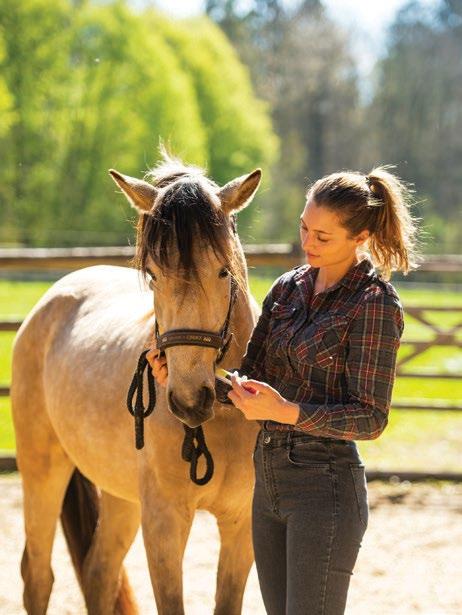
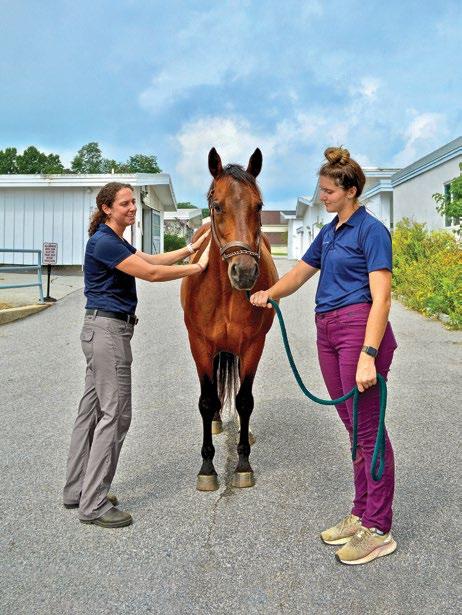
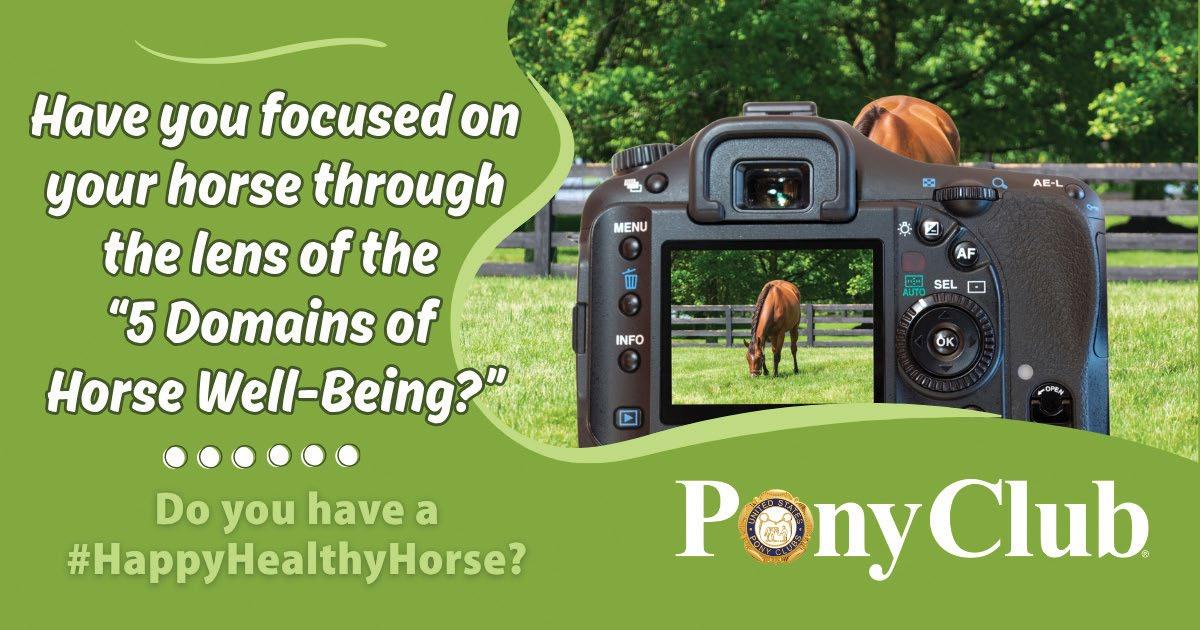
Since its founding in 1954, the United States Pony Clubs, Inc. has steadfastly championed the care and well-being of horses, placing horsemanship—defined as the knowledgeable and compassionate care of the horse—at the center of the organization’s mission and educational objectives. The love of the horse, and what is taught through Pony Club, fosters a deep sense of responsibility toward the comprehensive well-being of horses and ponies. Now, USPC is highlighting its commitment to equine well-being with the launch of its new #HappyHealthyHorse Well-Being Initiative that challenges all within the horse industry to really focus on their horse through the lens of the five domains of horse well-being described below.
in every participant. This commitment to the well-being of horses remains at the heart of USPC’s legacy and vision for the future.
Nutrition is taught as more than feeding a horse; it’s about providing a balanced, sustainable diet that supports long-term health.
The importance of focusing on equine well-being is showcased throughout Pony Club programming and curricula and within education to learn about horse care and management through the Horse Management track required of all participating members. The horse is key to what every member, leader, alum, and volunteer does in USPC.
“It’s that love of horses and the care taken in providing the best to one’s mount that helps USPC provide not only horsemanship education, but more importantly, it leads to lessons in leadership, responsibility, integrity, ethical stewardship, respect for animals, and so much more,” says Teresa Woods, USPC Executive Director. “All involved in USPC are encouraged to support and practice the principles of horse well-being as an essential part of their participation in Pony Club programs.”
These expectations for the ethical care of horses guide all Pony Club activities and serve as the foundation for instructional content, certifications, competitions, and other activities across the organization. Upholding these standards is a shared responsibility and a core value of USPC membership.
Environment underscores the importance of safe, enriched surroundings, where horses can thrive mentally and physically.
Health extends beyond basic veterinary care, covering preventive measures and recognizing the subtle signs of distress.
Behavior calls for a nuanced understanding of horse psychology, helping individuals learn to communicate and bond with equines in meaningful ways.
Emotional State takes a look at the animal’s affective state, taking the other domains into consideration, to determine if the horse appears to enjoy his life, both at the barn and during work.
Finally, Well-Being weaves all these elements together, providing a framework to ensure that the horse’s life is considered in its entirety—physically, emotionally, and psychologically.
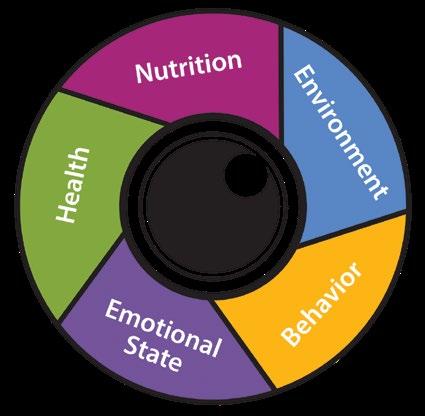
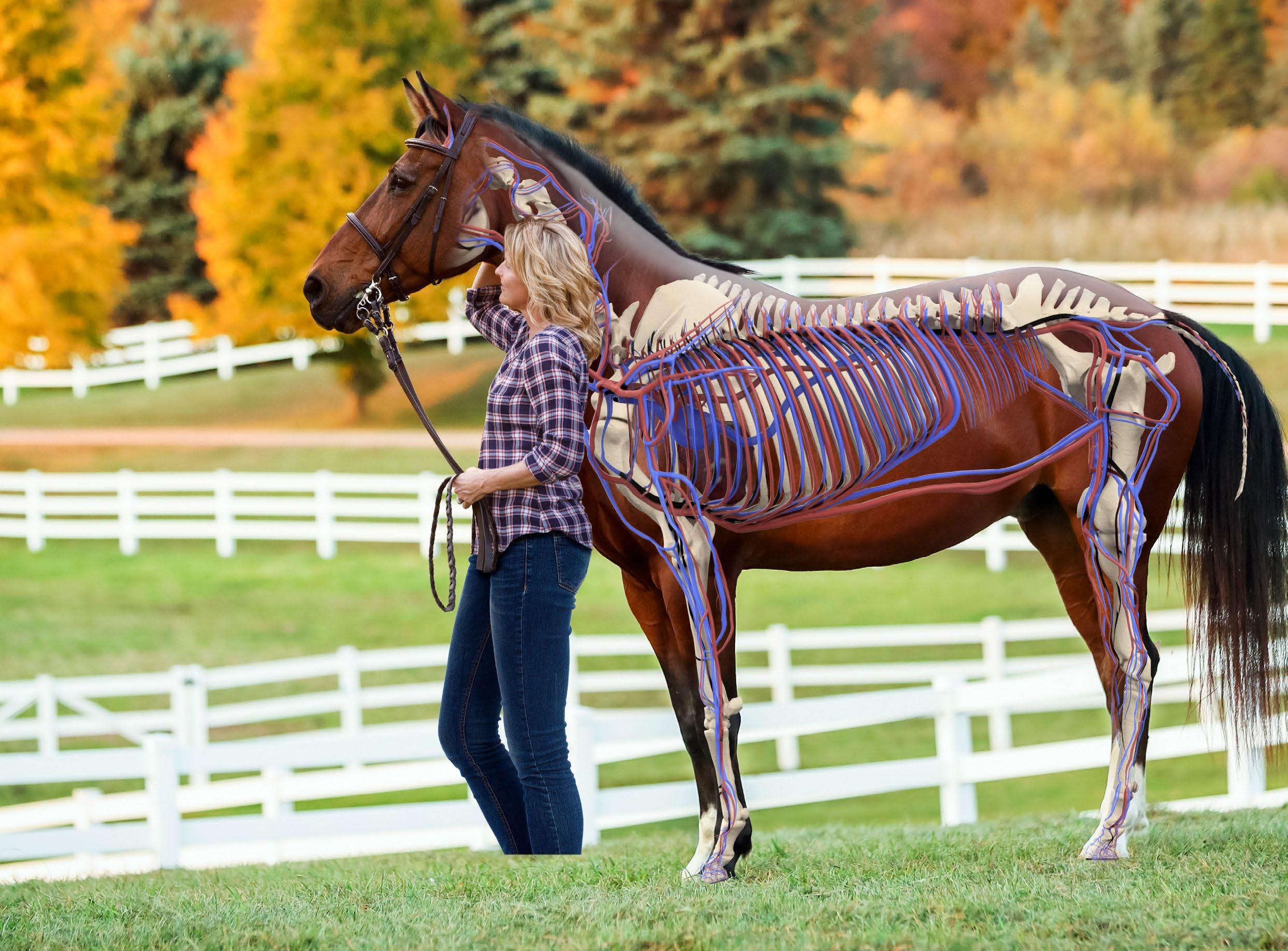
In guiding its members, USPC has always emphasized the critical importance of holistic care, ensuring that the horse’s wellbeing extends beyond physical health to encompass all aspects of his life. Through a carefully structured approach, USPC teaches the foundational principles of nutrition, environment, health, behavior, and emotional state, which all impact the horse’s complete wellbeing. These “Five Domains of Horse Well-Being” are taught and practiced, cultivating a profound respect and understanding of horses
In October 2024, the Horse Welfare and Social License subcommittee was formed by the USPC President and was originally placed under the Safety Committee. Over the last quarter, after discussions by USPC President Jennifer Sweet and USPC Executive Director Teresa Woods, about how the work of this subcommittee touched all areas of USPC, it was decided to turn the subcommittee into a task force, with a standalone board committee a strong possibility in the future. The task force then brought a report to the USPC Board in May of 2025 with the development of the five domains and a presentation that described them. In addition, they are working with the National Testing and Curricula Committee for integration into USPC’s Standards of Proficiency.
The long-term objectives for the task force include incorporating modern research in equine behavior, animal well-being, and veterinary medicine into all facets of USPC; to showcase USPC’s leadership in equine well-being education and its application within and outside the industry; and to build an ethos of care and consideration for the ethical and humane
(continued on page 8)



(continued from page 6)
treatment of horses among all USPC members.
USPC’s National Office staff and USPC experts will be providing additional materials for members, leaders, and the entire horse community now and in the future. Stay tuned for educational materials and resources that will be featured on the Pony Club Blog (bit.ly/pc-blog-from-dm), in the Pony Club E-News bimonthly enewsletter, in Discover USPC magazine, on the USPC social media channels, on Allpony.com, through USPC’s official resource publications, and during a presentation at the 2026 USPC Convention in Lincolnshire, Ill., January 28–February 1, at the Lincolnshire Marriott Resort.
In addition, USPC asks all horse owners to ask themselves how they are doing with their horse in the five domains, and how is their horse’s overall well-being? Do you have a #HappyHealthyHorse? If so, please share photos of your happy, healthy horse and tag @unitedstatesponyclubs on Instagram, TikTok, and YouTube; and @usponyclubs on Facebook using the official hashtag for the initiative: #happyhealthyhorse.
Visit the Pony Club Blog for the kick-off article, “How Horse Well-Being is Embedded in the United States Pony Clubs Curriculum” (www.bit.ly/5-domains-blog), and stay tuned to the Horse Well-Being category on the blog for upcoming articles, which will be suited to a variety of ages. In addition, subscribe to Pony Club E-News (bit.ly/pc-enews-from-dm) to stay up to date on all horse well-being content and announcements on equine well-
The USPC Annual Fund is more than just fundraising— it’s an investment in every member, every leader, and every equine partner. Everyone who becomes part of the Pony Club family is supported by a robust community that reaches far beyond each club and center. Collectively, we create experiences that will remain with members as they prepare their own path—with or without horses.
National dues for USPC membership cover only a portion of the actual cost to provide educational and leadership opportunities for one Pony Club member for one year. The Annual Fund closes that gap and allows USPC to be stronger and more vibrant. The generosity of the many donors who support the Annual Fund throughout the year make our success possible—we thank you. It is your dedication to our mission that gives our members experiences that enhance their lives long beyond their Pony Club days. Everyone—parents, members, leaders, grandparents, family, and friends—makes a difference and helps shape the larger Pony Club community to which we all belong. To donate, please visit https:// donate.ponyclub.org
—Sarah Evers Conrad, Marketing and Communications Director
Sometimes team sports involve both 2-legged and 4-legged athletes.
The Interscholastic Equestrian Association (IEA) has student athletes in grades 4-12 who ride Hunt Seat, Dressage and Western in a draw-based (catch-ride) format. Over 15,000 members on 1,500+ teams across the United States. Give your student rider a leg up into collegiate riding without having to own a horse.
Membership for the 2025-2026 Season opens in June. The IEA season runs August 2025 to May 2026. Join a team or start a new team in your area today!
Current certification (and/or certification currently working on):
H-B Horse Management, A Eventing
What disciplines and/or activities are you involved in: Eventing, Dressage, and Show Jumping
Tell us about your current mounts, and what you do with them:
Tom and Truffles are two horses who were just imported from London in February through our business, Irish Equine Imports, by my parents and my trainer. Tom is a 6-year-old 17.2-hand Irish Sport Horse gelding. He is a big mover, but he’s also a chill guy. As of right now, we are competing in Training Level Eventing.
Truffles is a 5-year-old 16.1-hand Belgian Warmblood, who came to us with no cross-country experience and little to no jumping experience. We are working on the basics of the training pyramid and competing at Eventing Starter Level.
Tell us about your goals (with Pony Club, with riding, and in life):
My ultimate dream, which I have had since I was little, is to go to the Olympics!
My goal this year was to achieve my A-level Eventing certification (I passed!).
I would love to compete at the Eventing five-star level. I also want to continue traveling, training, and importing horses to train and sell.
What is your favorite thing about Pony Club?
My favorite thing about Pony Club is the opportunity it provides and the barn family of supportive members that always help you fulfill your goals. I also love rallies. I am very competitive and love putting my knowledge and experience to use.
What is one thing you would tell newer members of Pony Club?
I would tell newer members that Horse Management really is more important than riding (even though the riding part seems more fun). Take your time to learn
AGE: 17
CLUB/REGION:
HIDDEN K STABLES PONY CLUB
RIDING CENTER/CAROLINA REGION
YEARS IN PONY CLUB: 9
What is your favorite way to prepare for a Horse Management certification? Study groups and Zooms with fellow candidates who are taking the same exam are great ways to prepare and connect. We always have a large group that studies together, making it more fun and enjoyable.
If you could try out any other discipline or activity, what would it be and why?
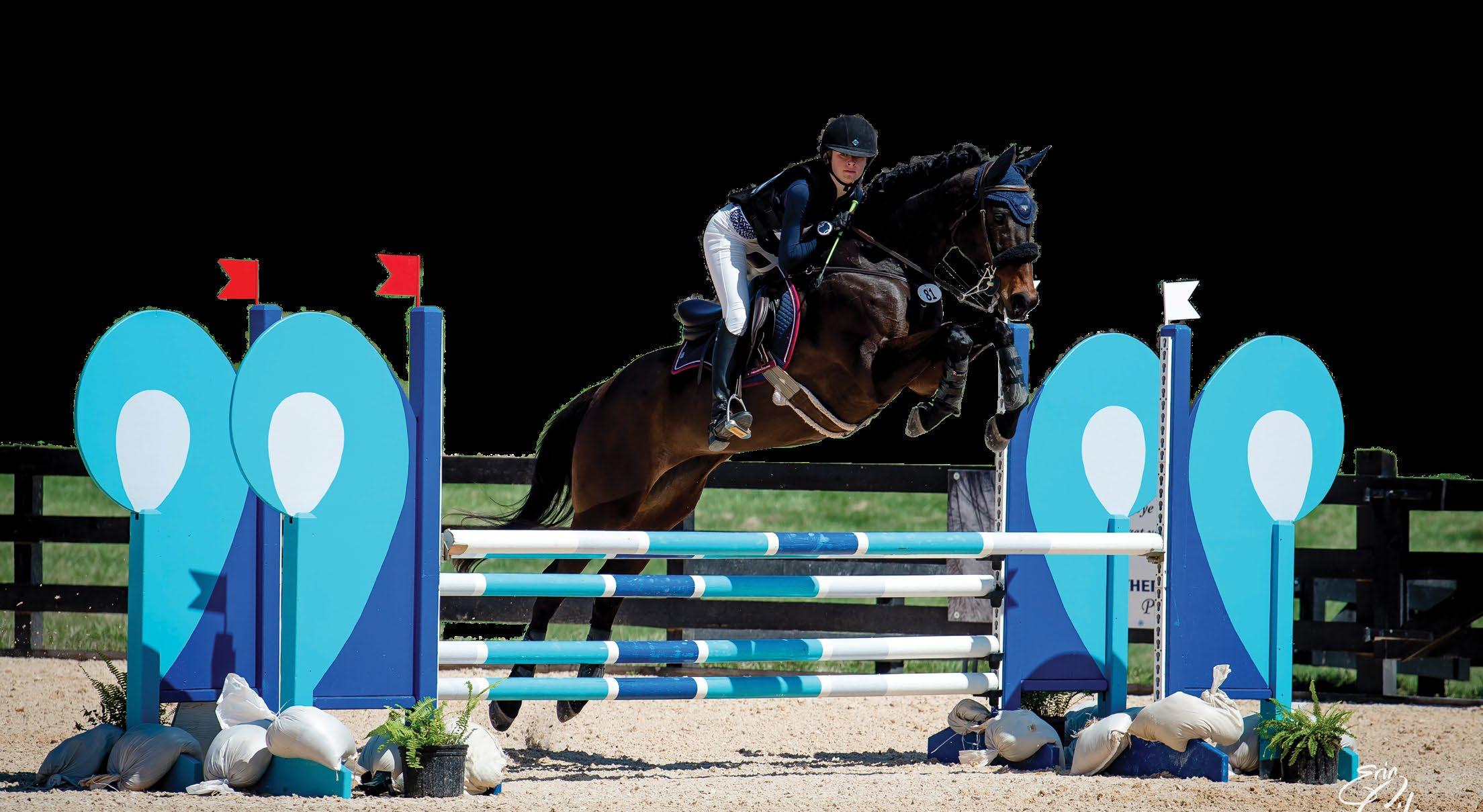
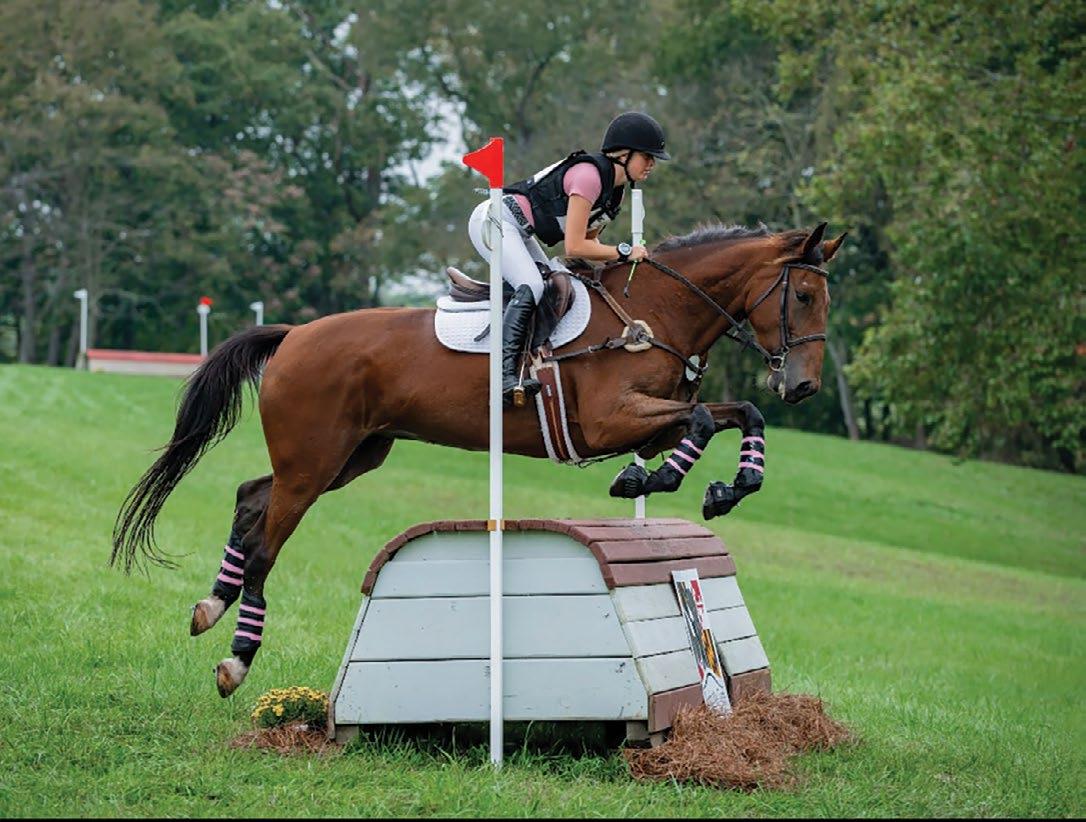
the 2024 USPC Festival Championships Opening Ceremonies parade. I loved being there with my barn and club and showing our spirit for the Carolina Region. In addition, I was so excited to do the UpperLevel Member Showcase at Festival, and doing Show Jumping in the Rolex arena was so cool!
How did you get started with horses? Are you a member of any other equine organizations?
I watched the movie Black Beauty at
Lillian was one of four riders chosen for the Pony Club International Alliance InterPacific Exchange in 2025.
age 5 and decided that I wanted to ride horses. At first I was terrified, but now I can’t imagine spending my time any other way. I am a member of the North Carolina Dressage and Combined Training Association, United States Equestrian Federation, United States Eventing Association, and the United States Hunter Jumper Association, but my favorite is USPC!
Have you done any special activities in Pony Club, such as international exchanges, recognition programs, virtual competitions, etc.)?
I just competed in the 2025 PCIA InterPacific Exchange (only four members of USPC were selected). I am incredibly
grateful to have received this opportunity. I was so excited to represent USPC!
What makes you #PonyClubProud?
I am so proud to follow in the footsteps of many amazing riders who grew up in Pony Club. Just watching them in the upper levels and international competitions is inspiring and amazing.
Is there anything else you would like to tell us?
I am honored to have been chosen for the Pony Club Member Spotlight and hope my experiences inspire younger riders. I remember reading the Pony Club magazine when I was younger, and I still read it to this day! Pony Club has given me the drive, support, and a blueprint to improve to be the best horsewoman possible. I’m very grateful for all of the opportunities.

Brought

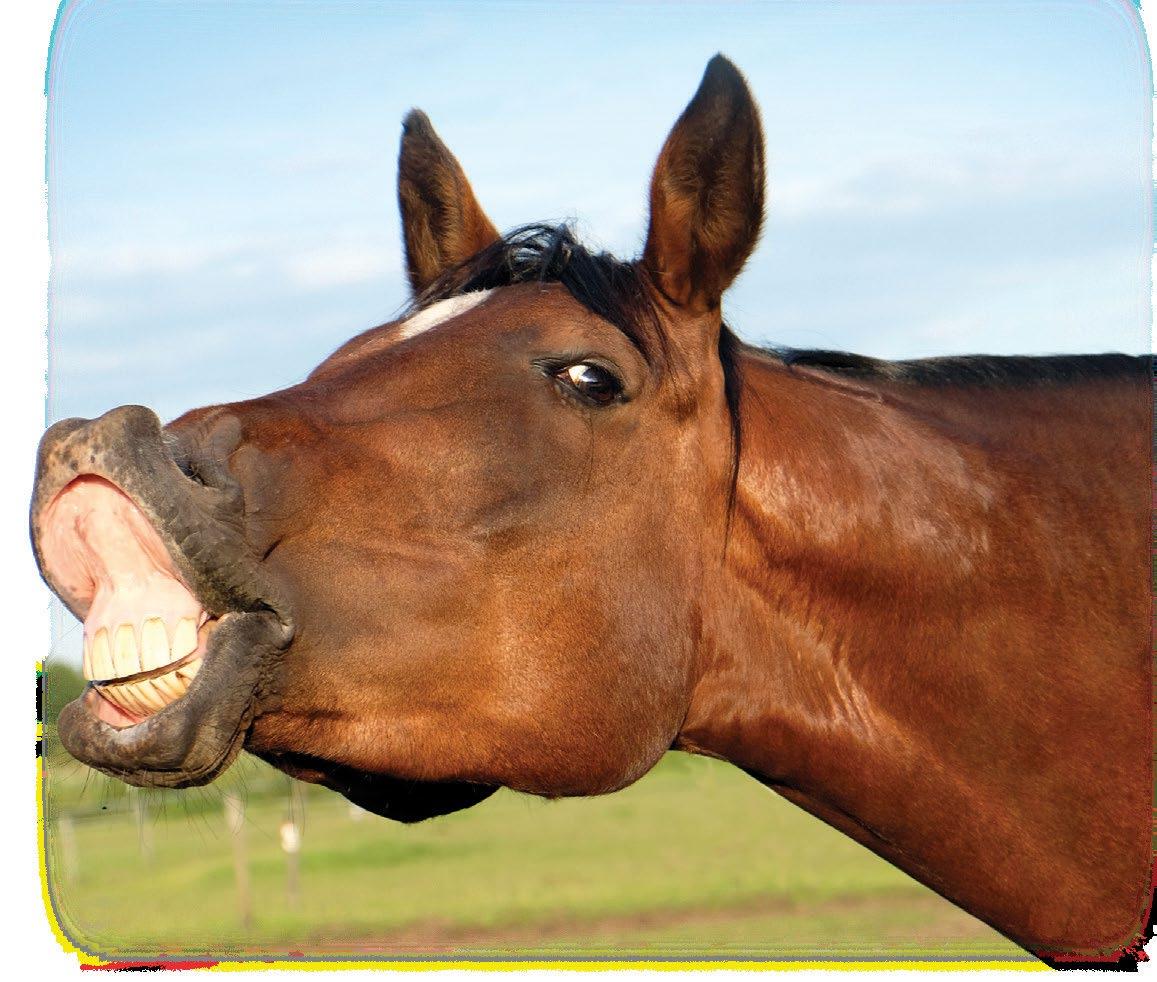

By Heather Bell, USPC Welfare and Social License Task Force
My friend Sheila listened as I complained about my horse, Bruno, who broke his gate pawing at feeding time. “It’s just behavior,” she said. Well, of course it is, I thought, and it’s bad behavior! She repeated, “It’s just behavior.” Curious, I began researching.
Horses evolved as highly social grassland prey animals, where survival depended on innate (natural) behaviors, such as fight or flight. They also acquired learned behaviors from the herd, such as where water is, who the predators are, and that “buddies” mean safety.
About 4,000 years ago, horses and humans entered a new age of interaction. Humans decided these four-legged creatures might be ridable. Some innate behaviors would need to be changed— fight or flight is just one example. The horse would have to learn new things from humans. But here’s the rub. Horses don’t instinctively know how to live in or understand the human world
Like us, horses experience the world through their senses: sight, hearing, smell, taste, and touch. But because their senses operate differently, they experience the world differently. So how are horses and humans supposed to communicate?
Imagine two aliens trying to order a pizza together. Learning to speak horse is what humans have been trying to figure out for thousands of years!
Thankfully, the physiology of learning—how the body and brain work together to learn—is the same in all animals. Information from the world enters the brain and activates neurons (brain cells), which sends signals that lead to a response. This response, whether innate or learned or a combo
of the two, is called behavior. With repetition, the same pathways between neurons are used again and again, strengthening their connections—like building a superhighway in the brain. These strong pathways make behavior more consistent and support memory. This is learning!
Have you ever heard that your horse’s brain is the size of a walnut? That’s a common myth, but picture a grapefruit instead (For humans, picture two grapefuits). Horses are intelligent and sensitive. Like us, they learn by the consequences of their actions, building neural pathways (their brain’s superhighway).
Human brains have more wrinkles and folds in the outer layer (cerebral cortex) than horses, which creates more surface area for billions of neurons and neural pathways. This larger surface area supports greater learning, memory, and complex thinking. Horses have smoother brain tissue with less surface area, making them better suited for fast, emotional, and memory-based responses— perfect for prey animals.
Another difference is that horses have a less developed frontal lobe, including the prefrontal cortex, where planning and problem-solving happen. Unlike humans, horses don’t plan and scheme. They don’t wake up thinking, “I will be a naughty pony today.” Rather, behaviors we call good or bad, are based on human perspective—your horse might see things differently!
Learning theory helps explain how horses take in new information, understand it, remember it, and use it later. A horse’s thoughts, emotions, and experiences influence his comprehension, acquisition, and retention of new skills and knowledge, and his recall of what he has learned.
Types of learning include habituation (learning to ignore

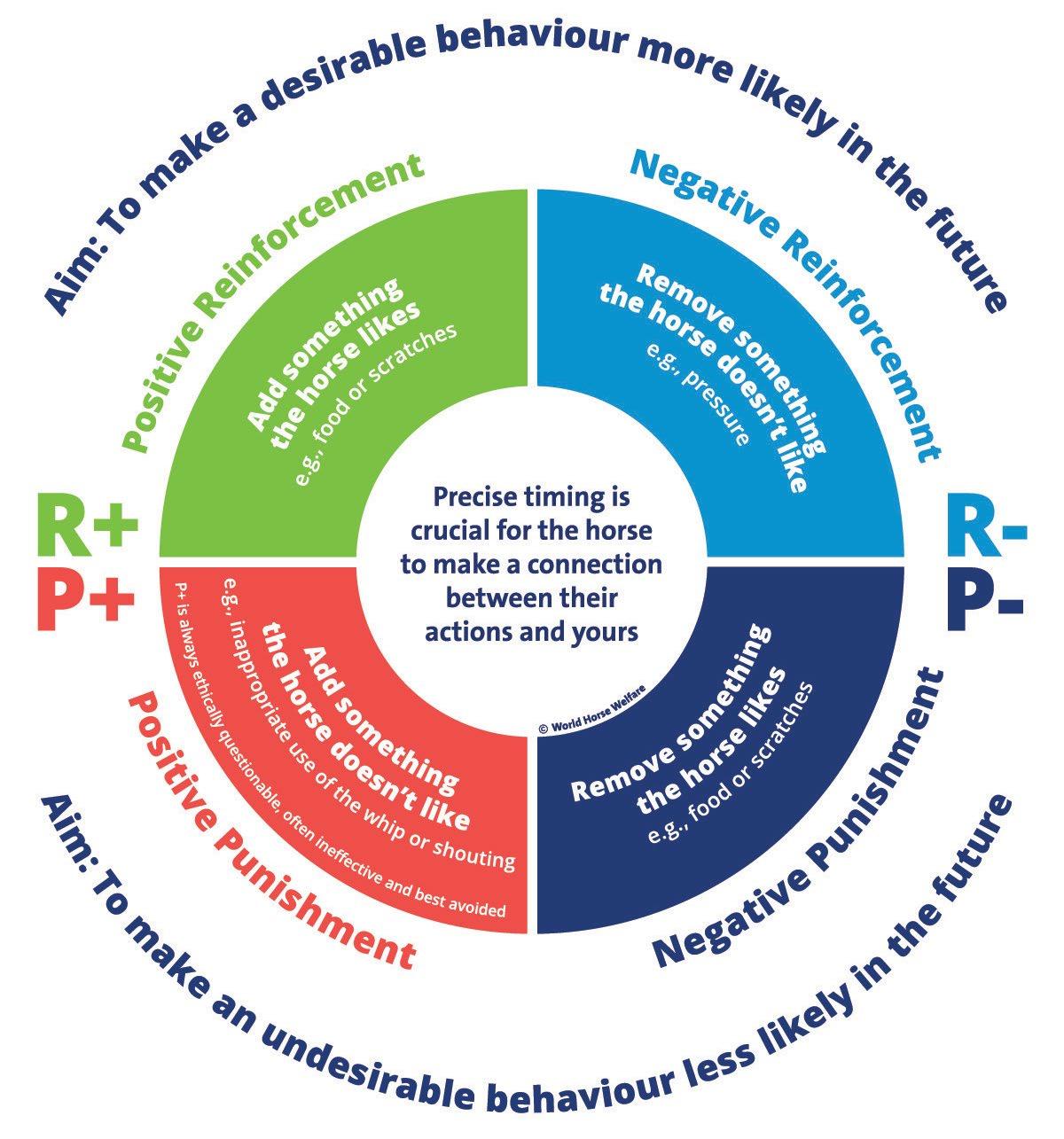
repeated, harmless things), classical conditioning (learning by linking two things together), and operant conditioning (learning through rewards and consequences, see graphic below), among others. These will take another article to explain! You can review ways to influence your horse’s behavior in the graphic on operant conditioning.
When your horse is relaxed, he is in a physiological state to learn.
The opposite occurs with fear. The brain decides whether to react with fear, and a fight-or-flight response can be triggered. If it is, all mental and physical energy is focused on fighting or running away—not on learning. Unfortunately, a single frightening experience can create a lasting fear memory that may require specialized training to overcome.
Be clear in your “ask,” having compassion when your horse gives a behavior response that you weren’t asking for. Is this the “wrong answer?’ Be curious! Maybe he doesn’t understand or
hasn’t been trained on what the answer should be, or he simply forgot. A horse won’t always give you the answer you want. Try again. If that fails, try changing your approach. Maybe break down the question into smaller steps. Investigate techniques to help your horse answer your question.
Gain and keep your horse’s attention. “Squirrel!” We know when a horse is distracted, learning goes up a tree!
Be consistent all the time. Your horse is constantly learning. He can easily become confused by mixed signals from you. “Yesterday, I could rub on you, but not today?” Inconsistency can erode his trust in you.
Your horse needs “brain breaks.” Short rest periods during learning allow the brain time to process and consolidate learning into long-term memory.
When learning slows or goes backward, ask, “Could he be in pain or poor health?”
Motivated learners retain their learning better and enjoy being with you, both on the ground and in the saddle.

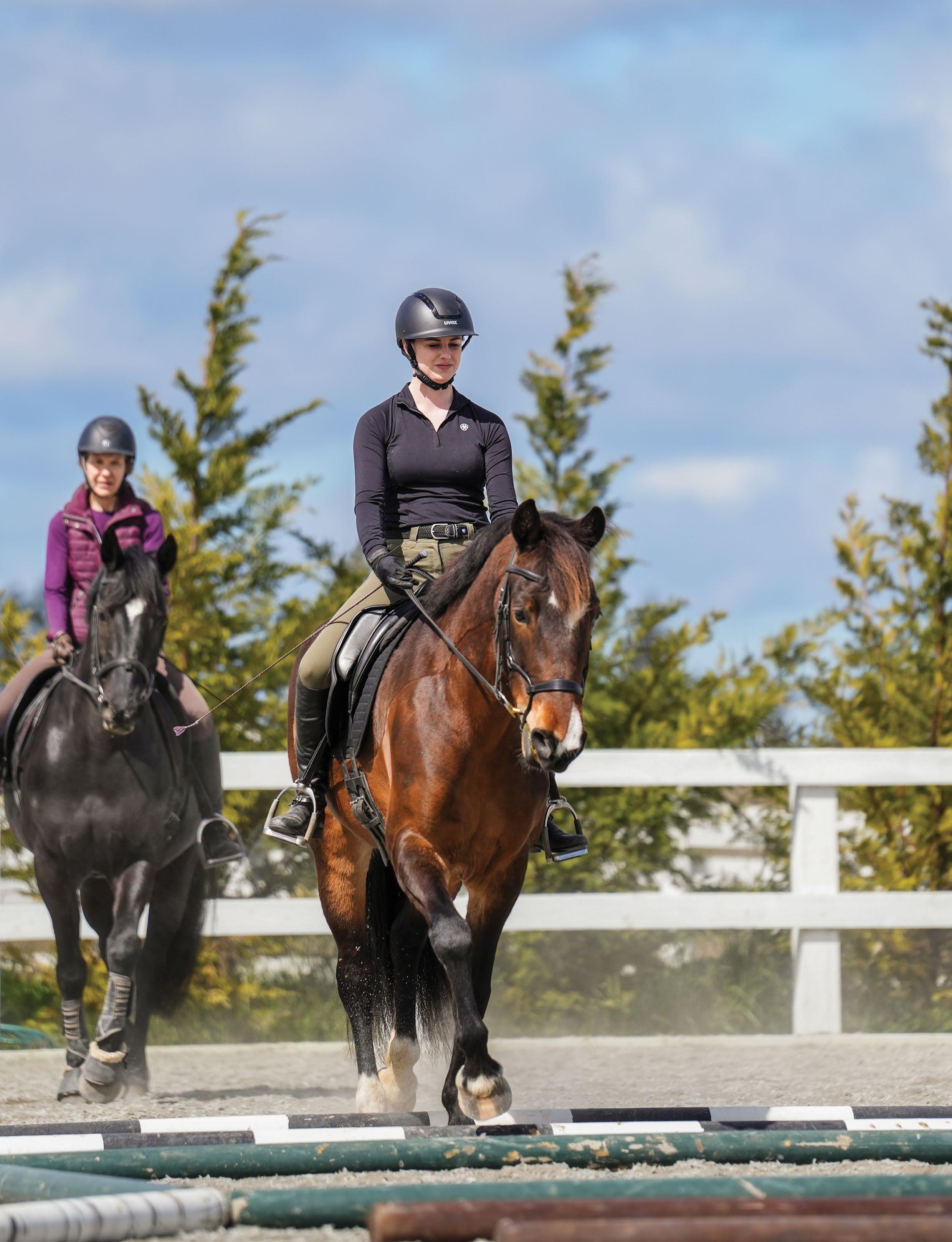
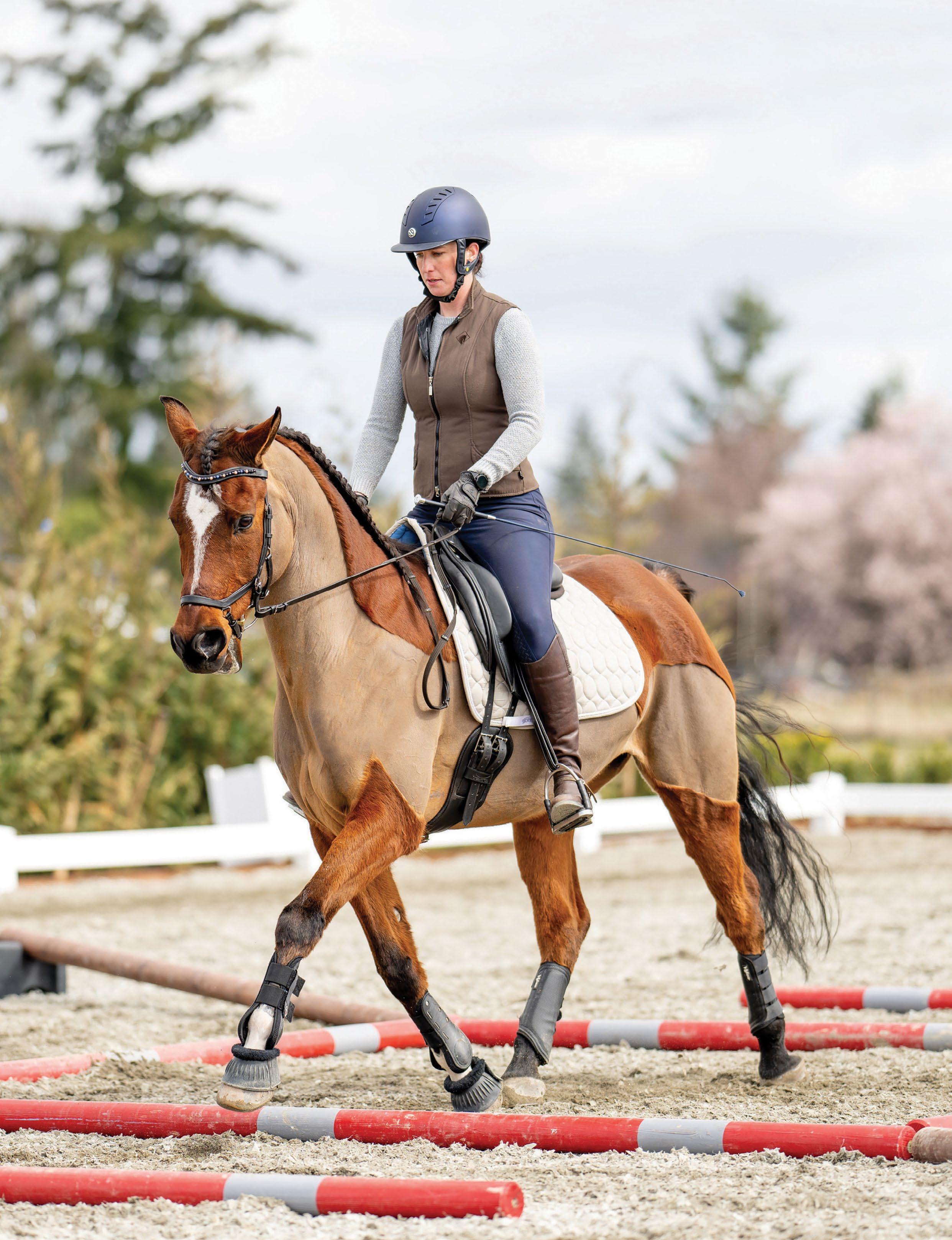
Adding pole and cavaletti exercises into your training program can provide many benefits—and a whole lot of fun.
By Christine Headley, H-A HM, A EV alum and former DC of Equitese Pony Club
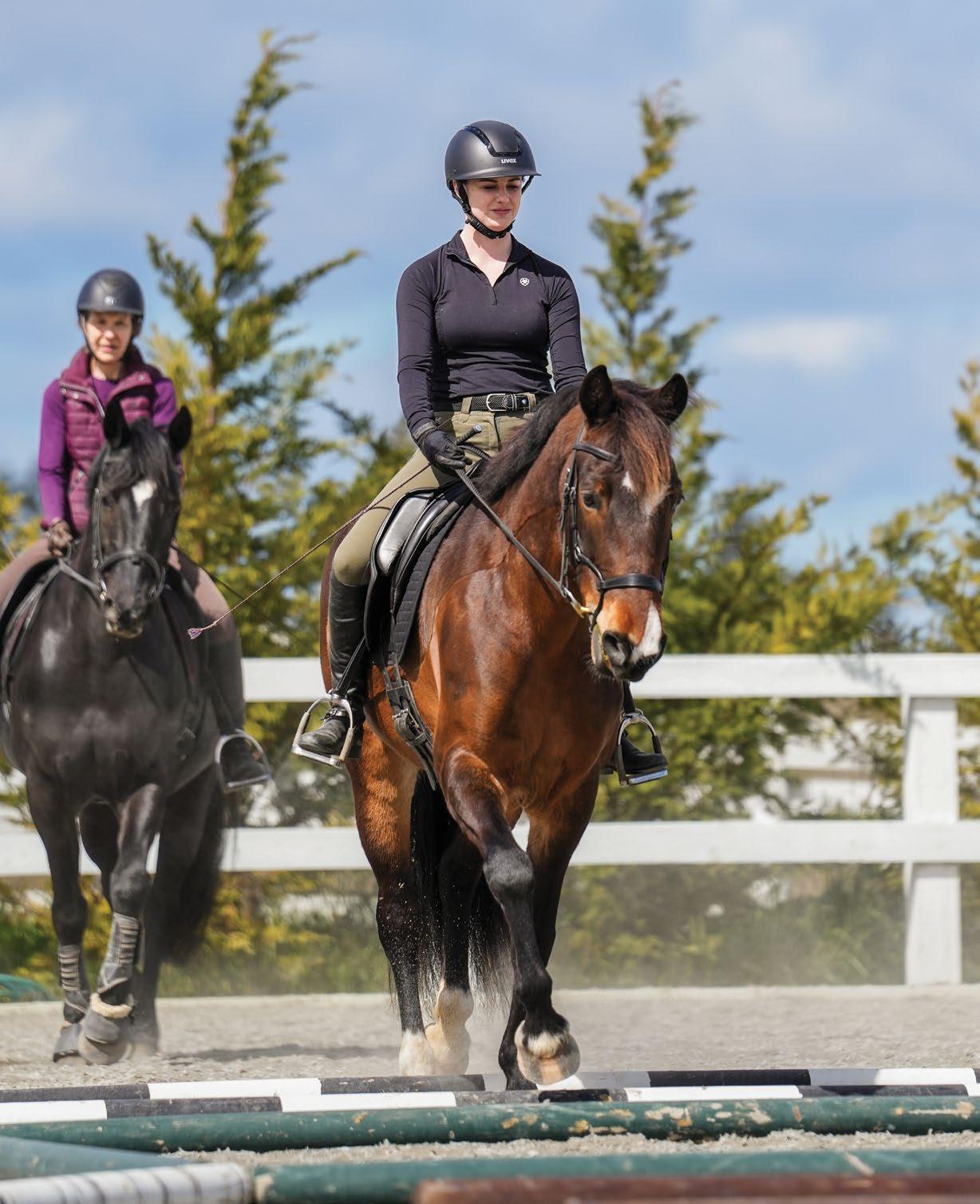
Ground poles and cavaletti are among the most versatile training tools available to riders of all levels. They can benefit every breed of horse in any discipline! Regular pole work builds strength, balance, and confidence, and strengthens the topline, aids in joint articulation, and teaches the horse proprioception (a sense of his own body position, force, and movements). Pole work can be part of ongoing conditioning, cross-training, or physical rehabilitation for a horse. Ingrid Klimke, a well-known German rider in international Eventing and Dressage, advocates for cavaletti work as an indispensable training tool for all horses and riders, because it promotes gymnastic development, strength, rhythm, and suppleness.
Riders can start over poles at the beginner level (D-1) in the walk and trot once they have balance in the saddle and have learned basic steering skills. At this level, it can help riders learn rhythm, to look ahead, and help their coordination. At the D-2, D-3, and C-1 levels, cavaletti work is beneficial for developing feel for the horse’s length of stride, for practicing half halts, and for improving balance. More advanced riders at the C-2 levels and above can use cavaletti exercises to work at various gaits and heights for developing engagement; cadence; free, forward movement; and connection; along with changing stride length.
When starting pole work, always start low and slow, and watch for signs of fatigue in your mount. For young or inexperienced horses, or if you are a beginning rider, you will

ride over ground poles at the walk. You should be comfortable steering, halting, and moving forward under saddle. Raised poles can be introduced at the walk and/or trot once the horse has a basic level of fitness and training. Exercises should remain simple until the horse has improved his balance and straightness. It’s best to avoid frequent raised pole work for very young horses because their joints are still developing.
Ground pole and cavaletti work is a universal crosstraining tool that can benefit each discipline offered in the various Pony Club tracks, and many disciplines beyond that. Dressage, Hunter Seat Equitation/Show Jumping, Eventing, and Western riders may use them slightly differently, but the reasoning is the same: they help improve rhythm, balance, and coordination.
DRESSAGE: Working over poles for Dressage develops rhythm, impulsion, suppleness, and straightness—the building blocks of the training scale. (For more on the training scale, read “Scale Up Your Ride” on page 20.) Walk/trot poles encourage consistent tempo and adjustability. Cavaletti at the trot/canter build cadence, thrust, and engagement of the horse’s hindquarters, which ultimately builds topline strength while testing the horse’s balance. Offset poles, fan patterns, or curved lines improve straightness and suppleness.
HUNTER SEAT EQUITATION/SHOW JUMPING: For Hunter Seat Equitation and Show Jumping, trot/canter poles prepare the horse and rider for jump courses by helping them build confidence in seeing distances and maintaining rhythm between fences. It develops stride length control, balance, and
the horse’s adjustability over fences while improving the rider’s “eye” for approaching a fence. Gymnastic grids with poles teach horses to stay straight and riders to maintain their position. Adding cavaletti exercises to your weekly routine can encourage a correct bascule (arc over the jump) without over-jumping your horse (having him jump too big and/or too much).
In his teachings, author, clinician, and equestrian Denny Emerson is also a fan of using poles. “There are ways to develop your feel for the ‘right’ canter, one which combines enough impulsion and enough balance, neither one overwhelming the other, that don’t pound on your horse by making him jump, jump, jump,” he said. “One way is by placing poles on the ground all over the place and ride to the poles, seeing whether you can adjust the stride to nail good distances, then repeat and repeat. You will develop two things, your eye for a distance and your feel for a better canter.”
EVENTING: For Eventing, the benefits stated above for Dressage and Hunter Seat Equitation also apply. To improve an event horse’s cross-country skills, pole work with cavaletti mimic the uneven terrain of a cross-country course, encouraging quick footwork and strengthening the horse’s joints and ligaments. Poles also reinforce multi-discipline readiness, preparing the horse for the challenges of all three phases of Eventing.
WESTERN: For Western riding, poles can prepare the horse for performance patterns by teaching rhythm, body control, and accuracy in foot placement. Walking/jogging over poles builds cadence for western pleasure or ranch riding. Cavaletti used in trail classes simulate obstacles and improve the horse’s care in
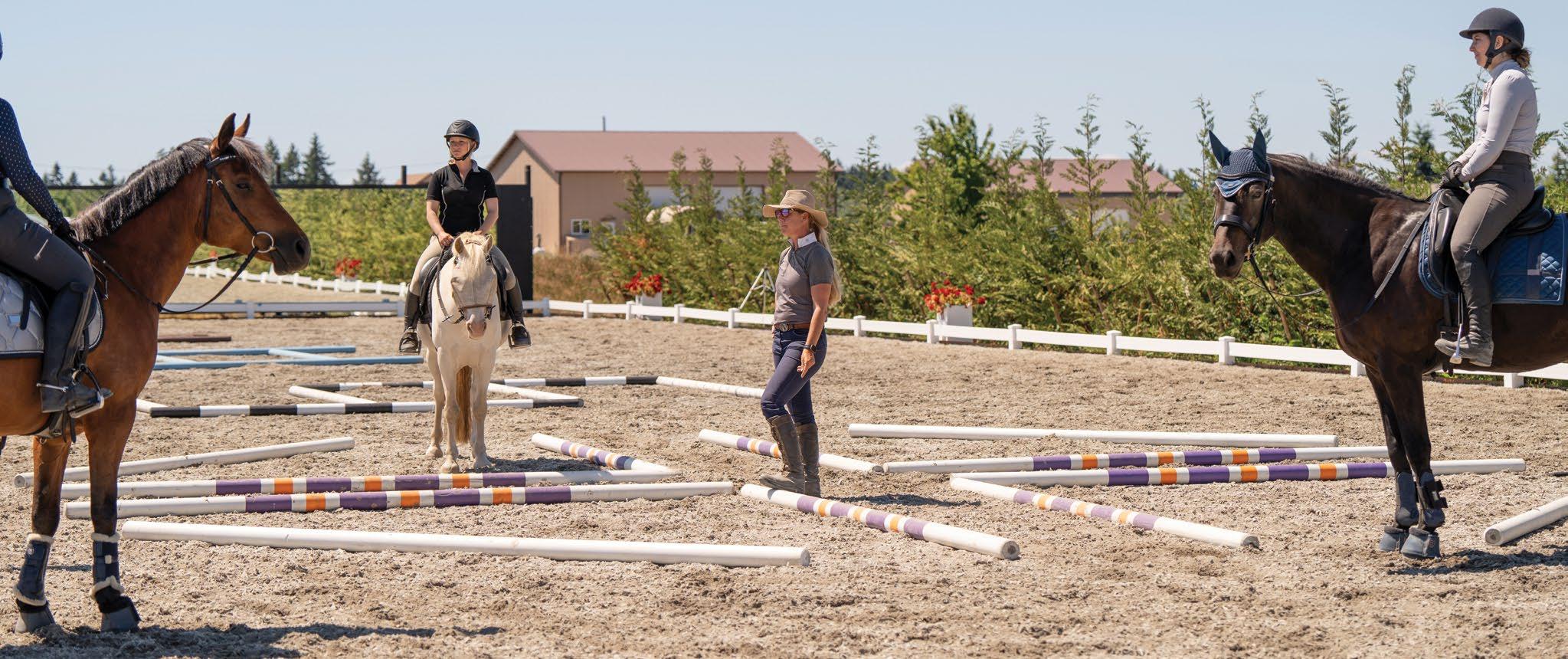
We all know how important it is to keep lessons engaging and interesting for both riders and horses, including school horses who may be doing the same thing day in and day out. Pole work, which works for all disciplines and at every level, can fit into any program and does the following for your students:
Skill Progression: Provides a natural way to teach rhythm, steering, balance, and coordination before introducing more advanced movements or jumps.
Low-Impact Alternative: Lets riders practice adjustability, distances, and “the feel of the right canter” without over-jumping horses.
Confidence Builder: Simple, structured challenges help green horses and new riders gain confidence without overwhelming them.
Engages Riders: Fun, interactive exercises that make mounted lessons dynamic and memorable.
Easy Setup: Requires only a few poles to create dozens of exercises, which are adaptable indoors or outdoors.
—Christina Headley

where he places his feet. Loping over poles develops lead control, straightness, and adjustability. By incorporating poles into your Western horse’s training program, you can improve your horse’s balance, responsiveness, and precision in gaited maneuvers.
Riders in all four USPC discipline certification tracks will find common benefits in these four areas:
Rhythm and tempo control, Balance and straightness, Strength and proprioception of the horse, and Rider position, timing, and feel.
Ground pole and cavaletti exercises are a useful “bridge” tool in Pony Club—they let a rider see and feel how flatwork translates into jumping, obstacles, and advanced maneuvers in any discipline.
Ground poles and cavaletti are like gym equipment for the horse—they build strength, coordination, and awareness in ways that plain flatwork alone can’t always do. For jumping, polework can help the horse and rider practice the fundamentals without the wear and tear on a horse’s joints and ligaments from over-jumping.
Working over ground poles and cavaletti provides horses with a wide range of physical and mental benefits while adding variety to training routines. Pole and cavaletti work strengthen the horse’s muscles by engaging the core, hindquarters, and topline. As the horse lifts his legs and back over poles, he learns to use his body correctly rather than hollowing out his back.
FACEBOOK: /USPonyClubs
INSTAGRAM: @UnitedStatesPonyClubs
YOUTUBE: /UnitedStatesPonyClubs
TIK TOK: @UnitedStatesPonyClubs
PINTEREST: /USPonyClubs
LINKEDIN: /company/ponyclub
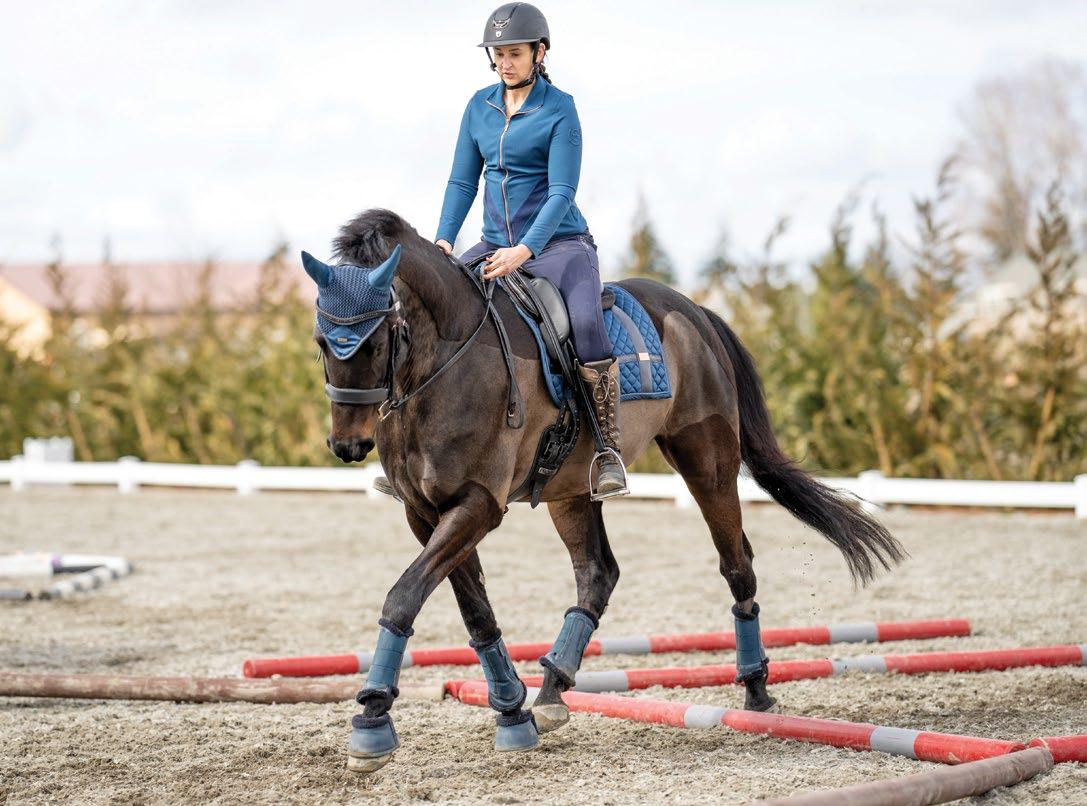
Ground pole and cavaletti exercises are like the horse’s version of gym equipment—they build strength, coordination, and awareness in ways that plain flatwork alone can’t always do.
This work also improves balance and coordination as the horse becomes more aware of where his feet are and learns to distribute his weight evenly across all four legs. Another advantage is increased joint mobility and flexibility. Repeatedly stepping over poles helps to expand the range of motion in the shoulders, hips, and hocks while keeping the horse’s body loose and helping to prevent stiffness.

3 cavaletti and 6 poles
This is an excellent introduction to cavaletti work, and this pattern has many different options to choose from. You can walk or trot around the perimeter of the square while focusing on balance and bend or go straight down the middle of the square, working on tempo and straightness.
This is a fun exercise that requires a little more precision with a lot of variety. You will want to really focus on even footfalls over the poles with this one.
Route 1
Route 2
This is an excellent way to work your horse through various routes using the pole setup. One of Headley’s favorite ways to use this is doing three- and four-loop serpentines, while working on balanced turns and straight lines.
Pole work also has a positive effect on the quality of the gaits: walk and trot poles encourage a steady rhythm and clearer, more active steps while cavaletti at the trot or canter improve cadence, elasticity, and suspension. This type of exercise also supports overall conditioning by building cardiovascular fitness in a lowimpact way and prepares horses for more demanding work.
When setting up your poles, you will want to measure the space between the edges of the poles. General recommendations for pole spacing based on gait are:
Walk: 2.5 feet apart
Trot: 4 feet apart
Canter: 9 feet apart
Beyond the physical benefits, pole work is also valuable for the horse’s mind. It requires focus and attentiveness since horses must watch their feet and adjust accordingly, which also fosters connection to the rider’s aids. Navigating poles builds confidence, starting with simple patterns and gradually preparing horses to handle more complex challenges.
Pole and cavaletti exercises also help break the monotony of routine schooling by keeping training sessions engaging and reducing the risk of sourness or boredom. Many horses find comfort in the regular rhythm of pole work, which can encourage relaxation and a positive mental state.
Suitable for a wide range of riding goals, this powerful training tool offers benefits that reach far beyond the arena.

By using a training flowchart, and by understanding each concept, riders can become more effective, creating a horse that is comfortable while improving his athleticism and soundness.
By Jennette Scanlon, H-A, A Dressage; USDF Certified Instructor/Trainer
Throughout our history with horses, people have always wanted the same thing: that horses be a pleasure to ride and that they stay as sound as possible. Before the days of apps and YouTube, riders learned by observation. Over time, this knowledge was organized into a systematic “flowchart.” Consisting of six elements—rhythm, suppleness, contact, impulsion, straightness, and collection—it provides the framework for consistent training and allows riders to troubleshoot problems with each step building upon the previous one.
Horses naturally balance on their front legs, using their necks for balance and minimizing muscle use to conserve energy. While efficient for the horse, this doesn’t provide a comfortable seat for the rider, and the repetitive concussion doesn’t promote long-term soundness. Therefore, we must begin by changing how the horse moves, taking the weight from the front legs to the hind legs, to create as close to a level balance as possible.
As a horse’s hind legs step under his body—toward the midline of the belly and girth—the fetlock, hock, stifle, and hip flex, transitioning the weight from the front end to the hind legs, creating a more natural, level balance. From this more level balance, the horse produces a consistent and steady footfall. The walk is a four-beat rhythm, the trot a two-beat rhythm, and the canter a three-beat rhythm. The flowchart describes this concept as rhythm
In addition, the pelvis rotates, allowing the hind leg to bend, reach forward under the body, and to carry weight in order to maintain balance. This weight-bearing movement is engagement.
Close your eyes and imagine the trot. The diagonal pairs of legs move in a two-beat rhythm. What if the muscles didn’t synchronize or didn’t contract or relax in the correct timing of the footfalls? The rhythm would be interrupted. As the footfalls are compromised, the horse begins to panic, creating tension and worry! What causes this? Remember the pelvis moving with the hind legs and the two muscle groups? The second group of stretch muscles, the topline (which includes the longissimus dorsi and spinalis dorsi muscles), plays a very large role. As the horse stretches his neck, lifts his ribcage, and engages the back muscles, it allows the pelvis to rotate backwards. The rotation of the pelvis brings the hind legs further underneath the body, causing them to bend and carry more weight, creating a stretch through the back.
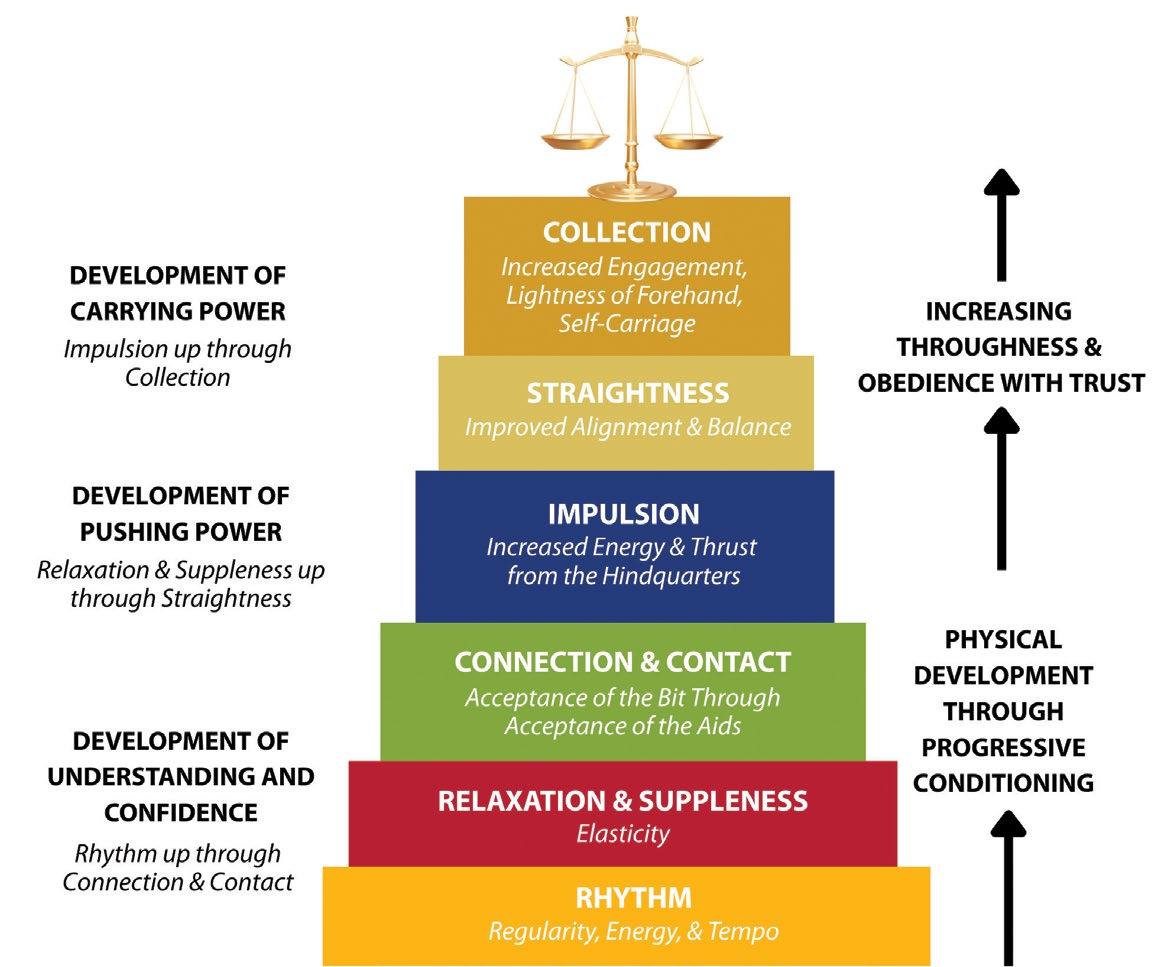
Now, picture a rider that isn’t quite balanced or a saddle that doesn’t fit well. To avoid pain or discomfort, the horse will instead use his body in a more guarded, tight way, which then restricts pelvic mobility. This then affects the hind limb footfall, which eventually impedes the ability to balance. It’s a snowball effect. So, the horse must be able to mentally and physically contract, relax, and stretch muscles through each step he takes. This concept is summed up using the word suppleness
There are two main muscle groups involved: the “mobility muscles” of the legs and the “stretch muscles” over the spine. The mobility muscles contract and relax, allow the foot to bear weight, and then pick up the foot and extend it forward so it can land again.
The horse’s energy begins in the hindquarters, which push the energy over the back and neck, and into the rider’s hands. The bit creates an “end point” for the energy involved in the stretch muscles of the neck. The rider’s hands receive this energy through the reins, contain

The withers are being used as the center point from which the back and neck stretch from, creating a pathway over the topline for energy to pass through.

it, and send it back to the horse’s hind legs. To create this continuous pathway of energy through the topline, a few key factors need to come together.
First, consider the horse’s desire to carry weight on the hind legs and his ability to meet the rider’s hands consistently and quietly. Secondly, consider the rider’s ability to have soft hands that are used independently from the rest of their body, offering a consistent, gentle contact on the bit through steady, equal pressure on the horse’s tongue—not pulling harder on one rein or the horse feeling the contact come and go. Once the rider can develop that steady contact, the horse begins to seek this and relaxes his neck, drawing it out and forward. This is referred to as connection
As the hind hoof steps under the horse, he needs to release the hind leg in order to take the next step. The release of the hind leg acts like an uncoiling spring, pushing off the ground to continue the rhythm of footfalls. This release of energy “flutters” through the stretchy muscles of the topline into a soft, elastic connection of the rider’s hands. This energy release is called impulsion Impulsion (energy) is only as strong as the horse’s hind limb coil. The stronger the hind leg, the more energy is conducted. This is referred to as throughness. Adding more energy through the horse, the rider should focus on the placement of the hind foot toward the girth. Keeping the balance over the hind legs and joints, the hind leg should take more active (shorter) steps under the body.
When a horse braces himself, through stiffer joints and muscles, he widens his stance. This wider stance prevents him from being balanced and supple. A horse that’s supple and bends correctly through his body will have a more narrow hind-leg stance. Imagine a wrestler with a wide stance. By pushing as hard as you can, it would still be difficult to move him or influence his balance! Now imagine a tight rope walker who has a narrow stance. How does he stabilize himself? By bending joints, lowering himself, and using a balance bar or his arms for stability. Imagine how easily our balance and movement could influence, or stabilize, the horse’s balance and movement. The rider’s vertical balance would be the stabilizer.
By becoming stronger, both hind legs work consistently and evenly in a more narrow stance under the horse’s body. This strengthens the lateral (side to side) balance, creating a shorter, active, and more powerful step. With this ability to carry the power and balance through the hind limb, pelvis, and back, the front end of the horse becomes freer. This freedom allows for greater ease of movement and is easier to ride. This concept is referred to as straightness
If there is a problem with one concept, we can now see how it would influence and affect the others. It is a system that checks itself. This group of ideas guides a rider on how to develop a rideable, sound horse. Anytime we have a group of elements,

we can say that we have a collection! Our collection consists of these main topics that can be rearranged or manipulated, but the topics themselves remain the same. The horse’s body becomes more supple. The gaits become more expressive. The rider becomes more effective because the horse can listen and respond to lighter aids, allowing him to be a pleasure to ride.
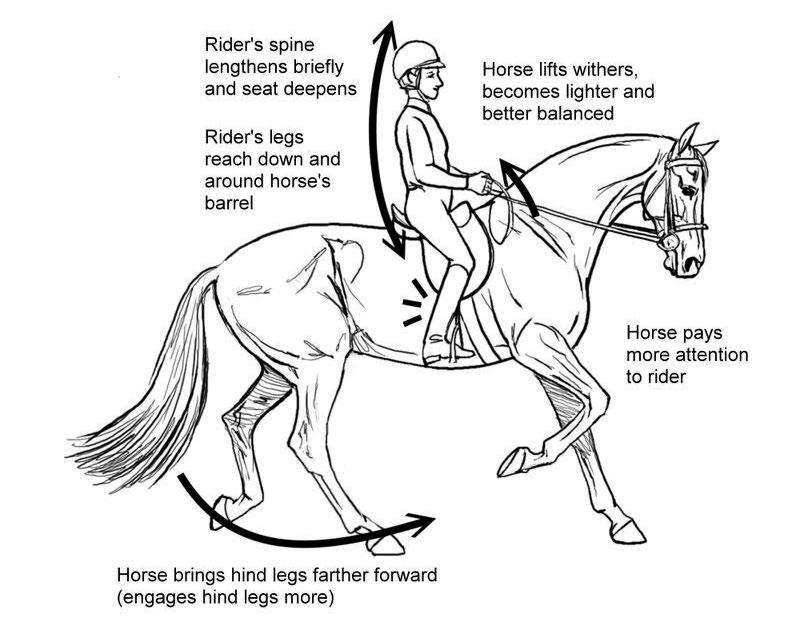
Engagement is the bending of the hip, stifle, and hock joints as the hind legs bear the weight of the horse. This allows the horse to store energy, which is released as impulsion as the hind legs push off the ground. It is greatly influenced by the horse shifting his balance to the rear to load the hind legs.

The flowchart concepts builds the horse’s strength so he can carry himself and a rider in balance, and by keeping a horse working evenly (straight), we keep him sound.
Today, we refer to this collection of concepts as the “Training Scale.” I encourage all riders to become curious about where this chart of training can take both you and your horse!
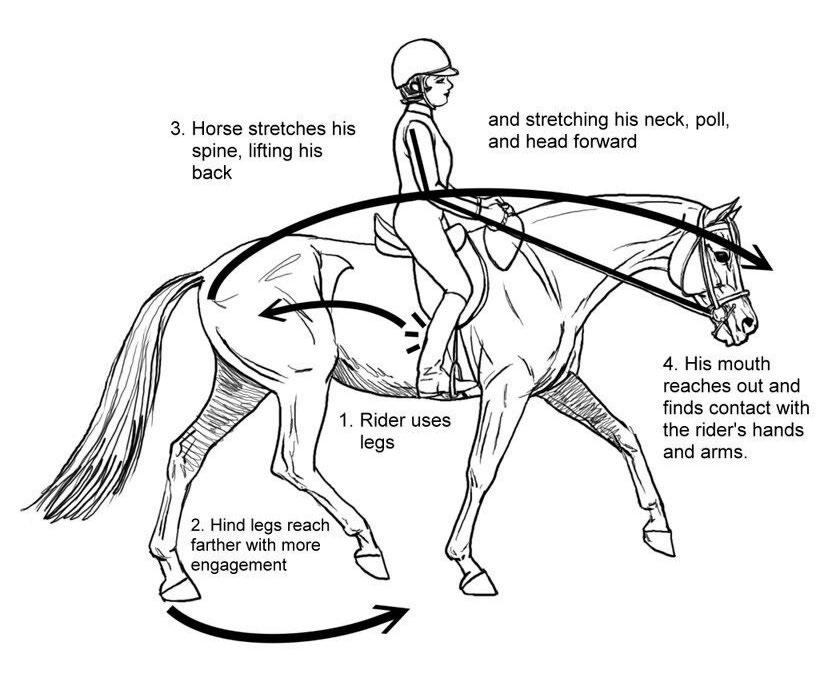
A connected horse should develop throughness. This means that the aids of the rider go through the horse without meeting stiffness or resistance, so that the rein aids affect the hind legs, and the energy from the hind legs goes through the topline into the rider's contact.










By Liv Gude,
Amuddy horse is a double-sided coin. On one side is the happy, healthy horse rolling with delight in the pasture. On the other, there’s our riding partner who needs to be clean beneath tack and leg protection. Finding the balance between letting horses enjoy their muddy moments and keeping their skin healthy for riding and exercise is part of every horse owner’s challenge.
The easiest way to groom mud from your horse is to either rinse him clean or wait for him to dry and then groom the mud off. Each method is timeconsuming unless you are lucky enough to find that your muddy horse is already crusty and dry, allowing you to groom right away. It will still take some serious effort and time though.
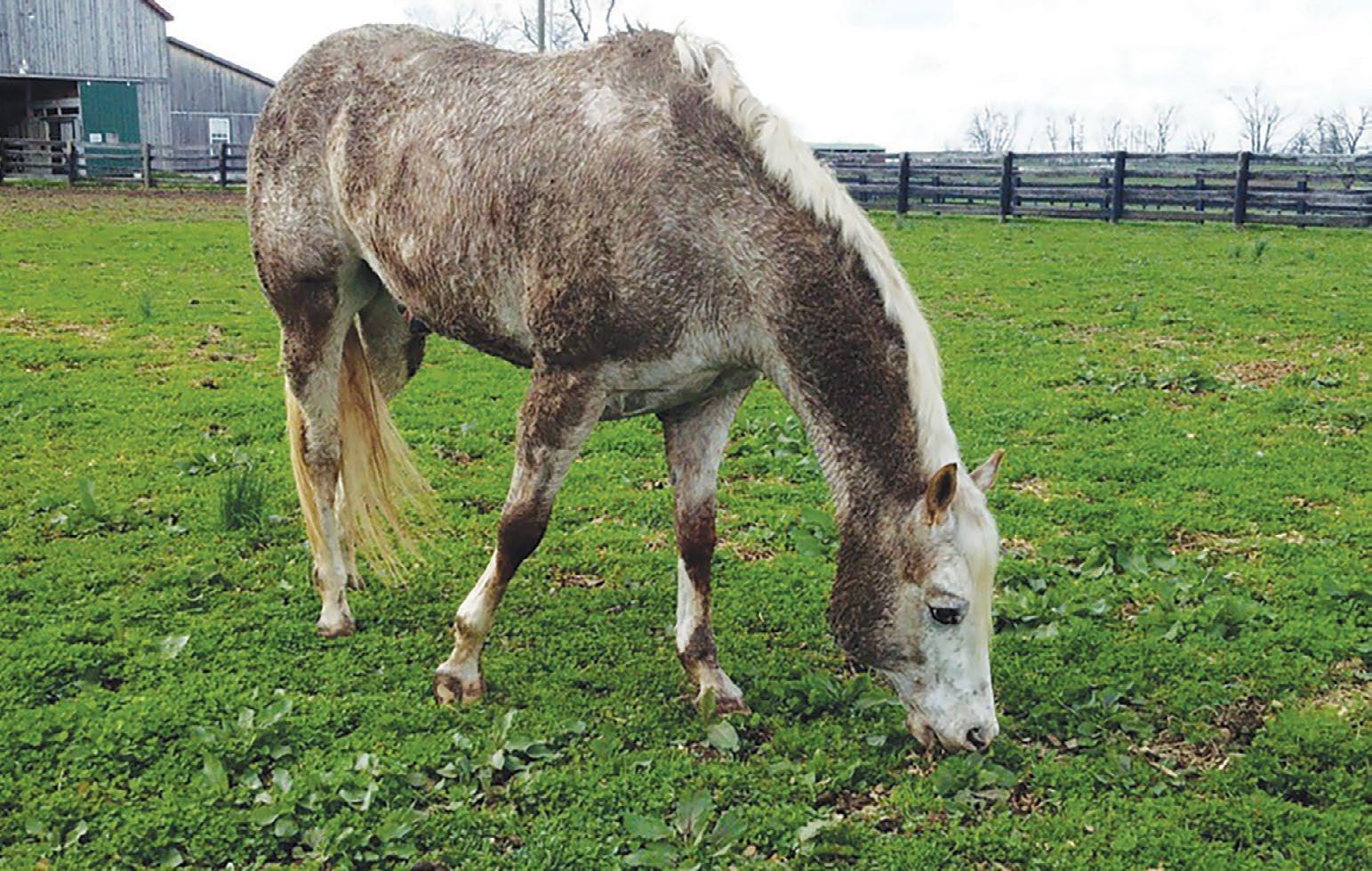
In warmer temperatures, a quick rinse is fast and easy. If your horse has a summer coat or is clipped, then drying time is minimal. In colder weather, rinsing is usually not an option, but you don’t want to brush or curry a wet and muddy horse. Your grooming efforts won’t lift any dirt, and your grooming tools will become filthy instead as you will only end up smearing the mud around.
With that said, when your horse is dry, you can groom as usual. Here are some tips to make that process easier for everyone. Remove large chunks of dried mud with a stiffer curry comb. When using stiff grooming tools, avoid bony areas, such as hips and shoulders, as well as sensitive areas, like the lower legs and face.
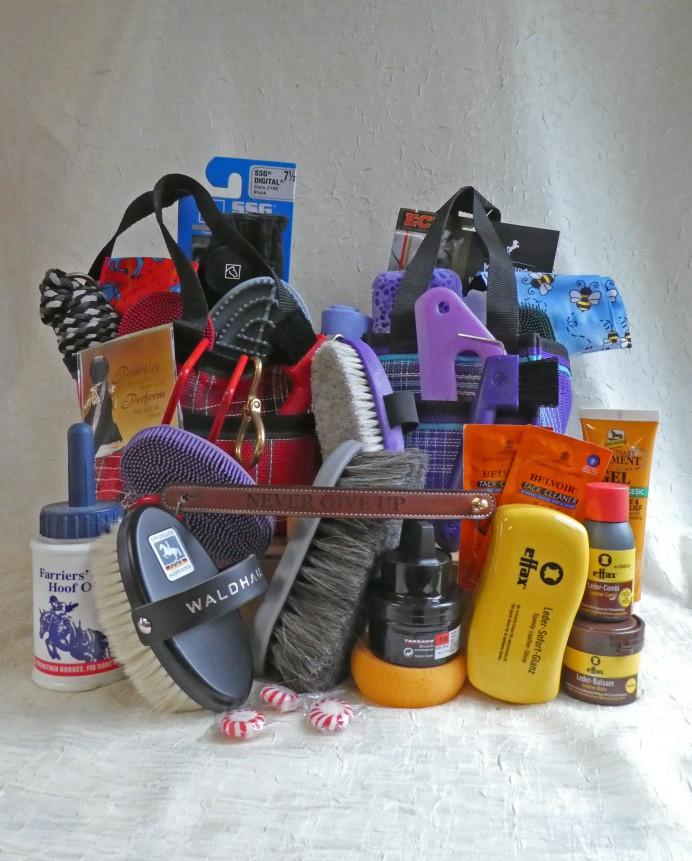
Use a curry comb, curry mitt, or grooming gloves with longer teeth if the mud is deep or the hair coat is longer. You can incorporate a variety of brushes to remove dirt after currying. Flicker brushes with their long, soft bristles are fantastic for removing the bulk of the loosened dirt. Follow with a regular stiff brush or dandy brush (a brush with stiffer, shorter bristles) to groom away the rest of the gunk. You’ll need to experiment with the density and length of bristles to find the brushes that suit your horse’s coat the best.
If you have a horse vacuum, these are especially helpful to lift off dried mud after currying and brushing with your collection of stiffer brushes.
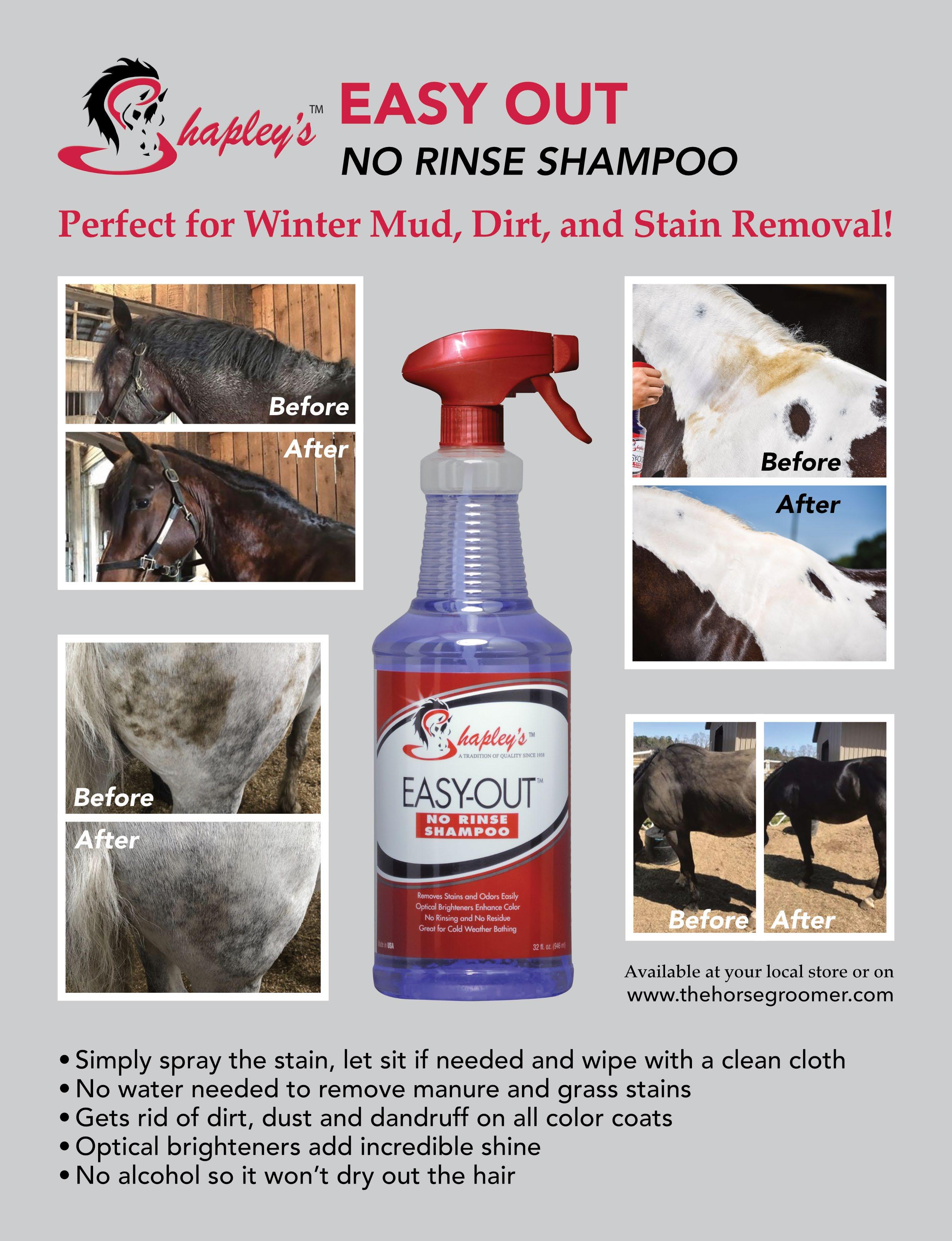
If static electricity is an issue as you groom, it can cause the leftover fine dust to stick to the coat. Spray your horse with a norinse shampoo and then brush again. The spray shampoo breaks the static cling and helps your brushes remove the remaining dust.

You can also spray your brushes with no-rinse shampoo to minimize the static.
Sometimes, the mud simply won’t leave your horse. Don’t worry—you have options!
In warm weather, a nice bath with a mild shampoo will deep clean your horse. Look for products that boost shine, as these often have stain-repelling properties and leave the hair sleek. Slippery hair has a harder time holding onto mud.
In cold weather when bathing is not an option, hot towel your horse instead (see link for instructions above). This method of bathing is suitable for all weather conditions, and you can spottreat your horse as needed.
If you are riding or exercising your horse, he needs to be spotless under his saddle pad, bridle, and girth. In addition, if you use boots or leg wraps, then his legs must be super clean underneath. Mud and dirt under tack is uncomfortable, can scrape your horse’s skin, and makes a mess of your horse gear. Mud can also impact the health of your horse’s coat and skin. Microbes living in the soil can trigger skin infections, especially when combined with sweat, friction from tack, and any manure and urine mixed with mud.
Muddy legs create the perfect scenario for mud fever, also

known as scratches, greasy heel, or equine pastern dermatitis. Horses with long, feathered leg hair are even more prone to these conditions.
As you groom, use your fingertips to check deep within the leg hair for sores, scabs, and any swelling that can indicate early signs of a skin infection. Use this same technique to explore the rest of your horse, as other skin troubles, like rain rot, often appear in wet and muddy conditions.
If you suspect a skin infection, consult your veterinarian about the proper course of action. Keep the area clean and dry and consider using clippers to carefully trim the hair. Longer hair traps more mud, making it difficult to apply topical medications.
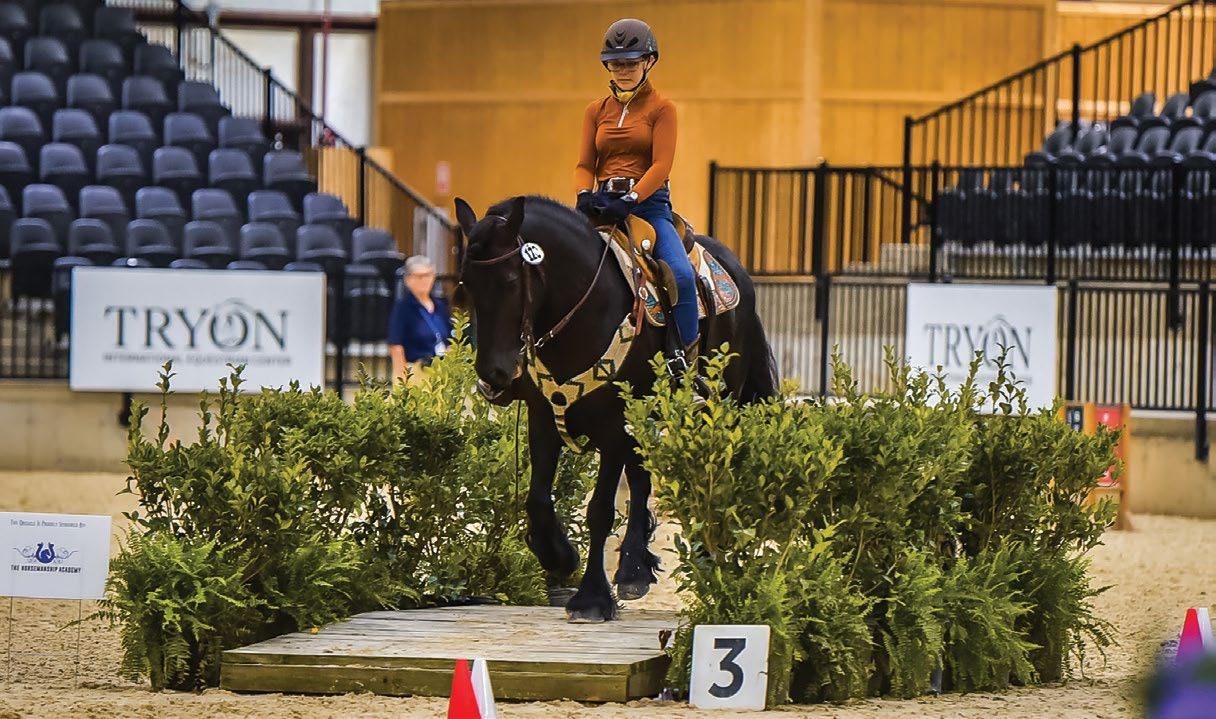
You can try to mud-proof your horse’s environment in a variety of ways, including proper drainage and providing adequate shelter. But despite our best efforts, horses will still manage to find and love mud!
With a few simple horsekeeping techniques, you can help minimize how muddy your horse becomes.
Feed your horse in different areas in his paddock and move the water source around, if possible. Mud accumulates around gates, feeders, and troughs. By mixing up locations, you can minimize the muckiness of those areas.
If possible, rotate pastures and paddocks. This will also minimize muddy areas.




Provide shelter with lots of deep shavings to entice your horse to stand in there instead of in all the puddles.
Use fly sheets and fly boots in the summer, and blankets in the winter. These provide a physical barrier to help keep some of the mud out of your horse’s coat. In the winter, you can use a sheet or lightweight blanket at an appropriate level of warmth for your horse’s coat and the climate conditions. However, when blanketing your horse, remember to check him daily for any issues, such as rubs, skin infections, or dirt that has gotten underneath.
It’s also important to clean your grooming tools regularly. Dirt and mud will transfer back to your horse from dirty brushes and curry combs and undo all the hard work you’re putting into keeping him clean.
Now that you know how to remove mud from your horse’s coat like a pro, you can also be proactive to make mud easier to remove and prevent it from staining the hair.
A natural approach is to encourage oil production in your horse’s haircoat. Horses produce sebum, a natural oil that provides waterproofing, shine, and has antimicrobial properties that help prevent skin infections. A healthy diet and daily curry combing boost sebum production, offering more protection.
You can also help your horse maintain a sleeker coat by supplementing his natural sebum with grooming products. Shineboosting shampoos in summer slick up the coat, while sheen
products give a light layer of slip. Both types of product provide stain protection and make it harder for mud to cling to the hair shaft. You can also incorporate grooming oils into your grooming routine. These products add shine, help prevent stains, and condition the hair.
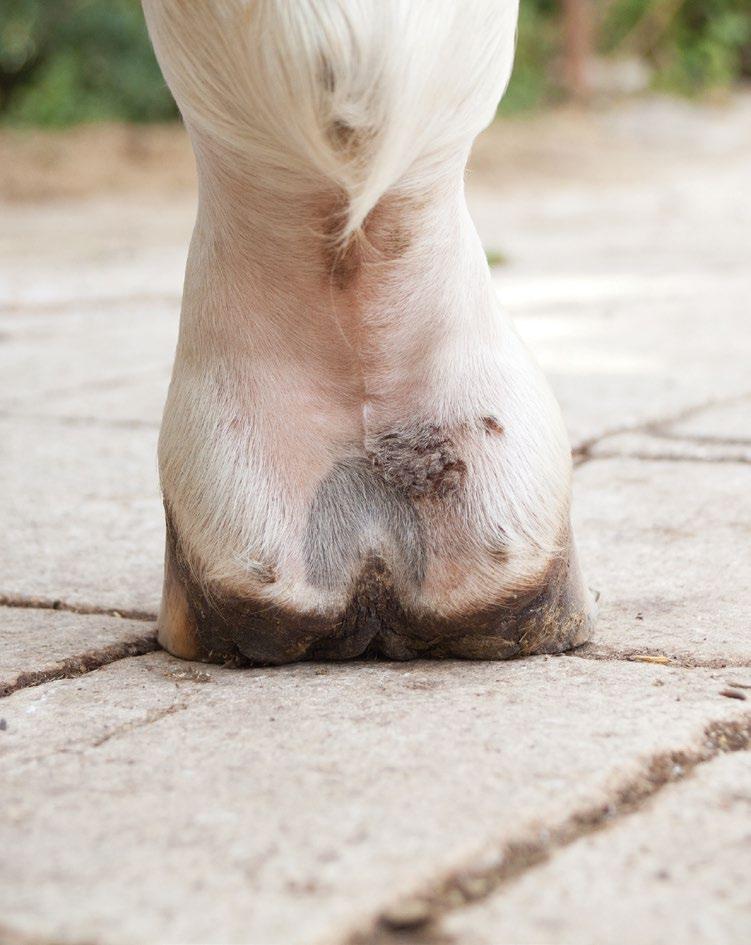

Muddy legs create the perfect scenario for mud fever, also known as scratches, greasy heel, or equine pastern dermatitis (shown here).
Give yourself extra time to groom a muddy horse. Consider that time well spent since you can work on his ground manners and bond while grooming! Grooming the mud away can be daunting, but it’s an essential part of your horse’s health care routine.
Brought to you by:



By Jessica Drexler, PAS, for Triple Crown Nutrition, the Official Feed Sponsor of USPC
Colic. It’s a scary word for horse owners, and unfortunately, it’s heard way too often. In fact, it is listed as the leading cause of death in horses by the American Association of Equine Practitioners.
Colic is defined as abdominal pain in horses and is caused by a variety of issues. Types and causes of colic in horses include: Impaction or Obstruction: Caused by a blockage somewhere in the intestines, such as a buildup of undigested feed or forage
Spasmodic Colic: Due to irregular contractions of the intestinal walls, often triggered by stress, diet changes, gas buildup, or parasites
Strangulation: When entrapment of the intestine, twisting,
intussusception (telescoping of one part back into another), or a growth or tumor obstruct the intestine, it loses blood supply, which can lead to infection and/or death.
Sand Colic: Caused by excessive intake of sand, which irritates the intestinal lining
Other causes include displacements (positional shifts) of the gut, an inflamed colon, tumors, parasite overloads, and more.
You may want to monitor your horse and call your veterinarian if you notice any of the following clinical signs: Looking, biting, or kicking at his stomach,
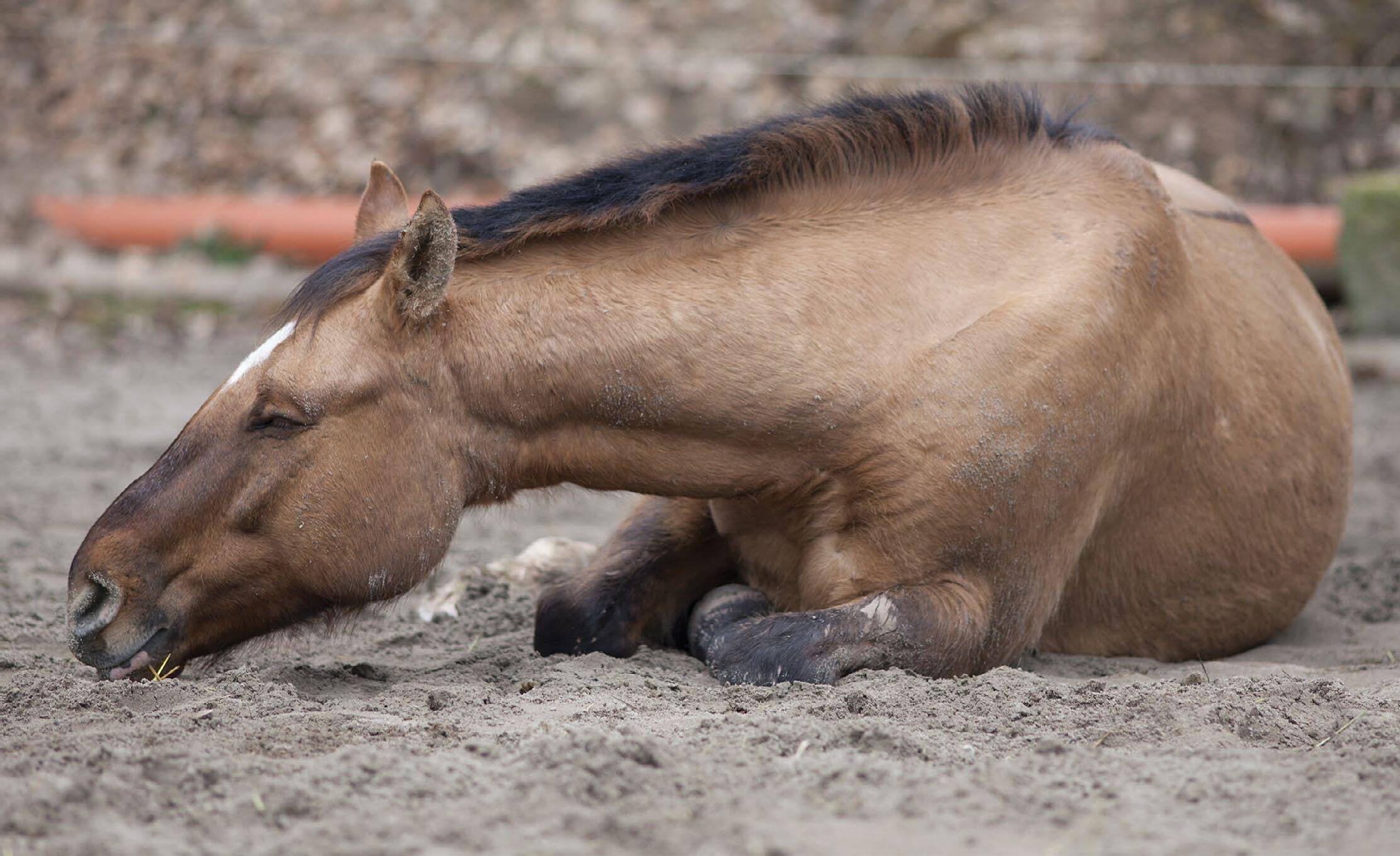

Refusing to eat, Acting “off” or sluggish, Sweating excessively, Getting up and down (restlessness) and excessive rolling, or Changes to normal vital signs, such as an increased respiratory rate or heart rate.
If your horse is displaying signs of colic, contact your vet immediately. Early intervention can prevent colic situations from getting worse or may even save your horse’s life. Working with your vet clinic will help you determine if your horse can be treated medically or if he needs surgery.
Monitor your horse in a safe area and keep him calm. Do not allow him to roll, which can lead to gut twists and displacement. If your horse is not in severe pain or exhausted, you can walk him or stand with him. Do not allow him to eat or drink, but consult with your veterinarian if you can allow him to drink water to stay hydrated. Your vet may ask you to monitor your horse’s vital signs, may ask if he has manure in his stall (no recent feces could indicate a problem), and will advise whether you should administer medications or not. Pain relieving medication can help make your horse more comfortable, but it can also interfere with your vet’s ability to assess and monitor your horse’s pain. Follow your vet’s directions on what you should do until they arrive or until you can get your horse to the clinic.
In addition, are you prepared to trailer your horse to the
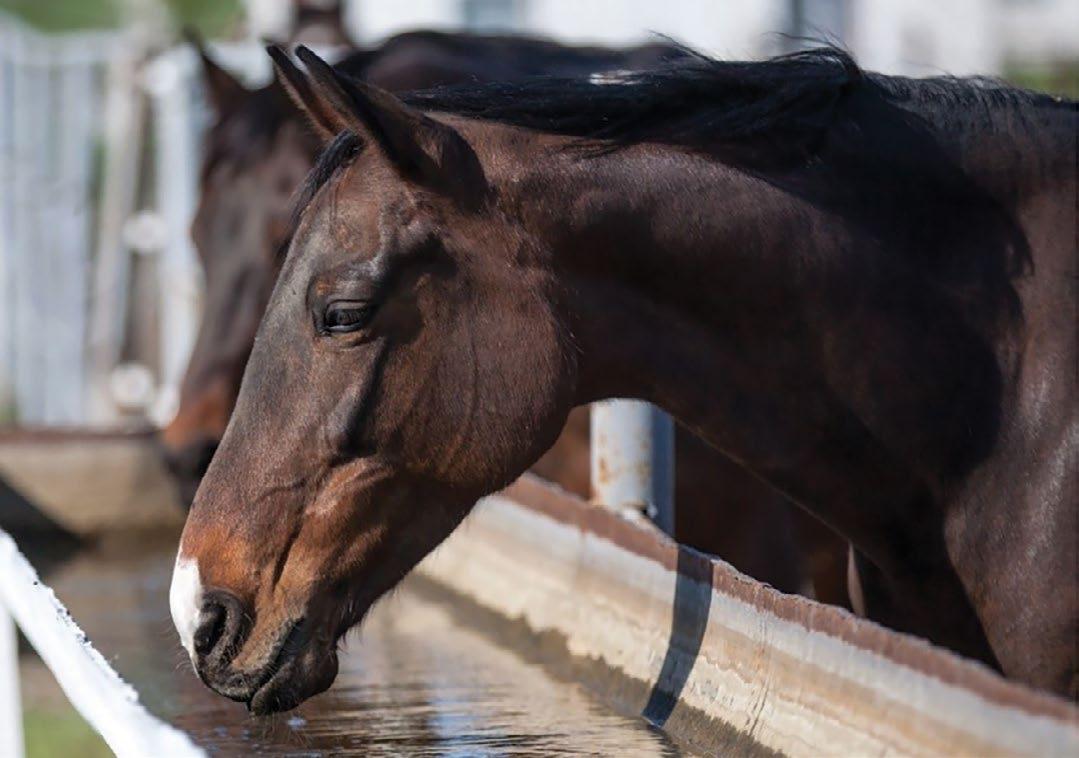
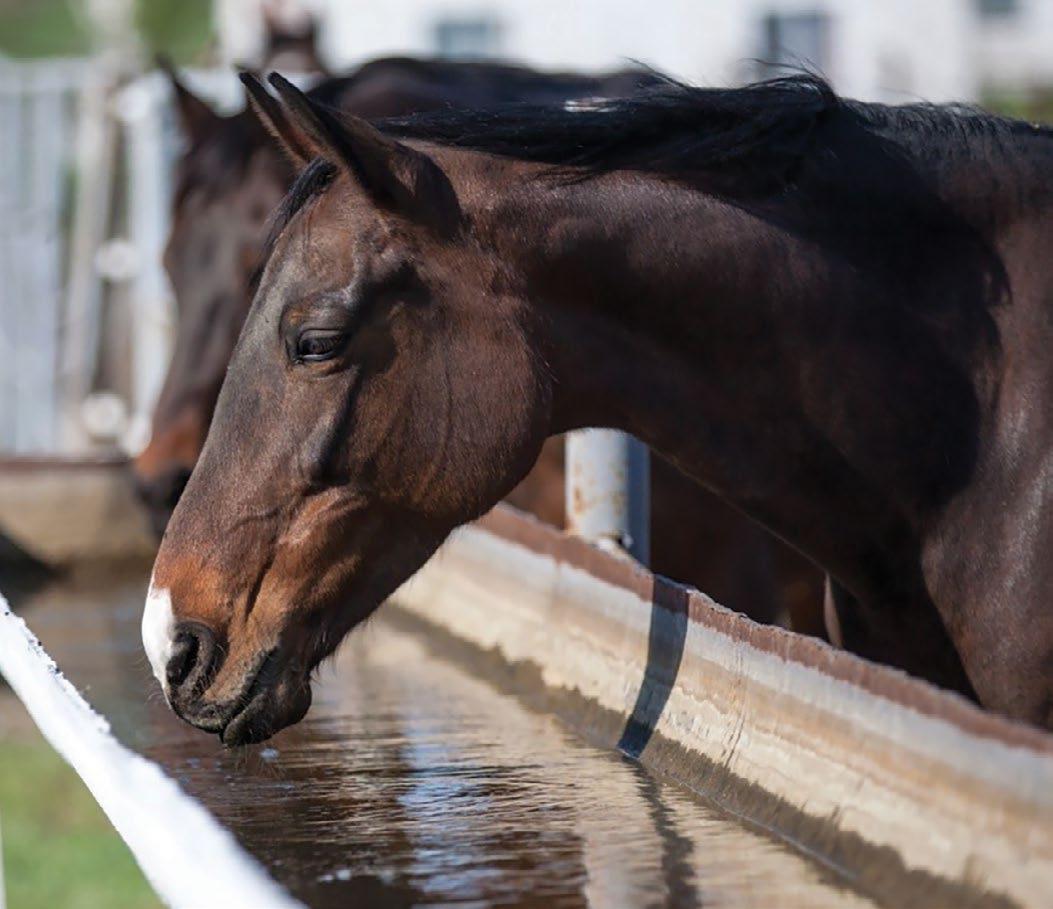
Provide plenty of fresh water to your horse every day to reduce the risk of colic and for his overall health.
clinic, if need be? It’s a good idea to start making plans at the beginning of a colic situation in case it is needed. Oftentimes, quick access to the right medical care can make the difference, so always have a plan you can activate in emergencies.
1. Ensure all horses have access to water.
In larger herds, it is essential to have multiple water sources, especially if there are timid horses in your herd. Clean out tanks
and water buckets often and fill with fresh water. Horses may not drink well if their water source is dirty.
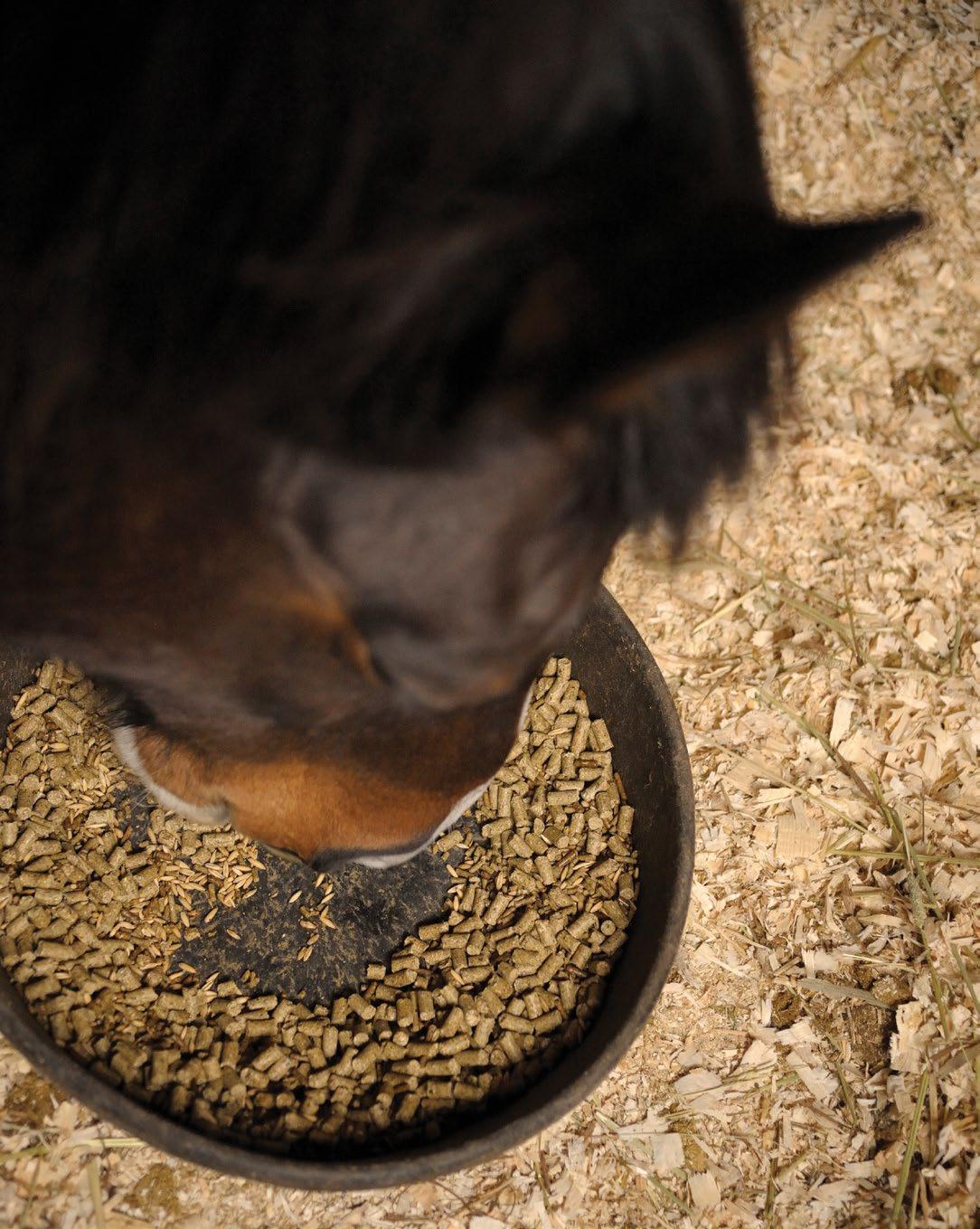
2. Provide free choice salt or add it to your horse’s diet.
Salt increases thirst and helps keep horses drinking. You can provide plain white salt blocks, but check that each horse uses them; otherwise, you can top-dress feed with salt. A good general recommendation is to provide 2 tablespoons of table salt per day to the average 1,100-pound horse. Horses that are working hard or sweating excessively could need as much as 10 tablespoons to replenish the electrolytes they lose in their sweat.
3. Keep a consistent diet and feed smaller meals more often.
We’ve all heard of horses getting colicky because they had a sudden diet change or they “got into the feed room and ate a bunch of grain.” Colic can happen when new foods upset the normal bacteria that lives in your horse’s gut. The gut microbes die off and your horse can quickly become sick. If you are making changes to your horse’s feed, adding a new supplement, or even switching to a different hay type, transition slowly to allow the gut time to adjust. The general recommendation is to slowly add in the new feed/hay to the diet over seven to 14 days.
In addition, horses should not be fed large meals as they have relatively small stomachs, and excess feed can spill into the hindgut or large intestine, upsetting the digestive system and potentially leading to colic and other problems. Larger meals are not digested properly, and can cause a variety of issues,
including colic. Horses are designed to be continuous grazers of forage. Meals involving concentrates (grain) should not exceed 5 pounds per meal. If a horse’s diet requires a larger amount of grain, it should be divided into frequent smaller meals.
4. Don’t neglect health care.
Management of your horse’s overall health is critical for colic prevention. Work closely with your vet to keep up on routine health care. Maintain your horse’s dental health so he can chew his feed well, and make diet changes for horses with poor teeth, as choke and colic can be caused by the buildup of unchewed feed. Heavy parasite burdens can also cause blockages in the gut, leading to an impaction colic, so good parasite control is a must, as is prevention of gastric ulcers. Furthermore, stress management is vital to keep your horse eating and drinking well at home or while traveling. Stress can disrupt the normal movement of the intestines (known as peristalsis) leading to spasms and pain, which is characteristic of spasmodic colic.
5. Try to reduce or eliminate environmental stress.
Sudden weather changes, including storms or extreme changes in temperature, are notorious for causing colic. Adding water to your horse’s feed or hay to give him extra hydration during weather changes is important for gut health.
In the winter, one of the biggest concerns as the weather gets colder is the increased risk of colic. Encouraging plentiful water intake is especially important, because if horses can’t access water and drink regularly, the risk of colic can dramatically increase. Do not change up feeds or do a sudden diet change as this can change the gut microbiome, increasing colic risk.
If you are keeping horses outside in a cold winter climate, invest in an electric tank heater, and ensure the installation is done safely and properly. Take extra precautions so that the water faucet does not freeze. Installing heated water buckets is also essential for stalled horses in unheated barns. Horses do not drink well if water is too cold; 45ºF to 65ºF is recommended.
6. Exercise is essential.
Movement is very beneficial for the horse’s gut health and for normal digestion. Daily exercise could help ward off colic, in addition to helping your horse maintain an ideal body condition and mental well-being. For horses stalled for long periods of time, it’s important to provide daily turnout or exercise.
By prioritizing your horse’s preventative care through consistent routines, access to water, small meals, and exercise; while also maintaining health care and using careful management practices, horse owners can significantly reduce the risk of colic. Regular monitoring of your horse’s behavior and physical condition will help you address any potential issues before they escalate.

Need more help with your horse’s nutrition? Contact a Triple Crown Feed expert at www.triplecrownfeed.com or call 800451-9916 for personalized advice.
Brought to you by:



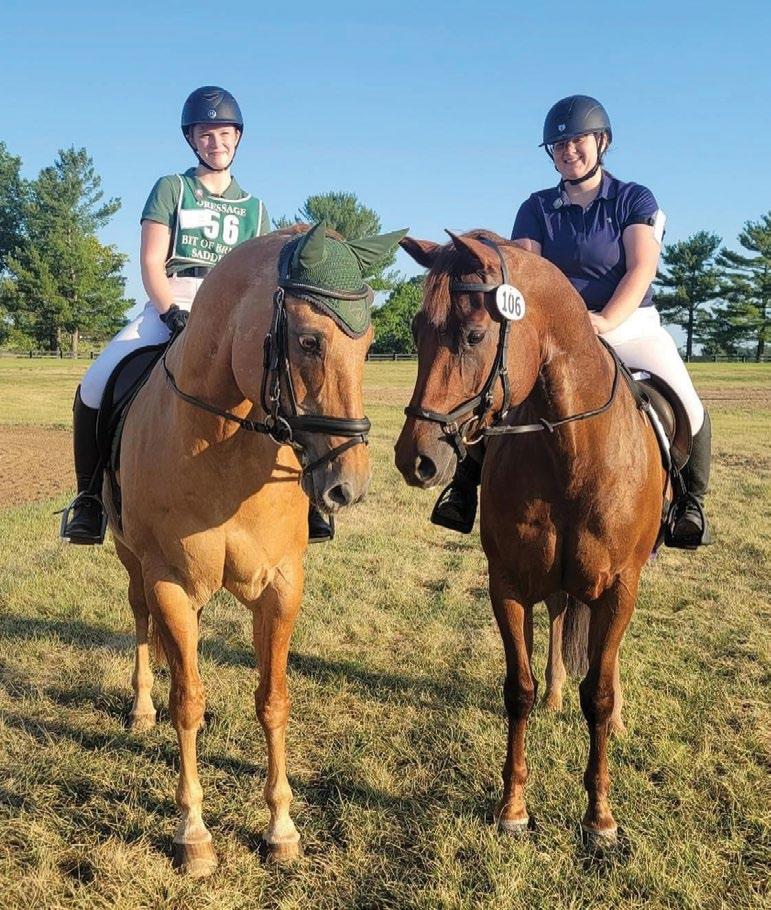
(l-r) Savannah Farrell on Rio and Emma McClung on Lucy riding for Morning Star Equestrian Center Pony Club Riding Center in the Midsouth Region.
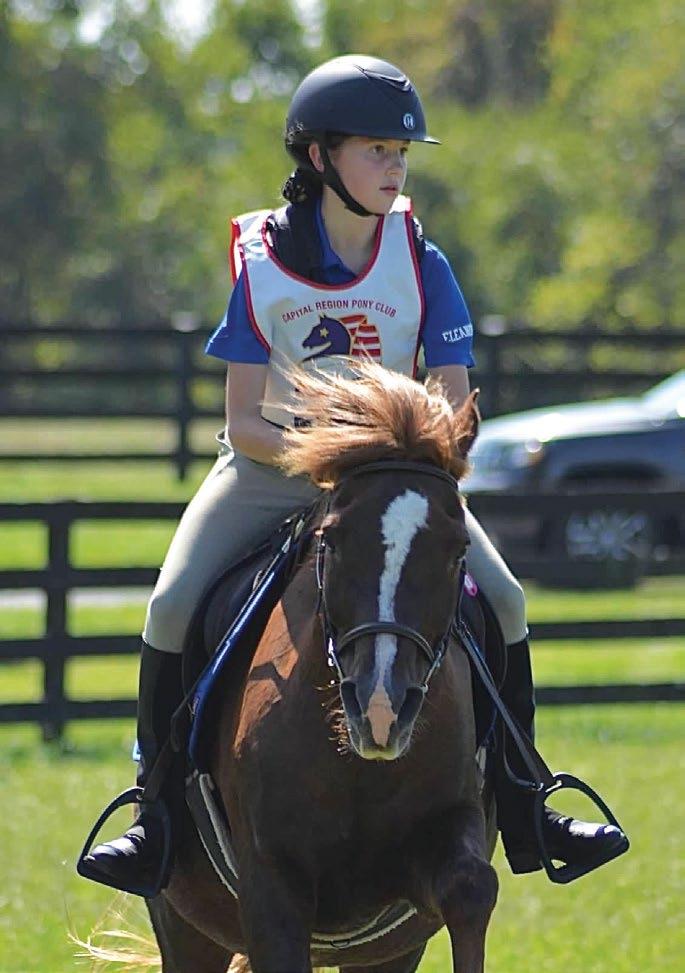
Eleanora Mills, of Talbot Run Pony Club Riding Center in the Capital Region, riding Baloo.
To be included, email a high-resolution image to marketing@ponyclub.org with name, Pony Club or Pony Club Riding Center, and name of the horse.
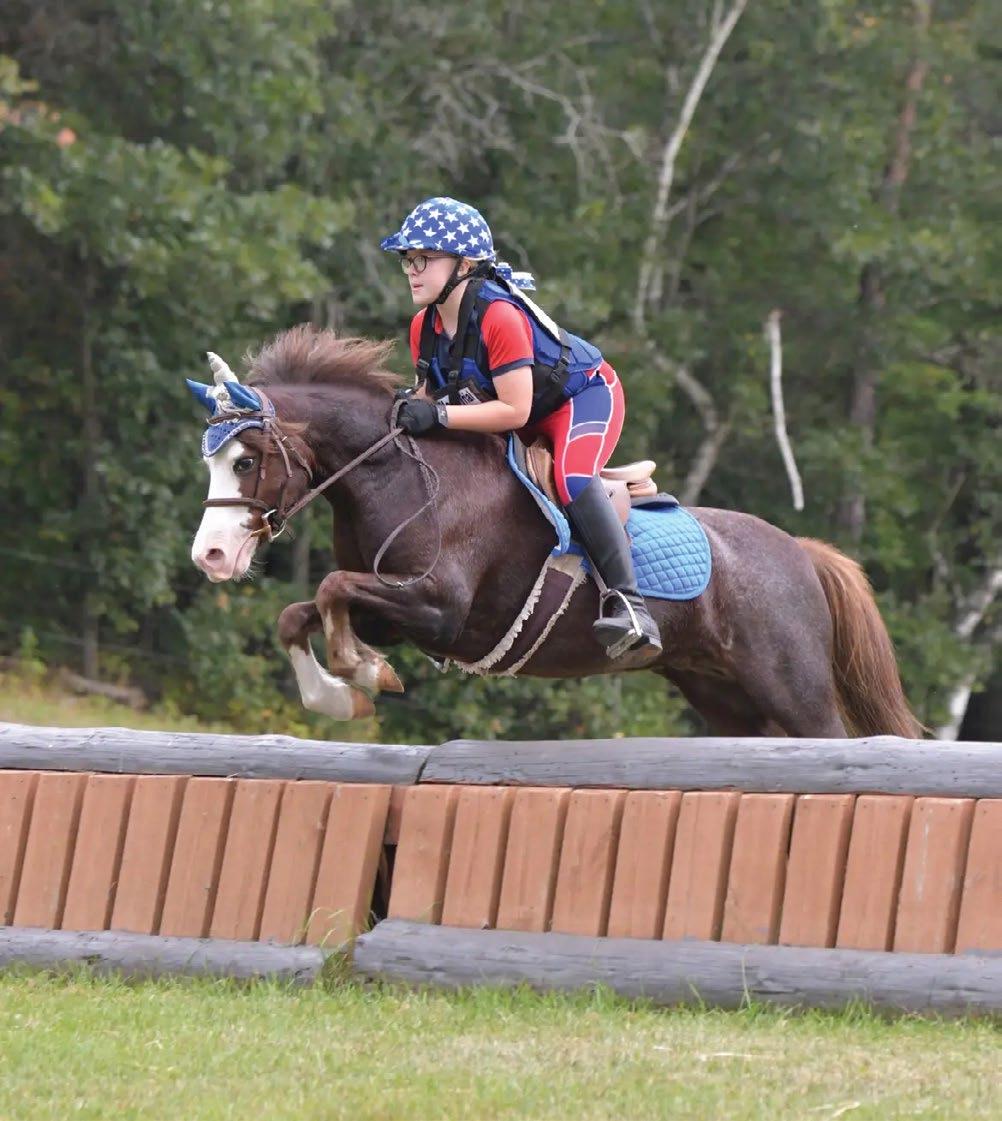
Rachel Strong, of Lake Geneva Equestrian Center Pony Club Riding Center in the North Central Prairie Region, riding Cherubs Dixie.
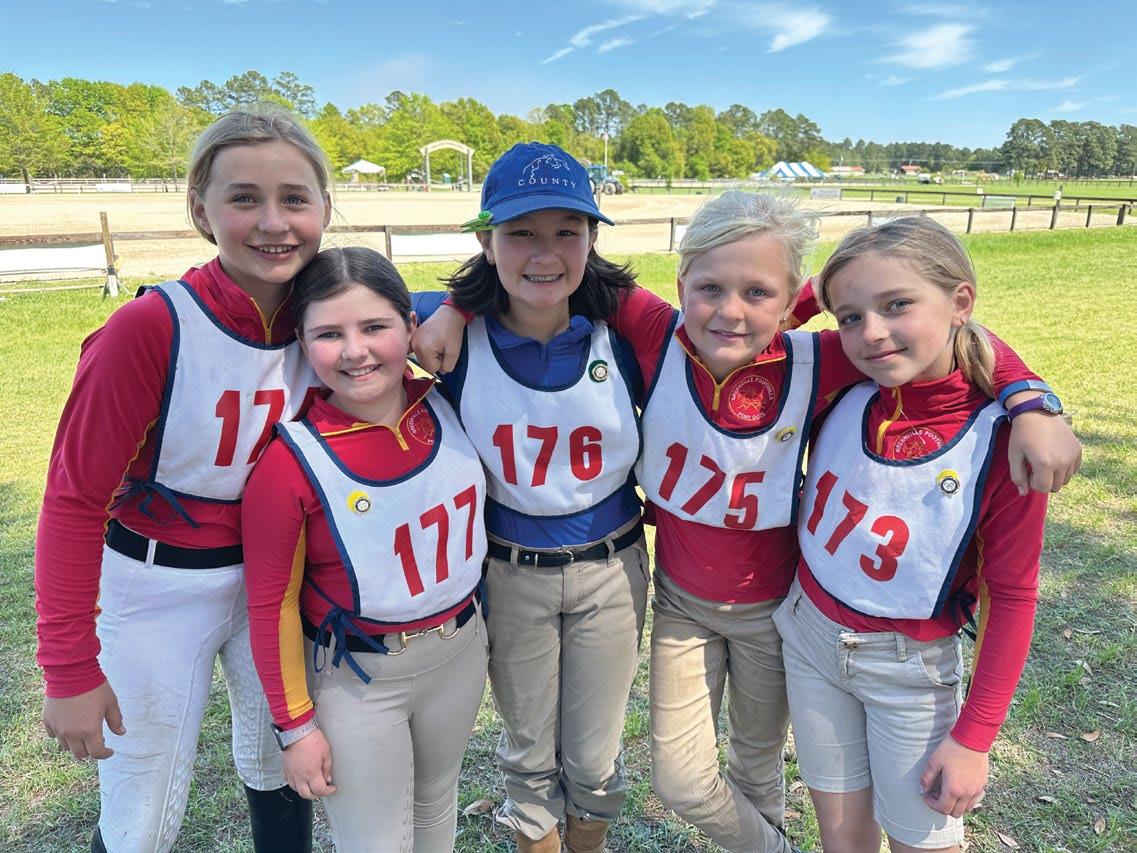
A scramble team from the Longleaf Horse Trials combined with the Carolina Region Eventing Rally: (l-r) Landyn Riddle and Blake Scruggs of Greenville Foothills Pony Club (GFPC), Ella French of Aiken County Pony Club, and Emmalee Anderson and Ellie Riddle of GFPC.
MADE TO MOVE YOU
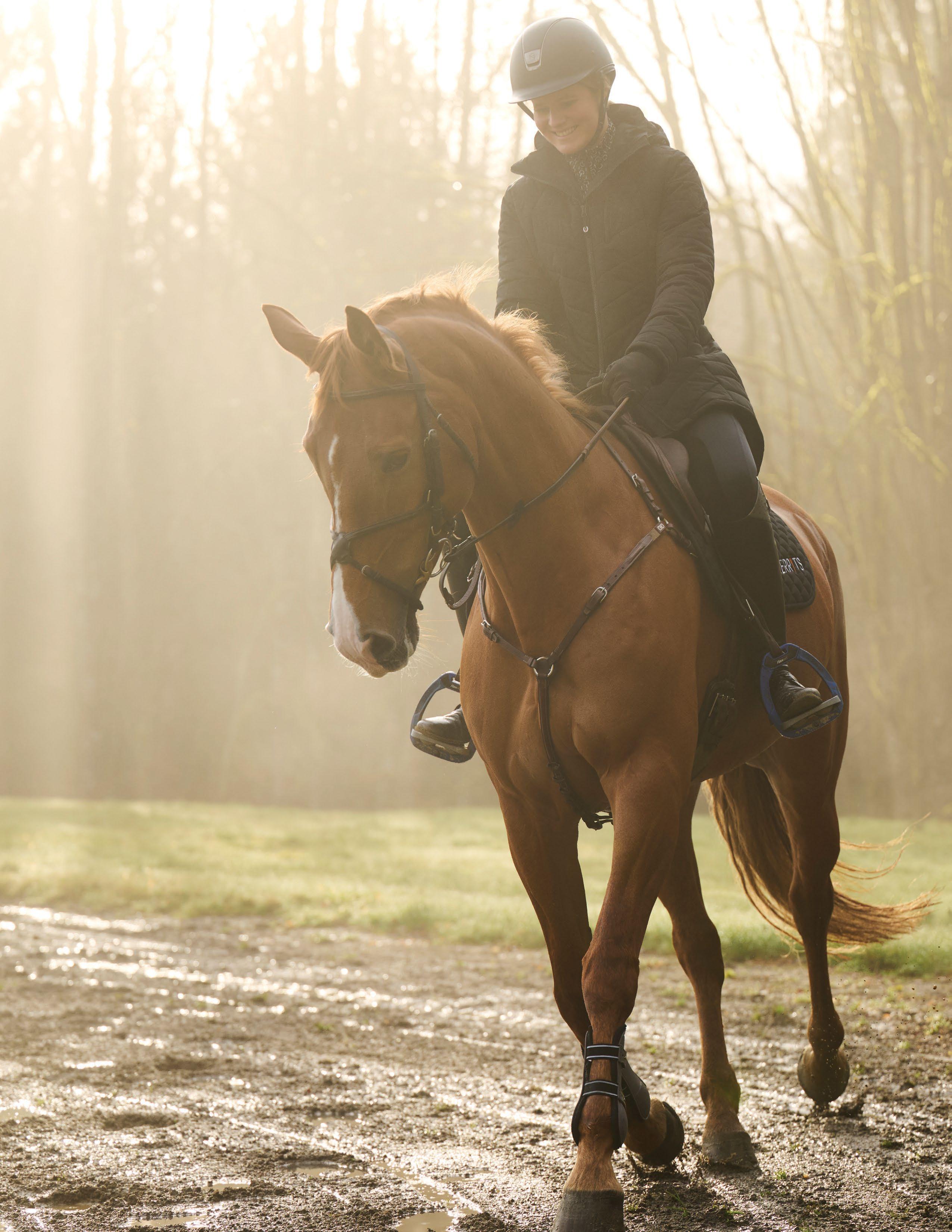
KERRITS IS A PROUD SPONSOR OF THE UNITED STATES PONY CLUBS