“ Passion. Dedication. Excellence. We strive to produce a wellrounded player, with an emphasis on horsemanship & sportsmanship, as well as academics. In the end, I/I returns a valuable member back to your club and the polo-playing community. ”
AMY FRASER, DIRECTOR OF I/I PROGRAMS
WELCOME TO I/I POLO
We are extremely excited to welcome you into the world of Intercollegiate/Interscholastic (I/I) Polo!
This handbook is provided by the United States Polo Association (USPA) to clubs to share with their new students and parents. The USPA is the governing body for the sport of polo in the United States and not only establishes the rules to be followed, but provides resources and funding to support clubs and players. The I/I Program focuses on creating passionate and dedicated polo players both on and off the field. While your local club and coach will be your first and greatest connection to the sport, we want to ensure that you understand the programs and resources available through the USPA as well. I/I players are exposed to a variety of opportunities, ranging from earning a varsity letter, to international tournament play, to equine education & more. A staff of full time employees at the USPA manages these programs, as well as structuring tournament play and considering innovative approaches for engaging players throughout their scholastic careers and beyond.
About I/I Polo
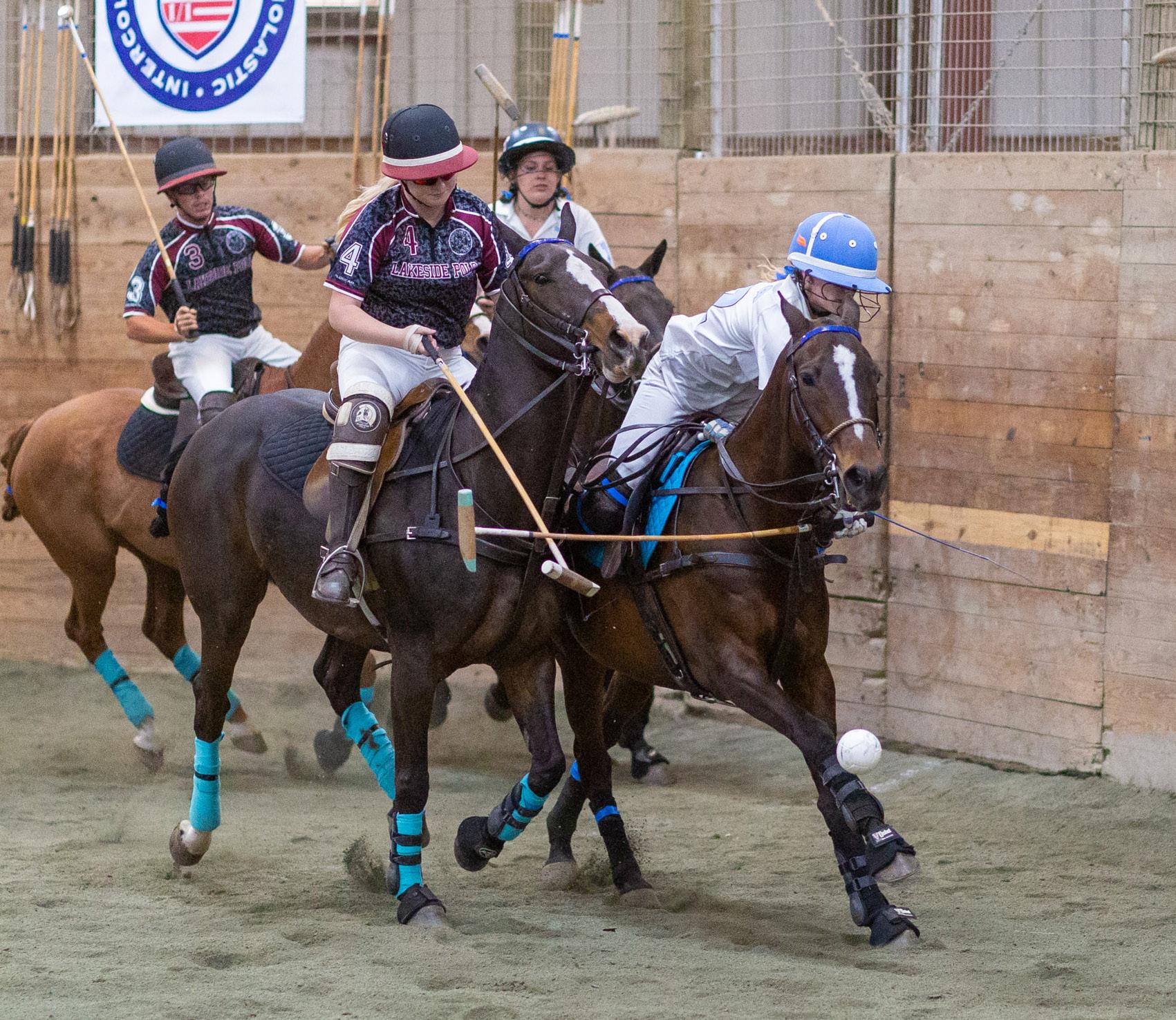
A game of high speeds, quick turning, and intense competition – polo can be played in the arena or on the field. While field polo consists of two teams with four players per team, I/I polo is played in the arena with three players per side. At the middle school level, players bring or lease appropriate horses to play. Once players step up to the interscholastic and collegiate ranks, horses are shared between teams. As with most team sports, the team who scores the most goals wins.
There are many key skills that a polo player must obtain and the I/I program aims to teach these skills through clinics, competitive leagues, and tournaments. The tournament season is the highlight of the I/I program for many middle school, high school, and college students; giving them the ability to play against their peers at a variety of locations. I/I offers many programs, such as the interscholastic varsity letter and the intercollegiate scholarships, for youth polo players. Additionally, educational and funding opportunities are available for I/I teams to aid them in bringing new members into the sport.
GETTING STARTED IN POLO
If you and your student are just getting started, we have a few tips for you!
1 Find a qualified polo instructor
The best tool you can give your student is a great instructor. When you find a qualified instructor they will provide a safe and fun atmosphere for your student to learn. All I/I coaches must complete Concussion Testing, SafeSport education, Safety Videos, and pass a background check.
LEVEL WHO WHAT WHERE WHEN WHY
Middle School League Grades 5-8
Stand-alone polo tournaments with mixed teams All over! AugDec
Interscholastic Polo Grades 7-12
Intercollegiate Polo College Students
Competitive league play culminating in regional and national level tournaments. US, Canada, & Guatemala SeptApril
Great way to start a player out in competitive polo. A fun atmosphere, great friends, and a safe environment.
Team sport, travel around, network, make friends, play polo, college scholarships, varsity letters.
Polo Alumni
Anyone who has played I/I Polo
GETTING STARTED
Regular Season, Tournaments, Support Programs US & Canada SeptApril
National tournaments, tournaments at clubs, club polo
United States All Year
Intercollegiate competition, represent your school, team bonding, USPA Intecollegiate Polo Scholarships
Great way to stay involved in polo, close network, see old friends
Comparison shop!
2 Invest in polo gear
Polo gear is important for the safety of your player. Gear includes helmets, kneepads, boots, eye protection, and mallets.
3 Realize the time investment
Like any sport, you get out as much as you put in. Have a realistic idea of the time commitment for polo (it’s worth it!)
4 Network
The USPA boasts over 5,000 well connected members. Getting involved and networking within your polo club and the rest of the community is a great jumping off point for you and your student.
5 Have fun!
The I/I program believes that polo, while competitive, should always be fun. Enjoy it, make friends, and ride ponies! Polo is a great experience that can translate into a lifelong love of the sport.
BUDGETING CHECKLIST:
USPA MEMBERSHIP
($100 per year)
USPA FEES
$800 per team
tournament entry fee
TRAVEL COSTS
GEAR COSTS
NOCSAE Certified Helmet:
$600-$700
Knee Guards: $100-$250
Polo/Riding Boots: $200-$600
Facemask/Goggles:
$65-$100
Whites:
$20-$50
Mallets:
$100/mallet
OPTIONAL GEAR
Spurs:
$30-$100
Whip:
$20-$50
Gloves:
$20-$50
Remember that polo equipment can be a great holiday or birthday gift!
A cost effective alternative to polo gloves are baseball/ softball gloves! Hand-me-down equipment (not helmets!) is a great way to save on costs
I/I PROGRAMS
Beyond the activities at your local club, your student will be eligible for these exciting programs supported by the USPA Board and Members.
Interscholastic Varsity Letter Program
The USPA is excited to offer our high school students the chance of being recognized as a Varsity athlete through the organization. Polo players, just like other athletes, put in a lot of time and dedication, and should be recognized for it. Players who meet the minimum requirements of participating in 4 regular season games, competing in an I/I tournament, 100 hours in the saddle, and a letter from their coach will be awarded their Interscholastic Varsity Letter in Polo by the USPA.
Scholarship
The Intercollegiate Scholarships are open to any player who played interscholastic polo during high school. Six $4,000 scholarships are available each year for players looking to continue playing polo during their college career. If awarded, the players are eligible to renew the scholarship on a yearly basis if they meet academic and playing requirements.
Regular Season
All I/I teams compete in the regular season to qualify for tournament play. The Regular Season runs from September to January. Teams are required to play a minimum of 2 games against other teams in their region. The Interscholastic Program is divided into two divisions, the Open division which can be comprised of all boys or boys and girls, and the Girls’ division.
I/I Tournament Awards
To recognize the dedication and excellence displayed throughout the tournament weekend the USPA awards All-Star, Sportsmanship, Horsemanship, Best Playing Pony, and Best Playing String as voted on by the teams and host tournament committee. This allows for extra recognition outside of winning the tournament.
Tournaments
The I/I tournaments occur at the Preliminary, Regional, and National level in all 4 divisions (interscholastic Girls, Interscholastic Open, Intercollegiate Women, and Intercollegiate Men). Tournament play occurs February through April with teams vying for a spot to compete in the National Finals. I/I PROGRAMS
TOP 5 SAFETY TIPS FOR
I/I PLAYERS
1 Find a Qualified Instructor
The polo world has a lot of amazing instructors out there. Make sure you find the instructor you feel best fits what you are looking to do. A good instructor will enforce safety procedures, match you with a mount that is the same level as your ability, and provide a safe environment to learn the sport. All I/I coaches must complete Concussion Testing, SafeSport education, Safety Videos, and pass a background check.
2 Find a Safe Facility
When working with horses a safe facility is a must! A safe facility will have all of the following:
• No unnecessary trash or debris lying around
• Footing should be well drained and free of ruts and stones
• Fences aren’t down or broken
• Machinery isn’t left in riding areas where it could cause accidents
3 Find Good Horses
Horses are one of the most important factors in your polo career, and a safe healthy horse can make all the difference in your child’s experience. Horses should look healthy and be even tempered. Horses that are underweight or ill kept create an unsafe environment for both horse and rider.
4 Get the Right Gear
Mandatory gear includes: helmet, boots, knee pads, and eye protection. Helmets are the most important piece of gear that you are going to buy. Make sure that the helmet fits correctly and is of a good quality. Not all helmets are created equal! The USPA requiers NOCSAE certified helmets to participate in USPA events.
5 ImPACT Baseline Testing
Concussions are a serious concern in sports. Being prepared and diligent is the best way to avoid and diagnose a head injury. Baseline Testing is a computer based cognitive test that assists physicians in diagnosing a head injury and a tool used to determine return-to-play timeline. Take your player to get an Impact Baseline Test annually at the beginning of each season.
TOURNAMENT EXPECTATIONS
When attending an I/I tournament, there are several responsibilities outside of playing that the players will need to be present for. To the right is an outline of what to expect of a tournament weekend.
Players are expected to act respectfully to the host site and horse owners and leave the facility as they found it. The I/I program is in place not just to create polo players, but horsemen and sportsmen. The time that these players spend taking care of the horses and working the games allows them to experience all aspects of polo and helps to grow their understanding of the sport and horses in general.
Before the Tournament:
• Team meeting
• Vet Check for horses participating
• Assignment of work duties and horse feeding schedule
During the Tournament:
• Players must arrive 1 hour before game time to tack
• Working teams (hot walking & goal judging) must arrive 20 mins before game
• Working teams are in charge of any tack time that occurs when their string is playing
• Working teams must care for horses after they are finished playing
• Playing teams must clean tack and help finish up any unfinished horse care after playing
• Players are in charge of caring for horses that are provided as their string for the weekend
• Awards will take place after horses are cared for following the last game of the weekend
Nutrition, Hydration, & Sleep
It’s often hard for younger players to focus on nutrition, hydration, and sleep. As a parent you can help them gain a competitive edge by ensuring they prepare properly for a game. Not only will these factors help them excel in the arena or on the field, but also in life. After each match, practice, clinic, or other form of training, your player should begin preparing for the next session, allowing them to be one step ahead. Examples of proper nutrition, hydration, and sleep techniques include but are not limited to: eating well-balanced meals, avoiding fried foods and sodas, drinking more water, and sleeping 8-10 hours per night.
ROLE OF A PARENT
So you are now involved in the polo world. Welcome! One of the best parts of polo is the tight and supportive family community that the sport provides. We have included a few ideas on how you can create the best environment for your child to grow and thrive as an athlete.
1 Support your player in their endeavors.
This can be through finances, transportation, encouragement, or simply being a listener. Students need someone they know is supporting them no matter how they play.
2 Be a fan!
Your player has a coach and it can be confusing to have an extra one on the sidelines. It is easy to get caught up in the competition and want to yell instructions, but your coach has a game plan that covers all parts of the competition. Your student also has an umpire or two on the field who are trained and responsible for calling the game. Cheering and encouragement are the best ways to show support for the team while they are on the field.
4 Let the experience be the player’s.
It’s great to be into your player’s sport and be supportive, but it is important to remember that it is their sport. They have to set their personal goals and decide their future in the sport, and no one can do that for them.
5 Children take their cues from adults.
3
Youth sports are meant to be fun!
It’s important as a parent to create a positive atmosphere. Work with your coach and other parents to provide a fun environment – arranging for food and drinks, creating bonding experiences for players outside of polo and encouraging all members of the team as they grow and improve.
Especially when handling adversity. If you don’t like a player substitution a coach makes or a call goes the other team’s way, it’s not necessary to make a big deal out of it. Students often see an overreaction by adults and mimic their behavior. Not only are most of these situations not in their control, but a negative reaction will certainly not help them win a game. One of the most valuable lessons in youth athletics is teaching students how to deal with and overcome adversity. Be part of the solution, not the problem.