9011 Lake Worth Road | Lake Worth, FL 33467 USA uspolo.org
INTERNATIONAL POLO CLUB PALM BEACH 3667 120th Ave S. | Wellington, FL 33414 ipc.coth.com
2017 U.S. OPEN POLO CHAMPIONSHIP®
For Immediate Release
March 31, 2017
Together with the International Polo Club Palm Beach (IPC) in Wellington, Florida, the United States Polo Association® (USPA) will host the 2017 U.S. Open Polo Championship®. From April 5 until it culminates with the final on April 23, six teams will vie for the most prestigious trophy in United States polo competition.
The U.S. Open is the final leg of the 26-goal tournaments held during the Florida High-Goal Winter Season, which regularly attracts the top players and teams in the world.
While difficult to imagine today, this grand tournament had less than auspicious beginnings. The U.S. Open Polo Championship was originally conceived as a non-handicapped alternative to the far more prestigious Senior Championship tournament. The first U.S. Open Polo Championship consisted of only two teams, the Wanderers and the Freebooters. It was held at Van Cortlandt Park in New York City’s Bronx borough. Four 15-minute chukkers were played, with a seven-minute break between each chukker.
After the inaugural U.S. Open Polo Championship in 1904, the tournament was not played again until 1910, when it grew to six teams. It resumed at Narragansett Pier, Rhode Island, for several years before relocating to what became its longtime home, Meadowbrook Polo Club in Old Westbury, New York. In 1954, the U.S. Open Polo Championship moved to Oak Brook, where it remained for 22 years, followed by an eight-year stint at Retama in San Antonio, Texas. In the late 1980s and into the 1990s, the tournament circulated among several clubs throughout the United States, including Eldorado, Lexington, Palm Beach and Royal Palm. In 2004, the tournament’s 100th anniversary, the U.S. Open Polo Championship relocated to the International Polo Club Palm Beach, where it has been held since. The public is encouraged to attend weekday games free of charge. Tickets for the featured Sunday matches at 3:00 p.m. ET can be purchased on www.internationalpoloclub.com.
The USPA Polo Network will livestream all 2017 U.S. Open Polo Championship games on uspolo.org. The U.S. Open Polo Championship Final will be broadcast on CBS television on April 30 at 2:00 p.m. ET. To learn more, please visit uspolo.org.
ABOUT THE TEAMS
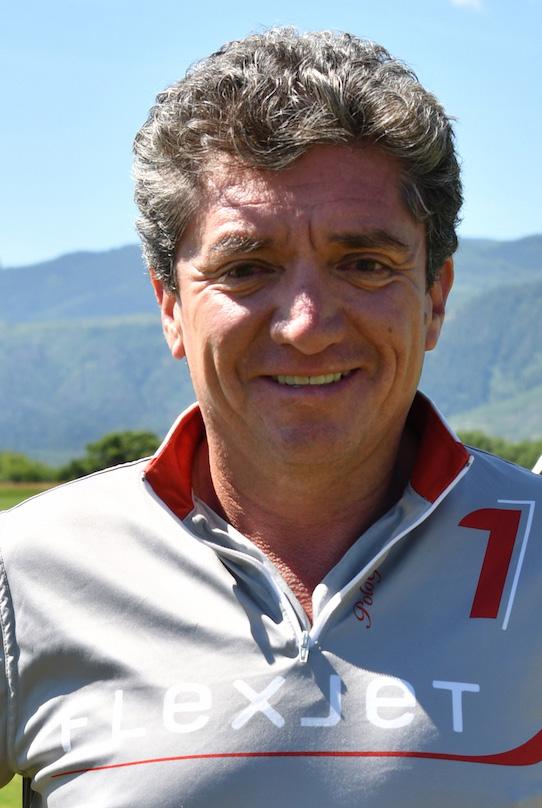
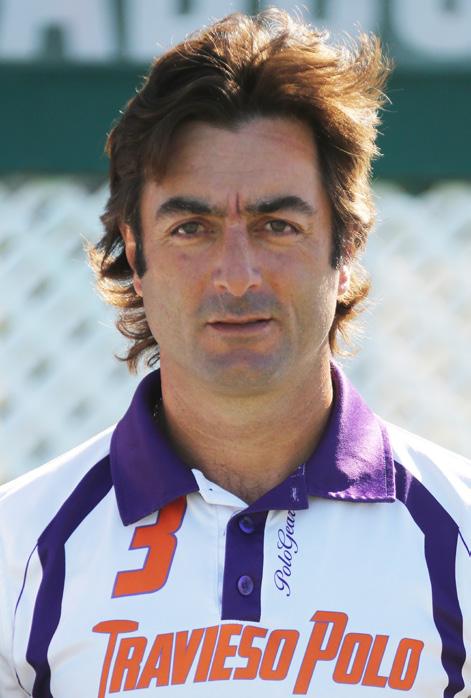
Orchard Hill will return to IPC as the defending champion. Prior winner,Valiente, will look to reclaim their title after defeating finalists Orchard Hill in 2015. Other previous winners competing this year include Coca-Cola (2002) and Audi (2009). They will be joined by Flexjet and tournament newcomer Travieso.
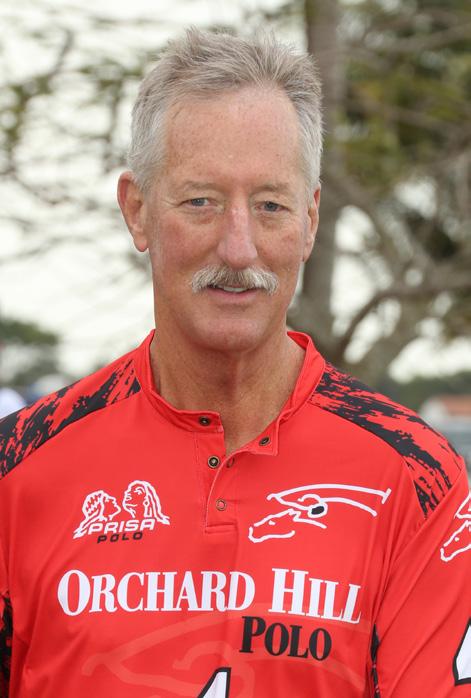
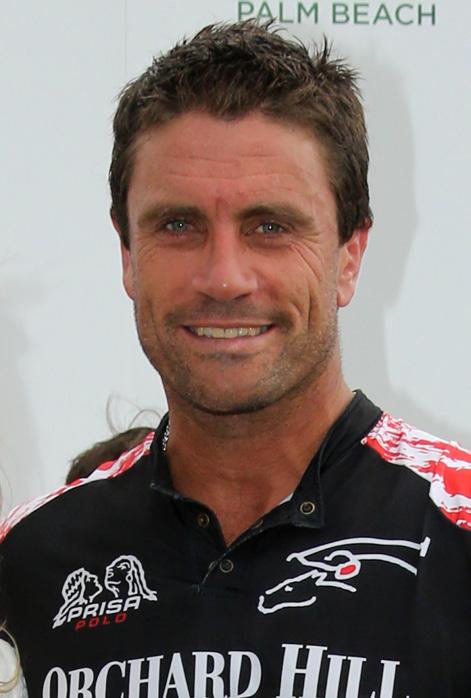
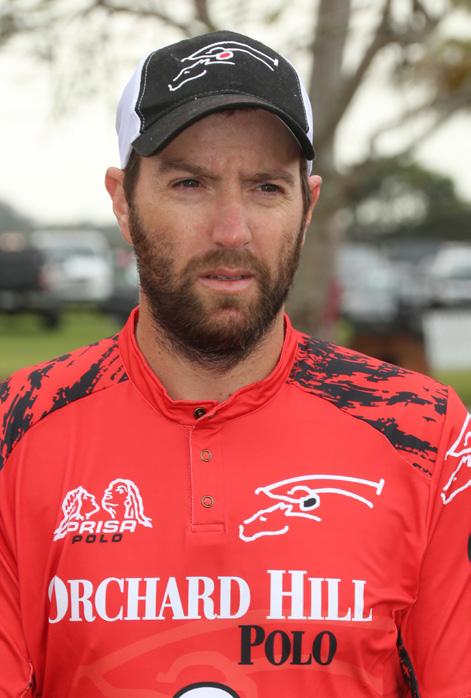
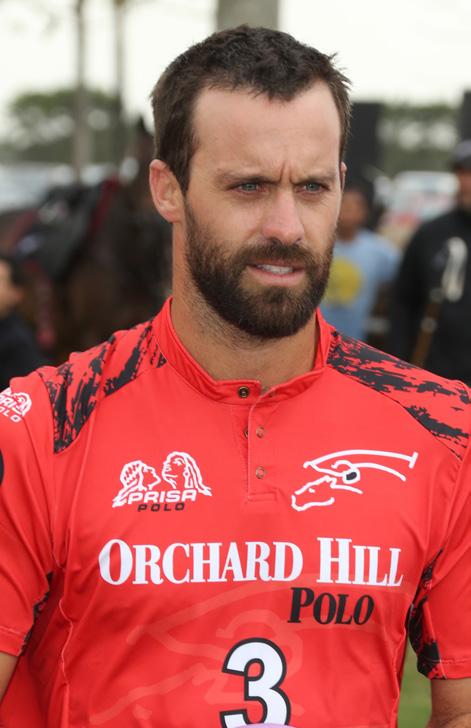
Orchard Hill will return with team owner Steve Van Andel and top-ranked 10-goaler Facundo Pieres, who will be joined by new additions Polito Pieres and Jota Chavanne. Julian de Lusarreta, a member of the 2016 Orchard Hill team, will be playing for Coca-Cola this year.
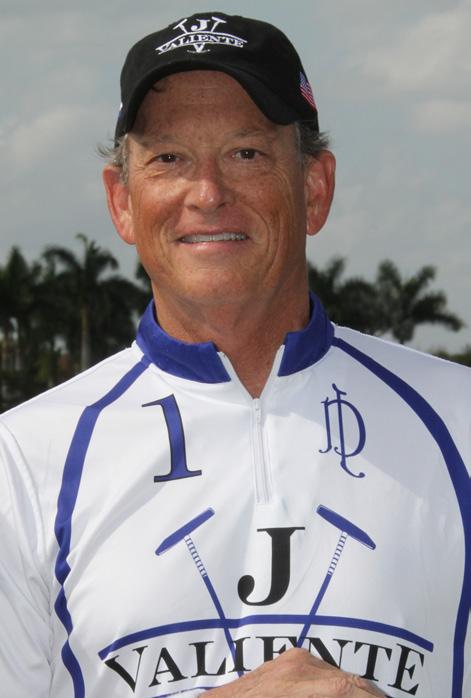
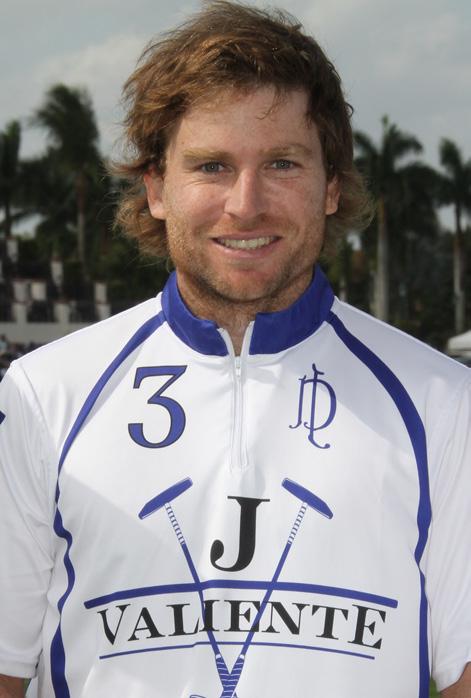
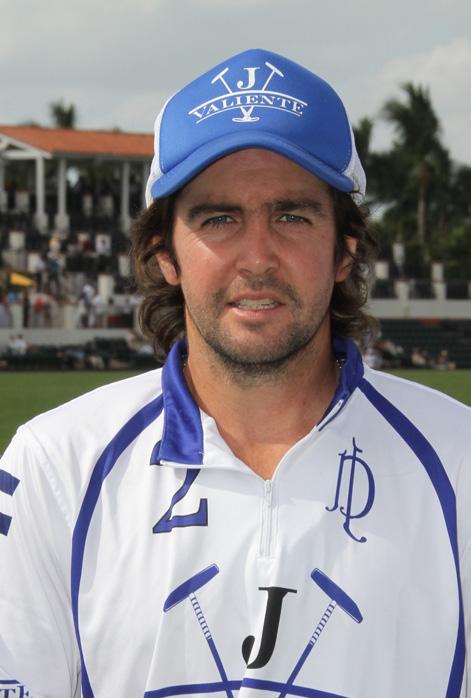
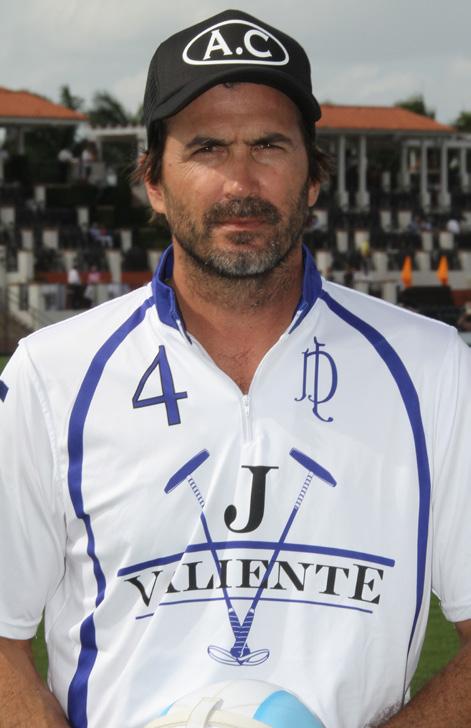
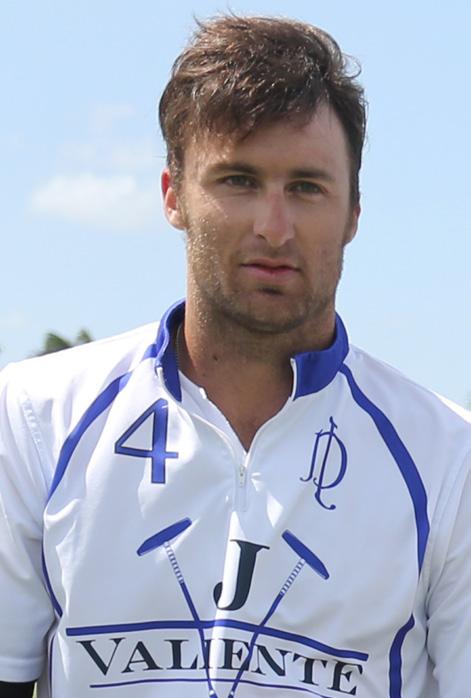
Valiente and team owner Bob Jornayvaz returns 10-goal superstar Adolfo Cambiaso to the line-up after playing without him in the 2016 U.S. Open Polo Championship. Diego Cavanaugh and Matias Zavalleta round the team out; they have already won the 2017 C.V. Whitney Cup and USPA Gold Cup®.
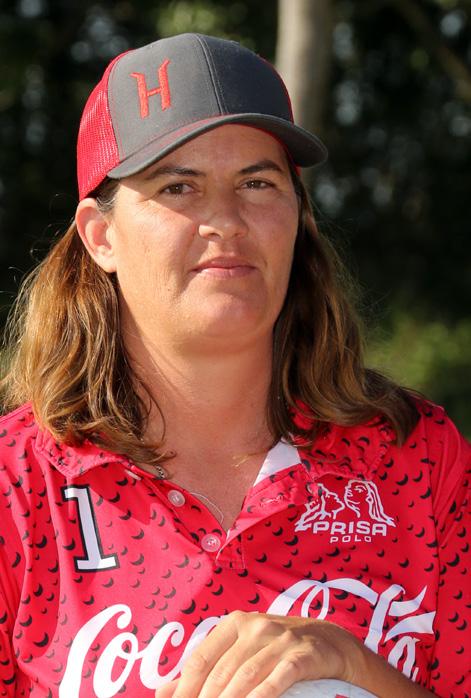
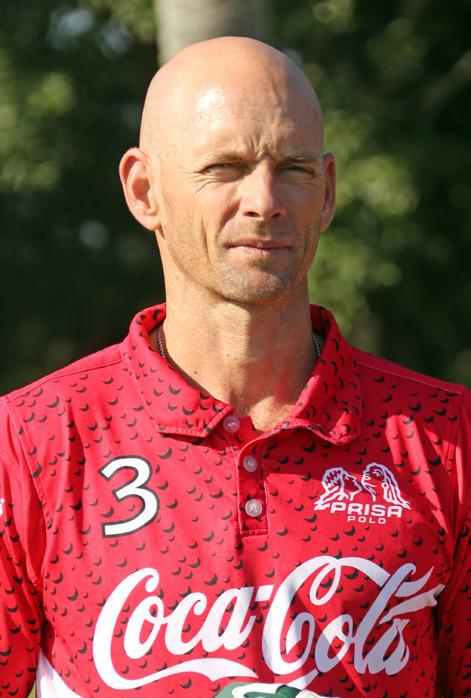
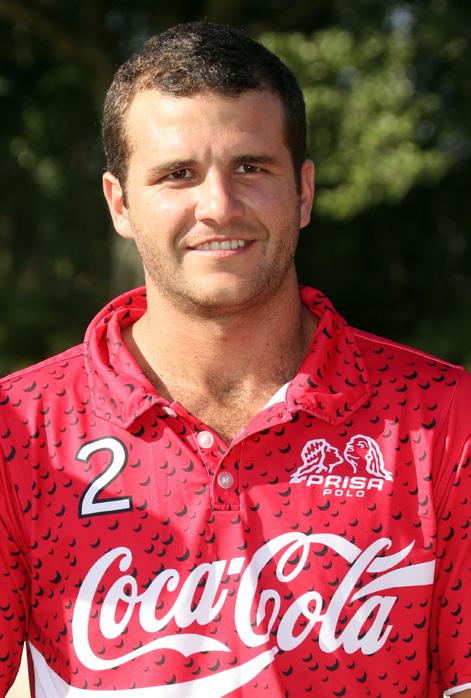
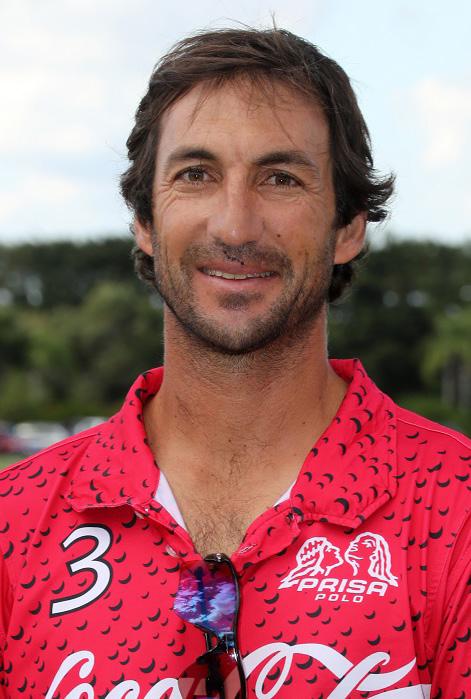
Many other recognizable names will be playing, including top-rated American players Nic Roldan and Julio Arellano, Marc and Mellissa Ganzi, Gillian Johnston, Sebastian Merlos, Miguel Novillo Astrada, Mariano Gonzales, Magoo Laprida, and Teo Calle, who will be making his U.S Open Polo Championship debut. For full team rosters, please visit uspolo.org.
Official Sponsors of the U.S. Open Polo Championship® include Town & Country (Media), Karma Auto (Automobile),
(Private Aviation) and Lugano Diamonds (Jewelry). ###
ABOUT THE UNITED STATES POLO ASSOCIATION®
The U.S. Polo Association (USPA) was organized and exists for the purposes of promoting the game of polo, coordinating the activities of its Member Clubs and Registered Players, arranging and supervising polo tournaments, competitions, and games, and providing rules, handicaps, and conditions for those tournaments, competitions, and games including the safety and welfare of participants and mounts.
Founded in 1890, the United States Polo Association (USPA) is the national governing body for the sport of polo. USPA is currently comprised of almost 300 member clubs with thousands of individual members, and oversees 40 national tournaments. For more information, please visit uspolo.org.
ABOUT U.S. POLO ASSN.
U.S. POLO ASSN. is the official brand of the UNITED STATES POLO ASSOCIATION (USPA), the non-profit governing body for the sport of polo in the United States since 1890. All U.S. POLO ASSN. product is Official Product of the UNITED STATES POLO ASSOCIATION.
U.S. POLO ASSN. products enjoy worldwide distribution through independent retail, department, online and U.S. POLO ASSN. stores, selling clothing for men, women and children, as well as accessories and handbags, luggage, watches, shoes, home furnishings and more.
USPA Global Licensing Inc. (USPAGL) is the for-profit subsidiary of the USPA and the exclusive worldwide Licensor for the USPA’s global licensing program in over 135 countries.
The USPAGL mission is to create a long-term source of revenue for the UNITED STATES POLO ASSOCIATION, who uses the funds to govern, promote and develop the sport of polo through many diverse programs such as youth and children mentoring, intercollegiate/interscholastic competition, equine welfare and polo horse and player safety, among others.
We encourage you to visit our website at www.uspoloassnglobal.com.
ABOUT TOWN & COUNTRY
Town & Country (www.townandcountrymag.com) has chronicled American life since 1846, always putting an emphasis on people of style and accomplishment who give something back to the world, whether in service, philanthropy or creative endeavor. Combining the highest level of reporting with the very best photography, Town & Country is an acute observer of the broader social landscape, documenting notable weddings and parties, chronicling the pastimes and passions of leading figures and families everywhere, and casting an anthropological eye on the lives of the rich and powerful. The magazine is a trusted source of privileged information, taste and unpretentious fun – in short, an irreplaceable guide to the very best that the world has to offer. Town & Country Weddings, established in 2003, and the newly revived Town & Country Travel, are published biannually. Town & Country is published by Hearst Magazines, a unit of Hearst, one of the nation’s largest diversified media and information companies. With 21 titles in the U.S., Hearst is the leading publisher of monthly magazines in terms of total paid circulation (AAM 2H 2014), reaching 78 million readers (Spring 2016 MRI/GfK at 79.5 million) and 54 million site visitors each month (comScore), with a social media following of 115.5 million. Follow Town & Country on Twitter at @TandCMag.
ABOUT KARMA AUTO
Karma Automotive is a U.S. manufacturer of luxury plug-in hybrid vehicles. Unapologetically conspicuous in their beauty. Uncommonly light in their footprint. Designed, engineered, and assembled in Southern California. For more information, visit www.karmaautomotive.com.
ABOUT NETJETS
NetJets Inc., a Berkshire Hathaway company, is the worldwide leader in private aviation with the largest and most diverse private jet fleet in the world. NetJets celebrated its 50th Anniversary in 2014, having been established in 1964 as the world’s first private jet charter and management company. In 1986, NetJets pioneered the concept of fractional aircraft ownership—offering individuals and businesses all of the benefits of whole aircraft ownership and more, at a fraction of the cost. Today, NetJets offers a full range of private aviation solutions, including fractional ownership, leasing and jet cards, through businesses bearing the NetJets®, Executive Jet Management®, and Marquis Jet Card® service brands in North America and Europe. For more information on NetJets customer programs and services, please visit www.netjets.com Twitter: @NetJets Instagram: NetJets
ABOUT LUGANO DIAMONDS
Lugano Diamonds, established in Israel as diamond cutters, opened its first retail location in Newport Beach, California in 2005. Moti Ferder, President and Design Director, incorporated his vast knowledge in the diamond industry and transformed Lugano into an international jewelry brand with creative wearable works of art. The Lugano Salons are a testament to the very core of the Lugano experience: exceptional, warm, inviting yet still modern, the atmosphere makes one’s visit memorable. The company controls all facets of jewelry production from origin to design and sales which allows Lugano Diamonds to provide the very best quality at a great value. Their unique designs can be found only at Lugano’s salons, or by appointment at your home, office or hotel suite. In 2013, Robb Report honored Lugano Diamonds with a Best of the Best award for its use of zirconium in jewelry. Robb Report again recognized Lugano’s remarkable designs in 2014, featuring a trio of colorful necklaces comprised of rare gemstones in the publication’s coveted Ultimate Gift Guide.
Lugano offers the highest levels of service and looks forward to exceeding your expectations. Lugano Diamonds is proud of its support for the equestrian world. Along with the community with ongoing involvement in a number of philanthropic endeavors which have helped raise millions of dollars for many worthy causes. For more information please visit www. luganodiamonds.com or call 866-584-2666.
CONTACT
Matt Baran
United States Polo Association® 561-373-4954 mbaran@uspolo.org
Shannon Stilson
U.S. Polo Assn. 904-466-8492 sstilson@uspaproperties.com
Darlene Ricker
International Polo Club Palm Beach 310-210-4004 dricker@internationalpoloclub.com
STATES POLO
9011 Lake Worth Road | Lake Worth, FL 33467 USA uspolo.org
INTERNATIONAL POLO CLUB PALM BEACH 3667 120th Ave S. | Wellington, FL 33414 ipc.coth.com
2017 U.S. OPEN POLO CHAMPIONSHIP® SCHEDULE
BRACKET I BRACKET II
1. FLEXJET
2. COCA-COLA
3. ORCHARD HILL
Wednesday April 5 5pmOrchard Hill vs. Valiente
Thursday April 6
11am Flexjet vs. Audi 5pmCoca Cola vs. Travieso
Sunday April 9
10am Orchard Hill vs. Audi
Noon Coca Cola vs. Valiente 3pmFlexjet vs. Travieso
Wednesday April 12
10am Flexjet vs. Valiente 12:30pm Coca Cola vs. Audi 5pmOrchard Hill vs. Travieso
Sunday April 16*
Noon Mini Quarterfinal 3pmMini Quarter final
Wednesday April 19** 11am Semifinal I 5pm Semifinal II
Saturday April 22 5pm Hall of Fame Cup Final
1. AUDI
2. TRAVIESO
3. VALIENTE
**Check uspolo.org for scores, field assignments and most recent schedule.
Sunday April 23*** 3pmFinal of the 2017 US Open Polo Championship
*After bracket games, all teams are ranked 1st through 6th. In the event of a tie, who beat who will be used if possible, tied teams that have not played each other will have a one man shoot out. Top two go straight to the semifinal, 3rd6th play a mini quarter. 3 vs. 6, 4 vs. 5
** Semifinal pairings: Mini quarter winners will be ranked as third and fourth. In the event of a tie between the quarterfinal winners, who beat who will be used if possible, otherwise a one man shoot out.
Semifinal I: 1st from bracket play vs. 4th
Semifinal II: 2nd from bracket play vs. 3rd
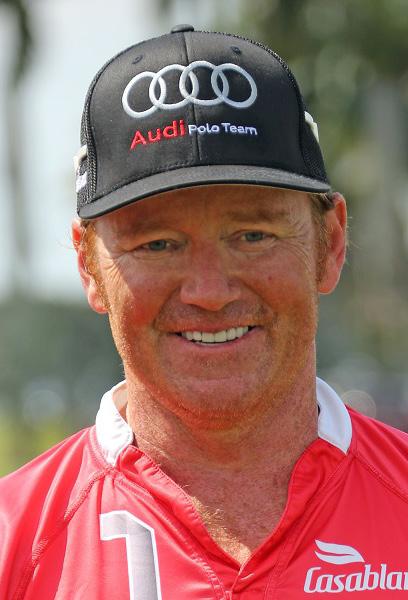
STEVE VAN ANDEL
HANDICAP: 1
NATIONALITY: American
CLUB: International Polo
Club Palm Beach
ACCOLADES:
2016 C.V. Whitney Cup
2016 U.S. Open Polo Championship®
2015 C.V. Whitney Cup
2015 Joe Barry Memorial
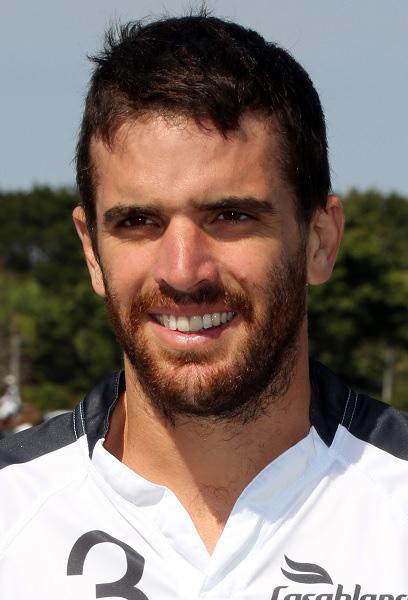
JOTA CHAVANNE
HANDICAP: 5
NATIONALITY: Argentine
CLUB: Santa Barbara Polo Club
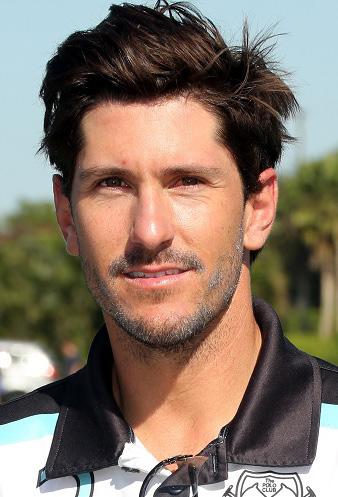
POLITO PIERES
HANDICAP: 10
NATIONALITY: Argentine
CLUB: International Polo
Club Palm Beach
ACCOLADES:
2015 C.V. Whitney Cup
2012 C.V. Whitney Cup
2012 America Cup
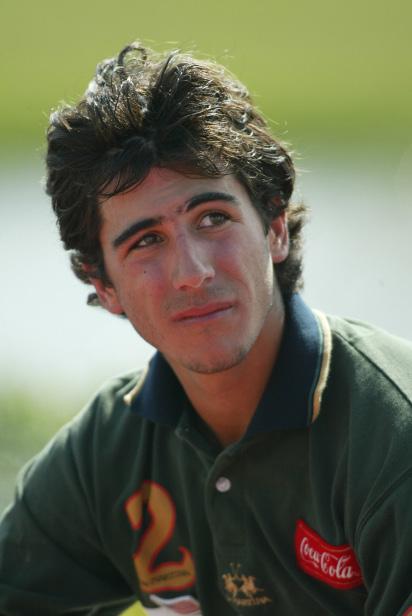
FACUNDO PIERES
HANDICAP: 10
NATIONALITY: Argentine
CLUB: International Polo Club Palm Beach
ACCOLADES:
2016 C.V. Whitney Cup
2016 U.S. Open Polo Championship®
2015 Joe Barry Memorial
2015 C.V. Whitney Cup, 2013-12 U.S. Open Polo Championship®, 2009 C.V. Whitney Cup, 2009 U.S. Open Polo Championship®, 2008 C.V. Whitney Cup
A.C. CONT’D 2014 C.V. Whitney Cup, 2014 USPA Gold Cup®, 2012 Silver Cup®, 2012 USPA Gold Cup®, 2011 Pacific Coast Open, 2010 America Cup, 2010 C.V. Whitney Cup, 2010 USPA Gold Cup®, 2010 U.S. Open Polo Championship®, 2010 USPA America Cup, 2010 Pacific Coast Open, 2008 U.S. Open Polo Championship, 2007 Joe Barry Cup, 2007 Ylvisaker Cup, 2007 USPA Gold Cup®, 2007 U.S. Open Polo Championship®, 2006 USPA Gold Cup®, 2001 U.S. Open Polo Championship®, 2000 U.S. Open Polo Championship®, 1999 U.S. Open Polo Championship, 1999 USPA Gold Cup®, 1997 USPA Gold Cup®, 1996 C.V. Whitney Cup, 1996 USPA Gold Cup®, 1995 C.V. Whitney Cup, 1993 USPA Gold Cup®, 1991 C.V. Whitney Cup, 1991 USPA Gold Cup ®
GILLIAN JOHNSTON
HANDICAP: 2
NATIONALITY: American
CLUB: Bendabout Farm Polo Club
ACCOLADES:
2016 Herbie Pennell Cup
2015 Ylvisaker Cup
2013 Herbie Pennell Cup
2013 Ylvisaker Cup
2010 National Copper Cup®
2002 U.S. Open Polo Championship®
JULIO
ARELLANO
HANDICAP: 8
NATIONALITY: American
CLUB: Everglades Polo Club
ACCOLADES:
2016 Herbie Pennell Cup
2015 Ylvisaker Cup
2013 Ylvisaker Cup
2013 Herbie Pennell Cup
2010 C.V. Whitney Cup
2010 USPA Gold Cup®
2010 U.S. Open Polo Championship®, 2010-08 Monty Waterbury, 1998 America Cup, 1997 America Cup, 1995
U.S. Open Polo Championship®, 1994 America Cup, 1992
U.S. Open Polo Championship®, 1990 U.S. Open Polo Championship®, 1990 Butler Handicap
JULIAN DE LUSARRETA
HANDICAP: 7
NATIONALITY: Argentine
CLUB: Everglades Polo Club
ACCOLADES:
2016 C.V. Whitney Cup
2016 U.S. Open Polo Championship®
MIGUEL NOVILLO ASTRADA
HANDICAP: 9
NATIONALITY: Argentine
CLUB: Everglades Polo Club
ACCOLADES:
2015 Herbie Pennell Cup
2015 East Coast Open
2012 Ylvisaker Cup
2012 C.V. Whitney Cup
2002 U.S. Open Polo Championship®
1998 C.V. Whitney Cup
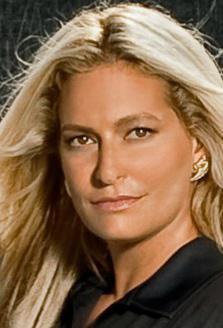
MELISSA GANZI
HANDICAP: A
NATIONALITY: American
CLUB: Grand Champions
Polo Club
ACCOLADES:
2014 National Twenty Goal
2009 North American Cup
2009 Bronze Trophy
NICO PIERES
HANDICAP: 8
NATIONALITY: Argentine
CLUB: International Polo Club Palm Beach
ACCOLADES:
2011 USPA Gold Cup®
2009 U.S. Open Polo Championship®
GONZALITO
PIERES
HANDICAP: 9
NATIONALITY: Argentine
CLUB: Grand Champions
Polo Club
ACCOLADES:
2015 USPA Gold Cup®
2011 USPA Gold Cup®
2009 C.V. Whitney Cup
2009 U.S. Open Polo Championship®
RODRIGO ANDRADE
HANDICAP: 9
NATIONALITY: Brazilian
CLUB: Grand Champions
Polo Club
ACCOLADES:
2015 USPA Gold Cup®
2011 USPA Gold Cup®
2008 Pacific Coast Open
MARC GANZI
HANDICAP: 2
NATIONALITY: American
CLUB: Grand Champions
Polo Club
ACCOLADES:
2015 USPA Gold Cup®
2015 National Twenty Goal®
2015 International Cup
2015 East Coast Open
2011 USPA Gold Cup®
2009 U.S. Open Polo Championship®, 2009-08 America Cup, 2008 Pacific Coast Open
MAGOO LAPRIDA
HANDICAP: 8
NATIONALITY: Argentine
CLUB: International Polo
Club Palm Beach
ACCOLADES:
2008 C.V. Whitney Cup
2000 Bronze Trophy®
NIC ROLDAN
HANDICAP: 8
NATIONALITY: American
CLUB: The Polo School
ACCOLADES:
2015 Hall of Fame Cup
2015 Herbie Pennell Cup
2015 International Cup
2015 East Coast Open
2014 North American Cup®
2011 America Cup, 2010 Silver Cup®, 1999 America Cup
ALEJANDRO NOVILLO ASTRADA
HANDICAP: 8
NATIONALITY: Argentine
CLUB: Grand Champions
Polo Club
ACCOLADES:
2004 America Cup
TRAVIESO
TEO CALLE
HANDICAP: 1
NATIONALITY: Ecuadorian
CLUB: Grand Champions
Polo Club
ALFREDO CAPELLA
HANDICAP: 9
NATIONALITY: Argentine
CLUB: California Polo Club
SEBASTIAN
MERLOS
HANDICAP: 9
NATIONALITY: Argentine
CLUB: Grand Champions
Polo Club
ACCOLADES:
2014 America Cup
2011 Silver Cup®
2002 C.V. Whitney Cup
1999 C.V. Whitney Cup
1998 U.S. Open
Polo Championship®, 1995 U.S. Open Polo Championship®, 1990 U.S. Open Polo Championship®, 1990 USPA Gold Cup®
MARIANO GONZALEZ
HANDICAP: 7
NATIONALITY: Argentine
CLUB: International Polo
Club Palm Beach
ACCOLADES:
2013 Monty Waterbury
2010 Bronze Trophy®
2007 Monty Waterbury
2007 National Twenty Goal
2003 America Cup
2001 Silver Cup®, 1995 America Cup, 1991 North American Cup
ABOUT THE U.S. OPEN POLO CHAMPIONSHIP®
The U.S. Open Polo Championship® will begin the first week of April at the International Polo Club Palm Beach (IPC) in Wellington, Florida. Six teams will compete for three consecutive weeks, culminating in the final on Sunday, April 23.
Considered to be the most prestigious polo tournament in the United States, the U.S. Open is the apex of the 26-goal tournaments held during the Florida high-goal winter polo season that attracts fans and polo enthusiasts from across the United States and around the world.
The U.S. Open was originally conceived as a non-handicapped alternative to the Senior Championship tournament. The first U.S. Open had only two teams, the Wanderers and the Freebooters. It was held at Van Cortlandt Park in the Bronx borough of New York City. Four 15-minute chukkers were played, with a seven-minute break between each chukker.
After the inaugural U.S. Open in 1904, the tournament was not played again until 1910, when it grew to include six teams. It resumed at Narragansett Pier, Rhode Island, where it was played for several years before relocating to what became its longtime home, Meadowbrook Polo Club in Old Westbury, New York. In 1954, the U.S. Open moved to Oak Brook, where it remained for 22 years, followed by an eight year stint at Retama in San Antonio, Texas. In the late 1980s and into the 1990s, the tournament circulated among several clubs throughout the United States, including Eldorado, Lexington, Palm Beach and Royal Palm. In 2004, marking one hundred years since the tournament’s inception, the U.S. Open relocated to the International Polo Club Palm Beach, where it has been held ever since.
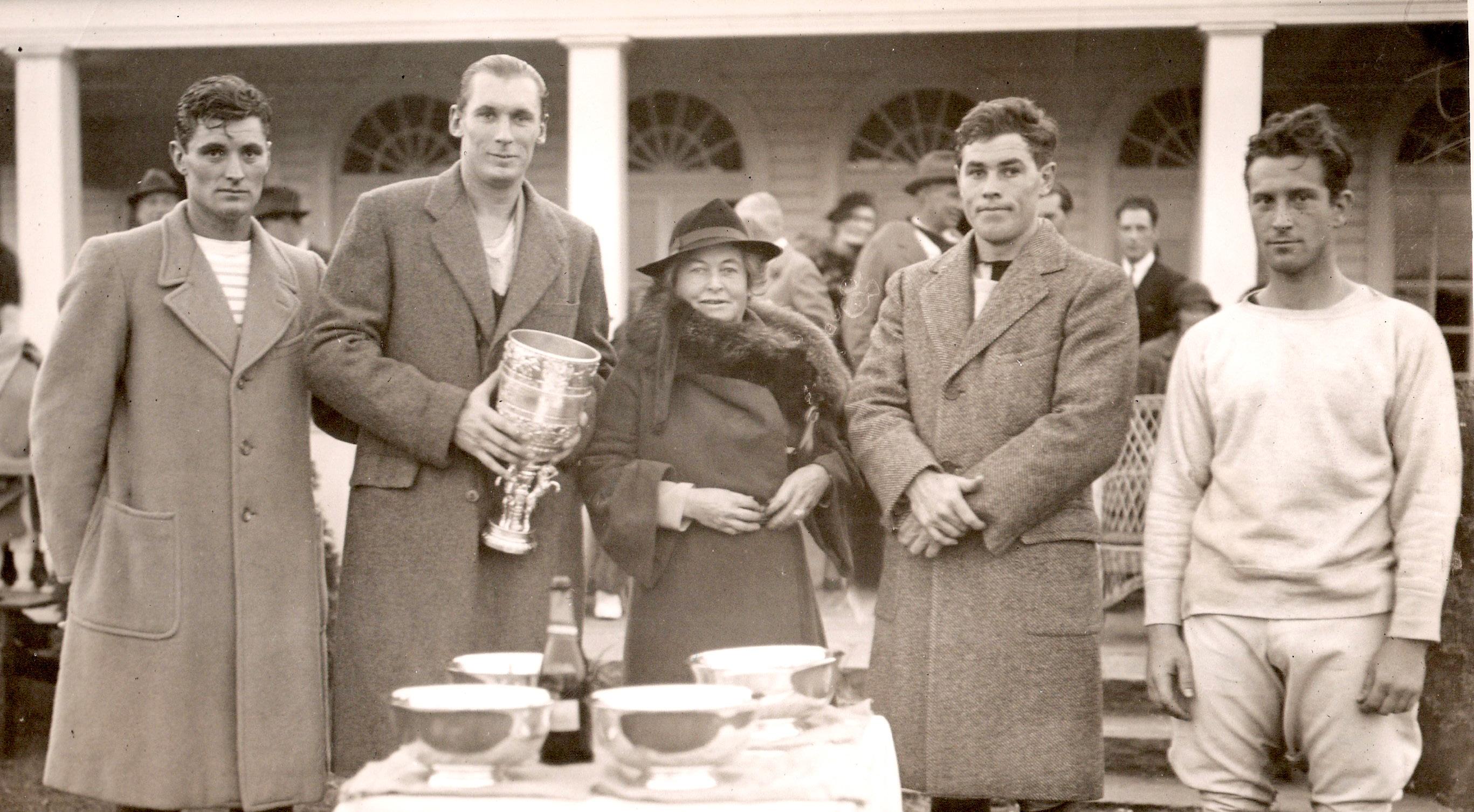
1934 U.S. Open Polo Championship®: Templeton Team - Raymond Guest, Winston Guest, Mrs. J. S. Phipps, Michael Phipps, Stewart Iglehart.
The USPA Polo Network will livestream all games of the U.S. Open, and CBS will air a 60-minute national broadcast of the U.S. Open Polo Championship® final on Saturday, April 30 at 2:00 p.m. ET.
ABOUT THE U.S. OPEN POLO CHAMPIONSHIP TROPHY
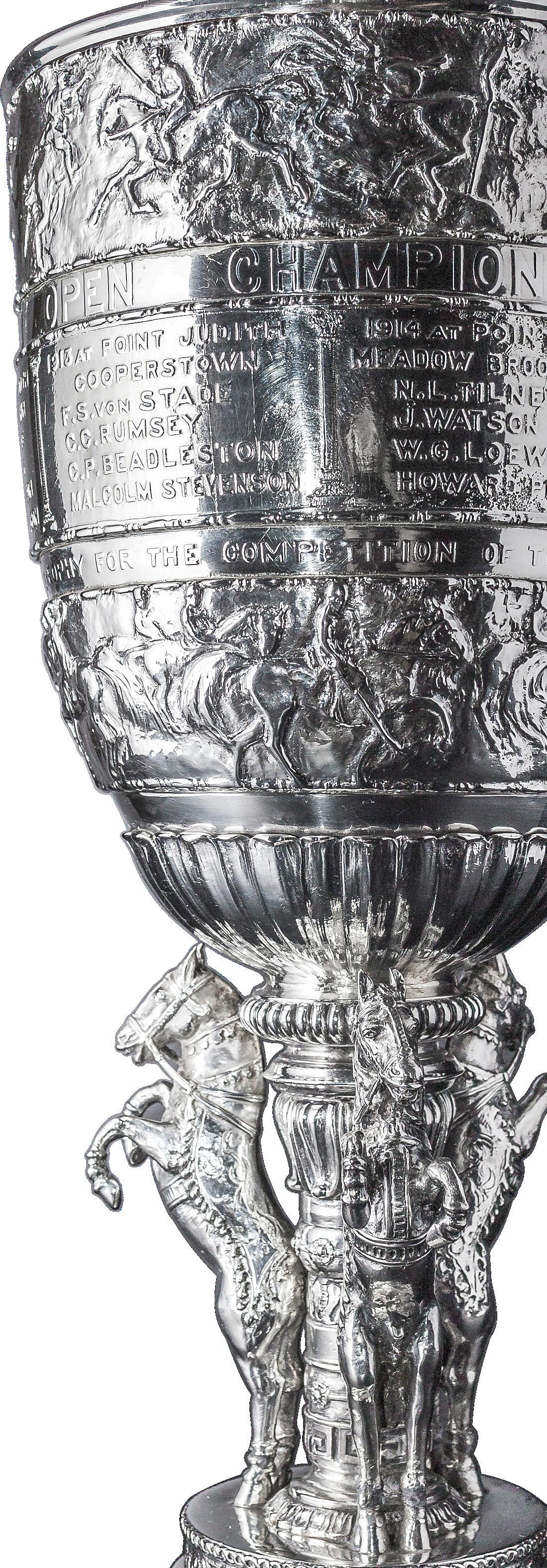
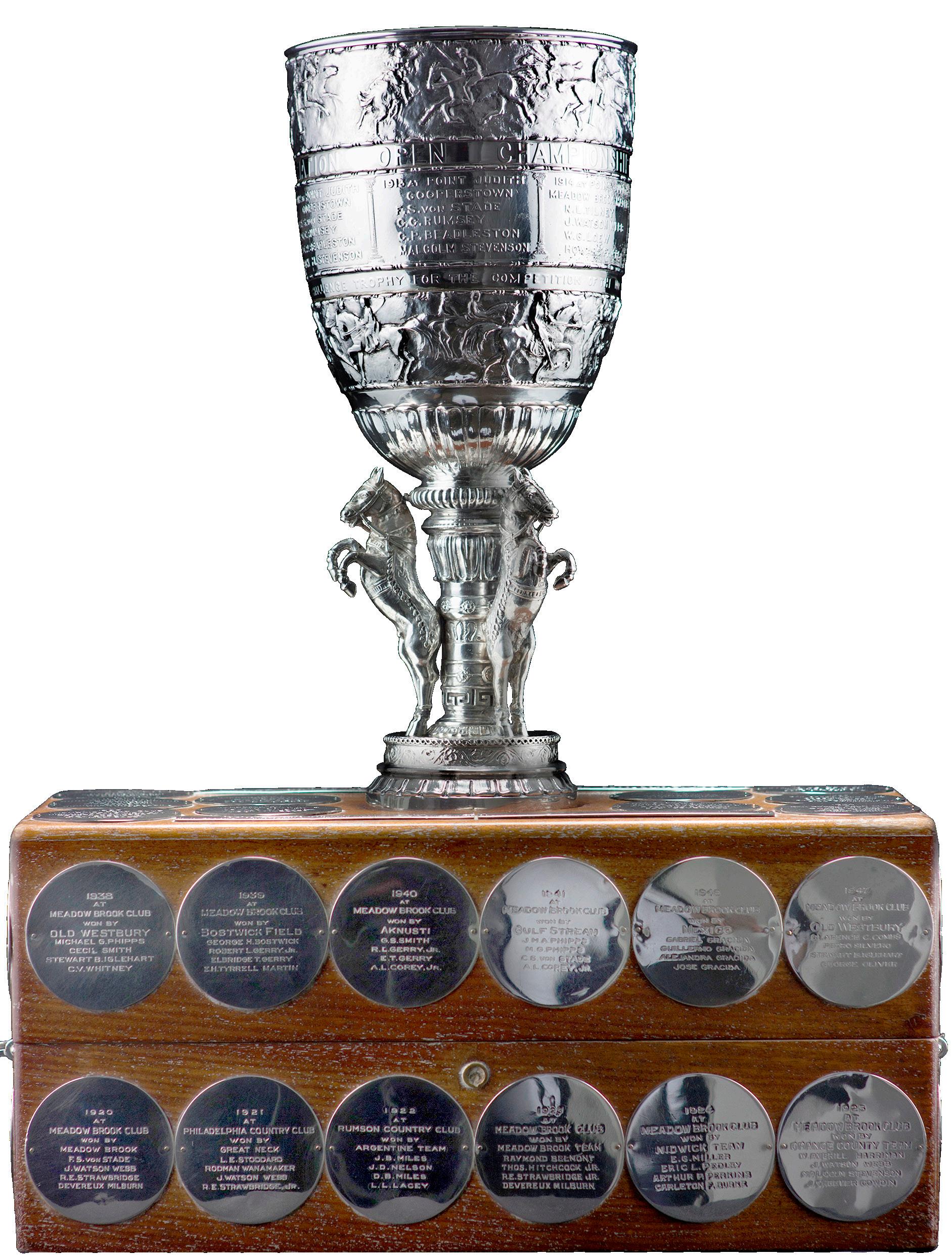
The U.S. Open Polo Championship® perpetual trophy was first presented in 1910 by Joseph B. Thomas. Designed by artist Sally James Farnham, the design was inspired by a seventeenth century tureen. The tall, ornate silver cup features horses and riders in relief around the top perimeter and the bottom bowl of the cup, as ornate rearing horses rise from the base of the cup.
Stolen in 2002, it was recovered a few short weeks later and is currently kept in the care and custody of the Museum of Polo and Hall of Fame in Lake Worth, Florida.
ABOUT THE INTERNATIONAL POLO CLUB PALM BEACH
International Polo Club Palm Beach (IPC) is the premier polo destination in the world, hosting the largest field of high-goal teams and the most prestigious polo tournaments in the United States. World-renowned players and polo enthusiasts alike come to Wellington, Florida, each winter season to enjoy their love of the sport in the most prominent polo facility the sport has to offer.
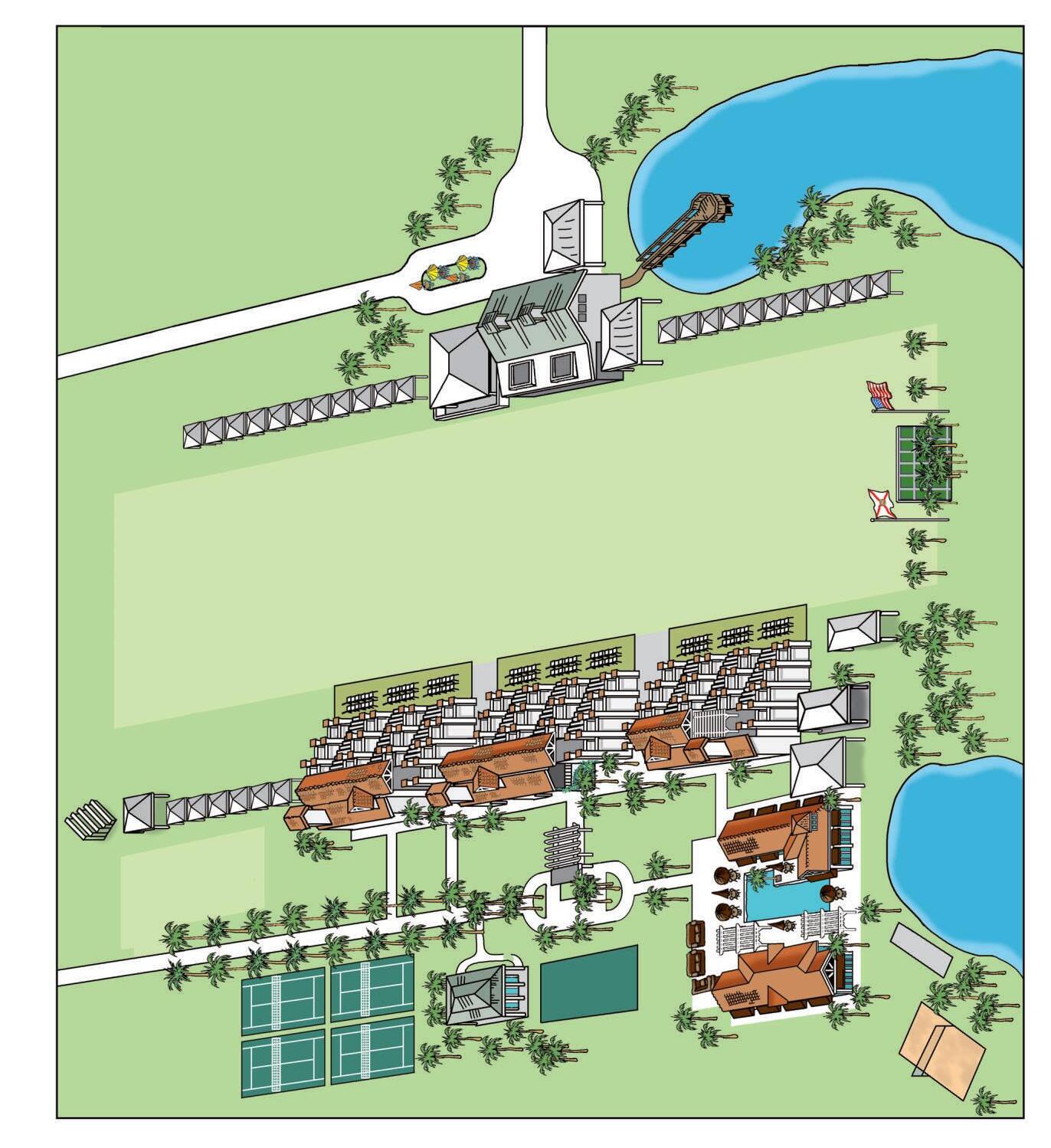
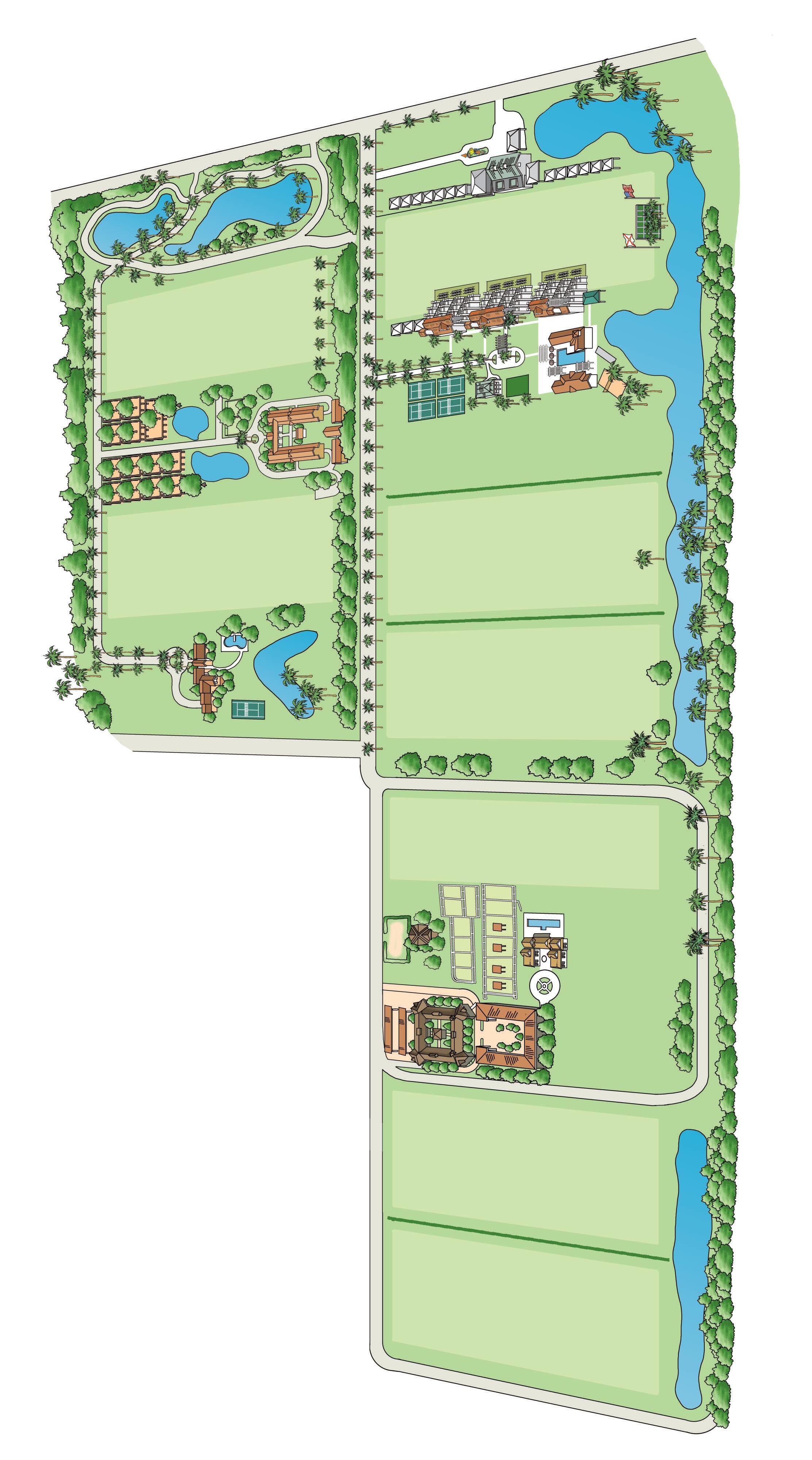
Spanning nearly 250 acres, IPC is the largest and most spectator-friendly polo facility in the United States. Elite players pilot polo ponies at speeds that can reach 35 miles per hour across a sweeping field the size of nine football fields. Created with players and spectators in mind, IPC includes seven state-of-the-art tournament fields. They can accommodate multiple games simultaneously, ensuring that the action continues from the first to the last game of the day.
Polo matches are open to the public, with a wide range of accommodations including elegant grandstand viewing, field tailgating, stadium seating, fieldside champagne brunch at The Pavilion, and exclusive sponsor boxes overlooking the impressive Engel & Völkers field.
The 2017 Palm Beach Polo Season runs from January 1 through April 23. Whether one prefers a low-key match on the backfields during the week or Sunday’s 3 p.m. featured stadium game, IPC offers options for all levels of polo enthusiasts.
Extensive rules have evolved over time to keep the game as safe as possible for both riders and horses. The Association publishes the complete set of rules in an annual Rulebook, which is sent to players and umpires to keep them up to date.
In a polo match, two teams comprised of four players each compete on a 300 yard long by 160 yard wide field with the objective of driving the ball between the opponent’s goalposts. The game is divided into six, seven-and-a-half-minute periods called “chukkers” where each team member plays both offense and defense. When a goal is scored, the teams switch ends of the field.
The foremost rule to understand is the “line of the ball” – the imaginary path which the ball travels. This “line” represents a right-of-way for the last player striking the ball and is the basis for most fouls in a game. Players must maintain a reasonable distance in order to cross the line and gain access to the ball. A foul will be called if the invisible line is crossed in a dangerous way.
HORSES
Polo “ponies” are usually full-sized horses, often a Thoroughbred, but the term dates back to the early years of polo when height restrictions were mandated. The horse defines the game and plays a pivotal role in a player’s proficiency In fact, by definition alone, a polo pony is often considered the single greatest determinant of a match outcome.
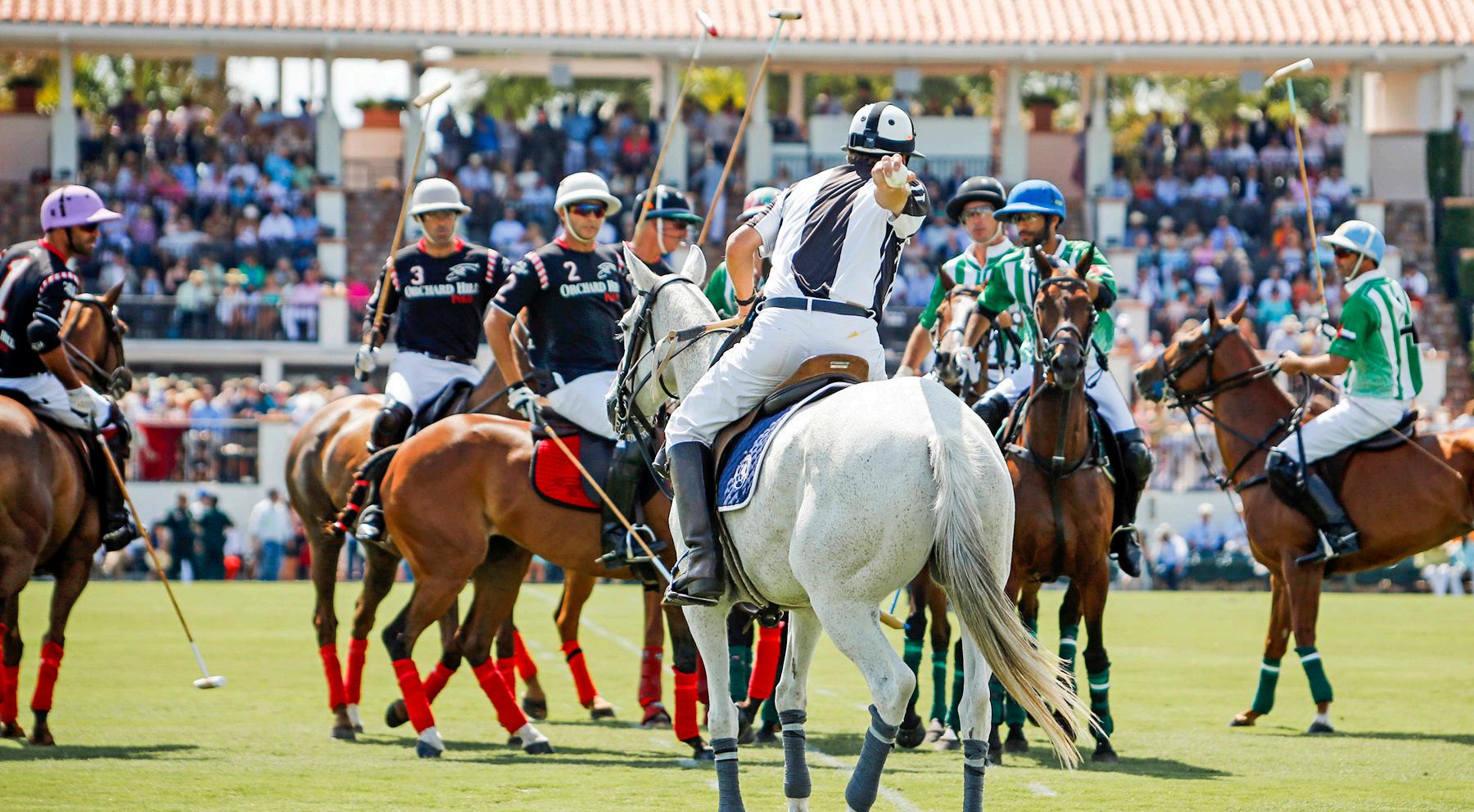
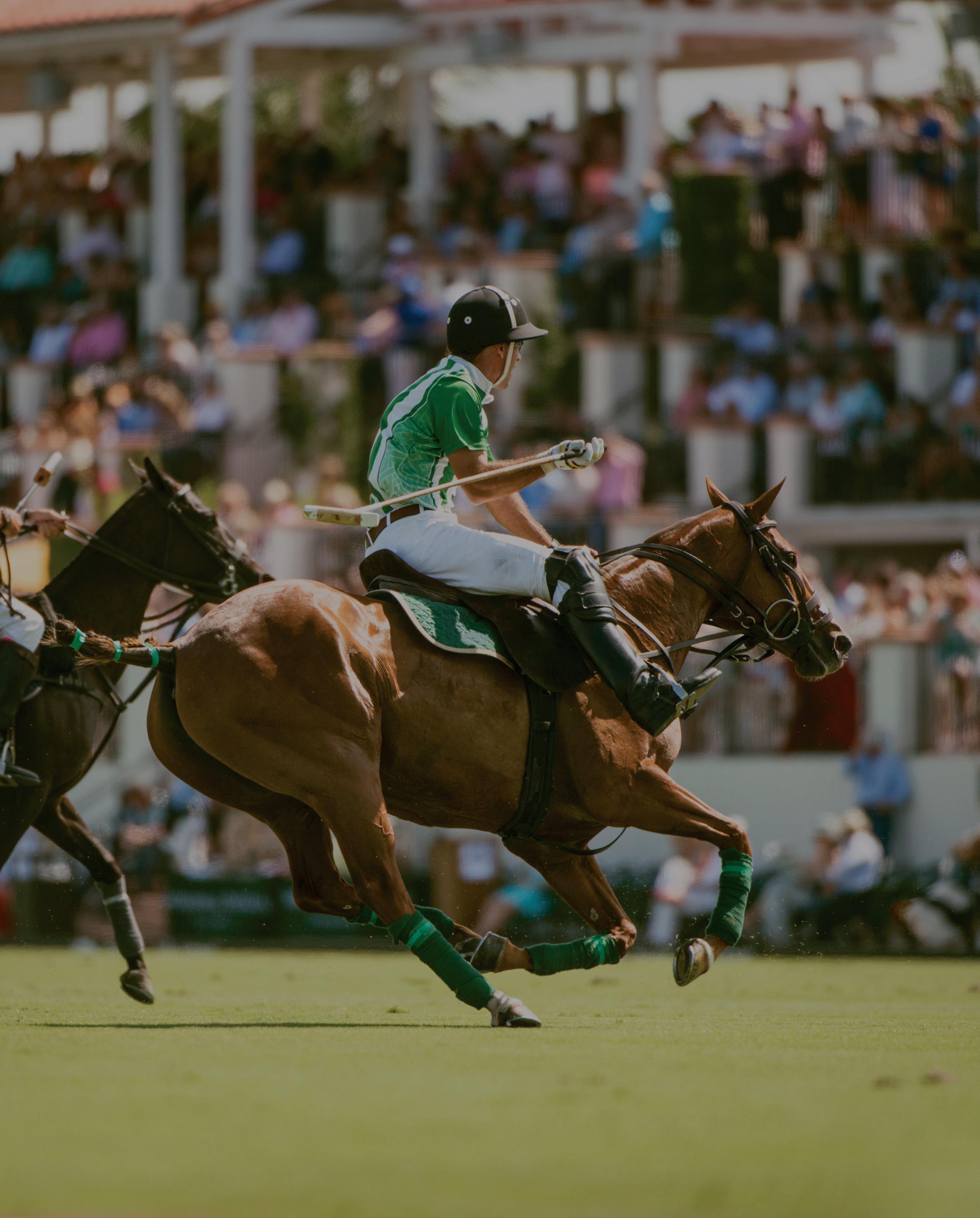
Throw-in in front of capacity crowd during the 2016 U.S. Open Polo Championship®. Photo: David Lominska
The appearance of a polo pony is different than that of horses in most other equestrian sports. Manes are shaved and the ponies’ tails are braided and tied up out of the way of mallets or reins during the close physical contact at high speeds. As the unsung heroes of the game, the grooms take care of all the day-to-day responsibilities behind the scenes such as conditioning, training and stable maintenance.
There are no breed restrictions on the horses of the game, and they can be of any size and color, but a great majority of them are Thoroughbreds or crossbreeds including that influence. They require speed, stamina and the athletic ability to stop and turn at high speed. Many polo players describe their best mounts as having an aggressive confidence and a feel for the game.
HANDICAPPING
A handicap is a comparative rating of polo playing skills conferred by the USPA and expressed as “goals” that range on a scale from -2 to 10. A -2 would be given to a beginner player whereas a 10 handicap is reserved for the most skilled player. These ratings are not directly correlated with the number of goals a player scores, rather, a variety of factors such as skill, horsemanship, strategy, knowledge of polo, team play and sportsmanship. The team handicap is the sum of the players’ handicaps. Each tournament has a handicap range and each participating team’s handicap must fall within that range.
SAFETY
The rules of polo are based almost entirely around safety and designed to prevent injury to players and their mounts. The official Safety Committee and Equine Welfare Committee monitor all safety aspects of polo through injury research, prevention measures and testing of protective gear, and communicate that information along with recommendations to polo players and officials at the club and national levels.
EQUIPMENT
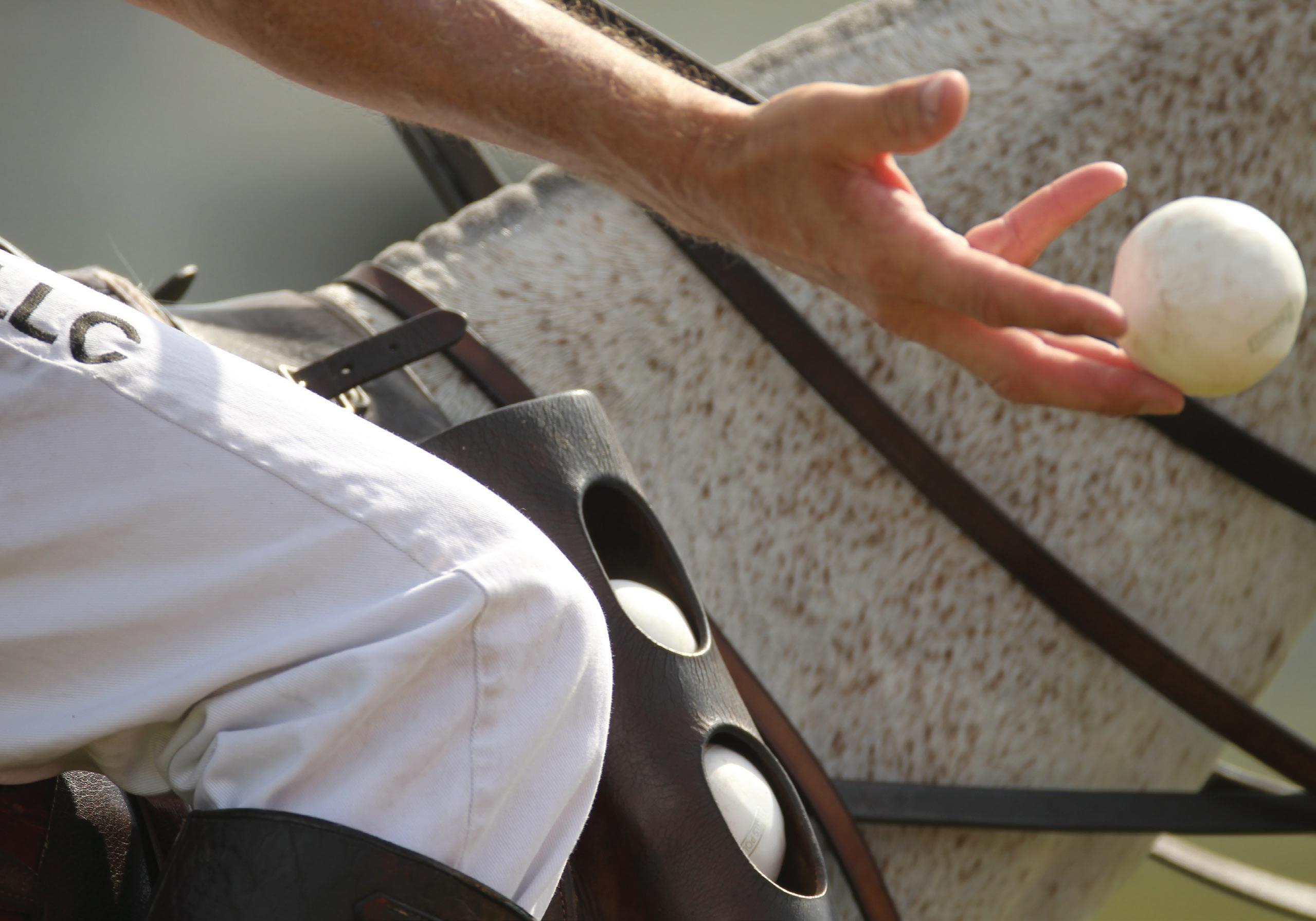
Balls – In outdoor polo, the ball is about the size of a baseball and made of hard plastic. It will weigh between 3.5 and 4.5 ounces.
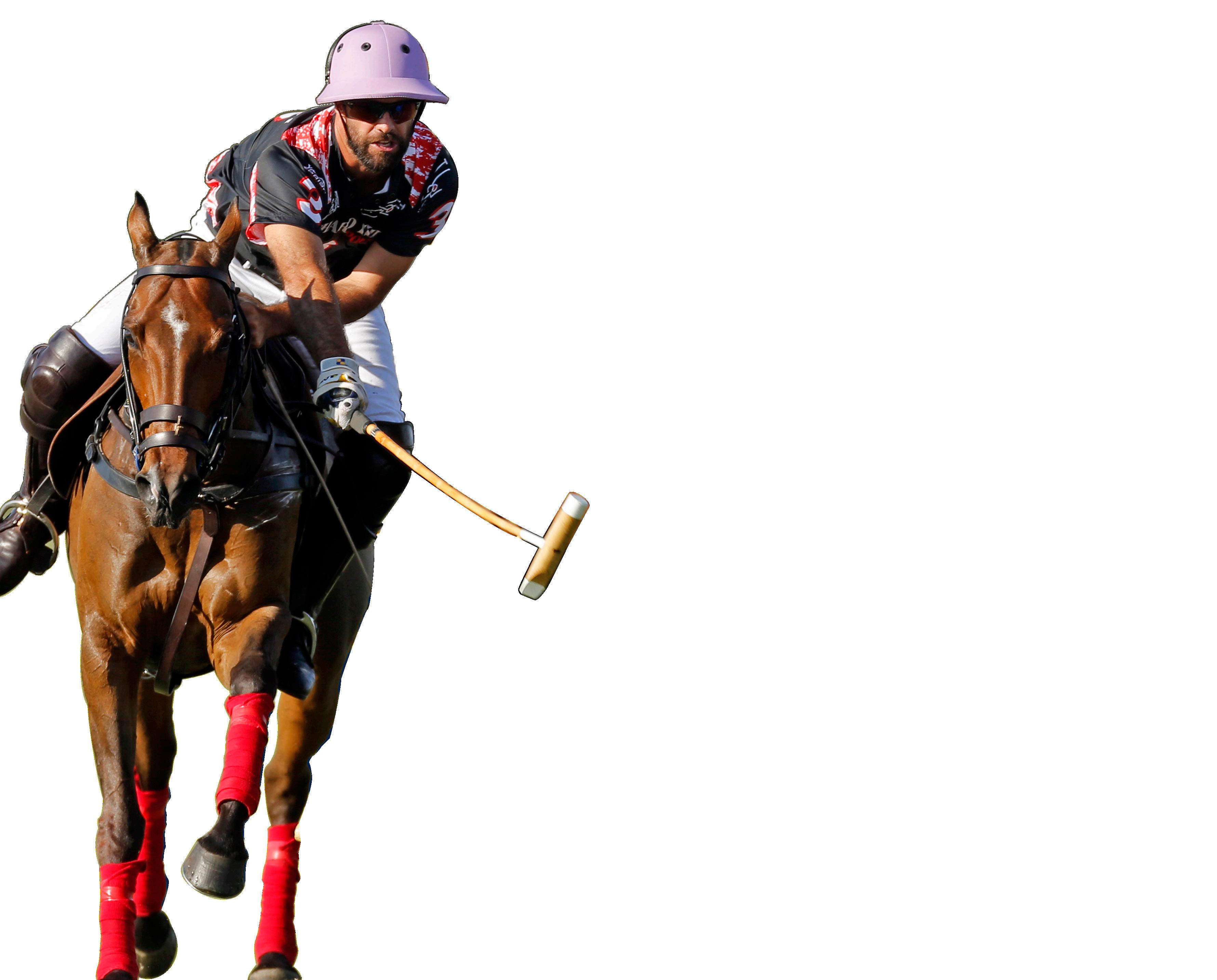
Leg Wraps - The colored material wrapped around the horses’ lower legs, leg wraps are typically made of a synthetic felt-like material and have some stretch to them. They serve two purposes: protecting the horses’ legs from injury and providing support.
Boots - Players wear leather boots that extend up to the knee to protect the lower leg and enough heel to keep the boot from slipping out of the stirrup. There are also a variety of equine protective boots, which may be used with leg wraps for additional protection.
Helmet – The USPA rules require that all polo players wear a helmet during play. Helmets are traditionally covered in cloth or leather and comprised of an outer fiberglass or carbon-fiber shell with an interior high-density foam liner for padding, typically secured by a chin-strap or a harness.
Knee Guards - Protective equipment worn by players on their knees. They are generally padded and made of leather.
Mallet - The mallet is used to hit the ball and is generally between 50 and 53 inches long. The grip is similar to that of a tennis racquet with a sling, which the player loops over his or her thumb. The sling helps to ensure the player does not drop the mallet during the rough action, as there is no timeout called for a player to dismount and retrieve it. The shaft is traditionally made from a bamboo cane while the cigar-shaped head is made of a hard wood.
Tack - Refers to the equipment which goes on the horse: bridle, saddle, saddle pad and wraps.
Misc. Player Equipment – Whether a player chooses to use gloves, protective facemasks, eyewear, elbow pads or mouth guards is a personal preference.
HISTORY OF THE UNITED STATES POLO ASSOCIATION®
Dating back thousands of years to Central Asia, polo is among the oldest organized sports ever played and was first introduced in the United States, by way of England, in 1876. It didn’t take long for Americans to take a liking to the sport and assemble their own loosely structured matches. As players and teams propagated, the development of the sport demanded a governing body, which led to the formation of the United States Polo Association (USPA) in 1890. Originally known as “The Polo Association,” the USPA is the oldest equestrian governing body in the United States. The USPA’s goal was to coordinate games, standardize rules and establish handicaps so the teams could be more evenly matched.
With new clubs rapidly emerging on the East Coast, the original USPA headquarters was located in New York where the first formal U.S. club, the Westchester Polo Club, was established. The USPA began operations on a voluntary basis with an elected committee structure and presently operates in Lake Worth, Florida.
In its early days of regulation, the USPA initiated changes in the number and length of time periods (chukkers) in a match, standardized equipment, mandated pony height and significantly improved training. The USPA established many tournaments which are still played today. As the sport gained popularity and expanded geographically, circuits developed across the country, along with indoor (arena) polo and interscholastic and intercollegiate (I/I) programs.
Throughout the World War era, USPA membership included over 1,200 military players from the U.S. Army, who were encouraged to play polo, in order to improve their riding ability. Interest extended all the way to Hollywood, as dignitaries including Walt Disney and President Theodore Roosevelt took up the game. The U.S. Open commenced at Van Cortlandt Park in New York City, and the Indoor Polo Association combined with the USPA to expand the scope of the sport.
Great strides were also made around this period as the overture of sponsor money for horses and professional players was introduced, and international play increased. Dominant polo centers were active in California, Florida and Texas, as polo evolved from a society sport to include a broader base of budget-minded horsemen, professional players and commercial sponsorship.
Today, USPA membership includes approximately 300 clubs in 13 different circuits across the United States and 40 national tournaments. Supported by funding that comes from its officially licensed consumer brand, U.S. Polo Assn., the USPA tenaciously reinvests in numerous programs and services designed to grow and sustain the sport -particularly regarding the development of next-generation American players. A key part of the sport’s evolution is the emergent inclusiveness and diversity of the polo community. In addition to the continuing growth among young players, women now represent 40 percent of USPA membership.
The USPA has made significant progress in the areas of umpiring, rules, safety regulations and refinement of the handicapping process, while retaining many of the sport’s distinctive traditions. Polo has also begun to incorporate leading-edge technology, as the level and amount of polo being played is the highest in the history of the game. As the official resource for the sport of polo in America, the USPA aims to provide a wide variety of resources to make the polo experience enjoyable for both participants and spectators, while also providing a foundation for the future of the sport.
ABOUT THE UNITED STATES POLO ASSOCIATION®
Founded in 1890, the United States Polo Association (USPA) is the national governing body for the sport of polo. The USPA is currently comprised of almost 300 member clubs with over 5,400 individual members, and oversees 40 national tournaments.
MISSION
The United States Polo Association® was organized and exists for the purposes of promoting the game of polo, coordinating the activities of its Member Clubs and Registered Players, arranging and supervising polo tournaments, competitions, and games and providing rules, handicaps, and conditions for those tournaments, competitions, and games including the safety and welfare of participants and mounts.
USPA PROGRAMS
CERTIFIED POLO INSTRUCTOR (CPI) PROGRAM
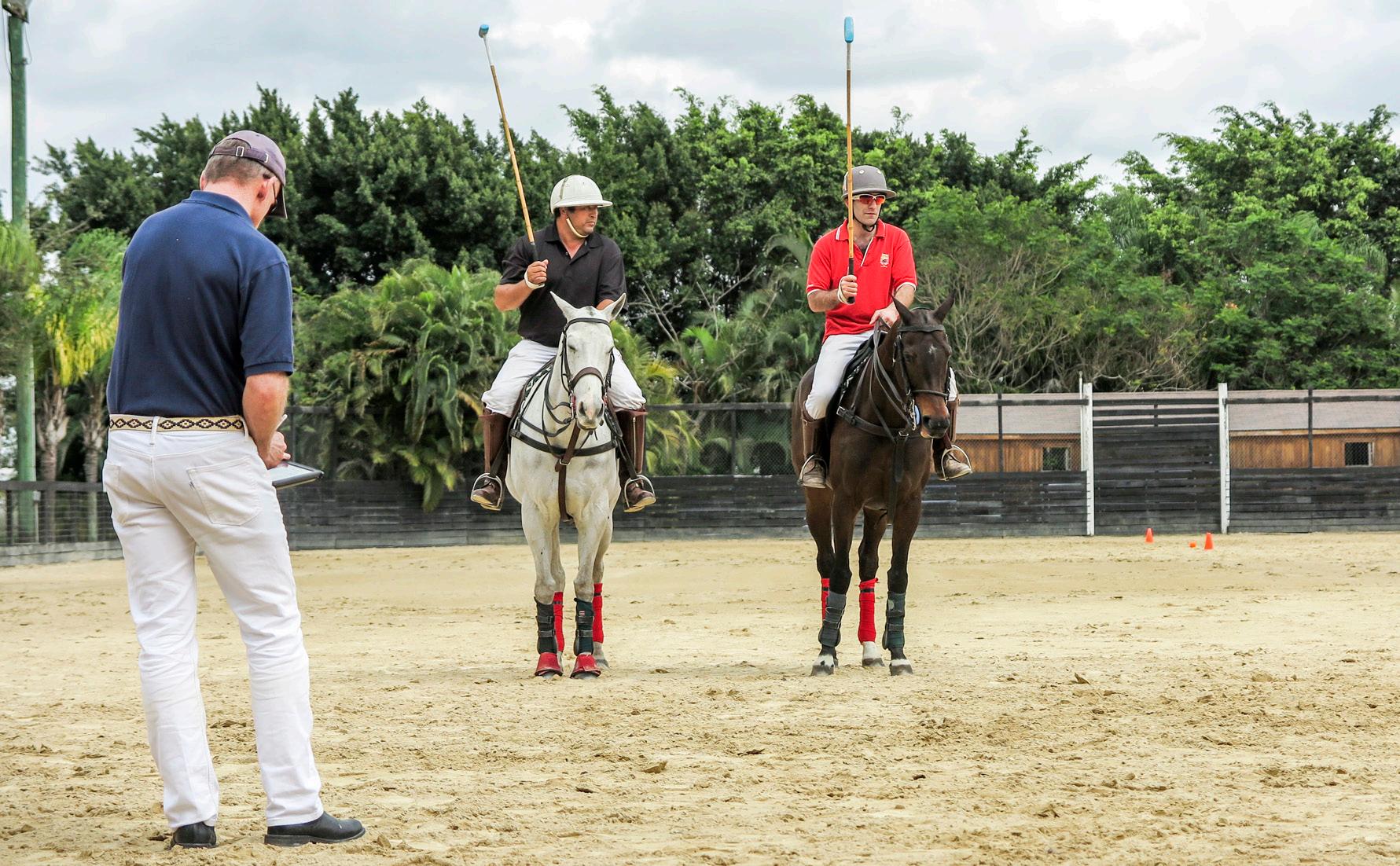
The mission of the USPA Certified Polo Instructor Program is to identify and educate equine professionals by requiring industry standards for teaching and managing the sport of polo. Special emphasis is placed on developing programming that will equip polo instructors to coach the next generation of polo students with an emphasis on sportsmanship and safety, to facilitate a lifelong love of the sport.
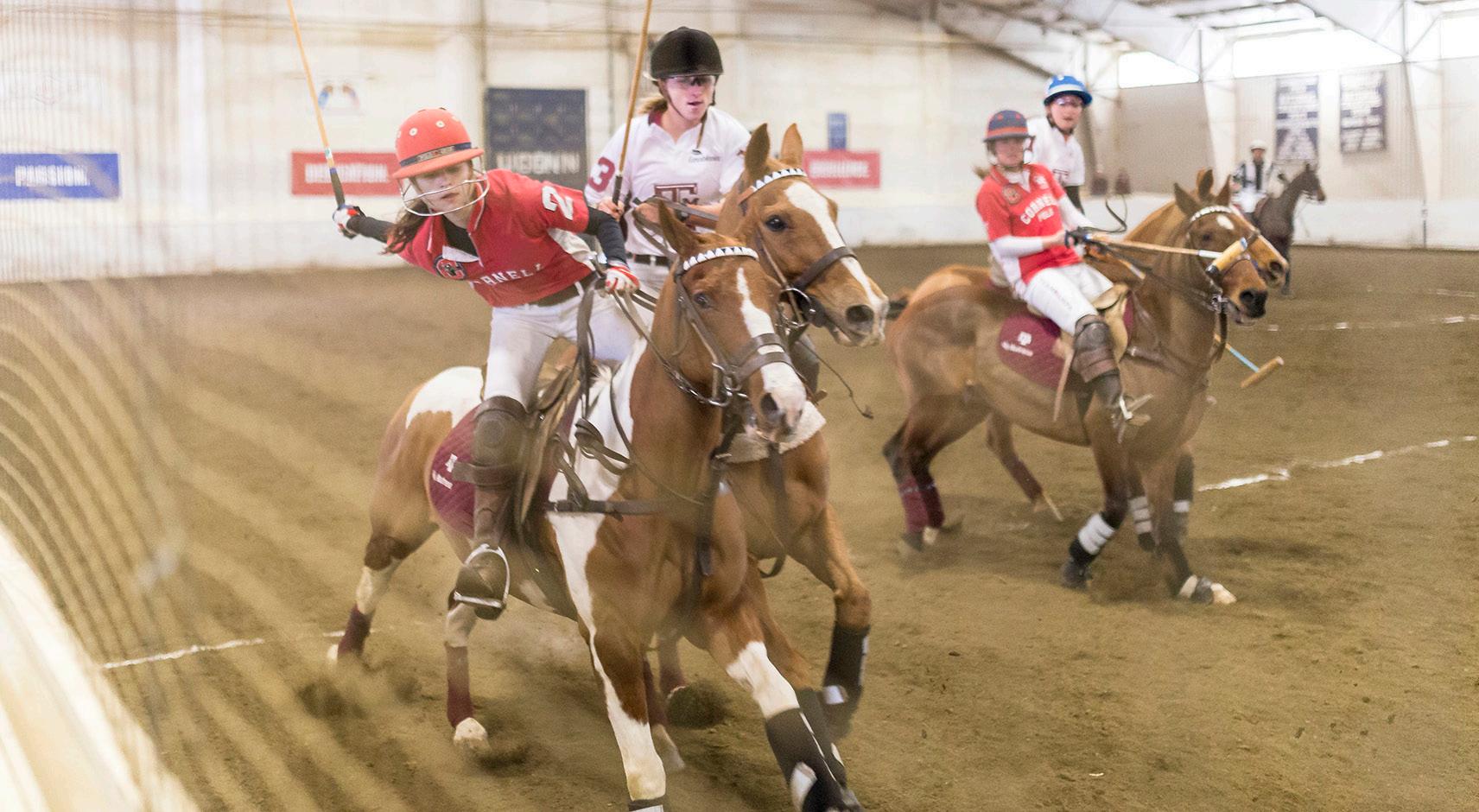
Emma Eldredge of Cornell takes a shot along the boards at the 2016 National Intercollegiate Championships at the University of Connecticut in Storrs, Connecticut.
INTERCOLLEGIATE/INTERSCHOLASTIC (I/I)
The mission of the Intercollegiate/Interscholastic Committee is to promote growth of the sport by maximizing exposure by recruiting collegiate and scholastic institutions. Intercollegiate/Interscholastic polo is played indoors, in an arena, under the USPA Official Arena Rules with modifications.
NATIONAL YOUTH TOURNAMENT SERIES (NYTS)
To cultivate and promote junior polo throughout the United States by providing the organizational structure to support junior polo clinics, tournaments and international competition. The program will utilize Certified Polo Instructors, experienced Team USPA members, and other qualified instructors as mentors and clinicians. Junior Polo will also work with the United States Pony Club and other youth equestrian organizations to develop new playing members of the USPA.
TEAM USPA
Team USPA is a Polo Development LLC program geared toward growing the next generation of polo players and allowing young professionals to enhance their skills. The mission of the Team USPA Committee is to enhance and grow the sport of polo in the United States by identifying young, talented American players and providing them with mentor and training opportunities.
POLO DEVELOPMENT INITIATIVE (PDI)
Established by the USPA Board of Governors, the Polo Development Initiative program is designed to promote the growth of USPA membership and the development of USPA member clubs. The PDI Program awards reimbursement funds to clubs and polo schools whose goals are to develop and retain polo players.
UMPIRE SERVICES
The USPA Umpire program is responsible for the ways and means of achieving umpiring excellence throughout the United States. Providing umpire seminars and clinics, the USPA Umpire Training and Certification Committee oversees all advising pertaining to consistent umpire rules and interpretation enforcement.
U.S. POLO ASSN. is the official brand of the UNITED STATES POLO ASSOCIATION (USPA), the non-profit governing body for the sport of polo in the United States since 1890. All U.S. POLO ASSN. product is Official Product of the UNITED STATES POLO ASSOCIATION.
U.S. POLO ASSN. products enjoy worldwide distribution through independent retail, department, online and U.S. POLO ASSN. stores, selling clothing for men, women and children, as well as accessories and handbags, luggage, watches, shoes, home furnishings and more.
USPA Global Licensing Inc. (USPAGL) is the for-profit subsidiary of the USPA and the exclusive worldwide Licensor for the USPA’s global licensing program in over 135 countries.
The USPAGL mission is to create a long-term source of revenue for the UNITED STATES POLO ASSOCIATION, who uses the funds to govern, promote and develop the sport of polo through many diverse programs such as youth and children mentoring, intercollegiate/interscholastic competition, equine welfare and polo horse and player safety, among others.
We encourage you to visit our website at www.uspoloassnglobal.com.
U.S. POLO ASSN.
The International Polo Club matches are open to the public, with a wide range of accommodations including elegant grandstand viewing, field tailgating, stadium seating, field-side champagne brunch at The Pavilion, and exclusive sponsor boxes overlooking the impressive Engel & Völkers field.
SUNDAY HIGH-GOAL POLO TICKETS & HOSPITALITY OPTIONS
STADIUM SEATS
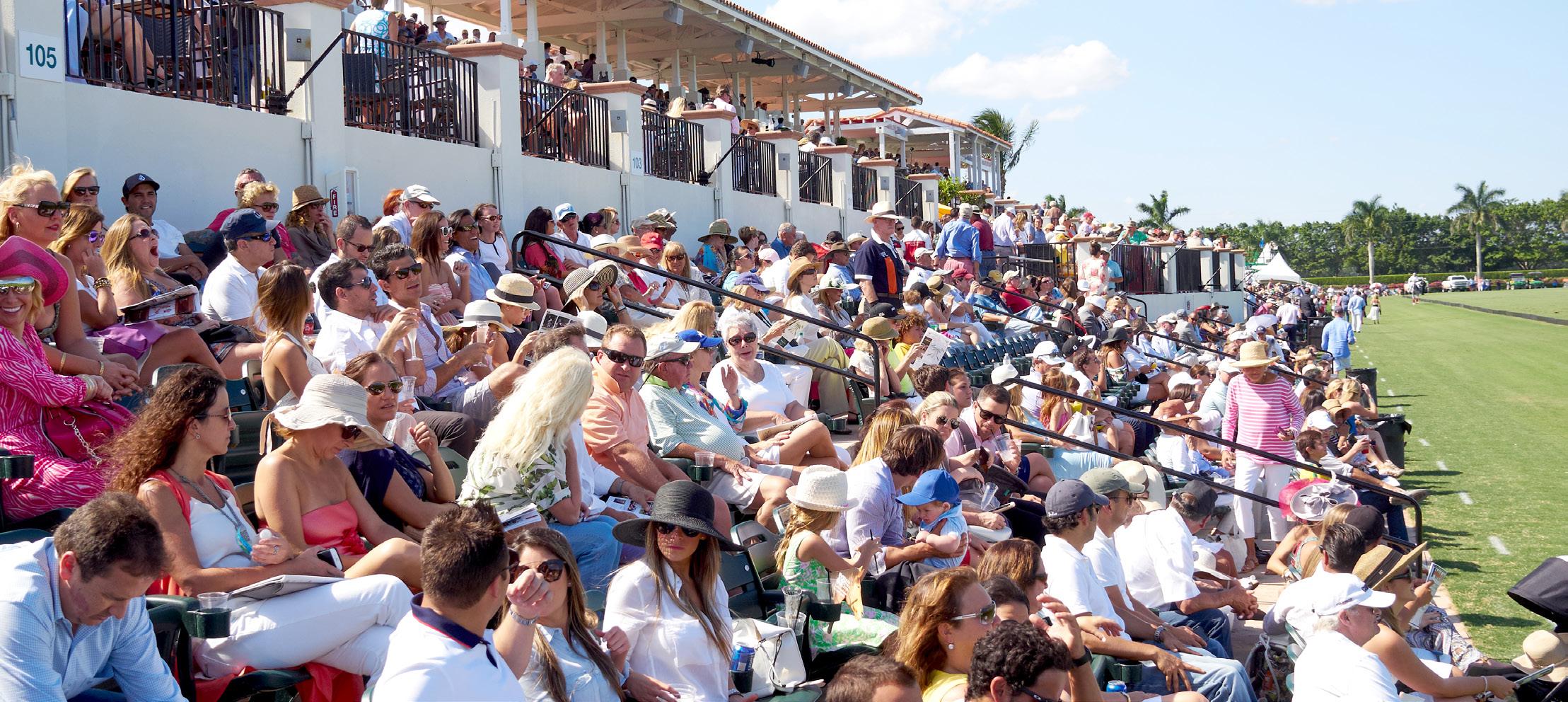
Stadium seats spread out over three sections (south, center, and north) and are situated along the field closest to the action. A $30-$40 green lawn seat ticket gets you an assigned seat in the stadium or center section. Full service bars are located on the north and south ends of the section.
THE PAVILION
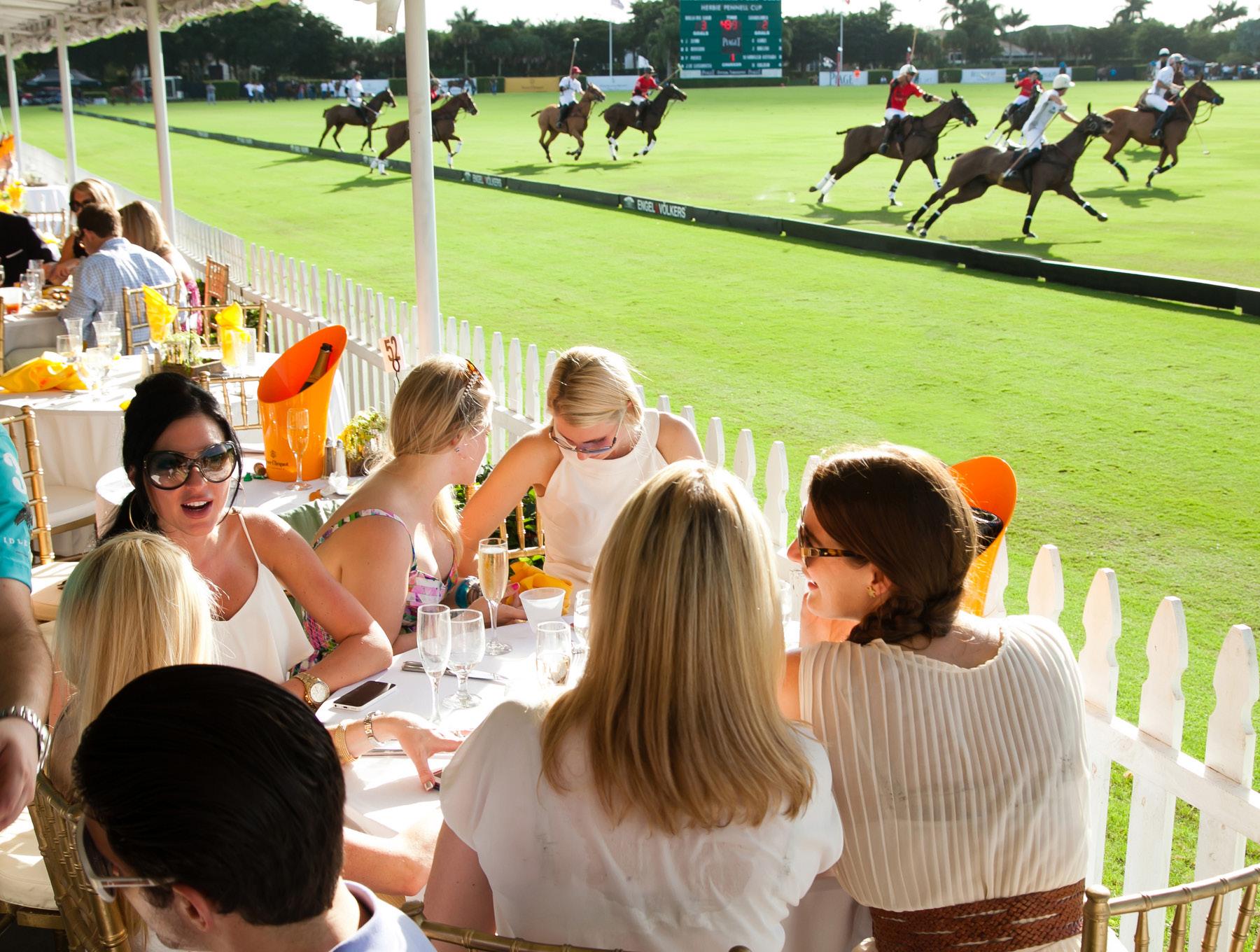
The Pavilion Champagne Brunch is an ever-changing array of delicious items served at various stations. With a fun atmosphere and a prime sidelines view of the polo match, The Pavilion is a prime ticket to the action.
$175 - Veranda Seating Per Person
$400 - Veranda Seating for two and a complimentary bottle of Veuve Clicquot
$1050 - Veranda Table for six and two complimentary bottles of Veuve Clicquot
$250++ Coco Polo Lounge Per Person. Includes specialty food display, gift item, field side lounge seating, complimentary glass of Veuve Clicquot
Enjoy Sunday Brunch at the International Polo Club. Experience brunch like a VIP in the Veuve Clicquot Pavilion with extravagant brunch options and champagne. Everything from eggs and waffles to prime rib and shrimp will be served. And don’t forget to stop by the delectable dessert table on your way out to the patio. Fieldside tables offer the best views of the polo match and perfect photo opportunities of the action. Or strike a pose in the Veuve Cliquot Champagne Garden photo booth to show off your polo fashion. Make sure you have fun and luxurious weekend plans, purchase your table today! Packages are available for individuals and groups of all sizes.
Want great seats to watch polo but don’t need brunch? We have tickets for that too! Sit “fieldside” in the green lawn seats for $30-$40 this Sunday and watch the game up close! Along with your front row seat, your ticket allows you access to many other areas that provide fun for the whole family.
For a chance to be featured in The Morning Line, take a stylish picture in the Veuve Clicquot photo booth and post online using our hashtags #ClicquotStyle and #IPCSundayPolo. Keep the young ones entertained between chukkers in the Kids Fun Zone sponsored by the Wellington Regional Medical Center with bouncy houses, face painting, and more!
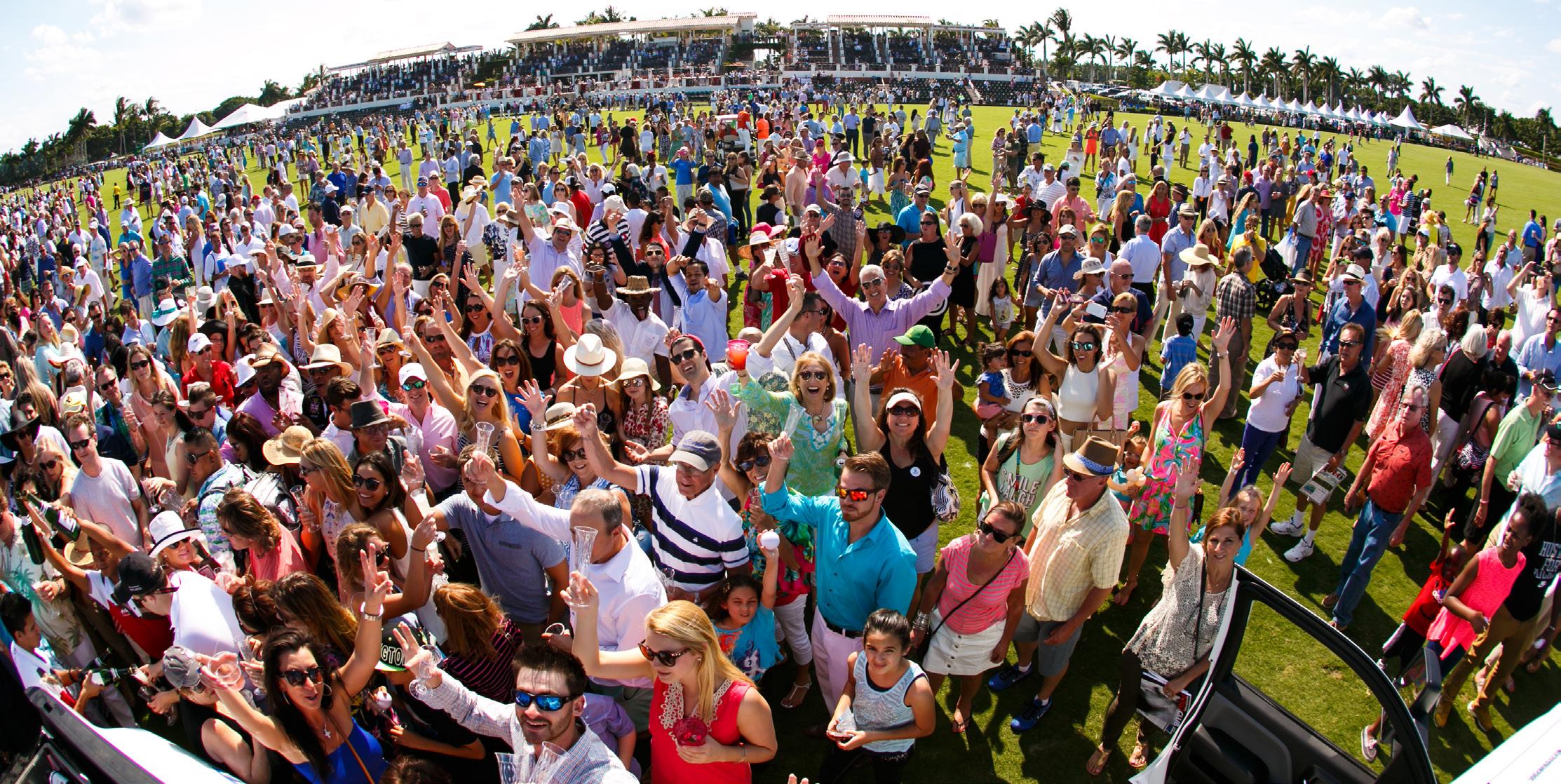
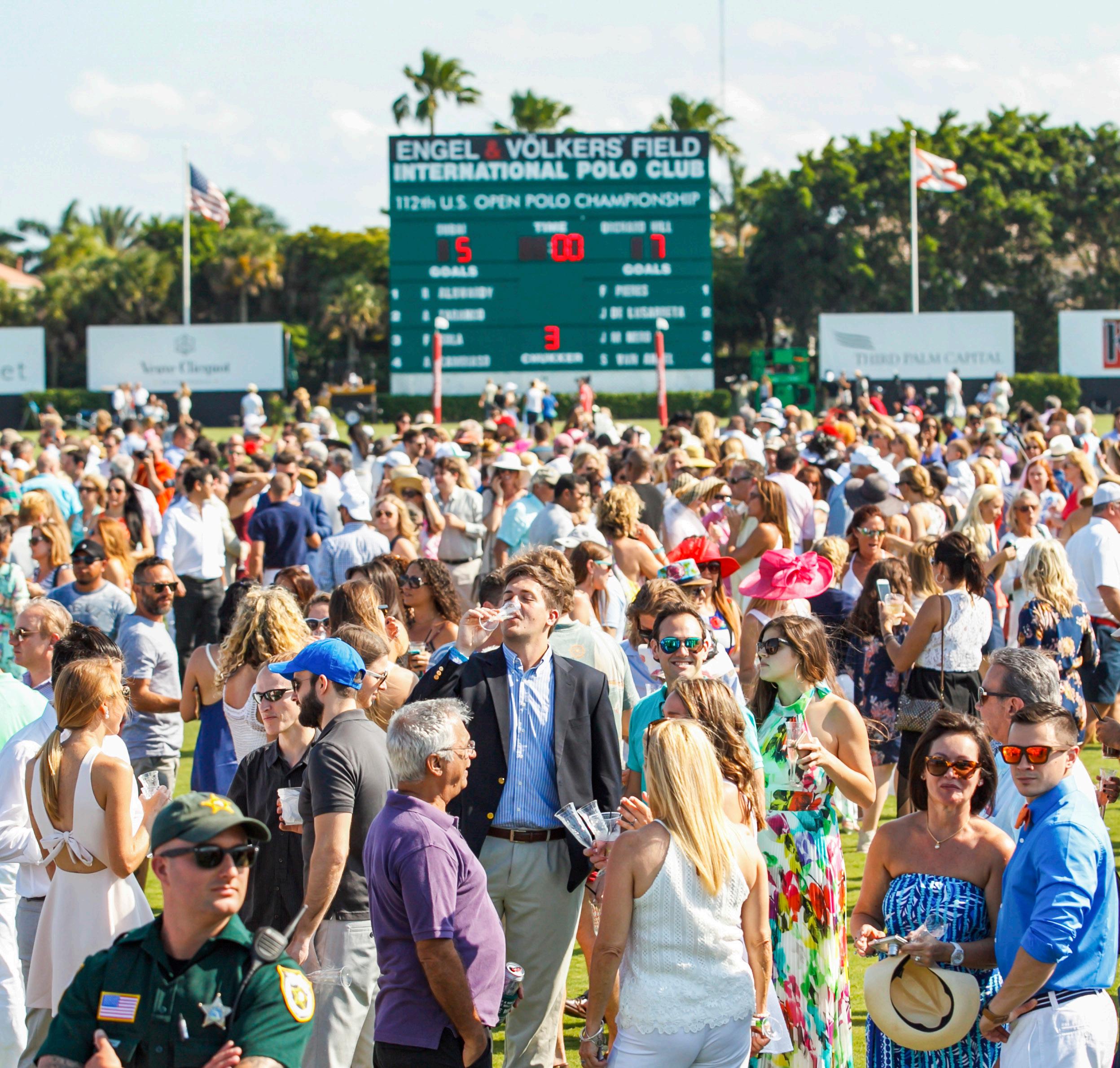
Also open to all are the halftime celebrations on the field! Once the 3rd chukker ends grab your friends and storm the field for your complimentary glass of champagne and ice cream bar. The perfect treats for a sunny polo day. Stomp some divots around the field and try to be #SpottedatIPC in our Live Facebook video and Instagram photos. Each week the IPC social media will select a special someone to be spotted so be sure to get on the field for halftime!