
Our past informs our future. | page 11



Our past informs our future. | page 11
Fall in Wisconsin is something to celebrate, and nobody does it better than Preschool students at USM. They spent weeks preparing for their annual Fall Festival, and invited parents and siblings to enjoy the fruits of their labor in spectacular fashion. What could be better than bushels of locally grown apples, a giant pile of leaves, and friends to share them with?
Pictured: Adeline Hauske '36

EXECUTIVE EDITOR
Tim Eilbes
Director of Marketing and Communications
EDITOR
Pamela Seiler
Assistant Director of Marketing and Communications
ART DIRECTION AND DESIGN
Maria Harris
Creative Services Director
ONLINE EDITOR
Eric Schad
Marketing and Digital Communications Manager
PHOTOGRAPHY/VIDEOGRAPHY
Brennan Checkalski
Visual Media Specialist
CONTRIBUTORS
Visual Image Photography
Scott Ash and the Milwaukee Journal Sentinel
USM Today is published by University School of Milwaukee twice per year. USM is an independent, coeducational, college preparatory day school for students from prekindergarten through 12th grade. Our editorial staff has made every attempt to ensure the accuracy of information reported, and we apologize for any inadvertent errors that may have occurred.
To change your address, your child’s address, or to unsubscribe, please contact the USM Advancement office at 414.540.3339 or advancement@usm.org.
PARENTS OF ALUMNI: If you are still receiving your child’s USM Today even though they no longer live with you, please let us know by emailing alumni@usm.org so we can send the magazine directly to them.

USM celebrates its 175th year in 2026. Join us as we look back and honor those individuals, ideals, and traditions that helped shape who we are today.
USM is providing teachers with assistance and strategies to tailor learning for every student.
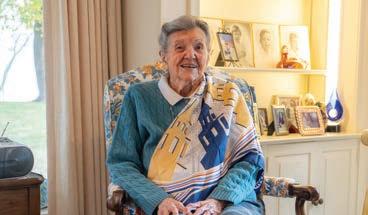
Joan Robertson MUS’34, USM’s oldest living alumna, shares her favorite school memories and the secret to her longevity.
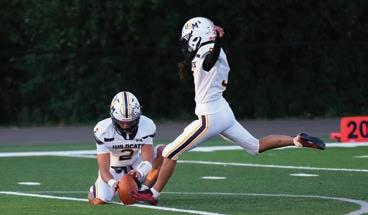
Anna Griesbach ’28 and Isabella Gonzalez-Rodriguez ’28 showcased their soccer talent on the football field this fall.
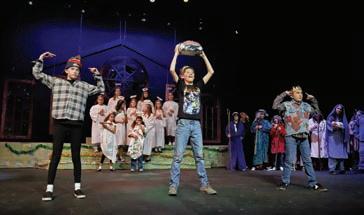
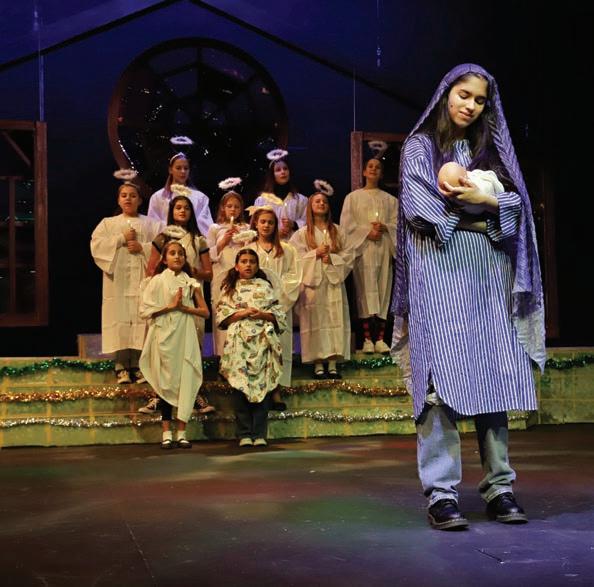
Performed by Middle School theatre students, “The Best Christmas Pageant Ever” was a hilarious and heartwarming holiday classic.
Dear USM Community,
In the nearly 250-year history of the United States, an independent school in Wisconsin with a 175-year legacy is truly distinctive. The year 1851 was a remarkable moment in history: the washing machine was invented, The New York Times published its first edition, and Sojourner Truth’s powerful “Ain’t I a Woman?” speech began circulating around the world. Amidst westward expansion, a world’s fair, and the debut of Verdi’s “Rigoletto,” the German-English Academy and Milwaukee Normal Institute and High School were founded in Milwaukee. Both would reshape education in this city, and eventually become part of University School of Milwaukee. Read more about this remarkable history in the feature story starting on page 11.
Each year, I have the privilege of sharing this history with our newest employees, and I am continually struck by how meaningful it remains. I am confident you will enjoy learning more about USM’s rich past in this issue of USM Today.
While our roots reach deep into the nineteenth century, USM continues to innovate and evolve. We remain steadfast in our commitment to helping students pursue excellence as learners, leaders, and citizens. Throughout these pages, you will see how USM remains at the forefront of education—particularly through our work in differentiated instruction that supports student growth and success. Our faculty embraces this important challenge, continually seeking new ways to help every student thrive.
I am also pleased to share the appointment of Joe Eason as our next head of Upper School (see page 4). Following a robust national search, Joe emerged as the ideal leader for this role. He will be a strong and thoughtful partner to our faculty, students, and families as we continue to move the Upper School—and the entire institution—forward with clarity and purpose.
Since the last issue of USM Today, I have announced my plans to conclude my tenure as head of school in July 2027. This extended timeline is intentional, allowing the Board of Trustees ample opportunity to identify the next leader to guide USM into the future. As I look ahead, I remain deeply committed to finishing my career here with energy, optimism, and—above all—a continued passion for our students and faculty.
Thank you for being part of the USM story, past, present, and future.
Warm regards,

Steve Hancock Head of School
USM’s “Portrait of a USM Learner” statement, the last of three statements that define what learning, leadership, and citizenship mean at USM, is now complete.
USM’s mission is to cultivate excellence in learning, leadership, and citizenship. Over the past three years, as part of the school’s strategic plan, faculty and administrators have been working to define those terms within our community. In 2023, the “Portrait of a USM Citizen” statement was completed, and the “Portrait of a USM Leader” statement followed in 2024. In 2025, the third and final “Portrait of a USM Learner” was completed.
As students progress through USM and gain skills and knowledge, what “learning” looks like evolves. But regardless of age or division, all students are encouraged to see themselves as lifelong learners who think critically, communicate effectively, and approach problems from multiple perspectives. Learning happens collaboratively both within and beyond the walls of the school, with support from teachers, parents, and peers. By the time they graduate, students have experienced an academic program that trusts them with, rather than shields them from, the complexity and nuance of the world.
Each of these statements define what students in Preschool, Lower School, Middle School, and Upper School learn, practice, and experience in regards to these three pillars—learning, leadership, and citizenship. They were inspired by the school’s Portrait of a USM Graduate.
“The process of developing this portrait was exciting, because it allowed us to clarify our values around learning
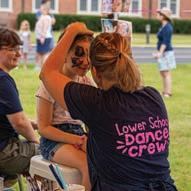
The new family carnival, hosted each August by the Enrollment Management office, seeks to minimize first-day jitters. Students meet their teachers and friends, play games, and walk their class schedule in a fun, relaxed atmosphere.
and education,” said Amy Hand, assistant head of school. “Schools sometimes describe their programs with language that can feel jargony to non-educators, using terms like ‘progressive’ or ‘experiential’ without articulating what those terms mean. Our Portrait of a USM Learner shares exactly what our school does. It describes, at each division, what we value and what families can expect students to learn, to practice, and to experience in the entire arc of a USM education.”
The full statement, along with division-specific features and a video overview, can be viewed online at www.usmtoday.org/learner.

USM’s revamped orientation program for new employees, designed to be fun and welcoming, introduced newcomers to the people and culture of USM. It also included off-campus opportunities to explore Milwaukee as a living classroom.
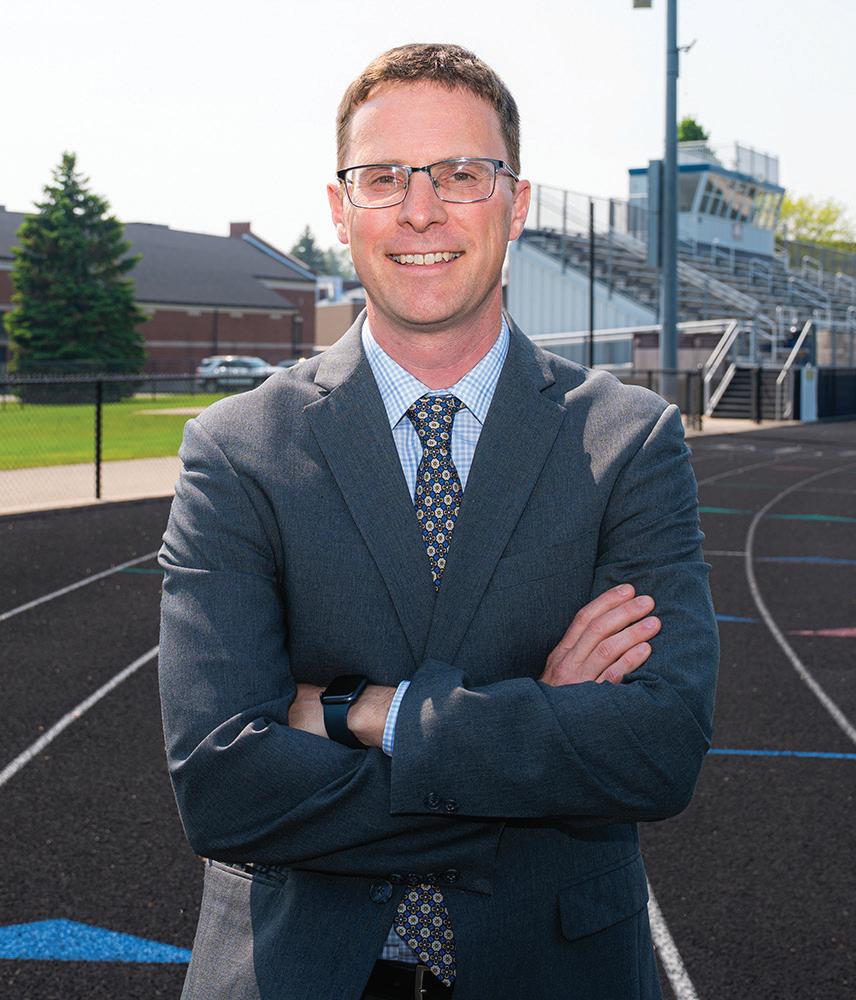
A national search for USM’s next head of Upper School led to the hire of somebody close to home: Joe Eason, the former interim head of Upper School and longtime teacher and coach.
Joe Eason has been appointed head of Upper School, effective immediately, following his service as interim head of Upper School since the start of the 2025–26 school year. Eason brings 16 years of experience at the school and a deep understanding of its mission, culture, and students to the role.
Eason has served in numerous leadership roles at USM. As interim head of Upper School, he focused on building trust through transparent communication, predictable systems, and strong relationships with faculty, students, and families. Under his interim leadership, the Upper School has strengthened its community-wide events, refined division policies, and partnered closely with the school’s Enrollment Management office to support incoming 9th grade students.
“Joe brings the heart of a teacher and the vision of a seasoned leader,” said Head of School Steve Hancock. “He understands what makes University School of Milwaukee special and leads with joy, integrity, and purpose. His commitment to transparency, high standards, and authentic relationships has already had a meaningful impact on our Upper School. We are fortunate to have a leader so deeply rooted in our community.”
Prior to his interim appointment, Eason served for seven years as chair of the Upper School’s History department. He has taught at USM since 2009, offering a rigorous and engaging college-preparatory curriculum across core courses and electives. He has received both the Wright Family Distinguished Faculty Award and the Charles F. Wright Technology in Teaching Award.
As the school’s longtime track and field head coach, Eason built an athletic program defined by high expectations, ethical
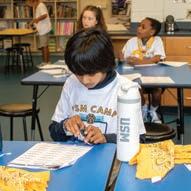
Fifth grade teachers developed Camp 5, a “summer camp” experience that makes Middle School fun and exciting for 5th grade students. It combines practical skills like organizing lockers and navigating a new schedule with creativity and play.
leadership, and competitive success, including multiple state-level achievements. His leadership philosophy emphasizes resilience, collaboration, and helping students find meaning as they navigate challenges.
Eason’s professional preparation includes extensive institutional service at USM, participation in multiple search and governance committees, and recent completion of the Executive Leadership Program at Northwestern University’s Kellogg School of Management. He holds advanced degrees from Princeton Theological Seminary and a bachelor’s degree from Central College.
“I am deeply grateful for the trust this community has placed in me,” said Eason. “USM has been my professional home for many years, and I am honored to serve the Upper School in this role. I believe in a school culture where students are known and valued, faculty are supported, and our shared mission guides every decision we make.”
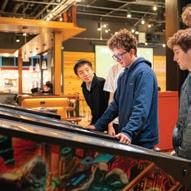
Annual Middle School and Upper School retreats, held in fall, build community through shared experiences, foster leadership, challenge assumptions, encourage self-reflection, and support USM’s mission.
After a thorough review process, USM Summer Camps is now accredited by the American Camp Association, making it one of only 26 day camps in the state to have earned this accreditation.
USM Summer Camps is now accredited by the American Camp Association (ACA), signifying that the program is in compliance with the highest standards in the industry. To receive the accreditation status, USM’s Auxiliary Programs office—which houses the school’s summer and other camps— participated in a thorough review of its operations, including staff, facilities, policies, and more. USM Summer Camps is currently one of only 26 day camps in the state of Wisconsin to be accredited by the ACA.
Benefits of ACA accreditation include gaining a framework to manage resources, offering best practices in policies and procedures, and striving for continuous improvement. Accreditation also demonstrates, through voluntary participation in the ACA’s peer-review accreditation process, the camp’s commitment to providing the best possible experience and to being transparent in its practices and standards.
Sabrina Raber, director of Auxiliary Programs at USM, spent nearly a year preparing for the July 2025 visit from ACA representatives. She compiled
documentation of compliance for 290 individual standards ranging from hiring policies and staff training to food service and storage protocols, insurance coverage, vehicle maintenance, health screenings for campers and staff, and more.
Although arduous, the accreditation process is an opportunity to evaluate the program objectively and determine where and how improvements could be made. For example, camp administrators now have written documentation for the storage and maintenance of specialized equipment like fishing rods and ice skates, and they increased the number of staff hired to be in compliance with the ACA-specified ratios of students to counselors.
“Being accredited should be a signifier to parents that we are both aware of and concerned about camper safety, risk management, and making sure that everything is done to the highest quality in our camps,” said Raber. “It means someone visited and observed our camps and said, ‘Yes, you’re doing everything properly, the way it should be done,’ and I think that’s a great reflection on us.”
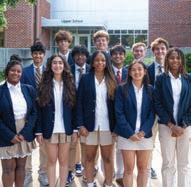
Congratulations to seniors Gianna Cooks, Anand George, Nina Goldberg, Eliana Igwike, Nikhil Lazzaro, Bethany Martin, William Merluzzi-Hitler, Charles Slocum, Read Tuttle, Eshaan Vasudev, Angela Wang, and Anderson Werner, who were named Cum Laude Society Inductees.
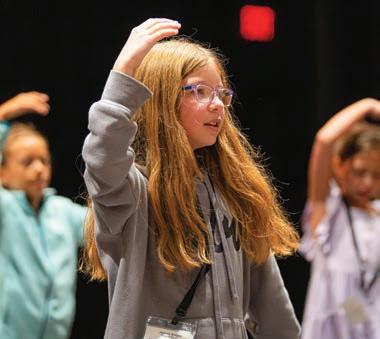


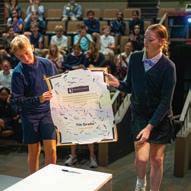
Signed on the Dotted Line Middle School students, teachers, and administrators signed pledges and agreed to uphold USM’s Common Trust values of respect, trust, honesty, fairness, and kindness. The pledges are hung in the Middle School as a daily reminder.
What happens when you hand select 52 vendors from around the country and invite them to USM to sell their exclusive apparel, jewelry, home decor, and more? You get Holiday Shops, a signature fundraising event that provides vital support for student activities and programming. For 49 years, Holiday Shops has been organized by the Parents’ Association and run 100% by volunteers. Although it has changed and evolved over the years, it remains a festive precursor to the holidays, providing meaningful support for student experiences at USM.
Holiday Shops revenue is vital to supporting a variety of student programming and activities, some of which are listed below. The funds help offset expenses like facility and equipment rentals, food, vendors, and transportation.
• Prekindergarten Doctor’s Park trip
• Preschool Fall Festival
• 2nd grade Camp Minikani overnight trip
• 8th grade Washington, D.C. trip
• Homecoming dance
• Prom
• Senior dinner
• Spirit T-shirts for new students
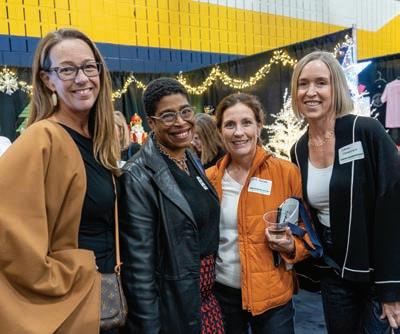
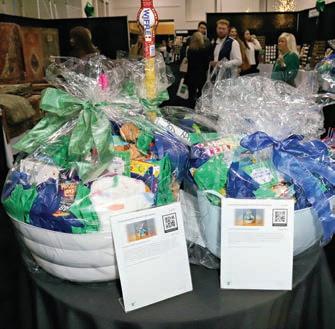

$140,000 raised via vendor sales, donations, silent auction, and corporate sponsorships
new and returning vendors More than 1,500 attendees over four days
Authors Geo Rutherford and Sophie Blackall visited USM in September to promote their respective books, “Spooky Lakes” and “If We Were Dogs.” Both authors were a hit, with their books showing the world in a new perspective.
Award-winning journalist Kieran Mulvaney visited in fall to discuss his work in and around the coldest regions of the planet, as well as his latest book, “Arctic Passages,” which was required reading for Upper School Global Scholars students.
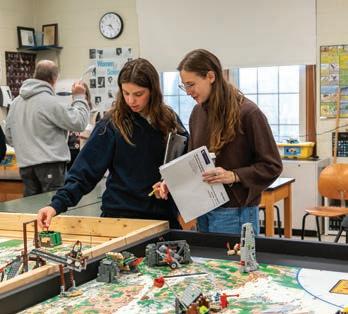
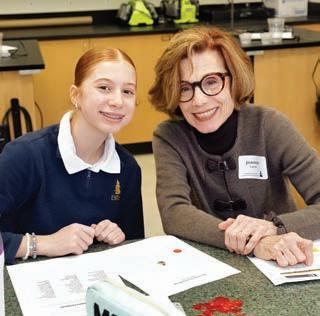
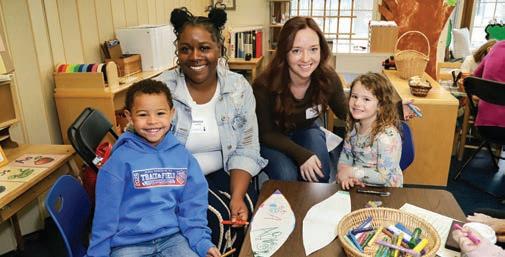
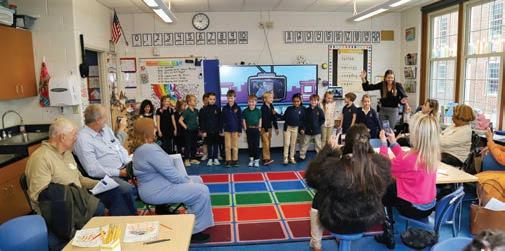
Icy temperatures, rain, and a wind advisory were not enough to prevent more than 700 visitors from attending Grandparents and Special Friends Day on Nov. 26, 2025. Guests warmed up with hot coffee and a light breakfast, followed by classroom visits with their special students. The much-loved celebration, held annually, was coordinated by the Parents’ Association, with PA leaders Georgia Dimitropoulos and Sini Goodman serving as co-chairs.
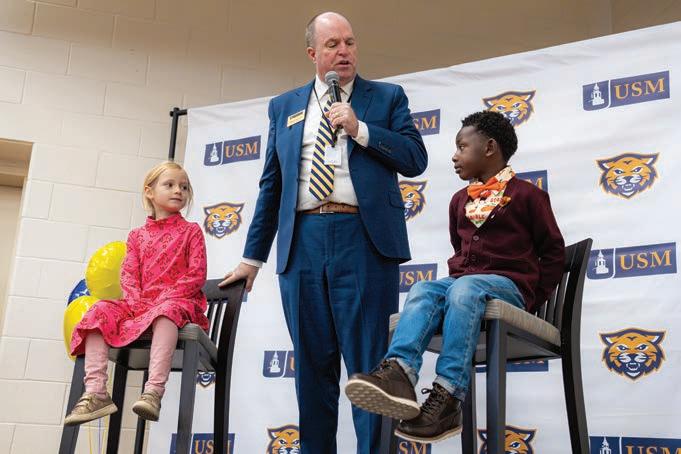
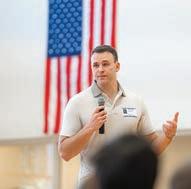
Limited Vision, Profound Insight
Aaron Golub, the first legally blind NCAA Division 1 football player, spoke to students and parents in September. He shared messages of resilience and persistence, along with strategies to create true change and rethink past beliefs.
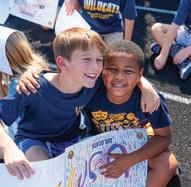
We’ve Got Spirit
Homecoming week was packed with fun and festive events like the Wildcat Homecoming Jamboree, spirit wear days, an all-school pep rally, and, of course, exciting athletic matchups.
A cross-divisional, year-long pairing of juniors and 2nd graders is mutually beneficial: 2nd graders see leadership in action from positive role models, and juniors are reminded that recess and messy science can be really fun.
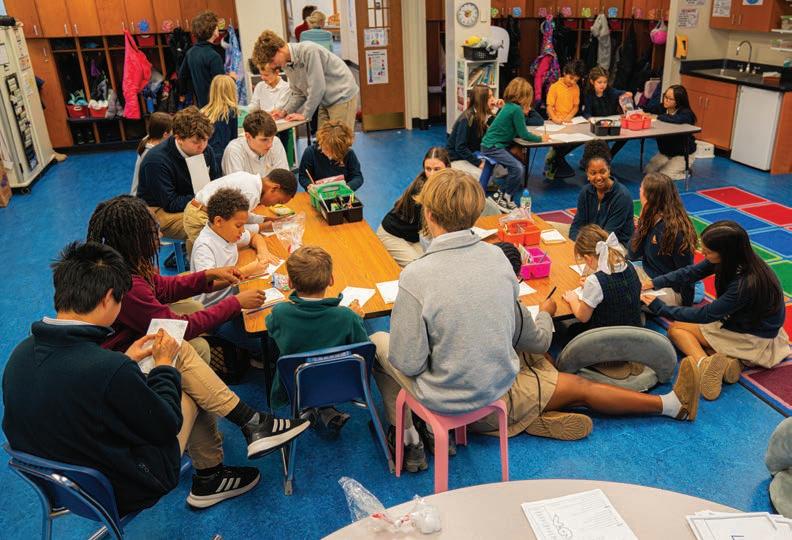
It was a Thursday in September, and the 2nd graders were nervous. They were about to meet their junior class buddies, who they’d be paired with for the entire school year, for the first time. Would they get along? Would they have anything in common?
As they made their way to the Lower School, the juniors were also nervous. What if they said the wrong thing?
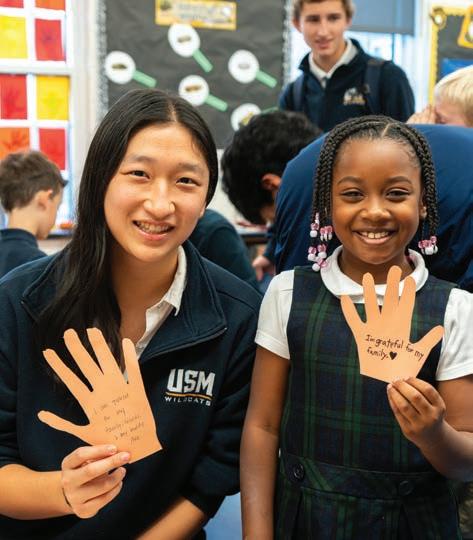
What if their buddy got upset, or bored? “At first, I was a little wary because I had never done anything like that before,” said Zy’Nyah Burnett ’27. To help break the ice, each junior had written a short note to their buddy a few days before their initial meeting, introducing themselves and describing their interests.
After the introductions were complete, juniors walked with their buddies back to the Upper School for a day of activities, including making slime in the science classrooms, screen-printing canvas tote bags in the art rooms, and building LEGO structures. “The planned activities were great because the juniors got to be leaders and help their buddies with whatever they were working on, and the second graders felt comfortable because they could focus on the task at hand, rather than the person
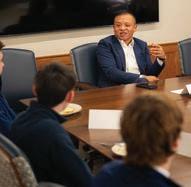
USM’s Career Lunch and Learn program, where students eat with professionals, is off to a strong start. The first four sessions represented the medical, finance and wealth management, real estate, and AI fields.
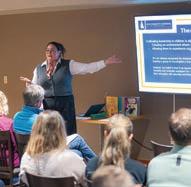
More than 175 guests attended the second-annual Parent University, choosing three sessions from more than 40 options that covered topics like parenting, academic programming, college admissions, and more.
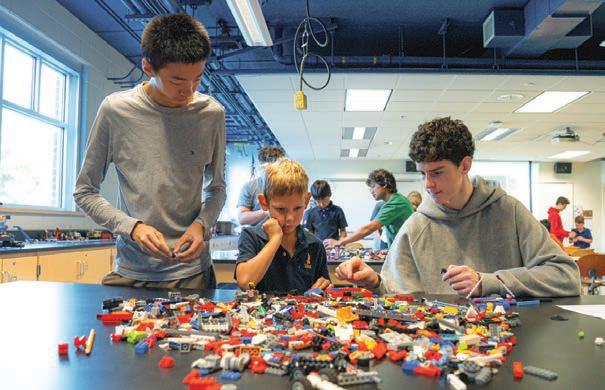
standing next to them,” said Katie Jablonski, 2nd grade teacher. They even ate lunch together in the Jack Olson ’67 Commons, where the popsicles were a big hit with the 2nd grade students, who typically only get dessert on Fridays.
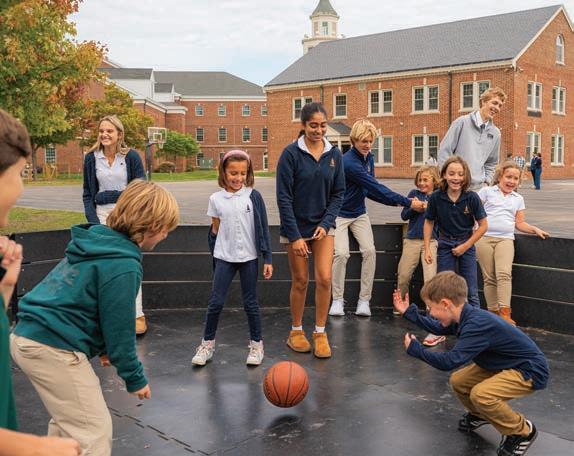
The idea to pair juniors with 2nd graders came from Sue Baker, junior class dean and Upper School physical education and health teacher. Baker coordinated with Upper School teachers and 2nd grade teachers to plan many events throughout the school year. Since their first meeting, juniors enjoyed recess and explored the outdoors with their buddies in October, made turkeys in November, and wrote holiday cards together in December. Because the pairings remain the same for the whole school year, they are able to build deep connections. “In 2nd grade we focus on the word community, and juniors focus on leadership,” said Jablonski. “So it’s pairing those two things and putting them in action. It’s very rare to be in one school where we can get together and do something like this, so we jumped on the opportunity.”
By the end of the day, all nervousness was gone. “My students can’t wait to see their buddies again,” said Jablonski. “Every day they ask me when they get to see them again. They can’t wait.”
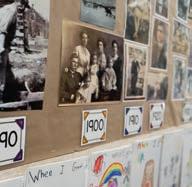
First graders explored history through photos and stories from their own families. The photos encompassed a wide range of decades, including some from the 1890s, and led to meaningful insights and discussions.
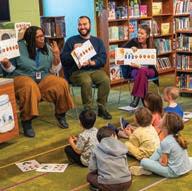
The Stratton Preschool/Lower School Library has a new collection of French and Spanish books thanks to a collaboration between Dolores Brown, Preschool and Lower School librarian, and World Language teachers Gina Merino and Laith Al-Msaibeeh.
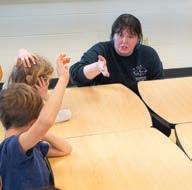
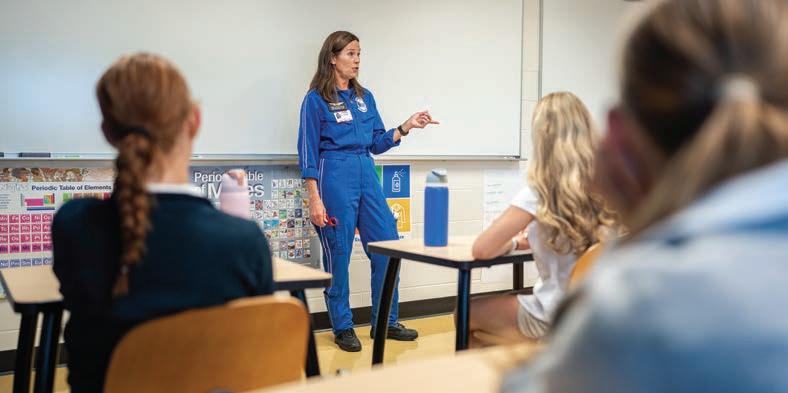
Dr. Amber Bakkum, Upper School science teacher, is one of 12 teachers nationwide selected to participate in the NASA-supported Space for Teachers Program, in which educators conduct research in zero gravity.
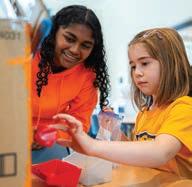
For many years, 7th grade students have developed arcade games for younger students to play for 25 cents. The money raised—now collectively surpassing $60,000 —supports zero-interest microloans through the KIVA organization.
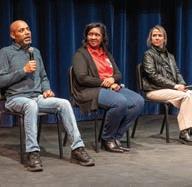
Thanks for Your Service
On Veterans Day, Middle School students gathered to hear from school parents who are veterans themselves: Valerie Duncan, April Miller, and Robert Smith. They answered a variety of questions about their service.
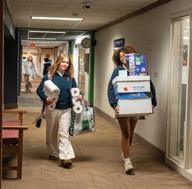
In November, USM held several events to give back to our communities, including a hygiene drive, Middle School food drive, and Upper School service trips and Thanksgiving food baskets.
Although the school has held resumé and job-writing workshops for many years, this is the first year it was held during the school day as part of the Upper School advising curriculum.
A firm handshake, sustained eye contact, and engaged body language are not complicated skills, but they still need to be practiced—and they can make the difference between getting the job or not. USM hosted its inaugural Career Day in September 2025, which was designed to teach those valuable skills and many others.
The concept was not new—a similar, opt-in career and resumé workshop had been held annually for many years as part of the school’s Internship and
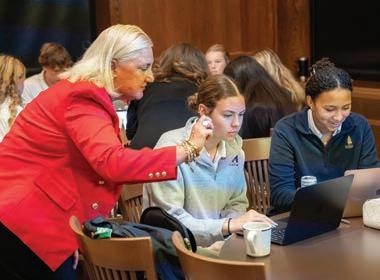
Shadowing program. But this was the first year that it took place during the school day and was a requirement for all freshmen, sophomores, and juniors (many seniors had already completed the workshop in previous years).
The day featured tailored instruction for each grade level. Ninth grade students circulated throughout the Upper School with their advising groups and listened to outside speakers who represented various different fields and industries.
Sophomores and juniors, meanwhile, spent the day developing and polishing their resumés and practicing job interview techniques. Students examined sample resumés and identified their existing skills that would be valuable to include on a resumé. Many students were able to
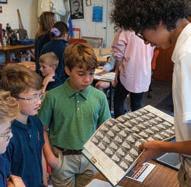
Eighth grade American history students started the year by sharing an artifact or photo that related to their families’ histories. They then spoke to their classmates and visitors about how and why they are connected to America’s story.
highlight their communication, teamwork, and problem-solving abilities, which they gained through their school work or extracurriculars. Volunteers, including parents, faculty, and staff, circulated to provide assistance when students had questions or needed advice.
Students also participated in mock job interviews with volunteers to practice using appropriate nonverbal skills, and learned how to promote themselves and their experience in an employment setting. The day’s activities were led by Julie Gilpin, USM trustee and parent, who has over 20 years of experience in human resources and recruiting, and Susan Zarwell ’87, assistant head of Upper School. Gilpin also gave a presentation to students, sharing practical tips on workplace etiquette and expectations.
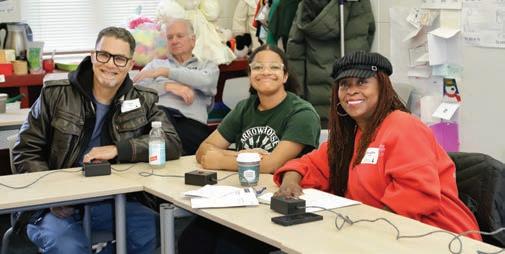
“Pouring”
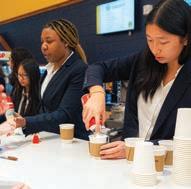
Upper School REDgen students spread positivity by giving away cups of hot chocolate with inspiring messages written on them. The only catch? Recipients had to decorate an empty cup with their own message for the next person in line.

In 1851, a group of German immigrants, dissatisfied with Milwaukee public schools’ limited curriculum and focus on rote memorization, formed a new school for their children. It was called the German-English Academy and it opened its doors in July of that year with 50 students. By 1871, enrollment had climbed to 450 boys and girls.
That same year, 1851, a formal legislative charter was issued to the Milwaukee Normal Institute and High School—a school for girls. The milestone was reached with the help of Catharine Beecher (sister of Harriet Beecher Stowe), who had visited Milwaukee one year earlier to speak on the importance of education for women. The school’s first few years were tenuous. School mothers held festivals, bazaars, and concerts to raise funds for teacher salaries and the construction of a three-classroom building. Eventually, enrollment grew and leadership stabilized.
These two schools, which later became Milwaukee University School and Milwaukee Downer Seminary, respectively, started as seeds of an idea planted by a small number of aspirational parents who valued a high-quality education that held students to a high standard. Those values are still very much alive today, 175 years since the schools were founded, and 61 years since they merged with Milwaukee Country Day School, to form University School of Milwaukee.
As USM celebrates 175 years of history in 2026, it is worthwhile to look back and celebrate those individuals, ideals, and traditions that helped shape who we are today. Without their visionary leadership and financial support, USM would look very different today.

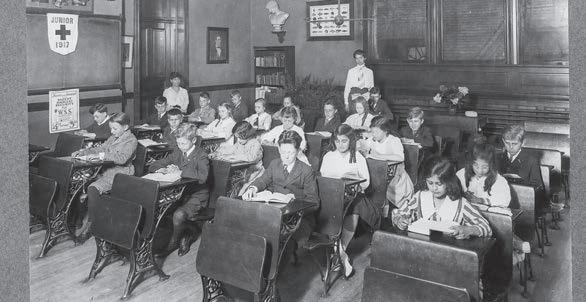
Before there was one school—University School of Milwaukee—there were three: Milwaukee University School (coed), Milwaukee Downer Seminary (all girls), and Milwaukee Country Day School (all boys). While they shared similarities like challenging curricula, high expectations for students and faculty, and a focus on athletics, they each had their own cultures, beloved teachers, and cherished traditions.
Talks of merging the schools gained traction in the early 1960s, when rising costs, limited budgets, small endowments, and the fear of losing quality faculty to low salaries became urgent realities faced by all three schools. “Besides,” said William Messinger MCDS’33, then-president of the MCDS board, “it seemed ridiculous to support three private schools within five miles of each other.”
By 1963, negotiations were complete. A merger of the three schools, administrators promised, would provide a larger enrollment, greater breadth and depth of curriculum, a strengthened faculty, and overall excellence resulting from common leadership. Students, faculty, and parents were less sure. Faculty worried about losing their jobs. Students feared they would lose cherished traditions, or that one school’s culture would dominate the others. MUS parents and students alike were sad to leave their campus on Hartford Avenue. To them, the future felt uncertain at best.
These alumni made groundbreaking advancements in media, medicine, science, philanthropy, manufacturing, and more (MUS and MCDS alumni on pages 15 and 16).
• Louise Goff Reece MDS’16: member, U.S. House of Representatives from 1961 to 1963.
• Jane Bradley Pettit MDS’36: donated more than $250 million to various initiatives in Milwaukee, including the BMO Harris Bradley Center and the Pettit National Ice Center.
• Marion Chester Read MDS’37: was a map maker during World War II, a licensed pilot, a nationally ranked tennis player and cross country skier, a three-time board member for the Girl Scouts of Milwaukee (founded by her mother in 1921), and climbed the Himalayas—three times.
• Dale Manowitz Coudert MDS’59: helped establish the First Women’s Bank in New York in the 1970s, which extended credit lending to women and led to changes in laws granting equity distribution to women.
• Mary Willis Walker MDS’60: award-winning, best-selling author of mysteries including “Zero at the Bone” and the “Molly Cates” series.
• Missie Rennie Taylor MDS’64: spent 30 years in television news, including as executive producer of CBS News Sunday Morning and CBS Weekend News, earning eight Emmy Awards and a George Foster Peabody Award.
1) Which present-day space on USM’s campus served as the chapel for Milwaukee Downer Seminary students?
Answer on page 19.
The German-English Academy and the Milwaukee Normal Institute and High School open.
Milwaukee Downer Seminary formally separated from MilwaukeeDowner College and was established as its own independent institution.
German-English Academy changed its name to Milwaukee University School, due to anti-German sentiment following World War I.
Milwaukee Country Day School opened in September, under the “country day” model, characterized by rural surroundings, a long school day, and close parentteacher cooperation.
USM’s culture of belonging and service to others can be directly tied to our predecessor schools. A 1930 article in the Chicago Daily Tribune about MUS was titled “School Without a Snob” and focused on its inclusiveness and commitment to service. Those efforts were further reinforced by MUS director Frank Spigener, whose focus on character development is echoed in today’s Common Trust (see page 17).
As an all-girls school, MDS was unique in its focus on challenging, respecting, and encouraging girls’ intellectual and physical wellbeing. Service to others was also emphasized. MDS’ Welfare Committee collected food and toys for underprivileged families and raised money for charities. During World War II, the club made food baskets for convalescing servicemen. By 1952, the club was donating money to the Red Cross.
MCDS students also supported the war efforts, growing a victory garden and forming a High School Victory Corps, a war support organization run by the federal government. In 1942, the junior class held a party for servicemen instead of a prom.
These collective efforts reflect how our predecessor schools understood care and connection within the context of their time. As USM has evolved, so has our sense of what it means to create a truly inclusive community—one that welcomes a wide range of identities and experiences while staying rooted in our longstanding values.
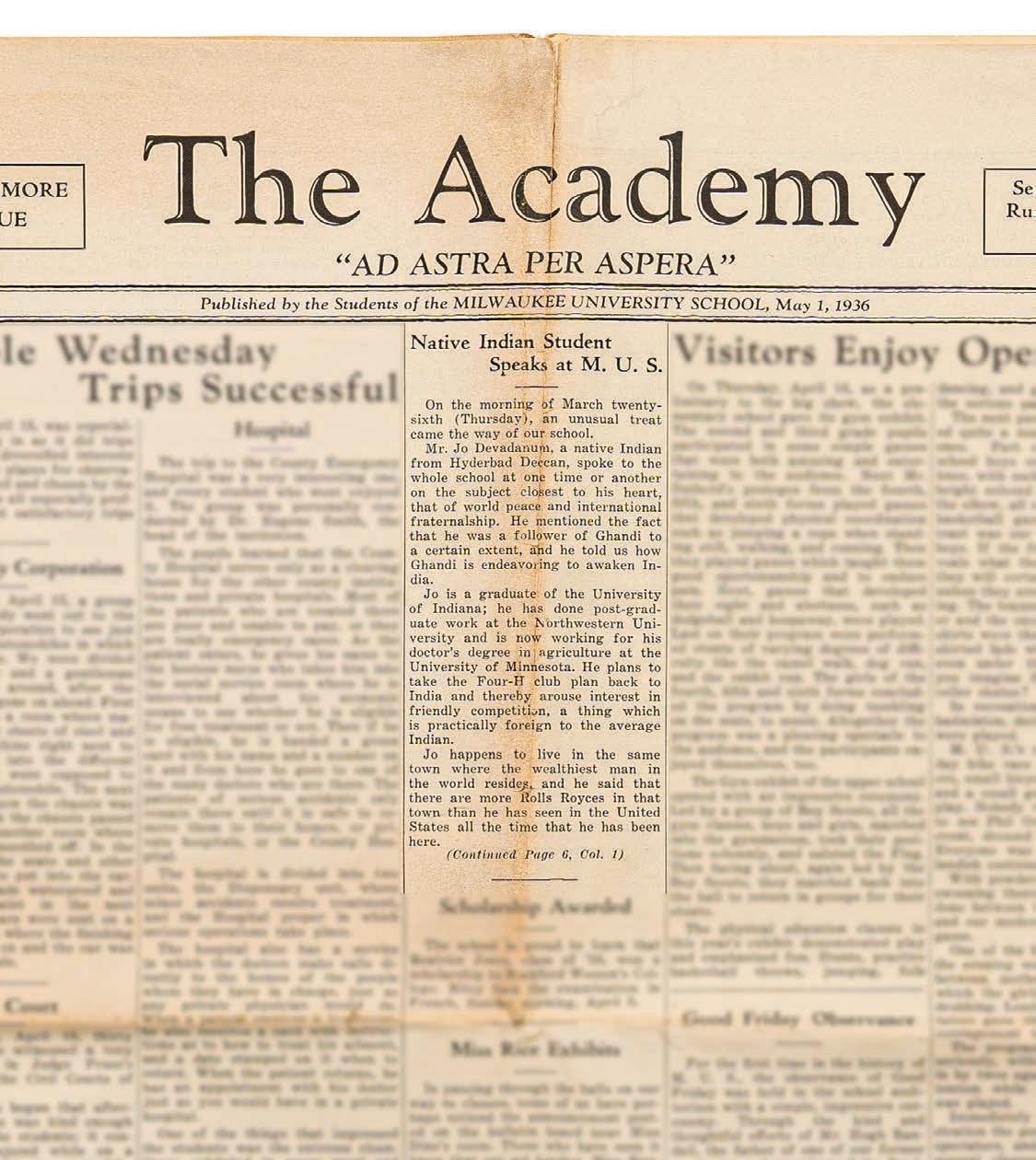
An issue of “The Academy,” MUS’ student newspaper, dated May 1, 1936, features a front-page article about a visit from Jo Devadanum, a citizen of Hyderabad, India, who spoke to students about world peace, international relations, and life in India.
Milwaukee University School added a girls’ high school.
Milwaukee Downer Seminary opened its Fairy Chasm Road campus (the present-day USM campus).
Merger negotiations were completed in the fall, with the MUS campus on Hartford Ave. sold for $2.3 million, partially funding construction needed to expand the building on Fairy Chasm Road.
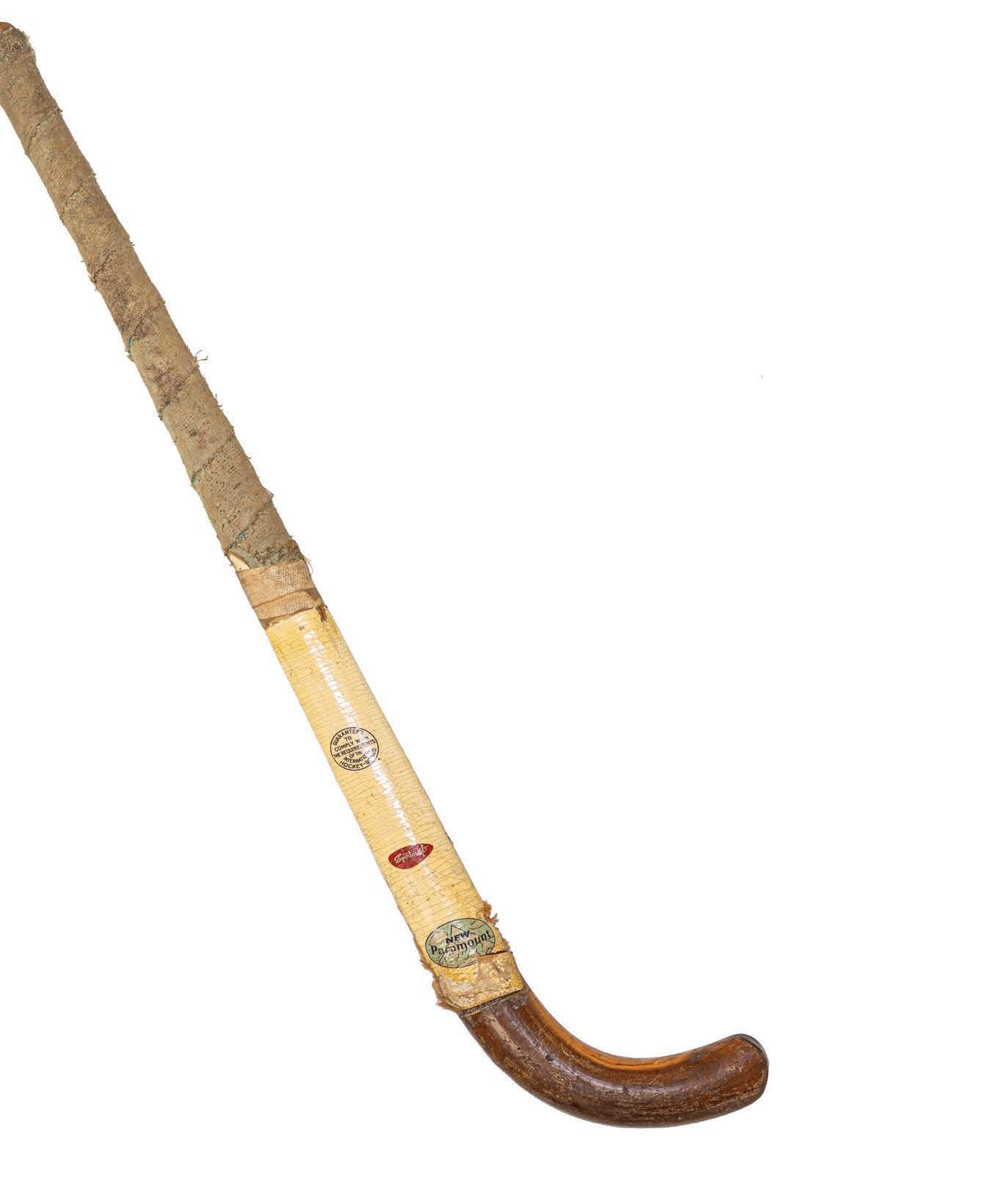
Athletics was a core component of school life at all three predecessor schools, although it looked different for girls and boys. MUS had a wide-ranging sports program that attempted to enlist every student in some type of athletic competition. Boys played football in the fall, basketball, wrestling, or swimming in the winter, and track or tennis in the spring. In 1957, the MUS boys’ basketball team began a winning streak that was one of the longest in Wisconsin high school history and is still the longest—58 consecutive victories—in school history. Girls at MUS, meanwhile, could choose from interscholastic field hockey, volleyball, basketball, or softball depending on the season, but their access to practice fields, uniforms, and equipment was limited in comparison to their male counterparts.
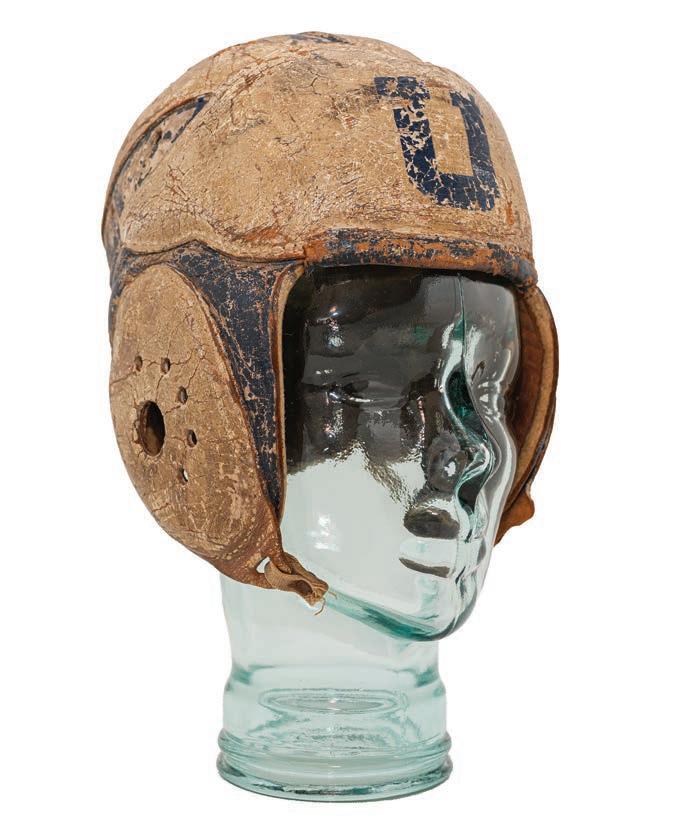
Athletics dominated at MCDS, with early school leaders deciding that strenuous sport was good preparation for adult life. The school benefited immensely from legendary coaches Clarence “Razz” Rasmussen and Ken Laird (both football), and Bill Church (hockey), among others. The MCDS football teams from 1947 to 1950 achieved a collective 27-0 record, with MCDS scoring 730 points in those four years, while their opponents scored a combined 129 points. In Laird’s 40 years of coaching, the football team won 195 games and lost only 45, with 12 undefeated seasons.
Athletic rivalries between MUS and MCDS were intense. Basketball and football games produced sellout crowds and, in some cases, minor vandalism. The animosity between the two schools was so strong in the mid-1930s that administrators considered ending their athletic relationship altogether, until a meeting between the schools’ athletes and coaches eased the tension, and games resumed.
Girls at MDS were strongly encouraged to participate in athletics and had many options to choose from. By 1911, tennis, field hockey, bowling, basketball, and ice skating were all offered. Dorothy Weisel was largely responsible for the school’s unique emphasis on sports and fitness. She taught gym, headed the athletic association, and coached every sport at MDS, retiring in 1963 after 29 years. Pioneering athletes like Marion Chester Read MDS’37 and Alice Kieckhefer Fajen MDS’44 paved the way for generations of female athletes who followed.
Football helmet, pictured, owned by Allan J. Roberts Jr. MUS’31, recipient of the Sportsmanship Trophy in 1931 (now called the Henry H. Uihlein Sportsmanship Trophy). Vintage field hockey stick dated from the 1940s or ’50s.
University School of Milwaukee opened its doors in September for the first time.
Students and faculty consolidated onto one campus on Fairy Chasm Road in River Hills, welcoming 770 students in September.
School-wide internet access was launched.
The newly formed USM opened its doors on two separate campuses for the 1964-65 school year: the “north” campus, which housed grades 1 through 6 and the Upper School girls, on Fairy Chasm Road in River Hills, and the “south” campus, which housed grades 7 and 8 and the Upper School boys, on Santa Monica Boulevard in Whitefish Bay. The school colors were the blue of MUS, the white of MDS, and the gold of MCDS. Students chose Wildcats as the nickname, and the football team created instant spirit and unity by winning all of its games that season.
Despite the initial concerns, it didn’t take long for the benefits of one unified school to become obvious. An expanded curriculum meant students had a wider variety of classes to choose from. The athletics program added new sports, and USM students were competing against a larger number of schools. The student body grew more diverse, and a larger scholarship fund attracted students from metropolitan Milwaukee and beyond. As the school became more well known, it began to attract experienced applicants for teaching and administrative roles from all around the country.
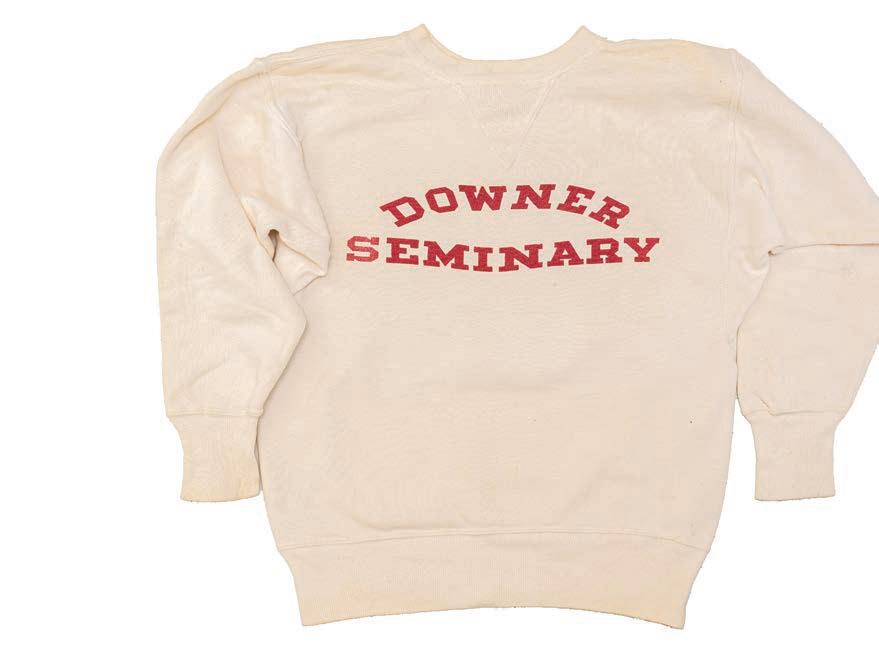
• Walter Annenberg MUS’26: owned and operated Triangle Publications, was the United States Ambassador to the United Kingdom from 1969 to 1974, and founded The Annenberg School for Communication at the University of Pennsylvania and at the University of Southern California.
• Franklin Offner MUS’29: scientist, inventor, industrialist, teacher, and artist who developed ways to detect and record electrical changes that occur in heartbeats and brain waves.
• M ary Nohl MUS’32: renowned artist who transformed her Fox Point, Wisconsin home with sculptural creations. Her home is listed on the
National Register of Historic Places and owned by the John Michael Kohler Arts Center.
• G eorge Rathmann MUS’45: co-founder (in 1980) and first CEO of Amgen, a biotech company whose sales went from $0 to more than $1 billion in a single decade.
• Robert Burch MUS’52 , vice president of the New York investment banking firm of Kidder, Peabody & Co., and senior partner at A. W. Jones & Co., the industry’s first hedge fund.
• Howard Tyner MUS’61, 19th editor of the Chicago Tribune, which produced numerous major and award-winning editorial projects under his leadership.
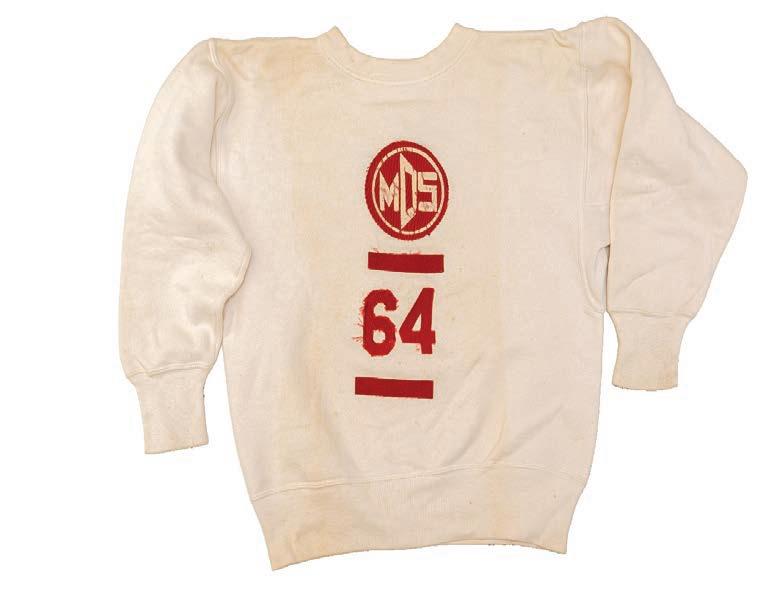
USM’s Upper School established a house system in 2010, which builds strong relationships across grade levels and includes friendly competitions throughout the year. But the concept originated in USM’s predecessor schools. At MDS, all girls were divided into red and white teams, and they stayed on those teams for the remainder of their time at the school. The teams competed in athletics, academics, and other contests for the chance to win points for their team. Each team wore a red or white sweatshirt for color day athletic contests, and the senior girl who accumulated the most points during her four years won the all-school cup.
At MCDS, the student body was divided into green and gold teams for its annual field day, a day-long competition in track and field events. At MUS, all girls competed on blue or white intramural teams, where they could earn points for their team throughout the year. Today, USM’s house system honors predecessor schools with the incorporation of predecessor school colors and publication names.
2) Which predecessor school enlisted students to clean classrooms and assist secretaries after school?
Answer on page 19.
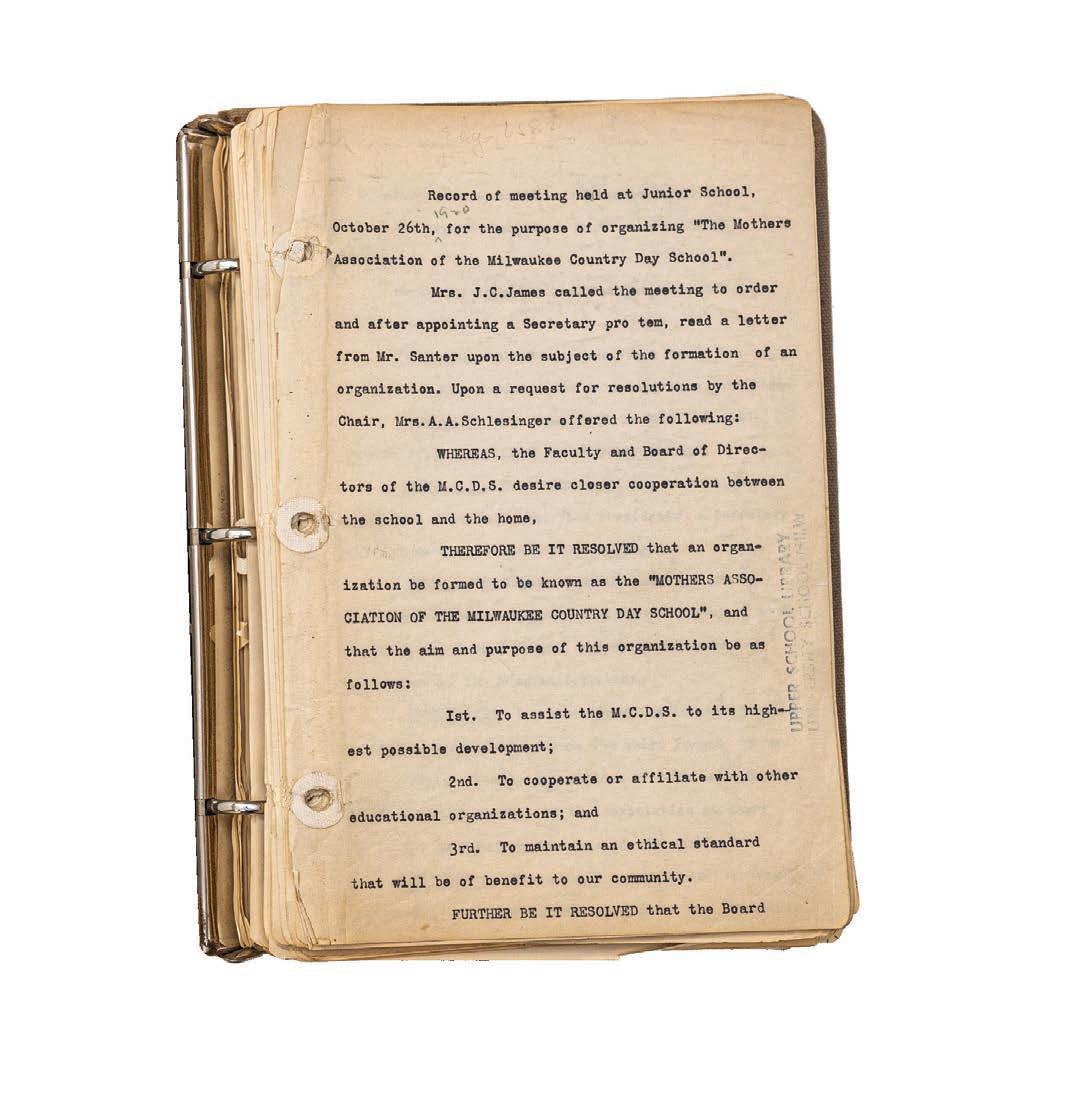
USM’s Parents’ Association has provided vital financial and volunteer support for many decades. At USM, the organization dates back to 1854, when mothers from the German-English Academy formed the “Milwaukee Frauenverein,” to provide sewing and cooking instruction to their daughters. The Mothers’ Association of MCDS was established in 1920, followed by the Mothers’ Association of MDS in 1942, although both schools benefited immensely from mothers’ volunteer efforts for many years prior to being formally organized.
The mothers were a vital source of support for school events, served as an advisory council for administration, and provided generous financial support to benefit athletics, libraries, building maintenance, and other school functions. Today, every USM parent belongs to the Parents’ Association, which sponsors vital fundraising and community-building events like the Holiday Shops and Grandparents and Special Friends Day.
USM operated for several decades on two campuses until, in January 1983, the Board of Trustees announced a major expansion of the north campus and investment in the endowment, paid for by a $10 million capital fund drive and the sale of the south campus. New spaces included the Virginia Henes Young Theatre, the administrative wing, the Stratton Upper School Library, Polly and Henry Uihlein Sr. Ice Arena, Chester/Read Tennis Courts, and Upper School building, among others, designed to accommodate everyone
Commencement exercises in May 1985 were the last to be held on the south campus. In June, the south campus’ flags were lowered and prefects Maria Acevedo ’85 and Michael Grebe ’85 led dozens of alumni, students, and faculty on a 4.5 mile run, walk, or bike to the north campus where the flags were raised and celebrations began. All were welcomed by then-Head of Lower School Fanny Cracknell, who said, “We are incomplete without you—all of you—students and faculty, who have been separated from us.” In September 1985, the unified campus opened its doors to 770 students.
• Brooks Stevens MCDS’30: world-renowned industrial designer whose prodigious pioneering innovations in home appliances, automotive design, and more are still in use today.
• Dr. Donald Hornig MCDS’36, Harvard University-trained chemist who served as a key figure on the Manhattan Project, adviser to three U.S. presidents, and 14th president of Brown University.
• H enry H. Uihlein Sr. MCDS’39, developed and patented the first undercounter residential ice maker, founded U-Line Corporation in 1962, and endowed the Henry and Polly Uihlein Alumni Scholarship Fund to provide children of USM alumni with financial assistance.
• Dr. Harold Dvorak MCDS’54, pioneering cancer researcher who identified the process by which tumors acquire new blood vessels.
Did we miss someone? Submit your notable alumni by emailing alumni@usm.org so we can add them to our list!
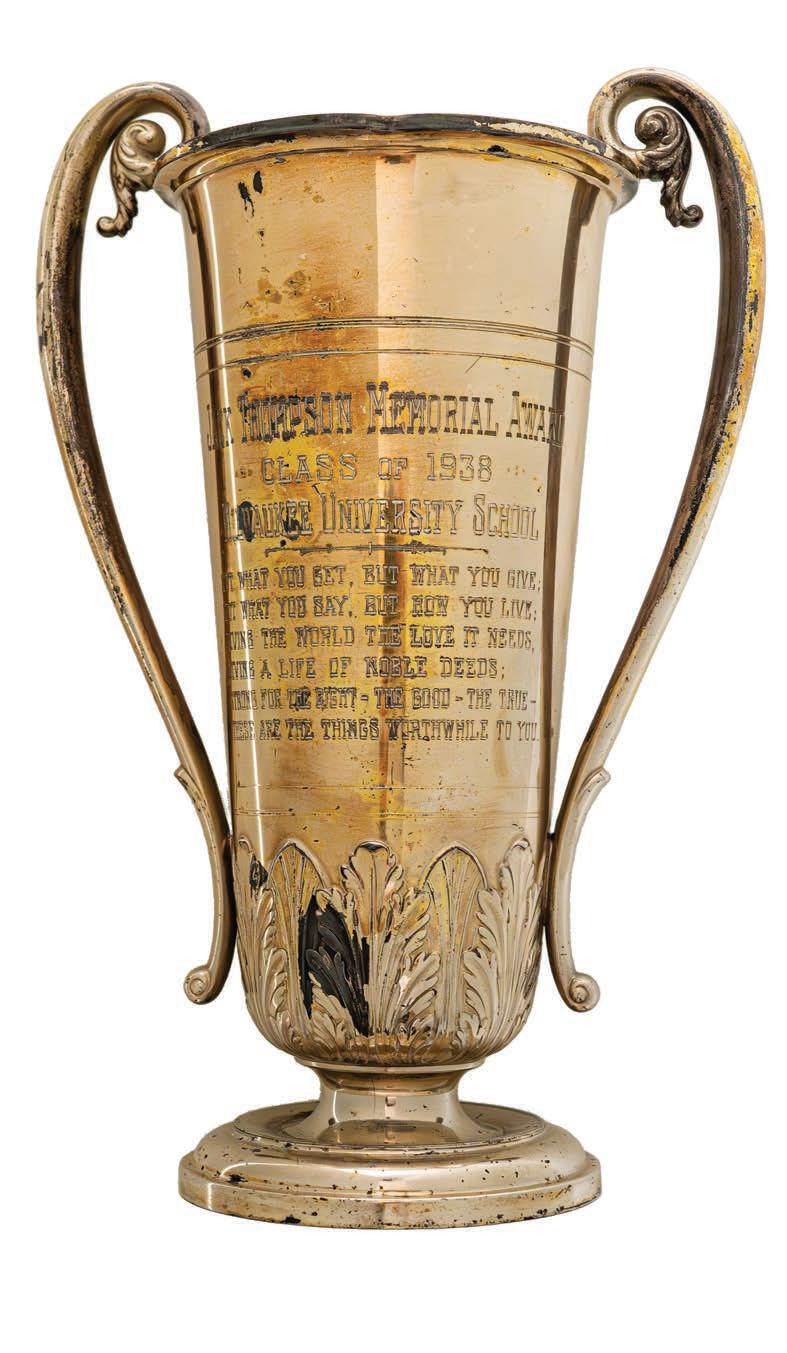
USM’s Common Trust, the community’s shared commitment to respect, trust, honesty, fairness, and kindness, was established in the 1990s. But its roots can be traced back to the Thompson Trophy, established in 1938 by Frank Spigener, then-director of MUS, and given to the graduating senior who best represented the character of MUS. Inscribed on the trophy are six lines:
“Not what you get, but what you give / Not what you say, but how you live / Give the world the love it needs / Living a life of noble deeds / Strong for the right – the good – the true / These are the things worthwhile to you.”
When Robert Burch MUS’52 did not receive the award his senior year (in fact, nobody received it in 1952), he was devastated. Despite his many successes in life, he never forgot about the Thompson Trophy. “Those words probably did more for me than anything,” he said. “They were character-setting values that resonated with me for many years.”
Although it stopped being awarded after the merger in 1964, Burch sought to revive the trophy’s ethos in 2016 with a gift of $50,000 to establish an endowed fund for the Frank S. Spigener Service and Leadership Award. Since then, it has been given annually to a senior who demonstrates the spirit of caring, humanitarianism, and volunteerism exemplified by Spigener.
3) Dr. Joseph Schneider, an ophthalmologist and longtime German-English Academy trustee, gifted 65 acres to the city of Milwaukee upon his death in 1927. Today, that land has become which park in the Milwaukee County Parks System?
Answer on page 19.
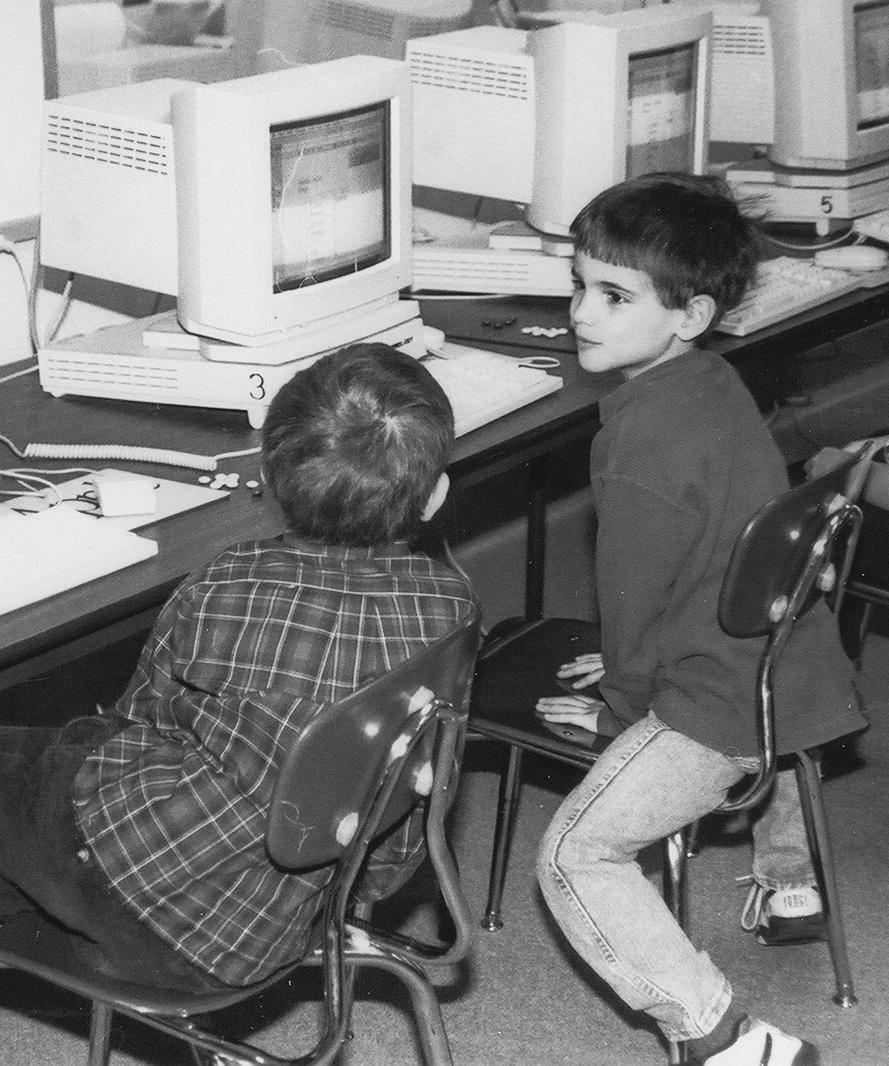
USM unveils its first website and URL: http://www.usm.k12.wi.us.
An “Evening to Remember” gala was held at the Midwest Express Center to celebrate 150 years of history.
Today’s Upper School students are sorted into one of four houses as freshmen, where they remain for all four years. The houses are named after predecessor school publications, and feature a mix of colors from those schools.
Ledger House: Named after the MCDS student newspaper
Academy House: Named after the MUS yearbook and student newspaper
Crest House: Named after the MDS yearbook
Arrow House: Named after the MCDS yearbook
“Alis Volat Propriis” (MCDS): He Flies with His Own Wings
“Sit Lux” (MDS): Let There be Light
“Ad Astra Per Aspera” (MUS): To the Stars Through Hardships
“E Tribus Una” (USM): From Three, One
4) Which member of the MCDS “old guard” faculty said, “Afraid because they have not got their homework? A damn healthy fear.”
Answer on next page.
The 1:1 Technology program is launched, providing students in grades 3 through 12 with a dedicated personal computing device.
USM celebrates its 50th year.
As the 1990s yielded to the early aughts, and following significant endowment growth in the decade prior, USM continued to innovate and improve. In 1996, school-wide internet access launched, and computers were added to classrooms, labs, and libraries by the end of the year. USM marked a major milestone in 2001 when it celebrated 150 years since the German-English Academy and Milwaukee Normal Institute and High School were founded. An “Evening to Remember” celebration was held to commemorate the milestone.
Over the next two decades, fundraising campaigns and large construction projects led to continued innovation in curricular offerings as well as student and faculty support. The school remained at the forefront of innovation and academic success. But the real test came in March 2020, when USM closed its doors following a state-wide mandate due to the COVID-19 pandemic.
Relying on school resources and the ability to pivot quickly, administrators launched its distance learning program, USM@HOME. In August 2020, following months of planning and preparation, the school reopened to in-person learning (virtual learning optional) with robust testing and mask policies. The large incoming class of students indicated strong parental support for the school’s approach and faith in its administrators.
In its long history, the school has persevered through devastating pandemics, depressions, recessions, wars, mergers, political and social shifts, and massive technological advances. But through it all, it has remained—and continues to remain—faithful to its mission of providing an exceptional PK-12 independent school education. Thanks to leadership that values fiscal responsibility and consideration of the school’s mission in all decisions, along with tireless support from parents, the school rests on a solid foundation for the next 175 years.
Did you know that USM maintains an archive of memorabilia and documents dating back to 1851? If you have any items from any point in the school’s history collecting dust in your home, we’ll gladly take them off your hands! Contact Will Piper ’96, assistant director of alumni relations and reunion giving, at wpiper@usm.org with questions.
1. The Stratton Preschool/Lower School Library, whose stage and vaulted ceiling carry echoes of the space’s past use.
The closure of all K-12 schools in March due to the COVID-19 pandemic is mandated. USM teachers and administrators launch USM@HOME, the distance learning program, that same month.
After months of planning and preparation, the school reopens in August to in-person learning with robust testing and mask policies.
2. MUS instilled a work service program in the 1930s to build character, humility, and a sense of the dignity in labor amongst students.
3. Doctors Park in Fox Point, which is frequented by USM teachers for field trips.
4. Harvey Ramaker, English, Latin, and history teacher from 1919 to 1963, whose booming voice, tough grading, and imposing personality commanded fear and respect.
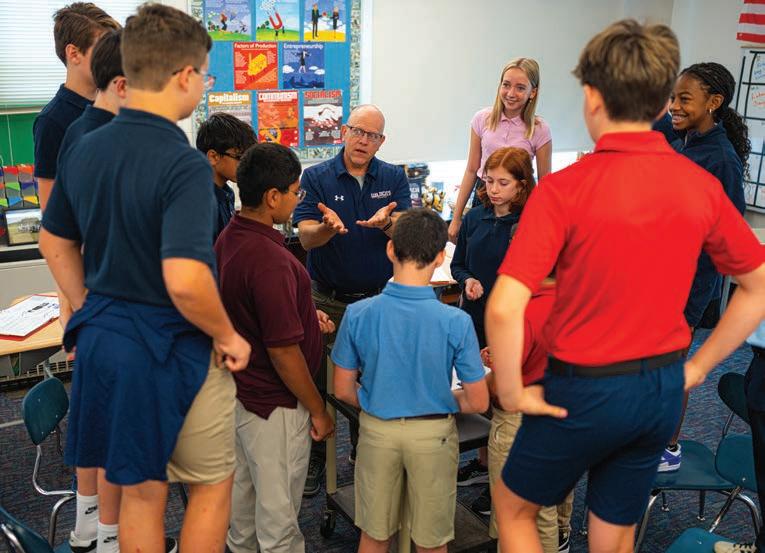
USM is providing teachers with assistance and strategies to tailor learning for every student, ensuring all are engaged, known, and valued.
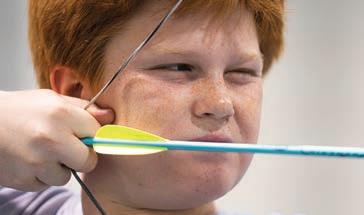
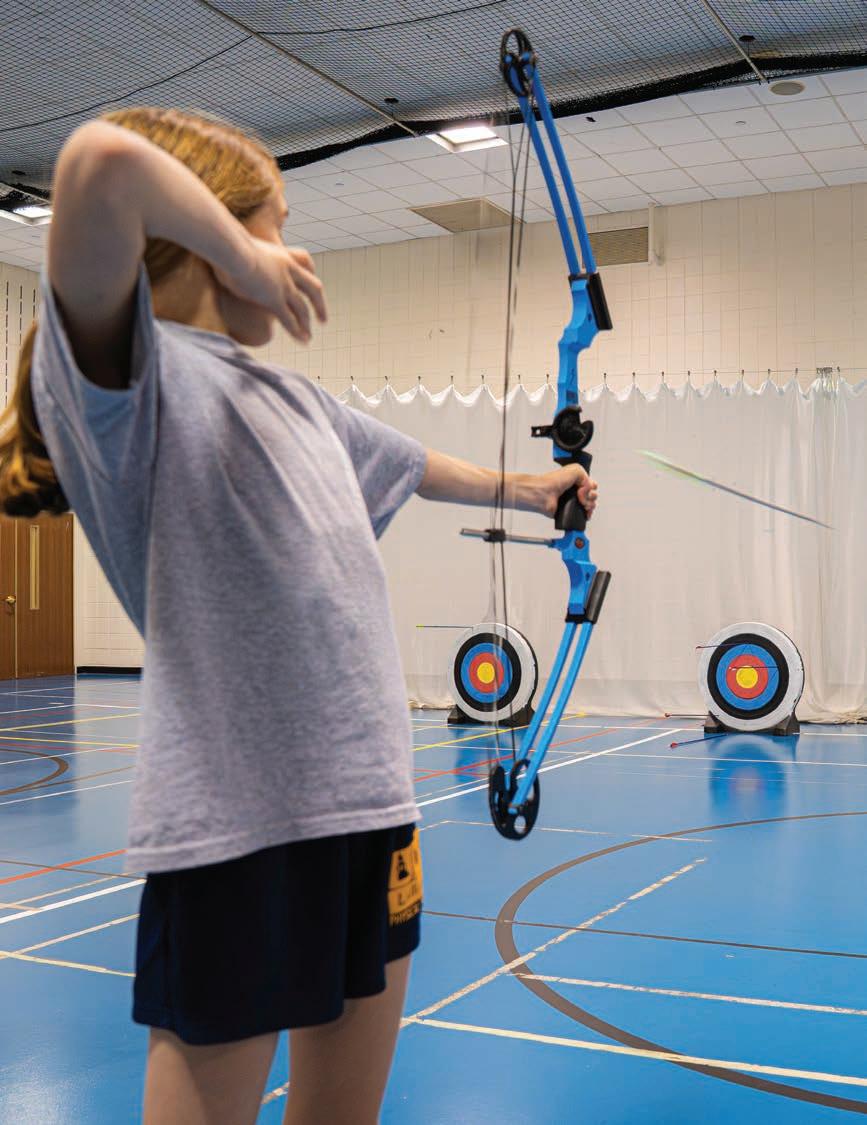
The first day of archery in physical education is an exciting one for 6th grade students. Whether they’re experienced with the sport or not, students are given an entry point that’s appropriate for their skill level. They can choose the draw weight—low, medium, or hard—that fits them best, and adjust the target distance as needed. Physical education teachers Kristi Hall and Tim Bartz incorporate games and different-sized targets to engage a wide range of abilities.
“Whatever their skill, the kids are all working towards the same goals, which are to hit the target successfully and demonstrate growth,” said Hall. Differentiation, or the ability to recognize students’ unique strengths and challenges and respond thoughtfully, is becoming increasingly important. “Our mission charges us to cultivate excellence in learning,” said Amy Hand, assistant head of school. “To do that, every student needs to reach their potential, even when they are coming to us with different sets of skills and prior knowledge.”
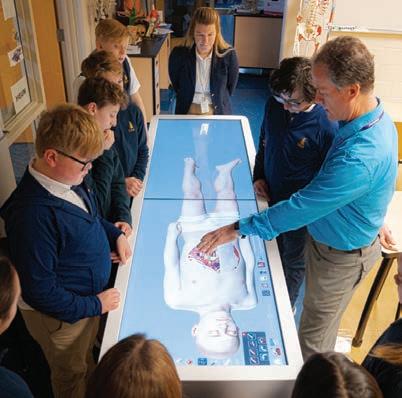
USM administrators have focused this year’s professional development efforts around differentiation strategies and how best to incorporate them in classrooms. In August, the school invited Dr. Eric Carbaugh, an educational consultant and professor, to provide training on differentiation. During the October faculty in-service day, teachers participated in group learning about differentiation that was tailored to their division and
“Our mission charges us to cultivate excellence in learning. To do that, every student needs to reach their potential, even when they are coming to us with different sets of skills and prior knowledge.”
-Amy Hand, assistant head of school
department, followed by afternoon collaboration to develop ways to apply new strategies to a class, unit, or lesson plan.
“By providing some students with more challenge while giving others more scaffolding to thrive, we maintain high standards for all students,” said Hand. “Students are different in so many ways—their interests, their preferences about how they learn, their fluency with a particular content area, and more. We can honor those differences in the way we teach and in the way we plan our curriculum.”
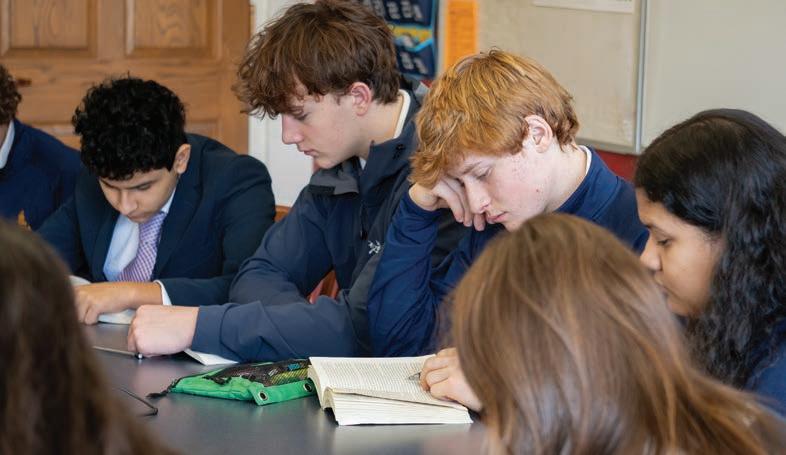
In Upper School English, an important component of differentiation is acknowledging students’ individual passions and their social-emotional differences. Many English classes include a choice book unit in which students select a preapproved text based on their interests and discuss it in small groups. For some, articulating opinions respectfully and being vulnerable is easier in front of a small group than an entire class. “Being able to practice those skills in a low-stakes way is, to me, a significant form of differentiation,” said Upper School English Teacher Dr. Danielle Goldstein.
Gretchen Mathews ’06 was inspired to enhance her differentiation techniques in her 6th grade math classroom after reading “Building Thinking Classrooms” by Peter Liljedahl. Her students can choose their level of difficulty—mild, medium, or spicy—on practice problems and homework, an approach she borrowed from her 4th grade colleagues and Liljedahl. “Often, kids will start with a mild problem and realize, ‘Hey, I can do this,’ and then jump to the medium,” said Mathews. More often than not they are choosing the appropriate challenge for their ability, or self-adjusting as needed.
Mathews also encourages students to use dry-erase boards, which are mounted to the walls in her room or individually sized. The non-permanent surface is easy to erase, which can lessen anxiety around getting started on a math problem.
For Mathews, who sees more neurodiversity in her classroom today than she did at the beginning of her career, having different options for kids in the same classroom is important. “I think so many kids, and parents, too, will describe themselves as being a math person or not a math person. But anyone can be a math person with the right on-ramp.”
All USM Fund gifts are recognized as part of the school’s Our Commitment to Excellence campaign. Your gift supports the USM Fund, which partially underwrites the school’s annual operating budget. Tuition does not fully cover what it costs the school to educate each student—the USM Fund is vital to bridging that gap for the benefit of all students and teachers.
1. Your gift directly improves the USM experience for our students (see sidebar).
2. USM is a 501(c)(3) nonprofit institution, which means gifts to the USM Fund are tax-deductible!
3. High participation rates help us access prospective money from foundations and grants for unique programs at USM, like Global Scholars and Outdoor Education.

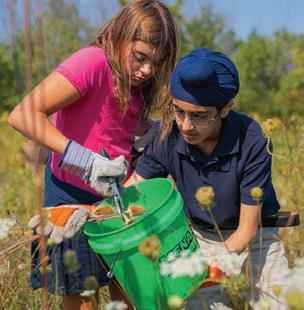
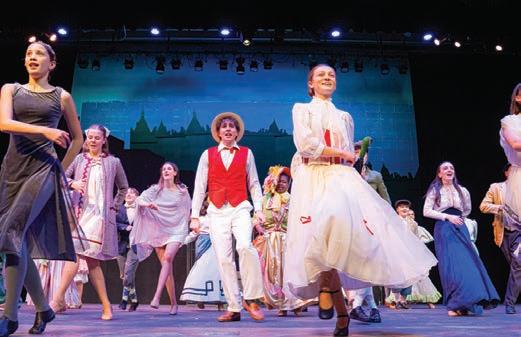
Questions about the USM Fund or how your philanthropy makes an impact at USM?
Contact Leah Wabiszewski, assistant director of annual giving. lwabiszewski@usm.org or 414.540.3328.
Gifts to the USM Fund count towards the Our Commitment to Excellence campaign.
Projects supported by the USM Fund in the 2024-25 school year:
• Renovation of Middle School library
• New music risers, stands, and carts for students in all divisions
• Two new kilns for ceramics for students in all divisions
• New down-draft sanding table to improve woodworking capabilities and safety in Lubar Center for Innovation and Exploration
• Addition of security desk at Quadracci Lobby for athletic events
• Replacement iPads for Upper School Mathematics department
• Purchase of new School Safety and Security vehicle that can access all areas of campus
• Painting and floor refinishing of Middle School gymnasium

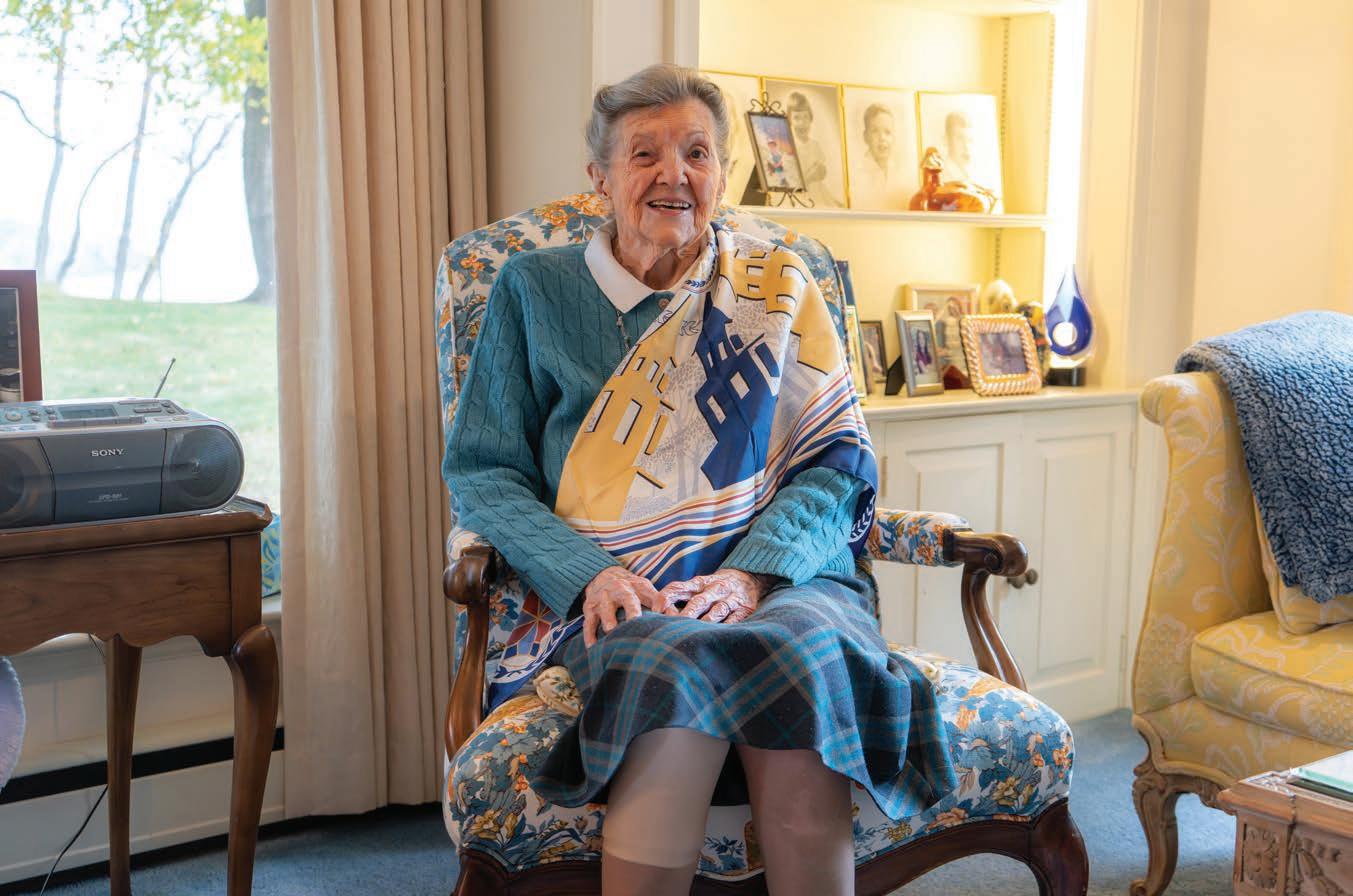
Joan Robertson MUS’34, USM’s longtime supporter and oldest living alumna, reflects on her favorite school memories and her lifelong commitment to peace and education.
Joan Robertson still remembers the name of every girl in her senior class at Milwaukee University School, which is remarkable considering she graduated in 1934—92 years ago. At 110, she is USM’s oldest living alumna, but her memory is as sharp as a tack. She’ll gladly tell you how thrilled she was when Jack Wilson MUS’31 invited her to the junior prom, even though she was a freshman, and fondly reminisce about chatting with her friends in the girls’ bathroom—among her favorite memories from high school.
She inherited a passion for world peace and activism from her mother, Annette J. Roberts, an 1898 graduate of the German-English Academy, peace activist, and suffragist. At USM, Joan has long supported the Upper School Global Scholars program and Global Scholars Crisis Simulation event, as well as Model UN and UN Model Congress. She also supported the development of the United Nations Schools of International Learning (UNSIL) curriculum, currently in use at 14 Milwaukee Public Schools, which teaches critical
Many people ask Joan what the secret is to her longevity, and her answer is simple. “I think it’s having a purpose and mission, something you are totally dedicated to that you view with optimism and hope."
academic skills with a focus on world affairs and current events. “We’re quite proud of it,” said Joan. “It’s something we need more of today, the idea of diplomacy and negotiation.”
Joan lives at home, under the care of her children, Annette Robertson and Allan Robertson MUS’64. (Her son, Jay Robertson ’70, lives in Florida.) In addition to her work with UNSIL, she stays busy answering calls from reporters. She was named a Woman of Influence by the “Milwaukee Business Journal” in 2017, was interviewed for “Lake Effect” by WUWM 89.7 in 2018, received the Agent of Peace Award from the Rotary Club of Milwaukee in 2023, and was celebrated on Instagram by Connecticut College as their oldest living alumnus in 2025.
Many people ask Joan what the secret is to her longevity, and her answer is simple. “I think it’s having a purpose and mission, something you are totally dedicated to that you view with optimism and hope. I think that is what keeps me going.”
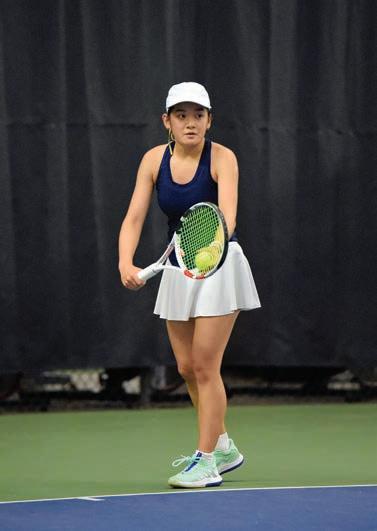
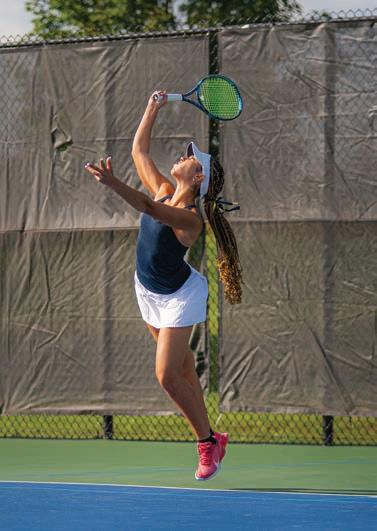
Senior Angela Wang ’26 earned 4th place in singles competition at the WIAA Division 1 individual state tennis tournament held in October. Wynter Maitland ’26 also competed in singles competition at the tournament, winning her first match 6-1, 6-0, but falling in her second match to Wang, 6-0, 6-0. Wang went on to top Milena Halberg of Sun Prairie West 6-0, 6-0 in round three. In addition, two USM doubles teams— Haley Erlich ’26 and Lindsey Gardner ’26, and Natalie Friedman ’28 and Olivia Gourlay ’27—competed at the individual state championship.
After winning the WIAA Division 1 sectional champions, the numberthree seed Wildcats finished 6-1 in the quarterfinals of the 2025 team state tennis tournament, where they fell to Neenah. The team capped off their impressive season with a 3rd place finish at state.
The Wildcats have earned 11 state team championships in their 16 state appearances. All 11 championships, and all 15 previous trips to team state, came in Division 2. They won back-to-back titles in 2017 and 2018. In addition, they won four straight titles from 2004 to 2007, two straight championships in both 2011 and 2012 and 2022 and 2023, as well as one other in 2014. They have also placed runner-up at state three times—in 2008, 2009 and 2013.
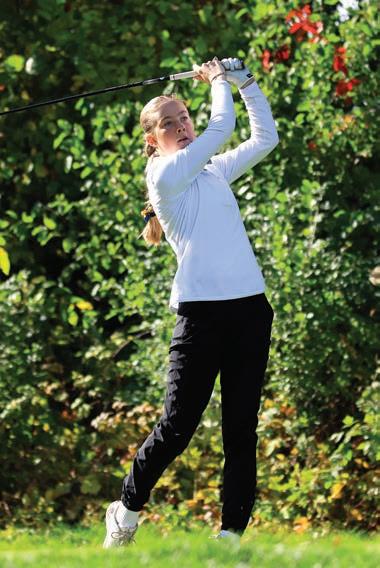
Addie Darrow ’26 is the first student athlete in USM’s girls’ golf program to advance to the WIAA girls’ golf state tournament. To qualify as an individual for Division 2, Darrow won 1st place at regionals with a personal best score of 77, followed by a runner-up finish at sectionals.
Darrow finished the two-day state tournament with an overall score of 193, shooting 95 in the first round and 98 in the second round.
“I’m very proud to have qualified for the state golf tournament,” said Darrow. “But I may be most proud of helping start the girls’ golf team at USM, being captain for two years, and building friendships and camaraderie with my teammates— always trying to lead by example and create a great experience for everyone.”
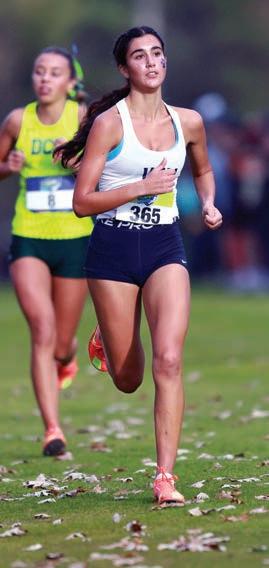
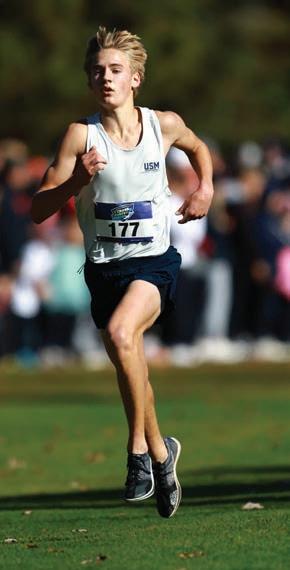
After winning the Division 2 WIAA Girls Cross Country Championship last year, USM’s girls’ team was moved into Division 1 this fall. The team qualified for state with a runner-up finish in the sectional on Oct. 25, 2025, and finished in 10th place in the 20-team Division 1 state competition held at Ridges Golf Course in Wisconsin Rapids, Wisconsin.
The girls earned 283 points for their spot as Neenah defended its title with 71, while Slinger was second with 84. Cate Kohli ’27, a key performer for the 2024 state champions, led the way, finishing 53rd on the 5,000-meter course with a time of 19:27, while Ainsley Polston ’28 was 77th (19:47), Ksenija Marich ’29 was 95th (20:06), Anastasia Marich ’26 was 97th (20:07), Grace Walters ’28 came in at 116th (20:25), Sloan Becker ’28 finished in 118th (20:26), and Lucy Konkol ’27 was 183rd (22:13).
Representing USM in the Division 2 boys’ race was junior Austin Jarmuz ’27 who, in his third attempt at state, earned the 10th and final first-team allstate slot with a time of 16:20. In addition, Beckett Newman ’28 earned 23rd place with a time of 16:39.5. Congratulations to the entire USM cross country program for an amazing season!
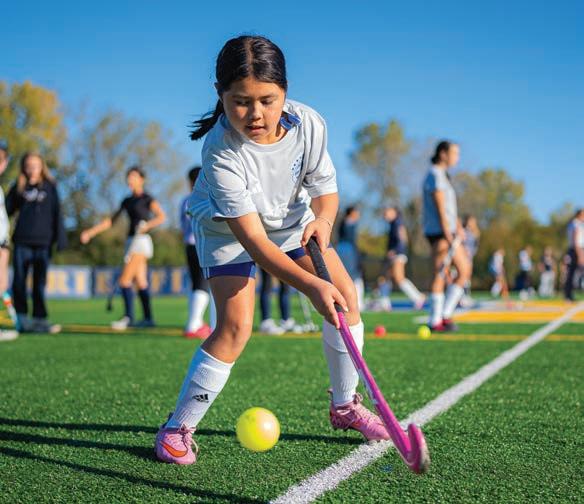
Since USM opened its doors in 1964, it has had a field hockey team. In fact, two of USM’s three predecessor schools (Milwaukee University School and Milwaukee Downer Seminary) had field hockey teams dating back to the 1920s.
The sport continues to thrive at USM, and was recently celebrated by athletes from 5th to 12th grade, who gathered last October for cross-divisional drills and scrimmages. “We love to build community throughout our Middle School and Upper School field hockey programs,” said Andrea Burlew ’93, USM kindergarten teacher and varsity field hockey head coach. “We want to keep our Middle School players excited about the sport and about being part of the Upper School program.” Upper School players, meanwhile, enjoyed the chance to be leaders for the younger athletes by teaching them new skills and teamwork.
Many thanks to the varsity, junior varsity, and Middle School coaches: Gretchen Bechthold ’16, Andrea Burlew ’93, Samantha Comaris, Harriette Engel ’14, Erin Heaney, Claire Kartz, Gretchen Mathews ’06, Elle Modahl ’18, and Sarah Titus ’00.
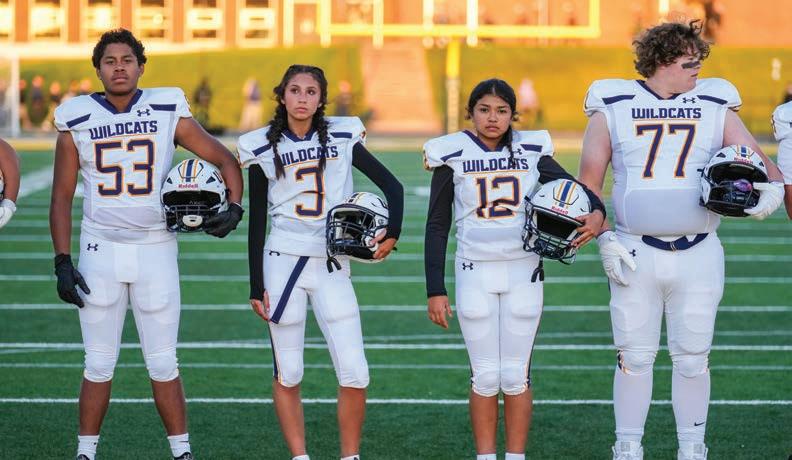
The varsity football team got an infusion of fresh talent from an unexpected source this fall.
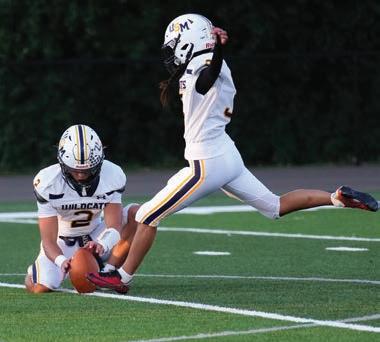
When varsity football head coach Brian Sommers asked sophomores Anna Griesbach ’28 and Isabella Gonzalez-Rodriguez ’28 to try out as kickers for the varsity football team, Griesbach thought it was a joke. But Sommers wasn’t joking. After Piercen Luedtke ’26, USM’s all-Metro Classic Conference kicker, broke his collarbone in the first week of the season, and with a stretched roster, Sommers needed to find an athlete who wasn’t already committed to a fall sport.
Because of his role as Upper School physical education and health teacher, Sommers was familiar with Griesbach and Gonzalez-Rodriguez and their athletic skills. In fact, he didn’t even need to see them kick—hearing them was enough to seal the deal. “As soon as I heard the ball kicked—because I wasn’t watching, I was just listening—I knew we had something,” Sommers said in an interview with the Milwaukee Journal Sentinel. “They’re just really good, they’re solid, they’re heads and tails above anyone else that we have on the team as far as kicking extra points and field goals.”
This isn’t the first time that girls have played on the varsity football team. Jenny (Neibor) Anderson ’96 kicked for
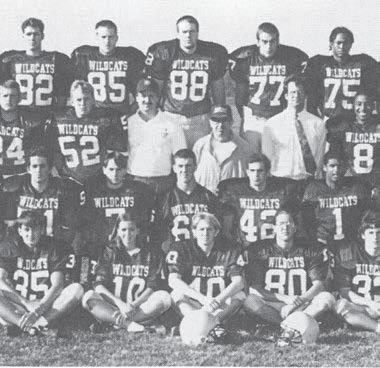
the team as a senior in 1996, under then-head coach Don Forti. Like Griesbach and Gonzalez-Rodriguez, Anderson was also a soccer player (she played the sport in college and semiprofessionally). And, like Griesbach and Gonzalez-Rodriguez, Anderson was grateful for the support she received from her coach and teammates. “Coach Forti was very welcoming to me, as were the guys on the team,” she said. “A number of them are still friends of mine. It was a very positive experience.”
USM athletes announced early commitments for college athletics at a ceremony in November, where they were joined by their parents, coaches, teammates, and friends.
“We are so proud of these student athletes,” said Director of Athletics Tim Williams. “They’ve made it to the next level of their athletic career through commitment and hard work.”
Congratulations to the following for their achievements both on and off the field: Sofie Bucher, women’s lacrosse, Stony Brook University; Darcy Doyle, women’s lacrosse, Northwestern University; CJ Golinvaux, football, Saint John’s University; and Drew Nerbun, men’s lacrosse, Hope College. USM will hold an additional ceremony in May for any students who have not yet decided on athletic commitments.
USM’s fourth class of Athletic Hall of Fame inductees were honored with a ceremony in October, which was attended by hundreds of guests. This class of inductees included barrier-breaking athletes, an inspirational coach, and the USM Wildcats Booster Club. Each inductee was presented with a trophy, and their athletic accomplishments were highlighted in videos.
Visit www.usm.org/hof to learn more about the Athletic Hall of Fame, all inductees, and to watch the videos.
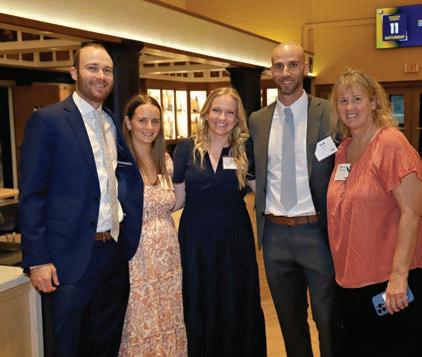
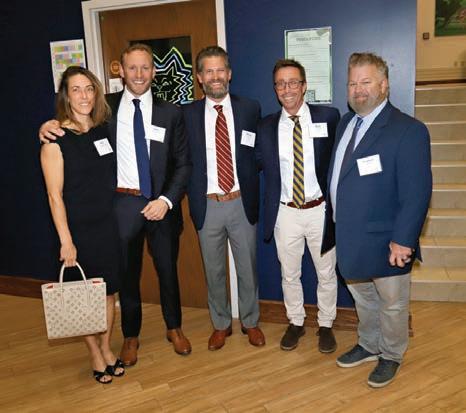
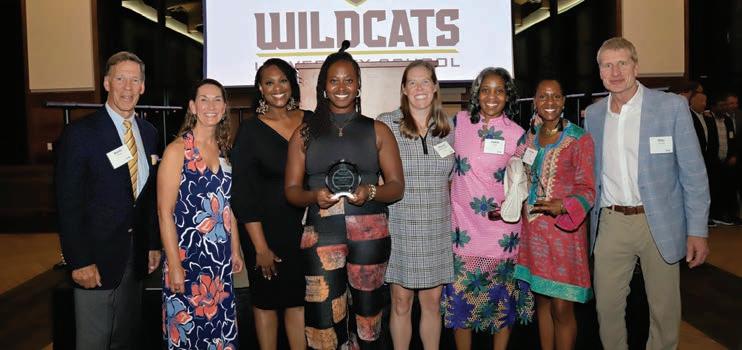
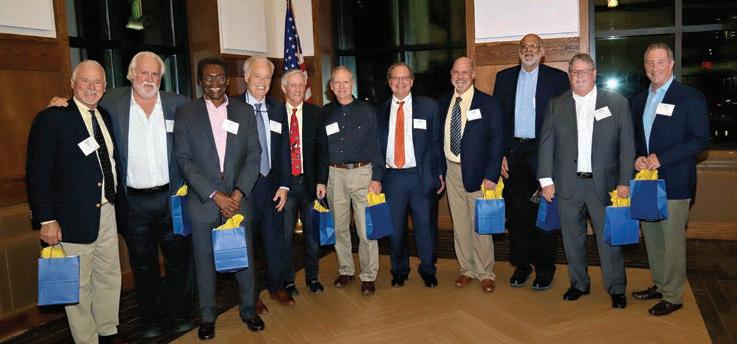

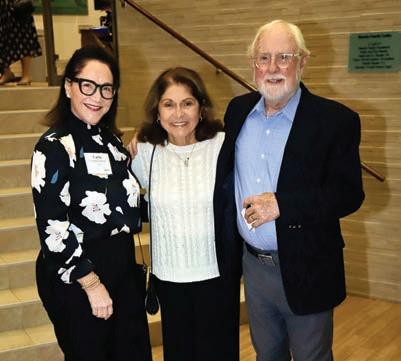
Congratulations to the 2025 inductees:
STUDENT ATHLETES
TOPE AWE BERRY ’03
JOSH BAKER ’12
PORTER JONES ’96
HARRY LEADINGHAM JR. MCDS’62
KATE ELSNER LILEK ’75
TEAM
USM 1974 FOOTBALL TEAM COACH
TOM “BUTCH” RICHARDSON DISTINGUISHED CONTRIBUTOR
USM BOOSTER CLUB

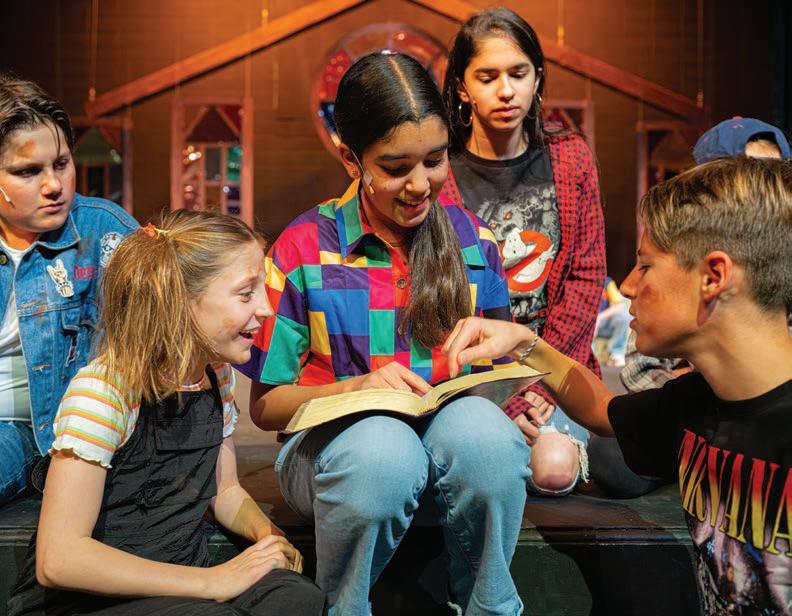
When the Herdmans—Imogene, Ralph, Leroy, Claude, Ollie, and Gladys— landed leading roles in the town’s Christmas pageant, everyone expected “the worst kids in the world” to ruin a cherished tradition. But the Herdmans’ unique approach presented the nativity story in a new light, and the community was reminded of the true meaning of Christmas: empathy, compassion, and love. The play was performed by Middle School theatre students and directed by Katie Gonring, Middle School drama teacher. Middle School students also assisted with set design and construction, lighting, props, sound, and directing.
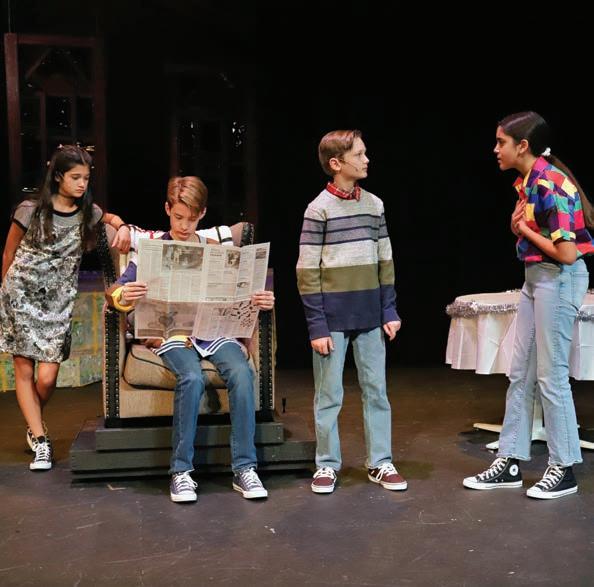
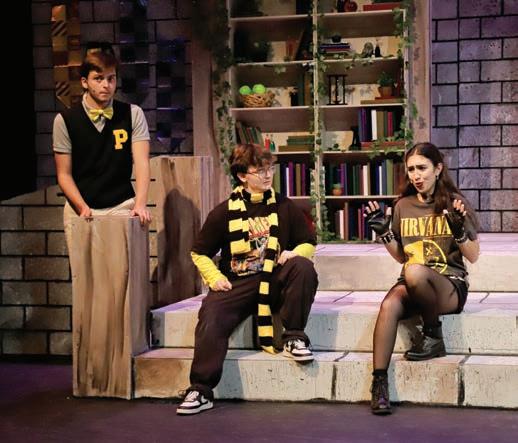
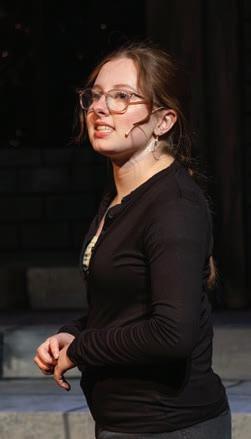
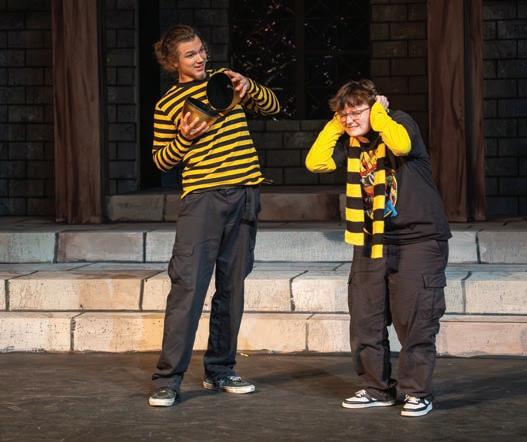
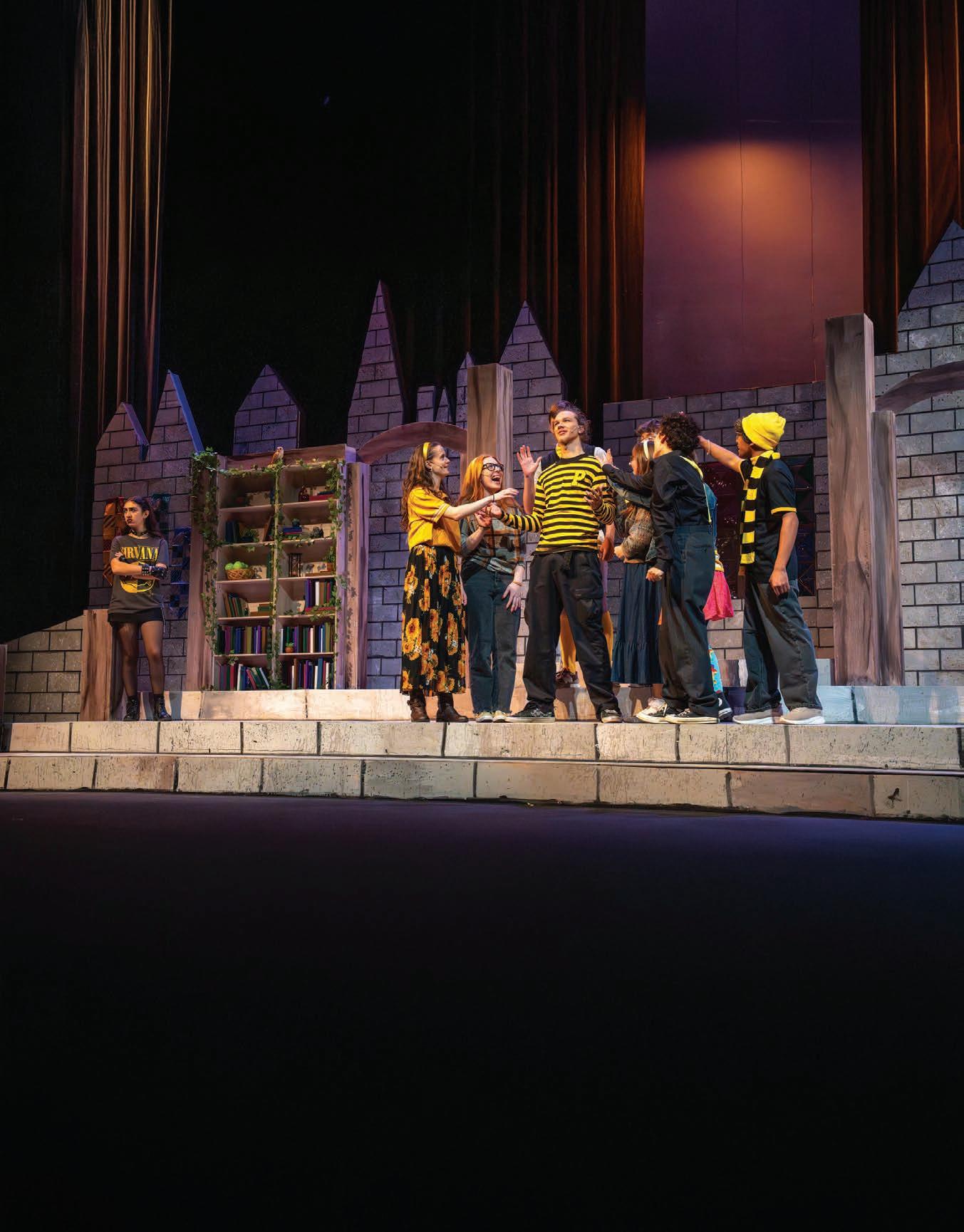
Everyone knows the story of the young boy who attends a magical wizardry school. But what about his less famous friends? “Puffs,” the humorous and heartfelt play presented by Upper School theatre students in October, tells the story of the less-famous students (the Hufflepuffs). They experience the same dangerous events as the well-known hero, but from a different, more relatable perspective. The performance was directed by Mark Edwards, Upper School drama teacher, with further assistance from a small army of students, teachers, and parent volunteers.
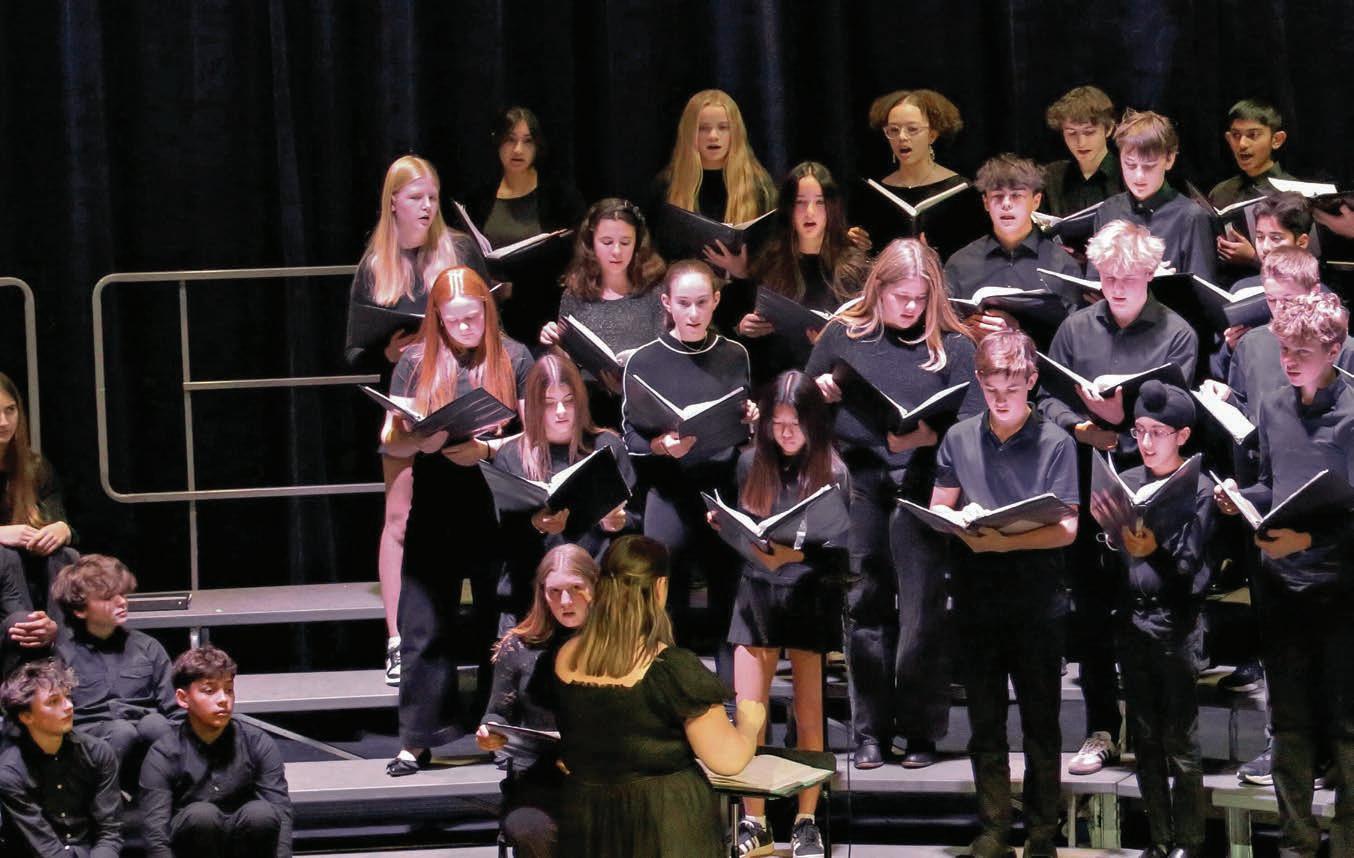
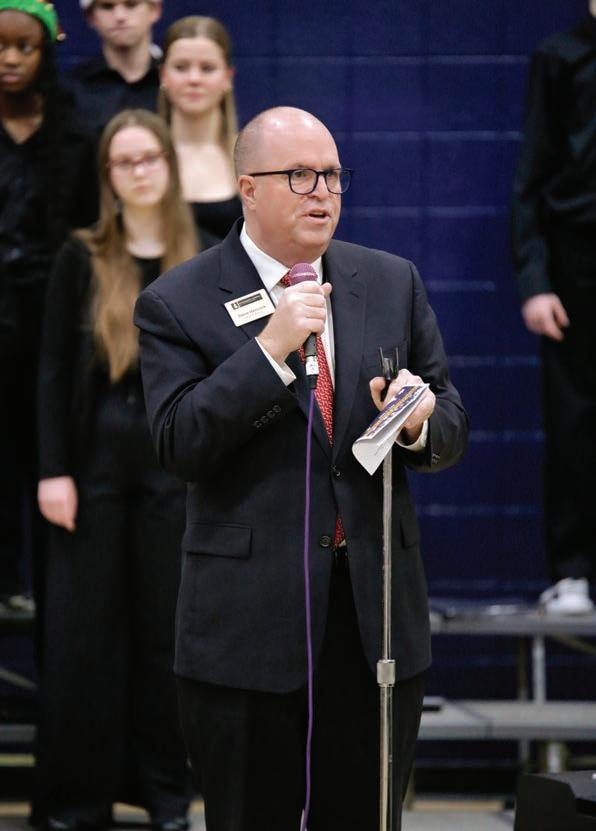
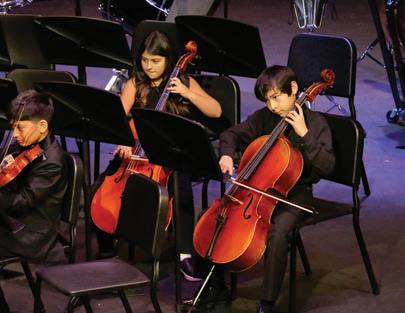
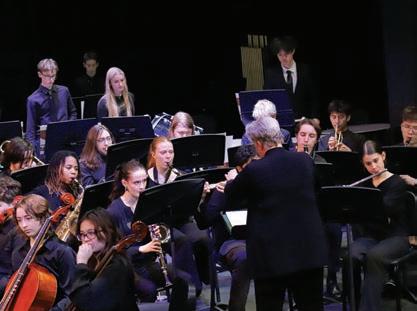
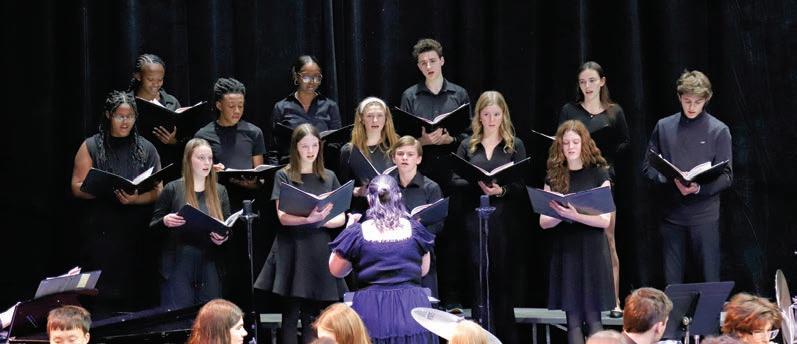
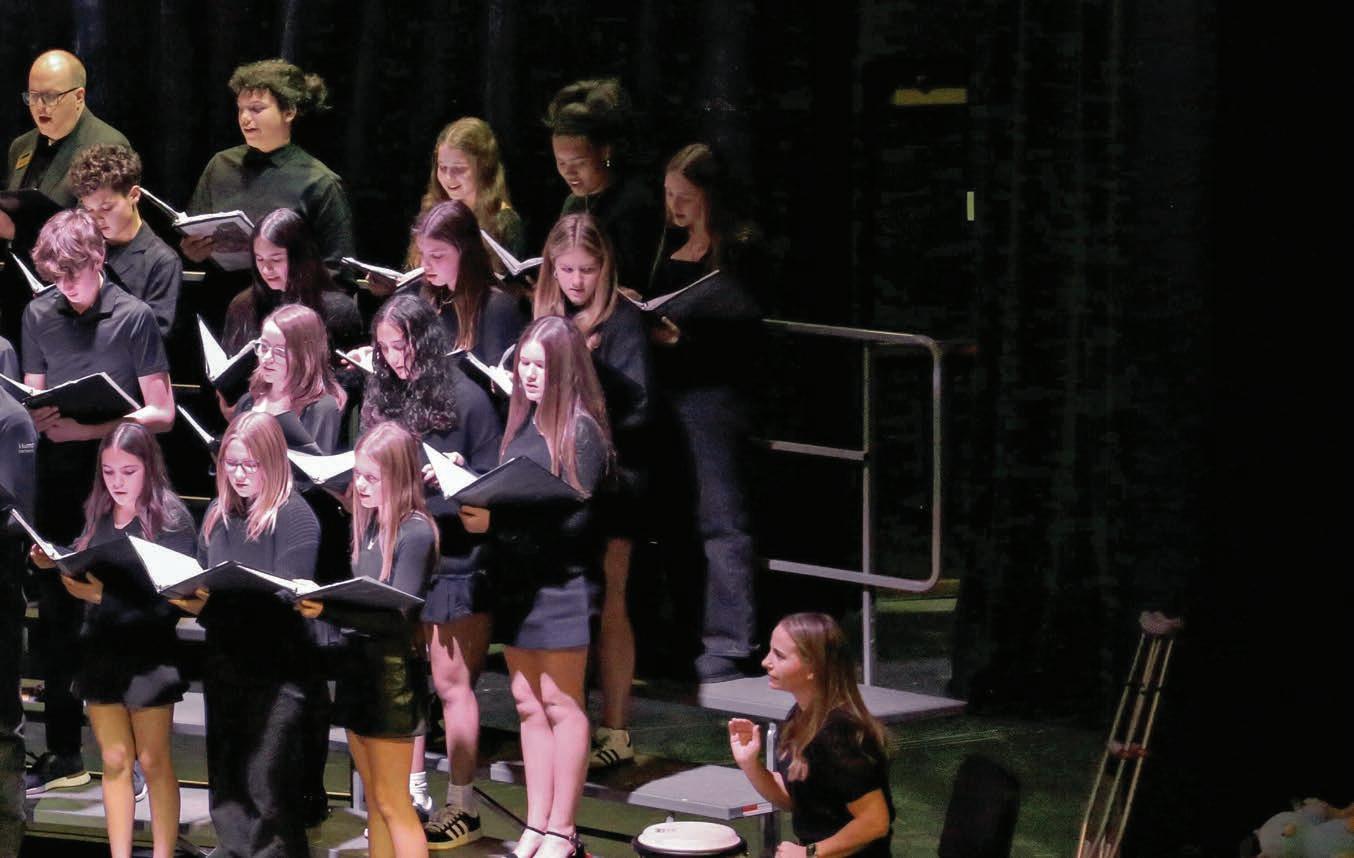
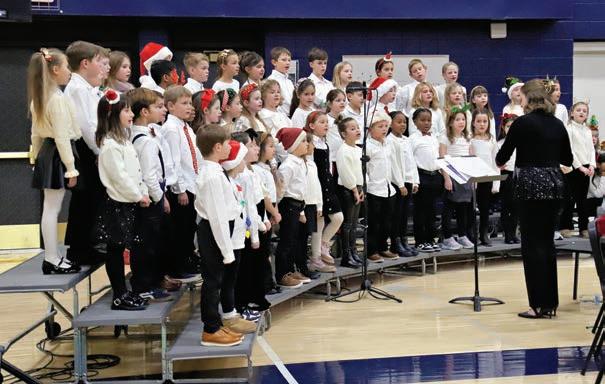
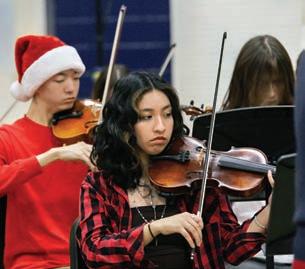
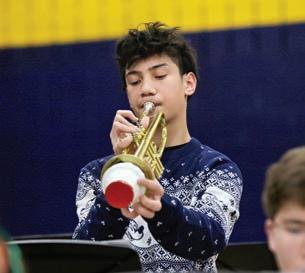
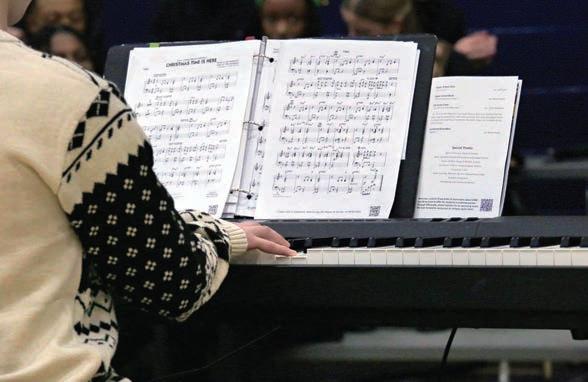
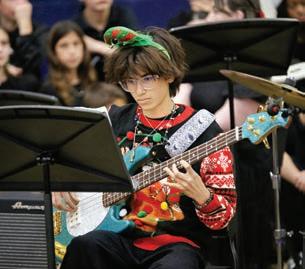
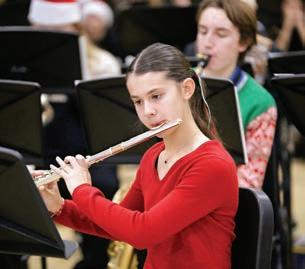
A series of year-end concerts filled the Virginia Henes Young Theatre with music and delighted audiences in December 2025, while the AllSchool Holiday Concert welcomed nearly 800 guests in the Upper School gymnasium. Special guest musicians Steve Hancock, head of school, and Sabrina Raber, director of Auxiliary Programs, also performed in select pieces. Together, these events celebrated the students’ skill and commitment, and the faculty members who guide and inspire them.
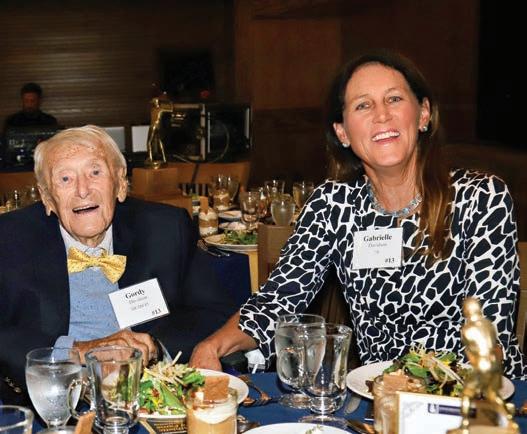
Gordon “Gordy”
Davidson MCDS’45 attended the Athletic Hall of Fame induction ceremony along with his daughter, Gabrielle ’78 (pictured, right), and son Michael ’75. Davidson was celebrating his 80th reunion year and supporting Michael, who was inducted as a member of the undefeated 1974 football team.
Virginia Fagen
MacDonald MDS’50 submitted the following note: “I have moved from Naples, Florida to be near my son and daughter-in-law in Atlanta. It’s lovely here, too! I’m also closer to the rest of my family who are in Philadelphia and Chicago. I’m blessed with good health and still very active. Would love to hear from Downer friends.”
Robert Burch MUS’52 was honored with a reception for the dedication of the Robert Burch Family Eye Center at Lincoln Center, part of the Columbia University Irving Medical Center. The center was made possible through a generous donation from Burch.
Fred Tyner MUS’59 held a solo show featuring 11 still life oil paintings at
the Delaplaine Arts Center in Frederick, Maryland.
Harry Leadingham Jr. MCDS’62
was inducted into USM’s Athletic Hall of Fame in October 2025. Leadingham was known for his speed on the varsity track and field team, which he joined in 8th grade, and competed in 10 or more different track and field events. He also excelled in football, which he played at Lake Forest College, along with running track, from 1963 to 1967.
Ben Mixter MCDS’63 submitted the following note: “My wife, Terri, our cock-a-poo, Molly, and I are presently living full time in our motorhome as we sell our North Port, Florida home and begin searching for a new home in or near Athens, Georgia. We look forward to connecting with any USM alumni in the area. We, and Terri’s mother who lived near us, decided to relocate here to get away from hurricane and tropical storm seasons, long hot sticky summers, and years with only two seasons—summer most of the year, and a short NOT summer season. We will also be nearer to family— Terri’s younger brother and my daughter and their families, who will be about an hour away. Terri’s mom
has already settled into a new home up here and we hope to be within half an hour or so of her! Here’s to leaves changing, an occasional snowflake and Bulldogs football!! As a Georgia native, born in Savannah, I am home!”
John Winkelman MCDS’64 and his wife, Pam, were profiled in a publication for the Howard Young Foundation to honor their years of dedication to the Lakeland Pantry in northern Wisconsin. Their efforts helped transform the pantry from a small operation in a gymnasium to a thriving community resource that serves over 21,000 individuals annually.
1974 Football Team members were inducted into the USM Athletic Hall of Fame in October 2025. They were honored for being one of the most successful teams in USM’s history, earning a 9-0 record under the tutelage of Charlie Kerr.
Kip Jacobs ’74 was honored with a chair dedication in the Virginia Henes Young Theatre at USM in November 2025, the first chair to be dedicated in the theatre. “Kip has been a steady champion of performing arts at USM for
many years,” said Katie Gonring, Middle School drama teacher and Performing Arts chair (pictured, right). “We are sincerely grateful for his ongoing support of the arts here at USM.”
Kate Elsner Lilek ’75 (pictured right, with Jenny (Gruesser) Jansen ’84) was inducted into USM’s Athletic Hall of Fame in October 2025. Lilek participated in four sports during her Upper School tenure—field hockey, basketball, volleyball, and softball— and earned 13 varsity letters. In 1982, she returned to USM to teach art and coach field hockey and girls soccer, roles she held for the majority of her 12-year tenure.
Curt Wuesthoff ’75 enjoyed the great outdoors and the autumn hunting and fishing seasons in northern Wisconsin, Iowa, and throughout the Midwest this past fall.
Lynn Wuesthoff ’75 traveled to Madrid, Spain, and dined at a restaurant called the Milwaukee Butter Burger Bar while there.
Angela Topetzes ’78 was named the director of partnerships and investments at Penfield Children’s Center in Milwaukee.
Raj Bhala ’80 presented on a panel at the International Bar Association’s annual conference in Toronto, attended by 6,000 lawyers from several dozen countries. Bhala is an officer of the association’s international trade committee and its academic and professional development committee. He also appeared on Legal Talk Network’s “Lawyer2Lawyer” program to discuss Trump’s tariffs, the U.S. Supreme Court, and the impact on international trade law.
Bhala is the Brenneisen Distinguished Professor in the University of Kansas School of Law and an expert in international trade law. He is also a USM Alumni Association board member. Bhala and his wife, Dr. Kara Tan Bhala, are proud of their daughter, Shera, a first-year law student and dean’s scholar at Vanderbilt Law School.
Gary Ames ’81 submitted the following note: “After retiring in 2021, I have been spending six months of the year in Canada with my family, two months in Port Washington, which is ‘home base,’ and the rest of the time on Isle of Palms, South Carolina. All three locations have so much to offer us retirees, but my heart remains in Canada.”
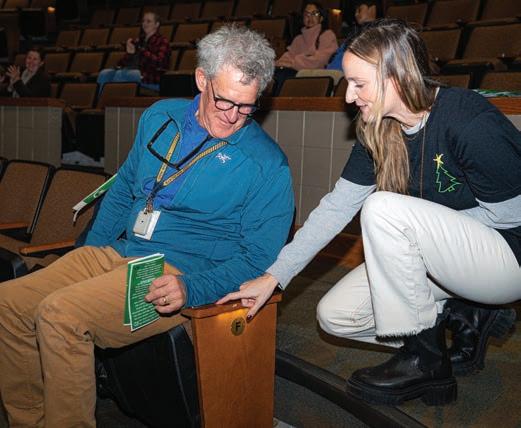

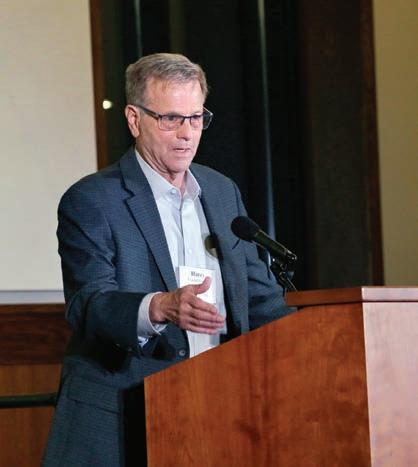
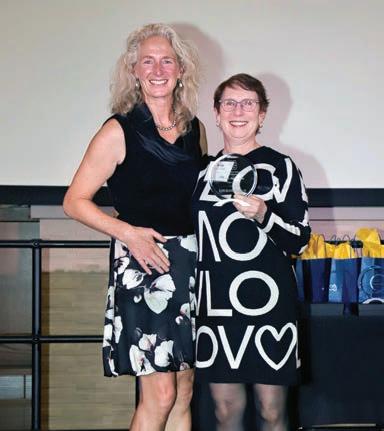
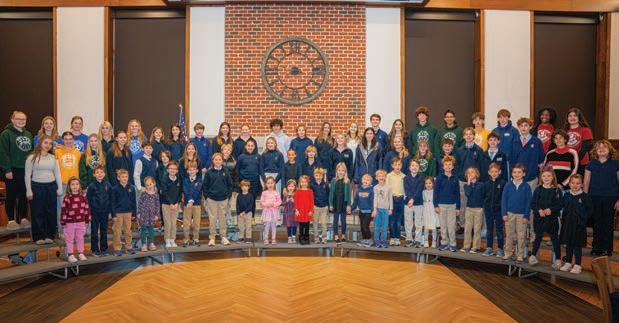
The annual Legacy Family Breakfast, held in November 2025, is a celebration of families who have committed to USM for multiple generations. A student is considered a legacy if a parent, grandparent, great-grandparent, or relative attended USM or one of its predecessor schools. Guests enjoyed a light breakfast in Jack Olson ’67 Commons, followed by a group photo.
While touring USM’s Preschool in 2021 for their oldest son, Jessica ’06 and Andy ’03 Lane bumped into a familiar face: Susie Bach, Jessica’s kindergarten teacher (who has since retired). “Even though I was wearing a mask due to COVID, she still remembered my name and the names
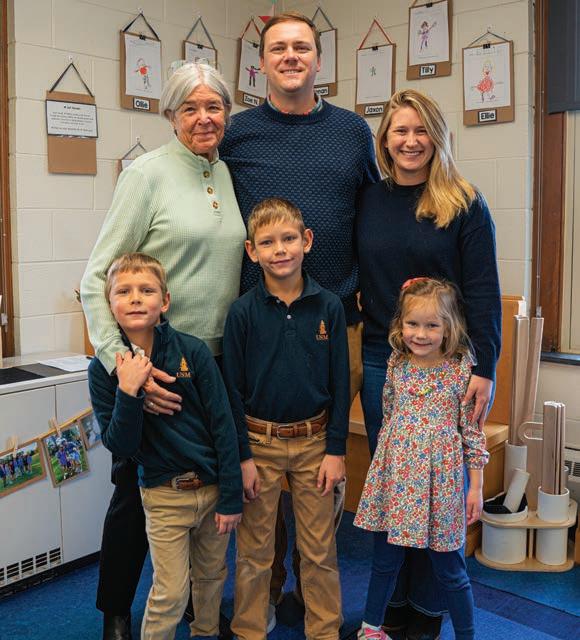
of my classmates all these years later,” said Jessica. That encounter solidified their decision. “How could we not come here and give our kids that same sort of experience?”
Their children follow a long line of USM graduates. Andy and his sister, Ginny ’01, both graduated from USM. Their parents, Diane and Doug, graduated from USM in 1967 and 1966, respectively, and their grandparents on both sides attended USM’s predecessor schools in the 1930s and ’40s.
Andy’s parents, like himself and Jessica, wanted their children to attend USM as they had. But even they were surprised by how positive the USM experience would be for their kids. “At the end of Ginny’s first day of 1st grade, she came out of class skipping,” recalled Diane. “The whole school was extraordinary. We enrolled Andy in kindergarten the next year.”
Diane loves returning to campus, whether to attend special events like Grandparents and Special Friends Day or to pick up her grandchildren up at the end of the school day. “It’s always so much fun,” she said. “I point out areas of the building that I used when I was a student, and sometimes I even run into classmates of mine.” Jessica, too, loves being reminded of her time as a student. “Whenever I see the sign for Liz Krieg Field, I remember when she was my field hockey coach,” she said.
Although Diane’s mother, a Milwaukee Downer Seminary alumna from 1940, passed away before her greatgrandchildren started at USM, Diane knows she also would have loved to visit them at school. “Oh, she’d have been here in a heartbeat,” said Diane. “She would have loved every second of it.”
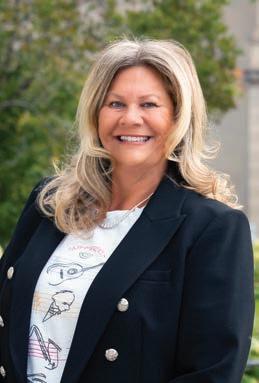
Allison Kelsey ’84 submitted the following:
“Although it was a slog at times to work full time and be in grad school full time, I earned my M.Ed. in Higher Education last May (2025) from Temple University. I direct a college scholarship program here in Philly, and while I had program ops experience, I needed the education credential to keep doing this work until I shuffle off to the great beyond. And my students were so encouraging to me!”
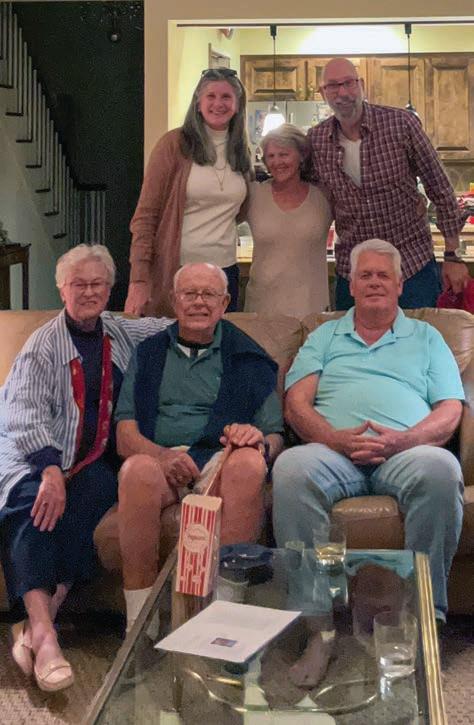
Susan Zarwell ’87 and Ben Zarwell ’87 were hosted by retired Upper School Spanish teacher Holly Morse and her husband, Dan, at their
home. They were joined by retired Upper School history teacher John “J.S.” Stephens and his wife, Carolyn. The group convened to watch a distinguished lecture on international trade policy given by Raj Bhala ’80, Brenneisen Distinguished Professor in the University of Kansas School of Law and international trade law expert.
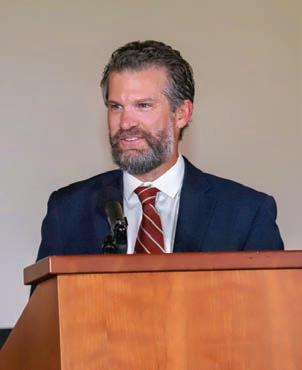
90s
Lindsey Canonie Grady ’91
submitted the following note: “After two terms on the Wisconsin Circuit Court Bench, I am taking my legal experience and love of
Milwaukee to the Big Gig! I will serve as chief administrative officer and general counsel for Milwaukee World Festival Inc. See you at Summerfest!”
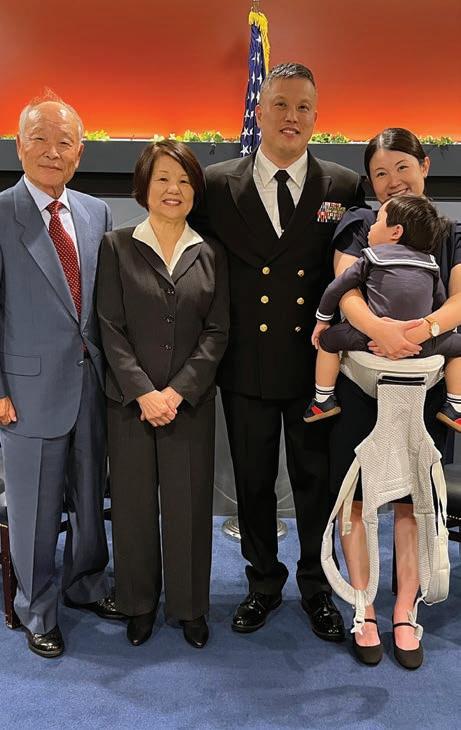
David Lee ’94 was promoted to the rank of captain in a ceremony at the Pentagon on Oct. 3, 2025. After graduation from Johns Hopkins in 1998 and the University of Pennsylvania Law School in 2001, David joined the U.S. Navy Judge Advocate General’s Corps. He currently serves as one of the legal advisors in the Office of the Chief of Naval Operations and lives in northern Virginia with his wife and son.
Anwar Floyd-Pruitt ’95 was remembered in “Milwaukee Magazine” for his many contributions to the Milwaukee arts community. He passed away in September 2025.
Porter Jones ’96 was inducted into USM’s Athletic Hall of Fame in October 2025. Jones was a WISAA state champion tennis player an unprecedented four times in his four years of Upper School, and ranked as the top singles player in the state from 1993 to 1996. In his four years, he held a 58-9 record in singles, going undefeated his junior and senior years.
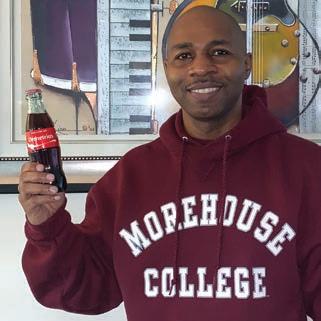
When Demetrius
Patterson ’92 came to USM in 9th grade, it was a culture shock coming from a public school in Milwaukee. “Craig Smith ’92 and I, we were the only two Black males in the entire grade,” he said. “Plus, the academic rigor took some getting used to.”
But soon Patterson, who attended USM on a scholarship, was taking AP classes, playing sports, and serving as a prefect and student council leader. “By my senior year, I felt like I belonged and could lead,” he says. “That confidence carried me into everything that came next.”
What came next was a full scholarship to Morehouse College as a NASA Scholar, to pursue a computer science degree. After graduation Patterson was hired by The CocaCola Company, where he spent 26 years in the company’s IT department, working his way up from programmer to director.
Patterson and his wife, Merlina, have long supported USM on an annual basis. But after reevaluating their estate plan, they realized they could do more. “We learned that we could allocate a portion of our estate to provide a full scholarship for one student at USM and one at Morehouse, and still leave a significant remainder to our children. Once we realized that, it was kind of a no-brainer.”
Their gift will provide a full scholarship for a Black male student from Milwaukee Public Schools—someone much like Patterson—to attend USM. It aligns with the school’s broader commitment to fostering an inclusive community rooted in opportunity, equity, and belonging.
“This is my way of trying to do all I can to help educate Black men so they can compete and give meaningful contributions to society. Because I know, if not for those programs that benefited me, I wouldn’t have had that opportunity to go to USM or Morehouse and end up having the success that I’ve had in my life.”
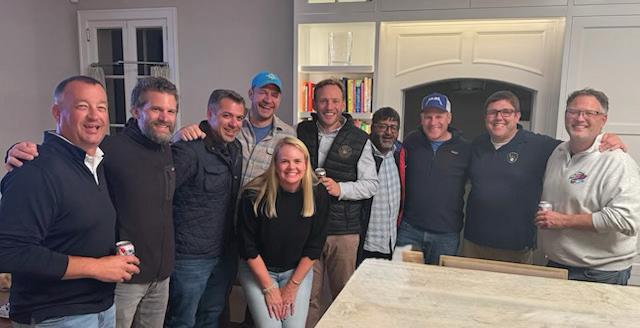
Mike Lindemann ’96 and his wife, Brie, hosted a gathering of alumni at their home to celebrate Porter Jones’ ’96 induction into the USM Athletic Hall of Fame. Pictured, from left Chris Tollefsen ’96, Porter Jones ’96, Jason Slutzky ’96, Chris Saites ’96, Stephanie (Asmuth) Gardner ’96, Mike Lindemann ’96, Ravi Krishnaney ’96, Aaron Gardner ’96, Will Piper ’96, and Kevin Byrne ’96.
Will Piper ’96
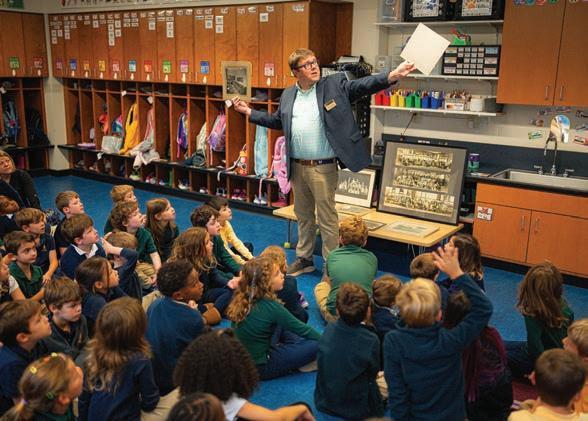
spoke to 1st grade students in October about the history of USM, including cultures and traditions from the predecessor schools that continue at USM today. Piper is USM’s assistant director of alumni relations and reunion giving.
Alison Kliegman ’99
co-founded one of the newest abortion clinics in the state of Wisconsin, called Care for All Community Clinic, on Milwaukee’s near west side. The nonprofit, independent clinic also provides services for miscarriage management, birth control, pregnancy continuation and family care, and more.
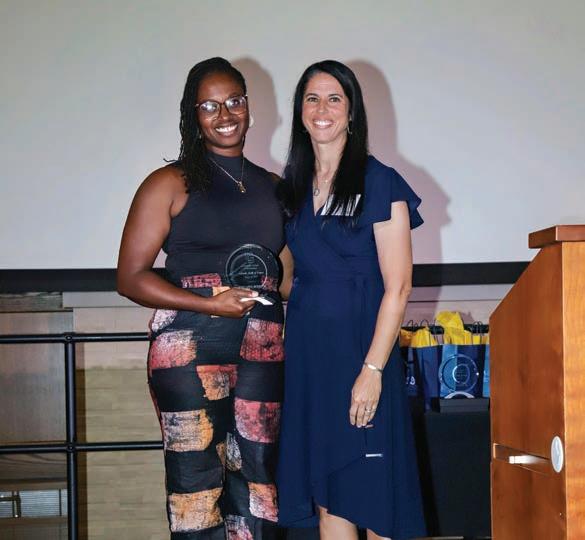
Kathryne Martin Nelson ’99 and her husband, Jason, have owned and directed Camp Kamaji for Girls for 13 years together. Kamaji is the oldest all-girls sleepaway camp in Minnesota (founded in 1914). Kathryne became the proud parent of a Kamaji camper when her 7-year-old, Felicity, became an official eight-week camper during the summer of 2025!
Christopher Chan ’00 was a finalist in the “Shepard Express’” Best of Milwaukee awards in the Milwaukee Author category. Finalists were nominated by community members. In addition, his book “The Autistic Sleuth” won a Best Indie Book Award in the TV History category.
John Graham ’02 is helping to lead the North American launch of The White Hag Brewery, one of Ireland’s most acclaimed craft breweries. Based in Milwaukee, John is focused on building brand awareness and developing distributor partnerships across the U.S.
Fatima Laster ’02
hosted a 10-hour immersive festival of art, music, food, and community action in September 2025 to benefit 5 Points Art Gallery + Studios, for which Laster serves as owner, artist, and curator.
Tope (Awe) Berry ’03 (pictured, left, with Jaime (Erickson) McGaver ’99) was inducted into USM’s Athletic Hall of Fame in October 2025. Berry was an exemplary volleyball, basketball, and track and field athlete who won the Marion Chester Read Sportsmanship Award in 2003 and holds the school record for shot put and discus.
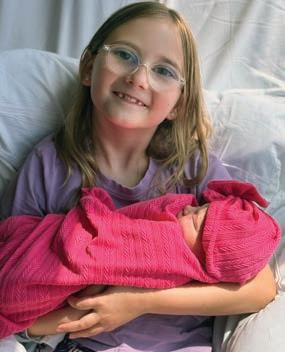
Jonathan Lund ’03 and his wife, Anna, welcomed their second child, Sadie Marie, in August 2025. “Big sister Sophie has been a huge help and is so excited to have a little sibling,” he wrote.
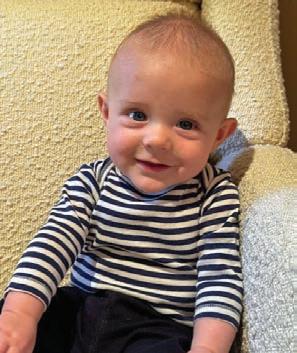
Thomas Keily ’06 and his wife, Holly, welcomed Callum Quinn Keily in May 2025. They reside in Denver.
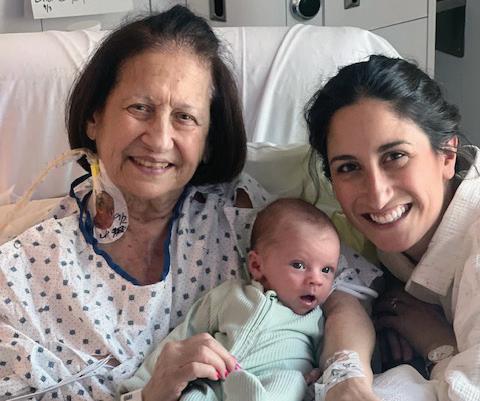
Susan Krejci Callan ’09 and her husband, Patrick Callan, welcomed daughter Jade Marina Callan in August 2025, pictured here with Susan’s late mother, Marina Spheeris Krejci ’68.
Tessa Nowakowski ’10 was honored during USM’s Homecoming week. The varsity field hockey team held its annual Tessa Nowakowski ’10 field hockey game in memory of Nowakowski, an outstanding student and athlete, who passed away in 2009.
Annie Stanford ’10 married Paul Boeshaar on June 14, 2025 at the historic Pabst brewery in Milwaukee. USM alumni in attendance were Helen Keller ’10 (bridesmaid), Saira Khanna ’10, and Augie Wilhelms ’10.
Josh Baker ’12 was inducted into USM’s Athletic Hall of Fame in October 2025. Baker played baseball, basketball, and soccer from 2009 to 2012, earning a total of 12 varsity letters and the Henry H. Uihlein Sportsmanship Award in 2012.
Adam Salaymeh ’12 and his wife, Shelby, welcomed their first child, Lucia, in September. She was named after the Caribbean island where they fell in love.
Meredith (Jeffers)
Malicky ’13 has worked as a trainer with Burn Boot Camp in Whitefish Bay, Wisconsin, for three years. This past year, she competed against trainers from across the nation in Burn Boot Camp’s Athlete Games, where she won a spot at nationals and finished 10th in the nation and first in one of the events. “It was by far the most physically and mentally taxing thing I have done since playing competitive sports in Upper School and college,” she wrote. “While I am proud of how much I pushed myself and was able to achieve,
I am even more proud of the way that I, and the other athletes, carried ourselves and supported one another throughout the weekend.”
Amber Baker Bender ’14 and her husband, Ryan, welcomed twins Owen and Wren in May 2025.
Djdade Denson ’14 met with USM students when they conducted research for their Tower Projects at ThriveON King, an inclusive community hub located in the heart of Milwaukee’s Bronzeville district.
Chandler Sullivan ’16 (right) attended the Women in Tech SEO festival in Philadelphia, representing her team at SocialSurge Marketing in Milwaukee. “I can without a doubt say this was one of the most inspiring conferences I’ve been to. I can’t think of a time when I was surrounded by 100+ womxn/ people of marginalized genders in one space that felt so inclusive and welcoming,” she wrote.
Ethan Ford ’19 released his first album as a recording artist under Sony Music, with Sana Records, in June 2025. The name of the album is “2001” by @fordomusic, and it can be found on all music platforms. The music video for “Nobody’s Watching” can be found on YouTube.
Ayesha Kazi ’19 was the youngest person to pitch her venture, ASL Aspire, at EdTech Week in New York City. Kazi pitched ASL Aspire, a game-based approach to American Sign Language STEM education, to early stage EdTech investors for $500,000. Although she did not take home the win, it was still a worthwhile experience. “This was one of the few competitions where I genuinely felt joy for every winner, because we’re all working toward the same mission: equitable, innovative education for every learner,” wrote Kazi.
Teddy Kies ’20 recently joined the Peace Corps and is currently stationed in Malawi, Africa.
Mimi Norman ’21 led 5th grade students from USM in a freshwater activity during their retreat at Schlitz Audubon Nature Center. Norman, who is an environmental educator, showed students a reptile and amphibian, and taught them how they can protect wildlife.
Greta Hinke ’22 served as a captain for Northwestern University’s field hockey team, which won its second consecutive national championship in November 2025, topping Princeton University 2-1 in double overtime.
Thomas Stephens ’22 earned 20th place (25:26.2) at the Cardinal Invitational as part of the Amherst College men’s cross country team. Thomas and his brother, Drew ’22, both compete on the team.
Talia S. Ciralsky ’23 was featured by Case Western Reserve University as a recipient of their fall all-academic honors for the women’s soccer team.
India C. Vielehr ’23 attended the 39th International Electric Propulsion Conference (IEPC 2025) in London in September 2025. She contributed to the research efforts and was a part of the authorship for the paper “Collision-Induced Fragmentation in Commonly-Used Ionic Liquid Propellants for Electrospray Thrusters,” which was presented during the electrospray development sessions. She is grateful to be part of this research within the University of Southern California’s Laboratory for Exploration and Astronautical Physics (LEAP) and to keep contributing to advancements in electric propulsion. This work will be expanded upon and published in the “Journal of Electric Propulsion” in the coming months.
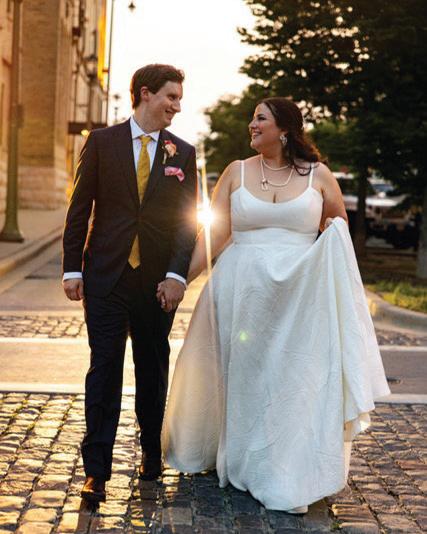
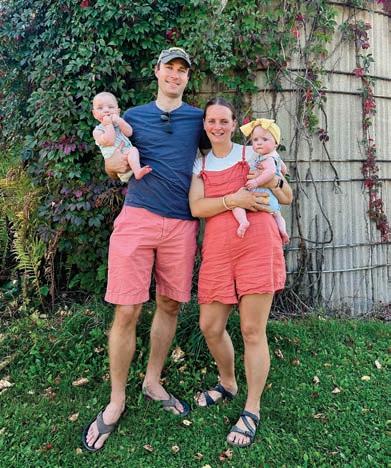
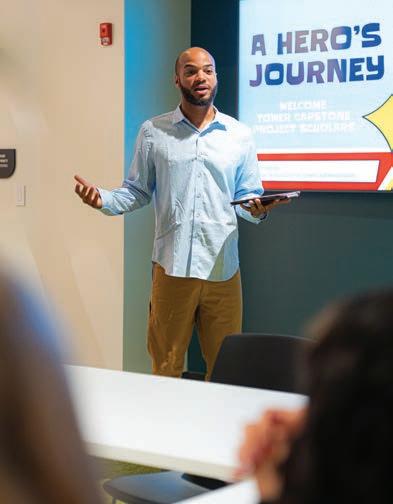
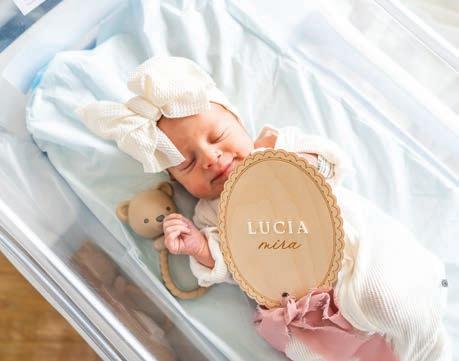
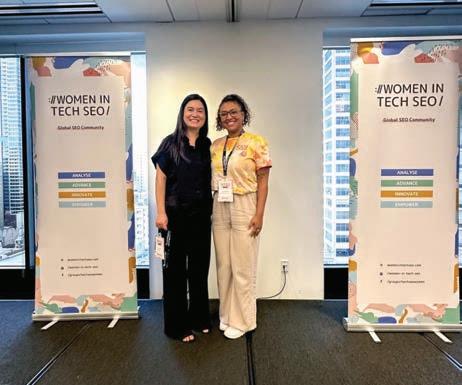
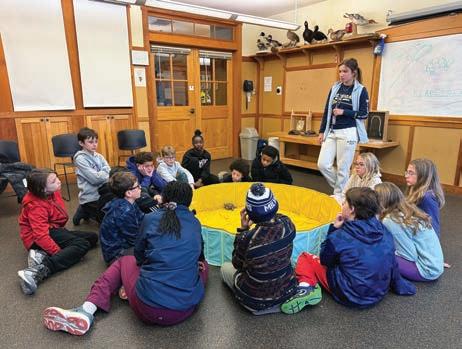

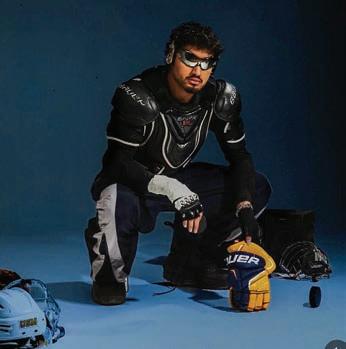
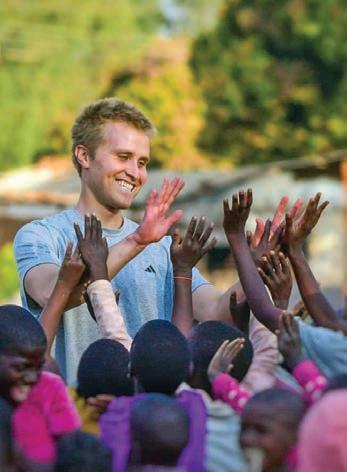
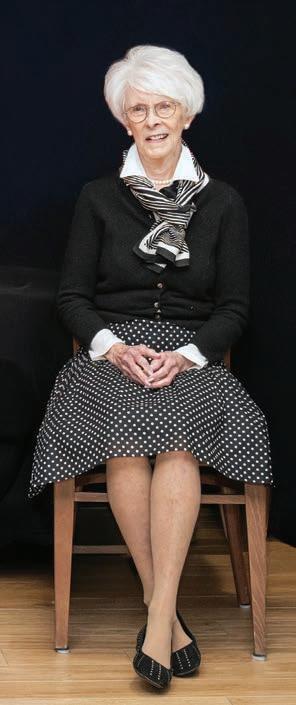
Linda Mellowes was named a 2025 Quadracci Family Betty Award Winner by “Milwaukee” magazine. Mellowes was chair of USM’s Board of Trustees, and currently serves as a trustee of USM’s Endowment board. She has led seven local boards, including being the first woman to chair the board of the United Way, and has helped to raise funds to support a number of local health care, education, and women’s causes.
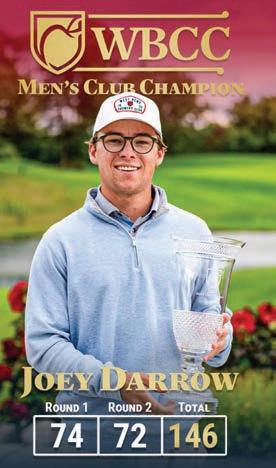

Joey Darrow ’24 won the club championship at the West Bend Country Club in August 2025, which gives him an automatic bid to compete in the Wisconsin State Amateur Championship, also at West Bend Country Club, in July.
Brock Miller ’25 received Rookie of the Week honors from the Liberty League for football for two weeks in a row in September 2025. Miller is a defensive back for the University of Rochester Yellowjackets football team.
Annie Norman ’25 set a personal best of 18:09.1 at the Adidas Cross Country Challenge, as part of the Davidson College women’s cross country team, and was named Rookie of the Week by the Atlantic 10 Conference.
Check out the latest way to stay connected to USM: the Wildcat Way Podcast!
Episode One: Learn about the recent growth of campus and the Opening Day tradition. What is it like to attend USM in 2025?
Episode Two: Coach Don Forti has been inspiring Wildcats for more than 40 years. Take a closer look at his legacy and impact on USM.
Visit www.usm.org/podcast to listen and subscribe!
We celebrate the lives of the following alumni and friends, whose deaths were recently shared with us. We are thankful for their friendship.
1930s
Martha Miller Barnhart MDS’33 Erie, Pa.
Charles Keppler MCDS’36
Ruth Dwight Row MDS’37 Mequon, Wis.
Mary Cudahy Keogh-Stringer MDS’38 Sanibel, Fla.
Edith Pendock Stowers MDS’39 Dallas
1940s
Barbara Meyer Elsner MDS’44 Milwaukee
Arthur Jordan MUS’46 Homosassa, Fla.
Sally Day MDS’47 Oconomowoc, Wis.
Martha Nesbit Frankwicz MDS’47 Madison, Wis.
Robert Lown MCDS’49 Kennebunkport, Maine
1950s
Michael MacKedon MUS’50 Milwaukee
Gail Brisco Schaefer MUS’52 Hartland, Wis.
Louise Lau Hedrick MDS’54 Elm Grove, Wis.
Jonathan Harper MCDS’55 Mequon, Wis.
David Barrow III MCDS’56 West Bend, Wis.
John Carpenter MCDS’56 Milwaukee
D. Stevens Garlick MCDS’56 Charlottesville, Va.
Thomas Klug MCDS’57 Mequon, Wis.
Douglas MacNeil MCDS’57 Milwaukee
Frances O’Neill Mosle MDS’57 Nashua, N.H.
Carroll Disbrow MUS’58 Milwaukee
Matson Holbrook MCDS’58 Mequon, Wis.
Christopher Barrow MCDS’59 Vero Beach, Fla.
Robert Ott MCDS’59 Pewaukee, Wis.
1960s
Alan McGregor MCDS’62 Denver, Colo.
Michael Kotovic ’66 Milwaukee
1970s
Michele Vogel ’74 Palm Beach Gardens, Fla.
1980s
Catherine Broom Duncan ’82 Beltsville, Md.
1990s
Anwar Floyd-Pruitt ’95 Milwaukee Friends
Judith Bergstrom Franklin, Wis.
Grandmother of Josh Baker ’12 and Amber Baker Bender ’14
Roger Boerner Mequon, Wis.
Grandfather of Kelly Riordan ’08
Patricia Bridge Mequon, Wis.
Mother of Gardiner Flint Bridge ’69, Gerald Bridge ’72, and Jonathan Bridge ’78
Jerrel Jones
Brown Deer, Wis.
Father of Lynda Jones-Reyes ’80, Stacey Jones ’85, Jerrel Jones ’89, Earnest Jones ’96, and Mary Ellen Jones ’99, and grandfather of Alexis Reyes ’09
Nagaveni Reddy Brookfield, Wis.
Mother of Anjali Reddy ’05
Correction: Clair Baum was listed with an incorrect relationship to August Baum ’27 in the Spring/Summer 2024-25 issue. Clair was August’s grandfather. We sincerely apologize for the error.
Marina Spheeris Krejci ’68 passed away on Sept. 15, 2025. Marina had a lifelong passion for service, both to nonprofit organizations in Milwaukee, and to University School of Milwaukee. She was a student at Milwaukee Downer Seminary when the three predecessor schools merged to become USM in 1964. In 1984, she spearheaded the development of the Alumni Service Award, given annually to individuals who exhibit service and volunteerism. She earned the award in June 2025, and it has since been renamed in her honor.
In 2001, she served as vice president of USM’s Board of Trustees before being hand-picked by then-Head of School Ward Ghory to become USM’s director of advancement starting in 2002. As director, she successfully led fundraising efforts for Phase I and Phase II of USM’s $45 million The Next Generation campaign—in part during a global recession.
Marina had a long history of volunteering, both at USM and in Milwaukee. Highlights include co-chairing the UPAF Ride for the Arts; St. Robert School Emerald Auction; and Salsa Sampler for Notre Dame School of Milwaukee. In addition to her tenure at USM, Marina has held various roles leading development and advancement efforts for the Milwaukee Repertory Theater, Children’s Hospital of Wisconsin, and Lake Forest Academy.
Marina is survived by her husband of 41 years, Frank Krejci; their children, Elizabeth Krejci ’05, Bennett Krejci ’07, and Susan Callan ’09, as well as granddaughter Jade Marina Callan, nephew Jack Frankenberry, brother Constantine Spheeris, other relatives, and many dear friends.
Charles Frederick Wright ’68 died on Dec. 21, 2025, in St. Augustine, Florida, following a battle with cancer. Born in Milwaukee, Charlie was a lifelong entrepreneur, investor, teacher, and spiritual seeker who lived with deep intention and conviction.
As vice chairman of The Fall River Group Inc., Charlie played a key role in its growth and diversification, and held leadership roles across numerous investment, technology, and biotech firms. A respected trading expert, he was a member of the Chicago Mercantile Exchange, author of “Trading as a Business,” and mentor to traders worldwide.
He was a longtime supporter of USM, having served as a trustee from 1993 to 2002, twice co-chaired the school’s annual fund campaign, and chaired the USM committee on trustees and the USM technology committee. In 1992, Charlie and his uncle, Jim Wright MCDS’39, established the Wright Family Faculty Fund to reward USM faculty who exemplify the highest standards of independent school teaching. He also established the Charles F. Wright Technology in Teaching Award and the Wright Family Distinguished Faculty Chair. In 2003, he was given the Alumni Service Award. In 2022, he was inducted into the USM Athletic Hall of Fame as part of the 1968 hockey team, whose season-ending record of 18–2 stood for 33 years.
Charlie is survived by his life partner, Tina Henle; his brother William Wright Jr., and sister, Sally Furlong; his sons Charles Wright Jr. ’04 and Andrew Wright ’06; and grandchildren Eliza Wright ’39, Fritz Wright, and Arthur Wright.
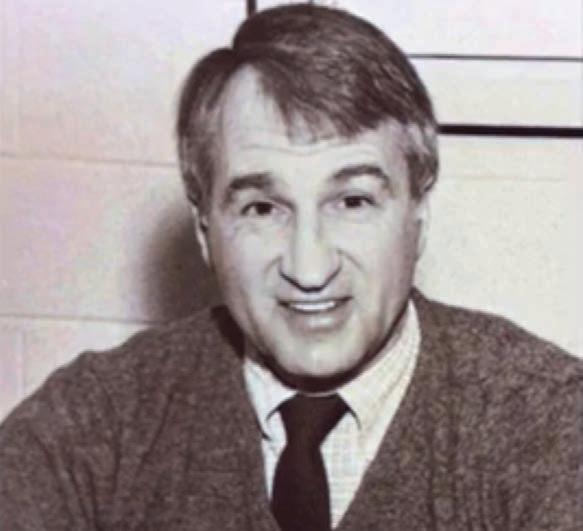
Lowell MacDonald Sr. passed away at the age of 84 on Dec. 28, 2025. Lowell began his coaching career at USM in 1979 after a successful 14-year career in the NHL with the Detroit Red Wings, Los Angeles Kings, and Pittsburgh Penguins, during which he was twice named to the allstar team. He reached the pinnacle during the 1973–74 season when he scored 43 goals and was awarded the Bill Masterton Trophy—an achievement that reflected his skill but also his relentless work ethic, resilience, and dedication to hockey.
After retiring from professional hockey, Lowell devoted his life to education at USM. He wore many hats during his tenure from 1979 to 1997, including athletic director, boys’ varsity hockey head coach, and varsity golf head coach. He was known for always stepping in to help support the lives of USM athletes, and for championing the growth and success of USM athletics. In hockey, he compiled a record of 263-180-17, winning multiple WISAA state championships, but his greatest passion was helping students become not just better athletes, but better people. Lowell was elected into USM’s Athletic Hall of Fame in 2022.
Lowell is survived by his wife of 62 years, Joyce; his son, Lowell MacDonald Jr. ’83 and his family; his son, Lane MacDonald ’84 and his family; and his sister, Karen MacLeod. In lieu of flowers, Lowell’s family asked that donations be made in his memory to the USM hockey program through the school’s USM Fund.


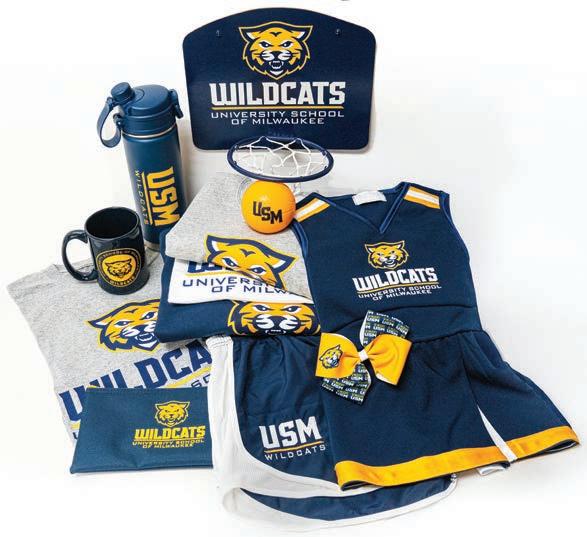

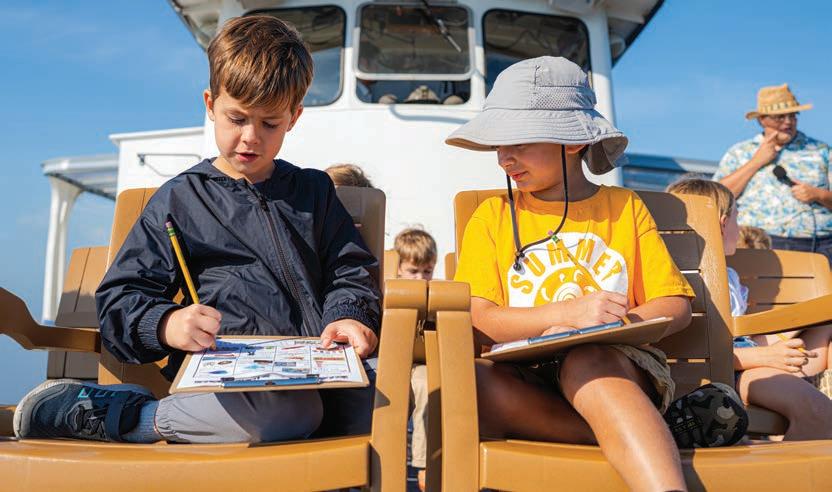
The city of Milwaukee is a vibrant, living classroom, and 1st grade students experienced it first hand this past September. To enhance their study of symbols and urban settings, they took a river cruise through the heart of downtown, diligently noting major landmarks and various modes of transportation. They then traveled a few blocks to Baird headquarters, where they met with company executives Laura Thurow ’96, Lisa Melick ’03 (sister-in-law of Erica Melick, 1st grade teacher), Whitney Sweet, and Jason Gannett. Students then enjoyed a power lunch from the company’s 26th floor conference room—complete with a juice box bar.
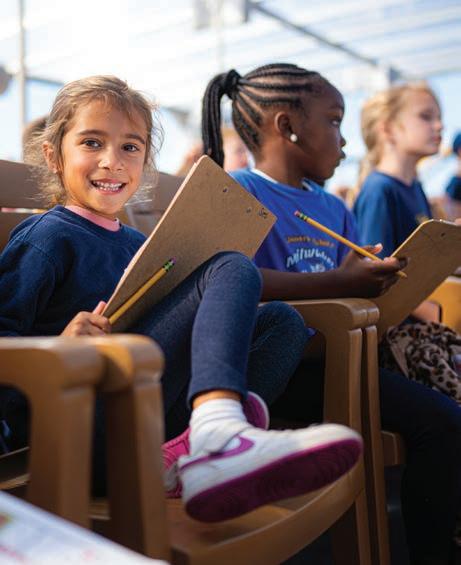
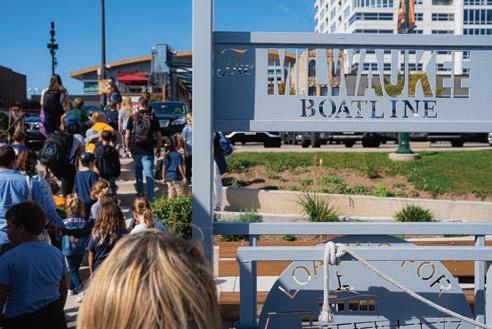
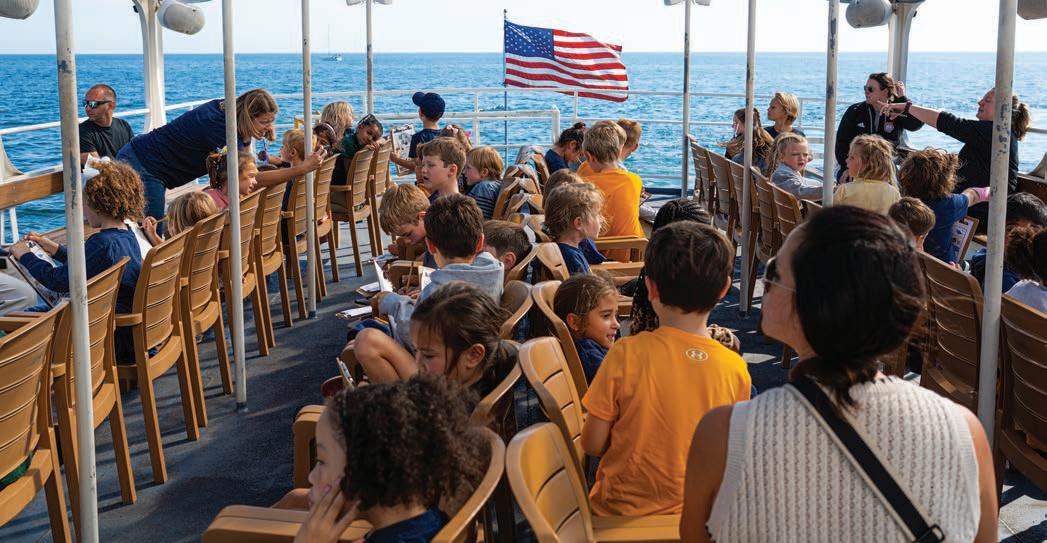



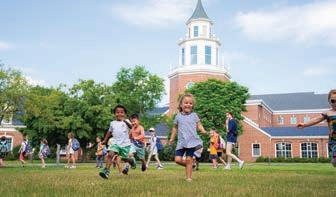
Discovery Camp is a structured program centered around USM’s preschool curriculum.
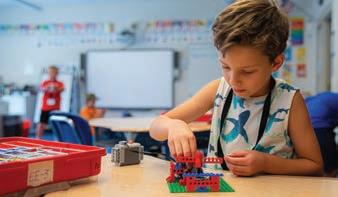
Adventure Camp is designed for campers who want to dive into a specific interest or passion.
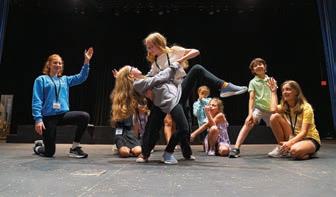
provides a supportive environment for campers to explore and express themselves through various theatre disciplines.
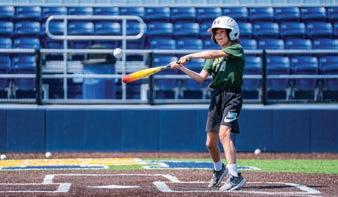
provide young athletes with skill advancement opportunities in the sports they love the most.
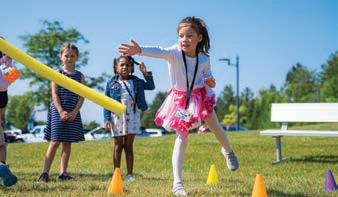
offers weekly themed adventures with a rotation of outdoor activities, sports, arts and crafts, and collaborative games. 1st–4th
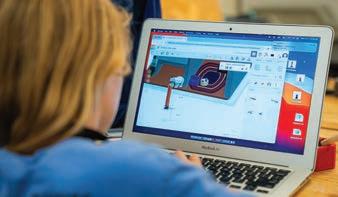
Odyssey Camp engages middle school campers in topic-specific workshops that engage and inspire.
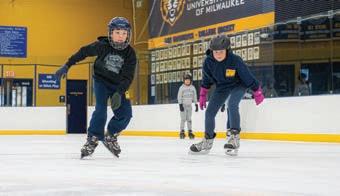
is designed for all levels. Beat the heat and learn how to ice skate at the same time.
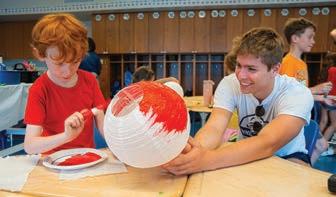
empowers participants to build confidence and leadership skills through workshops and working with younger campers.

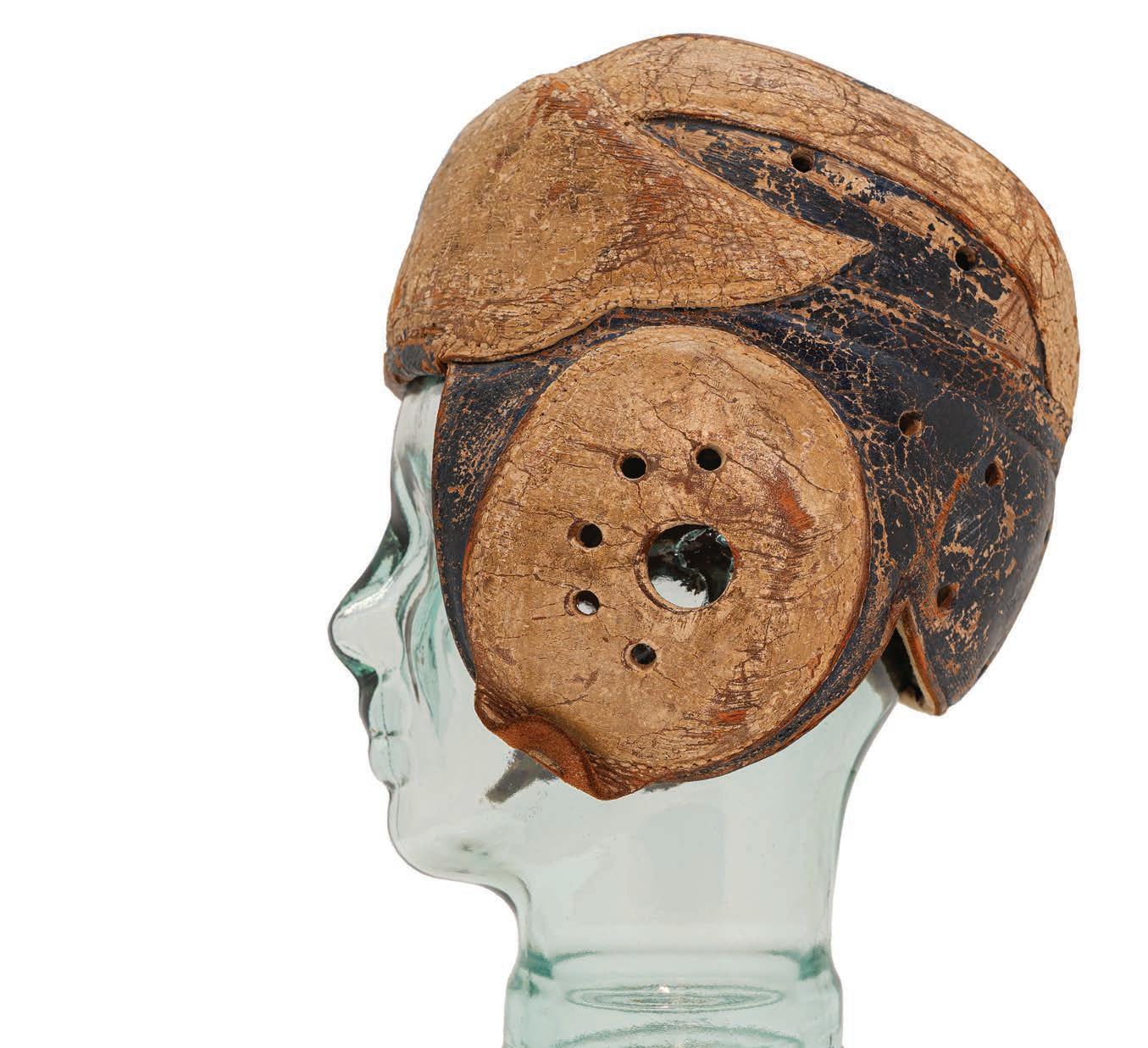
This leather football helmet dates back to the 1930s, and was owned by the late Allan J. Roberts Jr. MUS'31. Learn about the role athletics has played throughout USM's 175-year history, along with other individuals, traditions, and ideals that continue to influence the school today, starting on page 11.