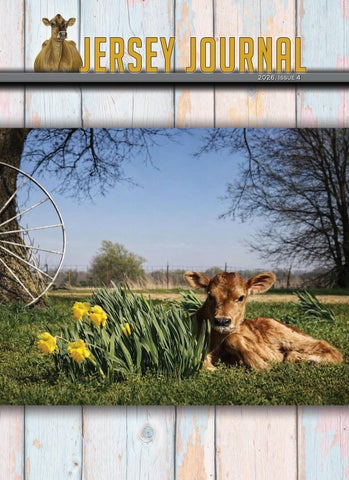
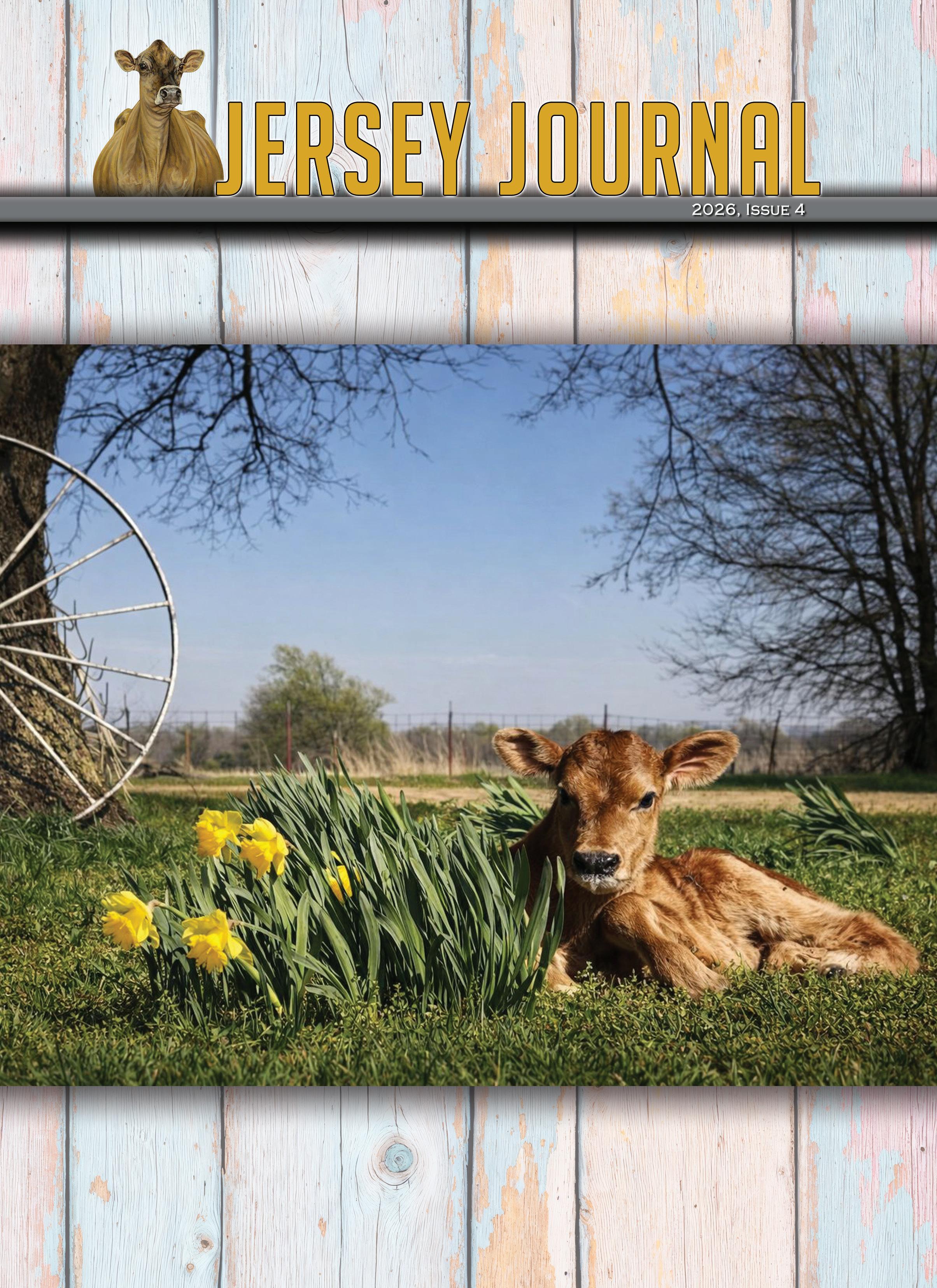
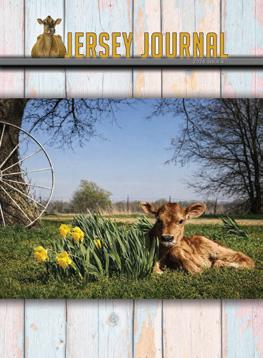
A young Courtney Farms Jester Melrose graces the cover of the April issue. While April showers bring May flowers, they clearly bring them much earlier as well. Photographer Logan Courtney captured the image of “Melrose” amid a bed of daffodils on the farm in Chouteau, Okla., several years ago. Her third dam is Courtney Farms Tuxedo Rosamund, winner of the 2019 National Jersey Youth Production Contest.
“Melrose,” now Excellent-90% as a fouryear-old, is owned by Logan’s second cousin, Zofia Courney. She is the seventh generation to operate the farm, enjoys showing, and is active in 4-H.
To improve and promote the Jersey breed of cattle, and to increase the value of and demand for Jersey milk and for Jersey cattle.
Company and Department Heads
Executive Secretary: Neal Smith, 614/322-4455
Treasurer: Vickie White, 614/322-4452
Director of Field Services: Kristin A. Paul, 209/402-5679
Director of Communications: Kimberly A. Billman, 614/322-4451
Information Technology: Philip Cleary, 614/322-4474
Jersey Marketing Service: Neal Smith, 209/988-0601
Herd Services: Lori King, 614/322-4457
Research & Genetic Program Consultant: John Metzger, jmetzger@usjersey.com
National All-Jersey Inc.: Grady Auer, 209/613-2286
AJCA-NAJ Area Representatives
Director of Field Services: Kristin A. Paul, 209/4025679; 614/322-4495 (fax); kpaul@usjersey.com. Illinois and Wisconsin.
District 1 Manager: Scott Holcomb, 614/563-3227; sholcomb@usjersey.com. Connecticut, Delaware, Florida, Georgia, Kentucky, Maine, Maryland, Massachusetts, New Hampshire, New Jersey, New York, North Carolina, Pennsylvania, Rhode Island, South Carolina, Tennessee, Vermont, Virginia and West Virginia.
District 3 Manager: Seth Israelsen, 614/216-9727; sisraelsen@usjersey.com. Arizona, California, Hawaii,
Idaho, Montana, Nevada, New Mexico, Oregon, Utah, Wyoming, and Washington.
Greg Lavan, 614/216-8838; glavan@usjersey.com. Indiana, Michigan, and Ohio.
Benny Rector, 614/313-5818; brector@usjersey.com. Arkansas, Colorado, Kansas, Missouri, Oklahoma and west Texas.
Jason Robinson, 614/216-5862; jrobinson@usjersey. com. Alabama, Louisiana, Mississippi and east Texas. Willow Voegtlen, 614/266-2419; wvoegtlen@usjersey. com. Iowa, Minnesota, Nebraska, North Dakota and South Dakota.
Type Traits Appraisal Team
Kelly Epperly, 614/530-6918; kepperly@usjersey.com Lee Harris, 614/284-1478; lharris@usjersey.com Dyon Helmuth, 614/264-0140; dhelmuth@usjersey.com
Tyler Boyd, 19784 Patricia Lane, Hilmar, CA 95324. Phone 209/585-7118; tyler.l.boyd@gmail.com. Third District. 2026.
Ted DeMent, 5252 Hallsville Rd., Kenney, IL 61749. Phone 217/725-2432; dementsjerseys@gmail.com. Second District. 2026. Rebecca Ferry, 193 Lagrange Rd., Johnstown, NY 12095. Phone 518/248-9294; dreamroadjersey@yahoo. com. First District. 2026.
Ralph Frerichs, 3117 St. Hwy. 159., La Grange, TX 78945-4226. Phone 979/249-3012; frerichs@cvctx. com. Second District. 2027.
Garry Hansen, 13025 S. Mulino Rd., Mulino, OR 97042. Phone 503/805-4411; garryajca@gmail.com. Third District. 2026.
Ethan Haywood, 1045 Solomon Rd., Hastings, MI 49058. Phone 269/945-0239; ethanhaywood@gmail. com. Second District. 2029. Jason Johnson, 154 Olde Canterbury Rd., Northwood, NH 03624. Phone 802/356-0908. jasamjohnson@gmail. com. First District. 2027. Cornell Kasbergen, see officers. Third District. 2026. Kevin Lutz, 3514 Highway 182, Lincolnton, NC 28092. Phone 704/472-7448; klutz728@gmail.com. First District. 2027. John Maxwell, 10600 275th St., Donahue, IA 527469705. Phone 563/505-1652; maxwell@tourmyfarm.com. Second District. 2026.
Elaine Noble, 6430 Coryland Rd., Gillett, PA 16925. Phone 570/537-2066; emnoble13@gmail.com. First District. 2029.
Joe Rocha, 510 3rd Street, Tillamook, OR 97141. Phone 503/812-6193; joeandsarahrocha@hotmail.com. Third District. 2029. Joe Vanderfeltz, 898 SR 706, Lawton, PA 18828; Phone 570/934-2406; jvanfel2@gmail.com. First District. 2027.
Vice President: Bradley Taylor, 106 County Road 5300, Booneville, MS 38829-9131. Phone 662/720-3598; taylorjerseyfarm@gmail.com.
Directors
Joel Albright, Joel Albright, 1855 Olive Rd., Willard, OH 44890. Phone 419/512-1756; albrightjerseys@gmail. com. District 3. 2029
Sam Bok, 11310 Krouse Rd., Defiance, OH 43512. Phone 419/782-0012; jawscows@defnet.com. District 7. 2029
Alan Chittenden, ex officio, see AJCA officers. Ralph Frerichs, ex officio, see AJCA. Jonathan Merriam,12136 Riverview Rd., Hickman, CA 95323. Phone 209/324-4983; jbmerriam.964@gmail. com. District 2. 2029.
Cornell Kasbergen, ex officio, see AJCA. John Marcoot, 526 Dudleyville Rd. Greenville, IL. 62246. Phone 618/322-7239; johnemarcoot@gmail. com. District 4. 2026.
Corey Lutz, see officers. District 8. 2026. Tom Seals, 37840 Upper Nestucca River Rd., Beaver, OR 97108. Phone 541/520-0298; jennie.seals@gmail. com. District 1. 2027.
Bradley Taylor, see officers. District 5. 2028.
Official Publication of the American Jersey Cattle Association and National All-Jersey Inc.
6486 E. Main St., Reynoldsburg, OH, 43068–2362 614.861.3636 phone 614.861.8040 fax
Email jerseyjournal@usjersey.com
Website: www.USJerseyJournal.com
Facebook: www.facebook.com/USJerseyJournal
Editor: Kimberly A. Billman
Managing Editor: Tracie Hoying
Feature Writer: Michele Ackerman
Communications Specialist: Kate Poitras
Digital Media: Jolena Gioiello
Contributing Writer: Kaila Tauchen
Subscriber Services
To subscribe, log on to http://jerseyjournal. usjersey.com/Subscriptions.aspx and click on the “Subscriptions” link and enter your mailing and credit card information on the secure website. When completed, click “Submit” to process your subscription.
If you have questions, please call the Jersey Journal at 614/861-3636, or send email to jerseyjournal@usjersey.com.
Jersey Journal Subscription Rates
Effective July 1, 2023 (10 online issues; January and September printed) Domestic International 1 year ........... $45 1 year............. $60 3 years $125 3
All subscribers to the online Jersey Journal (effective February 1, 2022) will receive a downloadable PDF version of the magazine to the email on file. They will also receive a link to the publication published online.
To make changes to your subscription, call the American Jersey Cattle Association at 614/861-3636. Or email jerseyjournal@usjersey. com. Please email or call with an updated email address if your address changes. Subscribers will receive periodical emails throughout the month. Have your customer number ready for a staff member.
If you do not receive an email with the pdf or link to the published magazine, call 614/8613636 or email jerseyjournal@usjersey.com. We will verify your information and correct what is needed.
How You Will Receive Your Jersey Journal?
First week of each month, you will receive an email that includes:
• link to flip version of the Jersey Journal
• downloadable PDF of the magazine
• links to advertising
• links to updated stories on the website
• access to the archive editions of Jersey Journal back to 2009
Make sure we have your email on file and then sit back and let us deliver the news to you!
This index is provided as an additional service. The Jersey Journal assumes no liability for errors or omissions. The Jersey Journal does not guarantee quality, delivery time, or availability of items ordered from commercial advertisers.
The American Jersey Cattle Association promotes the use of authentic and unaltered photographic images of Jersey animals, and disapproves of the use of any photographic images that alter the body of the Jersey animal. The American Jersey Cattle Association therefore requests that all photographic images of Jersey animals submitted for publication in the Jersey Journal contain no alterations to the body of the animal.
Despite its best efforts to ensure that only unaltered photographs of Jersey animals are used in this publication, the American Jersey Cattle Association cannot guarantee that every photographic image of a Jersey animal is authentic and unaltered.
Every effort is made to keep the calendar listings as accurate as possible. However, dates are sometimes changed or events cancelled without notice. When your association schedules an event, notify the Journal staff at least 60 days in advance by sending email to JerseyJournal@usjersey.com or phoning 614/861-3636.
Type Appraisal Schedule
POLICY: Areas will be appraised in the order listed. If you wish to appraise and do not receive an application 30 days prior to the appraisal, please request one from Appraisal Office Coordinator Lori King by telephone, 614/322-4457, or email lking@usjersey. com. Apply online at http://www.usjersey.com/forms/ appraisalapp.com. Applications can also be printed from the USJersey website at http://www.usjersey. com/forms/ttaapplication.pdf.
MAY —Virginia, Maryland, West Virginia and Delaware; North Carolina and South Carolina;Kentucky, Tennessee and Northern Georgia; Indiana and Illinois; Arkansas and Missouri.
JUNE—Texas and New Mexico; Wisconsin.
JULY —Minnesota, Eastern Iowa, Western Iowa, South Dakota, North Dakota, Northern Nebraska, Vermont and New Hampshire, Maine, Massachusetts and Connecticut.
AUGUST —Idaho, Utah, Southern California, and Arizona, Central New York, Eastern New York,Western New York, East Texas and Oklahoma.
SEPTEMBER—Washington, Tillamook, Oregon, Oregon, Eastern Pennsylvania and New Jersey, Central Pennsylvania, Western Pennsylvania.
Deadlines
MAY 1—Genomic samples must be to lab prior to this date for the June evaluation release.
JUNE 1—Genomic samples must be to lab prior to this date for the July evaluation release.
JULY 1—Applications for National Jersey Youth Scholarships due.
JULY 1—Genomic samples must be to lab prior to this date for the August evaluation release.
AUG. 1—Ownership and transfer date for junior eligibility for fall shows (All American, World Dairy Expo, Western National, and Harrisburg ahows).
SEPT 1—Application window opens for Class X of Jersey Youth Academy.
Sales
MAY 8—NEW YORK SPRING JERSEY SALE, Cortland, N.Y. 11:00 a.m. (EDT). New York Jersey Breeders, sale mgr.
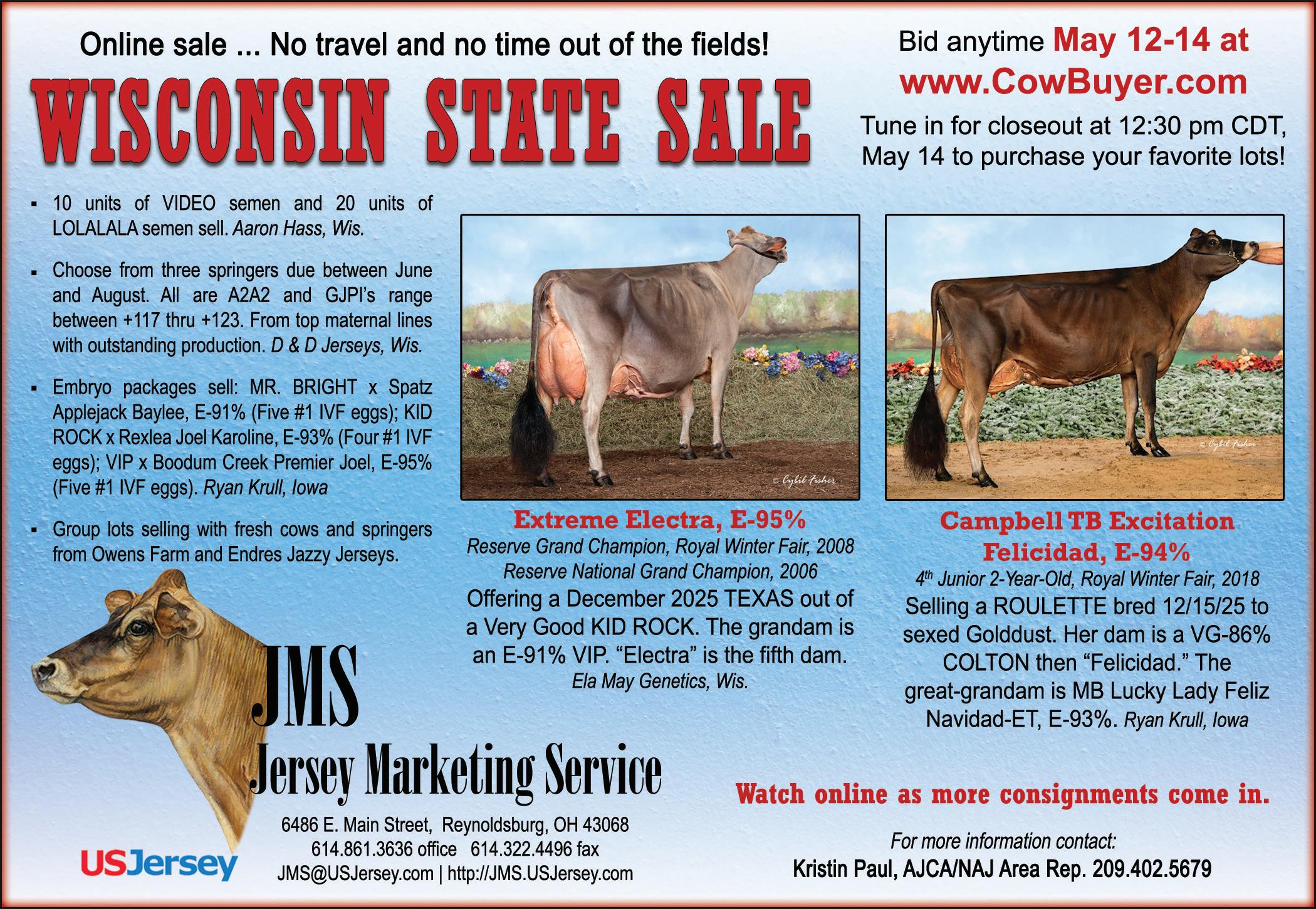
MAY 12-14— WISCONSIN STATE JERSEY SALE, online via CowBuyer.com. Closeout at 1:30
Registration Fees Effective October 1, 2024
InfoJersey.com Applications All Other Applications Member Non-Member Member Non-Member
p.m.(EDT). Jersey Marketing Service, sale mgr.; jms@usjersey.com.
MAY 30—THE BEST OF TRIPLE-T & FRIENDS, at farm, North Lewisburg Ohio. Nathan and Jenny Thomas, sale mgr.; jennythomas614@yahoo.com.
JUNE 19—NATIONAL HEIFER SALE, Springfield, Mo.; 6:00 p.m. (CDT); Jersey Marketing Service, sale mgr.; jms@usjersey.com.
Meetings and Expositions
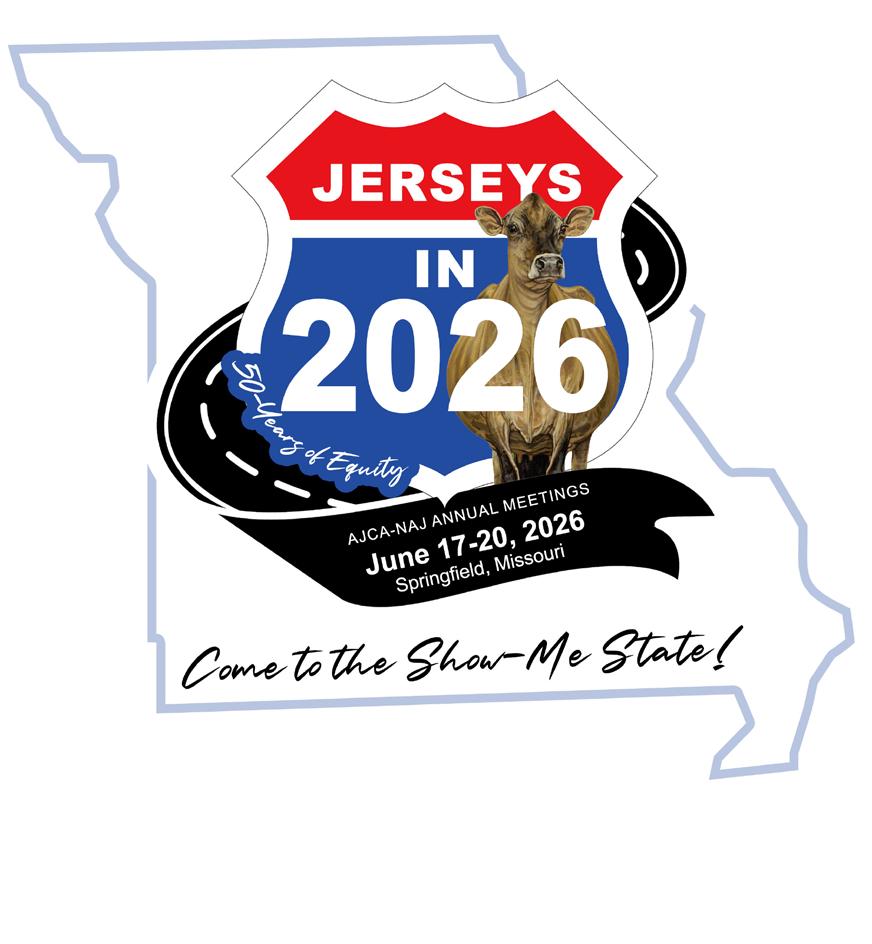
JUNE 17-20—AJCA-NAJ Annual Meeting, Springfield, Mo.
JUNE 21-24—AMERICAN DAIRY SCIENCE ASSOCIATION ANNUAL MEETING, Baird Center, Milwaukee, Wis.
Shows
MAY 27-30—SOONER STATE DAIRY SHOW, Payne County Expo Center, Stillwater, Okla.
June 13—Maryland Jersey Field Day, Frederick Fairgrounds, Frederick, Md.
JULY 27-30—EASTERN NEW YORK SUMMER JERSEY SHOW, Washington County Fairgrounds, Greenwich, N.Y.; Pierre Boulet, Que., judge.
AUG. 6 OHIO STATE FAIR JUNIOR JERSEY SHOW, Ohio Expo Center, Columbus, Ohio; 9:00 a.m. (EDT).
AUG. 7-8 OHIO STATE FAIR OPEN JERSEY SHOW, Ohio Expo Center, Columbus, Ohio; 9:00 a.m. (EDT); heifers on the 1st, cows on the 2nd; Kelly Barbee, Concord, N.C.; judge.
AUG. 20—ILLINOIS STATE FAIR OPEN JERSEY SHOW, Illinois State Fairgrounds, Springfield, Ill.; 8:00 a.m. (EDT).
Dead Animals May Be Registered For A Fee of $10.00
Duplicate or Corrected Certificates Will Be Issued For A Fee of $10.00
Rush Service Fee (per piece) $20 — Email or Fax delivery (per piece) $10
Transfer Fees
Effective July 1, 2014
Standard processing fee is $14.00 when transfer is received within 60 days of the date of sale of the animal to the new owner, and $17.00 when received after 60 days.
$2.00 discounts from the standard fee will be applied to individual animal transfers processed via infoJersey.com and to group transfers submitted in batch electronic files: Excel spreadsheet, report downloaded from herd management software, or a field-delimited text file. Additional discounts may apply for herds enrolled in REAP, and for intraherd and intra-farm transfers. Refer to “Fees for Programs and Services” (www.usjersey.com/fees.pdf) and call Herd Services for more information.
The Association’s Bylaws require the seller to pay the transfer fee. Save by becoming a lifetime member of the American Jersey Cattle Association.
AUG. 22-26—WISCONSIN SUMMER CHAMPIONSHIP SHOW, Alliant Energy Center, Madison, Wis.
SEPT 6—WESTERN NATIONAL JERSEY SHOW, Salem, Ore.; Mandi Bue, Freedom, Wis., judge.
SEPT. 14—MID-ATLANTIC REGIONAL JUNIOR JERSEY SHOW, Harrisburg, Pa.; 7:00 a.m. (EDT); Nate Oleniacz, New Oxford, Pa., judge.
SEPT. 28—INTERNATIONAL JERSEY HEIFER SHOW, Alliant Energy Center, Madison, Wis.; 7:00 a.m. (CDT); Mike Berry, Powell Butte, Ore., judge; Ryan Lancaster, Tillamook, Ore., associate judge.
SEPT. 29—INTERNATIONAL JERSEY COW SHOW, Alliant Energy Center, Madison, Wis.; 7:00 a.m.; Mike Berry, Powell Butte, Ore., judge; Ryan Lancaster, Tillamook, Ore., associate judge.
NOV. 6—ALL AMERICAN JUNIOR JERSEY SHOW, Kentucky Fair and Exposition Center, Louisville, Ky.; 7:30 a.m. (EST); Keith Topp, Botkins, Ohio judge.
NOV. 8—ALL AMERICAN JERSEY HEIFER SHOW , Kentucky Fair and Exposition Center, Louisville, Ky.; 7:30 a.m. (EST); Chris Lahmers, Marysville, Ohio, judge.
NOV. 8—NATIONAL JERSEY JUG FUTURITY, Kentucky Fair and Exposition Center, Louisville, Ky. 2:00 p.m. (EST); Ryan Krohlow, Poynette, Wis., judge.
NOV. 9—ALL AMERICAN JERSEY COW SHOW, Kentucky Fair and Exposition Center, Louisville, Ky.; 7:30 a.m. (EST); Chris Lahmers, Marysville, Ohio, judge.
The 2026 Annual Meetings of the American Jersey Cattle Association and National All-Jersey Inc. will be held in Springfield, MO, June 17-20.
Schedule
WEDNESDAY, JUNE 17
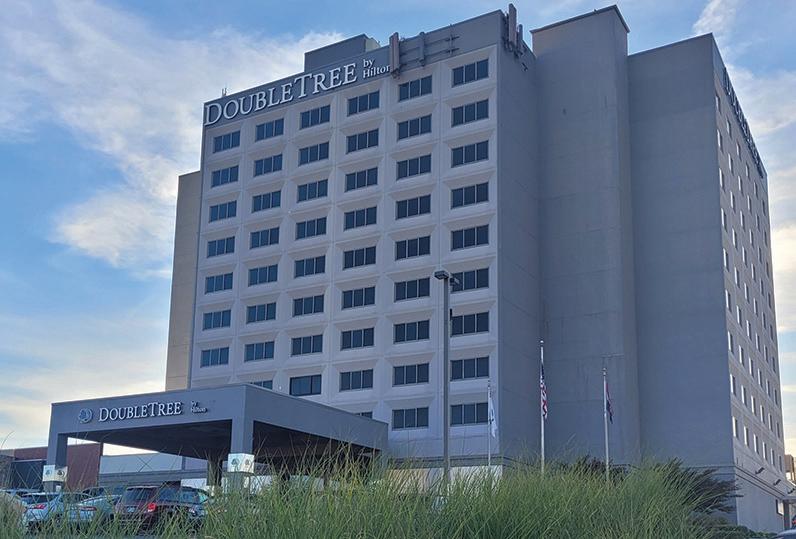
Meeting Headquarters: Doubletree Hotel 2431 N Glenstone Ave, Springfield, MO 65803 Phone: (417) 831-3131
Missouri planning committee: Janice Rector, Stacy Dohle and Karla Deaver
3:00 pm Registration Opens
7:00 pm Welcome Reception-Wine & Cheese Social Celebrating 50 years of Young Jersey Breeders
THURSDAY, JUNE 18
6:30 am Breakfast buffet
8:00 am National All-Jersey Inc. Annual Meeting
9:30 am Queen of Quality Dairy Bar
10:00 am Youth Event: Animal Meet & Greet with Wonders of Wildlife (at hotel)
10:00 am National All-Jersey Inc. Celebration—50 years of Equity
11:30 am On-Farm Processing Breeder Roundtable
1:00 pm Young Jersey Breeder luncheon
2:45 pm Tour of Bass Pro/Wonders of Wildlife Tour
5:30 pm Social and Dinner at Bass Pro-White River Convention Center
7:00 pm AJCC Research Benefit Auction
FRIDAY, JUNE 19
6:00 am Breakfast buffet
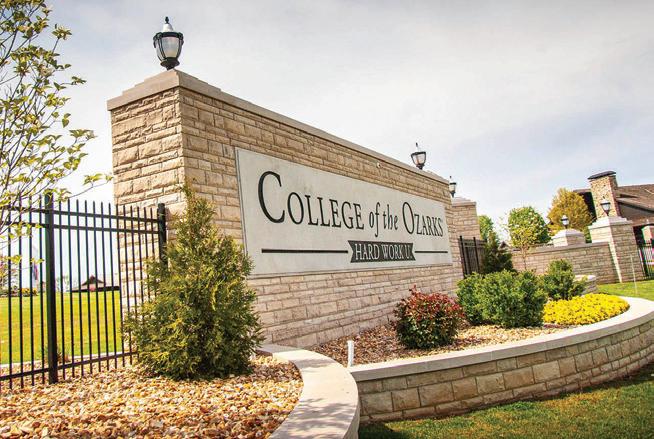
7:30 am College of the Ozarks Tour
11:45 am Give Your Best 60 Seconds Public Speaking Contest 12:30 pm Lunch at College of the Ozarks-Keeter Center
5:00 pm Pre-Sale Social
5:30 pm Pre-Sale Dinner
6:30 pm National Heifer Sale
SATURDAY, JUNE 20
6:30 am Breakfast buffet
8:00 am American Jersey Cattle Association Annual Meeting 9:00 am Morning Session: Fantastic Cavern Tour (youth & adult chaperones)
11:00 am Young Jersey Breeder Roundtable
11:30 am Youth event at StarStruck Jerseys
1:00 pm Lunch at StarStruck Jerseys, Dean and Stacy Dohle and family
2:15 pm Afternoon Session: Fantastic Cavern Tour
5:30 pm Youth Event: Pool party and movie night (dinner included)
5:30 pm Cheese Social
6:30 pm Dinner
7:30 pm AJCA Breeders’ Banquet
Online registration is preferred at usjerseyannualmeeting.com (REGISTRATION NOW OPEN)
Or mail form with payment to: Attn: Annual Meeting Registration, American Jersey Cattle Association, 6486 E. Main St., Reynoldsburg, OH 43068-2362
FLY. The nearest airport is Springfield-Branson National Airport (SGF) (18 miles). Other nearby airports include Branson Airport (BKG) (55 miles), Joplin Regional Airport (JLN) (65 miles) and Northwest Arkansas National Airport (XNA) (85 miles)
Hotel
DoubleTree by Hilton Springfield 2431 N Glenstone Ave, Springfield, MO 65803
Make hotel reservations directly by calling 417/831-3131 or online Request “Jersey” block.
Scan code to make online hotel reservation
Ticket Requests
WEDNESDAY, JUNE 17
FARM or COMPANY
STREET ADDRESS
REGISTRATION FEES
Official registration badge is required for entrance at all included events.
Early Bird Registration, received with payment by June 6
Enter number of registrations
Late Registration, received with payment after June 6
No
$200 No charge Enter number of registrations
PAYMENT q Debit Card q Discover q Visa q MasterCard q American Express q Check payable to AJCA. Mail with registration form to address at top left.
Welcome Reception-Wine & Cheese Social
THURSDAY, JUNE 18
Youth Event: Animal Meet & Greet
Youth 8 and under must be accompanied by an adult
Young Jersey Breeders Banquet
Child care for children five and under ___
Bass Pro Tour/Dinner/Research Auction
Plan to ride bus to event
FRIDAY, JUNE 19
College of the Ozarks Tour (lunch included)
Plan to ride bus to event
National Heifer Sale/Socia/Dinner
SATURDAY, JUNE 20
Morning Session: Fantastic Cavern Tour
Youth Event at StarStruck
Youth 8 and under must be accompanied by an adult
Lunch at StarStruck
Plan to ride bus to event Yes No
Afternoon Session: Fantastic Cavern Tour
Youth Event: pool party and movie night
Youth 8 and under must be accompanied by an adult
Breeders' Banquet
Child care for children five and under ___
Alan Chittenden, Schodack Landing, N.Y., has been officially nominated for president of the American Jersey Cattle Association.
Lynda Lehr, Canastota, N.Y., has been officially nominated for director of the First District of the AJCA.
This district includes Alabama, Connecticut, Delaware, Florida, Georgia, Kentucky, Maine, Maryland, Massachusetts, Mississippi, New Hampshire, New Jersey, New York, North Carolina, Ohio, Pennsylvania, Rhode Island, South Carolina, Tennessee, Vermont, Virginia and West Virginia.
Kristin Hogan, Tillamook, Ore., has been officially nominated for director of the Third District of the AJCA.
This district includes Alaska, Arizona, California, Hawaii, Idaho, Nevada, Oregon, Utah and Washington.
Donna Phillips, Newton, Wis., has been officially nominated for director of District 4 of National All-Jersey Inc.
This district includes Arkansas, Iowa, Illinois, Michigan, Minnesota, Missouri and Wisconsin. *****************
Rita Hogan, Tillamook, Ore., was presented with the Community Service Award by the Oregon Dairy Farmers Association at its annual meeting in Tillamook in April.
Hogan operates Misty Meadow Dairy with her husband, Dave, and their three grown children. The Hogan’s Registered Jersey herd is enrolled on REAP and they breed cattle using the MM prefix.
Rita was a 4-H leader and FFA chaperone when their children were involved with organizations. She then became active with Tillamook Dairy Women, where she coordinated the princess ambassador program. She was president of the Tillamook County Fair board and founded the
A Hearty Welcome To These New AJCA Members
Lisa Barnhart, Spencer, Ind.
Keknneth Baum, North Benton, Ohio
Hannah Bechtel, New Enterprise, Pa.
Miriam Boymelgreen, Elliay, Ga.
Jamie Brotemarkle, Mesa, Ariz.
Hannah Cater, Warwick, N.Y.
Mitchell Endres, Lodi, Wis.
Nicholas Fair, Wrentham, Mass.
Neal Frerichs, LaGrange, Texas
Tony Hake, Fairplay, Md.
Ginger W. Hancock, Kennard, Texas
Don Holum, Hartman, Ark.
Henrich Kirk, Schodack Landing, N.Y.
Emily Manweiler, Sumner, Iowa
Jeremy Manwiller, Robesonia, Pa.
Lucy Meade, Lancaster, Ky.
Kristen Metcalf, Milton, Wis.
Julene C. Morris, Leshara, Neb.
Sally Oakes, Jackson Center, Pa.
Jenna Podgorski, Merrill, Wis.
Katelyn Poitras, Brimfield, Mass.
Brent Rocha, Tillamook, Ore.
Timothy Stalans, Wartrace, Tenn.
Sage M. Stark, Charlestown, N.H.
Zoe Tetreault, Moosup, Conn.
Scott VanZyverden, Niangua, Mo.
annual Tillamook ice cream tasting contest at the fair. She also helps with the dairy dessert program, pee wee showmanship and the milk chugging contest. She is a past president of the Oregon Dairy Women, which gave her an appreciation award.
CDCB Launches Newsletter
Dairy producers can now stay informed about genetic evaluation news and updates with a triannual email newsletter from the Council on Dairy Cattle Breeding (CDCB).
Farm Focus is designed to deliver onfarm explanations of genetic evaluation changes, real-world insights on genetic selection and data management and digestible updates on CDCB news.
Farm Focus will be delivered on each official proof day in April, August and December. Sign up at https://uscdcb. com/cdcb-connection/.
May 15 Deadline for National Dairy Board Scholarships
Applications are now being accepted
for college scholarships awarded by the National Dairy Promotion and Research Board. Eleven scholarships worth $2,500 each will be awarded in addition to a $3,500 James H. Loper Jr. Memorial Scholarship.
Undergraduate students in their sophomore through senior years for the 2025-2026 academic year, who are enrolled in college and university programs that emphasize dairy, are eligible. Relevant majors may include communications/public relations, journalism, marketing, business, economics, nutrition, food science and agriculture education. Applications can be found at dairycheckoff.com/about-us/ scholarship. Completed applications must be received no later than May 15 at 11.59 p.m.
Online Tool Now Available for Finding Grant Opportunities
The national dairy checkoff program has launched an online tool designed to help dairy farmers and their advisors more easily find grants and funding opportunities for conservation and onfarm improvements.
The Funding Opportunities Database, available through the Dairy Conservation Navigator, organizes federal, state and private funding programs into a single searchable platform tailored to dairy programs. The free resource is available at https:// www.dairyconservation.org/grants.
The tool allows users to search programs by state or county and filter opportunities by funding focus areas such as manure management, energy, cropland, water quality, or business development. Users can also sort by project type, eligibility requirements and funding levels to help identify programs that best fit specific projects.
The platform also identifies programs that are currently open, opening soon or recently closed.
Leadership Matters. Make Your Vote Count
“Successful leaders see the opportunities in every difficulty rather than the difficulty in every opportunity.”
— Reed Markham
By the end of May, active members of the USJersey organizations will be receiving ballots in the mail to vote for this year’s leaders of the companies.
Leadership is not simply about decision-making—it’s about vision, trust, and the power of representation. For members of the USJersey organizations, leadership begins with you. As stewards of the Jersey breed and stakeholders in its future, your most vital tool for influence is your vote.
The annual elections of the American Jersey Cattle Association (AJCA) and National All-Jersey Inc. (NAJ) are not just formalities. They are a call to action. These elections determine who will serve as the voice of the membership, guiding the organizations with policies that affect every aspect of our work—from breed development to milk marketing, from research to growth initiatives.
This year’s pivotal event, the 158th Annual Meeting of the AJCA, will take place on Saturday, June 20, 2026, at the DoubleTree Hotel in Springfield, Missouri. Members will elect a President and one Director from each of the following districts:
• First District: Alabama, Connecticut, Delaware, Florida, Georgia, Kentucky, Maine, Maryland, Massachusetts, Mississippi, New Hampshire, New Jersey, New York, North Carolina, Ohio, Pennsylvania, Rhode Island, South Carolina, Tennessee, Vermont, Virginia and West Virginia.
• Second District: Arkansas, Colorado, Illinois, Indiana, Iowa, Kansas, Louisiana, Michigan, Minnesota, Missouri, Nebraska, New Mexico, North Dakota, Oklahoma, South Dakota, Texas, Wisconsin and Wyoming.
• Third District: Alaska, Arizona, California, Hawaii, Idaho, Nevada, New Mexico, Oregon, Utah, and Washington.
On Thursday June 18, 2026, NAJ will convene at the same venue. Members will
elect one director from District 4.
The foundation of these elections is the principle of one member, one vote. It ensures that each voice has equal weight and that leadership reflects the collective will of our diverse and dedicated membership. But to uphold this principle, your participation is essential.
Through their work, elected board members:
• Establish and uphold policies that align with AJCA and NAJ missions.
• Oversee service delivery and maintain financial stewardship.
• Champion programs that boost Jersey milk production, promote genetics, and expand market reach.
As they fulfill these responsibilities, board members must continually revisit four essential questions:
1. Do our policies, programs and services encourage and support the development of a more efficient Jersey cow?
2. Are we moving quickly enough to remain relevant to commercial milk producers?
3. Are our marketing efforts increasing the value of and demand for Jersey products: milk, cattle and genetics?
4. Are we bold and forward-thinking enough to reshape the color of the dairy industry?
These questions are more than a strategic checklist— they are a compass for our breed’s future.
Voting in person at the Annual Meeting is encouraged, but all members should also vote by proxy, a process made easier by mail and email ballots sent in May. Whether attending or not, voting by proxy improves efficiency and ensures your voice is counted. Your vote is more than a duty—it’s a declaration of commitment to progress, to the Jersey legacy, and to the values we share. The future of our breed depends not just on cows and data, but on people like you— active, informed, and engaged.
When your ballot arrives, cast your vote. Let your voice be heard.
How GLP-1 is Reshaping Dairy Demand
These days, demand for dairy is coming from consumers who barely registered on the radar a decade ago: users of glucagon-like peptide-1 (GLP-1) medications.
The GLP-1 market has exploded, and it is still accelerating.
Analysts estimate global sales at $70 billion in 2025, with the U.S. accounting for three-fourths of that total. Today, 2030 million American adults use GLP-1 medications, representing 15% of households. Domestic use is projected to grow 13-18% annually through 2030, with estimates suggesting up to 70 million users by 2028 if adoption accelerates. Why does this matter for dairy? Because GLP-1 users are searching for foods that deliver protein, vitamins, minerals and hydration—all core strengths of dairy.
“There is a real opportunity for dairy to reinforce its role as a credible nutrientdense protein source in the GLP-1 space,” said Olga Coffee, trends and cultural intelligence director, Dairy Management Inc. “GLP-1 users eat less overall, so their food needs to work harder. That opens the door for high-protein, functional dairy formats that fit naturally into their routines.”
As consumer needs evolve, there may be opportunities for the dairy industry to refine its messaging and develop products that better align with these shifts.
Beyond Diabetes: GLP-1 Reshapes Behavior
Although GLP-1 medications were originally prescribed to manage diabetes, these drugs are now widely used for weight management. But the impact goes far beyond weight loss.
Users frequently describe a cascade of behavioral changes: fewer cravings, less mental fixation on food, improved sleep and a renewed sense of control over daily routines. Many feel more confident in social settings, dating and even workplace performance. They also tend to reengage in healthy habits, from gym memberships to active travel, and show increased interest in real-time health feedback from digital devices.
blood sugar and slow digestion. Tirzepatide drugs (Mounjaro and Zepbound) act on both GLP-1 and glucose-dependent insulinotropic polypeptide (GIP) receptors, which affect fat metabolism and insulin sensitivity.
“GLP-1 use is creating a behavioral ripple effect,” Coffee said. “Decision making around food becomes easier, which builds confidence and a greater sense of capability. It essentially creates a new mindset.”
Those shifts are influencing adjacent industries as well, including beauty and apparel, as body size and lifestyle patterns evolve.
Two main categories of GLP-1 medications dominate the market. Semaglutide drugs (Ozempic, Wegovy and Rybelsus) mimic GLP-1 to reduce appetite, regulate
Semaglutides are available in injectable and oral forms. Oral dual GLP-1/GIP agonists are now entering clinical trials.
Shifting Tastes and Textures
One of the most striking effects of GLP-1 medications is how they alter sensory perception, particularly for taste and texture.
“After starting medications, 85% of Americans report major changes in food and beverage preferences,” said Coffee, citing research from International Flavors & Fragrances. “Sensitivity to sweetness, bitterness and fat is heightened. Foods with dry, sticky or dense textures are more likely to be rejected, while smoother, lighter textures that are easy to chew are preferred.”
GLP-1 users also gravitate toward nostalgic, familiar foods. Because the medication can reduce thirst, hydration becomes another key consideration. Many are also more intentional about eating well.
The 2025 Technomic Protein Deep
(continued to page 20)
Coffee
GLP-1 and Dairy
(continued from page 19)
Dive reports that 65% of GLP-1 consumers actively seek more protein, 69% choose smaller portion sizes, and 67% believe healthy eating is more about balanced nutrition than strict dieting. More than half say GLP-1 medications have changed their perception of what constitutes a healthy diet.
“They want more protein and fiber, and order fewer desserts, sugary beverages and fried foods,” Coffee said.
These preferences show up in cultural conversations as well. Across social plat-
“As Americans seek protein-packed, great-tasting, easily digestible animal proteins, Jersey cows naturally deliver nutrient-dense milk to meet the nation’s demand for healthy dairy.”
Grady Auer, general manager, National All-Jersey Inc.
forms, media coverage, and consumer reviews, discussions often center on protein, hydration, supplements and fiber. Black Swan reports notable increases in mentions of grilled chicken, bone broth, fiber gummies, vitamin shots, electrolytes, meal replacement shakes, yogurt smoothies and protein bars.
Retail data tells a similar story, and it is good news for dairy.
“According to Circana, year-overyear volume growth among GLP-1 households shows gains in several dairy categories associated with protein and functional benefits,” Coffee continued. “Greek yogurt sales are up 64%, cottage cheese is up 15%, and lactose-free milk has grown 12%.”
A surprising bright spot is ice milk and other frozen dairy desserts, up 20% year over year among GLP-1 households in 2026, even as the category declines elsewhere. Their lower fat content and lighter texture likely align with evolving preferences.
“Taken together, these shifts make dairy’s familiar, high-quality protein well suited to emerging needs for satiety, tolerability and portion-efficient nutrition,” Coffee summed.
Dairy’s opportunity in the GLP-1 era As GLP-1 use expands, Coffee identified several opportunities for the dairy industry.
• Protein support: With fewer calories consumed comes a higher risk of inadequate protein intake. Dairy provides highly bioavailable, complete protein in nutrient-dense, relatively
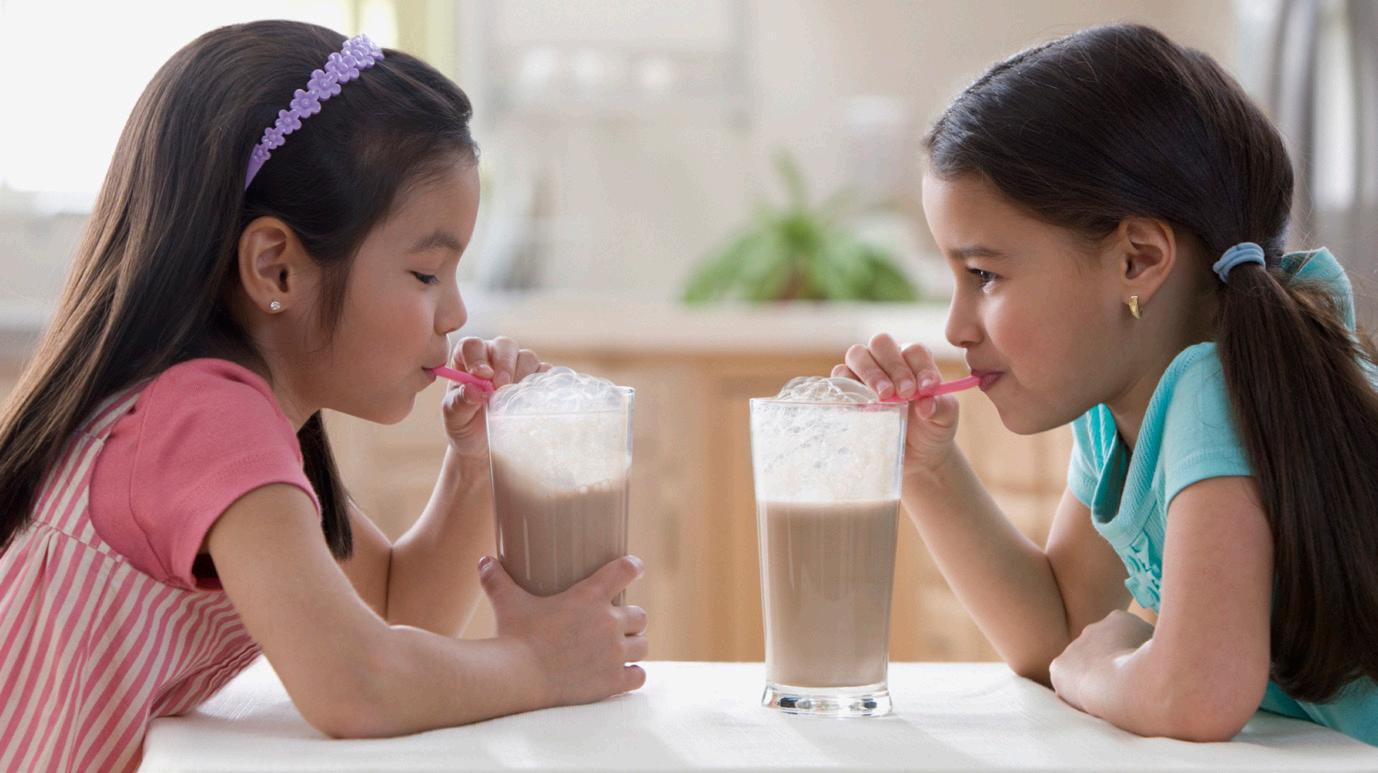
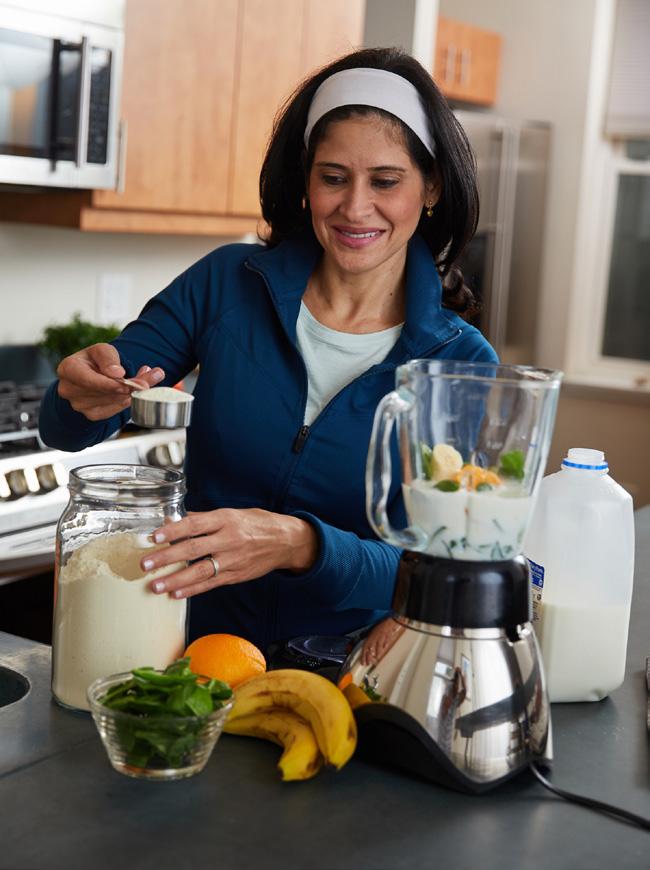
Generations of consumers have relied on dairy as a delicious, nutritious snack or an integral part of the meal. A new group of consumers, users of GLP-1 medications, is increasingly relying on dairy for hydration and protein. All photos courtesy Dairy Management Inc.
low-calorie formats. Greek yogurt, cottage cheese and milk are especially well-suited to GLP-1 eating patterns.
• Compact, functional formats: Smaller portions mean foods must provide more nutrition in less volume. Dairy is well-positioned to innovate compact, nutrient-dense options without requiring consumers to adopt unfamiliar foods.
• Digestive tolerance and hydration: Cultured dairy products such as yogurt, kefir and cottage cheese may support digestive comfort as consumers navigate side effects and changing taste and texture preferences. Dairy beverages can also provide hydration alongside protein and essential nutrients.
• Collaboration with healthcare professionals: The rise of GLP-1 use creates opportunities for dairy to partner with dieticians, physicians and obesity specialists so dairy’s nutritional benefits are clearly understood and integrated into balanced eating plans.
The Next Frontier for GLP-1
The GLP-1 landscape is evolving rapidly.
The year 2026 may mark a turning point for availability and adoption as new oral formulations enter the U.S. market and additional pharmaceutical companies compete for share. Policy decisions, insurance coverage and pricing will also continue to shape consumer access.
Meanwhile, food and beverage companies are racing to meet the needs of GLP-1 users. Some brands are positioning themselves as “partners in the GLP-1 journey,” with high-protein meals,
portable portion-controlled meals, metabolic fiber products and supplements designed to fill nutrient gaps. Digital health platforms are developing personalized nutrition tools tailored to this growing population.
The pharmaceutical pipeline is expanding as well. GLP-1-based therapies are being explored for cardiovascular, hepatic, renal, neurologic, pulmonary vascular, and even addiction-related conditions, broadening the potential user base and relevance of these medications far beyond weight management. Staying ahead with research and insight For the dairy industry, staying relevant means understanding how GLP-1 adoption is reshaping consumer behavior— insights that guide both messaging and product innovation.
(continued to page 21)
Mentions of meal replacement shapes, yogurt smoothies and protein bars are on the rise according to Black Swan, which is good news for several dairy categories.
owenswlsd@yahoo.com
abby.tauchen@gmail.com
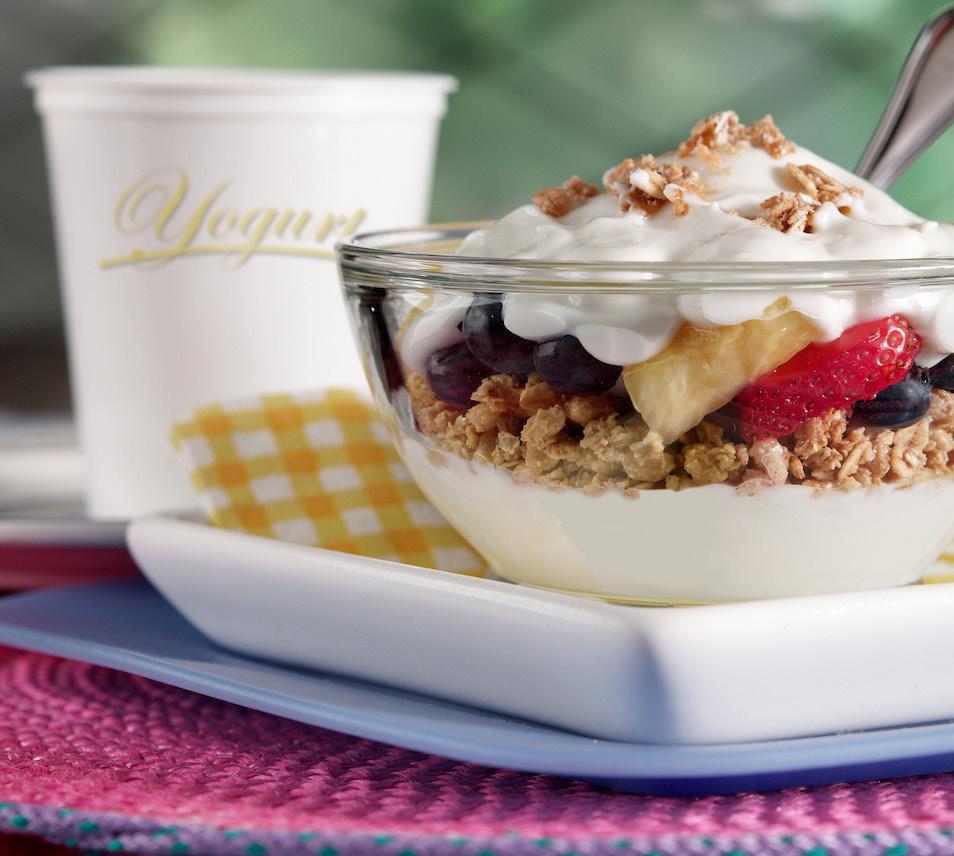
Greek yogurt is perfectly poised to meet protein demands for the growing population on consumers using GLP- medications.
GLP-1 and Dairy
(continued from page 20)
“Research helps us better understand this emerging consumer segment,” said Coffee. “It shows how GLP-1 users shop, which nutrients they prioritize, and where dairy fits—or has room to grow— in their diets.”
hounddogkarl@yahoo.com
https://ddjerseys.usjerseyjournal.com/
These insights guide strategy across marketing, product development and engagement with the health and wellness community while ensuring dairy is accurately represented in nutrition guidance for millions of Americans using GLP-1 medications.
“While overall reduced food consumption presents challenges, especially for higher fat and higher carbohydrate products, there is a clear opportunity for dairy to remain relevant, and even essential, for a growing population focused on weight management,” said Coffee.
By leaning on its scientific foundation, the industry can position dairy as a trusted, science-backed choice, serving both GLP-1 users and consumers across the globe who rely on dairy in its many forms.
Junior Awards Available
Throughout the year, awards for shows and production and judging contests are provided by the American Jersey Cattle Association (AJCA) at events specifically for Jersey juniors.
For junior shows at county, district, and state levels, the AJCA will provide ribbons for the first, second, and third place animals, plus a Grand Champion rosette. In addition to the rosette, a special award is provided for the Grand Champion at state fairs and AJCAdesignated regional shows. Awards are also provided for showmanship contests exclusively for Jersey juniors.
Awards must be requested annually. Contact the AJCA Director of Communicaitons at 614/322-4451, at least two weeks in advance of the event. Regretfully, requests made within two weeks of the show date cannot be filled.
dreamroadjersey@yahoo.com
bgc33@cornell.edu
timlawton581@gmail.com
denkeljerseys@aol.com
heavenscentjerseys@gmail.com
silverspf@aol.com
Project Equity at 50: the Fight that Changed Milk Pricing
Fifty years ago, Jersey leaders set out
to fix an unfair, outdated milk pricing system that undervalued the very thing Jersey cows produce best: high component, nutrient dense milk. At the time, fluid milk consumption was declining, manufactured dairy products were on the rise, processors struggled to recoup the value of milk they purchased, and Jersey popularity was waning. The need for change was clear.
Their answer was Project Equity. At its core was the push for component pricing—a concept that was revolutionary then but foundational to today’s dairy economy.
What began as a fight for a fair price ultimately reshaped milk pricing policy, elevated the Jersey cow’s relevance in commercial settings, and fueled decades of growth in registrations and market share.
Yet this is not just a story of past success. As markets evolve, policies shift and consumer preferences change, the principles behind Project Equity remain as relevant as ever.
This milestone anniversary offers a chance to reflect on how the effort began, the challenges it overcame, and the lasting impact Project Equity has had on the Jersey breed and broader dairy industry.
The Mission Begins with NAJ
Long before Project Equity took shape, Jersey leaders were already grappling with how milk was valued. By the mid1950s, the breed faced mounting challenges. Homogenized milk had gained
“Without their opposition to the fair pricing of Jersey milk, we might never have developed the will, as a group, to get a fair price for our milk,”
Joe Lyon, former NAJ and AJCC president, affectionately known as the “Father of Equity”
wide acceptance, wartime subsidies favored low-test, higher-volume breeds, and interest in Jerseys was declining.
The question was whether to pull back or push forward.
We can retrench, or we can attack, summed James F. Cavanaugh, executive secretary of the American Jersey Cattle Club (AJCC), in 1956. He urged members to support an expanded national promotion effort, backed by increased registration and transfer fees.
Cavanaugh’s proposal, known simply as “The Program,” outlined four key objectives: demonstrate the value of Jersey milk, showcase the efficiency of Jersey cows, increase production and glamorize the breed.
Members backed the plan, approving the fee changes by an 89-11 margin in June 1957. Six months later, the AJCC board established a new entity, National All-Jersey Inc. (NAJ), to increase both
counter to evolving product demand.
The impact was evident. Jersey registrations fell to 33,104 in 1973, the lowest of the modern era.
Jersey leaders knew the issue was not the milk itself, but how it was priced. NAJ spent three years building a case for change. Research demonstrated the clear manufacturing advantages of higher-protein milk: 100 lbs. of milk testing 3.2% protein yielded 9.8 lbs. of cheddar cheese while milk testing 4.0% protein produced 12.2 lbs. Staff reinforced those findings in the field, making targeted visits to processing plants in major dairy states to discuss yields and product value.
One cooperative soon put that
“No dairy farmer on earth has more at stake in the pricing of milk than does the producer of high solids milk, be it of Jersey, Holstein, Guernsey, Brown Swiss or Ayrshire origin. No dairyman has more need to understand the influences, the factors, the agencies that create the price of milk in the U.S. and many other countries where the milk industry is treated as a quasi-public utility,”
Dr. Guy Crews, NAJ assistant secretary and 2001 National Dairy Shrine Pioneer Award recipient
milk sales and breeding stock sales.
Early results were encouraging. NAJ expanded the All-Jersey program— which had been assumed by the AJCC in 1954—and by March 1958, more than 9 million pounds of Jersey milk were being marketed monthly through 57 plants in 16 states. By 1962, that figure had climbed into the double-digit millions.
The Birth of Project Equity
By the early 1970s, however, new pressures had emerged.
While the All-Jersey program had built demand for Jersey milk, maintaining a steady milk supply was a challenge. Fluid milk consumption continued to decline, and processors failed to capture full value of the milk they purchased. At the same time, milk priced under Federal Milk Marketing Orders (FMMO) was pooled market-wide and priced the same, regardless of end use.
The structure rewarded volume over components, sending signals that ran
principle into practice.
In August 1973, the Mississippi Valley Milk Producers Association became the first cooperative to implement a protein bonus, led by former NAJ and AJCC president, Joe Lyon of Toledo, Iowa, and NAJ assistant secretary, Dr. Guy Crews. When Lyon’s own co-op was unwilling to consider protein pricing, he moved his milk to Mississippi Valley (now Swiss Valley Farms), where general manager Carl Zurborg and president Elmer Paper supported the approach.
The co-op initially paid 3 cents per point over a crude protein base of 3.3% for Grade A milk and 6 cents for Grade B milk used directly in manufacturing. The plan proved so profitable that premiums soon increased to 4 cents and 9 cents, respectively.
Other processors, particularly in California, quickly followed with similar protein premiums.
With early success in place, the na (continued to page 24
Equity at 50
(continued from page 23)
tional Jersey organizations moved to formalize their efforts, calling for “the establishment of an equitable pricing system for milk in the USA” and the development of specialized markets, such as cheese plants, where producers of higher-protein milk could be rewarded in proportion to product yield.
Funding came through a voluntary check-off of 2 cents per hundredweight on milk shipped by participating dairy producers.
That effort—Project Equity—was formally adopted by joint resolution of the AJCC and NAJ boards at the annual meetings in 1976.
In its first year, 171 individuals and corporate entities invested. Although both boards had voted to appropriate $50,000 each over the next three years to fund the project, the money was never needed. Project Equity was selfsustaining from the start.
Fueling the Cause
Launching Project Equity was only the beginning. Expanding its influence required broader financial support, which led to the Campaign for 800 in ’80, an effort to sign up 800 investors in 1980.
The campaign succeeded. By January 1981, the Equity roll included more than 840 investors, and three full-time staff members—Phil Badger, Calvin Covington and Guy Crews—were dedicated to milk marketing.
Progress was also showing up in the marketplace. Plants across California, Idaho, Illinois, Iowa, Minnesota, New
secretary of the national Jersey organizations. “Campaign 800 in ’80 also gave credibility to the key Jersey leaders and staff members who were working in the trenches for Equity.”
Asked what Project Equity ultimately accomplished, Covington doesn’t hesitate.
“The one-word answer is respect. Jersey really earned the respect of the dairy industry.”
The Equity pool was further strengthened in 1995 when the American Jersey Cattle Club (AJCA) bundled Equity with registration, performance evaluation
predict cheese yield. Acting on his advice, the Zirbels tested their milk for both fat and protein and discovered the problem: low protein content was limiting yield. Working together, the Zirbels and Ernstroms created an innovative component-based pricing system that rewarded higher-protein milk. The change initially cost them patrons, but with help from David Brandau, an area representative and Equity specialist, they secured new high-protein suppliers. Within a month, Edelweiss had regained all its milk and was turning a profit.
As the concept gained traction, a key
“I think of the number of times we went into cheese plants and made cheese out of high protein milk to show cheesemaker the extra yield. I remember one plant where we increased the yield so much the agitator paddles would not turn. At another, the yield increased so much they closed the plant down an extra day a week,”
Calvin Covington, former AJCC-NAJ executive secretary and 2003 World Dairy Expo Industry Person of the Year
and type appraisal under its flagship program, REAP.
Since 1976, nearly $20.5 million has been invested to advance equitable milk pricing. Today, the investor roll stands at 950. Special recognition goes to the charter investors who have contributed every year, now 49 and counting: Ahlem Farms Partnership, C & S Livestock, Fanelli Dairy and Wickstrom Jersey Farms Inc., all of California; David and Donna Kunde and Summit Farm Inc., both of Iowa; Ray and Margaret Schooley of Missouri; Dutch Hollow Farm (Chittenden Family) and Hi-Land Farms (Chamberlain Family, both of New York; Spahr Jersey Farm Inc. of Ohio; and Molly Brook Farm of Vermont.
“Looking back over the 40 years of Equity, the single greatest testament that Equity was right for the dairy industry is this fact: There isn’t a single regulated milk pricing system that adopted component pricing that later reverted to fat-skim. . .Nobody said, ‘Oh this isn’t working. Let’s go back.’ If that’s not a track record of success, I don’t know what is,”
Erick Metzger, former NAJ manager, at an Equity celebration in 2016
Hampshire, New York, South Dakota, Vermont, Washington and Wisconsin were paying some form of protein premiums.
Board minutes show the campaign accomplished more than raising funds or educating producers. It demonstrated to the broader dairy industry that Jersey leaders were serious about advancing milk pricing reform.
“We made believers out of many skeptics by getting 800 investors,” said Covington, who later became NAJ’s first general manager and then executive
The March to Multiple Component Pricing
In the early 1980s, Edelweiss Cheese of Marshfield, Wis., offered a clear lesson in the value of milk components. Owned by Ralph and Diane Zirbel, the company was near bankruptcy, producing just 8.9 lbs. of cheese per hundredweight of milk.
A chance connection helped change its trajectory. Reed Ernstrom, a Utah State University student, was working on a cheese starter project at Edelweiss. His father, C.A. Ernstrom, a professor at the university, had developed a formula to
hurdle remained: reliable protein testing. That changed in 1984, when Cornell University established standardized testing methods and a regulatory framework for measuring protein and solid-not-fat in the FMMO system.
Momentum accelerated in 1986, when Western General Dairies Inc. and Lake Mead Cooperative Association petitioned to include multiple component pricing (MCP) in a merged Federal Order. The resulting Great Basin Federal Order, implemented in 1988, became the first to price milk based on both protein and fat.
NAJ’s grassroots advocacy and the significant number of plants already using protein pricing were critical to the historic decision. As expected, demand for Jerseys in the region ensued.
Other Federal Orders soon followed. By 1989, more than 60% of the U.S. milk supply was eligible for voluntary MCP, supported by major dairy organizations, including Holstein Association USA.
NAJ continued to lead into the 1990s. In 1995, staff spent a week in Washington, D.C., working with the House Agriculture Committee on Federal Order Reform. The following year, the U.S. Department of Agriculture (USDA) issued a recommended decision based on an NAJ proposal, the first time a major proposal had been accepted by an organization not directly marketing milk.
Federal Order Reform arrived January 1, 2000, when USDA adopted component pricing formulas recommended by NAJ, including the Van Slyke cheeseyield formula, to calculate Class III and (continued to page 26)
albrightjerseys@gmail.com
coldrunjerseys@frontier.com
phjfarm@dslextreme.com
jaws@defnet.com
grass4jerseys@yahoo.com
laspahr@bright.net
toddunkefer@yahoo.com
Equity at 50
(continued
producer price premiums. More than 30 orders were consolidated into 11, and roughly 85% of regulated milk was priced under MCP.
California joined the Federal Order system in 2018, also using MCP. Today, six of the 11 orders price milk on multiple components.
From Policy to Presence
In the decades since Project Equity began, the dairy industry has continued to evolve. Through it all, NAJ has remained focused on equitable pricing based on milk’s true value. While major progress has been made, challenges remain, particularly in Federal Orders where fluid-milk markets still influence pricing.
Most recently, NAJ testified and submitted comments during the national
“Protein should now influence how we will mate our cows, feed our cows and reward those cows and their owners for their effort,”
Richard Clauss, former NAJ and AJCA president and a founder of Hilmar Cheese Company
FMMO hearing process, helping shape USDA’s November 2024 final decision to modernize pricing formulas, including make allowances, milk composition factors and the Class I mover. The changes took effect in January 2025.
That advocacy has extended beyond policy rooms into direct engagement with lawmakers. Beginning with Constituent Day on Capitol Hill in 2014, Jersey producers have participated in a series of fly-ins in 2015, 2017, 2019 and 2023, bringing their perspective straight to Congress. The effort was spearheaded by Erick Metzger, who started his Jersey career in the records department and later served as NAJ general manager from 2004 until his retirement in 2025, and longtime lobbyist Charlie Garrison.
Demand for Jerseys
Federal Order Reform created an environment for Jerseys to shine. As demand grew for high-component milk used in cheese and other manufactured products, so did demand for Jerseys.
It was a sharp contrast to the 1970s, when both Equity and Jersey Marketing Service (JMS), a subsidiary of NAJ, were launched.
“Back then, nobody wanted to sell Jerseys,” said Neal Smith, who managed
JMS and then became executive secretary of the national Jersey organizations in 2000. “We struggled to get marketers and auction companies to pay attention to the Jersey cow because she was not in demand. We knew we would have to market them ourselves.”
Federal Order Reform laid the groundwork for moving brown cows into commercial settings, and JMS helped bridge the gap, facilitating large-volume and private-treaty sales that moved pot loads of cattle west into expanding dairies.
The shift was reflected in the structure of the national dairy herd. Holsteins represented 92% of the population in 2000, with Jerseys at just 3.7%. By 2010, Jerseys had grown to 5.2% and another 6.6% were in mixed herds—a sign producers were actively adding nonHolsteins to capture components. Today, Jerseys make up nearly 13% of the U.S. dairy herd.
That impact also showed up in registrations and program participation. Registrations steadily climbed, surpassing 100,000 in 2012 and peaking at nearly 185,000 in 2017. Average annual registrations rose from 77,390 in the 2000s to more than 120,000 in the 2010s.
Momentum carried across programs, too. The appraisal team scored a record 119,545 cows in 2015, Jersey tag sales approached a record 582,000 in 2017, and nearly 49,000 females were genotyped in 2018. Enrollment in REAP grew to more than 165,000 cows in 1,000 herds by 2022.
“Today it’s a different picture,” Smith summed. “There are a lot of auction companies happy to market Jersey cows and producers happy to milk them because they have value. We expanded the market for Jersey cattle 1,000%.”
Built on Research
The surge in demand didn’t happen by chance. It was built on decades of intentional investment in research, using science to both validate Jersey strengths and uncover new opportunities for the breed.
Scientific evidence has long been central to the case for equitable pricing. As early as 1964, advertising highlighted laboratory results showing All-Jersey milk contained 20% more protein on average than competing brands.
That research-first approach has continued. NAJ-funded studies have explored everything from Jersey beef production to environmental impact.
A 2009 study co-funded by NAJ and the AJCA, led by Chad Mueller at Oregon State University, examined Jersey
steer growth and carcass merit.
The following year, another NAJAJCA collaboration, the Capper-Cady life-cycle assessment, found that, per unit of cheese, Jerseys produced a 20% smaller carbon footprint than Holsteins, using 32% less water and 21% land while emitting fewer greenhouse gases. The work was later updated in 2022 by Dr. Frank Mitloehner at the University of California-Davis.
More recent research has explored human nutrition. A study led by Dr. Dennis Savaiano at Purdue University, co-funded by NAJ and the A2 Milk Company,
“Nothing will sell cows to more people faster than having distributors want (Jersey) milk and pay a good price for Jersey milk,”
James
F. Cavanaugh,
former AJCC executive secretary
examined the potential benefits of A2 milk for lactose-intolerant individuals. The findings point to opportunities for Jersey breeders focusing on A2 genetics.
Building Value Beyond the Farm Branding has also played a key role in the Jersey strategy, from Jersey Creamline in the 1920s to the All-Jersey program. Jersey Pride branded cheese found favor in the early 1980s, followed by the Queen of Quality program, a reintroduced version of NAJ’s All-Jersey program, in 2008.
NAJ has also invested in helping individual producers navigate value-added opportunities. Jersey Value-Added 101 Workshops, held in Missouri (2017), Ohio (2018) and Vermont (2019). In 2018, a Jersey nutrition webinar series covering transition cows, milking cows, heifers and calves was developed as a resource hub, an initiative led by former NAJ president David Endres of Lodi, Wis.
Equity funds continue to support NAJ staff working one-on-one with producers, reinforcing the organization’s role as both advocate and partner.
As former NAJ vice president and Queen of Quality producer James S. Huffard III of Crocket, Va., put it, “NAJ plants the seed, does the prodding and keeps the ball rolling. Without NAJ doing battle for us, we’d be ignored.”
The Work Continues
Market forces will continue to shape how cattle are bred, managed and valued. For that reason, it remains critical for the breed to have a seat at the table
info@ladylanefarm.com
jbansen@gmail.com
jennie.seals@gmail.com
desijosi@wilsonview.com
and for NAJ to research, document and communicate the advantages of Jersey milk.
In a moment that feels almost like déjà vu, rising demand for protein is once again reshaping markets. With its natural protein edge, the Jersey breed is well-poised to benefit.
But as history shows, opportunity alone is not enough.
“A milk that contains 20% more protein than another does not command a better price and never will until a value for protein is added to milk pricing formulas,”
Guy Crews
“Equity was based on sound economics with research to support it; Equity reached across breed lines and made every dairy breed more aware of the need for higher-component milk; and Equity
changed the dairy industry.”
Doug Wilson, former CEO of Cooperative Resources International/Genex, put it plainly in 2007: “As a breed, you must invest in the heavy lifting, continually fight the battles, and simply keep working at it. The bottom line is that no one else will do it for you.”
To celebrate 50 years of Project Equity, a ceremony will be held June 18, 2026, in conjunction with the NAJ annual meeting in Springfield, Mo.
Join us as we celebrate in Springfield, Missouri.
THE ALL AMERICAN SHOW & SALE
Planning for the 2026 All American Events
Successful
shows and sales at the North American International Livestock Exposition (NAILE) was the topic of all committees for the 2026 planning meeting for the All American Jersey events.
Jersey breeders from across the country, NAILE and USJersey staff met via Zoom conference calls from March 4-5, 2026, to plan the 73rd edition of The All American Jersey Shows and Sales. This year it will be four days of All Jerseys, All the Time in Louisville, Ky., on November 6-9, 2026.
More than 80 committee members engaged in discussion during the General Session and four committees through Zoom meetings. The meetings were called to order by General Chair Herby Lutz, Chester, S.C. Attending members also heard from NAILE officials Corinne Fetter, Dan Grigson, and Bobby Bell as well as Executive Secretary Neal Smith.
Recap of the 2025 Event
The 2025 All American was again one of the largest events in more than 30 years for participants. Total animals through the ring were 417 in the open show and National Jersey Jug Futurity, plus 295 head exhibited by 175 youth in the junior show. The Pot O’Gold Sale again offered a strong group of 29 production-bred, all genotyped heifers with an average of $4,263.79 followed by the highly successful All American Sale of 56 lots averaging $7,779.46.
More than $50,000 was presented in award money and scholarships to three dozen youth at the Youth Awards Ceremony and the Give Us Your Best
The 2026 schedule will be as follows: Friday, November 6
7:30 a.m.—The All American Junior Jersey Show, beginning with junior showmanship;
9:00 a.m.—The All American Junior Jersey Heifer Show
1:30 p.m. —The All American Junior Jersey Cow Show
6:00 p.m.—Supreme Champions for All American Junior Dairy Show Saturday, November 7
9:00 a.m.—Youth Awards Ceremony; 11:30 a.m.—Pizza party for Jersey youth;
12:00 noon—Give Your Best 60 Seconds public speaking contest;
1:00 p.m.—Pot O’Gold Sale
3:00 p.m.—Pre-sale Social
3:30 p.m.—All American Jersey Sale Sunday, November 8
7:30 a.m.—The All American Jersey
Heifer Show; 2:00 p.m.—The National Jersey Jug Futurity
Monday, November 9
7:30 a.m.—The All American Jersey Cow Show, beginning with the Milking Winter Yearling class; 2:30 p.m.—Supreme Champion Ceremony
Executive Committee
Unaudited financial statements for 2025 showed a net gain from operations of $30,952. Total revenues were $143,013 and expenditures of $121,031 with realized and unrealized gain on securities of $9,020.
The 2026 budget was approved, based on revenues of $125,050 and expenses of $124,600.
Sponsorship fees approved for 2026 were reviewed: show class sponsorships, $300; banner-trophy sponsorships, $325; and other trophy sponsorships, $200.
Recognition levels for the event are:
• Underwriters, $10,000 and over;
• Primary Sponsors, $5,000 to $9,999;
• Chairman’s Circle, $1,000 to $4,999;
• Sustainers, $500 to $999;
• Patrons, $250 to $499; and
• Friends of the All American, contributions to $249.
Sale Committee
The All American Jersey Sale committee met and set the schedule fo the 2026 event. Both sales will be held on Saturday, November 7.
The Pot O’Gold Jersey Sale for
Participating in the Sale Committee were Jerry Emerich, chair; Tyler Boyd, associate chair; Alan Chittenden, AJCA president; Herby Lutz, general chair; Tommy Allen, Brad Barham, Michael Hurst, Cornell Kasbergen, John Kokoski, Jonathan Merriam and Bradley Taylor.
Joining the
were members:
Trent
Kelly
John
Claire
Chittenden, Alta Mae Core, Ted DeMent, Lisa Demmer, Tammie Stiles, Becky Ferry, Pat Gourley, Cornell Kasbergen, Lisa Leach, Amanda Lutz, Skyler Reichard, Joe Rocha, Christine Sheesley Rozler, Mike Stiles and Kaila Tauchen.
Members of the Jersey Jug Futurity Committee on the Zoom call were Julie Ziegler, chair; Lynda Lehr, associate chair; Sarah Boer, Meganne Chapman, Cheryl DeMent, Amy Krahn, Elaine Noble, Dennis Post, Brooke Powers, Sarah Rocha, and Patricia Stiles.
The Junior Activities Committee included Josh Gordon, chair; Colin Wussow, associate chair; Skylar Buell, Danielle Brown, Brittany Chase, Wanda Emerich, Blake Hoegger, Laura Jackson, John Marcoot, Renee McCauley, Katelyn Poitras, Regina Pozzi, Kari Stanek, Carla Taylor, Emma Townsend, and Emma Vos.
60 Second public speaking contest on Saturday.
Open Show committee
Corey Lutz, chair;
Kilgus, associate chair;
Barbee,
Boer,
Burdette, Alan
juniors will begin at 1:00 p.m. on Saturday, following the Youth Award Ceremony and the “Give Your Best 60-second Intro” public speaking contest. Pizza will be served for all youth in attendance, beginning at 11:30 a.m.
The All American Jersey Sale will be held at 3:30 p.m., with the pre-sale social beginning at 3:00 p.m. Presale ceremonies will start at 3:15 p.m. Both the All American Jersey Sale and Pot O’Gold Sale will be streamed live through CowBuyer.com.
Females. Females must be recorded with a minimum Generation Count 4 and also have a Breed Base Representation (BBR) of 100. Animals should be parentage qualified. Heifers under six months of age will have the option of being sold by virtual video format.
All females must be parentage verified or have a sample submitted by sale day.
Males. If available, high-ranking genomic-tested young bulls will be offered for syndication, based on marketability. They must have a minimum Generation Count 6 with a BBR of 100 to be sold. If available, a bull that meets the same requirements as females will be offered in the live sale as a non-syndicated bull.
No animal may have a declared carrier of Limber Legs (LL) or Rectovaginal Constriction (RVC) in its three-generation pedigree. Declared carriers of BLAD, DUMPS, SMA, SDM or Holstein haplotype 1, 3, 4 or 5 by genotype test will not be accepted. Bulls selling must also be designated free of Jersey Haplotype 1 and JNS (Jersey Neuropathy and Splayed Forelimbs).
consignor’s string at the sale will be charged 15% commission, provided staff are notified at the time of cataloging. It was recommended to sell 30-33 heifers in the Pot O’Gold Sale. The sale will be Saturday afternoon, November 9 at 1:00 p.m. following the Youth Awards Ceremony and public speaking contest. All animals for the Pot O’Gold Sale are required to sell live in Louisville at the sale.
Commission will remain at 25%, with 17% set aside for the production contest awards. Females must be a minimum Generation Count 4 with a BBR of 100 to be eligible for the sale, with all heifers genotyped and having official genomic evaluations by sale date.
Open Show
The All American Jersey Show will continue as a two-day show. It is scheduled for Sunday, November 8 at 7:30 a.m. for the heifers and Monday, November 9, at 7:30 a.m. for the cows, with the Supreme Champion ceremony being held immediately following the show.
Animals are eligible to be shown when recorded by the American Jersey Cattle Association in the Herd Register
Executive Committee
cows will be required to return to the ring for recognition or performance class premiums will be forfeited.
National Jersey Jug Futurity
A celebration of America’s 250 th anniversary will be the theme for the 2026 show on Sunday, November 9, beginning at 2:00 p.m.
The committee endorsed the decision to allow owners that miss the December 31 deadline to submit nominations from January 1 to March 1 at $15 per entry. All other payments not received by the published deadlines will be refused and the animal(s) will be disqualified.
The committee continued to endorse a discount for participants making a one-time payment at nomination time. A breeder can pay a one-time fee of $55 per entry.
The Winner and Reserve Winner of the National Jersey Jug Futurity will compete in the Grand Champion class during the cow show on Monday.
Members of the 2026 Executive Committee are Herby Lutz, general chair; Cornell Kasbergen, associate general chair; Jerry Emerich, sale chair; Tyler Boyd, associate sale chair; Corey Lutz, open show chair; Trent Kilgus, open show associate chair; Julie Ziegler, futurity chair; Lynda Lehr, associate futurity chair; Josh Gordon, junior activities chair; Colin Wussow, associate junior activities chair; Garry Hansen, past general chair; and Alan Chittenden, AJCA President.
or with Generation Count 4 or greater, or by Jersey Canada with registry status of 93.75% and greater.
Sale commissions will be at the following rates: syndicated bulls in the All American will sell for a flat commission of 25%. The commission for females will remain at 20% on the first $10,000 of the sale price, 15% on amounts from $10,001 to $25,000, and 10% on amounts over $25,001. The sales team will have discretion to adjust commission rates for consignors with multiple lots.
• The Winner and Reserve Winner of the National Jersey Jug Futurity will move to the Grand Champion class;
• Intermediate Champion will include first and second place winners from the milking winter yearling class through the junior three-year-old class (six classes represented); and
• Senior Champion class will consist of the first and second place winners from the senior three-year-old class through the lifetime cheese yield class (five classes represented).
The Premier Performance Class will continue as a leadout class. All qualified
The winner will earn first-place points for Premier Breeder and Premier Exhibitor. The Reserve Winner will be credited with second-place points for Premier Breeder and Premier Exhibitor. However, the Reserve Winner is eligible to be shown in her class in the open show. If shown, points for Premier Breeder and Premier Exhibitor will be determined by her placing in the open show and she will not be eligible for a championship class unless she places first or second in the class. Cows placing third through sixth in the Futurity that do not show in the open show will be credited with the appropriate points for Premier Breeder and Premier Exhibitor. In all cases, Premier Exhibitor points are awarded to the Recorded Owner for the Futurity, even if ownership changes before the open show.
Beginning in 2026, the railbird contest entry fee will be $5 per entry or five cards for $20. The proceeds will be split between the winners of the contest and the Charlene Nardone National Jersey Queen fund.
There are 457 two-year-olds eligible to make the final payment for the 2026 Futurity. Payment is due in the AJCA office no later than September 20. A total of 1,070 animals were nominated for the 2028 Futurity.
Commission for absentee animals, IVF sessions and embryo lots will also be 20%. Animals remaining in the (continued to page 31)
pawsatwater@frontiernet.net
srhm@alliancecom.net
https://jerseylearningcenter.usjerseyjournal.com/
bachelorfarms@frontier.com
hdfjersey@gmail.com
judymill@hbci.com
ahlemfarms@aol.com
All
American
Planning
(continued from page 29)
Junior Show & Activities
The All American Junior Jersey Show will be held on Friday, November 6, beginning with showmanship classes at 7:30 a.m.
Showmanship will continue to be a staggered start for the three divisions, beginning with the juniors, followed by the intermediate class midway through, and then the seniors will begin partway through the intermediate division.
The committee recommended heifer classes follow showmanship and begin at 9:00 a.m. The milking classes will follow the selection of Junior Champion at 1:30 p.m.
The eligibility and ownership rules were discussed and approved for the junior show:
Rule 1, Exhibitors. Exhibitors must be no younger than nine (9) and no older than 20 years of age as of January 1, 2026. U.S. residents must be members (junior or lifetime) of the American Jersey Cattle Association.
Rule 2, Entries. Animals are eligible when recorded by the American Jersey Cattle Association in the Herd Register or with Generation Count 4 or greater, or by Jersey Canada with registry status of 93.75% and greater.
The exhibitor must be listed as Recorded Owner on the registration certificate, either (1) as the sole owner or (2) by his/her name in joint ownership. If the joint ownership includes more than one person meeting the eligibility requirements of Rule 1 (above), one of
claussjerz@yahoo.com
them must be declared as the exhibitor during check-in.
Animals must be registered and/or transferred to meet one of the above ownership requirements on or before August 1, 2026. The date of registration and/or transfer is the Date Recorded printed on the registration certificate.
Rule 3, Participation. Entries must be shown by the exhibitor, except by prior written approval from NAILE. Alternate leadspersons must (1) be associated with the Herd Unit and also eligible to show by age (Rule 1), or (2) if not, be the same age or younger than the exhibitor of the animal being shown. Requests for alternate leadsperson must be submitted for approval by the NAILE dairy show superintendent on forms provided by the AJCA not later than 12:00 noon the day before the show.
No more than two (2) animals may be shown by one exhibitor in any one class. The exhibitor must lead the first entry and the second entry must be led by an NAILE approved alternate leadsperson.
Adults are not allowed to show in any case.
Rule 4, Breeder Status. In order to qualify for Premier Breeder points and Best Bred and Owned awards, the exhibitor declared at check-in must have his/her name recorded as a Breeder on the animal’s registration certificate. These awards will be made only to the individual exhibitor in the case of partnership animals.
Entry forms for Premier Junior Breeder and Premier Junior Exhibitor will be distributed at check-in. Submit
forms not later than 6:00 p.m. on the day prior to the show to the Jersey show superintendent.
The Youth Awards Ceremony will be Saturday morning, November 9, at 9:00 a.m., followed by a pizza party for the juniors and the “60-second introduction” youth public speaking contest at noon.
The National Jersey Queen contest will be structured as follows:
Quiz and Interview during the All American Junior Show on Friday, November 6;
Final phase and selection of the finalists on Saturday, November 7 at the Youth Awards Ceremony.
Crowning of the National Jersey Queen on Sunday, November 8 before the start of the National Jersey Jug Futurity.
A fundraising subcommittee will continue work to develop a long-term financial plan for the National Jersey Queen program.
Uniform Functional Type Traits Appraisal Program
Evaluation of functional type traits in individual Jersey cows is one of the oldest, and most useful services provided by the American Jersey Cattle Association. The current program was introduced in 1980, with six primary features:
• Biological traits, clearly defined, are evaluated on a linear scale.
• Using a numerical scale, traits are scored from one biological extreme to the other.
• Cows are scored early in their productive life in order to separate genetic from environmental effects.
• All similar-age contemporaries are evaluated.
• Evaluators do not know the sire of the cows being evaluated.
• Registered and unregistered Jerseys are evaluated.
Jersey type evaluation is not a program that “classifies” animals by comparing them to the “ideal Jersey.” Instead, it is a service that gives you unbiased information about the strengths and weaknesses of your cows. The biological traits measured are related to the economic value of a cow, and the information provided can help you make mating decisions to improve herd profitability.
By utilizing the AJCA type evaluation service, you gain:
1. Objective information about cows and bulls to help you to achieve your breeding goals; and
2. Marketing value, to better promote your herd and increase sales of breeding stock.
Herds are appraised every seven (7) to ten (10) months. Cows are inspected in their “working clothes” by professional appraisers who evaluate them based on how they look that day. A cow cannot be appraised within 60 days of a previous evaluation.
Cows are assigned scores in two ways. First, evaluators assign linear scores to describe the biological traits of each cow. A total of 16 conformation traits, plus five supplemental traits are evaluated. Evaluators record scores using the range of 1 to 50, except for stature, which uses a scale of 1 to 80. Each of these scores describes what the individual trait looks like in a cow. For example, a score of 25 for udder depth means that the floor of the udder is 2” above the hock.
Then, evaluators assign the Final Score, which reflects the degree to which the cow’s traits approach the most profitable expression. Scientific studies in the U.S. show certain linear traits can be useful predictors of survival rates and lifetime profitability in Jersey cattle. These traits are designated as high priority traits, and are dairy form, foot angle, fore udder attachment, rear udder height, rear udder width, udder cleft, udder depth, and teat placement. Evaluators focus on the high priority traits when assigning the Final Score.
Final Score is not an average of the individual trait scores, but range instead from 50 to 100, according to this scale:
90 or higher
Excellent
80 to 89 Very Good
70 to 79 Desirable
60 to 69........................................ Acceptable
50 to 59 ........................................ Poor
Maximum Final Score within lactation levels is: lactation number 1, maximum final score 89; lactation number 2, maximum of 91; lactation number 3, maximum 93; lactation number 4, maximum 94; and lactation number 5, maximum final score of 95 or higher. Note: Refer to Rules for the Functional Type Traits Appraisal Program for the procedure to assign Final Scores exceeding 95.
Trait Descriptions
Stature
Stature is measured as height at the hips using a scale of 1 to 80. A score of 1 indicates stature of 44”, 25 indicates 49”, 50 indicates 54”, and 80 indicates stature of 60” or greater.
Strength
Strength is measured as the width and depth of chest, width of muzzle, and substance of bone, not to be influenced by body condition. Scores under 10 indicate extreme weakness; scores over 40 indicate extreme strength.
Dairy Form
Dairy Form is defined as the openness and angle of rib, angularity, flatness of bone, length of neck, and any other appearance of milkiness. This appearance, and not just the absence of fleshing, is considered. Ideally, stage of lactation should not influence the dairy form score. Scores below 20 may not only reflect smooth over-conditioned cattle, but also extreme angularity that is frailty and not dairy form.
Rump Angle
Rump Angle (pins high/low) is the degree of slope from hooks to pins when the cow is standing. A score of 1 indicates a high rump angle and a score of 50 indicates an extremely sloped rump angle. A score of 20 indicates a level rump angle, each additional five (5) points representing every one (1) inch of slope or height of pins.
Rump Width
Rump Width is the width of hips. Scores below 15 indicate extreme narrowness in the rump and scores above 35 indicate extreme rump width.
Rear Legs
Rear Legs (posty/sickle) is a measurement of the set of hock. A score of 1 indicates extremely posty legs and a score of 50 indicates sickle hocked legs. A score of 25 indicates a slight set to the legs.
Fore Udder Attachment
Fore Udder Attachment is an evaluation of the strength of attachment of the fore udder to the body wall. A score of 1 indicates a loose attachment and a score of 50 indicates a tight attachment. A score of 25 indicates a slight bulge in the fore udder.
Udder Depth
Udder Depth (deep/shallow) is a measure of the depth of udder floor relative to the hock. A score of 1 indicates an udder below the hock, 15 an udder at the hock, 25 an udder 2” above the hock, 35 an udder 4” above the hock, and 50 an udder 7” above the hock.
Udder Cleft
Udder Cleft is a measure of the depth of cleft of the udder between the rear teats from the base of the rear teats to the point where the halves of the udder come together. The midpoint score of 25 indicates a cleft of 1½” with an incremental change of 5 points per half-inch from the midpoint. A score of 15 indicates an udder with a ½” cleft, and 35 an udder with a 2½” cleft.
Rear Udder Height
Rear Udder Height is measured as viewed from the rear, at the crease where the udder meets the leg, in relation to the midpoint between the point of hock and pins. A score of 1 indicates low rear udder height and a score of 50 indicates high rear udder height. A score of 15 is assigned to a rear udder attached at the midpoint between the point of hock and pins. An additional 5 points is added or subtracted for every inch above or below the midpoint, respectively.
Rear Udder Width
Rear Udder Width is measured at the crease where the udder meets the leg. The midpoint score of 25 corresponds to a 7” wide rear udder, with incremental change of 5 points per inch in either direction (e.g., score of 15 indicates 5” wide rear udder, score of 35 indicates width of 9” ).
Foot Angle
Foot Angle (low/steep) is measured as the steepness of the angle of the rear foot from the hairline to 1” anterior to the hairline. A score of 1 indicates an extremely low foot angle and a score of 50 indicates an extremely steep foot angle. A score of 25 is assigned to a medium foot angle and a score of 40 to a 45° foot angle.
Front Teat Placement
Front Teat Placement (wide/close) is a measurement of the placement of the front teats on the quarter. A score of 1 indicates wide placed teats, 20 slightly wide placed teats, 30 centrally placed teats, and 50 teats that are closely placed.
Front Teat Length (long/short) is the length of the front teats from the base to the end of the teat. A score of 1 indicates short teats (0”), 25 indicates intermediate teats (2½”) and 50 indicates long teats (5”).
Rear Teat Placement
Rear Teat Placement (side view) measures the placement of the rear teats on the quarter when viewed from the side. A score of 1 indicates that the rear teats are too closely placed to the front teats, 25 teats are centrally placed on the rear quarter, and 50 teats are placed too far back and attached at nearly a 90° angle (parallel to the ground) and the teat end is visible when viewed from the rear.
Rear Teat Placement (rear view) is the placement of the base of the rear teats when viewed from the rear. A score of 1 indicates teats are too wide, 25 indicates teats are centrally placed on the rear quarter, and 50 indicates teats are too close and the bases touch.
Effective 3/14/2022—The impact of extreme Rear Teat Placement Rear View and Rear Teat Placement Side View is to be handled with up to a 2-point deduction in Final Score. This is accumulative meaning that up to 2 points can be deducted from Final Score for each trait for a total deduction of up to 4 points.
The Rules for the Functional Type Traits Appraisal Program are published on the USJersey website at http://bit.do/AppraisalRules, or by contacting the Appraisal Program Coordinator at 614/322-4457. Revised 3/22
emmaraemessmer@gmail.com
springvalleyjerz@hotmail.com
sunbow@wk.net
cmills1324@gmail.com
spatzcattleco@gmail.com
taylorjerseyfarm@gmail.com
Eligibility Rules for 2026 All American Junior Show
The All American Junior Jersey Show is scheduled for Friday, November 6, 2026, in Louisville, Ky.
The eligibility and ownership rules were approved by the AJCA Board of Directors upon recommendation of the All American Planning Committees. Junior Jersey owners need to read these carefully and take appropriate action now to ensure that they are eligible to exhibit in the 2026 show.
Rule 1, Exhibitors. Exhibitors must be no younger than nine (9) and no older than 20 years of age as of January 1, 2026. U.S. residents must be members (junior or lifetime) of the American Jersey Cattle Association.
Rule 2, Entries. Animals are eligible when recorded by the American Jersey Cattle Association in the Herd Register or with Generation Count 4 or greater, or by Jersey Canada with registry status of 93.75% and greater.
The exhibitor must be listed as Recorded Owner on the registration certificate, either (1) as the sole owner or (2) by his/her name in joint ownership. If the joint ownership includes more than one person meeting the eligibility requirements of Rule 1 (above), one of them must be declared as the exhibitor during check-in.
Animals must be registered and/or transferred to meet one of the above ownership requirements on or before August 1, 2026. The date of registration and/or transfer is the Date Recorded printed on the registration certificate.
Rule 3, Participation. Entries must be shown by the exhibitor, except by prior written approval from NAILE. Alternate leadspersons must (1) be associated with the Herd Unit and also eligible to show by age (Rule 1, above), or (2) if not, be the same age or younger than the exhibitor of the animal being shown. Requests for alternate leadsperson must be submitted for approval by the NAILE dairy show superintendent on forms provided by the AJCA not later than 12:00 noon the day before the show. No more than two (2) animals may be shown by one exhibitor in any one class. The exhibitor must lead the first entry and the second entry must be led by an NAILE approved alternate leadsperson.
Adults are not allowed to show in any case.
Rule 4, Breeder Status. In order to qualify for Premier Breeder points
and Best Bred and Owned awards, the exhibitor declared at check-in must have his/her name recorded as a Breeder on the animal’s registration certificate. These awards will be made only to the individual exhibitor in the case of partnership animals.
For more information, contact the Communications Department at 614/322-4451 or email info@usjersey. com. Visit the official All American website at https://theallamerican. usjerseyjournal.com.
July 1 is Deadline to Apply for National Scholarships and Educational Awards
Wednesday, July 1 is the deadline to apply for scholarship and educational awards administered by the American Jersey Cattle Association (AJCA), Reynoldsburg, Ohio.
This year $47,850 will be awarded to Jersey youth. The funds provide financial support for young Jersey owners pursuing a college or university degree or, in some cases, gaining hands-on experience in the development and management of Registered Jersey™ cattle. Eligible applicants are Junior or Lifetime members of the association with a minimum grade point average of 2.5 (on a 4.0 scale).
The Walter and Joyce Owens Family Scholarship ($5,000) will be awarded to incoming or current undergraduates in any post education institution studying dairy related majors. Applicants must be working towards a 2-year or 4-year degree and demonstrating satisfactory academic performance. Recipients are eligible to receive scholarship up to two (2) times but must reapply to be considered.
The Russell–Malnati Scholarship for Advanced Studies ($5,000) will be awarded to a graduate student in dairy science, animal science (dairy emphasis), large animal veterinary practice, dairy production/manufacturing, or dairy product marketing.
The Lineweaver Scholarship ($5,000) will be awarded to an undergraduate who has completed at least one year of study in a four-year program focused on dairy science, animal science (dairy emphasis) or dairy products.
Students who will begin a program of study at an accredited college or university in the fall of 2026 may ap-
ply for the William A. Russell Memorial Scholarship ($3,000). Students who have completed at least one year of study toward their degree are eligible for the V. L. Peterson Scholarship ($2,500). Also, the Jack C. Nisbet Memorial Scholarship ($2,500) will be awarded to an eligible nominee for the National Jersey Youth Achievement Contest.
The Morris B. Ewing ABS Genetic Performance Scholarship ($3,250) will be awarded to a junior or senior undergraduate student seeking a career in genetics, dairy production, large animal veterinary medicine or milk marketing.
The Robert Bignami Memorial Scholarship ($3,000). This scholarship was established from a generous donation of Bob and Pam Bignami, Orland, Calif., from the sale of BW Graduate-ET in 2020.
Students who are high school graduates and have attended Jersey Youth Academy are eligible to apply if heading to, or already enrolled in an accredited four-year college/university majoring in an agricultural-based degree. The award is based upon financial need, academic performance, and leadership skills. It may be automatically renewed up to three times or until completion of the undergraduate degree, as long as eligibility requirements are met.
A Cedarcrest Farms Scholarship ($2,000) will be awarded to an undergraduate or graduate student enrolled in a program to earn a degree in large animal veterinary practice, dairy production, dairy manufacturing, or dairy product marketing, and who demonstrates through completed coursework and goal statement, significant progress toward this intended degree and a clear intention for a career in agriculture.
The Paul Jackson Memorial Scholarship ($1,000) is for continuing college students in any degree program area. The AJCA Directors’ Scholarship ($1,500) will be awarded based on academic performance, activities and accomplishments with Jersey cattle and commitment to continued involvement in the Jersey dairy business. The Bob Toole Jersey Youth Award ($2,000) can be used for educational expenses or a well-defined practical experience related to breeding, developing and showing Registered Jerseys.
The recipient of the Anne E. Perchard Challenge Award ($350) will be selected from among applicants for the national achievement contest and/ or scholarship program to recognize abilities and leadership potential and, in turn, challenging the recipient to achieve his/her potential through continuing Jersey activities.
Also, the Reuben R. Cowles Jersey Youth Award will be presented to an eligible resident of Georgia, Florida, North Carolina, South Carolina, Tennessee and Virginia to be used for educational expenses or to travel to the All American Jersey Show and Sale, the AJCA-NAJ Annual Meetings or other Jersey educational activities. Applicants must be at least high school graduates, but not older than 36 years of age as of January 1, 2026.
For application forms and instructions, visit the “Scholarships and Internships” page on the USJersey website or use the link, tinyurl.com/ JerseyScholarships. Recipients will be recognized on Saturday, November 7 at the Youth Awards Ceremony held in Louisville, Ky.
For more information, contact the AJCA by email at info@usjersey.com; or visit its web site at USJersey.com.
ORGANIZATION NEWS
Paul Named Executive Secretary of USJersey
Kristin Paul has been appointed Executive Secretary and Chief Executive Officer of the American Jersey Cattle Association (AJCA) and National All-Jersey Inc. (NAJ), bringing more than two decades of experience and a lifelong connection to the Jersey breed to the role.
Paul’s appointment, effective January 1, 2027, was announced by AJCA President Alan Chittenden and NAJ President Corey Lutz.
“Kristin brings a rare combination of industry knowledge, proven leadership, and a lifelong commitment to the Jersey breed,” said President Alan Chittenden on behalf of both boards of directors. “She understands our members, our programs, and the opportunities ahead. The Board has full confidence in her ability to lead AJCA and NAJ forward while continuing to build on the strong foundation that has been established.”
Kristin succeeds Neal Smith, who will retire December 31, 2026, following nearly four decades of service to the Jersey organizations. Smith joined the AJCA on January 1, 1987, as Southeast Area Representative, later serving as manager of Jersey Marketing Service before being named Executive Secretary on May 1, 2000.
Under his leadership, the organizations reached historic levels in key areas including cattle sales, registrations, and growth in U.S. Jersey cow numbers—benchmarks central to the Association’s mission of improving and promoting the Jersey breed while increasing the value of and demand for Jersey milk and cattle.
“A big part of the success of the USJersey organizations over the last several decades can be attributed to exceptional leadership,” Paul said. “Leaders like Neal have been extremely influential in shaping breed growth and providing direction to the broader dairy industry. I feel very fortunate to help carry on that tradition.”
A lifelong Jersey breeder, Smith’s
connection to the breed began at Triple S Jerseys in Picayune, Miss., and has been reflected in his unwavering dedication to the industry. His influence extended beyond AJCA through leadership roles with national dairy organizations, including serving as chair of the Council on Dairy Cattle Breeding, Purebred Dairy Cattle Association, and National Pedigreed Livestock Council.
Born and raised in a Registered Jersey family, Paul represents a multigenerational Jersey legacy on both sides of her family, with ties to Owens Farm Inc. and Barlass Jerseys—both long-standing Registered Jersey operations still in business today. She remains actively involved in her family’s operation, Barlass Jerseys.
Her involvement with the breed began at an early age through national Jersey youth development programs, where she was recognized as a winner of the National Jersey Youth Achievement Contest. She also received several scholarships through the association.
Upon graduating from the University of Wisconsin-Madison with a degree in dairy science, Paul began her professional career with the USJersey
organizations in June 2002 as Western Region Program Assistant. She worked directly with producers and supported on-farm program implementation across the region, including service to California herds.
In 2008, she was named Director of Field Services, assuming responsibility for managing a nationwide team of field staff while coordinating the delivery of AJCA and NAJ services to Jersey breeders across the United States. In addition to her leadership responsibilities, she has continued to provide hands-on service to dairy producers, particularly in Wisconsin and Illinois. For the past decade, she has also served as export coordinator for Jersey Marketing Service and was named Assistant Secretary of the association in November 2021.
Paul has played a key role in one of the breed’s most visible traditions, serving as superintendent of The All American Jersey Shows and Sales since 2007.
Her leadership extends beyond the Jersey organizations. She is actively involved in youth development and her local community, coaching 4-H and FFA dairy judging teams, a 4-H leader mentoring youth through dairy projects, coaching youth soccer, and serving as a church youth group leader. She has also contributed to numerous dairy industry programs and committees, including moderating and participating in panels and educational events. Most recently, she participated in the National Dairy Shrine webinar, “Bridging the Generation Gap.”
Through her work with USJersey, Paul has represented the Association internationally, traveling to Australia, New Zealand, Canada, Guatemala, Brazil, China, and Germany.
Paul and her husband, Brian, are raising their two children, Kennedy and Sawyer, who are actively involved in the Jersey business.
(continued to page 38)
maxwell@tourmyfarm.com
rockbottomdairy@yahoo.com
highlandfarmsdairy@gmail.com
beth@marcootjerseycreamery.com
Paul Named Executive Secretary of USJersey
(continued from page 37)
Her combination of industry knowledge, leadership experience, and lifelong commitment to the Jersey breed positions her to lead AJCA and NAJ into the future.
“Kristin has dedicated her career to serving Jersey breeders and strengthening our programs,” said Smith. “She has a deep Jersey pedigree lineage giving her a strong understanding of this organization from the ground up. I have every confidence in her leadership. The AJCA and NAJ will be in very capable hands moving forward.”
Judges Announced for 2026
All American Jersey Show
Judges have been selected for the 74th All American Jersey Shows, sponsored by the American Jersey Cattle Association (AJCA).
The largest exhibition of Registered Jersey™ cattle in the world, the All American’s three shows will be held November 6–9, 2026, in conjunction with the North American International Livestock Exposition (NAILE) in Louisville, Ky.
Chris Lahmers, Marysville, Ohio, will judge the All American Jersey Show on Sunday and Monday, November 8–9. This marks his second time officiating the open Jersey show in Louisville, having previously judged in 2013. He also judged the All American Junior Show in 2012 and the National Jersey Jug Futurity in 2011. A highly accomplished dairy judge, Lahmers has officiated nine shows in Louisville, six at World Dairy Expo, and five at the Pennsylvania All-American across multiple breeds. His international experience includes judging at International Dairy Week in Australia, as well as shows in Costa Rica and Japan. Chris and his wife, Elizabeth, exhibit a nationally acclaimed Brown Swiss herd with their daughters, Elaina, Ava and Audrey.
Ryan Krohlow, Poynette, Wis., has been selected to judge the National Jersey Jug Futurity. Following his role at the 2025 All American Jersey Show, this will be his first time officiating the Futurity. He recently judged at
International Dairy Week in Australia and has also officiated the World Dairy Expo Jersey Show (2024), Mid-Atlantic Jersey Show (2023), Midwest Spring and Fall National Holstein Shows, and the All-American Holstein Show, along with
numerous state shows. Ryan and his wife, Haley, and their four children, Callie, Conway, Cooper and Case, operate under the HammerTime prefix.
There are 457 three-year-olds currently eligible for the 2026 National Jersey Jug Futurity. In 2025, the class offered $11,730 in premiums, including $3,296 to the winner.
American and Reserve All American honorees by the AJCA.
2026 Schedule for the All American Jersey Shows & Sales
The Jersey weekend will begin on Friday November 6, 2026, with the All American Junior Jersey Show. The show will begin with junior showmanship at 7:30 a.m. The Jersey heifers will begin at 9:00 a.m. with the cow show starting at approximately 1:30 p.m. At the conclusion of the show, the Supreme Champions of the NAILE Junior Dairy Shows will be selected.
On Saturday, November 7, the Jersey Youth Awards Ceremony will be held at 9:00 a.m., and recognize approximately four dozen youth award winners. At noon the “Give Your Best 60 Second Intro” public speaking contest for youth will take place. At 1:00 p.m. the Pot O’Gold Sale will be held, followed by the All American pre-sale social at 3:00 p.m. The All American Jersey Sale will begin at 3:30 p.m. in the West Wing.
Keith Topp, Botkins, Ohio, will judge the All American Junior Jersey Show on Friday, November 6. This will be his third time officiating in Freedom Hall. He previously judged the All American Jersey Show in 2019 and the National Jersey Jug Futurity in 2017. Topp has judged Jersey and colored breed shows across 27 states, including the 2022 World Dairy Expo Jersey Show, as well as the Milking Shorthorn and Brown Swiss shows in Madison in 2019 and 2017 respectively. He owns and operates On Topp Genetics with his wife, Kindra, and their children, Keaton and Kinley.
First- and second-place class winners in these shows will be named 2026 All
The All American Jersey Show will be split over Sunday and Monday. The heifers will show at 7:30 a.m. on Sunday, November 8. The National Jersey Jug Futurity will follow the show at 2:00 p.m.
On Monday morning, November 9, the Jersey cows will take to the green shavings at 7:30 a.m. At the conclusion of the cow show, Supreme Champion of the NAILE Dairy shows will be crowned.
To view more information on The All American events, visit the official website of the All American Jersey Shows and Sales at https:// theallamerican.usjerseyjournal.com.
For information on show entry fees and deadline, visit www.livestockexpo. org.
Lahmers
Krohlow
Topp
fjordworks@yahoo.com
toms18438@yahoo.com
sdfarm@fairpoint.net
jsamuelson56@yahoo.com
jkokoski@maplelinefarm.com
Registration Open for AJCA-NAJ Annual Meetings
Jersey breeders are invited to gather in Springfield, Missouri, June 17–20, 2026, for the Annual Meetings of the American Jersey Cattle Association (AJCA) and National All-Jersey Inc. (NAJ). Registration is now open, offering attendees the opportunity to be part of a super-charged week focused on industry progress, producer engagement, and the future of the Jersey breed.
Missouri’s deep agricultural roots and diverse dairy landscape make it an ideal host for this year’s meetings. As a state known for its strong cattle industry, innovative on-farm processing, and commitment to agricultural education, Missouri provides a meaningful backdrop for conversations that will celebrate the future of Jersey breeding and milk marketing.
The 2026 program offers a full schedule of educational sessions, industry discussions, tours, and networking opportunities designed to engage breeders of all ages.
The week kicks off Wednesday, June 17, with registration opening at 3:00 p.m., followed by a Welcome Reception and Wine & Cheese Social celebrating 50 years of Young Jersey Breeders.
Thursday, June 18, features the National All-Jersey Inc. Annual Meeting, a celebration of 50 years of
Equity, and a variety of educational and networking opportunities including an On-Farm Processing Breeder Roundtable and Young Jersey Breeder luncheon. Attendees will also enjoy a tour of Bass Pro Shops and the Wonders of Wildlife Museum, followed by an evening social, dinner, and the AJCC Research Benefit Auction. The youth will have the chance to learn more from the wildlife educators from the Wonders of Wildlife Museum in a special session designed for them.
On Friday, June 19, participants will tour the College of the Ozarks, a nationally recognized institution for agricultural education, before attending the “Give Your Best 60 Seconds” Public Speaking Contest with the Jersey youth and lunch at the Keeter Center. The evening will feature the pre-sale social and dinner, culminating with the National Heifer Sale.
The meetings conclude Saturday, June 20, with the AJCA Annual Meeting, youth and adult tours of Fantastic Caverns, and a visit to StarStruck Jerseys, hosted by the Dohle family. The week wraps up with the AJCA Breeders’ Banquet, celebrating accomplishments across the Jersey community.
Throughout the week, youth programming, including hands-on animal experiences, leadership events, and social activities, will highlight the vital role young people play in the future
of the dairy industry.
Registration & Costs
Cost to attend is $350 for adults and $150 for youth through June 6, 2026. Registration includes all meals, tours, entertainment, and transportation to and from scheduled events.
Hotel Information
The host hotel is the DoubleTree by Hilton Springfield. Reservations can be made by calling 417-831-3131 or booking online and requesting the “Jersey” block. Room rates are $149 per night plus tax and include breakfast and hotel parking.
“These annual meetings are more than just a gathering—they are a reflection of the strength and unity of Jersey breeders,” said Alan Chittenden, AJCA President. “From meaningful industry discussions to connecting across generations, Missouri will provide an outstanding setting to learn, share, and move the breed forward.”
Jersey breeders are encouraged to register early and make plans to attend this one-of-a-kind event that blends industry insight, agricultural innovation, and the relationships that define the Jersey community.
For full details and to register, visit: https://usjerseyannualmeeting. com/, or contact the AJCA office at 614.861.3636 or info@usjersey.com.
Facility Upgrades
Ahead for All American Exhibitors
If you exhibited cattle at last year’s All American Jersey Show, you know the Kentucky Exposition Center is undergoing a major transformation. Once expansion and renovations are complete, the campus in Louisville will rank as the fifth-largest convention center in the country.
The project recently reached a milestone when the final structural beam of a new 350,000 square foot facility—the focus of Phase I—was put in place in late February. The building just east of Broadbent Arena and north of the West Wing is roughly the size of six football fields. It represents a $180 million portion of a broader $393-470 million modernization plan approved by the Kentucky General Assembly.
1968 and long used for auctions like the All American Jersey Sale, the Pot O’Gold Sale and the Kentucky National Sale, was demolished along with portions of the Pavilion in April 2025.
Phase II will add 249,000 square feet of exhibit and meeting space, plus expanded food and beverage areas in the South Wing, through redevelopment of the West Wing, West Hall and remaining Pavilion space.
The project represents the most significant transformation of the
“It is really going to be nice,” said Alta Mae Core, who has worked behind the scenes as the dairy representative on the North American International Livestock Exposition (NAILE) board. “And though it is a multi-purpose space, they made a point to say it’s built with agriculture in mind.”
The facility will include meeting rooms, a new milking parlor, water and electrical access at 40-foot intervals, and wash racks— both inside and outside—with hot and cold water. Ventilation and accessibility are also key upgrades with side doors along both sides, and the five-foot feed alleys exhibitors are used to.
“Exhibitors will be able to drive straight through the barn from side to side,” Core said. “It will be much easier to set up, unload and load cattle—a major improvement from the old system.”
To make room for the new facility, Newmarket Hall, which was built in
Kentucky Exposition Center since it opened in 1956, involving about 4,000 tradespeople and a 150-member design team.
Despite the progress, the project will not be fully completed until later this year, after All American festivities, so those attending should expect a setup similar to last year.
“We’re still in a bit of a transition,” Core said. “But the NAILE staff will do everything they can to accommodate and keep things moving as smoothly as possible until the facility is complete.”
For exhibitors, the biggest short-term challenges will center on the transition: adjusting to changes in parking, traffic flow and barn and show ring logistics. Long-term, the upgrades are expected to greatly improve the experience.
“It is pretty fancy,” said Core. “They have the shell up, and now it’s about finishing the details inside. You can really start to see it come to life. It is absolutely stunning.”
Artist’s renditions of the future cattle housing barn at the Kentucky Exposition Center.
Artist’s rendition of the renovated Kentucky Exposition Center, venue for All American festivities.
Ask Me What the Jersey Cow Can Do for You
Welcome to April, a month filled with warmer weather, flowers blooming, and home to National Grilled Cheese month.
An article written by Russ and Tina De Maris talks about grilled cheese consumption and mentions a state-bystate poll of 5,000 adults. The results were shocking— or not depending on your love of grilled cheese.
to information shared by our northern neighbors and friends, Jersey Canada. Research done by the University of Guelph shows a chart comparing other dairy breeds milk fat, protein and protein/fat ratio. Jerseys are at the top of this list being the highest in fat at 4.97% and protein at 3.81%, while the Jersey’s protein/fat ratio is on the lower end of 0.77. Even though Jersey are the smallest dairy breed, their component rich milk makes up for the production difference between Jersey and Holsteins.
In the United States, the average adult eats 36 grilled cheese sandwiches per year. What might that look like? Well, that would
be enough sandwiches to fill 900 Olympic-size swimming pools. Now that is a lot of cheese!
I suppose when you think about it, the fact really is not all that surprising. Who doesn’t love a grilled cheese? It is quick, easy, and pairs nicely with warm tomato soup. It is definitely a crowd favorite and can be made with any hard cheese your heart desires.
As some consumers do not realize, it takes milk fat, milk protein, and lactose to make cheese. From a producer stand-point, on average when compared to other breeds, it will take less Jersey milk to make a pound of cheese because of the little brown cow’s component levels.
According to the American Jersey Cattle Association’s Why Jerseys? publication, cheese-makers make 25% more cheese when they are using Jersey milk. This is due to the higher milk solids naturally found in Jersey milk. Jerseys also produce 21% more solids then the average cow according
Due to Jerseys high percentage of fat, protein, and calcium, her milk is best suited for high fat cheeses like cheddar, gouda, and alpine-style cheeses. Make Cheese From Jersey Milk , by Sarah Muirhead states that more than 40% of U.S. milk production is allocated to making cheese. So next time you are at the grocery store, check out the back of the label. If you are lucky, that cheese was made with Jersey milk. Manufacturers want milk that is going to make more cheese per pound. As breeders, we want a cow the consumes less but makes more. As consumers, we want a nutritionally rich product, such as cheese. What better way to get your daily dairy servings in than with cheese, especially many hard cheeses that are lactose free?
So, as you eat your grilled cheese during this month, and every month, I encourage you to think about what goes on behind the scenes in the making of the cheese and the cow behind it. Be sure to share with your local communities if they can support their local dairy/Jersey farms, they can be confident a whole lotta love and dedication went into that “simple” slice of cheese between two pieces of bread. ~Morgan Osborn Wotthlie, 2025 National Jersey Queen
Osborn-Wotthlie
In Memoriam
Alfred William Norman
Alfred “Al” William Norman, Johnstown, Ohio, 86, passed away peacefully on February 25, 2026, at Cherry Blossom Senior Living in Columbus, Ohio.
He was born on August 14, 1939, in Liberty, Pa., to the late Howard Lawrence Norman and Dorothy Mary Norman. He grew up on Normandell Farms, a Registered Jersey farm, with eight siblings, several of whom continue to work in the dairy industry.
A country boy at heart, Al carried the farm and family with him everywhere he went. He never ceased to talk about home and the love and laughter of the Norman family and farm. Al was a member of the American Jersey Cattle Association.
He was a proud veteran of the U.S. Army, serving as a photographer and photo developer at the White House, and worked for both the University of Nevada, Reno and New Mexico State University as a dairy extension specialist.
He then moved to Ohio, where he worked for the American Jersey Cattle Club as the superintendent of records from July 1989 to March 1992. His wife of 33 years, Karen SharpNorman, also worked for the national Jersey organizations from April 1981 to September 1993.
Al eventually changed his career path, working many years for J.B. Hunt as a long-haul truck driver.
Though he officially retired, Al never really stopped working. He continued to “cut wood,” was active with the American Legion and volunteered for the Central Ohio Bluegrass Association. He and Karen were also active members of the Johnstown United Methodist Church.
Al always enjoyed a good joke and loved to dance, as the Cherry Blossom staff recalls with fondness. He was a kind and generous person, often serving others without fanfare or praise, and was eager to lend a helping hand to anyone in need.
In addition to his wife, Karen, he is survived by two children, Holly (Scott) Dodge and Jeffrey Norman; two stepchildren, Anita Steele and David Pfleager; siblings Marilyn Norman, Ernest Norman, Duane Norman, Donald Norman, Ruth Morse, Dorothy Brubaker and David Norman; seven grandchildren; and a host of other
family, friends and loved ones. He was preceded in death by his sister, Janice Farmerie.
William H. Diley Jr.
William “Bill” H. Diley Jr., Washington Court House, Ohio, 81, passed away on April 1, 2026, at Mount Carmel East Hospital after suffering cardiac arrest on the farm “Up Home” on March 30.
He was born on the family farm in Canal Winchester, Ohio, on July 31, 1944, in a house built in 1854. Son of the late William H. Diley and Martha L. Diley, he graduated as a co-salutatorian from Pickerington High School in 1962.
In school, he earned his state FFA degree and was selected to attend the National 4-H Congress in Chicago.
Bill received his undergraduate degree in agriculture in 1966 and a master’s degree in agriculture education in 1972, both from Ohio State University.
From 1966 to 2002, he was the vocational agricultural teacher and FFA advisor for the Miami Trace school system. During summer vacations, he was superintendent of the dairy barn at the Ohio State Fair and junior fair dairy superintendent.
Bill operated Diley Farms, a registered Jersey farm, with his family in Canal Winchester. He was a member of the American Jersey Cattle Association and the Ohio Jersey Breeders’ Association.
Over the years, he received many awards and recognitions. He was inducted into the Fayette County Agricultural Hall of Fame, received a Jim and Eddie Kirk award for service to the Fayette County Fair, won the Distinguished Service Award from Ohio Farm Bureau and earned an honorary American FFA degree.
Bill had four loves: his many students (and later friends), his Jersey cows, the many pets he rescued over the years, and D.B. Yummers BBQ sauce, the star of a company he co-founded with his wife, Debra.
There is not enough space to list the many accomplishments of his students, FFA chapter and Jersey cows, all of which he took great pride in.
A near brush with death event in June 2023 prompted Debra to host a combination 80th birthday and celebration of life for Bill the following July at Miami Trace High School, with the Nashville band, Rockland Road, performing. Bill cherished that time spent with friends, former colleagues and students. Therefore, there will be no calling hours or service.
In addition to his wife, Debra Duff, he
is survived by his brothers Neal; brother David (Lisa) Duff and their sons and father-in-law, John Rhoad; the “son he never had,” Chris White; along with a host of friends and former students and employees whom he cherished like family.
He was preceded in death by his father in 1991, his mother in 2004, and his youngest brother, John, in 1979. Memorials may be made to the Fayette Regional Humane Society, 4 Commercial Ave., Washington Court House, OH 43160, or the MT FFA Alumni, c/o Miami Trace FFA.
Thomas Edgar Noyes
Thomas “Tom” Edgar Noyes, Wooster, Ohio, 82, passed away on April 6, 2026. He was born on November 11, 1943, in Providence, R.I., to the late Edgar and Stewart Noyes and Dorothy (Cruthers) Noyes. He received an undergraduate degree in animal sciences from the University of Rhode Island and then a master’s degree in animal sciences nutrition from the University of Massachusetts-Amherst.
Tom married Rosalie Wilder on May 1, 1964. Until his passing, Tom operated Cantendo Acres-Grazeland Jerseys with Rosalie and their daughter and son-in-law, Cheryl and Russell King, in Creston, Ohio. The herd is enrolled on REAP and has a 2025 lactation average of 20,885 lbs. milk, 1,081 lbs. fat and 769 lbs. fat and an appraisal average of 86.3%.
Tom was a member of the American Jersey Cattle Association and a longtime educator with Ohio State University, retiring as the Wayne County extension dairy educator after more than 30 years. He enjoyed spending time at the farm and a portion of his winters in Florida. He also enjoyed visiting family in Rhode Island, cheering grandchildren at sporting events and playing golf. He was a member and past president of the Wooster-Madisonburg Evening Lions Club.
In addition to his wife of 61 years, Rosalie, and daughter and son-in-law, Cheryl and Russel King, he is survived by a son, Thomas II (Diane) Noyes; a daughter, Donna (Leonard III) Heim; seven grandchildren; and seven greatgrandchildren.
He was preceded in death by a brother, Donald Noyes.
Memorial contributions may be made to Buckeye Agriculture Museum and Education Center, 877 W. Old Lincoln Way, Wooster, OH 44691.