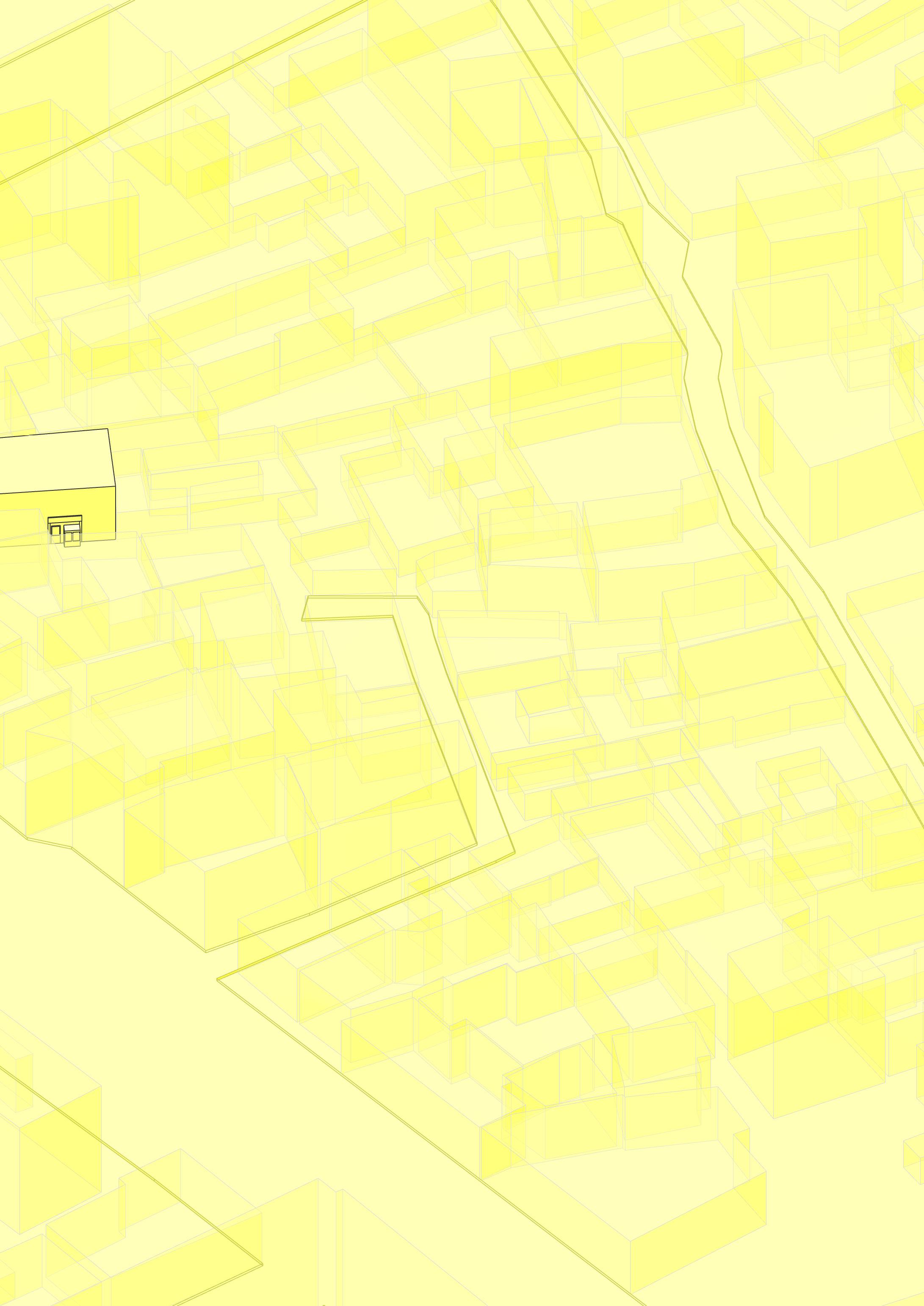
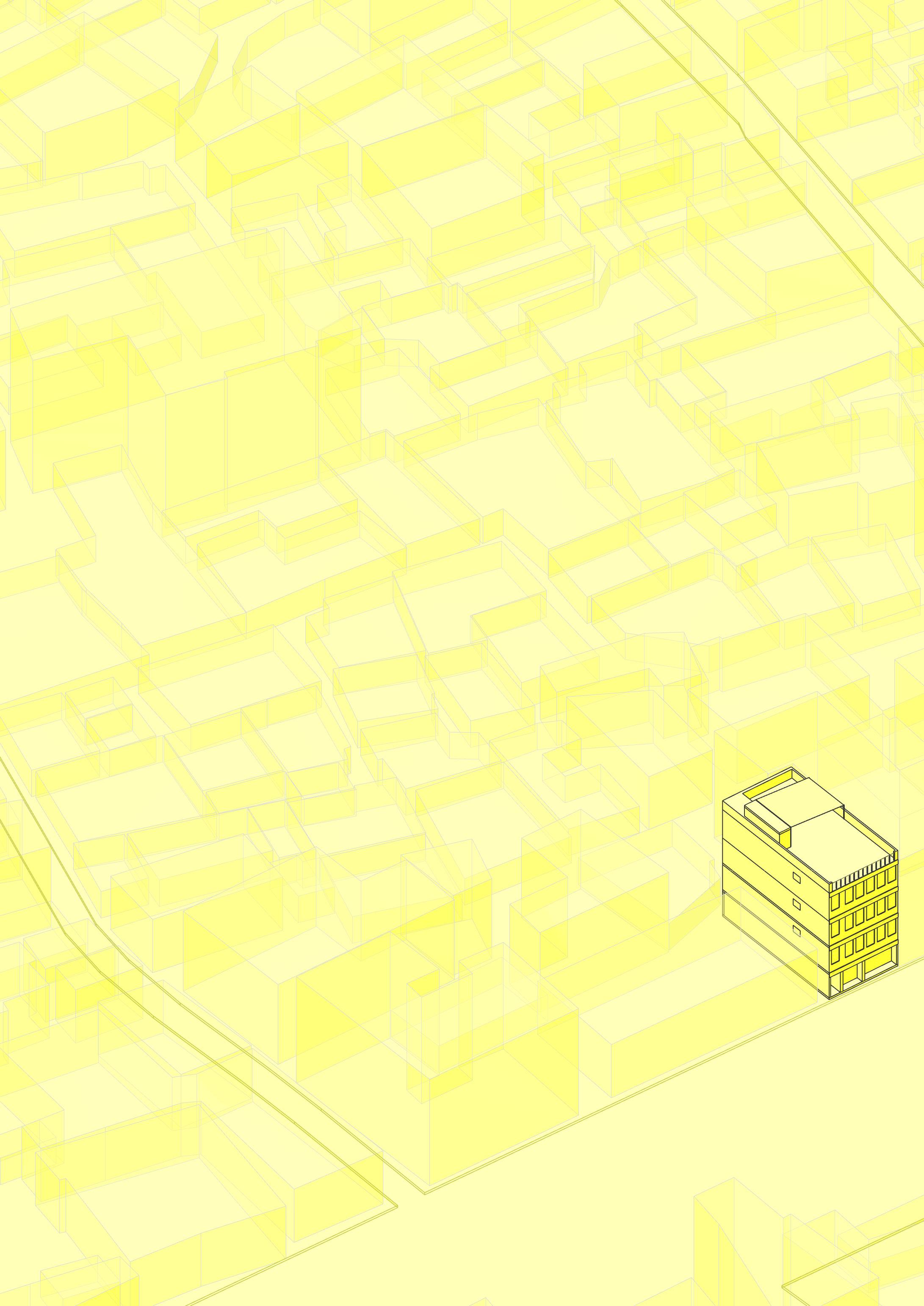
Investigation of architecture for the subjective life | No. 06

Investigation of architecture for the subjective life | No. 06
Won Young SON’s studio & SPACE UNIT 4
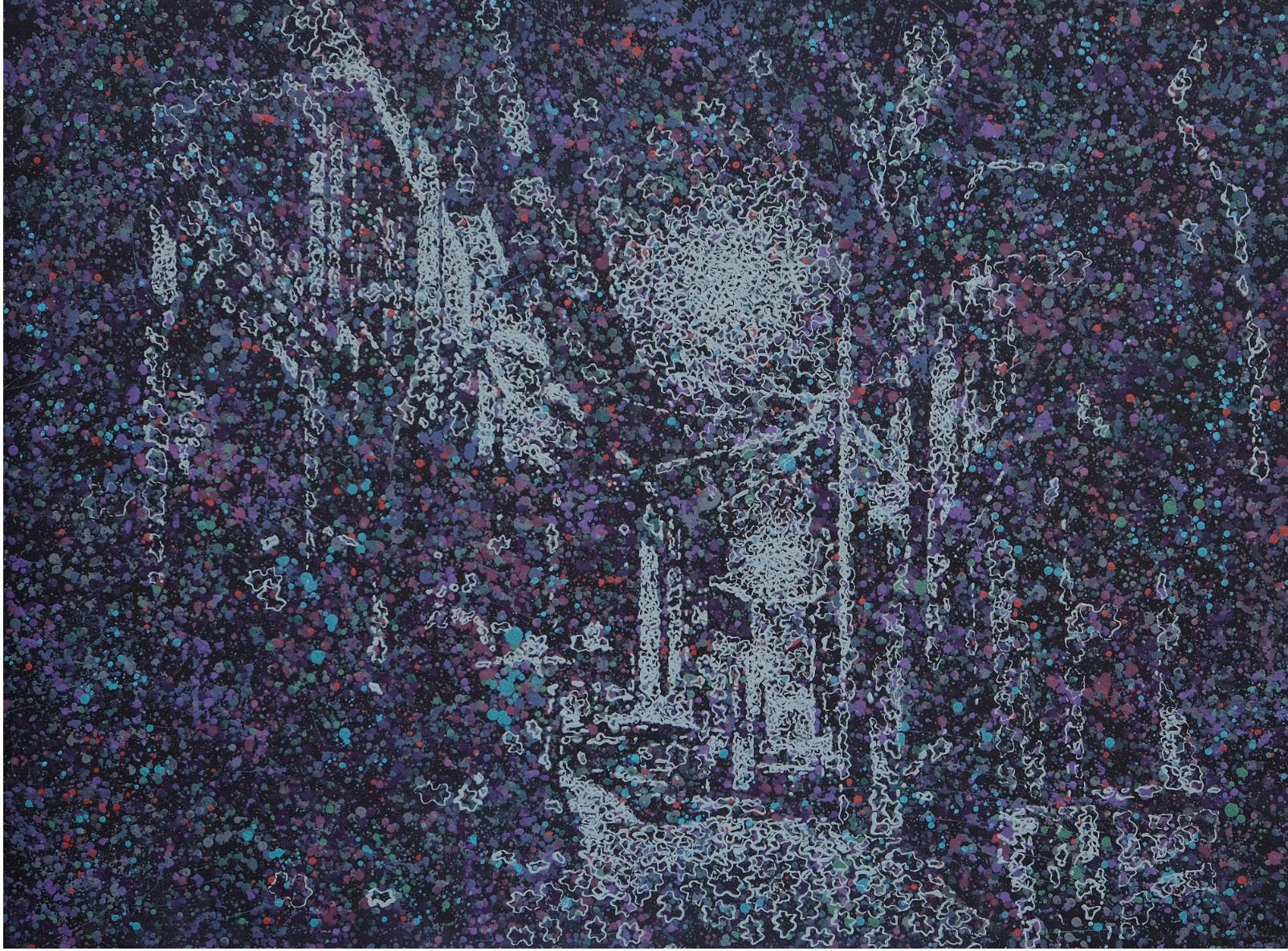
17 Relations 1817, 53*52.7cm, 2018. Won Young SON
View of the Euljiro Alley, at Ipjeong-dong ⓒbrunchstory all rights reserved.
. .
Phase 1. 2008-2016
The Story of Rapunzel (라푼젤 이야기)
p. 1 .
Phase 2. 2017-2022
Rooftop Hawaii (루프탑 하와이)
p. 13 .
Phase 3. 2022-now
The Airbnb (에어비앤비)
p. 31 .
Essay. The Second Home (두번째 집)
p. 45
When I come here, I just become Rapunzel, Once I come up, I really don’t go down until it’s time to go home.
The phase that W. Y. Son first moved to Euljiro, happy about the new spatious workspace,but little afraid to go out and wander the city.

Q. 처음 이사 오셨을 때를 말씀해주세요. 어떤게
가장 좋으셨어요?
A. 을지로가 저를 잡아당겼던 거는 그냥 그냥
맨 처음에 왔던 거는 나도 이제 드디어 넓은 공
간에서 작업할 수 있다. 이거 진짜 너무 좋았어
요. 처음에 저 제가 미니벨로 있는데 여기서 자
전거 타고 막 달렸어요. 너무 이게 넓은 게 너무
신나는 거예요. 그래서 전에는 딱 저기 저 뭐지
장 있잖아요. 물감장 저 제가 만든 건데 전에 쓰
던 작업실에서 작업실이 진짜 좁았어요. 딱 조
만했어요. 그러니까 제가 물감을 바닥에다 못 놓
는 거예요. 바닥에다 놓으면 이렇게 돌아서 뭘
할 수가 없어서 저거를 요만하게 장을 뭐지 목
공소 가서 잘라달라고 해가지고 이거를 틈은 제
가 다 파가지고 끼워 맞춰서 문 양쪽 옆에 이렇
게 놓고 썼던 거예요. 저게 그거를 끌고 온 거거
든요. 저만큼 물감장으로 유용하게 잘 쓸 수 있
는 게 없어서 파는 게 없어요. 그래서 저걸 끌고
왔는데 그렇게 작은 공간에서 얼마나 작아요 정
말 이게 100호거든요. 제 키만한 게 100호예요.
되게 많네요. 믿으세요 근데 이거를 이렇게 돌리
면 천장에 막 이렇게 확 닫고 막 엄청 작은 원룸
같은 데서 작업을 하다가 오니까 3명이 써도 5
명이 써도 너무 좋은 거예요.
Q. Tell us about the time just after you moved in. What was the best part?
A. The reason Euljiro attracted me was simply because, at the very beginning, I could finally work in a spacious environment. It was truly amazing. I have a mini-velo, and I rode it around here. It was so exciting because this place is so wide. So, previously, there was that thing, you know, that paint rack I made. The studio I used to work in was really narrow. It was just tiny. So, I couldn’t put the paint on the floor. If I put it on the floor, I couldn’t turn around and do anything, so I went to a woodworking shop and asked them to cut the rack for me. I carved all the grooves myself and fitted it on both sides of the door like this, and I used it. I brought that with me. There’s nothing more useful that the rack on sale. That’s why I brought it with me. You can’t imagine how small the space is. It’s really tiny, like this No.100 canvas, this is just as my height. Believe me, but when you turn it like this, it closes right up to the ceiling, like a really small one-room apartment. So, working here, even with three or five people, is so nice.
A minivello she often rode inside the workshop to celebrate the spatiousness
Space for the printmaking artists, with large press machines
space where collegues shared
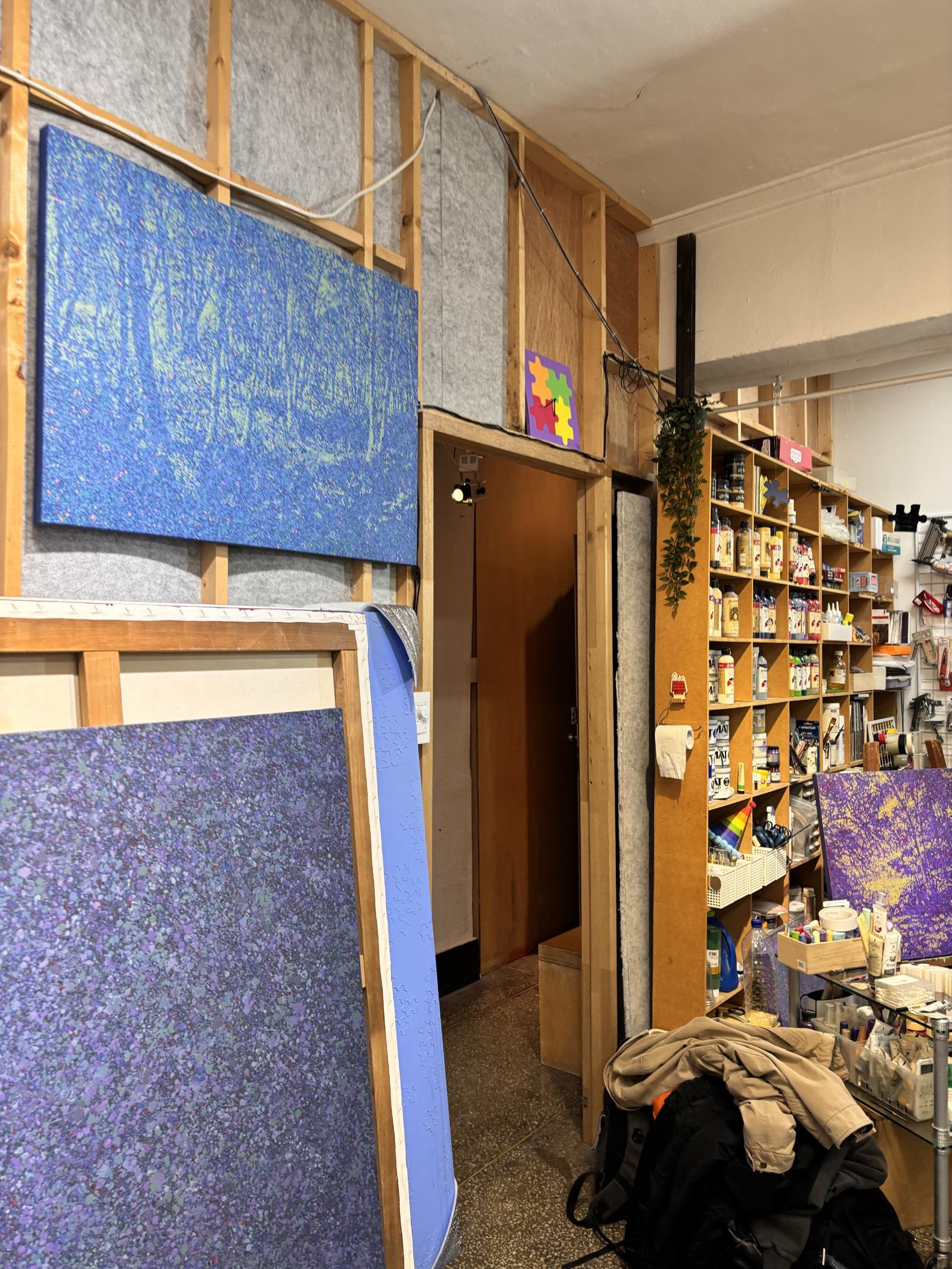
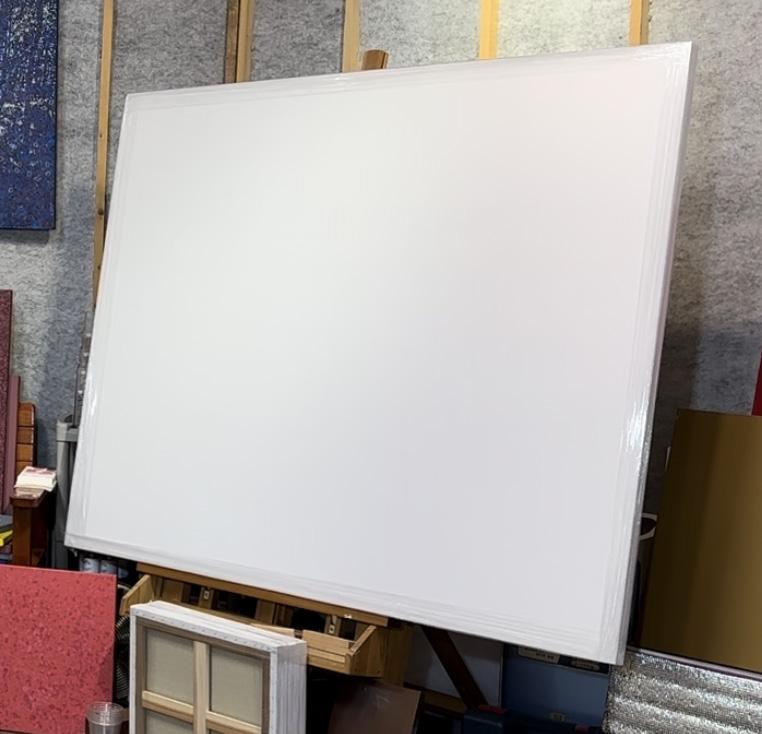
1. View of the workshop towards the entrance. The wood rack on the wall with paintings is the one she made herself to put left paintings. The previous workshop was so small that when she put the paintings on the floor, there were no room to place canvas or other tools. She is still using the same rack since she can’t find more utilized rack on market. She exspecially depicted the depth of the rack is very useful.
2. White canvas is the canvas with the size No. 100, which she struggled to move it at the previous workshop. Now she can stack a lot of them compared to the previous space.
Chair and table for her resting time
“껌껌하고 무서운 데서 저길 막 지나서 가는 것
자체가 되게 을지로 무서운 동네야라는 이런 느
낌이 있었고 처음 왔을 때도 저 밖에 안 나갔다
그랬잖아요. 여기 오면은 그냥 라푼젤이 되는 거
예요. 올라오면은 진짜 막 집에 갈 때까지 안 내
려와요. 동네가 되게 무서웠어요. 근데 외국인들
이 많이 이 동네로 유입이 되고 이 근처에 관광
호텔들이 많잖아요. 그러니까 점점 큰 대로변은
좋아졌어요. 그렇지만 여전히 뒷골목은 잘 안 갔
는데 아까 그 동기 오빠랑 음식점 탐험을 하면
서 노포를 막 돌아다니기 시작했는데 맛있는 데
가 진짜 많았어요. 여러분들도 한 2년 전만 오셨
어도 제가 맛있는 데를 데려 왔었을 텐데 지금
은 다 무너지고 그만두시고 또 딴 데로 가시고
많이 옮기고 그랬거든요.”
“Just passing through those scary alleys felt like entering a really scary neighborhood. Even when I first came here, I didn’t go outside. When you come here, it’s like becoming Rapunzel. Once you’re up here, you don’t want to come down until it’s time to go home. The neighborhood was really scary. But a lot of foreigners started coming to this neighborhood, and there are many tourist hotels nearby. So, the main roads have gradually improved. But still, I didn’t go to the back alleys much. While exploring restaurants with a colleague, we started wandering around old restaurants, and there were so many delicious places. If you had come here about two years ago, I would have taken you to all the delicious places, but now everything has collapsed, people have stopped their business, and they’ve moved elsewhere.”
Q. 옥상을 더 자주 가셨다고 하셨잖아요, 옥상을
같이 볼 수 있을까요?
A. ‘상업화랑’과 공간을 나눌 때 일단 창문이 많
이 없으니까 따뜻해지겠다 그러면서 잔머리를
살짝 굴렸죠. 그래서 많이 따뜻해지기는 했는데,
말씀드린 것처럼 빛이 너무 부족한 거에요. 옛날
에는 제가 맥주를 만들었었거든요. 다른 공방에
서 만들어가지고 맥주를 옥상에 딱 올라가서 해
가 탁 지는 걸 보면 뚜껑을 딱 시음을 하고 했었
죠. 같이 올라가시죠.
사실은 여러분들한테 이거 되게 보여주고 싶었
는데 여기가 나 진짜 사대문 안에 사는 사람이
구나 이런 느낌이 딱 있었어요. 보면 저기 남산
이잖아요. 지금은 건물 남산 저쪽도 고도 제한
풀렸는지 건물이 엄청 많아졌어요. 근데 예전에
는 저 넓은 거 하나밖에 없었거든요. 그래서 이
남산의 쉐입이 다 보였어요. 그리고 저쪽도 보시
면 저쪽이 인사동 쪽이에요. 그러면 저 뒤로 넘
어가면 안산이랑 이런 것들이 막 있잖아요. 안산
하고 그쪽 산대도 다 보였어요. 근데 저기 SK 건
물 생기고 뭐 생기고 하면서 이 실루엣이 없어
졌고 제일 슬픈 거는 여기서 북한산도 보였는데
지금은 안보인다는 것이죠.
아무튼 이 동네가 이쪽 대림 청계상가에 북쪽을
바라봤을 때 왼쪽 섹션은 3단계로 이렇게 개발
이 됐어요. 청계천 쪽이 저쪽인데 청계천 저기
가 이제 제일 먼저 부서지고 없어 새로 아파트
가 들어왔는데 주상복합 아파트가 들어왔는데
저기에 제가 되게 자주 가던 ‘쌍벌 식당’이 있었
어요. 쌍벌 식당 순댓국도 팔고 되게 솜씨 좋으
신 사장님이 하시는 데였는데 수육 뭐 이런 것
도 팔고 근데 그분이 어느 날 빨간 잠바를 입고
이 동네를 다른 분들이랑 같이 돌아다니면서 시
위를 하는 거예요. 아침에 제가 출근할 때 그분
이 돌아다니면서 시위하시는 거 보고 인사하고 그분은 그 시위를 한 바퀴 돌고 다시 자기 식당 으로 가셔가지고 그날 하루 일과를 시작을 하시
Q. We’d love to see your rooftop. Is it possible?
A. When I shared the space with ‘Sangup Gallery’, I figured we’d be warmer with fewer windows, so I made a little clever adjustment. However, as I mentioned, the lack of light was a major issue. Back in the day, I used to brew beer. I would take the beer I made to the rooftop and open the lid to taste it as the sun set. Let’s go up together.
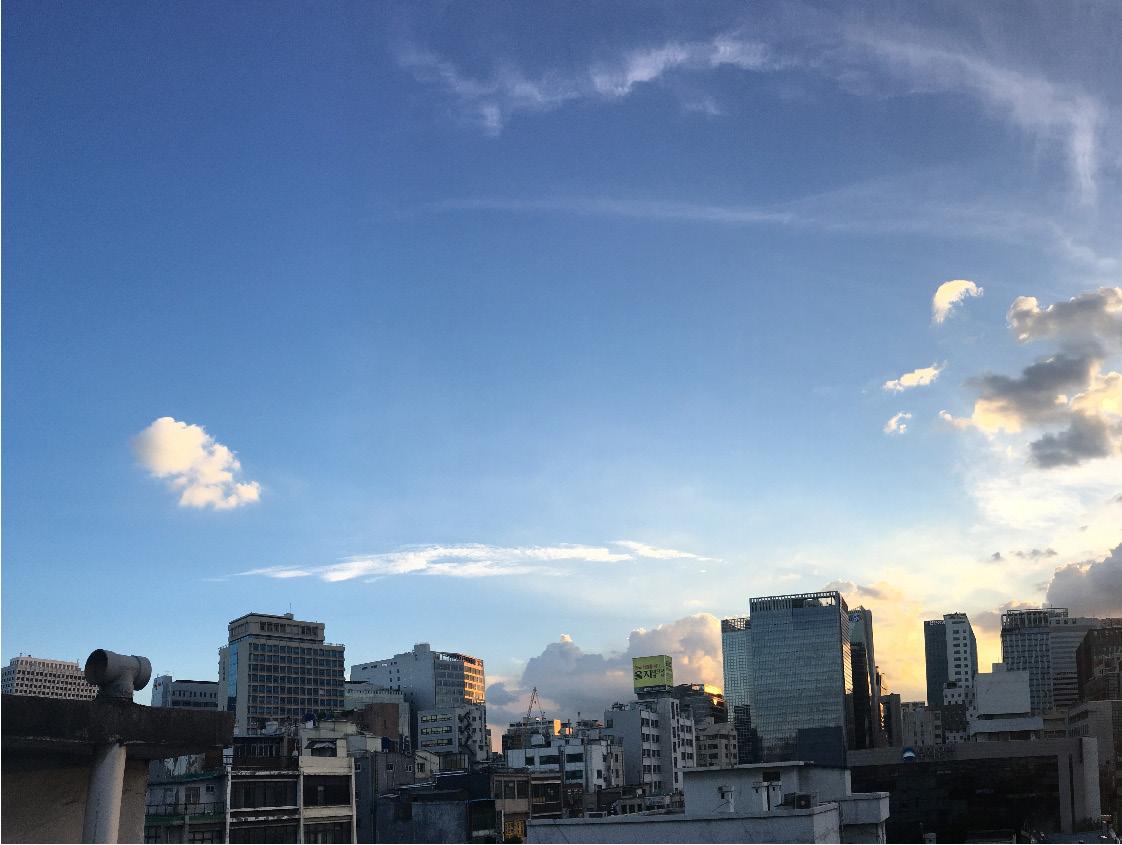
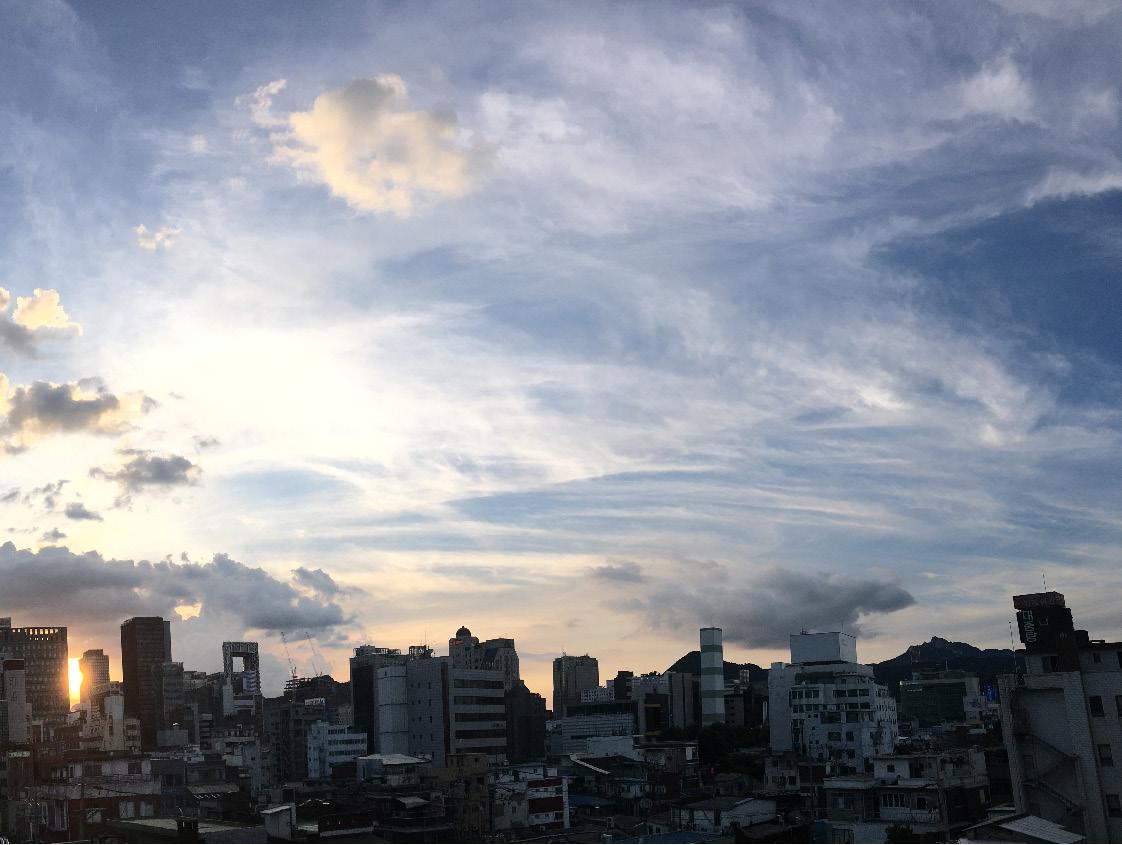
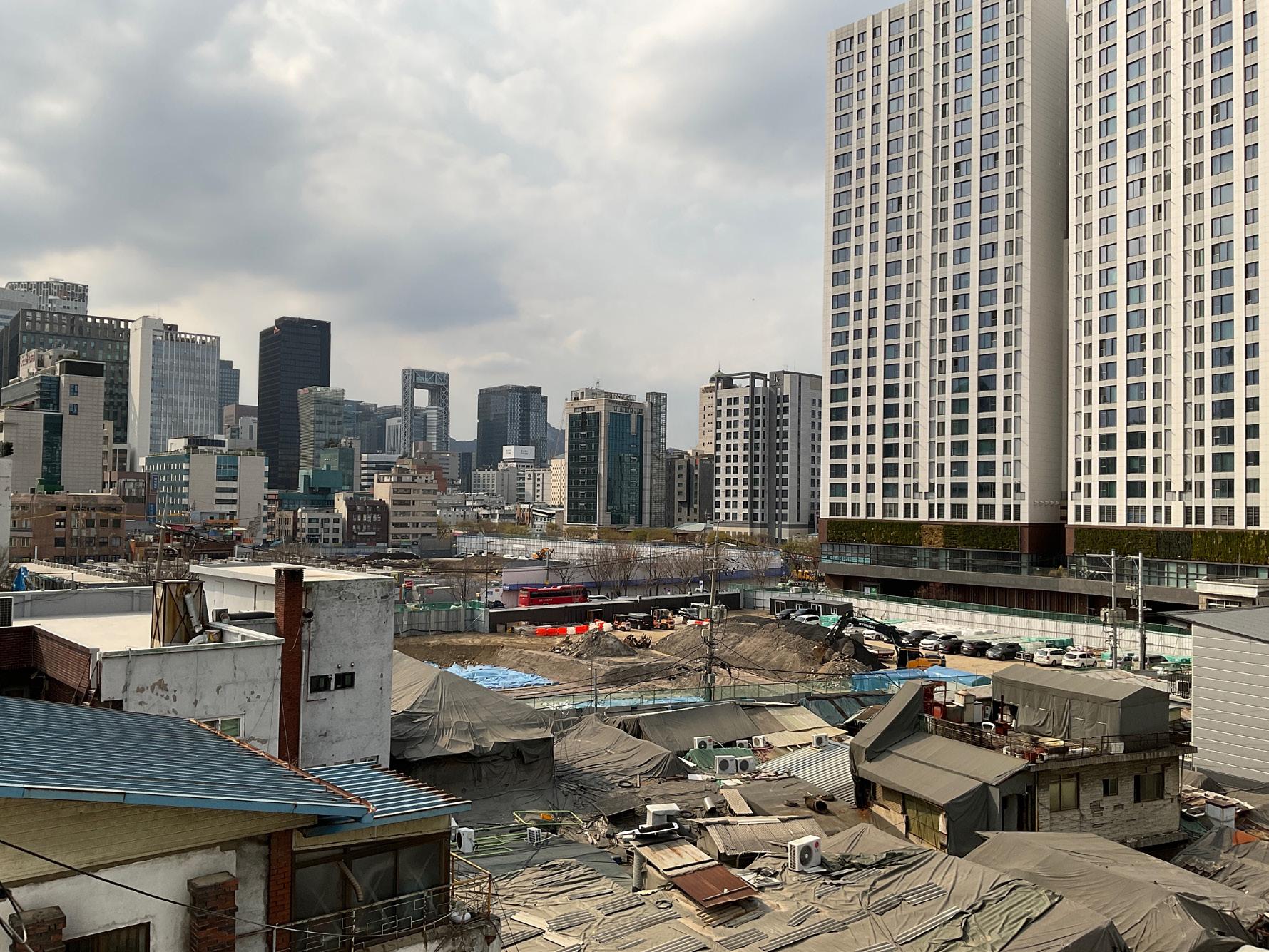
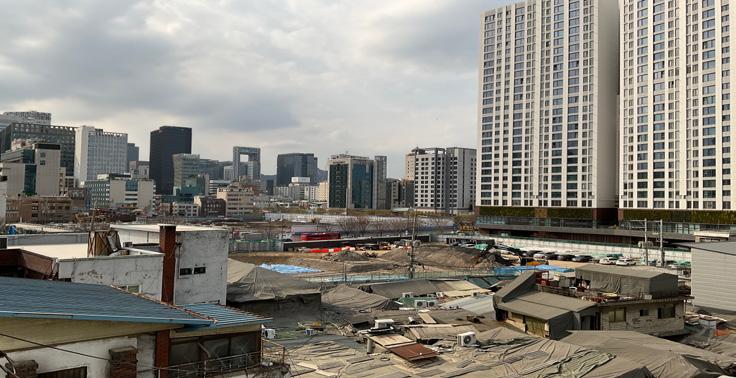
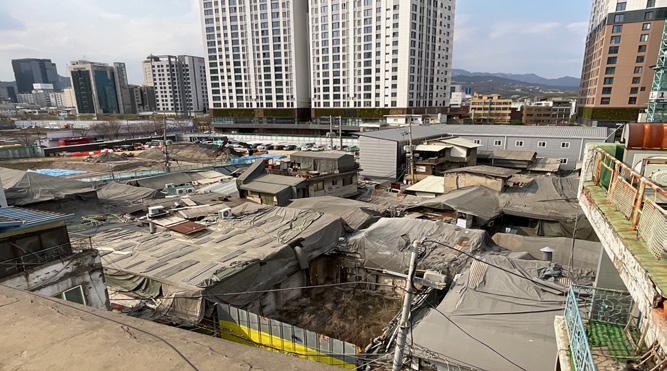
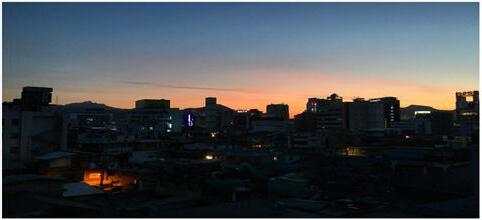
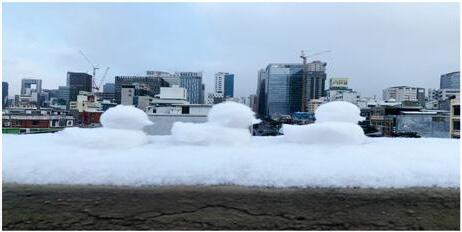
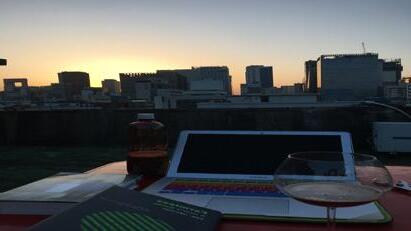
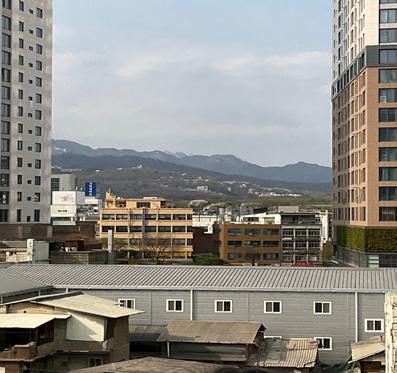
Actually, I really wanted to show you this because standing here really makes you feel like you’re truly living within the historic downtown gates. Over there is Namsan Mountain. Nowadays, with the height restrictions lifted, many buildings have sprung up around it. But before, that wide view was all you had, and you could clearly see the shape of Namsan. And if you look over there, that’s the Insadong area. Beyond that are mountains like Ansan. You used to be able to see Ansan and other nearby mountains clearly, but now that silhouette has disappeared with the construction of buildings like the SK building. The saddest part is that I used to be able to see Bukhansan Mountain from here, but now I can’t.
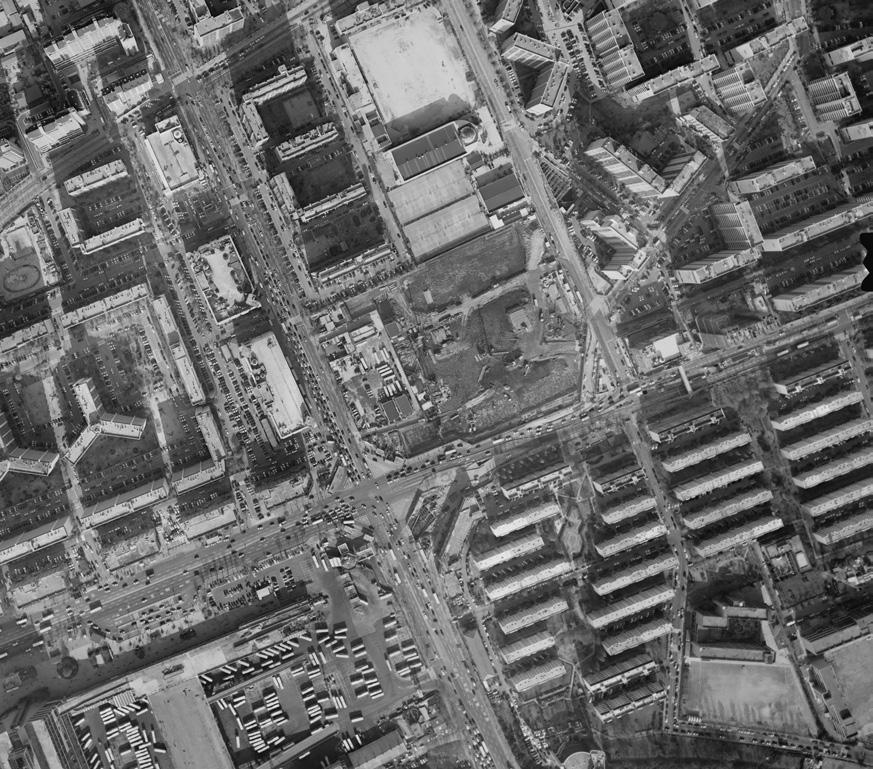
Anyway, this area, looking north from Daerim and Cheonggye Commercial Areas, has been developed in three stages. Over there by Cheonggyecheon, the old buildings were demolished first, and then mixed-use residential apartments were built. There used to be a restaurant I frequented called ‘Ssangbeol Restaurant’ that sold sundaeguk (Korean sausage soup) and other dishes, and the owner was very skilled. But one day, the owner donned a red jacket and protested with others around this neighborhood. I saw him protesting as I went to work in the morning. After making his rounds in protest, he would return to his restaurant and start his day. 1 2 3
1. Photo of the artist enjoying time at the rooftop
2. Photo of the artist enjoying time at the rooftop
3.
ⓒbrunchstory all rights reserved.
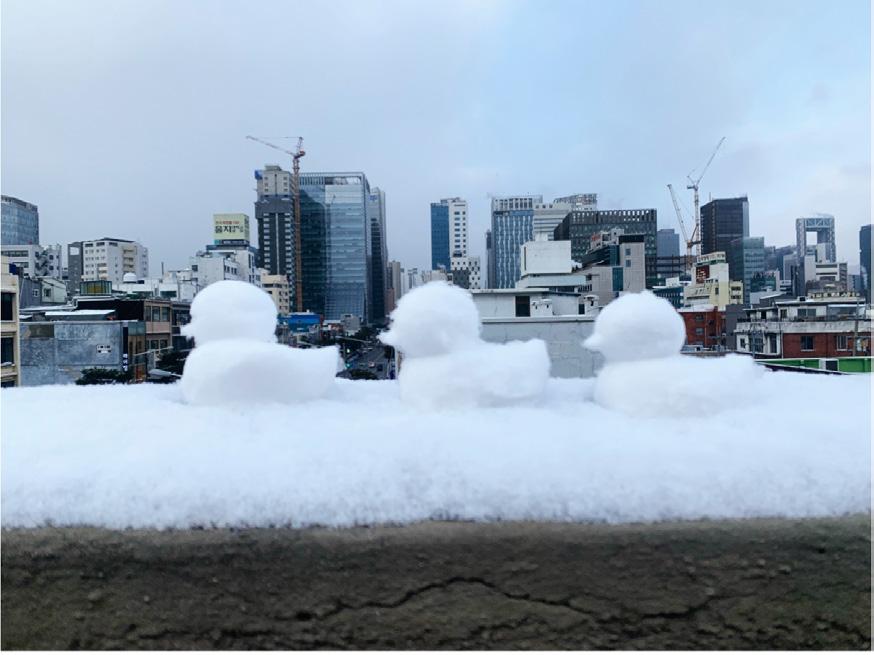
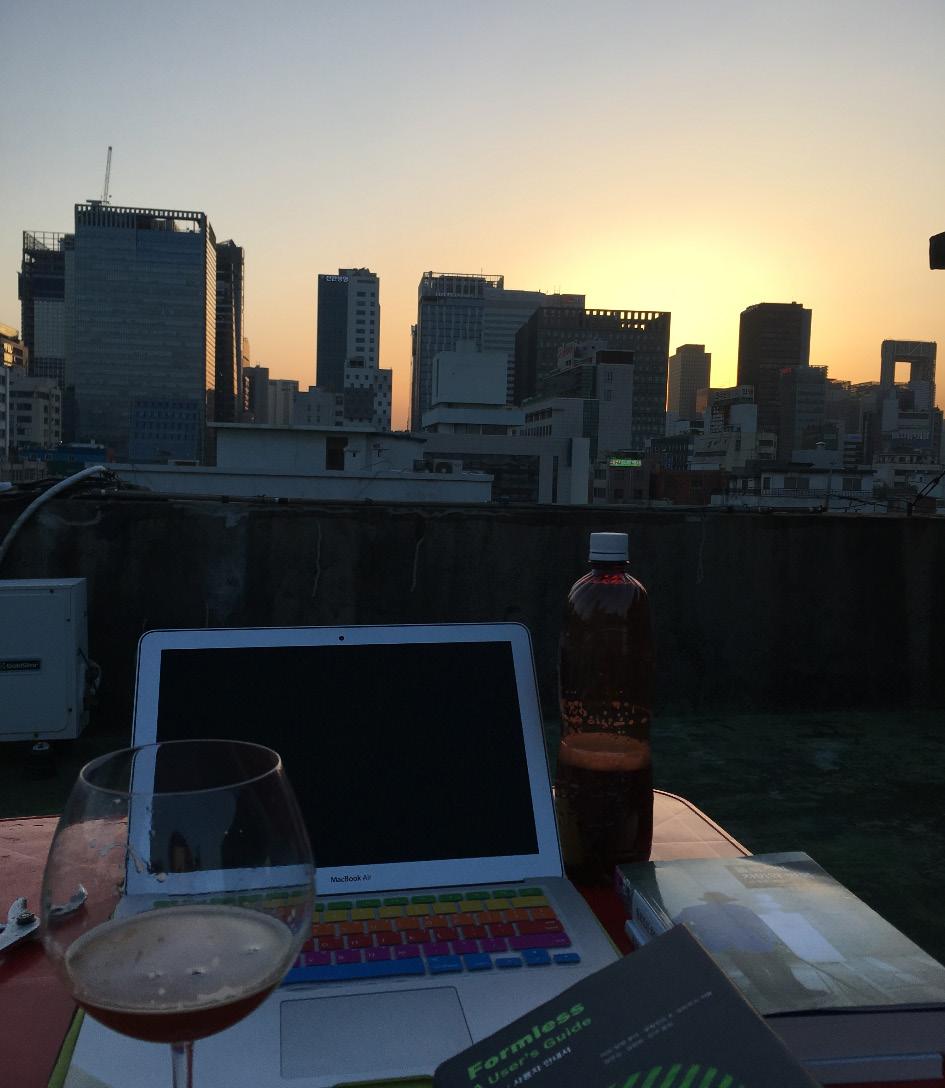
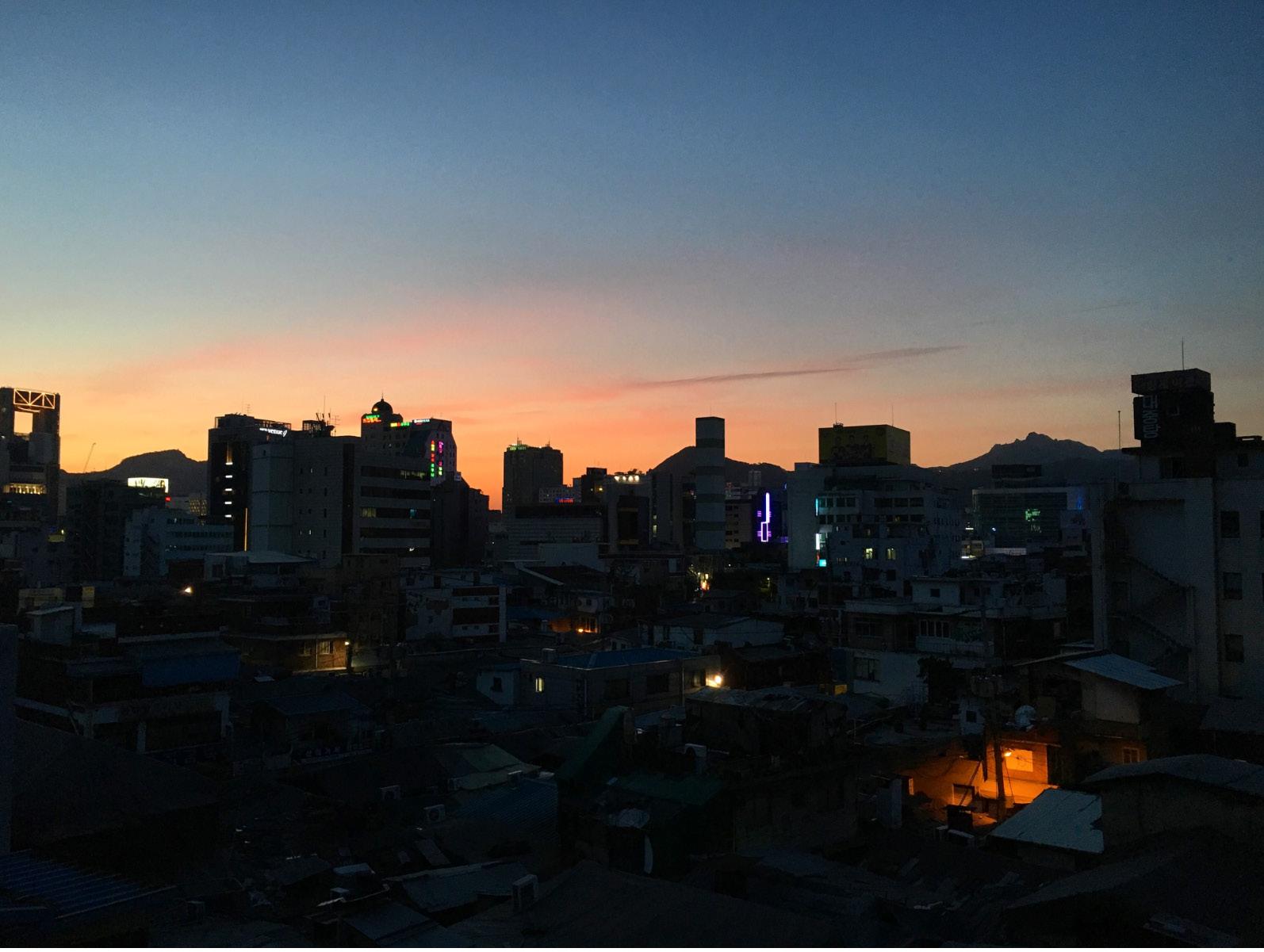
Rooftop Hawaii 2017 -
After the division the light faded a bit, so I went up to the rooftop more often.
The phase that when W. Y. Son expanded her boundaries further throughout the city.
“근데 그때부터 이제 뒷골목을 그냥 밥 먹으러 한 번 가봤다가 이런 데가 있어 하면서 돌아다 니고 아니면 길을 헤매고 몰라서 헤매고 막 이 러다가 뒷골목을 막 보게 되는데 생각보다 무섭 지 않은 동네였던 거예요. 그리고 저는 여자니 까 이 동네 다만 남초 지역이었거든요. 남자만
내가 와서 밥이라도 이렇게 먹을라 치
한두 번 가면은 주인분들이 다 저를 기억을
거예요. 그래서 제가 이제 이 동네를 그
휩쓸고 다녔죠. 그냥 왔어 막 이러고 나중에 그림 그리는 사람이라고 하니까 더 신기해하고 그래서 되게 재밌었던 것 같아요. 이 동네가 사
람 사는 동네였구나 뭐 이런 느낌 그러면서 정 이 들기 시작했지. 그전에는 무서운 동네, 약간 저에게 이게 공간이었을 때는 그냥 무섭고 그 냥 일만 하고 딱 가야 되는 동네였다가 점점 저 를 변화시켰죠. 그게 음식, 제가 노포 전문가거 든요. 제가 노포에 대한 그런 계기들도 있었지만 그럼으로써 이제 동네를 돌아다니고 동네에 관
심을 갖고 어떤 사람들은 지나가는데 포도나무 를 심어요. 심지어 여기 포도나무도 심고 그리고 벚꽃도 피어요. 진짜 요만한 종묘를 그런 거 종
자를 하나 갖고 오셔서 해놓고 해마다 개가 코
드가 열리고 막 이러는 게 이 동네분들도 이 동
네를 정말 아끼고 사랑하는구나 이런 생각이 드
니까 ” ...
“But since then, I’ve started going to the back alleys just to try the food once and discovered that it wasn’t as scary as I thought. And because I’m a woman, this neighborhood was very male-dominated. Since only men were there, if I went and said I wanted to eat something, the owners would remember me after just one or two visits. So, I started sweeping through this neighborhood. Just coming here and saying later that I’m an artist made them even more amazed. So, it was really fun. I started to feel attached to this neighborhood, thinking, “This neighborhood is where people live.” Before, it was a bit scary, like a space for scary animals. It was just scary, and it was a neighborhood where you just worked and had to leave. But gradually, it changed me. That includes food; I’m a traditional food specialist. There were reasons for me to become interested in those restaurants, but through that, I started to explore the neighborhood, become interested in it, and saw some people planting grapevines. They even planted cherry blossoms. They even bring seeds and plant them here every year. The neighborhood people are really cherish and I started to love this neighborhood.”
...
‘Fab-Lab’, art and technology test-bed
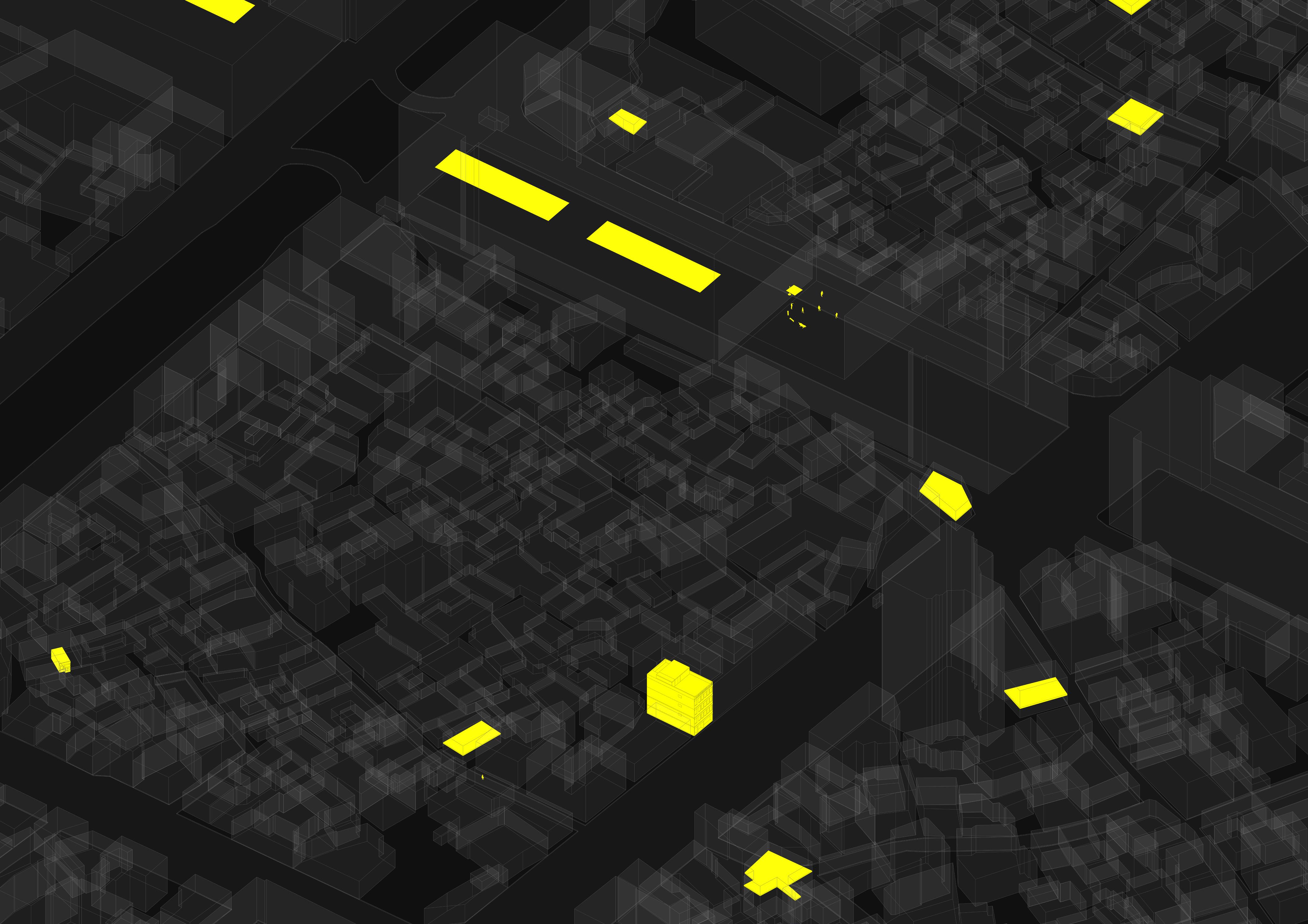
저는 을지로에서 ‘을지로 하와이’와 ‘에피파니 프
로젝트’라는 두 가지 프로젝트에 참여했어요. 이
두 프로젝트와 동시에 개인 작가로서의 회화 작 업도 병행했죠.
손원영 작가는 도시가 재미와 소중함으로 가득 한 곳이라고 느꼈기에, 식당과 골목길 등 다양한 장소를 방문하며 자신의 영역을 확장하였다. 또 한, 그녀는 예술가로서 자신의 작품을 2D 회화 뿐만 아니라 다양한 형태로 확장하였다.
‘Ssangbeol’ Restaurant, one of the favorite restaurant
‘Sallim Craft’, Studio
Book lounge, inside Sewoon plaza
‘Joseon-Ok’ alley, where she got inspired for her painting
‘Sports Day’ project, on the deck of Daelim plaza
‘R3028’, artist collaboration and gallery
“
In Euljiro, I was involved in two projects: ‘Euljiro Hawaii’ and ‘Epiphany Project.’ As an individual artist, I also did painting work while simultaneously participating in these two projects.
”
Since W. Y. Son felt the city is a place full of fun and cherish, she expanded her boundaries by visiting restaurants, alleys and so much more. Also, as an artist, she expanded her work beyond 2D paintings.
‘Urban Play’, gallery
‘Zak Eun Mool’, artist project room
‘Euljiro OF’ gallery
A. 을지로 하와이라고 해서 여러분들이 하와이
는 되게 우리가 느낌상 아름답고 막 쉬고 싶고
되게 행복한 느낌이잖아요. 그런 우리가 꿈꾸는
이상향을 얘기를 하고 을지로는 내가 있는 동네, 그러니까 현실 그런 그것들을 결합을 해서 어떤
프로젝트를 좀 해보면 어떻겠냐 그래서 작가들
이 한 3명이서 모여서 재미있게 공부도 하고 놀
기도 하고 그리고 그것들을 일반인들과 같이 일
을 같이 뭔가 할 수 있는 접목할 수 있는 부분
들을 찾아보자 해서 제가 프로젝트를 좀 진행
을 했었어요. 처음에 작가분들 두 명과 의미 있
는 일을 해보자 하면서 시작하게 됐어요. 30cm x 30cm 전시대에 작품을 올려야 비로소 예술
이 되는 그런 경우가 미술사에서 굉장히 많았거
든요. 그래서 그냥 일반 공간과 이런 전시대에
차이가 무엇인가 하는 그런 본질적인 문제에 질
문을 던지면서 어떤 사무실 안에 전시대를 놓고
하는 전시가 첫 전시였어요. 그 후에도 계속 고
민을 했죠. 저도 여기서 계속 일(artwork)을 하
는 사람이잖아요. 그런데 다른 사람들이 보면 돈
도 안 벌고 쓸데없이 돌아다니는 사람인 거예요.
그 사람들이 일하는 것처럼 저도 일을 하고 있
는 건데 그게 너무 웃기잖아요. 그래서 그런 중
의적인 상황을 재미있게 풀어보자 해서 그 사람
들과 소통할 수 있는 방법을 액티비티로 풀어보
자 해서 ‘청계추계 체육대회’라는 일종의 참여형
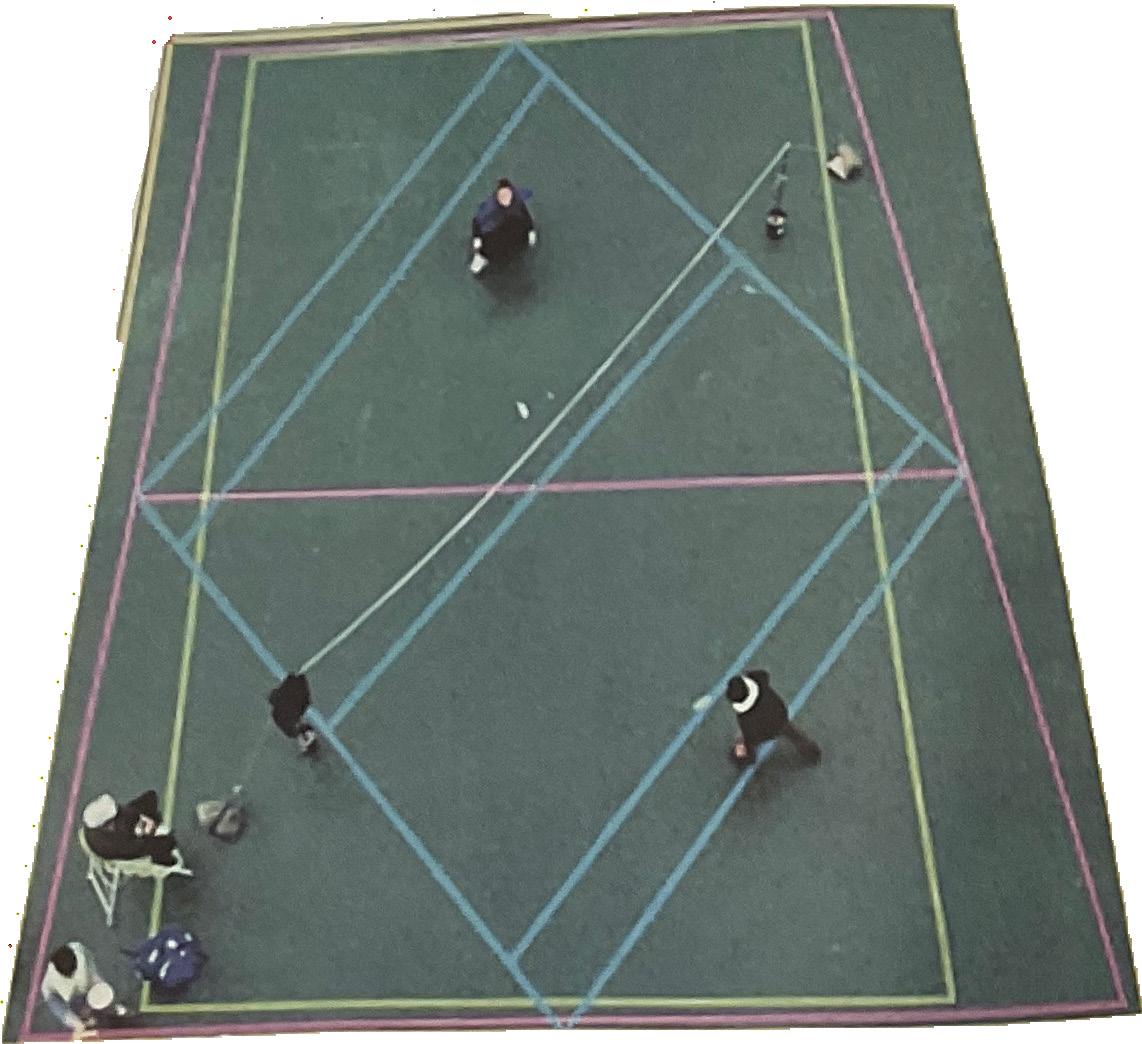
전시 프로젝트를 진행했어요. 대림상가 데크에
서 진행을 했는데, 체육을 그대로 미술로 가져오
면 의미가 없잖아요. 그래서 자체적으로 규칙을
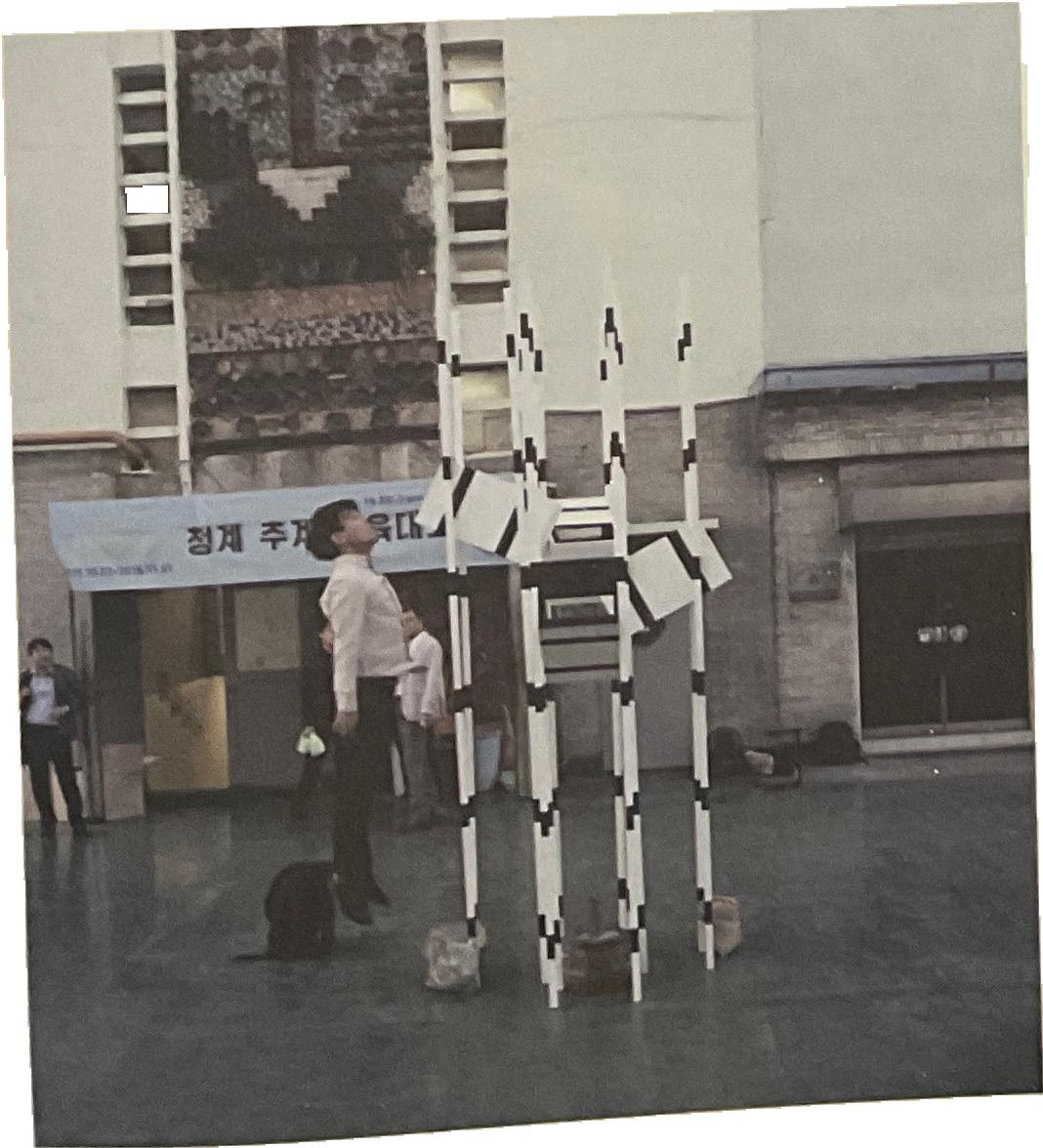
만들고, 뜀뛰기를 하면서 예술 작품을 볼 수 있 고, 다양한 액티비티를 통해서 작품들을 보거나
할 수 있는, 일종의 전시인 듯 체육대회인 듯한
프로젝트를 했던 거죠. 그 외에도 ‘을지로 것들’
이나 ‘을지로 하와이와 시베리아’같은 다양한 프
로젝트들을 진행했어요.
Q. Can you give us more detail about ‘Euljiro Hawaii’?
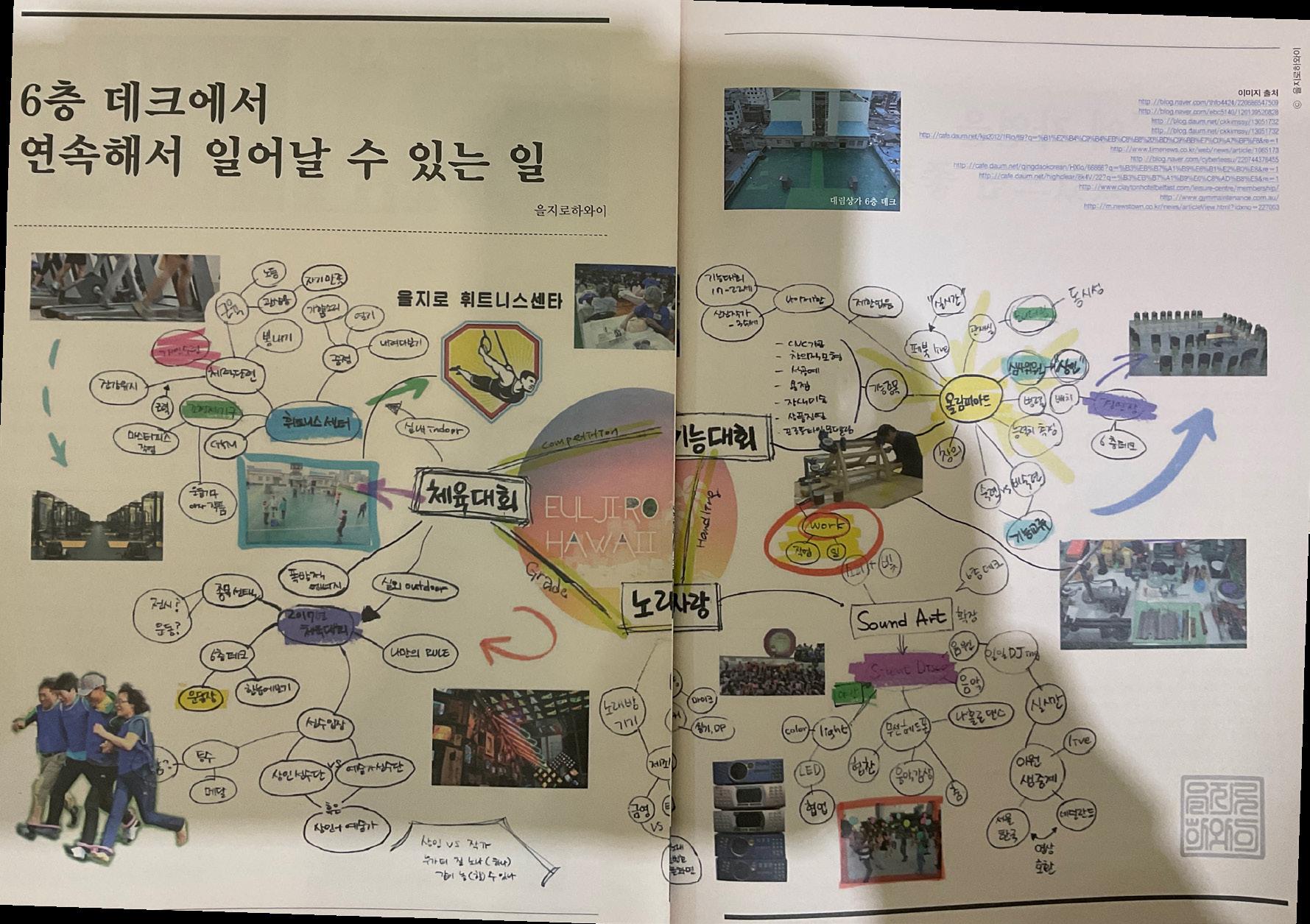
A. Euljiro Hawaii, was a project where we talked about Hawaii as an idealized place of beauty, relaxation, and happiness, while Euljiro represented the neighborhood where I currently reside. It was a project that combined the two. Artists gathered to study and have fun together, and we wanted to integrate such projects with the general public, engaging them in a fun and educational way. It all started with two artists wanting to do something meaningful together. In art history, there have been many cases where artwork had to be displayed in a 30cm x 30cm exhibition space to be considered art. So, we questioned the fundamental difference between ordinary spaces and exhibition spaces, and our first exhibition was held in an office space. We continued to ponder this issue. I am someone who continues to work here. However, to others, I may appear to be aimlessly wandering around without earning money. It’s funny that I am also working just like those people who have jobs, right? So, we decided to address this ambiguous situation in a fun way and came up with activities to engage with those people. We conducted a participatory exhibition project called the “Cheonggye Olympics” at the Daelim Shopping Mall deck. It wouldn’t be valuable to simply bring sports into art. Therefore, we created our own rules and allowed people to view art while doing activities such as jumping rope. It was a project that resembled an exhibition but also a sports event. Additionally, we carried out various projects such as “Euljiro -Things” and “Euljiro Hawaii and Siberia.”
1. Picture of people participating at art project that interpretes sports day festival as art, “Cheonggye Olympics”. This particular art proposes the mixture of sports.
2. Installation art that only when the participants jump high, they could see more artworks.
3. One of the pages is ‘Euljiro things’ seeking possibilities of art and projects in Euljiro.
Q. 을지로에서의 프로젝트들과 별개로 개인 작
업도 계속 하셨다고 들었어요.
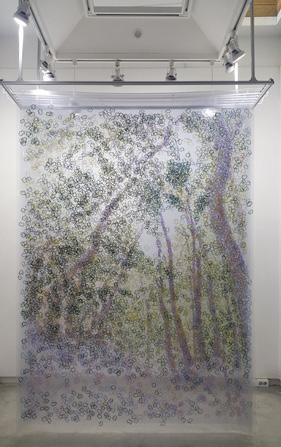
A. 이 천장만큼 하는 이 벽만 하는 이제 그림을
설치를 하는 거예요. 보라색 빨간색 노란색 초록
색 다 합친 거 이렇게 해서 보여줬던 그림이고
이런 식으로 이것도 마찬가지로 그냥 일반 물감
사용한 게 아니라 여러분들 실리콘 아시죠? 뭐
유리 옆에다가 이렇게 하는 거 그거에다가 색깔
완료가 있어요. 그거를 섞어가지고 물감을 개발
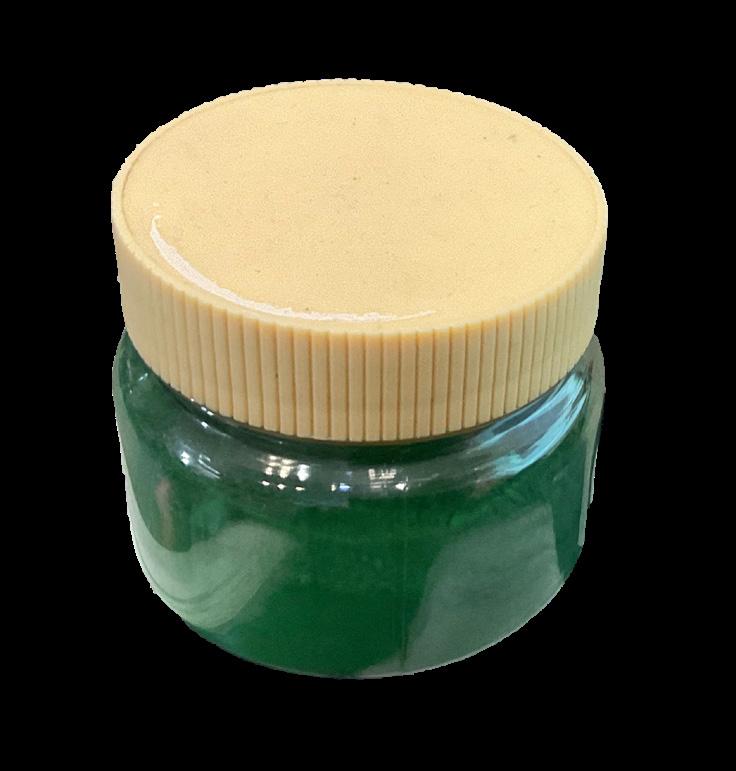
개발을 하는 거죠. 이렇게 보시면 여러분들 나중
에 보셔도 돼요. 이게 색깔 가루인데 화분 약품
가게에서 저런 거를 사가지고 실리콘이랑 섞어
가지고 했더니 얘네들이 굉장히 플랙서블한 물
감이 되는 거예요. 그러니까 저런 비닐에다가 그
림을 그리고 이렇게 말아서 보관도 할 수 있게
끔 된 거예요. 근데 이런 그림들은 말면은 그림
이 막 크랙이가거든요. 깨져요. 그래서 을지로
와가지고 저도 오히려 남들이 안 해본 것들에
대한 다양한 시도들 되게 많이 했었던 것 같아 요.
Q. Your activities in Euljiro also affected your personal works, right?
A. What I’ve been doing is installing paintings that are as big as this ceiling and this wall. The painting I showed combined purple, red, yellow, and green. We didn’t use ordinary paint but developed our own using silicone—you know, the kind used around glass? We mixed it with these colored powders that you can get from a garden chemical store, creating a very flexible paint. You can roll these paintings up and store them wrapped in plastic. However, when you roll these paintings, they tend to crack and break. So, coming to Euljiro, I think I ended up trying a lot of different things that others hadn’t attempted before.
Q. 당시에 을지로에는 실험적인 곳들이 굉장히 많았었죠?
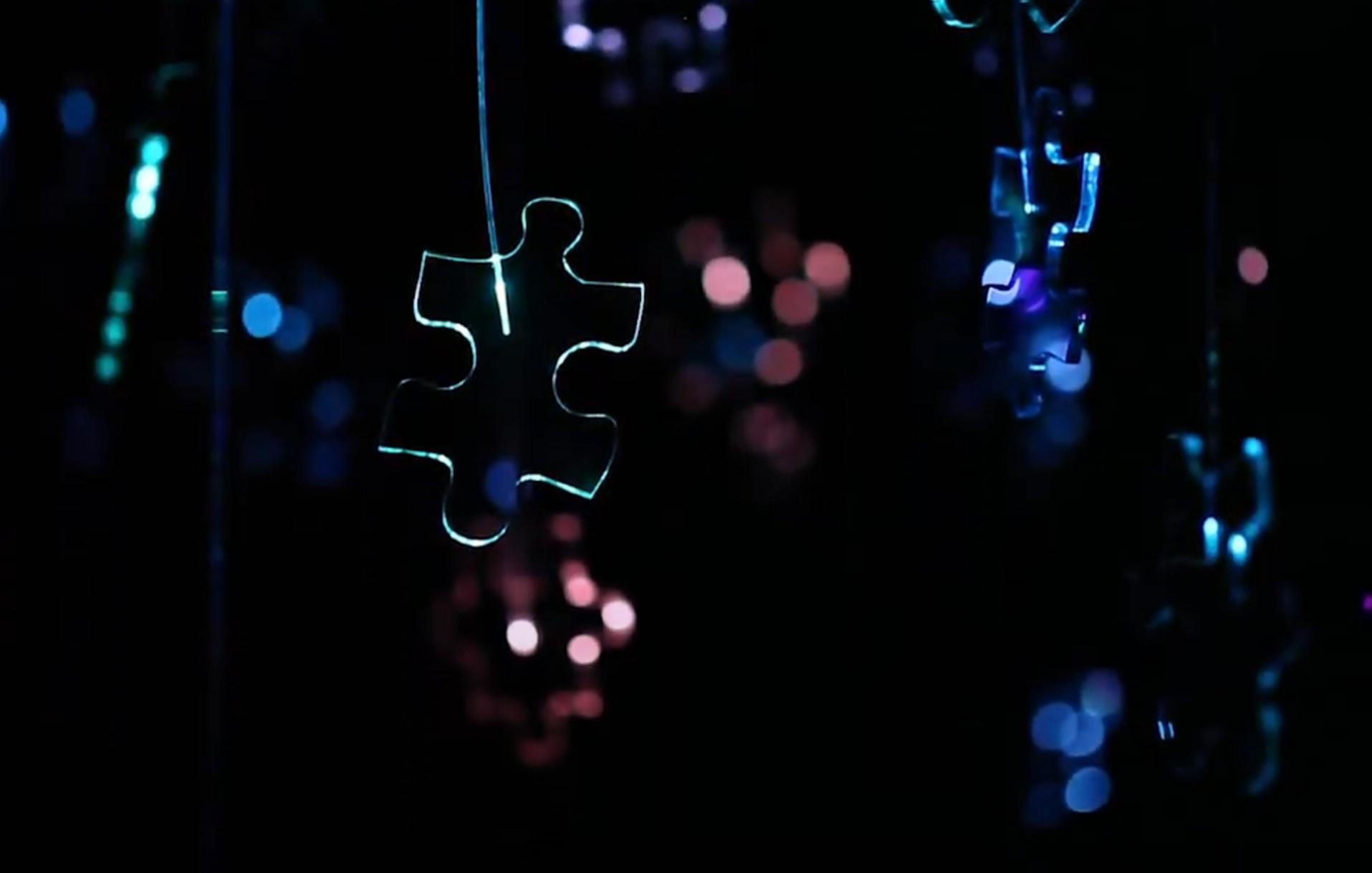
A. 이제 아두이노라고 혹시 아시죠? 아두이노를
뭔가 이렇게 그림은 다 그려놓은 거를 보는데
뭔가 관객이랑 호흡하고 인터랙션이 있으면 좋
겠다는 생각이 들어서 얘는 숨이라는 거예요. 숨
쉬듯이 이렇게 하얀색으로 이게 불이 꺼졌다 켜
졌다 이렇게 하고 있는데 저게 다 퍼즐 모양의
그런 것들이 광섬유를 이용해서 바깥 라인만 이
렇게 불이 들어오게 하는 거거든요. 그래서 지금
이 정도 만한 방을 다 까맣게 칠하고 검은 유리
를 깔고 그래서 이제 얘네들이 서로서로 반사를
하면서 사람이 들어왔을 때 그쪽만 이제 색깔들
이 계속 변하는 거예요. 다른 거는 다 다른 쪽은
다 하얗게 숨을 쉬듯이 꺼졌다 켜졌다를 서서히
반복을 하다가 그러니까 지나가는 사람이 있을
때 이렇게 하는 거 이것도 다 모든 재료들은 다
을지로에서 공부하는 것도 옛날에 팬랩 서울이
라고 있었거든요. 여기서 거기서도 그런 거 교육
같은 것들도 해주고 막 그랬었어요.
Q. At that time wasn’t there a lot of test-bed for innovation in Euljiro?
A. And you might know about Arduino? I thought it would be nice if there could be some interaction, some sort of breath with the audience while they view the already drawn paintings. So, this involves a process like breathing, turning white, where the lights switch off and on. These are all puzzle-shaped components that use fiber optics to light up just the outer lines. So, what I did was paint a room about this size completely black, laid down black glass, and then these components reflect off each other. When someone enters, only those parts continuously change colors. The rest of the area breathes slowly, turning on and off in white. All these materials were also studied in Euljiro; there used to be something called Fab Lab Seoul where they provided education and such activities.
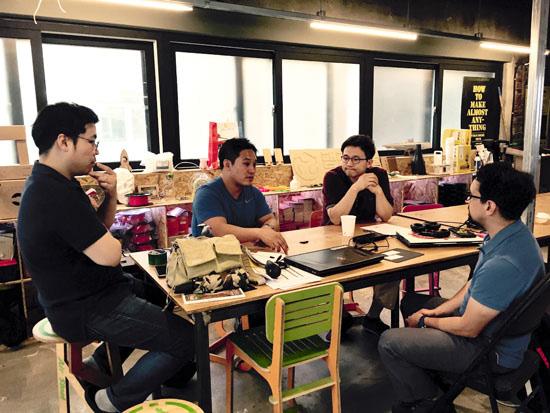
1. Picture of associates at FAB-LAB, former astronaut candidate, Ko San, is sitting at the second left.
2. Installation art by W. Y. Son using Arduino and light cable and puzzle. It follows people movements and light their path in a breathing pattern.
Q. How did the division of original space happened?
A. Here, five artists used this space, with two of them using it as a printmaking studio, and the remaining three painters working here. When I signed the contract under my name, people sometimes told me they had to leave due to some reason, and eventually, everyone left but me. I was left wondering whether I should continue to maintain this space or not, which was a big dilemma for me.
마침 ‘상업화랑’의 기획자 분이 다른 데 제 작품
보러 여기를 왔다가 이런 공간 또 없나 뭐 이렇
게 물어보길래 혹시 나랑 나눠쓸래요? 물어본
거예요. 그래서 2017년부터 여기를 나눠서 제가
여기를 쓰고 여기는 이제 딴 ‘국보공예’라는 데
가 쓰고 여기는 상업화랑 이걸 쓰게 된 거예요.
그래서 근데 저는 그냥 이렇게 반으로 나누고
싶었거든요. 그러면 나도 창문 3개 저쪽도 창문
3개인데 이렇게 나누면 자기들 공간이 너무 재
미없어진다는 거예요. 그래서 이 바닥에 사각형
하나가 90 x 90이잖아요. 그래서 이 판 기준으
로 15개씩 나눴는데 나중에 이사하고 보니까 아
늑하다 싶었는데 빛이 안 들어오는 거예요. 그래
서 환기 문제, 빚 문제가 좀 아쉬운 그런 게 있었
어요.
그래도 ‘상업화랑’ 측에서 나한테 창 하나는 줘
야한다고 생각해서 사실은 중간에 문도 이게 열
려요. 서로 공간으로 열 수가 있어요. 급할 때는
열어서 쓰자 이렇게 했는데 급할 일이 없고 그
리고 저쪽이랑 여기는 완전 별개기 때문에 열
일이 없어요. 그래서 저는 여기를 창고로 쓰고
있고 여기에 나중에 이렇게 잘 공개는 안 하는
데 이거를 이렇게 옆으로 치워서 여기 안에는
창고로 쓰고 있어요. 그림도 좀 많고 이렇게 겨
울에는 안 쓰는 선풍기나 이런 것들도 좀 많고
이렇게 쓰고 있습니다.
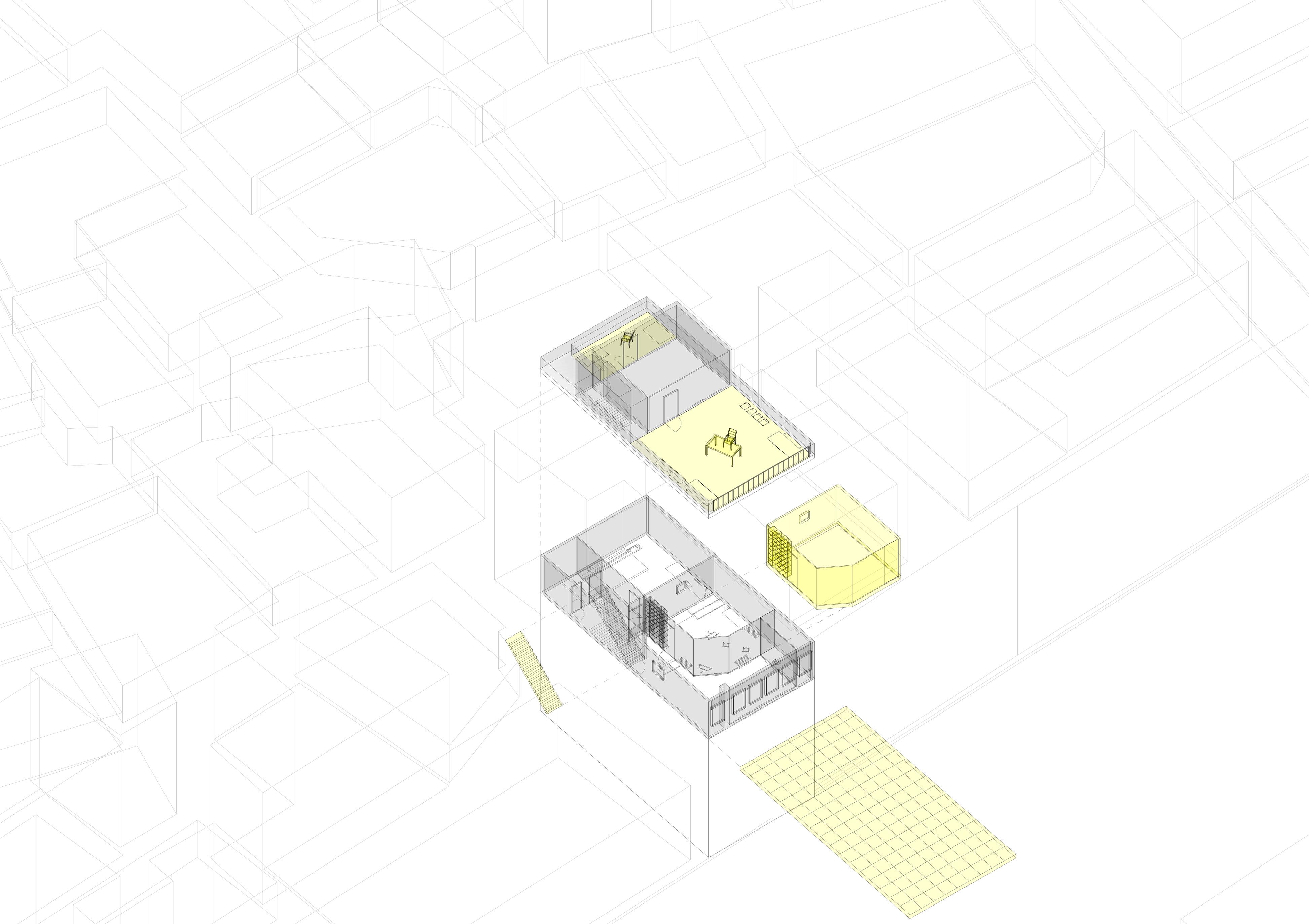
When the planner from ‘Sangup Gallery’ came to see my work and asked if there were spaces like this, I asked if they wanted to share it with me. So, since 2017, we have divided this place. I use one part, and another craft company called ‘Gukbo Crafts’ uses another, while Sangup Gallery uses the rest. However, I originally wanted to split it evenly. If we split it, both of us would have three windows each, but they felt their space would become too boring. The floor tiles here are 90 x 90 cm, so we divided it based on 15 tiles each. But after moving in, it felt cozy, though it lacked natural light. There were issues with ventilation and debt that were disappointing.
Still, Sangup Gallery thought they should at least give me one window, and indeed, there’s a door in the middle that can open to either space. We agreed to open it when necessary, but there’s rarely an urgent need, and the spaces function independently. So, I use my part as a storage area. I don’t usually disclose this, but I can push things aside and use the space inside as a storage area. I store many paintings and items like fans that aren’t used in winter.
1. Exhibition photo of ‘Sanhgup Gallery.’
2. Floor grid that used to divide the space posession evenly.
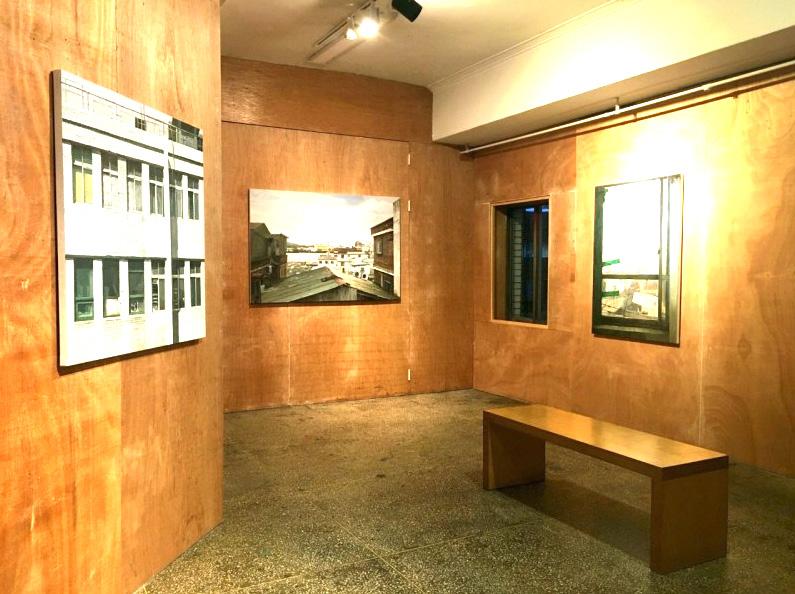
ⓒ상업화랑 all rights reserved.
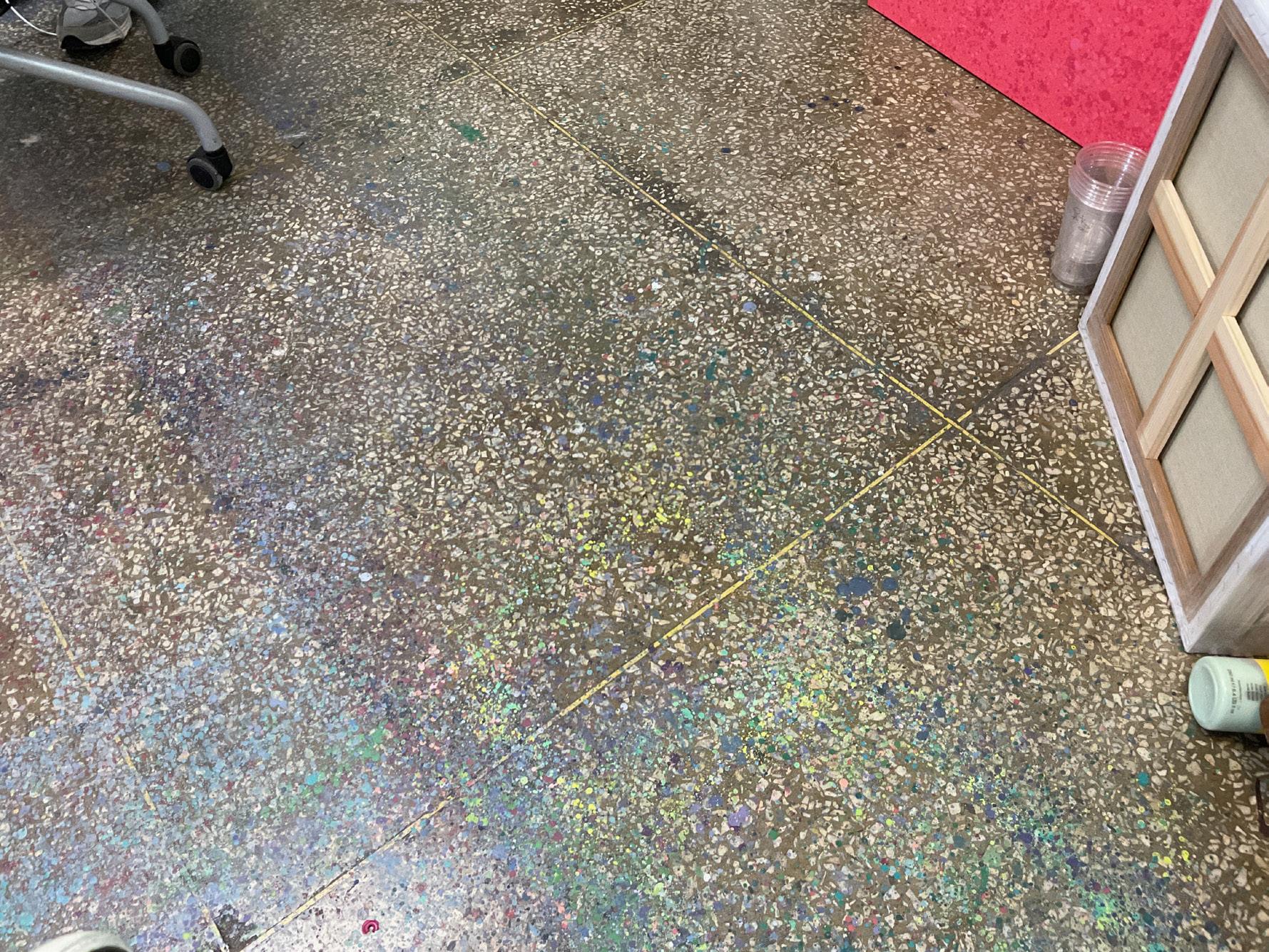
Even though the space is a bit shabby, I hope that if artists are given some space, they will use it in interesting ways.
The phase that W. Y. Son built Space Unit 4 for fellow artists to give space for work and exhibition.
of Space Unit 4 flooring, that consist of layers of previous floors and the demolition of it.
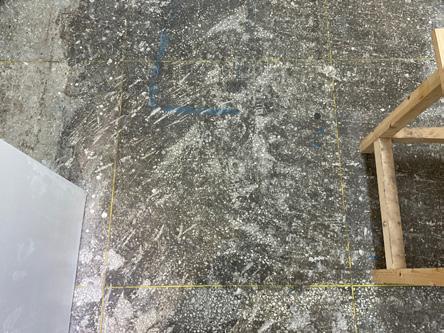
A. 제가 작업실을 옮길까도 고려했었던 옆의 작
은 방을 쓰시던 ‘국도공예’ 분들이 2019년에 나
가셨는데, 그 때 운 좋게 제가 그 공간을 받게 돼 서 지금의 ‘스페이스유닛4’ 공간으로 쓸 수 있게
됐죠.
을지로에서 여러 작업을 계속해서 해왔는데, 그
때 IBK나 신한카드처럼 대기업에서 계속해서
아티스트 지원 프로그램들을 해주면서 여러 시
도들을 해볼 수가 있었어요. 제가 꿈꿨던 거는
예술가들의 을지로였거든요. 그래서 제가 어떤
역할을 할 수 있을까 생각하다가, 아티스트 런
스페이스를 만들게 된 것 같아요. 내가 이 아티
스트라는 직업을 포기하지 않고 지속할 수 있었
던 건 이 지역, 이 공간 덕이라고 생각해서, 젊은
신진 작가들에게도 약간 좋은 기회, 응원이 되지
않을까 해서 아무것도 모르고 겁 없이 시작하게
됐죠. 그래서 4명이서 여러가지 맞춰가며 운영
하는 중이고, 더 나은 것들을 위해서 여러가지
시도들도 해보고 있는 중이예요.
이제 한 3년 됐어요. 3명의 작가와 1명의 기획자
가 함께 운영하는 공간이고요. 저희는 절대 갤러
리라는 말을 쓰지 않아요. 그림을 팔아 돈을 벌
고자 하는 생각이 아니라 신진 작가들에게 공간
을 빌려줘서 여러 활동을 할 수 있게 하는 공간
으로 쓰고 있어요. 100% 다 을지로 관련된 작업
들은 아니고요. 자기의 작업 스타일이 확실히 구
축이 되어 있거나 아니면 그때그때 전시장 환경
을 반영을 잘 해서 맞춰서 을지로에 관련된 것
들 하시는 분들도 계시고요. 재개발이나 여러 가
지 사회적인 이슈들을 작업으로 만들어 주시는
분들도 있고요. 다양한 작품을 하시는 편이에요.
저희는 작품이 꼭 을지로만 얘기해야 된다 뭐
이런 거는 없어요. 좋은 작업이고 좋은 기획이면
신진 예술가들 위주로 다 환영하고 있어요.
Q. How did ‘Space Unit 4’ came out to world?
In 2019, the folks at ‘Gukdo Crafts’ who used the small room next door moved out, and I was fortunate enough to take over that space, which now serves as ‘Space Unit 4’. I’ve been continuously working in Euljiro and had the opportunity to experiment with various initiatives thanks to corporate artist support programs from major companies like IBK and Shinhan Card. My dream was always to create an Euljiro for artists, which led me to ponder what role I could play. That’s how I ended up starting an artist-run space. I began this venture somewhat naively and fearlessly, hoping it would provide good opportunities and support for young emerging artists, as this region and this space have allowed me to continue my career without giving up being an artist. Four of us are managing it together, always trying out new ideas to improve. It’s been about three years now. Our team consists of three artists and one planner, and we consciously avoid calling ourselves a gallery. Instead of selling art to make money, we use our space to allow emerging artists to engage in various activities. Not all our projects are directly related to Euljiro; some artists are either well-established in their styles or adapt their exhibitions to reflect the environment at the time, and some focus on Euljirorelated themes. We also have artists who address redevelopment and other social issues through their work. We feature a variety of artworks, and there’s no rule that the work must exclusively relate to Euljiro. We welcome good projects and good ideas, focusing primarily on supporting emerging artists.
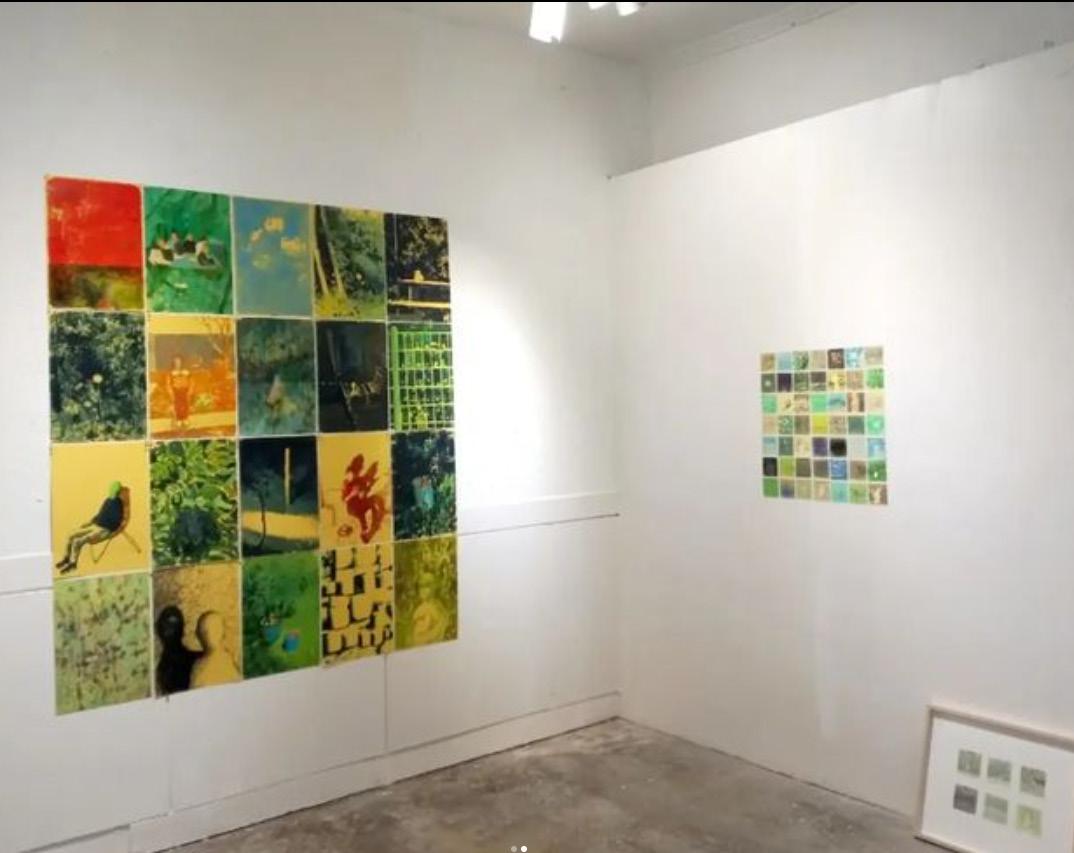
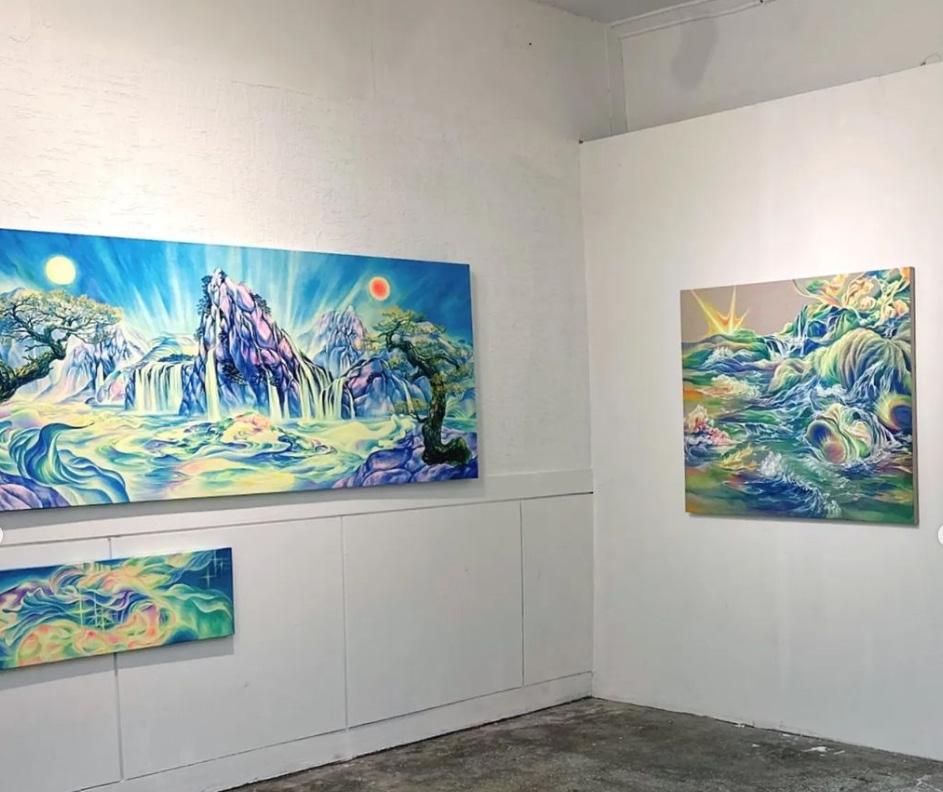
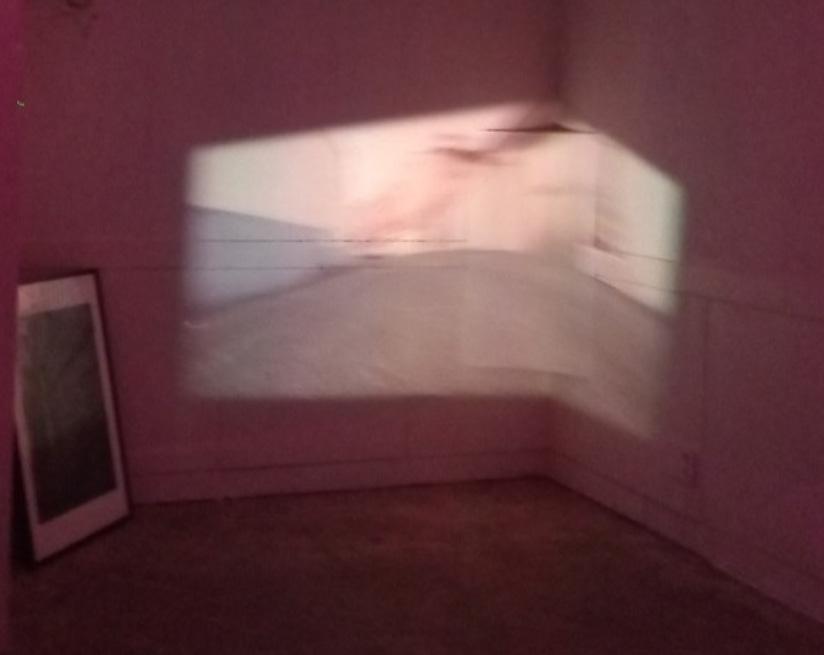
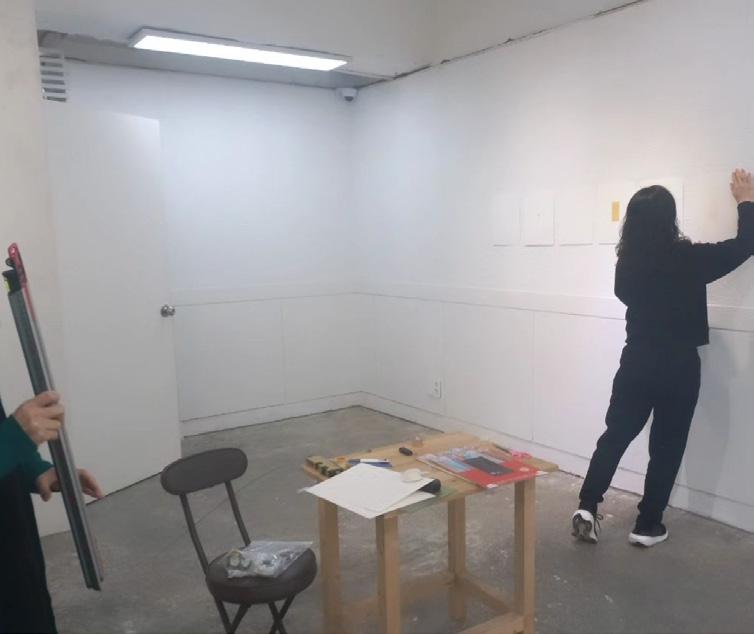
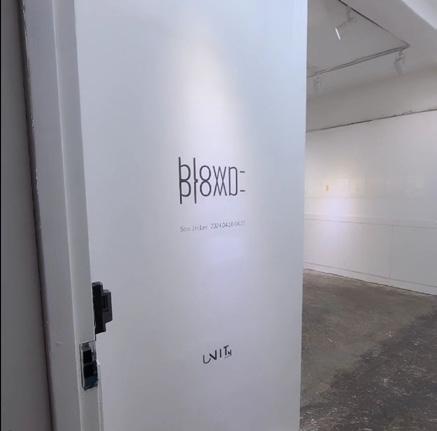
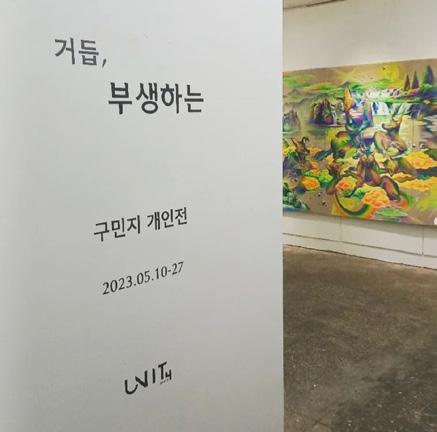
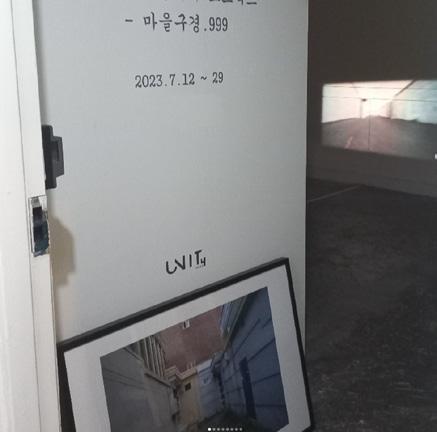
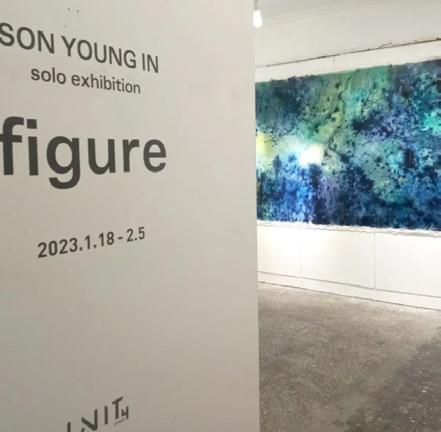
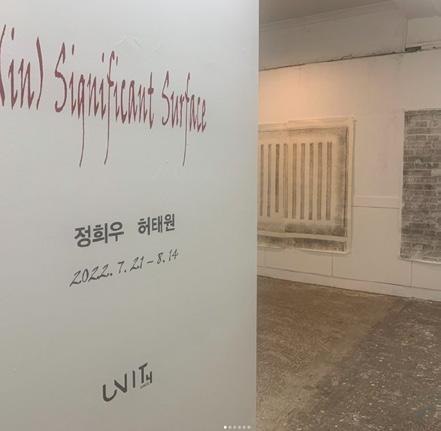
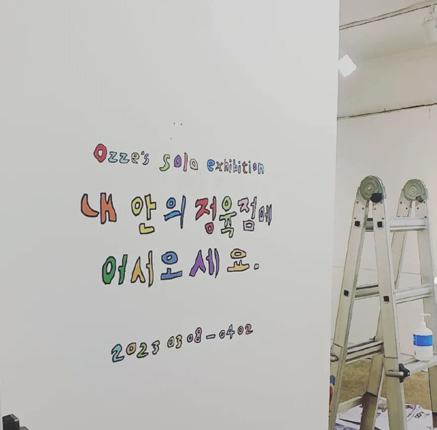
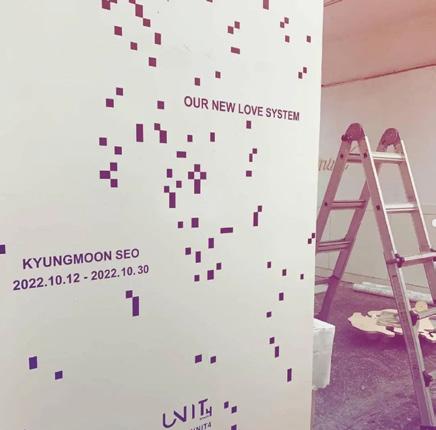
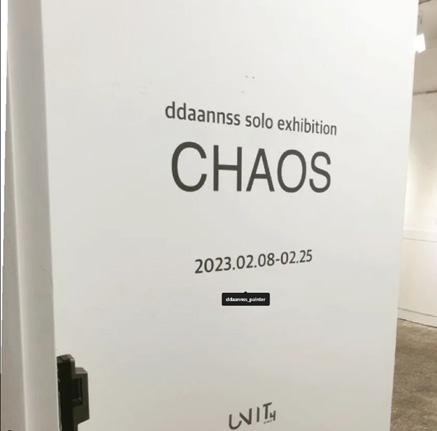
Numerous Artists participated the exhibition at Space Unit 4, Using the space totally freely for their work, installation or whatever action they want.
이거는 제주도의 곶자왈이라는 데고 저기는 러
시아 캄차카, 여기는 서해안에 있는 주문도 이런
데를 캠핑을 가기도 하고 여행을 가기도 하고
그리고 한번은 캄보디아에 갔었는데 캄보디아
를 갔다가 오면서 제가 생각을 해보니까 결국엔
제가 돌아와야 될 곳이 을지로 작업실인 거예요.
여행은 정말 새로운 전환이나 이런 것들을 위
해서 했지만 결국에 돌아오는 곳은, 내가 있어
야 될 곳은 내 집, 아니면 을지로 작업실이었는
데 그래서 그때 캄보디아에 갔을 때 딱 생각했
던 게 뭐냐면 캄보디아에는 굉장히 역사적으로
중요한 건물들이 많잖아요. 근데 마치 영원할 것
같은 사람들이 그거를 다 지어놓고 거기서 막
살다가 이제 사람들은 다 죽고 사라지고 없고
건물과 나무만 이렇게 겹쳐져서 서로 하나를 제
거를 하면 건물이 무너지거나 아니면 나무를 살
리기 위해서 건물을 무너뜨려 이러거나 이거 둘
중에 하나를 해야 되는데 꼭 하나를 선택해야
된다는게 아니라 그들이 이제 공생해서 살아가
는 거예요. 근데 거기에서 저는 이런 어떤 건축
이라는 것이 사람의 생활을 담기도 하고 역사를
담기도 하고 수많은 이야기들을 품고 있는 것이
구나 그런 데서 영감을 받았고 그래서 돌아와서
그렸던 작업들이 캄보디아에서 보고 그렸던 작
업들 또는 을지로에 돌아와서 이제 작업했던 것
들인데 결국 내 주변을 그리기 시작하고 제 주
변을 돌아보게 됐어요.
...
This place is Gotjawal in Jeju Island, and over there is Kamchatka in Russia, and here is Jumun Island on the west coast of Korea. I’ve gone camping and traveling to these places, and once I went to Cambodia. Coming back from Cambodia, I realized that the place I must return to is my studio in Euljiro. I traveled for new experiences, but the place I need to be is either my home or my Euljiro studio. When I was in Cambodia, I thought about how there are many historically significant buildings there. People built these buildings as if they would last forever, lived in them, and then eventually died, leaving behind only the buildings and trees intertwined with each other. It’s not about choosing one over the other— whether to demolish the building to save the tree or vice versa— they coexist and live together. There, I was inspired by how architecture can encapsulate human life, history, and countless stories. So, the works I painted after returning were inspired by what I saw in Cambodia and by my surroundings in Euljiro, ultimately making me reflect on and draw from my environment.
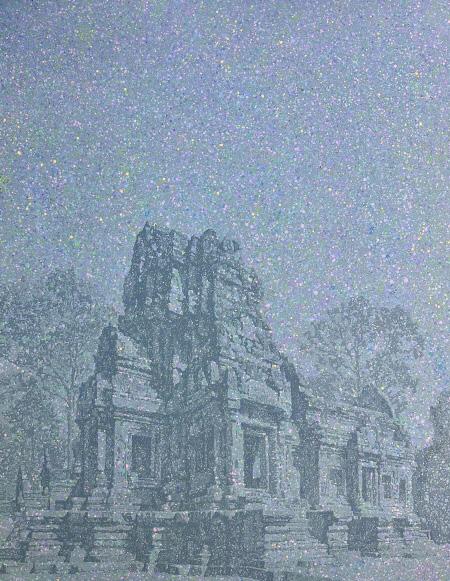
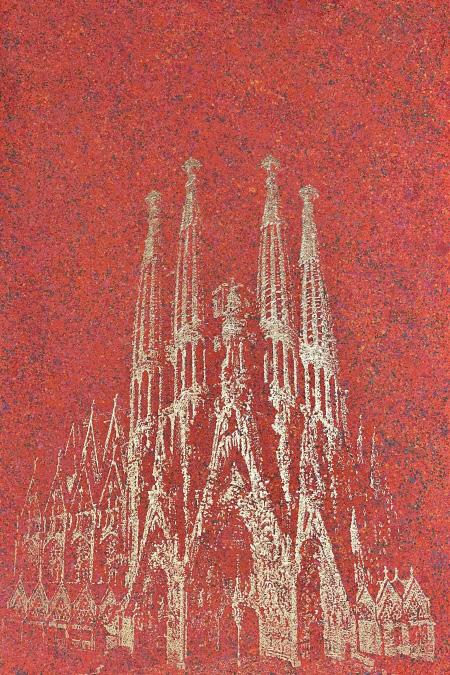
Relations 2210, 91.9*116.8cm, 2022. Won Young SON
ⓒWon-Young SON all rights reserved.
Relations 2211, 97.0*145.5cm, 2022. Won Young SON
ⓒWon-Young SON all rights reserved.
가
15년이 함께 했으면 제 인생에서 되
게 어떻게 보면 되게 큰 부분인데 저는 어렸을
때 살던 곳이 동네가 지금은 재건축을 해서 내
가 살았던 단지에 아파트 그 구획만 남아 있지
지금 제 집이 예전에 살았던 집이 없어요.
근데 그런 경험을 지금 두 번째 가지고 있는 거
예요. 저는 잠원동에서 되게 오래 살았거든요.
근데 그 동네가 제가 동네 주민만 아는 작은 되
게 좁고 긴 숲이 있어요. 동네 친구들은 다 알아
요. 그런 나의 어릴 적 추억들이 정말 길 빼고는
다 바뀐 거예요. 아파트가 없어지고 제가 어렸을
때부터 쭉 살았던 그 집이 이렇게 작았었나 뭐
이런 느낌이랑 어렸을 때 그때 이랬지 등의 생
각들? 근데 이게 곧 사라질 거라는 생각을 하니
까 기분이 진짜 묘하고 이상하더라고요. 그리고
한편으로는 거기서 삶의 반을 살았는데 그게 없
어진다고 하니깐 고향을 잃은 신앙인의 느낌까
지는 아니더라도 나의 소중한 부분이 사라지는
구나. 저는 아직도 이렇게 눈 감으면 약간 뭐랄
까 하나하나 외워서 그런 게 아니라 통으로 그
냥 다 이미지로 인식이 되거든요. 그래서 눈을
감고 있으면 내가 어렸을 때 딱 떠오르는 그 공
간을 다 그냥 그대로 척척 만들 수 있을 것 같아 요. 공원과 친구들이랑 같이 있었던 추억들이 있
어요.
그런 것들이 사실 오버랩돼서 을지로에 대한 애
착이 조금 더 커졌던 것 아닐까 이런 생각도 들 어요. 그래서 이 동네가 차근차근 재개발이 진행
되어 가고 있는데, 제 입장에서 다행인 점이 지
금 재개발 과정에 어려움이 있는 것 같아요. 이
동네 이름이 ‘입정동’인데 여기서 ‘정’이 ‘우물 정’
이거든요. 공사를 진행하는 과정에서 자꾸 우물
이 발견되는 거예요. 그래서 지금 문화재청에서
공사 현장을 관리 감독하면서 문화재 발견 가능
성을 보고 있어요. 이미 많은 유물들이 발견되기
도 했고요. 물론 건설사에서는 별거 아니라고 빠
르게 진행하고 싶어 하지만요. 그래서 이런 과정
I have another experience that’s quite significant. Euljiro has been part of my life for 15 years, which is a considerable portion of it. I grew up in a neighborhood that has now been redeveloped, so the apartment complex I lived in is the only part that remains; my old home doesn’t exist anymore. I’m currently having this experience for the second time. I lived in Jamwon-dong for a long time. There was a narrow, long forest there known only to the local residents and neighborhood friends. All my childhood memories, except for the streets, have changed—the apartments are gone, and the house I lived in from childhood feels like it was smaller than I remember. Thinking about all these disappearing makes me feel quite strange and surreal. It’s like losing a part of what was home, though not quite like losing a faith, but still a significant part of me disappearing. I still have a vivid, holistic image of that place in my mind—not individual memories, but an overall image. When I close my eyes, I feel like I can reconstruct that space exactly as it was, with the park and the moments spent with friends.
This makes me think that perhaps my attachment to Euljiro has grown because it overlaps with those memories. The neighborhood is gradually undergoing redevelopment, which is fortunate for me because there seem to be complications with the redevelopment process. The area is called ‘Ipjeong-dong,’ where ‘Jeong’ refers to a well. During construction, wells keep being discovered. The Cultural Heritage Administration is now overseeing the construction sites, assessing the possibility of finding cultural assets. Many artifacts have already been uncovered. Although the construction companies want to proceed quickly, dismissing these findings as trivial, these processes have caused delays in redevelopment in other areas, which gives me a corner to hold on to.
으로 다른 지역들은 재개발이 계속 밀리고 있고, 제 나름대로 믿는 구석이 되고 있어요. 1 2
두번째 집
실향민의 예술 날갯짓
작업실 옥상 공간에서 구도심의 한복판
에 있다는 느낌이 좋아 시작된 손원영 작가의 을
지로 삶은 처음에는 겁이 나서 거리로 나가지 못
했던 시절부터 시작한다. 익숙하지 않은 거리였
고 그다지 반갑지 않은 환경이었기에 출근을 해
서 점심도 도시락으로 해결하고 작업실 안에만
있다가 퇴근을 하였다. 우연히 지인을 통해 을지
로에 노포들을 찾아다니기 시작하며 그녀는 적
극적으로 도시에 개입하기 시작한다. 맛있는 것
을 먹으러 나간 길에 골목을 따라가며 만나는 예
기치 못한 상황과 을지로 사람들의 모습에서 흥
미를 느끼며 도시에 대한 인식이 바뀌어 갔다.
절대 그럴 것 같지 않은 골목길 안에 포도나무가
자라고 있고, 불친절할 줄 알았던 주변 상인들
은 그녀를 신기해하면서도 아끼는 마음이 전해
졌다. 호기심이 많은 그녀에게 을지로만큼 재미
있는 동네는 없었고 동시에 그것은 경험이 되어
본인의 작업에 반영이 되기 시작한다. 그녀는 ‘관
계’에 관한 작업을 이어나가고 있다. 작업의 초반
에는 힘의 논리라는 이분법적인 사고로 관계를
표현했으나 관계는 서로 주고받는 것이며 경계
가 불분명하다는 생각을 가지게 된다. 그녀는 퍼
즐이라는 모티프로 관계를 풀어내는데, 퍼즐의
중첩으로 보는 사람의 눈에서 그것들이 겹쳐보
이는 것을 유도한다. 을지로에서의 삶은 그녀의
작업에 큰 영향을 주었다. 을지로의 골목을 그림
으로 그리고 을지로에 있는 다양한 산업군을 활
용하기도 한다. 실리콘에 안료를 묻혀 물감을 개
발하고, 평면 회화를 넘어 공간에 그림을 그리
기 위해 을지로에서 필름을 구해 여러겹을 겹쳐
서 전시하고, 그것을 기존 회화와는 다르게 말아
서 보관하였다. 2008년부터 현재까지 도시에 예
술가가 있을 때 어떤 힘을 발휘하는지 보여주는,
을지로가 아니라면 불가능했을 예술 프로젝트
를 진행하고 이제는 본인이 활발히 활동하여 초
석을 세웠다고 볼 수 있는 아트 씬이 세간의 관
심을 받는 중이다. 2022년부터 그녀는 비슷한
처지를 겪고 있는 많은 작가들에게 그녀가 일구
었던 공간의 일부분을 그들의 무대로 만들어주
며 동료 작가들에게 베풀고 있다. 경제적인 문제 로 다른 사업체에게 잠시 자리를 내주었던 공간
을 되찾아 공모를 통해 작가들이 한달동안 아무 런 제약 없이 공간에서 작업 활동 및 전시를 할
수 있도록 했다. 그녀에게 을지로라는 도시 공간
은 경험과 가치가 부여된 장소가 되었다다. 그녀
의 도시에 대한 사랑은 그녀의 개인 옥상공간에 서 환기된다. 남산, 북한산, 안산에 둘러쌓여있고 주변의 건물들이 보이는 곳에서 직접 만든 맥주
를 마시며 휴식을 취하기도 했던 옥상에서 그녀 는 도시 곳곳에서 자신이 겪었던 이벤트를 멀리 서 바라보며 떠올릴 수 있고, 작업 공간을 나누 게 되면서 충분한 햇살을 쬐지 못했던 갈증을 옥 상에서 시원한 외기를 맡고 노을지는 모습을 바 라보며 해소할 수 있었다. 물론 시간이 가면서 그녀가 좋아하던 산을 가리는 고층 빌딩이 들어
서고 재개발에 투쟁하는 사람들의 모습도 목격 하였다. 그녀는 어렸을 적 살았던 동네가 재개발 된 경험이 있고, 공교롭게도 15년을 살았던 을지 로가 또 재개발로 없어지는 광경을 마주하고 있 다. 그녀에게는 그녀의 이야기가 담겨있는 장소 가 없어지는 안타까운 경험이 반복되고 있다. 마 음깊이 자리잡은 을지로는 그녀에게 여행을 떠 났더라도 돌아올 곳은 여기뿐이라는 생각이 들 게했고, 재개발이 되더라도 을지로 주변의 또다 른 곳에서 작업을 이어나갈 것이라고 말한다.
Artist Son Won-young began her life in Euljiro from the days when she was too scared to venture onto the streets, starting from her studio’s rooftop space in the heart of the old downtown area, drawn by the feel of being in the midst of the old city center. The streets were unfamiliar and the environment unwelcoming, so she would commute to work, have lunch from a packed meal, and stay inside her studio until the end of the day. Her active engagement with the city began when she started exploring old, established businesses in Euljiro through an acquaintance. Intrigued by unexpected encounters and the sights of Euljiro’s people while out on the streets for delicious food, her perception of the city changed. Grapes were growing in the least expected alleyways, and the local merchants, whom she thought would be unfriendly, showed curiosity and fondness towards her. For her, Euljiro was as fascinating as it was experiential, and this began to reflect in her work focusing on ‘relationships’. Early in her work, she expressed relationships through a dichotomous logic of power, but she came to view relationships as mutual and with blurred boundaries. She explores these relationships using the motif of puzzles, inducing an overlap that the viewer perceives through the stacking of puzzle pieces. Her life in Euljiro significantly influenced her work. She paints the alleys of Euljiro and utilizes the diverse industries there. She has developed paint by applying pigment to silicone, and for exhibitions, she layers films sourced from Euljiro, displaying them in a manner that deviates from traditional painting, and stores them rolled up. Since 2008, she has been leading an art project that showcases the influence an artist can have in a city, something that would not have been possible outside of Euljiro, and has now laid the groundwork for an art scene that is gaining public attention. Starting in 2022, she has been offering parts of the space she cultivated to fellow artists who share
Si Young YU
similar circumstances, providing them a stage. She reclaimed a space that had been temporarily leased to another business due to financial issues and allowed artists to use it without constraints for a month. For her, the urban space of Euljiro has become a place endowed with experience and value. Her love for the city is ventilated from her personal rooftop space, surrounded by Namsan, Bukhansan, and Ansan, where she drinks homemade beer and relaxes, looking at the surrounding buildings. From the rooftop, where she used to absorb the insufficient sunlight and cool air while watching the sunset, she can reminisce about the events she experienced throughout the city. Over time, she has witnessed high-rise buildings blocking her favorite mountains and people fighting against redevelopment. She has experienced her childhood neighborhood being redeveloped, and ironically, after living in Euljiro for 15 years, she is facing the disappearance of Euljiro due to redevelopment. The loss of places embedded with her stories is a recurring sad experience for her. Deeply entrenched in her heart, Euljiro makes her feel that it is the only place to return to, even if she travels elsewhere, and she says she will continue her work in another area around Euljiro even if it undergoes redevelopment.
Investigation of architecture for the subjective life| No. 06
기획
이재원, 김자경(에이쿱, acoop.kr)
고대웅(작은도시이야기, www.chngdoo.com/services-7)
인터뷰 및 자료 제공
인터뷰 날짜 및 장소
리서치
손원영 (www.instagram.com/artist.wonyoungson/, Space Unit4; www.instagram.com/spaceunit4/)
2024년 4월 4일, 손원영 작가 스튜디오
연세건축 studio X_UNIT 2 (arch.yonsei.ac.kr)
겸임교수 이재원, 송원서, 유시영, JACQUELINE SHIN AH KIM
책 디자인 및 드로잉
유시영, 송원서
책 디자인 및 구성 총괄
이재원