HOLIDAY GIFTS TO HELP YOU NAIL IT RIGHT THE FIRST TIME
FEATURES
28 HOUSE PROFILE: AMONG STONE AND SKY
By Joan Vos MacDonald
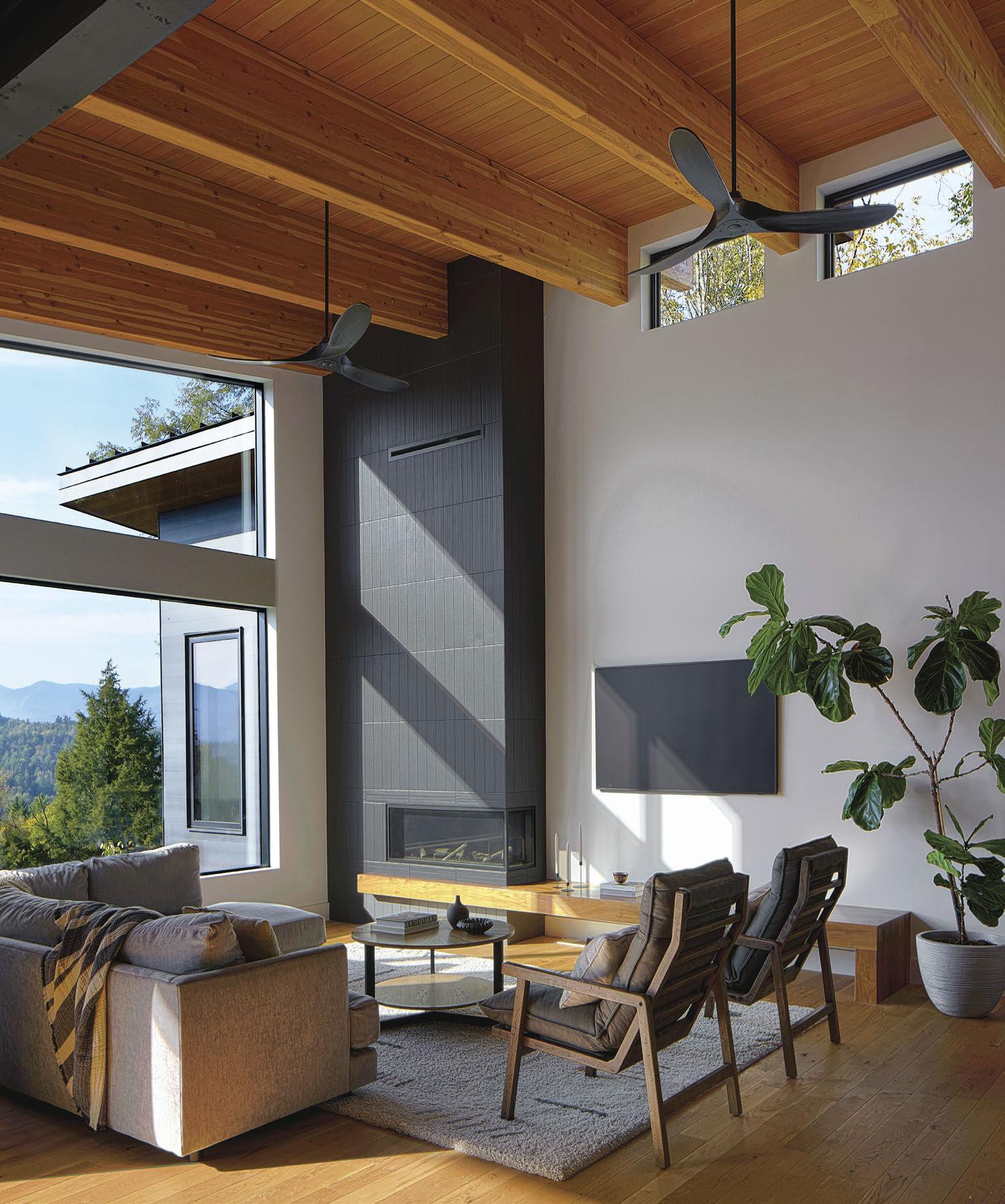
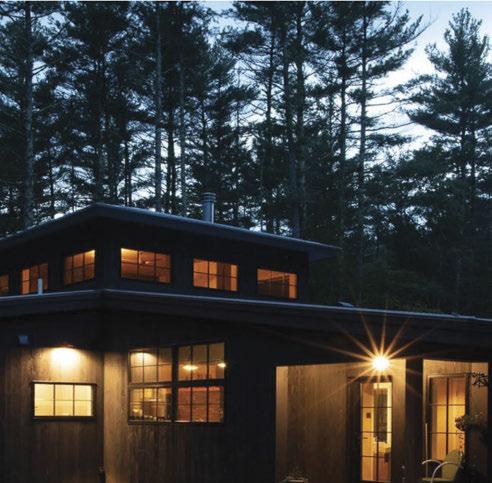
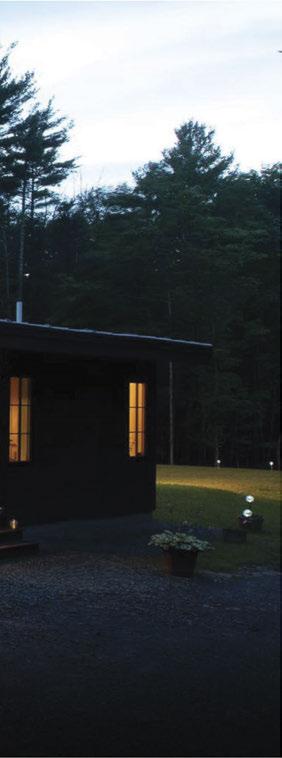
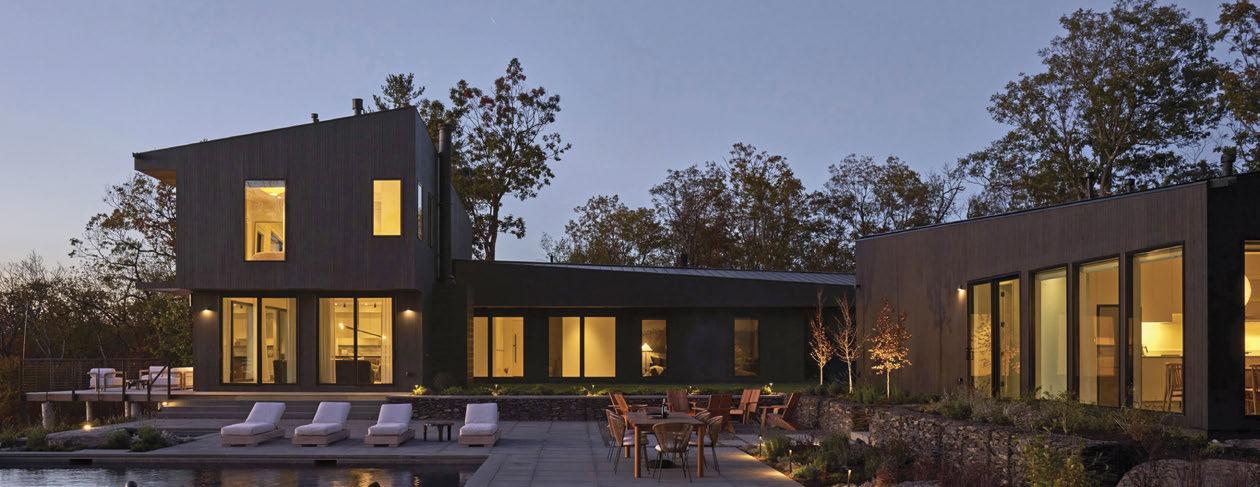
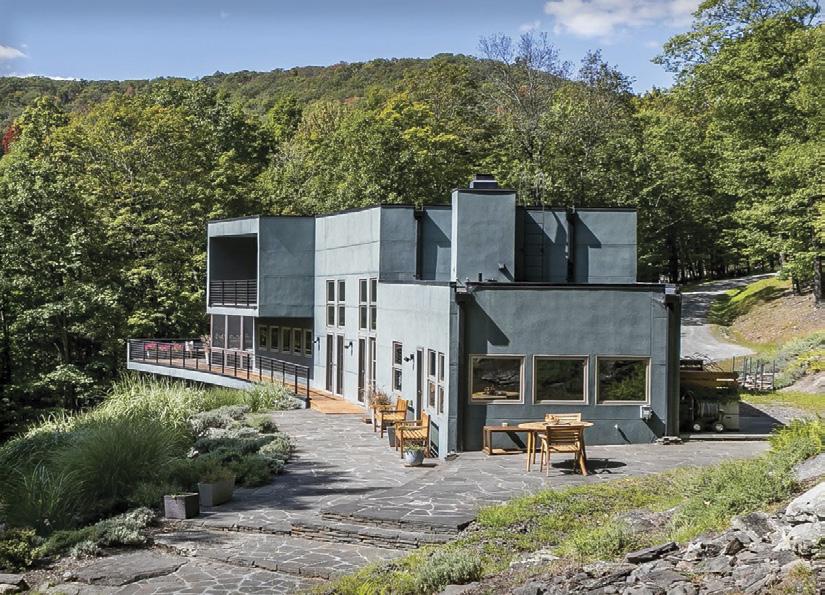
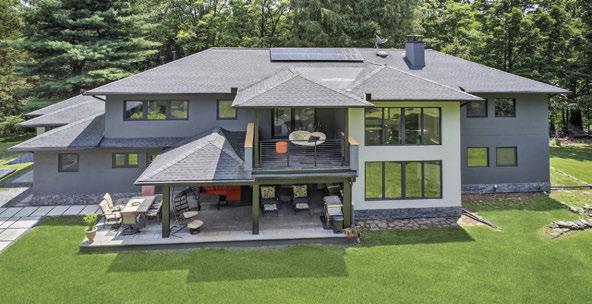
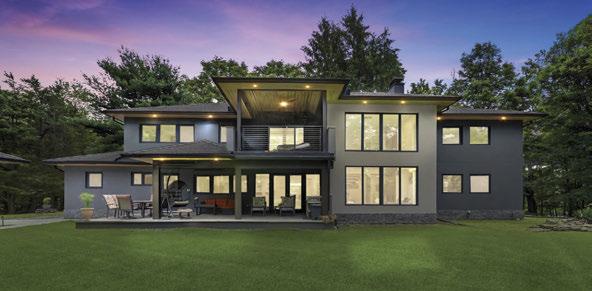
At White Oak Farm in Pawling, architect Amanda Martocchio designed a glass-and-fieldstone hilltop home that floats within the landscape, honoring childhood memory, horses, and forest edge. Cantilevered rooms, durable materials, thermal rigor, and layered views blur indoors with outdoors, crafting a quiet architecture rooted in reverence, sustainability, and place.
46 THE UPSTATE CURIOUS TEAM’S COLLABORATIVE VISION
A behind-the-scenes look at the Upstate Curious Team at Compass’s environment of collaboration, creativity, and community-building. The team’s passionate approach continues to redefine real estate in the Hudson Valley and Catskills, and is fueling its rise as one of New York’s fastest-growing brokerages.
Sponsored House Feature
38 HOUSE PROFILE: LISTENING TO THE LAND
By Rita Catinella Orrell
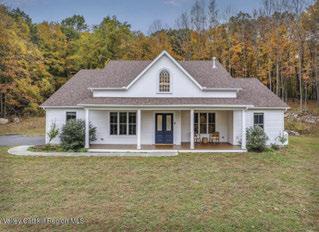
In Pine Plains, Ravi Raj designs a contemporary farmhouse that honors agricultural history and regenerates 33 acres through orchards, gardens, and habitat. Oriented to restored barns and framed by expansive views, the home blends sustainable systems, curated interiors, and thoughtful siting to carry rural legacy forward with care.
50 HOUSE PROFILE: ROOTED IN PLACE
By Mary Angeles Armstrong
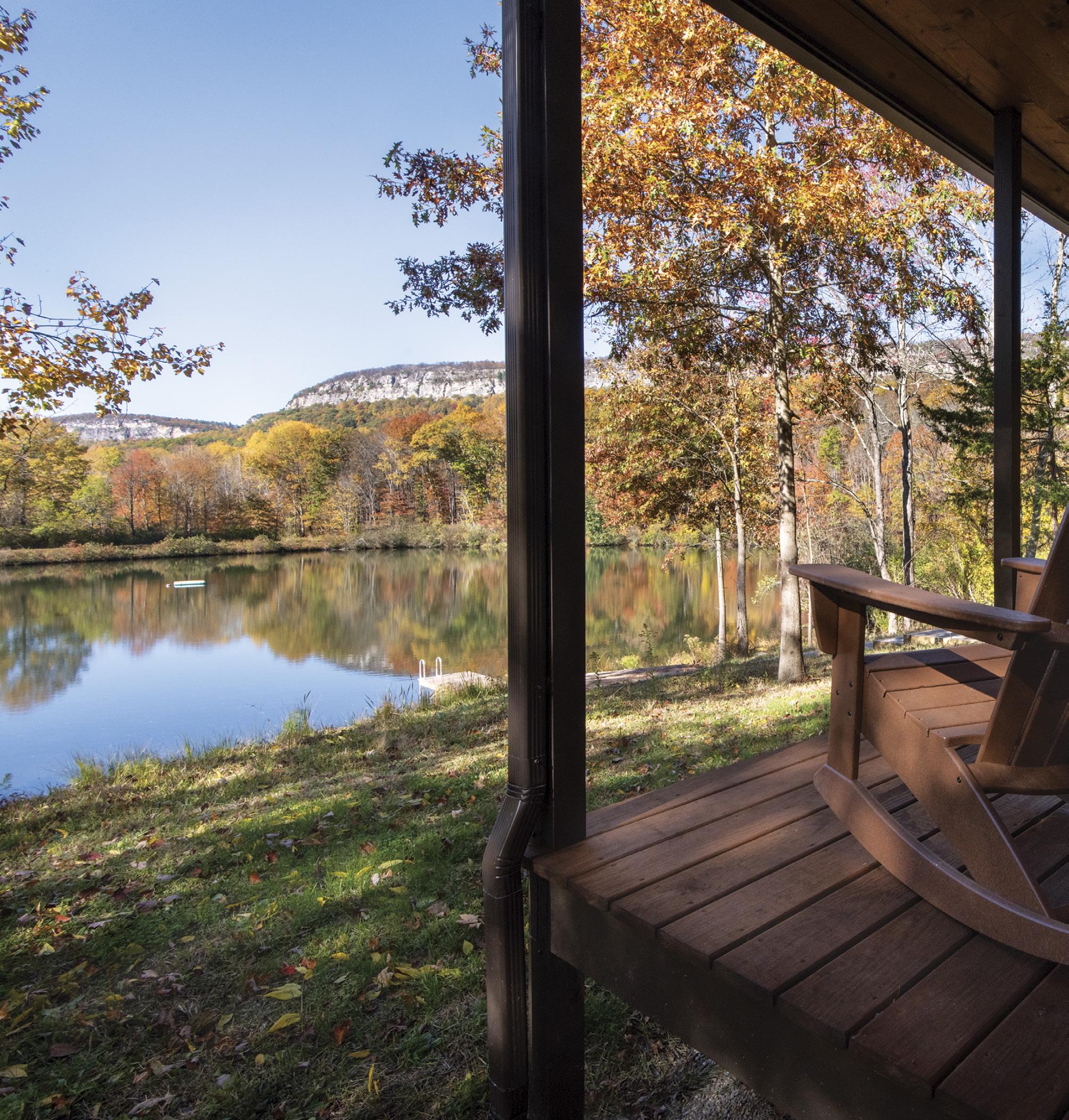
Plum Design Group revitalizes an Isabella Gillon–designed home near the Shawangunks, threading local memory, material craft, and environmental care through a bold spatial rethink. By opening the interior to ridge and pond views and reshaping circulation, the redesign honors Gillon’s modernist DNA while reflecting the founders’ Hudson Valley roots, slow-building ethos, and reverence for place.
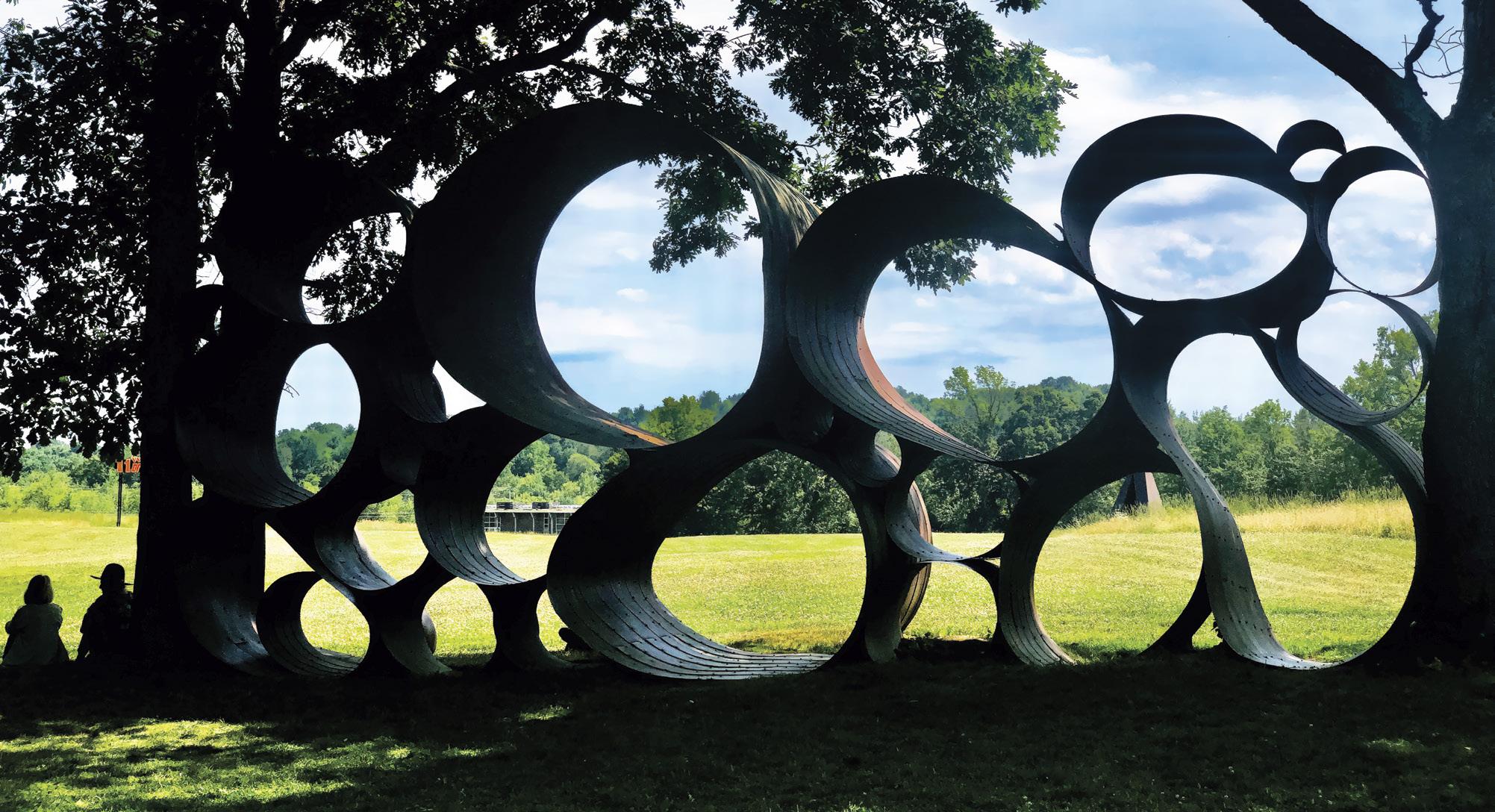
DeWitt Godfrey’s Picker Sculpture (2005) was installed between two trees at Art Omi in Ghent. The sculpture and architecture park is featured in Michel Arnaud and Jane Creech’s Upstate Now BACK PORCH, PAGE 80
DEPARTMENTS
7 SOURCE: BRASS MONKEY
Brass Monkey Home brings global design to Cold Spring with handcrafted furniture, decor, and pantry goods sourced from makers worldwide, blending curated style, local finds, and customscale pieces for small-town living.
10 DESIGN: 2025 KINGSTON DESIGN SHOWHOUSE
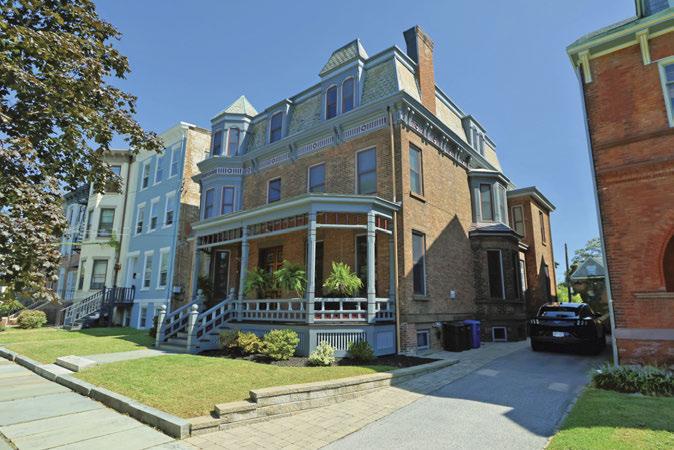
Kingston Design Showhouse transforms a 19th-century home into a collaborative stage for local makers and boundary-pushing design.
19 HOME SERVICES: SOME LIKE IT HOT
A primer on purchasing and installing a wood stove.
22 BUILDING SCIENCE: AIR SEALING 101
A step-by-step guide to strengthening the home envelope—air sealing, insulation, vapor control, basement systems, smart membranes, and modern products for high-performance retrofits
24 AREA SPOTLIGHT: GREAT BARRINGTON
The Berkshires town is ready to face its housing challenges.
26 AREA SPOTLIGHT: POUGHKEEPSIE
The city is building community through entrepreneurship.
80 BACK PORCH: UPSTATE NOW
A peak inside Michel Arnaud’s local lifestyle chronicle.
78 THE MARKET
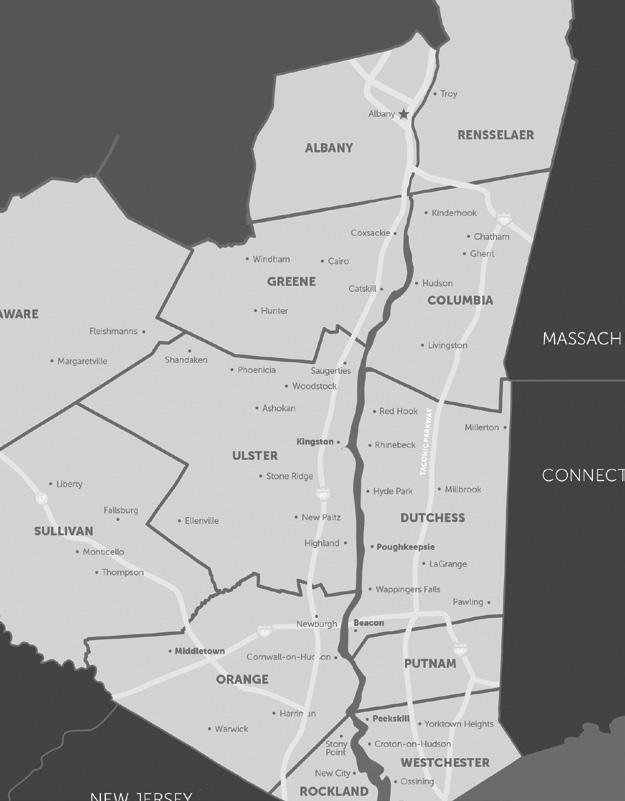
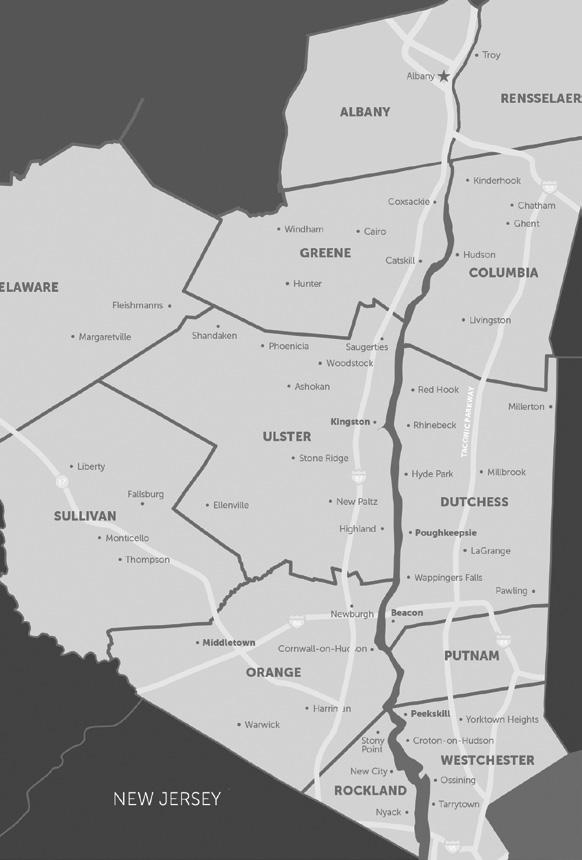
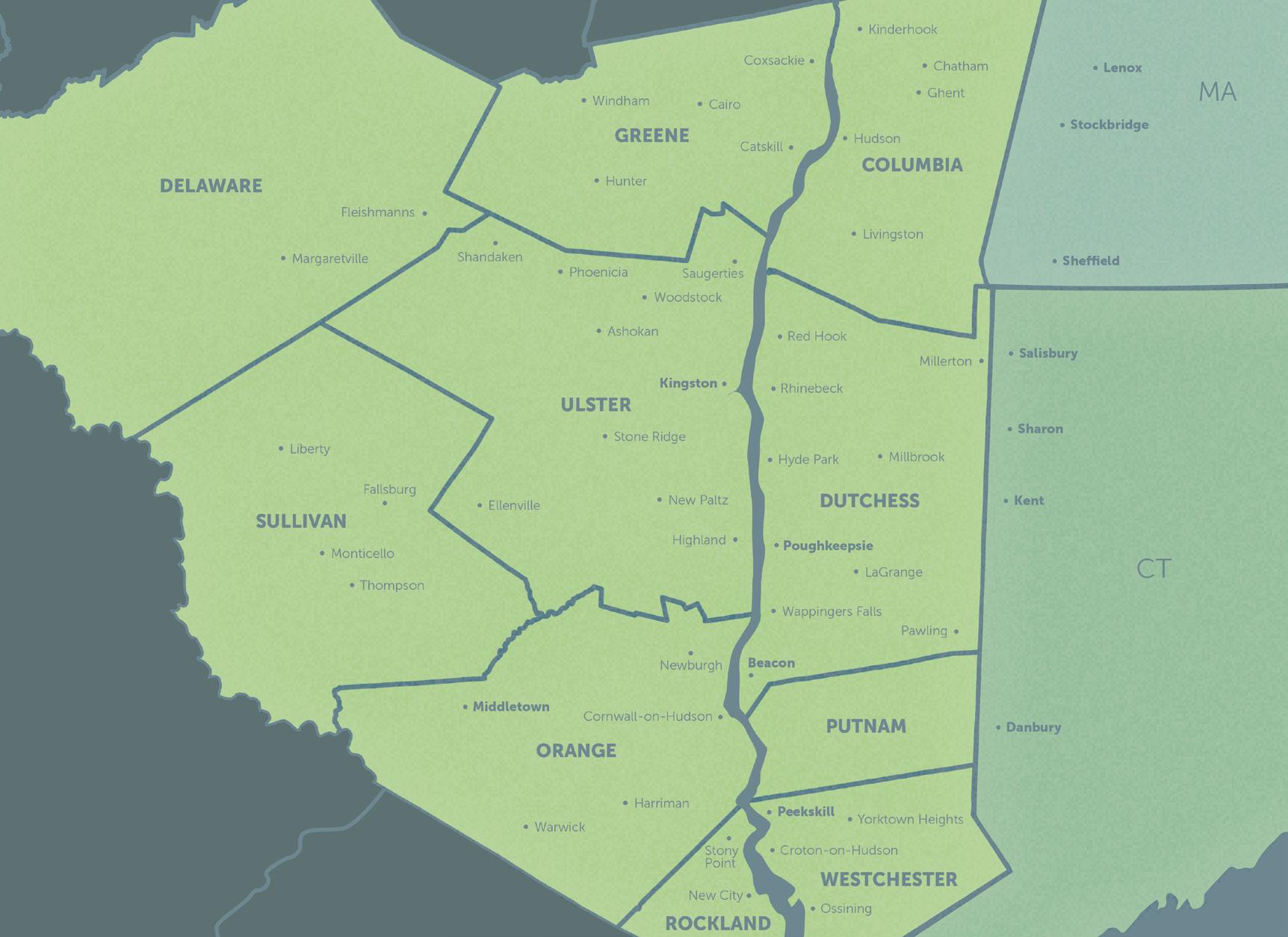
INDEX OF ADVERTISERS / MAP OF THE REGION
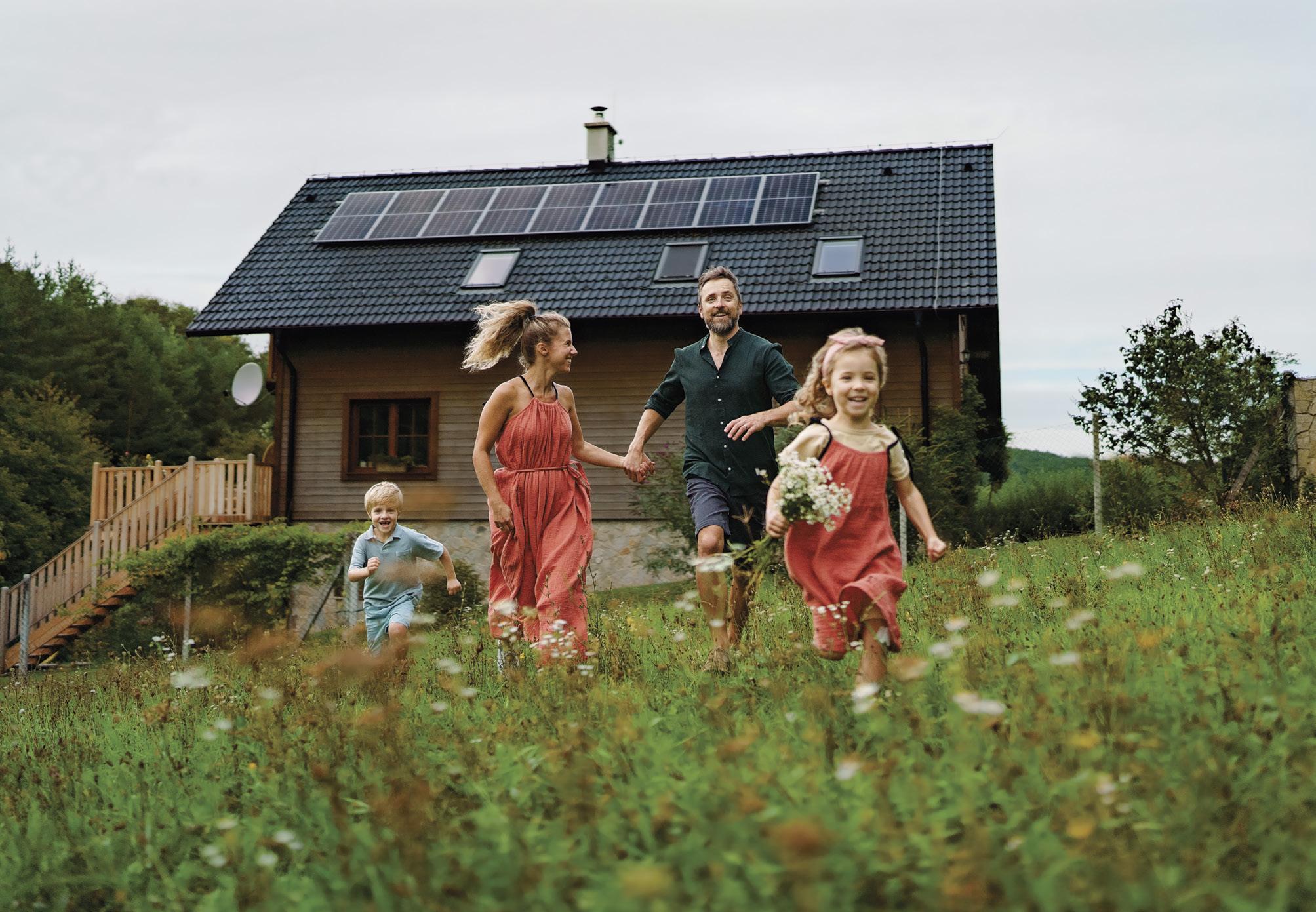
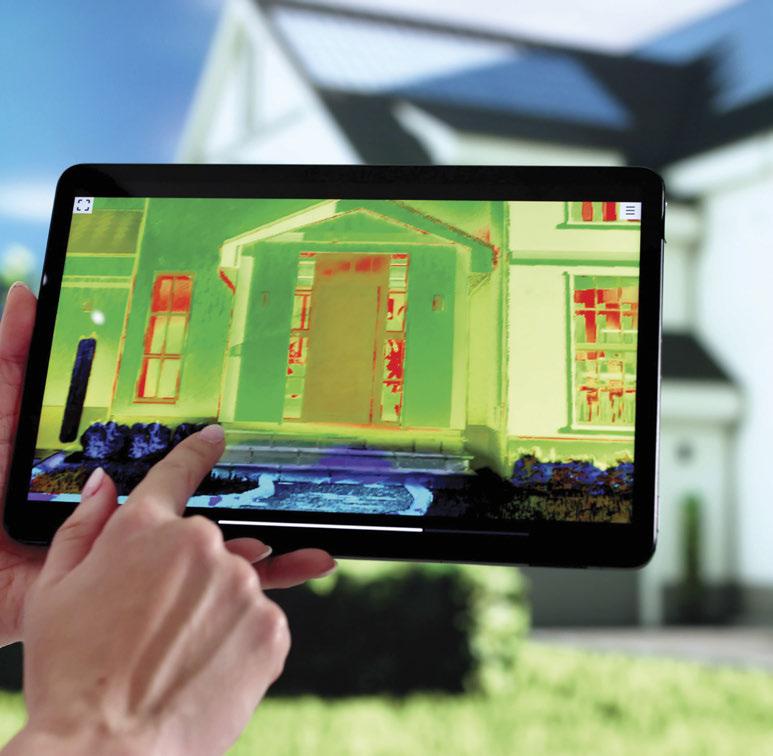
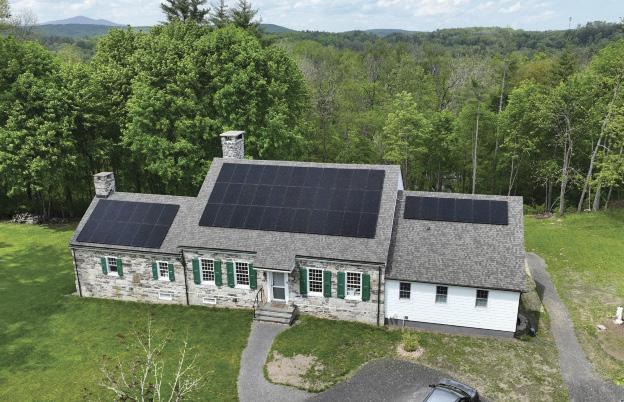
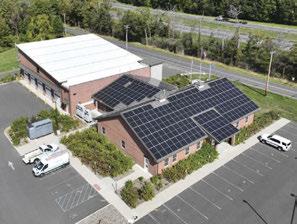
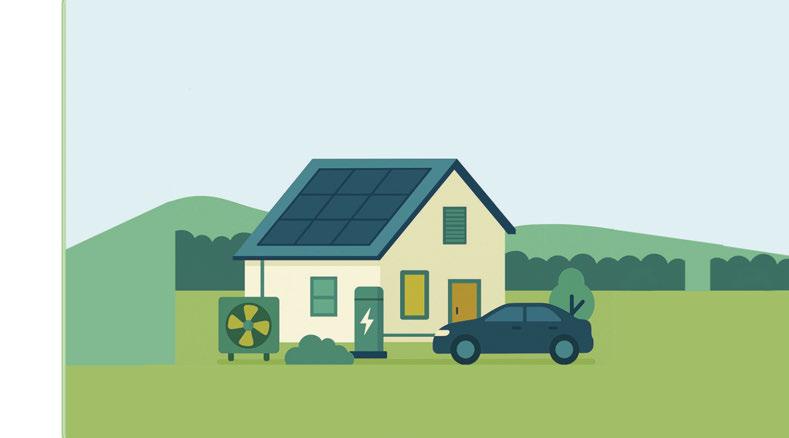
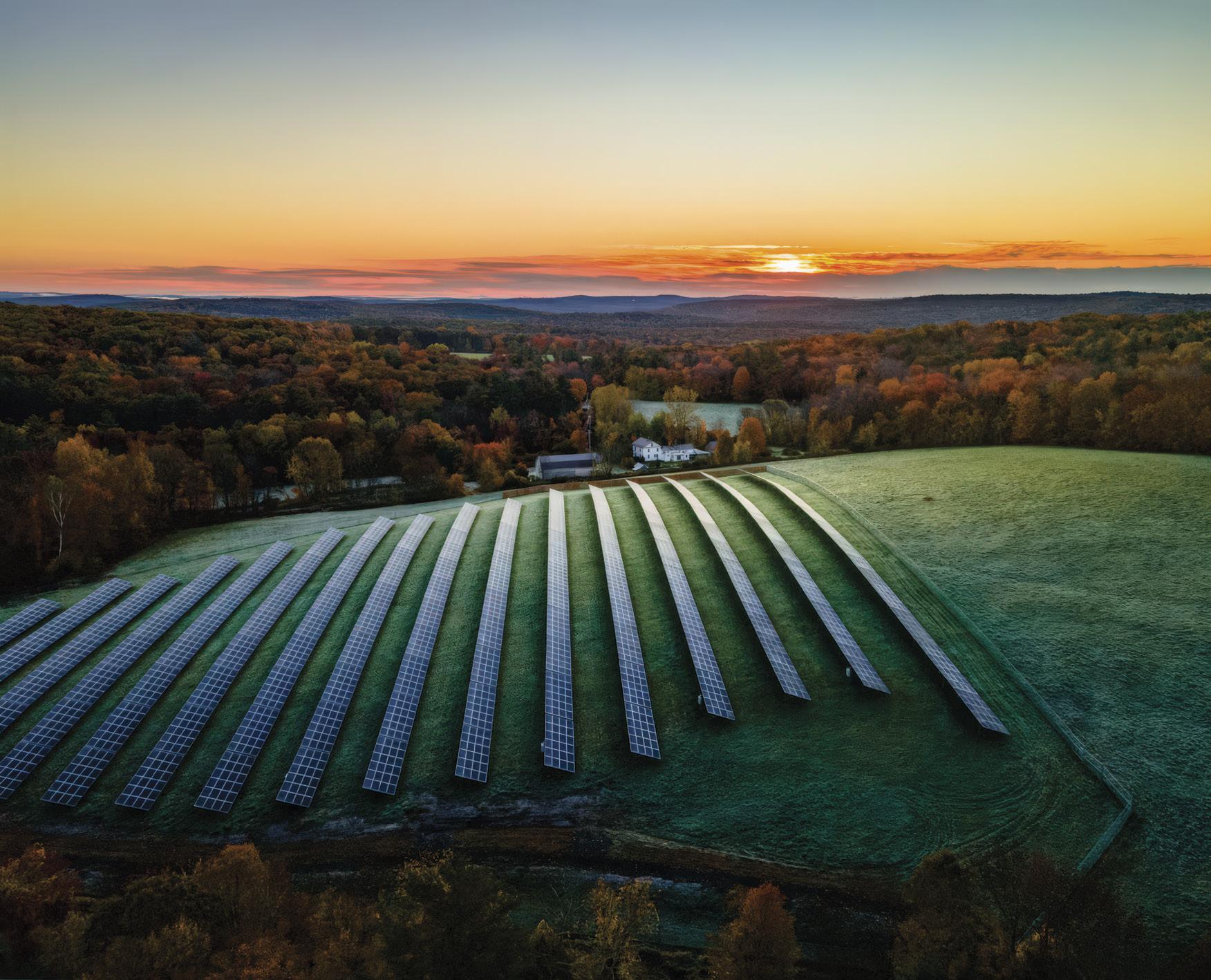
The Best Time to Take Charge Produced in partnership with Sustainable Hudson Valley, the 2025 Clean Power Guide takes a look at recent innovations in the fields of renewable
and clean technology in New York and beyond.
Reclaimed oak is the sturdy foundation of our Sunset Collection.
Sourced from the iconic four rail fences that reign in fertile Kentucky pasturelands; these rescued planks corralled stoic thoroughbreds for decades. Our proprietary milling techniques preserve the oak’s historic character, illustrating the detail in the grains and fissures from its previous life. Engineered for both stability and ease of installation, our Sunset Collection employs an all-natural plant-based UV Cured Hard-Wax Oil finish that is easy to maintain, durable, and safe for people, animals and the planet.
ORDER SAMPLES
Pure
Naked Canyon
Roan
Nubuck
Sabino
Dark Bay
More Homes, Higher Rates, No Certainty
By Joan Vos MacDonald
Is it a buyer’s market yet? Not quite. But things are looking up for buyers wanting to settle in the Hudson Valley.
For the first time since 2018, the region has seen three consecutive quarters in which home listings increased. It’s a modest gain in listings that still doesn’t reach pre-pandemic numbers, but there are more homes to choose from. Also, while the national market noted fewer sales, Hudson Valley property sales increased for the first time since 2021.
Despite the increase in listings, Lyra Blumenthal, a realtor at RE/MAX, does not consider the market to be balanced just yet. “We are at about a point of inventory of about four and a half months,” says Blumenthal, who sells homes in Ulster and Orange counties. “What that means is, basically, if nobody listed their house from here on, we’d have four and a half months of inventory to sell. That is considered a seller’s market. Six months is where you start seeing a more balanced market. So while inventory is up a little bit, it’s still a strong seller’s market.”
Heather Rieker of Sotheby’s International Realty sells properties in Ulster, Greene, Dutchess, and Orange counties. Her real estate career began during the pandemic. “This is the first time that I’ve had more sellers than buyers,” says Rieker. “I started during Covid, so it was like just drinking from a fire hose of buyers.”
Realtors caution that it’s best not to generalize, since some markets do better than others. Residential properties may differ from investment properties. “That dichotomy means that the market reacts differently to each type of inventory,” says Jonathan Greene of Country House Realty in Livingston Manor. “Traditional residential home sales are still strong, as the true volume of inventory is still low due to the golden handcuffs of sweet interest rates on people’s primary mortgages. However, those that bought as a second home or an investment may be seeing a slower sales cycle than expected, and buyers who are becoming a little less tolerant.”
Home prices continue to rise, according to Pattern for Progress’s third quarter Hudson Valley Housing Market report, and, because prices were so high for so long, sellers may have trouble taking constructive feedback when it comes to establishing a realistic sales price. “There is still a disconnect in some parts between sellers and the market,” says Greene. “Sellers still want to ride the wave, but the wave isn’t the same in all markets and it becomes more of a dribble as winter approaches, unless you are looking for a ski chalet.”
That disconnect can work against sellers, according to Rieker. “What’s happening when homes are priced too high is that I’m watching them sit, because buyers don’t want to take a chance on the lower offer,” she says. “Sellers think that if they just test it, it will work.”
A home priced too high may sit for a while. “I had a million-dollar listing that was not quite the right price,” says Rieker. “Reductions did not happen quickly enough and it sat. I have one at $750,000 that has an incredible special feature. That one got a ton of interest, but then I’ve done some more in the under-$400,000 range and that’s a sweet spot.”
High interest rates are causing homeowners to hesitate before putting property on the market.
“Do they want to sell off a 2.75 percent [mortgage] to buy into a 6.5 percent rate at a higher price point?” asks Greene. “Most are saying no.”
High interest rates also discourage buyers. “When it went from three-and-a-half to six percent, it knocked a lot of people out of the market,” says Blumenthal. “That’s a huge increase in your monthly payment.”
Many buyers Rieker works with are cash buyers and cautious. “I’m hearing from other agents that buyers who come to my open houses to look at my listings are just stretched a little too thin,” says Rieker. “It’s like they’re thinking, ‘We are waiting, maybe it’ll get a little better. We will jump on something if it’s just right.’ But otherwise, I think people feel nervous about getting themselves locked into a high interest rate.”
Interest rates did fall in September and dropped again in October, which Blumenthal sees as a plus. “It needs to come down more before we’ll really see a surge,” he says, “but it’s definitely helping.”
For Greene, the rates aren’t down enough to influence either buyers or sellers at this point. “But they should pay more attention to it,” he says. “People were spoiled by abnormally low rates, but if they wait to see three percent again, they may be waiting forever.”
While Greene sells throughout the Hudson Valley, he focuses on towns with favorable short-term rental regulations, favoring Saugerties, Windham, and Cairo, as well as fixer-uppers for flipping.
“My clients are looking for what I call ‘learn-andearn properties,’” he says. “Properties they can use, but also make money off of while learning the ins and outs of being a short-term rental manager and landlord.”
All three agents are confident about the strength and direction of the local market. “When you read a lot of national reports on the housing market, it’s a little more negative,” says Blumenthal. “I still feel that the Hudson Valley is a very strong market. We’re still selling. It may have stabilized a little, but it’s still a very desirable place to live and people are still coming here.”
EDITORIAL
EDITORIAL DIRECTOR
Brian K. Mahoney brian.mahoney@chronogram.com
CREATIVE DIRECTOR
David Clark Perry
DIGITAL EDITOR
Marie Doyon
BRANDED CONTENT EDITOR
Ashleigh Lovelace
CONTRIBUTING EDITOR
Jeff Eckes
CONTRIBUTORS
Erica Affronti, Mary Angeles Armstrong, Kiara Carman, Anne Pyburn Craig, Melissa Esposito, Melissa Everett, Ryan Keegan, Jamie Larson, Joan Vos MacDonald, David McIntyre, Rita Catinella Orrell, Barbara Todd
PUBLISHING
COFOUNDER & CEO
Amara Projansky COFOUNDER
Jason Stern
PUBLISHER
Jan Dewey
CHAIR
David Dell
ADVERTISING & MARKETING (845) 334-8600
MEDIA SPECIALISTS
Kaitlyn Lelay kaitlyn.lelay@chronogram.com
Kelin Long-Gaye kelin.long-gaye@chronogram.com
Kris Schneider kristofer.schneider@chronogram.com
SALES MANAGER
Andrea Fliakos andrea.fliakos@chronogram.com
AD OPERATIONS
Jared Winslow jared.winslow@chronogram.com
MARKETING
MARKETING & EVENTS MANAGER
Margot Isaacs margot.isaacs@chronogram.com
PRODUCTION
PRODUCTION DIRECTOR
Kerry Tinger kerry.tinger@chronogram.com
Upstate House is a project of Chronogram Media.
45 Pine Grove Avenue, Kingston, NY 12401 (845) 334-8600 | fax (845) 334-8610
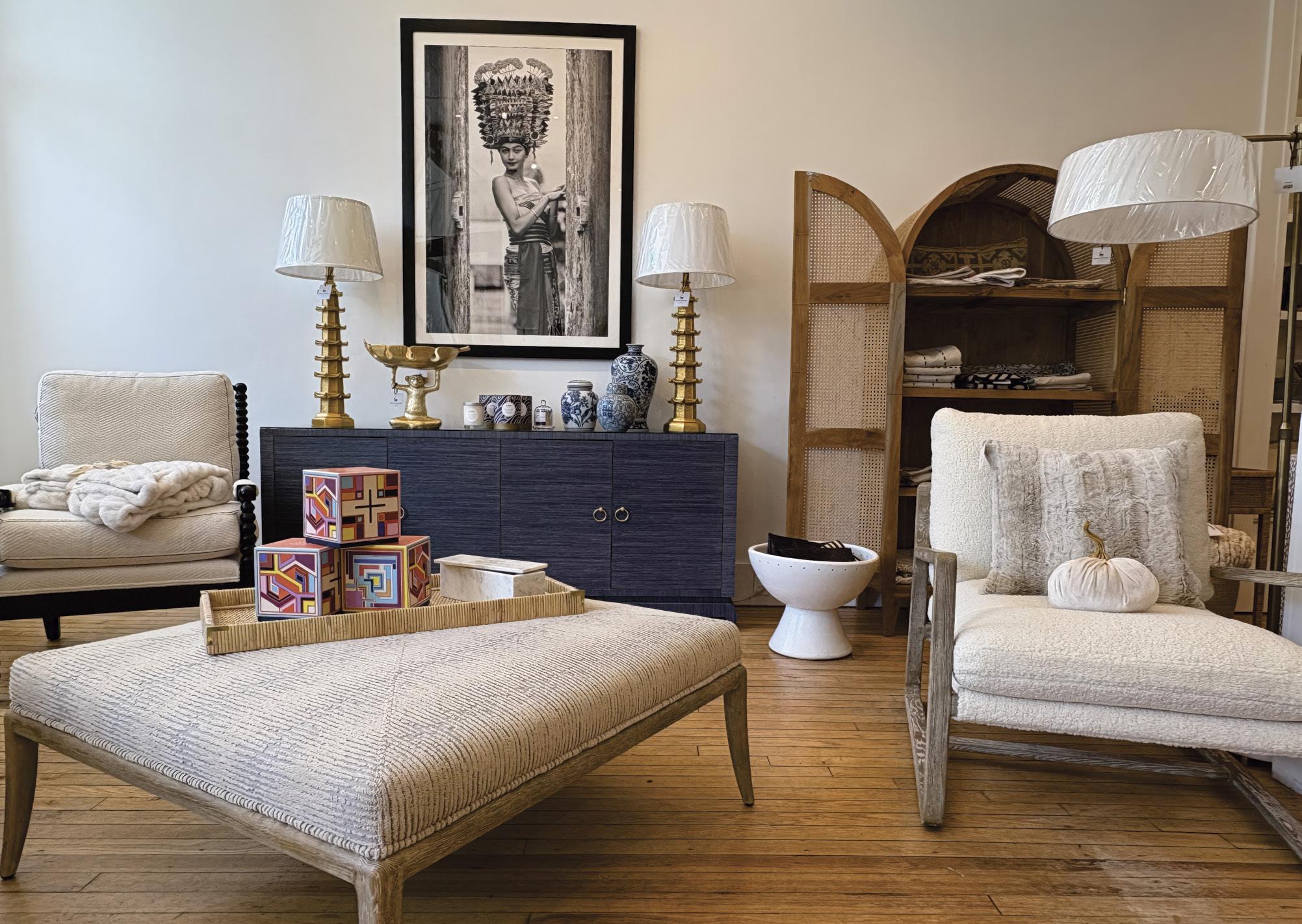
Brass Monkey Home’s mix of global modern pieces—rattan, teak, hand-printed textiles, and sculptural lighting—creates a layered, traveled-withouttraveling vibe.
Step into Brass Monkey Home in Cold Spring and you’ll discover pieces from around the world. A wavy Lombok-style bench handcrafted in Java might sit beside blockprinted cotton dishtowels from India. The boutique carries furniture, lighting, wall art, ceramics, textiles, tabletop pieces, and a rotating lineup of small-batch pantry goods.
Owners Gina Larson and Brian Stoller curate items from their travels—from Bali’s artisan workshops to Tulum’s boutiques and India’s salvage stores. “It’s global design for modern living,” says Larson. “We want it to feel like you’re finding treasures—a way to travel without traveling.”
Larson and Stoller didn’t set out to open a home boutique when work first took them to Asia. “I was fortunate to have a job at one of the big Madison Avenue ad agencies that took me overseas,” Stoller says. “I had studied Chinese, so I was running the agency out of Hong Kong, but traveling all over Asia. Gina would often join me on trips.” While abroad, they began collecting furniture and home goods and met makers who left a lasting impression.
“It was amazing to travel around and find these great things,” Larson says. “As we were collecting and curating, friends and visitors would always ask, ‘Where did you get that?’” When they moved back to New York, they shipped a container of homewares and rugs for friends who requested items. “That’s when we thought maybe there’s something there,” Larson says.
The idea lingered until they started taking weekend trips to Cold Spring. “We just fell in love with the town,” Stoller says. Larson found a suitable space, and they opened Brass Monkey Home in June 2024.
The boutique offers a curated mix of furniture, home decor, and specialty goods from around the world, alongside select local products. That includes furniture, tabletop items, barware, and lighting. There’s also a line of soft furnishings— couches, chairs, and ottomans—that customers can design themselves. “A lot of Cold Spring houses are smaller,” Larson says. “So we work with suppliers who can make pieces to scale.”
The store’s style reflects both owners’ global travels and the Hudson Valley’s architecture. “Gina and I have different
aesthetics, but the region’s mix of Mid-Century Modern and Colonial homes works really well with these international pieces,” Stoller says. “A lot of what we carry is modern mixed with older, international pieces. We stay away from the Victorian look; there’s plenty of antique stores already for that.”
When selecting items, Larson and Stoller aim to balance novelty with affordability. “We’re not super high-end, but not HomeGoods either. Somewhere in between,” notes Stoller. Some of the owners’ favorite curated items include a handcarved bone inlay desk with a floral motif and a mid-century teak console table with woven rattan drawers.
Beyond furniture, Brass Monkey Home’s rotating “global pantry” showcases seasonal products from around the world. Past themes have featured Oaxaca and Morocco; the current one is Japan. The couple recently hosted a pop-up with Misomaru, makers of giftable miso ball sets. “We want everything we carry to have a story,” Stoller says. “The little miso balls are based on what Samurai warriors used to travel with.”
Larson and Stoller find many of their makers through travel, research, and trade shows. Some favorites come from artisan collectives like the Indian Asha Project, where women makers sign each of their handmade garlands. But not everything is international. They also carry local products like Hudson
Valley Marshmallow Company hot chocolate and candles from Beacon-based Cantique. “It doesn’t always have to be from overseas,” Stoller says. “North Carolina has a really strong heritage for some of the best furniture made anywhere.” Domestic sourcing also avoids steep import tariffs.
This past July, Brass Monkey Home moved to a larger storefront at 101 Main Street. The new spot is about 35 percent bigger than the original space, giving them more room for furniture displays and storage. Larson manages daily operations and social media, while Stoller handles weekends and the website. They’re also working with designers and architects to source or customize pieces. “We don’t market ourselves as interior decorators,” Stoller says, “but we’re happy to help decorators find something specific or have it custom built.”
Being in the center of Main Street has brought more foot traffic and visibility. “We definitely have a lot of repeat customers—people who come in looking for a hostess gift or changing up their decor for the season,” Larson says. “We’re really grateful for the town’s support. It’s been amazing to see people come back again and again.”
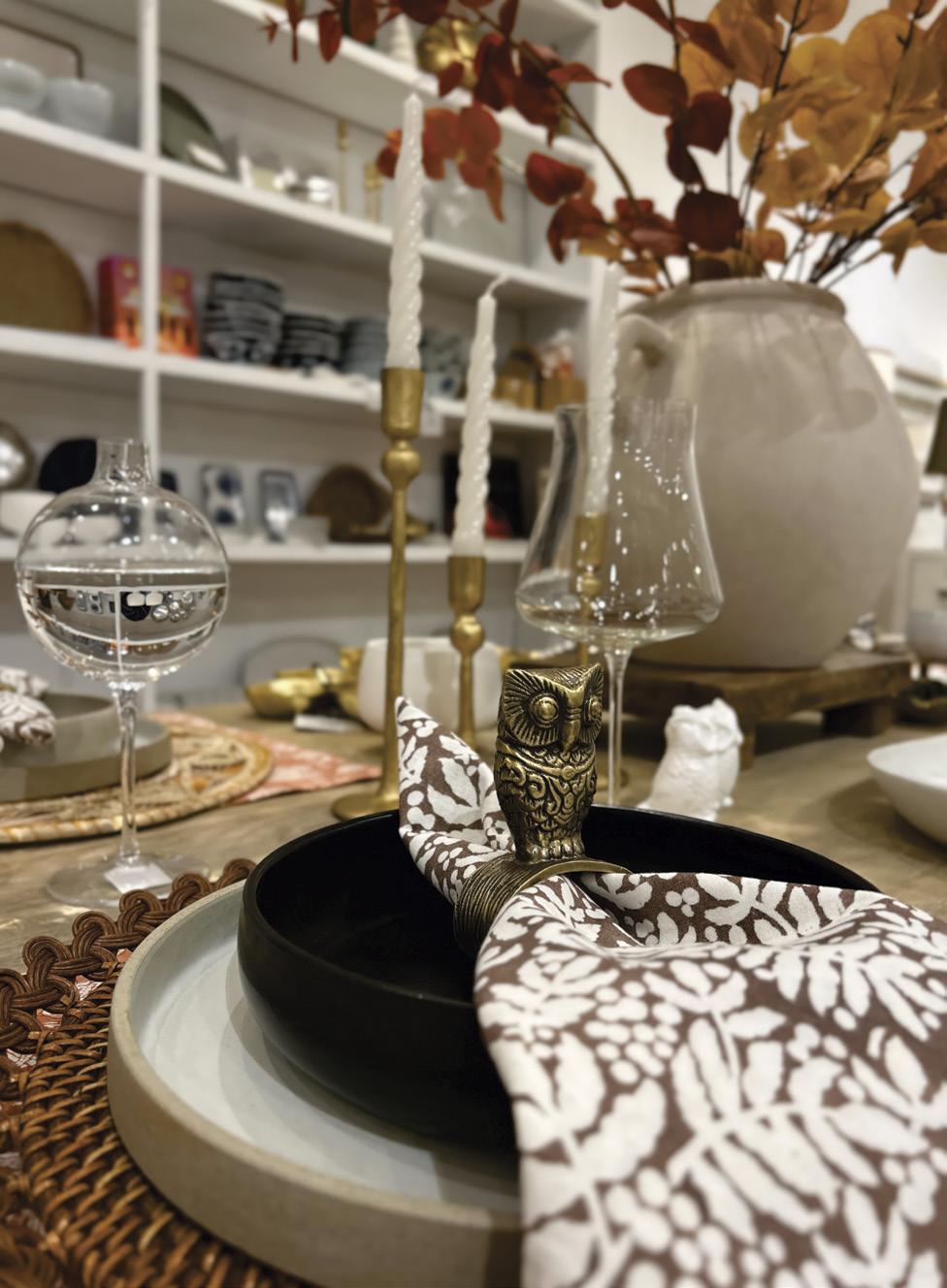
Right: Hand-carved candlesticks, patterned napkins, and artisan glassware show the boutique’s focus on pieces that feel collected, not purchased.
Left: Brian Stoller and Gina Larson opened Brass Monkey Home in Cold Spring in June of 2024.
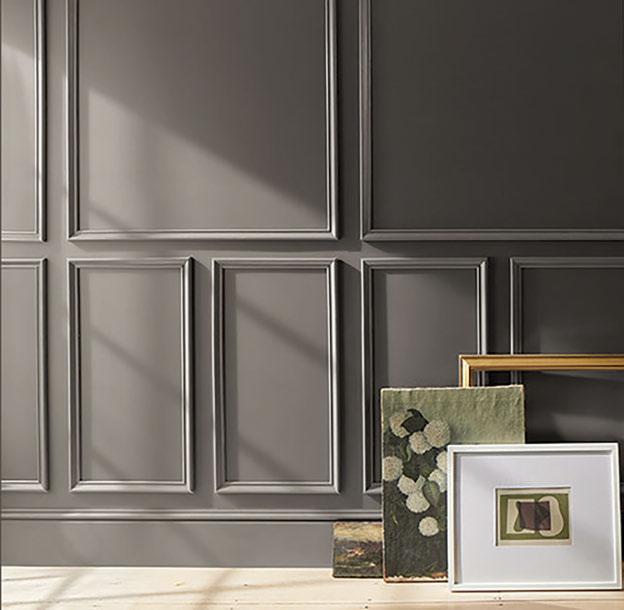
Color of the Year 2026 is Here
Introducing the Benjamin Moore Color of the Year 2026, Silhouette AF-655, which weaves rich espresso hues with refined notes of charcoal.
ROOMS OF THEIR OWN
KINGSTON DESIGN SHOWHOUSE
By Brian K. Mahoney
Photos By Phil Mansfield
Tucked into a leafy street in Sleightsburgh across from Kingston’s Rondout waterfront sits a freshly reborn 19th-century Second Empire home with a mansard roof that gleams like an epaulet in the autumn light. It was the site of the seventh annual Kingston Design Showhouse—an event that’s equal parts creative laboratory, professional showcase, and social mixer for the Hudson Valley design community which ran October 10-26.
Founded in 2018 by Kingston-based designer Marilyn Damour Drake, the Kingston Design Showhouse began as a simple but radical idea: connect the exploding talent base of Hudson Valley makers, artisans, and designers—not just with each other, but with opportunity. What started as a scrappy, community-built design experiment in a vacant Kingston property has since evolved into a regional design movement, drawing national press and shifting the creative center of gravity steadily up the Hudson River. The showhouse isn’t just a place to display pretty rooms; it’s a working model of local creative economy in action, circulating contracts, visibility, and resources among the very people who live and build here.
Above: Connecticut-based Casa Marcelo designed the Groove Room, which features a Century Gothic-style French chaise sofa from Fenestella and a Bennett chandelier from Arteriors Home.
Opposite: Catskill-based designer Lyndsey Alexander transformed a study into a seductively self-contained world that feels like a femme Don Draper retreat.
Opposite, above: The primary bedroom was deigned by Goshen-based House
Opposite, below: The handpainted wallpaper in the Groove Room is made by Porter Teleo.
“The guiding theme for the showhouse every year comes from the design brief I created in 2018,” says Damour Drake. “We ask designers to showcase an upstate New York creative in their spaces. It’s cool to see the many ways this brief has come to life! While designers are free to design without limitation, this brief creates an opportunity for collaborations that help foster relationships beyond the showhouse.” More than a directive, the brief has become a mission: Use design as a conduit for connection, one forged in woodshops, foundries, ceramic studios, and upholstery workshops scattered across the region. And then there are the themes—those annual currents of mysterious synchronicity. “Each year there’s also an unexpected theme that winds its way through the showhouse. The color purple had a moment. Designers don’t share their plans with each other or with showhouse producers. Even so, I fell into this mind meld as I chose purple for the front door of the house before seeing other designers’ spaces!” It has become part of the showhouse lore: a hive-mind of aesthetics, a shared sensibility that emerges unplanned, as if the house itself whispers to each designer what it wants to become.
Rewriting the Rules
The house at 271 Second Avenue had good bones when designer Ana Claudia Schultz of Rhinebeck-based Ana Claudia Design took on its gut renovation earlier this year. The transformation added a third bedroom and bath, and— hallelujah—closets in every bedroom. Schultz oversaw the architectural overhaul and designed the showhouse’s open kitchen and dining room, a bright, breezy space that wears its sophistication lightly. Her bird-patterned green wallpaper from Fromental flutters above a handcrafted dining table, bench, and stools by Stone Ridge woodworker Andrew Finnegan. Ceiling lights and sconces from Kingston-based RBW cast the room in warm modern light, while clear switch plates by Corston add a note of barely-there precision. It’s the sort of room that makes you think life could be this orderly and elegant, if only for a weekend.
A design showhouse is, by definition, an exercise in fantasy. It’s where designers can push past the practical and flirt with the improbable—rooms that make emotional rather than rational sense. The 2025 edition, which features over 100
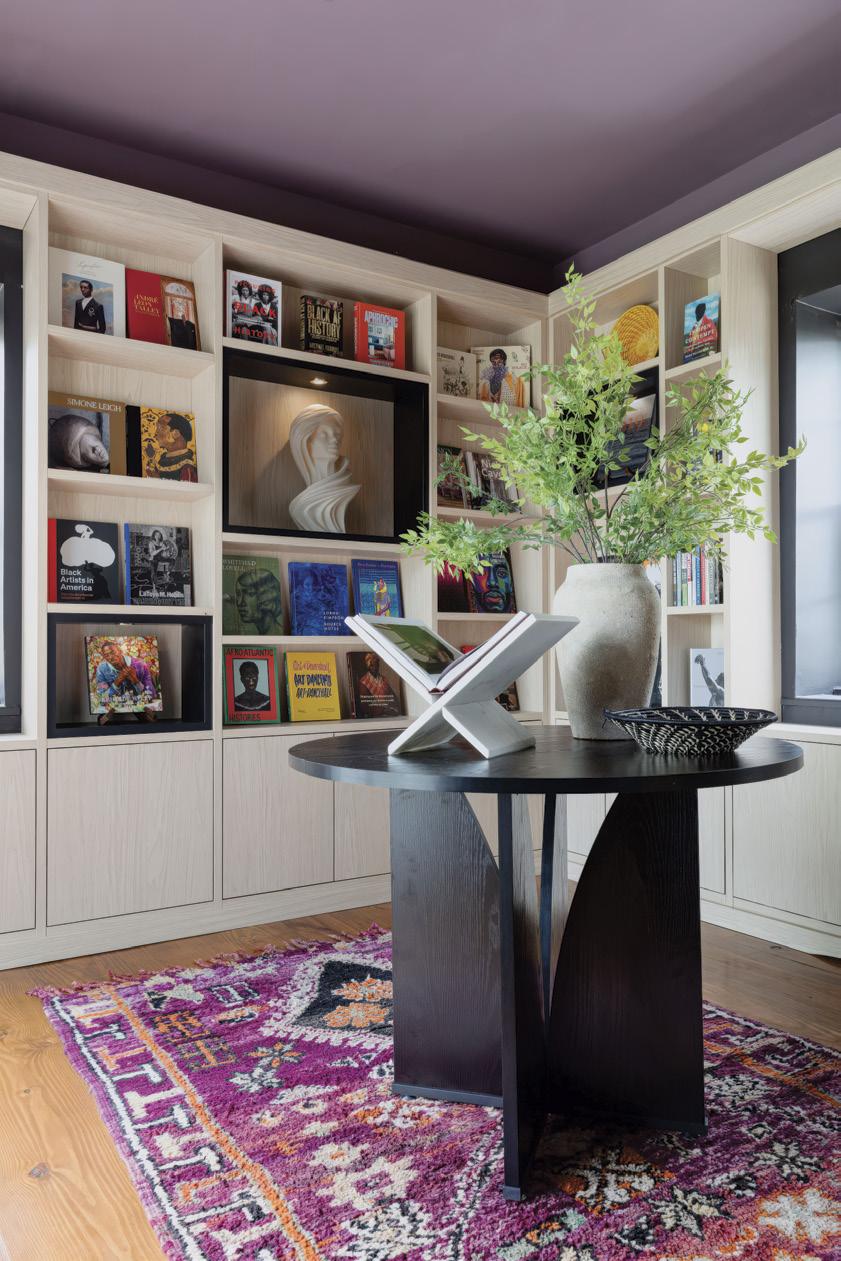
Above: The To Be Free Library was designed by Ellenvillebased Aphrochic Home. The custom bookshelves and bar were built by California Closets.
of Brinson.
participating designers and artisans—delivers a range of dream states: playful, moody, serene, and strange. Limewash is having a moment—chartreuse, lilac, and other understated hues— while improbable materials like a custom metal shower screen (in the primary bath, no less) remind visitors that rules exist mainly to be rewritten.
Opposite, top left: The secondfloor bath was deigned by Brooke Cotter Design Co.
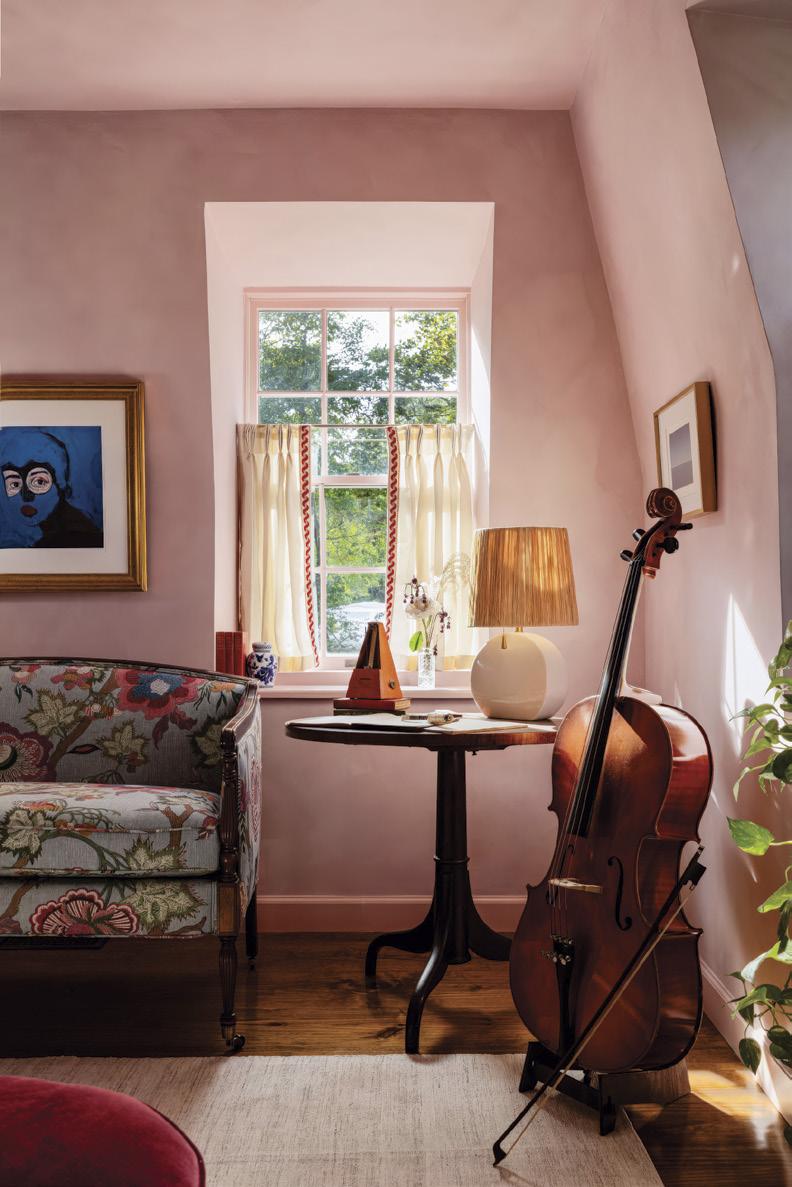
Opposite, top right: The Rose Music Room was deigned by Troy-based J. L. Caccamo Design.
Opposite below: House of Brinson’s primary bedroom design features wallpaper from Waterhouse Wallhangings.
Downstairs, the Groove Room by Salisbury, Connecticut–based Casa Marcelo channels midcentury cocktail culture through a kaleidoscope of color and pattern. It’s warm and sociable, with a record player and hand-painted wallpaper from Porter Teleo that looks like someone translated jazz into brushstrokes.
The Powder Room, by Taupe Stories Studio (Delaware County and Brooklyn), proves that whimsy is compatible with rigor. Its hydrangea-inspired chartreuse limewash walls glow around a cherry vanity by Beacon’s Palmer Works and ceramic wall hanging by Kingston artist Demetria Chappo. A stool by Poughkeepsie’s Dean Babin brings a chunk of modern functionality to the small space.
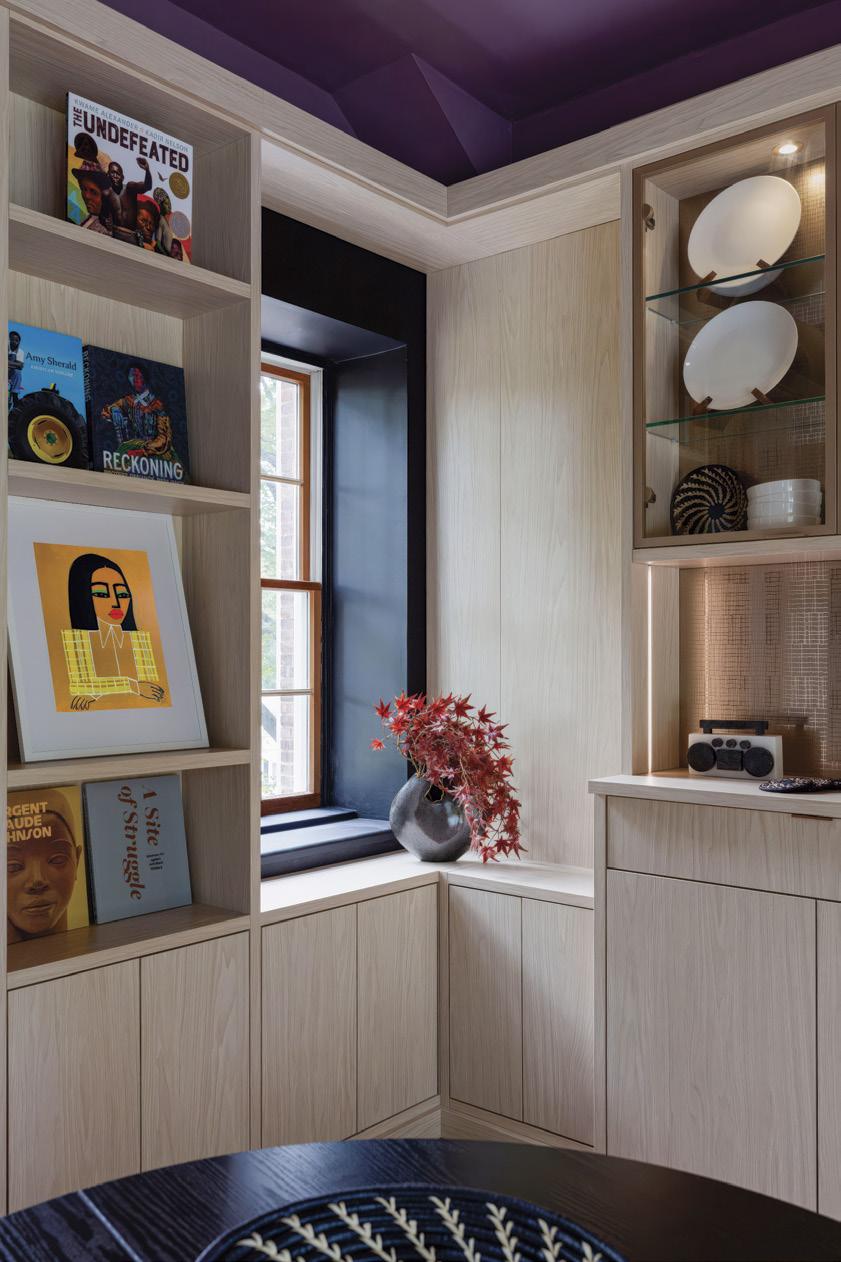
In the To Be Free Library, Ellenville’s Aphrochic Home explores the intersection of design and cultural narrative. Their serene, book-lined space—with shelving by California Closets, who it turns out make much more than closets—houses a collection entirely by Black authors, from W.E.B. Du Bois to Jesmyn Ward. The result is part reading room, part gallery, part quiet assertion of presence.
“As we create showhouses, it’s important to us that we leave these homes not just more beautiful, but also more functional than we found them” says Damour, noting that everything that is permanently installed is gifted to the homeowners. “I had been speaking with California Closets for a couple of years and we were pleased that they came on board as a sponsor of the 2025 house. I connected them with the design team Aphrochic hoping they would create a space that would add value to the house. It’s a beautiful room with custom bookshelves and integrated lighting that could stay a library or become a home office or dining room in the future.”
Upstairs, Catskill-based designer Lyndsey Alexander transforms a study into a seductively self-contained world. A Room of One’s Own feels like a femme Don Draper retreat—pinkish moire wallpaper by Dedar Milano, a mirror and chair by Kingston’s Sawkille Co., and, tucked discreetly into the closet, a bar by SP Woodenworks in Catskill with a quartzite countertop from Caliber Granite in Kingston. Because inspiration, like writing, benefits from proper hydration.
The Primary Bedroom, designed by Goshen’s House of Brinson, looks to the Hudson River School for its palette of dusky violets and warm earth tones. Heavy antique furniture from Port Ewen’s Ball and Claw Antiques grounds the room, while delicate wallpaper and window treatments soften the edges. A custom closet by Kingston craftsman Thomas Winslow conceals a large built-in laundry hamper, because even dreamers have dirty socks.
Above: The kitchen/dining room of the 2025 Kingston Design Showhouse was designed by Ana Claudia Schultz of Rhinebeck-based Ana Claudia Design.
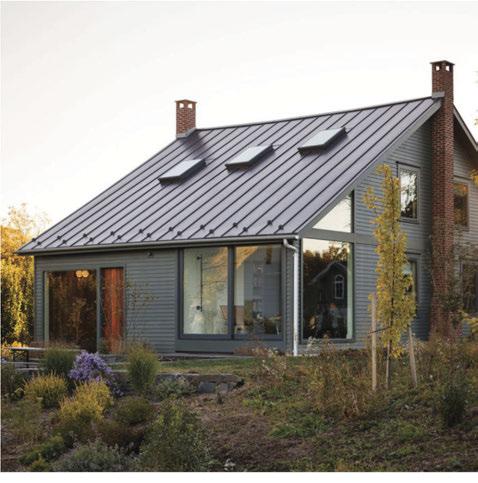
BUILDING HOMES OF DISTINCTION
montanacontracting.com
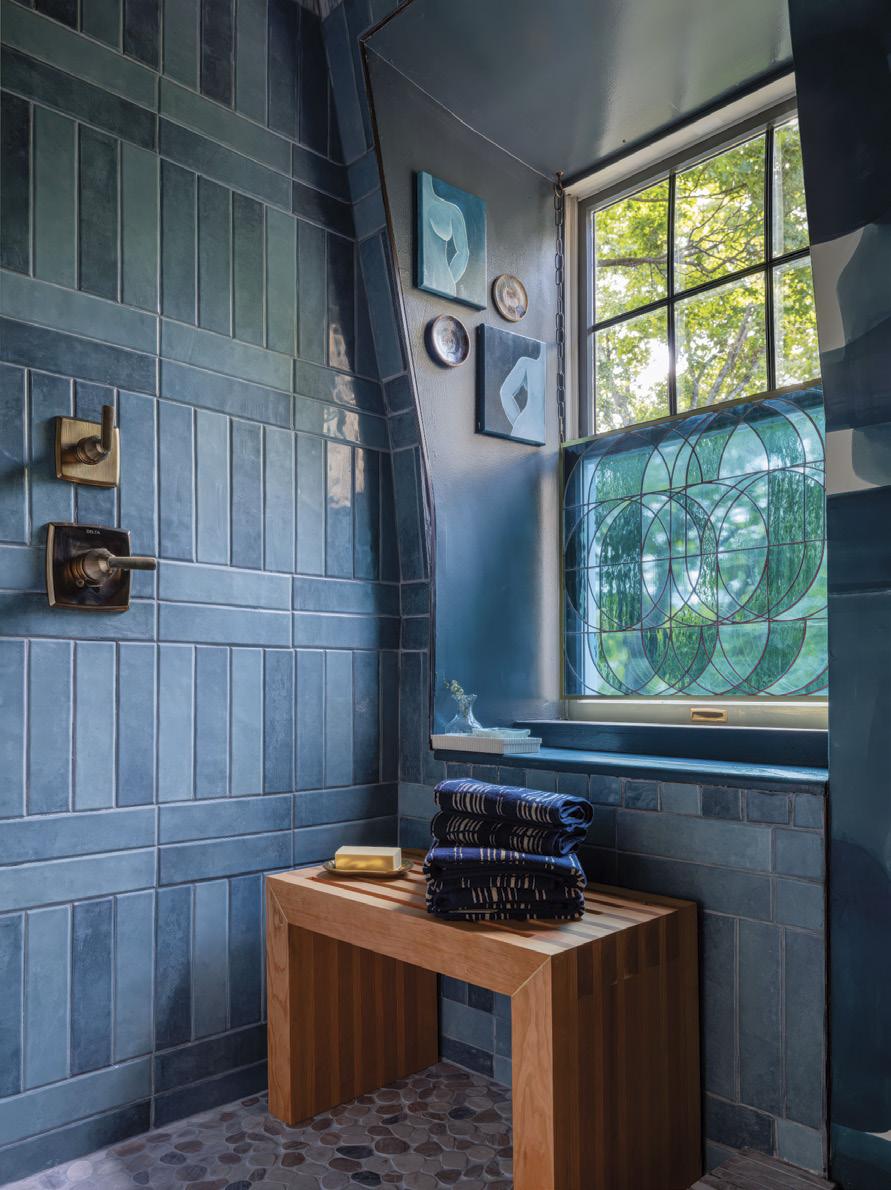
In the Primary Bathroom, Methods of Assembly (Catskill and Brooklyn) channels Shaker restraint through a 21stcentury lens: paneled wood, geometric precision, and that aforementioned custom metal shower screen—utterly impractical, totally gorgeous. Nearby, the Second-Floor Bath by Brooke Cotter Design Co. (New York City and the Hamptons) floats in a wash of watery tones and organic textures, with sketches of the human form that suggest sensuality without saying it aloud.
The Rose Music Room, from Troy’s JL Caccamo Design, pays homage to the house’s 19th-century roots. A cello and a clarinet rest by music stands beneath soft lighting, evoking an era when family entertainment meant playing together rather than streaming separately.
Outside, on the patio, Ken Landauer of FN Furniture in Stone Ridge provides sculptural seating that bridges art and utility, a fitting coda for a house that revels in both.
Building More Than Beauty
A portion of ticket proceeds supports Ulster County Habitat for Humanity, aligning high design with housing access. It’s a neat inversion of the usual equation: luxury design underwritten by a sense of social responsibility. Our partnership with Ulster Habitat for Humanity began in 2022,” says Damour Drake.
“Since then, we’ve developed programs to raise awareness and support for the amazing work Ulster Habitat does. One example is our annual Kingston Design Habitat House. Every year, before being sold to a homeowner, we take over a newly-built Habitat home and transform it into a design showhouse. We open it to the public so potential donors can experience the homes that Habitat builds. We also require our designers to use at least 50 percent of items in their rooms from the local Restore to showcase this important funding vehicle for Habitat.”
Each room in the Sleightsburgh house functions as both a finished composition and an open question: What if we lived this way? What if we chose daring colors, honored artisanship, and treated the home as a site of experimentation rather than retreat? Kingston Design Showhouse operates on the belief that the answer doesn’t have to stay hypothetical. Designers return to their clients and studios with ideas tested at the outer edges of feasibility. Visitors leave reminded that imagination, like paint, comes in infinite finishes.
The Kingston Design Showhouse is a project of Kingston Design Connection. Homeowners can apply to host the 2026 showhouse via its website. An application can be found at Kingstondesignconnection.com.
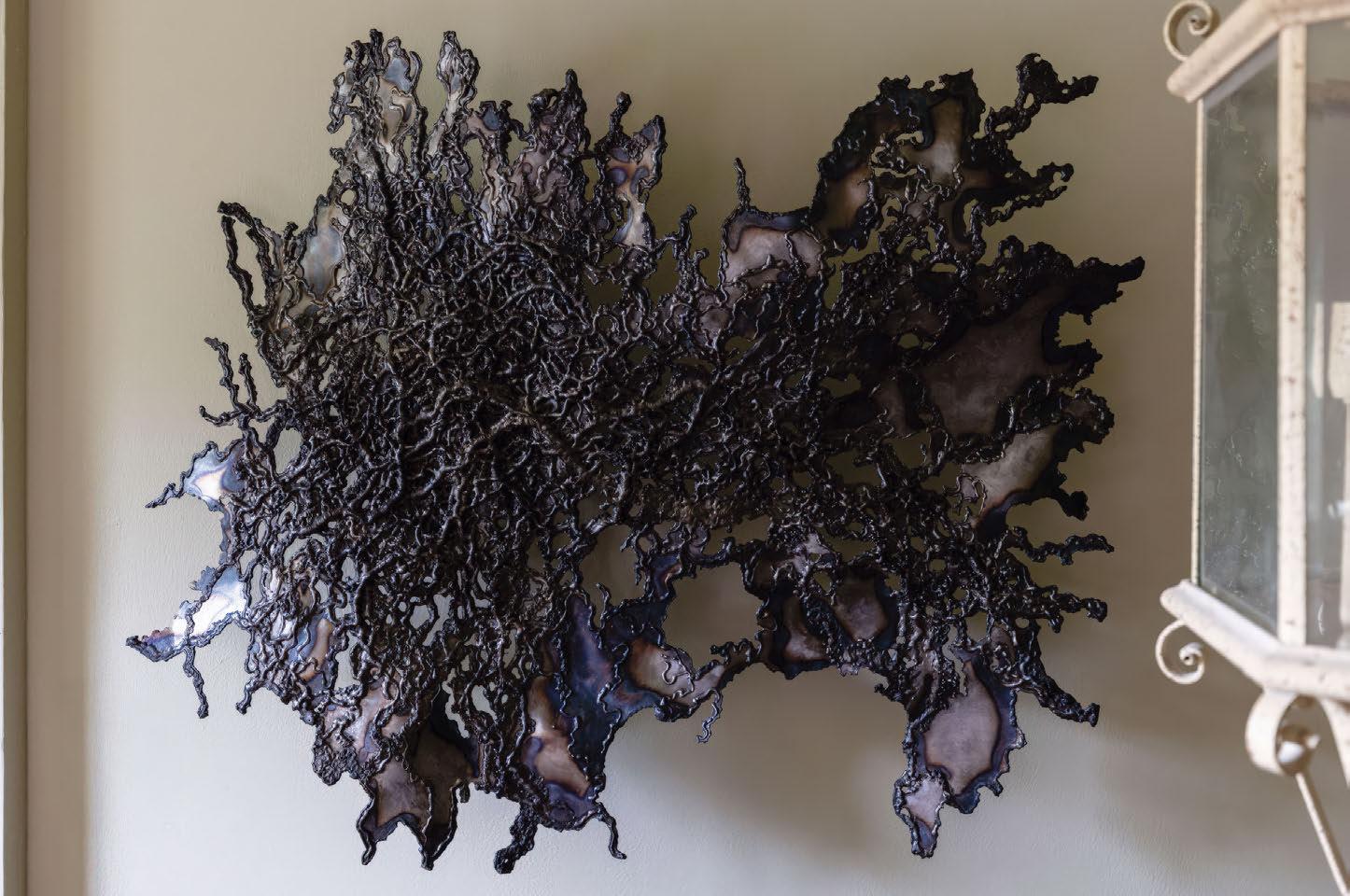
A metal sculpture by sculptor Marieken Cochius in the second-floor gallery.
SOME LIKE IT HOT
WOOD STOVES FOR WARMTH AND DESIGN
By Melissa Esposito
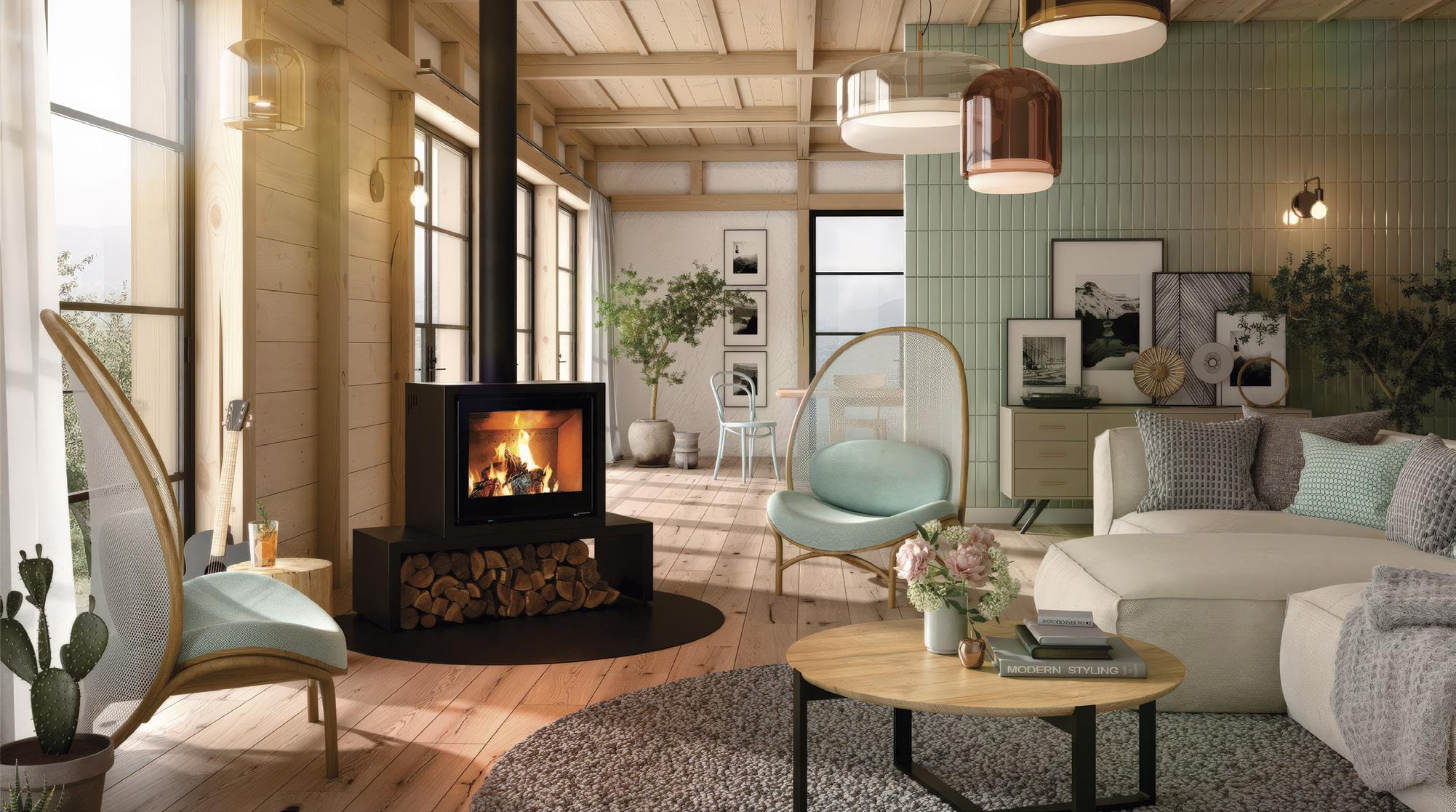
A Spartherm 700-MO modular wood-burning stove from Wittus: Fire by Design.
Few things signal coziness like a wood stove. Equal parts utility and vibe, it’s a heat source, a design anchor, and a small ritual of firekeeping that turns winter into an aesthetic. Once dominated by boxy black iron, wood stoves have evolved into objects of thoughtful design—slim, sculptural, colorful, even hygge-forward. The internet may churn with hot takes on efficiency and emissions, but the allure of a real fire remains steady: Warmth that looks like warmth, delivered with flicker and feeling.
“Wood stoves have a lot of positive aspects; the ability to heat a home with a secondary heat source if there is a power outage is at the top of the list,” says Patti Boker, a marketing specialist at Wittus: Fire by Design, a producer of Europeandesigned hearth products with a showroom in Pound Ridge.
“Having a wood-burning fire in the home also adds ambiance. Wood stoves bring back childhood memories for some people, yet others simply love the art of lighting a fire, where the firekeeper has control of the flame and how much heat the stove produces.”
Wittus, which has been in business since 1978, imports wood stoves that have a sleek, often minimalistic look that shies from tradition. Their products are also EPAcertified as environmentally clean-burning. “We specialize
in contemporary stoves and fireplaces, and 99 percent of Wittus customers come to us for the sleek design and efficient function of our products,” Boker says. “Niels Wittus, the owner, is from Denmark and in Danish the word hygge means comfort. We style our business and our product line after this concept.”
One product, the Shaker, brings a modern-yet-minimalist twist to the traditional wood stove design. A boxy stove on tall legs, the Shaker (which comes in two sizes and starts at $8,150) was crafted with the influence of Shaker furniture in mind, and one version has an attached bench for sitting beside the fire. In past years, the stove has won both the prestigious Red Dot Design award and a Chicago Museum of Architecture and Design Good Design award.
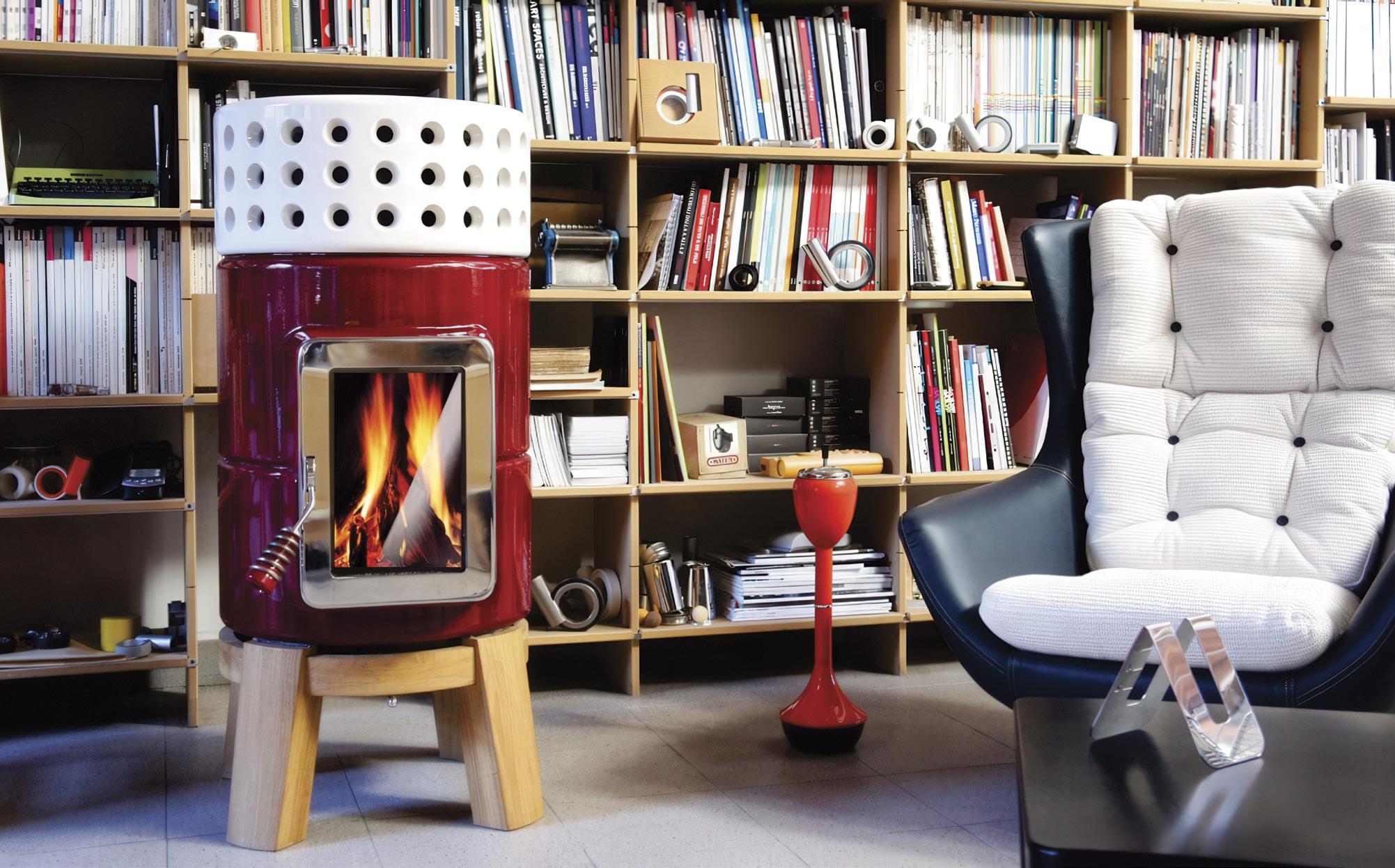
Another popular option at Wittus is the Stack ceramic stove (two sizes, starting at $17,240). With its distinctive tower shape, its ceramic body was made in Italy by La Castellamonte and designed by Adriano Design Studio, who’s worked with brands like Scavolini, Olivetti, Fiat, and Melitta.
While the European sensibility creates an elegant, artful look, those who prefer the rustic aesthetic can head closer toward the Catskills to visit the showrooms of Fireside Warmth (Kingston) and Green Heat (Stone Ridge). Both offer a variety of eco-conscious and stylish options by top brand
names like Endeavor, Jotul, and more. Their teams can guide you through the installation process, whether you’re adding a completely new freestanding wood stove and need to build a chimney, or simply upgrading an older unit with a more efficient option. Each shop can assist with other considerations, such as ideas for protecting your floor from heat and embers.
Burn Smarter, Not Just Brighter
No matter what your style, there are a few key traits to look for when shopping for a wood stove.
According to Boker, the very first thing is to start with finding the best spot in your home for even heat distribution, so that you can purchase the right size unit for the space, in terms of heating capacity. She also notes that some stoves are designed with built-in pizza/baking ovens, cook tops, and other food-safe features that allow you to prepare a meal while you heat your home. If this is an appealing style to you, that should factor into your location selection process, as well.
When it comes to keeping wood handy, she recommends either having storage nearby or opting for a stove that offers built-in wood storage. “It is important to use properly dried, clean-burning wood, preferably kiln-dried or seasoned for at least two years,” she explains. “Wood is sustainable when burned in an efficient wood-burning stove.” According to the
EPA’s website, burning dry, seasoned wood in an EPA-certified stove decreases your chances of inhaling wood smoke, which may contain carcinogenic chemicals. Keeping an air purifier in your home adds an extra level of protection.
A wood stove also serves as a way to boost the efficiency of existing home heating elements, allowing you to reduce energy usage in rooms surrounding the stove. While a new unit includes a hefty upfront investment, not to mention the labor of sourcing wood, feeding the fire, and cleanup, homeowners may start to see a return on investment as soon as the first heating season starts.
“There has been a slowdown in new homeowners since last year when the real estate market was on fire, but there are still new clients in the area looking to install a stove into their homes as a secondary heat source,” Boker explains. “We always get a fair number of customers looking to upgrade their existing fireplace or replace an older unit with a more efficient and contemporary one. People are looking to save on heating in every way they can, and adding a stove to your home takes the edge off.”
Wittus: Fire by Design: 40 Westchester Avenue, Pound Ridge Green Heat: 3815 Main Street, Stone Ridge Fireside Warmth: 901 Route 28, Kingston
La Castellamonte Stack and Rondo wood stove from Wittus: Fire by Design.
PUSHING THE ENVELOPE
AIR-SEALING 101: FROM ATTIC TO BASEMENT
By Jeff Eckes
What is the envelope of your home? It’s simple really, it’s the assembly that keeps weather outside, and heat and cooling in. This includes your walls, roof, and basement (or slab) floor. Effectively sealing these assemblies and insulating them well is what makes a superior envelope. It almost does not matter if you build with wood framing and vinyl siding, or stone walls, the concept is the same as much as the details are different. As we will likely need to do these things piecemeal, let’s break these down one by one.
The roof of a single-family home has two basic designs: vented or unvented. A vented roof looks like what most homes in the region look like, an uninsulated attic with the insulation on the floor, which is the ceiling of the floor below. The majority of old homes have some very real problems here, with the most room for real measurable improvements, and so it’s a great place to start.
Almost all older homes, and most newer ones, lack any real air sealing in this assembly, and all but the very minimum of insulation. In the past, we thought drywall was enough to seal an interior space. It’s not, despite what claims you might hear, even from building scientists. Today we understand how water vapor affects wall assemblies and how smart membranes make heating- and cooling-related issues less of an exercise in faith and more of a scientific certainty. If your attic has less than 18 inches of insulation, it needs to be removed, the surfaces cleaned (don’t leave the rodent droppings, no matter how icky they are) and then sealed.
Many products are available to seal an attic space,
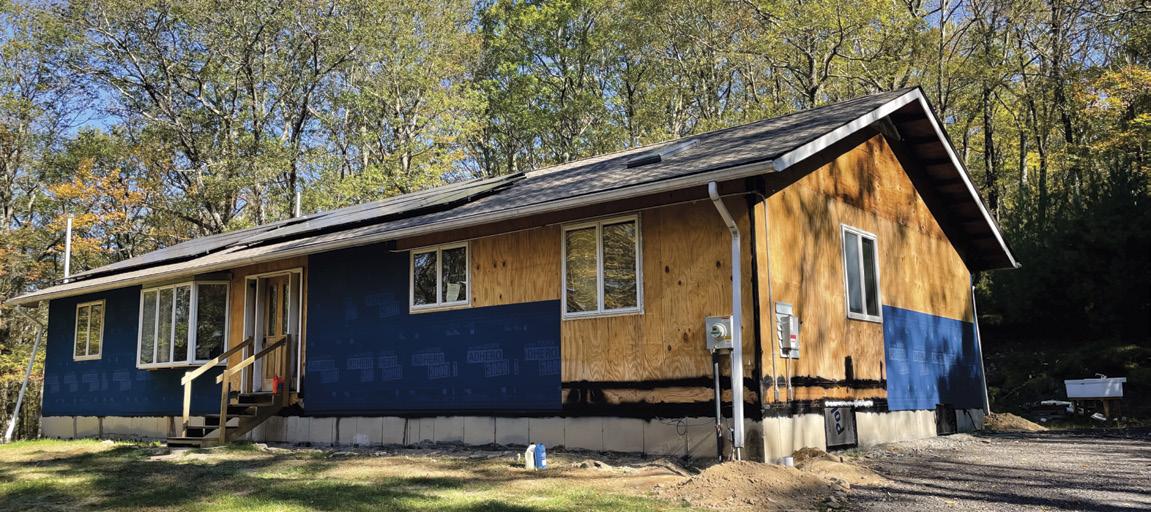
from liquid-applied coatings that can be sprayed, to fabric-like sheets than can be stapled on under the drywall if you are replacing the ceiling. The membrane we used in the attic of a deep energy retrofit we are completing in a Sullivan County home (pictured above) is Intello, which is manufactured by Pro Clima and designed to change characteristics based on changing vapor pressures that occur from winter to summer. A vapor “problem” is condensation, which you might have seen as frost on the insides of old windows in the winter. The same science, acted out inside a wall, can cause water damage, sometimes quite a bit of it. The best membranes are imported from Europe (we just don’t make these things here) and can be found at 475. supply, a supplier to the Passive House industry.
In the Sullivan County house, we used a product called Adhero 3000, also made by Pro Clima, on the exterior walls once they were stripped of siding. It’s a self-adhesive membrane that we applied to the sheathing, from the top two inches of the foundation to the top of the exterior wall. We then insulated the interior of the wall cavities and applied more Intello under the finish drywall, forming a five-sided box. The sixth side of the box is the basement floor, or the first floor, if you have an unfinished basement and you don’t plan on using your basement as living space in the immediate future. If not, treating the basement ceiling (the floor for the first floor) with a smart vapor barrier and insulation is the right move.
If you are going to use that basement space as living space, then a high-quality sealer that seals out moisture and soil gasses like radon, and is designed
for below-grade interior applications is the way to go. Emecole.com sells a concrete sealing product, EmeSealCrete, that is mixed 50/50 with hot water and sprayed onto masonry basement walls with a garden sprayer. It has worked well for us. In fact, this product is so affordable, easy and foolproof that I would recommend it as a first step. This product completely eliminates the need for an additional vapor barrier like six-millimeter plastic, which is actually ineffective despite its popularity.
Once your basement is sealed, you will need to insulate it. For decades, the typical solution was to frame the wall (after installing that ineffective six-millimeter plastic), insulate it, typically with fiberglass, and then install sheetrock. There are several very pressing problems with this. First, plastic does not prevent the moisture or gasses like radon from entering the space. It will act as a temporary barrier for much of the moisture, and by “temporary,” I mean that it will build up seasonally behind the wall, and eventually leak out below the wall. The radon and other gasses simply have free rein.
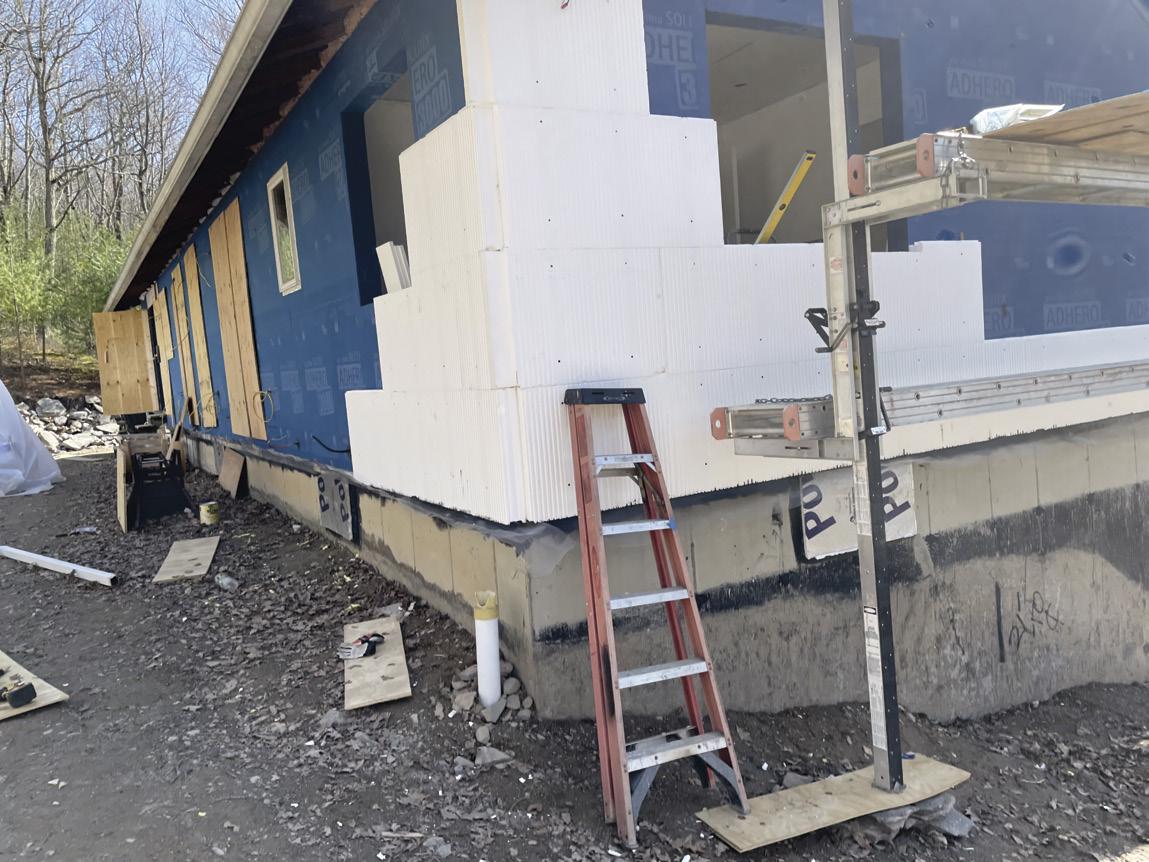
Another truly innovative product we have been using is an EPS insulation product from InSoFast.com. EPS is the “friendliest foam board” as it uses a less-toxic process to manufacture, is highly insulating, and has semi-permeable vapor characteristics. This allows the wall to dry to the inside of the space, a very important quality in basements that are even a little damp. Make sure to use regular drywall—not wet location drywall—and paint it with a flat paint to maintain that ability. InSoFast takes that superior material, molds into it a synthetic framing member, and incorporates
vertical grooves on both sides as a drainage plane. The 3.75-inch-thick panel (same depth as a two-byfour) glues onto the basement wall with construction adhesive, which allows you to fasten it to the walls and then hang drywall directly onto the installed foam panels. As an additional bonus, this product also allows you to run Romex or BX wiring in channels on the interior, then install a box directly into it, making this product a real time and money saver for us. A twoinch-thick product is available for under basement subfloors, and installs the same way, making this product very friendly to DIY!
The exterior of the house will need insulation as well, and it’s a code requirement in an increasing number of districts. We use the very same product on the sides of exterior over the Adhero membrane. In this application, we screw it and glue it, then mount whatever siding we decide to use right onto the InSoFast. We use a lot of concrete Hardie board siding products, and it holds up to the additional weight and installation requirements very well. InSoFast panels exceed most code-mandated insulating requirements all over the country, so the building inspectors love this product as well.
For the roof, we install up to four inches of EPS sheet, and then another layer of sheathing, with Adhero over that. Asphalt or metal roofing is easily applied over that. The nails used to attach the roofing are sealed as they penetrate the roof by the properties in the Adhero, and the fabric upper layer is virtually slip proof, so it is a perfect underlayment for roofing as well.
Adding a high-quality set of windows and doors is essential, and completes the envelope. This is a place that you might want to have a reliable professional do some work for you. Sash and Frame, is a company that was founded by a group of window design and installation experts, and is a trusted partner of ours. They carry several lines of triple-pane, Passive House-appropriate windows in several price points, and they install and warranty their work as well as the window itself. They are DIY friendly, very informative, and have a showroom in Green Island, outside of Albany, where you can go see the product and learn about it.
In addition to all of this, we are working on putting together a group of architects and designers that are willing to provide their services on a kind of sliding scale, so that regular folks can afford to properly plan their projects and permit them effectively when called for. Look for information in this space, in upcoming issues, and as always, please reach out if we can help you find the resources that you need, and the best of all possible fortune with your projects.
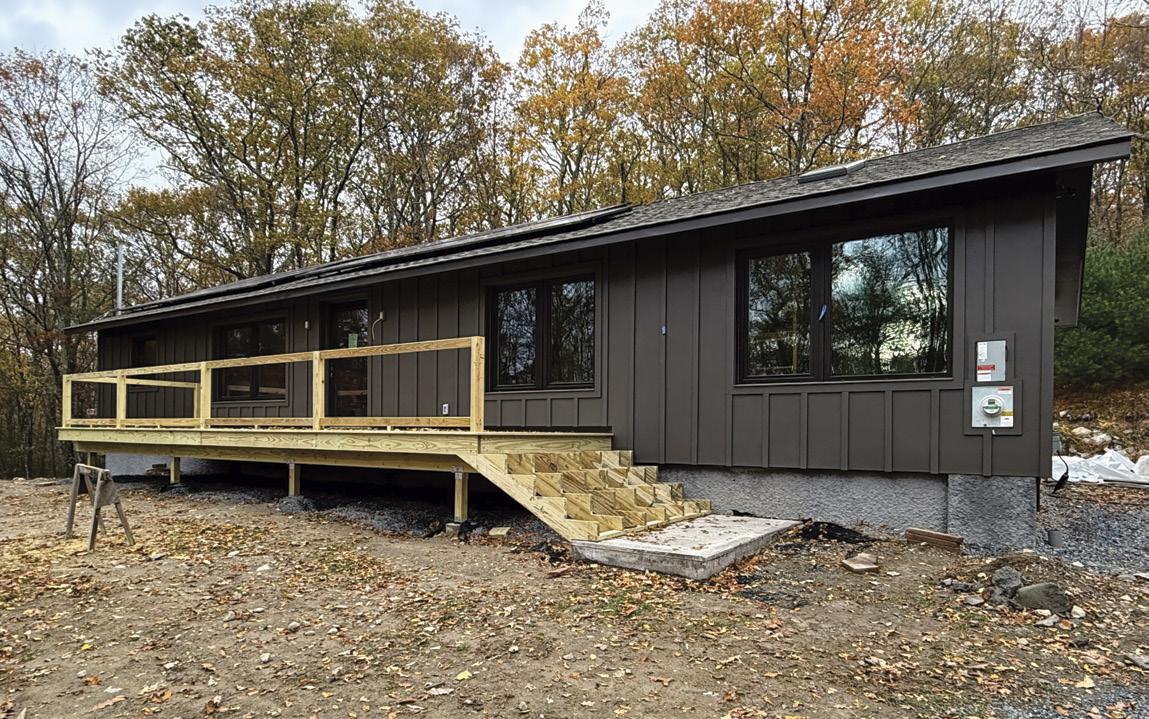
A Sullivan County home gets buttoned up from the attic down, trading drafts for airtight precision with vapor-smart membranes, continuous insulation, and a whole-house approach to building science that keeps heat in, moisture out, and comfort everywhere in between.
Jeff Eckes if the CEO of LDR Group, a Passive House design/build/renovate contractor located in the MidHudson Valley.
GREAT BARRINGTON
Great Barrington, Massachusetts, is a small town with a big paw print in the woods of the southern Berkshires, a place where cultured, well-heeled crowds from New York and New England mingle with local farmers, artists, and entrepreneurs. This mix of culture and community has made it super attractive to home buyers. However, while the town has been booming for a while, longtime residents have been feeling the pinch. More affluent visitors and residents, many of whom came during the pandemic, have found reason to lay down roots, while workers and families have found themselves priced out. Stakeholders are looking for balance, but solutions feel elusive.
“Maybe I’ve lived here too long, but I’m not sure Great Barrington really has [one] personality. It’s such a mix,” says Michelle Kaplan, a local writer, DJ, and cultural instigator. “What I do love, though, is when people don’t just complain about what’s missing. Instead they bring their own passion and make something happen. You shouldn’t be allowed to complain if you’re not actively organizing something.”
A Community in Motion
By Jamie Larson Photos by David McIntyre
Real Estate Snapshot: A Strong Market
The Great Barrington housing market remains strong and in demand. As of late 2025, the median listing price for a home hovers around $710,000, according to Realtor.com. Sale prices were up roughly 24 percent year-over-year by fall 2025, following a pandemic-era boom that saw many urban buyers relocate for more space, security, and scenery. Inventory is slowly rising across the county, but in Great Barrington, supply remains low and demand high.
According to the Berkshire County Board of Realtors, the number of homes sold in southern Berkshire County increased 10 percent in the first three quarters of 2025, even as average prices stabilized. The mid-market ($300,000 to $500,000) is the most active, but luxury homes continue to move fast.
Culture and Color
Great Barrington has long been an arts and culture destination. The Mahaiwe Performing Arts Center, Saint James Place, and the Great Barrington Public
Theater serve as performance anchors. Each June, the Berkshire International Film Festival brings a touch of Hollywood to the Triplex Cinema. But there are also weirder, scrappier cultural happenings like the Berkshire Busk outdoor performance festival.
Kaplan was behind the recent Sunshine Orange Subaru Crosstrek Parade, an absurdist event that confused and captivated the community with an inexplicable procession of orange Subarus in town in September.
Newer fixtures include Hy’s Fried, a chicken restaurant and dance club in Egremont that has become a destination for real, unpredictable experiences over the past year. A short drive away, Hilltown Hot Pies is slinging Neapolitan-style pizza with wild toppings, a Southern Italian wine list, and an emphasis on cross-table conversation. Both joints reflect a broader Berkshire trend: Locals creating spaces that are more than a business, they are community-forward, stylistically engaging, and deeply personal.
Downtown, the arrival of Eileen Fisher’s sustainable clothing lab this year signaled a different
Hikers
kind of investment. “We fell in love with the warmth of the community, the beauty of the space, and the like-minded approach to sustainability and slow fashion,” says store lead Liza Herrmann. Eileen Fisher doesn’t just sell clothes—it’s also the brand’s second ever “lab” concept, selling clothes that have been refurbished or made from sustainable and recycled materials.
Schools on Top of Mind
Great Barrington is home to the Berkshire Hills Regional School District. A $152 million rebuild of the high school is underway, aimed at adding modern labs, sustainability features, and community-facing spaces. Until recently, the town was also home to Bard College at Simon’s Rock. The closure of the early college campus this year led to the loss of 200 jobs and left a sprawling 275-acre site dormant. Stakeholders have been working on a number of proposals for the reuse of the site. A nonprofit
examining a blackened tree last winter
dubbed Simon’s Rock Village is raising funds to reimagine the space as a hub for housing, arts, and recreation. Local arts leaders, including Great Barrington Public Theater’s Jim Frangione, see potential. “It’s a loss, but it could also be an opportunity if we play our cards right,” he says.
Challenges and Outlook
Housing affordability remains a top concern in Great Barrington. With prices climbing, town government has enacted short-term rental regulations and continues to explore ways to encourage more affordable and workforce housing. A lack of infrastructure in surrounding hamlets like Housatonic remains a concern, but efforts are underway.
Despite the strain, Great Barrington remains a place of experimentation and reinvention. The community is defined less by a single identity than by its many voices in motion. “This town rewards participation,” Kaplan says.
ZIP CODE: 01230
POPULATION: 7,172
MEDIAN HOUSEHOLD INCOME: $82,484
PROXIMITY TO MAJOR CITY: 108 miles from New York City; 137 miles from Boston
TRANSPORTATION: The town is served by Route 7 through downtown and is approximately 12 miles south of Interstate 90 (Massachusetts Turnpike). Peter Pan and Bonanza regional buses serve the area, and the nearest Amtrak service is available in Hudson, New York, about 40 minutes away.
NEAREST HOSPITAL: Fairview Hospital, part of Berkshire Health Systems, is located within town at 29 Lewis Avenue.
SCHOOLS: The Berkshire Hills Regional School District includes Muddy Brook Regional Elementary School, W.E.B. Du Bois Regional Middle School, and Monument Mountain Regional High School. Private schools include Berkshire Waldorf School and more in the surrounding area.
POINTS OF INTEREST: Mahaiwe Performing Arts Center, Ski Butternut, Monument Mountain, Norman Rockwell Museum, The Mount (Edith Wharton’s Home), Tanglewood, Jacob’s Pillow Dance Festival, Berkshire Botanical Garden, W.E.B. DuBois National Historic Site, Housatonic River Walk, Great Barrington Farmers’ Market, and the Triplex Cinema.
Greg Ward with his daughter Eva Ward and nephew Sam Ward in the greenhouse at Ward’s Nursery and Garden Center on Main Street.
Opposite:
southbound on the Appalachian Trail
after the Butternut Fire that scorched 1,670 acres in East Mountain State Forest.
• Great Barrington
POUGHKEEPSIE
January 2025 will mark two years since Yvonne Flowers, a lifelong Poughkeepsie resident whose public service experience began with helping her father John organize major community events as a young girl, took the oath of office to become the city’s first Black mayor. With four terms on the Common Council under her belt and a substantial mandate—she defeated her Republican challenger by over 35 points and won all eight wards—Flowers and her team hit the ground running with citywide plans in mind.
In her 2025 State of the City address last March, she was able to report that Poughkeepsie had won the $10 million Downtown Revitalization Initiative award from New York State, something city leadership had been applying for since 2016, along with $500,000 in federal funds for Northside redevelopment. Zoning codes had been revised, and the Common Council had just approved a planned Business Improvement District for the Main Street corridor, which she expected would be up and running by the end of the year.
As of October 2025, that BID had bylaws and a board of directors, had issued a request for proposals for downtown branding and identity, and was drafting goals and a budget for Year One of its operations. The city also launched a fiveyear comprehensive paving plan and announced
Momentum Meets Vision
By Anne Pyburn Craig Photos by David McIntyre
a revamped system to streamline the handling of FOIL requests.
Throughout 2025, there were a series of wellattended public workshop sessions on how best to use the DRI funds, and 23 projects had been evaluated by the time the last workshop was held in mid-September. Five of those proposals came from city government: improved streetscaping for Main Street’s stubborn 300 block, conversion of Market Street to a two-way thoroughfare, improvements to four underutilized public plazas, an overall branding, marketing, and wayfinding initiative and a $600,000 Small Project Fund to help property owners make needed improvements. Other proposals leaned heavily into housing and mixeduse development.
“This initiative is about more than just buildings and infrastructure,” says Flowers as the public engagement phase of the DRI process drew to a close. “It is about people, opportunity, and pride in our city. The community has shown up, spoken out, and shaped a bold vision for downtown Poughkeepsie. I’m incredibly proud of the collaboration and momentum we’ve built together. This is just the beginning of what’s possible.”
MaryVaughn Williams and her partner Jillian Grano launched Canvas & Clothier, their sustainable fashion and home goods store with a
coffee shop in the heart of downtown, at the end of 2021. “We were on the steering committee for the BID at first, and had to step back because we just had too much on our plates,” says Williams. “We’re so glad to see that it’s coming into existence. We hope the main focus will be safety and beautification. And the DRI funding is exciting— they’ve taken lots of community input, and it’ll be interesting to see how it all unfolds. It’s exciting to see Poughkeepsie get that opportunity.”
The Scene
“I think we’re getting onto more and more people’s radar in an exponential kind of way,” Williams says. “The foot traffic isn’t yet what we hope to see, that may well come in the near future. We want to see downtown blossom and bloom. Our coffee shop business is really robust, and we’re getting some great shoppers—we’re a destination shop, and we’re very thankful for that. People walk into the coffee shop and say, ‘Such good vibes in here!’ and that’s exactly what we’re after.”
Planned mixed-use and housing, she says, may coincide with BID improvements to solve the foot-traffic issue. “There’s a whole lot of stuff in the works, and we’re just happy to be here doing our thing. Fall Kill Creative Works has a ceramics studio on Main Street and they’re organizing a big
ZIP CODE: 12601-12604
POPULATION: 32,474
MEDIAN HOUSEHOLD INCOME: $60,050
PROXIMITY TO MAJOR CITY: 70 miles from New York City; 80 miles from Albany
TRANSPORTATION: The city is accessible by the Noxon Road exit of the Taconic State Parkway. Both Metro-North and Amtrak trains stop downtown; in 2026, Metro-North plans to add one train a day that will travel between New York City and Albany. The city runs its own bus system, and the Dutchess County-wide LOOP buses also make stops.
NEAREST HOSPITAL: Both Vassar Brothers Medical Center and the MidHudson Regional Hospital of Westchester Medical Center (formerly St. Francis Hospital) are located within the city.
SCHOOLS: The Poughkeepsie City School District has nearly 5,000 students attending six elementary schools, a middle school, a high school and a community learning center. Private schools include Oakwood Friends, Poughkeepsie Day School, and Faith Christian Academy.
POINTS OF INTEREST: Walkway Over the Hudson, Bardavon Opera House, Mid-Hudson Civic Center, Mid-Hudson Children’s Museum, Locust Grove Historic Estate, the Frances Lehman Loeb Art Center at Vassar College, Union Street Historic Neighborhood, Poughkeepsie Post Office at Mansion Street, Waryas Park, Dutchess Rail Trail
holiday event, which is wonderful. Scenic Hudson just opened their new headquarters, the Northside Hub, and it sounds really extraordinary. It never ceases to amaze me how much is going on behind the scenes and then just springing into fruition.”
Just sitting in her coffee shop, she says, brings a steady stream of encounters with familiar faces and new ones with glad tidings to share. And the surrounding area offers lots of goodies—not just longstanding Poughkeepsie staples like the Bardavon, but smaller operations that are lots of fun. “Darkside Records has relocated to Cannon Street, and they’ve added a performance space,“ says Williams. “Goodnight Kenny is still making great drinks, and Hudson and Packard is making great pizzas, and Brasserie 292 has such an elevated French menu. It’s just all so delicious. We want to continue to support all of those and more, and more is coming.”
The Market
“It’s been a funky year,” says Sandra Park, a realtor who works with Coldwell Banker and her own firm, Hudson Valley Nest, and publishes The Brick, a must-read newsletter on the Hudson Valley real estate scene. “Since 2023, there’s been a general cooling, but we’re still in seller’s market territory
in both the city and town of Poughkeepsie. Buyers are becoming more discerning, more contemplative than they were at the peak Covid madness. If something is seriously overpriced, they won’t even look at it. But Poughkeepsie was on a steady upward track even before the pandemic, with people buying places and fixing them up.”
Housing projects in progress may create an eventual loosening of inventory, which Park says is still tight—last March, the city was in threemonth territory and the town at just one-and-ahalf months between listing and contract.
At press time, Poughkeepsie was still quite a bargain by Hudson Valley standards, with multiple co-op and condo opportunities listing under $200,000. A two-story, three-bedroom house with a garage and small-but-adorable yard, just a five minute walk from the train, had just listed for $349,999; four-bedroom ranches and contemporaries in the town were available in the $400,000 to 600,000 range. Lloyd Manor, an 1899 four-bedroom blend of Victorian, Greek Revival, and Queen Anne features updated with modern mechanicals and a marble bath alongside original parquet and tiger oak, was on the market for just $635,000.
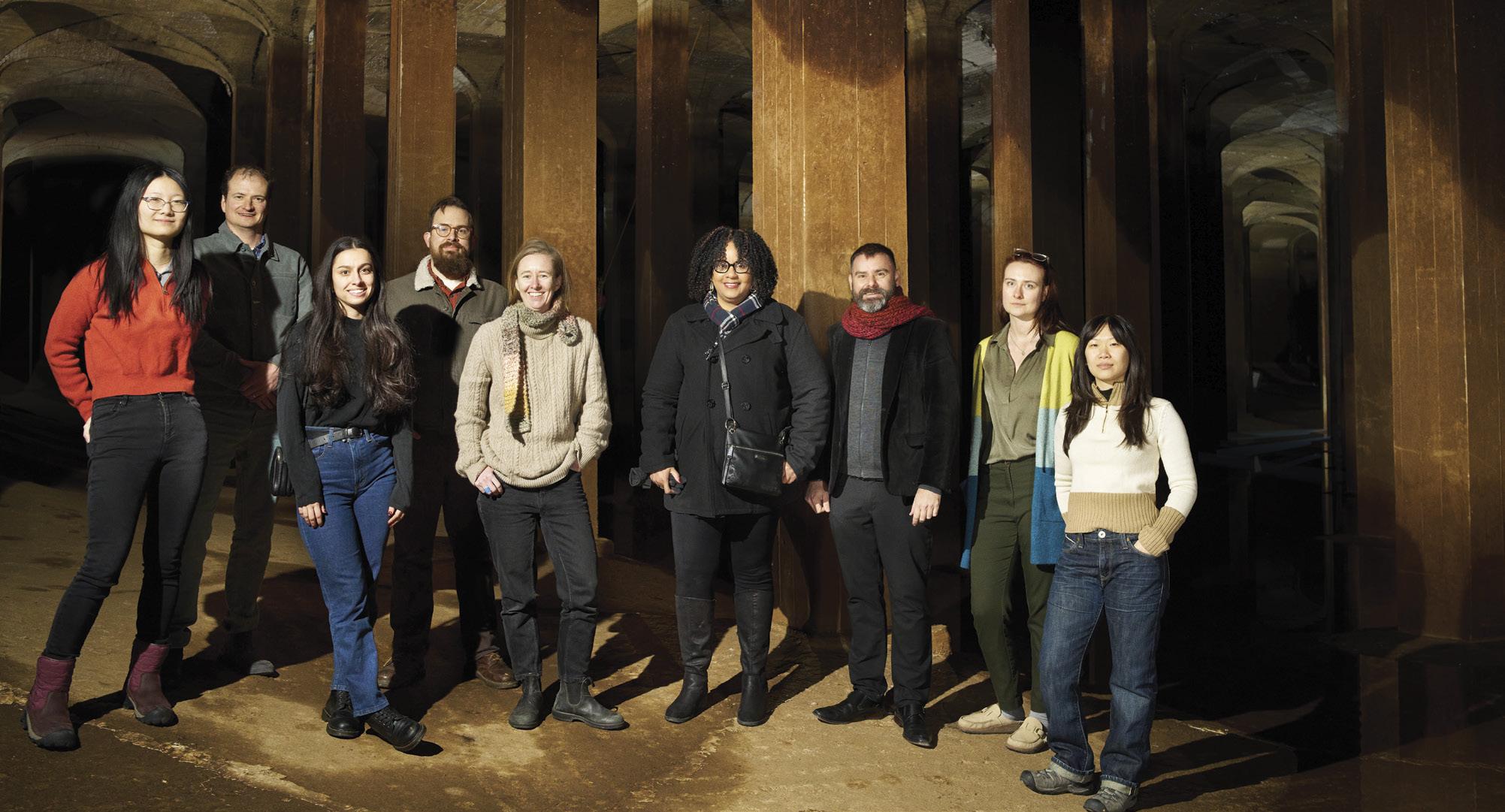
Jeffrey E. Capers in his Vintage Fixie Bicycle Shop on Main Street. Opposite: Members of MASS Design with Poughkeepsie officials in the empty cistern in College Hill Park that the city is hoping to develop as a community space.
AMONG STONE AND SKY
White Oak Farm Offers Homage to the Landscape
By
Joan Vos MacDonald Photos by Michael Biondo
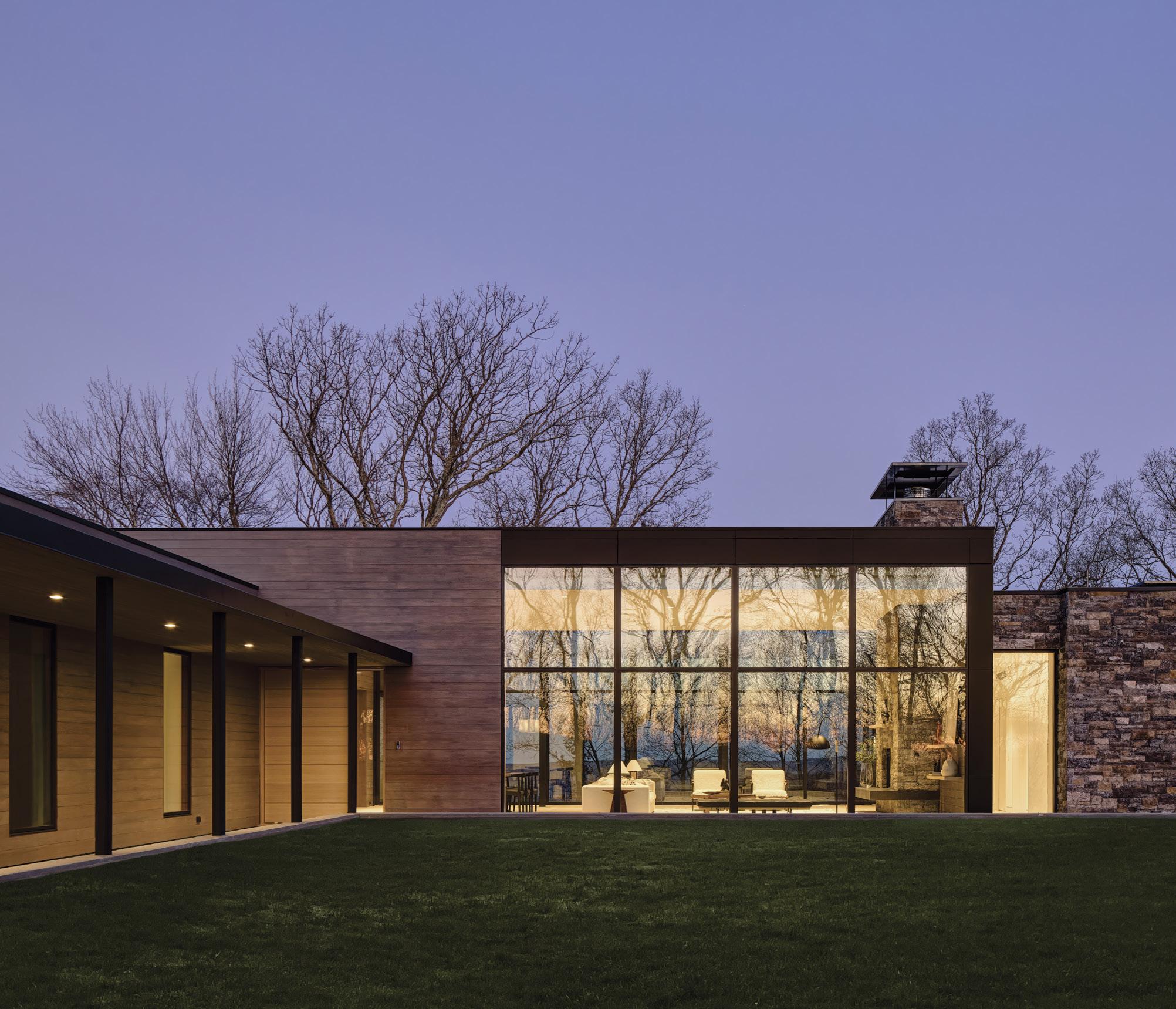
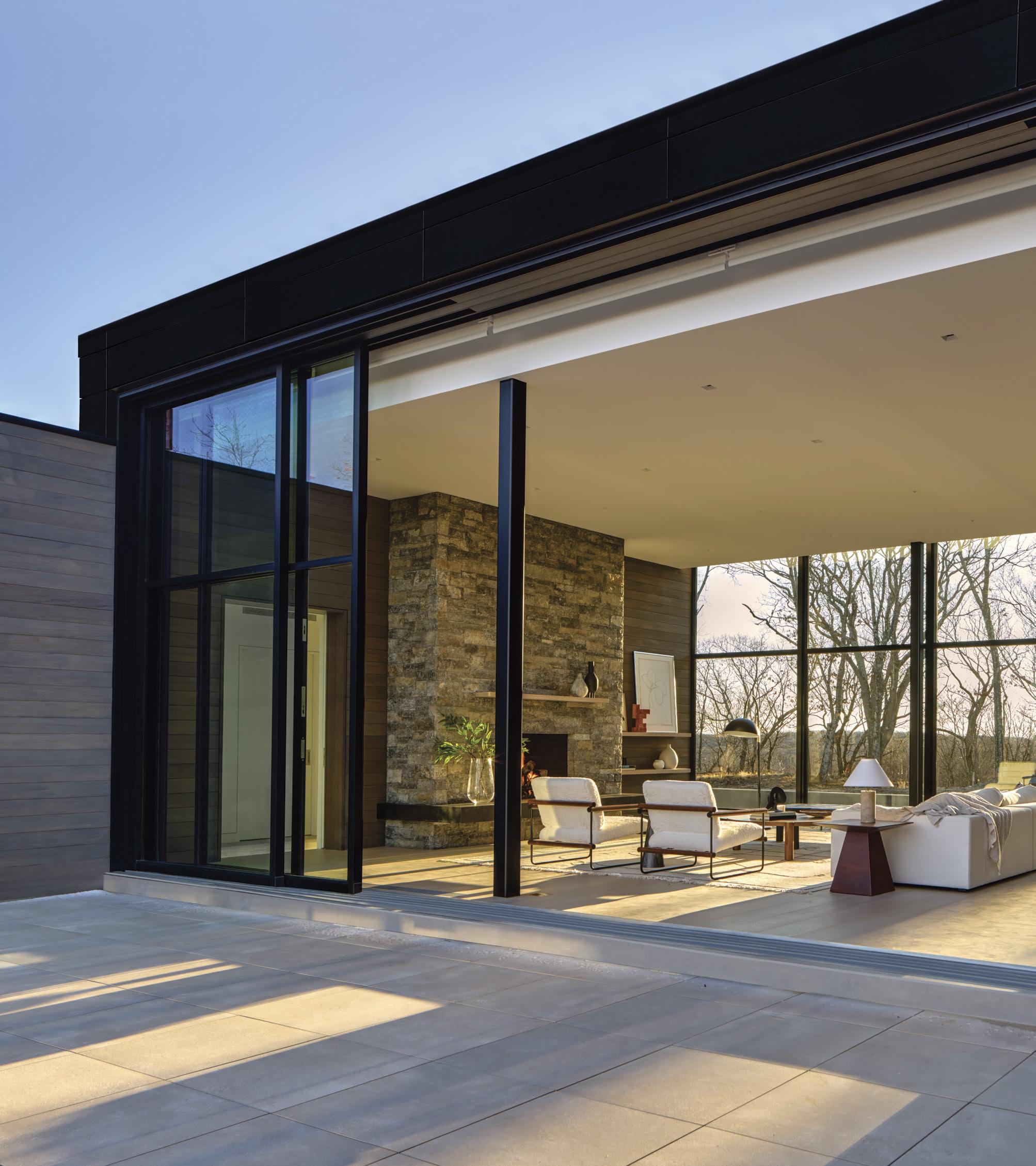
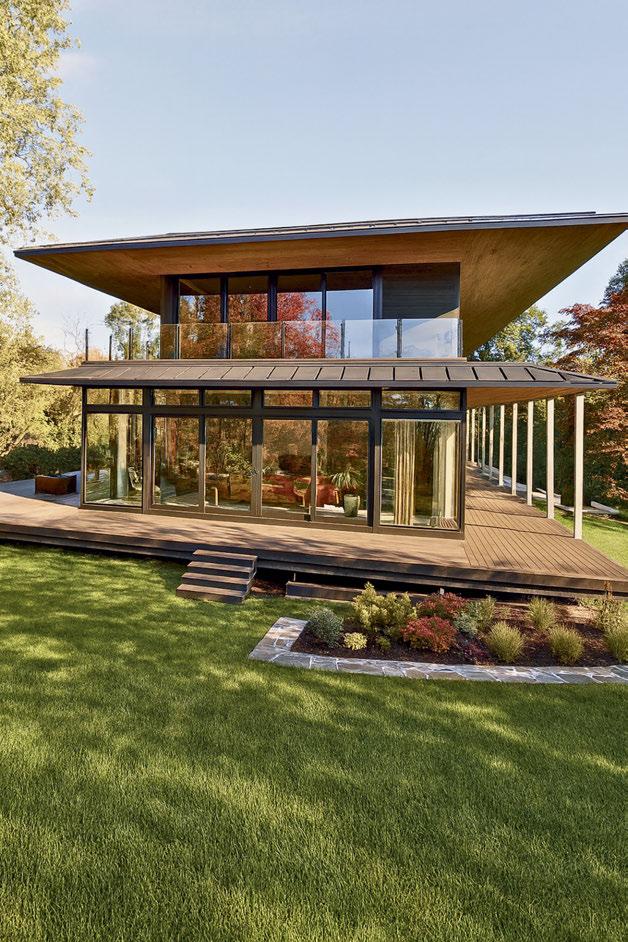
One side of the glass-walled living pavilion faces the property’s only mowed lawn while the other side faces a natural vista of trees and grasses.
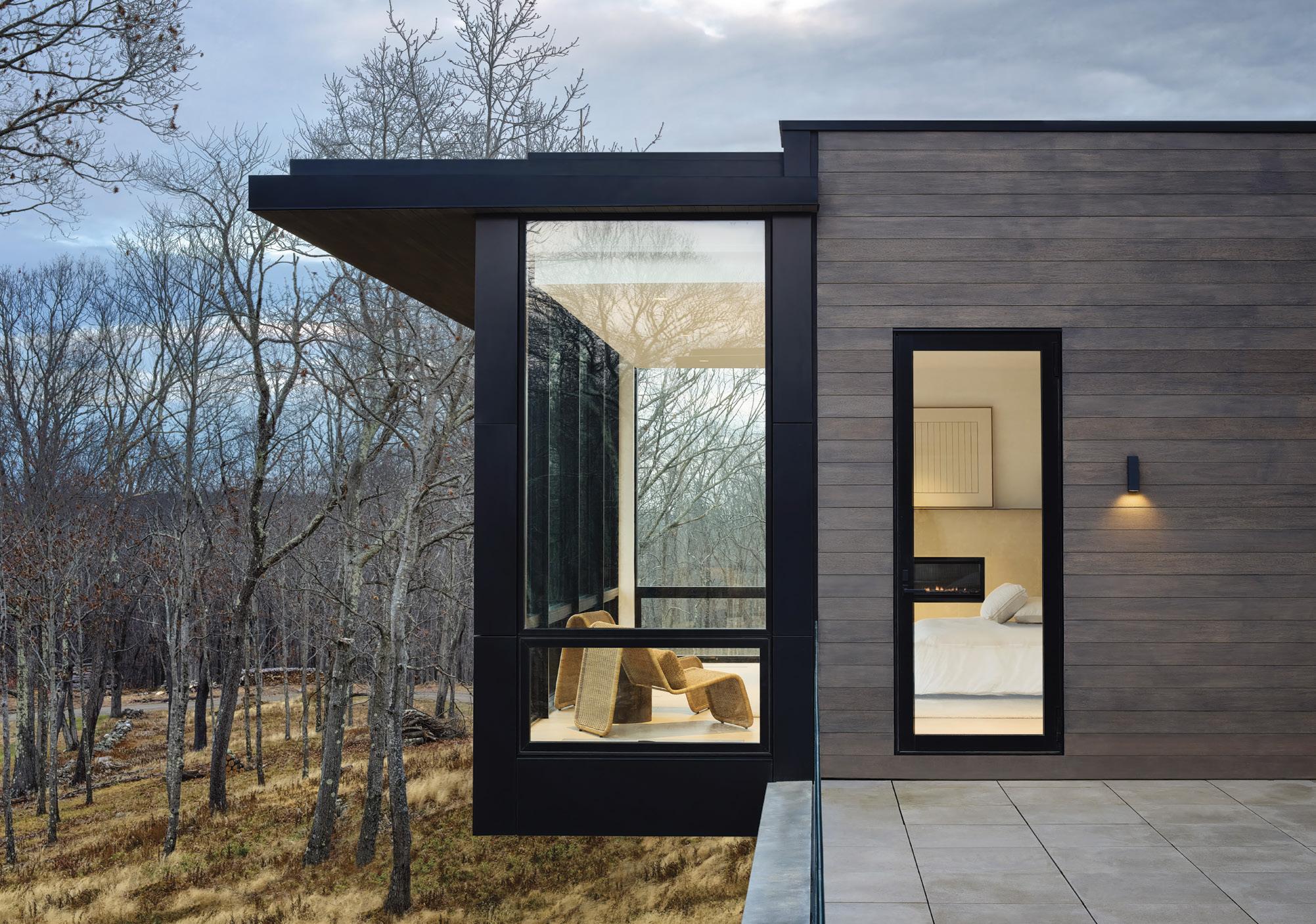
Opposite: Floating above the hillside, the primary bedroom holds the view like a lookout—a modern tree house rooted in memory. Cantilevering the room kept it “in the trees,” says architect Amanda Martocchio.
Toward evening, the hilltop at White Oak Farm turns to silhouette, and the house seems to light from within, a lantern tucked among stone walls and wind-brushed grasses. The living pavilion doesn’t so much stand on the land outside Pawling as hover in quiet deference to it—glass planes catching the fading sky, warm wood gleaming like embered bark. Inside, branches lace the view in every direction, as if the forest leaned close to look back. “The intention was not to necessarily inspire awe,” says architect Amanda Martocchio. “Except perhaps reverence for the landscape.”
Although there’s glass on both sides of the living pavilion, one side faces a geometrically precise lawn, the only mowed grass on the property. The other side faces a natural habitat with native grasses, woods, and a meadow.
“So you get this sense that you’re in nature with one kind of constructed nature on the one side and on the other side, something completely natural,” says Martocchio, whose firm specializes in creating architecture that responds to and harmonizes with its surroundings.
The farm’s rustic views were very important to her client, as the location evoked childhood memories and of the unhampered freedom to roam and enjoy the same hills. “Anytime a client comes to you with a story, it’s really nice as a generator of design ideas, and this is such a beautiful piece of property,” says Martocchio. “When the homeowner was a little boy, he lived not far away. He and his brother would go into the woods and play around. It was not a fully utilized farm and had a lot of woods. There was a lot of playtime, forts, and stone climbing in the woods.”
When the property landed on the market the new homeowner rushed to buy it. “That was a real motivator for me, finding out what he loved about the property,” says Martocchio. “Also, he has always been an equestrian and a horse lover. This property, which was 200 acres, had paddocks and old barns that were derelict. They hadn’t been used for many years. Part of his mission was to conserve the woods and the habitats, but also to introduce a new operation for boarding thoroughbred horses. So, it was not only an aesthetic appreciation, but a functional use that they could impart in this beautiful piece of property.”
The paddocks are visible from the cantilevered primary bedroom, which floats over the rolling hills. “It is like making a tree house,” says Martocchio of her decision to cantilever the room. “It comes back to the owner climbing trees and loving trees so much. By cantilevering that primary bedroom, we kept it in the trees.”
Martocchio’s office in New Canaan, Connecticut, is not far from Philip Johnson’s iconic modernist Glass House, which she has long admired for the way the glass wraps around it. White Oak Farm is a study in wood and stone contrasted with large expanses of glass. “In contrast to the solid stone walls, the bedroom feels very light and floating above the sloping site,” she says.
High on a Hill
The old stone walls that demarcate Hudson Valley hills have always seemed romantic to Martocchio. That stonework inspired the farm’s exterior and interior fieldstone walls. Stone interior walls define the kitchen and a powder room. Expanses of fieldstone surround fireplaces in both the living/dining and keeping rooms. Fieldstone also influences the home’s tranquil interior palette of wintry earthen colors. Much of the stone she used was found on the property.
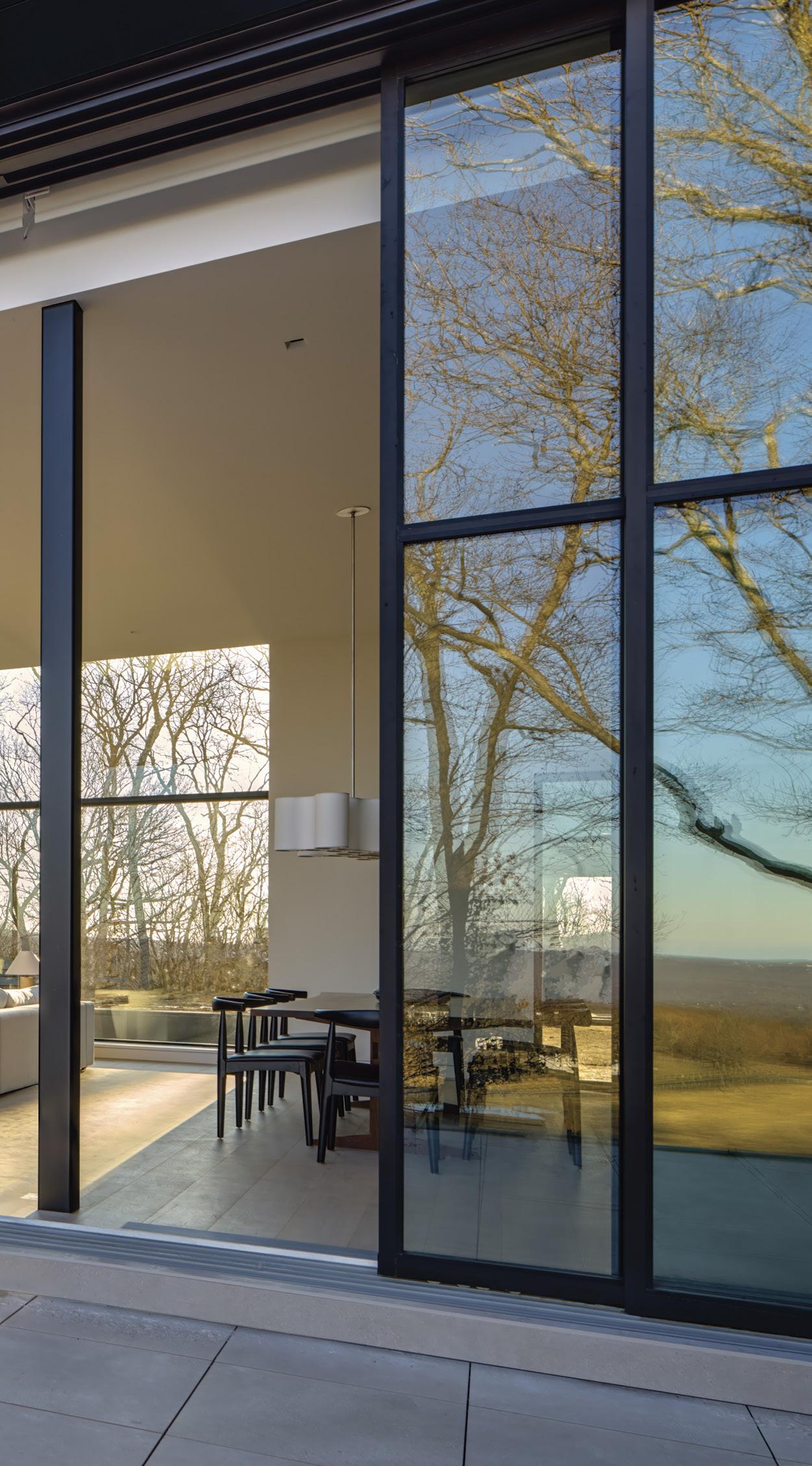
‘I am always looking for durability in exterior materials,” says Martocchio. “Materials that have already aged and have patina and represent weathering are ones that I really like to use and also new materials that are newly innovative that have qualities of durability. The stone started it and then I had this idea of a pre-weathered siding, a grayish siding. Then to add contrast I used black or a really dark brown to highlight and emphasize the shapes. Those are the three main materials. Weaving them from outside into inside through glass walls was the goal to connect outside to inside. For example, there’s a very thin black window, two inches wide. The stone goes through that and reemerges on the interior, the exact same treatment. You really do feel like it’s an extension of the outdoors.”
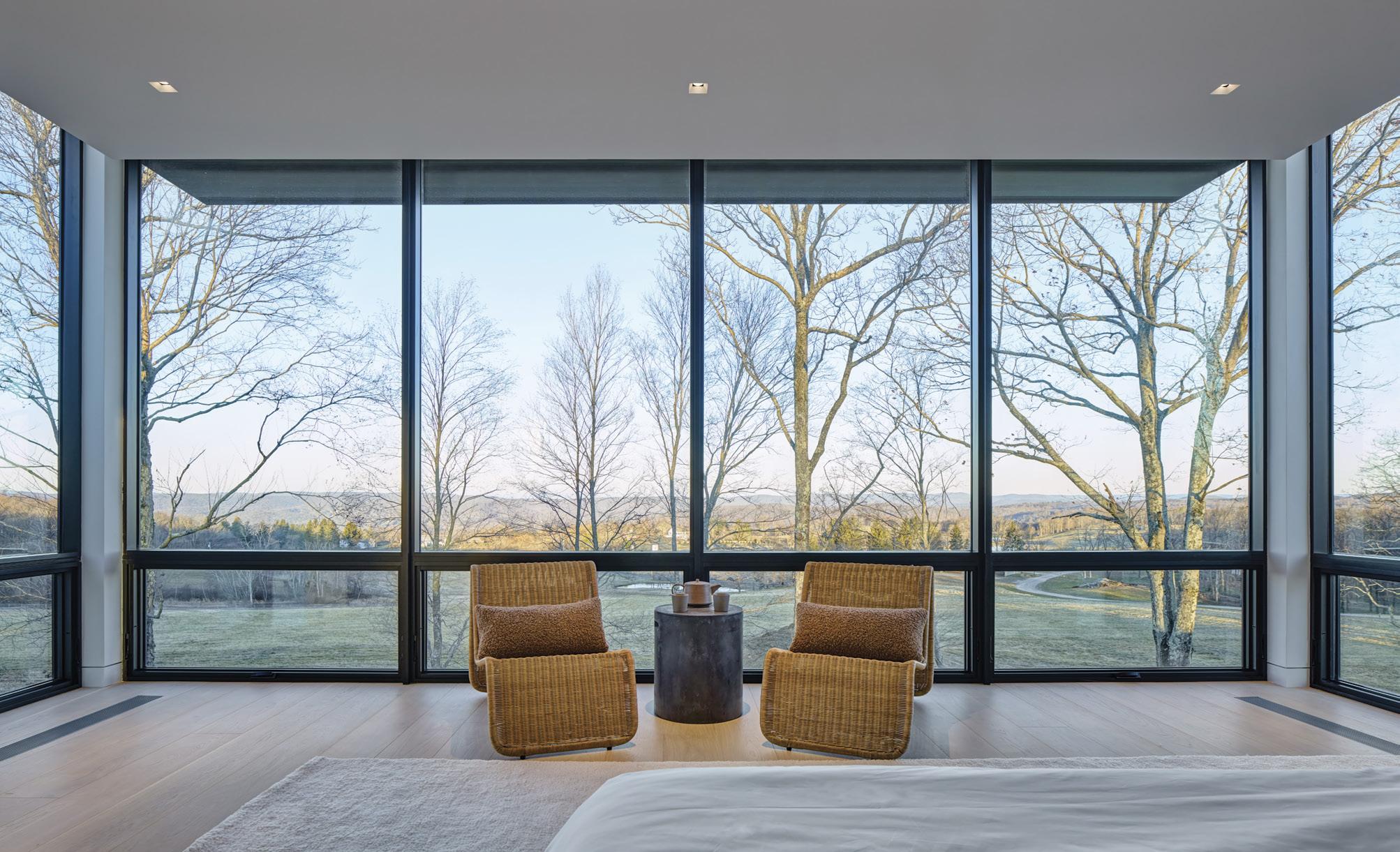
Floor-to-ceiling glass dissolves the boundary between interior and landscape in the living pavilion at White Oak Farm.
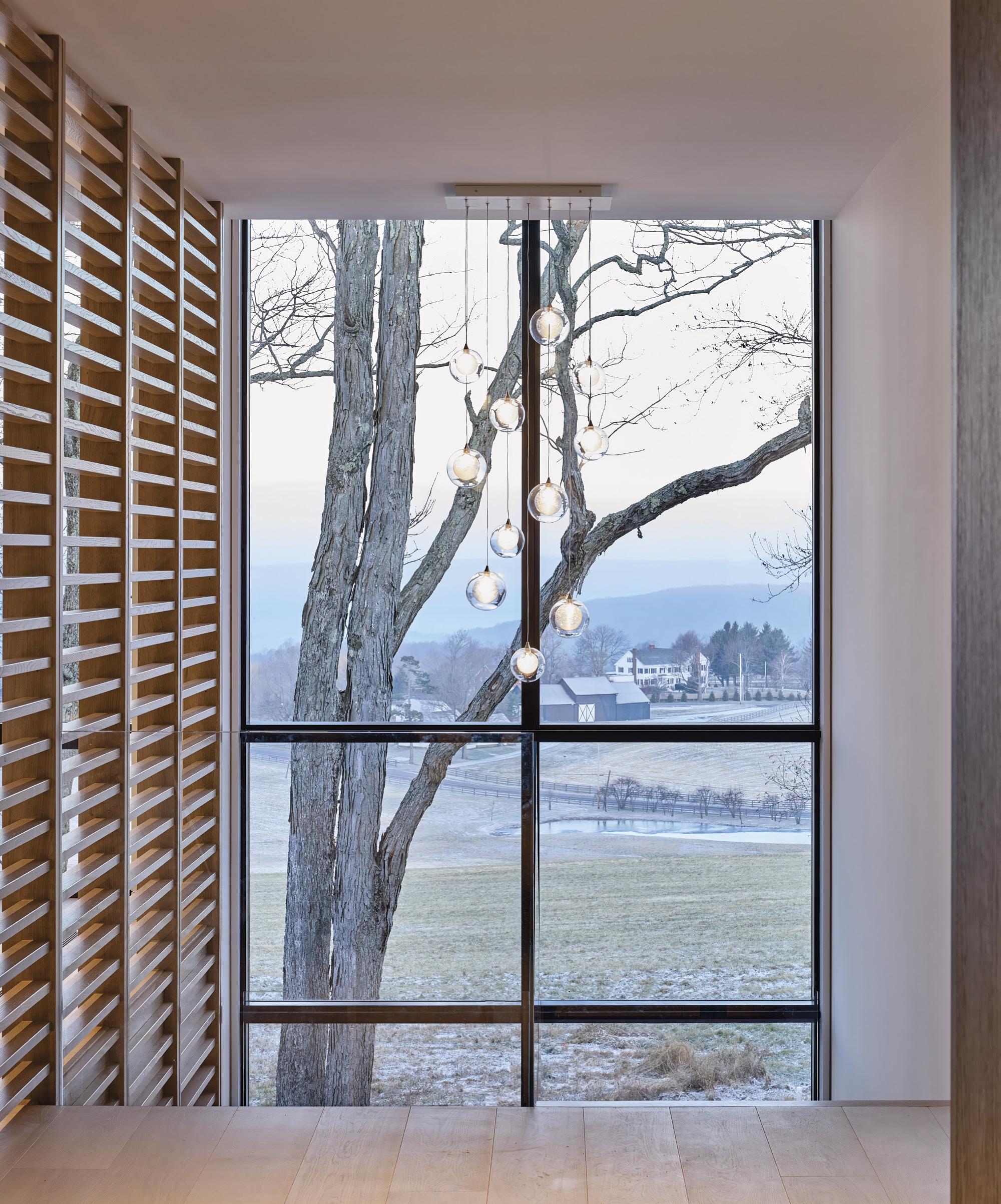
The hanging lights in the stair hall are from Brooklyn-based lighting manufacturer Shakuff.
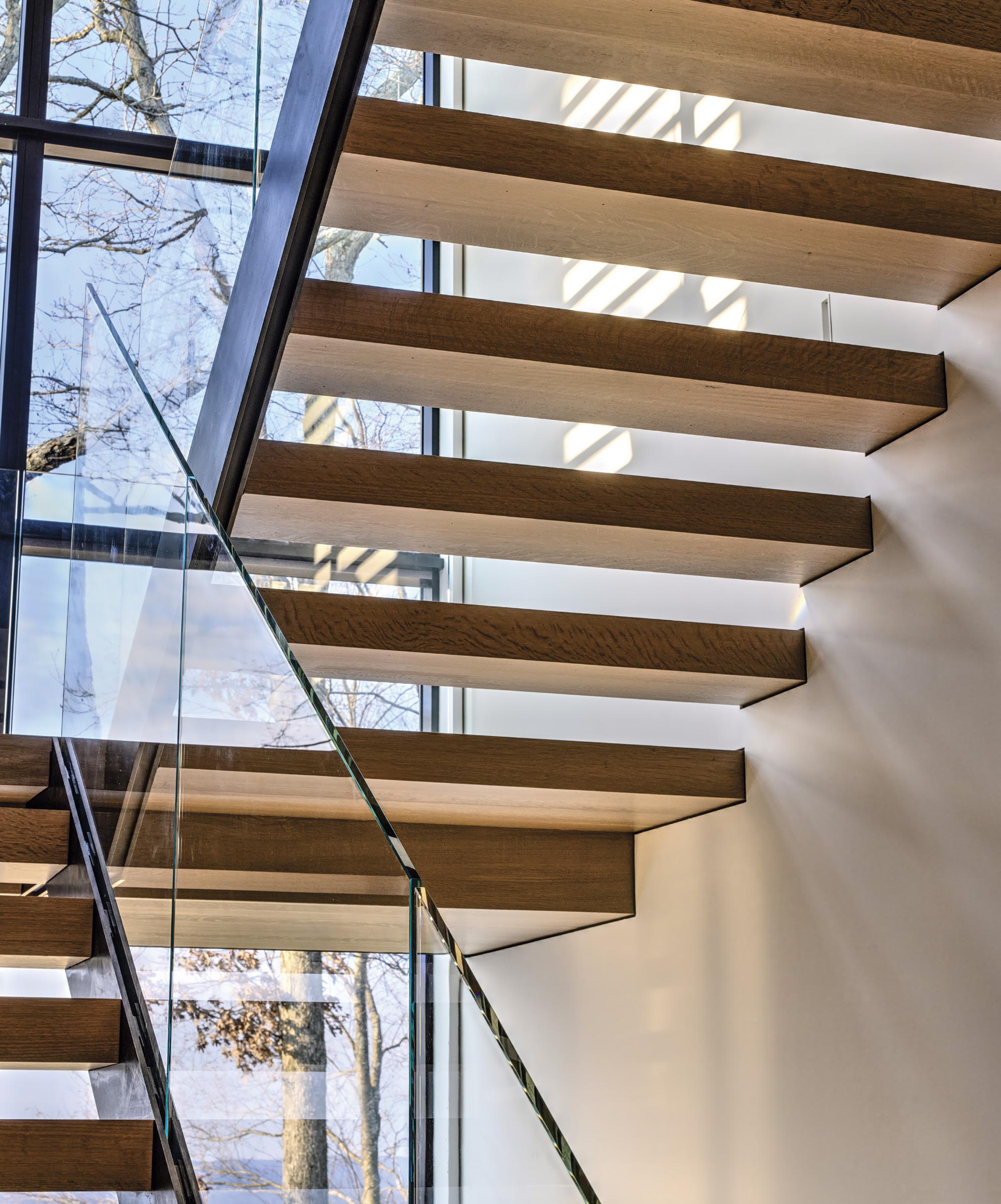
The open staircase to the lower level is enclosed by a glass and wood slatted wall. The contrasting horizontal slats cast beguiling geometric patterns.
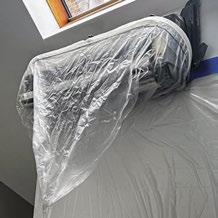
You don’t know what contaminants are hiding in your mini split. Dust, mold, and bacteria build up, polluting the air you breathe. A basic tune-up won’t protect your health. Shelter Air’s Signature Deep Clean Service goes beyond filter rinses—removing hidden contaminants and restoring fresh, healthy air. Don’t wait—schedule your Deep Clean today. Call or text 845.204.8679.
Heating • Co oling • Home Performance
The homeowner wanted to conserve the property’s extensive woods and habitats, where he played as a child.
Perched high on a hill, the home sustains a lot of wind, so extra care was taken to make it thermally tight and conserve energy, using layers of rigid insulation around the roof and the walls and below the slabs. White Oak Farm features highefficiency heat pumps. “From a sustainability standpoint, we focused a lot on energy, indoor air quality, and durability because sustainability is about durability,” says Martocchio.
“If you have to go back and replace something or fix something that’s not well built, you’re using more resources,” said Martocchio. “Trying to be very thoughtful about resources and having them be durable means there’s low maintenance and long-term enjoyment.”
Interior surfaces mirror the exterior siding choice with subtly hued oak cabinets grounding the kitchen. “The introduction of gray worked really well with the stone,” says Martocchio. “And we did a light-colored wood floor. The gray cabinets made a nice contrast, but were also visually soft, again, almost like wood that’s weathered.”
Carefully curated architectural lighting adds a touch of whimsy and subtle glamour. Martocchio worked with Brooklyn-based lighting designer manufacturer Shakuff to find hanging lights for the stair hall and a designer represented by New York City’s Ralph Pucci for the “cloud” light over the dining table.
“It’s almost like a little jewel to find the right light fixture,” says Martocchio. “I’m an architect first and foremost, but I also am an interior designer in that I know that objects, specific objects, can really transform a space, especially with beautiful sparkly light quality.”
Taking Flight
The home has three bedrooms on the lower level. To ensure the hilltop house wasn’t too tall and ostentatious, the design emphasized the horizontal and dropped the lower level into the hill. “The lower level features more stone, which has kind of a heavy quality, so it feels like it belongs in the hill,” says Martocchio. “There are the kids’ bedrooms at that lower level, but in a gesture towards long-term living for the clients and a single floor for their elderly years, their bedroom is on the ground floor. Everything is easily adaptably walked through on the upper level with the kitchen and their bedroom and the living room, while all the teenage kids are down on the lower level.”
The open staircase to the lower level is enclosed by a glass and wood slatted wall, the contrasting horizontal slats making interesting geometric patterns. Descending the stairs involves facing a large window. “The lower level is dropped into the hill, so you feel like you’re taking flight,” says Martocchio. “It’s a very special zone to be in. Rather than opening it up to what’s called the keeping room right next to it, I wanted it to feel like its own space and also to start to reflect the woods around it. The slats give it its own space and kind of interact with the cantilever treads. There is a lot happening there, and it’s all done in oak and beautifully finished, but it’s all about the view. It’s not about the stairs, it’s about the views.”
Built with the help of Works Construction in Millbrook and Gregory Hitchcock Design in New York City, White Oak Farm recently won the architect a 2025 Design Award Citation from AIA Westchester Hudson Valley.
A LEGACY OF SERVICE SINCE 1946
Williams Lumber & Home Centers Celebrates Its 80th Anniversary
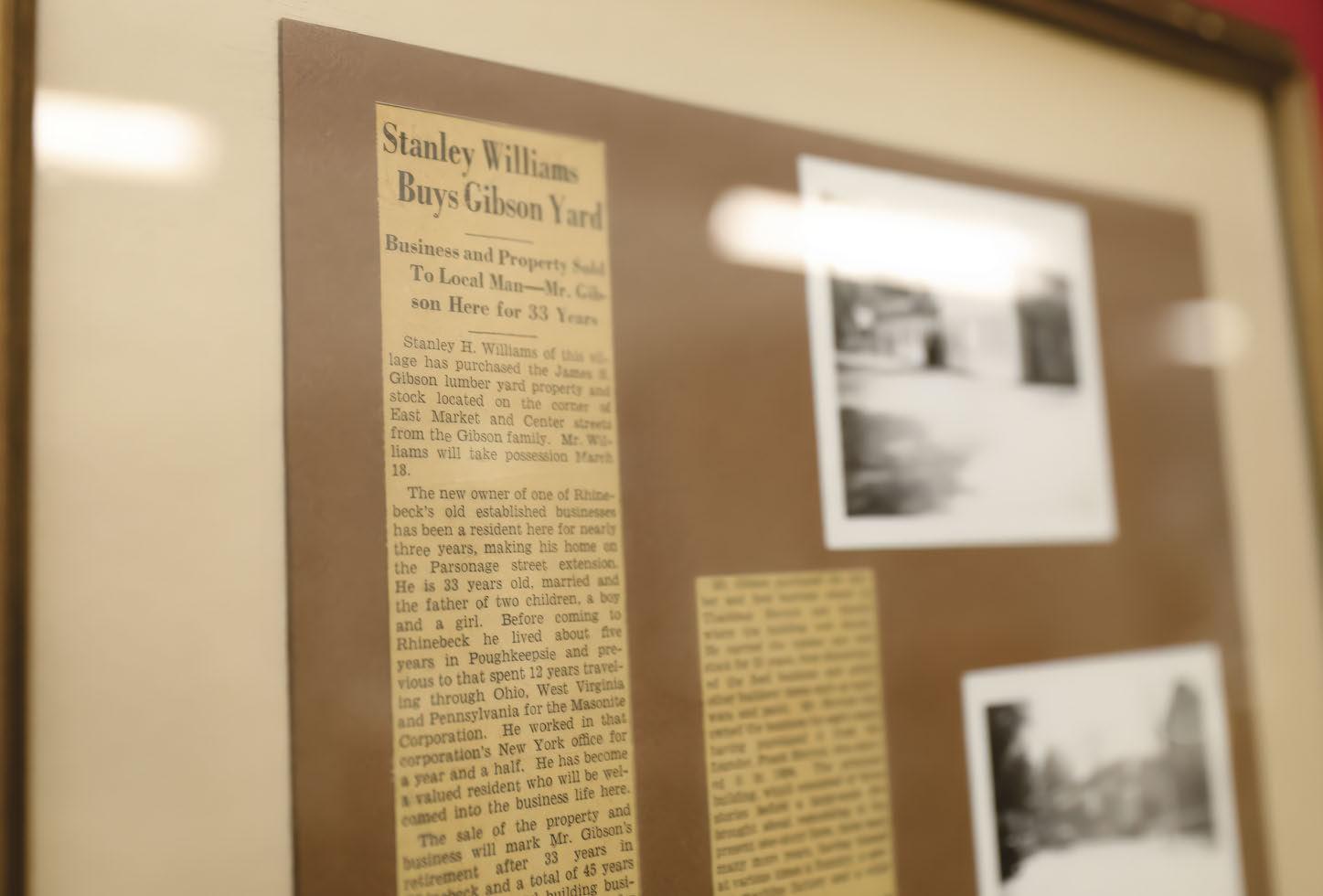
In 1946, a young Masonite salesman named Stan Williams purchased Gibson Lumber on East Market Street in Rhinebeck with the simple dream of owning his own shop. Eight decades later, Williams Lumber & Home Centers has become one of the Hudson Valley’s most enduring family businesses. Throughout the years, the business has grown from that single local lumber yard into seven full-service locations that serve thousands of homeowners and professionals across the region each year.
“This year is particularly meaningful, because as we celebrate our 80th anniversary this winter, I’m reminded that our success is not built on hardware and lumber alone,” says Kim Williams, Senior Vice President of Retail Operations and Marketing and a third-generation leader of the company. “It’s built on trust, community, relationships, and steadfast commitment. We believe in treating every customer like family, and showing our gratitude in action.”
In many ways, the family’s story mirrors the growth of the Hudson Valley itself. When Stan’s son Sandy took over the business in the `80s, new growth
and new stores in Hudson, Hopewell Junction, Tannersville, and beyond followed. Its Rhinebeck flagship remains a cornerstone of the community, and its annual Christmas train display has long been a beloved tradition for many families during the holiday season.
“Even in challenging times, like when our flagship Rhinebeck location suffered a partial roof collapse, our community rallied around us, with staff and neighbors stepping in to help rebuild.” says Williams. “Those acts of loyalty and support remind me every day why we exist.”
The family’s philosophy of hard work and community spirit has shaped every part of the business. Anyone who has stepped foot into a Williams Lumber location knows they can find everything they need for their next project. From Benjamin Moore paint to lumber and building, electrical, and plumbing supplies to Trex decking and other lawn, garden, and outdoor grilling needs, each department is staffed by knowledgeable associates who understand the needs of local homeowners and construction professionals.
For larger projects, the company’s Kitchen & Bath showrooms in Rhinebeck and Pleasant Valley offer personalized design services. Customers can explore cabinetry, countertops, fixtures, and layouts with expert guidance from in-house designers who understand how to balance any homeowner’s lifestyle needs and budget. These showrooms also feature Marvin windows and doors, allowing homeowners and builders to experience the craftsmanship and durability of the company’s premium products firsthand.
“What has kept us in business these many decades is not just our product lines. It’s our unwavering dedication to people, be it our associates or our contractors and homeowners who rely on us, and even our suppliers and store neighbors,” Williams says.
The Williams family is deeply involved in every part of daily operations. Kim works alongside her father, Sandy Williams, the company’s President, and her sister, Kelly Williams, Senior Vice President of Contractor Sales. Their shared leadership ensures that the family’s tradition of integrity,
service, and hands-on relationships continue to guide each decision.
A framed newspaper clipping documents Stanley Williams’s purchase of Gibson Lumber in Rhinebeck in 1946.
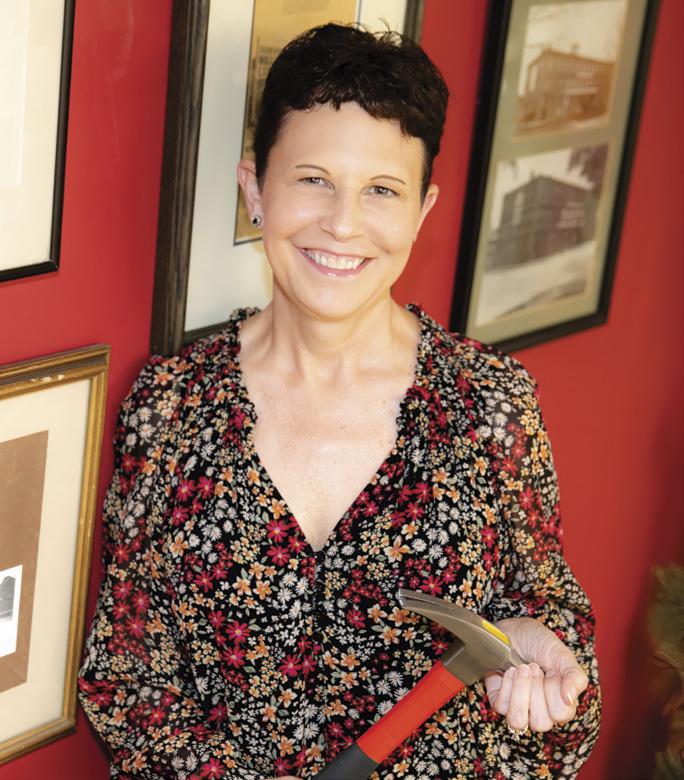
Kim Williams, Senior Vice President of Retail Operations and Marketing and a third-generation leader of the company.
Opposite: Framed photos of three generations of the Williams family.
The company’s dedication to those foundational values has earned it plenty of recognition. Williams Lumber has received numerous accolades, including multiple first place honors in the Chronogram Readers’ Choice Awards and Hudson Valley magazine’s Best of the Hudson Valley for Best Hardware Store, Best Lumber Supply, and Best Paint Store, among others. In 2024, Williams Lumber was even featured in the popular TV show “Designing Spaces Local Edition.”
“These honors don’t just live on plaques in our offices. They live in your experiences, your recommendations, and your loyalty,” says Williams.
“When someone compliments our selection, tells us they’re always able to find what they need, or that our associates made them feel welcomed, that’s more meaningful than any award we could receive.”
“Reaching our 80th year isn’t just about celebration,” she adds. “It’s about gratitude, and reaffirming our commitment to our values of integrity and service—to always help our customers nail it right the first time.”
A Pine Plains Modern Farmhouse Celebrates its Roots Listening to the Land
By Rita Catinella Orrell Photos by Nick Glimenakis
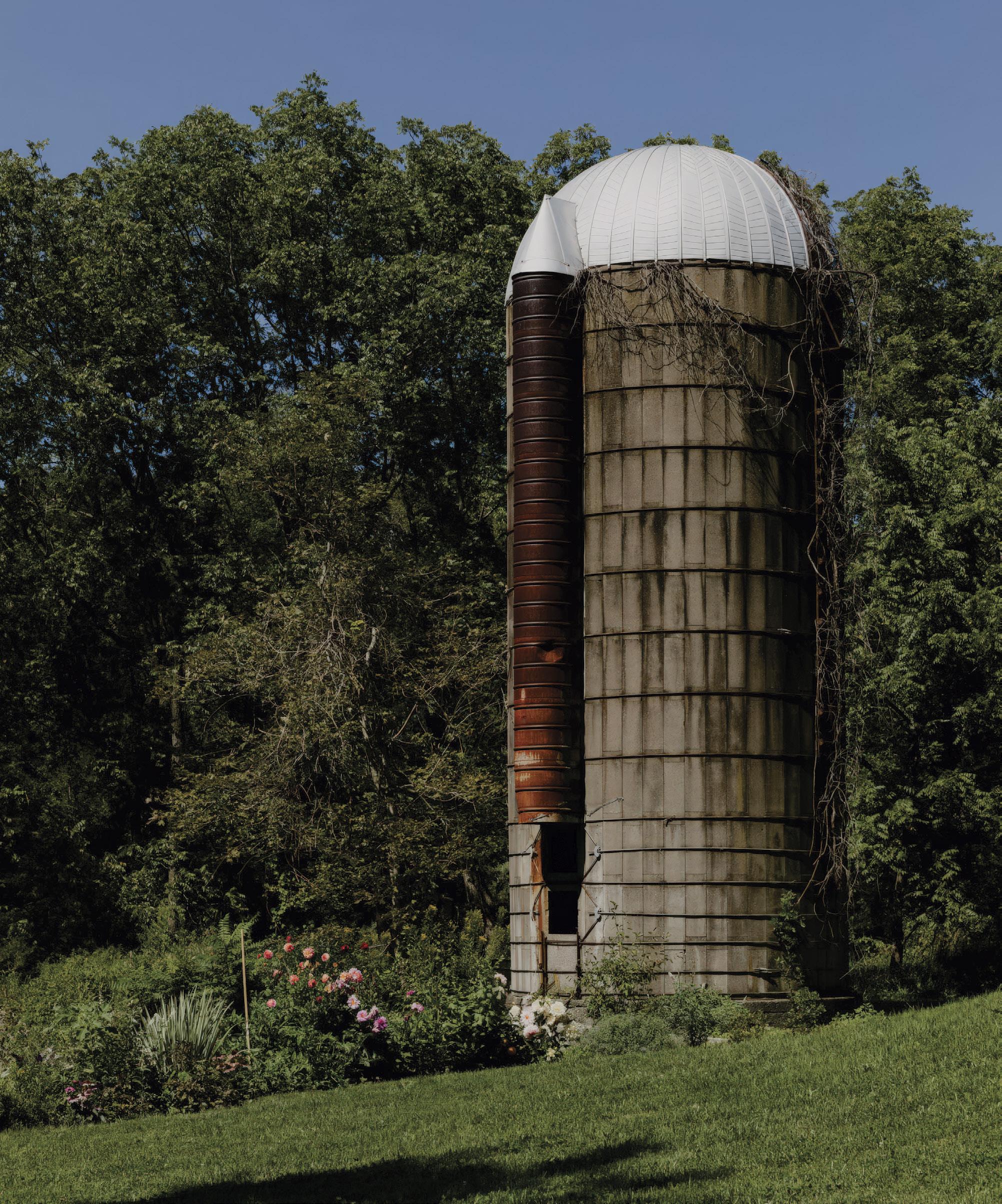
OOpposite: The former grain silo stands in active conversation with the new build—old form, new chapter, same soil.
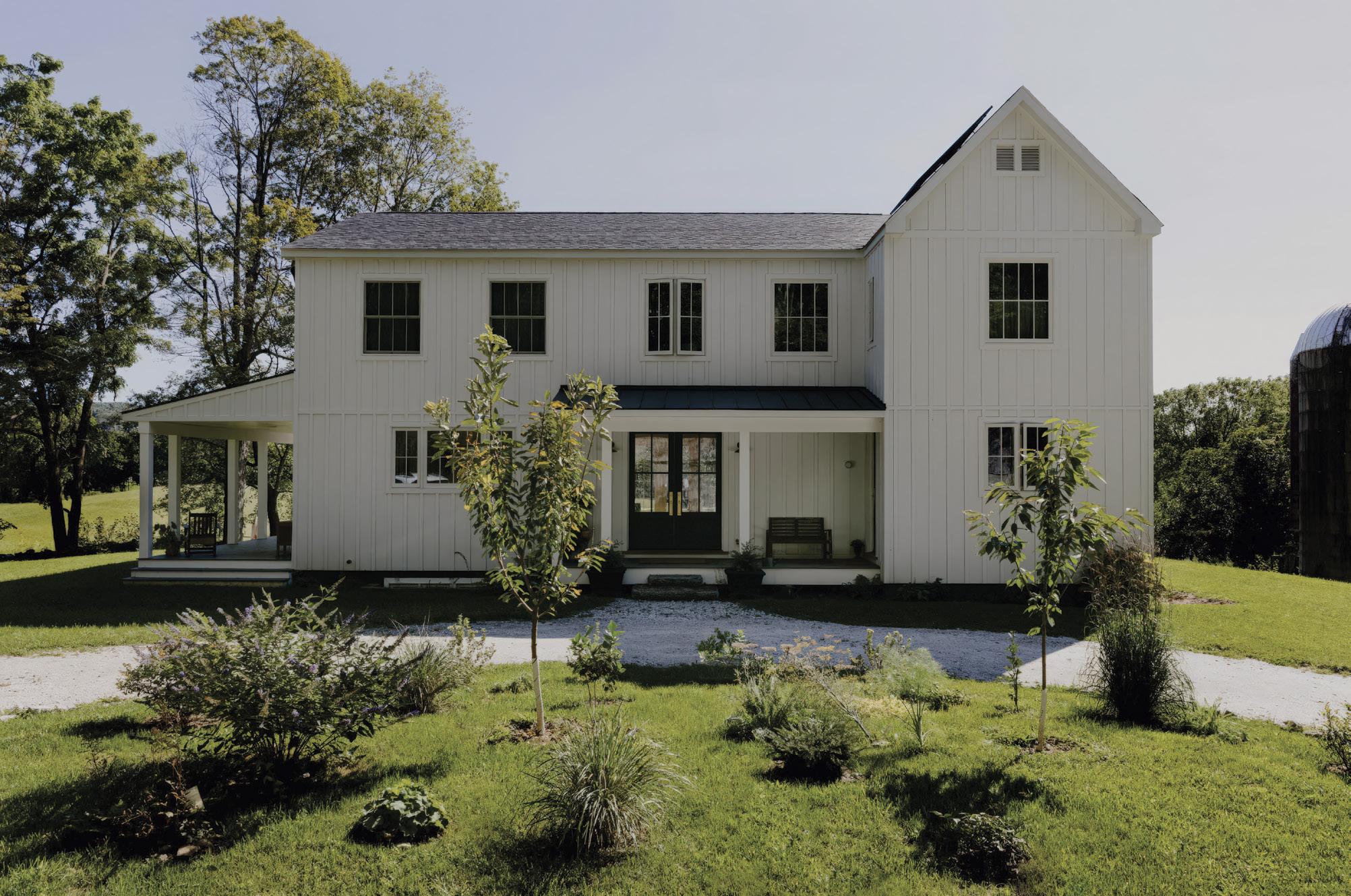
n a fall morning in Pine Plains, the fields glow gold and the lone grain silo holds its ground like a sentinel from another century. Deer slip between the hedgerows; a blue heron lifts off the wetlands. What looks at first like a classic farmhouse—white clapboard, pitched roof, wraparound porch—reveals itself slowly, like the landscape it inhabits. This is a new house on old farmland, designed by Ravi Raj Architect for a family of five and their two rescue dogs. The couple traded New York City for 33 acres of pasture, orchard, and stream, drawn not only to the peaceful sweep of Dutchess County but to the palpable history underfoot: arrowheads, hand-forged horseshoes, and the memory of a Quaker boarding house that once stood here. Their goal wasn’t simply to build a home, but to become stewards of a place with a long agricultural story—and to write the next chapter with care.
While searching for a larger space to call home, the owners fell in love with the Pine Plains area and this particular farmstead. Raj, who met the homeowners through mutual friends, had previously designed three other residences in the Hudson Valley. “They had seen my portfolio and other work that I had done upstate and liked the style and sensibility of my work,” says Raj. “It was kind of a nice fit from the beginning.”
The property was originally farmed for feed corn and is being returned to organic/regenerative farming practices. Currently the fields are used for hay for local horse farms. An organic fruit orchard comprises native apples, pears, persimmons, paw paws, cherries, and peaches. Native nut trees like honey locusts, chestnuts, and hickory have also been planted around the farm and a huge stone-walled garden in the old barn foundation below the silo contains about 1,000 square feet of organic veggies and berries. A trout stream running alongside the
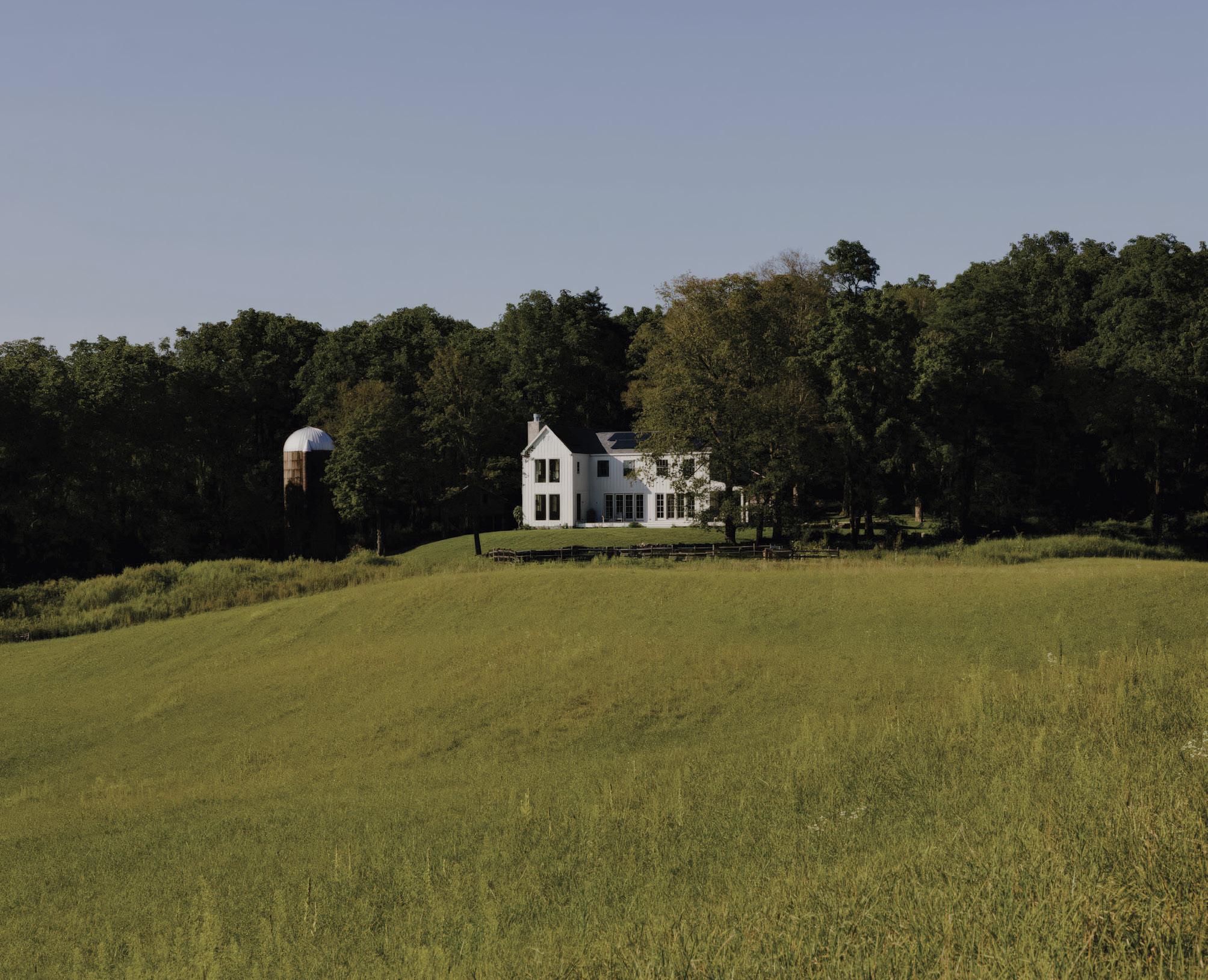
Ravi Raj Architect aligned the new farmhouse with the site’s existing markers, designing in conversation with fields, barns, and the grain silo.
An architectural take on farmhouse vernacular: familiar proportions, contemporary craft, and a stance that defers to land.
Opposite: The dining porch extends the house’s commons outdoors, making everyday life feel continuous with field and sky.
property is filled with crayfish, and the wetlands are home to blue heron, owls, bald eagles, beavers, and river otters.
Inspired by the natural richness of the land and the striking presence of the existing agricultural buildings, Raj specifically oriented the main entry of the house to be on axis with some of the existing barn structures. “That was a starting point for the layout,” he says, “knowing that we wanted the entry to be on that side facing the barn.” The barns, which are currently outbuildings for farm equipment and guinea hens, are in the process of restoration to become garage and studio space as well as a potting shed.
A Curated Mix
While the entry court is framed by the barn structures, the rear of the house opens to an expanse of fields and a meandering stream. “It’s situated in a way that’s both respectful and complementary to the landscape,” says Raj. Blasting was required however, to situate the new house in proximity to the structures. “There was a bit of site work that had to be done there,” says Raj, who worked with Segalla’s Turnkey Housing on the build-out.
Completed in 2022, the 3,600-square-foot, 4-bedroom, 3.5-bathroom home includes a full, finished basement. The house is organized around a T-shaped plan to suit the
family’s lifestyle, optimize structural efficiency, and allow for a clean, open living area on the main floor. Sustainable features in the home include solar panels and heat pumps. The interior is a curated mix of new and antique furnishings and finishes selected by the homeowners, who work in the worlds of finance and fashion. A restrained material palette of stone, oak, and tile sets a neutral stage for the family’s eclectic art and furniture collection. The modern interior offers rustic touches that connect to the surrounding farmland and countryside. The fireplaces are raw cut granite by Stone Resource, Inc. and fabricated by Stone Crafting, both in Amenia.
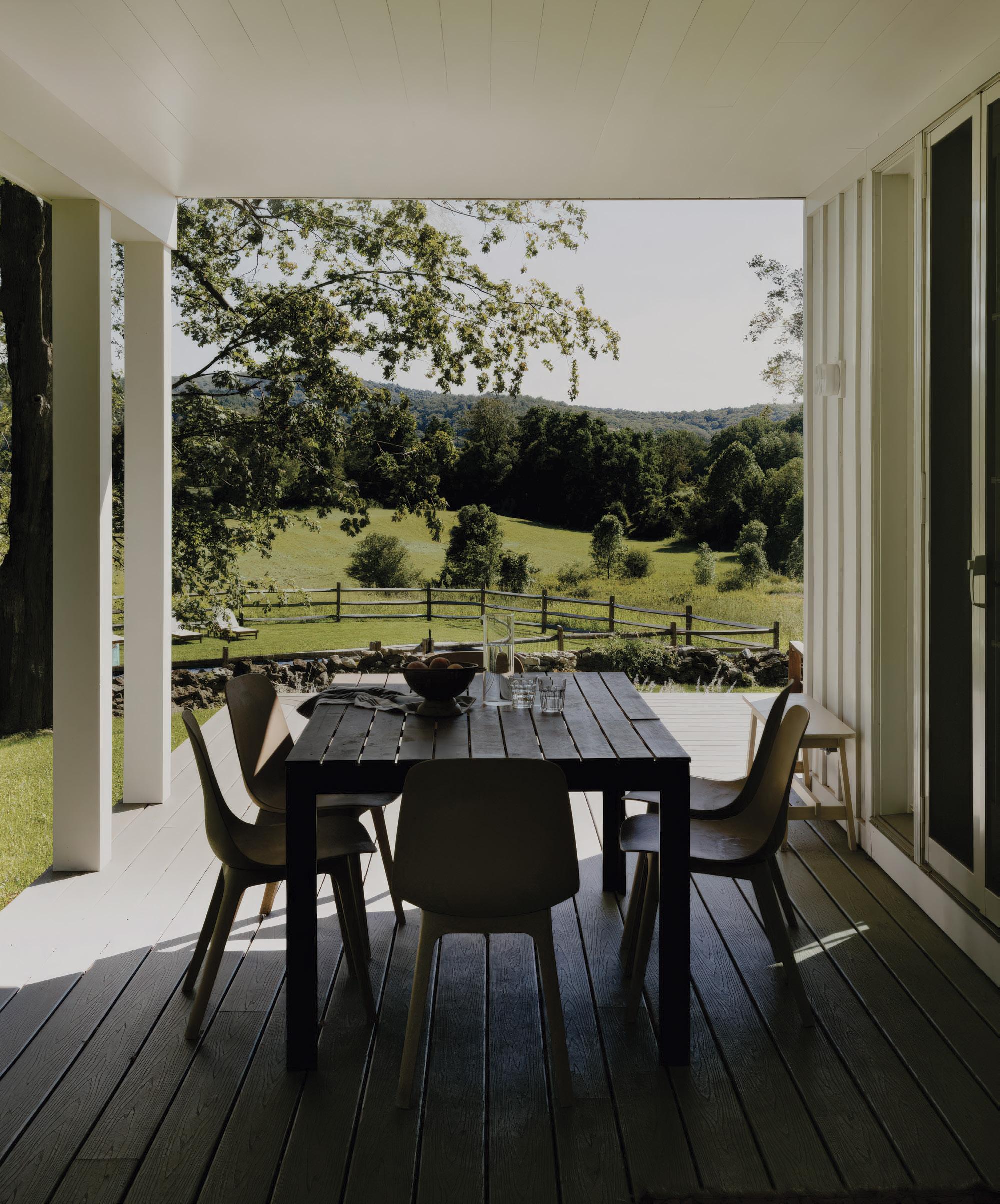
The first floor contains a spacious, light-filled living and dining area designed to encourage communal life and fluid indoor-outdoor transitions. Across from the entry is a sitting room and to the left of that is the dining room with a vintage lamp from Holler & Squall in Kingston. Two sets of double doors lead to both an open porch and a covered porch ideal for dining.
Adjacent the dining room, the open kitchen honors the farmhouse aesthetic with a painted clapboard ceiling, farmhouse sink, and Shaker cabinet fronts from Semihandmade, a company that manufactures prefabricated fronts for IKEA kitchen cabinets. “We were
The view sets the table—distance, daylight, and season serving as the room’s quiet occasion.
Below: Morning light pours straight into the primary bedroom, where wide windows make the pasture the room’s true focal point.
by
Photo
David McIntyre
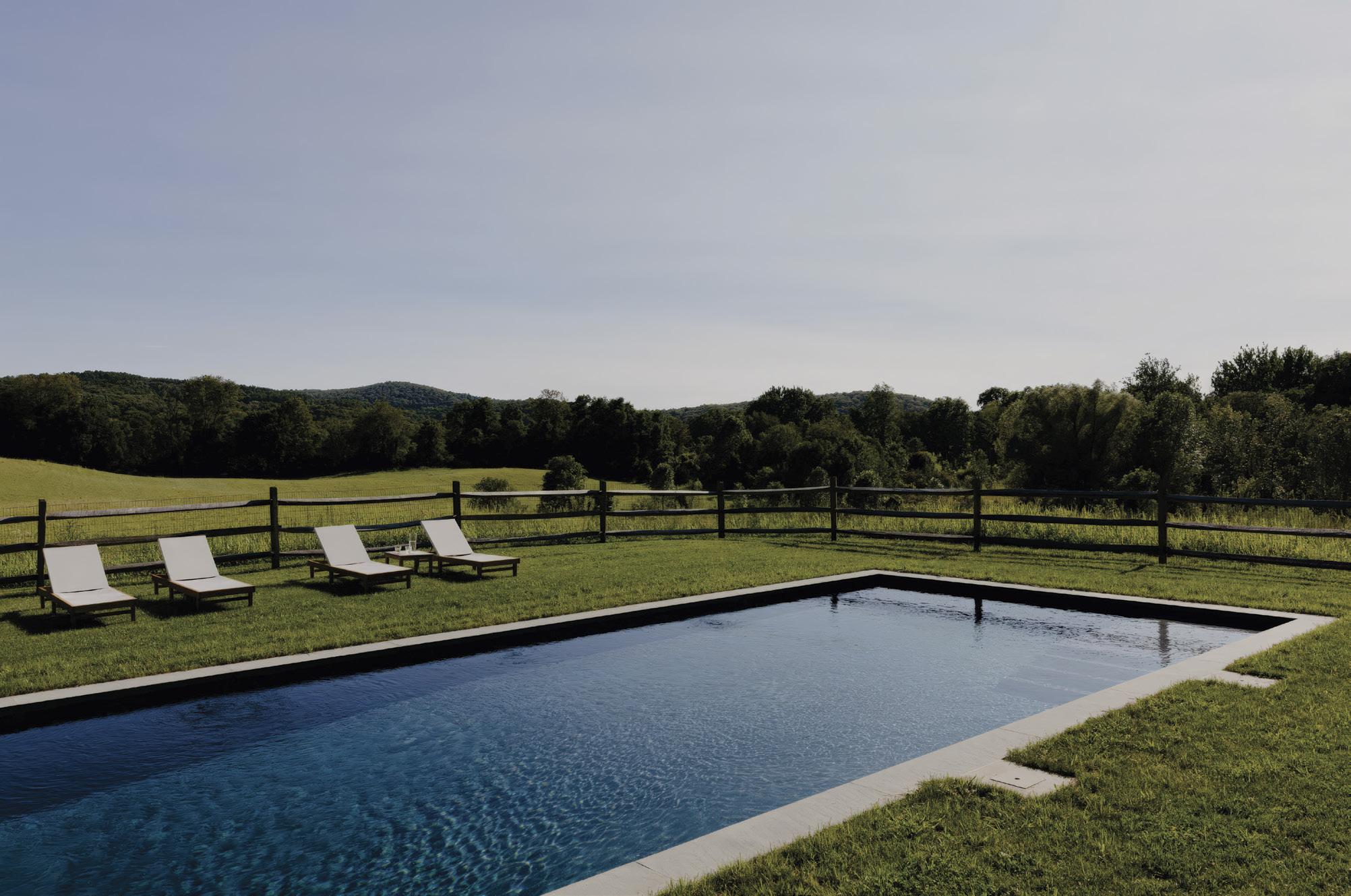
A bluestone pool nestles into the landscape, its reflective surface mirroring the house alongside the pastoral charm of the surrounding farmland.
trying to stay within budget here and do something that was a little bit nicer,” says Raj. A scattering of Turkish-style rugs on the kitchen floor gives a bit of texture to the space.
On the opposite side of the kitchen island is a space for seating and a small shelf for cookbooks. A professional-style faucet from Kohler and a pendant from Luceplan offer modern touches. “We tried to center the kitchen sink on the window to look out directly onto the entry area, which is nice because you can see people coming or going,” says Raj.
Finishing out the first floor is a living room with a wood burning fireplace, a home office, a mudroom, and a powder room with a brass faucet, Mudd Concrete sink, and Fornasetti wallpaper.
Next to the entrance is a custom oak staircase with tapered wooden dowels designed by Raj to be contemporary but also somewhat traditional. Built by Dutchess Millwork, the wooden balustrade continues up to the second floor, framing a cozy reading area above. Four bedrooms on the second floor offer panoramic views of the surrounding landscape, each oriented to maximize natural light and frame key site features.
The primary suite includes another fireplace, a walk-in closet, and en-suite bathroom. The bathroom’s double vanity sink—with Carrara marble top—and Randolph Morris tub were sourced by the owners. “They wanted the vanity and
the tub here to feel like furniture elements within the space,” says Raj. The suite commands a privileged view over the barns and farmland, with large windows in both the bedroom and bathroom capturing the agricultural setting as a daily backdrop.
The home is clad in white board-and-batten Hardie siding, a durable material choice that echoes the vernacular architecture of regional farmhouses. While a pitch-roof aesthetic is present in the front of the house, it doesn’t dominate the facade, and the windows are accentuated with divided lights to make them feel more harmonious with the setting. A generous wraparound porch invites outdoor living, allowing the family to dine al fresco or relax overlooking the gently sloping fields. “In every space, you try to make sure you are taking advantage of the landscape,” says Raj.
Just downhill from the residence, a bluestone pool nestles into the landscape, its reflective surface mirroring the house alongside the charm of the surrounding farmland. It is surrounded by a wood fence by Stanford Fencing, who also did all the raised garden beds. “I appreciate how minimally the pool touches the landscape,” says Raj.
This contemporary farmhouse is not only a new home but also a respectful continuation of the site’s story—merging the traditions of rural life with a thoughtful, modern design for its next generation of caretakers.
COLLABORATIVE VISION BEHIND THE SCENES OF THE TOP-SELLING REAL ESTATE IN THE HUDSON VALLEY AND CATSKILLS HUDSON
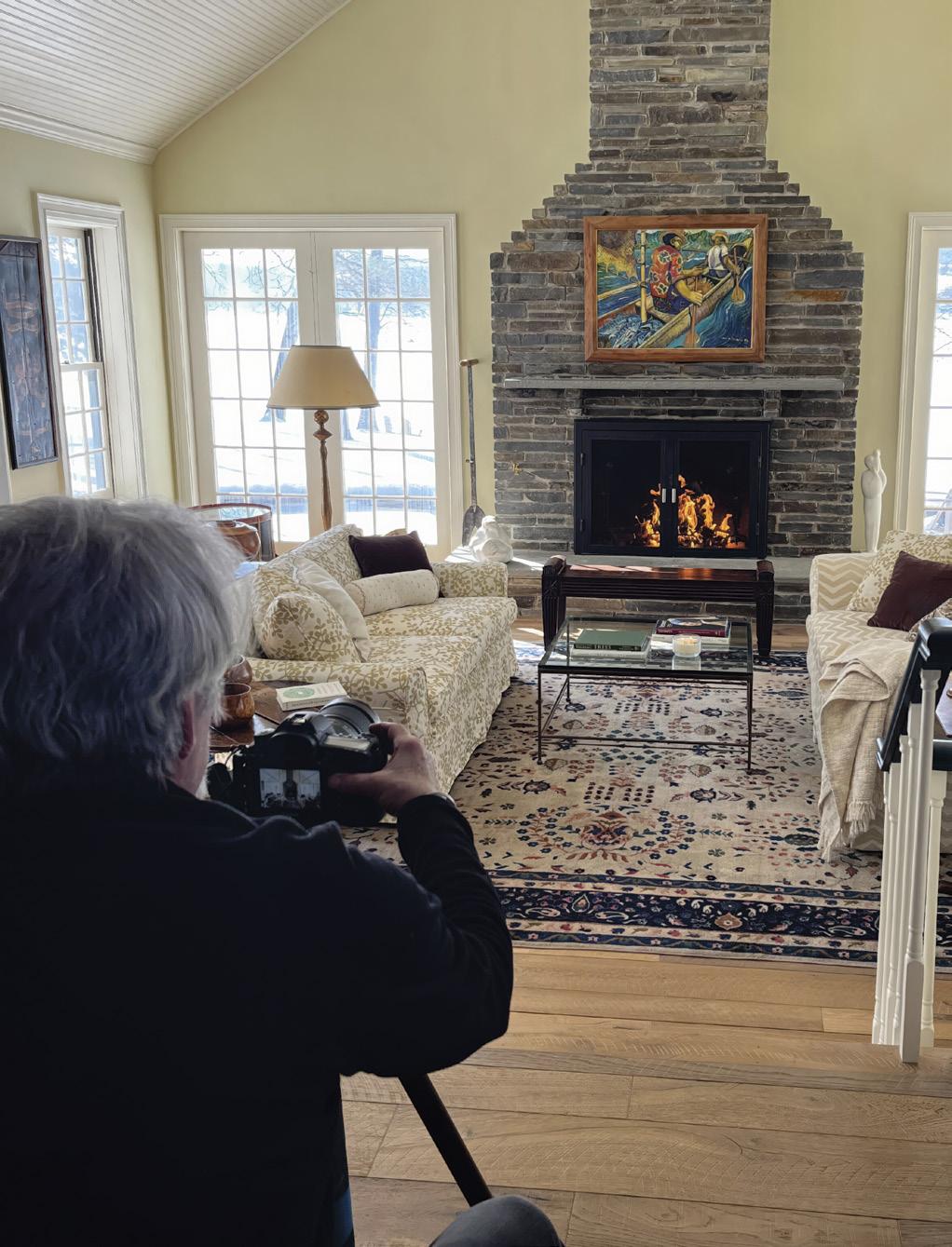
Clear, bright, winter light spills through the windows of the seaglass-hued study of a sprawling Arts and Crafts-style home in Cooperstown. Hillary Kolos, an agent with the Upstate Curious Team at Compass, and Jeni Gomez, the manager of the affiliated Curious Guesthouses business, pour a glass of whiskey into a snifter and place it on a table near the stone fireplace. Next to the glass, they strew a few puzzle pieces, artfully plucked from the one the property’s owners had left completed on the table. After two days of staging the stately home overlooking Otsego Lake, they were ready for the team’s staff photographer, Phil Mansfield, to begin capturing the intimate essence of the room.
Scenes like this play out almost daily across the Hudson Valley and Catskills, where Upstate Curious has become synonymous with a new style of real estate rooted in editorial-style storytelling, community building, and collaboration. In just six years, the brokerage team has grown from a solo shop run by associate real estate broker and Upstate Curious CEO Megan Brenn-White to a team of 36 agents supported by nine full-time staff, including three dedicated transaction coordinators who help agents keep track of all the moving parts of a sale.
In 2024, they held the number five spot for “mega teams” in New York State (number one for teams outside of New York City) according to RealTrends. In 2025, they are on track to have worked with nearly 400 clients to sell over $250 million in property.
Ask Brenn-White about those statistics and pretty quickly, she’ll pivot back to the people on the team. “There’s no question that our
The editorial-style staging, styling, and photography for this modern home in Hillsdale exemplifies Upstate Curious’s collaborative approach to listings, which draws on the team’s diverse career experiences and passions.
Opposite: In preparation for listing this luxury home in Cooperstown (currently on the market, and also featured on the cover), the Upstate Curious team spent two days staging and styling the home for photography.
agents are exceptional as real estate advisors. Our selection, training, and support processes ensure that. What makes our team different is our culture of collaboration within and outside of the team, something that has played a less visible role in our success,” she says. “So many team members have had amazing careers before coming to real estate—and a lot of passions outside of work. They bring all of that experience and diversity to the table, which helps us learn from each other and be able to match clients with a great agent for them. And honestly, it’s also a lot of fun.”
Discovering a Seller’s Story
When the Cooperstown property—a luxury home with just shy of 15 wooded acres and 500 feet of private lake frontage— was referred to Upstate Curious by another Compass team in Washington, DC, Brenn-White, Kolos, and Gomez headed to Otsego County to explore.
They weren’t just there to catalog square footage and the home’s many historically minded details. They spent the day getting to know the village in more depth—grabbing lunch in the greenhouse cafe at Origins, browsing houseplants and handmade gifts at The Local Bird, and making note of cultural landmarks to add to the listing. They put together a town guide to help prospective buyers and the team’s nearly 72,000 Instagram followers get familiar with all there was to love about Cooperstown as well as the house itself. “It’s not just the Baseball Hall of Fame,” jokes Kolos, a senior agent who lives in
neighboring Schoharie County and was the team’s natural fit for the seller’s agent.
After getting the lay of the land, they sat down with the sellers at their home to dive deep into what they love about the house and town where they’ve lived for over 20 years. They raised their two children there and dedicated themselves to community service—volunteering for the Glimmerglass Festival and serving on multiple arts and cultural nonprofit boards, including Hyde Hall and Otsego 2000.
“The sellers are so involved with Cooperstown and have a lot of connections to the community. I really just gave them space to talk about their lives there,” says Kolos, “We always listen for what might appeal to potential buyers. It could be hiking trails in Glimmerglass State Park, the restaurants, the various golf and sports clubs, the museums, you name it.”
This level of storytelling has become a hallmark of Upstate Curious’s process. It’s also been integral to their continued success as the team has grown to cover 14 counties, focused on the second home market within approximately three-anda-half hours from New York City and a large market share in Ulster County where they are headquartered.
“Because we work almost exclusively with weekenders or new residents, we’re constantly exploring the region and trading tips about restaurants, great hikes, or new small businesses,” says Brenn-White. “To me, it’s nearly as important for all of us to be able to share that love and deep local knowledge for the region as it is to have our processes locked down.”
Making a House Feel Like a Home
Anyone who has ever drooled over an Upstate Curious listing on Instagram may not realize the staging, styling, and photography work that goes into making every house so aesthetically appealing.
Staging and styling are particular passions of senior agent Kate Quintard, who holds a BFA in Design from the Savannah College of Art and Design and worked in New York City as a fashion designer for almost a decade before getting her real estate license and quickly becoming the top agent at a major brokerage in the city.
When she moved to the Hudson Valley and joined the Upstate Curious Team, she naturally gravitated toward staging and styling homes in preparation for their listing photography, and she now often collaborates with other agents to get their own listings camera-ready.
With two storage units and a barn filled with furniture, linens, and art objects sourced from antique shops and local makers, Quintard’s staging library can outfit homes with all the things that make a listing photo pop—and her truck is almost always chock full of things she’s taking to or from a listing.
“We want every space to feel lived in, not sterile or staged within an inch of its life,” she says. Things that look good in person don’t always photograph well. The old-school staging approach where everything’s perfectly in place makes it
difficult for someone to imagine themselves in a home. People don’t decorate like that—or live like that—anymore.”
Her version of lived-in chic might include an artfully unmade bed, a book and a cup of coffee on the nightstand, or a handmade vase from a Hudson Valley ceramicist filled with flowers and grasses foraged from the property. “It’s editorial, not cookie-cutter real estate,” she says. “Our goal is to make a space feel authentic.”
Staff photographer Phil Mansfield, a lifestyle and food photographer who has shot for the New York Times, Food & Wine, and Vogue Living, was looking for new opportunities when the pandemic put his job with the Culinary Institute of America on pause. “Serendipitously, Megan saw a house I had shot for a friend and fell in love with my style, and wanted it to be the underpinning of the visual style of Upstate Curious listings,” he says.
For Mansfield, authenticity in real estate photography can happen in a single imperfect moment that allows him to build an entire story. “Most real estate agencies want you in and out in an hour, but Megan has always let me spend the full day shooting if I need,” he says. He cites French photographer Henri Cartier-Bresson’s concept of “the decisive moment” as his creative touchstone. “I’ll walk into a room and set up my camera and then wait for some sort of magic, like light streaming through a window,” he says. “I’m constantly looking for those unknowns that I didn’t know
Senior agent Kate Quintard carries a vase of flowers as part of styling one of her listings.
Staff photographer Phil Mansfield composes a shot at the home in Cooperstown.
Opposite: Like many members of the Upstate Curious team, agent Nigel Hall has developed deep ties to his community in the Catskills. Agent Hillary Kolos visits the Cooperstown property.
Upstate Curious Team at Compass Upstatecurious.com (838)-UPSTATE Info@upstatecurious.com 5145 US-209 Accord, NY 12404
were going to be there.”
“A big part of our job is to get the highest price for our sellers,” says Brenn-White. “We always say that the first showing is online. A house has to look amazing in the photos to get someone to want to ask questions or schedule a showing. This is only getting more important, and we keep adding resources to help our agents make their clients’ homes look great. There are weekly office hours with Phil, a network of vendors, plus a growing library of styling items and furniture.”
Making Friends Out of Neighbors
Many agents are deeply involved in their towns— volunteering, coaching, and participating in local nonprofits. Nigel Hall, an agent who moved from New York City to Bovina with his family last year after years of weekending, sits on the board of Parks and Trails New York, coaches youth soccer, and is training with Catskill Search and Rescue.
“Going from a city of 8 million to a town with 600 people, you learn the importance of relying on your neighbors. We’ve become good friends with people who have been here for seven generations, and that’s so wonderful,” he says. “These relationships we’re building really help us understand the history and character of the towns that we’re working in every day.”
Hall also says that his knowledge of his community is vital to advising prospective buyers, who may think of “upstate”
as a monolith, on towns and areas that would be a good fit for their lifestyle. “People want to feel more of a sense of privacy here, but they also want a connection to their town,” he says.
Of course, getting involved in community and civic life comes with the natural perks of discovering new homes and new neighbors, who often will choose to work with a real estate agent they know. For Hall and his colleagues, however, staying engaged is both natural and essential—an extension of the team’s passions for people and place.
“My philosophy has always been that if it’s good for the community and/or if it’s fun for us, we know it will also help the business. Ultimately, that means I can dedicate resources to some pretty awesome things,” says BrennWhite. “I help coach (i.e., hassle) the agents to take time to do the things that make them happy because this field and their driven natures mean that the natural inclination is just to work all the time. If they do what they love outside of work, they’re going to be happier and can create the business they want.”
As Upstate Curious continues to grow, Brenn-White remains focused on keeping its namesake curiosity at the center of everything. “It’s one of our core values for a reason,” she says. “For us, curiosity means learning new things, being creative, collaborating with each other, and loving where we live. Our team culture is a far cry from most of what you see on real estate reality shows—and we love it that way.”
In the 1970s and ‘80s, architect Isabella Gillon designed multiple homes in the shadow of the Shawangunk Mountains, then built her own dream property on 24 idyllic acres backing up to the Mohonk Preserve. When Lowell Deutschlander—one half of Plum Design Group—was approached by the home’s new owners to help with a redesign, it felt like serendipity. He’d grown up in another of Gillon’s houses nearby and knew the neighborhood—and Gillon’s design quirks—well.
ROOTED IN PLACE, REIMAGINED IN LIGHT
Plum Design Group revives a beloved Shawangunk-side home
By Mary Angeles Armstrong
Photos by Nora Scarlett
When Hudson Valley natives Lowell Deutschlander and Jesse Meisler-Abramson founded Plum Design Group, a drafting and construction management studio, they aimed to create organic, locally referencing designs close to home. They didn’t realize, however, just how close to home their work would bring them. “I like architecture that tells me where I am,” explains Deutchlander of the studio’s inspiration. “That can mean fitting into the surrounding natural landscape, or the vibe of the existing built environment. We wanted to work within natural parameters without erasing the past.” For Meisler-Abramson, Plum Design emerged from his growing environmental awareness and the hopes of working with others who love the Hudson Valley and Catskills region as much as he does. “We both grew up here and care for this area,” says Meisler-Abramson. “We love working with people who care about this place too—even if they ’ve just discovered it.”
The team collaborated with landscape designer Maria Vigna and Earth Designs Cooperative to add soil, new plantings, and hardscaping throughout the 24-acre property. They removed the pool (it’s now a stone patio), but improved the access to the lake with a pebble beach. Native plantings tie the garden and yard to the surrounding forest.
Opposite: Plum Design Group’s main objective was to add light and a feeling of spaciousness to Gillon’s original design. “The initial issue with the house was that there were no good views of the cliffs,” says Jesse MeislerAbramson. They clad the new exterior in shou sugi ban siding and added a standing seam metal roof.
In 2022, the duo was approached by local builder Stuart Reitz to spearhead the potential remodel of a three-story, pond-side home facing the Shawangunk Mountains. Built by pioneering architect Isabella Gillon in 1989, the playful, rural modernist design was familiar to Deutchlander—like very, very familiar. “I grew up in another home Isabella designed,” explains Deutchlander. “She also designed many of the other homes in this neighborhood. So I spent lots of time in her houses, not just my own but also friends’ and neighbors’ variations.” Walking around the home was a bit like deja vu. Many of the architectural motifs that were the backdrop to Deutchlander’s childhood— double-sided stone fireplaces, playfully angled walls, rows of sliced vertical windows—echoed through the pond house. “She did a lot of interesting experiments with different shapes and arrangements, and she played with angles,” says Deutchlander. “Her very distinctive style was a big influence on me.”
Originally Gillon’s own home, the 4,000-square-foot house and surrounding 24-acre property was a short-term rental before the new owners bought it. “They wanted a special gathering space for friends and family, and especially wanted to capture the magnificent Shawangunk Ridge view,” explains Deutchlander. “But they didn’t want to erase Isabella Gillon’s creation.” The design duo jumped at the chance to play with Gillon’s original vision while evolving it into something distinctive. “In a way, it was like catching a ball that Isabella threw back in 1989,” says Deutchlander.
The Art of Slow Building Designs
Although Deutschlander and Meisler-Abramson didn’t meet until they were adults, both enjoyed parallel Hudson Valley childhoods. The son of a sculptor, Meisler-Abramson grew up in Woodstock in a cabin his parents bought in the 1970s and slowly adapted for family life. “It was 150 square feet with no running water or electricity,” he explains. “Over 20 years, as they made money, they added to the design.” Although by the time Meisler-Abramson came along, his parents had finished most of the cabin’s renovation, understanding his parents’ slow, evolving process of constructing the family home planted early seeds.
A growing environmental awareness led him to Sweden, where he built straw bale houses. “That was my first time doing any hands-on building myself,” he says. “I fell in love with the process and had the vision of building things.” After college, he apprenticed with sustainability-focused architecture firms, including Earthships and Biologic Design, then took a course at UC Berkeley’s College of Environmental Design, with an eye toward attending architecture school. He realized, however, that office culture wasn’t for him. “I want to have a balanced life with time in nature,” he explains. “But I still really liked the trades, I liked building, and I love thinking about design.” He worked in construction, picked up some CAD skills, and by 2019, he’d come full circle, moving back to the Hudson Valley.
After expanding the main floor living room to include 19-foot ceilings, Plum Design Group added triple-pane glass walls from Sierra Pacific Windows. “Our goal was to create a modern aesthetic that felt comfortable and homey,” says Meisler-Abramson. While building an on-site guest house, the team found a giant dead ash tree. New York Heartwoods milled the tree, and Makers Accord built the live-edge dining table from the salvaged ash.
Whether East or West, Home is Best Deutschlander also flirted with architecture before realizing the profession wasn’t a good fit. Raised by a photographer at the foot of the Gunks, he left to study architecture at the University of Buffalo. “I realized I didn’t want to spend 16 to 18 hours at a desk and not have a life outside,” he explains. Instead, he took carpentry jobs to understand construction firsthand and traveled widely around the country. “I developed an appreciation for different regional styles and how forms of architecture and design styles can create and reinforce a sense of place,” he explains. After living out West for several years, Deutschlander returned to the Hudson Valley in 2015.
The two finally met on a canoe trip along the Delaware River in 2020. “Before we knew what each other ’s jobs or interests were, we started discussing all the riverfront houses we were paddling by. Then the discussion moved on to our likes and critiques,” Meisler-Abramson recalls. “It was that initial conversation that built our friendship and got our business started.” They realized their sensibilities aligned perfectly. Both had a deep reverence for place; both were shaped by unconventional architectural educations; both were committed to work-life balance, and building in harmony with the regional landscape. By the time they paddled to shore, Plum Design Group was essentially born.
Panoramic Postcard
As they saw it, the home’s biggest drawback was the lack of integration between the interior and the site’s spectacular setting. Sited along the forest line, the home faced a pond built by Gillon but offered only postage-stamp views of the adjacent ridge. “Originally, the home had an H roof line with gables on each end,” explains Deutschlander. “The main double-height living space was in the center of the house. The kitchen and bathroom were situated in the corner with limited horizontal and vertical windows facing the cliffs. You had to crouch down and look through the gap to even see that they were there.”
Upstairs, a catwalk through the living area connected four bedrooms and two additional bathrooms on either side. On the first floor, two guest rooms faced back into the forest. At the basement level, a bar and family room offered direct access to the pond and a hot tub, as well as additional bedrooms. “Our simple starting concept was to flip the layout, so that the double-height space faced the ridge and a more open-concept kitchen moved towards the center of the design,” explains Deutschlander. To manifest their vision, the team had to tear the cliff-facing side of the house down to the studs. Working with Tivoli-based architect Lee Frizzell, they reimagined an expansive double-height living room with dramatic 19-foot cathedral ceilings and walls of 12-foot, triple-paned windows facing south and west. Exposed beams and posts carved from Douglas
fir, as well as white oak flooring, echo the arboreal setting and further blur the boundary between the living room and the surrounding landscape.
Central to the new layout, Gillon’s iconic double-sided stone fireplace—built from stones harvested onsite—works as a natural boundary between the living area and the home’s new kitchen, reaching from the basement level up to the ceiling. Here, Plum Design created a modern kitchen around an island salvaged from a giant, dead ash tree. “New York Heartwoods milled the bottom of the tree into a single slab, live-edge dining table,” says Deutschlander. “The remaining wood became the island, stair treads, railings, and smaller furniture pieces.”
Deep blue Brazilian quartzite countertops and mixed sage and slate blue cabinetry enhance the organic stone fireplace and the exterior ridge vernacular.
Full-Circle Design
By combining two guest rooms on the first floor, the team created a spacious primary bedroom suite with a stone-infused spa bathroom. Double pocket doors muffle sound from the adjacent kitchen, creating a peaceful haven steps from the gathering spaces but steeped in the forest setting. By adding doors on either side of the bed, the team created a circular flow between the suite’s spaces. “Both sides of the bed have direct access to the bathroom,” explains Meisler-Abramson. A large walk-through closet separates the bedroom from the bath, and a private screened-in porch offers ample views of both the pond and the mountain range.
The eastern side of the home’s second floor required the lightest touch. “This side of the house actually worked really well,” says Deutschlander. Originally configured as two bedrooms flanking a shared bath with a small crawl space behind, the bones were sound. Eliminating the crawl space, they were able to enlarge the bathroom and push the wall further out. They also carved a new second-floor music room from the home ’s former attic space by raising the roofline and adding a new dormer—as well as multiple layers of sound insulation.
After two years of overhauling the home, the project was finished in 2024. Sadly, Isabella Gillon died before the project was completed. “It would have been so wonderful if she were around to see what we did,” says Meisler-Abramson. “We played with the design and reshaped it, but the original DNA is still there,” explains Deutschlander. “It was an exciting way to work—creative decisions we otherwise wouldn’t have thought of emerged from redesigning rather than building from scratch.”
Top: The home sits back from the road behind the lake created by Gillon. Although Deutschlander was very familiar with Gillon’s work from his own and neighbors’ homes, he had only met his architect neighbor once. “This house was a mystery to me,” he says. “I always wondered what kind of house is at the end of that long driveway?”
Middle: After expanding the living room, Plum Designs collaborated with builder Stuart Seitz to construct a new kitchen at the center of the main floor. Open to the home’s iconic stone fireplace, the kitchen enjoys access to a deck with views of the lake and ridge.
Bottom: The home’s ground floor has a soundproofed family room as well as a bar constructed from redwood panels salvaged from the home’s former siding. The exterior door leads directly to another deck, the lake, and a lakeside hot tub.
What Does Sustainability Mean to Us?
It means being a recognized leader in New York State for modernizing the electric grid, expanding access to clean energy, and driving significant reductions in greenhouse gas emissions through innovative programs, strategic partnerships, and community-focused investments.
#1 in distributed solar with the most interconnected solar generation among New York utilities
SUSTAINABILITY AND ENVIRONMENTAL MILESTONES
16,000 customers enrolled in community distributed generation facilities
22,000 equivalent metric tons of CO2 reduced from replacing aging infrastructure since 2011 Visit our website to learn how we are helping advance New York State’s climate and clean energy goals.
#1 in building electrification with the most heat pumps installed per customer among New York utilities
1.3B pounds of greenhouse gas emissions avoided annually since 2009
$5M allocated to install electric vehicle charging plugs across the service territory
64,600 homes powered by saved energy since 2009
POWERING THE POSSIBLE
Welcome to the 2026 Clean Power Guide. Sustainable Hudson Valley and Upstate House are thrilled to bring you the information you need to get your life off fossil fuels—because, frankly, we believe this is the best time ever to take that step. True: In 2024 and 2025, the economics of moving to renewables were better than in years past thanks to Inflation Reduction Act tax credits. That policy brought outof-pocket expenses to all-time lows for solar panels, heat pumps, insulation, and EVs. Today, with only New York State and utility incentives, the picture is not as great but still good. You can pay for your solar panels and have years of free electricity ahead after a payback period of as little as eight years. An EV still saves you dollars over its lifecycle because operation and maintenance costs are so low. And low-cost financing is getting easier to access since these technologies entered the mainstream. Aside from the economics, we believe there is an even more compelling reason to take charge of your energy consumption today: values. Solar, wind, geothermal,
and other renewable technologies are fundamentally different than gas, oil, and propane: Once you own them, you own them. Jobs installing small-scale renewable technology are local jobs and opportunities for local small businesses. If you have been watching the political drama, if you know in your bones that climate change is not a hoax, then voting with your consumer power is a pretty impactful thing to do, especially if you encourage your networks to do the same.
You can also be part of the most hopeful trend in play these days. As Bill McKibben writes in Here Comes the Sun: “Sometime in the early part of the 2020s, we crossed an invisible line where the cost of producing energy from the sun dropped below the cost of fossil fuel. Beginning about the middle of 2023, we entered the really steep part of this growth curve that could redefine our future, crossing another invisible line, this one marking the installation of a gigawatt’s worth of solar panels on this planet every day.”
With federal subsidies gone sooner than we’d expected, the price of solar is still
coming down and the reason to go solar is to show the world where you stand. As we saw when Tesla drivers made their voices heard, consumer power matters. To build a powerful clean energy consumer movement, this year’s Clean Power Guide distribution will be more active than usual, in recognition of the importance of our collective action. In addition to the traditional launch party, on January 28 from 5–7 pm at the Fuller Building at 45 Pine Grove Avenue in Kingston, we’ll be throwing four Clean Power Expo events, two in the spring and two in the fall, and pop-up solar home tours, EV ride-and-drives and an educational campaign. Join us!
—Melissa Everett, PhD, Executive Director, Sustainable Hudson Valley
Sustainable Hudson Valley PO Box 145 Rhinebeck, NY 12572
845-514-8567
Sustainhv.org
Wired for Tomorrow HOW AND WHY TO ELECTRIFY AT HOME
BY KIARA CARMAN
Electrification is at the heart of our energy transition. Combustion will never be truly clean, but electricity powered by renewables can be. Yet every heat pump and induction stove adds demand to a grid already under strain. To keep the transition affordable—and resilient—we have to pair electrification with serious energy efficiency.
An easy way to increase energy efficiency is through appliance choices. Federal appliance standards are periodically updated—the most recent update was in 2024—and so far, they have withstood political headwinds. You can buy one electric induction burner for primary cooking needs, use minimal energy, and impress your guests.
A bigger opportunity for efficiency lies in the buildings themselves. In New York State, buildings account for 32 percent of all greenhouse gas emissions. In response, lawmakers passed the AllElectric Buildings Law, which requires that most new construction use electric heat and appliances beginning in 2026. The law applies only to new buildings, not existing homes or renovations.
Electrifying a home benefits both people and the planet. Homeowners can save on heating and cooling
while gaining more precise control over temperature, humidity, and noise. All-electric homes are also healthier: Without fossil fuel combustion, there are no fumes, indoor pollutants, or risks from gas leaks. Cleaner indoor air reduces respiratory issues, and removing oil and gas systems eliminates the potential for spills and other environmental hazards. By switching to electric, we cut emissions and support a safer, healthier climate future.
New Construction Considerations
Homeowners planning new construction should know that all-electric homes can save up to $1,000 a year on heating costs. They’re also cheaper to build, since one heat-pump system replaces separate heating and cooling equipment. Efficient all-electric homes use far less total energy than buildings that rely on fossil fuels.
Some worry about winter performance, but modern cold-climate heat pumps operate effectively down to -13°F while using roughly one-third the energy of oil or gas systems. And in the event of a power outage, backup generators are still permitted for new homes. Concerns about grid capacity are valid, but New York
incentives. New York State offers rebates, tax credits, and low-interest financing for heat pumps, insulation, and other clean-energy upgrades.
If you’re considering solar, electrify first. Because solar systems are often sized based on a home’s current energy use, completing electrification and efficiency upgrades before installation ensures the solar array can meet your long-term energy needs.
is already expanding renewable generation and transmission to meet rising electric demand.
Retrofit Considerations
For homeowners planning to convert an existing house to all-electric, the first step is weatherization. Improving insulation, sealing air leaks, and upgrading windows reduces heat loss and lowers energy use, which makes it possible to install smaller, more efficient electric systems. Weatherization cuts energy costs and ensures heat pumps and other electric equipment perform at their best.
After improving the building envelope, homeowners should take advantage of available
Loads and Home System Upgrades
Your home’s electrical load is the amount of power your devices use at any given time, measured in watts or kilowatts. This includes lighting, appliances, HVAC systems, and EV charging. You can estimate your load using the Department of Energy’s online calculators or by reviewing your utility bills.
Every home also has a fixed electrical capacity— the maximum amount of power it can safely handle. Electrification increases demand, so it’s important to assess your electrical panel and wiring before upgrading systems. In some cases, you may need a panel upgrade; in others, your existing service may be sufficient. A licensed electrician can evaluate
your system, prevent overloads and safety risks, and recommend the right upgrades.
Once you know your load and capacity, you can plan improvements. Start with simple steps like replacing bulbs with LEDs. Next, consider swapping older appliances for efficient, Energy Star-certified electric models, which reduce energy use and lower bills. The largest upgrades—heat pumps, electric water heaters, and other HVAC systems—typically make the biggest impact. The ideal time to replace these systems is as they near the end of their life, though it’s wise to plan ahead so you’re ready to choose a clean, efficient option when the time comes. Upgrades can be done all at once or in stages. Prioritize improvements that deliver the greatest savings—often heating systems, especially if you currently use oil. Rebates, tax credits, and financing incentives may also influence timing, since taking advantage of available programs can significantly reduce costs.
Kiara Carman is Sustainable Hudson Valley’s Communications Associate and a graduate student at Bard College.
Home battery storage keeps critical loads running during outages and helps manage demand as electrification increases.
Opposite: Charging an electric vehicle at home illustrates the promise—and the power demand— of electrification. Pairing EVs, heat pumps, and induction appliances with efficiency upgrades ensures the grid and the wallet stay balanced.
THE ROAD AHEAD
Smart EV Shopping in Today’s Reality
By Kiara Carman
Globally, electric vehicle (EV) sales continue to climb, with EVs expected to make up one in four new cars sold by 2025. China leads the market, where more than half of new vehicles are already electric. In the United States, growth is slowing due to policy changes, including the repeal of federal tax credits or rebates for EVs and the pushback to California’s requirement that by 2035 all new passenger vehicle sales in the state must be zero-emission. California is the biggest passenger vehicle market in the country, so what happens there has effects on the rest of the country. Despite these setbacks, over 60 makes and models of EVs are available in New York, including two under $30,000, the 2026 Chevy Equinox and Nissan Leaf.EV enthuiast groups are proliferating all over, from the Electric Vehicle Association to EV Hybrid Noire.
Despite political headwinds, EV infrastructure continues to improve. Battery prices are falling as manufacturers expand capacity and diversify supply chains beyond China. Automakers are adopting common charging standards—Hyundai and Kia will now use Tesla’s system—and more companies are investing in fast-charging networks, including along the New York Thruway.
The benefits of going electric remain compelling. EVs have lower lifetime costs than gasoline vehicles: Electricity is cheaper per mile than gasoline,
and EVs have far fewer moving parts, reducing maintenance expenses by up to 40 percent. EV drivers also tend to stick with the technology—92 percent say their next car will be electric.
Start with Your Budget
The smartest first step is understanding available incentives. New York’s Drive Clean Rebate offers up to $2,000 off the purchase or lease of eligible new EVs at participating dealerships. The amount depends on vehicle price and electric range; plugin hybrids also qualify. A list of eligible models and participating dealers is available at Nyserda.ny.gov.
Choosing the Right Model
Once you know your price range, compare models on range, charging compatibility, and long-term costs. The Chevy Bolt remains one of the most popular EVs and returns in 2027 with a $29,000 model—though it currently will not qualify for the state rebate. Reliable, affordable options like the Nissan Leaf and Hyundai Kona Electric remain eligible and widely recommended.
Charging: Home First, Public Second
Most EV drivers charge at home. Public charging is expanding in the Hudson Valley, but Level 2 chargers—providing roughly 25 miles per hour of charge—still dominate. DC fast chargers are faster
Built for distance and efficiency, the 2026 Nissan Leaf delivers up to 303 miles of range from its 75 kWh battery pack.
but limited in number and often have only one port. Utilities must upgrade infrastructure before networks can scale.
Home charging comes in two options:
• Level 1: standard outlet; adds three to four miles of range per hour.
• Level 2: 240-volt circuit; adds 20 to 40 miles per hour.
A Level 2 charger may require electrical panel or wiring upgrades, so consult a licensed electrician. Many utilities, including Central Hudson, Orange & Rockland, NYSEG, National Grid, and ConEd offer incentives for off-peak charging.
Many EVs include a Level 1 cable; Level 2 chargers are typically purchased separately. Leading options include the $600 ChargePoint Home Flex and the $620 Tesla Universal Wall Connector, both compatible with most EVs and designed for coldclimate charging.
Bottom Line
While US policy uncertainty has slowed the market, EV technology continues to advance, charging access is growing, and costs keep falling. With lower fuel and maintenance costs—and state rebates—EVs often remain the most affordable and environmentally sound choice over the long haul.
Banking on a Cleaner Future
Support the clean energy movement and help other members do the same, all while earning 3.56% APY interest. Support the clean energy movement and help other members do the same, all while earning 3.56% APY interest.
Annual Percentage Yield (APY) is accurate as of 11/6/25.
Minimum opening balance of $25 to open checking account. For additional qualification visit www.cleanenergycu.org/personal/checking-accounts
Every energy efficiency choice matters for our future.
The 2024 UNEP Emissions Gap Report warns that failing to strengthen our collective commitments puts the planet on a trajectory for a catastrophic temperature increase. The solution lies in empowering communities and individuals with the financial tools to act, which is precisely where the Clean Energy Credit Union steps in.
cleanenergycu.org
Year to date the Clean Energy CU has funded over 14,000 clean energy loans and offset more than one million tons of carbon dioxide equivalent, by providing focused financing for projects like solar PV systems, geothermal heat pumps, and electric vehicles and other green home improvements.
As a 100% fossil-free, mission-driven, and Certified B Corp financial institution, Clean Energy CU is dedicated to making clean energy accessible and affordable for everyone. Ensuring that your banking choice directly secures a livable future.
A Smarter Approach to Building Efficiency & Comfort
Our team of Building Performance Institute Certified Building Scientists has the training and tools to diagnose comfort, air quality, and efficiency issues in homes, commercial spaces, and historic buildings. Using advanced diagnostics—including infrared imaging, blower door testing, and air quality analysis—we help you make informed, cost-effective improvements that boost comfort and lower energy costs.
Trust Energy Conservation Services to maximize your building’s performance and comfort for the long haul.
Call 845-338-3864
ecsbetterhome.com
Calibrated for Comfort
WHY HEAT PUMPS ARE HOT
By Barbara Todd
As energy prices rise and the climate shifts, many homeowners are rethinking how they heat and cool their homes. Heat pumps have emerged as one of the most efficient, comfortable, and future-proof solutions. Maximizing their benefits depends on matching the technology to your home and lifestyle.
Why Heat Pumps Make Sense
A heat pump doesn’t create heat the way a furnace or boiler does—it moves heat. In winter, it extracts warmth from the air or ground and brings it indoors. In summer, it pulls heat out of your home to cool it. Because it moves energy instead of burning fuel, it can deliver two to four units of heat for every unit of electricity consumed.
Compared with oil or gas furnaces, this means lower operating costs and a smaller carbon footprint. Even without federal tax credits, heat pumps make good financial sense in New York, where state incentives remain strong and the longterm economics of gas and oil are grim. Delivered fuels continue to rise in cost due to delivery and infrastructure expenses, while electricity generation gets cleaner and cheaper each year for the utilities.
The Right Fit: Matching System to Home
Heating and cooling systems are like clothing— your home needs the right size and fit for your comfort. What matters most is matching the system to the home’s heat-loss rate and the occupants’ comfort preferences.
Proper insulation and air sealing should come first, followed by a heat-load assessment. These assessments model how quickly each room gains or loses heat, guiding the selection of air-source, ground-source, or air-to-water systems for even, efficient comfort.
Unfortunately, most US heating systems are sized and installed by rule of thumb rather than careful calculation, resulting in rooms that are too hot or too cold and furnaces that waste fuel by cycling on and off. Heat pumps perform best when tailored to the home, running steadily and efficiently.
TYPES
OF HEAT PUMPS
Air-Source Heat Pumps
• Transfer heat between indoor and outdoor air.
• Can operate efficiently even in subzero temperatures.
Ductless Mini-Splits
• The most common type of air source heat pump.
• Compact, wall/ceiling/floor-mounted indoor units with an outdoor compressor.
• No ducts required; ideal for older homes, additions, or individual rooms.
• Zoned comfort and high efficiency via inverter technology.
• Require external drainage access.
Ground-Source (Geothermal) Heat Pumps
• Use underground loops to exchange heat with the earth.
• Efficient but more expensive to install due to drilling/trenching.
Air-to-Water Heat Pumps
• Provide low-temp hot water for hydronic radiators or radiant floors.
• Common in Europe; emerging in the US.
A technician secures a heat-pump compressor— a high-efficiency swap that moves heat instead of burning it, cutting bills and future-proofing the house.
Geothermal isn’t just about comfort. it’s about energy independence, grid resilience, and good jobs.
Geothermal heating and cooling doesn’t just make homes more comfortable and efficient—they’re powered by a domestic, underground energy source that’s available 24/7, rain or shine.
Made in the USA: Our geothermal systems are built right here in America, supporting advanced manufacturing jobs.
Grid-friendly: While AI, EVs, and data centers push power demand to new heights, geothermal helps reduce peak load—easing the burden on our utilities.
Job-creating: From HVAC contractors and well drillers or trenchers to engineers and architects, geothermal supports a wide network of high-paying, skilled jobs in every community it touches.
Geothermal isn’t just smart for homeowners. It’s smart for the country. visit us at waterfurnace.com
• Affordable and easy to install and swap out for apartment use.
• New York City Housing Authority is deploying thousands for apartments.
MAINTENANCE & WARRANTY ESSENTIALS
Heat pumps are remarkably reliable when properly maintained—but nearly all manufacturer warranties require regular care and documentation. Neglecting basic maintenance can void coverage for major components like compressors and coils. Proper maintenance is essential to protect your warranty and system longevity. Most installers offer service plans.
Air-source & mini-splits:
• Clean or replace indoor filters every one to three months (more often in dusty conditions).
• Keep the outdoor unit clear of leaves, snow, and debris to prevent airflow blockages or icing.
• Schedule annual professional service to check refrigerant levels, coil condition, electrical connections, and defrost operation.
• Ensure professional installation and keep records. Most warranties require installation by a licensed contractor and annual service documentation.
• Use genuine parts and maintain logs or invoices—lack of proof can void coverage.
Ground-source systems:
• Annual professional maintenance is required for refrigerant, pumps, and controls.
• Loop system checks fluid level; pressure and flow rate must be verified yearly to prevent damage from leaks or poor circulation.
• Water chemistry (glycol mix and pH) must stay within manufacturer limits to avoid corrosion.
• Document loop installation and commissioning by a certified installer—improper loops are a common cause of voided warranties.
Warranty Tips
• Get the warranty in writing before installation.
• Ensure it starts at installation, not manufacture date.
• Target 10 years for major components (compressor, heat exchanger, reversing valve).
• Standard components (fans, pumps, accessories) for two to five years.
• Ground loops may have much longer warranties (pipe warranties up to 50 years).
• Aim for two to three years or more for labor coverage.
• Review exclusions carefully.
• Understand and follow maintenance requirements.
REFRIGERANT CONSIDERATIONS
Refrigerants are some of the most powerful greenhouse gases known and have a huge impact. Here are a couple of tips on handling them responsibly:
Before charging refrigerant into a new system, contractors are supposed to test the refrigerant circuit by pressurizing it with nitrogen and confirming that the pressure doesn’t decline over time. If the pressure declines, there’s a leak that needs to be fixed before moving forward. If the pressure stays high, it’s a sign the system is ready to be turned on.
The refrigerant circuit is not normally opened during regular maintenance, unless signs indicate something is wrong with the heat pump. If your contractor has to open the refrigerant circuit, ask them in advance to provide you with a written record of how much refrigerant was taken out and/or how much was put in. They are required by law to do this.
COMMON ISSUES AND HOW TO AVOID THEM
Shreyas Sudhakar, founder of heat pump installation company Vayu and author of Heatpumped.org, explains that most homeowner complaints stem from a lack of understanding of how differently heat pumps operate compared with furnaces.
Air doesn’t feel hot
Heat pumps deliver moderate-temperature air, which warms the room over time and creates comfortable, even warmth.
Poor humidity control
Oversized systems cycle on and off so they don’t dehumidify efficiently. The installer should perform load sizing calculations based on performance, reviewing your previous utility bills to size your heat
pump system—not using rules of thumb or matching the size of your current system.
Excessive supplemental heat
Electric resistance heat should only be a backup during very cold weather; well-insulated homes can be served with only cold climate heat pumps and no backup system. Proper thermostat settings and climate-appropriate system selection prevent unnecessary auxiliary heat usage.
The Real Value: Affordable Luxury
Heat pumps are more than energy-efficient devices—they transform home comfort.
Proper sizing, professional installation, regular maintenance, and attention to warranties unlock their full potential: effortless comfort, predictable costs that easily compete with fossil fueled heating and cooling, and minimal environmental impact.
While the politics of the moment have had us fretting about reduced tax incentives, heat pumps remain a financially competitive choice and an investment in lifetime value for your property.
“A well-designed system that makes people comfortable is the available luxury that most people are not familiar with,” says Tom Kacandes, a senior consultant with Vermont Energy Investment Corporation. “Heat pumps can give us the truly luxurious experience of not spending a lot of money to be truly comfortable. That’s the real prize—freedom from getting whacked with an oil delivery bill. Because the humidity is controlled and filtration reduces dust, every hour of every day, that’s your experience of luxury,” he says.
Barbara Todd is Program Coordinator at Sustainable Hudson Valley and has a background in software quality assurance, management and the arts.
Cats know comfort: perched atop a heat pump that heats, cools, and runs more efficiently than fossil fuels—no combustion required. Photo: Shawn Rain/Unsplash
Does Solar Still Pay?
AND HOW DO I PAY FOR IT?
By Erica Affronti
As of December 2025, homeowners can no longer claim an efficient energy home improvement tax credit, worth up to $3,200. If you didn’t pivot in time to take advantage of this, let’s be clear: the game is still on. The price of solar panels is falling. The economic benefits are built in: you own your own source of power and state tax incentives in New York still help with the purchase price.
To get a real sense of how solar could benefit a typical household, Google’s Project Sunroof is a free online tool that estimates solar costs and savings based on your address and electric bill, estimating: the total cost of installing solar before tax incentives; the amount covered by state tax credits; net cost after those savings; estimated monthly energy savings and break-even time.
For a typical home of 1,340 square feet in the city of Kingston, Sunroof targets a 3.6 kW system costing $12,883 up front. Subtract the 25-percent state tax credit of $2,128 and the net upfront cost is $10,755. This system covers 94 percent of the home’s electricity. If the remaining bill over 20 years is $368.50 a year or $7,370 (adjusted for inflation), then the total 20-year energy cost to power the home with
solar is $10,755 plus $7,370 or $17,404, while the cost for the same period without solar is $28,984.
The economics even work for my home, which is large and all-electric. My upfront cost of $44,800 is reduced to $39,864 with the state tax credit (which caps at $5,000), so the system pays for itself in 13 years. You can try yourself at: Sunroof.withgoogle.com.
If you are drawn to the life-cycle savings and sense of control that comes from owning your own power source but don’t have the upfront capital, solar loans allow homeowners to finance the cost of a solar energy system while maintaining full ownership.
These loans are offered by solar companies, banks, and credit unions, including mission-driven institutions like Clean Energy Federal Credit Union, which was founded for this purpose. Loans come with a variety of terms on interest rates, payment schedules, and credit requirements.
Some loans can bundle with other upgrades, such as roof repairs or other energy-efficiency improvements. Solar loans can be secured (using your home or the system as collateral) or unsecured. In most cases, monthly loan payments are designed to be lower than the savings on your electric bill, allowing you to start saving and build equity.
State Tax Incentives
The Solar Energy System Equipment Credit is offered for homeowners who have purchased solar panels, lease them, or have entered into a power purchase agreement (see below) of at least 10 years. The credit is for 25 percent of the equipment expenditures and up to a maximum of $5,000. For homeowners, this means significant upfront savings and a faster return on investment.
There is the ingenious approach known as the power purchase agreement (PPA). Under a residential solar PPA, a solar provider installs and maintains a system on the homeowner’s property at no upfront cost. The homeowner pays only for the electricity the system produces, usually at a rate lower than their utility’s. Some PPAs include a buyout or rent-to-own option, allowing the homeowner to purchase the system after a set period, often five to seven years or at the end of the 10 to 25-year contract. Of course, this contract (like any contract), should be reviewed closely.
Happy Kingston solar homeowner Emilie Hauser.
Opposite: A crew lifts a solar panel into place. For many homeowners, rooftop solar is less about gadgets and more about owning their own energy future.
Community Solar
An easier alternative is to tap into the power of solar without even installing solar panels. Community Solar offers homeowners the opportunity to reduce their carbon footprint while lowering their monthly costs. Community Solar is a great option for people who can’t install rooftop solar such as renters, those with shaded roofs, or homes in historic districts where it isn’t technically impossible but is often a challenge. Since 2018, almost anybody in New York can participate in Community Solar through two state programs and two types of market programs.
NY-Sun is a statewide initiative that promotes solar energy by supporting community solar programs across New York. Participating solar farms, such as Nexamp, Clearway, and Meadow offer an annual 10 percent discount on your energy bill with no upfront cost and no equipment needed. To find one of these projects near you, visit Nyserda.ny.gov, find the NY-Sun program, and enter your zip code and utility provider.
Solar for All is a program that provides lowerincome New Yorkers with monthly energy bill credits for accessing a portion of their power from solar, typically saving $5 to $15 per month. Just like NY-Sun, there are no upfront costs and it’s completely free to sign up. Eligible participants include: veterans receiving disability benefits, individuals on a fixed income; minimum wage earners, and others who meet income or assistance program criteria.
There are also two ways to access community solar directly. With purchase models, you buy solar panels within a community solar project. You’ll receive bill credits for every kilowatthour your panels generate. After the panels are paid off, you continue paying a small service fee (typically around $15 per month) but otherwise access the power from those panels for the rest of their life (usually 25 years). With subscription model, you pay a monthly fee that is typically less than the cost of that power from the utility,
and you are assigned a percentage of the solar project’s output.
Whatever your solar plan, if you want to pay only for the energy you need—without waste— the first step to going solar is to get an energy assessment to identify areas of energy waste, like drafty windows or poor insulation. In New York, low- and moderate-income households may qualify for a free home energy assessment through NYSERDA’s EmPower+ program.
The end of federal tax credits doesn’t mean the end of accessible solar energy. With state-level tax incentives, the range of financing options still available, and the easy option of community solar, homeowners can continue to make cost-saving, climate-conscious choices. More information on the programs referenced in this article can be found at Nyserda.ny.gov.
Erica Affronti is an Electronic Media major at SUNY New Paltz.
A ground-mounted solar field becomes a neighborhood power plant: Nexamp’s panels fuel community solar, letting households “plug into the sun” remotely for lower bills and lower emissions, without ever mounting a panel to a roof.
Help is On the Way Resources for Energy Transition
By Melissa Everett
Would you love to take charge of your home energy systems and kiss fossil fuels goodbye, if only it didn’t seem so complicated? Do you wish for guidance on how even to do the research? Want to have a more confident conversation with contractors? Today more than ever, there is help for you.
Energy Coaches
Yes, that is a thing. Actually, a person. Energy coaches are independent experts who have passion for clean energy and experience with their own home systems, who are often paid by independent organizations to help you. New Yorkers for Clean Power has a team of exuberant energy geeks you can talk with at no cost, who can demystify technologies and help you make sense of options from heat pumps to EVs. Some are teachers, along with a financial analyst and a retired engineer.
Tom Konrad, PhD, CFA is a financial analyst and writer on clean energy, with characteristic patience and a hard-to-stump level of knowledge. He says, “Some people have very specific questions—tell me what kind of heat pump to buy. Others don’t know where to start and just say ‘Help me figure out my house.” This is a large, complex process. One of the best things a coach can do is break it down into simple steps.”
Coach Samrat Pathania, a high school science teacher, says: “To be well prepared for working with an energy coach, ask yourself what you really need. People come full of wants, but what do you need?”
New Yorkers for Clean Power: Nyforcleanpower.org
Clean Energy Hubs
Throughout New York State, the NYSERDA Clean Energy Hubs are local points of contact offering connections to New York State’s clean energy programs and incentives. The virtual hubs are staffed by real people whose job is to be there for you on the energy journey. In the Hudson Valley, the Mid-Hudson Regional Clean Energy Hub, also known as Mid-Hudson Energy Choices, is coordinated by Cornell Cooperative Extension Dutchess County, with support from New Yorkers for Clean Power and Sustainable Westchester and other local CCEs. They have connected thousands of folks through large-group info sessions, handing out energy kits with useful items like power strips, door sweeps, and LED bulbs. They also provide free one-on-one energy advisor services at every step.
Mid-Hudson Regional Clean Energy Hub: Midhudsonenergychoices.org
Concierge Businesses
Finally, there is a new business model that we predict will catch on: one-stop project management services for homeowners, businesses, and government agencies alike. The Hudson Valley’s first one is New Energy Project Management, co-founded by long-time energy advisors Craig Hightower, Drew Zarella, and Marcy Cleveland. For the fee of an energy audit, the company helps customers understand their unique building and financial situation. Cleveland, whose path into clean energy came through real estate, says: “In decisions about energy projects, it really takes the stress out just to have another
set of eyes looking at the situation.” NEPM helps homeowners, businesses, and local governments to plan and sequence projects “so you don’t put spray foam into your attic before you mount your solar panels, which could damage the foam,” according to Cleveland.
New Energy Project Management: Nepm.com
Mid-Hudson Energy Transition
There are more resources out there than you may imagine. Mid-Hudson Energy Transition has created several funds to help homeowners and others reduce financial barriers to energy improvements while improving health, safety, and comfort for people with limited finances.
If you are a Kingston homeowner earning at or below the Area Median Income (AMI), the Home Upgrade Grant (HUG) program provides holistic supports including project management, energy assessments, contractor coordination, grant assistance, and government incentives to deliver free and immediate improvements that increase the health, safety, and energy efficiency of homes in preparation for future electrification. This fund has awarded $47,000 in small grants across 64 projects, unlocking $320,000 in government assistance for Kingstonians, while planning for expansion to other communities and more availability to renters. They’re building up another fund, HELP, to support more substantial energy projects and return on community members’ investments. They also provide eligible households with free induction stoves, heat pump water heaters, and portable heat pumps, in partnership with the City of Kingston.
Mid-Hudson Energy Transition: Mid-hudson.energy
Further Resources
Plug N Play Blog tracking the trends and data impacting EVs and infrastructure by Steve Burkitt. Evi.plugnplayev.com
EnergySage Online marketplace that helps homeowners compare quotes and access vetted installers for solar panels, home batteries, EV charging, and heat-pump systems. Energysage.com
Plugshare Community-driven mobile app and website that maps electric vehicle charging stations worldwide and lets users browse, rate, and share realtime information about chargers. Plugshare.com
Rewiring America Nonprofit committed to helping American households switch to all-electric, cleanenergy systems by providing tools, policy advocacy, and research to make electrification accessible and affordable. Rewiringamerica.org
NYSERDA New York State Energy Research and Development Authority delivers analysis, programs, and technical expertise to help New Yorkers boost energy efficiency, adopt renewable energy and decarbonize buildings and systems. Nyserda.ny.gov
Clean Energy Hub Co-Director Ifetayo Camille Tyler speaking with a consumer at a recent event.
SOUND & VISION
Set on nearly 9 serene acres in the heart of Woodstock’s historic Byrdcliffe Arts Colony is a rare synthesis of architectural precision and natural harmony—an embodiment of award winning architect John Storyk’s deep understanding of space, sound, and site. Designed in 1969 at the very beginning of Storyk’s nowlegendary career—just after his groundbreaking work on Jimi Hendrix’s Electric Lady Studios and the famous Bearsville Theater—this redwood-clad contemporary home reflects his signature style: intuitive flow, warm natural materials, and an architect’s sensitivity to both form and function. The 4 bedroom, 4 bath, 4,000+ square foot home is privately sited with a pond; heated in-ground, salt water, gunite pool; and large pool/guest house. Offered at $3,500,000.
The Art of Winter Living
From snow-dusted farmhouses to quiet retreats tucked among the hills, winter in the Hudson Valley invites a slower rhythm and a deeper sense of home. At Four Seasons Sotheby’s International Realty, we combine local expertise with the global network of Sotheby’s International Realty to showcase the region’s most distinctive properties — where craftsmanship, character, and setting come together.
Rooted in the communities we serve, our agents bring genuine insight, elevated marketing, and trusted representation to every client experience.
Discover your Hudson Valley home at FOURSEASONSSIR.COM
Victorian Splendor on the Hudson
168 Grand St | Newburgh, NY | 9 BEDS | 4 BATHS | $999,000
Absolutely Stunning Second Empire Victorian with beautiful Hudson River Views! Just 60 miles from NYC, this 1884 architectural treasure (on the National Register of Historic Places) is remarkably original, yet has the modern upgrades that make it a pleasure to live in today. Whether you are enjoying the Hudson River views, the surrounding historic homes, or the historically rich details inside the home, there is beauty to take in everywhere you look. It was designed by architect Elkanah Shaw, who was also director of the Edison Electric Illuminating Company in Newburgh and worked with Thomas Edison to electrify the home during its construction - making this one of the very 1st homes (or perhaps the 1st) in the world to be built with electrification. The quality of construction is strikingly evident throughout detailed plaster work, high quality & highlydetailed millwork, 5 interior staircases, 7 fireplaces, gorgeous front & rear porches, etc. Extensive modern upgrades include electric, plumbing, heating, bathrooms & kitchen, rebuilt integrated box gutters, roofing, & all new architecturally-approved double-glazed windows, to name a few. The interior is very spacious but still warm & inviting. A central hall floor plan provides a logical and comfortable flow, making entertaining (even large events/parties) a breeze. The driveway can support 3 cars & features a 50A car-charging circuit. It's easy to see why this home has appeared in several films and television shows over the past 10yrs. Walkable to mass transit, library, dining, shopping, waterfront, parks, etc. Newburgh was the "taste-making center" of the 19th century and is renowned for its 19th century homes. This is your chance to own one of the very best of them!
The Librarium, a used bookstore in East Chatham, is featured in Michel Arnaud and Jane Creech’s coffeetable book Upstate Now.
UPSTATE NOW LIVING, MAKING, AND DREAMING IN THE HUDSON VALLEY
Coffee-table books about the Hudson Valley tend to lean either toward aspirational fantasy—spreads of immaculate modernist barns with no evidence of human life—or nostalgic elegy for a vanished rural past. Upstate Now, by photographer Michel Arnaud with text by Jane Creech, manages a rarer trick: it documents a region fully alive in the present. Published by Princeton Architectural Press, the 288-page volume surveys the creative, domestic, and working lives of the people who shape this place right now, without romanticizing or flattening the landscape into lifestyle.
Organized into four sections—Place, Art, Design, and Food/Farms/Flowers—the book moves from studios to homesteads to river towns to fields, weaving together a portrait that feels both rooted and restless. Arnaud’s natural-light photography favors atmosphere over perfection. A Shaker broom barn
appears with the same quiet dignity as Ivan Navarro’s neon-lit water towers at Art Omi. A plate of scrapple at Hudson’s Cafe Mutton receives the same close attention as a Steven Holl structure in Rhinebeck. The message is implicit: Culture here is not stratified; it grows in many directions at once.
Some profiles excavate history as raw material for new work. In Watervliet, artist Julia Whitney Barnes reinterprets Shaker spirit drawings in cyanotype and herb studies that flutter like devotional texts against whitewashed walls. Painter Caitlin MacBride, working in a similar vein, uses Shaker design motifs as launchpads for modern abstraction. Others represent reinvention as a form of local evolution. The Roxbury Motel, a candy-colored fantasia in Delaware County, recast a forgotten roadside lodge into an engine of cultural revival—and helped fuel the town’s $10 million downtown revitalization effort along the way. Designers Chase Booth and Gray Davis embody
another Hudson Valley archetype: the restless builder. Since arriving in 1994, they’ve constructed five homes, their current one a 1792 farmhouse on Copake Lake updated with crisp modern additions and playful watercraft parked at the dock. Steven Holl appears not as a visiting starchitect but as a neighbor whose T Space in Rhinebeck hosts concerts, exhibitions, and lectures under the trees.
Foodways get equal footing. At Cafe Mutton, Shaina Loew-Banayan subverts both diner nostalgia and farm-to-table preciousness with a menu of scrapple sandwiches and lamb-neck stew. At Damsel Garden in Catskill, floral arrangements read more like wild sculpture than decor, petals falling like punctuation. Is the book a bit of a fetish object? Of course—and it knows it. But in Arnaud’s hands, beauty is not an escape from reality. It is evidence of life being lived with intention.