4 TH ANNUAL
UTAH CAMPUS SAFETY SUMMIT
THE UNIVERSITY OF UTAH DEPARTMENT OF PUBLIC SAFETY
Preventing and Preparing for Active Threats on Campus
March 19, 2026 I 8:30 a.m. – 4:00 p.m.
University of Utah Eccles Alumni House
155 South Central Campus Drive
Dear Campus Partners,
Welcome to the University of Utah and our 4th annual Utah Campus Safety Summit. This summit has become one of our favorite events to host. It’s an opportunity to see colleagues and friends from the University of Utah and around the state; meet new partners; and discuss topics and challenges we are all facing.
People often ask what keeps me up at night. Unfortunately, the answer is something we see in the news all too often. Another school shooting or active aggressor event at a large gathering place. This year’s summit is unique as we have centered all presentations around one theme: Preventing and Preparing for Active Threats on Campus. To prepare, prevent, and respond to these types of events is the responsibility of everyone on our campuses. We all must take the time to prepare for the event we hope never happens, but have our plan of action if it does.
Our Department of Public Safety’s mission is simple but vital—to work together to keep our campus safe and secure for all. Achieving this requires a shared culture of safety awareness and a commitment to information sharing and collaboration within our campus and with our institutional partners statewide—partners like you. Fulfilling our mission has never been more challenging. Sadly, and too often, those seeking to harm others find our educational communities attractive targets. Now more than ever is the time to come together, learn from each other, and overcome the challenges we are all facing together.
Thank you for being here today and for the vital work you are doing to improve the lives and experiences of all our education stakeholders.
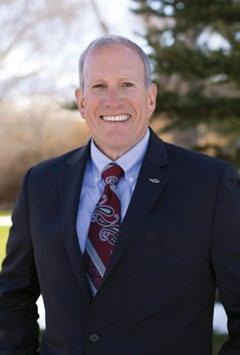
KEITH SQUIRES
University of Utah Chief Safety O fficer
UNIVERSITY OF UTAH DEPARTMENT OF PUBLIC SAFETY
Utah Campus Safety Summit
PLATED BREAKFAST
Begins at 8:30 a.m.
WELCOME REMARKS AND MORNING KEYNOTE
8:40 – 10:00 a.m.
OC Tanner Ballroom
Second Floor
MORNING BREAKOUT SESSIONS
First session:
10:05 – 10:55 a.m.
Second session: 11:00 – 11:50 a.m.
Various locations
10:05 – 10:55 a.m.
11:00 – 11:50 a.m.
Henricksen Conference Room
First Floor
Welcome
Chief Keith Squires & President Taylor Randall
Keynote:
Safety is Personal: Lessons Learned as a Survivor of the Virginia Tech Tragedy
Presenter: Kristina Froling, founder of the Koshka Foundation for Safe Schools, international advocate in the fields of bystander intervention, active shooter response and violence prevention within schools, workplaces and public spaces, survivor of the 2007 Virginia Tech shooting.
The world witnessed the tragedy that transpired on the Virginia Tech campus in April of 2007, when the lives of Kristina Froling and her classmates quickly changed as a student gunman entered her classroom and committed one of the worst acts of violence in recent American history. Froling was shot three times within 12 minutes. She will share a candid, firsthand account of her personal experience with an active threat, and lessons learned more broadly from the tragedy. Froling will detail her recovery and the importance of community engagement in violence prevention.
Participants may choose two of three presentations to attend during the morning breakout sessions
Everyday Guardians: How Bystanders Help Stop Targeted Violence Before It Happens
Presenter: Keith Livingston, Associate Director Threat Assessment and Management, University of Utah Department of Public Safety
Most acts of targeted violence are preceded by clear warning signs that too often go unreported, and alone may not meet the elements of a criminal act. This session explains how Behavioral Threat Assessment and Management (BTAM) teams use those early reports to prevent violence and fill that gap between concerning behavior and law enforcement action. Real cases show the cost of silence and end with a powerful story of violence averted because bystanders spoke up.
10:05 – 10:55 a.m.
11:00 – 11:50 a.m.
Dumke Conference Room First Floor
10:05 – 10:55 a.m.
11:00 – 11:50 a.m.
Sorenson/Boyer Conference Room Second Floor AND AND
The First Few Minutes of an Active Aggressor Event: What every civilian needs to know about the physiological and psychological responses they are likely to have, and what they can expect from police’s initial response.
Presenters: Sergeant Jason Miller, University of Utah Police Division Josh Whatcott, MSW, LCSW, Blomquist Hale Solutions
This presentation examines the critical first moments of an active aggressor event from both civilian and law enforcement perspectives. Attendees will explore the human stress response—how fear, adrenaline, and survival instincts shape perception and decision-making—and how those reactions influence behavior during crisis situations. The session also outlines the immediate tactical priorities of police responders and the rationale behind their actions. The goal is to bridge understanding between civilians and law enforcement, improving individual preparedness and overall community safety.
A Moment of Change: How Critical Response, Safety Alerts & Warnings, and Protective Actions are Converging to Better Prepare our Campus
Presenter: Stuart Moffatt, CEM, Director of Emergency Management, University of Utah Department of Public Safety
Colleges and universities are experiencing a pivotal shift in how they communicate during emergencies. This session explores how the Standard Response Protocol (SRP) and the emerging Warning Lexicon are transforming higher ed emergency mass notification into a clearer, more unified system of action. We will examine how protective actions, hazard language, and alert messaging are becoming standardized across campus environments—reducing confusion, increasing compliance, and aligning campus community behavior with first responder operations. Attendees will learn how the University of Utah is integrating SRP into its campus alerts, building consistent message frameworks, adopting behavioral directives like Avoid–Deny–Defend, and ensuring alerts meet both operational and human-centered communication needs. This convergence represents a moment of change—one that strengthens preparedness, improves response, and better protects our campus communities.
PLATED LUNCH Begins at Noon
AFTERNOON SESSION INTRODUCTIONS
12:15 – 1:10 p.m.
OC Tanner Ballroom Second Floor
Utah Campus Safety Summit
Chief Keith Squires
2023 University of Nevada, Las Vegas Active Shooter Case Review
Presenter: Assistant Sheriff Bryan Peterson, Las Vegas Metropolitan Police Department On December 6, 2023, an active shooter opened fire at the University of Nevada, Las Vegas (UNLV). Three people were killed, and three additional people were wounded. The perpetrator, later identified, was killed in a shootout with police. It was soon discovered that he had served as a tenured professor in North Carolina before adjuncting in one school in Nevada. He had applied to be a professor at other Nevada schools, and schools throughout the country including Utah, but those applications were unsuccessful. He maintained a "target list" of people against whom he was seeking retribution, including colleagues from his former employer, East Carolina University. It is the deadliest school shooting in Nevada history.
1:10 – 2:05 p.m.
OC Tanner Ballroom
Second Floor
Prevention or Punishment? Inside the Decision-Making of a Threat Assessment Team
Presenter: Keith Livingston, Associate Director Threat Assessment and Management, University of Utah Department of Public Safety
When a potential threat surfaces, the stakes are high, and the paths forward aren’t always clear. In this session, a real case pulls you inside a multi-disciplinary threat assessment and management team as they confront conflicting priorities, investigative differences, and the pressure to act. See how these dynamics shape decisions between punitive action and prevention-focused strategies, and what it takes to reach a safe, defensible outcome.
5 MINUTE BREAK
AFTERNOON SESSION INTRODUCTIONS
2:10 – 3:05 p.m.
OC Tanner Ballroom
Second Floor
3:05 – 4:00 p.m.
OC Tanner Ballroom
Second Floor
Chief Keith Squires
Empowering Institutions of Higher Education: Friends and Relatives Center Operations & Planning Tools
Presenter: Vanessa Flores, University of CA, Irvine
The Family and Relatives Center is a critical component of an institution of higher education's response to a mass casualty incident. It is crucial that the institution begins to address the needs of the victims and their families. Many after-action reports and current best practices have identified the institution's immediate proactive actions following the incident as one of the most effective ways to meet the victims' needs and initiate the recovery process for the institution as a whole. By e"ciently and effectively addressing the needs of the victims and their families, the institution can significantly reduce the possibility of negative backlash and secondary legal challenges following the incident, thereby safeguarding its reputation and resources. The presentation covers the planning process to develop a Friends and Relatives Center on Campus.
Radicalized Communities: Decoding Digital Online Leakage to Prevent Real-World Tragedy
Presenter: Colton Easton, Safer Schools Together
As online use and communities expand, so does their potential to influence high risk individuals along the pathway to violence. Extremist spaces like True Crime Communities (TCC), Terrorgram, and WatchPeopleDie can foster radicalization, reinforce harmful ideologies, and escalate individuals toward real-world violence. This session explores the connection between online radicalized communities and violent behavior, highlighting key patterns, warning signs, and digital leakage. This session will include recent case-walkthroughs handled by the SST Threat Analyst team this last year, affording attendees the opportunity to gain valuable tools and insights into the Behavioral Digital Threat Assessment (BDTA) process, along with strategies for early intervention and prevention. This critical discussion focuses on disrupting the cycle of online radicalization before it escalates into violence, utilizing evolving strategies in threat assessment and prevention.
Scan the QR code to the left to view presenter bios and photos.

We welcome your feedback and comments on today’s event and future summit topics.
The Department of Public Safety would like to give special thanks to all our summit presenters and the many department sta! members who have helped make this summit happen.
Thank you for your support and partnership!
Proud Sponsor of the 2026 Utah Campus Safety Summit
UTAH CAMPUS SAFETY SUMMIT
THE UNIVERSITY OF UTAH DEPARTMENT OF PUBLIC SAFETY