From Campus to Career
A closer look at where the Advanced Master’s programme in International Relations and Diplomacy (MIRD) can take you
A closer look at where the Advanced Master’s programme in International Relations and Diplomacy (MIRD) can take you
The two-year Advanced Master’s programme in International Relations and Diplomacy (MIRD), offered by Leiden University in partnership with the Netherlands Institute of International Relations Clingendael, provides a comprehensive education in international relations, diplomacy, and international organisations Its location in The Hague, the international city of peace and justice, gives students direct exposure to institutions such as the International Court of Justice, the International Criminal Court, and several United Nations agencies.
MIRD’s academic foundation is strengthened by Clingendael’s specialised training modules, which connect theory with professional practice in areas such as negotiation, international security, and diplomatic skills These sessions are enriched by guest lectures from practitioners and visits to international institutions, offering insight into daily diplomatic work
During the MIRD’s Brussels and Geneva institutional visits, students engage with a broad range of international organisations and their representatives. The alumni network complements these experiences by offering dedicated mentorship events, while post-graduation ties are strengthened further through the annual MIRD Gala, which brings together students, alumni, and faculty
Through its blend of academic excellence, professional training, and sustained engagement, the MIRD programme equips graduates with the skills and networks needed to address complex global challenges
I really enjoyed the intercultural communication focus of the MIRD degree and I still think about this often as part of my work as a diplomat interacting with different cultures.
- Margaret Goydych, First Secretary, Australian High Commission in Kiribati at the Australian Department of Foreign Affairs and Trade
‘Being with the Office of the President of the General Assembly means being in the centre of the global diplomatic endeavours and actively contribute to them as well. It is great to work in the backstage of the global negotiations leading the peace and security processes within the UN Negotiation skills are an integral part of my day-to-day life as a diplomat. It is crucial to analyse and understand one’s motives and to be familiar with all the different tactics that can be applied throughout negotiations.’
'In hindsight, I realise how much MIRD challenges your perspective, both during the research and practical skills trainings The constant push during classes to consider the topics in front of me from different perspectives, including those I might have not been always comfortable with, meant being able to evaluate them more in depth and come up with novel ideas or solutions. A skill that comes in useful in my current career and that every diplomat should acquire and refine.’
Use your wit and do not take yourself too seriously either. Diplomacy is way more laid-back than people think it is (I guess it is the suits). It is also important to connect with people and expand your network, because believe or not, personal bonds are the key.
‘MIRD is only as good and as strong as the people who attend it. If you see a window of opportunities on how to improve and enhance the programme, do it! Your lecturers and the MIRD staff will listen to you Utilise the platform that MIRD provides and remember it is a twoway street. If the programme grows better, stronger, and you look back in 10 years, you want to be able to say: “Yes, I am a MIRD alumnus and I made it here because of that!”’
‘Be curious, be bold and do not to ask. You will soon realise tha peers share very similar paths a career prospects, so ask yourse what makes you different?’
‘If I had the opportunity to travel back to my student years, I would have taken greater advantage on the possibilities that The Hague and the programme offer. The number of (master)classes, extracurricular activities and different events is astonishing. I would have tried to go more outside of my own bubble and challenge myself with topics or fields that are not necessarily so interesting to me just to connect with new people, learn of a new field and expand my horizons ’
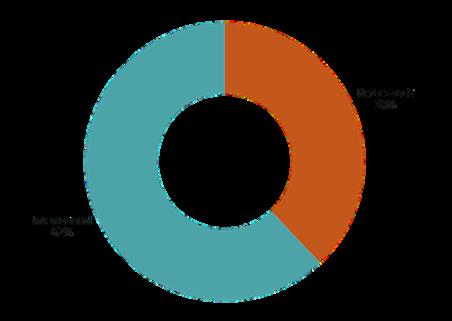
Percentage of graduates working in the Netherlands and abroad
‘I prepare and coordinate the Dutch positions in the Council negotiations on multiple EUproposals; the skills I gained during the Clingendael courses thus directly help me in my work I use the different negotiation strategies, styles, and methods when preparing instructions for the delegates in Brussels and when thinking about other ways to influence the proposals. For example, the importance of informal negotiations, fall-back options, etc.’
‘Since I work on very political files (both in The Hague and Brussels), no day is the same. The deadlines I work with are usually very short, and because of the political nature of the files, this means I have to get a lot of different people in line under significant time pressure While it sometimes feels impossible at the start, it gives me a lot of satisfaction to successfully finish these tasks.'
‘The MIRD courses provided me with a solid basis on international relations and critical academic thinking that I apply to my day-to-day work. However, even more valuable were the interactions with an international and diverse group of students These interactions provided me with a lot of intercultural understanding and communication skills, which are useful when dealing with delegations and standpoints from different countries.’
If you do find your passion, make sure to stay curious, open-minded, and to talk to many different people. They might show you opportunities and ways in you had not thought of yourself.
‘Use the internship period and other opportunities during MIRD to find out if the type of career you have in mind is the right fit for you. You might find out you actually do not like this type of job; and that is totally fine! If you do find your passion, make sure to stay curious, open-minded, and to talk to many different people (scheduling informal coffee meetings is key!). They might show you opportunities and ways into an organisation you had not thought of yourself ’
‘International Relations is a very competitive field of work, but do not treat your fellow students as competitors. Help and support each other. I speak out of experience when I say it is amazing to see your friends succeed.’
These figures are based on a sample from the alumni office and publicly available LinkedIn profiles, and were analysed in 2025. They provide an indicative picture rather than a fully representative overview.

The average time it takes to find a job after graduating
Geographic distribution of alumni by physical work location
Most common employers
Type of employer
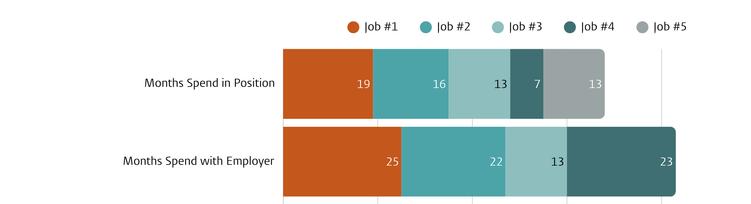
Career mobility
‘What I love most about my current role, is working in such an international environment. Every day I get to collaborate with people from all over the world, with completely different backgrounds and perspectives. It keeps me on my toes and constantly learning. The topics I work on are also really exciting It can be anything from carbon credits to intergenerational leadership to the future of work. It feels meaningful to be part of conversations that are shaping our world’
‘My background was in history, so I was used to reading, writing, and working qualitatively. MIRD gave me the chance to push myself into the quantitative side too. At first it was outside my comfort zone, but that mix has turned out to be one of my biggest assets. In my work now, I often have to look at issues through a datadriven lens but also understand the human and political dynamics behind them. Having both perspectives makes me more confident in how I approach challenges and also how I can communicate them to different audiences.’
Be open, be curious, and don’t be afraid to knock on doors, regardless even if you get some no’s. Something will eventually click
‘For me, it’s less about remembering negotiation theory and more about the mindset the Clingendael courses gave me In my job, I’m constantly building partnerships with people from different sectors and countries. To make them work, I need to understand what really matters to them, what matters to us, and how to find common ground. It’s about creating outcomes where everyone feels they’ve gained something, rather than it being a zero-sum game.’
‘My first internship during the programme wasn’t a great fit, so I kept applying and managed to land another one in my second year. It was tough to juggle alongside the study association IRSA, classes, and having a social life, but that experience was a key step towards where I am now.’
‘If I could go back, I would have built a stronger alumni network while I was still in the programme. As Alumni and Events Officer, I focused a lot on the Gala and trips, but after graduating I realised how much I valued the connections with MIRD and my classmates I wish I had created more ways for us to stay engaged as a community beyond graduation.’
‘At the moment, I am living and working as an Australian diplomat in a small Pacific Island country called Kiribati It is super interesting because it is very unique and remote - most people haven't even heard of it! The highest point where I live is 3 metres above sea level, and it's the only country that's in all four hemispheres I really enjoy being able to interact with this culture that is so different from my own, and it's an honour to represent my government's varied interests here, in everything from aviation to policing to public diplomacy No two days are the same.’
‘While my current role isn't specifically focused on mediation, I do believe negotiation skills are relevant to every aspect of my professional (and probably personal) life. Whether it's talking to your boss, negotiating a deadline, or working with a foreign counterpart to find a mutually agreeable solution, practical negotiations skills - most importantly in understanding your counterpart's interests and where their buffer zones are - really do come in handy.’
‘I really enjoyed the intercultural communication focus of the MIRD degree and I still think about this often as part of my work as a diplomat interacting with different cultures Everyone is coming from their own unique cultural context - so it's about trying to understand and consider that. While my current role is less research focused, I think the skills I learned in communication and most importantly perseverance of just getting through to finish a thesis - something I never imagined myself doing - have also taught me that I really can do most things if I set my mind to it.’
While it's of course important to take your studies seriously, don't forget to spend time getting to know your amazing fellow students and professorsthis was the real highlight of MIRD for me.
‘Don't give up, and at the end of the day a big part of getting there is just statistics. The more you apply the higher your chances, and just because you don't perfectly match every criteria doesn't mean you shouldn't put your hat in the ring (this is a classic female trait that I still suffer from!). Sure, work hard and learn as much as you can but at some point you just have to apply for as many internships, traineeships and/or jobs as possible and eventually something will work out ‘
‘I remember I had done over 30 applications before I was successful in obtaining an internship as part of the mandatory component of the MIRD degree, and until then I felt a bit downhearted because I had been applying for months without hearing anything. After I finally got that offer, two more came within the week. Sometimes you just need a bit of perseverance and luck, and even if you don't achieve what you want the traditional or easiest way, there are usually lots of other weird paths to get you to that final destination.’
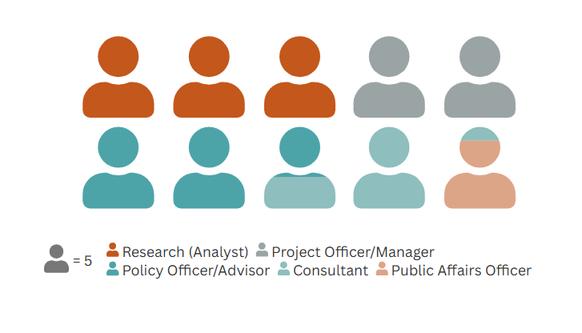
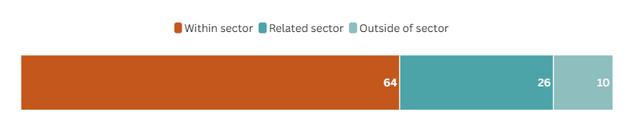
Distribution of job roles among 150 graduates
Career Service of the Faculty of Governance and Global Affairs (FGGA) supports students and recent graduates in making the transition from study to their first job. Students and alumni (up to one year after graduation) can contact Career Service for personal advice on study choices, career planning, and job or internship opportunities. If you have any questions, send us an email at careerservice@fgga.leidenuniv.nl
For more information about Career Service and more alumni statistics, go to the Career Support page
For more information on workshops, events and other services, go to the Career Zone
Listen to the Mind the Gap podcast with practical tips for a realistic and confident start to your career You hear directly from recruiters and employers
Get the Career Workbook to work on and check your skills