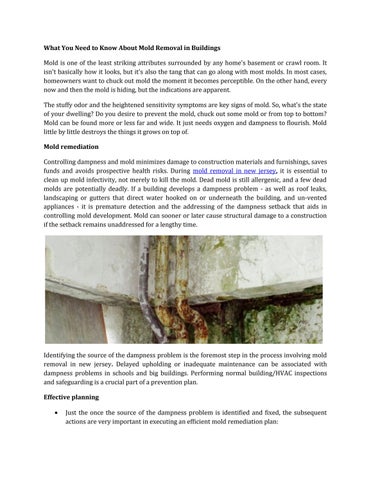
What You Need to Know About Mold Removal in Buildings Mold is one of the least striking attributes surrounded by any home's basement or crawl room. It isn't basically how it looks, but it's also the tang that can go along with most molds. In most cases, homeowners want to chuck out mold the moment it becomes perceptible. On the other hand, every now and then the mold is hiding, but the indications are apparent. The stuffy odor and the heightened sensitivity symptoms are key signs of mold. So, what's the state of your dwelling? Do you desire to prevent the mold, chuck out some mold or from top to bottom? Mold can be found more or less far and wide. It just needs oxygen and dampness to flourish. Mold little by little destroys the things it grows on top of. Mold remediation Controlling dampness and mold minimizes damage to construction materials and furnishings, saves funds and avoids prospective health risks. During mold removal in new jersey, it is essential to clean up mold infectivity, not merely to kill the mold. Dead mold is still allergenic, and a few dead molds are potentially deadly. If a building develops a dampness problem - as well as roof leaks, landscaping or gutters that direct water hooked on or underneath the building, and un-vented appliances - it is premature detection and the addressing of the dampness setback that aids in controlling mold development. Mold can sooner or later cause structural damage to a construction if the setback remains unaddressed for a lengthy time.
Identifying the source of the dampness problem is the foremost step in the process involving mold removal in new jersey. Delayed upholding or inadequate maintenance can be associated with dampness problems in schools and big buildings. Performing normal building/HVAC inspections and safeguarding is a crucial part of a prevention plan. Effective planning
Just the once the source of the dampness problem is identified and fixed, the subsequent actions are very important in executing an efficient mold remediation plan: