




From safety/operator training and equipment management technologies, to custom solutions engineered to meet specialized job requirements, United Rentals offers much more than just the world’s largest rental fleet. It takes a lot to get the job done right. We’re here to help.
BAKERSFIELD
3340 Allen Rd.
Bakersfield, CA 93314 (661)631-5777
CONCORD
5151 Port Chicago Highway Concord, CA 94520 (925)822-0366
FRESNO
5704 S. Toyota Place Fresno, CA 93275 (559)442-8989
HAYWARD
4125 Breakwater Avenue Hayward, CA 94545 (510)786-9506
RENO 12905 Old Virginia Road Reno, NV 89521 (775)348-0140
SACRAMENTO
8565 Elder Creek Road Sacramento, CA 95828 (916)383-7475
SALT LAKE CITY
1135 S. Pioneer Road Salt Lake City, UT 84104 (801)886-0586
SAN JOSE
2969 Daylight Way San Jose, CA 95111 (408)224-1052


SAN LUIS OBISPO
635 Tank Farm Road San Luis Obispo, CA 93401 (805)543-0113
TURLOCK
2800 N. Golden State Blvd. Turlock, CA 95382 (209)632-5084
SANTA ROSA
3963 Santa Rosa Ave. Santa Rosa, CA 95407 (707)523-2350
SAN FRANCISCO
251 Shaw Road
South San Francisco, CA 94080 (415)642-2350


2024
2024 UNITED CONTRACTORS BOARD OFFICERS
President...................................Kevin Hester, McGuire and Hester VP/President-Elect.........Kurt Eddy, Pavement Recycling Systems, Inc. Secretary/Treasurer.......Juan C. Arrequin, Bay Line Cutting & Coring, Inc. Sec/Treas-Elect.........................Greg Goebel Jr., Goebel Construction, Inc.
President...................................Kevin Hester, McGuire and Hester VP/President-Elect.........Kurt Eddy, Pavement Recycling Systems, Inc. Secretary/Treasurer.......Juan C. Arrequin, Bay Line Cutting & Coring, Inc. Sec/Treas-Elect.........................Greg Goebel Jr., Goebel Construction, Inc.
UNITED CONTRACTORS BOARD OF DIRECTORS
UNITED CONTRACTORS BOARD OF DIRECTORS
KELLY ATTEBERY, F & M BANK; TOM BARR, GHILOTTI BROS., INC.; DALE R. BREEN, MIDSTATE BARRIER, INC.; BRYN BURKE, DEES BURKE ENGINEERING; SEAN CASTILLO, TORO ENTERPRISES, INC.; RITA VIGIL FERGUSON, G & F CONCRETE CUTTING, INC.; GARRETT FRANCIS, GUARDIAN TRAFFIC SOLUTIONS; MICHAEL GATES, DESILVA GATES CONSTRUCTION, LLC; ALAN GUY, ANVIL BUILDERS; MATT LOVINGIER, JMH ENGINEERING & CONSTRUCTION, INC.; MICHAEL PRLICH, MIKE PRLICH & SONS, INC.; KEVIN REIMERS, WOODRUFF-SAWYER & CO.
KELLY ATTEBERY, F & M BANK; TOM BARR, GHILOTTI BROS., INC.; DALE R. BREEN, MIDSTATE BARRIER, INC.; BRYN BURKE, DEES BURKE ENGINEERING; SEAN CASTILLO, TORO ENTERPRISES, INC.; RITA VIGIL FERGUSON, G & F CONCRETE CUTTING, INC.; GARRETT FRANCIS, GUARDIAN TRAFFIC SOLUTIONS; MICHAEL GATES, DESILVA GATES CONSTRUCTION, LLC; ALAN GUY, ANVIL BUILDERS; MATT LOVINGIER, JMH ENGINEERING & CONSTRUCTION, INC.; MICHAEL PRLICH, MIKE PRLICH & SONS, INC.; KEVIN REIMERS, WOODRUFF-SAWYER & CO.
UCON LEADERS | UNITED CONTRACTORS COMMITTEE CHAIRS ASSOCIATES: KELLY ATTEBERY (ASSOCIATE DIRECTOR), F & M BANK. | KEVIN REIMERS (ASSOCIATE DIRECTOR-ELECT), WOODRUFF-SAWYER & CO. CALTRANS: MICHAEL GHILOTTI (CHAIR), GHILOTTI BROS., INC. | LEGISLATIVE: ROB LAYNE, (CHAIR), O.C. JONES & SONS, INC. | POLITICAL ACTION (PAC): GEORGE FURNANZ (CHAIR), STACY WITBECK; STEVE CONCANNON (VICE-CHAIR) PAVEMENT RECYCLING SYSTEMS, INC. | SAFETY & INSURANCE: KEITH OXFORD, (CHAIR), MONTEREY MECHANICAL COMPANY | SF CITY CONTRACTOR LIAISON: MIKE GHILOTTI (CHAIR), GHILOTTI BROS., INC., MIGUEL GALARZA (CHAIR), YERBA BUENA ENGINEERING & CONSTRUCTION, INC. | SCHOLARSHIP: TRONY FULLER, (CHAIR), ARGENT MATERIALS INC. | REGIONAL EXECUTIVE COUNCIL: MICHAEL PRLICH (CHAIR), MIKE PRLICH & SONS, INC.; GARRETT FRANCIS (CHAIR), GUARDIAN TRAFFIC SOLUTIONS
UCON LEADERS | UNITED CONTRACTORS COMMITTEE CHAIRS ASSOCIATES: KELLY ATTEBERY (ASSOCIATE DIRECTOR), F & M BANK. | KEVIN REIMERS (ASSOCIATE DIRECTOR-ELECT), WOODRUFF-SAWYER & CO. CALTRANS: MICHAEL GHILOTTI (CHAIR), GHILOTTI BROS., INC. | LEGISLATIVE: ROB LAYNE, (CHAIR), O.C. JONES & SONS, INC. | POLITICAL ACTION (PAC): GEORGE FURNANZ (CHAIR), STACY WITBECK; STEVE CONCANNON (VICE-CHAIR) PAVEMENT RECYCLING SYSTEMS, INC. | SAFETY & INSURANCE: KEITH OXFORD, (CHAIR), MONTEREY MECHANICAL COMPANY | SF CITY CONTRACTOR LIAISON: MIKE GHILOTTI (CHAIR), GHILOTTI BROS., INC., MIGUEL GALARZA (CHAIR), YERBA BUENA ENGINEERING & CONSTRUCTION, INC. | SCHOLARSHIP: TRONY FULLER, (CHAIR), ARGENT MATERIALS INC. | REGIONAL EXECUTIVE COUNCIL: MICHAEL PRLICH (CHAIR), MIKE PRLICH & SONS, INC.; GARRETT FRANCIS (CHAIR), GUARDIAN TRAFFIC SOLUTIONS
UNITED CONTRACTORS STAFF
UNITED CONTRACTORS STAFF
MARK BRESLIN, CHIEF EXECUTIVE OFFICER; EMILY COHEN, EXECUTIVE VICE PRESIDENT; TEJEL PATEL, EXECUTIVE ASSISTANT TO CEO; AURORA PRASAD, EXECUTIVE ASSISTANT TO EVP; VICTOR SELLA, VICE PRESIDENT OF LABOR RELATIONS; MELISSA GUTWALD, VICE PRESIDENT OF FINANCE & OPERATIONS; CLAY O’NEAL, REGIONAL VICE PRESIDENT, SOUTHERN CA; RAY BACA, DIRECTOR OF AGENCY RELATIONS; DEREK BORGHI, DIRECTOR OF LABOR RELATIONS; ANGELICA GOUIG, DIRECTOR OF EVENTS & EDUCATION; RUBY VARNADORE, SENIOR LABOR CONTRACTS MANAGER; DILPREET MAYALL, LABOR RELATIONS ADVOCATE; LIZ CASTRO, LABOR CONTRACTS MANAGER LUCIA MIXON, CONTRACTOR MEMBER SERVICES, SOUTHERN CA; SANDRA KAYA, ADMINISTRATIVE SPECIALIST TO LABOR & MEMBER SERVICES; DENISE RAMIREZ, ONLINE SERVICES MANAGER; EMMY MCCONNELL, SENIOR ACCOUNTANT; MICHELLE HANNIGAN, BOOKKEEPER; GABRIELLE GONZALEZ, OFFICE ADMINISTRATOR, SOUTHERN CALIFORNIA; CHRISTINE TRAINA, EVENT MANAGER; RACHEL ORAA, EVENT ASSISTANT; AVANTI MEHTA, EDUCATION ASSISTANT; MICHELLE VEJBY, MARCOM MANAGER; EDDIE BERNACCHI, UCON CHIEF LOBBYIST; MIKE DONLON, CHIEF SAFETY CONSULTANT; DREW DELANEY, MIKE BUCKANTZ, REGULATORY CONSULTANTS; DAMIAN BREEN, REGULATORY CONSULTANT
MARK BRESLIN, CHIEF EXECUTIVE OFFICER; EMILY COHEN, EXECUTIVE VICE PRESIDENT; TEJEL PATEL, EXECUTIVE ASSISTANT TO CEO; AURORA PRASAD, EXECUTIVE ASSISTANT TO EVP; VICTOR SELLA, VICE PRESIDENT OF LABOR RELATIONS; MELISSA GUTWALD, VICE PRESIDENT OF FINANCE & OPERATIONS; CLAY O’NEAL, REGIONAL VICE PRESIDENT, SOUTHERN CA; RAY BACA, DIRECTOR OF AGENCY RELATIONS; DEREK BORGHI, DIRECTOR OF LABOR RELATIONS; ANGELICA GOUIG, DIRECTOR OF EVENTS & EDUCATION; RUBY VARNADORE, SENIOR LABOR CONTRACTS MANAGER; DILPREET MAYALL, LABOR RELATIONS ADVOCATE; LIZ CASTRO, LABOR CONTRACTS MANAGER LUCIA MIXON, CONTRACTOR MEMBER SERVICES, SOUTHERN CA; SANDRA KAYA, ADMINISTRATIVE SPECIALIST TO LABOR & MEMBER SERVICES; DENISE RAMIREZ, ONLINE SERVICES MANAGER; EMMY MCCONNELL, SENIOR ACCOUNTANT; MICHELLE HANNIGAN, BOOKKEEPER; GABRIELLE GONZALEZ, OFFICE ADMINISTRATOR, SOUTHERN CALIFORNIA; CHRISTINE TRAINA, EVENT MANAGER; RACHEL ORAA, EVENT ASSISTANT; AVANTI MEHTA, EDUCATION ASSISTANT; MICHELLE VEJBY, MARCOM MANAGER; EDDIE BERNACCHI, UCON CHIEF LOBBYIST; MIKE DONLON, CHIEF SAFETY CONSULTANT; DREW DELANEY, MIKE BUCKANTZ, REGULATORY CONSULTANTS; DAMIAN BREEN, REGULATORY CONSULTANT
United Contractors: Powered by Our Members. Fueled by Our Mission. by
Emily Cohen | UCON
Your Political Advocacy Team
Legislative Session Concludes Industry Focused on Future Proofing Transportation Funding
The 2023/24 Legislative Session Concludes Industry Focused on Future Proofing Transportation Funding
Law at Midpoint
Infrastructure Law at Midpoint UCON Members Make the Difference


Legislation to Law by Ruby Varnadore | Senior Labor Contracts Manager
UCON/Laborers Industry Partner Meeting
The Ways Contractors Get in Trouble with Storm Water Control Agencies and How to Avoid Them! by Damian Breen | Environmental


By Emily Cohen UCON Executive Vice President


WWhen I joined UCON 15 years ago, I was tasked with building a Government Relations program from the ground up. What we have accomplished together since then has exceeded every expectation I had, and in many ways, it has redefined how I view success. The growth and influence we’ve achieved in the legislative arena are a direct result of the unwavering commitment of you, our members. As the staff at UCON, we are tasked with driving the results, but make no mistake: This is your work, your vision, and your success.
hen I joined UCON 15 years ago, I was tasked with building a Government Relations program from the ground up. What we have accomplished together since then has exceeded every expectation I had, and in many ways, it has redefined how I view success. The growth and influence we’ve achieved in the legislative arena are a direct result of the unwavering commitment of you, our members. As the UCON team, we are tasked with driving the results, but make no mistake: This is your work, your vision, and your success.
UCON has always been a contractor-driven organization, and that principle guides every decision we make. California’s political landscape can be challenging, but our unique mission is clear: we advocate for unionsignatory construction employers. We work alongside
UCON has always been a contractor-driven organization, and that principle guides every decision we make. California’s political landscape can be challenging, but our mission is clear: we advocate for union-signatory construction employers. We work alongside our labor


our labor partners wherever and whenever we can to advance our shared cause. And we will get in the ring, no matter how hard the fight, to drive results for our members, no matter their size or scope. We focus on the issues that matter most—strengthening market share, protecting and increasing public works funding, improving the business environment, and making sure union-signatory contractors can compete, grow, and thrive across California.
partners wherever and whenever we can to advance our shared cause. And we will get in the ring, no matter how hard the fight, to drive results for our members, no matter their size or scope. We focus on the issues that matter most—strengthening market share, protecting and increasing public works funding, improving the business environment, and making sure union-signatory contractors can compete, grow, and thrive across California.
In the last decade, our Political Action Committee (PAC) has grown from $80,000 to more than $1.3 million. Our Advocacy Auction has grown more than 300% in member attendance and financial support. 60% of our membership directly engages in our advocacy work throughout the year. This incredible growth is a testament to the dedication of our PAC committee,
In the last decade, our Political Action Committee (PAC) has grown from $80,000 to more than $1.3 million. Our Advocacy Auction has grown more than 300% in member attendance and financial support. 60% of our membership directly engages in our advocacy work throughout the year. This incredible growth is a testament to the dedication of our PAC committee,


that political advocacy is essential to protecting and advancing our industry today and for the next generation. Our members are not passive participants— you are the idea-generators behind some of the most impactful legislation, ballot measures and elections we’ve helped to shape.
Board of Directors, and members who understand that political advocacy is essential to protecting and advancing our industry today and for the next generation. Our members are not passive participants— you are the idea-generators behind some of the most impactful legislation, ballot measures and elections we’ve helped to shape.
The work continues. And so does our relentless commitment to you. At UCON, we are problem solvers, coalition builders, and thought leaders because that’s what our members want, need and deserve. We have a responsibility to fight for policies and solutions that ensure a strong future for union-signatory contractors in California, both in the public and private sectors.
And the work continues. Each year presents new challenges, but with them come new opportunities. At UCON, we are problem solvers, coalition builders, and thought leaders because that’s what our members want, need and deserve. We have a responsibility to fight for policies and solutions that ensure a strong future for union-signatory contractors in California, both in the public and private sectors.
Our political and advocacy work isn’t just about policy—it’s about people. We never lose sight of that.
Our political and advocacy work isn’t just about policy—it’s about people. We never lose sight of that.
feel the same pride and ownership that I have. UCON’s success reflects our members’ dedication to the future of this industry. I want to thank each of you for your engagement, your ideas, and your commitment to this organization and industry.
As you read through this legislative issue, I hope you feel the same pride and ownership that I have. UCON’s success reflects our members’ dedication to the future of this industry. I want to thank each of you for your engagement, your ideas, and your commitment to this organization and industry.
We have built something extraordinary together, and I could not be prouder to stand alongside you in this work. There is always more to do, and I am excited about what we will accomplish next—together.
We have built something extraordinary together, and I could not be prouder to stand alongside you in this work. There is always more to do, and I am excited about what we will accomplish next—together.
See you at the Advocacy Auction!
See you at the Advocacy Auction!
With Gratitude,
With Gratitude,
Emily Cohen Executive Vice President | United Contractors
Emily Cohen Executive Vice President | United Contractors


On August 7, a fundraising event was held for Senator Josh Newman at Willow in Sacramento, which was attended by multiple contractors. In his address to the group, Senator Newman stressed the need for the legislature to continue its funding efforts for projects aimed at enhancing California’s aging transportation infrastructure, water infrastructure, and climate resiliency.
On August 7, a fundraising event was held for Senator Josh Newman at Willow in Sacramento, which was attended by multiple contractors. In his address to the group, Senator Newman stressed the need for the legislature to continue its funding efforts for projects aimed at enhancing California’s aging transportation infrastructure, water infrastructure, and climate resiliency.
On September 12, a fundraising event was held for Candidate for State Senate (SD 23), Suzette Valladares, at Oceanfront Restaurant in Newport. She is running for the State Senate seat in CA District 23. Multiple contractors and associate members attended the event.
In her address to the group, she discussed her strong record of working across the aisle as a founding member of the Problem Solvers Caucus and her support of business, the construction industry, and union contractors.
On September 12, a fundraising event was held for former Assemblywoman Suzette Valladares at 21 Oceanfront in Newport. She is running for the State Senate seat in CA District 23. Multiple contractors and associate members attended the event. In her address to the group, she discussed her strong record of working across the aisle as a founding member of the Problem Solvers Caucus and her support of business, the construction industry, and union contractors.


EQUIPPED WITH SUBSITE PIPE & CABLE LOCATORS FOR “PRECISE” POTHOLES AND UTILITY LOCATES. TWO PERSON OPERATION CAN OUTDO THE WORK OF MULTIPLE TRUCKS, AIR COMPRESSOR AND MINI EXCAVATORS.
COMPACTION TOOLS
FASTER EFFICIENT DAYLIGHTING POTHOLING POLE REPLACEMENT
AIR EXCAVATION
HYDRAULIC JACKHAMMERS HYDRO EXCAVATION
SOFT DIG, WET OR DRY
FULLY TRAVERSING, BUMPER MOUNTED, ASPHALT OR CONCRETE, CORING UNIT
STREET LEGAL FULLY LOADED 7 YARD CAPACITY


UCON’s Political Advocacy and Government Relations team improves, expands, and protects union contractors’ interests, influencing public policy, and improving the political and regulatory climate for our members. Together, we build coalitions, advance the voice and influence of union contractors, drive local and state ballot measures, foster agency relations, and help members navigate the local, state and federal public works environment.
UCON is the most powerful voice for California union contractors, elevating our members and the greater industry through our dedicated advocacy work.


EMILY COHEN Executive Vice President
Emily oversees the political, government & public affairs of United Contractors, aimed at improving the market share and business environment for California’s union contractors. This includes local, state & federal legislation, government relations, industry-focused ballot measures, grassroots member engagement, UCON PAC, and public relations efforts to increase UCON influence at every level of government.
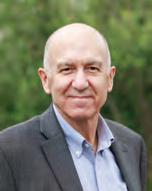
RAY BACA Director of Agency Relations
Ray has extensive experience in the construction industry, and oversees agency relations statewide. He is formerly with ECA, where he served as Executive Director. Ray continues to make a significant impact as he works to improve public policies and advance the needs of the industry.

AURORA PRASAD Executive Assistant to EVP
Aurora is dedicated to providing exceptional administrative and project support to the Executive Vice President (EVP) at UCON. Aurora plays a crucial role in facilitating communication and collaboration between the EVP and UCON’s diverse members, unions, and industry affiliates.


EDDIE BERNACCHI
UCON Chief Lobbyist
Politico Group*, President
Eddie is a twenty-year veteran of the public affairs and lobbying industry. Under Eddie’s leadership, United Contractors has secured some of the construction industry’s most significant political achievements including legislation regarding prompt-payment protections, indemnity reform, change-order payment protections, wrap insurance disclosure, increased transportation funding, licensing enforcement, workers comp reform, union-contractor market-share expansions and more.

UCON Lobbyist
Politico Group*, Principal
Bret has more than three decades of experience in state lobbying and serves UCON members with his extensive advocacy experience in energy, safety, and business policy. Bret has worked on a diverse spectrum of important policy issues impacting union contractors including environmental, safety and business regulations, helping to defend and improve the business environment for UCON.

KIANA VALENTINE
UCON Lobbyist
Politico Group*, Principal
Kiana brings more than a decade of policy experience to UCON in transportation, local government, and state funding and budget issues. She played a leading role in the passage and implementation of some of California’s most significant transportation funding decisions over the last decade including 2017’s SB 1. Kiana represents UCON on budgetary issues, transportation policy, environmental policy, and is the legislative liaison to the Caltrans Committee.

CSLB Licensing Advocate
Politico Group*
Beverly has been with Politico Group for more than 30 years, assisting hundreds of contractors with licensing compliance during her tenure. She works with UCON members to advocate and assist with a variety of complex licensing issues and applications and is an outstanding liaison and resource.
GOVERNMENT
RELATIONS AND POLITICAL ADVOCACY TEAM:
WE FOCUS ON public policy, political and regulatory advocacy, coalition buidling, political support, local and state ballot measures, regulatory compliance, agency relations, and direct member support and problem-solving.
WE PROVIDE:
• PAC Fundraising and Candidate Support
• Local and State Ballot Sponsorship and Support
• Lobbying & Advocacy on Legislation
• Bill Sponsorship
• Coalition Building & Industry Representation
• Political Events, and Direct Member Engagement
• Industry Public Relations
• and more
DIRECT MEMBER SUPPORT WITH:
• CSLB Licensing Support
• Caltrans Issues
• CARB Regulatory Support
• Cal/OSHA and Safety Compliance Support
• Crisis Management
• State Water Resources Control Board (SWRCB) Advocacy and SWPPP Issues
• Local and State Agency Input and Advocacy
• and more


MICHAEL DONLON UCON Chief Safety Consultant
With over thirty years of experience in industry safety, Mike’s work includes supporting and advising members on a range of occupational safety and health services, helping to clarify the requirements of Cal/ OSHA regulations, tracking regulatory activity, researching issues related to workplace safety and health, and assisting members regarding enforcement actions.

DAMIAN BREEN
Regulatory Consultant
Environmental Communication Strategies
Founder of Environmental Communications Strategies and former Deputy Executive Officer of the Bay Area Air Quality Management District, Damian has worked in the wastewater, air quality, technology, regulatory and government sectors. He helps companies navigate crisis situations and is an expert in communicating complex environmental issues to industry, government, elected bodies and communities. Damian possesses a wealth of knowledge on national, international and California regulations, and helps with permitting, compliance and citation issues with air and water quality agencies.
ASSOCIATES ENVIRONMENTAL
California Air Resources Board/ Regulatory Consultants
Associates Environmental is UCON’s regulatory consultant and advocate, helping members navigate the complexities of CARB rules and regulations while serving as UCON’s advocate to the Board. UCON’s contractors have 1:1 access as a member benefit.


MIKE BUCKANTZ
Regulatory Consultant
Associates Environmental
DREW DELANEY
Regulatory Consultant
Associates Environmental
JENNIFER FIEBER
Regulatory Consultant
Associates Environmental

By Eddie Bernacchi, Politico Group, UCON Chief Lobbyist


United Contractors continues to lead the fight for the union construction industry in Sacramento with dedicated and daily work to protect your interests. This year, the California State legislature adjourned the 2023-2024 legislative session on August 31st. Bills passed by the Legislature have been sent to Governor Newsom for his signature or veto by September 30th. We plan to publish a final “Legislative Scorecard” in late October to highlight the final outcome of all priority measure. The following provides a preview of the successful year the United Contractor’s legislative team had impacting legislation. Look for the full report next month!!
AB 1034 (Grayson): Extends PAGA Waivers for Union Construction
UCON Top Priority Legislation for 2024
The Labor Code Private Attorneys General Act of 2004 (PAGA) exempts, until January 1, 2028, from its applicability, an employee in the construction industry covered by a valid collective bargaining agreement in effect any time before January 1, 2025, that provides premium wage rates and expressly waives the requirements of PAGA in clear and unambiguous terms. This bill would delete the January 1, 2025, date described above and would extend the important industry exemption until January 1, 2038.

STATUS: Signed into Law!
AB 2182 (Haney): Levels the Playing Field for Union Contractors on Public Works Projects
Establishes a pilot program, for all large scale ($35 million and over) local agency public works projects, that will require current prevailing wage determinations be applicable to those projects at the time the work is performed. Under existing California law, DIR publishes prevailing wage determinations twice a year in February and in August and the wages required to be paid to workers on public works projects are determined by the prevailing wages that are published by DIR at the time of the projects bid advertisement date. AB 2182 is a first step in creating an even playing field for the union construction industry when bidding on public works projects across the state. The policy will be especially helpful on change-orders, as it would allow contractors to be reimbursed at the current prevaling wage rate.
STATUS: Vetoed by Governor
AB 2451 (Cervantes): Limits Jurisdictional Competition
Current law requires that workers employed on public works be paid not less than the general prevailing rate of per diem wages for work in the locality that the public work is performed. Current law also requires the Director of Industrial Relations to determine those applicable prevaling wage rates based on the collective bargaining agreements (CBAs) within the locality or nearest labor market area. This bill would add to prevailing wage law, a new requirement, that states if there is overlap in “craft or classification” in CBAs, the highest rate shall prevail.

STATUS: DEAD
Authorizes state agencies to enter into forward contracts (up to 10 years in advance) for the purchase of low-carbon cement or concrete products. These advanced procurement agreements don’t fit with how construction contracts are awarded and raise many
fundamental questions, such as; how to deal with a nascent supply chain, limited availability of lowcarbon concrete, products not meeting specifications, future pricing vs. contracted pricing, and liability.
STATUS: DEAD
1116
Provides unemployment benefits to striking workers. In doing so, the bill would fundamentally alter the nature of unemployment insurance (UI) by providing unemployment to workers who still have a job and have chosen to temporarily refuse to work as a negotiating tactic. This policy would specifically have a negative impact on the union construction Industry. Under this measure, when construction unions choose to strike the long-term effect after the strike has concluded is that the UI “experience ratings” of all the signatory employers to the striking union will be raised; driving up their UI costs for years to come, making those union contractors less competitive in the market.
STATUS: DEAD

By Kiana Valentine, Politico Group, Principal UCON Lobbyist


The statewide transportation construction industry is in the early stages of a multiyear campaign to shore up transportation funding in the face of declining revenues due to fuel efficiency and the transition to zero-emission vehicles. Otherwise known as “future proofing” transportation funding, the industry is exploring options for replacing or


supplementing the gas (and diesel) excise tax so that funding for maintaining, repairing, and improving multimodal transportation infrastructure in the state withstands evolving technology and the cost for the use of transportation infrastructure is once again aligned with actual use.
Governor Newsom recent reported that over 25 percent of new vehicles sales in the second quarter of 2024 were zero-emission vehicles (ZEV) with nearly 2 million new ZEV sales to date statewide. While the timeline and magnitude of the full transition to ZEVs is somewhat uncertain and dependent on several factors (availability of charging and refueling infrastructure, cost of ZEVs in comparison to conventional vehicles, etc.), a solution to the funding challenges created by this transition will take years to develop, move through the legislative process, and then implement. The California Transportation Commission projects that transportation infrastructure funding will decline by $31.3 billion over the next 10-years so the time for action is actually now.
One option for replacing or supplementing existing transportation funding tools is a road user charge which is a mechanism intended to replace the current gas tax (for all or a subset of vehicles on the road). A road user charge is intended to ensure all drivers are paying their

fair share for the use of roads, highways, and bridges – something the gas tax did very well for decades until increases is fuel efficiency and ZEVs disrupted that relationship. California is currently studying a road user charge with an active pilot program that would charge a per mile rate for all passenger vehicles; that is revenue neutral, not a tax increase; aims to stabilize funding, not change behavior; and does not propose changes to how funding is spent.
One significant benefit of a road charge system would be the ability to address the growing inequity in what motorists pay to use transportation infrastructure. According to the California Department of Transportation, for every 1,000 miles driven, a lowefficiency vehicle (20 miles per gallon) pays $30 in gas taxes, an average vehicle (30 MPG) pays $19, a hybrid vehicle (50 MPG) pays $11 and an electric vehicle pays zero. The decoupling of fuel as a proxy for road usage (in 1920 and for many decades thereafter all vehicles got approximately the same MPG) results in ZEVs owners
getting a mostly free ride (ZEVs do pay an annual registration fee and to charge/refuel).
However, a road charge is only one of many funding tools the state could use to future-proof transportation funding and all the options have pros and cons. That’s why the industry commissioned a report to assess seven different revenue tools for replacing or supplementing the gas tax which will help the industry, policymakers, and the public understanding the benefits and trade-offs when developing a funding solution. The report is due out in early December and the industry will use the results plus voter research to develop its next steps, timeline for action, and the nuts and bolts of a funding solution.
For more information about the industry’s efforts, please visit www.transportationca.com.
Kiana is Executive Director of Transporation California, and a UCON Legislative Advocate. Learn more at www. transportationca.com.


Federal investment through the Infrastructure Investment and Jobs Act (IIJA) has helped support record levels of highway and bridge construction, despite supply chain issues, rising material prices, and labor costs. As the five-year program, first enacted in November 2021, crosses the halfway point, there is strong evidence of real market growth.
Over the last 30 months, the law’s investment has helped support significant increases in major indicators, including contract awards, highway and bridge contractor employment, and construction activity. ARTBA analysis suggests that there is still a lot of IIJA funding on the horizon. Many projects supported by discretionary grants and the new formula bridge program have yet to enter the construction phase.
IIJA provides nearly $350 billion in federal highway and bridge funding over five years (FY 2022-2026), split between formula funds ($303 billion) and U.S. Department of Transportation (DOT) controlled grants ($45 billion). The largest step-up occurs in the first year (FY 2022), with total funding levels rising about 40 percent. This annual increase is the third largest in history, surpassed only by two years in the late 1950’s, after passage of the Federal-Aid Highway Act. California’s share of formula funds is $29.9 billion through FY 2026. To date, U.S. DOT has announced $3.1 billion in discretionary grants for California, including investments to replace the San Dieguito Bridge, retrofit the Golden Gate Suspension Bridge, and build out the Pier B Rail Program in Long Beach.
In the later years of IIJA, funding levels rise by about two percent annually, plus any supplemental funding added by Congress during the appropriations process. On average, highway and bridge funding under the new law is about $21.1 billion higher per year than in FY 2021.
To assess the market impact of this increased funding, and expected timing, it is important to decompose the underlying program details. About $9.5 billion of incremental funding per year, or 45 percent of the average $21 billion annual funding increase, represents a top-up to core highway formula programs. States have decades of experience programming these funds and flexibility over the types of projects receiving obligations. Effectively, this funding must also be obligated within the fiscal year it is apportioned, resulting in a prompt entry to the construction pipeline.

New under IIJA is a bridge formula program, which accounts for an additional $5.5 billion (26 percent) of the average annual $21 billion funding increase, and an electric vehicle (EV) formula program, which adds $1 billion (five percent) per year. Congress granted states four years to obligate funding from these programs. As a result, the pace of obligations from these programs has been much slower. At the halfway mark, only about $7 billion of $16 billion (43 percent) in available bridge formula funds and $200 million of $3 billion (seven percent) in available EV formula funds has been obligated.
Finally, the remaining $5.1 billion per year, or 24 percent of the average annual increase in funding, is controlled by the U.S. DOT and administered through a series of discretionary grant programs. This amount includes both growth in existing programs, as well as newly introduced grants.
A large share of this funding has also been slow to obligate. For example, while more than $13 billion in discretionary awards was announced during the first half of IIJA, only about $2 billion had been obligated. A primary source of this lag is the additional time often needed to reach a grant agreement, lengthened under IIJA by the rollout of new programs and learning curve for local agencies directly applying for the first time.
As of April 30, about $130 billion of total IIJA highway and bridge funds had been obligated. This accounts for 73 percent of available formula funds through FY 2024—noting the obligations also include any committed discretionary funds—and 37 percent of total funding through FY 2026.
Of this obligated funding, about $70 billion—or 54 percent—has been spent (i.e., reimbursed to states). At the IIJA halfway point, nearly 80 percent of all available funding (through FY 2026) remains to be spent.
Most obligations and outlays-to-date are from core highway formula funds, which enter the market quickly, driving significant growth. At the same time, a substantial share of the incremental funding under IIJA, including from the new formula programs and discretionary funds, is still waiting on the sidelines and expected to have a longer-term impact.
California’s share of formula funds is $29.9 billion through FY 2026. To date, U.S. DOT has announced $3.1 billion in discretionary grants for California, including investments to replace the San Dieguito Bridge, retrofit the Golden Gate Suspension Bridge, and build out the Pier B Rail Program in Long Beach.
There is an obvious connection between the historic increase in federal funding under IIJA and atypical growth in major market indicators, many to record levels:
1. New Federal-Aid Highway Formula Fund Projects: There have been more than 70,000 new formula project commitments under IIJA. In FY 2023, the number of new commitments (31,090) was 14 percent higher than FY 2021. Volume growth has occurred across projects of all sizes, including mega projects with federal obligations exceeding $100 million (+75 percent).
2. State and Local Government Contract Awards: Both the value (+27 percent) and number (+14 percent) of highway and bridge contract awards experienced record growth in 2022. In 2023, the value and number rose an additional nine percent and four percent, respectively. For perspective, typical growth rates are about four percent and one percent.
3. Employment: On a seasonally-adjusted basis, the highway, street and bridge construction industry added nearly 40,000 jobs (+11 percent) over the first half of IIJA. Industry employment surpassed record levels in 2023 and has continued rising since on a year-over-year basis.
4. Value Put in Place (VPIP): Given the multi-year project pipeline, the value of construction activity lags the forward indicators (e.g., contract awards). Whereas typical growth in VPIP for highways and bridges averages four percent per year, VPIP rose
Continued on next page
10 percent in 2022 and a record 18 percent in 2023. While growth in contract awards has moderated in 2024, now to a significantly higher baseline, VPIP has continued to increase at a 15 percent year-todate rate. The spend-out of IIJA funds, and related construction activity, is expected to continue rising through the life of IIJA.
Supply chain issues and other pandemic-related challenges led to spikes in material and labor costs well before IIJA was enacted. Abnormal cost increases for materials persisted through the first year of IIJA but have since moderated, whereas labor costs have
2,652 Total new IIJA project commitments in California as of July 31, 2024
80% Average state capital spending supported by federal funds
$13.4B Total IIJA funds committed in California
$3.1B Awarded through 64 grants for road and bridge improvements
30% Of projects on National Highway System, supporting freight and related improvements
$7.0B Federal reimbursement to the state for work performed

continued rising atypically. There is no single price index that can provide a universal inflation adjustment for construction activity. For example, estimates of average annual real growth since IIJA enactment can range from 12 percent, using a composite index of direct material, labor and overhead costs, to -2 percent, using a bid-price index such as the National Highway Construction Cost Index.
ARTBA estimates positive real growth between these extremes—around six to eight percent per year. The evidence for real market growth is overwhelming. It is difficult to reconcile a stagnant or declining market with record increases in both the value and number of contract awards. It is highly unlikely the industry would employ more workers than ever to do less work. The volume demand in state DOT lettings for many major materials has also risen commensurate with ARTBA’s real growth estimates.
Underlying the national totals are 50 different state markets with variation in federal funding priorities, state revenue health, and procurement practices. For example, nearly 80 percent of IIJA-supported project value in Texas is geared towards construction, whereas this share is less than 45 percent in Oregon, which has prioritized more planning and design work. As a result, a contractor in Oregon may have a very different perception of IIJA than a contractor in Texas, even controlling for different program sizes. In California,
about 69 percent of federal funds are being used for construction related work. ARTBA’s public highway dashboard, market intelligence service, and custom economics work is designed to help members analyze this state-level variation.
Midway through the IIJA, the market has achieved new records, despite macroeconomic challenges. While every state is different, IIJA-supported projects have been initiated in nearly every U.S. County. And nearly 80 percent of total IIJA funding (78 percent in California) remains to be spent.
Established in 1902, the Washington, D.C.-based American Road & Transportation Builders Association advocates strong investment in transportation infrastructure. The association has more than 8,000 members from the public and private sectors and is a valued partner of UCON, www.artba.org.
Sources: Chart #1- Data from U.S. Treasury and the Federal Highway Administration. Project commitments are included if the base year of the award (identified in the U.S. Treasury data). Does not include COVID relief, emergency, or supplemental funds. FY2022 totals include project commitments made using FAST Act extension funds, to provide a full year on year comparison of total projects supported by the federal aid highway program. Total obligations and reimbursements are pooled across both formula and discretionary programs. Chart #2- ARTBA’s IIJA Analysis report, totals may not add up due to rounding and do not include budget authority subject to appropriation from the General Fund. U.S. DOT-controlled grants include project-focused national grants and other programs, such as National Significant Freight & Highway Projects, the Bridge Investment grants, and PROTECT discretionary grants.


UCON committees offer members an opportunity to provide direct input and influence on important industry issues. There are several advocacy-focused committees that members can join. For a full list of UCON’s committees, visit www.unitedcontractors.org
UCON’s Advocacy team exists to improve the market share for union contractors statewide. The committee serves as the platform for members to provide input and ideas on a wide variety of business-relevant legislation.

Committee Criteria: This is an open committee and best suited for those interested in learning about the legislative process and providing feedback on behalf of the industry.
Chair: Rob Layne, O.C. Jones & Sons, Inc.
Contact: Emily Cohen, UCON EVP, ecohen@unitedcontractors.org.
The Regional Executive Council (REC) is a committee that serves the UCON Board of Directors. The primary function of the REC is to be responsible for oversight of the plans, activities, and impacts related to the region.

This committee is focusing on engaging with local and state officials throughout the year.
Committee Criteria: This is a closed committee. Chair: Michael Prlich, Mike Prlich & Sons, Inc. Garrett Francis, Guardian Traffic Solutions, LLC
Contact: Clay O’Neal, Regional VP, Southern CA, coneal@unitedcontractors.org
The Safety & Insurance Committee provides the membership with information on safe operation in the industry, increases preventative safety programs, and reduction of liability expenses. The committee monitors and advocates on OSHA issues and develops new safety products for the membership.
Committee Criteria: This is an open committee, join us! Chair: Keith Oxford, Monterey Mechanical Co.
Contact: Ray Baca, Director of Agency Relations, (657) 439-6161, rbaca@unitedcontractors.org
UCON’s PAC (Political Action Committee)
The PAC Committee determines which political candidates to support. Candidates and elected officials are closely reviewed. The committee provides oversight, as well as leadership for fundraising for the UCON PAC.
UCON PAC LEADERSHIP:


Left to right:
George Furnanz, Stacy Witbeck (Committee Chair)
Steve Concannon, Pavement Recycling Systems, Inc. (Vice-Chair)


Mike Bauman, Bauman Landscape & Construction, Inc.
Randy Cram, Tri-West Tractor, Inc.
Bruce Daseking, McGuire and Hester


David
Dave


Committee Criteria: A closed committee limited to 11 seats, made up of 10 principal/owner contractor members and 1 Associate Member (learn more about the UCON PAC in our Last Call, page 56)..
Chair: George Furnanz, Stacy Witbeck
Vice-Chair: Steve Concannon, Pavement Recycling Systems, Inc.
Contact: Emily Cohen, UCON EVP, ecohen@ unitedcontractors.org.
UCON is dedicated to connecting our contractor members to various agencies throughout California. We hold several forums each year and have the following committees which hold liaison meetings on a regular basis:
• Caltrans Liaison Committee
• Caltrans Tri-District Liaison Committee
• LAWA (Los Angeles World Airports) Committee
• Los Angeles Metro Committee
• Metropolitan Water District (MWD) Committee
• San Francisco City Contractor Liaison Committee Contact: Ray Baca, Director of Agency Relations, rbaca@unitedcontractors.org.




By Ruby Varnadore, Senior Labor Contracts Manager

In today’s ever-evolving regulatory landscape, staying compliant with the latest legislation is crucial for our members. Keeping up with these changes and ensuring that your operations align with the latest legal standards demands constant vigilance and adaptation. Failure to adhere to new laws and regulations can result in costly fines, damage to reputation, and even legal troubles. UCON’s Contractor Help Desk is here to provide you with the tools and expertise needed to navigate the complex world of compliance once legislation becomes law.
We keep contractors informed about changes in laws and regulations, helping them adapt to new compliance challenges as they arise. We do this by issuing monthly Labor & HR Bulletins that provide a recap of the latest developments in labor and employment law. More importantly, we send out standalone alerts for critical and/or time-sensitive issues, providing you with necessary guidance and resources.
Need to add yourself or others on your team to the distribution list? Send us an e-mail at laborteam@unitedcontractors.org.
UCON works with legal counsel and other subject matter experts to provide contractors with up-to-date information and guidance on how to adapt to new legislation effectively. Examples of valuable guidance we have created (and continue to update) as a result of complicated new laws include our AB 219 Guide, AB 5 Overview & FAQ for Contractors, Skilled & Trained Workforce Guide, and Trucking Prevailing Wages Reference Guide. When needed, we have also organized seminars and webinars to provide training and answer questions.
Need access to the Contractor Resources Library for all of UCON’s valuable resources? Go to https://unitedcontractors. org/employee-registration to create your log-in. (You must be an employee of a UCON Contractor Member.)
Our team at UCON is your go-to resource for specific issues and questions. Different team members have different areas of expertise, and all of us can help direct you to where you can get what you need. Call us at (925) 855-7900 or e-mail us at laborteam@unitedcontractors.org.
Meet our team and find direct contact information at https://www.unitedcontractors.org/memberbenefits/labor-relations-hr-solutions/labor-team.
Contractor members also have access to other specialized consultants and occasional legal referrals through us.


The recent UCON-Laborers Industry Partner Meeting (IPM), in early October, brought together over 60 contractors and union representatives for a series of roundtable discussions addressing key industry issues. Attendees received a state of the industry report from Oscar De La Torre, followed by important insights from Jesse Jimenez on the impact of the Foundation for Fair Contracting (FFC).
Topics included the growing concerns over political and legislative challenges like overregulation, targeted hiring requirements for local residents, and strategies for navigating compliance with PLAs and prevailing wage obligations, particularly when dealing with third-party monitors.


These discussions are designed to foster collaboration and advance the industry for union contractor members. If you are interested in participating in UCON’s various IPMs, contact Victor Sella, vsella@unitedcontractors.org, or our labor team at LaborTeam@unitedcontractors.org.
Thank you to everyone who attended:
Anthony Cozzo, City Rise Inc. (DBA City Rise Traffic)
Arturo Parra, Laborers Local 67
Bill Ayers, WMA Landscape Construction Inc.
Caleb Haus, KRC Safety Co., Inc.
Carlos Moreno, The Traffic Guys LLC
Chris Barkley, Teichert Construction
Christi Plum, P C & N Construction, Inc.
Daryl Visser, Veteran Pipeline Construction
Dave Greco, Teichert Construction
Dave Praklet, MCK Services, Inc.
David De La Torre, Laborers Local 261
David Thomas, Northern CA District Council of Laborers
Dean Salinas, DeSilva Gates Construction, LLC
Derek Borghi, United Contractors
Dilpreet Mayall, United Contractors
Donna Rehrmann, Stomper Company, Inc.
Doyle Radford, Laborers Local 185
Emily Cohen, United Contractors
Enrique Arguello, Laborers Local 270
Ericka Moreno, Jensen Landscape Contractor, LLC
Fabian Plascencia, Laborers Local 67
Felipe Martin, Martin Brothers Construction Inc.
Fernando Estrada, Laborers Local 304


Fernando Ochoa, Brosamer & Wall, Inc.
Fernando Ramirez, Innovate Concrete, Inc.
Fernando Soriano, Traffic Management, Inc.
Gerrod Scruggs, Columbia Electric, Inc.
Greg Goebel Jr., Goebel Construction, Inc.
Jaime Olivares, Laborers Local 324
James Hammond, Laborers Local 294
Jenna Carlson, Teichert Construction
Jesse Jimenez, Foundation for Fair Contracting
Jim Troup, Monterey Mechanical Co.
John Zervas, LIUNA Pacific Southwest ROC-North
Jose Chavez, Laborers Local 304
Joseph Rehrmann, Stomper Company, Inc.
Juan C. Arrequin, Bay Line Cutting & Coring, Inc.
Kevin Hester, McGuire and Hester
Kim Sabin, Columbia Electric, Inc.
Liz Castro, United Contractors
Louis “LJ” Fisher III, Cell-Crete Corporation
Lucia Mixon, United Contractors
Luis Arguello, Laborers Local 270
Luis Hernandez, Laborers Local 73
Mario De La Torre, Laborers Local 261
Mariano Pacheco, City Rise Inc. (DBA City Rise Traffic)
Mike Scott, Traffic Management, Inc. (TMI)
Oscar De La Torre, Northern CA District Council of Laborers
Quang Tran, Sierra Mountain Construction
Ramon Hernandez, Laborers Local 261
Ray Lemen, Underground Construction Co., Inc.
Robert Chrisp, Chrisp Company
Ruby Varnadore, United Contractors
Sandra Kaya, United Contractors
Stephen Rehrmann, Stomper Company, Inc.
Steve Clark, Granite Construction Company
Thiel Harryman, Underground Construction Co., Inc.
Tranquilino Curiel, Laborers Local 324
Victor Sella, United Contractors
Vince Courtney, Northern District Council of Laborers
Wally Stillwell, Traffic Management, Inc. (TMI)


By Damien Breen, - Regulatory Consultant Environmental Communication Strategies

Rainy season is coming, don’t let it turn your job site into a regulatory swamp.
As we head towards the winter months in California, construction companies will increasingly have to deal with rain, storm water and those who regulate it. However, by knowing who the water control agencies are, how to contact them, their rules, and what they look for, you can keep runoff managed and be focused on the work at hand.
Like the air district’s we discussed in the summer magazine, California has nine Regional Water Quality Control Boards (Boards) each with its own set of rules. Those rules govern construction stormwater discharges, stockpile storage, litter and track out prevention, for sites of 1 or more acres. If you work on smaller sites you might think you should stop reading now but that would be a mistake. There are also municipal post construction stormwater standards for much smaller sites you may still need to comply with. I’ll get into the specifics below.
There is a sizable amount of red tape here but also some good news. When I talked to the Boards, their answers regarding potential problems for the construction industry were almost identical. I received responses from 6 of the 9 Boards, covering most of the State and including feedback from Los Angeles, the San Francisco Bay Area, and San Diego. I asked each agency what rules were most applicable to contractors, and which infractions were contractors most cited for. They responded as follows:
Most Common Violations:
• Concrete waste stockpiles managed incorrectly.
• Stucco debris (wet and dry) stored directly on the ground.
• Site trash and debris not properly contained.
• Perimeter silt fences and fiber rolls not properly installed.
• Grading occurring without complying with best management practices (BMP).
• Stormwater infrastructure (e.g., drop inlets, flowlines of curb and gutter conveyances, etc.) not properly protected.
• Improperly installed or poorly maintained site entrances resulting in track-out of sediment on to roadways.
• Lack of erosion controls for active, inactive, interior, and exterior project slopes and stockpiles.
• Failure to keep storm water pollution prevention plans (SWPPP) on site, including maps, lists of contractors, sub-contractors, and individuals involved in implementation.
• Failure to keep SWPPP up to date. Does not reflect current site conditions and anticipated completion date.


• Failure to submit a Change of Information report to accurately reflect construction commencement and completion.
• Failure to develop/maintain a spill response plan.
• Failure to list all areas impacted by project activities in the permit.
• Failure to provide required annual reporting.
• Failure to train staff on SWPPP plan.
• Failure to keep and update training records.
The Boards also provided some helpful information on issues they see for contractors at the municipal level:
— DEVELOPMENT PROJECT STANDARDS AND POST CONSTRUCTION STORMWATER MANAGEMENT
Most Common Violations:
• Failure to comply with local development project standards.
• Failure to submit required reports.
• Failure to correctly size, plan for, and control stormwater discharges.
get started. That allows them to understand what’s happening and to give you advice to keep you in compliance. You can find contact information for your local Board here:
https://www.waterboards.ca.gov/waterboards_map.html
Continued on next page


OK, that is a lot to keep track off but if you are subject to the requirements for a large site - 1 acre or greater or an equivalent amount of linear soil disturbance (there is a calculation for this that we won’t get into here) – you won’t be doing this alone. And the best place to start to figure this out is with your local Board. One of the things I stress with all my clients is to ask first!
The folks in these government agencies are not out to get you. They would much rather have you sit down and talk to them about your project well before you


Again, like air districts, I recommend calling compliance or permitting phone lines. This is where you’ll find the people who can quickly get you the answers you need.
I also recommend you contact your local municipality to see it the have additional design or post construction stormwater control requirements you need to comply with. You can also ask about this when you are pulling your general construction permits. For those doing smaller projects, municipalities have post construction stormwater design requirements for projects with impermeable surface areas of 5,000 ft2, which include reporting. These may be included in your general project permitting and design approvals but if you are unsure, follow the golden rule and ask!
Once you’ve had your initial consult with these agencies, those doing large projects will be directed to hire a Construction General Permit Qualified SWPPP Practitioner (QSP) or Qualified SWPPP Developer (QSD). You can look up the State certified experts here: https://www.owp.csus.edu/qsd-lookup.php
A QSP will help you prepare a plan, train your staff to implement it, and help you navigate the permitting, reporting and water sampling that may be necessary for your site. There are also guidance books on best management practices for construction sites you can get with an annual subscription to the California Storm Water Association: https://www.casqa.org/resources/bmp-handbooks
Finally, now that your plan or municipal paperwork is complete, here are a few things that will make a site inspection go well:
• Make sure your team is trained on the SWPPP and have a complete copy of it at the jobsite.
• Keep your plan up to date — make sure the personnel listed, project activities, start and stop dates, match what is happening on site.
• Follow the plan — keep jobsites litter free, and install and monitor the effectiveness of your required

controls (wash stations, berms, stockpile covers or wetting, silt fences, etc.)
• Keep up with your SWPPP required recordkeeping and reporting.
• Be respectful with your inspector, offer them unfettered access to the site, be honest when they ask questions, and make sure to ask your own so that you understand any issues and have a clear idea how to resolve them.
UCON is here to serve and support our members with questions and issues related to environmental regulatory matters.
Damian Breen, founder of Environmental Communications Strategies and former Deputy Executive Officer of the Bay Area Air Quality Management District, is one of UCON’s Regulatory Consultants, available to our contractor members. He is available to help with permitting, compliance and citation issues with air and water quality agencies. He can be reached at (415) 760-7314, damian@ecs-ca.com.

By Angelica Gouig, Director of Events and Education

MEMBER-ONLY BENEFIT: UCON’S PROFESSIONAL DEVELOPMENT LIBRARY
UCON members can access ondemand classes through our Professional Development Library. Did you know we have over 80 classes available to you as a UCON member? Use these classes as part of your own employee professional and leadership development strategy. For more information contact Avanti Mehta, Education Assistant, (925) 725-6365, amehta@unitedcontractors.org.
Legacy or Liability: Navigating the Handover of a Family Construction Business
Thursday, October 24; 2:30pm-4:30pm
Instructors: Eric Anderton, Construction Genius; Interview with JP Cullen
Class Style: Virtual | Class Limit: Unlimited Cost – Member: FREE | Non-member: $100
How to Lead with Composure and Confidence on a Jobsite
Tuesday, November 5; 12:00pm-1:00pm
Instructor: Cody Miller, MPWR
Class Style: Virtual | Class Limit: Unlimited Cost – Member: FREE | Non-member: $100
Harassment Prevention Training

Thursday, December 5; 2:30pm-4:30pm
Instructor: Rachael Brown, Esq., Sweeney Mason LLP


Class Style: Virtual | Class Limit: Unlimited Cost – Member: FREE | Non-member: $100
New Industry Law Updates
Tuesday, December 10; 2:30pm-4:30pm
Instructors: Roger Mason, Esq., Sweeney Mason LLP
Class Style: Virtual | Class Limit: Unlimited Cost – Member: FREE Non-member: $100


By Christine Traina, Event Manager




Saturday, November 9, 2024 5:00-10:00pm
Claremont Club & Spa, Berkeley, CA
The Ritz Carlton Laguna Niguel
1 Ritz Carlton Dr. Dana Point, CA
2025 Annual DIG Awards and Board Installation Luncheon
Friday, February 28, 2025: UCON Board Installation Luncheon Saturday, March 1, 2025: 36th Annual DIG Awards
For additional information, and to register/sponsor: unitedcontractors.org/calendar
36TH ANNUAL





M Z








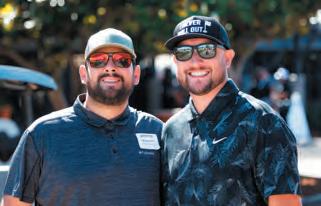
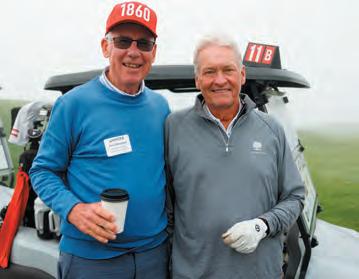
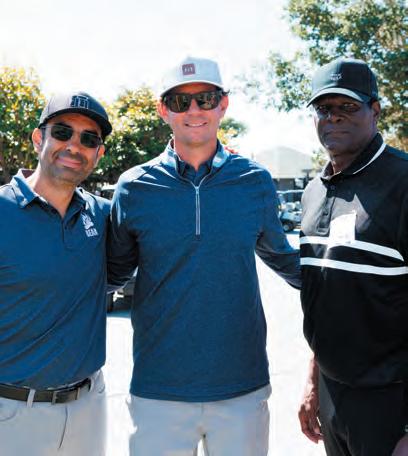
No ifs, ands, or putts about it, this year’s Sal Rubino Golf Classic was un-fore-gettable. The sold-out crowd had a swinging good time on September 6 for the 34th Annual Sal Rubino Golf Classic. With perfect weather, a great location, camaraderie, and friendly competition, the event was on par! UCON’s guests played both courses at the beautifully renovated Bayonet and Black Horse Golf Club in Seaside. Members and industry affiliates competed for the top spot in the tournament while enjoying food and fun activities throughout each course.
Our guests say: 5 out of 5 Stars!

“After 30 years of playing in this tournament I still look forward to attending each year”
Chris
York, TYS, LLP
“It was amazing. This was my first time at this event and will not be my last.”
Rich Arellano, ICONIX Waterworks Inc.


Congratulations to our Tournament Winners:
BLACK HORSE COURSE:
Winners:
1st Place: Randy Armas, Associated Traffic Safety, Inc.
Ken Johnson, Associated Traffic Safety, Inc.;
Jamie Smith, Associated Traffic Safety, Inc.
Brian Sonikson, Associated Traffic Safety, Inc.
2nd Place: Scott Groves, PACE Supply
Steve Hanak, Ghilotti Construction Co.
John Preston, Ghilotti Construction Co.
Brett Wilmes, Soiland Company
3rd Place: Jordan Jaime, Systems & Space, Inc.
Tobin Moon, TYS, LLP
Brian Schwarer, Heritage Bank
Chris York, TYS, LLP
Longest Drive: Jon Breznikar, East Bay Restaurant Supply, Inc.
Closest to the Pin: Andrew Holloway, Woodruff-Sawyer & Co.
Marshmallow Contest: Rudy Quinones, ICONIX Waterworks Inc.


BAYONET COURSE:
Winners:
1st Place: John King, Trench & Traffic Safety, Inc.
Rodger Krug, Trench & Traffic Safety, Inc.
Anthony Madrigal, Trench & Traffic Safety, Inc.
Byron Young, Trench & Traffic Safety, Inc.
2nd Place: James Bendele, Trench Shoring Company
Matt Cochran, Trench Shoring Company
Molly Cochran, Trench Shoring Company
Cory Reed, Trench Shoring Company
3rd Place: John King, Trench & Traffic Safety, Inc.
Rodger Krug, Trench & Traffic Safety, Inc.
Anthony Madrigal, Trench & Traffic Safety, Inc.
Byron Young, Trench & Traffic Safety, Inc.
Longest Drive: Anthony Madrigal, Trench & Traffic Safety, Inc.
Closest to the Pin: Anthony Madrigal, Trench & Traffic Safety, Inc.
Marshmallow Contest: Jeremy Burney, National Trench Safety, LLC
Connecting with other construction professionals, at a fun and inviting event, is what every company wants when they invest their time and resources. The investment reaps rewards beyond expectations.
UCON “gets it” and they know how to set up an event for success.
Scott Shepherd, RJS & Associates
This was not just another golf tournament, but rather a fun social golfing adventure!
Ray Thomason, Saint Francis Electric
We deeply appreciate our Condor Sponsor:
PACE Supply
Albatross Sponsors:
ICONIX Waterworks Inc.
Stevens Creek Quarry, Inc.
Giveaway Sponsor:
Security Paving Company Inc.
Event Chair: Jason Herrera, BFBA, LLP
Volunteers:
Lindsey Eppler, LogoBoss LLC
Travis Eppler, LogoBoss LLC
Matt Hennagin, Moss Adams LLP
Andrew Holloway, Woodruff-Sawyer & Co.
Isaac Johnston, Travelers
Ellen Meaden, Rupert Construction Supply
Michael Rayon, The Construction Zone
Katie Rossetti, Pure Effect, Inc.
Mindy Serrano, The Construction Zone
Sam Serrano, The Construction Zone
Special Thank You:
Jason Herrera, Event Chair
Bayonet & Black Horse Golf Club
Breslow Imaging
Construct Your Image
LogoBoss
The Construction Zone













United Contractors would like to take this opportunity to recognize and thank the following companies who are celebrating their anniversary of membership with our organization in October:
51 YEARS – 1973
Contractor Member: Sanco Pipelines, Inc.
Dave Schrader
47 YEARS – 1977
Contractor Member: Maggiora & Ghilotti, Inc. Gary Ghilotti
42 YEARS – 1982
Contractor Member: Pacific Boring, Inc.
Steven Gallyer
40 YEARS – 1984
Contractor Member: Ranger Pipelines, Inc.
Tom Hunt
Associate Members: Ferguson Waterworks
Carlos Ledon
Tri-West Tractor, Inc.
Randy Cram
36 YEARS – 1988
Contractor Members: Redgwick Construction Company Bob Rahebi
St. Francis Electric LLC Guy Smith
35 YEARS – 1989
Associate Member: CEMEX Tony Skulick

32 YEARS – 1992
Contractor Member: R & B Equipment, Inc. Rick Jeffery
30 YEARS – 1994
Contractor Member: Lone Star Landscape, Inc. Robert Samaniego
29 YEARS – 1995
Contractor Members:
O.C. Jones & Sons, Inc. Rob Layne
R.J. Gordon Construction, Inc. John Johnson
28 YEARS – 1996
Contractor Member: K.J. Woods Construction Company, Inc. Kieran Woods

27 YEARS – 1997
Contractor Member: Bugler Construction Glen Bugler
Associate Member: GMGS Risk Management & Insurance Services Paul Bland
26 YEARS – 1998
Contractor Member: Condon-Johnson & Associates, Inc. Mike Almeida
24 YEARS – 2000
Contractor Member: Michael Prlich & Sons, Inc. Michael Prlich
21 YEARS – 2003
Contractor Member: Neary Landscape, Inc. Brian Neary
20 YEARS – 2004
Contractor Members: Flatiron West, Inc.
Mike Costa
Michels Construction, Inc. Eric Justman
19 YEARS – 2005
Contractor Member: Penhall Company Terry Cooley
18 YEARS – 2006
Contractor Members: D & D Pipelines, Inc. Dennis McElligott
WC Maloney LLC/ Precizion Partners
Joel Leineke
Associate Members: Last & Faoro
Patrick Whitehorn

16 YEARS – 2008
Contractor Member: Campanella Corporation
7 YEARS – 2017
Contractor Members: Calstate Pipelines Inc.
3 YEARS – 2021
B2W Software
Victoria Garofalo
Adam Tovar
Mike Campanella
15 YEARS – 2009
Associate Member: Patriot Risk & Insurance Services, Inc.
Kendall Kasper
14 YEARS – 2010
Associate Member:
OSHA Training Institute Education Center at Chabot-Las Positas CCD
Naci Ozgur
12 YEARS – 2012
Contractor Member:
M & M Foundation & Drilling, Inc.
Gregory Moeller
Associate Members: Commercial Credit Group, Inc.
Don Pokorny
TPR Traffic Solutions
Dennis Corona
11 YEARS – 2013
Associate Members: Argent Materials Inc.
Bill Crotinger
Marsh & McLennan Insurance Agency LLC
Craig McCullum
10 YEARS – 2014
Contractor Members: Garney Pacific, Inc.
Dan Eckdahl
Nor Cal Pipeline Services
David Jaeger
Associate Member: GHD
Greg Watanabe
F & M Bank
Keary Sullivan
9 YEARS – 2015
Contractor Members:
Sukut Construction LLC
Steve Yurosek
1 YEAR – 2023
Velarde Concrete Construction
Gustavo Velarde
6 YEARS – 2018
Contractor Member: WMA Landscape Construction, Inc.
Bill Ayers
5 YEARS – 2019
Contractor Member: Sheeran Pipeline, Inc.
Eoin Sheeran
Associate Members: D’s Trucking Service, Inc.
Vladimir Montelongo
Hinshaw & Culbertson LLP
William Bogdan
Mission Valley Kubota Tractor & Equipment
Renee Trujillo
4 YEARS – 2020
Contractor Members:
Avila Traffic Safety
Kellie Avila
Calmex Engineering, Inc.
Bob Stone
JMH Engineering and Construction, Inc.
Matthew Lovingier
Superior Pavement Markings
Darren Veltz
Contractor Members: Dean Visosky Contractors Inc.
Rick Visosky
Environmental Construction Group, Inc.
Darrin McElroy
Gesick Concrete, Inc.
Bruce Gesick
Reliable Tree Experts, Inc.
Brian Fenske
Associate Members: Sensiba San Filippo LLP
Justin Scripps
SONIC.NET, LLC.
Damon Calegari
Sunstate Equipment Co.
JD Hale
2 YEAR – 2022
Contractor Members: A3 Pipeline
Fernando Flores
California Traffic Safety Inc.
Hilary Sherman
Hadley General Contractors, Inc.
Jeff Hadley
Platinum Underground, Inc. dba Aiken Underground Manuel de Freitas
Associate Members: Associates Environmental, Inc. Michael Buckantz
Contractor Members: Global Diving & Salvage, Inc.
Dan Pierson
Ironmark Earthworks, Inc.
Kyle Boyer
J.F. Brennan Company, Inc. Mike Binsfeld
Stacy and Witbeck/ Ghilotti Bros a Joint Venture
Dan Elshire
Stacy and Witbeck/Myers a Joint Venture
Dan Elshire
T and S DVBE, Inc. Taren Forde
Utilitix Pipelines Inc Alejandro Camacho
Valley Transit Partners Matt Kuzmick
Associate Members: Minicam Inc. Daryl Doran
Pacific States Petroleum Anthony Davis
Umpqua Bank Erik Larsen
United Contractors continues a tradition of electing strong leadership by and for the membership. The UCON Board of Directors is committed to providing the highest return on your investment. In this way, the Board and Association work for YOU. It is the foundation of UCON’s success. At UCON, our members democratically elect their Board of Directors on an open ballot.

With the growing popularity of online voting, votes will be accepted online only again this year. In this environment, we want to make it easy for our members to cast their ballots remotely. Emails were sent out on October 1st with security login credentials to the primary contact of your organization (only one vote per company). Please VOTE!
Contractor and Associate Elections are both online voting and has begun October 1, and ends November 14.
Vote today: results will be announced in November.
For more information about your future Board leadership, please get in touch with Tejel Patel, Executive Assistant to the CEO, at (925) 362-7302, tpatel@unitedcontractors.org. u





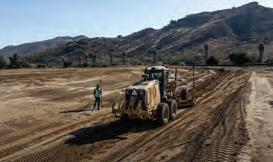

The UCON Political Action Committee (PAC) is YOUR PAC, and its strength is a testament to the strength and voice of union contractors throughout California.
WHY GIVE TO THE UCON PAC?
Your support fuels our strength. The UCON PAC is our collective power to defend every member and protect the greater industry.
The UCON PAC has paved the way towards helping us secure more than $90B in public works funding, improve agency accountability, advance payment streamlining, create safer job sites, improve the business environment and strengthen the market share for union-signatory contractors of all sizes and scopes across the state.
Thank you for your trust, support and generosity.
(See page 23 for more about the UCON PAC)


