Crisis in Syria
Two-Year Report
Syria, Lebanon, Jordan, Iraq, Turkey, Egypt

losing a generation grows with every day that the situation deteriorates, while the progress made for Syrian children in previous years is undone.
All around them, their dreams and opportunities for the future are being lost. And as they lose their childhoods . . . as their right to be children is denied . . . their views of their neighbours are coloured in ways that can create future generations of self-perpetuating violence. With all that implies for the region as a whole.
Children face tremendous dangers on a daily basis. They are being killed, maimed and orphaned by conflict. Health clinics that have not been damaged or destroyed struggle to deliver life-saving services. Clean water and adequate sanitation – the most fundamental of daily necessities – are increasingly scarce.
The boundaries and names shown and the designations used on this map do not imply official endorsement or acceptance by the United Nations.
Many schools have been damaged, destroyed or taken over by displaced people seeking shelter. Countless children suffer from the psychological trauma of seeing family members killed, of being separated from their parents and being terrified by the constant thunder of shelling. Girls and women are further vulnerable to violence.
Many have fled their country to live in refugee camps in neighbouring countries. And if all this were not enough, they are enduring a bitterly cold winter.
UNICEF and its partners are committed to keeping Syria’s children from becoming a ‘lost generation’. This report highlights some of the critical efforts made to minimize the impact of the crisis on children - including in life-saving areas of health, nutrition, immunization, water and sanitation, as well as investments in the future of children through education and child protection.
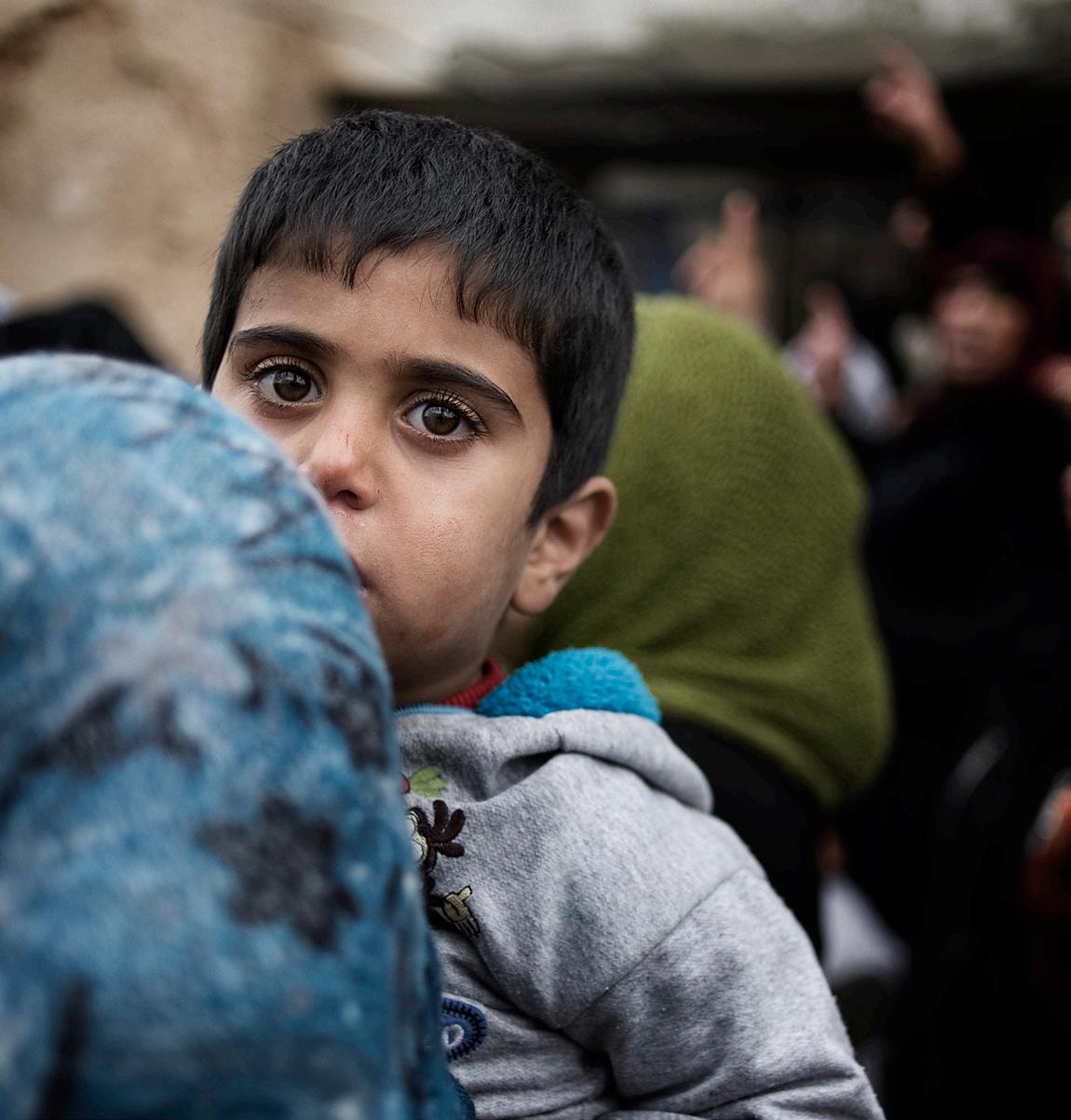
Cover Photo:
Child at a funeral in Syria. February 2012.
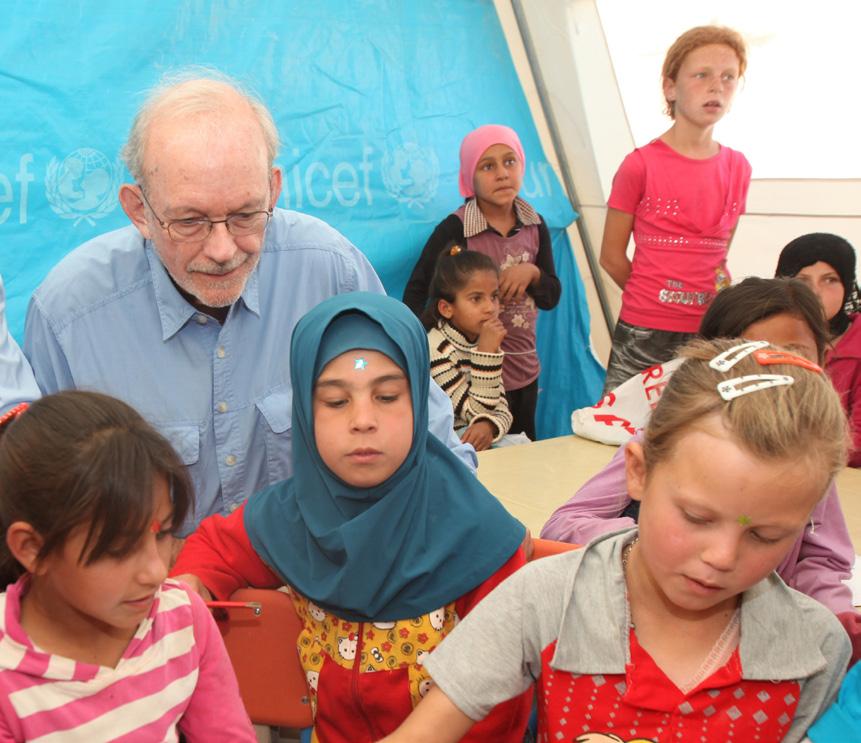
UNICEF Executive Director Anthony Lake with Syrian children at the Za’atari refugee camp in northern Jordan, October 2012.
But hundreds of thousands of Syrian children on the precipice need the international community at their sides, to help them through the months ahead in the face of continuing insecurity and obstacles to humanitarian access.
Across Syria, and in the neighbouring countries of Lebanon, Jordan, Iraq and Turkey, UNICEF is seeking new ways of reaching affected populations, working with a wide range of partners, and scaling up our activities to deliver healthcare, water, sanitation and hygiene, education and protection for all children.
To do so, UNICEF, like all our partners in the UN and beyond, requires urgent funding – or these life-saving services will be placed in jeopardy. We can only meet the growing needs if adequate resources are made available.
UNICEF also calls on all parties to the conflict, and those who have influence over them, to reaffirm the principle that children are not
responsible for conflict and should not be its first victims. They must be protected against violence at all times and allowed safe access to basic services.
Millions of children inside Syria and across the region are witnessing their past and their futures disappear amidst the rubble and destruction of this prolonged conflict. We must rescue them from the brink, for their sake and for the sake of Syria in future generations.
Anthony Lake UNICEF Executive Director
Introduction
Two years into the conflict in Syria, children are paying the heaviest price. The affected population estimates made in late 2012 speak for themselves: of the 4 million affected people inside Syria, almost 2 million are children, and of the 2 million displaced, 800,000 are children. The current numbers are most likely much higher. Half a million child refugees are now in Jordan, Lebanon, Turkey, Iraq and Egypt. Thousands more are streaming across Syria’s borders every week. Meanwhile, host communities that were already vulnerable before the crisis are overwhelmed. In short, the crisis is reaching a point of no return, with long-term consequences for Syria and the region as a whole, including the risk of a ‘lost generation’ of Syrian children.
In Syria, children have been exposed to grave human rights violations including killing and maiming, sexual violence, torture, arbitrary detention, recruitment and use by armed forces and groups, and exposure to explosive remnants of war.
Basic infrastructure and public services are being systematically destroyed. Families are struggling to survive in increasingly desperate conditions. One in every five schools in Syria is destroyed, damaged or converted into shelters for displaced families – disrupting schooling for hundreds of thousands of children. Water availability is a third of what it was before the crisis. Children and women in shelters are more exposed to unsanitary conditions, including unsafe drinking water and a lack of water for personal hygiene, placing them at further risk of water-borne diseases including acute respiratory infections and skin diseases such as scabies.
UNICEF and partners face a complex operational environment with increased violence, limited access, and a severe shortage of funds.
In Syria, basic infrastructure and public services have been systematically destroyed over the last 24 months. Families are struggling to survive in increasingly desperate conditions.
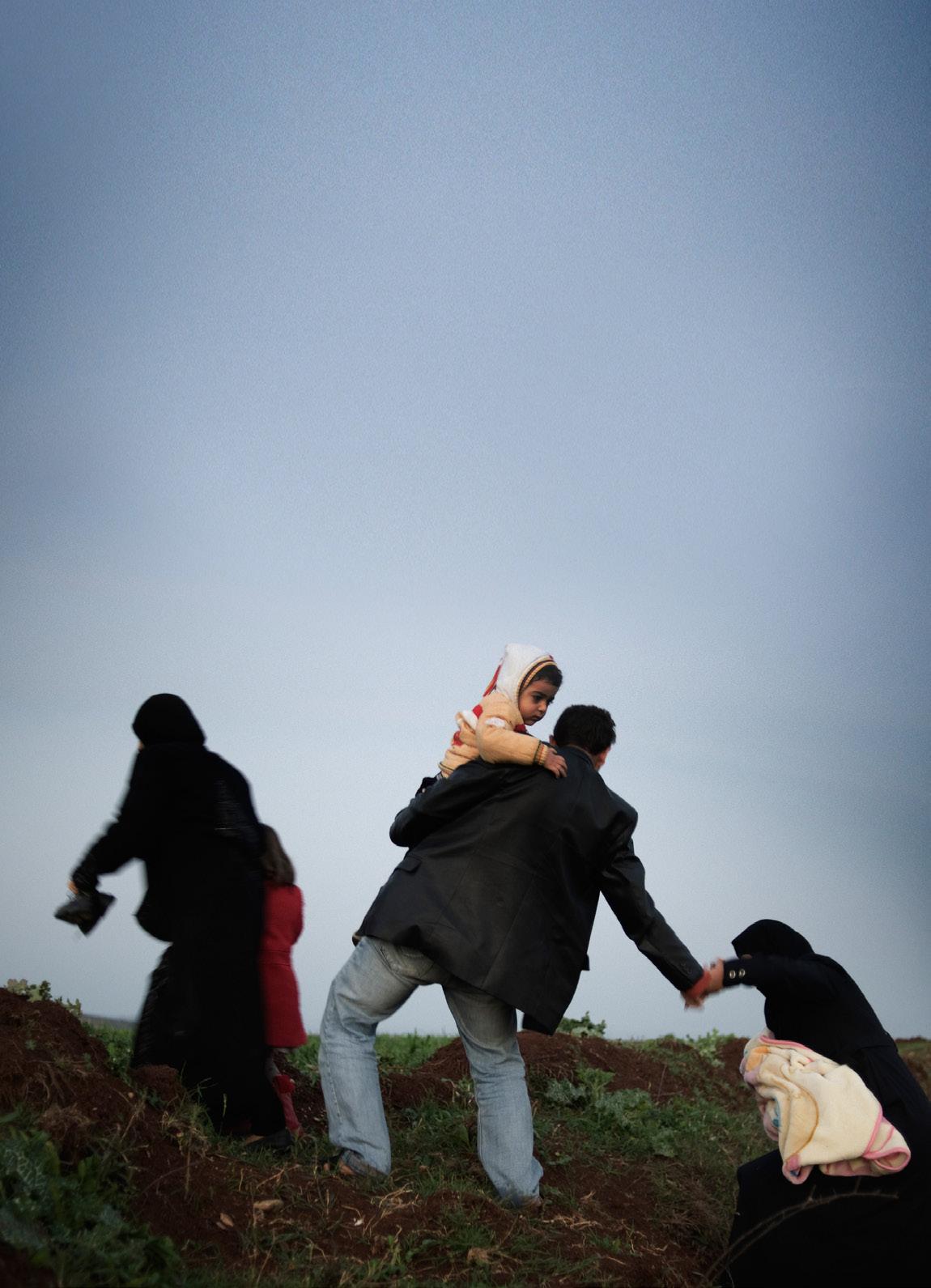
Holding a child in his arm, a Syrian man helps other members of his family cross Syria’s border with Turkeypart of a growing number of civilians fleeing the conflict in the country. By early March 2013, one million Syrian refugees had been registered or were being assisted in host countries around the region.
Despite these challenges, UNICEF continues to play a key role in line with its mandate and comparative advantage in protecting children’s rights and meeting their humanitarian needs. UNICEF advocates with parties to the conflict to protect children against rights violations and ensure their access to basic social services. Today, UNICEF works with a wide network of 40 partners and plans to expand this network to reach more and more children in need inside Syria, including in Dera’a, Tartous, Homs, and Al-Hassakeh, in addition to Damascus.
Over the coming months, UNICEF and partners will continue to focus on delivering life-saving interventions such as water purifying supplies for 10 million people and immunization for up to 3 million children against polio and measles through dozens of mobile clinics that will reach children all over Syria, including in areas controlled by the opposition. At the same time, we will work on ensuring access to education and providing psychosocial support to the most vulnerable children.
UNICEF works with a wide network of 40 partners and plans to expand this network to reach more and more children in need.
Across the sub-region the humanitarian situation in Jordan, Lebanon and neighbouring countries is of serious concern. Refugee flows continue to increase rapidly, with more than 7,000 Syrians fleeing the country every day. UNHCR has already registered one million Syrian refugees. In Lebanon and Jordan, planning figures initially projected for June 2013 have already been reached, placing enormous strain on existing resources. In this challenging environment, UNICEF and its partners continue to cover the essential needs of affected children by providing refugee and host communities with clean drinking water, enrolling children in learning programmes while providing psychosocial services, and supporting vaccination campaigns.
Level of need is outpacing response capacities as funding remains insufficient.
To assist as many children as possible, UNICEF urgently requires about US$157 million to meet the humanitarian needs of children and women affected by the crisis in Syria, Jordan, Lebanon, Turkey, Iraq, and Egypt. To date, the organization’s humanitarian response is only 20 per cent funded. Without immediate additional funding, UNICEF will have to halt a number of key life-saving interventions by the end of March 2013. It will also be unable to meet the basic needs of children – including vital water and sanitation services, critical measles and polio immunization campaigns, life-saving neo-natal interventions and emergency medical care. Additional resources are also urgently required to maintain children’s education and protect them from violence, exploitation and other forms of abuse.
Syria Crisis
Over 2 million children affected inside Syria
Half of 1 million refugees are children
In Syria, 1.3 million children vaccinated against measles 4 million people have safe water through distribution of water purifying supplies
421,700 children and women provided access to essential health services
In the Sub-region 300,000+ children supported with WASH, Health, Psychosocial Support and Education
FUNDING GAPS (through June 2013) Syria 78 per cent
The Sub region 79 per cent
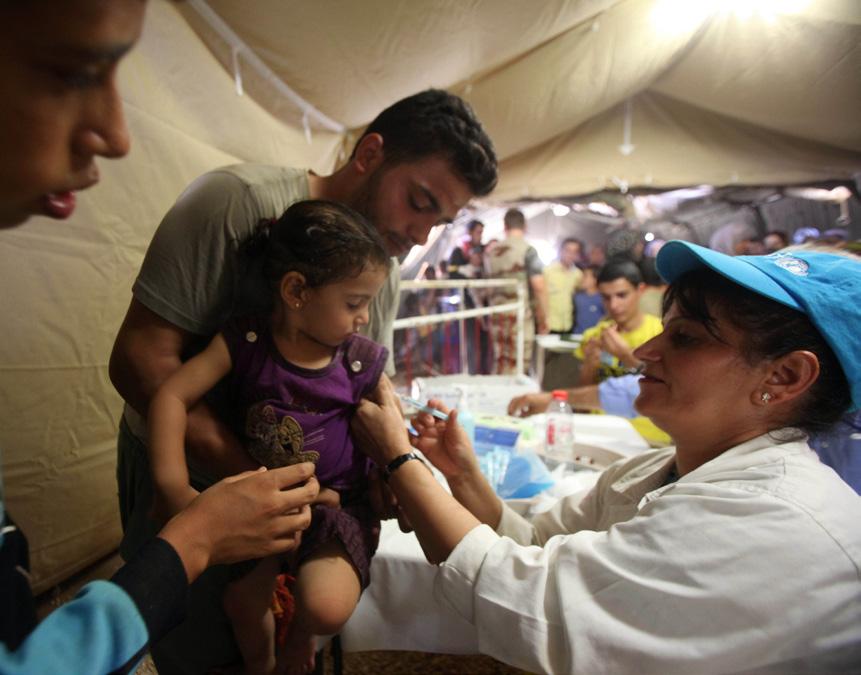
A health worker vaccinates a girl against measles during a UNICEF-supported immunization campaign at Za’atari refugee camp on Jordan’s northern border with Syria. By March 2013, the camp had an estimated population of around 90,000 Syrians, at least half of them children.
Half of the affected population are CHILDREN
4 MILLION people affected Inside Syria: 1.84 MILLION Syrian CHILDREN affected 2 MILLION Syrians displaced
Another 1 MILLION Syrians have fled to neighbouring countries
* All Syria figures are latest available estimates from the Syria Humanitarian Assistance Response Plan 3, January 2013. ** All refugee data from UNHCR, 6 March 2013. Includes registered refugees as well as those awaiting registration. *** Child refugee estimates based on UNHCR statistics of 52% of regional refugee population under 18 years.
www.unicef.org.au/syria
www.unicef.org.au/Discover/