The UNC Frank Porter Graham Child Development Institute (FPG) was founded in 1966 by a small group of scientists who had a vision to conduct research that would make a difference in children’s lives, support families, and inform public policy. Since its inception, FPG has recognized that every child deserves a safe, healthy, and stimulating childhood; and our work has been dedicated to making this experience a reality for all children.
For almost six decades, our ability to secure highly competitive grants and contracts has enabled us to build one of the most recognized, successful, and impactful child development research institutes in the country—our research, evaluation, implementation, technical assistance, and outreach have shaped how the nation cares for and educates children.
But did you know that individual contributions are also essential to our continued success?
In honor of our upcoming 60th anniversary in 2026, we invite you to support FPG in working toward a better tomorrow. More than a gift, your charitable contribution to FPG is a demonstration of your commitment to helping children and families thrive. https:// go.unc.edu/supportFPGimpact
Letter from the Director
Dear colleagues, donors, and friends,
Sitting here writing my third FPG impact report welcome letter, I find myself considering the past year with a mixture of pride and resolve while also looking ahead with hope. It is no secret that, like other academic research institutes and centers around the country, we have faced many new challenges this year. Those challenges withstanding, I’m proud to say that our scientists, specialists, and scholars have remained steadfast in our shared commitment to making a positive impact on children and families throughout North Carolina, the nation, and around the world.
Within the following pages, I’m pleased to share with you some examples of the many ways that everyone at our Institute is working to ensure that all children and families thrive. You will learn about new research that explores the interaction between childhood abuse, genetic factors, and lifelong depression, and new research that brings critical attention to young learners in rural communities. You will see several ways that FPG’s Early Childhood Technical Assistance Center is partnering with states to support children with disabilities and their families. And you will find out what new work is being funded by FPG Next pilot grants.
We are on the eve of celebrating the Institute’s 60th anniversary in 2026 and, as I was looking back upon the accomplishments of not only this past year but the many before it, I realized I wanted to share that with you—so at the center of this year’s report, you will find a timeline featuring a snapshot of highlights and impactful work from FPG over the last six decades.
As I mentioned last year, the innovative work we do every day at FPG represents the research to practice to policy continuum. So, we are again including icons (see the visual key below) that indicate where along that continuum this year’s stories—and the work they reflect—sit.
Finally, as these pages reflect only a few examples of what we do and who we are, I encourage you to visit our website—fpg.unc.edu—to take a deeper dive into our Institute.
Best regards,
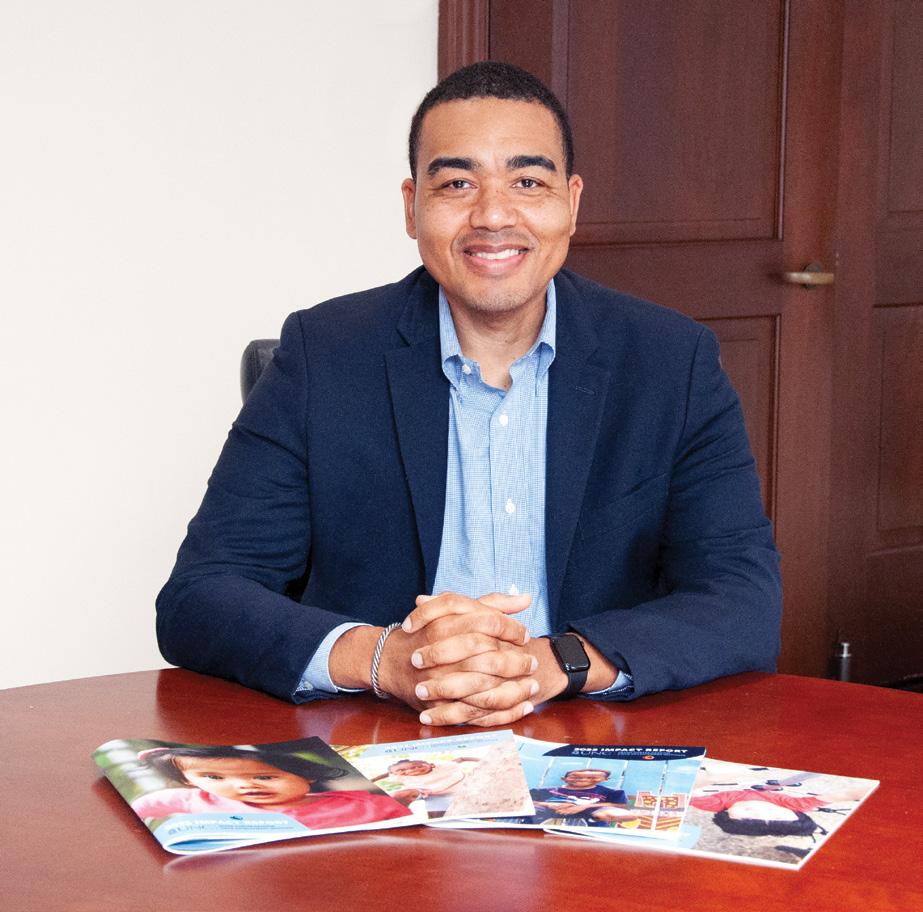
Brian A. Boyd, PhD Director, Frank Porter Graham Child Development Institute
William C. Friday Distinguished Professor of Education
Study compares three executive function batteries among preschool-aged sample
Executive functions play a role in future academic achievement, interpersonal skills, and emotion regulation. To understand how to best measure these skills in young children, FPG Advanced Research Scientist Laura Kuhn, PhD, and colleagues compared three performance-based measures of executive functions that have been developed for preschoolers. The results of that work were published in “A Comparison of Three Executive Function Batteries in a Preschool-Aged Sample.”
The three performance-based measures of executive functions (EF) that the researchers studied are: the National Institutes of Health’s Toolbox Cognition Battery (NTCB), the Wechsler Preschool and Primary Scale of Intelligence (WPPSI-IV), and the EF Touch battery. As a graduate student, Kuhn served on an FPG project that developed the EF Touch, which originally used paper and pencil. A second grant enabled Kuhn and colleagues to computerize the measure, which is free to use and appropriate for children ages 3 to 5 years old.
While the EF Touch has been shared throughout the United States and the world, as well as translated into
several languages, this is the first research into how children’s performance on the EF Touch battery compares to other widely used EF assessments. The goal of the study was to provide researchers and practitioners with guidance on selecting a battery (performance-based measurement method) by comparing a free battery with two batteries that are available for purchase.
The study used a quota-based sampling approach to recruit 846 children from preschools in New York and North Carolina during the 2014 and 2015 calendar years. The impetus for the initial work was born from the Family Life Project, which focused on poor rural communities in eastern North Carolina and Appalachia. “Our current work still has those threads where we’re thinking about serving communities that are not as well-resourced and may not have access to expensive assessment tools,” said Kuhn.
The research team recruited children who were diverse in terms of race, ethnicity, household income, age, and gender to reflect the diversity in 2012 U.S. Census data. The children were tested in their preschools by a research assistant in a one-time assessment of their EF abilities. In addition to comparing accuracy scores across the measures, researchers examined practical issues that could affect administration of the tests and contrasted these metrics across several demographic subpopulations.
Kuhn and her colleagues determined that the free EF Touch battery overwhelmingly performed similarly across a range of metrics when compared to the NTCB and WPPSI-IV, which are available for purchase. While the EF Touch battery was developed using a low-income and racially diverse sample,
researchers found that it was not superior to the other tests in these groups. At the same time, the EF Touch performed better with younger children than the other batteries.
Kuhn said that the study showed that the EF Touch is a strong resource that is not cost prohibitive and can work with a diverse sector of preschoolers, specifically those who have additional needs and/or are younger. “Some of the standardized batteries, although they purport to cover a wide age range, aren’t as good for the youngest kids,” she said. “We also have items that assess the different domains of EF.”
Looking ahead, the team would like to modernize the battery, so it is more user friendly, adaptable with current technology, and appropriate for children up to first grade, beyond the current limit of age five. The team would also like to create a validated Spanish translation.
“A lot of intervention work focuses on whether it improves preschoolers’ reading and math scores, which is of course very important,” said Kuhn. “But when it’s an executive function intervention, it is nice to have a convenient tool to measure executive function so we can see if this executive function intervention improves executive function and then take the next step to say, does it also improve academic outcomes? These measures help us do that.”
EMERGE study explores language trajectories of low-income, ethnically diverse children with autism
Spoken language is predictive of many positive life outcomes, such as employment, social interaction, play skills, and more. But researchers still don’t know why some children talk and others don’t, especially as it relates to historically marginalized and minoritized populations. A new study, EMERGE, seeks to change that.
Researchers at FPG will co-lead a unique project to assess behavioral and neurological markers of language development in low-income children within their family settings, gathering valuable information that could lead to earlier, more targeted interventions for a population that has been largely underrepresented in autism research.
EMERGE: Early Markers of Expressive and Receptive (language) Growth in Ethnically diverse autistic toddlers is funded by NIH’s National Institute on Deafness and other Communication Disorders and is led by Connie Kasari, PhD, distinguished professor of psychiatry at the David Geffen School of Medicine at the University of California, Los Angeles. FPG Director Brian Boyd, PhD, will co-lead the study.
Working with Kasari and Boyd at UNC are FPG Faculty Fellow Aysenil Belger, PhD, Alana Campbell, PhD, a research assistant professor in the Department of Psychiatry, and Sallie Nowell, PhD, CCC-SLP, an assistant professor in the Department of Speech and Hearing Sciences.
Language delays become apparent in autistic children between 18 and 36 months, and this is often a parent’s first indication that their child may have a developmental delay. This project allows researchers to measure children’s development in the context of their home environments, collecting neural data from EEGs to measure brain activity and observing communication, language, sensory, and motor skills.
Children with spoken language delays at 18 months will be studied through 30 months to try to understand what factors can predict language development in this population. The primary outcome will be the total number of novel words on a language sample at 30 months.
“We already know poverty is a risk factor, but what are the assets and strengths of those families? ... Interventions should build upon those assets and strengths while addressing challenges families may be facing.”
– Brian Boyd
Boyd said the average age of autism diagnosis is around 4 years of age, and while the field is getting better at early diagnosis, families living in poverty may have trouble accessing early diagnosis for their child. By placing the study in children’s homes over three years, researchers can reduce barriers to participation for this population.
“We know that children who grow up in high-wealth households tend to hear more words and more variety of words from their parents, but we don’t know how the broader family ecosystem affects the language development of autistic children,” Boyd said. “This grant is not just focused on younger kids with autism, but younger kids with autism who are living in poverty. What are the combined effects of poverty in addition to having a developmental disability? How do those interact to affect one’s language learning and trajectory?”
“Going into homes decreases the burden on families to participate in research. We’ll be looking at how these children play and think, developmental
variables, as well as the environment around the child,” said Kasari. “A lot of children may benefit from large, extended families, and they may be hearing multiple languages.”
Boyd said it was important to look beyond how poverty confers risk for a young child’s development. By studying children in a family and community setting, and observing how children and families interact, researchers can gain knowledge about what aspects of their environments may be supportive for language development.
“We already know poverty is a risk factor, but what are the assets and strengths of those families? This is an important part of what we’re trying to understand,” says Boyd, “because interventions should build upon those assets and strengths while addressing challenges families may be facing.”
Kasari, who received her PhD at UNC-Chapel Hill and has previously worked at FPG, said FPG’s long history of work with historically marginalized families makes the Institute an important partner for this study. For instance, FPG’s Abecedarian Project is one of the oldest and most oft-cited early childhood education programs in the world, following lowincome children into their 30s to demonstrate how the long-time impacts of high-quality early childhood education impacted their lives.
“We have a goal to increase equity in assessment, identification, and intervention access,” said Kasari. “This is a study that can really help us understand some of the disparities we see in autism identification for children who are low-income and who are often marginalized and minoritized.”
FPG Next pilot funding supports new projects
Last year, FPG Director Brian Boyd, PhD, launched an initiative that would guide future work at the Institute. Boyd created FPG Next to leverage the Institute’s strengths and grow and expand FPG’s project portfolio. He also wanted to foster even more collaboration throughout the Institute—across and among our research and evaluation, implementation science and technical assistance groups—and across UNC’s campus.
As an integrative framework, FPG Next was set up so that its six planning groups could work individually on their specific strategic initiative or priority, yet also work collaboratively as a larger body to develop strategic directions for the Institute.
“These newly funded projects are exciting. Not only for the knowledge they will generate in the short term but also for their potential to spark further discovery, improve outcomes for children and families, and bring tangible benefits to North Carolina and beyond through innovative practices.”
– Noreen Yazejian
In the initial phase, the planning groups conducted a landscape analysis to help identify research and collaboration opportunities and forward-looking trends. Late last summer, they shared their findings with Boyd and, over the next several months, teams led by FPG researchers in collaboration with campus partners worked on new project proposals in pursuit of a pilot grant opportunity. Associate Director for Research Noreen Yazejian, PhD, enlisted the assistance of several FPG faculty fellows to help review the proposals; they followed modified NIH guidelines when scoring the proposals. Together, the team selected four FPG Next pilot grant projects.
A project titled “Developing and Testing “STEMIEBot” to Support Inclusive High Quality Early STEM Learning Opportunities” will be carried out by a research team that includes FPG’s Jessica Amsbary, PhD, Ann Sam, PhD, and Noreen Yazejian, PhD, and Janice Anderson, PhD, an associate professor in UNC’s School of Education.
FPG Next Incubation Group Update
The FPG Next incubation group centered around “Innovative technology and data science in education,” which is co-chaired by Senior Implementation Specialist Wendy Morgan, PhD, and Technical Assistance Specialist HsiuWen Yang, PhD, has been hard at work since January. The incubation group is comprised of three focused workgroups set up to address urgent, real-world challenges in education.
Recognizing the critical role of families in student success, the family engagement workgroup is partnering with the Carolina Community Academy to identify pressing needs for family engagement from the perspectives of both teachers and families. Feedback from the teachers and families will guide the development of a low-fidelity
FPG’s Ximena Franco-Jenkins, PhD, and Heather Aiken, PhD, and Kristin Papoi, PhD, a clinical associate professor in UNC’s School of Education will work together on “Enhancing Literacy Assessment Practices for English Language Learners and Multilingual Learners in North Carolina.”
FPG Faculty Fellows Iheoma Iruka, PhD, and Simona Goldin, PhD, and FPG’s Diana Fishbein, PhD, and Nathan Jorgensen, PhD, along with community
prototype of a digital support tool to address the community’s most urgent challenges.
The inclusive resource access workgroup has developed an early chatbot prototype to help early intervention and early childhood special education professionals access high-quality, inclusive learning resources. They are working on usability testing and refinement to ensure the chatbot meets the needs of users.
And the AI landscape analysis workgroup is conducting a landscape analysis of existing AI tools for educators, documenting available features, identifying gaps, and highlighting opportunities. This work will inform a future research agenda on how AI can better support teaching and learning.
7 Advancing knowledge to transform children’s lives
partner, Rural Opportunity Institute will collaborate on “Community Strengths in Low Opportunity Communities Associated with Child Flourishing Across North Carolina.”
And FGP’s Ann Sam, PhD, and Desiree Murray, PhD, and FPG Faculty Fellow Cathi Propper, PhD, an associate professor in UNC’s School of Nursing, will work together on “Early Childhood Educator Wellbeing through Mindful Co-Regulation.”
New research explores childhood-abuse-genetic-risk interaction with lifelong depression
Utilizing her interdisciplinary experience in social science and epidemiology, Ping Chen, PhD, specializes in conducting research focusing on social, environmental, behavioral, and biological linkages in developmental and lifecourse health trajectories. This interest led Chen, an advanced research scientist and social science research methodologist at FPG to collaborate with FPG colleagues on “Polygenic risk, childhood abuse and gene x environment interactions with depression development from middle to late adulthood: A U.S. national life-course study,” which was published this year in Preventive Medicine.
Researchers in preventive medical research are noticing the association between childhood physical abuse and long-term medical consequences, particularly depression. Understanding how genetic and early family factors and their interactions influence the onset and progression of depressive conditions is crucial, especially considering gender disparities in these processes.
This study used longitudinal data to examine how the risk of polygenic depression—influenced by multiple genetic loci—and childhood abuse interact and influence the life-course development of depressive conditions in men and women from middle to late adulthood. This knowledge can lead to the development of effective prevention and intervention strategies.
“Early exposure to abuse has an influence that we see not just during childhood and adolescence but throughout the entire life,” said Chen. “That’s why we need to pay attention to prevention medicine.”
In addition to Chen, the research team included epidemiologist Sabrina Zadrozny, PhD, director of FPG’s Data Management and Analysis Core; former FPG Senior Research Scientist Ronald Seifer, PhD; Aysenil Belger, PhD, an FPG faculty fellow and professor of psychiatry at the UNC School of Medicine; and Yi Li, PhD, associate professor of sociology at the University of Macau.
The researchers analyzed data from the U.S. Health and Retirement Study (1992–2020). The 7,512 participants—4,323 females and 3,189 males—were of European ancestry and between ages 51 to 90. The team used the predictor measures of polygenic depression scores and childhood physical abuse and outcome measures including the Center for Epidemiologic Studies Depression Scale (CES-D) and clinical depression risk to tease out how the interactive processes between genetic risk and childhood abuse impact the development of depression in individuals. This offers insights into prevention and intervention strategies that can be personally tailored.
Chen and her colleagues used a life course perspective to understand the interaction among gender, genetic factors, and childhood abuse in relation to depression development. In the study, they note that understanding “how depressive conditions evolve over time under the influence of various factors is essential. Yet, there is a dearth of research applying a life course approach to examine the longitudinal association of gene-environment interactions with depression trajectories.”
This study is the first to examine the childhood-abuse-genetic-risk interaction with lifelong depression. The researchers found that higher polygenic scores elevated depressive symptoms and clinical depression risk. Males ages 51 to 90 years experienced worse depression symptoms and clinical risk because of childhood abuse than females. Particularly, males with high genetic risk were more mentally harmed by childhood abuse.
The researchers found that the “interaction between childhood abuse and genetic factors significantly shaped lifelong depression trajectories in males, while the negative impact of abusive parenting remained constant regardless of polygenic depression risk among females.” The researchers believe that “individualized prevention and intervention strategies could be crucial in mitigating lifelong depression development, especially for high-genetic-risk males with a history of childhood physical abuse.”
Chen says that the main takeaway of this study is the pattern of gender differences. “This is a new contribution to our understanding of gender differences because previously, we thought that females had higher depression levels across the life course,” she said. “But we found that physical abuse has a more detrimental impact on males than on females, especially among males with high genetic risk for depression.”
She hopes that this study leads clinicians and health scientists to notice the gender differences as well as the multiple factors—including genetics and early childhood abuse—so that when they treat patients, they offer individualized prevention and intervention.
Uniting people committed to inclusive practices for young children with disabilities
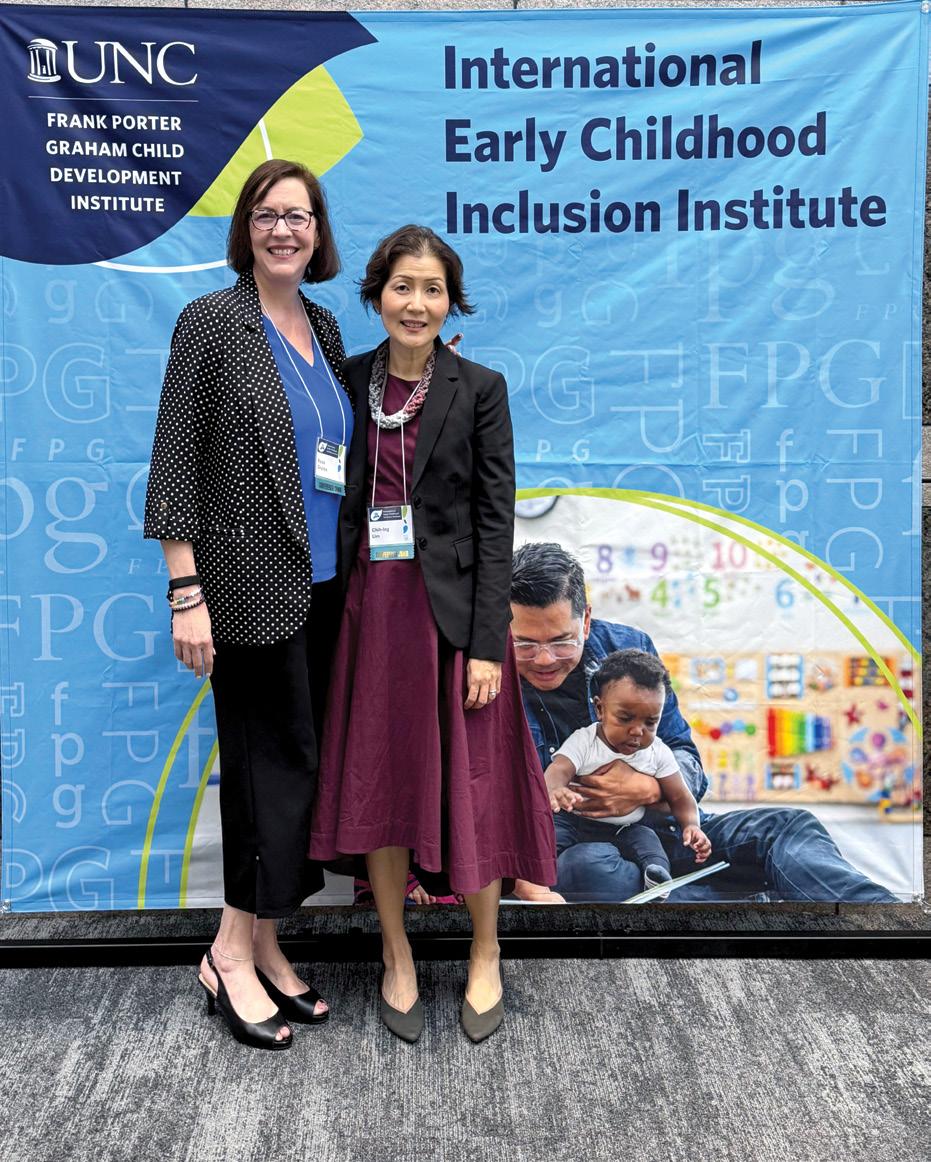
FPG’s International Early Childhood Inclusion Institute celebrated its 25th anniversary in May as a leading global event, uniting educators, professionals, administrators, higher education faculty, families, and researchers committed to inclusive practices for young children with disabilities.
Event co-chairs Chih-Ing Lim, PhD, and Paula Grubbs, PhD, shared highlights from the milestone, multi-day event.
Fifty-five sessions were on offer for the more than 670 people—both in person and virtual—in attendance. Eleven countries and 31 U.S. states were represented among the attendees. Of the attendees, 96% agreed that the Institute is relevant to their work and 96% agreed that they learned about new resources and practices.
Jordyn Zimmerman, MBA, educator, advocate, and changemaker set the stage for the entire event as the keynote presenter. Diagnosed with autism as a young child, Zimmerman did not gain access to augmentative communication until she was 18. Using an augmentative and alternate communication device during the keynote, Zimmerman shared how beliefs and actions matter, saying that decisions need to include individuals with disabilities and their families, schools need to be ready for children, and emphasizing that each and every child has the right to meaningful learning and inclusive environments.
During the conference, participants were challenged to reflect on the question, “Where are you on your inclusion journey?” Attendees shared thoughts on real life and virtual bulletin boards—showing that they were at varying points along the path. And in the post-event survey, attendees highlighted many reasons for attending this year’s conference, including those below and on the next page.
Multiple Perspectives
“I appreciate the multiple perspectives offered on the panel, and how many of them ultimately focused on the child and FAMILY, and how the family works so hard to be advocates for their children. It provoked some thought around my own program and how we can—MUST—do better with communicating with families with respect, gentleness, and an open perspective when talking about each child, not just children with differences.”
– Early childhood leader
High Quality Content
“Within the first 30 minutes, I learned three tools that would help me in my role conducting in-service training for teachers. I could leave now and have the new tools needed to move teachers from acquisition to application in their work!”
– Higher-ed faculty / PD provider
“I left with a clearer understanding of implementing strategies and realistic expectations of my role. The content shared in this conference gave me the inspiration to get excited about my work again. This was a wonderful experience.”
– EC/ECSE professional
A shared passion for inclusivity
“As both the parent of a child with multiple disabilities and a professional in the field, I am passionate about promoting truly inclusive practices and eliminating the use of exclusionary discipline in early childhood.”
– Family of a child with disabilities and an EC/ECSE professional
“This conference was an amazing and eye-opening experience. It was great to be able to network with others that are as passionate about early childhood inclusion and also speaking with the families that have children with special needs. Hearing from them about their challenges and what has worked for them.”
– EC/ECSE professional
What action will participants take going forward?
One clear theme emerged: inclusion is a personal and collective promise. The next steps taken by each participant are part of a larger movement toward ensuring that every child, in every setting, is supported to learn, grow, and belong.
Next steps
“My next step on my inclusion journey is implementation. I was sailing, now it’s time to cruise. This has been an amazing experience.”
–
EC/ECSE professional
“Sharing some wonderful resources with staff that can then be utilized or further shared to [early childhood education]. Also, connecting with others that attended to collaborate on how to impact our communities ... making ripples in the pond!”
– EC/ECSE professional
FPG team works with Summer Literacy Initiative
A significant body of research highlights the negative impact of summer learning loss, where students experience academic setbacks when they are not engaged in learning during school breaks. This issue disproportionately affects children in low-income and under-resourced communities, where access to summer educational opportunities is often limited, further widening the achievement gap.
To address this issue, The Duke Endowment created The Rural Church Summer Literacy Initiative (now known simply as the Summer Literacy Initiative), which was tested in one church in summer of 2013 and grew to 22 churches this
past summer. William Aldridge, PhD, a senior implementation specialist at FPG, began helping the Endowment define the program nearly three years ago as an independent contractor through the American Institutes for Research. And now FPG is being funded by the Endowment to work as an intermediary organization to support the summer literacy program. Aldridge serves as team lead alongside co-lead Capri Banks, MA, an FPG implementation specialist.
The goals of the Summer Literacy Initiative include improving literacy outcomes for students at risk for below grade level reading and encouraging
churches to play an effective role in helping children and families.
The Duke Endowment works with rural United Methodist congregations throughout North Carolina to provide evidenceinformed summer literacy programs for rising first through third graders. Endowment funding supports these churches in working with local public schools and other community partners to recruit 24 to 48 students who have been identified at school as reading below grade level expectations.
A full day of programming is provided Monday through Friday for four to six weeks in church buildings. Teachers trained in the science of reading offer 80 to 90 hours of reading instruction in the mornings while each afternoon includes a variety of student enrichment activities. The young people receive a healthy breakfast and lunch daily, and their parents and/or guardians are engaged through weekly workshops and other activities.
The Endowment refers to the initiative as a faithplaced program rather than a faith-based program because the churches see the program as a way to extend their ministry in a non-religious oriented way. The program has shown such positive results that the North Carolina Department of Public Instruction has listed it as a promising practice.
Aldridge and his team are supporting the initiative’s program development in a variety of ways, including
helping to produce a more accessible and usable way of packaging the program materials and information so that it is easily understood and used by the pastors, site directors, teachers, enrichment coordinators, and volunteers involved with the program. The FPG team is exploring the literature on enrichment activities and family engagement to ensure that the program is utilizing updated standards and evidence-based best practices. The support specialists are helping to strengthen the program by developing broader training and coaching systems for those delivering the program.
The work also includes exploring how to provide ongoing consultation to help program leaders and volunteers acquire the information in the repackaged program, be supported in their delivery of it, and grow in the confidence to administer the program as intended. The team is examining the best ways to incorporate into the program’s diverse family needs, values, and cultural preferences as well as social emotional learning components and traumainformed practices.
The FPG group is also using data to inform quality improvement, so that local leaders and teams can see the adjustments needed. Aldridge said that he and his colleagues wish to build the capacity at the local sites for supporting delivery of the program with fidelity, but also in a way that is very responsive to the local culture, the families, and their values and preferences.
“We want to make sure that the program has its intended impacts, which means it needs to be delivered in a way that creates a sense of inclusion and belonging for these families that may not traditionally be interacting with these churches and, in some cases, may have different experiences in how they interact with the school environment,” said Aldridge. “We want to make sure that everybody feels supported and experiences success.”
What types of green spaces are important for mental health?
As many parents have experienced, young children often have a hard time managing their emotions after preschool pickup. Nissa Towe-Goodman, PhD, a research scientist at FPG, learned this firsthand when her now 13-year-old daughter Addie was younger. Towe-Goodman explained, young children frequently “use their good energy” at school and feel comfortable decompressing and being upset in the company of their parents.
To address this with Addie, Towe-Goodman regularly brought her to walk along and play by the Eno River after preschool. She noticed that Addie was almost instantaneously more grounded on those days and when they returned home, “things would be calm, cool, and collected.”
Having studied emotional development in young children, Towe-Goodman was intrigued by this observation. After reading about research showing the incidence rate of diagnosable psychiatric disorders in adults was lower in those who grew up near green spaces as children, Towe-Goodman became interested in exploring how the availability of natural areas could offset the development of those disorders.
Her current research project, “Types of green spaces and the development of anxiety, depression, and ADHD in rural, low-income communities,” which began earlier this year, recognizes that the mental health of children in the U.S. is a national emergency, with notable and accelerating rates of anxiety, depression, and ADHD.
Towe-Goodman understands that the benefits of green spaces may be even greater in low-income areas, buffering or mitigating the impact of physical and social stressors, and serving to reduce mental health disparities. Green spaces offer the potential for novel, community-level support to offset risk for anxiety, depression, and ADHD, yet evidence-based guidelines on the timing and types of exposures that are beneficial are unclear, as well as the benefits of green spaces for children outside of urban areas.
There is a paradox that rural, low-income communities have a lot of green space but poor mental health. Towe-Goodman is working to determine the factors that alter the relative impact of green spaces by addressing these gaps, establishing:
• the buffering role of green spaces in low-income, rural communities for anxiety, depression, and ADHD risk;
• whether the relative benefits of green spaces are consistent across childhood;
• whether different types of green spaces (general vegetation density, proximity to public parks or residential exposure to woodlands, grasslands, or croplands) convey similar benefits; and
• whether green spaces buffer children from poverty-related adversity in these communities.
Towe-Goodman is drawing from 18 years of observational, survey, and medical record data gathered from the Family Life Project, a populationbased study of more than 1,200 children born in low-income, rural communities. The types of green spaces available to children in poor rural areas are very different from urban areas, which is where most of the existing research has taken place.
“While there is potentially a lot of green space in rural areas, the quality is very different, which may have implications for how these aspects of nature offset mental health risk,” said Towe-Goodman. “In urban and suburban areas, if you have a park where you can meet up with friends or have a forest that you can play in, that is very different than if you live next to an industrial cornfield or a hog farm. I think it is likely that these do not have the same restorative potential as other types of green spaces,” she continued. Through this research, she hopes to understand the specific aspects that make green spaces restorative, and what specific types of natural environments are important for mental health.
Conghe Song, PhD, chair of UNC’s Department of Geography and Environment, will guide the
extraction of information about forests and agriculture areas from prior satellite imagery around the homes of children who participated in the Family Life Project, and the ways these areas have changed over the past 20 years. This will enable the project team to map what those environments were like when study participants were young and then track the trajectory of mental illness development over time into adulthood, to see if there are linkages.
Towe-Goodman hopes her project helps parents understand that nature can be a resource that helps children’s development, and the kinds of nature experiences that convey the most benefits. Another project goal is to encourage policy makers to protect and promote natural environments that are important for mental health.
Yang and colleagues bring critical attention to young learners in rural communities
Deepening her commitment to support families and professionals in maximizing children’s learning potential through interventions and resources, Hsiu-Wen Yang, PhD, recently led a project focused on advancing outcomes for multi-language learners in rural, agricultural communities. Yang collaborated with co-principal investigators Serra Acar, PhD, associate professor of early childhood education and care at the University of Massachusetts Boston, and Ching-I Chen, PhD, associate professor of early childhood intervention at Kent State University. Sarah Pedonti, PhD, assistant professor in the College of Education and Allied Professions at Western Carolina University, served as a consultant on the project. The project, “Promoting MSHS Development: Program Practices That Matter,” was funded by the Office of Planning, Research & Evaluation in the Administration for Children and Families at the U.S. Department of Health and Human Services.
Drawing on an existing data set that included program, teacher, child, and family data, the team examined how teachers can more effectively support young children in rural areas, particularly multilingual learners from agricultural families. Yang notes while most research focuses on children in urban settings, this project brings critical attention to rural communities. This study supports the development of practical resources for educators, families, and professionals working in rural multilingual agricultural communities by focusing on the experiences of children, their families, and their teachers.
The study examined how the quality of classroom environments relates to children’s language and
literacy outcomes. Researchers also explored teachers’ tailored instructional practices for this population and how those practices related to children’s language and literacy outcomes.
Key preliminary findings from the project identify two teacher profiles: one that is warm and responsive to students and offers a more structured, organized classroom environment, and another marked by lower levels of classroom organization and responsiveness to child needs. The findings suggest that the most nurturing, warm, and well-organized classrooms—which are crucial to children’s learning—are led by teachers with more experience in rural, agricultural communities. These teachers also tend to have more experience in the profession and training in dual language learning.
Yang said that from these insights, three priority strategies emerged for strengthening program quality and instructional practice: (1) Embed multilingual learner training in pre-service preparation and ongoing professional development; (2) connect with families to incorporate their heritage, knowledge, and strengths into classroom practices; and (3) establish a peer-mentoring structure or career pathway to better prepare and retain teachers working with rural, agricultural communities where families are raising multilingual children.
“A teacher’s formal qualifications matter, but so does their connection to the families and community they serve,” said Yang. “When teachers understand their students’ backgrounds and languages, they create classrooms that feel safe, welcoming, and responsive to each child’s needs.”
ECTA makes lasting impact in special education
The Early Childhood Technical Assistance (ECTA) Center at FPG supports state IDEA Part C and Part B, Section 619 programs in developing high-quality, effective, and sustainable state and local systems, to improve access, services, and supports for children with disabilities and their families that result in positive outcomes. This collection highlights the impact ECTA has been making in early childhood special education as states support children and families.
aRPy Ambassadors Strengthen State Systems through Professional Development and Mentoring
The Division for Early Childhood of the Council for Exceptional Children (DEC) is the professional association for early childhood special education. DEC provides guidance on early intervention and early childhood special education recommended practices (RPs) related to better outcomes for young children with disabilities or delays, their families, and the personnel who serve them.
When the DEC RPs 2014 version was published, ECTA was charged with developing resources to promote the use of the recommended practices. These practice improvement tools guide practitioners and families in supporting young children who have or are at risk for developmental delays or disabilities across a variety of settings.
As the practice improvement tools were being developed, it was clear that a method for promoting awareness and use of the tools would be critical to connect with the adults directly caring for young children with disabilities. So, in 2016, ECTA developed and piloted the aRPy Ambassador Program.
ECTA recruited and supported a cohort of 15 professionals to become the first aRPy Ambassadors. And over the last eight years, ECTA has expanded its resources, tools, and products that support the Ambassadors work in promoting the RPs. The Ambassadors include faculty from institutions of higher education, state IDEA Part C and Part B, Section 619 staff, Parent Training and Information Center staff, Regional Parent Technical Assistance Center staff, and Community Parent Resource Center staff.
ECTA staff have strategically expanded their partnership with DEC and Parent to Parent of Georgia to co-facilitate and grow the Ambassador program. It now includes family Ambassadors and technical assistant and professional development Ambassadors. To date, 41 aRPy Ambassadors represent 32 states and two territories. Since its inception, six cohorts of Ambassadors have been recruited. And in fall 2024, ECTA’s external evaluator, the Pacific Institute for Research and Evaluation, conducted case study interviews to better understand the impact of this work on the Ambassadors and their spheres of influence.
Improving outcomes for young children with disabilities in Idaho and Washington
In 2014, the Office of Special Education Programs (OSEP) instituted the Statewide Systemic Improvement Plan (SSIP) reporting requirement. The SSIP was designed as a comprehensive multiyear plan for improving results for infants and toddlers with disabilities and their families through system strengthening efforts. States/entities work to improve their infrastructure, implement evidencebased practices, and measure their progress. Since SSIP’s inception, ECTA and the Center for IDEA Early Childhood Data Systems (DaSy) have collaborated to provide technical assistance (TA) to support states with the SSIP requirements.
Since the implementation of SSIP, ECTA and DaSy have tailored TA to meet the specific needs of each state. At a minimum, this involved TA specialists reviewing and providing input on states’ yearly SSIP documentation before submission to OSEP.
For many states, TA included deeper engagement, such as supporting states to: acquire and use information and resources; select and use data collection tools in evaluating infrastructure improvements and practice change; build data analysis competencies and support analysis of evaluation data; manage, organize, and implement activities and track implementation progress; use evaluation data to revise logic models, improvement activities, and evaluation plans; engage state partners in planning, implementation, and evaluation; and create high-quality products such as guides, policies and standards.
Using targeted TA from ECTA and DaSy, Idaho and Washington have achieved state-wide SSIP implementation, built systems to support the early intervention workforce, and improved the quality and use of their data. TA providers facilitated the states’ use of the System Framework and ECTA’s Statewide Implementation Guide to support design and scale-up of SSIP activities. The states developed action plans and evaluation methodologies, trained practitioners, and launched evidence-based practices in pilot implementation sites, which later served as demonstration sites for expansion and scale-up.
A journey to more inclusive classrooms
In 2019, ECTA invited states to participate in a TA process to help build their capacity to implement, scale up, and sustain high-quality inclusive policies and practices for children age 3–5 with or at-risk for disabilities. The Illinois State Board of Education along with the preschool inclusion initiative Early CHOICES accepted the invitation to receive two years of intensive TA to establish inclusive classrooms.
The Indicators of High-Quality Inclusion and the principles of implementation science guided the partnership between ECTA and Illinois. The TA process began in November 2019 and helped Illinois establish and use essential support structures for implementation and scale-up. ECTA helped Early CHOICES use the TA to support their sites. Staff used implementation science principles and resources to structure the work,
develop action plans, and gain state partner buyin. While TA support strengthens state and local systems, successful implementation benefits all parts of the work. As a result, Illinois’ programs focused more on practice-based coaching. The TA supported accountability and the commitment to include families on the community inclusion leadership team.
Since TA began, Mannheim and Springfield districts reported a higher percentage of students receiving special education services in inclusive classrooms. For students receiving special education services outside the classroom, Springfield has shown significant progress.
With the essential supports in place and a clear pathway to success outlined, Illinois state representatives applied for and received the Preschool Development Grant to continue this work in Collinsville and two new communities.
FPG highlights and impact over the years
1966 UNC Frank Porter Graham Child Development Institute (FPG) is founded by husband & wife Hal and Nancy Robinson, psychologists at UNC, & housed in a building adjacent to one of Chapel Hill’s elementary schools; as it grows, FPG occupies multiple nearby buildings.
1966 FPG opens a child care center that, for 47 years, served children from 6 weeks to 5 years old & their families; provided the basis for several landmark studies in early childhood health & education.
1966
1970
1970 James (Jim) Gallagher became director of FPG, remaining in this role until 1987. Gallagher made many vital contributions to educational policy, including in the passage of the 1975 Education of All Handicapped Children Act, known today as the Individuals with Disabilities Education Act (IDEA) & the introduction of the Individualized Education Plan, which public schools around the country now use to ensure children with special needs get appropriate education. Gallagher also worked closely with former Governor James B. Hunt to create the North Carolina School of Science and Mathematics, the nation’s first residential school for talented students in science & mathematics at the secondary level.
1971 Technical Assistance Development System, the first national technical assistance (TA) project, launches. After many name changes over the years, it became the Early Childhood Technical Assistance (ECTA) Center.
Through 2024 ECTA provided help & consultation to all U.S. states & jurisdictions, facilitating the work of state administrators, teachers, & service providers as they implemented programs for children with disabilities & their families.
1971
1972
1972 Craig Ramey and Joe Sparling begin the Abecedarian Project, a landmark randomized study of high-quality early childhood education (ECE) on children from low-income families. Four cohorts of infants were assigned to the FPG childcare program or a control group & were assessed annually from birth through age 8 & then at ages 12, 15, 21, 30, 35, & 40. The study’s findings demonstrated the profound, long-term effects of high quality ECE & significantly influenced the fields of child development, education, health, & economic policy. Two additional cohorts of children & their parents participate in Project CARE, a randomized study of home visiting that adds to the emerging use of home visits as an early intervention approach.
1978 Joe Sparling & Isabelle Lewis publish the Abecedarian curriculum as a book called Learning Games that, after iterations for different age groups & for parents as well as teachers, is still in use in more than 10 countries, including the U.S.
1980 Early Childhood Environment Rating Scale (ECERS) created at FPG by Thelma Harms & Dick Clifford. For much of the 1980s & 1990s, major research projects used ECERS to evaluate program quality; the scale also found significant use in program improvement efforts. In 1998, FPG’s Debby Cryer joined Harms & Clifford to co-author a revised edition (the ECERS-R), which the trio further updated in 2005 & 2014. The ECERS baton has been passed to a new author team, which includes FPG’s Noreen Yazejian, Iheoma Iruka, & Ximena Franco-Jenkins, who are developing the 4th edition of ECERS.
1978
1980
1985 Project CARE research team began an evaluation of an intervention for lowbirthweight babies that replicated CARE’s home- and center-based programs, supplemented with pediatric follow-up. The Infant Health & Development Program was funded at 8 sites by the Robert Wood Johnson Foundation. Improved cognitive development was seen in children participating in the program. Findings included positive long-term effects on children’s academic performance & enhanced parenting skills.
1993 Evaluation of NC’s Smart Start Initiative launches with Donna Bryant as PI. Governor Hunt started this public-private partnership to help all children enter school healthy & ready to succeed. For the next decade, a team of researchers from FPG & other UNC departments conducted the statewide evaluation of Smart Start, showing results of improving access & quality, & helping other states as they began their own versions of Smart Start.
1985
1993
1993 Carolina Fragile X Project begins, led by Don Bailey & Deborah Hatton. Up to this point, no one had studied the earliest development of children with Fragile X. After finding nearly 100 families of young children with Fragile X, the project grew as a multidisciplinary team studied the condition.
2002 Dean Fixsen & Karen Blasé launch NIRN, later becoming part of FPG in 2008, to accelerate growth in the field of implementation science. Its members are currently working on several projects in multiple states across the U.S. related to language, literacy, math, & behavioral health needs for students of all ages & abilities. This work is impacting hundreds of teachers & thousands of students. For example, the NYS Big 4 project itself involves 118 schools, 652 teachers, & 42,973 students.
1995
The
Cost, Quality and Outcomes
Study of 400 child care centers in 4 states reported on the poor quality in most early childhood programs, especially in infant-toddler classrooms. Conducted by Dick Clifford & other FPGers, this study raised the nation’s concern about the education, training, & compensation of teaching staff & focused policymakers on strengthening standards, providing training, & identifying new ways to support the cost of higher quality programs.
2003 Family Life Project begins; it is a longrunning, longitudinal birth-cohort study of over 1,200 children & primary caregivers in six low income & rural counties in NC and PA. In 2016, it joined the ECHO Program, a national study to understand the effects of a broad range of early environmental influences on child health & development.
1995 2005 2001 2002 2003
2001 National Center for Early Development and Learning, led by Dick Clifford & other FPGers, began the first multistate study of state-funded pre-K programs to include classroom observations, child assessments & kindergarten follow-up. The findings filled an information gap about pre-K & served as an information base for states & education agencies starting or expanding services for young children & their families. A second study of 5 more states followed, leading to present day evaluations of pre-K programs in NC & GA conducted by FPG’s Sandra Soliday Hong.
2005 Led by Donna Bryant, Noreen Yazejian, and Iheoma Iruka, FPG becomes the National Evaluation Partner for the Educare Learning Network. FPG continues to facilitate a community of practice for evaluators at the 25 Educare schools nationwide; serves as the repository of network data; produces external papers to inform the field about best practices in ECE; and more.
2005 Targeted Reading Intervention began, which became Targeted Reading Instruction (TRI) in 2020. TRI provided over 2,000 coaching sessions to teachers, thus affecting more than 40,000 children.
2008 The State Implementation and Scaling-Up of Evidence-Based Practices (SISEP) Center is launched, dedicated to supporting the implementation, scaling, & sustainability of evidence-based practices to improve outcomes for students with disabilities. It has reached 151 K-12 educators across 29 states & has provided 200+ resources accessed by 250,000 users annually from all 50 U.S. states & 156 countries.
2011 FPG researchers launch Supporting Change and Reform in Preservice
Teaching in North Carolina (SCRIPT-NC), helping community college faculty in all 100 NC counties prepare & train educators to support children with & without disabilities.
2008
2011
2012 Kara Hume & Sam Odom launch the Center on Secondary Education for Students with Autism Spectrum Disorder (CSESA). This 5-year project targeted 4 core areas: academic performance as measured by reading comprehension, peer & social competence, independence & behavior, and transition & families. Several of the interventions used in the model are based on evidence-based practices established by the FPGbased National Professional Development Center on Autism Spectrum Disorder (NPDC). In 2014, the NPDC identified 27 evidence-based practices in a systematic review of literature published from 1990-2011. From the 27 EBPs identified, the NPDC developed online modules, called the Autism Focused-Intervention Resources and Modules (AFIRM).
2013 FPG researchers produce digital publication “More Than Baby Talk: 10 Ways to Promote the Language and Communication Skills of Infants and Toddlers.” In its first 2 years, it was downloaded by more than 40,000 people & today it continues to be downloaded by several thousand readers each year.
2012
2013
2012 NC-Early Learning Network (NC-ELN) launches, running through 2022. Funded by the NCDPI, NC-ELN worked to build & expand capacity for providing high-quality inclusive settings & practices to improve outcomes of young children with, and at risk for, developmental disabilities.
2016 FPG publishes “The Promise of the Premise: The First 50 Years of the Frank Porter Graham Child Development Institute.”
2018 FPG launches the STEM Innovation for Inclusion in Early Education (STEMIE) Center, a TA and dissemination center that works to elevate early childhood professionals, faculty, & families’ competence & confidence in STEM learning for young children with disabilities. With 35k+ stakeholders, STEMIE provides a collection of more than 350 resources & launched the My STEM Adventure app, which was named the 2024 EdTech Awards Cool Tool Finalist in the STEM solution category, with 5,000+ downloads & counting.
2016
2018
2019 “Celebrating 50 Years of Child Development Research: Past, Present, and Future Perspectives” was published. Edited by Barbara Wasik & Sam Odom, it is based on presentations made at FPG’s 50th anniversary symposium.
2020 FPG Faculty Fellow Iheoma Iruka launches the Equity Research Action Coalition to bring together practitioners & policymakers to develop & conduct actionable research to support the optimal development of Black children prenatally through childhood using a cultural wealth framework.
2019
2020
2020 FPG launches the Marvin H. McKinney Scholars Program, which is a summer internship program for undergraduates attending NC HBCUs interested in pursuing careers in child development.
2019 The Impact Center at FPG launches with a portfolio of projects focused across public systems such as child welfare, public health, & juvenile justice. The Impact Center continues its work in building capacity for stronger systems & communities throughout NC & several other states across the U.S.
2020 FPG launches the FPG Summer Graduate Internship Program in Implementation Practice for graduate students to provide professional development & experiential learning opportunities in implementation practice & research across diverse fields in varied practice settings.
2020+ Related to the COVID-19 pandemic, FPG actively responds to the needs of children & families. For example, ECTA was identified by the Office of Special Education and Rehabilitative Services as a hub for best practices in distance learning for young children with disabilities. Experts at FPG and their UNC colleagues developed a free toolkit to support autistic individuals and their families; first published in English, the resource was made available in 9 additional languages.
2024 FPG moves to the former home of UNC General Administration, the Spangler building.
2021 FPG celebrates 50 years of excellence in TA. Beginning with the groundbreaking work that Pascal ‘Pat’ Trohanis started in the 1970s, FPG has a rich history of providing TA to support systems & services for young children with disabilities & their families.
2025 AFIRM celebrates its 10th anniversary, highlighting 395,700+ AFIRM users worldwide in 203 countries (including all US states and territories); 86,800+ paraeducators, 80,300+ special education teachers, 74,700+ university students, and 23,200+ general ed teachers have accessed AFIRM more than 73 million times; and 3.8 million+ AFIRM resources downloaded to date.
2022
2022 FPG & UNC colleagues produce a timely toolkit for autistic individuals impacted by war. Accessible online to families and professionals, this resource provides support during times of uncertainty, conflict, and upheaval.
2024
2021 2025
2026
2026 FPG will celebrate its 60th anniversary.
For more details from this FPG timeline, please visit https://go.unc.edu/impact-timeline .
2022 Several teams at FPG embraced new ways to reach even more people throughout our state, our nation and around the world producing multiple new video series, new podcasts, video demonstrations, and an app.
Are children from diverse demographic profiles well-represented in STEM intervention literature?
The mission of STEM Innovation for Inclusion in Early Education (STEMIE), a national center at FPG, is to improve access and participation in science, technology, engineering, and mathematics (STEM) learning opportunities for young children with disabilities and intersecting identities. Understanding the importance of identifying disparities in STEM education, a STEMIE team examined the literature and published their findings, “Reporting and Analyzing Demographics in U.S.- American Early STEM Intervention Literature: A Systematic Review” in the Early Childhood Education Journal.
Hsiu-Wen Yang, PhD, served as lead author on the study. Her co-authors include FPG colleagues Christine Harradine, PhD, a technical assistance specialist as well as Senior Technical Assistance Specialists and STEMIE Co-Directors Chih-Ing Lim, PhD, and Megan Vinh, PhD. University of Denver Professors Douglas Clements, PhD, and Julie Sarama, PhD, are also co-authors.
The project began after Harradine conducted a literature review to explore the research about STEM for young children, ages birth to 5, with and without disabilities. After a systematic assessment of the available research literature, Harradine found fewer articles about children younger than kindergarten age and STEM than K–12 and more information about science and math than computational thinking (technology) and engineering. Out of thousands of articles in the original review, Harradine found 31 that discussed children with disabilities.
This led Harradine, Yang, and Lim to ponder what else is missing in the literature. Considering FPG’s focus on equity and disparities in STEM education, the trio decided to examine the literature with a focus on children’s race, ethnicity, gender, and other identities. The review was designed to understand how the experiences of diverse children have been centered or excluded from published STEM intervention literature.
This re-examination of the literature focused on the following components to understand the extent to which children from diverse demographic profiles are well-represented in the scientific process: data collected regarding participants’ demographic characteristics; methods used to gather this information; and how researchers have used this information.
Since the term “STEM” was coined around the year 2000, the researchers began the search with that year and focused only on intervention research.
“When we are working on improving positive outcomes for children, we need to consider the bigger context: what factors could contribute to children’s learning and development; what information do we need to collect to help us understand what is really going on; and what could better inform the intervention.”
– Hsiu-Wen Yang
The authors used the following questions to guide the review: (1) What are the reported demographic characteristics (i.e., gender, race, ethnicity, disabilities, family income, linguistic status) of the children participating in early STEM intervention literature? (2) How do researchers of early STEM intervention studies gather and/or report data on children’s demographic characteristics data? (3) How do the authors communicate, use, or discuss children’s demographic characteristics in the articles?
They found inconsistency in how researchers collect and report demographic data. Each researcher used their own method, with no best practice of how to collect or report the demographics of children. They also found that most of the intervention literature that collected information on children’s identities only used children’s demographic information to describe their samples. Rarely did the researchers use demographics in methods or when discussing whether the children’s characteristics played a role in the effectiveness of the intervention.
Harradine said that she hopes that it alarms others in the field that demographic data is not being collected in a consistent way or analyzed and discussed. Yang agrees and wants to bring awareness to researchers, journal editors, grant funders, and others involved in this work. “We need to have best practices that support everyone to report demographic information in a consistent way,” said Yang. She notes that the review also examined how much information is provided in each article. Some articles included gender, race, and ethnicity, but did not consider family income or language, contexts and factors that are important.
“I hope that this work also reminds everyone in the field that when we are working on improving positive outcomes for children, we need to consider the bigger context: what factors could contribute to children’s learning and development; what information do we need to collect to help us understand what is really going on; and what could better inform the intervention,” said Yang.
Mentors share thoughts on MSP experience
This year, FPG welcomed its fifth cohort of the Marvin H. McKinney Scholars Program (MSP). The four scholars—undergraduates Aerryan Bentley, Kamora Coleman, Kyleigh Creighton, and Amaya Jeffers—spent nine weeks at FPG learning about the Institute’s role in improving outcomes for young children and families through research, evaluation, implementation, technical assistance, and policy engagement. Working with and shadowing mentors doing project-based work, the scholars had an
opportunity to further their understanding of the importance of research, practice, and policy, as well as the interconnections and pathways between each of these areas of work.
A four-part series on our website (https://fpg. unc.edu/news) provides insights directly from the scholars about their experiences in the program. And here, some of the MSP FPG mentors tell us about their experiences this year.
“Serving as a mentor with the McKinney Scholars program is always a uniquely rewarding experience. Each of the scholars brought a great deal of energy and passion not only to learn about the work done at FPG, but how that work applies to their current areas of interest. Each day they brought an open mind, their own questions, and a persistent desire to advocate for children and families. The MSP reminds me of programs that contributed to my growth on the path that ultimately led me to FPG, so I am grateful for the opportunity to encourage similar growth along the scholars’ journeys.”
– Lena Harris, MSW, implementation specialist
“It was an honor to work with these brilliant scholars. They brought great insight, dedication, and curiosity to the work and it was a pleasure to both work with them and learn from them. I am sure they will continue to accomplish many amazing things!”
– Nathan Jorgensen, PhD, social/clinical research specialist
“This was my first year serving as a McKinney Scholars mentor, and it was a wonderful experience! The scholars brought great enthusiasm, curiosity, and passion to their rotations. Aerryan and Kamora were eager to apply what they were learning about implementation science to their individual areas of interest and explore how implementation science could inform their future career paths. It was a privilege to get to know the scholars as individuals and to support their ongoing learning. I would wholeheartedly recommend mentorship with the MSP to any colleague at FPG!”
–
Meriel
Shire, MPH, MSW, implementation specialist
“Amaya and Kamora were a pleasure to work with. They were very curious, interactive, and engaged in the things that I showed them. Their positive attitude and genuine interest in my work made my time with them very gratifying.”
– Keil Jones, applications specialist programmer
“The Educare team thoroughly enjoyed working with the MSP scholars this year. They brought their energy, curiosity, and insights to our work with the Educare Network and were able to experience multiple aspects of the work, from child assessments to data programming to participating in our evaluator community of practice. Even in the short time of the internship, we saw them grow in confidence, interest in research, and understanding of the connections among research, practice, and policy.”
–
Noreen Yazejian, PhD, associate director for research and senior research scientist
“My own sense of professionalism was re-invigorated by the commitment, curiosity, and drive of these students. One of the experiences we offered during their rotation with us involved trying their hand at some pretty advanced programming. They not only weren’t intimidated, they rated that experience as their favorite!”
– Gisele Crawford, MAA, social research specialist
New reports on Adverse Childhood Experiences in North Carolina and the South
Adverse childhood experiences, or ACEs, are potentially traumatic events that occur in childhood (0–17 years). Examples include covering basic living expenses with family income; witnessing violence in the home or community; and having a family member attempt or die by suicide. In addition, growing up in a home in which individuals are dealing with substance use, mental health problems, instability due to parental separation, or household members being in jail or prison can undermine a child’s sense of well-being, stability, and bonding.
To share the most recent data on the accumulation and types of ACEs in North Carolina and the South, Daniel Gitterman, PhD, a faculty fellow at FPG, Duncan MacRae ‘09 and Rebecca Kyle MacRae UNC professor of Public Policy, led the development of two new policy briefs, “Adverse Childhood Experiences (ACEs) in North Carolina, 2016–22” and “Adverse Childhood Experiences (ACEs) in the South and U.S., 2022.” The reports, produced in collaboration with research assistant Ivey Parks, MPP, and Durham-based nonprofit MDC—where Gitterman is a senior fellow—quantify the problem and help bring renewed attention to social policies that address child poverty and well-being.
ACEs often have lasting, negative effects on health and well-being, as well as life opportunities such as education and employment. Research has found that the risk for more adverse outcomes increases with the exposure to a number of ACEs. Federal, state, and local policy makers and community leaders need to understand the prevalence of these experiences so that they can work to prevent and respond to these challenges. Preventing ACEs and reducing the damage that they cause, through public policy and community-based efforts, helps build healthy families.
The team used the most recent data—responses from 2016 to 2022—released from the National Survey of Children’s Health, which is supported by the U.S. Department of Health and Human Services’ Health Resources and Services Administration Maternal and Child Health Bureau.
For the report on the South, the team used the U.S. Census Bureau’s definition of the region, with the exception of Maryland, Delaware, Oklahoma, and the District of Columbia. The states reported on are Florida, Georgia, North Carolina, South Carolina, Virginia, West Virginia, Alabama, Kentucky, Mississippi, Tennessee, Arkansas, Louisiana, and Texas, which align with MDC’s focus area.
Gitterman said that poverty is a predictor of many ACEs and can be considered an ACE itself. “My approach to this work was from a policy perspective, although I appreciate the on-theground work that’s going on around trauma and other issues,” he said. “In my mind, the real trauma is economic trauma, which shows itself in a whole series of related ACEs.” In 2023, more than threequarters of the Southern region states had child poverty rates of 17.0% or more. In North Carolina, 17.3% of children were living below the federal poverty threshold in 2022.
Gitterman said that this work shows the type of trauma and adversity that too many children and adolescents are facing. While Parks assumed that the income insecurity ACE would have increased, especially during COVID, the findings showed that it decreased over time. “Some of the COVID economic relief packages might have caused a decrease in income insecurity, which was interesting to see,” she said.
The project’s goal was to create highly accessible briefs aimed at a general audience. That audience includes those working in the field of child wellbeing. Gitterman released a copy of the report directly to the North Carolina Department of Health and Human Services, the Kate B. Reynolds Charitable Trust, and Blue Cross Blue Shield of North Carolina. Gitterman hopes to see partners work together to address the underlying issues, utilizing this state-level data.
Strengthening families’ economic security can help reduce parental stress, establish greater household stability, and protect children. Policy and systemic reforms can make a difference since children thrive when their families are economically secure. The brief notes that “wrapping
benefits and resources around families triples to quadruples the odds that they achieve major economic outcomes—including increased levels of education, employment, income, and financial stability.”
Partners and practitioners provide feedback
Every day, our scientists, specialists, and scholars receive feedback from partners, practitioners, and participants about the work being done at FPG. Below are a few examples of feedback members of the FPG community have received.
As the Educare Learning Network’s National Evaluation Partner, FPG serves as the consortium’s research and evaluation data center; each year they hold a one-day meeting called “Data Camp.”
“The Educare network is built on a platform of practice, policy, and research. Research is essential in identifying best practices and the continuous quality improvement activities that will lead to these practices. Research is also critical in that it provides the data necessary to promote and advocate for policy changes. Often, it is at Data Camp that decisions are made regarding briefs to be written to promote the sharing of the data in meaningful ways so that it can be most impactful.” – Gladys Haynes, EdS, PhD, director of Nebraska Early Learning Initiatives at the Buffett Early Childhood Fund
Targeted Reading Intervention (TRI) is designed to help teachers in kindergarten and first grade use a diagnostic reading instruction approach to implement individualized reading instruction for children in their classrooms who are struggling with learning how to read.
“I just see my students are more confident now in their ability and it’s not some long-drawn-out process each day. They could have instant success with it so they feel they can keep going and they can do a better job and they’re wanting to get to that next level. So, it really does help.” – NC First Grade Teacher
“One of the first students that I tried this with was a limited language learner, and he talked very little at the beginning of the year. And over the course of our time, he became more confident. He’s an excellent
blender now. He’s able to decode. He wants to have conversations … and now he loves to make sentences up and to tell stories, and he’s a lot more vocal.” – NC First Grade Teacher
The State Implementation and Scaling-Up of Evidence-Based Practices (SISEP) Center at FPG supports education systems in creating implementation capacity for evidence-based practices benefiting students with disabilities.
“I just finished our 9th administration of the District Capacity Assessment (DCA). It was really incredible to see. This work has had some of the most impact on local public education programs. Everything we do in the district is because of the work done with SISEP. We are fully in, fully invested.” – Intensive TA partner
FPG’s National Implementation Research Network (NIRN) helps lead the way in best practices and science of implementation, organizational change, and system reinvention.
“I would say that the opportunity to work with NIRN has truly impacted the lens from which I view my work and the way in which I measure impact. I am systematizing my role, which forces me to look more deeply at how I can support others’ work as well as request support from others. It provides a way for me to be a more effective part of a team and the larger system.” – Sheri L. Killian, M.Ed., Assistant Director of School Improvement Performance Management
“As one of our core values revolves around quality, we are grateful for the guidance that NIRN has provided in ensuring that our PLPG rubric continues to be a valid and quality tool to evaluate curriculum based professional learning services. We are grateful for their expertise in measurement and implementation, and this study helps us ensure that educators receive quality PL on their instructional materials.” – Rivet Partner
Build Up partners with NC agencies in implementing programs, policies, and practices
One of the many ways that FPG fulfills its mission of transforming children’s lives through innovation in research, practice, and policy is by collaborating with North Carolina state agencies and other partners. The Impact Center at FPG’s Build Up project is one of the most recent efforts to help partner organizations design effective systems for delivering their policy programs and activities.
Through Build Up’s work with the Division of Child and Family Well-Being (DCFW) of the NC Department of Health and Human Services, the team supports the state’s partners on the ground in implementing programs, policies, and practices. Build Up practitioners offer DCFW access to implementation science and human-centered design thinking, helping state workers form their teams, envision their work, and collaborate with their funded partners. The FPG team is actively engaged with partners in state government, philanthropy, statewide human services nonprofits, and local managed care organizations, which manage the care of NC Medicaid beneficiaries receiving services for mental health, developmental disabilities, or substance use disorders.
The multi-disciplinary FPG team, which was previously led by Robin Jenkins, PhD, who recently retired from FPG, includes Implementation Specialists Lena Harris, MSW, and Cassie Koester, MSW; Project Manager Stephanie Catlett, MEd; and Technical Assistance Specialist Adam Holland, PhD. Program Assistant Barbara Lowery supports the team. They share the belief that improving outcomes requires a deliberate focus on how to support change. The FPG team works as thought partners and capacity builders for DCFW, collaborating on a variety of child behavioral health and related early childhood initiatives. In addition, FPG’s Build Up Team has been
asked to facilitate annual strategic thinking with the Child Behavioral Health Team.
Koester said that the majority of Build Up’s practice and support approaches focus on capacity building efforts and tailoring resources to each project’s needs, including creating specific toolkits and sharing resources with partners, particularly through the Build Up web hub. “We dive into key capacity areas, recognizing that if our partners are able to apply different implementation frameworks, tools, and approaches, it ultimately betters their day-to-day lives and the outcomes for children and families,” she said. “I love realtime feedback when our partners share that an implementation strategy or a tool that we’ve talked through with them improves their practice and then has a ripple effect throughout the support system.”
The team also works to layer in a more robust workforce development system, which Harris noted is a critical element in human services agencies. “We have conversations with employees about what effective implementation looks like within their context and how we can work with them on strategies that best apply to their situation,” she said. She highlighted the importance of co-creation between the agencies and the FPG team in building capacities.
Creating space for the partner agencies to be thoughtful and intentional in how they approach goals and initiatives they wish to implement was emphasized by Holland. “Taking the expertise that exists in these organizations about the way they operate and then bringing in our own expertise about implementation science and how particular types of changes can effectively shift areas such as workforce development is the key to success,” he said.
Jean Jarrett receives 2025 Gallagher Dissertation Award
Jean Jarrett, MA, a graduate student in the Department of Health Sciences, Division of Speech and Hearing Sciences at the UNC School of Medicine, is the recipient of the 2025 James J. Gallagher Dissertation Award from FPG. The award—which honors the legacy of the late Jim Gallagher, FPG director from 1970 to 1987—provides a $4,500 stipend for a work-in-progress that is reflective of Gallagher’s legacy of advancing policy and practice that supports children and families.
to make compelling connections to her own work and interests and takes the next step of putting all the pieces together to make a difference in the real world. She has a thirst for understanding the complexities and nuances of applied research questions that will inform policy and practice.”
Jarrett’s dissertation focuses on developing and applying an observational coding system to better understand therapeutic alliance in interventions for young children with autism. Specifically, she is examining what child characteristics, clinician characteristics, and clinician behaviors influence therapeutic alliance.
In a letter of support, Jessica Steinbrenner, PhD, a faculty fellow at FPG and associate professor within the UNC School of Medicine, spoke of Jarrett’s dedication to conducting applied research to support autistic children, their families, and the practitioners who serve them. She also highlighted Jarrett’s special combination of intellectual curiosity and passion for research. “Not only does she get excited about different areas and aspects of research,” said Steinbrenner, “but she is always quick
Upon being notified of the award, Jarrett said, “Dr. Gallagher’s legacy is truly inspiring, and I am honored to receive this award at this stage in my doctoral journey. As a speech-language pathologist, behavior analyst, and parent of an autistic child, I recognize how much trust families place in the hands of service providers. This research is deeply important to me, and this award affirms the value of work that seeks to strengthen that trust and improve the support that autistic children receive. I am truly grateful for this support as I complete my dissertation.”
“As a speech-language pathologist, behavior analyst, and parent of an autistic child, I recognize how much trust families place in the hands of service providers. This research is deeply important to me, and this award affirms the value of work that seeks to strengthen that trust and improve the support that autistic children receive.”
– Jean Jarrett, MA
Congratulations to our other award winners
Thelma Harmes Early Childhood Education Award
Megan Vinh, PhD
Thelma Harmes Early Childhood Education Award
Chih-Ing Lim, PhD
Abecedarian Award
Jessica Amsbary, PhD
Barbara Davis Goldman Award Mia Alto
Richard M. Clifford Fund for International Collaboration on Early Learning Environments
Jani Kozlowski, MA
Honors and accolades
Senior Research Scientist Desiree Murray, PhD, was one of four Carolina faculty members to receive the first Translating Innovative Ideas for the Public Good Awards, a key initiative under Innovate Carolina’s Design and Innovation for the Public Good, that support innovative projects with up to $50,000 in funding.
Senior TA Specialist Chih-Ing Lim, PhD, was awarded a 2024 UNC Rural Research and Engagement Award, which recognizes community-campus partnerships based in rural North Carolina. Lim along with three FPG colleagues, Camille Catlett, MA, Jessica Amsbary, PhD, and Hsiu-wen Yang, PhD, are developing culturally responsive instructional materials for preparing current and future early childhood educators in Robeson County to more authentically support the rural children and families that they serve.
FPG Faculty Fellow Kara Hume, PhD, received the 2025 Council for Exceptional Children’s Division on Autism and Developmental Disabilities (DADD) Research Award — a recognition that honors outstanding contributions to research supporting individuals with autism, intellectual disabilities, and other developmental disabilities.
Senior Research Scientist Denni Fishbein, PhD, was inducted into the Scholars Program of the Nova Institute for Health.
The James J. Gallagher Award is presented annually to two FPG employees in recognition of their exemplary attitude and commitment to the FPG community. TA Specialist Jessica Amsbary, and Research Associate Sarah Wackerhagen, were recognized this past year for their outstanding service to the Institute.
TA Specialist Hsiu-Wen Yang, PhD, joined the editorial board for the Journal of Research in Childhood Education.
Senior Implementation Specialist Robin Jenkins, PhD, was named keynote speaker for the 2025 Smart Start Conference.
TA Specialist Jani Kozlowski, MA, served as keynote at the Office of Special Education Programs Parent Center Conference. Kozlowski was also named keynote presenter at the Division for Early Childhood Summer Virtual Institute
Senior Research Scientist Ximena Franco-Jenkins, PhD, was elected to a Governing Council member-atlarge position with the Society for Research on Child Development. Her six-year term began at the biennial meeting in May.
Senior Implementation Specialist Will Aldridge, PhD, was elected to the Society for Prevention Research Board of Directors as a member-at-large. His three-year term began in May.
In partnership with UNC’s Fulbright Scholarship Program, which hosts dozens of visiting Fulbrighters each year, FPG welcomed Professor and Chair of the Department of Special Education at National Tsing Hua University Szu-Yin Chu, PhD, a Fulbright senior researcher, who worked with FPG Director, Brian Boyd, PhD.
FPG areas of work
Autism & Developmental Disabilities
Child Health and Development
Child Welfare
Disparities in Education and Learning
Early Care and Education & Pre-K Education
Early Intervention & Special Education
K–12 Education
Prevention Science
We make an impact through our areas of work by using the information gleaned from our research to enhance policy and improve practice; we are committed to sharing the information we generate with the public and to supporting professionals’ understanding and use of evidence-based practices. Help us make an impact by supporting one of these funds:
• The Barbara Davis Goldman Award Fund
• Equity Research Action Coalition
• FPG Child Development Institute Distinguished Speaker Series
• FPG Child Development Institute Inclusion Fund
• The James J. Gallagher Dissertation Award Fund
• The Joanne Erwich Roberts Memorial Fund
• The Marvin H. McKinney Scholars Program
• The Richard M. Clifford Fund for International Collaboration on Early Learning Environments
• The Thelma Harms Early Childhood Education Fund
• National Clearinghouse on Autism Evidence and Practice
Learn more at: https://fpg.unc.edu/about-fpg/support-us
Frank Porter Graham Child Development Institute
UNC-Chapel Hill Campus Box 8180 Chapel Hill, NC 27599 - 8180
fpg.unc.edu
At the UNC Frank Porter Graham Child Development Institute, research + application = impact.
Research Practice Policy
We generate knowledge, support practices, and inform policies to promote positive developmental and educational outcomes for children of all backgrounds and abilities from the earliest years. Look for these icons throughout the report to see how our work spans the research to practice to policy continuum.