Writer to Writer a journal by writers, for writers
Writer to Writer
Editor-in-Chief
Haley Newland
Submissions Chair
Michelle Liao
Operations Chair
Jiayou Shen
Managing Editor
Merin McCallum
Editors
Alexandra Berryman
Josephine Anderson
Meghan Dwan
Bianca Done
Kiran Koul
Jeanette Wakeford
Peter Xie
Harper Johnston
Katherine Saunders
Lorenzo Norbis
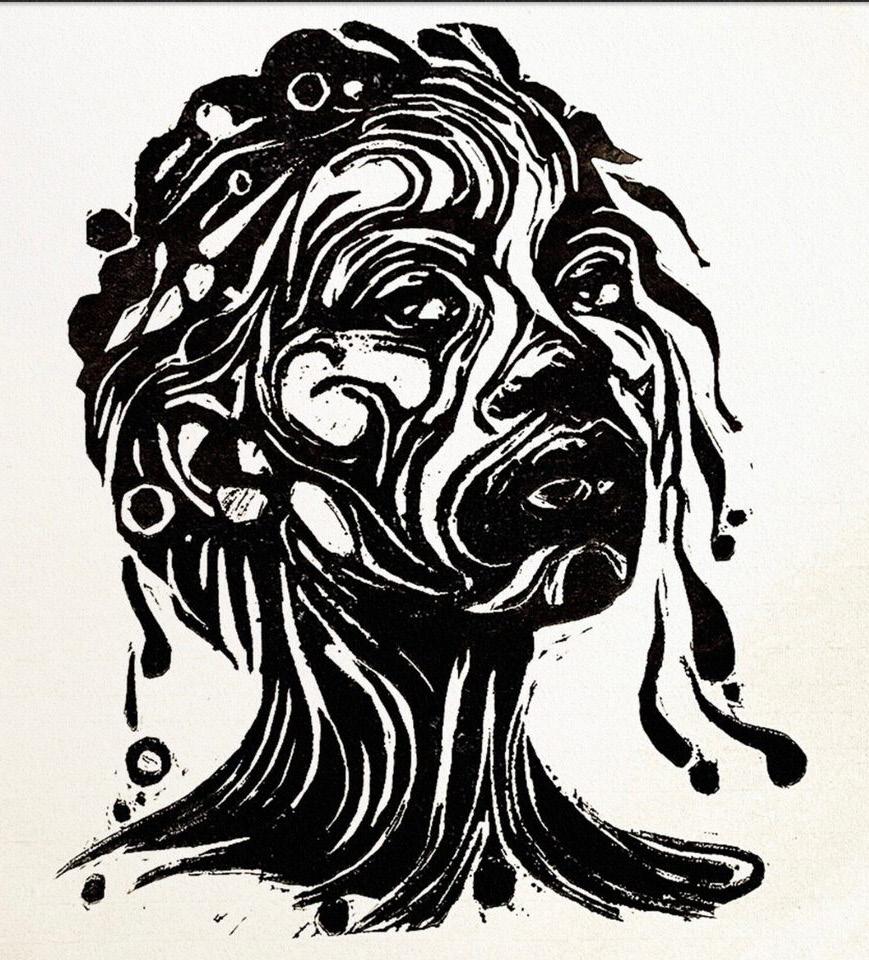
Cover Design
“A Woman in Distress”
Gyona Rice
Faculty Advisor
Shelley Manis
ISSUE 11 FALL 2024
Letter from the Editor
Dear reader,
Welcome to the eleventh edition of Writer to Writer, a literary journal written by writers, for writers, in collaboration with the Sweetland Center for Writing. Through this organization, we aim to foster interdisciplinary creativity across a variety of modes, mediums and genres and to encourage conversation and growth among our community of writers.
In the beginning of the semester, through a series of biweekly creative writing workshops, our members were able to hone both their creative writing and editorial skill sets to further advance as professionals and academics. In early November we teamed up with the Minor in Writing Student Ambassadors to host an Open Mic Night that gave members an opportunity to share their own work or listen to other writers’ work.
In the latter half of the semester, our focus shifted to publication production. The editorial staff met weekly to share ideas, review submissions, and work together to compose the latest edition of our literary journal.
Within this issue, you will find pieces that all touch upon common themes of reflection and loss, particularly within family and the idea of home. From parents and their relationships with their children to forging sacred connections, we hope that you see yourself in this wonderful microcosm of writing and that you enjoy the stories our writers have chosen to share.
As always, our journal strives to celebrate multimodality in writing as well as the individual writing process for different writers with our “Spotlight Interviews.” You can find snippets of these interviews with featured writers in the publication itself, and you can hear the interviews in full by scanning the supplemental QR code to listen on our website.
Lastly, this journal would not be possible without the generous support of the Sweetland Center for Writing, especially from our wonderful faculty advisor Dr. Shelley Manis. Her incredible mentorship and willingness to help has been critical in the successful operations of our organization and our continuing growth as a young publication. To Shelley, the Sweetland Center for Writing, the contributing writers, and to you, the reader, we are so grateful. Thank you all for your support.
Sincerely,
Haley Newland Editor-in-Chief Writer to Writer
Cynic’s
Alexandra
Lorenzo
Briana Gonzalez
Mi Cuba bello
my chestnut-hued eyes ceaselessly confine, & I am seized back
laying under the gleaming potency of the sun. winsomely bronzing my olive skin
silky white sand grains benevolently tickling my toes.
the melodious serene waves with crests that fragment towards the shore.
I forcibly squint my eyes open, and i witness the zarapitos de pico largo, With their feathers scuttling around in utter exuberance
the aromatic scent of the glacé mangoes, upon reminiscing about their saccharine flavor, my salivary glands ignite with fervor.
the noise of people chatting and laughing with their beloved. the winds’ intense howling, clanking of cerveza bottles
And I am utterly at peace, free, at home.
Yet, when all the lush colors are stripped from this vivid reverie, Reality is elucidated
I know I am not free My home is not what it used to be.
Amany Sayed
When i Think of You
When I think about you
I do not see the rubble
Nor do I smell the smoke
I cannot hear the bombs Or feel the heavy despair
When I think about you
I see a view unlike any other I smell olives and fresh bread
I hear laughter And feel peace beyond compare
When I think about you I wonder if I will ever see you again
I wonder if there will still be paths to roam rivers to swim in Or a place to call home
When I think about you I am stuck in the past
It’s hard to think That the you I knew last Could be gone by tomorrow
When I think about you
My knees grow weak
I used to look forward
To a future of seeing you
That now feels overwhelmingly bleak
When I think about you
I think of your people
My prayers feel empty And my condolences feeble
When I think about you
It is not by choice
It is a thrum in the back of my head
A incessant, constant voice
My heart lies in limbo
Oceans away
My mind is in shreds
My thoughts are askew
I can think of little else
When I think about you
Katherine Saunders
like MY MoThers
when I make my pilgrimage back to the waters of Lake Superior
to waves that crash from icy winds power through my veins like roots
i’ll clasp my hand, over my right to this place i’ll grasp at myself pulled to two hearts
one for here, one for the home that still smarts
she’s fire frozen over burn through any room with grace
easy to believe i could live and re-live here a cigarette on the heel of some forsaken hall
leave me like this smoke curling steady, incensed blood-red paid debt with blue eyes owed to my Mothers
one for the lake, one from the Other’s
WRITER SPOTLIGHT Katherine Saunders
A.B: I think my favorite thing about your piece is all of the sensory imagery with the ice and the fire. Could you walk me through that? What does that imagery represent for you?
K.S: Well, I guess I’ll start with, like, the main idea of the poem, which is, first of all, the Lake Superior baptism, which I thought was like a cool metaphor, but also going to college, and specifically going to Michigan, where my mother went. And I guess I was having sort of complicated feelings about moving somewhere that I couldn’t really make my own, you know, like going to college, you kind of want to have your own experience, and you don’t want to be talking about on the phone with your mom about something, and she’ll be like, Oh, I remember when this happened in 1980 whatever. So at first it was kind of a negative for me, going to this place and not being able to have my own new experiences. And then I was thinking about it more. And also, my mom gave me some pictures, so there’s one from her graduating in the big house and looks completely different, and one of her smoking on State Street, which is really funny to me. And seeing those pictures, it sort of became more of a positive thing for me. So I wanted to write a poem about how I felt, the complicated feelings, and then the imagery, the icy winds, like the coldness of Michigan, and then also like the fire, you know, like family, like heart, like a blood debt, like that. I wanted those to sort of juxtapose each other, like you’re feeling somewhat coldness because you’re away and you’re in this cold place, but you’re also feeling really warm inside because of the history that this place has.
listen to the full interview on our website:
Charlotte Parent The lakefronT shores liTTle league
ConCession sTand
Jackie had just reached towards the box of chips on the highest shelf of the concession stand when a voice piped up from the hallway.
“I thought this was closed today,” the voice said, and the box tumbled to the floor.
She stepped down, gathering both her bearings and a few crushed bags of chili-flavored Fritoes. She turned, finding Francis standing in the doorway, digging for gold and staring at her with big, brown eyes.
She stole a glance at the small cutout of his Little League picture hanging next to the instructions for breaking down pizza boxes, toothy grin on full display. The malevolent glint was apparent even in the pixelated photo.
“It was,” Jackie said, turning to him, “but there’s a tournament going on today.”
Francis blinked.
She sighed again, placing the chips back on the counter.
‘Was’ was the operative word, she thought. With Nick out on yet another sales trip—this time, in Las Vegas, a fact she was constantly reminded of thanks to his many ‘check this out, honey’ texts
with accompanying pictures of world monuments—and Jake freshly moved into his dorm, she couldn’t bear to take the silence of the house anymore.
The houseplants were mocking her. She was sure of it. Laughing at her inability to walk upstairs to the far bathroom, even though it had the bigger shower, because it meant having to pass his door. Having to hear the silence, knowing that he wasn’t in there anymore, that he was out and about, that he didn’t need her—
Jackie shook her head to interrupt that thought. He’s not dead, she scolded herself. The hot dogs slowly rolled in their warming cases, and she saw Francis’s eyes turned starry.
Francis was a bit of a legend around the Little League diamond, given that he was a member of at least three single-A rosters and yet was never seen in uniform, preferring to haggle the current concession worker on shift. He regularly drew unsuspecting people into his games of wall-ball and climb-up-the-spiderweb-asfast-as-humanly-possible. He required two Cowtails, one pack of XTreme Sour Straws (Green Apple, never Blue Raspberry), and exactly half of a Blue Powerade to keep him in your good graces.
And to keep him from doing his “special game,” as Nick dubbed it after coming home from closing up the stand. It was endless fun, given that he’d chug the Powerade, spin no less than 11 times on the tire swing, and try to run as fast as he could in a straight line before the Powerade inevitably appeared all over the woodchips. Nick would drop on the couch with a sigh and toss the money pouch labeled “NOT MONEY” from the register next to him, scrubbing at his face.
“Half of our budget is wood chips now,” he’d say. “I’ve never seen
someone drink so much blue liquid before.”
Suffice it to say, she didn’t need Francis’s antics right now.
Being back at the baseball diamond and seeing the little kids toddle after their mothers, turning their smiles towards the crowd after missing the ball and running to the wrong base, was already providing her with a deluge of memories she’d prefer to ignore in favor of keeping her mascara intact.
Every little kid had Jake’s face, she thought. Every single one.
“I have a request,” Francis said, and she snapped back to the present.
A slow breeze swirled through the open windows, wooden shutters with typed-up menus taped to either side propped open. Jackie opened her mouth to start to reject his humble request for half of a Blue Powerade when Francis barreled on, heading towards the walking taco stationthat was giving the stand a homey, taco meat-y smell.
“I want to help make tacos.”
“You’re only eight,” Jackie said. “And it’s too hot.”
“I’ll be nine next week.”
“Sorry, bud.” Jackie intercepted his path towards the suspiciously-colored cheese and closed the lids.
He inched towards the hot dog machine instead.
Jackie spotted a few parents starting to grab their kid’s bat bags, already pointing towards the concession stand, and she willed herself to not grow any (more) gray hairs.
First things first. She needed to find something to keep Francis distracted.
“You can help grab drinks for orders,” she said after a moment, and his eyes lit up. “You can sit on a special stool and everything.”
That light dimmed a bit. “The stool isn’t special,” he grumbled, moving towards the stool all the same and plopping down on it.
She unrolled a roll of quarters, making sure they were all headsside up in their black divider, when Francis spoke through a mouthful of caramel.
“Do you have rizz?”
A few quarters clattered out of her grip. “Do I what?”
“You know,” he said, gesturing around in front of him with the wrapper. Jackie stared at him. “Like, rizz? What the Costco guys have?”
“I don’t know,” Jackie said after a long beat of silence, and tried to picture herself in Aruba, or Punta Cana, or somewhere that didn’t smell like the inside of a boy’s locker room. She handed him a Cow Tail to tide him over and turned to prepare the register for the trickle of customers making their way across the blacktop.
She wiped a bead of sweat from her forehead as the first group of
parents rolled up, kids in Detroit Tigers uniforms that were definitely breaking a couple of copyright laws staring open-mouthed at the menu, eyeblack running down their cheeks and streaked across their jerseys.
The pang of nostalgia was so great, Jake’s high, squeaky voice begging for another pack of sunflower seeds ringing in her ears, that she almost didn’t recognize she was going through the motions of grabbing their four bags of chips, three slices of pizza, and a large handful of Hershey’s bars.
Almost.
A water bottle whizzed past her head, knocking against the top of the open window as the tallest kid shrieked in delight when it fell in his hands.
Then another.
“No,” Jackie said, moving to catch the final can of Sprite that was careening through the air, impressing even herself with her reflexes. The parents had moved off towards the condiments table to grab handfuls of napkins. “Francis, you know better.”
“You said I had to remain on the stool.”
For the love of everything holy.
“You know what I meant.” Jackie handed the last Sprite to the last kid, grumbling about wanting to catch something, too. “Save it for the baseball diamond.”
A noncommittal grunt that sounded suspiciously like something
that rhymed with “shmwhatever” came from behind her as the door to the drinks cabinet swung shut.
As soon as she smoothed her hair back off her face, picturing a virgin Pina Colada on the Caribbean coast, the repeated “ting” of a bell rang out.
“Any day now,” a voice sounded.
An impatient father, it seemed. They were always the worst, Jackie thought, giving Francis one last look that he met head-on, spinning on the stool in place, looking wistfully at the last Blue Powerade in the case—she had already told him she had to save it for a potential customer, otherwise, he could have it—as she moved back to the window.
These Little LeagueTM fathers were both the most loyal customers of the concession stands and the worst. They’d ask for cold, black coffee, swinging their briefcase in one hand for emphasis on how busy they were and how much work they had waiting for them back on the bleachers, alright, so if you could just please find some kind of coffee, God, they were already behind for the all-hands conference call for the internal deck—
And on and on and on. Jackie pasted a bright smile on her face as the guy met her eyes, tapping the bell one last time.
He started before she could ask him about his day. “One of the–taco things, and a coffee.”
“What kind of chips?”
“I want a taco,” he said, a bit slower this time. “No chips.”
“Our walking tacos involve chips,” Jackie said, willing her shoulders not to hike up to her ears.
“Do you know the Costco guys?” Francis said to her from somewhere behind her.
“No, I don’t want a—a walking taco.” He said the words like he was sounding out a Latin proverb. “Just a normal one. I’m not twelve.”
“We need Costco Chicken Bake,” Francis said again, almost wistfully.
Jackie’s phone beeped from against her leg, the first few notes of “Purple Rain”. Nick, no doubt visiting yet another mini Coliseum or Eiffel Tower or Trevi Fountain.
She hadn’t heard Jake’s voice in two days now, let alone his ringtone (“Cantina Band” from Star Wars).
The father adjusted his vest that he had to be sweating in, whipping out his Blackberry phone, and Jackie lurched to the taco station, mechanically opening the Cheetos, only feeling a bit of remorse at the terrible flavor, and doused it in sour cream.
As she shoved it at the man, taking his crumpled $5, she tried to think only of working at the concession stand, of removing the bell, of ignoring the man’s eye-rolling as he walked away and the small, chipped hole in her heart at leaving Jake behind—at abandoning him—when another water went soaring through the air, landing heavily on the table.
She couldn’t take it anymore.
“Jake, please!”
Francis stopped, more confused than anything, and Jackie almost didn’t realize why he was looking at her with his mouth slightly open.
Almost.
She turned, grateful that the wave of customers was over, and bent down to grab the boxes of Sour Patch Kids from below the counter.
Francis, mercifully, was quiet.
She shuffled the candy in the silence, arranging them in neat lines on the front counter, remembering that Jake had taken their secret stash with him to his dorm, placing it under his dorm desk.
“Sorry,” she said, her voice high and tight even to her ears.
“Who’s Jake?”
She swallowed. Squeezed her eyes shut. Pull yourself together.
“You’re not Jake,” she managed to get out. “I’m sorry.”
She took a few quick, sharp breaths, willing herself to not turn into the blubbering mess she’d reverted to the past two days, and she heard the stool creak.
A small pair of arms tentatively wrapped around her middle.
“I can try to be,” he said quietly.
Her heart just about cleaved in two, and, blinking hard, she ruffled his hair a bit. “No,” she said. “You just need to be Francis. But thank you.”
Francis just nodded against her.
Jackie tried to ignore the guilt eating at her that she could have found Francis—this eight-year-old kid, really—to be so annoying.
She spotted the ring of condensation on the counter from where he had launched his last futile attempt to give someone a water bottle.
Maybe it wasn’t so outlandish.
But he was trying, and so could she.
Gently extricating herself, she dabbed at the undersides of her eyes and went to grab the Blue Powerade from the drink case.
Francis watched her, mouth shaped in a perfect “o” as he tried to de-ruffle his hair, a few ginger tufts still sticking out at odd angles.
“That’s for a customer,” he said, but he sounded hopeful.
“We can make an exception this time,” Jackie said, holding it out to him.
“But you have to finish it. And none of your ‘special game’ stuff.”
Francis nodded, nabbing the Powerade, saying “thank you Ms. Jackie”, and clambering off the stool in one fell swoop.
As he scurried out, she pulled out her phone to give a ‘heart’ reac-
tion to her husband’s picture of the replicated Tower of Pisa and speed-dial Jake’s contact.
She let out a long breath, watching Francis make a mad dash to the tire swing.
The connection clicked through after one ring.
Elke Ott
a pleasure I won’t be getting over anytime soon: from my front porch, the shrieks of children on the playground
I live between a cemetery and elementary school on one side: beginning on the other: death, which some may call another beginning the street lying between them like an em dash — a liminal space to travel through, like so many others in life: the bus ride, the walk to class, the waiting room c’mon, c’mon, let’s get to the next moment we can live our whole lives like this: rushing through every moment as if life was just some big emdash because it is: a liminal space — you choose whether or not to pause.
Allison Wei
J. Scarlet
aM i a squirrel?
Am I a squirrel?
Or is my habit of anxiously bolting More in line with A chipmunk?
I know I am not a beaver, But I wouldn’t say I’m entirely a Prairie dog either.
Most of my friends are squirrels. Or beavers.
Or something called a “Groundhog.”
We have even climbed a tree or two, Run through fields of grass, And dug holes in the warm Soil of summer.
But I have never buried a nut like they have.
Burying nuts seems so unnatural to me.
Maybe I’m a campus squirrel; One of those chubby critters that Basks around the diag as Friendly hands reach out to feed it. I feel so free when they ooh and aww
As I strut over to them, Twitching my tail as I Pad toward my treat.
But real squirrels
Don’t stop being squirrels once they leave campus. Lord knows I can’t be a squirrel at home. Well, except when I’m with Mom. She lets me be a squirrel. She tells me she loves me. Either way.
Once Dad comes home, (The dad who says he doesn’t hate squirrels
As long as they don’t let their whiskers brush against him. The dad who always turns the channel when there is a Show where squirrels so much as squeak in a Higher pitch or dare to Embrace one another.)
I can’t be a squirrel anymore.
When I was 14, I asked if he would still love me if I were a squirrel. I phrased it as a hypothetical. Just a hypothetical. The tears that fell when he said He’d disown me were Real.
They still roll down my cheeks to this day, Little rivers of flame.
Maybe burying things isn’t so unnatural after all.
Alexandra
Berryman
CYniC’s beeTle
The Pyramids are empty. Venus is bulimic. a beetle marches and twists her toe against the pavement fixing her eyes on a point far away through the white mist tottering side-to-side past a high rise apartment building, a library named for some time-pardoned war criminal who sat behind a desk and picked his fingernails, a billboard, a chain convenience store, the dusty shell of an empty magazine stand and all around the beetle (on her own little street!) the long, ancient fingers of those who exploit and defile have curled up into a spindly trap with her in its palm the contemporary cocoon in which dread is liquified and scalds and beetles’ little poisoned hearts explode in their chests like seed pods which sprout nothing and beetles’ little abdomens are ground into dust by a thousand converging forces that never let up and beetles’ little eyes are torn from their exoskeletons and wrenched at painful angles towards various frivolous things. The beetle, tossed about the swollen gyre is not very able to think contextually, or to try new things, or most crucially, to do anything at all beyond the slight shifting of dirt.
Pity, her brain is the size of the eye of a needle. She knows only a few things: that her time on earth has been misery, that it has not always been this way, probably, and all the ways a beetle is able to die.
Lorenzo Norbis
a holoCausT
My marrow grew strong in you—I think I stole it from you.
I watched as your bones became brittle and broke inside your body. Against your knuckles the skin is thin and raw, swathes of inflamed veins spread like lightning. But your hands were once the color of white peaches—ripe in their rest, poised on my baby, baby bulbous head. You held the gentle, blooming love of my quiet youth, brushing my girlish hair with each joint of every finger. You thought you’d die once—many times—but you’ve forgotten that now, enjambed in your queen bed. You, finally alone in our one bedroom one bathroom asylum pigsty hospital halfway house apartment. How could you forget? All you do is forget—all you do is lose things—my father left first, then yours. Your memory is leaving now, and with it, me too.
In the blueblack dim of morning, I hear you vomiting and weeping in the bathroom–your bloated hands are sickly. You cannot hold a pencil anymore, you tell me as our faces melt into the same misery—the same horrible knowing. The doctors make you wait, a woman—a mother—reduced to an addict begging for morphine begging for steroids for your hands begging for painkillers begging for help—screaming into an abyss.
You dream of Blue Crosses and Blue Shields and Blue Eyes, lamenting how you were pretty once—just like my sister, you say, just like her—but your cerulean eyes have faded to gray now. So has your hair. You examine it in the mirror, disgusted with how thin it has become—but I
find your hair thick, in clumps on the floor of the shower. You are physically real, still. Still here with ears and eyes and lips and lungs—black. Kidney burst, removed, thrown away— and you left in hospital bed, charged, alone, sobbing— bladder problems too—a complication in your intestine. You’ve never been the same. When you held my sister so desperately you thought you were saying goodbye, wearing just hospital gown and socks.
Three weeks later I found you passed out in the shower. The stream was turned off but beads of water stippled your trembling skin. Your sutured flesh terrified me—you terrified me—I was nine–what was I to do? After you came back from the hospital, your mother took care of me. And when you showered I was terrified, listening closely for the wet thud of your contorted Frankenstein’s monster body.
I, who had been the death of you—I, who destroyed your body in birth, who needed to be looked after so you quit your job, who kept you up late at night, worried, who left you when you needed me most, who never knew you but said that you’ve changed.
But it was me who changed. I stopped talking, I shut up completely—I thought I had said it all, after screaming at you to drown out your insanity or perhaps to match it— hoping nothing would happen if nothing was said, praying that things wouldn’t get worse, that you’d never have to wear another thin hospital gown with a tag around your wrist, that you would escape from your terminal unemployment, that I wouldn’t be ashamed of you, that I would hear you singing again.
I let you down, you say—I know your frailties, I know you whispering to yourself, I know you unwinding your rope in the bathroom, I know your despair, I know you, I love you still.
But your mad ravings of thievery and conspiracy, your slurred curses at my sister and me—your daughter and son— screaming and retreating then cooking and cleaning, are loosening the seams of my heart. You refuse to pray, only holding us tighter in fear—devouring us in love.
I love you, but you’re going insane. You’re leaning towards 60 and have nowhere to go—unemployable, impossible, accusatory—your own mother won’t take you in and I can’t take you with me.
I love you, but I can’t save you, I don’t know if anyone could— I’m miles away and getting farther by the day—you haven’t really ever changed—not after the hospital visits or the hospital stays, not after the divorce, not once.
I love you, but you’re a holocaust, a pyre burning—with your millions of cigarettes, you too will become ashes. You want to be cremated, just like your father was—you want to be with him again, to be his daughter again.
I love you, but what you’re reaching for doesn’t exist anymore— you and your paintings–your body—flabby and sewn, strewn with gauze, stitched up, zippers across your torso, burns throughout—that map of suffering–all of this will be gone in time–gone with me.
Mom, my hand is receding, with you still reaching.
WRITER SPOTLIGHT Lorenzo Norbis
H.J: How did you decide which memories to include, you know, how to put them together in the way that they flow back and forth. Was it just kind of like one thing led to another led to another or was that more a deliberate process?
L.N: Yeah, there was a lot of stream of consciousness in this. I think some word association helped. Like…the holocaust, that phrase was something I added in much later. But having cigarettes, cremation, pyres burning. Those came together very easily, so the images sort of associated well. And then…I just kept coming back to flesh imagery and medical imagery. Those just kept coming back, but I didn’t want to throw it all out at once.
H.J: Yeah. And then about that central, almost landing point line of the holocaust—how did you decide on that being the title? I know you said you added it later, did it just kind of stick out to you once you had added it in?
L.N: This wasn’t my original thinking behind the title, but thinking about it more and growing upon it, the original meaning of holocaust, and I don’t know why they chose this for the genocide, but it means an offering to god—it’s a Greek word. So in that way, that’s how I kind of saw it, not so much as an offering to God, but as a sacrifice. I think that’s one way I see my mother’s relationship to me. The way that mothers just sacrifice in general. But there is that immediate connotation of genocide, death, just misery, that is apparent throughout. So it was one word of anything in here that stood out the most to me, and I think could hold the most meaning.
listen to the full interview on our website:
Alexandra Berryman
WilloW
She was an old dog, and small who partook only in the little joys her small, old body could afford. She liked to spend her afternoons in the garden, prancing on her weakened back legs—like springs which ricocheted stiffly off of the earth, and when she skip-galloped circles ‘round the magnolias, one could envision a lifespan in her with youth in it—and one could see the acts of it, like a play, in which youth is the prelude. Or like a broken wheel.
In the garden there was a mother deer who had birthed a fawn in the ripest swell of spring and kept it tucked in the ivy behind the low fence. A mother deer who ate seeds and lichen and never chased her prey for she was born without the instinct for it— who set her sweetly long-lashed brown eyes on the small old dog and sensed, in an instant, her tall ears reach and rotate skywards like the arms of a dancer as the asynchronous clicking of toenails approached.
She came never closer than twenty feet Willow, whose mind might have been elsewhere, some other natural place only animal minds can go never came closer than twenty feet before the mother deer leapt,
with sinewy power so concealed in the subtle angle of her legs over the fence brought her hooves down hard, and again and again trampled with lips pulled back and eyes alight perhaps grunting or exhaling, maybe leaning down to whisper “Sorry! Sorry!”—I was not close enough to hear again and again atop the body of the yelping dog who had curled herself, best she could, with her old racing heart at the center.
She lay at once frozen and trembling, braying roughly like a birthing sheep and standing above her I knew that these were the sounds of an animal dying––warmth escaped my chest as sobs echoed across the garden, that mausoleum. Willow allowed me to cradle her and pressed her skull into the cushion of my palm, wrenched her neck backwards and left a terrible smudge of blood there.
The rest—you know the rest: it is always happening.
The story ends in the garden, with the deer and I. Our eyes locked across the magnolias when the events of the day had run their bloody course and the sun had drawn its hard line across the sky, when the ceaseless pounding in my skull had receded to a dull thrum, I had a violent wish for just a moment before it was gone.
I searched her eyes—there was no sorrow in them. Then, like overturning a leaf, I found that there was no malice in them, either.
I am sitting on a dock now, and beside me is a dragonfly’s corpse with ants encircling it, tugging steadily in their soldier’s fashion. I am thinking of the broken wheel, and the little dog, Willow, and the course it all runs; a winding, random loop ‘round the magnolias and out beyond the fence.
Clara Moss
TouCh and reTreaT
When I told my friend—
Erica, if you care to know—
That I am having trouble
Separating us, having trouble
Disentangling our bodies and Time spent and having trouble
Coping with lost opportunity cost (I could be with you right now and We could be making dinner)
I told her—Erica—this and We talked about oxytocin in women. I, apparently, have more than you. Can it be my fault then—
That I’m with you even when I’m not because You never vacate my mind and It’s only enjoyable when I will return to you—
If I was predisposed to be this way?
You shouldn’t have held my hand, Or knocked our knees together or, dear god Please let me forget lying together—
Your warm chest and breath on my neck. We were one, then, just As we are in my monosyllabic mind—
You, me, us, we— Teach me how to trace our bodies, Touch and retreat, Teach me you and teach me me.
a livelY ConversaTion Jeanette Wakeford
Uncle Greg sits in an old chair. His hair is back.
So is his beard.
He takes a sip of lemonade before Telling another joke. The joke he is famous for. Was famous for.
“A Three-headed lesbian with gout…”
Aunt Susie is next to him, Shaking her head with disapproval But smiling in his company.
They stay like that for a long time. A family reunion.
He tells another joke and She smacks him.
Then, she apologizes and hugs him close.
She is new to the place. He is right in front of her but she Repeats that She misses him horribly. She would do anything for him.
Even get him that car he looked at When he was only 16.
Heck, he died when he was only 46 when he–Well, you know.
He looks at her and Chuckles, “Aunt Suz, We’re dead. No one leaves this place. I have no use for a car now.”
She stares at him, Nodding unconvincingly as tears Flow from her eyes.
“I’m serious,” he says. She has to believe him. Not even he could make up a lie in Heaven. She looks up at him,
Still keeping a tight grip around his waist. Her arms are not thin Or spotted anymore. They look lovely now, not one freckle. She still wears her gold bracelets.
He is strong, just like I remember. His smile easily makes her calm down. She starts to grumble about her husband, “Damn Polack, why isn’t he up here?”
Uncle Greg laughs, “Aunt Suz, you were 23 years older than him.”
She shakes her head, “That’s not it, it’s because even God is afraid to take that man away from his mother,” She scoffs, “Damn Mama’s boy.” “You know she was always a rotten–”
He stops her “Aunt Susie, you can’t say that stuff up here.” She gives him a taken-aback look, “You’re up here talking about mutated lesbians!” He shrugs, “God and I have an understanding. Hey, you want to go to the restricted section?”
“Boy, how do you have a key to everything? Even up here?”
He smiles innocently and mumbles, “There are puppies back there…” She hits his arm excitedly, “Take me there now!”
Tears brim at her eyes again. This time they are cheerful.
The two vanish. He is the first to go, But soon she follows.
Jeanette Wakeford
lessons froM aunT susie
God, she would have hated how she died; it was so… not her. First of all, her death bed was a run-of-the-mill hospital model with boring, white sheets. No duvet, no throw pillows, nothing. Then, her outfit? A thin, cotton gown. The light blue was hardly her color. Don’t even get me started on her complexion: those damn fluorescent lights bleached her to a meek milk color. Her hair was sullied, not permed nor dyed that vibrant red color she loved. She’d be sure to haunt Uncle Bob for not keeping her presentable.
Regarding Style
The Aunt Susie I knew was a connoisseur of many riches. While she dressed rather modestly, the way she decorated was enough to make Auntie Mame jealous. She ornamented her South Lyon condominium floor-to-ceiling with her treasures. She spent the majority of her pension on hand-woven rugs from Nepal, Tiffany lamps, Swarovski crystals, tea sets from Japan, etcetera. The carpet and walls were both a stark white, allowing every piece to stick out and grab her guests’ attention. I always admired the red velvet couch the most, though I knew it was never meant to be sat on. There were a lot of things I wasn’t supposed to touch. It was like being in an art museum. Her favorite form of craftsmanship was the clock. She had hundreds of them. Grandmother, grandfather, wall, coo-coo, you name it. When the hour struck, the entire house would explode into a thunderous roar. Everyone swore her excessive collection was tacky. Upon hearing this, she bought three more clocks.
Regarding Bill, Her Brother
Susie’s parents moved to Detroit from International Falls, Minnesota, after she was born. They jumped houses from 12th Street
to 35th Street. The house she’d remember growing up in was very plain, only filled with the essentials an immigrant family could afford. It didn’t reflect her individuality or the woman she would become at all.
Half of her childhood was spent in London, Ontario. Her mother, Rohelia, would pay distant cousins to babysit her and her brother on a farm there.
“Your grandfather would put me on the pig’s back, telling me to ride it like a horse. I thought nothing of it; that it’d be fun. The damn thing threw me off within seconds! I was a muddy mess. The old woman hosed me down by the side of the barn. I was shaking, it was so cold. Then I saw that bastard out of the corner of my eye,” Susie would glare, pointing to Grandpa Bill across the table, “laughing to himself and blowing a kiss at me.”
She might’ve sworn at him in Ukrainian all the time, but she loved her brother. He was the one constant in her life. He had been there when Rohelia left them in their buggy outside, only to be protected by their dog while she went grocery shopping. He was with her when they were ‘coat-checked’ so Rohelia could meet one of their ‘uncles’ in the dance hall. They had a lot of ‘uncles.’ During the Depression, when Rohelia worked two jobs, Bill made sure Susie practiced her English, finished her homework, and ate something before bed. He loved his sister so much, he gave her the nickname, ‘Susie.’ No one was sure where he got it from since her real name was Marion, but everyone agreed it suited her better. She wasn’t a cold, strict ‘Marion.’ She was a carefree, reckless ‘Susie.’
When they were still very young, Susie attached herself to her brother, tagging along anytime he hung out with his friends. When they went swimming at the YMCA, she’d follow him into the boys’ locker room. She’d laugh about the memory while at our dinner table,
“‘Nope. Turn around. The girls’ locker room is over there,’” he’d tell me. “I was too young to realize why I wasn’t allowed in.”
He was also the one to teach her about menstrual periods:
“I was petrified. ‘I’m dying,’ I told him. But he just shook his head and put his hands on my shoulders, ‘You’re not dying. This just means you’re a woman, okay?’ After that, he bought me my first belt and pad cloths.”
He was her brother, her parent, and her best friend.
When he served in WWII, she wrote to him as much as possible. Sometimes, all he had to write back on was toilet paper. The delicate messages meant everything to her. She preserved them in a small stationary box until her final days. While these letters held a mixture of the gruesome realities he faced and his wistful longing to return home, Susie’s letters were filled with town gossip, allowing Bill a small escape from the trenches. She told him about how Rohelia now went by ‘Rachel’ and how she’d tell Susie to call her ‘Ray’ instead of ‘Mom’ whenever men were around. Susie also spilled that their mother had taken his car on various joyrides with her gentlemen callers. But, of course, she couldn’t ignore how much pain he was witnessing and how lonely he felt so she’d also reiterate how much she loved and missed him, too. In an effort to help, she’d ask if he or his unit needed any supplies. He always replied that they needed socks and underwear; after all, they were in the trenches. They were rarely able to shower and tried their hardest not to develop ‘trench foot’ like the poor bastards in the First World War. Susie saved up her money and shipped over two hundred pairs to them. Bill had also mentioned that seven men in his unit never received letters from anyone. He told her how it meant everything to hear from people who cared if they’d make it home alive. She wrote to all of them for the rest of the two years they fought alongside her brother.
Regarding Second Chances
When Bill married my grandmother, Jeanette, Susie built up walls. She’d come into their house in Inkster with white gloves, swiping the counters for dust. She’d stay for dinner, only to click her tongue and gag at whatever was on the end of her spoon. She acted selfishly and childishly, stealing her brother away from his family to have secret dinners at her house. She figured the man who had done everything for her deserved better.
Over time, Susie reached out to Jeanette. She’d come over to their house and sit at their kitchen table, ranting about whatever stupid thing that my great-uncle Bob had done to piss her off:
“Damn Momma’s Boy. He’s still on the tit, that one!”
It wasn’t until Jeanette was diagnosed with emphysema that Susie fully broke down and accepted her as a sister.
“C’mon, Jeanette, I went to three different cities to get you your favorite: mini eclairs! If you don’t eat them, I’ll make you eat them,” she’d tease.
She even massaged Jeanette’s feet whenever she was lying on the couch, too out of breath to speak. Susie had no problem filling the dead air.
Susie’s father, Sam, had been absent for the majority of her life. He was a drunkard and Rachel had kicked him out of their house when Susie was only a little girl. He ended up living at the YMCA for a while. Susie saw him from time to time, but he was no father to her. He didn’t know a lick of English, was a simple-minded butcher, and drank away whatever money he earned. The first time she let herself reconnect with him was when Bill was at war. Sam wanted to write to him but he worried his son had forgotten Ukrainian. Although Bill hadn’t, Susie took the opportunity to bond with her dad. She demanded friendly conversation before
any writing occurred. Only after he opened up about his day, went to lunch with her, and joked around, would she finally translate for him. Bill caught on to her plan and made sure to write back in English.
When Susie got older, her father started his journey to sobriety. Unfortunately, he still didn’t have the money to live anywhere better than Skidrow. After her first divorce, Susie bought a house in Dearborn Heights. She invited Sam to move in with her on the condition that he fully sobered up. He never drank another drop. Instead, he put his butchering skills to good use, picking out the best meats and learning to cook them to the perfect degree. Every day, he made sure she returned home to a dinner table filled with irresistible dishes. Once he was anchored in his rehabilitation, Sam helped the other men in his life stop drinking too.
Rachel was diagnosed with Alzheimer’s towards the end of her life. She had been living in an elderly community, in her own apartment, and had only left her stove on a couple of times. It wasn’t safe, but Susie let it go, figuring she’d be okay. One day, however, Rachel walked down Michigan Avenue from Telegraph Road to Inkster Road. Fifteen miles, all by herself, searching for Bill’s house. That was when it finally hit Susie: she needed to help the monster. With less confidence than she had with Sam, Susie allowed Rachel to move in with her and her husband. Rachel lived with them for about two years. It was a sufficient setup. She would stay at home while the couple went to work. Yet, as time went on, she made a few escapes. Susie decided that assisted living would be best for her safety. She picked out a place in Taylor and visited Rachel every day. If she had an emergency, she’d force Bill to go, that way Rachel would never feel lonely. Unlike Susie, he hadn’t developed a soft spot for his mother. When he was with her, he’d steal her food and glare at her, pestering her about her prior maltreatment until she would yell for a nurse. When one finally showed up, he’d offer an innocent smile, hiding the empty pudding cup behind his back.
Regarding Male Suitors
Susie went through three husbands in her lifetime. The first was named Kenneth, who cheated on her. She filed for divorce the second she found out. Then there was Grant, who had a crippling gambling problem. She became paranoid about him selling off her belongings and, therefore, divorced him too. Robert, the third one, stuck. I knew him as my great-uncle Bob. They met while working at Chrysler and after dating for a while,
“I looked at him and went ‘So you gonna marry me or not?’”
She always reminisced on the moment with a smirk.
Bob is the exact opposite of her; very quiet, never swears unless he misses a shot while golfing, and will cower to any command. He is also eighteen years younger than her. “Train ‘em young,” she’d say. Of course, there are always missteps in any training process. She couldn’t remember why but one time, she got so mad that she straddled him on their bed, holding a rifle to his nose while he slept.
“You piss me off again, I swear I’ll kill you, Robert!” she yelled, startling him so badly, he smashed his nose into the gun’s barrel.
Still, he stuck beside her until her dying day. Something about her feistiness kept him on his toes. He wasn’t in love with her, he was obsessed; just how she liked it. When she died, he gripped her hand, begging God to let her speak so she could call him a ‘damn Polack’ one last time.
Regarding Money
As Head of Payroll at Chrysler’s Detroit Universal Division, Susie was adored by everyone. It wasn’t because of her title but rather because of what she did with it. Whenever someone was down on their luck, begging for an advance on their paycheck, she’d get it
to them. No matter what, she made it happen. She refused to let anyone struggle if she had the means to help them.
When Bill and Jeanette were searching for a home in Inkster, Susie knew they’d be struggling to make ends meet no matter which one they picked. She knew that whatever VA loan he’d qualify for would hardly benefit them. So, she teamed up with Sam and bought the place in full. Instead of having an impossible mortgage payment each month, they just had to scrounge up fifty dollars for her and Sam.
Regarding Fun
Aunt Susie always made her own fun no matter where she was or who she was with. Even in the doctor’s office, she’d fart and look over at the innocent resident,
“Was that you?” she’d ask with a shocked expression.
Who could correct an ‘innocent’ old lady? She reveled in their baffled expressions.
On Christmas, she’d hone in on my unexpecting father. He’d reach over her to place a hot dish on the dinner table only to get his nipple pinched:
“Got your titty, Fat Boy!”
Of course, my father would get her back, causing her to have a tantrum after he ‘accidentally’ called us Australian instead of Austrian. He never saw it coming when she finally broke down, hissing belligerently,
Read the full piece on our website:
Shae Er Lim
hungrY ghosT
I think of cultural mythologies as something like scientific facts, like gravity makes things fall.
In Southeast Asia, ghosts are hungry once a year. Initially placid, ghosts wander. Grandma tells me willow trees weep of them, the voices they carry searching feasts laid out by predecessors and a glass for Chinese wine. They eat before us, that’s the custom. But, they aren’t actually eating alright. One could say they eat the souls of the food we laid out for them, at least this is how I make sense of it.
For Viet Thanh Nguyen and Vu Tran, to call a refugee a ghost, how likely and to what extent is it
the American horror ones, the cheap period drama kinds.
Aren’t they more like hungry babies, Invisible in words.
If you don’t acknowledge their presence, satiate them, they follow you, haunt you, they said.
If you don’t honor the people before you –They eat first they said, I imagine they eat memories first before we can too.
WRITER SPOTLIGHT
Alyna Shae Er Lim
H.N: What was the writing process? How does your first draft differ from the final product?
A.L: It’s pretty similar, actually, to the final piece. So my friend had actually asked me about my thoughts about the class discussion on the topic, and was actually written as like a little notes as like my draft response to her question. And it just turned out that, because I wanted to condense enough about my culture in a concise way, because she’s from a different background than I was from, but I knew that she wouldn’t be able to capture the elements and felt them as much as I did. So I really condensed down to the essence of like, the aspects I was trying to capture. And it just turned out that it rhymed, and there was a certain flow, and there was kind of power in terms of the lead up from the start to the end, which sort of surprised me. I had never written anything like it, but it’s quite normal for me to write responses to things and for them to turn into something else.
H.N: I really like the form that you play with—you do a lot with playing with line breaks and spacing, so how was that specifically during the writing process?
A.L: So one of the things that I brought up during class discussion about this is that in a sense of how grief is dealt with, in Southeast Asian and Chinese culture, there’s a kind of like, you know, in Mulan, there’s a scene where they, like, see the ancestors, and then you’re having conversation with all of them at once. So I wanted to capture the feeling of, here’s one person talking, here’s one person talking, and here’s one person talking and, yeah, they’re saying kind of similar things, which is why it shaped the way it is.