Dear Friends,
As I reflect on the work of the SEAS community, I am struck by how passionate and dedicated you are to preserving our planet. Despite a difficult year in which we’ve faced increasing environmental setbacks that threaten the important and necessary work we are doing to fight climate change, you have shown me time and again that you are doubling down in your efforts to create a more sustainable, just future.
This was apparent to me at U-M’s first-ever Climate Week (pp. 4-5), which was held Sept. 27 to Oct. 5 with fantastic success. Co-sponsored by SEAS, Climate Week brought together all of U-M for interdisciplinary collaboration, inspiring engagement and real-world action. It was an energizing week that filled me with a deep sense of purpose and hope.
This is the time for climate solutions. Within these pages, you’ll find examples of how SEAS is powering public good. We’re turning research into action that produces solutions with real societal benefits, from how we’re addressing wildfires and climate migration to driving the future of vehicle electrification and sustainable cities. My own work is focused on researching how water security will be impacted in the coming decade, in both the western U.S. and other vulnerable regions around the globe. In short, the climate crisis is becoming a water crisis in many regions.
The scale of environmental challenges we face is immense, but we can solve these problems if we work together. Now, more than ever, we must communicate the impact that our work has on the lives of everyday people to ensure the public knows that investments in science and our planet must continue. Our lives, and the lives of all living things, depend on it. We invite you to join us in elevating the impact and importance of environmental work so that it endures and continues to create meaningful change. One way you can do this is by supporting Look to Michigan: Invent Tomorrow, our capital campaign. Join the thousands of alumni who have made a financial contribution to SEAS. Your support propels our students and faculty forward to address complex problems and create a more sustainable, just world.
Thank you for not only being stewards of the environment, but also stewards of hope, action and possibility. Together, we are unstoppable.
With appreciation,
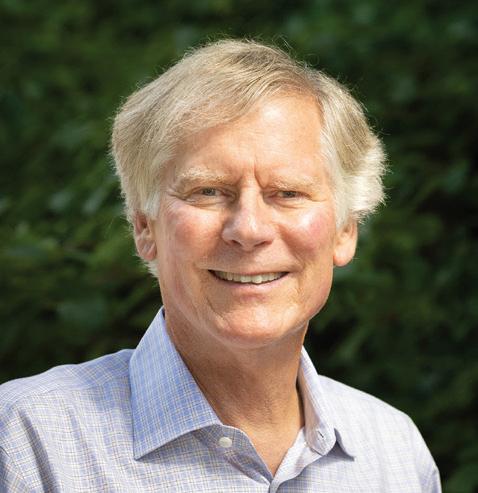
Jonathan Overpeck
Samuel A. Graham Dean William B. Stapp Collegiate Professor of Environmental Education
A magazine for alumni and friends of the School for Environment and Sustainability and the Program in the Environment.
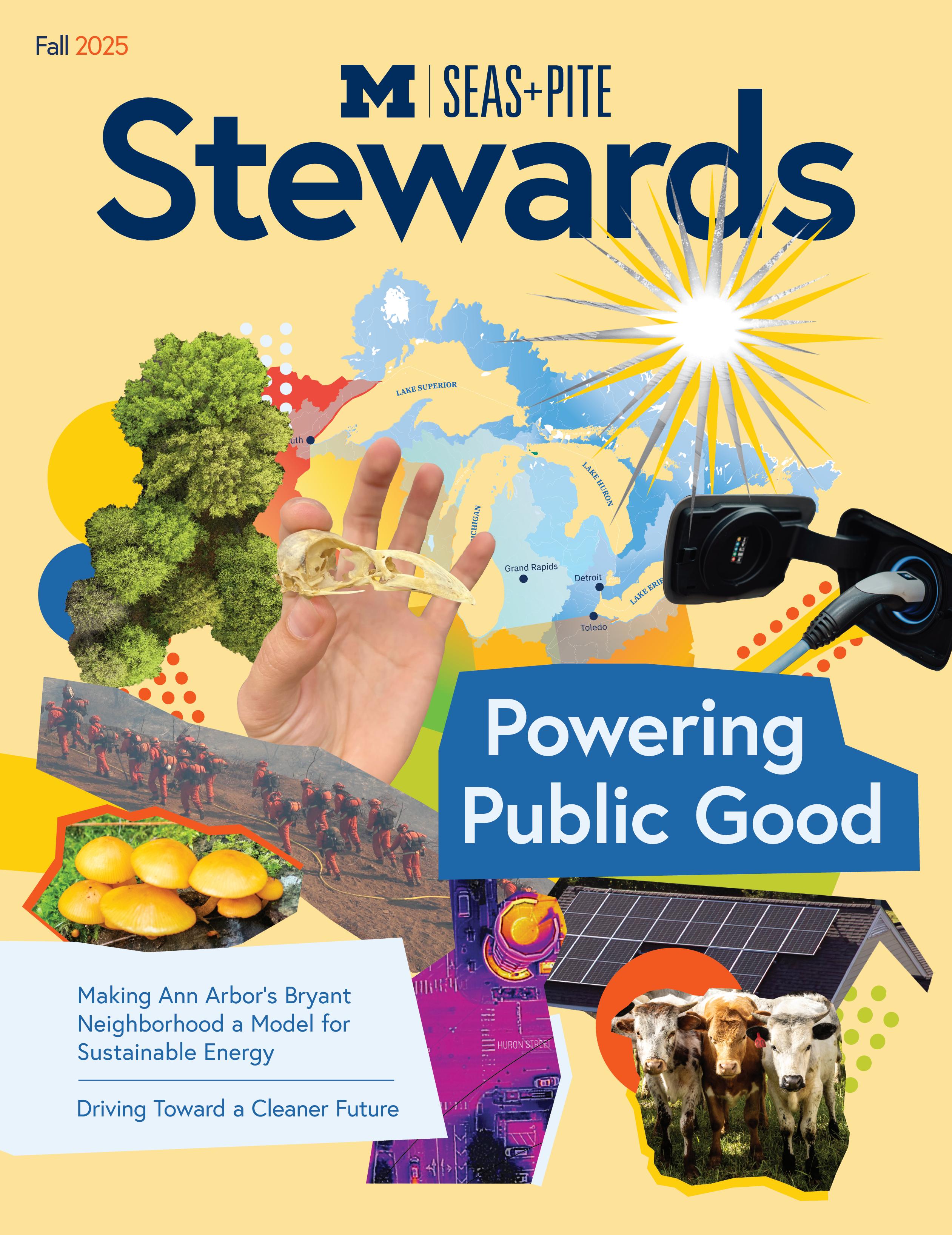
Cover Illustration Maddie Fox
Samuel A. Graham Dean Jonathan T. Overpeck
Associate Dean for Academic Affairs Inés Ibáñez
Associate Dean for Research and Engagement
Bill Currie
Assistant Dean Kim Elliott
Director of the Program in the Environment
Sara Soderstrom
Faculty Liaisons, Office of Community Impact and Engagement Sam Stolper, Brian Weeks
PhD/Postdoctoral Program Director Pam Jagger
Director of Community Impact and Engagement
Lauren Davis-Day
Executive Director of Development and Alumni
Relations Scott C. Bertschy
Executive Director of Communications, Marketing and Outreach Carole Love
Editor Lori Atherton
Project Manager Katie Trevathan
Writers Lori Atherton, Matt Davenport, Margaret Fornes, Julie Halpert, Shelie Miller, Nayiri Mullinix
Design Dave Brenner, Maddie Fox
Photography Dave Brenner, Maddie Fox
Printer
University Lithoprinters, Ann Arbor
Printed using soy-based inks on paper manufactured from a sustainable and renewable source.
© 2025 Regents of the University of Michigan
Contact Information School for Environment and Sustainability
University of Michigan 440 Church Street Ann Arbor, MI 48109
734-764-2550 seas.umich.edu
SEAS External Advisory Board
Roger G. Anderson (BS ’71), William H. Banzhaf (BSF ’67), Martin D. Cargas (BS ’81), Karen DeGannes (MS ’91, AM ’98, PhD ’13), Amanda Maria Edmonds (BS ’00, MS ’05), Kate Elliott (MS/MBA ’08), Paul Freedman (BSE ’72, MSE ’73), Andrea (AJ) Grant, Moushumi Khan (JD ’96), Telva M. McGruder, Mark Retzloff (BS ’70), Stephen Simmons (BS ’67, BSF ’69), Jonah Smith (BA ’96, MS ’04), Chad Spitler (BS ’92), Gabe Tishman (BA ’19), Tao Zhang (MS/MLA ’08)
Regents of the University of Michigan
Jordan B. Acker, Michael J. Behm, Mark J. Bernstein, Paul W. Brown, Sarah Hubbard, Denise Ilitch, Carl J. Meyers, Katherine E. White
Nondiscrimination Policy Statement
The University of Michigan, including the Ann Arbor, Dearborn and Flint campuses as well as Michigan Medicine, as an equal opportunity employer, complies with all applicable federal and state laws regarding nondiscrimination. The University of Michigan is committed to a policy of equal opportunity for all persons and does not discriminate on the basis of race, color, national origin, age, marital status, sex, sexual orientation, gender identity, gender expression, disability, religion, height, weight, or veteran status in employment, educational programs and activities, and admissions. Inquiries or complaints may be addressed to the Equity, Civil Rights and Title IX Office, 2030 Administrative Services Building, Ann Arbor, Michigan 48109-1432, 734-763-0235, TTY 734-647-1388, ecrtoffice@umich.edu.
Land Acknowledgement
SEAS acknowledges the university’s origins through an 1817 land transfer from the Anishinaabek, the Three Fires People: the Odawa, Ojibwe, and Bodewadami as well as Meskwahkiasahina (Fox), Peoria and Wyandot. We further acknowledge that our university stands, like almost all property in the United States, on lands obtained, generally in unconscionable ways, from Indigenous peoples. In addition, our research on environmental science and sustainability has benefited and continues to benefit from access to land originally gained through the exploitation of others. Knowing where we live and work does not change the past, but understanding and acknowledging the history, culture and impacts of colonial practices is an important step towards the creation of an equitable and sustainable future.
PUBLIC GOOD FOR CITIES

PUBLIC GOOD FOR CITIES

















10 PLANNING FOR CLIMATE MIGRATION IN THE GREAT LAKES REGION
INVENT TOMORROW
20 FROM MEASURING BY HAND TO AI-ASSISTED COMPUTER VISION
INVENT TOMORROW
24 TACKLING THE WILDFIRE PROBLEM USING A HOLISTIC APPROACH
INVENT TOMORROW
THE URBAN HEAT ISLAND EFFECT MATERIAL PALETTE Wednesday, August 21, 2019 • Ann Arbor, Michigan
PUBLIC GOOD FOR CITIES

22 DRIVING TOWARD A CLEANER FUTURE
32 CLASS NOTES AND ALUMNI UPDATES
12 GREENER BY DESIGN: HOW SEAS LANDSCAPE ARCHITECTS ARE MAKING CITIES MORE SUSTAINABLE























EARTHFEST




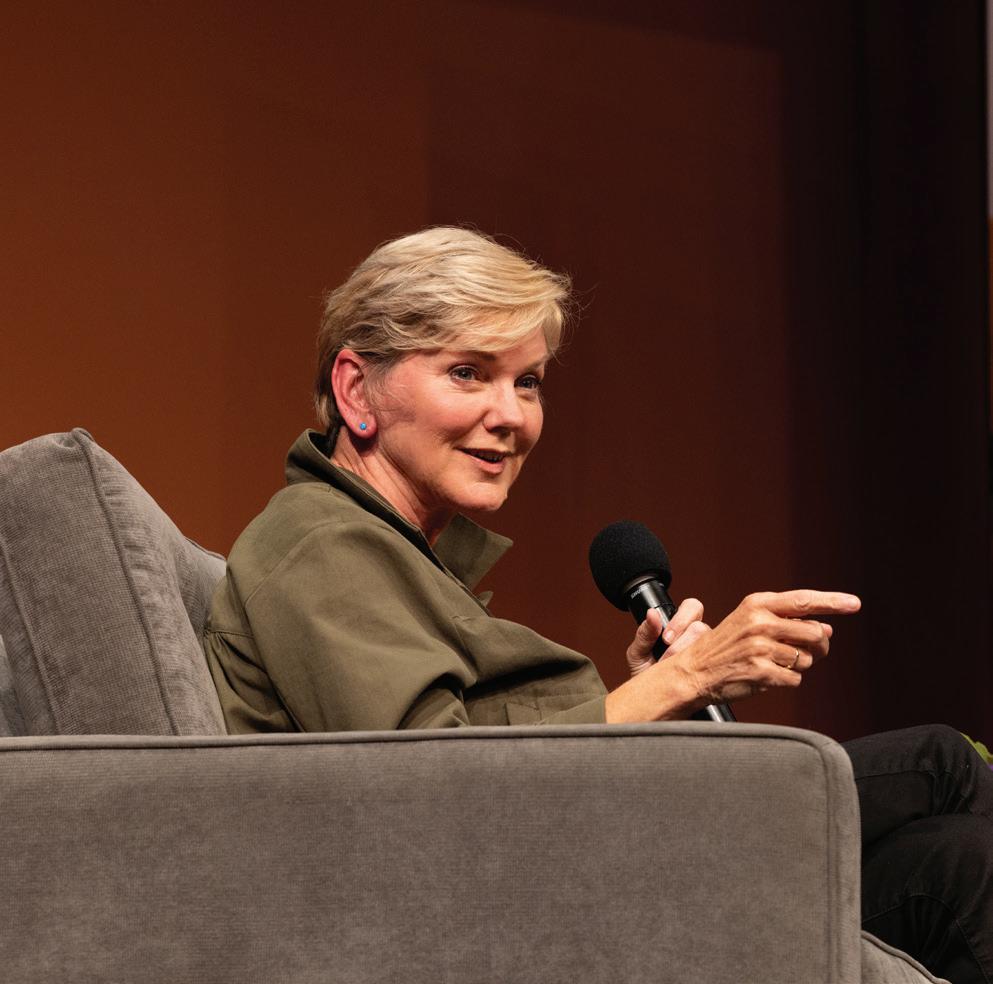
JENNIFER GRANHOLM
WAWA GATHERU
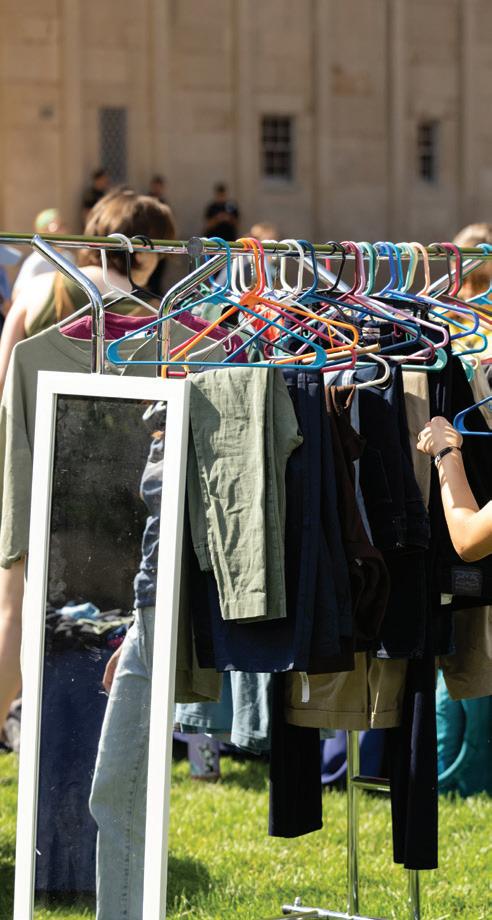
A2ZERO CLOTHING SWAP
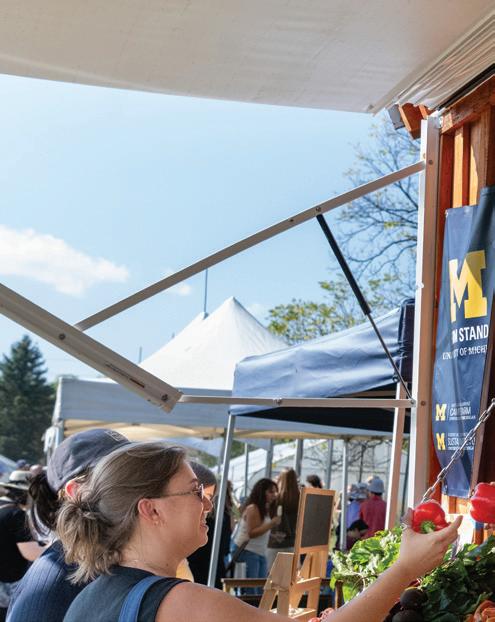
HARVEST FEST
BRIAN GRIESE
SHALANDA BAKER
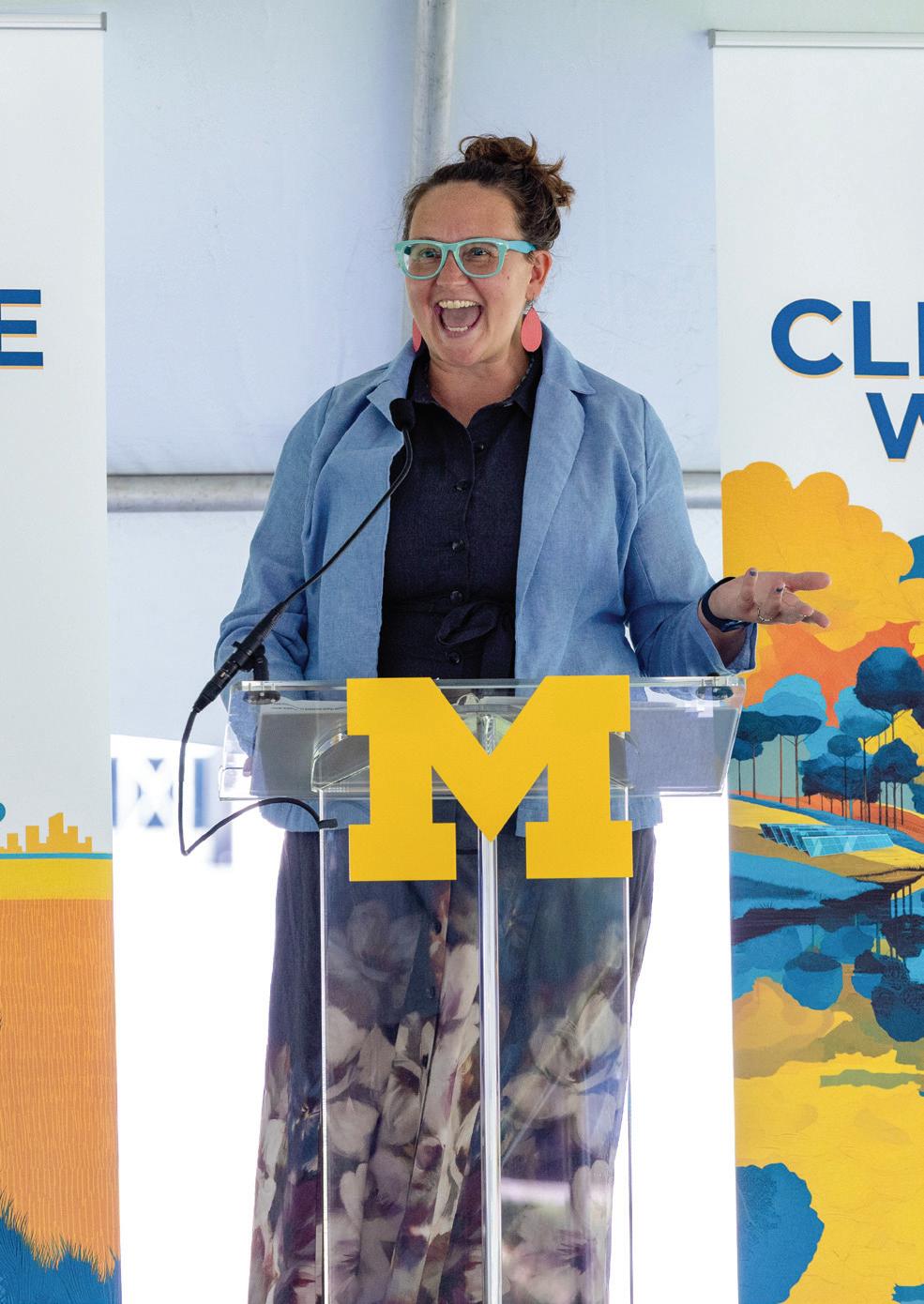
MISSY STULTS
KICKOFF CELEBRATION
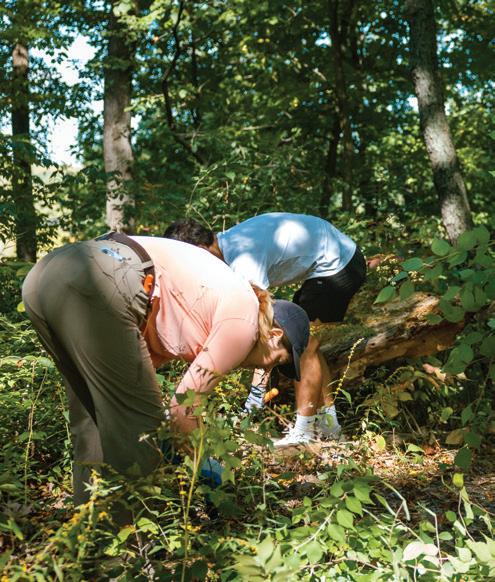
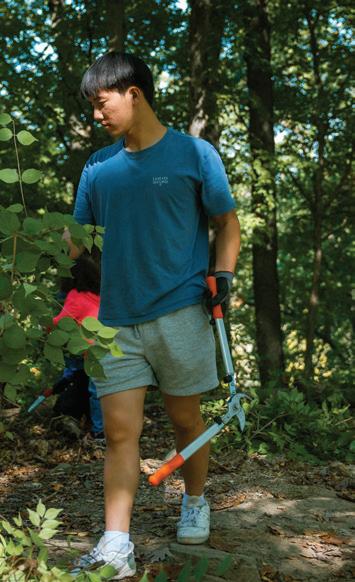
NICHOLS ARBORETUM CLEANUP

Together
for
U-M Hosts Inaugural Climate Week Focused on Collaboration, Engagement and Action
Photos by Dave Brenner & Maddie Fox


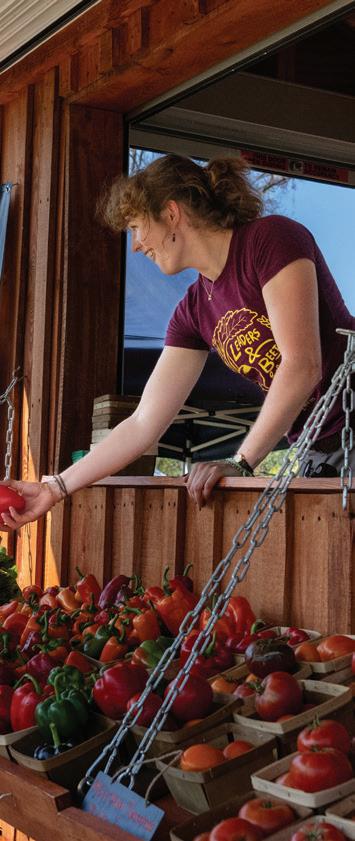







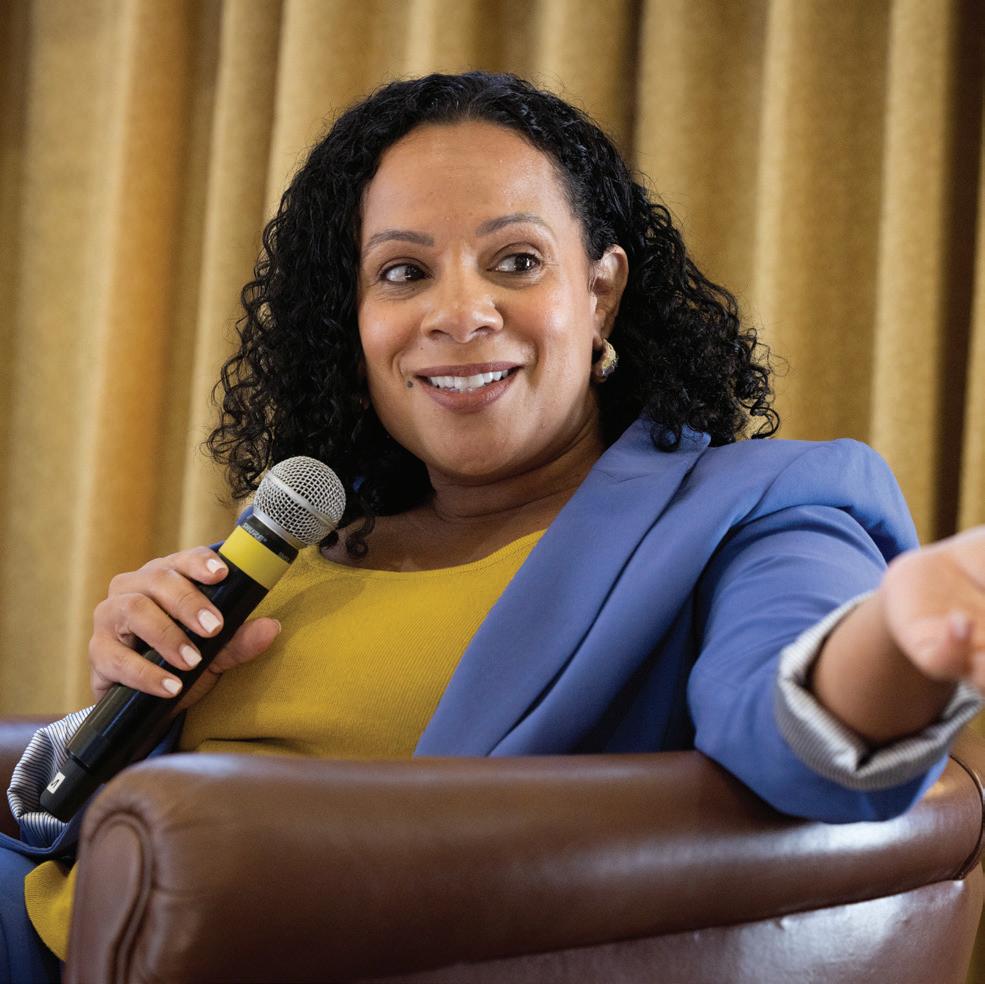
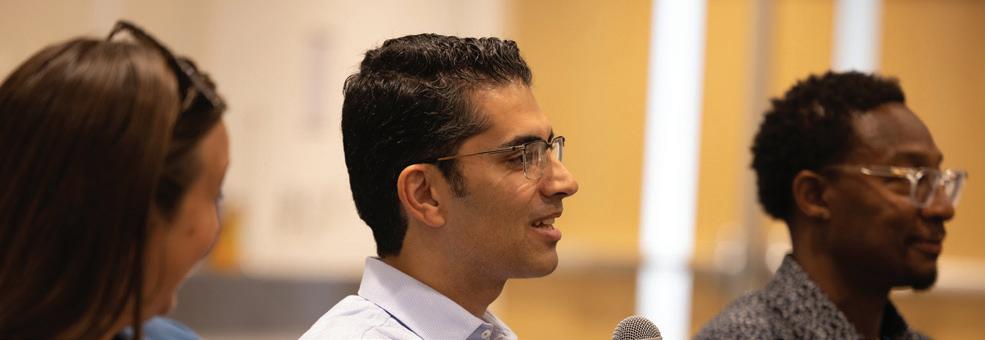














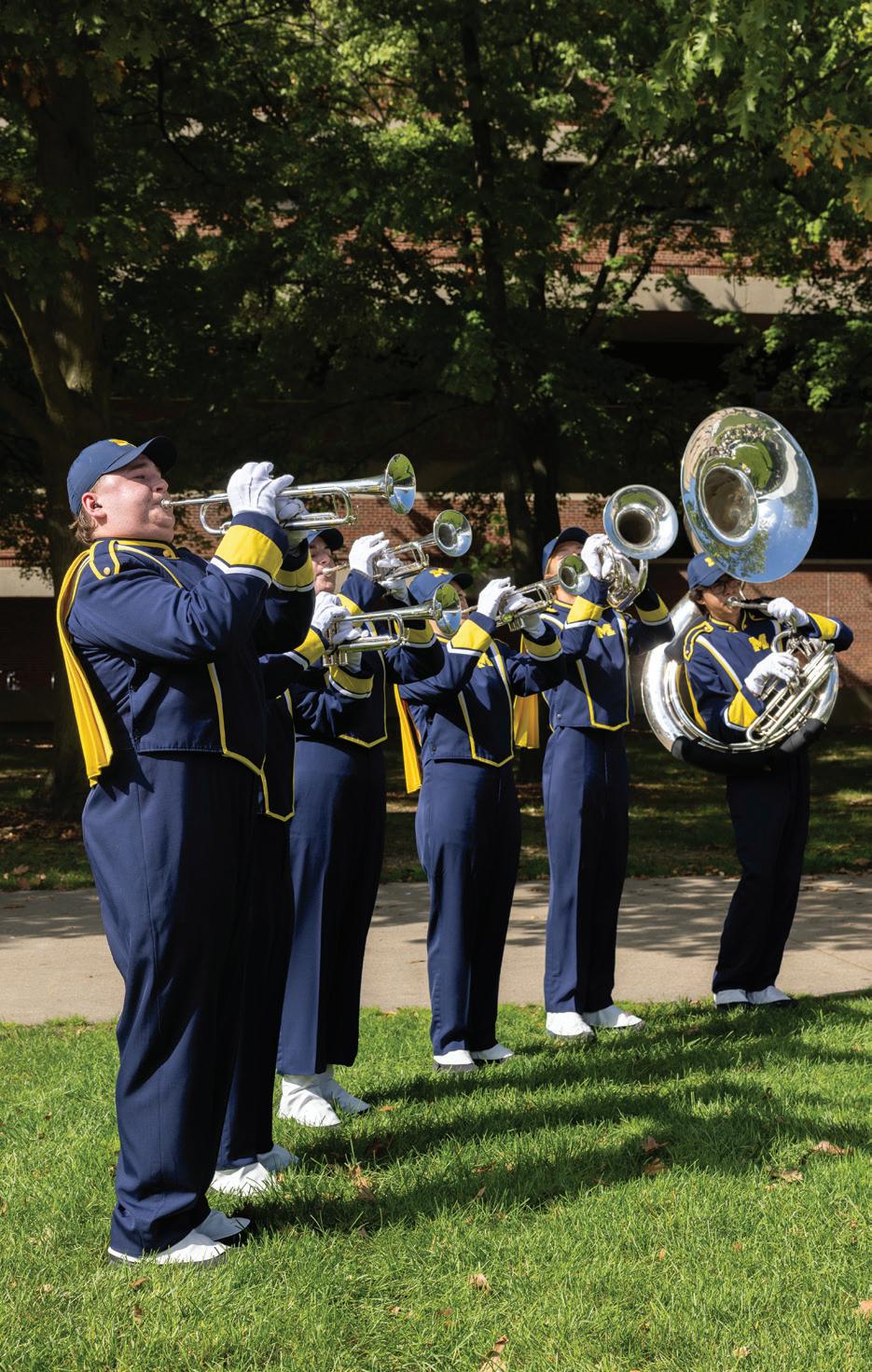
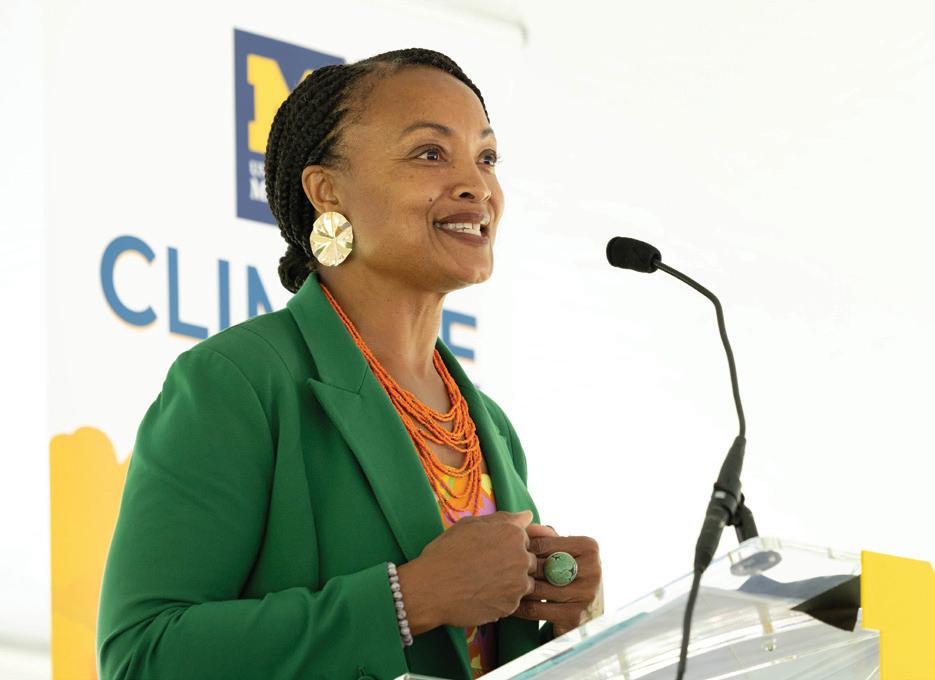
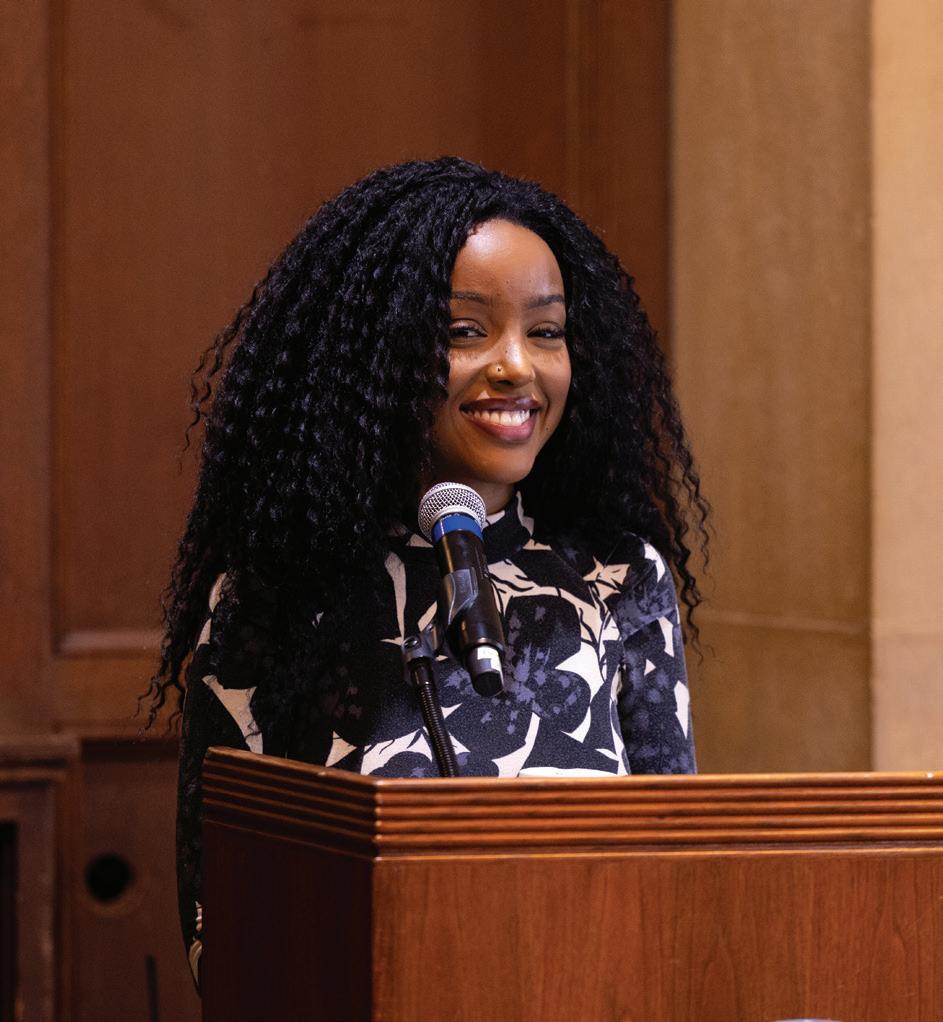
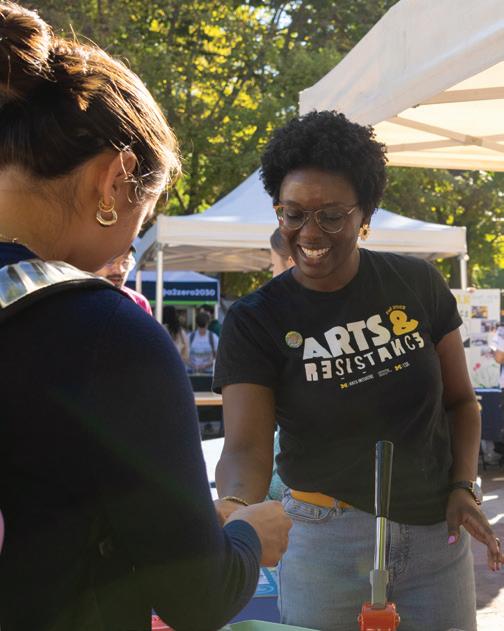
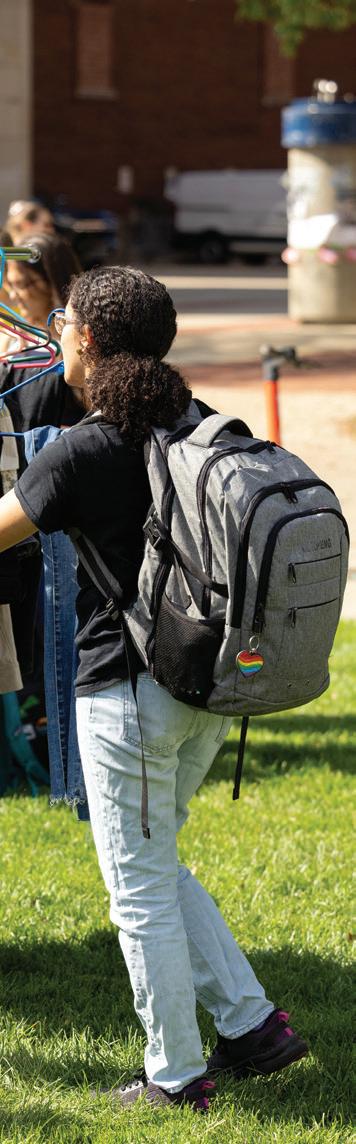
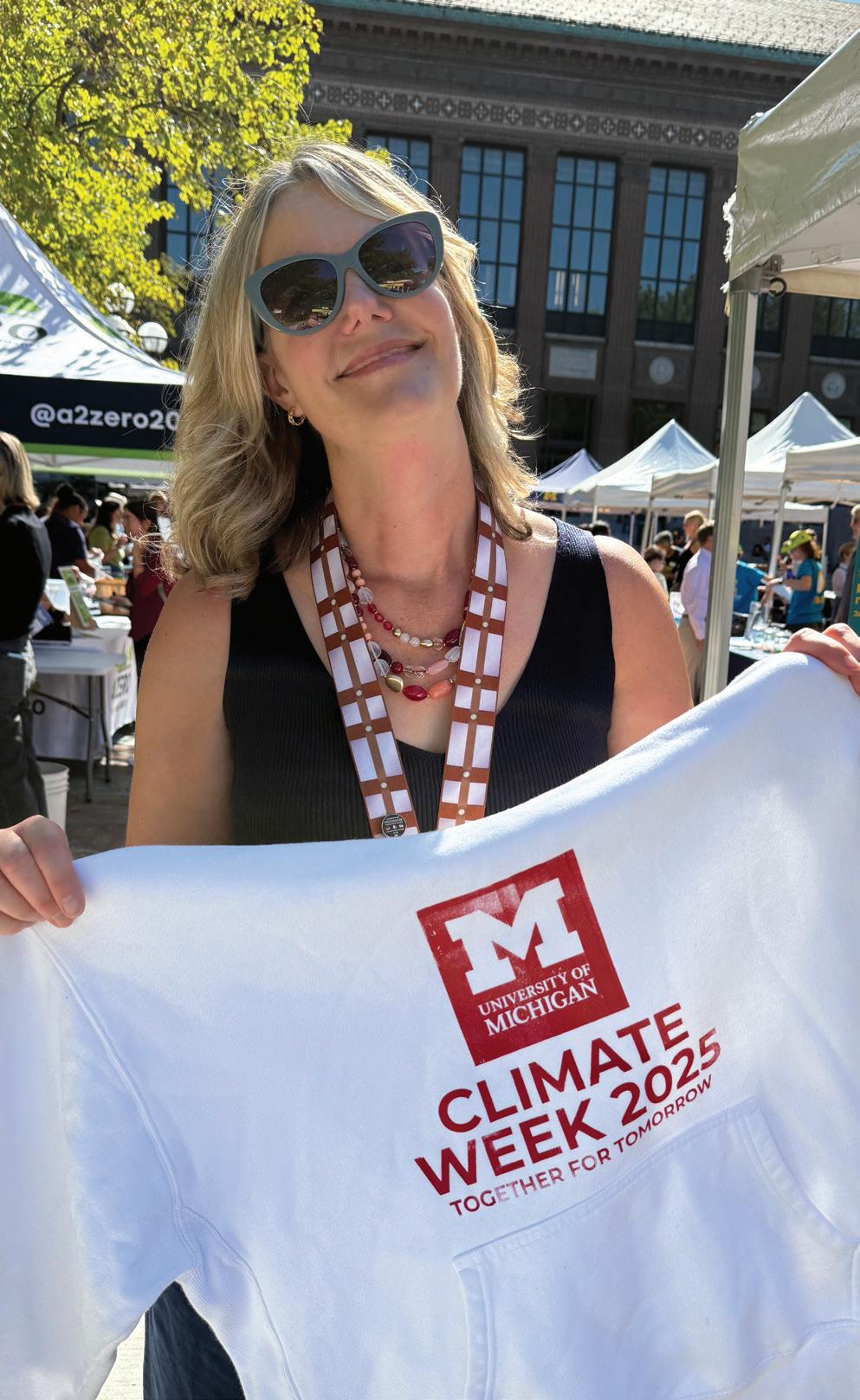
Sunny skies capped off U-M’s fi rstever Climate Week, making an already festive atmosphere even more spectacular. Held Sept. 27 to Oct. 5, Climate Week brought together the U-M community with campus, local and state leaders to elevate climate solutions that benefit all and build momentum for a more sustainable future. From Earthfest and Harvest Fest to coffee chats, mixers, panel discussions and more, it was a week like no other at U-M. Headlining Climate Week were keynote speakers Wawa Gatheru, founder and executive director of Black Girl Environmentalist; Jennifer Granholm, former U.S. Secretary of Energy and former governor of Michigan, who delivered the Peter M. Wege Lecture on Sustainability; and Diana Hernández, a sociologist from Columbia University who studies energy insecurity. Check out some of the photo highlights here, and scan the QR code to learn more about this momentous week.
DIANA HERNÁNDEZ
LIESL EICHLER CLARK
Public Good for Cities
At SEAS, we are driving research and solutions that make urban life more sustainable, equitable and resilient. From climate adaptation and green infrastructure to environmental justice and energy transitions, SEAS is working with communities and policymakers to ensure urban environments can thrive now and for generations to come. Read more about how we're powering public good for cities.
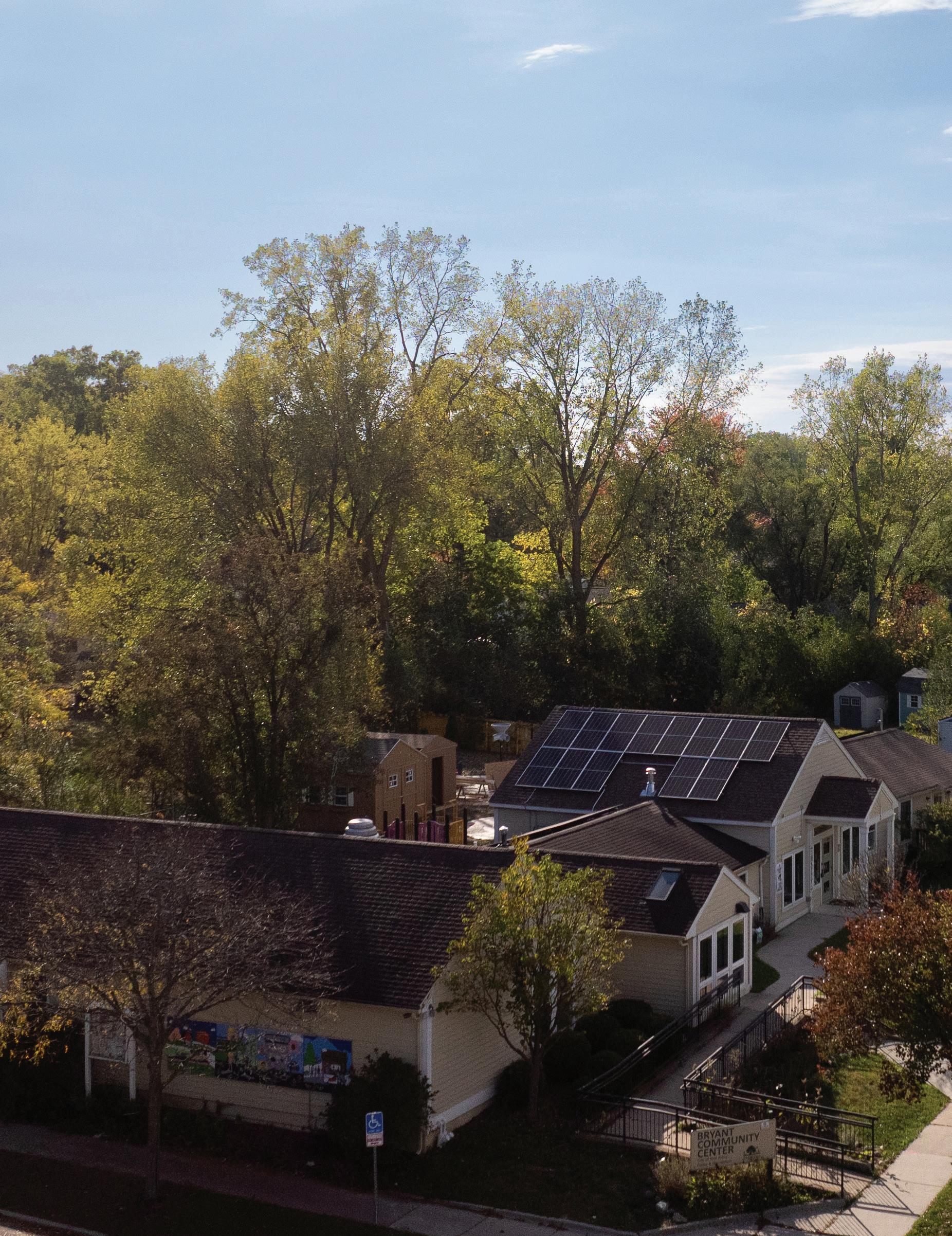
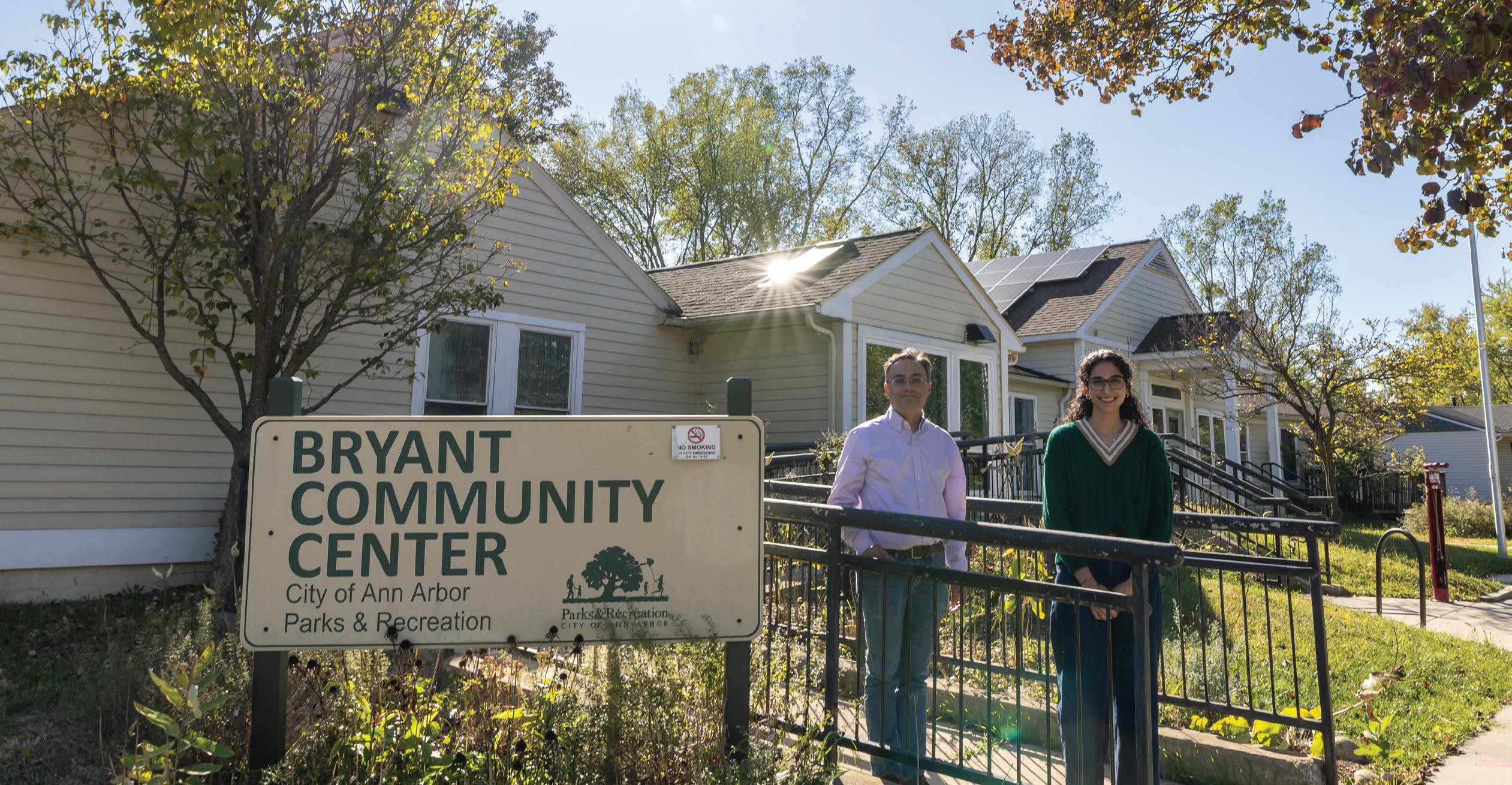
THE BRYANT NEIGHBORHOOD IN ANN ARBOR, WHICH AIMS TO BE THE FIRST CARBON-NEUTRAL NEIGHBORHOOD IN THE COUNTRY. PHOTO BY MADDIE FOX
Making Ann Arbor's Bryant Neighborhood a Model for Sustainable Energy
Story by Julie Halpert
APhoto by Maddie Fox
s climate change leads to hotter temperatures and extreme weather that taxes the electric grid at unprecedented levels and energy sourcing gets caught in political quagmires, those who are struggling financially are even harder hit. SEAS researchers are working on a groundbreaking federally funded project to better understand the challenges of low-income households and the services they need when the current grid fails. Parth Vaishnav, an assistant professor at SEAS, explains that the grid is undergoing a transition while the climate is changing, which means that the risk of outages will be higher initially. “If the grid goes down, you need to make sure that the effects of that are not catastrophic for people,” he says.
Vaishnav is a co-investigator on the EARNEST Consortium. Anchored at Stanford and funded by the U.S. Department of Energy (DOE), EARNEST is a consortium of 21 universities, including U-M, focused on preparing for a massive energy transition by understanding the current state of the energy sector and developing and testing tools that will help improve electricity grid reliability and resistance.
For the EARNEST project, Vaishnav, together with Mallika Kothari, a SEAS PhD student, is focusing on the Bryant neighborhood in Ann Arbor to understand how residents there cope with power outages of greater than 12 hours. Bryant has set a goal of being the first
SEAS ASSISTANT PROFESSOR PARTH VAISHNAV POSES WITH SEAS PHD STUDENT MALLIKA KOTHARI IN THE BRYANT NEIGHBORHOOD IN ANN ARBOR, WHERE THEY ARE STUDYING HOW RESIDENTS THERE COPE WITH POWER OUTAGES OF GREATER THAN 12 HOURS. VAISHNAV'S WORK IS A SMALL SLICE OF A MUCH LARGER PROJECT TO MAKE BRYANT THE NATION'S FIRST CARBON-NEUTRAL NEIGHBORHOOD.
neighborhood in the country to be carbon neutral— meaning that it will produce in aggregate no greenhouse gas emissions.
Kothari first learned about the project when she was applying to SEAS’ PhD program and met with Vaishnav. Raised in Ann Arbor, she was eager to conduct placebased work in her hometown and appreciates the opportunity “to design energy systems that work with the needs of this community.” Vaishnav is now her advisor, designing the project with her, while she implements it. The goal is to better understand how Bryant residents cope with current long-term power outages and what essentials they’ll need to run if the grid goes down—and how much they are willing to pay for those services. Vaishnav explains that the central goal of the project is to provide input on what residents value to the newly formed Ann Arbor Sustainable Energy Utility (SEU).
Kothari conducted interviews at 49 households. The information will be part of a study they aim to publish by the end of the year. She wants to better understand what people most want powered when the lights go out. This will be followed by a survey where, based on cost, residents will be asked to rank what they’re most willing to pay for, which will help design backup services that are most desired by the residents.
Learning from people’s experiences to inform solutions “is the part I’m excited about,” says Kothari. She sees the project as a blueprint for “big, climate-related problems that we are going to be facing in the future.”
Vaishnav explains that there aren’t many studies focused on those with limited resources. “If you’re financially constrained, then your answer may be different from someone who is not,” so this work will “generate new knowledge that doesn’t exist.”
SEAS alumna Missy Stults (PhD ’16) has been taking a broader look at the Bryant neighborhood as sustainability and innovations director for the City of Ann Arbor. She explains that Bryant is one of the most diverse neighborhoods in Ann Arbor. Many residents struggle with energy poverty and it’s a neighborhood challenged by historic flooding, adjacent to a landfill with low tree canopy coverage. She began working with a local nonprofit, Community Action Network, in 2021 to reach out to residents, asking them what they love about their community and what they
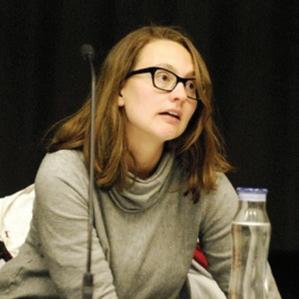
wished were different. “And there was this goal to become truly a pinnacle of a sustainable neighborhood,” Stults says.
She adds that Vaishnav’s work is a small slice of a much larger project to make Bryant the nation’s first carbonneutral existing neighborhood. Armed with nearly $23 million in funding, Stults and her team are tackling the neighborhood’s challenges through a multi-faceted, holistic lens to determine ways to positively impact the many obstacles facing residents that adversely affect their quality of life.
“
If the grid goes down, you need to make sure that the effects of that are not catastrophic for people.”
The solutions include tree planting, transitioning from fossil gas to geothermal, solar deployments, energy efficiency improvements, mold remediation and flooding abatement. The goal is to “make homes healthy again so residents can stay in them,” Stults says. The intention is to ameliorate energy poverty in the neighborhood, so residents don’t have to choose between “heating their home or buying school clothes or lunches for their kids,” she adds. They’re also providing assistance with wills to preserve intergenerational wealth. “It’s like a microcosm of what we’re all trying to figure out in society, how to not just survive but thrive,” Stults says.
Part of the project involves designing a network geothermal system, which was awarded a DOE grant. Geothermal provides significant energy and greenhouse gas savings and air quality improvements. It will be owned and operated by the city’s SEU, an opt-in supplemental energy utility that will provide 100% renewable energy. Shoshannah Lenski (MS ’11), a SEAS graduate, recently was named its executive director. The SEU will be up and running in 18 months. Stults says that Lenski was the perfect choice, as someone who is from Ann Arbor and is “deeply enmeshed in the values of the city.” She is also focused on sustainability and has vast experience in the strategy and operations of utilities.
Stults says the Bryant project is intended to be a blueprint for other communities in Ann Arbor; Pittsfield Village has been selected as the next neighborhood.
MISSY STULTS
Planning for Climate Migration in the Great Lakes Region

Story by Lori Atherton








DAVE BRENNER











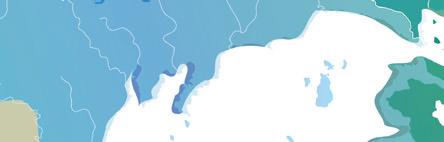



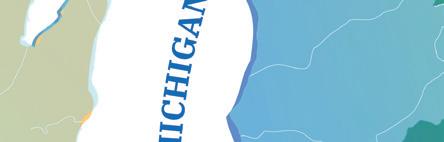

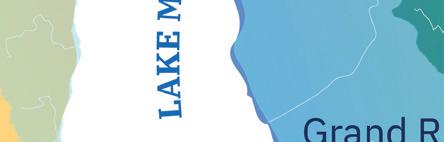

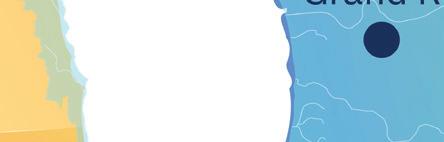








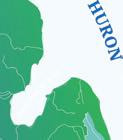
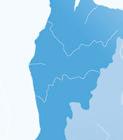
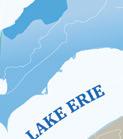
As climate change accelerates, people across the U.S. who live in hurricane-, wildfi re- or droughtprone areas may be considering relocating to other places that are perceived as being safer from extreme heat, sea-level rise and other severe impacts of climate change. Th is idea, known as climate migration, is prompting renewed attention on areas like the Great Lakes region, which has an abundance of fresh water, a relatively temperate climate and fewer natural disasters. Some media headlines have even leaned into the idea of the Great Lakes region being a “climate haven” that is free of most climate-related problems.

SEAS Associate Professor Derek Van Berkel says the term climate haven is misleading, though, because it sets up false expectations for the people who may want to move there.

























“
We hope to tap into some of those conversations around climate migration and start a planning process for making cities more livable, adaptable and just.”
“There are plenty of places that will be less prone to climate change, but they will still face climate-related challenges—just different ones,” says Van Berkel, a geographer and data scientist who studies climate migration. “For instance, here in the Great Lakes we are prone to ice storms, which can cause severe power outages.”

It is unclear how many people may migrate because of climate problems and where they will go, Van Berkel says. He notes that scholarly research often focuses on the reasons why people become climate migrants and less on the cities that are identified as climate havens or potential “receiving communities”—and whether their infrastructure, economies and resources are sustainable enough to support an influx of new residents.
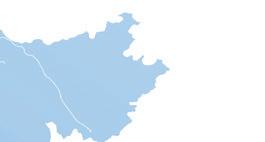

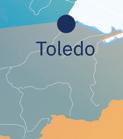
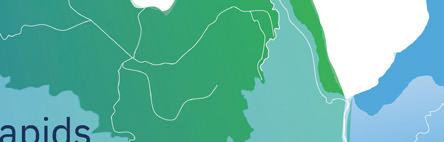
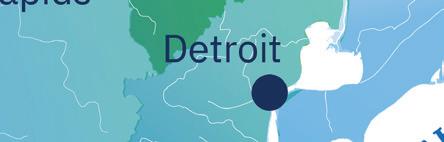
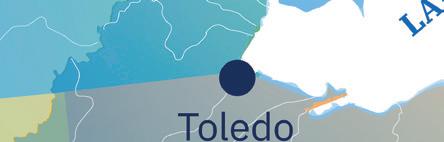
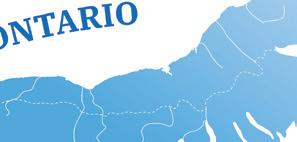
Toledo, Ohio; and Detroit—which are also considered legacy cities because of their aging infrastructure and declining population—and comparing their climate adaptability efforts to cities in the Lake Victoria region of Africa, a densely populated area bordered by Tanzania, Uganda and Kenya. Lake Victoria is the largest of Africa’s Great Lakes, and a major source of the Nile River.
The Lake Victoria Basin and the Great Lakes region are similar because they are resource-rich areas that could attract climate migrants in the future. The Lake Victoria Basin is already experiencing climate migration, Van Berkel noted, while the Great Lakes region is expected to experience it. Each area could learn valuable lessons from the other while providing critical planning knowledge that could be scaled to and adapted by cities around the globe.
Th rough his work as the principal investigator of the Climate Adaptation and Resilience Strategies (CLARS) Project, which is funded in part by a three-year, $614,000 grant from the U.S. National Science Foundation, Van Berkel and his research partners are hoping to bridge that knowledge gap by studying climate migration as a complex process that affects not only migrants but also the communities they join. Van Berkel hopes their fi ndings will aid cities to better understand, prepare for and manage the impacts of climate migration, so that existing problems and inequalities aren’t exacerbated.

“We hope to tap into some of those conversations around climate migration and start a planning process for making cities more livable, adaptable and just,” says Van Berkel. “We need to have more thoughtful conversations on how to sustainably move forward in our cities and include a broader array of people in that discussion, particularly those who have been excluded from planning processes in the past, such as minorities and poorer communities.”
The project is focusing on the Great Lakes cities of Duluth, Minnesota; Grand Rapids, Michigan; Buff alo, New York;
Van Berkel and his colleagues are using the Participatory GIS Urban Development Tool (PIVOT) that Van Berkel developed as part of GLISA, a NOAA CAP/RISA team, to display mapped information such as demographics, economic trends and tree cover. Eventually, it will include urban development projections, climate-related stressors like precipitation and temperature changes, and the risk of flood and heat events, so that users can interactively explore different vulnerabilities within their communities. The aim is to help them learn how population increases may result in complex social and climate trade-off s over time, and to consider those trade-off s in the face of changing demographics, growth patterns and flood risk.
By planning for climate migration now, before it actually happens, cities can fi nd ways to be more adaptable in the face of future climate uncertainty. “We’re helping cities start the conversation of what this actually means for them to be a place for climate migrants and how they should start planning for it,” Van Berkel adds. “It seems like such a nebulous thing for people to think about what their city is going to be like in 30 years, but we’re hoping to get them thinking about longer-term visioning and what sorts of climate-driven challenges they may need to address in the future.”
DEREK VAN BERKEL
Greener by Design
How SEAS Landscape Architects are Making Cities More Sustainable
Story by Nayiri Mullinix
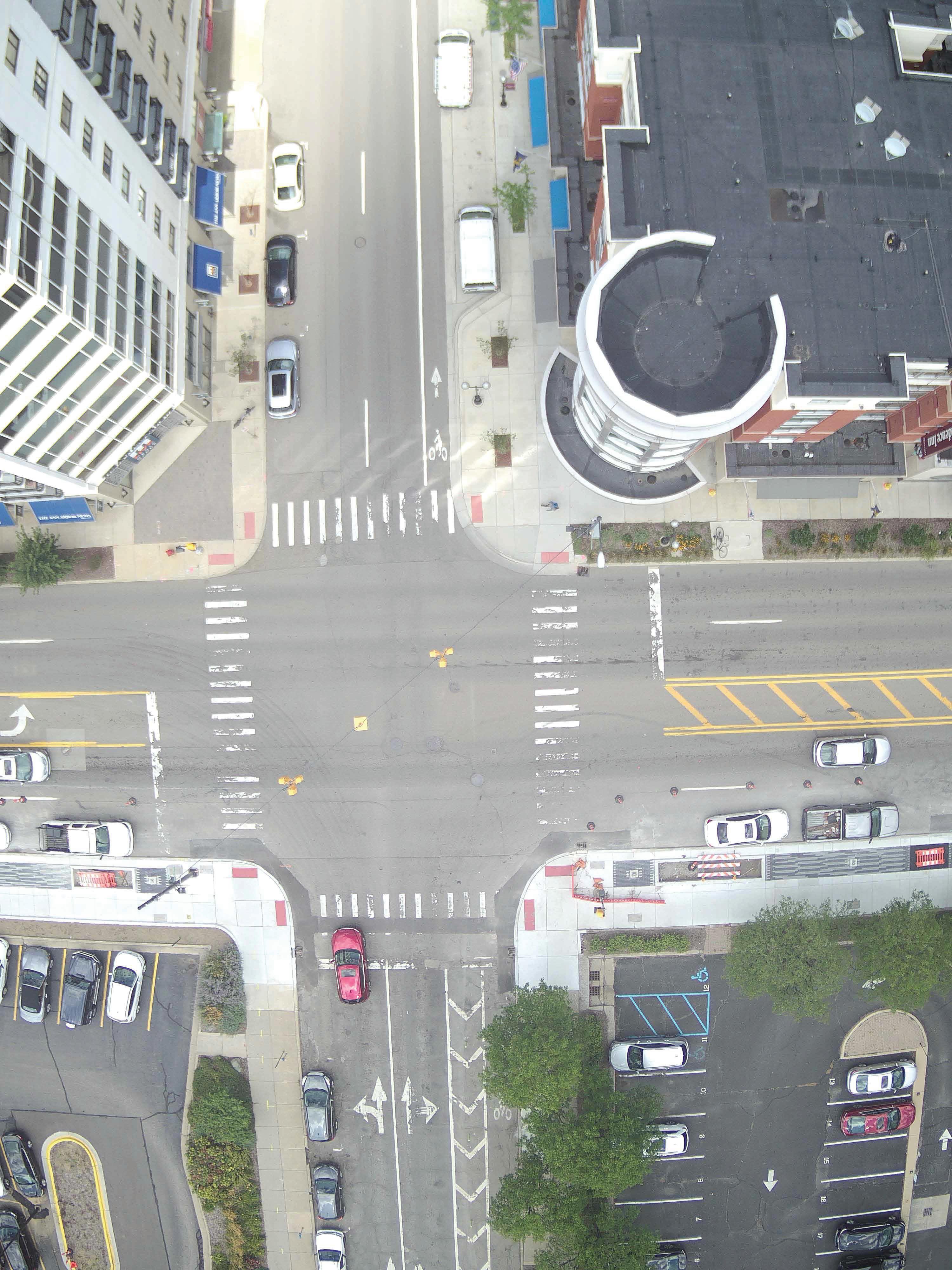
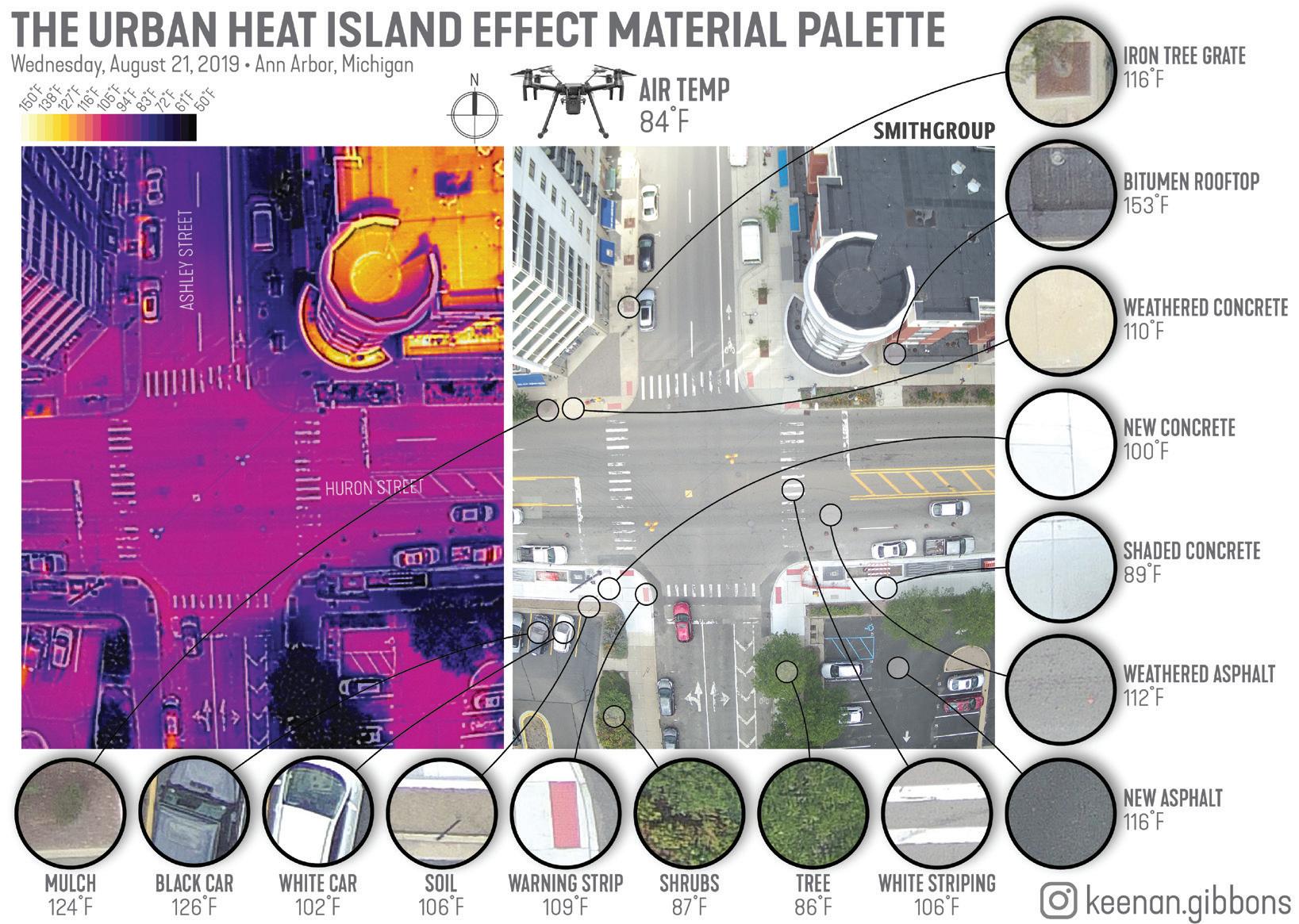
THE AVERAGE SURFACE TEMPERATURES OF COMMON URBAN MATERIALS IN ANN ARBOR, MICHIGAN, WHEN THE SUN IS AT ITS HIGHEST POINT IN THE SKY. IMAGE CREDIT: KEENAN GIBBONS
Landscape architects have long played a key role in promoting sustainable, beautiful and functional spaces. In cities, in particular, their work is vital to mitigating environmental challenges like the urban heat island effect, stormwater management and ecological restoration. As cities strive to become climate resilient, landscape architecture faculty and students at SEAS are laser-focused on finding sustainable solutions that benefit the public
Cooling Urban Heat Islands
People don’t realize it, but on average, cities are 14 to 20 degrees hotter than rural areas. This is due in large part to the urban heat island effect caused by building materials, asphalt, dark surfaces and perhaps most notably, a lack of trees. Keenan Gibbons, a lecturer at SEAS and a landscape architect with SmithGroup, is using infrared drones to find hot spots in cities and cool them down, which is crucial for public health, energy conservation and sustainability.
This nationwide work, which began in 2018, started in Ann Arbor on Huron Street, where Gibbons was hired to redesign the landscape, including the planting of 130 shade trees.
“It was a pretty big transformation from that barren sidewalk,” says Gibbons.
“We established a baseline temperature and have measured it in the years since, and by year five, we measured a reduction in surface temperatures by about 12 degrees.”
Gibbons, whose work is mostly based in Detroit, where he’s currently working on the Corktown Greenway, a community-centered project that will span multiple streets and integrate green spaces and bike lanes, says that reducing surface temperatures is essential as we learn to live on a warming planet.
“While some of my work is mitigating the issues working with what’s already there, adding green spaces, water, shade and brightly colored materials, the ultimate goal is to help inform better design decisions in the future,” says Gibbons.
Green Stormwater Solutions
Following her groundbreaking work in Minnesota in the mid-1990s, which included design and implementation of rainwater gardens, now commonly seen in cities throughout the U.S., SEAS Professor Joan Nassauer says that her interest in green stormwater infrastructure, a method of managing stormwater runoff using systems that mimic natural processes to absorb, filter and store water, is part of the reason she came to U-M.
“It was obvious to me that there were enormous opportunities for green stormwater infrastructure in Detroit. Even when I started working with community partners there in 1999, there were 10,000 vacant properties in the city, and it was clear they could be selectively employed as part of neighborhood green stormwater infrastructure,” says Nassauer.
With a focus on urban design that incorporates the stormwater management potentials of vacant property,
Mapping for
MNassauer has built partnerships in Detroit that have allowed her and her students to contribute to a shift from skepticism about green infrastructure to understanding its importance for limiting downstream pollution and climate-induced localized flooding, with profound impacts on people and ecosystems.
Nassauer says that the landscape characteristics of different cities, with varying local community aesthetics, are essential to the successful implementation of green infrastructure.
“Detroit is a relatively flat landscape with clayey soils and many vacant lots and existing green spaces, so green infrastructure should be designed differently than in Seattle or Los Angeles,” says Nassauer. “For every city, local community aesthetics matter. People are more likely to want it in their own neighborhood if it looks attractive to their eye rather than neglected.”
Ecological Restoration
aking decisions about land use, ecological restoration and climate resilience in cities means having clear and up-to-date information. This can be harder than it seems, which is why Lisa DuRussel (BS ’02, MLA ’06), SEAS associate professor of practice and engagement, and her students recently worked on affordable and accessible ways to gather the visual and spatial context needed to ensure the successful restoration and future planning for Eliza Howell Park in Detroit, a capstone project supported by the Detroit Sustainability Clinic.
“Last spring, we collaborated with Sidewalk Detroit, a nonprofit that engages with residents to improve public spaces, and the City of Detroit, to connect our ecological and design expertise with geographic information systems mapping to offer a low-cost way to map out lots and properties at the park rather than hiring a costly surveyor,” says DuRussel.
Using a drone, the project team was able to evaluate landscape-scale ecological conditions that are often difficult to assess quickly and affordably, such as canopy cover, drainage analysis, vegetation health and erosion, and provide high-resolution data to inform restoration, design and planning.
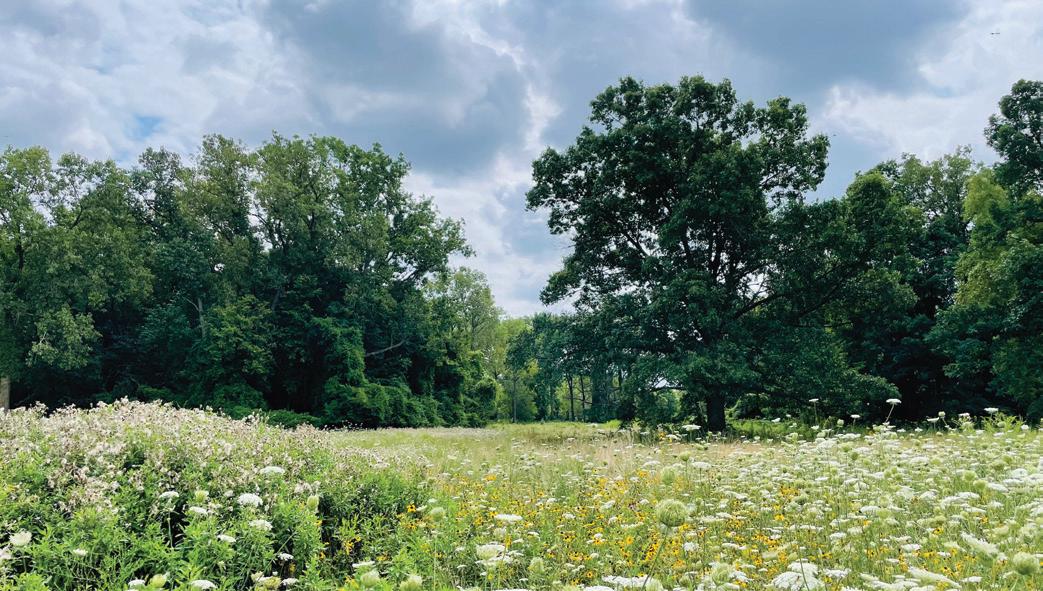
INNER
OF DETROIT'S
PARK IN SUMMER, WHERE PREVIOUS RESTORATION EFFORTS AND A PERIOD OF REDUCED MAINTENANCE DUE TO THE COVID PANDEMIC ALLOWED NATIVE SPECIES TO REEMERGE. THE SEAS CAPSTONE TEAM BUILT UPON THIS NATURAL REGENERATION AND RECOMMENDED PLANTING AND MANAGEMENT STRATEGIES THAT WOULD FURTHER ENHANCE THE PARK'S BIODIVERSITY AND BEAUTY.
The project resulted in ecological management recommendations for the 250-acre mostly undeveloped park, and a strategy for climate-resilient and biodiverse landscapes that can be replicated across all of Detroit’s parks.
“The impact of this work can reach multiple communities throughout Detroit as the city strives for holistic management, ecological resilience and accessibility of its parks for years to come,” says DuRussel.
THE
LOOP
ELIZA HOWELL
PHOTO BY EMILY BRENT.
Although people may prefer not to know how the sausage is made, new research from SEAS highlights the importance of understanding where America’s meat comes from.
In two separate but related studies, SEAS research led by Benjamin Goldstein and Joshua Newell underscore how meat connects rural areas where it’s produced to urban areas responsible for most of its consumption. In doing so, the team also revealed how the environmental impacts of meat vary widely across the country while providing useful insights to address these burdens and inequalities.
“The meat you eat comes from somewhere. It takes up a lot of space and produces a lot of pollution,” says Goldstein, an assistant professor at SEAS. “And somebody else and [some other] place has to bear that pollution.”
The fi rst study, published last summer in the journal Communications Earth & Environment, identified locations for thousands of the nation’s hog and cattle animal feeding operations, or AFOs. The researchers also started addressing questions about what these AFOs meant for their neighboring communities.
The second study, published this fall in Nature Climate

Change, revealed the “carbon hoofprints” of more than 3,500 U.S. cities—the greenhouse gas emissions associated with supplying their beef, pork and chicken.
“For the fi rst time, this detailed spatial mapping from city to farm enables us to investigate the environmental, social and economic impacts and connections between what have previously been disconnected places,” says Newell, a professor at SEAS. “It is our hope that this study provides an example of how we can foster better understanding between two different places: One largely urban and one distinctly rural where our food is produced.”
Finding Animal Feeding Operations (AFOs)
Despite hog and cattle AFOs supplying most of the nation’s pork and beef, data about where they are found was lacking in both scope and accuracy. Newell and Goldstein were interested in quantifying the impacts of meat supply chains and knowing the locations of AFOs was a missing link. Sanaz Chamanara (PhD ’22) took up the task of fi nding them as part of her dissertation work, with help from Dimitrios Gounaridis, a SEAS assistant research scientist and a coauthor of both studies.
Chamanara combed through satellite imagery of every

Tracking Meat’s Environmental Hoofprint
Story by Matt Davenport


county in the contiguous U.S. to confirm the location of more than 15,000 AFOs. About a quarter of these were found in just 30 counties. Knowing where the AFOs were, the researchers could then integrate other available data from those locations to draw further conclusions.
For example, they found that levels of air pollution made up of particulate matter less than 2.5 microns in size—also called PM2.5—were higher near AFOs. They also found that AFOs were often located closer to communities with lower levels of education and health insurance coverage.
“One of the things this study reveals is that we could focus on a limited number of counties to really address health impacts in these communities,” says Newell. “If you’re a policymaker, a government, or a community group or association concerned with these issues, this allows you to develop very targeted policies or measures. That’s one of the reasons why mapping this out spatially is so important.”
Carbon Hoofprints
Determining and mapping the carbon hoofprints of cities across the country also revealed some eye-popping stats, as well as opportunities to chart a path to a more sustainable future.

For example, the carbon footprint of U.S. cities is larger than all carbon emissions from the United Kingdom. But Americans can make relatively straightforward changes to help minimize their impact, such as swapping chicken for beef, reducing food waste and participating in Meatless Mondays.
“
The meat you eat comes from somewhere. It takes up a lot of space and produces a lot of pollution.”
To quantify these impacts and opportunities, the U-M team collaborated with University of Minnesota researchers led by Rylie Pelton and Jennifer Schmitt, who are on the team that developed a model called Food System Supply-Chain Sustainability, or FoodS3, to dig into meat’s supply chains in the U.S. This provided a more comprehensive accounting of greenhouse gas emissions from what it takes to produce beef, chicken and pork— from growing the feed for animals, to managing the manure at ranches and AFOs to shipping the processed meat to cities.
“This is something that has been largely missing,” says Goldstein. “We know that cities use these supply chains that span thousands of miles to get their resources and support their daily consumption. But we have lacked an analytical architecture to actually capture that consumption and link it to environmental changes at different locations until now.”
And the carbon hoofprint was just the first step. The team said the model can now be easily adapted for other commodities, both agricultural and otherwise, that cities depend on.
This work was funded, in part, by the U.S. National Science Foundation.
What's the carbon hoofprint of your city?
Voices of
Change
We wanted to know how members of our SEAS community are making a difference for our planet, so we asked: How are you fighting for the future of our planet and for the betterment of society through your work and career? This is what they had to say.
“

Hthe



arnessing all the energy that we demand to power our daily lives and economy takes a huge toll on our natural resources. We are perilously close to breaching climate tipping points that will downgrade all ecosystems’ capacities across this great planet. We need better ways to harness energy (as well as use less of it), all the while improving the lives of our fellow humans. It has thus been my ambition for the last two decades of my career to advocate for—and directly implement—clean, renewable energy and energy efficiency policies and programs in the energy utility industry sector. It’s been a fulfi lling and enriching career to do what I can to rapidly evolve our energy utility sector that fosters a more energy efficient and equitable economy that no longer pollutes our atmosphere.”
C—Pierre





Bull (MS ’05), senior program manager of commercial energy efficiency programs, Pacific Gas and Electric
onsulting for civil society organizations, I have spent my 30-year career researching and providing data to push governments and public development banks, like the World Bank, to do more to protect our climate. Most of my work focuses on the energy sector and revealing how much public money and policies continue to subsidize fossil fuels. It has resulted in stronger commitments from these institutions, but there is now backsliding. Over the years, my research has been covered by The Financial Times, Bloomberg News, The New York Times, Reuters and The Guardian, among others. My research on greenhouse gas emissions from industrial processes has also been used by the Intergovernmental Panel on Climate Change.”
—Heike Mainhardt (BS ’95), consultant/senior adviser
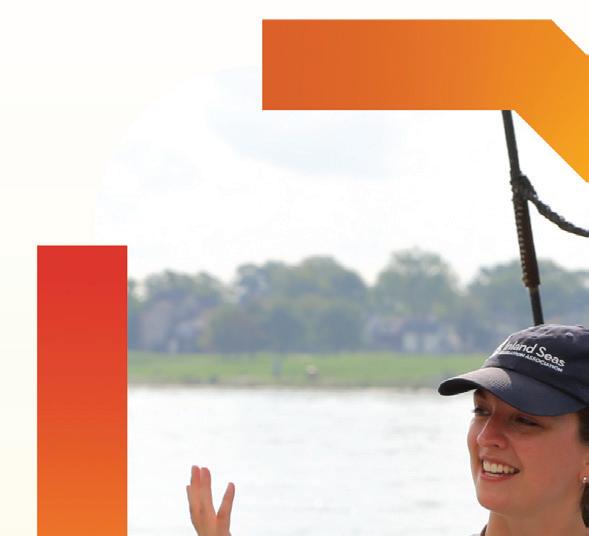
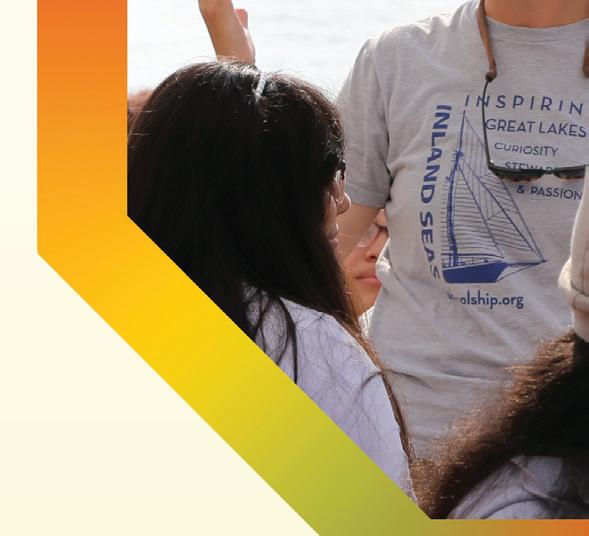

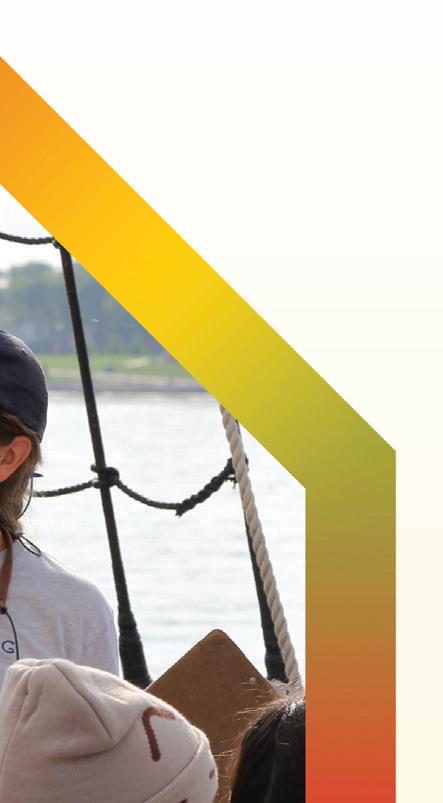

IGwork with an incredible team to teach people about the Great Lakes through hands-on educational programs, inspiring environmental stewardship of our freshwater ecosystems. The Laurentian Great Lakes contain nearly 20% of the world’s surface freshwater, and it is imperative to protect them for the future. A key part of protection is inspiring love for and connection with the natural world through educational experiences.”
—Juliana Lisuk (MS ’19), associate director, Inland Seas Education Association
rowing up I was fascinated by humanity’s interest in exploration, from the deepest ocean to the far reaches of outer space. The Blue Marble photo taken by Apollo 17 deeply impacted me by reinforcing the importance of the actions we take on our one precious planet. Having children heightened this realization that I had to do everything in my power to enable a better future. My entire career has been combining this drive with my professional acumen around public policy and the clean energy transition to be a force for change. Th at default towards action is needed now more than ever.
As director of Michigan’s Department of Environment, Great Lakes and Energy (EGLE), I was honored to lead in the elevation of policy coordination to accelerate the clean energy economic transition in Michigan including as the chair of Michigan’s Council on Climate Solutions. The team at EGLE carefully crafted the Michigan Healthy Climate Plan (MI HCP) through extensive listening sessions, public engagement, intentionally structured workgroups and, of course, deep expertise from the Council. The plan then became the foundation for our ambitions in Michigan including the 2023 legislative changes and government implementation.
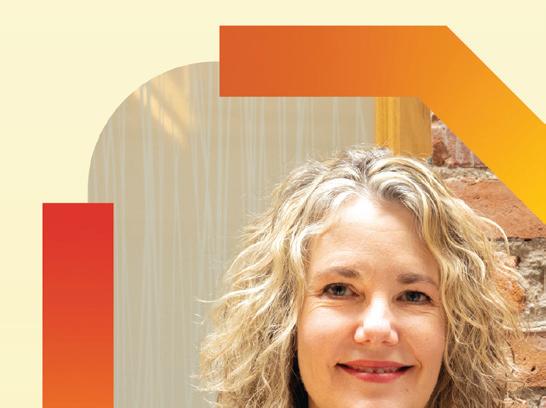

Coming to SEAS was a no-brainer to further the work of the economic transition in Michigan. SEAS is a community-forward school that centers interdisciplinary action and impact. I’ve learned that successfully imagining a different future is done together and creating a different future happens with the next generations.”


—Liesl Eichler Clark, U-M director of climate action engagement


INVENT TOMORROW
At SEAS, we’re inventing tomorrow, leading with the energy and creativity it takes to find bold and innovative solutions to our most pressing problems. Within this section, you’ll find stories about how we are using our inventive spirit to create an environmentally sound, sustainable and just future for all.
FROM MEASURING BY HAND TO AI-ASSISTED COMPUTER VISION
Story by Nayiri Mullinix
Photos by Madisyn Guza & Brian Weeks








An AI system is helping researchers understand the evolution of birds, which contributes to a better understanding of responses to global change.






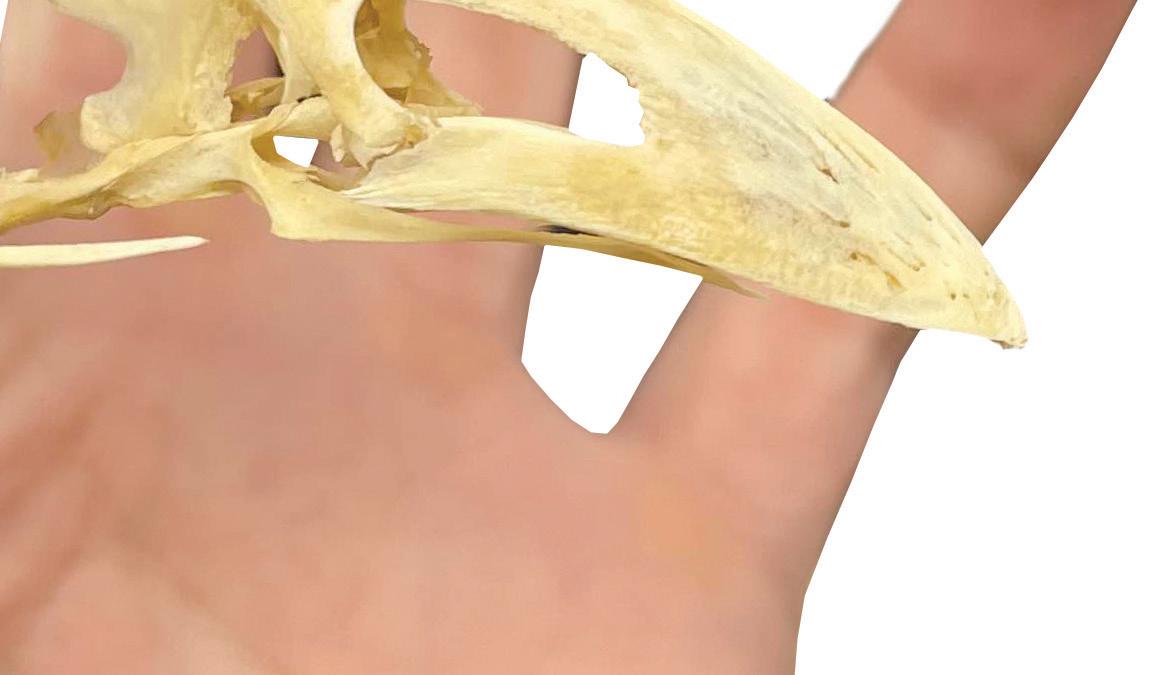
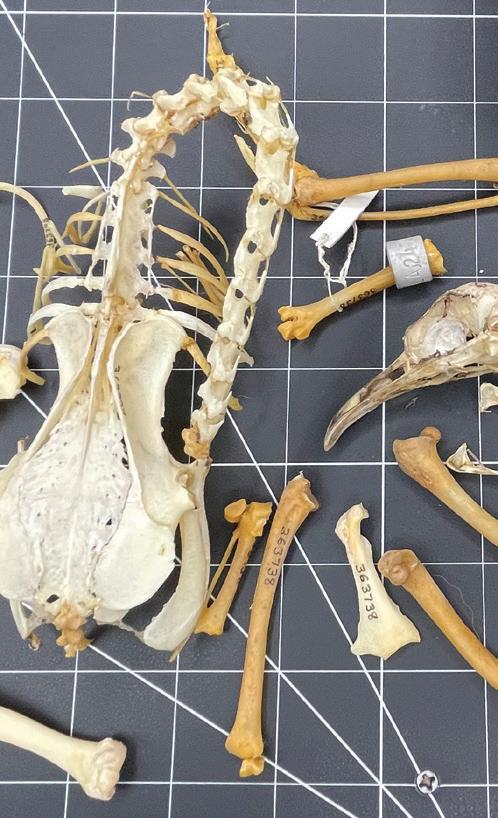
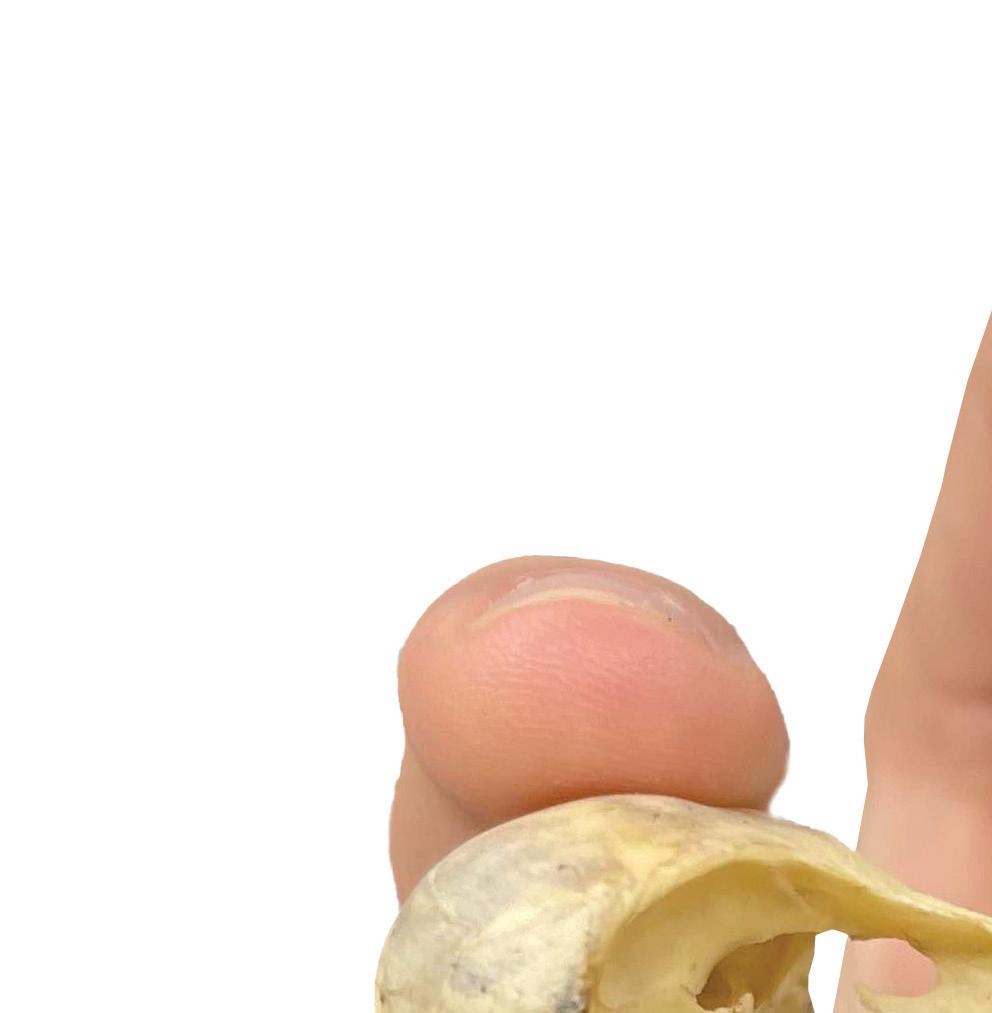
THE SKULL OF A HELMET VANGA (EURYCEROS PREVOSTII), A SPECIES THAT LIVES IN MADAGASCAR, SHOWS SOME OF THE INCREDIBLE VARIATION IN SKELETAL FORM FOUND IN BIRDS. MORE ADVANCED 3D REPRESENTATIONS OF THIS VARIATION PROMISE TO YIELD NEW INSIGHTS INTO THE ORIGINS OF AVIAN DIVERSITY AROUND THE WORLD AND HOW IT MAY RESPOND TO GLOBAL ENVIRONMENTAL CHANGE.











ur understanding of the evolution of bird bodies is being reshaped thanks to a deep neural network-based computer vision system called Skelevision, which uses artificial intelligence (AI) to identify and measure bird bones from photos of thousands of museum skeletal specimens.

Started in 2019 by SEAS Associate Professor Brian Weeks and David Fouhey, assistant professor at New York University, Skelevision transforms the once laborious process of identifying and measuring bones of bird skeletal specimens into a fully automated process performed by computers.
The result is the most extensive dataset of skeletal trait measurements in birds to date. Th is dataset is important because birds are considered a model system, meaning they are often used to understand how ecosystems and species are responding to human alteration of the environment.
by undergraduate students in PitE and SEAS master’s and PhD students, who have annotated
Building this technology involved contributions by undergraduate students in PitE and SEAS master’s and PhD students, who have annotated the change. important model used the environment.
a few hundred examples of every bone element, used those data to train Skelevision to segment out bones from images and then identify and measure them. They then used Skelevision to measure traits on more than 2,000 species of birds, with measurements of 12 skeletal elements from 14,419 individuals mostly held in U-M’s Museum of Zoology, which is among the largest and most diverse skeletal specimen collections in the world.
“Traditionally, the development of large-scale datasets characterizing the skeletal system in birds has been limited compared to other types of traits, presumably because measuring bird bones by hand is really tough work,” says Weeks, an evolutionary ecologist. “We can now look at how skeletal traits have evolved, and we can also combine skeletal traits with existing external traits to better understand how the evolution of birds has been influenced by the demands of thermoregulation, or how organisms maintain their body temperature despite external temperatures.”
This is changing how we understand things like the evolution of flight or centuries-old ideas about the relationship between bird body size and temperature, and may help us predict how species will or will not be able to adapt to human-caused climate change.
SEAS PhD candidate Charlotte Probst says that access to a dataset of this size, which is available to any researcher because it is open source and open access, makes her reflect on the toil of measuring bird specimens by hand, which she was still doing until about five years ago.
“Creating this massive dataset in a short period is gamechanging in itself, but it’s also impressive how flexible Skelevision is. If someone is interested in analyzing a bone that wasn’t run in the training the first time, they could go back, make a new annotation data set for it, run it through Skelevision, and get thousands and thousands of measurements for that bone quite quickly,” says Probst.
Weeks adds that, as the image bank grows, “the amount of training data needed will stay the same, making it possible to measure a new trait on thousands or millions of specimens in a few days rather than months or years.”
This past summer, PitE alum and SEAS master’s student Madisyn Guza (BS ’22, MS ’26) worked in the Field Museum in Chicago to collect scans for version 2.0, which will include 3D capability. She says that, in the process, she has realized the magnitude and impact of this project.
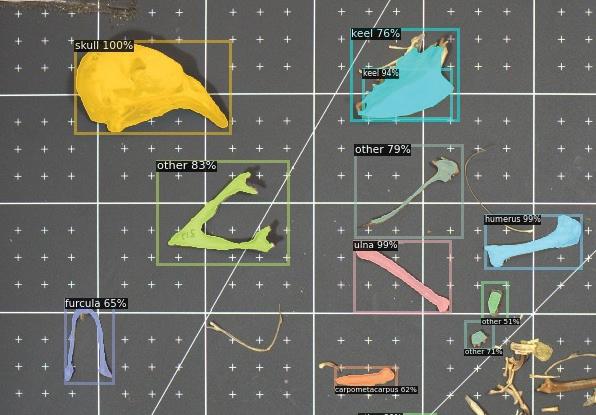
AN IMAGE OF A SKELETAL SPECIMEN WITH TARGET BONES IDENTIFIED AND OUTLINED BY SKELEVISION. THESE OUTLINES OF THE BONES ARE THEN USED TO MEASURE ASPECTS OF THE SKELETAL ELEMENTS FOR USE IN TRAIT-BASED RESEARCH.
“Contributing to Skelevision’s history has been an incredible privilege,” says Guza. “The gravity of how much it can help researchers interested in museum specimens really dawned on me when I gave researchers demonstrations—they often mentioned how it could help improve the efficiency of their research personally. Scanning entire collections as we’re doing provides massive amounts of data, advancing science in unimaginable ways.”
Weeks says that one goal of version 2.0 is to develop detailed 3D models of bones that might be able to inform a classification model that would be able to identify species from fragmentary bones from archaeological sites, called zooarchaeology deposits, which would allow researchers to ask questions about how biological communities have changed at a large scale.
In the age of AI, Weeks emphasizes the importance of collaboration, calling his cross-disciplinary work with Fouhey and his group essential, and explains that Skelevision would not have been possible without centuries of investment and continued support of natural history museum collections.
“Museum collections are core to this work, and will continue to be. They take continued investment and are priceless, irreplaceable resources for basic research and conservation biology.”
Story by Lori Atherton

Despite the rollback of government incentives, the momentum behind electric vehicles (EVs) isn’t slowing. Automakers are moving ahead with EV investments, infrastructure continues to expand, and the public is increasingly embracing cleaner transportation.
Th is is good news, according to Greg Keoleian, the Peter M. Wege Endowed Professor of Sustainable Systems at SEAS and the co-director of the Center for Sustainable Systems (CSS).
Vehicle electrification is the future, he says, and accelerating the transition from gasoline-powered
DRIVING TOWARD A CLEANER FUTURE
vehicles to electrified ones is necessary to help reduce emissions and achieve net-zero 2050 climate targets, both in the U.S. and abroad.
“The manufacturing, sales and adoption of electric vehicles is a key strategy to decarbonize the transportation sector and tackle climate pollution,” says Keoleian. “Transportation accounts for 28% of greenhouse gas emissions and we need to reduce those to limit future climate impacts such as flooding, wildfi res and drought events, which are increasing in intensity and frequency.”
Keoleian develops life cycle models that focus on climate and
sustainability solutions across energy, mobility, the built environment, water and food systems.
His research projects on EVs have covered the topics of life cycle greenhouse gas reductions, climate policy and EV incentives, total cost of ownership, driving and charging patterns, domestic sourcing of critical materials, sustainable battery management, and more. Keoleian and his team of researchers and students at CSS have collaborated extensively with the automotive industry, the U-M EV Center, faculty from U-M Engineering, Geology and the School of Information, and national labs.
One of his latest studies, of which he is the lead investigator, compares the greenhouse gas emissions of different vehicles based on size, usage, powertrain type and even location. The powertrains included conventional internal combustion engine vehicles (ICEVs), hybrid electric vehicles (HEVs), plug-in hybrid vehicles (PHEVs) and battery electric vehicles (BEVs).
It’s the most comprehensive analysis to date of vehicle greenhouse gas emissions, from production to endof-life disposal, providing drivers with estimates of emissions per mile driven across 35 different combinations of vehicle class and powertrains. The model accounts for emissions across time and space by county due to temperature effects on fuel economy and electricity grid fuel mix.
One of the main findings? Battery electric vehicles have lower lifetime greenhouse gas emissions than internal combustion engine vehicles, hybrids and plug-in hybrids in every county in the contiguous U.S.
Keoleian says the emissions savings from BEVs are tremendous. On average, a 2025 model with a 300mile range BEV has emissions that are 31–36% lower than those of a 50-mile range PHEV, 63–65% lower than an HEV, and 71–73% lower than an ICEV.
Drivers can see for themselves how vehicle emissions compare thanks to a free online calculator that Keoleian and his team created as part of their study (see QR code at right).
While phasing out tax credits and other climate policies could hinder the manufacturing and sale of EVs, SEAS graduate Jim Gawron (MSE ’11, MS/MBA ’19), director of charging strategy and business operations at
Ford Motor Co., says that Ford is focused on giving consumers choices and that includes electrified options.
When Gawron started at Ford in 2019, the company didn’t have any EVs in its U.S. vehicle lineup. Now, it has multiple available globally and recently announced plans to launch a new affordable universal EV platform with the first, a mid-size truck, launching in 2027, “which is what we think will resonate with our target customers,” Gawron says.
TAI represents a 10% shareholding in Toyota North Carolina, underscoring its commitment to the project and to the future of mobility, Leon says.
Many consumers still have concerns about electric vehicle charging, says Gawron, which is why Ford has also invested heavily in home charging solutions and its BlueOval Charge Network public charging infrastructure across North America, and provides access to the Tesla Supercharger network.
“It’s about making charging easy and seamless for people,” says Gawron. “We’ve come a long way with our learnings about electrification and what makes a great electric vehicle and how to support the charging journey.”
Evan Leon (MS/MBA ’20), another SEAS graduate, is a senior manager in the resources recycling strategic business unit at Toyota Tsusho America (TAI), the U.S. subsidiary of Toyota Tsusho Corporation. He oversees circular economy-related projects and plays a key role in TAI’s collaboration with Toyota North Carolina, a $13.9 billion investment that will bring its battery manufacturing lines online in phases, starting in 2025.
“TAI’s investment in developing and producing lithium-ion batteries further demonstrates Toyota Tsusho’s commitment to supporting the supply chain needs of various electrified powertrains, including battery electric vehicles, hybrid electric vehicles and plug-in hybrid electric vehicles,” he adds.
Leon believes that plug-in hybrids will be an attractive option for drivers transitioning from gasoline-powered vehicles. “They offer a middle ground between internal combustion engines and full battery electric vehicles,” he says. “I’m excited to see how future plug-in hybrid electric vehicles will be received by drivers who may prefer to have both options.”
Looking ahead, Leon sees a promising future for battery manufacturing, driven in part by the shift toward domestic and allied sources of critical battery materials, as well as advancements in battery reuse and recycling.
Calculate your vehicle's lifecycle emissions here.
JIM GAWRON
EVAN LEON
Watch Professor Keoleian speak more about his EV study with Michigan Research.
Tackling the Wildfire Problem Using a Holistic Approach
Story by Lori Atherton
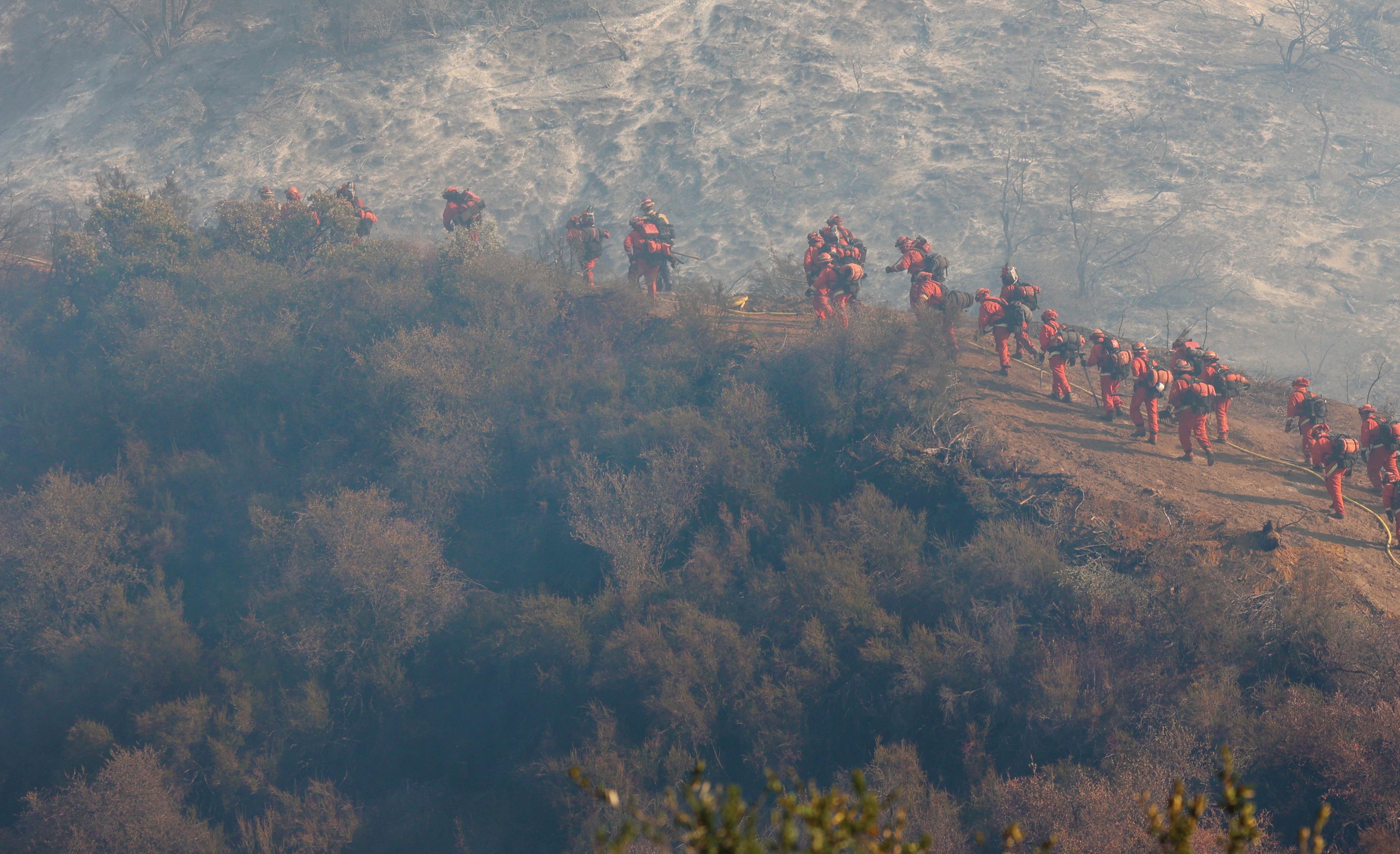
Wildfires have become an increasingly severe and frequent threat across the U.S. and around the globe. Fueled by rising temperatures and prolonged droughts caused by climate change, as well as human activity, wildfires now burn with greater intensity and for longer durations, devastating forests, destroying homes and endangering lives.
As climate change accelerates, addressing the root causes of wildfires and improving wildfire management strategies is critical, says Paige Fischer, an associate professor at SEAS who studies wildfires and their effects on humans.
While some solutions focus on forest management, fire suppression or land-use planning, SEAS is approaching the wildfire issue differently through its Berman Western Forest and Fire Initiative (WFFI).
WFFI is unique, says Fischer, its principal investigator, because it studies the wildfire problem through a holistic lens that includes ecological, social, technical, behavioral and policy perspectives, which are interdependent and contribute to the complexity of the Western wildfire crisis. The goal is to develop policy and management interventions that can mitigate
the risk of wildfires and help communities better respond to them.
“We are conceptualizing wildfires as a complex system to help us understand why, despite all of our efforts, the wildfire problem keeps getting worse,” says Fischer. “We’re trying to identify intervention points where we might set society on a path toward adapting to climate change and increasing wildfire risk rather than constantly experiencing these repeated cycles of preparedness, disaster and recovery.”
While the number of active wildfires in the United States at any given time varies, the total number of wildfires reported in a year averages around 70,000, according to the National Interagency Fire Center. These numbers fluctuate significantly based on factors like geography, weather and the overall fire season.
At WFFI, which was established in 2021 with a philanthropic gift from Steve (BS ’76) and Kathy Berman, Fischer works with an interdisciplinary working group of U-M faculty, graduate students and
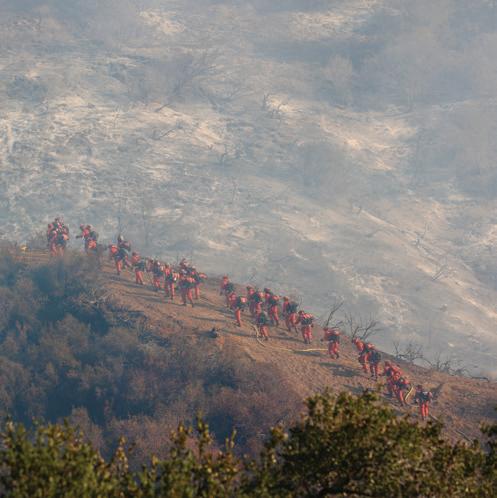
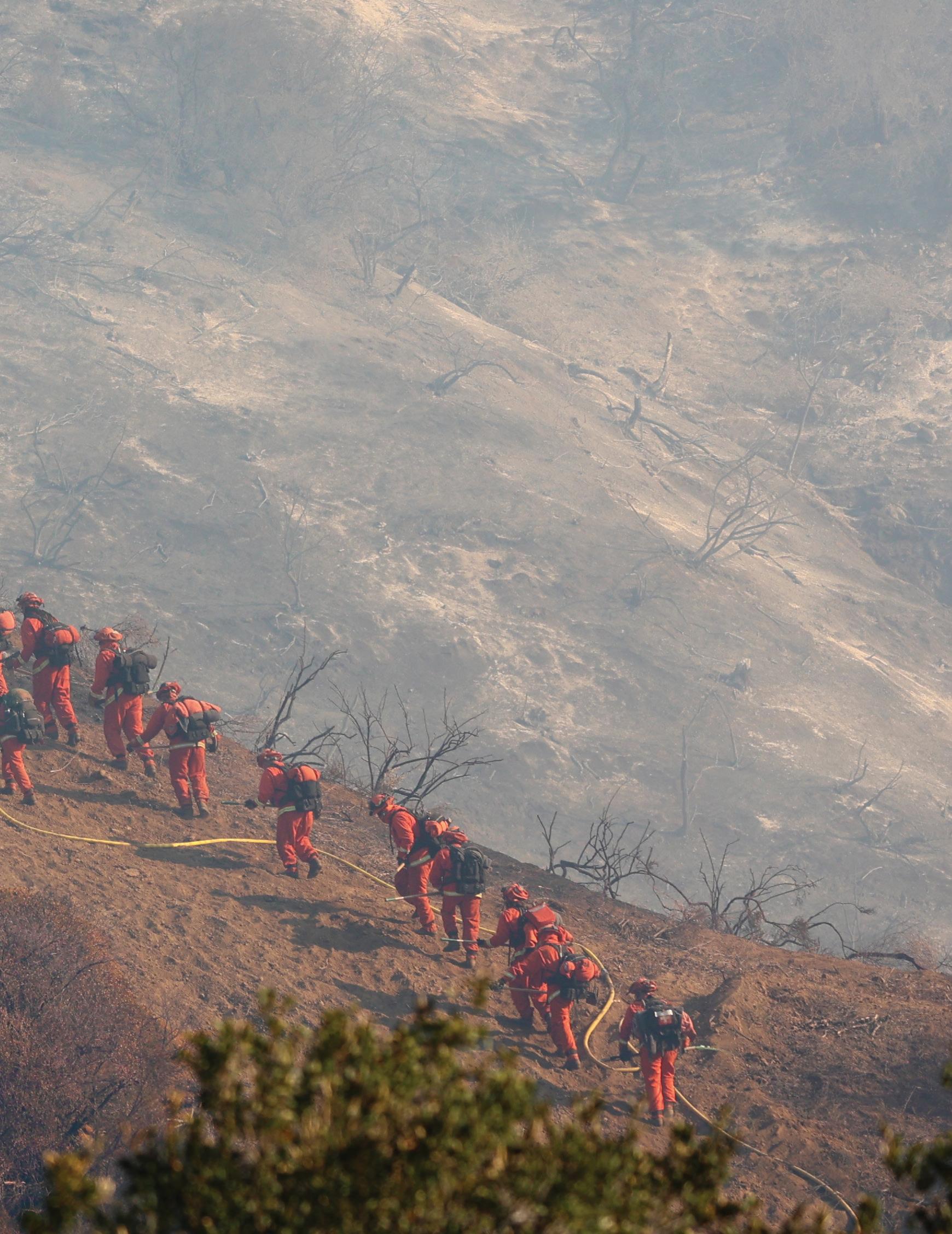
A CALIFORNIA DEPARTMENT OF FORESTRY AND FIRE PROTECTION CREW WORK DURING THE PALISADES FIRE THAT STARTED IN THE CITY OF LOS ANGELES IN JANUARY 2025. IMAGE CREDIT: CAL FIRE
PAIGE FISCHER
postdoctoral researchers whose fields include ecology, engineering, nursing, economics, behavioral science and policy.
Through applied research, they focus on understanding how people perceive and respond to wildfire risks and provide information and tools that can be used by forest managers, land-use planners, policy makers and other wildfire practitioners “to have an impact on wildfires in their communities,” says Fischer. “Part of that is trying to better understand the process of how people think long-term about extreme events that are unlikely but have the highest consequence, and what encourages them to do more to protect themselves from them.”
A key focus of WFFI is its training of the next generation of wildfire scholars who are fluent in systems thinking and transdisciplinary methods, Fisher says, and can address the wildfire problem holistically.
WFFI’s Projects
WFFI currently has 13 ongoing research projects, each with a different focus and deliverable. Projects are designed in collaboration with the wildfire stakeholders that WFFI partners with to ensure that the research outcomes are beneficial for the communities they are serving.
We’re trying to identify intervention points where we might set society on a path toward adapting to climate change and increasing wildfire risk rather than constantly experiencing these repeated cycles of preparedness, disaster and recovery.”
Healthcare for Fire and Smoke Readiness, for instance, focuses on creating an emergency preparedness plan and guidelines for nursing homes and long-term healthcare facilities whose residents may need to be evacuated because of a wildfire but aren’t mobile.
Another project, Microgrids for Community Wildfire Resilience, combines urban planning and grid modeling to help communities identify areas most suitable for microgrids, which can enable them to maintain power access after outages caused by fires and other natural disasters.
And yet another project, one of two funded by NASA grants totaling more than $2 million, examines how people perceive the risks of extreme wildfire smoke and protect themselves from its toxic effects. Survey results will be shared with health care providers and community organizations to develop policy and programmatic interventions that people could adopt to keep themselves safe from wildfire smoke.
As the wildfire problem continues to worsen, Fischer says there is the potential for knowledge gaps to emerge that WFFI could address. Referencing the deadly wildfires that raged through Southern California in January 2025, Fischer says it may be useful to study the flammability of structures in urban areas.
“A big piece of the Los Angeles fires is that people and businesses were located in a very fire-prone area,” says Fischer. “I think we need a better understanding of how to make fire-resistant structures in the rebuilding process. What kinds of structures could we build that make sense? Even though WFFI isn’t researching zoning and building codes and regulations, there’s a technical piece of information, a knowledge gap, that we could help alleviate through our research.”
Remembering Michael Moore
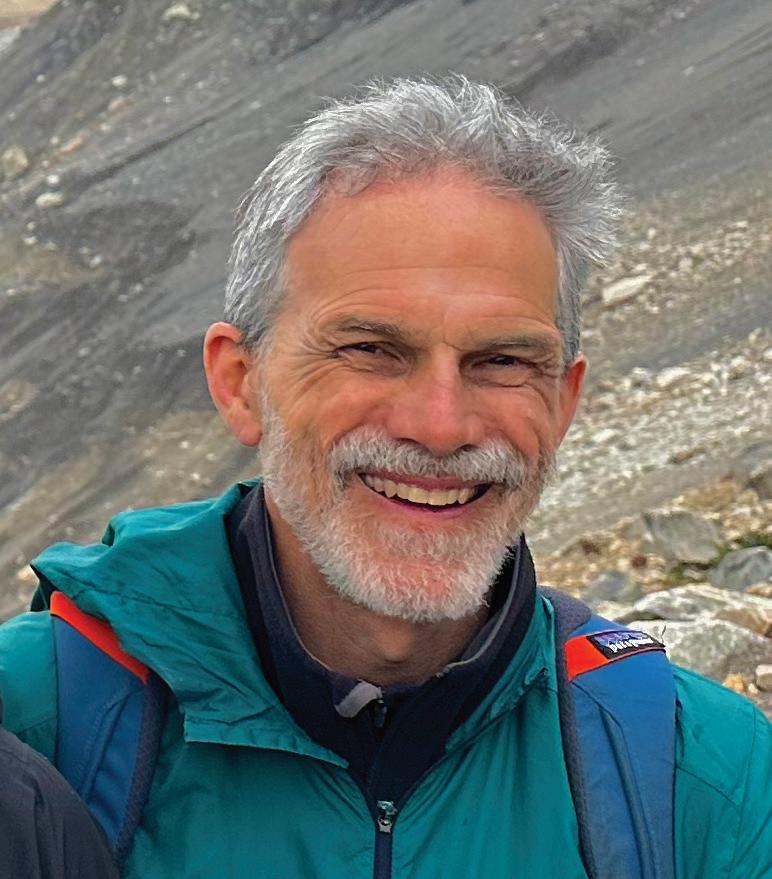
SEAS Professor Michael Moore (PhD ’86) died unexpectedly in May 2025. His death is a profound loss to those who knew him as a dedicated faculty member, an inspiring educator, a thoughtful mentor and a steadfast leader within SEAS and U-M. He embodied a life of service, having spent more than 40 years as a member of the SEAS community in various roles and in advancing the understanding of environmental and natural resource economics. He was known not only for his intellect and scholarly contributions, but also for his kindness and warmth, thoughtful guidance, and genuine care for students and colleagues alike, which is evident in these remembrances from the SEAS community.
“Michael was the best mentor one could ask for, a great friend and a kind human. He is one of the great influences in my life. I will remember his unceasing willingness to help me in my career; our long and lingering basketball conversations; his appreciation of children and fatherhood; and the warmth of his smile. His memory will be a blessing for so many.”
— Sam Stolper, SEAS Associate Professor
“Michael Moore represented everything that is good and honorable in academia. As a firstgeneration graduate student, the PhD journey has often felt overwhelming for me. But in Michael, I found more than a mentor
who shared my academic interests—
I found someone who led with kindness, strength, compassion and humility. Despite his deep knowledge and remarkable intellect, he had a rare ability to meet people where they were. He made space for those of us still finding our way, and he never stopped inspiring me.
I mourn the loss of an extraordinary human being. His absence will be deeply felt in the rest of my journey, but I carry his guidance with me. I can only hope that my work will reflect—and honor—the lasting influence he had on my life.”
—Vianey
Rueda,
SEAS PhD candidate
“Professor Moore was one of my favorite professors in grad school.
His teaching helped me become more confident in myself, his class helped me meet many of my most treasured friends, and his obvious and genuine care for students always made me feel welcome at SEAS. I will miss him dearly in my final year in the program and am grateful for the opportunity to have met him.”
—Maithilee Kanthi (MS/MBA ’26)
“Everyone who knew Michael will remember his warm smile. Three years ago, when I chose Michael as my SEAS advisor, one of the key reasons was I liked his smile in his photo. At that time, I was at a turning point in my life, and I knew Michael would be the right person to guide me. Our first meeting in August 2022 confirmed
“
He was unlike any teacher or professor I’d ever had and left an indelible impression.”
the feeling. We sat outside under the shade of a tree. The air was cool, and most students were leaving the campus, making it pleasantly quiet. I scheduled a 30-minute chat, but we ended up talking for an hour. This was the start of our mentorship and how he helped me grow. Michael always listened patiently to my concerns, challenges and struggles whether they were academic or personal. He not only listened but also helped me find ways to address my problems or connected me with resources that could help. After I graduated in May 2024, he continued to check in and offer advice as I stayed in Ann Arbor and navigated the job search. In December, I found a full-time job in D.C. I arranged one last meeting with Michael on December 20 to share the good news. We talked about my new job, his upcoming online course and his retirement plans. It was a warm, hopeful conversation.”
—Yuping Wei (MS ’24)
“As a SEAS alum, I feel truly privileged to have known Professor Moore both as a teacher and later as a colleague. In both roles, he exemplified kindness, patience, generosity and unwavering dedication to his work, his students and his peers. During my time as a SEAS student, I experienced the loss of my father. I will never forget how compassionate and supportive he was during that time. His encouragement and understanding meant more than I can express, and I remain deeply grateful for his guidance and care. When I returned to SEAS as a staff
member, I would often see him in the hallways—always the same bright, thoughtful and gracious person I had known as a professor. He was, without a doubt, one of the kindest, humblest, most dedicated professors I’ve had the privilege of knowing. Thank you for everything, Professor Moore!”
—Michael Harrington (BS ’19, MS ’22), SEAS administrative/ project coordinator
“Michael was a special person: caring, thoughtful, quick to smile and in love with life. Those endearing qualities made him a foundation of SEAS in all its many parts. He touched so many, as few do. I will miss him pausing his bike rides to SEAS to walk and talk with me as l trudged along. He would light my morning with his smile and strike up an engaging conversation as he walked his bike with me. He was always interested in what you had to say. Few people are so special. He will be sorely missed.”
—Allen Burton, SEAS Professor
“I saw Michael recently while out with my son. He introduced himself to Lucas as a ‘very good friend of your mother.’ He was kind and lovely, and that’s what he was—a great friend and the kindest and loveliest of men. I will miss him dearly.”
—Maria Carmen Lemos, SEAS Professor Emerita
“Michael was one of the smiliest professors I have ever had! Seeing him always cheered me up, and he balanced his immense knowledge and experience with a deep and genuine
care for students. I still cannot believe he would regularly buy cap-and-trade emissions permits to drive up the cost of carbon. I always laugh when I think about him doing that, but it really showed that he was dedicated to environmental action both within and beyond academia. Although we missed Steve Yaffee at graduation, I now feel very touched that Michael was the one to read out the names of the Environmental Policy and Planning graduates this year.”
—Bridget Corwin (MS/MPP ’25)
Read Moore’s obituary on p. 38.
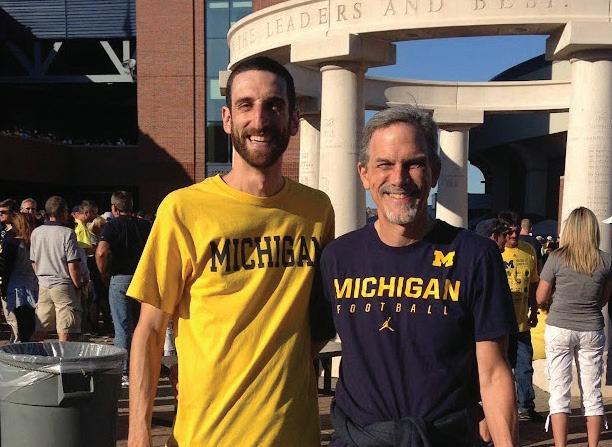
SAM STOLPER AND MICHAEL MOORE
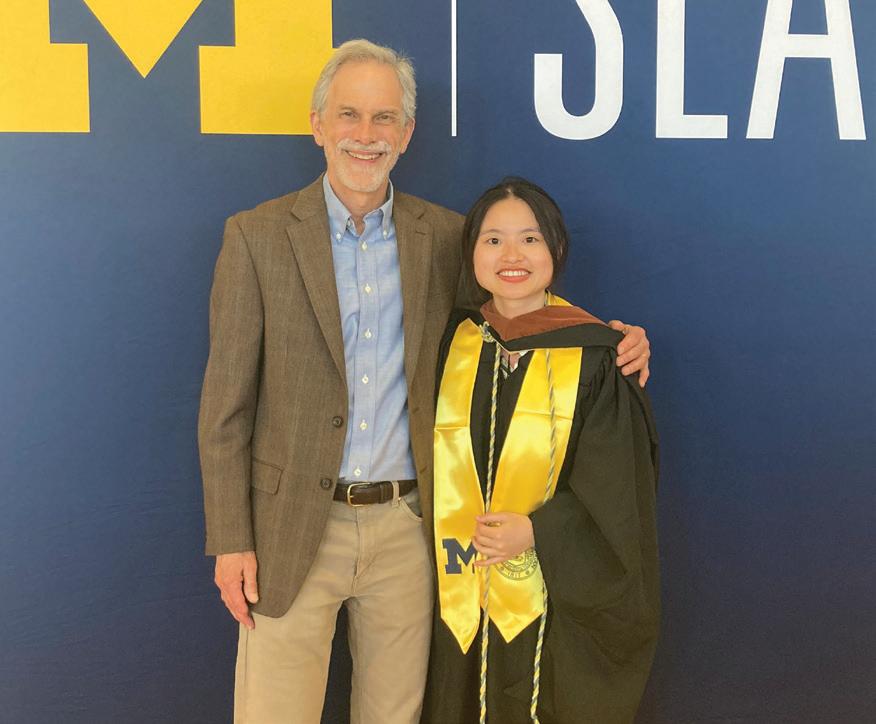
MICHAEL MOORE AND YUPING WEI
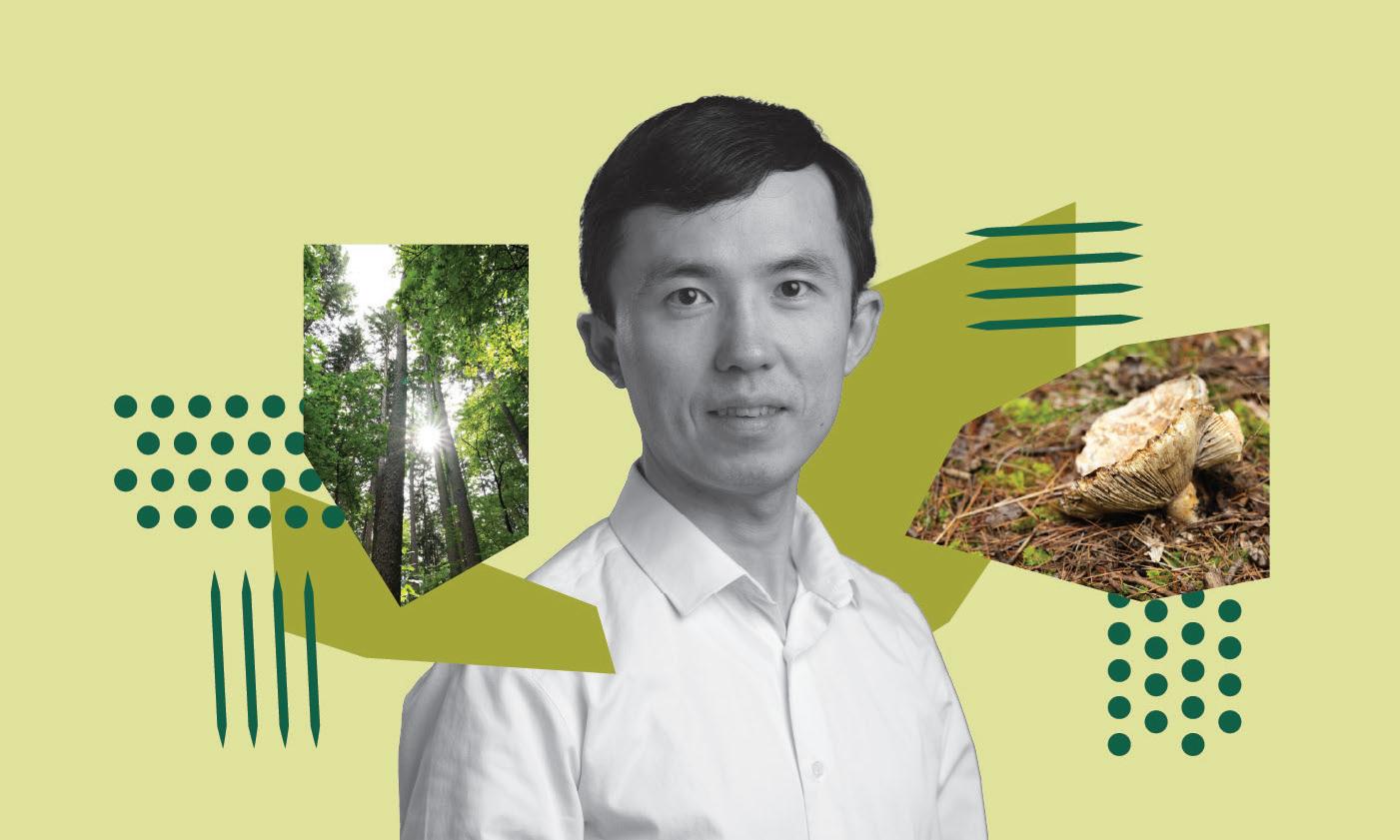
10 Questions: Kai Zhu
SEAS Associate Professor Kai Zhu’s research brings together his expertise in ecology, statistics and computer science to advance the understanding of how plants and soil respond to environmental changes. One of his studies shows that because of climate change, trees may be relocating to soils that don’t have the fungal life to support them. “Imagine trees and fungi as long-time dance partners who’ve been in step with each other, each providing what the other needs. But now, because of climate change, the music’s changing and their usual dance floor is disappearing,” explains Zhu. “Some trees can’t meet their fungal partners at their new address. This could prevent new forests from growing where they are needed.”
Another study, featured in Research Highlights on p. 31, finds that seasonal allergies caused by fungal spores now start three weeks earlier under climate change, which means allergy sufferers may need to start their remedies for itchy eyes and sneezes sooner.
How did you become interested in your field?
Since I was a child, I’ve enjoyed traveling and was always fascinated by the diversity I saw in different
environments. Over time, I became interested in understanding the patterns I noticed and how broader environmental issues shape our world. This curiosity, along with a desire to tackle real-world problems, drew me to my field.
What was the last concert or performance you attended?
University Symphony Orchestra.
What do you love most about your work?
What I enjoy most is the excitement of discovery and the collaborative spirit of my field. Being able to ask big questions, work with talented colleagues and students, and contribute answers that have realworld impact is extremely fulfilling.
What’s the one item you can’t live without?
Given my background in data science, it’s likely I rely heavily on my computer—it’s essential for research, communication and collaboration.
Do you have a favorite podcast or TV show?
Planet Earth. I love watching nature documentaries and seeing the
incredible diversity and complexity of life on our planet.
What were you like as a child?
I was very curious and loved exploring the world around me. I enjoyed traveling, learning new things and observing the diversity in different places, which laid the groundwork for my later interests.
What’s a surprising thing on your bucket list?
Embark on a journey through the Amazon rainforest and experience its incredible biodiversity firsthand. I think it would be an unforgettable experience to see such a unique ecosystem up close and learn directly from local scientists and guides.
Do you have a secret talent?
Given my early exposure to computers, I may have a knack for quickly picking up new technologies or analytical tools, though this isn’t explicitly stated.
What advice would you give future scientists?
Stay curious and open-minded, and don’t be afraid to ask big questions. Collaborate with others and learn as much as you can from your peers— science is a team effort.
If you had 25 hours in a day, how would you spend the extra time?
I’d spend the extra hour exploring maps—whether it’s planning future travels, discovering interesting geographic features, or just getting lost in the details of different places around the world. There’s always something new to learn by looking at how places are connected.
What's Your Sustainability IQ?
Story by Shelie Miller
The Center for Sustainable Systems at SEAS crunches the numbers to determine environmental actions with the greatest impact. Since 2001, our annually updated collection of Sustainability Factsheets curates information from reputable sources across 34 topical areas. Our recently launched trivia game brings these facts to life, providing an engaging format to translate our research and combat common misperceptions about sustainability action. Want to know what your sustainability IQ is? Take our quiz to find out. For more, visit our website at css.umich.edu/trivia.
1. In a typical U.S. household, what consumes the most energy?
A. Heating
B. Cooling C. Lighting D. Hot water
2. For the average American, what action will result in the greatest improvement in climate emissions?
A. Eliminating one 25-mile round trip in a car
B. Giving up disposable plastic water bottles for an entire year
3. Coffee aisles offer dozens of choices. What contributes the most to the environmental impact of coffee?
A. Packaging
B. Transportation from its country of origin
C. Growing and roasting coffee beans
4. Reducing air travel by one round-trip from LAX to JFK would improve your carbon footprint by 1.4 metric tons of CO₂. What is that about the same as?
A. 30,000 burgers
B. 3,000 burgers C. 300 burgers D. 30 burgers
5. The global average carbon footprint is about 4.5 tonnes of CO₂ per year. What is the carbon footprint of the average American?
A. 4.5 tonnes of CO2 per year
B. 8 tonnes of CO2 per year
C. 12 tonnes of CO2 per year D. 15 tonnes of CO2 per year
Our carbon footprints have decreased in the past few decades, largely due to a shift away from coal in the electricity sector. At 14-15 tonnes per year, our carbon footprints are still triple the global average—including France, which averages 4.1 tonnes of CO2 per person per year.
5. 15 tonnes of CO₂ per year
4. 300 burgers Flying is one of the most environmentally intensive activities, equivalent to eating just under one burger per day for a year.
Whether it is coffee beans or green beans, growing food is more environmentally intensive than either its packaging or transportation.
3. Growing and roasting beans
Fifty miles spent in a car is the greenhouse gas emissions’ equivalent of more than two years’ worth of plastic bottles. Reducing our driving emissions is one of the most environmentally impactful things we can do.
2. Eliminating the car trip
In chilly Michigan, 60% of our energy use goes to heating. Hot water comes in second, at 18% of energy use nationally, followed by cooling at 10%. Lighting is typically 3% of home energy budgets.
In a typical U.S. home, heating represents 43% of energy consumption.
1. Heating
Answers
Student Research
in Action
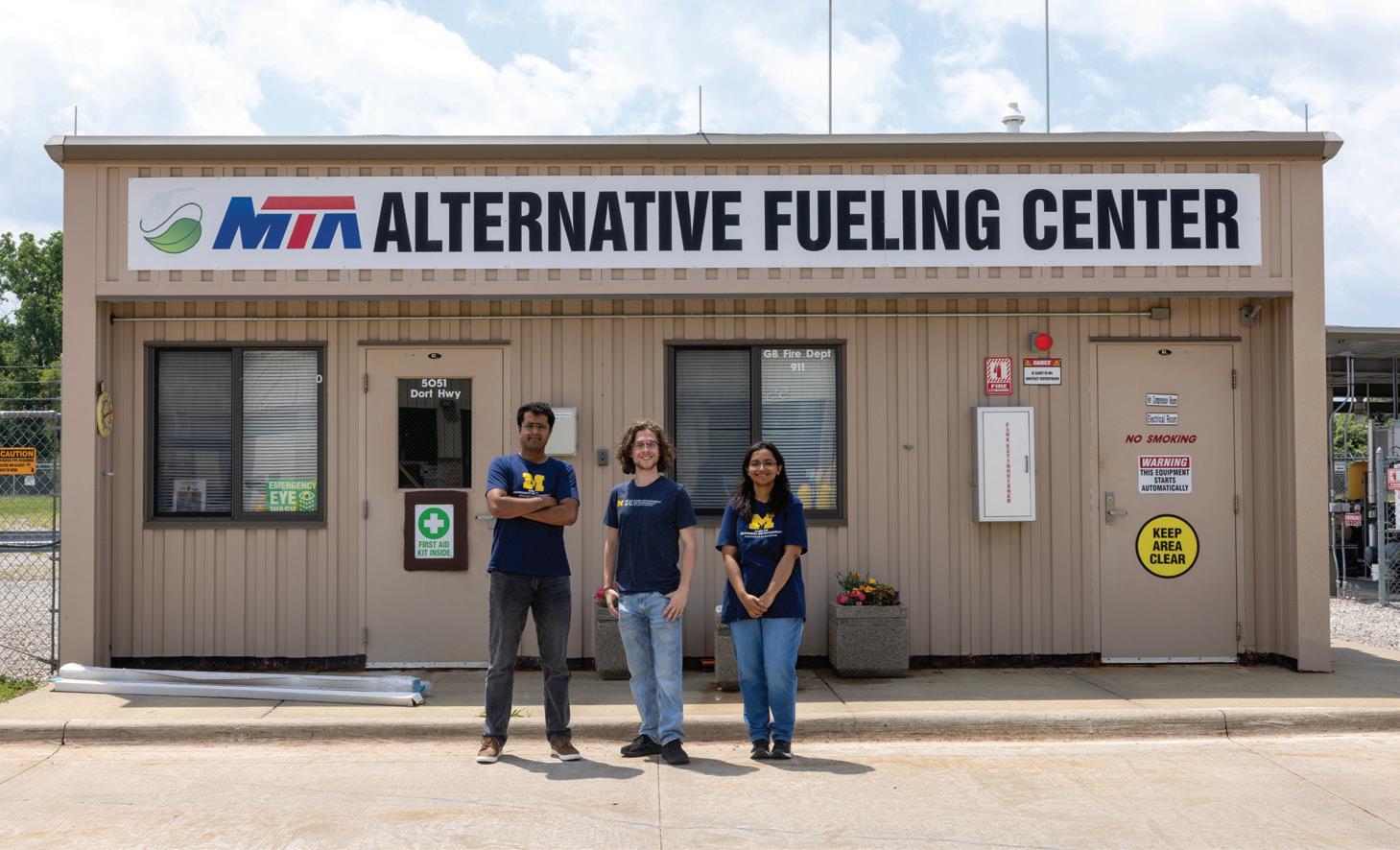
Green Hydrogen
The Hydrogen Ecosystem Planning capstone team visited the Mass Transportation Authority in Flint, Michigan, to learn about the costs and operations associated with using green hydrogen as an energy source. Their project aims to support the state of Michigan’s greenhouse gas emission reduction goals by examining how hydrogen can help decarbonize transportation in Southeast Michigan, particularly with heavy-duty return-to-base industrial trucks. Their research will span the full hydrogen ecosystem, from the production and storage of green hydrogen to the distribution and implementation of the energy source through fuel cell electric vehicles, which offer a cleaner alternative to trucks that have significant emissions.
From master's projects to internships, here are a few examples of how SEAS students made an impact over the summer.
Clothing Circularity
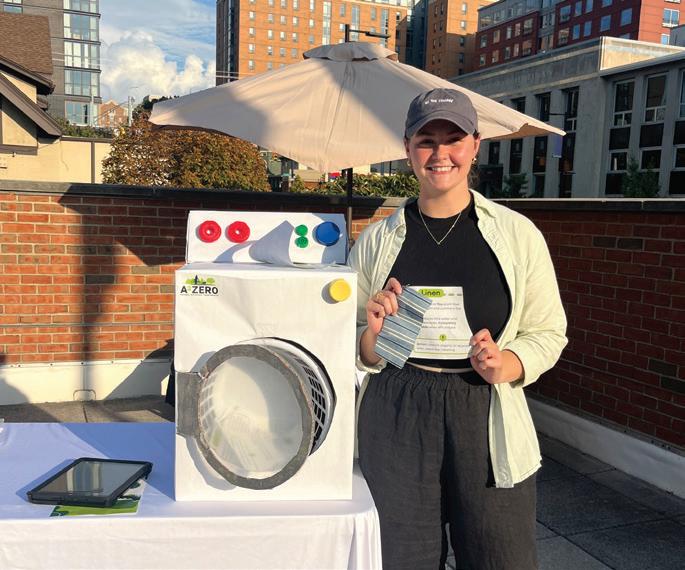
Third-year SEAS and Urban and Regional Planning student Bridget Damon completed a fellowship program with the reDirect Foundation. She acted as a consultant for the City of Ann Arbor’s Office of Sustainability and Innovations to educate community members about the circularity of clothing, textile pollution and how to reduce individual textile waste. She helped organize several clothing swaps and developed educational tools that were showcased during the events. Last summer, the city’s clothing swaps diverted over 500 pounds of clothing from landfills and waterways.
Beaver-Human Conflicts
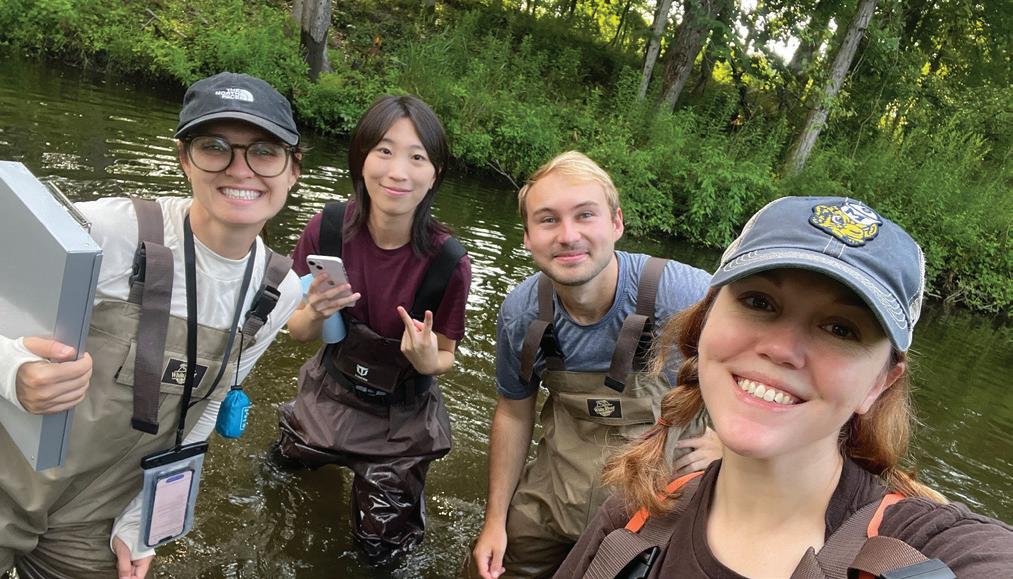
Humans and other species benefit from the many ecosystem services beavers and their wetlands provide, including increases in biodiversity, water quality, carbon sequestration, and fire and drought resistance. Historically extirpated from Lower Michigan, beavers are now returning and bringing their many ecological benefits with them. Despite these benefits, the combination of beaver dams and modern human infrastructure can cause conflict.
A SEAS capstone team seeks to address these conflicts by providing science-based coexistence strategies. Working in Ann Arbor and Washtenaw County, the team used the Beaver Restoration Assessment Tool to predict where beavers are likely to colonize, performed a policy analysis to assess current beaver regulations, and engaged with local stewards, land managers and municipalities to understand current challenges and provide coexistence strategies.



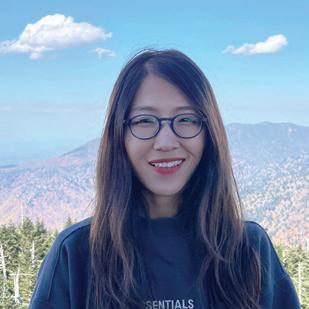
People can farm more food from the seas while shrinking mariculture’s negative impacts on biodiversity, according to a study led by Deqiang Ma , a postdoctoral researcher at SEAS. Mariculture, which is the branch of aquaculture that farms saltwater seafood, accounted for about onefi fth of the food farmed from fi sheries in 2020 and has been growing rapidly to meet the increasing demand for seafood. SEAS Associate Professor Neil Carter is the senior study author.
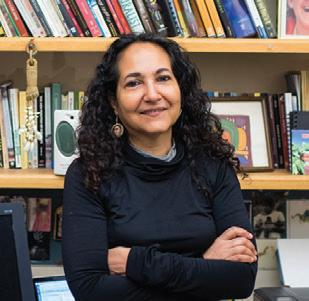
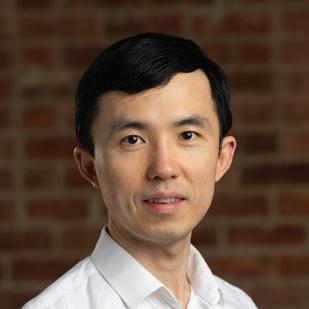
As many beachgoers know, it’s not uncommon for E. coli to temporarily shut down lakes and other recreational waters across the U.S. Research led by Xiaofeng Liu, a postdoctoral researcher at SEAS and a Schmidt AI in Science Fellow, shows that communities of color in Texas face pronounced risks of E. coli exposure in nearby waters following storms that dump abnormally high amounts of rain.
SEAS Professor Ivette Perfecto and U-M Professor of Ecology and Evolutionary Biology John Vandermeer say that, to manage agricultural practices with fewer or no pesticides, they will need to understand how ecological systems work on agricultural lands. Using two ecological theories, the researchers have described a complex web of interactions among three ant species, as well as a recently introduced fly that preys on one of the ant species. Th is work, conducted on a coffee farm in Puerto Rico, shows that the interaction between the ants and the predator fly creates chaotic patterns, demonstrating how natural populations are subjected to fluctuations depending on the interactions of organisms within a system. Understanding that any one of the four species could be dominant at any given point in time may help farmers utilize ants to manage pests on their farms.

Research Highlights
temperatures has increased significantly. To reveal the trends, Hazem Abdelhady, a postdoctoral research fellow at SEAS, and his colleagues developed a state-of-the-art approach that allowed them to study heat waves and cold spells dating back to 1940.

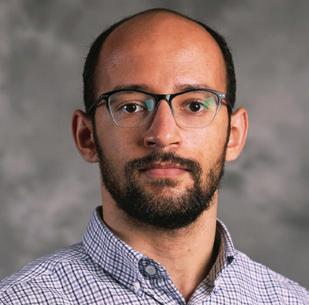
The surface water temperature of the Great Lakes plays an important role in the weather, which is an obvious concern for residents, travelers and shipping companies in the region. But the uptick in extreme temperature events could also disrupt ecosystems and economies supported by the lakes in more subtle ways. The study’s co-authors include SEAS Associate Research Scientist Ayumi Fujisaki-Manome, Assistant Research Scientist David Cannon of the Cooperative Institute for Great Lakes Research and SEAS Associate Professor Drew Gronewold
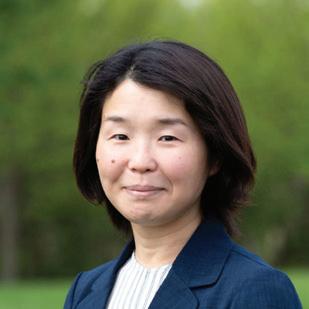
SEAS research investigated the costs and emissions associated with the different options for drying clothing in the U.S. The researchers anticipated a stark contrast between dryers and line drying; however, the study yielded some striking results, underscoring the importance of behavioral changes in conjunction with technical solutions. The study’s lead author is Zhu Zhu (MS ’24), who performed the work as a SEAS master’s student under the guidance of SEAS Professor Shelie Miller.
Heat waves and cold spells are part of life on the Great Lakes, but research shows that the appearance of extreme
Due to climate change, seasonal allergies caused by fungal spores now start three weeks earlier. The study, led by Ruoyu Wu (MS ’24) while she was pursuing a master’s degree at SEAS, found that, on average, spore allergy season began 22 days earlier in 2022 than it had in 2003. Alongside colleagues, including study senior author Kai Zhu , SEAS associate professor, Wu performed the fi rst largescale systematic study of outdoor fungal spore abundance across the continental U.S. between 2003 and 2022.
XIAOFENG LIU
IVETTE PERFECTO
KAI ZHU
HAZEM ABDELHADY
AYUMI FUJISAKI-MANOME
Class Notes
1980s
Barry Lonik (MS ’87) has been at the forefront of Washtenaw County, Michigan’s land preservation efforts for over 30 years and recently closed his 100th land preservation project. He started what is now called Legacy Land Conservancy (originally the Potawatomi Community Land Trust) and led it for 10 years, along with the charge to promote public funding for the purchase of land as natural area preserves and conservation easements on farmland. He consults on conservation projects through his firm, Treemore Ecology and Land Services.
Robert H. Lucacher (MS ’82) retired after serving for 40 years in corporate environmental, safety and operations management. He now researches and publishes on the complexities of corporate regulatory management.
Carolyn Poissant (BS ’81, MLA ’87) writes: “After serving as the parks, trails and open space development manager for the City of Bozeman, I headed to the East Coast to work as a community development planner for the City of Newport News, with many visits to beaches with my yellow lab, Daisy. At the ripe age of 64, I headed back West to take on my current position as senior planner with the beautiful City of Salida, Colorado, in the heart
of the Rocky Mountains and Greater Arkansas Headwaters Recreation Area. I hope to stay put and retire there. SEAS alumni: Come visit and say ‘hi!’”
Karen Rollet-Crocker (MLA ’83) retired as a professor of landscape architecture from the University of Arkansas in 2006. She joined the university in 1985 after working as the park planner for Washtenaw County. She is the recipient of two American Society of Landscape Architecture Merit Awards for the Civil War historic gardens at the Colonel Samuel W. Peel House and the planning and urban design of the Compton-Putnam property in Bentonville, Arkansas.
Dwisuryo Indroyono Soesilo (MS ’81), a geological engineer, politician and diplomat from West Java, was appointed the Ambassador of Indonesia to the United States in August 2025.
1990s
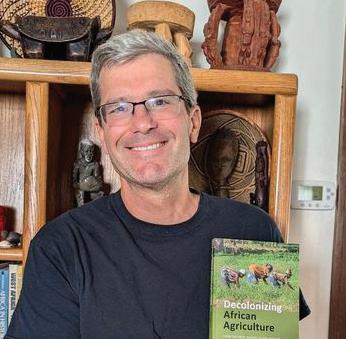
William G. Moseley (MS ’93) published “Decolonizing African Agriculture: Food, Security, Agroecology and the Need for Radical Transformation” (Columbia University Press, 2024), which was partly inspired by his classes with SEAS Professor Ivette Perfecto. It is available as an open-access book. He is the DeWitt Wallace Professor of
Geography at Macalester College in St. Paul, Minnesota.
Lee Skabelund (MLA ’90) and Tao Zhang (MS/MLA ’08) were elected to the 2025 Class of Fellows by the American Society of Landscape Architects, one of the profession’s highest honors. Skabelund is an associate professor in landscape architecture/regional and community planning at Kansas State University. Zhang is a principal at Sasaki, an integrated design practice based in Boston.
2000s
Marc Gaden (BA ’91, PhD ’07) is the executive secretary of the Great Lakes Fishery Commission, a Canada-U.S. organization located in Ann Arbor that is charged with implementing the 1954 Convention on Great Lakes Fisheries. The convention is the treaty under which the two nations protect Great Lakes fish stocks of common concern, direct research dollars and control the invasive sea lamprey. He also is an adjunct assistant professor at SEAS.
Stephen Higgs (MS/JD ’05) is the recipient of the 2024 President’s Sustainability Award from the Oregon State Bar “for his efforts at bringing generations of Oregonians together to ensure a brighter future for all.” Since 2013, he has been the executive director of Senior Advocates for Generational Equity.
Moseley
Lee and Mueller
Gaden
Cawley
Theodore Lawrence (MS ’06, PhD ’15) received the 2025 International Association for Great Lakes Research Large Lake Champion Award for his contributions to the science, governance and international collaboration surrounding large lakes, particularly the African Great Lakes. He is the executive director of the African Center for Aquatic Research and Education.
Sharon Shattuck (BS ’05), a documentary fi lmmaker, won a 2024 American Association for the Advancement of Science Kavli Science Journalism Award for her short fi lm, “Decoding Ancestral Knowledge,” about Hawaiian microbiologist Kiana Frank, who investigates ancient Hawaiian stories with modern scientific methods.
2010s
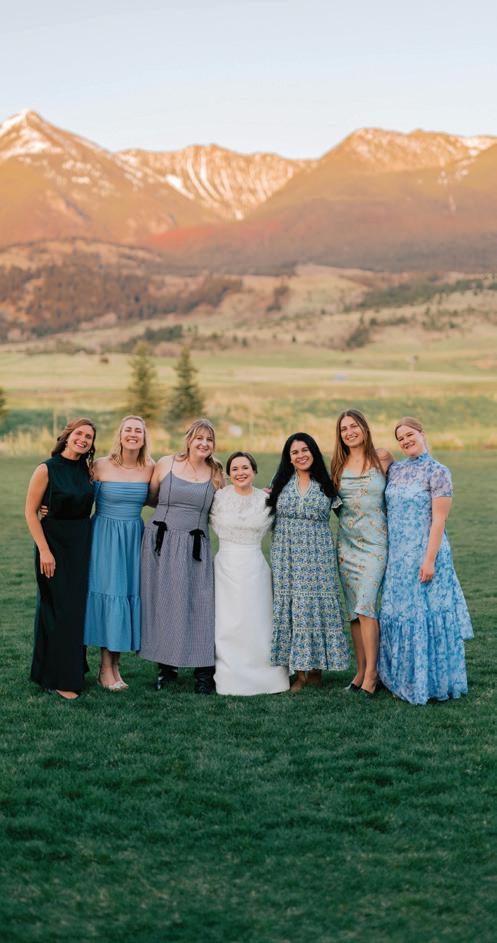
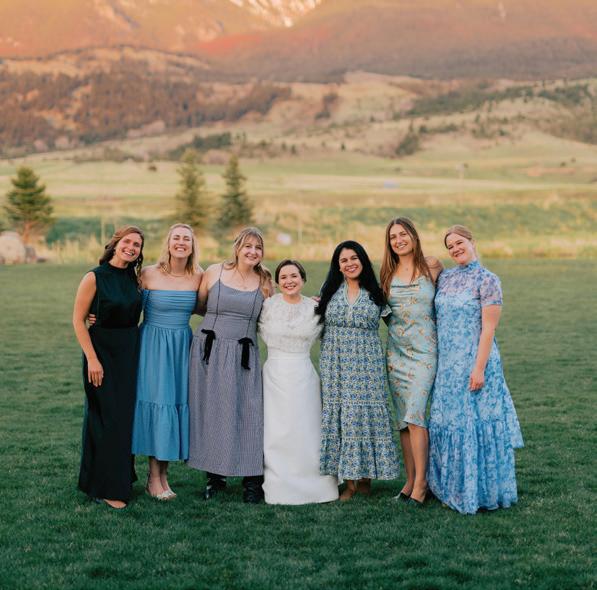
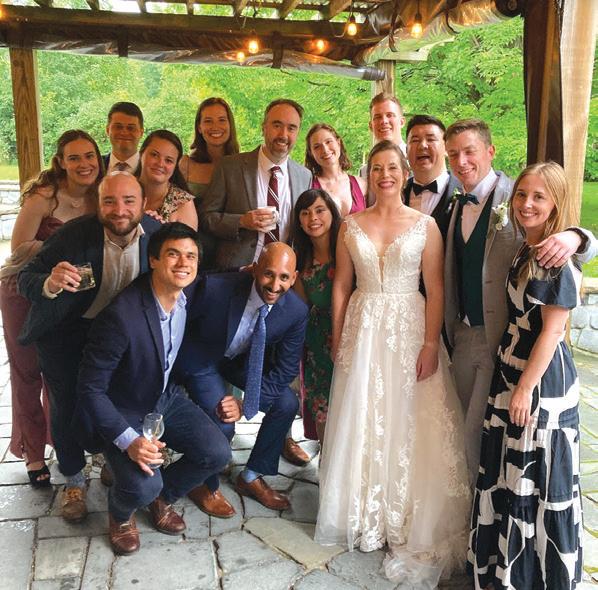
Sara Cawley (MS ’15) married Scott Rigney on May 3, 2025, in Paradise Valley, Montana, north of Yellowstone National Park. Kristiane Huber (MS ’15) and Becca Robinson (MS ’15) were part of the bridal party, while Dania Gutierrez (MS ’15) gave a reading during the ceremony. Also in attendance were Lexi Brewer (MS ’15), Meghan Hemken (MS ’15) and Ellen Spooner (MS ’16).
2020s
Matthew Aumeier (MS ’21) was named the 2025 Alumni of the Year by the SEAS Career Services office. He is an environmental compliance and systems innovation expert at Idaho National Laboratory.
María Isabel Dabrowski (MS ’22) was awarded a spot in the American Bird Conservancy’s Seabirds and Stories of Multi-Species Kinship Fellowship Cohort. Her longform story will focus on the work she did at SEAS, which centered Ecuadorian artisanal fi shers’ perspectives on ocean conservation. She is the senior outreach associate at Rare’s Center for Behavior and the Environment.
Ben R. Lee (PhD ’20) married Elissa Mueller (MS ’18) on July 19, 2025, on Old Mission Peninsula just north of Traverse City, Michigan. The couple was married under white pines overlooking Lake Michigan during a break between storms. In attendance were Kyle Welch (MS/MEng ’15) and Class of 2016 graduates David Carruthers, Ben Kunstman, Julian Plough, Becky Spellissy, Shreyas Vangala and Allegra Wrocklage.

(MS
’10) Gillian Gainsley
As chief of staff at the Department of Environment, Great Lakes and Energy (EGLE), Gillian Gainsley (MS ’10) says that specializing in Behavior, Education and Communication prepared her for a range of communications-based roles, including over a decade of combined experience at the Ypsilanti District Library and Detroit PBS.
“I have my undergrad in political science and my grad is in environmental science from SEAS, so I joke that this is the fi rst time in my life that I’ve used both of those things at the same time,” says Gainsley.
With more than 1,500 scientists, engineers, geologists, toxicologists, inspectors, technicians, biologists and staff across the state, EGLE’s focus on safeguarding the environment while supporting economic growth and development in Michigan means Gainsley is juggling communications about a broad range of issues.
“Everything from treatment for harmful algal blooms, lead and copper in water infrastructure, brownfield redevelopment, toxic cleanups, and energy and climate issues,” says Gainsley. “There’s just a huge gamut of issues that we deal with.”
Gainsley says that having a broad understanding of the scientific principles that underlie all of these issues has served her well as she has transitioned into this role, which she has held for just over a year.
“What I learned at SEAS is incredibly valuable and started me on the circuitous career path that led to where I am today,” says Gainsley. “We need to think bigger when we talk about what a climate or environment job is. We’re moving into a space where many jobs will overlap with both, making a SEAS degree beneficial in a lot of different places.”
—Nayiri Mullinix
’05)
Ariana Rickard (MS

Ariana Rickard (MS ’05) loves “being the voice for nature.” As the policy director of Sonoma Land Trust, she interacts with state and federal legislators and regional coalitions, advocating for programs that fund Sonoma Land Trust’s land acquisition, restoration and conservation efforts.
Sonoma County, encompassing the northern part of the San Francisco Bay area, is one of the most beautiful and biologically diverse counties in America, says Rickard. She fi nds it gratifying when her advocacy work yields tangible results. On a recent Friday, for instance, Rickard spoke with a state assembly member about allocating funds from California’s Prop 4 climate bond, which passed in November 2024, for coastal resilience and biodiversity conservation initiatives.
“Since 1976, Sonoma Land Trust has conserved 61,000 acres of land, which gives people more access to public spaces,” says Rickard. “We are conserving the wetlands that are going to provide protection from sea level rise and storm surges.”
Rickard didn’t come to SEAS with a policy focus. Instead, she wanted to become a scientist and save endangered species. A stint in the Peace Corps in Ecuador after graduation, however, taught her that she was more interested in engaging with people than she was frogs and fieldwork. Th at engagement extends to her volunteer work as a Bay Area chapter leader of Environmental Professionals of Color, an affi nity group that promotes networking and professional development for people of color in the environmental field. When Rickard cofounded the chapter in 2020, she says it was a full-circle moment that took her back to her SEAS orientation, when she attended a similar affi nity group meeting and met her future husband, Pierre Bull (MS ’05). —Lori Atherton

’11)
Christian Runge (MLA

Christian Runge’s (MLA ’11) passion for nature is rooted in his childhood growing up with Maryland’s Gunpowder State Park in his backyard. Spending those years in nature has driven him to “provide that opportunity for all kids to have that access in some way.”
Runge has spent his career making the natural world accessible to children—especially those from underserved urban areas—through innovative ecological and experiential design. His work encompasses restoration projects at national parks as well as designing inclusive and nature-inspired playgrounds in urban parks and schools.
As a landscape architect with Mithun, an integrated design fi rm based in Seattle, he was lead designer for the Louisiana Children’s Museum, which provides children and families with a range of immersive experiences grounded in local ecology and culture. Nestled among mature live oak trees, visitors can experience indoor and outdoor exhibits that include an edible garden, a small splash pad, and diverse types of birds, turtles and waterfowl that nest in restored wetlands. Providing that fi rst exposure to nature “gives kids an opportunity to experience food growing, wetlands, oak groves and water systems in new ways. Th at’s what’s unique about the landscape aspect of the project,” says Runge.
He’s been a witness to the impacts of his work. He recalls one instance that felt particularly special where a parent and child were holding hands, walking along a path quietly, just enjoying being out in nature. “To have that opportunity to unwind and connect differently within the natural environment really resonates,” he says.
His children, ages 3 and 5, have been his “research subjects,” visiting some of the local outdoor spaces he’s designed. “It’s really fun to see them interact and see how they experience it.” —Julie Halpert
(MS '24)
Taylor Mitchell
Growing up in Detroit, Taylor Mitchell’s (MS ’24) community was directly impacted by poor air and water quality. Th is inspired Mitchell to pursue solutions in her career, which led to studying Sustainable Systems at SEAS.
“The many concentrations available at SEAS helped me make my decision,” says Mitchell. “I knew coming home and becoming a Wolverine would refi ne my skills, and learning from the best professors and researchers in the field was a huge plus.”
Mitchell is the sustainability manager at the Detroit Wayne County Port Authority, where she leads Port Detroit’s Decarbonization and Air Quality Improvement Plan, works on the Authority’s brownfield cleanup projects, and aids in managing the $24.9 million awarded from the U.S. Environmental Protection Agency’s Clean Ports Program. Mitchell supports efforts to decarbonize the movement of goods in Michigan through purchases of electric machinery and alternative fuel research. Th is work, she believes, contributes to national efforts transitioning the transportation sector toward sustainable practices.
As a government employee, Mitchell faces obstacles in her sustainability work, including funding availability, political impacts and a lack of resources, but she does have a platform to implement the visionary creativity and passion she developed as a SEAS student and Detroit resident.
“Sustainability is important for every job, every industry and every generation,” says Mitchell. “A sustainable future should have clean air and water for every community; affordable, sustainable options for energy, materials and technology; and preserve this great and beautiful planet Earth.” —Margaret Fornes
(BA
’18, JD '21)
Ameya Gehi
As a staff attorney at the Conservation Law Foundation (CLF), Ameya Gehi (BA ’18, JD ’21) works to “ensure that corporate polluters are complying with laws that protect public health and the environment.”
Among her cases are those involving violations of the Clean Water Act, Clean Air Act and the Resource Conservation and Recovery Act, which governs the disposal of solid and hazardous waste.
“My day-to-day work varies, but it always centers around different stages of litigation,” says Gehi, who is based in CLF’s Boston office. “Th at can look like fact research, talking to witnesses and affected community members, drafting pleadings and briefs, and lots of legal research and writing.”
Gehi learned about environmental protection laws in high school, which sparked an interest in becoming a lawyer and advocating for the environment through the legal system. Gehi earned her undergraduate degree from PitE and her JD from Michigan Law School, completing both programs back to back because she was “impatient to get into the advocacy world.”
Gehi says her PitE education, with its strong environmental science foundation, is something she draws upon every day. “Environmental law can get very technical very fast, so it’s helpful to have taken classes in the basics of environmental science and have translatable skills like knowing how to read a peer-reviewed article.”
Though environmental rollbacks have made her CLF work more challenging, Gehi says she is grateful to be in this space. “I love that I get to help polluted communities by making defendants invest in cleanup or mitigation while simultaneously using litigation to force compliance to prevent future harm.” —Lori Atherton

(MS '22)

Kyle Barnes


With a background in marine ecology and an interest in learning about freshwater environments, Kyle Barnes (MS ’22) was initially going to pursue only one specialization in Ecosystem Science and Management at SEAS. He says it didn’t take long for him to realize he’d need to tack on Geospatial Data Sciences as well.
“So much data exists and is readily available, and it’s only becoming more available, so I really felt strongly pulled towards geographic information systems and geospatial data management analysis,” says Barnes, “and this is what led me to work on National Oceanic and Atmospheric Administration (NOAA) projects after graduating, where I got to see topics from both specializations intersect.”
Barnes is a geospatial analyst at Dewberry, one of the top-five engineering and consulting fi rms, on their research and development technology team. He leads the development of feature mapping and automation tools, which includes creating robust classification workflows for laser-derived elevation data and wetlands for the U.S. Geological Survey and cutting-edge AI land cover mapping for NOAA.
“My experience at SEAS was transformational, to give it one word. I don’t think that I would have ever really considered this field, or really even known much about it, if I weren’t exposed to it at SEAS. My undergraduate experience was more field-based, traditional ecology, giving me a solid but pigeonholed background. The interdisciplinary lens at SEAS exposed me to the technical side but also led me to understand how to use that experience for revealing environmental injustices and so much more. I get to do a lot of cool research and development that I wouldn’t have the foundation for otherwise.” —Nayiri Mullinix





Genevieve LaMarr LeMee (MS/MURP ’22)

When Genevieve LaMarr LeMee (MS/MURP ’22) became the City of Philadelphia’s deputy director of environmental justice (EJ) in the Office of Sustainability, it was the city’s fi rst dedicated role for advancing EJ through education, policy and direct resources to marginalized communities.
Since she’s been in the role, LaMarr LeMee and her team have focused on two key initiatives. One is overseeing the Community Resilience and Environmental Justice Fund, which awards community grants to support EJ initiatives, such as those focused on air quality or climate resilience. The other is developing an EJ mapping tool and resource hub that highlights the inequitable distribution of environmental benefits and harms, and the strategies and organizations addressing them.
The work isn’t always easy, LaMarr LeMee admits, but the opportunity to be impactful is what keeps her going. “It can be very challenging to work in this field, but I think that’s why people stay in this field,” she says. “When you’re working in government, it touches everyone’s lives and there are big decisions being made. And the potential to inform big decisions and give residents a positive experience of government always feels good when you’re doing community engagement.”
LaMarr LeMee came to SEAS because of its strong EJ program. She also chose to pursue a dual degree in urban planning because she wanted to focus on urban EJ issues and knew that studying in a related field would provide her with a well-rounded education.
U-M’s proximity to Detroit was helpful, she says, because it exposed her to issues within a big city. For this reason, she recommends that students explore volunteer opportunities outside of Ann Arbor, and gain professional experience before coming to SEAS. —Lori Atherton









(MS '16, PhD '22)


Stefania Almazán-Casali




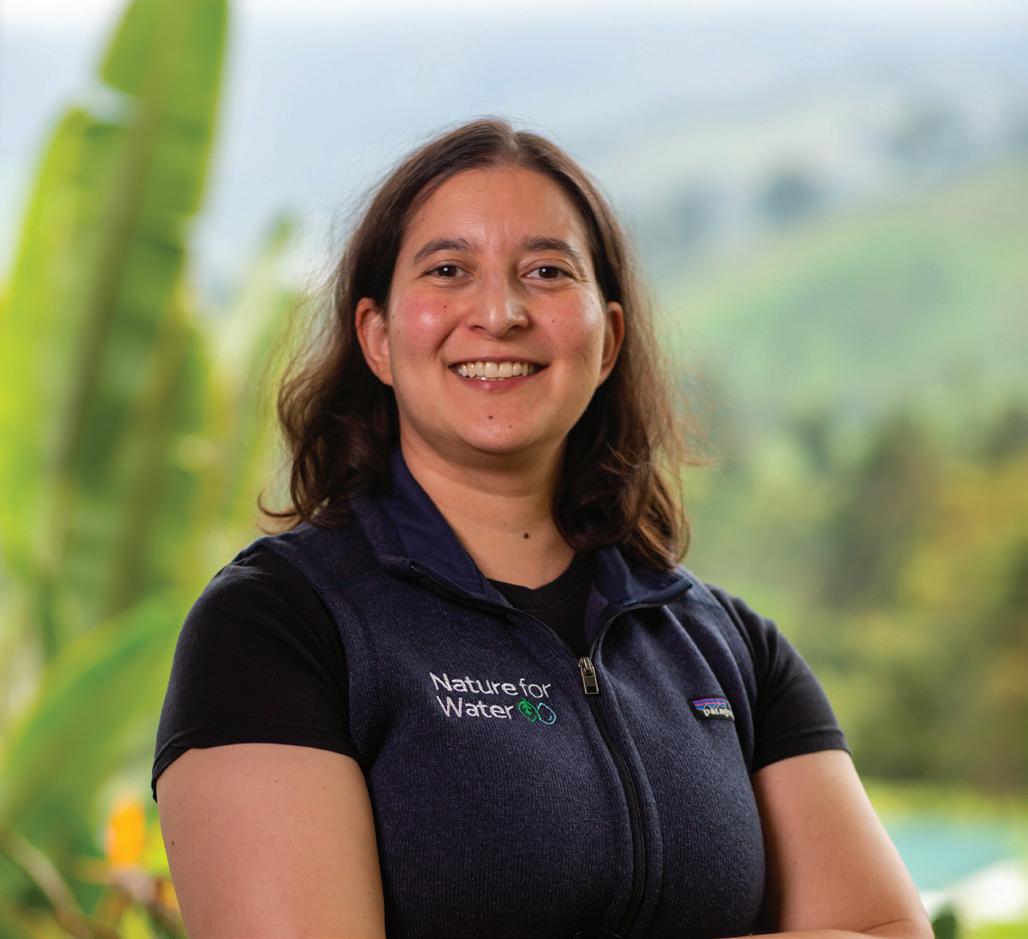
When Stefania Almazán-Casali (MS ’16, PhD ’22) joined SEAS, it was as a master’s student specializing in Environmental Policy and Planning, but soon after, she decided to pursue a PhD as well, so she could delve deep into understanding how to foster adaptive and resilient water systems in the face of climate change disruptions. Almazán-Casali says she didn’t have an interest in working in academia, so joining The Nature Conservancy’s global partnership Nature for Water came as a perfect fit.
“As the only social scientist on the team, I understand the science behind our approaches, but can also bring an understanding of the science of how you approach humans when making decisions on how to govern natural resources,” she says.
As an engagement consultant, Almazán-Casali and her team partner with local entities to implement nature-based solutions for water security and protecting watersheds—a cost-effective approach to restoring ecosystems that benefits both biodiversity and communities.
“We want to govern natural resources in the right way, because there is a right way of doing things, and there are human rights. Th is is the people’s environment, and it’s their lives, so it’s important to consider these complex relationships when making decisions.”
Almazán-Casali says her SEAS training has been essential to her success. “Ten out of 10, attending SEAS was the best decision of my life. From being involved in student organizations and working in Peru and Brazil, to the multidisciplinary training I received from experts across specializations—I understand how to view things from different perspectives, and in the work I do now, I know I am making a real difference.” —Nayiri Mullinix



'23)





Kaitlyn Sledge (MS


Kaitlyn Sledge (MS ’23) chose the Sustainability and Development specialization at SEAS because she wanted to support the needs of rural and under-resourced communities. Th rough her clean energy work, she gets to do that by “putting dollars in small local projects as opposed to funding already wellresourced organizations or utilities.”
Sledge manages multiple programs within the Clean Energy Fund at the Washington State Department of Commerce, including Electrification of Transportation Systems and Clean Energy Community Grants. Her job is to allocate state grant funds to local governments, tribal governments and nonprofits for electric vehicle charging and clean energy initiatives.
The projects vary, from providing funding for electric bus chargers in local school districts and helping SeattleTacoma International Airport electrify its fleet vehicles to installing community solar microgrids and public EV charging stations.
Although Sledge wishes she could fund every grant request she receives, given the great need for renewable energy, she says she is energized by seeing the direct impact of her work on the communities she can help.
“I enjoy traveling around Washington state, and it happens somewhat frequently that I am in a rural town that I had never been in before and I’m familiar with it because we gave them funding for an EV charger,” says Sledge. “Seeing the fi nished product in the place that it’s providing benefits to is probably the greatest reward.”
Sledge draws upon numerous SEAS classes in her work, but it’s Lecturer Justin Schott’s energy justice course that keeps her mindful of “what it means to reduce energy burdens and who we want to focus on in accessing grant dollars.” —Lori Atherton
In Memoriam
Michael R. Moore
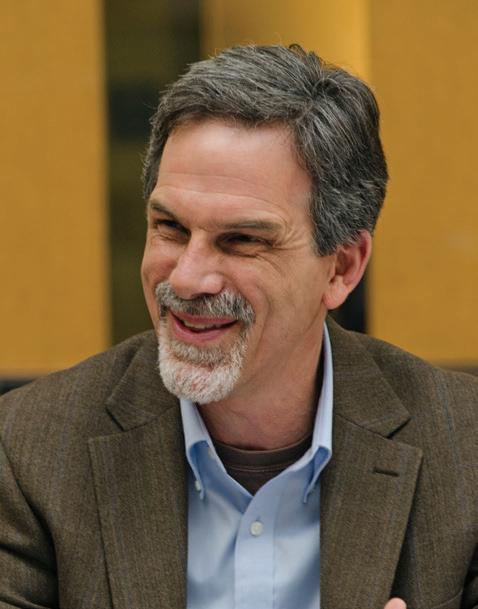
SEAS Professor Michael R. Moore (PhD ’86) died on May 11, 2025, in Ann Arbor at age 70. He suffered cardiac arrest while running, an activity he had loved his whole life. He received a BA in economics from the University of Colorado in 1977 and a PhD in natural resource economics from SEAS in 1986. He joined the school as a professor of environmental economics in 1996. His research in water resource economics, environmental markets, climate change and sustainable land use left a lasting mark on the field. He was known not only for his intellect and scholarly contributions, but also for his kindness and warmth, unforgettable smile, thoughtful guidance, and genuine care for students and colleagues alike.
Moore shared his love of sports and travel with his wife, family and friends. He embraced an active life, biking to work almost every day, playing basketball and golf, skiing, and running until the end of his life. He was a longtime U-M basketball season ticket holder and loved watching his sons play soccer. He enjoyed regular trips to Colorado to visit his family, and was at his happiest when exploring the great outdoors. His adventures took him to Nepal, Patagonia, Morocco, South Africa, Europe, the Galápagos Islands, U.S. national parks and other special places in between. He developed deep friendships in all corners of his life, including with his neighbors, colleagues, “Over the Hill” basketball group and golf partners. Moore is survived by his wife of 33 years, Ellen Brody, his sons Eric and Peter Brody-Moore, and other family members.
To honor his legacy, SEAS has established the Michael R. Moore Fellowship Fund for Environmental Economics and Policy. Those interested in making a gift may donate via the QR code. For reflections on Moore’s impact, read pp. 26-27.
James R. Hynson
James R. Hynson (MS ’74) died in May 2024 in Pittston, Maine. He was 73. After graduating from SEAS in 1974, he did field research with the U.S. Fish and Wildlife Service’s Urban Wildlife Program before returning to Maine in 1977 to work for the Center for Natural Areas. In 1984, he joined the Maine Department of Environmental Protection (DEP) under a six-month temporary appointment and retired 28 years later. For most of his career with DEP, he concentrated on various aspects of underground oil and gasoline storage, and how to mitigate or regulate the adverse effects of underground oil spills. For the remainder of his time at DEP, some 19 years, he provided staff support to the Board of Underground Storage Tank Installers, the first program in the nation to elevate tank installation to a bona fide trade. His retirement was announced at a semiannual workshop for installers, where he received a standing ovation from the people he had regulated.
Marshall M. Weinberg
U-M philanthropist Marshall M. Weinberg (BA ’50) died in September 2025. His philanthropy focused on higher education, international justice and reproductive rights. He established the Marshall Weinberg Endowed Fellowship Fund at SEAS in 2002 to help future sustainability leaders. The fund provides SEAS students with financial support for fellowships, internships and special projects. During the past 23 years, 279 SEAS students have collectively received more than $1.55 million in financial support, which has enabled them to gain valuable sustainability experience and skills they might not otherwise have gotten. Weinberg, who lived in New York City, began his career at Herzfeld & Stern, a New York investment firm. In 2008, he received the David B. Hermelin Award for Fundraising Volunteer Leadership, U-M’s most prestigious award for volunteers. He received an honorary Doctor of Laws degree from U-M in 2014.
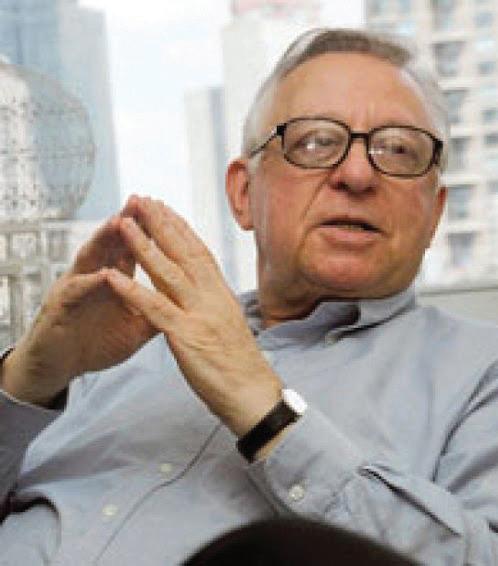
Last Look
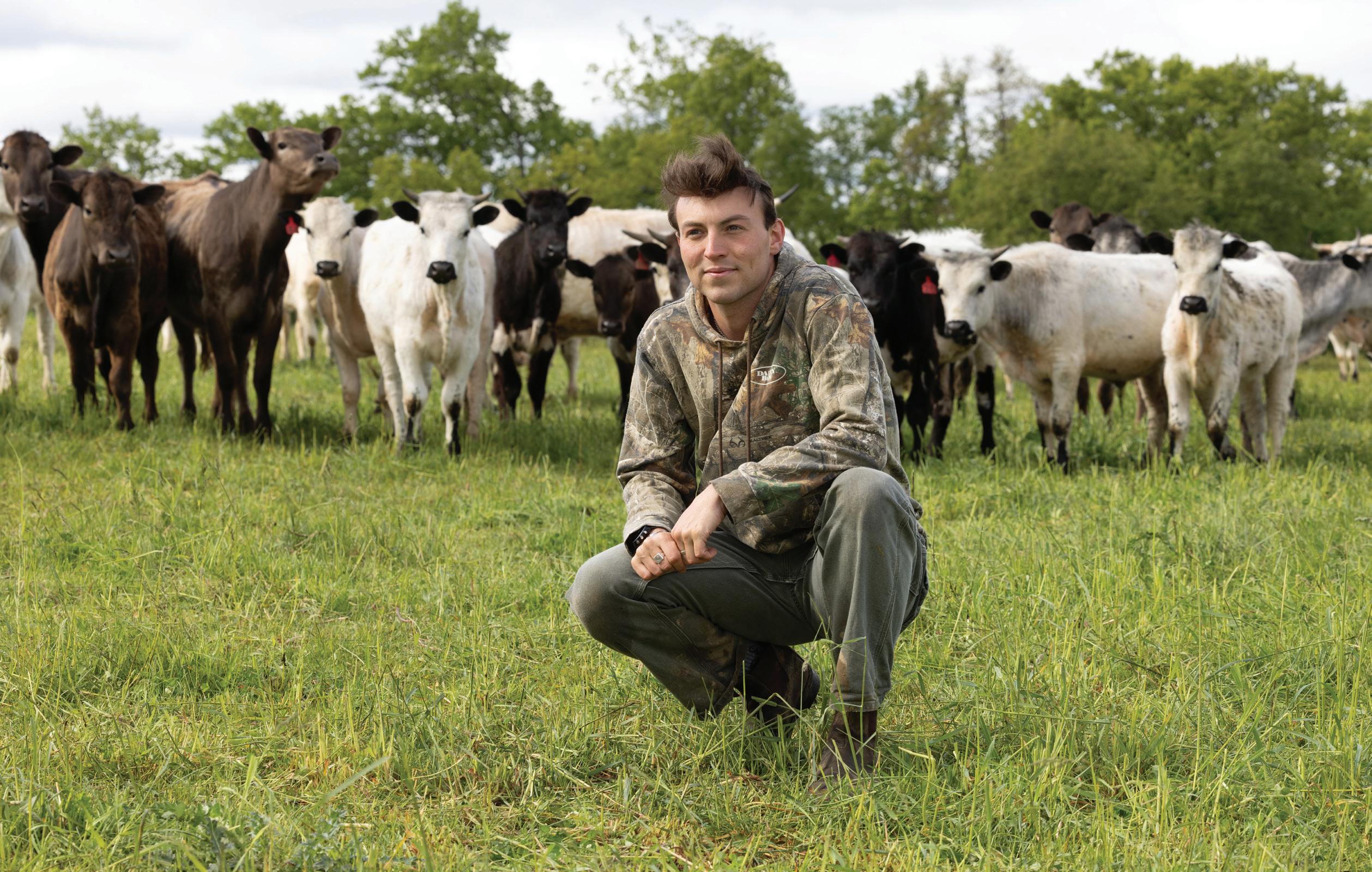
Will Brinkerhoff, a PhD candidate at SEAS, focuses his research on replacing chemical fertilizers with recycled nutrients to enhance soil health, including urine-derived fertilizer and cover crops.
Last summer, Brinkerhoff began investigating the effects of cover crop grazing on soil health through experiments on three farms in Michigan, including the one pictured here in Dexter. He says that cover crops are an effective way to protect and enrich soil health, but many farmers may not be realizing their full potential. This is why he is exploring adding grazing cattle before spring planting, which offers the added benefit of diversifying farm income by selling grass-fed beef, particularly in low-price years for commodity crops.
Brinkerhoff, whose parents are U-M graduates Kathy Sample (MBA ’89) and Bill Brinkerhoff (BSE ’87, MSIOE/MBA ’89), the founders of Ann Arbor’s Argus Farm Stop, says that integrating crop-livestock systems can foster community collaboration while increasing efficiency and saving money by reducing feed costs.
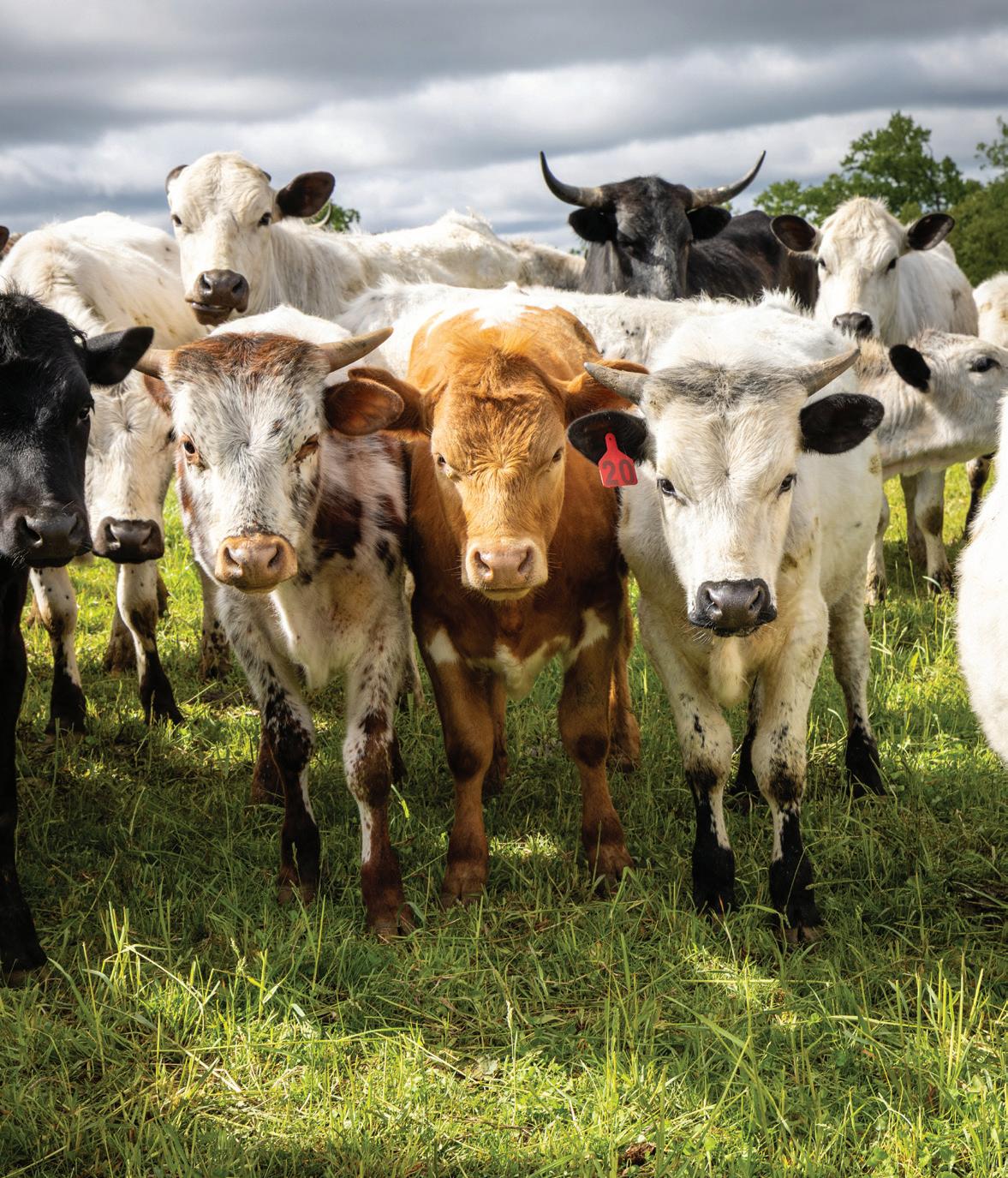
University of Michigan
School for Environment and Sustainability
440 Church Street
Ann Arbor, MI 48109-1041
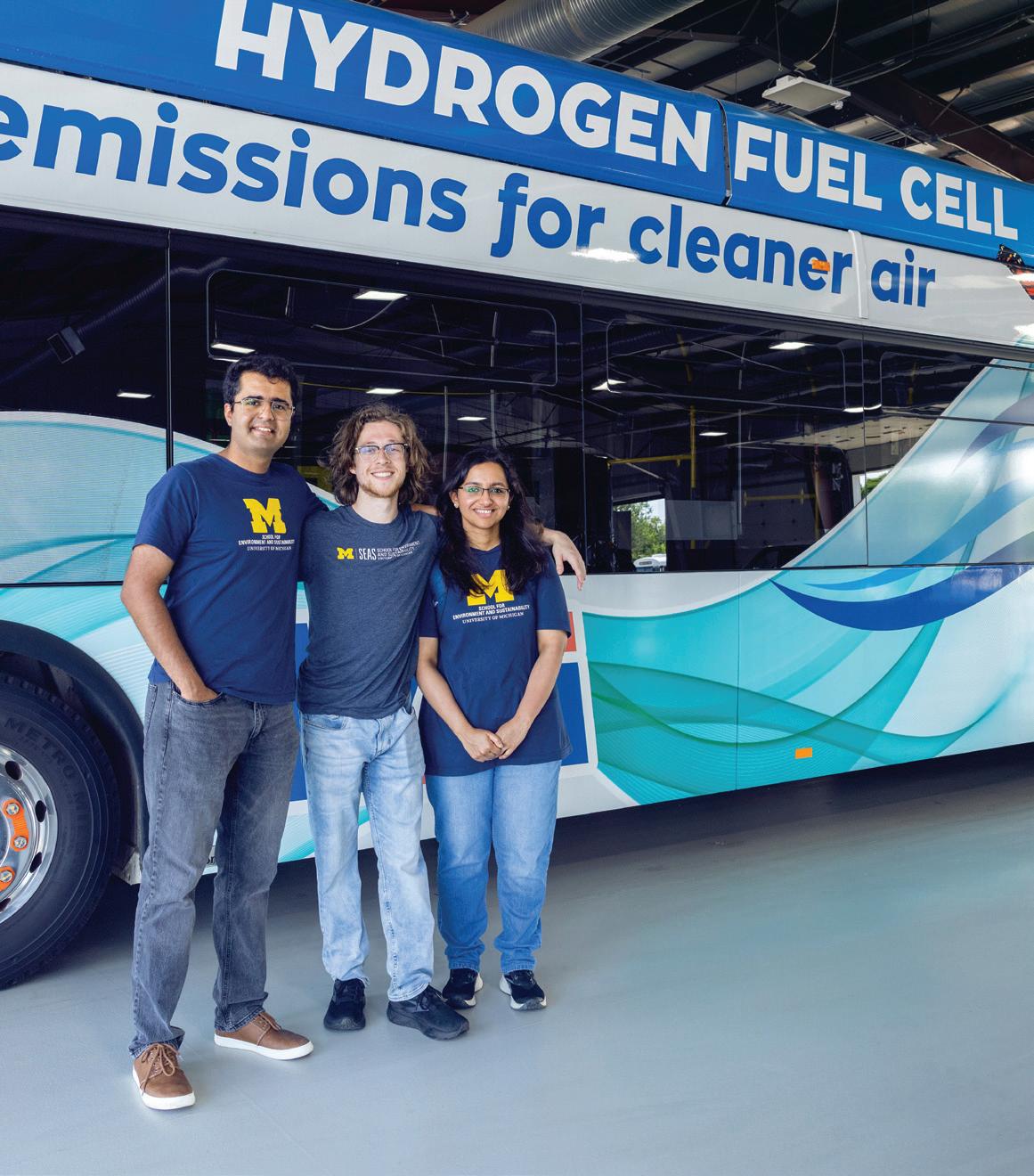
MISSION
THE SEAS HYDROGEN ECOSYSTEM PLANNING CAPSTONE TEAM VISITS THE MASS TRANSIT AUTHORITY IN FLINT, MICHIGAN, TO LEARN ABOUT USING GREEN HYDROGEN AS AN ENERGY SOURCE. FROM LEFT: ADITYA SWARNKAR,
The world’s environmental challenges aren’t hitting pause, and neither are we.
For a limited time, you can double your impact for SEAS. Sign up as a new monthly donor by June 30, 2026, and U-M will match your first 12 monthly gifts 1:1 (up to $100/month).
That means your support is doubled from day one—creating opportunities for students, enabling visionary research and accelerating a more sustainable future.
Matching funds are limited; don’t miss your chance to ensure your support for SEAS goes twice as far.
Scan the QR code today to start your monthly gift and make the most of this special opportunity before funds are gone.

At SEAS, we are at the forefront of building a more sustainable and just world for all by transforming the impact of higher education and reimagining the future. We are advancing action through innovation, research, education and engagement in society, and developing leaders who are empowered to halt the climate crisis and create an environmentally sound future for generations to come.
STAY CONNECTED
Want to know what’s going on in the Dana Building and beyond? Go to seas.umich.edu/alumni to update your contact information, submit a class note or join our private LinkedIn group, which was created exclusively for the SEAS and PitE community. Questions? Email seas-alumni@umich.edu.

NATHANIEL HODGSON AND ANAGHA MENON.