


MBA: Master of Business Administration
MEng: Master of Engineering
MLA: Master of Landscape Architecture
MPP: Master of Public Policy
MS: Master of Science
MS EEB: Master of Science in Ecology and Evolutionary Biology
MSE: Master of Science in Engineering
MSI: Master of Science in Information
MUD: Master of Urban Design
MURP: Master of Urban and Regional Planning
BEC: Behavior, Education and Communication
EJ: Environmental Justice
EPP: Environmental Policy and Planning
ESM: Ecosystem Science and Management
GDS: Geospatial Data Sciences
SusDev: Sustainability and Development
SusSys: Sustainable Systems
Presenter: Aohua Tian, MS (GDS)
Advisor: Mark Lindquist
Locations: Ann Arbor, Michigan, USA; Zibo, Shandong, China
Urban perception—how people experience qualities like safety, vibrancy and livability—is central to human-centric city planning. While computer vision and street-level imagery have automated the measurement of these qualities, current approaches implicitly assume that the relationship between visual features (e.g., vegetation density) and human perception is universal. This research challenges that assumption by investigating whether urban perception models can generalize across culturally and morphologically distinct environments.
Focusing on Ann Arbor, Michigan, and Zibo, China, this study employs a novel methodology combining semantic segmentation for visual feature extraction and Large Language Models to generate uncertainty-aware perception benchmarks. Using supervised regression, models were trained and systematically tested across spatial boundaries and four distinct temporal conditions to isolate the effects of city context versus time of day.
Results demonstrate that while perception can be accurately modeled within a single city, predictive performance collapses when models are transferred across cities, even when temporal conditions are perfectly aligned. This systemic failure reveals that urban perception is not merely a function of visual structure but a context-dependent interpretation. The study concludes that “global” AI models are insufficient for urban analytics, highlighting the necessity for locally calibrated approaches in planning practice.
Presenters: Yejin Kim, MS (SusDev); Zhao Lu, MS (SusSys); Kunjal Parnami, MS (SusDev, SusSys); Arielle Smith, MS (SusDev, SusSys); Alice Yeom, MS (SusDev, SusSys)
Advisor: Andy Hoffman
Location: Ann Arbor, Michigan, USA
Client: Zurich Insurance Group
As climate change risks and impacts continue to escalate, regions with geographic and adaptive advantages have gained prominence in public discourse on urban planning and investment. These regions have been touted as “climate havens,” yet the term remains poorly defined. This report uses literature review and expert interviews to define climate havens as regions that combine manageable projected climate risk exposure with sufficient adaptive capacity to sustainably and equitably respond to environmental, demographic and economic stress over time. To operationalize this concept, the report introduces a two-axis evaluation framework.
The first axis assesses Location Suitability, including multi-hazard exposure, water and food system security, and growth expectations. The second axis evaluates Adaptive Capacity, including fiscal strength, governance effectiveness, institutional infrastructure and community resilience. Using a qualitative Low–Medium–High scoring gradient to avoid false precision, regions and cities are categorized into four typologies based on their combined exposure and capacity profiles. Our findings underscore several central insights: climate-haven potential is dynamic; adaptive capacity is as
consequential as hazard exposure; unmanaged in-migration can undermine relative advantages; and transformative adaptation requires structural efforts rather than incremental infrastructure hardening alone. This research is intended as an informational and decision-support tool for planners, policymakers and regional stakeholders, emphasizing actionable pathways to strengthen “climate haven” potential while avoiding maladaptation.
Presenter: Yixin Hu, MS (GDS)
Advisor: Derek Van Berkel
Location: Michigan, USA
Cities face increasing pressures from climate-related risks, including carbon emissions and urban flooding, which require detailed and comparable information about urban structure. Building-level data are particularly critical because buildings constitute the primary spatial units through which energy consumption, land use and environmental exposure are manifested. Functional attributes—such as whether a building is residential or non-residential—are widely used in urban energy modeling and land-use analysis. However, existing building datasets in the United States are often fragmented, locally maintained or based on heterogeneous classification standards, limiting their comparability across jurisdictions and constraining national-scale research.
This study aims to develop a unified, nationwide building-level database for the United States that enables consistent cross-city comparison, with a particular focus on standardized residential and non-residential classification.
To achieve this objective, we integrate multiple large-scale building footprint datasets and associated attribute sources. A harmonization framework is developed to reconcile inconsistent classification systems, followed by systematic data cleaning, spatial alignment and cross-validation procedures to ensure consistency across states.
The resulting database provides a standardized building functional attribute for cities nationwide, enabling robust comparative analyses of urban structure. By improving data consistency and coverage, this work supports national-scale urban research and offers a foundational dataset for future studies on energy demand, emissions and land-use patterns
Presenters: Emily Carra, MLA; Roberto Carriedo Ostos, MS (ESM), MLA; Xiao Chen, MS (GDS) MLA; Xingyan Chen, MLA; Christine Sit, MS (EPP, BEC, EJ)
Advisors: Lisa DuRussel; Isabella Shehab
Locations: Erie County, Pennsylvania; Great Lakes Region, USA
Clients: Council of State Governments (Midwest); National Park Service – Rivers, Trails, and Conservation Assistance program; Pennsylvania Department of Environmental Protection; Pennsylvania Department of Conservation and Natural Resources; Erie County Department of Planning and Community Development

This is the vision: a trail network that connects all eight Great Lakes states, a companion to the already existing Canadian Great Lakes Waterfront Trail (CA GLWT). Inspired by the success of CA GLWT, the U.S. Great Lakes Waterfront Trail (U.S. GLWT) initiative aims to expand the outdoor recreation and ecotourism economy along the Great Lakes waterfront. The project covers the complexity of coordinating federal, state and local agencies with varied geographic gaps in trail
coverage and funding. To help navigate these multi-state, multi-agency challenges, the U.S. GLWT decision-making framework helps Great Lakes stakeholders navigate trail design decisions and consider priorities at local and multi-state levels. The framework provides a starting point through easy-to-use tools and resources for Great Lakes trail design. To demonstrate how locally grounded priorities can scale to shape a multi-state trail system, the team piloted this framework in Erie County, Pennsylvania. Erie County reflects the multi-jurisdictional and physical conditions common across other Great Lakes communities and offers a strong context for testing the transferability and structure of the framework. Ultimately, the U.S. GLWT decision-making framework provides a foundation for unifying Great Lakes communities through a generalizable decision-making framework, best practices for trail design and long-term goals.
Presenter: Marsalis Jolley, MLA, MSI; Anya Nona, MS (ESM), MLA; Jessica Soulliere, MS (EPP), MLA; Shea Vatalaro, MS (ESM, EJ); Xijuan Xiao, MS (SusSys)
Advisor: Lisa DuRussel
Location: Detroit, Michigan, USA
Client: City of Detroit Office of Sustainability
Detroit’s extensive vacant land—more than 4,000 acres citywide—presents both a challenge and extraordinary opportunity to advance ecological resilience, social equity and economic revitalization. In collaboration with the City of Detroit’s Office of Sustainability, this capstone project supports the Detroit Regenerative Futures pilot: a multi-phase initiative designed to activate 100 acres of vacant land through sustainable, community-led design.
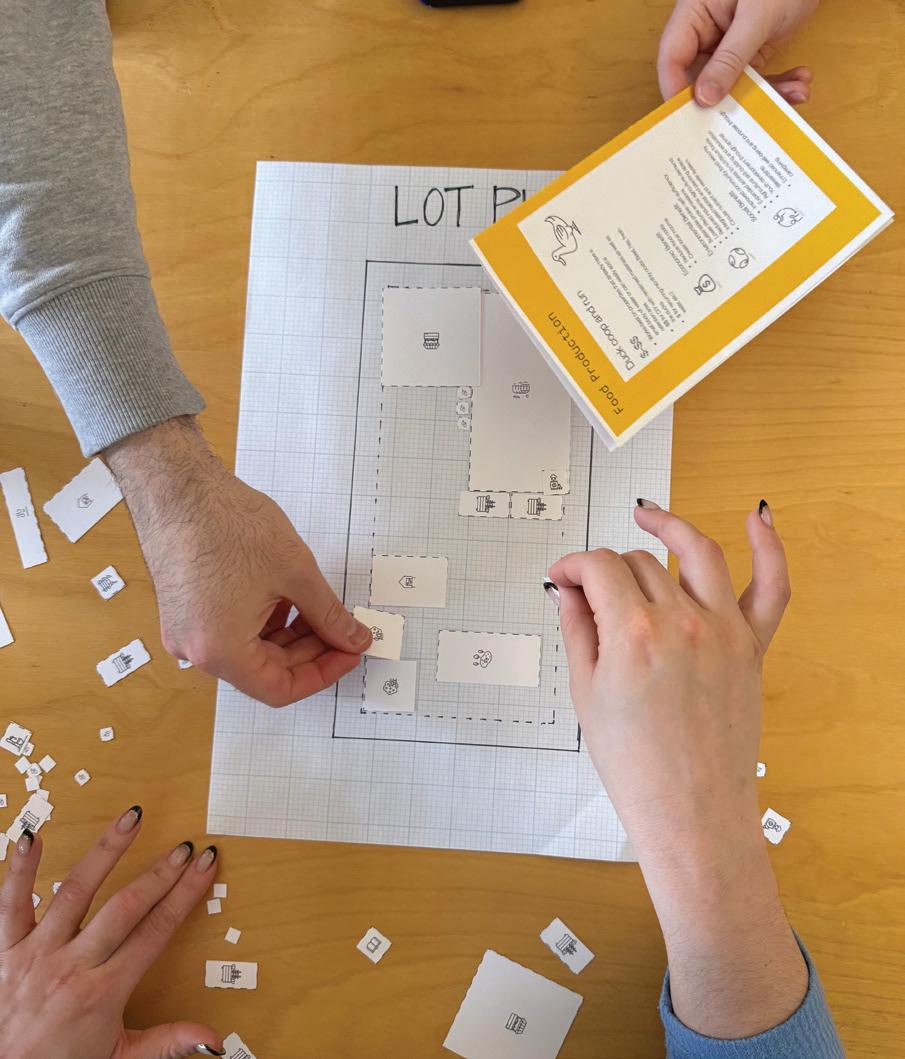
This project develops a modular design framework and outreach toolkit, empowering Detroit community members to reimagine and reclaim vacant land. The toolkit combines gamified and interactive formats—such as a physical “punch-out” design guidebook and an online drag-and-drop interface— with data-driven tools for assessing benefits. The system is accessible, scalable, and adaptable across parcel and neighborhood levels. The toolkit and associated strategies are aligned with emerging opportunities in sustainable land management, urban agriculture, green infrastructure and ecological restoration. It includes a green workforce strategy for the city that maps toolkit modules to job categories and training pipelines. This supports long-term economic empowerment while advancing equitable climate resilience.
Ultimately, Detroit Regenerative Futures aligns with Detroit’s broader climate action goals: clean energy transition, sustainable mobility, waste reduction, energy efficiency, prioritization of vulnerable residents, community engagement and data-driven planning. By offering practical, creative tools for land activation, this builds capacity for selfdetermination and neighborhood stewardship. This capstone provides a replicable model that repositions Detroit’s vacant land as a regenerative resource and invites new narratives for post-industrial cities worldwide, where equitable climate adaptation and local agency go hand-in-hand.
Presenters: Keeton Bigham-Tsai, MS (SusSys); Emily Blenck, MS (EJ); Paige Hughart, MS (ESM), MLA; Stevie Lehman, MS (ESM), MLA; Zeyu Wang, MLA
Advisor: Lisa DuRussel
Location: Detroit, Michigan, USA
Client: The Charles H. Wright Museum of African American History
The Charles H. Wright Museum of African American History in Detroit is uniquely positioning itself as a “Green Museum of the Future,” highlighting the strong connection between African American culture and environmental stewardship by redesigning its campus and museum programming. In order to center the local community during this process, the SEAS capstone team worked with The Wright to design and implement a large-scale community engagement event in September 2025 called “The Green Museum Town Hall” (GMTH). The team spent Winter, Spring and Summer 2025 researching and planning for the GMTH, and Fall 2025 compiling and analyzing community feedback from the event. The team then spent the final Winter 2026 developing that feedback into conceptual design elements that highlight The Wright’s ongoing sustainability work, celebrate Black culture in Detroit and emphasize the critical roles that African Americans have always played in caring for the Earth. The final deliverables include an Outcomes Report that summarizes the team’s findings from the GMTH, and a Design Package that incorporates those findings into actionable and ecological design interventions that incorporate the community’s voice into the museum’s physical landscape. In the words of The Wright, “to preserve our planet is to preserve our history and future.”
Presenters: Geoffrey Batterbee, MS (EJ, EPP), MURP; Devin Derr, MLA; Anna Peppet, MS (BEC); Mujie Sui, MS (GDS); Minxuan Zhang, MLA
Advisor: Lisa DuRussel
Location: Detroit, Michigan, USA
Client: AboutFaceDetroit
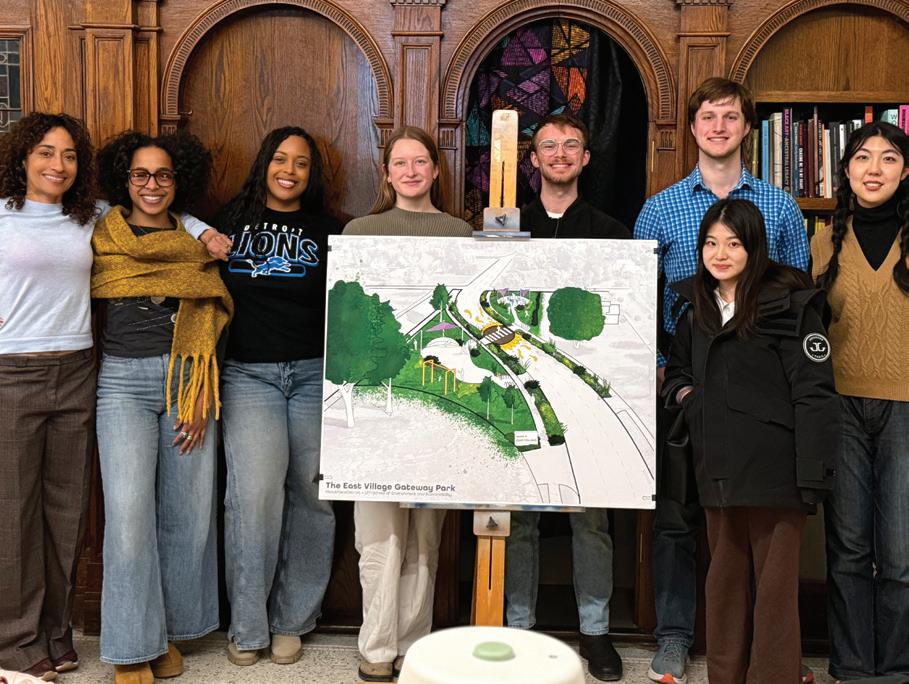
The East Village Catalyst Plan seeks to promote sustainable revitalization efforts for Detroit’s East Village neighborhood. The East Village is a historically underserved neighborhood that has experienced severe disinvestment and vacancies. In recent years, the neighborhood has faced the challenges of a fractured community fabric and pressures of gentrifying developments. This project was initiated to develop a framework for landscape improvements that will enhance the social character and ecological resilience of the East Village. This plan will guide the community as it seeks to establish high-quality community spaces, improve connectivity between green spaces and increase the aesthetic character of the neighborhood. These elements aim to foster a greater sense of community, identity and ownership for neighborhood residents. This was a community-engaged effort that sought direct input from residents of the East Village and stakeholders from the area through surveys and workshops. It included iterations of site-level design, development of “pilot projects,” and the creation of a landscape design toolkit and a framework catalyst plan to guide landscape improvements that promote social and ecological resilience in the near future. This project offers an exciting example of working with the community to prepare a cohesive, neighborhood-scale plan to implement simple, yet effective, landscape design interventions that have wideranging benefits for the community.
Presenters: Hope Fryer, MLA; Leah Kauffman, MLA; Alyssa Murphy, MS (ESM), MLA; Yidong Shen, MLA; John Slinkman, MLA
Advisors: Lisa DuRussel; Isabella Shehab
Location: Ann Arbor, Michigan, USA
Clients: John Pollack, Burns Park Elementary School Parent Teacher Organization; Ann Arbor Parks and Recreation; Ann Arbor Public Schools
Burns Park is a multi-generational recreation space and historic neighborhood park in southeast Ann Arbor, and a critical setting to study how school-park adjacency shapes community space; as urban areas grow, school-park adjacencies need to be addressed with school and playground development needs.

Inspired by Burns Park Elementary School improvements to come in 2028-2029, John Pollack of the Burns Park Elementary Parent Teacher Organization approached team advisor, Lisa DuRussel, with an opportunity to develop a proposal for a redesign of the 15-acre park. The Burns Park Realization team’s (BPRT) focus was to realize the park’s opportunities by crafting a design that honors history, advances climate resilience and ecological health, and prioritizes inclusivity and accessibility of stakeholders. The team and project clients have worked to incorporate sustainable and collaborative solutions for the challenges related to the park and its associated easement with the school.
With the support of ecological assessment, site analysis and community engagement, BPRT began an iterative design process that led to four design concepts. These concepts were synthesized down, leading to a concluding design concept. The team prepared a report with details on the design, a to-scale physical model of the park, digital models and drawings. All of which are meant to assist viewers in understanding how the design interventions work with the park context.
This project has helped the aspiring landscape architect team gain design experience by offering an opportunity for interaction with the community and stakeholders and facing the challenges of a real-world project.
Presenters: Xinhe Chen, MLA, MSI; Weizhe Tang, MLA; Mengran Yin, MS (GDS), MLA; Zekai Zhu, MS (GDS), MLA; Yunjia Zou, MLA
Advisor: Lisa DuRussel
Locations: Nantucket, New Bedford and Fairhaven, Massachusetts; Portland and South Portland, Maine; Narragansett, Rhode Island, USA
Clients: REMAIN, Envision Resilience Challenge Program
Coastal communities face increasing pressure from sea level rise and other climate challenges. The Envision Resilience Challenge (ERC) addresses this through annual interdisciplinary student design studios. Over time, the program has generated many design proposals and engagement activities, but the materials remain scattered, making it difficult to understand patterns linking site problems, participants and strategies.
This project supports ERC by organizing past challenge materials into a clear analytical structure. The goal is to examine relationships between site problems, community engagement networks and design strategies across different challenge years. The project also compiles a structured database of student strategy proposals and visualizes them to compare how ERC defines local challenges and how student teams respond through design.
The research combines engagement analysis and project analysis. Engagement analysis focuses on networks of actors involved in the challenge at different stages. Project analysis examines design strategies presented in student proposals. Similar strategies are grouped through a multi-dimensional classification framework, and results are visualized to reveal patterns across sites and challenge years.
The main outcome of the project is an Impact Atlas that visually organizes ERC’s site problems, community engagement networks and design strategies through a series of diagrams and data visualizations. The atlas includes problem mapping across challenge sites, stakeholder network diagrams and a classified dataset of student strategies organized through a five-dimensional framework.
The project offers practical insights that support future ERC challenges and provides a framework that improves communication, engagement and strategic planning in future resilience initiatives.
Presenter: Dunya Diyadawagamage, MS (SusDev, SusSys)
Advisors: Ben Goldstein; Thiago Gonçalves-Souza
Location: Amazônia, Brazil
This study explores the scenarios in which prominent biodiversity metrics predict (or fail to predict) different biodiversity patterns. The literature review examined over 50 papers exploring the intersections of life cycle analysis and biodiversity in common supply chains and farming systems. Four significant publicly available global biodiversity datasets and one dataset observing human-modified areas were analyzed in R to visualize their relationships using linear regression and bivariate maps. The results are expected to show that mean species abundance is less accurate in conveying biodiversity information compared to species richness and the Land-cover change Impacts on Future Extinctions (LIFE) metric. The impacts of land use intensity on ecosystems, and important but non-public datasets like the Projecting Responses of Ecological Diversity In Changing Terrestrial Systems (PREDICTS) database, were considered out of scope for this study, and present avenues for further research. The results are expected to illustrate which entities benefit from using biodiversity data for operations and provide recommendations on improving the accuracy of the data.
Presenter: Myrcella-Selene Kobe Bowen, MS (EJ)
Advisor: Tony Reames
Location: Detroit, Michigan, USA
Flooding has become a leading threat to many cities across the United States, leaving lives, communities and ecosystems ravaged and in need of intensive reconstruction and rehabilitation. Detroit and, specifically, the Jefferson-Chalmers neighborhood, is no exception. With the frequency of severe flooding increasing as a result of climate change, mitigation and adaptation are critical for those living in the face of increasingly saturated lives. This work interrogates the mechanisms and policies currently in place to address flooding within the Jefferson-Chalmers neighborhood and the repair and rehabilitation of lives and communities here in the wake of the major floods from 2014, 2019 and 2021. Using a mixed-methods analysis of grey literature, flood resilience plans, policy briefs, nonprofit reports and programming, as well as news articles, this project finds a critical gap in the ability for individuals and households to implement adaptation and mitigation practices on their own. Funding is restricted, and the bureaucracy of approval and permitting is intensive, which reinforces barriers to adaptation and funnels that power to municipal governments and nonprofit organizations. Thus, limiting residents’ ability to imagine and implement adaptation to seasonally submerged lives (to become more amphibious).
Presenter: Yun Li, MS (GDS)
Advisor: Benjamin Goldstein
Location: European countries
Client: Gang He, associate professor, City University of New York
Despite the exponential growth of solar photovoltaic (PV) deployment across Europe to meet ambitious climate targets, the associated environmental and health implications—particularly those linked to global supply chain imports—remain insufficiently quantified. This study quantifies the climate, air quality and human health effects of solar PV generation across eight major European markets between 2015 and 2021, focusing on the specific contributions of imported technology. Using a comprehensive framework, the researchers combined statistical modeling of hourly electricity generation, air quality simulations through the Community Multiscale Air Quality (CMAQ) system, and electricity trade data analysis. A two-year lag was applied between trade flows and power generation to account for typical project development and construction timelines. The results indicate that solar generation avoided 47 million tons of CO2 emissions and prevented more than 12,000 premature deaths, totaling $44.4 billion in monetized benefits. Notably, health benefits accounted for approximately 98% of this value, and 69% of all benefits were attributable to imported solar PV. These findings demonstrate that global supply chains and cross-border electricity trading are essential for maximizing the clean energy transition’s rewards, providing vital evidence for policymakers balancing domestic manufacturing goals with the need for rapid renewable deployment.
Presenters: Zoë Bishop, MS (EJ); John Blake, MS (EJ, EPP), MPP; Melissa Lewis, MS (BEC, EJ); Bibi Macias, MS (EJ)
Advisors: Tony G. Reames; Justin Schott
Location: Ann Arbor, Michigan, USA
Client: Energy Equity Project
Millions of households across the United States experience utility shutoffs each year due to nonpayment, disproportionately impacting Black, Brown, Indigenous and frontline environmental justice communities. Despite the fundamental need for electricity, gas and water for survival, investor-owned utilities prioritize profit over people, often operating in opaque regulatory environments. The National Roadmap to Ending Utility Shut-offs aims to address this national issue of utility disconnections and their impact on marginalized populations. We wish to identify the harms of shutoffs, evaluate best practices for reducing them, and provide strategic recommendations for energy justice advocates, policymakers and regulators. Our objective is to establish an equitable policy framework that reduces or eliminates the number of utility disconnections nationwide. We conducted interviews with public utility commissioners and staff, energy justice advocates, energy justice scholars, directly impacted community members and policy-makers. These interviews allowed us to identify gaps in policy and find solutions to address them. Our purpose is to identify an equitable solution to utility disconnections and advance policies that reduce and eventually eliminate utility shutoffs.
Presenters: Marianna Coelho Uchoa, MS (EPP, BEC); Anisa Farrell, MS (EPP, EJ, BEC); Jonathan Rosales, MS (EPP); Maria Sandoval, MS (EPP)
Advisor: Samuel Stolper
Location: Lansing, Michigan, USA
Clients: State of Michigan: Office of Climate and Energy; Department of Environment, Great Lakes, and Energy
Climate change has become a pressing issue requiring government intervention to help combat these challenges and promote climate action. Over the years, states have taken on their own environment and climate plans, including Michigan with the Michigan Healthy Climate Plan (MHCP). The MHCP aims to achieve 100% carbon neutrality by 2050, categorizing avenues through its six pillars of transportation, electricity, buildings, industry, natural working lands and environmental justice. In collaboration with the Office of Climate and Energy (OCE), an office of the Michigan Department of Environment, Great Lakes, and Energy, we have been tasked to develop a comprehensive funding strategy to support the goals and approaches to emissions reduction listed in the MHCP. Creating a funding strategy has become critical with the elimination of several federal programs and grants that supported statewide efforts to combat climate change. To create this plan, our team has researched available resources that can contribute to reducing Michigan’s emissions, met with key stakeholders to gain insight on Michigan’s funding and climate landscape, and considered supplementary policy recommendations that would advance the MHCP. This work and findings have been compiled into a report that will be given to OCE. In our report, we have translated our technical findings into actionable recommendations, informing our clients on which funding opportunities are available and policy mechanisms that will advance Michigan’s climate action.
Presenter: Rebecca Falash, MS (GDS), MSI
Advisor: Kevin Self
Location: Detroit, Michigan, USA
Client: Pearl Edison
Residential water heating is responsible for nearly one-fifth of energy use in the average United States home. Because of that, the type of water heater a household uses can play a meaningful role in monthly utility costs, energy usage and long-term climate impacts. Heat pump water heaters offer both energy savings and reduced carbon emissions, but adoption remains limited due to high upfront costs, complex rebate structures, and a lack of homeowner knowledge related to the upgrade.
This project aimed to support Pearl Edison, a residential electrification concierge service, in expanding its HVACbased platform to include water heating upgrades. The primary objective was to develop a framework that provides personalized system recommendations that would reduce monthly utility bills, household emissions and upfront costs.
To achieve this, a techno-economic model was created to size systems based on household characteristics such as hot water usage and household occupancy. The model then incorporates different factors such as installation rate cards, utility pricing and federal and local rebate logic into Pearl Edison’s platform, reducing uncertainty and easing the transition process for both the contractors and homeowners.
This approach supports the push to keep homeowners informed during their water heating transition, reducing the barrier many experience when making high-value alterations to their home. Therefore, increasing accessible residential electronification, opening more opportunities for homeowners to adopt higher-efficiency appliances, and contributing to lower household emissions.
Presenters: Paula Perez Cassidy, MS (EJ); Samantha Harman, MS (EJ); Kassandra Maraz, MS (EJ), MURP; Sarah Meadows, MS (EPP)
Advisor: Geoffrey Henderson
Location: United Kingdom
Client: HERO Labs
There is minimal empirical research on the impact of climate advocacy on formal policy in the UK in the decade of 2014-2024. Many people have devoted their lives to climate change issues, yet this work is sometimes dismissed and characterized as advocacy without an impact. There is a further need to identify concrete climate justice considerations that have been the impetus for policy initiatives and enacting public policy. This project analyzes the influence of climate campaigns, advocacy groups and political interactions by key stakeholders in shaping climate public policy in Parliament during this time period. The project team examined the link between the work of climate advocates and how policymakers approach climate change. The project uses a mixed-method approach, including a literature review, a quantitative review of climate-based protests in the UK, and qualitative analysis of interviews conducted by members of the research team with key advocates and policymakers. This work reinforces the client organization—HERO Labs—in the continued planning of the advocacy work that the organization supports, in hopes to further climate advocacy in ways that output the strongest political change.
Presenters: Michael Ettlinger, MS (SusSys); Nathaniel Hodgson, MS (SusSys), MEng; Brett Johnson, MS (SusSys); Chen-Hao Kao, MS (SusSys), MSE; Kevin Losee, MS (SusSys); Anagha Menon, MS (SusSys); Aditya Swarnkar, MS (SusSys), MSE
Advisor: Gregory Keoleian
Location: Southeast Michigan, USA
Client: MI Hydrogen
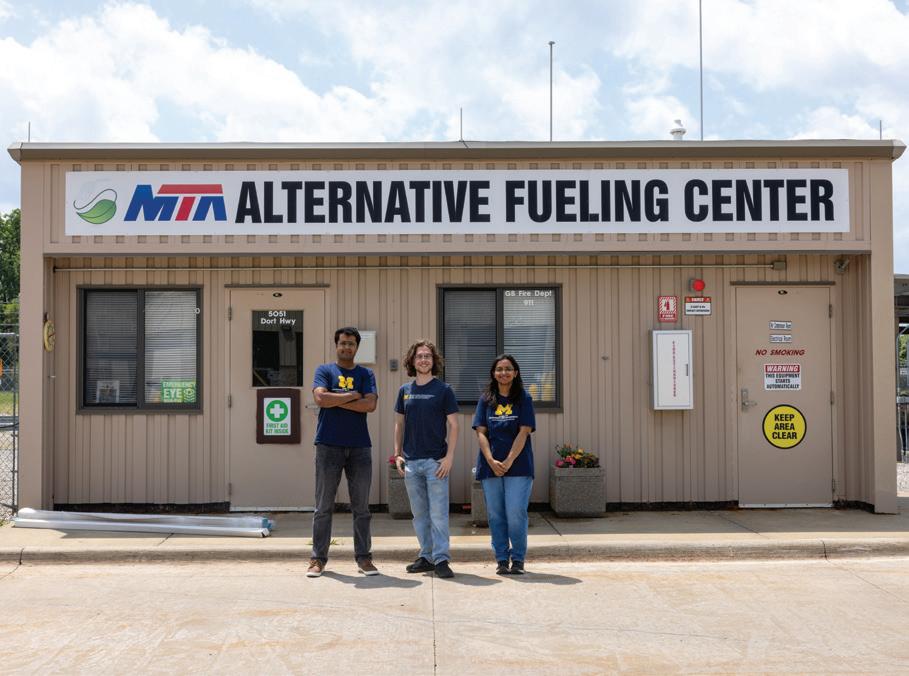
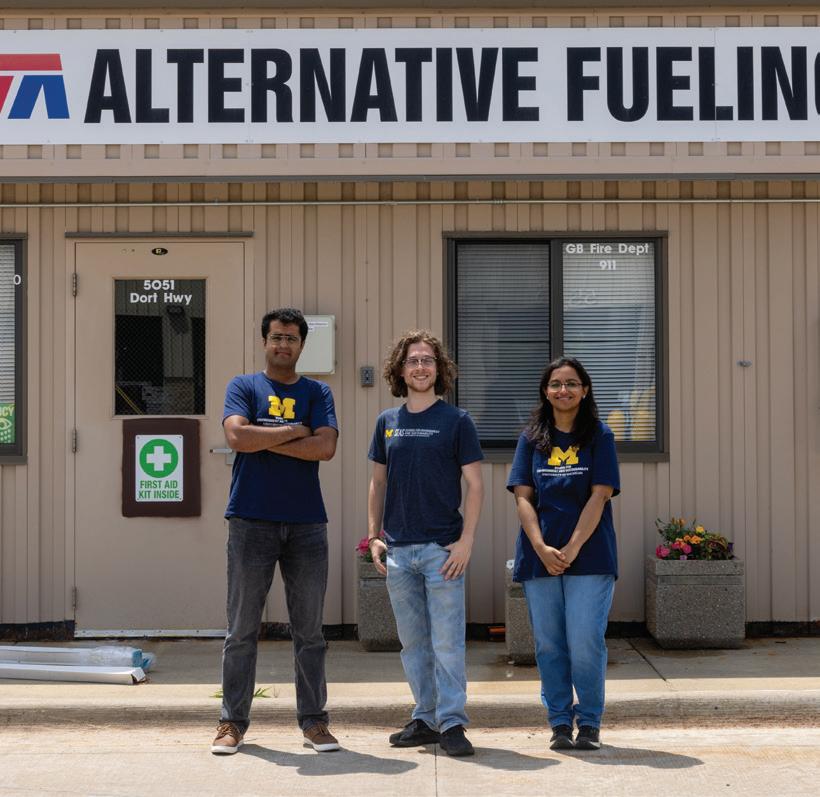
Hydrogen-fueled transportation faces a chicken-and-egg problem: few refueling stations exist because demand is low, and demand remains low because fleets require reliable fueling. In partnership with the American Center for Mobility (ACM) and the City of Detroit’s Office of Mobility Innovation, we evaluate the technical and economic feasibility of supplying green hydrogen for return-to-base medium- and heavy-duty trucking in Southeast Michigan, with some analysis of gray hydrogen for comparison. We design and model an end-to-end hydrogen supply chain, including production (solar-powered water electrolysis for green hydrogen and steam methane reforming for gray hydrogen), compression and storage, delivery logistics using tube trailers, refueling station siting, and daily dispensing operations using both temporary and permanent infrastructure. Our modeling targets 500 kilograms of hydrogen per day to serve a small fleet operating from Detroit, relying on a production site at ACM in Ypsilanti. Multiple configurations were assessed: standalone solar, solar with battery storage and solar with grid integration, with and without federal tax incentives. Optimization methods were applied to balance renewable intermittency, operational flexibility and cost.
We compare delivered green and gray hydrogen cost, infrastructure requirements and total emissions displaced versus incumbent diesel use. We recommend tube-trailer delivery and modular refueling equipment to enable phased deployment with lower upfront investment risk. We find that incentives and higher equipment utilization strongly
improve green hydrogen’s competitiveness. In the near term, gray hydrogen can provide a scalable pathway without government subsidies to support future expansion of hydrogen supply chains into less carbon-intensive solutions.
Presenter: Tamanna Sengupta, MS (EJ, SusSys)
Advisors: Michelle Martinez; Andrea Pierce; Kyle Whyte
Location: Michigan, USA
Client: Michigan Environmental Justice Coalition
We rely on cloud computing, artificial intelligence and clean energy daily, but the massive facilities powering them must be built somewhere. Historically, polluting infrastructure was disproportionately placed in marginalized neighborhoods, creating unfair health burdens. This research maps Michigan’s “digital and green energy” boom to see if these unfair patterns persist, uncovering two distinct but alarming trends. In dense areas like Detroit, giant data centers and power plants requiring massive land tracts are bypassing the city center for peripheral industrial suburbs. This spatial shift displaces the harm, placing a severe, hidden environmental burden uniquely on immigrant and non-English-speaking communities. Conversely, in wealthy, highly educated college towns like Ann Arbor, industrial land is incredibly scarce. Consequently, both massive new tech facilities and legacy natural gas plants are squeezed into the county’s few remaining marginalized corridors. This creates a profound “double burden,” where low-income families, female-led households and renters are trapped by expensive housing markets right next to heavy industrial development.
Because infrastructure siting behaves so differently depending on local geography, a “one-size-fits-all” approach to community protection will not work. A broad statewide policy assuming new infrastructure always targets the poorest urban cores would fail to protect Detroit’s linguistically isolated suburbs while completely ignoring the intense industrial clustering happening in college towns. As data centers signal the arrival of even more power plants and future technologies, Michigan requires strict, highly localized checks before construction begins. We must mandate countyspecific environmental justice assessments to ensure our digital future does not unfairly harm marginalized communities, whether they reside in historic urban neighborhoods or newly burdened suburban towns.
Presenter: Zechen Song, MS (SusDev)
Advisor: Geoffrey Henderson
Locations: Hubei Province, China; Tennessee, USA
Large dam projects often epitomize the tension between state-led development ambitions and environmental protection. This thesis examines two iconic cases—China’s Three Gorges Dam and the United States’ Tellico Dam—to explore how state power and environmental resistance interact to shape policy pathways in different political and institutional contexts. The Three Gorges Dam, completed in the 2000s on the Yangtze River, is the world’s largest hydroelectric project and a symbol of China’s developmental prowess. Its construction displaced over a million people and inundated vast areas, provoking concerns over human rights and environmental impacts. The Tellico Dam, a much smaller project on the Little Tennessee River, became a cause célèbre of U.S. environmental law in the 1970s, as conservationists fought to protect endangered species and free-flowing rivers. Despite stark differences in scale and context, both projects triggered intense conflicts pitting government agencies and economic development goals against environmental advocates and legal constraints.
Presenters: Alessia Bernocco, MS (SusSys), MBA; Kelly Biscoglia, MS (EPP); Kate Cochran, MS (EPP); Ruth Kazmerzak, MS (EPP); Peter Rubin, MS (EPP); Elisabeth Sinclair, MS (EPP)
Advisor: Steven Yaffee
Location: Ann Arbor, Michigan, USA
Client: National Wildlife Federation
LUtility-scale solar (USS) is essential for the clean energy transition, but its rapid expansion often leads to ecological degradation and community resistance, particularly when projects are sited on agricultural or greenfield lands. Disturbed or degraded lands, such as brownfields and former industrial sites, present opportunities to minimize ecosystem harm and avoid land-use conflicts. However, the mechanisms and strategies for successful USS deployment on these lands remain unclear. This research aims to analyze how public participation, community benefit agreements and land-use policy influence USS siting, with a special focus on disturbed lands.
Using a mixed-method approach, the study combines in-depth policy and literature reviews, comparative analyses, semi-structured stakeholder interviews and case studies of U.S.-based USS projects from 2025-2026. Projects were selected for their novel engagement strategies, significant community reactions, or siting on disturbed land. Preliminary case findings indicate that early and comprehensive community involvement paired with USS siting on disturbed lands reduces local opposition and improves ecological outcomes compared to siting on greenfields. Disturbed sites, while generally supporting lower biodiversity, offer a chance to restore ecosystem services through tailored site selection and design.
Preliminary results inform best practices for aligning policy frameworks, engagement, ecological assessment and site design. Management implications include streamlining permitting, prioritizing nature-based incentives and fostering trust through inclusive engagement. The study supports a proactive, community-informed model for USS development, balancing rapid clean energy deployment with ecological health and community benefits.
Presenters: Brendan Francolini, MS (SusSys); Charlie Lenk, MS (SusSys), MSE; Yoga Nugroho, MS (SusSys); Xingning Sa, MS (SusSys)
Advisor: Michael Craig
Location: Southern California; Ann Arbor, Michigan, USA
Client: Southern California Edison
Southern California Edison (SCE) is facing growing climate-related risks to transmission and distribution infrastructure as extreme heat, wildfire and flooding place additional stress on long-term planning and asset performance. This capstone project supports SCE’s climate adaptation efforts through two complementary research areas. Area 1 examines how future climate data, regulatory requirements and reliability standards can be more effectively incorporated into transmission planning in California. Area 2 focuses on how specific grid assets may respond to selected climate hazards and how fragility-curve methods can be used to support planning decisions where published guidance remains limited.
The project objective is to provide SCE with practical decision-oriented information for integrating climate risk into planning. Methods include regulatory and planning-process mapping, review of relevant standards and climate-data practices, and literature-based development of candidate vulnerability or fragility relationships for selected assethazard pairs. This research placed an emphasis on wildfire-related transmission line outage mechanisms and floodrelated substation vulnerability, while using established wind fragility literature primarily as a methodological reference. The resulting deliverables are intended to provide a structured synthesis of planning and regulatory considerations,
example analytical approaches for asset-hazard assessment, and clear guidance for how SCE could refine preliminary methods over time using operational and asset data.
Presenter: Sarah Backstrand, MS (EPP)
Advisor: Brandon Marc Finn
Locations: Ann Arbor, Michigan, USA; Kolwezi, Democratic Republic of the Congo
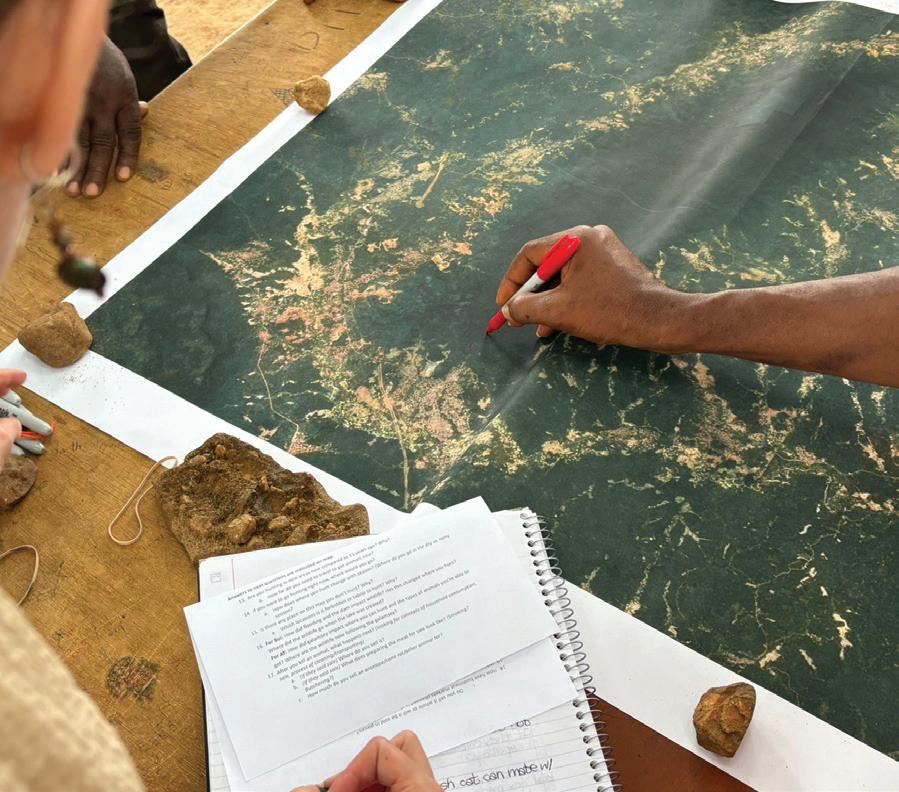
The minerals driving the global energy transition, including cobalt, lithium and tantalum, are disproportionately extracted by artisanal and small-scale miners who lack legal protections, face routine displacement, and are systematically excluded from the governance frameworks that regulate their labor. Despite over $1 billion invested in formalization programs globally, conditions for artisanal miners have not improved. This research asks what governance reform should look like from the perspective of the miners themselves. Drawing on 42 semi-structured interviews with artisanal copper and cobalt miners in Haut-Katanga and Lualaba provinces in the Democratic Republic of the Congo, which produces approximately 76% of the world’s cobalt, this study documents how miners experience and navigate three interconnected dimensions of structural harm: violent displacement from mineral-rich land through exclusionary concession systems, economic exploitation through manipulated testing equipment and opaque pricing, and delegitimization through criminalization despite their essential economic contributions. Critically, miners did not only describe problems; they proposed specific, actionable solutions, including independent testing infrastructure, binding land access agreements and rights recognition based on historical presence rather than formal licensing. These findings could help inform policy recommendations targeting live governance processes, including the EU Corporate Sustainability Due Diligence Directive, the Critical Raw Materials Act, and the OECD Due Diligence Guidance. This research demonstrates that effective ASM governance reform requires centering the knowledge and demands of artisanal miners, whose perspectives remain largely absent from the international frameworks that shape their livelihoods.
Presenter: Major Stevens, MS (EPP), MPP
Advisor: Parth Vaishnav
Location: USA
The objective of this review is to systematically synthesize and examine the literature relevant to understanding how energy audit mechanisms and designs (variables) influence their capacity to induce retrofit investments and behavioral changes. We focus on the complete auditing process: the determinants of audit participation, design implementation, and the resulting impacts on retrofit investment and other changes, such as behavioral modification.
Presenter: Andrew van Baal, MS (SusSys)
Advisor: Tony Reames
Location: Michigan, USA
Client: Consumers Energy
Michiganders experience the 11th-highest energy burden in the nation, with over 25% of households severely struggling to keep the lights on. These burdens often fall disproportionately on low-income households and communities of color, where aging housing stock, deferred infrastructure maintenance, and limited enrollment in efficiency and affordability programs compound. Despite growing attention to these disparities, utilities have historically lacked the granular, place-based analytical frameworks needed to direct equity-focused investments to the neighborhoods where cumulative environmental, socioeconomic and infrastructure vulnerabilities converge.
This project applies leading research and frameworks on Energy Equity and Justice (EEJ) to the operations and forward-looking strategy of Consumers Energy, an investor-owned utility company providing natural gas and electricity to 6.8 million residents in all 68 Lower Peninsula counties. It develops and applies a spatial analytics methodology that integrates quantitative and qualitative data to holistically characterize the burdens target communities face and provide tangible recommendations for improvements at the census tract and circuit level.
The work equips senior leadership with the data-driven, community-informed foundation necessary to prioritize capital investments, tailor program delivery, and deepen engagement in overburdened neighborhoods, advancing regulatory commitments and the broader goal of providing Safe, Reliable, Affordable, Sustainable and Equitable service for all customers.
Presenter: Lisa Vaiman, MS (ESM)
Advisor: Neil Carter
Location: Michigan, USA
The capstone focused on bat conservation and legal reform in Michigan. Bats play a crucial role in all ecosystems, particularly as the unsung heroes of agriculture through pest control. In the Midwestern United States, where crops like corn, soybeans and wheat are the primary crops of the agricultural industry, bats contribute significantly to reducing the populations of insects, which in turn can reduce pesticide use, lower costs for farmers and consumers and improve environmental outcomes. Bats face considerable threats, including habitat loss, climate change and White Nose Syndrome. In Michigan, it is illegal to rescue and rehabilitate bats, with state authorities requiring any sightings to be reported to them, with an injured or rescued individual being euthanized if captured. This is due to unfounded fears of disease spread. In partnership with Bat World Sanctuary, I hope to educate the public on the importance of bats, the feasibility of rescue and rehabilitation with proper training, and create a legislative case supporting legislative changes to current bat-rehabilitation policies. While rehabilitating individual bats may not seem like it will have a large impact on the overall well-being of the species in Michigan, each bat saved is an individual capable of pest control and pollination, once again continuing their ecological role. It will also allow trained and registered rehabilitators to educate the public about bats in their area.
Presenters: Brendan Arnold, MS (ESM); Ally Audia, MS (ESM); Siyu Luo, MS (ESM); Linnea Lyons, MS (ESM, BEC)
Advisor: Mike Kost
Location: Ann Arbor, Michigan, USA
Client: Matthaei Botanical Gardens and Nichols Arboretum
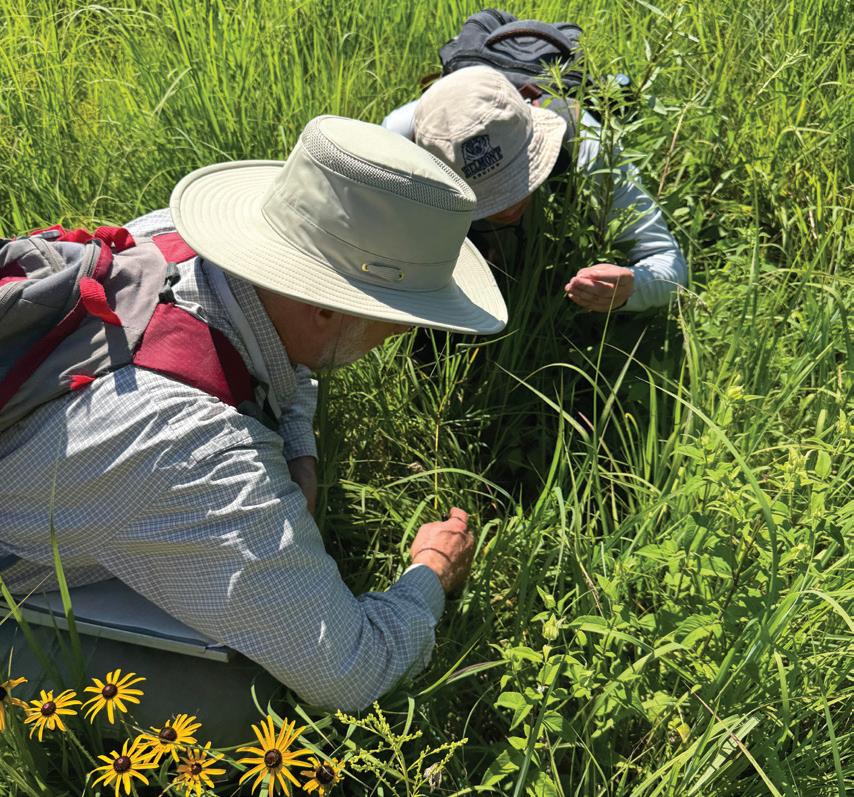
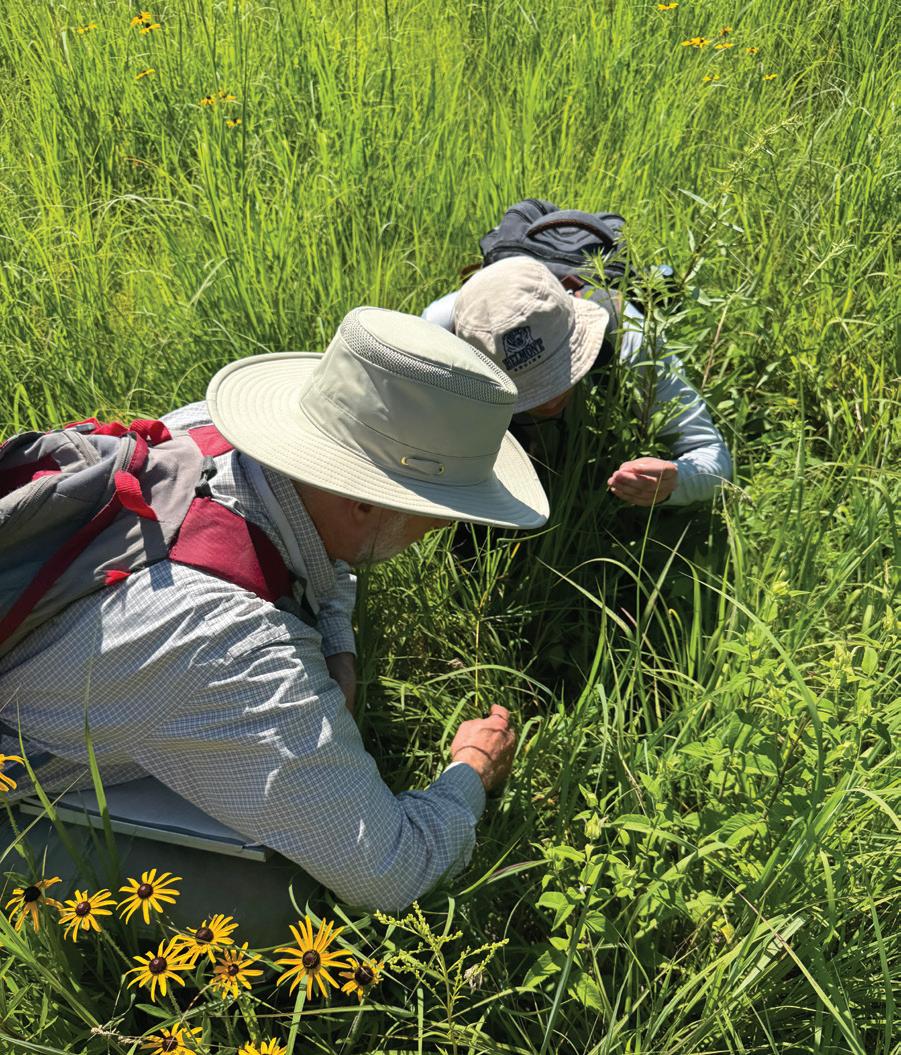
Inventory and monitoring are essential components of adaptive management, providing key metrics to guide management decision-making for biodiversity conservation. For effective management, land managers need to be aware of biodiversity as well as shifts in ecosystem dynamics. However, managers often make decisions with limited data. To rectify this, we designed and implemented a replicable inventory and monitoring protocol based on the needs of Matthaei Botanical Gardens and Nichols Arboretum (MBGNA). Our protocol includes mapping and monitoring invasive plants, conducting experimental oak plantings and performing a Floristic Quality Assessment in a prairie managed with prescribed fire. We also utilize bioblitzes and iNaturalist to assist with insect inventory on the properties. Overall, our ecological inventory and monitoring efforts provide crucial data for informing land management decisions at MBGNA and other conservation organizations across southeast Michigan.
Presenters: Evyn Ladendorf-Lilly, MS (ESM); Teresa Li, MS (ESM); Sydney Lubeck, MS (ESM); Cooper Offord, MS (ESM); Mel Shea, MS (ESM)
Advisor: Mike Kost
Location: Ann Arbor, Michigan, USA
Clients: Matthaei Botanical Gardens and Nichols Arboretum; Huron River Watershed Council
Beavers are ecosystem engineers that alter the physical structure of riparian ecosystems and create new wetland habitats. Humans and other species benefit from the many ecosystem services beaver and their wetlands provide, including increases in biodiversity, improved water quality, increased carbon sequestration, and fire and drought resilience. Historically extirpated from Lower Michigan, beavers are now returning and bringing a multitude of ecological benefits with them. In spite of these ecosystem services, the juxtaposition of beaver dams with modern human infrastructure can cause conflict. Our project seeks to address these conflicts by providing science–based coexistence strategies. We utilized the Beaver Restoration Assessment Tool to predict where beavers are likely to recolonize, performed a policy analysis to assess current beaver regulations, and engaged with land managers to understand current challenges and provide coexistence strategies.
Presenters: George Ackerman, MS (EJ); Zach Cavanaugh, MS (ESM); Tristan Compton, MS (ESM, GDS); Lauren Jones, MS (EPP, ESM); Andy Metz, MS (ESM); Chelsea (Muzi) Yang, MS (ESM, GDS)
Advisor: Mike Kost
Location: Farmington Hills, Michigan, USA
Clients: Bryan Farmer, deputy director at City of Farmington Hills Special Services and chair of the Southeast Michigan Urban Deer Coalition; Karen Mondora, assistant city manager at City of Farmington Hills


White-tailed deer (Odocoileus virginiana) populations have varied over the last century, but have recently been characterized as overabundant, due to their negative impacts on ecosystems and humans. Managing the impacts of overabundant urban deer populations has become a priority for many municipal governments and land management organizations in Southeast Michigan. This project served to advance current and future urban deer management by producing a standardized guide for new programs and providing technical support for the implementation of the first regional deer management program in Farmington Hills, Farmington, and Southfield. Three pillars of urban deer management were used as a framework for the project: ecological, social and program development. Project elements included conducting interviews with city employees and land managers, providing recommendations for ecological monitoring programs, and developing a variety of materials to support deer management programs in Southeast Michigan. Moving forward, we offer recommendations for municipalities interested in implementing urban deer management programs.
Presenters: Travis Blume, MS (ESM, GDS); Camryn Brent, MS (BEC, ESM); Brad Davis, MS (ESM, GDS); Olivia Freer, MS (ESM); Sara Kinney, MS (ESM), MURP
Advisor: Mike Kost
Location: Ann Arbor, Michigan, USA
Clients: Office of Campus Sustainability; Facilities and Operations, University of Michigan
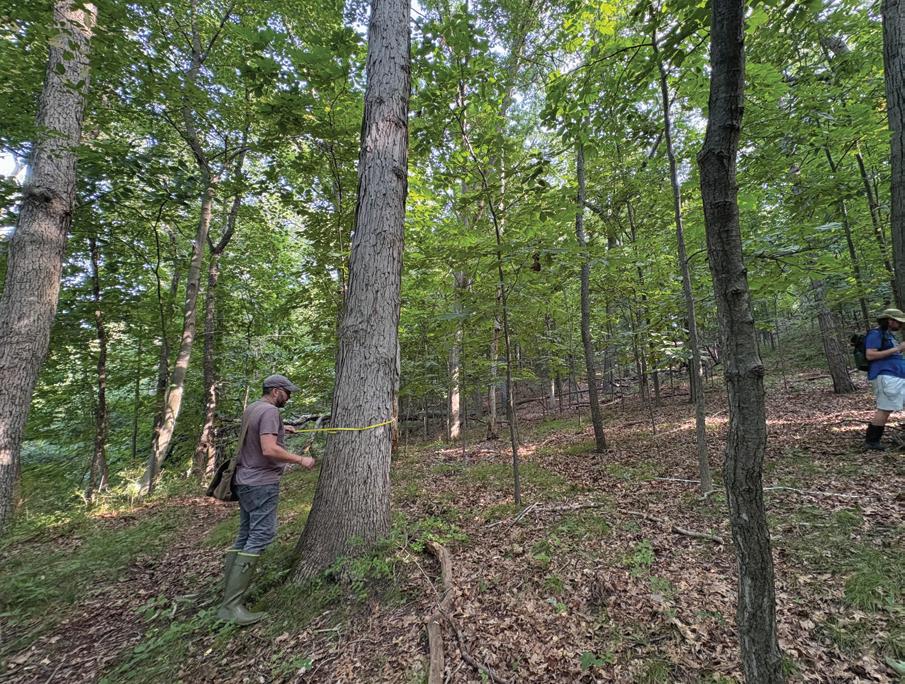
Many universities hold undeveloped lands that are critical to maintaining biodiversity in increasingly urbanized landscapes. These fragmented natural areas face threats from climate change, invasive species, pollution and reduced species diversity. With so many natural lands privately held, more institutions need to take on a land-conservation role. The University of Michigan recognizes both the opportunity and responsibility to be a leader in stewarding its natural areas for ecological and community benefit. To support this goal, we developed a suite of field and GIS metrics for scoring and ranking the ecological integrity of natural areas. Field metrics include, but are not limited to, Floristic Quality Index (FQI), natural community, invasive species and carbon sequestration. GIS metrics include size, perimeter-area ratio, connectivity, landscape context and wetland presence. The results of our project will enable U-M to integrate existing natural areas into its sustainability goals and educational experiences. We envision this project to be the start of U-M’s natural areas becoming as central to the campus experience as the Diag. The framework we present can be applied to a wide variety of institutions and landscapes for conservation planning.
Presenter: Anna McClendon, MS (GDS)
Advisor: Bill Currie
Location: South Carolina, USA
Nature-based solutions (NBS) offer effective, multifunctional strategies to address hydrologic and ecological challenges in watersheds, yet regional documentation and systematic assessment remain limited, particularly in South Carolina, USA. This study introduces the South Carolina Nature-Based Solution database, a comprehensive geospatial repository of 259 NBS projects catalogued by ecological, cultural, financial and regulatory factors. To advance decision-making for future NBS planning, we assessed characteristics of these sites using two geospatial indices: landscape resilience (LR), reflecting the capacity to support biodiversity under changing conditions, and a revised index of hydrologic connectivity (ICr), quantifying surface runoff-driven sediment transport dynamics. We found that NBS placement was driven largely by local context and project design goals, producing tradeoffs in long-term ecological resilience and hydrologic benefits. Hydrologic connectivity mapping distinguished optimal sites for flood mitigation and sediment control, while landscape resilience revealed areas of higher likelihood to support long-term ecosystem function. Highlighted case studies illustrate how leveraging these two metrics can reveal strategic synergies and inform replicable, data-limited approaches for NBS implementation. This framework empowers local planners and decision-makers to navigate competing objectives for NBS project placement in the context of watershed function and large-scale patterns of land use.
Presenters: Paul Cirillo, MS (ESM); Ilana Greenspan, MS (ESM, GDS); Mia McNinch, MS (EPP, ESM); Bojun (William) Zong, MS (ESM)
Advisors: Allen Burton; Kai Zhu
Location: Choptank River, Maryland, USA
Client: Envision The Choptank
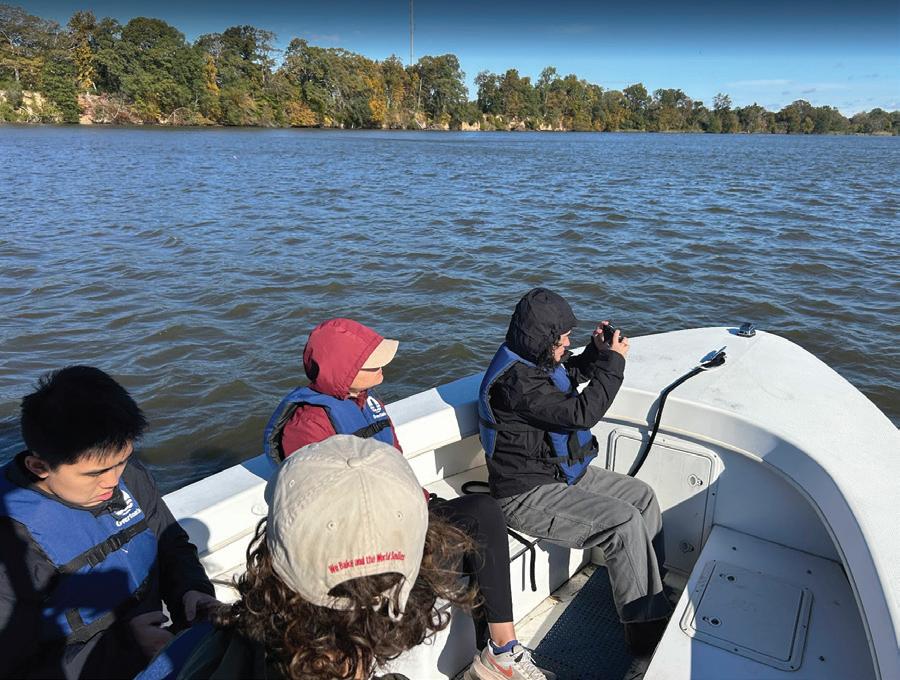
Tidal marshes in the Choptank River are becoming increasingly vulnerable to climatic and environmental changes, including sea level rise, saltwater intrusion, invasive species and shoreline erosion. Compounding these problems, the professionals who manage these vital ecosystems have limited resources, complex prioritization concerns and stakeholders with diverse backgrounds and concerns. Our capstone project aims to assist tidal marsh managers in the successful, targeted conservation and restoration of these lands by conducting an assessment of the current management landscape and analyzing how these marshes have changed and may change in the future. Together, our team conducted a literature review of trends in tidal marsh health and management in the Choptank River and Chesapeake Bay, interviewed professionals to discuss common successes and challenges in tidal marsh management, and performed historical and predictive GIS analysis for five key marshes in the Choptank River. Our report culminates in a synthesis chapter that summarizes findings for the five marshes, demonstrating varied responses to sea level rise and erosion. Our synthesis also details each marsh’s vulnerability and adaptability, as well as potential management strategies based on GIS analysis, knowledge gleaned from the literature review, and general sentiments discussed in the professional interviews. We hope this report aids Envision the Choptank and its partners in conducting more informed tidal marsh management. We would like to thank our advisors and clients for all of the care and guidance they provided during this process.
Presenters: Amanda Arendt, MS (ESM, GDS); Fynn Haney, MS (BEC, SusDev); Shreya Mishra, MS (EPP); Laurel Petrides, MS (BEC, ESM); Samantha Wheelis, MS (EJ, ESM); Jenny Zhang, MS (BEC, SusDev), MBA
Advisor: Nathaniel Geiger
Location: Puerto Jiménez, Costa Rica
Client: ReGenerOsa, Los Higuerones Cooperative
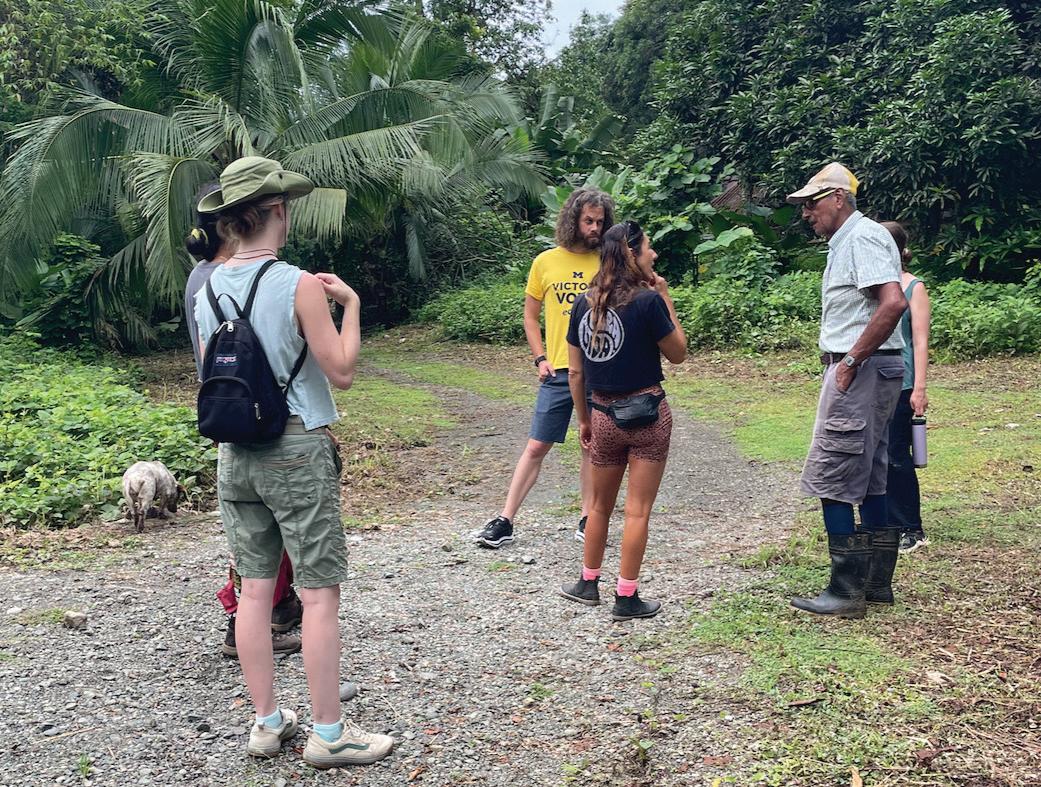
This research examines how communities in the Osa Peninsula of Costa Rica build resilience through diverse economies, community-supported agriculture and resource sharing, particularly in rural areas shaped by tourism and agriculture. The objective was to uncover the dynamics that drive resilience and sustainability within these communities, focusing on social, cultural and economic interactions. Using a mixed-methods approach, the study incorporated community surveys, semi-structured interviews, participatory asset mapping, and GIS spatial analysis. Surveys were distributed at
community events and farmers’ markets, while interviews were thematically coded using socio-ecological indicators and the Eight Capitals Framework. Asset mapping involved both physical and conceptual mapping of local talents, organizations and resources.
Results highlighted that community hubs like Los Higuerones and Mercado Verde (a weekly produce market) foster strong social connections, encourage local participation and support economic diversity. Social benefits included enhanced community cohesion, cultural preservation, skill-sharing and business partnerships. Ecologically, participants cited sustainable farming practices such as composting, organic fertilizer use and intercropping. Asset mapping and GIS analysis revealed varying concentrations of sustainability initiatives across regions, with smaller communities displaying greater awareness and participation.
The purpose of this research is to inform efforts that strengthen community resilience in the Osa Peninsula by identifying local assets and knowledge and expanding existing sustainable practices. Future recommendations focus on investing in infrastructure and accessibility, expanding education and knowledge sharing platforms, promoting sustainable agricultural practices, scaling up the public market, and strategies for increasing community engagement and feedback. These evidence-based suggestions aim to strengthen resilience across the Osa Peninsula by supporting local needs and increasing the flow of resources among communities.
Presenters: Lu Buller, MS (GDS); Bridget Hennessy, MS (ESM, GDS); Mary Kelly, MS (GDS); Maya Khesin, MS (EJ, EPP); Gus Rytting, MS (ESM, GDS)
Advisor: Andy White
Location: Rocky Boy’s Reservation, Montana, USA
Client: Buffalo Nations Grasslands Alliance
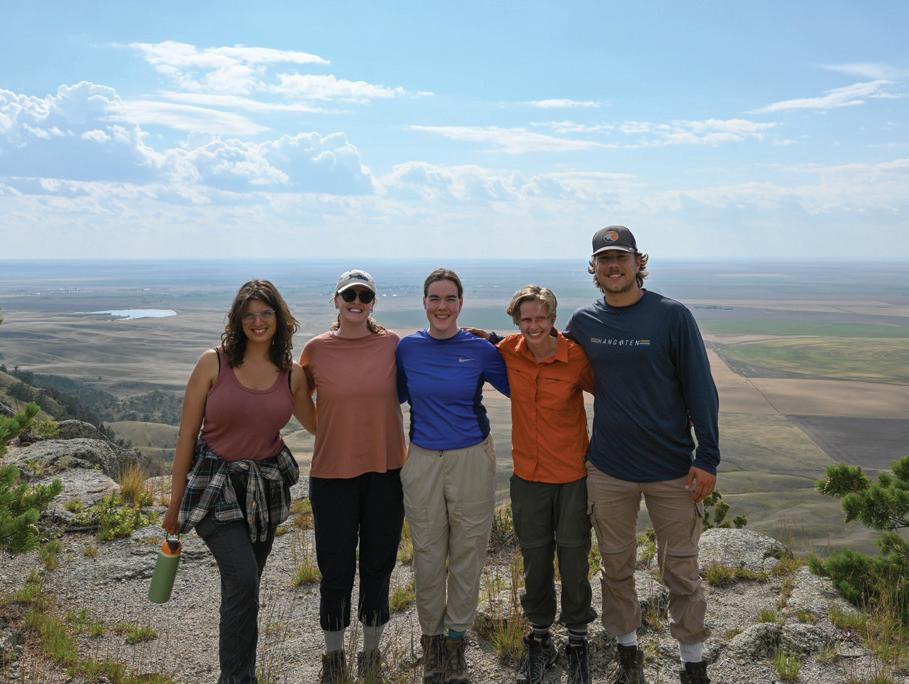
Grasslands occupy 40% of Earth’s terrestrial surface and have declined in area by 62%, despite their criticality. In the Northern Great Plains ecoregion (NGP), 80% of Tribally-managed lands are intact grasslands, highlighting Native Nations’ leadership in grassland stewardship. This research supports the Buffalo Nations Grasslands Alliance’s (BNGA) initiatives to strengthen Tribal conservation and restoration strategies in the NGP by integrating ecology, remote sensing and policy analysis. BNGA, a Native-led 501(c)(3), works to support conservation and sustainable livelihoods across 16 Native Nations in the NGP. Collaborating with BNGA, we piloted two conservation tools at Rocky Boy’s Reservation in Montana. We developed a spatial-ecological connectivity tool for pronghorn (Antilocapra americana), combining field data with landscape metrics to identify priority habitat areas. Results of the tool indicate the Reservation’s large, contiguous grassland patches exceed pronghorn habitat requirements. Second, we assessed the detectability of American bison (Bison bison) wallows using deep learning and Random Forest remote sensing models, which represent an initial attempt to quantify wallowing. These cost-effective, reliable methods identify areas of connectivity and disturbance, and should be expanded in future studies to include additional areas and priority species. Finally, we evaluated the North American Grasslands Conservation Act (NAGCA), a bill that would appropriate ~$9,200,000 annually to Native Nations and Tribal organizations. Our analysis identifies grasslands’ economic contributions and analyzes existing legislation, recommending strategies to enhance NAGCA’s effectiveness. Our research indicates that federal investment and Indigenous-led stewardship offer opportunities to strengthen grasslands conservation and restoration across the NGP ecoregion.
Presenter: Xu Qiang, MS (GDS)
Advisors: Lauren E. Gillespie; Dimitrios Gounaridis; Kai Zhu
Location: Ann Arbor, Michigan, USA
Clients: City of Detroit; Sidewalk Detroit
Climate change is altering environmental conditions in ways that can facilitate the spread of invasive plant species, posing significant challenges for ecosystem management and biodiversity conservation. Accurate predictions of invasive species distributions are therefore essential for effective monitoring and early intervention. Species distribution models (SDMs) have become an important tool for predicting species habitats, but many studies rely on traditional machine learning approaches or focus on single-species predictions, often overlooking uncertainty associated with future climate scenarios.
This study aims to evaluate the performance of a deep learning-based species distribution modeling framework, Deepbiosphere, for predicting plant species distributions in Michigan and to assess how climate scenario uncertainty influences spatial predictions of invasive species risk. Using citizen-science occurrence data from the Global Biodiversity Information Facility and high-resolution aerial imagery from the National Agriculture Imagery Program, and 19 bioclimatic variables from WorldClim, we trained Deepbiosphere alongside several baseline models to predict species distributions. The model was then used to generate current habitat suitability maps and future projections under 15 climate scenarios derived from five global climate models and three emission pathways.
Results show that Deepbiosphere performs competitively relative to baseline models and can generate high-resolution statewide predictions for invasive species such as common buckthorn (Rhamnus cathartica) and tree of heaven (Ailanthus altissima). By integrating ensemble climate projections, we mapped spatial patterns of prediction uncertainty and produced risk-uncertainty classification maps that highlight areas of robust and uncertain invasion risk, providing valuable insights for adaptive invasive species management.
Presenters: Blair Baeten, MS (SusDev); Eleanor Livingston, MS (ESM)
Advisor: Andy White
Location: Cherokee, North Carolina, USA
Clients: Eastern Band of Cherokee Indians Natural Resources Department; Elohi Dinigatiyi (Earth Keepers)
The ancestral home of the Cherokee since time immemorial, Southern Appalachia and its abundant biodiversity holds a deep cultural and spiritual significance for the Cherokee. Given the history of land dispossession, the Eastern Band of Cherokee Indians’ (EBCI) Natural Resources Department (NRD) and the Elohi Dinigatiyi (Earth Keepers) have begun working in collaboration with the United States Forest Service on a co-stewardship plan in order to support the Tribe’s future initiatives to advance the stewardship, conservation and restoration of their ancestral homelands. To facilitate the creation of the co-stewardship plan, a team of two students from SEAS have been tasked with two primary objectives: 1) to provide a written review of the ecological history and management of mountain balds throughout Southern Appalachia, prioritizing those located in proximity to the EBCI’s current landholdings in Western North Carolina, and 2) to create an interactive StoryMap that raises awareness of the history and future of Cherokee stewardship of their ancestral homelands. Research methods include site visits, interviews, literature review and mapping with tools such as ArcGIS Pro and ArcGIS StoryMaps.
Presenter: Grace Luo, MS (ESM), EEB
Advisor: Brendan O’Neill
Location: Dover Township, Lenawee County, Michigan, USA
Client: University of Michigan School for Environment and Sustainability
The resurgence of eutrophication and harmful algal blooms in Lake Erie has raised significant concerns about water quality and ecosystem health. In the Western Lake Erie Basin, excess phosphorus (P) and nitrogen from agricultural runoff are major contributors to nutrient loading. Wetland restoration has been widely promoted as a nature-based solution to improve nutrient retention and reduce downstream export. However, the short-term biogeochemical responses following wetland restoration, particularly on former agricultural soils with legacy phosphorus, remain poorly understood.
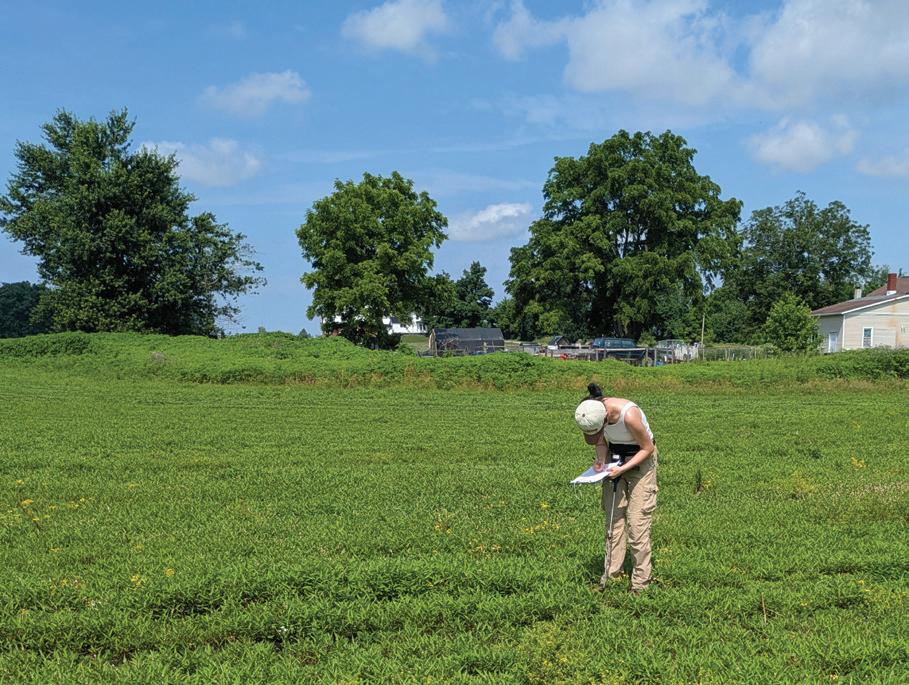
This study investigates how early-stage wetland restoration influences soil phosphorus dynamics in previously cultivated soils in Southeastern Michigan. Specifically, it examines how litter phosphorus content, soil properties and hydrological conditions interact to regulate phosphorus mobilization and retention during the transition from cropland to wetland.
A controlled laboratory incubation experiment was conducted using a factorial design manipulating soil type, litter phosphorus input and soil moisture regime. Three soils were combined with three litter treatments (high-P litter, low-P litter and no litter) and two moisture conditions representing aerobic and saturated environments. Soil respiration, inorganic nitrogen, labile phosphorus and extracellular enzyme activities were measured during and following a twoweek incubation.
Results from this study will improve understanding of the mechanisms controlling phosphorus mobility during early wetland restoration and help evaluate whether restored wetlands initially function as nutrient sinks or temporary nutrient sources in landscapes with high nutrient inputs.
Presenters: Sarah George, MS (GDS); Tessa Magsoudi, MS (ESM); Yuting Pu, MS (ESM, GDS); Alex Rosevelt, MS (ESM, GDS)
Advisor: Allen Burton
Location: Homer, Alaska, USA
Client: Center for Alaskan Coastal Studies

Alex Rosevelt and Tessa Magsoudi collecting benthic macroinvertebrate samples during fieldwork at the Inspiration Ridge Preserve in Homer, Alaska.
Climate change is rapidly reshaping the coastal ecosystems of Homer, Alaska, where warming temperatures, shifting precipitation patterns, drying wetlands and changing seasonal cycles are affecting vegetation, wildlife and the communities that depend on these environments. This project aims to examine current climate-related ecological changes in the Kachemak Bay region and to develop effective data visualization and communication tools that help local landowners, educators, youth programs and other community stakeholders better understand these changes. To achieve this, the project combines field research, literature review, long-term environmental monitoring and secondary data analysis in partnership with the Center for Alaskan Coastal Studies. Field research was conducted at Inspiration Ridge Preserve, a nearly 700-acre protected area of critical wildlife
habitat that serves as a key monitoring site for local ecological stewardship efforts. Methods include swallow nest box surveys, spruce tree surveys, aerial vegetation monitoring using drones, repeated site photography and analysis of existing ecological and weather datasets. The project will generate updated ecological datasets, identify trends in ecosystem health and species responses, and produce both static and interactive visualizations, outreach materials and interpretive tools. Overall, the purpose of this work is to make complex climate and ecological data more accessible and actionable, supporting climate resilience, public education and long-term stewardship in the Homer community.
Presenter: Hannah Hale, MS (ESM)
Advisor: Sara Ana Adlerstein Gonzalez
Location: Matthaei Botanical Gardens, Ann Arbor, Michigan, USA
Studies on eastern massasauga rattlesnakes (EMR) at Matthaei Botanical Gardens (MBG) have been conducted for thesis studies from 1991, 2023 and 2024, and consultant survey reports from 2010, 2011, 2015 and 2019.
I aimed to monitor the EMR population at MBG throughout several months to determine seasonal variations in estimates for recommending a preferred survey timing. My study looked to include multiple environmental variables at the moment of detection while also examining the environmental and spatial conditions that predict EMR detectability for future monitoring designs.

The recommended survey method for enumerating EMRs is visual encounter surveys (VES). I started my field season on April 14, 2024, and ended it on October 20, 2024. I repeated EMR VES for a second field season starting on April 13, 2025, and ending on October 2, 2025.
Across 47 surveys, I recorded 48 encounters with EMR when surveying approximately 64.7 acres of MBG’s property. My data suggest the EMR population fluctuates with survey timing and conditions but shows no decline over 15 years. My results from a Negative Binomial GAM suggest future researchers should conduct surveys during a median peakseason temperature of 21.6°C in June under mostly cloudy skies, with May and July as secondary windows. Longer surveys increase the probability of detecting at least one snake, but effort alone is not a reliable guarantee of detection. My results from a Binomial GAM suggest EMR habitat use at MBG follows a non-linear seasonal pattern but does not conform to a spring/fall-wetland to summer-upland gradient.
Presenter: Fuyao (Eric) Yang, MS (ESM)
Advisors: Jennifer Blesh; Brendan O’Neill
Location: Southeastern Michigan, USA
Soil organic carbon (SOC) plays a critical role in soil fertility, ecosystem productivity and climate regulation, yet the "processes controlling carbon stabilization in agricultural soils remain poorly understood, particularly at deeper soil layers. Agricultural management practices can influence the distribution and persistence of SOC by altering plant inputs, soil structure and microbial activity. In diversified farming systems, increased crop diversity may promote soil carbon stabilization through changes in particulate organic matter (POM), mineral-associated organic matter (MAOM) and microbial biomass. However, how these mechanisms operate across soil depths remains an open question.
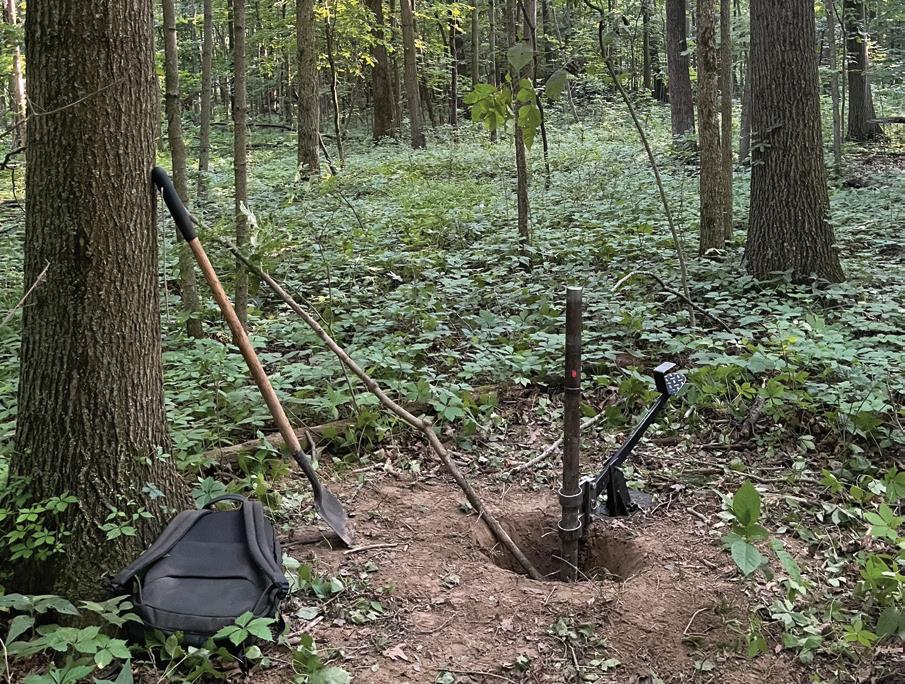
This project investigates how agricultural management influences the vertical distribution of soil carbon fractions and microbial biomass in Southeastern Michigan cropping systems compared to nearby forest systems. Soil samples were collected from multiple farms and forests and separated into POM and MAOM fractions using physical fractionation techniques. Microbial biomass carbon was measured using chloroform fumigation-extraction. Carbon concentrations and stocks are being analyzed across three depth increments (0–10 cm, 10–20 cm, and 20–60 cm) to evaluate differences among management systems and to examine relationships between microbial biomass and stabilized soil carbon pools. This research aims to improve understanding of the mechanisms that promote long-term soil carbon stabilization and to inform agricultural management strategies that enhance soil carbon storage.
Selected study farms in southeastern Michigan where soil samples were collected to analyze soil organic carbon fractions and microbial biomass across depth gradients.
Presenter: Natalie Neumann, MS (ESM)
Advisor: Inés Ibáñez
Location: Pellston, Michigan; Ann Arbor, Michigan, USA
Understanding the dynamics of early-stage tree establishment is an important goal for land managers and restoration ecologists. The ability of tree seedlings to establish may be threatened by changing climatic conditions, such as a warmer and earlier growing season and changes in annual precipitation. By investigating what factors are associated with seedling mortality and growth, we may be able to better predict what conditions are ideal for tree establishment. This study seeks to examine what factors are associated with tree seedling growth and survival, using over 10 years of growth and survival data from a seedling transplant experiment. I examine what environmental conditions are associated with the growth and survival of Acer saccharum, Acer rubrum, and Quercus rubra tree seedlings in northern and southern Michigan. Results indicate that precipitation, temperature and light are important factors in seedling establishment, and that the impact of these factors on demography may be positive or negative depending on the time of the growing season, and if the seedlings were located in the north or south. Further, we found that the type of mature trees the seedlings are growing under may not have a large impact on their growth or survival. Overall, by investigating what factors are associated with seedling mortality and growth, we are better equipped to predict how changes in environmental conditions may impact tree establishment.
Presenter: Madisyn Guza, MS (ESM)
Advisor: Brian Weeks
Locations: University of Michigan Museum of Zoology, Ann Arbor, Michigan; Field Museum of Natural History, Chicago, Illinois, USA
Sexual dimorphism is a key feature of biodiversity, where males and females within a species differ in size, coloration, ornamentation or behavior. While many studies have sought to understand the patterns and underlying mechanisms of sexual dimorphism, only a handful have assessed differences in the rates of evolution between sexually dimorphic and sexually monomorphic species. Passerine birds provide a useful system for investigating dimorphism because they represent two in every three birds on the planet and exhibit a wide range of morphologies. Our objective is to investigate whether the evolutionary processes governing variation in overall body shape differ between sexually dimorphic and sexually monomorphic passerine birds. Our analyses encompass over a thousand species and use differences in overall skeletal size and a metric of sexual dichromatism as bases for classifying species as sexual dimorphic. We used ancestral state reconstruction, stochastic character mapping and multivariate Brownian motion models to analyze a high-dimensional dataset comprising 12 skeletal trait measurements across >1,000 bird species. When considering skeletal size, mass or color as the basis for sexual dimorphism, the rate of evolution trends faster in sexually dimorphic lineages relative to sexually monomorphic lineages. While the strength of these results varies, they signal that evolutionary pressures are relatively strong in sexually dimorphic species, within the most diverse group of living birds.
Presenter: Neal Harbaugh, MS (ESM, GDS)
Advisor: Inés Ibáñez
Location: University of Michigan Biological Station, Pellston, Michigan, USA
Temperate forests are important carbon sinks, but their annual carbon balance is shaped by different periods of carbon uptake and release across the year, and many site-level studies do not determine whether climate affects carbon exchange evenly through the year or more strongly in certain seasons. To address this gap, we used a 15-year record from the University of Michigan Biological Station (UMBS), a northern temperate aspen-hardwood forest, to examine how weather conditions influence weekly net ecosystem exchange (NEE) across the year and to assess how those sensitivities change under CMIP6 climate scenarios. We used weekly NEE data from AmeriFlux/FLUXNET and analyzed it with a model that captured the forest’s normal seasonal patterns while showing how temperature, precipitation and sunlight changed carbon exchange from one week to the next. We then tested how well the model matched the observed data and used it to explore how carbon exchange could respond under five future climate pathways. UMBS remained a persistent annual carbon sink, but most of that sink strength was concentrated in a relatively short summer period. Sunlight had the strongest influence during peak canopy activity, precipitation mainly affected sink strength during the same interval, and temperature had more variable effects during transition seasons and colder months. Under warmer and more intense future climate pathways, annual sinks weakened progressively, showing that future temperate-forest carbon balance depends not only on how much climate changes, but also on when those changes occur during the year.
Presenter: Yaxuan Guo, MS (ESM)
Advisors: Elizabeth Tibbetts; Brian Weeks
Location: Ann Arbor, Michigan, USA
Pollinators are vital for maintaining ecosystem functions and agricultural productivity, and they are facing significant global declines due to multiple stressors, including habitat loss, climate change and exposure to agrochemicals. While extensive studies have examined insecticides and honeybees (Apis mellifera), the impacts of widely used herbicides and their adjuvants on a broader range of pollinating insects remain poorly understood. Dicamba, an auxin-type herbicide, has been increasingly applied following the adoption of dicamba-resistant crop systems, raising concerns about its drift and exposure to non-target organisms, including pollinators. This study investigates the effects of
dicamba and the adjuvant Preference® on survival in honeybees and the European paper wasp (Polistes dominula). We set up four treatments: a water control, a Preference®-only treatment, a drift-rate dicamba and Preference®, and a field-rate dicamba and Preference®. Individuals were exposed either through direct spraying or indirectly through contact with treated vegetation. Results showed that direct exposure to both dicamba and Preference® caused high levels of mortality in honeybees and wasps, though wasps survived better than honeybees across all treatments. In contrast with direct spray, indirect contact with the treated plants did not influence honeybee survival. Overall, our results show that direct exposure to dicamba and Preference® is harmful to pollinators. Currently, the U.S. Environmental Protection Agency does not require toxicological testing of adjuvants such as Preference®, but our findings suggest that comprehensive risk assessment, including multi-species and adjuvants, may be important for protecting pollinator health.
Presenter: Taylor Juleen, MS (EJ)
Advisors: Heidi Hausermann; Ivette Perfecto
Location: Veracruz, Mexico
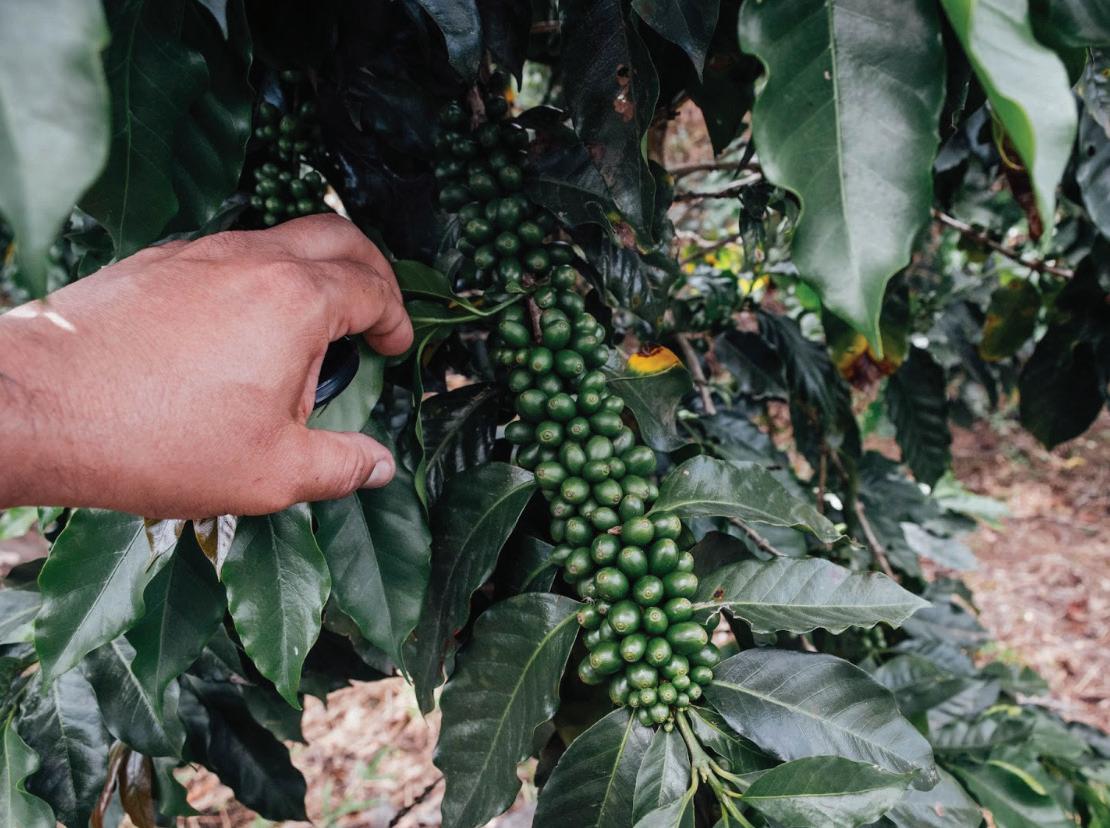
This work examines how “robustization”—the shift from shadegrown Coffea arabica to sun-tolerant Coffea canephora (robusta)—reconfigures agrarian and ecological relations in Veracruz’s central highlands. Drawing on critical agrarian studies and financialization theory, I trace how the climate crisis has become an entry point for new forms of corporate enclosure in the coffee sector. Transnational corporations (TNC) such as Nestlé have expanded control through “climate-smart” programs that promote robusta cultivation in zones historically dedicated to diversified arabica systems. Because robusta requires full sun, its promotion entails forest clearing and canopy reduction, driving deforestation in regions once managed as biodiverse agroforestry landscapes (Jha et al., 2014; Rice, 2018). Framed as climate adaptation, these initiatives mask deeper capitalist restructuring—redirecting capital flows, labor relations and land-use patterns in ways that erode biodiversity and local livelihoods. Drawing on fieldwork with coffee cooperatives, this paper situates robustization within broader green financialization dynamics (Fairbairn, 2020; Clapp & Isakson, 2018), examining how “sustainability” narratives legitimize the conversion of shaded agroforests into investor-friendly commodity frontiers.
At the same time, smallholders and cooperatives are developing counter-strategies rooted in agroecological transition and collective vertical integration—reasserting local control over value chains and forest ecologies (Toledo & Moguel, 2012; Bacon et al., 2021). Framed through feminist political ecology, this analysis highlights how everyday resistance to TNC-led climate interventions opens space to reimagine autonomy, biodiversity stewardship and justice in tropical coffee landscapes. Ultimately, these farmer-led projects reveal the political limits of corporate sustainability and the emancipatory potential of grounded, participatory agroecological transitions rooted in care and epistemic resistance.
Presenters: Tyler Bunday, MS (EJ, ESM); Sofía Jordan, MS (ESM); Isabela Miñana Lovelace, MS (BEC, EJ); Qia Tan, MS (SusDev); Ethan Zerger, MS (ESM)
Advisors: Ivette Perfecto; John Vandermeer
Location: Utuado, Puerto Rico, USA
Clients: Instituto para la Investigación y Acción en Agroecología Puerto Rico
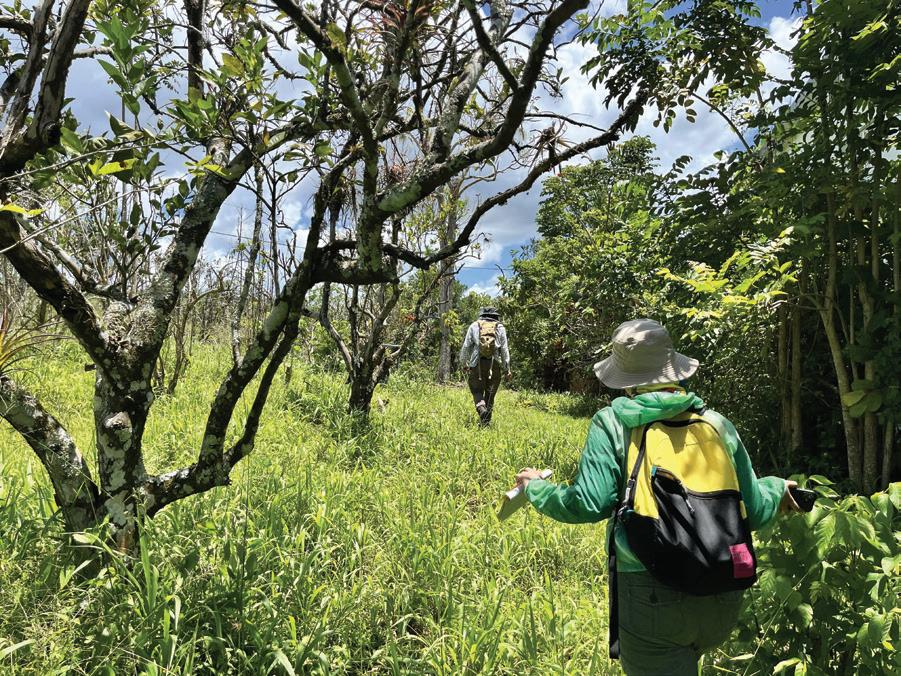
Effective agroecological research must center on the needs and perspectives of peasant farmers to support their efforts to build autonomy and transform extractive systems. In this study, we investigate the intersection of biodiversity, ecosystem services and just transitions by partnering with the Instituto para la Investigación y Acción en Agroecología (IALA-PR). This organization recently acquired a coffee farm in Utuado, Puerto Rico, with a goal of transforming it
into an agroecological hub, educational model, training center and social convening space for the region, deepening environmental justice and just land use frameworks. Our study employed a mixed-methods approach, generating a baseline ecosystem service review of the farm and conducting interviews with stakeholders in the farmer network to better understand sentiments surrounding sustainable transitions. This study also incorporated literature reviews, biocontrol agent ecological surveys, and participatory workshops with academics, farmers, NGOs and activists. The key results from our work to cultivate the coffee farm as an agroecological hub include a species distribution, pest damage density and an educational farm tour route with the locations of key ecological resources and cultural symbols on the farm. We discuss how this information can be used to improve the use of biocontrol agents and further strengthen the peasant farmer network in the formation of an agroecological landscape. These findings suggest that exploring factors that influence coffee pests can reveal the potential ecosystem services that can assist in the transition away from synthetic input reliance and toward peasant farmer autonomy.
Presenters: Shreya Joshi, MS (SusSys); Katie Kowal, MS (SusSys); Tzu-Ting Lin, MS (SusDev); Mariana Lopes, MS (SusSys), MBA
Advisors: Peter Adriaens; Lis Huang
Location: Saginaw Basin Watershed, Michigan, USA
Clients: Michigan College of Engineering Center for Digital Asset Finance; LimnoTech; Triangle Digital
Farmers in the Great Lakes Region (GLR) face significant operational and environmental costs, with agricultural finance often lacking incentives for sustainable farming practices. Conventional financial flows support productivity but overlook negative environmental impacts, such as nutrient runoff and greenhouse gas emissions—contributing nearly one billion tons of carbon emissions annually from fertilizer use. Addressing these risks demands innovative financial frameworks that reward farmers for adopting sustainable best management practices. The University of Michigan Center for Digital Asset Finance Lab, in partnership with LimnoTech and Triangle Digital, is developing a new financial product to improve grower financial resilience.
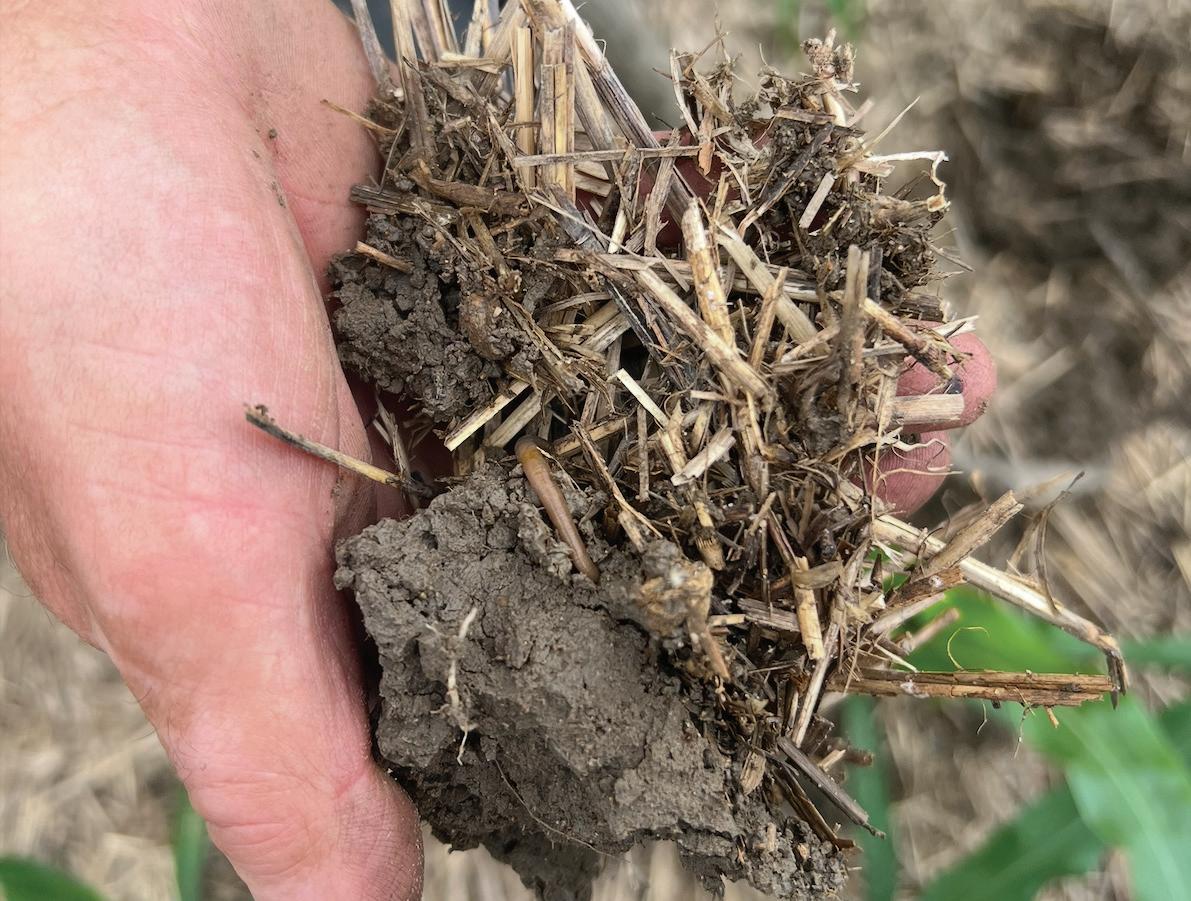
Our project investigated how financial instruments could potentially capture grower's knowledge on sustainable farming practices and be communicated to investors, improving the farm financial resiliency.
The 2025-2026 SEAS capstone team’s research objective was to inform digital product development, specifically the UX/ UI phases, through a human-centric approach in the Saginaw Bay watershed. Understanding the agricultural financial system from the grower’s perspective guided our team’s data architecture, ensuring capital markets can realistically link sustainability outcomes to farm income and lending.
Relationship-building was crucial to our fieldwork, which included visiting farms, meeting growers and gaining firsthand insight into their operations. Data was collected via surveys and financial documents, securitized for team distribution, and analyzed with emerging AI-driven tools, informing our project’s scalability and adherence to a human-centric design.
Our results yielded valuable insights into grower behavioral and financial economics, shaping UX/UI and strategy phases of product development. An active working paper explores AI-based interview analysis, strengthening human-centric design methods for future expansion. As we transition to the incoming SEAS capstone team, a project ecosystem map was developed to support institutional knowledge transfer and long-term project management.
Presenter: Fime de la Fuente/Simón, MS (EJ, ESM)
Advisor: Ivette Perfecto
Location: Puerto Rico, USA
The coffee industry in Borikén, or Puerto Rico, is clouded by complementary, contradicting and divergent narratives tied up in a history of colonization, globalization and local identitarian movements. In the past three decades, transnational corporations have bought out heritage Puerto Rican coffee brands while local bean production has fallen over 90% due to a legacy of industrialization, climate change and a debt-crippled economy. As a result, large-scale roasters are increasingly more reliant on cheap, imported beans, which they blend with local coffee and market as “developed in Puerto Rico.” Smallholders struggle to pay U.S. prices for labor and inputs, and either sell their beans green or produce less competitive, expensive “specialty” batches. Meanwhile, NGOs offering fiscal and technical support have emerged from both the local agroecology movement and foreign corporations. This study examines the intersections of global coffee trade politics, local agrarian geographies and social organizations involved in coffee production. Through archival research, ethno-photography and participatory interviews, we worked with small-, medium- and large-scale farmers; local and transnational roasters; NGOs; agronomists; and local government employees. The analysis reveals a complex matrix of influences. 1) Oligopolies dominate the industry with intensive agriculture, mass imports and commercial processing. 2) NGOs supporting smallholders are funded by the same companies driving intensive production. 3) Despite receiving NGO assistance, small producers absorb externalities of transitioning away from an agroindustrial system. 4) Through NGOs, large companies co-opt agroecology as a “business solution to poverty” that serves public-private partnerships but leaves smallholders out.

Presenter: Shaoying Zheng, MS (GDS), MSI
Advisor: Meha Jain
Location: Ann Arbor, Michigan, USA
Smallholder wheat farmers in the Eastern Indo-Gangetic Plains frequently apply supplementary irrigation, yet the agronomic efficiency of high-frequency watering remains uncertain. While remote sensing offers a scalable tool for monitoring crop phenology, its capacity to distinguish fine-scale irrigation practices in fragmented agricultural landscapes is challenging. This study evaluates the detectability of marginal vegetative responses to varied irrigation frequencies (2 versus 3-4 applications) using time-series satellite imagery to assess the underlying necessity of additional watering. Using Sentinel-2 and high-resolution Planet (3m) data, post-cutoff phenological indices (NDVI, GCVI, NDMI, CIRE, NDI45) were extracted for HD2987 wheat plots larger than 60 square meters. Given observed temporal variations, separate Random Forest classification models with 5-fold cross-validation were trained for normal and later planting groups. Features were selected based on mutual information scores, focusing on maximum values and Area Under the Curve (AUC) after the expected third irrigation. The results indicated that while models for normal planting consistently outperformed those for later planting, overall predictive accuracy remained suboptimal for reliable classification. Rather than a methodological failure, this inability to clearly differentiate irrigation frequencies demonstrates the limited phenological impact of supplementary water. Ultimately, this research establishes the limits of optical remote sensing in detecting high-frequency irrigation and suggests that additional applications provide inefficient vegetative returns in these systems.
Presenter: Hantao Wang, MS (GDS)
Advisor: Meha Jain
Location: Chhattisgarh, India
This study addresses the challenge of distinguishing between direct-seeded rice (DSR) and transplanted rice (TPR) cultivation practices in Chhattisgarh, India. Both methods have distinct environmental impacts, making their accurate mapping vital for sustainable agricultural management. The study aims to classify and map DSR and TPR using multisensor remote sensing data (Sentinel-2 and Sentinel-1) and machine learning techniques. Specific objectives include identifying spectral and temporal signatures of each practice, developing a reliable classification model, assessing environmental implications and supporting policy decisions for sustainable crop planning. Sentinel-2 optical imagery and radar data from Sentinel-1 is preprocessed on Google Earth Engine through cloud masking, atmospheric correction and spectral index extraction. A Random Forest classifier is trained with labeled data to discriminate between DSR and TPR fields based on spectral, temporal and radar backscatter features. The outcome is a set of high-resolution maps delineating DSR and TPR cultivation zones. These maps not only enhance understanding of cropping patterns and their environmental impacts but also guide policymakers in promoting water-efficient and sustainable rice production practices in Chhattisgarh.
Presenter: Xinyuan Liu, MS (ESM)
Advisors: Ivette Perfecto; John Vandermeer
Location: Puerto Rico, USA
Biological control of agricultural pests is a critical mechanism in agroecology. While complex species interactions, such as intransitive competition (rock-paper-scissors dynamics), are known to maintain biodiversity, their integration with predator-prey dynamics often generates non-linear complexities that defy simple additive assumptions. Extensive theoretical work has explored scenarios where a top predator consumes a member of an intransitive triplet; however, there remains a significant knowledge gap regarding systems where an external prey species functions as an asymmetric energy source exclusively for one specific competitor within the triplet. To address this, we developed a five-dimensional ordinary differential equation (ODE) model to investigate an asymmetric intransitive triplet coupled with a prey population. Grounded in empirical observations of ant species and the pest Coffee Berry Borer in Puerto Rican coffee agroecosystems, this revamped model bridges the predation and intransitive competition subsystems using a diffusion term. Parameterized numerical simulations reveal that the predation rate coefficient (γ) drives critical phase transitions in the system. Specifically, at the critical threshold γ=4.20, the system approaches a stable equilibrium, whereas an exceeding γ (4.70) induces highly complex, chaotic behaviors in the system. A stabilizing effect has also been found with increasing diffusion, as expected. Ultimately, this research demonstrates that asymmetric resource inputs fundamentally alter competitive topologies, providing theoretical insights into the efficacy and stability of autonomous biological pest control in agricultural systems.
Presenters: Kejia Chen, MS (SusSys); Licieli Olivo, MS (SusDev); Annika Throne, MS (SusDev); Tianqi Xu, MS (SusSys)
Advisor: Erik Petrovskis
Location: Grand Rapids, Michigan, USA
Client: Meijer
Retailers are increasingly recognizing the critical link between food systems and the environment. Consumers similarly have a growing awareness of food supply chain issues. Regenerative agriculture has been proposed as a framework to restore soil health, promote biodiversity and improve water management.
As a food retailer since 1934, Meijer has been committed to sourcing fresh, local produce. Alongside Meijer’s
commitment to sustainability, engaging in regenerative agriculture will ensure the long-term viability of their supply chain. This project sought to create a comprehensive roadmap with key strategies and mechanisms for regenerative agriculture engagement.
Methods included a literature review, competitor benchmarking, internal benchmarking, a supplier survey, site visits and interviews, focused on produce suppliers. Data were predominantly analyzed thematically to identify opportunities and critical gaps, incorporate stakeholder feedback and shape a successful engagement strategy.
Findings reflect producer interest in regenerative agriculture and early engagement across the industry, but educational, financial and technical support remain limited. Producers and suppliers have yet to identify strong consumer interest. They also show a need for flexibility, outcome-based approaches, collaboration and consideration of context and site-specific conditions.
The roadmap suggests short-, medium- and long-term actions. Key mechanisms include external partnerships for collaboration and research, producer education resources, informational releases and data reporting, and marketing initiatives to build capacity, heighten producer adoption, and create stakeholder interest. This will support the recommended producer engagement program in the long-term. This allows Meijer to take transformative steps to expand regenerative agriculture practices, improving the long-term impacts and resiliency of their supply chain.
Presenters: Milan Anderson, MS (ESM); Yuxuan Gao, MS (ESM); Ruilin Meng, MS (ESM); Qan Xu, MS (ESM)
Advisor: Shannon Brines
Location: Ann Arbor, Michigan, USA
Clients: Nathan Ayers; Ken Asmus, Oikos Tree Crops and Michigan Agroforestry Working Group
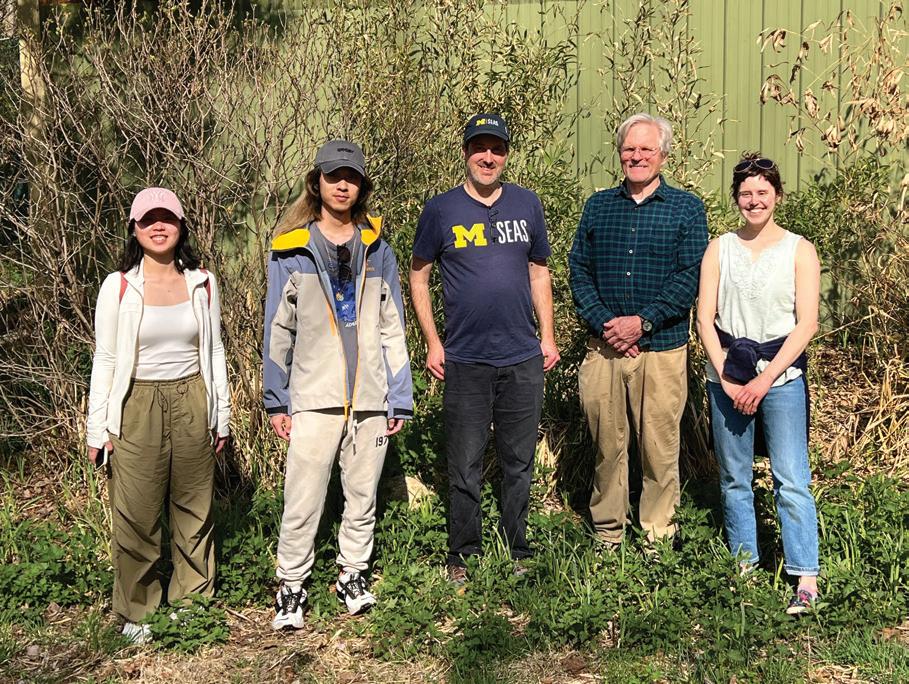
Agroforestry, the integration of trees with crops or livestock, offers transformative ecological and economic benefits but remains underutilized in temperate regions like Michigan. This project addresses critical barriers to agroforestry adoption—limited experiential knowledge, lack of scalable models and inadequate visualization tools—by documenting and analyzing a 40-year-old agroforestry system at Oikos Tree Crops. Through geospatial mapping, ecological evaluation and stakeholder engagement, this part of the project will create a digital database, a crop scalability ranking system, and educational materials to empower farmers, policymakers and conservation groups. Collaborating with the Michigan Agroforestry Working Group, this initiative aims to bridge the gap between research and practice, fostering resilient agricultural landscapes.
In addition to addressing the gap in knowledge on visualization tools for agroforestry implementation, we also sought to address limitations in knowledge regarding the marketability of lesser-known, productive agroforestry crops. To do this, we worked with Ken Asmus of Oikos Tree Crops to determine six highly marketable and scalable tree crops that people can incorporate into agroforestry growing systems. Using harvests from these crops, we developed 10 value-added products and offered taste tests at several locales in Southeast Michigan to collect consumer feedback. We documented product-development methods and consumer data. We coupled this information with information requests from growers to create educational materials that are tailored to their needs, concerns and interests.
Presenter: Jiangpan Bian, MS (GDS)
Advisor: Meha Jain
Location: Ann Arbor, Michigan, USA
Food security remains one of the most pressing global challenges, and ensuring stable agricultural production has become increasingly difficult under the influence of climate variability. Wheat is a staple crop critical to global food security, particularly in India, where smallholder farming systems dominate the agricultural landscape. Smallholder agriculture is characterized by fragmented fields, heterogeneous management practices and limited mechanization, which introduce significant spatial variability in crop production. Understanding the factors influencing crop yield in such systems is therefore essential for improving agricultural productivity and resilience.
This study aims to investigate the relationships between wheat yield, sowing date and field size in smallholder agricultural systems in Uttar Pradesh, India. High spatial-temporal resolution remote sensing data from Sentinel-2 were used to estimate wheat sowing dates and crop yield across three districts: Deoria, Gorakhpur and Maharajganj. Remote sensing-based models were applied to derive sowing date and yield at the field level, and statistical analyses were conducted to examine the relationships among yield, sowing date and field size.
The results indicate that wheat yield shows a positive relationship with field size, while the relationship between yield and sowing date is relatively weak. These findings suggest that structural characteristics of smallholder farming systems, such as field fragmentation, may play an important role in shaping yield variability. This study demonstrates the potential of high-resolution remote sensing data for analyzing agricultural production patterns in smallholder systems and provides insights for improving agricultural management and food security.
Presenter: Jeremy Goldberg, MS (ESM)
Advisors: Jennifer Blesh; Brendan O'Neill
Location: Kellogg Biological Station, Hickory Corners, Michigan, USA
Nitrogen (N) loss from fertilizers in agricultural systems poses an ongoing threat to human and ecosystem health while also representing a waste of the effort and resources utilized in producing and applying fertilizers. Simultaneously, the nitrogen in wastewater poses a substantive environmental risk and consequently demands removal at wastewater treatment plants—another expensive and energy-intensive process. To address both of these issues, there is an ongoing effort to capture N waste (urine) before it enters wastewater streams and process it into a urine-derived fertilizer (UDF). Previous research found that ammonia volatilization was a significant loss pathway for UDFs. This project aimed to measure the ammonia volatilization from UDF at the Kellogg Biological Station as part of their Long Term Agroecosystem Research (LTAR) project. UDF was tested in their ‘aspirational’ and ‘business-as-usual’ systems at varying rates. The ammonia volatilization was measured in the field using Semi-Open Ammonia Chambers adapted from Araujo et al 2009. This experiment showed considerable ammonia volatilization in the first three days following fertilization, that co-application of compost with UDF did not significantly change the rate of ammonia volatilization, and that ‘aspirational’ management had an absolute reduction in ammonia volatilization relative to ‘business-as-usual.’
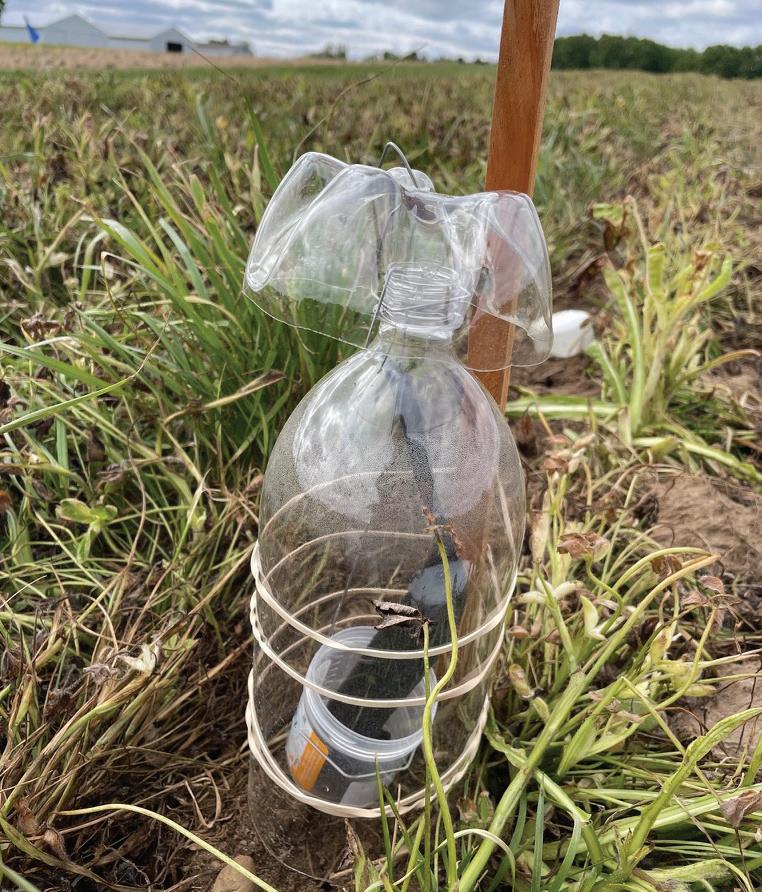
Semi-open ammonia chambers deployed at Kellogg Biological Station.
Presenter: Amelia Clark, MS (ESM)
Advisors: Jennifer Blesh; Brendan O'Neill
Location: Lenawee County, Michigan, USA
Phosphorus, charismatically called “The Devil’s Element,” presents a management challenge in agricultural systems. Insufficient availability limits crop yields and productivity, while excesses can cause increases in weed and pest pressure and eutrophication of waterways. This problem is particularly acute in the Lake Erie basin, with harmful algal blooms caused by nutrient pollution putting pressure on farmers and local governments to find ways to tighten nutrient cycling and reduce phosphorus losses.
Phosphorus is stored in soils in a number of different forms, and its relative accessibility is dependent on a variety of soil characteristics and processes, as well as plant and microbial activity. Land management practices can influence these processes, but the magnitude and directionality of these effects can vary significantly by region and have only been partially assessed in the Lake Erie watershed.
In this project, I compare soil phosphorus test results (Bray, Mehlich, and a modified Hedley protocol) with a set of soil characteristics known to influence phosphorus and a gradient of land management practices as obtained from farmer interviews. Specifically, I examine the impact of cover cropping, crop diversification and functional groups on the forms phosphorus takes in soil in a subset of row cropped fields in the Western Lake Erie Basin (WLEB) and discuss the potential implications for further research and farming practice.
Presenter:
Xiaoyuan
Wang, MS (EPP)
Advisor: Shelie Miller
Location: Michigan, USA
Modern high-density apple orchards depend on irrigation and nitrogen fertilization to maintain yield, but these practices can also increase nitrate leaching and gaseous nitrogen losses, creating a trade-off between productivity and environmental performance. This project aims to evaluate how alternative water-nitrogen management regimes influence both field-scale biogeochemical outcomes and cradle-to-retail life-cycle burdens in a mature apple orchard in Southeastern Michigan. I use DNDC 9.5 in site mode to simulate a 22-year orchard system, including a four-year initialization period and an 18-year reporting window, under three management scenarios: conventional drip irrigation with separate nitrogen applications, scheduled fertigation, and sensor-guided precision fertigation. The model tracks marketable yield, ammonia, nitrous oxide, nitric oxide, methane, nitrate leaching, and soil organic carbon change; these outputs are then integrated into a life-cycle inventory that also includes fertilizer production, irrigation water, pumping electricity, field hardware, packaging, cold storage, transport, and retail refrigeration. In the common-input comparison, the scheduled and precision systems both produced substantially higher marketable yield than the conventional system, while also reducing ammonia loss and nitrate leaching; however, the precision scenario shifted part of the remaining nitrogen loss toward higher N2O emissions. The purpose of this research is to identify orchard management strategies that improve nitrogen and water efficiency while clarifying the environmental trade-offs associated with management intensification.
Presenter: Shaman Garcia, MS (ESM)
Advisor: Sara Ana Adlerstein Gonzalez
Location: Burt Lake, Michigan, USA
Client: YMCA of Ann Arbor, Camp AGQ, Michigan
Natural areas that serve as community gathering spaces often lack accessible ecological information, limiting opportunities for visitors to understand the environmental systems that shape their experiences. Camp AGQ is one such landscape, containing diverse habitats, plant communities and forested areas that play important ecological roles, yet previously had no comprehensive field-based resource documenting these features or evaluating their environmental contributions.
The objective of this project was twofold: first, to create an ecological field guide describing the biotic and abiotic characteristics of the Camp AGQ property for campers and community members; and second, to estimate the property’s contribution to carbon storage by conducting a forest carbon analysis. Together, these efforts aimed to enhance ecological awareness while providing a baseline understanding of the site’s potential carbon neutrality.
To accomplish these goals, field surveys were conducted across the property to identify plant species, habitat types and notable ecological features. Transects and sampling plots were established in forested areas, where tree diameter, height and other allometric measurements were recorded for both canopy trees and understory vegetation. These measurements were used to estimate aboveground biomass and associated carbon storage. The collected ecological information was then synthesized into a structured field guide designed for broad community use.
The resulting guide provides an accessible educational resource highlighting the ecological richness of Camp AGQ, while the carbon analysis offers an initial estimate of the forest’s carbon storage capacity, supporting future conservation planning and fostering continued environmental curiosity among the AGQ community.
Presenters: Natalie Dwortz, MS (SusSys); Eliana Provizer, MS (BEC); Melika Sizar, MS (BEC, EJ)
Advisor: Geoffrey Lewis
Location: Ann Arbor, Michigan, USA
Clients: Ann Arbor Hands-On Museum; Leslie Science and Nature Center

The Ann Arbor Hands-On Museum (AAHOM) and Leslie Science and Nature Center (LSNC) are central to the Ann Arbor community, providing educational experiences that inspire curiosity and learning. Both institutions recognize their responsibility to model sustainable practices and educate visitors on environmental stewardship. To advance these goals,
they requested a sustainability and emissions analysis to understand their current environmental impact and identify opportunities for improvement in both operations and exhibits.
Focusing on the AAHOM’s main building, Exhibits Warehouse and the LSNC, we conducted a baseline emissions analysis for 2024 based on energy use, visitor travel, field trip travel, employee commuting, water use and waste generation, relying on utility bills and travel data. We also calculated historic energy and water use using existing records to assess changes in emissions over time.
Finally, through conversations with AAHOM employees and visits to the museum and LSNC, we conducted an exhibit inventory to evaluate sustainability education offerings at the AAHOM. Our analysis resulted in concrete recommendations for increasing operational sustainability and sustainability education at the museum, with a specific focus on energy efficiency, improved data collection and exhibit updates.
Presenters: Leah Bieniak, MS (EJ); Daniela Cruciani, MS (EPP); Tiffany Harris, MS (EJ); Cole Prescott, MS (EJ)
Advisors: Andy White; Kyle Whyte
Location: Ann Arbor, Michigan, USA
Client: Native Lands Advocacy Project of Village Earth
Over the past few decades, researchers and international institutions have published an array of statistics and statements that broadly describe the conservation status of the lands that Indigenous Peoples occupy. While land statistics are often researched and communicated for the sake of human rights, they also pose distinct ethical challenges, such as lack of consent from and control by Indigenous Peoples and the tendency of public data to be reinterpreted across audiences. The objective of this research was to determine a possible framework for more ethical production of Indigenous land data based on the work of several contemporary Indigenous rights organizations. This research was conducted through a literature review on the history of colonial production of data on Indigenous People and contemporary production and dissemination of Indigenous statistics. Interviews were conducted with members from two Indigenous rights organizations, the Native Lands Advocacy Project of Village Earth and the Rights and Resources Initiative, to assess strategies for mitigating key ethical concerns with Indigenous land statistics. This research has indicated that ethical problems with generalized Indigenous land statistics can be addressed by establishing kinship networks of reviewers and advisors, remaining open to revision and critique, and grounding the work in the agency and sovereignty of Indigenous Peoples rather than the goals of non-Indigenous institutions.
Presenters: Xinrui He, MS (ESM); Jade Jin, MS (SusSys); Paul Jonas, MS (BEC, ESM); Jerome Williams, MS (SusDev, SusSys)
Advisor: Peter Adriaens
Location: Ann Arbor, Michigan, USA
Client: Responsible Alpha
Biodiversity loss is increasingly recognized as a systemic financial and economic risk, yet current Environmental, Social, and Governance (ESG) frameworks often fail to incorporate biodiversity in a consistent, decision-useful manner. Many existing ESG metrics remain fragmented, anthropocentric or loosely defined, limiting their ability to capture naturerelated risks and dependencies in a way that supports long-term investment analysis. As global financial institutions face growing pressure to address nature-related disclosures, the lack of standardized biodiversity indicators creates uncertainty, reduces comparability and weakens accountability.
This research aims to evaluate how biodiversity is currently integrated into leading ESG frameworks and to identify structural gaps that hinder effective financial decision-making. Our objective is to propose clearer, more standardized biodiversity-linked metrics that better align ecological science with investment practice.
To achieve this, we employ a multi-method research design centered on documentary analysis, survey research and semistructured interviews. We systematically review major ESG frameworks, academic literature and institutional reports to map existing biodiversity indicators and assess inconsistencies. We distribute surveys to financial professionals and sustainability practitioners to gather quantitative insights on current practices and perceived barriers. In addition, we conduct interviews with asset managers, ESG analysts and policy stakeholders to capture qualitative perspectives on implementation challenges and materiality assessment.
Preliminary findings indicate substantial variation in biodiversity disclosure practices and limited metric standardization across institutions. By synthesizing analytical, survey and interview data, this research seeks to develop practical recommendations that enhance transparency, comparability and the integration of biodiversity considerations into ESGdriven investment strategies.
Presenter: Yiming Tan, MS (SusSys), MSE
Advisors: Michael Craig; Brian Ellis
Location: Southeastern Michigan, USA
Large-scale, long-duration hydrogen storage is essential to enabling a hydrogen-based energy economy and decarbonizing the electricity grid and transportation sector. Underground hydrogen storage (UHS) offers advantages over above-ground alternatives in cost, capacity and safety, yet site-specific geologic assessments remain limited—
most existing estimates rely on idealized subsurface conditions rather than real formation characteristics. This thesis evaluates the underground hydrogen storage potential of Southeast Michigan by characterizing the region’s geologic storage options, including salt caverns, saline aquifers and repurposed natural gas storage facilities. For each storage type, formation properties such as thickness, porosity, depth and areal extent are assessed using well log data, published geologic literature and publicly available subsurface datasets. Leakage risk is examined as a function of depth, formation type and caprock integrity. Two candidate sites are selected for detailed case study analysis, where storage potential, leakage risk and capital costs—including cushion gas, drilling and operational expenses—are evaluated and connected to projected regional hydrogen demand using the Michigan Hydrogen Roadmap. Results reveal significant variability in storage capacity and cost across the study area, driven primarily by differences in formation depth and thickness. This work demonstrates that site-specific geologic characterization is critical for realistic planning of hydrogen storage infrastructure and for coupling subsurface potential with regional demand.
Presenters: Daniela Ifju, MS (EJ); Rezwana Islam, MS (ESM, SusDev); Jaedyn Medrano, MS (BEC, EJ); Sabrina Sugg, MS (BEC, ESM); Han (Aaron) Yang, MS (SusSys)
Advisor: Shelie Miller
Locations: Ann Arbor, Michigan; Los Angeles, California, USA
Client: Environmental Media Association

A report by the Sustainable Production Alliance found that the production of every big-budget film has a carbon footprint averaging 3,000 metric tons. Their findings highlighted the need for increased sustainability initiatives and climate action within Hollywood’s film and television industries, and helped prompt a partnership between the Environmental Media Association (EMA) and SEAS to analyze and refine the EMA Green Seal for Production (GSP). Our project team has evaluated the metrics of the GSP to not only ensure that it is being appropriately awarded to productions, but also to increase the quantitative data available on Hollywood’s sustainability efforts. As longtime advocates for environmental storytelling, the EMA encourages studios to “green” their plotlines and characters by giving awards for the incorporation of environmental messaging into their storylines. Our team will also be conducting qualitative analysis of sustainable practices and environmental values within the industry to support our quantitative recommendations. Our research will inform how EMA moves forward with awarding the GSP and encourages studios to engage in sustainable production habits, provide recommendations for how the EMA should proceed with its environmental communication efforts, and explores future considerations for how the advancement and direction of technology within the industry will impact sustainability initiatives. Ultimately, our goal is to increase the standardization of sustainability throughout Hollywood, causing a shift within the industry.
Presenter: Jiaying Zhou, MS (SusSys)
Advisor: Shelie Miller
Location: Ann Arbor, Michigan, USA
The United States has implemented various strategies to reduce municipal solid waste and greenhouse gas emissions, including initiatives promoting organic waste diversion and resource recovery. Ann Arbor, Michigan, demonstrates this effort through the A2ZERO Carbon Neutrality Plan, which aims to expand food waste diversion and reduce landfillrelated methane emissions. This study assesses the environmental performance of food waste management strategies in Ann Arbor using Material Flow Analysis (MFA) and Life Cycle Assessment (LCA). MFA results indicate the distribution of food waste across different treatment pathways, including landfill, incineration and anaerobic digestion. LCA results highlight the environmental impacts associated with each management option, particularly in terms of greenhouse gas emissions. Scenario modelling further demonstrates that shifting food waste from landfill to alternative treatment options such as anaerobic digestion could significantly reduce emissions and improve resource recovery. The integration of MFA and LCA provides a comprehensive and quantitative assessment of food waste management practices in Ann Arbor. The findings offer valuable insights for decision-makers and stakeholders seeking to improve local waste management strategies and support the city’s carbon neutrality goals.
Presenter: Kunyu
Yang, MS (GDS), MLA
Advisors: Benjamin Goldstein; Stan Jones
Location: Yucatán Peninsula, Mexico
Tourism-driven land transformation can dramatically affect tropical coastal ecosystems the world over, yet few studies have examined these impacts at high spatial resolution. Most previous research has relied on coarse land use data, while detailed analysis of specific tourism land uses, such as resorts, remains limited. We address this gap by integrating time series high-resolution resort mapping and carbon stock estimation in the Yucatán Peninsula, Mexico. We used highresolution (0.3 m) satellite imagery and machine learning to map resort areas from 1995 to 2025, analyze spatial and temporal patterns of related land conversion, and estimate carbon stock changes associated with forest loss and resort expansion. Results show that most land transitions occurred from forest to cropland and built-up area, with the largest forest to built-up area conversion between 2005 and 2010, coinciding with the peak of resort expansion. Resorts were concentrated along the eastern coastline, where forest loss and carbon reduction were most pronounced. Carbon stock declined continuously during the period, with the sharpest decrease 0.4×10³ Gg C km - ² during 2000–2005 within a 5km buffer. These findings demonstrate that resort development is a dominant driver of forest degradation and carbon loss in tropical coastal regions. The study provides high-resolution evidence for linking tourism growth to ecosystem carbon dynamics, offering scientific support for low-carbon and sustainable coastal planning.
Presenter: Aberdeen Leary, MS (EJ, ESM)
Advisor: Heidi Hausermann
Locations: Asamang Tamfoe and Bui Dam, Ghana
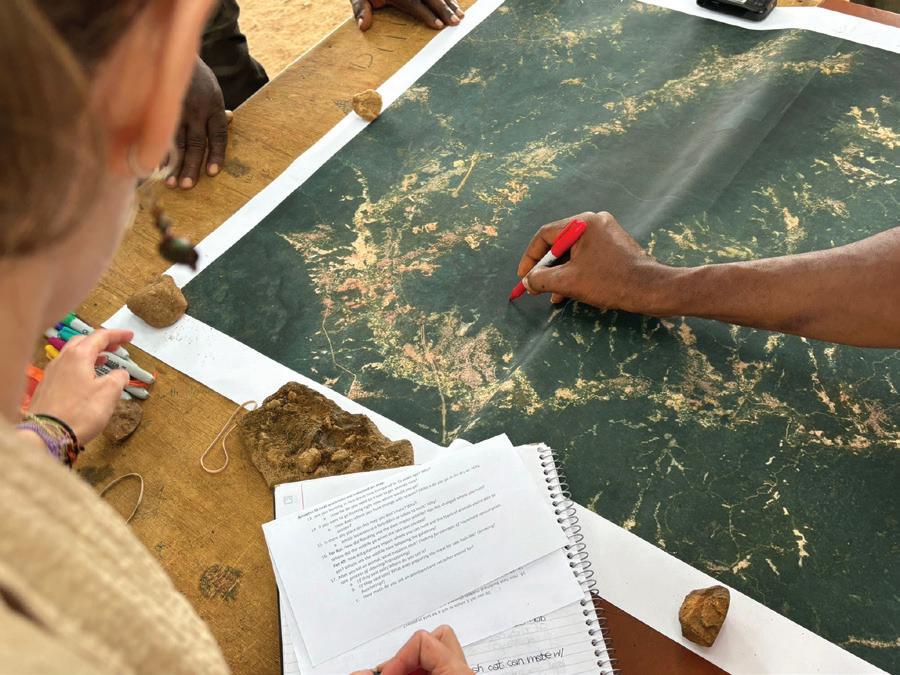
Landscape change fundamentally alters the land that humans and animals rely on, often with significant consequences for human-wildlife relations. While these changes are frequently driven by the state and international entities for broader capitalist development, the effects are felt most acutely at the local level. Studies in land change and wildlife sciences have shed a great deal of light on global biodiversity loss and policies for enhancing sustainable conservation. However, through an emphasis on the structure and function of landscape change, the power dynamics behind why change occurs are not often apparent. Further, global approaches to Participatory mapping exercise in Asamang Tamfoe, Ghana.
policy development tend to overlook local impacts of landscape change. This study aims to put land change and wildlife science in conversation with political ecology to understand the political and economic drivers of altered landscapes in two sites in Ghana—the first impacted by small-scale mining and the second by hydroelectric dam development. Through eight weeks of interviews with hunters, bushmeat vendors, community members and officials, we consider the effects that land change holds for health, livelihood, intergenerational knowledge and identity of rural land users. We ultimately contend that capitalist-driven landscape change plays a monumental role in reshaping human-wildlife dynamics through biodiversity loss, with consequences falling largely on communities that are both reliant on healthy ecosystems and have been excluded from the benefits of state-led economic development.
Presenter:
Advisors:
Zhiqing Huang, MS (GDS)
Meha Jain; Kai Zhu
Location: Chhattisgarh, India
My thesis addresses a persistent limitation in satellite-based crop monitoring in India’s monsoon season: dense cloud cover creates large gaps in Sentinel-2 observations, making field-level NDVI time series incomplete and hindering reliable phenology analysis. The research objective is to reconstruct cloud-affected Sentinel-2 rice NDVI time series for field polygons in Chhattisgarh, India, and to evaluate whether radar-optical fusion can provide more continuous phenology information for downstream tasks such as characterizing sowing windows and other key seasonal transitions.
I use field-level polygon boundaries with reported establishment information (e.g., direct-seeded vs. transplanted) and sowing-related dates, together with Sentinel-2 surface reflectance to compute NDVI and quantify data availability. To address temporal gaps, I extract Sentinel-1 SAR time series over the same polygons (VV/VH backscatter and derived ratios/differences) and pair SAR observations with cloud-free Sentinel-2 NDVI dates. The planned modeling approach starts with interpretable tree-based regression (Random Forest as a baseline, with gradient-boosted trees as extensions) to learn a mapping from Sentinel-1 features to Sentinel-2 NDVI and then generate synthetic NDVI values during cloudobscured periods.
Current progress has established the data pipeline for polygon-level Sentinel-2 NDVI and Sentinel-1 feature extraction and highlighted substantial monsoon-season observation gaps. The reconstructed time series will support clearer phenology profiles and provide a practical basis for comparing radar-assisted reconstruction against Sentinel-2-only baselines in cloud-prone settings.
Presenters: Dillon Foster, MS (SusDev); Doris Kiambati, MS (EJ, SusDev), MURP; Arjun Ramachandran, MS (SusSys)
Advisor: Andy White
Location: Narok, Narok County, Kenya
Client: Indigenous Livelihoods Enhancement Partners
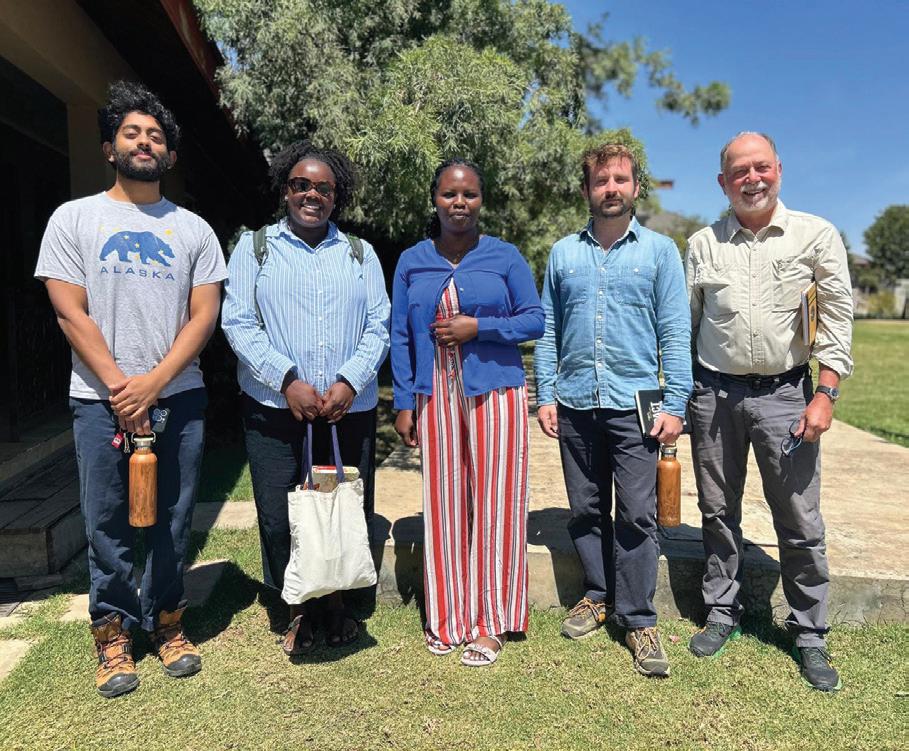
This project aims to document the scale of land loss and associated injustices meted on the Maasai Peoples of East Africa, tracing dispossession from the precolonial period to today. Utilizing an interdisciplinary approach, this project integrates archival documents, participatory mapping, legal case studies and academic literature to identify the key drivers, actors and socioeconomic impacts of land loss. The primary goal of this project is to visualize the spatial and temporal history of Maasai land loss, framing the associated injustices as both historical and legal issues while highlighting the lived experiences of displaced people.
Presenter: Huong Giang Duong, MS (GDS)
Advisors: Maria Carmen Lemos; Derek Van Berkel
Location: Lake Victoria, Africa
The cities in the Lake Victoria Basin are beginning to be considered as the potential destination of mobility in relation to climate changes, and they are also experiencing a high rate of urbanization, shortage of infrastructure and increasing climatic hazards. Yet planners in many of these cities must make consequential decisions about where growth can be accommodated with limited, fragmented and often outdated spatial data, particularly in informal and peri-urban areas. This study aims to support scenario-based planning for potential climate-migration inflows by developing an accessible, evidence-driven approach to identify where new settlement is more likely to occur and where it should be avoided due to environmental and infrastructure-related constraints.
Our data collections consist of heterogeneous open and remotely sensed data on three case-study cities: Kampala (Uganda), Eldoret (Kenya), and Mwanza (Tanzania), containing building footprint and heights, high-resolution population estimates, accessibility metrics, residential built-up surface, impervious-surface time series, and topographic and hydrologic indicators. These inputs are reconciled to a standard hexagonal grid and operationalize the concept of development as an increase in impervious/built-up surface between 2005 and 2025, which is measurable. We then estimate development probability on the basis of an exploratory logistic regression model and convert predicted probabilities into understandable development-potential classes.
Findings consist of citywide estimates of development probability, mapped as development potential surfaces and the principal correlates associated with historical growth. These outputs are additionally packaged in an online decisionsupport system (PIVOT) to support stakeholder-led exploration of climate-migration settlement scenarios and related policy options. The platform facilitates cross-city comparison and learning, and it provides a practical basis for cityspecific, risk-aware, and inclusive adaptation discussions.
Presenters: Megan DiFranco, MS (EPP, ESM); Kade Phoonsiri, MS (SusSys); Jianshen Yu, MS (SusSys); Edgar Venegas, MS (SusSys)
Advisor: Geoffrey Lewis
Location: Ann Arbor, Michigan, USA
Client: National Laboratory of the Rockies
Achieving a clean energy future for the world requires rethinking methods for reusing materials and resources while designing, using and repurposing solar photovoltaics (PV). This project explored pathways to a circular economy by examining key drivers, existing and emerging circularity strategies, major barriers, and policy solutions needed to create a closed-loop system for solar PV. The project generated actionable insights and recommendations in a findings report, policy database and U.S-specific case studies, working closely with researchers at the National Laboratory of the Rockies. The research process generated a literature review, stakeholder interviews and real-world validation to ensure findings reflected industry realities. Recommendations were provided to help integrate circular economy principles into solar PV industries, strengthening their role in a clean energy future.
Presenters: Mateo Garcia, MS (ESM); Natalie Nieman, MS (BEC, ESM); Mollie Stadlin, MS (EJ); Bionca Stewart, MS (SusDev)
Advisor: shakara tyler
Location: Detroit, Michigan, USA
Clients: Detroit Community Composting Collective Project; Sanctuary Farms; Detroit Black Community Food Sovereignty Network
In recent decades, a complex story has unraveled the tenuous relationship between Detroit’s residents and the waste they produce. This history of environmental injustice and extractive waste policy has left communities vulnerable in a city where times were already tough. As Detroit searches for new alternatives for waste management, a composting system that empowers residents rather than harms them holds the potential for radical change. The project objective is to engage community members, urban farmers and community organizations in composting education. Also, this research works to assess the gaps to implement citywide decentralized composting in Detroit through policy analysis, participatory ecological analysis and curriculum evaluation. Presented information will include case studies from municipalities across America, an economic analysis of composting’s
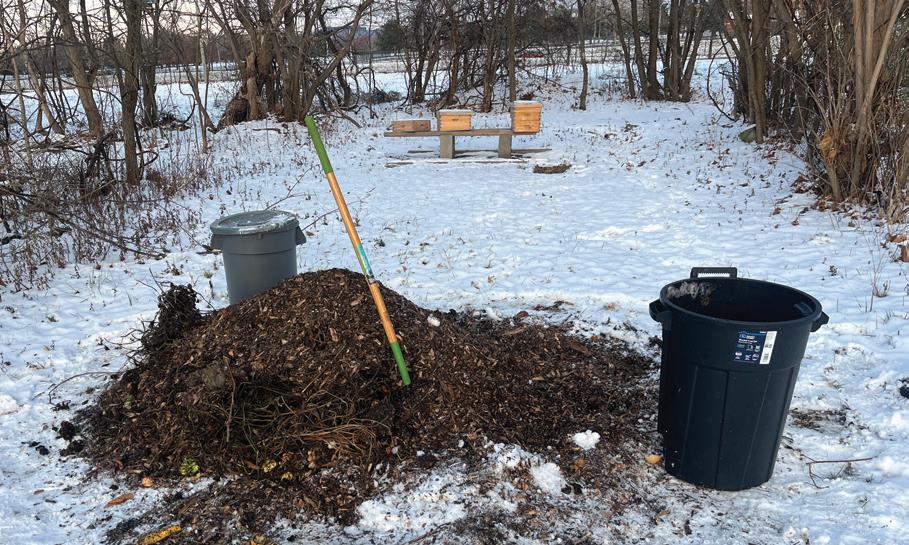
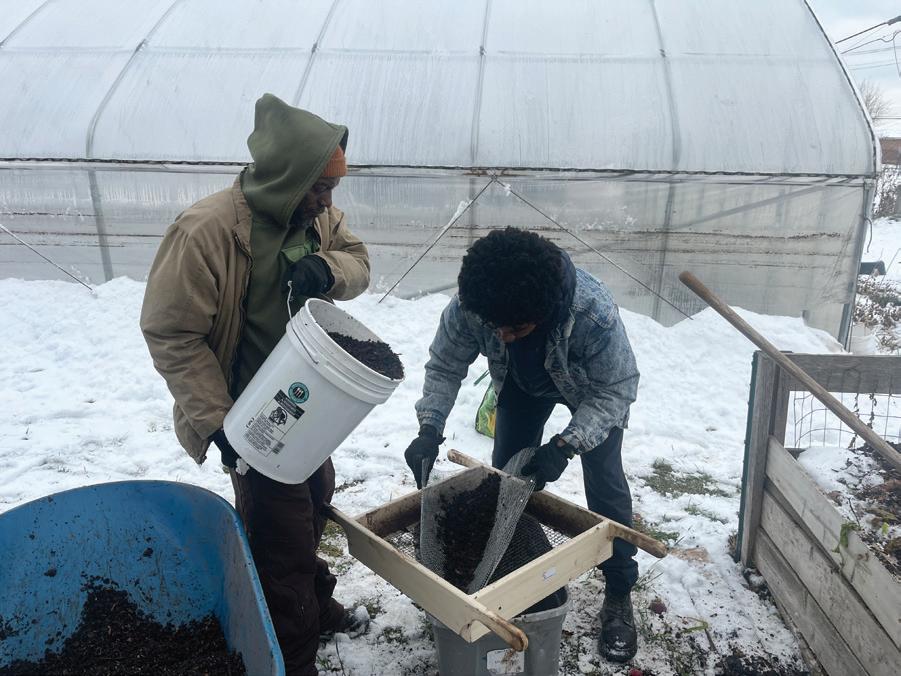
potential impacts for Detroit and its urban farms, assessments on composting quality and capacity from over 100 Detroit residents, and recommendations for the future of organic waste education for the city’s residents.
Presenters: Zeyuan Fu, MS (SusSys), MSM; Angela Lembang, MS (BEC); Sachi Patil, MS (SusSys)
Advisor: Erik Petrovskis
Location: Grand Rapids, Michigan, USA
Client: Meijer
In some communities, Meijer customers have limited access to recycling facilities. Toward this end, our team investigated and developed a solution to allow Meijer to boost recycling rates in the communities it serves. A mixed methods approach of primary and secondary research was used for this analysis. Initial research examined Meijer’s current recycling initiatives, also comparing competitors’ recycling programs, exploring customer interest and demand for other materials based on the survey. Recycling access investigations on ArcGIS were combined with a customer survey filled out by 1,765 mPerks rewards members. A per capita recyclables estimation alongside its breakdown of materials was calculated, before conducting an environmental and financial impact analysis. Finally, Meijer stores were ranked according to our priorities to lay a foundation for piloting the proposed customer recycling expansion.
Overall, the team proposes a recycling drop-off for plastic film and corrugated cardboard based on customer feedback, the competitor analysis and our gap analysis results. This would be compatible with currently used shamrocks, as well as be flexible in their placement indoors or outdoors based on the store layout. Team members would empty it throughout the day. Expanding customer recycling at Meijer could generate measurable environmental and operational benefits. Financial modeling indicates that stores with moderate to high and medium participation would reach break-even, usually within the year. These findings support a targeted pilot approach focused on high-volume materials and stores where recycling access is limited.
Presenter: Elissa Adamson, MS (EPP); Lily Buckley, MS (EPP); Meredith King, MS (BEC); Claire Newman, MS (EPP)
Advisor: Mike Shriberg
Location: Ann Arbor, Michigan, USA
Client: Great Lakes Business Network
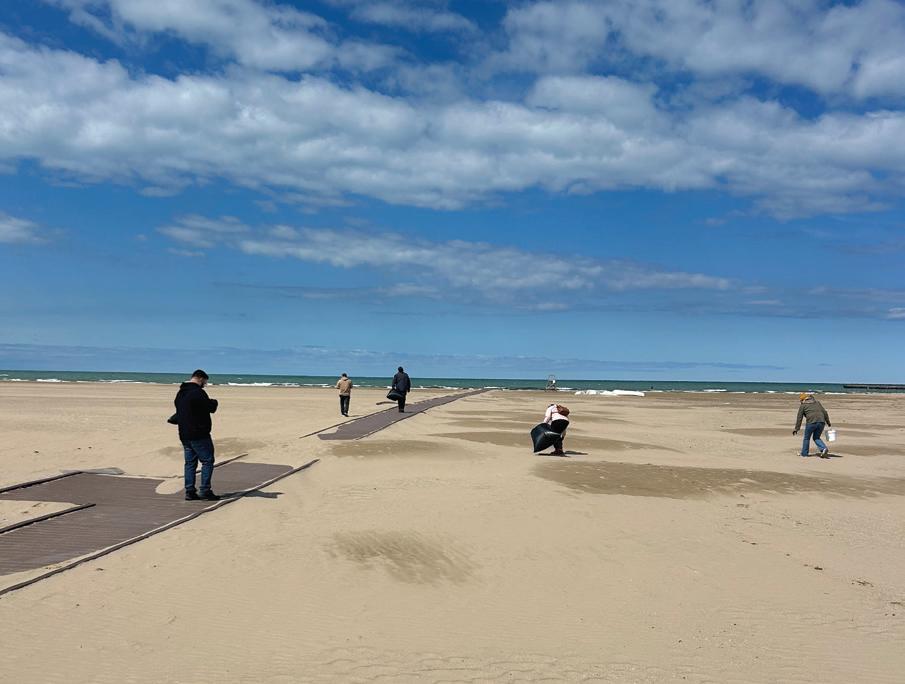
Microplastics are the most prevalent debris in oceans and the Great Lakes, as estimates show 10,000 metric tons, or 22 million pounds, of plastic debris enter the Great Lakes annually from the U.S. and Canada. This contamination poses negative human health, wildlife and economic impacts. Because corporate and consumer behavior in the U.S. is a prominent contributor to plastic pollution and a powerful force, this project aims to leverage business voices to address microplastic pollution in the Great Lakes. We partnered with the Great Lakes Business Network (GLBN), a network of over 200 businesses that leverages their voices to advocate for thriving ecosystems, economies and communities. Interviews with GLBN businesses showed a gap between their knowledge of and concern for microplastics, indicating a need for education, which was delivered through several webinars. Microplastics come from a variety of sources and are extremely difficult to remove, so our recommendations focus on preventative measures that cut pollution off at the source. These included a list of best practices for businesses to reduce their use of plastic, such as switching to alternative materials or buying in bulk. Through interviews, literature reviews, policy analysis and education, our team created a microplastics campaign plan and a new committee for the GLBN to drive forward institutional change in a focused and effective way.
Presenter: Yifanzi Zhu, MS (GDS), MLA
Advisors: Allen Burton; Stan Jones; Runzi Wang
Location: Michigan, USA
Microbial contamination remains a persistent challenge for surface waters and can increase human health risks during recreation, especially during wet weather when mobilization and transport of fecal sources intensify. This study aimed to quantify watershed-scale drivers of stream Escherichia coli (E. coli) concentrations and loadings across Michigan and to test how rainfall conditions modify these relationships and the probability of elevated E. coli.
We analyzed E. coli concentration and loading using linear mixed effects models to account for repeated measurements and hierarchical structure in the data. Watershed identity and year were treated as random effects to capture unobserved spatial heterogeneity and interannual variability, while fixed effects represented watershed attributes and source indicators, including MS4 facility counts, agricultural land percentage, manure application area, watershed area,
elevation, slope and soil texture fractions. Predictor sets were screened to reduce multicollinearity and retain variables with stronger associations with E. coli outcomes. Separate models and interaction terms were used to evaluate rainfall-dependent effects and to estimate changes in the likelihood of high E. coli under wet weather and flood-related conditions.
Model results identify the predictors most consistently associated with higher E. coli concentrations and loadings, quantify their effect sizes and show how wet weather alters these relationships. The findings provide evidence to guide watershed prioritization, source-focused interventions, and risk-informed recreational water quality management.
Presenters: Kristen Bashen, MS (EPP); Keyan Li, MS (EPP); Jenny Miller, MS (EPP); Adriana Nieto, MS (GDS, SusDev); Nathan Parr, MS (EJ); Riley Pohlman, MS (EPP)
Advisor: Mike Shriberg
Locations: Benton Harbor and St. Joseph, Berrien County, Michigan; Milwaukee, Wisconsin, USA
Client: Michigan Sea Grant
Compound flooding from a combination of heavy rainfall and high lake levels is causing significant damage to Great Lakes communities, with elevated impacts on low-income, minority populations. This project focuses on the coastal communities of Benton Harbor, Michigan, in Berrien County, and Milwaukee, Wisconsin. These communities are expected to experience compound flooding at increased intensities as a result of climate change. As local officials and experts consider flood mitigation infrastructure implementation, they must factor in a legacy of economic disinvestment, limited municipal resources and the needs of community members.
This project was developed in partnership with Michigan Sea Grant and aimed to build upon flood modeling efforts by U-M researchers, as well as previous and ongoing flood mitigation efforts in both communities. This project gathered technical, social and political insights through a literature review, semi-structured interviews and structured meetings with local officials and experts, and on-the-ground community engagement. This project also uses socioeconomic data to support the argument for the prioritization of uniquely vulnerable populations in the planning and implementation processes.
This project presents a series of actionable and site-specific recommendations for flood mitigation that are grounded in local knowledge and emphasize equity. Overall, these recommendations conclude that the flooding resilience best practices are those that consider long-term cost effectiveness, utilize a mix of grey and green infrastructure, and consider existing municipal resources and social demographic conditions.
Presenter: Megan Roe, MS (ESM)
Advisors: Allen Burton; Silvia Newell
Location: Oakland County, Michigan, USA
Glyphosate (N-(phosphonomethyl) glycine) has dominated agricultural pesticide applications across the globe, raising concerns over potential ecological harm. It is primarily marketed as Roundup, originally by Monsanto (1974) and since 2018 by
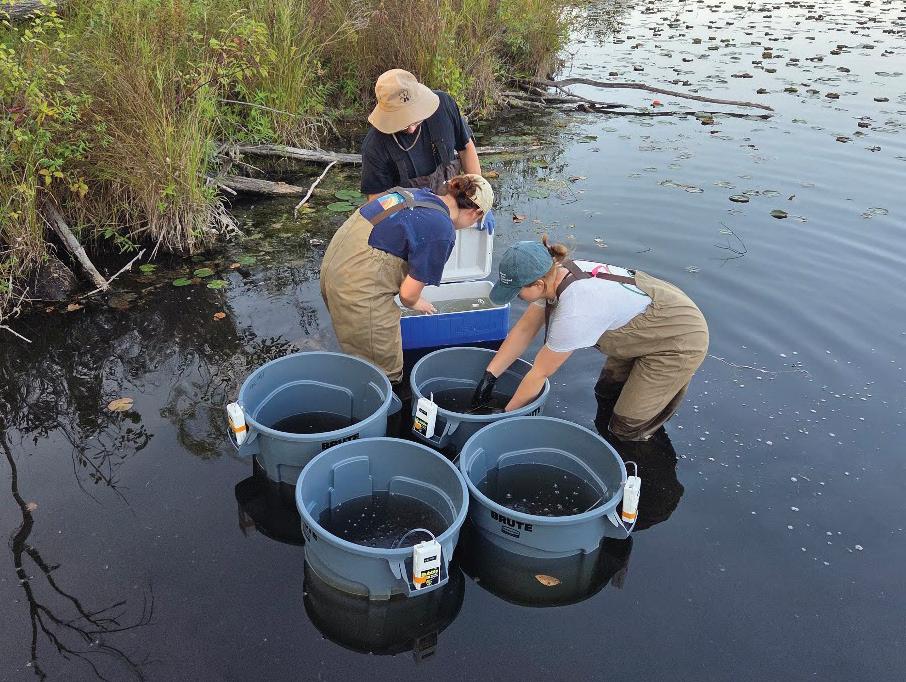
Bayer. Glyphosate is a non-selective, post-emergent herbicide that has become increasingly popular within urban, residential, and aquatic-terrestrial management areas with numerous chemical mixtures, but only a few formulations are approved for aquatic use. This study aimed to assess the effects of realistic, field-based glyphosate exposure on non-target aquatic organisms utilizing in-situ exposures, surrogate organisms, and the collection of resident benthic macroinvertebrates. Using a combination of laboratory and field procedures, the impact of glyphosate treatment was quantified by assessing survival, reproduction in Daphnia magna, and biomass of Hyalella azteca. Three types of field studies were conducted: caged exposures following a recent spraying event, caged exposures within mesocosms, and benthic macroinvertebrate characterization. After a 48-hour field exposure, test organisms were cultured in the lab for post-exposure monitoring. A significant correlation between glyphosate exposure and the acute survival of D. magna was observed. Post-exposure monitoring of D. magna reproduction revealed a significant correlation between glyphosate exposure and the total number of neonates produced. No significant relationships were found between glyphosate exposure and H. azteca endpoints. Hilsenhoff Biotic Index values varied, but the treated systems consistently had higher HBI values than the untreated systems. Our findings provide further clarity on the potential unintended impacts of glyphosate use in aquatic systems and inform future research, lake management plans, and commercial applicators.
Presenters: Stella Li, MS (SusSys); Treye Meadows, MS (SusDev, SusSys); Roxanne Wang, MS (SusSys); Bonny Wysocki, MS (SusDev, SusSys)
Advisor: Benjamin Goldstein
Location: Ann Arbor, Michigan, USA
Client: LinkedIn
The rapid expansion of data centers and artificial intelligence facilities has driven a significant surge in electricity demand. This generates hidden environmental implications, particularly the high volume of water consumed during electricity generation (Scope 2 water usage). For technology leaders like LinkedIn, managing this electricity-embodied water footprint is a critical component of corporate sustainability and environmental stewardship.
By 2030, LinkedIn aims to become “water positive,” meaning the company seeks to replenish more water into the environment than its data centers and office facilities consume. To support this ambitious target, our research objective was to design a robust, practical methodology to estimate, track and ultimately mitigate LinkedIn’s Scope 2 water footprint from purchased electricity.
We developed an Excel-based analytical model that integrates LinkedIn’s electricity consumption data with established regional water impact and scarcity metrics. After comprehensive data cleaning and integration, the model utilizes dynamic pivot tables to analyze regional variations. Key frameworks and data sources include:
• U.S. EPA eGRID Database: To map electricity generation profiles across different regional grids.
• Berkeley Lab Water Impact Model: To calculate accurate water consumption and withdrawal factors based on energy use.
• AWARE 2.0 & Aqueduct Water Risk Atlas: To assess and overlay localized water stress, scarcity and risk metrics for each specific eGRID subregion.
This model provides LinkedIn with a structured method to quantify electricity embodied water impacts, thus facilitating more informed sustainability decisions towards achieving water-positive goals.
Presenters: Chrysi Beltsos, MS (SusSys); Camryn Hurley, MS (BEC, EPP); Emma Kubitz, MS (EJ, EPP); Olivia LaForce, MS (BEC, EJ); Will Tschetter, MS (ESM)
Advisors: Marc Gaden; Mike Shriberg
Location: Ann Arbor, Michigan, USA
Client: Alliance for the Great Lakes, advised by a Steering Committee of Great Lakes Leaders
The Great Lakes are “great” for many reasons: They hold 20% of the world’s surface freshwater, provide drinking water to more than 40 million people, support millions of jobs in fishing, shipping, tourism, and recreation, drive a regional economy worth trillions of dollars, and are home to thousands of species of plants and animals. The Great Lakes are essentially the backbone of an entire region, yet they were not always treated as such. By the 1960s, the damage was impossible to ignore, but policy lagged behind. Finally, in 2010, the Great Lakes got what they deserved: the Great Lakes Restoration Initiative (GLRI). The GLRI is a federally funded restoration initiative focused on protecting the Great Lakes, and since its implementation in 2010, it has helped fund over 8,000 restoration projects throughout the basin. Yet until now, the full story of how the GLRI came to be and what made it so successful had never been documented. Our project team and advisors, in collaboration with a committee of Great Lakes leaders and the Alliance for the Great Lakes, set out to change that. After conducting 82 interviews with key stakeholders involved in Great Lakes restoration and reviewing thousands of Great Lakes-related documents, this project captures the decades-long effort to protect and restore the Great Lakes. We examined what made the GLRI succeed, how it has continued to succeed, what must happen for it to succeed in the future, as well as lessons learned applicable to other large-scale watershed restoration efforts.
Presenters: Maryn Cunningham, MS (BEC, ESM); Jack Day, MS (EPP, ESM); Jia-Jhen Ho, MS (GDS); Kenneth Ho, MS (EPP, ESM); Shannon Turner, MS (EPP, ESM); Sakshi Venkateswaran, MS (EPP)
Advisor: Mike Shriberg
Location: Great Lakes Region, USA
Clients: Cooperative Institute for Great Lakes Research; Great Lakes Observing System

Great Lakes ice cover plays a significant role in the culture, environment and economy of the region. This project is the first comprehensive assessment of the socioeconomic impacts of changing lake ice conditions in the U.S. Great Lakes region. Scientific literature has documented a declining Great Lakes ice cover trend, with high variability between years, since recording began in the 1970s. Within this context, this study aims to explore the ways in which U.S. coastal communities and individuals are affected by changing Great Lakes ice conditions. The research applied a mixed-methods approach, combining 41 qualitative community and expert interviews with the distribution of a basin-wide survey that recorded 295 valid responses. Approximately 85% of survey respondents reported a decline in lake ice cover, consistent with scientific trends. Interviewees identified 14 ice-dependent activities, highlighting how annual variability in ice conditions raises safety concerns for these activities. Eight key areas of concern were identified, with the three most frequently mentioned issues being reduced sense of place and regional culture, fewer winter recreational activities and negative impacts on ice fishing. The results indicate several emerging themes, including regional differences between the Upper and Lower Great Lakes, and adaptations to unpredictable conditions. Future studies should continue to examine these consequences

in depth to inform future policy and decision-making in the Great Lakes region. Sector-specific economic analyses are suggested to quantify the direct and indirect fiscal impacts of reduced ice-dependent activities. Longitudinal, localized case studies are recommended to record the evolution of communities’ experiences and resilience over time.
Presenters: Kelsey Campana, MS (EPP, ESM); Paige Lund, MS (EPP, GDS); Lillian Wege, MS (EJ), MURP; Emma Welsh, MS (ESM), MSE
Advisor: Mike Shriberg
Location: Michigan, USA
Client: Flow Water Advocates
Michigan contains a quantity of groundwater roughly the size of Lake Huron. But because of the state’s wealth of surface waters, its groundwater resources are often overlooked. Nonetheless, groundwater protection is crucial to Michigan water security and the region’s long-term future. 45% of Michigan residents rely on groundwater for their drinking water, and nearly 80% of agricultural irrigation and 75% of commercial water use come from this resource.
A Groundwater Strategy for Michigan: Protecting the “Sixth Great Lake” assesses Michigan’s current groundwater management landscape, identifies areas for improvement and proposes implementation-ready recommendations for the state legislature and regulatory agencies that advance groundwater protection. To achieve these objectives, researchers conducted a comprehensive review of existing data on Michigan’s groundwater resources and management scheme, a document analysis of relevant policies in Michigan and comparative states, and qualitative interviews with local officials, residents and experts.
This analysis reveals that Michigan is behind other states in groundwater mapping, data management and the scale of regulatory structures. Michigan’s current management system fails to account for the state’s diverse hydrogeological conditions and could be strengthened by regional planning. County-level case studies expose shortcomings in the state’s remediation requirements, regulatory enforcement authority and public education. These findings support the proposal of the Groundwater Protection Act—a bill package that includes nine new legislative acts—and a set of regulatory changes to advance Michigan’s groundwater management. The recommendations build upon the programs and policies that Michigan already relies on, making them implementation-ready at the state level.
Ackerman, George 21
Adamson, Elissa 47
Anderson, Milan 35
Arendt, Amanda .............. 23
Arnold, Brendan 20
Audia, Ally 20
Backstrand, Sarah 18
Baeten, Blair 25
Bashen, Kristen 48
Batterbee, Geoffrey 10
Beltsos, Chrysi 49
Bernocco, Alessia ............ 17
Bian, Jiangpan 35
Bieniak, Leah 39
Bigham-Tsai, Keeton 9
Biscoglia, Kelly 17
Bishop, Zoë 13
Blake, John 13
Blenck, Emily 9
Blume, Travis .................... 22
Bowen, Myrcella-Selene 12
Brent, Camryn 22
Buckley, Lily 47
Buller, Lu 24
Bunday, Tyler.................... 31
Campana, Kelsey 51
Carra, Emily 8
Cassidy, Paula 15
Cavanaugh, Zach 21
Chen, Kejia 34
Chen, Xiao 8
Chen, Xinhe 11
Chen, Xingyan .................. 8
Cirillo, Paul 23
Clark, Amelia 37
Cochran, Kate 17
Compton, Tristan 21
Cruciani, Daniela 39
Cunningham, Maryn 50
Davis, Brad 22
Day, Jack ........................... 50
Derr, Devin 10
DiFranco, Megan 45
Diyadawagamage, Dunya 12
Dwortz, Natalie 38
Ettlinger, Michael 15
Falash, Rebecca 14
Farrell, Anisa .................... 13
Foster, Dillon 43
Francolini, Brendan 17
Freer, Olivia 22
Fryer, Hope 10
Fu, Zeyuan 46
Fuente/Simón,
Fime de la 32
Gao, Yuxuan 35
Garcia, Mateo 45
Garcia, Shaman 38
George, Sarah 26
Giang Duong, Huong 44
Goldberg, Jeremy 36
Greenspan, Ilana ............. 23
Guo, Yaxuan 29
Guza, Madisyn 28
Hale, Hannah 27
Haney, Fynn 23
Harbaugh, Neal 29
Harman, Samantha 15
Harris, Tiffany 39
He, Xinrui .......................... 40
Hennessy, Bridget 24
Ho, Jia-Jhen 50
Ho, Kenneth 50
Hodgson, Nathaniel 15
Hu, Yixin 8
Huang, Zhiqing 43
Hughart, Paige 9
Hurley, Camryn ................ 49
Ifju, Daniela 41
Islam, Rezwana 41
Jin, Jade 40
Johnson, Brett 15
Jolley, Marsalis 9
Jonas, Paul 40
Jones, Lauren 21
Jordan, Sofía .................... 31
Joshi, Shreya 32
Juleen, Taylor 31
Kao, Chen-Hao 15
Kauffman, Leah 10
Kazmerzak, Ruth 17
Kelly, Mary 24
Khesin, Maya .................... 24
Kiambati, Doris 43
Kim, Yejin 7
King, Meredith 47
Kinney, Sara 22
Kowal, Katie 32
Kubitz, Emma 49
Ladendorf-Lilly, Evyn 21
LaForce, Olivia 49
Leary, Aberdeen 42
Lehman, Stevie 9
Lembang, Angela 46
Lenk, Charlie 17
Lewis, Melissa .................. 13
Li, Keyan 48
Li, Stella 49
Li, Teresa 21
Li, Yun 13
Lin, Tzu-Ting 32
Liu, Xinyuan 34
Livingston, Eleanor 25
Lopes, Mariana ................ 32
Losee, Kevin 15
Lovelace, Isabela 31
Lu, Zhao 7
Lubeck, Sydney 21
Lund, Paige 51
Luo, Grace 26
Luo, Siyu 20
Lyons, Linnea.................... 20
Macias, Bibi 13
Magsoudi, Tessa 26
Maraz, Kassandra 15
McClendon, Anna 22
McNinch, Mia 23
Meadows, Sarah 15
Meadows, Treye 49
Medrano, Jaedyn............. 41
Meng, Ruilin 35
Menon, Anagha 15
Metz, Andy 21
Miller, Jenny 48
Mishra, Shreya 23
Murphy, Alyssa 10
Neumann, Natalie ........... 28
Newman, Claire 47
Nieman, Natalie 45
Nieto, Adriana 48
Nona, Anya 9
Nugroho, Yoga 17
Offord, Cooper 21
Olivo, Licieli 34
Ostos, Roberto................. 8
Parnami, Kunjal 7
Parr, Nathan 48
Patil, Sachi 46
Peppet, Anna 10
Petrides, Laurel 23
Phoonsiri, Kade 45
Pohlman, Riley 48
Prescott, Cole .................. 39
Provizer, Eliana 38
Pu, Yuting 26
Qiang, Xu 25
Ramachandran, Arjun 43
Roe, Megan 48
Rosales, Jonathan 13
Rosevelt, Alex 26
Rubin, Peter 17
Rytting, Gus 24
Sa, Xingning 17
Sandoval, Maria 13
Sengupta, Tamanna 16
Shea, Mel 21
Shen, Yidong 10
Sinclair, Elisabeth 17
Sit, Christine 8
Sizar, Melika 38
Slinkman, John 10
Smith, Arielle 7
Song, Zechen 16
Soulliere, Jessica ............. 9
Stadlin, Mollie 45
Stevens, Major 18
Stewart, Bionca 45
Sugg, Sabrina 41
Sui, Mujie 10
Swarnkar, Aditya 15
Tan, Qia 31
Tan, Yiming ....................... 40
Tang, Weizhe 11
Throne, Annika 34
Tian, Aohua 7
Tschetter, Will 49
Turner, Shannon 50
Uchoa, Marianna 13
Vaiman, Lisa 20
van Baal, Andrew............. 18
Vatalaro, Shea 9
Venegas, Edgar 45
Venkateswaran, Sakshi 50
Wang, Hantao 33
Wang, Roxanne ................ 49
Wang, Xiaoyuan 37
Wang, Zeyu 9
Wege, Lillian 51
Welsh, Emma 51
Wheelis, Samantha 23
Williams, Jerome 40
Wysocki, Bonny 49
Xiao, Xijuan ....................... 9
Xu, Qan 35
Xu, Tianqi 34
Yang, Chelsea (Muzi) 21
Yang, Fuyao (Eric) 27
Yang, Han (Aaron) 41
Yang, Kunyu 42
Yeom, Alice 7
Yin, Mengran .................... 11
Yu, Jianshen 45
Zerger, Ethan 31
Zhang, Jenny 23
Zhang, Minxuan 10
Zheng, Shaoying 33
Zhou, Jiaying 41
Zhu, Yifanzi 47
Zhu, Zekai ......................... 11
Zong, Bojun (William) 23
Zou, Yunjia 11
One of the nation’s top public universities, the University of Michigan has been a leader in research, learning and teaching for more than 200 years. U-M’s alumni body is one of the largest in the world and includes a U.S. president, scientists, actors, astronauts and inventors. The university, which also boasts a world-renowned intercollegiate athletics program, has been the site of many important events in U.S. history, including JFK’s announcement of the Peace Corps, LBJ’s “Great Society” speech, and the clinical trials of the Salk polio vaccine. The main campus in Ann Arbor comprises 19 schools and colleges; there are also regional campuses in Dearborn and Flint, and a nationally ranked health system, Michigan Medicine. In 2017, U-M celebrated its bicentennial, marking 200 years since its founding in Detroit.
The School for Environment and Sustainability is at the forefront of building a more sustainable and just world for all by transforming the impact of higher education and reimagining the future. We are advancing action through innovation, research, education and engagement in society, and developing leaders empowered to mitigate the climate crisis and create an environmentally sound future for generations to come.
The University of Michigan is located on the traditional territory of the Anishinaabe people. In 1817, the Ojibwe, Odawa and Bodewadmi Nations made the largest single land transfer to the University of Michigan. Through these words of acknowledgment, their contemporary and ancestral ties to the land and their contributions to the university are renewed and reaffirmed. A commitment to building an equitable and sustainable future is at the center of our work at the School for Environment and Sustainability, and we understand that this can only be accomplished by building authentic relationships and partnerships with Indigenous Peoples.
Jordan B. Acker, Huntington Woods
Michael J. Behm, Grand Blanc
Mark J. Bernstein, Ann Arbor
Paul W. Brown, Ann Arbor
Sarah Hubbard, Okemos
Design
Maddie Fox
Editing
Denise Ilitch, Birmingham
Carl J. Meyers, Dearborn
Katherine E. White, Ann Arbor
Domenico Grasso (ex officio)
Nayiri Mullinix, Nathan Geisler, Jennifer Taylor, Cindy Richard, Lori Atherton, Katie Trevathan