
Murphy REPORTER
Student Excellence
Storytelling takes many forms, and Hubbard School students are learning to master them all, earning awards and accolades as they go.
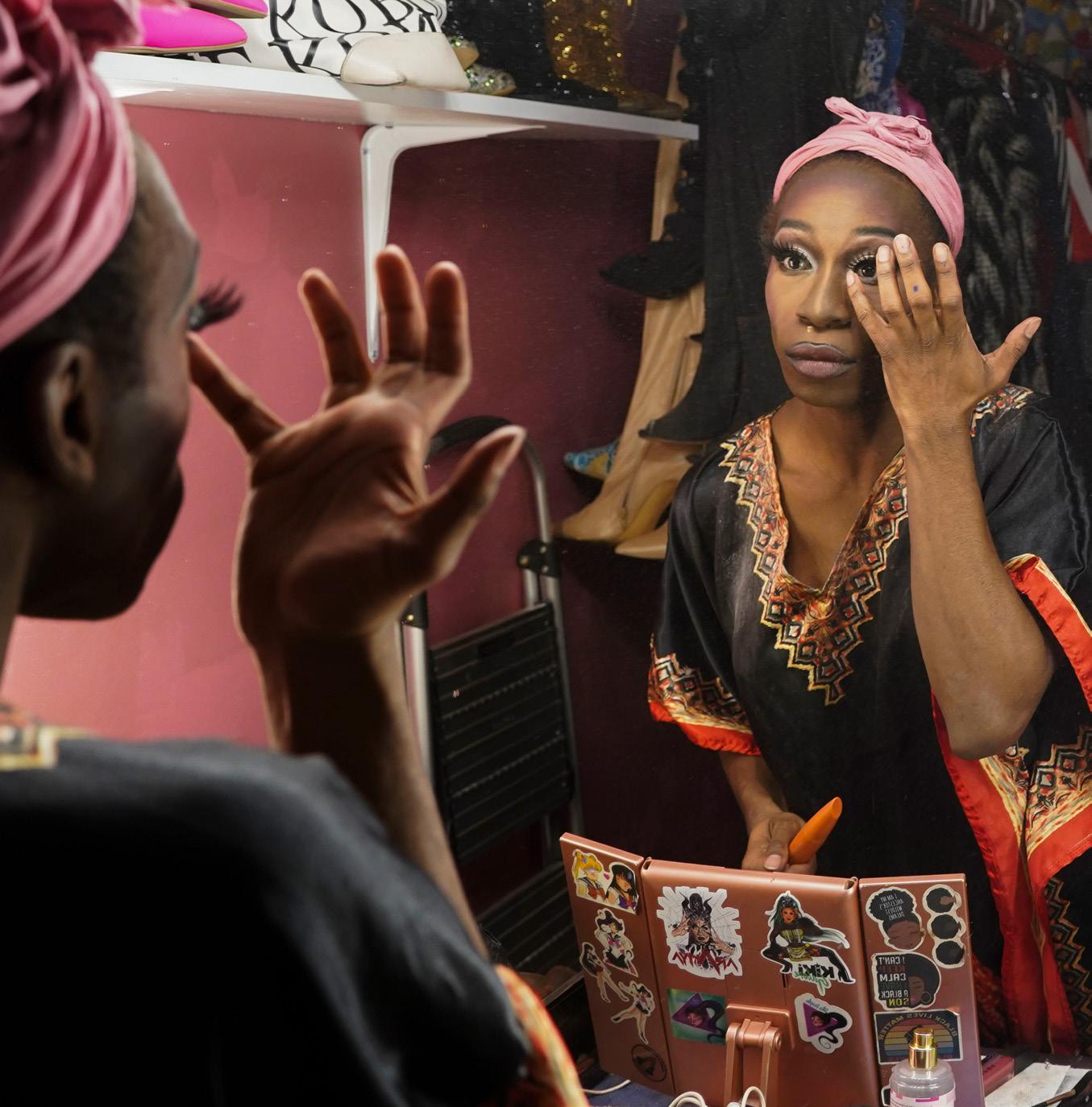
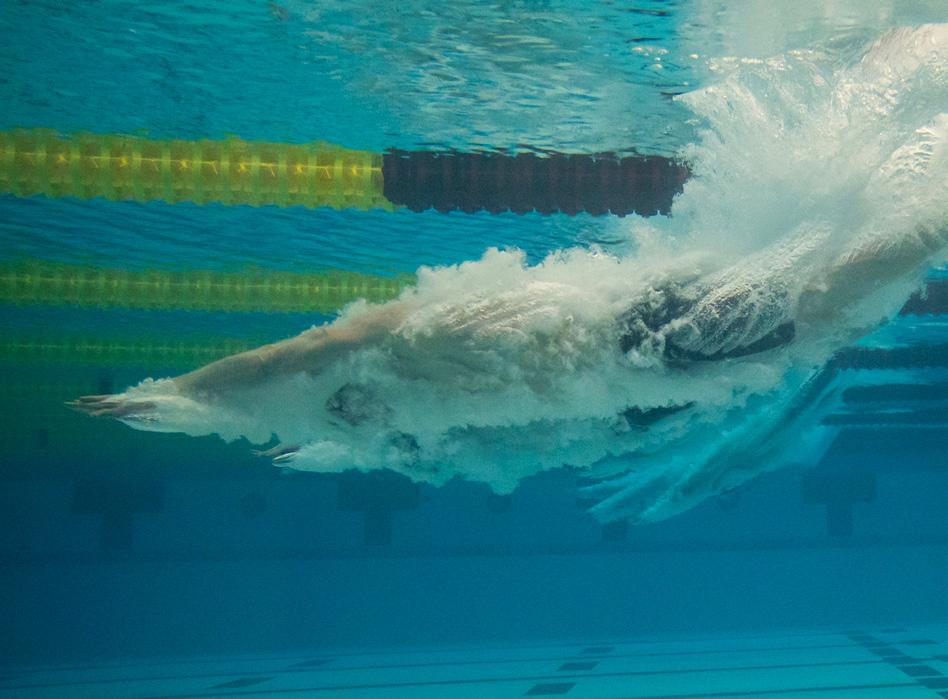
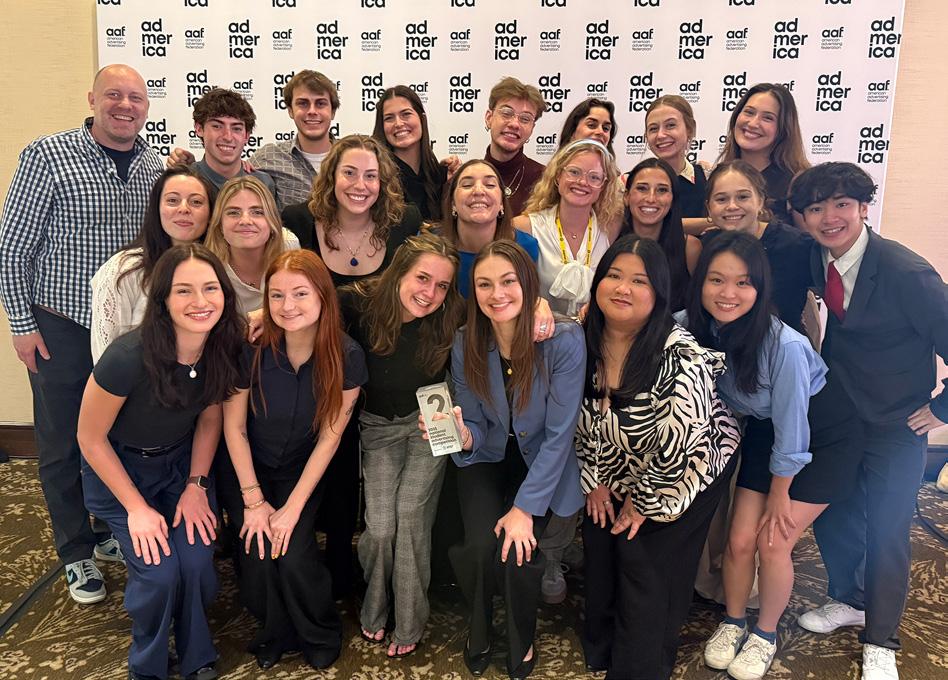
CLOCKWISE FROM ABOVE: Photo by Matt Sullivan, who took home College Photographer of the Year at the 2025 Northern Exposure Photo Contest; photo by Claudia Staut, who won College Sports Photographer of the Year; Hubbard’s National Student Advertising Competition team celebrating their 2nd Place win at Nationals this summer.
ON THE COVER:
Illustration by Jose Dominguez @hozay_dmngz

2 Letter From the Director
3 Hubbard By The Numbers
4 In the Field, On the Beat
6 A Strategic Advantage
8 Student Excellence
TRAILBLAZING ALUMS
10 Emma Carew Grovum advances from journalist to entrepreneurial media leader.
Interview by Katie Dohman
11 Carolyn Ahlstrom on climbing the ladder without losing your footing (or your purpose).
Interview by Scott Meyer
AI-AWARENESS
12 All Eyes on AI Students, faculty, alums and industry insiders keep up with an evolving technology and a changing job market. by Carl Atiya Swanson
15 Thought Leadership Forum Thirty scholars from around the world convene to examine GenAI & Advertising. by Jisu Huh
THE CENTERS
17 Centering Minnesota Journalists
18 Ann Telnaes: Stop Drawing... Or Else by Stuart Levesque
20 Jane Kirtley on the Silha Center, free speech & her retirement.
Interview by Russ White
FACULTY & GRAD NEWS
16 New Faces in the Faculty: Carolina Velloso
16 Postdocs & Grads On the Market
21 New Faces in the Faculty: Scott Winter
22 Amy O’Connor: “The Mine Next Door”
Interview by Katie Dohman
23 Recent & Upcoming Releases
24 Remembrances
YEAR IN REVIEW
26 Hubbard Honors & Fall Forum
29 Alumni News
30 Faculty Scholarship & Engagement
32 From the Archive
Murphy REPORTER
DIRECTOR
Elisia L. Cohen
EDITOR & LAYOUT
Russ White
MAGAZINE RE-DESIGN
The ESC Plan
CONTRIBUTORS
Carl Atiya Swanson
Leslie Bleess (BA student)
Brian Britigan
Katie Dohman (BA ‘03)
Jose Dominguez
Jisu Huh
Nancy Keating (MA ‘84)
Martin Kuz (BA ‘91)
Stuart Levesque (JD candidate)
Regina McCombs
Scott Meyer
Patrick O’Leary
Hannah Reynolds (BA student)
Vish Viswanath (PhD ‘90)
Russ White
© University of Minnesota
The Murphy Reporter is published annually by the University of Minnesota Hubbard School of Journalism & Mass Communication for alumni, faculty, staff, students and friends of the school.
The University of Minnesota shall provide equal access to and opportunity in its programs, facilities and employment without regard to race, color, creed, religion, national origin, gender, age, marital status, disability, public assistance status, veteran status, sexual orientation, gender identity or gender expression.
This publication is available in alternative formats upon request. Direct requests to murphrep@umn.edu.
QUESTIONS OR COMMENTS
Send to: murphrep@umn.edu or Murphy Reporter
111 Murphy Hall
206 Church St. SE Minneapolis, MN 55455
CONNECT WITH US hubbardschool_umn
U of MN Hubbard School of Journalism and Mass Communication Alumni
WLetter from the Director
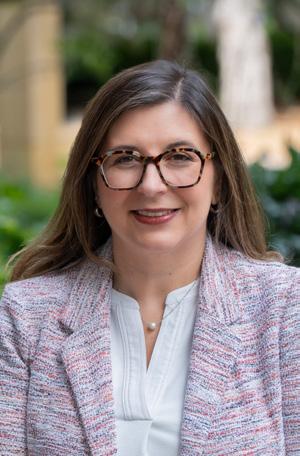
elcome to the Winter 2025 issue of . This season marks a moment of reflection and forward motion for the Hubbard School, one I’m proud to share with our alumni, students and partners.
I’m thrilled to announce the successful conclusion of our fall accreditation site visit by the Accrediting Council on Education in Journalism and Mass Communications. The visiting team of four academic and professional leaders found the Hubbard School’s professional programs compliant on all standards, a testament to the dedication of our faculty and staff and the quality of our educational programs. This reaffirmation solidifies our position as a leader in journalism and mass communication education. This fall, the school’s Professional Master’s in Strategic Communication program also received from the Public Relations Society of America the Certification in Education for Public Relations (CEPR), a marker of quality indicating the program offers the faculty, curriculum and resources to prepare graduates for professional growth.
Our compliance with established professional standards does not mean we rest on tradition. This academic year the school is embarking on a major initiative that has included a collaborative effort to identify opportunities to strategically leverage Artificial Intelligence (AI) — specifically Generative AI (GenAI) — to support innovation in teaching, research and professional development relevant to careers in advertising, public relations, journalism and media management. The conversation is vibrant, focusing on enhancing faculty and students’ awareness of how AI can augment human creativity and efficiency, not replace it.
As we learn more about these powerful tools, we do so with a clear-eyed focus on the ethical challenges they present. This is perhaps the
most crucial area of investigation for the school’s research centers and engagement initiatives. The Hubbard School aims to serve as a global hub for thought leaders examining GenAI and its implications for the professions and society. Our research, public lectures and educational initiatives are providing a critical platform for ensuring the next generation of communicators is equipped not only to use the technology but to govern its ethical application. Our faculty and graduate students are developing trailblazing scholarship to navigate the legal and ethical complexities of training data and intellectual property; algorithmic bias, GenAI optimization and the influence of news and information flows; misinformation and error correction; oversight and ownership of content; and concerns related to technology and sustainability.
The school continues to demonstrate immense success in partnering to connect our classrooms directly to careers. A Murphy Hall journalism school education begins with a foundation of industry-standard skills development infused into our curriculum to ensure our students are practicing their future professions. We elevate student learning through our signature programs including our mentor program and hands-on practicum courses with major Twin Cities media and agencies. This commitment ensures that Hubbard graduates are not merely qualified but are workforce-ready trailblazers well-prepared to lead on day one.
I look forward to the year ahead, and wish you a warm and reflective winter season.
All my best,
ELISIA L. COHEN, PH.D. Director and Cowles Professor of Journalism and Mass Communication
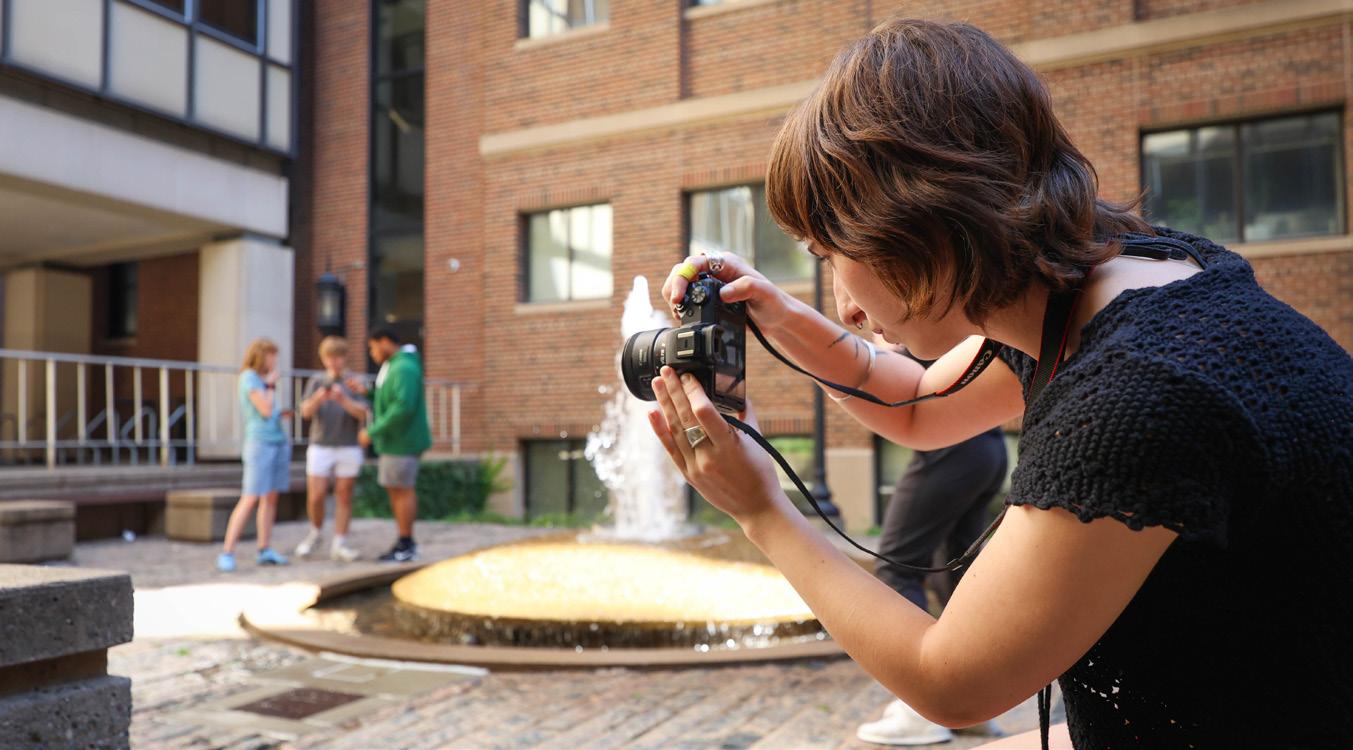
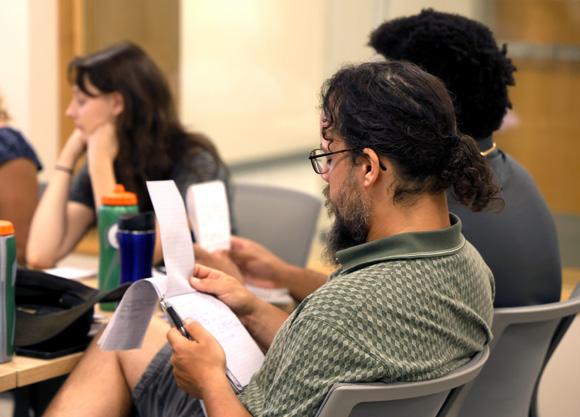
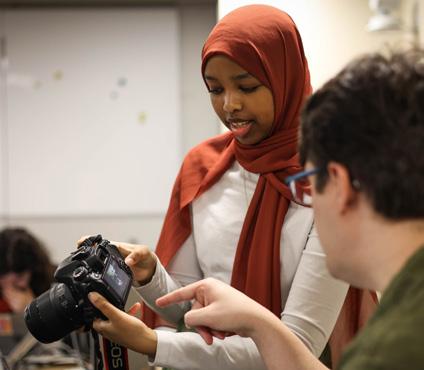
Students in Teaching Assistant Professor Matt Cikovic’s Multimedia Production & Storytelling class experimenting with equipment.
Photo by Leslie Bleess.
In the Field, On the Beat
Robust journalism programming puts students on real-world stories near and far.

The First Amendment is written on the walls at the entrance to Murphy Hall for a reason: as a reminder of how vital a free press is to a free society. Journalists and communicators face new challenges every day — from pushing back against the political pressure for self-censorship to battling for a skeptical public’s trust and attention against a firehose of infotainment that serves up bite-sized, bespoke content faster than any fact-checker can debunk.
At Hubbard, our students are not just getting trained in the trade — they are producing real journalism about real stories for real outlets, thanks to the groundbreaking programming that our faculty, staff and donors make possible. <
REPORT FOR MINNESOTA
Spearheaded by the Minnesota Journalism Center, Report for Minnesota embeds four student journalists at local newspapers in Greater Minnesota each summer, providing students with on-the-ground experience and offering small newsrooms muchneeded help. Since launching in 2022, this program has doubled in size, with students working beats at the Brainerd Dispatch, the Mankato Free Press and others.
“Being able to learn and gain experience at a small town newspaper was a great opportunity. I wouldn’t have felt as confident in my abilities if I had jumped into an internship in the city. I got to cover a lot of different local stories, from government to public safety.”
– Hannah Ward
(BA ‘25)
“The Hubbard School’s value is not just its proximity to the vibrant Twin Cities news community or outlets in Greater Minnesota. We have become partners with those communities to educate the next generation of journalists. Our courses are embedded in their newsrooms. Our curriculum routinely engages their professionals. Our students’ work appears on their sites, and eventually, our students become their reporters and editors.”
GAYLE “G.G.” GOLDEN Senior Lecturer, Charnley Professor of Journalism, Morse Alumni Distinguished University Teacher
Photo by Patrick O’Leary
HUBBARD REPORTING EXPERIENCE
Now in its third year, the Hubbard Reporting Experience sets students up to turbo charge professional readiness and enhance journalism skills within a 10-day, hands-on, immersive training focused on campus communities close to the U.
Students learn how to approach sources, work with editors and build a portfolio of clips ready to share with a future employer. This summer our students reported on the 50th season of Mixed Blood Theatre, the power of hoop dancing to promote Indigenous wellness, the 2026 Special Olympics events that UMN will be hosting and many other in-depth, impactful stories.
LEGISLATIVE REPORTING PROJECT
Report for Minnesota’s Legislative Reporting Project was a spring 2025 pilot program to connect student reporting on the Minnesota Legislature with Greater Minnesota news outlets. Three students were placed at the Minnesota State Capitol to work with longtime political editor Mike Mulcahy producing weekly news stories that filled coverage gaps for local news outlets in communities in all areas of the state. Twenty-three news organizations published stories from the pilot, ultimately serving more than 95 communities across the state, from southern Minnesota to the Iron Range and west, with one-third of the organizations publishing all 35 stories that our students produced.
To see our students’ work for yourself, visit z.umn.edu/HubbardStudentWork
“The
Hubbard School is special to me because it provides me unique opportunities to grow my journalism skills through actually doing them out in the field, not just sitting in a classroom. I also love the camaraderie I have with my fellow students, sharing sources and experiences together.”
JO LARSON Current student and member of the Student Advisory Board Photo courtesy of Jo Larson.
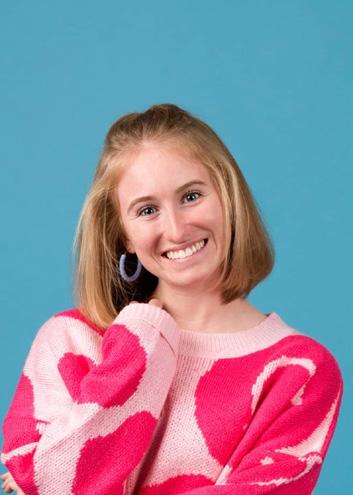
LEFT TO RIGHT: Student CJ Julstrom embedded with the Brainerd Dispatch in 2024 as part of Report for Minnesota.
Photo by Regina McCombs.
Students at the Hubbard Reporting Experience this past summer.
Photo by Hannah Reynolds.
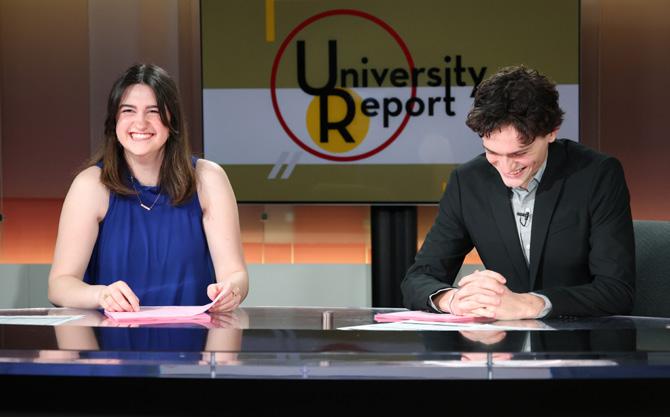
Senior Fellow Scott Libin’s Newsroom Production students share a laugh before a live broadcast of University Report.
Photo by Hannah Reynolds.
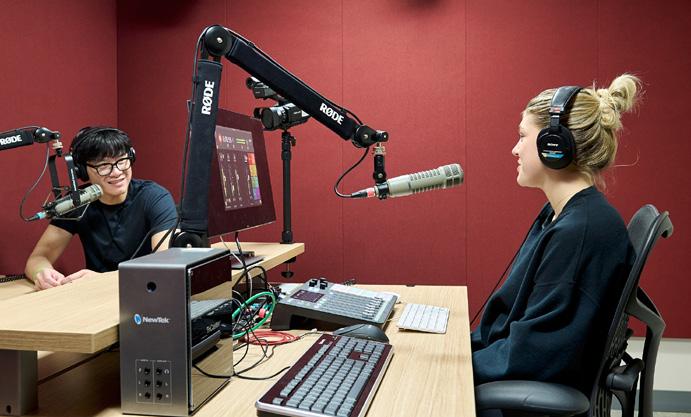
Students using the podcast studio in Murphy Hall’s Media Hub.
A Strategic Advantage
NSAC
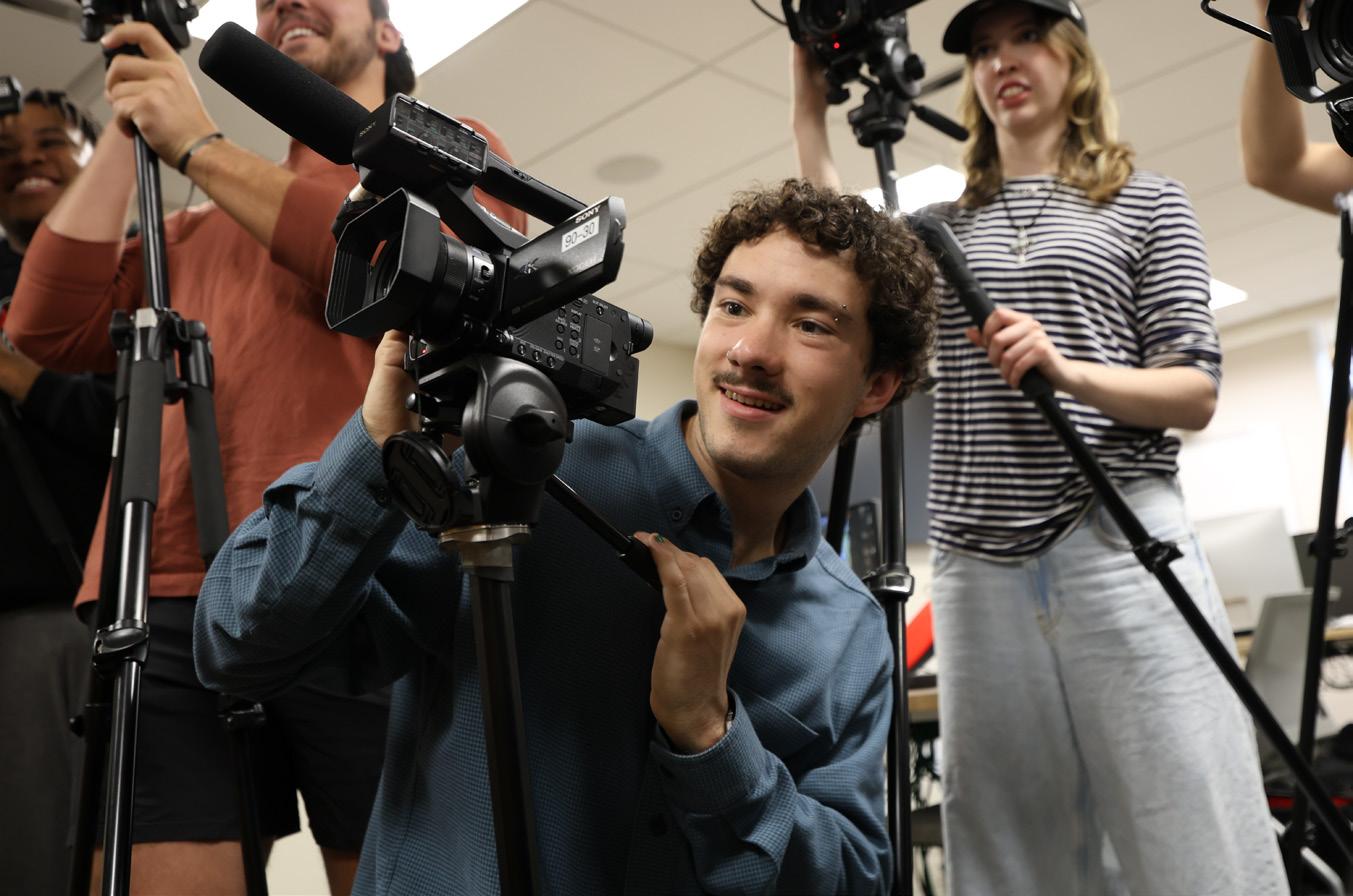
OPPOSITE, ABOVE & TOP RIGHT: Students in Teaching Assistant Professor Matt Cikovic’s Multimedia Production & Storytelling class learn the ropes.
Photos by Leslie Bleess.
BOTTOM RIGHT: Part of the Trader Joe’s campaign pitched by students Trinity Vang, Bailey Polsin, Margaret Poulos and Lydia Nelson that won them the Best of Show - Student Award at the Advertising Federation of Minnesota competition this past February.
Strategic Communication trains students in the tools they’ll need to tap into their talent.
It’s not all fun and games in college — though if you take a strat comm class, it can sure feel like it sometimes. Any creative will tell you: the line between work and play can get real blurry, for instance when you’re part of a team coming up with new ways to market classic Hasbro games like Twister and Operation, as the MN + Folio students did this past May.
Strategic communication is all about teamwork: collaborating with designers, writers, editors, videographers, art directors and ultimately clients to arrive at a product or pitch that hasn’t gotten diluted. The Hubbard School fosters those skills not just through classwork but through a number of extracurricular opportunities as well, including a brand new one for students in Ad Club. Faculty members Jennifer Johnson, Shayla Thiel-Stern and Erik Kvålseth put their heads together to launch Creative Team, focused on helping students interested in art direction start early to build out their portfolios and compete in The One Club’s Young Ones student competition.
“We are working to have a stronger connection to Minneapolis advertising and design agencies,” says Johnson. “It’s about building a pathway for our students’ success.” <
To see our students’ work, visit z.umn.edu/HubbardStudentWork
Our National Student Advertising Competition team, advised by Lecturer Rich McCracken, traveled from competition to competition this year, all the way to the Nationals in Pittsburgh, taking Second Place in the nation against nearly 100 other schools!
The client challenge from AT&T asked students to build brand consideration and favorability among Gen Z while using the existing tagline, “Connecting Changes Everything.” Minnesota’s pitch pushed beyond the omnipresence of “connection” in the category and celebrated how AT&T can be an ally for Gen Z experiencing change and growth in early adulthood. The campaign theme, “Dare To,” demonstrated how change can be exciting (and not always scary) when you have some certainty by your side.
“Advertising is a team sport,” says McCracken. “In NSAC, students with different skill sets learn to work together in a demanding yet collaborative environment as one highly functioning team.”
Alex Chrislu, a recent graduate and three-time national finalist, says, “Ending my college experience with this team and this campaign was something I’ll never forget. Watching 22 of the most driven and creative people bring our vision to life reminded me why I always come back to NSAC.”
BACKPACK
Back at Murphy Hall, McCracken also advises another student group: Backpack, our in-house professional creative agency. Hubbard students get real world strategic communication experience, handling campaigns and brand content for a wide range of clients, such as the Minnesota State Fair, ServeMinnesota, Big Ten Academic Alliance, Minnesota Carlson, RootRiver Current, BioSim Innovations and Kent State, among others.
To see their work (or hire them yourself!) visit backpackumn.com
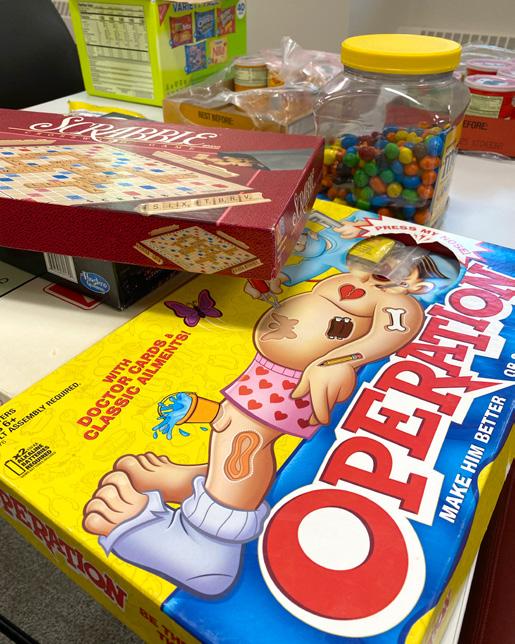
ABOVE: Games laid out in the Hubbard Media Hub, where MN + Folio students consulted with working creative directors to develop spec campaigns for Hasbro and Extra.
Photo by Russ White.
MN + FOLIO
In the three-week-long May term class MN + Folio, students conceive and create their own campaigns for real brands, resulting in full-fledged portfolio pieces they can take with them into the job market. What began last year as a cocurricular pilot program has grown into a for-credit strat comm experience due to its popularity with students. This summer the brands were Hasbro Games (pictured opposite) and Extra Gum, and students grouped up with actual creative directors at local agencies to pitch and develop ad campaigns from start to finish — brainstorming, storyboarding, filming and editing video and print collateral for their campaigns. Down in the Hubbard Media Hub, the “war rooms” were covered in post-it notes, bubble gum and board games — all in a day’s work for our students!
PILOT NEXTGEN TV FELLOWSHIP
Hubbard School students took part in the 2024-25 PILOT NextGen TV Fellowship, developing an app that overlays live television sports broadcasts — bringing viewers relevant stats and info about the Minnesota high school hockey championships in real-time. The team presented their work to great acclaim at the annual National Association of Broadcasters conference in Las Vegas.
“These Hubbard students are in the top 10 percent of folks in the world who understand what ATSC 3.0 can do.”
– John Clark, Senior VP, Emerging Technology National Association of Broadcasters



NORTHERN EXPOSURE
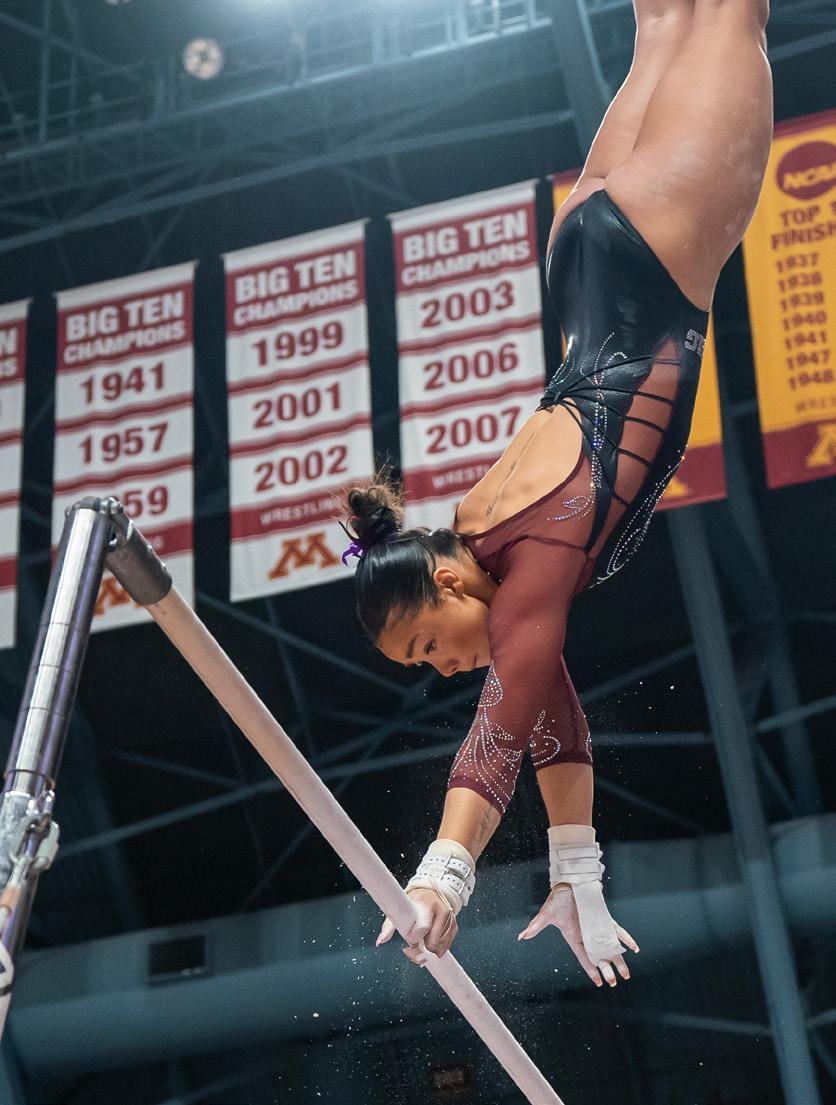
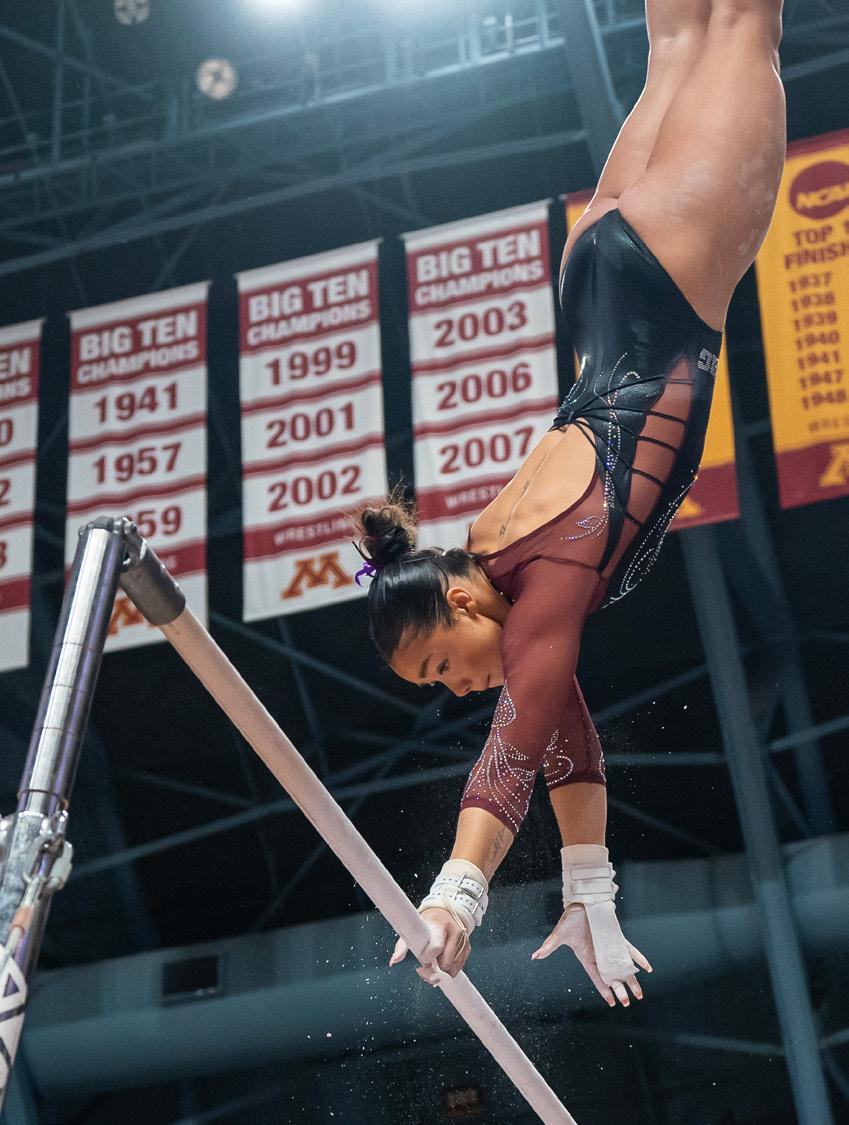
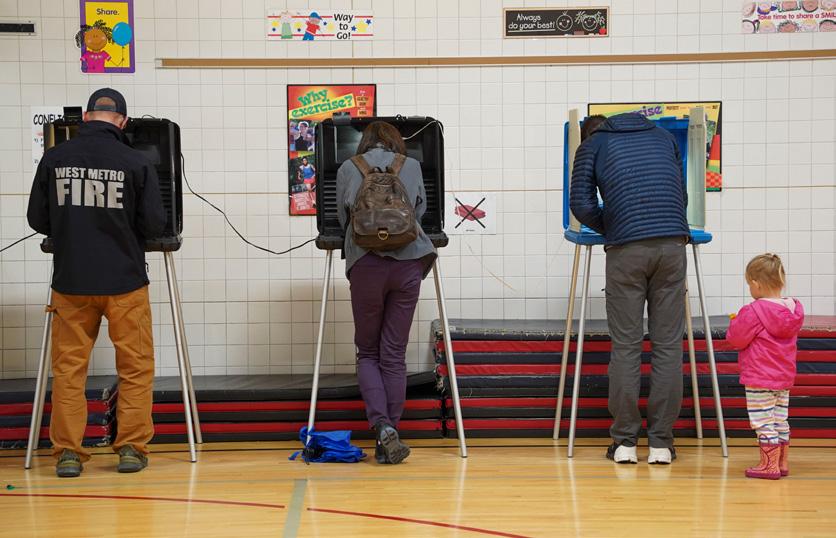
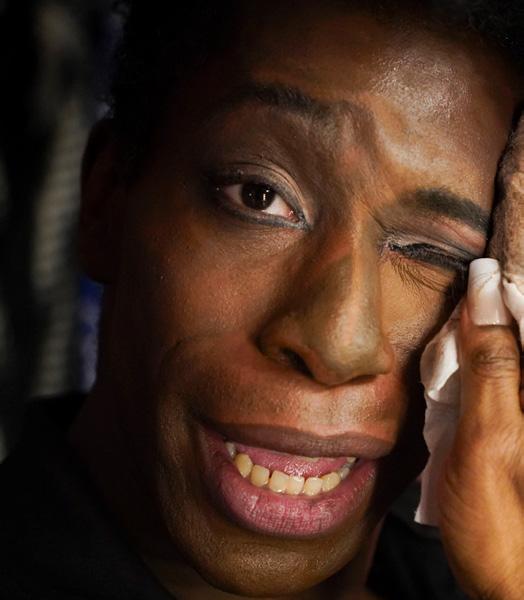
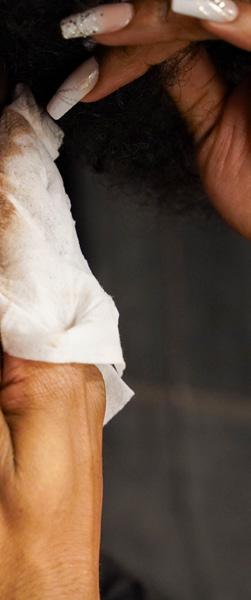
Every spring, photojournalists descend on Murphy Hall to talk shop, offer pro tips and portfolio reviews to our student shutterbugs and, in the end, hand out awards. Congrats this year to Matt Sullivan (at left and top right), who was named College Photographer of the Year, and to Claudia Staut (top left and above) who won College Sports Photographer of the Year.

BIG WINS AT AD FED & NSAC
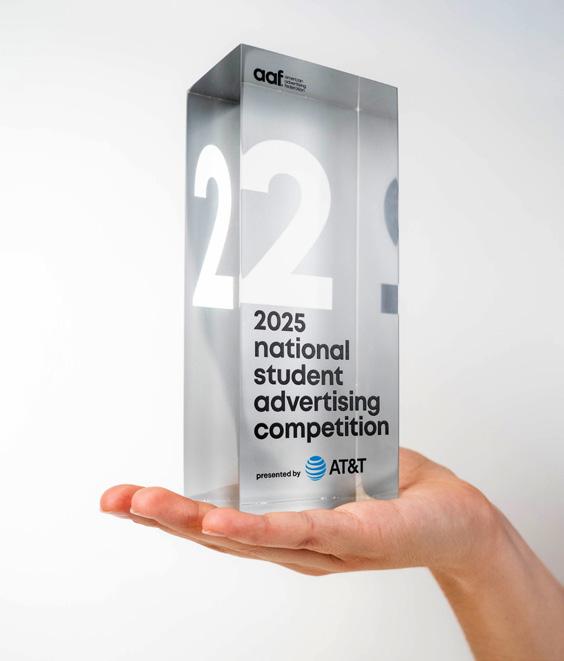
The trophy case at Murphy Hall is overflowing with accolades and awards, the newest of which is the National Student Advertising Competition team’s Second Place win in the 2025 NSAC Nationals!
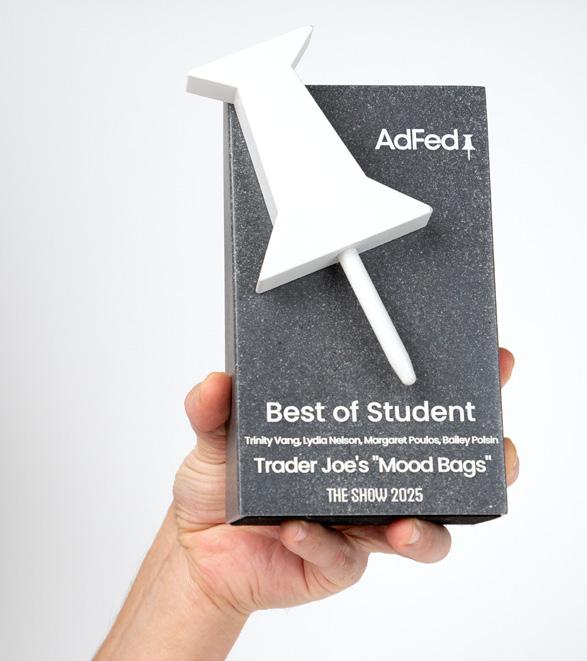
Meanwhile, at Ad Fed, the Hubbard team brought home Best of Show - Student & the Gold Medal for their Trader Joe’s campaign, along with Silver and Bronze Medals for campaigns for DEPOP and Tide.
PRSA AWARDS
The Public Relations Society of America honored several of our students for their hard work this past year: Nashat Ahmed won the National PRSSA $1,000 scholarship; Regina Funches won the award for PR Writing/BrandJournalism; and Dane Bergstrom won in the categories of PR Writing/Brand Journalism, Digital and Social Media, and Content Creation, along with the Dr. Willard Thmpson Scholarship Award.
AAF’S MOST PROMISING STUDENTS
Congrats to Nashat Ahmed, Ayla Jorgensen and Truong Vu for winning AAF’s Most Promising Multicultural Student Awards.
UPPER MIDWEST EMMYS
Kudos to Eitan Schoenberg, who was nominated for an Upper Midwest Emmy® Student Production Award.
COURAGE IN JOURNALISM
Congrats to the staff of The Minnesota Daily for winning the Hubbard School’s Courage in Journalism Award in recognition of their tirelessness and integrity in covering campus events throughout the previous academic year.
2025 PAGE ONE SCHOLARSHIP
Congrats to Samantha Walhoej Siedow , who was honored at the Minnesota Society of Professional Journalists Page One Awards as the Winner of the 2025 Page One Award scholarship.
SPJ MARK OF EXCELLENCE AWARD
Congrats to Hannah Ward, who won the Society of Professional Journalists’ Mark of Excellence Award in the collegiate journalism category of Breaking News Reporting.
DAN WACKMAN AWARD
Congrats to Wenwen Cao, who won the Dan Wackman First-Year Graduate Student Research Award for her paper “Between Fuels and Dampeners: Emotional Trade-offs in Retweet Network of Controversial Advertising.” The committee was thoroughly impressed by the theoretical and empirical sophistication of this study.
STAY TUNED FOR MORE
Join us to celebrate all of our amazing students’ accomplishments at the Spring Showcase & Student Recognition Breakfast on May 15.
ABOVE: AdFed’s Best of ShowStudent Trophy and NSAC’s 2025 2nd Place Nationals Trophy. Photos by Leslie Bleess & Russ White. OPPOSITE: Photos by Northern Exposure Photo Award winners Claudia Staut and Matt Sullivan.
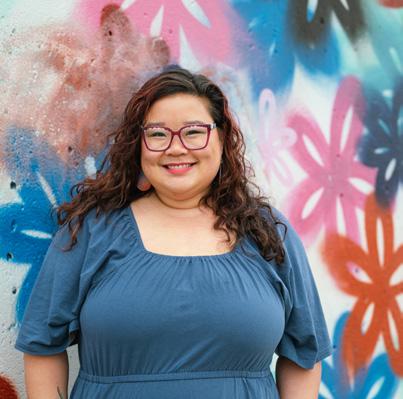
Emma Carew Grovum
From a journalism degree to a consultancy career, Emma Carew Grovum is working to cultivate the newsrooms of tomorrow.
BY KATIE DOHMAN
Emma Carew Grovum is the founder of Kimbap Media and a partner in Media Bridge Partners. She is based in Brooklyn.
The only thing I ever wanted to do is work in journalism and be in newsrooms. The longer I’ve been in journalism, the more I have wanted to save it. The way I look at it now, I want to facilitate a better experience for people to commit acts of journalism,” says Emma Carew Grovum, who graduated in 2009 as a journalism, Korean studies and art history triple-major.
Carew Grovum graduated at a time of both great expansion and creativity (the dawn of social media use by media outlets) and contraction (lower budgets, the threat of layoffs and questionable delineation and enforcement of diversity practices).
“I want it to be easier for people from historically marginalized backgrounds to succeed in this industry. It should not be as hard for others as it was for me. It was hard to find good mentorship, hard to find editors who saw me for what I was good at and then gave me the chances and opportunities to lean into those talents. There were lots of factors against us at the time — gender, race, the economy and the
THE LONGER I’VE BEEN IN JOURNALISM, THE MORE I HAVE WANTED TO SAVE IT. I WANT TO FACILITATE A BETTER EXPERIENCE FOR PEOPLE TO COMMIT ACTS OF JOURNALISM.” – EMMA CAREW GROVUM
sustainability of journalism at large — but specifically for young women and young journalists of color.”
After a stint in data journalism at The Chronicle of Philanthropy in Washington, DC, The Minnesota Star Tribune came calling, as she had been a graduate of their apprenticeship program for diverse young journalists.
“Ultimately, I moved to the website team, and I was OK being a reporter,” she says, “but I wasn’t going to blow the doors off the investigations into the new dog bakery, which is what I was covering at the time.” She worked on the suburban expansion, experimenting with video, photo and social media, eventually becoming the first homepage editor for the Strib. Despite the mindblowing stats that came along with launching the first social media efforts, she jokingly says, “I wasn’t going to win a Pulitzer by the time I turned 30.”
But this work had other benefits. “Twitter now is a hellhole, but that is how I was able to develop my authentic voice and really carve out a space in the media diversity conversation to say some of these news outlets are really wrong and some of these hiring practices are extractive and exploitative,” she says. “The internet and social media have allowed us to build those platforms and define our voices and say ‘This thing I have to say matters.’”
Carew Grovum continued to rack up a who’s-who of outlets in her portfolio: Daily Beast, Foreign Policy, The New York Times and more. She then stepped into a founding member role on News Product Alliance and founded her own business, Kimbap Media.
“I’ve been on both sides of the newsroom,” she says, “and both independent outlets and outlets with institutional backing, so I can bring a full POV to the table. I think about all the people who could be slipping through the cracks, being left out of the conversations when we talk about making journalism better, making it diverse and robust and reflective of our communities and our world.”
That includes a range of tasks, from humanizing the pipeline of communications between hiring managers and candidates to helping connect trans journalists with investigative training and professional development..
“Clear, concise communication about what’s happening in your community is always going to serve you and the people around you,” she says. “Storytelling about our world is good for our souls. I think misinformation and disinformation are on the rise and causing harm for ourselves, our kids, our communities, our elders. We’re losing a generation of young men to very, very dark holes on the internet. Whether you are raising a young man in your home, or you are bylining the WashPo on AI, everyone’s gotta do their part. When we think about access journalism, we think about acts of trusted storytelling and trusted information and get creative. How can you create and carve out authentic and accurate information that reflects your world? How can you educate people around you and keep them safe? It’s a big responsibility.” <
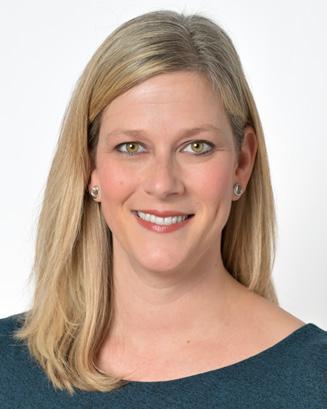
Carolyn Ahlstrom
Brand strategist Carolyn Ahlstrom reflects on discomfort, experimentation and the tradeoffs of growing into leadership.
BY SCOTT MEYER
SVP & Group Brand Strategy Director at Colle McVoy, Ahlstrom recently won a Hubbard School Pathfinder Award for distinguishing herself across her career in strategic communication.
You stay connected with the Hubbard School — what keeps you engaged, and how has that relationship shaped you?
The Hubbard School has always been a special place for me. It’s also a place I’ve never really left. Whether it’s serving on the Alumni Board or the Backpack Communications Board of Advocates, mentoring students or guest speaking, I never turn down a reason to come back to Murphy Hall.
Every visit reminds me of what ambition looks like. Students haven’t learned the word “impossible,” and that energy is contagious. They’re full of enthusiasm and continually pushing for better ideas. When I start to lose sight of that, connecting with these students brings it all back. It reminds me why I love this industry, and it keeps me optimistic about its future.
On the Backpack Board of Advisors, you advise emerging talent — what’s one insight from that role that you wish you’d known earlier in your own career?
That you don’t have to have all the answers. When you graduate, you’ve built an incredible foundation, but the best thing you can do is to keep learning. Ask questions and observe how people make decisions. The faster you stop pretending to know everything, the faster you will grow.
I’d also say starting your career isn’t supposed to be easy. Discomfort isn’t failure, it’s progress. Every challenging moment is building muscle you’ll need later.
Thinking about innovation, risk and brand strategy — how do you decide when to experiment and when to hold steady?
We’re in a new era of brand building where experimentation isn’t optional, it’s essential. The question isn’t “Should we try something new?” but “How fast can we adapt?”
At Colle McVoy, we don’t hold steady. We use technology and innovation every day to make creativity sharper and brands more authentic. Sometimes that means using AI to uncover cultural insights in days instead of months or building entirely new ways for people to experience a brand.
I believe in relentless experimentation. The brands — and agencies — that will win are the ones that treat innovation as a daily behavior.
How do you balance doing meaningful work with climbing the ladder or increasing responsibilities?
I’ve never viewed purpose and progress as separate paths. Early on, purpose lived in cracking the perfect brief or getting on an airplane to go do research or attend a meeting. Now, it’s reflected in how I lead, what I nurture and the ideas I fight for.
I’ve learned that leading with empathy, clarity and high standards is every bit as creative as developing a campaign. The trade-off is proximity — you’re less hands-on, but the impact is deeper. Empowering others to succeed multiplies meaning in ways my individual work never could.
What are one or two habits or mindsets you believe distinguish someone who keeps upward momentum from someone who plateaus?
First is curiosity. It keeps you growing instead of defending what you already know. The best strategists I know aren’t the ones with the most answers; they’re the ones asking better questions.
Second is generosity. Time is our most precious asset, so spend it well. Mentor others, share your thinking, champion ideas that aren’t your own and thank people for their time and hard work. When you lift others, you rise faster too.
If I can sneak in a third, I’d say to find “your people” in your career. The ones who push you, steady you, celebrate your accomplishments and make you laugh. Make sure to nurture and prioritize these relationships because they truly make the hard stuff a little easier and a lot more fun.
If you could give one piece of advice to Hubbard alumni who feel “stuck” in their career, what would you say — and what’s a first step they should take this month? When you feel stuck, find energy and run towards it. That might be a person, a project or a topic that lights you up. Momentum rarely starts with a promotion; it starts with curiosity, courage and connection. Reach out to someone you admire and ask what they’re learning or volunteer for something new.
It’s also okay to have conversations with those around you and let them know you’re feeling stuck. Some of the best advice I’ve gotten has come out of those candid conversations. <
ALUMNI SPOTLIGHT

All Eyes on AI
As generative technology evolves to reshape industry, the Hubbard School builds an AI-aware curriculum and works with established agencies to prepare students for the brave new world that awaits them.
BY CARL ATIYA SWANSON
The University of Minnesota has a long and proud history of agricultural innovation, with maybe nothing more famous than the Honeycrisp apple. That apple came together from years of process — bees, pollen, plants and people all working together towards a perfectly designed product.
That work took decades — the cycles of nature move slowly. But fields like marketing and journalism do not, and innovations in generative artificial intelligence are only speeding them up. Leaders and professors at the Hubbard School of Journalism and Mass Communication are examining the implications of generative AI — for students learning and entering the job market, for the pursuit of truth and trust, for strategic communication efficiency and consumer confidence and for the ethical implications of AI.
Students & Professors Learning Together
Faculty in Murphy Hall are approaching AI with different applications in the classroom, as well as by educating themselves. This fall, Hubbard’s Associate Director María Elizabeth Len-Ríos and Teaching Professor Luis Garrido organized a Teach the Teacher event in partnership with marketing agency Broadhead in order to, in Garrido’s words, “hear directly from industry about how they are approaching strategic communication work today, what knowledge and habits they value in new talent and where they see the discipline heading next.”
That session included deep dives on how Broadhead is using AI, development of metrics and automation and a discussion of hiring.
Illustration by Brian Britigan. @brianbritigan
It also helped address a key hurdle for both the faculty and the students they teach. “The challenge is simply pace,” explains CEO Dean Broadhead. “Technology is moving faster than academia can evolve. Partnerships like this help bridge theory and real-world application, but we must stay on top of it regularly to understand how the landscape is changing.”
That challenge is especially apparent at the early points of a student’s journey, when the charge is to develop mastery of the journalism, public relations and advertising professional craft. Instructors at the Hubbard School set their own parameters around how generative AI is used in the classroom within the established guidelines offered by the university. During the fall semester, Senior Fellow Scott Libin is teaching one section of the intro 1001 course, Media in a Changing World, where he limits AI use.
“I have seen evidence of some generative AI instead of work written by students,” says Libin, “and that is of great concern to me. I have not only suspected, but had students confirm that they’ve used generative AI, which really defeats the purpose. I need them to be doing their own thinking, their own writing.”
But Jisu Huh, Associate Dean for Research & Graduate Programs at the College of Liberal Arts and Raymond O. Mithun Endowed Chair in Advertising at Hubbard, notes that students are integral in shaping that learning and how educators are adapting.
“We are receiving students in their late teens and early twenties. And they bring in their own media diet and media habits,” Huh says. “They all come from different kinds of media technology generations. It has been a really interesting experience interacting with the students of different media generations and teaching them something about the history of digital advertising and where we are right now.”
Ethical Discernment & Empowerment
The question of how students are ethically and effectively evaluating AI tools is both a critical part of their education and adoption and core to an informed general population around AI. Associate Professor and Director of Undergraduate Studies Valérie BélairGagnon, who is also chair of the curriculum committee in the College of Liberal Arts, takes a practical approach. “With my students, I emphasize that AI requires both professional and personal discernment. The questions I ask them to consider are simple but meaningful: Why are you using it? When does it actually help? And how might it distort the truth or narrow perspective?”
To make those questions tangible, Bélair-Gagnon uses “AI accountability statements” in class — transparency around how and why AI was used or not used. Claire Segijn, Associate Professor and Mithun Program Fellow in Advertising, has developed a course on Algorithms and AI in Advertising. She too emphasizes discernment and created a tool to help students. Using the acronym SMARTER, students are asked to evaluate AI on the Scope and functionality of the tool; Merits of using the tool; Areas of improvement or weaknesses; Review and comparison with other tools or not using AI; Team and monetization, or who stands to profit from the tool; Ethical implications; and Reasoning, or critical thinking about the tool, to arrive at an effective use of AI. An echo of its efficacy is built into the framework itself, as Segijn used AI to help develop the acronym.
How Is AI Changing Your Classes?
We asked Hubbard faculty members how their syllabi and pedagogy have changed in the face of this new technology. Aside from just safeguarding against ChatGPT doing students’ homework for them, how are teachers integrating AI into their classrooms and educating their students on its promise and pitfalls?
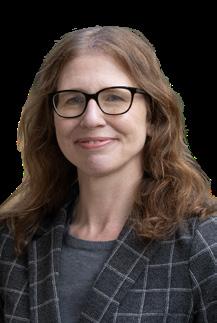

“AI literacy is serious business, but I try to make it fun and practical. One activity my students love is guessing whether images of people are real or AI-generated, which quickly shows why these skills matter. From there, we dive into tools for spotting fakes, factchecking AI output and using AI responsibly for research.”
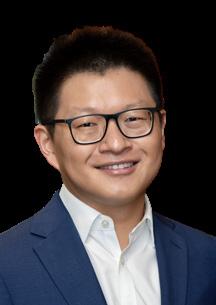
“I’ve added AI modules to J3275, where students use large language models for both mundane and advanced assignments, from generating and critiquing ad copy to brainstorming campaign ideas. We don’t use AI for data calculation, since outsourcing that defeats our data numeracy goals. Overall, my goal is to let students learn how to collaborate with AI responsibly and when to rely on their own reasoning.”
“There are a lot of people thinking that this is a really intelligent machine. It’s really human-like; it must really have its own mind. I try to bust that myth and really try to teach people this is basically following the same logic, principle and methodology that computer scientists have been always using for machine learning. It just looks different because it has been trained on really large language models.”
SUSAN LORUSSO Teaching Associate Professor
ALVIN ZHOU Assistant Professor
JISU HUH
Professor Raymond O. Mithun Chair in Advertising
AI poses a particular challenge to journalists, who have already been grappling with public mistrust and misinformation since before the advent of prompt-generated imagery and nearly instantaneous written output. As Regina McCombs, Senior Lecturer and Senior Fellow in Visual Communication and Photojournalism and Outreach & Engagement Director of the Minnesota Journalism Center, explains about working with her students, “I’m trying to give them the knowledge they need without condemning the tools, but also not making it so that we’re like, ‘Yes, let’s do everything. Let’s try everything. Let’s throw everything out there.’ Because especially on the journalism side, the potential for harm is just so huge. And the research says people want to know if we’re using it, but they trust us less if they see that we are.”
That contradiction also resonates for Segijn, who was part of a recent Thought Leadership Forum on AI and whose work focuses on data, privacy and targeted advertising. Segijn highlights the discrepancy around AI being used for pinpoint consumer targeting within large data sets, explaining that this use highlights a duality, a double-edged sword. “Each aspect has a lot of benefits, but also comes with costs. So think about how all this data can give you something unique that fits with your interests or needs, but can also lead to stereotyping, giving you specific ads and also exclusion of information.”
Opportunities and Challenges Ahead
As with any new communication technology, the impacts of this innovation are difficult to know. According to “The Climate and Sustainability Implications of Generative AI,” a 2024 paper published by MIT, the electricity consumption of data centers needed to power all of those prompts is expected to approach 1,050 terawatt-hours by 2026, which would make data centers the fifth-largest consumer of power on a global list, between Japan and Russia.
For McCombs, the threats of AI are rooted in the erosion of trust and verifiable truth, which is what makes journalism a viable activity. “For visual journalism, I just think there are some huge concerns, and I even have concerns that some people in the industry are being a little casual about the trust issues around ‘Is it real?’” Before AI, McCombs says, “you could have crappy video, but if it showed you something was true, whether it was a security camera or an
Hubbard faculty and staff visit Broadhead for Teach the Teacher in October 2025. Photo courtesy of Broadhead.
interview with someone, it felt like proof. And now that’s going away.”
Both Huh and Len-Ríos also highlight the potential data privacy issues, market disruptions and threats associated with AI. In a world where data is the currency of the market and major corporations lock up their primary data into proprietary systems, the cost of exclusion and barrier to entry are real.
“A lot of people feel that communicating with ChatGPT seems to feel anonymous because you feel like it’s this faceless machine,” explains Huh, “but you need to be really aware that everything you enter, everything you do and say in this communication, they become data points.” One of the effects of that may be that “you may be really pigeonholed into only being exposed to a limited set of a product or brand recommendations. And many of these brand product recommendations may be connected to pay the sponsorship. And that can really create this market dynamic that’s going to have a detrimental impact on competition.”
While all of these concerns factor into classroom discussions, Director Elisia Cohen reports that, “The university’s enterprise adoption of generative AI tools for learning, along with professional demands, has meant that the Hubbard School has taken an ‘AI-aware’ approach to developing its curriculum plans. The undergraduate committee is assessing how an awareness of relevant AI tools can be integrated into the school’s major program learning outcomes to align with industry professional development expectations of our graduates.”
For an ideal AI future, Len-Ríos echoes many of her colleagues about the role of a public university and what models we can look to. “The best possible world looks like humans in charge of AI and harnessing AI to help us do things in a way that make the world a better place, that free us up to do really important thinking and work and to have a work-life balance. [And] ultimately that it doesn’t further the inequalities in society,” Len-Ríos emphasizes. “I think that’s where regulation is super important. Libraries are systems that we’ve created to provide individuals access to ideas and knowledge. And I think it’s important that we continue those types of facilities and ways to ensure that people have access to information and knowledge.”
That world will require discernment and dedication from students, educators and professionals alike, because the future is here now. As Segjin put it, “The AI you’re going to use today is probably the worst AI you’re ever going to use in your life.” <
Computational Advertising Research
Thought Leadership Forum
Thirty scholars from around the world convened at the Hubbard School this fall to examine GenAI & Advertising.
BY JISU HUH
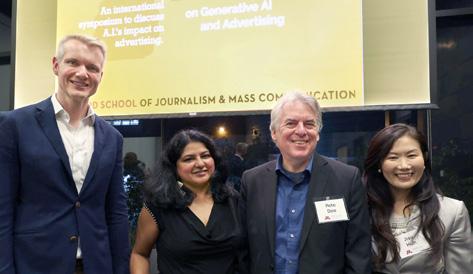
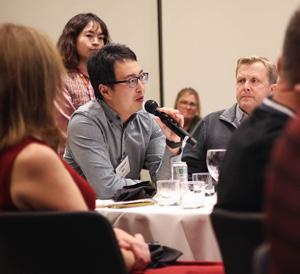
The Hubbard School of Journalism and Mass Communication hosted the third Computational Advertising Research Thought Leadership Forum (TLF) on October 16-17, 2025. This year’s Computational Advertising Research TLF brought together the brightest minds across multiple disciplines to explore, challenge and reimagine advertising theory and practice in light of the rapid rise of generative AI. As generative AI reshapes the advertising — and more broadly, the communication and media — landscape, it has already begun to revolutionize content production for brands and agencies, offering the ability to produce vast amounts of personalized and dynamic content at scale. Consumers, too, are encountering generative AI in unprecedented ways. From hyperpersonalized ads to interactions with virtual influencers and AI-generated avatars, the boundaries between the real and the artificial are blurring. GenAI is also reshaping how consumers search and retrieve information.
This evolving landscape underscores the need to reexamine key advertising concepts like authenticity, originality and creativity. Generative AI also raises multifaceted ethical and policy challenges that require attention. As AI-generated content becomes more common, questions about who owns the output and how it affects copyright and intellectual property arise. At a broader societal level, generative AI’s potential to democratize content creation and access to information presents both opportunities and challenges. Will this lead to greater inclusivity and innovation, or will the sheer volume of AI-generated material foster apathy, paralysis or a general distrust of information? And as generative AI facilitates cognitive offloading for both consumers and advertising practitioners, how might reliance on these tools shape decision-making, creativity and critical thinking? Exploring these broader effects is essential for understanding how generative AI will shape not only advertising but also the cultural, social and ethical landscape in which it operates.
Aiming at advancing novel advertising theory in the context of generative AI, the TLF kicked off with two insightful keynote presentations. Pete Doe, Chief Research Officer at Nielsen, first set
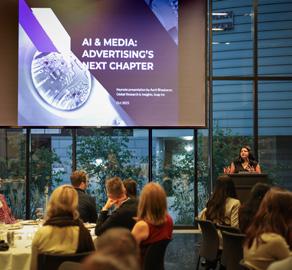
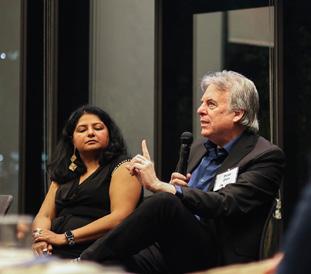
the stage by discussing how AI is already changing workflows in the advertising ecosystem, impacting creation and monetization of content affecting consumers’ interaction with the world and switching advertising budgets and corporate focus. Then he offered a prediction regarding the future of advertising measurement. Aarti Bhaskaran, Global Head, Research & Insights, Snap Inc., in her presentation entitled “The Great Reshaping of Media - How AI will change workflows and disrupt media and creative process,” unpacked some of the most critical shifts that AI is driving across creativity and media landscape, taking a deep dive into how AI is reshaping how ideas are created, how creatives are developed and how media is planned. From breakthrough productivity gains and new creative development process and media buying models to rising questions of trust, provenance, privacy and sustainability, her talk explored both the opportunities and the challenges the advertising industry must navigate. Attendees walked away with a clear view of how AI is changing the advertising industry across the creative process and measurements, what it means for media effectiveness and how to prepare for the next wave of advertising innovation.
Following the kick-off event, thirty participants engaged in an intensive full-day paper hackathon examining broad-ranging topics related to AI and advertising and collaborated to develop conceptual papers that focus on six key topics: (1) Generative AI and the Transformation of Advertising Campaign Design; (2) Personalized Advertising in the Age of Generative AI; (3) Information and Product Search in an Era of Generative AI; (4) Consumer Relationships with Non-Human Advertising Agents; (5) Understanding Consumer Recognition and Processing of Generative AI Content; and (6) Rethinking Effectiveness: Metrics and Evaluation in Generative AI Campaigns. Research papers developed from this TLF will be published in the Journal of Advertising Special Issue “Generative AI and Advertising: Building New Theoretical Frontiers,” co-edited by Jisu Huh (University of Minnesota) and Colin Campbell (University of San Diego). <
Colin Campbell, Aarti Bhaskaran, Pete Doe, Jisu Huh and participants at the kick-off event. Photos by Leslie Bleess.
New Faces in the Faculty:
CAROLINA VELLOSO Assistant Professor
BY RUSS WHITE


This year, you transitioned from being part of the President’s Postdoctoral Fellow Program here at Hubbard to being a member of the faculty as an assistant professor. What did you spend your two years with the PPFP researching?
I’m incredibly grateful for the two years I spent advancing my research agenda as a President’s Postdoctoral Fellow. During that time, I worked on a wide range of projects and published five peer-reviewed journal articles on diverse topics within journalism studies. I also had the privilege of collaborating with some fantastic colleagues at the Hubbard School on research.
What are you teaching this semester, and what are you most excited to work with students on in the future?
I’m teaching JOUR 1001: Media in a Changing World, the foundational course that students interested in declaring a Hubbard major take. I love meeting students early in their college careers and getting them excited about Hubbard! Next semester, I’ll be teaching a new course I designed, JOUR 3759: Sports, Media and Information, and I’m thrilled to dig into the ever-evolving world of sports media with my students!
You were born in Brazil and have also lived in Ottawa, LA and Washington, DC. By comparison, what stands out the most to you about life in Minnesota?
I’ve been so impressed by the quality of life in the Twin Cities! A lower cost of living combined with a vibrant arts, sports, nature and food scene makes it such a great place to be. <
2025-26 Postdoctoral Scholars & Doctoral Candidates Entering the Job Market

Rita (Rongwei) Tang studies how the public, experts and organizations can use social media and artificial intelligence to promote quality information and how these practices influence people’s belief accuracy and organizational reputation. She has published 18 peer-reviewed journal articles, 9 of which are lead- or solo-authored, receiving top paper awards from AEJMC and the American Public Health Association (APHA), as well as funding support from competitive grants and fellowships. Her studies have been published in leading journals such as Journalism & Mass Communication Quarterly, Social Media + Society and Health Communication.
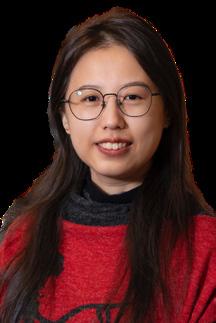
Dongqing (DQ) Xu received her PhD from the University of Miami before joining our school as a strategic communication postdoctoral candidate. She conducts research on challenging corporate communication, including corporate crisis/ risk communication and brand activism. She is particularly interested in how social influence among stakeholders can shape effective corporate communication. Her work has received multiple awards from the AEJMC PR Division and has been published in different journals in public relations and business communication.

Trevor Zaucha published “Playbor, gambleplay and the financialization of digital games” in New Media & Society and “Unpredictability and consequence in playto-earn crypto gaming” in Information Communication & Society. He continues to advance his research on emerging media platforms, with his dissertation topic relating to platformized crypto gambling. This project was awarded the Casey Dissertation Award in the fall of last year.
RITA (RONGWEI) TANG PhD Candidate
DONGQING (DQ) XU Postdoctoral Scholar
TREV0R ZAUCHA Predoctoral Scholar
PHOTOS BY PATRICK
THE CENTERS


Centering Minnesota Journalists
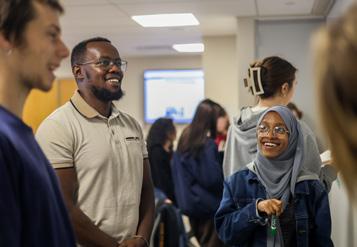
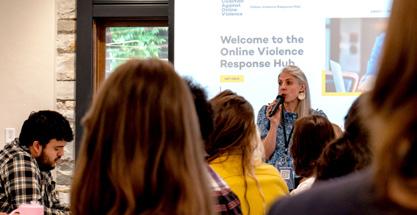
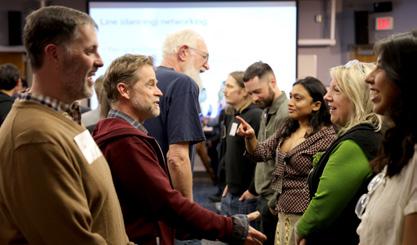
Run by a small but mighty team, the MJC bridges gaps for students, professional journalists and the state-wide news ecosystem
The question was posed: could you describe the most pressing issue facing journalism today in a single sentence?
The Minnesota Journalism Center’s Associate Director Meg Martin starts typing.
“That’s a nearly impossible sentence...” she writes — there are a lot. “Economic forces, changing technology and shifting habits, political polarization, threats to free speech, competition for scarce resources and news avoidance and trust issues.”
Those are just a handful of the hurdles facing the industry at large, and that’s not to mention the issues that journalists navigate in their day-to-day work. It can all sound a bit bleak.
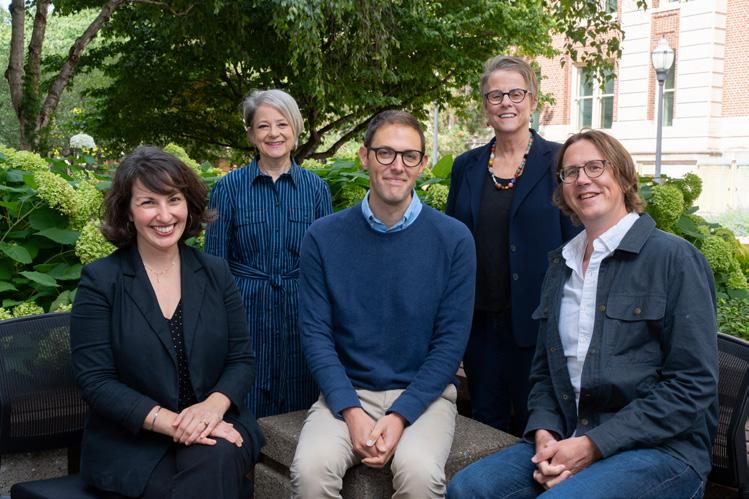
But Martin’s work at the MJC — along with director Benjamin Toff, Gayle “GG” Golden, Regina McCombs and now Matt Carlson, who is acting as MJC’s interim director while Toff is on parental leave — is to face those problems head-on by building community and sharing resources within Minnesota’s sprawling journalism landscape.
We often think of Murphy Hall as a place where students are doing the learning, but the MJC wants to offer the same kind of rich
community-learning experience to professional journalists at every stage in their career. The Center’s research is focused on actionable findings — around trust, news avoidance, the journalism ecosystem and AI — that newsrooms and individual journalists can use to inform their work and the way they serve their communities.
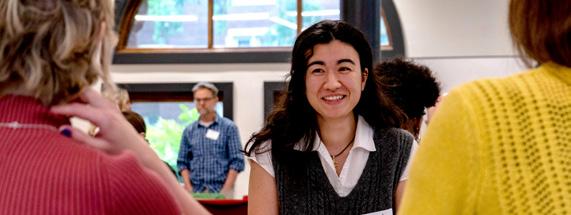
MJC’s student programming is rooted in filling reporting gaps identified by newsrooms and journalists across the state, while offering undergrads opportunities for professional experiences at the statehouse, as short-term freelancers and as summertime staffers in newsrooms across Minnesota.
And in its industry-facing work, the MJC partners with local, national and international organizations and associations to host trainings on topics like digital and physical safety and the legal rights of journalists. It cultivates cohorts of journalists from across the state with similar interests, coming together to find solutions and solidarity in their work. It creates community among journalists near and far with updates, job opportunities, events and helpful links in its monthly newsletter and its robust calendar of MJC trainings and wider news organization events. <
See more and sign up for their newsletter at mjc.umn.edu
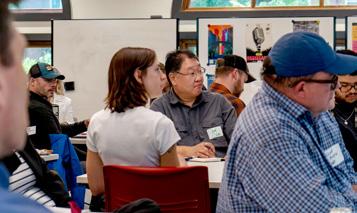
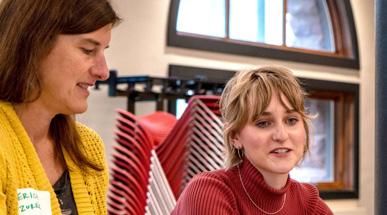
Group photo by Patrick O’Leary.
All others by Hannah Reynolds, Regina McCombs and Leslie Bleess.
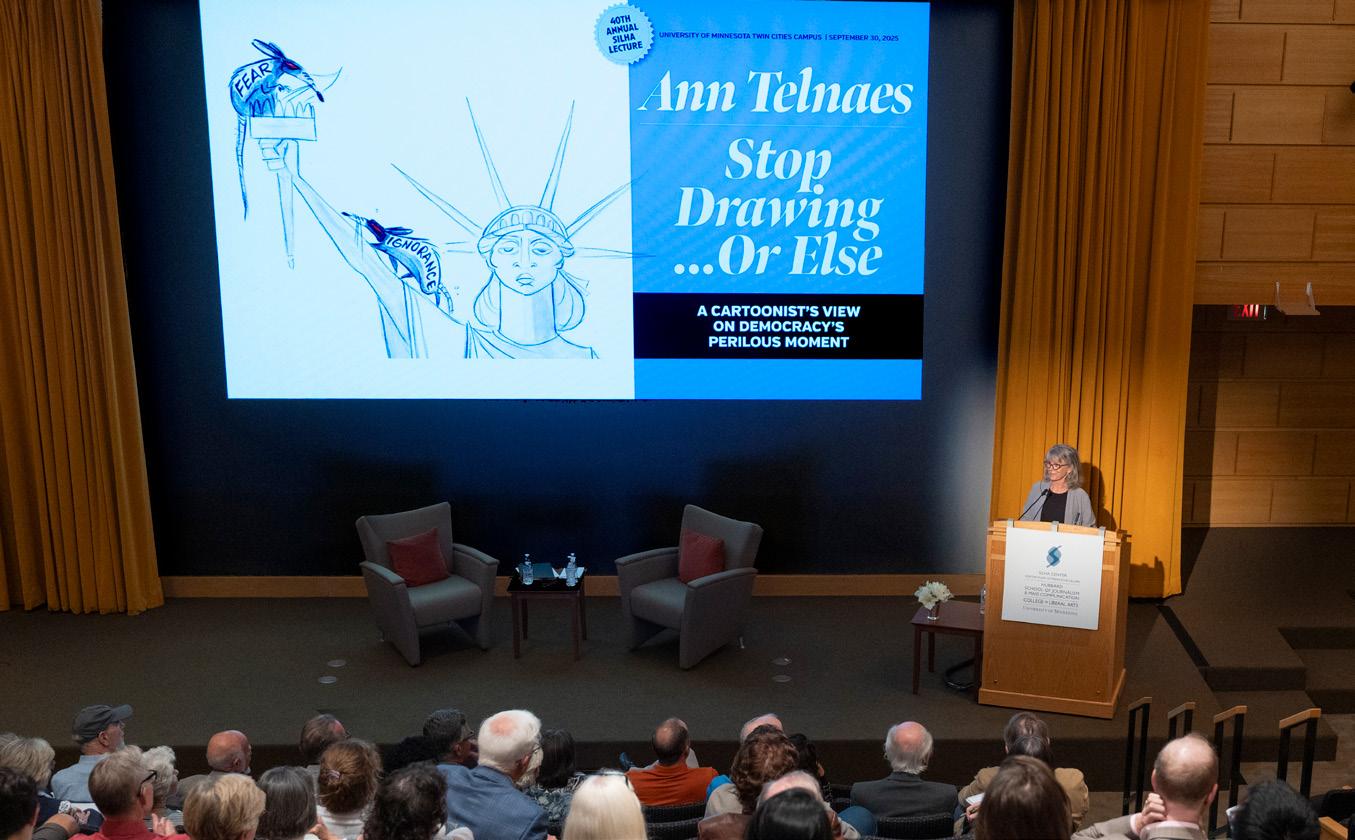
Ann Telnaes: Stop Drawing... Or Else
The 40th Annual Silha Lecture with the Pulitzer Prize-winning cartoonist addressed the role of editorial cartoons in “Democracy’s Perilous Moment”
BY STUART LEVESQUE EDITOR, SILHA BULLETIN
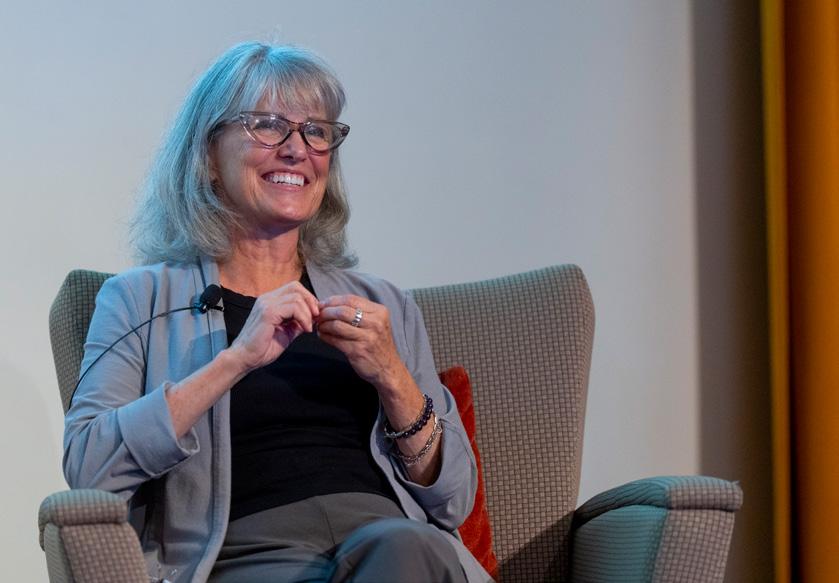
On September 30, 2025, editorial cartoonist Ann Telnaes — whose work has been published in The New York Times, Le Monde and The Washington Post, among other outlets — spoke about the role of editorial cartoonists and satirists in civic debate, especially at this moment in the nation’s political history, as she delivered the 40th annual Silha Lecture, “Stop Drawing or Else: A Cartoonist’s View on Democracy’s Perilous Moment.” Approximately 220 people packed Cowles Auditorium for the lecture, and nearly 700 webinar attendees joined as well. Telnaes’ resignation from The Washington Post in early 2025, after the paper refused to run one of her cartoons satirizing the billionaires attempting to curry favor with the newly-reelected President Trump, prompted outcries from First Amendment advocates and fans of her work. Telnaes argued that editorial cartoonists’ job is to expose abuses of power and injustices committed by governments and institutions through ridicule and caricature. She contended that this role is essential because cartoonists work in a visual medium and have the potential to reach wider audiences than writers and other commentators.
Utilizing a variety of editorial cartoons, Telnaes began her lecture by noting that cartoonists will always “be first in the line of fire when controversial subjects are being debated and free speech threatened.” She cited the 2005 controversy arising after the Danish newspaper Jyllands-Posten published cartoons depicting the Prophet Muhammad and the 2015 attack on the office of the French satirical newspaper Charlie Hebdo after it too published cartoons of the Prophet Muhammad. Telnaes further stated that she believes attacks on satirists are a bellwether of future attacks on free speech, noting that the cancellation of “The Late Show With Stephen Colbert” and ABC’s decision to temporarily take Jimmy Kimmel off the air following comments he made in the wake of Charlie Kirk’s assassination were followed by a broader crackdown on speech by employers and government officials. For more information on the Danish cartoons, see “Controversial Cartoons Lead to Worldwide Concern for Speech, Press Freedom and Religious Values” in the Winter/Spring 2006 issue of the Silha Bulletin. For more information on the attack on Charlie Hebdo, see “Charlie Hebdo Attack Leaves
Several Dead, Sparks International Debate on Limits of Free Speech” in the Winter/Spring 2015 issue.
This crackdown is indicative of the danger of a second Trump administration, Telnaes argued. Although American journalists and satirists still do not face the physical dangers that some of their colleagues do abroad, their work may be suppressed by American media companies that, in order to protect their bottom line, “obey in advance.” “We are in a perilous time,” Telnaes stated. “If cartoonists and comedians continue to face censorship and cancellation by media companies not willing to stand up to threats from Trump and his administration, our democracy loses essential voices in . . . public and political debates. A silenced cartoonist or a canceled latenight comedian are warnings to us all that everyone’s free speech will eventually be targeted.”
Following her remarks, Telnaes was joined onstage by attorney and free speech advocate Roslyn Mazer who, as counsel to the American Association of Editorial Cartoonists, submitted an amicus curiae (friend of the court) brief to the Supreme Court on behalf of Hustler Magazine in the landmark case of Hustler Magazine, Inc., v. Falwell. 485 U.S. 46 (1988). Together, Telnaes and Mazer discussed the current state of free speech in the United States. When asked by Mazer how she compares First Amendment protections with the persecution of journalists and satirists by autocratic regimes abroad, Telnaes responded that she was “worried.” Mazer stated that she shared Telnaes’ concern, positing that Trump shares an affinity with dictators abroad who routinely censor critical speech.
Regarding her decision to leave The Washington Post, Telnaes stated that she had not intended to quit, but made the decision “within five minutes” after realizing that she would not be allowed to continue to do her job of holding those in power accountable. Telnaes and Mazer noted that the United States’ broad protections of free speech are a relatively modern innovation, having first been endorsed by the Supreme Court in the early 1900s. Both stated that they feared this protection could be in jeopardy, especially given recent signals
“I believe attacks on satirists are a warning and will lead to broader censoring of free speech.” – Ann Telnaes
from the Supreme Court and a lack of strong support for free speech among young people.
The lecture and discussion were followed by a Q&A session. When asked what members of the audience could do to combat the free speech recession, Telnaes said “go out and protest. . . . You have to get out there and be loud.” In response to a question about whether she knew of editorial cartoonists self-censoring for fear of retribution or consequences to their career, Telnaes responded, “I know it has happened.” She stated that, particularly after the 9/11 attacks, many cartoonists refrained from drawing cartoons skewering the Bush administration for fear of pushback or under pressure from their editors. Asked about the cartoon that precipitated her departure from The Washington Post, Telnaes stated that, to her knowledge, Jeff Bezos, who owns The Post, had no hand in censoring the cartoon. She added that, in her view, the refusal to publish the cartoon was an instance of The Post’s editors obeying in advance so as not to displease Bezos and potentially, Trump. Finally, in response to an audience question about whether cartoonists and journalists should respect dominant cultural sensibilities, Telnaes responded no — journalists, cartoonists and satirists have no such obligation. Further, she argued that there is no objective and fair way to decide when speech “goes too far” and that this is one of the reasons that speech protections are so important. <
Watch the full lecture at z.umn.edu/2025SilhaLectureVideo.
Silha Center activities, including the annual lecture, are made possible by a generous endowment from the late Otto and Helen Silha. This article originally appeared in the Silha Bulletin, Volume 30, Number 3.
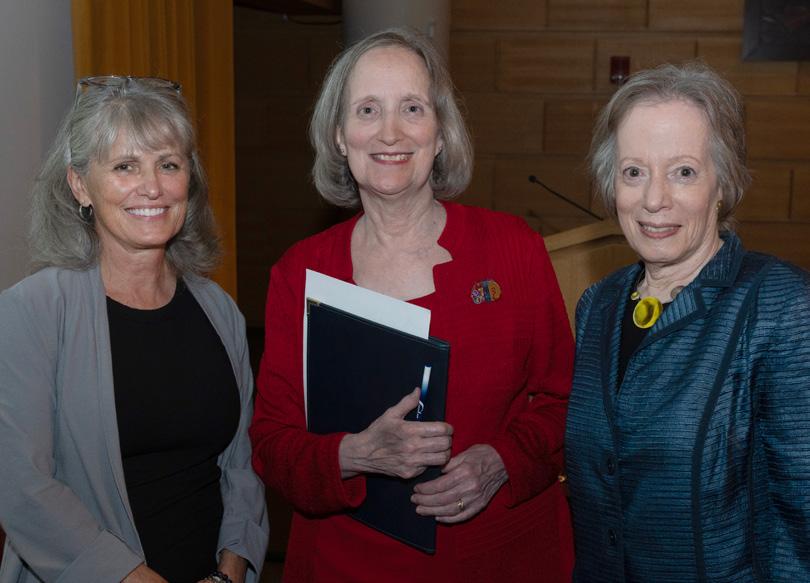
OPPOSITE & TOP LEFT: Ann Telnaes. RIGHT: Telnaes, Professor Jane Kirtley and Roslyn Mazer. Photos by Patrick O’Leary.
Jane Kirtley Retiring After Over 25 Years at Hubbard
The Professor and Director of the Silha Center for the Study of Media Ethics and Law offers her perspective on Silha’s past, America’s present and her future in retirement.
BY RUSS WHITE
Can you tell us about your career leading up to the Silha Center and the strategic direction you‘ve taken it? What were your goals when you came in and what are you most proud of?
I started out after I graduated from the master’s program in journalism at Northwestern. I’d been in Medill doing the five-year program to get both a bachelor’s and master’s, and in my last year, I was the Washington correspondent for a newspaper called the Oak Ridger in Oak Ridge, Tennessee. I was covering the nuclear and atomic energy beats, and I got very frustrated because I couldn’t get the information I thought my readers needed. So that’s actually what prompted me to go to law school at Vanderbilt. I intended to go back to journalism afterwards, but I worked part-time for the Nashville Banner, which no longer exists, but at the time was a Gannett-owned daily newspaper.
I also got a job with the third largest law firm in Nashville, and I found that I liked doing law. I left Nashville when I graduated and became an associate at the firm that represented Gannett. After five years doing corporate law, I happened to read a want ad in The Washington Post — which tells you how long ago this was — that the Reporters Committee for Freedom of the Press was looking for somebody to be their legal defense coordinator. I worked for them for about a year, and then they made me the acting director and eventually director. It was a fabulous job, but at the end of 14 years, I was frankly burned out. And at that time I was nominated for this position that I hold currently.
I was not the director of the Silha Center when I was first hired; that changed after I’d been here for about a year. My approach was different from that of my predecessors, which I think is good in a way — it was important for the Silha Center to evolve. Because my predecessors were not lawyers, I had a different vision of what the Silha Center would be about. We wrote friend of the court (amicus) briefs, for example. We filed one in the US Supreme Court in 2004 in an important freedom of information case, and the brief was cited during the oral argument, which is a big deal. We’ve also filed comments with regulatory agencies, legislatures and even the Council of Europe. I wrote an article on criminal libel for the OECD. I love doing international work — I was the articles editor for the transnational law journal at Vanderbilt — and that was one of the great things about being here, because the US State Department has sent me to many countries in Eastern and Central Europe to
advance press freedom after the fall of the Berlin Wall. And I was awarded a Fulbright to teach media law and ethics at the University of Latvia in Riga 2016.
I revised the approach to the Silha Bulletin to focus in depth on important legal and ethical issues arising in both the United States and overseas, not just Minnesota. It’s evolved into a significant research and writing exercise for the grad and law students who write it. If I look back, I would say the work on the Silha Bulletin and guiding the students that were working on that is probably my biggest contribution to graduate education.
And then there is the Silha Lecture, our signature event of the year. For the last 25 years, I mostly asked my friends to come and speak; they happened to be friends that were very prominent media lawyers. I tried to get the people who were arguing in the Supreme Court, either that term or the immediate previous term, on significant media law issues. We also had people like political cartoonists Chip Bok and Ann Telnaes, columnist and author Anthony Lewis and, to mix it up a little bit, Kenneth Starr, who I had met at a conference and invited to come and talk about the Citizens United case, which was just getting warmed up at that point.
My goal was always to have a solid media law aspect to whatever we were going to be talking about and always to make it timely. Stephen Silha, who is a son of the donors who created the Silha professorship and Center, once said to me, “Your ability to figure out what’s going to be the hot issue in the fall is just amazing.” I’m very proud of the legacy of the Silha Lectures. They’ve been important in terms of connecting not only to the scholarly and legal community but the community at large, especially now that we live-stream them. It’s probably just as well I’m retiring, because I’m running out of friends to ask!
Coming into the position, did you find academia to be a difficult world to transition into?
Not teaching classes, because I had taught at the University of Maryland and American University for many years while I was at the Reporters Committee. Plus, I did international work where I was giving lectures to audiences who didn’t know very much about the First Amendment. It wasn’t standing at the lectern or writing and grading exams that was the challenge. The tougher transition for me was the academic orientation — the way people define themselves by their scholarly pursuits.
I came in with an inferiority complex as far as that was concerned. Although I had written a few scholarly articles when I was at the Reporters Committee, I didn’t think of myself the way a typical academic does, where they speak very self-referentially about “my research.” My research isn’t sacred, but the principles underlying it are. I think of my work as defending the First Amendment. At the Reporters Committee, we seldom initiated litigation in our own name. Our work was helping journalists with legal problems, filing friend of the court briefs in other people’s cases and reporting on them, analyzing them and providing commentary to the news media. What I’m doing now is an extension of that: being a “public intellectual.” I’m very practical, and I look at things down the line to see — and this probably helps the lecture selection — what’s the next area that we’re going to have a crash? And it’s not only the Trump administration, although his policies certainly implicate that. This has been going on for years long before Trump: Who’s going to go after New York Times v. Sullivan? What’s going to happen with access to government meetings and records?
A lot of people are looking at the moment that we’re in, certainly at a federal level, as unprecedented and precarious. Do you agree with that assessment, and what do you see as the particular dangers we face now? First Amendment protections are a moving target because things evolve. Technology is certainly a driver for policy, but it’s not the only one. At the heart of this are the concerted efforts by people on the right and the left — everybody always blames the right, but it’s not just the right — to undermine public confidence in the establishment “legacy media.”
The First Amendment’s not self-executing. It doesn’t just happen on its own. You’ve got to have judges who believe in it, as well as members of the public and legislatures, too. And if they don’t, then it doesn’t matter what the First Amendment says. That is what gives me the greatest concern: Lack of civics education, lack of appreciation of what it has meant to have a free press and the fact that so many people have turned their back on the conventional media and don’t see any difference between getting their news from Facebook or TikTok or from the New York Times or the Strib. That’s one of the reasons I came to Minnesota. I’ve loved teaching undergraduates; I taught the Media Law class every semester for most of my time here and wanted to share with them my passion for protecting a free press.
Historically, even if a lower judge did something crazy in interpreting media law, at an appeals court level they’d go back to the first principles that the Supreme Court promulgated from the 1960s onward and say, we may have to hold our nose, but of course these journalists have the right to be there or to publish that, or whatever the case might be. But I don’t see that being as well-ingrained today as it was when I first started working in this area. We had our battles, certainly, but I don’t see this kind of institutional dislike of the press as having existed in those days, and I think that’s very dangerous.
So you’re retiring this coming May. What are your plans for retirement?
I don’t know what I’m going to do. I might work on a book. Until the election last year, I had really hoped I would be going back to doing more work for the State Department. I loved doing that. Because of my teaching schedule, I couldn’t do it every time they asked me. I did one tour in Asia where I was away for three weeks, and that’s just not possible during the school year. That was what I was hoping I’d get back to, but I’m afraid it is not going to happen with this administration.
So “I don’t know” is the short answer. Maybe I could get back to doing some more writing. Before I came to Minnesota, I wrote a column that was picked up in a lot of State Press Association newsletters. I also wrote a law column for American Journalism Review for many years, which I continued to do after I came here. And then the University of Maryland reorganized, and now AJR doesn’t exist anymore. Another one of the graveyard of defunct news organizations I’ve been involved with.
I love that you’re excited for retirement because it means you get to do more work. You’re not going to just relax, maybe take up fly fishing or something like that? Not me, no. The biggest thing for me really has always been travel. I love it. But exactly how or why or where. I don’t know yet. <
To keep up with the Silha Center news, events and publications, visit silha.umn.edu.
New Faces in the Faculty:
SCOTT WINTER Senior Lecturer, Charnley Projects Professor
BY RUSS WHITE


You’ve hit the ground running at Hubbard, not just teaching but helping students start new initiatives. What can you tell us about the East Bank Epitaph and the new student sports media club?
The East Bank Epitaph (medium.com/hubbard-epitaph) is a news outlet that allows students to have a place to show their work to the public and potential employers for internships and jobs. For me, publishing our classwork raises the stakes, helps us understand the whole storytelling process and makes us accountable for our work. But maybe even more I want students to feel the thrill and accountability of telling newsy stories. And be proud of them.
The sports media club leaders – all gracious, accessible and doers – have named the group the Maroon and Gold Sports Network, which has a similar goal as the East Bank Epitaph but is a studentled sports outlet that leans toward social media and video packages. But Eitan Schoenberg, the founder and head honcho, wants it to be a place that helps all storytellers get published with stories that serve viewers and fans, and also allow journalists to fill up their reels and online portfolios.
Your background is in sports journalism, both as a writer and editor. Is that still your primary focus, and what do you enjoy most about it?
I mostly love telling substantial social justice stories across all story categories: hard news, sports, arts/culture, etc. And trying to figure out the best media for telling each part of that story. I grew up in sports, which allowed me to write tons of stories on tight deadlines and gave me an advantage in getting my 10,000 hours of practice quickly. And my academic background in literature helped me to see new story arcs, fascinating characters and original approaches to marry literary story forms with journalistic truthtelling and values.
You earned your PhD at the University of NebraskaLincoln and also taught in Delhi, Kosovo and Addis Ababa. By comparison, what stands out the most to you about life in Minnesota?
Before my dean at Nebraska sent me abroad, I thought I had a pretty good handle on the First Amendment, journalism ethics and what meaningful coverage meant. Then I traveled to work with students and journalists in developing democracies, and that’s where I learned the value of the First Amendment, of brave storytelling, of making a difference in our communities. I try to bring that experience, those lessons, those stories with me into classrooms at Murphy Hall. But Minnesota is where I always wanted to tell stories. And live. Except in February. <

The Mine Next Door
Based on five years spent researching the Iron Range, Associate Professor Amy O’Connor’s new book digs deep into how corporate communication shapes the culture of Minnesota’s taconite mining community.
BY KATIE DOHMAN
Associate Professor Amy O’Connor has focused her career in strategic communication around a fairly singular question: What are the responsibilities of corporations to the Commons?
“I’ve really made my career by asking ‘What do corporations say about their Corporate Social Responsibility (CSR) commitments, and how do different stakeholder groups experience those responsibilities?”
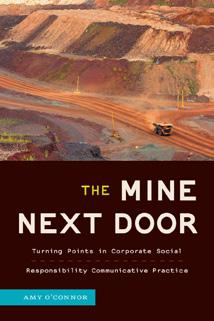
Now she’s about to publish her in-depth research in her book, “The Mine Next Door: Turning Points in Corporate Social Responsibility Communicative Practice,” which explores how CSR is communicated and practiced in Minnesota’s iron ore mining industry.
No stranger to the Northland, having lived and worked in North Dakota and northwestern Minnesota, O’Connor still knew it would “not be an easy get” to The book begins with a quote from a named source,
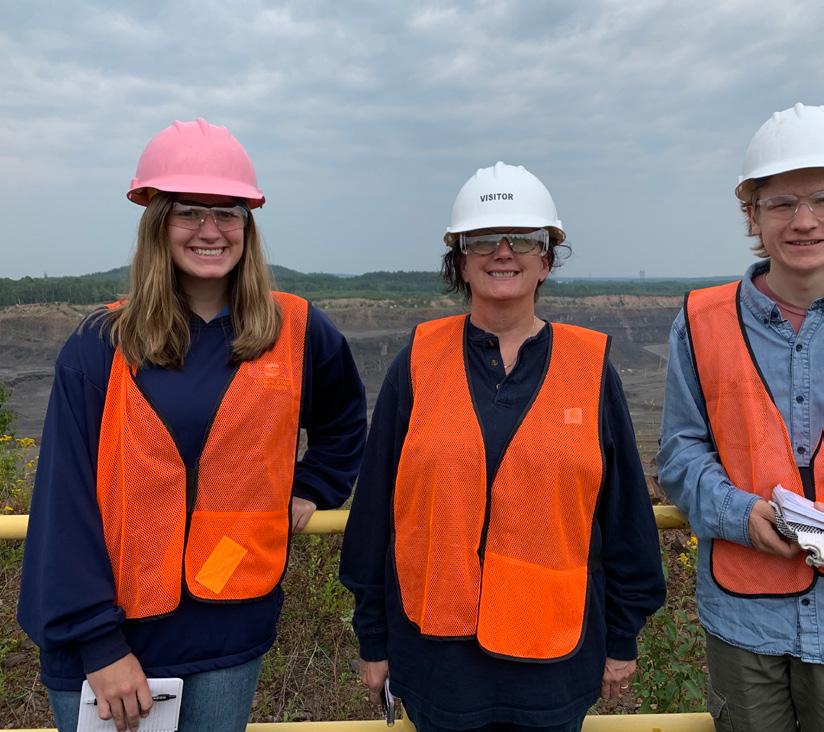
TOP: Photo by Mark Sauer. INSET: Amy O’Connor on site in the Iron Range. Photo courtesy of O’Connor.
a retired, now deceased, United Steelworkers Local 2705 member, Steve “Popcorn” Zalec: “What are you going to write that makes us look like fucking idiots?”
“They were trying to see what I was about, and I get that,” she says.
O’Connor used verbatim transcripts of interviews, triangulated with archival research and other interviews, plus member checks to be sure she understood not only the facts but the context and feelings. She gained enough trust to get white-board explanations of shift work, but she says some people, even after five years, declined to be accounted for.
Miner willingness yielded rich information. “The other thing that really surprised me, was the amount of CSR that goes on that the corporation doesn’t take credit for on official communications channels and how those things were deeply meaningful to the community — but also if you aren’t in the community, you don’t know about them. Imagine having a neighbor for 140 years — the mines are part of the community up there.” Unlike in other parts of the world, the mine is not geographically isolated from the population. “Someone told me once it’s urban mining,” she adds. “It’s true. The mines and communities literally wrap around one another which makes the relationship more intimate and more complicated.”
The results also were twofold. From an academic perspective, O’Connor says she concluded, “CSR is temporally bound and culturally informed, and proximity and place really matter.” It’s also not a single voice, and many other actors, including the union workforce, contribute to what CSR is in a community.
The practical highlight, and the one O’Connor didn’t plan for necessarily, was telling the miners’ stories. “I do think that it opens the door for conversations about what are all of our responsibilities to Minnesota mining communities? Whether pro-, anti- or somewhere in between, understanding that Minnesota’s iron ore industry provides the pellets for 85% of US domestic steel is a critical fact. And that’s an important piece of the discussion about mining. It’s well timed for the times we live in.” <
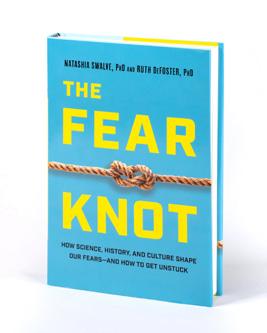
The Fear Knot: How Science, History, and Culture Shape Our Fears — And How to Get Unstuck
Natashia Swalve & Ruth DeFoster (Prometheus)
Why do we fear Halloween candy but not vending machines? Why do “witch hunts” recur so often in history? How dangerous are serial killers, really? The Fear Knot examines our most common deeply held fears, unpacking which are valid and which are misguided, explaining the history of how our irrational fears developed, and how we can unlearn them.
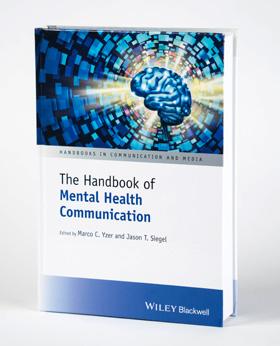
The Handbook of Mental Health Communication
Marco C. Yzer & Jason T. Siegel, Editors (Wiley Blackwell)
The first book of its kind to offer a transdisciplinary exploration of mass communication approaches to mental health. With timely and authoritative coverage of the impact of message-based mental health promotion, this unique volume places mental health communication in the context of sociocultural causes of mental illness — synthesizing public health, psychopathology and mass communication scholarship into a single volume.
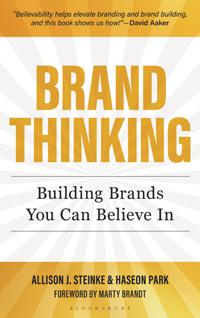
Brand Thinking: Building Brands You Can Believe In
Allison J. Steinke & Haseon Park (Bloomsbury)
Introducing students to core brand concepts of belief system, gr owth, strategy and social influence, this book provides a strategic framework for creating, refining and sustaining responsible, believable brands. In addition to robust theoretical framing, this book provides concrete case studies of companies across industry sectors that exemplify the cornerstones of the brand thinking framework.
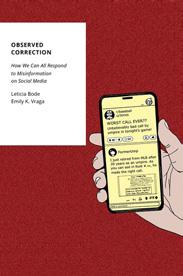
Observed Correction: How We Can All Respond to Misinformation on Social Media
Leticia Bode & Emily K. Vraga (Oxford University Press)
The authors consider both the po wer of and the barriers to “observed correction” — users witnessing other users correct misinformation on social media. To empower people to respond to misinformation, Bode and Vraga offer a set of practical recommendations for how observational correction can be implemented.
“The Mine Next Door: Turning Points in Corporate Social Responsibility Communicative Practice” (University of Michigan Press)
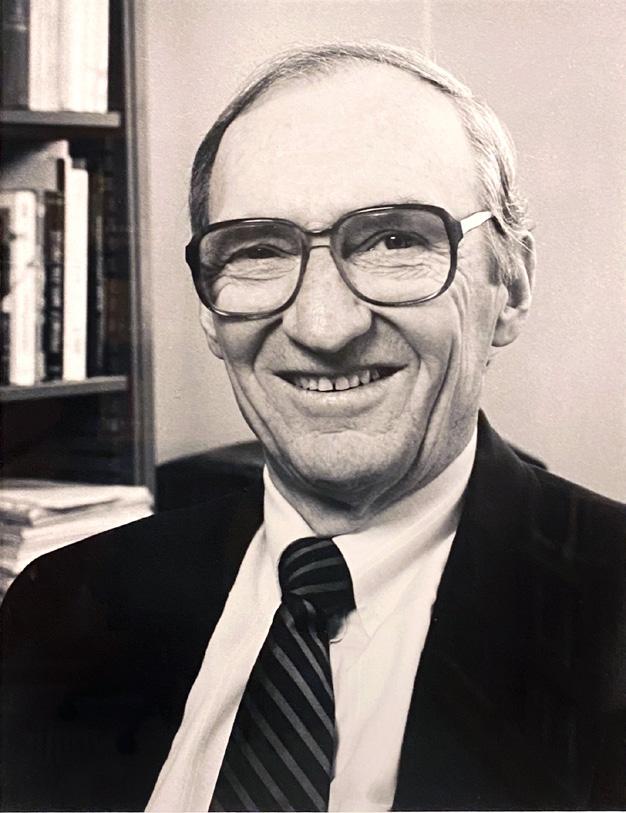
Phillip Tichenor (1931 – 2025)
Professor Emeritus Phillip Tichenor taught at the University of Minnesota for 30 years, in both the Department of Rural Sociology as well as the Hubbard School. He also conducted internationally-renowned research on information distribution and the community press, and his impact on students has endured long after they left Murphy Hall.
Several alums wrote in with their remembrances of how Professor Tichenor influenced not just their education here at the U but also their lives to this day.
Professor Tichenor was a wonderful adviser and instructor, and we stayed in touch by email over the years, whether I was in Afghanistan, Ukraine or back in Minneapolis covering the fallout from George Floyd’s killing. He never failed to offer keen observations and illuminating insight throughout our correspondence.
In fact, on recent trips to Ukraine, including this latest one, I’ve reported on a topic — the impact of war on the elderly and those with disabilities — in part because of something he mentioned in an email to me during the first year of Russia’s full-scale invasion. Decades after I had sat in his classroom, I was still learning from him.
His influence on me has already spanned decades, and I know he will remain a guiding light in the years ahead. I’m saddened that he’s gone but forever grateful to have been one of countless beneficiaries of his intellect, compassion and devotion to teaching.
— Martin Kuz (BA
In the early 1980s, Dr. Tichenor was unfailingly supportive of my work as I struggled to finish my Master of Arts in Mass Communication. When I needed a subject for my thesis, he made a few helpful suggestions, and that helped reignite my wavering interest in completing the degree. He was always available to arrange a meeting, too. In short, he was a catalyst, not an obstacle. This was a long time ago, but I will always remember Phil Tichenor — that’s how he answered his phone — with fondness and gratitude.
—
Nancy Keating (MA ‘84)
I always made it a point to see Professor Phil Tichenor during my infrequent visits to the Twin Cities and we usually met over lunch. In addition to good stories and stimulating conversations, I enjoyed a free lunch. He always insisted on picking up the tab! I used to try in vain to explain that now that I am working, I can pay. But to no avail. Just a few years ago when I scheduled a trip to the Twin Cities to attend a conference, I sent a note to Professor Tichenor suggesting a meeting. He wrote me back to say that he was living almost three hours away from the Twin Cities though he would enjoy seeing me. I made the trip anyway and had a wonderful lunch with him. Yet again, I failed to convince him that I can pay for the lunch! A mentor’s mentor, a teacher’s teacher and a scholar’s scholar, Professor Tichenor (I never called him by his first name!), was one of the most generous men – with his time, ideas and countless lunches and breakfasts – to guide me through graduate school and making a huge difference in my life.
— Vish Viswanath (PhD ‘90)
‘91)
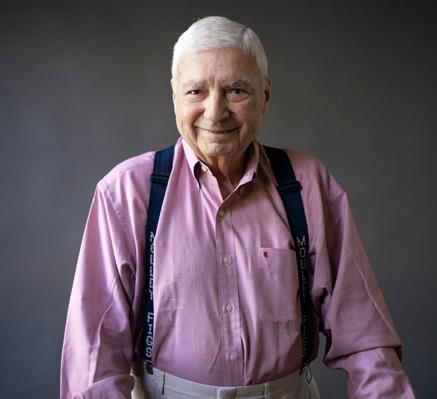
Burt
Cohen (1930 – 2025)
A native of Minneapolis and a graduate of the Hubbard School, Burt Cohen believed in the importance of journalism and that an investment in young people through education would pay dividends in the long term. He played a key role in inspiring the University of Minnesota to engage in a New Media Initiative at the dawn of the dot com era, and he was always interested in identifying new ways to bring bright humor and recognition to the school.
In that same spirit, the Hubbard School is proud to carry on his legacy with the launch of the Burt Cohen Innovation Fund. This program fund will support ground-breaking new initiatives designed to enrich student experiences and champion the kind of in-person community connections among students, faculty and the professional community that Burt so effortlessly cultivated while holding court at the Minneapolis Club.
This vital fund is designed to support innovative programming and foster projects that truly reflect the same fun-loving and forwardthinking spirit that Burt Cohen championed throughout his remarkable life. To add your support, scan the QR code at right or visit z.umn.edu/BurtCohenFund
Stan Turner (1944 – 2025)
Stan Turner, long-time KSTP reporter, anchor, news director, mentor, St. Thomas educator and Hubbard School alum, passed away this September. His former students and colleagues remembered him with a look back at his career, which included being inducted into the Pavek Museum Hall of Fame. Stan’s family has created a scholarship fund for broadcast journalism students in his name.
The Stan Turner Journalism Scholarship supports University of Minnesota journalism students who demonstrate financial need and are dedicated to a career in broadcast journalism. The award honors Stan Turner, who reflected integrity and high journalistic standards through his 35 years of reporting the news for KSTP TV.
To add your support, scan the QR code at left or visit z.umn.edu/StanTurnerScholarship.
Top: Photo by Liam James Doyle, University of St. Thomas. Courtesy of Mpls.St.Paul. Inset: Burt in 1952, during his time at the University of Minnesota. Courtesy of University Archives.
Photo courtesy of Dignity Memorial.
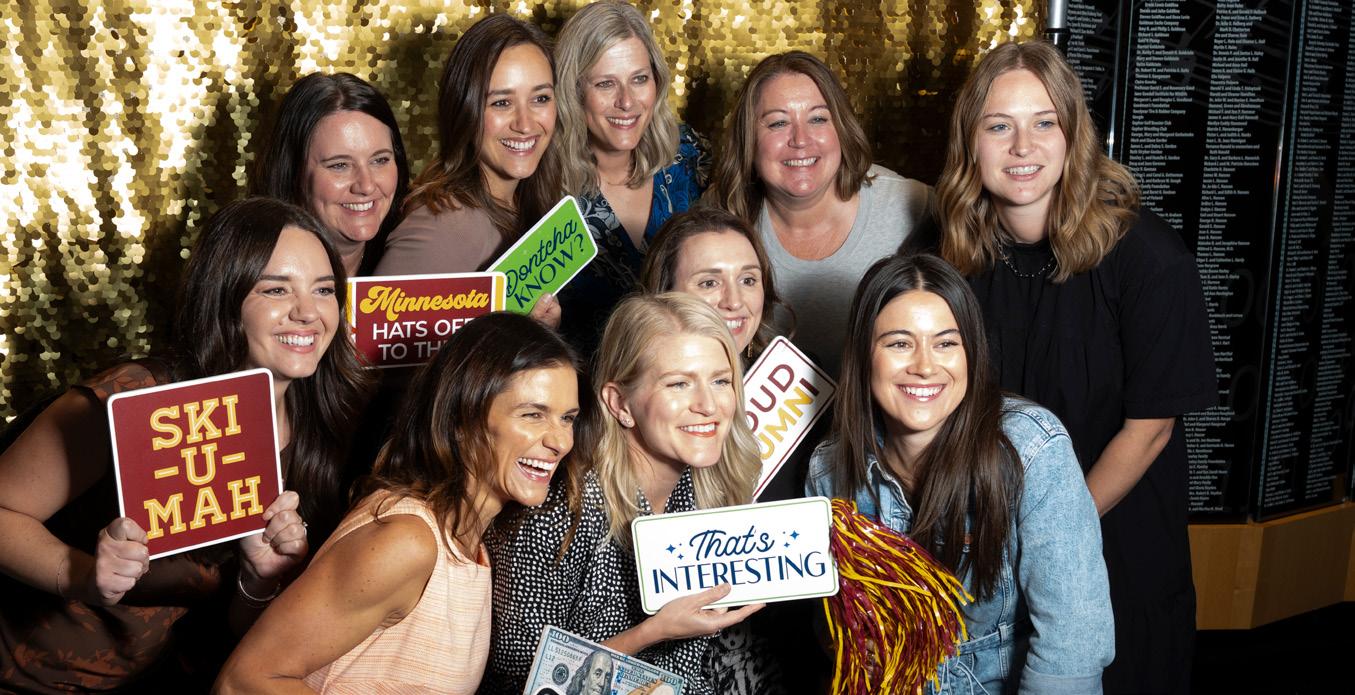
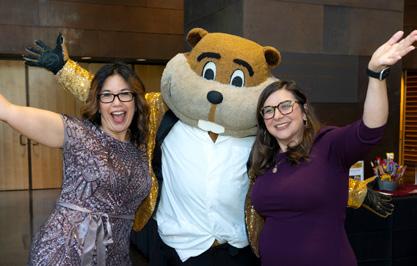
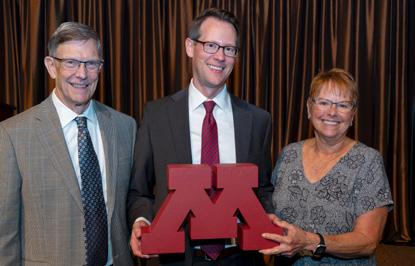

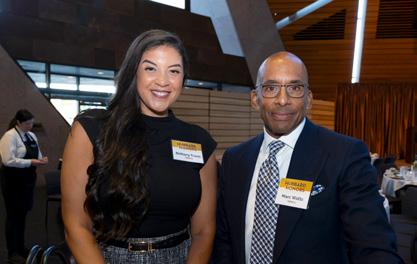
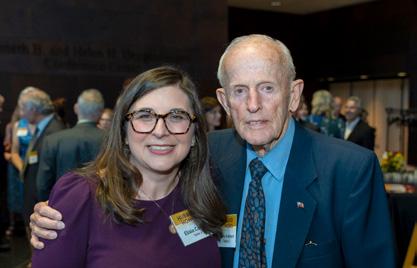
GRID, CLOCKWISE FROM TOP LEFT: María Len-Ríos, Goldy and Elisia Cohen; Burt Cohen’s family; awardee Deb Hopp with her two daughters; awardee Brittany Travis and Marc Watts; Elisia Cohen and Stan Hubbard; Rich McCracken with awardee Hannah Faiad and Nate Faiad; Goldy with Hunter Brown and awardee Nicole Miller; keynote speaker Aaron Blake with his parents; Provost Gretchen Ritter, Deb Hopp and Elisia Cohen. Photos by Patrick O’Leary.
There is never a dull moment at the Hubbard School, and this fall has been no exception! This year we hosted the inaugural Hubbard Honors, an annual alumni recognition and fundraising event bringing together distinguished alumni, dedicated faculty, bright students and valued community members.
This Hubbard Honors featured a welcome from Provost Gretchen Ritter, a keynote address from CNN Senior Reporter Aaron Blake (B.A. ‘05), the announcement of the Burt Cohen Innovation Fund (including remarks from Burt’s family, who generously set up the fund in his honor) and the presentation of three categories of alumni awards:
2025 Above the Fold Awards, recognizing a cohort of recent graduates who are already making an impact in their field:
Nicole Miller, Doner
Hannah Faiad (Ockelmann), Best Buy Creative
Mara Keller, Fallon
Tiffany Luong, Fallon
Tanner Uselmann, Fallon
Brittany Travis, MONO
Mark Vancleave, The Associated Press
Shannon Murphy, MONO
CJ Sinner, Star Tribune
Cydney Strommen, Cambria
W2025 Pathfinder Awards, recognizing established alumni leaders in their professions who have carved a path of creative excellence, leadership and community-mindedness:
Carolyn Ahlstrom, Colle McVoy
Gloria Delgadillo, Target
Lou Raguse, KARE 11
Jenni Pinkley, Star Tribune
The 2025 Award for Excellence, our most prestigious award, went to alumna Deborah Hopp. Deb just retired from her role as President of MSPC, the award-winning content marketing agency of MSP Communications. MSP also publishes Mpls.St.Paul and TWIN CITIES Business, media platforms she ran previously. A native of Cloquet, Minnesota, she is a graduate of the Hubbard School where she was on staff at The Minnesota Daily. She has served in leadership positions on a long list of volunteer boards, has served on the board of directors of three public companies and currently serves on the boards of Lakewood Cemetery and Bachman’s and is a Life Trustee of the University of Minnesota Foundation.
Many thanks to all of our amazing alums and to all of their friends, family and colleagues who came out to celebrate them in what was a marvelous evening. Mark your calendars for the next Hubbard Honors on September 24, 2026!
To nominate 2026 awardees, visit z.umn.edu/HubbardNominations
e also had a blast celebrating the Professional Master’s in Strategic Communication program at this year’s Fall Forum! Joining us this year were Dave Mona, former sportscaster and chairman of Weber Shandwick Minneapolis, and Patrick Rees, the Chief Communications Officer for the Minnesota Timberwolves and Lynx.
Lynn Casey was on hand to present Dave with the 2025 Aluminary Award, a symbol of outstanding excellence and a testament to the substantial impact that one individual can have on the strategic communication profession. Then Dave and Patrick sat down for a lively discussion and Q&A with the crowd. Many thanks to all who attended — we can’t wait to see you at the Spring Forum on March 26!
Many thanks to our 2025-26 Partners for their support of these events:






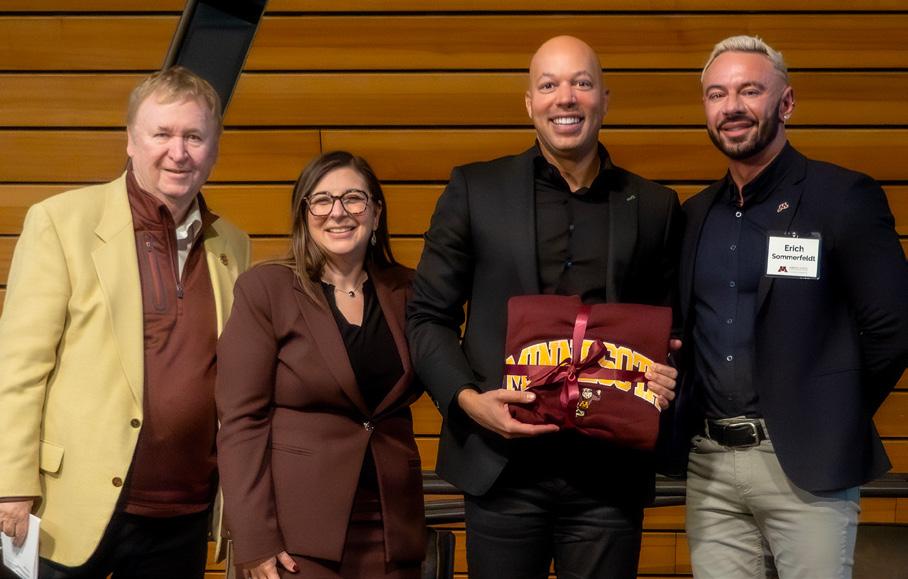

RIGHT: Dave Mona, Elisia Cohen, Patrick Rees and Erich Sommerfeldt. Photo by Annika Kramer of Backpack. HUBBARD
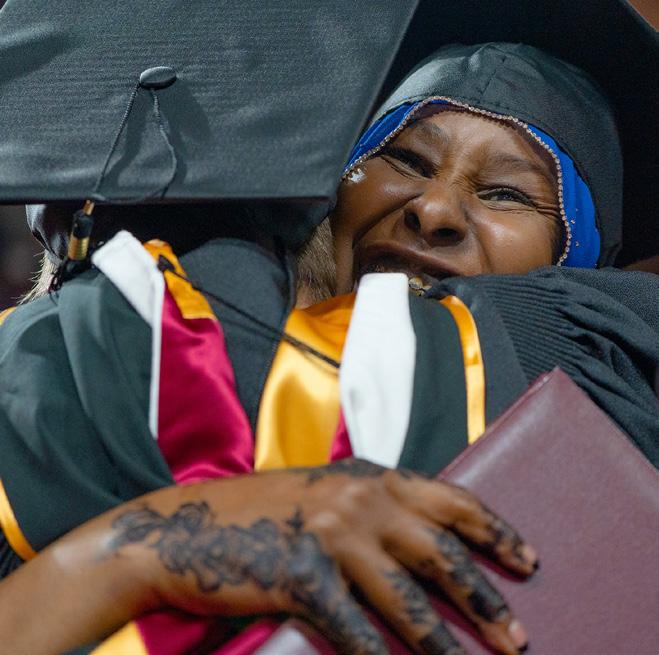
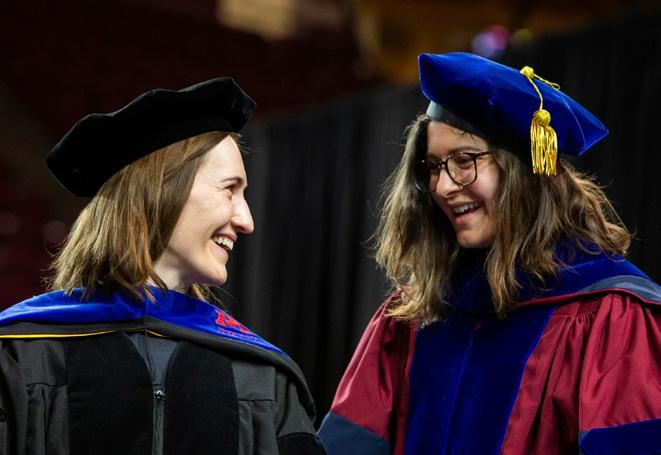
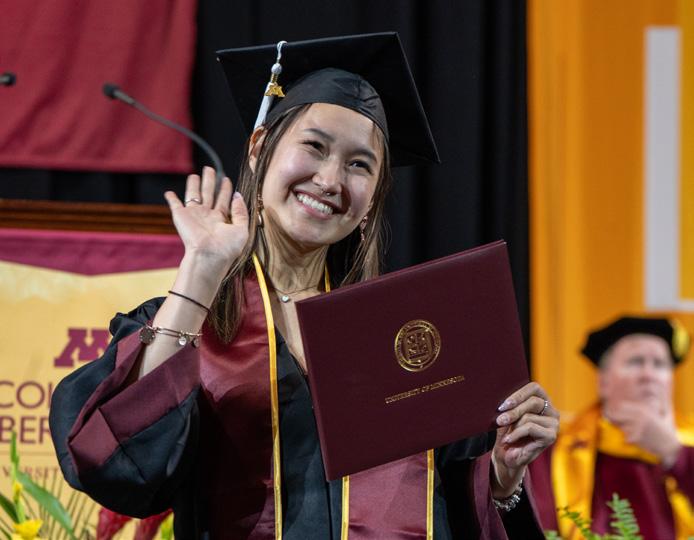
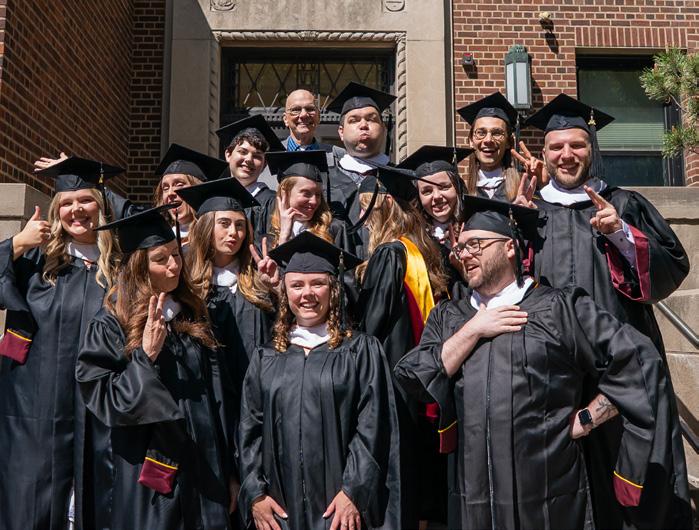
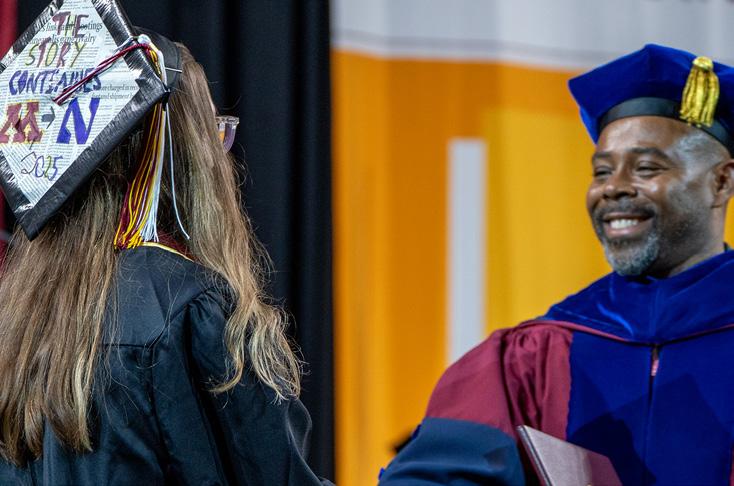
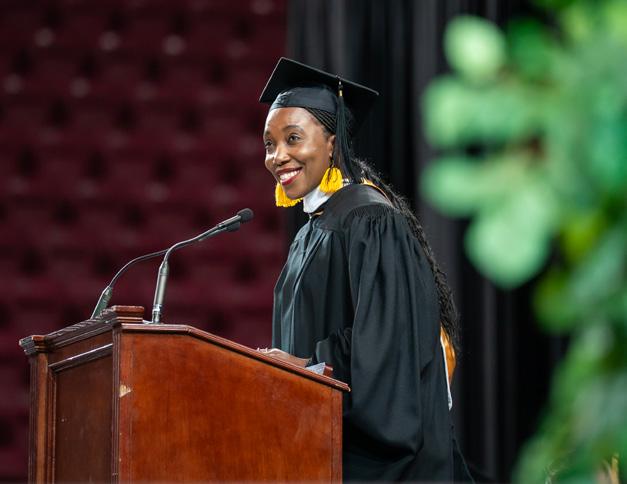
OPPOSITE: Big congrats to the undergraduate and graduate classes of 2025!
Clockwise from top left: Atra Mohamed embraces GG. Mary Kate Fenstermaker receives her diploma.
The graduating MA in Strategic Communication cohort cuts up with Scott Meyer. Ethelind Kaba (MA in Strat Comm ‘22) gives a commencement address.
Dean GerShun Avilez congratulates Maddie Roth. Chloe Gansen celebrates with Rebekah Nagler. Photos courtesy of Regina McCombs and Scott Meyer.
Mohan Dutta (PhD ‘01) has been named the recipient of the inaugural Lawrence R. Frey Award for Distinguished Communication and Social Justice Activism Research by the National Communication Association.
Emily Peterson (BA ‘05) has been named Vice President and General Counsel of The Minnesota Star Tribune.
Kevin Keen (BA ‘09) has been named the Head of Communications at the International Vaccine Institute, a United Nations-founded international organization headquartered in Seoul, Republic of Korea.
Tyrel Nelson’s (BA ‘03) memoirs, “Those Darn Stripes” and “Travels and Tribulations,” were Best Book Winners in the 2025 Summer PenCraft Seasonal Awards.
Nina Bouphasavanh recently graduated with a Master of Science of Communication at Northwestern University in Evanston, IL.
Alexandra (Harkness) Normington (BA ‘08) was recently promoted to Chief Communications and Marketing Officer at Cook County Health, one of the nation’s largest and most complex public health systems.
After 23 years, Jack Breslin (PhD ‘03) retired as emeritus professor from Iona University. Before his teaching career, he enjoyed two decades in local and national journalism and public relations, including Fox and NBC.
Karen Wright won a MN Climate Adaptation Award for her work with “Every Day is Earth Day,” a weekly program she has been hosting on KMSU in Mankato for nearly four years.
Melvin Smith (B.A. ‘75) and wife Rose Smith had a two-person exhibition “Recollections of Rondo,” featuring their collages and paintings, at Fort Gansevoort Gallery in New York City.
Sophie Stephens (BA ‘19) is currently working as an Experiential Producer at Push Play Creative.
Jaime Hunt (BA ‘99) is making waves in the higher education marketing world with the release of her new book, “Heart Over Hype: Transforming Higher Ed Marketing with Empathy.” Published by Pretty Lake Press, the book challenges traditional marketing strategies and advocates for a people-first approach that prioritizes authenticity, connection, and meaningful storytelling.
In January, McKenna Ewen (BA ‘09) had a chance to meet with President Biden as recognition for being named one of the top news editors in the country.
Carol Hall (BA ‘74) published her memoir Stewardess, recounting her most memorable experiences as a Northwest Airlines stewardess during the “golden age of the airlines” in the early 1960s. She has also maintained a column, “Memories,” at Minnesota Good Age magazine since 2004.
Lee Svitak Dean (M.A., ‘89), with co-author Rick Nelson (B.A. History and MBA) wrote “The Ultimate Minnesota Cookie Book,” published last November by the University of Minnesota Press. The book chronicles two decades of the Minnesota Star Tribune’s Holiday Cookie Contest and its winners, which Lee and Rick created and ran during those years. Lee is the former longtime food editor and Rick is the former restaurant critic at the Star Tribune. This is an updated edition of the earlier “The Great Minnesota Cookie Book” and includes stories and recipes from the authors.
Congrats to the Hubbard alums named to Ad 2 Minnesota’s 2025 32 Under 32 Blarcom, Natasha Carlson, Ben Engen, Rachel Glowac (Ball), Emily Planek, Mitch Leonard and Tyrese Leverty
SEND US YOUR NEWS!
Get a new job? Earn a promotion? Receive an award? Or just want to update us on where you’re at?
Send us an email at murphrep@umn.edu, include your name and graduation year, and we’ll consider it for the next issue of the Murphy Reporter.
“What makes Hubbard so special is the tight-knit community it creates within the large college ecosystem at the U. Your faculty and peers are not only dedicated to your academics but committed to your professional success.”
DANE BERGSTROM
Current student, Hubbard Ambassador and member of the Student Advisory Board
Photo courtesy of Dane Bergstrom.
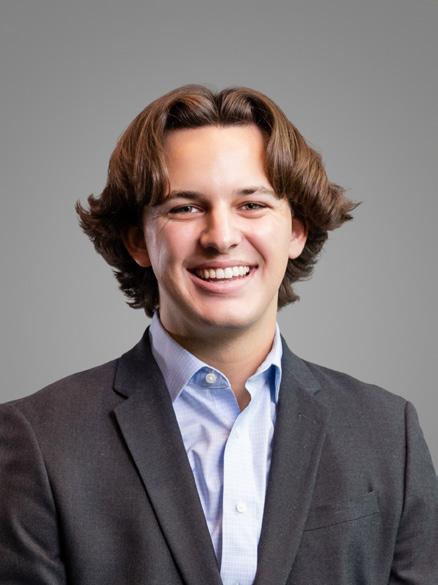

Sid Bedingfield had two peer-reviewed research articles accepted for publication this year, one in Journalism, the other in Journalism and Mass Communication Quarterly. Both studies examined the mainstream, professional journalism and the rise Jim Crow discrimination in the nothern United States in the early twentieth century.

Valérie Bélair-Gagnon received the AEJMC Media Management Economics and Entrepreneurship Division Faculty Competition Award for “Joy, Media Innovation, and Change in Journalism,” a study revealing how optimism and creativity fuel transformation in newsrooms. Her recent research continues to explore how collaboration, emotion, and technology reshape journalistic expertise and the future of the profession.


Jill Bonham was inducted into PRSA College of Fellows.
Matt Carlson presented his research at the 2025 International Communication Research Association conference in Denver and the 2025 Future of Journalism Conference in Cardiff.

Elisia Cohen is one of five campus leaders selected by the Provost’s office to participate in the Big 10 Academic Leadership Program, a professional development program that involves site visits to three Big 10 peers.

Diane Cormany’s article “Remembering the Recession: Marketplace and Status Quo Journalism” was published in a special issue of the Journal of Communication Inquiry, and she was invited to take part in a panel organized around the special issue.
Ruth DeFoster published her book “The Fear Knot: How Science, History and Culture Shape Our Fears, and How to Get Unstuck” on October 14. She also presented at the Association of Collegiate Schools of Planning (ACSP) annual conference in Minneapolis in October. It was a session about how to pitch stories to journalists.

Mark Derks entered his seventh year teaching in the Strategic Communication MA program. He also holds a seat on the program advisory board of directors.
In October, Gayle “G.G.” Golden attended the First National Conference of the Center for Community News in Burlington, Vermont, and presented a session on “Covering Campus Communities with Depth and Courage” at MediaFest 2025 in Washington.

This October, Jisu Huh organized the third Computational Advertising Research Thought Leadership Forum (TLF), which was sponsored and hosted by the Hubbard School. Thirty scholars and industry experts from multiple disciplines and six different countries participated, focusing on the impact of generative AI on advertising.

Jennifer Johnson has be nominated for the prestigious Educator Hall of Fame from The One Club. She has also partnered with Erik Kvålseth and Shayla ThielStern to develop a new offering within the Ad Club called Creative Team. Jennifer and Erik will work with student teams to develop creative ideas for portfolios and creative student ad competitions.
Sherri Jean Katz published two recent journal articles in the Journal of American College Health (co-authored with an HSJMC undergraduate student) and the Journal of Adolescent Health.

Jane Kirtley wrote several commentaries on threats to a free press, published in Verfassungsblog on Matters Constitutional and the Minnesota Star Tribune in April, July and October 2025. She gave 68 interviews between January and October, including with the Voice of America, the Guardian (UK), Sunday Independent (Ireland), Politiken (Denmark), ERT (Hellenic Broadcasting Corporation – Greece), iRozhlas (Czech Public Radio) and numerous domestic and national media. She was an invited participant and speaker at “Reporting the Second Trump Presidency” convened by the Ditchley Foundation in London, England. She also spoke with the World Press Institute’s 2025 Fellows, delivered lectures to two League of Women Voters chapters and the Junior League of Minneapolis, and organized and presented a panel, “Legislating the Search for Truth,” at the 37th Annual Media & the Law Seminar in Kansas City, Missouri.
Eric Kramer was appointed Laureate Fellow by the International Communicology Institute to recognize his influence and leadership in defining the discipline of Communication Studies. Some of Dr. Kramer’s influential theories include Theory of Dimensional Accrual and Dissociation and Cultural Fusion Theory. These theories provide original and innovative insights into intercultural and international communication.
Scott Libin led a half-day session at the Midwest Journalism Conference titled “What Psychologists Wish Journalists Knew about Mental Health.” He was also given the Hubbard School’s Award for Excellence in Academic Service Unit by the College of Liberal Arts and spoke about journalism in the U.S. to the World Press Institute Fellows.

Susan LoRusso was elected as faculty senator representing the CLA to serve a three year term.

Andy Mannix, a longtime cops reporter, was recently named to the Minnesota Star Tribune’s newly launched investigative team. This fall, he reported on leaked text messages revealing a plan from Defense Secretary Pete Hegseth to send an elite Army unit into Portland, Oregon.

Rich McCracken Rich was the advisor for our National Student Advertising Competition (NSAC) student team’s second-place finish in June 2025. The competition started with nearly 100 universities across the country and culminated at the national finals in Pittsburgh, PA. In addition to an overall second-place finish, the University of Minnesota earned the Connection Q&A Award (went to Brian Edwards) and SalesFuel’s Best Use of Marketing Research award.

With colleagues from the Collaborative on Media & Messaging for Health and Social Policy (COMM HSP), Rebekah Nagler contributed to several research projects on communication about health equity, the results of which were published in journals including Social Science & Medicine, PNAS Nexus, and Milbank Quarterly.

Amy O’Connor published a research paper in collaboration with faculty at the University of Rotterdam in the Netherlands. The paper is titled “NGO strategic communication approaches to CSR institutionalization: pathways of resistance, reform and (mutual) reinforcement” and appears in the Journal of Communication Management. The study examined the strategic communication choices of Swiss NGO leaders in finding corporate partners.

Claire M. Segijn received the Warwick MidCareer Award from the College of Liberal Arts, which supported an original research study at the 2025 Minnesota State Fair. Six undergraduate students and two graduate students Segijn helped collect data to ex-
amine how people respond to a mobile ad when it is related (vs. unrelated) to something that was said earlier.

Erich Sommerfeldt received top faculty paper honors from the National Communication Association Public Relations Division for his paper “Bridging dialogue and organizational listening in public relations: The pyramid of genuine dialogic listening” co-authored with Luke W. Capizzo, University of Missouri-Columbia and Katie Place, Quinnipiac University.


Allison Steinke and Haseon Park’s first coauthored book will be published in December, 2025: “Brand Thinking: Building Brands You Can Believe In” (Bloomsbury Academic, 2025).

Christopher Terry submitted public comments to the FCC’s rulemaking dockets on media ownership and news distortion. The 16th edition of his co-authored media law textbook was released. Terry also published two co-authored papers on political advertising on Spanish language radio with Hubbard alumnus Fernando Severino. He also co-authored papers with colleagues and graduate students in the Journal of Radio and Audio Media, Indiana Journal of Law & Social Equality and the Journal of Law, Technology and the Internet.

Faculty members Shayla Thiel-Stern, Jennifer Johnson and Sara Quinn were selected to be feature presenters at The One Club for Creativity Educators Summit in New York in July 2025. They led a conversation about the importance of making students feel more comfortable about the vulnerability in sharing creative ideas.

At the conclusion of her twoyear President’s Postdoctoral Fellowship, Dr. Carolina Velloso transitioned into a tenure-track Assistant Professor position at the Hubbard School this fall. In the past year, Dr. Velloso has also published four peer-reviewed journal articles and won two conference paper awards.


Emily Vraga published her book “Observed Correction: How We Can All Respond to Misinformation on Social Media” with Oxford University Press in summer 2025.
Scott Winter delivered five seminars on specific reporting and writing tools – from finding characters to documentary storytelling – at the Texas Association of Journalism Educators Fall Fiesta for students in San Antonio in October. He also delivered an ethics seminar to the Minnesota High School Press Association’s Fall Convention that same month on campus.

Marco Yzer co-edited the 33-chapter “Handbook of Mental Health Communication” (Yzer & Siegel, editors), which was published by Wiley in April 2025. He published eight further journal articles and book chapters as lead author or co-author. In March 2025, Yzer hosted the two-day Mental Health Communication symposium.

Alvin Zhou received the Robert Heath Award and the Karen Russell Award at the 2025 conferences of the International Communication Association and the Association for Education in Journalism and Mass Communication, both at their Public Relations Divisions. <
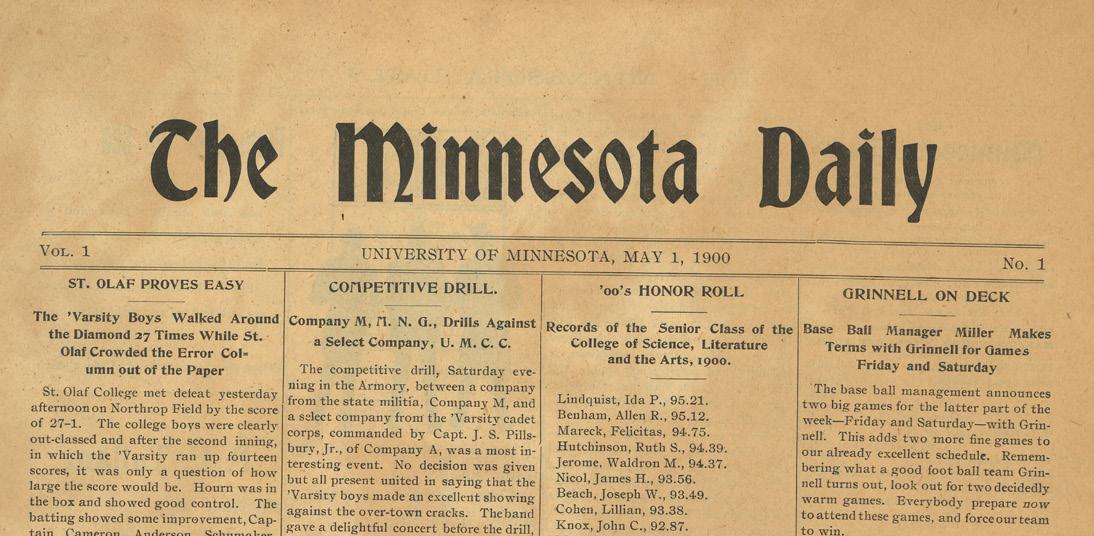
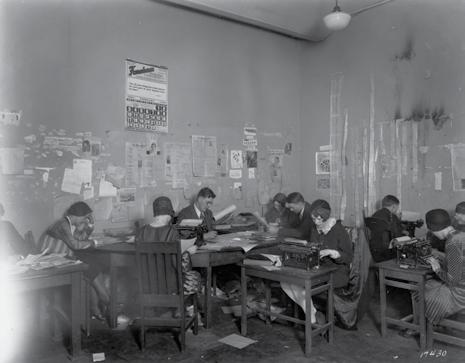
“Beyond the Page:” An exhibit exploring 125 years of The MN Daily
This past May marked 125 years — and over 45,000 days — since the inception of The Minnesota Daily. A new exhibit at the Elmer L. Andersen Library pulls together a slew of front pages, photographs and ephemera from the archives, showcasing highlights from across the Daily’s five-quarters of a century run, all the way back to the very first issue on May 1, 1900 (pictured above). Curated by Research Services and Student Life Archivist Katelyn Morken and Collections Archivist Rebecca Toov, the exhibit is a cross-section of student journalism that, day after day, wrote the first draft of University of Minnesota history.
“Our aim with this exhibit is to showcase how visitors can engage with The Minnesota Daily — a vital source of University of Minnesota history — to inspire curiosity, evoke memories and encourage reflection on the University experience, past, present and future,” say Morken and Toov.
Beyond the Page:
Preserving the Spirit of the University Through an Independent Student Press
On view at Elmer L. Andersen Library through January 30, 2026.
Andersen Library is open to the public Mondays, Tuesdays & Fridays 9am – 5pm and Wednesdays & Thursdays 9am – 5pm. Please note the library will be closed December 24 – January 1.



LEFT: Polaroid by Matt Cikovic. BELOW: Susan LoRusso and GG at the 2025 year-end celebration.
SAVE THE DATES!

We hope you can join us for all of these spring semester events! Stay tuned for individual event RSVP info:
Strategic Communication
Spring Forum
March 26 • McNamara Alumni Center
Northern Exposure
April 10 & 11 • Murphy Hall
Spring Showcase & Student Recognition Breakfast
May 15 • McNamara Alumni Center