Reflections on Discovery and Growth at the University of Miami Libraries
points of departure
UML is reinventing and redefining itself— and the adventure is just beginning.
Navigating Caribbean Connections spotlight
A library-wide exhibit complements a special report on the University’s close relationship with its island neighbors
Since its founding more than 90 years ago, the University of Miami has forged deep connections with the Caribbean. Faculty, students, and alumni travel throughout the islands, learning from diverse populations, providing assistance to underserved communities, and strengthening bonds. Cuba and the Caribbean, a special report recently produced by UM News in collaboration with academic units across the University including the Libraries, highlights the U’s varied activities in the Caribbean in areas such as environmental and anthropological research, healthcare, arts and culture, policy, and business.
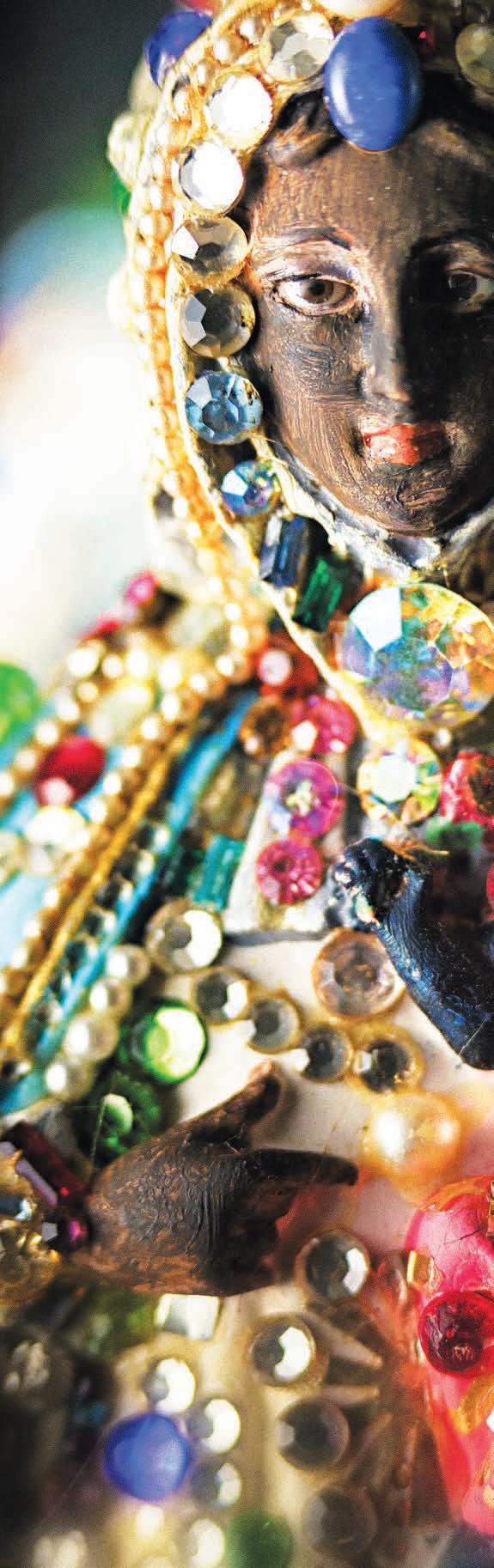
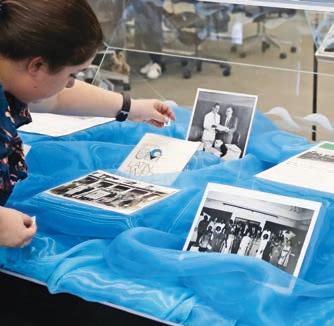
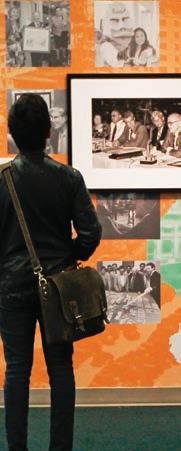
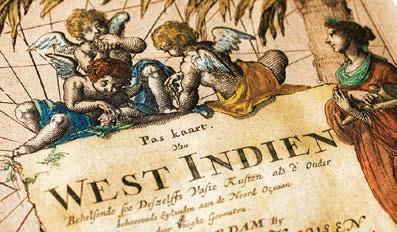
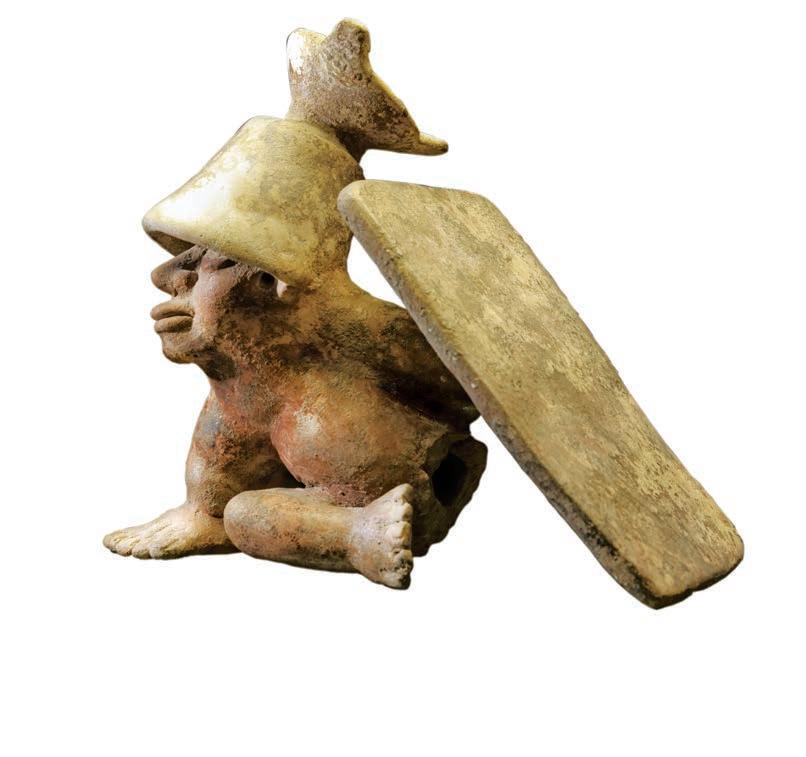
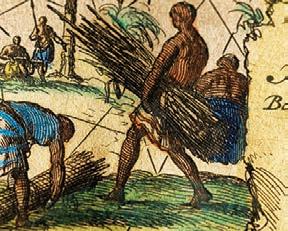
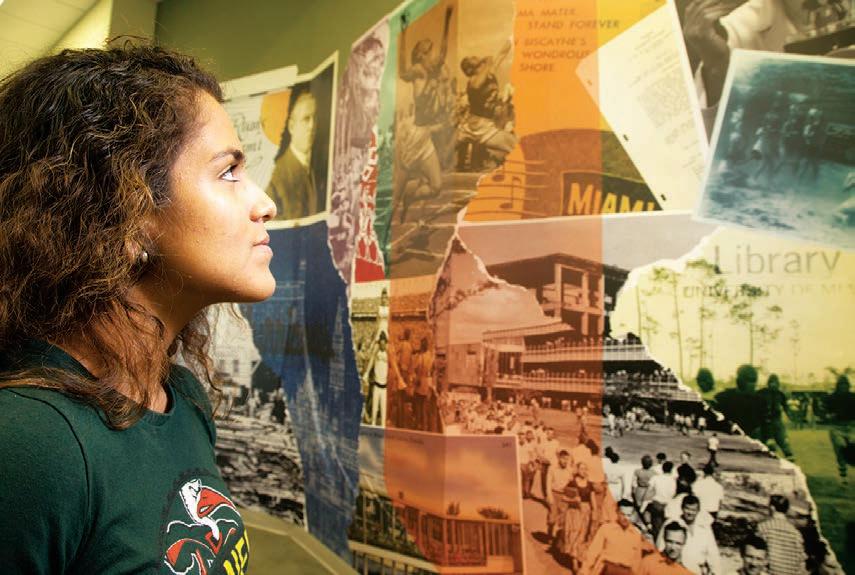
Complementing the publication of Cuba and the Caribbean, a major exhibition has transformed the second floor of Richter Library and the Cuban Heritage Collection’s Roberto C. Goizueta Pavilion. Caribbean Fragments comprises a selection of historical documents, artifacts, manuscripts, and rare books from UML’s Cuban Heritage Collection, Special Collections, University Archives, and the Marta and Austin Weeks Music Library, and offers a point of departure for reflection on the research and discovery that spawn new hemispheric insights.
Caribbean Fragments was curated by Beatrice Skokan, curator for Caribbean Collections and interim Esperanza Bravo de Varona Chair of the CHC, and Dr. Martin Tsang, CHC librarian and curator for Latin American Collections.
Seascapes
and Mindscapes
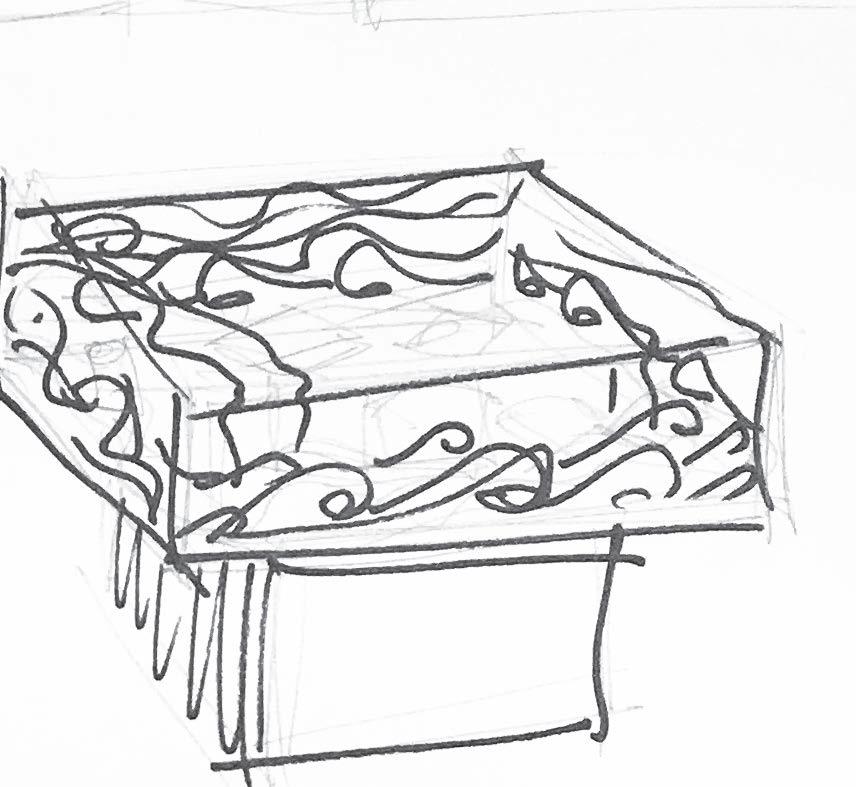
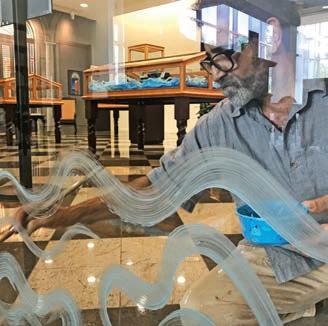
Visiting artist Leandro Soto, whose work is represented among the CHC’s holdings, has reimagined the exhibition space as a seascape—a fluid, ever-changing ocean that permeates not only the archipelago’s geography, but the imagination of its inhabitants.

Caribbean Connections 10/10/17
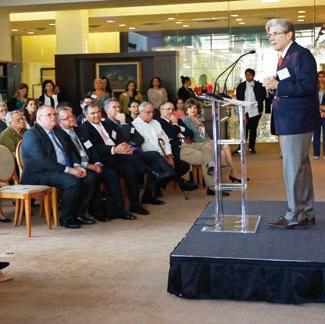
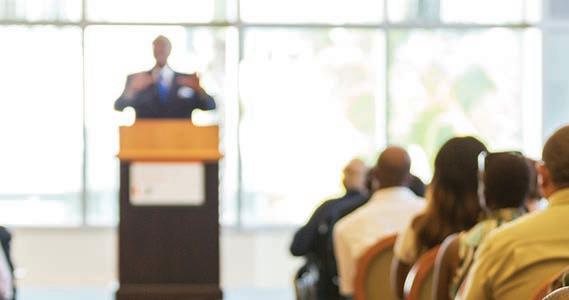
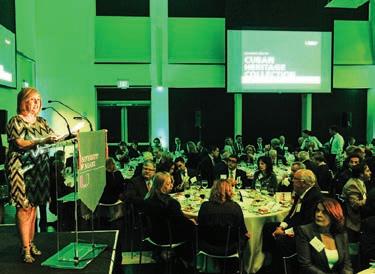
President Julio Frenk spoke at the opening of the UM Libraries exhibit which complemented a UM special report. Noting the remarkable work of UM faculty in the Caribbean region, Frenk celebrated the collaborations that are building and strengthening bridges throughout the hemisphere.
Inviting viewers to navigate their own experiences and emotions as they explore the objects on view, the immersive environment evokes the circulating currents of spirituality that permeate the region, the profound influence of maritime travel and migration on its evolution, and the ebbs and flows of its eternal complexities.
Caribbean Fragments will be on display through spring 2018. Special events around the exhibit will include presentations, workshops, and a conversation with Professor of Modern Languages and Literatures Lillian Manzor and Leandro Soto.
For updates on exhibit events, check library.miami.edu. To view the special University report on Cuba and the Caribbean, visit cuba.miami.edu
About Leandro Soto
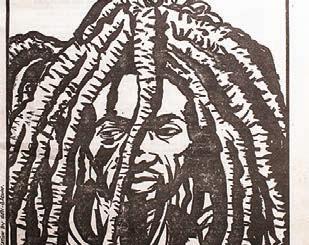
Born in Cienfuegos, Cuba in 1956, Leandro Soto is a Cuban-American visual and performance artist whose career reflects his engagement with the religions, rituals, and the mythologies of indigenous people. Along with installations and performance art, Soto has designed sets and costumes for theater productions. He now lives in the United States and travels extensively around the country to teach at various universities and advise theater groups
Leandro Soto
> the adventure is just beginning
“We shall not cease from exploration and the end of all our exploring will be to arrive where we started and know the place for the first time.”
– T.S. Eliot, Four Quartets
T.S. Eliot was on to something—in a way that resonates powerfully here at University of Miami Libraries. Today’s academic library is in a mode of profound reinvention. Paradoxically, it is also coming full circle to a rediscovery of its earliest origins.
The legendary Royal Library of Alexandria was not only home to an astounding repository of books and scrolls estimated to have numbered in the hundreds of thousands; it was also a magnet for the great minds of the ancient world to discuss and debate ideas—a true “temple of scholarship.” The great European libraries built during the Renaissance and Enlightenment eras were likewise revered centers of learning and magnetic gathering places for scholars.
In more recent times, academic libraries have devoted much of their attention to preserving materials, often to the detriment of their patrons’ experience. So it’s perhaps no surprise that the rise of information technologies was viewed in some quarters as a death knell for the campus library.
Instead, the reverse has occurred. Utilization of academic libraries has risen dramatically in recent years. Our libraries are also now home to novel ventures that utilize their rich holdings and capacious facilities as a springboard to digital access, multidisciplinary collaboration, peer-to-peer learning, and individual creativity. We sense that our sister institutions around the globe share a vision of today’s library systems as platforms that transcend “either/or” thinking, embrace experimentation, and embed internal and external partnerships in their strategic planning. In this way, libraries affirm our limitless potential to foster learning, promote dialogue, and spark progress.
I am not exaggerating when I say that this is the most exciting time for academic libraries in memory—and the adventure is just beginning. I hope that these pages, which offer an evocative look at some of our recent achievements and current endeavors, also serve to reinvigorate your engagement with us as we venerate timehonored traditions while charting a vibrant course toward new destinations.

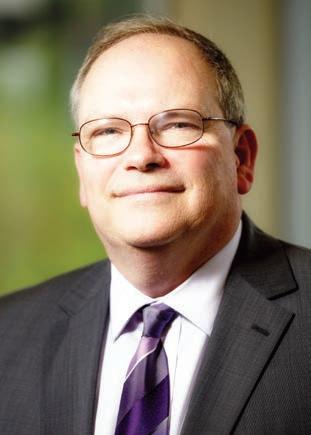
Chuck Eckman, Dean and University Librarian
Exploring Inspiring Legacies
Concrete poetry, Christopher Columbus, and mid–century modernism...
discover a world of resources,
extraordinary acquisitions and legacies that appeal to the explorer in us all.
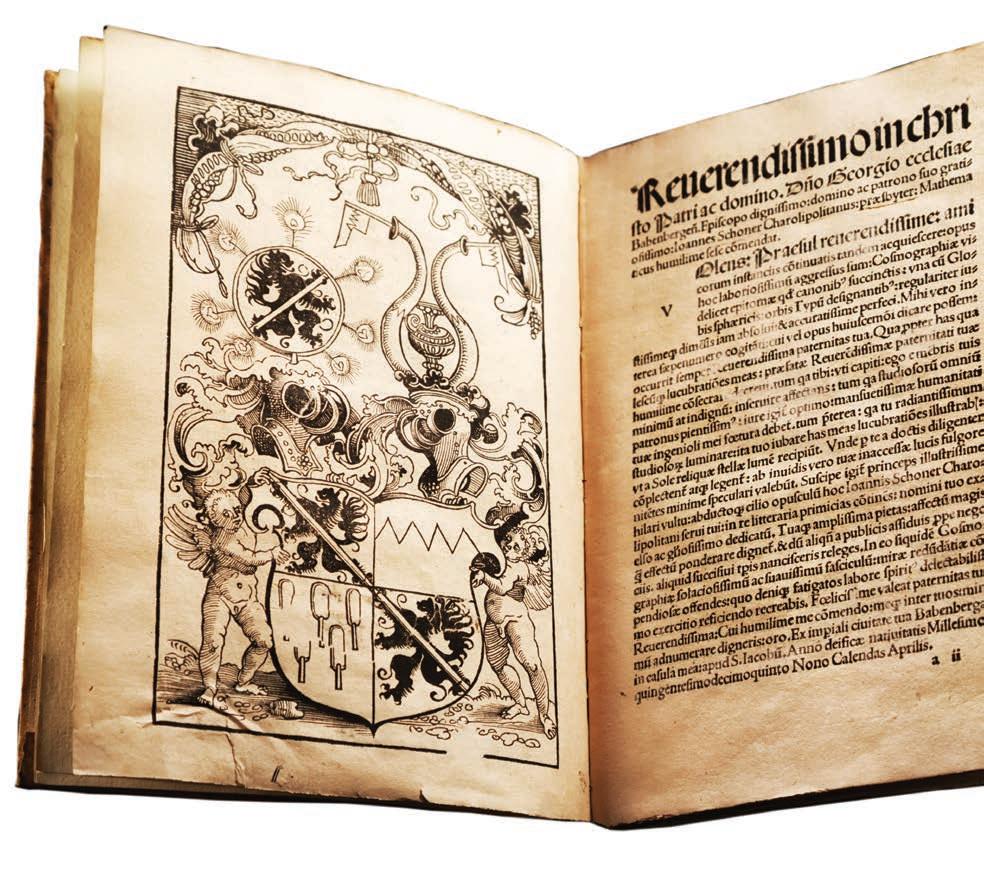
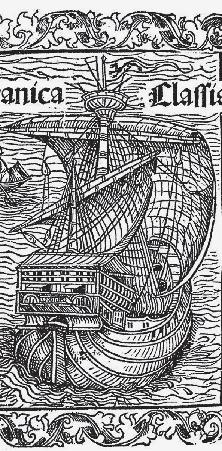
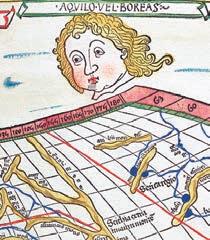
The Earliest Major Treatise on the Globe and Its Manufacture, 1515, from the Jay I. Kislak Collection of the Early Americas, Exploration and Navigation.
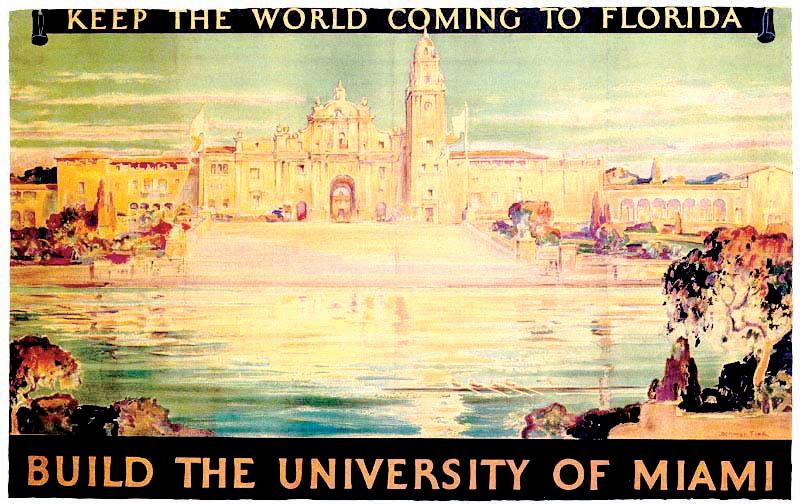
Denman Fink — a versatile artist, illustrator, and UM educator who created iconic posters and images may not be broadly known, but everyone who sets foot in Coral Gables or on the University of Miami campus has felt his influence.
The Sackner Collection
Artist books from the Sackner Archive of Concrete and Visual Poetry – a multilayered world of images, text, color and texture that are not simply read but experienced.
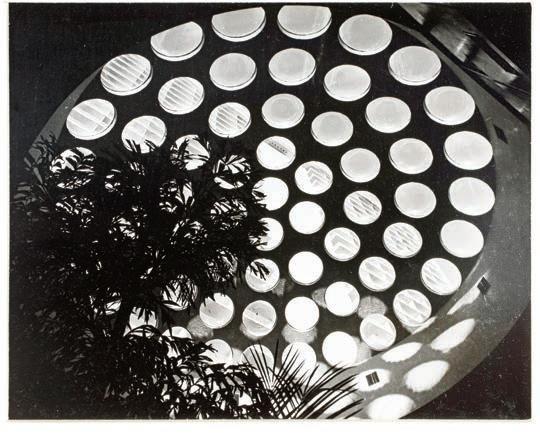
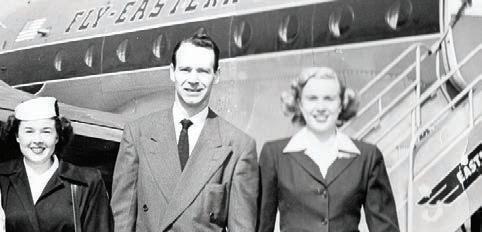
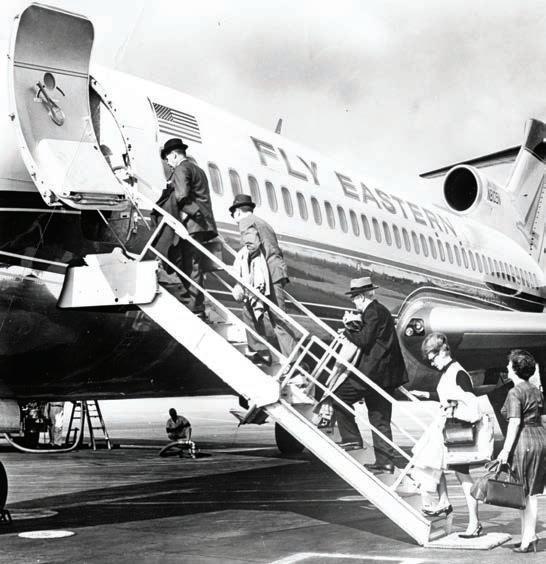
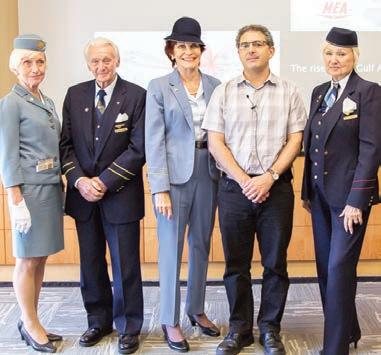
Eastern Airlines — from photographs to flight attendants’ uniforms, the archive evokes fond nostalgia for a high-flying era in South Florida history.
UM Libraries’ Cuban Heritage Collection an extensive trove of photos and other materials that document the story of Cuba, including its influence on architecture.
collections
50,000+ rare books and publications
100,000+ photographs, maps, drawings, and manuscripts
1 , 277,749+ digital images and document pages
38,337 reference questions answered
> landmark acquisition
KISLAK COLLECTION OF RARE
ARTIFACTS DOCUMENTING
8,665 total partner tutoring sessions
NEW WORLD EXPLORATION WILL BE SHOWCASED IN A MAGNIFICENT, MULTIPURPOSE SETTING.
1,142 annual instructional sessions delivered
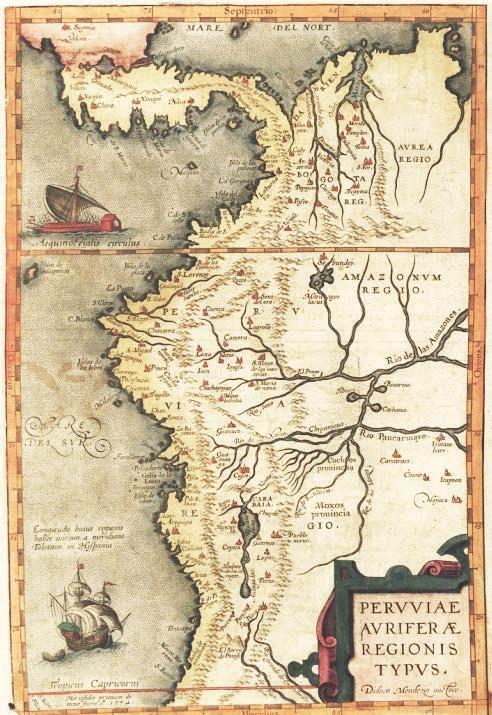
In a letter dated nearly 525 years ago, explorer Christopher Columbus described his discoveries in the New World to King Ferdinand and Queen Isabella of Spain. Now, one of the earliest published editions of this famous missive will find a home at the University of Miami’s Otto G. Richter Library as part of an extraordinary collection of materials valued at $20 million that has been donated to Special Collections. Prominent philanthropist Jay I. Kislak, a Miami resident for more than 60 years, has been a lifelong collector of historic artifacts that tell the story of the Caribbean, the early Americas, and the explorations that shaped them. The internationally significant Jay I. Kislak Collection of the Early Americas, Exploration and Navigation includes rare books, maps, manuscripts, pre-Columbian artifacts and other materials documenting the many facets of this eventful, often turbulent era.
UML website users (library.miami.edu)
244,455 (93%) = U. S.
18,808 (7 %) = international
usage
702,879 book chapter downloads
1,806,705 database uses by UM community
2,169,460 journal article downloads
1,003 GIS and digital humanities workshops
diversity
300 languages represented in UML collections
Scholarly Value, Community Benefits
In the University of Miami and Miami Dade College (MDC), Kislak identified two local partners with the ability and desire to create educational and cultural programming around these holdings in South Florida to serve students, faculty, community residents, and scholars around the world.
United States downloads = 118,842
international downloads
institutional repository = 166,791
14,411 students in instructional sessions
UML’s space for Special Collections and University Archives, in the final stages of renovation and named the Kislak Center, will serve as a hub of expanded educational and cultural programming, with features such as state-of-the-art presentation technologies, a grand reading room, and an exhibit gallery displaying materials from the Kislak collection.
114,219 physical items borrowed
99,577 physical items borrowed
e-research
1,031,162 e-books (+57% since 2012)
113,585 e-journals (+50% since 2012)
191,953 multimedia materials
MDC will receive a selection of material from the Collection for display at a new permanent Kislak exhibit at the Freedom Tower in downtown Miami. The Kislak Center at UM will serve as a focal point for researchers and students, while the Kislak exhibit at MDC’s Freedom Tower is designed to appeal to a broader public. The two institutions will collaborate on collections care and public events, exhibits, and activities.
“For 500 years, Florida has been a focal point of global exploration and cultural exchange,” Kislak says.
“This permanent repository in South Florida will conserve our collections and make them available to generations of scholars and students to reveal the fascinating and important role of our community in world history.”
3,9 . 3,916,265 million volumes +52% since 2005
collections
50,000+ rare books and publications
100,000+ photographs, maps, drawings, and manuscripts
1 , 277,749+ digital images and document pages
Concrete Gains
16,265 institutional repository = 166,791
38,337 reference questions answered
8,665 total partner tutoring sessions
1,142 annual instructional sessions delivered
UML website users (library.miami.edu) 244,455 (93%) = U. S. 18,808 (7 %) = international
Are they books? Manuscripts? Three-dimensional works of art? These examples of “concrete poetry,” word art pieces, were amassed over a span of four decades by Marvin and Ruth Sackner, representing movements from around the world, are all of these things and more.
usage
Building on a Heritage
United States downloads = 118,842 international downloads
14,411 students in instructional sessions
Thanks to a generous grant from the Knight Foundation, 56 items were recently bequeathed to Special Collections from the Sackner’s vast archive. While the pieces are technically books, they evoke a multi-layered world of images, color, and texture that are not simply read but experienced.
The Sackner collection complements Special Collections’ existing troves of art objects and rare books, and serves as a source for study, research, and artistic inspiration for students as well as Miami, national, and international communities.
114,219 physical items
702,879 book chapter downloads 1,806,705 database uses by UM community 2,169,460 journal article downloads
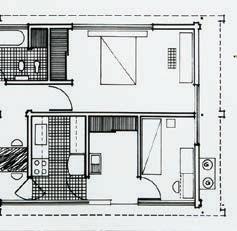
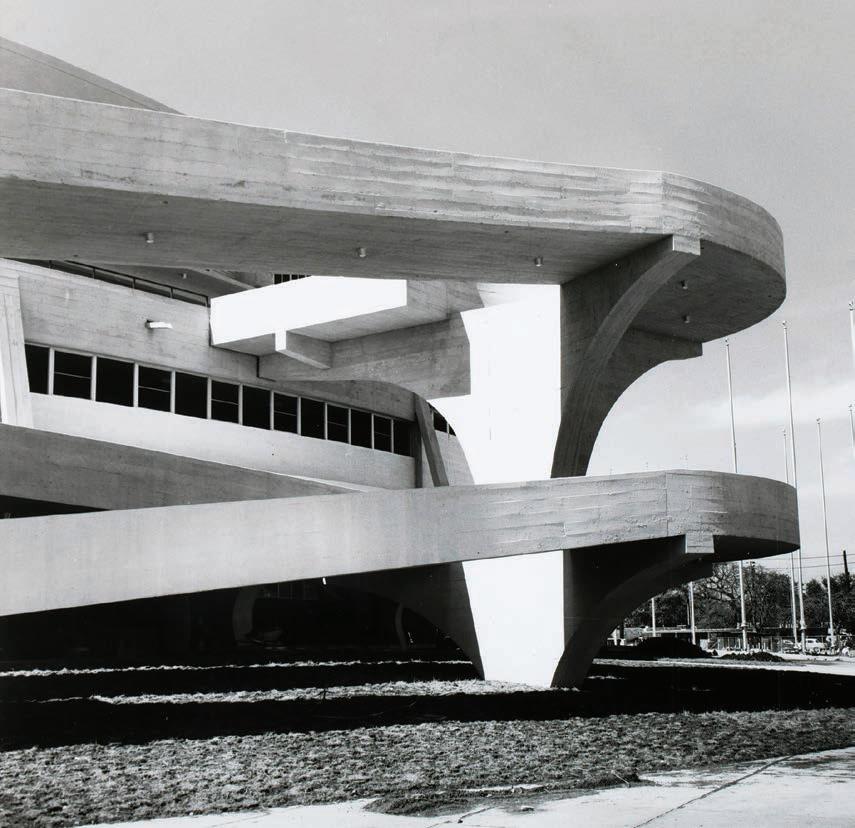
Though Cuban architecture is famous for its colonial flourishes, it also reflects influences from Art Deco to mid–century modernism. As home to an extensive trove of photos and other materials that document the story of Cuban architecture, UM Libraries’ Cuban Heritage Collection played an important role in a Coral Gables Museum exhibit about modernist Cuban architects and their work, both at home and in the diaspora created by political upheavals in their homeland.
1,003 GIS and digital humanities workshops 300
diversity 300 languages represented in UML collections
Cuban Architects at Home and in Exile: The Modernist Generation comprises original documents, drawings, photographs, letters, and other ephemera reflecting the personal and professional journeys of more than 30 architects. Co-curated by Victor Deupi and JeanFrançois Lejeune from University of Miami School of Architecture, the exhibit also features videos portraying the Cuban architects’ private lives, examples of Cuban architecture throughout the island, and the influence of the 1959 Cuban revolution on the practice and teaching of architecture in Cuba.
99,577 physical items borrowed
e-research 1,031,162 e-books (+57% since 2012) 113,585 e-journals (+50% since 2012) 191,953 multimedia materials
Nicolás Arroyo & Gabriela Menendez, Palacio de los Deportes, Ciudad Deportiva, 1955–1957.
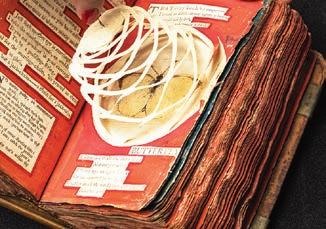
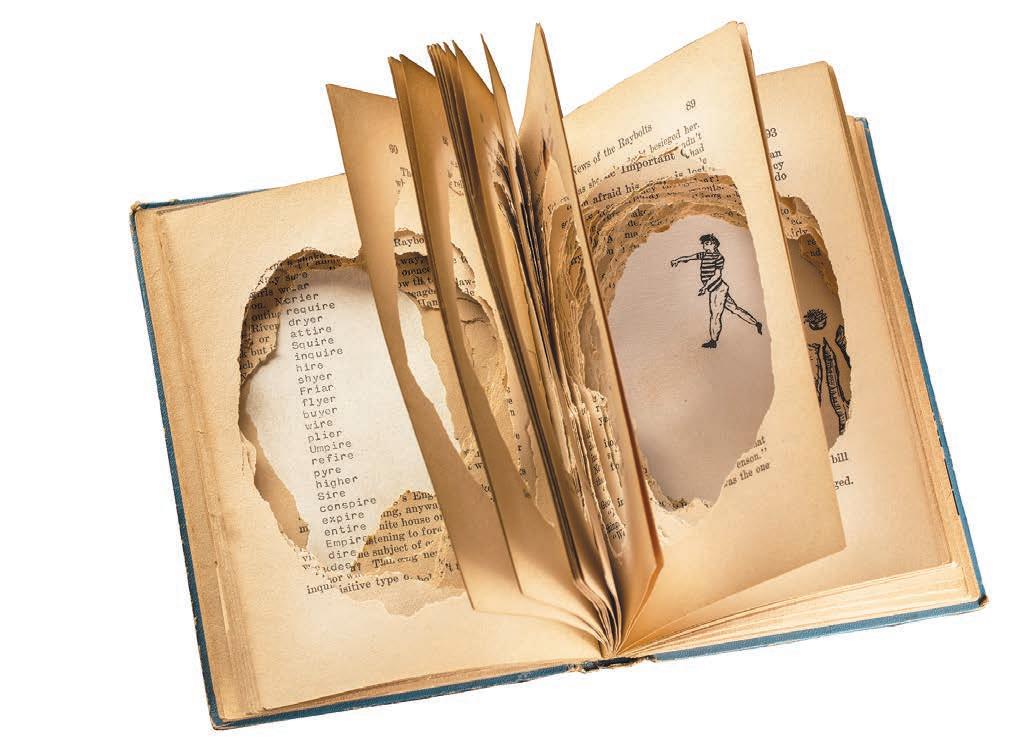
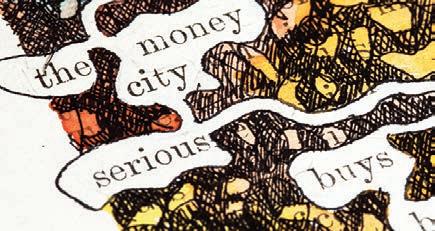
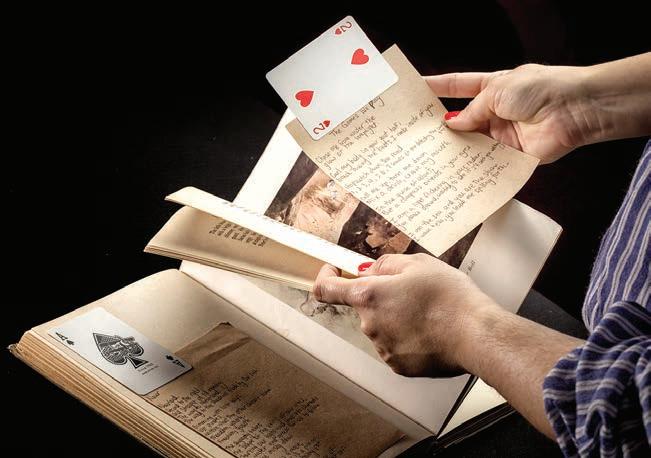
The Clue in the Diary by Lezley Saar, 1982 (Reinterpretation of a book from the Nancy Drew Mystery Stories series by Carolyn Keene).
Envisioning the U
Nefarious Route to Riches 3/23/16
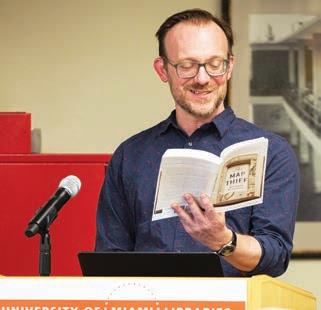
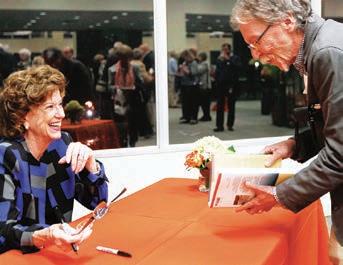
UML Special Collections, in partnership with Books & Books, hosted a reading of The Map Thief by investigative journalist and author Michael Blanding. The widely praised book tells the astonishing story of an antiquarian map dealer who secretly stole 97 prized rarities, valued at more than $3 million, from several prominent libraries.
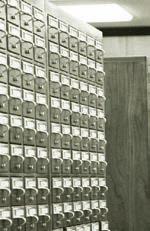
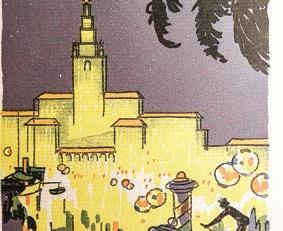
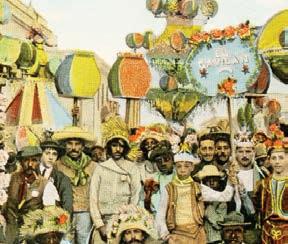
In the early decades of the 20th century, enthusiastic slogans for the still-sleepy tropics, such as Keep the World Coming to Florida: Build the University of Miami, were showcased in colorful promotional posters. The name of the versatile artist, illustrator, and UM educator who created these iconic images may not be broadly known, but everyone who sets foot in Coral Gables or on the University of Miami campus has felt his influence.
Appropriately, Denman Fink was the subject of complementary “town and gown” exhibits during the summer of 2017. Curated by University Archivist Koichi Tasa, Art and Structure: The Legacy of Denman Fink, on display in the University Archives at the Richter Library, featured materials ranging from Fink’s designs for Coral Gables founder George Merrick’s real estate projects to his drawings of campus buildings ranging from research labs to a stadium. Deeply involved in the creation of the University, Fink also taught art and architecture at the U from its founding in 1926 until his retirement in 1952.
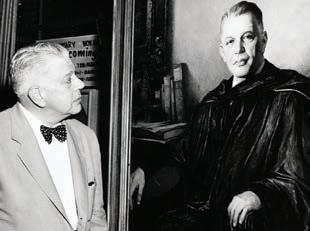
For a complementary exhibition at the Coral Gables Museum, University Archives partnered with the museum and contributed a number of items, including a vintage photograph of Bowman Foster Ashe, the first president of the University, captured viewing his official portrait—painted, of course, by Fink.
A Man, A Plan, The Gables
1/14/16
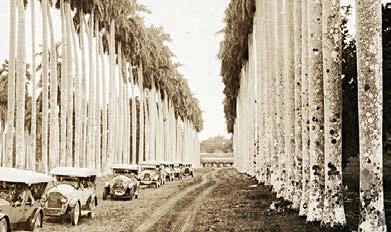
On the occasion of UM’s 90th anniversary, Miami historian and University trustee Arva Moore Parks presented her latest book, about Coral Gables founder George Merrick. A contemporaneous exhibition of historical materials, Pan American University: The Original Spirit of the U Lives On, evoked the University’s enduring connection to Latin America and the Caribbean—a collaboration with Special Collections, Cuban Heritage Collection, and local artist and UM alum Alex Vahan led by Archivist Koichi Tasa.
?
38,337 reference questions answered
8,665 total partner tutoring sessions
1,142 annual instructional sessions delivered
UML website users (library.miami.edu)
244,455 (93%) = U. S. 18,808 (7 %) = international
usage
702,879 book chapter downloads
1,806,705 database uses by UM community
2,169,460 journal article downloads
When Florida Took Flight
1,003 GIS and digital humanities workshops
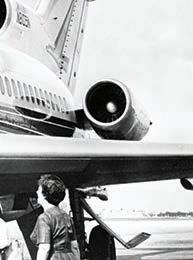
Just a little over a quarter century ago, Eastern Airlines was the largest corporate employer and airline in Florida, with more than 12,000 employees. Eastern’s historic role in the growth of South Florida comes to life in a treasure trove of thousands of items ranging from photographs to flight attendants’ uniforms, recently donated to UML’s Special Collections by the Eastern Airlines Retirees Association.
300
diversity 300 languages represented in UML collections
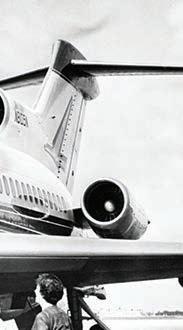
Open to researchers and the general public, the archive evokes fond nostalgia for a highflying era in South Florida history. Founded by the legendary pilot and aviation pioneer Edward “Eddie” Rickenbacker, Eastern Airlines fueled a regional boom in aviation and tourism from its 1975 relocation to Miami from New York City until it ceased operations in 1991.
The Eastern Airlines archive joins other signature UML collections, such as the Pan American World Airways Records and the Jay I. Kislak Collection, in forming a rich resource for studying the impact of travel, navigation, and exploration on contemporary culture.
“This collection is a microcosm of the worlds of business, public relations, advertising, fashion, and technology, all through the fascinating lens of the aviation industry,” says Cristina Favretto, head of Special Collections. “In addition to its research uses, the collection appeals to the explorer in all of us.”
Partnerships That Expand Possibilities
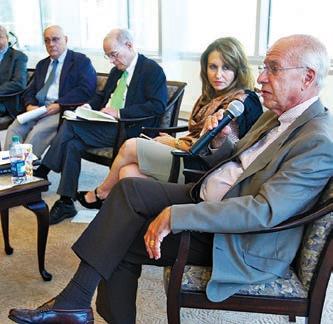
Academic Art Museum and Library Summit — Thought-leaders in the academic galleries, libraries, archives, and museums (GLAM) sector spark engaging conversations at this forum hosted by UML and the Lowe.
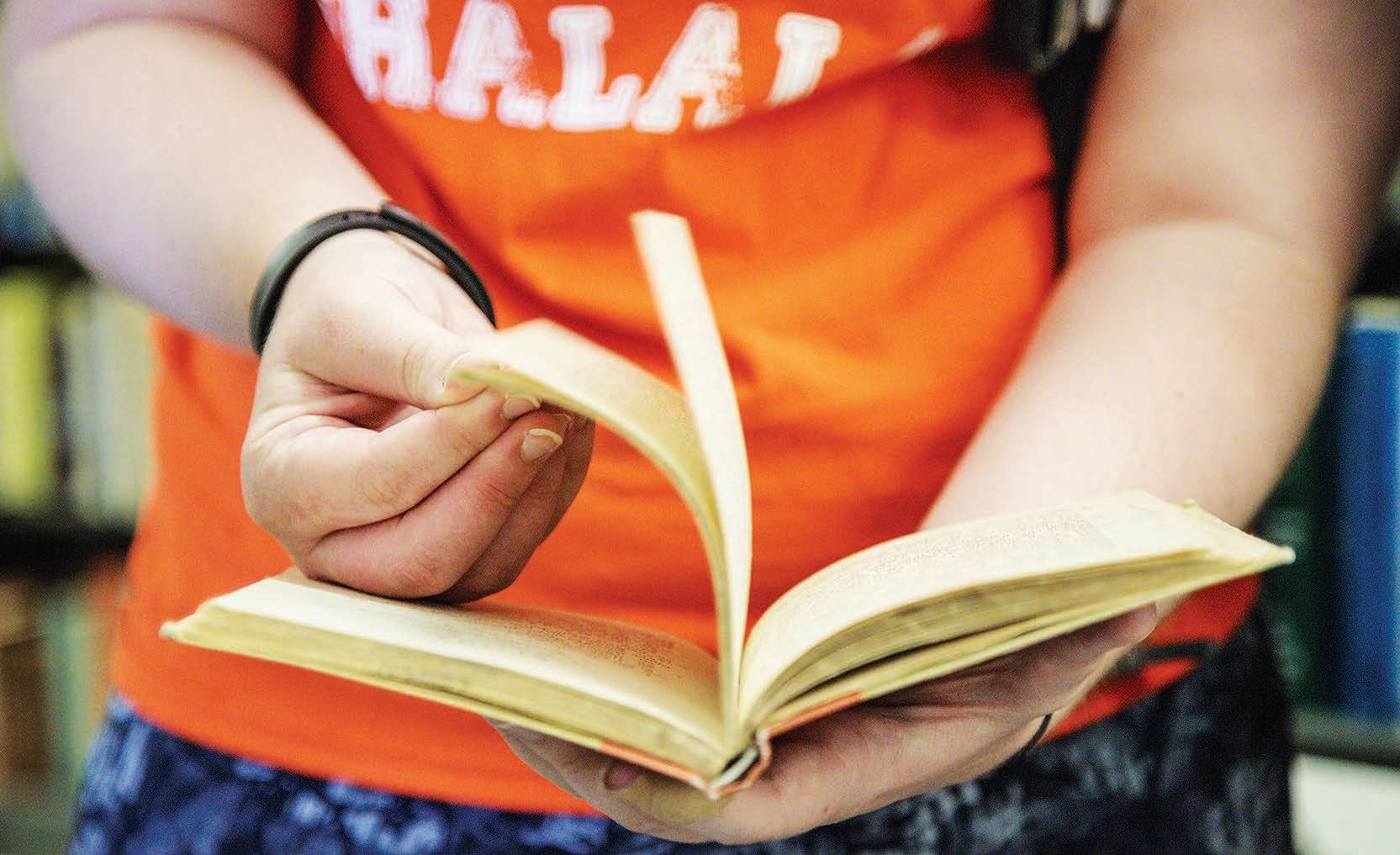
Adobe Library Research Scholars Program University students have access to the Adobe Creative Cloud suite of software, making the potential for the Learning Commons limitless.
8,665 total partner tutoring sessions
1,142 annual instructional sessions delivered
> grand central destination
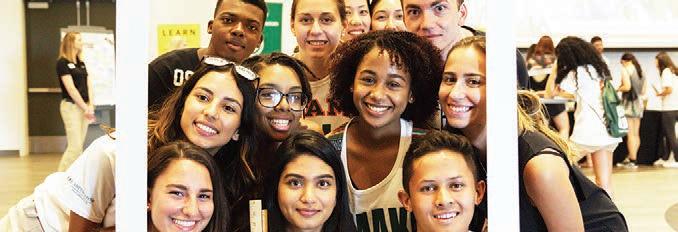
UML’S NEW LEARNING COMMONS IS A MAGNETIC RESOURCE FOR STUDENTS
UML website users (library.miami.edu)
EMBARKING ON EVERY TYPE OF ACADEMIC ENDEAVOR.
244,455 (93%) = U. S. 18,808 (7 %) = international
usage
702,879 book chapter downloads
1,806,705 database uses by UM community
2,169,460 journal article downloads
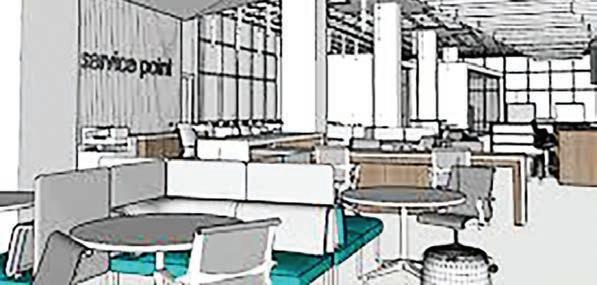
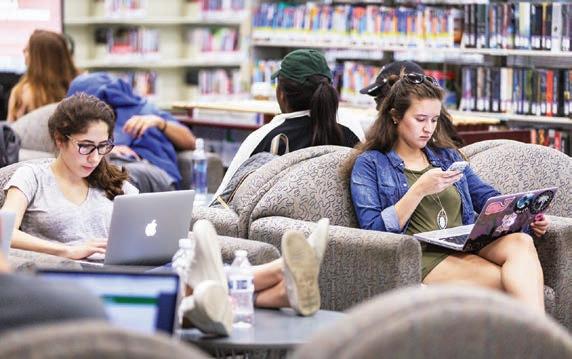
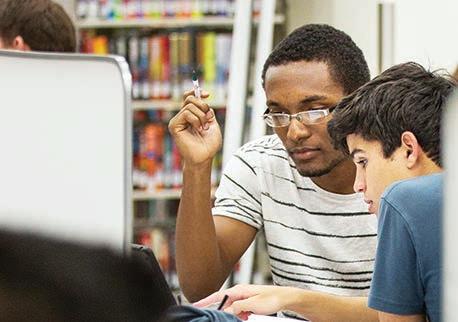
“Multidisciplinary” isn’t just a higher-ed buzzword. It’s also an apt description of the holistic knowledge that prepares students for success in today’s complex world. To complement this knowledge, students must develop multifaceted skills as they tackle assignments, pursue independent projects, collaborate with classmates, and communicate what they’ve learned. Now UM undergraduates can get the varied types of in-person assistance they need to succeed in their college careers at the Learning Commons, an inviting, friendly “one-stop shop” for student services in Richter Library. It’s a robust, integrated set of services designed in every detail to support students in their scholarly pursuits and encourage them to explore new directions in learning. Students can get help at every stage of the learning process – from idea creation to research analysis, from writing to sharing and publishing.
1,003 GIS and digital humanities workshops
diversity
300 languages represented in UML collections
The Learning Commons reflects a trend that is being embraced by universities and colleges across the country, says Kelly Miller, associate dean for Learning and Research Services. “We are facilitating deep collaboration across the University to deliver more seamless academic support to students,” Miller notes. “The library, as a physical space, is increasingly important not only for quiet study, but also for working together, providing consultation, and nurturing interdisciplinary engagement.
“The Commons is truly a hub for learning all kinds of new skills and technologies while interacting with other people.”
Maximizing Mentorship
Closely mirroring the mission of the Learning Commons, UML’s Library Research Scholars program facilitates undergraduate mentoring by University Libraries faculty members. Through guided engagement with UML’s research collections and service programs, students build on their interests, develop transferable skills, and create intellectual products to share with others.
“The Research Scholars Program empowers the student scholars, in turn, to give back to the University community,” says Roxane Pickens, assistant director of the Learning Commons. “The students help by introducing fellow students to library services and resources. We’re already seeing very positive results from this new model.”
114,219 physical items borrowed
An Immersive Environment for Inquiry
99,577 physical items borrowed
Successfully piloted over the last three semesters, the Learning Commons will celebrate its official opening in spring 2018.
14,411 students in instructional sessions e-research
1,031,162 e-books (+57% since 2012)
113,585 e-journals (+50% since 2012)
Participating service partners include the College of Arts & Sciences’ Writing Center, Math Lab, and Eleonore Graves Tripp Modern Languages Lab; UM Information Technology’s Student Technology Help Desk; and Undergraduate Education’s Camner Center for Academic Resources—each offer tutoring and consultations on site.
191,953 multimedia materials
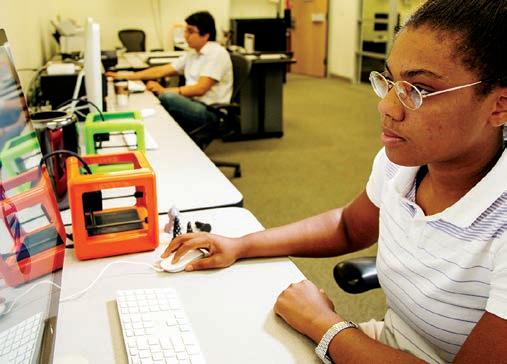
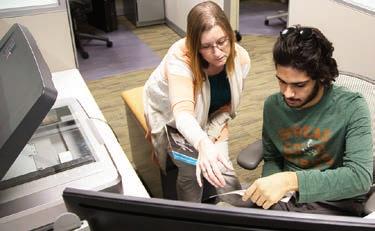
The Digital Scholarship Lab provides a locus for support for Geographic Information Systems software, data services, digital humanities and digital publishing. The Digital Media Lab provides students with access to 3D printers, various format cameras, virtual reality gear, and other emerging tools and technologies with which to experiment and create. Peer research consultations are also a crucial part of the mix.
This seamless continuum of services creates an immersive environment that fosters inquiry, creativity, and team learning, while encouraging students to use the available resources in their own way. For example, a student getting help with statistics in the Math Lab may then drop into the Digital Media Lab to learn how to present her data using a visually compelling method.
Even amid a higher learning landscape that encompasses an ever-growing number of integrated learning resources, the ambitious scope of the University of Miami Libraries’ initiatives is distinctive. “I believe we’re doing something that’s going to be emulated elsewhere,” says Dean Charles Eckman. “As these programs mature, they will truly be something for the University to be proud of.”
14,411 students in instructional sessions
Connections Amid Collections
(library.miami.edu) international downloads by UM community downloads
1,142 annual instructional sessions delivered
UML website users (library.miami.edu)
244,455 (93%) = U.S. 18,808 (7%) = international
Systemic Synergy
114,219 physical items borrowed
What do Shakespeare’s first folio, the Jewish experience in the early American Republic, Persian illuminated manuscripts, and an avant-garde 20th-century cellist have in common?
All were the themes of successful programs created by a library and museum working together within a U.S. institution of higher learning. And all were the focus of intriguing discussions at an inaugural event, hosted by the University of Miami, dedicated to fostering such fruitful collaborations.
99,577 physical items borrowed
Featuring presentations by thought-leaders in the academic galleries, libraries, archives, and museums (GLAM) sector, the inaugural “Academic Art Museum and Library Summit” was co-organized by UML and the Lowe Art Museum with the Association of Art Museums and Galleries, the Association of Research Libraries, and the Coalition for Networked Information. The conference was jointly funded by generous grants from the Andrew W. Mellon Foundation and the Samuel H. Kress Foundation.
e-research
1,031,162 e-books (+57% since 2012)
113,585 e-journals (+50% since 2012)
191,953 multimedia materials represented collections
“All of the speakers were well-known and well-regarded for their experience, expertise, dedication, and forward thinking,” says Jill Deupi, Beaux Arts director and chief curator for the Lowe. “Their presence suffused all of us with vision and energy.”
The inspiring conversations will continue at future convenings, to be hosted by different institutions to help ensure a diversity of audiences and discussion topics.
To streamline access to the millions of holdings located in various University library collections, seven UM libraries across the Coral Gables, Miller School of Medicine, and Rosenstiel campuses integrated their systems into a single search and discovery platform.
usage 702,879 book chapter downloads 1,806,705 database uses by UM community 2,169,460 journal article downloads
1,003 GIS and digital humanities workshops
The integrated search platform is especially beneficial for members of the University community researching across multiple disciplines.
300 diversity 300 languages represented in UML collections
UML has also begun to integrate the holdings of the Lowe Art Museum into its online catalog. When complete, the platform will serve as a comprehensive discovery system for all of UM’s library and cultural holdings across both print and digital formats.
Help for the Homeless
10/26/16
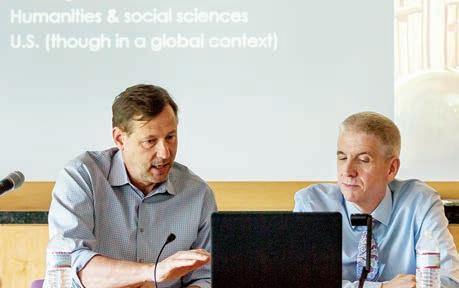
In Housing Activism in Miami, Max Rameau, an outspoken voice for homeless rights and low-income victims of gentrification, led a lively discussion on issues of affordable housing.
Climbing Genetic Family Trees 11/1/16
DNA testing is big business—but what do clients really learn about themselves? Julia Dallman, a geneticist in UM’s Department of Biology, and Bill Walker, a UML genealogy researcher, examined the science behind genetic genealogy and offered attendees suggested perspectives on possible results.
Toward New Modes of Knowing
4/11/17
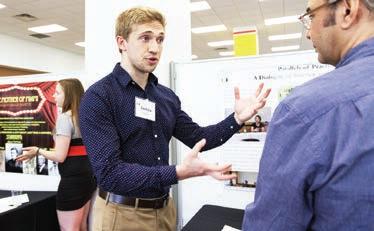
In Parallels of Practice: The Dialogue of Science and Philosophy, an expert panel of philosophers and scientists came together to engage with each other’s work as well as recent scientific critiques of philosophy, and to identify potential synergies between the two disciplines. The interactive event was organized by Joshua Myers, Library Research Scholar and Foote Fellow.
University Press Predictions
4/20/16
An expert panel examined the state of academic publishing today and shared forecasts about the field’s future at this event, presented together with the UM’s Center for the Humanities.
Grant CREATES New Collaborations
Heads in the Cloud
As of August 2017, all University students have access to the Adobe Creative Cloud suite of software, making the potential for the Learning Commons limitless. The Adobe CC suite includes Acrobat Pro, Photoshop, Illustrator, Dreamweaver, InDesign, free mobile apps for designing on the go, and much more—all supported by the UML Digital Media Lab.
As an outgrowth of the GLAM/AAML summit hosted by the University of Miami in January 2016, the Andrew W. Mellon Foundation has awarded the University a CREATE (Cultural Resources, Engagement, Academics, Technology, and Enrichment) grant of $500,000 to support faculty engagement and programmatic collaboration between the Lowe Art Museum and University of Miami Libraries.
Two Mellon CREATE faculty programming mini-grants have been awarded thus far. Gauri Gaonkar Agarwal, a professor at the Miller School of Medicine, and his team will be gathering objective data on the results of Visual Thinking Strategies educational sessions offered at the Lowe to Miller School students over the past three years. A second recipient, Scotney Evans, a professor in the School of Education and Human Development, will guide his team in collaborating with University Special Collections librarians to merge information gathered from the collections’ materials with other data resources to create a historical account of social justice activism in South Florida.
The CREATE grant also established two new faculty fellowships with joint appointments at UML and the Lowe Art Museum— one devoted to conservation, the other to campus engagement. Conservator Laura Fedynyszyn is the Andrew W. Mellon Conservation Fellow; Christina Larson is the Andrew W. Mellon Academic Engagement Fellow. Both started at the University this fall.
Attachments and Assimilation 3/30/16
The Cuban Heritage Collection hosted the North American launch of the book The State and the Grassroots: Immigrant Transnational Organizations in Four Continents, co-edited by Alejandro Portes, professor of sociology and law at UM. The event was co-presented with the Institute for Advanced Study of the Americas and
Adobe has also made an endowment gift of $100,000 to support the Adobe Library Research Scholars Program at the University of Miami Libraries. Two Adobe Scholars will be selected to participate in the year-long, four-part program. Each Adobe Scholar will be paired with a librarian faculty member, who will serve as a mentor and supervisor throughout the program’s duration. After rigorous training, the Adobe Scholars will create a multimedia project while also serving as “creative consultants” to help other UM students maximize the potential of these tools. Through this unique opportunity to build upon their interests, develop transferable skills, and create shareable intellectual work, the students will also build valuable experience in teamwork and collaboration that will help position them for greater success after graduating.
Digitizing Discovery
Shared “Sunshine,” oral histories, and an iconic airline...
digital resources provide unparalleled access.
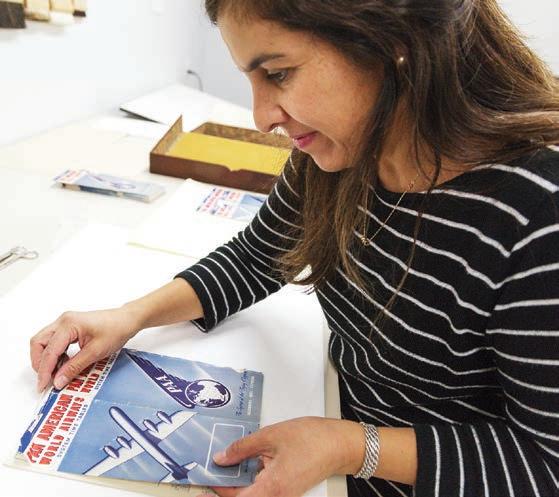
Pan Am Digitization Project the University Libraries’ Pan American World Airways records collection are accessible from anywhere in the world via UML’s Digital Collections website.
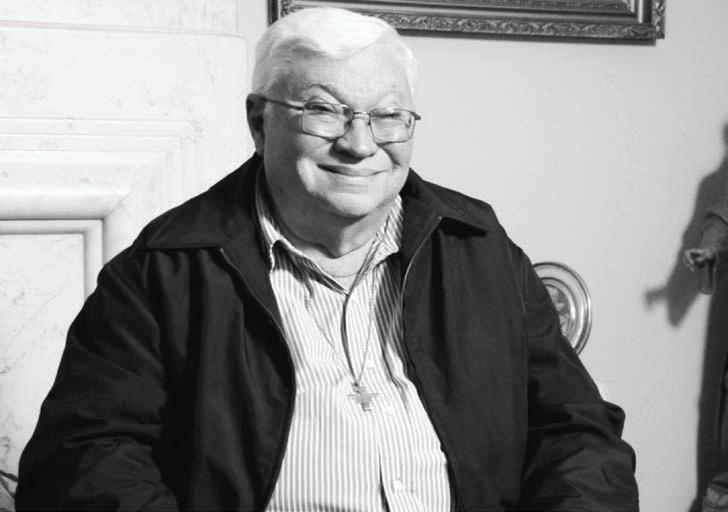
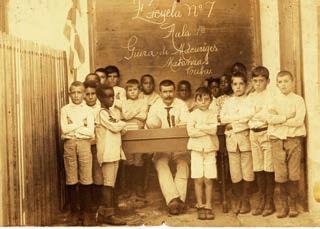
Caribbean Diaspora Oral History Project — an initiative that creatively captures the stories of individuals, such as this Cuban priest, from the distinctive diaspora.
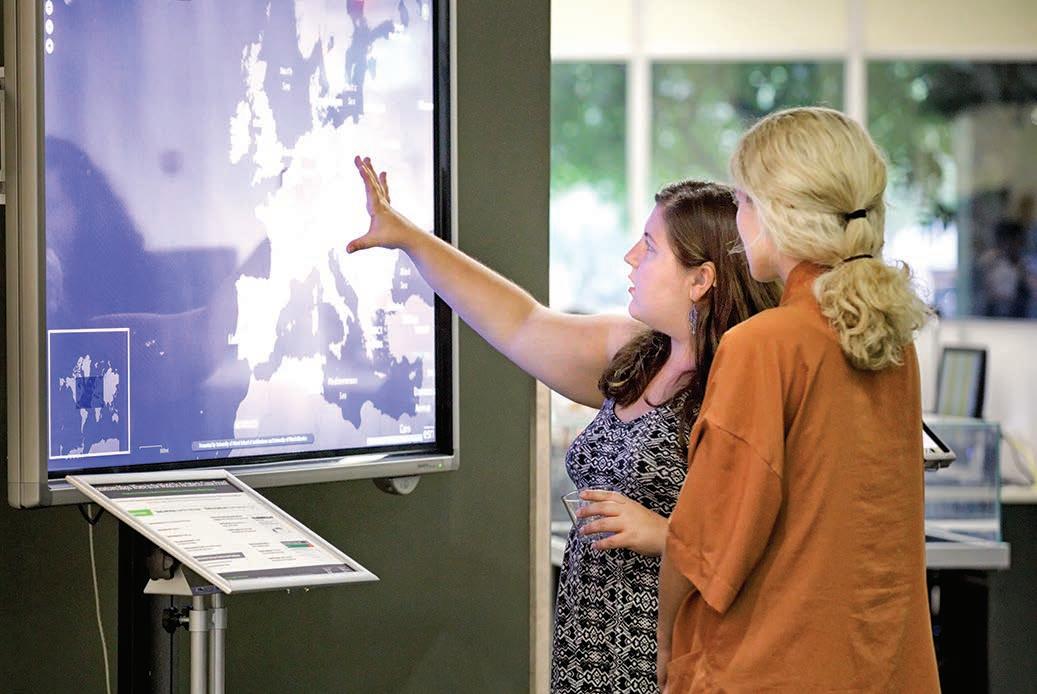
Digital Humanities and Data Journalism (DH+DJ) Symposium digital journalism and digital humanities are kindred spirits.
Father Alejandro López
UML website users (library.miami.edu)
244,455 (93%) = U.S.
18,808 (7%) = international
usage
702,879 book chapter downloads
1,806,705 database uses by UM community
>here comes the sun
2,169,460 journal article downloads
UML IS A FOUNDING PARTNER OF THE SUNSHINE STATE’S PARTICIPATION IN A NATIONAL COLLECTION OF DIGITIZED RESOURCES.
1,003 GIS and digital humanities workshops
300 e-research
diversity
300 languages represented in UML collections
The State of Florida is, famously, no stranger to sunshine—even its open-government statutes are known as “Sunshine” laws. Light will soon be shed on a vast new trove of information of great interest to Florida residents, students, and scholars through the Sunshine State Digital Network (SSDN).
Members of the UML Digital Strategies team, in partnership with Florida International University and Florida State University, are laying the groundwork for SSDN, the administrative and infrastructure hub for Florida-based collections in the Digital Public Library of America (DPLA). The Boston-based DPLA connects people to digitized collections from libraries, archives, and museums that range from modest local collections to massive cultural institutions.
SSDN will serve as the conduit for organizations of every size from around Florida, such as libraries, archives, and museums to make their digital content available and searchable on the DPLA.
A series of informational workshops about the SSDN were packed with prospective contributors.
Facilitating Fresh Connections
“DPLA not only exposes our materials to much wider audiences, it melds them with those of other institutions, allowing people to make connections that they would never make otherwise,” says Laura Capell, who leads digital production and archiving of electronic records at UML. Capell worked closely
99,577 physical items borrowed
114,219 physical items borrowed
1,031,162 e-books (+57% since 2012)
113,585 e-journals (+50% since 2012)
191,953 multimedia materials
with UML colleague Elliot Williams to evaluate metadata—including title, description, and copyright information—for more than 55,000 assets from digitized University collections to prepare them for assimilation into the national resource.
SSDN will serve as the conduit for organizations of every size from around Florida, such as libraries, archives, and museums to make their digital content available and searchable on the DPLA.
A series of informational workshops about the SSDN were packed with prospective contributors.
As new partners seek to get on board, “We’ll be providing one-on-one consultations to help them set up their collections to be compatible with DPLA guidelines,” says Williams, a digital metadata librarian and chair of the SSDN Metadata Working Group. “Accurate, clear rights information is especially important so that users understand how they can use the resources they find.”
As to how the team manages the considerable challenges of such an ambitious project, Capell says, “The key is to have a long-term vision, but break it into small steps.”
book chapter downloads
1,806,705 database uses by UM community
2,169,460 journal article downloads
1,003 GIS and digital humanities workshops
99,577 physical items borrowed
e-research
1,031,162 e-books (+57% since 2012) 113,585 e-journals (+50% since 2012) 191,953 multimedia materials
diversity 300 languages represented in UML collections
Denizens of a Distinctive Diaspora
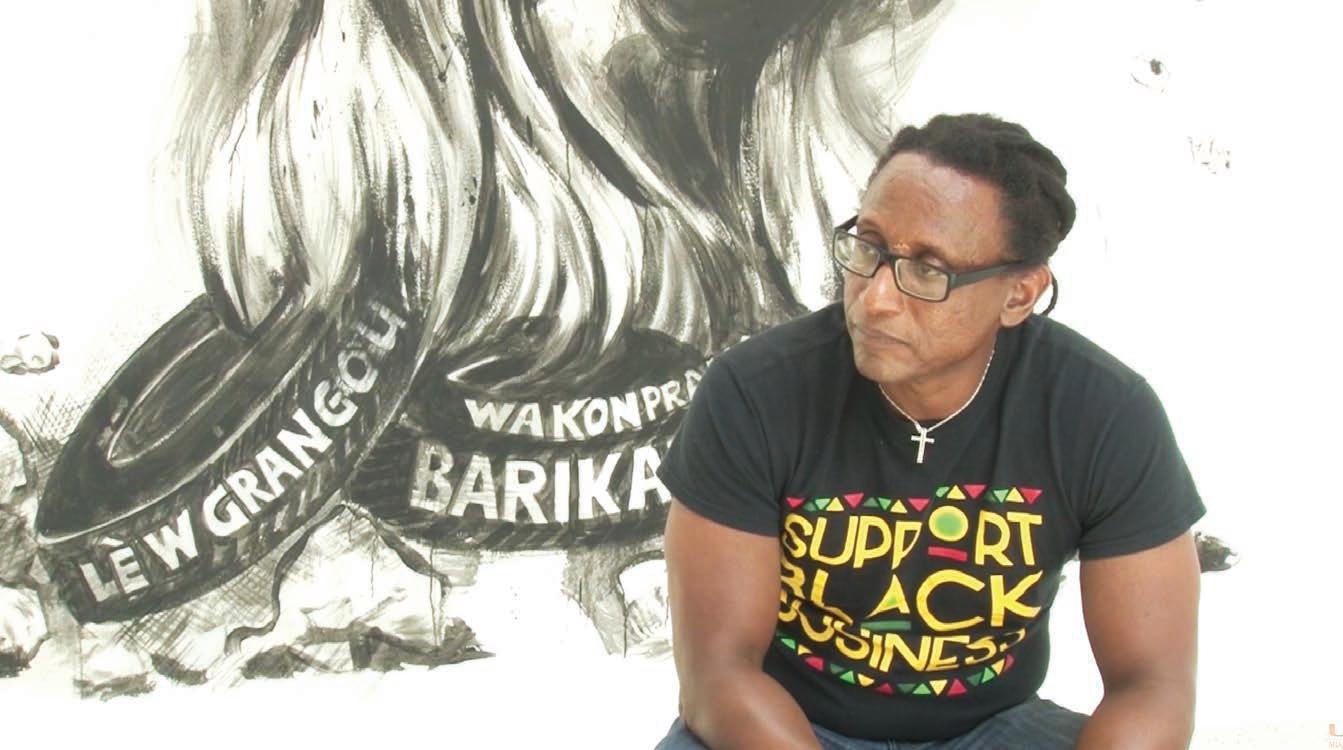
A Haitian-American Pulitzer-Prize-winning photojournalist. A Cuban priest who advocates for social justice in Honduras. A Colombian-American artist who works with found materials. The Venezuela-born marketing director for a South Florida ballet company. They’re just a few of the more than 20 individuals of Caribbean and Latin American descent who describe the influences and experiences that inspired their personal journeys and professional trajectories in the University of Miami Special Collections’ Caribbean Diaspora Oral History Project
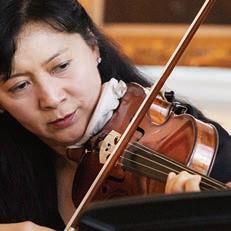
“The interviewees are individuals who are actively involved in a creative blending of their immigration experience with their lives in the United States,” says Beatrice Skokan, Special Collections’ manuscripts librarian and curator for Caribbean Collections who led development of the project and conducted several of the interviews.
“The Caribbean Disapora Project documents their experiences from their point of view—unedited by another’s gaze and interpretation,” Skokan adds.
The series is now accessible to students, scholars, and the general public on the UM Libraries website; highlights from the interviews are available on Twitter, Facebook, and Instagram.

event
Winging into the Middle East 5/20/16
In this Special Collections event, Waleed Hazbun, a political scientist at American University of Beirut, discussed post-World War II commercial American aviation in the Middle East. His research, which focused on World Wings International Records, received a grant from this philanthropic organization of former Pan Am flight attendants.
Carl-Phillipe Juste, photojournalist
1,003 GIS and digital humanities workshops
Clipper Enters the Cloud
diversity
300 languages represented in UML collections
“Every country has an airline. The world has Pan Am.” The vintage Pan American Airways slogan is truer than ever now that a growing number of images from the Pan American World Airways, Inc. Records collection are accessible from anywhere in the world via UML’s Digital Collections website.
Housed in Special Collections at the Otto G. Richter Library, the Pan Am collection is one of UM’s most researched and extensive, containing historical brochures, newsletters, periodicals, correspondence, photographs, and many other records documenting the 60-plus years of aviation history and world impact of the iconic airline.
The Pan Am digitization project is made possible by the National Historic Publications and Records Commission (NHPRC). Continuing the work of a previous NHPRC-funded grant, this phase will ultimately add over 100,000 pages of printed items to Digital Collections, where the materials are fully text searchable and available to the public.
Next up: publications from the World War II era. “Pan Am played a crucial role in aviation and global history during this time period,” says Digitization Grant Project Manager Gabriella Williams, “and the company’s large fleet was invaluable to the United States war effort.”
Potential Plus
In February 2012, Dan Cohen, then-executive director of the Digital Public Library of America, tweeted his view that digital journalism and digital humanities were kindred spirits, and more commerce between the two “could be mutually beneficial.”
e-research 1,031,162 e-books (+57% since 113,585 e-journals (+50% since 191,953 multimedia materials
Cohen’s words helped inspire the first Digital Humanities and Data Journalism (DH+DJ) Symposium in 2016, hosted by the University of Miami at the Newman Alumni Center. Coordinated by the University of Miami Libraries, School of Communication, Center for Computational Science, and College of Arts and Sciences, the event was sponsored by the Knight Foundation.
The DH+DJ symposium brought together two communities that share similar interests, face similar challenges, and use many of the same tech tools. Paige Morgan of the University’s own Digital Humanities program joined presenters representing institutions including Stanford University, Carnegie Mellon, Northwestern University, as well as journalistic outlets Condé Nast, ProPublica, and FiveThirtyEight, in exploring topics ranging from collaborative opportunities to the implications of artificial intelligence and Big Data.
Though a follow-up event scheduled for September 2016 was cancelled due to Hurricane Irma, organizers plan to regroup and make the event a regular one going forward.
For more information on the DH+DJ Symposium, visit dhdj.com.miami.edu
digital humanities links the U to

1,003 GIS and digital humanities workshops
e-research
1,031,162 e-books (+57% since 2012)
113,585 e-journals (+50% since 2012)
191,953 multimedia materials
> clearing a path to aid
diversity 300 languages represented in UML collections
UML’S DIGITAL HUMANITIES GROUP LEADS THE WAY AND LINKS THE U TO A CRUCIAL POST-DISASTER VOLUNTEER EFFORT.
Though they rely on different methods—observation and experimentation on the one hand, interpretation and critical thinking on the other—physical science and humanistic disciplines find common ground in the digital humanities, an interdisciplinary field at the intersection of humanities scholarship, computer technologies, and digital media.
And then there are moments when the varied components of the digital humanities come together in the service of humanity itself.
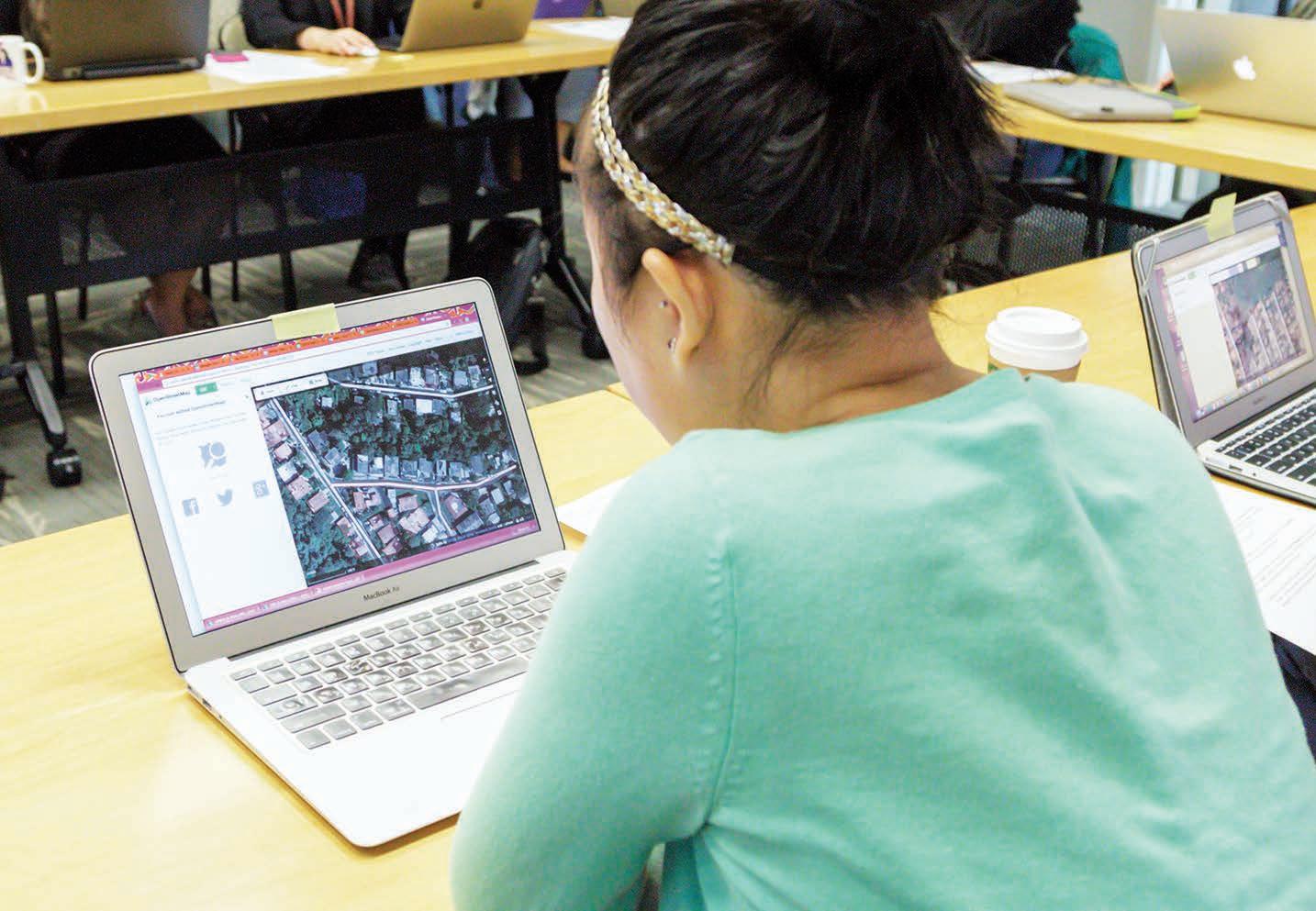
That was precisely the case when more than 50 University of Miami students, faculty, staff, and community members settled into a Richter Library conference room last fall, opened their laptops, and began pulling up satellite images of Puerto Rico. The UM Disaster Relief Mapathon was part of an extraordinary effort that brought together thousands of volunteers at universities around the country in real time to help expedite the delivery of aid to communities devastated by Hurricane Maria.
Open-Source Assistance
Because more than 1,500 roads and bridges were damaged after the hurricane, responders needed details on the island’s roads and buildings to find
out who needed help and how to reach those in need. The stateside volunteers used OpenStreetMap, an open-source mapping platform used by organizations including the American Red Cross and FEMA. The crowd-sourced geospatial data provides a useful platform for aid organizations to aggregate vital information after natural disasters.
The University’s mapathon was organized by Paige Morgan, digital humanities librarian of the UM Libraries Digital Scholarship Group, which focuses on helping users learn specialized software and tools to find, manage, interpret, and publish data.
Because most of the mapathon volunteers had no mapping experience or geographical knowledge of affected areas, Morgan and her team provided training at the beginning of the event.
“Many people, including many students, are somewhat daunted by information technologies,” Morgan says. “So I’m always looking for points of entry to help demystify the digital humanities and encourage people to explore how they can engage with the field. The mapathon was a perfect example of that.”
diversity
300 languages represented in UML collections
CHC Champions Rise to the Challenge
Long renowned among scholars around the world as a crown jewel of Cuban collections, the Cuban Heritage Collection is gleaming even more brightly these days, thanks to its loyal friends.
In 2016 the CHC was offered a 2:1 matching grant from The Goizueta Foundation if $500,000 could be raised from other philanthropic sources. The foundation’s fundraising challenge to the CHC was recently met by “the Amigos,” the group of volunteers who support the work of the collection. As a result, a new $1.5 milion Goizueta Foundation Cuban Heritage Collection Endowment has been created to support CHC’s acquisition and digitization programs.
“This extraordinary support will help sustain and expand CHC exhibitions, events, digital collections, and new collection initiatives,” says Dean of Libraries Charles Eckman.
The foundation also endowed The Goizueta Foundation Graduate Fellowship Program, which has supported scholarly work in Cuban, hemispheric, and international studies by more than 60 emerging scholars from 35 universities. Complementing the fellowship program, the CHC hosts the biennial conference New Directions in Cuban Studies
The Goizueta Foundation’s generosity to the CHC during the University’s Momentum2 campaign is handsomely showcased in the collection’s elegant Roberto C. Goizueta Pavilion in the Otto G. Richter Library.
event
Empowered in Pink 9/22/16
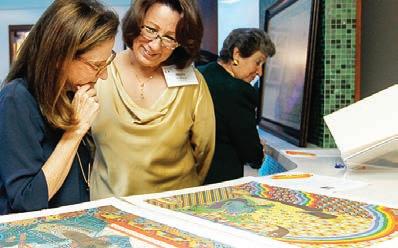
At Pink Powder, a display of artworks exploring aspects of female identity from the de la Cruz Collection in honor of Breast Cancer Awareness Month and in conjunction with Sylvester Comprehensive Cancer Center, Felicia M. Knaul, director of UM’s Institute for Advanced Study of the Americas and a breast cancer survivor, spoke alongside her husband, UM President Julio Frenk. The exhibit was a cross-unit collaboration led by UM’s Galleries, Libraries, Archives, and Museums (GLAM) initiative.
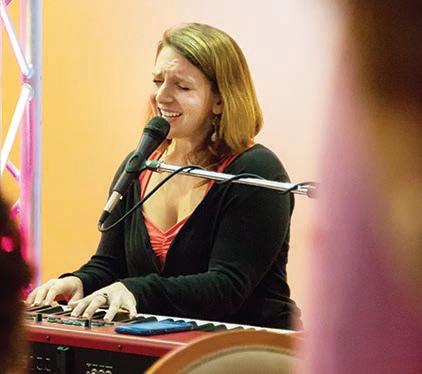
Justina Shandler, graduate student and songwriter in the Frost School of Music, performs an inspiring original song at the exhibit’s opening reception.
A Colorful Take on Climate Change
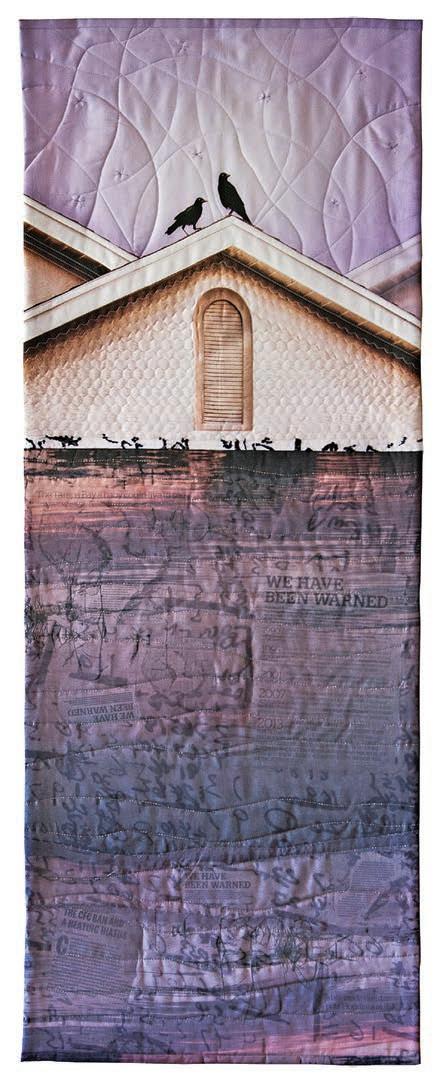
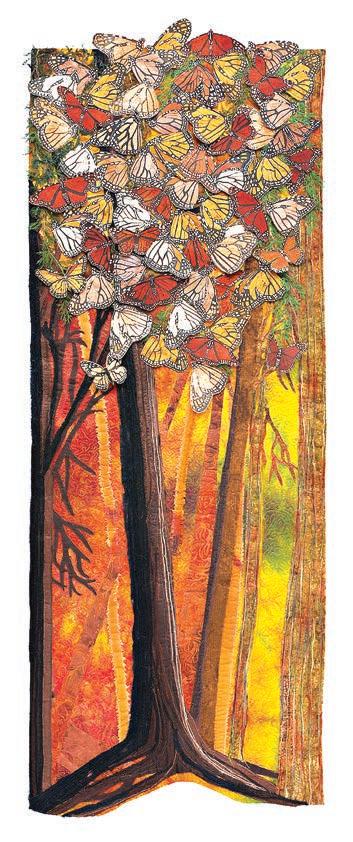
A traveling exhibit of 26 colorful and intricate climate-focused art quilts by 22 Florida artists, Piecing Together a Changing Planet, survived wildfires in the Great Smoky Mountains and a hurricane to open on the first floor of the Otto G. Richter Library’s Lynda and Michael Gordon Exhibition Gallery at the University of Miami last March.
The textile artworks, which had been traveling through U.S. national parks since 2014, examined aspects of climate change such as sea level rise, coral bleaching, water and air pollution, and habitat loss. UML teams worked with UM news on the occasion of their Special Report: Climate Change to research and select complementary exhibit items from UML’s Special Collections, including some generated by members of the University community. Evoking aspects of climate change and sustainability, the objects ranged from archival photographs to a “Humans vs. Mosquitoes” card game about vector-borne diseases.
A companion multimedia exhibition of art quilts, interactive displays, and curated library items, displayed in the Roberto C. Goizueta Pavilion of the Cuban Heritage Collection, invited guests to explore a range of climate change issues, their impact on South Florida, and efforts to address them.
A Changing Planet was on display in the Richter Library. To find out more about the exhibit, visit facebook.com/piecingtogether. To view the UM Special Report: Climate Change, visit climate.miami.edu
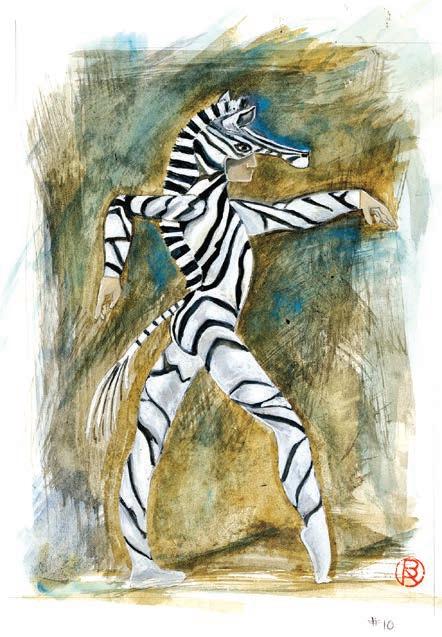
Wings of Fire by Melani K. Brewer
diversity
300 languages represented in UML collections
Blazing the Trail, Building the Dream
On January 31, 1961, the University of Miami’s Board of Trustees voted unanimously in favor of a resolution to ‘accept any qualified student…regardless of race, creed, or color.’ The date is a historic one for the University. But the actual experiences of the first black students to subsequently attend the U have been much less well-documented.
A Black Alumni Society event called UTrailblazers went a long way toward changing that. The festivities drew hundreds of people to campus on February 24 and 25, 2017, to honor those who blazed a trail of diversity and inclusion during the first two decades of racial integration at UM.
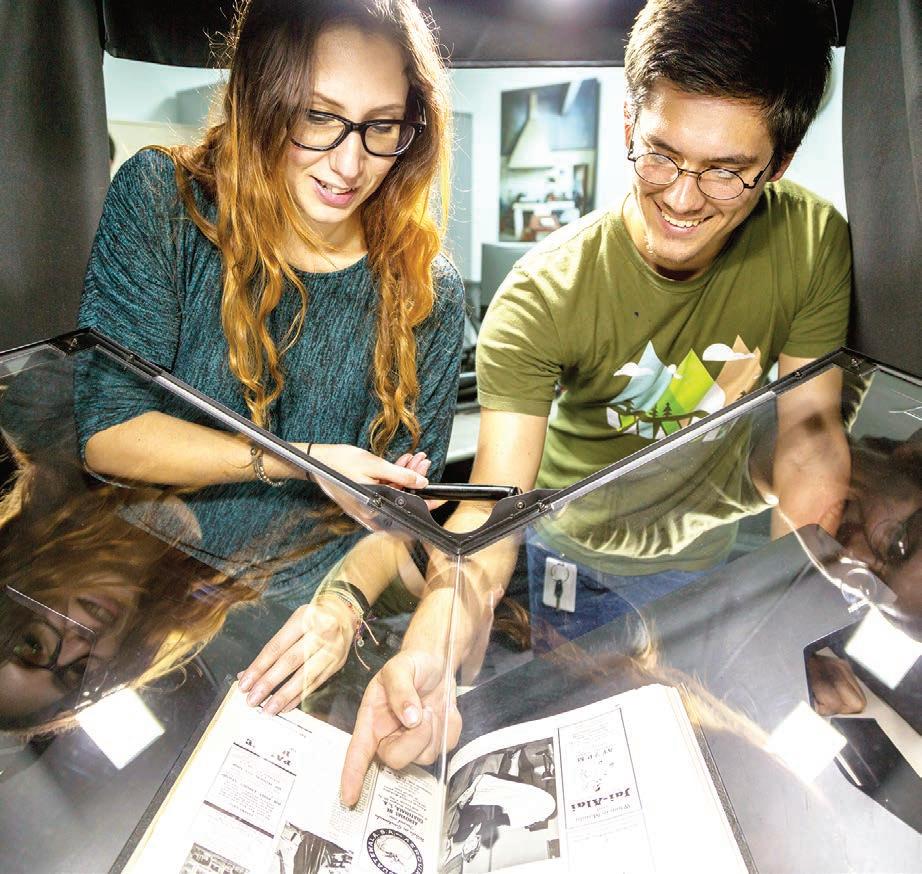
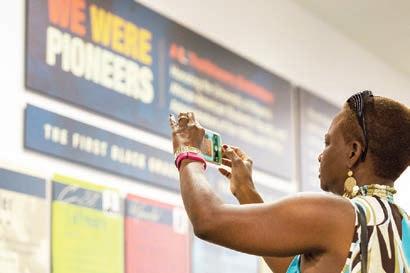
Among the weekend’s key events was a visit to Richter Library’s We Were Pioneers exhibit, for which dozens of dedicated ’Canes, led by alumni Denise Mincey-Mills, Antonio Junior, and Phyllis Tyler, spent four years sifting through Ibis yearbooks and unearthing records in the University Archives. The First Black Graduates Project
Engaging a Living Legacy
1,031,162 e-books (+57% since 2012) 113,585 e-journals (+50% since 2012) 191,953 multimedia materials
also reached out to black alumni from that era to learn more about their experiences, struggles, and successes.
The resulting exhibition, co-curated by Koichi Tasa and Marcia Heath, featured publications, images, memorabilia, and other artifacts from the University Archives collection in nine exhibition cases and surrounding walls on the first floor of the library.
“The University of Miami helped to educate us and mold us,” said keynote speaker George F. Knox, J.D. ’73, at the UTrailblazers gala. “Now we are free to say, ‘We love you, University of Miami,’ and we know you love us back.”
To learn more about the We Were Pioneers exhibit, visit library.miami.edu
The vibrant and vital cultural legacy preserved by the University of Miami Libraries’ Cuban Heritage Collection is the subject of Heritage, an awardwinning short film produced by UML Creative Services.
Heritage was named the best submission in the collections-focused awards category at the second annual “ARLies”—the Association of Research Libraries (ARL) Film Festival—in May 2017 in Philadelphia, PA. The film combines evocative visuals both within and outside the physical parameters of the CHC with the words and perspectives of CHC librarians, faculty colleagues, and UM leaders.
Offering a concise, poignant portrait of the profound influence a Cuban heritage exerts on its sons and daughters, the film also profiles the CHC as a powerful catalyst for scholarship, discovery, collaboration, and engagement with Cuban culture and history
As a library,” says Dean Charles Eckman, “we not only preserve the tangible; we also make cultural heritage accessible and approachable.”
Enhancing Healthcare Information for Communities
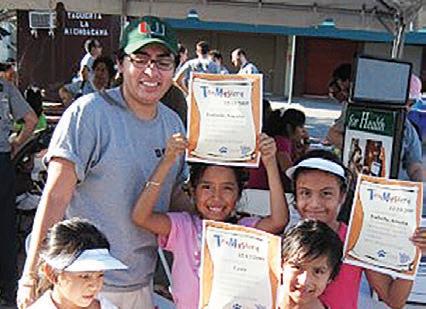
Continuing a tradition of service that began in the 1970s, the Miller School of Medicine’s Mitchell Wolfson, Sr. DOCS (Department of Community Service) program engages medical students in providing free health screenings, preventive care, and referrals to underserved and vulnerable populations in Miami-Dade, Broward, and Monroe Counties.
In 2008, through a two-year grant from the regional chapter of the National Network of Libraries of Medicine, medical librarians at the school’s Louis Calder Memorial Library for health sciences, began a partnership with DOCS and public librarians to increase the use of quality health information at
DOCS health fairs. With grant funding, mobile devices were purchased to showcase MedlinePlus, a government vetted consumer health resource.
Every year since, the Calder librarians, as well as several staff members, have continued to volunteer at the health fairs. The Calder teams bring informational handouts about common diagnoses such as diabetes and hypertension, as well as MedlinePlus brochures (in English, Spanish, French, and Haitian Creole), lists of public libraries, and other practical brochures that are useful to the clinicians and health fair participants.
The Calder Library’s inspiring success in providing community access to health information was showcased in a poster session at the meeting of the Medical Library Association’s Southern Chapter in San Juan, Puerto Rico in October 2015.
To learn more about DOCS, visit udocs.med.miami.edu
About access
UML’s diverse community thrives on access to higher knowledge and pathways to discovery, as well as the work environments, research materials, tools, and services that enable them to pursue these pathways to their fullest. Our publication, access, reflects the many ways that the mission of the University of Miami is advanced through our collections, events, exhibitions, services, and the many other initiatives and activities that facilitate the endeavors of our users and lead to scholarly and cultural enrichment throughout our community.
Pledge your support for UM Libraries at library.miami.edu/ support or contact University Advancement at 305-284-4443 to learn about other UML giving opportunities.
Media coverage of UML events, book talks, lectures, symposia, and faculty have appeared in various news sources. Visit the “UML in the News” page on our website (library. miami.edu) to view the latest media mentions.
Trans forming live s OPENING WO RLDS
Interdisciplinary Library
Otto G. Richter Library
Subject Specialty Libraries
School of Architecture: Paul Buisson Architecture Library
Miami Business School: Judi Prokop Newman Information Resource Center
Rosenstiel School of Marine and Atmospheric Science: Rosenstiel Library
Miller School of Medicine: Louis Calder Memorial Library
Frost School of Music: Marta and Austin Weeks Music Library and Technology Center
Independent Library
School of Law: Law Library
To learn more about our libraries and their collections, including contact information and directions, please visit library.miami.edu