UNIVERSITY OF MARYLAND
MARYLAND FIRE AND RESCUE INSTITUTE
OCTOBER - DECEMBER 2025 VOL.55 NO.4

UNIVERSITY OF MARYLAND
MARYLAND FIRE AND RESCUE INSTITUTE
OCTOBER - DECEMBER 2025 VOL.55 NO.4
The iconic Notre Dame Cathedral in Paris reopened just over a year ago following the devastating 2019 fire that destroyed the historic wooden roof and spire.
Firefighters were able to save the main structure, preserving most of the cathedral’s history and relics. The structural fire is purported to have started with a burning cigarette or electrical short. Less widely known is that the Maryland Fire and Rescue Institute (MFRI) played a small but important role in shaping Notre Dame’s renewed fire protection strategy.
According to MFRI Deputy Director Pat Marlatt, the advanced water mist fire protection system now safeguarding Notre Dame was tested in its early developmental stages more than 20 years ago in the Micro Mist building
at MFRI headquarters. At the time, the technology was still emerging, and MFRI served as one of several testing grounds helping to validate its effectiveness.
Manufactured by Marioff Corporation, the high-pressure water mist system is designed
specifically to protect historic structures. It provides rapid, automatic fire suppression while minimizing water damage, which is essential for preserving centuries-old wood, stone, and artwork. This cutting-edge technology, along with new firewalls and enhanced detection, enables the monument to fight fires itself, protecting vaults and framework and making it the first cathedral in France with this advanced protection.
Closer to home, the same technology is also protecting St. Patrick’s Cathedral in New York City, further demonstrating the system’s value in safeguarding some of the world’s most treasured structures.
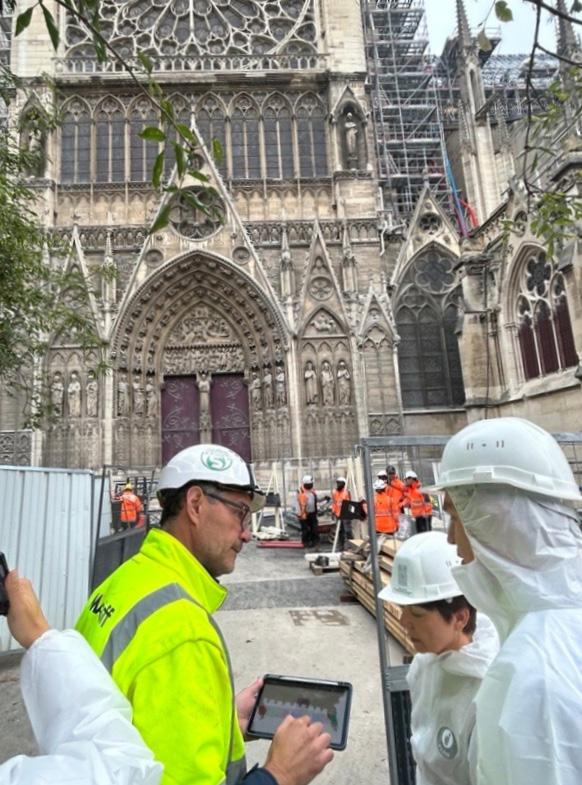
photo: Marioff Corporation tested the early iterations of its high-pressure water mist fire-fighting system at MFRI nearly 20 years ago. The system was installed at Notre Dame Cathedral in Paris after the 2019 fire. Photo courtesy of Marioff Corporation.
The Maryland Fire and Rescue Institute of the University of Maryland is the state’s comprehensive training and education system for all-hazard responses. The Institute plans, researches, develops and delivers quality programs to prepare agencies and individuals to protect life, the environment and property.
Bulletin Staff
Managing Editor: Jennifer Ginn
Graphics Manager: Ana Maizel
Assistant Editor: Jenna Robles-Leone
Contact MFRI
tel: 301-226-9921 fax: 301-314-0752 www.mfri.org bulletin@mfri.org
The Maryland Fire and Rescue Institute Bulletin (MFRI) University of Maryland (ISSN 1074-2298) is published quarterly by the Maryland Fire and Rescue Institute of the University of Maryland, College Park, MD 20742. Periodical postage paid at College Park, MD 20740. Postmaster: Send address changes to Maryland Fire and Rescue Institute, Bulletin, 4500 Campus Drive, University of Maryland, College Park, Maryland, 20742.
The MFRI Bulletin is distributed as a public service of the University of Maryland. The Bulletin is dedicated to the publication of information that will help educate its readers on the subjects of fire protection, emergency medical services, rescue, leadership and training. This publication may contain some articles and illustrations provided by readers. MFRI does not necessarily agree with information nor endorse any products depicted in the Bulletin. Address all communications to Editor at MFRI. For change of address, send mailing label and new address.
The MFRI Bulletin is produced entirely in house. We extend our sincere gratitude to our contributors who make this publication possible.
We have long understood that firefighting is a dangerous profession. In the 1970s, 80s, and 90s, line-of-duty deaths (LODDs) regularly exceeded 100 per year. For decades, these losses were often viewed as an inherent risk of the job—the unfortunate cost of doing business. Most of these deaths occurred during fireground operations, training activities, or while responding to or returning from emergency incidents.
Over the past 30 years, the fire service has come together and worked cooperatively to change that narrative. Fire service organizations across the country have collaboratively reduced LODDs through improved education, the development of consensus documents, and the adoption of nationally recognized standards. These efforts have made a difference. Yet, despite decades of progress and heightened awareness around health and safety, firefighters still face serious challenges to their well-being.
One of the most significant of these threats is occupational cancer. A growing body of research shows that firefighters face an increased risk for certain types of cancer due to repeated exposure to smoke and hazardous chemicals on the fireground. Studies have established clear links between exposure to products of combustion and higher-than-normal cancer diagnoses. Protecting firefighters from these exposures—both during emergency responses and live fire training—is no longer optional. It is essential. Chief officers, training officers, company officers, and firefighters all share responsibility for ensuring these protections are in place.
The Maryland Fire and Rescue Institute has just implemented a new, mandatory, gross decontamination program that will be utilized during all live-fire training burns. This new initiative takes more of a cultural approach, introducing firefighters to protective practices at their very first exposure to products of combustion. Since we only burn clean wood pallets and excelsior in training, the risk of exposure is very low when compared with fires involving today’s structures and furnishings. More critical is initially teaching firefighters how to protect themselves from toxins and ingraining the practice in their protocol.
Gross decontamination is more than a procedure—it’s a mindset. Consistent practice builds habits that reduce toxic exposure and support long, healthy fire service careers.

Michael E. Cox Jr.
As one of the nation’s busiest ports for automobiles, light trucks, farm and construction machinery, and sugar, the Port of Baltimore welcomes ships from around the world, some measuring more than 1,200 feet in length.
These vessels can contain up to 13 internal decks and carry as many as 9,000 new cars or other drivable vehicles. As ship size and cargo volume increase, firefighting operations become significantly more complex. Compounding the challenge, many of the vehicles arriving at the port are powered by lithium-ion batteries.
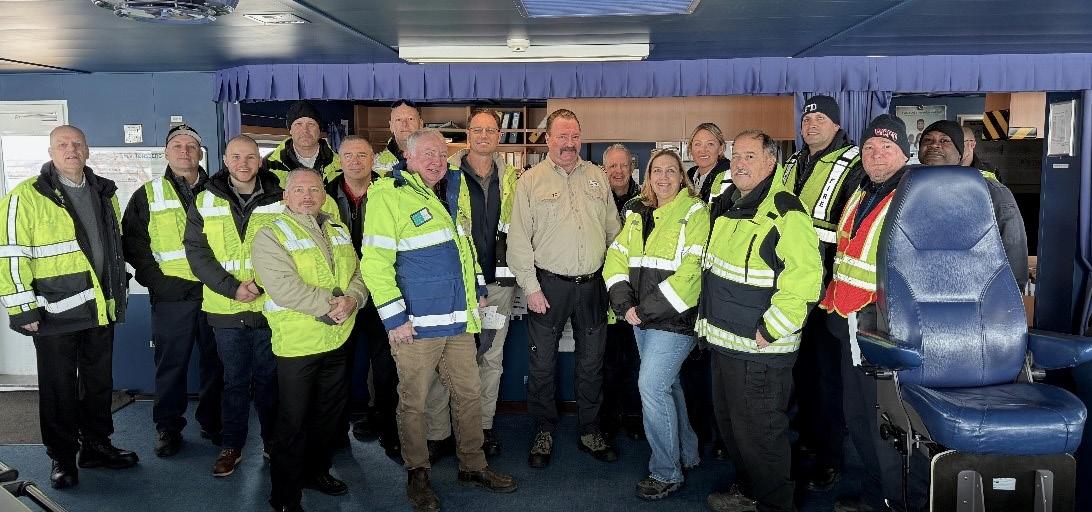
Recently a contingency of ten MFRI employees, primarily instructors, toured the port, boarding a roll-on/roll-off ship (more commonly called a roro). As MFRI offers and recently revised its Land-Based
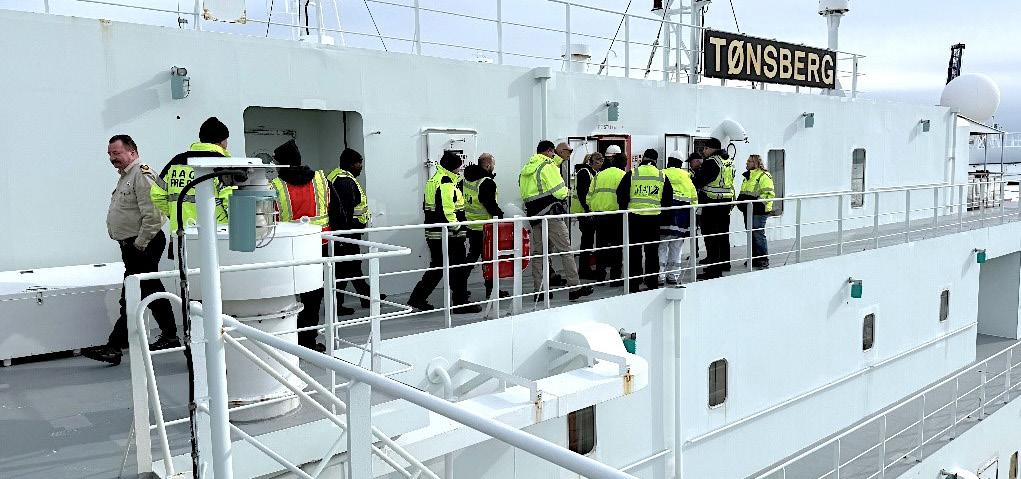
Marine Firefighting course, the ship tour provided instructors with a valuable firsthand look at the scale and layout of these massive vessels.
“It was also insightful for our instructors to speak with the captain, crew, and engineers and better understand their roles in the event of a fire,” said MFRI Executive Director Michael Cox, who also toured the ship. “Vehicles are positioned just inches apart, making fire containment especially challenging.” Seeing the layout of the port and ship will also aid the instructors in more accurately explaining the critical firefighting strategies and tactics during training exercises.
photos: (left) MFRI instructors toured the Port of Baltimore; (right) and an 869-foot, roll-on/roll-off ship to enhance MFRI’s newly revised Land-Based Marine Firefighting course.
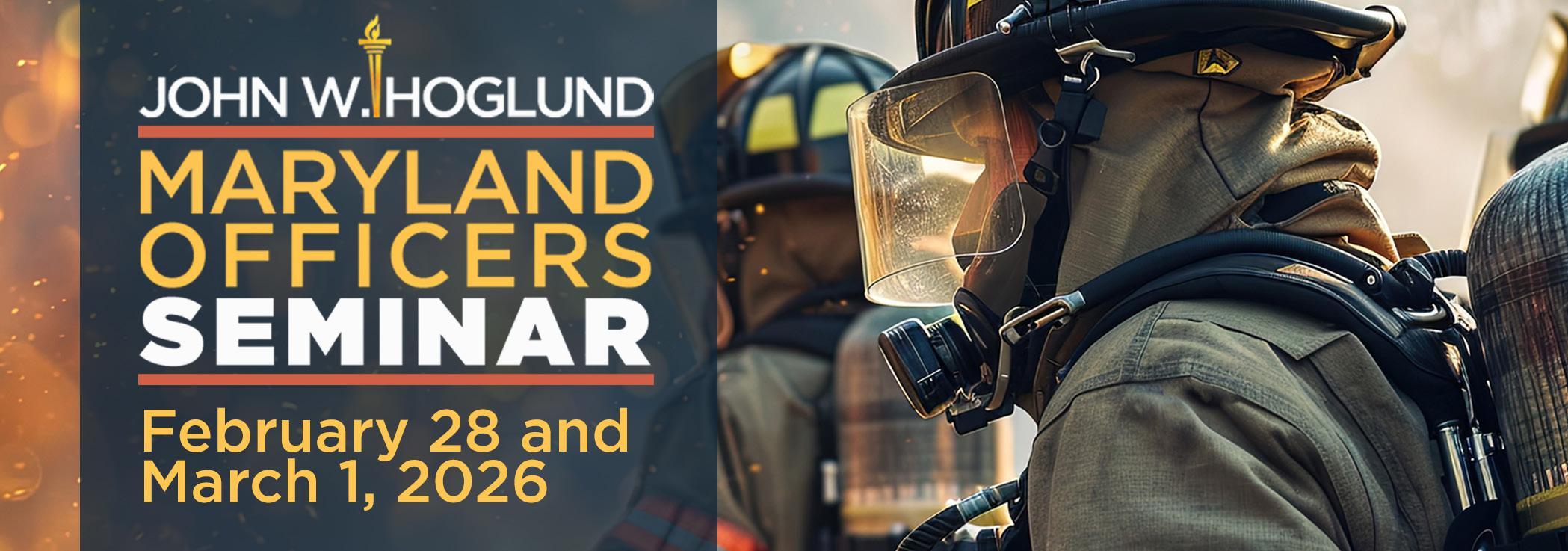
The Maryland Fire Chiefs and Maryland Fire and Rescue Institute present The John W. Hoglund Maryland Officers Seminar on Saturday, February 28 & Sunday, March 1, 2026 from 8 a.m. to 5 p.m. at the Howard County Department of Fire and Rescue Services Training Academy, 2200 Scott Wheeler Drive, Marriottsville, MD 21104. Register today to attend this seminar entitled Struggles and Successes Across the State: Five Fire Leaders Will Share Lessons Learned. To register, visit: https://www.mfri.org/schedule/seminars
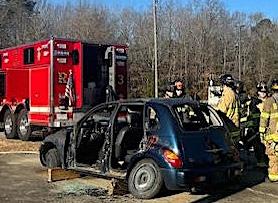
Thanks to the Waldorf Volunteer Fire Department, MFRI’s Southern Maryland Regional Training Center (SMRTC) closed out December with high-impact, hands-on vehicle extrication training for Firefighter II students.
Waldorf VFD brought their rescue apparatus to the training ground, supporting the class and enabling participants to gain valuable, realistic experience.
“Having real-world apparatus on site makes a tremendous difference in student learning,” said Ed Rachinskas, SMRTC Coordinator. “Waldorf VFD’s willingness to commit resources, personnel, and time ensured our students received hands-on training that goes far beyond the classroom. Simply put—you showed up, you stepped up, and you delivered.”
despite an extremely demanding operational tempo— speaks volumes about their commitment to firefighter development and regional readiness,” added Ed.
“Waldorf VFD Company 3 is the busiest company in the area, and their willingness to support training—
During the first weekend in December, the Southern Maryland Regional Training Facility energized instructors with 12 hours of high-impact PDI training.
Saturday’s session featured Mastery Instruction: A Guide for Educators, along with a handson activities lab designed for real classrooms. Instructors explored innovative techniques, creative approaches, and practical tools to enhance everyday teaching effectiveness.
photo: Firefighter II students gained high-impact, vehicle-extrication experience thanks to Waldorf Volunteer Fire Department, which brought their rescue apparatus to the Southern Maryland Regional Training Center.
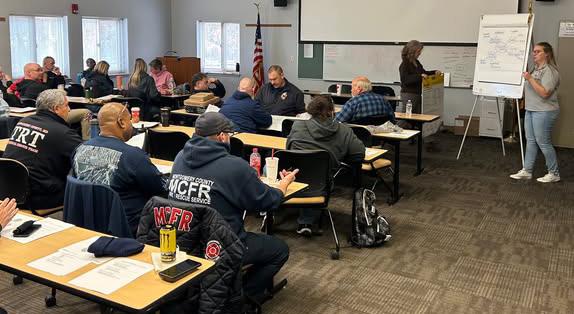
Sunday featured two dynamic PDIs. Telling Tales: Using Storytelling in Fire & EMS Education offered an engaging and powerful look at how narrative can transform student learning.
The second session: Instructional Decision-Making with the OODA Loop is a brand-new program based on Observing, Orienting, Deciding, and Acting. This rapid decision-making model can be
used to process emergencies and provides instructors with another highly effective strategy to improve day-to-day classroom delivery. Planning is underway for another PDI session to be held at MFRI headquarters in College Park, MD.
photo: MFRI instructors enhanced their teaching techniques during a professional development weekend at the Southern Maryland Regional Training Center.

MFRI is now accepting instructor candidates for the Spring 2026 Instructor Skills Enhancement Weekends, a professional development opportunity designed to strengthen instructional excellence. These weekends focus on enhancing teaching skills, instructional delivery, and classroom effectiveness for both aspiring and current instructors within your agency. Please submit candidates using the format below for consideration.

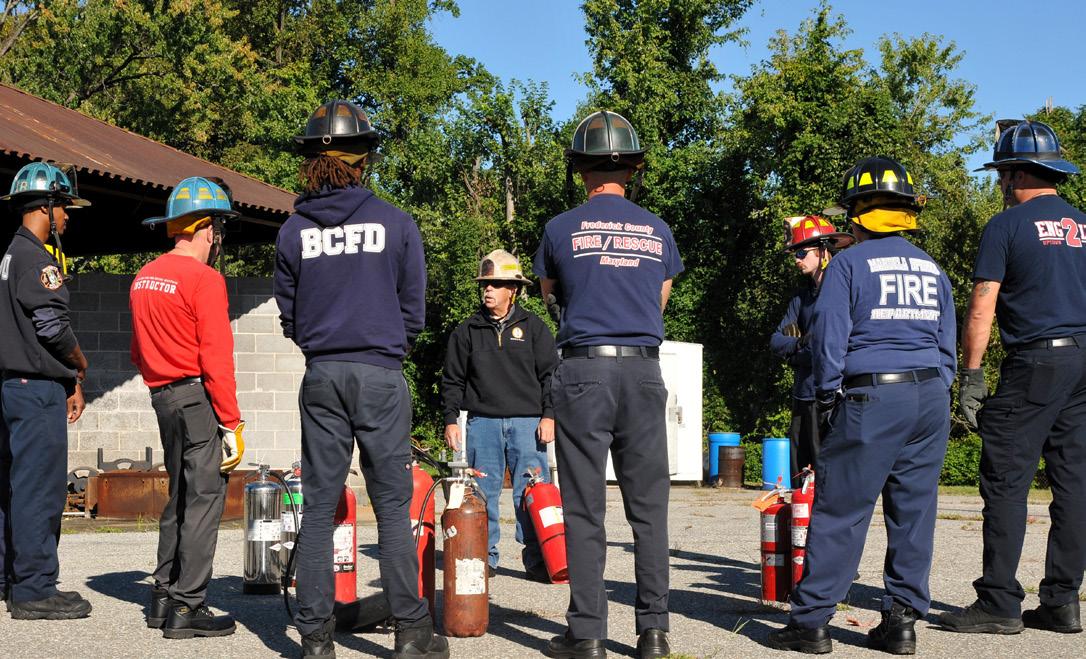
Candidates must have successfully completed: Instructor II (or a MICRB-approved equivalent), and discipline-specific coursework:
• EMS: EMT level
• Fire: Firefighter II level (medical clearance required)
• Hazardous Materials: Haz Mat Technician level (medical clearance required)
• Rescue: Common Passenger Vehicle Rescue level

Spring Instructor Skills will be held over the course of two weekends at MFRI Headquarters in College Park, MD:
• Saturday–Sunday, April 18–19, 2026, and
• Saturday–Sunday, May 2–3, 2026
All candidates must be registered through their MICRB sponsor. Individual student registrations will not be accepted.
Please submit the following candidate information from your region/academy no later than Friday, April 3, 2026, to Debbie Sklodowski at: dsklodowski@mfri.org
• Candidate Name
• Last five of Social Security number
• Phone Number
• Mailing Address
• Email Address
• Discipline (EMS, Fire [requires medical clearance], Hazardous Materials [requires medical clearance], or Rescue)
Management Skills will continue to be evaluated through a portfolio review of experience and training credentials using a required matrix sheet. Please coordinate Management Skills candidates with Todd Dyche via email: tdyche@mfri.org.
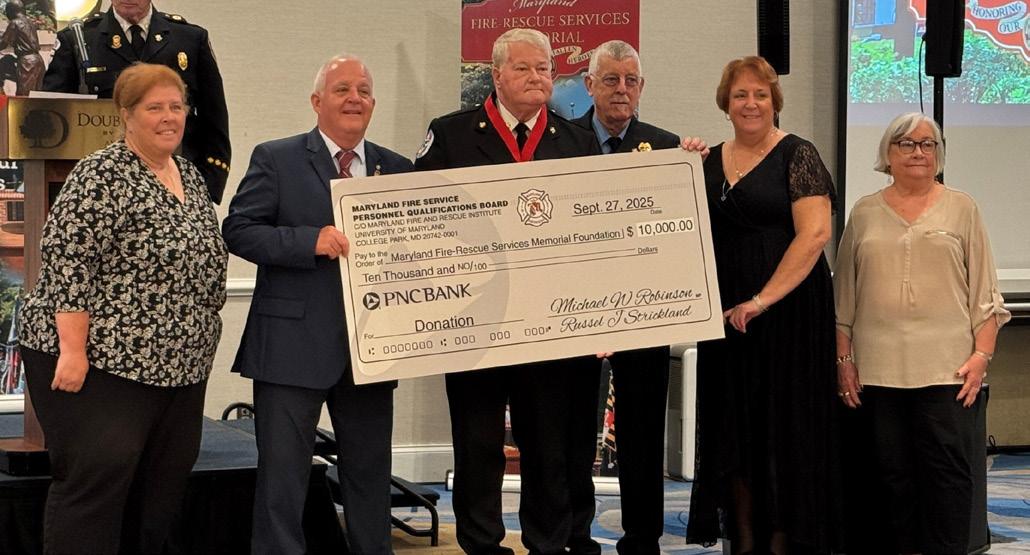
The Maryland Fire Service Personnel Qualifications Board (MFSPQB) presented a donation to the Maryland Fire-Rescue Services Foundation at their annual gala on September 27th.
Traditionally the MFSPQB strives to donate one dollar for each certification issued to support the
upkeep and the now planned expansion of the memorial. In 2024, 6,369 certifications were issued, and this year the MFSPQB increased its contribution to $10,000, bringing total donations since the foundation’s inception to more than $63,000.
Established in 1997, the Maryland Fire-Rescue Services Memorial Foundation honors Maryland’s fallen fire-rescue heroes and is located on Calvert Street at the entrance to Annapolis.
photo: (left to right) Teresa Ann Crisman, Foundation Board Member; Stephen Mandragos, Foundation Acting Vice President; Michael W. Robinson, MFSPQB Chair; Robert L. ‘Bob’ Rose, MFSPQB Executive Secretary; Teri Heinicke, Foundation Committee Member; Sharon Owen, Foundation Secretary, and at the podium Gary Rains, Foundation Board Member.
By Michael McAdams, MFRI QA/QI Manager
Risk management is essential to safe and effective fire, rescue, and emergency medical services training and education. Maryland Fire & Rescue Institute (MFRI) delivers training across the state at six different locations. Managing risk ensures that instructors, students, staff, and stakeholders operate in a safe, secure, and controlled environment.
In high-risk scenarios, such as live firefighting or emergency medical services training, hazards are ever-present. Effective risk management involves identifying hazards, assessing their potential impact, and implementing controls to mitigate their effect. These efforts include enforcing personal protective equipment (PPE) policies, medical clearanceform submissions, fit testing, and post-incident decontamination. These actions reduce injury risk and reinforce a commitment to safety.
Risk management supports the policy and procedure processes and ensures consistent quality. It helps identify procedural gaps, equipment issues, and
training deficiencies before they escalate. This proactive approach provides accountability and ensures MFRI meets established program standards.

Risk management also plays a critical role in regulatory compliance and institutional integrity. By aligning with national and state standards, we protect our reputation and build trust with students and partner agencies. Additionally, performing risk analysis allows for better allocation of resources and continuous improvement efforts.
Ultimately, risk management is a core safety tool that supports MFRI’s strategic framework and prepares Maryland’s emergency responders to serve with competence, confidence, and care.
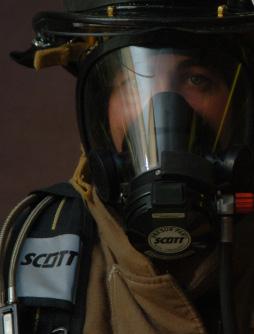
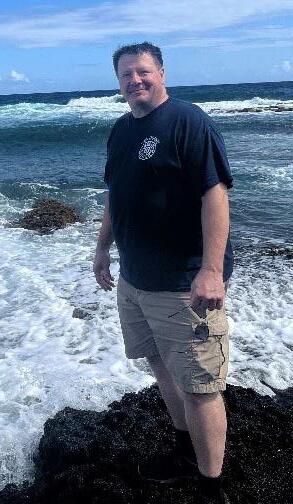
With nearly 15 years of teaching experience at MFRI, Danny Braitsch’s favorite class to teach is Firefighter I. “This is typically a student’s first MFRI class. I want to give them a well-rounded and safe learning experience and also instill within them the camaraderie, brotherhood, and rich history of the fire service,” said Danny. In addition to firefighter classes, Danny teaches rescue and hazmat classes. He started his fire service career as a volunteer at age 16 with Sykesville Freedom District Fire Department and followed with basic fire class in 1983. After many years of volunteering, MFRI classes, joining West Friendship VFD, and with the guidance of Chief Mickey Day, Danny chose to pursue teaching to share his experience and knowledge.
Students in Danny’s classes can expect discipline, honesty, and a safe and welcoming environment. “I am
inspired by students who genuinely want to learn and by watching their transformation as they hone their skills and progress through class,” he said. “It’s rewarding to see them grow into their potential,” said Danny. “It’s also rewarding when former students reach out to share their first fire calls and success stories.”
Outside of the classroom, Danny has been a kidney dialysis Field Technician with Fresenius Medical Care since 1992.
Due to work and family commitments, he took a break from volunteering. When Danny returned to refresh his skills, he retook FFI and EMT with his daughter, Jess. Their shared passion for fire and rescue inspired her to become a full-time Paramedic Firefighter with Howard County.
Danny is an avid car enthusiast and football fan (Go Steelers!). He enjoys spending his free time with his three grandchildren.

CHAILLE DUBOIS joined MFRI as Human Capital and Operations Program Manager, bringing more than eight years of experience in human resources and administrative operations across higher education and government. She is pursuing a Ph.D. in Organizational Behavior at Frostburg State University, where her dissertation examines the emotional dynamics of grief across the death care spectrum.

JEFF FLEMING was promoted to State Programs Manager at MFRI, overseeing three regional training centers. He previously coordinated the Northeast Regional Training Center and serves as President of the Carroll County Volunteer Emergency Services Association. Jeff brings extensive EMS experience and holds a bachelor’s degree in Fire Science from the University of Maryland Global Campus.


ANNA GREENSTONE joined MFRI in October as an Instructional Designer in the Planning Section after serving as a Senior Instructional Designer and Team Leader with USAID. She focuses on human-centered design, experiential learning, and inclusive facilitation. Anna earned a master of science in International Education Development from the University of Pennsylvania and her bachelor’s degree from University of Pittsburgh.
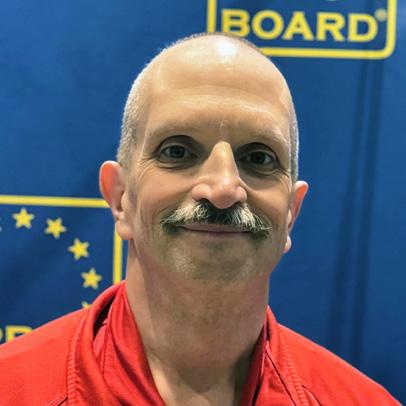
BOB MIDKIFF was promoted to Planning Section Chief at MFRI in September after three years as an Instructional Designer. He previously directed the Maryland Wing Civil Air Patrol ASHI Training Center and taught high school history in Howard County for 17 years. Bob is a MICRB instructor trainer and a life member of the West Lanham Hills Volunteer Fire Department.