As the Marsal School leads the university in a theme year around Life-Changing Education—one of the core impact areas of the Look to Michigan campaign—we aim to galvanize the campus community in lifting up the importance of access to quality education for all. Education is a public good that shapes the health, equity, and vitality of our communities.
Life-changing education must extend across disciplines, connecting scholars, practitioners, and communities in pursuit of equitable and enduring learning opportunities. Together, we are crafting the future of learning.
As educators and researchers, we embrace the call to be public intellectuals—to share knowledge widely and to translate research into action. We are always teaching, always shaping the next generation. That ongoing cycle of influence and inspiration is what we call infinite impact.
At the Marsal School, we look to Michigan because we believe in the power of evidence and the promise of research. Through our work, we continually ask one vital question: how can education better serve people, communities, and the world?
In the spring issue of MarsalEducator, we dug into the full science of reading, with a particular focus on early childhood literacy. In our fall issue we continue the exploration of literacy with attention to how we prepare future middle and high school teachers to support adolescent students as they continue to
hone their literacy skills in and across the complex domains of secondary school. In particular, we focus on developing the understanding that reading, writing, and communication vary across fields like science, math, and the humanities. Each discipline has its own ways of constructing meaning.
Marsal faculty developed Michigan’s Essential Practices for Disciplinary Literacy in Secondary Classrooms, guiding teachers to embed literacy in content-specific contexts. Marsal’s educator preparation program reflects this philosophy by organizing teaching interns into subject-area cohorts. These experiences help interns deeply understand how students engage with disciplinary texts, develop equitable teaching strategies, and design lessons that connect literacy to inquiry and critical thinking.
In its first year since launching publicly, the Eileen Lappin Weiser Center for the Learning Sciences gained great momentum. Guided by a mission to advance equitable and just learning systems by designing tools, practices, and partnerships that expand how people learn and thrive, the center is a hub of activity. Using the theme of curiosity as a common thread through their diverse efforts in the first year, the center hosted talks and events, mentored students, and built relationships with people who are exploring the fascinating world of human learning.
Through its Learning Studio, the center partners directly with organizations—such as Shakespeare in Detroit and Corn Wine Oil Farms—to co-create
educational programs and materials that meet community needs. A new Learning Sciences Student Fellowship now connects U-M students with these learning sciences projects, fostering mentorship and professional growth. As it enters its second year, the center will focus on imagination, inviting the broader community to envision—and help create—the future of learning together.
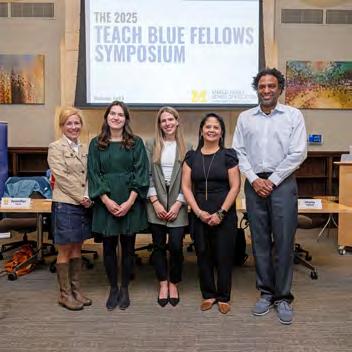
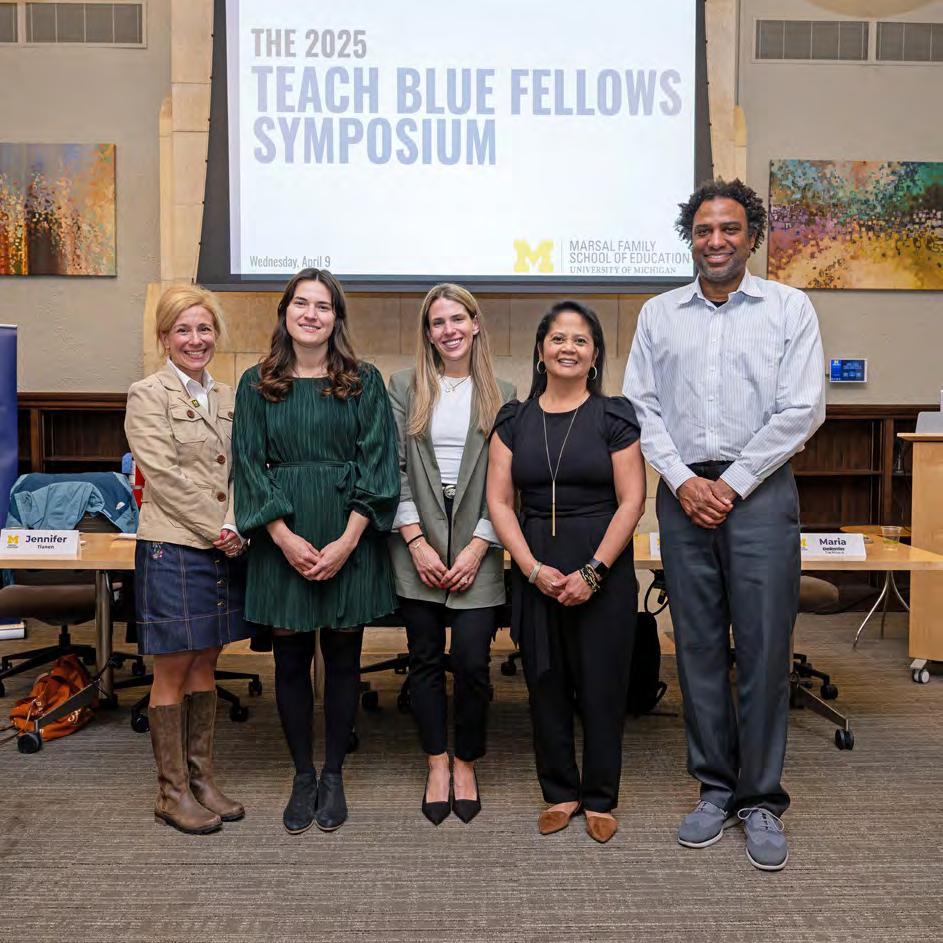
Our first cohort of Teach Blue Fellows concluded their research in the spring with a culminating symposium. Each fellow identified a problem of practice, studied existing research, partnered with a Marsal School faculty member, and designed and implemented a strategy to address the problem—ultimately sharing their findings with other educators, parents, and the public. By documenting their work, the fellows highlight the reflection, innovation, and problem-solving that define the teaching profession, advancing the Marsal School’s mission to strengthen teacher recruitment, preparation, retention, and recognition. I invite you to watch the fellows’ symposium presentations on our YouTube channel after reading a brief synopsis of each fellow’s work.
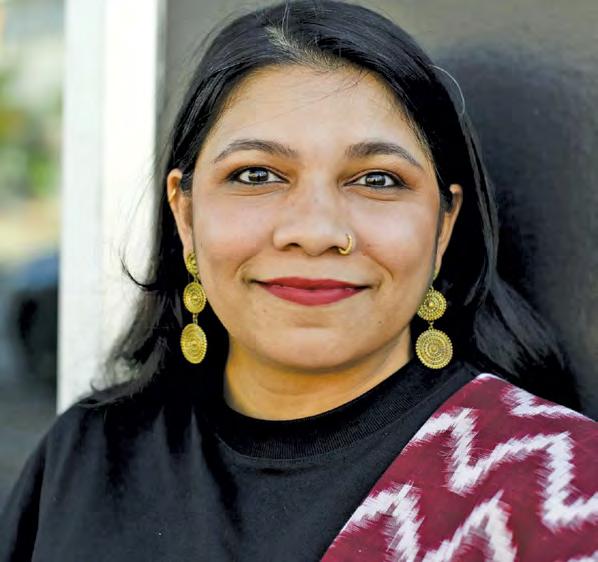
Across campus, our colleague and alumna Fatema Haque (AB ’09, AM ’15), program manager for the Barger Leadership Institute, uses her master’s degree from the Center for the Study of Higher and Postsecondary Education to teach students about leadership. Haque’s curiosity has led her to see herself as a lifelong learner who explores life through works of art and literature.
She advocates for the use of creativity in leadership. Whether through teaching, art, or writing, Haque sees storytelling as an essential form of leadership— one that connects people, honors lived experience, and inspires learning.
Together, these stories illustrate the Marsal School’s enduring commitment to the power of education—to its capacity to transform lives, elevate communities, and shape a more just and equitable world. From pioneering approaches to literacy and learning sciences to empowering educators and leaders who carry that work forward, we are continually reminded that education’s impact is infinite. With the crucial support of donors who invest in our ambitious vision for the future of learning, we are steadfast in our mission to advance knowledge, foster curiosity, and create pathways that ensure every learner has the opportunity to thrive. ■
Meet the Marsal Family School of Education’s New Faculty Member
Dean
Elizabeth Birr Moje
Editor Danielle Dimcheff
Associate Editor & Lead Writer
Jeanne Hodesh
Design
Savitski Design, Ann Arbor
Hammond Design, Ann Arbor
We invite you to join the conversation by submitting ideas for future issues, letters to the editor, and class notes. marsal.umich.edu/magazine
Stay connected!
Web: marsal.umich.edu
Facebook: UMichEducation
X: UMichEducation
Instagram: UMichEducation
Office of Communications
610 East University Avenue Ann Arbor, Michigan 48109-1259 soe.communications@umich.edu
Anoteoneditorialstyle:TheMarsalSchool strivestoestablishconsistencyacross materialsanddocuments,however,we acknowledgethatterminologyandstylingare personal.Wemake the intentional choice to honorthepreferencesofthesubjectswhoare interviewed for articles and we wish to accommodatethosepreferenceswherepossible.
dr. Quintana is an active member of the marsal school community, where she previously served as a lecturer and co-led the learning experience design (lXd ) certificate
Teaching Literacy Through the Disciplines
How the marsal family school of education prepares secondary educators to teach literacy skills that students need for learning in the disciplines
Curiosity First
The eileen lappin Weiser center for the learning sciences is engaging community members every step of the way
Teach Blue Fellows Create Infinite Impact
The first and second cohorts of fellows—all marsal school alumni—pose questions and share results from their research
Learning is the Through Line for Fatema Haque
The csHPe alumna embodies this issue’s theme of learning for meaning, learning for joy, and learning for life
Happenings champions for education class Notes
The inaugural cohort of Teach Blue fellows on page 18.
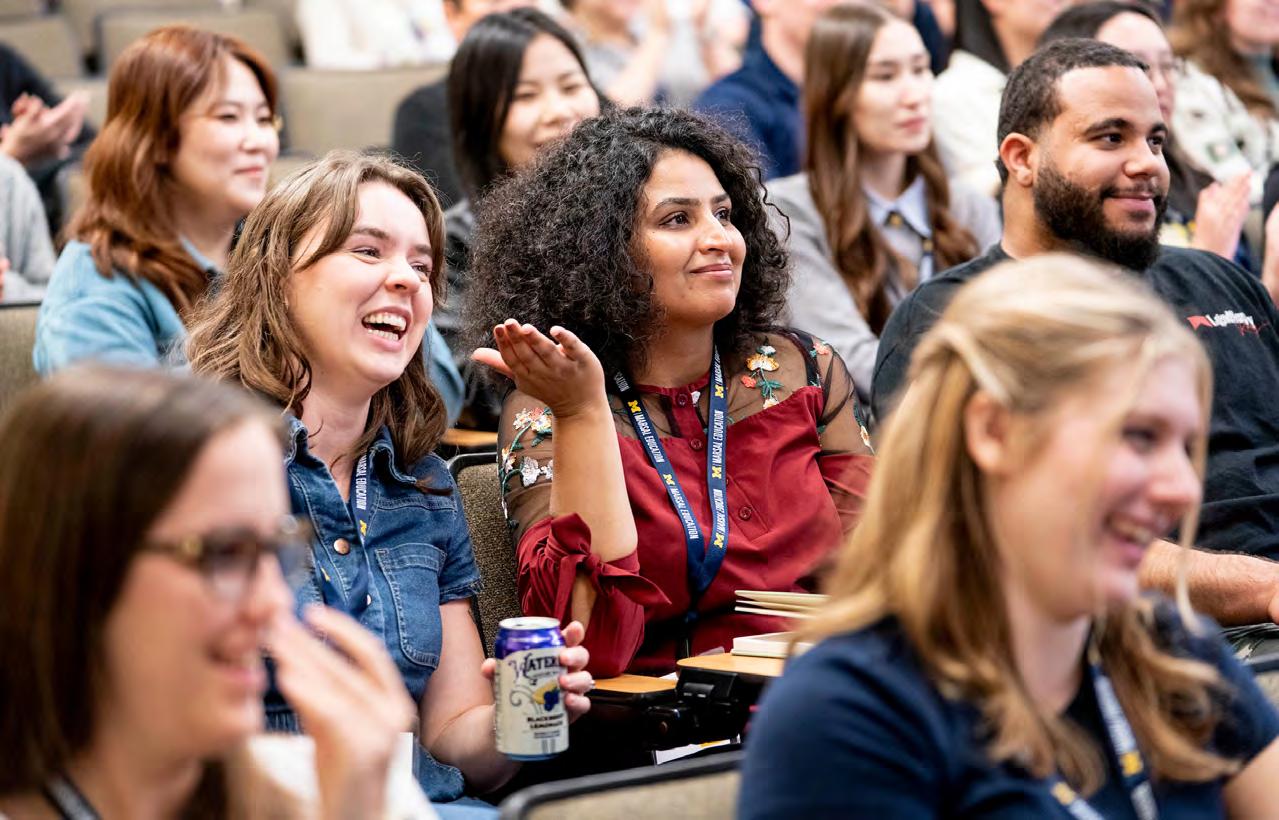
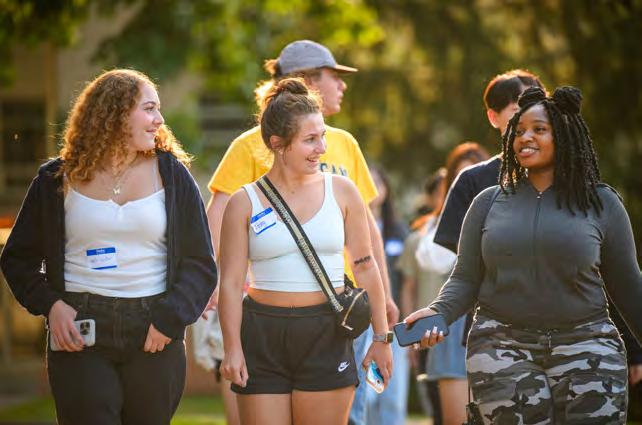
above and previous page Graduate students met classmates and learned about their new home at the Marsal School during new student orientation.
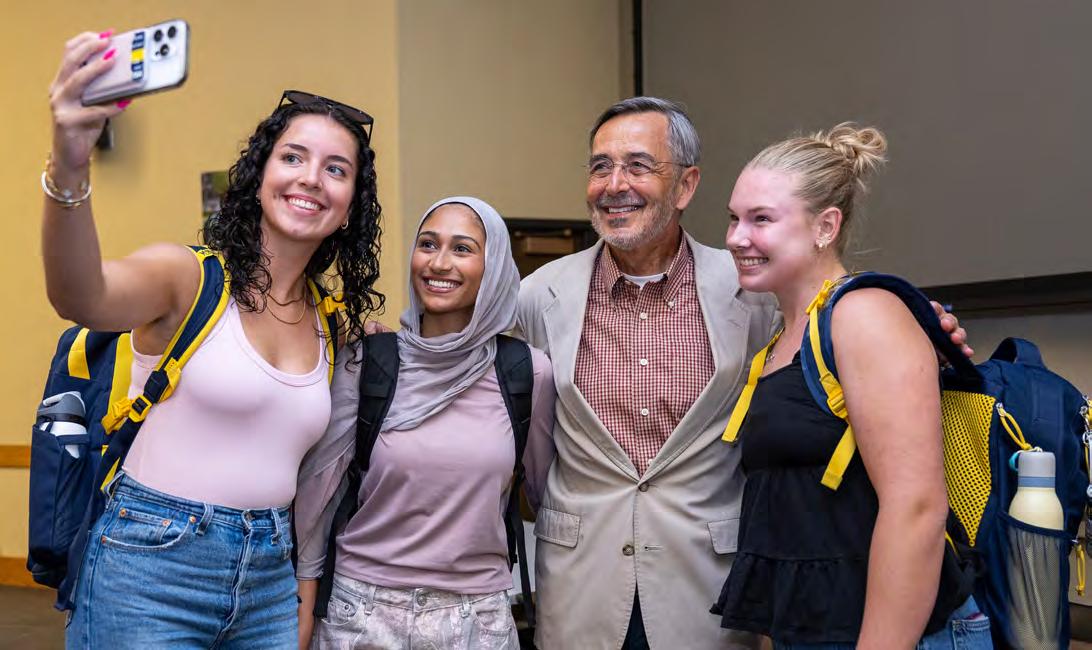
Education for Empowerment Minor students in the Coaching and Leadership concentration were in for a big surprise on the first day of class—a guest lecture by U-M President Domenico Grasso!
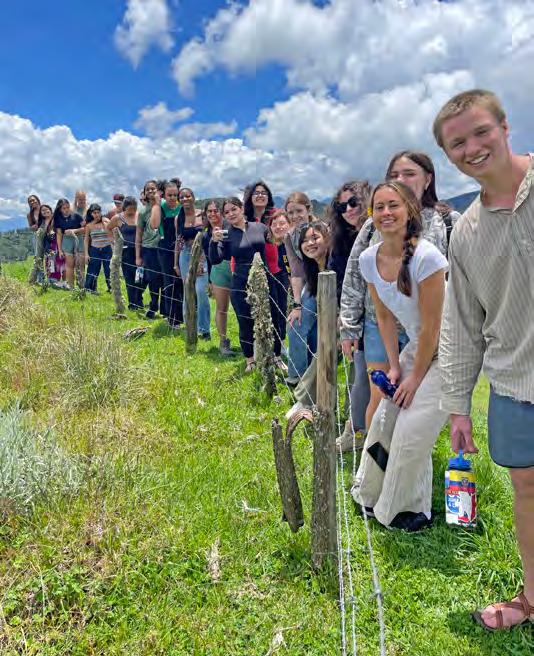
above Over spring break, students in EDU 215: Exploring Education were hosted by Universidad San Francisco de Quito in Ecuador. During their visit, they spent time in the historic city center of Quito, the Mindo Cloud Forest, and Antisana National Park. They visited local schools, interacted with communitybased education organizations, and learned from faculty at Universidad San Francisco de Quito. They also collaborated with students and teachers at Saminay, an Indigenous school in Otavalo, Ecuador, one hour north of Quito.
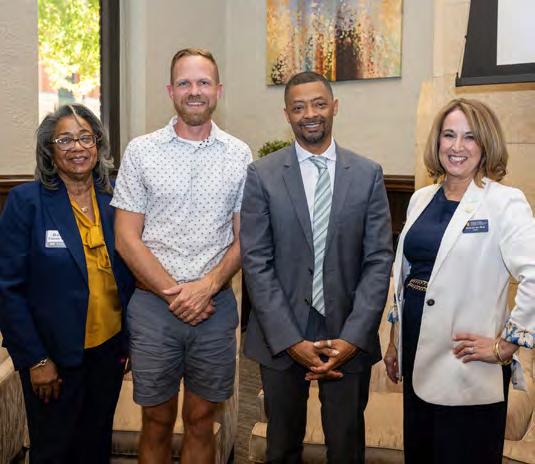
above Recipients of the 2024–25 Marsal Family School of Education Alumni Awards returned to campus to participate in a conversation with Dean Moje. The Elevating Educators panel featured Distinguished Education Practitioner Award recipient Luke Wilcox (BSEd ’01, TeachCert ’01), Distinguished Education Researcher Award recipient Dr. Odis Johnson Jr. (PhD ’03), and Lifetime Achievement Alumni Award recipient Dr. Barbara Eason-Watkins (ABEd ’73, TeachCert ’73).
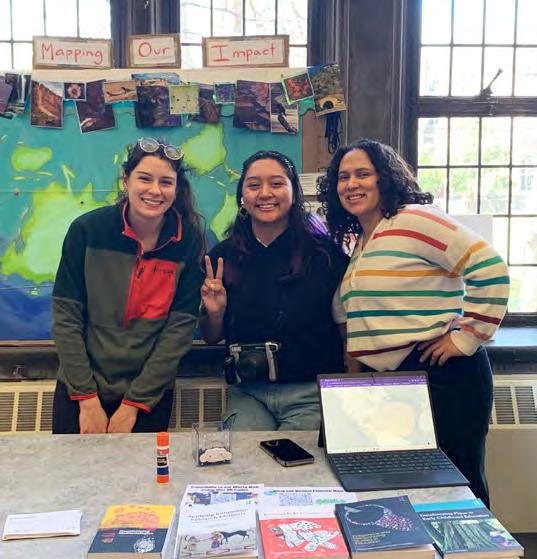
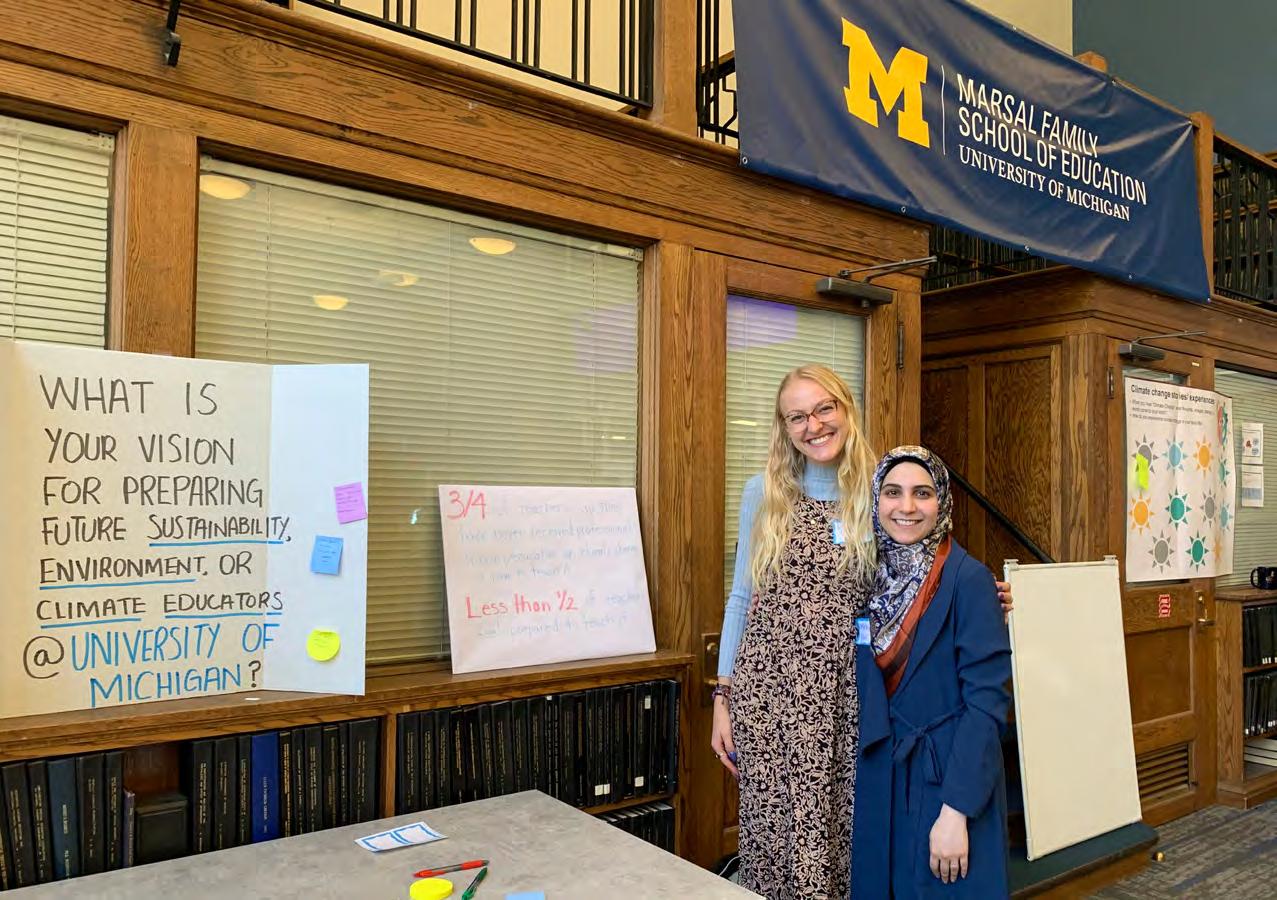
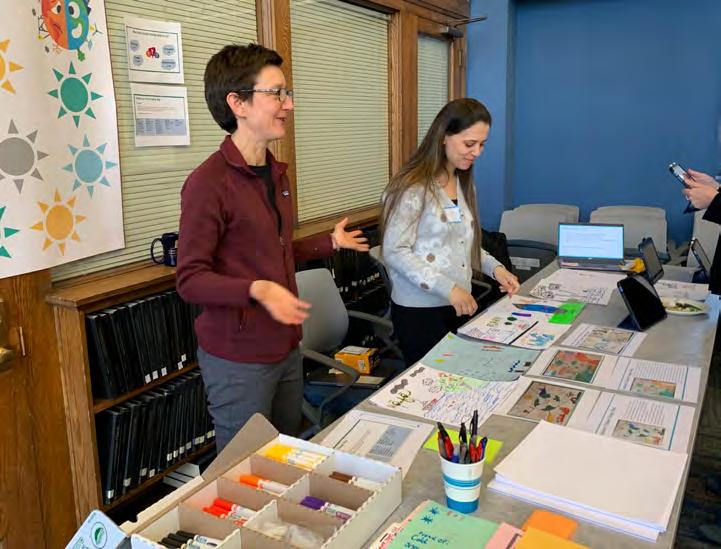
above In April, the Climate Action Lunch featured presentations of ongoing research and projects that explore the many ways that communities worldwide and locally are advancing climate justice.
above The new cohort of LEAPS students gathered with program faculty, staff, community partners, and their families for a barbecue on move-in day on the Marygrove campus.
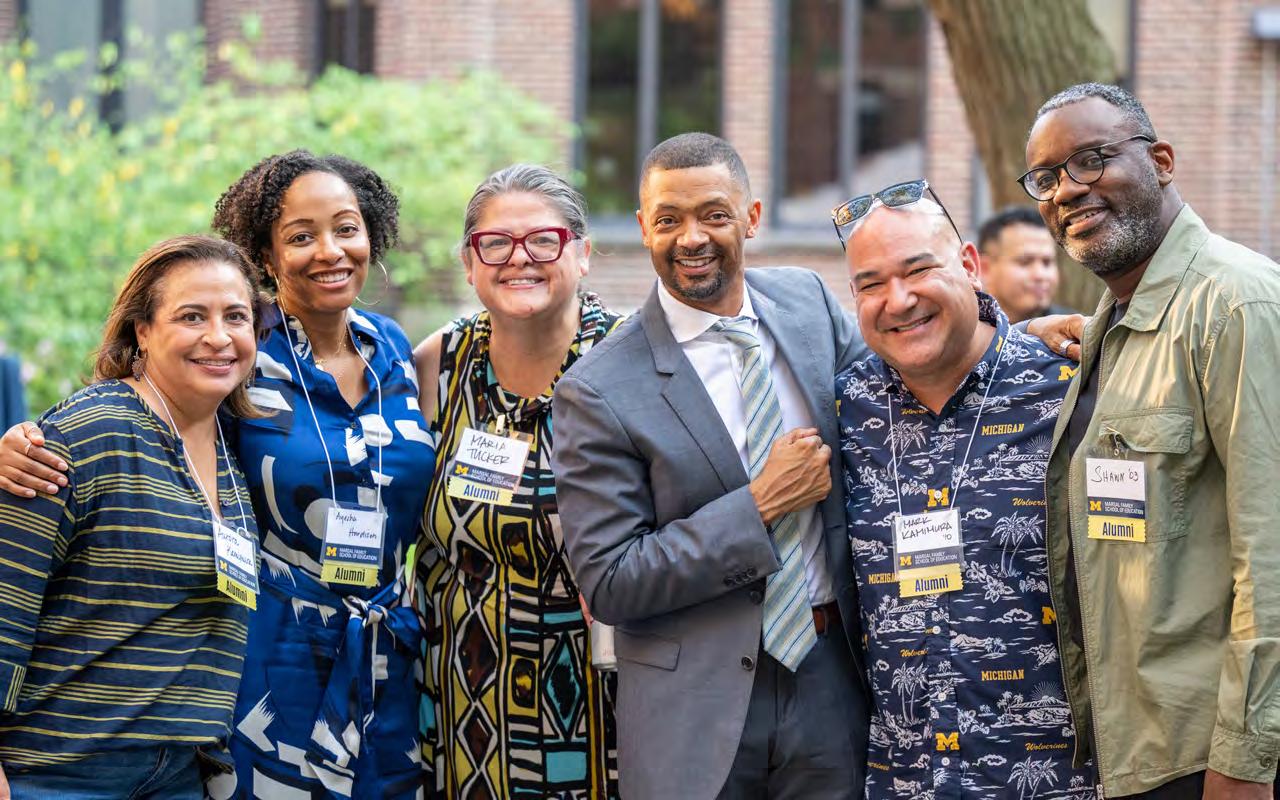
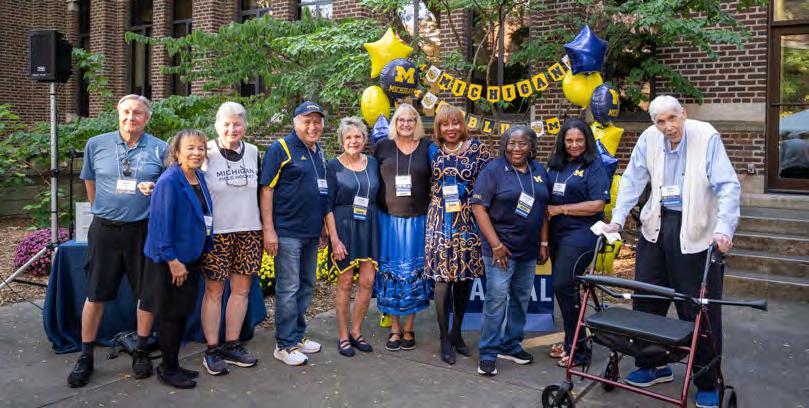
above and left To kick off Homecoming weekend, alumni gathered in the courtyard at the Marsal School for conversation, refreshments, and a game or two of cornhole. Members of the Class of 1975 were recognized as they celebrated their 50th reunion.
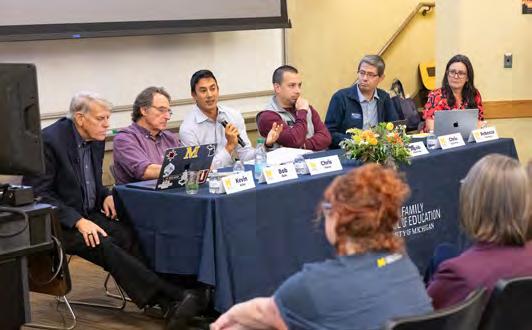
welcomed the
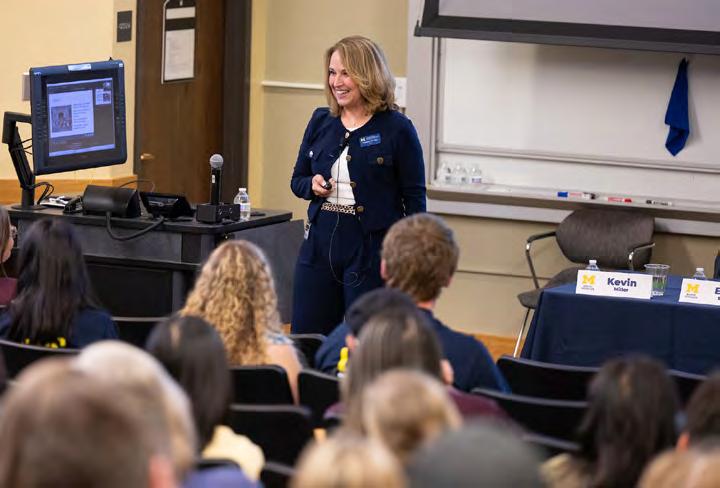
School community to the beginning of a new academic year at Fall Convocation. The gathering featured a panel discussion about the uses and implications of Large Language Models in education. Panelists included faculty members
above Dean Moje
Marsal
Kevin Miller, Bob Bain, Chris Torres, Chris Quintana, and Rebecca Quintana, and doctoral student Jacob Aguinaga.
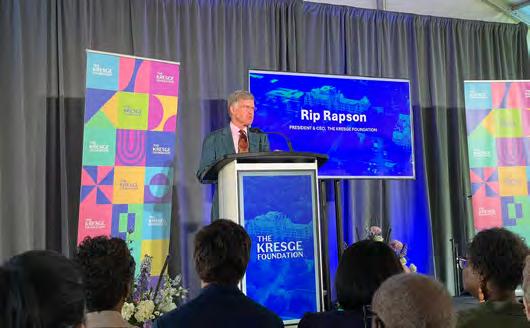
above In September, the Kresge Foundation announced that its headquarters will relocate to the Marygrove campus in 2028, joining the vibrant cradle-tocareer campus which includes The School at Marygrove and LEAPS.
above
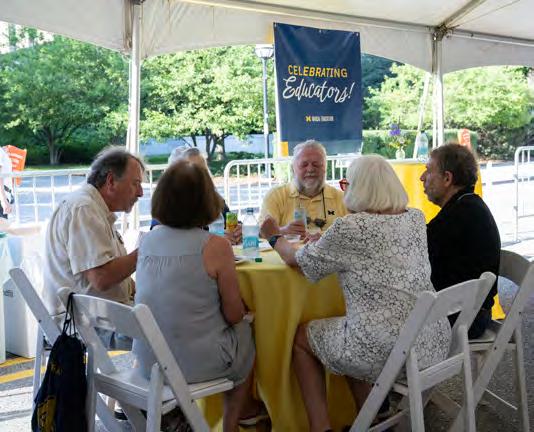
above Marsal School alumni and community members gathered to celebrate educators this past June at the Ann Arbor
above
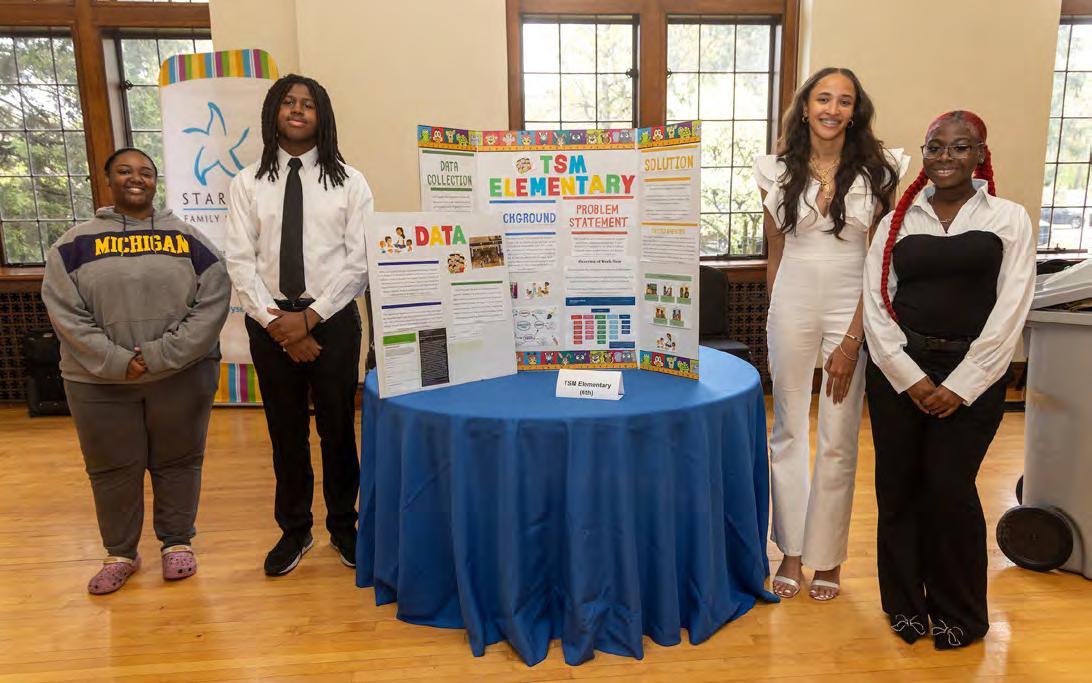
Before graduating, seniors at The School at Marygrove presented their capstone projects to classmates, teachers, their families, and the school community.
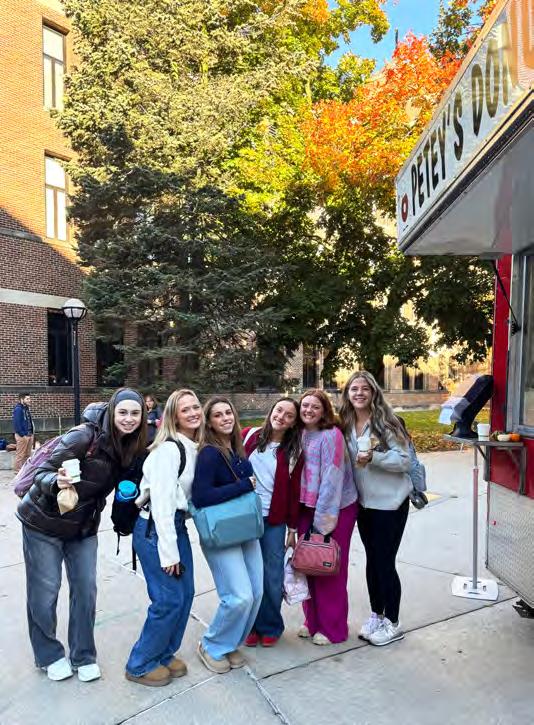
It wouldn’t be fall at the Marsal School without a visit from Petey’s Donuts! Hot apple cider and fresh cider donuts were enjoyed by all.
Summer Festival.
Meet the Marsal fa mily School of Education’s New fa culty Member
Dr. Quintana is an active member of the Marsal School community, where she previously served as a lecturer and co-led the Learning Experience Design (LXD) certificate
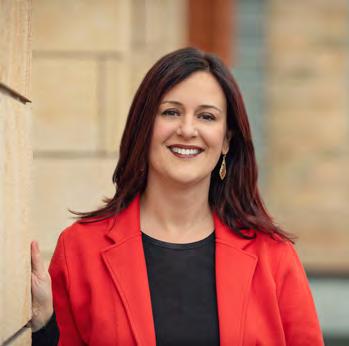
dr. Rebecca Quintana is an expert in learning technologies such as generative artificial intelligence (GenAI) and extended reality tools and their applications for educational environments. Her scholarship focuses on online learning, immersive learning environments, and equitable and inclusive design. Exploring how people learn with technology, she studies tools that enable social learning and knowledge building. In her teaching, she advances innovative, technology-mediated approaches that foster community-oriented instruction.
Before joining the Marsal School faculty as a clinical assistant professor, Quintana taught at Marsal as a lecturer and co-led the Learning Experience Design (LXD) certificate in Educational Studies, where students develop professional and academic skills to design technology-enhanced educational experiences in multiple contexts of teaching and learning.
Quintana has developed several Massive Open Online Courses (MOOCs), including Resilient Teaching Through Times of Crisis and Change, the three-course series An Introduction to Learning Experience Design,
and, most recently, the three-course series Generative AI as a Learning Design Partner. In doing this work, she draws on multiple instructional design frameworks, equitable and inclusive design approaches, and educational research to develop learning environments that are both pedagogically sound and adaptive to learners’ diverse needs. In her research, she collects and analyzes data
“I’m particularly excited about the potential of
generative aI tools to support teaching and learning within higher education contexts. Tools like Google Notebook lM open exciting possibilities for learning, allowing students to ask questions, form hypotheses, and generate diverse media based on collections of resources they select and organize.”
generated through learner engagement in these courses to investigate multiple facets of how people learn using technology. As a 2025 fellow with the Quantitative Ethnography Institute, Quintana will investigate how learners’ journeys unfold online, module by module, to understand how learners are taking up ideas in these series, particularly with respect to the use of emerging technologies such as GenAI to support design practice.
A former high school art and middle school teacher, Quintana earned a BFA in visual arts and a BEd in education from York University (Toronto, Ontario) in 1998. She later completed an MA (2012) and PhD (2017) at the Ontario Institute for Studies in Education at the University of Toronto. Quintana joined the University of Michigan in 2016 as a senior learning experience designer at the Center for Academic Innovation (CAI), where she advanced through multiple leadership roles, ultimately serving as Director of Blended and Online Learning Design. She is also a faculty affiliate with the Digital Studies Institute and a member of the Diversity Scholars Network at the Center for Institutional Diversity.
What inspired your transformation from middle school teacher to researcher of instructional technologies?
RQ: As a teacher, I became deeply aware of both the opportunities and the limitations of the tools available to support student learning. I often found myself designing and adapting materials so that students could engage more effectively, collaborate with one another, and see themselves reflected in the learning environment. As a doctoral student, I was inspired by various learning technologies that allowed middle schoolers to engage in collective inquiry and knowledge building. It was exciting to see how technology could allow students to access, share, contribute, and synthesize information, allowing them to see individual contributions highlighted within the community. This realization inspired me to study learning technologies from a research perspective. I wanted to understand how tools could be intentionally designed to support social learning and community knowledge construction. I also wanted to develop frameworks and approaches that would help other educators explore these possibilities within their own classrooms and contexts.
How has your background in visual art influenced your work in the field of learning experience design?
RQ: My background in visual art has shaped my approach to learning experience design in two ways. First, it has helped me think about how designers can use visual methods for sketching, prototyping, and revising various possibilities within a design space. I have used a variety of materials to do this—both analog and digital—and have experimented with different techniques and approaches. In fact, this interest led to a Best Paper Award from the American Educational Research Association’s Online Teaching and Learning SIG for our paper “Visualizing course structure: Using course composition diagrams to reflect on design.” Second, my background in visual art and design has taught me to focus on how learners perceive and interact with visual information. These skills translate into designing interfaces, instructional materials, and immersive experiences that are
engaging and intuitive. Within my teaching, I encourage students to cultivate skills that allow them to create learning environments that are both visually coherent and pedagogically effective, supporting learners in exploring, interacting, and constructing knowledge in meaningful ways.
“My background in visual art has shaped my approach to learning experience design in two ways. first, it has helped me think about how designers can use visual methods for sketching, prototyping, and revising various possibilities within a design space.”
What are the latest tools you are excited about using in your teaching and what do they allow you to do?
RQ: I’m particularly excited about the potential of generative AI tools to support teaching and learning within higher education contexts. Tools like Google Notebook LM open exciting possibilities for learning, allowing students to ask questions, form hypotheses, and generate diverse media based on collections of resources they select and organize. By engaging with information in this way, students can develop critical thinking and inquiry skills, make connections across multiple sources, and create personalized knowledge artifacts that reflect
both individual understanding and collaborative exploration. This approach supports active, student-centered learning while also encouraging reflection on how digital tools can mediate knowledge construction. Although many issues and questions remain about AI use in education, I believe we are poised to guide its development and implementation in ways that promote learner-centered design and ethical use.
What courses are you currently designing?
RQ: I am preparing two courses for next semester, which build on two other courses I have previously taught. The first is Universal Design for Learning (UDL) and Digital Accessibility. In this course, students will discuss how we might design for learner variability and account for a variety of contextual factors by engaging with three UDL principles: multiple means of engagement, multiple means of representation, and multiple means of action and expression. This course will be centered around three teaching cases that will span various K-20 contexts, including physical classrooms and online environments. Through these cases, students will engage in analysis, collaborative problem solving, and rich discussion to advance our understanding of how UDL principles can be applied across a range of contexts. The course will conclude with hands-on exploration of digital accessibility methods and tools.
The second is Emerging Technologies for Learning, which builds on a previous course I developed called Educational Applications of Augmented and Virtual Reality. This experiential new course will explore two emerging technologies—generative AI and extended reality (XR)—and ask critical questions about the claims that are being made about these technologies to support learning. In the latter part of the course, students will apply what they have learned in a design-focused project that will extend what they have learned in the first parts of the course through practical application. Students will collaborate to design and prototype an AI or XR tool, integrating both pedagogical considerations and critical reflection on the affordances and limitations of these emerging tools. ■
Teaching literacy Through the Disciplines
How the marsal family school of education prepares secondary educators to teach the literacy skills that students need for learning in the disciplines
in the spring 2025 issue of Marsal Educator, we unpacked the “full science of reading” and shared the ways in which students in our Educator Preparation Program are trained to teach literacy in the elementary grades. The second part of our series explores how teaching interns who will lead middle and high school classrooms are prepared to continue teaching literacy in the upper grades.
“There is a commonplace assumption that there is a phase of development where one learns to read, and then another phase where one reads to learn,” says Dean Elizabeth Birr Moje. “But actually, people are always learning to read and always reading to learn.”
A former high school history, biology, and drama teacher, Moje’s research examines young people’s culture, identity, and literacy learning in and out of school in Detroit. At Marsal Education, Moje teaches undergraduate and graduate courses in secondary and adolescent literacy, cultural theory, and research methods. She is a leading scholar in the field of disciplinary literacy.
“When we focus only on learning the foundational skills necessary to decode and recognize words at a very young age, and we’re not teaching kids to read for meaning, we’re doing them a disservice for later years,” explains Moje. “Simultaneously, when we are not focusing on learning to read at upper grades, we’re also doing kids a disservice.” As students progress from elementary grades into departmentalized instruction—when their science class is taught by a science teacher who has specific training in the sciences—the discourse in the classroom changes. “It’s not just the words themselves
and the meaning of the words,” says Moje, “it’s the actual discourse—the way people talk, the assumptions they bring to their speech, the way their speech or their reading or their writing is tied to a practice that they engage in on a regular basis.”
The Marsal School’s preparation of secondary teachers is unique in that students are taught in cohorts organized by content area.
For instance, in a science class, the phrase “gathering evidence” might describe the process of recording results from an experiment or observation, whereas in a literature class, “gathering evidence” might mean citing passages of text to support an argument in an analytic essay. These are both examples of a particular way of doing things in a discipline. But a student doesn’t necessarily have this knowledge—or know how to differentiate between disciplinary contexts—before entering the teacher’s classroom. If not taught how to read in different disciplines, students may struggle. In many cases, when older children struggle with reading or writing at the upper grades, teachers and parents assume that the learners are struggling with word-level skills because most people think that reading and writing are only about knowing words. But literacy is about understanding different “ways with words” or discourses. Assessments such as the National Assessment of Education Progress (NAEP), for example, demonstrate that the majority of our nation’s children can read (and write) words. However, to be considered “proficient” in reading, readers must grapple with complex comprehension tasks that require the ability
to draw inferences across long passages of text, to compare texts, and to bring relevant knowledge to texts. Indeed, one of the most interesting conundrums of the literacy process is that learning new knowledge from a text depends on a reader’s skill in bringing existing knowledge to that text. Literacy skill both depends on and produces knowledge. It is also important for readers and writers to set purposes for reading and writing. People read for different reasons and in different ways, depending on the context in which they are reading. Reading to solve a problem requires different skills and strategies than reading for personal enjoyment. The different disciplines that students encounter throughout school present unique contexts and purposes for reading.
“Disciplinary literacy is about teaching children how to make sense of texts and how to produce texts according to different disciplinary demands,” says Moje. Although students don’t experience departmentalized instruction until middle and high school, she emphasizes that disciplinary literacy can begin in the earliest grades.
“The sooner we’re introducing different kinds of disciplinary discourse to kids, the sooner they will learn them. Because what we know from learning theory is that we don’t have to wait for development for people to learn things. In fact, learning and development are interactive. They go together.”
it is one thing to know about the processes by which humans learn to read and write. It is another to teach 25 to 30 other humans—whether young or old—to read and write. One of the Marsal School’s strengths
Essential Instructional Practices for Disciplinary Literacy
lies in the work faculty do to help teachers learn to teach literacy across the age span, as well as the work they do to support practicing teachers to hone their practice once in the classroom as the teacher of record.
In 2015, Marsal School Professor Nell Duke was approached by the Michigan Association of Intermediate School Administrators (MAISA) to develop a set of research-supported practices for in-service teachers leading literacy instruction in preschool through third grade. Duke was joined in the work by Professor Tanya Wright and a team of graduate students, creating a set of practices that ultimately became known as the Literacy Essentials.
Because literacy instruction doesn’t end with completion of the early grades, partners at the state level and within Marsal Education soon recognized the need to create aligned instructional literacy practices for all grade levels. Along with colleagues across the state, graduate students, and U-M researchers, Professor Annemarie Sullivan Palincsar developed the essential literacy practices for educators in grades four and five. Moje was joined by U-M colleagues Drs. Darin Stockdill and Michelle Nguyen Kwok, as well as statewide collaborators who worked as a collective to think about literacy practices in the four major disciplines— English, mathematics, science, and social studies (more recent work has added practices for elective classes in a document called Beyond the Core). Together, they established 10 essential practices for disciplinary literacy in secondary classrooms.
“We created a draft version, and then the practices were presented to a working group convened by MAISA that included intermediate school district (ISD) consultants from across the state, and content area groups at the secondary level to undergo an intensive, years-long revision process,” says Stockdill. Today, the full suite of essential literacy practices—from birth to age three through grade 12—are available on LiteracyEssentials.org.
The disciplinary literacy practices are expected to be implemented at the course and unit level. They help teachers think about what they should be doing to support young people in learning literacy practices in different disciplinary domains. As students continue to develop their skills through middle and high school, literacy instruction must also help them meet increasingly complex subject area demands. These demands include developing the critical thinking, problem-solving, and communication skills specific to each discipline.
“Disciplinary literacy is not merely teaching vocabulary. It’s actually about so much more—it’s about ways of knowing, ways of doing things, and at its core, disciplinary literacy is about inquiry,” says Moje. In the disciplines, people ask questions, pose problems, and puzzle our existence in the world. “Once we engage in those practices, then we’re teaching students how to read, how to write, how to listen, and how to communicate in the ways that match those of the discipline.”
for secondary teaching interns preparing to lead middle and high school classrooms, literacy training has traditionally followed the same approach, whether a student planned to teach English language arts or biology or music.
“When I was a secondary teacher candidate, all the content areas were lumped into one classroom, and you learned a set of universal strategies to help students become more strategic readers,” recalls Stockdill. “There was a lot of focus on reading, and some focus on writing, but it was sort of content-neutral.”
By contrast, the Marsal School’s preparation of secondary teachers is unique in that students are taught in cohorts organized by content area. This allows them to dive deeper into their respective subject, opening up a rich opportunity to explore literacy within their discipline and how to teach it.
“A mathematician defines terms very differently than a literary scholar does. In math, words tend to have precise, consistent
definitions. In literature, a word can take on connotative meanings and can have multiple meanings—it’s a much more interpretive process,” says Stockdill. Each discipline has language norms and tools that differentiate it from others. “The idea of disciplinary literacy is that academic disciplines have their own cultural practices, and there is value in apprenticing young people into these practices so that they become more critical consumers and producers of information.”
All teaching interns at the Marsal School take Education 402: Reading and Writing in Content Areas within their chosen discipline. The course offers an introduction to the processes of reading and writing development, emphasizing methods and materials for teaching literacy skills. Through a series of hands-on projects that are tied to experiences in their field placements, teaching interns are taught to think about school as a context for literacy learning.
“What are the practices, the skills, or the thinking patterns that disciplinarians bring to a text? Disciplinary literacy reveals these methods rather than letting them be tacit.” Bridget Maher
“In 402, we start by thinking about literacy and trying to expand our students’ notions of all that literacy encompasses,” says Stockdill. “It’s much more than reading. It’s about communication, it’s writing, it’s engaging with multimedia texts. Next, we work on deconstructing the notion of disciplinary literacy in a broad sense. Then students take deeper dives into their content areas, identifying what literacy practices look like in their discipline. They examine the language, the reading practices, and the writing practices through engaged activities that they might then adapt for their own students.”
“The 402 course literally changed my life,” says Dr. Bridget Maher, an associate research scientist at the Marsal School. Moje taught the class Maher took when she was an undergraduate at the Marsal School studying
to become a high school English, history, and social science teacher. She went on to teach, attend graduate school, and return to Marsal to pursue doctoral studies focusing on disciplinary literacy. Today, she teaches 402 to current Marsal School students and her research focuses on teaching and learning across domains and disciplines of school and how to support early teachers in this work.
“At the beginning of the semester, when I tell my students the class changed my life, they don’t believe me,” says Maher. But by the end of the term, she says they understand how one “can get hooked on this theory, the way that we understand literacy and supporting all learners, why this is a framework to better understand some of the challenges of teaching literacy—and how we address those challenges and literacy achievement.”
Maher still remembers the profound impact a project called “Student Study” had on her when she was taking 402 herself.
“You sat with one young person and really got to know them. You interviewed them, gave them a questionnaire, had them read aloud to you, listened to their reading, asked them questions about what they were reading, and interacted with them,” says Maher. “It was both inspirational and also incredibly practical to sit with one kid and not be overwhelmed by teaching 35 kids five times a day in a secondary classroom.” The outcome of the student study is a deep understanding of one learner. Following this experience, the preservice teachers talk together in 402 about how to extrapolate and plan for the larger and multiple classes in secondary contexts.
Although it has evolved over the years, the student study is still a cornerstone of the 402 course. The project allows teaching interns to spend one-on-one time with a student, getting to understand their background, motivations, and interests, as well as their strengths and challenges when it comes to literacy.
As a teacher, Maher says, you don’t really know why a student might be struggling in class unless you get to know the student. Once you have a relationship established, it’s easier to discern if they would connect better literacy-wise with different reading material, or perhaps there is a different way to capture their interest in the course content.
Contrary to what Maher was told ahead of time, the student she worked with in the student study was motivated. He could point out how the assignments in his history class weren’t that interesting or very well thought out. He loved gaming, and had memorized the many procedures and routines involved in playing Dungeons and Dragons. Because of this, she knew he had strong comprehension skills. In fact, he was reading incredibly complex texts. Understanding how the student thought about gaming—a topic he was passionate about—gave Maher a way to leverage the skills he was already using when he played D&D by applying them to the way texts functioned in his history class.
The practice motivated Maher “to understand how you meet kids where they are so that they get to be not just participants, but shapers of those disciplines. If you really want kids to have a sense of agency, I don’t know how you do that without knowing them well or without asking them to think really critically about the discipline or knowledge building or the way that people communicate that knowledge in the world. Disciplinary literacy lets kids—in the secondary classroom especially—have the sense that they’re allowed to ask big questions, and look for answers.”
After thinking about student identities in the student study project, teaching interns in 402 move on to thinking about text as a construct. The notion of what constitutes a text goes far beyond a textbook. “We have a very broad conceptualization of text as information sources that are encoded in some way and that need to be read or interpreted through disciplinary practices,” says Stockdill.
The text study asks 402 students to consider what they would need to do to help their secondary students access the material
at hand. “What are the challenges of this text? What might the discipline ask about these texts? If I’m a historian, and I’m looking at primary documents, what might I be interested in considering? Or what other documents do I need in order to understand or interpret this contextualization?
That’s what disciplinary literacy has started to name,” says Maher. “What are the practices, the skills, or the thinking patterns that disciplinarians bring to a text? Disciplinary literacy reveals these methods rather than letting them be tacit.”
Education 402 students get lesson planning and instructional design experience by creating an assignment that they would give to students in their classroom. In this project, Maher pushes them to think about what habits of mind the assignment will encourage, or what literacy practices it will help expand. The students also put together text sets that they share with each other and have access to once they are in their own classrooms.
Teaching interns also do a school study at their field placement location. In this project, they ask themselves questions about the populations that are represented at the school; what it feels like when they are in the school; whether it feels like a school they’ve experienced in their own past, or not; how they make sense of that difference; and whether or not they notice any bias that comes up around that difference. They also spend time noticing various aspects of literacy in the school: how many books are present; what the library feels like; how accessible the library books are; and whether kids get copies of books to read in class or if they are reading excerpts.
In addition to the focused work within their discipline cohort, each November the secondary education program calls together its students across all content areas for Grand Rounds. Each year, the conversational forum featuring faculty and veteran teachers takes up a new problem of practice. Topics of discussion have included ways to use parent
or caregiver conferences as an opportunity to learn more about a student, how to hold office hours in a high school setting, how to create writers’ workshops, and how to account for learner variability. Students come away from Grand Rounds with a toolkit of various approaches to enact disciplinary literacy in their own classrooms.
the Marsal School has long employed the approaches identified in the Literacy Essentials to prepare teaching interns, but in recent years, the work of disciplinary literacy has been taken up far beyond its halls. Stockdill and Moje continue to collaborate with a statewide task force to support the implementation of the Essential Instructional Practices for Disciplinary Literacy by secondary teachers in Michigan.
One of the Marsal School’s strengths lies in the work faculty do to help teachers learn to teach literacy across the age span.
And, notably, the Michigan Department of Education has drawn on the Literacy Essentials to rewrite the standards for the reading/literacy course in secondary teacher preparation programs. The fall 2026 term will be the first in which all teacher preparation programs in Michigan will be expected to begin teaching to these new standards.
Following the notion that students learn to read, then read to learn, some secondary teachers have argued that they are not, in fact, teachers of reading. They have specialized knowledge in physics, in engineering, or in math—literacy, they might say, is the responsibility of second and third grade teachers, or that of the English teacher. “That is what we have tried to change with disciplinary literacy,” says Moje. “This isn’t about being a teacher of reading, this is about you teaching math. But to teach math, you must teach kids both the oral and written language of mathematics.”
“We try to help people see that this approach honors their content area,” says Stockdill, “and hopefully it helps them live into teaching their discipline more effectively.” ■
Curiosity f i rst
The eileen lappin Weiser center for the learning sciences is engaging community members every step of the way
as the inaugural director of the Eileen Lappin Weiser Center for the Learning Sciences, Leslie Rupert Herrenkohl is realizing a vision for a center that strengthens connections between research and practice by engaging partners to study the many places and ways that learning happens.
“The center allows the Marsal School to work shoulder to shoulder with community partners to create educational tools, materials, technologies, and practices that support education and learning in the many spaces where it happens both in communities and in school settings,” says Herrenkohl.
The center is collectively guided by a steering committee of faculty and researchers in the learning sciences who are actively involved in shaping its work. When the committee first began meeting in the winter of 2024, it decided that one of the center’s goals would be to create intellectual community. It would do so through hosting events and
establishing practices that bring together people from across the Marsal School, the university, and the community at large.
“We thought that one of the best ways to start anything new is to do so by being curious,” says Herrenkohl. “We also knew that one of the things that makes us effective at supporting learning is being curious about learning.” “Curiosity” became the theme for the center’s inaugural year of offerings.
On October 16, 2024, the center’s grand opening was celebrated with a keynote address delivered by Dr. Carol D. Lee of
The center supports collaborative projects designed to advance new scholarship, tools, and practices that extend and expand how we conceptualize learning.
Northwestern University. Lee’s address, “New Frontiers in the Learning Sciences: Implications for Research and Infrastructures to Support Research Preparation,” offered recommendations for the preparation of learning scientists and learning sciences research in the field, and how such work can contribute to equity in opportunity to learn.
A series of lunch and learn sessions took place throughout the fall and winter semesters. “We wanted to bring in U-M faculty from outside the Marsal School, specifically from different disciplines, who used curiosity in their own work,” says Heidi Bennett, the center’s project manager. The first session, “Putting Wonder to Work,” featured Dr. Kishonna L. Gray, a professor at the U-M School of Information, and Dr. Matthew Solomon, a professor in the Department of Film, Television, and Media in the College of Literature, Science, and the Arts. Gray explained how curiosity led her to learn about gaming from youth cultures.
Solomon spoke about how returning to the canon with curiosity led him to reexamine Citizen Kane using virtual reality, virtual production, and reenactment. For the second lunch and learn, “Bridging Arts, Education, and Health,” Residential College Professor Deborah Gordon-Gurfinkel and Professor of Medicine Francesca Williamson examined the transformative roles curiosity and learning play in the arts and health sciences.
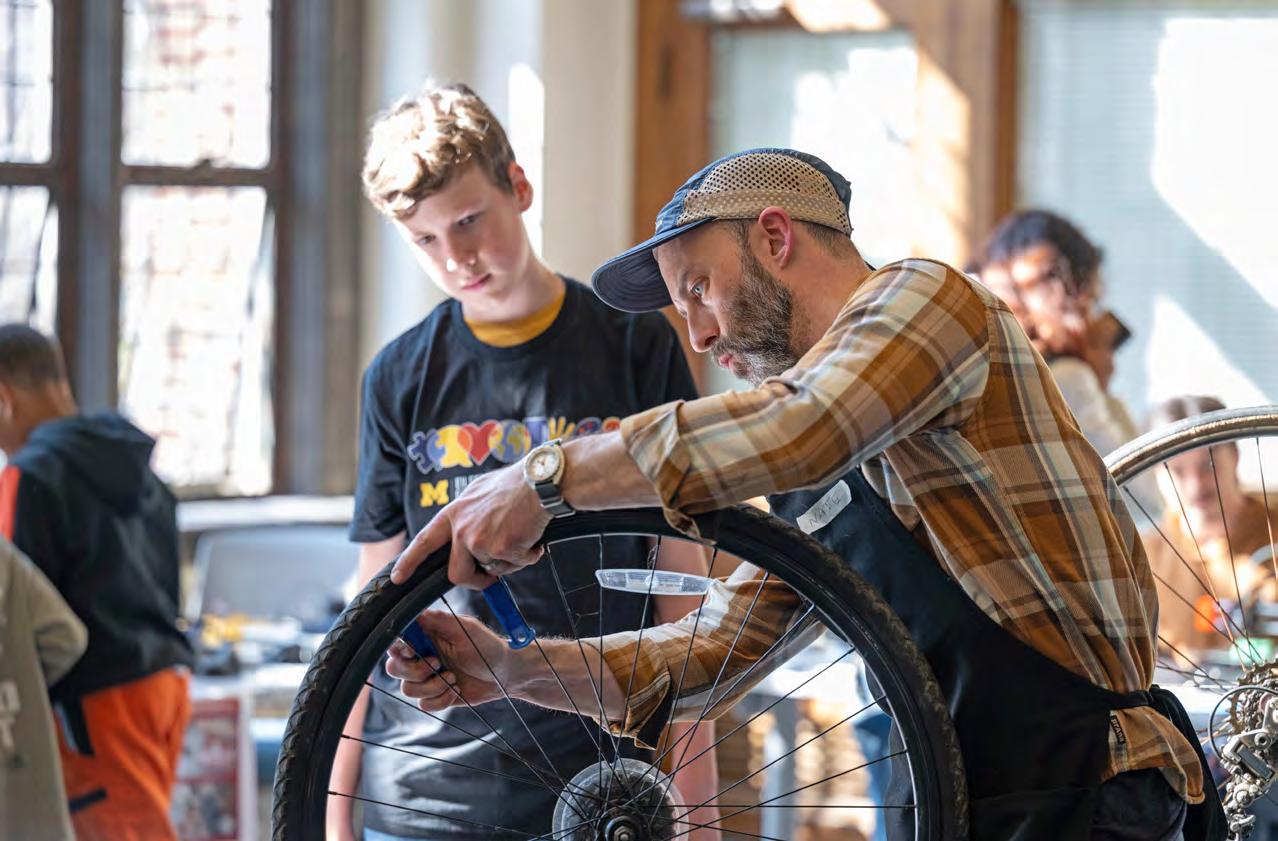
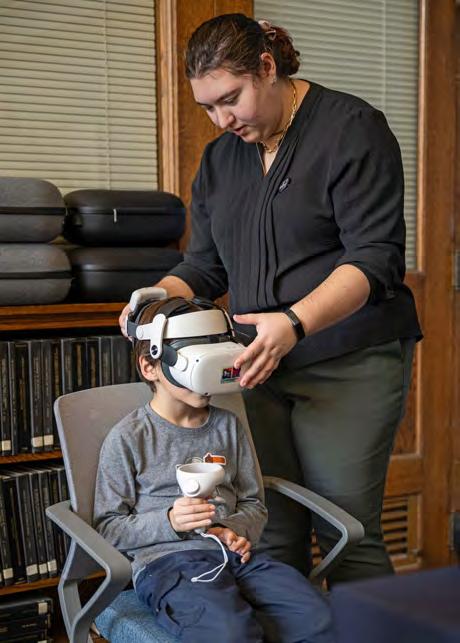
In March, the center held the Spark Festival of Learning, a community-wide event to ignite curiosity and love of learning through engaging demonstrations and hands-on activities led by learning guides. Activities included learning to make mix tapes with the Shapiro Design Lab, exploring shadow puppetry with Christianne Meyers from the School of Music, Theatre & Dance, learning about bicycle repair with members of Common Cycle, and using virtual reality to harvest manoomin (the Anishinaabe word for wild rice) with Marsal PhD student Jared Tenbrink.
As the year continued, a subcommittee of faculty members affiliated with the center formed around the topic of climate justice.
“It was like show and tell,” recalls Bennett, as subcommittee members shared their respective ongoing research projects with the
group. One scholar was working with middle school students and families in Dearborn to explore how climate change and carbon dioxide emissions affected their community, another was researching how children make sense of environmental changes in Louisiana. Based on these conversations, professors Angela Calabrese Barton and Betsy Davis designed EDUC 786: There Is No Planet B, a readings and action course offered by the Educational Studies program and open to students, faculty, and staff from both the Marsal School and the School for Environment and Sustainability (SEAS) in the winter semester. The course culminated with the Climate Action Lunch, which featured presentations of ongoing research and projects that explored the many ways that communities worldwide and locally are advancing climate justice.
the mission of the Learning Sciences Center is to propel the innate capacity for human learning and to foster relationships that lead to wondering, understanding, becoming, and thriving. To do this, the center designs tools and practices that support human development across the lifespan and advance equitable and just learning systems across time and space.
The center supports collaborative projects designed to advance new scholarship, tools, and practices that extend and expand how we conceptualize learning. Currently, several projects led by faculty steering committee members are in various stages of development and ideation. (Un)Learning at the Intersections of Theory, Design, and Community: Interrogating How Undergraduate LEAPS Students Learn and Design Across Difference is a partnership with the Marygrove Learning Community in Detroit. This project is developing a comprehensive research program focused on the Marsal School’s undergraduate program Learning, Equity, and Problem Solving for the Public Good. The climate justice working group continues to explore connections and build collaborative projects related to
Above left: A bicycle maintenance demonstration at the Spark Festival of Learning
Below: Student presenters at the Climate Action Lunch
environmental justice, place-based learning, and community-engaged research. The storytelling, sensemaking, and belonging working group brings together educators and researchers committed to exploring the powerful role of storytelling in fostering sociopolitical understanding and community building. The group’s interests range from the use of autobiographies and student-centered learning in classrooms, to understanding how storytelling influences children’s perceptions, and employing digital media to explore local issues. There are also several center projects focused on leveraging AI to boost human agency within learning contexts.
Clinical professor of education technologies, Liz Kolb, is directing a multi-year project to create a tool that will evaluate the learning impact of educational apps designed for children.
“Caregivers, family members, and educators struggle to understand what the value of certain apps are for kids. Yet kids are very drawn to using technologies. So it can be a real challenge to decide what is a game for fun and entertainment, and what actually has some kind of learning value,” says Herrenkohl. Over the past year, Kolb has been working with a set of people within the center—including Herrenkohl and Bennett, as well as Lecturer Tom Drake and Clinical Assistant Professor Rebecca Quintana—to develop a rubric for evaluating educational apps. Kolb also works with an advisory board of experts across the country, including members from the Joan Ganz Cooney Center, the nonpartisan think tank New America, and several universities, all of whom offer different expertise and perspectives on helping to shape the rubric. The holistic evaluation process will eventually be developed into an application or web-based tool.
“The next phase of the project will involve beta testing to understand if the app captures all the questions that users will have for it. Then the project will move toward more technical development aspects,” says Herrenkohl. She notes that it is a daunting project, which is why it hasn’t been done before. But as with all projects at the center, she sees the reciprocity inherent in the process the team is undertaking.
Dr. Natalie Davis gave welcome remarks at the Spark Festival of Learning.
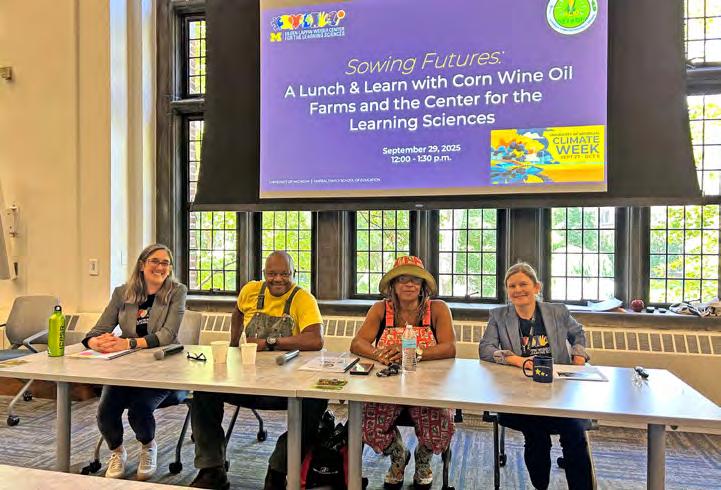
A lunch and learn panel featured Candi and Mark Fentress of Corn Wine Oil Farms.
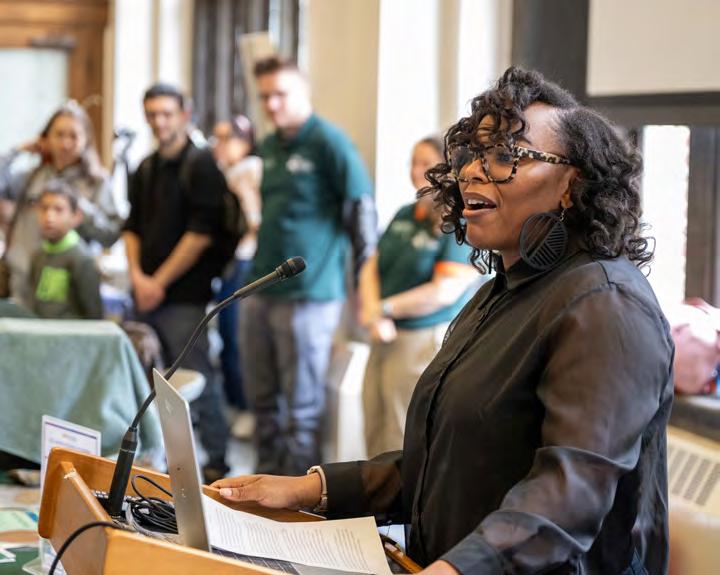
Dr. Angela Calabrese Barton spoke with attendees at the Climate Action Lunch.
“Caregivers, family members, and educators struggle to understand what the value of certain apps are for kids. Yet kids are very drawn to using technologies. So it can be a real challenge to decide what is a game for fun and entertainment, and what actually has some kind of learning value.”
Leslie Rupert Herrenkohl
“I’m so proud of the team, and so proud of the efforts that they’ve put forward to take on something that really has the opportunity to help families, caregivers, and teachers. But it also has the chance to speak back to app developers about what dimensions are important to think about when developing these technologies in the first place if you care about children’s learning.”
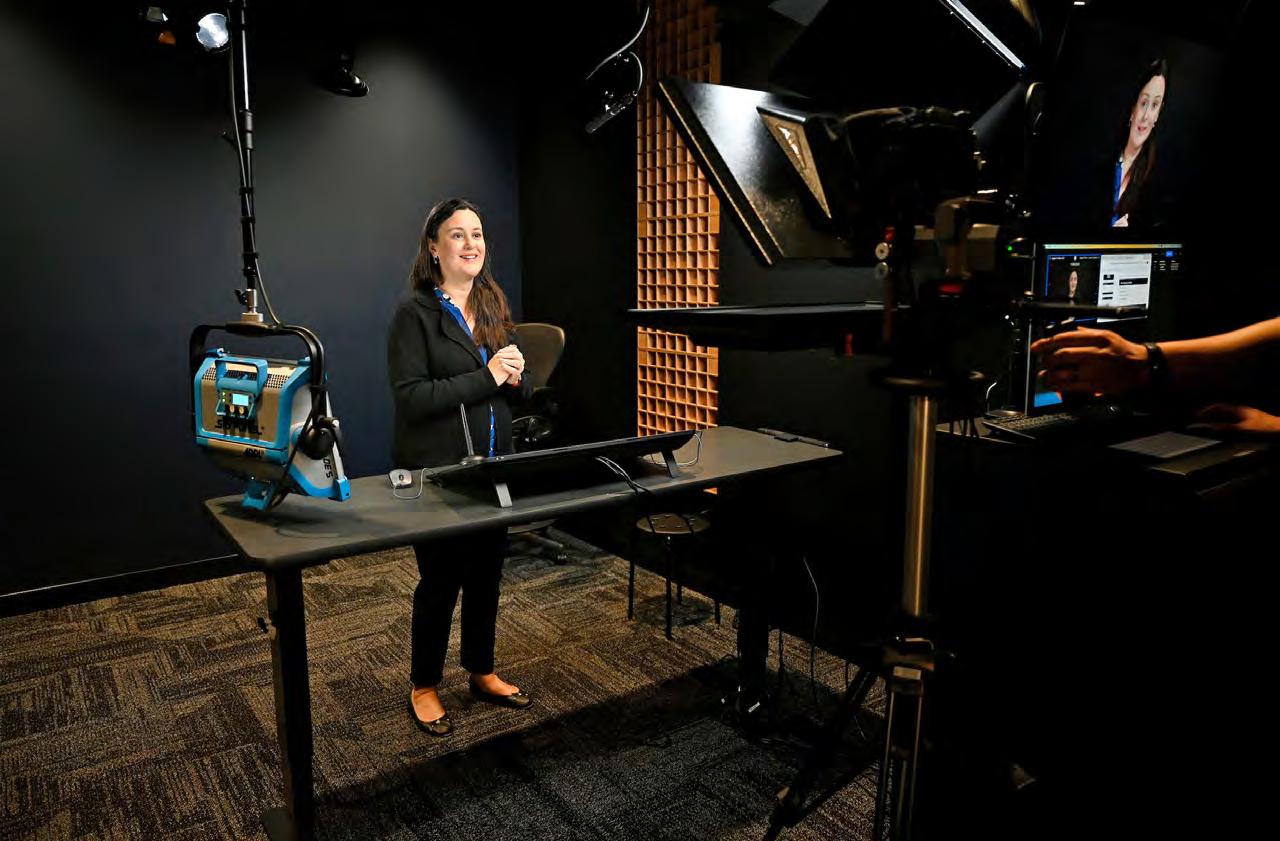
In addition to these long-term projects, the center is committed to engaging with time-limited projects in its Learning Studio. The Learning Studio provides match-making between community organizations and center researchers. Associate Professor Jon Wargo and doctoral student Sara Batool are working with Shakespeare in Detroit on a project that examines, through a summer youth conservatory program, the role of the arts in learning, communication skills, and sense of belonging. The project also enhances the organization’s capacity to evaluate their programming and outreach in Detroit K-12 schools. For another project, Clinical Assistant Professor Rebecca Quintana, Associate Professor Chris Quintana, and Educational Studies master’s student Annie Zhou are developing and integrating AI-generated avatars as dynamic learning tools, and studying their impacts within educational design.
A third project of the Learning Studio is a collaboration with Detroit farmers and educators Candi and Mark Fentress. Their urban farm, Corn Wine Oil Farms, works with high school students at Western International
High School and at The School at Marygrove in Detroit. The center is helping them build upon their existing curriculum and create materials to teach about organic growing practices, sustainability, food security, and ways to grow food for oneself.
“They were very interested in creating curriculum materials based on the kinds of activities that they were already engaged in with young people. The center has partnered with them to help create a more comprehensive curriculum as well as the actual physical materials that they can use with high school students and also at community events,” says Herrenkohl. Marsal doctoral student Jess Bautista has joined them, bringing skills as a science teacher, plus five years of organic farming experience, as well as a background in graphic design.
“This is a one-on-one partnership where we’re trying to meet the needs of an organization that is doing incredible work,” says Herrenkohl. “One of the values of the center is that we will work shoulder to shoulder with partners to actually add value, to be reciprocal in this space. Because we have the capacity to understand what it means to create curricula as people who are focused on learning and education, we can do that side by side with our community partners and help advance their goals. At the same time, we advance our goals of supporting student learning about the process of equitable community engagement and the creation of tools and practices to expand and enhance learning opportunities within communities.”
We think about students as bringing light and heat to the work of the center,” says Herrenkohl.
This year, a new initiative, the Learning Sciences Student Fellowship Program, links students with the center to build a community around learning, professional growth, and research engagement. The fellowship offers hands-on research and practical experience while promoting development in the learning sciences through workshops and mentorship. Fellows are assigned to a faculty project for a semester or an academic year, with the possibility of continuing into the spring or summer. The program is available to U-M undergradu-
ate, master’s, and doctoral students, with a preference given to Marsal School students.
“We’re planning some lunch and learn sessions just for the fellows, where they’ll have the opportunity to do professional development and meet with members of the faculty steering committee to learn about career trajectories. We want the fellowship to be intergenerational—whether participants are undergraduates or doctoral students—so that they can also learn from each other,” says Bennett.
In the center’s second year, the steering committee has chosen to focus on the theme of imagination, with the hope of encouraging members of the community to imagine the world they want to see. Throughout the year, lunch and learn events will invite interaction with each of the projects underway at the center.
“These are a chance for people to learn about the center’s projects, to have open dialogue, and to get involved themselves,” says Herrenkohl. “We want to have a very fluid system so that everybody can be involved—so that the center is truly a school-wide opportunity.” ■
A young attendee at the Spark Festival of Learning tried on a VR head set.
Teach Blue fellows Create Infinite Impact
The first and second cohorts of fellows— all marsal school alumni—pose questions and share results from their research
Starting in March 2024, the inaugural cohort of Teach Blue fellows—a group of selected Marsal School alumni who are all practicing educators—identified a problem of practice that they had encountered in their own classroom or school. They were then paired with a Marsal School faculty member to discuss and dig into research that has been done on their area of interest. from there, fellows
devised an improvement plan and went about enacting it in their classrooms with the aim of gaining insight into how to overcome their initial challenge or question and model their takeaways for other educators. In april 2025, the inaugural cohort of fellows shared the outcomes of their research and improvement plans at the Teach Blue fellows Symposium.
Maria DeRosia
As a fifth grade teacher at Eberwhite Elementary School in Ann Arbor, Maria DeRosia (BS ’92, TeachCert ’94) noticed that some of her students didn’t have a basic number sense.
Learning numeracy usually happens in kindergarten and first grade, but her students had been learning remotely then, due to the COVID-19 pandemic. At their current grade level, some were quite challenged when it came to solving more complex, multi-step math problems.
During her fellowship, DeRosia worked with Dr. Ed Silver to research early numeracy. She then looked at her students’ past performance and standardized test scores, and administered a screener to ascertain their fluency with number sense. Once she had determined the various skill levels among her
bigail Esbrook
Novi High School U.S. history teacher Abigail Esbrook (AB ’17, TeachCert ’17) asked: “How can educators with diverse student populations seeking to succeed in the 21st century teach history in a way that gives it life, relevance, and immediacy to students?”
Working with Dr. Chauncey Monte-Sano, Esbrook examined the work of Dr. Christine Sleeter and other scholars who had employed units on family histories in social studies classrooms.
“What family histories do is position students as active participants in history rather than passive consumers,” says Esbrook. To put this research into practice, she planned a 12-day unit on family histories that would take place in May, after her students had undergone nearly a year of building content
Dara Klein
Dara Klein (ABEd ’12, TeachCert ’12), who leads talent development and recruitment at Detroit Academy of Arts and Sciences (DAAS), is all too familiar with the staffing challenges faced by K-12 schools both in Michigan and across the country. She wanted to know: “How can innovative, strategic staffing solutions help us attract and keep the best teachers in the classroom?”
Klein’s faculty partner, Dr. Chris Torres, shared an article on team teaching initiatives that helped inform her improvement plan. Klein sought a shift from the model of one teacher for each classroom, to a team of teachers wrapping around a roster of shared students. Simultaneously, grant funding from the
students, she set up corresponding small groups, or “centers,” as part of daily math instruction, incorporating skill-focused activities—including games, lessons, and mini-lessons—to improve numeracy.
DeRosia compared the fall and winter assessments of her students to see if the group work had made a difference. She found that her students loved the games so much, they didn’t realize they were even “doing math.” Group participation was fluid, and some students even “graduated” from doing the mini-lessons and the games. At the time of her presentation, DeRosia was waiting to see if her students’ spring standardized tests and unit assessments showed any growth. She also planned to administer the same screener she had at the beginning of the year to see if their number sense had improved.
Although it couldn’t be measured, she could already see an improvement in self confidence. “If they feel confident that they are good math students, that they like math, that they aren’t dreading math every day, that shows an improvement to me.”
knowledge and historical thinking skills through an inquiry-based U.S. history curriculum.
Students would conduct, transcribe, and analyze an oral history interview with a family member to create their own personal family history. As a class, they would consider what they could uncover about why people have moved to and within the United States, and how those movements have shaped their own community.
By putting students in the “driver’s seat of history,” Esbrook hoped they would see that they are not simply consumers of history, but part of it. “I also hope to bring a sense of community to our school. We have students from all over the world. What we have in common is that we’re all here at Novi High School.”
Scaling up from her own classroom, Esbrook planned to roll out the project for all Novi High School students the following year, so that each will have the opportunity to learn about their family and how they fit into the larger story of U.S. history.
Michigan Educator Workforce Initiative had enabled the school to launch a pilot of team-based models in its kindergarten and second grade classrooms.
In the pilot, each team is led by a “model teacher.” Klein explains that this elevates the role of classroom teacher by offering a leadership opportunity. It also offers support and mentorship to early-career educators. In addition, the team model gives more students access to model teachers.
At the end of the pilot’s first year, Klein reported on teachers’ enormous pride in their teams, their agility and flexibility in adapting to a new model, minimal loss of instruction time, and noticeable independence demonstrated by the young learners in the team-taught classrooms. Furthermore, Klein noted that other teachers at DAAS had taken an interest, and were “raising their hands” to explore team-based work in their own classrooms.
Ravi Smith
Ravi Smith (BSEMech ’01, TeachCert ’02, AM ’08), a 10th grade engineering and math teacher at The School at Marygrove, had long been disillusioned with “trying to capture student learning with performance on a test or quiz.” For his problem of practice, Smith wanted to figure out how to translate students’ progress in mastery-based learning to a conventional “standards-based” grade reporting system.
Because of district reporting requirements, he often reported mastery levels that were still in process, leading families to believe that their students were
Jennifer Tianen
For her problem of practice, West Bloomfield High School ELA teacher Jennifer Tianen (AB ’95, TeachCert ’99) asked what it would mean to “diversify” the ELA curriculum. She began by inviting her students to join the conversation, challenging them to question what they thought of as a “text,” and daring them to suggest updates to their textbooks and current reading materials. She also seized opportunities to connect canonical texts to present-day questions in their community.
With a place-based education grant, Tianen purchased texts that centered Indigenous voices. She introduced her American literature classes to presentday Indigenous literature, using BraidingSweetgrassforYoungAdults and Warrior Girl Unearthed to explore cultural examples, challenges, and celebrations.
uke Wilcox
Until recently, Luke Wilcox (BSEd ’01, TeachCert ’01) has been a math teacher at East Kentwood High School in Kentwood, Michigan, the most diverse high school in the state, with over 70 languages spoken by its students. When he began his teaching career, he employed a traditional lecture model.
His students’ grades were fine, but when he looked at student surveys, he found a different result. Students said they were bored by his instruction, felt they could memorize algorithms, but struggled when it came to problem solving, and not all of his students were finding the same level of success. With the encouragement of colleagues, he shifted his teaching to be more student-centered.
It was with this focus in mind that Wilcox and a colleague set out to build a new introductory statistics class. They wanted the course to be interactive and driven by student thinking. To achieve this, they arrived at an instructional model they now call Experience First, Formalize Later (EFFL). Using the EFFL model, lessons
failing assignments in a traditional sense, when actually they were on their way to achieving learning objectives, but mastery had not yet been obtained.
Dr. Barry Fishman recommended readings about the history and evolution of grading—research that spoke directly to the issue Smith struggled with in his classroom. Fishman also recommended a Google plugin that would help Smith capture the steps to mastery that students demonstrated, and share their progress with their families via emails. This new communication strategy, along with introducing in-class due dates and developing a “mastery meter,” comprised his improvement plan. The mastery meter is a visual representation showing students’ work toward mastery on a scale of four (beginning mastery) to 10 (far exceeding mastery). Not only do parents and caregivers now understand their children’s progress, Smith has seen how motivated the students are to move up the meter, achieving more and more mastery of the content at hand.
Students also examined historical narratives about Apple Island, a 35-acre island in the center of Orchard Lake that is currently uninhabited, and is kept by the West Bloomfield School District as a nature preserve and site of archaeological research projects. In the course of their work, Tianen and her students learned that Indigenous graves had been disturbed and robbed on the island in the 1900s, prior to the school district’s ownership of the land. The school district didn’t know about the island’s history until Tianen’s students brought it to their attention.
“In reading Warrior Girl Unearthed, my students fell in love with Perry and gained a lot of empathy for her desire to reclaim her ancestors,” says Tianen. “In turn, they gained a lot of empathy for those who had been impacted by the situation on Apple Island.”
The critical thinking skills her students attained when reading the Indigenous texts changed the course of the conversation they had throughout the year. When reading books like TheGreatGatsby, they continued to question whose voices were elevated, and whose were silenced.
start with a big question to investigate. (Nothing too “mathy,” just something that will spark curiosity.) Before any teacher instruction happens, students work in small groups trying out ideas, developing and refining strategies, and building on the ideas of their peers to answer the question together. Students then share their ideas on the whiteboard. Next, the teacher uses the student responses to launch a full-class debrief of the activity. Students are asked to explain their thinking, and the teacher builds on these ideas, often making connections between different student responses. “The real formalization is when the teacher gives names to the student discoveries by layering formal definitions, formulas, and notations on top of the student work. In the end, the teacher helps the students summarize the big ideas of the lesson,” says Wilcox.
Wilcox notes that a student-centered approach to math education is not new, but what makes EFFL different is that it provides a specific framework for this work to happen. And, he says, it works for most students, especially “the silenced students who have been left behind in the traditional lecture-based instructional model.” After employing the EFFL model in his classroom, students took personal ownership for their learning, were better at thinking and reasoning as opposed to just memorizing, and a much wider group of students found success in class.
Introducing the 2025–26 cohort of Teach Blue fellows
this fall, the Marsal School was thrilled to welcome the 2025–26 cohort of Teach Blue fellows to engage with their own problems of practice. The fellows are currently in a research phase, and will continue to post updates about their proposed plans of improvement—and the results—on the Marsal School website throughout the year. follow their progress via this QR code.
Djeneba DJ Cherif
Djeneba DJ Cherif (AM ’13) is the chief academic officer at University Prep Schools, Detroit’s largest network of charter schools. She plans to investigate the integration of AI in teaching and learning.
“I became an educator because I believe inthetransformativepowerofeducationto changelives,especiallyforthosecomingfrom historicallyunderservedcommunities.Asafirst-generationAmericanand collegegraduate,Isawhowaccess,orlackthereof,toaqualityeducation candetermineone’slifetrajectory.Iwantedtobepartofthesolution—an agentofchange.I’mdeeplycompelledbytheurgencytodisruptinequitable systemsandtobuildlearningenvironmentsinwhicheverychild,regardless ofzipcode,isseen,challenged,andupliftedbythegreatnessthatalreadylies withinthem.Educationismylife’swork.”
Evelyn Daugherty
Evelyn Daugherty (AM ’15, TeachCert ’15) is a sixth grade social studies teacher at Scarlett Middle School in Ann Arbor. She will explore ways to help student teachers make connections between their university coursework and their field placement experiences.
Lauren Fardig-Diop (MA ’08, TeachCert ’08) taught high school English in Ypsilanti, Detroit, Ann Arbor, and New York City for 17 years. She has been a school-based restorative justice practitioner since 2010. Fardig-Diop will look at the implementation of restorative justice programs in schools.
Shannon Pypa (AB ’00, AM ‘01, TeachCert ’01) started her teaching career at Wayne Memorial High School in 2001, but recently transitioned out of the classroom and into her new role as an instructional coach for high school teachers across Wayne-Westland Community Schools. She will investigate how to promote vertical alignment in an effort to support skill building in social studies classrooms.
Michael Ziegler (AB ’01, TeachCert ’01) has been an English teacher at Novi High School for 24 years and has spent over half that time serving as a content area leader for the department. He will look at ways to help students gain contextual knowledge to aid in their study of fiction and nonfiction texts.
The csHPe alumna embodies this issue’s theme of learning for meaning, learning for joy, and learning for life
fatema Haque (AB ’09, AM ’15) began her career working as a teacher and then as dean of students at the Asian University for Women in Chittagong, Bangladesh. There, she helped international students who hailed from countries across Asia prepare to study liberal arts in American-style school settings. During that time, she became fascinated by the field of higher education. After several years, she chose to return to the University of Michigan, her alma mater, to pursue a master’s degree in CSHPE’s management and organization concentration.
learning for Meaning
As a CSHPE student, Haque particularly enjoyed learning about—and visiting— minority-serving institutions, including HBCUs and tribal colleges. She also highly valued her internship experience with the U-M Center for Engaged Academic Learning, where she was able to work on curriculum design. This led to an opportunity to design curricula for Michigan Medicine, as the Medical School moved clinical experience earlier on in students’ education and integrated basic sciences into the clinical portion of their training.
Today, Haque serves as the academic program manager for the Barger Leadership Institute (BLI) in U-M’s College of Literature, Science, and the Arts (LSA). Haque trains and supervises Leadership Teaching Fellows, teaches BLI’s leadership courses, and facilitates the institute’s Social Transformation Fellowship.
“I advocate for people to use their creativity to help develop connections and to think about how they can reach people in a way that otherwise might not be possible.” Fatema Haque
When she is teaching about leadership, Haque often thinks back to her time with CSHPE professor Betty Overton-Adkins, who made a lasting impression. “She helped us understand the importance of centering voices that are typically not heard in higher education spaces, and she encouraged us to think about and consider histories that are not prominent,” says Haque. “When I teach leadership, I am looking at how leadership is experienced by different people. What happens if you’re a first generation college student? Do you consider yourself a leader? Why or why not? What examples of leadership have you seen? There are lots of experiences we have where we might see community leaders, our parents, or members of our community, but we never formally think of them as leaders. Can we take what we learn in the theories about qualities of leadership and apply it to our lived experiences so we can rewrite the story of who gets to be a leader?”
Photograph by Brittany Greeson
Outside of her professional capacity at BLI, Haque employs her own leadership skills as a community organizer. She served on the founding board of Rising Voices, an organization focused on developing the leadership of Asian American women and young people in the state of Michigan. In addition to serving as board president and spearheading fundraising initiatives, she helped with efforts including voter engagement, the 2020 census, and developing a youth leadership program.
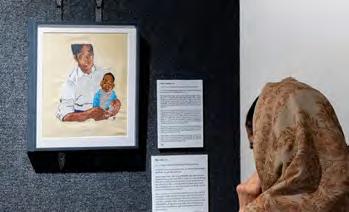
Recently, Haque worked with a group of community members in Hamtramck to put together an exhibition about the Bangladeshi diaspora in Michigan for the Hamtramck Historical Museum.
The exhibition included contributions from high school students who identified as Bangladeshi Americans, a newly compiled database of Bangladeshi-owned and -operated businesses in southeast Michigan, and memorabilia from local cricket and badminton associations.
“I got to learn a lot about the community as part of this work,” says Haque. “The exhibition also integrated history, recognized the emergence of Bangla Town, and showed viewers that part of Detroit is Bangladeshi, and it has been so for quite some time.”
learning for Joy
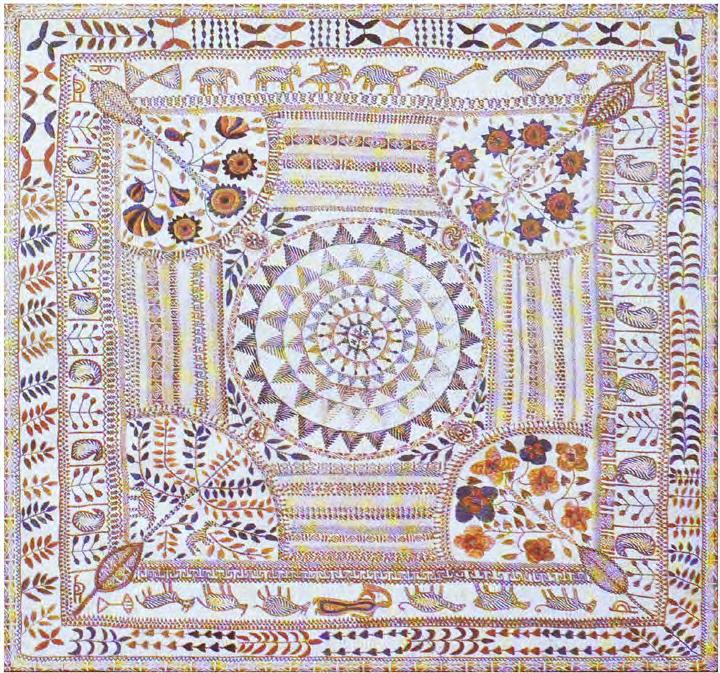
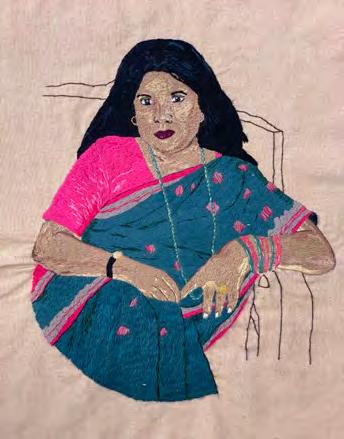
“During the pandemic, I was telling a friend that I needed a new hobby that was not scrolling my phone while watching television. She recommended cross-stitch,” says Haque. Once she got the hang of the basic technique, she remembered that her mother, aunts, and grandmother had all practiced nokshi kantha, the Bengali tradition of embroidery. Haque describes nokshi kantha as a “quick running stitch,” used for blankets or sometimes to create commemorative wall art, like a birth announcement. When she was young, Haque’s family members discouraged her from taking up the practice, warning that she wouldn’t have the patience to do it right. Now, she began incorporating it into her method.
Haque’s imagination started running wild with possibilities for what she could make. Starting with her maternal grandmother, she began rendering portraits of family members in embroidery. Haque hadn’t done anything
“During the pandemic, I was telling a friend that I needed a new hobby that was not scrolling my phone while watching television. She recommended cross-stitch.”
Fatema Haque
like this before, so she turned to TikTok videos by makeup artists. They taught her about starting with a blank canvas and then defining features by shifting colors to show depth.
“I would just spend hours and hours doing it, first during the pandemic, and then later it became a way for me to process grief. My father had been diagnosed with Lewy body dementia, and I was a caregiver for him. Part of my self-care and grief practice was to hand-embroider and create art.”
She shared her pieces on Instagram, and people started taking note. A grant from the U-M Arts Initiative enabled her to host a
solo show of her work. For the show, she was inspired to draw a connection between her artistic practice and her community organizing work. She began collecting photos and gathering oral histories with community members who had immigrated to the United States and now lived in Michigan. She turned the photos into embroidered portraits and displayed them in the gallery along with the oral histories.
“I’m always encouraging my students at the university who are inclined toward the arts that creativity can be another way to lead. I advocate for people to use their creativity to help develop connections and to think about how they can reach people in a way that otherwise might not be possible.”
learning for life
“I grew up writing. Ever since I was a little kid, I wanted to be a writer and I wanted to publish. Part of the problem was I didn’t think I had enough original ideas. Furthermore, I didn’t see in the books I read, or in the shows I watched, representations of myself as a South Asian American person. That affected my capacity to see myself as the main character. But as I grew older and my own ideas developed more, I began to think more critically,” says Haque. “I started seeing the importance of the types of stories that I had lived through and could tell. All of my short stories feature Bangladeshi Americans in some form or fashion, whether it’s the Bangladeshis who live in the U.S. or the Bangladeshis who were left behind in Bangladesh.”
Haque has published her essays and short stories in literary magazines and anthologies. She has also written a novella and a collection of stories, both of which she hopes to publish soon.
“Part of my legacy as a person in general is to document these stories and share them with the world,” says Haque. In addition to writing her own stories, Haque co-facilitates the Unerased Book Club, a national book club dedicated to building community through Asian American literature.
“I think that part of leadership work is being able to tell really good stories,” says Haque. “Stories are the way to change people’s minds, to persuade people, to get them to see the importance of things.” ■
C H a M PIONS for E D u C aT ION
“ education touches all People”
Dean’s advisory Council Campaign advisors committee chair
Carin levine Ehrenberg encourages all alumni to give back
Ihave always loved children. I love the way their minds work,” says Carin Levine Ehrenberg (AB ’88). “I love how they think and learn, how they react. Friends and family sometimes call me Mary Poppins. I am always the one who wants to hang out with the kids.”
When she was a child herself, Ehrenberg looked up to her grandfather, Herbert Klosk (AB ’37), who attended college and law school at the University of Michigan. She was proud to follow in his footsteps at U-M, where her interest in children led her to pursue a degree in clinical child psychology.
“Part of the reason I wanted to become a child psychologist was because I wanted to make an impact early on in a person’s life,” says Ehrenberg. Recently, that same sentiment inspired her to chair the Campaign Advisors committee for the Dean’s Advisory Council.
As a mother and as a psychologist, Ehrenberg is passionate about the Marsal School’s many innovative approaches to creating educational opportunities. She also wants there to be more Marsal-trained teachers in the field, like her friend Julie Zick Migala (AB ’88, TeachCert ’95). The two met in South Quad when they were both undergraduates. Migala went on to teach kindergarten for many years in Benton Harbor, Michigan,
and now teaches second grade in Berrien Springs, Michigan. “She just started her 30th year in the classroom. She’s still teaching because she loves it so much,” says Ehrenberg.
Through their $4.8M commitment to the Marsal School, Ehrenberg and her husband Roger Ehrenberg (BBA ’87) have established several funds, including the Ehrenberg fund to Encourage future Educators and learning leaders and the Ehrenberg fund for lEaPS. These resources will significantly impact the experience of current Marsal School students,
and encourage future generations of U-M students to pursue the teaching profession by alleviating the financial barrier to earning a teaching degree. The Ehrenbergs also hope that their commitment will inspire others who would like to support the university to give to the Marsal School.
As part of the Look to Michigan Campaign, U-M has launched a new matching program for first-time major donors. With the look To Michigan Student Support Matching Program, donors making their first major gift of $50,000 will be eligible to receive a 1:2 matching contribution if that gift is designated toward an area that offsets the cost of students attending the university. Gifts may be pledged over five years, and will be matched from $50,000 (university match of $25,000) up to $1,000,000 (university match of $500,000).
Dean Moje says, “Educators need access to resources more urgently than most people realize. I’m grateful to Carin for helping us convey the scale and importance of this need to our prospective donors. Our $150 million campaign goal is ambitious, but its impact on educators—and the students they serve—will be truly meaningful.”
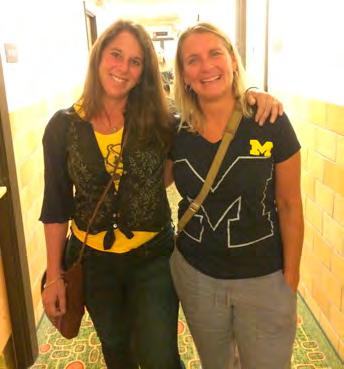
Ehrenberg (left) with her life-long friend, Julie Zick Migala
“Education is something we can all relate to,” says Ehrenberg. “Every single person who attends the University of Michigan had teachers who made their lives better.” She is quick to acknowledge that not every alum is in a position to give a major gift. That’s why, as campaign chair, enabling broad participation is important.
This fall, Marsal Education is launching an annual Giving Society. The society will recognize donors who give $1,000 or more each year to the Marsal School. Alumni who
graduated six to 10 years ago may join the society by giving $250 a year. And the most recent alumni—graduates from the past one to five years—may join with an annual gift of $100.
In addition, the university has established the look to Michigan Recurring Gift Match Program. From now through the end of this fiscal year (June 30, 2026), donors who choose to set up a monthly payroll deduction or a recurring gift will have their donation matched dollar for dollar up to $100 per month. That means a monthly $10 gift will
Scan this code to access our donation website directly from your phone.
actually be $20, which adds up over the course of a year.
“It makes a difference if we can crowdsource,” says Ehrenberg, who is emphatic that gifts of all sizes will help the Marsal School meet its campaign goal. “I want to create a sense of pride about giving back to the school.” After all, she says, “What’s more important than teachers? What’s more important than education? It touches all people.” ■
comments There are many ways to contribute to the Marsal School. Your support makes an immediate and lasting difference.
Indicate how you would like your gift used in
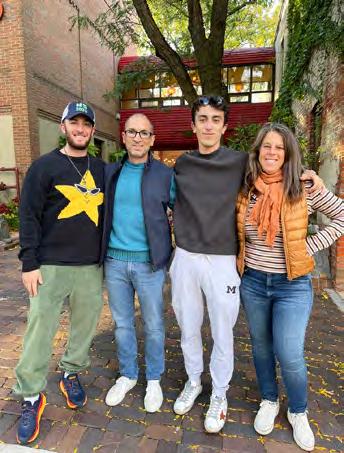
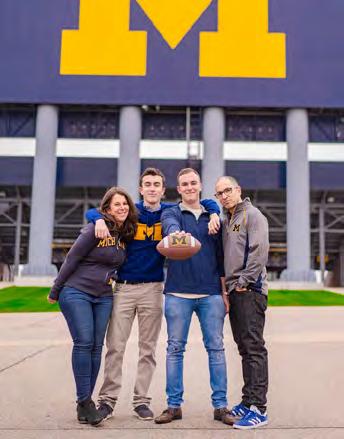
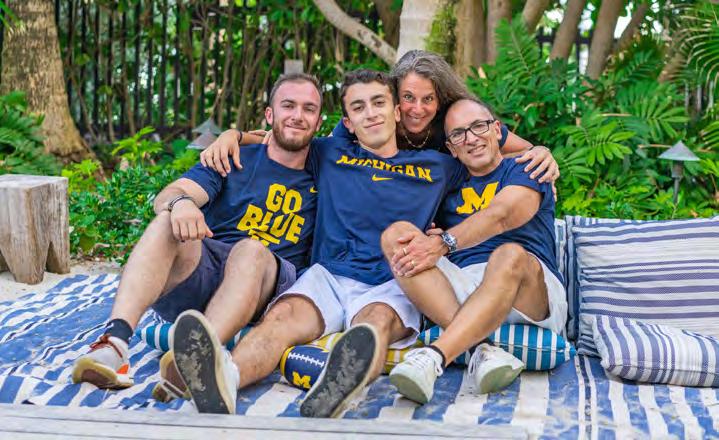
Carin and Roger Ehrenberg with their sons Andrew and Ethan
New g ifts, endowments, and Bequests
Education is a field close to the hearts of Sylvia and Paul Aversano, in part because they met in Finance 311 during their junior year at Binghamton University in New York. In addition, they both come from a long line of educators. Sylvia’s father was a teacher in East Harlem, New York before becoming an assistant principal, and eventually a principal, in the Bronx, New York. After her children went to college, Sylvia’s mother pursued her own degree at Queens College and became an elementary school teacher. Sylvia’s middle sister became an art teacher; her youngest sister teaches ESL. On Paul’s side, his sister is a math specialist who has been teaching for over 25 years on Long Island. So when the Aversanos met Dean Moje at a U-M football tailgate, they felt an immediate kinship.
“My parents didn’t go to college,” says Paul. “It was a big deal for both of us to attend Binghamton, and it wasn’t easy for our parents to put us through college. But neither of us graduated with student loans or debt. Our
philosophy is, if you’re fortunate enough to do well in life, you also have to do good.”
They were proud to donate to Binghamton, providing funds to upgrade the lecture hall where they first met, and to support the university’s Services for Students with Disabilities by establishing a state-of-the-art assistive technology room. Instead of putting their own names on the lecture hall, they dedicated it to their parents.
Now, as members of the U-M Leadership Council & Parent Partners, the Aversanos are building on their commitment to higher education. They have recently established the The aversano family Scholarship fund, an endowed scholarship to support Marsal Education students who seek to enter the teaching profession.
The Aversanos’ oldest daughter attends Iona University in New York. Their middle daughter, Olivia, has recently declared her communications major in the College of Literature, Science, and the Arts at U-M. And their youngest daughter—still in high school— already knows she wants to follow in the family tradition and become a teacher—and hopefully attend U-M as well.
“I’m always looking for scenarios where we can create wins across the board,” says Paul. “If you look at this, the Marsal Family School of Education wins. The students win. And we feel like we’re winning because we’re supporting something that’s important to our family.” ■
Since the age of two, Kevin Collins (BBA ’93, AM ’99, TeachCert ’99) could draw any cartoon he saw, recalls his sister, Kim (Collins) Blanding (BBA ’99). He brought his creative spirit with him when he came to the University of Michigan to study business as an undergraduate. After graduating, Collins worked in the advertising world for firms including the Leo Burnett Company in Chicago, and later, Wieden+Kennedy in Portland, Oregon. But after several years in the industry, he decided that he wanted to give back to the community, and to do so by becoming a teacher.
Coming from a family of “diehard” U-M fans, there was no question Collins would return to his alma mater to pursue a master’s degree in education.
“He had a great experience as part of the Master’s of Arts and Certification in Elementary Education,” says Blanding. “I think it really catapulted him to not just teach with confidence, but it equipped him with the skills so that he could successfully change careers. It’s a pretty big shift to go from the advertising industry to being an elementary school teacher.”
For Collins, the experience was eye-opening. He was able to do his student teaching in Detroit, and developed a passion for helping children early on in their education. He went on to teach kindergarten and fourth grade in Fenton, Michigan at Fenton Elementary School, becoming a beloved member of the school community and a nominee for the Michigan Teacher of the Year award.
C H a M PIONS for E D u C aT ION
“He had a fun, messy classroom with PlayDoh and arts and crafts—all kinds of stuff. He just really had a passion for teaching kids and giving them that creative spirit,” says Blanding.
The school was a half-hour drive from Collins’ home. During his commute, he thought of ideas for children’s books. His dashboard was covered in Post-it® notes about characters and plots. He self-published a book about a race car, and another about a farm that was running out of money so the animals created a golf course to keep it in business.
Yet another book was about a squirrel named Earl, inspired by the many squirrels Collins encountered running around Ann Arbor.
Collins passed away suddenly in 2014. To build on his legacy, his sister Kim and brother-in-law Todd Blanding (BBA ’99), have established the Kevin M. Collins Scholarship fund.
“We thought there was no better way to honor him than to help support the next generation of fun, creative, and passionate teachers,” says Kim. “I’m really honored that we have the opportunity to contribute, and to hopefully help someone who wouldn’t have been able to be a teacher now become one.” ■
My parents were the best teachers I ever had,” says Margaret E. “Margie” Gaudin (AB ’85, TeachCert ’86). “They both devoted their careers to education.”
Gaudin’s mother served for years as an elementary school librarian at McKenny Elementary School in Detroit, while her father progressed from teacher to principal, and ultimately became superintendent of special education in Detroit Public Schools. But when she reflects on her parents’ legacy, it’s not just their service to the city and the families of Detroit that strikes her—it’s also that they were able to send all eight of their children to college.
At the University of Michigan, Gaudin earned her bachelor’s degree in English literature before staying on to obtain her teaching certification at the School of Education. She went on to teach in high schools across Chicago, Baltimore, and New York City, where she shared her passion for literature with her students. “Teaching was very meaningful to me,” she recalls, describing her time in the classroom as both challenging and rewarding.
Throughout her time at U-M, Gaudin held jobs to supplement her parents’ support. She understands well the financial pressures students face. “It takes a lot to educate oneself today,” she says.
A deep appreciation for the example her parents set inspired Gaudin and her husband, Paul B. Gaudin (AB ’86, MD ’90), to establish the endowed Barbara J. and George f adams Scholarship fund in honor of Margie’s parents, ensuring an enduring impact on future educators.
The Gaudins’ gift is motivated by their appreciation for educators and the practical burdens they shoulder. “Teachers are chronically, uniformly, and universally underpaid for the important work that they do,” says Gaudin. Her family’s scholarship aims to “relieve a burden where we could, so that someone can do what they feel in their heart they’d like to do.”
For the Gaudins, the satisfaction of giving comes from seeing the real impact a scholarship can make. “It’s great to hear from the students who receive the funding...they are so thankful. It’s heartwarming. We love hearing about someone who just has a little ease of burden.” ■
C H a M PIONS for E D u C aT ION
New gifts, endowments, and Bequests
In 1970, the decision to accept a job at the University of Michigan as director of the Program for Educational Opportunity and lecturer in education, set in motion a series of events that changed the trajectory of Charles David Moody Sr.’s life. That decision had just as profound an impact on his son, C. David (Dave) Moody Jr., who was just 14 at the time.
The family had been living on the south side of Chicago. There, Charles had finished his PhD and was serving as one of the country’s youngest Black school superintendents. His wife, Christella, was an educator who was born and raised in the city. It was a difficult decision to uproot their family, but opportunity beckoned.
“When we moved to Ann Arbor, it was just two years after Dr. King had been assassinated. The Civil Rights Act was only five years old,” recalls Dave. Schools were in the midst of integrating. With the Program for Educational Opportunity, his father “was involved with trying to make sure that all kids had a fair chance and that the school systems were equal.”
Dave had already discovered in Chicago that he liked drafting, but it wasn’t until moving to Ann Arbor that he met a Black architect for the first time.
“That made me realize I could be more than a draftsman. I could actually be an architect.”
That architect, David Byrd, became a mentor to the younger Moody, and set him on his professional journey. In addition to that fortuitous meeting, it was in Ann Arbor that he met his father’s U-M colleagues, Dr. Henry Johnson and Dr. Billy Joe Evans, both of whom had attended Morehouse College. They encouraged him to send his football tapes to Morehouse, which ultimately led to a football scholarship and an opportunity to pursue his undergraduate degree. He went on to earn a master’s degree in architecture from Howard University, and then returned to Ann Arbor to begin his career working at the Bechtel Corporation. Back in town, he reconnected with a high school acquaintance, Karla Knox, whom he married in 1982. The next year, they moved to Atlanta, and in 1987 opened C.D. Moody Construction.
Meanwhile, Moody’s father was forging a distinguished path at U-M. Charles was promoted to assistant professor in 1971, associate professor in 1975, and professor in 1980. He chaired the Marsal School’s Division of Educational Specialists from 1973 to 1977, and served as the university’s first vice provost for minority affairs until 1993, when he became executive director of South African Initiatives. He and his wife traveled to South Africa several times, where they had
the opportunity to meet Nelson Mandela, and present him with an honorary degree from the University of Michigan. On one trip, they proudly took a photograph of the anti-apartheid activist and politician wearing a hat from their son’s construction company.
During his 35 years in the field, Charles earned a national reputation. He founded the National Alliance of Black School Educators, and his 1970 dissertation on Black superintendents resulted in the formation of the National Alliance of Black School Educators, (NABSE). Today, NABSE has 5,000 members and 100 affiliates across the United States.
“My dad loved working for the University of Michigan, going to the Michigan football games, the bowl games, and meeting so many people across the university,” recalls Dave. When his father retired from the university in 1996, he became vice provost emeritus and professor emeritus.
“When I look back and think about the things that changed my life for the better, my dad having the courage to take that job at the University of Michigan really created something special for us,” says Dave. To honor his parents’ memory, he and Karla recently established the Dr. Charles D. and Christella D. Moody Scholarship fund, an
C H a M PIONS for E D u C aT ION
endowed fund that will provide need-based scholarships to future generations of Marsal Education students.
“One of the greatest gifts we can provide is to give back so others can have an opportunity,” says Dave. “I think back to my own football scholarship. Somebody had to give money for me to have that opportunity. Every gift matters. It’s not how much you give, it’s that you give. There’s somebody whose life you’ll change.” ■
Not only did Ed Roeber (AB ’66, AM ’67, PhD ’71) earn his doctoral degree from the Marsal School, he literally grew up in the school’s halls—his father was a professor who oversaw a program that trained students to become guidance counselors. He fondly remembers joining school picnics and softball games as a kid, and says he always knew he wanted to go into the field of education himself.
By the time he entered the school as a PhD student, Roeber was captivated by the field of assessment. After taking a course with Professor Frank Womer, he went on to work for him at the National Assessment of Educational Progress, part of the Education Commission of the States. After three years, Roeber moved to the Michigan Department of Education. There, he directed assessment and accountability for 25 years.
Over the course of his career, Roeber has served as vice president at Measured Progress, and directed the student assessment program at the Council of Chief State School Officers. In 2007, he co-founded the Michigan Assessment Consortium (MAC), a professional association focused on improving student learning and achievement through a system of coherent curriculum, balanced assessment, and effective instruction. He remains focused on developing resources to improve the assessment literacy of Michigan educators, policymakers, and other citizens based on MAC’s Assessment Literacy Standards.
In addition to donating to their church and various other organizations, Roeber and his wife Deborah Roeber have what they call a “generosity fund.” When they tip a server who is working on a holiday, or encounter people in the course of their daily lives whose efforts they would like to recognize, or meet someone who needs assistance of some kind, they dip into their generosity fund.
“I’m always listening, thinking, looking for who’s doing something that’s commendable…or they’re down and out, they need help, they’re struggling, they don’t know how they’re going to pay their bills,” says Roeber.
Once he was on a plane when he heard the pilot announce that it would be the flight attendant’s last flight for the company. When Roeber asked the flight attendant what he planned to do next, he said that he had been accepted to a college where he would pursue a degree in engineering.
After the plane landed, Roeber waited for all the other passengers to exit. Then he took the empty wrapper from his packet of Biscoff cookies, and slipped $100 inside. On his way out, he handed it to the flight attendant.
“Let me buy your first college credit hour,” he said. “Good luck with your degree program.”
Roeber has extended his generosity once more to establish the Edward and Deborah Roeber Scholarship fund at the Marsal School, a needbased scholarship for students in the Educator Preparation Program. The aim of this scholarship fund is to support firstgeneration college attendees who seek to become teachers. As he said to the flight attendant, “I’m an educator. I love to see people who are going to pursue higher education.” ■
C H a M PIONS for E D u C aT ION
New gifts, endowments, and Bequests
When they established the Stephen and Meli Rose Endowed fund for Math Education —specifically to support the innovative teacher preparation program at The School at Marygrove—the Roses’ motivations were both personal and forward-looking.
“I have fond childhood memories of building numeracy by playing games and working on mental math, trying to gain insights and find shortcuts,” says Stephen Rose. Now he understands that racing elementary school classmates at the blackboard to do multiplication or long division problems might not have been everyone’s idea of a good time, but for Rose, it was the best part of his day. “Math has just always been fun for me.”
In addition to his career as a transactional tax attorney, Rose has spent decades teaching as well as coaching and mentoring young people in math—from his time as an adjunct law professor to his years volunteering as a middle school math coach. During the COVID-19 pandemic, he returned to graduate school to earn a master’s degree in math education with the desire to help underserved students recognize their potential in math.
And yet, as much as Rose loves math, he is also sensitive to the fact that many students don’t take to it naturally, or suffer from inadequate support. Growing up, his older sister thought of herself as “not a math person.” And Meli Rose, whose father was a physicist and an electrical engineer, struggled with math anxiety. Despite this anxiety, Meli’s father taught her the importance of having a solid math base because math concepts build upon each other. For these reasons, the Roses believe strongly in training and supporting excellent math teachers.
“I think math education is so important— especially early math education,” says Stephen. He stresses that success in math isn’t about inherent abilities, but rather students’
perceptions about the subject. “Everyone can be as good as they want to be if they’re persistent and have the right teachers at the right times in their life.”
As parents of a current U-M senior, the Roses are members of the university’s Parent & Family Leadership Council, and regularly hear from representatives of schools and colleges across the university. They have enjoyed presentations on electric cars, astronomy, ancient books, and the Michigan Marching Band, but when they heard about the Marsal School and its initiatives with the Marygrove Learning Community in Detroit, they were deeply affected. The School at Marygrove struck the Roses as a place where innovative, research-based teaching practices could be tried and leveraged to prepare the next
generation of passionate, thoughtful math teachers.
The Roses hope their gift will help teaching interns and residents at The School at Marygrove gain the skills and awareness necessary to dispel anxiety and foster lifelong mathematical curiosity. Their generosity is grounded in their belief that empowering math educators has ripple effects, reaching far beyond one classroom or school.
“My dream,” says Stephen, “would be that the example set by The School at Marygrove can be leveraged and rolled out to many, many schools”— helping spread not just mathematical skill, but the confidence and joy that come with it. ■
To submit class notes, update your contact information, communicate with the editor, or connect with the Marsal Family School of Education, please visit marsal.umich.edu/magazine.
After graduating from the MAC program in 1994, Hillary Baker (AM ’94, TeachCert ’94) began teaching at Traverse City Area Public Schools where she taught humanities, AP U.S. government and politics, and other social studies courses. In 1996, she traveled to Russia on a teacher exchange program and spent time exploring Russian education. She relocated and spent 15 years teaching AP government, criminal law, Model UN, and civics at East Kentwood High School. Baker also coached the award-winning We the People student program. In 2008, she was chosen to participate in the international Civitas program through the Center for Civic Education and spent time in the Czech Republic, working with teachers on how to teach civics and government.
In 2012, Baker completed her EdS in educational leadership with an emphasis on curriculum and instruction, and earned her central office certification from Grand Valley State University. Soon after, she earned certification in cognitive coaching, and became an instructional coach at East Kentwood High School. Additionally, she was involved in the College Board AP reading sessions from 2008 to 2016, and was appointed as a question leader. In 2014, she was awarded the Civics Teacher of the Year award in the state of Michigan, and was subsequently awarded the National Law-Related Teacher of the Year in Boston in 2014. In 2016, Baker transitioned from teaching and
became an assistant principal in the Forest Hills Public Schools system for two years, and then moved to Allegan Public Schools, where she currently serves as the director of instruction, leading curriculum, assessment, professional development, and coordinating the programming of state and federal grants. Since 2018, she has served on the executive leadership committee for the Michigan Center for Civic Education, promoting civic education in Michigan through meaningful student programming and high-quality professional learning for teachers.
Mary louise antieau Barhydt (AB ’60, TeachCert ’60, AM ’64) has now fully retired from a career that began with teaching English, debate, and forensics in Michigan public schools. She moved on to higher education, working first as the director of South Quadrangle at the University of Michigan, then as the assistant to the Vice President for Student Affairs and Director of the Office of Student Conflict Resolution (OSCR) at U-M. Later, she served as Associate Vice Chancellor at East Carolina University, and finished her career working part time at Old Dominion University. Barhydt now lives in Norfolk, Virginia. At 87, she is still active in several organizations, including NOW and the League of Women Voters, and enjoys spending time with her family. The youngest of her six grandchildren just graduated from U-M (engineering and kinesiology).
lauretta flowers (ABEd ’75, TeachCert ’75, AM ’83) had an awesome time connecting with fellow alumni at the 50th Homecoming event at the Marsal Family School of Education on October 3, 2025. She, her husband, and her college friend Denise started the day by attending the Marsal Education 2024–2025 Elevating Educators panel discussion.
The discussion was engaging and eye-opening, including key points on school safety, parental involvement, and the math revolution. At the conclusion of the panel discussion, they proceeded to the courtyard for food, snacks, drinks, and camaraderie. They capped off the weekend by attending the Homecoming game against Wisconsin; Michigan was victorious. Go Blue!
Dr. Stephanie Gonzales Kirik (AB ’10, AM ’11) earned her EdD in curriculum and design with a concentration in educational technology from the University of Florida in June 2024. She was inspired to pursue her EdD in educational technology by her teaching with technology course in the MAC program at the University of Michigan, as well as by her experience teaching middle
school literature at a Catholic school in Northern Virginia. Her dissertation explored how Facebook communities of practice can support teachers who work in isolation—often as the sole instructor of their subject at a school— by connecting them with same-subject colleagues around the world.
Robert Nelson (BSEd ’76, MS ’77) is the 2025 recipient of the “Gordon Parks Learning Tree Award” given by the Gordon Parks Center in Fort Scott, Kansas. Robert contributed to the early efforts to establish the Gordon Parks Center/Museum at Fort Scott Community College where he served as a member of the Board of Trustees for 24 years. He was one of the museum’s original steering committee members and has remained active with the annual Gordon Parks Celebration Planning Committee. Beyond his service to education and to the museum, Nelson is a devoted leader in the Fort Scott community.
Dr. Maxwell f Taylor (AM ’74, TeachCert ’74, PhD ’78) obtained his master’s degree in 1974 from the School of Education and his PhD in 1978 from the Rackham Graduate School, both at the University of Michigan. He also earned a degree in school psychology from Michigan State University.
E.
The University of Michigan, as an equal opportunity employer, complies with all applicable federal and state laws regarding nondiscrimination. The University of Michigan is committed to a policy of equal opportunity for all persons and does not discriminate on the basis of race, color, national origin, age, marital status, sex, sexual orientation, gender identity, gender expression, disability, religion, height, weight or veteran status in employment, educational programs and activities and admissions. Inquiries or complaints may be addressed to the Equity, Civil Rights and Title IX Office (ECRT), 2072 Administrative Services Building, Ann Arbor, Michigan 48109-1432, 734-763-0235, TTY 734-647-1388.
The university of Michigan Marsal family School of Education
Now welcoming first-year applicants to two exciting bachelor’s degree programs
Teacher Education
For the first time ever, the Marsal School offers first-year direct admission into the Educator Preparation Program! Startyourteachingjourneyfromdayone,buildconnections with students who share similar interests,and enjoy dedicated academic and career advising.
learning, Equity, and Problem Solving for the Public Good (lEaPS)
Connect with an admissions advisor: 610
LEAPS is a bachelor’s degree in education, designed for future leaders in a variety of professional fields. Students explore how people learn in different settings, connect classroom learning with community engagement, and develop innovative ways to create change. Experienceyourfirstyearlivingandlearningonthe MarygroveLearningCommunitycampusinDetroitwhilealso experiencingallthattheUM-AnnArborcampushastooffer.
Regular Decision Deadline: februar y 1, 2026
Take the first step toward a rewarding career in education— apply now!