NO ONE SAVES MORE LIVES IN ISRAEL IN TIMES OF CRISIS.

There are many ways to support Israel and its people, but none is more transformative than a gift to Magen David Adom, Israel’s emergency services system. Your gift to MDA isn’t just changing lives — it’s literally saving them — providing critical care and hospital transport for everyone from victims of heart attacks to rocket attacks. Donate today at MagenDavidAdom.org or call 866.632.2763.
PASSOVER
Dear Readers,
A recent article in Kveller referred to hosts of Passover seders as “saints.” While I’ve been a host and would never call myself a saint, I get the reference. It’s A LOT of work: planning, cooking, and cleaning for so many courses.
Still, this favorite holiday for so many (including me) also provides a lot of pride (think of all the photographs hosts post on Facebook of their Passover tables) and pleasure – both recalling and making of new memories. One piece that is central to the Passover table and to the memories, is the seder plate. The article that begins on the next page features several locals and their treasured plates.
The root of the holiday, however, is not about presentation, but rather about perseverance, patience, and a willingness to move from the familiar to the unknown in the quest for freedom. The seriousness of the Passover story makes it easy to get down in the weeds in relating the story (like nearly every Jewish holiday) to the news of the day. Persecution, antisemitism, refugees, battles. . . it is everywhere.
May I suggest, however, that while we find meaning in the words of the Haggadah, that we focus instead on the joy of being with family and friends and observing and celebrating together with the knowledge that across the globe, families are doing the same around their own tables with their own customs. We can return to the dismal news after the holiday; it will almost certainly still be there.
All of us at Jewish News wish you a peaceful holiday.
Chag Pesach Sameach,

Terri Denison Editor
PASSOVER
Seder plates, oranges, and memories
Terri Denison
A beautiful, high-end fancy seder plate might be the perfect centerpiece at the table. Other times though, the attraction might radiate from the memories of a beat-up, or a child-made, or an artistic piece that when placed on the table, manages to bring loved ones who aren’t around, to their seats. . . at least in our hearts.
My own seder plate does just that. On my first trip to Israel when I was 17, I purchased a seder plate for my grandparents. Eventually, it made its way to my mom’s table. Then, when my husband and I held our first seder, my mom happily handed it over, as she was thrilled to pass the task of hosting this holiday on to us. “You keep it,” she said without a hint of
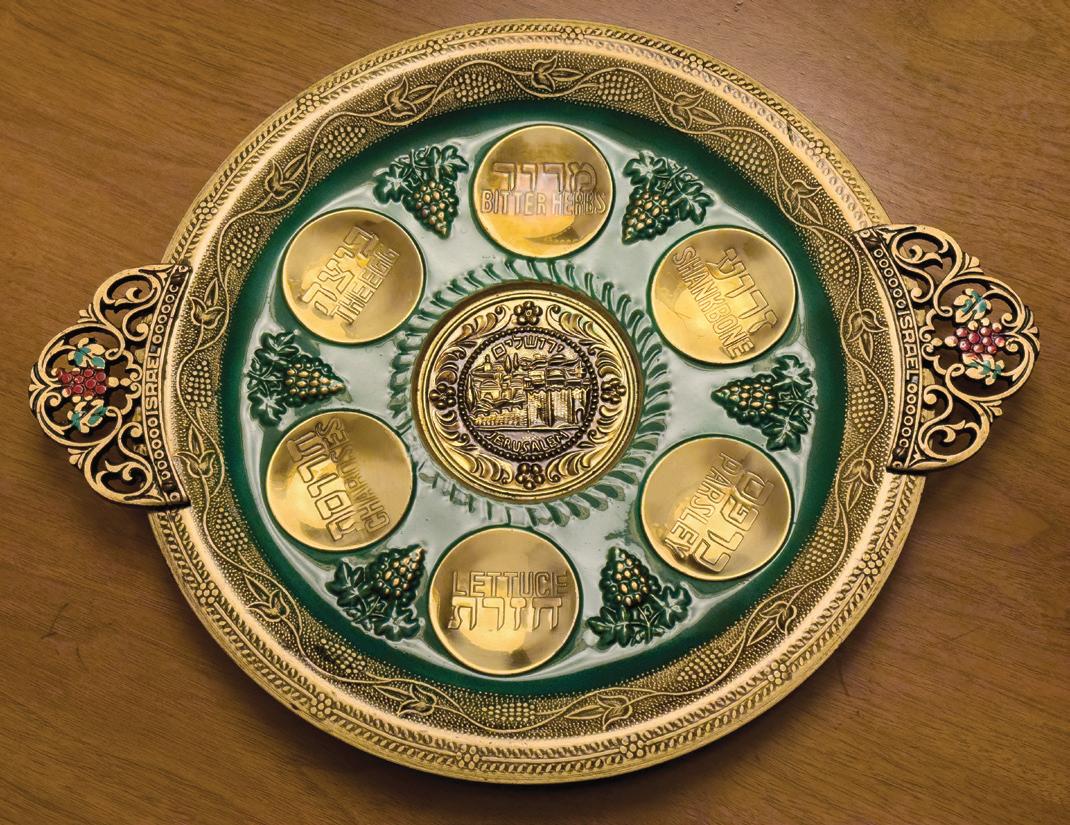
hesitation or appearance that she might ever take it back. After cleaning it that first year, I realized I had basically bought a souvenir. The back of the plate has a hook for easy hanging on the wall! Never mind, all these decades later, it remains in good condition, with clearly labeled space for everything needed – the parsley, haroset, egg, etc. And when it goes on my seder table, it reminds me of so many memories and relatives. . . and does the job!
I’m not alone in my affection for the “not so perfect” piece of Judaica for the holiday.
Susan Cohen, Lynn Shoenbaum, and Sharon Grossman share images of their seder plates here, and the stories that go along with them.
Susan and Andy Cohen
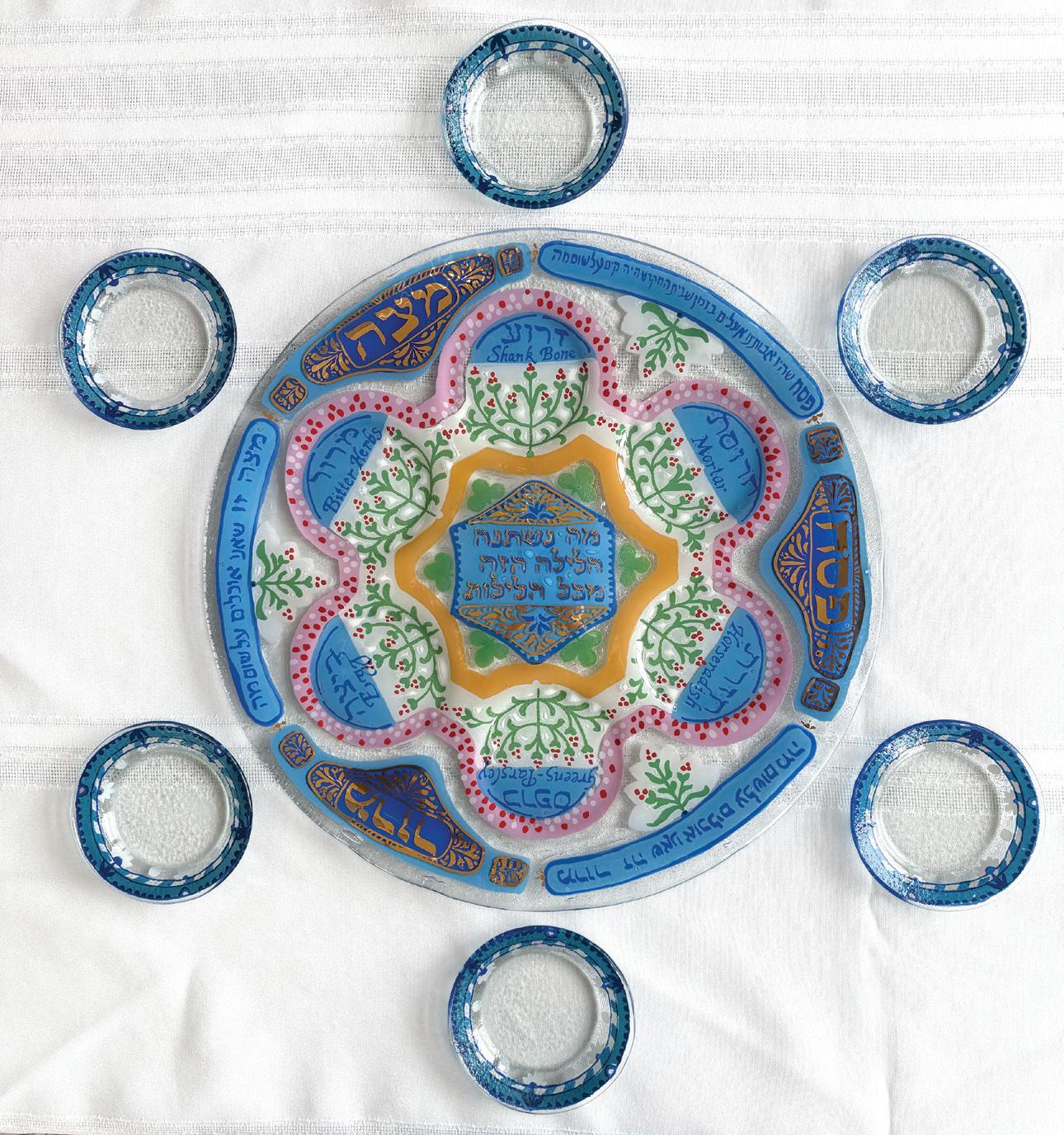
“We have a seder plate that I really love — we bought it from the Judaica shop at our synagogue in Northern Virginia,” says Susan Cohen. This was the plate, she says, that she and her husband, Andy, used “since our kids were young” at their annual Passover seders.
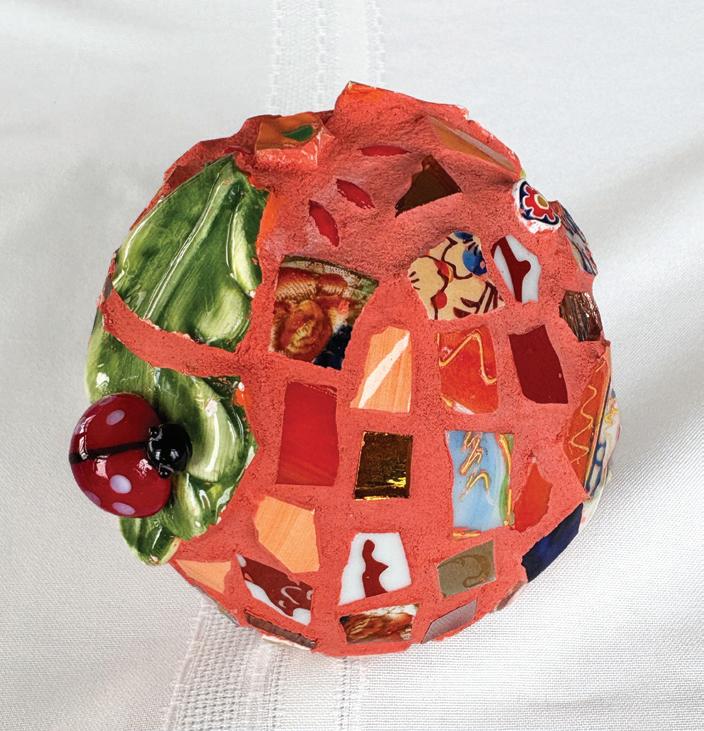
An even more special treasure for Cohen, however, is a mosaic orange that her Aunt Alice (of blessed memory) created for her family “that we display on the seder plate each year. My aunt was a very talented artist who studied Kabbalah. That inspired her,” says Cohen, “to create the orange to emphasize the centrality of women in Jewish families – in response to the apocryphal story of a rabbi who dismissively said a woman belongs on the bima the way an orange belongs on a seder plate.”
Cohen says, “I smile and think of her every year when I place it on our table.”
PASSOVER
Lynn Schoenbaum
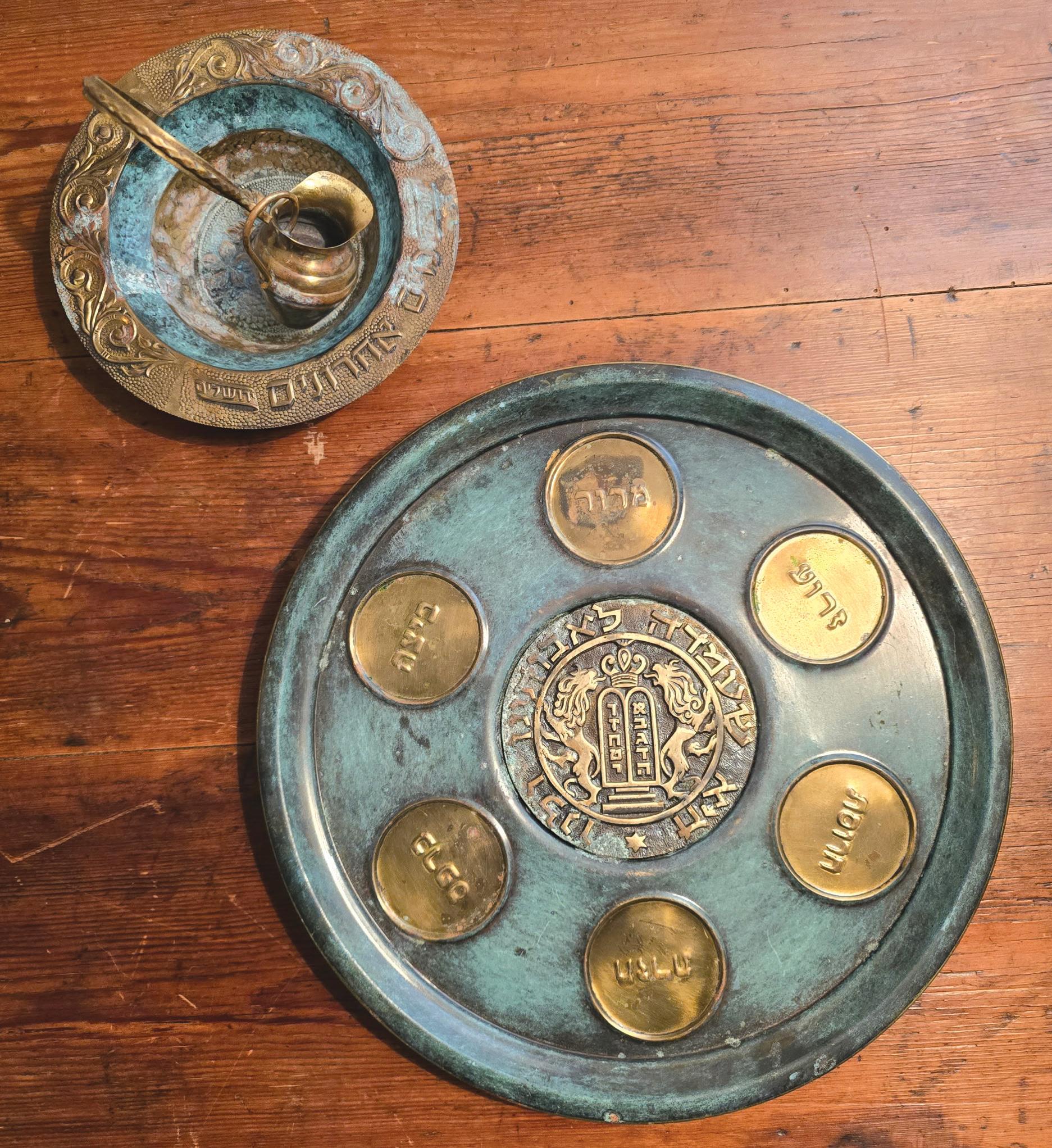
Old and ‘newish’ seder plates comprise Lynn Schoenbaum’s collection. The older plate is made of metal. Schoenbaum’s mother, Ruth Ann, set this one on her table at family seders in Newport News and later in Williamsburg.
“My grandfather always sat at the head of the table,” recalls Schoenbaum. “I remember him raising the plate to describe the significance of each item placed on it. “My Uncle Louis used it at a recent seder, and it brought back many fond memories.”
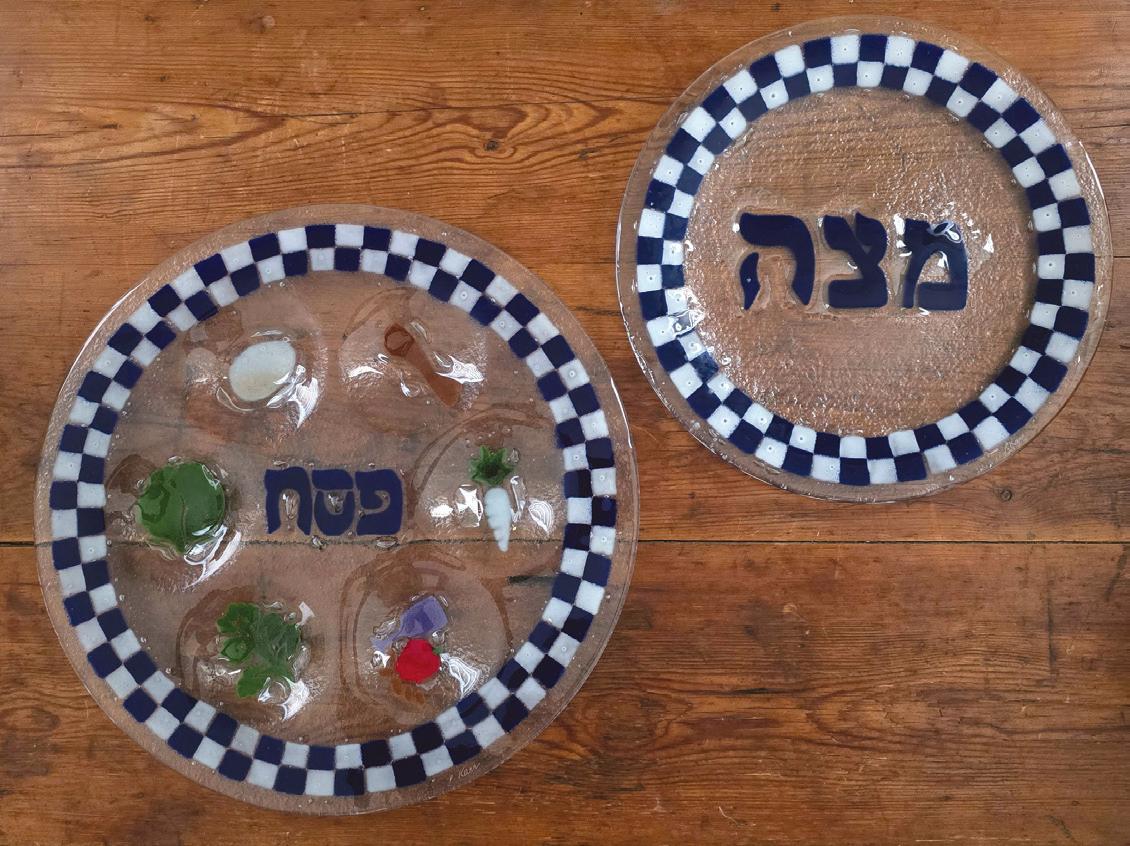
The ‘newish’ glass plates are from The Paisley Hippo, an artsy gift shop, that Schoenbaum owned in Ghent.
And now, the plates, with much different looks occupy distinct but equally important memories of seders for Schoenbaum.
Sharon Grossman
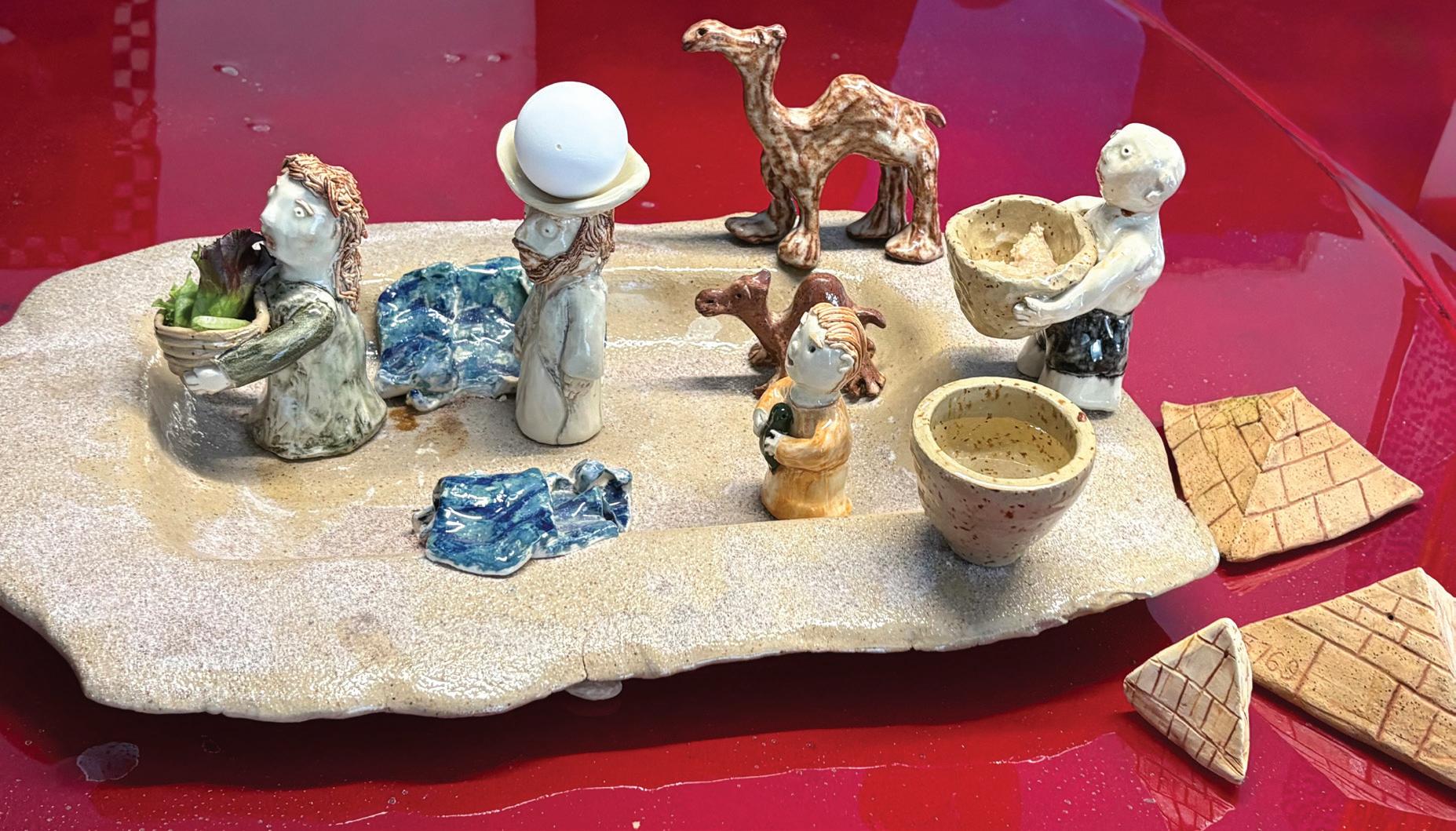
“I actually made my ceramic seder plate and all ‘the pieces,’” says Sharon Grossman, a local artist.
Grossman says she made it in the 1990s and has used it since. “I just got inspired to make something meaningful. I’m very proud of it.”
The plate depicts the children of Israel crossing the desert with the Red Sea parting. A former slave carries a roasted egg on his head, for instance, and a little boy holds a frog. To create the plate, she even used sand to conjure up the desert.
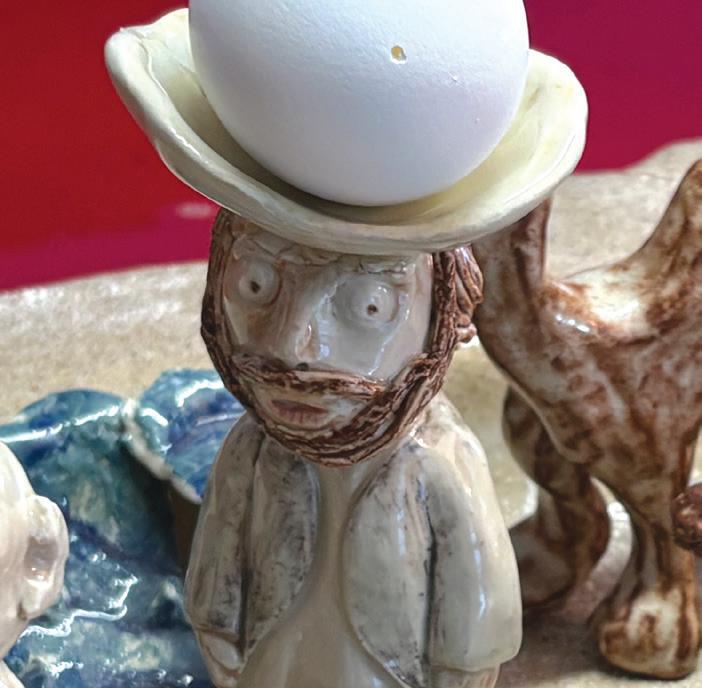
In addition to lots of camels, Grossman’s seder table includes pyramid salt and pepper shakers, which get left behind in Egypt.
PASSOVER
Why there’s always wasabi at my seder
At my Japanese-Jewish table, maror looks a little different…
Melissa Uchiyama
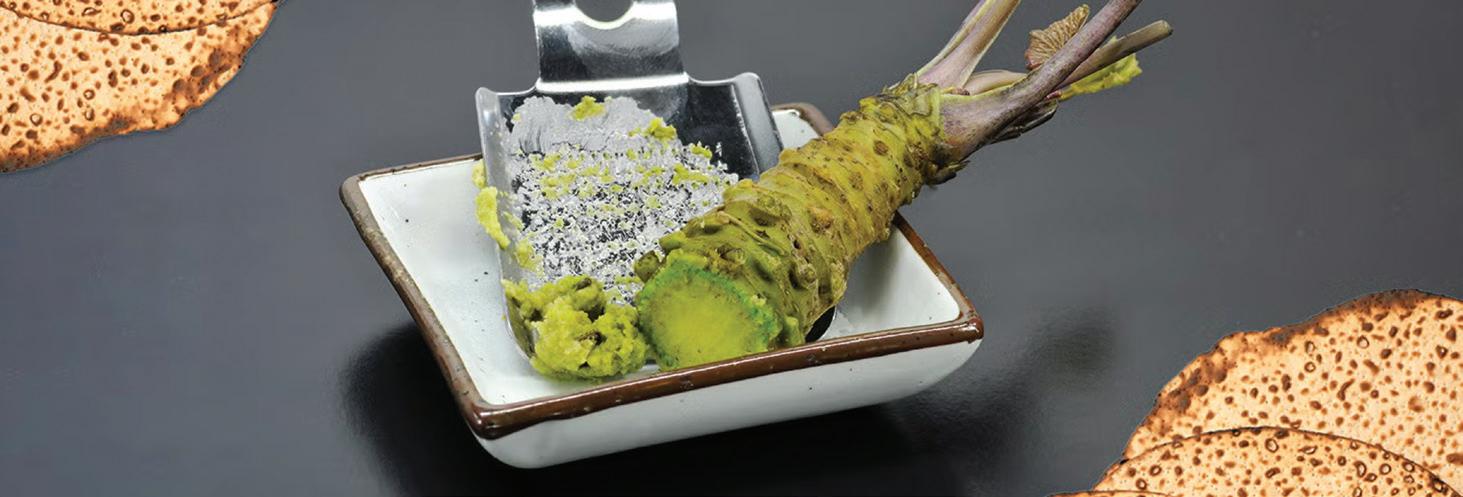
This story originally appeared on The Nosher. Shank bone, check. Haroset, check. Everything is there, on smooth pottery, but wait — is that… wasabi? This is the one item on my seder plate that draws smiles, and I get it. It’s not the norm. It’s my take on a bitter herb, maror. Welcome to our Passover in Japan!
Wasabi is a must at our JapaneseJewish table. It’s simply what happens when any of us live our Jewish life in a specific cultural stream and land: We make do with what’s available. To not include it at my Passover seder would be harder. I’d have to be oblivious not to use what is here, growing locally.
To be Jewish in Japan is to look for the connectors. After all, I am raising children who are proud and aware of their heritage – being wholly Jewish, Japanese, and American. Food is one of the best avenues to express who we are because of its tangibility. Our hamantaschen feature the classics, like Nutella or apricot, sure, but also, matcha with a sakura crust, or a red bean/anko, a chestnut. Any chance I have to celebrate our children’s full identity, I’m taking it. When I could not source the white or red horseradish I was used to growing up in the U.S., I saw a great big wasabi root, nearly a foot long, in my local Tokyo veggie shop and thought, “bingo.”
Wasabi, the one you know from sushi,
grows in moving streams of fresh water. The white horseradish you’re probably familiar with, does not grow this way, in the wet ground of streams. Every wasabi root is different – twisty, thick, spicier than others, alive. It’s this plant before it’s the plastic packet in the sushi section of your Trader Joe’s or Prager’s.
Grate fresh wasabi with a traditional porcelain (or shark-skin) grater, and you’ll get it: bitter tears. Wasabi affects the olfactory/nasal passages, same as horseradish, clearing out sinuses. If you really go for it, spreading it on thick on your matzah, you may cry harder than the white, or definitely the purple horseradish. It is the strongest choice out there.
Of course, wasabi, an intrinsically Japanese plant, is a natural bridge between my life in the U.S., in Japan, and the Passover story, but it also stirs something in me about leaving my family and community for life in Japan. How do you tear away from such hugs? Sixteen years later, and it is not much easier.
I wish for there to be no ocean between us, no time zones or longing. I relate to the Israelites who missed the gorgeous leeks when they moved into their long journey. I wanted everything just so for those first holidays away from my home in the U.S., but to be happy, we shift and adapt.
I include wasabi to not sink down
Happy Passover
Save on what you need for a joyous holiday.
in bitter tears, but consciously embrace where I am and the life I continue to make and choose. I look at my children, at their precious identities, palettes, humor –their full heritage. Every parent wants to affirm their child’s identity. Fusion is not a gimmick if there is meaning and personal context. Then it is seamless.
Last year, I discovered that I could order powdered white horseradish. I was shocked to notice that the label said “yama no wasabi,” or “mountain wasabi.” Turns out, horseradish is simply the cousin or sibling of Japanese wasabi – the family member who lives on a drier home in the mountains. Call it the same kind of plant
but locally sourced.
All my searching and wanting to source this ingredient and it was there all along.
I now want the spiciest, greenest wasabi. Or any horseradish, really. Why was I even on the hunt for something to make us cry when tears producing tears was never the problem? This year, like every year before, I’ll hold the sweet with the bitter, together.
This article was produced as part of The Nosher’s Jewish Food Fellows Program, which aims to diversify the voices telling Jewish food stories in media spaces.
PASSOVER BANANA BREAD MATZAH BREI
Paperno
This story originally appeared on The Nosher.
There’s something about the comfort of a warm slice of banana bread with some butter that never gets old. If there are a million ways to consume the flavors of banana bread, I can assure you I’ll find them.
During Passover, when we’re meant to be reflecting on our liberation from slavery in Egypt and avoiding hametz, I find myself craving my favorite comfort food — banana bread. Though I love some of the standard Pesach fare like matzah ball soup and spoonfuls of charoset, the decadence of banana bread is something I yearn for. I have fond memories of waking up to the smell of matzah brei wafting from the kitchen downstairs as a child. Last year, I finally decided to set out to learn how to make matzah brei myself.
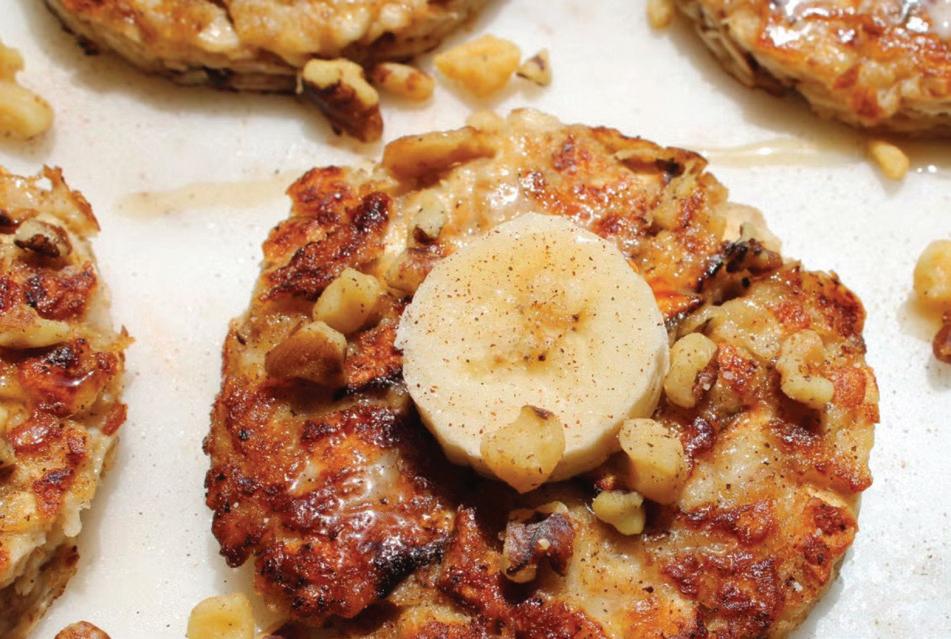
After several rounds of my standard favorite (plain matzah brei topped with a mound of butter and sugar), I looked at the slowly browning bananas in my kitchen and decided to do some experimenting. With the power of sheer hunger and willpower on my side, banana bread matzah brei was born. It’s a simple matzah brei recipe that you can whip up in under 20 minutes, with the addition of all the
flavors that make banana bread so great. Overripe mashed bananas paired with cinnamon and butter make for a Passover breakfast that I’ll be coming back to for years.
I traded out my standard butter and sugar for butter and maple syrup to make it a more traditional pancake experience, however, you’re welcome to top them in whatever way you see fit. However you choose to enjoy them, I hope they bring all who try them the same comfort that they bring me.
• Total Time: 20 minutes • Yield: 20 pancakes
Ingredients
• 10 sheets of matzah • hot water
• 3 overripe bananas, mashed • 2 eggs 1 tsp vanilla
• 1 tsp cinnamon • pinch of salt
• 1 stick of butter, for cooking
To top:
• cinnamon-sugar • walnuts • bananas • sliced maple syrup
Instructions
1. In a large bowl, crush matzah and soak in hot water for 15 seconds before draining excess water.
2. In a separate bowl, combine the bananas, eggs, vanilla, cinnamon and salt.
3. Into the large bowl of drained matzah, add the egg and banana mixture, and stir to combine.
4. In a small pan over low heat, melt about 1 Tbsp of butter (per pancake), then use a 1/2 cup to measure out your pancakes. Flatten with a spatula and fry until golden brown on each side, about 3-5 minutes. Repeat with remaining batter.
5. Top with cinnamon sugar, walnuts, bananas and maple syrup.

Hannah
PASSOVER
Passover seders around Tidewater
Compiled by Konikoff Center for Learning
Looking for a Passover seder to attend this year? Check out these options and make a decision soon to secure a spot, as Passover begins at sundown on Wednesday, April 1.
B’nai Israel Congregation
Anyone who would like home hospitality for a Passover Seder can contact the congregation’s office: office@bnaiisrael.org
Chabad of Tidewater Community Seders
April 1 and April 2, 8:30 PM RSVP at chabadoftidewater com/ sederrsvp
JCC Model Passover Seder March 25, Wednesday, 12 – 2 pm
Active Adults are invited for an interactive Passover experience filled with storytelling and traditions led by Cantor Jennifer Rueben of Ohef Sholom Temple. Open to people of all faiths. Lunch and seder: $10. Sandler Family Campus. Register by March 23 at jewishva.org/seder. Contact Sarah Cooper for more information at SCooper@ujft.org.
Ohef Sholom Temple Congregational Second Night Seder
Thursday, April 2, 6 pm
Join Ohef Sholom Temple’s family for a meaningful and joyful Second Night Seder led by Rabbi Roz and Cantor Jen. Together, share the story of the Exodus through song, tradition, and community, while enjoying a beautifully prepared holiday meal Plan to arrive by 5:45 pm, as the Seder will begin promptly at 6 pm.
Register at: https://mailchimp/ ohefsholom/secondseder.

Temple Emanuel Passover Community Seder
Thursday, April 2, 6 - 8:30 pm
Join Temple Emanuel as Rabbi Ari leads a meaningful, music-filled Passover seder.
$45 for members ages 13+, $60 for non-members; $30 for children ages 5-12; Free for those under age 5.Subsidized tickets are available. Register by March 23 at TEVB.org.
Jewish Virginia Beach Community Passover Seder
Wednesday, April 1, 6:45 pm
A welcoming and meaningful Passover Seder with traditional dinner and insights for Jews of all backgrounds. Everyone is welcome. No membership or prior knowledge needed. Cost is flexible – no one will be turned away due to financial limitations. Those who need assistance can contact Rabbi Meir at Rabbi@ jewishvb.org. Security will be present for everyone’s safety. Registration required at: JewishVB.org.
PASSOVER
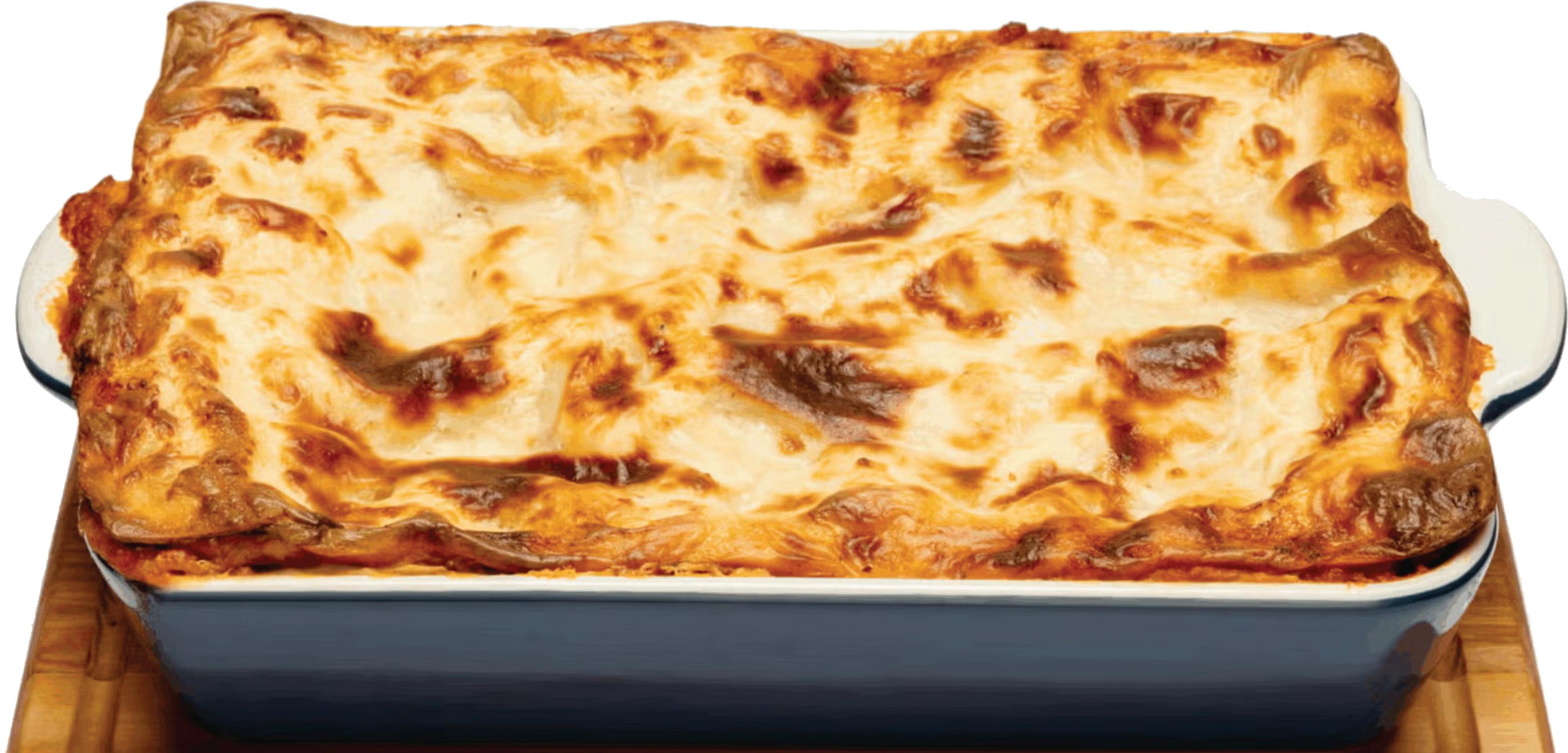
A year-round favorite reimagined for Passover. Passover Spinach and Cheese Lasagna
Adeena Sussman
This story originally appeared on The Nosher. Lasagna for Passover? You bet.
After days of preparing two (probably meat-based) seders, this dairy dish will be a welcome change — especially on a holiday where pasta is strictly forbidden.
Matzah makes a suitable replacement for lasagna noodles, and the moisture released by the marinara sauce and the cheese softens the stiff, unleavened boards, resulting in a tender lasagna with layers just as delicious as one made with conventional, wheat-based noodles.
I decided to keep this recipe simple, using frozen spinach and store-bought marinara sauce. If the inspiration strikes you, by all means make your own sauce. One cup of sautéed mushrooms would also be a welcome addition, but the goal here was to liberate cooks from hours in the kitchen. Since ricotta cheese is difficult to find with kosherfor-Passover certification, cottage cheese is substituted. If you’d like a more ricotta-like consistency, whip the cottage cheese in the blender or food processor for a few seconds before combining with the other ingredients.
Note: This recipe constitutes gebrochts, the Yiddish word for “broken” which refers to matzah products that have come into contact with liquid. Some Ashkenazi
Jews do not eat gebrochts on Passover, believing that liquid causes the matzah to rise, rendering it unfit for Passover consumption.
Total Time: 1 hour 25 minutes
Yield: Serves 4-6
Ingredients
• 8 –9 whole boards matzah (regular or whole-wheat)
•2 jars (about 6 1/2-7 cups) marinara sauce
•¼ tsp black pepper
•¾ tsp salt
•¼ cup chopped parsley
• 1/2 cup shredded parmesan cheese
•3 cups (¾ lb) shredded mozzarella cheese
•3 cups (1 1/2 lbs) small-curd cottage cheese
• 1 lb package frozen spinach, completely defrosted
Instructions
1. Preheat oven to 400°F.
2. C ombine cottage cheese, 11/2 cups mozzarella, parsley, salt and pepper in a bowl and stir to incorporate. Reserve.
3. Using your hands, squeeze excess moisture from
spinach and separate spinach until it is no longer clumped (you should end up with about 31/2-4 cups spinach). Reserve.
4. Spoon ¾ cup marinara sauce into the bottom of a disposable, high-sided lasagna pan. Fit matzah to cover as much of the bottom of the pan as possible, breaking into pieces where necessary. Pour 11/2 cups sauce on top of matzah and distribute evenly.
5. Spoon about 1 cup of the cheese mixture onto the matzah and distribute evenly. Sprinkle about 1¼ cups of the spinach on top of the cheese, then sprinkle 2 Tbsp parmesan cheese. Repeat matzah-sauce-cheesespinach-parmesan process two more times, then cover with a fourth layer of matzah.
6. Pour remaining 11/2 cups sauce on top of matzah.
7. Let lasagna rest for 15 minutes before baking to allow matzah to moisten slightly. Cover lasagna with foil and bake for 35 minutes.
8. Remove foil and sprinkle remaining 11/2 cups mozzarella on top of lasagna.
9. Reduce oven temperature to 350°F and bake lasagna an additional 30 minutes, until cheese is bubbly and browned around the edges.
10. Remove from oven, let rest for 5 minutes and serve hot.
PASSOVER
Pesach Q&A with OU Kosher
On any given day, Rabbi Zvi Nussbaum, the rabbinic coordinator responsible for managing OU Kosher’s year-round consumer hotline, fields about 150 kashrus-related phone calls.
With just weeks until Pesach — OU Kosher’s busiest season — that number will double, as Yom Tov-based shaylos stream in from Jews worldwide. Along with Rabbi Nussbaum, Rabbi Chanoch Sofer, OU Kosher rabbinic coordinator, also known as the Webbe Rebbe, is poised to address more than 3,000 Pesach-themed questions expected to arrive via email.
“We’re the only hashgacha with a live hotline, and it’s our pleasure to serve the tzibbur,” says Rabbi Eli Eleff, OU Kosher managing director of marketing and community relations.
“Each year, to meet the high demand for Pesach support, an additional 30 rabbanim join our team in the week before Yom Tov, and hotline hours are greatly extended. For more detailed guidance, consumers are also encouraged to consult our OU Guide to Pesach, our dedicated Pesach website, oupassover.org, and the OU Kosher app.”
Rabbi Eleff shares some frequently asked Pesach questions posed by consumers:
May I buy any kosher raw fish for Pesach, or does it need to be labeled with an OU-P?
OU Kosher-certified raw frozen fish is acceptable for Pesach, if it is plain, additive-free, and neither smoked, spiced, nor seasoned.
What are the guidelines for purchasing meat and poultry?
While OU Kosher-certified factories always pack unprocessed raw meat and poultry on equipment that is chametz-free year-round, ground, cooked, or broiled meat and poultry may be processed on equipment that also handles chametz products. Accordingly, the following guidelines should be observed:
• Raw meat and poultry sold in original, factory-sealed packages may be used for Pesach when bearing an OU (even without an OU-P).
• Meat and poultry that are repackaged by a local supermarket or butcher should not be used for Pesach, unless there is a special Pesach program in place.
• Ground, cooked, or broiled meat and poultry (including liver) are only kosher for Pesach when bearing an OU-P or another reliable supervision. Exceptions to this rule are listed in the OU Guide to Pesach.
My pet’s food contains chametz. What should I do for Pesach?
Since it is forbidden to own or benefit from chametz during Pesach, food that contains chametz may not be fed to pets. However, it is permitted to give pets food that contains kitniyot.
If one is unable to procure pet food that does not contain chametz, some rabbinical authorities allow for a sale, which would transfer the ownership and responsibility of caring for your pet to a non-Jew. Consult your rabbi for guidance.
I take vitamin C (ascorbic acid) daily. May I take it on Pesach?
Non-chewable, unflavored OU Kosher-certified vitamin C tablets or pills are acceptable for Pesach, since non-chewable pills are inedible, and swallowing pills for medicinal purposes is not considered eating chametz. Moreover, since most ascorbic acid manufacturers do not produce it from wheat glucose, one can generally assume that the vitamin C pill being consumed is from that majority.
In cases when an OU Kosher-certified vitamin C tablet is unavailable, any unflavored tablet, pill, or vegetarian capsule of vitamin C is acceptable during Pesach.
Chewable vitamin C tablets or other flavored vitamin C supplements should be avoided for Pesach. In addition to the issue of the ascorbic acid, a number of other ingredients used to compose these products can be chametz as well.

Yom Hashoah
April 13 • 27 Nisan • 6:45pm Congregation Beth El
On this solemn night, our community gathers to remember the Six Million—mothers, fathers, and children whose lives were taken, yet their stories continue to guide us.
Together, we honor the survivors whose resilience reshaped their shattered worlds, and we renew our collective commitment to confronting hatred in all its forms.

Featured Speaker, Dr. Milton Zweig
A descendent of Holocaust survivors who has made it his mission to preserve family memories to ensure they are never forgotten.
Advance registration and photo ID are required. For the safety of our community, enhanced security measures will be in place. Please allow additional time for arrival and check-in.









PASSOVER
Renewal and responsibility: A partnership to sustain community impact
TJF Staff
Each Passover, families gather around the seder table to retell the story of the transformation of a people moving from oppression to freedom and into a renewed sense of responsibility to one another. That spirit of renewal is guiding a meaningful partnership between Beth Sholom Village and Tidewater Jewish Foundation.
Beth Sholom Village has transformed to meet the evolving needs of seniors in Tidewater by reimagining how it carries forward a longstanding commitment rooted in one of Judaism’s enduring values: l’dor v’dor, from generation to generation. For decades, the Jewish community invested in Beth Sholom Village and its earlier iterations to ensure that seniors could live with quality, dignity, and meaningful opportunities for engagement.
Today, that legacy continues through a new philanthropic model. Beth Sholom Village is now a grantmaking organization focused on supporting programs that improve care, foster engagement, and ensure lives of dignity for seniors, particularly Jewish seniors, while also addressing senior needs throughout the greater Hampton Roads community.
By partnering with Tidewater Jewish Foundation to steward and administer the program, Beth Sholom Village is ensuring that these philanthropic resources are managed thoughtfully and positioned for long-term sustainability. While the Beth Sholom Village Grants Committee continues to guide funding decisions, TJF provides philanthropic expertise, administrative infrastructure, and investment stewardship that help charitable funds grow and continue supporting seniors.
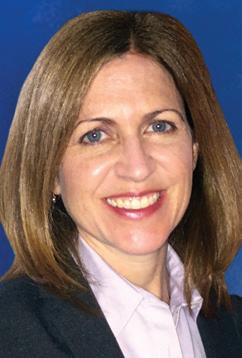
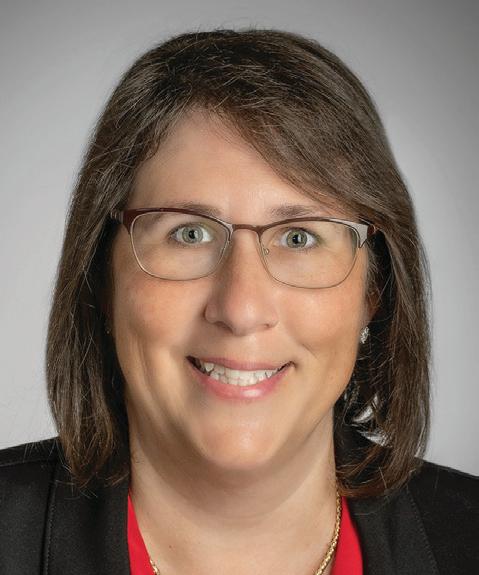
For TJF, the partnership reflects its broader mission of working alongside Jewish organizations to strengthen philanthropy and sustain community impact. “Passover reminds us that transformation is part of the Jewish story,” says Naomi Limor Sedek, TJF president and CEO. “Our community’s institutions must also evolve so their values and generosity can continue to make a difference. We are proud to partner with Beth Sholom Village to help ensure that its legacy of caring for seniors continues to support our community for generations.”
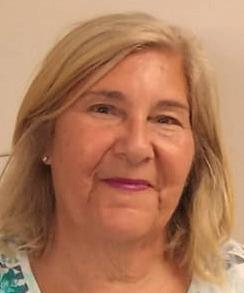
“Beth Sholom Village has long been committed to supporting organizations that care for seniors and strengthen Jewish life in our region,” says Edie Schlain, chair of Beth Sholom Village’s Grants Committee. “Working with Tidewater Jewish Foundation allows us to continue that mission while ensuring our charitable resources are stewarded responsibly and positioned to create lasting impact.”
Like the Passover story, the partnership reflects a belief that renewal, when guided by purpose and community values, can lead to a stronger future.
Organizations navigating change or seeking to strengthen their philanthropic impact are encouraged to contact Tidewater Jewish Foundation to explore how partnership and stewardship can help sustain their work in perpetuity. Naomi Limor Sedek may be reached at nsedek@tjfva.org or 757-965-6109.
Naomi Sedek
Edie Schlain
Dr. Gary MossDr. Greg PendellDr. Craig Koenig
Lisa Deafenbaugh PA-C
Dr. Marguerite Lengkeek